Self-Guided Walking Tour of Zaragoza (2026)
Self-Guided Walking Tour of Zaragoza

This website uses affiliate links which earn a small commission at no additional cost to you.

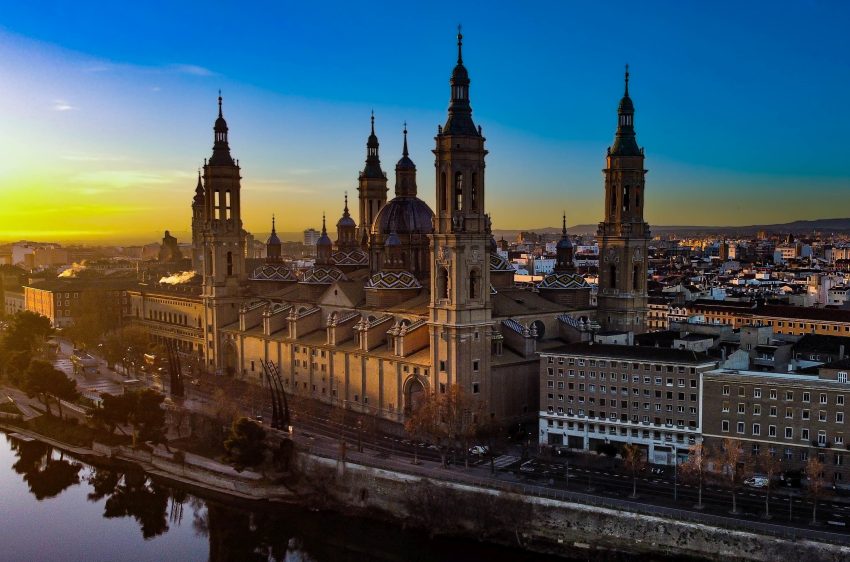
Zaragoza is one of Spain's most underrated historic cities, set on the Ebro and shaped by Roman, Islamic, Jewish, Christian, and Aragonese history. Spain's official tourism site highlights the Basilica of Nuestra Señora del Pilar as the city's symbol, while the Aljafería Palace reflects Zaragoza's Islamic and royal Aragonese past.

For visitors, Zaragoza is rewarding because its major sights are impressive but the city remains less crowded than Madrid, Barcelona, or Seville. The Basilica del Pilar, La Seo, the Aljafería, Roman remains, riverside walks, tapas streets, museums, and large squares make it a strong city break. It is also a practical stop between Madrid and Barcelona by train.

How to Get to Zaragoza

By Air: Zaragoza Airport (ZAZ) is a small, efficient airport around 10-15 km west of the city centre. It has a limited but useful spread of domestic and some international routes, so many travellers also consider flying into Madrid or Barcelona and continuing overland. From ZAZ, the simplest option is usually a taxi or rideshare into town; there are also public transport connections, but they can be less frequent depending on the day and season, so check timetables before you commit. If you arrive via Madrid or Barcelona airports, you can often connect straight onto fast rail services to Zaragoza for a smoother end-to-end journey. For the best deals and a seamless booking experience, check out these flights to Zaragoza on Booking.com.

By Train: Zaragoza-Delicias is the main station and it's well set up for visitors, with fast AVE services linking Zaragoza with Madrid and Barcelona in roughly 1.5-2 hours, plus other long-distance and regional trains across Aragón and neighbouring regions. The station sits a little outside the historic core, but it's easy to reach the centre by taxi, city bus, or a straightforward walk if you're travelling light. Booking ahead is wise around weekends, holidays, and major events, especially for the best fares and preferred departure times. Train schedules and bookings can be found on Omio.

By Car: Driving is practical if you want to combine Zaragoza with smaller towns, wineries, or natural areas in Aragón, and the city is well connected by major highways (notably routes linking Madrid and Barcelona). Expect straightforward motorway driving, but plan around urban traffic at peak hours and be strategic about parking-central street parking can be limited and time-restricted, so underground car parks are often the easiest choice if you're staying in the old town. If you're only visiting for a day, consider parking on the edge of the centre and walking in to avoid congestion. If you are looking to rent a car in Spain I recommend having a look at Discover Cars, first, as they compare prices and review multiple car rental agencies for you.

By Bus: Long-distance coaches can be good value and cover routes that aren't as convenient by rail, including connections from smaller cities and towns across Spain. Services typically arrive at Zaragoza's Estación Central de Autobuses (integrated with or adjacent to Zaragoza-Delicias), which makes onward transfers simple. Journey times are usually longer than the AVE on the Madrid/Barcelona corridors, but buses can be a sensible option if schedules align better or you're travelling on a tighter budget.

A Short History of Zaragoza

Roman Zaragoza: Caesaraugusta and the foundations of the city

Zaragoza's recorded urban story begins in the Roman era as Caesaraugusta, a planned colony with the typical Roman grid, public buildings, and defensive works. Fragments of the Roman Walls of Zaragoza still hint at the scale and ambition of this early city, which thrived on administration, trade, and engineering. Even when later centuries rebuilt, expanded, and reoriented the streets, the Roman footprint continued to shape how the historic centre developed.

Islamic Zaragoza: Saraqusta and a frontier capital

During the medieval Islamic period, Saraqusta became a significant political and cultural centre on a shifting frontier, with scholarship, craftsmanship, and urban life concentrated around fortified precincts and busy commercial streets. Later Christian rebuilding often sits on top of this layer, but the legacy remains in the city’s long tradition of decorative craft and the ease with which different artistic languages blend. This layered continuity is one reason Zaragoza’s cathedral complex feels like an architectural palimpsest rather than a single-style monument.

Medieval Zaragoza: Aragón’s power and the rise of La Seo

After Zaragoza was incorporated into the Christian kingdom of Aragón, the city grew into a major ecclesiastical and civic centre. The Cathedral of the Savior of Zaragoza (La Seo) became one of the most important statements of status and authority, expanded and embellished over centuries as tastes and fortunes changed. Its fabric captures Zaragoza's hallmark mix of influences, where medieval structure, later chapels, and rich decorative programs reflect both piety and politics.

Renaissance Zaragoza: commerce, institutions, and La Lonja

By the Renaissance, Zaragoza’s prosperity was expressed not only in religious building but in civic architecture tied to trade and governance. La Lonja (The Old Exchange) embodies this moment: an impressive merchant hall that signals confidence, connectivity, and the city’s role as a marketplace of goods and ideas. The surrounding streets and plazas developed into a stage set for public life, where commerce and ceremony reinforced each other.

Early modern Zaragoza: the river crossing and an urban skyline

As the city consolidated its importance, infrastructure and monumental public spaces took on greater meaning. Puente de Piedra (Stone Bridge) became more than a practical crossing: it was a symbolic gateway associated with movement, commerce, and the daily flow between neighbourhoods. Over time, Zaragoza’s skyline also became increasingly defined by major religious building campaigns, culminating in one of Spain’s most recognisable monumental ensembles.

17th-18th century Zaragoza: Plaza del Pilar and the Basilica’s transformation

The Cathedral-Basilica of Our Lady of the Pillar rose into its present prominence as devotion, patronage, and Baroque spectacle reshaped the heart of the city. Plaza del Pilar evolved into Zaragoza’s grand civic-religious theatre, sized for gatherings, processions, and the rhythm of public life. For a modern visitor, the Torre Del Pilar Mirador (Column Tower Lookout) is a useful way to read this history visually, turning the basilica, the square, and the surrounding old city into a coherent narrative you can see at a glance.

18th-19th century Zaragoza: Goya’s era and the city’s cultural identity

Zaragoza’s cultural identity is inseparable from the orbit of Francisco de Goya, whose life and artistic legacy helped define how the region is remembered. The Goya Museum – Ibercaja Collection anchors that story in the city, connecting local context with broader currents in Spanish art and modernity. This period also sharpened Zaragoza’s civic confidence, expressed through institutions, public culture, and a sense of itself as more than a provincial centre.

19th-20th century Zaragoza: modern streets, markets, and everyday urban life

As Zaragoza modernised, the city balanced preservation with expansion, and daily life increasingly centred on new commercial routines alongside historic monuments. Calle Alfonso I (Alfonso I Street) became one of the key connectors through the centre, a processional-feeling street where architecture, shopping, and sightlines bind together the city's most emblematic spaces. Zaragoza Central Market reflects the same modern urban pulse in a different register: a place where food culture and local habits carry history forward in the most practical way.

Contemporary Zaragoza: living traditions in El Tubo and the historic centre

Today, Zaragoza’s history feels most alive where people gather, eat, and move through the old streets rather than only inside monuments. El Tubo (“The Tube” Area) captures that continuity: tight lanes, social energy, and a food-and-conversation culture that turns heritage into something lived rather than displayed. The result is a city where Roman stones, cathedral façades, merchant halls, and tapas streets all sit in the same frame, and the past remains visible because it’s still in use.

Where to Stay in Zaragoza

To make the most of visiting Zaragoza and this walking tour then you consider stay overnight at the centre. The most convenient base is the historic core around Plaza del Pilar, La Seo, and the lanes leading into El Tubo, because you can start early at the major landmarks, pop back to your room between stops, and finish with tapas without needing transport. Good options right in this zone include Hotel Pilar Plaza, Catalonia El Pilar, Hotel Sauce, and Hotel Alfonso.

If you want a slightly more “city-break” feel with wider avenues, shopping, and easy access to restaurants while still being walkable to the old town, base yourself around Plaza Aragón, Plaza España, and Paseo de la Independencia. This area is ideal if you like a polished central hotel, strong transport links, and a straightforward walk into the historic centre for the tour loop. Consider NH Collection Gran Hotel de Zaragoza, Hotel Palafox, Hotel Goya, and Vincci Zaragoza Zentro.

If you're arriving on a tight schedule or you're prioritising smooth connections over being in the thick of the old-town lanes, the Zaragoza-Delicias station and the Expo/Ebro west side can be a practical base. You'll typically trade a bit of atmosphere for convenience, bigger rooms, and quick access to buses/taxis into the centre for the walking tour start. Solid picks here include Eurostars Zaragoza, Exe Plaza Delicias, Hotel Hiberus, and iStay by NH Zaragoza Sport Hotel.

For a quieter stay with a more local, residential feel (and good tram/bus links back into the centre), look at the Universidad/Romareda/Aragonia side of town. It's a good choice if you prefer calmer evenings, you're combining Zaragoza with day trips, or you want a comfortable base that's still straightforward for reaching the tour route each morning. Options to consider include Hotel Reina Petronila, ILUNION Romareda, Hotel Zaragoza Royal, and Hotel Gran Vía.

Your Self-Guided Walking Tour of Zaragoza

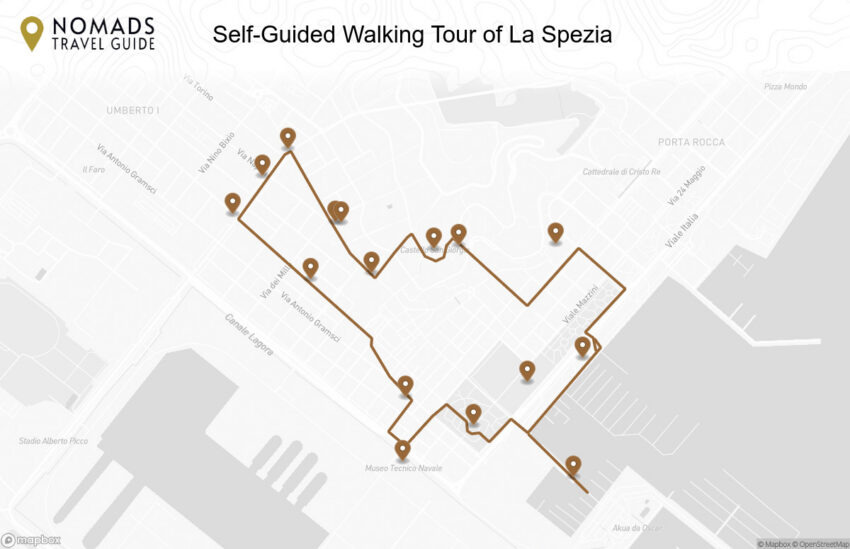
Discover Zaragoza on foot with our walking tour map, guiding you between each stop as you explore the city's landmark squares, historic streets, and riverside viewpoints. Because it's a self-guided route, you can skip any stops that don't interest you, linger where you like, and add coffee breaks whenever the mood (or a great terrace) strikes.

1. Puente de Piedra

Puente de Piedra
Puente de Piedra

Puente de Piedra is Zaragoza’s classic crossing of the Ebro, long associated with the city’s medieval growth and its role as a strategic river town between the Christian kingdoms of the north and the Islamic south. While there were earlier crossings, the bridge that became “the” stone bridge took shape in the Middle Ages and was repeatedly repaired after floods, which were a constant threat on the Ebro. Its long lifespan has made it part of the city’s everyday identity in a way newer bridges rarely manage.

What most people notice first is the sense of arrival it gives you: the skyline of the city’s great churches rises ahead, and the riverbanks open up into broad views in both directions. The bridge is also where Zaragoza feels most “river-city,” with the Ebro wide enough to read as a landscape rather than a canal.

Look for the sculptural details and the rhythm of the arches, then linger for views toward the Basilica del Pilar and the towers beyond. At either end you can usually find good viewpoints along the river paths, and at golden hour the stone and water reflect warm light that makes even quick photos look composed. It’s also a useful spot for orienting yourself: once you’ve seen the skyline from here, the city’s main landmarks are easy to place.


Location: Puente de Piedra, Zaragoza, Spain | Hours: 24 Hours. | Price: Free. | Website

We recommend to rent a car in Spain through Discover Cars, they compare prices and review multiple car rental agencies. Book your rental car here.

2. Cathedral of the Savior of Zaragoza

Cathedral of the Savior of Zaragoza
CC BY-SA 3.0 / Wolfgang Pehlemann

The Cathedral of the Savior, commonly known as La Seo, is one of Zaragoza’s most historically layered buildings, shaped by successive religious and political eras. The site itself tells the story: Roman Zaragoza, later the Islamic city, and then the Christian reconquest all left marks, with the cathedral evolving over centuries rather than being built in a single burst. That long timeline is exactly what makes it compelling, because you’re effectively reading the city’s history in stone, brick, and ornament.

Architecturally it’s famous for its mixture of styles, especially the Mudéjar work that blends Islamic craftsmanship with Christian patronage. You’ll see transitions from Romanesque and Gothic structures into richly patterned brickwork, and later additions that reflect Renaissance and Baroque tastes. The result is not a “pure” cathedral in one style, but a confident patchwork that feels distinctly Aragonese.

Inside, pay attention to the choir stalls, chapels, and the play of light across different architectural phases. The exterior walls and decorative panels are also a highlight, especially where intricate Mudéjar patterns appear like textile designs translated into brick. If you visit more than one major church in Zaragoza, La Seo is the one that rewards slow looking, because the details keep changing as you move.


Location: Pl. de la Seo, 4, Casco Antiguo, 50001 Zaragoza, Spain | Hours: Monday – Saturday: 10:00–14:30 & 16:00–20:00. Sunday: 10:00–12:00 & 16:00–20:00. | Price: Adults: €10; Seniors (65+) & disabled visitors: €9; Youth (13–18) & university students up to 25: €7; Under 12: free. | Website

Here is a complete selection of hotel options in Zaragoza. Feel free to review each one and choose the stay that best suits your needs.

3. La Lonja

La Lonja
La Lonja
CC BY-SA 2.0 / Näystin

La Lonja is Zaragoza’s great Renaissance civic building, created in the 16th century when the city was thriving as a commercial hub in the Crown of Aragon. Built as an exchange where merchants could meet and formalize deals, it represents a moment when trade, law, and urban prestige were tightly linked. Its very existence is a statement: Zaragoza wasn’t just a religious or administrative center, it was a city that expected to do business at scale.

The exterior is restrained and elegant, with symmetry and proportion that signal Renaissance ideals, but the building’s real impact comes from understanding its original function. Imagine it as a place of negotiation and reputation, where credit and trust mattered as much as coin. That mercantile heritage gives the building a different feel from palaces or churches nearby.

Inside, the main hall is the focus, often used today for exhibitions, which suits the building’s open, public character. Look up at the ceiling structure and the way the space is designed to feel orderly and dignified, rather than decorative for decoration’s sake. Even when there’s no exhibition on, it’s worth stepping in to appreciate how a commercial building was given monumental status in Zaragoza’s golden age.


Location: Pl. de Ntra. Sra. del Pilar, s/n, Casco Antiguo, 50003 Zaragoza, Spain | Hours: Tuesday – Saturday: 10:00–14:00 & 17:00–21:00. Sunday: 10:00–14:30. Closed on Monday. | Price: Free. | Website

Traveling to a country with a different currency? Avoid ATM transaction fees and pay in local currency with a Wise Card. Having used it for over 5 years, we've saved loads on fees!

4. Goya Museum - Ibercaja Collection

Goya Museum – Ibercaja Collection
CC BY-SA 4.0 / Ajzh2074

The Goya Museum is one of the best places to understand Francisco de Goya in the city and region that shaped him. While Goya is often associated with Madrid and the Spanish court, his roots in Aragon are essential to his story, and Zaragoza is a natural place to track that early context. The museum’s collection is structured to situate him within Spanish art before and after his time, making it more than a single-artist shrine.

The experience typically balances works by Goya with pieces by earlier artists and contemporaries, so you can see what he inherited and what he broke away from. That matters with Goya, because he shifts from courtly polish to a more unsettling modern sensibility over his career, and it helps to see the broader artistic ecosystem around him.

When you visit, focus on how his figures convey psychology: gestures, faces, and the way he uses contrast to sharpen mood. If you’re not an art specialist, it’s still approachable because the themes are human and often blunt—power, superstition, violence, celebration, vanity. Allow time for the prints if they’re on display, since they’re where his voice can feel most direct and least diplomatic.


Location: C. de Espoz y Mina, 23, Casco Antiguo, 50003 Zaragoza, Spain | Hours: Monday: Closed. Tuesday – Saturday: 10:00–14:00 & 16:00–20:00. Sunday: 10:00–14:00. | Price: Adults: €4; Concessions: €2; Under 16: free. | Website

Click here to read our blog about Exploring Roman Zaragoza

5. Calle Alfonso I

Calle Alfonso I
Calle Alfonso I
CC BY-SA 4.0 / Robot8A

Calle Alfonso I is one of Zaragoza’s main historic arteries, linking key civic and religious spaces and acting as a stage for the city’s daily life. It follows the logic of older Zaragoza: streets that connect marketplaces, major squares, and institutional buildings, gradually formalized into a prominent commercial corridor. Over time it became the place where Zaragoza “shows itself,” with shopfronts, façades, and constant movement.

Its appeal is partly architectural and partly atmospheric. Buildings along the street reflect different periods, and as you walk you’ll notice how the city’s grandeur is expressed in balconies, stonework, and the shifting scale of intersections. It’s also a street that amplifies the sense of Zaragoza as a living city rather than an outdoor museum—locals are here to work, shop, meet, and pass through.

To make the most of it, look up as much as you look ahead: the upper stories and details often carry the most character. Pause at side streets that open into smaller plazas or reveal unexpected church towers. If you time it well, the street can feel theatrical during late afternoon and early evening, when the light catches façades and the city’s rhythm speeds up.


Location: C. de Alfonso I, Casco Antiguo, 50003 Zaragoza, Spain | Hours: 24 Hours. | Price: Free.

6. Plaza del Pilar

Plaza del Pilar
Plaza del Pilar
CC BY-SA 1.0 / Zarateman

Plaza del Pilar is Zaragoza’s symbolic heart, a vast open space framed by some of the city’s most important landmarks. The scale is deliberate: this is a plaza designed for big civic moments—religious festivals, public gatherings, celebrations, and the everyday flow of people moving between the old city’s major sites. Few places in Zaragoza give you such an immediate sense of the city’s identity and pride.

Historically, the plaza’s importance is inseparable from the devotional significance of the Basilica del Pilar and Zaragoza’s long role as a major center of Marian worship. The open space around it allows the buildings to read as monuments, not just structures, and it also makes the plaza a kind of urban living room where the city meets itself.

When you’re there, take time to absorb the skyline: domes, towers, and long façades all read clearly because of the open expanse. Look for public art and fountains that add texture to the space, and notice how the plaza changes mood depending on time of day. Early morning feels almost ceremonial; evening is livelier, with the buildings illuminated and the square used for strolling and lingering.


Location: Pl. de Ntra. Sra. del Pilar, Casco Antiguo, 50003 Zaragoza, Spain | Hours: 24 Hours. | Price: Free.

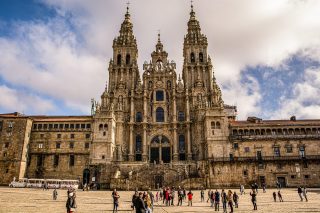
7. Cathedral-Basilica of Our Lady of the Pillar

Cathedral-Basilica of Our Lady of the Pillar
CC BY-SA 4.0 / Marczoutendijk

The Basilica del Pilar is Zaragoza’s most famous church and one of Spain’s great pilgrimage sites, tied to a tradition that places Marian devotion at the origins of local Christianity. Over centuries, the basilica grew in stature and architectural ambition, culminating in the grand Baroque-scale building that dominates the plaza today. It’s not just a church; it’s a statement of faith, regional identity, and artistic patronage.

Architecturally, it’s defined by its multiple domes and towers and by the way its bulk anchors the cityscape. The interior is designed to handle crowds and ceremony while still offering spaces for quiet devotion. Its artworks, including paintings associated with Goya, connect Zaragoza’s religious life with the broader story of Spanish art.

Inside, seek out the central devotional focus and observe how people interact with it—this is a living sacred place, not only a sightseeing stop. Spend time looking up at the domes and decorative programs, and note the way light and gilding create a sense of grandeur without feeling cold. If you’re interested in art, the works linked to Goya are a key reason this basilica belongs on any Zaragoza itinerary.


Location: Plaza del Pilar, s/n, Casco Antiguo, 50003 Zaragoza, Spain | Hours: Monday – Friday: 07:30–13:30 & 16:30–20:15. Saturday: 07:30–11:45 & 16:30–20:30. Sunday: 07:30–13:30 & 16:30–21:30. | Price: Free; tower and museum tickets cost extra. | Website

8. Torre Del Pilar Mirador

Torre Del Pilar Mirador
CC BY-SA 3.0 / Jiuguang Wang

The Torre Del Pilar Mirador offers one of the best panoramic perspectives in Zaragoza, because it places you above the city’s historic core with the Ebro and surrounding neighborhoods stretching outward. Viewing points like this are modern additions in spirit even when attached to older monumental structures: they translate heritage into a visual experience people can grasp instantly. In a city with big architecture and broad horizons, height makes the urban layout legible.

From above, you can understand how Zaragoza sits on the river and how the old center relates to later expansions. Domes and towers become navigational markers, and the grid and street patterns start to show their logic. It’s also a good way to appreciate the sheer scale of the Basilica del Pilar itself, which can feel even more monumental when you see how it dominates the plaza and the riverfront.

When you visit, take your time identifying landmarks: the Ebro crossings, major church roofs, and the long lines of key streets. Light conditions matter—clear days give you distance, while late afternoon brings warmer tones that make the city feel softer. If you’re choosing one elevated view in Zaragoza, this lookout is the most iconic because it pairs the panorama with the city’s signature monument.


Location: Pl. de Ntra. Sra. del Pilar, Casco Antiguo, 50003 Zaragoza, Spain | Hours: Monday – Thursday: 10:30–14:30 & 16:00–20:00. Friday – Sunday: 10:00–20:00. | Price: General: €6; Youth (13–18, student/university up to 25): €4; Seniors (65+ or disability 33%+): €5; Residents: €5; Groups (20+): €4; Under 12 (with an adult) & disability 50%+: free. | Website

9. Roman Walls of Zaragoza
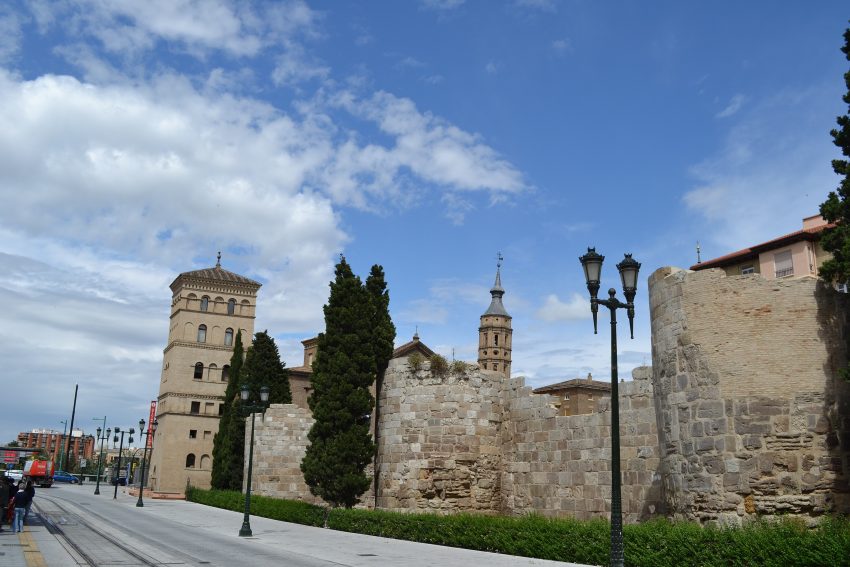
Roman Walls of Zaragoza
CC BY-SA 3.0 / Dorieo

Zaragoza’s Roman walls are a direct link to Caesaraugusta, the Roman city that underlies much of modern Zaragoza’s street plan and identity. Built for defense and prestige, Roman walls weren’t only military structures; they were also signals of civic status, marking the boundary of an important settlement. The surviving fragments remind you that Zaragoza’s story starts far earlier than its medieval churches and palaces.

Over centuries, segments were dismantled, incorporated into later buildings, or simply lost as the city expanded. What remains tends to be partial, but that’s typical for Roman urban defenses in living cities. The value is in the material reality: large stone blocks, the thickness of the structure, and the sense of a perimeter that once defined daily life.

When you visit, look for how the walls integrate with the surrounding modern fabric—this contrast is part of the experience. Interpretive panels, if present, help reconstruct what you’re seeing, but even without them you can read the engineering confidence in the surviving masonry. Pairing the walls with other Roman-era traces in Zaragoza makes the ancient city feel less abstract and more tangible.


Location: Plaza César Augusto, 3, Casco Antiguo, 50003 Zaragoza, Spain | Hours: Monday: Open 24 hours Tuesday: Open 24 hours Wednesday: Open 24 hours Thursday: Open 24 hours Friday: Open 24 hours Saturday: Open 24 hours Sunday: Open 24 hours | Website

10. Zaragoza Central Market

Zaragoza Central Market
CC BY-SA 3.0 / Willtron

Zaragoza Central Market is a showcase of the city’s food culture and a fine example of market architecture that blends practicality with civic pride. Markets like this grew in importance as cities modernized food supply, sanitation, and urban commerce, turning everyday shopping into a structured public institution. The building’s design reflects that era’s fascination with iron, glass, and airy interiors that signal cleanliness and order.

Beyond architecture, the market is about what Zaragoza eats and how it shops. You’ll find strong regional signatures—Aragonese produce, cured meats, cheeses, seafood counters that reflect Spain’s national distribution networks, and seasonal fruit that tells you what time of year you’re visiting. It’s a place where local routines are visible and where the city feels most grounded.

Go with an appetite and a bit of curiosity: walk the aisles first, then decide what to sample or buy. Look for specialty stalls and ask about regional items if you’re unfamiliar with them. The market is also useful for understanding Spanish food culture in practice—quality ingredients, social exchange at the counter, and a pace that’s lively without being chaotic.


Location: Av. de César Augusto, 110, Casco Antiguo, 50003 Zaragoza, Spain | Hours: Monday – Friday: 09:00–14:00 & 17:30–20:00. Saturday: 09:00–14:30. Closed on Sunday. | Price: Free. | Website

11. El Tubo

El Tubo
El Tubo
CC BY-SA 4.0 / Jahidalgoaloy

El Tubo is Zaragoza’s best-known old-town nightlife and tapas area, shaped by narrow streets that historically encouraged density, sociability, and a certain sense of contained energy. Districts like this often grow organically: small bars, close quarters, and a reputation that spreads until the neighborhood becomes a destination in itself. Over time, El Tubo has become part of Zaragoza’s cultural brand, associated with casual eating, late hours, and a lively street scene.

Its character comes from the concentration of venues and the way the streets funnel people together. Even if you’re not focused on food, the area is worth seeing for atmosphere: voices bouncing off stone walls, the rhythm of people moving between doorways, and the feeling of a neighborhood that functions as an evening ritual for locals.

To experience it well, keep your expectations realistic: the point is variety and energy, not a single “best” spot. Wander slowly, peek at menus, and choose places that look busy with locals rather than only visitors. If you’re sensitive to noise or crowds, earlier evening is calmer; later, it becomes louder and more packed, which is exactly what many people come for.


Location: C. de la Libertad, 12, Casco Antiguo, 50003 Zaragoza, Spain | Hours: 24 Hours. | Price: Free. | Website
Powered by GetYourGuide
Moira & Andy
Moira & Andy

Hey! We're Moira & Andy. From hiking the Camino to trips around Europe in Bert our campervan — we've been traveling together since retirement in 2020!

Read our full story here

This website uses affiliate links which earn a small commission at no additional cost to you.

Walking Tour Summary

Distance: 3 km
Sites: 11

Walking Tour Map
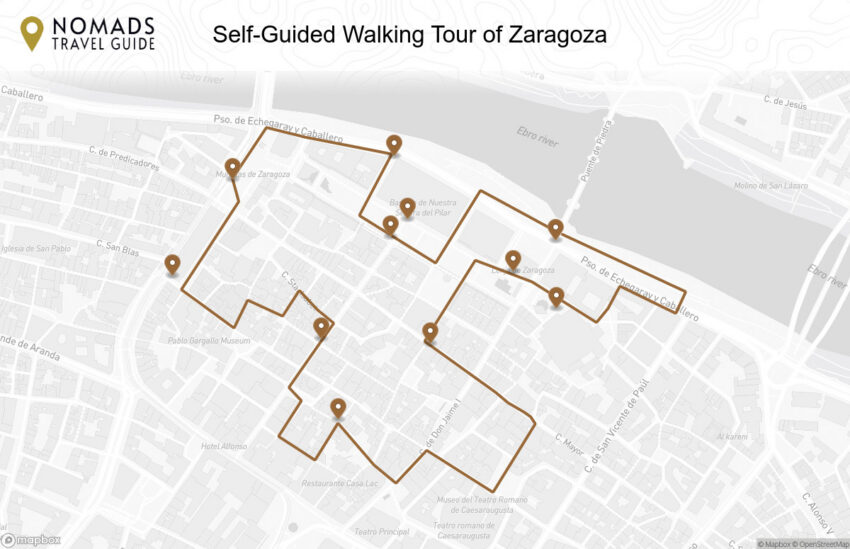
Map of the Self-Guided Walking Tour of Zaragoza walking route with 11 stops in Zaragoza.
Preview map of the Self-Guided Walking Tour of Zaragoza route in Zaragoza, showing 11 stops. Use the interactive map to zoom and tap markers.

More from this area

Self-Guided Walking Tour of Valencia (2026)

Your Self-Guided Walking Tour of Valencia

This website uses affiliate links which earn a small commission at no additional cost to you.

Valencia is one of Spain's most appealing Mediterranean cities, combining a historic centre, beaches, food culture, modern architecture, and green space created from the former Turia riverbed. Its great historic monument is La Lonja de la Seda, the Silk Exchange, which UNESCO describes as an exceptionally well-preserved late Gothic secular building and evidence of Valencia's mercantile power in the 15th and 16th centuries.

For visitors, Valencia offers a strong balance of old and new. The cathedral, Central Market, La Lonja, Barrio del Carmen, Turia Gardens, City of Arts and Sciences, marina, and beaches give the city broad appeal without the intensity of Spain's largest tourist centres. It suits travellers who want architecture, food, cycling, seaside time, and a relaxed urban atmosphere.

How to Get to Valencia

By Air: Valencia Airport (VLC) is the city's main gateway and sits about 8-10 km west of the centre, making arrivals straightforward. The easiest way into town is Metrovalencia: Lines 3 and 5 run from the airport to key central stops (including links for the old town and main rail hubs), with frequent services most of the day. Taxis and ride-hails are widely available at the terminal for a direct door-to-door trip, and many visitors find this the simplest option if travelling with luggage or arriving late. For the best deals and a seamless booking experience, check out these flights to Valencia on Booking.com.

By Train: Valencia is very well connected by rail, with frequent services from Madrid and strong links across the Mediterranean corridor (including cities such as Barcelona and Alicante). Most long-distance trains arrive at either Estació del Nord (right on the edge of the historic centre) or Joaquín Sorolla station (used by many high-speed services and connected to the centre by local transport and taxis). Booking ahead is recommended during weekends, holidays, and festival periods, but for shorter regional routes you can often buy tickets close to departure. Train schedules and bookings can be found on Omio.

By Car: Driving can work well if you're combining Valencia with smaller towns, beaches, or inland villages, but it's rarely the easiest way to enter the city centre. The ring roads and main approaches are efficient, yet old-town streets are narrow, parking is limited, and traffic restrictions are common in central areas. If you arrive by car, plan to use a hotel car park or a secure public garage and then explore on foot or by metro/bus; it's typically faster and far less stressful than trying to navigate Ciutat Vella. If you are looking to rent a car in Spain I recommend having a look at Discover Cars, first, as they compare prices and review multiple car rental agencies for you.

By Bus: Long-distance coaches are usually the cheapest option and can be useful if you’re coming from smaller places without direct train links. Services generally arrive at Valencia’s main bus station, with onward connections by city bus, metro, and taxi into the centre. Journey times are longer than rail, but if you book early you can often find good-value fares, especially on popular routes. [bus]

A Short History of Valencia

Valencia in the Roman Era

Valencia’s recorded urban story begins with Rome, when the settlement was founded as a colonia and laid out with the practical grid and civic logic typical of Roman town planning. Fragments of this earliest city still surface in the historic centre, where archaeological layers reveal how streets, walls, and public buildings were repeatedly rebuilt on the same footprint. Sites such as the Cripta Arqueologica hint at how deep the timeline runs beneath today’s plazas and churches.

Valencia Through Late Antiquity

As Roman authority fractured, Valencia moved through a period of shifting control and slower urban life, with older structures repurposed and new religious buildings taking precedence. This is when the city's sacred geography begins to form in recognizable ways, setting up the long continuity of worship spaces that later culminate in major monuments like Valencia Cathedral. Even when the fabric of the city changed, the centre remained the anchor for administration, ceremony, and communal identity.

Valencia in the Islamic Period

From the early medieval centuries, Valencia developed as Balansiya under Islamic rule, becoming a more intensively irrigated, craft-driven, and commercially active city. The surrounding huerta landscape, managed through sophisticated water systems and agricultural know-how, fed the urban economy and shaped daily life for centuries. Many of the patterns of narrow streets, inward-facing courtyards, and neighbourhood organisation that you feel while walking Ciutat Vella trace back to this period, even if later buildings sit on top of earlier foundations.

Valencia After the Christian Conquest

The conquest in the 13th century reset Valencia's political and ecclesiastical hierarchy, and the city was gradually refashioned with new Christian institutions, parishes, and civic spaces. Valencia Cathedral and the Plaza de la Virgen became central symbols of this transformation, expressing authority as well as continuity, since religious sites often rose where earlier sacred spaces had stood. Defensive architecture also gained prominence, with gateways and walls marking the city's status and controlling movement in and out of the centre.

Valencia in the Age of Trade and Guild Power

By the late medieval and early modern period, Valencia emerged as a major trading city, and its architecture began to advertise commercial confidence. The Lonja de la Seda is the clearest statement of that era: a purpose-built monument to contracts, credit, and the civic pride of merchants and guilds. Nearby, practical infrastructure like the Almudin reflects the same logic-controlling supply, stabilising prices, and keeping the city fed-while churches and confraternities expanded their patronage across the old town.

Valencia in the 18th and 19th Centuries

Later centuries brought administrative reform, gradual modernisation, and a more visibly “public” city, where grand civic buildings and formal squares presented a new kind of order. The Ayuntamiento and Plaza del Ayuntamiento represent this shift toward ceremonial urban space, while the city's growth pushed beyond older limits and reshaped how people arrived, worked, and moved through Valencia. This was also a period when historic layers began to be consciously valued, setting up the preservation instincts that would matter later.

Valencia in the Early 20th Century

The early 1900s added a striking architectural chapter, visible in landmark buildings that embraced new styles and new technologies. Estación del Norte stands out as a proud gateway to the city, projecting modern confidence while still referencing local craft traditions in its decorative language. At the same time, everyday life remained rooted in the old town’s markets, culminating in the Mercado Central, which brought scale, light, and modern infrastructure to the city’s food culture without severing it from long-established routines.

Valencia from the Late 20th Century to Today

In recent decades, Valencia has balanced conservation with reinvention, protecting the walkable historic core while reshaping infrastructure and public space for contemporary life. The creation of the Jardín del Turia is one of the most defining changes in the modern era, turning what could have been a barrier into a green spine that links neighbourhoods and encourages the city's outdoor rhythm. Today, the experience of Valencia is precisely this layering: Gothic and baroque landmarks like the Basílica de la Virgen de los Desamparados alongside civic squares, markets, and renovated streets that keep the centre lived-in rather than museum-still.

Where to Stay in Valencia

To make the most of visiting Valencia and this walking tour then you consider stay overnight at the centre. If your priority is stepping straight into the historic core each morning, base yourself in Ciutat Vella (Old Town), where most of the early landmarks sit within a short, walkable loop. You'll be close to the cathedral quarter, the market area, and the main plazas, which makes it easy to start early, take a long lunch break, and then continue sightseeing without needing transport. Good options here include Caro Hotel, Vincci Palace, Vincci Mercat, and One Shot Mercat.

If you want a slightly calmer feel with broader boulevards, shopping streets, and quick access to the old town on foot, look at Eixample and the edges of the centre around Colón and the Turia gardens. This area is a strong “best of both worlds” base: you can walk into Ciutat Vella in 10-20 minutes, but you’ll also have a bigger choice of restaurants and easier taxi/metro connections for evenings out. Consider Only YOU Hotel Valencia, Hospes Palau de la Mar, NH Collection Valencia Colón, and Hotel Dimar.

For a good-value, practical base with easy arrival and departure logistics, stay around the main rail hubs and adjacent central streets (useful if you’re coming in by train and want to drop bags before walking). You’ll still be close enough to walk into the historic centre, and you’ll have fast links to metro lines that cut across the city if you decide to shortcut any legs of the day. Solid picks include Vincci Lys and, if you like the vibe of a lively neighbourhood just south of the centre, Petit Palace Ruzafa.

If you want to combine the walking tour with modern Valencia and greener, more open surroundings, consider the Alameda/Turia side or the City of Arts & Sciences zone. These areas work well if you prefer larger hotels, easier parking access, and quick taxi or bus hops into the old town, while still having a scenic walk along the gardens as part of your day. Options that fit this style include SH Valencia Palace, Barceló Valencia, and for a car-friendly base slightly outside the tightest centre, Hotel Malcom and Barret.

If your ideal Valencia trip includes beach time before or after your walking day, base yourself by the sea and treat the historic centre as a day trip (it's straightforward by taxi and public transport, but you won't be stepping out directly into the old town). This is best if you're staying at least two nights and want a slower pace: one day for the walking tour, another for the waterfront and the marina. Strong beachfront choices include Hotel Las Arenas Balneario Resort and Hotel Neptuno.

Your Self-Guided Walking Tour of Valencia

Discover Valencia on foot with our self-guided walking tour map, leading you from stop to stop as you explore the city's landmarks, lanes, and lively plazas at your own pace. Because it's self-guided, you're in full control: skip anything that doesn't interest you, linger longer where you want, and build in coffee breaks whenever the mood strikes.

1. Estacion del Norte

Estacion del Norte
Estacion del Norte
CC BY-SA 3.0 / Rafesmar

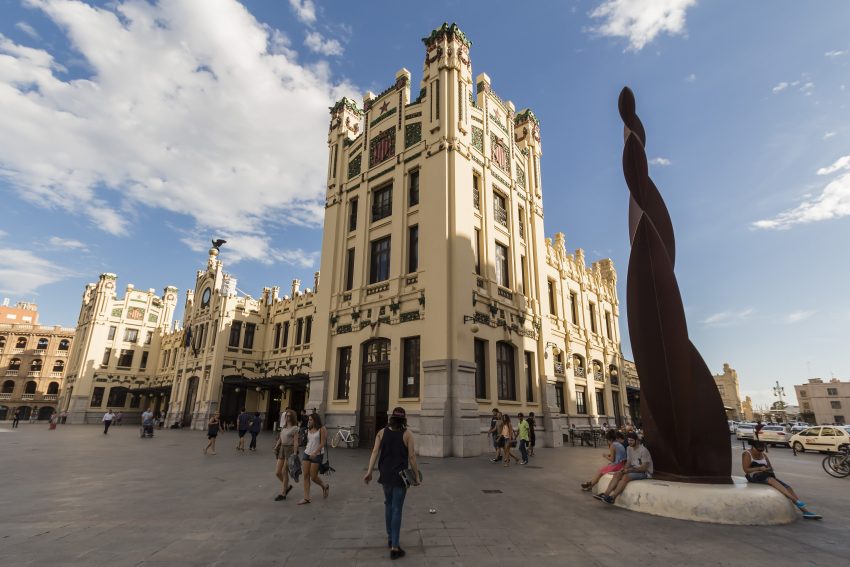
Valencia’s North Station belongs to the age when rail travel reshaped cities and stations became civic gateways. It reflects the optimism and modern identity of the early 20th century, when infrastructure was also an opportunity for architectural style and urban pride.

What to see is the façade and decorative program, which often celebrates regional identity through patterns, motifs, and craftsmanship. Stations like this were designed to impress arrivals, signalling that Valencia was modern, connected, and confident.

Spend time both outside and inside. The best moments are where practical spaces—ticket halls, entrances, waiting areas—are elevated by ornament and proportion, turning routine travel into an architectural experience.


Location: València, Valencia, Spain | Hours: Monday – Saturday: 03:45–23:55. Sunday: 06:00–23:55. | Price: Free. | Website

We recommend to rent a car in Spain through Discover Cars, they compare prices and review multiple car rental agencies. Book your rental car here.

2. Plaza de la Reina

Plaza de la Reina
Plaza de la Reina
CC BY-SA 3.0 / chisloup

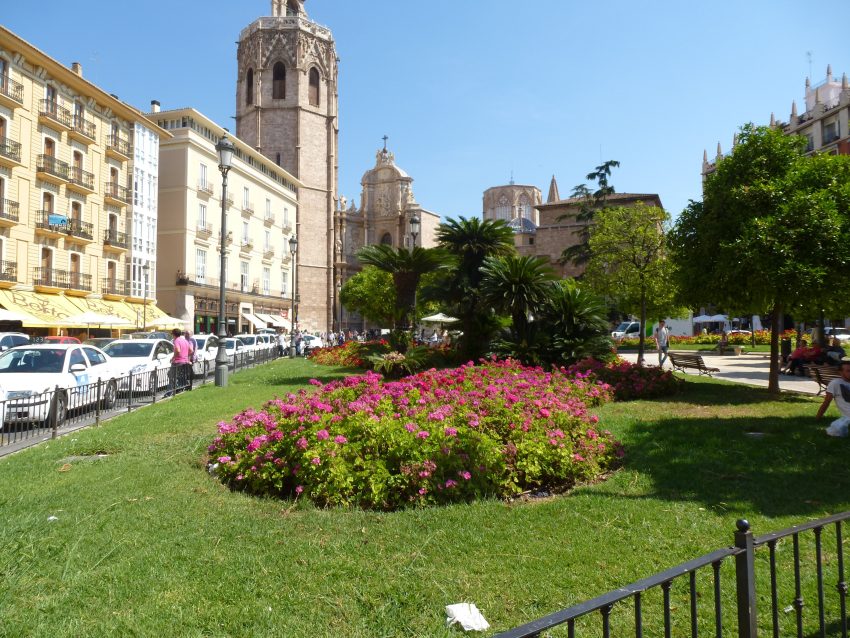
This square has long functioned as a hinge between Valencia’s cathedral quarter and the surrounding historic streets. Its modern form reflects repeated redesigns, but its role is old: a civic open space shaped by the constant movement of commerce, worship, and daily city life.

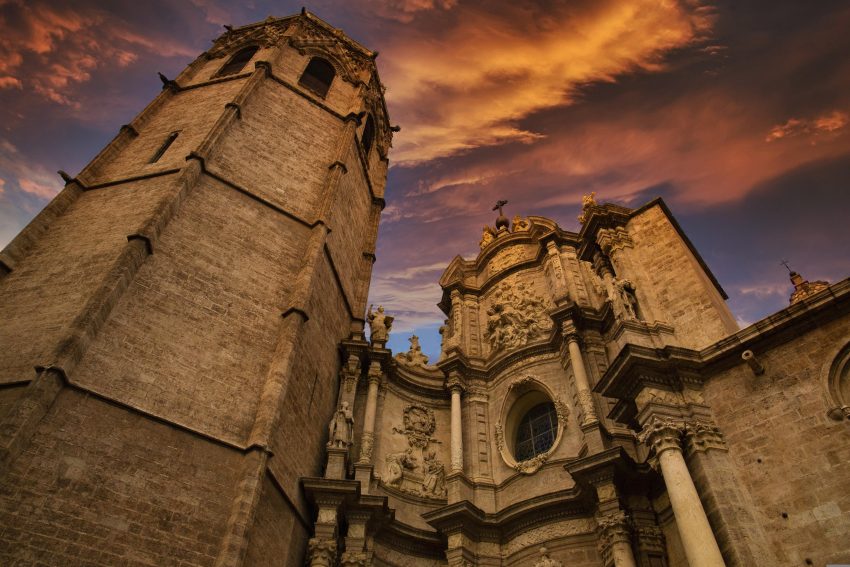
What to see is less a single monument and more the “urban theatre” of the place. The cathedral and Miguelete dominate the edges, while terraces and wide pedestrian areas make it one of the most natural places to pause and read the city’s rhythms.

Use it as a viewpoint and a connector: step back for cathedral photos, then slip into the lanes that radiate outward to find quieter corners, traditional shops, and small façades that reward close attention.


Location: Plaza de la Reina, Ciutat Vella, València, Spain | Hours: 24 Hours. | Price: Free.

Here is a complete selection of hotel options in Valencia. Feel free to review each one and choose the stay that best suits your needs.

3. Iglesia y Torre de Santa Catalina

Iglesia y Torre de Santa Catalina
CC BY-SA 3.0 / Davidmj

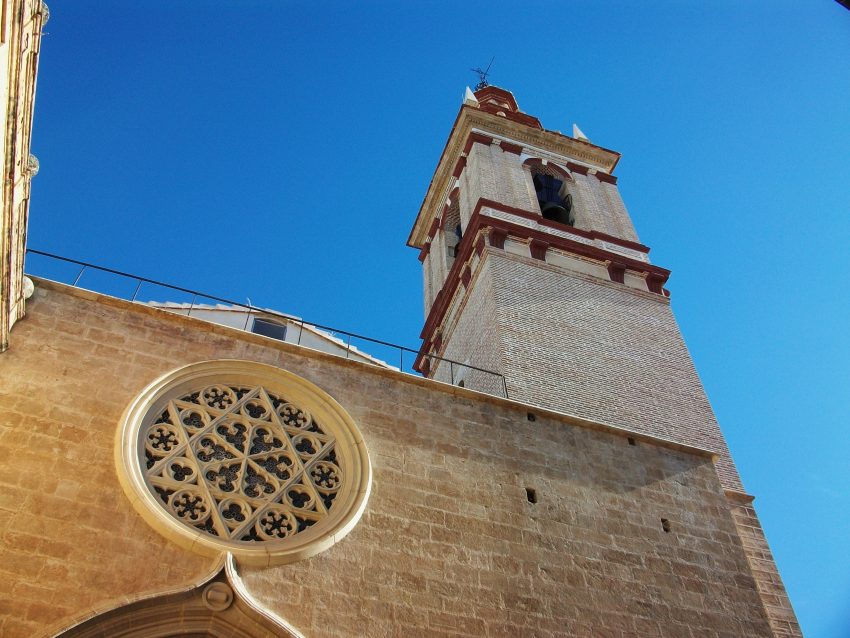
Santa Catalina is one of Valencia’s emblematic parish churches, closely associated with the post-conquest Christian city and later Baroque taste. The church has medieval roots, but much of its current visual punch comes from later rebuilding and stylistic updates.

The star attraction is the tower, a Baroque landmark that anchors the surrounding streetscape and serves as a visual compass when you’re navigating the old centre. Its sculptural profile feels almost theatrical compared with the tighter, older fabric around it.

Spend time outside first: the tower’s details read best from a little distance, especially where the street opens. Then go inside for a quieter, more intimate scale than the cathedral, with decorative elements that reflect centuries of parish life.


Location: Pl. de Santa Caterina, 8, Ciutat Vella, 46001 València, Valencia, Spain | Hours: Daily: 10:00–13:00 & 19:00–20:00. | Price: Church: free; Tower: €2 per adult.

Traveling to a country with a different currency? Avoid ATM transaction fees and pay in local currency with a Wise Card. Having used it for over 5 years, we've saved loads on fees!

4. Casa Ordeig

Casa Ordeig
Casa Ordeig
CC BY-SA 3.0 / Joanbanjo

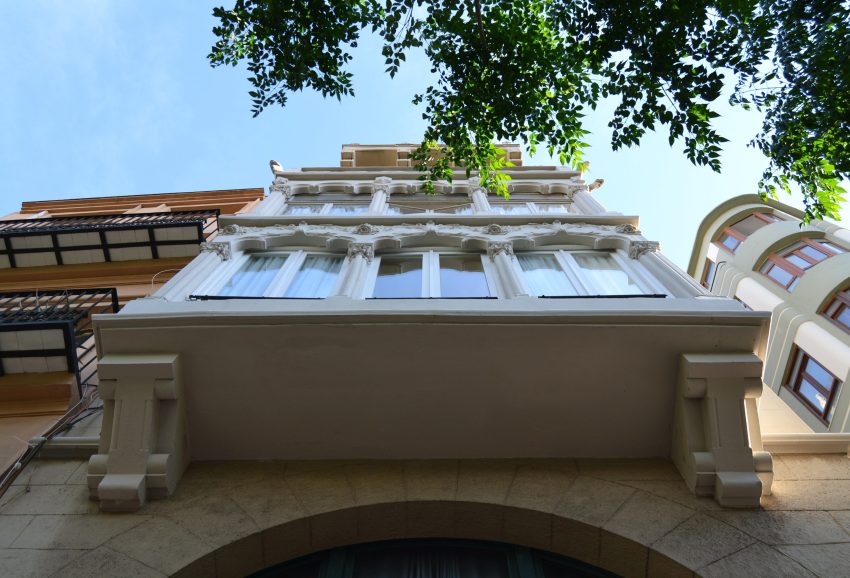
Casa Ordeig represents the bourgeois Valencia of the late 19th and early 20th centuries, when the city’s merchants and professionals expressed status through refined urban houses and ornate street façades. These buildings track the shift from medieval lanes to a more “modern” city with new tastes and materials.

What you mainly see is the exterior: decorative ironwork, carved stone, elegant balconies, and the careful symmetry typical of prosperous urban architecture. Even without entering, it offers a quick lesson in how Valencia’s historic centre kept evolving long after the medieval period.

Treat it as a detail stop rather than a long visit. Look upward, compare the façade to its neighbours, and notice how these domestic monuments quietly compete with the grand churches nearby.


Location: Carrer dels Ramellets, 1, Ciutat Vella, 46001 València, Valencia, Spain | Hours: 24 Hours. | Price: Free.

5. Lonja de la Seda

Lonja de la Seda
Lonja de la Seda
Public Domain / Felivet

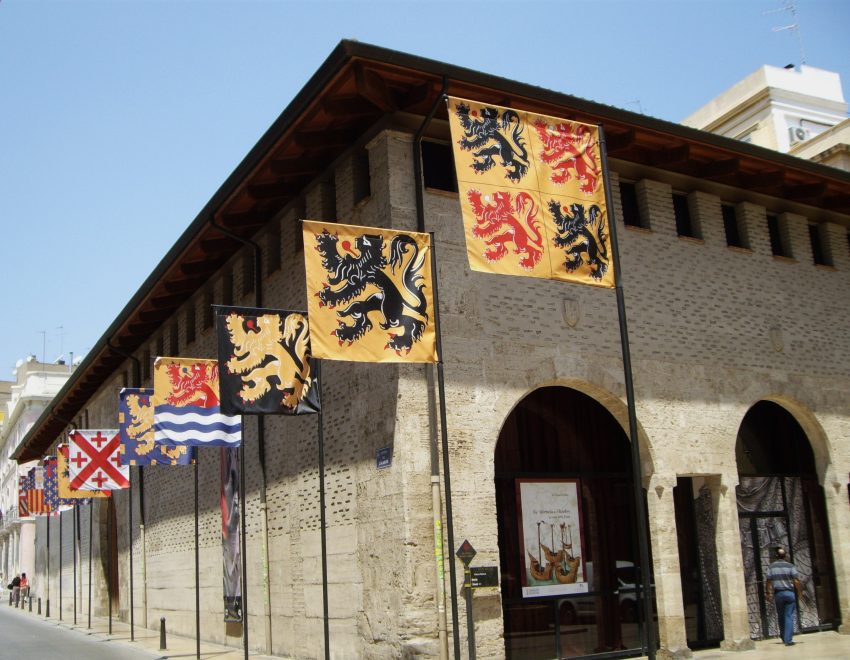
The Silk Exchange is Valencia’s great monument to late-medieval prosperity, built when the city was a major Mediterranean trading power. Its very existence is a statement: commerce here was important enough to deserve architecture as ambitious as any church.

Inside, the famous hall is defined by twisting columns and a lofty, disciplined Gothic space that feels simultaneously elegant and muscular. The building was designed to impress, conveying trust, order, and wealth to merchants doing business under its roof.

What to see is the stonework up close and the overall geometry from a few key vantage points. Move slowly, look at how the light lands on the columns, and don’t skip the exterior details, which reinforce the building’s civic pride and mercantile identity.


Location: C/ de la Llotja, 2, Ciutat Vella, 46001 València, Valencia, Spain | Hours: Monday – Saturday: 10:00–19:00. Sunday: 10:00–14:00. | Price: Adults: €2; Reduced: €1; Sundays & public holidays: free. | Website

6. Mercado Central

Mercado Central
Mercado Central
CC BY-SA 1.0 / Coralma*

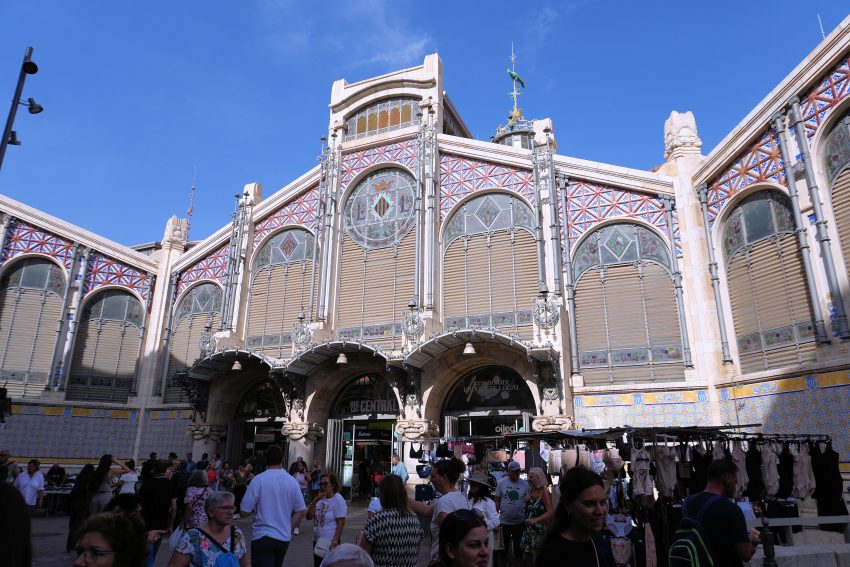
Valencia’s Central Market is a symbol of the city’s commercial tradition, updated into a monumental civic building when markets across Europe were being formalized into grand halls. It sits in the historic core, continuing a centuries-old pattern of trade and daily provisioning.

Architecturally, it’s a standout: iron structure, expansive interior space, and decorative flourishes that elevate a practical building into something celebratory. The light, the color, and the sense of scale make it more than “just” a place to buy produce.

What to see is the combination of architecture and daily life. Walk the perimeter to read the building’s curves and entrances, then step inside for the sensory experience: stalls, local products, and the constant movement that gives the market its real character.


Location: C/ de Palafox, 13, Ciutat Vella, 46001 València, Valencia, Spain | Hours: Monday – Saturday: 07:30–15:00. Sunday: Closed. Closed on public holidays. | Price: Free. | Website

7. Iglesia de San Nicolas de Bari

Iglesia de San Nicolas de Bari
CC BY-SA 3.0 / Joanbanjo

San Nicolás has medieval foundations, but it’s most famous for its later decorative transformation, reflecting Valencia’s taste for dramatic interior art in the early modern period. Like many city churches, it embodies a long cycle of rebuilding, embellishment, and renewed devotion.

The interior is the main event: richly painted and visually immersive, it can feel like stepping into a single, continuous artwork. The contrast between a relatively restrained exterior and an exuberant interior is part of the appeal.

What to see is the ceiling and upper walls in particular, where the scale of the decoration becomes clear. Take time to let your eyes adjust and then follow the imagery along the nave, noticing how art and architecture work together to shape the experience.


Location: C/ dels Cavallers, 35, Ciutat Vella, 46001 València, Valencia, Spain | Hours: Monday: Closed. Tuesday – Friday: 10:30–19:00. Saturday: 10:00–19:00. Sunday: 13:00–20:00. | Price: Adults: €15; Reduced: €10; Under 12: free. | Website

8. Torres de Serranos

Torres de Serranos
Torres de Serranos
CC BY-SA 4.0 / Mike Peel

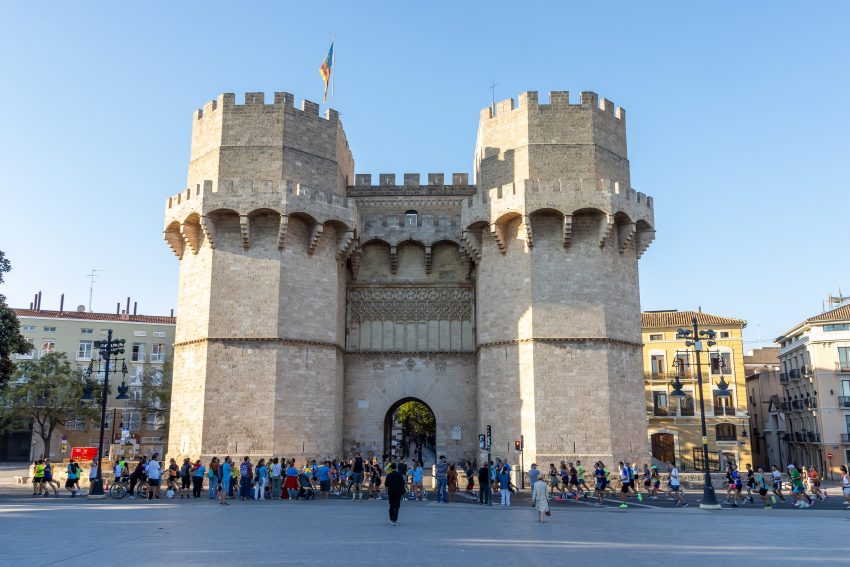
These towers are a surviving fragment of Valencia’s medieval defensive system, built to protect and impress at one of the city’s key gates. They embody the logic of a walled city: control of entry, display of strength, and a clear boundary between urban life and the world outside.

Their scale and form make the military purpose easy to read even today. Thick masonry, crenellations, and the gateway configuration speak to a period when cities needed serious fortification, not just symbolic walls.

What to see is the structure from multiple angles, then, if accessible, the elevated views that reconnect you with the old perimeter of the city. The towers are also photogenic at different times of day, when shadows deepen the relief of the stonework.


Location: C. de la Blanqueria, 1, Ciutat Vella, 46003 València, Valencia, Spain | Hours: Monday – Saturday: 10:00–19:00. Sunday: 10:00–14:00. | Price: Adults: €2; Reduced: €1; Sundays & public holidays: free; Free with València Tourist Card. | Website

9. Jardin del Turia

Jardin del Turia
Jardin del Turia
CC BY-SA 4.0 / Enric

The Turia Gardens are one of Valencia’s most significant modern transformations: an old river corridor repurposed into a long urban park after the city rethought how it should live with water and risk. The result is a linear green space that stitches neighbourhoods together.

What to see is the variety across the park’s length: gardens, sports areas, paths, bridges, and pockets of different atmosphere. It’s not a single “spot” so much as a sequence of environments that reveals how Valencia plans leisure and public space.

Use it both as a place to slow down and as a way to understand the city’s scale. Crossing under bridges and moving between sections makes the engineering and urban design story tangible, while the greenery offers relief from the dense historic centre.


Location: 46003 València, Valencia, Spain | Hours: 24 Hours. | Price: Free.

10. Almudin de Valencia

Almudin de Valencia
Almudin de Valencia
CC BY-SA 3.0 / Joanbanjo

The Almudín is tied to Valencia’s historic grain supply, representing the civic systems that kept a major city fed and stable. Buildings like this were part infrastructure, part administration, and part statement about municipal responsibility.

What to see is the robust, utilitarian character: a place designed for storage and control rather than display, yet still shaped by civic pride. Its architecture communicates security and permanence, reflecting how essential grain management was to urban life.

Look for traces of how the building was used and organized, and notice its relationship to nearby institutional sites. It’s a reminder that the city’s history is not only religious and artistic, but also logistical and economic.


Location: Plaça de Sant Lluís Bertran, 2, Ciutat Vella, 46003 València, Valencia, Spain | Hours: Monday: Closed. Tuesday – Saturday: 10:00–14:00 & 15:00–19:00. Sunday: 10:00–14:00. | Price: Free. | Website

11. Cripta Arqueologica

Cripta Arqueologica
Cripta Arqueologica
CC BY-SA 3.0 / Joanbanjo

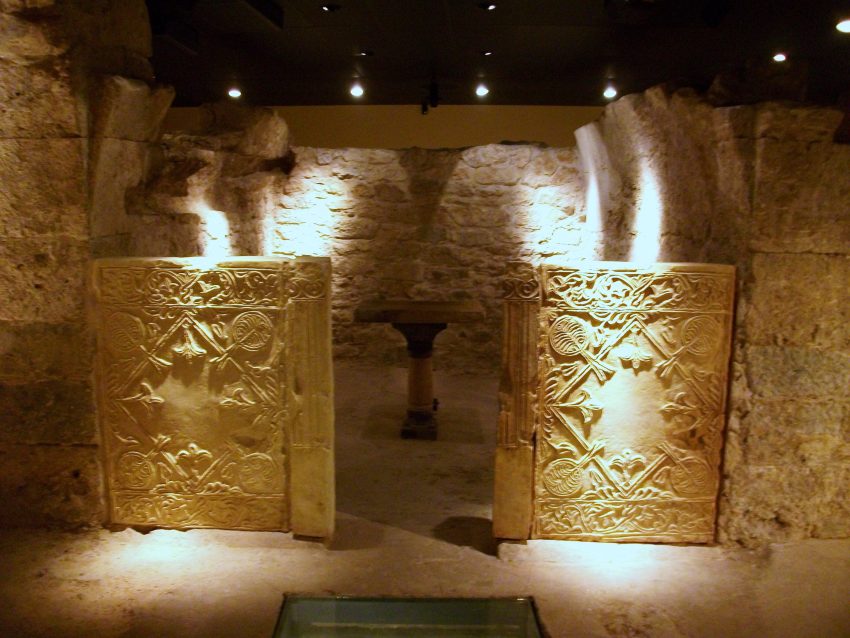
An archaeological crypt in Valencia typically marks the city’s deep stratigraphy: Roman foundations, later Islamic phases, and the Christian city that followed. These spaces exist because Valencia was continuously inhabited and rebuilt, with new structures rising directly on older ones.

What you see is the “underlayer” of the city: masonry remains, fragments of walls, and interpretive elements that help you place the finds in time. It’s not grand in the way a cathedral is, but it can be more vivid in showing how history literally sits beneath modern streets.

Go slowly and read the context. The most rewarding part is connecting what’s below ground with what you’ve just seen above it, turning the surrounding squares and churches into a legible historical map.


Location: Plaça de l´Arquebisbe, 3, Ciutat Vella, 46003 València, Valencia, Spain | Hours: Monday: 10:00–14:00 & 15:00–19:00. Tuesday – Saturday: 10:00–14:00 & 15:00–19:00. Sunday: 10:00–14:00. Closed on Monday. | Price: Adults: €2; Reduced: €1; Sundays & public holidays: free. | Website

12. Plaza de la Virgen

Plaza de la Virgen
Plaza de la Virgen
CC BY-SA 3.0 / Diego Delso

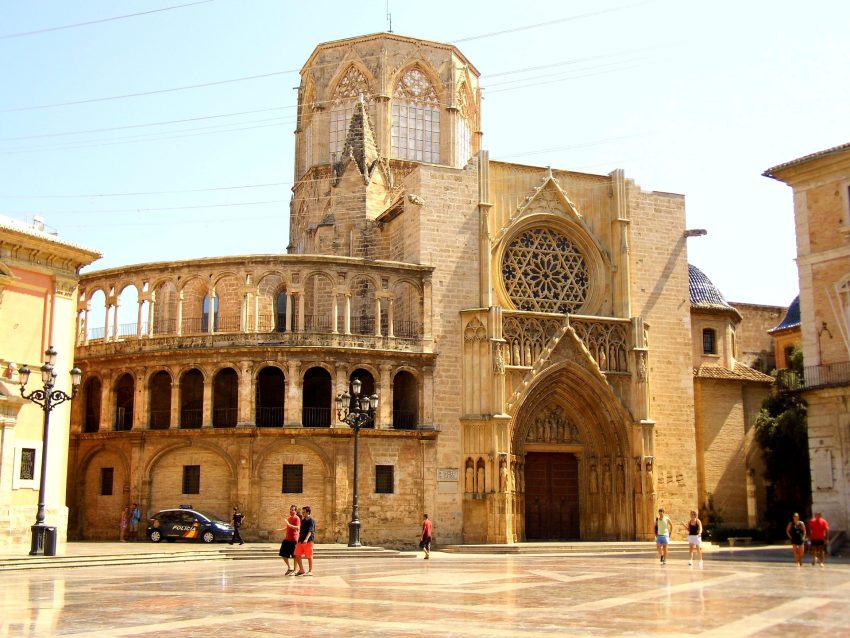
This is one of Valencia’s most historic and emotionally resonant squares, tied to the city’s oldest sacred and civic core. Over centuries it has been shaped by ceremonies, public gatherings, and the daily life of the surrounding institutions.

What to see is the concentration of landmarks around it and the way the space frames them. It’s a place where the city’s “big narratives” are visible at once: religion, government, and tradition converging in a single, walkable scene.

Spend time sitting and watching. The square is as much about perspective as it is about individual sites: look at how façades align, how people circulate, and how the space functions as a natural meeting point.


Location: Plaça de la Mare de Déu, Ciutat Vella, València, Valencia, Spain | Hours: 24 Hours. | Price: Free.

13. Basilica de la Virgen de los Desamparados

Basilica de la Virgen de los Desamparados
CC BY-SA 4.0 / Marcok

This basilica is central to Valencia’s devotional identity, dedicated to the city’s beloved patron figure and bound up with local ritual, processions, and collective memory. Its history reflects how religious spaces can become civic symbols, not only places of worship.

What to see is the overall sense of intimacy and focus: a building designed to draw attention toward the sacred image and the acts of devotion that surround it. The basilica’s presence near other major monuments reinforces how tightly religion and public life have been intertwined here.

Take time to observe how people use the space, not just how it looks. In sites like this, atmosphere is part of the heritage: the flow of visitors, the rhythm of prayer, and the way art supports living tradition.


Location: Plaça de la Mare de Déu, 6, Ciutat Vella, 46001 València, Valencia, Spain | Hours: Monday – Sunday: 07:30–14:00 & 16:30–21:00. | Price: Free; donations appreciated. | Website

14. La Catedral

La Catedral
La Catedral

Valencia’s cathedral layers Roman, Islamic, and medieval Christian history on a single site, reflecting the city’s changing rulers and ambitions. Much of what you see today grew from the 13th century onward, with later Gothic, Renaissance, Baroque, and Neoclassical additions that make the building feel like a living timeline.

Inside, look for the contrast between soaring stonework and richly ornamented chapels, then linger where light falls hardest on the vaulting and carved details. The cathedral is also closely tied to the city’s religious identity, and many local traditions still orbit it.

The bell tower, the Miguelete, is the unmissable “see” here: climbing up gives you a clear read of Valencia’s old city plan and the wider skyline. If you have limited time, prioritize the tower views and a slow circuit of the main chapels.


Location: Pl. de l'Almoina, s/n, Ciutat Vella, 46003 València, Valencia, Spain | Hours: Monday – Friday: 10:30–18:30. Saturday: 10:30–17:30. Sunday: 14:00–17:30. | Price: Adults: €9; Reduced: €6; Under 8: free. El Miguelete tower: €2.50 (reduced €1.50). | Website

15. Iglesia de San Juan del Hospital

Iglesia de San Juan del Hospital
CC BY-SA 4.0 / Bene Riobó

This church is associated with medieval charitable and hospital traditions, part of the broader European world of religious orders caring for travellers and the sick. Its roots connect to a formative period after the Christian reconquest, when new institutions reshaped the city’s social landscape.

What to see includes the atmosphere of an older, more compact sacred space, often with architectural elements that feel distinctly medieval compared with later Baroque interiors elsewhere in Valencia. Sites like this tend to carry a quieter gravity, tied to service as much as ceremony.

Take time to note the layout and any surviving historic features that signal its early origins. It’s a valuable counterpoint to larger monuments: less about grandeur, more about continuity and community care.


Location: C. del Trinquet de Cavallers, 5, Ciutat Vella, 46003 València, Valencia, Spain | Hours: Monday – Friday: 06:45–07:45 & 09:30–13:30 & 17:00–21:00. Saturday: 09:30–13:30 & 17:00–21:00. Sunday: 11:00–14:00 & 17:00–21:00. | Price: Free; donations appreciated. | Website

16. Iglesia de Santo Tomas y San Felipe Neri

Iglesia de Santo Tomas y San Felipe Neri
CC BY-SA 4.0 / Ximonic (Simo Räsänen)

This church reflects the Catholic renewal and devotional life of early modern Valencia, when religious art and architecture were used to move emotions, teach doctrine, and reinforce community identity. Its history is bound up with patronage, evolving liturgical tastes, and the city’s artistic networks.

What to see is the interior richness, typically expressed through altarpieces, imagery, and carefully staged sightlines toward the main altar. Even if the exterior reads as modest in a dense street, the inside often emphasizes drama and ornament.

Look for how decoration guides your attention, and notice the interplay of sculpture, painting, and gilded elements. The experience is as much about designed feeling as it is about historical facts.


Location: Plaza de San Vicente Ferrer, s/n, Ciutat Vella, 46003 València, Valencia, Spain | Hours: Monday – Friday: 08:30–13:00 & 18:30–20:30. Saturday: 08:30–11:00 & 18:30–20:30. Sunday: 09:30–13:00 & 18:30–20:30. | Price: Free; donations appreciated.

17. Museo Nacional de Ceramica

Museo Nacional de Ceramica
CC BY-SA 4.0 / Ximonic (Simo Räsänen)

This museum is closely tied to Valencia’s long-standing ceramic traditions and the wider decorative arts culture of Spain. It is also an architectural attraction in its own right, often associated with a grand historic palace setting that communicates elite taste and patronage.

What to see is both the building and the collections. Decorative arts museums are strongest when you treat them as a story of materials and technique: how clay, glaze, and design vocabulary evolve with trade, fashion, and technology.

Prioritize standout rooms and signature pieces, then take a slower pass through sections that show everyday objects—tiles, vessels, and furnishings—because they often reveal the most about how people actually lived.


Location: C. del Poeta Querol, 2, Ciutat Vella, 46002 València, Valencia, Spain | Hours: Tuesday – Saturday: 10:00–14:00 & 16:00–20:00. Sunday: 10:00–14:00. Closed on Monday. | Price: General: €3; Reduced: €1.50; Free admission: Saturday from 16:00 & Sunday. | Website

18. Plaza del Ayuntamiento

Plaza del Ayuntamiento
CC BY-SA 4.0 / Francesc Fort

This square is Valencia’s main civic stage, shaped by modern urban planning and public life. It has hosted gatherings, celebrations, and political moments, functioning as the city’s most visible “common room.”

What to see is the ensemble effect: the surrounding façades, the open space, and the choreography of movement across it. Unlike older medieval plazas, it often feels broader and more formally organized, reflecting later ideas about city design.

Visit at different times if you can. The square changes character dramatically between quiet daylight and busier periods, and the shifting light helps reveal the architectural relief of the buildings framing it.


Location: Pl. de l'Ajuntament, Ciutat Vella, 46002 València, Valencia, Spain | Hours: 24 Hours. | Price: Free.

19. Ayuntamiento

Ayuntamiento
Ayuntamiento
CC BY-SA 4.0 / Bene Riobó

Valencia’s city hall is a statement of municipal authority, shaped by the growth of modern civic administration. Its presence reflects the period when cities increasingly expressed their identity through monumental public buildings, not only churches and palaces.

What to see is the building as a symbol: formal façades, ceremonial spaces, and the way it anchors the surrounding urban scene. Civic architecture tends to be about legibility and order—an image of governance made stone.

If access is possible, interior rooms can reveal another layer, often more decorative than you’d expect. Even from outside, the building rewards a careful look at composition, symmetry, and the details used to project dignity.


Location: Pl. de l'Ajuntament, 1, Ciutat Vella, 46002 València, Valencia, Spain | Hours: Monday – Friday: 08:30–14:00. Closed on Saturday, Sunday. | Price: Free. | Website
Powered by GetYourGuide
Moira & Andy
Moira & Andy

Hey! We're Moira & Andy. From hiking the Camino to trips around Europe in Bert our campervan — we've been traveling together since retirement in 2020!

Read our full story here

This website uses affiliate links which earn a small commission at no additional cost to you.

Walking Tour Summary

Distance: 5 km
Sites: 19

Walking Tour Map
Map of the Self-Guided Walking Tour of Valencia walking route with 19 stops in Valencia.
Preview map of the Self-Guided Walking Tour of Valencia route in Valencia, showing 19 stops. Use the interactive map to zoom and tap markers.

More from this area

Self-Guided Walking Tour of Madrid (2026)

Self-Guided Walking Tour of Madrid

This website uses affiliate links which earn a small commission at no additional cost to you.

Madrid is Spain's capital and one of Europe's great museum cities, with royal, political, artistic, and everyday urban life concentrated in a large but highly walkable centre. The Royal Palace, although no longer the royal family's home, remains the official residence and is presented by Madrid's tourism office as a route through the history of Spain from Charles III to Alfonso XIII.

For visitors, Madrid is less about one single monument and more about its full cultural rhythm. The Prado, Reina Sofía, Thyssen-Bornemisza, Royal Palace, Plaza Mayor, Puerta del Sol, Retiro Park, Gran Vía, markets, tapas bars, and neighbourhoods such as Malasaña and La Latina create a rich city-break experience. It is especially strong for travellers who want art, food, nightlife, and excellent rail connections to other Spanish cities.

How to Get to Madrid

By Air: Madrid is served by Adolfo Suárez Madrid-Barajas Airport (MAD), the country's main international gateway with direct flights from across Europe, the Americas, and beyond. From the airport, the fastest, simplest options into the centre are the Metro (Line 8 connects to the wider network), Cercanías trains from Terminal 4, or an official taxi with a fixed fare to central Madrid zones, depending on where you're staying. For the best deals and a seamless booking experience, check out these flights to Madrid on Booking.com.

By Train: Madrid is Spain's rail hub, with high-speed AVE and other fast services linking the capital to major cities like Barcelona, Seville, Valencia, Málaga, Zaragoza, Valladolid, and many more. Most long-distance services arrive at either Madrid-Puerta de Atocha or Madrid-Chamartín-Clara Campoamor, and both are well connected to the Metro and local trains, making it easy to roll straight into your hotel area without needing a car. Train schedules and bookings can be found on Omio.

By Car: Driving to Madrid can be convenient if you're arriving from smaller towns, doing a wider road trip, or carrying lots of luggage, but it's rarely the easiest way to enter the city itself. Expect heavy traffic at peak hours, low-emission zone rules in parts of the centre, and parking that's limited and costly, so many travelers find it smoother to park at their accommodation (or use a park-and-ride) and rely on walking and public transport once you're in the core. If you are looking to rent a car in Spain I recommend having a look at Discover Cars, first, as they compare prices and review multiple car rental agencies for you.

1. Circulo de Bellas Artes

Rooftop bar of the Círculo de Bellas Artes
Círculo de Bellas Artes
CC BY-SA 4.0 / Emilio J. Rodríguez Posada

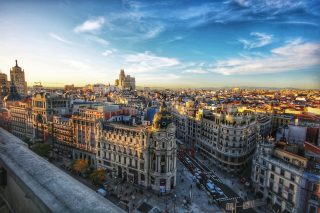
If you want the “best view in Madrid” moment early in your walk, starting here makes more sense than beginning in Plaza Mayor. The building sits right by Calle Gran Vía, and while the venue is a major cultural institution, the real draw for this route is its rooftop perspective over the city’s main axis. It’s an efficient opener: you get instant skyline context, a strong photo opportunity, and a clear orientation for the rest of central Madrid.

Head up to the rooftop bar, Azotea del Círculo, on the upper floors for a panoramic sweep across rooftops and landmarks. The drinks are typical rooftop-bar fare, but the ambience is the point: wide views, open sky, and that iconic Madrid skyline you’ve probably seen in countless photos. You can take the classic “I was in Madrid” shot with the cityscape behind you, then slow the pace on the terrace seating before you launch into the heavier walking part of the day.

A few practical notes make the stop smoother. Rooftop access is usually handled via a paid entry at the ground-floor desk (often around €4), and once you’re up there you’re not obliged to order anything—treat it as a viewpoint first, bar second. In peak season, arrive with buffer time because queues for the elevator are common; late afternoon into early evening is ideal, and if you’re chasing sunset, aim to be up there roughly an hour beforehand. When you come back down to street level, you’re perfectly placed to continue: walk toward the corner where Edificio Metrópolis anchors the junction with Calle de Alcalá, one of the most recognisable Madrid street scenes.


Location: Círculo de Bellas Artes, Calle de Alcalá, Madrid, Spain | Hours: Monday – Thursday: 10:00–01:00. Friday – Saturday: 10:00–02:00. Sunday: 10:00–01:00. | Price: Rooftop access is typically €6 (general) or €5 (reduced), with free entry for eligible visitors. | Website

We recommend to rent a car in Spain through Discover Cars, they compare prices and review multiple car rental agencies. Book your rental car here.

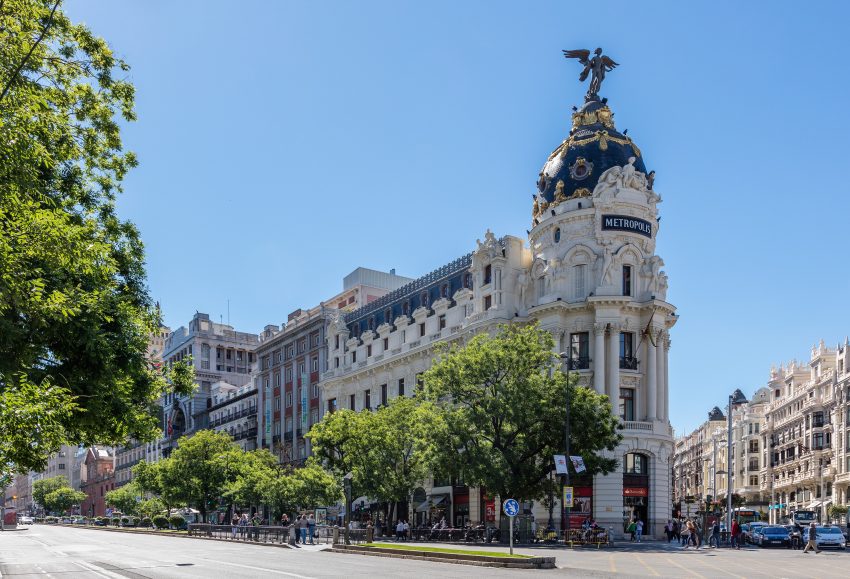
2. Edificio Metropolis

Edificio Metropolis
Edificio Metropolis
CC BY-SA 4.0 / Diego Delso

Edificio Metrópolis is one of the most iconic corner buildings in central Madrid, completed in the early 20th century when the city was embracing grand commercial architecture. It was designed as a statement piece at a prime junction, using a richly ornamented façade and a highly legible dome silhouette to mark the city’s new urban confidence. Its style belongs to the same European moment as Parisian and Viennese “city glamour,” translated into Madrid’s own commercial boom.

The main sight is the dome and its sculptural crown. From street level, the building reads like a theatrical set: columns, reliefs, and layered ornament culminating in that rooftop figure that dominates many Gran Vía photos. The corner position matters—this is architecture meant to turn a bend and announce an intersection, so viewpoints from multiple angles are part of the experience.

Treat it as a visual anchor rather than a destination you “do” for a long time. Pause, take in the detailing, then use it to orient yourself between the older core and the Gran Vía corridor. It’s especially effective at dusk or night when the lighting emphasizes the dome and makes the building’s role as urban landmark unmistakable.


Location: C. Alcalá, 39, Centro, 28014 Madrid, Spain | Hours: 24 Hours. | Price: Free. | Website

Here is a complete selection of hotel options in Madrid. Feel free to review each one and choose the stay that best suits your needs.

3. Palacio de Cibeles

Palacio de Cibeles
Palacio de Cibeles
CC BY-SA 2.0 / Diriye Amey

Palacio de Cibeles is a landmark of Madrid’s early-20th-century institutional architecture, built as the headquarters of the postal and communications system and completed in 1919. Its elaborate, almost cathedral-like civic style reflects how important communication was to a modernizing state: the building was meant to embody efficiency and national presence, not just provide office space. In more recent decades it has taken on a new civic life as a major municipal building and public venue.

What to see is the building’s scale and interior public spaces. The façade is a lacework of stone that can look almost weightless from a distance, and inside you typically get generous halls that were designed for public service at a monumental level. If you can access exhibitions or viewpoint areas, they add context and give you a strong city panorama over the surrounding boulevards.

The setting matters as much as the structure. The palace faces the Plaza de Cibeles and its fountain, an ensemble that reads as a statement of Madrid’s civic identity and ceremonial geography. It’s also a natural hinge point between different “Madrids”: older historic routes, the grand 19th-century axis, and the newer cultural and commercial zones that spread outward.


Location: Palacio de Cibeles, Retiro, 28014 Madrid, Spain | Hours: Tuesday – Sunday: 10:00–20:00. Closed on Monday. | Price: Free to enter the building; Mirador (viewpoint): from €4 (discounts available). | Website

Traveling to a country with a different currency? Avoid ATM transaction fees and pay in local currency with a Wise Card. Having used it for over 5 years, we've saved loads on fees!

4. Puerta de Alcala

Puerta de Alcala
Puerta de Alcala
CC BY-SA 2.0 / Diriye Amey

Puerta de Alcalá is one of Madrid’s signature 18th-century monuments, a ceremonial gateway commissioned by Charles III as part of the city’s Enlightenment-era modernization. Completed in 1778 and designed by Francesco Sabatini, it was meant to project order and civic pride at an entrance to the capital. Unlike many triumphal arches, it functioned as a real urban gate, marking a threshold between city and countryside at the time.

What to see is the neoclassical clarity and the sculptural detailing. The arch has multiple openings, balancing monumentality with permeability, and the decorative program shifts depending on which side you approach from—another reminder that it was designed to be experienced in motion. Up close, the stonework and proportions reveal why it holds its own amid heavy traffic and large-scale boulevards.

It works best as part of a broader urban composition. Stand back to read it against the lines of the surrounding streets and the greenery of nearby Retiro, then move closer for details. It’s also a useful narrative stop: it embodies the moment Madrid started to present itself as a “modern” capital with planned vistas, formal gateways, and public works meant to impress as well as to function.


Location: Pl. de la Independencia, s/n, Retiro, 28001 Madrid, Spain | Hours: 24 Hours. | Price: Free. | Website

5. Parque del Retiro

Parque del Retiro
Parque del Retiro
CC BY-SA 4.0 / Diego Delso

Parque del Retiro began as royal grounds tied to the Buen Retiro palace complex in the 17th century, created for court leisure and display during the Habsburg period. Over time the palace declined, but the parkland endured and eventually became a public park, a shift that mirrors broader changes in how urban space was shared and valued. Today it reads as both a historic landscape and the city’s most important everyday green refuge.

What to see is a mix of set pieces and wandering routes. The large central pond with its monument and boating culture is the classic focal point, while the Crystal Palace and other pavilion structures reflect 19th-century tastes for iron, glass, and exhibition architecture. Gardens, statues, and shaded promenades create a sequence of moods, from formal landscaping to more relaxed woodland edges.

Use Retiro as a reset in the middle of dense city walking. It’s where Madrid’s monumental story softens into lived experience: families, runners, street performers, and quiet benches under old trees. If you plan your route well, you can connect the park to Puerta de Alcalá and then back into the urban core, using the transition from boulevard to greenery as a deliberate part of the day’s rhythm rather than a break from it.


Location: Retiro, 28009 Madrid, Spain | Hours: (Summer) April – September: 06:00–24:00. (Winter) October – March: 06:00–22:00. | Price: Free. | Website

6. Palacio de Cristal

Palacio de Cristal
Palacio de Cristal
CC BY-SA 4.0 / Diego Delso

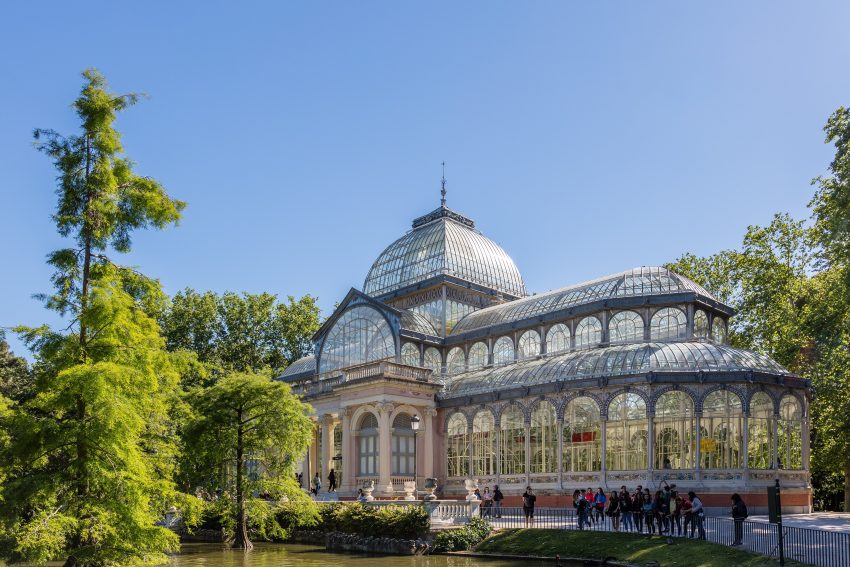
Built in 1887 as part of the General Exhibition of the Philippines, the Palacio de Cristal was conceived as a greenhouse-like pavilion to display tropical flora and to project imperial prestige at a time when Spain was trying to reinforce its overseas image. It was designed by Ricardo Velázquez Bosco, drawing clear inspiration from London’s Crystal Palace tradition of iron-and-glass architecture.

What you see today is a highly photogenic piece of 19th-century engineering: a light, skeletal iron frame wrapped in large glass panels, set on a brick base and accented with decorative ceramic details (including work associated with Daniel Zuloaga). The setting is deliberate—right beside an artificial lake with mature trees around it—so the building reads as much as a landscape feature as it does a pavilion.

For visitors, the experience is usually twofold: the architecture itself and whatever temporary installation is on inside. The palace is now a satellite exhibition space of the Museo Nacional Centro de Arte Reina Sofía, so the interior is often used for contemporary works that play with light, reflections, and the glass envelope. Even if the interior programme is minimal on the day, it’s still worth stepping inside for the shifting perspectives across the lake and the park’s canopy, then circling outside to catch the dome and façade from multiple angles.


Location: P.º de Cuba, 4, Retiro, 28009 Madrid, Spain | Hours: Closed until further notice. | Price: Free. | Website

7. Royal Botanical Garden

Real Jardin Botanico
CC BY-SA 3.0 / Bidgee

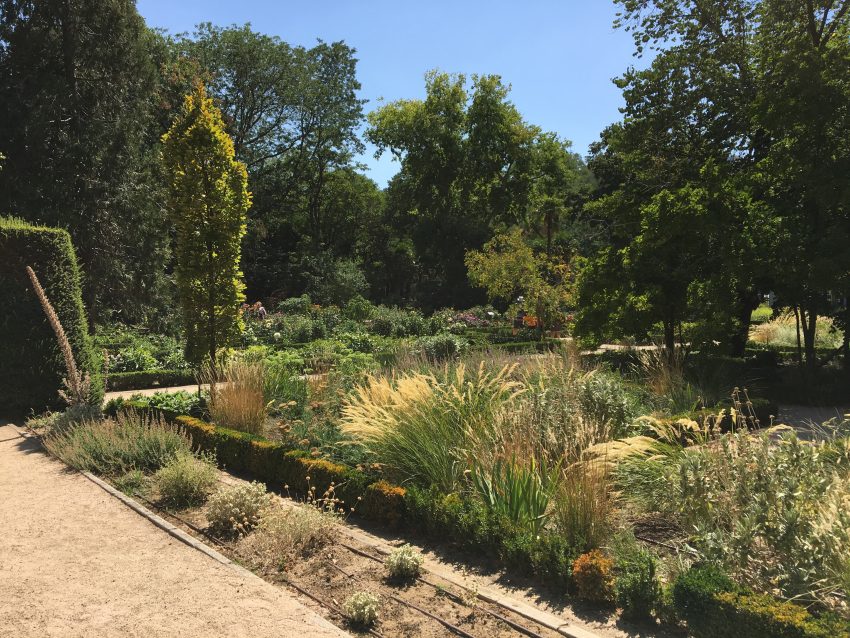
Madrid’s Royal Botanical Garden was founded in the 18th century as part of the city’s Enlightenment-era push to organise knowledge and natural science in a public, systematic way. It began under Ferdinand VI and was later relocated to its present site on the Prado axis under Charles III, with design input associated with architects such as Francesco Sabatini and Juan de Villanueva. Today it functions as a scientific institution as well as a visitor attraction, with links to CSIC.

What to see is organised as a sequence of terraces and collections rather than a single “main sight.” Expect formal beds, an arboretum feel in the tree areas, and planting that shifts by season, so the garden can look completely different month to month. Highlights typically include the historical layout along the central promenades, specialist plant groupings, and the glasshouse spaces that concentrate more delicate species and give you a quick climate-change-of-scene in the middle of the city.

As a visit, it’s best treated as a calm, curated pause between bigger museum and boulevard stops. Because it sits close to Museo Nacional del Prado, it works well before or after gallery time when you want something outdoors but still “cultural.” Walk it slowly, read the labels when something catches your eye, and use the benches and shaded sections strategically if you’re doing a long day on foot.


Location: Pl. Murillo, 2, Retiro, 28014 Madrid, Spain | Hours: Daily: 10:00–17:30 (November – February). Daily: 10:00–18:30 (March & October). Daily: 10:00–19:30 (April & September). Daily: 10:00–20:30 (May – August). | Price: Adults: €4; Students (18–25), large-family adults & seniors (65+): €1; Under 18: free. | Website

8. Museo Nacional del Prado

Museo Nacional del Prado
CC BY-SA 2.0 / Pablo Sanchez

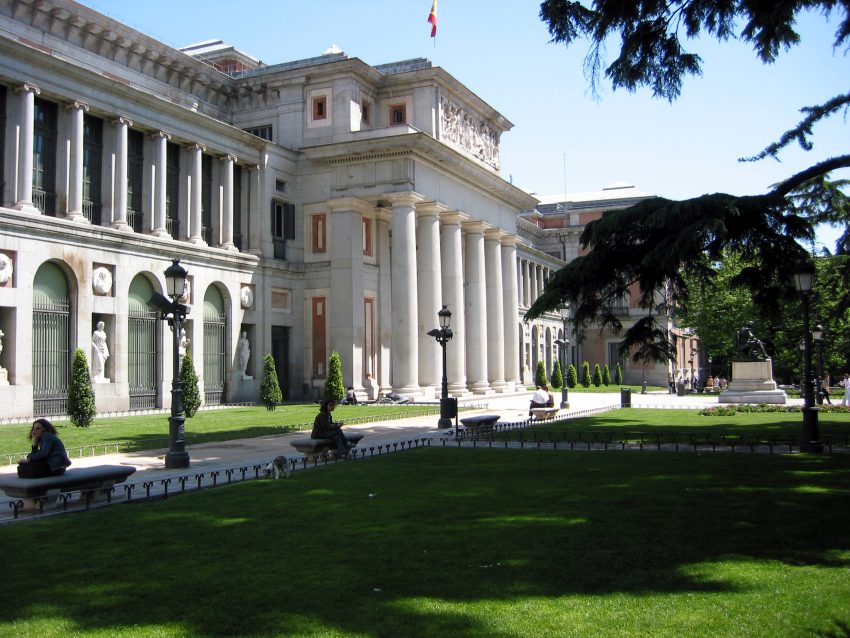
The museum’s identity is inseparable from its building and its royal origins. The neoclassical structure was designed by Juan de Villanueva in 1785 on the orders of Charles III, initially intended for a natural history purpose before being reoriented toward art. It ultimately opened to the public in 1819, becoming the Royal Museum of Painting and Sculpture under Ferdinand VII, a shift that formalised the display of the crown’s collections as a national institution.

What makes a visit distinctive is how concentrated the core of Spanish painting is, set alongside major European schools. The Prado is especially strong for Francisco de Goya, and it also holds high-impact groupings by painters such as Diego Velázquez, El Greco, Titian, Rubens, and Hieronymus Bosch.

On site, plan to treat it as a sequence of “big rooms + targeted stops” rather than trying to cover everything. Prioritise the Spanish Golden Age galleries, then build outward into the Italian and Flemish holdings; many visitors anchor their route around a handful of signature works (often including Velázquez’s Las Meninas and Bosch’s The Garden of Earthly Delights) and use those as waypoints to explore nearby rooms.


Location: Retiro, 28014 Madrid, Spain | Hours: Monday – Saturday: 10:00–20:00. Sunday: 10:00–19:00. Closed on January 1, May 1, December 25. Limited hours on January 6, December 24, December 31: 10:00–14:00. Free access Monday – Saturday: 18:00–20:00. Free access Sunday: 17:00–19:00. | Price: Adults: €15; Reduced: €7.50; Free admission: see conditions. | Website
Powered by GetYourGuide

9. Puerta del Sol

Puerta del Sol
Puerta del Sol
CC BY-SA 2.0 / Tomás Fano

Puerta del Sol is Madrid’s symbolic center, both geographically and culturally, even though its name refers to a former gate in the city’s old walls. As Madrid expanded, the space became a focal point for movement and public life, eventually turning into the capital’s most recognizable meeting place. Its modern identity is tied to civic rituals, demonstrations, and everyday rendezvous—less a “square of monuments” and more a square of shared habits.

Key sights are small but loaded with meaning. The clock on the Real Casa de Correos is central to the New Year’s Eve tradition of eating twelve grapes on the chimes, and the Kilometer Zero marker anchors Spain’s radial road network in the public imagination. You’ll also find famous civic symbols such as the Bear and the Strawberry Tree statue, which ties the square to Madrid’s heraldry.

To appreciate it, stand still for a moment and watch how the city flows through. Sol is a transport and pedestrian knot: streets radiate out, and the square’s energy is about circulation, street performance, and constant turnover. It’s also a practical pivot for the rest of the walk—use it to reset your bearings before heading toward the older Habsburg core or outward toward newer 19th–20th century Madrid.


Location: Puerta del Sol, Centro, Madrid, Spain | Hours: 24 Hours. | Price: Free.

10. Calle Mayor

Calle Mayor
Calle Mayor
CC BY-SA 2.0 / Daniel

Calle Mayor is one of the old city’s key arteries, a street whose importance comes from continuity: it follows a historic line of movement through central Madrid, linking major civic and ceremonial spaces. In a city that expanded and reinvented itself repeatedly, this street retained a “spine” function, connecting older neighborhoods to the political and religious core near the palace and cathedral. Its history is written in layers of façades, side streets, and the way the urban grain tightens as you move west.

What to see is a sequence rather than a single landmark. You’ll pass historic churches, traditional balconies, and small plazas that open like pauses in the street’s rhythm. The street also offers classic old-Madrid perspectives: framed views toward domes and towers, sudden glimpses into narrow lanes, and the steady sense that you’re walking a route used for processions, commerce, and everyday commuting for centuries.

The best way to do Calle Mayor is to keep looking up and to take one or two deliberate detours. Duck into a side street for a quieter, older texture, then return to the main line to feel the contrast. It’s also an excellent connector on foot: you can treat it as the thread that stitches Plaza Mayor, Puerta del Sol, and the royal-civic zone into one coherent narrative walk.


Location: Calle Mayor, Centro, Madrid, Spain | Hours: 24 Hours. | Price: Free.

11. Plaza Mayor

Plaza Mayor
Plaza Mayor
CC BY-SA 1.0 / Alejandro Silvio Alonso

Plaza Mayor is Madrid’s classic Habsburg-era grand square, developed in the early 17th century as a controlled, monumental urban room for a growing imperial capital. It evolved from earlier market space and was shaped into a formal rectangle under Philip III, whose statue still anchors the center. Over the centuries it has been a stage for everything from festivals and public ceremonies to darker episodes such as trials and punishments, which gives it a charged historical resonance behind the postcard symmetry.

What to see here is the architecture as a unified composition. The enclosed arcades, uniform façades, and rhythmic windows create a sense of order that was deliberate: it is civic theatre. Pay attention to the Casa de la Panadería with its frescoed façade, and walk the perimeter under the arcades to feel how the square was designed to manage crowds, commerce, and spectacle.

To make it more than a photo stop, arrive at a quiet time and read the space from multiple corners. The square changes character with light and density: early morning can feel almost austere, while evenings emphasize social life and performance. From here you can slip directly into the old-town street network toward Calle Mayor or back to the commercial center, which helps you understand how the plaza sits between everyday movement and formal display.


Location: Pl. Mayor, Centro, 28012 Madrid, Spain | Hours: 24 Hours. | Price: Free.

12. Mercado de San Miguel

Mercado de San Miguel
CC BY-SA 4.0 / Touzrimounir

Mercado de San Miguel is a 20th-century market building that has been repurposed into one of Madrid’s best-known food halls. The structure dates to the iron-and-glass market architecture boom, opening in 1916, when cities were modernizing their food supply with hygienic, light-filled covered markets. Its current identity is newer: a carefully curated culinary venue that trades as much on atmosphere and convenience as on everyday shopping.

The main thing to see is the building itself in action: the cast-iron frame, the glazed walls, and the constant movement of people grazing and sampling. Stalls typically focus on tapas culture and Spanish regional specialties—jamón, seafood bites, cheeses, olives, croquetas, and sweets—often with wine, vermouth, or cava to match. It’s less a “market run” and more a concentrated tasting circuit.

If you want the best experience, treat it like a quick sequence rather than a single meal. Go with a short list of tastes, share portions, and then step back outside to reset your palate in the surrounding streets. It’s also ideally positioned for pairing with nearby Plaza Mayor, so you can do the market’s modern food-scene energy and then contrast it with Madrid’s older ceremonial plaza in a single loop.


Location: Pl. de San Miguel, s/n, Centro, 28005 Madrid, Spain | Hours: Sunday – Thursday: 10:00–24:00. Friday – Saturday: 10:00–01:00. Holiday eves: 10:00–01:00. | Price: Free entry; pay per item at the stalls. | Website

13. Plaza de la Villa

Plaza de la Villa
Plaza de la Villa
CC BY-SA 4.0 / Enric

Plaza de la Villa is one of Madrid’s most historically layered small squares, preserving the texture of the medieval and early modern city. Long before the capital became a stage for grand boulevards and huge plazas, this was a civic heart: a place where administrative life clustered in tight streets and compact buildings. Its value is that it still looks like a pre-modern Madrid pocket, more intimate and crooked-edged than the later ceremonial spaces.

The square’s main sights are architectural rather than monumental. Casa de la Villa served as the city hall for centuries, and nearby you’ll find Casa de Cisneros, a classic example of the city’s noble-townhouse tradition. The most evocative building is the Torre de los Lujanes, one of Madrid’s best-known medieval survivals, with a fortress-like profile that hints at the city’s earlier defensive character.

When you’re there, slow down and treat it like a short “reading stop.” The details are in the stonework, balconies, coats of arms, and the way streets funnel into the square. It’s also strategically placed for walking: you can move from here toward Calle Mayor for the processional route into the older royal-religious zone, or angle back toward the more commercial core around Puerta del Sol.


Location: Pl. de la Villa, Centro, Madrid, Spain | Hours: 24 Hours. | Price: Free.

14. Catedral de la Almudena

Catedral de la Almudena
CC BY-SA 2.0 / Kent Wang

The Catedral de la Almudena feels ancient from a distance, but it is a largely modern cathedral shaped by a long, interrupted construction history. The project began in the late 19th century with ambitions to give the capital a major cathedral beside the royal palace, but progress was slow and repeatedly halted by politics, funding, and the upheavals of the 20th century. It was finally completed and consecrated in 1993 by Pope John Paul II, which is a useful clue to how new it is in comparison to Spain’s medieval cathedrals.

What makes it interesting on site is the blend of styles and the way it was tailored to its setting. The exterior reads as neoclassical to harmonize with the palace next door, while the interior shifts toward a neo-Gothic structure. Many visitors remember the contemporary decorative program: bright chapels, modern Marian imagery, and a visual language that feels closer to late-20th-century Spain than to the High Middle Ages.

Give yourself time for the quieter parts, not just the nave. The crypt (Romanesque-revival in mood) is often the most atmospheric space, and the museum and dome areas (where accessible) add context and city views. Because it sits on the edge of the old town, it also works well as a “hinge” stop: you can read the cathedral as a statement about Madrid’s late-blooming ecclesiastical identity beside a palace that was built to look timeless.


Location: C. de Bailén, 10, Centro, 28013 Madrid, Spain | Hours: (Summer) July 1 – August 31; Daily: 10:00–21:00. (Winter) September 1 – June 30; Daily: 10:00–20:30. | Price: Cathedral: Free (suggested donation). Museum & dome: Adults: €8; Concessions: €5; Under 10: free. | Website

15. Palacio Real

Palacio Real
Palacio Real
CC BY-SA 4.0 / Javier Montes

The Palacio Real is the monumental Bourbon-era palace built after the old royal Alcázar burned down in 1734. Commissioned by Philip V and developed through the 18th century, it was designed to project dynastic power in stone: a vast Baroque residence rising above the Manzanares escarpment, using granite and white Colmenar limestone to give it that crisp, formal Madrid look. Although it is officially the royal palace, it is now used mainly for state ceremonies rather than day-to-day royal life.

Inside, the visit is about grand rooms and court symbolism rather than “palace living.” The highlight sequence usually includes the grand staircase, the Throne Room with its red velvet and ceiling frescoes, the lavish Banqueting Hall, and the Royal Armoury (one of Europe’s standout collections of tournament and battlefield pieces). Look as well for the porcelain room and decorative arts that show how tastes shifted from heavy Baroque to lighter neoclassical refinement.

Outside, linger in the courtyards and viewpoints before you move on. The façade and its scale read best from the Plaza de la Armería and the cathedral side, and the gardens (Sabatini and Campo del Moro) give you a calmer, greener framing of the building. It’s also an easy place to connect the story of monarchy, religion, and urban power because the next major landmarks sit almost shoulder-to-shoulder in the old core of Madrid.


Location: Centro, 28071 Madrid, Spain | Hours: (Summer) April 1 – September 30; Monday – Saturday: 10:00–19:00; Sunday: 10:00–16:00. (Winter) October 1 – March 31; Monday – Saturday: 10:00–18:00; Sunday: 10:00–16:00. | Price: Adults: €18; Reduced: €9; Under 5: free. | Website
Powered by GetYourGuide

16. Gran Via

Gran Via
Gran Via
CC BY-SA 2.0 / Felipe Gabaldón

Gran Vía is Madrid’s early-20th-century “modern city” statement: a major avenue cut through older fabric to improve circulation, create commercial frontage, and project metropolitan confidence. Built in stages from the 1910s into the late 1920s, it reflects an era when European capitals were remaking themselves with big gestures—wider streets, new building typologies, and a public realm designed for traffic, spectacle, and consumption. Its history is therefore as much about urban planning as about architecture.

What to see is the architecture-by-episode: the street is a catalog of styles and ambitions. Early sections show ornate, historicist façades; later stretches move toward cleaner lines and early modern influences. The avenue is also tied to entertainment culture—cinemas, theatres, and marquee lighting—so even if you’re not going in, the street reads as a “showfront” for the city.

Walk it with your eyes trained on rooflines and corner buildings, because that’s where the drama is. Many of the most memorable features are above street level: domes, sculptural groups, and curved corners that were designed to be seen from moving vehicles and long approaches. It’s busy and commercial, but as a historical experience it’s one of the best places to feel Madrid’s shift into modern mass culture.


Location: Gran Vía, Centro, Madrid, Spain | Hours: 24 Hours. | Price: Free.
Powered by GetYourGuide
Moira & Andy
Moira & Andy

Hey! We're Moira & Andy. From hiking the Camino to trips around Europe in Bert our campervan — we've been traveling together since retirement in 2020!

Read our full story here

This website uses affiliate links which earn a small commission at no additional cost to you.

Walking Tour Summary

Distance: 8 km
Sites: 16

Walking Tour Map
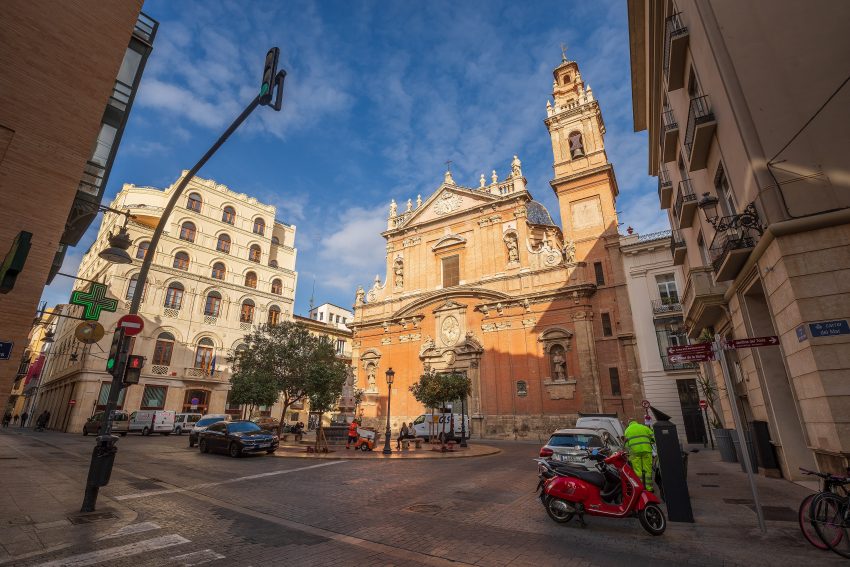
Map of the Self-Guided Walking Tour of Madrid walking route with 16 stops in Madrid.
Preview map of the Self-Guided Walking Tour of Madrid route in Madrid, showing 16 stops. Use the interactive map to zoom and tap markers.

More from this area

Self-Guided Walking Tour of Tarragona (2026)

Self-Guided Walking Tour of Tarragona

This website uses affiliate links which earn a small commission at no additional cost to you.

Tarragona is one of Spain's best cities for Roman heritage, built over ancient Tarraco, once one of the major Roman centres of Hispania. UNESCO describes the Archaeological Ensemble of Tarraco as preserving remains from the city's Republican foundation in the 3rd century BCE through to the Early Christian era.

For visitors, Tarragona combines archaeology with a Mediterranean coastal setting. The amphitheatre by the sea, Roman walls, circus, forum remains, cathedral, old town streets, beaches, and nearby aqueduct give it a strong identity without the scale or crowds of Barcelona. It works well as a day trip, but also as a base for the Costa Daurada, Reus, and PortAventura.

How to Get to Tarragona

By Air: The nearest major airport is Barcelona El Prat, which gives you the widest choice of international and low-cost flights. From the airport, you can reach Tarragona by heading into Barcelona to connect with onward rail services, or by using direct coach options when they suit your timing, then finishing in Tarragona's centre where most hotels and sights are walkable. If you are arriving via Girona or Reus, they can work for specific routes and seasonal flights, but services are generally less frequent than from Barcelona. For the best deals and a seamless booking experience, check out these flights to Tarragona on Booking.com.

By Train: Tarragona is well connected by rail, and for many travellers this is the simplest option, especially from Barcelona and other cities along the Mediterranean corridor. High-speed services typically use the Camp de Tarragona station (outside the centre), while regional trains serve Tarragona station closer to town, so it's worth checking which one your ticket uses and planning the last leg accordingly. From either station, you can get into the centre quickly by taxi or local bus, making the train a very practical choice for a car-free trip. Train schedules and bookings can be found on Omio.

By Car: Driving is straightforward, with fast motorway routes linking Tarragona to Barcelona and Valencia, and it's handy if you plan to explore the Costa Daurada, small inland villages, or beaches beyond the city. The trade-off is that central parking can be limited or pricey in peak season, so consider choosing accommodation with parking, using public garages, or parking on the edge of town and walking in. Once you're in the historic core, the streets are better suited to exploring on foot than navigating by car. If you are looking to rent a car in Spain I recommend having a look at Discover Cars, first, as they compare prices and review multiple car rental agencies for you.

By Bus: Long-distance and regional buses can be good value, and they often arrive close to the centre, which is useful if you want to step straight into sightseeing without transfers. They’re particularly handy for direct connections from nearby coastal towns, resorts, and smaller places that aren’t as well served by rail, although journey times can be slower than the train depending on traffic and stops.

A Short History of Tarragona

Tarragona Before Rome: Iberian Roots & Early Trade

Long before the city became a showpiece of empire, Tarragona's story began with Iberian communities shaped by Mediterranean exchange, seasonal agriculture, and coastal commerce. This early phase left fewer monumental traces than later centuries, but it established the idea of Tarragona as a place where goods, people, and ideas flowed in and out, creating a durable urban identity. When you visit the Mercado Central today, it echoes that older rhythm of trade and daily life, even if the building itself belongs to a much later era.

Tarragona as Tarraco: The Roman Capital on the Frontier of Empire

The decisive turning point came with Rome, when Tarragona-known as Tarraco-grew into one of the most important urban centres in Roman Hispania. Power, entertainment, and civic pride were built in stone: the Circ Roma hosted the roar and danger of chariot racing, while the Anfiteatro staged the city's public spectacles with a stark view of Roman authority and ritual. For a quick grasp of how extensive Roman Tarragona once was, Maqueta Tarraco helps you visualise the ancient street plan, major complexes, and the sheer ambition of an imperial city designed to impress.

Tarragona After Rome: Late Antiquity, Faith & Reused Stone

As Roman administration weakened, Tarragona moved into a more uncertain period marked by shifting rulers, reduced long-distance trade, and the gradual reshaping of the city around Christian institutions. In many places, the grand materials of Tarraco did not disappear so much as get repurposed-walls, blocks, and foundations becoming the raw fabric of later construction. This is where Tarragona's layered character starts to feel most tangible: the Roman past remains present, but increasingly filtered through the needs of communities trying to defend, worship, and survive in a changing world.

Medieval Tarragona: Rebuilding Authority & the Rise of the Cathedral City

The medieval centuries saw Tarragona rebuilt around ecclesiastical power, with the Catedral Basilica Metropolitana Primada de Tarragona becoming the dominant symbol of continuity and prestige. The cathedral's presence is not only architectural; it represents a long project of reasserting order, identity, and legitimacy after earlier disruptions. Around it, streets and civic spaces developed in ways that still shape how Tarragona feels today-compact, textured, and defined by the relationship between sacred space, local governance, and everyday life.

Early Modern Tarragona: Civic Life, Squares & Local Government

Over time, Tarragona’s public life became increasingly anchored in civic institutions and communal gathering places, not just religious ones. Plaça de la Font is a good lens on this era: a place tied to administration, ceremony, and the social theatre of the city, where decisions and daily routines met in the open. The older Roman footprint never vanished, but it was now part of a living city whose priorities included municipal order, trade stability, and the quieter continuity of neighbourhood life.

19th Century Tarragona: Modern Boulevards, Commerce & a New Urban Pace

The 19th century brought a distinctly modern Tarragona, shaped by new economic patterns, changing tastes, and a desire for more open, structured public space. La Rambla Nova captures that shift: a broad promenade that speaks to civic confidence and a city looking forward, not only back. In the same spirit, Mercado Central reflects the era's push to organise commerce with modern infrastructure-cleaner lines, regulated trade, and a civic statement that everyday buying and selling mattered to the city's identity.

20th Century to Today: Memory, Culture & the City as a Living Stage

Modern Tarragona has increasingly treated its heritage as something to be lived alongside, not simply preserved behind glass. Monumento als Castellers signals the importance of local tradition and collective effort, a reminder that identity is also performed and renewed. At the same time, contemporary Tarragona keeps adding layers: the Plaça dels Sedassos Mural turns an ordinary corner into an artwork that rewards looking twice, while the Balcó del Mediterrani distils the city into a single pause-an outlook where people still gather to take in the horizon and, in their own way, mark Tarragona's continuity across centuries.

Where to Stay in Tarragona

To make the most of visiting Tarragona and this walking tour, consider staying overnight in the centre. If you want to be right in the middle of the historic atmosphere and close to the cathedral-and-ruins circuit, the Old Town is the most convenient base, especially for early starts and evening strolls when the streets quieten down. Good options here include H10 Imperial Tarraco for a polished stay near major Roman sights, and Hotel Plaça de la Font if you like the idea of stepping straight into a lively square with cafés and an easy walk to the route’s key stops.

For a more “modern centre” feel with fast access to shops, restaurants, and transport connections, base yourself around Rambla Nova and the Plaça Imperial Tarraco area. This keeps you within walking distance of the Old Town while making arrivals and departures simpler, especially if you are coming by train or bus. Try Hotel Lauria for an excellent central position on the main boulevard, or Hotel SB Ciutat de Tarragona if you want a straightforward, comfortable hotel right by the city’s transport hub area.

If you prefer somewhere practical and good-value near the station and easy to drop bags before starting the walk, the lower-centre streets between the station and the shopping core can work very well. These hotels are also handy if you plan day trips and want quick onward connections. Consider Hotel Pigal for a simple, central base, or Hotel Catalunya Express if you prioritise a no-fuss stay close to the rail station.

For more breathing room, pool time, or a beach-leaning break after sightseeing, look along Via Augusta and the seafront-leaning neighbourhoods, which still keep you within easy reach of the walking tour by taxi or a manageable walk depending on your exact location. This is a strong choice in warmer months when you want to mix ruins with swimming and sea air. Two reliable picks are Hotel Astari and Hotel Núria.

Your Self-Guided Walking Tour of Tarragona

As this is a self guided walking tour, you are free to skip places, swap the order of a few stops, and take coffee breaks whenever you want. If something catches your eye, linger. If a museum visit takes longer than planned, let it. Tarragona rewards a slower pace, and the best moments often come from small detours, a shaded square, or a spontaneous stop for a pastry and a cold drink.

Whether you complete the full route in one go or split it across the day, this walk gives you an easy framework for seeing the city in a way that feels unforced. You will come away with a clear sense of Tarragona’s layers-Roman, medieval, and modern-without feeling like you have spent the day rushing from one sight to the next.

1. Balcó del Mediterrani

Balcón del Mediterráneo
CC BY-SA 4.0 / Jordi Gili

The Mediterranean Balcony is Tarragona’s iconic viewpoint, a modern ritual point where locals and visitors pause to take in the coastline and the open horizon. While it’s not ancient in the way the Roman sites are, it belongs to the city’s longer story of looking outward—Tarragona has always been oriented toward the sea, economically and psychologically.

What to see is the sweep: the waterline, the curve of the coast, and the way the city steps down from the historic heights toward the shore. The view is especially rewarding at changing light—late afternoon and early evening—when the sea surface and sky shift rapidly and the lookout feels like a natural stage.

Treat it as the punctuation mark to your walk. It’s a simple stop, but it recalibrates your sense of place, linking Tarragona’s Roman monuments, medieval streets, and modern boulevards to the one constant that shaped them all: the Mediterranean directly in front of you.


Location: Passeig de les Palmeres, s/n, 43004 Tarragona, Spain | Hours: 24 Hours. | Price: Free.

We recommend to rent a car in Spain through Discover Cars, they compare prices and review multiple car rental agencies. Book your rental car here.

2. La Rambla Nova

Rambla Nova
Rambla Nova
CC BY-SA 3.0 / Carme Ribes Moreno

La Rambla Nova is Tarragona’s modern urban spine, created as the city expanded beyond its older core and needed a broad, walkable boulevard that could carry daily life—shopping, cafés, civic events—without the tight constraints of medieval streets. It represents a later chapter of Tarragona’s story: a confident, outward-looking city that continued to reinvent itself long after the Roman era.

As you walk, treat it like a moving viewpoint rather than a destination with a single “must-see” object. Watch how the architecture and street activity change by block, with open plazas and shaded stretches that invite you to slow down. It’s also a useful connector, leading you naturally toward major viewpoints and landmarks.

The best time to experience it is when locals are out in force—late afternoon into evening—when the boulevard feels like a shared living room. Take your time, people-watch from a terrace, and keep an eye out for public art and small monuments that act as punctuation marks along the route.


Location: Rambla Nova, Tarragona, Spain | Hours: 24 Hours. | Price: Free.

Here is a complete selection of hotel options in Tarragona. Feel free to review each one and choose the stay that best suits your needs.

3. Mercado Central de Tarragona

Central Market of Tarragona
CC BY-SA 4.0 / Enric

The Central Market reflects Tarragona’s long role as a trading city, where daily commerce has always been tied to the rhythms of the port, the surrounding countryside, and the urban neighbourhoods. Markets here have historically been more than a place to buy food—they’re social spaces, price-checking arenas, and a living snapshot of what people actually eat at home.

Inside, focus on the stalls that best show the region’s character: seafood counters displaying the Mediterranean catch, cured meats and local sausages, olives and pickled goods, and seasonal fruit that shifts dramatically through the year. The most enjoyable way to “see” the market is to do a slow loop, letting the colours and conversations set the pace, then stopping for a small bite or coffee nearby.

Go with an eye for details that visitors often miss: handwritten signage, speciality ingredients used in Catalan cooking, and the subtle differences between everyday products and higher-end local treats. Even if you don’t buy much, it’s one of the quickest ways to understand Tarragona as a working city rather than a museum of Roman ruins.


Location: Pl. de Corsini, 43001 Tarragona, Spain | Hours: Monday – Saturday: 08:30–21:00. Sunday: Closed. | Price: Free. | Website

Traveling to a country with a different currency? Avoid ATM transaction fees and pay in local currency with a Wise Card. Having used it for over 5 years, we've saved loads on fees!

4. Monumento als Castellers

Castellers Monument
Castellers Monument
CC BY-SA 3.0 / cisko66

Rising as a tribute to Catalonia’s castells tradition, this monument celebrates the human towers that have long been a symbol of local identity, teamwork, and civic pride. Tarragona has a deep relationship with castellers culture, and the sculpture acts as a kind of public “thank you” to the generations who have kept the practice alive through neighbourhood groups and festival days.

Up close, look at how the figures are arranged to suggest the upward rhythm of a tower: the solidity of the base, the tightening spiral of bodies, and the lightness toward the top. It’s a good spot to pause and think about how castells are built in real life—carefully choreographed, with roles that range from strong “pins” at the bottom to the smallest climber who completes the structure.

Treat the visit as a quick, atmospheric stop rather than a long one: it’s about context and storytelling. If you’re in Tarragona during a festival period, this monument takes on extra meaning after you’ve seen a rehearsal or a live performance, because you can connect the static sculpture to the noise, nerves, and applause of the real thing.


Location: Rambla Nova, 129, 43001 Tarragona, Spain | Hours: 24 Hours. | Price: Free.

5. Muralla Romana de Tarragona

Muralla Romana de Tarragona
CC BY-SA 2.0 / Tomàs

Tarragona’s Roman walls are among the clearest reminders that ancient Tarraco was built to last. Raised and reinforced over time as the city grew in strategic importance, the defences helped protect a major provincial centre and projected Roman authority in stone. Even in surviving sections, you can read the engineering logic: thick masonry, carefully set blocks, and the sense that this boundary once defined where “the city” began and ended.

What to see is the texture and scale up close. Look for changes in masonry that hint at different building phases, and pay attention to how later Tarragona absorbed the walls into its own growth, treating Roman fortifications as foundations rather than relics. Walking alongside them gives you a strong feel for the topography, because the Romans used the terrain to strengthen the line of defence.

This is a site that rewards slow walking rather than quick photos. Follow the wall segments you can access, then pause to imagine the city beyond the stones: soldiers on watch, gates managing movement, and travellers arriving to a place that looked—and was meant to look—powerful.


Location: Rambla Vella, 1, 43003 Tarragona, Spain | Hours: (Summer) April 1 – October 26; Tuesday – Saturday: 09:00–20:45. Sunday: 09:00–14:30. Closed on Monday. (Winter) October 27 – March 31; Tuesday – Friday: 09:00–18:30. Saturday: 09:30–18:30. Sunday: 09:30–14:30. Closed on Monday. | Price: Check official website. | Website

6. Maqueta Tarraco

Maqueta de la ciutat romana de Tarraco
CC BY-SA 4.0 / Camkatka

Maqueta Tarraco is a compact gateway into the ancient Roman city, designed to help you visualise what’s otherwise difficult to reconstruct from scattered ruins. “Tarraco” was one of Rome’s most significant settlements in Hispania, and understanding its scale and layout can change how you experience the amphitheatre, circus, walls, and forum remains across the city.

The main thing to see is how the pieces fit together: the relationship between entertainment venues, administrative zones, and the city’s connection to the sea. A good maquette turns names on a map into something spatial and intuitive, so you can grasp distances, alignments, and the logic behind where the Romans built what they built.

Use this stop as a planning tool for the rest of your visit. Take a few minutes to identify the sites you’ve already seen (or are about to see), then revisit the model in your mind as you walk—Tarragona becomes more legible when you can picture the ancient city beneath your feet.


Location: Plaça del Pallol, 3, 43003 Tarragona, Spain | Hours: Check official website. | Price: Free. | Website

7. Tarragona City Hall

Tarragona City Hall
Tarragona City Hall
CC BY-SA 32.0 / Carme Ribes Moreno

Tarragona City Hall represents the city’s civic continuity: whatever Tarragona was under Rome, under medieval rule, or in modern Spain, the need for local administration and public decision-making never disappeared. The building stands as a symbol of municipal authority and public life, and it anchors the idea that Tarragona is not only a heritage city but also a living community governed day to day.

When you visit, focus on the exterior presence and its relationship to the square around it. Civic buildings like this are designed to be read publicly—through their symmetry, scale, and formal detailing—because they communicate stability and legitimacy. Even without stepping inside, you can get a lot from observing how people use the space: meetings, errands, photos, and everyday movement that keeps the civic centre active.

It’s also a useful place to tie the city’s layers together. After Roman sites and medieval streets, City Hall brings you back to the present, showing how Tarragona’s story continues through institutions and public spaces that still organise city life.


Location: Tarragona City Hall, Plaça de la Font, Tarragona, Spain | Hours: Monday – Friday: 09:00–21:00. Saturday – Sunday & public holidays: 10:00–14:00. | Price: Free. | Website

8. Plaça de la Font

Plaça de la Font
Plaça de la Font
CC BY-SA 3.0 / cisko66

Plaça de la Font sits at the intersection of Tarragona’s layered past and its everyday present, a square where civic life has long gathered in the open air. Like many historic plazas in Catalonia, it has evolved from older urban functions into a social heart—less about one defining building and more about the feeling of the space and how people use it.

What makes the square especially interesting is the way Tarragona’s Roman foundations echo beneath later city life. In this part of town, the ancient city’s footprint is never far away, and the square’s broad openness hints at the long history of public gathering spaces here, even as the visible architecture belongs to more recent centuries.

When you visit, focus on the square’s edges: the facades, the arcades and terraces, and the comings and goings that give it energy. It’s an ideal place for a pause—sit for a drink, take in the proportions of the plaza, and let the city’s tempo come to you before moving on.


Location: Plaça de la Font, 43003 Tarragona, Spain | Hours: 24 Hours. | Price: Free.

9. Plaça dels Sedassos Mural

Plaça dels Sedassos
Plaça dels Sedassos
CC BY-SA 3.0 / Alberto-g-rovi

This mural has become one of Tarragona’s most memorable modern landmarks, using illusion and perspective to transform an ordinary wall into a playful piece of street theatre. While Tarragona is famous for Roman monuments and medieval stonework, the mural is a reminder that the city continues to add new layers of identity in contemporary ways.

The fun is in how you look at it: from the right angle, the painted figures and architectural tricks create the sense of depth and movement, almost as if the wall opens into another scene. Spend a few minutes shifting position and noticing how the composition changes, and you’ll see why it’s such a popular stop for photos.

Pair the visit with a slow wander through the surrounding streets, because the mural works best as part of the neighbourhood atmosphere rather than a standalone “tick-box.” It’s a quick stop, but it adds a bright, human counterpoint to Tarragona’s heavier monumental history.


Location: Pça. dels Sedassos, 2, 43003 Tarragona, Spain | Hours: 24 Hours. | Price: Free.

10. Tarragona Cathedral

Catedral de Tarragona
CC BY-SA 3.0 / Carme Ribes Moreno

Tarragona’s cathedral crowns the historic upper city, embodying centuries of religious, civic, and artistic power. Built over a long period, it reflects the transition from earlier medieval forms into later refinements, and its presence is inseparable from Tarragona’s role as an important ecclesiastical centre in the region.

Inside, give yourself time to absorb the shift from bright exterior streets to the cooler, resonant interior space. Look for the architectural rhythm—columns, vaulting, chapels—and the way stonework and decoration tell stories of patronage and changing tastes across generations. The cloister is often a highlight, offering a calmer, enclosed world of arches and carved details.

What to “see” here isn’t only individual artworks, but the overall layering: different building phases, different styles, and the sense of continuity. Step outside afterward and notice how the cathedral’s elevated position frames views and streets below, reinforcing the feeling that the upper town was designed to impress as well as to endure.


Location: Pla de la Seu, 1, 43003 Tarragona, Spain | Hours: (Winter) January 1 – March 1; Monday: 10:30–17:00; Tuesday – Friday: 09:30–17:00; Saturday: 09:30–18:00; Sunday: 14:00–18:00. (Spring) March 2 – June 28; Monday: 10:30–19:00; Tuesday – Saturday: 09:30–19:00; Sunday: 14:00–19:00. (Summer) June 29 – August 30; Monday: 10:30–20:00; Tuesday – Saturday: 09:30–20:00; Sunday: 14:00–20:00. (Autumn) August 31 – November 1; Monday: 10:30–19:00; Tuesday – Saturday: 09:30–19:00; Sunday: 14:00–19:00. (Winter) November 2 – December 31; Monday: 10:30–17:00; Tuesday – Friday: 09:30–17:00; Saturday: 09:30–18:00; Sunday: 14:00–18:00. | Price: General: €12.50; Reduced: €8.50; Junior (7–12): €5.50; Under 7: free. | Website

11. Fòrum Square

Forum provincial mur perimetral
CC BY-SA 3.0 / Mario Modesto Mata

The Provincial Forum of Tarraco was one of the most ambitious Roman building projects in the western empire, created to house the administrative and representative functions of the province. More than a local forum, it was designed to serve imperial governance: a monumental setting for officials, ceremonies, and the public display of Rome’s order. Its scale and layout reinforced Tarraco’s status as a key centre in Roman Hispania, linking the city’s political importance directly to architecture.

What to see today is the footprint of that ambition, even if you’re encountering it in fragments and terraces rather than as a complete complex. Look for the way space is organised into broad platforms, with walls and structural lines that hint at enormous courtyards and formal processional routes. The best mental exercise here is reconstruction: imagine how intimidating and theatrical the complex would have felt when dressed with columns, statues, and crowds.

To get the most out of the forum remains, connect them to nearby Roman sites rather than treating them as isolated stones. The provincial forum helps explain why Tarraco’s entertainment venues, walls, and civic spaces were so substantial: they belonged to a city performing an official role on behalf of Rome, not merely a prosperous local settlement.


Location: 43003 Tarragona, Spain | Hours: 24 Hours. | Price: Free.

12. Torre del Pretori

Torre del Pretori o Castell del Rei
CC BY-SA 3.0 / Enfo

The Torre del Pretori, also known as the Castell del Rei, is one of Tarragona’s most striking examples of how the city continuously reused Roman infrastructure for new purposes. Originally integrated into the vast complex of Tarraco’s provincial forum, the tower functioned within an administrative and ceremonial landscape built to project imperial authority. Over later centuries, as power structures shifted, the same robust Roman stonework lent itself naturally to fortification, helping the site evolve into a medieval defensive stronghold.

What to see is the architecture that signals this long life: heavy masonry, vaults and corridors that feel engineered rather than decorative, and the sense of a structure designed to control movement and visibility. As you move through the spaces, pay attention to the transitions between Roman and later elements, because the tower is less a single “period piece” than a layered document of Tarragona’s urban survival.

The visit is especially rewarding when you treat it as a viewpoint and a connector. From elevated points you can read the city’s topography and understand why this area mattered strategically, while the internal passages help you grasp how the Roman forum zone was organised. It’s a place where Tarragona’s political history—Roman administration, later military control, and the city’s evolving identity—feels physically present.


Location: Pl. del Rei, s/n, 43003 Tarragona, Spain | Hours: (Summer) April 1 – October 26; Tuesday – Saturday: 09:00–20:45; Sunday: 09:00–14:30; Closed on Monday. (Winter) October 27 – March 31; Tuesday – Friday: 09:00–20:00; Saturday: 09:30–20:00; Sunday: 09:30–14:30; Closed on Monday. | Price: Individual entry (1 site): €5; Combined entry (5 sites): €15; Discounts available; Under 12: free. | Website

13. Circ Romà de Tarragona

Circ Roma
Circ Roma
CC BY-SA 3.0 / Pere López

The Roman circus speaks to Tarragona’s status in antiquity, when public spectacle was a core part of civic life and a tool of political legitimacy. In Roman cities, venues like this were not just entertainment—they were statements of order, wealth, and connection to imperial culture, with massive infrastructure built to stage crowd-pleasing events.

When you visit, focus on what remains of the structure’s bones: long corridors, stone vaulting, and the sense of engineered movement—how crowds would have entered, circulated, and poured back into the city. Even in fragmentary form, the scale is readable, and it’s worth pausing to imagine the noise and speed that once filled the space.

To get the most from it, connect it mentally to nearby Roman sites rather than seeing it in isolation. Tarragona’s Roman remains make more sense as an urban system, and the circus is one of the best places to appreciate how entertainment architecture was woven directly into the city’s fabric.


Location: Rambla Vella, 2, 43003 Tarragona, Spain | Hours: (Summer) April 1 – October 26; Tuesday – Saturday: 09:00–20:45. Sunday: 09:00–14:30. Closed on Monday. (Winter) October 27 – March 31; Tuesday – Friday: 09:00–20:00. Saturday: 09:30–20:00. Sunday: 09:30–14:30. Closed on Monday. | Price: Adults: €5. | Website

14. Anfiteatro de Tarragona

Roman Amphitheater of Tarragona

Set dramatically near the sea, Tarragona’s amphitheatre is one of the city’s most evocative Roman monuments, tying together architecture, landscape, and the darker edge of ancient spectacle. Amphitheatres were built for mass audiences, and their very form—tiered seating wrapped around an arena—was designed to focus attention on staged conflict and performance.

What to see is the interplay between the surviving stone outlines and the setting: from many angles, the amphitheatre feels both monumental and exposed, with the Mediterranean as a constant backdrop. Walk the perimeter slowly to understand the oval plan, then look across the arena and imagine the choreography of a full crowd—movement, hierarchy of seating, and the controlled drama at the centre.

This is a place where a little imagination goes a long way. It’s worth lingering for the view as much as the archaeology, because the site captures something essential about Tarragona: a Roman city built with confidence, positioned to face the sea, and still shaped by those choices in the present.


Location: Parc de l'amfiteatre, s/n, 43003 Tarragona, Spain | Hours: (Summer) April 1 – October 26; Tuesday – Saturday: 09:00–20:45; Sunday: 09:00–14:30; Closed on Monday. (Access until 30 minutes before closing.). (Winter) October 27 – March 31; Tuesday – Friday: 09:00–18:30; Saturday: 09:30–18:30; Sunday: 09:30–14:30; Closed on Monday. (Access until 30 minutes before closing.). | Price: Individual entry (1 site): €5; Combined ticket (5 sites): €15; Under 12: free; Discounts available for eligible visitors. | Website
Powered by GetYourGuide
Moira & Andy
Moira & Andy

Hey! We're Moira & Andy. From hiking the Camino to trips around Europe in Bert our campervan — we've been traveling together since retirement in 2020!

Read our full story here

This website uses affiliate links which earn a small commission at no additional cost to you.

Walking Tour Summary

Distance: 3.5 km
Sites: 14

Walking Tour Map
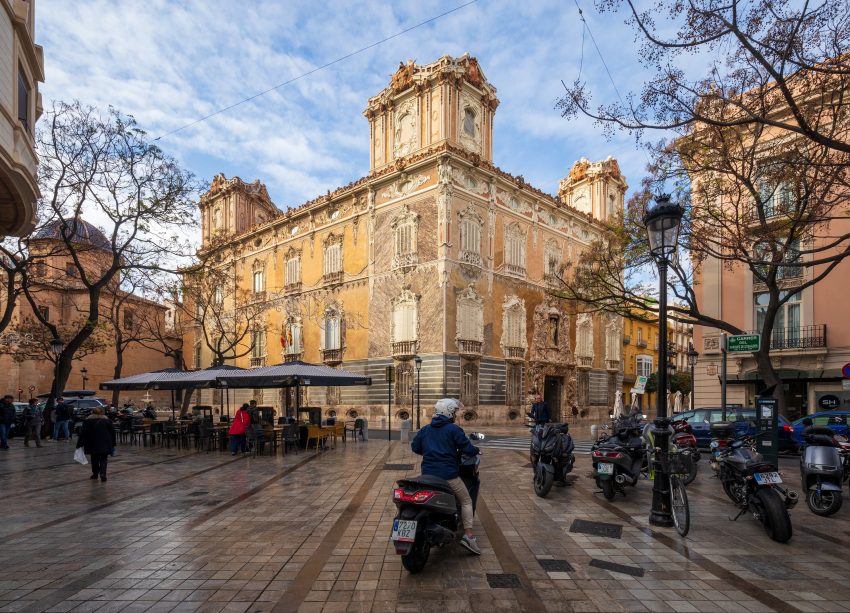
Map of the Self-Guided Walking Tour of Tarragona walking route with 14 stops in Tarragona.
Preview map of the Self-Guided Walking Tour of Tarragona route in Tarragona, showing 14 stops. Use the interactive map to zoom and tap markers.

More from this area

Self-Guided Walking Tour of La Coruna Old Town (2026)

Self-Guided Walking Tour of La Coruna Old Town

This website uses affiliate links which earn a small commission at no additional cost to you.

La Coruña, or A Coruña, is a Galician Atlantic city known for its harbour, glass-fronted galleries, beaches, old town, seafood, and the Tower of Hercules. UNESCO describes the Tower of Hercules as a Roman lighthouse and landmark at the entrance to La Coruña harbour since the late 1st century AD, with Roman masonry still forming part of the structure.

For visitors, La Coruña offers a different Spanish coastal experience from the Mediterranean cities. The seafront promenade, Tower of Hercules, María Pita Square, old town, San Antón Castle, urban beaches, markets, and seafood restaurants give it a strong local feel. It suits travellers who want Atlantic scenery, Galician food, maritime history, and a less predictable city break.

How to Get to La Coruña

By Air: The nearest airport is A Coruña Airport (LCG), a short drive from the city. From the terminal you can usually reach the centre by taxi or rideshare in roughly 15-25 minutes depending on traffic, then continue on foot into the Old Town. Public transport is also available on some schedules, typically linking the airport with central stops; from there it’s an easy walk or a quick local bus/taxi hop to the historic streets around Plaza de María Pita and the waterfront. For the best deals and a seamless booking experience, check out these flights to La Coruna on Booking.com.

By Train: A Coruña has mainline rail connections to major cities in Galicia and beyond, with services arriving at A Coruña Railway Station (Estación de A Coruña / San Cristóbal). From the station, the Old Town is close enough for a straightforward taxi ride (often around 10-15 minutes) or you can use local buses to reach the centre and then walk the final stretch. If you’re travelling from within Galicia, rail is often one of the simplest options because you arrive already close to the main sightseeing area. Train schedules and bookings can be found on Omio.

By Car: Driving is practical if you’re coming from elsewhere in Galicia or doing a wider road trip, with good motorway links approaching the city. The Old Town itself has narrow streets and restricted access in places, so it’s usually best to park in a public garage or designated parking area on the edge of the centre (near the marina/port side or around the more modern grid) and continue on foot. If you’re staying overnight, check whether your accommodation offers parking or can advise the most convenient garage for Old Town access. If you are looking to rent a car in Spain I recommend having a look at Discover Cars, first, as they compare prices and review multiple car rental agencies for you.

By Bus: Long-distance buses connect A Coruña with many Galician and Spanish cities, typically arriving at the main bus station (Estación de Autobuses). From there, you can take a taxi or local bus toward the city centre and walk into the Old Town; travel times are generally similar to reaching the centre from the train station, and it can be a cost-effective alternative if rail schedules don’t suit.

A Short History of La Coruña Old Town

Roman & Early Foundations in La Coruña Old Town

The earliest chapters of La Coruña Old Town are tied to seaborne trade, coastal defence, and the gradual shaping of an urban core that looked outward to the Atlantic. In the Roman period, the area developed around maritime activity and communications, leaving an enduring imprint on the city’s identity as a port community. While later centuries would transform the streetscape, the logic of the Old Town’s development-defensible high ground, access to the harbour, and short links between civic, religious, and commercial spaces-was established early and remained surprisingly durable.

Medieval La Coruña Old Town & the Rise of a Walled Quarter

During the Middle Ages, La Coruña Old Town consolidated into a denser, more clearly defined settlement, with churches, small squares, and a street network suited to daily life in a fortified port. Religious and civic buildings became anchors for neighbourhood identity, shaping the kinds of routes that still feel “natural” when you walk today: from parish churches to market areas to the water’s edge. The medieval period also strengthened the Old Town’s defensive character, with walls and controlled access reflecting both the value and vulnerability of a community whose prosperity depended on shipping.

Early Modern La Coruña Old Town: Port Power, Raids & Rebuilding

From the 1500s onward, La Coruña Old Town entered a more turbulent, strategic era, shaped by imperial trade, naval logistics, and the realities of Atlantic conflict. The city’s maritime importance brought attention, investment, and-at times-attack, which in turn drove cycles of fortification and reconstruction. Landmarks associated with defence and maritime administration gained prominence, and the Old Town’s relationship with the waterfront intensified: it was not simply a backdrop to the port, but an operational centre where civic authority, commerce, and coastal security were tightly intertwined.

18th-19th Century La Coruña Old Town: Civic Identity & Monumental Spaces

In the 18th and 19th centuries, La Coruña Old Town evolved from a primarily defensive medieval quarter into a more openly civic and representative centre. Key squares and public buildings took on greater symbolic weight, expressing local pride and municipal authority while accommodating a growing urban population. This is the period when the Old Town’s most recognisable “city” spaces feel increasingly intentional: places designed for gathering, ceremony, and administration, alongside older religious sites that continued to structure community life.

20th Century La Coruña Old Town: Preservation, Change & Everyday Life

The 20th century brought modern pressures-traffic, new housing demands, and shifting commercial patterns-while also prompting a stronger appreciation of heritage. As the city expanded, La Coruña Old Town increasingly became valued not only as a functional centre but also as a historic district worth conserving. Restoration campaigns and adaptive reuse helped protect key buildings, while everyday life continued to animate the quarter through cafés, local shops, festivals, and the ordinary rhythms that keep historic streets from becoming purely museum-like.

La Coruña Old Town Today: Heritage-Led Renewal & Living Traditions

Today, La Coruña Old Town is defined by a balance between preservation and active use. Historic churches, fortifications, gardens, and civic spaces form a coherent story of a maritime city shaped by trade and defence, yet the district’s appeal is also grounded in its lived character-small plazas that still host conversation, streets that still funnel people toward the sea, and landmarks that remain part of local routine. The result is a historic core that reads clearly across time: layered, compact, and best understood by walking it slowly.

Where to Stay in La Coruña Old Town

To make the most of visitng La Coruña Old Town and this walking tour then you consider stay overnight at the centre. If you want to be able to start early and finish late without thinking about transport, the most convenient base is the Ciudad Vieja / María Pita side of the Old Town, where you can step straight into the historic streets and waterfront viewpoints. Good, walk-everywhere options here include NH Collection A Coruña Finisterre and Meliá Maria Pita.

If you prefer a slightly more “city-centre” feel while still being within easy walking distance of the Old Town (useful for shopping, cafés, and evening tapas), aim for the Ensanche edge around Plaza de Pontevedra / Juana de Vega / Juan Flórez. This area keeps you close to the Old Town entrances and the seafront, while giving you more choice for dining and practical services. Strong picks here include Eurostars Blue Coruña, Hesperia A Coruña Centro, and Hotel Zenit Coruña.

For travellers who want the walking tour as a “core activity” but also want immediate beach access and an easy evening stroll along the promenade, the Orzán / Riazor frontage is a practical compromise: you’re still close enough to walk into the Old Town, but you also get open views and a relaxed coastal atmosphere. Consider Hotel Riazor or Hotel Maycar for a central, straightforward base that keeps both the Old Town route and the waterfront within easy reach.

Your Self-Guided Walking Tour of La Coruna Old Town

Discover La Coruña Old Town on foot with our walking tour map, guiding you from stop to stop as you explore its historic streets, waterfront viewpoints, and atmospheric plazas. Because this is a self-guided route, you can set your own pace-skip any sights that don’t interest you, linger longer where you want, and add coffee or tapas breaks whenever it suits you.

1. Avenida da Marina

Avenida da Mariña
Avenida da Mariña
CC BY-SA 2.0 / hor Jorge Castro Ruso

This waterfront frontage is one of A Coruña’s signature urban scenes: a continuous line of buildings whose enclosed glass balconies (galerías) turned the port into a kind of architectural showcase. The fashion took off as the city expanded commercially around the harbour, with galleries solving a practical Atlantic problem—rain, wind, and salty air—while also letting homes capture light and warmth. Over time, the look became so characteristic that it helped cement A Coruña’s “glass city” identity.

What you see today is the rhythm of white-painted frames, repeated panes, and long façades facing the water, punctuated by older stone details and occasional more ornate bay windows. Look for how the galleries are not just decoration: they wrap living spaces like a bright buffer zone, with subtle variations in carpentry, proportions, and ironwork from one building to the next. In certain stretches, the ensemble reads almost like a single monumental screen along the marina.

To visit well, treat it as both a viewpoint and a slow “façade museum.” Walk it once in daylight to catch the reflections and the sense of scale against the harbour, then again near dusk when interior lights turn the glass into a lantern effect. It also works as a connective spine to nearby Old Town streets, letting you dip inland for churches, squares, and cafés, then return to the sea edge for the big Atlantic horizon.


Location: Avenida da Mariña, Sada, A Coruña, Spain | Hours: 24 Hours. | Price: Free.

We recommend to rent a car in Spain through Discover Cars, they compare prices and review multiple car rental agencies. Book your rental car here.

2. Pazo da Capitanía

Palacio de Capitanía General de A Coruña
CC BY-SA 1.0 / Zarateman

Location: Pazo da Capitanía, Praza da Constitución, A Coruña, Spain | Hours: (Summer) Wednesday: 12:00. July–August. Friday: 11:00. Last Friday of the month. | Price: Free (during scheduled guided visits). | Website

Here is a complete selection of hotel options in La Coruna. Feel free to review each one and choose the stay that best suits your needs.

3. Castelo de San Anton

Castelo de Santo Antón
CC BY-SA 3.0 / FirkinCat

San Antón began as a 16th-century coastal fortress built to defend A Coruña’s harbour approaches, taking advantage of a small island position that gave it clear control over maritime access. Over the centuries it cycled through uses typical of Atlantic fortifications: defensive stronghold, prison, and later a lazaretto connected to the health realities of seafaring and contagious disease. In the 20th century, the building was repurposed as a museum site, and it now houses the city’s Archaeological and History Museum.

What to see is the fortress as a space you can physically “read”: thick walls, controlled entrances, and the logic of coastal defence translated into stone geometry. The museum collections add another layer, presenting material from prehistory through local and Galician history, with the building itself acting as the largest exhibit. Even if you’re not museum-focused, walking the ramparts and moving through the interior chambers gives you a strong sense of how constrained, purposeful military architecture feels.

For visitors, the best approach is to split your attention between exhibits and the structure. Do one loop that prioritises views and fortification features, then a second, slower pass through the museum narratives. Because it sits close to the Old Town, it fits easily into a half-day of historically dense stops—church, ruins, square, castle—without needing transport, and it provides the most tangible “harbour defence” perspective in the city core.


Location: P.º Marítimo Alcalde Francisco Vázquez, 2, 15001 A Coruña, La Coruña, Spain | Hours: (Summer) July – August: Tuesday – Saturday: 10:00–21:00; Sunday & public holidays: 10:00–15:00. Closed on Monday. (Winter) September – June: Tuesday – Saturday: 10:00–19:30; Sunday & public holidays: 10:00–14:30. Closed on Monday. | Price: General admission: €2.06; Reduced: €1.03. | Website

Traveling to a country with a different currency? Avoid ATM transaction fees and pay in local currency with a Wise Card. Having used it for over 5 years, we've saved loads on fees!

4. Ruins of the Convent of Saint Francis

Ruins of the Convent of Saint Francis
CC BY-SA 3.0 / FirkinCat

These ruins are the visible remainder of a Franciscan complex that belonged to medieval A Coruña and later suffered repeated disruption through conflict and urban change. Part of the site’s story is dramatic: sources describe damage and destruction around the period of Drake’s 1589 attack and later phases of abandonment and dispersal, followed by 20th-century efforts to recover and stabilise what remained.

What you see today is an outdoor archaeological fragment—foundations, partial walls, and cloister traces—set within a landscaped green space that makes the remnants legible. The “sight” here is not a complete building but the act of reading absence: you reconstruct the convent’s footprint mentally, using surviving masonry as clues. Interpretive elements and the surrounding setting help turn the ruins into a calm counterpoint to the dense streets of the Old Town.

To get the most from the visit, approach it like a short, focused stop: walk the perimeter first, then step into the interior area and look for alignments that suggest cloister walks and chapels. It’s also worth noticing the conservation approach—how stonework has been preserved and presented—because that tells a modern story about A Coruña deciding what to keep visible of its layered past. If you’re building a route, it pairs well with nearby churches and the castle museum as a compact medieval-to-early-modern cluster.


Location: Ánimas, 10, 15001 A Coruña, La Coruña, Spain | Hours: Monday – Sunday: 10:00–13:00 & 17:00–21:00. | Price: Free. | Website

5. Museo Militar

Museo Histórico Militar
CC BY-SA 1.0 / Zarateman

A Coruña’s Military Museum is rooted in 19th-century collecting, with its origins traced to 1858 when an initial collection of models and material related to artillery and military technology was assembled, later expanded by additions from successive conflicts. That long institutional timeline makes it useful not only for “weapons history,” but for understanding how the Spanish state curated military memory across different political eras.

What to see depends on your interests, but expect breadth: firearms, equipment, and objects that map changes in design, manufacture, and doctrine. Collections of this kind are often strongest when they show progression—how mechanisms evolve, how materials change, and how the same category of object (rifle, sidearm, uniform equipment) looks radically different across decades. The museum also tends to include items with specific local resonance, tying the city’s military presence to national history.

For a good visit, set a theme before you go in: technology, uniforms and symbols, or the city’s strategic Atlantic role. That keeps the experience coherent and prevents it from becoming a blur of objects. If you’re pairing it with other nearby sites, it works well after the castle and Old Town churches: you move from medieval/early-modern stone to the institutional world of the modern state, all within a short walk.


Location: Praza de Carlos I, s/n, 15001 A Coruña, Spain | Hours: Monday – Saturday: 10:00–14:00 & 17:00–19:30. Sunday: 10:00–14:00. | Price: Free. | Website

6. Collegiate Church of Santa Maria do Campo

Colexiata de Santa María do Campo
CC BY-SA 2.0 / Jaume Meneses

Santa Maria do Campo is one of the Old Town’s key medieval churches, with origins in the 12th–13th centuries and a building traditionally cited as completed in 1302; it later gained collegiate status in 1411. Its history is closely tied to A Coruña’s maritime community, functioning as a major parish church in the port city and accumulating additions and artworks as the city’s fortunes rose and fell.

What to see is a layered fabric: Romanesque structure and planning cues alongside later Gothic elements and sculptural portals. Pay particular attention to the exterior doorways and their carvings, which are among the most visually rewarding features, and then step inside to notice the proportion of the naves and the way the interior columns and arches create a distinctly medieval rhythm.

The visit is most satisfying when you slow down and treat it as a “working archive” rather than a single-style monument. Walk around it first to find the most interesting portal details, then go in and let your eyes adjust to the dimmer interior—medieval spaces reveal themselves gradually. Because it sits in the Ciudad Vieja, it also pairs naturally with nearby convent remains and the castle museum, making it an efficient anchor for a historically focused section of a walking tour.


Location: Rúa Damas, 24, 15001 A Coruña, Spain | Hours: Monday – Friday: 11:00–13:00. Saturday: Closed. Sunday: Closed. | Price: Free; donations appreciated. | Website

7. Coruña City Hall

Coruña City Hall
Coruña City Hall
CC BY-SA 4.0 / Matthias Bethke

A Coruña’s City Hall is a modernist-era municipal statement built in the early 20th century, designed to give the main square an authoritative civic façade. Construction is commonly dated to 1908–1912, with a later ceremonial inauguration in 1927 by King Alfonso XIII, underscoring the building’s role as both administration and representation.

What to look for is the building’s scale and composition: a long, carefully ordered frontage that reads as “public architecture,” with repeated windows, sculptural details, and a sense of hierarchy from base to roofline. The best view is from mid-square, where you can take in the full width and see how the building anchors the space. If you can go inside on a guided visit, the ceremonial rooms and staircases tend to be the highlights, revealing how civic buildings stage authority through interiors as much as façades.

As part of a visit, this works well as an architectural counterpart to the older religious sites nearby. You can “read” a timeline in a short radius: medieval churches and convent remnants in one direction, and early-20th-century civic modernity in another. Even if you only see it from outside, linger long enough to notice how the arcades, café life, and administrative presence combine to make the square feel continuously inhabited.


Location: 15001 A Coruña, Spain | Hours: Daily: 12:00–14:00 & 18:00–21:00. | Price: Free. | Website

8. Plaza de Maria Pita

Praza de María Pita
Praza de María Pita
CC BY-SA 4.0 / Elnachocb

This is A Coruña’s principal civic square, named for María Pita, the local heroine associated with the city’s resistance during the 1589 attack led by English forces under Francis Drake. The square as a formal, monumental urban space is largely a product of later city planning, but its name and symbolism anchor it firmly in the city’s defining narrative of defiance and coastal vulnerability.

What to see here is the choreography of civic power and public life. The space is broad and framed by porticoed buildings that create a continuous sheltered edge, with cafés and terraces animating the perimeter. The central statue of María Pita provides the narrative focal point, while the long north side is dominated by the municipal building that turns the square into a literal seat of administration as well as a symbolic stage.

To experience it, spend time at different points rather than just crossing it. From the statue, take a moment to read the square as a set piece—axes, façades, and the way the arcades “hold” the space. It’s also an excellent reset point on a walking tour: streets radiate outward, so you can use the square to reorient before heading to the marina, the Old Town lanes, or the church quarter.


Location: Pr. de María Pita, A Coruña, 15001 A Coruña, Spain | Hours: 24 Hours. | Price: Free. | Website

9. Igrexa de San Xurxo

Church of St. George
CC BY-SA 4.0 / Diego Delso

Igrexa de San Xurxo is a Baroque landmark whose present form is typically dated to the 18th century, reflecting the period when A Coruña’s religious architecture adopted more theatrical spatial planning and ornament. Beyond style, the church has a distinctive place in social history: it is associated with the 1901 case of Elisa and Marcela, often cited as the first documented same-sex marriage in Spain, which later became widely known through books and film.

Inside and out, look for the Baroque vocabulary: a composed façade, controlled grandeur, and an interior designed to focus attention toward the altar. Even if you’re not timing a visit around services, stepping in briefly is worthwhile for the change in acoustics and light—an architectural “pause” amid the busy streets outside. The church also repays attention to smaller details: altarpieces, chapels, and the way Baroque spaces guide movement and sightlines.

As a visitor, this is a place where meaning comes from layers. You can appreciate it as architecture, but it also invites reflection on the city’s cultural memory—how an event from 1901 is still attached to a physical setting, turning a church visit into a point of contact with a wider narrative about identity, law, and social norms. Pair it with a short walk through nearby streets to see how quickly A Coruña shifts from civic bustle to contemplative interiors.


Location: R. Pío XII, 19, 15001 A Coruña, Spain | Hours: Monday – Sunday: 10:00–13:00 & 18:00–20:30. | Price: Free; donations appreciated. | Website

10. Mercado Municipal de San Agustín

Mercado de San Agustín
CC BY-SA 4.0 / Waltie

San Agustín Market is a 20th-century answer to an old urban need: a centralised, regulated place to buy food in a city whose identity is strongly maritime. The building itself is part of that story—an architectural statement from the interwar period, credited to key municipal architects and reflecting modern construction techniques and civic investment in public infrastructure.

What to see is both the structure and the produce culture. Inside, the stalls express the region’s strengths—especially seafood—alongside meats, cheeses, and seasonal vegetables, while the building’s form and light are worth noticing as you move through. Look for the way the interior volume is handled: the roofline, the daylight, and the sense of the market as an engineered public room rather than a simple shed.

For visitors, the best visit is early, when selection is highest and the market feels most “working.” Go with a specific tasting mission—shellfish, cured meats, local cheeses—or simply use it as a sensory reset between monuments: voices, knives on boards, briny air, and the everyday tempo of A Coruña. Even if you don’t buy much, it’s one of the fastest ways to understand how the city eats.


Location: Praza San Agustín, 1, 15001 A Coruña, Spain | Hours: Monday – Saturday: 08:00–15:30. Sunday: Closed. | Price: Free. | Website

11. Paseo Marítimo

Paseo Marítimo
Paseo Marítimo
CC BY-SA 3.0 / MaRiA-89

A Coruña’s Paseo Marítimo is a modern civic project in the best sense: a continuous coastal route that encircles much of the peninsula and turns the Atlantic edge into public space. In length and ambition it has been promoted as one of Europe’s longest seaside promenades, reflecting 20th-century urban efforts to connect disparate shoreline areas—beaches, cliffs, and headlands—into a single legible walk.

The “sights” along it are sequential: the city reveals itself in chapters as you move. One stretch is beach-facing and social; another is exposed and cliffy; others open onto viewpoints and harbour scenes. Even the street furniture becomes part of the experience—most famously the distinctive red lamps that act as a visual signature and a navigational cue as the path curves around the coast.

To see it well, don’t treat it as one single walk unless you want a long-distance day. Instead, pick a segment that matches your mood: beach and cafés near Riazor/Orzán; more dramatic ocean exposure toward headlands; or sunset stretches where the light drops behind the city. The promenade is also a practical spine for orientation—when in doubt, find the sea edge, then use the Paseo to “reset” your map before heading back into the Old Town.


Location: P.º Marítimo, A Coruña, 15002 La Coruña, Spain | Hours: 24 Hours. | Price: Free.

12. Rúa do Orzán

Orzan’s Heroes
Orzan’s Heroes
CC BY-SA 4.0 / Jglamela

Rúa do Orzán sits in the band of streets where A Coruña’s coastal geography and its social life overlap: close to the sea, parallel to the beach and promenade, and historically positioned to serve both locals and visitors moving between waterfront and centre. Over time, streets like this often evolve from mixed residential and small commerce into recognisable nightlife and dining corridors, reflecting changing patterns in leisure and urban density.

What to look for is the blend rather than a single monument: traditional building forms beside more modern façades, small bars and restaurants tucked into narrow frontages, and the constant “flow” of foot traffic that gives the street its identity. If you visit in the early evening, you’ll see the transition as shutters lift, terraces fill, and the street becomes a social channel running inland from the sea.

As a visitor, the street works best as an atmosphere stop: a place to sample informal Galician dining, catch live energy, and then drift back to the water. It’s also useful logistically—an easy line to follow when you want to move between the beach zone and the commercial core without losing your sense of direction. If you’re sensitive to noise, the simplest strategy is to walk it earlier, then return later only if you specifically want the nightlife pulse.


Location: Av. de Pedro Barrié de la Maza, 26, 15003 A Coruña, La Coruña, Spain | Hours: 24 Hours. | Price: Free.

13. Playa de Riazor

Praia de Riazor (A Coruña)
CC BY-SA 4.0 / Diego Delso

Playa de Riazor is A Coruña’s classic urban beach, sitting in the Ensenada del Orzán and forming part of the city’s Atlantic-facing identity. Its modern popularity rests on accessibility—right on the city’s edge—while its longer story is tied to how A Coruña developed a public waterfront, gradually shaping the shore into a place for leisure, promenading, and civic life rather than only maritime work.

What you “see” here is as much urban scenery as nature: a broad sweep of sand with the built city wrapping it, and a backdrop that includes one of Spain’s most storied football settings at the Estadio de Riazor. The beach connects naturally with neighbouring coastal spaces, so the view changes quickly as you move—open water, headlands, and then the city’s long seawall and promenade structure.

For a visit, time matters. At low tide the beach feels expansive and walkable; at higher tide it becomes more about the edge—waves, surf, and the soundscape of the Atlantic. If you want the “A Coruña” effect, pair it with a promenade walk and a short detour into the nearby streets for food; the best experience is the contrast between salty wind outside and the dense, social city just a minute inland.


Location: Praia de Riazor (A Coruña), Spain | Hours: 24 Hours. | Price: Free. | Website

14. Casa Museo Picasso

Casa Museo Picasso
Casa Museo Picasso
CC BY-SA 4.0 / GenclerbirligiSporKulubu

This small museum is anchored in a precise biographical fact: Pablo Picasso lived in A Coruña as a child with his family from 1891 to 1895, during the period when his father taught and the young artist developed rapidly through drawing and observation. The institution uses that domestic context as its core idea, recreating the atmosphere of a late-19th-century home rather than presenting a blockbuster “masterworks” gallery.

What to see is therefore intimate and interpretive: rooms furnished to evoke the period, and displays that focus on early formation—studies, themes, and the kind of visual training that precedes the famous stylistic revolutions. Expect reproductions and contextual material rather than original major canvases, with an emphasis on how the city and this household environment shaped the young Picasso’s eye.

The most rewarding way to visit is to treat it as a “chapter” in a larger A Coruña walk. Go in with the question, “What does a future innovator look like before the innovation?” and pay attention to the everyday scale: stairwells, light from windows, and the domestic rhythm of the rooms. When you step back out onto the street, it becomes easy to connect the museum to the city’s broader visual culture—harbour light, stone façades, and the Atlantic weather that sharpens contrast and colour.


Location: Rúa Payo Gómez, 14, 15004 A Coruña, Spain | Hours: Tuesday – Saturday: 10:00–13:00 & 17:00–20:00. Closed on Sunday, Monday. | Price: Free. | Website

15. Rúa Real

Rúa Real
Rúa Real
CC BY-SA 2.0 / Jorge Castro Ruso

Rúa Real is one of A Coruña’s classic commercial arteries, running through the heart of the historic centre and linking everyday city life with the older fabric of the Old Town. Like many long-lived “main streets,” it has shifted roles over centuries—part thoroughfare, part marketplace, part social promenade—absorbing changes in trade, retail, and the way locals use the centre. Its continued prominence is exactly what makes it historically interesting: it is a living street rather than a preserved monument.

Architecturally, the interest is in how the street holds together as a corridor: consistent building heights, narrow perspectives, and façades that show incremental change—traditional Galician forms alongside more modern storefront interventions. Look up from shop level to catch balconies, cornices, and the way upper floors retain older character even when the ground floor is thoroughly contemporary. Because it’s pedestrian-friendly, you can pause often without fighting traffic.

In practice, Rúa Real is best used as a “working spine” for exploring: a place to browse, pick up essentials, and calibrate your bearings before diving into smaller lanes and squares. Early in the day it feels functional and local; later it becomes more social. If you’re building a walking route, it’s a reliable connector between waterfront areas and the historic core, with plenty of natural stops for cafés and people-watching.


Location: Rúa Real, A Coruña, 15003 A Coruña, Spain | Hours: 24 Hours. | Price: Free.

16. Casas de Paredes

Casa De Paredes
Casa De Paredes
CC BY-SA 3.0 / FirkinCat

The Casas de Paredes are part of an 18th-century attempt to give A Coruña a more imposing, orderly maritime frontage, aligned with broader Bourbon-era reforms that brought military engineers and new planning ideas to Galicia. The complex is typically dated from the late 1770s and is associated with the Captain General García de Paredes as promoter, reflecting a neoclassical taste for symmetry and civic grandeur on the waterfront.

When you stand in front of them, the first thing to notice is the disciplined, almost “official” feel: repeated openings, balanced proportions, and a restrained ornamentation that contrasts with the later, lighter glass gallery aesthetic nearby. Even without going inside, you can read the building as a statement—architecture meant to project stability and status at the city’s seaward edge. The setting on the marina helps you understand why the project mattered: this is where arrivals, trade, and the public image of the city converged.

For visitors, the appeal is in the details and the context. Photograph it obliquely so the long façade lines up with the curve of the harbour, then compare it with the neighbouring gallery-fronted houses to see how A Coruña’s maritime architecture evolved from stone-heavy neoclassicism to light-filled glass. It’s also a good prompt to look up and spot small variations—later alterations, different window treatments, and how the complex “fits” into the broader waterfront sequence.


Location: Avenida Marina, 17, 15003 A Coruña, Spain | Hours: Monday – Sunday: Open 24 hours. | Price: Free. | Website
Powered by GetYourGuide
Moira & Andy
Moira & Andy

Hey! We're Moira & Andy. From hiking the Camino to trips around Europe in Bert our campervan — we've been traveling together since retirement in 2020!

Read our full story here

This website uses affiliate links which earn a small commission at no additional cost to you.

Walking Tour Summary

Distance: 5 km
Sites: 16

Walking Tour Map
Map of the Self-Guided Walking Tour of La Coruna Old Town walking route with 16 stops in La Coruna.
Preview map of the Self-Guided Walking Tour of La Coruna Old Town route in La Coruna, showing 16 stops. Use the interactive map to zoom and tap markers.

More from this area

Self-Guided Walking Tour of Seville (2026)

Self-Guided Walking Tour of Seville

This website uses affiliate links which earn a small commission at no additional cost to you.

Seville is one of Spain's great historic cities, shaped by Islamic, Christian, imperial, and Andalusian traditions. UNESCO lists the Cathedral, Alcázar, and Archivo de Indias as a remarkable monumental complex in the heart of the city, with the Giralda described as a masterpiece of Almohad architecture and the cathedral and Alcázar bearing witness to both Almohad and Christian Andalusian civilisation.

For visitors, Seville is rich, warm, and intensely atmospheric. The cathedral, Giralda, Alcázar gardens, Santa Cruz quarter, Plaza de España, Triana, riverside, tapas bars, flamenco venues, and orange-tree squares make it one of Spain's strongest city-break destinations. It is best explored slowly, especially outside the hottest part of the day in summer.

How to Get to Seville

By Air: Seville is served by Seville Airport (SVQ), with direct flights from many major European cities and frequent domestic connections via Madrid and Barcelona. The airport sits to the northeast of the city, and the easiest onward options are an airport bus into the centre, a taxi, or a pre-booked transfer if you are arriving late or with lots of luggage. If you are connecting through Madrid, allow extra time for terminals and security, as the domestic-to-international flow can be slower at peak periods. For the best deals and a seamless booking experience, check out these flights to Seville on Booking.com.

By Train: Seville is one of Spain's best-connected rail cities, with high-speed AVE services linking it to Madrid in around 2.5 hours and onward connections to Córdoba, Zaragoza, and Barcelona (often direct on certain services, or with an easy change). Most trains arrive at Sevilla Santa Justa, the main station, which is well placed for reaching the centre by taxi, local bus, or a straightforward walk depending on where you are staying. Booking ahead is usually worthwhile for better fares, especially around weekends, festivals, and school holidays. Train schedules and bookings can be found on Omio.

By Car: Driving to Seville can make sense if you are building a wider Andalusia itinerary, but it is less convenient for the city centre itself due to restricted access streets, limited parking, and traffic around peak times. Approach roads are generally good, with motorway links from Málaga, Cádiz, and Córdoba, but once you arrive it is best to park in a secured garage or a hotel car park and explore on foot. If you plan to keep the car overnight, confirm parking arrangements in advance and pay attention to low-emission or access-controlled zones. If you are looking to rent a car in Spain I recommend having a look at Discover Cars, first, as they compare prices and review multiple car rental agencies for you.

By Bus: Long-distance buses are often the cheapest option from other Andalusian cities and can be practical if trains are sold out or timings do not suit. Services typically arrive at Estación de Autobuses Plaza de Armas (central and walkable for many areas) or Estación de Autobuses Prado de San Sebastián (handy for the historic centre and tram/metro links). Journey times are usually longer than the train, but buses can be a solid option for routes with fewer rail services.

A Short History of Seville

Seville in Antiquity and the Roman Era

Seville's earliest urban identity took shape long before the medieval skyline that defines it today. Under Roman rule the city developed into a prosperous centre with trade, administration, and a durable street pattern that still influences the older quarters. Even as later periods rebuilt and repurposed the city, the idea of Seville as a place of commerce and civic life endured, setting the foundations for its later role as one of the Iberian Peninsula's most important cities.

Seville in the Early Middle Ages and the Islamic Golden Age

From the early medieval centuries onward, Seville became a major cultural and economic hub under Islamic governance, with advances in architecture, craft, irrigation, and scholarship shaping daily life and the built environment. The roots of Seville's most celebrated monument, the Real Alcázar de Sevilla, lie in this period: a palace complex that began as a fortified seat of power and evolved into a refined courtly residence. The city's later cathedral bell tower, the Giralda, also carries the legacy of Islamic Seville in its form and construction logic, even as it was transformed to suit a different religious and political world.

Seville after the Christian Conquest and the Rise of a Royal City

The Christian reconquest brought a profound reordering of institutions and sacred space, and Seville's prestige grew as it became a key royal and ecclesiastical centre. The Seville Cathedral and Giralda Tower embody this shift: the cathedral's scale and ambition signal authority and wealth, while the tower's layered history reflects continuity through change. The Real Alcázar de Sevilla also took on new life as a royal palace, where successive monarchs expanded and embellished the complex, creating a uniquely blended architectural language that remains one of Seville's defining signatures.

Seville in the Age of Empire and Atlantic Wealth

Seville reached a peak of international influence during Spain's imperial expansion, when Atlantic trade poured money, people, and ideas into the city. This era helped shape a city of grand religious institutions, aristocratic households, and intense street-level commerce. The Torre del Oro, built originally as part of the city's defensive riverfront system, gained enduring symbolic power as Seville's maritime fortunes rose and fell. While the imperial boom brought prosperity, it also exposed Seville to volatility-plagues, shifting trade patterns, and political pressures that later tempered its dominance.

Seville in the Baroque City and Aristocratic Seville

As Seville moved into the early modern centuries, religious art, processions, and noble patronage left an unmistakable imprint. Much of the city's domestic grandeur is expressed in its courtyard mansions and palatial residences, where architecture became a statement of lineage and cultural sophistication. Casa de Pilatos is a prime example of this world: an elegant fusion of artistic influences expressed through patios, tilework, and sculptural detail. Palacio de las Dueñas likewise reflects Seville's aristocratic social fabric, tied to noble families whose estates, collections, and private chapels were part of the city's cultural ecosystem.

Seville in the 19th Century to Early 20th Century Modernisation

The modern era brought new educational, civic, and infrastructural ambitions, as Seville adapted to changing politics and industry. One of the most striking symbols of this transformation is the Universidad de Sevilla, housed in a monumental complex that speaks to institutional power and the city's evolving identity as a centre of learning. Streets and shopping corridors also became social stages for the emerging middle class; Calle Sierpes, in particular, developed a reputation as a lively artery of commerce and conversation, linking the rhythms of everyday life to Seville's wider urban story.

Seville in 1929 and the City’s Grand International Moment

A defining turning point in Seville's modern image came with the Ibero-American Exposition of 1929, which reshaped public spaces and left behind some of the city's most recognisable landmark architecture. Plaza de España stands at the heart of that legacy, designed as a monumental showcase of craftsmanship, regional identity, and national confidence. Its sweeping scale and theatrical layout helped set the tone for how Seville would present itself to the world thereafter-romantic, artistic, and unmistakably ceremonial.

Seville from Late 20th Century to Today: Culture, Reinvention, and New Icons

In recent decades, Seville has balanced heritage with contemporary reinvention, strengthening its cultural identity while adding modern landmarks and museums that speak to living tradition. Flamenco, long woven into the city's social and artistic life, has been given dedicated interpretive space at the Museo del Baile Flamenco, where performance culture is treated as history, technique, and identity-not simply entertainment. Seville has also embraced bold contemporary urban design with Setas de Sevilla, a modern icon that reimagines a central public space while offering a new way to experience the city's rooftops and layers of history from above.

Where to Stay in Seville

To make the most of visiting Seville and this walking tour then you consider stay overnight at the centre. The Historic Centre (Centro) is the most convenient base for walking between the main sights, with an easy mix of landmark access, evening atmosphere, and plenty of places to eat between stops. If you want to be close to the cathedral area and classic postcard streets, look at Hotel Casa 1800 Sevilla and Hotel Amadeus Sevilla, both ideal for being on foot early and returning easily for a break. For a slightly more contemporary, boutique feel while still being central, Legado Alcázar Hotel also works well for this route.

If you prefer a more local, neighbourhood vibe that is still walkable to the historic core, Triana is a strong option, especially if you like lively evenings and traditional tapas bars after the tour. Staying here typically means a short walk over the river to rejoin the main walking route, and it can feel a little calmer at night than the busiest central lanes. Good choices include Monte Triana and Zenit Sevilla, both well placed for crossing into the centre while keeping you close to Triana’s restaurants and riverside strolls.

For something stylish, slightly quieter, and still practical for walking, base yourself around Alameda de Hércules and the northern edge of the old town. This area suits travellers who want cafés, bars, and a more contemporary Seville feel, while remaining within a straightforward walk of key stops like Calle Sierpes and the central squares. Consider Hotel Fernando III if you want a classic, comfortable option with strong amenities, or Hotel América Sevilla if you want to be positioned near major shopping streets and have quick access back into the heart of the route.

Your Self-Guided Walking Tour of Seville

Discover Seville on foot with our walking tour map, guiding you from stop to stop as you explore the city's landmark sights, atmospheric streets, and unforgettable plazas at your own pace. Because it's a self-guided walking tour, you can linger where you want, skip anything that doesn't interest you, and build in as many coffee or tapas breaks as you like along the way.

1. Plaza de Espana

Plaza Espana, Seville

Built for the 1929 Ibero-American Exposition, Plaza de Espana is one of Seville’s most ambitious 20th-century civic projects, designed to showcase Spain’s regional diversity and its links with the wider Spanish-speaking world. Its architecture blends Renaissance Revival with Andalusian Mudéjar touches, and the overall layout is deliberately theatrical: a vast semi-circular palace embracing a grand square, as if Spain itself is presenting an open “stage” to visitors.

What makes it memorable is the craft detail at human scale. Along the curved façade you’ll find a series of ceramic-tiled alcoves (one for each province), with painted maps, historical scenes, and benches that invite you to stop and scan the iconography. The brickwork, glazed tiles, and wrought-iron bridges over the canal are as much the attraction as the monumentality.

Spend time walking the full arc rather than treating it as a photo stop. Cross the bridges for different angles, look up at the towers and layered façades, then linger by the canal where rowing boats often circulate. If you want quieter moments, arrive early; later in the day it becomes lively with street musicians and a steady rhythm of visitors.


Location: Plaza de España, s/n. 41013 Seville | Hours: 24 Hour | Price: Free | Website

We recommend to rent a car in Spain through Discover Cars, they compare prices and review multiple car rental agencies. Book your rental car here.

2. Real Fabrica de Tabacos

Royal Tobacco Factory, Seville
CC BY-SA 3.0 / Pauline Corbaux

The University of Seville’s most famous setting is the former Royal Tobacco Factory, a vast 18th-century industrial complex that once ranked among Europe’s largest manufacturing buildings. Its history sits at the intersection of empire, commerce, and social life: tobacco from the Americas fueled a major local economy, and the factory’s workforce—especially the cigarreras—became an enduring part of Seville’s cultural identity.

Architecturally, it is closer to a fortified palace than a typical campus. You’ll notice its monumental scale, thick walls, and a surrounding moat-like channel, all of which speak to the value of what was produced here and the need for control and security. The courtyards and long interior corridors retain the sense of an ordered, state-run machine, even though the building’s purpose has completely shifted.

When visiting, focus on the exterior presence and the sequence of courtyards if access is available. Look for the grand gateways, the rhythmic stone-and-brick detailing, and the way the building asserts itself within the city. Even without a full interior tour, the sheer footprint and industrial-palatial character make it a key stop for understanding Seville beyond medieval and Baroque monuments.


Location: Royal Tobacco Factory, Calle San Fernando, 4 41004 Sevilla Spain | Hours: Monday – Friday: 08:00–21:00. Saturday: 08:00–14:00. Closed on Sunday. | Price: Free (Part of the interior of the university is free to visit) | Website

Here is a complete selection of hotel options in Seville. Feel free to review each one and choose the stay that best suits your needs.

3. Real Alcazar de Sevilla

Real Alcazar of Seville

The Real Alcazar is a living palatial complex with roots that reach back to early Islamic fortifications, later transformed under Christian rule into one of Europe’s most important examples of Mudéjar architecture. Successive monarchs expanded it over centuries, so what you see today is a layered statement of power: Islamic spatial concepts and decorative traditions adapted to Christian royal ceremony, with later Gothic, Renaissance, and Baroque additions woven in.

Historically, its significance is not just age but continuity. The Alcazar remained a seat of authority, shaping court life and projecting legitimacy through architecture, gardens, and ritualized movement from public to private spaces. That mix of political function and artistic ambition is why the interiors feel less like a single building and more like an evolving royal “world.”

On-site, prioritize the Mudéjar palaces: intricate stucco, carved wood ceilings, glazed tilework, and patterned arches that reward slow looking. Then give the gardens real time—shaded paths, water channels, pavilions, and botanical variety create a different rhythm from the rooms, and the transitions between sunlight and shadow are part of the experience. If you can, revisit a courtyard after touring: the second look often reveals details you missed when you were moving quickly.


Location: Patio de Banderas, s/n 41004 Sevilla Spain | Hours: (Summer) Monday – Sunday: 09:30–19:00. (Winter) Monday – Sunday: 09:30–17:00. Closed on 1 January, 6 January, Good Friday, 25 December. | Price: €15.50 (general); €8.00 (reduced); optional Upper Royal Quarters add-on €5.50. | Website

Traveling to a country with a different currency? Avoid ATM transaction fees and pay in local currency with a Wise Card. Having used it for over 5 years, we've saved loads on fees!

Powered by GetYourGuide

4. General Archive of the Indies

Archive of the Indias, Seville
CC BY-SA 4.0 / D.Rovchak

General Archive of the Indies is one of the most consequential archives in Europe for understanding the Spanish Empire, because it consolidates vast quantities of administrative records relating to Spain’s overseas territories. The building itself was created in the late 16th century as the Casa Lonja de Mercaderes, a purpose-built merchants’ exchange designed to pull commercial activity away from the cathedral precinct and formalize Seville’s role as a regulated hub of Atlantic trade. Its later conversion into an archive in the late 18th century reflects a different imperial priority: organizing, preserving, and controlling knowledge of empire through documentation.

Historically, the archive matters less as a “museum of objects” and more as a power-house of paper. The collections include correspondence, maps, legal proceedings, shipping and trade records, and reports that track how Spain governed, exploited, evangelized, and negotiated across the Americas and beyond. For historians and researchers, it’s foundational; for visitors, it’s a way to see how empire ran on bureaucracy, information flows, and standardized record-keeping, not just ships and battles.

What to see on-site: start with the architecture—its severe, Renaissance classicism, symmetry, and monumental stairways fit the building’s original civic-commercial function and later institutional gravitas. Then look for any rotating exhibitions (often featuring maps, manuscripts, and thematic displays) that translate the archive’s scale into something viewable in a short visit. Finally, take time in the main halls and reading-room areas (where accessible) to appreciate the atmosphere of an active archive; pairing this stop with the nearby cathedral and Alcazar helps you connect religious authority, royal power, and imperial administration within a few minutes’ walk.


Location: Edificio de la Lonja Avenida de la Constitución, 3 41071 Seville | Hours: Tuesday – Saturday: 09:30–17:00; Sunday & Public Holidays: 10:00–14:00. Closed on Monday. | Price: Free | Website

Click here to read our blog about Best Palaces to Explore in Seville, Spain (2026)

Powered by GetYourGuide

5. Seville Cathedral & Giralda Tower

Seville Cathedral Spain

Seville Cathedral was built in the 15th and early 16th centuries on the site of the city’s main mosque, expressing Seville’s confidence at a moment when wealth, trade, and religious authority were tightly interlinked. The result is a vast Gothic interior designed to overwhelm: not subtle, but deliberately monumental, turning scale into a form of spiritual persuasion.

The Giralda began as the mosque’s minaret under Almohad rule, later adapted as a bell tower after the Christian conquest. That layered identity—Islamic engineering and proportions with later Christian additions—makes it one of Seville’s most emblematic monuments, a visible reminder of the city’s deep cultural stratigraphy rather than a single “pure” style.

Inside the cathedral, look for the main altarpiece (a major focus of devotional art), the choir area, and the way light filters through high stained glass into side chapels. Then climb the Giralda: the ascent is via ramps rather than stairs, originally designed for practical access, and the views at the top help you map Seville’s historic core—an excellent payoff after absorbing the cathedral’s interior scale.


Location: Av. de la Constitución, s/n 41004 Sevilla Spain | Hours: Monday – Saturday: 11:00–18:00. Sunday: 14:30–19:00. | Price: €13 online / €14 ticket office (general admission; includes the Cathedral, Giralda, and Church of El Salvador). | Website

Click here to read our blog about Must-Visit Museums In Seville, Spain 2026

Powered by GetYourGuide

6. Museo del Baile Flamenco

Museo del Baile Flamenco 1
CC BY-SA 4.0 / Schnobby

This museum is a modern interpretive space devoted to flamenco as a living Andalusian art form—music, song, and dance shaped by centuries of cultural exchange. Rather than focusing only on “romance” or stereotype, it frames flamenco as an evolving tradition with roots in local communities, performance venues, and social history.

The value here is context. Exhibits typically unpack the elements of flamenco—compás (rhythm), palos (styles), guitar technique, vocal expression, and the dancer’s vocabulary—so that a later live performance feels more legible. It’s useful if you want to move beyond “it’s passionate” into understanding how the structure and improvisation actually work.

What to see: engage with the audiovisual material and any demonstrations or shows offered on-site, because flamenco is best understood through sound and movement rather than static display. Pay attention to costume detail, footwear, and the relationship between dancer and musician—those practicalities explain a lot about the art’s intensity. If you plan to see a performance elsewhere, this is an efficient primer that can materially improve what you notice.


Location: Museo del Baile Flamenco, Calle Manuel Rojas Marcos, 3 41004 Sevilla, Spain | Hours: Daily: 11:00–18:45. First Monday of the month: 14:30–18:45. | Price: Museum Only: €6 Museum + Show: €29 (Combo ticket) Show Only: €25 | Website

Click here to read our blog about Discover Roman Seville 2026: Ancient Ruins, History & Highlights

7. Casa de Pilatos

Casa de Pilatos Seville 8
CC BY-SA 4.0 / Mario Fernández

Casa de Pilatos is a 16th-century aristocratic residence that captures Seville’s Renaissance-era fascination with classical forms, while remaining deeply Andalusian in its courtyards, tilework, and spatial flow. It became a template for later noble houses: part palace, part urban retreat, organized around patios that balance display and privacy.

Historically, it is also a story of collecting and taste. The house reflects the ambitions of a powerful family and the broader currents of the time: Italian Renaissance influence arriving through travel and patronage, blended with local Mudéjar craft traditions that continued to flourish. That fusion is precisely what makes the building feel “Sevillian” rather than imported.

On a visit, look closely at the main courtyard and staircases, where the interplay of marble, azulejos, and carved detailing is most concentrated. Notice how light is managed—bright open patios feeding into cooler, shaded rooms—then explore secondary spaces that reveal the house’s scale beyond its headline views. It’s a site for slow observation: the decorative density can be missed if you treat it as a quick walkthrough.


Location: Plaza de Pilatos,1, 41003 Sevilla, Spain | Hours: Daily: 09:00–18:00. 25 December: 09:00–14:00; 1 January: 10:00–18:00; 6 January: 09:00–14:00. | Price: €12 (ground floor); €18 (ground floor + upper floor guided visit). | Website

Click here to read our blog about 16 Best Things to Do in Seville, Spain (2026)

Powered by GetYourGuide

8. Palacio de las Duenas

Courtyard Palacio de las Dueaas Sevilla
CC BY-SA 4.0 / Benjamín Núñez González

Palacio de las Duenas is a noble palace associated with Seville’s upper social world, notable for its blend of domestic intimacy and aristocratic presentation. Over centuries it has been adapted and embellished, so it reads as a composite of styles and periods, with patios, gardens, and halls arranged to support both everyday life and ceremonial occasions.

Its historical interest lies in that lived continuity: not a sealed museum-piece, but a residence that reflects how elite households evolved in Seville. The architecture and decoration demonstrate how Andalusian palatial life often pivoted around open-air courtyards and garden spaces, using plants, fountains, and shade as functional design rather than mere ornament.

What to see: focus on the patios and the transition zones—archways, galleries, and garden edges—where the building’s character is most apparent. Interiors provide context through decorative arts and family history, but the atmosphere is often strongest outdoors, where the arrangement of courtyards and greenery conveys how the palace “worked.” If you’re visiting multiple grand sites, this one is a good counterpoint because it feels more residential than monumental.


Location: Palacio de las Dueñas en sevilla, Calle Dueñas, 5, Seville, Spain | Hours: (Summer) April – September: Daily: 10:00–19:00. (Winter) October – March: Daily: 10:00–18:00. Closed on 01 January, 06 January, 25 December, 30 December & 31 December. On 05 January & 24 December: 10:00–15:00. | Price: €14 (general); €10 (reduced); €0 (children under 6). | Website

Click here to read our blog about 12 Hours in Seville: Top Sights and Things to Do (2026)

Powered by GetYourGuide

9. Setas de Sevilla

Espacio Parasol, Sevilla
CC BY-SA 3.0 / Rubendene

Setas de Sevilla is a contemporary landmark built in the early 21st century, created as a bold intervention in a historic urban fabric. Its significance is less about ancient history and more about how modern Seville negotiates public space: replacing an underused area with a structure that combines viewpoint, plaza life, and cultural programming.

The design is intentionally dramatic—an elevated, sculptural canopy that redefines the skyline and creates shade below. Whether you see it as harmonious or disruptive, it has become a reference point for present-day Seville, and it often sparks useful questions about conservation, modern architecture, and what a “historic city” is allowed to become.

What to see: go up for the panoramic walkway, especially near sunset when the city’s roofscape and church towers sharpen into view. At ground level, pay attention to how the space functions as a meeting point—street life, markets, and movement patterns tell you as much as the structure itself. If you have limited time, prioritize the viewpoint; it’s one of the quickest ways to orient yourself over Seville’s center.


Location: Plaza de la Encarnación, 41003 Seville, Andalucía, Spain | Hours: Daily: 09:30–00:30 (last entry 23:45). | Price: €15 (general ticket for the rooftop viewing platform; concessions may be available). | Website
Powered by GetYourGuide

10. Palacio de Lebrija

Palacio Lebrija Sevilla 11
CC BY-SA 3.0 / Michel wal

Palacio de Lebrija is an early-20th-century aristocratic townhouse that became famous because its owner, the Countess of Lebrija, turned it into a showcase for archaeological collecting at a time when Seville’s elite were actively assembling private “museums” at home. The building itself includes older elements typical of Sevillian domestic architecture, but its identity today is defined by the way antiquities—especially Roman material—were incorporated into living spaces as symbols of education, prestige, and a curated connection to the classical past.

The real headline is the Roman mosaics, many of them installed as floors so you view them in the way they were intended to be seen: underfoot, integrated into a functional interior rather than isolated behind glass. That decision transforms the visit into something quite different from a conventional museum. The palace also reflects the layering that defines Seville: Andalusian patio planning and decorative traditions sit alongside classical fragments, portraits, and period furnishings, creating a coherent “collector’s house” rather than a single-style monument.

When you visit, focus first on the ground-floor rooms and patios where the mosaics and architectural fragments are most concentrated, and take time to read the imagery—mythological scenes, geometric patterns, and figurative panels—because the detail rewards slow looking. If an upper-floor visit is available, it adds context through salons and domestic spaces that show how the house functioned as a residence as well as a display setting. Watch for the transitions between courtyards, corridors, and rooms: the way the palace controls light and temperature is part of the experience, and it helps explain why the patio house remained such a durable model in Seville.


Location: Palacio de Lebrija, Calle Cuna, 8, 41004 Sevilla, Spain | Hours: (Winter) September – June: Daily: 10:00–18:00. (Summer) July – August: Daily: 10:00–15:00. | Price: €15; Children (6–12): €6; Groups (15+): €10. | Website

11. Calle Sierpes

Calle Sierpes
Calle Sierpes
CC BY-SA 2.0 / Dmitry Dzhus

Calle Sierpes is one of Seville’s classic central streets, shaped by centuries of commercial life and pedestrian movement. Historically, streets like this were the arteries of urban identity: shops, workshops, cafés, and informal public rituals playing out in a corridor that connects key civic and religious spaces.

Its appeal is not a single monument but an atmosphere of continuity. The street embodies how Seville’s center still works day-to-day—local shopping culture alongside visitor browsing—within a compact, walkable setting. That makes it useful for understanding the city’s rhythm between “sights” rather than treating travel as a sequence of isolated attractions.

What to see (and do): treat it as a slow walk rather than a quick passage. Notice storefront details, the changing architecture as you move along, and the ebb and flow at different times of day. It’s also a practical connector: use it to stitch together nearby highlights, and consider a pause in a café or pastry stop as part of the experience, because the street’s real character comes from how people inhabit it.


Location: C. Sierpes, Casco Antiguo, 41004 Sevilla, Spain | Hours: 24 Hours. | Price: Free.

12. Plaza de Toros de Sevilla

bull fight in seville

Museo Taurino de la Real Maestranza de Caballería sits within Seville’s most historically influential bullfighting institution, tied to the city’s elite cavalry brotherhood and its long tradition of public spectacle. The museum’s narrative follows how bullfighting developed from aristocratic horsemanship into a formalized arena culture, and how Seville helped codify style, ceremony, and social meaning around the corrida over the 18th–20th centuries.

A lot of the historical value is in the material culture: costumes, portraits, prints, and objects that document shifting aesthetics and professionalization. You’ll see how the “look” of bullfighting evolved—tailoring, embroidery, and color—alongside evidence of patronage and celebrity. Even if you’re not a fan of the sport, the museum works as a lens on Andalusian identity, class, and urban entertainment, showing how a local tradition became a national and international symbol.

What to see: prioritize the traje de luces displays (the craftsmanship is the point), the chronology of famous toreros through portraits and posters, and any sections that explain the ritual sequence of a bullfight (it helps you read the objects rather than treating them as décor). If your ticket includes it, pair the museum with the arena visit at the Plaza de Toros de la Real Maestranza de Caballería—standing in the ring and then returning to the exhibits makes the scale, choreography, and social theatre much easier to grasp.


Location: Plaza de toros de la Real Maestranza de Caballería de Sevilla Paseo de Cristóbal Colón, 12 41001 Sevilla Spain | Hours: Daily: 09:30–19:30. Bullfighting days: 09:30–15:00. | Price: €10 (general); €6 (seniors 65+ and pensioners, students 17–25, youth 12–16); €3.50 (children 7–11); free (children 0–6 accompanied). | Website
Powered by GetYourGuide

13. Torre del Oro

Torre del Oro, Seville

Torre del Oro dates to the early 13th century, built under Almohad rule as part of Seville’s river defenses. Positioned on the Guadalquivir, it worked with other fortifications and a heavy chain stretched across the water to control access and protect the city—an effective reminder that the river was both Seville’s lifeline and its vulnerability.

The tower’s name has inspired stories—some romantic, some speculative—often linking it to gold and treasure arriving from overseas. Whether or not those legends reflect reality, the site’s real historical weight is its strategic river role and its later afterlife as Seville’s maritime story expanded in the age of Atlantic exploration and trade.

What to see: the tower itself is compact, but the views and river context are the payoff. Walk the perimeter to appreciate its layered, dodecagonal form and its relationship to the embankment. If you go inside, treat it as a short visit that complements a longer riverside stroll—especially at sunset when the light gives the stone a warm, metallic tone that helps explain the tower’s evocative name.


Location: Paseo Cristobal Colón, s/n 41001 Sevilla. | Hours: Monday – Friday: 09:30–19:00. Saturday – Sunday & public holidays: 10:30–19:00. Closed on 1 January, 6 January, Good Friday, 1 May, 25 December. | Price: Free entry (voluntary contribution requested). | Website

14. Royal Shipyards of Seville

Royal Shipyards of Seville 3
CC BY-SA 3.0 / Daniel Villafruela.

Royal Shipyards of Seville are a rare survival of Seville’s medieval-industrial infrastructure, founded in the 13th century after the Christian conquest of the city. Built close to the Guadalquivir, the shipyards were designed for speed and scale: a sequence of large vaulted naves where galleys and other vessels could be constructed, repaired, and provisioned. Their origin ties directly to royal military logistics, when control of sea and river routes underpinned power in Iberia and the western Mediterranean.

Over later centuries, as Seville’s economy pivoted toward Atlantic trade and imperial administration, the shipyards’ role shifted and their spaces were repeatedly adapted for other uses, including storage and state purposes. That long afterlife is part of their historical interest: they illustrate how strategic industrial architecture can be repurposed as technologies, trade patterns, and political priorities change. Even when shipbuilding declined, the site remained embedded in the city’s working waterfront ecosystem.

What to see today is primarily the architecture and the sense of volume. Look for the repeated Gothic-style vaults, the rhythm of pillars, and the way the naves create a “cathedral of work” effect that’s very different from Seville’s religious monuments. If areas are open or interpreted, pay attention to any exhibits or signage explaining how ships were assembled inside the vaulted bays and how close the complex once sat to the active river edge; walking the perimeter also helps you imagine the former relationship between workshop, water, and the city wall.


Location: Reales Atarazanas Calle Temprado, 1 41001 Sevilla Spain | Hours: The Reales Atarazanas de Sevilla are Seville’s vast medieval shipyards, built for royal galleys and later reused as warehouses and military workshops. This %%currentyear%% guide explains what you can still see today, how to find them, and how to plan around their limited public access. | Price: Free (during special open days; regular ticketing to be confirmed). | Website

15. Torre de la Plata

Torre de plata Seville 3
Public Domain / Pirado

Torre de la Plata is a small but historically important remnant of Seville’s medieval defensive system, built in the 13th century under Almohad rule. It once formed part of the city’s riverside fortifications, linked by the wall line known as the coracha to the larger Torre del Oro, creating a controlled, protected approach along the Guadalquivir. In other words, it wasn’t conceived as a standalone landmark; it was a working component in a continuous military perimeter.

The tower’s octagonal plan is the key architectural feature to notice, a form that reads clearly even at street level and distinguishes it from Seville’s more famous monumental towers. Over time, as the walls disappeared and the city expanded, the Torre de la Plata lost its defensive purpose and became easy to overlook, which is why it feels like a “hidden” survival rather than a headline attraction. Restoration work in the late 20th century helped stabilize and re-present it as a protected historic element rather than an abandoned fragment.

What to see today is primarily the exterior: walk around it and take in the masonry, the octagonal geometry, and how it sits against the modern street pattern that replaced the old wall line. It works best as a short, intentional stop while moving between the cathedral area and the riverfront—more about imagining the former fortifications than ticking off an interior visit. If you pair it with Torre del Oro, you get a much clearer sense of how Seville’s river defenses were laid out and why the Guadalquivir mattered strategically as well as economically.


Location: Torre de la Plata, Calle Santander, Seville, Spain | Hours: Open 24 hours. | Price: Free. | Website

16. Palacio de San Telmo

Palacio de San Telmo Seville 2
CC BY-SA 4.0 / CarlosVdeHabsburgo

Palacio de San Telmo began life in the late 17th century as a purpose-built institution rather than a noble residence: it was created as a nautical college to train navigators and seamen, which makes its origin inseparable from Seville’s maritime and imperial history. Its later transformations—from educational complex to grand palace associated with powerful patrons and administrations—explain why the building feels both institutional and ceremonially “state-like,” with architecture intended to project discipline, learning, and authority.

Architecturally, the palace is a standout of Sevillian Baroque, and its façade is the feature most visitors remember. The entrance portal is highly sculptural, a dense display of stonework that turns the act of arrival into a visual statement. Along the exterior you’ll also notice a sequence of decorative elements that reinforce the building’s prestige and civic importance, and the overall massing is monumental in a way that signals its public role more than domestic comfort.

What to see depends on access, because it often functions as an active seat of governance. If you can enter, prioritize the grand staircases, principal halls, and any formal courtyards—these spaces communicate how the palace evolved from training institution into a setting for representation and ceremony. Even if you only see it from outside, spend time with the main façade and portal, then step back to take in the building’s scale along the river-side axis; it’s an effective stop for understanding how Seville’s power shifted from mercantile infrastructure to institutional and administrative grandeur.


Location: San Telmo Palace, Calle Palos de la Frontera, 41004 Sevilla, Spain | Hours: Thursday: 10:00, 12:00, 16:00 & 18:00. Saturday: 11:00, 13:00, 16:00 & 18:00. Closed on Monday, Tuesday, Wednesday, Friday & Sunday. | Price: Free | Website
Powered by GetYourGuide
Moira & Andy
Moira & Andy

Hey! We're Moira & Andy. From hiking the Camino to trips around Europe in Bert our campervan — we've been traveling together since retirement in 2020!

Read our full story here

This website uses affiliate links which earn a small commission at no additional cost to you.

Walking Tour Summary

Distance: 7.5 km
Sites: 16

Walking Tour Map
Map of the Self-Guided Walking Tour of Seville walking route with 16 stops in Seville.
Preview map of the Self-Guided Walking Tour of Seville route in Seville, showing 16 stops. Use the interactive map to zoom and tap markers.

More from this area

Self-Guided Walking Tour of Santiago de Compostela (2026)

Self-Guided Walking Tour of Santiago de Compostela

This website uses affiliate links which earn a small commission at no additional cost to you.

Santiago de Compostela is one of Europe's great pilgrimage cities, centred on the cathedral traditionally associated with the tomb of St James. UNESCO describes its Old Town as one of the world's most beautiful urban areas, with Romanesque, Gothic, and Baroque buildings clustered around the cathedral and the Pórtico de la Gloria.

For visitors, Santiago combines religious significance with Galician atmosphere. The cathedral squares, old streets, monasteries, markets, university buildings, arcades, museums, and pilgrim rituals give the city a strong emotional charge even for non-religious travellers. It works well as both the end point of the Camino and a compact cultural city break.

How to Get to Santiago de Compostela

By Air: Santiago de Compostela Airport (SCQ) is the main gateway and sits a short drive from the city centre, with frequent connections from major Spanish hubs and a good spread of European routes depending on season. From the airport, the simplest transfer is the airport bus into the centre (typically terminating near the main transport hubs), while taxis are quicker and convenient if you have luggage or are arriving late. If you're landing via a larger airport, Porto (OPO) can also be a practical alternative, with onward links into Galicia by train or bus. For the best deals and a seamless booking experience, check out these flights to Santiago de Compostela on Booking.com.

By Train: Santiago's main station (Santiago de Compostela railway station) is connected to key Galician cities and wider Spain, with regular services from places like A Coruña and Vigo, and longer-distance routes via hubs such as Ourense and Madrid depending on the service pattern. Trains are a good option if you want a straightforward arrival without city driving, and the station is close enough to reach central areas by taxi, local bus, or a short walk if you're staying nearby. Book ahead in peak periods, especially around holidays and major pilgrimage dates, as seats can tighten on popular departures. Train schedules and bookings can be found on Omio.

By Car: Driving can work well if you’re combining Santiago with the Galician coast or rural interior, as it gives you flexibility for day trips and smaller towns. The trade-off is that the historic centre has restricted traffic in places and parking can be limited, so it’s usually best to choose accommodation with parking or plan to use public car parks on the edge of the old town and continue on foot. Approach roads are generally straightforward, but allow extra time for arrival if you’re navigating the centre at busy times. If you are looking to rent a car in Spain I recommend having a look at Discover Cars, first, as they compare prices and review multiple car rental agencies for you.

By Bus: Long-distance coaches link Santiago with cities across Galicia and Spain, and they can be excellent value if you book early. The main bus station is within easy reach of the centre by local bus or taxi, and buses are often the most direct option from some regional towns where train routes require changes. This is also a practical fallback in periods when rail options are limited or sold out.

History of Santiago de Compostela

Santiago de Compostela in Legend and Early Origins

Santiago de Compostela’s story begins with the tradition that the remains of Saint James were discovered in the early medieval period, turning a previously quiet area into a place of powerful devotion and shared imagination. The idea of a saint’s shrine drew early pilgrims, and with them came the first practical needs of a pilgrimage town: shelter, food, safety, and the rituals that made a long journey feel purposeful. Over time, the growing cult of Saint James helped shape the city’s identity around arrival, welcome, and ceremony, themes that still underpin the experience of walking its historic streets today.

Those beginnings are most vividly felt in the spiritual gravity of Santiago de Compostela Cathedral, whose presence anchors the city's earliest and most enduring narrative. Around it, the spaces that now feel monumental started as functional thresholds for crowds: meeting points, access routes, and places to organise the steady flow of people arriving with different languages, customs, and expectations. This early phase laid the foundations for the city's long relationship with movement and memory, where streets double as routes and landmarks double as milestones.

Santiago de Compostela in the Romanesque City

As the pilgrimage expanded, Santiago de Compostela entered a period of organised building and urban definition, with the cathedral and its immediate surroundings evolving into a coherent monumental core. Romanesque architecture brought a sense of solidity and order, reflecting both the spiritual ambitions of the shrine and the practical requirements of accommodating increasing numbers of visitors. Pilgrim infrastructure grew alongside religious construction, creating a city pattern in which sacred spaces and everyday services were tightly interwoven.

The heart of this developing city can still be read in the relationship between Santiago de Compostela Cathedral and the great civic spaces that frame it, especially Plaza del Obradoiro. Even when later architectural layers arrived, the Romanesque impulse remains visible in the way the city feels choreographed: routes converge, sightlines tighten, and then open dramatically into wide squares. That sense of arrival-compressed lanes releasing into a grand public space-became one of Santiago's defining urban experiences.

Santiago de Compostela in the Gothic and Late Medieval Pilgrimage Boom

In the later Middle Ages, Santiago de Compostela’s pilgrimage economy and cultural prestige deepened, and the city’s architecture began to show more complexity, refinement, and institutional confidence. New religious communities and expanding ecclesiastical structures added weight to the city’s skyline and routines, while streets filled with the services pilgrims relied on: lodging, craftsmen, food sellers, and devotional trade. The city’s public spaces matured into stages for processions, markets, and the shared theatre of pilgrimage life.

This period resonates strongly around Plaza de la Quintana, a space that feels simultaneously solemn and communal, and along historic streets such as Rua do Vilar and Rúa Nova, where arcades and shopfront rhythms speak to centuries of foot traffic. Nearby, Plaza de las Platerias reflects a long tradition of skilled craft and commerce tied to the needs of visitors-tokens, repairs, and small purchases that marked the journey. The city’s medieval character isn’t just in stonework; it’s in the way streets still encourage slow movement, frequent pauses, and a constant turning toward the cathedral.

Santiago de Compostela in the Counter-Reformation and Baroque Transformation

From the 16th to 18th centuries, Santiago de Compostela underwent a dramatic visual consolidation as Baroque architecture reshaped key façades and urban scenes, projecting authority, triumph, and theatricality. This was not only about beauty; it was also about messaging-reinforcing the city's religious significance and strengthening institutions during an era of reform and competition for influence. The result is a city where older medieval bones are wrapped in a more expansive, performative skin, especially around the cathedral precinct.

Monasterio de San Martin Pinario embodies this institutional power, with its scale and presence asserting the role of monastic life in the city’s hierarchy. At a smaller, more urban scale, Casa do Cabildo adds an elegant architectural punctuation near the cathedral complex, reinforcing how even modest structures were used to refine the visual experience of major squares. The cumulative effect is most striking when you step into Plaza del Obradoiro, where the city’s story reads like a curated façade: faith, governance, hospitality, and prestige presented in one sweeping tableau.

Santiago de Compostela in Enlightenment, State Power, and Civic Order

As governance and civic administration became more formalised, Santiago de Compostela’s core spaces increasingly expressed state presence alongside religious authority. Buildings linked to administration and public order gained prominence, and the city’s great squares became places where political and institutional life could be seen as clearly as devotion. The pilgrimage remained essential, but the city’s identity broadened: it was also a seat of decision-making, bureaucracy, and public ceremony.

Palacio de Rajoy is a key symbol of this shift, facing the monumental centre with a sober, official composure that complements the religious grandeur nearby. On the same stage, Hostal dos Reis Catolicos reflects a parallel story: care, patronage, and the management of pilgrimage needs through a formal institution of hospitality. Together with the cathedral and Plaza del Obradoiro, these buildings express how Santiago developed a layered authority-spiritual, civic, and social-each reinforcing the others in the city’s most visible space.

Santiago de Compostela in the Modern Era: Memory, Markets, and Living Tradition

In modern times, Santiago de Compostela has balanced conservation with daily life, keeping the old town active rather than turning it into a static museum. Pilgrimage continues to shape the city's rhythms, but so do local routines: shopping, meeting friends, and celebrating seasonal moments. This blend is one reason the city feels inhabited and textured; the historic core is not only a destination, but also a working environment where residents and visitors constantly overlap.

That living character is clear at Mercado de Abastos, where food culture and everyday commerce remain central to the city’s pulse, and in the way Rua do Vilar and Rúa Nova function as both heritage corridors and practical walking routes. For a more reflective layer of the story, the Museum of Pilgrimages and Santiago connects the personal experiences of travellers to the long historical arc of the city, helping explain how Santiago’s identity was built through repetition-thousands of arrivals, each one small, collectively enormous. To step back from the stone and crowds, Parque La Alameda offers a different perspective: a place where the city’s monumental profile feels calmer, and where Santiago’s long history can be taken in as a single, evolving skyline rather than a sequence of individual sites.

Where to Stay in Santiago de Compostela

To make the most of visitng Santiago de Compostela and this walking tour then you consider stay overnight at the centre. Old Town (around the Cathedral and the main historic squares) is the most convenient base because you can start early, return for breaks, and enjoy the lanes after day-trippers fade. If you want a boutique feel right in the old streets, try A Tafona do Peregrino or Hotel Casa do Pozo; for a higher-end, heritage-style stay close to the Cathedral core, consider Eurostars Araguaney.

North Old Town and the market quarter (near Mercado de Abastos) suits you if you like having great food options on your doorstep and an easy route into the most atmospheric lanes without being in the busiest pinch points. This area is ideal for grabbing breakfast supplies, casual lunches, and late tapas between walking stops. Good bases here include Hotel Pazo de Altamira for a historic, central feel and Hotel Costa Vella for a quieter pocket that still walks quickly into the core.

Ensanche and the “edge of centre” (around Praza de Galicia and the Alameda side) is a strong choice if you want the walking tour to be easy while also having wider streets, more cafés, and simpler taxi access. You’ll still be on foot to the old town in minutes, but logistics like arrivals and day-to-day conveniences are often smoother. Consider Hotel Compostela for a classic central base, Hotel Plaza Obradoiro by Bossh! Hotels if you want the old-town feel with a straightforward approach, or Exe Peregrino for comfort and value slightly back from the busiest streets.

West side and greener stays (San Francisco quarter and the university side) works well if you prefer calmer evenings, a little more space, and easy access by car while still being close enough to walk or hop in a short taxi to the tour start. This is also a good area if you want a “retreat” feeling between sightseeing bursts. For a characterful, historic option near the park-like approaches into the old town, pick San Francisco Hotel Monumento; for a modern full-service hotel with easy road access, consider NH Collection Santiago de Compostela or Eurostars Gran Hotel Santiago.

Your Self-Guided Walking Tour of Santiago de Compostela

Discover Santiago de Compostela on foot with our walking tour map, guiding you from stop to stop as you explore the city's streets, squares, and landmark sights at your own pace. Because it's a self-guided walk, you can follow the route exactly or dip in and out-skip anything that doesn't interest you, linger where you want, and build in coffee breaks whenever the mood strikes.

1. Plaza del Obradoiro

Praza do Obradoiro
Praza do Obradoiro
CC BY-SA 2.0 / slideshow bob

Plaza del Obradoiro is the ceremonial heart of Santiago, shaped by centuries of pilgrimage culture and the city’s role as a religious and civic centre. Its name comes from the workshops that once clustered here to serve the vast building campaigns of the cathedral, when masons, carpenters, and sculptors turned the square into a working forecourt for sacred architecture.

What you see today is an open-air “stage set” of power and purpose: the cathedral’s monumental façade dominates one side, while the principal civic and institutional buildings frame the others. It’s where arriving Camino walkers spill into the city, and that constant flow gives the square an energy that’s equal parts reverent and celebratory.

On a walking tour, come for the sightlines and stay for the details: façade carvings, changing light on stone, and the way the square compresses Santiago’s history into one panorama. Early morning is best for calm; late afternoon is best for atmosphere, with music, gatherings, and a sense of arrival that’s been repeating here for generations.


Location: Praza do Obradoiro, Santiago de Compostela, A Coruña, Spain | Hours: 24 Hours. | Price: Free. | Website

We recommend to rent a car in Spain through Discover Cars, they compare prices and review multiple car rental agencies. Book your rental car here.

2. Palacio de Rajoy

Pazo de Raxoi
Pazo de Raxoi
CC BY-SA 3.0 / Luis Miguel Bugallo Sánchez

The Palacio de Rajoy is the square’s civil counterweight to the cathedral—an 18th-century neoclassical façade built to project order, governance, and institutional stability. Its very presence tells you Santiago was never only a religious destination; it was also an administrative city where power had to be visible and close to the sacred centre.

Architecturally, it’s about symmetry and restraint: long horizontals, disciplined repetition, and a monumental scale that holds its own opposite the cathedral’s dramatic sculptural language. It reads as “official” at a glance, and that contrast is precisely the point—faith and government in direct conversation across the plaza.

On foot, the best way to appreciate it is from multiple angles around Obradoiro, watching how the façade anchors the square and how the arcades and openings create depth. Even if you don’t go inside, it rewards slow looking: statues, proportions, and the way the building frames the daily life of the plaza.


Location: Praza do Obradoiro, 15705 Santiago de Compostela, A Coruña, Spain | Hours: 24 Hours. | Price: Free. | Website

Here is a complete selection of hotel options in Santiago de Compostela. Feel free to review each one and choose the stay that best suits your needs.

3. Cathedral Museum

Cathedral Museum
Cathedral Museum
CC BY-SA 3.0 / P.Lameiro

The Cathedral Museum is the best way to understand the Santiago de Compostela Cathedral beyond the main basilica visit. Rather than being a single gallery, it spreads through key parts of the cathedral complex (notably the cloister and adjacent historic rooms), so it feels like you are walking through the building’s “backstage” spaces—where the cathedral’s administration, ceremony, and art were actually organised over centuries.

Historically, the collection exists because Santiago accumulated objects that were functional as well as prestigious: liturgical pieces, treasures, relic-related art, architectural fragments, and documents linked to the long life of a major pilgrimage shrine. The museum in its modern form was established in the 20th century, but what you are seeing is effectively the curated material record of a medieval and early modern institution that was wealthy, influential, and continuously active.

What to see depends on what you value most. If you want the strongest “cathedral craft” experience, prioritise the cloister circuit and the permanent collection rooms for sculpture, goldsmith work, and the institutional feel of the complex. Many visitors also pair the museum with a timed visit to the Portico of Glory or rooftops when available, because those give you either the cathedral’s most important sculptural threshold or a structural, city-facing perspective that you simply can’t get from the nave alone.


Location: Praza do Obradoiro, S/N, 15705 Santiago de Compostela, A Coruña, Spain | Hours: Monday – Sunday: 10:00–20:00. | Price: Check official website. | Website

Traveling to a country with a different currency? Avoid ATM transaction fees and pay in local currency with a Wise Card. Having used it for over 5 years, we've saved loads on fees!

4. Santiago de Compostela Cathedral

Cathedral of Santiago de Compostela
CC BY-SA 4.0 / D.Rovchak

The cathedral is the endpoint of the Camino de Santiago and one of Europe’s most significant pilgrimage churches, layered with Romanesque foundations, later Gothic additions, and a Baroque exterior that redefined how the building meets the city. Over centuries, it absorbed wealth, artistry, and engineering ambition, becoming both a spiritual magnet and a statement of authority.

Inside, the experience shifts from grand to intimate: long perspectives through the nave, chapels that feel like small worlds, and a sense of architectural time passing as you move between styles. The building’s scale is designed to impress, but its power is in the rhythm of spaces—quiet corners, glowing altars, and sudden bursts of ornament.

What to see depends on your pace: focus on the main interior and key artistic elements, then add a climb or viewpoint if you want the city’s rooftops and the cathedral’s mass from above. If you time your visit well, you’ll also see how the cathedral “performs,” with ceremonies and pilgrim rituals that remain central to the building’s living identity.


Location: Praza do Obradoiro, s/n, 15704 Santiago de Compostela, A Coruña, Spain | Hours: Daily: 07:00–21:00. | Price: Cathedral entry: Free. Cathedral Museum (complete visit): Adults: €23; Reduced: €19; Free categories: €0. | Website

5. Hostal dos Reis Catolicos

Hostal Real de Santiago de Compostela
CC BY-SA 2.0 / Angel Torres

Originally founded at the turn of the 16th century as a royal hospital for pilgrims, Hostal dos Reis Católicos embodies the social infrastructure that made long-distance pilgrimage possible. It’s a reminder that Santiago’s story is also about care: feeding, sheltering, and supporting strangers arriving on foot from across Europe.

The building’s historic character is expressed through grand stonework, courtyard spaces, and an institutional scale that still feels purposeful even as the site functions today as a high-profile historic hotel. The layers of use—charity, prestige, and continuity—are part of what makes it compelling as an object on the square, not just a place to sleep.

On a walking tour, look for the architectural storytelling: cloister-like courtyards, carved portals, and the way the building addresses the plaza with a confident, almost palatial face. Even a brief look in the public areas can give you a tangible sense of how the Camino shaped Santiago’s architecture and civic priorities.


Location: Praza do Obradoiro, 1, 15705 Santiago de Compostela, A Coruña, Spain | Hours: Daily: 07:00–01:00. | Price: Free. | Website

6. Praza de Cervantes

Praza de Cervantes
Praza de Cervantes
CC BY-SA 2.0 / juantiagues

Praza de Cervantes is one of the old town’s most characterful small squares, historically positioned in the medieval street network where commerce and movement naturally concentrated. Its irregular shape and enclosing façades are typical of the pre-planned city: streets converge, space opens just enough for gathering, then tightens again into lanes.

The square’s identity is rooted in civic life rather than monumental spectacle. For centuries, places like this carried the everyday “public room” functions of the city—meeting points, informal trade, and neighbourhood rhythms—while also absorbing the footprint of successive rebuilds that gave Santiago its layered stone streetscapes.

What to see is the square as an ensemble: old façades, the play of light and shadow, and the way each street arrival frames a slightly different view. It’s also a good point to orient yourself, because it sits naturally between the cathedral zone and several older commercial routes.


Location: Praza de Cervantes, Santiago de Compostela, 15704 Santiago de Compostela, A Coruña, Spain | Hours: 24 Hours. | Price: Free.

7. Monasterio de San Martin Pinario

San Martín Pinario is one of the great monastic complexes of Santiago, historically tied to the Benedictine presence that helped shape the city’s intellectual and religious life. Its scale reflects the wealth and influence monastic institutions once held—able to build not just churches, but entire urban precincts.

The monastery’s architecture is designed to impress through mass and craft: broad façades, interior volumes that feel measured and ceremonial, and details that reward attention when you move closer. It’s a quieter counterpoint to the cathedral—less about the climactic finish of pilgrimage, more about the disciplined, daily machinery of faith and learning.

When visiting, prioritise the sense of space: cloister areas if accessible, major interior rooms, and the relationship between the complex and the streets around it. On foot, it’s also a good “reset” stop—less crowded than the cathedral zone, with a calmer atmosphere that helps you absorb the city’s monastic dimension.


Location: Pl. de San Martiño, S/N, 15704 Santiago de Compostela, La Coruña, Spain | Hours: Monday – Friday: 10:00–14:00 & 16:00–18:00. Saturday: 10:00–14:00. Closed on Sunday. | Price: Adults: €5; Free with the ticket of the Cathedral Museum or the Cathedral guided tours. | Website

8. Porta do Camiño

Porta do Camiño
Porta do Camiño
CC BY-SA 3.0 / P.Lameiro

Porta do Camiño marks one of the historic entry zones into Santiago associated with the Camino’s final approach, where route geography turns into city fabric. Even when little of a “gate” survives in the dramatic sense, the place-name preserves the logic of medieval Santiago: controlled thresholds, route management, and the sense of arrival that pilgrims have felt for centuries.

Historically, city gates were about security, taxation, and process—who enters, when, and by what route—and in Santiago they were also about ceremony because pilgrims arrived in identifiable flows. This makes the area important even if the experience today is more urban street than fortified portal.

On a walking tour, treat it as a narrative waypoint: imagine the approach line, look for any surviving fragments or street geometry that suggests an older boundary, and notice how the surrounding streets transition from more ordinary neighbourhood life into the dense, stone-built core. It’s also a good place to reflect on the Camino as infrastructure, not just a story.


Location: Rúa das Casas Reais, 42-44, 15704 Santiago de Compostela, A Coruña, Spain | Hours: Monday – Saturday: 08:00–00:00. Sunday: 08:00–16:00. | Price: Free.

9. Parque de San Domingos de Bonaval

Parque de San Domingos de Bonaval
CC BY-SA 4.0 / Bene Riobó

This park sits on the edge of Santiago’s old town beside the former Dominican complex of San Domingos de Bonaval, turning what was once monastic ground into one of the city’s most atmospheric green spaces. Its character is shaped by the site’s layered past: religious precinct, burial ground, and later a civic landscape that reframes history as a place to walk and pause.

The design is intentionally quiet and textural rather than showy, using stone, terraces, and planting to echo the forms of the surrounding architecture. It’s the kind of place where the “history” is not delivered by plaques but by how the terrain and walls guide you, and by the way the convent and adjacent cultural buildings keep appearing through gaps in the greenery.

On a walking tour, come here for a reset away from the cathedral squares. The best “what to see” is the sequence of viewpoints and the dialogue between garden and old stone—move slowly, look back toward the rooftops, and let it function as a calm connector to nearby museums and the Bonaval complex.


Location: Costa de San Domingos, 3, 15703 Santiago de Compostela, La Coruña, Spain | Hours: (Summer) April 1 – September 30; Daily: 08:00–23:00. (Winter) October 1 – March 31; Daily: 08:00–20:00. | Price: Free. | Website

10. Museum of the Galician People

Museum of the Galician People
CC BY-SA 1.0 / Bene Riobó

Museum of the Galician People is one of the most rewarding cultural stops in Santiago because it explains “Galicia” as lived experience, not just as geography. The museum was created in the late 1970s and installed in the former Dominican convent of San Domingos de Bonaval, a historic complex whose own fabric (cloister, church spaces, stone corridors) becomes part of the visit. It’s essentially an ethnography-and-history museum: how people worked, travelled, built, celebrated, dressed, and made a living across centuries.

The setting is a major attraction in itself. The convent contains an extraordinary triple helical (triple-ramp) staircase associated with architect Domingo de Andrade, which is often the single most memorable “object” people leave talking about because it’s both sculptural and ingenious. Even before you focus on displays, the building gives you a strong sense of institutional Santiago beyond the cathedral precinct: monastic architecture repurposed into a modern cultural narrative.

For what to see, think in thematic clusters rather than “masterpieces.” The galleries typically cover traditional rural and maritime life (fishing, farming tools, crafts), popular culture and costume, and everyday domestic spaces, with additional sections that can include archaeology and sacred art. A good walk-through rhythm is: staircase and upper levels first for the architectural highlight and overview, then descend through the cultural rooms more slowly, finishing in the quieter parts of the complex when you want a breather from the old-town crowds.


Location: Costa de San Domingos, 3, 15703 Santiago de Compostela, La Coruña, Spain | Hours: Tuesday – Saturday: 11:00–18:00. Sunday: 11:00–14:00. Closed on Monday. | Price: Standard admission: €5; Discounted: €2; Under 18: free; Free entry on Sundays. | Website

11. Mercado de Abastos

Mercado de Abastos
Mercado de Abastos
CC BY-SA 3.0 / Luis Miguel Bugallo Sánchez (Lmbuga)

Mercado de Abastos is Santiago’s everyday engine room, the place where local food culture remains most visible and least staged. While the cathedral squares speak to pilgrimage and institutions, the market speaks to continuity—what the city eats, sells, and values day to day.

Historically, markets like this are where rural and coastal supply lines meet the city, and you can still feel that geography in the stalls: seafood, seasonal produce, cheeses, and regional specialities. The rhythm is practical and local, which makes it a useful counterbalance to the monumental core.

What to see is less about a single highlight and more about the overall scene: the displays, the bargaining, and the sense of Galicia’s pantry in one place. Visit in the morning for peak energy, then drift outward into nearby streets for a natural transition back into sightseeing.


Location: Rúa das Ameas, s/n, 15704 Santiago de Compostela, A Coruña, Spain | Hours: Monday – Saturday: 07:00–14:00. Sunday: Closed. | Price: Free. | Website

12. Rúa Nova

Rúa Nova
Rúa Nova
CC BY-SA 4.0 / Jl FilpoC

Rúa Nova is part of the historic street network that channels foot traffic through the old town, linking major religious and civic zones with commercial life. Streets like this grew important because Santiago needed to move pilgrims, clergy, students, and merchants efficiently through a compact medieval plan.

The “history” here is in the fabric rather than a single monument: stone façades, arcaded stretches, narrow perspectives that open suddenly onto plazas, and the subtle hierarchy of buildings as you approach the cathedral precinct. It’s the kind of street where the city’s age is felt through proportions and wear.

On a walking tour, take it slowly and look laterally as well as forward: doorways, window details, small shops, and how the street bends to reveal new sightlines. It’s also a good place to watch Santiago’s mix of visitor life and local routine in the same few metres.


Location: Rúa Nova, Santiago de Compostela, A Coruña, Spain | Hours: 24 Hours. | Price: Free.

13. Monasterio de San Paio de Antealtares

Monasterio de San Paio de Antealtares
CC BY-SA 4.0 / Fernando

San Paio de Antealtares is a Benedictine monastery with roots tied to the earliest institutional life around Santiago’s shrine. Its long history reflects how the city developed not only as a pilgrim destination but also as a place of enclosed religious communities that supported liturgy, learning, and the steady administrative work behind major sacred sites.

Architecturally, it’s a quieter landmark than the cathedral, but that’s part of its appeal: it represents continuity rather than climax. Monastic buildings in Santiago often feel like they were built to endure—solid stone, measured proportions, and a sense of separation from the street even when they sit right on it.

On a walking tour, appreciate it as a “close-range” stop: façades, entrances, and the way the building mass shapes the street edge near the cathedral precinct. If access is limited, it still rewards attention as a piece of the city’s monastic layer, which is easy to miss if you only focus on the big squares.


Location: Rúa de San Paio de Antealtares, 23, 15704 Santiago de Compostela, A Coruña, Spain | Hours: Monday – Saturday: 10:30–13:30 & 16:00–19:00. Sunday: 16:00–19:00. | Price: Check official website.

14. Plaza de la Quintana

Praza da Quintana de Mortos
CC BY-SA 2.0 / Laszlo Daroczy

Plaza de la Quintana sits close to the cathedral and feels like one of Santiago’s most theatrical urban rooms—stone, shadows, and a sense of enclosure that heightens the drama of the surrounding architecture. Historically, these adjacent squares functioned as working and ceremonial spaces supporting the cathedral’s life.

Its character changes with the hour: in bright light it’s crisp and monumental; at night it becomes moody, with the cathedral’s stonework reading almost like a stage backdrop. The square’s simplicity is part of its power—broad paving and clean lines that direct your attention to façades, towers, and doorways.

On a walking tour, use it as a pause point to look back at the cathedral from a different perspective than Obradoiro. It’s also a strong place for photos because the open space gives you distance, and the surrounding walls help frame the scene without visual clutter.


Location: Praza da Quintana de Mortos, Santiago de Compostela, 15704 Santiago de Compostela, A Coruña, Spain | Hours: 24 Hours. | Price: Free.

15. Plaza de las Platerias

Praza das Praterías (Santiago de Compostela)
CC BY-SA 4.0 / Diego Delso

Plaza de las Platerías has long been associated with craft and trade, reflecting the traditional presence of silversmiths near the cathedral—an economy shaped by pilgrimage, devotion, and souvenir culture long before modern tourism. It’s a compact square, but dense with meaning because it sits at the seam between sacred space and commercial life.

Architecturally, it offers another “reading” of the cathedral complex, with façades and adjoining elements that feel different from the grand frontal presentation of Obradoiro. The square’s scale makes details easier to study: stonework, decorative programs, and the way entrances and side elevations function in practice.

What to see here is the relationship between art, devotion, and trade: the cathedral’s side presence, the sense of craft tradition implied by the name, and the steady circulation of people. It’s an ideal stop when you want cathedral proximity without the biggest crowds.


Location: 15704 Santiago de Compostela, A Coruña, Spain | Hours: 24 Hours. | Price: Free.

16. Museum of Pilgrimages and Santiago

Museum of Pilgrimage
CC BY-SA 1.0 / Nemigo

This museum is one of the best places to understand why Santiago became a continental destination, explaining the routes, symbols, and social practices that turned travel into ritual. It puts context around what you’re seeing outdoors—why squares matter, why hospitals existed, why certain streets became ceremonial.

Historically, pilgrimage is as much about infrastructure and storytelling as it is about belief, and the museum helps make that visible. Exhibits typically connect objects, maps, and iconography to the lived experience of movement: badges, routes, and the evolving idea of what it meant to “arrive.”

On a walking tour, it’s a strategic stop: go in when weather turns or when you want a deeper narrative break between cathedral-focused sights. It also improves everything you see afterward, because you start recognising motifs and understanding Santiago as a system, not just a set of monuments.


Location: Praza das Praterías, 2, 15704 Santiago de Compostela, A Coruña, Spain | Hours: Tuesday – Friday: 09:30–20:30. Saturday: 11:00–19:30. Sunday: 10:15–14:45. Closed on Monday. | Price: Free. | Website

17. Casa do Cabildo

O Cabildo (Santiago de Compostela)
CC BY-SA 4.0 / Triplecaña

Casa do Cabildo is a small but striking Baroque presence, a reminder that Santiago’s grandeur is often delivered through carefully composed façades rather than sheer size. Buildings like this helped shape the ceremonial texture of the old town, reinforcing key spaces with architectural punctuation.

Its charm comes from proportion and ornament: the façade acts almost like an architectural “mask,” enriching the square it faces and creating a sense of urban theatre. In a city dominated by heavyweight institutions, this kind of refined civic architecture adds nuance and variety.

What to see is mainly exterior: stand back to take in the composition, then move closer for details in carving and rhythm. It’s a quick stop, but a useful one for understanding how Santiago uses architecture to choreograph streets and plazas.


Location: Rúa de San Pedro, 18, 15703 Santiago de Compostela, A Coruña, Spain | Hours: Tuesday – Saturday: 10:00–14:00 & 16:00–20:00. Sunday: 11:00–14:00. Closed on Monday. | Price: Free.

18. Rua do Vilar

Rúa do Vilar
Rúa do Vilar
CC BY-SA 2.0 / José Antonio Gil Martínez

Rua do Vilar is one of the old town’s defining pedestrian routes, known for its arcades and the way it shelters movement through Santiago’s often wet climate. Streets like this are part of the city’s functional genius: they make walking comfortable while keeping commerce and social life close to the pilgrimage core.

The history is embedded in the continuity of use—these are streets designed to carry people, and for centuries they’ve done exactly that, day after day. You can read older Santiago in the stone, the narrowness, and the way buildings present themselves to walkers rather than vehicles.

On a walking tour, it’s an ideal connector with built-in stops: cafés, shopfronts, and small architectural moments under the arcades. Keep your eyes up as well as ahead; the upper levels and arcade details often reveal more than the ground-level bustle.


Location: Rúa do Vilar, Santiago de Compostela, A Coruña, Spain | Hours: 24 Hours. | Price: Free.

19. Parque La Alameda

Parque da Alameda
Parque da Alameda
CC BY-SA 4.0 / Diego Delso

Parque de la Alameda is Santiago’s classic promenade space, offering a shift from stone-dense old-town streets to greenery, open paths, and viewpoints. Historically, urban parks like this served as civic living rooms—places to stroll, meet, and look back at the city’s skyline.

It’s also where Santiago’s beauty becomes legible as a whole: from here, the cathedral and old town read as a composed mass rather than a sequence of tight lanes. That change in scale is valuable on foot because it resets your sense of orientation and gives you a breather between monument clusters.

What to see is the view and the atmosphere: find a vantage point, watch the light change, and take in the contrast between planted calm and the old town’s intensity. It’s a strong late-tour stop, especially if you want to end with a panoramic memory rather than another close-up façade.


Location: Rúa do Campiño da Ferradura, 15705 Santiago de Compostela, A Coruña, Spain | Hours: 24 Hours. | Price: Free. | Website

20. Palace of Fonseca

Palace of Fonseca
Palace of Fonseca
CC BY-SA 2.0 / santiago lopez-pastor

The Palace of Fonseca is one of the key university-era landmarks in Santiago, associated with the city’s long identity as a place of study and clerical training. Buildings like this signal a shift in the city’s power map: not only church and pilgrimage, but also scholarship, administration, and the institutional life that grows around a major cathedral city.

Its historical significance is tied to higher education and the civic prestige that comes with it. The “palace” label can be misleading if you expect a royal residence; what matters is that it represents a major foundation and the architectural ambition that accompanied Santiago’s academic consolidation.

What to see is the building’s formal presence and its relationship to nearby university spaces: look for compositional symmetry, stone detailing, and any accessible courtyard or interior passage that gives you a feel for how these institutions were built to project stability and seriousness. It’s an excellent contrast stop after the more theatrical cathedral squares.


Location: Rúa do Franco, s/n, 15704 Santiago de Compostela, A Coruña, Spain | Hours: Check official website. | Price: Free.
Powered by GetYourGuide
Moira & Andy
Moira & Andy

Hey! We're Moira & Andy. From hiking the Camino to trips around Europe in Bert our campervan — we've been traveling together since retirement in 2020!

Read our full story here

This website uses affiliate links which earn a small commission at no additional cost to you.

Walking Tour Summary

Distance: 3 km
Sites: 20

Walking Tour Map
Map of the Self-Guided Walking Tour of Santiago de Compostela walking route with 20 stops in Santiago de Compostela.
Preview map of the Self-Guided Walking Tour of Santiago de Compostela route in Santiago de Compostela, showing 20 stops. Use the interactive map to zoom and tap markers.

More from this area

Self-Guided Walking Tour of La Spezia (2026)

View overlooking La Spezia
Self-Guided Walking Tour of La Spezia

This website uses affiliate links which earn a small commission at no additional cost to you.

La Spezia is a Ligurian port city best known as a gateway to the Cinque Terre, Portovenere, Lerici, and the Gulf of Poets. It also has its own maritime and military history: the city's naval arsenal, inaugurated in the 19th century, helped transform La Spezia from a small town into a major naval and industrial centre.

For visitors, La Spezia is practical rather than showy, but that practicality is part of its appeal. The train station, ferry links, harbour, Naval Technical Museum, San Giorgio Castle, markets, pedestrian streets, and waterfront make it a useful base for exploring the Ligurian coast. It suits travellers who want access to famous coastal villages while staying somewhere larger, cheaper, and better connected.

How to Get to La Spezia

By Air: There isn't an airport in La Spezia itself, so you'll fly into one of the nearby hubs and continue by train, bus, or car. Pisa International Airport (PSA) is often the most convenient, with frequent onward rail connections via Pisa Centrale, while Genoa Cristoforo Colombo Airport (GOA) is another solid option, especially for routes within Europe. Florence Airport (FLR) and Milan airports can also work if flights are better value, but expect a longer onward journey. From any of these airports, the simplest approach is usually train to La Spezia Centrale, with taxis or local buses for the final leg to your accommodation. For the best deals and a seamless booking experience, check out these flights to La Spezia on Booking.com.

By Train: La Spezia Centrale is the key station and one of the easiest ways to arrive, particularly if you're coming from other parts of Italy. Direct or simple-connection routes commonly run from Pisa, Genoa, Florence (usually via Pisa), and Milan, and the station is also the main launch point for Cinque Terre trains. If you're arriving from Rome or further south, expect a longer journey with one or two changes depending on the service you choose. Once you arrive, the centre and waterfront are walkable, and local buses cover the hills and outer neighbourhoods if you're staying further from town. Use Omnio to easily compare schedules, book train tickets, and find the best prices all in one place for a hassle-free journey across Italy.

By Car: Driving can be convenient if you're combining La Spezia with the wider Ligurian coast or inland Tuscany, but it's less practical if your plan is mostly Cinque Terre villages and old-town walking. La Spezia is reached via the A12 motorway (with connections toward Genoa and Pisa/Livorno), and you'll typically exit toward the city and port area. The main issue is parking: the centre has limited street parking and controlled zones, so it's usually best to use a paid garage or designated parking near the edge of town and then continue on foot. If you're visiting as a day trip, park once and treat the city as pedestrian-first. If you are looking to rent a car in Italy I recommend having a look at Discover Cars, first, as they compare prices and review multiple car rental agencies for you.

By Bus: Long-distance coaches can be a budget-friendly alternative, with services that may connect La Spezia to larger cities such as Genoa, Milan, Florence, and Rome depending on season and operator. Coaches generally arrive near the main transport corridors close to La Spezia Centrale, which makes it easy to step straight into the walking route or transfer to local buses. If you're traveling with luggage, this option can be slower than rail but straightforward and often good value if you book ahead.

Short History of La Spezia

La Spezia From Early Settlements to a Medieval Town

Long before La Spezia became defined by modern streets and maritime infrastructure, its story was shaped by small coastal communities and the practical logic of sheltered water, fishing, and trade. Over time, these early patterns consolidated into a medieval townscape where daily life revolved around defense, religion, and commerce-rhythms you can still sense when you climb toward Castello di San Giorgio. The castle's presence in the city's historical memory reflects centuries when control of heights, sightlines, and fortified strongpoints mattered as much as markets and docks.

The medieval layers are also echoed in the routes that stitch the older city together. Scalinata San Giorgio feels like a physical reminder of how towns functioned before cars and wide boulevards: movement on foot, steep shortcuts, and the constant interplay between upper and lower quarters. Nearby, Chiesa di Nostra Signora della Neve speaks to the devotional life that anchored communities through instability-plague years, political shifts, and the everyday uncertainty of pre-modern life.

This early era is best understood as the foundation that later transformations built upon. The castle, the staircase routes, and the surviving religious landmarks aren't isolated “sights”; they're the surviving geometry of an older La Spezia-compact, defensive, and shaped by what people could carry, climb, and protect.

La Spezia In the Early Modern Era

As the early modern period unfolded, La Spezia’s identity became increasingly tied to maritime activity, craftsmanship, and the gradual expansion of civic life beyond the medieval core. Trade networks and naval interests brought new pressures and opportunities, nudging the town toward broader public spaces and more structured commercial routines. You can read this shift today in how the city’s later streets funnel movement toward open squares and practical gathering points.

Piazza del Mercato captures that civic-commercial evolution in miniature. Markets are more than shopping; historically, they’re where news travels, prices are negotiated, and the city’s social order becomes visible. The continuation of a market tradition into modern times is one of the clearest through-lines in La Spezia’s story: the city grows and changes, but it still needs a daily heart where ordinary life repeats itself.

This period also set the stage for the later, more dramatic reshaping of the city. The older fabric-stairways, church life, and the elevated fortress logic-didn’t disappear, but it began sharing space with a more outward-facing civic rhythm that would accelerate sharply in the 19th century.

La Spezia In the 19th Century and the Age of Unification

The 1800s were a turning point when modern nation-building, industrial capacity, and naval strategy began to rewrite the pace of La Spezia's development. This is the era when public symbolism starts to appear more clearly in the streetscape-monuments, planned avenues, and named squares that signal a new civic identity. Monumento a Garibaldi belongs to this world: a marker of the Risorgimento spirit and the broader cultural project of forging modern Italy through shared heroes and public memory.

Urban life in this phase also becomes more legible through its main commercial spines. Via Del Prione and Corso Cavour read as products of a more modern city: streets designed for flow, shopping, and everyday movement, where the experience is less about medieval enclosure and more about a confident, outward-facing civic centre. Piazza Giuseppe Garibaldi fits into this same logic-an open node for gathering, orientation, and the routines of a growing urban population.

For a visitor, the 19th-century story is the moment La Spezia starts to feel like the city you walk today: grander gestures layered onto older bones, with the language of modern Italy visible in statues, street names, and the way the city's public spaces invite you to linger.

La Spezia In the Naval Era and the 20th Century

La Spezia’s modern identity is inseparable from its naval chapter, a period when maritime infrastructure, military planning, and technological specialization became central to the city’s daily life and reputation. The Museo Tecnico Navale della Spezia is the clearest window into that history: not just a collection of objects, but a narrative of how naval power, engineering, and seafaring expertise shaped local work, education, and civic pride. In this context, the waterfront becomes more than scenery-it’s the edge of an operating world, tied to ships, strategy, and the skilled labor that supports them.

The 20th century also brought upheaval, including wartime pressure and post-war rebuilding, and cities with naval significance often felt those shocks intensely. Even when buildings change, the pattern remains: a strong link between the maritime sphere and civic identity, reinforced through institutions, museums, and the everyday presence of port-adjacent life. The way the city “faces” the water-through promenades and open viewpoints-reflects a modern desire to reclaim working edges as public spaces without losing their historical meaning.

Today, walking The Waterfront is a way to read this era in real time. You’re moving through a space that balances function and leisure: a place where the city presents itself, remembers its naval role, and turns what was once purely operational frontage into a civic experience.

La Spezia Today Through Waterfront Renewal and Public Space

In recent decades, La Spezia has leaned into public-space renewal-making the city's maritime edge more walkable, more scenic, and more integrated with daily life. Ponte Thaon di Revel is emblematic of this modern chapter: a piece of contemporary infrastructure that also acts as an urban viewpoint, stitching together waterfront areas and encouraging a slower, pedestrian way of experiencing the port-facing city. These kinds of projects reflect a wider shift in how historic maritime cities reinterpret their working waterfronts for residents and visitors.

Parco Salvador Allende adds another layer to the present-day story: green space and breathing room along the city’s edge, where the rhythm changes from streets and shopping to benches, paths, and open sky. This matters historically because it signals priorities that older eras didn’t have the luxury to emphasize-recreation, public wellness, and the idea that civic identity includes not only monuments and institutions but also how pleasant daily life feels.

Taken together, these modern spaces don’t replace La Spezia’s older history; they frame it. The castle heights, the market traditions, the 19th-century civic avenues, and the naval institutions all converge in how you experience the city now: on foot, moving between layers, with the waterfront acting as both memory and modern stage.

Where to Stay in La Spezia

To make the most of visiting La Spezia and this walking tour then you consider staying overnight at the centre. The most practical base is the area around La Spezia Centrale, because you can start the walk easily, dip back to your hotel between stops, and you'll also be perfectly placed for day trips. Good, reliable options here include The Poet Hotel, Hotel Firenze e Continentale, and CDH Hotel La Spezia.

If you prefer to be right in the old-town rhythm-close to Via del Prione, Corso Cavour, Piazza del Mercato, and the evening food scene-look at the central streets between the station and the historic core. This area suits the walking tour best if you like stepping straight out into shops, cafés, and late-night strolls without relying on taxis. Strong choices include NH La Spezia, AllegroItalia La Spezia, and Hotel Corallo.

For a calmer feel with a waterfront edge-ideal if you want promenade walks, marina views, and easy access to The Waterfront and Ponte Thaon di Revel-base yourself near the port and the seafront. It’s a little quieter at night than the lanes around Via del Prione, but still walkable into the centre if you don’t mind an extra 10-20 minutes on foot. Consider Hotel Portovenere, La Spezia by The First - Luxury Rooms & Suites, and Hotel Mary if you're blending the La Spezia walk with a sea-facing base and wider coastal exploring.

Self-Guided Walking Tour of La Spezia (2026)

Discover La Spezia on foot, using our walking tour map to guide you between each stop as you explore the waterfront, old-town streets, and local highlights. Because it's a self-guided walk, you can set your own pace-skip any places that don't interest you, linger where you want, and stop for coffee whenever the mood strikes.

1. The Waterfront

Groove Waterfront
Groove Waterfront
CC BY-SA 4.0 / Chabe01

La Spezia’s waterfront is the city’s modern front porch, reshaped in the 19th and 20th centuries as the port expanded and Italy’s naval presence consolidated here. What you see today is the result of a long relationship with the sea: a working harbor identity softened, in more recent decades, by promenades, marinas, and public spaces designed for strolling rather than loading.

On a walk, the best “sights” are the layers: the sweep of the gulf, the rhythm of ferries and pleasure craft, and the way the city’s grid meets the water. Look for viewpoints where you can read the coastline and understand why this sheltered inlet became such a strategic anchor, especially with the naval base nearby.

Come here at different times of day. In the morning it feels purposeful and local; by late afternoon it turns into a classic passeggiata zone, with benches and railings that invite you to pause. It’s also the most intuitive place to orient yourself before heading inland toward the old streets and the hilltop castle.


Location: Viale Italia, 5, 19124 La Spezia SP, Italy | Hours: 24 Hours | Price: Free. | Website

We recommend to rent a car in Italy through Discover Cars, they compare prices and review multiple car rental agencies. Book your rental car here.

2. Palazzo delle Poste

Palazzo delle Poste
Palazzo delle Poste
CC BY-SA 3.0 / Formkurve92 (Diskussion)

Palazzo delle Poste in La Spezia belongs to the wave of early 20th-century civic building that aimed to project efficiency, modernity, and state presence through architecture. As postal services expanded with mass communication and growing bureaucracy, purpose-built post offices became symbolic landmarks: places where everyday life intersected with the machinery of the modern Italian state.

What to see is the building itself rather than a collection inside. Pay attention to the façade composition, any reliefs or inscriptions, and the “official” architectural language—symmetry, strong entrances, and durable materials meant to convey permanence. If you can step inside, look for the scale of the public hall, original counters or signage, and the way circulation is designed to handle crowds smoothly.

On a walking tour, this is a good stop for appreciating La Spezia’s more formal, civic side, complementing the maritime and medieval layers you get from the waterfront and the castle. It also works well as a quick photo-and-detail stop: a few minutes spent looking up, reading the exterior cues, and noticing how it anchors its street can add a surprising amount of context to the city’s modern history.


Location: Palazzo delle Poste, Piazza Giuseppe Verdi, La Spezia, SP, Italy | Hours: Monday – Friday: 08:20–19:05. Saturday: 08:20–12:35. Sunday: Closed. | Price: Free. | Website

Here is a complete selection of hotel options in La Spezia. Feel free to review each one and choose the stay that best suits your needs.

3. Scalinata San Giorgio

Scalinata San Giorgio
CC BY-SA 4.0 / Jacopo Bertella

Staircases in Ligurian towns are rarely just functional—they’re part of how cities adapt to slopes, connect neighborhoods, and create dramatic urban viewpoints. The San Giorgio staircase ties directly into La Spezia’s vertical geography, linking lower streets with higher historic points and making the climb itself part of the experience.

What to see is the unfolding view as you ascend. Each landing tends to reveal a slightly different angle on rooftops, the port, or the surrounding hills. Pay attention to the small details as well: stonework, railings, and the way the staircase frames slices of the city like a sequence of postcards.

On a walking tour, treat this as a “slow passage” rather than a rush. It’s an atmospheric approach to the castle area, and it builds anticipation in a way that a straightforward road climb can’t. If you time it well, it also gives you one of the best low-effort viewpoint climbs in the center.


Location: Scalinata San Giorgio, La Spezia, SP, Italy | Hours: 24 Hours. | Price: Free.

Traveling to a country with a different currency? Avoid ATM transaction fees and pay in local currency with a Wise Card. Having used it for over 5 years, we've saved loads on fees!

4. Castello di San Giorgio

Castello San Giorgio La Spezia
Public Domain / Tangopaso

The castle is La Spezia’s most direct link to the area’s medieval defensive past, perched where it can oversee the city and the gulf. Fortifications here speak to the long strategic value of this coastline: control the high ground, watch the sea lanes, and protect the settlement below—logic that predates the modern naval base by centuries.

What to see starts with the panoramas: the view explains everything about geography and strategy in one sweep. Beyond the outlook, explore the walls and interior spaces with an eye for how the structure evolved over time—castles are almost always layered, with rebuilding and adaptation reflecting new threats, new rulers, and new technologies.

This is the anchor stop for a walking tour because it connects the city’s “old story” to its modern one. After you’ve seen the port and main streets, the castle helps you understand La Spezia as more than infrastructure: it’s a place that has been watched, defended, and shaped by the sea for a very long time.


Location: Castello San Giorgio, Via XXVII Marzo, La Spezia, SP, Italy | Hours: Winter: from Wednesday to Sunday 10.00-12.30 / 14-17; Tuesday 10-17. Spring/Autumn: Monday to Sunday 10:00-12:30 / 14:00 - 17:00 Summer: Monday to Sunday 10:30-17:00. | Price: Adult:€ 5.50 | Website

5. Via Del Prione

Via Del Prione
Via Del Prione
CC BY-SA 4.0 / Chabe01

Via del Prione is one of the most characterful streets in central La Spezia, and its significance is tied to the city’s rapid 19th-century expansion. While La Spezia has older roots, much of the urban fabric you walk today reflects the period when the city grew in step with the naval base and modern Italian state-building—creating a lively commercial spine.

What to see here is the lived-in city: shopfronts, café stops, small churches and side lanes, and the shift in architecture as you move along the street. Look up as well as forward—balconies, cornices, and street-level details often reveal the era when La Spezia was becoming a confident, modern port city.

As a walking-tour segment, this is where you get local texture. It’s ideal for a casual food stop, browsing, and people-watching, and it helps balance the bigger “headline” sights like the castle. If you want La Spezia to feel less like a transit point to the Cinque Terre and more like a destination, Via del Prione is part of the proof.


Location: Via del Prione, La Spezia, SP, Italy | Hours: 24 Hours. | Price: Free.

6. Museo del Sigillo

La Spezia   Museo del Sigillo   Palazzina delle Arti
La Spezia Museo del Sigillo Palazzina delle Arti
Public Domain / Cribegh

Museo del Sigillo is one of La Spezia’s most distinctive small museums, built around an extraordinary collection of seals used to authenticate documents across millennia. Seals sit at the intersection of law, identity, and power: from ancient administrations to medieval bishops’ courts and Renaissance chancelleries, the “mark” mattered as much as the message. The museum’s narrative is deliberately wide-ranging, showing how different cultures solved the same problem—how to prove something is official.

What to see is the breadth and the materials. You move from very early examples (including ancient-world traditions) through medieval and early modern European matrices, and then into more decorative later pieces where design becomes part of the point. Look closely at the iconography—coats of arms, saints, rulers, allegories—because these aren’t random decorations; they are compact statements of authority, ownership, and legitimacy.

On a walking day in La Spezia, this museum works best as a high-impact, low-time stop, especially if you want something cultural that still feels tightly connected to “how society worked.” It’s in the center on Via del Prione, so it slots neatly between street-walking and the bigger headline sights, and it’s the kind of place where reading a few labels slowly is more rewarding than trying to rush through everything.


Location: Via del Prione, 236, La Spezia, SP, Liguria, Italy | Hours: Daily: 10:00 - 18:00 Closed Monday | Price: Adults: €4 | Website

7. Museo Civico Amedeo Lia

Museo lia entrata
Museo lia entrata
CC BY-SA 3.0 / sailko

Museo Civico Amedeo Lia is the city’s major fine-arts museum, and its origin story is unusually personal: it opened in 1996 after a major donation by collector Amedeo Lia and his family to the Municipality of La Spezia. The result is a compact, carefully presented journey through European art and objects spanning from early periods through to the end of the 18th century, shaped by one collector’s eye rather than a single institutional agenda.

What to see is the variety and the quality of the small-scale masterpieces. Expect a mix of paintings, illuminated miniatures, sculpture and decorative arts—ivories, metals, and religious objects—arranged so you can move from room to room without feeling overwhelmed. Spend time with the pieces that are easiest to miss: the miniatures and worked objects often reward close viewing more than the larger canvases.

For a walking tour, the museum is a strong “context stop” that balances La Spezia’s maritime identity with a quieter, more cosmopolitan layer. It’s also practical: it sits right in the historic center, so you can pair it with Via del Prione and nearby churches and squares without detouring. If you only do one museum in town, this is usually the best choice for breadth, atmosphere, and a sense of La Spezia as more than a gateway city.


Location: Museo Civico Amedeo Lia, Via del Prione, La Spezia, SP, Italy | Hours: Daily 10:00 - 18:00 Closed Mondays | Price: Adults: €9.00 | Website

8. Piazza Giuseppe Garibaldi

Piazza Giuseppe Garibaldi
CC BY-SA 4.0 / ItzANormalFioko

This piazza functions as one of the city’s key civic spaces, and its role reflects La Spezia’s modern urban identity—orderly streets, transport connections, and squares that organize movement and daily life. Like many Italian squares named for Garibaldi, it carries a unification-era symbolic weight while also serving very practical purposes in the contemporary city.

What to see is the everyday theater: commuters, quick coffees, buses and taxis, and the flow between commercial streets. These “working piazzas” often reveal more about how a city actually functions than its postcard landmarks, and they’re perfect for observing local rhythms without needing a formal attraction.

Use it as a navigation node on your walk. It’s a logical meeting point, a good place to reset your bearings, and often a convenient spot for a snack before pushing on toward the older streets or uphill sites. If you’re trying to read La Spezia as a real city rather than a gateway, this square helps.


Location: Piazza Giuseppe Garibaldi, La Spezia, SP, Italy | Hours: 24 Hours. | Price: Free.

9. Chiesa di Nostra Signora della Neve

Parrocchia Santuario Nostra Signora della Neve – Salesiani Don Bosco
Public Domain / Tangopaso

Churches dedicated to “Our Lady of the Snows” appear in several Italian cities, often tied to longstanding devotional traditions. In La Spezia, this church represents the religious and community backbone that persisted even as the city modernized rapidly in the 19th century, giving residents a stable spiritual and social landmark amid change.

Inside, look for the calm counterpoint to the street outside: altars, artwork, and the overall sense of layered patronage—local families, confraternities, and civic contributions that accumulate over time. Even a short visit can be rewarding if you focus on atmosphere, light, and the quiet signals of community life.

On a walking tour, this church works as a reflective pause between commercial corridors and more panoramic, outward-facing stops like the castle. If you’re visiting in the late morning or early evening, you’ll often catch a moment when the interior feels especially hushed, and the city’s bustle fades to a low murmur.


Location: Viale Giuseppe Garibaldi, 65, 19122 La Spezia SP, Italy | Hours: Check official website. | Price: Free; donations appreciated. | Website

10. Corso Cavour

Corso Cavour
Corso Cavour
CC BY-SA 4.0 / Palickap

Corso Cavour is part of La Spezia’s modern street network, shaped during the period when the city was expanding and formalizing as a major naval and commercial center. “Corso” streets tend to be designed for movement and commerce, and this one carries that classic Italian mix: functional artery, shopping strip, and social promenade.

What to see is the urban fabric: storefronts, façades, and the shift from purely local businesses to more mixed retail. It’s also a useful street for noticing how La Spezia’s architecture often reflects a more modern, planned character compared with older, organically grown Ligurian towns nearby.

Walk it with purpose, but don’t treat it as just a corridor. It’s a good place for practical stops—food, essentials, a quick espresso—while still feeling connected to the city’s rhythm. If your route includes both the station area and the old center, Corso Cavour often becomes one of the easiest walking links.


Location: Corso Cavour, La Spezia, SP, Italy | Hours: 24 Hours. | Price: Free.

11. Piazza del Mercato

Piazza del Mercato
Piazza del Mercato
Public Domain / Icarus83

Market squares are among the most historically stable urban functions in Italy: even when buildings change, the need for a place to trade, gather, and feed the city persists. In La Spezia, the market square reflects that continuity—an everyday institution that anchors local life more reliably than any single “monument” can.

What to see depends on timing. When the market is active, the real attraction is the sensory detail: produce, seafood, regional staples, and the quick exchanges between vendors and regulars. Even when it’s quieter, the square still reads as a civic space designed for circulation and gathering, with surrounding streets that often hint at older commercial patterns.

For a walking tour, this is one of the best “local immersion” stops. It gives you an excuse to slow down, sample something seasonal, and understand the city through taste and routine rather than sightseeing. If you want one place that feels unmistakably La Spezia—practical, maritime, and lived-in—this is usually it.


Location: Piazza Cavour, La Spezia, Italy | Hours: Monday – Saturday: 07:30–13:30. Sunday: Closed. | Price: Free.

12. CAMeC - Centro Arte Moderna e Contemporanea

La Spezia   Camec
La Spezia Camec
Public Domain / Icarus83

CAMeC is La Spezia’s dedicated museum for modern and contemporary art, created to give a permanent home to collections that were already deeply tied to the city’s cultural life. The museum’s core holdings grew around three pillars: works connected to the Premio del Golfo (a long-running art prize that brought major artists to the city), plus significant donations such as the Cozzani and Battolini collections. That origin matters, because CAMeC isn’t just “a contemporary museum dropped into town” – it’s a public-facing expression of local collecting, patronage, and the city’s post-war cultural ambitions.

What to see now is shaped by the museum’s recent relaunch: CAMeC reopened with a redesigned layout and a reinstalled permanent collection, intended to feel less like a chronological textbook and more like a set of ideas in conversation. The current collection display is organized thematically (with rooms that group or contrast styles and approaches), and it pulls you through subjects such as the body and performance, architecture, ecology, Pop, and the 1980s, rather than forcing a single linear story. If you like looking closely, the shifts between geometric and organic abstraction, and between object-making and conceptual gestures, are where the visit becomes most rewarding.

On a walking tour, CAMeC is best used as your “reset” stop: it gives you an indoor counterpoint to La Spezia’s maritime and street-life energy, and it’s central enough to slot between the main squares and the waterfront. Give yourself time for the highlights from the permanent holdings (the museum itself foregrounds notable names across the 20th century and beyond), and check what’s on temporarily, because the post-relaunch programming has been designed to keep the building active rather than static.


Location: CAMeC - Centro Arte Moderna e Contemporanea, Piazza Cesare Battisti, La Spezia, SP, Italy | Hours: Tuesday to Sunday 11.00 - 18.00 | Price: € 5.00 | Website

13. Museo Tecnico Navale della Spezia

Museo Tecnico Navale della Spezia
Public Domain / Tangopaso

La Spezia’s identity is inseparable from the Italian navy, and the naval technical museum exists because the city has long been a strategic maritime hub. The collections reflect decades of naval development, from the age of iron and steam into the modern era, and they make tangible the reason La Spezia grew so rapidly compared with many Ligurian towns: it became a national naval center.

Inside, you’re looking for artifacts that translate “naval power” into real objects: instruments, models, mechanical components, and displays that explain how ships were navigated, armed, and maintained. Even if you’re not a naval enthusiast, the craftsmanship can be compelling—especially detailed ship models and technical pieces that reveal how complex maritime life is behind the scenes.

On a walking tour, this is your best stop for context. It turns the waterfront and port views into a story with depth: not just pretty boats, but a city built around engineering, logistics, and national defense. Pair it with the castle afterward to move from the sea-facing narrative to the older, hilltop one.


Location: Museo Tecnico Navale della Spezia, Viale Giovanni Amendola, La Spezia, SP, Italy | Hours: Daily: 08:30–19:30. Closed on Wednesday. Closed on January 1, August 15, December 25. | Price: Check official website. | Website

14. Monumento a Garibaldi

Monumento a Garibaldi
CC BY-SA 4.0 / Valentino Pescio

Monuments to Giuseppe Garibaldi appear across Italy, and in La Spezia they fit naturally into a city narrative tied to unification-era patriotism and later national service through the navy. The monument reflects the late 19th and early 20th centuries’ drive to anchor public spaces with civic heroes—figures meant to embody shared identity in a newly unified country.

When you visit, focus on the setting as much as the statue: its placement usually signals an important urban node, often close to a major square or thoroughfare. Look for inscriptions and symbolic details that point to the ideals associated with Garibaldi—unity, sacrifice, and popular mobilization—because those choices tell you what the city wanted to emphasize.

This is a quick stop that works best as a “pause point” on a walking tour rather than a standalone destination. Spend a minute reading the monument, then look outward at the surrounding streets: it’s a neat way to link La Spezia’s everyday modern life back to the national story that shaped its civic landscape.


Location: Monumento a Giuseppe Garibaldi, La Spezia, Italy | Hours: 24 Hours. | Price: Free.

15. Ponte Thaon di Revel

Ponte Thaon di Revel
CC BY-SA 2.0 / Helge Thomas

The pedestrian bridge is a very contemporary gesture in a city long defined by maritime infrastructure. Named after a prominent naval figure, it signals La Spezia’s modern emphasis on connecting the urban waterfront to its leisure harbor areas, making the “port city” experience feel walkable rather than purely industrial.

What to see is less about decoration and more about perspective. From the bridge you get clean sightlines across the marina and toward the working port edges, which helps you grasp the scale of La Spezia’s maritime economy. It’s also a useful photographic point for the geometry of masts, water reflections, and the surrounding hills.

Use it as a connector on foot between waterfront segments, especially if you’re stitching together a self-guided route. If you cross around sunset, the bridge becomes a front-row seat for the gulf’s changing light, and the city’s practical, naval character feels unexpectedly cinematic.


Location: Ponte Thaon di Revel, Thaon Di Revel, Italy | Hours: 24 Hours. | Price: Free.

16. Parco Salvador Allende

Parco Salvador Allende
CC BY-SA 4.0 / Américo Toledano

This park is part of La Spezia’s more modern layer—public green space shaped by 20th-century urban planning, when cities increasingly set aside waterfront-adjacent areas for leisure and civic life. The name signals an international political reference, which also hints at how public spaces can become statements of values and memory, not just recreation zones.

What to see is the atmosphere: open lawns, paths, and viewpoints that let you reset between denser streets and more “destination” stops. Parks like this often work as the city’s living room—families, dog walkers, teenagers, and older locals sharing the same space, especially in the late afternoon.

If you’re walking La Spezia, use the park tactically. It’s a good breather after the museum or waterfront stretch, and it gives you a quieter angle on the city’s maritime edge. Bring water, sit for ten minutes, and you’ll notice how the city’s pace changes as soon as you step off the main corridors.


Location: Parco Salvador Allende, Via Domenico Chiodo, La Spezia, SP, Italy | Hours: 24 Hours. | Price: Free.
Powered by GetYourGuide
Moira & Andy
Moira & Andy

Hey! We're Moira & Andy. From hiking the Camino to trips around Europe in Bert our campervan — we've been traveling together since retirement in 2020!

Read our full story here

This website uses affiliate links which earn a small commission at no additional cost to you.

Walking Tour Summary

Distance: 3.5 km
Sites: 16

Walking Tour Map
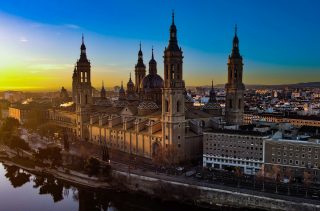
Map of the Self-Guided Walking Tour of La Spezia walking route with 16 stops in La Spezia.
Preview map of the Self-Guided Walking Tour of La Spezia route in La Spezia, showing 16 stops. Use the interactive map to zoom and tap markers.

More from this area

Self-Guided Walking Tour of Catania (2026)

Self-Guided Walking Tour of Catania

This website uses affiliate links which earn a small commission at no additional cost to you.

Catania is Sicily's energetic eastern city, standing in the shadow of Mount Etna and shaped by lava stone, Baroque rebuilding, markets, churches, and a strong urban food culture. Mount Etna itself is UNESCO-listed, with UNESCO describing it as the highest Mediterranean island mountain and the most active stratovolcano in the world.

For visitors, Catania works well as both a city break and a base for eastern Sicily. Piazza del Duomo, the elephant fountain, Via Etnea, the fish market, Roman remains, monasteries, theatres, cafés, and street food give the city real texture, while trains and tours connect it with Taormina, Syracuse, Mount Etna, and the coast. It is lively, rough-edged in places, and often more rewarding than visitors expect.

How to Get to Catania

By Air: Catania is served by Catania-Fontanarossa Airport (Aeroporto di Catania-Fontanarossa), the main gateway to eastern Sicily, with frequent domestic flights (especially from Rome and Milan) and a good spread of seasonal and year-round international routes. From the terminal, the easiest transfer into the center is the airport bus/shuttle, with taxis and ride services also available; if you're continuing beyond the city, picking up a rental car at the airport can be efficient. For the best deals and a seamless booking experience, check out these flights to Catania on Booking.com.

By Train: Catania Centrale is the city's main station and the most practical arrival point if you're coming from other Sicilian cities or transferring from the mainland via Messina. Rail is a solid option for linking up with Taormina/Giardini, Syracuse, Messina, and Palermo (often slower than driving, but straightforward), and it puts you close to the center so you can start walking without needing a car. Use Omnio to easily compare schedules, book train tickets, and find the best prices all in one place for a hassle-free journey across Italy.

By Car: Driving into Catania is convenient for exploring towns along the Ionian coast or for building a broader Sicily itinerary, with fast road access via the A18 (toward Messina/Taormina) and the A19 (toward Palermo). Once you reach the city, expect dense traffic, limited central parking, and ZTL/restricted zones in parts of the historic area-plan to use a garage or park on the edges and walk in to avoid fines and stress. If you are looking to rent a car in Italy I recommend having a look at Discover Cars, first, as they compare prices and review multiple car rental agencies for you.

By Bus: Long-distance coaches can be a cost-effective alternative to trains, with direct or one-change services connecting Catania to Palermo, Messina, Syracuse, Ragusa, and other Sicilian towns, plus airport-to-city services that run frequently. Bus arrival points vary by operator, so check the exact stop location in advance and allow extra time in peak traffic, especially if you're heading straight into the historic center.

Short History of Catania

Catania in the Greek and Hellenistic eras (8th-3rd centuries BCE)

Catania’s earliest urban identity took shape in the classical world, when a gridded street plan, civic spaces, and port-facing commerce anchored daily life. The city’s long habit of public gathering and trade still reads clearly in its central open spaces, especially around Piazza Duomo, where the rhythm of civic life has repeated for centuries in different architectural languages. Even now, the compact walk between the core squares and the market lanes gives you a sense of how an ancient city functioned: business early, social life later, with a strong pull toward the central piazzas.

Catania under Rome (3rd century BCE-5th century CE)

Roman rule scaled the city up into a fully equipped provincial center, leaving the most legible ancient remains you'll encounter on a walking tour. The Roman Amphitheater speaks to mass entertainment and the politics of public spectacle, while the Roman Theater of Catania points to a more structured cultural life, with performances tied to status, patronage, and civic identity. These venues weren't isolated monuments; they sat within a dense fabric of streets, baths, and shops, the same kind of layered city texture you feel today as you move between archaeological fragments and later streetscapes.

Catania from late antiquity to the medieval city (6th-15th centuries)

The centuries after Rome brought repeated transitions in power and urban priorities, with religious institutions gradually becoming the most durable anchors of continuity. The site of the Cathedral of Catania (later rebuilt many times) represents that long arc: a civic-religious center that absorbed change and reasserted order after each upheaval. Markets and public exchange never disappeared, and the continuity of food commerce is easiest to imagine at 'Piscaria (Catania Fish Market), where the city's older mercantile instincts feel intact-loud, immediate, and tied to daily necessities.

Catania’s early modern boom and aristocratic patronage (16th-17th centuries)

In the early modern period, wealth and status increasingly expressed themselves through palaces, ceremonial routes, and the careful staging of public life. This is the background that makes Palazzo Biscari (Biscari Palace) such a revealing reference point: it reflects a world where elite families invested in architecture, art, and hospitality as demonstrations of power and refinement. The city’s main corridors began to act not just as practical streets but as statements-places to be seen, to process through, and to connect institutions, residences, and civic spaces.

Catania after the 1693 earthquake (late 17th-18th centuries)

The 1693 earthquake triggered a dramatic reimagining of the city, producing the lava-stone Baroque character that defines the historic center's look and feel. Piazza Duomo and the Cathedral of Catania became the symbolic heart of this rebuilding, with a renewed emphasis on theatrical façades, balanced proportions, and a sense of ordered grandeur after disaster. The same reconstruction logic shaped other civic showpieces, including Piazza dell'Universita (University Square), where architecture and public space work together to project stability, authority, and confidence.

Catania in the 19th century (1800s)

The 19th century added a more modern civic and cultural layer, with public squares and promenading routes taking on new importance as the city’s social stage. Via Etnea (Etnea Street) became the defining artery for daily life and display, linking major spaces and concentrating shops, cafés, and the steady flow of residents and visitors. Cultural identity also sharpened around music and the performing arts: Piazza Bellini (Bellini Square), the Monument to Vincenzo Bellini, and the broader Bellini legacy signal how the city framed itself not only through religion and politics, but through artistic pride and public commemoration.

Catania from literary realism to contemporary civic memory (late 19th century-today)

From the late 1800s onward, the city's story is also told through its writers, museums, and the preservation of everyday life as heritage. The Giovanni Verga House Museum ties the urban experience to the intimate scale of rooms, habits, and observations that shaped literary realism, while the Museo Civico (Civic Museum) gathers the longer historical arc into collections that help connect ancient fragments to later artistic and civic ambitions. Meanwhile, 'Piscaria (Catania Fish Market) and the surrounding streets remain a living counterpoint to curated history-proof that, alongside monuments and museums, Catania's identity still rests heavily on daily commerce, street culture, and the continuity of communal life.

Where to Stay in Catania

To make the most of visiting Catania and this walking tour then you consider stay overnight at the centre. The most practical base is the Centro Storico around Piazza Duomo, where you can walk straight out to the Cathedral area, the fish market, and the main Baroque squares with minimal transit. Good, walk-friendly options here include Duomo Suites & Spa and Palace Catania | UNA Esperienze, both placing you right on the historic core’s main sight cluster.

If you want the same central convenience but a slightly calmer feel in the evenings, base yourself near Via Etnea and the Bellini area, which keeps you close to Piazza Bellini, the Monument to Vincenzo Bellini, and an easy approach to the Roman Amphitheater and the university squares. This area works well for cafés, dining, and an efficient start point in either direction along the route. Consider Habitat Boutique Hotel and Liberty Hotel for strong location-to-comfort value on foot.

For a more residential base that still reaches the tour quickly, look at the Borgo / upper Via Etnea side, where you’ll typically get a little more space and a quieter street scene while staying within a straightforward walk (or short hop) back into the core. It’s a sensible choice if you like starting early and returning to a less touristy neighborhood later. Two reliable picks in this broader central belt are NH Catania Centro and Romano House.

If you prefer staying near transport links for day trips while keeping the walking route simple, the area around Catania Centrale (and the adjoining streets toward the center) is convenient for rail connections and airport transfers, and you can still walk into the historic core in a reasonable time. This base is especially useful if you're combining Catania with Taormina or Syracuse and want an easy in-and-out routine. Options worth checking include Katane Palace Hotel and Hotel Villa Romeo.

Your Self-Guided Walking Tour of Catania

Discover Catania on foot, using our walking tour map to guide you from stop to stop as you explore the city's landmark piazzas, lava-stone streets, and layered history. Because it's a self-guided walking tour, you can set your own pace-skip any sights that don't interest you, linger where you like, and build in coffee breaks whenever you want.

1. Museo Civico

Ursino Castle Catania
CC BY-SA 4.0 / Ranchino

Catania’s Civic Museum is closely tied to the choice of venue: Castello Ursino. The museum’s modern formation gathered major collections (including material associated with the Biscari legacy and other local holdings) into a single stronghold-like space that could protect and present them. That decision matters because it turns the museum visit into two parallel experiences: you’re not only viewing artifacts, you’re also moving through one of the city’s most important medieval structures.

Castello Ursino was built in the 13th century as a royal fortress, later taking on political functions and surviving the city’s many upheavals better than most buildings of its era. Its rectangular plan and corner towers read as pure military logic, and the courtyard gives you a break point where you can reset before diving back into galleries. Inside, collections typically range from classical antiquities to later painting and decorative arts, so the museum acts as a compressed history of the region and the city’s collecting habits.

On a walking tour, this is your “deep time” stop: it’s the place where you can connect Roman, medieval, and early modern threads in one visit. Start by appreciating the building itself—stone thickness, tower geometry, courtyard proportions—then let the collections fill in the context. Because it’s a substantial visit, it also works well strategically: do it when you want a slower, cooler, more contemplative segment of your walk before returning to street life.


Location: Ursino Castle, Piazza Federico di Svevia, Catania, Metropolitan city of Catania, Italy | Hours: Daily: 09:00–19:00. Last entry: 18:00. | Price: €6.00 standard; €3.00 reduced; €2.00 schools. | Website

We recommend to rent a car in Italy through Discover Cars, they compare prices and review multiple car rental agencies. Book your rental car here.

2. Giovanni Verga House Museum

Casa di Giovanni Verga
public domain / Inviaggiocommons

This house museum is valuable because it preserves a domestic scale of history: not a cathedral or palace, but the lived environment of one of Sicily’s major literary figures, Giovanni Verga. Verga’s importance sits in his realist approach to Sicilian life and social conditions, and the house becomes a way to anchor that literary legacy in physical rooms and objects. The museum’s later recognition as a monument and its eventual management by public authorities reflect how Italy formalizes cultural memory—turning a private home into a shared reference point.

Inside, the emphasis is on atmosphere and artifacts rather than spectacle. Manuscripts, portraits, and personal items frame Verga as both public author and private person, and the library is the emotional center: shelves of books, working surfaces, and the sense of a mind built through reading and writing. The rooms are typically understated, which works in the museum’s favor—your attention isn’t distracted by luxury, it stays on the idea of work, discipline, and intellectual life.

On a walking tour, this is a strong “contrast stop” after the monumental sites. It brings you back to human scale and gives your route cultural breadth: Catania isn’t only Baroque and Roman, it’s also modern literary Italy. If you like contextual walking, use the streets around it to imagine the city Verga moved through—where a writer would have observed daily life, overheard conversations, and turned ordinary scenes into enduring stories.


Location: Via Sant'Anna, 8, 95124 Catania CT, Italy | Hours: Monday – Saturday: 08:30–13:30. Sunday: Closed. Closed on Sunday. | Price: Adults: €4; Reduced: €2. | Website

Here is a complete selection of hotel options in Catania. Feel free to review each one and choose the stay that best suits your needs.

3. Roman Theater

Greek – Roman theatre
CC BY-SA 4.0 / Luca Aless

The Roman theatre complex shows Catania’s classical layer in a particularly vivid way because it’s both substantial and embedded in the modern city. Built in the 2nd century AD, it later fell out of use and was gradually swallowed by later construction. The long excavation history—partial digs in earlier centuries and more decisive clearing in the modern era—means the site is also a story about archaeology itself: what a city chooses to uncover, and what it allows to remain hidden.

In layout terms, it’s helpful to know you’re looking at more than one performance space: the main theatre and the smaller odeon. The theatre’s seating climbs the natural slope, which is classic Roman pragmatism—use the landscape to support the architecture—while the orchestra and stage areas show how performance was framed and controlled. Even when the stone is worn, the geometry remains legible, and that legibility is the key to enjoying it.

On a walking tour, approach from the surrounding streets and notice the transition from narrow urban fabric to sudden open ancient volume. Once inside, walk the seating arcs and look back toward the stage to understand sightlines; then turn around and look outward to feel how close the modern city sits. This stop pairs well with nearby Baroque churches and palaces because the contrast is sharp: Roman massing and function versus Baroque display and surface.


Location: Via Vittorio Emanuele II, 266, 95124 Catania CT, Italy | Hours: Daily: 09:00–19:00. | Price: Adults: €8; Reduced: €4. | Website

Traveling to a country with a different currency? Avoid ATM transaction fees and pay in local currency with a Wise Card. Having used it for over 5 years, we've saved loads on fees!

4. Roman Odeon

Roman Odeon
Roman Odeon
CC BY-SA 4.0 / Matthias Süßen

The Odeon of Catania is the smaller, more intimate sibling of the city’s main performance complex, built in the Roman imperial period (commonly dated to around the 2nd century AD). An odeon was typically used for music, recitation, and performances that benefited from a more controlled acoustic environment than a large open theatre. In Catania’s case, it speaks to a city that wasn’t only staging mass entertainment, but also hosting more refined cultural events within the same urban core.

Like much of Roman Catania, the odeon’s later history is a story of disappearance and rediscovery. As the centuries passed and the classical venues fell out of use, parts of the structure were encroached on by later buildings and gradually buried in the fabric of the city. Excavation and clearance in the modern era brought the space back into view, but what survives is necessarily partial—enough to read the plan and construction logic, not enough to feel “complete” in the way better-preserved sites do.

On a walking tour, the best way to visit is to treat it as a detail-rich add-on to the adjacent Roman Theatre of Catania rather than a standalone destination. Look for the tighter scale of the seating, the curvature of the cavea, and the way the venue is tucked into the hillside and hemmed in by later city growth. If you pause in the centre and speak quietly, you can get a sense of why odeons mattered: they were built for listening, not just watching.


Location: Via Vittorio Emanuele II, 266, 95124 Catania CT, Italy | Hours: Monday – Sunday: 09:00–19:00. | Price: Adults: €8; Reduced: €4. | Website

Where to Stay in Catania: An Area by Area Guide!

5. Museo Vincenzo Bellini

Palazzo Gravina Cruyllas a Catania
CC BY-SA 4.0 / Luca Aless

Museo Vincenzo Bellini is a focused stop for understanding how Catania’s most famous composer was shaped by the city that celebrates him so publicly. Vincenzo Bellini became a leading figure of early 19th-century Italian opera, and the museum frames his career against the wider cultural world of the Bourbon-era city and the networks of patrons, theatres, and teachers that a talented young musician needed. Even if you know Bellini only by name, the museum helps you place him as a working professional with deadlines, collaborators, and ambitions, rather than a distant “genius” statue in a square.

What you typically come for is material culture: manuscripts and musical documents, portraits, period objects, and contextual displays that explain how Bellini’s operas moved from composition to performance. The strongest way to experience it is to look for the chain from idea to stage—drafts, revisions, correspondence, and the visual branding of opera in the 1800s. Expect the emphasis to be interpretive rather than monumental: this is about close reading of a life and a craft, not grand architecture.

On a walking tour, the museum works best as a “meaning stop” between outdoor Bellini landmarks. Pair it mentally with Piazza Bellini and the Teatro Massimo Bellini, then later with the Bellini monument: you’ll have seen the city’s celebratory narrative outside, and here you get the quieter evidence behind it. If you’re doing the historic core on foot, slot it after the cathedral area and before you drift toward the theatre district, so the museum visit gives context to what you see on the streets.


Location: Palazzo Gravina-Cruyllas, Catania, Metropolitan city of Catania, Italy | Hours: Monday: 09:00–13:00. Tuesday – Saturday: 09:00–19:00. Sunday: 09:00–13:00. | Price: Adults: €5. | Website

6. Terme della Rotonda

Terme della Rotonda
Terme della Rotonda
CC BY-SA 4.0 / Davide Mauro

Archaeological Complex Terme della Rotonda (Via della Mecca) sits in the dense historic core of Catania and preserves the remains of a Roman public bath complex from roughly the 1st–2nd centuries CE, later enlarged and then abandoned. In the Byzantine period the site was repurposed rather than erased: a church, Santa Maria della Rotonda, was built directly over the ancient structure, with a distinctive domed space that still defines the place today. That “stacked” history is the key to the visit—you are looking at Roman infrastructure that became medieval worship space, with later phases leaving their own marks.

What to see is unusually legible for a relatively compact site. Look for the bath rooms’ geometry (spaces that would have functioned as cold, warm, and hot areas), and focus on the evidence of Roman heating: hypocaust elements and the small supporting stacks (pilae) that once held raised floors above hot air channels. You may also spot surviving floor fragments and wall sections that help you picture the original volumes, plus the way later church architecture “caps” and reshapes the earlier plan. The most rewarding moment is standing where the circular/domed church space meets the bath remains, because it makes the conversion of function instantly understandable without needing much imagination.

On a walking tour, Terme della Rotonda works best as part of a Roman-performance-and-baths cluster with the nearby Roman Theatre of Catania and the odeon: do the theatres first, then come here to see the “everyday” Roman city (water, heat, routine) that underpinned the spectacle sites. Practical note: access can be restricted by opening times and, at times, reservation rules; the regional archaeological park lists it as free entry and publishes the current timetable and contacts, so it’s worth checking before you build your day around it.


Location: Terme della Rotonda, Via della Mecca, Catania, Metropolitan city of Catania, Italy | Hours: Tuesday – Saturday: 09:00–17:00. Sunday: 09:00–13:00. Closed on Monday. | Price: Free. | Website

7. Benedictine Monastery of San Nicolò l'Arena

Benedictine Monastery of San Nicolò l’Arena
CC BY-SA 4.0 / Nicolò Arena

This monastery is a monument to endurance and reinvention. Founded as a Benedictine complex in the 16th century, it was repeatedly disrupted by the forces that define Catania’s history: volcanic events from Mount Etna and seismic catastrophe, especially the 1693 earthquake. The rebuilding that followed turned the site into one of the largest monastic complexes in the region, and later political shifts led to confiscation and reuse. Today, its role as part of the university underscores how Catania repurposes grand structures rather than freezing them in time.

Architecturally, the scale is the first impact: cloisters, long corridors, layered courtyards, and a sense of the monastery as a self-contained city within the city. The rebuilt cloister spaces blend late Baroque richness with a more institutional rhythm, and you can often read different phases of construction in proportions and details. The site also sits in a wider heritage context connected to the Val di Noto story—how southeastern Sicilian cities rebuilt in Baroque form after disaster.

On a walking tour, plan to spend longer here than you expect. The experience isn’t a single “wow” moment; it’s cumulative—moving through courtyards, pausing at thresholds, and noticing how light and shadow animate stone surfaces. If you’re interested in urban history, it’s also a strong place to reflect on reuse: classrooms and offices occupying former monastic space make the building feel active rather than preserved, which changes how you perceive its grandeur.


Location: Piazza Dante Alighieri, 32, 95124 Catania CT, Italy | Hours: Daily: 10:00–17:00. | Price: Adults: €10.00; Reduced: €7.50; University students (non-UNICT): €6.00; UNICT students: €4.00; Under 19: €3.00; Under 7: free. | Website
Powered by GetYourGuide

8. Roman Amphitheater

Roman Amphitheater of Catania
CC BY-SA 4.0 / Antony-22

Catania’s Roman amphitheatre is one of those sites where absence tells the story as much as what remains. Built around the early imperial period, it was once among the larger arenas of the Roman world, designed for spectacle and mass attendance. Over time, the city grew over it, reused its materials, and gradually hid it—until excavations brought parts back into view. That cycle of burying and revealing is a recurring theme in Catania: the city doesn’t discard its past, it builds directly on top of it.

What you see today is only a fraction, but it’s enough to understand the engineering logic: curved masonry, vaults, radial supports, and the geometry that would have carried seating and circulation. Try to imagine the full ellipse and the layered seating that once held thousands. The visible section becomes more meaningful if you focus on construction textures—reused stone, differing masonry techniques, and how later intrusions (stairs, barriers, modern edges) meet ancient structure.

On a walking tour, this stop is best approached with “imagination discipline”: stand still, trace the curve, and mentally reconstruct the missing volume. It pairs well with the Roman theatre later in your route because together they show different kinds of Roman public entertainment—one for gladiatorial spectacle and crowd drama, the other for staged performance and acoustics. Keep an eye out for how close modern life presses in; part of the experience is seeing a major Roman monument surviving in the middle of everyday streets.


Location: P.zza Stesicoro, 95124 Catania CT, Italy | Hours: Monday – Sunday: 09:00–17:00. | Price: Adults: €4; Reduced: €3. | Website

9. Monument to Vincenzo Bellini

Statue of Vincenzo Bellini
CC BY-SA 1.0 / Elio Bonanno

The Bellini monument is a late-19th-century civic statement: Catania publicly elevating its most famous composer as a symbol of cultural prestige. Unveiled in 1882 and designed by Giulio Monteverde, it belongs to the era when Italian cities used monuments to shape identity in public space—turning artists, patriots, and intellectuals into permanent residents of the piazza. It’s also a reminder that Catania’s “heritage story” isn’t only ancient and Baroque; it continues into modern nation-building and cultural pride.

The design is deliberately theatrical: Bellini sits above a layered base, and the composition reads like a staged ascent from narrative to person. Around the pedestal are sculptural references to his operas—figures that make the monument work as both portrait and visual programme. Even the fence matters: it’s not just protection, it frames the monument as something to be approached, circled, and read in sequence.

On a walking tour, treat the monument as a decoding exercise rather than a quick photo stop. Walk around it slowly and identify the opera references; you don’t need to be an opera expert to appreciate how the city chose to “explain” Bellini to the public. It also works as a bridge between nearby theatre culture and the deeper historical layers you’ll see elsewhere: in a few minutes you can move from 19th-century civic sculpture to Roman archaeology, which is exactly the kind of time-travel jump Catania does well.


Location: Monumento a Vincenzo Bellini, P.zza Stesicoro, 36, 95131 Catania CT, Italy | Hours: 24 Hours. | Price: Free.

10. Via Etne

Via Etnea
Via Etnea
CC BY-SA 4.0 / Antony-22

Via Etnea is Catania’s primary spine, and its long history is partly the point: the route echoes older city axes, but the street you experience today is largely shaped by post-1693 planning. After the earthquake, Catania’s rebuild created straighter, more legible streets and a Baroque cityscape that could carry processions, commerce, and daily movement. Via Etnea became the stage where the rebuilt city could be seen, used, and understood at a glance.

The material character is unmistakably local: lava stone underfoot, volcanic greys and blacks contrasted with brighter façades and balconies. Many of the buildings that line the street were designed or influenced by the same architectural minds that remade the central squares, so as you walk, you’re effectively reading a continuous Baroque “gallery” in an everyday setting. Look up often—balconies, cornices, and façade rhythms reward vertical attention, especially where the street opens into squares and small nodes.

On a walking tour, Via Etnea is both route and attraction. It ties together key stops (cathedral area, university area, Stesicoro and the Roman amphitheatre zone, and onward toward gardens), and it’s also where Catania’s food life interrupts the history in the best way. Use it to sample local snacks between monuments rather than treating eating as separate from sightseeing: it’s a street built for strolling, pausing, and rejoining the flow.


Location: Via Etnea, Catania CT, Italy | Hours: 24 Hours. | Price: Free.

11. Piazza dell’Università

Piazza Università
Piazza Università
CC BY-SA 2.0 / kuhnmi

University Square reflects Catania’s identity as a city of institutions as well as churches and palaces. Its Baroque façades frame a space that historically linked power (administration), learning (the university), and public life. The square’s buildings read as composed and ceremonial, and that’s not accidental: in post-1693 Catania, rebuilding wasn’t only structural, it was ideological—order, authority, and continuity had to be visible.

What most visitors remember are the four elaborate bronze candelabra-style lampposts, each sculpted with stories and allegories rooted in Sicilian folklore and values. They aren’t decoration for decoration’s sake; they’re a kind of civic storytelling, turning street furniture into a mini-mythology of chastity, patriotism, filial devotion, and cleverness. If you enjoy details, this is a “slow looking” stop: walk each lamppost, read the figures, and notice how narrative is used as ornament.

On a walking tour, Piazza dell’Università is a practical connector between cathedral-focused highlights and the Via Etnea corridor. It also gives you a different lens on the city: not sacred, not aristocratic, but intellectual and civic. The square is especially good for orientation because it’s relatively open; from here you can pick out routes and decide whether to continue along Via Etnea, loop back toward Bellini-related sites, or cut toward the tighter historic streets where Roman layers start to surface.


Location: Via Etnea, 95124 Catania CT, Italy | Hours: 24 Hours. | Price: Free.

12. Massimo Bellini Theater

Teatro Massimo Bellini
Public Domain / Louisvhn

Teatro Massimo Bellini is Catania’s great 19th-century statement of cultural ambition: a purpose-built opera house created when the city wanted a “modern” lyric theatre worthy of its native composer Vincenzo Bellini. The project took shape in the late 1800s, with plans associated with Andrea Scala and the build completed under Carlo Sada, culminating in the theatre’s inauguration on 31 May 1890 with Bellini’s Norma.

From the outside, pause long enough to read the façade and its ceremonial entrance: the building is designed to be approached slowly, like a public monument rather than a simple venue. Once inside (ideally via a guided visit or around a performance), the core “what to see” is the classic Italian horseshoe auditorium with multiple tiers of boxes, built for sightlines and, crucially, sound. Look up for the ceiling fresco by Ernesto Bellandi celebrating Bellini and his major operas, then look toward the stage for the historic painted curtain by Giuseppe Sciuti (a huge narrative canvas that’s part of the theatre’s identity, not just décor).

On a walking tour, the theatre fits naturally into the compact Bellini cluster: approach it from Piazza Bellini so you get the “reveal” of the façade, then continue to Bellini-related stops (the monument and museum) with a clearer sense of why the city venerates him so visibly. If you can time your route with an open house or tour, prioritise a quick interior look over lingering outside—the building’s real impact is the transition from street noise to the hush of the auditorium and its lavish detailing. For practical planning, the theatre’s official site publishes the current season calendar and ticketing information, which is useful because access depends on rehearsals and performance schedules.


Location: Via Giuseppe Perrotta, 12, 95131 Catania CT, Italy | Hours: Monday: Closed. Tuesday: 09:00–13:00. Wednesday: 09:00–13:00 & 16:00–18:00. Thursday: 09:00–13:00 & 16:00–18:00. Friday: 09:00–13:00 & 16:00–18:00. Saturday: 09:30–13:00. Sunday: Opens 1 hour before scheduled performances. | Price: Guided tour: €6.50 (standard); €4.50 (reduced). Prices vary by show. | Website

13. Chiesa della Badia di Sant'Agata

Chiesa della Badia di Sant’Agata
CC BY-SA 3.0 / giggel

Chiesa della Badia di Sant’Agata is one of the most atmospheric places to understand how deeply the city’s identity is tied to Saint Agatha. The church is part of the former Benedictine “Badia” (abbey) complex dedicated to her, and—like so much of central Catania—its current form is shaped by the great rebuilding after the 1693 earthquake. The result is late Sicilian Baroque: a devotional site, but also a piece of urban theatre, designed to be seen from the cathedral square and to frame the saint’s presence right in the civic centre.

What to look for starts outside: the façade’s Baroque rhythm, the way the building sits close to the cathedral precinct, and how the curves and stonework create movement even when you’re standing still. Inside, the emphasis is on spatial drama—an airy, light-filled volume crowned by a dome, with rich stucco and sculptural detailing that rewards a slow circuit rather than a quick glance. If you’re walking the historic core, this is also a good “contrast” stop: it’s not the cathedral’s scale or tomb-heavy gravitas, but a more intimate, more overtly theatrical expression of the same city-wide cult of Agatha.

The must-do experience here is the upper level and terrace, if access is open when you visit. The climb is part of the appeal: you move from street-level bustle into increasingly quiet spaces, then emerge onto a viewpoint that gives you one of the best panoramas over Piazza del Duomo, the cathedral façade, and the rooftops of old Catania. On a walking tour, it fits perfectly as a short detour while you’re already in the cathedral-square cluster: do it either early for clear light on the views, or late afternoon when the city’s stone starts to warm in colour and the square’s geometry reads more sharply from above.


Location: Via Vittorio Emanuele II, 182, 95131 Catania CT, Italy | Hours: Monday – Saturday: 09:30–12:30 & 16:30–20:00. Sunday: 09:30–13:00 & 16:30–20:00. | Price: Church: free. Terraces & dome walkway: €5.00 per person. | Website

14. Cathedral of Catania

Basilica Cattedrale di Sant’Agata
CC BY-SA 4.0 / Matthias Süßen

The story of the cathedral is inseparable from Saint Agatha, the city’s patron saint. According to tradition, Agatha was a young woman of noble background who refused the advances of the Roman prefect, was brutally martyred, and then became Catania’s enduring symbol of defiance and protection. Over the centuries, devotion to her shaped civic identity in a very public way: processions, vows, and an almost contractual belief that the saint “answers” injustice done to her city. Even if you approach it as legend, it explains why this cathedral feels less like a museum and more like the city’s living heart.

Architecturally, what you see today is largely the product of rebuilding after the catastrophic 1693 earthquake. The exterior reads as late Sicilian Baroque: a theatrical façade with stacked levels, niches, and columns that were designed to impress from the moment you step into Piazza del Duomo. Look for the carved wooden main door panels that narrate episodes from Agatha’s life, and notice how later additions (dome and bell elements) sit alongside older surviving fragments, including medieval portions around the apse.

On a walking tour, give yourself time to do the interior properly rather than just “popping in.” The plan is a Latin cross with three naves, so it’s easy to orient yourself: move slowly down the central axis, then peel off into the transepts. Seek out the chapels (including the Holy Crucifix) and the tombs that place the cathedral at the crossroads of faith, politics, and culture—especially composer Vincenzo Bellini. Finally, step back outside and read the façade like a civic manifesto: the saint’s presence is not subtle, and the building is meant to be read in the public square.


Location: Piazza del Duomo, 95100 Catania CT, Italy | Hours: Monday – Saturday: 07:15–12:30 & 16:00–19:00. Sunday: 07:45–12:30 & 16:00–19:00. | Price: Free; donations appreciated. | Website

15. Fontana dell'Elefante

Fontana dell’Elefante (uʻ Liotru)
CC BY-SA 2.0 / Benjamin Smith

Fontana dell’Elefante is the visual shorthand for Catania: a lava-stone elephant (“Liotru”) carrying an Egyptian-style obelisk, set right in the middle of Piazza Duomo. The monument as you see it today is an 18th-century Baroque composition, created during the post-1693 rebuilding of the city’s centre. It deliberately uses volcanic basalt, so even before you know the symbolism, the material itself points straight to the city’s relationship with Mount Etna and to Catania’s habit of turning disaster materials into civic identity.

The elephant’s origins sit in a mix of folklore and archaeology. Local tradition treats it as a protective emblem, and the obelisk on its back reinforces the idea of ancient prestige being “carried” into the modern city. The effect is intentionally enigmatic: it looks older than the surrounding Baroque façades, yet it’s staged in a way that belongs to the 1700s, when Catania was rebuilding its public image with theatrical urban set pieces. Look closely at the carving and patina differences between elephant and obelisk, and you can read the monument as a curated collage of ages rather than a single-period artifact.

On a walking tour, this is your orientation point. Stand at the fountain and do a slow 360-degree scan: cathedral façade, city hall, the palace fronts, and the key streets that radiate out (especially Via Etnea). The best viewing is not from one spot; circle it once so the elephant aligns with different backdrops, then step a few metres away to see how it anchors the square’s symmetry. If you’re linking stops, use it as the “reset” between the cathedral interior, the fish market lanes nearby, and your next push up Via Etnea.


Location: Piazza del Duomo, 95124 Catania CT, Italy | Hours: 24 Hours. | Price: Free.

16. Piazza Duomo

Piazza del Duomo
Piazza del Duomo
CC BY-SA 4.0 / Luca Aless

Catania’s main square is a post-disaster masterpiece: after the 1693 earthquake, the city essentially had to restage its center, and the square became the set-piece where order, authority, and pride could be rebuilt. The choreography still works today: you arrive, your eye is pulled to the cathedral, then to the surrounding palaces and church façades, and finally to the central emblem that seals the whole composition. The result is busy and theatrical, but it’s also a coherent urban “room” that feels intentionally designed rather than accidental.

At the center stands the black lava-stone elephant topped with an obelisk—Catania’s symbol, and a pointed reminder that the city is built with the materials (and risks) of Mount Etna. The elephant monument was placed here by Giovanni Battista Vaccarini, the architect who did much of the square’s reimagining. Around it, scan the edges: the Town Hall side, the ecclesiastical buildings, and the gateways that frame how you enter and exit the space. Beneath the surface, water matters too—Amenano’s fountain imagery points to the river system that slips underground and reappears where the city wants it.

On a walking tour, treat the square as your navigational hub. From here you can flow naturally into Via Etnea, drift toward the fish market, or thread into the tighter historic streets toward the Roman-era sites. If you’re in town in early February, the festival of Saint Agatha transforms the square from a scenic stop into the city’s main stage, with processions, lights, and crowd energy that make the architecture feel like it’s performing. Even on an ordinary day, pause long enough to watch how locals use it: this is not just a postcard view, it’s Catania’s daily living room.


Location: Piazza del Duomo, 95100 Catania CT, Italy | Hours: 24 Hours. | Price: Free.

17. La Pescheria

Storico mercato del pesce di Catania
CC BY-SA 2.0 / Berthold Werner

The fish market is one of Catania’s most persistent public institutions: a daily ritual of trade that links the city to the sea and to its own culinary identity. While the present form dates to the modern era, the deeper story is older—Mediterranean port cities have always used markets as both infrastructure and theatre, and Catania is no exception. Here, buying and selling is also performance: voice, speed, humor, and competitive display are part of how commerce works.

Visually, the market is pure sensory overload: fish laid out in dense variety, knives and cutting blocks in constant motion, red awnings filtering the light, and the dark volcanic surfaces that make colours pop. You’ll see the grammar of the catch—whole fish, cleaned fish, shellfish, and the quick transitions between display and preparation. The setting near the cathedral area adds to the effect: within minutes you move from sacred Baroque grandeur to raw everyday life.

On a walking tour, treat A’ Piscaria as a pass-through experience rather than a “stop at a doorway.” Walk into the lanes, let the soundscape surround you, and keep moving so you don’t become an obstacle. If you want photos, take them quickly and respectfully, then step aside. It’s also an ideal place to connect sightseeing to eating: after the market, nearby cafés and trattorias can turn what you’ve just seen into something you taste, which is one of the most Catania ways to end a historic walk.


Location: Via Cardinale Dusmet, 1, 95131 Catania CT, Italy | Hours: Monday – Saturday: 07:00–14:00. Closed on Sunday. | Price: Free.
Powered by GetYourGuide
Moira & Andy
Moira & Andy

Hey! We're Moira & Andy. From hiking the Camino to trips around Europe in Bert our campervan — we've been traveling together since retirement in 2020!

Read our full story here

This website uses affiliate links which earn a small commission at no additional cost to you.

Walking Tour Summary

Distance: 4 km
Sites: 17

Walking Tour Map
Map of the Self-Guided Walking Tour of Catania walking route with 17 stops in Catania.
Preview map of the Self-Guided Walking Tour of Catania route in Catania, showing 17 stops. Use the interactive map to zoom and tap markers.

More from this area

Self-Guided Walking Tour of Cagliari (2026)

Self-Guided Walking Tour of Cagliari

This website uses affiliate links which earn a small commission at no additional cost to you.

Cagliari is Sardinia's capital, a layered Mediterranean city with hilltop quarters, sea views, Roman remains, medieval streets, beaches, and a strong local food scene. One of its key ancient sites is the Roman Amphitheatre, which the city's tourism office describes as the most important public building of Cagliari's Roman period, set into a natural valley on the southern slopes of the Buon Cammino hill.

For visitors, Cagliari offers a useful mix of culture and coast. The Castello district, cathedral, bastions, Roman amphitheatre, archaeological museum, marina quarter, markets, Poetto Beach, and nearby lagoons give the city far more depth than a simple arrival point. It works well for travellers who want Sardinian history, seafood, beaches, and a practical base for exploring the south of the island.

How to Get to Cagliari

By Air: Cagliari is served by Cagliari Elmas Airport, the main gateway to southern Sardinia, with frequent seasonal and year-round flights from major Italian cities and many European hubs. From the airport, the fastest option into the centre is the regional train to Cagliari station, while taxis and rideshares offer a direct door-to-door alternative; you can also pick up a rental car on arrival if you're continuing beyond the city. If your accommodation is in or near the old town, aim to arrive earlier in the day to avoid the busiest transfer times and to check in before heading out on foot. For the best deals and a seamless booking experience, check out these flights to Cagliari on Booking.com.

By Train: Trains are a practical way to reach Cagliari from other parts of Sardinia, with regular services linking the capital to towns and cities across the island via the regional network. The main station, Cagliari Centrale, sits close to the Marina district and the port area, making it an easy base for onward travel by local buses, taxis, or a short walk into central neighbourhoods. If you're continuing to beach areas or smaller inland destinations, check connections in advance because services can be less frequent outside peak times. Use Omnio to easily compare schedules, book train tickets, and find the best prices all in one place for a hassle-free journey across Italy.

By Car: Driving to Cagliari is straightforward if you're arriving via a Sardinian ferry port or touring the island, and it gives you maximum flexibility for day trips to beaches and archaeological sites. The trade-off is city parking and restricted traffic zones, especially near the historic centre, so it's often simplest to park once (or choose accommodation with parking) and then explore on foot. If you plan to keep a car in the city, look for secure garages or larger car parks on the edge of the centre and avoid relying on limited street spaces. If you are looking to rent a car in Italy I recommend having a look at Discover Cars, first, as they compare prices and review multiple car rental agencies for you.

By Bus: Intercity buses connect Cagliari with many towns across Sardinia and can be useful where train links are limited, particularly for smaller destinations. Services typically arrive near the city centre or at well-connected hubs where you can transfer to local buses or walk to nearby districts, but timetables can vary by season and day of the week. For the smoothest arrival, confirm the final stop location and last departure times if you're returning the same day. [bus]

History of Cagliari

Cagliari Before Rome: Early Settlements and Seafaring Foundations

Long before imperial rule, Cagliari grew around the advantages of trade, salt, and safe anchorage, with maritime exchange shaping daily life and the city's earliest urban patterns. The story is easiest to picture at Portus Karalis, where ships and cargo once tied the city into Mediterranean networks and where the practical business of provisioning, storage, and ship-handling helped define the local economy. Even in these early phases, Cagliari's identity was closely linked to movement: goods, people, and ideas arriving by sea, and local production flowing outward.

Cagliari Under Rome: Karalis and the Making of an Urban City

Under Roman rule, the city became more formally structured, with infrastructure and administration reinforcing Cagliari's role as an important regional centre. Archaeology provides some of the clearest evidence for how the Roman city functioned and evolved, and the Museo del Tesoro e Area Archeologica di Sant'Eulalia is a useful lens into layers of streets, buildings, and everyday material life that accumulated over centuries. For a broader, narrative view of longer timelines, the Museo Archeologico Nazionale di Cagliari brings together artefacts that help connect Roman-era Cagliari to what came before and after, showing continuity as well as disruption.

Cagliari in the Medieval Era: Fortifications, Towers, and a Walled City

As power shifted through medieval centuries, Cagliari’s defences became a defining feature, with the upper districts increasingly protected by walls, gates, and lookout points. The Torre di San Pancrazio and the Torre dell’Elefante embody this period’s priorities: control of access, surveillance, and security, built to withstand conflict and to signal authority over the city’s most strategic approaches. These towers also hint at how the medieval city was experienced on foot-compressed streets, steep climbs, and a clear separation between fortified heights and the lower commercial quarters.

Cagliari in the Spanish Period: Faith, Authority, and Courtly Power

During centuries of Spanish influence, religious institutions and civic authority shaped the city's public face, leaving a legacy that still anchors key monuments. The Cattedrale di Santa Maria Assunta e Santa Cecilia reflects the era's emphasis on ceremonial space and ecclesiastical prestige, while the Palazzo Regio points to the administrative and representative functions of rule, where power was performed as much as exercised. Together, they mark a Cagliari in which governance, religion, and urban identity were tightly interwoven, expressed through architecture and the choreography of public life.

Cagliari in the Savoy and Italian Era: Civic Institutions and a Modern City

With the transition into new political frameworks, Cagliari’s identity increasingly balanced historic fortification with modern civic life, building institutions that addressed administration, public services, and an expanding urban population. The Palazzo Civico is emblematic of this shift, representing a city that increasingly organised itself through municipal structures rather than purely aristocratic or ecclesiastical power. Everyday life also became more visibly “public” in shared spaces of commerce and routine, and the Mercato Civico di San Benedetto captures that modern rhythm: a place where the city’s food culture, daily habits, and community interactions become a living expression of continuity amid change.

Cagliari in the 19th-20th Centuries: Monumental Views and the Reframing of the City

As urban planning and public space evolved, Cagliari began to frame itself not only as a fortified stronghold but as a city of promenades, viewpoints, and civic pride. The Bastione di Saint Remy represents this transformation particularly well, turning former defensive lines into a grand terrace and passageway that reoriented how people moved through and looked over the city. It is the kind of landmark that signals a change in mindset: from fortification and separation toward openness, spectacle, and the creation of shared urban spaces designed for strolling, gathering, and taking in the panorama.

Cagliari Today: Preserving Layers Through Museums and Living Streets

Modern Cagliari actively interprets its past through curated collections and preserved districts, making it possible to read centuries of history without flattening them into a single story. The Cittadella dei Musei functions as a concentrated gateway into the city's archaeology and art, while the Museo Archeologico Nazionale di Cagliari provides the deeper time scale that places later periods in context. What keeps the history from feeling purely archival, though, is that these layers still sit alongside daily life-markets, civic buildings, port activity, and the enduring presence of towers, bastions, and sacred spaces that continue to shape how the city is experienced.

Where to Stay in Cagliari

To make the most of visiting Cagliari and this walking tour then you consider stay overnight at the centre. The most convenient base is the Marina district (near the port and Cagliari's main station), because you can walk straight into the historic core and still be close to cafés and evening restaurants after the tour. Good, walkable options here include Hotel Flora, Hotel Italia, and Regina Margherita Hotel.

If you want to be closer to the atmospheric lanes and viewpoints of the old town, look at the Castello area. You’ll be on the hill already, which makes early-morning photos and late-evening strolls much easier, and you can start the walk with the city’s headline panoramas. Strong choices around the historic centre include Hotel Nautilus (best if you still want a breezier, resort-leaning feel), Palazzo Doglio, and Hotel Villa Fanny.

For a slightly quieter, more residential base that still stays within easy walking range of the route, Villanova is a good compromise: calmer streets, local bars and bakeries, and a short walk to both the hilltop sights and the lower quarters. Consider UNAHOTELS T Hotel Cagliari, Ca' del Sol Cagliari, and Hotel Miramare if you want a central position with an easy walk back after dinner.

If you plan to combine the walking tour with beach time or you prefer more space and a relaxed evening atmosphere, staying near Poetto can work, but you’ll rely more on buses or taxis to reach the start of the route. This option suits travellers who don’t mind a short commute in exchange for shoreline walks and a calmer pace after sightseeing. Practical picks in this direction include Sardegna Hotel - Suites & Restaurant, Hotel Nautilus, and Hotel Calamosca.

Your Self-Guided Walking Tour of Cagliari

Discover Cagliari on foot with a walking tour map that guides you from stop to stop as you explore the city's historic streets, viewpoints, and lively neighbourhoods. Because it's a self-guided walk, you can set your own pace-skip any sights that don't interest you, linger where you want, and pause for coffee whenever the mood strikes.

1. Portus Karalis

Marina Portus Karalis
CC BY-SA 2.0 / Cristiano Cani

Cagliari’s harbour is the modern face of an ancient port. In Roman times, Karalis was a key maritime node on routes linking Sardinia to North Africa and the Italian peninsula, moving grain, salt, wine, and ceramics. Over centuries the shoreline was reshaped by fortifications, quays, and land reclamation, but the basic logic stayed the same: a sheltered anchorage beneath the city’s hills, with control of sea traffic feeding the wealth and importance of the settlement.

Start with the waterfront promenades and look back toward the layered skyline: the marina quarter below and the higher districts rising behind it. The port area today blends working infrastructure (ferries, cargo zones, cruise berths) with walkable stretches lined by cafés and palms, especially around the Marina and Via Roma frontage. If you like photographing “city-meets-sea” scenes, the best views come when ships are in and the light hits the limestone tones of the historic centre.


Location: Molo Dogana, 09125 Cagliari CA, Italy | Hours: 24 Hours. | Price: Free. | Website

We recommend to rent a car in Italy through Discover Cars, they compare prices and review multiple car rental agencies. Book your rental car here.

Powered by GetYourGuide

2. Palazzo Civico

Palazzo Civico di Cagliari
CC BY-SA 2.0 / Pierre Bona

Cagliari’s Civic Palace is a statement building from the early 20th century, designed to project civic pride at a time when Italian cities were modernising their institutions and public spaces. Its architectural language leans into a historicist “revival” style—deliberately monumental, with references to medieval and Catalan-Gothic motifs that echo Sardinia’s complex past and Cagliari’s identity as a capital city.

From the outside, focus on the façade details—arcades, coats of arms, and the symmetry that reads well in photographs—especially along the Via Roma frontage. Inside (when access is possible), you’re typically looking for representative halls, ceremonial staircases, and occasional exhibitions or public displays tied to city life. Even if interiors aren’t open, the building’s real value is as an anchor point for understanding the city’s administrative heart.

Pair it with the surrounding urban fabric: the tree-lined street, the port-facing perspective, and the nearby Marina neighbourhood. It’s best seen as part of a “civic spine” walk that links the waterfront to the older hilltop quarters. If you’re interested in architecture, stand across the street to frame the full façade, then move closer to pick out the carved emblems and decorative stonework.


Location: Via Roma, 145, 09124 Cagliari CA, Italy | Hours: (Summer) Daily: 09:00–20:00. (Winter) Monday – Saturday: 10:00–13:00 & 14:00–18:00; Sunday: 10:00–13:00. | Price: Check official website. | Website

Here is a complete selection of hotel options in Cagliari. Feel free to review each one and choose the stay that best suits your needs.

3. Via Roma

Via Roma
Via Roma
CC BY-SA 2.0 / Eduard Marmet

Via Roma is Cagliari’s waterfront boulevard, where the city’s “front door” opens onto the harbour. The main thing to see is the long run of arcaded porticoes and the palazzi behind them: look for the shifting colours, decorative details, and the way the architecture frames constant sea-and-ship views as you walk. It’s also one of the best people-watching strips in the city, especially at dusk when the light hits the facades.

For sightseeing, treat it as a linear promenade with detours. Walk under the porticoes to catch architectural details up close, then cross toward the harbour side for wider angles back at the “palazzata” (the unified frontage). If you like urban photography, the repeating arches give you strong leading lines, and the contrast between historic facades and the working port makes the street feel more alive than a typical shopping avenue.

Historically, the area was reshaped as Cagliari modernised in the late 19th century. Sources describe how, around 1870, the street was known as “Via San Francesco” and was lined with modest housing and small businesses tied to seafaring life; demolition near the dock began in the 1880s alongside port works, and the grand waterfront identity developed from that urban transformation. It’s a good example of how Cagliari shifted from older defensive urbanism toward a modern, outward-facing city.


Location: Via Roma, Cagliari CA, Italy | Hours: 24 Hours. | Price: Free.

Traveling to a country with a different currency? Avoid ATM transaction fees and pay in local currency with a Wise Card. Having used it for over 5 years, we've saved loads on fees!

4. Nuragica Mostra Experience

Nuragica Mostra Experience
CC BY-SA 4.0 / Xoil

Nuragica Mostra Experience is designed as an immersive introduction to Sardinia’s Nuragic civilisation, using multimedia storytelling rather than a traditional “cases-and-labels” museum layout. What you’ll see is a guided narrative that moves through core themes (ritual, craft, monuments, daily life) and culminates in a virtual reality segment intended to place you inside reconstructed Nuragic settings.

To get the most out of it, go in with a short mental checklist: pay attention to how the exhibition explains the nuraghi (the island’s iconic stone towers), the “tombs of the giants,” sacred wells, and bronze figurines—these are the anchor points that will help you interpret archaeological sites later on your trip. The VR component is the “wow” moment, but the real value is that it gives you a usable framework for understanding what you’ll see across the island beyond Cagliari.

Historically, the exhibition’s purpose is interpretive: it packages a long timespan of ancient Sardinian culture into a single coherent story you can absorb quickly. Official descriptions frame it as a multimedia and sensory “museum experience” (and also a travelling exhibition concept), explicitly aimed at making an ancient civilisation legible to non-specialists. It’s less about displaying a single local excavation and more about building context for Nuragic Sardinia as a whole.


Location: Via Roma, 191, 09125 Cagliari CA, Italy | Hours: Daily: 10:00–13:00 & 17:00–21:00. Closed on Thursday. | Price: Adults: €15; Ages 6–18: €10; Under 5: free. | Website

5. Torre dello Sperone

Torre dello Sperone
Torre dello Sperone
CC BY-SA 4.0 / Mike Peel

Torre dello Sperone is one of the most tangible surviving fragments of medieval Cagliari’s fortifications, set in the historic Stampace quarter. What to see is the tower’s massing and masonry—built in pale limestone—and its relationship to the street level: it reads like a “gate” element, a defensive landmark that still shapes the neighbourhood’s geometry.

On site, focus on the details that reveal its original function. Look for openings and defensive features (including the telltale loophole mentioned in local descriptions), and pay attention to how the tower sits within today’s urban fabric rather than as an isolated monument. It’s not a grand interior experience; it’s a “read the city through its walls” stop, best appreciated by circling it and taking in the approaches from adjacent streets.

Historically, it dates to the Pisan period: sources describe it as a 13th-century fortification built by the Republic of Pisa, completed in March 1293, and associated with the fortified entrance in Stampace. It’s also referenced as “Alberti Tower,” and is often singled out as the oldest among the Pisan towers in the city—important not because it’s the biggest, but because it’s a rare survivor that marks how medieval power was projected through walls, gates, and controlled access.


Location: Via Ospedale, 1, 09123 Cagliari CA, Italy | Hours: 24 Hours. | Price: Free.

6. Chiesa di San Michele

Chiesa di San Michele
CC BY-SA 4.0 / Mike Peel

Chiesa di San Michele is one of Cagliari’s standout Baroque interiors, and it rewards slow looking. What to see is the theatrical, Jesuit-driven spatial design: a sense of controlled spectacle through chapels, rich decoration, and a dome that pulls your eyes upward. Even before you step inside, the building’s presence signals that it was meant to impress—this is faith expressed as architecture and persuasion.

For visiting, prioritise the interior sequence. Move from the entry into the main space and then work chapel by chapel, letting the decorations and artworks “stack up” into the overall Baroque effect. If it’s open, the sacristy and ancillary spaces can be as interesting as the nave because they often preserve the craft and iconography that explain how the church functioned day-to-day for its order.

Historically, it’s tied to the Society of Jesus and their presence in Sardinia. Scholarly and local sources describe construction spanning the late 17th to early 18th centuries (often given as roughly 1660s/1680s through the early 1700s), with the facade completed in the early 1700s and later works continuing into the 18th century, and it’s repeatedly described as a premier example of Baroque architecture in the city. In practical terms, it’s a built record of Jesuit influence: education, discipline, and the deliberate use of art and space to shape religious experience.


Location: Via Ospedale, 2, 09123 Cagliari CA, Italy | Hours: Monday – Friday: 10:30–12:30 & 17:00–20:30. Saturday: 10:30–12:30 & 19:00–21:00. Sunday: 10:00–12:00 & 19:00–21:00. | Price: Free; donations appreciated. | Website

7. Orto Botanico di Cagliari

Orto Botanico di Cagliari
CC BY-SA 4.0 / Daniel Ventura

Orto Botanico di Cagliari is a green, low-stress counterpoint to the stone-and-street intensity of the historic quarters. What to see is both botanical and archaeological: Mediterranean plantings and succulent collections alongside physical traces of older infrastructure—sources note Roman cisterns and caves within the grounds—so your visit can shift between nature and deep-time urban history without leaving the garden.

For sightseeing, think in layers. Start with the broad layout (so you understand how the garden is organised), then choose a theme: Mediterranean flora, succulents, or the more exotic/tropical sections that make the collection feel global. Don’t rush past the “quiet” corners: shaded paths and the structural remnants are where the place starts to feel like a lived landscape rather than a curated display.

Historically, the botanical garden is closely linked to the University of Cagliari and the city’s scientific life. A first attempt at a garden dates back to 18th-century plantings, while the modern institution was inaugurated in 1866 under the direction of Patrizio Gennari; it was later damaged during World War II and restored. It’s a good example of how “useful” scientific spaces—acclimatisation, teaching, cataloguing—also become public heritage over time.


Location: Via Sant'Ignazio da Laconi, 11, 09123 Cagliari CA, Italy | Hours: (Summer) April 1 – October 31; Tuesday – Sunday: 09:00–18:00. Closed on Monday. (Winter) November 1 – March 31; Tuesday – Sunday: 09:00–16:00. Closed on Monday. | Price: Adults: €6; Reduced: €4; Under 6: free. | Website

8. Roman Amphitheatre of Cagliari

Roman Amphitheatre of Cagliari
CC BY-SA 4.0 / Daniel Ventura

The Roman Amphitheatre is one of those sites where construction technique is the main spectacle. What to see is the way the building is literally shaped from the landscape: sources describe it as partly carved into rock and partly built in local limestone, which makes the monument feel fused to the hillside rather than placed on it. Even when access is limited, the outline and cut-stone logic are readable from viewpoints around the perimeter.

When you visit, look for the functional anatomy—arena, seating zones, and the rock-cut passages that once handled crowds and performers. Try to imagine sightlines: where spectators sat, how they entered, and how the stage-management of animals, gladiators, and officials might have worked. Because it’s not a fully “rebuilt” amphitheatre, the experience is partly interpretive: you’re reconstructing the missing volumes in your head from what survives.

Historically, it dates to the 2nd century AD and served Roman Caralis as a venue for spectacles, including gladiatorial combat, animal fights, and executions. Sources also note a long afterlife: it fell out of use by around the 5th century and was later quarried for stone under successive rulers (including Byzantine, Pisan, and Aragonese phases), before 19th-century acquisition and excavation work. That “use, abandonment, reuse” arc is the real history lesson: the monument isn’t just Roman—it’s a record of how every later era treated the Roman city as a resource.


Location: Via Sant'Ignazio da Laconi, 09123 Cagliari CA, Italy | Hours: (Summer) April 28 – September 30; Daily: 10:00–13:00 & 15:00–19:00. (Winter) October 1 – April 27; Daily: 10:00–17:00. | Price: Adults: €3 | Website

9. Galleria Comunale d’Arte

Galleria Comunale d’Arte
CC BY-SA 32.0 / Municipality of Cagliari

Galleria Comunale d’Arte is the city’s key stop if you want to balance archaeology and architecture with modern and contemporary visual culture. What to see depends on your interests: sources highlight that it houses major local collections, including works by Italian and Sardinian artists, and it’s often positioned as the place to get a coherent sense of 20th-century artistic identity on the island.

For a satisfying visit, pick a thread and follow it rather than trying to “cover everything.” If you’re new to Sardinian art, start with the Sardinian-focused holdings to learn the names, motifs, and materials that recur; then move outward to see how those artists sit within wider Italian currents. The building’s setting near the public gardens also makes it easy to combine art with a slower, restorative walk.

Historically, the gallery became a permanent civic institution in the early 20th century: Sardegna Cultura notes a transformation into a permanent art gallery in 1928, while Cagliari’s tourism material highlights an inauguration in 1933 and emphasises growth through donations and acquisitions. Either way, the story is clear: it’s a modern municipal project—built around collecting, preserving, and publicly presenting art as part of the city’s identity, not just as private taste.


Location: Viale S. Vincenzo, 2, 09123 Cagliari CA, Italy | Hours: Tuesday – Sunday: 10:00–18:00. Closed on Monday. | Price: Adults: €6; Reduced: €3; Children under 6: free. | Website

10. Giardini Pubblici

Giardini Pubblici
Giardini Pubblici
CC BY-SA 2.0 / Cristiano Cani

Giardini Pubblici sit at the edge of the Castello area as a classic “pause point” in the city: shady, landscaped, and elevated enough to feel like a viewpoint as well as a park. What to see is the overall garden composition—mature trees, formal paths, and sculptural elements—plus the way the greenery frames your sense of the city’s topography (old quarter above, newer districts and sea beyond).

For visiting, treat it as a sequence rather than a single lawn. Walk the main avenues first, then peel off into quieter corners; the best moments are often small—light on stone, an unexpected statue, a bench with a view. It pairs well with the nearby art gallery because you can alternate focused indoor time with open-air decompression.

Historically, these are described as the city’s oldest gardens: sources note municipal acquisition around 1839–1840 and construction under the reign of the House of Savoy. That matters because it places the gardens in the 19th-century civic turn toward public spaces—greenery as urban improvement, health, and prestige—rather than private aristocratic enclosure. In other words, the gardens are not just “pretty”; they’re a marker of modern municipal Cagliari taking shape.


Location: Largo Giuseppe Dessì, 09123 Cagliari CA, Italy | Hours: (Winter) October 1 – April 30; Daily: 06:30–24:00. (Summer) May 1 – September 30; Daily: 05:30–24:00. | Price: Free. | Website

11. Cittadella dei Musei

Cittadella dei Musei
CC BY-SA 2.0 / xiquinhosilva

The Cittadella dei Musei is Cagliari’s main museum complex, set within a fortified or elevated area that already feels historically “institutional.” It functions as a cultural hub rather than a single museum, gathering multiple collections into one walkable cluster. The setting reinforces the theme: you’re in the historic high city, where defence, power, and learning have long overlapped.

What to see depends on which museums you enter, but the overall appeal is the breadth: archaeology, art, and specialised collections that together sketch Sardinia’s story across millennia. Even between buildings, pause for the views and the sense of moving through a “citadel” of culture—courtyards, stone edges, and the urban drop-offs that remind you Cagliari is a city of levels.

Plan this as a half-day if you want to do it properly, especially if you’re also tackling the National Archaeological Museum in depth. The complex is ideal when the weather is hot or windy because it gives you structured indoor time without losing the feeling of being in the historic centre. If you’re trying to understand Sardinia beyond postcards, start here early in your trip: the collections give context that makes later walks through ruins, churches, and city streets more legible.


Location: Piazza Arsenale, 1, 09123 Cagliari CA, Italy | Hours: Monday: 08:30–19:30. Tuesday: Closed. Wednesday – Sunday: 08:30–19:30. | Price: Adults: €10; Reduced: €5; EU ages 18–24: €2; Under 18: free. | Website

12. National Archaeological Museum of Cagliari

National Archaeological Museum of Cagliari
CC BY-SA42.0 / Unukorno

This is the essential museum for understanding Sardinia’s deep past, especially the Nuragic civilisation and the island’s role in wider Mediterranean networks. Sardinia wasn’t an isolated backwater; it was a crossroads where local traditions interacted with Phoenician, Carthaginian, Roman, and later influences. The museum’s collections reflect that complexity, showing how an island can be both distinct and profoundly connected.

What to see includes iconic Nuragic materials—stone and bronze objects, votive figures, and artefacts that hint at ritual, status, and trade. Pay attention to changes in craftsmanship and symbolism across time: the shift from local forms to imported styles (and hybrid combinations) is one of the clearest ways to “read” contact and conquest. If you like maps and timelines, use them; they help link what you’re seeing to specific regions across the island.

Give yourself time and pace it. A useful approach is to do a first pass for the big themes (Nuragic identity, external contacts, urban life under Rome) and then a second pass for details that catch your eye. It pairs naturally with a city walk that includes the towers and cathedral: you’ll see how the medieval city sits atop much older layers of Sardinian history. If you’re visiting archaeological sites outside Cagliari later, this museum will make those experiences significantly richer.


Location: Piazza Arsenale, 1, 09124 Cagliari CA, Italy | Hours: Wednesday – Monday: 08:30–19:30. Tuesday: Closed. Ticket office closes at 18:45. | Price: Adults: €10; Reduced: €5; EU citizens 18–24: €2; Under 18: free. Free entry on the first Sunday of each month. | Website

13. Torre di San Pancrazio

Torre di San Pancrazio
CC BY-SA 4.0 / Crimao

The Tower of San Pancrazio is a major medieval defensive structure built to protect the northern approaches to the Castello district. Along with other towers and walls, it formed part of a security system meant to withstand sieges and control movement. Its mass and simplicity are the point: a vertical stone machine for surveillance and defence, designed more for function than ornament.

Climbing the tower is again the headline. The views differ from other viewpoints because of its position and height: you get a clearer sense of the inland directions as well as the city’s upper walls and bastions. Look closely at the construction—stone blocks, openings, and the layout that allowed defenders to monitor and respond. The tower’s interior can feel austere, which is appropriate: it’s easier to imagine the stress and discipline of a fortified city when you’re in a space built for vigilance.

Combine it with nearby museum stops, since it sits close to Cagliari’s main cultural cluster in the Castello area. If you’re visiting multiple towers, do them at different times of day to vary the light and atmosphere; even small changes shift the experience. For a history-focused walk, connect the tower to the city walls and then descend toward the lower districts, tracing how defence and daily life interacted across elevation.


Location: Piazza dell' Indipendenza, 09124 Cagliari CA, Italy | Hours: Check official website. | Price: Check official website. | Website

14. Palazzo Regio

Palazzo Regio
Palazzo Regio
CC BY-SA 3.0 / Keith Ruffles

The Royal Palace in Cagliari is tied to the city’s role as an administrative capital, especially during periods when Sardinia’s governance required a formal seat for authority. Over time, the building absorbed layers of political meaning—less about “royal glamour” in the modern tourist sense and more about bureaucracy, representation, and the projection of state power in a strategically important Mediterranean city.

What to see typically centres on the ceremonial rooms: grand halls, formal staircases, and interiors that use decoration to communicate legitimacy—frescoes, gilding, portraits, and period furnishings where preserved. Even when access varies, the palace’s exterior and setting are worth attention because they sit within the densest historic fabric of Castello, surrounded by other institutions and major monuments.

Treat it as part of a Castello circuit with the cathedral, towers, and museum areas. The interest is strongest if you like political history and the architecture of governance—how buildings are designed to impress, organise, and separate public and private power. After your visit, step to nearby viewpoints to connect the palace’s authority with the geography it helped administer: harbour below, road routes inland, and the defensive heights around you.


Location: Piazza Palazzo, 1, 09124 Cagliari CA, Italy | Hours: (Summer) May 1 – October 31; Daily: 10:00–19:00. (Winter) November 1 – April 30; Daily: 10:00–18:30. | Price: Palace visit: €3; Palace + temporary exhibitions (if any): €4; Guided visit: €5.

15. Cathedral of Cagliari

Cattedrale di Santa Maria Assunta e Santa Cecilia
CC BY-SA 2.0 / fabulousfabs

Cagliari’s cathedral is the spiritual centre of the Castello district and a building shaped by centuries of alteration—an architectural palimpsest. Founded in the medieval period and remodelled multiple times, it reflects changing tastes, political powers, and liturgical needs. Like many cathedrals in the Mediterranean, it balances a fortress-like presence (appropriate to its hilltop setting) with richly detailed interiors that signal wealth and devotion.

Inside, focus on the nave proportions, side chapels, and the accumulation of artworks and decorative elements that reveal patronage across generations. Look for sculptural details, marble work, and any crypt or treasury areas that deepen the visit beyond a quick glance. Cathedrals reward slow looking: small iconographic choices, tombs, and inscriptions often tell you as much about the city’s social history as the grand altar does.

The cathedral also works as a “pivot” for exploring Castello. Step outside and you’re immediately in an environment of bastions, viewpoints, and narrow lanes—so it’s easy to pair sacred history with urban panoramas. Visit earlier in the day for a calmer interior atmosphere, then do the viewpoints afterward. If you’re sensitive to dress codes or quiet spaces, plan accordingly and treat the interior as a living place of worship, not just a monument.


Location: Piazza Palazzo, 4/a, 09124 Cagliari CA, Italy | Hours: Monday – Saturday: 09:00–20:00. Sunday: 08:00–13:00 & 16:00–20:30. Monday – Saturday (Bell Tower): 13:00–16:00. | Price: Free; donations appreciated. | Website

16. Torre dell'Elefante

Torre dell’Elefante
Torre dell’Elefante
CC BY-SA 4.0 / Crimao

The Elephant Tower is one of Cagliari’s best-preserved medieval defenses, built when the city needed strong fortifications to protect the Castello district. Its design reflects the practical priorities of the era: thick stone, elevated platforms, and controlled access points that allowed defenders to watch approaches and respond quickly. The tower’s name comes from a small elephant sculpture associated with the site, a memorable detail that helps it stand out among the city’s many historic stones.

Climbing the tower is the main “what to see” experience. As you ascend, pay attention to the masonry and the way openings frame the city in slices—alleys below, rooftops stepping down the hill, and distant water. The upper levels deliver one of the most satisfying viewpoints in the old town, with a sense of being “inside” the fortifications rather than merely looking at them from outside.

Build it into a Castello walk with nearby gates, walls, and the cathedral area. The tower is especially good in the morning when the light is clearer and the streets below are quieter. If you’re interested in defensive history, imagine how visibility and height mattered: the tower isn’t just a lookout, it’s part of an integrated system of walls and choke points that shaped how people moved through the city.


Location: Piazza S. Giuseppe, 5, 09124 Cagliari CA, Italy | Hours: (Summer) April 28 – September 30; Monday – Sunday: 10:00–13:00 & 15:00–19:00. (Winter) October 1 – April 27; Monday – Sunday: 10:00–17:00. | Price: Adults: €3; Reduced: €2; School groups: €1; Combined cultural-sites ticket: €8; Free for people with disabilities and one companion. | Website

17. Bastione di Saint Remy

Bastione di Saint Remy
CC BY-SA 4.0 / Ryan Hodnett

The Bastion of Saint Remy is a relatively modern monument built on older defensive lines, created when Cagliari’s fortifications were transformed into a grand urban terrace. It sits at the junction between the historic districts and the lower city, using the logic of military architecture—height, sightlines, solid retaining walls—but reimagined for civic life and public display.

What to see is straightforward and satisfying: the monumental staircase, the grand terrace, and the sweeping views across rooftops, the marina, and out toward the sea. The architecture itself is part of the attraction—arches, balustrades, and the sense of arriving at a “stage” above the city. It’s one of the best places to understand Cagliari’s topography in a single glance, especially how the city climbs from the waterfront to the Castello heights.

Time your visit for late afternoon into sunset when the stone warms and the city lights start to pick up. The bastion is also a natural connector: from here you can drift into the Castello quarter, drop down into shopping streets, or head toward cafés in the Villanova area. If you like atmosphere, come back after dark as well—the viewpoint becomes calmer and the geometry of the arches reads differently under lighting.


Location: Piazza Costituzione, 09121 Cagliari CA, Italy | Hours: (Summer) April 28 – September 30; Daily: 10:00–13:00 & 15:00–19:00. (Winter) October 1 – April 27; Daily: 10:00–17:00. | Price: Terraces: Free. Covered Walkway + Sperone Gallery: Adults from €3; Reduced from €2; School groups €1; Under 6: free. | Website
Powered by GetYourGuide

18. Archaeological Area of Sant'Eulalia

MUTSEU – Museo del Tesoro e Area Archeologica di Sant’Eulalia
CC BY-SA 4.0 / Robur.q

This site is one of Cagliari’s most rewarding “beneath the surface” visits because it combines sacred art with archaeology in the same footprint. The church of Sant’Eulalia sits in the Marina district, an area long shaped by merchants, sailors, and successive waves of rebuilding. Under and around it, excavations reveal earlier phases of the city—street levels, structures, and traces of daily life that show how the neighbourhood evolved across Roman and later periods.

In the museum spaces, look for liturgical objects and devotional artworks that reflect the church’s role in community life: silverwork, reliquaries, vestments, and pieces tied to local patronage. The experience is often less about one headline masterpiece and more about the cumulative sense of craft and continuity—how belief, wealth, and maritime trade intersected in a busy port-adjacent quarter.

The archaeological area is the highlight for many visitors: you move through exposed layers that make urban history tangible—stone surfaces, foundations, and fragments that map older routes through the district. Go slowly and read the interpretive panels; they’re what turns “ruins” into a narrative. If you’re planning a day, this pairs neatly with the Marina’s lanes, nearby churches, and a later climb up to Castello for the citywide context.


Location: V. del Collegio, 2, 09124 Cagliari CA, Italy | Hours: Monday – Sunday: 09:30–13:00 & 16:00–19:00. | Price: Adults: €5.00; Reduced (children aged 6+, students up to 26): €2.50; Under 6 & visitors with disabilities: free. | Website
Powered by GetYourGuide
Moira & Andy
Moira & Andy

Hey! We're Moira & Andy. From hiking the Camino to trips around Europe in Bert our campervan — we've been traveling together since retirement in 2020!

Read our full story here

This website uses affiliate links which earn a small commission at no additional cost to you.

Walking Tour Summary

Distance: 4.5 km
Sites: 18

Walking Tour Map
Map of the Self-Guided Walking Tour of Cagliari walking route with 18 stops in Cagliari.
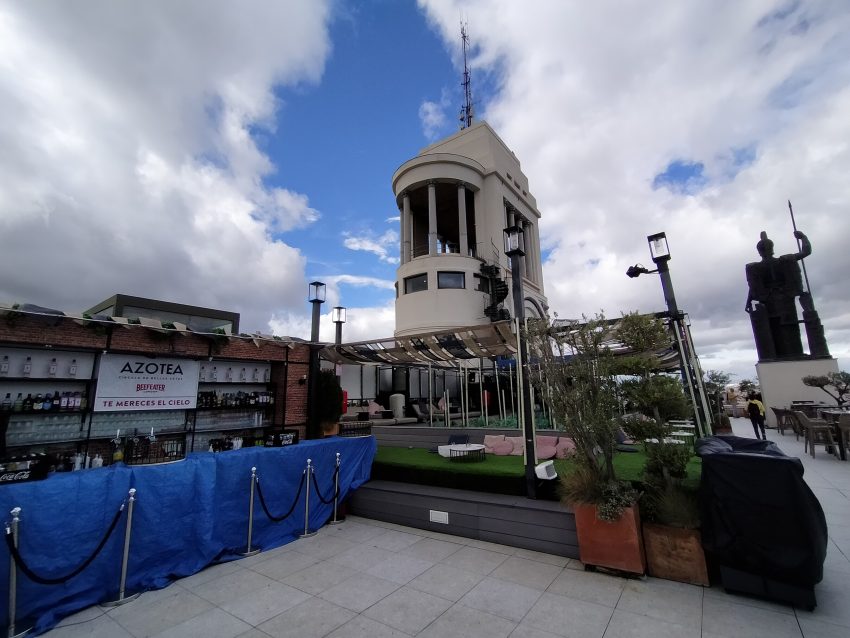
Preview map of the Self-Guided Walking Tour of Cagliari route in Cagliari, showing 18 stops. Use the interactive map to zoom and tap markers.
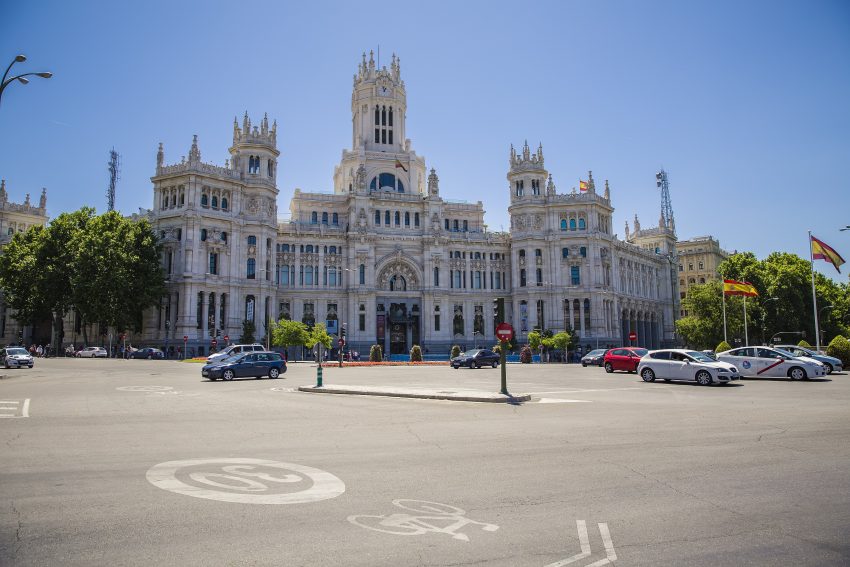
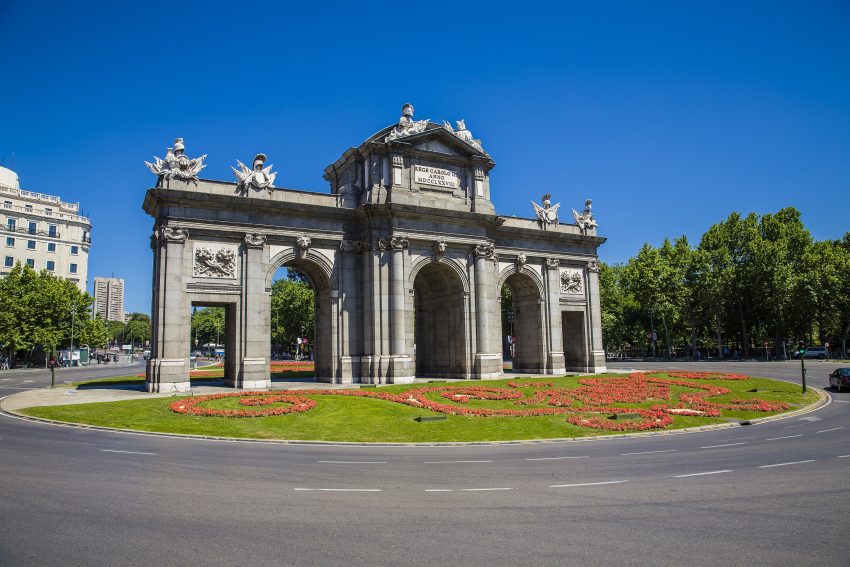
More from this area