Florence, Italy: The Ultimate Travel Guide 2026

Florence
Florence

Florence, one of Italy's most renowned cities, is a must-visit destination on the tourist circuit. Its breath-taking Renaissance architecture, charming streets, and picturesque buildings make it a captivating spot for travellers. Art lovers will find themselves in paradise with an abundance of galleries to explore, offering a diverse range of masterpieces. The city's magnificent Renaissance churches also provide a fascinating glimpse into history and art. For those who enjoy leisurely strolls, the Boboli Gardens offer a delightful escape, where one can wander through well-kept pathways and revel in the beauty of the surroundings.

Florence's appeal extends beyond its cultural and artistic riches. It serves as an excellent starting point for wine and food tours in the scenic Tuscan countryside. Additionally, the city's vibrant nightlife, influenced by its popularity as a study abroad destination, provides a lively and exciting atmosphere for visitors. Overall, Florence offers a harmonious blend of history, art, culture, and entertainment, making it an unforgettable destination for travellers from all walks of life.

TIP: If you are visiting Florence for just a day and want to make the most of your visit, you may want to consider taking a walking tour with a local guide. This is one of the most complete and best-rated city tours that covers the main, must-see attractions in about 1.5 hours. If you prefer exploring at your own pace read our Self Guided Walking Tour of Florence (With Maps!).

What to See & Do

Must-See Attractions: Florence Cathedral (Duomo): Don’t miss this iconic site and consider booking in advance to climb the dome for a spectacular view. Uffizi Gallery: A treasure trove of Renaissance art. Ponte Vecchio: The famous medieval stone bridge noted for its shops. Palazzo Vecchio and Piazza della Signoria: Explore the historic town square and the impressive town hall. Michelangelo’s David: Located at the Galleria dell’Accademia, it’s advisable to book your tickets early. Piazzale Michelangelo: Offers breathtaking views over Florence, particularly enchanting at sunset.

Worth Visiting:

Basilica of Santa Croce: A stunning basilica that is the final resting place of many notable Italians. Palazzo Pitti: This grand palace houses several important museums. San Lorenzo Market: Perfect for a taste of local life and some souvenir shopping. Piazza Santo Spirito: Known for its lively atmosphere and authentic Florentine character. Rooftop Bars: Enjoy unique vistas of Florence from above.

Moira & Andy
Moira & Andy

Hey! We're Moira & Andy. From hiking the Camino to trips around Europe in Bert our campervan — we've been traveling together since retirement in 2020!

Read our full story here

Visiting Florence for the first time and wondering what are the top places to see in the city? In this complete guide, I share the best things to do in Florence on the first visit. To help you plan your trip, I have also included an interactive map and practical tips for visiting!

This website uses affiliate links which earn a small commission at no additional cost to you.
Powered by GetYourGuide

31 Best places to See in Florence

This complete guide to Florence not only tells you about the very best sights and tourist attractions for first-time visitors to the city but also provide insights into a few of our personal favorite things to do.

This is a practical guide to visiting the best places to see in Florence and is filled with tips and info that should answer all your questions!

1. Ponte Vecchio

ponte vecchio florence
Ponte Vecchio is a medieval, shop-lined stone bridge spanning the Arno, instantly recognizable for its overhanging storefronts tucked beneath wooden eaves. The current structure dates to 1345 after repeated flood damage, and its distinctive silhouette grew as merchants extended stalls outward on timber supports. Once home to butchers, it shifted in 1593 to goldsmiths and jewellers, and many glittering boutiques still line the narrow passage today. Above the shops runs the Vasari Corridor (added in 1565), an elevated route built for Medici rulers between their palaces. Pause at the small mid-bridge openings for river views—especially when the light warms toward sunset.
Location: Ponte Vecchio, Ponte Vecchio, Florence, Metropolitan City of Florence, Italy | Hours: 24 Hours | Price: Free | Distance: 0.1km

We recommend to rent a car in Italy through Discover Cars, they compare prices and review multiple car rental agencies. Book your rental car here.

2. Palazzo Davanzati

Palazzo Davanzati sala dei pappagalli
CC BY-SA 3.0 / Sailko
Palazzo Davanzati is a restored house-museum that recreates the feel of an old merchant residence, tracing domestic life from the medieval period into the Renaissance. Built in the mid-1300s for the Davizzi and later owned by the Davanzati (their coat of arms still marks the façade), it’s arranged around a small courtyard with steep stone-and-wood staircases rising through four floors. Inside, terracotta floors, painted timber ceilings, and frescoed walls culminate in rooms like the vivid Sala dei Pappagalli and the Bedroom of the Lady of Vergi, painted with scenes from a chivalric romance. Look for rare early “agiamenti” toilets, painted cassoni and cabinets, and a kitchen lined with looms and spinning tools that make the building feel startlingly lived-in.
Location: Palazzo Davanzati, Via Porta Rossa, Florence, Metropolitan City of Florence, Italy | Hours: 08.15-13.50 Tuesday, Wednesday, Thursday 13.15-18.50 Friday, Saturday, Sunday (2nd and 4th of the month) | Price: €7.00 or Cumulative ticket for Bargello, Medici Chapels, Davanzati, Orsanmichele and Casa Martelli: € 22.00 | Website | Distance: 0.2km

Here is a complete selection of hotel options in Florence. Feel free to review each one and choose the stay that best suits your needs.

3. Uffizi Gallery

Florence Italy Uffizi Museum
CC BY-SA 3.0 / Michelle Maria
Set inside a 16th‑century palace designed by Giorgio Vasari for Cosimo I de’ Medici, the Uffizi began as government offices before its upper floors became a showcase for Medici collecting. The long, narrow courtyard frames a deliberate sightline toward the Arno, and inside the galleries unfold in a chronological flow from medieval panels into the Renaissance. Visitors linger over Botticelli’s The Birth of Venus and Primavera, then move on to Leonardo’s Annunciation, Michelangelo’s Doni Tondo, Titian’s Venus of Urbino, and Caravaggio’s Medusa. Beyond the paintings, frescoed ceilings, marble busts, and corridor windows create pauses for architecture and river views, with a rooftop café overlooking the skyline.
Location: Uffizi Gallery, Piazzale degli Uffizi, Florence, Metropolitan City of Florence, Italy | Website | Skip-the-Line Uffizi Small Group Tour Available! | Distance: 0.2km

Traveling to a country with a different currency? Avoid ATM transaction fees and pay in local currency with a Wise Card. Having used it for over 5 years, we've saved loads on fees!

4. Galileo Museum

Museo Galileo palazzo
CC BY-SA 3.0 / Museo Galileo
Housed in the medieval Palazzo Castellani overlooking the Arno, the Galileo Museum is a deep dive into the tools that powered Renaissance and Enlightenment science. Rooms are filled with more than a thousand instruments—delicately made astrolabes, globes, armillary spheres, and mathematical devices—collected under Medici and later Lorraine patronage. The most arresting objects are Galileo’s surviving telescopes and the lens tied to his observations of Jupiter’s moons, a turning point in the argument for a heliocentric universe. Clear video explanations and hands-on digital displays help decode how navigation, timekeeping, astronomy, and early physics actually worked, making the craftsmanship as memorable as the ideas.
Location: Museo Galileo, Piazza dei Giudici, Florence, Metropolitan City of Florence, Italy | Hours: Daily 09:30 - 18:00 | Price: Adults: €13.00 | Website | Buy Museo Galileo Entry Tickets Here! | Distance: 0.3km

Explore Florence at your own pace with our self-guided walking tour! Follow our curated route to discover must-see sights and local secrets that makes Florence one of the best places to visit in Italy.

Powered by GetYourGuide

5. Loggia della Signoria

Loggia dei Lanzi
Loggia dei Lanzi
CC BY-SA 3.0 / Freepenguin
An open-sided ceremonial loggia on Piazza della Signoria, the Loggia della Signoria (Loggia dei Lanzi) functions like a public sculpture gallery framed by wide 14th-century arches. Built in 1376–1382 by Benci di Cione and Simone Talenti for civic rituals of the Florentine Republic, it later became a Medici-era stage where carefully chosen statues projected power and justice. Visitors linger over Benvenuto Cellini’s bronze Perseus and Giambologna’s twisting Rape of the Sabine Women, a work that changes with every step around it. At the entrance, two stone lions—one ancient Roman, one carved by Flaminio Vacca in 1598—stand guard, adding a theatrical threshold to the space.
Location: Loggia dei Lanzi, Piazza della Signoria, Florence, Metropolitan City of Florence, Italy | Distance: 0.3km

Click here to read our blog about Cinque Terre in One Day 2026: Complete Guide with Maps & Tips

6. Piazza della Signoria

Piazza della Signoria din Florenta
CC BY-SA 4.0 / Cezar Suceveanu
Piazza della Signoria is the city’s political stage turned open-air sculpture hall, created after the Guelphs cleared this ground in 1268 by demolishing rival Ghibelline homes. The square still faces Palazzo Vecchio, where the Signoria once ruled, and its broad paving feels made for assemblies, celebrations—and darker public reckonings. Under the Loggia dei Lanzi, Renaissance masterpieces stand outdoors: Cellini’s bronze Perseus raising Medusa’s head and Giambologna’s twisting Rape of the Sabine Women. A replica of Michelangelo’s David keeps watch near the palace entrance, making the whole space read like a civic museum you walk through rather than enter.
Location: Piazza della Signoria, Piazza della Signoria, Florence, Metropolitan City of Florence, Italy | Distance: 0.3km

Explore Florence at your own pace with our self-guided walking tour! Follow our curated route to discover must-see sights and local secrets that makes Florence one of the best places to visit in Italy.

7. Palazzo Vecchio

Exterior of Palazzo Vecchio
CC BY-SA 4.0 / Jordiferrer
Palazzo Vecchio (Palazzo della Signoria) is the city’s working town hall, begun in 1299 as a fortress for the Republic’s Priors, and it still feels defensive with its rusticated stone façade, crenellations, and the off-centre Arnolfo Tower. Inside, the scale shifts dramatically in the Hall of the 500, where Vasari’s vast battle scenes replaced earlier, unfinished plans by Leonardo and Michelangelo, and Michelangelo’s “Genius of Victory” stands out amid the grandeur. Medici ambitions linger in the Monumental Apartments, including the jewel-box Studiolo of Francesco I and Eleonora da Toledo’s chapel painted by Bronzino. Even a quick visit leaves strong impressions of frescoed ceilings, solemn civic rooms, and the constant bustle of Piazza della Signoria outside.
Location: Palazzo Vecchio, Piazza della Signoria, Florence, Metropolitan City of Florence, Italy | Hours: MUSEUM Monday/Tuesday/Wednesday/Friday / Saturday /Sunday - 9 a.m.-7 p.m. Thursday: 9 a.m - 2 p.m. TOWER Monday/Tuesday/Wednesday/Friday - 9 a.m.-5 p.m. Thursday: 9 a.m. - 2 p.m. Please arrive 15' before your visit | Price: Adults: €12.50 | Website | Palazzo Vecchio Guided Tour Available! | Distance: 0.3km

Click here to read our blog about The Ultimate Self-Guided Tour of the Duomo and Baptistery in Florence (2026)

Powered by GetYourGuide

8. Piazza della Repubblica

Piazza della Repubblica Florence
CC BY-SA 3.0 / Aude
Piazza della Repubblica is a broad, open square built over the site of the ancient Roman forum, still read as the city’s geographic and symbolic center. The Colonna dell’Abbondanza stands in the middle, marking the historic midpoint of Florentia and the meeting line of old districts. Its 19th-century makeover during the Risanamento created the grand arcaded façades and triumphal-style arch that frame today’s café culture, including the long-literary haunt Caffè Le Giubbe Rosse. Look for a quirky legend made metal: Giambologna’s bronze “devil” standard-bearer on the corner between Via Vecchietti and Via Strozzi. Expect street musicians, a carousel at times, and a constant flow of people watching.
Location: Piazza della Repubblica, Florence, Metropolitan City of Florence, Italy | Distance: 0.4km

9. Palazzo Strozzi

Palais Strozzi   Florence
Palais Strozzi Florence
CC BY-SA 4.0 / Chabe01
Palazzo Strozzi is a fortress-like Renaissance palace commissioned in 1489 by banker Filippo Strozzi, conceived as a bold statement to rival Medici grandeur. Its square, three-storey design is wrapped in heavily rusticated stone and organized with crisp cornices, but the most memorable space is the serene central courtyard of symmetrical arches and Corinthian capitals. Step inside and you’ll often find ambitious temporary exhibitions that set contemporary installations against the strict geometry of the historic architecture—visitors frequently mention the striking contrast. Though Filippo died before completion, the family moved in around 1505, and later 19th-century restorations helped shape the building seen today.
Location: Palazzo Strozzi, Piazza degli Strozzi, Florence, Metropolitan City of Florence, Italy | Hours: Every day 10.00-20.00 Thursday until 23.00 | Price: €15 | Website | Distance: 0.4km

10. Piazza Santo Spirito

Piazza Santo Spirito
CC BY-SA 2.0 / Thomas Woodtli
Piazza Santo Spirito is the Oltrarno’s lived-in living room: a bohemian square where cafés, artisan shops, and nightly chatter spill around a central pietra serena fountain. It has been a neighborhood gathering place since the Middle Ages, and that everyday energy still defines the experience. The unfinished façade of Brunelleschi’s Basilica di Santo Spirito faces the piazza, while inside you can find Michelangelo’s wooden crucifix alongside works by artists such as Filippino Lippi. Elegant 15th-century homes frame the edges, including Palazzo Guadagni with its distinctive loggia. On market Sundays, stalls of crafts or local produce transform the open space into a buzzing street fair.
Location: Piazza Santo Spirito, Florence, Metropolitan City of Florence, Italy | Distance: 0.4km

11. Palazzo Pitti
Palazzo Pitti
Palazzo Pitti
© Giovanni Dall'Orto
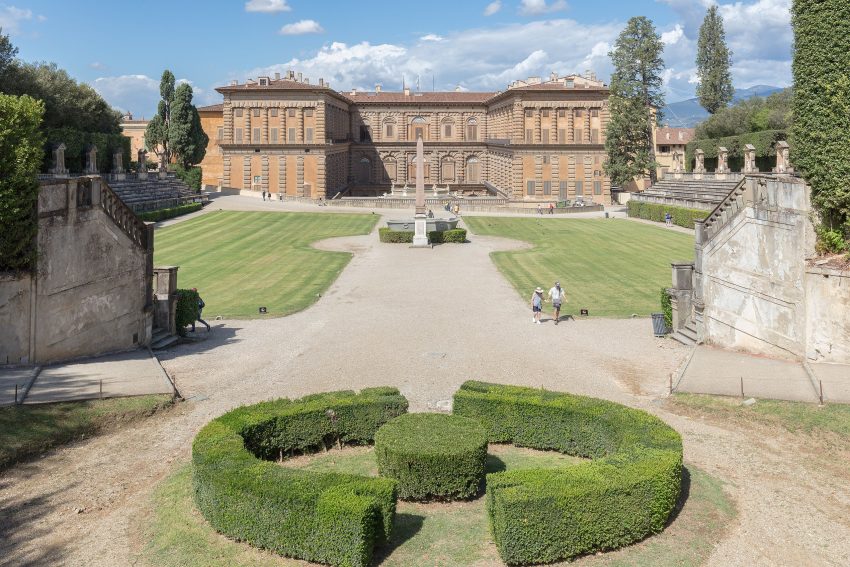
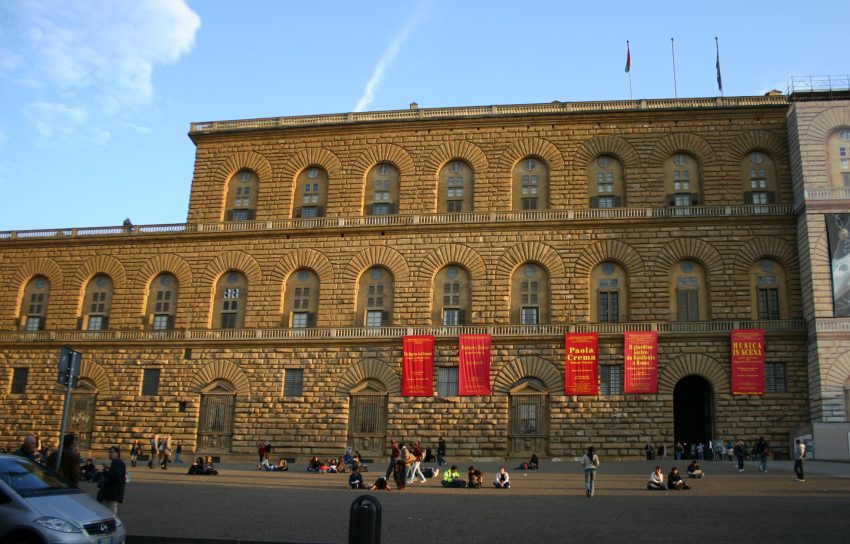
Palazzo Pitti is a massive Renaissance palace on the Oltrarno, its stern stone façade hinting at the power once exercised inside. Begun in 1440 for banker Luca Pitti and later bought in 1549 by Eleonora di Toledo for Cosimo I de’ Medici, it grew into the Medici court’s main residence, linked to Palazzo Vecchio by the Vasari Corridor. Today it functions as a museum complex: the Palatine Gallery hangs Raphaels, Titians, and Rubens in lavishly decorated state rooms, while the Treasury of the Grand Dukes displays gems, ivories, and goldwork. Other wings range from Russian icons to modern art and a fashion-and-costume collection.
Location: Palazzo Pitti, Piazza de' Pitti, Florence, Metropolitan City of Florence, Italy | Hours: From Tuesday to Sunday from 8.15am to 6.30pm | Price: Full €11 (Pitti + Boboli: €15) | Website | Skip the Line Tickets Available! | Distance: 0.4km
Powered by GetYourGuide

12. Museo Casa di Dante Alighieri

Firenze casa di Dante
CC BY-SA 4.0 / Gianni Careddu
Museo Casa di Dante is a compact, three-floor museum built on the traditional site of Dante Alighieri’s birthplace, tucked between the Church of San Martino and Piazza dei Donati. The medieval house is a 20th-century reconstruction based on archival and archaeological research, designed to evoke the world that shaped the poet. Inside, the first level sketches daily life and civic conflict in 13th-century Florence, with models and reproduced arms recalling episodes like the Battle of Campaldino. The second follows his 1301 condemnation and years of exile through cities such as Verona and Bologna, ending with his death in Ravenna in 1321. Upstairs, portraits and illustrations by artists from Giotto to Michelangelo trace how Dante’s image evolved over centuries.
Location: Museo Casa di Dante, Museo Casa di Dante, Via Santa Margherita, Florence, Metropolitan City of Florence, Italy | Hours: November - March: Tuesday through Friday from 10 a.m. to 5 p.m; Saturday and Sunday from 10 a.m. to 6 p.m.;Closed on Mondays April - October: Open daily 10 a.m. to 6 p.m | Price: € 8,00 | Website | Distance: 0.5km
Powered by GetYourGuide

13. Badia Fiorentina

Badia fiorentina
Badia fiorentina
CC BY-SA 3.0 / Sailko
Founded in 978 by Willa of Tuscany, the Badia Fiorentina is an abbey church where medieval power, Renaissance art, and living monastic ritual meet. Its exterior still hints at Arnolfo di Cambio’s late-13th-century Gothic rebuilding, while the interior reads as a later Baroque reimagining, with a single soaring nave, side chapels, and a carved wooden ceiling. Don’t miss Filippino Lippi’s luminous “Virgin Appearing to St. Bernard,” and the sculpted tomb of Margrave Ugo of Tuscany, praised by Dante. The Cloister of the Oranges adds quiet arcades and early Renaissance fresco storytelling. Evening vespers can be a hushed, unforgettable experience.
Location: Badia Fiorentina - Monastero, Via del Proconsolo, Florence, Metropolitan City of Florence, Italy | Price: Free | Website | Distance: 0.5km

14. Complex of San Firenze

Complesso di san firenze
CC BY-SA 3.0 / sailko
Facing San Firenze Square near Piazza della Signoria, the Complex of San Firenze is a Baroque ensemble where sacred spaces and contemporary culture share the same address. Its striking 17th-century façade frames the Church of San Filippo Neri and the Oratory, whose richly decorated interior and dramatic ceiling often surprise visitors who expect something plain from outside. Restored and repurposed, the complex now also houses the Franco Zeffirelli Foundation, with a museum arranged in 20 themed sections tracing the director’s work from the 1950s onward. Displays include set-design models, sketches, costumes, posters, and behind-the-scenes photographs tied to productions such as “Romeo and Juliet” (1968). Concerts and events in the Oratory keep the building lively beyond museum hours.
Location: Complesso di San Firenze, Piazza di San Firenze, Florence, Metropolitan City of Florence, Italy | Website | Distance: 0.5km

15. Bargello Museum

Palau del Bargello Florence
CC BY-SA 3.0 / Joanbanjo
Housed in a fortress-like 13th-century civic palace that later served as the chief of police’s headquarters and even a prison, the Bargello pairs stern stone walls with a serene medieval courtyard. Inside, the focus is sculpture: Michelangelo’s youthful Bacchus and other works share space with Cellini, Giambologna, and a striking Mercury. The first floor is anchored by Donatello’s bronze David (c. 1440), a turning point as the first freestanding nude since antiquity, alongside Saint George and the Marzocco. Beyond statues and busts, rooms of glazed della Robbia terracotta, ivories, enamels, and Renaissance jewellery add unexpected texture. Visitors often remark on the calm, crowd-light atmosphere.
Location: Museo Nazionale del Bargello, Via del Proconsolo, Florence, Metropolitan City of Florence, Italy | Hours: 9 April to 30 September 2023 08.15-18.50 Monday, Friday, Saturday and Sunday 08.15-13.50 Wednesday, Thursday 1 to 30 October 2023 08.15-18.50 Saturday and Sunday 08.15-13.50 Monday, Wednesday, Thursday and Friday | Price: Adults: €11.00 | Website | Reserved Entry Ticket to Bargello Museum | Distance: 0.5km
Powered by GetYourGuide

16. Giotto’s Bell Tower

Campanile di Giotto
Campanile di Giotto
Giotto’s Bell Tower (Campanile di Giotto) is the cathedral complex’s freestanding 14th‑century campanile, faced in white, red, and green marble that echoes the Duomo and Baptistery beside it. Begun in 1334 under Giotto and finished in 1359 after work by Andrea Pisano and Francesco Talenti, it rises to about 84.7 metres with increasingly airy upper windows that accent its vertical pull. At close range, visitors linger over the sculptural program: 56 relief panels on the lower levels and niches once filled with life-size figures (the originals are now in the Museo dell’Opera del Duomo). Climbing 414 steps leads to a terrace with an unusually intimate view of Brunelleschi’s dome and the rooftops beyond.
Location: Campanile di Giotto, Cattedrale di Santa Maria del Fiore, Piazza del Duomo, Florence, Metropolitan City of Florence, Italy | Skip the Line Duomo Complex Tour with Giotto Tower Ticket Available! | Distance: 0.6km
Powered by GetYourGuide

17. Forte Belvedere

Fort Belvedere   Florence
Fort Belvedere Florence
CC BY-SA 4.0 / Chabe01
Forte Belvedere (Forte di San Giorgio) is a late-Renaissance hilltop fortress built for the Medici between 1590 and 1595, designed by Bernardo Buontalenti to control approaches to the city. Its angled bastions and thick ramparts were engineered for defense yet never tested in a siege, so the terraces and walls feel unusually intact. From the parapets, the skyline unfolds in one sweep—dome, towers, and river bends—backed by Tuscan hills, with broad platforms that invite lingering and photography. Inside the complex, the Palazzina di Belvedere adds a surprising note of refined architecture, once used to safeguard Medici valuables with elaborate security. Seasonal exhibitions and events animate the stone spaces without diluting their calm.
Location: Forte Belvedere, Via di San Leonardo, Florence, Metropolitan City of Florence, Italy | Distance: 0.6km

18. Brancacci Chapel
Brancacci Chapel
Brancacci Chapel
CC BY-SA 3.0 / Fotoarchiv Scala
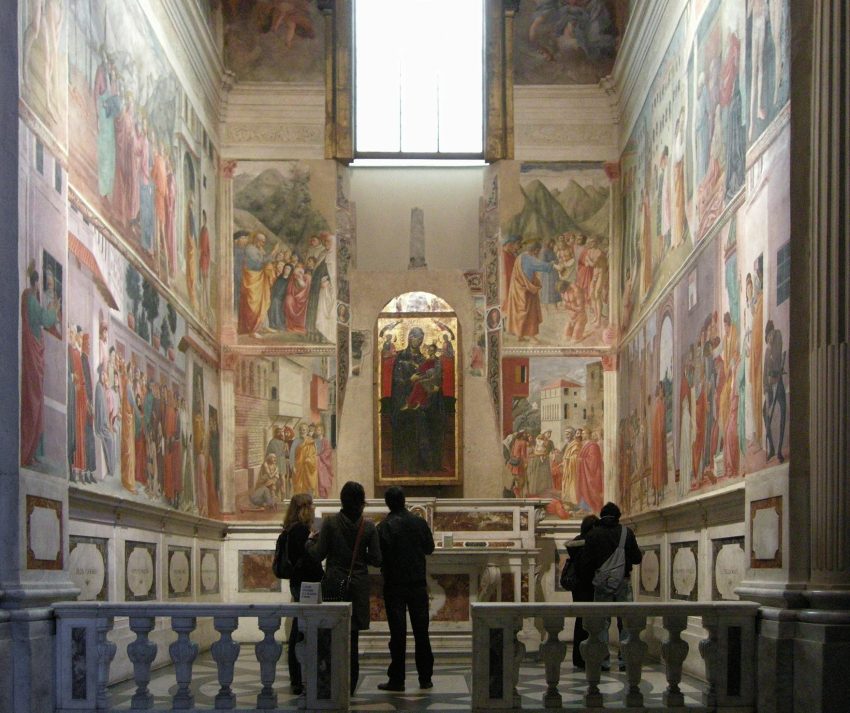
Tucked inside the Church of Santa Maria del Carmine, the Brancacci Chapel is a compact room whose fresco cycle marks a decisive shift toward Renaissance realism. Masolino began the scenes from Saint Peter’s life around 1425, then Masaccio pushed them into a new visual language with weighty figures, convincing light, and perspective—most memorably in “The Tribute Money” and the raw, human “Expulsion from the Garden of Eden.” After Masaccio’s death in 1428, the story was finished decades later by Filippino Lippi, creating a single narrative with striking stylistic contrasts. Visitors often remember the controlled entry: timed groups and about 30 minutes inside, which heightens the sense of concentration.
Location: Brancacci Chapel Apartment, Via Santa Monaca, Florence, Metropolitan City of Florence, Italy | Distance: 0.6km

19. Bardini Villa

Firenze   Florence   Giardino Bardini
Firenze Florence Giardino Bardini
CC BY-SA 4.0 / Txllxt TxllxT
Villa Bardini is a 17th-century hillside villa with a 4-hectare garden and a small museum, prized for its calm terraces and wide skyline views. The grounds unfold in three distinct sections: a formal Baroque staircase rising through statues and fountains, an English-style garden, and agricultural terraces that feel more rural than manicured. In spring, the wisteria tunnel drapes the paths in purple, while roses and irises carry the color through other seasons. Indoors, the Annigoni Museum presents self-portraits, drawings, and studio objects from Pietro Annigoni, adding an intimate artistic counterpoint to the outdoor panoramas. Many visitors remember the climb as part of the experience—and the quiet at the top.
Location: Giardino Bardini, Via de' Bardi, Florence, Metropolitan City of Florence, Italy | Website | Distance: 0.6km

20. Cathedral of Santa Maria del Fiore

Cathedral of Santa Maria del Fiore Piazza Duomo
Santa Maria del Fiore is the vast Gothic cathedral crowned by Brunelleschi’s octagonal brick dome, a Renaissance engineering leap that rises about 90 meters above the floor. Outside, the neo-Gothic façade by Emilio De Fabris layers white, green, and red marble into crisp geometric panels and floral motifs, best appreciated across Piazza del Duomo. Step inside and the scale shifts to a spare, soaring nave that funnels your gaze upward to the dome’s immense Last Judgment frescoes by Vasari and Zuccari. Climbing the dome brings you face-to-face with the painted figures and rewards you with sweeping rooftop views.
Location: Cathedral of Santa Maria del Fiore, Piazza del Duomo, Florence, Metropolitan City of Florence, Italy | Hours: Generally open from 10.45am - 4.30pm Sundays and religious holidays: closed During Holy week - Holy Thursday: 12:30 - 4:30pm Good Friday: 10:30am - 4:30pm Holy Saturday: 11am - 4:45pm | Website | Guided Tour (includes Cathedral, Duomo Museum, and Baptistery) | Distance: 0.6km
Powered by GetYourGuide

21. Florence Baptistery

Baptistery Florence
Baptistery Florence
CC BY-SA 2.0 / Bradley Weber
The Florence Baptistery is a compact octagonal baptistery facing Santa Maria del Fiore in Piazza del Duomo, and it’s where Florence’s civic and religious identity long began. Its white-and-green marble striping reads like precise geometry at street level, while the bronze narrative doors outside reward close looking with densely worked reliefs. Step inside and the atmosphere shifts darker and more reflective, with patterned stonework underfoot and sculpted details at eye height that pull you into the room’s symmetry. The famous gold mosaics in the vault can be partly obscured during restoration, so the experience may focus more on the lower surfaces and the building’s concentrated, self-contained feel.
Location: The Baptistery of St. John, Piazza San Giovanni, Florence, Metropolitan City of Florence, Italy | Hours: Daily: 08:30–19:30. First Sunday of the month: 08:30–13:30. Closed on 25 December; 1 January; Easter Sunday. | Price: A cumulative ticket to the entire Duomo complex costs €18 and is valid for 72 hours after the first entry. | Website | Baptistry Small-Group Tour (Includes Dome Climb, Museum)! | Distance: 0.6km
Powered by GetYourGuide

22. Boboli Gardens

Boboli Gardens
Boboli Gardens
CC BY-SA / Diego Delso
Boboli Gardens is a vast Renaissance park laid out behind Palazzo Pitti, conceived by the Medici as a theatrical landscape of terraces, avenues, waterworks, and sculpture. Wandering its steep paths feels like moving through an open-air museum: the Amphitheatre is crowned by an Egyptian obelisk brought from Luxor in 1789, and the Neptune Fountain shows the sea god gripping a trident. A long, cypress-lined Viottolone leads to the Isolotto, where Giambologna’s Fountain of Oceanus is ringed by river figures. Don’t miss Buontalenti’s Grotta Grande, a surreal mix of stone, stucco, and painted illusion built to astonish courtly visitors.
Location: Boboli Gardens, Piazza de' Pitti, Florence, Metropolitan City of Florence, Italy | Hours: Monday to Sunday Opening 8.15 Closing 4.30 pm in January, February, November, December, 5.30 pm in March and October (with Standard Time), 6.30 pm in March (with Daylight Savings Time), April, May, September, October (with Daylight Savings Time). 7.10 pm June, July, August | Price: €11 | Website | Reserved Entry Ticket to the Boboli Gardens Available! | Distance: 0.7km
Powered by GetYourGuide

23. Santa Maria Novella

Santa Maria Novella
Santa Maria Novella
CC BY-SA 3.0 / JoJan
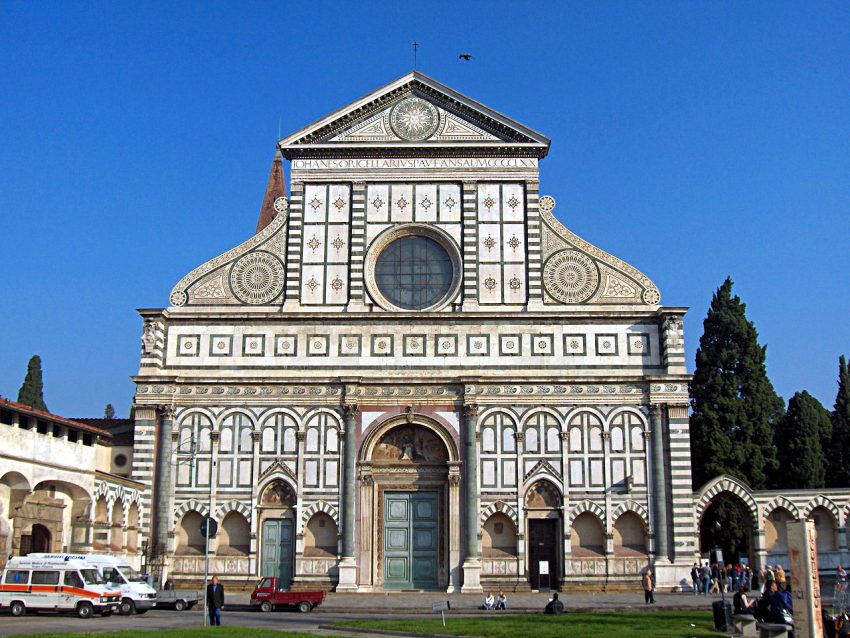
The Basilica of Santa Maria Novella is a Dominican church and monumental complex, instantly recognizable for its crisp white-and-green marble façade, completed in 1470 with Leon Battista Alberti’s Renaissance geometry layered over earlier forms. Step inside and the Gothic nave reads like a concentrated survey of early Italian art: Masaccio’s Holy Trinity still startles with its illusionistic perspective, and Giotto’s late-13th-century Crucifix brings a raw, human weight. Beyond the main church, the Spanish Chapel and the Green Cloister extend the experience with fresco cycles that reward slow looking. Many travelers remember it as a calm, sheltering space—especially welcome on a rainy day—where the ticket opens up multiple cloistered rooms and courtyards.
Location: Santa Maria Novella, Florence, Metropolitan City of Florence, Italy | Hours: Monday to Thursday: 9:00 a.m. - 5:30 p.m. Friday: 11:00 a.m. - 5:30 p.m. Saturday: 9:00 a.m. - 5:30 p.m. Sunday: 1:00 p.m. - 5:30 p.m. | Price: Adults € 7.5 | Website | Distance: 0.8km

24. Basilica di Santa Croce
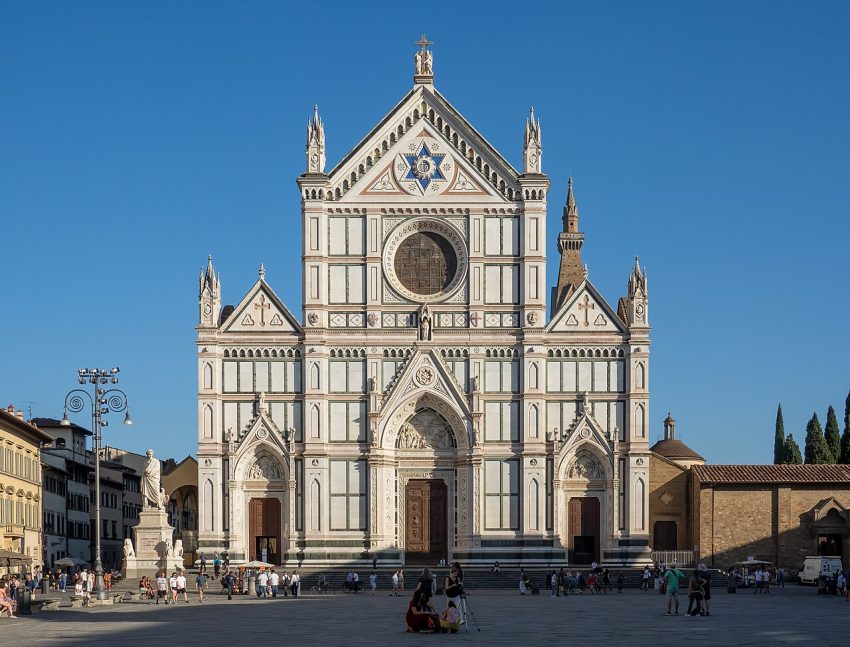
Basilica di Santa Croce
CC BY-SA 4.0 / Rhododendrites
Basilica di Santa Croce is a vast Franciscan Gothic church begun in 1294 under Arnolfo di Cambio, long treated as a civic pantheon. Inside, visitors move between monumental tombs and memorials to Michelangelo, Galileo, Machiavelli, and Rossini, where sculpture and inscription feel like a roll call of Italian achievement. The Bardi and Peruzzi Chapels preserve Giotto-cycle frescoes, and the tall nave is brightened by stained glass that makes late-morning light especially striking. In the cloister, the serene Pazzi Chapel by Brunelleschi adds a crisp Renaissance counterpoint to the basilica’s scale. Many travelers note how calm it can feel even at popular times.
Location: Basilica di Santa Croce di Firenze, Piazza di Santa Croce, Florence, Metropolitan City of Florence, Italy | Hours: From Monday to Saturday: 9.30 am – 5.30 pm. No further admission after 5.00 pm Sunday and Religious Holidays: 12.30 pm – 5.45 pm. No further admission after 5.00 pm | Price: Adults: €8.00 | Website | Distance: 0.8km

25. The Medici Chapels

Cappelle Medici   Basilica di San Lorenzo   Florence   Italy
Cappelle Medici Basilica di San Lorenzo Florence Italy
CC BY-SA 2.0 / Adam63
The Medici Chapels are the Medici family’s monumental mausoleum inside the Basilica of San Lorenzo, where art and dynastic messaging share the same space. In Michelangelo’s New Sacristy (begun 1520), the tombs of Giuliano, Duke of Nemours, and Lorenzo, Duke of Urbino, are guarded by the tense allegories of Day and Night, Dawn and Dusk, with the Medici Madonna presiding in a quiet, inward mood. Next door, the 17th-century Chapel of the Princes is a shock of scale: an immense dome above vast sarcophagi, walls sheathed in colored marbles and pietre dure inlays like a stone mosaic. Arriving early can make the sculptures feel almost private.
Location: Cappelle Medicee, Piazza di Madonna degli Aldobrandini, Florence, Metropolitan City of Florence, Italy | Reserved Entrance Ticket to the Medici Chapel | Distance: 0.8km
Powered by GetYourGuide

26. Medici Riccardi Palace

Medici Riccardi Palace
CC BY-SA 3.0 / Sailko
Palazzo Medici Riccardi is the Medici family’s early Renaissance residence, commissioned by Cosimo de’ Medici and designed by Michelozzo, with a fortress-like rusticated façade, refined mullioned windows, and a heavy cornice that signals power without showiness. Inside, the orderly courtyard and a small, quiet garden set a calm tone before the most memorable room: the Chapel of the Magi, frescoed by Benozzo Gozzoli in 1459 with a glittering procession packed with portraits of Medici figures and visiting dignitaries. Later Riccardi ownership layered on Baroque drama, especially in the grand gallery where Luca Giordano’s ceiling swirls with allegory and color. Visitors often notice how uncrowded the rooms can feel, making details easier to linger over.
Location: Medici - Riccardi Palace, Via Camillo Cavour, Florence, Metropolitan City of Florence, Italy | Hours: Monday to Sunday 9 am – 7 pm | Price: €10 / €7 | Free with Firenze Card. | Website | Part of the Medici Family History Tour | Distance: 0.9km
Powered by GetYourGuide

27. Galleria dell'Accademia

Michelangelos David in Academia Galley
CC BY-SA 4.0 / Maksim Sokolov
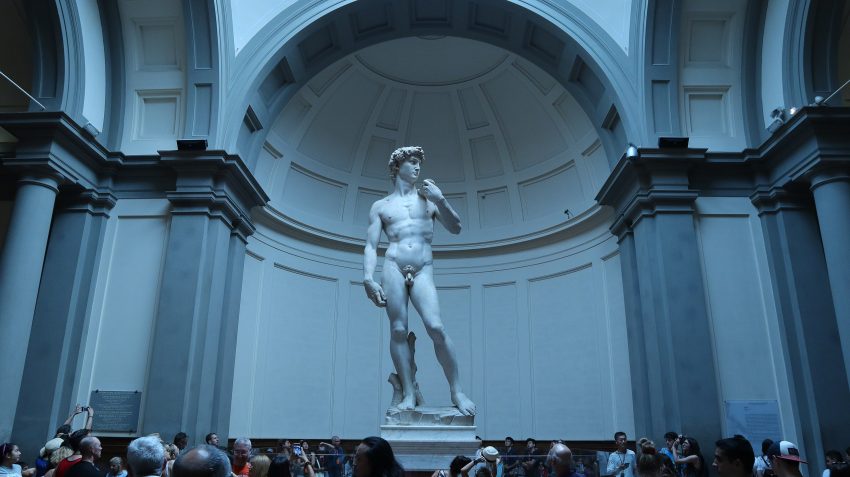
Galleria dell’Accademia is a museum built around Michelangelo’s sculpture, with the David as its magnetic centrepiece. The statue, moved indoors in 1873 from Piazza della Signoria, stands beneath a tall skylight in a purpose-made tribune where shifting natural light sharpens every vein and tense muscle. On the approach, the unfinished Prisoners (Slaves) seem to strain out of their marble blocks, making the sculptor’s process feel startlingly close. Beyond Michelangelo, you’ll find works by artists such as Botticelli, Ghirlandaio, and Bronzino, plus a Department of Musical Instruments with Medici-era pieces, including Stradivari craftsmanship. Expect dense crowds around David, with calmer rooms elsewhere.
Location: Galleria dell'Accademia, Via Ricasoli, Florence, Metropolitan City of Florence, Italy | Hours: Daily: 8.15-18.50 (last admission 18.20). | Price: Adults €13 + Booking fee: €4.00 | Website | Michelangelo's David Skip-the-Line Entry Ticket Available! | Distance: 1.1km
Powered by GetYourGuide

28. Great Synagogue

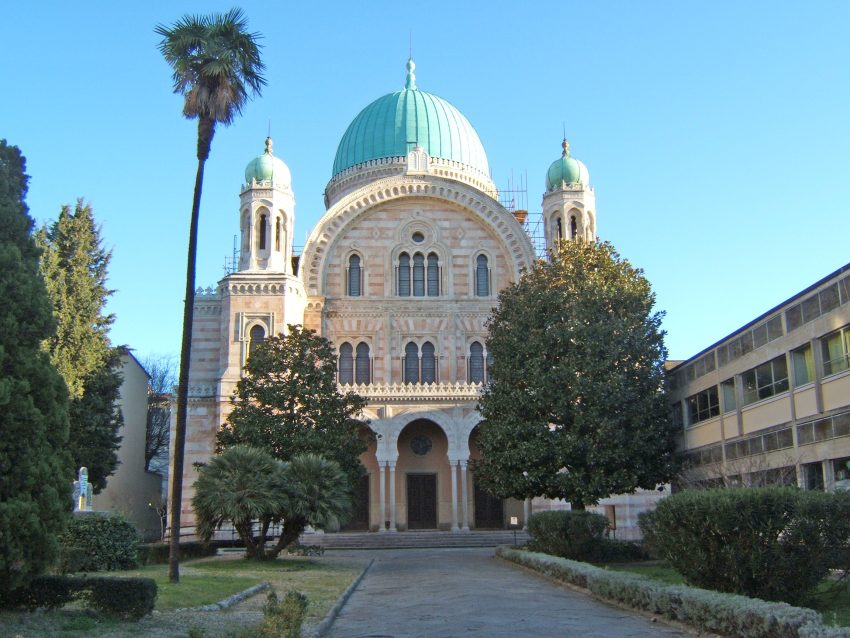
Synagogue Florence Italy
CC BY-SA 3.0 / Toksave
The Great Synagogue is an active house of worship crowned by a green copper dome that stands out against the terracotta rooftops. Built between 1874 and 1882 after Jewish emancipation, it embodies civic freedom and the Tuscan Jewish community’s cultural confidence. Visitors notice the striped travertine-and-granite exterior, three horseshoe-arched entrances, and Moorish Revival touches that continue inside as vivid geometric frescoes and mosaics. The sanctuary’s saturated colors and patterned dome create a hushed, immersive atmosphere that many travelers describe as unexpectedly moving. A small museum and memorial elements add context, including the building’s survival after Nazi occupation and later restoration following the 1966 Arno flood.
Location: Synagogue and Jewish Museum of Florence, Via Luigi Carlo Farini, Florence, Metropolitan City of Florence, Italy | Hours: 1st June to 30th September: Monday to Thursday 10.00 am – 6.30 pm | Friday 10.00 am – 5.00 pm From 1st October to 31st May: Sunday to Thursday 10.00 am – 5.30 pm | Friday 10.00 am – 3.00 pm | Price: € 6.50 | Website | Buy Synagogue and Jewish Museum Entry Ticket Here | Distance: 1.2km
Powered by GetYourGuide

29. Piazzale Michelangelo

View from Piazzale Michelangelo
Piazzale Michelangelo is a 19th-century panoramic terrace built in 1869 during Giuseppe Poggi’s redevelopment, designed to frame the city like a living canvas. From the balustrade you take in terracotta rooftops, the Arno’s curve, and Brunelleschi’s dome, with Ponte Vecchio and Palazzo Vecchio often visible in the same sweep. At the center stands a bronze replica of Michelangelo’s David, placed among other sculptural reproductions intended to celebrate his work. The mood shifts with the light—sunset draws crowds and street musicians, while later the skyline sparkles and feels calmer. It’s free and open-air, so the experience is all sky, stone, and perspective.
Location: Piazzale Michelangelo, Piazzale Michelangelo, Florence, Metropolitan City of Florence, Italy | Hours: 24 Hours | Price: Free | Distance: 1.2km

30. San Marco Museum
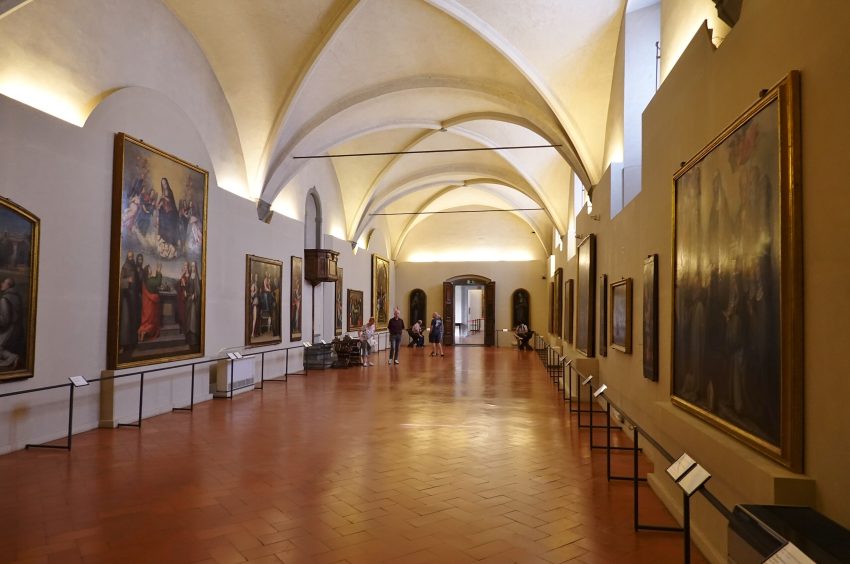
Museum of San Marco Florence
CC BY-SA 2.0 / Prof. Mortel
San Marco Museum occupies part of a Dominican convent rebuilt in the 15th century by Michelozzo for Cosimo de’ Medici, and it still feels like a working place of study and devotion. The experience is defined by Fra Angelico: quiet frescoes appear in the cloisters, the Chapter House, and—most memorably—across the monks’ cells, where each small room becomes a private meditation. Don’t miss the Chapter House Crucifixion, dense with saints and friars, or the airy Renaissance library with its rhythmic arches and manuscript displays. Savonarola’s association adds a sharper historical edge to the otherwise serene atmosphere, and visitors often remark how well preserved the frescoes are.
Location: San Marco Museum, Piazza San Marco, Florence, Metropolitan City of Florence, Italy | Hours: Tuesday to Saturday from 8.15am to 1.50pm | Price: €9.00 | San Marco Museum Skip the Line Tickets | Distance: 1.3km
Powered by GetYourGuide

31. San Miniato al Monte

San Miniato al Monte Florence
CC BY-SA 2.0 / Thomas Woodtli
Perched above Piazzale Michelangelo, the Abbey of San Miniato al Monte is a hilltop Romanesque church and monastery with a hush that feels worlds away from the streets below. Built between the 11th and 13th centuries, it’s instantly recognizable for its white-and-green marble façade topped by a glowing mosaic of Christ with the Virgin and Saint Minias. Inside, visitors linger over the inlaid marble zodiac on the floor, descend to the crypt’s carved capitals, and seek out chapels linked to Michelozzo and the Della Robbia workshop. The terrace is remembered for wide skyline views—some travelers even prefer them to the piazza—though restoration scaffolding may be present.
Location: San Miniato al Monte, Via delle Porte Sante, Florence, Metropolitan City of Florence, Italy | Hours: Monday-Saturday 9:30-13:00; 15:00-19:00 Sunday 8:15-13:00; 15:00-19:00 | Website | Distance: 1.4km

Best Day Trips from Florence

A day trip from Florence offers the perfect opportunity to escape the urban rhythm and discover the surrounding region's charm. Whether you're drawn to scenic countryside, historic villages, or cultural landmarks, the area around Florence provides a variety of easy-to-reach destinations ideal for a one-day itinerary. If you are looking to rent a car in Italy I recommend having a look at Discover Cars, first, as they compare prices and review multiple car rental agencies for you.

1. San Gimignano
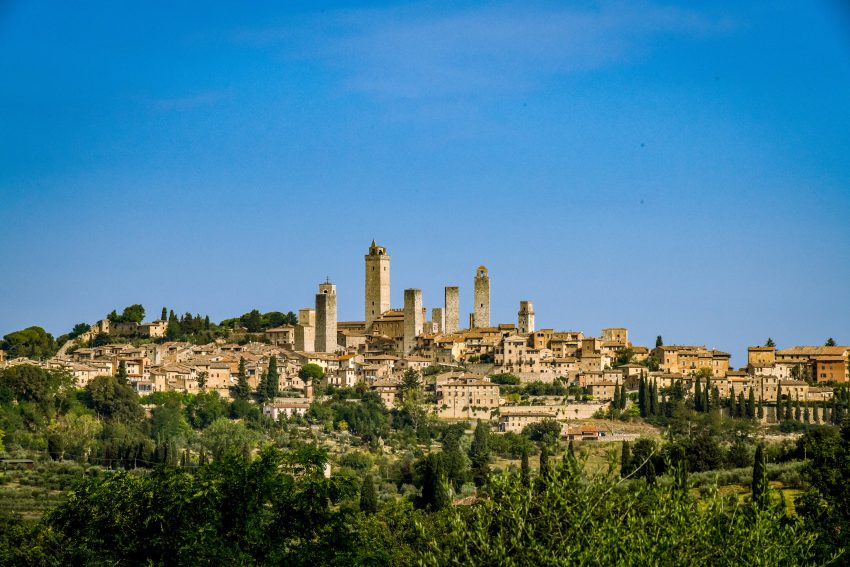
The Complete Guide to San Gimignano
San Gimignano is one of Tuscany’s most atmospheric hill towns, celebrated for its skyline of medieval towers, golden-stone streets, and vineyard-draped countryside. It’s compact enough to explore on foot, yet packed with viewpoints, churches, small museums, and food stops that make it easy to fill a full day—or slow down and linger over long lunches with local Vernaccia wine. A…
Visiting San Gimignano

2. Siena

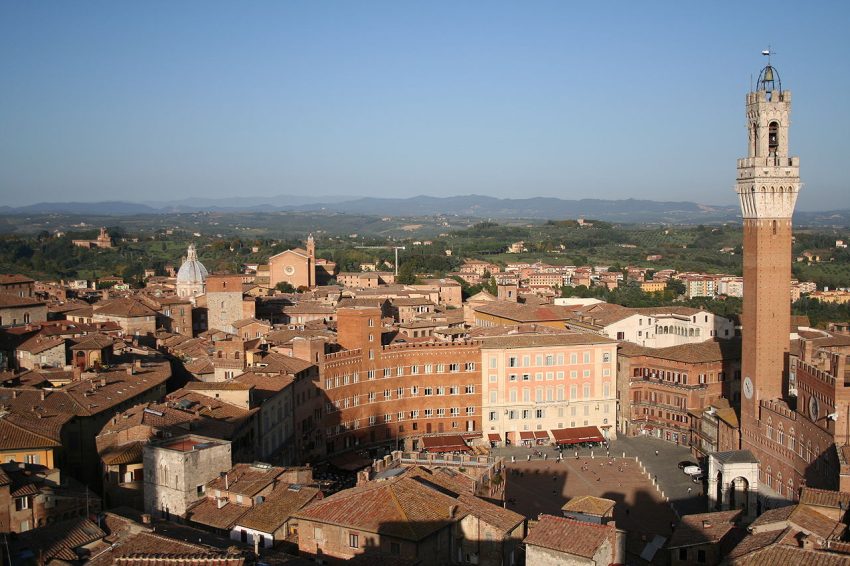
Piazza del Campo Siena
CC BY-SA 3.0 / Massimo Catarinella
Visiting Siena is like stepping into a timeless Italian dream, where medieval streets wind through a city rich in culture, charm, and breathtaking scenery. Nestled in the heart of Tuscany, Siena captivates visitors with its warm, earthy-toned buildings, stunning Gothic architecture, and lively piazzas. Whether you’re strolling through its narrow alleyways, savoring a meal at a traditional trattoria, or simply…
Visiting Siena
Powered by GetYourGuide

3. Lucca

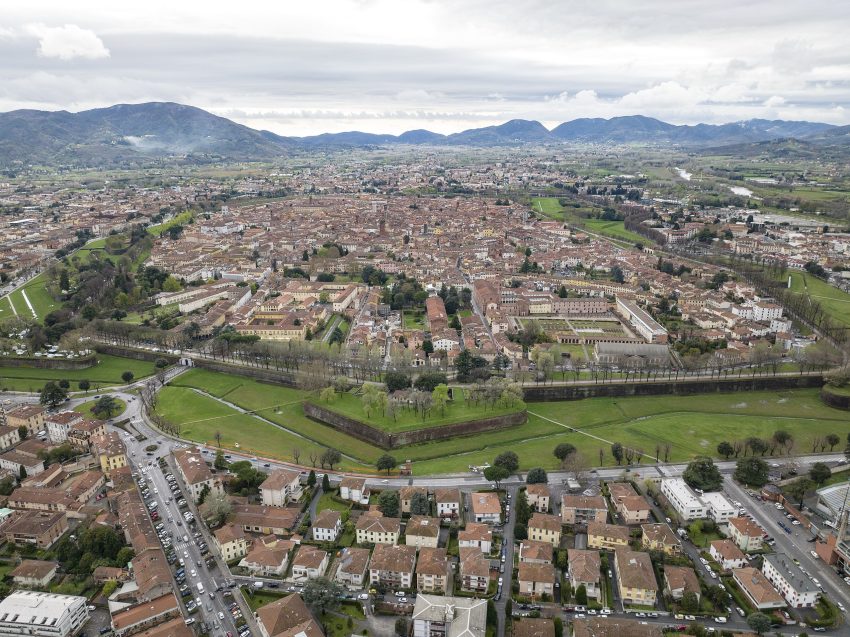
Italy   Lucca
Italy Lucca
www.arne-mueseler.com CC BY-SA3 .0 / Arne Müseler
Lucca, considered one of Europe's most delightful towns, captivates visitors with its walled centre, ranking it among Tuscany's top attractions. The town boasts magnificent churches, many featuring the distinctive striped facades characteristic of Tuscan architecture, and they house a trove of precious art treasures. While strolling through its narrow streets and spacious piazzas, you can relish the serene ambiance and…
Visiting Lucca
Powered by GetYourGuide

4. Arezzo

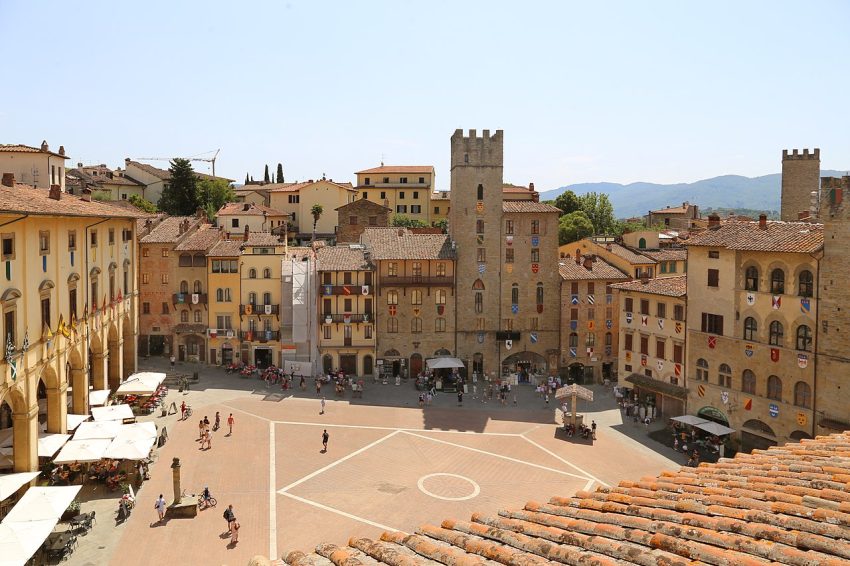
Arezzo
Arezzo
CC BY-SA 4.0 / Sailko
Situated in the south-eastern region of Tuscany, Arezzo is perched prominently atop a hill, at the intersection of four valleys: Val Tiberina, Casentino, Valdarno, and Valdichiana. This locale has deep historical significance within the Tuscan landscape, evidenced by the wealth of archaeological finds, such as stone tools and the discovery of the Paleolithic-era "Man of the Elm." The city's roots…
Visiting Arezzo
Powered by GetYourGuide

5. Pisa

Visiting Pisa Italy
Visiting Pisa Italy
Pisa sits in western Tuscany in central Italy, close to the Tyrrhenian coast, and it works especially well as a short, high-impact stop on a wider Tuscany itinerary. The city is compact and easy to navigate on foot, with the main sights clustered close enough that you can structure your day around a few focused areas rather than constant transport.…
Visiting Pisa
Powered by GetYourGuide

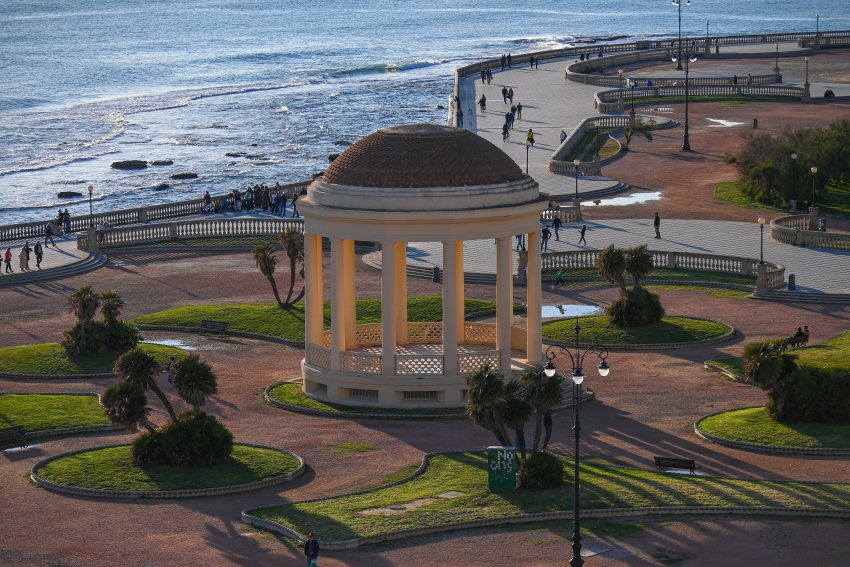
6. Livorno

The Complete Guide to Livorno
CC BY-SA 4.0 / Mykola Pokalyuk
Livorno is a lively seaside city on Italy’s Tuscan coast, known for its working port energy, waterfront promenades, and a refreshingly local feel compared with some of the region’s more polished postcard towns. It’s an easy place to enjoy simple pleasures: a stroll along the sea, a coffee in a canal-side square, and a long seafood lunch that leans into…
Visiting Livorno

7. Bologna

bologna
bologna
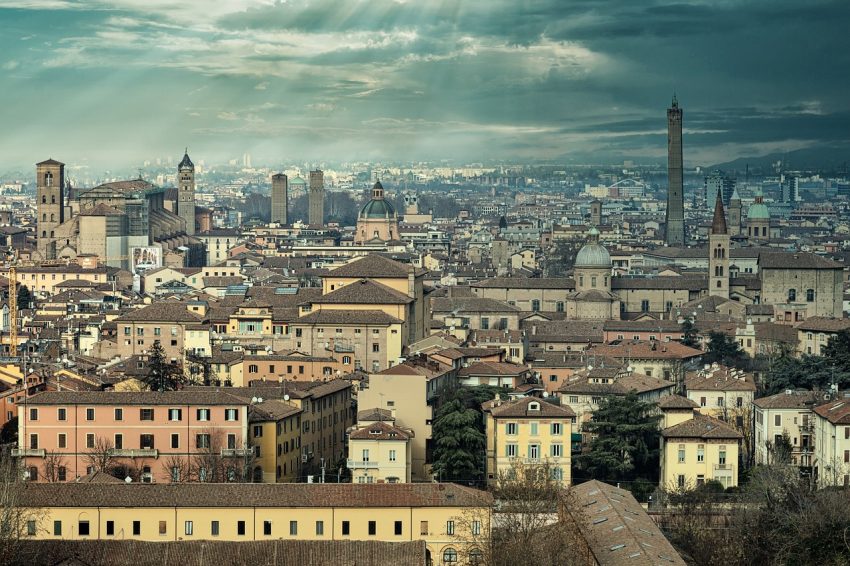
Bologna, a captivating city, holds the distinction of being the capital and largest city of the Emilia-Romagna region. Renowned by many Italians as the second most beautiful city after Venice, it boasts a rich heritage and a vibrant atmosphere. Bologna's charm lies in its relaxed and stress-free lifestyle, accompanied by a warm and lively ambiance. Its historic center, one of…
Visiting Bologna
Powered by GetYourGuide

8. San Marino

Visiting San Marino
Visiting San Marino
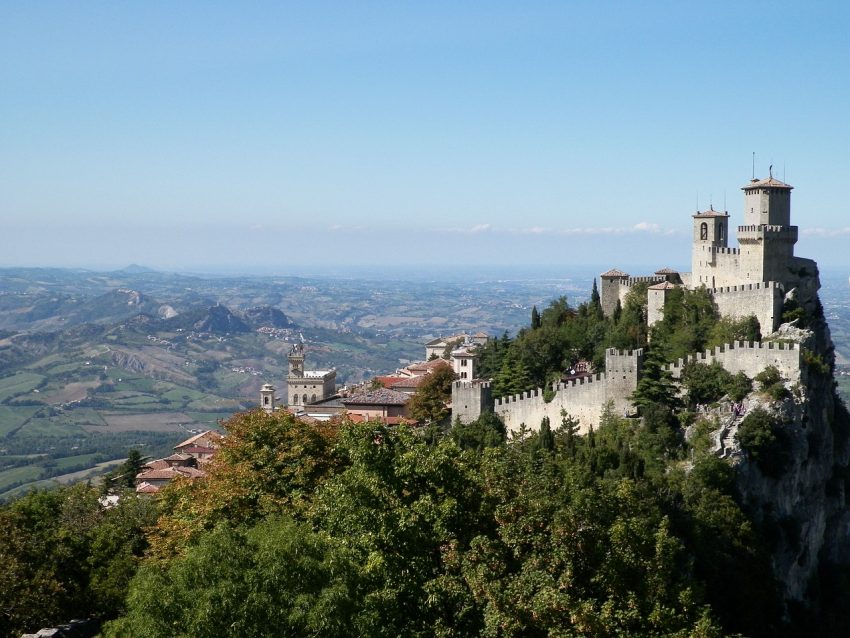
San Marino's origins are rooted in the captivating legend of Saint Marinus, who established the community and republic in AD 301 after seeking refuge on Mount Titano. The sovereignty of San Marino was confirmed after Italian Unification, possibly in recognition of their assistance to Garibaldi, a prominent leader in the Risorgimento movement. With the exception of Vatican City, San Marino…
Visiting San Marino
Powered by GetYourGuide

9. Modena

Piazza Grande a Modena
CC BY-SA 4.0 / Albypino
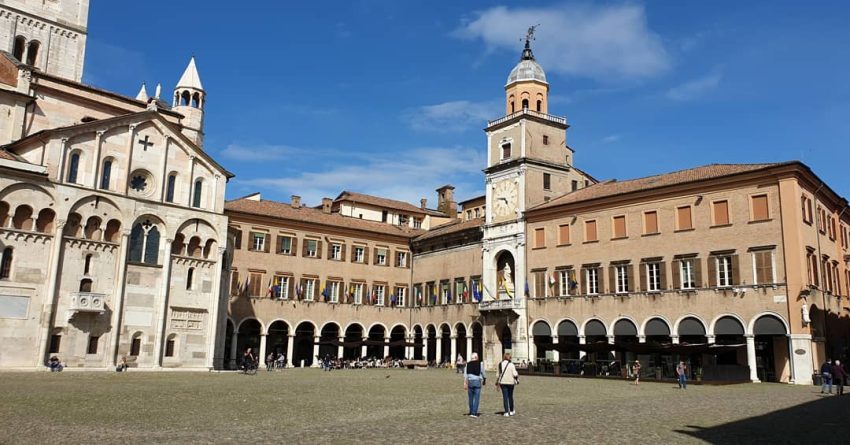
Nestled in the heart of the Emilia-Romagna region in northern Italy, Modena is renowned for its delectable cuisine, a reputation rooted in its barrel-aged balsamic vinegar and exquisite cheeses. Culinary enthusiasts journey to this medieval city to savor tastes that embody the region's unique flavors. Yet, the city's allure goes beyond its gastronomic delights. Its center, a captivating blend of…
Visiting Modena
Powered by GetYourGuide

10. Ravenna

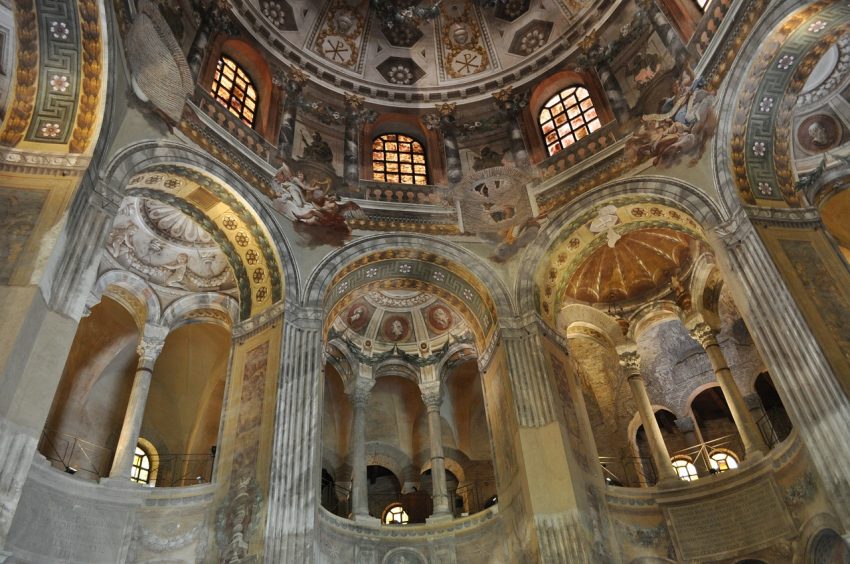
Ravenna
Ravenna
Situated on the eastern coast of Italy, nestled between San Marino and Bologna, Ravenna serves as the capital of the Ravenna province and stands as one of the larger cities in the Emilia-Romagna region. Throughout its illustrious history, Ravenna has held a position of great importance under various empires, including serving as the capital of the Western Roman Empire and…
Visiting Ravenna
Powered by GetYourGuide

Where to Stay in Florence

The best place to stay is in the historic center, where hotels and guesthouses provide easy access to the Duomo, Uffizi Gallery, and Ponte Vecchio. For a quieter, more local experience, Oltrarno offers charming boutique stays with a more relaxed ambiance.

A 3 to 4-day stay is ideal for exploring Florence’s world-famous art, architecture, and cuisine. A 5 to 6-day stay allows for day trips to Tuscany’s countryside, including Siena, Pisa, and the Chianti wine region.

Using the our Hotel and Accomodation map, you can compare hotels and short-term rental accommodations in Florence. Simply insert your travel dates and group size, and you’ll see the best deals for your stay.

Florence Accommodation Map

Best Time to Visit Florence

uly and August typically bring the warmest weather, while June and September offer pleasant warmth without the scorching heat. It’s important to note that in August, many Italians seek respite from the city’s heat, leading to the closure of various businesses, including shops and restaurants, for at least two weeks or even the entire month as local proprietors take vacations. However, this tradition is evolving, and most central shops in Florence remain open in August.

On the other hand, the coolest months are December and January, with January being slightly cooler. November experiences the highest average precipitation, and there are notable rainfalls in October, December, March, and April. Therefore, it’s advisable to dress in layers to adapt to changing weather conditions.

Considering the weather, the best times to visit Florence and Tuscany, albeit the busiest and relatively expensive, are April, May, June, September, and October. During these months, you can enjoy the advantages of the peak season along with pleasant weather.

The most challenging aspect of traveling to Florence is the summer heat in July and August when temperatures soar into the high 80s and 90s. The optimal time to experience Florence is between May and September when warm weather welcomes art and music festivals, alfresco dining, and the quintessential Italian lifestyle you’ve always dreamed of. However, there are also perks to visiting during the mid or low seasons, which are worth exploring.

Annual Weather Overview

  • January 10°C
  • February 12°C
  • March 15°C
  • April 18°C
  • May 24°C
  • June 31°C
  • July 30°C
  • August 31°C
  • September 27°C
  • October 22°C
  • November 14°C
  • December 10°C

How to get to Florence

Florence is conveniently accessible by plane, train, or car.

Flying to Florence

The city boasts its international airport, Amerigo Vespucci Airport, situated just 5 km from the city center. Travelers can reach the city center in approximately 15 minutes via taxi. For trips to the city center and primary hotels, the flat rate is €22; €24 on weekends and national holidays, and €25 at night. For other destinations, you can inquire with the driver or refer to the price list in the taxi. Contact the taxi service at tel. 055 4242. Alternatively, you can opt for the Vola in bus shuttle service, which costs €5 for a one-way ticket or €8 for a round trip. For further details, please visit the ATAF website.

Pisa International Airport, known as Galileo Galilei Airport, is located approximately 1 km from Pisa Centrale railway station and is connected via the People Mover shuttle bus. Florence is approximately 1 hour away from Pisa by train. You can also reach Florence by taking the Terravision bus.

Getting to Florence by Train

Florence is also a key node on the Italian railway network. It has good connections with the main cities in the north, while to the south Rome is only about an hour and a half away. Work on the Bologna-Florence stretch of the high-speed railway line (TAV, Treni Alta Velocità) is at an advanced stage, and a new station is due to be built in Florence.

Getting to Florence by Car

The A1 motorway, the primary road connecting the northern and southern regions of Italy, passes through Florence and has four exits. Currently, a third lane is being constructed on the Barberino-Incisa stretch of the A1. Additionally, the A11 motorway and the Florence-Pisa-Livorno (FI-PI-LI) dual carriageway provide connections to the western coast along the Tyrrhenian Sea.

Powered by GetYourGuide

More from this area