Cádiz, Spain: The Ultimate Travel Guide 2026
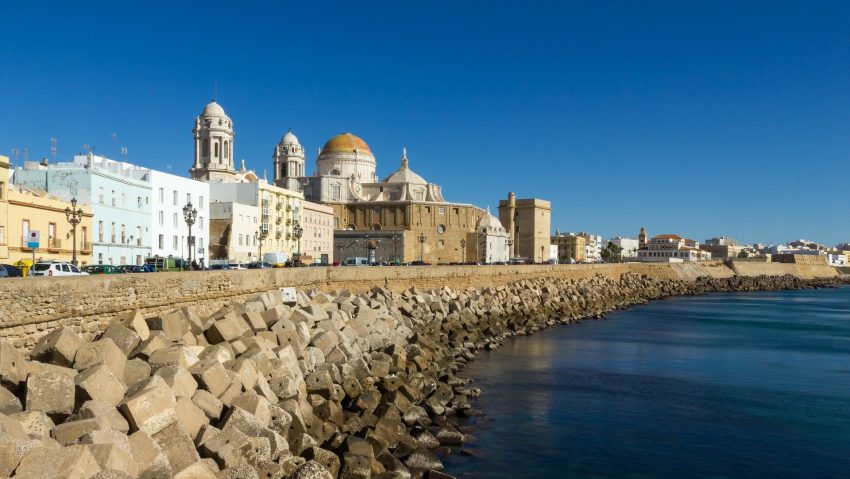
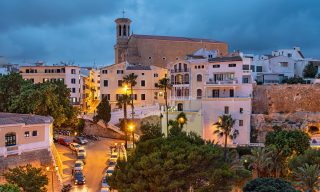
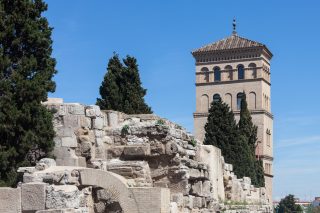
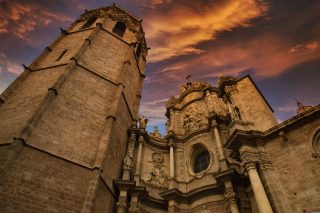
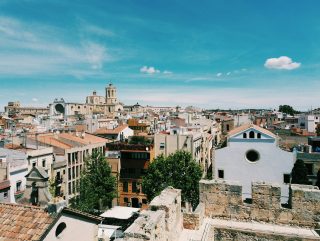
Visiting Cádiz offers a captivating glimpse into the soul of Andalusia, blending centuries of history with a vibrant, sun-soaked coastal lifestyle. As one of Europe's oldest continuously inhabited cities, Cádiz sits proudly on a narrow spit of land in southwestern Andalusia, surrounded by the Atlantic. The city's cobbled streets, historic fortifications, and elegant Baroque architecture are a testament to its deep maritime legacy, shaped by Phoenician traders, Moorish influence, and the wealth of the Spanish Empire. The old town, enclosed by ancient sea walls, invites visitors to explore its intimate plazas, whitewashed buildings, and iconic landmarks like the Cádiz Cathedral, whose golden dome rises over the sea.
Cádiz is equally celebrated for its relaxed Andalusian atmosphere and stunning beaches. Playa de la Caleta, framed by two historic castles, offers a tranquil spot to soak in the sun or enjoy a sunset framed by fishing boats and sea breeze. The city's culinary scene is steeped in tradition, with local taverns and beachfront chiringuitos serving up Andalusian staples like tortillitas de camarones, fried fish, and crisp sherry from nearby Jerez. The Mercado Central buzzes with life and flavor, giving visitors a taste of Cádiz's strong connection to both land and sea.
For those visiting in February, the Carnival of Cádiz delivers one of Andalusia's most spirited cultural celebrations. Satirical performances, colorful costumes, and joyful music fill the streets, reflecting the wit and creativity of the local people. Whether you're drawn by history, culture, food, or the rhythm of the ocean, Cádiz captures the warmth and authenticity of Andalusia in a way that feels both timeless and completely alive.
Table of Contents
- History of Cádiz
- 26 Best places to See in Cádiz
- Museum of the Cádiz Parliament
- Plaza de San Antonio
- Gran Teatro Falla
- Casa Palacio de Moreno de Mora
- Gadir Archaeological Site
- Torre Tavira
- Freiduria Las Flores 1
- Mercado Central
- Parque Genovés
- Baluarte de la Candelaria
- Museum of Cádiz
- Playa La Caleta
- Plaza de España
- Santa Catalina Castle
- Cádiz Cathedral
- City Hall of Cádiz
- Casa Palacio del Almirante
- Church Santa Cruz
- Arco del Pópulo
- Cádiz Roman Theatre
- Arco de los Blancos
- Puerta de Tierra
- Castle of San Sebastián
- Playa Santa María del Mar
- Playa de la Victoria
- Playa de la Cortadura
- 11 Best Day Trips from Cádiz
- Where to Stay in Cádiz
- Best Time to Visit Cádiz
- How to get to Cádiz
History of Cádiz
Cádiz is reputedly the oldest city in Western Europe, with a history that stretches back over 3,000 years. Founded by Phoenician sailors around 1100 BC, it served as a major trading post linking Europe and the Atlantic islands. The city flourished under Roman rule as ‘Gades,’ becoming a thriving port and a center for gladiatorial games.
During the Middle Ages, Cádiz came under Moorish control before being reconquered by Christian forces in the 13th century. Its golden age arrived in the 16th and 17th centuries when it became the launching point for Spanish expeditions to the Americas and a gateway for wealth flowing into Spain from its colonies. This era endowed Cádiz with splendid Baroque and Neoclassical buildings, many of which still grace its skyline.
Cádiz also played a significant role in modern Spanish history: it was besieged by the British in the late 18th century and was the seat of the Spanish government during the Peninsular War. In 1812, it was in Cádiz that the first Spanish constitution was proclaimed, earning the city the nickname “La Tacita de Plata” (The Silver Cup).
Today, Cádiz combines its rich historical heritage with the charm of a lively Andalusian coastal town, known for its carnival, seafood, and vibrant street life, making it a captivating destination for all who visit.

Moira & Andy
Hey! We're Moira & Andy. From hiking the Camino to trips around Europe in Bert our campervan — we've been traveling together since retirement in 2020!
Visiting Cádiz for the first time and wondering what are the top places to see in the city? In this complete guide, I share the best things to do in Cádiz on the first visit. To help you plan your trip, I have also included an interactive map and practical tips for visiting!
This website uses affiliate links which earn a small commission at no additional cost to you.
Powered by GetYourGuide

26 Best places to See in Cádiz
This complete guide to Cádiz not only tells you about the very best sights and tourist attractions for first-time visitors to the city but also provide insights into a few of our personal favorite things to do.
This is a practical guide to visiting the best places to see in Cádiz and is filled with tips and info that should answer all your questions!
1. Museum of the Cádiz Parliament
©
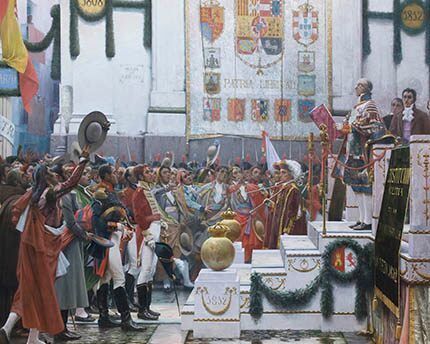
The Museum of the Cádiz Parliament traces the city’s political and social transformation from the 18th to the 20th century, with special focus on the Cortes that met here during Napoleon’s siege and drafted Spain’s liberal 1812 Constitution, “La Pepa.” Its standout object is a remarkably precise 1:250 scale model of the old city, built for Carlos III between 1777 and 1779 in mahogany, silver, and ivory. Start at floor level to pick out the tight street grid, bastioned walls, and harbour edge, then climb to the overhead walkway for a true bird’s-eye view. Upper galleries display constitutional papers alongside maps, medals, weapons, shields, and personal relics from the 1810–1812 period.
Location: Calle Santa Inés, 9. Cádiz | Hours: Tuesday to Friday from 9:00 AM to 6:00 PM. Saturdays, Sundays and public holidays from 9:00 AM to 2:00 PM. | Website | Distance: 0.1km
Location: Calle Santa Inés, 9. Cádiz | Hours: Tuesday to Friday from 9:00 AM to 6:00 PM. Saturdays, Sundays and public holidays from 9:00 AM to 2:00 PM. | Website | Distance: 0.1km

2. Plaza de San Antonio
CC BY-SA 2.0 / Luis Rogelio HM
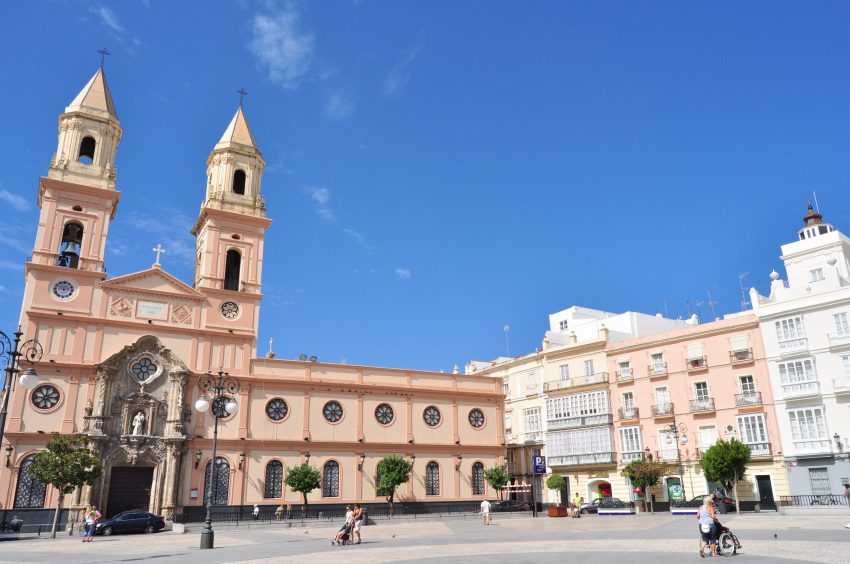
Plaza de San Antonio is a central square in Cádiz’s historic core, where everyday café life plays out against a backdrop of civic drama. Once known as the Campo de la Jara, it took its current name after a 17th-century hermitage to Saint Antonio was built here, and a nearby well once made the plaza a practical lifeline for the city. In the 18th and early 19th centuries it became a stage for politics, including the proclamation of Spain’s 1812 Constitution and the suppression of the 1820 liberal movement. Visitors notice the orderly façades, the slimmer profile of the Church of San Antonio, and ornate buildings like the Gaditano Casino with later Moorish-style interior touches.
Location: Plaza de San Antonio, Cádiz, Spain | Hours: 24 Hours. | Price: Free. | Website | Distance: 0.2km
Location: Plaza de San Antonio, Cádiz, Spain | Hours: 24 Hours. | Price: Free. | Website | Distance: 0.2km
3. Gran Teatro Falla

CC BY-SA 4.0 / Anual
Gran Teatro Falla is Cádiz’s grand performing-arts theatre, built between 1884 and 1905 after the earlier Gran Teatro burned down, and later renamed in 1926 for composer Manuel de Falla. From Plaza Fragela, visitors remember the red-brick Mudéjar façade and the striking arched entrance banded with alternating red-and-white voussoirs. Inside, the horseshoe-shaped galleries, ornate ceilings, and warm Moorish-Spanish palette create a dramatic, jewel-box atmosphere. The building comes alive during concerts, plays, and especially February’s Carnival, when COAC song-and-satire competitions fill the hall with costumed groups and sharp local humour. Even from the outside, many travellers linger for photos and the theatre’s sense of occasion.
Location: Plaza de Falla, s/n, 11003, Cádiz | Website | Distance: 0.2km
Location: Plaza de Falla, s/n, 11003, Cádiz | Website | Distance: 0.2km

4. Casa Palacio de Moreno de Mora
CC BY-SA 3.0 / Arooran Thanabalasingam
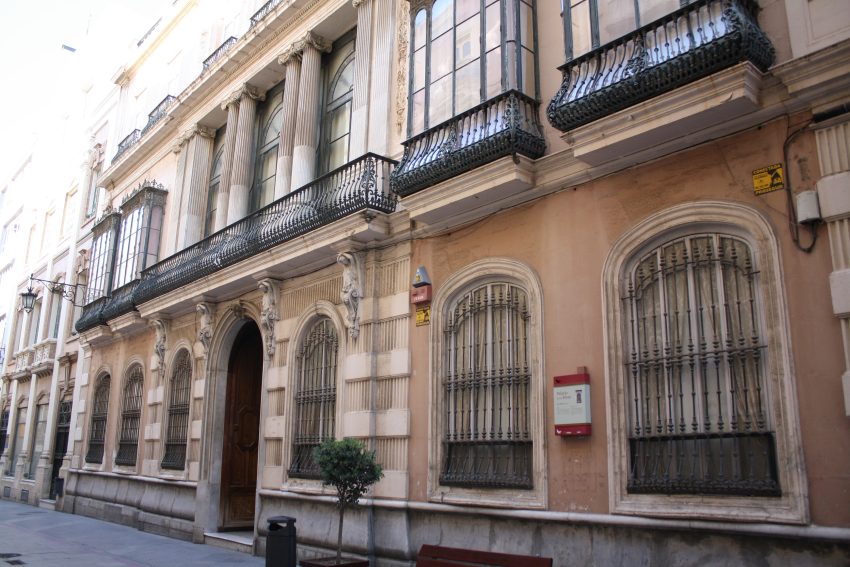
Casa Palacio de Moreno de Mora is a 19th-century mansion on Calle Ancha in Cádiz, prized as a rare look inside the city’s Isabelline-era civil architecture. Completed in 1862 to a design by Juan de la Vega y Correa and inaugurated during Queen Isabel II’s visit, it wears its status on the façade: a central entrance crowned by a marble balcony held up by sculpted figures, plus ironwork terraces and curved balconies. Look for the enclosed wooden-and-glass “cierros” that give the street front a distinctly local profile. Inside, rooms unfold around a main courtyard with smaller patios and a garden, and restorations preserved details like stained glass and ornate decorative flourishes.
Location: C. Ancha, 28, 30, 11001 Cádiz, Spain | Hours: Wednesday: 10:00. Closed on Monday, Tuesday, Thursday, Friday, Saturday, Sunday. Closed in July and August. | Price: Check official website. | Distance: 0.3km
Location: C. Ancha, 28, 30, 11001 Cádiz, Spain | Hours: Wednesday: 10:00. Closed on Monday, Tuesday, Thursday, Friday, Saturday, Sunday. Closed in July and August. | Price: Check official website. | Distance: 0.3km
5. Gadir Archaeological Site

© digitalavmagazine
Gadir Archaeological Site is an underground museum in Cádiz’s old town that preserves rare Phoenician remains from one of Western Europe’s earliest urban settlements, founded around the 9th century BC. Nine metres below the La Tía Norica Puppet Theatre, elevated walkways and careful lighting reveal two cobbled streets lined with the foundations of eight houses, plus everyday ceramics and tools that make domestic life feel close. Displays trace the settlement’s destruction in the 6th century BC and its later Roman phase, including basins from a fish-salting factory. Visitors begin with a short introductory film, then circle the excavation at their own pace, spotting small surprises like an ancient cat skeleton.
Location: Calle San Miguel, 15, 11001 Cádiz, Spain | Hours: Tuesday to Sunday from 10.00 am to 5.00 pm. Visit every hour. Closed on Mondays. | Price: Free entrance | Website | Distance: 0.3km
Location: Calle San Miguel, 15, 11001 Cádiz, Spain | Hours: Tuesday to Sunday from 10.00 am to 5.00 pm. Visit every hour. Closed on Mondays. | Price: Free entrance | Website | Distance: 0.3km
6. Torre Tavira

CC BY-SA 3.0 / Emilio J. Rodríguez Posada
Torre Tavira is an 18th-century Baroque watchtower in Cádiz’s old city, built to spot incoming ships during the port’s transatlantic trading boom. At 45 metres above sea level on the city’s highest point, it still reads like a working lookout, with a narrow interior climb of ten flights (170 steps) that feels like a small workout. The reward is a rooftop terrace with crisp 360-degree views over terracotta roofs and the sweep of sea and sky. One level below, the Camera Obscura uses mirrors and lenses to project a live, moving image of Cádiz onto a curved screen—an unexpectedly intimate way to “see” the city. Visitors often mention the clear views and the engaging demonstration.
Location: Torre Tavira, Calle Marqués del Real Tesoro, 10 11001 Cádiz Spain | Hours: October – april: 10.00 – 18.00 hrs. May – september: 10.00 – 20.00 hrs. | Price: 7 Euro | Website | Distance: 0.3km
Location: Torre Tavira, Calle Marqués del Real Tesoro, 10 11001 Cádiz Spain | Hours: October – april: 10.00 – 18.00 hrs. May – september: 10.00 – 20.00 hrs. | Price: 7 Euro | Website | Distance: 0.3km
7. Freiduria Las Flores 1
CC BY-SA 1.0 / Zarateman
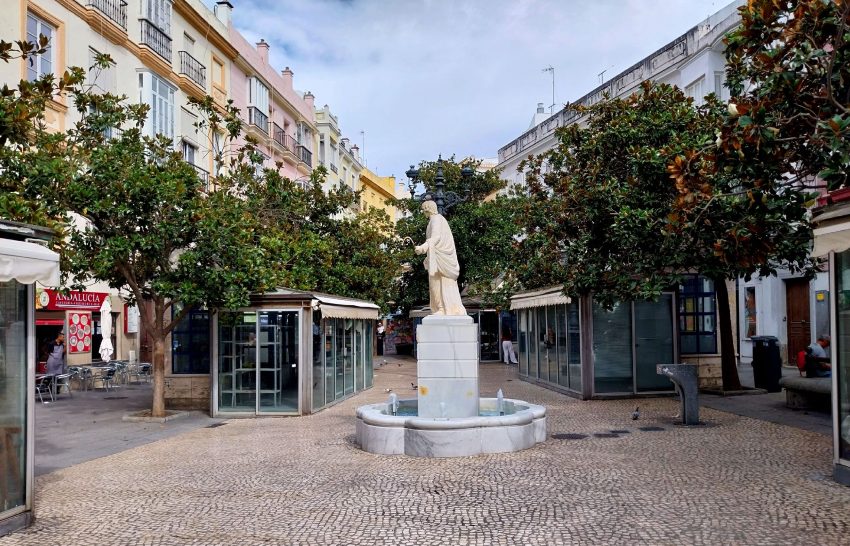
Plaza de las Flores (Flower Square) is a compact Cádiz plaza where flower stalls fill the center with color and scent, and the mood can turn theatrical during Carnival when street performances spill into the square. Its layers show in the architecture: the 1930 Post Office and Telegraph building stands out in brick with glossy ceramic detailing, a regionalist-eclectic contrast to older façades nearby. Look for No. 1 (1746), a Baroque front with dramatic pilasters, and No. 12 by Torcuato Benjumeda, a neoclassical design marked by oversized Doric pilasters. It’s the kind of place you remember for its mix of everyday bustle and concentrated design history.
Location: Pl. Topete, 4, 11001 Cádiz, Spain | Hours: Monday – Sunday: 11:30–16:30 & 19:30–23:30. | Price: Free. | Distance: 0.4km
Location: Pl. Topete, 4, 11001 Cádiz, Spain | Hours: Monday – Sunday: 11:30–16:30 & 19:30–23:30. | Price: Free. | Distance: 0.4km
8. Mercado Central

© Turismo Cadiz
Mercado Central de Abastos is Cádiz’s covered food market, set inside a rectangular, colonnaded building first established in 1838 on the former orchard of a Discalced convent. The Doric-style arcades and open courtyard give it a calm, classical frame for the city’s daily bustle. What visitors remember most is the Atlantic-facing seafood hall: stalls stacked with tuna, langoustines, shrimp, oysters, crabs, and cuttlefish, arranged as carefully as a display. Around the edges, butchers, cheese sellers, and fruit-and-veg stands add color and scent. Many people linger at the gastromarket counters for made-to-order tapas and a glass of sherry while watching the market rhythm up close.
Location: Plaza de la Libertad, S/N 11005 Cádiz Spain | Hours: Central Market Hours: Monday to Saturday from 9:00 am to 3:00 pm Gastronomic Corner Hours: Monday: 9:00 am to 4:00 pm Tuesday to Friday: from 9:00 a.m. at 3.30 pm and from 19.00. at 00.00 Saturday: From 09.00. at 4:00 pm and from 8:00 pm at 01.00 | Price: Free | Distance: 0.4km
Location: Plaza de la Libertad, S/N 11005 Cádiz Spain | Hours: Central Market Hours: Monday to Saturday from 9:00 am to 3:00 pm Gastronomic Corner Hours: Monday: 9:00 am to 4:00 pm Tuesday to Friday: from 9:00 a.m. at 3.30 pm and from 19.00. at 00.00 Saturday: From 09.00. at 4:00 pm and from 8:00 pm at 01.00 | Price: Free | Distance: 0.4km
9. Parque Genovés
CC BY-SA 3.0 / Solundir
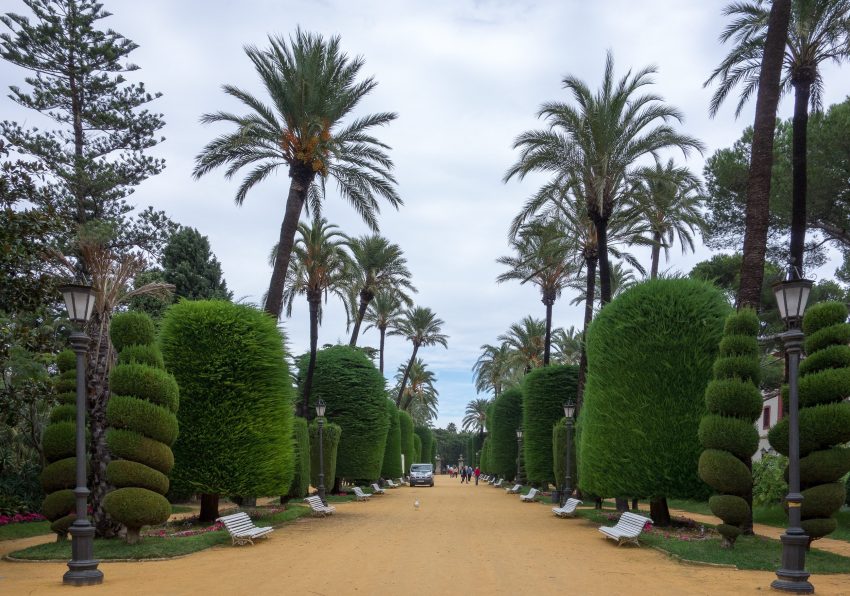
Parque Genovés is a landscaped botanical garden pressed against the sea wall, prized for its cool shade, winding paths, and surprisingly global plant mix. Along manicured hedges and broad avenues you’ll pass maples and poplars, Indian laurels, Canarian pines, and even cycads from southern India, giving the park a distinctly curated, botanical feel. An ornamental lake with a small waterfall adds atmosphere, and the quirky dinosaur sculptures peering through the greenery are the detail many visitors remember. Look out too for the delicate “Children Under the Umbrella” fountain, a relic of the park’s late-19th-century makeover into a more elaborate public garden.
Location: Parque Genovés Av. Dr. Gómez Ulla, s/n 11003 Cádiz Spain | Hours: Every day from 8:00a.m. to sunset. Summer from 8:00 a.m. to 10:30 p.m. | Price: Free | Website | Distance: 0.4km
Location: Parque Genovés Av. Dr. Gómez Ulla, s/n 11003 Cádiz Spain | Hours: Every day from 8:00a.m. to sunset. Summer from 8:00 a.m. to 10:30 p.m. | Price: Free | Website | Distance: 0.4km
10. Baluarte de la Candelaria
CC BY-SA 4.0 / Axel Cotón Gutiérrez
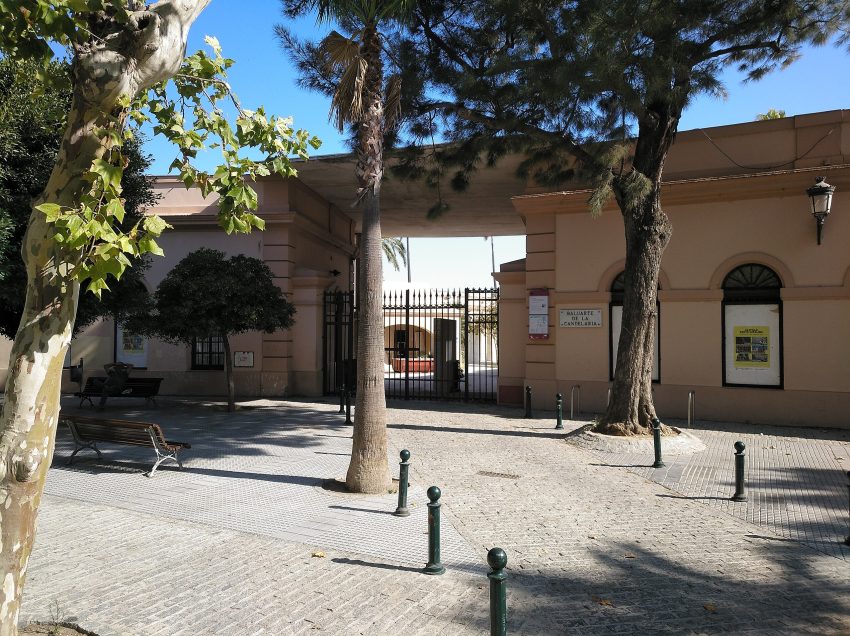
Baluarte de la Candelaria is a late-17th-century sea bastion on Cádiz’s northern edge, built in 1672 to guard the bay and control the narrow channels into the port. Its distinctive triangular plan leaves the south side open toward the city while the angled seaward faces once carried artillery and doubled as a seawall. Inside, the fort’s vaulted rooms and stone geometry still feel defensive, but the mood has shifted from barracks and engineer quarters (even a military pigeon service) to culture. Today you’ll find temporary exhibitions in the halls and, when scheduled, concerts and performances in the palm-lined courtyard, with Atlantic wind and wide-open views from the ramparts.
Location: Alameda Hermanas Carvia Bernal, 6, 11003 Cádiz, Spain | Hours: Daily: Consult schedule (open during exhibitions and events). | Price: Check official website. | Website | Distance: 0.5km
Location: Alameda Hermanas Carvia Bernal, 6, 11003 Cádiz, Spain | Hours: Daily: Consult schedule (open during exhibitions and events). | Price: Check official website. | Website | Distance: 0.5km
11. Museum of Cádiz

CC BY-SA 2.0 / VIATOR IMPERI
The Museum of Cádiz is the city’s main museum, set on land once belonging to the Convent of Saint Francis, and it brings together archaeology, fine arts, and ethnography under one roof. The ground-floor archaeology rooms walk you from prehistory to the Middle Ages, with standout Phoenician sarcophagi and Roman sculptures linked to Baelo Claudia and Cádiz’s Roman Theatre, many recovered from beneath the city itself. Upstairs, galleries span five centuries, from Andalusian Baroque painting—Zurbarán, Murillo, Ribera—to a European Baroque room shaped by Rubens’ influence, then on to modern names like Sorolla and Miró. The ethnography section turns to local tradition with the Tía Norica puppet theatre, a Cádiz institution with more than two centuries of popular performance behind it.
Location: Plaza de Mina, s/n, 11004, Cádiz. | Hours: Tuesdays to Saturdays from 9:00 AM to 9:00 PM; Sundays and public holidays from 9:00 AM to 3:00 PM. Closed on Mondays. | Price: Free | Website | Distance: 0.5km
Location: Plaza de Mina, s/n, 11004, Cádiz. | Hours: Tuesdays to Saturdays from 9:00 AM to 9:00 PM; Sundays and public holidays from 9:00 AM to 3:00 PM. Closed on Mondays. | Price: Free | Website | Distance: 0.5km
12. Playa La Caleta
CC BY-SA 4.0 / Emilio J. Rodríguez Posada
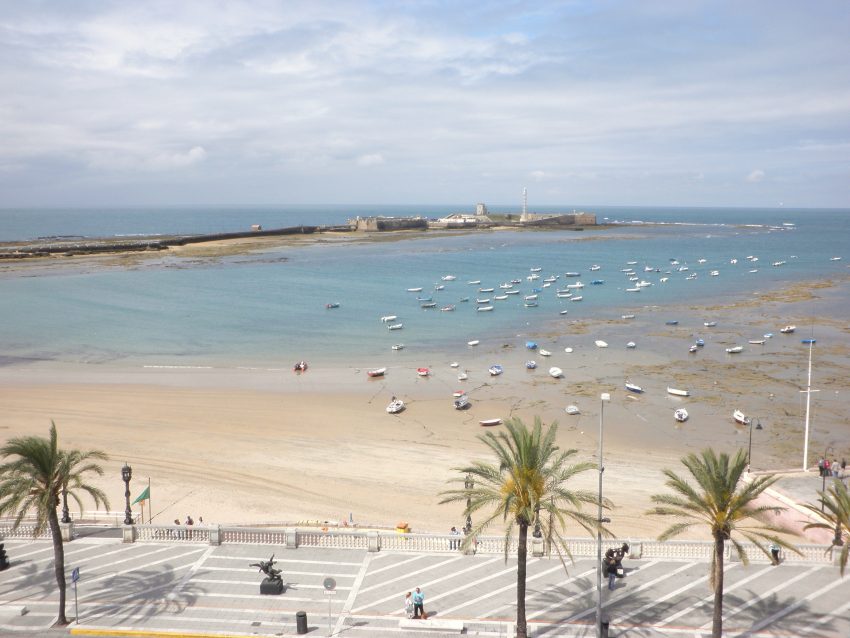
Playa La Caleta is a small, sheltered beach at the far tip of Cádiz, where golden sand curves between Castillo de Santa Catalina and Castillo de San Sebastián. The cove feels unusually calm for a city beach—protected from wind and waves—so swimmers and families linger in the shallow water while locals stroll the promenade. Its Blue Flag status shows in the clean sand and dependable facilities, even when the beach fills up at midday. Toward evening, small fishing boats drift into the bay and the light turns the water copper, with the San Sebastián silhouette making the classic sunset view. The setting mixes seaside leisure with the peninsula’s old defensive edge.
| Hours: 24 Hour | Distance: 0.6km
| Hours: 24 Hour | Distance: 0.6km
13. Plaza de España
CC BY-SA 1.0 / Zarateman
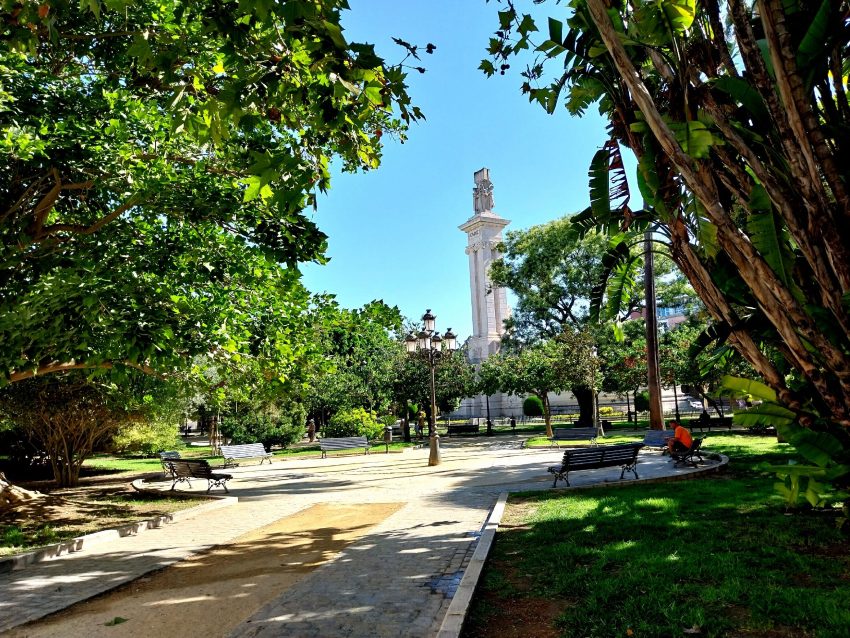
Plaza de España is a sunlit civic square near Cádiz’s port, where the city’s political past is set in stone and bronze. At the center rises a bright monument to the 1812 Constitution signed here, topped with sculptural figures including two horsemen for war and peace and a watchful Hercules. Around it, the former Customs Palace shows off an imposing neoclassical front with weighty columns, while the nearby House of the Five Towers hints at Cádiz’s late-18th-century shift from Baroque flourish to cleaner lines. Leafy parkland and benches soften the formal layout, and visitors tend to linger for photos and a slow circuit of the façades.
Location: Pl. de España, 1, 11006 Cádiz, Spain | Hours: 24 Hours. | Price: Free. | Distance: 0.7km
Location: Pl. de España, 1, 11006 Cádiz, Spain | Hours: 24 Hours. | Price: Free. | Distance: 0.7km
14. Santa Catalina Castle
CC BY-SA 3.0 / Francisco Manuel Esteban Moya
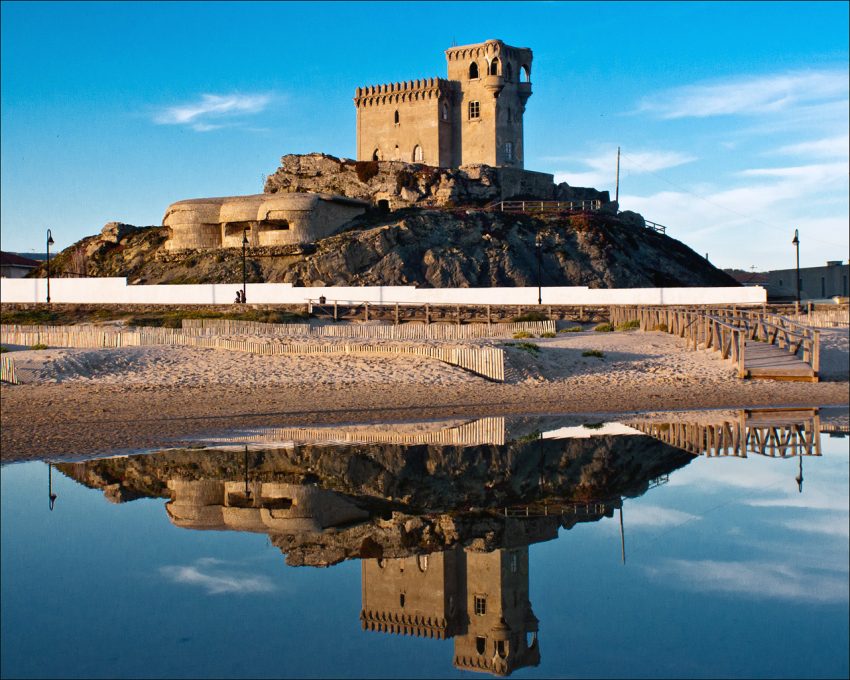
Santa Catalina Castle is a star-shaped coastal fortress perched above the Atlantic at the northern end of La Caleta beach in Cádiz. Built in the early 1600s after the 1596 Anglo-Dutch raid, it was designed by military engineer Cristóbal de Rojas to defend one of the city’s most exposed approaches, with bastions and a moat built into its angular plan. Inside, the parade ground and pavilions hint at its former life as barracks, while a small chapel and sacristy added in 1693 bring a quieter note to the hard stone setting. The ramparts are what linger most: broad sea views over La Caleta and across to San Sebastián, especially in late-day light.
Location: Avenida Duque de Nájera, 11002, Cádiz | Hours: Every day from 11 am. to 7 pm. | Price: Free | Distance: 0.7km
Location: Avenida Duque de Nájera, 11002, Cádiz | Hours: Every day from 11 am. to 7 pm. | Price: Free | Distance: 0.7km
15. Cádiz Cathedral
CC BY-SA 3.0 / Harlock20
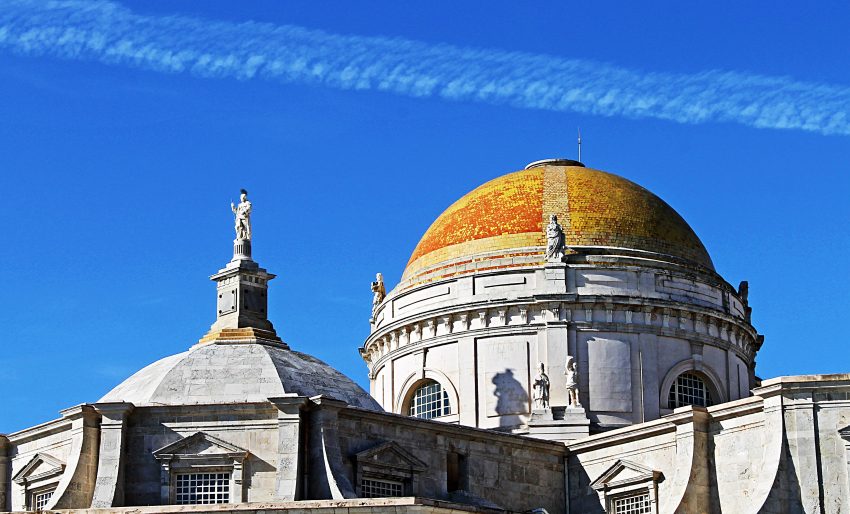
Cádiz Cathedral rises above the old town with a golden-tiled dome that catches the Atlantic light and is visible from much of the waterfront. Built between 1722 and 1838, its long timeline shows in the mix of Baroque, Rococo, and Neoclassical elements, a reminder of Cádiz’s wealth from transatlantic trade that earned it the nickname “Cathedral of the Americas.” Inside, visitors linger over the high altar’s vaulting, Baroque devotional images, and the finely carved choir stalls brought from another church. Below, the cool, echoing crypt holds the tombs of composer Manuel de Falla and writer José María Pemán. Many people also remember the Torre de Poniente ascent, done by a gently sloping ramp rather than stairs.
Location: Plaza de la Catedral, s/n 11005 Cádiz Spain | Hours: Tue-Sat 10am-4:30pm | Distance: 0.7km
Location: Plaza de la Catedral, s/n 11005 Cádiz Spain | Hours: Tue-Sat 10am-4:30pm | Distance: 0.7km
16. City Hall of Cádiz
CC BY-SA 4.0 / Wayne77
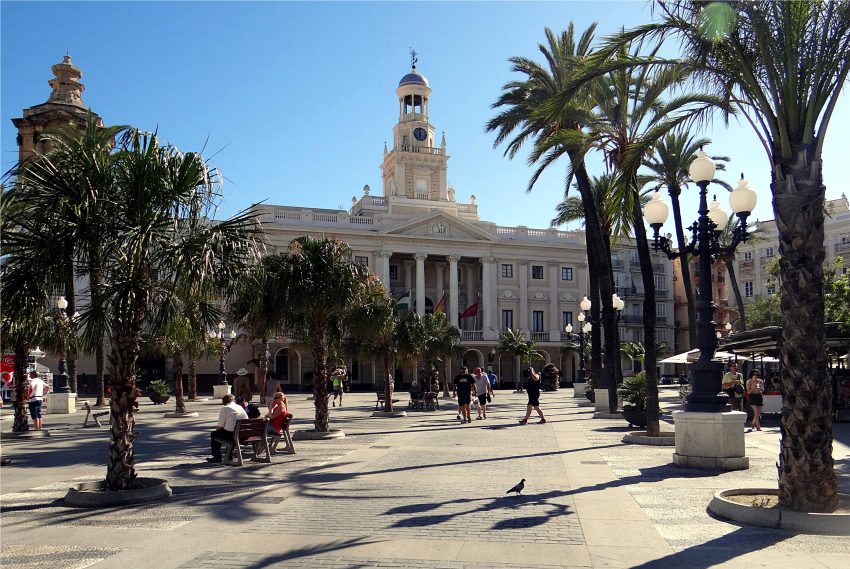
Cádiz City Hall (Ayuntamiento de Cádiz) is the city’s working seat of government, set on Plaza de San Juan de Dios facing the port and acting as a formal threshold to the old town. Begun in 1799 on earlier town-hall foundations, it pairs Torcuato Benjumeda’s neoclassical exterior with an 1861 interior refit by García del Álamo in an Elizabethan style. Visitors linger for the façade’s Ionic columns and pale stone, topped by a triangular pediment with a relief of Hercules, Cádiz’s mythical founder. From the plaza, fountains and café terraces frame wide, clean photo angles, and the building’s bright tones seem to glow in strong sun. It also carries civic symbolism: the Andalusian flag was first raised here in 1936.
Location: Casa Consistorial, pl. de San Juan de Dios, s/n, 11005 Cádiz, Spain | Hours: Tuesday – Friday: 09:00–18:00. Saturday: 09:00–14:00. Sunday: 09:00–14:00. Closed on Monday. | Price: Free. | Website | Distance: 0.8km
Location: Casa Consistorial, pl. de San Juan de Dios, s/n, 11005 Cádiz, Spain | Hours: Tuesday – Friday: 09:00–18:00. Saturday: 09:00–14:00. Sunday: 09:00–14:00. Closed on Monday. | Price: Free. | Website | Distance: 0.8km
17. Casa Palacio del Almirante
CC BY-SA 4.0 / Ymblanter
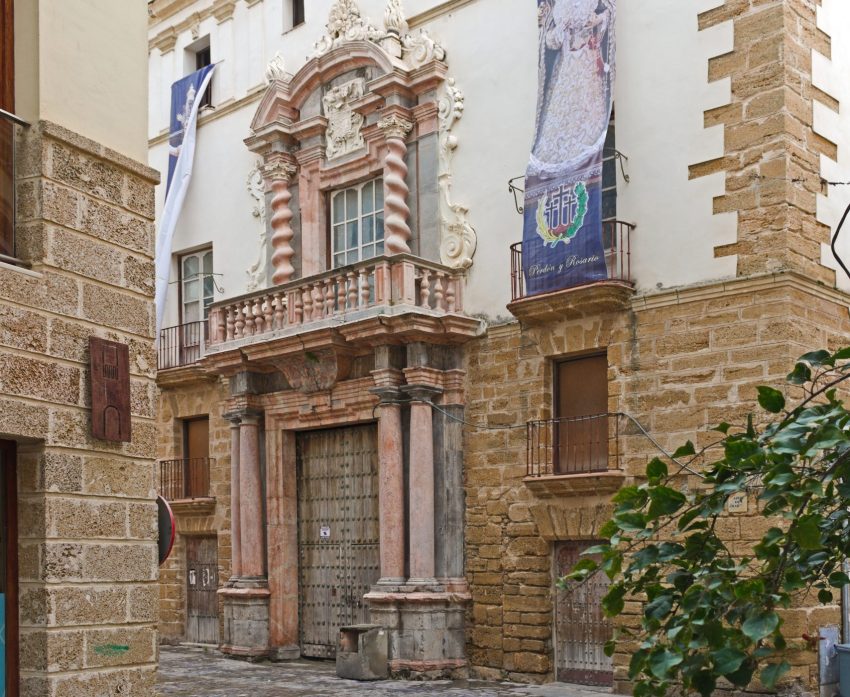
Casa Palacio del Almirante (Casa del Almirante) is a late-17th-century Baroque house-palace in Cádiz’s old town, commissioned by Diego de Barrios, Admiral of the Indies Fleet, and a window into the city’s Atlantic-trade elite. What you’ll remember first is the monumental portal: alternating red-and-white Genoese marble, carved in the Andreoli workshop and assembled locally, crowned by a balcony and family crest. Look up for the pair of lookout towers—among Cádiz’s oldest surviving—then notice how the Andalusian courtyard tradition is dressed with Italianate arches and columns. Inside, when accessible, a grand stair rises toward a rounded dome and painted ceilings. Recent reviews mention closures and renovation, so many visits focus on the facade.
Location: Pl. San Martín, 4, 11005 Cádiz, Spain | Hours: Temporarily closed. | Price: Check official website. | Website | Distance: 0.8km
Location: Pl. San Martín, 4, 11005 Cádiz, Spain | Hours: Temporarily closed. | Price: Check official website. | Website | Distance: 0.8km
18. Church Santa Cruz (Old Cadiz Cathedral)
CC BY-SA 4.0 / Fedoce1 (Fernando Domínguez Cerejido)
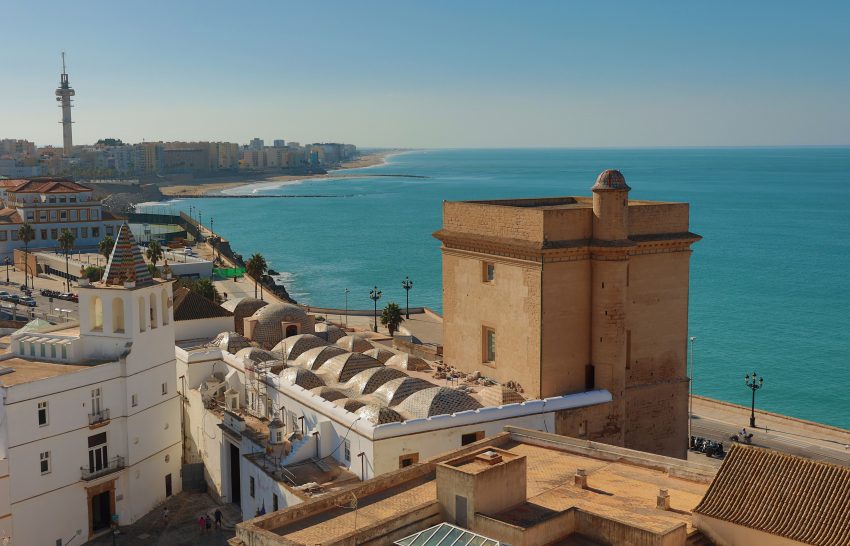
Church Santa Cruz, the Old Cathedral of Cádiz, is a working parish church that served as the city’s cathedral until 1838, first founded in 1262 and rebuilt by 1602 after the 1596 Anglo-Dutch raid. Its architecture mixes Mannerist and Baroque touches, with a standout baroque altar and a separate 15th-century bell tower linked to the former Casa de la Contaduría (now the cathedral museum). Look for the tower’s colorful tile-covered spire and coastal-style exterior details. Inside, rounded Moorish arches and plain white ceilings create a calm, spacious feel, and visitors often linger over the sculptures and iconography in the side areas.
Location: Pl. Fray Félix, 6, 11005 Cádiz, Spain | Hours: Monday: Closed. Tuesday – Thursday: 11:00–13:00 & 17:30–20:30. Friday: 08:30–13:30 & 16:30–21:00. Saturday: 10:30–12:30 & 19:00–21:00. Sunday: 10:00–12:30. | Price: Free. | Website | Distance: 0.8km
Location: Pl. Fray Félix, 6, 11005 Cádiz, Spain | Hours: Monday: Closed. Tuesday – Thursday: 11:00–13:00 & 17:30–20:30. Friday: 08:30–13:30 & 16:30–21:00. Saturday: 10:30–12:30 & 19:00–21:00. Sunday: 10:00–12:30. | Price: Free. | Website | Distance: 0.8km
19. Arco del Pópulo
©
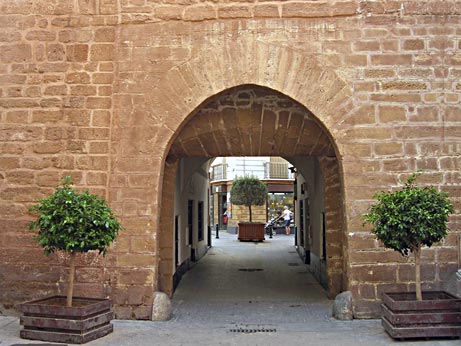
Arco del Pópulo is a vaulted gateway that funnels you from the waterfront edge into the tight lanes of the Barrio del Pópulo, the oldest quarter. It began as part of the Almohad defensive walls in the 12th century and later served as the Puerta del Mar, controlling arrivals from the port under Alfonso X. Look for the layers: medieval stonework below, then the religious additions that reshaped it after a 1587 painting of the Virgin of Pópulo was damaged during the 1596 attack. A chapel was built above, and an early-17th-century chapel enclosed the passage into the tunnel-like corridor you walk through today. It’s easy to miss until you’re under it.
Location: Arco Del Pópulo, S/N, Calle Pelota, 11005 Cádiz, Spain | Hours: 24 Hours | Price: Free | Website | Distance: 0.8km
Location: Arco Del Pópulo, S/N, Calle Pelota, 11005 Cádiz, Spain | Hours: 24 Hours | Price: Free | Website | Distance: 0.8km
20. Cádiz Roman Theatre

CC BY-SA 4.0 / Axel Cotón Gutiérrez
Cádiz Roman Theatre is a 1st‑century BC performance venue hidden at the seaward edge of Barrio del Pópulo, reached through a discreet entrance on Calle Mesón 11–13 behind tight medieval lanes. Built during the Balbus family’s expansion of Gades, it once held around 20,000 spectators, making it among Spain’s largest early Roman theatres. Visitors descend through a small interpretive space and emerge onto walkways overlooking the excavated horseshoe-shaped cavea, where parabolic tiers are carved into the hillside. The ruins were rediscovered in 1980 after centuries under later construction, including a medieval fortress known as the “Castle of the Theater,” and the layering is visible in stone-on-stone contrasts. Many travelers note the free entry and the quiet, atmospheric feel.
Location: Calle Mesón, 11-13, 11005 Cádiz, Spain | Price: Free | Distance: 0.8km
Location: Calle Mesón, 11-13, 11005 Cádiz, Spain | Price: Free | Distance: 0.8km
21. Arco de los Blancos
CC BY-SA 4.0 / Axel Cotón Gutiérrez
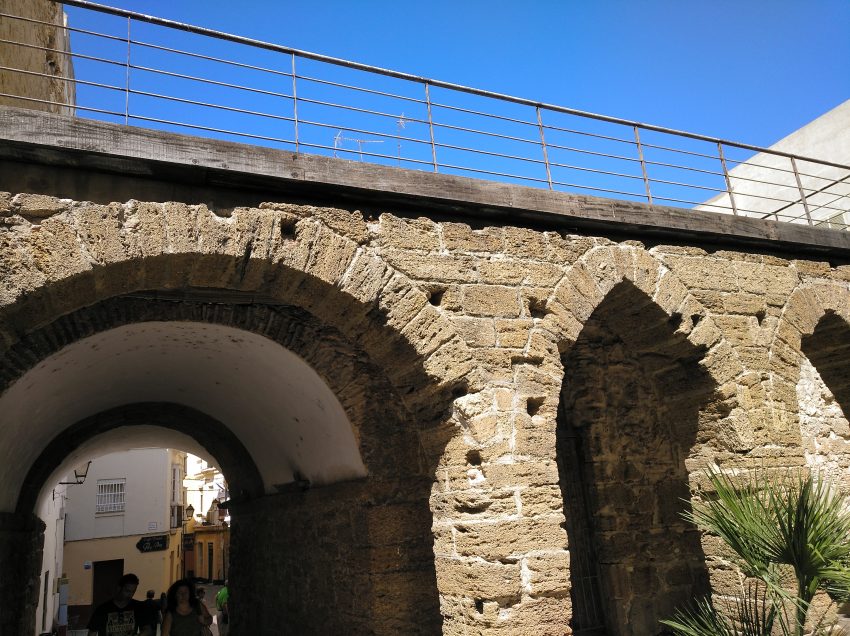
Arco de los Blancos is a surviving medieval gateway on the eastern edge of Cádiz’s old walled city, a threshold that once controlled entry from land. Built in the 13th century under Alfonso X, its masonry arch and traces of crenellated fortification recall Cádiz when defenses mattered as much as trade. Look up to notice how the structure later shifted from military to devotional use: a small chapel was added above the passage after 1621 by the merchant Felipe Blanco, giving the arch its current name. Walking beneath it, you can still feel the compressed scale of the old city, with weathered stone textures that catch beautifully in low light.
Location: Calle Mesón, 22, 11005 Cádiz, Spain | Hours: 24 Hours | Price: Free | Distance: 0.9km
Location: Calle Mesón, 22, 11005 Cádiz, Spain | Hours: 24 Hours | Price: Free | Distance: 0.9km
22. Puerta de Tierra
CC BY-SA 3.0 / TheOm3ga
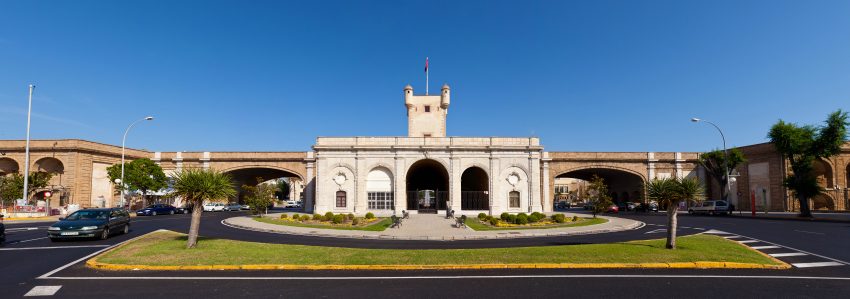
Puerta de Tierra is Cádiz’s monumental land gate and the last major stretch of the old defensive wall, marking the passage between the compact historic peninsula and the newer extramuros districts. From street level, its balanced stone façade and ceremonial marble doorway make it feel less like a simple arch and more like a controlled entry point into the city. When access is open, you can climb to the upper walkway and tower area for a clear read of Cádiz’s geography: the tight old town on a narrow strip, modern neighborhoods spreading outward, and Atlantic light washing the rooftops. The structure also shows Cádiz’s shift from fortification to flow—extra arches were cut and the moat filled in the 1950s to carry modern traffic.
Location: Plaza de la Constitución, s/n, 11004, Cádiz | Hours: (Summer) 01 June–30 September; 23 December–04 January. Tuesday – Saturday: 11:00–15:00 & 17:00–21:00. Sunday: 11:00–15:00. (Winter) 05 January–31 May; 01 October–22 December. Tuesday – Saturday: 11:00–14:00 & 16:00–20:00. Sunday: 11:00–14:00. Closed on Monday. | Price: Free | Website | Distance: 1.3km
Location: Plaza de la Constitución, s/n, 11004, Cádiz | Hours: (Summer) 01 June–30 September; 23 December–04 January. Tuesday – Saturday: 11:00–15:00 & 17:00–21:00. Sunday: 11:00–15:00. (Winter) 05 January–31 May; 01 October–22 December. Tuesday – Saturday: 11:00–14:00 & 16:00–20:00. Sunday: 11:00–14:00. Closed on Monday. | Price: Free | Website | Distance: 1.3km
23. Castle of San Sebastián
CC BY-SA 2.0 / Emilio J. Rodríguez Posada
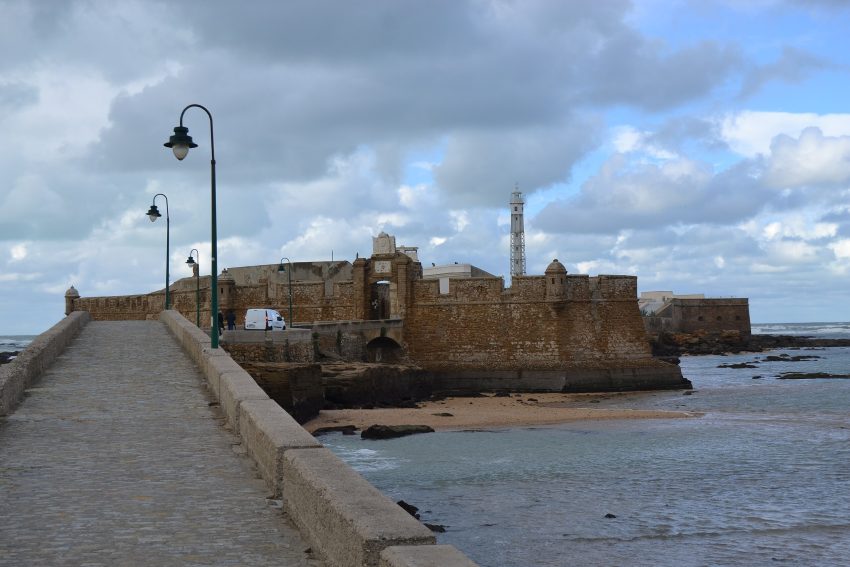
The Castle of San Sebastián is a sea-battered fortress on a tiny islet beyond Cádiz’s La Caleta beach, built to guard the city’s northern approach and later used at times as a prison and quarantine station. You reach it only on foot via the long Paseo Fernando Quiñones causeway, with waves breaking on both sides and wide views back to the old town. Most of what you see today dates from 1706, with layered bastions and bare, wind-scoured courtyards that feel more atmospheric than museum-like. The 1908 metal lighthouse, Spain’s second electric, rises from an older watchtower and defines the castle’s silhouette. Visitors often come for the walk, the open grounds, and the stark Atlantic panorama.
Location: Castillo de San Sebastian, Fernando Quiñones, s/n 11002 Cádiz Spain | Hours: Monday to Sunday from 09:00 till 13:00 | Price: 2 € | Website | Distance: 1.4km
Location: Castillo de San Sebastian, Fernando Quiñones, s/n 11002 Cádiz Spain | Hours: Monday to Sunday from 09:00 till 13:00 | Price: 2 € | Website | Distance: 1.4km
24. Playa Santa María del Mar
© Cadiz Turismo
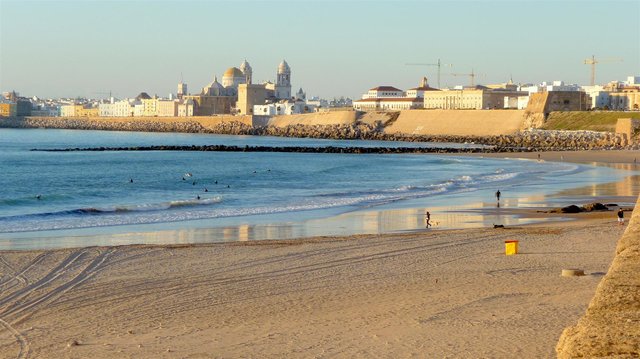
Playa Santa María del Mar is a compact urban cove of fine golden sand, about 650 metres long, tucked just south of Playa Victoria and reached via ramps and spiral staircases from the promenade. Two breakwaters hold the beach in a sheltered crescent, keeping the water calmer than the open Atlantic and shaping small, reliable waves that draw bodyboarders. Its smaller scale makes it feel intimate and easy to navigate, especially for families watching kids in the shallows. Facilities are simple—basic toilets and a couple of chiringuitos for drinks and snacks—so the focus stays on sand, sea, and the view from above. At sunset, the curved shoreline and breakwaters catch warm light that’s made for photos.
Location: Calle Guadix, 1E, 11008 Cádiz, Spain | Hours: 24 Hours | Price: Free | Distance: 1.9km
Location: Calle Guadix, 1E, 11008 Cádiz, Spain | Hours: 24 Hours | Price: Free | Distance: 1.9km
25. Playa de la Victoria

CC BY-SA 3.0 / Pablo Jones (Peejayem)
Playa de la Victoria is Cádiz’s long urban beach on the Atlantic-facing west side of the city, where modern seaside life replaces the old-town feel. Nearly 3 km of pale sand runs alongside the Paseo Marítimo, a busy promenade lined with cafés, bars, and hotels, so the beach never feels isolated from the city. It regularly holds Blue Flag status, and the practical comforts are obvious on arrival: showers, toilets, seasonal lifeguards, and rentals like parasols and pedal boats. Despite its popularity, the sheer length leaves space to spread out, with marked areas for games such as football and volleyball. Time your visit for sunset, when the light turns the shoreline golden and the tide can creep surprisingly far up the sand.
26. Playa de la Cortadura

CC BY-SA 2.0 / Ccarlos de celis
Playa de la Cortadura is a long Atlantic beach just south of Cádiz, where fine sand meets a broad belt of wind-shaped dunes that makes it feel noticeably wilder than the city’s more built-up shores. Wooden walkways cross the dune system to open viewpoints, then drop you onto wide, open sand with room to spread out even on busy days. The water and beach are regularly Blue Flag–rated, and the surf is often livelier here, drawing swimmers and wave-watchers. Despite the nearby dual carriageway, the dunes buffer the noise and create a real sense of space, especially at sunset when the sand turns golden.
Best Day Trips from Cádiz
A day trip from Cádiz offers the perfect opportunity to escape the urban rhythm and discover the surrounding region's charm. Whether you're drawn to scenic countryside, historic villages, or cultural landmarks, the area around Cádiz provides a variety of easy-to-reach destinations ideal for a one-day itinerary. If you are looking to rent a car in Spain I recommend having a look at Discover Cars, first, as they compare prices and review multiple car rental agencies for you.
1. Playa del Chato
Wikiloc / carlos.saemba
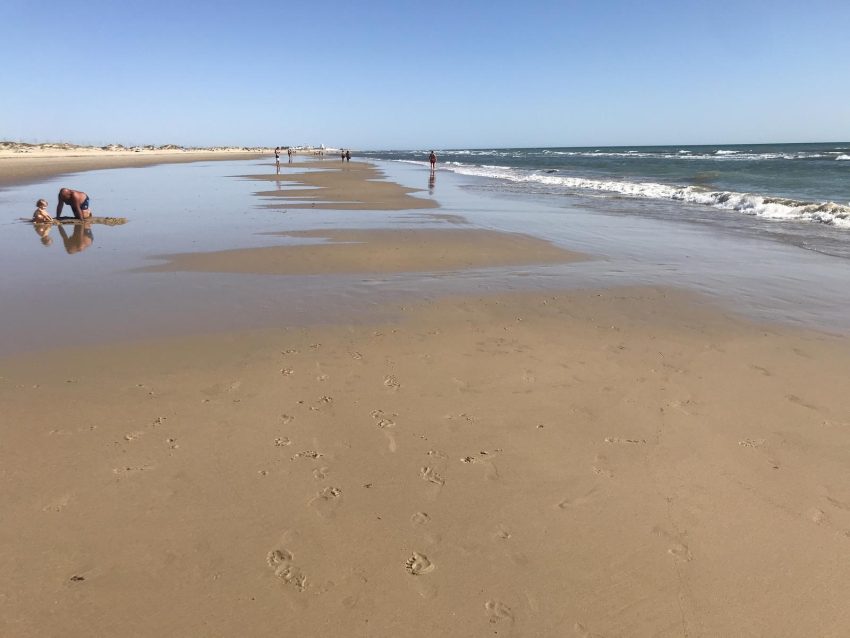
Playa del Chato in Cádiz, Spain, is a broad Atlantic beach on the narrow strip of land between Cádiz City and San Fernando. It sits just off the main coastal road, with golden dunes separating the sand from traffic and giving the beach a more open, undeveloped feel than the urban beaches to the north. The shoreline is wide enough…
Visiting Playa del Chato
Visiting Playa del Chato
2. Castle of San Marcos
© El Puerto Info
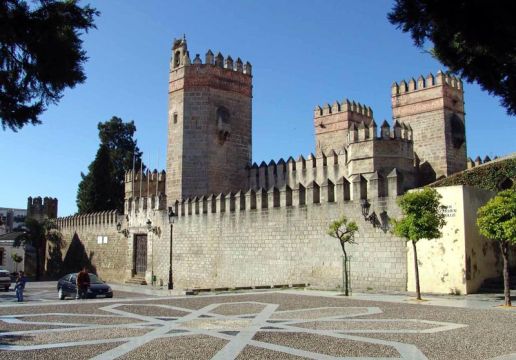
Castle of San Marcos is in the historic centre of El Puerto de Santa María, Cádiz, and is a fortified monument that mixes religious and military architecture. It stands beside the old town streets and near the river, making it easy to reach on foot once you are in the centre.What sets the castle apart is the way its mosque…
Location: Plaza Alfonso X el Sabio, 3, 11500 El Puerto de Sta María, Cádiz, Spain | Hours: Tours hourly 11.30am-1.30pm Tue, 10.30am-1.30pm Wed-Sat, closed Wed & Fri Nov-Apr | Price: €8, Tue free | Website | Distance: 9.6km
Visiting Castle of San Marcos
Location: Plaza Alfonso X el Sabio, 3, 11500 El Puerto de Sta María, Cádiz, Spain | Hours: Tours hourly 11.30am-1.30pm Tue, 10.30am-1.30pm Wed-Sat, closed Wed & Fri Nov-Apr | Price: €8, Tue free | Website | Distance: 9.6km
Visiting Castle of San Marcos
3. Chipiona
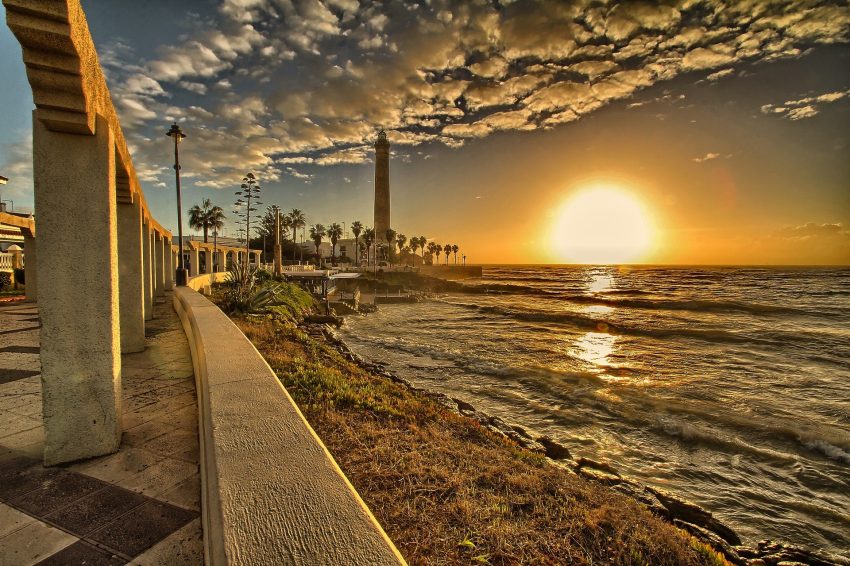
Chipiona, a charming coastal town along the Atlantic in Andalusia. It offers visitors a mix of stunning beaches, maritime culture, and relaxed Andalusian charm. The town’s Playa de Regla is its most famous beach, known for golden sands and calm waters, making it perfect for sunbathing and swimming. Its beachfront promenade, lined with cozy cafés and traditional seafood restaurants, provides…
Visiting Chipiona
Visiting Chipiona
4. Arcos de la Frontera
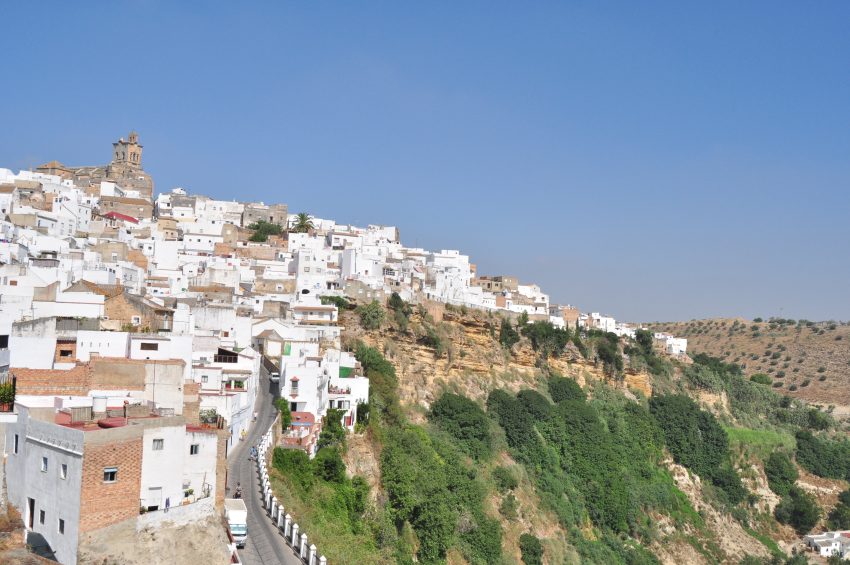
CC BY-SA 2.0 / Luis Rogelio HM
Nestled between countryside and mountains, this town showcases a blend of both landscapes and is intersected by two rivers, the Guadalete and the Majaceite. The Guadalete River feeds into the Bornos and Arcos Reservoirs, both declared Natural Beauty Spots due to their exemplary wetland environments. A portion of the town lies within the boundaries of Los Alcornocales Natural Park. Perched…
Visiting Arcos de la Frontera
Visiting Arcos de la Frontera
Powered by GetYourGuide
5. Algeciras
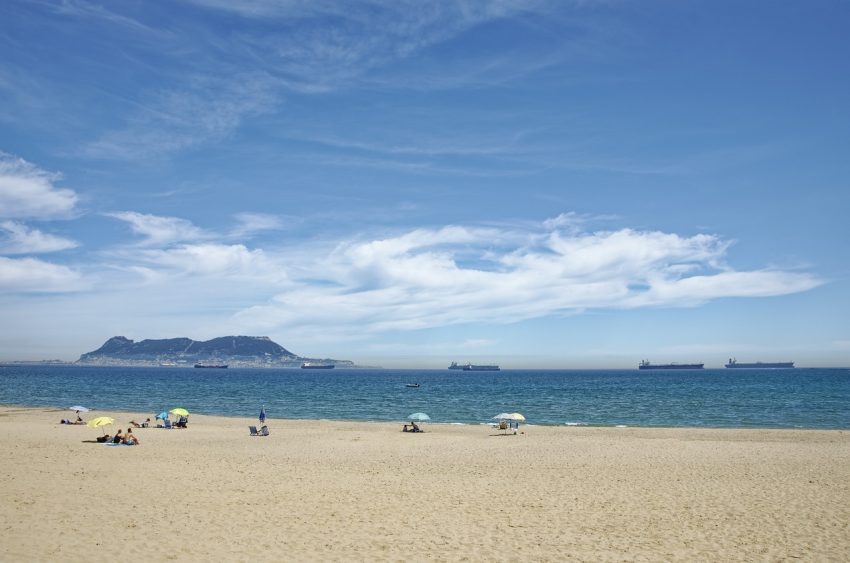
Algeciras, located on the southern coast of Andalusia, is a dynamic port city offering a blend of maritime charm and local culture. As one of Spain's busiest harbors, it serves as a gateway to North Africa, yet beneath its industrial façade, visitors can uncover vibrant markets, scenic seaside promenades, and authentic Andalusian hospitality. The city's coastal setting provides opportunities to…
Visiting Algeciras
Visiting Algeciras
Powered by GetYourGuide
6. Huelva
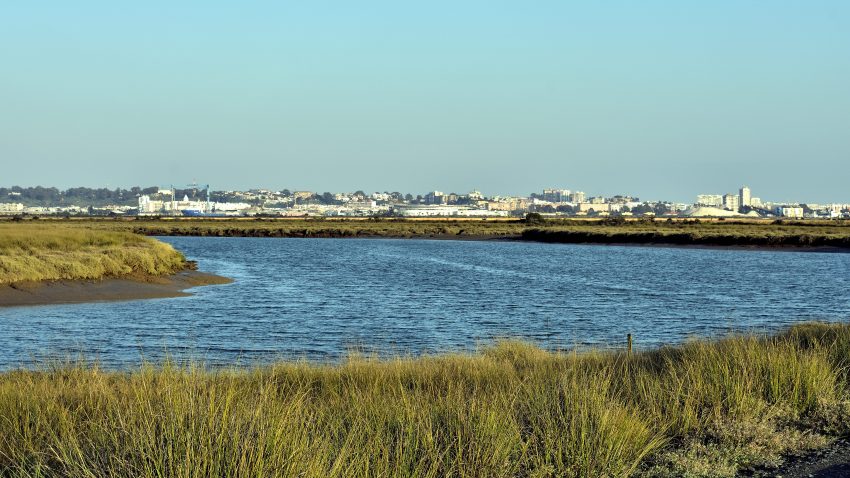
CC BY-SA 4.0 / FJavier GómezL
Visiting Huelva offers a relaxed and authentic Andalusian experience, perfect for travelers looking to escape the crowds while still enjoying rich culture, great food, and beautiful surroundings. Located in western Andalusia, near the Portuguese border and the Atlantic coast, Huelva blends urban charm with natural beauty. The city is compact and easy to explore on foot, with shaded plazas, inviting…
Visiting Huelva
Visiting Huelva
Powered by GetYourGuide
7. Seville
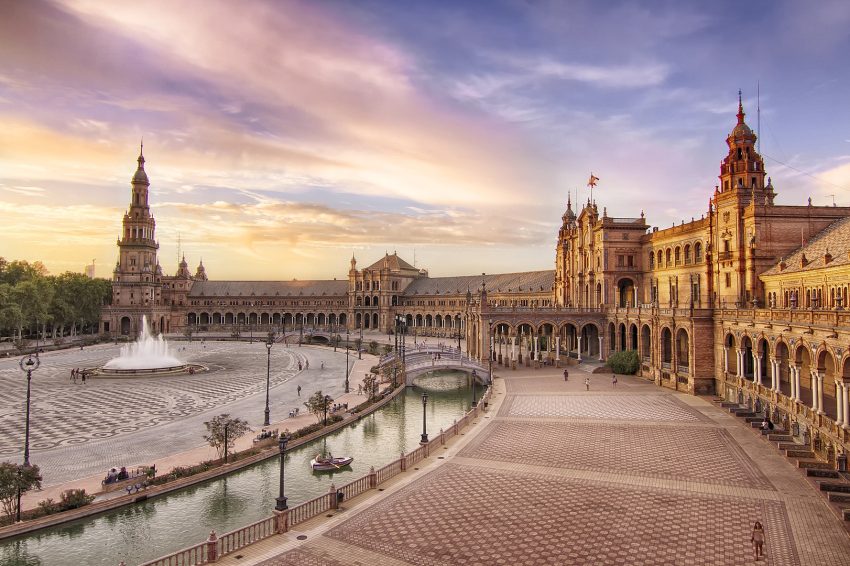
CC BY-SA 3.0 / Francisco Colinet
Seville is a city that captivates visitors with its vibrant atmosphere, stunning architecture, and rich cultural experiences. Whether you're wandering through the narrow streets of Barrio Santa Cruz, admiring the colorful tiles of Plaza de España, or indulging in authentic tapas, every corner of Seville offers something special. The city’s warm climate and lively energy make it an ideal destination…
Visiting Seville
Visiting Seville
Powered by GetYourGuide
8. Ronda

Flickr / Jose Ramirez
Ronda sits high in the hills of Spain’s Andalusia region, in the province of Málaga, and feels a world away from the busy Costa del Sol. Perched dramatically above the El Tajo gorge, it offers sweeping views of rugged countryside, distant mountains, and the whitewashed villages scattered across the Serranía de Ronda. It’s an easy city to navigate on foot,…
Visiting Ronda
Visiting Ronda
Powered by GetYourGuide
9. Ciudad de Ceuta
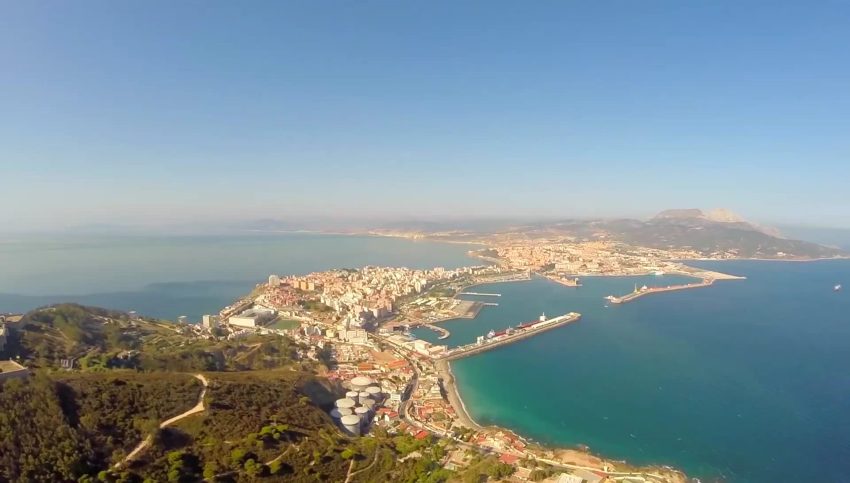
CC BY-SA 3.0 / JJ Producciones
Ceuta, a Spanish autonomous city spanning 18.5 km², is situated on the northern coast of Africa. It is separated from the Cadiz province on the Spanish mainland by the 14 km-wide Strait of Gibraltar and shares a 6.4 km land border with Morocco's M'diq-Fnideq Prefecture. Positioned at the meeting point of the Mediterranean Sea and the Atlantic Ocean, Ceuta is…
Visiting Ciudad de Ceuta
Visiting Ciudad de Ceuta
Powered by GetYourGuide
10. Marbella
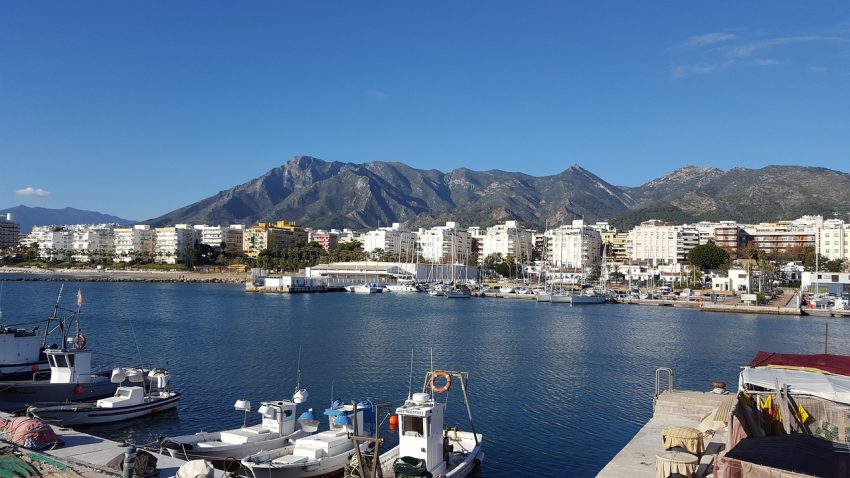
Marbella is a city and municipality in southern Spain, located in the province of Málaga within the autonomous community of Andalusia. Situated on the Costa del Sol, Marbella serves as the headquarters of the Association of Municipalities of the region and is the head of its judicial district. Visiting Marbella offers a mix of laid-back beach life, upscale glamour, and…
Visiting Marbella
Visiting Marbella
Powered by GetYourGuide
11. Faro
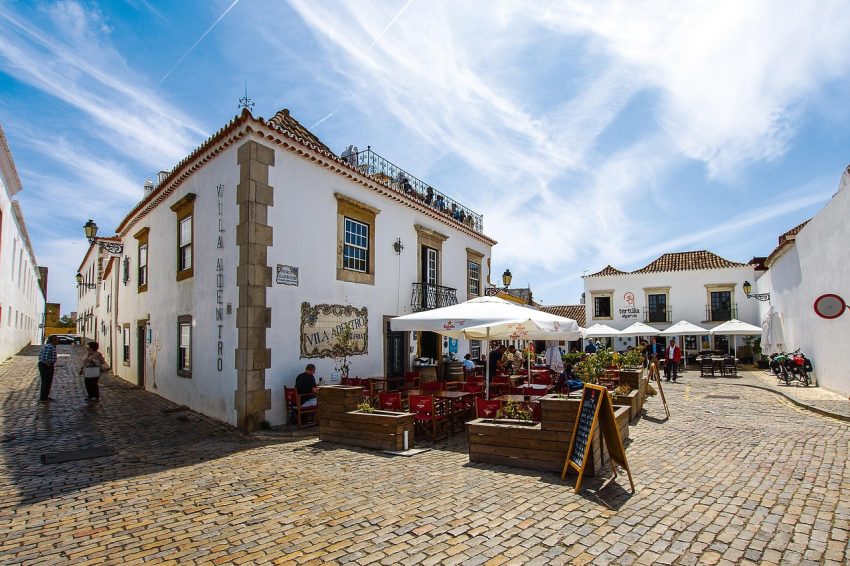
Faro, located in the Algarve region of southern Portugal, is a charming city that offers a perfect blend of coastal beauty and relaxed urban life. As the capital of the Algarve, it serves as a great starting point for exploring the region, with easy access to nearby beaches, nature reserves, and traditional villages. The city's laid-back vibe and warm climate…
Visiting Faro
Visiting Faro
Powered by GetYourGuide
Where to Stay in Cádiz
For first-time visitors, the Old Town (Casco Antiguo) is an excellent choice. This historic area is characterized by narrow, winding streets, whitewashed buildings, and a rich cultural heritage. Staying here places you within walking distance of major attractions like the Cádiz Cathedral and the Roman Theatre. A recommended hotel in this area is Hotel Casa de las Cuatro Torres, offering a unique experience with its 18th-century architecture and elegant rooms.
If you’re interested in experiencing Cádiz’s vibrant nightlife and authentic local atmosphere, consider staying in the La Viña neighborhood. This area is known for its lively tapas bars, flamenco venues, and proximity to La Caleta Beach. A notable hotel here is Hotel La Catedral, which combines contemporary comfort with historical elegance.
For a more tranquil and picturesque setting, the Santa María neighborhood offers a peaceful retreat. Known for its beautiful courtyards and traditional Andalusian houses, it’s a great place to relax and enjoy the local culture. A suitable accommodation option in this area is Hotel Boutique Convento Cádiz, providing a cozy atmosphere with personalized service.
Using the our Hotel and Accomodation map, you can compare hotels and short-term rental accommodations in Cádiz. Simply insert your travel dates and group size, and you’ll see the best deals for your stay.
Cádiz Accommodation Map
Best Time to Visit Cádiz
The best time to visit Cádiz, Spain, depends on your preferences for weather, crowd levels, and activities. Here’s a breakdown of the seasons:
- Spring (March to May): Spring is a delightful time to visit Cádiz, with mild temperatures and blooming flowers adding to the city’s charm. The weather is comfortably warm, making it ideal for exploring outdoor attractions such as the historic city center, the Cathedral of Cádiz, and the picturesque La Caleta beach. Additionally, spring sees fewer tourists compared to the peak summer months, allowing you to enjoy the city’s attractions without the crowds.
- Summer (June to August): Summer is the peak tourist season in Cádiz, with hot temperatures and bustling beaches. This is the best time to visit if you’re looking to soak up the sun, swim in the Atlantic Ocean, and experience the vibrant atmosphere of the city’s streets and plazas. However, be prepared for higher temperatures, crowded beaches, and higher prices for accommodation and activities during this time.
- Autumn (September to November): Autumn is another excellent time to visit Cádiz, with warm temperatures and fewer crowds compared to the summer months. The weather remains pleasant, allowing you to continue enjoying outdoor activities such as sightseeing, exploring the city’s parks and gardens, and sampling local cuisine at outdoor cafes and restaurants. Additionally, autumn sees cultural events and festivals taking place, providing opportunities to experience the local culture and traditions.
- Winter (December to February): Winter is the quietest time to visit Cádiz, with cooler temperatures and occasional rainfall. While the weather may not be ideal for beach activities, you can still explore the city’s cultural attractions, museums, and historic sites without the crowds. Plus, winter offers opportunities to enjoy seasonal events such as Christmas markets and festive celebrations.
Ultimately, the best time to visit Cádiz depends on your preferences and what you hope to experience during your trip. Whether you prefer the vibrant atmosphere of summer, the mild temperatures of spring and autumn, or the quieter ambiance of winter, Cádiz offers something for every traveler throughout the year.
Annual Weather Overview
- January 16°C 64°F
- February 17°C 67°F
- March 18°C 68°F
- April 23°C 77°F
- May 25°C 80°F
- June 28°C 86°F
- July 31°C 92°F
- August 30°C 90°F
- September 27°C 85°F
- October 25°C 81°F
- November 20°C 71°F
- December 17°C 67°F
How to get to Cádiz
By Air: The nearest major airport to Cádiz is Jerez Airport, located about 45 kilometers north of the city. It handles both domestic and international flights, though options are more limited compared to larger Spanish airports. Alternatively, travelers can fly into Seville or Malaga airports, which offer a wider range of international connections. From these airports, Cádiz can be reached by train, bus, or car.
By Train: Cádiz is well-connected by rail, with frequent services from major Spanish cities like Madrid, Seville, and Barcelona. The train from Madrid to Cádiz takes about 4 hours, providing a scenic and comfortable journey. Cádiz's train station is centrally located, making it convenient for visitors to start exploring the city right away.
By Bus: Buses to Cádiz from other parts of Spain are frequent and cost-effective, especially from nearby cities like Seville. The bus station in Cádiz is close to the city center, providing easy access to major attractions.
By Car: Driving to Cádiz offers the most flexibility, especially for those planning to explore the broader Andalusia region. The city is connected by major motorways and well-marked roads, making it accessible from any direction. If you are looking to rent a car in Spain I recommend having a look at Discover Cars, first, as they compare prices and review multiple car rental agencies for you.