Self-Guided Walking Tour of Barcelona’s Gothic Quarter (2026)
This website uses affiliate links which earn a small commission at no additional cost to you.
Barcelona's Gothic Quarter is one of those places where the city's history feels close enough to touch: Roman stonework, medieval lanes, and grand civic buildings packed into a compact, walkable grid. A self-guided route works particularly well here because you can move at your own pace, detour into quieter alleys when crowds build, and linger where the atmosphere hits hardest. If you're looking for the best things to see in Barcelona's Gothic Quarter, this walk strings together the essentials without feeling like a checklist.
You'll start with the big landmarks that define the neighborhood's skyline and identity, including Catedral de Barcelona and Plaça Nova, then quickly slip into smaller, more characterful corners like Casa de l'Ardiaca and the Museu Frederic Mares. From there, the route naturally leads you into the heart of medieval power and ceremony at Palau del Lloctinent, Plaça del Rei, and the Capella Reial de Santa Àgata, where the setting does a lot of the storytelling even before you read a single plaque.
As you continue, you'll pass through the squares that locals still use as meeting points-Plaça Sant Just, Plaça de Sant Jaume, and the quietly affecting Plaça de Sant Felip Neri-before rounding out the walk with layers of older Barcelona at the Temple d'August (MUHBA) and the photogenic Pont del Bisbe near the Palau de la Generalitat. The final stretch softens into classic neighborhood life around the Basilica de Santa Maria del Pi and Plaça de Sant Josep Oriol, a satisfying finish that feels less like an “end point” and more like an invitation to keep wandering.
Table of Contents
- How to Get to Barcelona’s Gothic Quarter
- Where to Stay in Barcelona for This Gothic Quarter Walking Tour
- History of Barcelona’s Gothic Quarter
- Barcelona’s Gothic Quarter in Roman Barcino
- Barcelona’s Gothic Quarter in the Early Medieval City
- Barcelona’s Gothic Quarter in the High Gothic Boom
- Barcelona’s Gothic Quarter as a Political and Religious Centre
- Barcelona’s Gothic Quarter through Reform, Change, and Reinterpretation
- Barcelona’s Gothic Quarter in the 20th Century
- Your Self-Guided Walking Tour of Barcelona’s Gothic Quarter
- Catedral de Barcelona
- Casa de l’Ardiaca
- Plaça Nova
- COAC
- Plaça de Sant Josep Oriol
- Basilica de Santa Maria del Pi
- Plaça de Sant Felip Neri
- Pont del Bisbe
- Temple d’August
- Palau de la Generalitat
- Plaça de Sant Jaume
- Plaça Sant Just
- Barcelona Roman Walls
- Plaça del Rei
- Capella Reial de Santa Agata
- Palau del Lloctinent
- Museu Frederic Mares
How to Get to Barcelona’s Gothic Quarter
By Air: If you're flying into Barcelona-El Prat Airport (BCN), the simplest approach is to get into the city centre first, then continue on foot or by metro to the Gothic Quarter. The Aerobús runs frequently to Plaça de Catalunya, which is an easy walking gateway into the neighbourhood; alternatively, the metro (L9 Sud connecting into other lines) can work well if you're staying near a convenient interchange. Taxis and rideshares are straightforward too, but expect slower progress at peak times. Once you're close, aim for Plaça de Catalunya, Jaume I (Metro L4), or Liceu (Metro L3) and walk the last stretch, since many streets inside the Quarter are pedestrianised or restricted. For the best deals and a seamless booking experience, check out these flights to Barcelona on Booking.com.
By Train: Barcelona Sants is the main long-distance rail hub, with most high-speed and intercity services arriving here, while Passeig de Gràcia also receives some regional services and can be handy depending on where you're coming from. From Sants, take the metro (L3) toward Liceu/Drassanes for an easy approach to the southern side, or connect toward Jaume I (L4) for the central lanes and plazas. From Passeig de Gràcia, you can either walk down through the city centre or hop on the metro to shorten the distance. If you're arriving by regional train into Estació de França, you're already very close-walking into the Gothic Quarter from there is quick and scenic. Train schedules and bookings can be found on Omio.
By Car: Driving into the Gothic Quarter itself is rarely practical because of narrow streets, restricted access, and limited parking, so treat your car as a way to reach the edge of the old city rather than the interior. Your best strategy is to park in a paid garage near the perimeter-around Plaça de Catalunya, Via Laietana, or the Port Vell area-then walk in. If you're using navigation, set your destination to a specific parking garage rather than a landmark inside the Quarter to avoid getting routed into restricted lanes. Also factor in congestion and the possibility of low-emission zone rules, which can affect some vehicles. If you are looking to rent a car in Spain I recommend having a look at Discover Cars, first, as they compare prices and review multiple car rental agencies for you.
By Bus: If you’re arriving by long-distance coach, most services terminate at Estació del Nord. From there, you can walk in around 20-30 minutes, or take the metro (Arc de Triomf on L1, then connect toward Jaume I/Liceu depending on where you want to start). City buses also skirt the edges of the old town, but the final approach is usually easiest on foot once you’re close, since the Gothic Quarter’s best streets aren’t designed for through-traffic.
Where to Stay in Barcelona for This Gothic Quarter Walking Tour
To make the most of visiting Barcelona's Gothic Quarter and this walking tour, you should consider staying overnight in the centre. The most “walk-out-the-door-and-you're-on-the-route” option is to stay inside the Gothic Quarter itself, where early mornings and evenings feel noticeably calmer than midday. Good picks here include Hotel Neri - Relais & Châteaux, Kimpton Vividora Hotel, Catalonia Catedral, and H10 Madison-all of which keep you close to the Cathedral/Plaça Nova end of the Quarter, so you can start before the lanes get busy.
If you want the same central access but with a slightly more open feel (and often easier taxi drop-offs), look at El Born / Sant Pere / Santa Caterina i la Ribera, directly bordering the Gothic Quarter. This is ideal if you like boutiques, tapas bars, and a neighbourhood vibe after the walk, while still being 5-15 minutes on foot from stops like Plaça del Rei, MUHBA, and Pont del Bisbe. Consider The Barcelona EDITION for a high-end base, Hotel REC Barcelona for a modern adults-only option, and Ohla Barcelona if you want a luxury stay right on the old-town edge with quick access into both the Quarter and the waterfront side.
For maximum transport convenience (airport bus, metro links, and straightforward arrivals/departures), staying around Plaça de Catalunya and the central Eixample edge is the most practical. You'll be able to walk into the Gothic Quarter in roughly 10-20 minutes depending on where you enter, and it's a strong choice if you're fitting the walk between day trips or train connections. Options that work well here include Olivia Plaza Hotel for a prime “doorstep of the centre” location, Hotel Jazz for a reliable, walkable base near the main hub, and Casa Bonay if you prefer a design-forward stay that’s still very well connected.
If you’d rather stay a little outside the tight old-town lanes (more space, often better value) but still be well-placed for this route, upper Eixample is a smart compromise-fast metro access into the centre, plus calmer streets at night. Two solid choices are Hotel Praktik Bakery (excellent for a casual, central base near Passeig de Gràcia) and Sir Victor Hotel (a higher-end option with a strong location for combining your Gothic Quarter walk with Modernista sights).
History of Barcelona’s Gothic Quarter
Barcelona’s Gothic Quarter in Roman Barcino (1st-4th centuries)
The oldest layer of Barcelona's Gothic Quarter is Roman, when the city was laid out with a tight street grid and monumental civic spaces. One of the clearest survivals is the Temple of Augustus, whose columns are a direct reminder that this quarter once revolved around a Roman forum and imperial cult architecture. Even today, the way streets pinch and open can feel like you're moving through a city built on earlier foundations rather than a clean-slate medieval plan.
This Roman inheritance also helps explain why later power centres clustered where they did. The area around Plaça de Sant Jaume (St. James’s Square) reflects the long continuity of civic life, with public authority repeatedly re-anchoring itself to the same core ground as the city transitioned from Roman rule into medieval governance.
Barcelona’s Gothic Quarter in the Early Medieval City (5th-11th centuries)
After Rome, the quarter evolved through centuries of adaptation: buildings reused older stonework, lanes shifted, and religious institutions began to shape the neighbourhood's identity. Over time, the cathedral precinct became a major organising force, setting the stage for the later grandeur of Catedral de Barcelona. Spaces like Plaça Nova make sense in this context as threshold places-edges between sacred precincts, daily commerce, and the flow of people into the heart of the old city.
Traces of this period are often more about pattern than single monuments: the clustering of church-related buildings and the persistence of certain pathways. Sites such as Plaça Sant Just reflect how parish life and small civic gathering points grew up alongside larger ecclesiastical authority.
Barcelona’s Gothic Quarter in the High Gothic Boom (12th-15th centuries)
The quarter's defining look is largely a product of the medieval expansion when Barcelona's wealth, institutions, and artistic ambitions intensified. Catedral de Barcelona became a statement project across generations, rising into the skyline as both a religious centre and a symbol of civic pride. Nearby, Casa de l'Ardiaca speaks to the administrative world wrapped around the cathedral-church power expressed not only through worship spaces but through offices, residences, and courtyards that managed the city's spiritual and social order.
This era also created the quarter's most atmospheric ensemble of power: Plaça del Rei, framed by institutions tied to governance and ceremony. Palau del Lloctinent and the Capella Reial de Santa Agata embody how authority was performed-through grand halls, formal architecture, and religious patronage-turning the square into a stage set for the city's public life.
Barcelona’s Gothic Quarter as a Political and Religious Centre (15th-17th centuries)
As Barcelona moved into a more complex early modern world, the Gothic Quarter remained the centre of administration, legal culture, and institutional continuity. The Palau de la Generalitat reinforced the area's role as a seat of government, and Plaça de Sant Jaume continued to function as a focal point for civic identity-less about medieval growth now, more about maintaining authority through established buildings and rituals.
Religious life also deepened in visible ways. The Basilica de Santa Maria del Pi is a powerful counterpoint to the cathedral precinct: another major church anchoring local life, devotion, and community status. Nearby squares such as Plaça de Sant Josep Oriol feel like the everyday face of that world-public space shaped by parish rhythms, artisans, and small-scale urban interactions.
Barcelona’s Gothic Quarter through Reform, Change, and Reinterpretation (18th-19th centuries)
The Gothic Quarter didn't freeze in time; it absorbed reforms, shifting social realities, and changing tastes. Many buildings were altered internally, repurposed, or adjusted to new urban needs, while the quarter's narrow fabric remained stubbornly intact. Over time, the area's medieval character began to be treated not just as old infrastructure but as heritage-something to be highlighted, curated, and sometimes reshaped to match a desired image of “historic Barcelona.”
This is also where museum culture becomes part of the story. The Museu Frederic Mares, connected to the cathedral complex, reflects a later impulse to collect, preserve, and interpret the city’s artistic and devotional past-turning the quarter into not just a living neighbourhood, but a place where history is actively displayed and explained.
Barcelona’s Gothic Quarter in the 20th Century (Restoration, Memory, and Loss)
The 20th century added a highly visible layer of “Gothic” identity through selective restoration and historicist design. Pont del Bisbe is the clearest example: a dramatic visual link that feels medieval in mood, even though it reflects a later vision of what the quarter should look like. That kind of intervention helped crystallise the Gothic Quarter as a coherent historic brand-picturesque, theatrical, and instantly recognisable.
At the same time, the quarter carries darker, more fragile memories. Plaça de Sant Felip Neri is often experienced as quiet and contemplative today, but it also holds the weight of 20th-century trauma and the way cities memorialise loss in everyday spaces. Together with long-standing civic nodes like Plaça de Sant Jaume and institutional anchors like the Palau de la Generalitat it shows how the quarter's history is not only medieval-it is continuously rewritten by politics, conflict, restoration, and remembrance.
Your Self-Guided Walking Tour of Barcelona’s Gothic Quarter
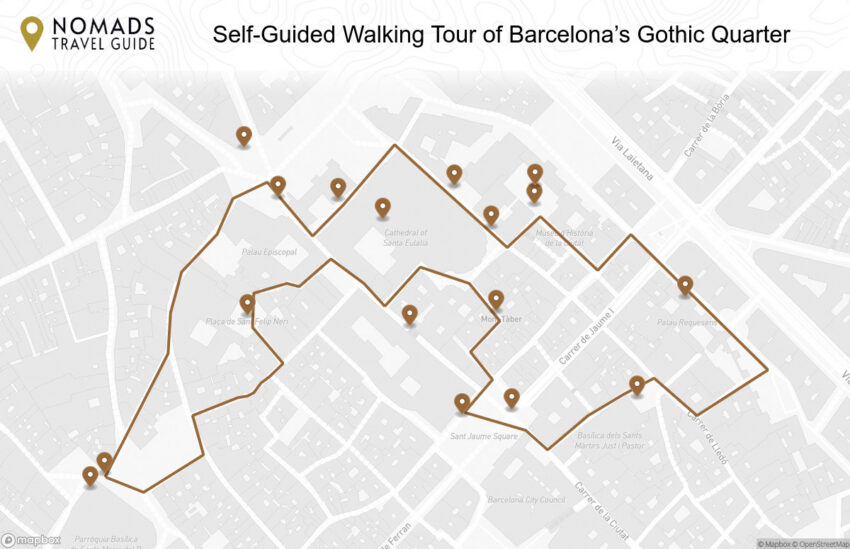
Discover Barcelona's Gothic Quarter on foot, with our walking tour map guiding you between each stop as you explore its medieval lanes, hidden squares, and landmark sights. Because this is a self-guided walking tour, you can set your own pace-skip any stops that don't interest you, linger where the atmosphere is best, and take coffee breaks whenever you feel like it.
1. Catedral de Barcelona
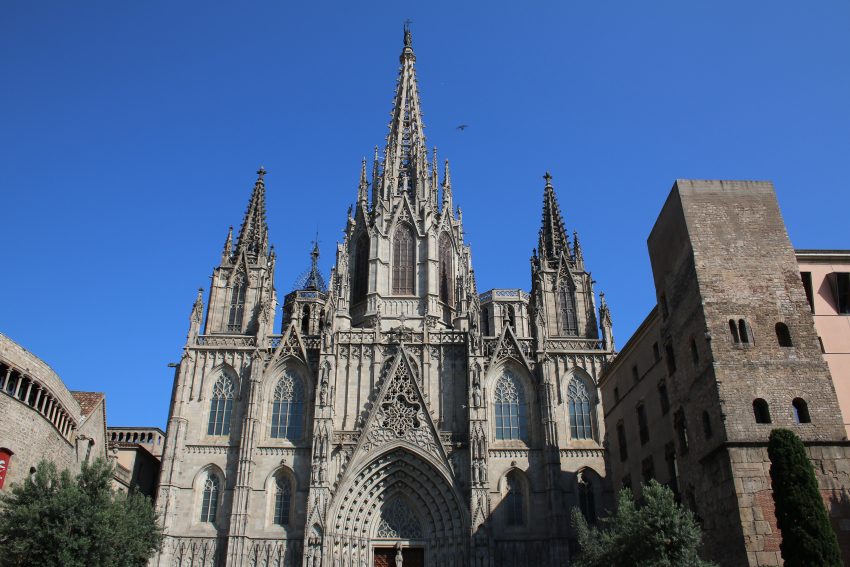
The cathedral’s roots reach back to early Christian Barcelona, but the building you see is mainly a Gothic project begun in the late 13th century and carried forward for centuries as the city’s religious and civic confidence grew. It sits on layers of earlier Roman and Visigothic history, and that “built-over-time” feeling is part of its character: the plan is high Gothic, while many details reflect later tastes and restorations.
Start outside by taking in the west façade and the way the cathedral anchors the surrounding lanes; the exterior reads like a stone ship rising from the Gothic Quarter. Inside, look up to appreciate the height and the ribbed vaulting, then slow down around the choir, where carving, stalls, and heraldic details reward close viewing.
Don’t miss the cloister, which is one of the most atmospheric spaces in the quarter: palm shade, fountains, and a quiet rhythm that contrasts with the streets outside. If access is open, climb up for rooftop views and a clearer sense of how the cathedral sits within the medieval street grid.
Location: Pcta. de la Seu, s/n, Ciutat Vella, 08002 Barcelona, Spain | Hours: Monday – Friday: 09:30–18:30. Saturday: 09:30–17:15. Sunday: 14:00–17:00. | Price: Adults: €16; Students (up to 25): €14; Groups: €8; Visitors with disability (from 33%): free. | Website


2. Casa de l’Ardiaca

This house began as a prestigious residence tied to the cathedral’s clerical administration, and it evolved through medieval and later periods into a layered complex that mirrors Barcelona’s habit of building new identity onto old fabric. It’s not just “a house” in the domestic sense; it’s a small institutional world, shaped by church power and the practical needs of governance.
Step into the courtyard if it’s open, because that’s where the building’s calm reveals itself. Look for the mix of Gothic structure with later decorative touches, and pay attention to how the inner space feels intentionally protected from the surrounding bustle—an architectural expression of authority and privacy.
One of the most memorable details is the playful letterbox set into the façade, a small modern intervention that sits against the weight of history and somehow works. It’s a good stop for noticing how Barcelona’s Gothic Quarter is never purely medieval: it’s a living collage, and Casa de l’Ardiaca shows that layering particularly well.
Location: Carrer de Santa Llúcia, 1, Ciutat Vella, 08002 Barcelona, Spain | Hours: Monday – Friday: 09:00–19:30. Saturday: 10:00–19:30. Sunday: Closed. | Price: Free. | Website
3. Plaça Nova

Plaça Nova marks a threshold: it’s where the Roman city once met the medieval city, and where modern Barcelona now funnels people into the Gothic Quarter. The square’s broadness is the clue—this is a place of passage, market life, and public announcements rather than a secluded medieval nook.
The most striking historic remnants are the Roman elements nearby, especially where pieces of the ancient wall and defensive structures appear almost casually beside later buildings. Use the openness of the square to orient yourself: from here, streets lead straight into the older maze, and you can feel the shift from wide civic space to tight medieval lanes in a few steps.
What to see is partly architectural, partly experiential: look for contrasts in stonework, the way the cathedral’s mass pulls the eye, and the changing light as the day moves. If there’s a market or book stall set-up, it’s a good place to pause and watch the quarter’s daily life, which has always been the real function of this gateway square.
Location: Plaça Nova, Ciutat Vella, 08002 Barcelona, Spain | Hours: 24 Hours | Price: Free. | Website
4. COAC
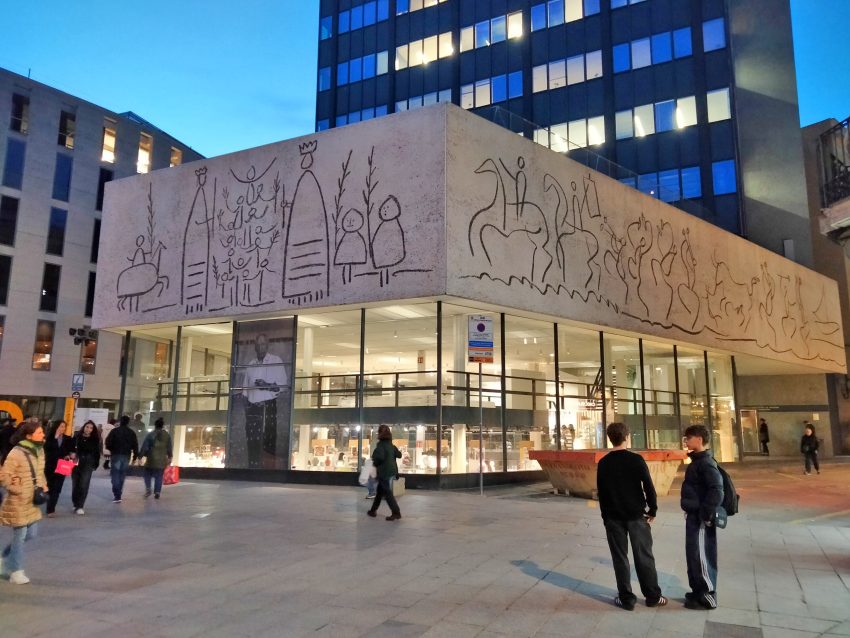
COAC occupies a prime position in Barcelona’s civic and cultural landscape and is closely associated with the city’s post-war architectural scene. The building is often discussed not just as an institutional headquarters for architects, but as a statement about modern identity in a historic urban setting—an effort to speak a contemporary architectural language while sitting among some of the city’s most symbolically charged streets and squares. Its history matters because it reflects the moment when modernism was reasserting itself in the public realm, with architecture positioned as a cultural force rather than mere construction.
The first thing to see is how the building presents itself to the street: pay attention to its façade composition, the rhythm of openings, and the way the structure frames views and movement around it. COAC is also known for prominent artistic interventions on its exterior—details that can be read as an attempt to fuse architecture, graphic expression, and public space into a single urban gesture. Whether you come for the architecture or the art, it’s a façade that benefits from stepping back, then moving in close to study textures, lines, and the relationship between solid and void.
Inside, the experience typically centers on its role as a professional and cultural venue rather than a single “must-see” object. If access aligns with your visit, look for exhibitions, lectures, or public programming that often make COAC feel like a working piece of the city rather than a static landmark. Even without going in, it’s worth using the stop as a lens on modern Barcelona: a place where you can compare how different eras—medieval, modernist, and modern—negotiate space, status, and visual presence in the same few blocks.
Location: Plaça Nova, 5, Ciutat Vella, 08002 Barcelona, Spain | Hours: Monday – Friday: 10:00–19:00. Saturday: 10:00–14:00. Closed on Sunday. | Price: Free. | Website
5. Plaça de Sant Josep Oriol
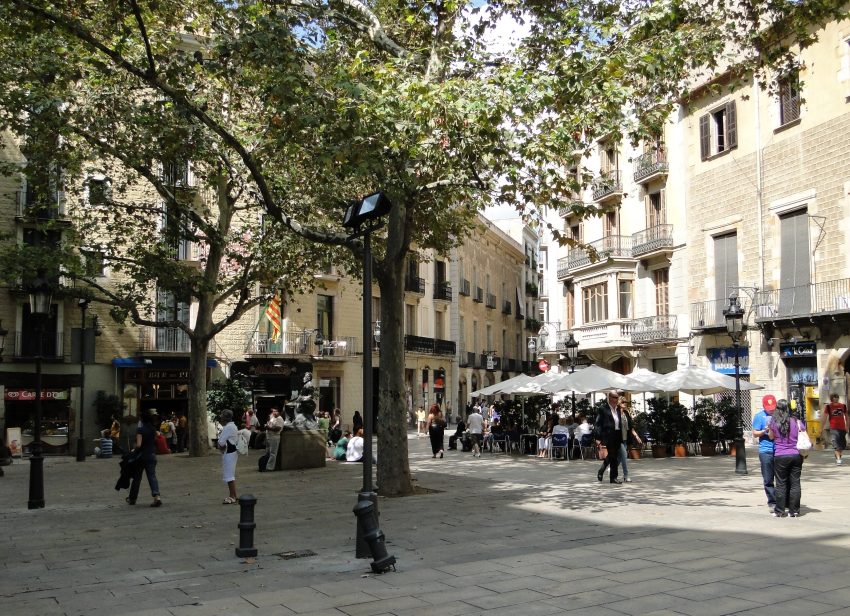
This square sits beside Santa Maria del Pi and feels like an extension of the church’s social life—a medieval-adjacent public room where daily activity gathers. Historically, these small squares were the practical spaces of the city: trade, conversation, and the slow negotiation of neighborhood routines.
The history here is less about a single monument and more about continuity of use. The surrounding buildings and cafés, the nearby church presence, and the steady flow of locals make it easy to imagine how the square has long served as a meeting point, even as the city around it changed.
What to see is the lived texture: street musicians, small markets when they appear, and the way the square frames views of the basilica and adjacent lanes. It’s also a good place to look back at the church from a different angle and appreciate how medieval architecture shapes the everyday choreography of the quarter.
Location: Plaça de Sant Josep Oriol, Ciutat Vella, 08002 Barcelona, Spain | Hours: 24 Hours | Price: Free. | Website
6. Basilica de Santa Maria del Pi
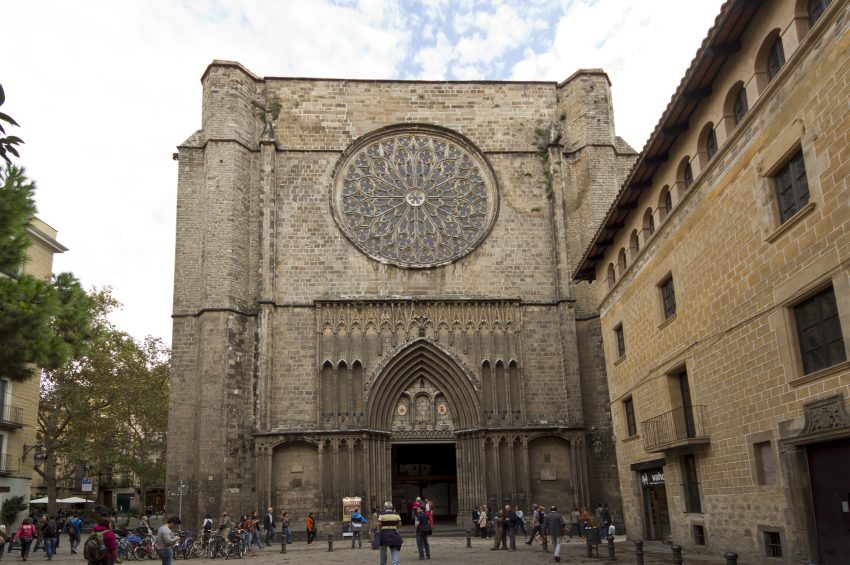
This church is a classic example of Catalan Gothic: broad, strong, and grounded, with an emphasis on clear volumes rather than excessive ornament. It developed as a major parish church for a thriving neighborhood, reflecting the urban confidence of medieval Barcelona beyond the cathedral’s orbit.
Inside, the space feels wide and cohesive, designed to hold a congregation and focus attention forward. Look for the scale of the nave, the sense of structural clarity, and the way light plays across stone. If stained glass is visible, it’s often the highlight, bringing color into an otherwise sober palette.
Outside, notice the robust façade and the relationship between the church and the surrounding streets, which tighten and then open into small squares. It’s a rewarding stop because it shows a different side of Gothic Barcelona: parish life, community identity, and architecture built for everyday worship rather than episcopal display.
Location: Plaça del Pi, 7, Ciutat Vella, 08002 Barcelona, Spain | Hours: Monday – Saturday: 10:00–20:00. Sunday: 13:00–20:00. Closed on January 6, May 12, December 25, December 26. | Price: General admission: €8; Reduced: €6; Children under 6: free. | Website
7. Plaça de Sant Felip Neri
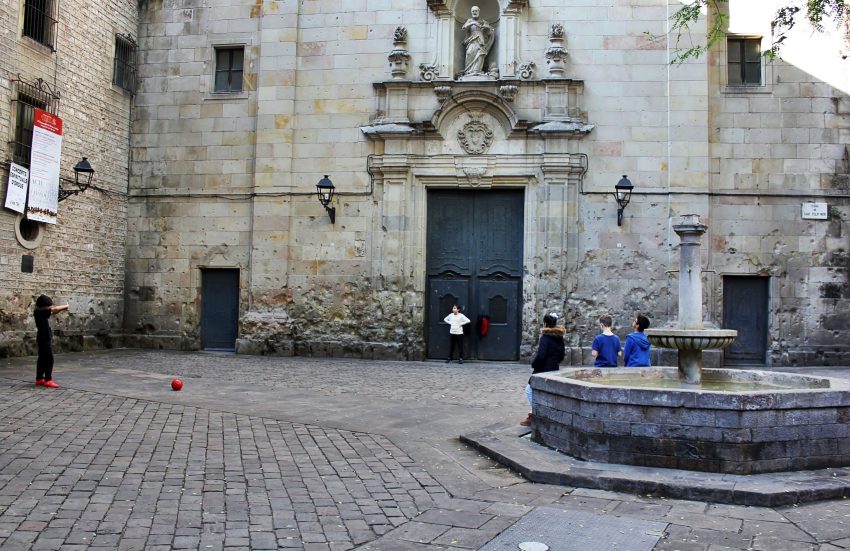
This square is small, quiet, and heavy with memory, shaped by religious life and the dense fabric of the old city. It’s the kind of place where the mood changes instantly when you step in—sound softens, movement slows, and the surrounding walls create a sheltered stillness.
The history most visitors feel here is tied to the traumas that marked the city in the 20th century, leaving traces that turn the square into a space of reflection rather than spectacle. It’s a reminder that “historic” doesn’t only mean medieval; it also means modern experiences that still sit close to the surface.
What to see is subtle: the church façade, the fountain, the worn stone, and the way the square holds silence even when the rest of the quarter is crowded. Treat it like a pause in your route—less about taking in information, more about letting the place communicate through atmosphere.
Location: Plaça de Sant Felip Neri, Ciutat Vella, 08002 Barcelona, Spain | Hours: 24 Hours | Price: Free | Website
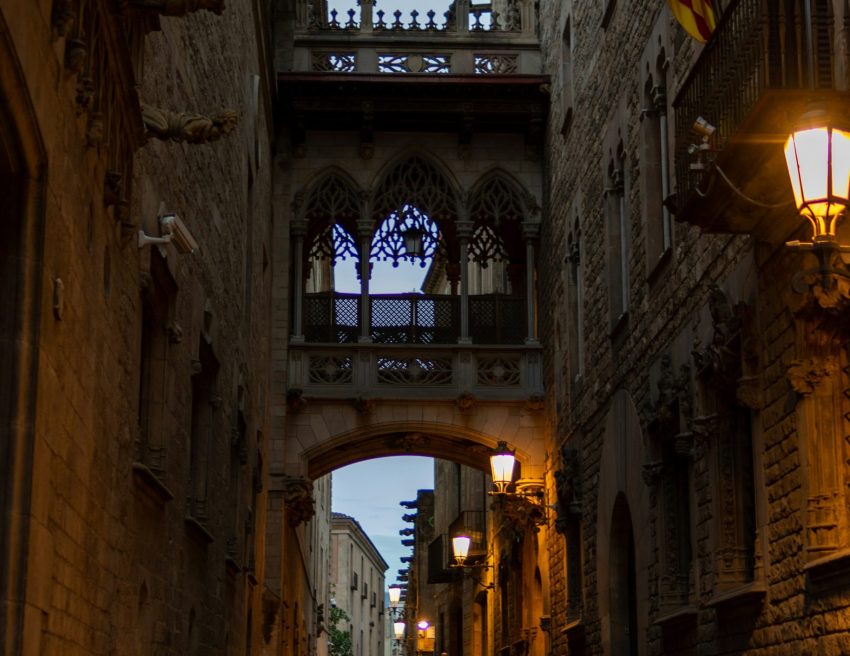
8. Pont del Bisbe
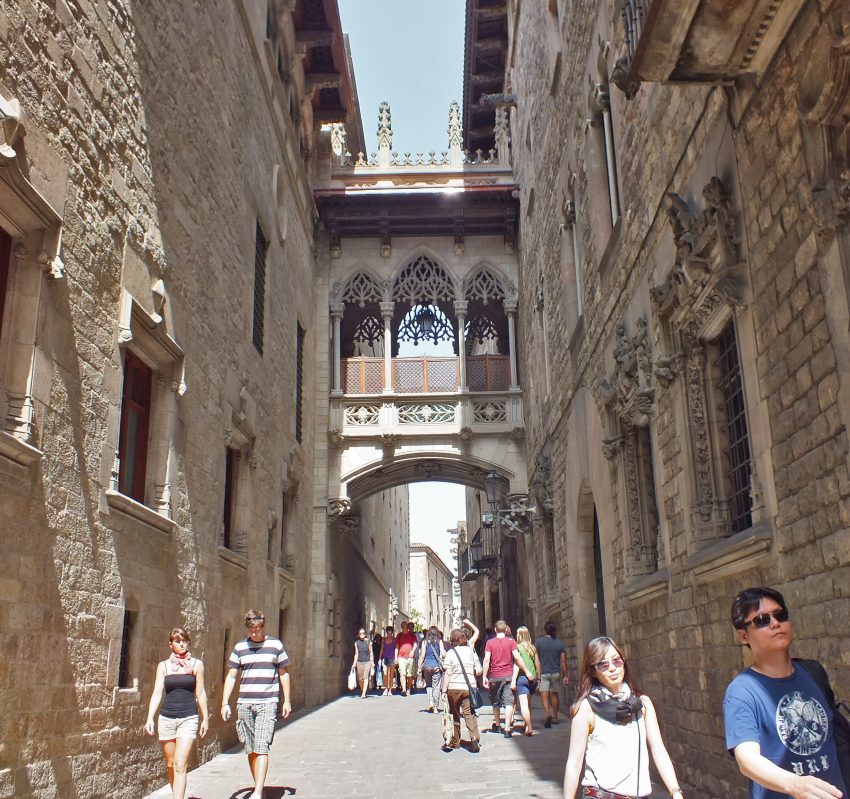
This bridge is one of the quarter’s most photographed sights, but its story is more complex than the “medieval” look suggests. It was built in a historicizing style to create a dramatic connection over the street, shaping the Gothic Quarter’s visual identity in a way that blends past and modern imagination.
That doesn’t make it less interesting—if anything, it’s a perfect case study in how cities curate themselves. Barcelona’s old center has been restored, reassembled, and sometimes redesigned to heighten atmosphere, and Pont del Bisbe is a deliberate piece of that theatrical urban experience.
What to see is the craftsmanship of the stonework and the way the arch frames the narrow street below. Try viewing it from both directions, then look beyond it to notice how the bridge acts like a camera frame, pulling your eye down the corridor of buildings and compressing the space into a cinematic scene.
Location: Carrer del Bisbe, Ciutat Vella, 08002 Barcelona, Spain | Hours: 24 Hours. | Price: Free.
9. Temple d’August
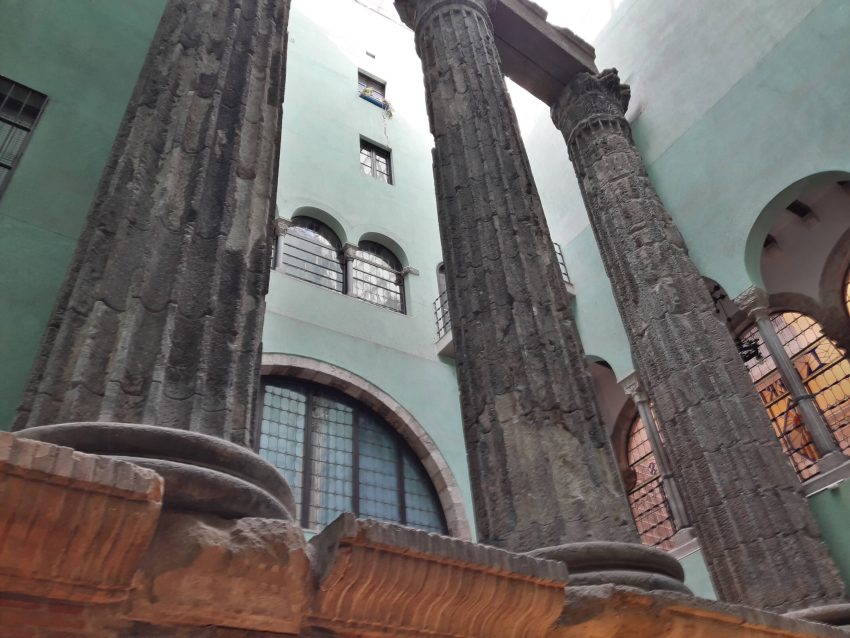
This is one of the most direct encounters with Roman Barcelona, a fragment that feels almost impossible because it survives in the middle of a medieval street pattern. The columns belong to a major temple from the Roman colony, hinting at a city that was once organized by classical order, monuments, and civic religion.
The history here is about survival through incorporation: Roman stone absorbed into later buildings, reappearing when excavations and preservation efforts made the ancient layers visible again. It’s a reminder that the Gothic Quarter isn’t only Gothic; it’s a palimpsest where older scripts keep showing through.
What to see is the scale and the material: stand close to the columns and look up, noticing how different Roman proportion feels from Gothic verticality. Then step back and note the setting—ancient architecture framed by later walls—because that contrast is the real spectacle.
Location: Carrer del Paradís, 10, Ciutat Vella, 08002 Barcelona, Spain | Hours: Monday: 10:00–14:00. Tuesday – Saturday: 10:00–19:00. Sunday: 10:00–20:00. Closed on 1 January; 1 May; 24 June; 25 December. | Price: Free. | Website
10. Palau de la Generalitat
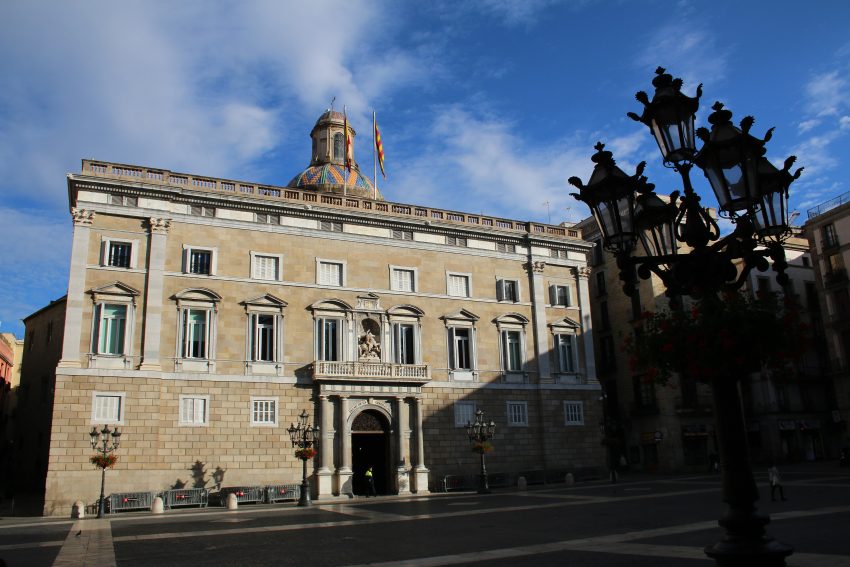
This palace represents the institutional history of Catalonia’s government, with roots that reach back to medieval administrative structures and a built form that has been expanded and refined over time. It’s not a single-era monument; it’s a statement of continuity, legitimacy, and regional identity expressed through architecture.
Look for the mixture of Gothic and Renaissance elements, which often show up in courtyards, windows, and decorative stonework. Even from the outside, the building reads as “official”: controlled massing, formal symmetry in key parts, and details designed to project authority.
What to see depends on access, but the façade and any visible inner spaces are worth lingering over because they embody governance as an aesthetic. This is one of those stops where the building’s function matters as much as its beauty—an architectural reminder that the Gothic Quarter was, and is, a seat of power.
Location: Pl. de Sant Jaume, 4, Ciutat Vella, 08002 Barcelona, Spain | Hours: Saturday: Check official website (free guided visits run on the second & fourth weekend of each month; except August). Sunday: Check official website (free guided visits run on the second & fourth weekend of each month; except August). Monday – Friday: Closed. Note: Additional open days may occur on Sant Jordi, the National Day of Catalonia, and during Christmas open days. | Price: Free (reservation required for guided visits when available). | Website
11. Plaça de Sant Jaume
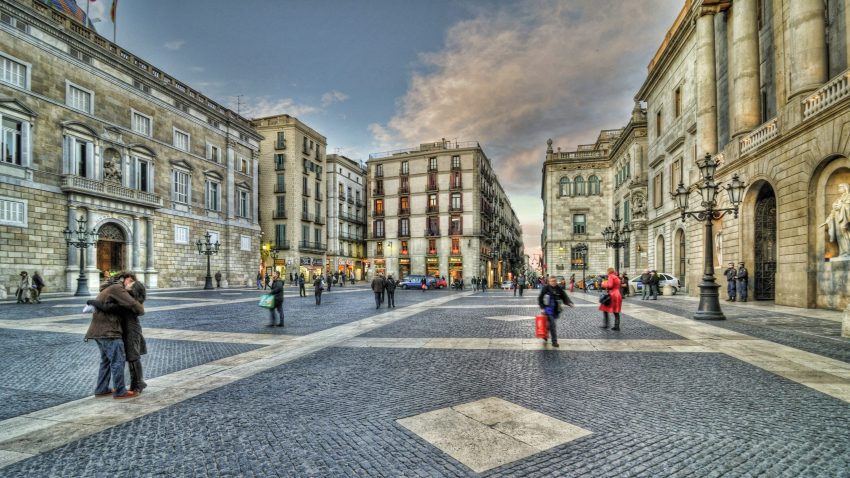
This is Barcelona’s political heart, layered on the footprint of the Roman forum and still serving as a civic center today. That continuity is the point: the square has long been a place where authority is performed in public, whether in imperial, medieval, or modern forms.
The square’s power comes from the face-off between major institutions, giving you an architectural conversation about governance. Even without stepping inside, you can read the space as a working civic room—formal, open, and designed for assemblies, ceremonies, and protests.
What to see is how the buildings address the square: symmetry, balconies, flags, and the subtle choreography of entrances. If you arrive when something is happening—an event, a public gathering, even a routine change of activity—you’ll understand why this square matters more than its size suggests.
Location: Pl. de Sant Jaume, Ciutat Vella, 08002 Barcelona, Spain | Hours: 24 Hours | Price: Daily
12. Plaça Sant Just
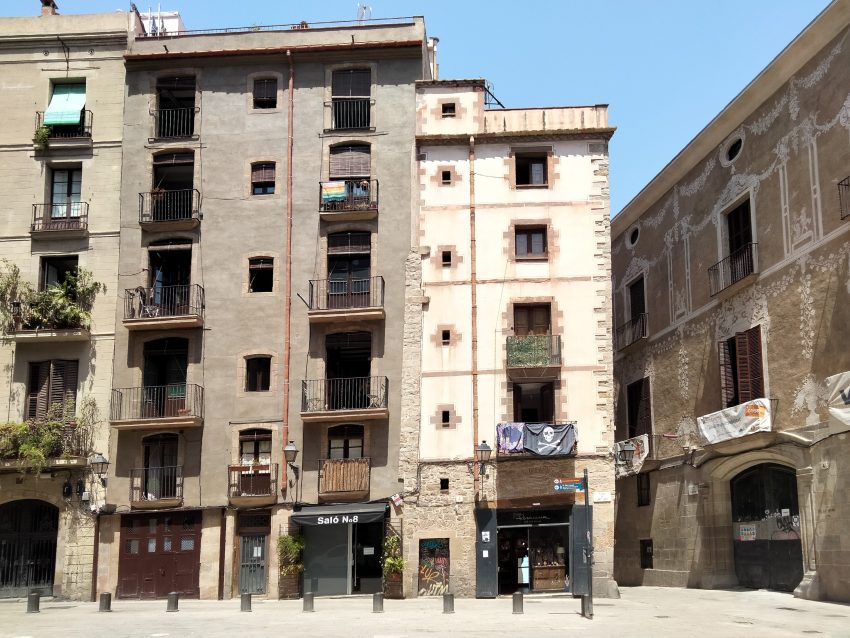
This square has the feel of a local pocket within the broader tourist flow—small enough to be intimate, old enough to feel settled, and still genuinely used by people who live and work nearby. It’s associated with one of the quarter’s older church sites, and the space around it reads like a medieval neighborhood center.
Historically, squares like this were where community life unfolded: meetings after services, informal trade, news exchange, and the steady social choreography of a dense city. The architecture around the edges tends to be varied, showing how centuries of rebuilding and adaptation can still preserve a coherent “old Barcelona” mood.
What to see is the atmosphere and the details: façades, doorways, and the way the square holds shade. It’s also a good place to listen—footsteps, voices, the softer soundscape that survives when streets narrow and buildings draw close.
Location: Plaça de Sant Just, Ciutat Vella, 08002 Barcelona, Spain | Hours: Open 24 hours. | Price: Free. | Website
13. Barcelona Roman Walls
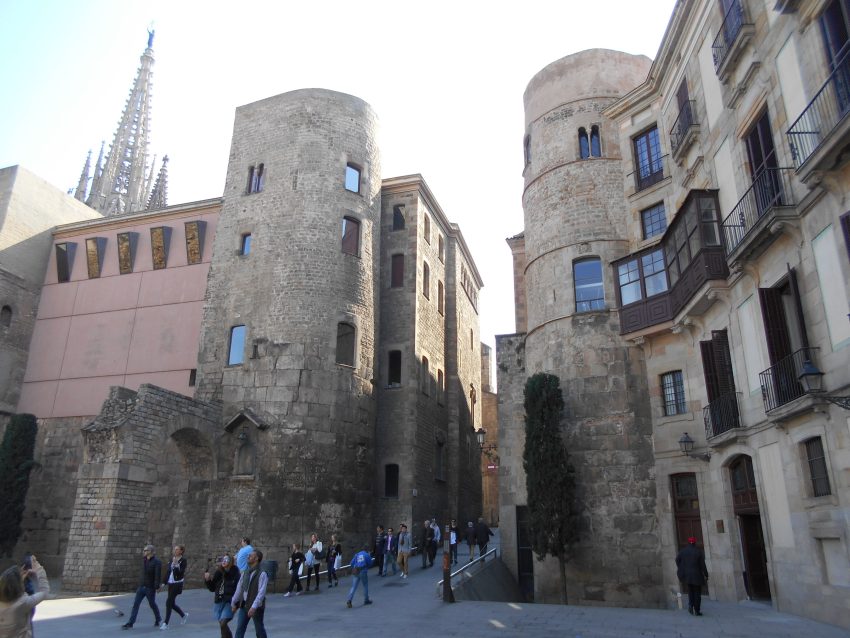
Barcelona’s Roman walls are one of the clearest survivals of Barcino, the Roman city that sat beneath today’s Gothic Quarter. The first fortifications were laid out in the early imperial period, but the most substantial remains you see today largely relate to later strengthening, when the city reinforced its defenses with thicker masonry and more towers. Those upgrades weren’t just military paranoia; they reflect how strategically and economically important the settlement had become, and how Roman urban life was organized around a protected core with controlled entry points.
At Carrer dels Sots-Tinent Navarro, the wall reads as a powerful slice of the ancient perimeter: heavy stonework, a tall vertical face, and the rhythm of projecting towers that once gave defenders wider angles of view along the curtain. What’s especially compelling here is the layering—Roman fabric sitting shoulder-to-shoulder with later medieval structures, with the street acting like a narrow viewing corridor that emphasizes the wall’s height and mass. Look for changes in masonry texture and block size, and for the way later buildings “lean” into the Roman line, using it as a ready-made backbone.
To get the most from the stop, walk a short stretch rather than treating it as a single photo point. The walls make more sense when you follow their trajectory and imagine the city boundary they enforced, including where gates would have been and how the defensive towers punctuated movement. If you’re building a Roman-themed wander, this section pairs naturally with nearby remains like columns and fragments of Barcino’s civic core, but even on its own it delivers that rare Barcelona experience: a living street where you can stand within arm’s reach of two thousand years of city-making.
Location: Muralla Romana Carrer dels Sots-Tinent Navarro, Carrer del Sots - Tinent Navarro, Barcelona, Spain | Hours: 24 Hours | Price: Free | Website
14. Plaça del Rei
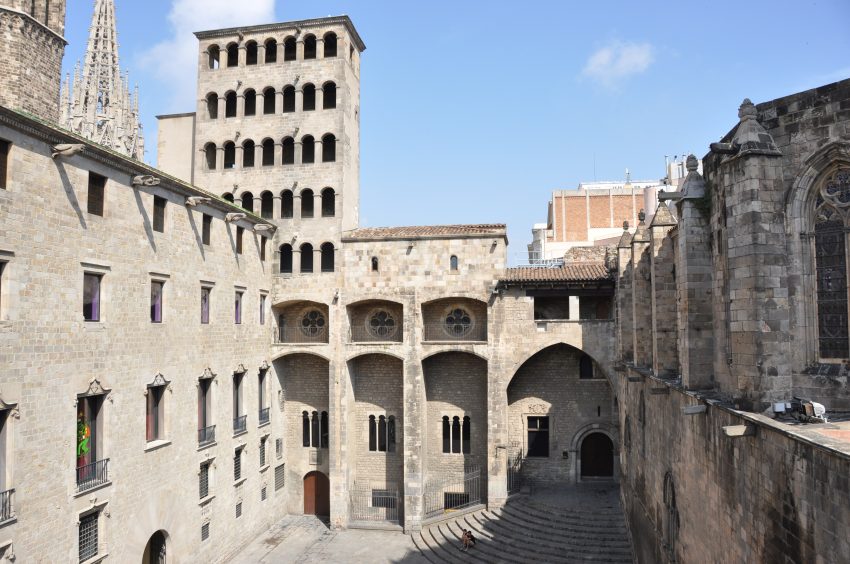
Plaça del Rei feels like a stage set for medieval Barcelona, and in many ways it was exactly that: a ceremonial space linked to royal and institutional power. The square’s enclosed, stone-heavy geometry creates an immediate sense of authority, as if the surrounding buildings are still listening for footsteps and proclamations.
Historically, this area is associated with the city’s governing elite, and the architecture reflects continuity rather than novelty—solid forms, controlled openings, and a preference for permanence. It’s the kind of place where politics and pageantry overlap: official receptions, civic rituals, and moments when the city presented itself to outsiders.
What to see is the ensemble itself: stand in the middle and take a slow turn, noticing how the walls shape sound and light. If you can enter adjacent historic buildings or exhibitions, do it, but even without that, the square is one of the best places to feel the medieval city as an atmosphere rather than a checklist.
Location: Pl. del Rei, Ciutat Vella, 08002 Barcelona, Spain | Hours: 24 Hours | Price: Free.
15. Capella Reial de Santa Agata
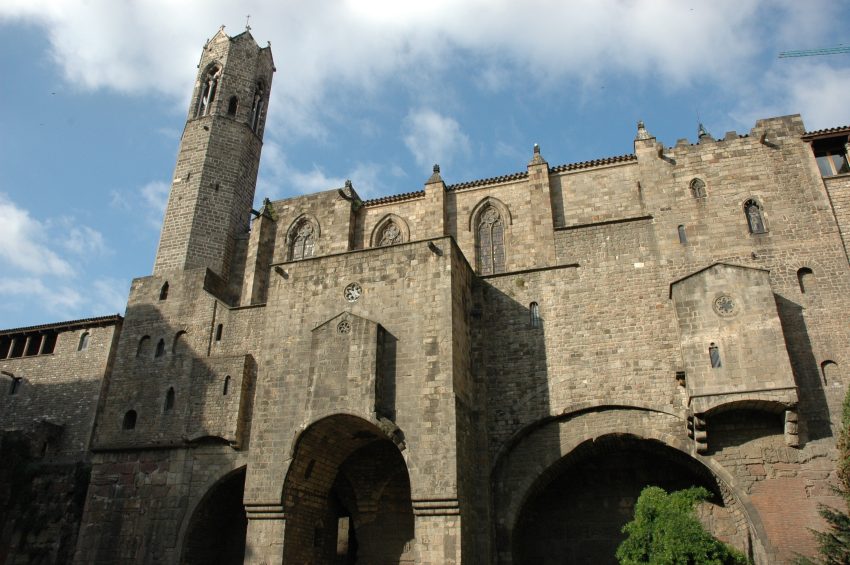
This chapel is closely linked to royal devotion and court life, a smaller sacred space that carries the idea of private worship within a political center. Its Gothic character is restrained and vertical, emphasizing solemnity over spectacle, which suits a place intended for focused ceremony rather than crowds.
Inside, the most compelling “what to see” is usually the way the space frames art and ritual: the altar area, the proportions, and any surviving decorative work that signals patronage. Chapels like this often communicate power subtly—through materials, craftsmanship, and the sense that only certain people historically belonged here.
Take a moment to look for the details that feel human: worn thresholds, softened edges of stone, and the way light settles in the apse. It’s a quieter stop than the cathedral, but it rewards attention because it connects spiritual practice to the political geography of the Gothic Quarter.
Location: Casa Padellàs (Barcelona History Museum MUHBA), Pl. del Rei, s/n, Ciutat Vella, 08002 Barcelona, Spain | Hours: Tuesday – Saturday: 10:00–19:00. Sunday: 10:00–20:00. Closed on Monday. | Price: Adults: €7.30; Reduced: €5.20; Under 16: free. | Website
16. Palau del Lloctinent
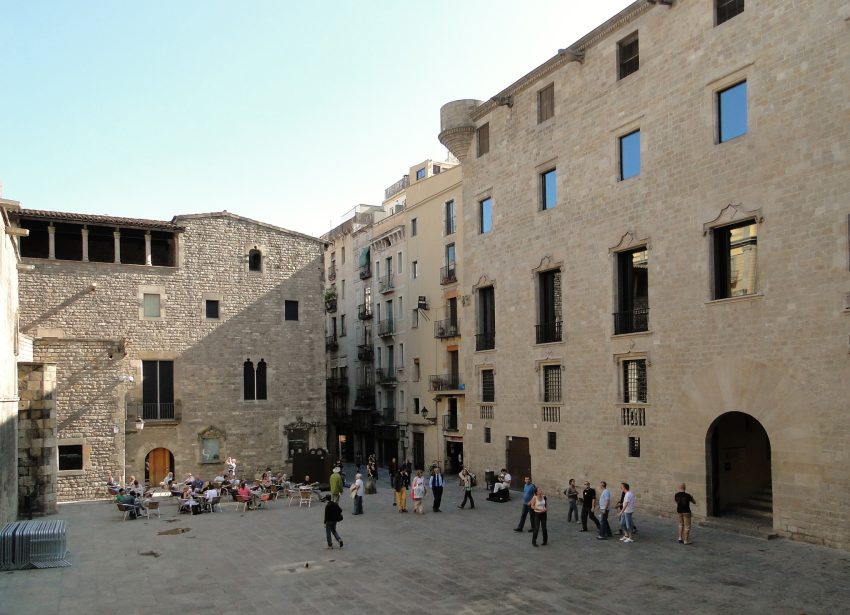
This palace is tied to the administrative machinery of the Crown of Aragon and the governing structures that radiated out from Barcelona when the city’s political reach expanded. Its architecture reflects power expressed through order: courtyards, staircases, and formal stonework meant to impress and control movement.
Look for the Renaissance sensibility in the building’s organization, especially if you catch views into the courtyard or interior elements. The stone staircases and galleries are the kinds of features that made official buildings feel theatrical—designed for processions, announcements, and the visibility of rank.
Even when you only see the exterior, it’s worth pausing to imagine the bureaucratic life once contained here: petitions, records, emissaries, and the constant negotiation between local privileges and royal authority. In a quarter full of churches, this is a reminder that Barcelona’s medieval core was also a working government district.
Location: Palau Reial Major, Carrer dels Comtes, Ciutat Vella, 08002 Barcelona, Spain | Hours: Monday – Sunday: 10:00–19:00. Closed: December 25–26, January 1 & 6. | Price: Free. | Website
17. Museu Frederic Mares
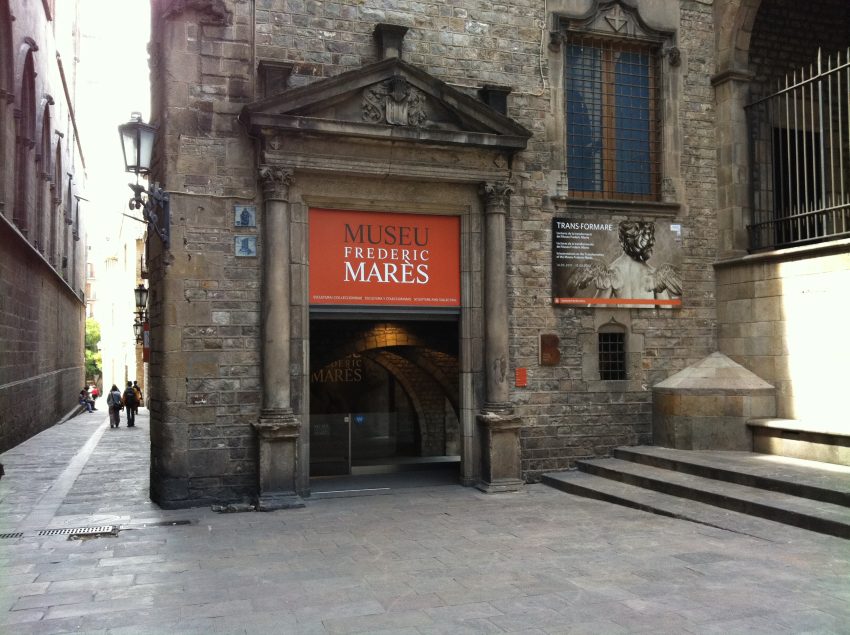
This museum is shaped by a single collector’s vision: Frederic Marès assembled an eclectic, deeply personal collection that spans sculpture, religious art, and everyday objects. The setting—rooms tucked beside the cathedral complex—adds to the sense that you’re entering a cabinet of curiosities rather than a conventional chronological museum.
The headline pieces are medieval and Renaissance sculptures, especially Catalan works where faces and drapery still carry an intense physical presence. Move slowly through the sculpture galleries and let the lighting do its work; many pieces feel more intimate than monumental, and the museum’s layout encourages close viewing rather than grand “museum distance.”
Then there’s the delightfully strange side: fans, pipes, photographs, toys, and domestic objects that sketch a social history through things people once handled every day. It’s an excellent stop when you want to balance the big-ticket Gothic architecture with the texture of ordinary life that made that architecture meaningful.
Location: Plaça Sant Iu, 5, Ciutat Vella, 08002 Barcelona, Spain | Hours: Tuesday – Saturday: 10:00–19:00. Sunday: 11:00–20:00. Closed on Monday. | Price: Adults: €4.20; Reduced: €2.40; Under 16: free; Free entry: first Sunday of the month & Sunday afternoons (15:00–20:00). | Website

Moira & Andy
Hey! We're Moira & Andy. From hiking the Camino to trips around Europe in Bert our campervan — we've been traveling together since retirement in 2020!
This website uses affiliate links which earn a small commission at no additional cost to you.
Walking Tour Summary
Distance: 1.5 km
Sites: 17
Walking Tour Map