Catania, Italy: The Ultimate Travel Guide 2026

etna Catania
etna Catania

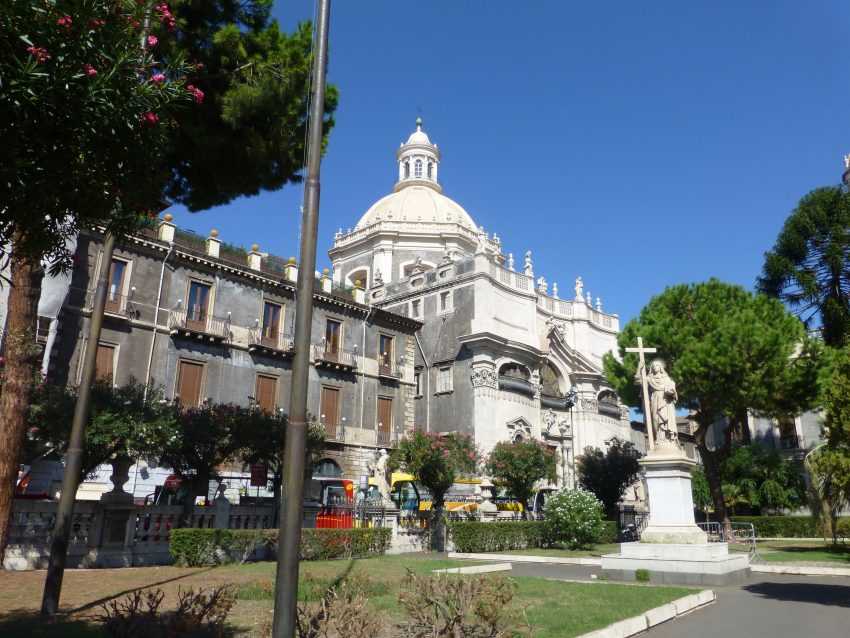
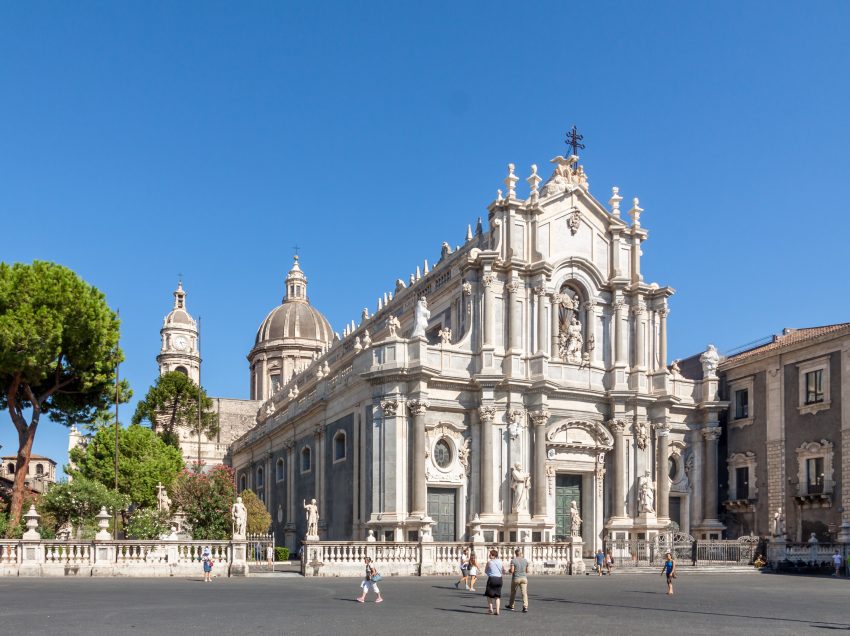
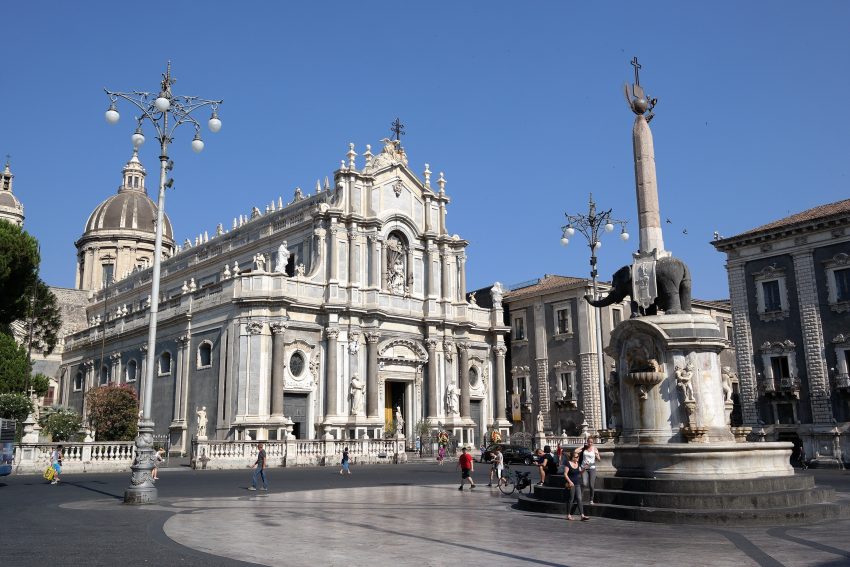
Visiting Catania, the vibrant and historic city on the eastern coast of Sicily, offers an unforgettable experience where ancient history and modern energy converge. Dominated by the imposing Mount Etna, one of the most active volcanoes in the world, Catania is a city rich in both natural and cultural wonders. The city's Baroque architecture, much of it built from lava stone, is a testament to its resilience, having been rebuilt after multiple eruptions and earthquakes. Strolling through the UNESCO-listed historic center, you can explore landmarks such as the Piazza del Duomo, home to the iconic Fontana dell'Elefante and the stunning Catania Cathedral, which houses the relics of the city's patron saint, Saint Agatha.

Beyond its historical sites, Catania is known for its lively atmosphere and thriving culinary scene. The bustling markets, such as the famous La Pescheria fish market, offer a glimpse into local life and the opportunity to sample fresh Sicilian produce. The city's restaurants and street food stalls serve up traditional dishes like pasta alla Norma and arancini, reflecting Catania's rich culinary heritage. Additionally, Catania serves as a gateway to exploring Mount Etna, with many tours offering excursions to the volcano's craters and lava fields. Whether you're drawn to its history, culture, or the dramatic landscapes of Etna, Catania offers a dynamic and enriching Sicilian experience.

Table of Contents

History of Catania

Ancient Origins of Catania

Catania, located on the eastern coast of Sicily, has a history that stretches back nearly 3,000 years. The city was originally founded by Greek settlers from Chalcis in 729 BC, who named it Katane. The strategic location of Catania, between the Ionian Sea and Mount Etna, made it an important center for trade and agriculture in the ancient world. The city thrived under Greek rule, becoming known for its rich culture and as the birthplace of the philosopher and legislator Charondas. Over time, Catania came under the control of several powers, including the Carthaginians and the Romans, who further developed the city, constructing roads, aqueducts, and theaters.

Catania During the Roman Empire

During the Roman Empire, Catania became a prosperous Roman colony, playing a significant role in the empire’s grain supply. The city flourished economically and culturally, evidenced by the construction of grand structures like the Roman Theatre and the Odeon. However, Catania’s history has been marked by repeated devastation due to its proximity to Mount Etna, one of the most active volcanoes in the world. Major eruptions in 252 AD and 1169 AD caused significant damage to the city, but it was always rebuilt, often with the very lava that had destroyed it.

Medieval Catania

In the medieval period, Catania was ruled by a succession of powers, including the Byzantines, Arabs, and Normans. Each left their mark on the city’s culture and architecture. The Normans, who took control in the 11th century, fortified the city and constructed several important buildings, including the Ursino Castle. Under the Kingdom of Aragon in the 13th century, Catania became a significant political and cultural center. The foundation of the University of Catania in 1434, the first university in Sicily, marked the city as an important intellectual hub in the region.

Catania in the Baroque Period

The 17th century was a period of both disaster and renewal for Catania. In 1669, a catastrophic eruption of Mount Etna buried much of the city under lava, and just 24 years later, in 1693, a devastating earthquake destroyed large portions of Catania. However, the city was rebuilt in the Baroque style, which characterizes much of its architecture today. The reconstruction was led by the architect Giovanni Battista Vaccarini, who designed many of Catania’s iconic buildings, including the Cathedral of Sant’Agata and the Palazzo degli Elefanti. This period gave Catania its distinctive Baroque character, earning its historic center a place on the UNESCO World Heritage list.

Modern Catania

In the 19th and 20th centuries, Catania grew into a vibrant and industrialized city, becoming one of the largest and most important cities in Sicily. The city played a significant role in the Italian unification movement in the 19th century and continued to expand its cultural and educational institutions. Despite suffering heavy damage during World War II, Catania was rebuilt and modernized in the post-war years. Today, Catania is known for its lively culture, thriving economy, and as a gateway to exploring Mount Etna. The city continues to balance its ancient heritage with modern development, making it a dynamic and fascinating destination in Sicily.

Moira & Andy
Moira & Andy

Hey! We're Moira & Andy. From hiking the Camino to trips around Europe in Bert our campervan — we've been traveling together since retirement in 2020!

Read our full story here

Visiting Catania for the first time and wondering what are the top places to see in the city? In this complete guide, I share the best things to do in Catania on the first visit. To help you plan your trip, I have also included an interactive map and practical tips for visiting!

This website uses affiliate links which earn a small commission at no additional cost to you.
Powered by GetYourGuide

42 Best places to See in Catania

This complete guide to Catania not only tells you about the very best sights and tourist attractions for first-time visitors to the city but also provide insights into a few of our personal favorite things to do.

This is a practical guide to visiting the best places to see in Catania and is filled with tips and info that should answer all your questions!

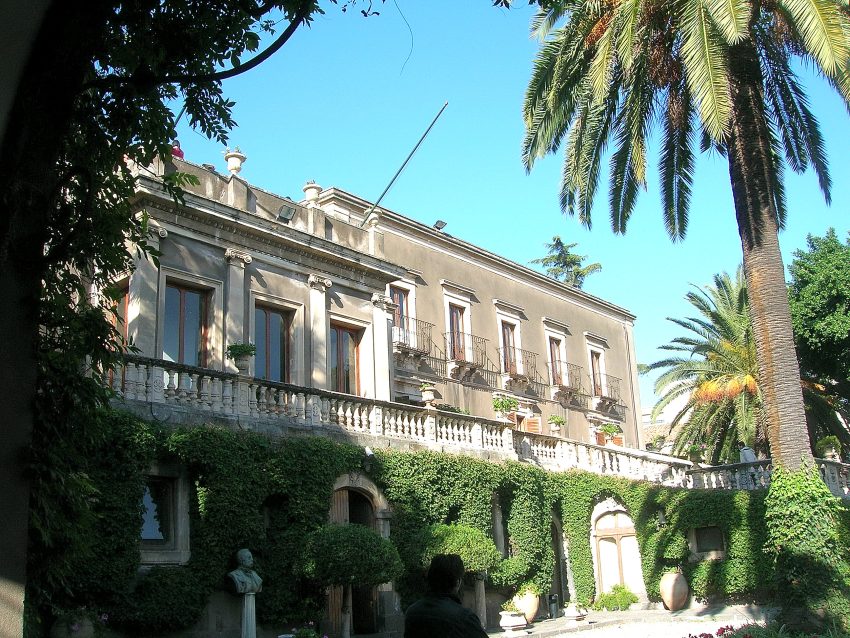
1. Villa Cerami

Villa Cerami
Villa Cerami
CC BY-SA 2.5 / Triquetra
Villa Cerami is an 18th-century Baroque villa in Catania’s old town that now serves as the University of Catania’s Law School, so it feels both lived-in and ceremonial. Rebuilt after the 1693 earthquake under Giovanni Battista Vaccarini, it’s remembered for its imposing portico and grand staircase, with the Cerami coat of arms marking the façade. Inside, spaces once meant for aristocratic receptions were later adapted into university halls, and the approach still carries a palatial sense of scale. Step into the courtyard and small garden for a calmer pause, and look for the marble neighborhood water fountain placed outside the entrance as a gift from the Cerami family.
Location: Via Crociferi, 91, 95124 Catania CT, Italy | Hours: Monday – Friday: 07:30–20:00. | Price: Check official website. | Website | Distance: 0.2km

We recommend to rent a car in Italy through Discover Cars, they compare prices and review multiple car rental agencies. Book your rental car here.

2. Roman Amphitheater of Catania

Roman Amphitheater of Catania
CC BY-SA 4.0 / Antony-22
The Roman Amphitheater of Catania is a substantial Roman-era arena built around 200 AD, now mostly buried beneath the city near Piazza Stesicoro, with only a small slice visible from street level. Descending inside reveals vaulted corridors, radial supporting walls, and surviving seating that make its original scale easier to imagine. The structure was large for its day—about 15,000 seats, with an arena roughly 268 by 164 feet and outer dimensions near 478 by 345 feet—and parts of its masonry show reused materials. It was later swallowed by the 1693 earthquake and redevelopment, then re-emerged in 18th-century excavations. Visitors remember the sudden shift from busy square to cool, dim passageways under modern buildings.
Location: P.zza Stesicoro, 95124 Catania CT, Italy | Hours: Monday – Sunday: 09:00–17:00. | Price: Adults: €4; Reduced: €3. | Website | Distance: 0.2km


Here is a complete selection of hotel options in Catania. Feel free to review each one and choose the stay that best suits your needs.

3. Chiesa di San Biagio in Sant'Agata alla Fornace
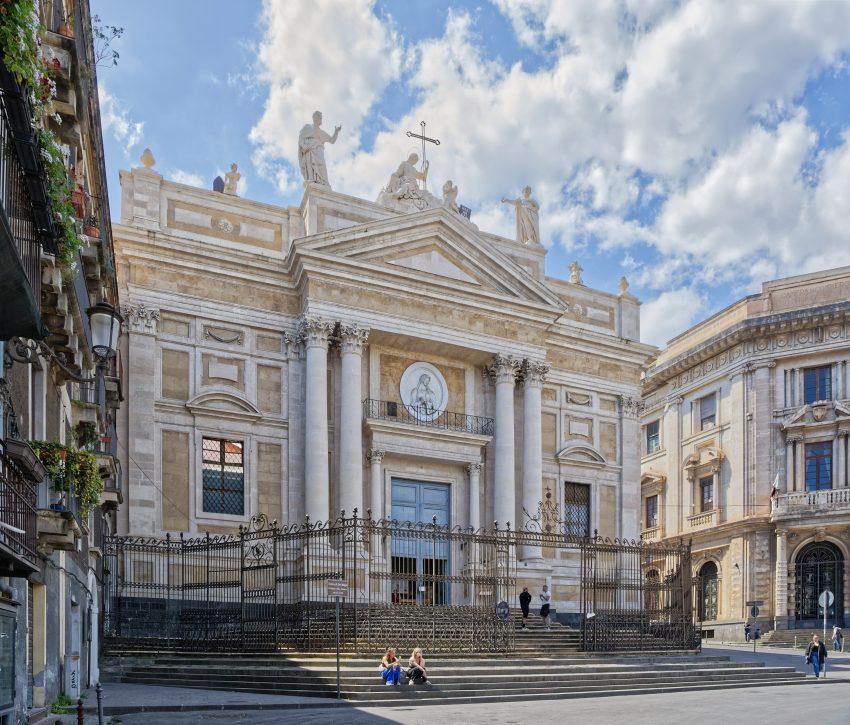
Chiesa di San Biagio in Sant’Agata alla Fornace
CC BY-SA 4 / Berthold Werner
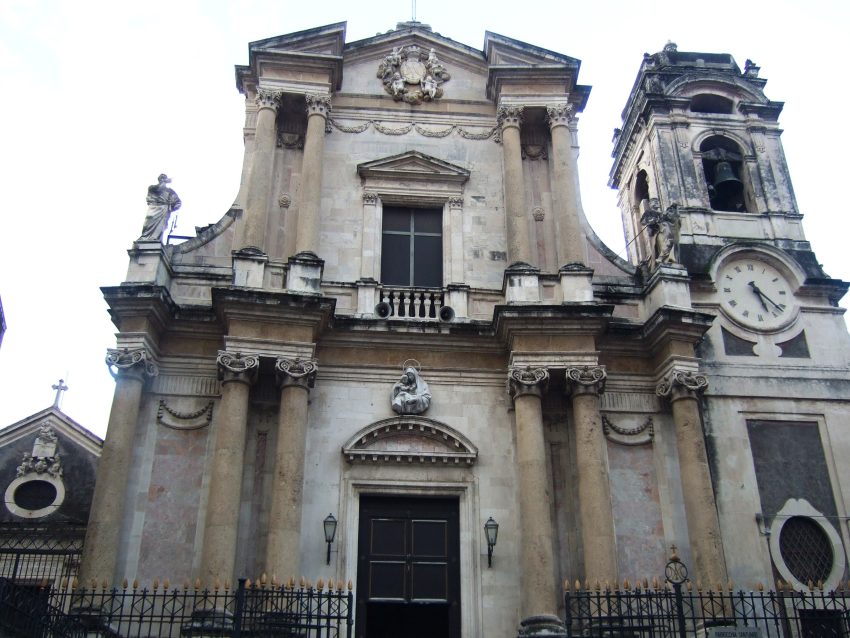
Chiesa di San Biagio in Sant’Agata alla Fornace is a compact Neoclassical church on Piazza Stesicoro in central Catania, revered as the spot where Saint Agatha is traditionally said to have suffered her martyrdom. The façade’s paired columns and triangular pediment lead into a single, restrained nave that feels intimate rather than grand. Visitors linger at the right-hand chapel, where a symbolic “furnace” recalls the saint’s ordeal, and at the main altar with its curling volutes and statues of Saint John the Evangelist and Mary Magdalene. Look, too, for the pipe organ rebuilt in 1978 by the Ruffatti Brothers in an early-18th-century Sicilian style. Reviews often mention the vivid Agatha imagery inside.
Location: P.zza Stesicoro, 95124 Catania CT, Italy | Hours: Monday – Saturday: 09:00–12:00 & 15:00–19:00. Sunday: 09:00–13:00. | Price: From €1 (guided visit may be offered on-site). | Distance: 0.2km

Traveling to a country with a different currency? Avoid ATM transaction fees and pay in local currency with a Wise Card. Having used it for over 5 years, we've saved loads on fees!

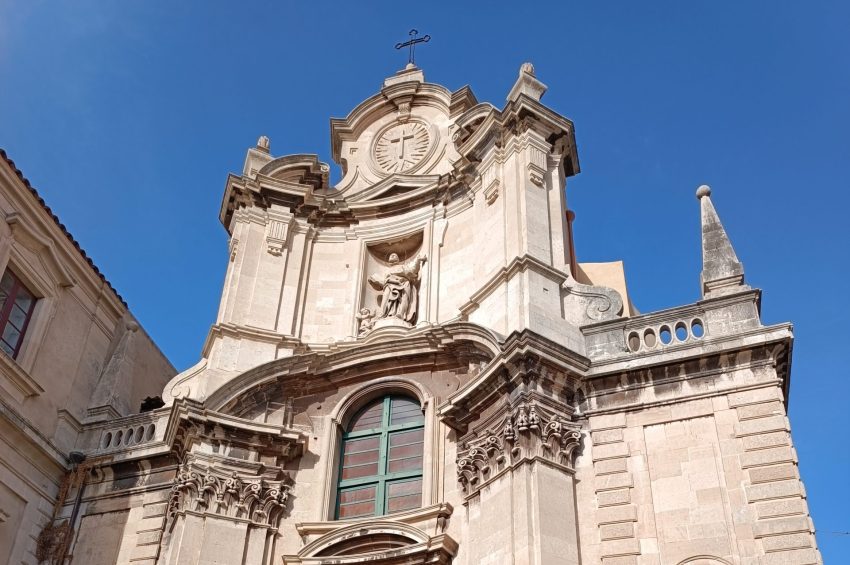
4. Church of St. Camillus

Church of St. Camillus
CC BY-SA 4.0 / Viaggiamocela
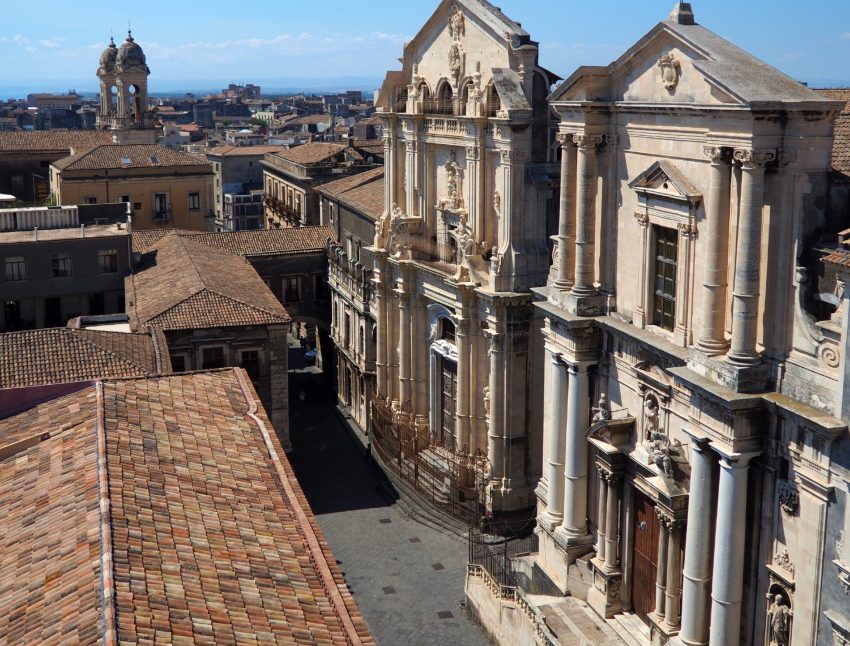
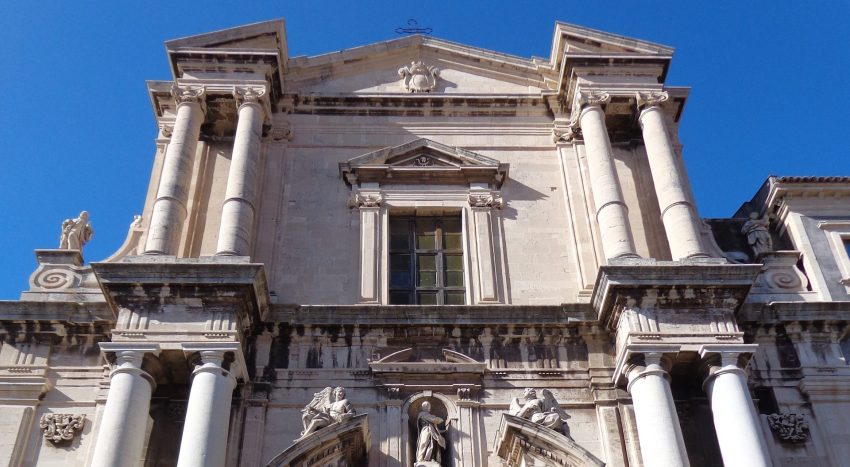
The Church of St. Camillus (San Camillo dei Mercedari) is an 18th-century Roman Catholic church on Catania’s Via Crociferi, built in the city’s post-1693 earthquake rebuilding and tied to the Camillian “Crociferi” order. Its white Siracusa-stone façade curves inward, framed by Corinthian pilasters and topped with pinnacles and urns; above the portal, St. Camillus stands in a niche and the order’s red cross appears prominently. Inside, a short stair leads to a vestibule and an oval nave dressed with gilded stucco, floral ornament, and 18th-century paintings, with a second-level choir at the rear. Visitors often remember it as a small, enchanting church that feels calm and close-up.
Location: Largo Niccolò, Via Tommaso Tedeschi, 95124 Catania CT, Italy | Hours: Tuesday: 16:30–19:30. Wednesday: 16:30–19:30. Friday: 16:30–19:30. | Price: Free; donations appreciated. | Website | Distance: 0.3km

Explore Catania at your own pace with our self-guided walking tour! Follow our curated route to discover must-see sights and local secrets that makes Catania one of the best places to visit in Italy.

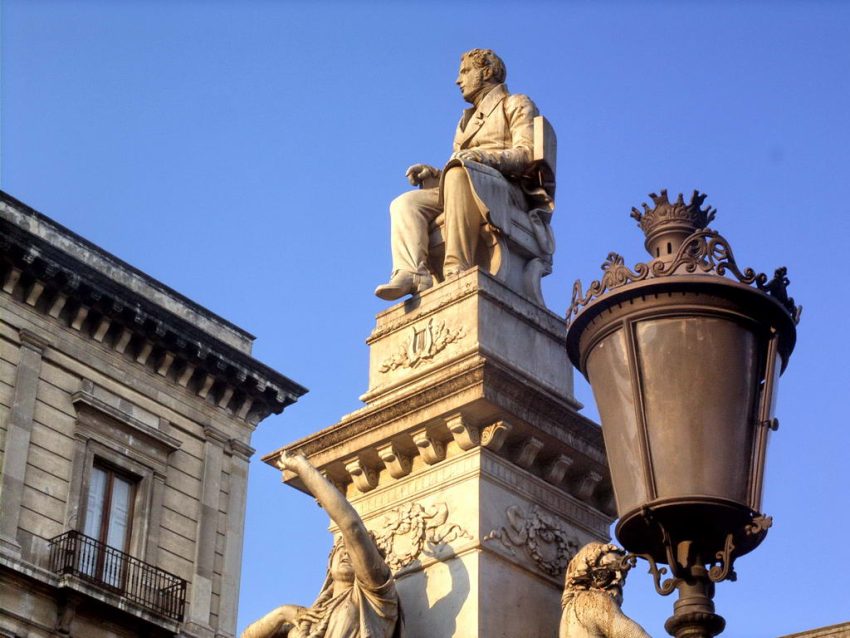
5. Statue of Vincenzo Bellini

Statue of Vincenzo Bellini
CC BY-SA 1.0 / Elio Bonanno
In central Catania, the Statue of Vincenzo Bellini is a civic monument to the city’s composer, shown seated like a scholar with a manuscript on his knee. Designed by Giulio Monteverde and unveiled in September 1882, it rises from a stepped pyramid and is encircled by an iron Art Nouveau fence. As you circle it, look for four figures at the base that personify Bellini’s operas—Norma, I Puritani, La Sonnambula, and Il Pirata—turning a quick stop into a small lesson in bel canto. The setting is busy and street-level, so the statue often doubles as a practical meeting point, even if traffic and limited parking can distract.
Location: Monumento a Vincenzo Bellini, P.zza Stesicoro, 36, 95131 Catania CT, Italy | Hours: 24 Hours. | Price: Free. | Distance: 0.3km

Where to Stay in Catania: An Area by Area Guide!

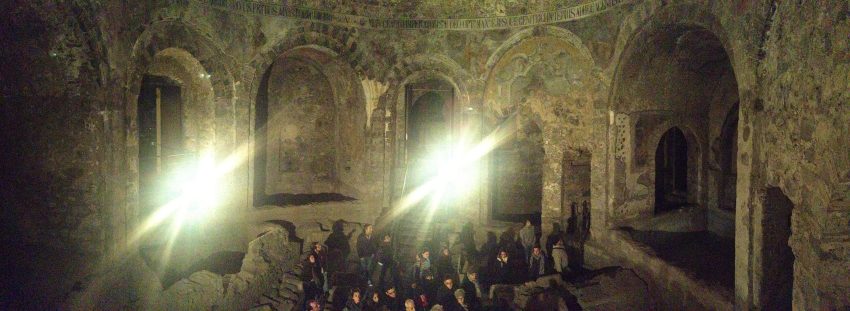
6. Terme della Rotonda

Terme della Rotonda
Terme della Rotonda
CC BY-SA 4.0 / Davide Mauro
Terme della Rotonda in Catania, Italy is a compact archaeological site where the remains of a Roman public bath complex sit beneath and within the later church of Santa Maria della Rotonda. What stays with visitors is the “stacked” feeling: traces of bath rooms and circulation below, then the circular, domed sacred space above, showing how the city reused structures rather than clearing them away. Look closely for engineering clues from the heating system, including fragments of the hypocaust supports that once held raised floors. It’s small and can feel like a quick stop, but the contrast between everyday Roman infrastructure and later worship space is immediate. Access can be limited, and hours posted online aren’t always reliable.
Location: Terme della Rotonda, Via della Mecca, Catania, Metropolitan city of Catania, Italy | Hours: Tuesday – Saturday: 09:00–17:00. Sunday: 09:00–13:00. Closed on Monday. | Price: Free. | Website | Distance: 0.4km

7. Villa Bellini
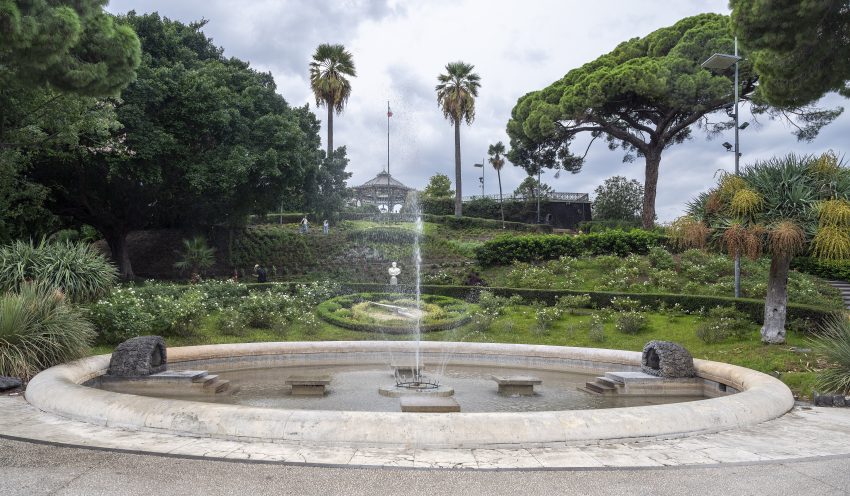
Villa Bellini/Chiosco Bellini
CC BY-SA 4.0 / Cayambe
Villa Bellini (Giardino Bellini) is Catania’s central public garden, created when the city bought and transformed a former maze garden owned by the Prince of Biscari, then expanded it into a unified park inaugurated in 1883. Its terraced layout makes for a gentle climb past ponds, fountains, statues, and rows of commemorative busts of local figures. On clear days, the upper steps and viewpoints can frame a striking look toward Mount Etna. Locals use it as a shady pause from Via Etnea—benches, palm-lined paths, and occasional event sound checks give it an everyday, lived-in feel. Reviews often mention how welcome the shade is in summer, even if water fountains can be easy to miss.
Location: Via Etnea, 292, 95131 Catania CT, Italy | Hours: (Summer) 06:00–23:00. (Autumn) 06:00–22:00. (Winter) 06:00–21:00. | Price: Free. | Distance: 0.4km

8. Via Etnea
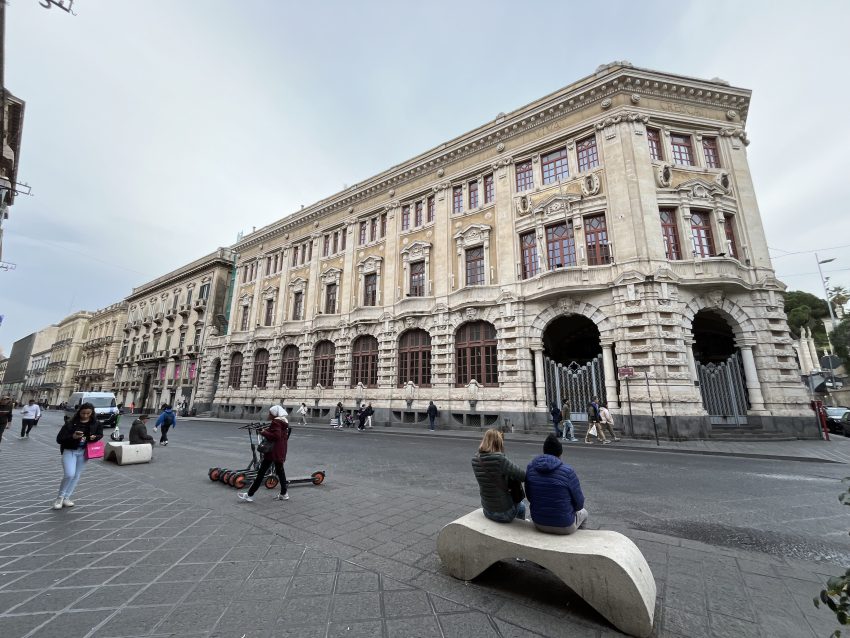
Via Etnea
Via Etnea
CC BY-SA 4.0 / Antony-22
Via Etnea is Catania’s main north–south boulevard, running about three miles from Piazza del Duomo toward the city’s edge, and it’s the clearest place to read how the city rebuilt itself after the 1693 earthquake. Much of what you see today is a corridor of lava-stone sidewalks and Baroque facades, with buildings associated with architects Giovanni Battista Vaccarini and Francesco Battaglia. The street is largely pedestrian, so the experience is a steady flow of shopfronts set into grand ground floors—cafés, bars, and food stops where arancini, pasta alla Norma, and cannoli tempt you between stretches of people-watching. Along the way, squares and palazzi punctuate the walk, and the mood can swing from elegant storefronts to occasional grit noted by some visitors.
Location: Via Etnea, Catania CT, Italy | Hours: 24 Hours. | Price: Free. | Distance: 0.4km

9. Church of Saint Julian
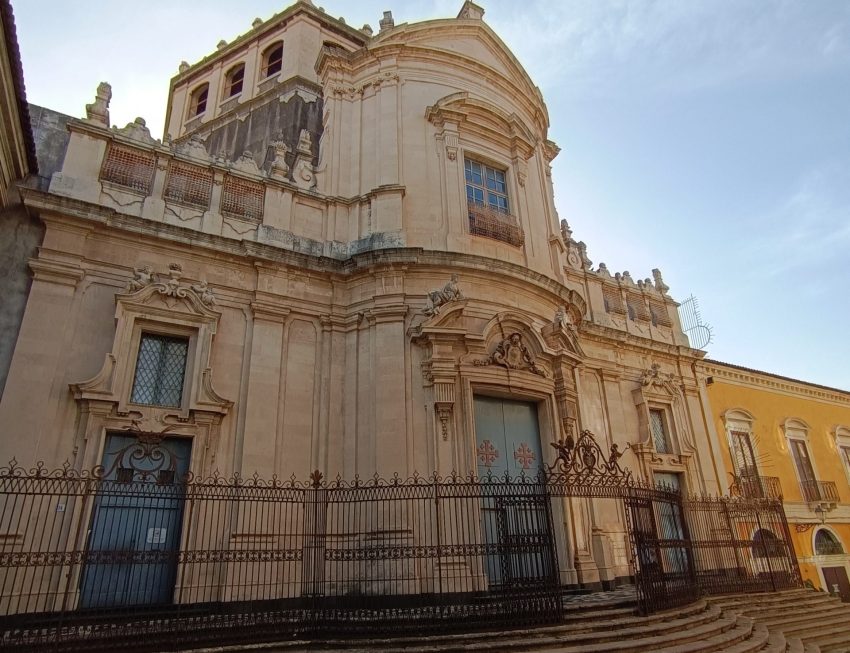
Church of Saint Julian
CC BY-SA 4.0 / Viaggiamocela
The Church of Saint Julian (Chiesa di San Giuliano) is a late-Baroque church in Catania, built in 1739–1751 after the 1693 earthquake and tied to the Benedictine convent next door. Its theatrical convex façade is topped by a pediment with a reclining maiden sculpture, and upper windows sit behind a dense iron grate once used by cloistered nuns to watch Sant’Agata processions unseen. Inside, the elongated, slightly off-kilter octagonal plan frames a polychrome main altar designed by Giovanni Battista Vaccarini, with allegorical figures of Faith and Charity. Many visitors remember the climb to the upper levels and roof for a sweeping view over Catania’s rooftops toward Mount Etna.
Location: Via Crociferi, 36, 95124 Catania CT, Italy | Hours: Daily: 10:00–18:45. | Price: Check official website. | Website | Distance: 0.4km

10. Catania’s City Hall
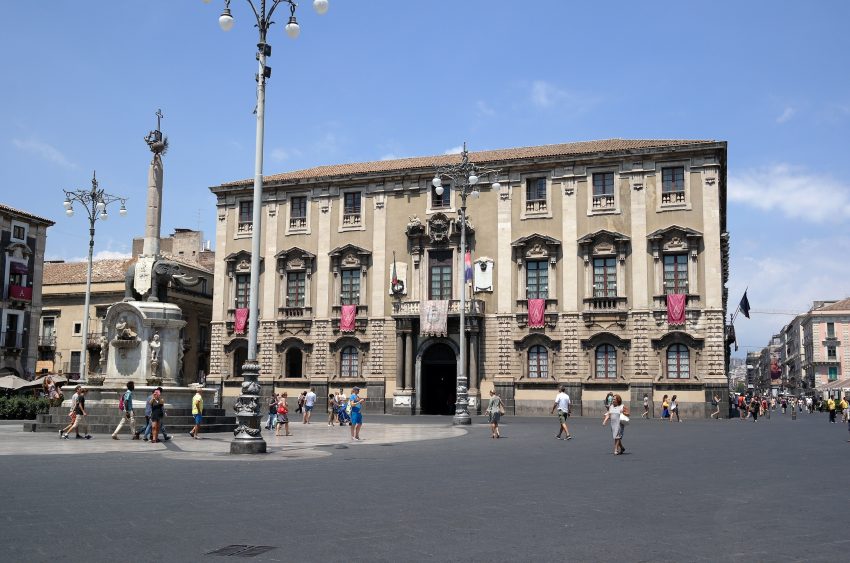
City Hall, Catania
City Hall, Catania
CC BY-SA 4.0 / Luca Aless
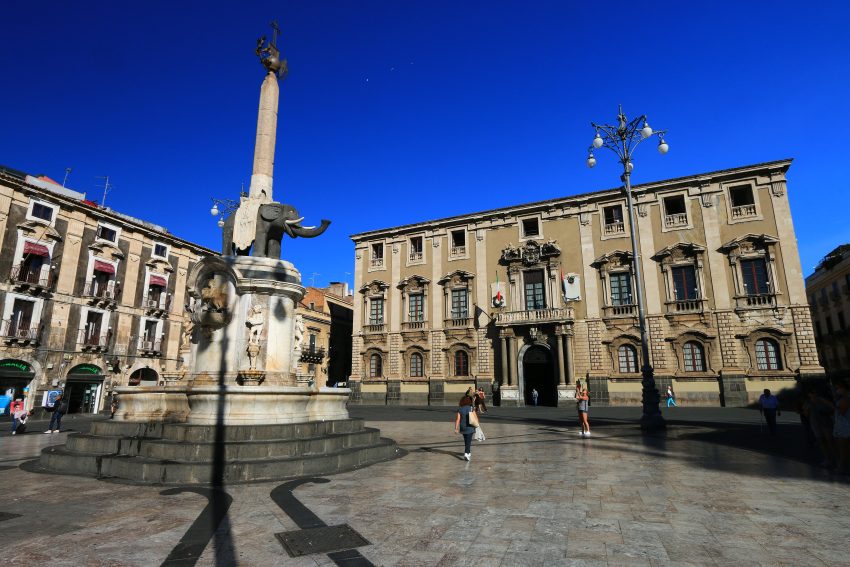
Catania’s City Hall occupies the Palazzo degli Elefanti, the civic anchor of Piazza Duomo and a key piece of the city’s post-1693 Baroque rebuild. From the square, visitors notice the building’s strict symmetry and the signature Catania contrast of pale stone against dark volcanic, lava-stone details. Even a quick stop is memorable for the constant street-level theatre outside its doors, where the rhythms of daily life play out in front of a formal façade. When access is possible, stepping into the courtyard shifts the mood—suddenly quieter, with architecture framing a slice of sky. Inside, ceremonial spaces and objects tied to the city’s patron-saint celebrations hint at how civic identity and the religious calendar intertwine.
Location: Affittacamere City Hall | Catania, Via Salvatore Tomaselli, Catania, Metropolitan city of Catania, Italy | Hours: Monday – Saturday: 08:00–19:00; Sunday: 08:30–13:30. | Price: Free. | Website | Distance: 0.5km

11. Museum of Contemporary Art in Sicily
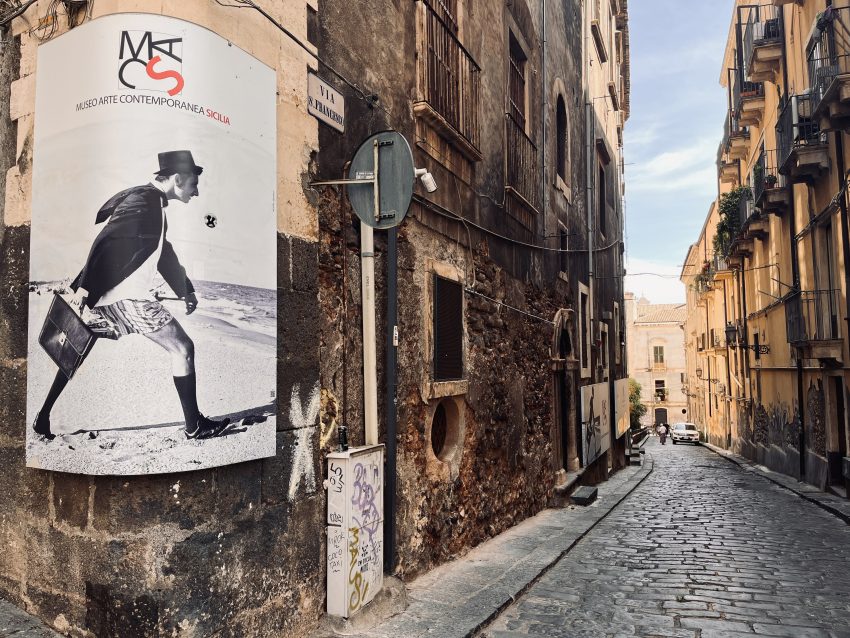
Museum of Contemporary Art in Sicily
CC BY-SA 4.0 / Iopensa
The Museum of Contemporary Art in Sicily (MACS) is a compact museum in Catania’s historic center, set inside the Badia Piccola of the Monastery of San Benedetto—an 18th-century Baroque space often linked to architect Giovanni Battista Vaccarini. Opened in 2013 after restoration and later expanded upstairs, it stages a deliberate clash between ornate interiors and contemporary figurative art. Across two floors you’ll see around 70 works—paintings, sculpture, photography, and mixed media—by Sicilian and Italian artists alongside names from places as far as Cuba, Argentina, and Singapore. Visitors often note how intimate it feels, with a tight route through small rooms and occasional works placed on staircases.
Location: Via S. Francesco D'Assisi, 30, 95124 Catania CT, Italy | Hours: Tuesday – Thursday: 11:30–15:00. Friday – Sunday: 10:30–17:30. Closed on Monday. | Price: Adults: €7; Students: €5; Children: €3. | Website | Distance: 0.5km

12. Church of Saint Benedict

Church of Saint Benedict
CC BY-SA 4.0 / Mattia Luigi Nappi
The Church of Saint Benedict (Chiesa di San Benedetto) in Catania’s historic center is a Baroque church rebuilt after the 1693 earthquake, part of a Benedictine complex that still feels like a living place of worship. The façade is set with pilasters and statues, including a Virgin Mary above the entrance and a pediment with two female figures symbolizing Fortitude and Temperance. Inside the single-nave interior is dense with stucco and fresco cycles—Matteo Desiderato and Giovanni Tuccari among the artists—often depicting scenes from Saint Benedict’s life with surprising warmth. Visitors remember the marble Angel Staircase with carved angels and wrought-iron railings, and the polychrome-marble main altar accented with bronze panels.
Location: Via Teatro Greco, 2, 95124 Catania CT, Italy | Hours: Tuesday, Friday, Saturday: 10:00–13:30 & 14:30–18:30 (April – October); 09:30–13:30 & 14:30–18:00 (November – March). | Price: Adults: €6; Students & ages 14–18: €4; Ages 6–14: €3; Under 6: free. | Website | Distance: 0.5km

13. Chiesa di San Francesco Borgia

Chiesa di San Francesco Borgia
CC BY-SA 1.0 / Effems
Chiesa di San Francesco Borgia is a former Jesuit church on Catania’s Via Crociferi, now deconsecrated and used as a cultural venue. Its classical Baroque façade is crowned with five statues of Jesuit saints, with Saint Francis Borgia above the portal and Ignatius Loyola and Francis Xavier flanking the lower tier. Inside, the Latin-cross plan opens into a bright nave with chapels, frescoes, and polychrome marble on the main altar, centered on a 1567 copy of the Madonna della Neve said to have been gifted by Borgia. Look up for Evangelist statues around the dome and trompe-l’œil curtains in the apse, and don’t miss the finely carved pulpit and occasional displays of silver and relics.
Location: Via Crociferi, 17, 95124 Catania CT, Italy | Hours: Tuesday – Saturday: 09:30–18:30. Sunday: 09:30–13:45. Closed on Monday. | Price: Free. | Distance: 0.5km

14. Benedictine Monastery of San Nicolò l'Arena
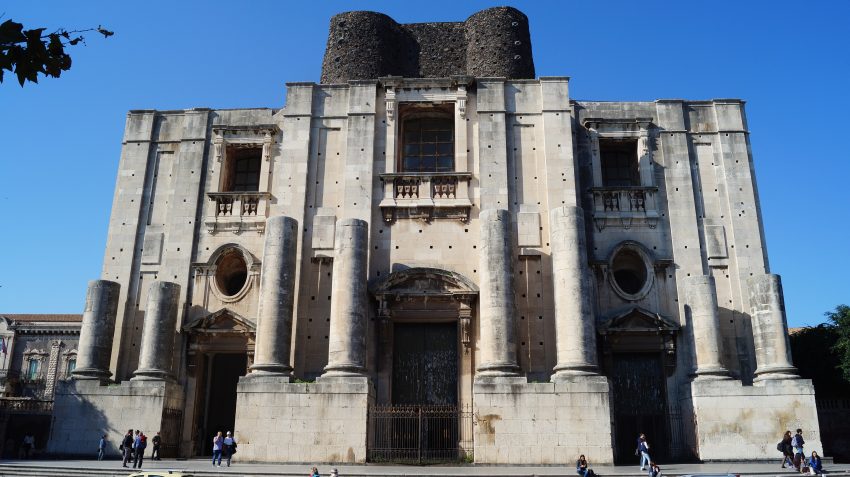
Benedictine Monastery of San Nicolò l’Arena
CC BY-SA 4.0 / Nicolò Arena
The Benedictine Monastery of San Nicolò l’Arena is a vast former Benedictine complex on Piazza Dante in Catania, now home to the University of Catania’s humanities department and part of the Val di Noto UNESCO listing. Founded in 1558, it was flattened by the 1669 Etna eruption and the 1693 earthquake, then rebuilt from 1702 until its confiscation in 1866, leaving today’s structure layered over earlier remains. Visitors remember the sequence of cloisters, including the rebuilt “Marble” cloister—once defined by a marble colonnade and a clover-shaped fountain—and later additions like the Eastern Cloister and Vaccarini-designed spaces. Inside, long corridors, stairways, and quiet courtyards create a surprisingly serene, almost city-within-a-city feel.
Location: Piazza Dante Alighieri, 32, 95124 Catania CT, Italy | Hours: Daily: 10:00–17:00. | Price: Adults: €10.00; Reduced: €7.50; University students (non-UNICT): €6.00; UNICT students: €4.00; Under 19: €3.00; Under 7: free. | Website | Distance: 0.5km
Powered by GetYourGuide

15. Basilica della Collegiata

Basilica della Collegiata
CC BY-SA 4.0 / Nicolas Chadeville
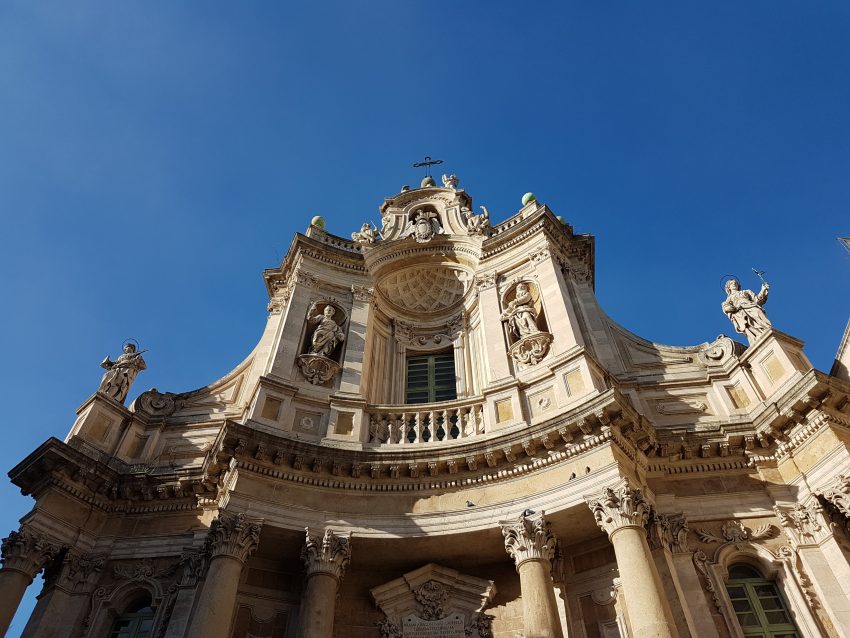
Basilica della Collegiata (Basilica of Maria Santissima dell’Elemosina) is a Sicilian Baroque church on Via Etnea in central Catania, rebuilt after the 1693 earthquake and completed in 1794. Its late-Baroque façade by Stefano Ittar is easy to recognize: a two-level front with six stone columns below, statues around a central window above, and a bell structure crowning it, reached by a broad stair with wrought-iron railing. Inside, the plan opens into a nave with two aisles and three apses, with side chapels that reward a slow look. Notable details include an 18th-century wooden organ and Giuseppe Sciuti’s 1896 fresco cycle of Mary, angels, and saints, creating a calm, lived-in atmosphere during services.
Location: Via Etnea, 23, 95131 Catania CT, Italy | Hours: Tuesday – Sunday: 09:00–12:00 & 17:00–19:00. Closed on Monday. | Price: Free; donations appreciated. | Distance: 0.5km

16. Basilica Satuario del Carmine

Basilica Satuario del Carmine
CC BY-SA 2.5 / Triquetra
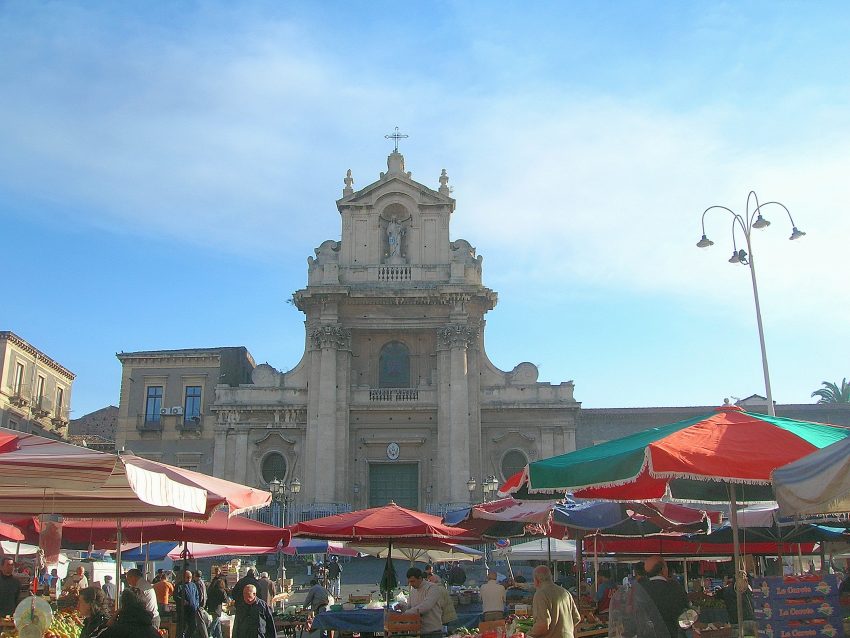
Basilica Santuario del Carmine is a Roman Catholic minor basilica and Marian sanctuary on Piazza Carlo Alberto in central Catania, where Baroque devotion meets the daily buzz of the market outside. Rebuilt in 1729 after the 1693 earthquake, its dramatic façade—designed by Francesco Battaglia—uses towering columns and a niche with the Virgin of the Carmine, topped by 19th-century bells. Step inside from the street noise to find large altarpieces and 18th-century Sicilian paintings, plus votive offerings left in thanks to Our Lady of Mount Carmel. A striking curiosity is a wooden image of Saint Agatha modeled on an 18th-century aristocrat, giving the interior an unexpectedly personal edge. Reviews note it’s sometimes only open on certain mornings.
Location: Piazza Carlo Alberto, 95124 Catania CT, Italy | Hours: Check official website. | Price: Free; donations appreciated. | Distance: 0.5km

17. Piazza Università
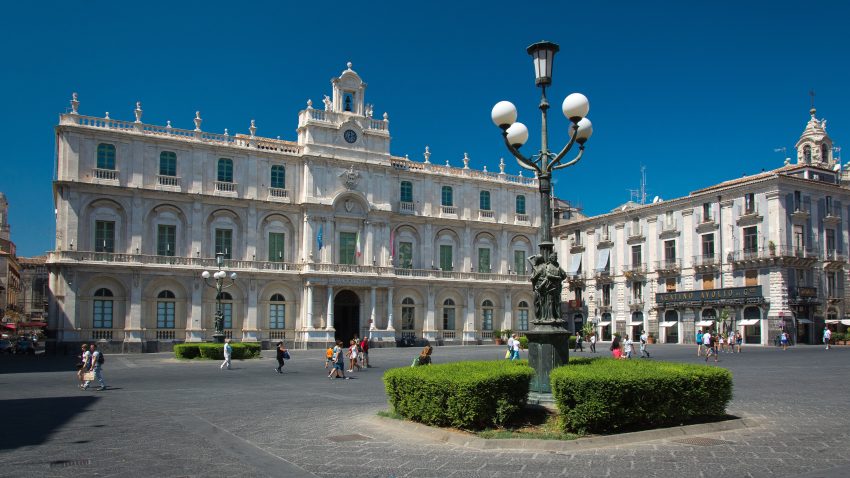
Piazza Università
Piazza Università
CC BY-SA 2.0 / kuhnmi
Piazza Università is a central square on Via Etnea in Catania, framed by late-Baroque palaces tied to the University of Catania, including the Palazzo dell’Università alongside Gioeni Asmundo and San Giuliano. Once home to a statue of King Francis I of the Two Sicilies (removed after his abdication in 1830), it now stands out for four elaborate bronze lampposts by Vincenzo Corsaro, arranged like a single candelabra. Each lamp base narrates a Sicilian legend and virtue—Gemmazita’s leap into a well, the Paladin’s duel and marriage, the Fratelli Pì carrying elders from lava, and Colapesce diving near Etna. The broad, elegant space feels lively yet calm, ideal for lingering and people-watching.
Location: Via Etnea, 95124 Catania CT, Italy | Hours: 24 Hours. | Price: Free. | Distance: 0.6km

18. Roman Odeon

Roman Odeon
Roman Odeon
CC BY-SA 4.0 / Matthias Süßen
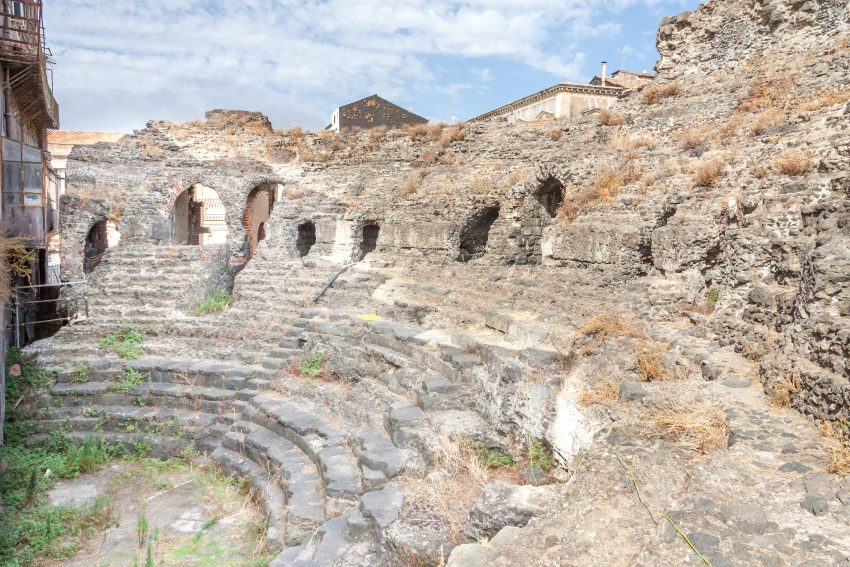
Catania’s Roman Odeon is a compact 2nd‑century AD performance space within the Roman Theatre complex, built for music and poetic recitations rather than large spectacles. Carved into the slope of the Montevergine hill, it once held about 1,500 spectators, and you can still trace the tight curve of the cavea down to the marble-paved semicircular orchestra. Look closely at the mix of local lava stone with brick and marble, and at the seams where excavation and restoration meet. What lingers is how the ruin is hemmed in by today’s streets and houses, making the ancient structure feel like a hidden room inside the modern city. Some visitors note that views from the sidewalk can be surprisingly revealing.
Location: Via Vittorio Emanuele II, 266, 95124 Catania CT, Italy | Hours: Monday – Sunday: 09:00–19:00. | Price: Adults: €8; Reduced: €4. | Website | Distance: 0.6km

19. Palace Catania

Palace Catania | UNA Esperienze
CC BY-SA 4.0 / Iopensa
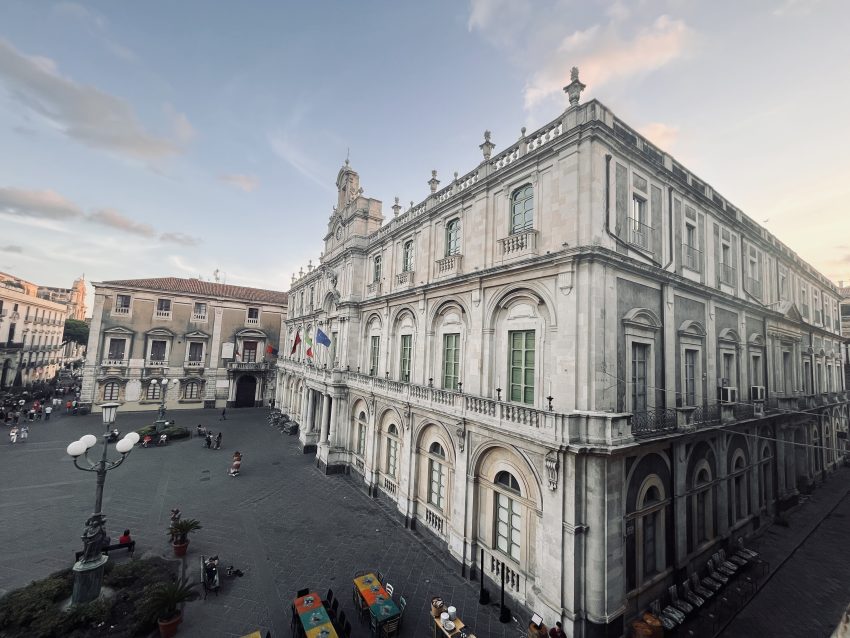
In Catania, the University Palace (Palazzo Centrale dell’Università) is a monumental Baroque complex on Piazza Universitaria, still serving as the University of Catania’s administrative heart—an institution founded in 1434 and among Italy’s oldest. Rebuilt from 1696 after the 1693 earthquake on the former San Marco Hospital site, it carries the city’s post-disaster confidence in stone. Visitors notice the grand central portal framed by marble columns and topped with the coats of arms of the Paternò Castello and Asmundo families. Step inside and the mood shifts to a cloistered courtyard paved in crisp black-and-white patterns associated with Vaccarini’s Catanian designs. The façade reflects work by Francesco Battaglia, Antonino Battaglia, and Vaccarini, later repaired after more quakes.
Location: Via Etnea, 218, 95131 Catania CT, Italy | Hours: 24 hours for external viewing; Rooftop (Etnea Roof Bar & Restaurant): Daily: 13:00–23:00. Dinner: 19:30–23:00. | Price: Free. | Website | Distance: 0.6km

20. Roman Theater of Catania

Greek – Roman theatre
CC BY-SA 4.0 / Luca Aless
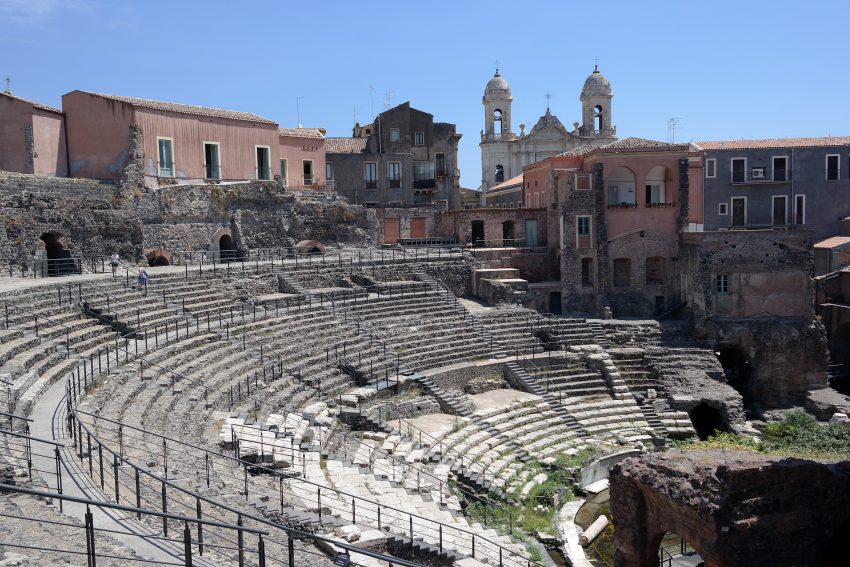
Hidden behind an unassuming doorway in Catania’s historic center, the Roman Theater of Catania is a pair of open-air semicircular venues—a large theater and a smaller Odeon—within the city’s Graeco-Roman Archaeological Park. Built in the 2nd century AD, its lava-stone seating climbs a hillside, with passageways and exits tucked beneath the rows, and it once held around 7,000 spectators across 21 tiers. Standing at the upper cavea, you can trace the sweep of the auditorium and the 84‑foot-wide orchestra and stage area. The site’s layered story is visible in its excavation history: dug in the 18th century, fully uncovered in the 19th, and only cleared of encroaching houses in 1959. Modern buildings still press close, heightening the sense of ancient space embedded in everyday city life.
Location: Via Vittorio Emanuele II, 266, 95124 Catania CT, Italy | Hours: Daily: 09:00–19:00. | Price: Adults: €8; Reduced: €4. | Website | Distance: 0.6km

21. Piazza Roma

Piazza Roma
Piazza Roma
CC BY-SA 3.0 / giggel
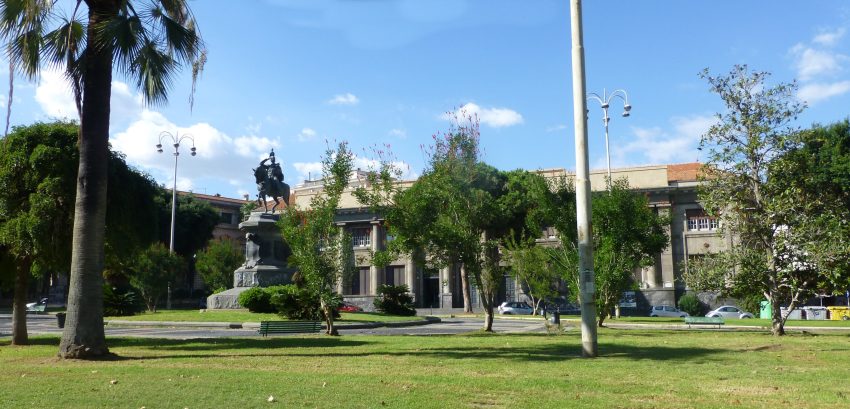
Piazza Roma is a neighborhood square in Catania that mixes everyday city life with a few formal, commemorative touches. At its center is an equestrian monument to Vittorio Emanuele II, a clear nod to Italy’s unification that gives the space a sense of civic purpose. Around it, you’ll notice Baroque-leaning façades and villa-style buildings, plus pockets of greenery and shaded benches where locals pause between errands. Cafés and small shops keep the edges animated, and the square sometimes hosts seasonal markets or small events, so it can feel different from one visit to the next. It’s less a destination than a lived-in pause point that reveals Catania’s rhythms.
Location: Piazza Roma, 95100 Catania CT, Italy | Hours: 24 Hours. | Price: Free. | Distance: 0.6km

22. Museo Vincenzo Bellini
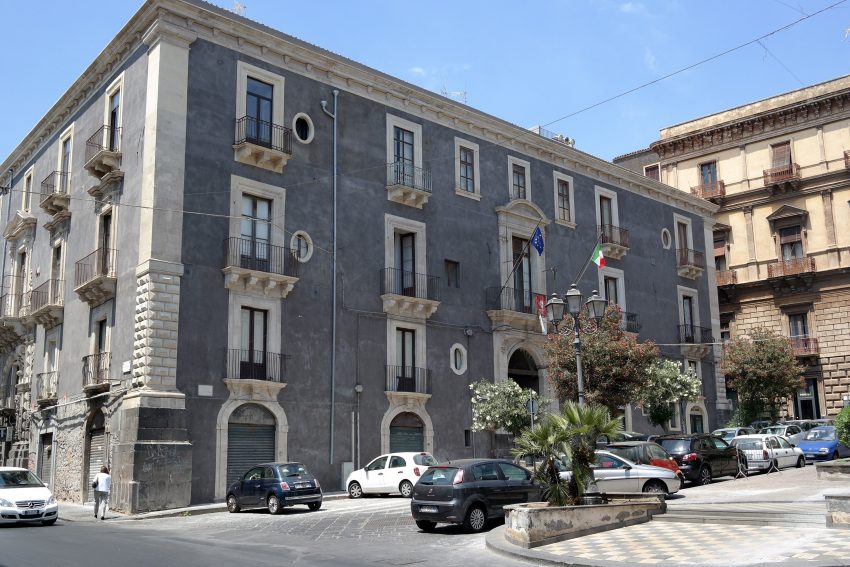
Palazzo Gravina Cruyllas a Catania
CC BY-SA 4.0 / Luca Aless
Museo Vincenzo Bellini in Catania is a small museum devoted to the city’s celebrated composer, set in Palazzo Gravina Cruylas, traditionally identified as his birthplace. Inside, the experience leans theatrical: rooms are staged like sets, with sound, short films, and audio accompaniment (often in Italian and English) guiding you through Bellini’s brief career and the operas that made his bel canto style influential. Expect more atmosphere and storytelling than period furnishings—the “house” spaces are relatively bare, but the multimedia sections give the visit its emotional weight. Visitors tend to remember the chronological, room-by-room narrative and the way famous arias are used to anchor key moments in his life.
Location: Palazzo Gravina-Cruyllas, Catania, Metropolitan city of Catania, Italy | Hours: Monday: 09:00–13:00. Tuesday – Saturday: 09:00–19:00. Sunday: 09:00–13:00. | Price: Adults: €5. | Website | Distance: 0.6km

23. Piazza del Duomo

Piazza del Duomo
Piazza del Duomo
CC BY-SA 4.0 / Luca Aless
Piazza del Duomo is Catania’s central square, rebuilt in Baroque style after the 1693 earthquake and still the city’s busiest meeting point. At its center stands the black lava-stone elephant with an obelisk on its back—placed here by architect Giovanni Battista Vaccarini and treated as a local symbol, even if its meaning is debated. Around you, the cathedral and the town hall face each other across the open space, with the Palace of the Clerics looking toward the Amenano Fountain, fed by an underground river. Three main streets converge here, including Via Etnea, aligned with the ancient Roman north–south axis. In early February, Sant’Agata festivities fill the square with processions, music, and fireworks.
Location: Piazza del Duomo, 95100 Catania CT, Italy | Hours: 24 Hours. | Price: Free. | Distance: 0.7km

24. Fontana dell'Elefante

Fontana dell’Elefante (uʻ Liotru)
CC BY-SA 2.0 / Benjamin Smith
Fontana dell’Elefante is the small but commanding monument at the center of Piazza del Duomo in Catania: a black basalt elephant, nicknamed U Liotru, carrying an Egyptian-style granite obelisk. Created by Giovanni Battista Vaccarini in 1735–1737 during the city’s post-1693 earthquake rebuilding, it has become Catania’s civic emblem. Visitors notice the sharp contrast between the dark lava stone and the white marble base, which is carved with figures linked to the Simeto and Amenano rivers. Look up to the obelisk’s stacked symbols—a globe, palm leaves, lilies, a tablet dedicated to Saint Agatha, and a cross—silhouetted against the pale Baroque façades.
Location: Piazza del Duomo, 95124 Catania CT, Italy | Hours: 24 Hours. | Price: Free. | Distance: 0.7km

25. Chiesa della Badia di Sant'Agata

Chiesa della Badia di Sant’Agata
CC BY-SA 3.0 / giggel
Chiesa della Badia di Sant’Agata is an 18th-century Roman Catholic Baroque church in central Catania, built for a Benedictine convent and dedicated to the city’s patron saint. Rebuilt after the 1693 earthquake, it was designed from 1736 by Giovanni Battista Vaccarini, incorporating a surviving 17th-century portal from the earlier complex. Inside, visitors notice the elongated octagonal plan, pale marble floors with warm yellow Castronovo stone, and a metal grille that once let cloistered nuns follow Mass unseen. The paid climb to the terraces and octagonal dome—often described as narrow and stair-heavy—ends with sweeping rooftop views over the city and, on clear days, Mount Etna.
Location: Via Vittorio Emanuele II, 182, 95131 Catania CT, Italy | Hours: Monday – Saturday: 09:30–12:30 & 16:30–20:00. Sunday: 09:30–13:00 & 16:30–20:00. | Price: Church: free. Terraces & dome walkway: €5.00 per person. | Website | Distance: 0.7km

26. Basilica Cattedrale di Sant'Agata

Basilica Cattedrale di Sant’Agata
CC BY-SA 4.0 / Matthias Süßen
Basilica Cattedrale di Sant’Agata is Catania’s main cathedral on Piazza del Duomo, rebuilt in Sicilian Baroque after the 1693 earthquake. The 1700 façade rises in three tiers with niches and columns of Corinthian granite, and the central wooden door is carved with 32 panels narrating the saint’s life. Inside, the Latin-cross layout opens into three naves, with a notably older apse dating to the 12th century and a dome added in 1802. Visitors often seek out the tomb of composer Vincenzo Bellini and pause at the cryptic N.O.P.A.Q.V.I.E. inscription promising Agatha’s revenge for wrongs against her land. The marble interior feels calm and carefully kept.
Location: Piazza del Duomo, 95100 Catania CT, Italy | Hours: Monday – Saturday: 07:15–12:30 & 16:00–19:00. Sunday: 07:45–12:30 & 16:00–19:00. | Price: Free; donations appreciated. | Website | Distance: 0.7km

27. Casa di Giovanni Verga
Casa di Giovanni Verga
public domain / Inviaggiocommons
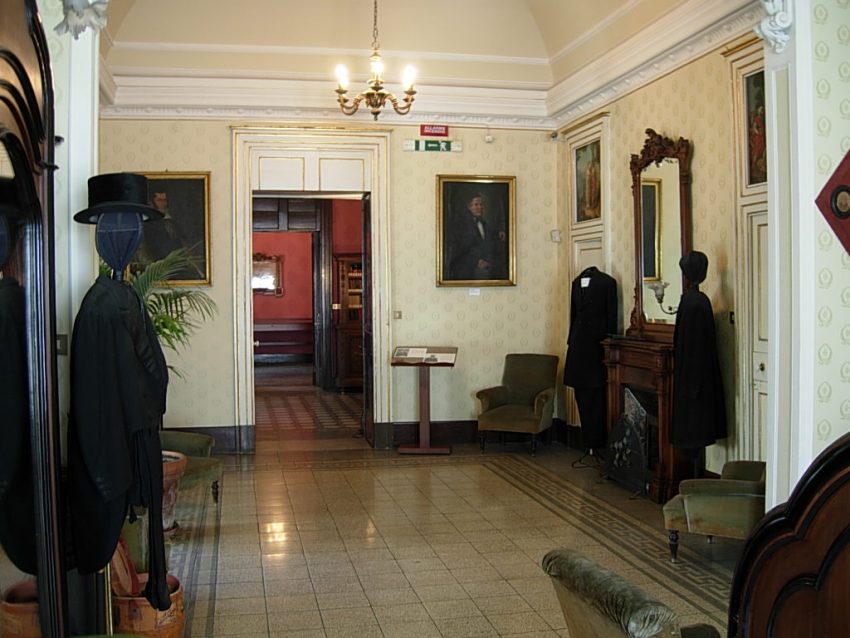
Casa di Giovanni Verga is the preserved Verga family apartment in Catania’s historic center, where the verismo writer Giovanni Verga died in 1922 and where his world still feels close at hand. Reached by a stairway from the street, the rooms are kept like a late-19th-century home, starting with a sitting room that displays manuscript copies and a sculpted bust of the author. The most memorable space is the library: shelves hold more than 2,500 volumes, with a table of personal objects that anchors the room’s quiet, working atmosphere. Look for the death mask of his father in a wooden case, and the small dining room with its old dumbwaiter leading up to the kitchen.
Location: Via Sant'Anna, 8, 95124 Catania CT, Italy | Hours: Monday – Saturday: 08:30–13:30. Sunday: Closed. Closed on Sunday. | Price: Adults: €4; Reduced: €2. | Website | Distance: 0.7km

28. Fontana dell’Amenano
Fontana dell’Amenano
CC BY-SA 2.0 / gnuckx
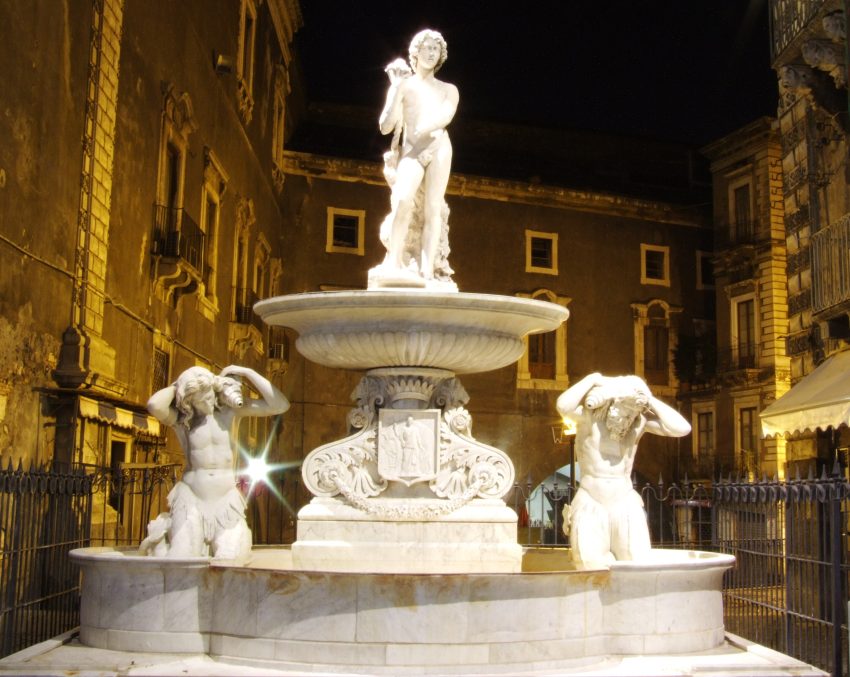
Fontana dell’Amenano is a 19th-century Carrara-marble fountain (1867) by sculptor Tito Angelini, set at the edge of Piazza del Duomo where the formal square meets Catania’s working fish market. It personifies the buried Amenano River as a youthful figure clutching a cornucopia, with water spilling into a rounded basin. The flow is engineered to fall in a thin, continuous “sheet,” a local effect nicknamed acqua a linzolu, and the water drops toward the river channel running below the city. Stand back to read the full sculpture against the baroque backdrop, then step closer to watch the curtain-like cascade before the market’s noise takes over behind it.
Location: Piazza del Duomo, 95131 Catania CT, Italy | Hours: 24 Hours. | Price: Free. | Distance: 0.7km

29. Church of Santa Maria dell'Aiuto

Church of Santa Maria dell’Aiuto
CC BY-SA 3.0 / Pequod76
In Catania, the Church of Santa Maria dell’Aiuto is a compact sanctuary centered on devotion to the Madonna dell’Aiuto icon, revered since the 1300s and said to have survived the 1693 earthquake. Rebuilt after that disaster by architect Antonino Battaglia, it leads through a single nave to a deep presbytery framed by a triumphal arch, with golden stucco, Marian emblems, and four side altars. The most unusual stop is the small-scale replica of the Holy House of Loreto, added in the 1740s, which gives the visit a pilgrimage feel. Outside, look for the Corinthian-column façade with Saints Peter and Paul and a bell tower with a clock; opening hours can be unpredictable.
Location: Via Santa Maria dell'Aiuto, 80, 95121 Catania CT, Italy | Hours: Daily: 10:00–20:00. | Price: Free; donations appreciated. | Website | Distance: 0.8km

30. Teatro Massimo Bellini

Teatro Massimo Bellini
Public Domain / Louisvhn
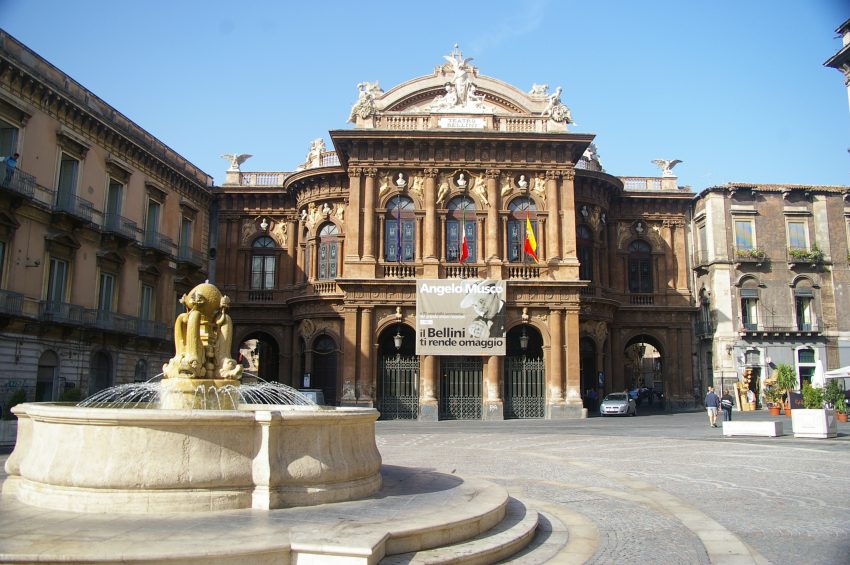
Teatro Massimo Bellini is Catania’s grand 19th-century opera house, dedicated to hometown composer Vincenzo Bellini and still central to the city’s performing-arts life. Opened in 1890 with Bellini’s “Norma,” it was the long-delayed answer to plans first imagined after the 1693 earthquake, finally realized on Piazza Vincenzo Bellini. Visitors remember the French Second Empire flair inspired by the Paris Opéra: a marble “Ridotto” foyer with a Bellini statue, red plush seating, and four tiers of ornate boxes. Look up for Ernesto Bellandi’s painted ceiling, which depicts scenes from Bellini’s operas. Reviews often single out the acoustics and the sense of occasion inside.
Location: Via Giuseppe Perrotta, 12, 95131 Catania CT, Italy | Hours: Monday: Closed. Tuesday: 09:00–13:00. Wednesday: 09:00–13:00 & 16:00–18:00. Thursday: 09:00–13:00 & 16:00–18:00. Friday: 09:00–13:00 & 16:00–18:00. Saturday: 09:30–13:00. Sunday: Opens 1 hour before scheduled performances. | Price: Guided tour: €6.50 (standard); €4.50 (reduced). Prices vary by show. | Website | Distance: 0.8km

31. Vico Orto Botanico

Vico Orto Botanico
Vico Orto Botanico
CC BY-SA 4.0 / Cayambe
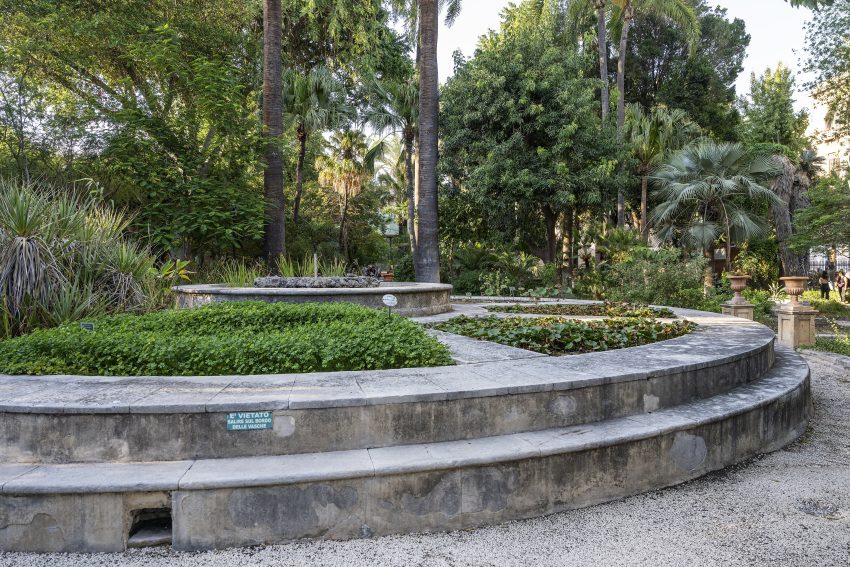
Vico Orto Botanico is a quiet lane beside the University of Catania’s Orto Botanico, a 16,000-square-meter garden run by the university’s botany department and linked to international conservation networks (BGCI). The garden grew out of a mid-19th-century project, formally established in 1858 by the Benedictine botanist Francis Roccaforte Tornabene, with early plantings sourced from gardens as far as Sweden and France. Visitors notice the split layout: the larger Hortus Generalis arranges exotic species in limestone-edged squares with greenhouses and aquatic tanks, while the smaller Hortus Siculus uses lava-stone borders to group Sicilian plants by botanical family. A neoclassical departmental building adds a scholarly, architectural punctuation to the greenery.
Location: Vico Orto Botanico, 95125 Catania CT, Italy | Hours: Monday – Friday: 09:00–18:00. Saturday: 09:30–12:30. Sunday: Closed. | Price: Check official website. | Website | Distance: 0.8km

32. La Pescheria

Storico mercato del pesce di Catania
CC BY-SA 2.0 / Berthold Werner
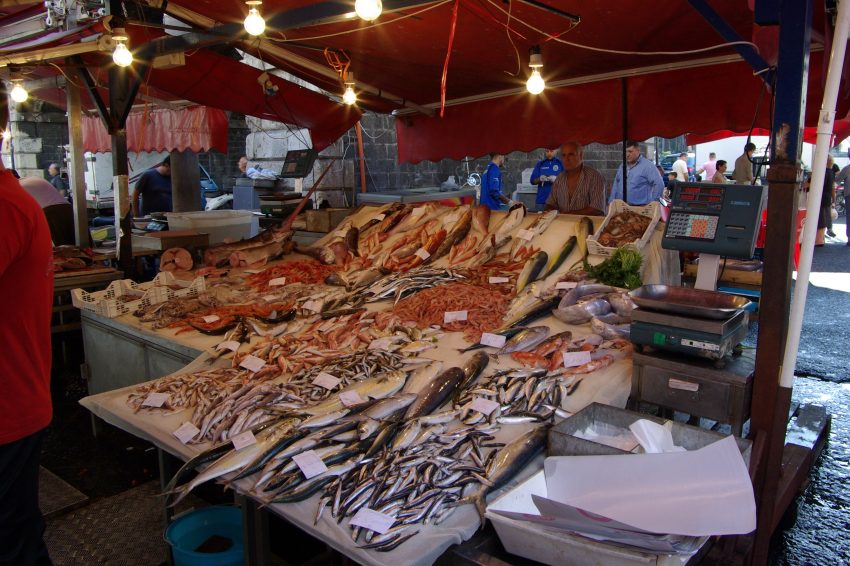
La Pescheria (A’ Piscaria) is Catania’s raucous morning fish market, a daily ritual that’s been running since the early 1800s. Under red awnings, stalls spill from street to street and seem to vanish into lanes before popping up again, creating a maze of marble counters and wet pavement. What visitors remember is the sensory overload: vendors shouting for attention, knives flashing as fish are cleaned and sliced, and the sharp sea smell hanging in the air. The catch can be startlingly varied—sea bass, swordfish, shrimp, squid, plus cockles, clams, mussels, and sea urchins—sometimes still twitching. Arrive early to see it at full throttle.
Location: Via Cardinale Dusmet, 1, 95131 Catania CT, Italy | Hours: Monday – Saturday: 07:00–14:00. Closed on Sunday. | Price: Free. | Distance: 0.8km
Powered by GetYourGuide

33. Porta Uzeda

Porta Uzeda
Porta Uzeda
CC BY-SA 4.0 / Antony-22
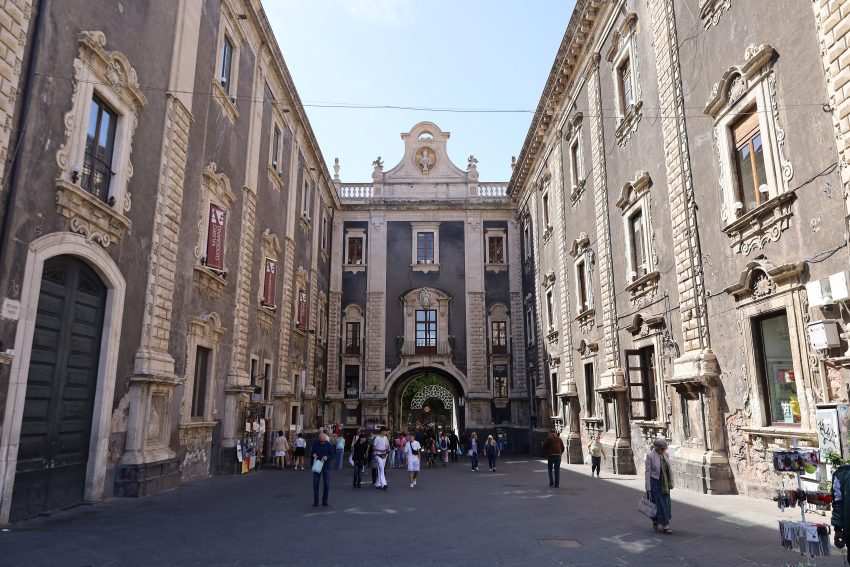
Porta Uzeda is a late-17th-century Baroque city gate that marks the edge of Piazza del Duomo and the threshold toward Catania’s port side. Built in 1695–1696 under the Duke of Camastra, it was dedicated to the Spanish viceroy Duke of Uzeda for his role in rebuilding after the 1693 earthquake. Visitors notice the crisp contrast of black lava stone and white marble on the façade, echoing the adjoining Chierici Palace and the former Clerks’ Seminary (now tied to the Diocesan Museum). Passing through the arch, the view shifts from cathedral-square grandeur to Via Dusmet and the sea-facing streets, and from nearby terraces you can take in the Baroque skyline with Mount Etna to the north.
Location: Piazza del Duomo, 95121 Catania CT, Italy | Hours: 24 Hours. | Price: Free. | Website | Distance: 0.8km

34. Palazzo Biscari
Palazzo Biscari
Palazzo Biscari
CC BY-SA 3.0 / Edgar El
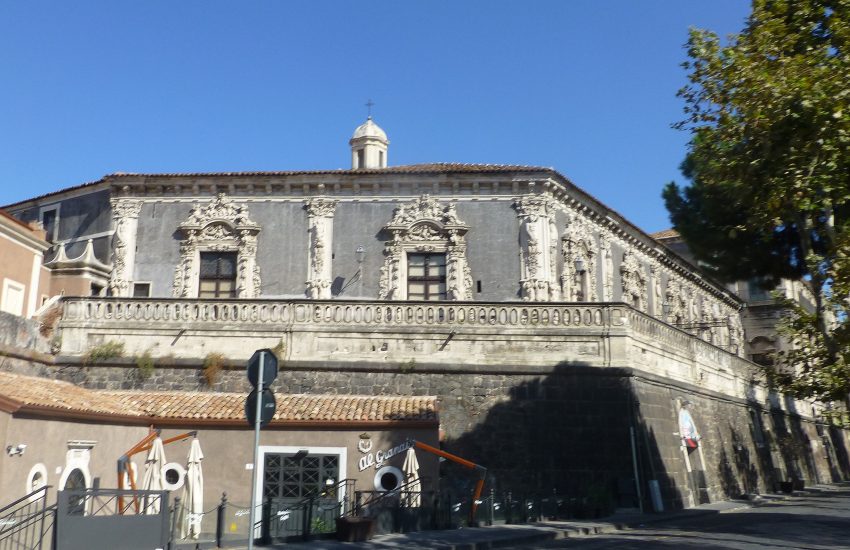
Palazzo Biscari is an 18th-century aristocratic residence in Catania, built after the 1693 earthquake by the Paternò Castello princes as a statement of Sicilian Baroque power and taste. Entry is through a stone portal carved with cartouches and the Biscari coat of arms, opening into a courtyard with an exterior staircase. Inside, the mood turns Rococo: stucco swirls, frescoed ceilings, and intricate woodwork lead to the great octagonal ballroom, where mirrors and painted decoration surround a dome balcony designed to hold an orchestra. Rooms have vivid identities, from the Fief Room’s paintings of feudal lands to the Princess Apartment paved with salvaged Roman marble.
Location: Via Museo Biscari, 10, 95131 Catania CT, Italy | Hours: Monday – Thursday: 10:00–13:00 & 16:00–19:00. Friday – Saturday: 10:00–13:00. Sunday: 11:00–11:30. Closed on Friday, Saturday, Sunday (afternoons). | Price: Adults: €10; Reduced: €7; Under 10: free. | Website | Distance: 0.9km

35. Ursino Castle

Ursino Castle Catania
CC BY-SA 4.0 / Ranchino
Ursino Castle is a stern 13th-century fortress in Catania—nicknamed the “Bear Castle”—that now serves as the city’s civic museum, keeping its medieval bones while housing archaeology and art. You notice the tough rectangular plan immediately: four round corner towers and an open courtyard that still feels designed to pull you back into a protected core. Inside, ground-floor rooms display Greek and Roman objects from the Biscari collection—vases, sculpture, mosaics, and an unusually strong coin cabinet—before the upper galleries shift to 15th–19th century painting, including works by Jusepe de Ribera and Pietro Novelli. Visitors often remember how quiet it can feel for such a substantial castle, and the contrast between brooding stone walls and carefully lit museum cases.
Location: Ursino Castle, Piazza Federico di Svevia, Catania, Metropolitan city of Catania, Italy | Hours: Daily: 09:00–19:00. Last entry: 18:00. | Price: €6.00 standard; €3.00 reduced; €2.00 schools. | Website | Distance: 1km

36. Mario Cutelli
Mario Cutelli
Mario Cutelli
CC BY-SA 3.0 / giggel
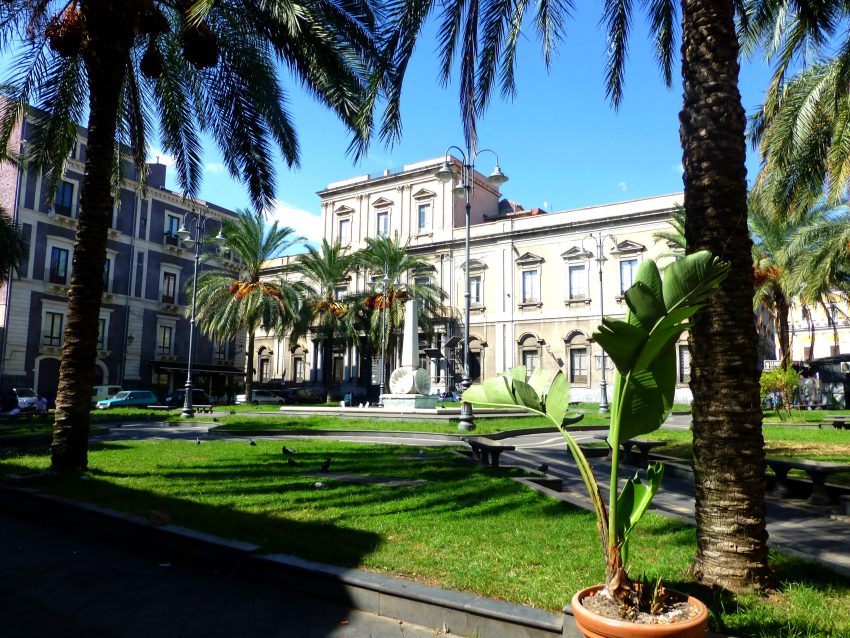
Convitto Nazionale “Mario Cutelli” is a working boarding school in central Catania, housed in an 18th-century building raised during the city’s post-earthquake rebuilding. From Via Vittorio Emanuele II, the long, restrained façade by Francesco Battaglia reads as civic architecture rather than a museum front. If access is possible, the memorable space is the monumental circular courtyard attributed to Giovan Battista Vaccarini, with a crisp black-and-white patterned floor and figures of Time and Fame beneath a clock tower. Inside, a marble staircase leads to a Great Hall painted with Sicilian thinkers such as Empedocles and Theocritus. A plaque on the exterior recalls the 1837 Bourbon-era trials held here.
Location: Via Vittorio Emanuele II, 56, 95131 Catania CT, Italy | Hours: Monday – Friday: 08:00–14:00. Closed on Saturday, Sunday. | Price: Check official website. | Website | Distance: 1km

37. Fontana dei Malavoglia
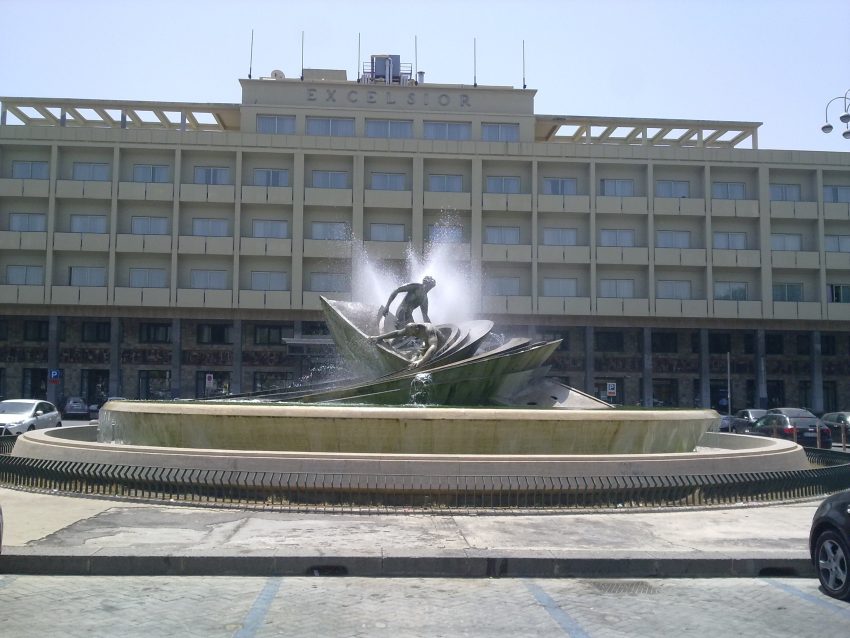
Fontana dei Malavoglia
Public Domain / Drunkpiper
Fontana dei Malavoglia is a monumental fountain in Piazza Giovanni Verga, a traffic-heavy square in modern Catania, created as a tribute to writer Giovanni Verga and his 1881 novel I Malavoglia. Sculptor Carmelo Mendola won a 1956 city competition, and the work was finally inaugurated on October 25, 1975, turning a key episode into a dramatic bronze-and-water tableau. At its center, the fishing boat “Provvidenza” bucks in stylized waves, with figures arranged to read differently as you circle the basin. When the jets and lighting are working, the scene feels theatrical; when they aren’t, you may notice the ring of cars and the gritty urban setting mentioned by some visitors. A major restoration in 2021 refreshed the systems, lighting, and original color.
Location: 95129 Catania, Metropolitan city of Catania, Italy | Hours: 24 Hours. | Price: Free. | Distance: 1.1km

38. Fontana del Ratto di Proserpina
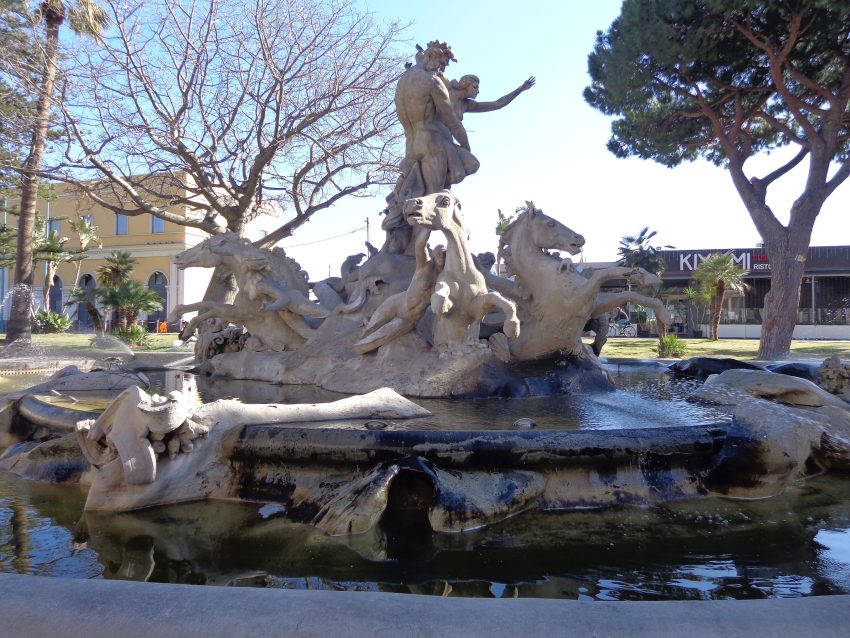
Fontana del Ratto di Proserpina
CC BY-SA 1.0 / Effems
Fontana del Ratto di Proserpina is a monumental 1904 fountain by sculptor Giulio Moschetti (with help from his son Mario), set at the end of Via VI Aprile beside Catania Centrale station. Its centerpiece stages the abduction of Proserpina by Hades, a Sicilian-rooted myth tied to Demeter and the seasonal return of growth, rendered as a tightly packed, theatrical sculptural group. Look for the rocky rise topped by the struggling figures, plus sea horses and mermaids circling the scene, all designed to read differently as you move around the basin. The wide pool was unusually made from raw concrete for the period, with undulating edges that catch reflections when the jets are running. The busy station setting can feel gritty, but the fountain’s scale makes it a clear landmark.
Location: Fontana del Ratto di Proserpina, 95129 Catania CT, Italy | Hours: 24 Hours. | Price: Free. | Distance: 1.4km

39. Museo Storico dello Sbarco in Sicilia 1943
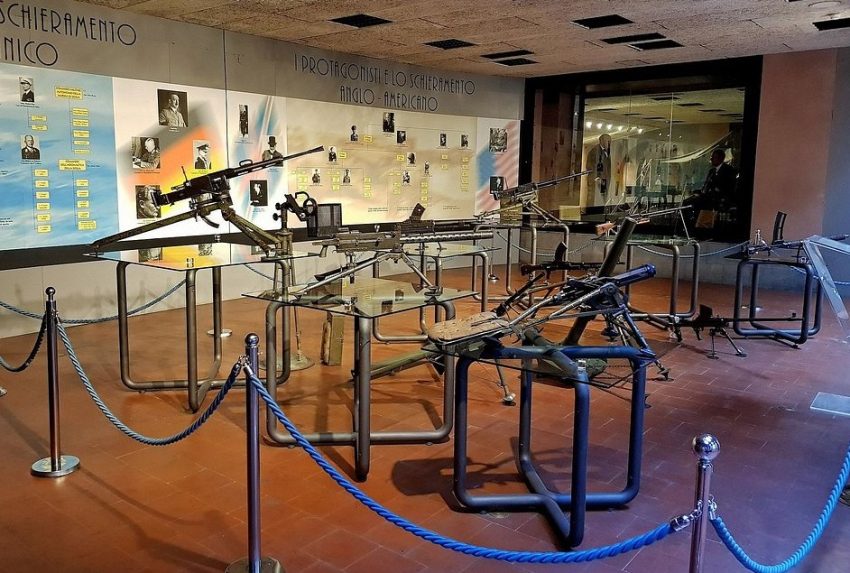
Museo Storico dello Sbarco in Sicilia 1943
CC BY-SA 2.0 /
Museo Storico dello Sbarco in Sicilia 1943 in Catania is a three-floor museum inside the Le Ciminiere complex that immerses visitors in Sicily’s World War II experience, especially the 1943 Allied landings (Operation Husky). It begins with a lifelike Sicilian piazza scene, then funnels you into a simulated air-raid shelter where sound-and-light effects recreate the chaos of bombardment before you emerge to a devastated streetscape. Across more than 11,000 square feet, you’ll find period newspapers, propaganda posters, campaign maps, hospital tents, bunkers, uniforms, and weapons. Unusual touches include wax figures of leaders such as Churchill, Roosevelt, Mussolini, and Hitler, and a digital memorial listing Allied personnel killed in the campaign.
Location: Piazzale Rocco Chinnici, 95129 Catania CT, Italy | Hours: Tuesday – Sunday: 09:00–17:00. Monday: Closed. | Price: Adults: €4; Reduced: €2; Under 6: free. | Website | Distance: 1.6km

40. Porto di Catania
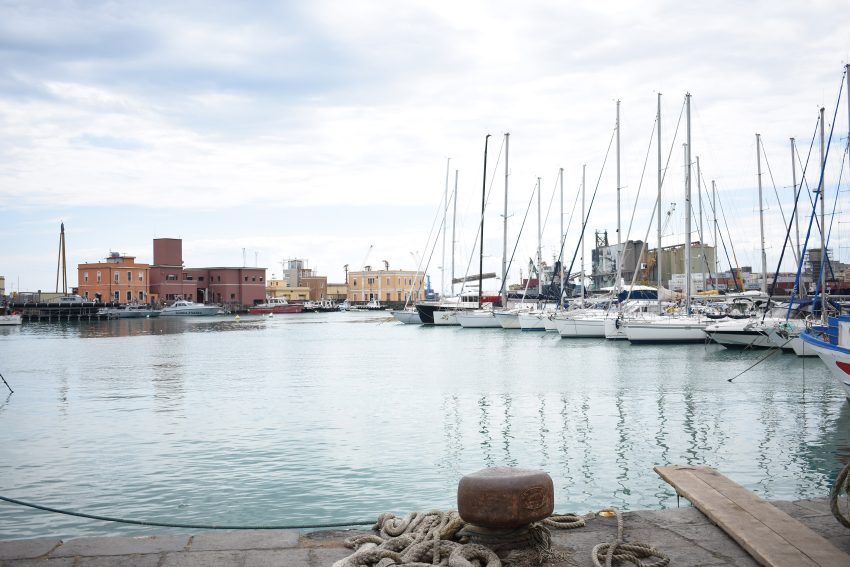
porto di Catania
porto di Catania
CC BY-SA 4.0 / Francesco Lombardi
Porto di Catania is Catania’s working Mediterranean harbor, a long-running gateway that still shapes how the city connects to Sicily and beyond. Begun in 1438 and repeatedly rebuilt after disasters, it now spreads across about 615,000 square meters and is split between an older western basin and a newer eastern area. The cruise terminal on the Sporgente Centrale Pier can berth up to five modern ships across three docks, alongside ferries, cargo operations, and yacht moorings. Visitors remember the contrast of industrial quays with open-water views, often with Mount Etna rising behind the waterfront on clear days. Locals and travelers linger near the boats and walk the pier at sunset for sea air and a surprisingly calm pause close to the center.
Location: 95100 Catania, Italy | Hours: 24 Hours. | Price: Free. | Website | Distance: 1.7km

41. Faro Sciara Biscari
Faro Sciara Biscari
Faro Sciara Biscari
CC BY-SA 4.0 / Fiorenzo Fiorenza
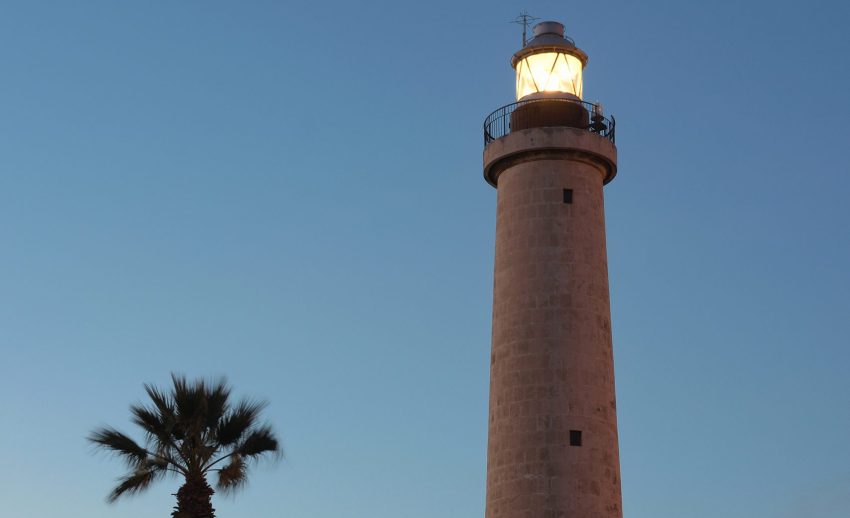
Faro Sciara Biscari is Catania’s modern seafront lighthouse, built in 1951 to guide ships approaching the port and often the first landmark travelers notice from a bus, taxi, or car near the Plaia roundabout. Its white tower with a gray lantern dome is designed for visibility, sending a white flash about every five seconds across the Ionian Sea. The name nods to the area’s volcanic character (“sciara” for lava fields) and the historic Biscari family. Although the tower isn’t open inside, people come for quick photos—especially at sunset, when the silhouette can line up with Mount Etna on clear days. Reviews echo that it’s frequently spotted in passing, more a memorable marker than a destination.
Location: Via Domenico Tempio, 78, 95121 Catania CT, Italy | Hours: 24 Hours. | Price: Free. | Distance: 2.1km

42. Spiaggia San Giovanni Licuti
Spiaggia San Giovanni Licuti
CC BY-SA 3.0 / Ainars Brūvelis
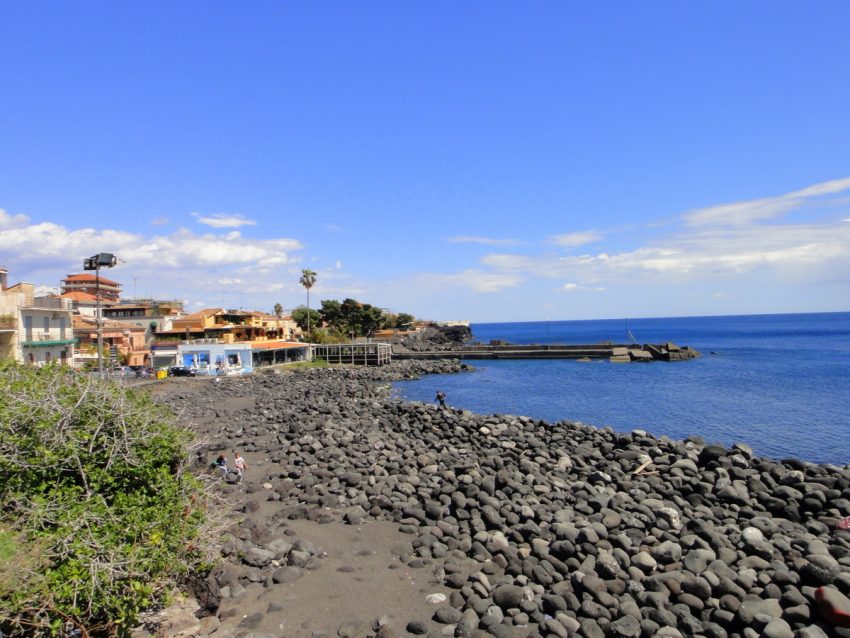
Spiaggia San Giovanni Li Cuti is a compact urban beach on Catania’s eastern waterfront, known for its black volcanic sand and lava-rock shoreline shaped by Mount Etna. The roughly 400-meter stretch mixes a lived-in fishing-borgo atmosphere with a dramatic, high-contrast seascape where waves meet dark rock and clear Ionian water. Many visitors come for a quick swim or snorkel, often entering from rocky steps or platforms and then sunbathing on warm stones. Just behind the shore, the small marina and pier add to the everyday coastal feel, with fishermen, boats, and a few simple bars for a drink or seafood nearby.
Location: Via S. Giovanni Li Cuti, 95100 Catania CT, Italy | Hours: 24 Hours. | Price: Free. | Distance: 2.6km

Best Day Trips from Catania

A day trip from Catania offers the perfect opportunity to escape the urban rhythm and discover the surrounding region's charm. Whether you're drawn to scenic countryside, historic villages, or cultural landmarks, the area around Catania provides a variety of easy-to-reach destinations ideal for a one-day itinerary. If you are looking to rent a car in Italy I recommend having a look at Discover Cars, first, as they compare prices and review multiple car rental agencies for you.

1. Castello Normanno
Castello Normanno
Castello Normanno
CC BY-SA 3.0 / Gabriele Falco
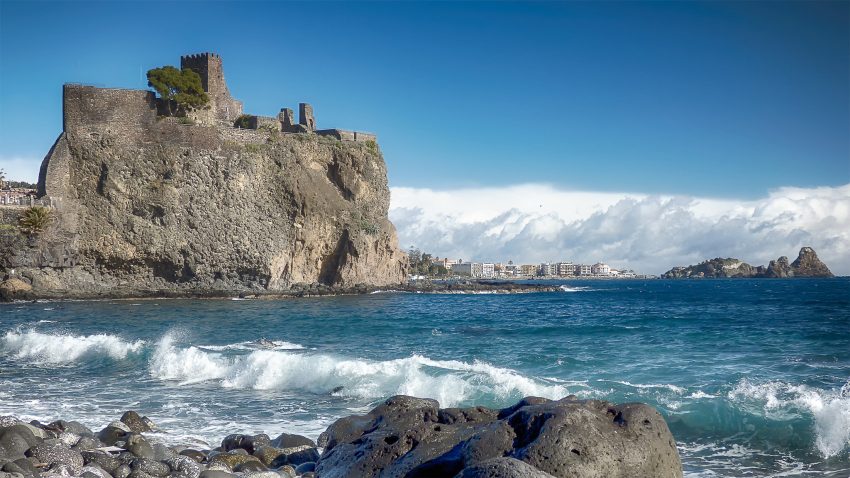
Castello Normanno in Aci Castello, just north of Catania, is a small coastal fortress built on a lava outcrop above the sea. The castle sits right at the edge of the waterfront, so the approach is as much part of the visit as the interior itself. Visitors come here for the setting first: dark volcanic rock, open water, and a…
Location: Castello Normanno - Svevo di Aci Castello, Piazza Castello, Aci Castello, Metropolitan city of Catania, Italy | Hours: (Summer) Daily: 09:30–20:30. (Winter) Daily: 09:30–17:30. | Price: €3.50 (adult); €2.00 reduced. | Website | Distance: 7.8km
Visiting Castello Normanno

2. Mount Etna
Day Trip to Mt Etna
Day Trip to Mt Etna
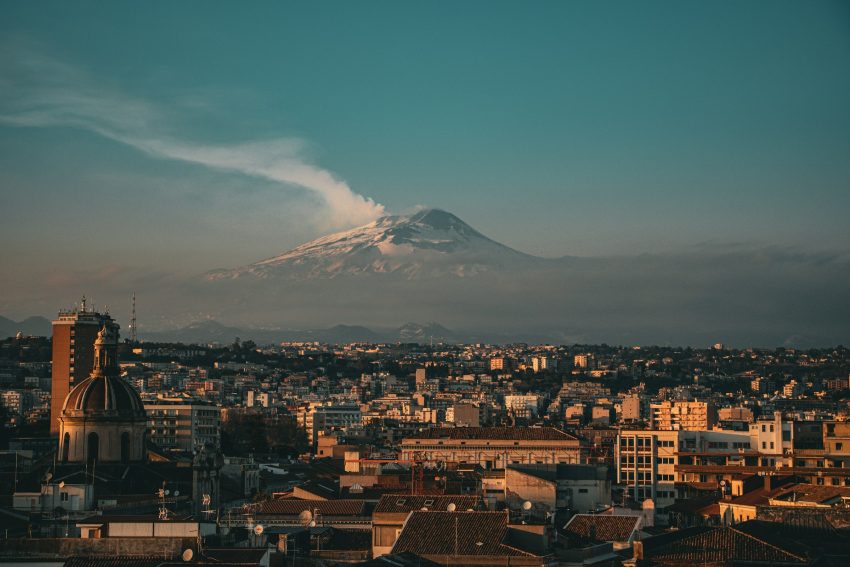
Mount Etna is the major volcanic attraction above Catania, in Sicily, and one of the easiest large natural sites to visit from the city. It is a living volcano, so the landscape is not a single viewpoint or parkland scene but a broad, changing mountain of lava fields, ash, crater cones, and high-altitude tracks. Even a short visit gives a…
Location: Mount Etna, Castiglione di Sicilia, Metropolitan city of Catania, Italy | Hours: Daily: 08:30–16:00. | Price: Free to visit (optional cable car experiences start from €30). | Website | Distance: 28.2km
Visiting Mount Etna
Powered by GetYourGuide

3. Teatro Antico di Taormina

Teatro Antico di Taormina
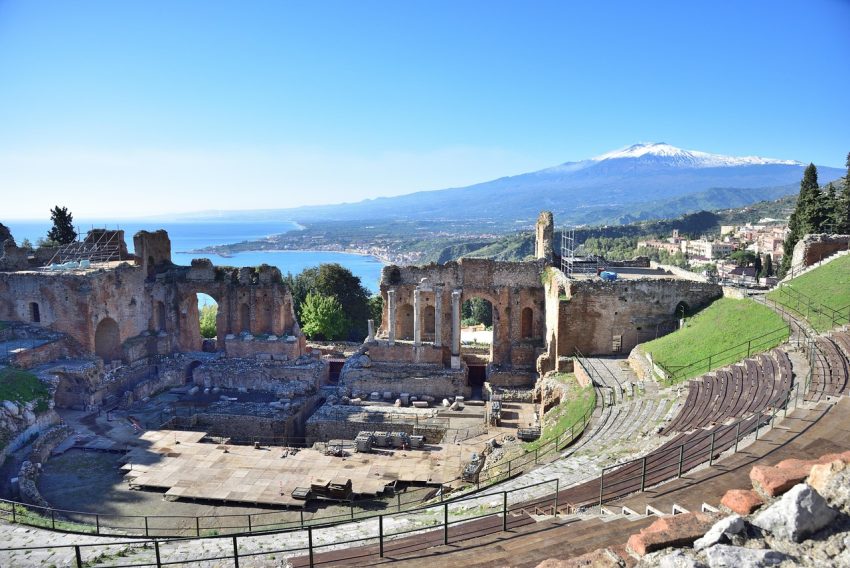
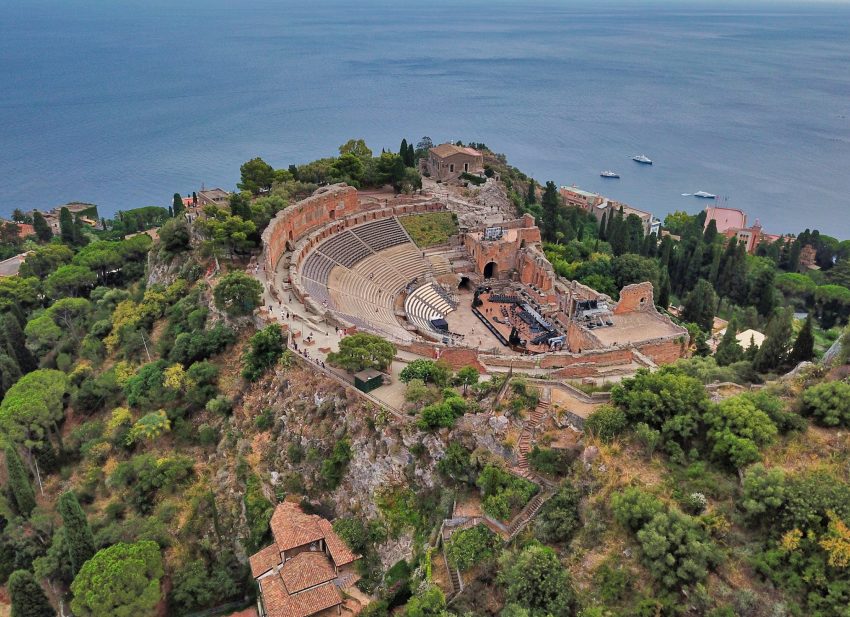
Teatro Antico di Taormina in Messina, Italy, is the town’s main ancient landmark: an open-air theatre set high above Taormina, just above the historic centre. Its location gives it an unusual mix of ruins and scenery, with the seating carved into the hillside and the stage area facing out toward the coast.What visitors notice first is the scale. The upper…
Location: Teatro Antico di Taormina, Via Teatro Greco, Taormina, Metropolitan City of Messina, Italy | Hours: Daily: 09:00–16:00. | Price: €14.00 (full); €7.00 (reduced). | Website | Distance: 42.5km
Visiting Teatro Antico di Taormina
Powered by GetYourGuide

4. Taormina

The Complete Guide to Taormina
Taormina is one of Sicily’s most rewarding bases for a short break: compact enough to explore on foot, yet packed with viewpoints, gardens, and café-lined lanes that make wandering feel like the main event. The town’s pedestrian-friendly core is ideal for slow travel—start with an easy stroll along Corso Umberto, dip into side streets for small boutiques and gelaterie, then…
Visiting Taormina

5. Syracuse

The Complete Guide to Syracuse
CC BY-SA 2.0 / Monika Guzikowska
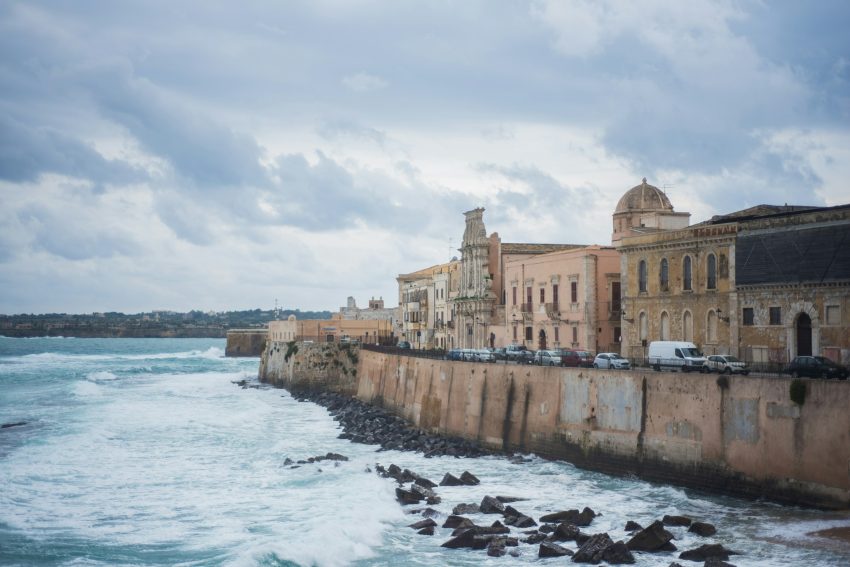
Syracuse is one of Sicily’s most rewarding coastal cities, set on the island’s sunlit southeast and wrapped in a mix of sea views, elegant streets, and lively local life. It’s a place where you can spend the morning wandering atmospheric lanes, pause for a long lunch of seafood and citrusy Sicilian flavors, then finish the day with a waterfront stroll…
Visiting Syracuse
Powered by GetYourGuide

6. Noto

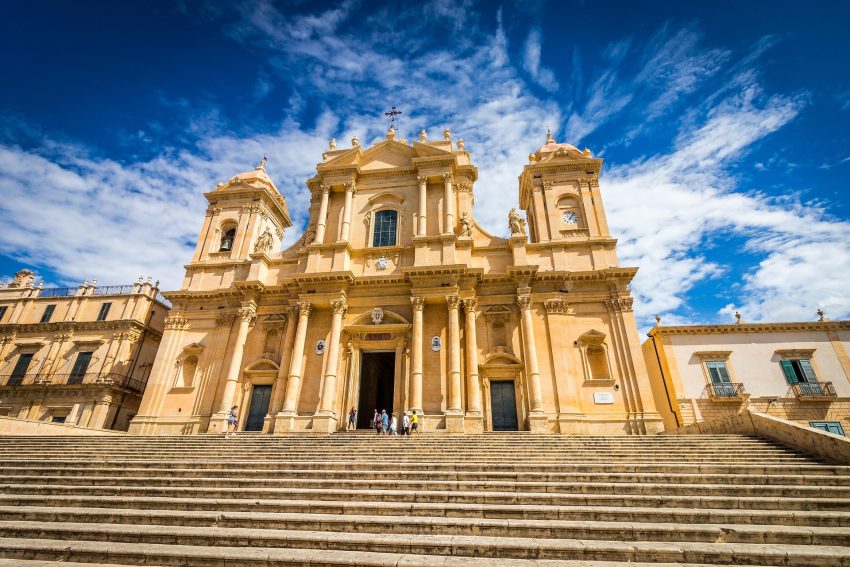
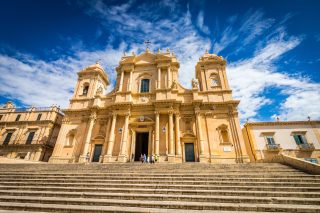
The Cathedral of San Nicolò in Noto, Sicily, a masterpiece of Baroque architecture
The Complete Guide to Noto
Noto is the definitive crown jewel of the Val di Noto. Rebuilt entirely in the wake of the devastating 1693 earthquake, this UNESCO World Heritage site is a rare example of a city designed with a singular, harmonious vision. Known as the "Stone Garden," the city is famous for its glowing, honey-colored limestone that seems to radiate warmth long after…
Visiting Noto
Powered by GetYourGuide

7. Messina

messina
messina
Visiting Messina, the gateway to Sicily, offers a unique blend of rich history, stunning architecture, and vibrant culture. Situated on the northeastern tip of the island, Messina has long served as a crucial crossroads in the Mediterranean, reflected in its diverse cultural influences. The city is known for its impressive landmarks, such as the Cathedral of Messina with its ornate…
Visiting Messina
Powered by GetYourGuide

8. Agrigento

Agrigento & Valley of the Temples
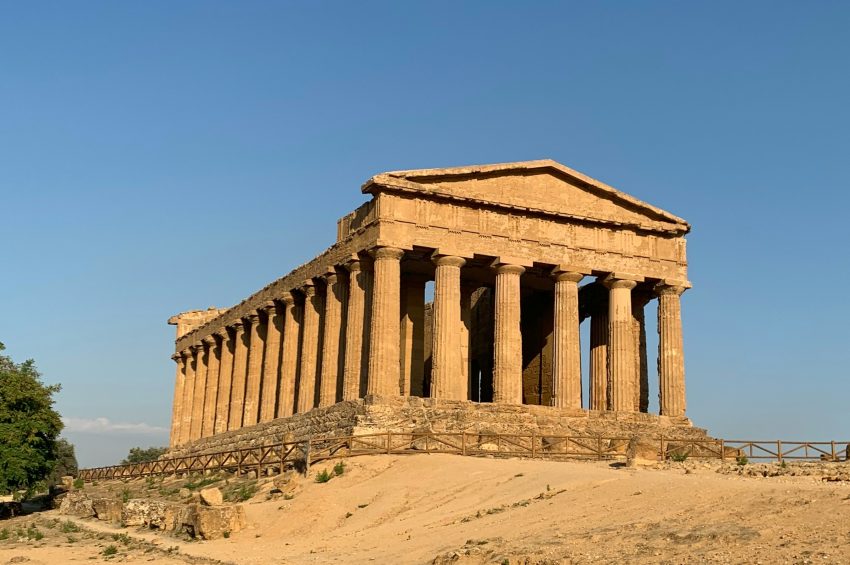
Visiting Agrigento, located on the southern coast of Sicily, offers a remarkable journey into the ancient world. The city is best known for the Valley of the Temples, a stunning archaeological site that dates back to the 5th century BC. This UNESCO World Heritage site features some of the best-preserved ancient Greek temples outside of Greece, including the Temple of…
Visiting Agrigento
Powered by GetYourGuide

Where to Stay in Catania

The best area to stay is in the city center, near Piazza Duomo and Via Etnea, where most historical landmarks and restaurants are located. For beach lovers, the Playa di Catania area offers resorts with direct seaside access.

Catania can be explored in 2 to 3 days, covering the Roman ruins, Mount Etna excursions, and vibrant markets. A 4 to 5-day stay allows for day trips to Taormina, Syracuse, or the Baroque towns of the Val di Noto.

Using the our Hotel and Accomodation map, you can compare hotels and short-term rental accommodations in Catania. Simply insert your travel dates and group size, and you’ll see the best deals for your stay.

Catania Accommodation Map

Best Time to Visit Catania

Visiting Catania in Spring (Best)

Spring, from March to May, is the best time to visit Catania. The weather is mild and pleasant, with temperatures ranging from 15°C to 24°C (59°F to 75°F), making it ideal for exploring the city’s historic sites and enjoying outdoor activities. The blooming flowers and lush landscapes enhance the beauty of the area, and the city is less crowded than during the summer months, providing a more relaxed experience.

Visiting Catania in Summer

Summer, from June to August, is the peak tourist season in Catania. The weather is hot, with temperatures often exceeding 30°C (86°F), perfect for enjoying the beaches and the vibrant nightlife. However, the heat can be intense, especially during the day, and the city is crowded with tourists. Despite this, summer is a lively time to experience Catania’s festivals and outdoor events.

Visiting Catania in Autumn

Autumn, from September to November, offers cooler temperatures, ranging from 18°C to 26°C (64°F to 79°F). The summer crowds begin to thin out, making it a great time to explore the city’s attractions and nearby Mount Etna. The harvest season also brings a variety of local food festivals, offering a taste of Sicily’s rich culinary traditions.

Visiting Catania in Winter

Winter, from December to February, is the quietest time to visit Catania. The temperatures are cooler, ranging from 10°C to 17°C (50°F to 63°F), and the city sees fewer tourists. While some outdoor activities may be limited due to the cooler weather, winter is an excellent time to explore Catania’s cultural sites, museums, and enjoy the festive holiday atmosphere with fewer crowds.

Annual Weather Overview

  • January 15°C
  • February 16°C
  • March 17°C
  • April 20°C
  • May 25°C
  • June 29°C
  • July 32°C
  • August 30°C
  • September 29°C
  • October 26°C
  • November 20°C
  • December 17°C

How to get to Catania

Traveling to Catania by Air

Catania is served by Catania-Fontanarossa Airport (CTA), the main airport in eastern Sicily and one of the busiest in Italy. The airport offers both domestic and international flights, with connections to major cities across Europe and beyond. From the airport, you can easily reach the city center by taxi, bus, or rental car, with the drive taking around 15 minutes.

Traveling to Catania by Train

Catania is well-connected by train to other major cities in Sicily and mainland Italy. The city's main train station, Catania Centrale, is located close to the city center. Trains run regularly to and from cities like Palermo, Messina, and Syracuse, as well as long-distance services connecting to Rome and Naples via ferry. The train journey provides scenic views of Sicily's countryside and coastlines.

Traveling to Catania by Ferry

Catania has a busy port that offers ferry connections to various destinations, including mainland Italy and other Mediterranean locations. Regular ferries operate from Naples, Salerno, and Malta, providing an alternative way to reach Catania. The ferry port is conveniently located near the city center, making it easy to access local accommodations and attractions upon arrival.

Traveling to Catania by Car

Driving to Catania is an option if you are already in Sicily or planning to explore the island by car. The city is accessible via the A18 and A19 motorways, which connect Catania to Messina, Palermo, and other parts of Sicily. Having a car allows you to explore the surrounding areas, including Mount Etna and the beautiful Sicilian countryside, at your own pace.

Traveling to Catania by Bus

Catania is well-served by regional and long-distance buses, with services connecting the city to various towns and cities across Sicily and mainland Italy. The main bus station, located near Catania Centrale train station, is a hub for both local and long-distance routes. Buses are a convenient and cost-effective way to reach Catania, especially if you're traveling from nearby cities like Taormina, Syracuse, or Palermo.
Powered by GetYourGuide

More from this area