Self-Guided Walking Tour of Santa Cruz de Tenerife (2026)
This website uses affiliate links which earn a small commission at no additional cost to you.
Santa Cruz de Tenerife is a city that rewards slow exploring. It's compact enough to tackle on foot, but varied enough to feel like a proper journey: grand civic buildings and leafy plazas give way to local markets, Atlantic breezes, and pockets of modern design. A self-guided walking tour lets you move at your own pace, pausing for coffee, dipping into a museum, or detouring down a side street when something catches your eye.
This route is designed to stitch together the city’s highlights in a logical loop, mixing the everyday Santa Cruz with its headline sights. You’ll pass through the historic heart where the city’s institutions and older churches anchor the streetscape, then drift toward areas shaped by later growth-wider avenues, cultural venues, and open-air spaces that locals actually use. Along the way you’ll get a clear sense of how the capital of Tenerife balances tradition with a confident, contemporary feel.
If you're short on time, the walk works as a greatest-hits introduction; if you have longer, it's a framework you can stretch with stops for shopping, galleries, or a long lunch. Either way, it's one of the easiest ways to cover the best things to see in Santa Cruz de Tenerife without over-planning, and it helps you understand the city's layout quickly-what's clustered together, what's worth a detour, and where you'll want to linger.
Table of Contents
- How to Get to Santa Cruz de Tenerife
- Oficina de Turismo del Palacio de Carta
- Real Casino de Tenerife
- Castillo de San Cristóbal
- Cabildo insular
- Plaza de España
- Plaza de la Candelaria
- Parroquia de la Concepción
- Museo de la Naturaleza y Arqueología
- Auditorio de Tenerife
- Castle of San Juan Bautista
- Casa de la Pólvora
- Parque Marítimo César Manrique
- Palmetum of Santa Cruz de Tenerife
- Las Torres de Santa Cruz
- Mercado Nuestra Señora de África
- Tenerife Espacio de las Artes
- Puente Serrador
- Centro de Arte la Recova
- Calle del Castillo
- Plaza Weyler
- Plaza de los Patos
- Iglesia San Jorge
- Parque García Sanabria
- Parroquia de Nuestra Señora del Pilar
- Plaza del Príncipe de Asturias
- Círculo de Amistad XII de Enero
- Parish of St. Francisco de Asís
How to Get to Santa Cruz de Tenerife
By Air: Most visitors arrive via Tenerife North Airport (TFN) or Tenerife South Airport (TFS). TFN is the closest to Santa Cruz and is usually the quickest option for reaching the city, with straightforward transfers by taxi, ride-hailing where available, or frequent intercity buses. TFS is larger and handles most international and low-cost flights, but it’s farther away, so allow extra time for the transfer north. If you’re connecting between airports, plan carefully around traffic and bus timetables, especially at peak hours. For the best deals and a seamless booking experience, check out these flights to Santa Cruz de Tenerife on Booking.com.
By Car: Driving into Santa Cruz is straightforward, with the TF-1 and TF-5 providing the main approaches from the south and north of Tenerife. A car is handy if you’re combining the city with coastal stops or mountain scenery, but parking in central areas can be tight, so it’s often best to aim for paid car parks rather than street spaces-especially on weekdays. If you’re coming in for a day visit, consider arriving earlier to avoid congestion and to secure parking closer to the centre. If you are looking to rent a car in Spain I recommend having a look at Discover Cars, first, as they compare prices and review multiple car rental agencies for you.
1. Oficina de Turismo del Palacio de Carta
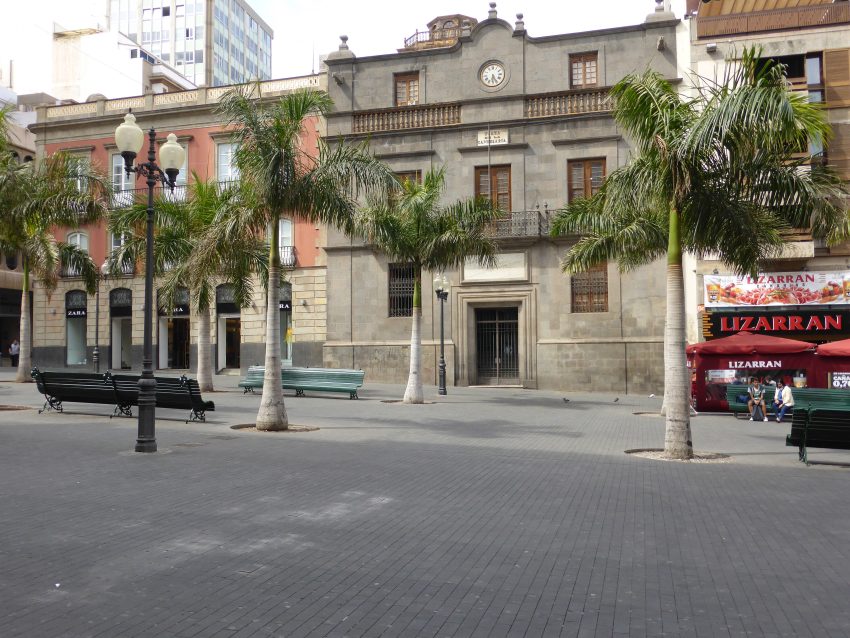
The tourist office in the Palacio de Carta has the advantage of being housed in a historic building, so even a practical stop can double as a quick architectural visit. Palacio de Carta itself represents the kind of elite urban residence that once signalled status and administrative importance in the city, and its presence near central public spaces makes it easy to include on foot.
What to see is the façade and any accessible interior features—stonework, balconies, and the overall proportioning that distinguishes an older civic-era building from the newer commercial frontages nearby. Even if you’re only stepping in for maps or advice, take a moment to look up and around; the building does some of the storytelling for you.
As a practical stop, it’s useful for confirming opening times, transport options, or what’s on that week. As a sightseeing stop, it’s a quick hit that anchors your sense of Santa Cruz’s historic centre before you continue toward plazas, museums, or the waterfront.
Location: Pl. de la Candelaria, 9, 38002 Santa Cruz de Tenerife, Spain | Hours: Monday – Friday: 09:00–17:00. Saturday: 09:00–14:00. Sunday: 09:00–14:00. | Price: Free. | Website


2. Real Casino de Tenerife
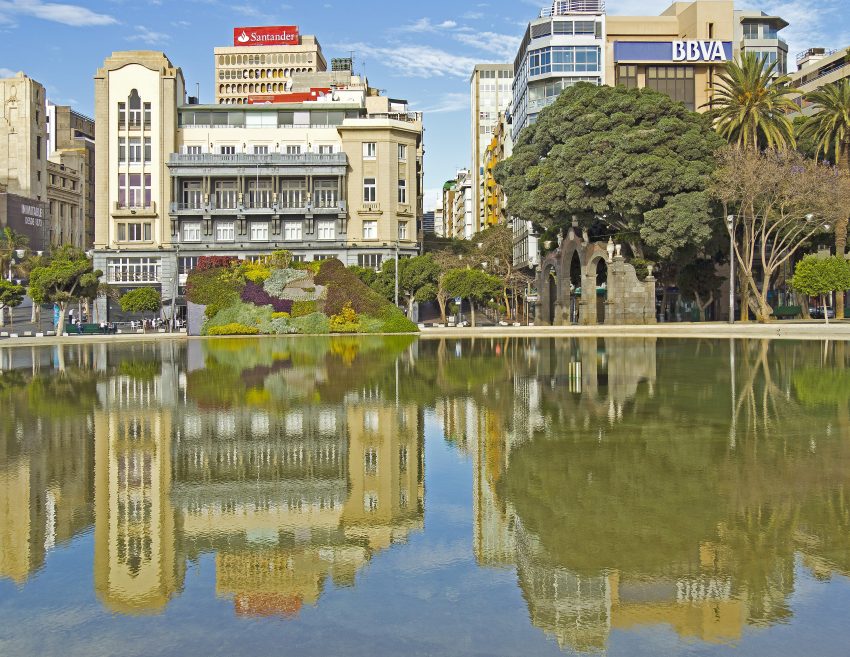
Real Casino de Tenerife is part of the same civic-club tradition as other European social institutions, historically associated with gatherings, cultural events, and a certain urban formality. In Santa Cruz, it signals a period when the city’s social life expressed itself through structured venues—places designed for conversation, music, and organised leisure rather than purely public street culture.
What to see is the building’s presence and detailing, which tends to communicate prestige and permanence. Even if you don’t enter, it’s worth noticing how it sits within the city’s central fabric, near other institutions that mark Santa Cruz as an administrative and cultural capital.
For visitors, the value is largely contextual: it helps you read the city as more than a port or a base for island excursions. Include it as a “look and understand” stop on a walking route, especially if you’re interested in how architecture reflects social structures.
Location: Pl. de la Candelaria, 12, 38002 Santa Cruz de Tenerife, Spain | Hours: Monday – Thursday: 07:00–23:00. Friday – Saturday: 07:00–00:00. Sunday: 07:00–23:00. | Price: Check official website. | Website
3. Castillo de San Cristóbal
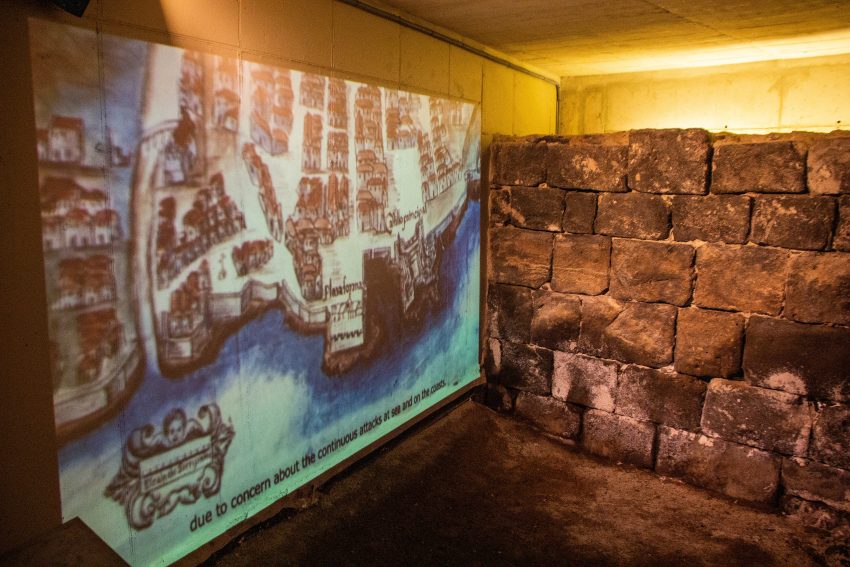
Castillo de San Cristóbal was one of Santa Cruz’s central coastal fortifications, built to defend the port and the urban core when sea-based threats were a constant reality. Although the original structure is no longer standing in full as an above-ground castle, its story remains crucial for understanding how Santa Cruz developed: as a defended harbour whose survival depended on artillery, logistics, and a network of coastal positions.
What to see today is the preserved remains and interpretive presentation that link the site to the modern Plaza de España area. The experience is partly archaeological and partly imaginative, inviting you to picture the old defensive line along a shoreline that has shifted with later urban projects. This is also where the city’s military history becomes more tangible, because you’re standing on the threshold between historic fortification and contemporary civic space.
Visit with the mindset of “layers under the city.” It’s a compact stop, but it deepens everything else you see nearby—the waterfront, the plazas, and the other defensive sites—by giving you the missing historical foundation that explains why Santa Cruz was built, contested, and fortified in the first place.
Location: s/n Plaza de España, 38003 Santa Cruz de Tenerife, Spain | Hours: Monday – Saturday: 10:00–18:00. Sunday: Closed. | Price: Free. | Website
4. Cabildo insular
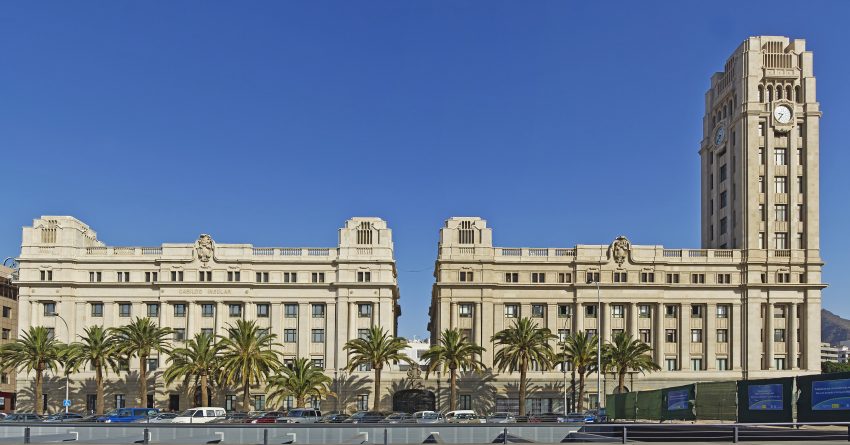
The Cabildo insular is a key institution in Tenerife’s governance, and in Santa Cruz it represents the island’s administrative identity in built form. Cabildo buildings tend to carry a civic gravity—designed to be recognisable, central, and symbolically “official,” reflecting the importance of the capital not just as a city, but as the seat of island-level decision-making.
What to see is the exterior architecture and the way the building relates to nearby streets and plazas. Even without going inside, you can read it as part of the civic landscape alongside courts, cultural institutions, and major public spaces. It’s also a useful waypoint because official buildings often sit in well-connected, walkable parts of the centre.
This is a stop for understanding rather than lingering. If you’re building a narrative walking tour, the Cabildo helps you explain Santa Cruz’s role within the island’s political and administrative structure, which in turn clarifies why the city feels different from resort towns elsewhere on Tenerife.
Location: Plaza de España, s/n, 38003 Santa Cruz de Tenerife, Spain | Hours: Monday – Friday: 08:30–18:00. Saturday: 09:00–13:00. Sunday: Closed. | Price: Free. | Website
5. Plaza de España
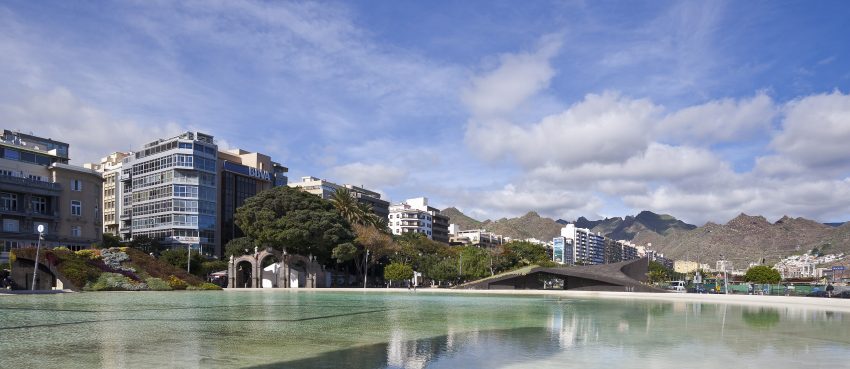
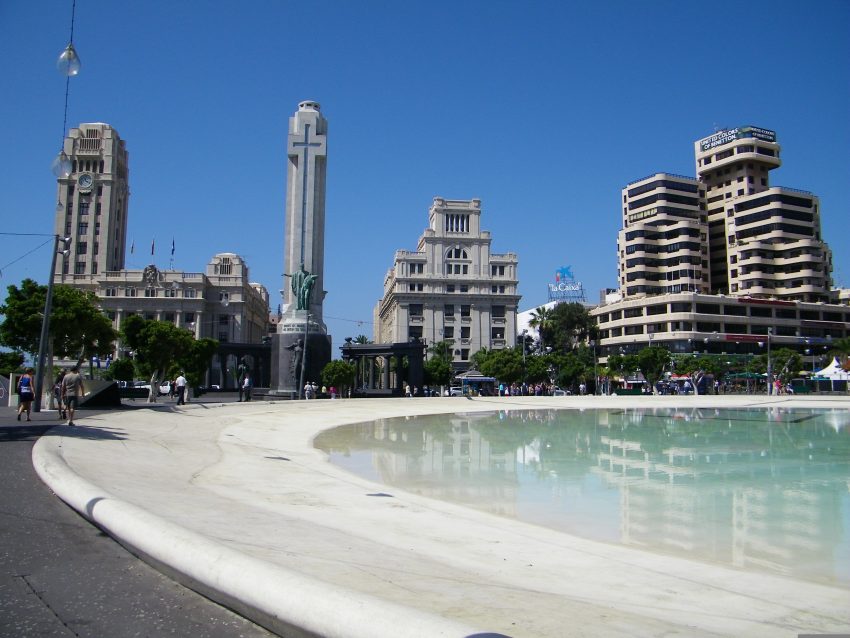
Plaza de España is one of Santa Cruz de Tenerife’s most emblematic civic spaces, laid out as a modern, open plaza to frame the city’s relationship with the sea and its role as the island’s capital. The square is relatively recent in feel compared with the older colonial-era streets nearby, and it functions as a ceremonial “front room” for official events, gatherings, and everyday promenades.
The first thing most visitors notice is the large reflecting pool and the bold sculptural centerpiece, which gives the plaza a clean, architectural identity and makes it feel expansive even on busy days. The surrounding government buildings help explain why this is a focal point for public life, and the broad sightlines make it a useful landmark for orienting yourself as you move between the waterfront and the historic center.
Come in the early morning for calmer photos and crisp light on the water, or around sunset when the plaza feels cooler and locals drift through on their way to cafés. It’s also a practical jumping-off point: from here you can walk easily toward the harbour views, the shopping streets inland, or connect to nearby squares and museums without doubling back.
Location: Zona Centro, 38003 Santa Cruz de Tenerife, Spain | Hours: 24 Hours. | Price: Free.
6. Plaza de la Candelaria
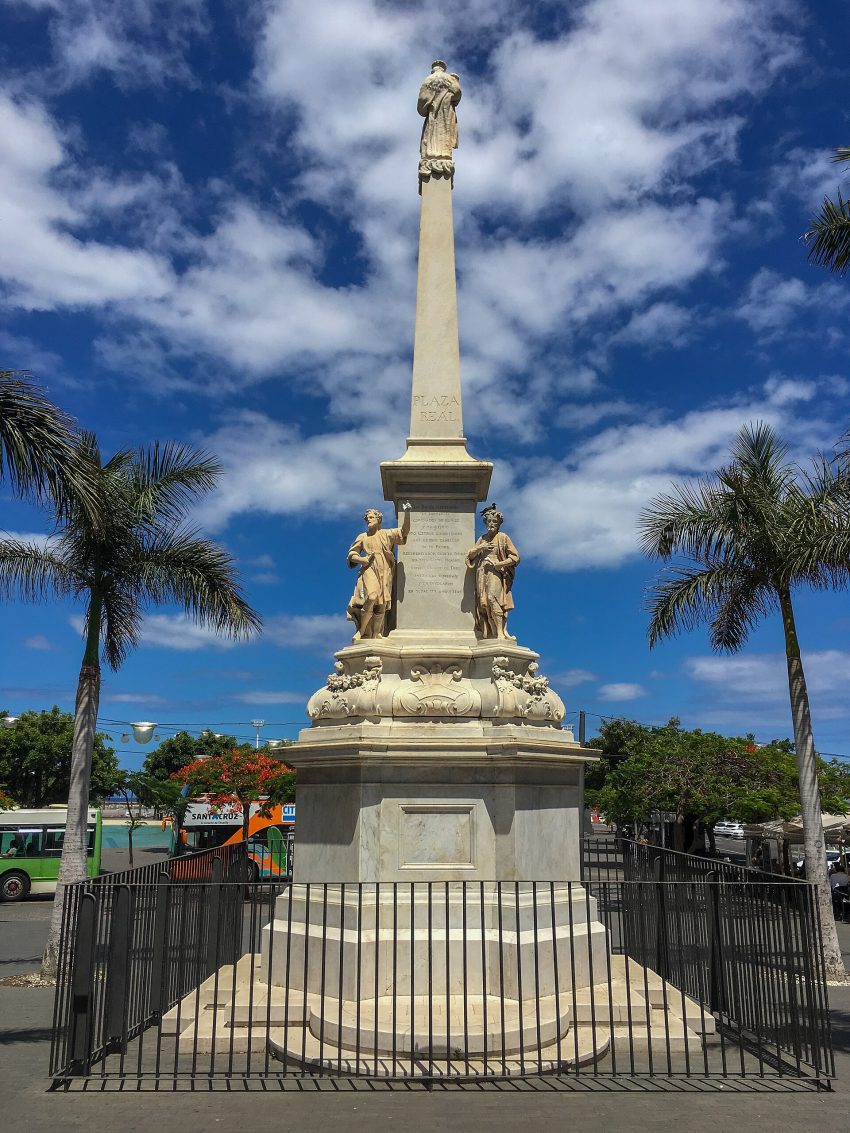
Plaza de la Candelaria sits in the historic heart of Santa Cruz and has long served as a meeting point where the city’s older street pattern opens into a social space. Its name ties it to the Canary Islands’ Marian devotion, and like many central plazas in Spanish cities, it’s less about grand size and more about the daily rhythm of people crossing, lingering, and meeting.
What you’ll want to look for is the monument at the center and the way the square links different eras of the city: older façades, modern storefronts, and the gentle slope of streets feeding into it. It’s a good place to pause and take in how Santa Cruz feels at street level—unhurried, social, and shaped by foot traffic rather than spectacle.
Use it as a connector between sights: stop for a quick coffee, watch the comings and goings, then continue on toward nearby shopping lanes or the larger civic spaces closer to the waterfront. In the evening the atmosphere shifts slightly—more locals, more conversation, and a sense that the square is part of the city’s living room.
Location: Pl. de la Candelaria, Santa Cruz de Tenerife, Spain | Hours: 24 Hours. | Price: Free.
7. Parroquia de la Concepción
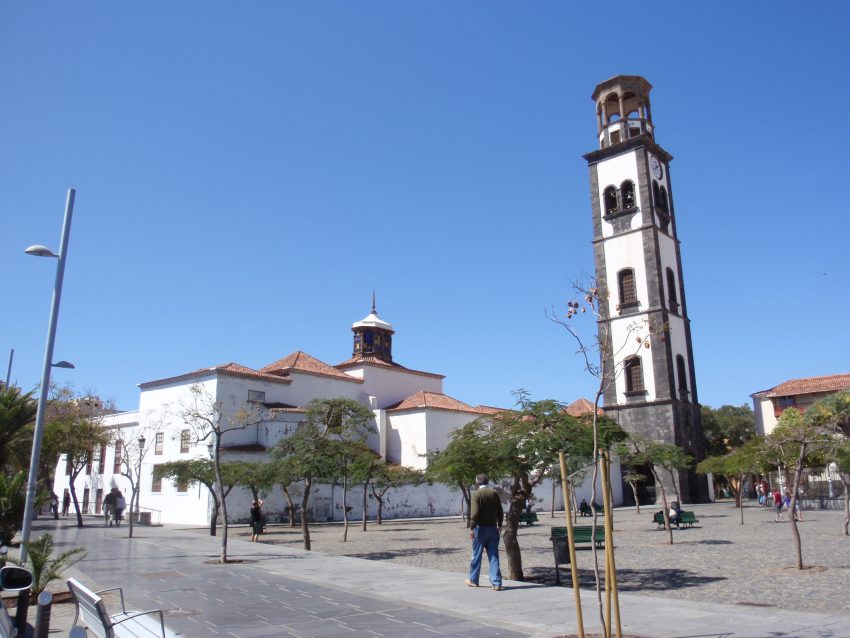
Parroquia de la Concepción is one of Santa Cruz’s key historic churches and a cornerstone for understanding how the city grew from a port settlement into an urban center. The church’s long presence reflects centuries of religious, civic, and community life, with architectural layers that hint at repairs, expansions, and stylistic changes over time.
Inside, focus on the calm contrast between the bustle outside and the church’s quieter, devotional atmosphere. You’ll typically find traditional Canarian religious art, side chapels, and details that reward slow looking—woodwork, altarpieces, and the play of light across stone and plaster. Even if you’re not specifically visiting for religious reasons, it’s a useful cultural stop that explains local traditions and festivals.
If the tower is accessible during your visit, it’s often worth it for perspective: Santa Cruz’s historic grid, the line of the coast, and the city’s modern edge become much easier to read from above. Pair the church with a wander through the surrounding streets afterward—the transition from sacred interior to lively plazas is part of the experience.
Location: Pl. de la Iglesia, 2, 38003 Santa Cruz de Tenerife, Spain | Hours: Daily: 08:30–13:00 & 17:30–20:00. | Price: Free; donations appreciated. | Website
8. Museo de la Naturaleza y Arqueología
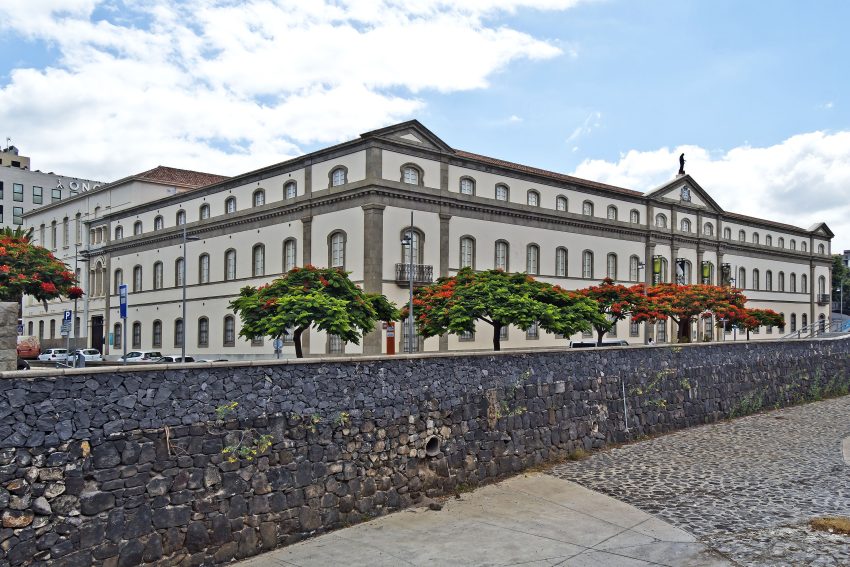
Museo de la Naturaleza y Arqueología is the essential museum stop for anyone who wants context for Tenerife beyond beaches and viewpoints. It brings together the island’s natural history and archaeology, with a particular emphasis on the Guanche past and the wider story of the Canaries as a crossroads shaped by isolation, migration, and Atlantic trade routes.
The archaeology sections are the headline for most visitors: displays that explain pre-Hispanic life, belief systems, and material culture, often presented in a way that makes the island’s early history feel tangible rather than abstract. You’ll also see how later periods reframed that past, which is useful for understanding the layers of identity you’ll encounter across Tenerife today.
Don’t rush the natural-history galleries, which give you a clearer sense of why Tenerife’s landscapes look the way they do—volcanic forces, endemic species, and the environmental contrasts between coast, laurel forests, and high elevations. It’s an easy museum to combine with a walking route through central Santa Cruz, and it works well as a midday break when the sun is at its strongest.
Location: C. Fuente Morales, s/n, 38003 Santa Cruz de Tenerife, Spain | Hours: Monday – Saturday: 09:00–19:00. Sunday: 10:00–17:00. | Price: Adults: €5; Concessions: €3.50; Under 8: free; Free entry: Friday & Saturday from 16:00 until closing. | Website
9. Auditorio de Tenerife
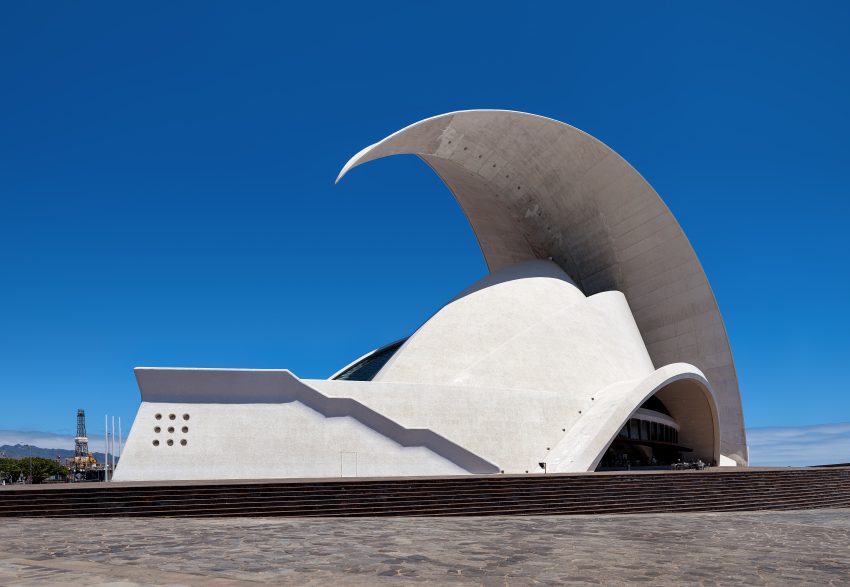
Auditorio de Tenerife is the city’s modern architectural icon, built as a statement piece for Santa Cruz’s cultural life and international profile. Its dramatic, wave-like form signaled a shift toward waterfront regeneration and contemporary design, giving the capital a landmark that is instantly identifiable in photographs and skyline views. Even if you don’t attend a performance, the building matters because it frames how Santa Cruz presents itself today: outward-looking, design-conscious, and tied closely to the sea.
What to see starts with the exterior: walk around it rather than stopping at one angle, because the curves and overhangs change character as you move, and the scale becomes clearer against the open waterfront. The surrounding esplanade is part of the experience, with wide sightlines for photos and a sense of space that contrasts with the tighter streets of the historic center. If you can go inside, look for how the interior volumes echo the exterior drama, and check what’s on in the main hall or smaller spaces.
For visitors, this is an easy win on a Santa Cruz itinerary because it combines architecture, sea air, and a relaxed promenade in one stop. Time it for late afternoon into early evening if possible: the building photographs well as the light softens, and the area feels particularly pleasant for a pre-dinner walk. Pair it with nearby waterfront sights so it doesn’t feel isolated from the rest of your day.
Location: Av. la Constitución, 1, 38003 Santa Cruz de Tenerife, Spain | Hours: Monday – Friday: 10:00–17:00. Saturday: 10:00–14:00. Closed on Sunday. | Price: Guided tour: €5; children under 12: free (discounts available). | Website
10. Castle of San Juan Bautista
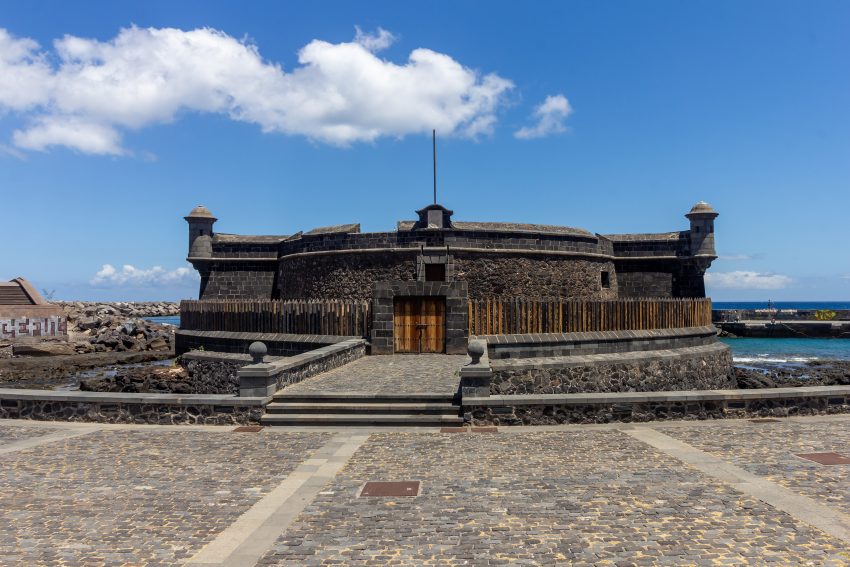
The Castle of San Juan Bautista is one of Santa Cruz de Tenerife’s most recognisable historic defenses, built to protect the port at a time when Atlantic trade made the Canaries strategically important and vulnerable to attack. Known locally as the Castillo Negro, it reflects the era when coastal fortifications were essential infrastructure, designed to control the harbour approaches and deter privateers and rival powers. Even if you’re not doing a deep dive into military history, it’s a useful stop for understanding Santa Cruz as a port city first, and a modern capital second.
On site, what you’re really seeing is compact, practical military architecture: thick dark stonework, rounded forms and low profiles intended to absorb fire and reduce blind spots, and a layout that prioritised function over grandeur. Walk the perimeter slowly to appreciate how the castle’s position relates to the sea and the old shoreline, then look for interpretive panels that explain its role in the wider network of island defenses. It’s also a good spot to mentally connect the historic port with the modern waterfront that has expanded and shifted over time.
The best way to visit is as part of a coastal walk, using the castle as a punctuation mark between the city and the ocean. Go in softer light if you can, when the stone colour reads best and the area feels calmer, and bring your attention to the setting as much as the structure itself: sea breeze, harbour views, and the contrast between a small fortification and the bold contemporary architecture nearby.
Location: 38003 Santa Cruz de Tenerife, Spain | Hours: 10:00 AM to 6:00 PM, Tuesday through Sunday. Closed on Mondays and major public holidays. | Price: Free. | Website
11. Casa de la Pólvora
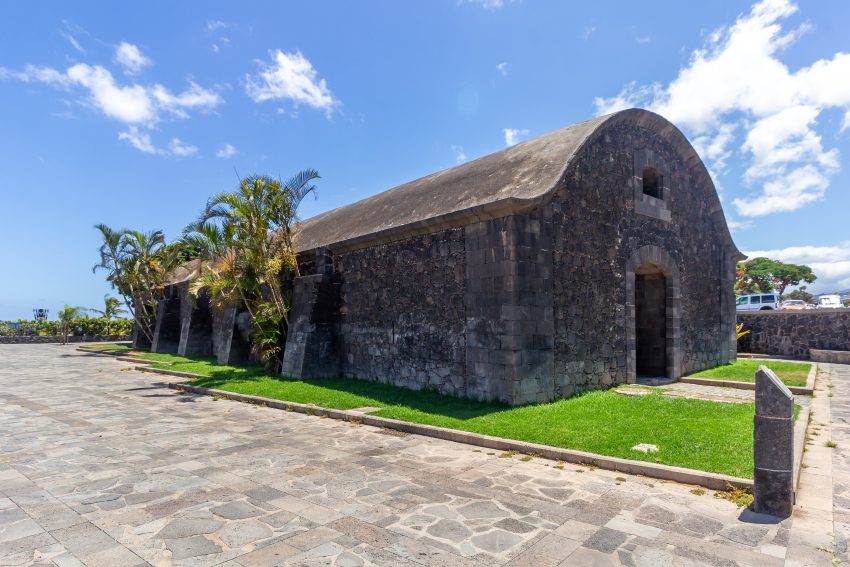
Casa de la Pólvora is tied to Santa Cruz’s defensive and maritime past, when controlling supplies and safeguarding munitions were part of protecting a strategic Atlantic port. Sites like this tend to be modest in scale but historically meaningful, because they speak to the logistics behind fortifications and the everyday reality of a garrisoned coastline.
What to see is the character of a utilitarian military building: thick walls, restrained lines, and a location chosen for practical reasons rather than display. Even if you only view it externally, it’s worth pausing to imagine the wider defensive network it supported, alongside coastal batteries and castles that once defined the city’s seaward edge.
It pairs well with other military-history stops in Santa Cruz because it fills in the “supporting cast” behind the more photogenic forts. If you’re doing a themed walk, use it to connect the dots between the city’s architecture and the strategic pressures that shaped Santa Cruz for centuries.
Location: Av. la Constitución, 35, 38003 Santa Cruz de Tenerife, Spain | Hours: Check official website. | Price: Check official website.
12. Parque Marítimo César Manrique
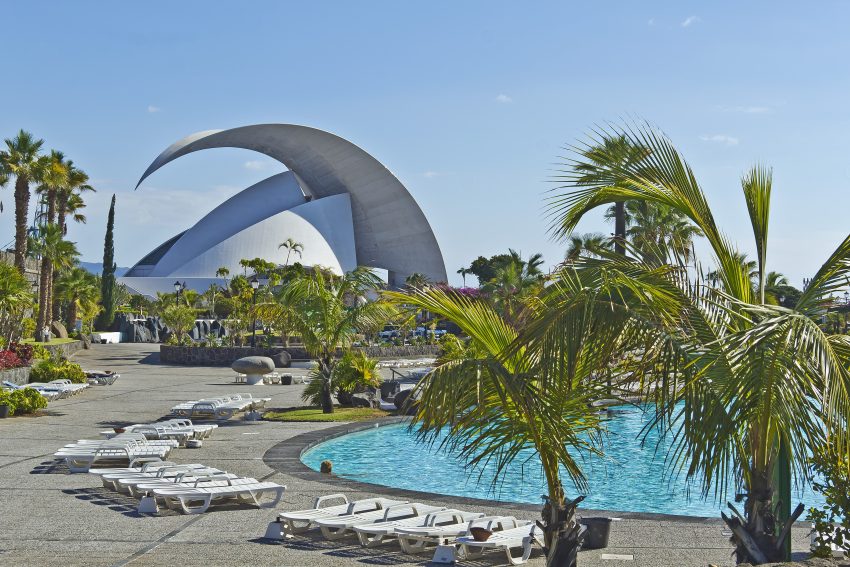
Parque Marítimo César Manrique is a deliberate blend of leisure space and landscape design, created to give Santa Cruz a seawater bathing complex that feels distinctly Canarian rather than generic. It sits within the late-20th-century story of waterfront rethinking in the capital, where public enjoyment of the coast was redesigned around promenades, pools, and architectural statements.
The main thing to see is the composition: saltwater pools, sun terraces, volcanic stone textures, palms, and sightlines that keep the ocean visually present even when you’re inside a controlled bathing area. The design encourages wandering between different levels and corners, so it’s worth doing a full circuit rather than claiming a spot immediately.
Go when you want a slower, restorative break from museums and streets. Even if you don’t swim, the complex is a pleasant place to walk, sit, and reset in sea air, and it works especially well on warm days when the city centre feels bright and reflective.
Location: Av. la Constitución, 5, 38005 Santa Cruz de Tenerife, Spain | Hours: (Summer) Saturday – Sunday: 10:00–19:00; Monday – Friday: 10:00–19:00. (From June 20, 2026.). (Winter) Saturday – Sunday: 10:00–18:00; Monday – Friday: 10:00–18:00. (September 8, 2025 – June 19, 2026.). | Price: Non-residents: Adults €7.50; Children under 12 €4.00; Under 3 free; Adults 65+ €5.00. Residents: Adults €5.00; Children under 12 €2.50; Under 3 free; 65+ or pensioners €2.50. | Website
13. Palmetum of Santa Cruz de Tenerife
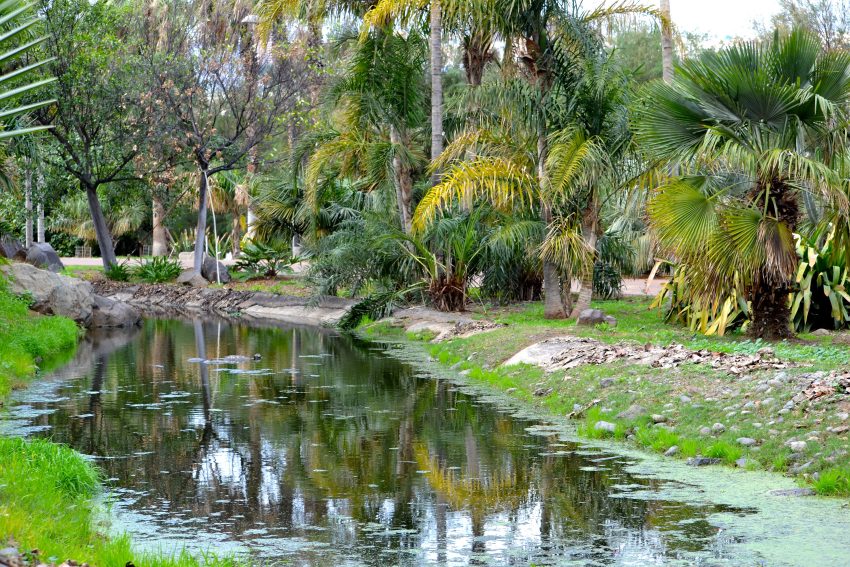
The Palmetum is one of Santa Cruz’s most distinctive attractions because it’s a botanical garden with a strong environmental backstory as well as a beautiful collection. Created on a restored site, it’s closely tied to the city’s efforts to reclaim and reimagine part of its waterfront landscape, turning an unlikely footprint into a living museum of palms and tropical flora. That transformation is part of the appeal: you’re not only visiting a garden, you’re seeing how urban land can be repaired and repurposed.
What to see is the variety and the structure of the place: palms from different world regions grouped to show how climate and geography shape plant forms, plus viewpoints and paths that create a feeling of gradual discovery. Take your time with the thematic sections, and look out for the way the planting design builds atmosphere as you move from one area to the next. The garden is also quietly educational, so if you like reading interpretive signs, you’ll come away with a clearer sense of biodiversity and island-friendly horticulture.
Plan for an unhurried visit, especially if you enjoy photography or simply want a slower pace after city streets and museums. The Palmetum works best earlier in the day or later in the afternoon when the light is gentler and the heat is less insistent, and it pairs well with the nearby waterfront for a full half-day theme of “Santa Cruz by the sea.” Bring water, take breaks at viewpoints, and treat it as a place to wander rather than tick off.
Location: Av. la Constitución, 38003 Santa Cruz de Tenerife, Spain | Hours: Daily: 10:00–18:00. | Price: Adults (non-resident): €6.00; Children (non-resident): €2.80; Adults (resident): €3.00; Residents 65+: €1.50; Residents under 12: €1.50; Under 3: free. | Website
14. Las Torres de Santa Cruz
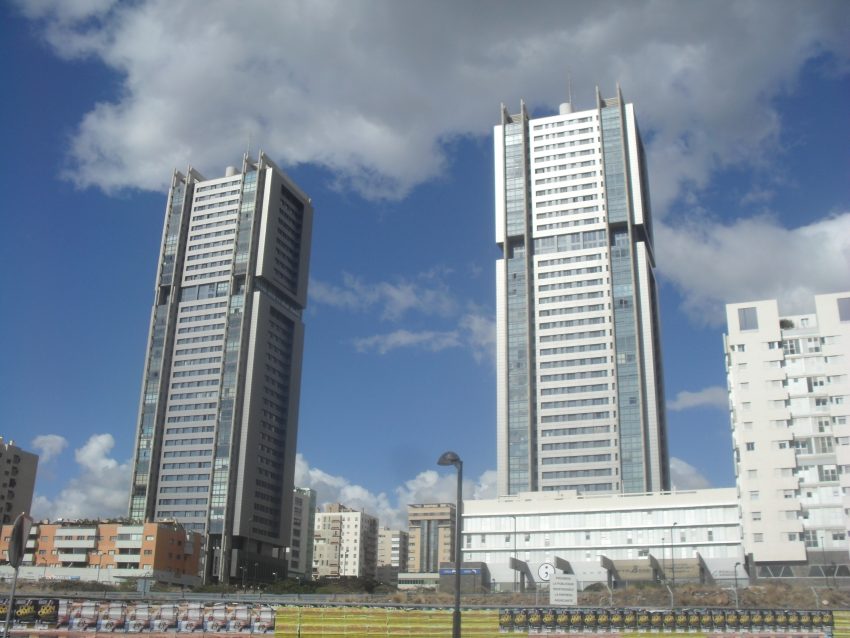
Las Torres de Santa Cruz are a marker of the city’s contemporary skyline, signalling a phase when Santa Cruz leaned into vertical, high-rise development as part of its modern identity. In a city known for plazas, promenades, and low-rise historic streets, the towers stand out as an intentional contrast: sleek, prominent, and urban in a way that feels more “metropolitan” than most of Tenerife.
What to see here is primarily exterior and contextual. The towers are most interesting when you view them from different parts of the city, noticing how they appear and disappear behind streets, parks, and the ravine. They also help you orient yourself geographically, acting as a visual anchor when you’re navigating between the waterfront, central plazas, and the greener avenues inland.
This is a quick stop rather than a deep visit, best integrated into a walking route as a viewpoint moment. If you like city photography, they work well as a modern counterpoint in a set of images that also includes historic churches and older civic buildings.
Location: Urbanizacion Poligono Cepsa, 1I, 38003 Santa Cruz de Tenerife, Spain | Hours: 24 Hours. | Price: Free.
15. Mercado Nuestra Señora de África
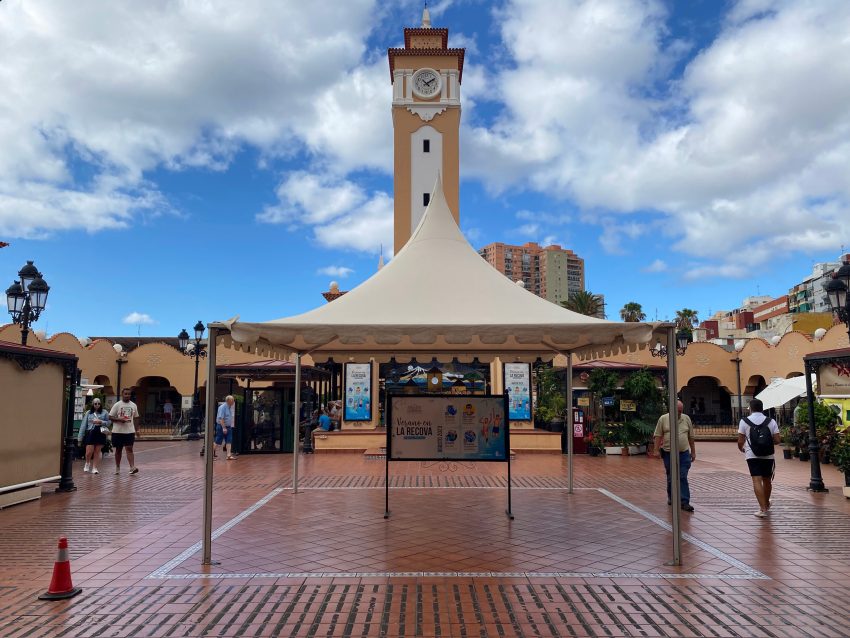
Mercado Nuestra Señora de África is more than a market—it’s a daily institution, built to serve Santa Cruz as a practical hub for food and local commerce. Its architecture and layout reflect the idea of the market as a civic service: orderly, walkable, and designed for regular use rather than one-off tourism.
What to see is, simply, the full spread of Tenerife’s everyday ingredients: fruit and vegetables, spices, cheeses, and seafood that points to the islands’ Atlantic pantry. Even if you don’t plan to buy much, walking the aisles is a quick lesson in local tastes and seasonality, and it’s a good place to pick up picnic supplies if you’re heading to a park or the waterfront.
Go in the morning when stalls are fullest and the atmosphere is busiest. If you like photographing places that feel real rather than staged, this is one of the best in Santa Cruz—hands weighing produce, vendors calling out prices, and the quiet choreography of locals shopping efficiently. If you do buy something, aim for small, easy wins: a piece of fruit, a local cheese, or something you can snack on as you continue your walk.
Location: Av. de San Sebastián, 51, 38003 Santa Cruz de Tenerife, Spain | Hours: Monday – Saturday: 06:00–14:00. Sunday: 07:00–14:00. | Price: Free. | Website
16. Tenerife Espacio de las Artes
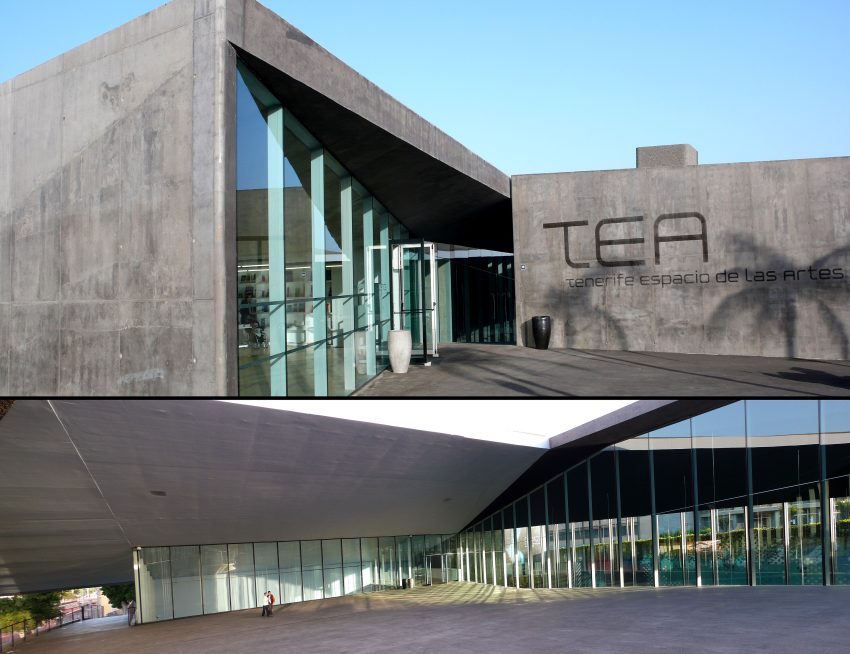
Tenerife Espacio de las Artes (TEA) is Santa Cruz’s flagship contemporary culture complex, opened in 2008 as a statement that the island’s capital is not just a gateway to beaches and volcano trails, but a serious place for art, photography, and public culture. The building itself is part of the draw: designed by Herzog & de Meuron in collaboration with local architect Virgilio Gutiérrez, it was conceived as a porous piece of the city, stitching together levels of the surrounding neighbourhood and drawing daylight deep into its galleries through a grid of varied window openings.
Inside, the “must” is whatever is on in the temporary exhibition halls, but TEA also has a strong permanent anchor in the Óscar Domínguez collection, giving you a direct link to one of Tenerife’s most internationally recognised 20th-century artists. Alongside the art program, TEA houses the island’s photography centre and the municipal library, which changes the feel of the place: it’s not only a museum visit, it’s a lived-in cultural building where locals come to study, read, and spend time.
For what to see beyond the artworks, treat the architecture and circulation as part of the experience: walk the public plaza and ramps, look for changing perspectives across the ravine-side setting, and notice how the galleries alternate between controlled museum calm and moments of bright Canarian light. It’s also an easy, efficient stop on a central Santa Cruz walking day because it sits close to other key sights (including the Museum of Nature and Archaeology), and the café/library element makes it a good mid-afternoon reset rather than a “quick in, quick out” gallery tick.
Location: Av. de San Sebastián, 10, 38003 Santa Cruz de Tenerife, Spain | Hours: Tuesday – Sunday: 10:00–20:00. Closed on Monday. | Price: Free. | Website
17. Puente Serrador
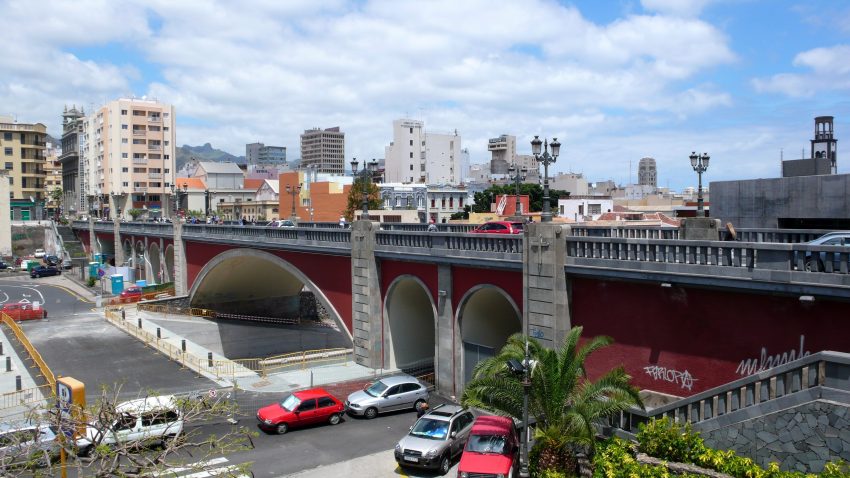
Puente Serrador is one of Santa Cruz’s most distinctive pieces of early modern infrastructure, spanning the Barranco de Santos and linking parts of the city that would otherwise be divided by the ravine. Its importance is less about a single historic event and more about what it represents: the moment Santa Cruz began knitting together its expanding neighbourhoods with engineered confidence, rather than letting topography dictate daily life.
When you visit, look at the structure from more than one angle. From street level it reads as a practical urban bridge, but from the edges of the barranco you can appreciate its height, the geometry of its spans, and how it frames views down the ravine. It’s a good place to notice the city’s relationship with watercourses that are usually dry but still shape the urban form.
Treat it as a short, “in-motion” sight on a walking route rather than a destination you linger at for long. The best experience comes from approaching it, crossing it, then stepping to a viewpoint where you can see how the bridge sits within the barranco landscape and the surrounding streets.
Location: Puente Serrador, Santa Cruz de Tenerife, Spain | Hours: 24 Hours. | Price: Free.
18. Centro de Arte la Recova
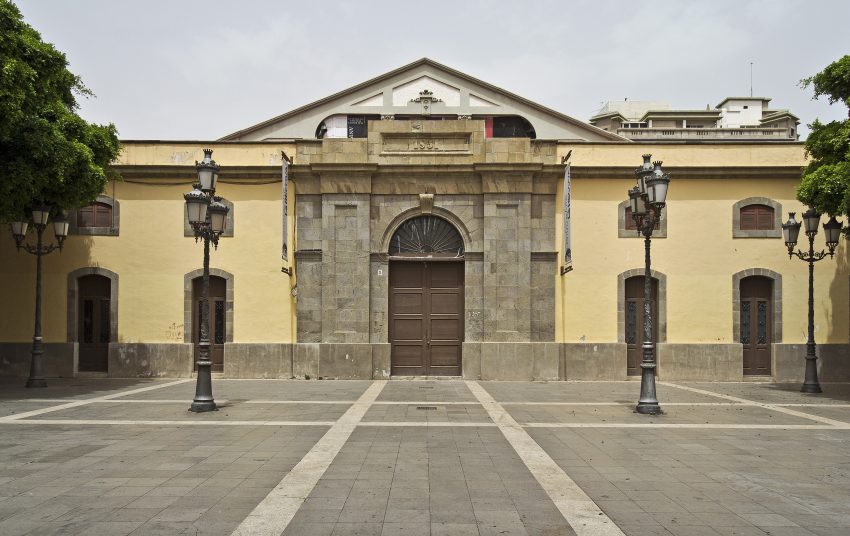
Centro de Arte La Recova is one of Santa Cruz de Tenerife’s most approachable contemporary art spaces, housed in a building whose past is tied to the city’s everyday commercial life. “La Recova” refers to the old market function, and that heritage matters because it sets up a satisfying contrast: a place once built for trade and daily transactions now repurposed for exhibitions, ideas, and cultural events. It’s a small but telling example of how Santa Cruz reuses historic urban fabric rather than sealing it behind glass.
What to see depends on the schedule, but the main appeal is the rotating program—often contemporary art, photography, and occasional thematic shows that connect local Canary Islands creatives with broader currents. Take a moment to notice the building itself as you move through: the proportions, the light, and the sense that this was designed to hold crowds and movement. Even when exhibitions are modest in scale, the space tends to reward a slower lap, because you can focus on individual works without the fatigue of a huge museum.
This is an ideal stop to slot into a walking day in the historic center because it’s quick to visit and close to plazas, shopping streets, and other cultural landmarks. Check opening times before you commit, then aim to pair it with a nearby market visit or a café break so the experience feels like part of the city’s daily rhythm. If you like discovering smaller venues that locals actually use, La Recova usually delivers more than its footprint suggests.
Location: Pl. Isla de la madera, s/n, 38003 Santa Cruz de Tenerife, Spain | Hours: Tuesday – Saturday: 11:00–13:00 & 17:00–21:00. Sunday: 11:00–14:00. Closed on Monday. | Price: Free. | Website
19. Calle del Castillo
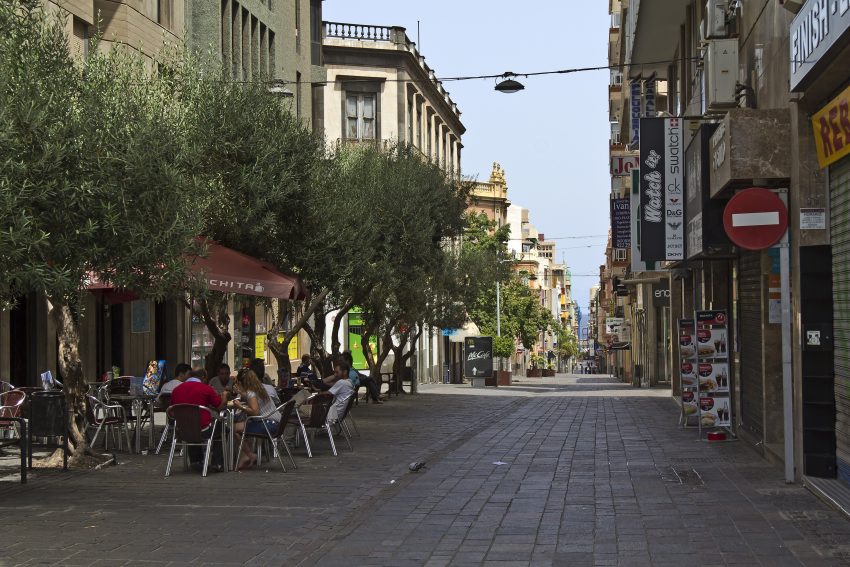
Calle del Castillo is Santa Cruz’s main commercial artery and one of the clearest expressions of the city’s modern identity layered onto older streets. While it’s primarily known today as a shopping street, its significance comes from how it channels movement through the center—linking plazas, side streets, and civic spaces in a way that keeps the city feeling compact and walkable.
As you walk, pay attention to the façades and the rhythm of cross-streets: you’ll catch glimpses of older architectural details, small balconies, and shopfronts that reveal how the street has adapted over decades. The experience isn’t just retail; it’s people-watching, street life, and the gentle shift from one neighborhood pocket to another.
It’s best enjoyed as a slow stroll rather than a direct march from one end to the other. Dip into side lanes for quieter corners, then return to the main flow. If you’re building a walking route, Calle del Castillo works as a reliable spine—easy to navigate, full of services, and close to several of the city’s headline sights.
Location: C. del Castillo, Santa Cruz de Tenerife, Spain | Hours: 24 Hours. | Price: Free.
20. Plaza Weyler
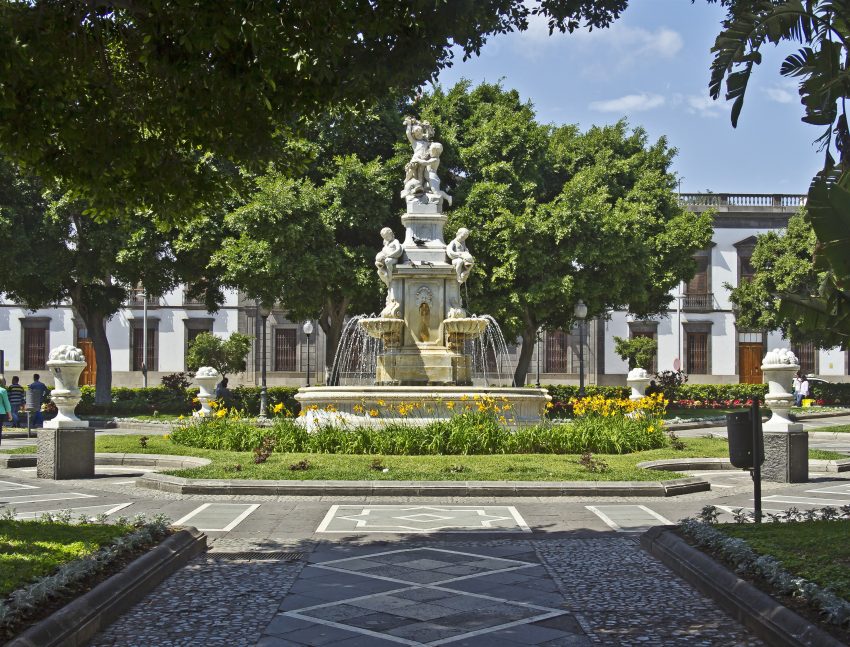
Plaza Weyler is a central square with a distinct, formal feel, anchored by its fountain and framed by buildings that give it a slightly Parisian sense of order compared with the more irregular older plazas. The square’s name and civic presence connect to a period when Santa Cruz was consolidating its urban image, creating defined public spaces that felt modern and representative.
The fountain is the obvious focal point, and it’s worth circling the plaza to see how the sightlines work—how streets feed into it and how the planted edges soften the geometry. This is a good stop for a short pause because it’s visually complete: one central feature, balanced surroundings, and a steady flow of locals passing through.
Visit in the late afternoon when the light flatters the water and the square feels cooler. It’s also a practical waypoint between shopping streets and the greener promenades nearby, so it fits naturally into a walk that alternates between architecture, plazas, and park spaces.
Location: FP9V+3P, 38003 Santa Cruz de Tenerife, Spain | Hours: 24 Hours. | Price: Free. | Website
21. Plaza de los Patos
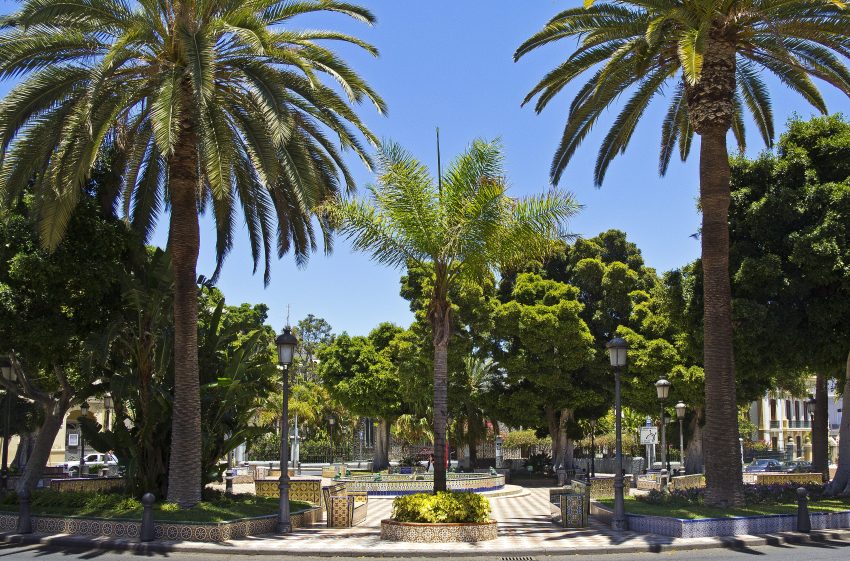
Plaza de los Patos is a small, charming square that locals often remember with affection, known for its fountain and the duck motifs that give it its nickname. It represents a quieter side of Santa Cruz: an intimate urban garden space designed for short pauses, rather than big civic spectacle.
What to see is the central fountain and the tilework and decorative details that make the plaza feel personal and human-scaled. The planting and benches create an easy “take five minutes” atmosphere, and the surrounding residential and institutional architecture gives you a sense of how daily life wraps around these pocket public spaces.
Visit when you want a breather between bigger sights. It’s especially good as a stop on a route that includes Parque García Sanabria and the rambla, because it keeps you in the greener, more relaxed rhythm of central Santa Cruz.
Location: Av. de Veinticinco de Julio, 4, 38004, 38004 Santa Cruz de Tenerife, Spain | Hours: 24 Hours. | Price: Free.
22. Iglesia San Jorge
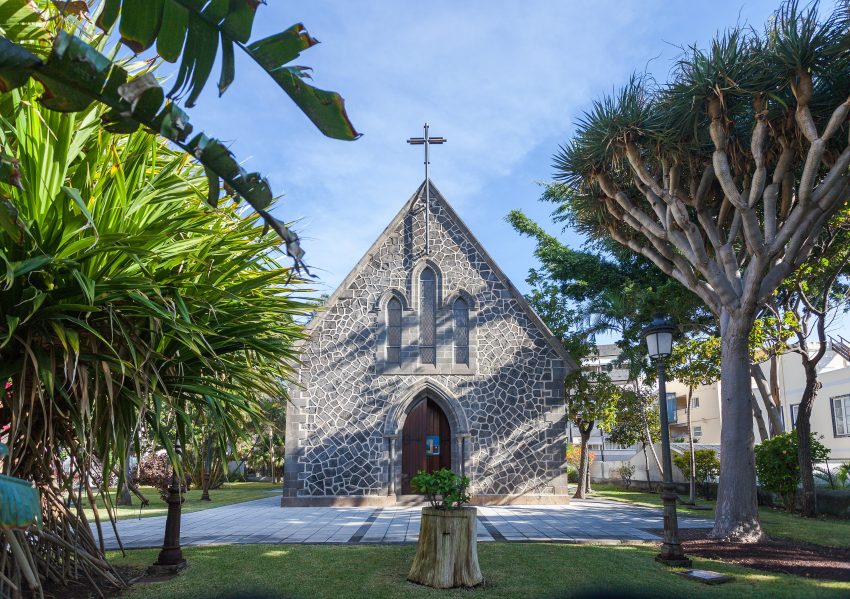
Iglesia San Jorge is one of those city churches that repays attention because it anchors a neighbourhood’s everyday spiritual and community life, even if it doesn’t always make the headline list for first-time visitors. Churches in Santa Cruz often carry layered local history through renovations, devotional traditions, and the steady cadence of festivals and parish events.
When you step inside, focus on the atmosphere and the craft details: altarpieces, images of saints, side chapels, and the way light falls through the nave. Even a brief visit can give you a feel for how religious art and interior design in the Canaries blends restraint with moments of colour and ornament.
It works best as a short, respectful stop while you’re already nearby, especially if you’re building a walking tour that mixes architecture, plazas, and local institutions. If it’s open, take ten minutes rather than rushing—these interiors are designed to slow you down.
Location: Av. de Veinticinco de Julio, 7, 38004 Santa Cruz de Tenerife, Spain | Hours: Monday – Friday: 10:00–13:00 & 17:00–19:00. Saturday: 10:00–13:00. Sunday: 17:00–19:00. | Price: Free; donations appreciated. | Website
23. Parque García Sanabria
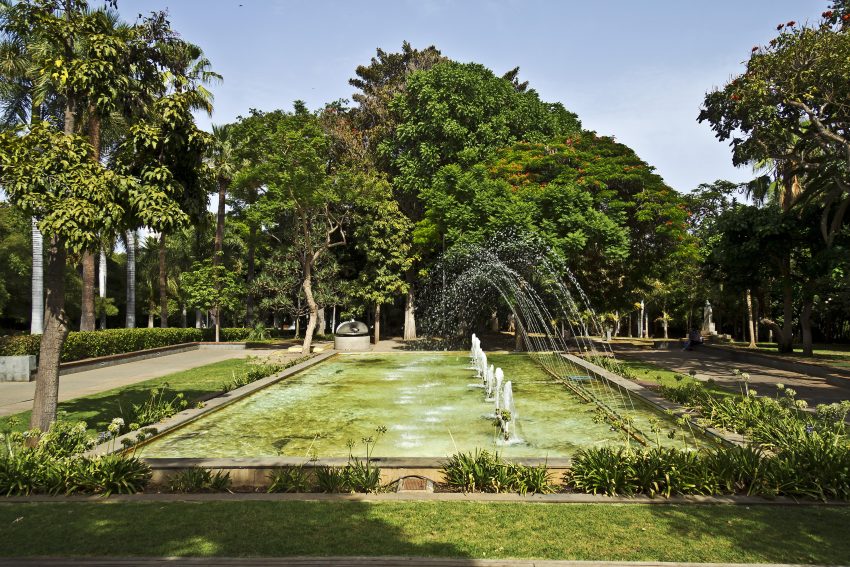
Parque García Sanabria is Santa Cruz’s most beloved central park and a showcase of the city’s relationship with gardens and public space. Developed as a major urban green lung, it represents the idea that a capital city should offer refuge from heat and traffic—shade, planting, and cultural features in walking distance of the historic core.
What to see is the layering: formal paths, dense plantings, and sculptures that appear as you wander rather than presenting themselves all at once. The park is especially rewarding if you slow down and look closely at the variety of flora and the way the landscaping creates small “rooms” of calm within a larger public space.
This is the ideal stop for a break mid-walk: sit for a while, cool down, and let the city’s pace soften. If you’re visiting with kids or anyone who needs regular pauses, it’s the most reliable place in central Santa Cruz to recharge before continuing on to the rambla, nearby squares, or back toward the waterfront.
Location: Unnamed Road, 38004 Santa Cruz de Tenerife, Spain | Hours: 24 Hours. | Price: Free. | Website
24. Parroquia de Nuestra Señora del Pilar
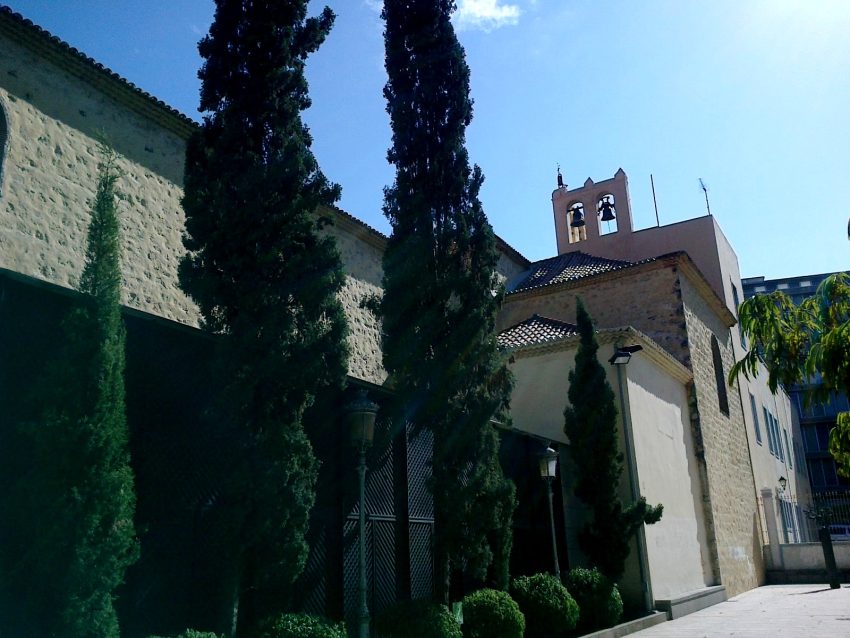
Parroquia de Nuestra Señora del Pilar reflects the expansion of Santa Cruz beyond its oldest core, serving as a focal point for a more modern neighbourhood pattern while still keeping strong ties to traditional Catholic devotion. As with many parish churches, its story is closely connected to community life: baptisms, weddings, local celebrations, and the quieter everyday role of a place that people return to over years.
What to see is the blend of architecture and devotional focus. Look for the main altar and any notable side images that draw local attention, then notice how the church’s layout supports both private prayer and larger gatherings. The exterior setting also matters, because parish churches often sit within a small network of streets and squares that reveal the neighbourhood’s character.
This is a good stop if you want your Santa Cruz walk to feel less like a checklist and more like a cross-section of the city. Pair it with nearby cafés or a park pause so the visit sits naturally within the flow of a lived-in area rather than feeling isolated.
Location: C. el Pilar, 17, 38002 Santa Cruz de Tenerife, Spain | Hours: Check official website. | Price: Free; donations appreciated. | Website
25. Plaza del Príncipe de Asturias
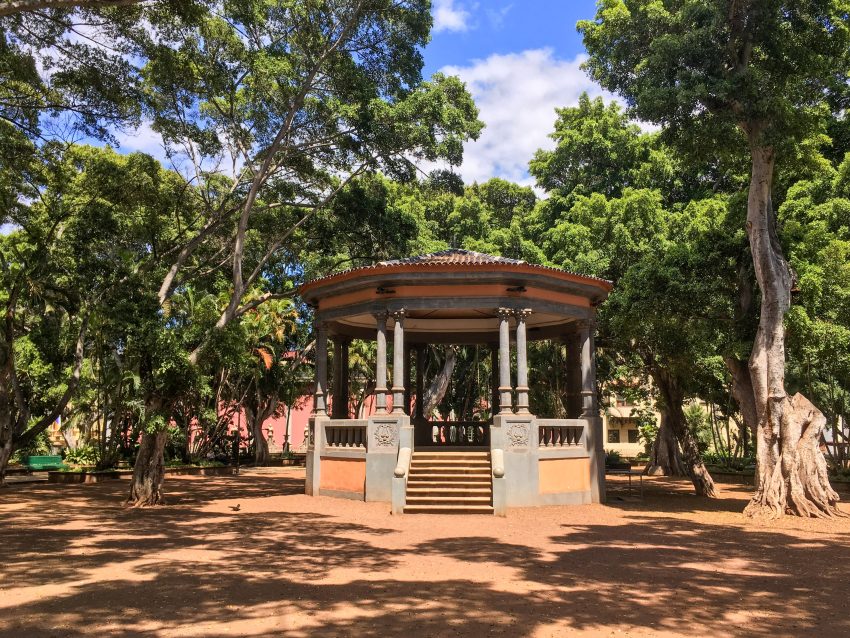
Plaza del Príncipe de Asturias is one of Santa Cruz’s most pleasant central squares, with the feel of a shaded urban salon where the city pauses between errands, shopping, and civic life. It has long functioned as a social crossroads—more intimate than the waterfront plazas, but more “central” in daily rhythm than the purely residential pockets.
What to see is the planting, the seating areas, and the way the square frames surrounding streets. It’s also a reliable people-watching spot, where you’ll catch a mix of locals meeting up, families taking a break, and travellers orienting themselves before heading toward museums or shopping streets.
Use it as a mid-route reset: grab something nearby, sit for a while, then continue on with clearer bearings and a calmer pace. It’s especially good in warmer hours, when shade becomes part of the city’s practical comfort strategy.
Location: Zona Centro, 38002 Santa Cruz de Tenerife, Spain | Hours: 24 Hours. | Price: Free. | Website
26. Círculo de Amistad XII de Enero
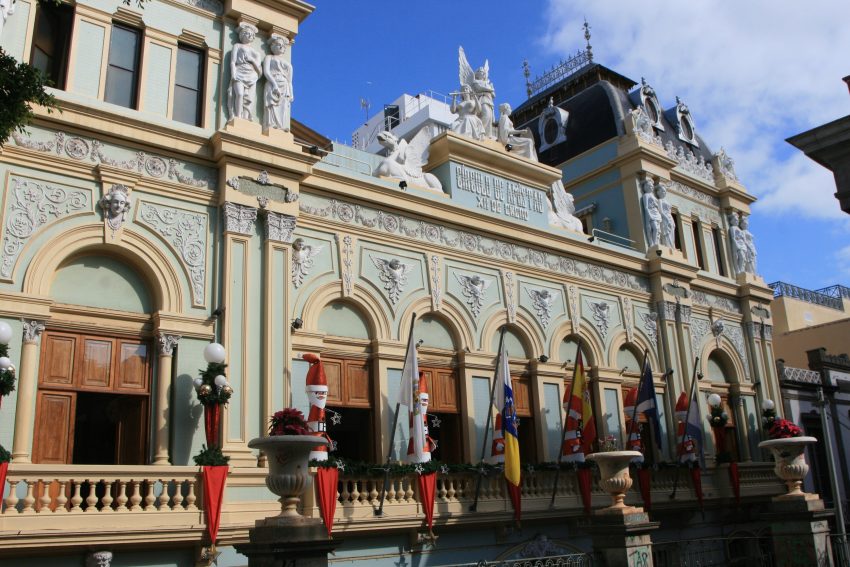
Círculo de Amistad XII de Enero is a long-standing social institution in Santa Cruz, part of the tradition of civic clubs that shaped urban culture through gatherings, events, and a sense of membership-based community. Places like this often sit slightly in the background for visitors, but they’re a key clue to how public and private social life has been organised in Spanish cities.
What to see is primarily architectural and atmospheric. Even if you only view it externally, notice the building’s formality and its position within the city’s social geography—close to streets and squares where people circulate. If you happen to catch it open for a public-facing event, it can offer a more “local” cultural texture than conventional tourist stops.
This is best treated as a contextual stop: something that deepens your sense of the city rather than demanding a long visit. It pairs well with a route through central Santa Cruz that includes plazas, theatres, and historic civic buildings.
Location: C. Ruíz de Padrón, 12, 38002 Santa Cruz de Tenerife, Spain | Hours: Monday – Friday: 09:00–13:00 & 16:00–20:00. | Price: Check official website. | Website
27. Parish of St. Francisco de Asís
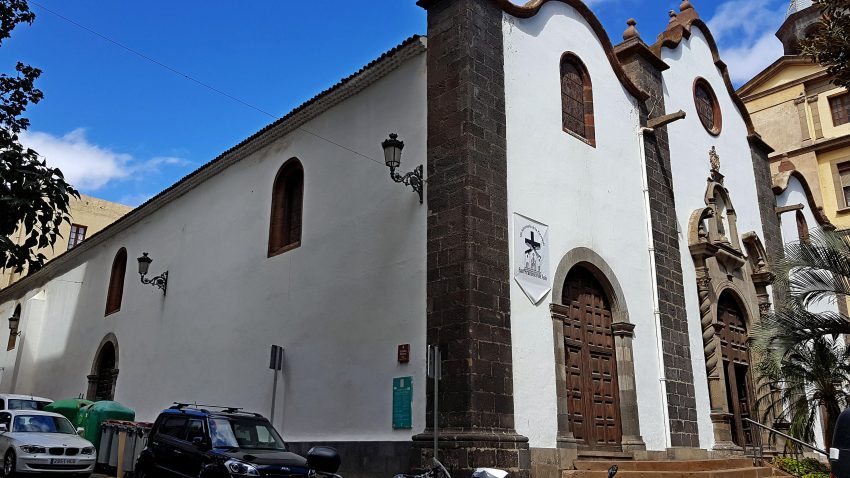
The Parish of St. Francisco de Asís connects Santa Cruz to the wider Franciscan tradition, which has deep roots across Spain and its Atlantic territories. Churches dedicated to St. Francis often carry an emphasis on community service and local devotion, and their interiors can hold artworks and imagery that reflect both broader Catholic iconography and specifically local religious culture.
When visiting, look for the main altar and any chapels or devotional images that appear especially cared for—these often indicate what matters most to the parish community. The church’s architectural language can also be revealing, showing how Santa Cruz adapted traditional church forms to local materials, climate, and urban setting.
It’s a worthwhile stop for travellers who enjoy reading a city through its religious architecture, even if you keep it brief. Combine it with nearby historic streets so the visit becomes part of a wider “old Santa Cruz” sequence rather than a standalone detour.
Location: Plaza San Francisco, 13, 38002 Santa Cruz de Tenerife, Spain | Hours: Monday: 10:00–13:00. Tuesday: 10:00–13:00 & 18:00–20:00. Wednesday: 10:00–13:00 & 18:00–20:00. Thursday: 10:00–13:00 & 18:00–20:00. Friday: 10:00–13:00 & 18:00–20:00. Saturday: 10:00–13:00 & 18:00–20:00. Sunday: 10:00–13:00 & 18:00–20:00. | Price: Free; donations appreciated. | Website

Moira & Andy
Hey! We're Moira & Andy. From hiking the Camino to trips around Europe in Bert our campervan — we've been traveling together since retirement in 2020!
This website uses affiliate links which earn a small commission at no additional cost to you.
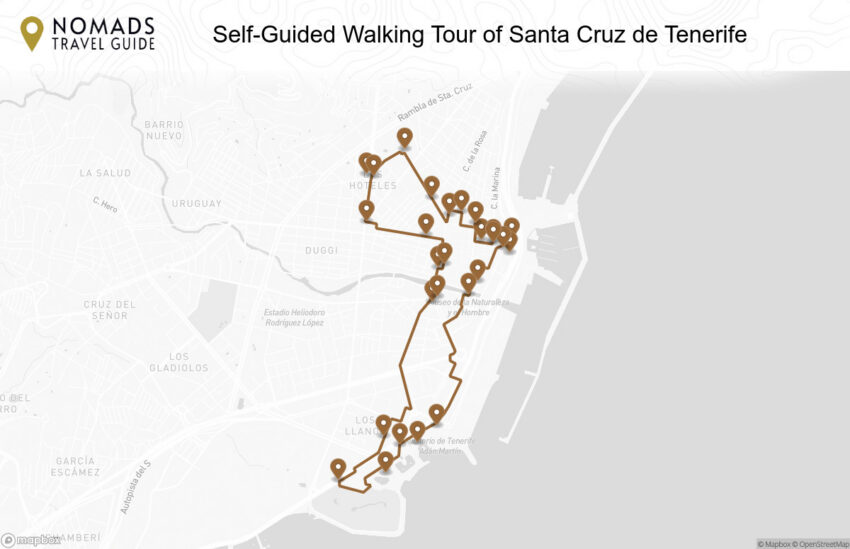
Walking Tour Summary
Distance: 6.5 km
Sites: 27
Walking Tour Map