Self-Guided Walking Tour of Salamanca (2026)
This website uses affiliate links which earn a small commission at no additional cost to you.
Salamanca is one of Spain's most rewarding cities for exploring on foot: compact, atmospheric, and packed with show-stopping stonework that glows honey-gold at sunset. This self-guided route threads together the historic center's headline landmarks with the smaller details that make the city feel lived-in, from tucked-away courtyards to lively cafés spilling into the streets. It's an easy way to orient yourself quickly while still leaving room for detours when something catches your eye.
Along the way you'll tick off many of the best things to see in Salamanca, including grand squares, centuries-old university architecture, and panoramic viewpoints that reveal the city's layered skyline. The walk is designed to feel natural rather than rushed, with frequent places to pause for photos, a coffee, or a quick bite. Expect a mix of monumental highlights and quieter corners that help you understand how Salamanca's student energy and deep history sit side by side.
Plan this tour for your first full morning or late afternoon, when the streets are at their most photogenic and the city feels especially vibrant. Comfortable shoes are a must thanks to the cobbles, and it's worth timing a cathedral visit or viewpoint stop for golden hour if you can. By the end, you'll have a strong mental map of Salamanca and a clear sense of which places you want to return to for a deeper visit.
Table of Contents
- How to Get to Salamanca
- Where to Stay in Salamanca
- The History of Salamanca
- Should I take a Guided or Self-Guided Walking Tour of Salamanca?
- Your Self-Guided Walking Tour of Salamanca
- Plaza Mayor
- Mercado Central de Salamanca
- Palacio de la Salina
- Casa de las Conchas
- La Clerecía and the Stairway to Heaven
- Universidad de Salamanca
- Plaza de Anaya
- Catedral Viejo y Nueva
- Museo Art Nouveau and Art Deco
- Puente Romano de Salamanca
- Palacio de Monterrey
- Pontifical University of Salamanca
- Hospital del Estudio
- Escuelas Menores
- Palacio de Anaya
- Torre del Clavero
- Convento de las Dueñas
- Convento de San Esteban
- Colegio de Calatrava
How to Get to Salamanca
By Air: Salamanca doesn't have a major commercial airport, so most visitors fly into Madrid-Barajas (MAD), which has the widest range of international and domestic connections. From Madrid you can continue onward by train, bus, or car, and the overall journey is straightforward enough to make Salamanca a practical add-on to a Spain itinerary even if you're arriving from overseas. If you find a flight into Valladolid (VLL) on your dates it can be closer, but options are usually limited compared with Madrid. For the best deals and a seamless booking experience, check out these flights to Salamanca on Booking.com.
By Train: Salamanca's main station (Estación de Salamanca) is a short ride from the historic center and is served by Renfe services connecting to Madrid and other regional hubs. Trains are generally the most comfortable option, with predictable journey times and no parking headaches once you arrive, making it ideal if you're planning to stay central and explore on foot. If you're coming from elsewhere in Spain, you may route via Madrid or another larger node depending on schedules. Train schedules and bookings can be found on Omio.
By Car: Driving is a good choice if you're combining Salamanca with nearby towns and countryside, or if you want maximum flexibility for day trips. The routes from Madrid and the northwest are typically simple motorway driving, and you'll find it easier to stay just outside the old town if your accommodation offers parking, then walk in for sightseeing. Avoid taking the car deep into the historic center where streets can be narrow and access may be restricted. If you are looking to rent a car in Spain I recommend having a look at Discover Cars, first, as they compare prices and review multiple car rental agencies for you.
By Bus: Long-distance buses are often the best-value option and can be very convenient from Madrid and other cities, with services usually arriving at Salamanca's bus station (Estación de Autobuses), within easy reach of the center. For many routes the bus can be as fast as the train (sometimes faster depending on connections), and it's a solid fallback if train times don't align with your plans.
Where to Stay in Salamanca
To make the most of visiting Salamanca and this walking tour then you consider stay overnight at the centre. The most convenient base is the Historic Centre (Casco Histórico) around Plaza Mayor and the cathedral quarter, where you can walk to almost every stop, dip back to your hotel between sights, and enjoy the evening atmosphere without needing taxis. Good options here range from classic heritage-style stays to modern boutiques, including Grand Hotel Don Gregorio, Hotel Rector, Catalonia Plaza Mayor Salamanca, and Soho Boutique Salamanca.
If you want a slightly quieter feel while staying walkable, look around the University and Cathedral edge and the riverside (near the Puente Romano and Paseo del Río), which is calmer at night but still close to viewpoints and the old town lanes. This area is ideal if you like morning strolls by the water, or you’re arriving by car and want an easier approach than the tightest central streets, with solid picks like Parador de Salamanca, Exe Salamanca, and Hotel Eurowings.
For better value and a more local, residential vibe, consider the area around Calle Toro and toward the modern centre, or across the river in quieter neighbourhoods where rooms can be larger and parking is often simpler, while still keeping the walk into Plaza Mayor manageable. These bases work well if you're doing Salamanca as part of a broader road trip or you prefer a calmer setting after a day of sightseeing, with options such as Ibis Salamanca, NH Collection Salamanca Palacio de Castellanos, and Eurostars Las Claras.
I’ll quickly verify key dates, architects, and patrons for Salamanca’s main monuments (cathedrals, university buildings, Plaza Mayor, major convents/palaces), then write a clean, period-based history section you can paste into your guide.
The History of Salamanca
Roman foundations and a strategic river crossing
Salamanca's story begins as a settlement shaped by the River Tormes and a key route through western Iberia. The Puente Romano de Salamanca anchored that role, turning the city into an important crossing point and giving it a physical link to its earliest urban footprint. Over time, the stone bridge became both practical infrastructure and a symbol of continuity, later framed by medieval walls and the dense fabric of the old town.
Medieval revival and the rise of a university city (12th-15th centuries)
After the Christian repopulation of the area in the Middle Ages, Salamanca grew into a major ecclesiastical and learning centre. The Catedral Vieja de Santa María began in the first third of the 12th century, founded by Bishop Jerome of Périgord, and evolved over centuries into a Romanesque-to-Gothic complex that remained central to the city's religious life. In parallel, Salamanca's intellectual identity crystallised with the foundation of the Universidad de Salamanca in 1218 under King Alfonso IX, with its position strengthened in the 13th century as it developed into a leading European seat of learning.
The “golden” Salamanca of stone, scholarship, & Plateresque (15th-16th centuries)
The city's late-medieval and early-Renaissance prosperity is written into its civic and academic architecture. The university's built campus took shape early: the Hospital del Estudio was erected in 1413 as part of the university's institutional expansion, and the Escuelas Mayores complex began in the early 15th century, later crowned by its celebrated façade made in the early 16th century. Within the university precinct, the Cielo de Salamanca-an astrological ceiling painting attributed to Fernando Gallego-was created in the 1480s, a vivid sign of Salamanca's fascination with cosmology and learning. Civil Salamanca also flourished: the Casa de las Conchas was built from 1493 to 1517 by Rodrigo Arias de Maldonado, its shell-studded façade becoming one of the city's most distinctive late-Gothic/Plateresque statements.
A second cathedral and an era of great monuments (16th-18th centuries)
Salamanca's ambitions outgrew its medieval cathedral, prompting the creation of the Catedral Nueva de Salamanca. Construction began in the early 16th century and continued for generations, blending late Gothic with Plateresque and later Baroque elements; major master builders included Juan Gil de Hontañón and his son Rodrigo Gil de Hontañón. Around the same time, powerful patrons reshaped the city with palaces and convents: the Convento de San Esteban was begun in 1524 on the initiative of Cardinal Juan Álvarez de Toledo, with design attributed to Juan de Álava and later work involving Rodrigo Gil de Hontañón; the Palacio de la Salina was built in 1538 for Rodrigo de Messía with Rodrigo Gil de Hontañón as architect; and the Palacio de Monterrey was commissioned by Don Alonso de Acevedo y Zúñiga, 3rd Count of Monterrey, with designs attributed to Rodrigo Gil de Hontañón and Fray Martín de Santiago. Salamanca's skyline also kept its medieval defensive accents, including the Torre del Clavero, a 15th-century tower tied to noble power and military orders.
Baroque confidence and Enlightenment order (17th-18th centuries)
The 17th and 18th centuries left Salamanca with some of its most theatrical urban spaces. The great Jesuit complex known as La Clerecía (the former Royal College of the Espíritu Santo) began in 1617 under the protection of Queen Margaret of Austria, with the general plan attributed to Juan Gómez de Mora, and was completed in 1754; today it is closely associated with the Pontifical University of Salamanca, established in 1940. In the civic heart of the city, the Plaza Mayor was constructed in phases between 1729 and 1755: first under Alberto Churriguera, then Manuel de Larra Churriguera, with the City Hall completed by Andrés García de Quiñones, giving Salamanca one of Spain's defining Baroque squares. The same era also brought neoclassical clarity: the Palacio de Anaya began in 1760 based on plans by José Hermosilla, reflecting Enlightenment ideals of symmetry and academic prestige.
Modern Salamanca: markets, museums, and preservation (19th-21st centuries)
In the modern period, Salamanca broadened its identity beyond ecclesiastical and university power, adding new civic infrastructure and cultural institutions. The Mercado Central de Salamanca introduced an iron-and-glass market tradition associated with early-20th-century design, linked to architect Joaquín de Vargas y Aguirre. That same architect built the Casa Lis-finished in 1905 for Miguel de Lis-now home to the Museo Art Nouveau and Art Deco, a striking contrast to the city's earlier sandstone austerity. In 1988, UNESCO inscribed the Old City of Salamanca as a World Heritage Site, reinforcing a long-standing commitment to preserving the historic centre while keeping it animated by student life and contemporary culture.
Should I take a Guided or Self-Guided Walking Tour of Salamanca?
If you're spending a day in Salamanca and want to make the most of your time in the historic centre, consider joining a guided walking tour with a local expert or following a self-guided route at your own pace. This two-hour Salamanca walking tour covers the essential landmarks and viewpoints while a guide adds context you’d otherwise miss, from the city’s university traditions and architectural details to the stories behind its grand plazas and cathedral quarter, helping you understand how Salamanca’s scholarly past still shapes its street life today.
Your Self-Guided Walking Tour of Salamanca
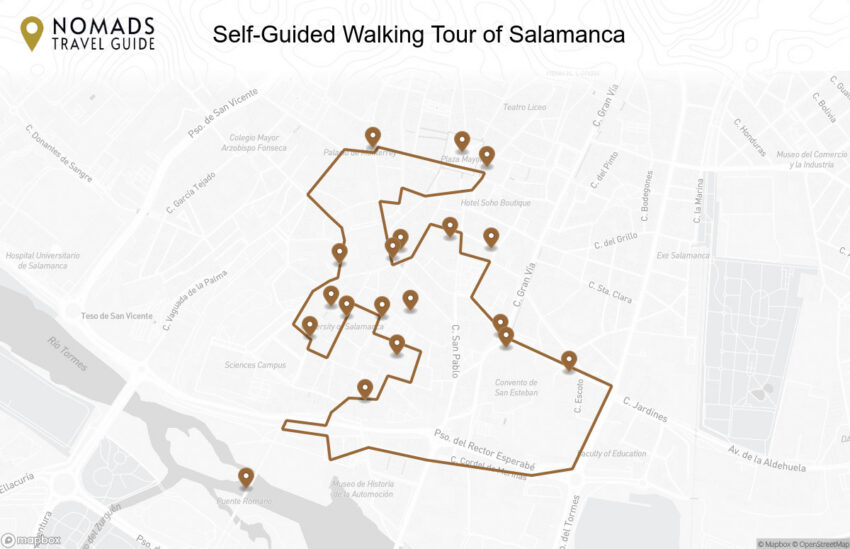
Discover Salamanca on foot with our walking tour map guiding you between each stop as you explore its golden sandstone streets, monumental university buildings, cathedral towers, and lively plazas. This walking tour follows the city's layered story, shaped by centuries of scholarship, religious patronage, and civic pride, taking you from Plaza Mayor's grand arcades and historic college courtyards to cathedral viewpoints and riverside walks by the Tormes, all within a compact, easily walkable historic centre.
1. Plaza Mayor

Salamanca’s Plaza Mayor is an 18th-century masterwork of Spanish Baroque urban design, built as the city’s new civic heart after earlier medieval marketplaces became too cramped for Salamanca’s growing public life. Construction began in 1729 and continued through the mid-18th century, creating the harmonious arcades, sculpted medallions, and golden-stone façades that make the square feel both grand and intimate.
The square has always been more than a photogenic backdrop. It was designed for civic ceremony and daily commerce, with colonnaded walkways that sheltered vendors and passers-by from sun and rain, and façades that acted like an architectural stage set for festivals, proclamations, and public gatherings. Over time it became the city’s default meeting point, the place where Salamanca’s university character and local life naturally overlap.
What to see is simple but rewarding: walk the full perimeter under the arcades, then step into the centre and look back to appreciate the symmetry and scale. Come in the evening when the sandstone glows and the cafés fill, and return at a quieter hour to notice details in the carved medallions and ironwork balconies. If you are doing a walking tour, this is also an ideal reset point to re-orient before heading into the older lanes.
Location: Plaza Mayor de Salamanca Pl. Mayor, 4 37002 Salamanca Spain | Hours: 24 Hours | Price: Free | Website


2. Mercado Central de Salamanca
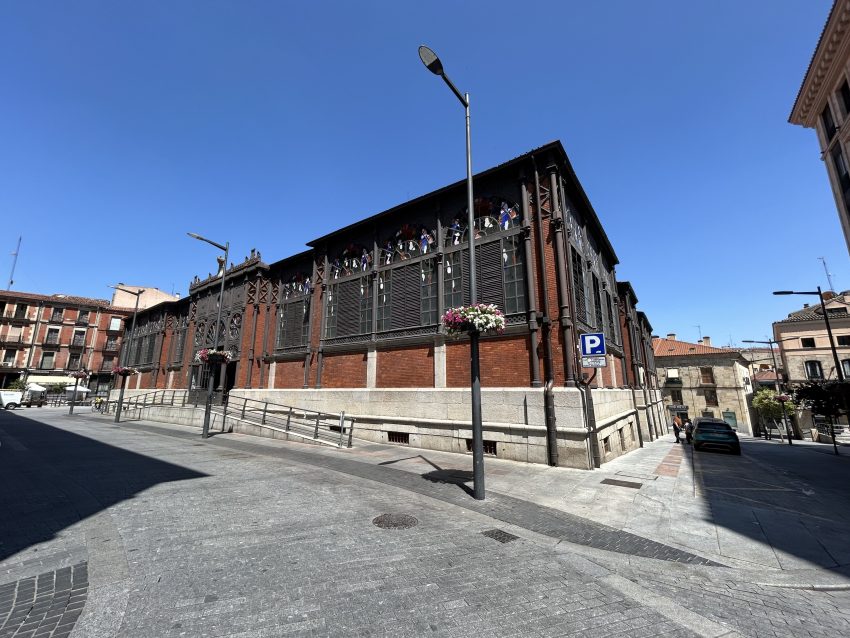
Salamanca’s Central Market reflects the late-19th and early-20th-century European push to modernise food selling: covered markets brought hygiene, structure, and reliable supply to what had often been open-air trading. Its architecture is practical rather than monumental, but it represents a real shift in how the city fed itself, moving commerce into an organised indoor setting while keeping the traditional rhythm of daily shopping.
The market has long served as a snapshot of local agriculture and the surrounding Castilian pantry. Generations of stallholders have made it a place where produce, cured meats, cheeses, and seafood sit side by side, and where locals still come for specific items rather than browsing in a supermarket. Even as tourism has grown, it remains grounded in everyday life, which is exactly what makes it interesting to visit.
Go inside for the atmosphere and the details: the calls between vendors, the seasonal produce, and the strong sense of place you only get where locals shop. Look for jamón and other cured specialities, local cheeses, olives, fruit, and small counters where you can grab something simple. It is an easy stop on a walking tour when you want a break from stone façades and a more lived-in view of the city.
Location: Pl. del Mercado, 0, 37001 Salamanca, Spain | Hours: Monday – Saturday: 08:00–15:00. Sunday: Closed. | Price: Free. | Website
3. Palacio de la Salina

The Palacio de la Salina is one of Salamanca’s most elegant Renaissance palaces, a refined example of the city’s Plateresque tradition where decorative stonework is treated with the delicacy of metal engraving. Built in the 16th century for a prominent figure connected to royal administration, it speaks to a period when Salamanca’s wealth and prestige were closely tied to institutions, law, and the university ecosystem.
Architecturally, it is a lesson in contrast: a relatively sober exterior composition paired with intricate ornamental detail around doors, windows, and the courtyard. Like many Salamanca palaces, it was designed to project status while remaining defensible and private, with the interior patio acting as the true centre of domestic life and display.
When you visit, focus on the façade’s sculptural elements and then, if accessible, the courtyard where the building’s proportions and stonework feel most balanced. It is also a good place to notice how Salamanca’s famous golden stone changes character throughout the day. On a walking tour, it works well as a short, high-impact stop between larger monuments.
Location: Palacio de la Salina, Calle San Pablo, Salamanca, Spain | Hours: Daily 10:00–21:00 | Price: Free | Website
4. Casa de las Conchas

The Casa de las Conchas dates from the late 15th to early 16th century and is one of Salamanca’s most distinctive noble houses, famous for the shell motifs that stud its façade. Those shells are usually linked to the Order of Santiago and to the status networks of the period, when powerful families used architecture to broadcast lineage, alliances, and institutional ties.
Its history sits at a hinge moment: the transition from Gothic forms to early Renaissance influences, when Salamanca was both a thriving university city and a place where elite households competed in taste and symbolism. The building has shifted roles over time, but it has retained the identity that makes it instantly recognisable, and today it is closely tied to Salamanca’s literary and scholarly culture.
What to see starts on the outside: stand back and take in the sheer number of shells, then move closer to spot the variation in carving and placement. If you go inside, look for the courtyard and details that reveal the blend of styles. It is a compact stop that delivers a strong visual payoff and sits naturally on routes between the university core and the cathedral quarter.
Location: Casa de las Conchas, Calle Compañía, 2 37002 Salamanca (Castilla y Leon) | Hours: 01 April – 31 May; Monday – Friday: 09:00-21:00. Saturday: 09:00-14:00 & 16:00-19:00. Sunday & public holidays: 10:00-14:00 & 16:00-19:00. 01 July – 30 September; Monday – Friday: 09:00-15:00 & 17:00-21:00. Saturday: 09:00-14:00 & 17:00-20:00. Sunday: 10:00-14:00 & 17:00-20:00. 08 September – 01 April; Monday – Friday: 09:00-21:00. Saturday, Sunday & public holidays: 10:00-14:00 & 16:00-19:00. 06 December – 08 December; Monday, Saturday & Sunday: 09:00-14:00 & 16:00-19:00. | Price: Free | Website
5. La Clerecía and the Stairway to Heaven
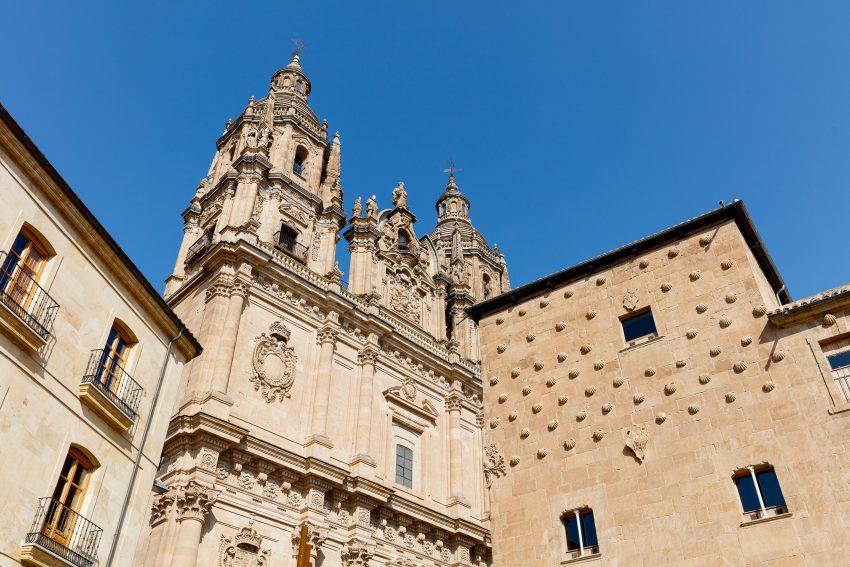
La Clerecía is one of Salamanca’s great Baroque complexes, built from the 17th into the 18th century as a major religious and educational institution. The scale is deliberate: it was conceived to rival the city’s established powers, and its façade and twin towers add a distinctly Baroque counterpoint to Salamanca’s older Gothic and Plateresque landmarks.
Historically, it represents Salamanca’s long entanglement of learning and faith. Institutions like this shaped the city’s identity as much as the university did, training clergy and scholars within a framework where theology, philosophy, and rhetoric were central intellectual disciplines. The building’s grandeur signals not only devotion but also institutional ambition.
For visitors, the highlight is the viewpoint experience often marketed as the Stairway to Heaven (the Scala Coeli terraces). Climb for the panoramic perspective over the old rooftops, cathedral towers, and the river corridor, which helps you understand the city’s layout in a single glance. Combine it with a closer look at the church interior and façade, then use the viewpoint as a navigation anchor for the rest of your walking tour.
Location: C. de la Compañía, 5, 37002 Salamanca, Spain | Hours: (Summer) March – November: 10:00–20:00. (Winter) December – February: 10:00–18:00. | Price: €3.75 (Scala Coeli); €6 (Scala Coeli + Vita Ignatii). | Website
6. Universidad de Salamanca

Founded in 1218, the University of Salamanca is one of Europe’s oldest universities and the single institution most responsible for the city’s enduring intellectual reputation. It flourished in the medieval and early modern periods as a major centre for law, theology, philosophy, and the humanities, attracting students and scholars from across the Iberian world and beyond.
The university’s most iconic built symbol is the historic building’s Plateresque façade, a dense tapestry of carved stone that became a statement of power and prestige during Spain’s Renaissance era. Salamanca’s academic culture also helped shape wider historical currents, from legal thought to debates about empire, language, and ethics that echoed far beyond the city.
What to see includes the façade itself (take your time; it is meant to be read like a visual text), the courtyards, and the historic halls where possible. Look for the balance of ceremony and daily student life that still defines the area: robes, bookshops, and cafés clustered around old stone. Even if you do not enter every interior, walking the university quarter gives your tour its core narrative.
Location: Patio de Escuelas Menores, 37008 Salamanca | Hours: (Winter) Daily: 10:00–19:00; (Summer) Daily: 10:00–20:00 | Price: Adults: €10 | Website
7. Plaza de Anaya
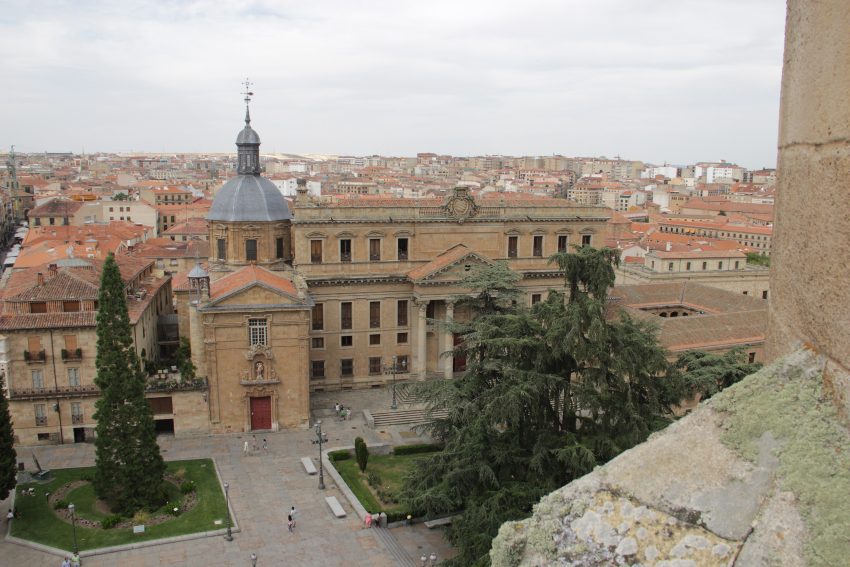
Plaza de Anaya is the connective tissue between Salamanca’s cathedral complex and the university world, a space that feels like an outdoor antechamber to some of the city’s biggest monuments. Its identity is largely shaped by the 18th-century neoclassical presence of the Anaya complex and the constant flow of students and visitors moving between academic and ecclesiastical landmarks.
Historically, this is where Salamanca’s two great power structures meet in stone: the university and the Church. The square’s openness is important; it creates breathing room between massive buildings and offers a clear sightline to façades that can otherwise feel overwhelming in Salamanca’s tight medieval street pattern.
What to see is the ensemble view. Stand at different corners to frame the cathedral towers against the neoclassical lines of the Anaya buildings, then cross the square slowly to appreciate how Salamanca’s “golden hour” light changes the stone. It is also an excellent place to pause, orient, and decide whether your next stop should be scholarly interiors or cathedral heights.
Location: Pl. de Anaya, 37008 Salamanca, Spain
8. Catedral Viejo y Nueva

Salamanca’s two cathedrals form a single, remarkable complex that shows the city expanding without wiping away what came before. The Catedral Vieja (Old Cathedral) was built mainly in the 12th and 13th centuries, rooted in Romanesque forms with an early Gothic lift, reflecting Salamanca’s medieval phase as it consolidated its religious identity. In the early 16th century, as Salamanca grew wealthier and more ambitious, work began on the Catedral Nueva (New Cathedral). Instead of demolishing the older building, the city built the new one alongside it so services could continue—an unusual decision that’s why you can experience both eras in one visit.
Because the New Cathedral took roughly two centuries to complete, it reads like a timeline in stone. Its underlying structure and vast spatial drama are late Gothic, designed for height and awe, while later Renaissance and Baroque elements appear as tastes shifted over generations. By contrast, the Old Cathedral feels more intimate and textural: heavier stone, tighter proportions, and a quieter, older atmosphere that makes you slow down and look closely. Together, they show two different ideas of sacred space—one medieval and inward, the other early modern and monumental—pressed side by side.
What to see is best approached as a sequence. Start in the Old Cathedral to absorb the medieval scale, then move into the New Cathedral to feel the sudden jump in volume and height; the contrast is the point. Spend time looking upward in the New Cathedral to appreciate the vaulting and the way light plays across Salamanca’s warm sandstone, then return your attention to the Old Cathedral’s chapels and details, which reward close viewing. If you can access any higher levels or viewpoints, take them: the relationship between the two structures becomes clearer from above, and you get one of the most memorable skyline perspectives in the city.
Location: Salamanca Cathedral C. Benedicto XVI 37008 Salamanca Spain | Hours: Daily: 10:00-18:00 | Price: Adult: €10.00 | Website
9. Museo Art Nouveau and Art Deco
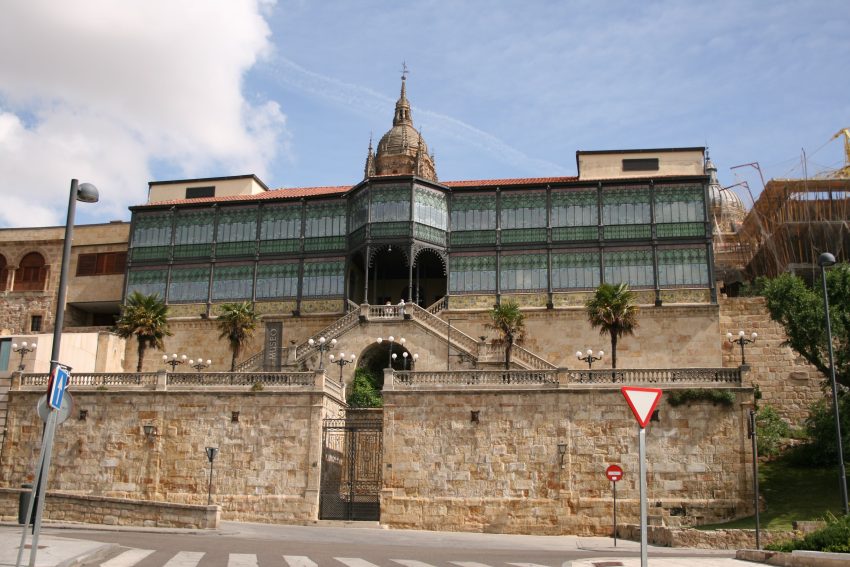
Often known by the building that houses it, Casa Lis, Salamanca’s Art Nouveau and Art Deco museum is a striking contrast to the city’s medieval and Renaissance stonework. The mansion itself is early 20th century, built when modern styles, new materials, and urban refinement were reshaping European cities, and its stained glass and ironwork feel like a different world from the university façades.
The museum’s collection reflects the turn-of-the-century fascination with beauty, craftsmanship, and modern life, showing how design moved toward sinuous Art Nouveau lines and the sleek geometry of Art Deco. It is also a reminder that Salamanca is not frozen in a single “historic” period; the city continued evolving, absorbing new tastes and cultural currents.
Go for the building as much as the objects. Seek out the stained-glass features, the light-filled interior spaces, and the decorative arts displays that feel intimate compared with cathedral grandeur. It is a perfect mid-tour shift in mood: a place to reset your eye and enjoy detail at close range.
Location: Gibraltar, 14, 37008 Salamanca, Spain | Hours: Monday – Friday: 11:00–17:00. Saturday: 11:00–20:00. Sunday: 11:00–15:00. | Price: Adults: €7; Students: €3; Seniors: €3; Unemployed: €1; Under 14: free; Thursday (11:00–14:00): free for all. | Website
10. Puente Romano de Salamanca

The Roman Bridge is one of Salamanca’s oldest surviving structures, originally built in the Roman period as part of a route that connected key settlements across the Iberian Peninsula. While the bridge has been repaired and altered over centuries, its presence still signals Salamanca’s strategic location and the deep time layer beneath the city’s medieval and Renaissance fame.
Historically, this crossing mattered because bridges were economic infrastructure: they controlled movement of people, goods, and military forces. Salamanca’s later prosperity did not appear from nowhere; it grew in a place that had long been a node in regional networks, and the bridge is the simplest proof of that continuity.
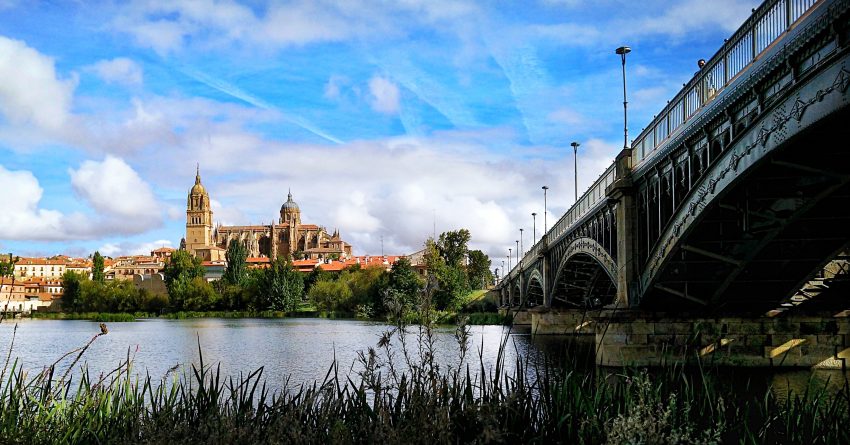
What to see includes the upstream and downstream views, especially at sunrise or sunset when the stone and water soften. Walk across and then turn back for one of Salamanca’s classic skyline shots: cathedral towers rising above the city’s warm stone. It is also a good place to understand the relationship between the old city and the river corridor, which many visitors otherwise treat as background.
Location: Roman bridge of Salamanca Puente de Sánchez Fabrés 37008 Salamanca Spain | Hours: 24 Hour | Price: Free | Website
11. Palacio de Monterrey

The Palacio de Monterrey is a 16th-century Renaissance palace celebrated for its refined Plateresque ornament and its association with one of Spain’s powerful noble houses. It represents Salamanca’s aristocratic layer, a world of lineage and courtly networks that coexisted with the city’s academic culture and sometimes competed with it in architectural display.
Its design is elegant rather than heavy, with decorative stonework that rewards careful viewing. Like other high-status buildings of the period, it is about controlled spectacle: the exterior communicates authority, while the interior organisation historically supported privacy, hierarchy, and the rituals of noble life.
For visitors, the main draw is the façade and the overall silhouette, especially the corner towers that give it a distinctive profile. Take a few minutes to study the carved details up close, then step back to see how the building sits in the street. It works well as a short, photogenic stop that broadens the story beyond university-and-cathedral Salamanca.
Location: Monterrey's palace Pl. de Monterrey, 2 37002 Salamanca Spain | Hours: (Summer: April to October) Tuesday–Sunday 10:30–14:30 and 16:00–20:00 (Winter: November to March) Tuesday–Thursday 10:30–14:30; Friday–Sunday 10:30–14:30 and 16:00–18:00 Closed Mondays (except public holidays). Free visit: Tuesday 10:30–11:00 (advance online booking required). | Price: Self-guided visit with audioguide €7. Guided tour €10 (Tue–Fri) / €12 (Sat–Sun). | Website
12. Pontifical University of Salamanca
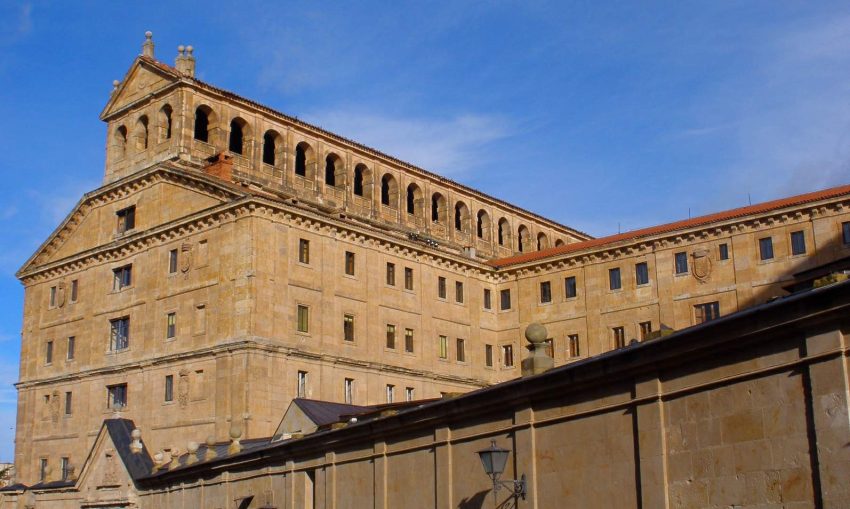
The Pontifical University is a modern institution rooted in Salamanca’s older tradition of religious scholarship, and it is closely associated with the city’s grand Baroque educational architecture. It represents the continuation of a long intellectual lineage in which theology and related disciplines remained central, even as universities and societies modernised.
Its presence also reinforces Salamanca’s identity as a living university city rather than a museum set. The city’s educational ecosystem has always included multiple institutions and traditions, and the Pontifical University adds a contemporary chapter to a story that began in the medieval period but never truly stopped.
What to see depends on access, but the surrounding architecture is part of the appeal: the scale, stonework, and the way the complex fits into the historic core. Even if you do not enter academic spaces, walking past and connecting it to nearby Baroque and university landmarks helps you read Salamanca as a layered educational landscape rather than a single institution.
Location: C. de la Compañía, 5, 37002 Salamanca, Spain | Hours: Monday: 8:00 AM – 10:00 PM Tuesday: 8:00 AM – 10:00 PM Wednesday: 8:00 AM – 10:00 PM Thursday: 8:00 AM – 10:00 PM Friday: 8:00 AM – 10:00 PM Saturday: 9:00 AM – 2:00 PM Sunday: Closed | Website
13. Hospital del Estudio
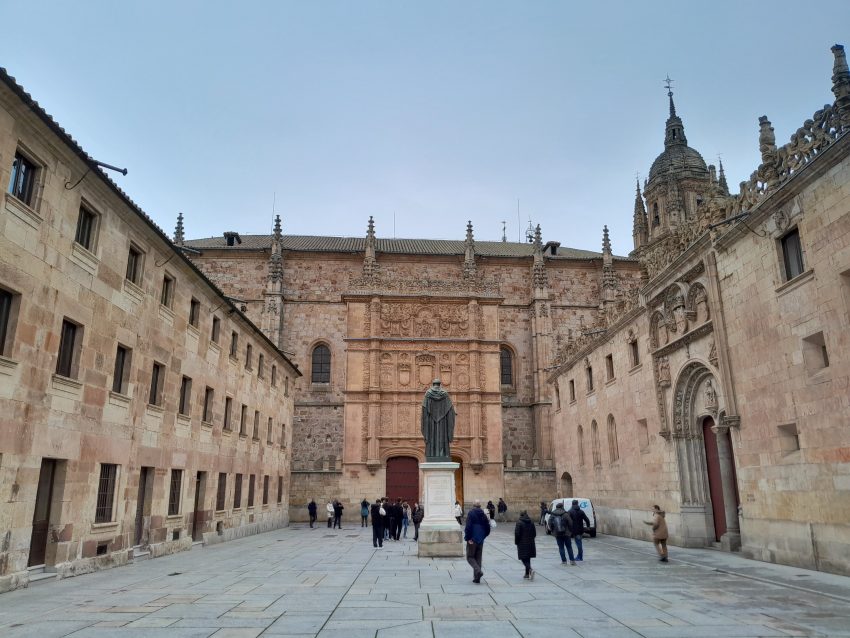
The Hospital del Estudio was created to support the University of Salamanca, reflecting the medieval and early modern idea that a great university needed civic and charitable infrastructure around it. University-related hospitals served students and the broader community, linking learning, welfare, and public responsibility in a way that feels surprisingly modern.
Historically, it also speaks to Salamanca’s density of institutions: colleges, chapels, libraries, and support buildings formed an interconnected system. The hospital was part of that system, and its very existence indicates how central the university had become to the city’s functioning, not just its reputation.
When visiting, look for the institutional character in the architecture: sober lines, courtyards, and the sense of purpose-built space rather than aristocratic display. It is not as immediately dramatic as the cathedral or the Plaza Mayor, but it enriches your walking tour by showing the “working” city that enabled Salamanca’s scholarship to thrive.
Location: P.º de San Vicente, 182, 37007 Salamanca, Spain | Hours: 24 Hours. | Price: Free. | Website
14. Escuelas Menores
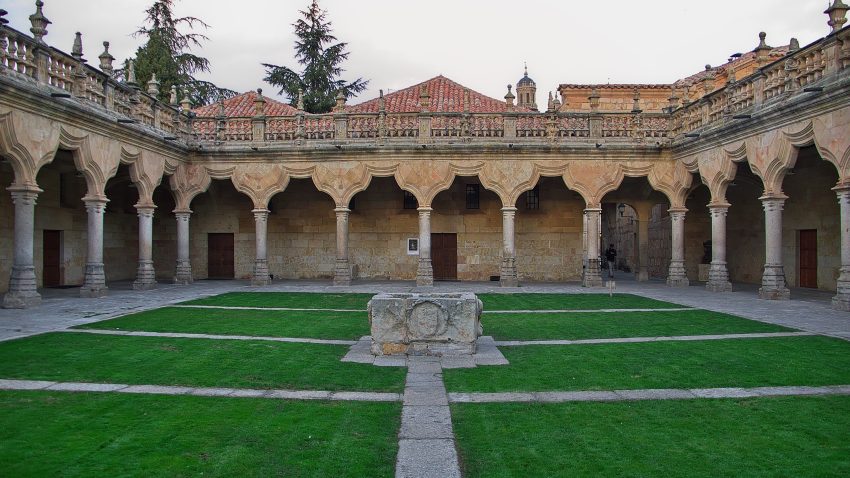
The Escuelas Menores were part of Salamanca’s historic university complex, created to support teaching and academic life beyond the showpiece façades. They embody the day-to-day mechanics of a medieval and early modern university: classrooms, courtyards, and administrative spaces where education happened at a practical level.
Historically, the importance of these spaces is that they remind you Salamanca’s greatness was not only ceremony. The city’s university reputation was built on routine teaching, examinations, institutional rules, and a physical environment designed to manage large numbers of students over centuries.
When you visit, focus on the courtyard atmosphere and the details that survive from different periods. If your route includes the Cielo de Salamanca, pairing it with the Escuelas Menores deepens the experience: you move from architecture to a surviving piece of scholarly visual culture. It is also a calmer counterbalance to the cathedral crowds and the Plaza Mayor’s buzz.
Location: Pl. Fray Luis de León, 3, 37008 Salamanca, Spain | Hours: Monday – Saturday: 11:30–14:00 & 17:30–20:30. Sunday: 11:30–14:00. Closed on Monday. | Price: Check official website. | Website
15. Palacio de Anaya

The Palacio de Anaya is a neoclassical landmark that signals Salamanca’s late-18th-century taste shift toward cleaner lines and classical restraint. It stands in deliberate contrast to the city’s earlier Plateresque exuberance, reflecting new academic and institutional ideals that valued order, clarity, and Enlightenment-era aesthetics.
Its history is tied to Salamanca’s educational institutions and the broader reshaping of scholarly life in the modern period. As the city evolved, buildings like this provided an architectural language that aligned Salamanca with contemporary European currents while still using local stone and fitting into the historic core.
What to see includes the façade and its proportions, best appreciated from the open space of Plaza de Anaya. Notice how the building frames your view toward the cathedrals, and how its calm geometry changes the mood of the area. It is a good “breathing space” stop on a walking tour: visually restorative after more ornament-heavy monuments.
Location: Anaya Palace C. Salamanca Zamora, 3 37008 Salamanca Spain | Hours: Monday–Friday 09:00–19:00 (During University term time.) | Price: Free (courtyard access). | Website
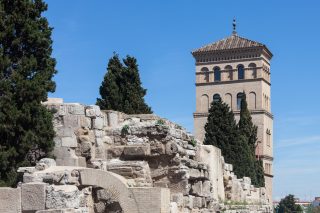
16. Torre del Clavero

The Torre del Clavero is a surviving fragment of Salamanca’s late medieval defensive and residential landscape, a reminder that elite power once needed literal fortification. The tower’s form and position hint at a time when authority was expressed through strong, vertical structures that combined prestige with security.
Historically, it is associated with a military-religious order environment and the networks of status that shaped Salamanca’s medieval society. Even as Salamanca became more stable and more oriented toward scholarship and civic life, remnants like this remained in the urban fabric, quietly anchoring the city to its earlier centuries.
What to see is the exterior profile and the way the tower rises above surrounding streets. It is not a long stop, but it is a valuable one: it breaks up a route dominated by grand plazas and churches and brings you back to the medieval city of strongholds, households, and fortified prestige.
Location: Torre del Clavero C. Consuelo, 34 37001 Salamanca Spain | Hours: Exterior view anytime; the tower interior is not generally open to visitors. | Price: Free (to see from outside). | Website
17. Convento de las Dueñas
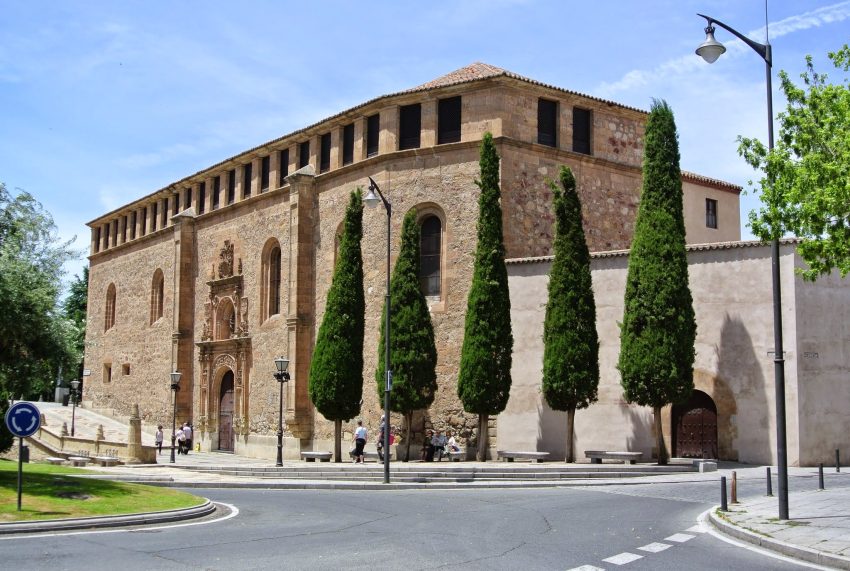
The Convento de las Dueñas is a historic convent complex that preserves a quieter, more enclosed side of Salamanca’s religious heritage. Founded in the late medieval period and developed in subsequent centuries, it offers a counterpoint to Salamanca’s more monumental churches by focusing on cloistered life, community, and internal architecture.
Its strongest historical signature is its blend of styles, with particular emphasis on decorative elements that echo Salamanca’s Plateresque tradition. Convents were not only spiritual spaces; they were also important social institutions, tied to patronage networks, family histories, and the city’s long religious continuity.
What to see is typically the cloister and the ornamental detail that survives in stone. Move slowly and pay attention to carving, arches, and the sense of enclosure, which contrasts sharply with Salamanca’s open squares. It is an excellent stop if you want a moment of calm and a more intimate architectural experience within the historic centre.
Location: Pl. del Concilio de Trento, s/n, 37001 Salamanca, Spain | Hours: Monday – Saturday: 10:30–12:45 & 16:30–19:30. Sunday: Closed. Closed on Sunday. | Price: Adults: €2.
18. Convento de San Esteban
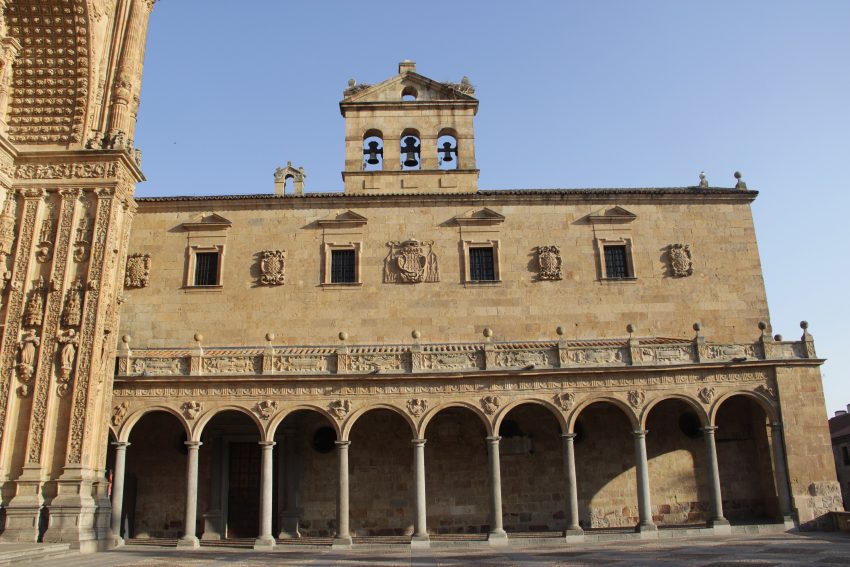
The Convento de San Esteban is one of Salamanca’s great Dominican monuments, built across the 16th and early 17th centuries with a façade that ranks among Spain’s most impressive Plateresque compositions. Its scale and decoration reflect the Dominicans’ influence and the deep interconnection between religious orders and Salamanca’s scholarly world.
Historically, it is linked to major intellectual and theological currents, and it also carries echoes of the Spanish age of exploration and debate, when Salamanca’s theologians and jurists were wrestling with new global realities. The convent stands as a physical expression of that era: confident, expansive, and rich in symbolic stonework.
What to see includes the façade’s sculptural storytelling, the church interior, and the cloistered spaces if accessible. Spend time looking upward and outward: this complex is designed to reward vertical attention, from carved portals to soaring interior elements. On a walking tour, it is a major anchor point that adds depth beyond the university narrative.
Location: Pl. del Concilio de Trento, s/n, 37001 Salamanca, Spain | Hours: (Summer) Monday – Sunday: 10:00–14:00 & 16:00–20:00. | Price: Check official website. | Website
19. Colegio de Calatrava
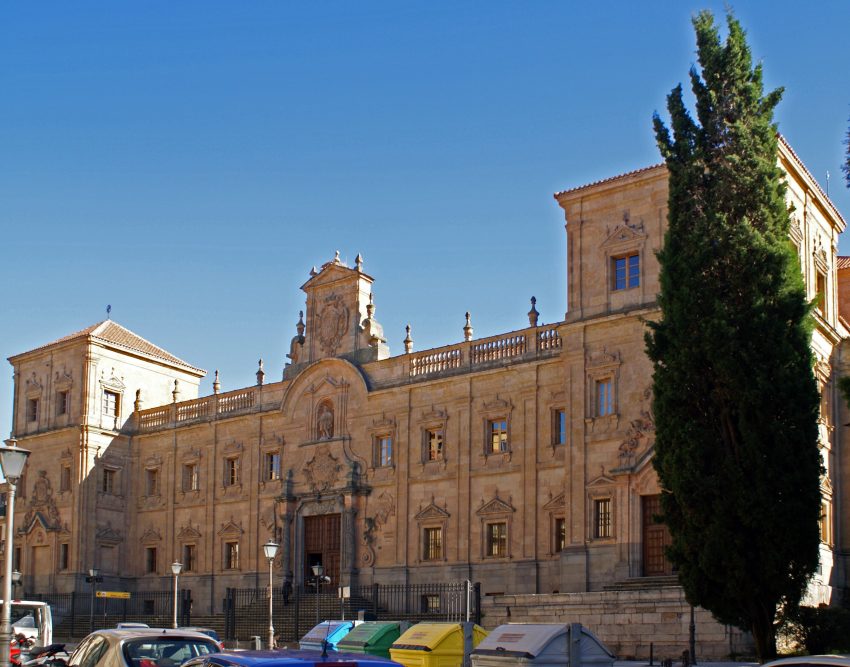
The Colegio de Calatrava represents Salamanca’s tradition of collegiate institutions tied to specific communities and networks, in this case connected to the Order of Calatrava. Colleges like this were designed to support students and scholars through housing, governance, and a structured academic environment, reinforcing Salamanca’s status as a city built around learning.
Historically, such colleges were also about identity and patronage. They embedded social hierarchies into the university system and added architectural variety to the city’s academic quarter, creating a patchwork of institutions that shaped the everyday geography of student life.
What to see is often about reading the building in context rather than expecting a single iconic “must-see” interior. Look for the institutional character in the façade and plan, then connect it mentally to nearby university buildings and religious sites. As a walking-tour stop, it works best as a narrative layer: Salamanca as a city of many educational houses, each with its own purpose and lineage.
Location: 37008 Salamanca, Spain | Hours: Monday – Friday: 09:00–19:00. Saturday: 10:00–19:00. Sunday: 10:00–14:00. | Price: Check official website. | Website

Moira & Andy
Hey! We're Moira & Andy. From hiking the Camino to trips around Europe in Bert our campervan — we've been traveling together since retirement in 2020!
This website uses affiliate links which earn a small commission at no additional cost to you.
Walking Tour Summary
Distance: 4 km
Sites: 19
Walking Tour Map