Self-Guided Walking Tour of Gaudi's Barcelona (2026)
This website uses affiliate links which earn a small commission at no additional cost to you.
Barcelona can feel like an open-air gallery of Antoni Gaudí's imagination, where everyday streets suddenly turn into waves, mosaics, and stone that seems to breathe. A self-guided walking tour is the best way to take it in properly, because you can pause when something catches your eye, loop back for a better angle, and linger in the moments that feel uniquely Barcelona.
This route is built for curious walkers who want the story behind the city's most iconic Modernisme landmarks, not just a checklist. You'll connect major highlights with smaller details that are easy to miss when you're rushing, and you'll get a clearer sense of how Gaudí's work fits into Barcelona's broader creative energy. If you're wondering about the best things to see in Barcelona, this walk threads many of them into one satisfying day.
Expect a mix of grand “wow” moments and quieter architectural surprises, with plenty of chances to stop for coffee, a bakery break, or a shaded bench when you need it. You can do the tour straight through, or split it into two halves if you want time for interior visits and museums. Either way, you'll finish with a stronger feel for why Gaudí's Barcelona isn't just beautiful-it's a whole way of seeing the world.
Table of Contents
- How to Get to Barcelona
- History of Gaudi’s Barcelona
- Barcelona Before Gaudí: Medieval Roots, Markets, and a City of Craft
- Barcelona Becomes Modern: Expansion, Confidence, and the Conditions for Modernisme
- Barcelona and Gaudí’s Early Rise: A New Architectural Language Takes Hold
- Barcelona’s Gaudí Peak: Domestic Masterworks and the City as Sculpture
- Barcelona and the Total Environment: Parc Güell and the Long Sacred Project
- Barcelona After Gaudí: Preservation, Reinterpretation, and a Living Legacy
- Barcelona Today: Global Icon Status, Tourism Pressure, and Ongoing Questions
- Where to Stay in Barcelona
- Your Self-Guided Walking Tour of Gaudi’s Barcelona
How to Get to Barcelona
By Air: Barcelona-El Prat Airport (BCN) is the main international gateway and sits roughly 12-15 km from the centre. The easiest public options are the Aerobús to Plaça de Catalunya (a convenient jump-off point for the Passeig de Gràcia Gaudí sights) or the metro (L9 Sud) with a connection onward into the city; taxis and ride-hails are plentiful if you're arriving late or carrying luggage. If your first stop is Sagrada Família, plan on one connection from the airport unless you're taking a direct taxi. For the best deals and a seamless booking experience, check out these flights to Barcelona on Booking.com.
By Train: Barcelona Sants is the primary station for high-speed AVE and long-distance services, with additional regional arrivals at Passeig de Gràcia and França depending on your route. For Gaudí-focused sightseeing, arriving at (or transferring to) Passeig de Gràcia station can be particularly practical because it puts you near Casa Batlló and La Pedrera, while Sants is best if you want straightforward metro connections and lots of onward transport options. If you're coming from elsewhere in Catalonia, Rodalies trains are frequent, but allow extra buffer time during peak commuting hours. Train schedules and bookings can be found on Omio.
By Car: Driving into central Barcelona is doable, but it's rarely the most relaxing way to start a Gaudí day because traffic, limited parking, and one-way streets add friction. If you do arrive by car, consider parking in a secure garage outside the tightest central zones (or near a metro stop) and switching to public transport for the main sights; it's also worth checking whether your accommodation sits within the city's low-emission restrictions and what that means for your vehicle. For a self-guided walking tour, the car is most useful for getting to the city rather than moving between Gaudí sites once you're there. If you are looking to rent a car in Spain I recommend having a look at Discover Cars, first, as they compare prices and review multiple car rental agencies for you.
History of Gaudi’s Barcelona
Barcelona Before Gaudí: Medieval Roots, Markets, and a City of Craft (Until the mid-1800s)
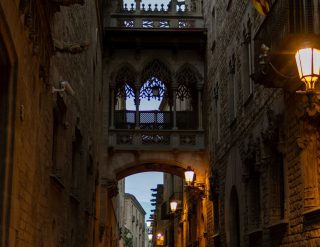
Before Gaudí reshaped the city's skyline and streetscape, Barcelona's character was already defined by layered history, skilled craftsmanship, and an intense street-level culture. The Gothic Quarter represents that older Barcelona: stone-heavy, devotional, and built through centuries of incremental change rather than single grand visions. Commerce and daily ritual mattered just as much as monuments, and Mercado de La Boqueria reflects a tradition of public markets as social infrastructure-places where the city's identity was reinforced every day through food, trade, and conversation. This pre-Gaudí Barcelona also carried a strong artisan backbone, which later became crucial when Modernisme demanded ceramicists, ironworkers, stained-glass makers, and sculptors capable of turning architecture into a total art form.
Barcelona Becomes Modern: Expansion, Confidence, and the Conditions for Modernisme (mid-1800s-1890s)
As Barcelona modernised and prosperity grew, architecture became a way to project ambition and cultural identity. Public life expanded into new civic spaces and new kinds of leisure, and places like Ciutadella Park signalled a Barcelona that wanted to look outward, host grand occasions, and present itself as progressive. At the same time, a rising urban elite began commissioning buildings that weren't merely functional-they were statements. This is where the city's creative energy starts to concentrate into what becomes Modernisme: a movement that treated buildings as immersive artworks, fusing structure with craft. The Palace of Catalan Music sits within that wider surge of confidence and artistry, showing how Barcelona's cultural institutions and architectural experimentation were becoming inseparable.
Barcelona and Gaudí’s Early Rise: A New Architectural Language Takes Hold (1890s-1905)
When Gaudí's work begins to dominate the conversation, it doesn't feel like a gentle evolution of style-it reads like a new language. He draws on craft traditions but pushes them into forms that seem grown rather than built, with façades that tell stories and surfaces that behave like living skin. In this period, the seeds of “Gaudí's Barcelona” become visible in the way domestic architecture is elevated into urban spectacle. CASA BATLLÓ begins to redefine what a city house can express, turning the street façade into a narrative object rather than a polite frontage. Around the same time, the city's appetite for innovation creates the ideal conditions for Gaudí's ideas to be taken seriously rather than dismissed as eccentric.
Barcelona’s Gaudí Peak: Domestic Masterworks and the City as Sculpture (1905-1915)
This decade is when Gaudí's work becomes inseparable from Barcelona's self-image. CASA BATLLÓ and Casa Milà push residential architecture beyond comfort and prestige into something closer to civic mythology-buildings that people read emotionally, even before they understand them intellectually. Casa Milà, in particular, signals a Barcelona willing to accept radical form in a prime urban setting: stone that undulates, ironwork that feels hand-drawn, rooftops that operate like a gallery. In Gràcia, the Gaudí story also becomes neighbourhood-scale, not just landmark-scale, because the area's creative identity and street life make it a natural home for architecture that rewards slow looking and repeated visits.
Barcelona and the Total Environment: Parc Güell and the Long Sacred Project (1900s-1926)
Parc Güell shows Gaudí thinking beyond single buildings and into complete environments-routes, terraces, textures, and viewpoints designed as one continuous experience. It's Barcelona rendered as a walkable artwork, where structure and landscape cooperate rather than compete. Over these same years, La Sagrada Familia grows from a major commission into a consuming life project, with the city effectively watching a new symbol being built in real time. The power of this period is that it captures two sides of Gaudí's Barcelona at once: the playful, public-facing imagination of Parc Güell and the intense spiritual ambition of La Sagrada Familia, both rooted in the same belief that architecture can shape how people feel, not just how they move.
Barcelona After Gaudí: Preservation, Reinterpretation, and a Living Legacy (1926-1980s)
After Gaudí, Barcelona's relationship with his work passes through phases of neglect, rediscovery, and argument. The city changes politically and culturally, and Modernisme shifts from “new style” to “heritage” with all the tension that implies: what to restore, what to alter, and how to explain it to a public that may no longer share the original context. La Sagrada Familia becomes the clearest symbol of this complexity because its incompletion invites permanent debate about continuity and intent. Meanwhile, the older Barcelona layers-like the Gothic Quarter's historical gravity and the everyday pull of Mercado de La Boqueria-continue to keep the city grounded, reminding visitors that “Gaudí's Barcelona” sits on top of a much longer story.
Barcelona Today: Global Icon Status, Tourism Pressure, and Ongoing Questions (1990s-Now)
In the contemporary city, Gaudí's sites have become both cultural treasures and logistical challenges. Restoration and interpretation have elevated experiences at CASA BATLLÓ and Casa Milà, while Parc Güell has shifted from local landmark to global pilgrimage point, changing how the space is managed and how it feels on the ground. La Sagrada Familia remains the centre of gravity because it is still evolving, forcing Barcelona to treat heritage as something active rather than finished-an identity that's continually being negotiated. What makes the history of Gaudí's Barcelona compelling now is that it isn't only about what was built; it's about how the city keeps absorbing, protecting, and redefining these places while trying to keep everyday neighbourhood life intact, especially in areas like Gràcia and around the most visited landmarks.
Where to Stay in Barcelona
To make the most of visiting Barcelona and this walking tour, you should consider staying overnight in the centre, ideally around the Eixample Dreta and Passeig de Gràcia where several key Gaudí stops cluster naturally into a walkable day. This base makes it easy to start with Casa Batlló and Casa Milà and still reach other highlights with a short metro hop when needed. Good picks here include Majestic Hotel & Spa Barcelona, Hotel Casa Fuster, and H10 Casa Mimosa, with Cotton House Hotel, Autograph Collection as a stylish alternative that still keeps you close to the Modernisme corridor.
If you want the same central convenience but a slightly calmer, better-value feel (while staying well connected to the main walking-tour start points), look around the Eixample edges near Provença/Diagonal or Plaça de Catalunya. From here, you can reach Passeig de Gràcia in minutes and also have fast train and metro links for day trips or airport transfers. Consider Olivia Balmes Hotel, Hotel Condes de Barcelona, and Hotel Granvia, with Hotel Jazz as a practical option if you want to be close to transport and still within easy reach of the Gaudí-heavy streets.
For a more local neighbourhood vibe that still suits a Gaudí-focused itinerary, Gràcia is a strong base, especially if you plan to spend time around Parc Güell and want cafés and small squares that feel lived-in after the day-trippers leave. You’ll likely use the metro to link to Passeig de Gràcia, but you’ll be sleeping in a calmer pocket of the city. Options worth considering are Casa Gracia (right on the boundary with Eixample), Aparthotel Silver, and Hotel Ronda Lesseps which can work well if you’re prioritising Parc Güell access and don’t mind short metro rides to the rest.
If you’d rather wake up close to La Sagrada Familia and build the day outward from there, staying in the Sagrada Família/Eixample north-east area can be efficient, particularly if you’ve booked an early entry time. It’s also a straightforward setup if you plan to use the metro to stitch the route together (and it’s easy to reach the main stations for train travel). Look at Radisson Blu 1882 Hotel, Barcelona Sagrada Familia, Hotel Sagrada Familia, and Eurostars Monumental for a mix of comfort levels while keeping you close to the basilica and well connected to the rest of the walking tour.
If you want atmospheric evenings and easy access to food markets, historic lanes, and concert venues (while still reaching Gaudí sites by metro), the Gothic Quarter and nearby old-town streets can be a rewarding base. You'll trade some pure “Gaudí-on-your-doorstep” convenience for character, late-night dining, and the feeling of stepping straight into the city's oldest layers after your daytime architecture loop. Consider Hotel Neri Relais & Châteaux, Kimpton Vividora Hotel, H10 Madison, or Catalonia Catedral for a central, walk-everywhere base that pairs well with the walking tour’s start-and-finish flexibility.
Your Self-Guided Walking Tour of Gaudi’s Barcelona
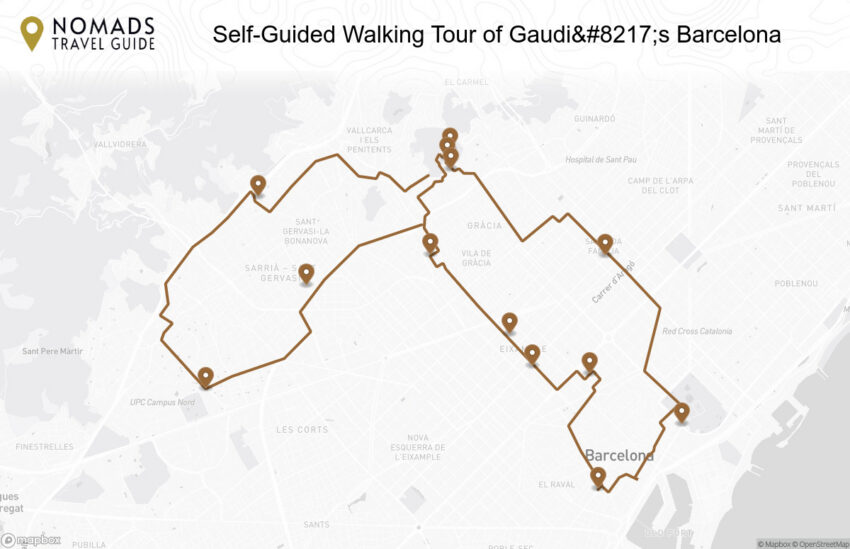
Discover Gaudí's Barcelona on foot with our walking tour map guiding you between each stop, from the soaring vision of La Sagrada Família to the sculpted stone curves of Casa Milà and the storybook façade of Casa Batlló. Because this is a self-guided walking tour, you can set your own pace-pause to admire the mosaic details, skip any stops that don't interest you, and fit in coffee breaks whenever you like, whether you're heading toward the playful forms of Parc Güell or simply following Gaudí's imagination street by street.
1. La Sagrada Familia
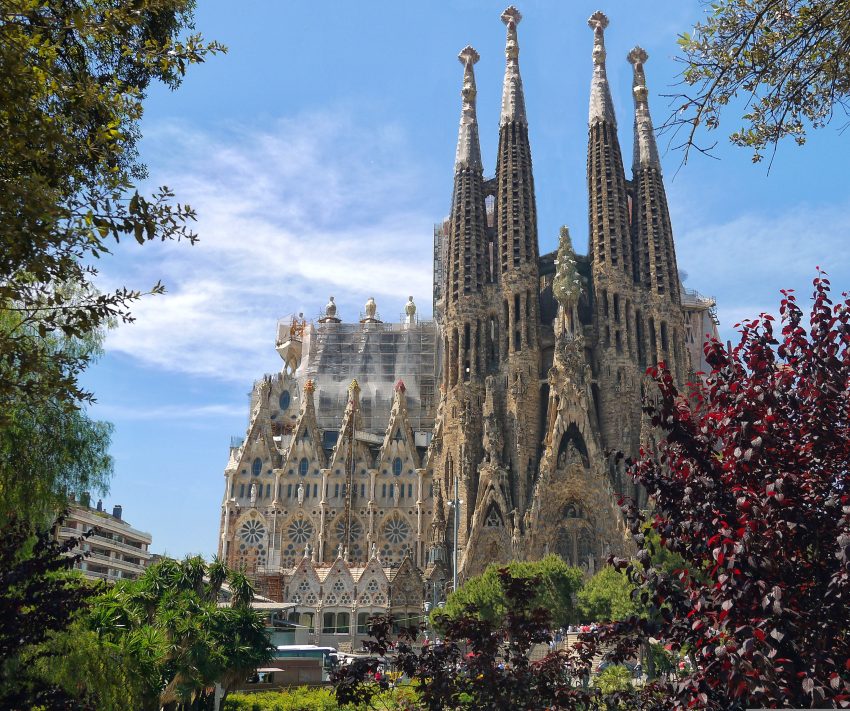
This is Gaudí’s central project and, in a way, his most direct statement about what architecture can be when it’s treated like a living system rather than a style. Work began in the 1880s, Gaudí took over early, and the building has continued long after his death—so you’re seeing both his thinking and the ongoing effort to realise it. The historical hook is that it’s not “finished history”: it’s a continuing construction narrative that still shapes how Barcelona presents itself.
What to see starts with the interior, because that’s where Gaudí’s engineering becomes emotional. The columns branch like trees, and the stained glass behaves like a climate—cool and warm zones shifting through the day. If you’re trying to understand Gaudí quickly, focus on how structure and decoration are the same thing here: the forms that hold the building up are also the forms that create the mood.
Outside, treat the façades as contrasting essays. One is dense and organic, the other stark and angular, and the tension between them shows how Gaudí could move from naturalism to near-abstraction without losing coherence. If you do a tower, the payoff isn’t just the view; it’s seeing how the geometry tightens as you get closer to the spires and apertures.
Location: Carrer de Mallorca, 401, Eixample, 08013 Barcelona, Spain | Hours: (Summer) April 1 – September 30; Daily: 09:00–20:00. (Winter) November 1 – February 28; Monday – Saturday: 09:00–18:00. Sunday: 10:30–18:00. | Price: Adults: €26 (includes audioguide app); With towers: €36; Guided tour: €30; Guided tour with towers: €40; Under 11: free. | Website


2. Ciutadella Park
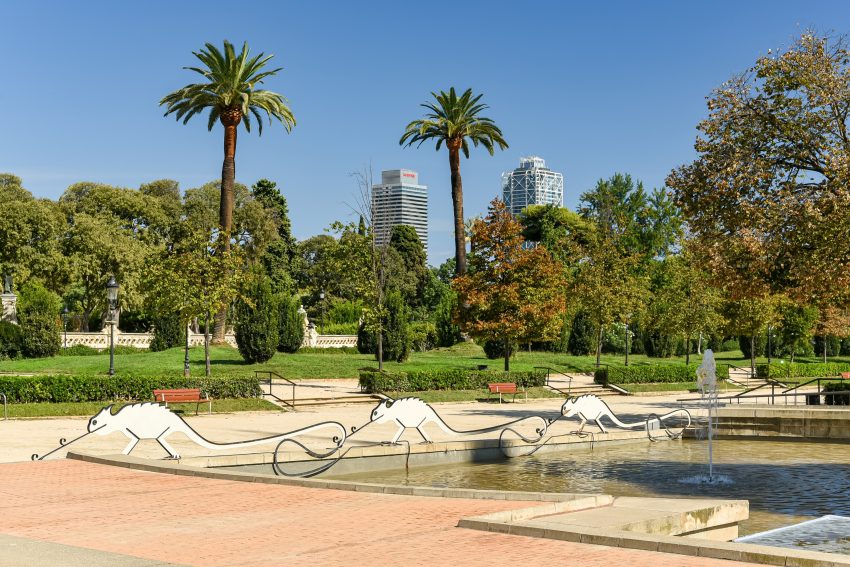
Ciutadella Park isn’t a Gaudí “site” in the way Parc Güell is, but it’s useful as a pre-Gaudí baseline—and it contains a small, early Gaudí connection. The monumental cascade fountain was primarily Josep Fontserè’s work, with Gaudí contributing in a limited way when he was still young (often linked to the fountain’s hydraulic/engineering aspects).
What to see, through a Gaudí lens, is how 19th-century civic grandeur differs from Gaudí’s later organic Modernisme. The fountain aims for theatrical classicism—symmetry, allegory, a “Trevi” kind of drama—whereas Gaudí later pushes toward nature-derived structure and immersive surfaces. Walking from the cascade into the park’s calmer areas, you can feel how Barcelona’s public space evolves from monumentality toward the more experiential, path-based landscapes Gaudí would make famous.
Use the park as a breather between more intense architecture stops. It’s also a good place to reset your eye: after a couple of Gaudí interiors, the park’s open sightlines and simpler forms make it easier to notice what’s actually distinctive about Gaudí—curvature with intent, structure expressed as form, and ornament that’s doing a job.
Location: Passeig de Picasso, 21, Ciutat Vella, 08003 Barcelona, Spain | Hours: Daily: 7:00 AM – 10:30 PM | Price: Free to enter the park; you only pay for specific attractions inside (for example, the zoo or boat rental on the lake). | Website
3. Palau Guell

Palau Güell is one of Gaudí’s earliest major Barcelona commissions and the first time he’s given a whole urban palace to choreograph from street to rooftop. Eusebi Güell hired him in the mid-1880s, and the building was constructed in the late 1880s as a city residence designed to host and impress high-society guests. It’s now part of UNESCO’s “Works of Antoni Gaudí,” which is a useful framing: you’re seeing Gaudí before the later, more organic exuberance, but already deploying his key ideas about structure, craft, and controlled spectacle.
What to see starts right at the entrance, where Gaudí turns practical access into theatre: the iron gates and parabolic arch forms signal the architect’s love of catenary geometry and forged metalwork as “living” texture. Inside, the visit is anchored by the central entertaining hall, conceived as the building’s social and spatial core—Gaudí designs it as a vertical volume, so light, sound, and presence all feel amplified. It’s a building you understand best by looking up and then looking closer: ceilings, openings, and structural transitions are where the invention sits.
Don’t skip the rooftop. Like his later houses, Palau Güell culminates in a sculptural roofscape, but here it reads as a controlled prototype: chimneys and ventilation elements treated as expressive forms rather than hidden services. The route through the house also reveals Gaudí’s “systems” thinking—how circulation, airflow, and daylight are engineered into the architecture without ever feeling purely utilitarian. It’s a compact visit compared with the Sagrada Família or Parc Güell, but it’s one of the best places to see Gaudí developing the vocabulary he later scales up across the city.
Location: Carrer Nou de la Rambla, 3-5, Ciutat Vella, 08001 Barcelona, Spain | Hours: (Summer) April 1 – October 31; Tuesday – Sunday: 10:00–20:00. (Winter) November 1 – March 31; Tuesday – Sunday: 10:00–17:30. Closed on Monday. | Price: Adults: €12; Students & 65+: €9; Ages 10–17: €5; Under 10: free. | Website
4. Casa Calvet
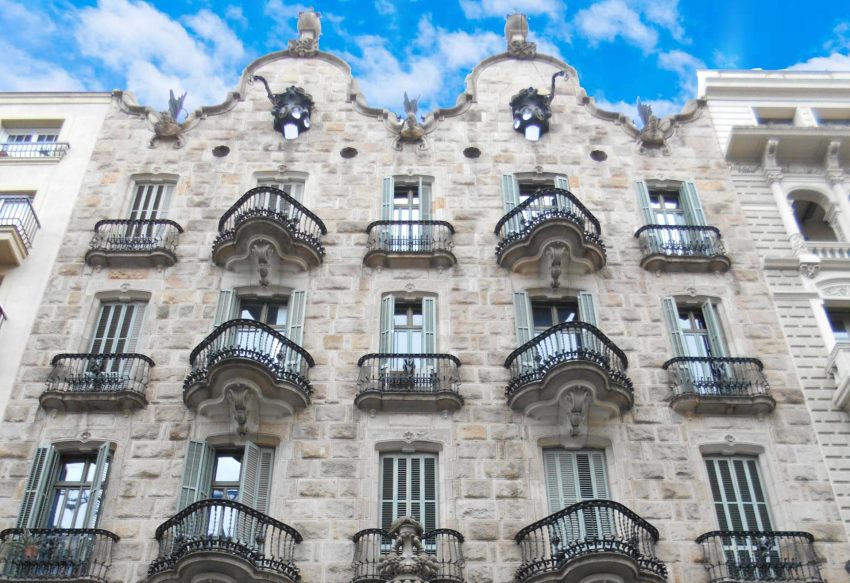
Casa Calvet is Gaudí in “city mode”: a commission for the textile manufacturer Pere Màrtir Calvet, built as a combined business-and-residential building on Carrer de Casp in the Eixample between 1898 and 1900. Because it had to fit a narrow urban plot and satisfy a conservative client, it ends up being one of his most restrained major works—yet it still won Barcelona City Council’s award for the best building of the year in 1900, which is telling.
What to see is how Gaudí hides mischief inside order. Start at street level: the entrance is framed by columns carved like stacked bobbins, a direct nod to the Calvet textile trade, and the central oriel window has a theatrical, almost baroque punch that breaks the façade’s “respectable” rhythm. Look up for the subtle asymmetries and for the balcony sequence—bulging ironwork alternating with shallower balconies—plus the witty details (including mushroom motifs) that feel like Gaudí signalling, quietly, that this is still his building.
Practically, most visitors experience Casa Calvet from the outside because it’s privately owned and not set up like Gaudí’s ticketed house-museums. The right approach is a slow façade read: step back to take in the overall symmetry, then move closer and track the details from doorway to balconies to roofline, paying attention to how stone carving and wrought iron turn “normal” architecture into something tactile and alive. If you do want an interior glimpse, your options are usually limited to any ground-floor hospitality businesses rather than a full architectural visit, so treat it as a short stop that sharpens your eye before the more famous, more flamboyant Gaudí sites.
Location: Carrer de Casp, 48, Eixample, 08010 Barcelona, Spain | Hours: Daily: 13:00–15:30 & 20:30–23:00. | Price: Free.
5. Casa Batlló
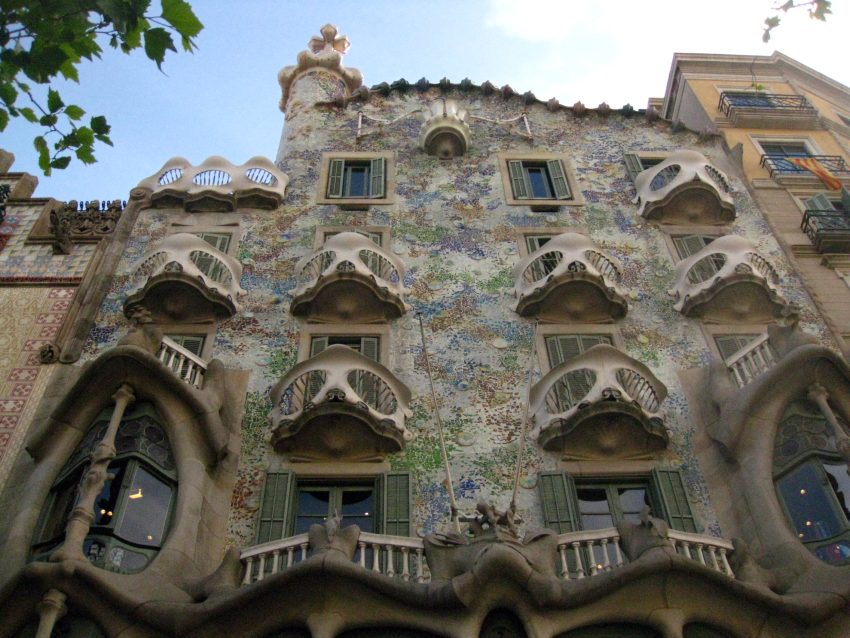
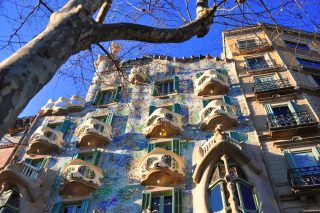
Casa Batlló is Gaudí in his most sensory, metamorphic mode: a renovation that turns a conventional urban building into something that looks animated. In the context of Barcelona’s Modernisme boom, it’s also a competitive street statement—Passeig de Gràcia as a showroom of architectural ambition—where Gaudí chooses a language of masks, bones, scales, and shifting colour instead of historical reference.
What to see is the sequence from façade to lightwell to roof. The street front is all surface intelligence: balconies that read like faces, columns that read like skeletal supports, and a façade skin that changes with daylight. Inside, the central lightwell is the real “machine”: tile colour gradients and proportions tuned to distribute light downward, making function feel like art.
The roof is the punctuation mark—sculptural and symbolic, but also technical (ventilation, chimneys, circulation). If you’re comparing Gaudí houses, Casa Batlló is the one that teaches you his obsession with atmosphere: he designs how rooms feel, not just how they look.
Location: Pg. de Gràcia, 43, Eixample, 08007 Barcelona, Spain | Hours: (Summer) April 1 – September 30; Daily: 09:00–21:00. (Winter) October 1 – March 31; Daily: 09:00–18:30. | Price: From €25 (General Visit); Night Visit from €39; Children (0–12) free. | Website
6. Casa Milà
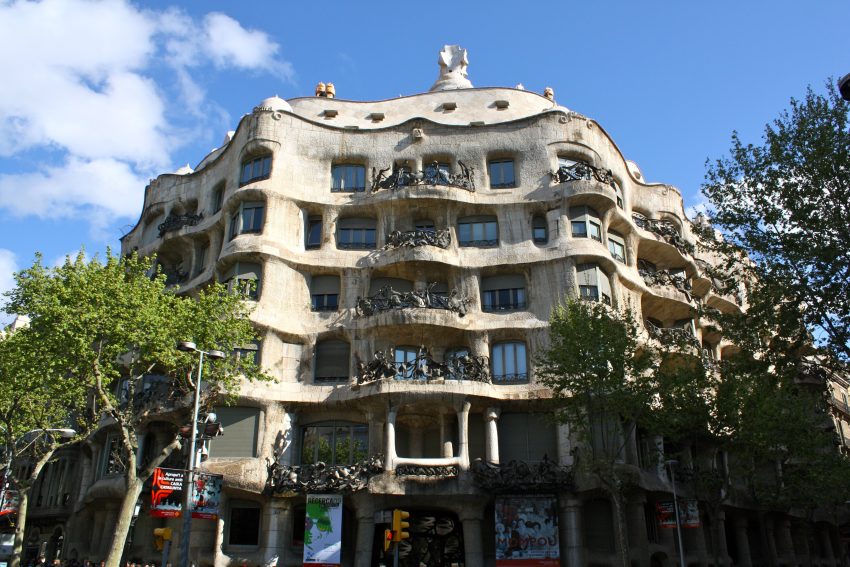
Casa Milà (La Pedrera) is Gaudí’s more architectural, less illustrative counterpart to Casa Batlló: heavier massing, bigger moves, and a strong emphasis on structural freedom. It’s historically important because the building’s underlying system allows flexible interiors—an approach that feels surprisingly modern—while the exterior reads as a carved cliff face.
What to see begins with the courtyards and the attic. The courtyards show how Gaudí pulls light and air into a dense urban block, shaping voids as carefully as solids. The attic’s repeating arches are a masterclass in structural rhythm—beautiful, but also a clear demonstration of load paths and material logic.
The rooftop is the headline: chimneys and ventilation towers that feel like a sculpture garden, yet they’re doing real work. From up there you also get a useful comparison with the Sagrada Família: both are Gaudí, but one is domestic experimentation in stone and airflow, the other is a vertical, symbolic universe.
Location: Pg. de Gràcia, 92, Eixample, 08008 Barcelona, Spain | Hours: (Winter) November 10, 2025 – March 5, 2026; Monday – Sunday: 09:00–18:30. (Summer) March 6, 2026 – November 1, 2026; Monday – Sunday: 09:00–20:30. | Price: From €25 (standard daytime visit; other experiences cost more). | Website
7. Casa Vicens
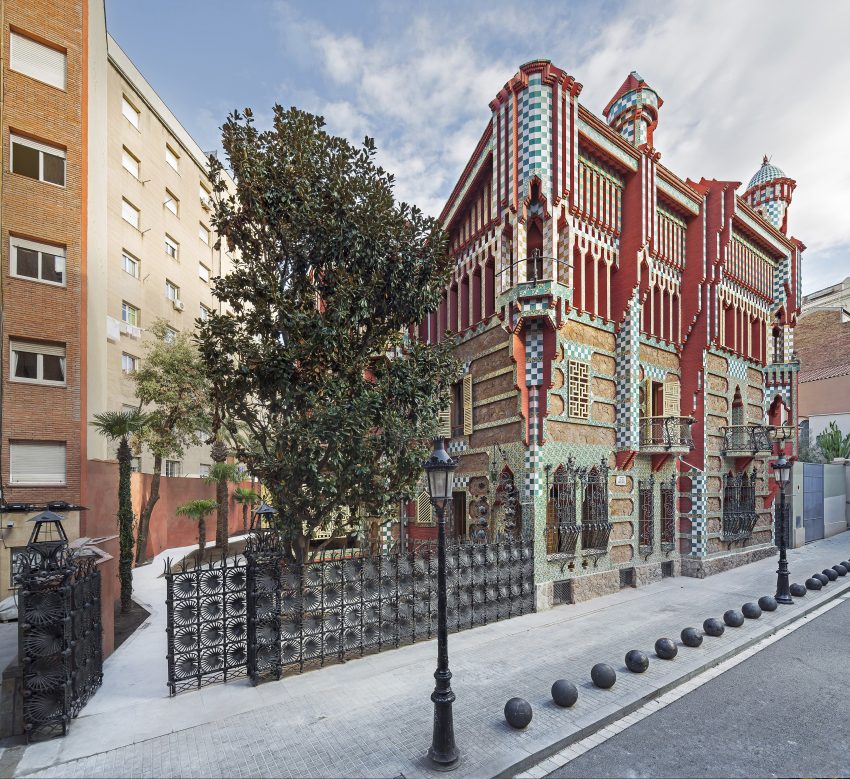
Casa Vicens is the clearest “origin point” for Gaudí in Barcelona: his first major commission, designed as a summer house for Manel Vicens and built in 1883–1885, when the area was still the Vila de Gràcia rather than the dense inner-city fabric it is now. You can already see the ideas he’ll keep refining for decades—nature as a design system, structure treated as art, and craft used as architecture rather than decoration. It’s also part of UNESCO’s “Works of Antoni Gaudí,” and after changing hands and undergoing restoration, it reopened as a house-museum in November 2017.
What to see starts outside: the building reads as a tiled, patterned composition rather than a single façade, with polychrome ceramics and brickwork creating a bold, almost graphic surface. This is early Gaudí and it leans into an orientalist/Neo-Mudéjar vocabulary, but in a personal way—geometry, colour, and surface texture doing the heavy lifting. If you’ve just come from Casa Batlló or Casa Milà, Casa Vicens is the useful contrast: less fluid “melted” stone, more crisp patterning and ornamental discipline, but still unmistakably Gaudí in how it turns materials into a kind of living skin.
Inside, slow down for the craft. The interiors are where Gaudí’s obsession with total design becomes obvious early: painted and tiled surfaces that pull in plant motifs, ceilings and joinery that make rooms feel curated rather than simply furnished, and transitions between spaces that feel designed as experiences. It’s a smaller, more intimate visit than his later headline works, which is exactly the point—Casa Vicens lets you see Gaudí before the city-scale ambition, when his signature is forming in colour, detail, and the idea that architecture should feel like nature translated into built form.
Location: Carrer de les Carolines, 20-26, Gràcia, 08012 Barcelona, Spain | Hours: Daily: 08:30–17:00. | Price: Check official website. | Website
8. Col·legi de les Teresianes
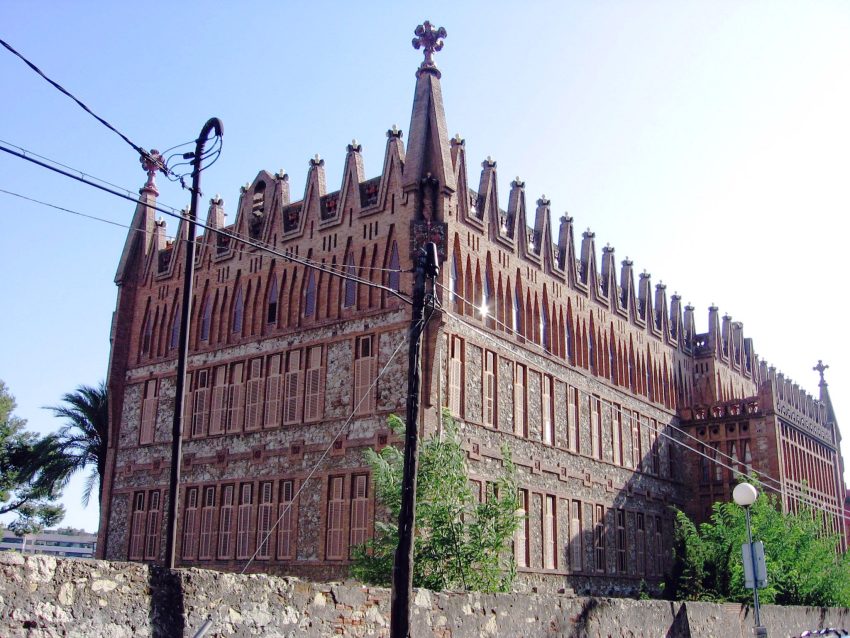
The Teresian School is an early Gaudí commission with a deliberately restrained brief: a religious order, an educational function, and a need for austerity rather than spectacle. Historically it’s revealing because Gaudí shows he can be disciplined—working largely in brick, leaning on structural ingenuity instead of decorative excess, and producing a building that feels fortress-like and purposeful. What to see is Gaudí’s use of parabolic/catenary logic in arches and openings, which gives the building its distinctive rhythm and sense of tension held in balance. The exterior is strong and severe, but the interest is in how repetition and proportion create beauty without relying on colour or mosaic. If you want to understand Gaudí as an engineer-architect—not just a maker of whimsical surfaces—this is a key stop. Because it’s a working school, treat it as an exterior-focused visit unless you have a specific arrangement. The best approach is to stand at a slight distance, watch how the façade reads as a continuous system, then move along it to see how arches, brick pilasters, and ironwork build a coherent language. It’s Gaudí proving he can do “sober” without doing “ordinary.”
Location: Carrer de Ganduxer, 85, 103, Sarrià-Sant Gervasi, 08022 Barcelona, Spain | Hours: Monday – Friday: 08:00–19:00. Closed on Saturday, Sunday. | Price: Check official website. | Website
9. Pavellons Güell
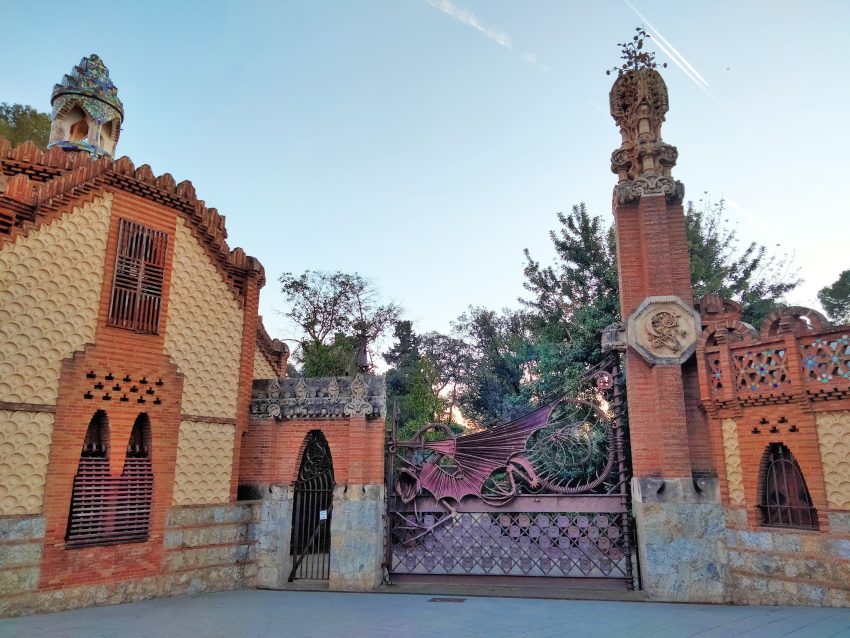
The Güell Pavilions are where the Gaudí–Güell partnership properly begins: built in the mid-1880s as entrance pavilions and service buildings for the Güell estate in Pedralbes. Historically, they’re valuable because you can see Gaudí developing ideas he’ll later scale up—parabolic forms, expressive brickwork, and a taste for turning functional elements into mythic theatre.
What to see is the famous Dragon Gate first: wrought iron that feels both ornamental and muscular, like a creature guarding the threshold. Then look at the pavilions themselves—compact buildings with bold forms and surfaces that preview Gaudí’s habit of making architecture feel “made” rather than merely assembled. This is also a good place to focus on craftsmanship at close range, because the details are legible without the sensory overload of his bigger landmarks.
The visit tends to be calmer than the headline Gaudí sites, which is part of the appeal. Go with the mindset that you’re seeing prototypes: early experiments in structure, symbolism, and the dramatization of arrival. It’s also one of the best places to notice how Gaudí designs gateways and transitions—he’s not just building objects, he’s scripting how you enter a world.
Location: Güell Pavilions, Avinguda de Pedralbes, Barcelona, Spain | Hours: Saturday – Sunday: 10:00–16:00. Closed: Monday – Friday. Closed: 1 January; 6 January; 25 December; 26 December. | Price: €6 (general); €3 (reduced); free for ages 0–6. | Website
10. Bellesguard
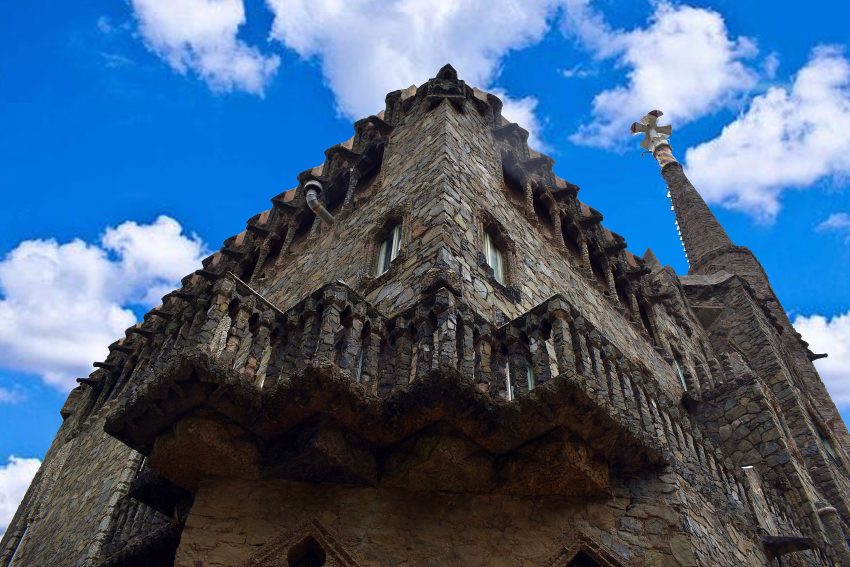
Torre Bellesguard (Casa Figueres) is Gaudí in a rarer register: part modernist house, part Gothic-inflected “castle,” built in the early 1900s on a site associated with medieval royal history. That layered past matters, because Gaudí isn’t simply doing medieval pastiche—he’s translating the memory of the place into a sharp, vertical composition that feels more angular and austere than his better-known, more organic works.
What to see is the overall silhouette and the way the building reads against the hillside: it’s one of Gaudí’s most straightforward, tower-like statements in Barcelona. Up close, pay attention to how he blends stonework severity with modernist detail—this is the house where his love of geometry and structural clarity comes forward. It’s a strong counterpoint to the saturated surfaces of Casa Vicens or the flowing façade of Casa Milà (even if you’re not visiting those, the contrast is useful to keep in mind).
Bellesguard is also about atmosphere and distance. The site’s name (“beautiful view”) isn’t accidental, and the visit tends to reward slower looking and contextual reading rather than rapid photo-stops. If you want a Gaudí experience that feels less central-and-crowded, this is one of the best choices—more contemplative, more site-driven.
Location: Carrer de Bellesguard, 20, Sarrià-Sant Gervasi, 08022 Barcelona, Spain | Hours: Tuesday – Sunday: 10:00–15:00. Closed on Monday. Closed on January 1, January 6, December 25, December 26. | Price: Audioguide tour: Adults €12; Under 18 & retired €9; Under 8 free. Guided tour: Adults €20; Under 18 & retired €15; Under 8 free. | Website
11. Gaudí House Museum
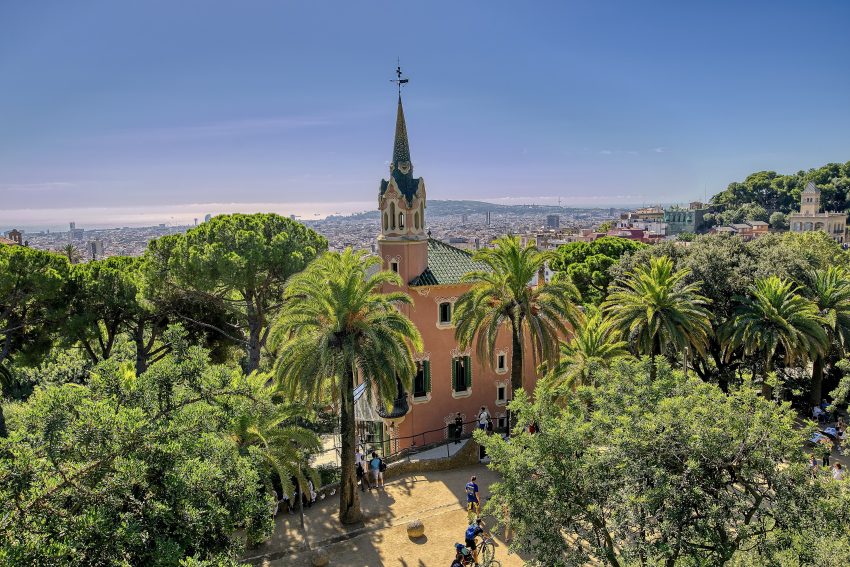
The Gaudí House Museum is in Parc Güell and matters primarily because Gaudí lived there from 1906 until late 1925, and the museum preserves a biographical lens on his daily life and design world. The important nuance is that the house itself was created as a model home for the Parc Güell development and was designed by Francesc Berenguer, a close collaborator—not by Gaudí. Its value is therefore contextual rather than architectural authorship.
What to see is the collection and the sense of scale: furniture, objects, and interior atmospheres that ground Gaudí’s work in lived reality. It’s a useful antidote to treating him as only a maker of monuments; here you’re seeing how design thinking extends into domestic items and personal space. If you’re interested in how an architect’s taste becomes an environment, this is one of the better “human” stops in his Barcelona.
Treat it as an add-on rather than a standalone destination: it’s best when it deepens what you’ve already seen elsewhere. If your goal is to understand Gaudí’s evolution, combine it mentally with the more experimental works (like the Colònia Güell crypt) and the urban commissions (like Casa Calvet) to connect biography, technique, and city context into a single narrative.
Location: Casa Museu Gaudí, Parc Güell, Barcelona, Spain | Hours: (Summer) April – September: Daily: 09:00-20:00. (Winter) October – March: Daily: 10:00-18:00. Special days: January 1 & January 6; December 25 & December 26: 10:00-14:00. | Price: From €24 (adult combined ticket: Park Güell visit with Gaudí House Museum). | Website
12. Park Güell
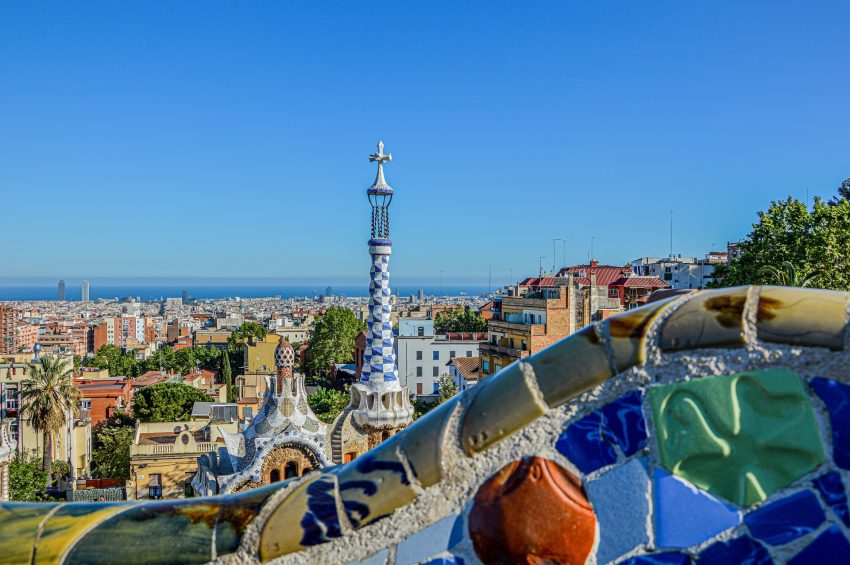
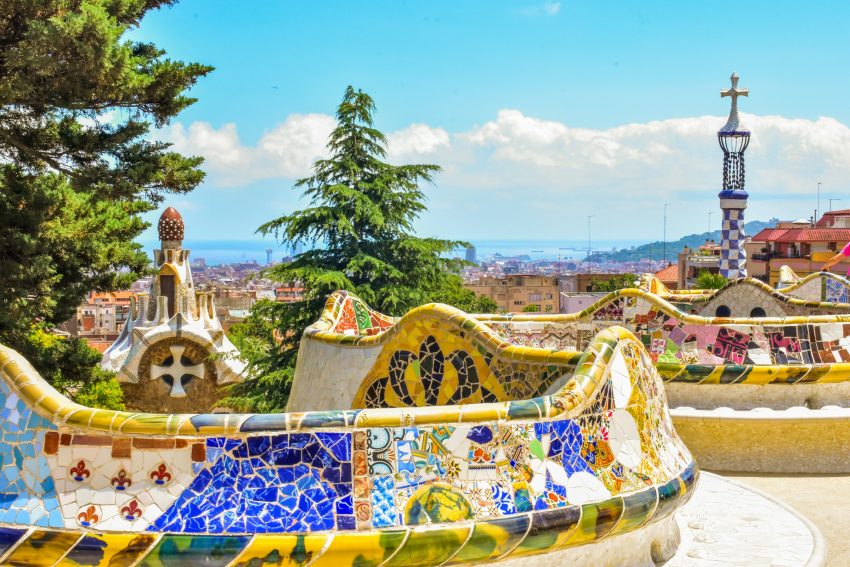
Parc Güell is where Gaudí turns a hillside into a total environment—architecture, infrastructure, and symbolism blended into one walkable piece of city. Historically it began as a planned garden-city development backed by Eusebi Güell; the housing concept failed, but the designed core survived and became a public park. It’s essential because it shows Gaudí thinking at the scale of landscape and movement, not just buildings.
What to see is concentrated but shouldn’t be rushed. The main terrace with the serpentine mosaic bench is Gaudí’s public room in the open air, designed for gathering and overlooking the city. The stairway and dragon fountain act like a ceremonial ascent, and the hypostyle hall’s columns give you that “stone forest” logic he later amplifies in the Sagrada Família.
To experience it as Gaudí intended, move from the icons to the connective tissue: the paths, viaducts, and retaining walls that make the site work as terrain. This is where his practicality shows—drainage, gradients, and load-bearing forms disguised as natural outcrops—so the park feels grown rather than imposed.
Location: Gràcia, 08024 Barcelona, Spain | Hours: Daily: 09:30–17:30. | Price: General ticket €18. Children (7–12) €13.50. Children (0–6) free. Over 65 €13.50. (Discount/free categories require documentation.) | Website
13. Gaudí Experiència
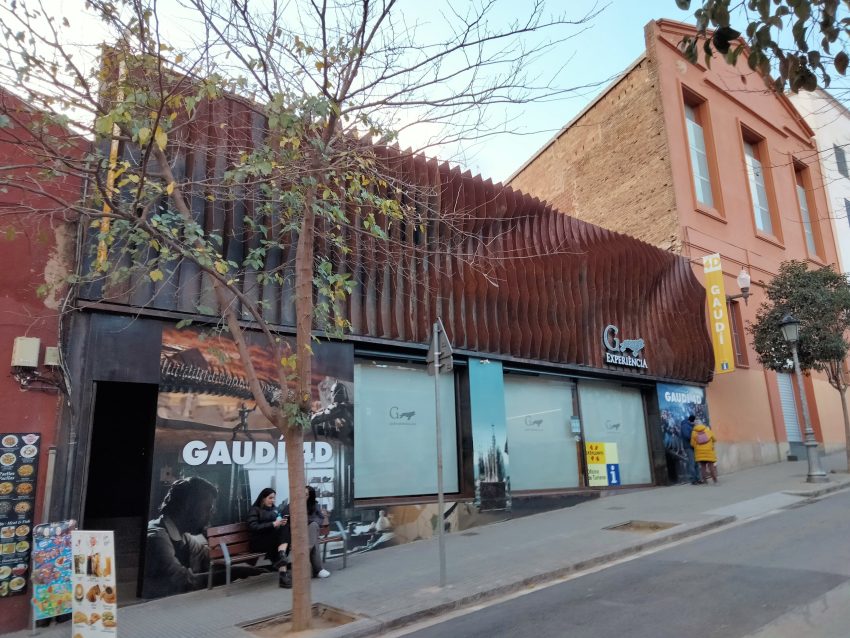
Gaudí Experiència (also branded as G Experiència) is a compact, modern visitor centre designed to help you “decode” Gaudí before you tackle his architecture in the real city. Instead of being a historic Gaudí building, it’s a multimedia interpretation space located a short walk from Parc Güell, built around the idea that Gaudí’s forms make more sense when you understand the structural logic, nature references, and spatial tricks behind them.
What to see is the 4D audiovisual first, because it frames everything else: it leans into Gaudí’s imaginative world using moving seats and sensory effects, then feeds you into interactive wall screens that run through his life and works in multiple languages. The centre also displays scale models, including a detailed model of Parc Güell and a model linked to the unbuilt “Hotel Attraction” concept, which is useful for understanding how far Gaudí’s ambitions stretched beyond what was ever constructed.
Practically, it’s an easy add-on before or after Parc Güell: the address is C/ Larrard 41, 08024 Barcelona. Opening hours are seasonal (November–March 10:00–17:00; April–June and September–October 10:00–18:30; July–August 10:00–20:00), with the last 4D show starting 30 minutes before closing. Standard admission is listed at €9.00 (with reduced tickets for under-14s and over-65s), and the venue flags that the 4D experience isn’t suitable for young children or some visitors (including pregnancy and certain health conditions).
Location: Gaudí Experiència, Carrer de Larrard, Barcelona, Spain | Hours: (Summer) July – August; Monday – Sunday: 10:00–20:00. April – June; September – October; Monday – Sunday: 10:00–18:30. (Winter) November – March; Monday – Sunday: 10:00–17:00. | Price: General: €9.00. Under-14s and over-65s: €7.50. | Website

Moira & Andy
Hey! We're Moira & Andy. From hiking the Camino to trips around Europe in Bert our campervan — we've been traveling together since retirement in 2020!
This website uses affiliate links which earn a small commission at no additional cost to you.
Walking Tour Summary
Distance: 13 km
Sites: 13
Walking Tour Map