Cagliari, Italy: The Ultimate Travel Guide 2026
cagliari sardinai
cagliari sardinai

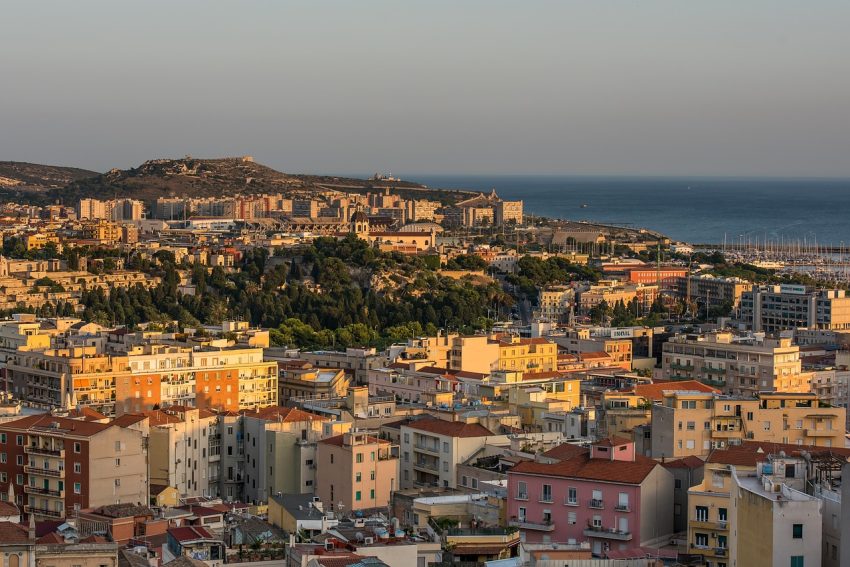
Cagliari is the capital of Sardinia and sits on the island's southern coast, looking out over the Gulf of Cagliari in the Mediterranean. It works especially well as a base because you get a compact, walkable city with sea views, good food, and quick access to beaches and day trips without needing to constantly move hotels. Plan on at least two nights if you want the city to feel unhurried, and three if you also want a proper beach day or an outing beyond town.

The centre is made for slow, scenic walking: start up in Castello for viewpoints and atmospheric lanes, then drift down through Villanova and into the Marina for cafés and dinner. Cagliari is at its best when you keep your schedule light-pick one or two “anchor” sights, then let the rest of the day be shaped by stops for coffee, browsing small shops, and lingering over a long meal. Evenings are easy here: you can stay central and still feel like you're in a local city rather than a resort.

If you’re building a short itinerary, give the city one full day for the old quarters and waterfront, then add either a beach block at Poetto or a nature-and-viewpoint outing at Molentargius (often with flamingos) depending on your mood. Practicalities are straightforward: it’s a comfortable place to travel without a car if you’re staying central, and it’s also a good arrival/departure point for exploring southern Sardinia by train, bus, or a short car hire. Spring and early autumn are the sweet spots for weather and crowds, while summer brings the liveliest evenings but also the hottest walking hours.

Table of Contents

History of Cagliari

Cagliari in the Nuragic and Prehistoric Era

Long before written records, the wider area around Cagliari was inhabited by communities connected to Sardinia’s Nuragic civilisation, known for stone towers (nuraghi), village sites, and a maritime outlook. Archaeological traces from this deep period point to settlement continuity and an early relationship with trade routes that linked Sardinia to the broader western Mediterranean.

Cagliari Under Phoenician and Punic Influence

Cagliari’s earliest urban development is typically associated with Phoenician expansion and, later, Carthaginian (Punic) control. In this phase the city grew as a port-oriented centre with commercial and defensive priorities, shaped by seafaring networks and the strategic logic of competing Mediterranean powers. Elements of Punic-era culture and burial practices left durable archaeological signatures that still frame how scholars understand the city’s earliest city-life.

Cagliari as a Roman City

After Rome consolidated control in Sardinia, Cagliari became an important Roman urban hub. Roman administration brought new civic structures, legal organisation, and infrastructure, while the city’s harbour-facing economy supported movement of goods and people across the empire. Over time, Christian communities also took root, and the late Roman period began to layer religious and institutional change onto an already established city.

Cagliari in the Vandal and Byzantine Periods

With the decline of Western Roman authority, Cagliari passed through upheaval and new rule, including the Vandal period and then Byzantine reconquest. Byzantine governance reconnected the city to an eastern Mediterranean world of imperial administration and church influence. This era is often discussed in terms of continuity under new elites, with the city adapting to shifting military and economic realities.

Cagliari in the Giudicati and Medieval Transformations

In the medieval centuries, Sardinia developed its distinctive local polities known as the Giudicati. Cagliari’s role evolved amid alliances, rivalries, and the pressures of maritime republics seeking influence. The city’s political fortunes could change quickly as competing powers pursued control over strategic ports, taxation, and trade, setting the stage for more direct external domination.

Cagliari Under Pisan Control

Pisa’s ascendancy marked a major reshaping of Cagliari’s medieval identity, with fortification and urban reorganisation reflecting the priorities of a powerful maritime state. Administrative systems, architectural forms, and defensive works from this period influenced the city’s long-term layout and elite culture. The imprint of Pisan rule is often treated as a turning point in how the city was physically and institutionally structured.

Cagliari Under Aragonese and Spanish Rule

Cagliari later came under Aragonese control and, as political structures merged, became part of the Spanish sphere. This long phase brought new layers of governance, legal tradition, and social hierarchy, with the city functioning as an administrative centre within a wider Mediterranean empire. The period also involved recurring pressures: external threats, economic fluctuation, and the gradual evolution of civic institutions.

Cagliari in the Savoyard Era

In the early eighteenth century, Sardinia (and Cagliari as its principal civic centre) moved under the House of Savoy, linking the city to a dynastic state that would later play a central role in Italian unification. Reforms and administrative modernisation unfolded unevenly, often balancing local realities with centralising ambitions. Cagliari’s political importance within Sardinia remained strong, even as broader European currents reshaped governance and society.

Cagliari and Italian Unification

During the nineteenth century, Cagliari experienced changes tied to modern state-building, including shifts in administration, education, and infrastructure. As Italy unified, the city’s institutions were integrated into national frameworks, while local economic and social life adjusted to new markets and political structures. This era is less about a single rupture and more about accelerating transformation under the pressures of modernisation.

Cagliari in the Twentieth Century and World War II

The twentieth century brought rapid change, including industrial and demographic shifts, and the disruptions of war. Cagliari suffered significant damage during World War II, followed by substantial reconstruction that altered parts of the urban fabric and living patterns. Post-war decades focused on rebuilding, expanding services, and reorienting the city toward new economic realities and mobility.

Cagliari in the Contemporary Period

In recent decades, Cagliari has continued to evolve as a regional capital with a growing emphasis on culture, services, and year-round city life. Urban renewal, heritage conservation, and changes in tourism have helped reframe how the city presents itself, while everyday life remains shaped by the interplay between historic neighbourhoods and modern development. The result is a city whose history reads as layered rather than linear – each era leaving traces that still influence identity and atmosphere today.

Moira & Andy
Moira & Andy

Hey! We're Moira & Andy. From hiking the Camino to trips around Europe in Bert our campervan — we've been traveling together since retirement in 2020!

Read our full story here

Visiting Cagliari for the first time and wondering what are the top places to see in the city? In this complete guide, I share the best things to do in Cagliari on the first visit. To help you plan your trip, I have also included an interactive map and practical tips for visiting!

This website uses affiliate links which earn a small commission at no additional cost to you.
Powered by GetYourGuide

34 Best places to See in Cagliari

This complete guide to Cagliari not only tells you about the very best sights and tourist attractions for first-time visitors to the city but also provide insights into a few of our personal favorite things to do.

This is a practical guide to visiting the best places to see in Cagliari and is filled with tips and info that should answer all your questions!

1. Civic Market of San Benedetto

Civic Market of San Benedetto
CC BY-SA 2.0 / Oleg Brovko
Civic Market of San Benedetto is Cagliari’s sprawling covered food market, opened in 1957 and spread across roughly 8,000 square meters on two floors. Downstairs is a full-throttle fish hall—one of the city’s most memorable sights—where vendors call out over counters stacked with just-landed fish, shellfish, squid, snails, and even eels. Upstairs shifts to land: butchers, fruit and vegetable stands, sheep’s-milk cheeses like pecorino sardo, cured meats, and Sardinian pantry goods such as bottarga and honey. There’s also a bakery turning out warm bread, and around lunchtime you can grab freshly fried fish from some stalls. The atmosphere feels communal and photo-friendly, with regulars and curious visitors weaving the aisles.
Location: Piazza Amedeo Nazzari, 09128 Cagliari CA, Italy | Hours: Monday – Friday: 07:00–14:00. Saturday: 07:00–15:00. Closed on Sunday. | Price: Free. | Website | Distance: 0.1km


We recommend to rent a car in Italy through Discover Cars, they compare prices and review multiple car rental agencies. Book your rental car here.

2. Giardini Pubblici

Giardini Pubblici
Giardini Pubblici
CC BY-SA 2.0 / Cristiano Cani
Giardini Pubblici is Cagliari’s 19th-century public garden, a compact green terrace between Castello and La Vega that locals use as a shady pause above the city streets. Created on municipal land bought in 1840 under the Savoy, it’s laid out around a long central promenade with side paths, benches, sculptures, and two fountain basins added in the 2005 redesign. Visitors notice the mature, exotic plantings—palms, jacarandas, and especially the magnolioid ficus trees that are more than a century old. Inside the grounds sits the Municipal Art Gallery, housed in the former Regia Polveriera, rebuilt in neoclassical style after the 1822 explosion. There’s even a small sports-climbing wall and a well-known cat colony with wooden shelters.
Location: Largo Giuseppe Dessì, 09123 Cagliari CA, Italy | Hours: (Winter) October 1 – April 30; Daily: 06:30–24:00. (Summer) May 1 – September 30; Daily: 05:30–24:00. | Price: Free. | Website | Distance: 0.3km

Here is a complete selection of hotel options in Cagliari. Feel free to review each one and choose the stay that best suits your needs.

3. Cagliari Archaeological Museum

National Archaeological Museum of Cagliari
CC BY-SA42.0 / Unukorno
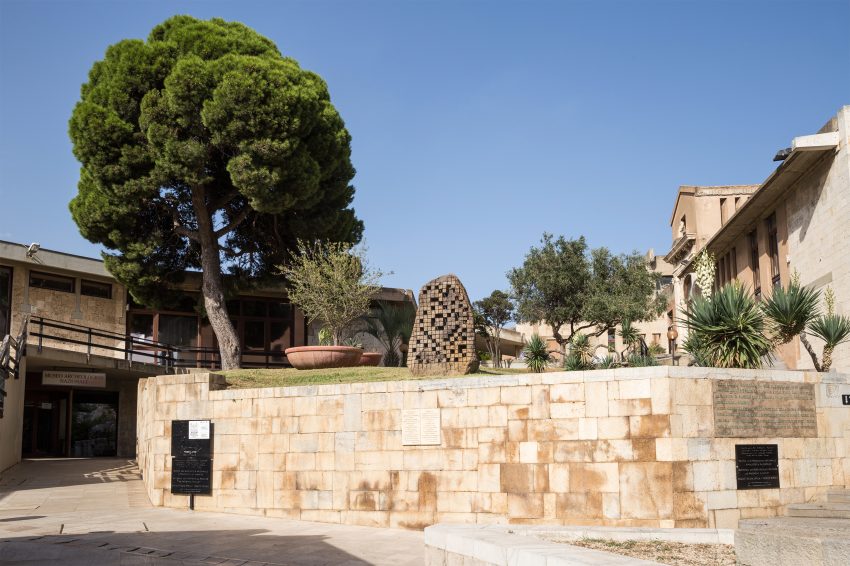
In Cagliari’s Castello district, the National Archaeological Museum (inside the Citadel of Museums) is Sardinia’s clearest crash course in the island’s past, arranged as a four-floor timeline from the Neolithic to the Byzantine era. Visitors linger over tiny Nuragic bronzes, Phoenician–Punic jewelry, Roman statuary, and Byzantine devotional objects, with more than 4,000 pieces spanning roughly 7,000 years. One room reconstructs the tophet of Tharros, a Punic sacred burial area that makes the island’s Mediterranean connections feel tangible. The museum also surprises with an ethnographic collection—textiles, ceramics, weapons—and a rare 11th-century bronze aquamanile, plus rotating shows on the upper level.
Location: Piazza Arsenale, 1, 09124 Cagliari CA, Italy | Hours: Wednesday – Monday: 08:30–19:30. Tuesday: Closed. Ticket office closes at 18:45. | Price: Adults: €10; Reduced: €5; EU citizens 18–24: €2; Under 18: free. Free entry on the first Sunday of each month. | Website | Distance: 0.5km

Traveling to a country with a different currency? Avoid ATM transaction fees and pay in local currency with a Wise Card. Having used it for over 5 years, we've saved loads on fees!

4. Torre di San Pancrazio

Torre di San Pancrazio
CC BY-SA 4.0 / Crimao
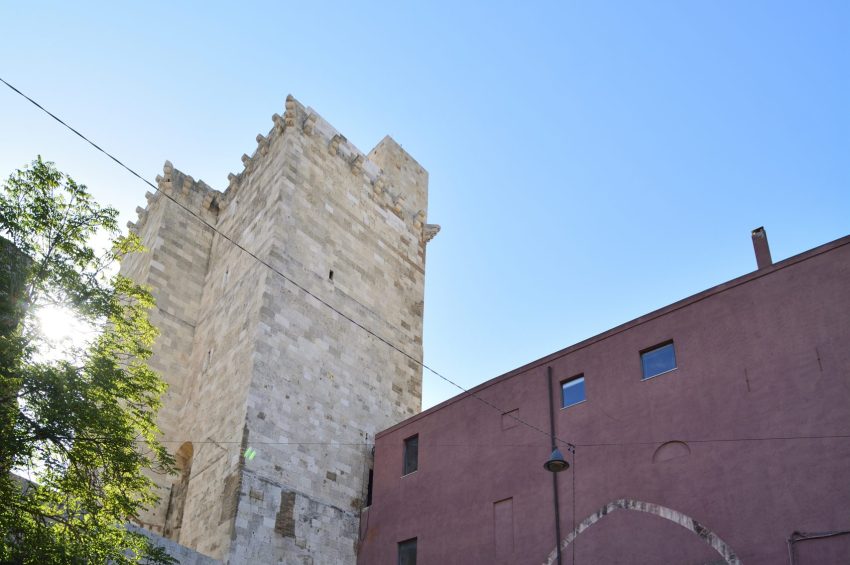
Torre di San Pancrazio is Cagliari’s tallest medieval tower, built in 1305 during Pisan rule to defend the Castello district at the city’s highest point. Its pale Pietra Forte limestone, quarried from Bonaria Hill, and its unusual design—three enclosed walls with arrow slits and one open side revealing interior galleries—make the military logic easy to read up close. Climbing through the vertical spaces to the upper levels, you get wide views over rooftops and out toward the coastline, the same vantage once used for surveillance and signaling. Look for carved coats of arms set into the masonry and the stone corbels that once held a wooden balcony. Later enclosed and reused as warehouses and then a prison, it was restored in 1903 to a more Pisan-era appearance.
Location: Piazza dell' Indipendenza, 09124 Cagliari CA, Italy | Hours: Check official website. | Price: Check official website. | Website | Distance: 0.5km

Explore Cagliari at your own pace with our self-guided walking tour! Follow our curated route to discover must-see sights and local secrets that makes Cagliari one of the best places to visit in Italy.

5. Galleria Comunale d'Arte

Galleria Comunale d’Arte
CC BY-SA 32.0 / Municipality of Cagliari
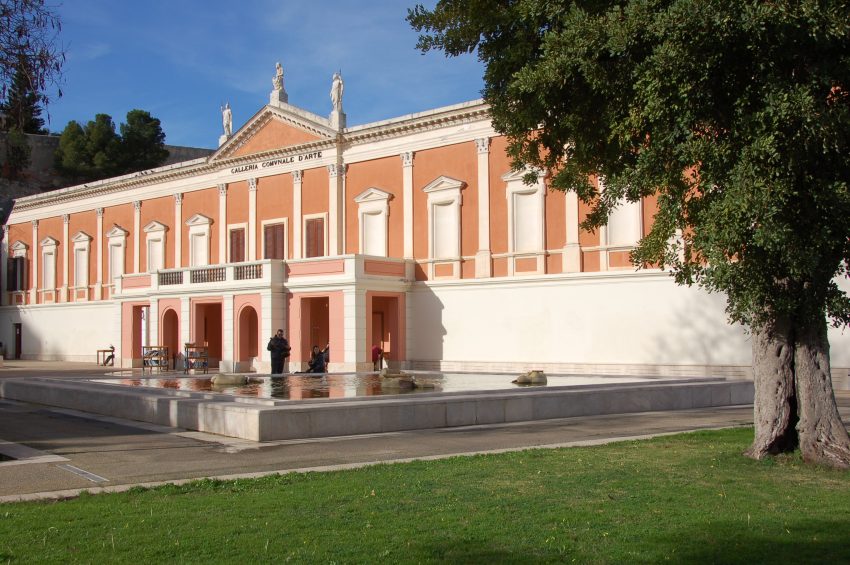
Galleria Comunale d’Arte is Cagliari’s municipal art gallery, housed since 1933 in a former Savoy arsenal powder magazine at the end of the Giardini Pubblici. The approach through the tree-lined avenue sets up the building’s 1828 neoclassical façade, with limestone friezes and a pediment topped by three Carrara-marble statues. Inside, the collection balances Sardinian civic holdings with the Ingrao Collection of major 20th-century Italian artists, from Umberto Boccioni to Giorgio Morandi. Many visitors linger in the room devoted to sculptor Francesco Ciusa, where works including plaster casts and the emotionally direct La madre dell’ucciso anchor the museum’s sense of local identity. The compact layout makes it easy to take in without fatigue.
Location: Viale S. Vincenzo, 2, 09123 Cagliari CA, Italy | Hours: Tuesday – Sunday: 10:00–18:00. Closed on Monday. | Price: Adults: €6; Reduced: €3; Children under 6: free. | Website | Distance: 0.5km

6. Cittadella dei Musei

Cittadella dei Musei
CC BY-SA 2.0 / xiquinhosilva
Cittadella dei Musei is Cagliari’s main museum complex in the Castello district, set in former Royal Arsenal buildings around a broad courtyard at Piazza Arsenale. It matters because several collections sit together, letting you trace Sardinia from Nuragic bronzes through Phoenician, Punic, and Roman finds in the National Archaeological Museum, then shift to medieval and Baroque Sardinian-Catalan altarpieces in the National Art Gallery. Stranger stops include an Anatomical Wax Museum of detailed medical models and a small Museum of Siamese Art with Thai objects. Even between galleries, people remember the hilltop setting and sea-and-port panoramas—though some visitors note renovations and occasional blocked viewpoints.
Location: Piazza Arsenale, 1, 09123 Cagliari CA, Italy | Hours: Monday: 08:30–19:30. Tuesday: Closed. Wednesday – Sunday: 08:30–19:30. | Price: Adults: €10; Reduced: €5; EU ages 18–24: €2; Under 18: free. | Website | Distance: 0.5km

7. Palazzo Regio
Palazzo Regio
Palazzo Regio
CC BY-SA 3.0 / Keith Ruffles
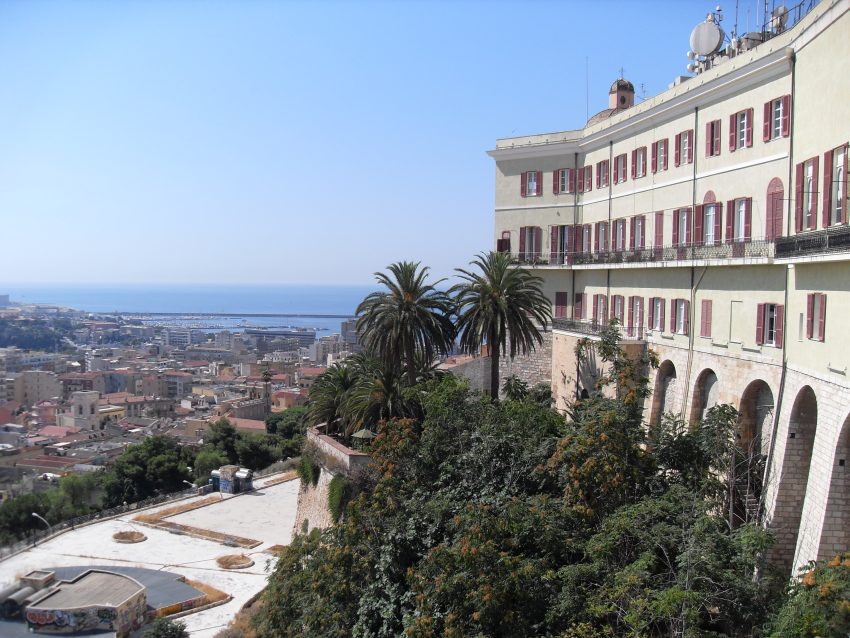
Palazzo Regio (Palazzo Viceregio) is Cagliari’s former viceregal palace in the Castello district, built from the 14th century and made the viceroy’s official seat in 1337 under Peter IV of Aragon—an anchor point for how Sardinia was governed under Aragonese, Spanish, and Savoy rule. Inside, visitors move through compact ceremonial rooms shaped by 18th-century Savoy renovations, including a grand staircase by engineers de Guibert and de Vincenti and halls refitted in 1735 by Della Vallea. The Council Hall stands out for its 1885 makeover, with Domenico Bruschi’s frescoes and Angeletti’s stucco work. Outside, the long façade with monumental pilasters faces Piazza Palazzo, and many people linger for chandeliers, calm interiors, and sweeping city views.
Location: Piazza Palazzo, 1, 09124 Cagliari CA, Italy | Hours: (Summer) May 1 – October 31; Daily: 10:00–19:00. (Winter) November 1 – April 30; Daily: 10:00–18:30. | Price: Palace visit: €3; Palace + temporary exhibitions (if any): €4; Guided visit: €5. | Distance: 0.6km

8. Cattedrale di Santa Maria Assunta e Santa Cecilia
Cattedrale di Santa Maria Assunta e Santa Cecilia
CC BY-SA 2.0 / fabulousfabs
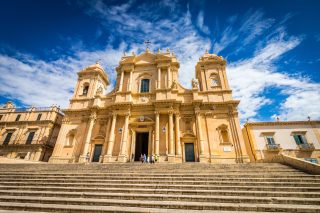
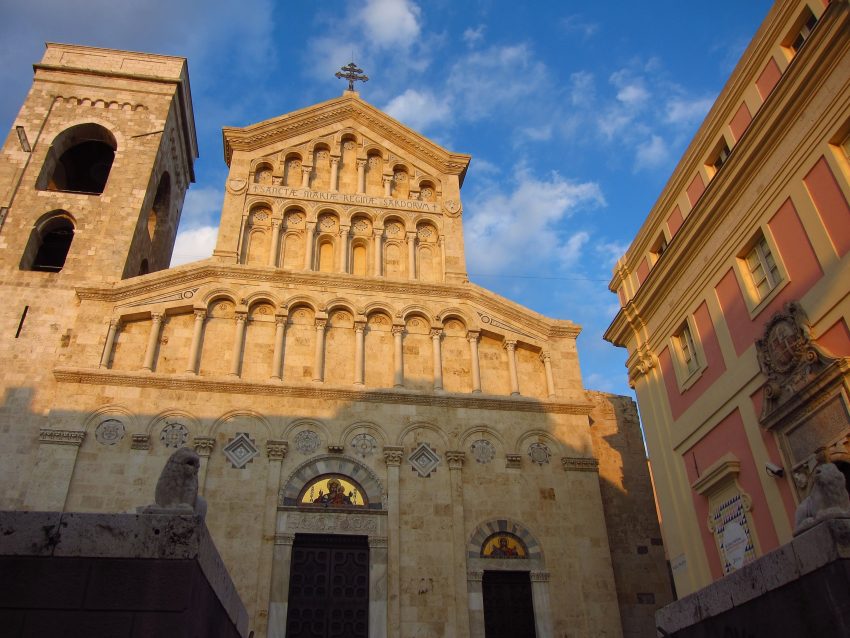
Cattedrale di Santa Maria Assunta e Santa Cecilia is Cagliari’s Roman Catholic cathedral, rising over the Castello quarter and reflecting centuries of rule from Pisa to Aragon and Spain. Begun in the mid-1200s, it was repeatedly reshaped, and its Neo-Romanesque façade—modeled on Pisa’s cathedral—was added in the 1930s. Inside, visitors notice the layered Romanesque, Gothic, and Baroque character, from patterned stonework to chapels and monuments. Look for the 12th-century pulpit by Master Guglielmo, brought from Pisa in 1312 and later divided, with its marble lions now set along the presbytery. Below, the Sanctuary/Crypt of the Martyrs holds 179 relic niches under a ceiling of carved rosettes, creating a hushed, atmospheric stop.
Location: Piazza Palazzo, 4/a, 09124 Cagliari CA, Italy | Hours: Monday – Saturday: 09:00–20:00. Sunday: 08:00–13:00 & 16:00–20:30. Monday – Saturday (Bell Tower): 13:00–16:00. | Price: Free; donations appreciated. | Website | Distance: 0.7km

9. Roman Amphitheatre of Cagliari
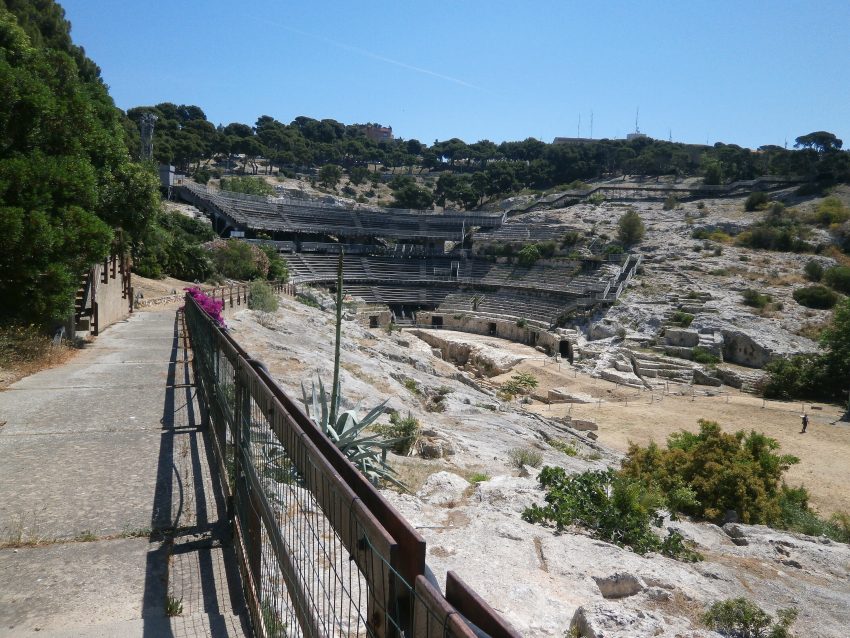
Roman Amphitheatre of Cagliari
CC BY-SA 4.0 / Daniel Ventura
The Roman Amphitheatre of Cagliari is a 1st–2nd century CE entertainment arena on Buoncammino hill, partly carved straight into limestone and partly built in pale local stone, showing how Roman Caralis shaped the landscape itself. Its oval plan is still readable: the building measured about 93×80 meters, with an arena around 46×31 meters and a façade that once rose over 20 meters. In its working life it held roughly 8,000–10,000 spectators for gladiatorial fights, animal hunts, and public executions, before falling out of use by the 5th century. Later centuries stripped it as a stone quarry, which helps explain the fragmentary remains. Today most visitors experience it from perimeter viewpoints, with only limited close access.
Location: Via Sant'Ignazio da Laconi, 09123 Cagliari CA, Italy | Hours: (Summer) April 28 – September 30; Daily: 10:00–13:00 & 15:00–19:00. (Winter) October 1 – April 27; Daily: 10:00–17:00. | Price: Adults: €3 | Website | Distance: 0.8km

10. Torre dell'Elefante

Torre dell’Elefante
Torre dell’Elefante
CC BY-SA 4.0 / Crimao
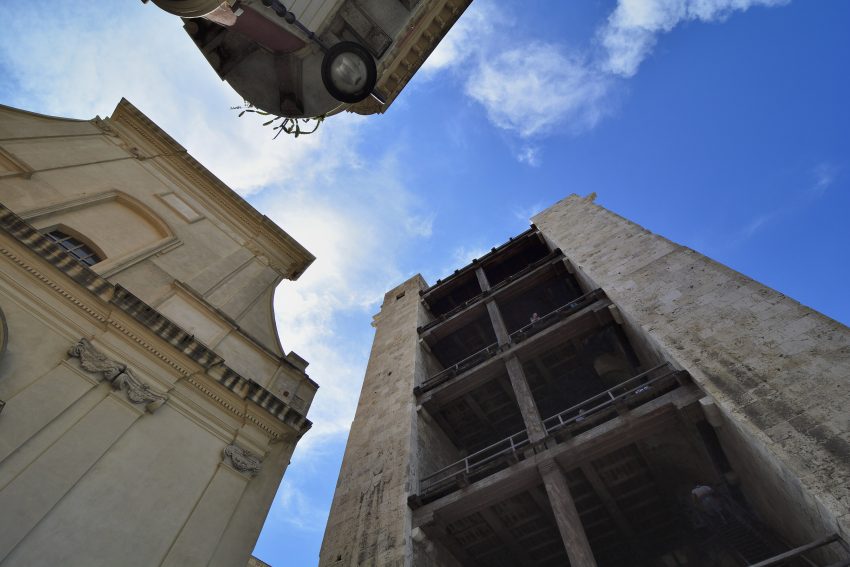
Torre dell’Elefante is a medieval defensive tower in Cagliari’s Castello district, built in 1307 under Pisan rule to guard a key entrance to the hilltop quarter. Made from pale local limestone, it has three solid sides and an open fourth side facing Castello, where you can see the stacked interior levels once supported by wooden mezzanines. Look for the small stone elephant jutting from the south wall—its namesake and a Pisan symbol—along with carved coats of arms in the masonry. When access is available, climbing upward reveals the tower’s thick walls, narrow openings, and sweeping views over rooftops and the port; recent reviews note it’s sometimes closed for works.
Location: Piazza S. Giuseppe, 5, 09124 Cagliari CA, Italy | Hours: (Summer) April 28 – September 30; Monday – Sunday: 10:00–13:00 & 15:00–19:00. (Winter) October 1 – April 27; Monday – Sunday: 10:00–17:00. | Price: Adults: €3; Reduced: €2; School groups: €1; Combined cultural-sites ticket: €8; Free for people with disabilities and one companion. | Website | Distance: 0.9km

11. Biblioteca Universitaria di Cagliari

Biblioteca Universitaria di Cagliari – MiC (Ministero della Cultura)
CC BY-SA 3.0 / Sailko
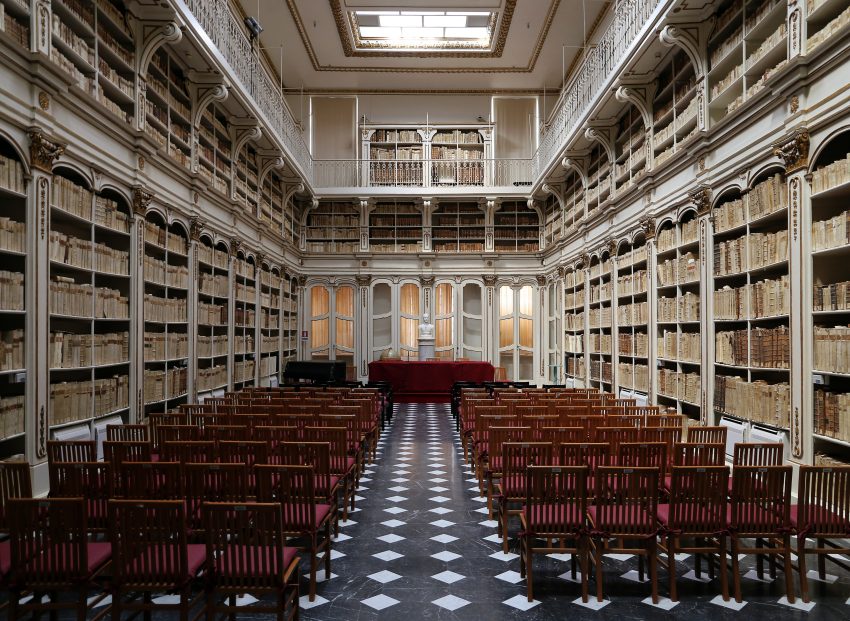
Biblioteca Universitaria di Cagliari is a state public research library housed in the University Palace in Castello, above the Balice Bastion, where the building’s neoclassical rooms are as memorable as the books. Founded in 1764 and opened to the public in 1792, it grew from a core that included the sovereign’s private library and holdings from the suppressed Jesuit Order. Visitors notice long connecting corridors and richly decorated halls, with tall, full-height wooden shelving and a hushed, carefully preserved atmosphere. Behind the elegant interiors is a serious trove: thousands of manuscripts and autographs, hundreds of codices and incunabula, and rarities such as an early Carta de Logu edition and a medieval-era Divine Comedy codex.
Location: Via Università, 32, 09124 Cagliari CA, Italy | Hours: Monday: 08:30–13:30. Tuesday: 08:30–17:00. Wednesday: 08:30–13:30. Thursday: 08:30–17:00. Friday: 08:30–13:30. Saturday: 08:30–13:30. Sunday: Closed. | Price: Free. | Website | Distance: 0.9km

12. Cripta di Santa Restituta

Cripta di Santa Restituta
CC BY-SA 4.0 / Lalupa
Beneath the 17th-century Church of Santa Restituta in Cagliari’s Stampace district, the Cripta di Santa Restituta is a partly natural cavern and partly rock-cut hypogeum that has been repurposed for over two millennia. It began as a source of limestone in late Punic and Roman times, later served pagan rites and amphora storage, and still preserves traces of a Byzantine-Orthodox phase, including a surviving fresco fragment of Saint John the Baptist. After relic-hunting campaigns in 1614 linked the site to Santa Restituta, niches and altars were added, and a main altar now holds her statue above a small lower chamber. In World War II it became an air-raid shelter, and visitors still notice the cool air, echoing damp stone, and occasional wartime markings.
Location: Via Sant'Efisio, 14, 09124 Cagliari CA, Italy | Hours: (Summer) April 28 – September 30; Daily: 10:00–13:00 & 15:00–19:00. (Winter) October 1 – April 27; Daily: 10:00–17:00. | Price: Adults: €3; Reduced: €2; School groups: €1; Under 4: free; People with disabilities + carers: free; Combined cultural-sites ticket: €8. | Website | Distance: 0.9km

13. Chiesa di San Michele
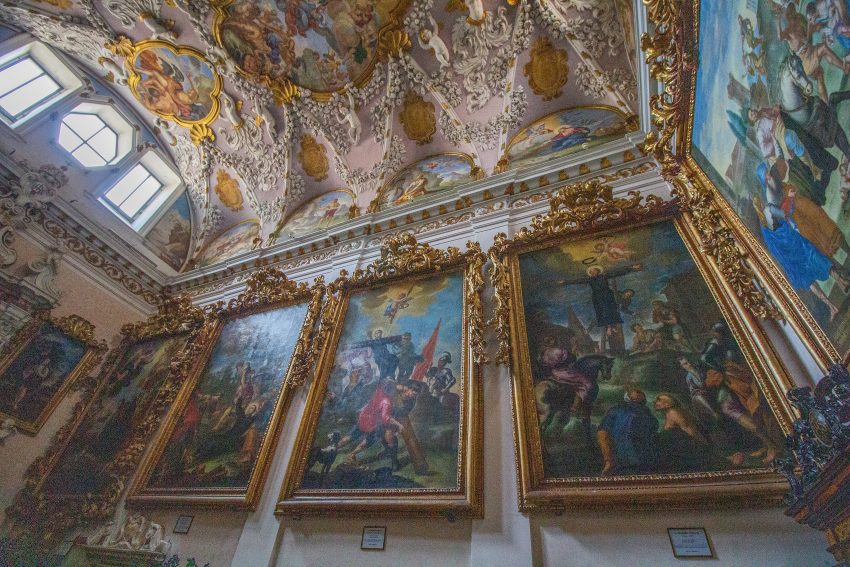
Chiesa di San Michele
CC BY-SA 4.0 / Mike Peel
Chiesa di San Michele is the Jesuit church at the top of Cagliari’s Stampace district, part of a larger complex that once included a novitiate (later a military hospital). The experience begins outside with a triple-arched, retable-like façade in tuff and a niche statue of the Archangel Michael, then opens into a vast octagonal interior where six chapels radiate beneath a brightly frescoed dome. Look for the pavilion dome set on an octagonal drum and the covered atrium with its massive four-column pulpit dedicated to Carlos V. Inside, the 18th-century Baroque-and-Rococo decoration is dense with stucco, sculpture, and painting, and the sacristy stands out for vivid frescoes and intricate inlaid wood. Visitors often mention the sudden “wow” on entering—when it’s open.
Location: Via Ospedale, 2, 09123 Cagliari CA, Italy | Hours: Monday – Friday: 10:30–12:30 & 17:00–20:30. Saturday: 10:30–12:30 & 19:00–21:00. Sunday: 10:00–12:00 & 19:00–21:00. | Price: Free; donations appreciated. | Website | Distance: 1km

14. Bastione di Saint Remy
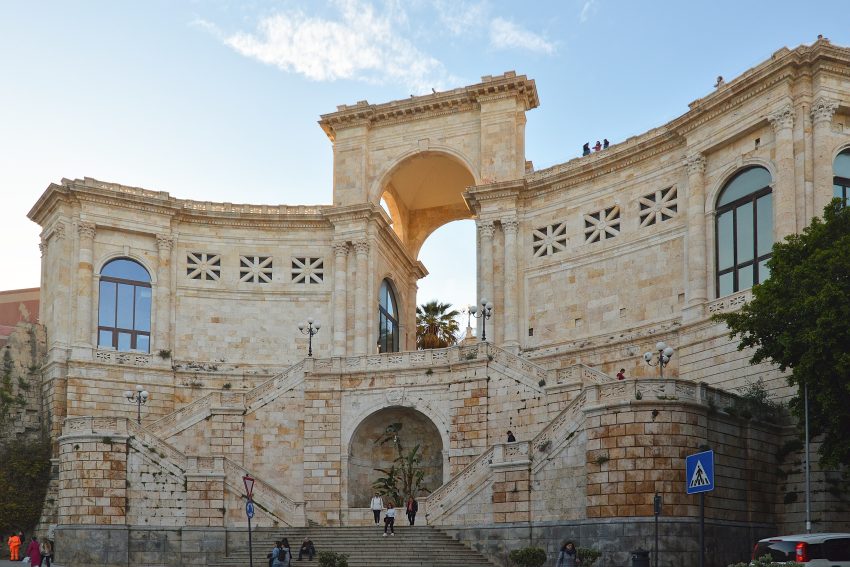
Bastione di Saint Remy
CC BY-SA 4.0 / Ryan Hodnett
Bastione di Saint Remy is a late-19th-century limestone terrace and monumental staircase rising above Piazza Costituzione, built atop older defensive walls once Cagliari stopped being a military stronghold. Its neoclassical design—triumphal arch, Corinthian columns, and twin stairways—creates a dramatic climb into an expansive promenade. From the Umberto I Terrace (about 4,600 square meters), you can read the city at a glance, with views over rooftops toward the port and out to the coastline. Beneath, the arched-windowed Umberto I Gallery (the “covered walk”) has shifted from banquet hall to wartime infirmary to exhibition space. Expect breezes, benches, and busy photo spots, especially at golden hour.
Location: Piazza Costituzione, 09121 Cagliari CA, Italy | Hours: (Summer) April 28 – September 30; Daily: 10:00–13:00 & 15:00–19:00. (Winter) October 1 – April 27; Daily: 10:00–17:00. | Price: Terraces: Free. Covered Walkway + Sperone Gallery: Adults from €3; Reduced from €2; School groups €1; Under 6: free. | Website | Distance: 1km
Powered by GetYourGuide

15. Torre dello Sperone

Torre dello Sperone
Torre dello Sperone
CC BY-SA 4.0 / Mike Peel
Torre dello Sperone is a compact 13th-century Pisan defensive tower in Cagliari’s Stampace quarter, one of the last visible traces of the district’s medieval walls. It stands between Via Portoscalas and Via Ospedale, and what you’ll notice first is how everyday life flows straight through it: a rounded stone portico cuts through the base like a gateway. Look up on the Via Portoscalas façade for the Latin inscription dating completion to March 1293 and, nearby, a worn Alberti coat of arms. Built of limestone, it rises a little over 20 meters, with simple rectangular openings and a small blind loggia of four round arches. Many visitors find it beautiful, if easy to miss.
Location: Via Ospedale, 1, 09123 Cagliari CA, Italy | Hours: 24 Hours. | Price: Free. | Distance: 1.1km

16. Orto Botanico di Cagliari
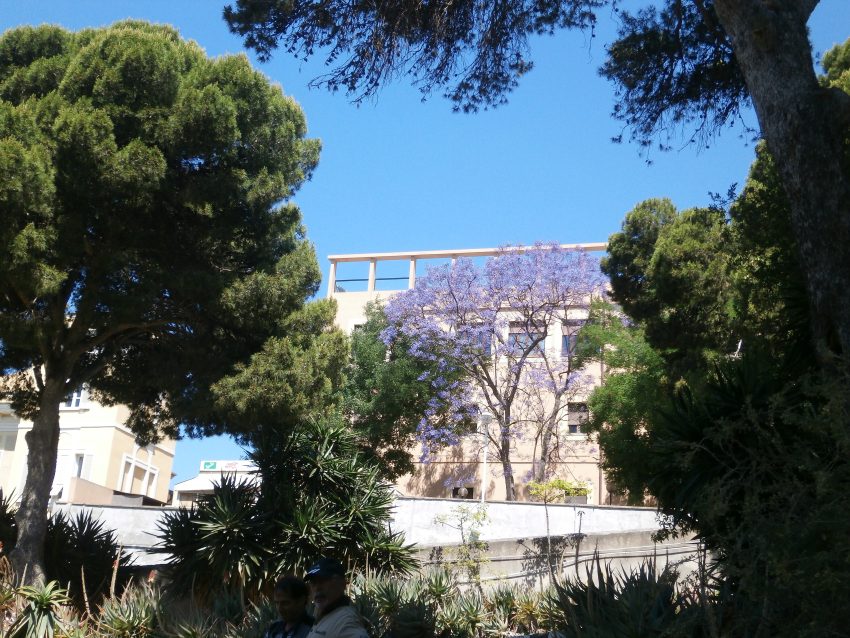
Orto Botanico di Cagliari
CC BY-SA 4.0 / Daniel Ventura
Orto Botanico di Cagliari is a university-run botanical garden in Cagliari’s Stampace area, laid out across about five hectares of the Palabanda valley. Opened in 1866 under botanist Patrizio Gennari, it’s still a working collection with roughly 2,000 plant species arranged in Mediterranean, succulent, and tropical sections. Visitors remember the dense succulent displays (around 1,000 specimens) and the palm area—about 4,000 m² with many different genera—along with shady terraces that feel like a cool pocket inside the city. What makes the walk unusual is the archaeology threaded through the greenery: Roman cisterns (one visitable), a well linked to the amphitheatre, and a surviving stretch of aqueduct.
Location: Via Sant'Ignazio da Laconi, 11, 09123 Cagliari CA, Italy | Hours: (Summer) April 1 – October 31; Tuesday – Sunday: 09:00–18:00. Closed on Monday. (Winter) November 1 – March 31; Tuesday – Sunday: 09:00–16:00. Closed on Monday. | Price: Adults: €6; Reduced: €4; Under 6: free. | Website | Distance: 1.1km

17. Basilica di San Saturnino

Basilica di San Saturnino Cagliari
CC BY-SA 3.0 / Francesca Iannelli
Basilica di San Saturnino is a Palaeo-Christian church in Cagliari set within a walled archaeological area over an ancient necropolis, where Roman and Byzantine burials have been found. Built on a Greek-cross plan, it once had four equal arms around a central dome; today the dome-covered core (5th–6th centuries) and the eastern arm survive, ending in a semicircular apse. Visitors notice the spare, white-stone interior and the fragmentary exterior, including a partly ruined west façade with three sections and portals topped by round lunettes. The site is traditionally linked to Saturninus, the city’s patron martyr said to have been executed in AD 304, giving the small basilica the feel of a martyrium amid excavations.
Location: Piazza S. Cosimo, 09127 Cagliari CA, Italy | Hours: Monday – Saturday: 09:00–14:00. Sunday: Closed. | Price: Free | Website | Distance: 1.1km

18. MUTSEU - Museo del Tesoro e Area Archeologica di Sant'Eulalia
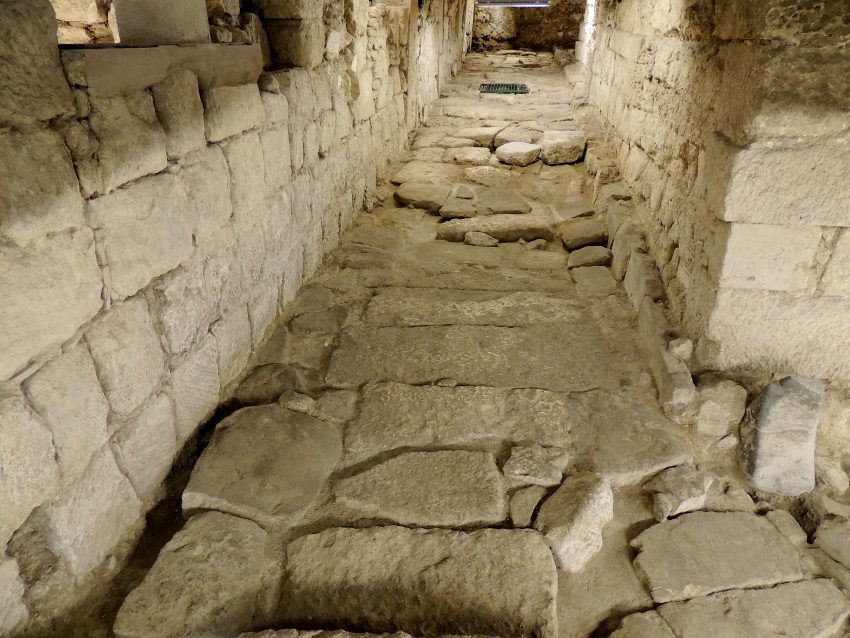
MUTSEU – Museo del Tesoro e Area Archeologica di Sant’Eulalia
CC BY-SA 4.0 / Robur.q
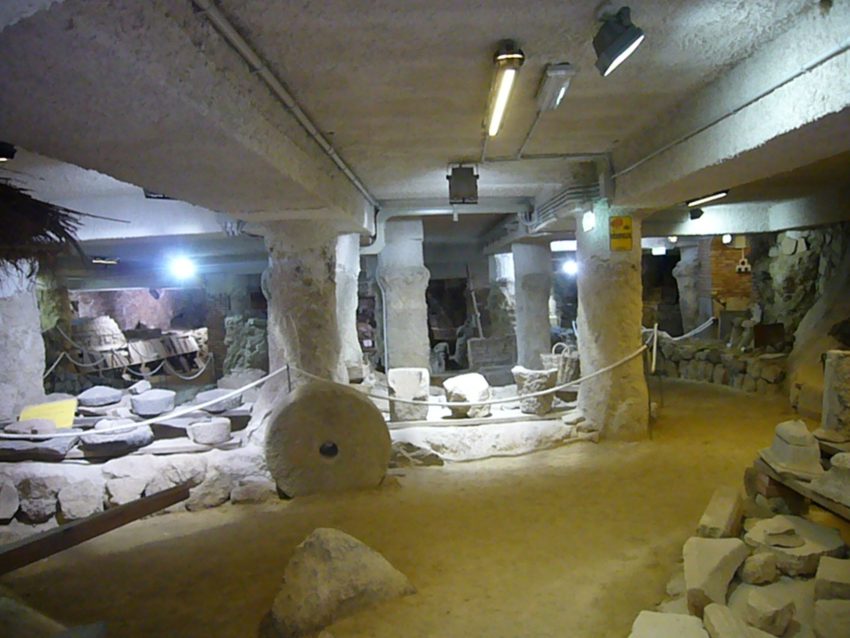
MUTSEU – Museo del Tesoro e Area Archeologica di Sant’Eulalia in Cagliari is a small treasure museum paired with excavations beneath the active Church of Sant’Eulalia in the Marina district, letting you move from parish artifacts to street-level ancient Cagliari in minutes. Downstairs, elevated walkways cross a Roman road from the 1st–2nd centuries AD, thought to have linked the neighborhood to the port, alongside older Republican-era remains uncovered during 1990 renovation work. Upstairs rooms display silverwork by Ligurian and Sardinian craftsmen, vestments, wooden sculpture, and rescued pieces from churches damaged in WWII, including Santa Lucia (destroyed in 1943). Visitors often remember the “city under the city” feeling and the clear, informative interpretation.
Location: V. del Collegio, 2, 09124 Cagliari CA, Italy | Hours: Monday – Sunday: 09:30–13:00 & 16:00–19:00. | Price: Adults: €5.00; Reduced (children aged 6+, students up to 26): €2.50; Under 6 & visitors with disabilities: free. | Website | Distance: 1.2km
Powered by GetYourGuide

19. Via Roma

Via Roma
Via Roma
CC BY-SA 2.0 / Eduard Marmet
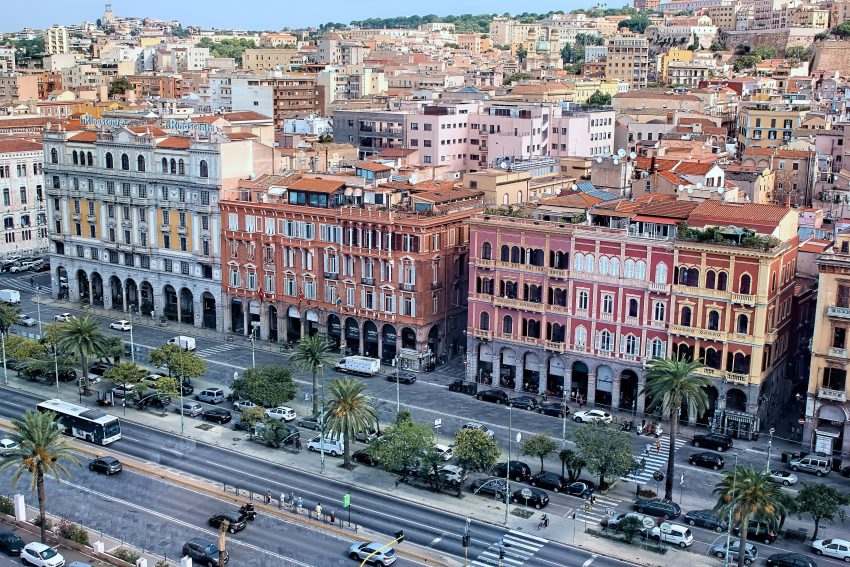
Via Roma is Cagliari’s waterfront boulevard, running along the port as a broad threshold between the sea and the city center. What stands out is the long run of shaded porticoes and the orderly, late‑19th‑century façades that give the street a formal, “urban salon” feel even on an ordinary day. Step out from under the arches and the mood shifts to open light and harbor views, with café tables and steady street life. It also works as a practical seam: the promenade leads naturally toward Piazza Matteotti and the station area, while the Marina quarter begins just behind it. Toward sunset, the sea breeze and evening strolls make the whole frontage feel animated.
Location: Via Roma, Cagliari CA, Italy | Hours: 24 Hours. | Price: Free. | Distance: 1.4km

20. Parco di Monte Urpinu

Parco di Monte Urpinu
CC BY-SA 4.0 / Nilo1926
Parco di Monte Urpinu is Cagliari’s largest and oldest hilltop city park, a pine-heavy green refuge that locals use daily for walks, runs, and downtime above the streets. Tree-lined paths climb to panoramic terraces, including the rim along Viale Europa, where the city, the Gulf of Angels, and sunrise or sunset views are the lasting takeaway. Around the park’s small artificial lakes, visitors often linger to watch turtles, ducks, swans, and the park’s signature peacocks moving calmly near people. You’ll also notice a managed cat colony with small shelters, plus a large fenced dog area and family play spaces that keep the atmosphere lively without feeling crowded.
Location: Viale Europa, 09129 Cagliari CA, Italy | Hours: (January – March) Daily: 06:30–21:00. (April) Daily: 06:00–22:00. (May – September) Daily: 05:30–23:00. (October – December) Daily: 06:30–22:00. | Price: Free. | Website | Distance: 1.4km

21. Palazzo Civico di Cagliari
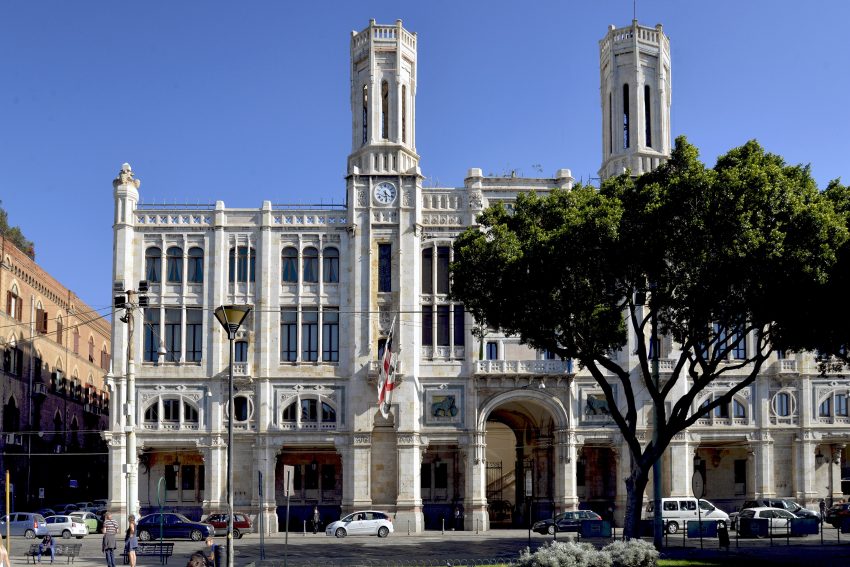
Palazzo Civico di Cagliari
CC BY-SA 2.0 / Pierre Bona
Palazzo Civico di Cagliari is the city’s working town hall, a white-limestone landmark on Via Roma that faces the port and signals Cagliari’s turn from the fortified Castello quarter toward the waterfront. Its early-1900s design mixes Aragonese Gothic forms with Liberty-era decoration, most noticeable in the long arcaded portico and the two symmetrical towers. If you can enter, the ceremonial rooms are memorable: the Wedding Room is wrapped in Filippo Figari’s 1912–14 murals of Sardinian rural life and traditional dress, and the Mayor’s Room is dominated by a huge 16th-century Brussels tapestry by Francesco Spiringius. Even from outside, the pale stone and crisp façade read best from across the street near the waterfront.
Location: Via Roma, 145, 09124 Cagliari CA, Italy | Hours: (Summer) Daily: 09:00–20:00. (Winter) Monday – Saturday: 10:00–13:00 & 14:00–18:00; Sunday: 10:00–13:00. | Price: Check official website. | Website | Distance: 1.4km

22. Nuragica Mostra Experience
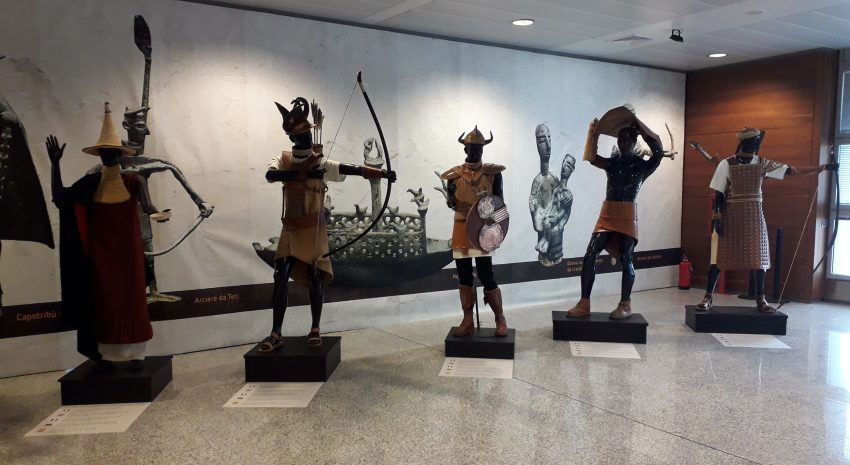
Nuragica Mostra Experience
CC BY-SA 4.0 / Xoil
Nuragica Mostra Experience in Cagliari, Italy is a multimedia “history show” that reconstructs Sardinia’s Nuragic civilization (c. 1700–700 BC), the Bronze-to-Iron Age culture known for building thousands of dry-stone nuraghi towers. Instead of vitrines of originals, you move through theatrical, full-scale sets—huts, tools, costumes, and replica bronzes—designed to make village life, rituals, and power feel tangible. The path traces the civilization from its beginnings to decline, giving a single narrative that’s hard to piece together from scattered sites. It ends in a large virtual-reality room where you wear Oculus-style headsets and step into a rendered Nuragic village, a finale many visitors describe as unexpectedly emotional.
Location: Via Roma, 191, 09125 Cagliari CA, Italy | Hours: Daily: 10:00–13:00 & 17:00–21:00. Closed on Thursday. | Price: Adults: €15; Ages 6–18: €10; Under 5: free. | Website | Distance: 1.4km

23. Marina Portus Karalis
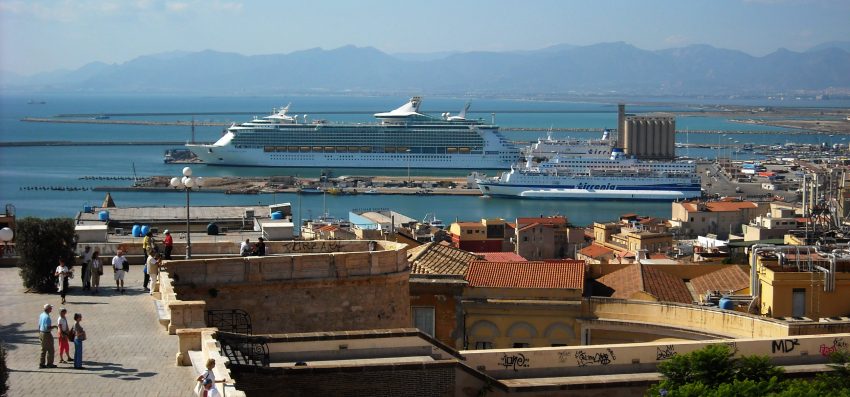
Marina Portus Karalis
CC BY-SA 2.0 / Cristiano Cani
Marina Portus Karalis is the yacht marina inside the Old Harbour of Cagliari’s main port, set directly on the central waterfront opposite Via Roma’s arcades. With 118 berths, it’s the only marina in southern Sardinia equipped to take yachts and superyachts up to 90 meters, so you’ll often see serious vessels alongside everyday harbor traffic. Visitors mostly come for the simple pleasures: a flat quayside stroll, the clink of rigging, and wide views toward the port entrance and back to the city skyline. Despite being in the middle of town, reviews often note it feels surprisingly quiet, with staff on hand for arrivals and mooring.
Location: Molo Dogana, 09125 Cagliari CA, Italy | Hours: 24 Hours. | Price: Free. | Website | Distance: 1.5km
Powered by GetYourGuide

24. Monte Claro Park

Monte Claro Park
Monte Claro Park
CC BY-SA 3.0 / Municipality of Cagliari
Monte Claro Park is a 25-hectare urban green space on the slopes of Monte Claro hill in Cagliari, created by redeveloping the grounds of the former provincial psychiatric hospital and opening in its current form in 2001. Wide, tree-lined avenues lead from the Via Cadello entrance toward a central fountain whose decoration echoes a pintadera motif linked to a tomb found during early-1900s hospital works. Visitors remember the small artificial lake, where ducks, geese, swans, and water turtles gather, and the easy loops of lawns and shady paths used for jogging and picnics. The park also has two fenced dog areas (separate for small and large dogs), playgrounds, and sports fields, plus Villa Clara, now home to the metropolitan library.
Location: Via Diego Cadello, 11, 09121 Cagliari CA, Italy | Hours: (Summer) May 1 – October 31; Daily: 07:00–22:00. (Winter) November 1 – April 30; Daily: 07:00–20:00. | Price: Free. | Website | Distance: 1.5km

25. Monumental Cemetery of Bonaria

Monumental Cemetery of Bonaria
CC BY-SA 3.0 / Giova81
The Monumental Cemetery of Bonaria in Cagliari is a terraced hillside burial ground that reads like an outdoor gallery of 19th- and early-20th-century funerary art. Opened in 1829 after burials were pushed out of churches for hygiene reasons, it grew from the flat, older section at the foot of Bonaria Hill up to quieter upper levels with long views over the city. Visitors notice the changing styles—Neoclassical order giving way to Realism, Symbolism, and Art Nouveau—expressed in family chapels, portrait medallions, angels, and allegorical figures. Look for the First World War memorials near the entrance and standout monuments such as the Chapelle mausoleum’s imposing marble Prophet Ezekiel by Giuseppe Sartorio; cats often nap between the lanes.
Location: Viale Cimitero, 09100 Cagliari CA, Italy | Hours: Wednesday: 08:00–13:00. Thursday: 14:30–18:00. Saturday: 08:00–13:00. Sunday: 08:00–13:00. Closed on Monday, Tuesday, Friday. | Price: Free. | Distance: 1.6km

26. Santuario di Nostra Signora di Bonaria

Santuario di Nostra Signora di Bonaria
CC BY-SA 4.0 / Gianni Careddu
Santuario di Nostra Signora di Bonaria is a hilltop religious complex in Cagliari, pairing a 14th-century Gothic-Catalan sanctuary with a larger neoclassical basilica and a still-active devotion tied to sailors and the sea. Inside the older church, a single nave leads to a raised presbytery where worshippers approach a 14th-century wooden Madonna and Child, linked to a storm-calming sea legend. Look for the reused Gothic portal salvaged from the demolished church of San Francesco in Stampace, and the small side chapels with ribbed vaulting. The basilica’s broad staircase and the quieter garden areas behind are where visitors linger for open views toward the port and water; opening hours can be unpredictable.
Location: Piazza Bonaria, 2, 09125 Cagliari CA, Italy | Hours: Monday – Friday: 06:30–11:45 & 16:00–18:30. Saturday – Sunday: 06:30–12:30 & 16:00–20:00. | Price: Free; donations appreciated. | Website | Distance: 1.7km

27. Tuvixeddu Necropolis

Tuvixeddu necropolis
CC BY-SA 2.0 / cristianocani
Tuvixeddu Necropolis is a vast hillside archaeological park inside Cagliari, where pale limestone is pierced by hundreds of Punic and later Roman tombs. Used mainly between the 6th and 3rd centuries BC by Carthaginians, many burials were reached via narrow vertical shafts—some several meters deep—leading to rock-cut chambers that give the slope a honeycombed look. Along the paths and footbridges you can spot painted tombs such as the Uraeus and the Fighter, with surviving motifs like palm trees and masks, alongside Roman arcosolia and columbaria. The setting feels surprisingly quiet for a city site, and the higher ground opens to wide views over rooftops toward the lagoon.
Location: Via Falzarego, 09123 Cagliari CA, Italy | Hours: (Winter) January – March: 06:00–21:00; October – December: 06:30–22:00. (Summer) April – September: 05:30–22:30. | Price: Free. | Website | Distance: 1.8km

28. Castello di San Michele

Castello di San Michele
CC BY-SA 2.0 / Pi.Gra
Castello di San Michele is a medieval hilltop fortress in northern Cagliari, now used as a City Center of Art & Culture, where the setting matters as much as the stones. The compact, quadrangular castle still shows three towers—two built by Pisan hands in the 13th century and a later 15th-century Aragonese tower—plus traces of its defensive layout, including a moat and an excavated cistern revealed during modern restoration. From roughly 180 meters up, the panorama runs in a full sweep over the city and coast, with clear sightlines to the port and the long curve of Poetto beach. Visitors tend to remember the breezy parkland around it, the benches, and the exposed climb on a mostly shade-free hill.
Location: Via Giovanni Cinquini, 09121 Cagliari CA, Italy | Hours: Tuesday – Thursday: 10:00–18:00. Saturday – Sunday: 10:00–18:00. Closed on Monday, Friday. | Price: Adults: €4; Reduced: €2; Children 0–6: free; Guided visit: €8 (reduced €5). | Website | Distance: 2.5km

29. Parco Naturale Molentargius Saline

Parco Naturale Molentargius Saline
CC BY-SA 3.0 / Fabiocarboni
Parco Naturale Molentargius Saline is a 1,600-hectare wetland park on the edge of Cagliari, where former salt-extraction basins have become a protected habitat for birds and amphibians. Its landscape is a mix of freshwater ponds and saltwater pans, engineered for centuries and later safeguarded under designations like Ramsar, Special Protection Area, and Site of Community Importance. Visitors remember the wide, open paths across the lagoons and the real chance of seeing pink flamingos feeding or resting in the shallows. The park’s name comes from Sardinian “molenti,” recalling donkeys once used to haul salt, and you may still spot small wildlife like hedgehogs, rabbits, or tree frogs. Expect big skies, bright sun, and very little shade.
Location: Via la Palma, 9a, 09126 Cagliari CA, Italy | Hours: 24 Hours. | Price: Free. | Website | Distance: 2.9km

30. Parco Terramaini

Parco Terramaini
Parco Terramaini
CC BY-SA 2.0 / gabriele valeria e mauro
Parco Terramaini is a modern urban park in Cagliari’s northern Pirri area, created after late-1990s land reclamation on a long-abandoned site and inaugurated in 2006. Visitors remember the flat, easy paths that circle broad lawns and Mediterranean plantings—myrtle, rosemary, mastic, carob, and olive—mixed with palms and other exotics. The park’s centerpiece is an artificial lake edged by reeds and a wooden walkway, where birdlife is part of the scenery; pink flamingos are often spotted, and parakeets nest in the palms. Daily life plays out here with several children’s play areas (including accessible equipment), picnic tables and benches, exercise zones, and a dedicated dog area.
Location: Via Andrea Vesalio, 09121 Cagliari CA, Italy | Hours: (Summer) April 1 – September 30; Daily: 05:30–00:00. (Winter) October 1 – March 31; Daily: 06:00–22:00. | Price: Free. | Website | Distance: 3km

31. Poetto

Poetto
Poetto
CC BY-SA 3.0 / Mprieur
Poetto is Cagliari’s urban beach, an 8 km sweep of pale sand along the Gulf of Angels that functions as the city’s everyday escape to the sea. It runs from the Sella del Diavolo end toward Quartu Sant’Elena, with the Molentargius salt pans behind parts of the shore, giving the area a sea-and-lagoon feel. Close to town (about 10–15 minutes by bus from Via Roma), it’s easy to drop in for a swim in typically clear, shallow water and then linger along the seafront lined with cafés, bars, and beach clubs. The beach mixes free stretches with serviced sections for loungers and umbrellas, and it rarely feels packed except on summer weekends and in August.
Location: Poetto, Italy | Hours: 24 Hours. | Price: Free. | Website | Distance: 4.6km

32. Spiaggia di Calamosca

Spiaggia di Calamosca
CC BY-SA 2.0 / Cristiano Cani
Spiaggia di Calamosca is a small, sheltered beach cove on Cagliari’s southeastern edge near Sant’Elia, prized for calm water when windier stretches turn choppy. Hemmed in by rocky headlands, it feels surprisingly wild for a city-adjacent swim, with clear water that shifts turquoise in late-afternoon light. The shore is a mix of sand and stones, and many people end up perched on the rocks above the waterline—swimming shoes help on the rougher sections. Snorkeling is best along the rocky edges rather than the center, and you’ll often see locals doing short out-and-back swims while small boats pass the mouth of the bay. In summer it can feel tightly packed because the cove is compact.
Location: 09126 Calamosca CA, Italy | Hours: 24 Hours. | Price: Free. | Website | Distance: 4.9km

33. Porticciolo Turistico Marina Piccola

Porticciolo Turistico Marina Piccola
Porticciolo Turistico Marina Piccola is Cagliari’s small tourist marina at the foot of the Sella del Diavolo, where the long Poetto beach begins at the “first stop” of the old tram line. It matters as the city’s everyday gateway to the sea: mostly pleasure boats, a small pocket of fishing vessels, and local sailing and windsurfing clubs sharing a protected harbor behind breakwaters and floating docks. Visitors remember the forest of masts, the salty breeze, and the wide view back toward the Devil’s Saddle, especially as the light warms at sunset. The marina has more than 300 berths and a working feel, though the pier surface can be rough in places.
Location: Porticciolo di Marina Piccola, 09126 Cagliari CA, Italy | Hours: 24 Hours. | Price: Free. | Website | Distance: 4.9km

34. Sella del diavolo

Sella del diavolo
Sella del diavolo
CC BY-SA 4.0 / Einaz80
Sella del diavolo is a rocky promontory on Cagliari’s Sant’Elia headland, rising above the Poetto shoreline and the Gulf of Angels with wide, wind-swept viewpoints. Most people start from the Calamosca side, following a clear path that climbs to ridge terraces before the summit, where the sea turns bright turquoise below. From up top you can trace Poetto’s long band of sand, pick out the Molentargius salt flats, and see the city skyline backed by pale rock and Mediterranean scrub. The headland’s “devil’s saddle” name comes from a local legend, and along the way you’ll spot the coastline’s defensive logic in old military remnants.
Location: Viale Calamosca, 50, 09126 Cagliari CA, Italy | Hours: 24 Hours. | Price: Free. | Website | Distance: 5.4km
Powered by GetYourGuide

Best Day Trips from Cagliari

A day trip from Cagliari offers the perfect opportunity to escape the urban rhythm and discover the surrounding region's charm. Whether you're drawn to scenic countryside, historic villages, or cultural landmarks, the area around Cagliari provides a variety of easy-to-reach destinations ideal for a one-day itinerary. If you are looking to rent a car in Italy I recommend having a look at Discover Cars, first, as they compare prices and review multiple car rental agencies for you.

1. Chiesa di Santa Maria di Sibiola

Church of Santa Maria Sibiola Serdiana
CC BY-SA 2.0 / Cristiano Cani
Chiesa di Santa Maria di Sibiola is a Romanesque church near Cagliari, in the Serdiana area of Sardinia, set in open countryside rather than a town square. It is a small, carefully proportioned building whose exterior is the main draw, with stonework that reads clearly even on a short visit.The church matters because it preserves the feel of a rural…
Location: Chiesa Romanica di Santa Maria di Sibiola, Serdiana, Metropolitan City of Cagliari, Italy | Hours: Daily: Exterior accessible at any time. Interior open only during services, weddings & special openings. | Price: Free. | Website | Distance: 16km
Visiting Chiesa di Santa Maria di Sibiola

2. Acquafredda Castle

Castello di Acquafredda
CC BY-SA 1.0 / Gioele Serra
Acquafredda Castle is a medieval castle ruin in the Cagliari area of southern Sardinia, set on a steep volcanic hill above Siliqua. It is not a furnished fortress or a polished museum site; visitors come here to walk up through ruined defensive levels, see the remains of walls and cisterns, and take in the landscape from the upper slopes.The site…
Location: Castello di Acquafredda, Strada Statale 293 di Giba, Siliqua, Metropolitan City of Cagliari, Italy | Hours: Daily: 09:30–17:30. Last entry: 16:15. | Price: €8 guided tour; €5 entry without the guided tour; €3.50 reduced (typically children 6–13 and over 65). | Website | Distance: 26.6km
Visiting Acquafredda Castle

3. Nora Archaeological Site

Nora Archaeological Site
CC BY-SA 3.0 / Giovannagiovanna
Nora Archaeological Site in Cagliari, Italy, is an open-air ancient ruin site on a low peninsula near the coast. It preserves the remains of a town that changed over time under Phoenician, Punic, and Roman influence, and it is laid out so you can walk through the old street plan rather than view it from a distance.What stands out is…
Location: Nora Archaeological Park, Viale Nora, Pula, Metropolitan City of Cagliari, Italy | Hours: January – February: Daily: 09:00–17:00. March: Daily: 09:00–18:00. April – May: Daily: 09:00–19:00. June – September: Daily: 09:00–20:30. October: Daily: 09:00–19:00. November – December: Daily: 09:00–17:00. | Price: Adults: €10 | Website | Distance: 27.9km
Visiting Nora Archaeological Site
Powered by GetYourGuide

4. Su Nuraxi di Barumini

Su Nuraxi di Barumini
CC BY-SA 2.0 / Ciamabue
Su Nuraxi di Barumini in the Cagliari area is an archaeological site centred on a Bronze Age nuraghe complex. It is a guided visit, with the experience focused on walking through basalt walls, tight passages, and the remains of the larger fortified settlement around the main tower.The site matters because it shows how defence, domestic space, and community life were…
Location: Su Nuraxi di Barumini, Viale Su Nuraxi, Barumini, Province of South Sardinia, Italy | Hours: January – February: 09:00–17:00; March: 09:00–17:30; April: 09:00–19:30; May – August: 09:00–20:00; September: 09:00–19:30; October: 09:00–18:30; November – December: 09:00–17:00. | Price: €16 (adults 18+); €14 (ages 13–17); €12 (ages 7–12); free (ages 0–6). | Website | Distance: 54.8km
Visiting Su Nuraxi di Barumini
Powered by GetYourGuide

5. Tempio di Antas

Tempio di Antas
Tempio di Antas
CC BY-SA 2.0 / Carole Raddato
Tempio di Antas is an archaeological site in the hills south of Cagliari, in the Fluminimaggiore area, where a Roman temple stands in a valley of limestone slopes and open countryside. The main structure is the part visitors come for, but the setting is part of the experience: a short approach, pale columns, and scattered remains that make the visit…
Location: Tempio di Antas - Sardus Pater, Strada Comunale Antas, Fluminimaggiore, Province of South Sardinia, Italy | Hours: (Summer) April – June: Daily: 09:30–17:30; July – 15 September: Daily: 09:30–19:30; 16 – 30 September: Daily: 09:30–18:30; October: Daily: 09:30–17:30. (Winter) November: Wednesday – Friday: 10:00–14:00; Saturday – Sunday: 09:30–16:30. Closed on Monday – Tuesday. December – February: Friday: 10:00–14:00; Saturday – Sunday: 09:30–16:30. | Price: €6 standard; €5 reduced; €4 schools & children 6–13; free for children up to 5, over 80, and some visitors with disabilities (site policy varies by category). | Website | Distance: 56.7km
Visiting Tempio di Antas

6. Terme Romane di Fordongianus

Roman Thermal Baths in Fordongianus
CC BY-SA 2.0 / Royonx
Terme Romane di Fordongianus is a Roman bath site in Fordongianus, in Sardinia’s Province of Oristano, and it makes an easy archaeological stop for visitors based in Cagliari or crossing the island. The site is compact, well kept, and straightforward to understand, so you do not need much background to appreciate the remains.What stands out here is the link between…
Location: Terme Romane di Fordongianus, SP33, Fordongianus, Province of Oristano, Italy | Hours: Daily: 09:30–13:00 & 14:30–17:00. Closed on 25 December and 1 January. | Price: €6 full; €3 reduced (ages 6–14); free (ages 0–5); groups (20+): €5. | Website | Distance: 90.1km
Visiting Terme Romane di Fordongianus

Where to Stay in Cagliari

If you want to do Cagliari on foot and have the most “Cagliari” atmosphere outside your door, base yourself in the historic core: Castello and Villanova. Castello is the hilltop old town (views, small lanes, quick access to the cathedral and bastions), while Villanova is a little calmer and more residential but still central for evenings. In Castello, Birkin Castello works well if you want to sleep right inside the historic quarter and step straight into the sights. Just outside the busiest lanes, Hotel Villa Fanny is a strong boutique choice when you want a quieter, more refined base that’s still walkable into the centre.

For restaurants, bars, and straightforward logistics (port/train/buses), the Marina and the lower centre around Via Roma are usually the easiest. You’re close to the waterfront promenades, plenty of dining, and you can get in and out of town without fuss. Hotel Miramare Cagliari is a good fit if you like character and being in the middle of the action, while Hotel Regina Margherita is a dependable central option when you want comfort and a very practical location between the historic areas and the harbour.

If you prefer a more “hotel-as-a-destination” feel, or you want a slightly more polished, upscale base, look at the modern centre near the main shopping streets and civic areas rather than deep inside the old lanes. Palazzo Doglio suits travellers who want a higher-end stay with an on-site courtyard scene and an easy walk into the centre. If you want contemporary rooms and a proper spa-style reset after sightseeing, UNA HOTELS T Hotel Cagliari is a strong pick. And if your priority is beach time with the city still reachable by taxi or bus, Poetto is the simplest base—Hotel Nautilus is well-placed for mornings on the sand and sunset walks on the promenade.

Using the our Hotel and Accomodation map, you can compare hotels and short-term rental accommodations in Cagliari. Simply insert your travel dates and group size, and you’ll see the best deals for your stay.

Cagliari Accommodation Map

Best Time to Visit Cagliari

Cagliari in Spring (Best)

Spring is the most balanced time to visit Cagliari: warm, bright days for walking the old quarters, but not yet the heavy summer heat. April through early June is particularly good for combining city sightseeing with early beach time, and you’ll generally find better value and easier restaurant reservations than peak summer. A key highlight is the Festa di Sant’Efisio at the start of May, when processions, traditional dress, music, and events bring a big surge of atmosphere and crowds—book accommodation early if you want to be in town for it.

Cagliari in Summer

Summer in Cagliari is for beach-first trips, late dinners, and a lively evening scene, but it can be very hot for midday walking—plan your sightseeing early and save the middle of the day for the sea. June is often the easiest “summer” month for combining city and coastline without peak-season pressure, while July and August are busiest and most expensive. Mid-August (Ferragosto) is a focal point for local events and a general holiday buzz, which is great if you want energy, but it also means higher prices and more crowded beaches.

Cagliari in Autumn

Early autumn is a strong alternative to spring: the sea stays inviting, the heat eases, and the city feels more relaxed while still very much “open” for visitors. September is the sweet spot if you want beach days without high-summer intensity, and October is better if your priority is urban exploring with comfortable walking temperatures. Festival-wise, autumn is a good season for food-and-craft culture on the island, with events such as Autumn in Barbagia (weekends from September into December) making a worthwhile add-on as a day trip if you want traditional villages, local produce, and artisan work alongside your time in Cagliari.

Cagliari in Winter

Winter is quieter and often good value, with a calmer, more local feel and plenty of time to enjoy the city without queues. Expect cooler evenings and a higher chance of rain, so it suits travellers who prioritise museums, long lunches, and unhurried neighbourhood wandering rather than beach time. If you want Cagliari at its most low-key—and you don’t mind trading swimming weather for space and prices—winter can work very well.

Annual Weather Overview

  • January 13°C
  • February 14°C
  • March 17°C
  • April 18°C
  • May 23°C
  • June 30°C
  • July 31°C
  • August 29°C
  • September 28°C
  • October 24°C
  • November 18°C
  • December 16°C

How to get to Cagliari

Getting to Cagliari by air

Nearest airport: Cagliari Elmas Airport (CAG) is the main gateway and the closest airport to the city. It has the broadest range of domestic routes (especially from Milan and Rome) and seasonal international services.

Airport to the city centre: the simplest option is the direct airport train to Cagliari station (fast, frequent, and avoids traffic). Taxis and rides are available outside arrivals; they’re convenient if you have luggage or you’re staying up in the older quarters where the final walk can be steep.

Arriving via other Sardinia airports: Olbia Costa Smeralda Airport (OLB) and Alghero-Fertilia Airport (AHO) can work if flights are cheaper, but you'll need a longer onward transfer (typically several hours) by train/bus combinations or a car.

Getting to Cagliari by train

Mainline routes on the island: Cagliari is the southern hub of Sardinia’s rail network, with regular services north via Oristano and onward connections toward Sassari, Porto Torres, and Olbia-area stations (via interchanges depending on the route and timetable). This is the best option if you’re linking Cagliari with other towns without driving, but it’s worth planning around the island’s slower rail speeds compared with the mainland.

Airport rail link: the airport train is part of the same rail system, so you can step off a flight and be at Cagliari station quickly, then continue on to other destinations if needed.

Train operators (links): Trenitalia (national rail, including Sardinia services) — trenitalia.com
ARST (regional transport in Sardinia, including rail/bus services) — arst.sardegna.it

Getting to Cagliari by Car

Driving within southern Sardinia: if you’re already on the island, Cagliari is straightforward to reach by main roads, and a car is useful if you plan to explore beaches and small coastal towns where public transport is limited. The trade-off is city parking, limited-access traffic areas, and narrower streets near the historic quarters—many travellers prefer to park once and walk.

Arriving “by car” from mainland Italy: you’ll typically combine driving with a ferry crossing to Sardinia, then drive onward to Cagliari. Common ferry operators include Grimaldi Lines, Tirrenia, and Moby; availability varies by season, and some routes arrive at ports other than Cagliari, which adds drive time.

Practical car notes: choose accommodation with parking if possible, and confirm whether your hotel is inside a restricted traffic zone (ZTL) or on streets where access is limited. If you are looking to rent a car in Italy I recommend having a look at Discover Cars, first, as they compare prices and review multiple car rental agencies for you.

Travelling around Cagliari

On foot and by local transit: central Cagliari is compact and walkable, especially between Castello, Villanova, and the Marina, but expect hills and steps. For longer hops (Poetto beach, outlying neighbourhoods, or evening returns), the city bus network is usually the most practical option.

Local operators (links): CTM Cagliari (urban buses) — ctmcagliari.it
For regional day trips by rail/bus, use the operator links above (Trenitalia and ARST). Taxis are easy for short door-to-door journeys, and car hire becomes valuable if you want to string together multiple beaches or rural stops in a single day.
More from this area