Self-Guided Walking Tour of Picasso’s Málaga (2026)
malaga
This website uses affiliate links which earn a small commission at no additional cost to you.
Málaga, a sun-drenched city on Spain's Costa del Sol, offers a compelling mix of Moorish heritage, Mediterranean flair, and modern art. As the birthplace of Pablo Picasso, Málaga invites visitors to explore not only its ancient architecture and coastal charm but also the creative roots of one of the 20th century's most influential artists. Whether you're standing in the square where he was born or exploring the museum dedicated to his legacy, the city reveals Picasso's early inspirations around every corner.
Exploring Picasso's Málaga on foot is a feast for the senses-from Roman ruins to tapas-filled taverns and palm-lined boulevards. Málaga's walkable layout and warm climate make it perfect for leisurely discovery. Whether you're tracing the city's Islamic past or diving into its modern revival, there's something for every interest.
By Air: Málaga is served by Málaga-Costa del Sol Airport (AGP), one of Spain's busiest airports, located about 8 kilometers southwest of the city center. It handles numerous domestic and international flights, connecting Málaga with major European cities as well as destinations across Spain. From the airport, travelers can reach the city center easily by taxi, bus, or the suburban train line, with journey times typically ranging from 15 to 25 minutes, making it a convenient gateway for a walking tour of Málaga. For the best deals and a seamless booking experience, check out these flights to Málaga on Booking.com.
By Train:Málaga María Zambrano Station is a key rail hub with AVE high-speed connections to Madrid, Córdoba, and Seville. From the station, you can reach the historic centre on foot in about 20 minutes or by taxi in 5 minutes. Train schedules and bookings can be found on Omio.
By Car: Arriving by car is simple via the A-7 coastal highway. Parking is available at Parking Camas or Parking Granados, both close to the old town. If you are looking to rent a car in Spain I recommend having a look at Discover Cars, first, as they compare prices and review multiple car rental agencies for you.
Where to Stay in Málaga
To make the most of visiting Málaga and this walking tour, it is best to stay overnight in or near the city center. This allows you to easily explore the historic streets, plazas, and cultural landmarks on foot, from the Alcazaba and Roman Theatre to the Picasso Museum and the lively port area. Staying central ensures convenience and puts you within walking distance of many of the city's best restaurants, tapas bars, and shops.
In the heart of the city, near the Cathedral and Calle Larios, you might consider Room Mate Valeria or AC Hotel Málaga Palacio, both offering stylish accommodations and easy access to the historic center. For a boutique option, Casa de las Mercedes provides charm and character in a quiet part of the old town. Another excellent choice is Petit Palace Plaza Málaga, which combines modern comfort with a prime location for sightseeing.
For those who prefer to be close to the waterfront, the area around Muelle Uno and the port offers options such as Barceló Málaga. This location provides easy access to the port, beach, and contemporary cultural venues while remaining within walking distance of the historic center. Staying in these central or well-connected neighborhoods ensures that your walking tour of Málaga is both convenient and immersive, allowing you to fully enjoy the city's architecture, history, and vibrant atmosphere.
A Brief History of Málaga
Málaga's history stretches back to its founding by the Phoenicians around 770 BCE. It became a prosperous Roman city and later an important Islamic stronghold under Moorish rule. During this time, key landmarks such as the Alcazaba fortress and Gibralfaro Castle were constructed, forming the backbone of the city's skyline today.
After the Reconquista, Málaga was incorporated into Catholic Spain and flourished as a trading port. In recent decades, the city has seen a cultural revival led by new museums, art spaces, and pedestrian-friendly development. Today, Málaga shines as both a coastal getaway and a cultural capital.
Guided or Self-Guided Tour of Málaga?
If you’re short on time or want a comprehensive introduction to the city’s major sights, consider the Complete Tour of Málaga. This guided experience covers the key landmarks in about 2.5 hours, including the Roman Theatre, the Alcazaba, and the Picasso Museum. With a knowledgeable local guide, you'll gain context for Málaga's long history and artistic heritage, all while navigating the best walking routes through the old town.
Your Walking Tour of Málaga
This blog highlights Málaga’s essential sights, but the city’s charm lies just as much in its spontaneous moments-sunlight on stone, music drifting through alleys, and the next pintxo waiting to be tried.
1. Picasso Foundation and Birthplace Museum
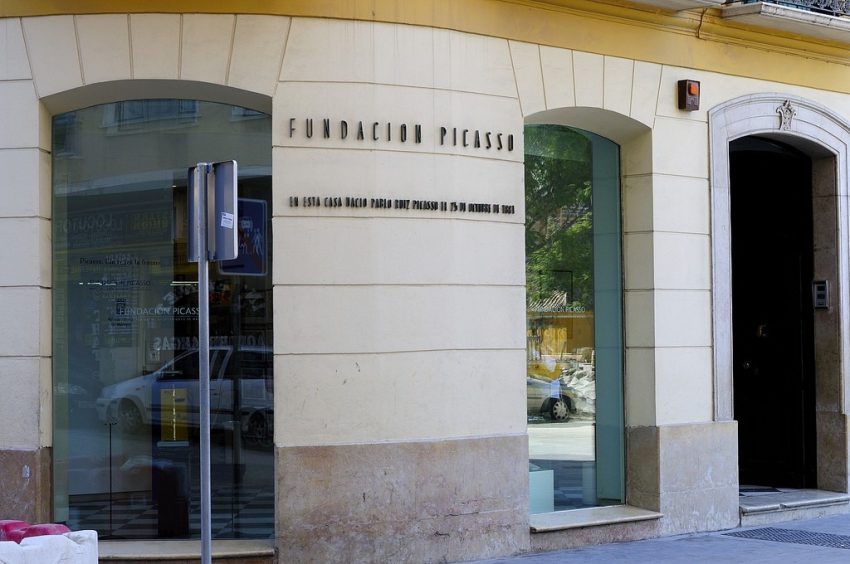
Casa Natal de Pablo Picasso
CC BY-SA 2.0 / Maksym Abramov
Where better to start than the North West corner of Plaza de la Merced, at the house that Picasso was born.
At number 15 of the plaza is the house in which Pablo Picasso was born in 1881, a couple of years later, his family would move to number 17. The house now operates as a museum, and the building is the headquarters of the Pablo Ruiz Picasso Foundation, dedicated to the dissemination of his life and works.
The museum houses an art collection with pieces by Picasso and other contemporary artists. There is also a specialized library and an on-going program of temporary exhibitions and cultural activities held here.
After leaving Picasso Foundation and Birthplace Museum head into the Plaza de la Merced.
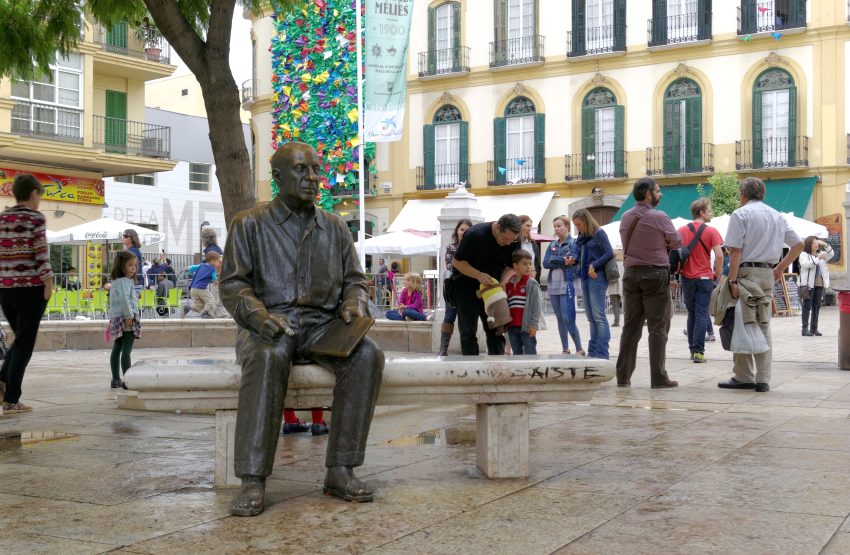
Plaza d la Merced is a large public square in Málaga’s city center with a number of pavement cafes on its north side. Find the bronze statue of Picasso sat on a marble bench taking notes with a pencil.
Look out for the doves in the square, Picasso could see from his window and was then to depict so many times in his artwork
The statue is relatively new to the square, being installed in 2008. It was built by Francisco López Hernández and measures 1.4 meters in height.
Grab a few selfies sat next to him before moving on.
Here is a complete selection of hotel options in Málaga. Feel free to review each one and choose the stay that best suits your needs.
3. The Church that Baptized Picasso
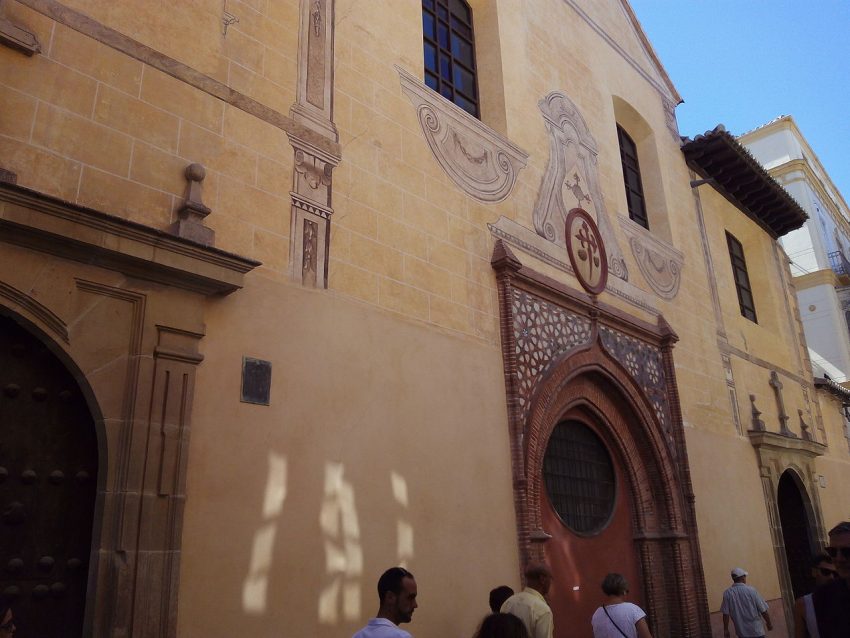
Church of Santiago in Malaga
CC BY-SA 4.0 / Morancio
Head across the Plaza to Calle Granada. On the corner you will see Farmacia Bustamante one of the oldest pharmacies in the city. When the establishment was run by Antonio Mamely, the back room became a meeting place where the pharmacist’s friends, including the father of Picasso, José Ruiz would regularly get together to chat.
Head down Calle Granada until you see the Iglesia de Santiago on your left.
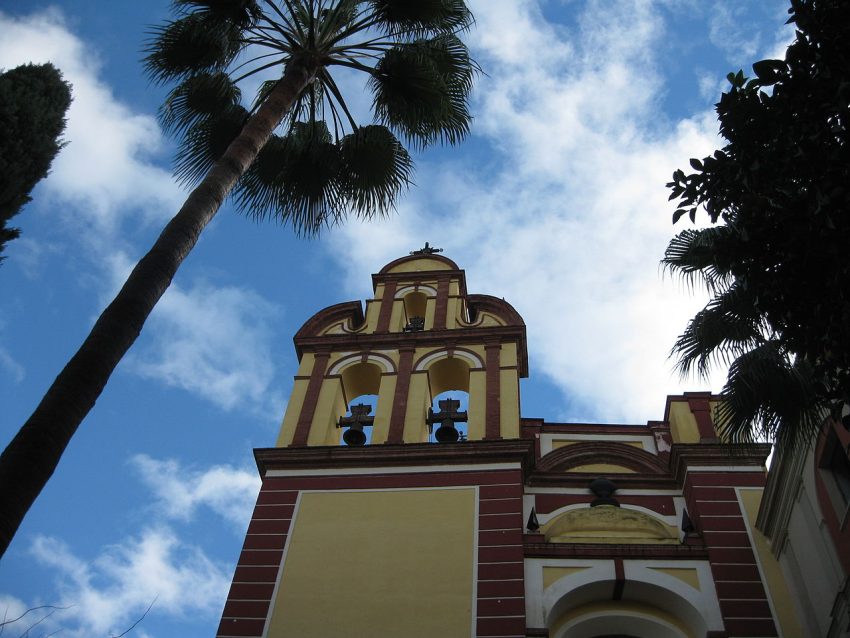
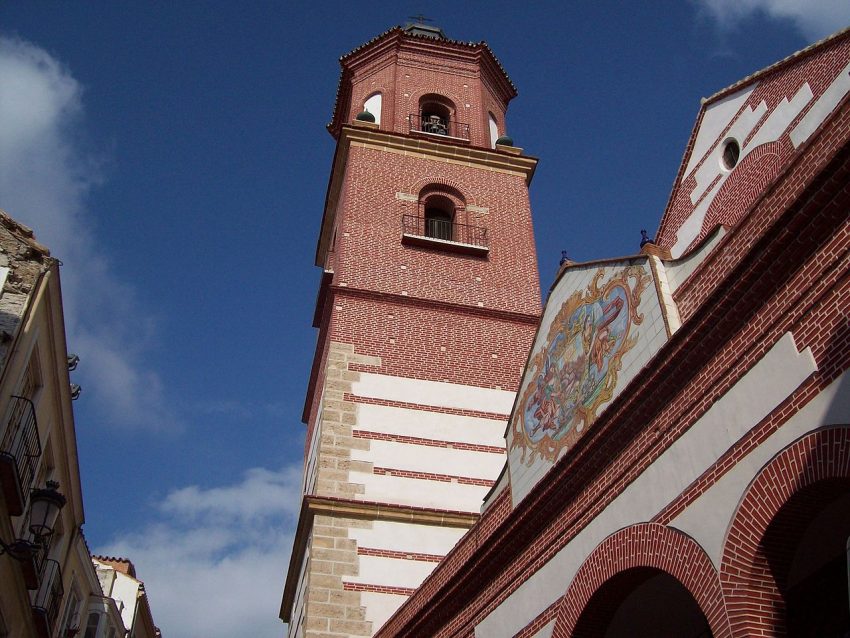
The Iglesia de Santiago or St. James Church is the oldest church in Malaga, dating back to 1490. It is a splendid example of the Gothic-Mudejar style of the 15th and 16th centuries.
The church combines Moorish and Gothic styles; the beautiful tower is Mudejar style.
Picasso’s grandparents and parents got married in the Church and Picasso and his two sisters were baptised here. Picasso was baptized under the full name of “Pablo Diego José Francisco de Paula Juan Nepomuceno María de los Remedios y Crispiniano de la Santísima Trinidad”. He was baptized in the 16th century baptismal font and his baptismal certificate is stored here.
On the same street, Calle Granada, at 5, there used to be a jeweller’s that belonged to Picasso’s uncle Baldomero Ghiara. He supported Picasso financially while he was studying at the San Fernando Royal Academy of Fine Arts in Madrid. Even today in the shop that is currently housed in this establishment, you can still admire the beautiful allegories painted on the ceiling that date back to the 19th century.
Traveling to a country with a different currency? Avoid ATM transaction fees and pay in local currency with a Wise Card. Having used it for over 5 years, we've saved loads on fees!
4. Museo Picasso Malaga
Museo Picasso Malaga
CC BY-SA 3.0 / Llecco
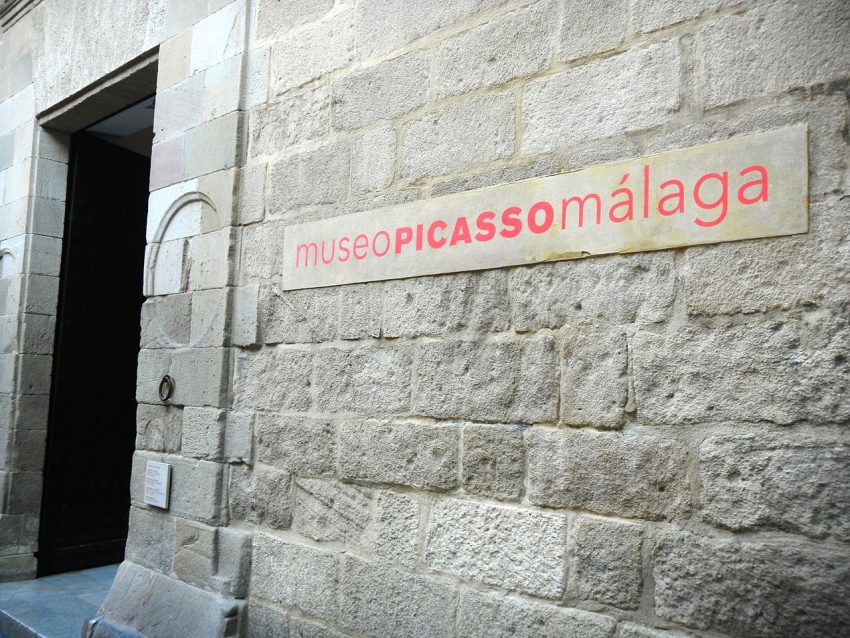
Leave the Church and carry on down Calle Granada. Take the third turning on your left into Calle San Agustín. At the beginning of this street appears to be the nursery school attended by Picasso. You will come to the Museo Picasso Malaga on your left.
This museum, was created in response to the artist’s desire for his work to be displayed in his home town, and is a fitting tribute that magnificently conveys the depth and variety of his genius. The collection’s 233 works much of which were donated by Christine, the artist’s daughter-in-law and Bernard Ruiz-Picasso, his grandson are augmented cover the vast span of his career.
The collection spans from his earliest academic studies, his personal take on the classics, his Cubist experiments, his explorations of ceramics, his re-workings of the Old Masters and his late paintings of the 1970s.
It is housed in the painstakingly restored and carefully adjusted Renaissance gem, Palacio de Buenavista. If you climb the staircase to the very top of the museum, you can look back and see the tower of the church of Santiago, where Picasso was baptized.
The Calle San Agustín, the street where the Picasso Museum is located, was also the street where the young Picasso went to nursery school.
Next to the church of San Agustín, we discover the old convent and school of San Agustín. This building housed the offices of Malaga Town Hall from 1869 onwards which included the municipal archive and museum of Malaga.
Picasso’s father, Don Jose Ruiz, was a curator of the museum which was located in this building which at the time was also the Old Malaga City Hall. In compensation for salary delays, they let him have his painting workshop there. Pablo remembered perfectly the visits to his father’s workshop. Picasso’s father had made pigeons a particularly favored subject of his paintings and taught Picasso how to draw them.
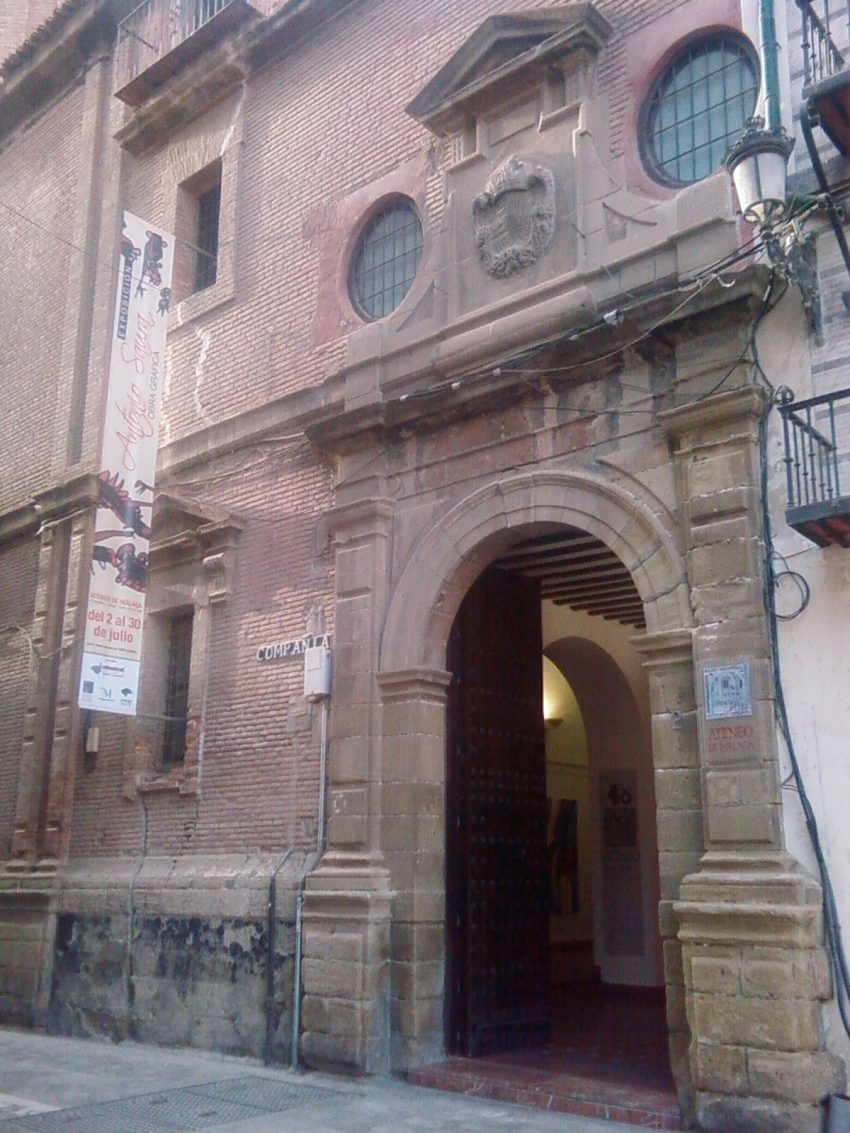
By the Plaza de la Constitucion we find the Malaga Athenaeum, which during Picasso’s childhood period was the San Telmo School of Fine Arts. José Ruiz was a student at this School and later worked there as an assistant teacher of Line drawing. Although Picasso was too young to attend, it is likely that on occasions he would have accompanied his father. Today the Athenaeum conserves a permanent record of this association.
In the nearby Calle Comedias was San Rafael School, at nº 20, nowadays nº 18 where Picasso studied as a child. The artist’s recollection of this building with its central courtyard surrounded by columns, was of an establishment “assembled in a modern style, filled with light and well ventilated”, although what he best remembered was his boredom and the fear that his father would not come to collect him: “I was sure that if he left me the walking stick and the dove then he would return for me. What he preferred more than the stick was the dove or the paintbrushes because he knew he could not do without any of them”.
There is no school there now, but is a nice to walk through one of the narrow streets of Málaga and come out at the Church of the Martyrs which young Picasso undoubtedly ran every day.
8. Royal Music Conservatory Maria Cristina
Royal Music Conservatory Maria Cristina Malaga
CC BY-SA 3.0 / Tyk
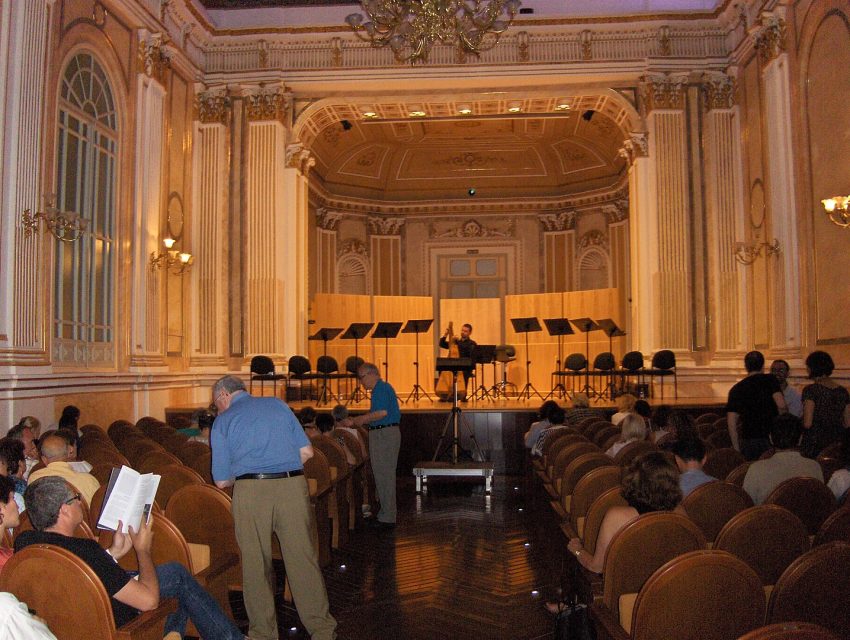
Not very far away, in the Plaza de San Francisco, stands the Royal Music Conservatory Maria Cristina. In the 19th Century this building housed the Lyceum of Science, Literature and Art and was the main venue of numerous activities, attracting to its salon representatives of Malaga intellectual life. It is certain that Picasso would have accompanied his father on one or other occasion and we can give credence to the story that the painter Martinez de la Vega “christened him” as a painter in 1897, after he had obtained the prize in the General Exhibition of Fine Arts for his work “Science and Charity”.
9. The Malagueta Bull Ring
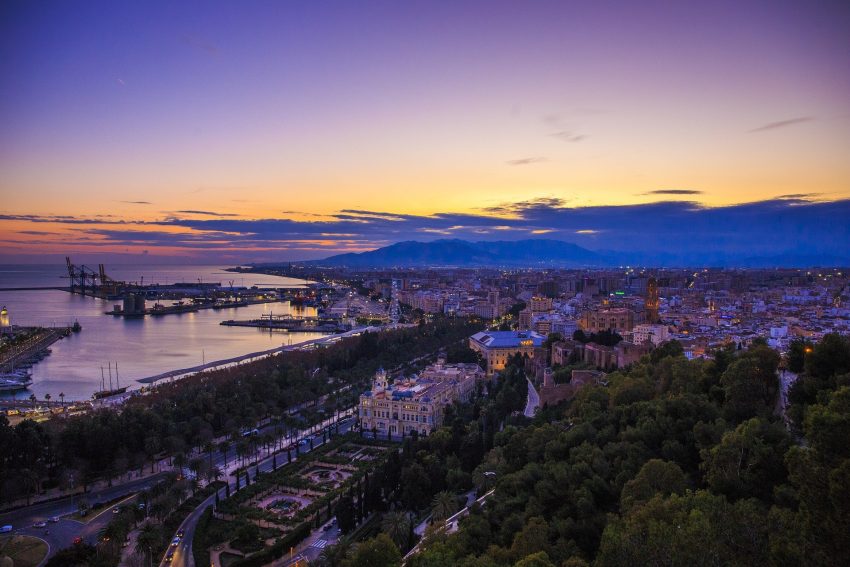
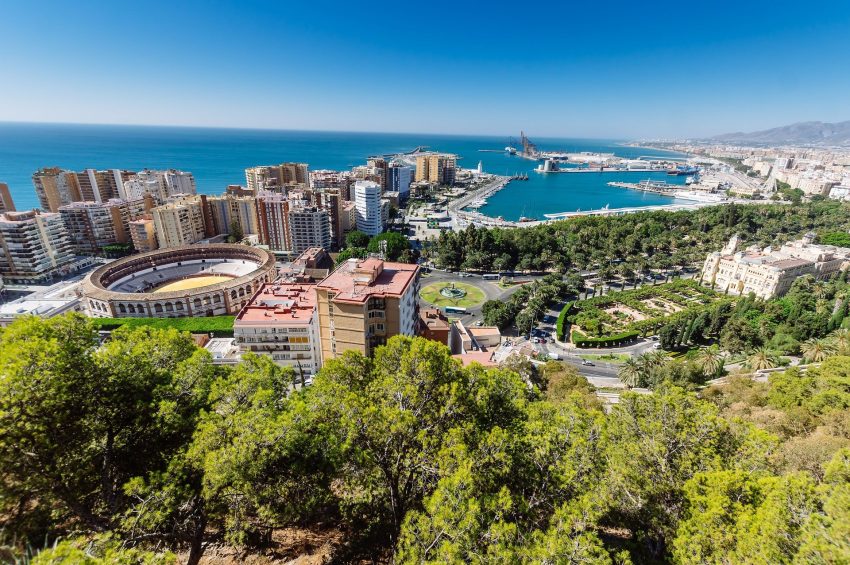
View of Malaga from Castillo Gibralfaro. Spain
CC BY-SA 3.0 / Ввласенко
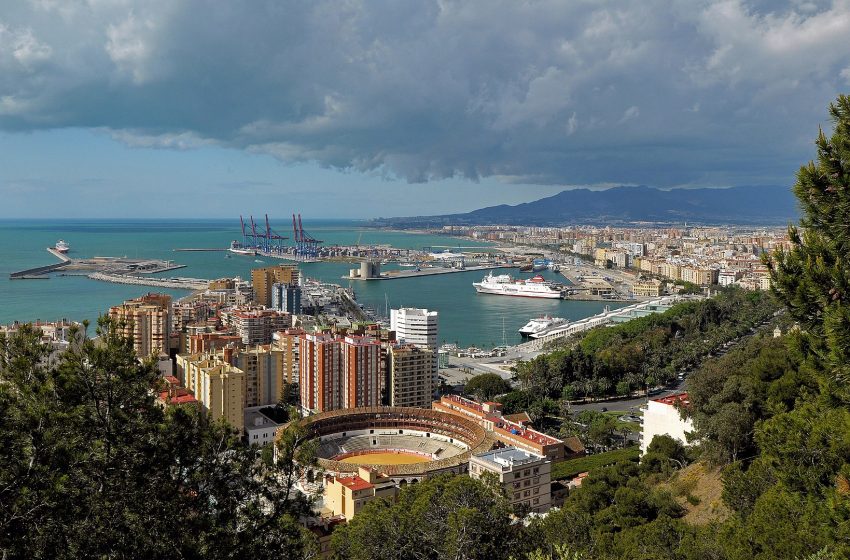
And now, turning our attention slightly away from the central urban locations described above, we should include a reference, finally, to the Malagueta bullring, opened in 1876. Picasso went many times with his father to watch the bull fights in which he saw the most illustrious bullfighters of that period, and this would develop in him an enthusiasm that was to accompany him all his life and have a profound influence on his artistic iconography. He also recalled, according to his secretary Jaime Sabartés, having been at the bull ring watching Moreno Carbonero working on his painting “The Arrival of Roger de Flor in Constantinople” (1888), surrounded by horses and friends dressed up to serve as models for him.
This website uses affiliate links which earn a small commission at no additional cost to you.
Málaga is thought as the capital of the Costa del Sol and it boasts some of the most significant cultural infrastructures and heritages in the country. Málaga has a wealth of things to offer from beaches and hiking trails to century-old castle structures, stylish harbors and excellent restaurants.
During the city’s famous festival season you can also get to know Andalusian culture, with flamenco shows and sherry tasting, in the country where they originate.
While you will have variety of activities to choose from, we will explore the top 10 essential site, which you need to see on your next trip here.
1. Puerto de Málaga
Pergola palmeral in Malaga
CC BY-SA 2.0 / DraXus
As the de facto capital of the Costa del Sol, Málaga boasts some of the most fantastic beaches and coasts in the country. The east end of the port is located only a few minutes outside of the city center and its impressive redevelopment will provide plenty to see and do. There are a variety of shops and restaurants located around the area which make for a perfect spot to sit after and look down over the the yachts and cruise ships in the harbor.
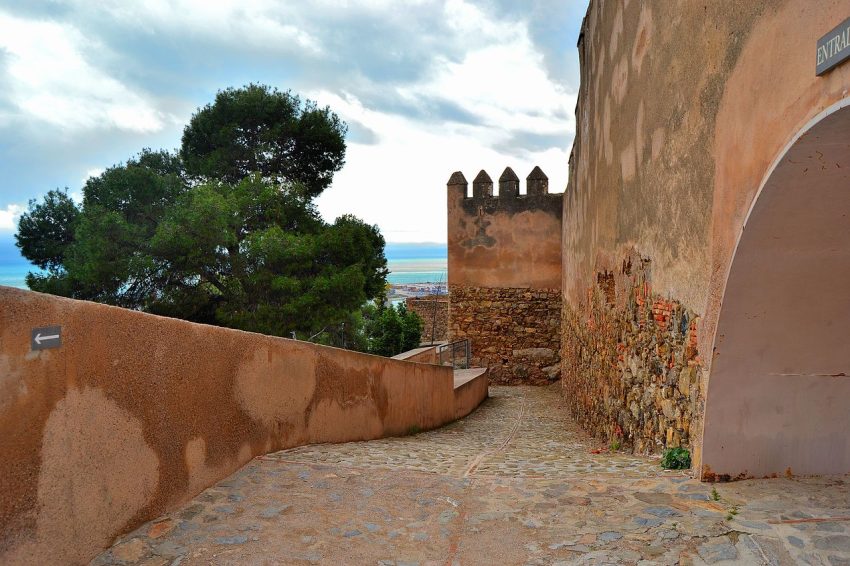
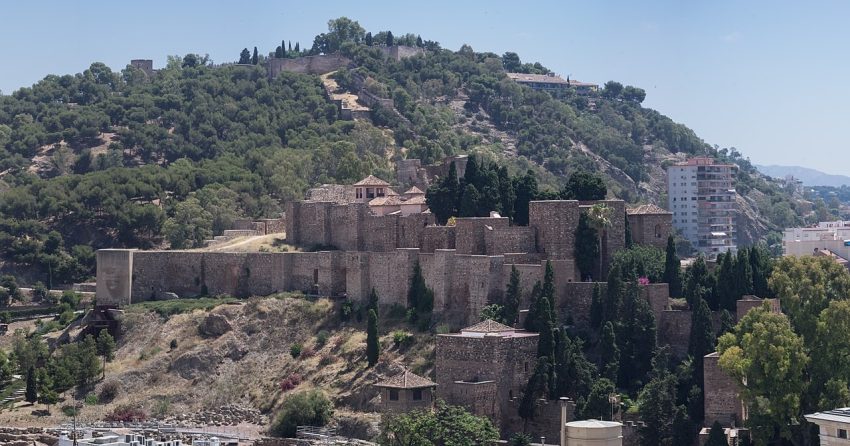
The Castillo de Gibralfaro, is a Moorish palace – fortress, which dates back to the 10th century. The castle was rebuilt in the 14th century to protect the Alcazaba. The fortress is located on Gibralfaro hill and dominates the Alcazaba and Malaga city.
The castle has been mostly restored and also houses a military museum. The visit is mainly worth it for the view over Malaga and the sea from the ramparts. On clear days it’s even possible to see the Strait of Gibraltar.
Location: Castillo Gibralfaro Camino Gibralfaro, 11 29016 Málaga Spain | Hours: Winter: From November 1st to March 31st, 9:00 AM to 6:00 PM (last entry at 5:00 PM)
Summer: From April 1st to October 31st, 9:00 AM to 8:00 PM (last entry at 7:00 PM) | Price: Adults: €7.00, incl Alcazaba €10.00 | Website
Here is a complete selection of hotel options in Málaga. Feel free to review each one and choose the stay that best suits your needs.
3. Catedral de la Encarnación de Málaga
Catedral de malaga
CC BY-SA 3.0 / Danielmlg86
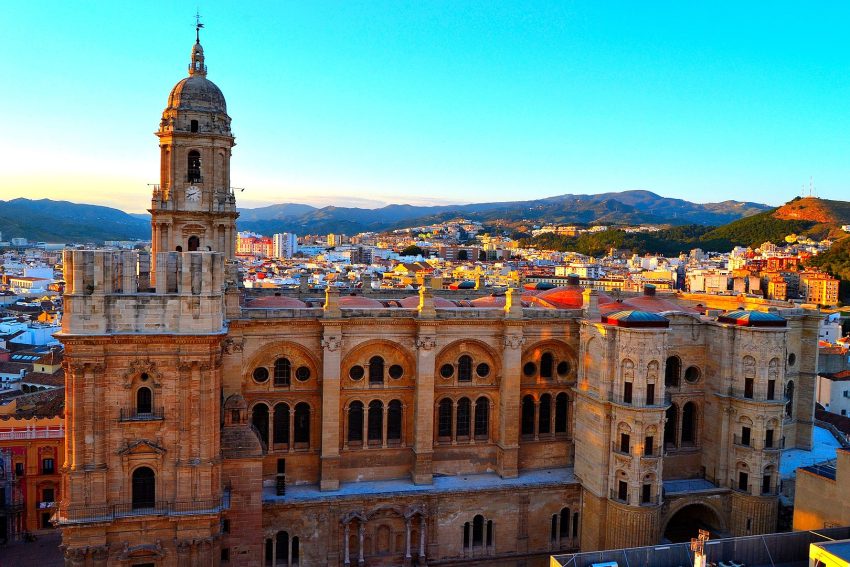
The Cathedral of Málaga is located in the historic center of town and was designed in the Renaissance style by Diego de Siloe and constructed between 1528 and 1782 – taking over 150 years to build.
Due to a lack of funds only the North tower was completed, money for the South Tower was diverted to help America gain independence from the British!
It is worth climbing the 200 steps of the North Tower to enjoy the views over the whole city, the Alcazaba and Gibralfaro castle.
The stunning Baroque façade was one of the last parts to be completed, and represents a unique contrast to the magnificent and numerous frescos on the inside, its decorated ceiling, and the sculptural works of Pedro de Mena being among the most noteworthy.
Traveling to a country with a different currency? Avoid ATM transaction fees and pay in local currency with a Wise Card. Having used it for over 5 years, we've saved loads on fees!
Málaga is not only the birthplace of Pablo Ruiz Picasso, but also offers a marvelous collection of his works. This is an unmissable museum which provides a solid overview of the great master and his work. The Museo Picasso Málaga is located in the center of the old town, housed in the Buenavista Palace, is a stunning example of Andalusian architecture. The museum exhibits a over 230 different works selection of Picasso’s work from the late 19th century until his death in 1973.
Explore Málaga at your own pace with our self-guided walking tour! Follow our curated route to discover must-see sights and local secrets that makes Málaga one of the best places to visit in Spain.
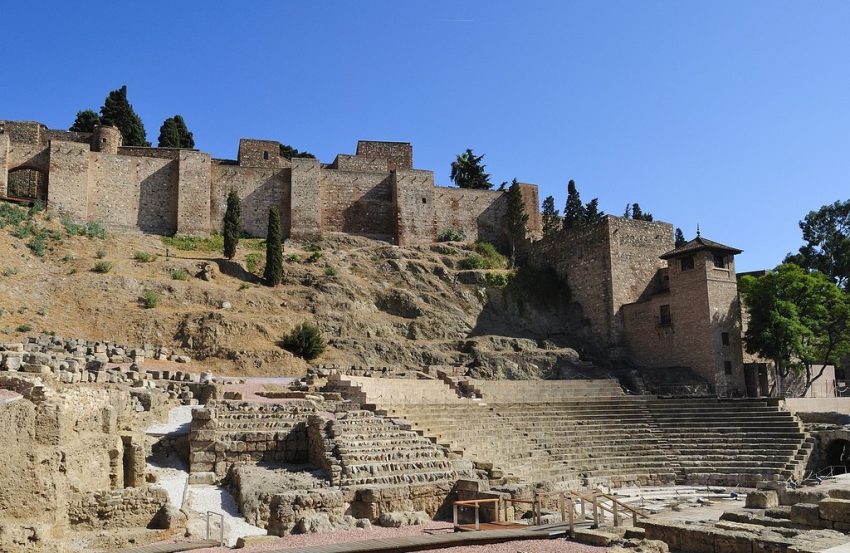
Alcazaba de Malaga with Roman Theater in Foreground
CC BY-SA 2.0 / Maksym Abramov
At the foot of the Alcabaza can be found the oldest monument in Málaga, it’s Roman theater. It was constructed in the first century A.D. under the first Roman emperor Augustus’ reign and remained in use until the third century. At that point it was used as a source of building material by the Arab conquerors. At the time of its construction, Málaga represented one of the most important cities in the region. There is a small interpretive center next door to the theater which outlines its history and displays a few artifacts that were found in during excavations.
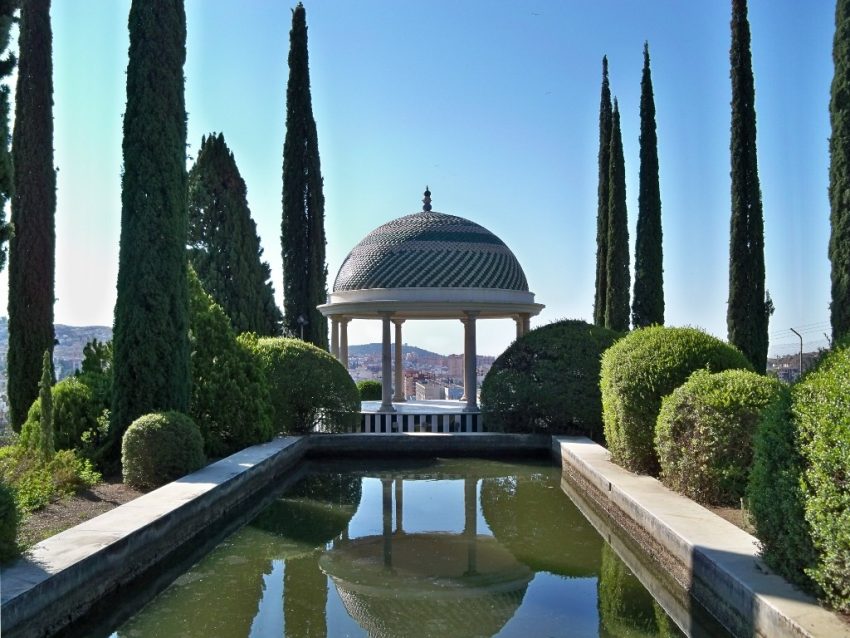
Málaga’s botanic garden is is an English landscape garden, spread out over 25,000 square meters and was constructed in 1850 by the aristocratic couple, Jorge Loring Oyarzábal and Amalia Heredia Livermore. Located at the northern entrance of the Spanish city of Malaga, and can be reached by bus within half an hour. The garden combines formal gardens with more tropical gardens.
A garden with more than three thousand species of tropical and subtropical plants which include more than 100 species of palms, bamboo and underwater plants. It has plant species from Europe, America, Asia, Africa and Oceania, as well as a huge variety of bird species.
Alcazaba, a palatial fortification at the foot of the Gibralfaro hill. Built from 1040 onwards on a hill dominating the town, the fortress is Málaga’s most iconic landmark and one of the largest Muslim military buildings preserved in Spain. The fortress was constructed by the the Hammudid dynasty in the early 11th century. The Alcazaba is the Arab word for a fortified citadel. and this citadel held within its strong walls an entire palace complex typical of the Nasrid dynasty, the high point of Muslim culture in the kingdom of Al Andalus.
It was later captured by Ferdinand and Isabel after the siege of Málaga in 1487.
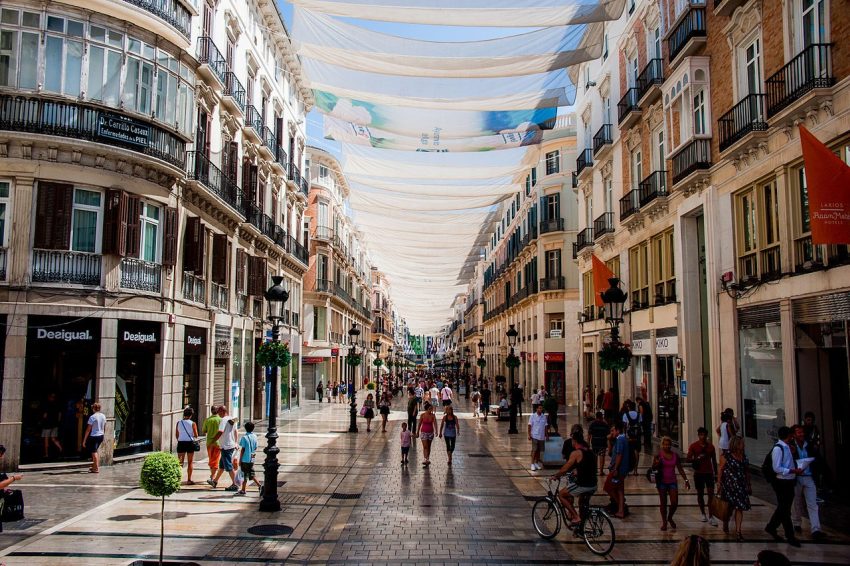
This was the most elegant street in Spain, when it was built at the end of the 19th century. Walk along this marble-lined pedestrian to find chic national and international brands as well as bars, ice cream stores, restaurants, terraces and a amazing atmosphere.
Stained Glass Window at Mercado de Atarazanas, Malaga
CC BY-SA 2.0 / Maksym Abramov
Stroll through the Atarazanas food market. Not only is it one of the most beautiful covered food markets in Spain, with a strong variety of Fish, meat, cheese, fruits, and vegetables it is set in an impressive century old wrought iron and glass building.
It is also a great place to taste a bit of Manchego cheese, and sample a glass of local Malaga wine, throw in a few oysters or a plate of Ibérico ham and you will be feeling very Spanish!
In the heart of the city of Málaga in the neighborhood that gives it its name, lies La Malagueta. This neo-Mudéjar style bullring opened on 11 June 1876 and still hosts bullfights. The bullring also houses a museum dedicated to famous matador Antonio Oróñez.
This website uses affiliate links which earn a small commission at no additional cost to you.
A walking tour of Córdoba is the best way to experience the layers of history that have shaped this enchanting Andalusian city. Once the capital of the Umayyad Caliphate in Spain, Córdoba was a center of art, science, and philosophy, and its streets still echo with the grandeur of that golden age. From Roman remains and Islamic masterpieces to Christian monuments and lively plazas, the city reveals its past and present step by step, inviting you to slow down and take in its timeless charm.
The heart of any visit is the historic center, a UNESCO World Heritage Site where narrow, winding alleys lead you to magnificent landmarks such as the Mosque-Cathedral, the Alcázar de los Reyes Cristianos, and the Roman Bridge. Along the way, you’ll encounter atmospheric courtyards, centuries-old gates, synagogues, and remnants of palaces that tell stories of conquest, coexistence, and cultural exchange. Each site has its own tale, but together they form a rich narrative of Córdoba’s role as a crossroads of civilizations.
A walking tour also reveals Córdoba's living culture beyond the monuments. Bustling markets, shaded squares, and vibrant neighborhoods like the Jewish Quarter add color and energy to the journey, while traditional taverns and cafés offer the perfect opportunity to pause and savor local flavors. Whether you are drawn to ancient history, architectural beauty, or authentic Andalusian life, exploring Córdoba on foot promises an unforgettable experience.
By Air:Córdoba is served by Córdoba Airport (ODB), located about 6 km east of the city center. While it has a limited number of domestic and European flights, the airport is convenient for reaching the city quickly. Many travelers also fly into Málaga-Costa del Sol Airport (AGP) or Seville Airport (SVQ) and then take a train or drive to Córdoba, which takes roughly 1.5-2 hours from either city. For the best deals and a seamless booking experience, check out these flights to Córdoba on Booking.com.
By Train: Córdoba is a major stop on Spain's high-speed AVE rail network, with direct connections to Madrid, Seville, and Málaga. From the Córdoba Central station, it’s a short taxi or bus ride to most city landmarks. Train schedules and bookings can be found on Omio.
By Car:Córdoba is easily accessible by car via the A-4 highway. For those visiting Medina Azahara, parking is available at the visitor centre, with shuttle buses running to the site. If you are looking to rent a car in Spain I recommend having a look at Discover Cars, first, as they compare prices and review multiple car rental agencies for you.
Where to Stay in Córdoba
To make the most of visiting Córdoba and this walking tour, you should consider staying overnight in or near the city center, where most of the historic sites, tapas bars, and charming streets are within easy walking distance. The historic heart of Córdoba is ideal for those who want to explore the Mezquita, Roman Bridge, and Jewish Quarter without needing transport. Here, you can find options like Balcon de Cordoba, a boutique hotel with rooftop views of the Mezquita, and Hospes Palacio del Bailío, which combines luxury with traditional Andalusian architecture. For a more budget-friendly stay, Hotel Maestre offers modern comforts in a central location, while Patio de la Judería provides charming rooms within walking distance of the main attractions.
Another excellent area is around the San Basilio and Alcázar Viejo neighborhoods, where winding streets and picturesque patios create a peaceful retreat. Staying here keeps you close to key sights but in a quieter environment, with options like Las Casas de la Judería, known for its traditional Andalusian courtyard, and NH Collection Amistad Córdoba, which blends contemporary style with historic surroundings.
For travelers who prefer being near the train station or slightly further from the historic center, areas like Vial Norte or around Avenida de la Libertad offer convenient access to public transport while still being just a short taxi ride from the walking tour highlights. Hotels such as Eurostars Conquistador and Hesperia Córdoba provide modern amenities and comfortable rooms, making them a practical choice for those arriving by train or planning day trips to nearby towns.
A Brief History of Córdoba
Córdoba, located in southern Spain, has a rich history stretching back over two millennia. Originally a Roman settlement known as Corduba, the city became an important center of administration and culture under the Roman Empire. Remnants of this period are still visible today, including the Roman Bridge of Córdoba, which spans the Guadalquivir River, the Roman Mausoleum, and the Templo Romano, all testifying to the city's ancient past. The Puerta del Puente and Torre de Calahorra also have Roman and later Moorish foundations, marking the city's strategic importance over the centuries.
In the 8th century, Córdoba became the capital of the Umayyad Emirate and later the Caliphate of Córdoba, reaching a golden age of culture, architecture, and learning. The most iconic monument from this period is the Mosque-Cathedral of Córdoba, begun in 784 by Abd al-Rahman I and expanded over successive centuries. The Alcázar de los Reyes Cristianos, a medieval fortress built in the 14th century by Christian monarchs, now showcases gardens, towers, and baths such as the Baños del Alcázar Califal. The city's Jewish heritage is preserved in the Synagogue and commemorated with the Maimonides Statue, honoring the famed philosopher. Other notable sites include the Caballerizas Reales, a former royal stables complex, and the Zoco Municipal, a historic market area.
During the later medieval and Renaissance periods, Córdoba saw the construction of numerous palaces, churches, and civic buildings that shaped the city's urban landscape. These include the Chapel of San Bartolomé, Hospital del Cardenal Salazar, La Casa Andalusí, Almodovar Gate, Minaret of San Juan, Palace of La Merced, Malmuerta Tower, Palacio de Viana, and Palacio de Orive. The Plaza del Potro, surrounded by historical buildings, remains a vibrant social and cultural hub. Each era of Córdoba's history-Roman, Islamic, and Christian-has left indelible marks on the city, creating a walking tour experience rich in architecture, culture, and storytelling.
Guided or Self-Guided Tour of Medina Azahara?
Exploring Medina Azahara can be a profound experience, whether you choose to wander independently or join a guided tour. For those seeking in-depth knowledge and context, the Guided Visit to Azahara Medina in Córdoba offers a comprehensive 3-hour tour led by knowledgeable guides. The tour includes a visit to the site’s museum, showcasing artifacts and providing a virtual reconstruction of the city’s original grandeur. Whether you’re a history enthusiast or a casual traveler, this guided experience enriches your understanding of the site’s historical and cultural significance.
Your Walking Tour of Medina Azahara
This blog highlights the key aspects of Medina Azahara, but depending on your interests and time, you might choose to delve deeper into specific areas or explore additional historical sites in Córdoba.
1. Torre De Calahorra
Torre de la Callahora Cordoba
CC BY-SA 2.0 / Richard Mortel
Walk across the bridge to the Tower at the far end.
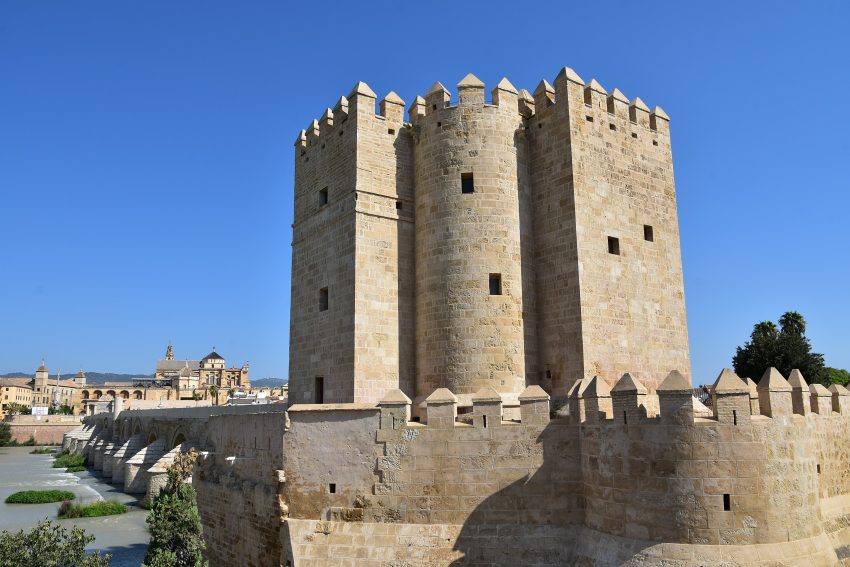
The Torre de Calahorra is a fortified gate originally built by the Moors and later reinforced by Christian forces after the Reconquista. Positioned at the southern end of the Roman Bridge, it served as a defensive stronghold controlling access to the city. Its robust walls and towers illustrate Córdoba’s strategic importance during periods of conquest and conflict.
Today, the tower houses the Museum of Al-Andalus Life, where visitors can explore exhibits detailing the cultural, social, and religious life of Muslims, Jews, and Christians in medieval Córdoba. The displays provide insight into the coexistence and tensions of these communities, making it a highlight for history enthusiasts.
Climbing the tower offers panoramic views over the Guadalquivir River and the Roman Bridge, providing an excellent perspective of the city’s historic layout. The Torre de Calahorra is a must-stop for those beginning a walking tour, setting the scene for Córdoba’s layered history.
From the cathedral exit via the Torre Campanario turn left and left again to head south towards the river on Calle de Torrijos.
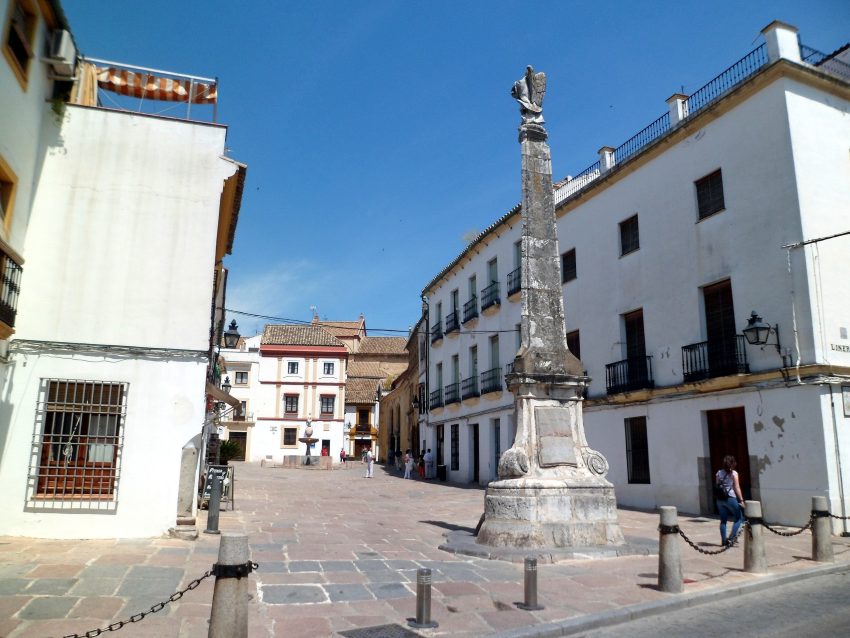
You will pass the impressive facade of the Palacio de Congresos. The end of the street opens up into a square in the middle of which is the impressive 18th-century monument features the Archangel Raphael called the Triunfo de San Rafael de la Puerta del Puente.
Enter the square past the statue, orange trees and fountain for your first look at the Roman Bridge.
The Puerta del Puente is an iconic city gate that faces the Roman Bridge and is often photographed for its elegant Renaissance-style façade. Originally built in the 16th century on the foundations of a Roman gateway, it served as the main entrance for travelers crossing the river into Córdoba’s old town.
Historically, the gate was part of the city’s defensive walls and symbolized the transition between the bustling riverfront and the historic heart of Córdoba. Today, it is pedestrian-friendly and surrounded by cafés and plazas, making it an inviting entry point for a walking tour.
The Puerta del Puente also offers visitors an excellent spot for photography, particularly with the Roman Bridge in the foreground. Its position and history make it a key landmark that links Córdoba’s Roman, Islamic, and Christian pasts.
Location: Puerta del puente Plaza del Triunfo, s/n 14003 Córdoba Spain | Hours: Monday to Thursday from 10 am. to 3 pm. Friday from 10 am. to 2 pm. and from 6 pm. to 8:30 pm. Saturday from 10 am. to 2 pm. and from 6 pm. to 8:30 pm. Sunday and Bank Holidays from 10 am. to 3 pm. Summer, Monday to Sunday from 10 am. to 3 pm.
| Price: Tickets: 1 € Free Entrance for children under 5 years
Here is a complete selection of hotel options in Córdoba. Feel free to review each one and choose the stay that best suits your needs.
3. Roman Bridge of Córdoba
Puente Romano at night
CC BY-SA 2.0 / Andreas Zieroth Follow
Cross over the Ronda de Isasa to get to the Roman Bridge.
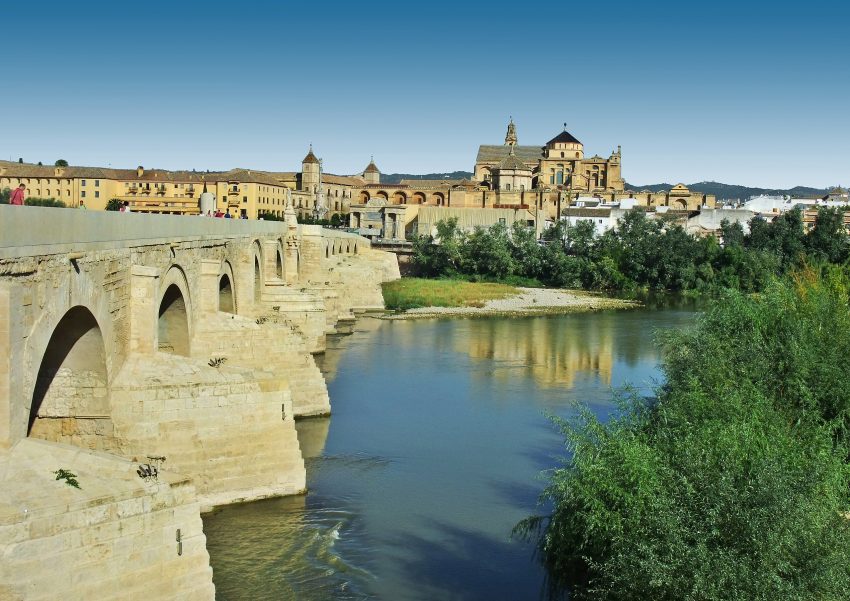
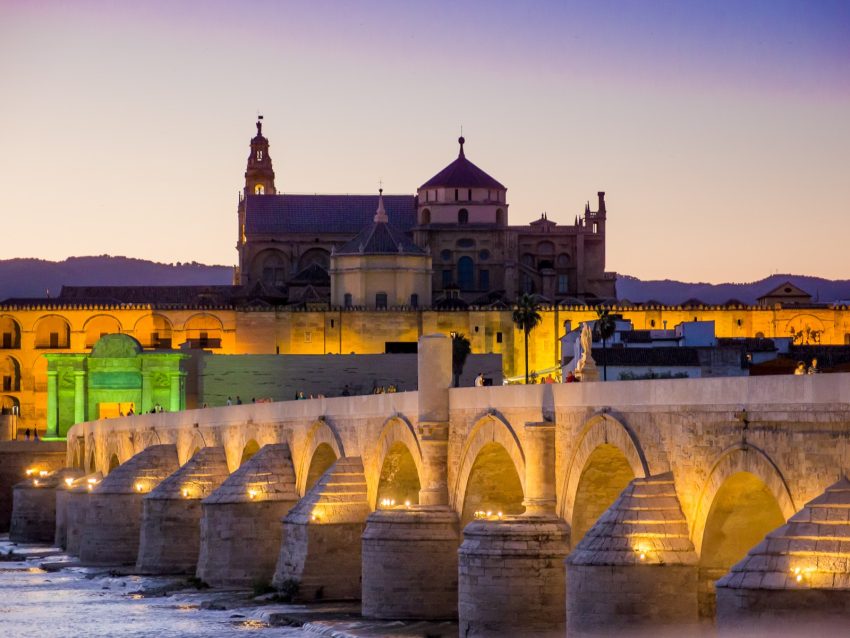
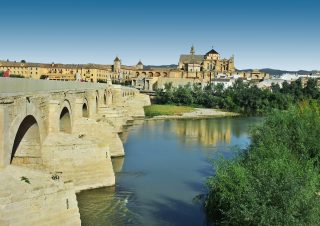
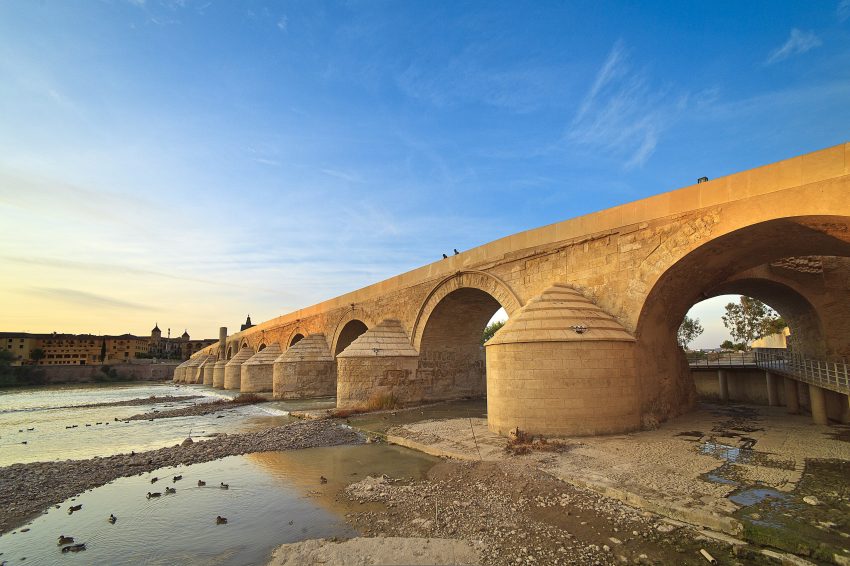
The Roman Bridge of Córdoba stretches across the Guadalquivir River and was originally constructed in the 1st century BC. Over time, it has been rebuilt and reinforced by successive rulers, including the Moors and Christians, resulting in the structure seen today.
Walking across the bridge provides a sense of the city’s historical continuity and strategic importance. The bridge was central to trade and military movement, connecting Córdoba to other parts of the Roman Empire and later to the Iberian Peninsula under Muslim rule.
Interest in the Roman Bridge in Córdoba peaked recently due to its appearance in Game of Thrones. From the bridge, visitors can enjoy sweeping views of the river, the Torre de Calahorra, and the Mosque-Cathedral. This makes it a scenic and educational stop, allowing for reflection on Córdoba’s layered architectural and political history.
Traveling to a country with a different currency? Avoid ATM transaction fees and pay in local currency with a Wise Card. Having used it for over 5 years, we've saved loads on fees!
The Mosque-Cathedral of Córdoba, or La Mezquita, is the city’s most famous landmark. Originally built as a mosque in 784 by Abd al-Rahman I, it underwent multiple expansions over the next two centuries, becoming one of the largest and most impressive mosques in the world.
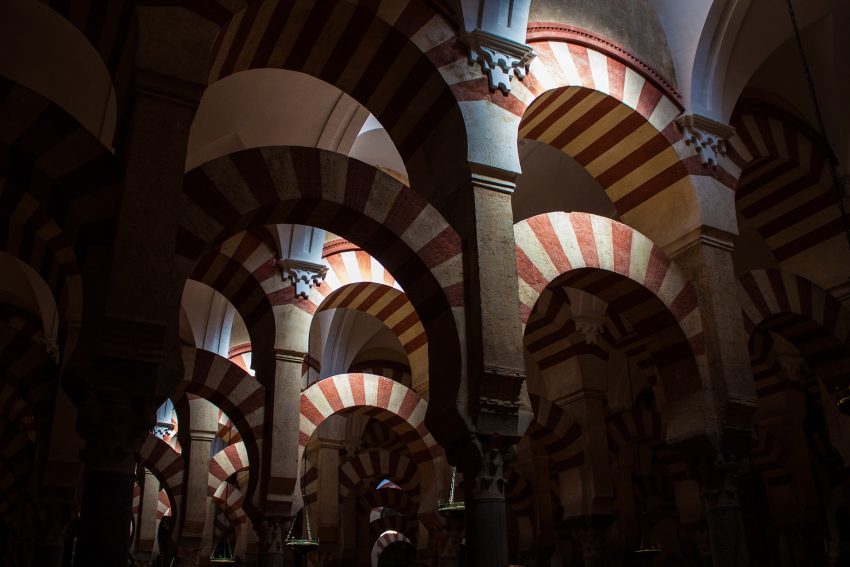
After the Reconquista in 1236, the mosque was converted into a Christian cathedral, and subsequent modifications, including the addition of a Renaissance nave, reflect the city’s dual religious heritage. The forest of red-and-white horseshoe arches inside is a highlight, showcasing the Islamic architectural genius of the period.
Visitors are often struck by the seamless coexistence of Islamic and Christian elements, from intricate mihrabs to Christian chapels. A walking tour of Córdoba is incomplete without experiencing the Mosque-Cathedral, which remains a powerful symbol of the city’s multicultural past.
Cross back over the river and turn left. You pass by the ruins of a watermill Molino de la Albolafia. Turn right onto Pje. Sta. Teresa Jornet and the building on your left is the Alcázar, with the Tower of Homenaje directly ahead. The entrance is the other side of the park area.
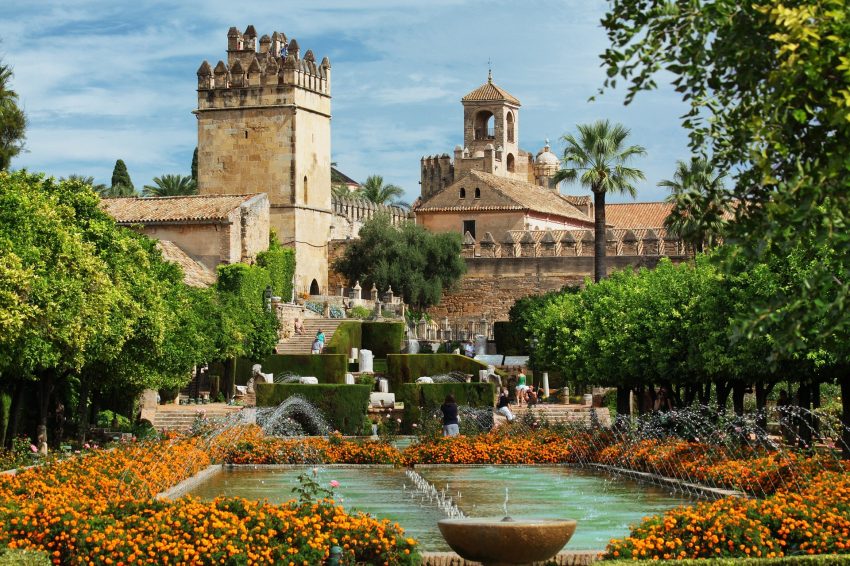
The Alcázar de los Reyes Cristianos is a fortress-palace built in the 14th century by Christian monarchs. It served as a royal residence and military base, hosting important figures including Ferdinand and Isabella during the Reconquista.
The Alcázar is renowned for its beautiful gardens, fountains, and the remains of the original towers and walls. Its architecture blends military practicality with aesthetic elegance, reflecting both defensive needs and the grandeur expected of a royal palace.
Walking through the Alcázar offers visitors a glimpse into royal life and Córdoba’s medieval political history. Highlights include the interior courtyards, the towers with panoramic city views, and the Baños del Alcázar Califal, remnants of the earlier Muslim baths incorporated into the fortress.
Location: Calle de las Caballerizas Reales s/n | Hours: Tuesday to Sunday from 8.45 a.m. to 3.15 p.m. Last admission 30 minutes before closing time. | Price: Adult: € 5 Students up to 26 years : € 2.50 | Website
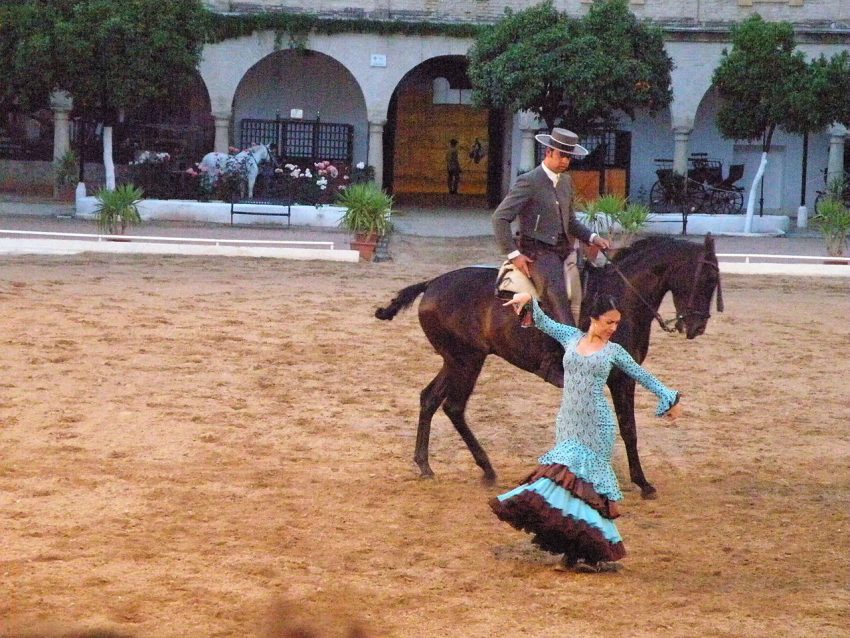
Passion and Spirit of the Andalusian Horse at the Caballerizas Reales
CC BY-SA 2.0 / xavier.estruch
The Caballerizas Reales, or Royal Stables, were originally established in the 16th century to house the horses of the Spanish monarchy. These stables played a key role in training and maintaining the horses used in royal ceremonies and military operations.
Visitors today can explore the expansive courtyards, riding arenas, and historic architecture that showcase Córdoba’s equestrian heritage. The complex also hosts exhibitions and events highlighting Andalusian horse traditions.
A walking tour through the Caballerizas Reales allows visitors to appreciate not only the practical role these stables played but also the elegance and grandeur associated with royal equestrian culture. The nearby gardens and surrounding streets offer charming photo opportunities.
Come out of the entrance of the Caballerizas Reales and turn left. In this small square you can see the old city walls of Córdoba and the Torre de Belén which is a good example of a 12th century defensive tower. Walk past the tower and turn right beneath its arch into Calle D San Basilio. its a small alley that twists and turns – nice orange trees on the way though. At the end of the street across the square from you are the Caliphal Baths, which are mostly underground.
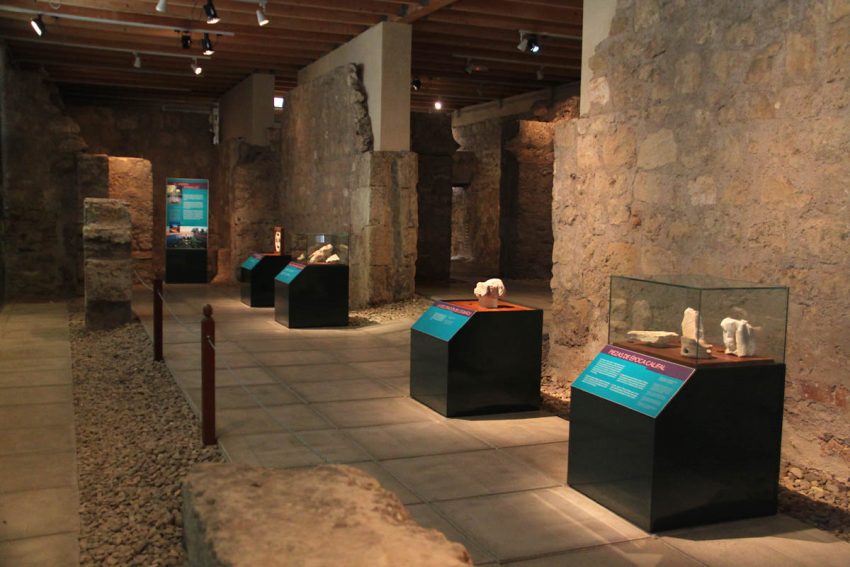
The Baños del Alcázar Califal are the remains of a 10th-century Muslim bathhouse located near the Alcázar de los Reyes Cristianos. These baths reflect the sophisticated engineering and social practices of Córdoba under the Caliphate.
Visitors can see the restored heating systems, water channels, and changing rooms, which provide insight into daily life during the Islamic period. The architecture emphasizes functionality combined with aesthetic detailing, typical of Andalusian baths.
The Baños del Alcázar Califal are a fascinating stop for anyone exploring Córdoba’s history on foot, offering a glimpse into both the technological and cultural sophistication of the city’s medieval Islamic era.
Location: Campo Santo de los Mártires, s/n, 14004 | Hours: From September 16 to June 15: From Tuesday to Friday from 8:30 am. to 8:45 pm. Saturday from 8:30 am. to 4:30 pm. Sunday and bank holidays from 8:30 am. to 2:30 pm. From June 16 to September 15: From Tuesday to Saturday from 8:30 am. to 3 pm. Sunday and bank holidays from 8:30 am. to 2:30 pm.
| Price: Adult: € 2.50 Student up to 26 years: € 1.25 Tuesday through Friday from 8:30 to 9:30 am., except for bank holidays, is free. | Website
Carry on to the opposite side of the Baños del Alcázar Califal and walk down Calle Tomás Conde, and bear left when it splits. You will reach Plaza Maimónides, and are in the heart of the old Jewish Quarter of Córdoba or the Judería de Córdoba. This is the area of Córdoba in which the Jews lived between the 10th and 15th centuries and is a fascinating network of narrow lanes. The square is named after the philosopher Maimónides. The Bull fighting museum directly ahead. Continue a short way doen the left hand Calle Judíos to find Maimónides.
The Maimonides Statue honors the renowned Jewish philosopher and physician Moses Maimonides, who was born in Córdoba in 1135. He is celebrated for his contributions to philosophy, medicine, and Jewish law.
The statue is located in the Jewish Quarter, near the historic Synagogue, and serves as a reminder of the city’s rich Jewish heritage. Visitors often pause here to reflect on Maimonides’ enduring influence and the intellectual life of medieval Córdoba.
For a walking tour, the statue provides both a cultural and historical touchpoint, connecting the streets of Córdoba with the broader legacy of Jewish scholarship in Spain. Its location is perfect for exploring nearby historic buildings and narrow alleys of the Jewish Quarter.
Carry on down Calle Judíos, past the signs for the interesting Zoco, Municipal (you will be coming back later to see this) and you will arrive at the synagogue.
The Synagogue of Córdoba, built in 1315, is one of the few preserved medieval synagogues in Spain. It served as a center for the Jewish community during the later stages of Muslim and early Christian rule.
Visitors can admire the beautifully carved wooden ceilings, detailed plasterwork, and inscriptions in Hebrew that reflect the spiritual and artistic heritage of Córdoba’s Jewish population. The building’s modest exterior contrasts with its richly decorated interior, a common feature of Jewish religious architecture of the period.
The synagogue is an essential stop on a walking tour of Córdoba’s historic quarter, providing context for the city’s multicultural past and highlighting the coexistence of Jewish, Muslim, and Christian communities over the centuries.
Location: Córdoba Synagogue Calle Judíos, 20 14004 Córdoba Spain | Hours: Tuesday to Sunday: 9:00h - 15:30h / Monday closed.
Closing days: 1st and 6th January and 25th December. | Price: Free admission for EU Citizens. 0,30 € for the rest | Website
Head back the way you came, up Calle Judíos to get to the Zoco Municipal.
The Zoco Municipal is a historic market area located in the heart of Córdoba. Originally inspired by traditional Arab souks, it has been a bustling hub for commerce and social life since the medieval period.
Visitors today can stroll through the market to find crafts, souvenirs, and local delicacies, all while enjoying the architectural charm of the covered walkways and decorative arches. The Zoco reflects both the economic and cultural life of the city across centuries.
For a walking tour, the Zoco Municipal is a lively stop that offers a sensory experience of Córdoba’s traditions. The vibrant atmosphere, combined with nearby cafés and squares, makes it an ideal spot to pause and enjoy the rhythm of the city.
Capilla Mudejar de San Bartolome in der Calle Averroes Cordoba
CC BY-SA 3.0 / Martin Furtschegger
Leave Zoco Municipal directly opposite the entrance you came in. You enter a narrow lane, Calle Averroes, and turn right. After a few twists and turns you come to the Sandstone archway entrance which enters into a lovely courtyard, off which is the Chapel of San Bartolome.
The Chapel of San Bartolomé, located in the historic center of Córdoba, is a small yet significant religious site. Built in the 15th century, it reflects Gothic and Mudejar architectural influences, characteristic of post-Reconquista Córdoba.
Inside, visitors can admire intricate altarpieces, religious frescoes, and decorative stonework, providing a glimpse into the city’s Christian heritage after centuries of Muslim rule. The chapel’s intimate scale contrasts with the grandeur of nearby churches, offering a quiet space for reflection.
For those on a walking tour, the Chapel of San Bartolomé provides a pause from the busy streets while highlighting Córdoba’s layered religious history. Its location makes it easy to combine with nearby attractions in the Jewish Quarter and historic old town.
When you come out of the Chapel of San Bartolome you can turn left and left again to head towards see the small and baroque Plaza del Cardenal Salazar. However you will be heading back this way so it is optional.
The Hospital del Cardenal Salazar was founded in 1703 as a charitable institution by Cardinal Pedro de Salazar. Designed in the Baroque style, it originally served the city’s poor and sick, reflecting the civic and religious duties of the time.
Visitors today can explore its courtyard, historic halls, and architectural details, which include elegant arches and wrought-iron balconies. The building now houses the Faculty of Philosophy and Letters of Córdoba, maintaining its educational and cultural relevance.
A walking tour of the hospital reveals not only its architectural charm but also its historical role in Córdoba’s social and civic life. It stands as a reminder of the city’s commitment to care and education over the centuries.
Heading back the way you came to the Chapel of San Bartolome and down Calle Averroes. Walk past Zoco Municipal and when you come to the Casa de Sefarad or House of Spanish Jews, which may be worth a visit, turn right onto Calle Judíos.
La Casa Andalusí is a restored 14th-century house in the Jewish Quarter, showcasing traditional Andalusian architecture. Its design features intricate plasterwork, wooden beams, and a central patio, providing a vivid example of domestic life in medieval Córdoba.
Visitors can explore the rooms, patios, and terraces, which often host exhibitions on Andalusian art, crafts, and cultural traditions. The house reflects the blend of Muslim and Christian influences that define much of Córdoba’s architectural heritage.
For walking tour visitors, La Casa Andalusí offers an intimate glimpse into everyday life in the past. Its location within the historic quarter makes it easy to combine with visits to the Synagogue, Zoco Municipal, and nearby plazas.
Head back out to the Calle Judíos and carry on the way you were going to get to the Almodovar Gate.
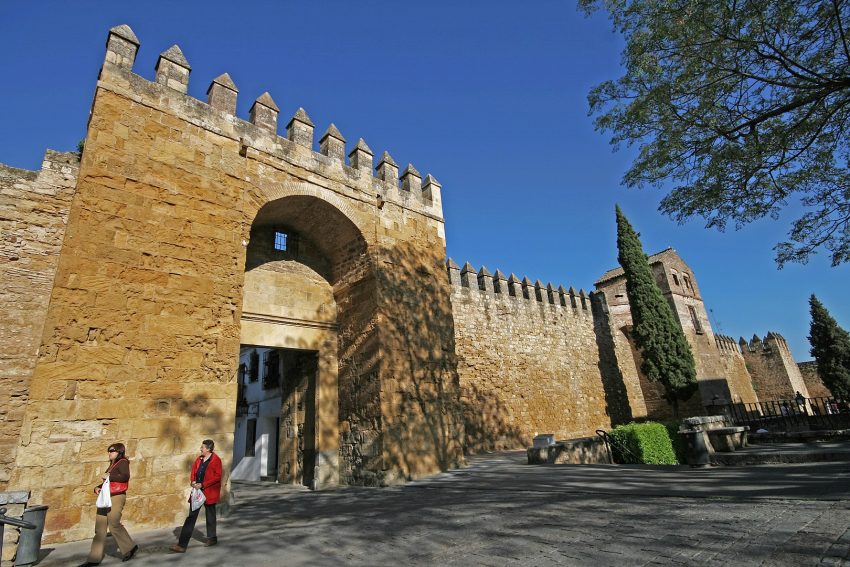
The Almodóvar Gate is one of Córdoba’s ancient city gates, originally constructed during the Muslim period and later reinforced by Christian rulers. It once formed part of the defensive walls surrounding the city and controlled access from the eastern approach.
The gate’s brickwork and arches showcase Moorish construction techniques, while the later Christian modifications highlight the city’s evolving architecture. Walking through the gate provides a tangible sense of Córdoba’s medieval fortifications.
Today, the Almodóvar Gate is a key stop on any walking tour, offering photo opportunities and historical context. Its position near the Jewish Quarter and other historic sites makes it an ideal entry point for exploring the surrounding streets.
Walk north up alongside Paseo de la Victoria until you come to Calle Lope de Hoces. The Minaret of San Juan is another optional stop, it is about a 5 minute walk from here and we will be coming back this way.
Head down Calle Lope de Hoces and you come to a small square Plaza de la Trinidad, go straight across to Calle Tesoro. When you get to Plaza de Ramón y Cajal turn right and then left onto Calle Gral. Argote and you will come to Plaza de San Juan.
The Minaret of San Juan is a remnant of Córdoba’s Islamic past, originally part of the Mosque of San Juan built in the 10th century. Only the minaret remains today, serving as a striking visual reminder of the city’s Muslim heritage.
Visitors can admire the detailed brickwork, geometric patterns, and traditional Moorish construction techniques that have survived centuries of change. The minaret’s position in the city center highlights the integration of Islamic architecture into Córdoba’s urban fabric.
For walking tour participants, the Minaret of San Juan provides insight into the city’s religious and architectural history. It’s a fascinating contrast to the nearby Christian churches, emphasizing Córdoba’s multicultural layers.
Head back the way you came towards Paseo de la Victoria, from there cross the road to the Jardines de la Victoria and head north to the Roman Mausoleum.
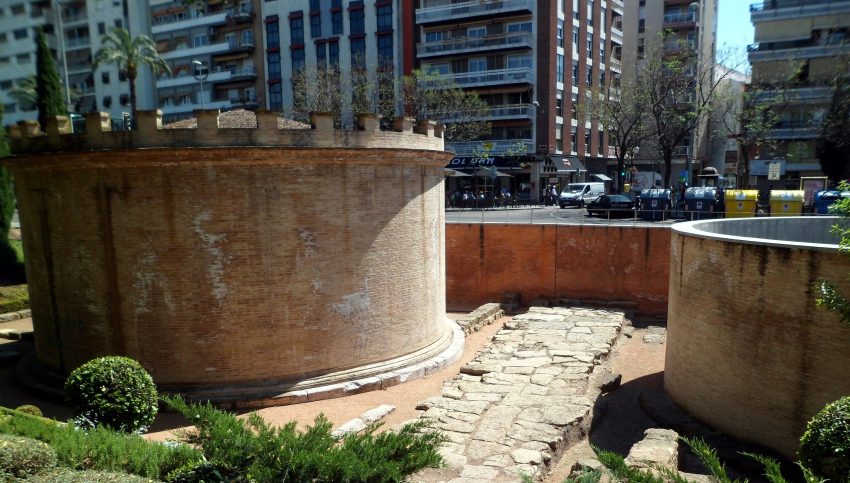
The Roman Mausoleum in Córdoba is a striking remnant of the city’s ancient Roman past. Believed to date from the 1st or 2nd century AD, it served as a burial site for wealthy Roman citizens and reflects the architectural style of imperial Córdoba.
Visitors can observe the large stone blocks, classical columns, and funerary inscriptions that survive, giving a tangible sense of the city’s long history. Though partially ruined, the mausoleum provides insight into Roman funerary practices and social structures.
The mausoleum offers a quiet yet evocative stop. Its proximity to other Roman and medieval sites, like the Templo Romano and Roman Bridge, makes it easy to explore the city’s layers of history in a single route.
Stay in the park and head north. Turn right on Av. Ronda de los Tejares and walk about 500m until you get to Jardines de la Merced. Which is a nice landscaped park featuring a 19th-century fountain, tree-shaded walking paths, roses & a mosque. Walk anti-clockwise around the park to get to the Palace of La Merced.
The Palace of La Merced is a baroque-style palace built in the 17th century, originally serving as a convent and later housing important administrative offices. Its elegant façade and central courtyard highlight the grandeur of Spanish architecture during this period.
Inside, visitors can explore the ornate staircases, frescoed ceilings, and gardens, which provide a sense of the opulence enjoyed by the clergy and nobility. The palace is now used for municipal purposes, including cultural events and exhibitions.
A walking tour stop here allows visitors to appreciate the blend of religious, civic, and artistic significance that Córdoba’s palaces often embody. Its central location makes it easy to continue exploring nearby plazas and historic streets.
Head across the park to see the Torre de la Malmuerta.
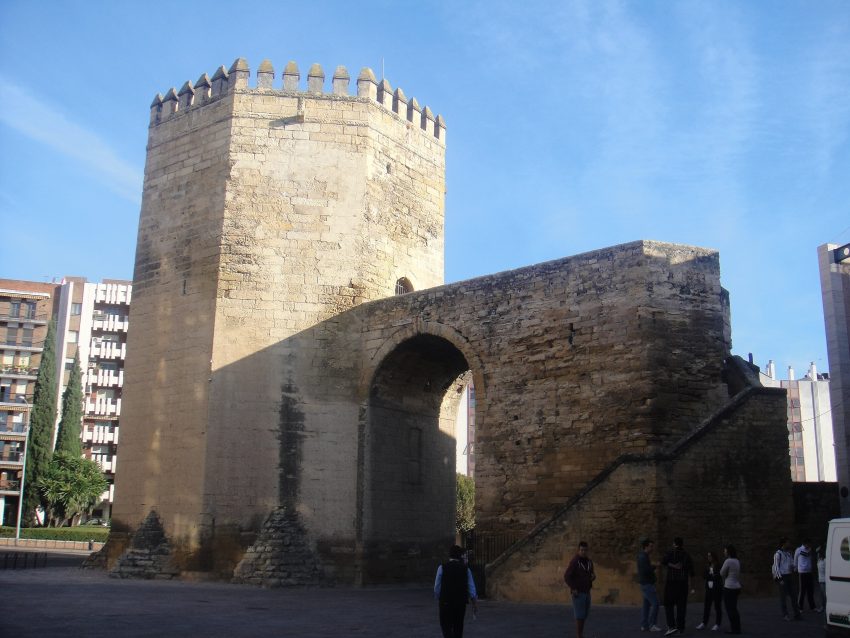
The Malmuerta Tower is a medieval defensive tower built in the 15th century near the Guadalquivir River. It was originally part of the city’s fortifications and also served as a prison, contributing to Córdoba’s complex military and civic history.
The tower’s architecture, with its thick stone walls and crenellated top, reflects its defensive purpose. Legends associated with the tower, including stories of betrayal and local folklore, add a layer of cultural intrigue for visitors. According to popular legend the octagonal Torre de la Malmuerta gets its name comes from a vengeful husband who killed his wife because he incorrectly believed her to be an adulteress.
The tower was joined to the city walls by an arch that still exists to this day. There is only one octagonal room inside with a series of loopholes that lead to the exterior of the building, which is crowned by a semicircular dome. A series of steps lie at one end leading to the top floor which has magnificent views of the city.
Head to the southeast of the park you just passed through, and through the Plaza de Colón. You come across the octagonal Tower of the Puerta del Rincón, probably built during the Christian occupation atop of a previous tower.
You can continue on the Calle Isabel Losa or take a detour, to the northeast of the small square up Pje. de la Estrella, to the Plaza del Conde de Priego with its tribute to the bullfighter Manolete.
Either way when you get to Calle de Sta. Isabel, turn right and walk about 150m until you get to the small Plaza de Don Gome, and the entrance to Palacio de Viana.
The Palacio de Viana, also known as the Viana Palace, is a 15th-century noble residence famous for its twelve distinct courtyards. The palace showcases a mixture of Renaissance, Baroque, and Andalusian architectural styles. The stunning Renaissance palace with 12 beautiful, plant-filled patios. Occupied by the Marqueses de Viana until 1980, the large building is full of firearms, historic furnishing and paintings as well as a library with more than 7,000 volumes. You can just walk round the lovely patios and garden with a self-guiding leaflet, or take a guided tour of the rooms as well.
Visitors can stroll through its beautifully maintained gardens, admire the intricate tilework, and explore rooms filled with period furnishings and art. Each courtyard tells a story, reflecting the lifestyle of Córdoba’s aristocracy over the centuries.
Head south (left) down Calle Enrique Redel until it bends around to the east, switch to Calle Hermanos López Diéguez and continue south. When you get to the T junction turn right onto Calle San Pablo. Walk 40m and you will come across the Plaza de Orive to the south, which houses the Palacio de Orive.
The Palacio de Orive is a 16th-century Renaissance palace built for the wealthy Orive family. Its façade, featuring ornate balconies, columns, and decorative stonework, exemplifies the elegance of Córdoba’s noble architecture. It is one of the most notable works of the architect Hernán Ruiz II. The most striking feature is the entrance with its decorative arches and its inner courtyard. It is a government building and if open free to enter.
Inside, the palace has been adapted for various cultural uses, including exhibitions and municipal offices, while retaining much of its original grandeur. Visitors can appreciate the craftsmanship and artistic details that have endured for centuries.
Carry on down Calle San Pablo until you come to the large town-hall with a pedestrianized are in front of it. The other side of it is the Templo Romano.
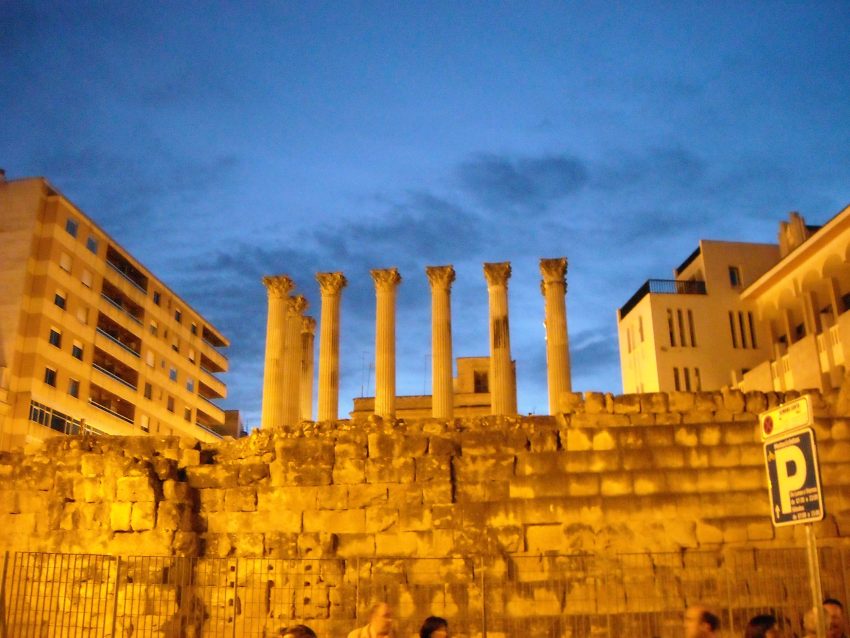
The ruins of the former Roman Temple are, apart from the Roman Bridge, the most considerable heritage of the Roman culture that influenced the entire region two thousand years ago.
Several monumental columns, topped with massive yet beautiful capitals, aloft to the skies over Cordoba. Especially after nightfall, when the illuminated columns appear in warm colors, visitors are overwhelmed by their natural beauty.
The Templo Romano of Córdoba dates back to the 1st century AD and once stood as one of the city’s most significant Roman religious structures. Its grand columns and elevated podium demonstrate the architectural ambition of Roman Córdoba, which was an important provincial capital.
Although only ruins remain today, the temple’s reconstructed columns give a vivid impression of its original scale and prominence. Archaeological excavations revealed not only the temple’s foundations but also surrounding civic buildings, shedding light on the Roman urban layout.
The Templo Romano connects visitors to the city’s earliest monumental history. Its central location makes it an easy stop, and standing among the towering columns gives a sense of the continuity between Córdoba’s Roman origins and its later Islamic and Christian layers.
After go south 450m along Calle San Fernando, and turn left onto Calle Romero Barros after 100m you will come to the Plaza del Potro.
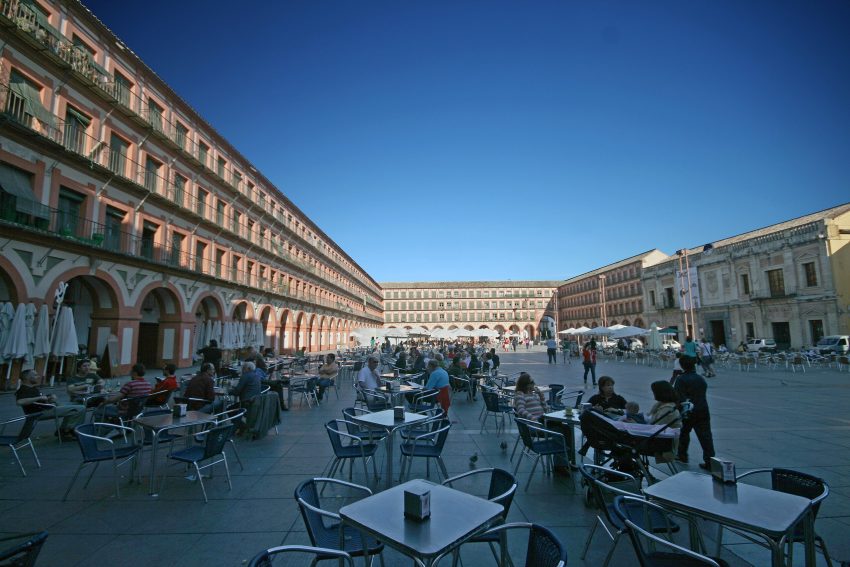
The Plaza del Potro is one of Córdoba’s most charming historic squares, dating back to the late Middle Ages. Its name comes from the fountain at its center, topped with a statue of a foal, which became a recognizable landmark for locals and travelers alike.
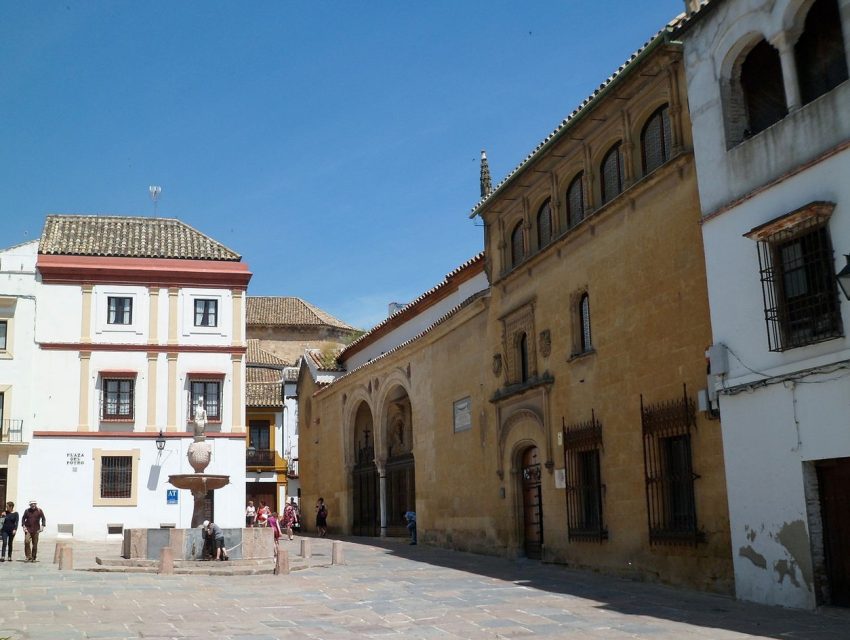
The square is home to notable cultural sites such as the Museum of Fine Arts and the Julio Romero de Torres Museum. Historically, it also functioned as a bustling commercial hub where artisans and merchants gathered. Just off the square is Posada del Potro – which is an inn that played a part in Don Quijote, where Cervantes described it as a ‘den of thieves’. Also off this square are the Museo Julio Romero de Torres.
Continue to head south to come to the Guadalquivir River and walk along the Paseo de la Ribera to come back to your starting point.
Córdoba’s Spring Festivals 2026: Patios, Flowers & Local Traditions
Feria de Cordoba at night
CC BY-SA 4.0 / Edmundo Sáez
This website uses affiliate links which earn a small commission at no additional cost to you.
Without a doubt, the best time of the year to visit Córdoba is in Spring when the city is in full festival mode. It all kicks off with a wine tasting festival at the end of April, comes into its own in May with the week-long Cordoba Fair, Festival of May Crosses, the Patio Festival and the Battle of the Flowers.
1. Battle of the Flowers
Batalla de las flores 08
CC BY-SA 2.0 / Edmundo Sáez
The Batalla de las Flores or Battle of the Flowers is a one day-event celebrated, at noon at the beginning of May, to mark the beginning of a month of festivals. A parade of around 20 flower covered floats pass along the Paseo de la Victoria and Argentina, carrying women beautifully attired in typical trajes de gitanas or gypsy flamenco dresses and decorated with paper flowers and images of Córdoba’s patron saint. For the Battle of the Flowers they throw hundreds of thousands of flowers from the floats to the crowds of people which the public then throw back – hence the name the “Battle of the Flowers”.
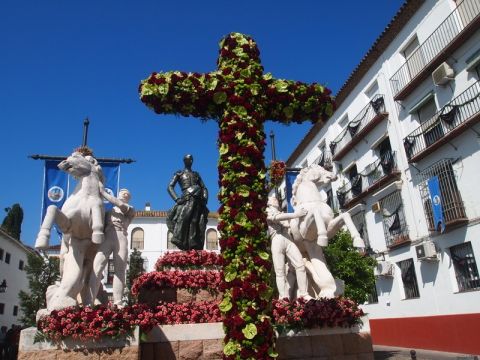
The Cruces de Mayo or Crosses of May festival is a religious flower festival, which lasts over four days at the beginning of May, located in Cordoba. It commemorates the cross on which Jesus was crucified and is believed to have its roots in the 4th century, when Constantine, son of Saint Helen, saw a vision of a cross in battle.
The festival consists of dozens of large crosses made of flowers set up around the city, which are put up in courtyards and squares. The churches compete to see who has the most beautiful cross. The neighborhood associations and local clubs set up outdoor bars next to the crosses and serve drinks and traditional tapas and play traditional Sevillanas music. There are maps available of where all the crosses are around the city, although you can just wander around the districts of San Basilio, San Andrés, Santa Marina, San Agustín and the city center during the May Crosses festival.
Here is a complete selection of hotel options in Córdoba. Feel free to review each one and choose the stay that best suits your needs.
3. Patio Festival
Feria de los Patios de Cordoba
CC BY-SA 1.0 / Dinkum
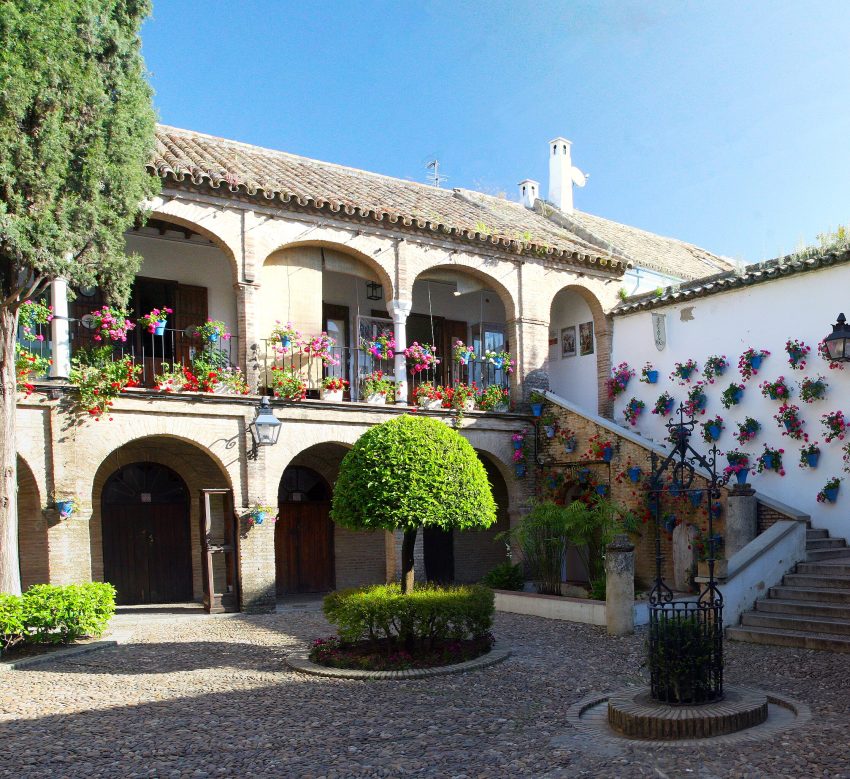
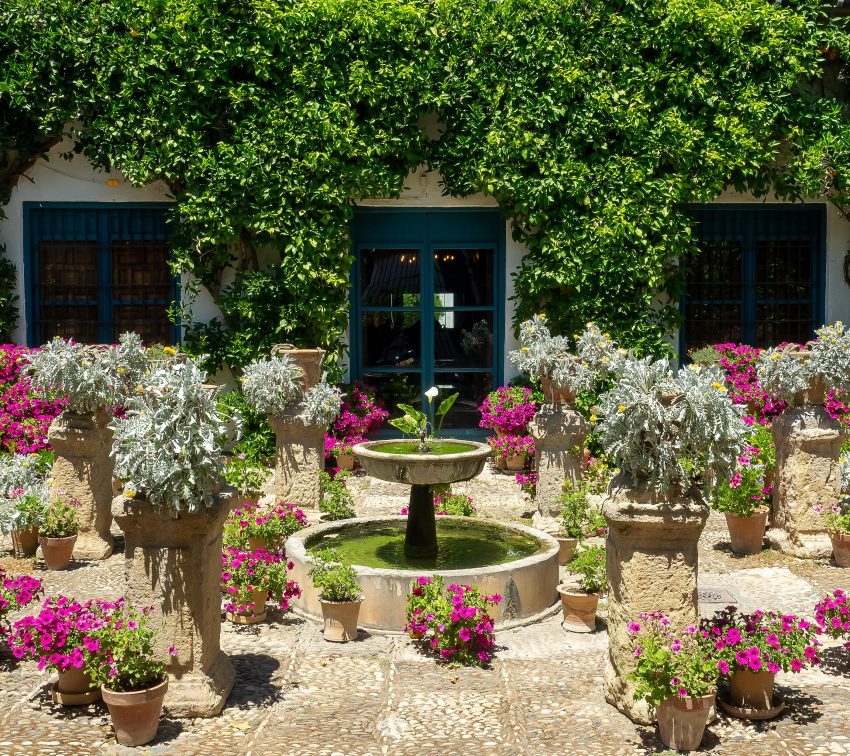
In the first few weeks in May, Cordoba has its Patio Festival. During this timethere are more than 50 flower-filled courtyards, open to the public. The festival is an opportunity to chat with the residents and gardeners, who get prepare all year round to offer the best sight of colorful flowers.
The Patios often have flamenco dancers and tapas for the visitors.
| Hours: 11am to 2pm and 6pm to 10pm. | Price: Admission is free but sometimes there's a container for donations. | Website
Traveling to a country with a different currency? Avoid ATM transaction fees and pay in local currency with a Wise Card. Having used it for over 5 years, we've saved loads on fees!
4. Spring Feria
Feria de Cordoba
CC BY-SA 4.0 / Edmundo Sáez
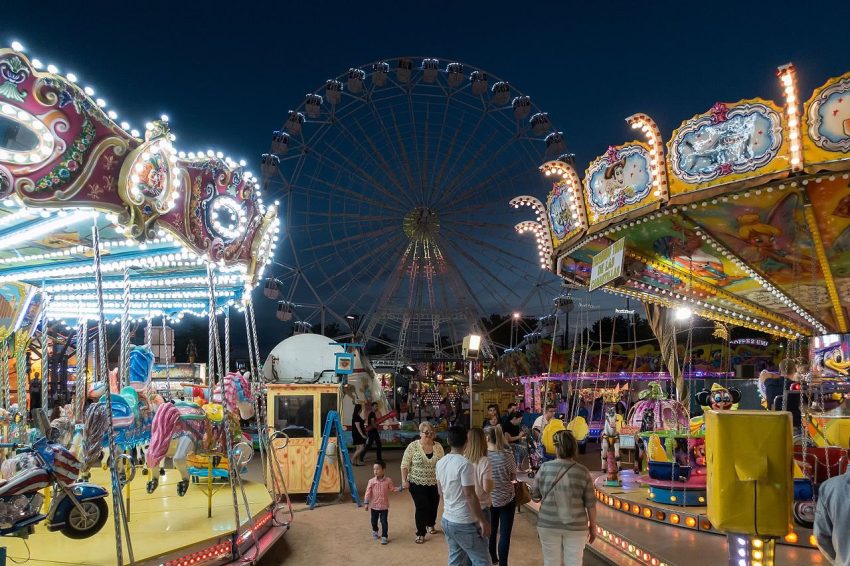
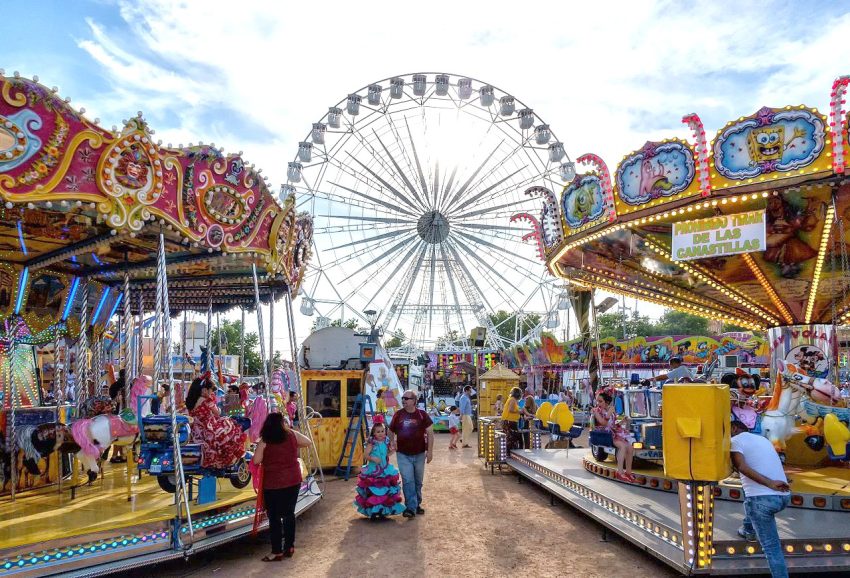
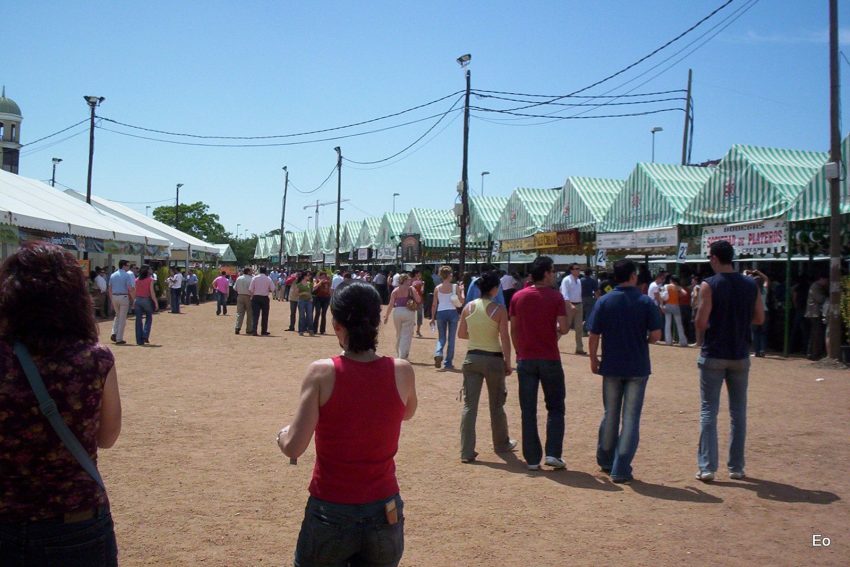
The Feria de Córdoba or the The Cordoba Fair is usually held at the end of May, located in Cordoba in Spain. It was originally to mark the feast of Our Lady of la Salud Health but like Seville’s April Fair and the Jerez Horse Fair, the Cordoba Fair celebrates the spirit of Andalucia. In addition to a big fairground, you will see a lot of horse-riders and people in traditional gypsy or flamenco dress for the ladies and wide brimmed hats for the men. There are also lots of marquees set up called casetas, each one serves fino wine and tapas. There is usually some traditional live music and flamenco dancing too. Unlike the Seville Fair all the casetas are public.
Explore Córdoba at your own pace with our self-guided walking tour! Follow our curated route to discover must-see sights and local secrets that makes Córdoba one of the best places to visit in Spain.
5. Semana Santa
Procesion del Calvario en Cordoba Espana
CC BY-SA 4.0 / Edmundo Sáez
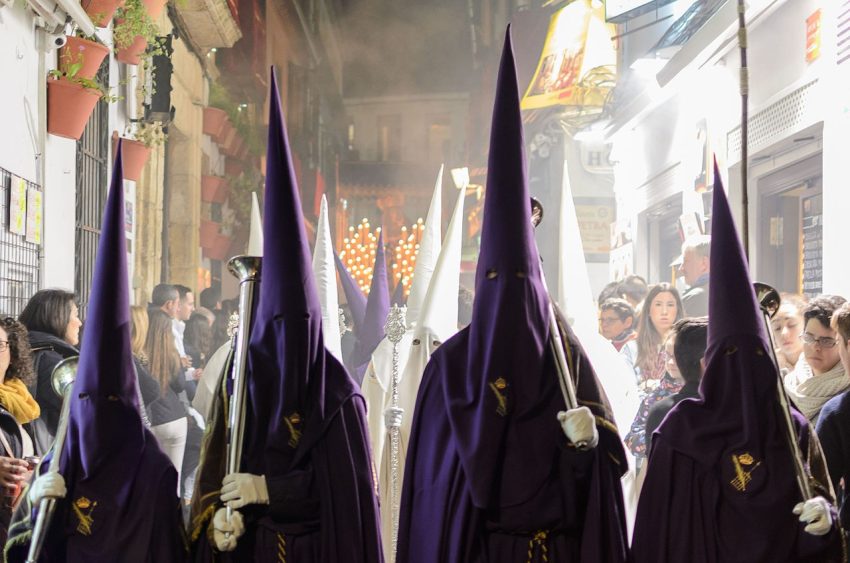
Semana Santa or holy Week is a is a commemorative feast of Christ’s Passion in which the people publicly declare their faith.
For seven days the city is taken over with about 40 different floats bearing Christs and Virgins, carried by the Nazarenos, followed bands. The floats are very heavy and it is considered a great honor for members of the city’s different religious brotherhoods of Penitents to carry them through the streets of Córdoba. Large crowds gather to watch them do so and there is a solemn, religious atmosphere of hushed reverence as they pass.
The International Sephardi Music Festival has been held annually in the Botanical Garden of Córdoba since 2002 and is an intriguing festival which celebrates the Jewish customs and music that have been so influential in shaping the city’s culture over the centuries.
Shephardic bands come from all over the world to perform in one of the several concerts that take place over a week in June. There area also dance workshops, demonstrations of Jewish cooking, wine tastings, lectures and exhibitions.
The festival is usually celebrated in Córdoba’s charming Jewish quarter, Juderia.
Location: CORDOBA Avenida Linneo, s / n 14004 | Hours: 22:00 hours. Opening of the venue at 9:00 p.m. | Price: All concerts are free admission until full capacity is reached.
Joe Bonamassa en el Festival de la Guitarra de Cordoba
CC BY-SA 1.0 / Davidvalpalao
The Festival de la Guitarra or Festival of the Guitar is usually held during the first fortnight of July in Córdoba. It is a highly regarded international guitar festival which is one of the highlights on the city’s events calendar. There are performances by well-known artists and there are also training courses around the city covering just about everything related to guitars and flamenco music.
Every year, the Montilla-Moriles Wine Tasting serves as an prelude to the Cordovan May Festivals. This prestigious wine comes from the countryside to the south of the Cordovan capital, and comes under the Denomination of Origin Montilla-Moriles.
This website uses affiliate links which earn a small commission at no additional cost to you.
Walking Tour Map
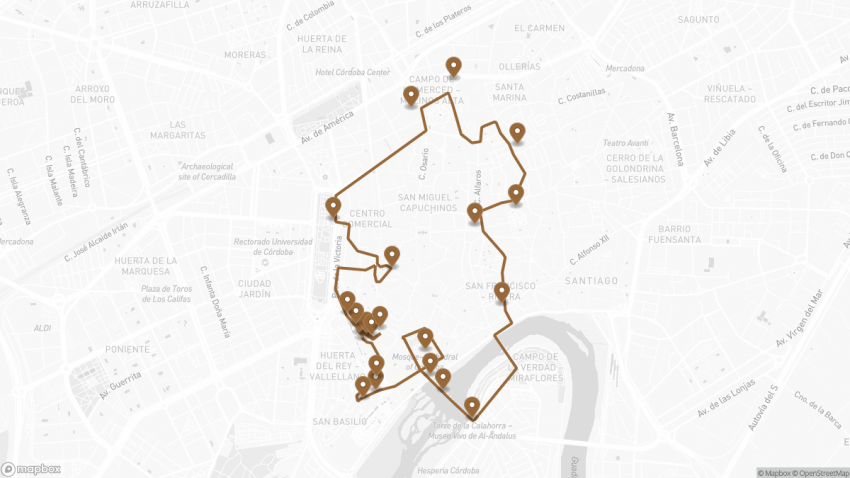
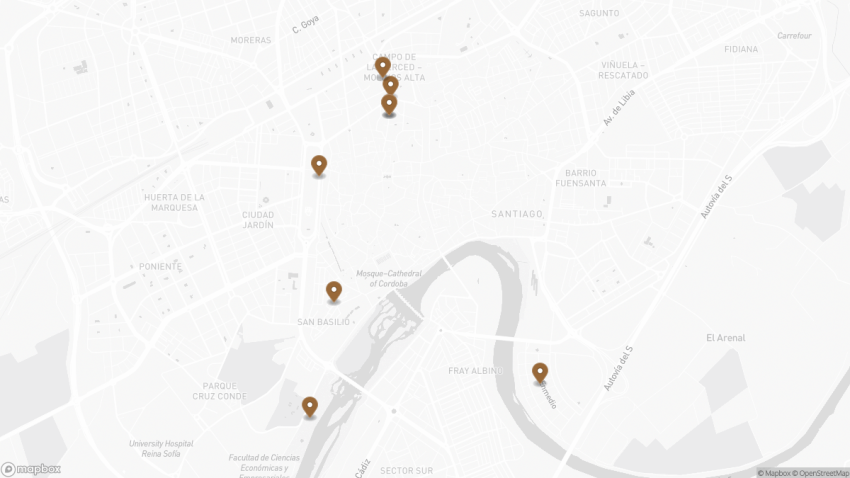
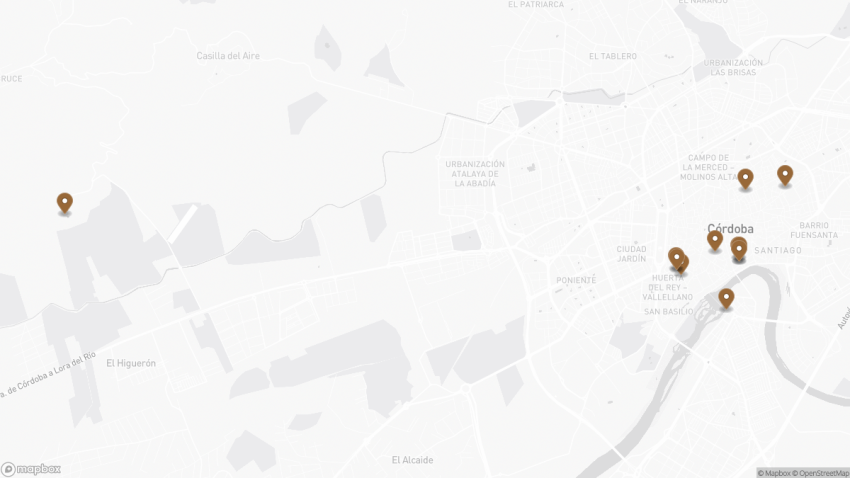
Preview map of the Córdoba’s Spring Festivals: Patios, Flowers & Local Traditions route in Córdoba, showing 8 stops. Use the interactive map to zoom and tap markers.
This website uses affiliate links which earn a small commission at no additional cost to you.
Córdoba, once the dazzling capital of Al-Andalus and one of Europe's great centers of learning, remains a city where art, architecture, and history intertwine at every corner. Its museums offer an extraordinary window into this past - from Roman foundations and Islamic brilliance to the vibrancy of the Spanish Golden Age. Whether you are drawn to ancient mosaics, Moorish craftsmanship, or the bold portraits of Andalusian painters, Córdoba's museums tell the story of a city that has always been a crossroads of cultures.
Exploring Córdoba's museums is more than just a journey through art; it's an immersion into the spirit of southern Spain. Each collection reflects the influences that shaped this UNESCO-listed city - Roman, Visigothic, Islamic, Jewish, and Christian. Many are housed in palaces, convents, and Renaissance mansions, where the setting itself is part of the experience. From archaeological treasures to contemporary creativity, Córdoba's museums bring the city's 2,000 years of history to life.
Here are the best museums in Córdoba to experience its art, history, and culture - each a testament to the city's layered identity and enduring beauty.
Córdoba's history is one of the richest and most layered in all of Spain - a story of civilizations that rose, mingled, and left their mark in stone, art, and tradition. Once the capital of Roman Hispania Baetica, later the shining heart of Islamic Al-Andalus, and eventually a jewel of Christian Spain, Córdoba has absorbed influences from every culture that touched it. Its museums today mirror that evolution, acting as time capsules that preserve and interpret each chapter of the city's long past.
The city's origins stretch back more than two thousand years. Founded by the Romans in the 2nd century BCE, Córdoba grew into a prosperous provincial capital, famous for its bridge over the Guadalquivir River and its philosophers, including Seneca. The remains of this classical world still lie beneath the modern streets, and they surface spectacularly in the Museo Arqueológico de Córdoba, built over the ruins of a Roman theatre. Inside, statues of emperors, fragments of mosaics, and carved altars remind visitors of the city's early grandeur. Roman mosaics also reappear in the Palacio de la Condesa de Lebrija in Seville and in private collections across Andalusia, showing how deeply Roman artistry took root in southern Spain.
When the Moors arrived in 711, Córdoba became the glittering capital of the Umayyad Caliphate of Al-Andalus, rivaling Baghdad and Constantinople in wealth and learning. At its peak in the 10th century, it was home to hundreds of mosques, public baths, libraries, and schools, a place where Muslims, Jews, and Christians shared ideas and innovations. The Museo Vivo de Al-Andalus, housed in the Calahorra Tower, celebrates this golden age, recreating the world of scholars like Averroes and Maimonides and the spirit of tolerance that defined medieval Córdoba. The Casa Andalusí adds a more personal perspective, evoking life in a refined Islamic household, where science, craftsmanship, and poetry flourished in equal measure.
After the Christian conquest in 1236, Córdoba became part of Castile, and its churches and palaces began to rise on the foundations of mosques and Moorish houses. The Museo Diocesano, inside the Episcopal Palace, preserves this era's sacred art - paintings, silverwork, and carvings that reveal how Gothic and Renaissance forms merged with the lingering delicacy of Mudéjar design. The Palacio de Viana, with its courtyards and Renaissance galleries, shows the domestic side of post-Reconquista Córdoba: the life of noble families surrounded by gardens, tapestries, and ceramics. In these spaces, the city's Islamic heritage persisted quietly in the geometry of tiles and the flow of water in fountains.
By the 16th and 17th centuries, Córdoba, though no longer a political capital, became a center of religious devotion and art. The Museo de Bellas Artes and the Museo Julio Romero de Torres reflect that transition - from the solemn saints and chiaroscuro dramas of Baroque painters to the intimate, emotional portraits of Andalusian identity in the modern age. Julio Romero de Torres' works in particular capture a Córdoba that is both mystical and sensual, old and new, echoing the city's eternal duality.
In this way, Córdoba's museums are not just collections of objects; they are reflections of its entire history. The Archaeological Museum anchors the city in the Roman world. The Museo Vivo de Al-Andalus celebrates its intellectual zenith under Islam. The Diocesan and Fine Arts museums record its Christian rebirth and artistic flourishing. And places like Palacio de Viana embody the Andalusian spirit of beauty, balance, and everyday grace. Together, they form a continuous narrative - the story of a city where empires have come and gone, but culture has remained, layered and luminous, like the light that falls through Córdoba's ancient courtyards.
Museums in Córdoba
When you look beyond the best things to see in Córdoba, you'll discover a remarkable variety of museums that span history, archaeology, and both classical and contemporary art - even a botanical garden and museum dedicated to the region's natural heritage. The city's elegant palaces, which are well worth exploring during your visit, enrich this cultural tapestry, offering a vivid reflection of Córdoba's diverse and multicultural past and securing its place as one of Andalusia's most beautiful cities.
1. Palacio de Viana
Patio De Las Columnas Palacio De Viana Cordoba
CC BY-SA 2.0 / Luis Rogelio HM
Known as the “Museum of the Patios,” the Palacio de Viana is one of Córdoba’s most enchanting historic residences and one of the best places to experience Andalusian domestic art. Dating back to the 15th century, it combines aristocratic architecture with twelve exquisite courtyards — each with its own character, from lush gardens to intimate tiled cloisters.
The interior of the palace houses a remarkable collection of antique furniture, tapestries, ceramics, and paintings, reflecting the refined lifestyle of Córdoba’s nobility over five centuries. Walking through the rooms feels like moving through different eras, where Renaissance arches open into Baroque salons, and Moorish tiles meet European artworks. The delicate use of light, water, and color creates a harmony that has made the palace famous worldwide.
Visitors can stroll at their own pace or join a guided tour to learn about the Marqueses de Viana, who owned the palace for generations. It’s not only a museum of art and architecture but also a symbol of Córdoba’s enduring tradition of patios — spaces that blend nature, beauty, and family life. Palacio de Viana is undoubtedly one of the best museums in Córdoba for those who want to experience the soul of the city through its courtyards.
CC BY-SA 2.0 / Delegación de Cultura Ayuntamiento de Córdoba
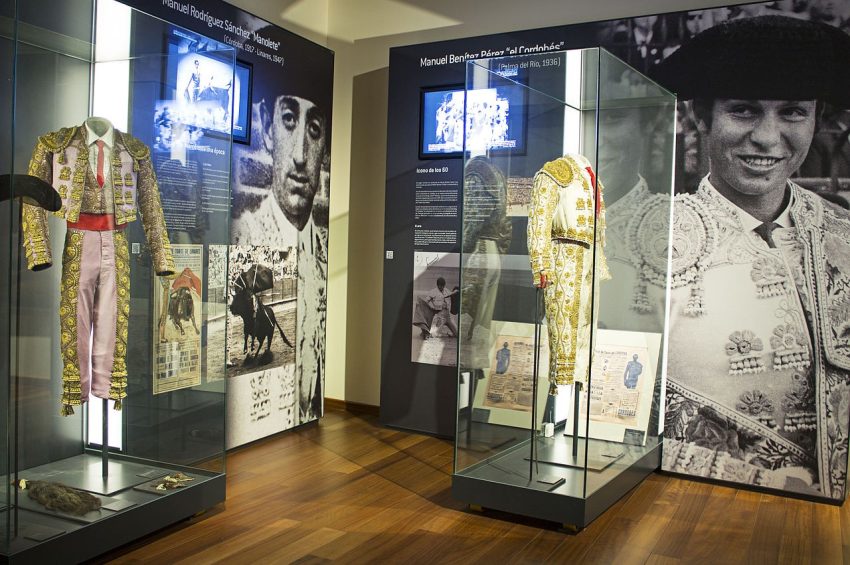
For a glimpse into one of Spain’s most traditional cultural expressions, the Museo Taurino de Córdoba provides an engaging and well-presented look at the art of bullfighting. Housed in a Renaissance mansion near the Plaza de Maimónides, the museum explores Córdoba’s long relationship with this controversial yet deeply symbolic sport.
The exhibits include costumes, posters, paintings, and personal belongings of Córdoba’s most famous bullfighters, notably Manolete, a legendary figure of 20th-century Spanish bullfighting. The collection is both artistic and historical, tracing the evolution of bullfighting as part of Andalusian identity and its representation in art and literature.
Even for those who do not follow the tradition, the museum provides cultural insight into how bullfighting shaped Spanish aesthetics, from sculpture to poetry. It’s a museum that invites reflection on heritage, passion, and performance — and how these themes define much of Andalusian culture.
Here is a complete selection of hotel options in Córdoba. Feel free to review each one and choose the stay that best suits your needs.
3. Museo de Bellas Artes
Plaza del Potro, Cordoba
CC BY-SA 3.0 / Américo Toledano
Housed in the former Hospital de la Caridad, a 15th-century building overlooking Plaza del Potro, the Museum of Fine Arts offers a refined and peaceful escape in the heart of Córdoba. Its arched courtyards and whitewashed galleries provide the perfect setting for a collection that celebrates Spanish art across the centuries, with a particular focus on Andalusian masters. The museum shares its building with the Julio Romero de Torres Museum, making it easy to explore both in one visit.
Inside, visitors will find an impressive array of paintings from the Renaissance to the Baroque period, including works by Murillo, Zurbarán, and Valdés Leal. The galleries also highlight the strong tradition of religious art that flourished in Córdoba’s churches and monasteries, as well as portraits and landscapes from the 19th century that capture everyday Andalusian life. The soft light, quiet atmosphere, and sense of timelessness make this museum especially moving for those who love classical Spanish art.
The Museum of Fine Arts is more than a collection of paintings — it is a reflection of Córdoba’s artistic evolution. Through its works, visitors can see how local artists were influenced by Seville’s great Baroque school, while still preserving a distinctly Cordoban sensitivity. It’s a place to slow down and admire the skill, color, and emotion that define the Spanish artistic spirit.
Location: Plaza del Potro, 1, 14002 Córdoba, Spain | Hours: 9am-3pm Tue-Sun mid-Jun–mid-Sep, 9am-8pm Tue-Sat & 9am-3pm Sun mid-Sep–mid-Jun
| Price: EU Citizen/other free/€1.50
Traveling to a country with a different currency? Avoid ATM transaction fees and pay in local currency with a Wise Card. Having used it for over 5 years, we've saved loads on fees!
4. Museo Julio Romero de Torres
Interior Museo Julio Romero de Torres
CC BY-SA 2.0 / Delegación de Cultura Ayuntamiento de Córdoba
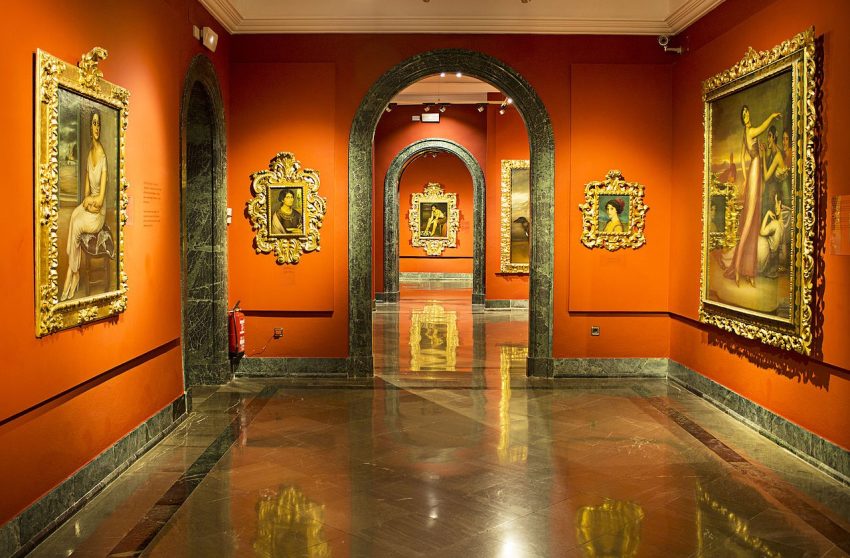
Just next door to the Museum of Fine Arts lies one of Córdoba’s most beloved institutions — the Museo Julio Romero de Torres, dedicated to the city’s most famous painter. Julio Romero de Torres (1874–1930) was known for his sensual, poetic portraits of Andalusian women, blending realism with mysticism. His works express both pride and melancholy, capturing the essence of Andalusian identity in a way few artists have matched.
The museum occupies the family home and studio where the painter lived and worked. Its collection includes not only his most iconic paintings but also his sketches, personal belongings, and the symbolic objects that often appeared in his art. Among the masterpieces are La Chiquita Piconera, Naranjas y Limones, and La Saeta, each infused with the warmth and melancholy of Córdoba.
Visiting this museum is an intimate experience — a journey into the artist’s inner world and the culture that inspired him. The contrast between shadow and light in his paintings mirrors the emotional depth of Andalusia itself. For art lovers, it’s one of the best museums in Córdoba to understand the connection between art, identity, and place.
Explore Córdoba at your own pace with our self-guided walking tour! Follow our curated route to discover must-see sights and local secrets that makes Córdoba one of the best places to visit in Spain.
5. Living Museum of al-Andalus
Torre de la Callahora Cordoba
CC BY-SA 2.0 / Richard Mortel
Located in the Calahorra Tower, at the far end of the Roman Bridge, the Museo Vivo de Al-Andalus offers a vivid, educational look at the period when Córdoba was the intellectual heart of medieval Europe. During the 10th century, the city was home to philosophers, poets, and scientists whose ideas shaped the world. This museum celebrates that era of coexistence among Muslims, Christians, and Jews.
Inside, visitors can explore interactive exhibits and models that bring Al-Andalus to life. Highlights include detailed reconstructions of the Mezquita-Catedral, the Alhambra, and the School of Translators of Toledo, as well as displays on science, medicine, and music. Audio-visual installations explain how knowledge was preserved and shared across cultures during this golden age.
The museum is ideal for families, students, and anyone curious about how Córdoba became a beacon of learning and tolerance. From the top of the Calahorra Tower, panoramic views stretch across the river to the Mezquita — a perfect reminder of the city’s enduring spirit of harmony and enlightenment.
The Centro Flamenco ‘Fosforito’ museum is spread over a series of rooms surrounding the Plaza del Potro. This is a fascinating museum which looks at the history of the art flamenco. The museum tells its story with interactive panels and exhibits, in English and Spanish. The visitor is taken on a journey through the evolution of flamenco and its various different styles and rhythmic forms.
It focuses on the life and work of the popular Cordoban flamenco singer Antonio Fernandez Diaz, also known as Fosforito, after whom the museum is named.
Patio of Museo Arqueologico y Etnologico de Cordoba Spain
CC BY-SA 2.0 / Amelia Wells
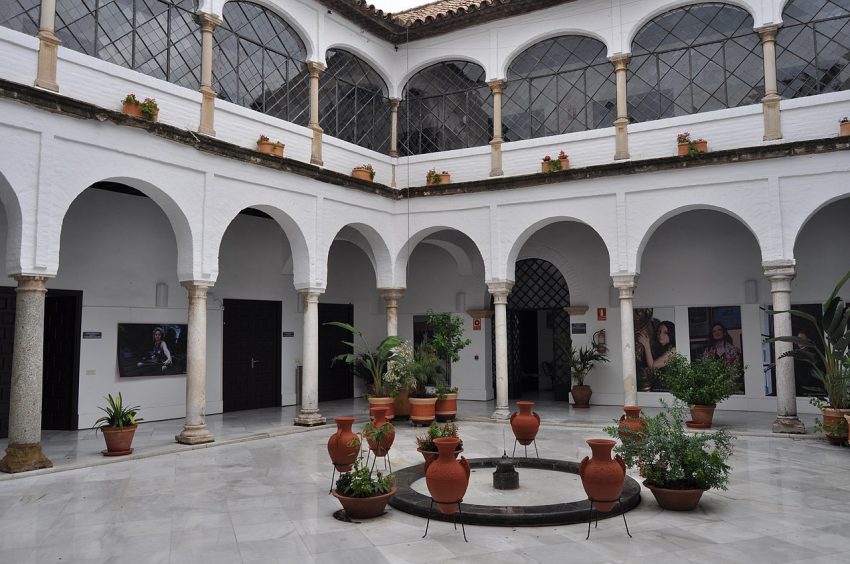
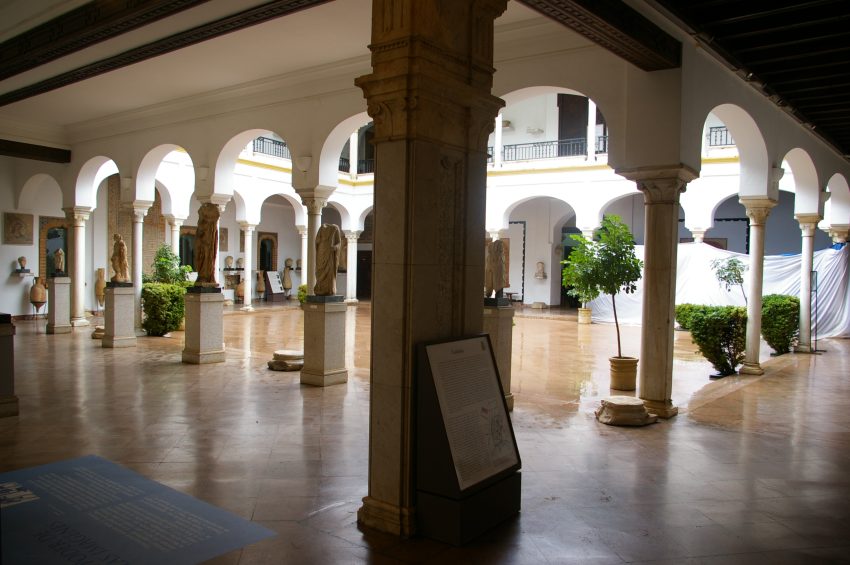
Set within the Renaissance Palacio de los Páez de Castillejo, the Archaeological Museum of Córdoba is one of the finest in Andalusia and an essential stop for anyone who wants to understand the city’s ancient past. Beneath the building lie the remains of Córdoba’s Roman theatre, the largest ever discovered in Spain, seamlessly integrated into the museum’s modern lower galleries. The museum’s setting alone makes it an attraction, with courtyards, stone columns, and vaulted rooms that evoke the city’s archaeological wealth.
The museum’s collection spans thousands of years, from prehistoric tools to Iberian pottery, Roman mosaics, and Visigothic carvings. Among the highlights are sculptures from the Roman Forum, a finely preserved bust of Emperor Augustus, and a collection of Islamic ceramics that reveal Córdoba’s role as the heart of Al-Andalus. The displays are beautifully curated, allowing visitors to trace the evolution of the city from ancient settlement to imperial capital.
What makes this museum truly special is how it bridges archaeology with living history. Standing above the ruins, visitors can literally see how Córdoba was built layer upon layer over the centuries. It is a fascinating reminder that the modern city rests upon the stones of empires past — a place where every discovery adds to the story of one of Spain’s most historic cities.
Hidden in a quiet street near the Jewish Quarter, the Casa Andalusí recreates life inside a 12th-century Islamic home. Modest in scale but rich in atmosphere, it immerses visitors in the daily life of Córdoba during the Caliphate period. Every room, courtyard, and corner is designed to reflect the refined simplicity and intellectual curiosity of Al-Andalus.
Among its most fascinating features is the small exhibition on papermaking, showing how Córdoba became one of the first cities in Europe to produce paper — a key reason it thrived as a center of scholarship. The house also displays coins, ceramics, and household objects that evoke the comfort and elegance of medieval Andalusian domestic life.
Visiting Casa Andalusí feels like stepping back in time. The scent of jasmine, the sound of trickling water, and the soft light filtering through wooden lattices create a deeply tranquil atmosphere. It’s one of Córdoba’s hidden gems, offering a more intimate and personal view of the city’s Islamic past.
The Casa de Sefarad is one of Córdoba’s most intimate and evocative museums, dedicated to preserving the memory of the city’s Sephardic Jewish heritage. Located in the heart of the Judería, just a few steps from the old synagogue, this 14th-century house recreates the atmosphere of Jewish domestic life during the Middle Ages, when Córdoba was a thriving center of learning and coexistence. Its rooms, patios, and displays invite reflection on the centuries when Muslim, Jewish, and Christian cultures flourished side by side under the Caliphate.
Inside, visitors will find a fascinating collection of artifacts, manuscripts, and textiles that illustrate the daily lives and spiritual traditions of Sephardic families. Exhibitions explore themes such as Jewish philosophy, women’s roles in medieval Andalusia, and the profound legacy of Maimonides, Córdoba’s most famous Jewish scholar. The museum also houses musical instruments, embroidery, and ceremonial objects that connect the city’s past to the broader Jewish diaspora.
What makes the Casa de Sefarad truly special is its storytelling. Through photographs, reconstructed rooms, and personal narratives, it brings history to life with quiet dignity. It’s not only a museum but also a place of remembrance — a tribute to Córdoba’s once-vibrant Jewish community and a reminder of the city’s enduring spirit of cultural dialogue.
Location: Judería de Cordoba Calle Averroes, 2 14004 Córdoba Spain | Hours: From September 16 to June 15.
Monday to Sunday: 10:00 a.m. to 6:00 p.m.
From June 16 to September 15.
Monday to Sunday: 10:00 a.m. to 6:00 p.m. | Price: Adults: € 4. Reduced: € 3. | Website
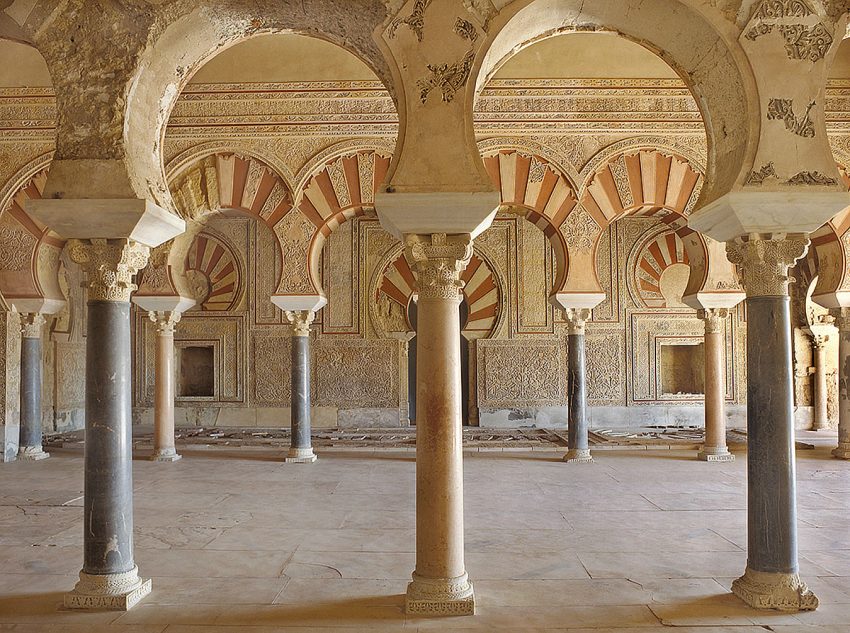
A few kilometers west of Córdoba lie the haunting ruins of Medina Azahara, or Madinat al-Zahra — one of the most spectacular archaeological sites in Spain and a UNESCO World Heritage Site since 2018. Founded in the 10th century by Caliph Abd al-Rahman III, this vast palace-city was the administrative and ceremonial capital of Al-Andalus at the height of its power. For a brief, dazzling period, Medina Azahara symbolized the wealth, sophistication, and ambition of Islamic Córdoba.
The city covered more than 100 hectares, filled with marble pavilions, gardens, mosques, and reception halls adorned with carved stucco and colorful tiles. Visitors today can walk among its terraces, colonnaded streets, and the Salón Rico, once the audience hall where ambassadors were received in splendor. The attached Archaeological Museum of Medina Azahara displays artifacts recovered from the site — fragments of ivory boxes, capitals, ceramics, and inscriptions that reveal the luxury of courtly life.
Though destroyed during the civil wars of the 11th century, Medina Azahara remains one of Spain’s most evocative historic sites. Its museum and ruins together tell the story of a lost city — one that embodied the intellectual and artistic brilliance of Al-Andalus. Visiting it offers a powerful glimpse of Córdoba’s golden age and how its influence once reached far across the Mediterranean world.
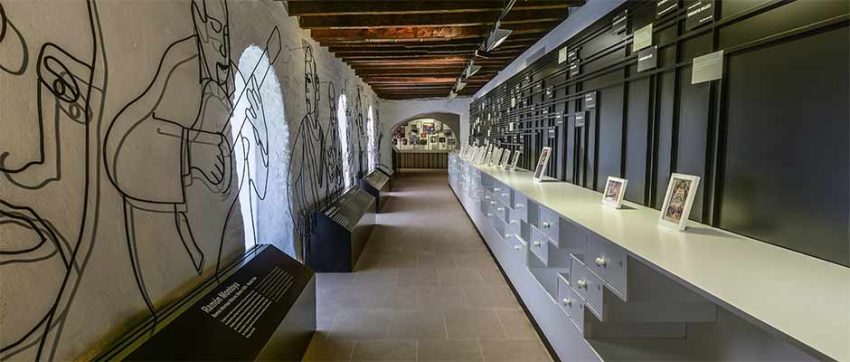
Few traditions capture Córdoba’s soul as vividly as the Festival of the Patios, and the Centro de Interpretación de la Fiesta de los Patios Trueque Cuatro is the perfect place to understand this living heritage. Located in a beautifully restored traditional house, this small but engaging museum is dedicated to the history and symbolism of Córdoba’s patios — those flower-filled courtyards that have become an emblem of the city.
The center offers exhibits that explore how the patio evolved from Roman and Moorish domestic architecture, adapting over centuries into an art form celebrated each spring. Visitors can learn about the festival’s origins in the 1920s, its recognition by UNESCO as Intangible Cultural Heritage of Humanity, and the care that local families put into cultivating their plants, fountains, and ceramics. Interactive displays and photographs document generations of Cordobeses who have turned their homes into works of living art.
Beyond its exhibitions, the Trueque Cuatro patio itself is a delight — shaded by vines and filled with geraniums, jasmine, and orange trees. It’s a sensory experience that connects architecture, community, and nature in a single space. Visiting this center deepens appreciation for why Córdoba’s patios are not just gardens but an enduring expression of Andalusian hospitality and identity.
Housed in the historic Posada del Potro, an inn mentioned in Cervantes’ Don Quixote, the Centro Flamenco Fosforito is Córdoba’s main museum and cultural center dedicated to flamenco — one of Andalusia’s greatest artistic legacies. The building itself, a 15th-century courtyard house, provides an atmospheric setting where the echoes of guitar and song seem to linger in the air.
The museum takes its name from Antonio Fernández Díaz “Fosforito,” one of Spain’s most acclaimed flamenco singers, whose career helped preserve and elevate the art form. Its interactive displays explore flamenco’s history, from its Gypsy, Moorish, and Andalusian roots to its modern-day expression on global stages. Visitors can listen to archival recordings, watch performances, and learn about the major palos (styles) of flamenco singing and dance.
More than a museum, the center serves as a vibrant performance venue and educational space. Regular events, concerts, and workshops connect visitors with Córdoba’s living flamenco scene. It’s a place where art, emotion, and tradition meet — a fitting tribute to the music that expresses the soul of Andalusia.
Córdoba's museums offer a journey through the essence of Andalusian culture - from Roman mosaics and Islamic science to Baroque painting and aristocratic refinement. Each museum reflects a different chapter of the city's story, yet all share the same spirit of creativity and coexistence that defines Córdoba.
For travelers seeking more than just monuments, exploring these museums is a chance to connect with the city’s living history. Whether you’re admiring Roman artifacts at the Archaeological Museum, strolling through the patios of Palacio de Viana, or standing before a Julio Romero de Torres painting, you’re discovering the art, history, and soul of one of Spain’s most enchanting cities.
Moira & Andy
Hey! We're Moira & Andy. From hiking the Camino to trips around Europe in Bert our campervan — we've been traveling together since retirement in 2020!
Discovering Roman Córdoba 2026: Ruins, Monuments & Ancient Heritage
Roman Bridge, Cordoba, Andalucia, Spain
CC BY-SA 2.0 / Tomas Fano
This website uses affiliate links which earn a small commission at no additional cost to you.
Though the grand remnants of Moorish and Christian rule are most visible in Córdoba, this Andalucian city was once an important Roman stronghold called Corduba. Corduba was founded by General Claudio Marcelo between the years 169 BC and 152 BC as the capital of the Roman province Hispania Ulterior or Hispania – The Far.
The city suffered a minor setback during the civil wars between Caesar and Pompey’s sons as Corduba backed the loosing side. However Augustus Caesar soon assigned lands to great number of his best veterans troops who had taken part in the northern wars and gave the city back its status, under the name Colonia Patricia or Patrician Colony.
Cordoba then thrived under Roman rule, and a great number of monumental buildings as well as public works were built; including a walled perimeter was extended up to the River Betis currently or the Guadalquivir. The city must have seen great commercial and cultural activity too, as evidenced by the two forums, one colonial and one provincial, which existed here. Great public buildings were raised, like the recently discovered amphitheatre, as well as huge temples, like the one situated in Calle Claudio Marcelo, and the streets were lined with elegant sculptures.
See below for places where you’ll find vestiges of Roman influence in this southern Spanish city.
1. Templo Romano
Templo romano Córdoba
CC BY-SA 2.0 / Marco Chiesa
The Templo Romano or Roman Temple was discovered in the 1950’s when the City Hall was being expanded. The Temple was built during the reign of Emperor Claudius (41-54 AD) and ended some forty years later, during the reign of Emperor Domitian (81-96 CE). It is thought that the temple was dedicated to the cult of the Emperor, and along with the Circus Maximus, would have formed part of the Provincial Forum.
The sheer size of the building is remarkable, you can see a series of towering marble columns which originally stood on a raised podium and had six free-standing Corinthian columns in the entrance, in front of which was the altar. You can find the remains of the temple at the Calle Capitulares.
The Puente Romano or Roman Bridge was originally built in the first century BC across the River Betis or Guadalquivir river. This arched bridge spanning the Guadalquivir River was once part of the Via Augusta, a major Roman thoroughfare on the Iberian Peninsula. The bridge was built by the emperor Augustus and has often been repaired. The great river is navigable up to this point. From here, olive oil and ores were transported to the Atlantic Ocean and to the Mediterranean Sea. This monument was part of a larger plan to develop southern Spain; another aspect was that many veterans from the Sixth and Tenth legions were settled in this area.
Most of the current bridge dates from the Moorish reconstruction that took place in the 8th century. On one side of the bridge, you can find the Moorish Torre de la Calahorra – which houses a museum and should be visited for the views if nothing else. On the other side of the bridge, there is the Puente Romano, a Renaissance gate.
The bridge came to public’s attention when it was used as the Long Bridge of Volantis in the television series Game of Thrones.
Patio of Museo Arqueologico y Etnologico de Cordoba Spain
CC BY-SA 2.0 / Amelia Wells
The Museo Arqueológico de Córdoba or the Córdoba Archaeological Museum chronicles the history of Córdoba, from prehistoric times to the Reconquista and beyond. The Roman era is well-represented, with the remains of the city’s ancient Roman theater on show and items from the Roman Temple on display.
Traveling to a country with a different currency? Avoid ATM transaction fees and pay in local currency with a Wise Card. Having used it for over 5 years, we've saved loads on fees!
4. Mosque of Córdoba (Mezquita)
Mosque–Cathedral of Cordoba
The Mezquita-Catedral de Córdoba or the Mosque–Cathedral of Córdoba is is one of the Islamic architectural highlights of the Spain. Although it was built long after the Romans had departed, materials from Roman buildings were used in its construction. Two milestones that once could be seen along the Via Augusta are now positioned at the entrance of the mosque/cathedral.
Bishop Ossius was the author of the Creed that was agreed upon during the Council of Nicaea in 325. Traces of his church, the Saint Victor, have been discovered beneath the mosque.
Explore Córdoba at your own pace with our self-guided walking tour! Follow our curated route to discover must-see sights and local secrets that makes Córdoba one of the best places to visit in Spain.
The Roman mausoleum of Córdoba is an ancient structure in the Jardines de la Victoria, Córdoba, Andalusia, southern Spain. It is a funerary monument of cylinder-shaped that corresponded to a group of funerary monuments of the Republican era, built in the 1st century AD. It was discovered in 1993 during archaeological excavations.
Located in the archaeological zone of Cercadilla , this palace dates from the time of the Roman emperor Maximiano Hercúleo during his stay in Spain between the years 296 and 297 AD. This was at the time of the first Tetrarchy, as a consequence of the dispersion of the centers of power of the Roman empire, on the one hand, and due to the incursions of frank piracy in the area of the Strait of Gibraltar, on the other.
This building erected on a suburban villa from the high-imperial Roman period. in the time of the Visigoth it became the basilica of the Martyr San Acisclo.
This website uses affiliate links which earn a small commission at no additional cost to you.
Walking Tour Map
Preview map of the Discovering Roman Córdoba: Ruins, Monuments & Ancient Heritage route in Córdoba, showing 6 stops. Use the interactive map to zoom and tap markers.
This website uses affiliate links which earn a small commission at no additional cost to you.
Few cities in Spain embody as much history, beauty, and soul as Córdoba, the jewel of Andalusia. Once the glittering capital of the Islamic Caliphate and one of Europe's most advanced cities, Córdoba today feels like a living museum - a place where cultures and centuries coexist in harmony. Its skyline, dominated by the red-and-white arches of La Mezquita-Cathedral, recalls a time when art, science, and faith flourished side by side.
Wander through the Judería, the city’s medieval Jewish Quarter, where narrow whitewashed lanes open into flower-filled patios. Explore the gardens and towers of the Castle of the Christian Monarchs, walk the Roman Bridge at sunset, or lose yourself in the vibrant rhythm of Plaza de las Tendillas. Every corner tells a story: from the mosaics of the Museo Arqueológico to the sensual portraits at the Museo Julio Romero de Torres, and from the courtyards of the Palacio de Viana to the grandeur of Medina Azahara, the lost city of the Caliphs.
Córdoba isn't just a city to see - it's a city to feel. Whether you're visiting for its UNESCO-listed Fiesta de los Patios, exploring its centuries-old stables where Andalusian horses still perform, or climbing the towers of Castillo de Almodóvar del Río, you'll find that Córdoba blends elegance, history, and warmth like nowhere else in Spain.
The best time to visit Córdoba is during spring (April to June), when the city bursts into bloom and the Fiesta de los Patios fills the air with colour and fragrance. This is Córdoba at its most beautiful - the courtyards overflow with geraniums and jasmine, and the mild temperatures make it ideal for sightseeing. Early autumn (September to October) is another excellent time, with pleasant weather, fewer crowds, and golden light perfect for photography at the Roman Bridge or Medina Azahara.
Summer (July and August) can be extremely hot, with temperatures often exceeding 40°C. If visiting then, plan your sightseeing early in the morning or after sunset, when landmarks like the Alcázar and Roman Temple are beautifully illuminated. Many museums and palaces remain open late, offering cooler, quieter visits.
Winter (December to February) brings a more peaceful side of Córdoba. The crowds are gone, prices drop, and you can enjoy a relaxed pace exploring the Museo Arqueológico, Museo de Bellas Artes, or sipping wine in cozy taverns near Plaza de la Corredera. No matter the season, Córdoba's charm is constant - timeless, layered, and endlessly inviting.
1. La Mezquita - The Great Mosque
Mosque–Cathedral of Cordoba
The Mezquita–Cathedral of Córdoba is not only the city’s greatest monument but one of the most magnificent architectural masterpieces in the world. Originally built in the 8th century for the Caliphate of Córdoba, this awe-inspiring mosque reflects the height of Moorish Spain’s cultural and artistic power. Later converted into a cathedral by the Catholic Monarchs, it remains a stunning symbol of Córdoba’s complex, multicultural history and is now a UNESCO World Heritage Site.
You enter through the Puerta del Perdón, which leads into the Patio de los Naranjos (Courtyard of the Orange Trees), a tranquil space shaded by palms and orange trees where Islamic ablutions once took place. Beyond lies the vast prayer hall — an endless forest of 856 marble and jasper columns linked by iconic red-and-white horseshoe arches. The highlight is the Mihrab Nuevo, carved from a single block of marble and adorned with intricate floral motifs and Quranic inscriptions.
In the 16th century, a Gothic and Renaissance-style nave was added to its centre, harmoniously fusing Christian and Islamic design. The result is a breathtaking interplay of light, geometry, and faith — a space unlike any other in Europe. Visit early morning or late afternoon to see the arches glow in the soft Andalusian light, and don’t miss the panoramic views from the bell tower overlooking the old city.
Travel tip:Book tickets in advance or join a guided tour to explore both the mosque and the cathedral interiors — it’s the best way to understand how Córdoba’s diverse cultures shaped this iconic monument.
The Judería of Córdoba is one of the city’s most atmospheric districts, a maze of narrow whitewashed lanes, flower-filled patios, and centuries-old houses that whisper stories of coexistence. Once home to a thriving Jewish community during the Moorish period, this historic quarter reflects the intellectual and cultural golden age of Al-Andalus. Wandering through its winding alleys feels like stepping back in time to a Córdoba where Jewish, Christian, and Muslim cultures flourished side by side.
At its heart stands the Synagogue of Córdoba, a 15th-century Mudéjar masterpiece and one of only three surviving medieval synagogues in Spain. Nearby, the Casa de Sefarad museum tells the moving story of the Sephardic Jews, with rooms dedicated to music, philosophy, and the legacy of Maimonides, Córdoba’s most renowned Jewish thinker. Around every corner, hidden courtyards, ceramic plaques, and carved doorways evoke the spirit of the medieval city.
Take your time wandering these enchanting streets, where light and shadow play across white walls and bursts of colour spill from potted geraniums. Pause in Plaza Maimónides or stroll down the Calleja de las Flores, one of Córdoba’s most photographed lanes. Whether you come for its history or its romantic beauty, the Judería remains one of the best places to visit in Córdoba and a perfect reflection of the city’s multicultural soul.
Where to stay: Consider boutique hotels in the Judería — they offer traditional Andalusian courtyards and are steps from the Mezquita.
Here is a complete selection of hotel options in Córdoba. Feel free to review each one and choose the stay that best suits your needs.
3. Castle of the Christian Monarchs
Alcazar de los Reyes Cristianos
The Castle of the Christian Monarchs, or Alcázar de los Reyes Cristianos, is one of the most impressive landmarks in Córdoba and a fascinating blend of power, architecture, and beauty. Built in the 14th century by King Alfonso XI atop the remains of an earlier Moorish fortress, it became a royal residence and the political heart of Spain’s Christian monarchy. Within these fortified walls, Ferdinand and Isabella once ruled, planned the final campaigns of the Reconquista, and received Christopher Columbus before his journey to the New World.
The Alcázar is famous for its balance between defensive might and serene elegance. Visitors can explore its towers, courtyards, Roman mosaics, and royal chambers, each echoing a different era of Córdoba’s history. The Tower of the Lions and Tower of the River offer magnificent views over the Guadalquivir River and the city’s rooftops, while the royal baths beneath the palace whisper of the site’s Islamic origins. But the real jewel of the complex is its gardens — a masterpiece of symmetry, with tranquil pools, fountains, and flower beds that burst into colour each spring.
A visit here feels like walking through centuries of Spanish history. Whether you come for its royal stories, panoramic views, or peaceful gardens, the Alcázar de los Reyes Cristianos is one of the best things to do in Córdoba and an essential stop on any itinerary.
Travel tip:Visit early morning to enjoy the gardens before the crowds, or in the evening when the fountains are illuminated in soft, golden light.
Location: Calle de las Caballerizas Reales s/n | Hours: Tuesday to Sunday from 8.45 a.m. to 3.15 p.m. Last admission 30 minutes before closing time. | Price: Adult: € 5 Students up to 26 years : € 2.50 | Website
Traveling to a country with a different currency? Avoid ATM transaction fees and pay in local currency with a Wise Card. Having used it for over 5 years, we've saved loads on fees!
4. Fiesta de los Patios de Córdoba
Feria de los Patios de Cordoba
CC BY-SA 1.0 / Dinkum
Every May, Córdoba celebrates one of Spain’s most enchanting traditions — the Fiesta de los Patios de Córdoba, a festival that transforms the city into a sea of colour, scent, and song. Recognized by UNESCO as Intangible Cultural Heritage, this beloved event sees locals open their flower-filled courtyards to the public, continuing a tradition that dates back to Roman and Moorish times. These patios were once designed to keep homes cool during the Andalusian heat, but over centuries they’ve become living works of art and a proud expression of community.
Dozens of courtyards compete each year for the title of most beautiful patio, with displays of geraniums, bougainvillea, jasmine, and carnations cascading from balconies and walls. The most famous neighbourhoods to explore include San Basilio, Santa Marina, and San Lorenzo, where visitors wander from one courtyard to the next, guided by the scent of orange blossom and the sound of flamenco echoing in the distance. The atmosphere is both intimate and festive — a celebration of Córdoba’s love of beauty and its deep connection to nature.
Even if you visit outside May, you can still experience this cherished tradition at the Centro de Interpretación de la Fiesta de los Patios Trueque Cuatro or the Palacio de Viana, both of which preserve the art and history of Córdoba’s courtyard culture. Whether in full bloom during the festival or in quiet splendour year-round, the patios remain the city’s beating heart — a living reminder that Córdoba’s greatest beauty often lies behind its doors.
Travel tip: Arrive early to beat the crowds, and bring your camera — Córdoba’s patios are among the most photogenic spots in all of Andalusia.
| Hours: 11am to 2pm and 6pm to 10pm. | Price: Admission is free but sometimes there's a container for donations. | Website
Explore Córdoba at your own pace with our self-guided walking tour! Follow our curated route to discover must-see sights and local secrets that makes Córdoba one of the best places to visit in Spain.
5. Palacio de Viana
Patio De Las Columnas Palacio De Viana Cordoba
CC BY-SA 2.0 / Luis Rogelio HM
The Palacio de Viana is one of Córdoba’s most enchanting sights — a 15th-century palace famed for its twelve exquisite patios and lush gardens. Known as the Museum of the Patios, this noble residence captures the essence of Andalusian domestic life across five centuries, blending Renaissance elegance with local tradition. Its courtyards are living works of art, each with its own personality — from the intimate Patio de las Gatas to the grand Patio de las Columnas, where fountains and flowers fill the air with the scent of jasmine and orange blossom.
Inside, the palace reveals a fascinating collection of art, antique furniture, ceramics, tapestries, and historic books, reflecting the wealth and taste of Córdoba’s noble families. Wandering through its rooms feels like stepping back in time, as light filters softly through arches and the sound of trickling water echoes from one courtyard to another. Each patio tells a story of changing styles — Gothic, Mudéjar, Baroque, and Romantic — woven together in perfect harmony.
The Palacio de Viana is more than a museum — it’s a living example of the Córdoba courtyard tradition that defines the city’s identity. Whether you’re exploring its quiet galleries, admiring the blooming geraniums, or simply escaping the midday sun, this palace is one of the best places to visit in Córdoba for anyone who loves history, architecture, and beauty in every detail.
Travel tip: Visit mid-morning for the best light in the courtyards, and bring a camera — the interplay of colour and shadow is unforgettable.
Spanning the Guadalquivir River, the Roman Bridge of Córdoba (Puente Romano) is one of the city’s most iconic landmarks and an enduring link between its past and present. Originally built in the 1st century BC during the reign of Emperor Augustus, the bridge once formed part of the ancient Via Augusta, connecting Rome with Cádiz. Over the centuries, it has been rebuilt and restored — most notably during the Moorish period — yet it still retains the graceful symmetry and majesty of its Roman origins.
The bridge stretches over 250 metres with sixteen elegant arches, offering some of the best views in Córdoba. At its northern end stands the Puerta del Puente, a triumphal-style Renaissance gate, while the southern side is guarded by the Calahorra Tower, now home to the Museo Vivo de Al-Andalus, a museum dedicated to Córdoba’s multicultural legacy. Midway across, a statue of San Rafael, the city’s guardian angel, watches over the river — a beloved local symbol.
Visit at sunrise or sunset, when the bridge glows golden and the Mezquita-Cathedral’s bell tower reflects in the water. Street musicians often play here, adding to the romantic atmosphere. Walking across the Puente Romano is one of the best free things to do in Córdoba, offering not only history but also an unforgettable perspective of one of Spain’s most beautiful cities.
Travel tip:Cross the bridge after dark — the city’s illuminated skyline reflected in the Guadalquivir is one of the most magical sights in Andalusia.
Patio of Museo Arqueologico y Etnologico de Cordoba Spain
CC BY-SA 2.0 / Amelia Wells
The Museo Julio Romero de Torres celebrates one of Córdoba’s most beloved artists — the painter Julio Romero de Torres, whose evocative works captured the soul, beauty, and mystique of Andalusian women. Located in the Plaza del Potro, this museum shares its building with the Museo de Bellas Artes, and together they form one of the city’s most culturally rich corners. The museum’s collection, housed in the artist’s former home and studio, offers a deeply personal look at Córdoba’s most famous son.
Inside, the galleries display more than 250 works, tracing the painter’s life and artistic evolution. From early realist paintings to his mature Symbolist masterpieces, each canvas reflects a blend of sensuality, spirituality, and folklore. His most iconic works — “La Chiquita Piconera,” “Cante Hondo,” “Poema a Córdoba,” and “Oranges and Lemons” — reveal the emotional intensity and poetic symbolism that made him one of Spain’s most admired artists in the early 20th century.
The museum also houses personal items, sketches, and photographs that offer insight into the man behind the myth. For art lovers and curious visitors alike, the Museo Julio Romero de Torres is one of the best museums in Córdoba, capturing the timeless charm of Andalusia through brushstrokes that are as haunting as they are beautiful.
The Museo de Bellas Artes de Córdoba (Museum of Fine Arts) is a haven for art lovers, showcasing Andalusian creativity from the Middle Ages to the 20th century. Located in the tranquil Plaza del Potro, this museum occupies part of the former Hospital de la Caridad, a Renaissance building with whitewashed courtyards and graceful arches. It shares its space with the Museo Julio Romero de Torres, making it an ideal two-in-one stop for art enthusiasts.
Inside, the museum displays a rich collection of paintings, sculptures, and religious art from some of Spain’s greatest masters. Highlights include works by Zurbarán, Murillo, Valdés Leal, and Antonio del Castillo, whose depictions of light and faith capture the essence of Córdoba’s artistic heritage. There’s also an excellent section devoted to 19th-century Romantic art and 20th-century local painters, offering insight into how Andalusian styles evolved over time.
The atmosphere here is one of quiet reflection. Sunlight filters through the cloisters, illuminating the canvases and sculptures in soft, natural tones. Whether you’re a serious art historian or a casual visitor, the Museo de Bellas Artes offers a calm and inspiring experience — one that connects Córdoba’s artistic past to the present day.
Travel tip:Visit both museums together — the Fine Arts Museum and Julio Romero de Torres Museum complement each other perfectly and share the same courtyard entrance.
Location: Plaza del Potro, 1, 14002 Córdoba, Spain | Hours: 9am-3pm Tue-Sun mid-Jun–mid-Sep, 9am-8pm Tue-Sat & 9am-3pm Sun mid-Sep–mid-Jun
| Price: EU Citizen/other free/€1.50
CC BY-SA 2.0 / Delegación de Cultura Ayuntamiento de Córdoba
The Museo Julio Romero de Torres celebrates one of Córdoba’s most beloved artists — the painter Julio Romero de Torres, whose evocative works captured the soul, beauty, and mystique of Andalusian women. Located in the Plaza del Potro, this museum shares its building with the Museo de Bellas Artes, and together they form one of the city’s most culturally rich corners. The museum’s collection, housed in the artist’s former home and studio, offers a deeply personal look at Córdoba’s most famous son.
Inside, the galleries display more than 250 works, tracing the painter’s life and artistic evolution. From early realist paintings to his mature Symbolist masterpieces, each canvas reflects a blend of sensuality, spirituality, and folklore. His most iconic works — “La Chiquita Piconera,” “Cante Hondo,” “Poema a Córdoba,” and “Oranges and Lemons” — reveal the emotional intensity and poetic symbolism that made him one of Spain’s most admired artists in the early 20th century.
The museum also houses personal items, sketches, and photographs that offer insight into the man behind the myth. For art lovers and curious visitors alike, the Museo Julio Romero de Torres is one of the best museums in Córdoba, capturing the timeless charm of Andalusia through brushstrokes that are as haunting as they are beautiful.
Travel tip: Combine your visit with the nearby Museo de Bellas Artes for a perfect morning of art and culture — both museums are small, intimate, and beautifully curated.
Passion and Spirit of the Andalusian Horse at the Caballerizas Reales
CC BY-SA 2.0 / xavier.estruch
The Royal Stables of Córdoba, or Caballerizas Reales, are a living tribute to Andalusia’s most elegant animal — the Andalusian horse. Founded in 1570 by King Philip II, a passionate horseman, the stables were established to create the “pure Spanish breed,” a vision that led to the development of today’s renowned Pura Raza Española horses. Located beside the Alcázar de los Reyes Cristianos, the building is a masterpiece of Spanish Renaissance design, featuring vaulted ceilings supported by sandstone columns and an atmosphere steeped in history.
Visitors can explore the original stables, where the royal horses were once bred and trained, and admire the architecture that combines strength with grace — much like the animals themselves. But the highlight of any visit is the equestrian and flamenco show, where riders in traditional costume perform intricate dressage set to live music. The precision, harmony, and artistry between horse and rider are breathtaking to witness.
Whether you’re a lover of animals, history, or Andalusian culture, the Caballerizas Reales offers a unique and unforgettable experience. It’s a wonderful way to connect with Córdoba’s equestrian heritage and to see why the Andalusian horse remains a symbol of Spanish nobility and pride.
Travel tip: For an unforgettable evening, attend the “Pasión y Duende del Caballo Andaluz” show — a mesmerizing fusion of flamenco and horsemanship set within the stables’ historic arches.
The Plaza de las Tendillas is the vibrant heart of modern Córdoba — a lively square that bridges the city’s historic core with its newer quarters. Surrounded by elegant 20th-century architecture, fountains, cafés, and palm trees, it serves as the natural meeting point for locals and visitors alike. The square has been Córdoba’s social and commercial hub for over a century and is the perfect place to relax between exploring the city’s monuments.
At its centre stands a striking equestrian statue of the Gran Capitán (Gonzalo Fernández de Córdoba), one of Spain’s great military heroes. Nearby, the Tendillas Clock marks each hour not with traditional chimes, but with the soft strumming of a flamenco guitar — a fitting tribute to the city’s Andalusian spirit. Around the plaza, you’ll find bustling shops, terraces serving coffee and tapas, and streets that lead toward the Mezquita, Judería, and Córdoba’s main shopping areas.
Whether you’re visiting in the daytime for a stroll or at night when the fountains are illuminated, Plaza de las Tendillas captures the pulse of Córdoba today — energetic, friendly, and full of life. It’s also one of the best spots in the city for people-watching and soaking up the atmosphere of local life.
Travel tip:Visit at sunset to see the square at its liveliest — locals gathering for tapas as the evening lights reflect on the fountains.
The Roman Temple of Córdoba offers a glimpse into the grandeur of the city’s ancient past. Located near the City Hall on Calle Capitulares, the temple dates to the 1st century AD, when Córdoba — then Corduba — was one of the most important cities in Roman Hispania. Dedicated to the Imperial Cult, it was part of a larger forum complex that once showcased the city’s wealth, power, and devotion to the Roman emperors.
Today, visitors can admire the towering Corinthian columns that have been carefully reconstructed from the temple’s remains. Though only fragments of the original structure survive, these columns still convey a sense of the temple’s original scale and splendour. Archaeological discoveries made during the 1950s revealed the foundations, altar, and remains of surrounding buildings, confirming that this was one of Córdoba’s most important Roman sanctuaries.
Standing before these ancient columns, framed by the modern city around them, is a striking reminder of Córdoba’s 2,000 years of history. The Roman Temple is easy to visit and pairs perfectly with the nearby Museo Arqueológico de Córdoba, where many of the temple’s artefacts and sculptures are displayed. It’s one of the best free historical sites in Córdoba, offering a fascinating look at the city’s classical heritage.
Travel tip: Visit in the evening when the columns are beautifully illuminated — a spectacular photo spot that highlights Córdoba’s Roman legacy.
The Plaza de la Corredera is one of Córdoba’s most distinctive and atmospheric squares — a grand 17th-century plaza that reflects the lively character of Andalusian life. Inspired by the great Castilian-style plazas like Madrid’s Plaza Mayor, it’s the only square of its kind in southern Spain, making it a rare architectural gem. Once used for markets, bullfights, festivals, and even Inquisition ceremonies, it remains a vibrant gathering place filled with cafés, restaurants, and local life.
Surrounded by symmetrical arcaded buildings painted in warm ochre and red tones, the square opens into a vast space that seems to breathe history and community. During the day, the Mercado de la Corredera, located on the square’s north side, buzzes with activity as locals shop for fresh produce, meats, and cheeses. In the evening, as the sun sets over the terracotta façades, the plaza transforms into one of Córdoba’s most social spaces, where people gather to share tapas, wine, and conversation late into the night.
A visit to Plaza de la Corredera offers a glimpse of everyday life in Córdoba, beyond its grand monuments and museums. It’s an ideal spot to take a break from sightseeing, sip a coffee in the shade, or simply watch the world go by. Few places capture the city’s rhythm as effortlessly as this historic square.
Travel tip:Visit at dusk when the plaza glows in golden light — the perfect moment to enjoy a drink and soak up Córdoba’s relaxed atmosphere.
No visit to Córdoba is complete without strolling down the Calleja de las Flores — the “Street of Flowers.” This narrow lane in the Judería, lined with whitewashed walls and blue flowerpots overflowing with geraniums, is one of the most photographed streets in Spain. Its intimate beauty perfectly embodies Córdoba’s charm: a quiet passage filled with colour, fragrance, and a timeless sense of serenity.
As you walk the Calleja, the sound of water from small fountains and the scent of jasmine fill the air. The street opens into a tiny square adorned with a simple stone fountain, from which you can look back to see the tower of the Mezquita-Cathedral framed by a cascade of blossoms — one of the most iconic views in the city. Every detail, from the hand-painted tiles to the carefully arranged pots, reflects the pride Cordobans take in their famous patios and floral traditions.
The Calleja de las Flores is small, but it captures the essence of Córdoba’s beauty in miniature — a living postcard that celebrates Andalusian artistry and warmth. Arrive early in the morning to enjoy the lane in peace, or visit later in the day when the light is soft and perfect for photography. It’s one of the best free attractions in Córdoba, and a reminder that sometimes the city’s greatest treasures are hidden in its quietest corners.
Travel tip:Visit just after sunrise — the soft morning light and absence of crowds make for unforgettable photos of Córdoba’s most romantic street.
Just a few kilometres west of Córdoba lies one of Spain’s most remarkable archaeological sites — the Medina Azahara, or “Shining City.” Built in the 10th century by Caliph Abd al-Rahman III, this vast palatial complex was once the glittering administrative capital of Al-Andalus and a symbol of the splendour of the Caliphate of Córdoba. For a brief moment in history, it was the most sophisticated city in Europe — a place of diplomacy, learning, and extraordinary beauty.
The site spreads across more than 100 hectares, featuring grand reception halls, mosques, gardens, and intricate marble courtyards adorned with Arabic calligraphy. Though only about 10% of the city has been excavated, what remains offers a vivid glimpse into the opulence of Islamic Córdoba. The Salon Rico (Rich Hall), with its delicate red and white arches, carved capitals, and geometric motifs, showcases the refinement of Umayyad architecture. From the upper terraces, visitors can imagine the sweeping views that once looked out across the Guadalquivir Valley.
A visit to Medina Azahara is not just about ruins but about rediscovering the lost heart of Andalusia’s Golden Age. The on-site museum and interpretation centre help bring the city’s history to life with artefacts, models, and multimedia exhibits. Recognized by UNESCO as a World Heritage Site, this is one of the best things to do near Córdoba, combining history, architecture, and a sense of timeless wonder.
Travel tip: Take the official Medina Azahara shuttle bus from Córdoba’s city centre — private vehicles aren’t allowed on-site. Visit early morning or late afternoon for cooler temperatures and fewer crowds.
Rising dramatically above the Guadalquivir Valley, the Castillo de Almodóvar del Río is one of the most spectacular castles in Andalusia. Located about 25 kilometres southwest of Córdoba, this medieval fortress sits atop a rocky hill overlooking the town of Almodóvar del Río and the surrounding countryside. Originally built by the Moors in the 8th century, the castle was later expanded and restored by Spanish kings, blending Islamic, Gothic, and Romanesque influences into one breathtaking structure.
With its imposing towers, battlements, and stone ramparts, the castle looks like something out of a fairy tale — and indeed, it served as a filming location for HBO’s “Game of Thrones”, representing Highgarden, the seat of House Tyrell. Visitors can explore the towers, courtyards, dungeons, and ramparts, all offering panoramic views over the river and rolling Andalusian plains. The interior also features exhibits on medieval warfare, heraldry, and the castle’s long history of sieges and royal visits.
More than a fortress, Castillo de Almodóvar del Río is a journey through time — from the Moorish era to Spain’s chivalric Middle Ages. Whether you come for the history, the architecture, or the stunning vistas, this castle is one of the best day trips from Córdoba and a fitting finale to any exploration of the region.
Travel tip:Arrive in the late afternoon to enjoy the golden-hour views from the ramparts — the sunset over the Guadalquivir is one of the most unforgettable sights near Córdoba.
15 Best Things to See and Do in Granada, Spain (2026)
Patio de los Arrayanes with Torre de Comres behind Palcio de Comres
CC BY-SA 3.0 / Tuxyso
This website uses affiliate links which earn a small commission at no additional cost to you.
Granada is a fascinating part of Spain with a rich history and culture. As with any city it is packed with attractions and monuments to explore - starting with the the amazing Alhambra fortress and the old Moorish neighborhood of Albaicín and Sacromonte, cracking street art, great tapas bars and a annual fiesta.
From the flamenco bars to the Alhambra palace, read ‘The Nomads Travel Guide‘ to the top sites and attractions this city has to offer.
1. Alhambra
View of Alhambra
The Alhambra Complex is Granada’s most popular attraction and one of its most iconic sights. It is the greatest surviving relic of southern Spain’s 800 years under Nasrid and Moorish rule, which spanned from the 8th through to the 15th centuries. The sprawling complex sits on top of the La Sabika hill looking down on the Darro Valley, the snowy peaks of the Sierra Nevada hover in the background. The original fortress of the Alcazaba dates back to the 9th century, and was extensively rebuilt in the 1200s by the Moorish Sultan Mohammed ben Al-Ahmar. Particularly beautiful are the Nasrid palaces; built by subsequent Nasrid Kings – the last Moorish Sultans of Al Andalus– during the 13th and 14th centuries, with its palaces, towers, royal apartments and gardens show the splendor of the time.
The Generalife was the Summer Palace of the Nasrid sultans of the Alhambra. Its exquisite gardens provided a cool haven for the sultans during the heat of Andalusian summers by using water as a central theme, with reflecting pools and fountains which offset the intense heat.
Narrow walks run alongside delicate flowing pools, whitewashed walls and flowerbeds and beneath elegant archways. The gardens provide stunning views of the old Arabic neighborhood of Albaicín.
El Albaicín is the old Moorish quarter of the city and no visit to Granada is complete without walking along its narrow streets, winding cobbled streets, whitewashed houses and jasmine-scented squares. The hand-painted Moorish tiles adorning the walls here are very pretty and worth a close look.
It’s perched on a hill facing the Alhambra on the other side of the Darro River. The exertion required to walk to the top to find its most popular square, the Mirador San Nicolás, with the views of the Alhambra and the Sierra Nevada ia well worth it.
There is also a flea market every Saturday morning on Plaza Larga, one of the barrio’s prettiest spaces.
Traveling to a country with a different currency? Avoid ATM transaction fees and pay in local currency with a Wise Card. Having used it for over 5 years, we've saved loads on fees!
4. Granada Cathedral
Granada cathedral
CC BY-SA 4.0 / FDominec
Granada’s Cathedral is located at the center of old city and was built on top of it’s mosque at the start of the 16th century. This magnificent building is Spain’s second-largest cathedral. It was erected during a transition in architectural design, so the foundations are Gothic while the main structure and interior are Baroque.
Work began in 1518 and it took over 180 years to build, although it’s still not completely finished as out of the two 80-meter towers which were originally planned, only one was ever finished.
The glass windows of the upper part add light and color to the whole. Medrano and Mena sculpted the statues of the Catholic Monarchs and Alonso Cano the busts of Adam and Eve. The side chapels contain marvellous works of art. In the sacristy, there is a figure of Christ by Martinez Montañes, an Annunciation and a valued image of the Virgin Mary by Alonso Cano, together with other valuable objects of the Cathedral Museum and Treasure.
A visit to the interior of Granada Cathedral: you’ll see the main chapel, several smaller chapels, two 18th century pipe organs, stained glass windows, sculptures and paintings on the sides.
| Hours: Monday - Saturday: 10:15 - 18:30
Sunday: 11:00 - 18:00 | Price: € 5, Up to 10 years: free / 65+ and students: € 3.50 | Website
Tombs of the catholic monarchs at the Royal Chapel of Granada
CC BY-SA 4.0 / Javi Guerra Hernando
The Royal Chapel or Capilla Real is located between Granada Cathedral, the old Fish Market and the Church of Sagrario. Its construction was ordered by the Catholic Monarchs in 1504 as a place of burial for their bodies although they dies before it was complete. Their bodies rested in the convent of San Francisco de la Alhambra until the Royal Chapel was completed, then they were moved here. Their beautiful alabaster tomb was designed by the Italian sculptor Domenico Fancelli.
The chapel also contains the tombs of their, successors Joanna of Castile and Philip I, as well as their grandson, Miguel da Paz, the Prince of Portugal who died in infancy.
Location: Royal Chapel, Gran Via de Colon 5, 18001 Granada. | Hours: 10:15 - 18:30 (Monday - Saturday); 11:00 - 18:00 (Sunday & holidays) | Price: 5€ (adults), 3.50€ (students, disabled, children), 0€ (children under 12) | Website
The Banuelo dates from around the 11th century and its elegant Moorish archways and domed ceilings are still amazingly intact after a thousand years. About halfway along the Carrera del Darro, tucked away underneath a private house, are the oldest and best-preserved Arabic baths in Spain.
The baths were used by the moors to cleanse and purify their bodies before entering the Mosque. The puritanical Christians believed this to be decadent and heathen behavior, so after the reconquest destroyed many of these buildings.
The columns supporting the arches inside have capitals that once belonged to Visigoth and Roman buildings. All the chambers have star-shaped openings in their ceilings, creating eerie shafts of sunlight.
Location: Arab Baths, 31 Carrera del Darro, Granada, Spain | Hours: September 15th - April 30th: Daily from 10:00 - 17:00
May 1st - September 14th: Daily from 9:30 - 14:30 and 17:00 - 20:30 | Price: € 2.50
The Dar-al-Horra Palace is located high up in the Albayzín. It is a 15th-century Nasrid palace, which was home to the was the home of sultana Aixa, the mother of Boabdil, the last King of Granada. The palace is surprisingly intimate, like most Nasrid palaces its rooms are set around a central courtyard with fabulous views across the surrounding neighborhood and over to the Alhambra.
On the other side of the patio, there is a Christian chapel, with a beautiful wooden ceiling.
Granada Charterhouse view from the east. Granada Spain
CC BY-SA 3.0 / Ввласенко
The La Cartuja Monastery is located on a panoramic hilltop two miles from the city center, it was built 16th and 18th centuries by the monks themselves. This monastery features an imposing sandstone exterior and some incredibly lavish baroque decor.
One of the highlights is the sagrario behind the main altar in the church, which has a ensemble of colored marble, columns and sculpture capped by a beautiful frescoed cupola.
The La Cartuja Monastery is one of Spain’s baroque masterpieces, with eruptions of lush decoration that will leave most visitors awestruck.
Scramble ever higher up the hill above the Albaícin district and you reach Sacromonte, home to the city’s gypsy community and the heartland of flamenco.
Many residents still live in cave houses, burrowed into the rock, and the main street has lots of flamenco shows to choose from.
If you arrive in Sacromonte at duck it will be at the right time to enjoy the breathtaking views over the Albaícin and the Alhambra, before soak up the vibes at one of the nearby flamenco shows.
The Corral del Carbon was a corn exchange built in the fourteenth century by Yusuf I, and was a public building for hosting merchants and their products were to be sold at an auction.
It changed to be a coal exchange after the Christian conquest and changed its name to that. Later in the sixteenth century, Christians adapted it for stage performances.
The construction consists of a beautiful double-arched gate and an inner body with a courtyard surrounded by galleries and craft rooms. Today the courtyard occasionally hosts plays and flamenco shows on summer evenings.
Granada’s Science Museum is located just a 15-minute walk south of the center of the city. It is probably the most stimulating museum for children in Andalucia.
The museum covers topics such as how to better understand the world we live in, physical phenomena such as gravity and the movement of the Earth. There are two main buildings: The Macroscopio has a diversity of exhibits including a “Journey into the Human Body” and installations that recount the achievements of Al-Andalus’ Islamic scientists and the Pendulum Building which covers physics, chemistry and mechanics and also holds the planetarium.
Location: Avda. de la Ciencia, s/n Granada | Hours: Tuesday - Saturday 10:00 - 19:00
Sunday and public holidays 10:00 - 15:00
Closed on Mondays
1st of January, 1st of May and December 25th closed
Times of the planetarium are available daily at the ticket office. Approximately every hour a session. | Price: Regular tickets: € 7 / planetarium € 2.50 65+ and under 18: € 6 / planetarium € 2 | Website
The Alcaicería market was the Original Moorish silk market covering a range of streets between the Plaza Nueva and Plaza Bib-Rambla. It was filled with Arab silk stalls, spices and other valuable goods, now however the only remaining part is the Calle Alcaicería. It is a collection of narrow lanes of local shops selling a variety of Arabic and Spanish crafts from traditionally painted ceramics, inlaid wood and stained glass lamps.
Location: Calle Alcaicería, 1 Granada | Hours: Open daily from 10:00 to 21:00.
During the months of June and July closed on Sunday from 15:00.
Closed on sunday from January 6th to March 19th. | Price: Free | Website
The Carmen de los Mártires are peaceful gardens, located on the hillside to the south of the Alhambra. These romantic looking gardens sprawl around a restored 19th-century mansion. The space has views of the city and surrounding mountains. Over the years the site has been a Moorish Proson, a chapel, a convent and a summer house.
Location: Calle de Antequeruela Alta, Granada, España | Hours: From April 1 to October 14: From Monday to Friday from 10:00 am. to 14:00 pm. and 18:00 pm. to 20:00 pm. Saturdays, Sundays and holidays from 10:00 am. to 20:00 pm. From October 15 to March 31: From Monday to Friday from 10:00 am. to 14:00 pm. and 16:00 pm. to 18:00 pm. Saturdays, Sundays and holidays from 10:00 am. to 18:00 pm.
| Price: Free | Website
The Palace of Charles V, Holy Roman Emperor is a huge Renaissance palace placed in the middle of the Alhambra. The palace, begun in 1527 by Pedro Machuca, an architect from Toledo who studied under Michelangelo. The building has never been a home to a monarch and stood roofless until 1957
Inside are two museums: the ground-floor Museo de la Alhambra or Museum of Alhambra and, upstairs, the Museo de Bellas Artes or the Fine Arts Museum.
Access to the Palacio de Carlos V is free.
Location: Palacio de Carlos V, Calle Real de la Alhambra, Granada, Spain | Hours: 8.30am-8pm Apr–mid-Oct, to 6pm mid-Oct–Mar, night visits 10-11.30pm Tue-Sat Apr–mid-Oct, 8-9.30pm Fri & Sat mid-Oct–Mar | Price: Access to the Palacio de Carlos V is free via the Puerta de la Justicia on the southern side of the Alhambra. | Website
The Realejo of Granada was the old Jewish neighborhood of Muslim Granada. Spread out between Granada’s two rivers—the Darro and the Genil, it is a labyrinth of steep and narrow streets.
The Nasrid Palaces 2026: The Heart of the Alhambra
Palace of the Lions of the Alhambra
CC BY-SA 3.0 / Tuxyso
This website uses affiliate links which earn a small commission at no additional cost to you.
The Nasrid palaces are what everyone thinks of when the Alhambra is mentioned. The Alhambra's most celebrated structures are the three original royal palaces built by the Nasrid rulers during the 14th Century when they moved out of the Alcazaba into more comfortable accommodation. They were built to impress and are some of the best Moorish architecture to survive anywhere. The exterior is quite plain, giving no indication of the riches inside.
Being the most sought after section of the Alhambra Palaces, tickets to the Nasrid Palaces are highly controlled (and obviously really hard to get). You will be given a specific slot to enter and a minute’s delay could spoil your visit. However, once you’re inside, you can spend as much time as you’d like.
To know more about planning your visit to the Nasrid Palaces, read on.
Nasrid Palaces Granada – History in Under a Minute
The Alhambra is an ancient palace, fortress and citadel located in Granada, Spain. The eighth-century-old site was named for the reddish walls and towers that surrounded the citadel: al-qal’a al-hamra in Arabic means red fort or castle.
In 1238, Mohammed I, the founder of the Nasrid Dynasty, settled into the Alcazaba fortress and began creating the palatine city known today.
The Alhambra wasn’t the construction project of a single ruler, but rather the work of a number of successive rulers of the Nasrid dynasty. Most of the well-known structures of the Alhambra complex known today were constructed by Yusuf I and Mohammed V including the Patio of the Lions, the Justice Gate, the Baths, the Comares Room, and the Hall of the Boat.
In 1492, King Ferdinand of Aragon and Queen Isabella of Castile conquered Granada, unifying Spain under a Catholic monarchy and ending centuries of Islamic rule. Charles V, who ruled Spain as Charles I, ordered the destruction of part of the complex to build a Renaissance-style palace for himself, called the Charles V Palace.
In 1812, some of the complex’s towers were blown up by the French during the Peninsular War. The Alhambra underwent a series of repairing and restoration efforts in the 19th century.
Your Nasrid Palaces Experience
Today, the unique luxurious complex represents the excellence of Islamic art and culture in Spain. These palaces include within their walls, the delicacy of the last Hispanic-Arab governors of Al Andalus, the Nasrid. The heaven-like courtyards are inspired with elements of Persia and Arab. The crystal clear water that flows between the marbles of the fountains in the courtyards adds to its aesthetic beauty.
Highlights of the Nasrid Palaces
There are so many sights and wonders to see in the Narsid Palaces, these are the some of the highlights.
1. El Mexuar
Sala del Mexuar Alhambra
CC BY-SA 3.0 / Alberto-g-rovi
El Mexuar is an audience chamber near the Comares tower at the northern edge of the complex. It was built as a throne room for Ismail I, but later became a reception and meeting hall when the palaces were expanded in the 1330s.
The room has complex geometric tile dadoes (lower wall panels distinct from the area above) and carved stucco panels that give it a formality suitable for receiving dignitaries.
Patio de los Arrayanes with Palacio Carlos V behind Palcia de Comres
CC BY-SA 2.0 / Xavi
Behind El Mexuar stands the formal and elaborate Comares façade set back from a courtyard and fountain. The façade is built on a raised three-stepped platform that might have served as a kind of outdoor stage for the ruler. The carved stucco façade was once painted in brilliant colors, though only traces remain.
A dark winding passage beyond the Comares façade leads to a covered patio surrounding a large courtyard with a pool, now known as the Court of the Myrtles. This was the focal point of the Comares Palace.
The Alhambra’s largest tower, the Comares Tower, contains the Salón de Comares or Hall of the Ambassadors, a throne room built by Yusuf I (1333-1354). This room exhibits the most diverse decorative features contained in the Alhambra.
There are double arched windows which illuminate the room and provide breathtaking views. More light is provided by arched grille or lattice windows set high in the walls.
The walls are lavishly decorated with tiles laid in intricate geometric patterns. With the remaining surfaces covered with intricately carved stucco motifs organized in bands and panels of curvilinear patterns and calligraphy.
Traveling to a country with a different currency? Avoid ATM transaction fees and pay in local currency with a Wise Card. Having used it for over 5 years, we've saved loads on fees!
4. Palace of the Lions of the Alhambra
Patio de los Leones, Palacio de los Leones, Alhambra
CC BY-SA 3.0 / rheins
The Palacio de los Leones or Palace of the Lions stands next to the Comares Palace but is considered a separate building. The two structures were connected together after Granada fell to the Christians.
Muhammad V built the Palace of the Lions’ most ornate feature in the 14th century. The fountain in the courtyard has a complex hydraulic system consisting of a marble basin on the backs of twelve carved stone lions. They are positioned at the intersection of two water channels that form a cross in the rectangular courtyard.
An arched covered patio encircles the courtyard and displays fine stucco carvings held up by a series of slender columns. Two decorative pavilions protrude into the courtyard along the East and West at the narrow sides of the courtyard, which accentuating the royal spaces behind them.
To the West, the Sala de los Mocárabes or Muqarnas Chamber, may have functioned as an antechamber and was near the original entrance to the palace. It takes its name from the intricately carved stalactites or “muqarnas” that hold up the vaulted ceiling.
Across the courtyard, to the East, is the Sala de los Reyes or Hall of the Kings, is an elongated space which is divided into sections with arches leading up to a vaulted muqarnas ceiling. The room also has multiple alcoves, some with an unobstructed view of the courtyard.
This room contains paintings on the ceiling which represent courtly life. The images were first painted on tanned sheepskins, in the tradition of miniature painting. They use brilliant colors and fine details and are attached to the ceiling rather than painted on it.
There are two other halls in the Palace of the Lions on the northern and southern ends; they are the Sala de las Dos Hermanas or the Hall of the Two Sisters and the Hall of Abencerrajas or Hall of the Ambassadors. Both were residential apartments with rooms on the second floor. Each also have a large domed room sumptuously decorated with carved and painted stucco in muqarnas forms with elaborate and varying star motifs.
The Palacio del Partal or Partal Palace was also built in the early 14th century and is also known as del Pórtico or Portico Palace because of the portico formed by a five-arched arcade at one end of a large pool. It is one of the oldest palace structures in the Alhambra complex.
If you were wondering which tickets are the best ones to explore the Nasrid Palaces during your visit to the Alhambra? Check out these popular options that often sell out weeks in advance!
Getting to Nasrid Palaces Alhambra
By Walking: If you are already in Granada, you could take a walk down Cuesta de Gomérez from Plaza Nueva. The 15 minutes pleasant walk takes you to the Gate of Justice after passing through the woods.
By Bus: You can hop on a minibus from the centre of the Royal Catedral. Bus number 30 or 32 will also take you there.
Tips For Visiting The Nasrid Palaces Alhambra
You have to carry backpacks on your front or carry them by hand. Only small backpacks are allowed in the palace premises.
Strollers are not permitted inside the Nasrid Palace, although you will be offered a baby carrier free of charge.
Coin operated lockers are located at both entrance points.
Enjoy a picnic with scenic views at appropriate spots with lavish fountains and birds chirping in the background.
Visiting the Nasrid palaces during the night time is highly recommended and require a separate ticket or tour from the day admission tickets.
This website uses affiliate links which earn a small commission at no additional cost to you.
Generalife occupies the slopes of the Cerro del Sol or Hill of the Sun, across the valley from the Nasrid Palaces. The Generalife was built in the 13th century as a leisure place for the kings of Granada when they wanted to get away from the official affairs of the palace. The Palacio de Generalife or Architect's Garden was built in the early 1300's, as the summer palace and country estate of the Moorish kings of Granada.
The Alhambra and the Generalife Gardens are high up in the hills, and have panoramic views over the Granada and the river valleys of Genil and Darro. It's a great place to just walk around and relax.
The gardens are very well tended by 35 professional gardeners and one can see them at work while one wanders through the gardens.
Palacio de Generalife and their gardens were initially planned in the 13th century as a summer palace for the Nasrid sultans. The Palace was built along the slopes of the Cerro del Sol or Hill of the Sun. It looks across over to the Alhambra and down over the Genil and Daroo valleys. The Palacio de Generalife was designed to offer calm and relaxing retreat. Like many Moorish palaces it included the use of water and vegetation. The sound of trickling water would have muddled with the gentle breeze and songs of birds, setting a peaceful tone for quiet reflection.
The name come from a translation of its Moorish name 'Jardines del Alarife' or the Garden of the Architect. The Generalife Gardens have been modified over the centuries, but the terrace gardens have retained their simplicity. The main architectural component of the gardens is a palace with patios, courtyards, and pavilions.
A Tour of Generalife, Alhambra
The Generalife is split between the Palace and the High and Low gardens.
1. Paseo de los Nogales
Paseo de los Nogales Generalife 6
CC BY-SA 3.0 / José Luiz
As you leave the main entrance to the Alhambra at the top of the Cuesta del Rey Chico, you walk up a path shaded by trees. To the left of you is the entrance to the with Alhambra Alto and the Torre del Agua or Tower of Water and Torre del Cabo de la Carrera or the Tower at the End of the Street. You will come to a junction, the left turn is the main route to the Alhambra, the right is the way you return from the Generalife and you go through the middle path up Paseo de los Nogales or Promenade of the Walnut Trees to the Jardines Bajos. From here it will take 10 minutes to walk to the Generalife Palace.
While looking over at the Alhambra you will be looking over the Huertas del Generalife. The Generalife was surrounded by four orchards of fruit trees for the consumption of the court, and, in addition, the pastures for livestock were cared for there.
You will be guided up some steps to leave the Paseo de los Nogales and enter the Jardines Bajos or Lower Gardens.
As you head up the steps you will see the Teatro del Generalife on your right, turn left into the Jardines Bajos or Lower Gardens
These gardens were laid out in the early 20th century is a beautiful series of gardens, pools, fountains and hedges, with occasional glimpses of the towers and walls of the Alhambra.
Here is a complete selection of hotel options in Granada. Feel free to review each one and choose the stay that best suits your needs.
3. Patio del Descabalgamiento
Patio del Descabalgamiento Generalife 5
CC BY-SA 4.0 / PMRMaeyaert
As you enter you come to the Patio del Descabalgamiento, so called as its name from the presence of footrests that facilitate horse riders in their dismount. Also on hand are two side buildings, which were probably used as stables. As you pass through the next archway note the Key symbol in the archway.
| Hours: For opening times of the Patio del Descabalgamiento in the Generalife see Alhambra Opening Times.
| Price: The Patio del Descabalgamiento is part of the Generalife of the Alhambra Complex and access it you need to purchase Alhambra Tickets or a Alhambra Guided Tour.
Traveling to a country with a different currency? Avoid ATM transaction fees and pay in local currency with a Wise Card. Having used it for over 5 years, we've saved loads on fees!
4. Patio de la Guardia
Patio de la Guardia Generalife 4
CC BY-SA 3.0 / skymuss
You enter under an arch of Morcabes into a small courtyard with a fountain n the middle. To access the Patio de la Acequia head straight across into the doorway into what looks like a three floor tower. The tower in was used as a lookout tower over the main entrance gate. Through the doorway the narrow stairs turns to the left and you ascend into the Patio de la Acequia.
| Hours: For opening times of the Patio de la Guardia see Alhambra Opening Times.
| Price: The Patio de la Guardia is part of the Generalife of the Alhambra Complex and access it you need to purchase Alhambra Tickets or a Alhambra Guided Tour.
The Patio de la Acequia or patio of the Water Channel is the most important part of the Generalife. It is divided length way by an water channel that continues from here to carry water to the Alhambra. The channel is surrounded by several famous crossing jets and has a stone basin at each of its ends.
The rest of the patio is occupied by different vegetal species that have been changed according to the moment’s tastes. Nowadays there are myrtle bushes, orange trees, cypresses and rosebushes.
As you entered the Patio de la Acequia you would have passed through the lower floor of the South Pavilion. This was thought to have been the Harem or rooms of the Sultan’s wives and family when they stayed here. The pavilion offers pleasant views of the gardens and he watercourse below.
Head to the north Pavilion by walking along the west porticoed galleries of the Patio de la Acequia. In the middle of this is a mirador or viewing platform. In the days of the sultan this would have been the only opening on this side. The arches in the other parts of the wall were made in the time of the catholic Monarchs.
| Hours: For opening times of the Pabellón Sur de Generalife in Generalife see Alhambra Opening Times. | Price: The Pabellón Sur de Generalife is part of the Generalife of the Alhambra Complex and access it you need to purchase Alhambra Tickets or a Alhambra Guided Tour. | Website
At the end of the Acequia courtyard lies the North Pavilion, thought to be the rooms of the Sultan when he stayed here. Behind a portico with five arches, you enter the Sala Regia or Royal Chamber, decorated with plaster-work, and leading to a 14th-century viewpoint in the Torre de Ismail or Tower of Ismail. The upper floors were added by the Catholic Monarchs in 1494.
You access the Patio of the Cypresses by ascending steps in the west of the Sala Regia.
| Hours: For opening times of the Pabellón Norte del Palacio del Generalife see Alhambra Opening Times.
| Price: The Pabellón Norte del Palacio del Generalife is part of the Generalife of the Alhambra Complex and access it you need to purchase Alhambra Tickets or a Alhambra Guided Tour.
You enter the Courtyard of the Cypress of the Sultana via an arcaded building which dates from 1584. In the center, nearly filling the courtyard is a pool, in a U shape, an island in the center holds another small stone fountain. The whole complex is surrounded by jets that release water, achieving a cool atmosphere that already in 1526 strongly impressed the Ambassador of the Republic of Venice Andrea Navaggiero on his visit to the Generalife.
There are the remains of a Cypress tree in the eastern side of this courtyard. There is a legend that this courtyard was the witness of a love affair between Morayma, the wife of king Boabdil, and a handsome knight of the Abencerrajes family. The lovers met under the shade of a cypress tree here. When the King found out in his rage he retaliated by luring the brother knights of the Abencerrajes to a banquet in the Alhambra. When the knights came the King beheaded the knights. According to legend, even today the iron rust stains at the bottom of the fountain of the Sala de los Abencerrajes contain the blood that was shed in revenge. For this reason the courtyard is also called the Courtyard Cypress of the Sultana.
The story was possibly a tale imagined by romantic travelers who visited Granada in the 18th century. Yet if the sultan’s cypress tree could talk, it may well tell even more amazing stories.
You leave the courtyard to the High Gardens, by passing the archway in the south side and ascending some steps of the Staircase of the Lions. On the top of the archway are two glazed earthenware figurines of lions facing each other.
These gardens were complete in the nineteenth-century. These gardens, are distributed on different levels, have small fountains with jets between the flower beds, with some beautiful specimens of magnolia trees, fragrant shrubs and a careful alternation of evergreen and deciduous tree specimens, make these gardens sheltered from the cold winds of the North, a small and romantic botanical garden, worthy of the best European humanist tradition.
Head to the east of the garden towards the Muslim water staircase and descending through a stepped pergola.
| Hours: For opening times of the Jardines Altos in the Generalife see Alhambra Opening Times. | Price: The Jardines Altos is part of the Generalife of the Alhambra Complex and access it you need to purchase Alhambra Tickets or a Alhambra Guided Tour. | Website
To access the highest area of the Generalife you need to ascend the Escalera del Agua. This is famous for the water that flows down it through its banisters and a central channel. The staircase has three landings with a small circular patio with a pool and fountains in the center.
At the end of the Water Stairway is the highest point in the Generalife. There is a neo-Gothic style building built here in 1836 by Jaime Traverso, the administrator of the site to be used as a Romantic Observation Point.
It was though to have been built on the top of a old Mosque.
| Hours: For opening times of the Mirador Romántico in the Generalife see Alhambra Opening Times.
| Price: The Mirador Romántico is part of the Generalife of the Alhambra Complex and access it you need to purchase Alhambra Tickets or a Alhambra Guided Tour. | Website
As you leave the high gardens by the Póstigo de los Carneros and the South Pavilion, you will see the remains of a building known as Casa de los Amigos. It would have been a separate complex of rooms for guests around a central courtyard. It was built between the 13th and 14th centuries.
Paseo de las Adelfas or Walk of the Oleanders is a long path that runs along the upper part of the orchard, which it is separated from by a wall. The walk is all covered by a canopy of oleander.
If you were wondering which tickets work best to explore the Generalife gardens of the Alhmabra? Here's our selection of the top 4 Alhambra Gardens tickets.
Getting to Generalife Alhambra
The Generalife Gardens are separated from the Alhambra by the Cuesta del Rey Chico o Cuesta de los Chinos.
Once you enter the ticket office and the main entrance of the Alhambra Complex, you will find the Generalife Gardens on the right side, and the Alhambra Museum, Nasrid Palaces and Alcazaba on the left side.
The Alcazaba and the Nasrid Palaces are almost 1KM away from the Generalife and you need to access them on foot. There are clear sign boards indicating directions across the Alhambra Complex, hence getting around shouldn't be a problem.
Generalife Gardens Opening Hours
The Alhambra Monument is open every day except 25th December and 1st January. The general visiting hours for the Alhambra are as follows:
Visiting Alhambra between 15th October – 31st March
Monday – Sunday: 8:30 AM to 6:00 PM Nasrid Palaces – Night session: (Fri to Sat) 8.00 PM to 9.30 PM Generalife Palace – Night session: (Fri to Sat) 8.00 PM to 9.30 PM
Visiting Alhambra between 1st April to 14th October
Monday – Sunday: 8:30 AM to 8.00 PM Nasrid Palaces Night session: (Tuesday – Saturday) 10.00 PM to 11.30 PM Generalife Palace and Gardens – Night session – 1st April – 31st May: (Tues to Sat) 10.00 PM to 11.30 PM Generalife Palace – Night session – 1st Sept – 14th Oct: (Fri to Sat) 10.00 PM to 11.30 PM
Tips for visiting the Gardens of Generalife
Keep aside 1.5 hours for a leisurely visit of the Alhambra Gardens
The Generalife Alhambra Tour is adapted for the disabled and those on wheelchairs.
Plucking flowers and walking on grass in the gardens is strictly prohibited.
Distance from the lockers to the Generalife: 100 m
Distance from the Generalife to Nasrid Palace: 700 m
1. Paseo de los Nogales
Paseo de los Nogales Generalife 6
CC BY-SA 3.0 / José Luiz
As you leave the main entrance to the Alhambra at the top of the Cuesta del Rey Chico, you walk up a path shaded by trees. To the left of you is the entrance to the with Alhambra Alto and the Torre del Agua or Tower of Water and Torre del Cabo de la Carrera or the Tower at the End of the Street. You will come to a junction, the left turn is the main route to the Alhambra, the right is the way you return from the Generalife and you go through the middle path up Paseo de los Nogales or Promenade of the Walnut Trees to the Jardines Bajos. From here it will take 10 minutes to walk to the Generalife Palace.
While looking over at the Alhambra you will be looking over the Huertas del Generalife. The Generalife was surrounded by four orchards of fruit trees for the consumption of the court, and, in addition, the pastures for livestock were cared for there.
You will be guided up some steps to leave the Paseo de los Nogales and enter the Jardines Bajos or Lower Gardens.
As you head up the steps you will see the Teatro del Generalife on your right, turn left into the Jardines Bajos or Lower Gardens
These gardens were laid out in the early 20th century is a beautiful series of gardens, pools, fountains and hedges, with occasional glimpses of the towers and walls of the Alhambra.
Here is a complete selection of hotel options in Granada. Feel free to review each one and choose the stay that best suits your needs.
3. Patio del Descabalgamiento
Patio del Descabalgamiento Generalife 5
CC BY-SA 4.0 / PMRMaeyaert
As you enter you come to the Patio del Descabalgamiento, so called as its name from the presence of footrests that facilitate horse riders in their dismount. Also on hand are two side buildings, which were probably used as stables. As you pass through the next archway note the Key symbol in the archway.
| Hours: For opening times of the Patio del Descabalgamiento in the Generalife see Alhambra Opening Times.
| Price: The Patio del Descabalgamiento is part of the Generalife of the Alhambra Complex and access it you need to purchase Alhambra Tickets or a Alhambra Guided Tour.
Traveling to a country with a different currency? Avoid ATM transaction fees and pay in local currency with a Wise Card. Having used it for over 5 years, we've saved loads on fees!
4. Patio de la Guardia
Patio de la Guardia Generalife 4
CC BY-SA 3.0 / skymuss
You enter under an arch of Morcabes into a small courtyard with a fountain n the middle. To access the Patio de la Acequia head straight across into the doorway into what looks like a three floor tower. The tower in was used as a lookout tower over the main entrance gate. Through the doorway the narrow stairs turns to the left and you ascend into the Patio de la Acequia.
| Hours: For opening times of the Patio de la Guardia see Alhambra Opening Times.
| Price: The Patio de la Guardia is part of the Generalife of the Alhambra Complex and access it you need to purchase Alhambra Tickets or a Alhambra Guided Tour.
The Patio de la Acequia or patio of the Water Channel is the most important part of the Generalife. It is divided length way by an water channel that continues from here to carry water to the Alhambra. The channel is surrounded by several famous crossing jets and has a stone basin at each of its ends.
The rest of the patio is occupied by different vegetal species that have been changed according to the moment’s tastes. Nowadays there are myrtle bushes, orange trees, cypresses and rosebushes.
As you entered the Patio de la Acequia you would have passed through the lower floor of the South Pavilion. This was thought to have been the Harem or rooms of the Sultan’s wives and family when they stayed here. The pavilion offers pleasant views of the gardens and he watercourse below.
Head to the north Pavilion by walking along the west porticoed galleries of the Patio de la Acequia. In the middle of this is a mirador or viewing platform. In the days of the sultan this would have been the only opening on this side. The arches in the other parts of the wall were made in the time of the catholic Monarchs.
| Hours: For opening times of the Pabellón Sur de Generalife in Generalife see Alhambra Opening Times. | Price: The Pabellón Sur de Generalife is part of the Generalife of the Alhambra Complex and access it you need to purchase Alhambra Tickets or a Alhambra Guided Tour. | Website
At the end of the Acequia courtyard lies the North Pavilion, thought to be the rooms of the Sultan when he stayed here. Behind a portico with five arches, you enter the Sala Regia or Royal Chamber, decorated with plaster-work, and leading to a 14th-century viewpoint in the Torre de Ismail or Tower of Ismail. The upper floors were added by the Catholic Monarchs in 1494.
You access the Patio of the Cypresses by ascending steps in the west of the Sala Regia.
| Hours: For opening times of the Pabellón Norte del Palacio del Generalife see Alhambra Opening Times.
| Price: The Pabellón Norte del Palacio del Generalife is part of the Generalife of the Alhambra Complex and access it you need to purchase Alhambra Tickets or a Alhambra Guided Tour.
You enter the Courtyard of the Cypress of the Sultana via an arcaded building which dates from 1584. In the center, nearly filling the courtyard is a pool, in a U shape, an island in the center holds another small stone fountain. The whole complex is surrounded by jets that release water, achieving a cool atmosphere that already in 1526 strongly impressed the Ambassador of the Republic of Venice Andrea Navaggiero on his visit to the Generalife.
There are the remains of a Cypress tree in the eastern side of this courtyard. There is a legend that this courtyard was the witness of a love affair between Morayma, the wife of king Boabdil, and a handsome knight of the Abencerrajes family. The lovers met under the shade of a cypress tree here. When the King found out in his rage he retaliated by luring the brother knights of the Abencerrajes to a banquet in the Alhambra. When the knights came the King beheaded the knights. According to legend, even today the iron rust stains at the bottom of the fountain of the Sala de los Abencerrajes contain the blood that was shed in revenge. For this reason the courtyard is also called the Courtyard Cypress of the Sultana.
The story was possibly a tale imagined by romantic travelers who visited Granada in the 18th century. Yet if the sultan’s cypress tree could talk, it may well tell even more amazing stories.
You leave the courtyard to the High Gardens, by passing the archway in the south side and ascending some steps of the Staircase of the Lions. On the top of the archway are two glazed earthenware figurines of lions facing each other.
These gardens were complete in the nineteenth-century. These gardens, are distributed on different levels, have small fountains with jets between the flower beds, with some beautiful specimens of magnolia trees, fragrant shrubs and a careful alternation of evergreen and deciduous tree specimens, make these gardens sheltered from the cold winds of the North, a small and romantic botanical garden, worthy of the best European humanist tradition.
Head to the east of the garden towards the Muslim water staircase and descending through a stepped pergola.
| Hours: For opening times of the Jardines Altos in the Generalife see Alhambra Opening Times. | Price: The Jardines Altos is part of the Generalife of the Alhambra Complex and access it you need to purchase Alhambra Tickets or a Alhambra Guided Tour. | Website
To access the highest area of the Generalife you need to ascend the Escalera del Agua. This is famous for the water that flows down it through its banisters and a central channel. The staircase has three landings with a small circular patio with a pool and fountains in the center.
At the end of the Water Stairway is the highest point in the Generalife. There is a neo-Gothic style building built here in 1836 by Jaime Traverso, the administrator of the site to be used as a Romantic Observation Point.
It was though to have been built on the top of a old Mosque.
| Hours: For opening times of the Mirador Romántico in the Generalife see Alhambra Opening Times.
| Price: The Mirador Romántico is part of the Generalife of the Alhambra Complex and access it you need to purchase Alhambra Tickets or a Alhambra Guided Tour. | Website
As you leave the high gardens by the Póstigo de los Carneros and the South Pavilion, you will see the remains of a building known as Casa de los Amigos. It would have been a separate complex of rooms for guests around a central courtyard. It was built between the 13th and 14th centuries.
Paseo de las Adelfas or Walk of the Oleanders is a long path that runs along the upper part of the orchard, which it is separated from by a wall. The walk is all covered by a canopy of oleander.