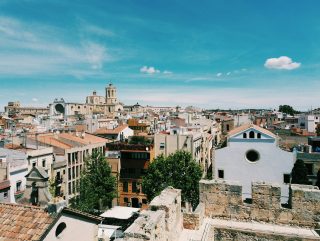
Castillo de Gibralfaro, Málaga
Castle in Málaga
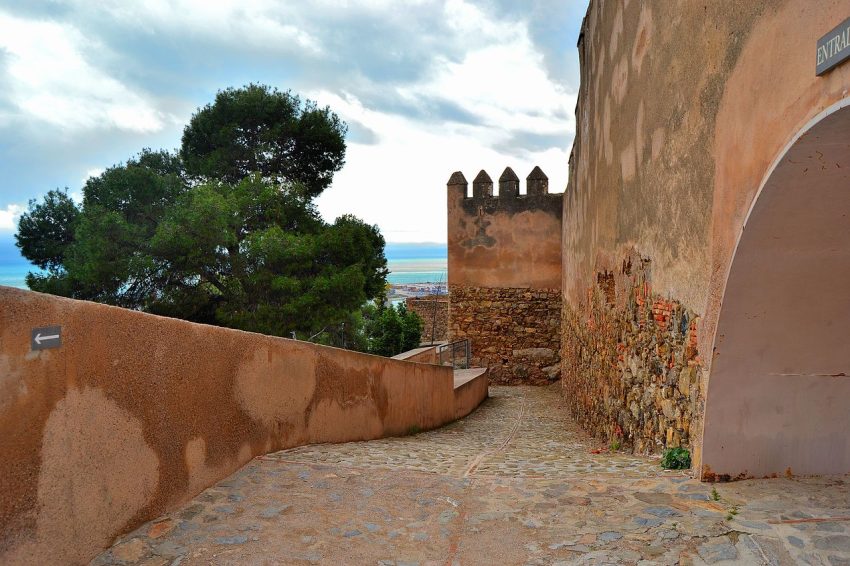
Castillo de Gibralfaro in Málaga, Spain, is a hilltop fortress overlooking the city and the Mediterranean. Built on Gibralfaro Hill, it rises above the old centre as a military site rather than a palace, with walls, towers, courtyards, and open viewpoints spread along the ridge. The setting is as important as the structure itself: the castle was placed to watch the harbour, protect the Alcazaba below, and control the approaches to Málaga.
What visitors notice most is the view, but the site also shows the layered story of the city, from Phoenician use of the hill to Moorish construction and later Christian conquest. Much of the interior is in ruins, so it suits people who do not mind a simple site in exchange for space, light, and outlooks over the coast. It is a good stop for history-focused travellers, walkers, and anyone who wants to understand how Málaga is laid out from above.
Table of Contents
- History and Significance of the Castillo de Gibralfaro
- Things to See and Do in the Castillo de Gibralfaro
- How to Get to the Castillo de Gibralfaro
- Practical Tips on Visiting the Castillo de Gibralfaro
- Where to Stay close to the Castillo de Gibralfaro
- Is the Castillo de Gibralfaro Worth Visiting?
- FAQs for Visiting the Castillo de Gibralfaro
History and Significance of the Castillo de Gibralfaro
Long before it was a castle, Gibralfaro hill was an important lookout. The Phoenicians used this rocky outcrop as an enclosure and lighthouse, a role that continued under the Romans. Its name reflects this layered heritage: “Gibralfaro” comes from the Arabic and Greek for “mountain of light,” a nod to the beacon that once shone from the summit to guide ships along the coast.
The fortress we see today took shape in 929 AD, when Abd-al-Rahman III, the Caliph of Córdoba, built over the earlier structures to create a proper defensive outpost. In the early 14th century, Yusef I, Sultan of Granada, enlarged the complex and added the famous double wall running down to the Alcazaba below. At that time Málaga was the main port of the Emirate of Granada, and Gibralfaro became both a military barracks and a lighthouse, guarding the coastline and protecting the palace-fortress and harbour beneath it.
The castle's most famous episode came in 1487, during the siege of Málaga by the Catholic Monarchs, Ferdinand and Isabella. Gibralfaro held out for three long months, its defenders and townspeople enduring bombardment and starvation before the famished Malagueños finally surrendered. The fall of Málaga marked a key step in the Reconquista. Today, walking along the walls in the late-afternoon sun, it's hard to imagine such hardship - yet the thick ramparts, towers, and steep slopes still tell the story of a fortress designed to be as unassailable as possible.
Things to See and Do in the Castillo de Gibralfaro
The main attraction at Gibralfaro is the circuit of ramparts that loops around the hilltop. As you follow the protective walkway, you'll find frequent viewpoints with superb panoramas over Málaga's bullring, harbour, cathedral, and the green rise of the Alcazaba below. This spot is one of the best places to see in Málaga if you want those classic skyline shots with sea, city, and mountains all in one frame. Take your time; the light and views shift constantly as you circle the hill.
Inside the walls, the castle is divided into two main levels. The lower area, once the parade ground, contained barracks for troops and stables for horses; today it feels like a series of open courtyards and paths, with pines offering welcome patches of shade. The upper section is the main patio, home to the Torre Mayor or Main Tower, which rises independently with its own cisterns and stores. Here you can also see the remains of baths and the Phoenician well, including the Airón well, dug 40 metres deep into solid rock - a reminder of how vital water was to a fortress like this.
Don't miss the small military museum housed in one of the buildings near the entrance. It features uniforms, weapons, and maps, plus a scale model of the castle and Alcazaba complex that really helps you visualise how the two fortresses worked together. As you explore, look for the large U-shaped Albarrana tower known as the Torre Blanca (White Tower), built just outside the main enclosure but attached to it to help defend the barbican. Imagine the Coracha, the now-ruined double wall that once snaked all the way down the hillside to connect Gibralfaro with the Alcazaba, forming a continuous fortified spine above the city.
How to Get to the Castillo de Gibralfaro
Gibralfaro Castle sits on top of Gibralfaro hill, just above the Alcazaba and eastern edge of Málaga's historic centre, making it easy to combine with other major sights. If you're arriving in Málaga by air, Málaga-Costa del Sol Airport is the nearest hub, with frequent connections to the city centre by train, bus, taxi, and hire car. For the best deals and a seamless booking experience, check out these flights to Málaga on Booking.com.
From within Málaga, you have several options. Many visitors choose to walk up from the city, either via streets that wind up from the eastern side or along the scenic Paseo Don Juan de Temboury, just south of the Alcazaba. From there, a steep but beautiful path climbs through terraced gardens, with viewpoints overlooking the port and old town along the way. If you prefer an easier option, bus 35 runs from Avenida de Cervantes up to near the castle entrance, saving your legs for the ramparts. Train schedules and bookings can be found on Omio.
You can also drive up via the Camino de Gibralfaro, following the winding hillside road to reach parking areas near the castle. This is handy if you’re exploring the wider Costa del Sol by car, though you may still want to walk one way to enjoy the viewpoints on foot. If you are looking to rent a car in Spain I recommend having a look at Discover Cars, first, as they compare prices and review multiple car rental agencies for you.
Practical Tips on Visiting the Castillo de Gibralfaro
- Suggested tips: Wear comfortable shoes and bring water - the climb and the circuit of the ramparts can be hot and tiring, especially in summer.
- Best time to visit: Early morning offers cooler temperatures and softer light; late afternoon and sunset are stunning for city views and photography.
- Entrance fee: Adults: €7.00, incl Alcazaba €10.00
- Opening hours: Winter: From November 1st to March 31st, 9:00 AM to 6:00 PM (last entry at 5:00 PM) Summer: From April 1st to October 31st, 9:00 AM to 8:00 PM (last entry at 7:00 PM)
- Official website: http://alcazabaygibralfaro.malaga.eu/
- How long to spend: Plan 60-90 minutes for a relaxed circuit of the walls, museum visit, and photo stops; allow more if you’re walking up from the city.
- Accessibility: The approach paths and ramparts involve steep slopes, uneven surfaces, and steps; access can be challenging for visitors with limited mobility.
- Facilities: There are basic visitor facilities near the entrance, and shaded areas within the grounds; cafés and additional services are available back down in the city.
- Photography tip: For the classic bullring-and-bay shot, look for viewpoints on the southern and western walls; a wide-angle lens helps capture the curve of the coast and the city below.
- Guided tours: Consider a combined Alcazaba and Gibralfaro tour to get the full story of Málaga's defences and avoid duplicating your climb.
- Nearby food options: Pack a snack for the top, then reward yourself with tapas or ice cream in the old town or along Muelle Uno once you've walked back down.
Where to Stay close to the Castillo de Gibralfaro
If you want to be within easy reach of Gibralfaro while still enjoying the buzz of the old town, look for accommodation around the historic centre and the area near the Alcazaba. From here, you can walk to the castle trail in 10-20 minutes and be on the ramparts soon after. Hotels near the cathedral or Plaza de la Merced make a great base for sightseeing, with Gibralfaro, the Alcazaba, the Roman Theatre, and the port all within walking distance.
For a more resort-style stay with views back towards the hill, consider seafront hotels along Málaga's eastern beaches (like La Malagueta and beyond); from there you can stroll or bus into the centre and head up to the castle as part of a day of exploring. If you're travelling by car and plan to tour wider Andalusia, staying slightly uphill or in residential neighbourhoods near the Camino de Gibralfaro can also be convenient, though you'll rely more on driving or buses for evenings in the old town.
Is the Castillo de Gibralfaro Worth Visiting?
Yes - the Castillo de Gibralfaro is absolutely worth visiting, especially if you enjoy viewpoints and historic fortifications. Even though the interior is quite bare, the combination of panoramic city-and-sea views, atmospheric walls, and traces of Moorish and later history makes it one of the must-see places in Málaga. It's also the perfect complement to a visit to the Alcazaba: where the Alcazaba feels more like a palace-fortress with gardens and courtyards, Gibralfaro is the pure military watchpoint, all ramparts and lookouts.
The climb up (whether on foot or by bus plus a short walk) adds to the experience, helping you feel the transition from busy streets to breezy hilltop. Once you're standing on the walls, with the entire city spread out below and the Mediterranean glittering beyond, it's easy to see why this hill has been guarded for so many centuries. For many visitors, Gibralfaro ends up being a highlight of any walking tour of Málaga and a place they remember long after leaving the city.
What Other Travellers Say...
Castillo de Gibralfaro sits atop Mount Gibralfaro in Málaga offering walkable fortress walls, sweeping 360° views of the city, port and coast, and a small museum and café at the top; visitors note the uphill walk can be steep (there's a bus and limited parking if you prefer to avoid the climb), paths have been improved but require mobility, and the site can get busy in late morning so consider visiting earlier or later for quieter views.





FAQs for Visiting the Castillo de Gibralfaro
The Castillo de Gibralfaro appears in our Complete Guide to Visiting Málaga!

Moira & Andy
Hey! We're Moira & Andy. From hiking the Camino to trips around Europe in Bert our campervan — we've been traveling together since retirement in 2020!
This website uses affiliate links which may earn a commission at no additional cost to you!
Planning Your Visit
Winter: From November 1st to March 31st, 9:00 AM to 6:00 PM (last entry at 5:00 PM)
Summer: From April 1st to October 31st, 9:00 AM to 8:00 PM (last entry at 7:00 PM)
Adults: €7.00, incl Alcazaba €10.00
Nearby Attractions
- Malagueta Bullring (0.3) km
Bullring - Museo del Patrimonio Municipal (0.3) km
Museum - Alcazaba (0.5) km
Castle - Roman Theatre (0.6) km
Historic Site and Theatre - Plaza de la Merced (0.6) km
Monument, Square and Statue - Museo Casa Natal (0.6) km
Historic Building and Museum - Port of Málaga (0.6) km
Port - Iglesia de Santiago (0.6) km
Church - Museo de Málaga (0.7) km
Museum - Picasso Museum (0.7) km
Museum