Self-Guided Walking Tour of Pisa, Italy (2026)
Self Guided Walking Tour of Pisa

This website uses affiliate links which earn a small commission at no additional cost to you.

Pisa is one of the most renowned cities in Tuscany, and its proximity to Florence, less than an hour away, makes it a must-visit destination on any Italian itinerary. While the city is famous for its iconic Leaning Tower, there is much more to explore and discover in this charming city.

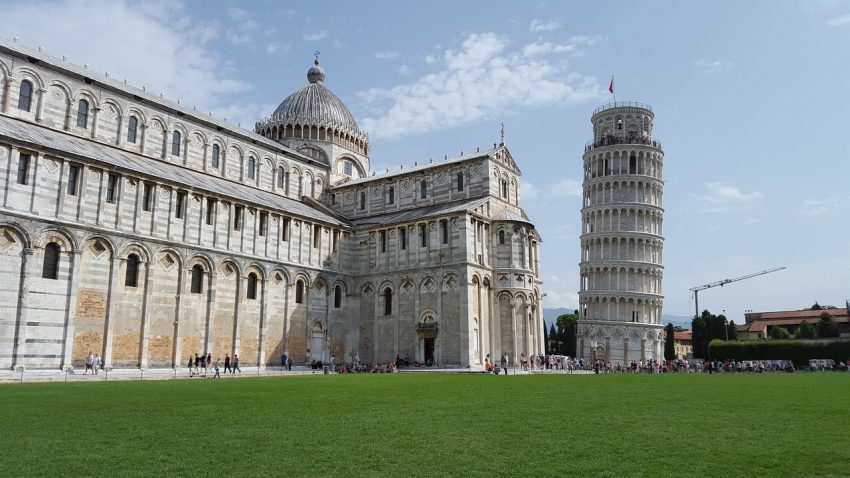
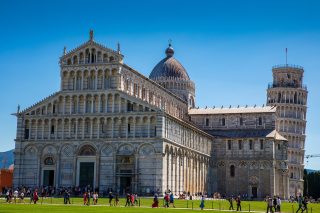
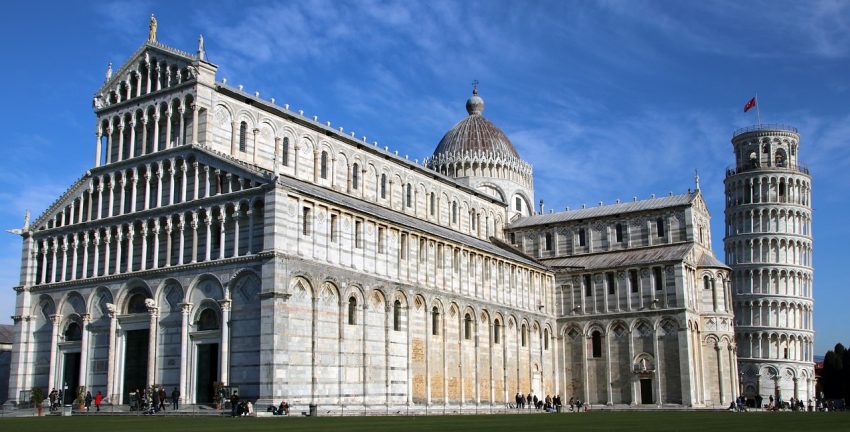
The Leaning Tower, undoubtedly a fascinating architectural wonder, is just one part of a vast religious complex. Standing proudly alongside the tower, you’ll find an impressive cathedral and baptistery. The cathedral, with its intricate design and artistic treasures, is a magnificent example of medieval architecture and craftsmanship. The baptistery, with its striking dome and ornate details, is another captivating gem that should not be missed.

Exploring this religious complex offers visitors a deeper understanding of Pisa’s historical and artistic significance. Beyond the iconic Leaning Tower, you’ll find a rich tapestry of culture and heritage waiting to be uncovered in the heart of this beautiful Italian city.

How to Get to Pisa

By Plane: Pisa is served by Pisa International Airport (Galileo Galilei Airport), which handles flights from major European cities and some international destinations. From the airport, the city center is easily reached by a short train ride, taxi, or shuttle bus in around 5-10 minutes. For the best deals and a seamless booking experience, check out these flights to Pisa on Booking.com.

By Train: It is most convenient to arrive at Pisa by a train on your day trip to Pisa. You can catch a train from Florence or other nearby cities, which will arrive at the Pisa Centrale, the train station. Use Omnio to easily compare schedules, book train tickets, and find the best prices all in one place for a hassle-free journey across Italy.

By Car: The main concern if driving into Pisa is to avoid the ZTL! It's a restricted driving area with enforcement cameras and they will fine you. Via Paparelli is located outside the city walls, it’s totally free all week long, except for Wednesday and Saturday when the square houses the weekly market. €1 an hour when the machine is working! If you are looking to rent a car in Italy I recommend having a look at Discover Cars, first, as they compare prices and review multiple car rental agencies for you.

Where to Stay in Pisa

To fully experience Pisa’s historic ambiance, consider staying in the city center. For luxury, Hotel Relais dell'Orologio offers elegant accommodations in a historic building near the Leaning Tower. For mid-range comfort, Hotel Bologna provides modern amenities close to the Arno River. Budget-conscious travellers may enjoy Hotel Francesco just steps from the main attractions.

A Brief History of Pisa

Pisa’s origins trace back to Etruscan and Roman times, but its golden age came during the Middle Ages when it became a powerful maritime republic. Its prosperity led to the construction of some of Italy’s most celebrated architecture, particularly in the Campo dei Miracoli, or Square of Miracles, where the Cathedral, Baptistery, and Leaning Tower form a breathtaking ensemble.

Today, Pisa continues to blend its academic, cultural, and architectural heritage, supported by its prestigious university and thriving student population.

Guided or Self-Guided Tour of Pisa?

While Pisa is compact and walkable, a guided tour offers insights beyond what meets the eye. The Pisa: 2-Hour Walking Tour is led by a local expert and covers key landmarks such as the Cathedral, Leaning Tower, Piazza dei Cavalieri, and historic neighborhoods beyond the tourist trails. It’s a great introduction to Pisa’s history, legends, and hidden gems.

Your Walking Tour of Pisa

This guide outlines Pisa's main highlights, but the city reveals itself in layers. Wander into lesser-known piazzas, enjoy a gelato along the Arno, or pause in a quiet cloister. Whether you're here to marvel at engineering wonders or to soak up Italian ambiance, Pisa promises an unforgettable walking experience that's far more than just its famous tilt.

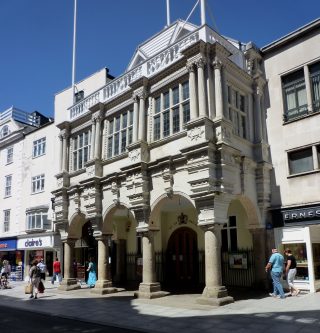
1. Logge dei Banchi
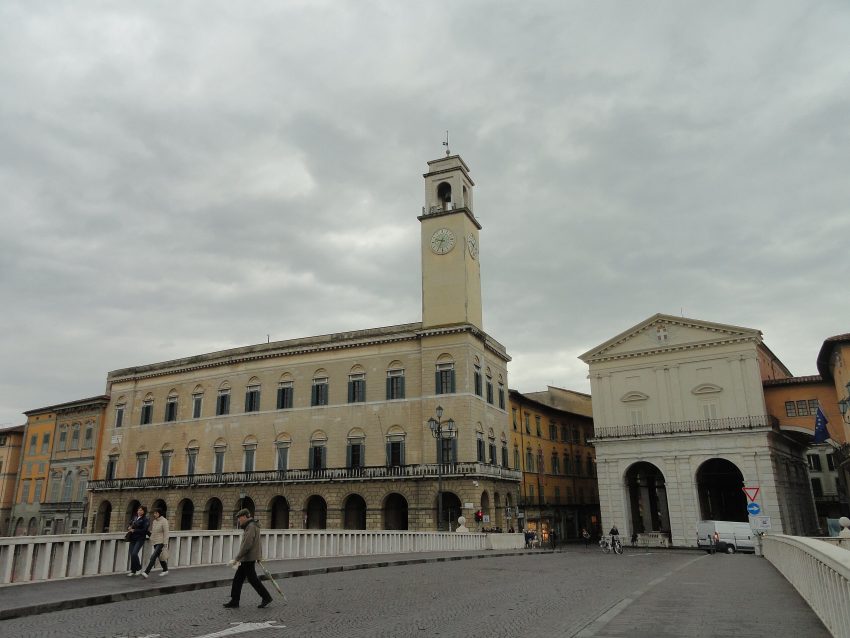
Logge di Banchi
Logge di Banchi
CC BY-SA 2.0 / Damien

Outside the station, the first thing you see is Piazza Vittorio Emanuele, the administrative core of the city: this is an amphitheatre-shaped square surrounded by a circular, fully-pedestrian open gallery full of shops where several historical buildings look onto.

Cross the square and head onto Corso Italia. As one of the main shopping pedestrian streets, Corso Italia was built along a Roman road – Borgo Stretto and Borgo Largo are the other main shopping streets.

Walk down Corso Italia until you come to the Logge dei Banchi.


The Logge dei Banchi, designed by architect Bernardo Buontalenti and built between 1603 and 1605, served as a marketplace for the wool and silk trades. The name “Logge dei Banchi” refers to the market stalls (“banchi” in Italian) that were set up in the loggia. Today, the loggia is still occasionally used for various markets and events.

Originally, the loggia had a square base with twelve pillars supporting a lower floor. In the early 18th century, the floor was raised, and a volute pediment adorned the structure. However, in 1814, the volutes were removed, and the upper floor was further enhanced with a triangular pediment. The loggia was connected to Palazzo Gambacorti via an overpass.

In 1925, a day hotel belonging to the Cobianchi chain was constructed by excavating the basement of the Logge. Today, this space has been converted into public toilets, which were reopened and restored in 2012.

Since 1865, the State Archive of Pisa has been housed in the Logge dei Banchi. The loggia, with its distinctive profile, is one of the most recognizable elements of the views along the riversides of Pisa, especially when seen alongside the clock tower. It remains an important historical and architectural landmark, adding to the charm and character of the city’s urban landscape.


Location: Logge dei Banchi, Via di Banchi, Pisa, Province of Pisa, Italy | Hours: As an open loggia on a public street, it is accessible at all times, though interior spaces and any exhibitions follow their own schedules. | Price: There is no fee to walk under the arches or enjoy the square; costs apply only for any events or exhibitions hosted in the spaces above or below.

We recommend to rent a car in Italy through Discover Cars, they compare prices and review multiple car rental agencies. Book your rental car here.

2. Palazzo Blu (Blue Palace)

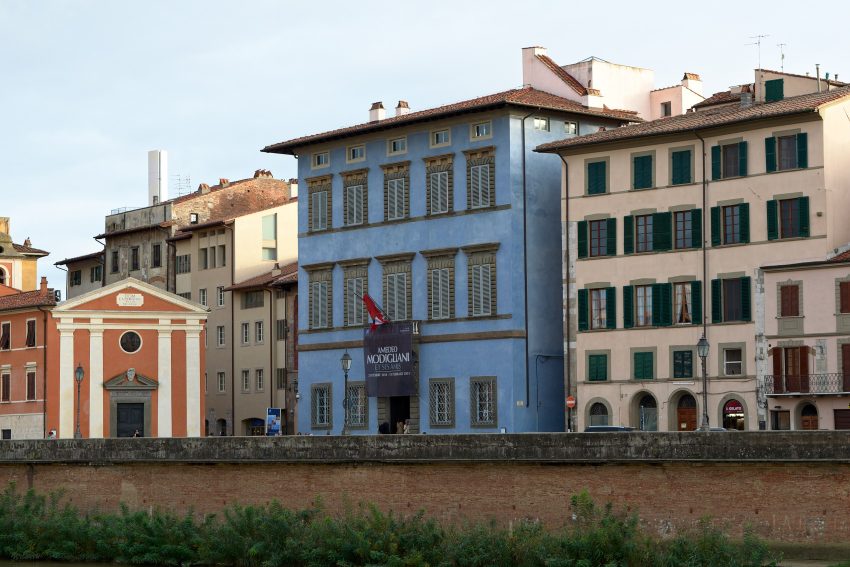
Palazzo Blu Palazzo Giuli Rosselmini Gualandi Pisa
CC BY-SA 4.0 / Japs 88

Don’t cross the Arno just yet and head to your right onto the Lungarno Galilei: the “lungarni” are the roads that run along the Arno river, both in Pisa and in Florence, and are important streets for both residents and visitors alike. Many splendid buildings dating back to the Renaissance period and the Middle Ages still grace the riverfront, including numerous hotels. Remarkably, these buildings survived the bombings during WWII.


The Blue Palace, located on the banks of the River Arno, has a rich history dating back to the 11th century. Parts of the palace were built in the 16th century, and over the centuries, it has been owned by various famous and influential families.

During the 19th century, the palace underwent significant renovations, and a wing was added to create a symmetrical design. It was during this time that the iconic blue color was applied to the facade, giving the palace its name. The interior of the Blue Palace is adorned with lavish embellishments typical of the 19th-century aristocratic style.

Today, the Blue Palace houses the Museum of Art and Culture in Pisa. The museum’s collection boasts over 300 works of art, spanning from the 14th to the 20th centuries. Visitors can admire pieces by renowned artists such as Nino Pisano, Cecco di Pietro, and Benozzo Gozzoli.

In addition to its impressive art collection, the museum also showcases archaeological records from Pisa’s rich history, including artifacts from the Etruscan, Roman, and Hellenistic eras. On the ground floor, visitors can even see the remains of a road dating back to the 12th or 13th centuries.

The Blue Palace is not only a treasure trove of art and history but also a venue for temporary exhibitions on various captivating themes. These exhibitions may delve into topics as diverse as space exploration or the iconic literary work, Dante’s Inferno.

For those with an interest in art, history, and culture, a visit to the Blue Palace and its Museum of Art and Culture is a must while exploring the city of Pisa.


Location: Palazzo Giuli Rosselmini Gualandi, Lungarno Gambacorti, Pisa, Province of Pisa, Italy | Hours: Tuesday - Friday: 10:00 AM – 7:00 PM Saturday - Sunday and holidays: 10:00 AM – 8:00 PM | Price: Adult: 3,00 Euro | Website

Here is a complete selection of hotel options in Pisa. Feel free to review each one and choose the stay that best suits your needs.

3. Santo Sepolcro

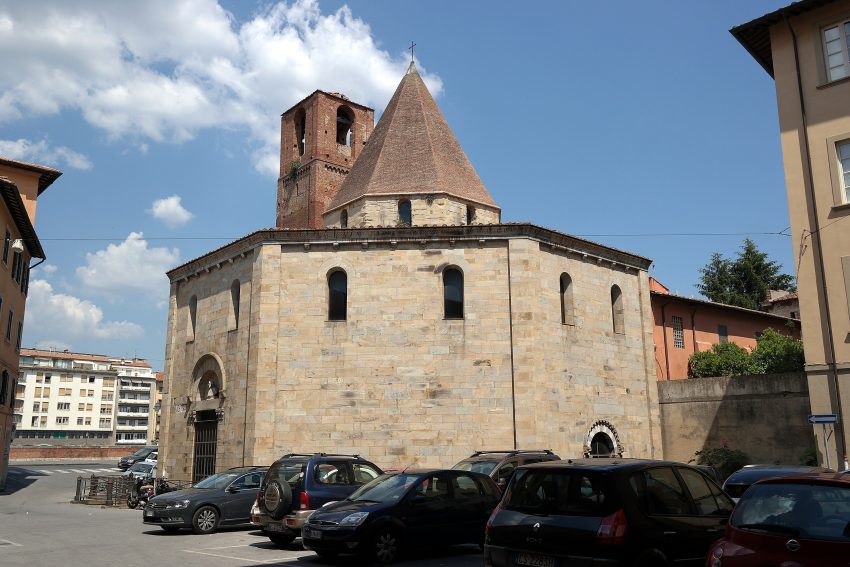
Chiesa del Santo Sepolcro
CC BY-SA 4.0 / Luca Aless

Head back the way you came with the River Arno on you left. Walk past the Ponte di Mezzo and the unique San Sepolcro church, an octagonal building built as a refuge, a hospital and a monastery, dedicated to the Knights Templar is on your right.


The Church of the Holy Sepulchre in Pisa, also known as San Sepolcro, holds an intriguing history and unique architectural design. It was first mentioned in a document dating back to 1138 and was associated with the Knights Hospitaller, a lay military religious order responsible for protecting the faith and caring for the sick and the poor.

The church’s octagonal shape, though unusual, was a common architectural style during the time of the Crusades. Many churches across Europe were modelled after the “real” Saint Sepulchre in Jerusalem, the mausoleum built by Emperor Constantine in 336 to mark the burial place of Jesus. The octagonal shape is not only a tribute to the original tomb but also carries spiritual significance. In Christian symbolism, the number eight represents resurrection, while the round shape symbolizes God’s infinite nature.

This unique church stands as a testament to Pisa’s ancient connection with the Holy Land and serves as a reminder of the historical and religious importance of the Crusades era. Its design and history make it a significant and intriguing site for visitors to explore and appreciate.


Location: Santo Sepolcro, Piazza Santo Sepolcro, Pisa, Province of Pisa, Italy | Hours: 3:30-5:00 pm | Price: Free

Traveling to a country with a different currency? Avoid ATM transaction fees and pay in local currency with a Wise Card. Having used it for over 5 years, we've saved loads on fees!

4. National Museum of San Matteo

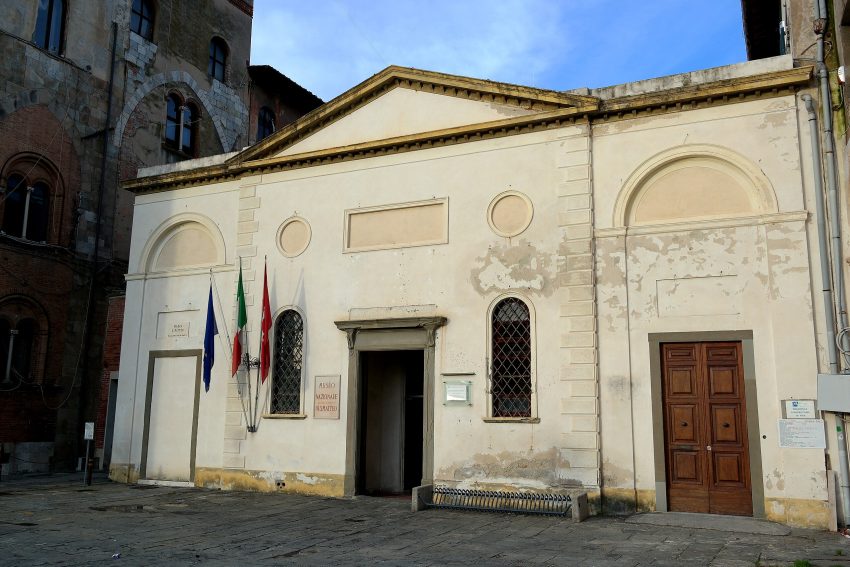
Pisa   Museo Nazionale di san Matteo
Pisa Museo Nazionale di san Matteo
CC BY-SA 4.0 / Luca Aless

Carry on walking along the Lungarno Galileo Galilei and cross over Ponte della Fortezza. Turn left and walk along the River Arno until you reach National Museum of San Matteo.


The museum is located in the old Benedictine convent of S. Matteo in Soarta, which dates back to the 11th century. The convent has undergone various alterations and restorations over the centuries, resulting in very little remaining of the original structure, except for the church and a few pieces of medieval wall.

The late medieval cloisters, built with brick and featuring double mullions and columns with original capitals, are on the upper floor. These cloisters were largely restructured in the 16th century, along with other parts of the building that are not accessible to the public. In the early 19th century, a Chapter of Canonesses was installed in the convent, and a neoclassical entry was likely added during this time. Between 1866 and 1940, the building served as a town remand home, which required significant structural adaptations.

After the Second World War, the transformation into a museum and restoration of the building took place. The National S. Matteo Museum was established in 1949, thanks to Piero Sanpaolesi, with a focus on the aesthetic quality of the artworks on display. Later, the decision was made to group the exhibits by type and reunite the original ensembles.

The museum houses the largest collection of works of art in Pisa. Notable items include a remarkable collection of medieval pottery, including ceramic basins from around the Mediterranean and medieval and modern crockery found during excavations in Pisa (Tongiorgi collection). There are also precious jewels and a selection of medieval coins and seals from the Franceschi and Supino collections.

The museum’s collection of illuminated codices is impressive, with examples from the 12th to the 14th centuries, known for their rich illuminations. The museum also features stone statues dating from the Middle Ages to the 16th century, including fine examples of Romanesque sculpture and masterpieces by Nicola Pisano and Donatello.

Furthermore, the museum showcases a collection of wooden sculptures and paintings, comprising over two hundred works from the early 1200s to the modern age. These pieces were created by significant artists such as Giunta Pisano, Berlinghiero, Simone Martini, and Masaccio, among others. The museum’s diverse collection makes it a significant cultural and historical treasure in Pisa.


Location: Museo Nazionale di San Matteo, Piazza San Matteo In Soarta, Pisa, Province of Pisa, Italy | Hours: Tuesday to Saturday, from 9:00 to 19:00 (last admission 18:30). Sundays and holidays from 9:00 to 13:30 (last admission 13:00) | Price: Adults € 6.00 | Website

Where to Stay in Pisa: An Area by Area Guide!

5. Borgo Stretto (Narrow Street)

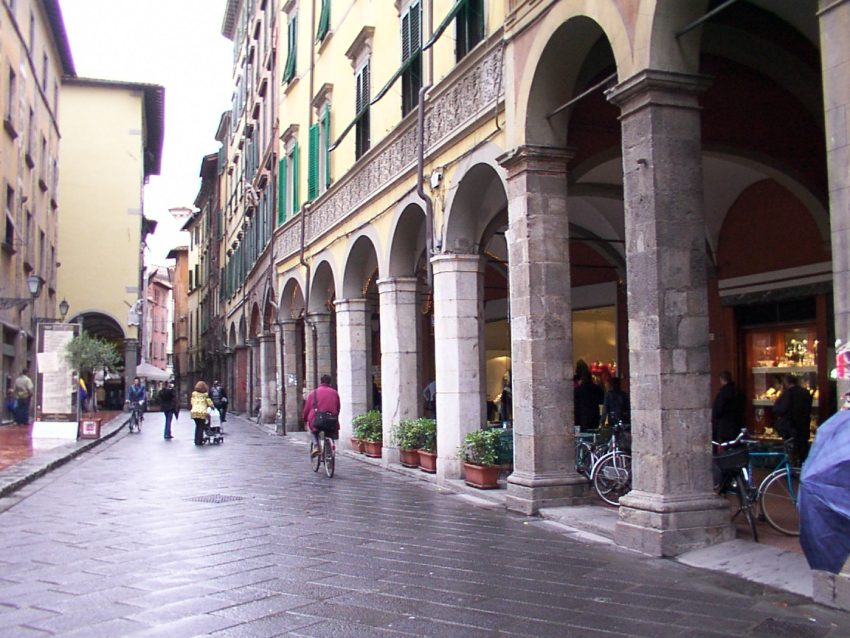
Borgo Stretto Pisa
Borgo Stretto Pisa
CC BY-SA 4.0 / Daniel Ventura

Leaving the National Museum of San Matteo you continue along the river. the next building is the Palazzo Medici. On an 11th century structure, it takes on the form of a royal palace in the 13th century. The former Palazzo Appiano (original name) was acquired in 1446 by the Medici family. For some time now, the palace has been home to the seat of the Prefecture of Pisa.

Carry on along the river until you reach the Ponte di Mezzo, then turn right into Borgo Stretto (Narrow Street).


If you’re in the mood for shopping or simply want to explore the charming medieval streets of Pisa, Narrow Street is the place to be. This long street is mostly pedestrianized and teeming with shops offering a diverse range of products, from books and souvenirs to high-end boutiques.

As you walk down Narrow Street, you’ll notice its unique architecture, with arcades lining each side, supported by Corinthian columns. These arcades provide a sheltered and inviting atmosphere, making it a perfect place to find not only shops but also numerous bars and restaurants to take a break and enjoy some refreshments. The buildings along this street were once the homes of wealthy merchant families, and their two and three-story houses still exude a sense of grandeur and history. Don’t miss the 15th-century Poschi Palace, located on the corner of via San Francesco, a remarkable landmark in itself.

One must-visit spot on Narrow Street is Café Settimelli, which boasts its historical significance by displaying a sign above the arched entrance, stating that this was once the residence of the Galilei family, and it is said that Galileo himself was born there. A little further on there is a statue of  Galileo with his gaze turned towards the sky and holds a telescope in one hand and a globe, symbol of the world, in the other.


Location: Borgo Stretto, Pisa, Province of Pisa, Italy | Hours: Open at all times as a public thoroughfare, though individual shops and cafés generally follow standard daytime and early-evening opening hours. | Price: Free to visit, as it is a public street with shops, cafés and arcades open to pedestrians.

Explore Pisa at your own pace with our self-guided walking tour! Follow our curated route to discover must-see sights and local secrets that makes Pisa one of the best places to visit in Italy.

6. Piazza dei Cavalieri (Knights Square)
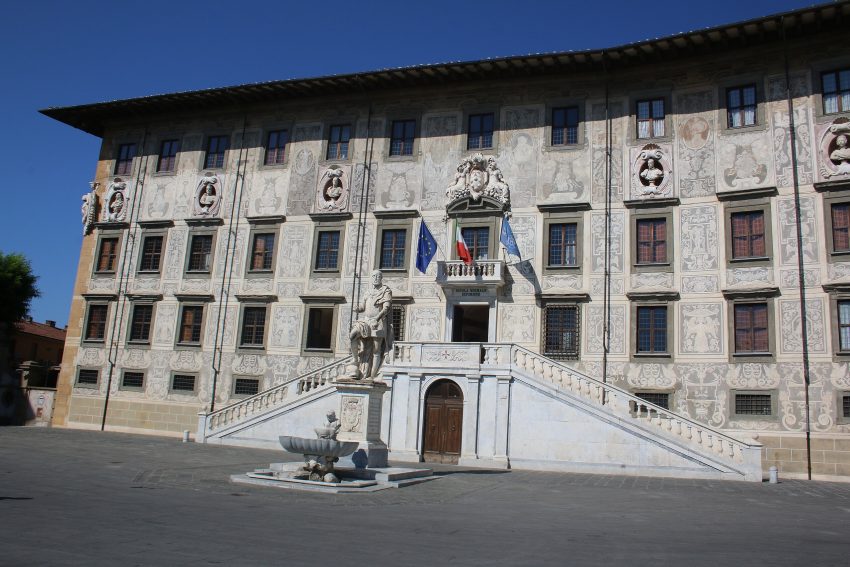
Palazzo dei Cavalieri
CC BY-SA 4.0 / FrDr

Shortly after you pass the Statua Galileo Galilei, turn left down Via Ulisse Dini which leads to Piazza dei Cavalieri.


During the medieval era, Knights’ Square served as the political hub of Pisa, and it is believed that before that, it might have been the location of the Roman Forum.

In 1406, the end of Pisa’s independence was announced in this very square by Florence’s emissary.

In the 16th century, Cosimo I de Medici, the Grand Duke of Tuscany, commissioned Vasari to redesign the square in the Renaissance style. The Knights of St. Stephen had recently established the Order of the Knights, and the square was dedicated to their honour. The Order of the Knights of Saint Stephen was formed to protect the coast from Turkish pirates.

At the heart of the square stands a statue of the Grand Duke of Tuscany, erected in 1596.

Knights Square is home to several significant buildings. The Cavalieri Palace, also known as the Palace of the Convoy, served as the training ground for Order initiates, undergoing three years of preparation here. The palace is adorned with artistic graffiti depicting allegorical figures, zodiac signs, and busts representing the Grand Dukes of Tuscany.

The Clock Palace is famous as the place where Count Ugolino was imprisoned and met his tragic end of starvation. Today, the palace houses the University library.

The Puteano College was founded in 1605, and the Consiglio dei Dodici Palace features valuable 18th-century paintings.

The Church of the Knights of the Holy and Military Order of St. Stephen, designed by Vasari, was completed in 1569. Inside, visitors will find naval banners captured by successful Knights of St. Stephen, a testament to their maritime endeavours and achievements.


Location: Palazzo della Carovana, Piazza dei Cavalieri, Pisa Province of Pisa, Italy | Hours: The square itself is accessible at all times | Price: Free to enjoy the piazza and palace exterior

Click here to read our blog about Cinque Terre in One Day 2026: Complete Guide with Maps & Tips

7. Leaning Tower of Pisa

Leaning Tower of Pisa

The Leaning Tower of Pisa, renowned as the world’s most famous freestanding bell tower, was constructed between 1173 and 1372 as a companion to the Pisa Cathedral. Its unique architectural feature, the leaning aspect, resulted from the tower sinking into the soft, sandy soil during its early construction. After a century-long pause in construction due to battles and conflicts, the tower was completed with careful adjustments to compensate for its tilt.

One of the tower’s significant historical associations is with Galileo Galilei, who performed his famous experiment by dropping spheres of different masses from the tower to demonstrate that their time of descent was independent of their mass. This groundbreaking experiment challenged Aristotle’s theory of gravity and laid the foundation for modern physics.

Despite facing several major earthquakes, the tower has impressively withstood the test of time, thanks to its height and the soil’s supportive characteristics. To prevent further leaning and preserve this iconic landmark, extensive stabilization efforts were carried out between 1990 and 2001, successfully reducing the tilt and ensuring its stability.

Visiting the Leaning Tower of Pisa is a must-do while in the city. Climbing its 251 steps offers breathtaking views, making it an ideal spot for memorable photographs. Tickets are in high demand, so it’s advisable to purchase them in advance, and please note that children under eight are not permitted to climb.

The Leaning Tower’s fascinating history, remarkable architecture, and cultural significance make it an essential destination for anyone exploring the city of Pisa.


Location: Leaning Tower of Pisa, Piazza del Duomo, Pisa, Province of Pisa, Italy | Hours: Adults: from €27.00 | Website

Click here to read our blog about Complete Guide to Visiting the Leaning Tower of Pisa (2026)

8. Battistero di San Giovanni (Pisa Baptistery)

Battistero di San Giovanni Pisa Baptistery

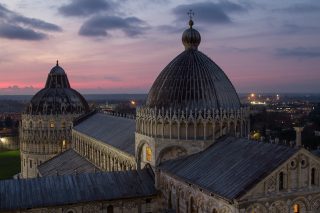
The Pisa Baptistery, a magnificent marble structure, began its construction in 1152 and was completed in 1363, a process spanning over two centuries. Designed by Diotisalvi, the baptistery stands tall at 54.86 meters (180 feet), making it the largest in Italy and almost as tall as its renowned neighbour, the Leaning Tower. The architectural style of the lower portion showcases Romanesque features, while the upper sections display elegant Gothic pointed arches.

The entrance of the baptistery is adorned with two classical columns, and the lintel is divided into two tiers. The lower tier depicts scenes from the life of John the Baptist, while the upper tier features John the Baptist alongside Christ, the Madonna, and angels.

Upon entering the interior, visitors are greeted by 12 columns symbolizing the 12 apostles. In the centre of the baptismal font stands a striking bronze sculpture of John the Baptist. The three steps of the font represent The Father, Son, and Holy Spirit, holding great significance in Christian symbolism. Notably, the renowned scientist and astronomer, Galileo, was baptized in the baptistery in 1564.

The pulpit, an exquisite masterpiece sculpted by Nicola Pisano in 1260, is a remarkable representation of a new focus on realism in art, signifying the beginning of the Italian Renaissance period.

Like its famous neighbour, the Leaning Tower, the Pisa Baptistery also leans slightly, with an inclination of 0.6 degrees. Visitors have the opportunity to climb to the viewing level, providing panoramic views of the captivating Piazza dei Miracoli (Square of Miracles) and its extraordinary ensemble of architectural wonders.


Location: Battistero di San Giovanni, Piazza del Duomo, Pisa, Province of Pisa, Italy | Hours: Daily: 9:00 – 18:00 | Price: Adults: €8.00 | Website | Baptistery and Cathedral Ticket with Audio Guide
Powered by GetYourGuide

9. Duomo di Pisa (Pisa Cathedral)
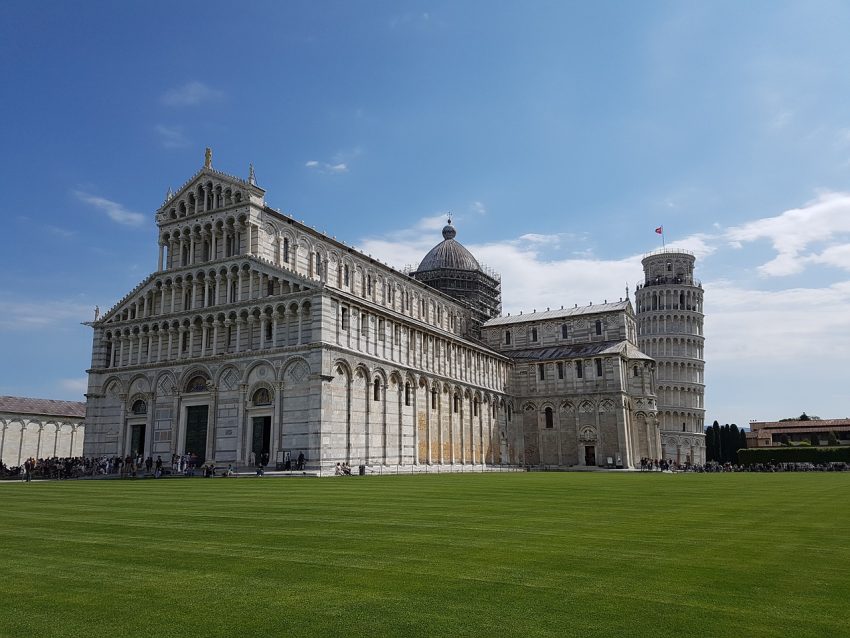
Cathedral of Santa Maria Assunta Pisa

The Pisa Cathedral, situated on the Miracles Square, is a splendid example of Italian-Romanesque architecture. Its construction began in 1064 under the guidance of architect Busketo, whose tomb is incorporated into the façade, adorned with white stone, grey marble, and colorful marble discs. An inscription commemorates the foundation of the Cathedral and Pisa’s triumph over the Saracens.

At the eastern end of the building, a replica of the Pisa Griffon can be seen. The original, an impressive 11th-century Islamic metal sculpture, is now housed in the Cathedral Museum.

Enormous bronze doors were installed after the original wooden ones were destroyed in a fire in 1595. Above the doors, you’ll find four rows of open galleries, featuring a statue of the Madonna and Child and the Four Evangelists. Worshipers commonly enter through a door built by Pisano in 1180 on the side of the cathedral facing the bell tower.

Inside the cathedral, the black and white marble facings create a captivating ambiance, and the mosaics showcase a Byzantine style. The granite Corinthian columns were acquired from a mosque in Palermo, captured by Pisa in 1063.

The interior’s gilded ceiling and frescoed dome were meticulously restored after the 1595 fire, as was the nave’s coffer ceiling. A precious fresco titled “Christ in Majesty with the Virgin Mary and St. John the Evangelist” fortunately survived the blaze and can be admired in the apse.

The cathedral boasts an intriguing tradition to mark the beginning of the Pisan new year. A beam of light shines through a round window on the south side of the nave, landing on the same spot every year precisely at noon on March 25. The light reaches a shelf affixed to a pylon on the opposite side of the church. Known as Galileo’s lamp, the lamp at the center of the nave is tied to a legend suggesting that the renowned scientist formulated his theory of isochronism of the pendulum while observing its oscillations from the roof of the nave. The original lamp, smaller and significantly different, is now located in the Camposanto.

It is noteworthy that Galileo Galilei, the great scientist, was consecrated as a scientist in this magnificent cathedral, adding to the rich historical and cultural significance of this awe-inspiring place of worship.


Location: Cathedral of Santa Maria Assunta, Piazza San Giovanni, Volterra, Pisa, Italy | Hours: Daily: 9:00 – 18:00 | Price: Adults: €8.00 | Website

10. Camposanto Monumentale (Monumental Cemetery)
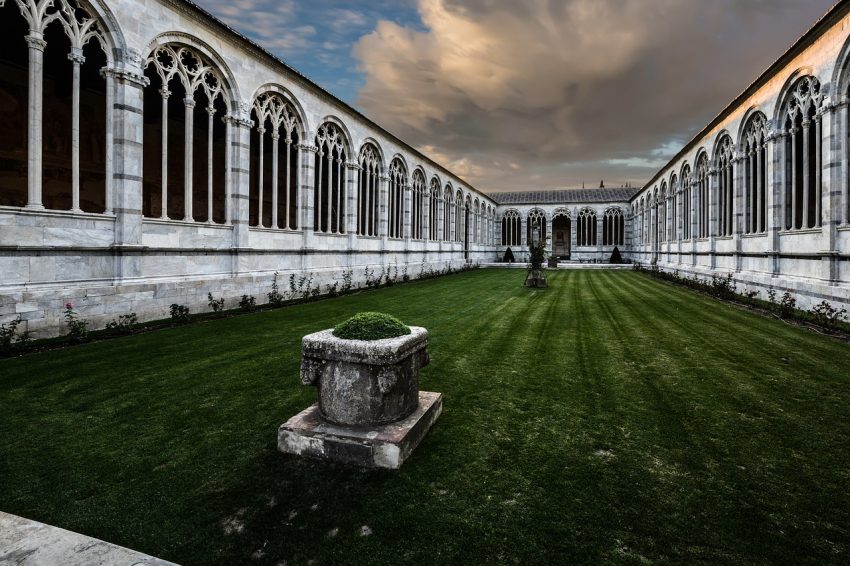
Camposanto Sacred Field pisa

The Monumental Cemetery, located at the northern boundary of the Miracles Square, acquired its name “Monumental” to distinguish it from later cemeteries. According to legend, it was built around sacred earth brought back from Golgotha in the 12th century by the Archbishop of Pisa, Ubaldo de’Lanfranchi.

An intriguing belief surrounds the cemetery: bodies buried here are said to decay within 24 hours. It was the fourth and final structure to be built on the square, occupying the site of the original Baptistery. The Gothic-style oblong building was initiated by di Simone in 1278 and completed in 1464. Initially intended to be a church, the plans were altered after the western end was finished.

The outer wall features 43 blind arches and two doorways. Above the right-hand entrance, you’ll find a tabernacle housing sculptures of the Virgin and Child, as well as four Saints, crafted by Giovanni Pisano in the 14th century. Most of the tombs are situated under the arches, and although numerous Roman sarcophagi once adorned the cemetery, only 84 remain today.

Within the building, you can explore three chapels: the Chapel Ammannati, dating back to 1360; the Chapel Aulla, constructed in 1518 and featuring an altar made by della Robbia; and the Chapel Dal Pozzo, added in 1594.

Notably, in the Aulla chapel, visitors can see the original incense lamp that Galileo Galilei used for calculating pendular movements. This lamp is the same one Galileo observed inside the cathedral, now substituted by a larger and more elaborate one.

Sadly, during World War II, the cemetery suffered damage from American bombing, resulting in a fire that destroyed much of the marvelous frescoes. The surviving frescoes were removed and an ongoing restoration process commenced in 1954, with the aim of returning them to their original locations, preserving and showcasing the historical and artistic treasures of this significant site.


Location: Camposanto, Piazza del Duomo, Pisa Province of Pisa, Italy | Hours: January-February, from 10.00 am to 5.00 pm; March-April, from 9:00 am to 7.00 pm; May-June, from 9.00 am to 8.00 pm; July-October, from 9.00 am to 8.00 pm; November-December, from 9.00 am to 7.00 pm. | Price: Adults: €8.00 (including the Cathedral). | Website | Camposanto and Cathedral Entry Tickets and Audio Guide
Powered by GetYourGuide

11. Orto Botanico (Botanical Garden)
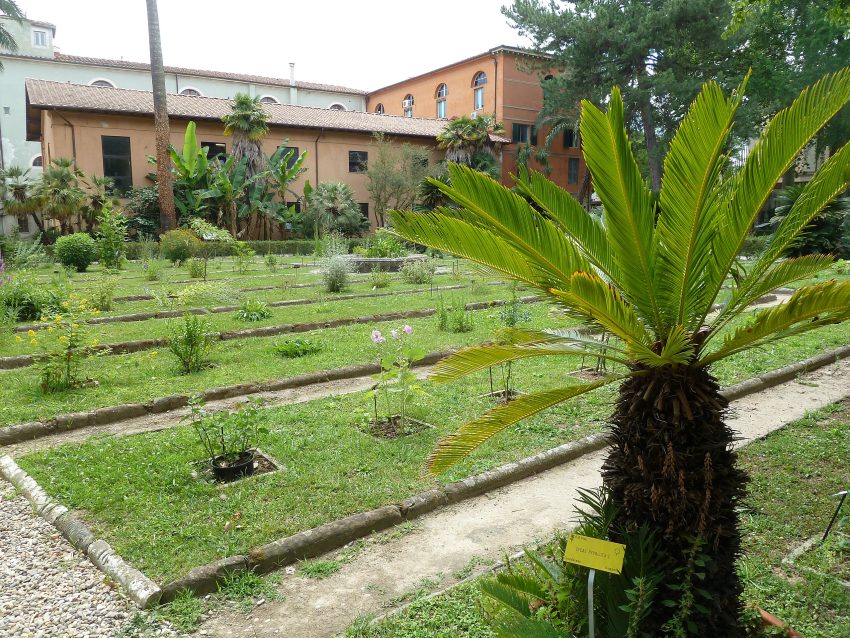
Orto Botanico Botanic Garden Pisa
CC BY-SA 4.0 / Notafly

The Botanical Garden in Pisa holds the distinction of being the first university botanical garden in all of Europe, dating back to its founding in 1544. Since 1591, it has been situated in its current location, offering visitors a serene and captivating environment to wander through, appreciating the beauty of nature and discovering an array of botanical treasures.

The garden encompasses various sections, each with its unique charm, including well-tended gardens, tranquil ponds, the botanical school, and greenhouses that shelter an array of plant species. A remarkable feature is the old botany institute, which was completed in 1595 and boasts an exquisite facade adorned with sea shells, making it a true architectural gem.

One of the garden’s highlights is the Pharaonic collection, a fascinating display of horticultural treasures unearthed from ancient Egyptian tombs. Additionally, the garden houses a collection of endangered aquatic plants that are so scarce in nature that they can no longer be found in the wild. The water gardens with their lovely pools and fountains provide a serene backdrop for contemplation.

For those interested in botanical history and knowledge, the Botanical Garden offers the Botanical Museum, established by the Grand Duke of Tuscany in 1591. Inside, you can explore portraits of renowned botanists and various artworks, delving into the rich history of botany. Moreover, the Herbarium houses an impressive collection of 350,000 samples, including diverse seagrass specimens.

Visiting the Botanical Garden is an enriching experience, allowing you to connect with nature and delve into the captivating world of botanical wonders and scientific exploration.


Location: Botanical Garden and Museum, Via Luca Ghini, Pisa, Province of Pisa, Italy | Hours: From October 31st to March 26th: every day, 8.30am – 5pm From 27 March to 29 April: every day, 8.30am – 7.00pm From 30 April to 12 June: every day, 8.30am – 8.00pm From 13 June to 12 July: every day, 8.30am – 9.00pm From 13 July to 4 September: every day, 8.30am – 8.00pm From 5 September to 10 October: every day, 8.30am – 7.00pm From 11 to 30 October: every day, 8.30am – 6.00pm | Price: Adults: €4:00 | Website

12. Santa Maria della Spina Church
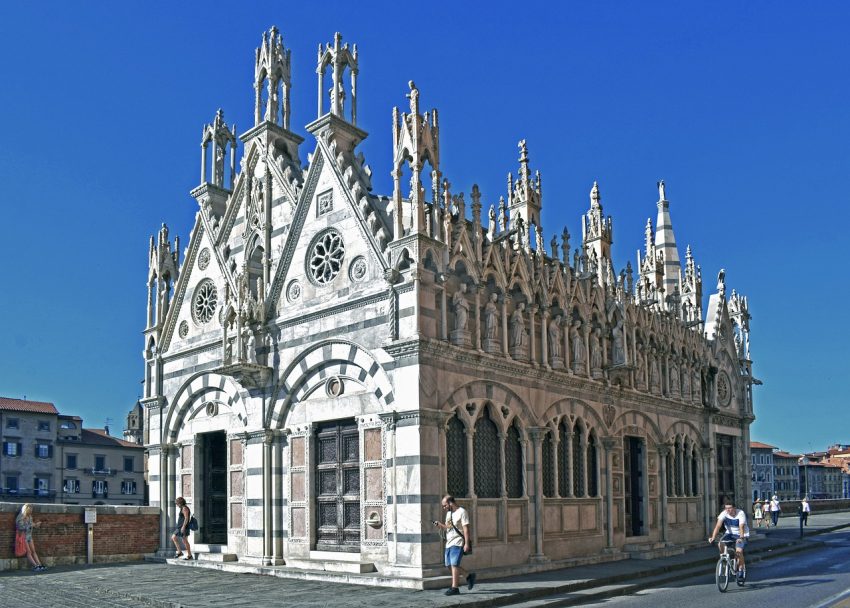
Santa Maria della Spina pisa

The tiny church in Pisa boasts one of the most remarkable examples of Gothic architecture in all of Europe. Despite its simple rectangular shape, the exterior is a marvel, entirely constructed from marble and adorned with elaborate cusps, tympani, and tabernacles. Intricately detailed sculptures adorn the walls, complemented by elegant rose windows and numerous statues from the 14th century.

Originally built in 1230, the church underwent enlargement in 1325. In its early days, it was known as Santa Maria Di Pontenovo, named after a bridge that once stood nearby. Regrettably, the bridge collapsed in the 1400s and was never reconstructed. Although the church housed a sacred relic believed to be a thorn from the Crown of Thorns worn by Christ during the Crucifixion, the relic now resides at Santa Chiara Church. Nonetheless, the church retains the name “della spina” or “of the thorn” in remembrance of its association with the sacred artifact.

In 1871, the church underwent renovations to elevate it above the flood level of the Arno River. These alterations sparked controversy and dismay among locals and visitors, including the Englishman John Ruskin.

While the interior of the church is relatively austere compared to its ornate exterior, it still holds a notable Gothic sculpture at its center—the Madonna of the Rose by Andrea and Nino Pisano, an exceptional masterpiece of artistry and religious significance. A visit to this outstanding church offers a glimpse into the magnificent world of Gothic architecture and sculpture in the heart of Pisa.


Location: Santa Maria della Spina, Lungarno Gambacorti, Pisa, Province of Pisa, Italy | Hours: Open only on special occasions or exhibitions | Price: Free

13. Tuttomondo Mural
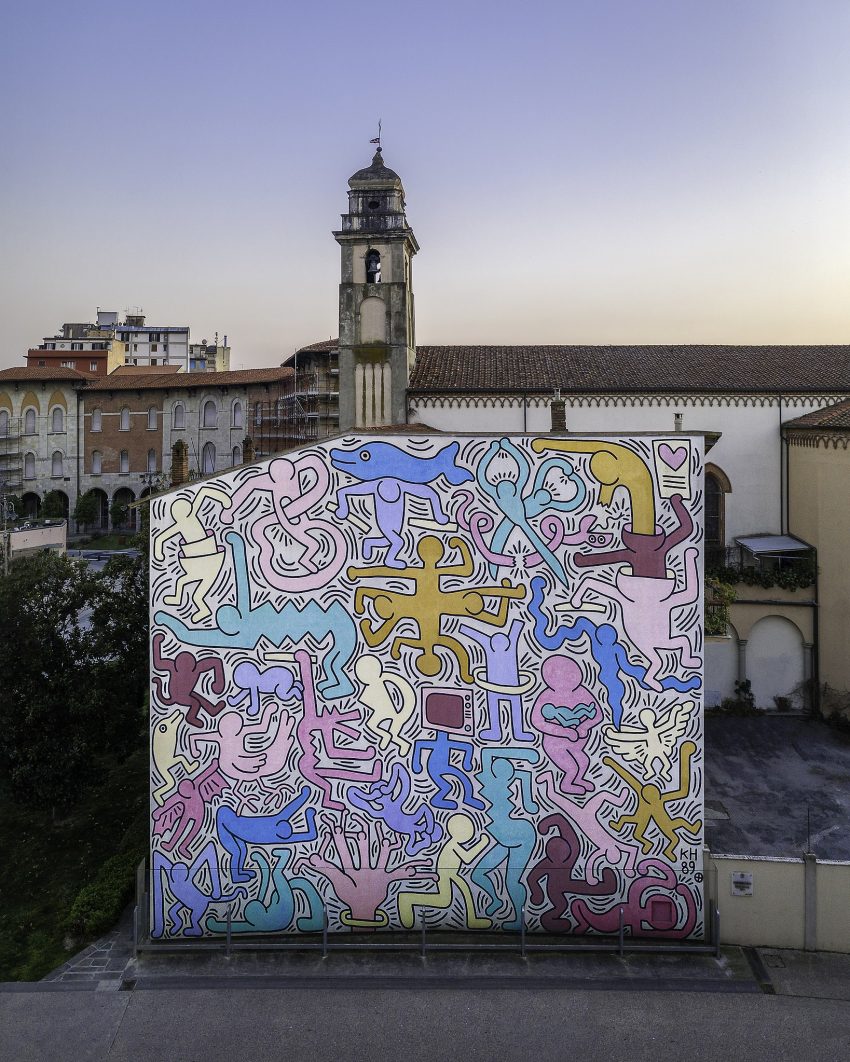
Tuttomondo
Tuttomondo
CC BY-SA 4.0 / Guglielmo Giambartolomei

The Church of Sant’Antonio Abate in Pisa is adorned with a remarkable mural on its southern exterior wall. Painted in 1989, it stands as one of the final works of the renowned American artist, Keith Haring, who tragically passed away due to complications from AIDS.

Named “Tuttomondo” or “all the world,” this colossal 180-meter-tall mural holds immense significance to Haring, who considered it one of his most significant projects. Displayed in his signature cartoon style, the mural portrays 30 figures united by the theme of peace and harmony.

Noteworthy elements within the mural include a man conquering an evil serpent, symbolizing the triumph over adversity, and a depiction of a woman with a baby, symbolizing motherhood and nurturing. Additionally, figures supporting dolphins represent humanity’s connection and bond with nature.

As a beloved spot for both art enthusiasts and tourists, the mural attracts many admirers. Visitors often take the opportunity to capture a Pisa selfie with this captivating modern art piece as their backdrop. Across from the mural, the Keith Café and Art Shop offer a delightful setting to savor a meal or sip on coffee while reveling in the beauty of this stunning creation. The Tuttomondo mural stands as a profound and enduring tribute to Keith Haring’s artistic legacy and his powerful message of unity and peace.


Location: P.za V. Emanuele II, 18, 56125 Pisa PI, Italy | Hours: Accessible at all hours from the street; any interior church opening times are separate and may vary. | Price: Viewing the mural is free; there is no ticket required as it is an outdoor public artwork.

14. Bagni di Nerone

Bagni di Nerone Roman Baths of Nero pisa
CC BY-SA 3.0 / sailko

Walk east along the Via Consoli del Mare, walk straight over Via Giosuè Carducci and continue until you reach the park Piazza Martiri della Libertà. Head north past the car park and turn left and then right back onto Via Giosuè Carducci. Straight ahead is the Baths of Nero.


The Baths of Nero in Pisa are an important archaeological site located near Porta a Lucca, not far from Piazza del Duomo. These are the remains of a Roman thermal building, often referred to as “of Nero” since the Middle Ages, although it is not actually associated with the Roman Emperor Nero or any of his palaces. The original layout of the complex dates back to the late 1st century AD, during the reign of Emperor Domitian, as indicated by the use of the opus victatum mixtum construction technique, which consists of alternating rows of brick and bench blocks in the facing of the walls.

In the following century, the thermal baths underwent renovations, and an epigraph mentioning the Veruleii Aproniani family, particularly Lucio Venuleio Aproniano Prisco, who financed the renovation, has been found. The Veruleii Aproniani were a prominent family with significant land and ceramic factories. The thermal baths were patronized and restored in the 16th and 17th centuries under the orders of Cosimo III.

The most well-preserved part of the baths is the sudatio laconicum, which is a room for hot air baths. It is octagonal in shape, with an apse and a perforated dome roof, partially restored. The remains of the gymnasium, apodyterium (changing room), and tepidarium (warm room) are also visible. The baths were supplied with water from the nearby Auser River and the Caldaccoli aqueduct from San Giuliano Terme.

The building must have been quite monumental, judging from the marbles and sculptures found on-site, which likely adorned the baths. Over the years, various excavations and restoration efforts have been carried out to preserve and showcase the historical significance of the Baths of Nero, making it an important site to explore and understand the ancient Roman history of Pisa.


Location: Baths of Nero, Largo Parlascio, Pisa, Province of Pisa, Italy | Hours: 24 hours | Price: Free
Powered by GetYourGuide
Moira & Andy
Moira & Andy

Hey! We're Moira & Andy. From hiking the Camino to trips around Europe in Bert our campervan — we've been traveling together since retirement in 2020!

Read our full story here

This website uses affiliate links which earn a small commission at no additional cost to you.

Walking Tour Summary

Distance: 6.5 km
Sites: 14

Walking Tour Map
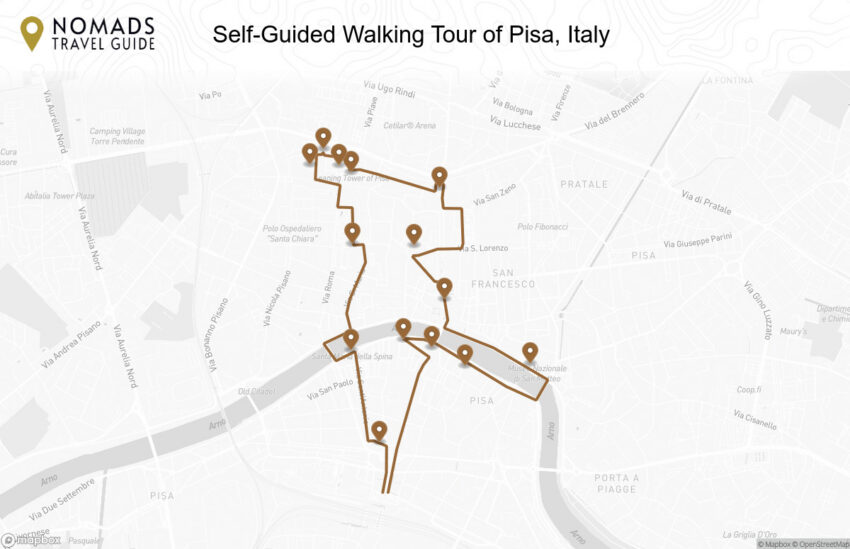
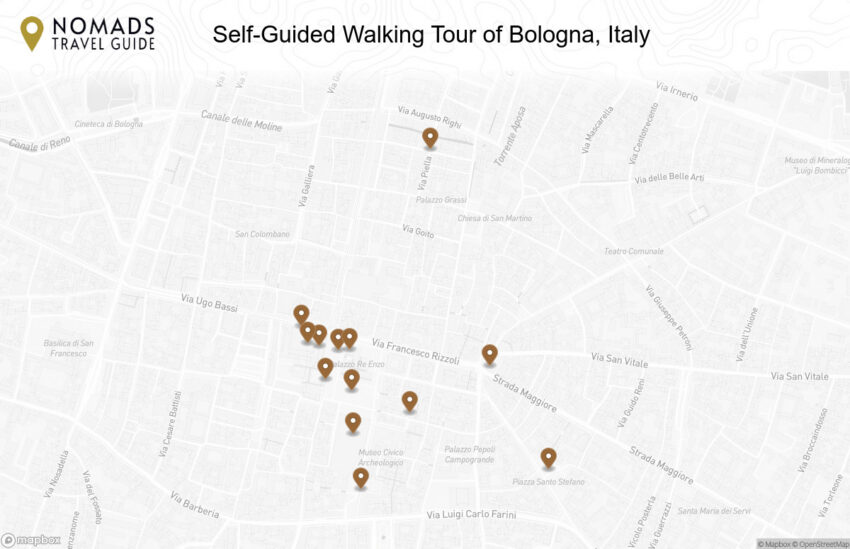
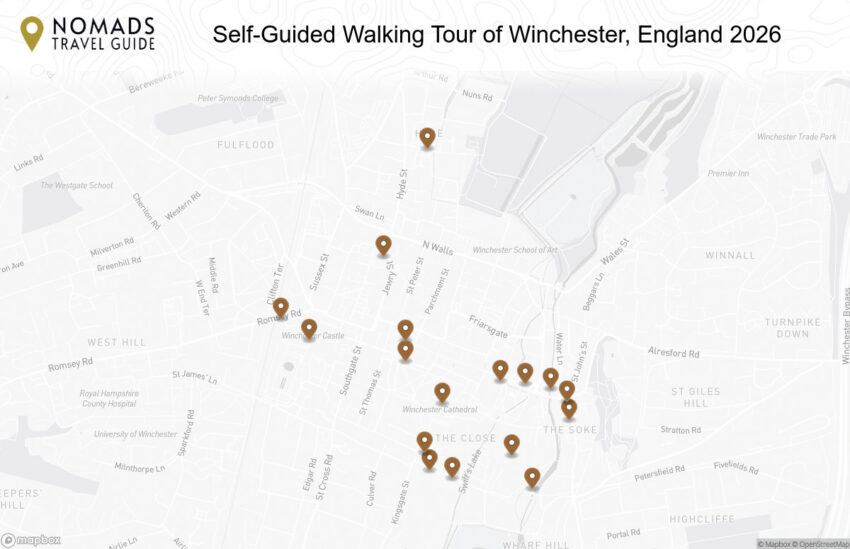
Map of the Self-Guided Walking Tour of Pisa, Italy walking route with 14 stops in Pisa.
Preview map of the Self-Guided Walking Tour of Pisa, Italy route in Pisa, showing 14 stops. Use the interactive map to zoom and tap markers.

More from this area

Best Places to See in Toledo, Spain (2026)

toledo roman bridge
toledo roman bridge

This website uses affiliate links which earn a small commission at no additional cost to you.

Spain is abundant with remarkable cities to explore, and while Madrid, Barcelona, and Valencia garner much attention, I have a special fondness for the culturally rich smaller Spanish cities. Among these, the captivating city of Toledo holds a top spot in my heart. Being one of the oldest and most unique cities in Spain, it was once the country's capital and remains esteemed as its cultural centre. Toledo is a treasure trove of historical landmarks and hosts captivating centuries-old festivals. For travellers seeking an authentic Spanish cultural experience, few cities compare to the incredible Toledo. To help others fully enjoy their visit, I've crafted this Toledo Spain travel guide.

Getting to Toledo from Madrid

By Train: The high-speed train from Toledo to Madrid takes about 30 minutes and costs about 14 euros, so if you are staying near Atocha train station, this is the best way to get to the tourist city. Train schedules and bookings can be found on Omio.

By Bus: The bus is the cheapest method of getting to Toledo with tickets starting at 6 euros costs just about 5 euros each way and takes an hour and a half to get between Madrid and Toledo. Buses leave every half an hour and depart from Plaza Eliptica to the south of Madrid.

By Tour: The easiest way to visit Toledo from Madrid is by guided tour. There are a number of tour companies that operate trips to Toledo from Madrid. We went on the From Madrid: Toledo Full Day Trip which also included a short walking tour.

By Car: Driving from Madrid to Toledo covers a distance of about 75 kilometers (47 miles) and takes approximately 50 minutes to 1 hour via the A-42 motorway. The road is a major, well-maintained highway with clear signage, making the trip easy and direct. If you are looking to rent a car in Spain I recommend having a look at Discover Cars, first, as they compare prices and review multiple car rental agencies for you.

Parking is available outside Toledo’s historic center, with options like Parking Safont offering convenient access via escalators to the old town. It’s recommended to avoid driving inside the medieval core due to very narrow streets and limited parking. If you are looking to rent a car in Spain I recommend having a look at Discover Cars, first, as they compare prices and review multiple car rental agencies for you.

Best Time To Visit Toledo

June is our top recommendation for visiting Toledo, especially during the Corpus Cristi Fiesta when the city is adorned with stunning flower decorations in the streets. However, be prepared for larger crowds during this festive time. Other excellent months to explore Toledo are March, April, May, September, and October.

Keep in mind that many restaurants in Toledo are closed on Sunday nights and Mondays, so plan your dining accordingly.

Where to Stay in Toledo

To fully appreciate the city’s historic ambiance, choose a hotel in or near the old town. For luxury, Eugenia de Montijo, Autograph Collection offers elegant comfort in a former palace. Mid-range travellers may enjoy Hotel San Juan de los Reyes, ideally located within the Jewish Quarter. For budget options, Albergue Juvenil Los Pascuales provides affordable stays inside the historic walls.

History of Toldeo

Toledo’s history dates back to around the 5th century BC when it was settled by Jewish travelers, known to the Romans as Toletum. It fell under Roman rule in 193 BC, becoming the capital of the province of Carpentia. During the Visigoth era, it served as an essential civic center under leader Leovigild, and later, the Moors conquered the city in 711.

Toledo, however, resisted the Moorish conquest and witnessed several rebellions against their rule. Eventually, Christian leaders recaptured the city, with Alfonso VI of Castile taking control in 1085. Under Christian rule, Toledo flourished as a center for Christian learning, while its Arab library remained intact. Sadly, the city's Jewish residents faced persecution, with mass burnings carried out by the Archdiocese of Toledo in various years.

As the Spanish court moved to Madrid in 1560, Toledo experienced a period of decline, becoming a political and economic backwater. Despite its medieval ambiance, the 20th century brought challenges, including the Spanish Civil War in 1936 when the citizens sought refuge within the sturdy walls of the Alcazar castle.

After the war, Toledo experienced a resurgence with its historic center being declared a UNESCO World Heritage Site, attracting tourists and gaining recognition as the capital of Castile-La Mancha. In recent years, the city has enjoyed a revival, embracing its rich history and cultural heritage.

What to See in Toledo

Toledo’s rich history is a testament to the coexistence of Christians, Jews, and Arabs within its ancient walls, leaving behind an extraordinary cultural, historical, and artistic legacy that endures to this day.

1. Toledo Cathedral

Cathedral of Toledo
Cathedral of Toledo
CC BY-SA 2.0 / Michal Osmenda

Few buildings in Spain deliver the same jaw-drop as Toledo Cathedral. Begun in 1226 and completed in the late 15th century, it fuses French High Gothic ambition with local Mudéjar finesse: five soaring naves, a forest of clustered columns, and stained glass that washes the interior in honeyed light. Step into the main chapel to see the gilded retablo glittering like a jeweled storyboard of the life of Christ; turn to the choir for some of Europe’s most intricate late-medieval woodcarving. In the sacristy, El Greco, Velázquez, Titian, and Goya hang shoulder to shoulder, a compact primer in Spanish art.

What makes the cathedral unforgettable is how it reveals itself in layers. One moment you’re craning up at flying buttresses; the next, you’re in the cloister, where multifoil arches nod to the city’s Islamic past. Don’t miss the Treasury’s monumental Corpus Christi monstrance or the playful Baroque skylight of the Transparente. Outside, approach along Calle del Cardenal Cisneros for the classic spire-framed view, then circle to the understated Puerta del Reloj to feel the building’s medieval weight. You’ll leave with memory cards full and a vivid sense that Toledo’s soul is written in limestone, light, and gold.


| Hours: 10am-6.30pm Mon-Sat, 2-6.30pm Sun | Price: €10, incl Torre de las Campanas €12.50 | Website

We recommend to rent a car in Spain through Discover Cars, they compare prices and review multiple car rental agencies. Book your rental car here.

2. Alcázar of Toledo

Toledo Alcazar at night
CC BY-SA 3.0 / Adrian.lifa

Commanding the skyline from the city’s highest point, the Alcázar is a square, four-towered statement piece whose symmetry is half Roman authority, half Renaissance polish. A Roman palace once stood here; Charles I and Philip II later gave the fortress its clean, monumental lines. Inside today, the Army Museum threads Spain’s military story from mailed knights to modern regiments, using models, uniforms, maps, and clever dioramas to animate centuries of conflict and invention.

Yet the Alcázar is more than exhibits. Its courtyards and arcades frame cinematic views over the Tagus, and its war-scarred 20th-century past—rebuilt after the Civil War siege—adds gravitas to every stone. Start at Plaza de Zocodover and climb the short, steady slope; when you reach the terrace, pause and pan slowly: cathedral spire, rooftops, encircling river, hazy plains beyond. Visit late afternoon, when the fortress warms to bronze and the city glows below. Whether you love military history or simply crave Toledo’s finest panorama, the Alcázar delivers scale, story, and spectacle in one visit.


Location: Alcázar de Toledo C. de la Union, s/n 45001 Toledo Spain | Hours: 10am-5pm Tue-Sun | Price: adult/child €5/free, Sun free | Website

Here is a complete selection of hotel options in Toledo. Feel free to review each one and choose the stay that best suits your needs.

3. Monastery of San Juan de los Reyes

San Juan de los Reyes   Toledo
San Juan de los Reyes Toledo
CC BY-SA 3.0 / Choniron

Raised by the Catholic Monarchs to celebrate victory and dynasty, San Juan de los Reyes is Gothic at its most lyrical. Step through the portal and the city’s bustle falls away; ahead, a lantern of stone ribbing unfolds into a church of poised verticals and soft light. The cloister is the showstopper—two levels of filigreed arches, botanical carvings, and a quiet garden that seems to hold the breeze. Look up to spot the delicate wooden artesonado ceilings, a Mudéjar flourish that sweetens the Gothic spine.

Outside, chains hang on the walls—tradition says they belonged to Christian captives freed from Granada. Inside, royal symbols repeat with almost meditative rhythm, imprinting the founders’ presence on every surface. Come mid-morning when rays slant through the windows and the cloister’s shade is cool; then stroll a few minutes to the Puente de San Martín for river views that pair perfectly with the monastery’s calm. If the cathedral is Toledo’s roar, San Juan de los Reyes is its exhale—intimate, contemplative, and deeply beautiful.


Location: Monasterio de San Juan de los Reyes, Calle de los Reyes Católicos, Toledo, Spain | Hours: 10am-6.45pm Mar-Oct, to 5.45pm Nov-Feb | Price: €3 | Website

Traveling to a country with a different currency? Avoid ATM transaction fees and pay in local currency with a Wise Card. Having used it for over 5 years, we've saved loads on fees!

4. Synagogue of El Tránsito and the Sephardic Museum

Synagogue of El Transito toledo
CC BY-SA 3.0 / Antonio.velez

Built in 1357 for Samuel ha-Levi, treasurer to King Peter of Castile, El Tránsito is a masterclass in Mudéjar stucco: lace-fine Arabic calligraphy, Hebrew inscriptions, and geometric bands that flutter across the walls like woven silk. Sunlight drifts through high windows, and the women’s gallery floats above on wooden beams—elegant, spare, and human in scale. The space later became a church; today it houses the Sephardic Museum, where ritual objects, documents, and multimedia restore the music of a community once central to Toledo’s life.

Take your time with the small details: a carved pomegranate here, a six-pointed star there, the sheen of old timber under your fingertips. Displays explain festivals, crafts, and daily rhythms, grounding the poetry of the hall in real lives. Finish in the garden, breathing cypress and stone, before exploring the Jewish Quarter’s lanes. El Tránsito is not just an aesthetic marvel; it’s a bridge—between faiths, centuries, and stories that still resonate in the city’s bricks and breath.


Location: Sephardic Museum C. Samuel Levi, 2 45002 Toledo Spain | Hours: 9.30am-7.30pm Tue-Sat Mar-Oct, to 6pm Tue-Sat Nov-Feb, 10am-3pm Sun year-round | Price: adult/child €3/1.50, after 2pm Sat & all day Sun free | Website

Click here to read our blog about Exploring the Jewish Quarter of Toledo (2026)

5. Synagogue of Santa María la Blanca

Synagogue of Santa Maria la Blanca
CC BY-SA 3.0 / Roy Lindman

White, serene, and startlingly modern to the eye, Santa María la Blanca predates El Tránsito and feels like a grove turned to stone. Rows of palm-like columns lift horseshoe arches toward simple timber roofs; light pools on limewashed walls. Built by Jewish patrons in the late 12th/early 13th century and later converted to a church, it distills Toledo’s “Three Cultures” into a single, luminous room where Islamic forms, Jewish heritage, and Christian history intersect without noise.

Stand at the center and rotate slowly—the repetition of arches is calming, the proportions humane. Beyond its beauty, the building’s biography is compelling: prayer hall, church, barracks, warehouse, monument, museum. Each chapter left traces, but the essence endures: a place designed for gathering and quiet, where minimal ornament lets geometry sing. Pair your visit with El Tránsito to feel the dialogue between the two synagogues; together they sketch a civilization’s highs and heartbreaks with extraordinary grace.


Location: Sinagoga de Santa María La Blanca, Calle de los Reyes Católicos, Toledo, Spain | Hours: 1 March – 15 October 10:00 – 18:45 * 16 October – 28 February 10:00 – 17:45 * | Price: Adults €4,00, Children €3,00 | Website

Explore Toledo at your own pace with our self-guided walking tour! Follow our curated route to discover must-see sights and local secrets that makes Toledo one of the best places to visit in Spain.

6. Mosque of Cristo de la Luz (Mezquita Bab al-Mardum)

Brickwork mosque with columns
Mezquita Cristo de la Luz de Toledo
CC BY-SA 3.0 / Ignasilm

Tiny by cathedral standards but mighty in presence, this 10th-century mosque is one of Spain’s oldest standing Islamic monuments. Nine bays, nine little domes, and a grid of horseshoe arches create an intimate, harmonious volume that invites you to look up. After 1085 it became a Christian chapel; a Romanesque apse was grafted on, making the building a literal hinge between faiths. Outside, Kufic-style brickwork patterns the façade; inside, light and shadow play across simple plaster and brick.

The setting enhances the experience: just steps from Puerta del Sol and fragments of the old walls, in a neighborhood once called Medina. Linger in the garden to frame the mosque against battlements and sky, then slip back in to study each bay—the domes differ subtly, like variations on a theme. Cristo de la Luz proves that architecture doesn’t need size to be sublime; it needs clarity, proportion, and a story. Here, you get all three in a jewel box of stone.


Location: Ermita "Mezquita" del Cristo de la Luz C. Cristo de la Luz, 22 45002 Toledo Spain | Hours: 10am-2pm & 3.30-5.45pm Mon-Fri, 10am-5.45pm Sat & Sun | Price: adult/child €2.80/free

7. Puente de San Martín

El Puente de San Martin Toledo  Espana
El Puente de San Martin Toledo Espana
CC BY-SA 3.0 / Dan Vaquerizo Molina

West of the old town, the Tagus tightens into a bend and the Puente de San Martín leaps it in five handsome arches. Built in the late 14th century, the bridge pairs rugged masonry with a central span that was a medieval engineering flex. Fortified towers anchor each end, and from mid-span you’re rewarded with a sweep of river, monastery, and terraced houses stacked like a Roman theater. It’s a superb place to feel the city’s relationship with its landscape.

Walk it both ways. From the monastery side you get the bridge against Toledo’s ochre cascade; from the town side you see water and sky widen. Early evening is magic: swallows stitch the air, the stone warms to amber, and the current riffles below. If you have more time, follow the riverside path for alternate views and quieter moments. San Martín isn’t just a crossing; it’s a balcony—a place to pause and let the city arrange itself into a perfect composition.


Location: San Martin's Bridge Bajada San Martín 45004 Toledo Spain

8. Puente de Alcántara

toledo roman bridge
toledo roman bridge

Toledo’s eastern gatehouse to the world, Puente de Alcántara began as a Roman arch, was reworked by Umayyads, and later crowned with Christian towers—each era leaving a signature on this muscular span over the Tagus. Today two principal arches carry you between the Castillo de San Servando and the lower town; carved coats of arms, inscriptions, and battlements provide texture for the eye and clues for the imagination.

Come at sunrise when mist sometimes clings to the river, or at dusk when the Alcázar ignites above the rooftops. From mid-bridge, pivot slowly: the fortress to one side, the mosque-turned-chapel and city walls to the other, water threading it all together. Alcántara feels like a prologue to Toledo—step across and you’ve entered the book. It’s practical, photogenic, and storied, the rare landmark that’s as satisfying to use as it is to admire.


Location: Puente de Alcántara, Toledo, Spain

9. Plaza de Zocodover

Plaza de Zocodover
Plaza de Zocodover
CC BY-SA 2.0 / Luis Rogelio HM

Every great city needs a living room; Zocodover is Toledo’s. Once the souq of beasts (its Arabic name says so), later a Renaissance-rationalized square by Juan de Herrera, it’s now a sociable stage ringed by arcades, cafés, and confectioners. People-watch over a coffee, try a slice of marzipan, overhear the logistics of families and tour guides orchestrating the day. From here, streets radiate like threads into the old town’s tapestry.

History lingers in the corners—markets, proclamations, festivals, and harder stories, too—but today the square hums with an easy civic pulse. Use it as your compass: cathedral one way, Alcázar another, Museo de Santa Cruz down the slope. Come early for photographs with long shadows and empty benches; swing back at blue hour when façades glow and conversations stretch. Zocodover doesn’t demand; it invites—rest, regroup, and let the city gather around you.


10. Mirador del Valle

toledo from Mirador del Valle

For the postcard you’ll frame later, make the gentle trek (or hop the tourist road train) to Mirador del Valle, a string of lookouts along the ridge opposite Toledo. From here the city reveals itself completely: the cathedral’s needle, the Alcázar’s four sentries, the tight spiral of streets, and the Tagus cinching a silver belt around the whole. Morning delivers clarity; sunset paints the stone rose and the water copper. Either way, the viewpoint locks the city’s complexity into a single, graspable image.

Bring a light jacket and time to linger. Trace your day’s path with a finger, pick out bridges, gates, and domes, and plan tomorrow’s wander. Photographers: a moderate telephoto compresses skyline layers beautifully; a wide angle captures river curves and foreground rock. Couples linger, sketchers sketch, and locals pause on evening jogs. You’ll understand why El Greco obsessed over this city’s profile—the view at Mirador del Valle is both geography and theater, a perfect finale or overture.


Location: Mirador del Valle Ctra. Circunvalación, s/n 45004 Toledo Spain

11. Museo de Santa Cruz

Museo De Santa Cruz
Museo De Santa Cruz
CC BY-SA 2.0 / Turol Jones

Housed in a 16th-century hospital designed with Renaissance elegance, the Museo de Santa Cruz blends art, archaeology, and ethnography under one honey-stoned roof. The Plateresque façade is a sculpture in itself; inside, a grand staircase and cross-shaped plan ease you among galleries where El Greco’s brushwork shares space with Roman mosaics and Talavera ceramics. It’s a Toledo sampler—epochs and materials conversing without fuss.

Don’t rush the cloister; it’s a place to breathe between masterpieces. Temporary exhibitions are often thoughtful, and the archaeology wing grounds the city’s story with amphorae, coins, and everyday objects that humanize centuries. If the cathedral is Toledo’s choir, Santa Cruz is its cabinet of curiosities—intimate scale, impeccable setting, and a knack for connecting the dots between the monumental and the domestic.


Location: Museo de Santa Cruz, Calle Miguel de Cervantes, Toledo, Spain

12. El Greco Museum

Museo del Greco
Museo del Greco
CC BY-SA 4.0 / Museo del Greco

In the Jewish Quarter, a 16th-century house and early 20th-century annex embrace a shaded garden where the air seems to cool. Within, the El Greco Museum stages the great Cretan’s elongated saints and storm-lit skies with just enough context to make the work sing without smothering it. The Apostles series gathers like a murmuring chorus; portraits pierce with almond eyes and strange grace.

Beyond canvases, period furniture and Talavera ceramics root the art in place and time. Step into the garden to clear your head between rooms; framed views through arcades feel like paintings themselves. Even if you’ve seen El Greco elsewhere, encountering him here, where he lived and worked, lands differently. It’s less a museum and more a conversation with a voice that still shapes how many see Toledo’s light.


Location: El Greco Museum, Paseo Tránsito, s/n, 45002 Toledo, Castilla-La Mancha, Spain | Hours: 9.30am-7.30pm Tue-Sat Mar-Oct, to 6pm Nov-Feb, 10am-3pm Sun year-round | Price: adult/child €3/1.50, from 2pm Sat & all day Sun free | Website

13. Puerta de Bisagra

Puerta de Bisagra Toledo
CC BY-SA 2.0 / Luis Rogelio HM

Grand, martial, and theatrical, Puerta de Bisagra Nueva is the city’s triumphal hello. Moorish in origin, then reborn in the 16th century, it’s actually a sequence: outer bastion with a Habsburg double-headed eagle, inner courtyard, inner gate—stone choreography drawing you from road to realm. Pause beneath the coats of arms to feel the intention: to impress, to protect, to proclaim.

Photograph from the roundabout island for the full frontal, then slip inside to notice carved details and proportions that feel more palace than mere fortification. Nearby, the older Bisagra (Antigua) whispers of earlier lines of defense. Taken together, they stage Toledo’s threshold drama—one foot in Castilla-La Mancha, the other in a fortified dream.


Location: Puerta de Bisagra C. Real del Arrabal, 26 45003 Toledo Spain

14. Puerta del Sol

Puerta del Sol Toledo, Spain
CC BY-SA 3.0 / Ursushoribilis

A more intimate counterpoint to Bisagra’s pomp, Puerta del Sol is a 14th-century confection by the Knights Hospitaller: horseshoe arch, crenellations, blind arcades, and a medallion of Saint Ildephonsus. The name nods to the gate’s eastward orientation; at morning, the stone catches first light and earns it. Stand back to admire the mixed Islamic-Gothic vocabulary; step close to read the carving’s rhythm.

From here, lanes wind quickly into the old town, and the Mosque of Cristo de la Luz sits just minutes away—pair them for a compact lesson in Toledo’s stylistic braid. Puerta del Sol doesn’t overwhelm; it charms, proving that defense can be as graceful as it is stout. Come early, catch the quiet, and let the day unfurl through the arch.


Location: Puerta del Sol, Callejón San José, Toledo, Spain

15. Roman Baths of Toledo

Termas Romanas de la Plaza de Amador de los Rios Toledo
CC BY-SA 2.0 / amaianos

Beneath modern streets, Toledo’s Roman bones run strong. The baths—hypocaust pillars, channels, and vaulted rooms—make the empire’s infrastructure tangible. Stand over the glass walkways and imagine steam, chatter, and the daily reset of hot-warm-cold rituals. It’s a fragment, yes, but fragments sharpen the imagination in ways grand ruins sometimes can’t.

Interpretive panels help decode what’s what, and the subterranean cool offers a welcome pause on a summer day. Pair the baths with a stroll to nearby Roman remains (or the circus site) to widen the lens. You’ll leave with a keener eye for patterns in masonry and a renewed sense that Toledo isn’t just medieval spectacle but a palimpsest written by many hands.


Location: Termas Romanas, Plaza Amador de los Ríos, Toledo, Spain | Hours: 10am-2pm & 5-9pm Tue-Sat Jun-Sep, 10am-2pm & 4-8pm Tue-Sat Oct-May, 10am-2pm Sun year-round

16. Roman Circus of Toledo

Ruinas del Circo Romano, Toledo
CC BY-SA 3.0 / Antonio.velez

North of the old core, the Roman circus sprawled outside ancient Toletum’s walls, as most did, leaving long embankments and masonry stubs that still sketch its outline. Chariot races once thundered here; now the site is a green, lightly landscaped park where you can pace out the track, breathe, and trade tight alleys for open sky.

Bring a bit of imagination and let the scale land—circuses were social engines as much as sport. Nearby traces of a Roman theater likely linger below ground; together with the baths, they round out a picture of a town woven into the empire’s civic network. It’s not flashy, but it deepens the story, which is often what makes a good trip great.


Location: Roman circus of Toledo, Av. de Carlos III, 9, 45004 Toledo, Spain

17. Iglesia de Santo Tomé (The Burial of the Count of Orgaz)

Iglesia de Santo Tome Toledo
©

From the street, Santo Tomé is modest; inside a side chapel, thunder waits. El Greco’s “Burial of the Count of Orgaz” is a vertical symphony—earthly funeral below, celestial reception above—where elongated saints, rippling fabrics, and Toledo’s skyline fuse into visionary theater. The painting alone would justify the stop; the Mudéjar tower and church’s layered history sweeten the visit.

Crowds can swell; come early or late and give the canvas time. Trace individual faces (El Greco inserted contemporaries), then step back to feel the whole lift. It’s art as portal, local legend as universal meditation. When you emerge to sunlight and chatter, you’ll carry a sliver of that charged hush with you.


Location: Iglesia de Santo Tomé Pl. del Conde, 4 45002 Toledo Spain

18. Cueva de Hércules

Small underground Roman-era vaulted structure
Cueva de Hercules, Toledo
CC BY-SA 4.0 / Carlos Delgado

Tucked off a narrow lane, the “Cave of Hercules” is a Roman cistern turned urban palimpsest: opus signinum linings, barrel vaults, later arches, and whispers of Visigothic and Islamic phases layered into one compact underworld. Descend and you’re in Toledo’s infrastructure—water gathered, directed, stored—made visible as sculptural space.

It’s a short visit that rewards those who like the backstage tour of cities. Combine it with nearby gates and the mosque for a micro-crawl of early Toledo. Emerging back into bright alleys, you’ll feel oriented differently, tuned to the service corridors beneath the show.


Location: Cuevas de Hércules, Callejón San Ginés, Toledo, Spain

19. Puente y Mirador de San Servando (Castillo de San Servando)

toledo roman bridge
toledo roman bridge

Across the Tagus from Puente de Alcántara, the stout bulk of Castillo de San Servando perches above the road—Templar origins, later uses, and today a scout’s-honor severity that contrasts with the Alcázar’s polish. Walk up for angles on the bridge and river few capture; the castle’s silhouette adds medieval bite to photographs of the eastern approach.

Even if interiors aren’t open, the circuit here—bridge to castle terrace and back—delivers a tight loop of views and textures: rusticated towers, river shine, city wall teeth. It’s Toledo’s martial face, less ornament, more posture, and a fine companion to the city’s ecclesiastical jewels.


Location: Puente de Alcántara, Toledo, Spain
Powered by GetYourGuide
Moira & Andy
Moira & Andy

Hey! We're Moira & Andy. From hiking the Camino to trips around Europe in Bert our campervan — we've been traveling together since retirement in 2020!

Read our full story here

This website uses affiliate links which earn a small commission at no additional cost to you.

Walking Tour Map
Map of the Best Places to See in Toledo, Spain walking route with 19 stops in Toledo.
Preview map of the Best Places to See in Toledo, Spain route in Toledo, showing 19 stops. Use the interactive map to zoom and tap markers.

More from this area

Exploring the Jewish Quarter of Toledo (2026)

Exploring the Jewish quarter of Toledo

This website uses affiliate links which earn a small commission at no additional cost to you.

Toledo, situated merely an hour's drive from Madrid, was renowned across Europe for its vibrant intellectual and economic activities, and its illustrious history was deeply intertwined with the Jewish community. Despite facing higher taxes, Jews were granted the freedom to practice their faith during periods of Muslim and Christian rule. The city's history exemplified religious coexistence, although it experienced some challenges along the way. Sadly, the situation deteriorated over time, leading to the expulsion or forced conversion of the Jewish population in 1492 due to increasing persecution.

Today visitors are encouraged to freely delve into the city's rich Jewish history by exploring the charming Jewish quarters and its synagogues. Indeed, the Jewish quarter of Toledo, boasts a collection of historically significant buildings that offer a captivating glimpse into the city's rich past. Among them are the El Tránsito Synagogue, the Synagogue of Santa María de la Blanca (formerly the Synagogue of Ibn Shushan).

How to Get to Toledo

By Plane: To get to Toledo by plane, fly into Adolfo Suárez Madrid-Barajas Airport (MAD), the nearest major airport located about 90 km away. From Madrid, you can reach Toledo by high-speed train, bus, or rental car in under an hour. For the best deals and a seamless booking experience, check out these flights to Toledo on Booking.com.

By Train: The high-speed AVE train connects Toledo with Madrid in just over 30 minutes. From the station, it's a scenic 20-minute walk uphill to the historic center, or a short taxi ride. Train schedules and bookings can be found on Omio.

By Car: Toledo is easily accessible via the A-42 or AP-41 highways from Madrid. For convenient access to the old town, consider parking at the Safont or Corralillo de San Miguel lots. If you are looking to rent a car in Spain I recommend having a look at Discover Cars, first, as they compare prices and review multiple car rental agencies for you.

Where to Stay in Toledo

To fully appreciate the city’s historic ambiance, choose a hotel in or near the old town. For luxury, Eugenia de Montijo, Autograph Collection offers elegant comfort in a former palace. Mid-range travellers may enjoy Hotel San Juan de los Reyes, ideally located within the Jewish Quarter. For budget options, Albergue Juvenil Los Pascuales provides affordable stays inside the historic walls.

A Brief History of the Barrio Judio

During the Middle Ages, the majority of Toledo's Jewish community resided in a district known as La Juderia, or the Jewry. In this area, they found a safe haven to work, establish families, and freely practice their religion in one of the region's ten synagogues, free from persecution for their beliefs. Over time, much of this historically significant district has been preserved, offering visitors a glimpse into the lives of Sephardic Jews in Toledo.

A recent project has sought to honour and remember this significant past. By marking out the parameters of the former Jewish community, visitors can now identify the area where Toledo’s Jewish inhabitants once lived.

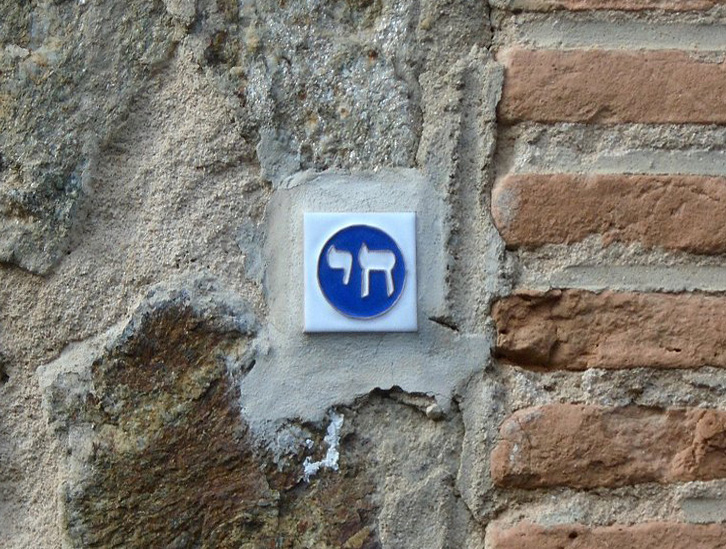
Jewish Quarter Symbol

Installed in 2012, small blue tiles embedded in the pavement and ancient walls serve as subtle reminders of the former Jewish quarter. These markers guide visitors through the streets, creating a tangible connection to the city’s Jewish history and heritage.

The tiles show three different symbols:

  • The word “life” (Jai) written in Hebrew.
  • The symbol of the Network of Spanish Jewish Quarters, reminiscent of a map of the Iberian Peninsula.
  • The symbol of the Menorah, the seven-armed candelabra.

To aid you in your journey, I’ve prepared a concise guide to exploring Toledo’s Jewish history, highlighting its main attractions for you to discover.

Should I choose a Self Guided or Guided Tour of Toledo’s Sepharad Jewish Quarter?

While the quarter is accessible for independent exploration, a guided tour offers critical context. The Toledo Sepharad Jewish Quarter Walking Tour leads visitors through landmarks such as the Synagogue of El Tránsito, the Sephardic Museum, and the hidden alleyways of the old Judería. Knowledgeable guides share stories of coexistence, conflict, and cultural achievement, enriching your appreciation of this unique heritage site.

Your Walking Tour of the Jewish Quarter

This guide outlines the essential sites, but allow time to wander. Visit the Casa del Judío, peek into artisan shops, and pause in quiet courtyards where history lingers. Whether you're drawn by religious history, architectural beauty, or personal reflection, the Jewish Quarter of Toledo offers a moving and insightful experience that bridges centuries and civilizations.

1. Plaza del Salvador

Iglesia de El Salvador Toledo
CC BY-SA 2.0 / Luis Rogelio HM

The tour commences at Plaza del Salvador, where in 1491, the “Fernando Garbal Jewish Store and Wine Cellar” once stood. This historical site serves as the starting point for an exploration into the city’s Jewish history and the vibrant heritage of the area during that era.


Location: Iglesia de El Salvador, Plaza el Salvador, Toledo, Spain

We recommend to rent a car in Spain through Discover Cars, they compare prices and review multiple car rental agencies. Book your rental car here.

2. Museo del Greco

Museo del Greco
Museo del Greco
CC BY-SA 4.0 / Museo del Greco

Walk anticlockwise around Iglesia de El Salvador down Calle Sta. Ursula and turn first left down Calle Taler del Moro. Continue down Bajada Descalzos until you see Paseo del Tránsito on your right. As you walk into the park the Museo del Greco is on you right.


El Greco, the renowned artist, resided in Toledo after the expulsion of Jews from Spain. There are suggestions that his wife may have been a converso, meaning she had Jewish ancestry but her family had been compelled to convert to Christianity. Some believe that El Greco expressed his sympathy for the Jewish community through subtle symbolism in his art, such as incorporating vegetation in the shape of a menorah in his painting “Allegory of the Camaldolese Order” from 1599.

The house was constructed atop the remnants of Samuel Halevi’s palace, an influential figure in the city’s Jewish community. Beneath the house, the vaulted brick basements have been preserved, providing a glimpse into the grandeur and opulence that once characterized this prominent residence.

Outside the house, a statue of Samuel Halevi stands, a tribute to this notable historical figure. From this vantage point, visitors can appreciate the breath-taking views that were once enjoyed from Halevi’s home.


Location: El Greco Museum, Paseo Tránsito, s/n, 45002 Toledo, Castilla-La Mancha, Spain | Hours: 9.30am-7.30pm Tue-Sat Mar-Oct, to 6pm Nov-Feb, 10am-3pm Sun year-round | Price: adult/child €3/1.50, from 2pm Sat & all day Sun free | Website

Here is a complete selection of hotel options in Toledo. Feel free to review each one and choose the stay that best suits your needs.

3. Tránsito Synagogue

Synagogue of El Transito toledo
CC BY-SA 3.0 / Antonio.velez

From the museum turn right and walk along the C. de los Reyes Católicos with the Sinagoga del Tránsito on your right.


The Tránsito Synagogue, commissioned by Samuel Levi, treasurer to King Pedro I, was constructed in 1357. It is believed to have replaced an older synagogue based on archaeological findings. In 1492, the Catholic monarchs donated it to the Calatrava military order, leading to its transformation into a priory. During the Napoleonic Wars, it served as barracks, and in 1877, it gained recognition as a national monument. Eventually, when Spain’s Jewish community was re-established, the outbuildings became the Sephardic Museum.

While the brick façade appears austere and unadorned, the interior boasts remarkable beauty, showcasing one of Spain’s finest examples of Mudejar style. The synagogue exhibits harmonious proportions, with a stunning coffered larch-wood ceiling. The women’s gallery features a separate entrance and is illuminated by five large windows. Its fame comes from the interior decoration, adorned with panels, a plaster frieze sculpted in the oriental tradition, and numerous inscriptions commemorating Samuel Levi and Pedro I. Psalms verses complement this exquisite decoration, lit by windows featuring ornamental columns and delicate mashrabiyahs.

The museum within the outbuildings displays an array of gifts and artefacts collected from all over Spain, providing visitors with an immersive journey through Spanish Jewish history. Notable exhibits include tombstones from León and the oldest object, a sarcophagus adorned with inscriptions in Hebrew, Greek, and Latin, decorated with royal peacocks, a tree of life, a shofar, and a menorah. Throughout the year, seminars, courses, and talks centered around Spanish Judaism themes are organized. Although no longer utilized for worship, the Tránsito Synagogue stands as a testament to Spain’s rich Jewish heritage and serves as a cherished cultural and historical site.


Location: Sephardic Museum C. Samuel Levi, 2 45002 Toledo Spain | Hours: 9.30am-7.30pm Tue-Sat Mar-Oct, to 6pm Tue-Sat Nov-Feb, 10am-3pm Sun year-round | Price: adult/child €3/1.50, after 2pm Sat & all day Sun free | Website

Traveling to a country with a different currency? Avoid ATM transaction fees and pay in local currency with a Wise Card. Having used it for over 5 years, we've saved loads on fees!

4. Casa del Judío, Toledo

Casa del Judio Toledo
CC BY-SA 4.0 / Rafael Tello

From the Tránsito Synagogue turn left into C. Samuel Levi, head straight across to walk along Tr.ª Judería.


The Casa del Judío, recovered in 2009, is located at Travesía de la Judería number 4, in the heart of the Jewish quarter. It is a privately owned building whose basement has been ceded for 25 years to the Toledo Consortium.

The two spaces of greatest interest are the patio, which preserves abundant Mudejar plasterwork, and the basement, which apparently was a Jewish liturgical bath or miqva, used for spiritual purification and preparation for some important event in the life of a Jew. because, according to the Hebrew custom, on such occasions the person must wash beforehand.

In the accessory rooms, hydraulic plasters have been found with almagra that suggest the use of water both from the underlying cistern and from possible underground currents.

An element of great relevance is a piece of wood used as a lintel to access the basement, carved with floral motifs and with an inscription in Hebrew that, translated, reads:
«I give you thanks, because you have answered me»; text corresponding to verse 21 of Psalm 118:
“Here is the gate of Yahveh, through which the just enter. I give you thanks, because you have answered me, and you have been salvation for me».

The house must have been built in the 14th century and has undergone transformations in subsequent centuries.

Legend has it that this house belonged to the Jew Isaac (Ishaq) Abravanel. Born in 1437 in Lisbon, Abravanel was a Jewish theologian and businessman who was in the service of Isabel de Castilla. His grandfather, Samuel Abravanel, had been treasurer of Enrique II, Juan I and Enrique III of Castile. His father, Judah Abravanel, raised Isaac in a refined and scholarly environment. The Abravanels considered themselves descendants of King David’s lineage.


Location: Casa del Judío, Travesía Judería, c, Spain | Website

Click here to read our blog about Best Places to See in Toledo, Spain (2026)

5. Santa María la Blanca

Synagogue of Santa Maria la Blanca
CC BY-SA 3.0 / Roy Lindman

As you come out of the Casa del Judío turn right and walk towards Plaza Barrio Nuevo. Coninue along C. de los Reyes Católicos. Santa María la Blanca in on your right up some steps.


The Santa María la Blanca, originally a synagogue, now serves as a Christian church. Built in the early thirteenth century, it was converted into a church in 1411 by San Vicente Ferrer, the preacher responsible for the conversions in 1391. Throughout its history, it has been repurposed as an oratory from 1600 to 1791, and later used as a barracks. In 1851, the building underwent restoration and was declared a national monument.

This Mudejar-style structure, while less ornate than the Tránsito Synagogue, still exhibits an impressive design with twenty-five horseshoe arches and thirty-two columns that create a sense of spaciousness. The building’s capitals display remarkable variety and quality, reminiscent of Andalusian mosques.


Location: Sinagoga de Santa María La Blanca, Calle de los Reyes Católicos, Toledo, Spain | Hours: 1 March – 15 October 10:00 – 18:45 * 16 October – 28 February 10:00 – 17:45 * | Price: Adults €4,00, Children €3,00 | Website

Explore Toledo at your own pace with our self-guided walking tour! Follow our curated route to discover must-see sights and local secrets that makes Toledo one of the best places to visit in Spain.

6. Baños del Ángel

Banos del Angel
Banos del Angel
© Callejón del Ángel

Turn right when leaving Santa María la Blanca, and right again into Cjón. de los Jacinto. At the end walk up the steps to reach C. del Ángel and turn right again. Baños judíos del Ángel
is on your right.


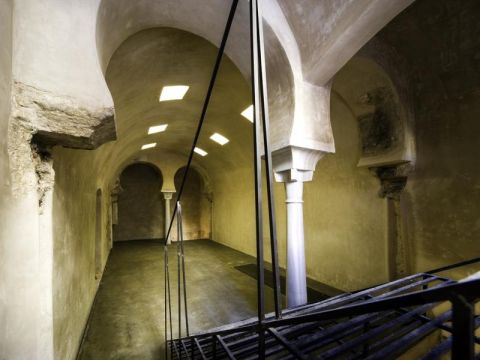
Located a 2-minute walk and three streets away from the Synagogue of Santa María de la Blanca is the Baños del Ángel. One of the best-preserved bathhouses in Toledo, the Baños del Ángel assist visitors in understanding social life in the city during the Middle Ages. The baths were restored and also contain the hypocaust, a feature rarely found in other bathhouses.


Location: Baños Árabes del Ángel, Calle del Ángel, Toledo, Spain
Powered by GetYourGuide
Moira & Andy
Moira & Andy

Hey! We're Moira & Andy. From hiking the Camino to trips around Europe in Bert our campervan — we've been traveling together since retirement in 2020!

Read our full story here

This website uses affiliate links which earn a small commission at no additional cost to you.

Walking Tour Map
Map of the Exploring the Jewish Quarter of Toledo walking route with 6 stops in Toledo.
Preview map of the Exploring the Jewish Quarter of Toledo route in Toledo, showing 6 stops. Use the interactive map to zoom and tap markers.

More from this area

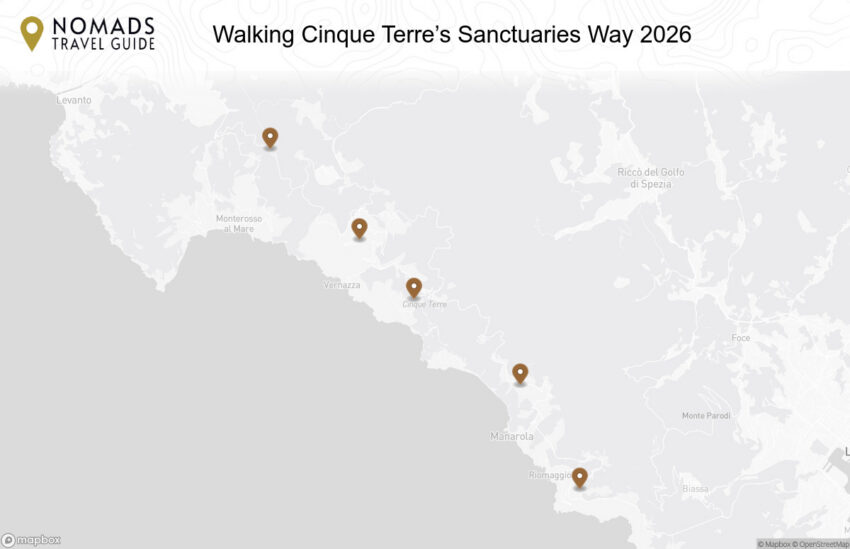
Walking Cinque Terre’s Sanctuaries Way 2026: Map, Route & Highlights

Walking Cinque Terres Sanctuaries Way

This website uses affiliate links which earn a small commission at no additional cost to you.

The Sanctuary Way (La Via dei Santuari or alternatively, La Strada dei Santuari) is an appealing 12km walk in the hills behind the 5 villages of Cinque Terre. This route commences from upper Monterosso and leading to Riomaggiore. If you are looking for an easier walk try our guide to walking Cinque Terre’s Blue Trail.

Each village in the Cinque Terre, has its own sanctuary, which holds great significance and devotion for the local inhabitants. These sanctuaries can be reached by carriage roads, with the exception of Riomaggiore, which can be accessed via two paths. One path, shorter in length, starts from the SP370, also known as the “Litoranea.” The other path begins from Riomaggiore itself. Both routes meander through vineyards and the Mediterranean scrub, offering stunning panoramic views of the entire gulf. While the walks can be physically demanding, they do not require specialized equipment or mountaineering training. It is worth noting that during the respective feast days, the faithful embark on processions from their villages to reach the sanctuaries. The routes are marked with white-red signs, providing guidance to visitors.

Some trails will be closed for maintenance, it is advisable to check on the National Park website before setting out.

1. Monterosso to Nostra Signora di Soviore

Sanctuary of Nostra Signora di Soviore Cinque Terre
CC BY-SA 3.0 / jim walton

A good starting point is the centre of Monterosso.  To get to the Sanctuary of Nostra Signora di Soviore, you can take the minibus from Monterosso al Mare or walk up the trail. 

The walk to the Sanctuary is 2.5 kilometers loan and typically takes about an hour and a half to complete the walk. The trail is along the 509 path (formerly known as path number 9). The first stretch runs along main street of Monterosso the Via Roma.  It then joins an old stairway that climbs up the ridge among cultivated terraces and lemon and olive groves. A small tabernacle with a wrought iron cross can be spotted just before the trail meets the paved road, reminding that this path was traditionally used on Good Friday for the procession of the Stations of the Cross. Only a few other tabernacles of the Stations have survived.


The Sanctuary of Nostra Signora di Soviore is a remarkable church encompassed by ancient holm oak trees. Its first documented mention dates back to 1244 AD, although it likely existed long before that time.

The Legend of Sanctuary of Nostra Signora di Soviore: The church is associated with an intriguing legend intertwined with the 7th-century invasion of the Barbarian Longobards. As the Longobards approached from the north, the inhabitants of Monterosso fled their town, taking their most treasured possessions with them. Some of the villagers sought refuge in the valley below the current site of the sanctuary. In an effort to safeguard a wooden sculpture depicting the Madonna and Child, they buried it in the ground. For reasons not explained in the legend, they ultimately left it there. More than a century later, a local priest happened to pass by that very spot at dawn while out hunting. To his astonishment, he witnessed a white dove fluttering up from nearby ruins before disappearing. Intrigued, he returned the following day with a group of laborers. As they excavated the area, they made a miraculous discovery—the sculpture remained remarkably preserved despite the passing of decades. 

The construction of the first church dates to this period, making it the oldest Marian sanctuary in Liguria. In time, the devotion to the Madonna increased so much that eventually the present sanctuary was built over the 8th century church. During the period of the Black Plague in 1348, the sanctuary gained significant importance as a refuge for pilgrims. It continues to serve this purpose for modern-day walkers, as it offers rooms, a hostel, and a restaurant. According to an ancient legend, during the incursions of the Longobards of Rotari, the coastal populations sought safety inland and buried a sacred wooden statue of the Madonna to protect it. A hundred years later, a priest discovered the statue following the flight of a dove. To commemorate this event, a chapel was built, representing the first historical nucleus of the current sanctuary.


Location: Santuario di Nostra Signora di Soviore, Via Soviore, Monterosso al Mare, SP, Italy | Hours: The church usually keeps daytime visiting hours | Price: Entry to the sanctuary is generally free

We recommend to rent a car in Italy through Discover Cars, they compare prices and review multiple car rental agencies. Book your rental car here.

2. From Santuario di Nostra Signora di Soviore to Santuario di Reggio di Vernazza

Sanctuary of Nostra Signora di Reggio Cinque Terre
CC BY-SA 4.0 / Francesco Adami

The walk from Sanctuary of Our Lady of Soviore to Shrine of Our Lady of Reggio starts out along the 591 (former 1) (Il Termine – S. Antonio Mesco) past the houses and along the road, from which the narrow hiking path 582 branches off to the right through the Mediterranean scrub to Madonna di Reggio. You walk over 500 meters above the cliffs and can enjoy the scents of plants and breath-taking views along the way. Before arriving at the pilgrimage church, the road descends slightly downhill.


The Sanctuary of Reggio is of great antiquity and is first documented in 1248. The entire site holds historical significance, as it is believed to have been frequented even during Roman times as an important crossroads. After the year 1000, the people who eventually established Vernazza on the coast departed from this area. Inside the church, you will find numerous votive offerings and the venerated painting of the Black Madonna with the Child Jesus.


Location: Santuario di Nostra Signora di Reggio, Vernazza, SP, Italy | Hours: Open during daytime hours. | Price: Free.

Here is a complete selection of hotel options in Manarola. Feel free to review each one and choose the stay that best suits your needs.

3. From Santuario di Reggio di Vernazza to Madonna San Bernardin

Santuario di Nostra Signora delle Grazie Cinque Terre
CC BY-SA 3.0 / Davide Papalini

After a short rest with the wonderful view from the Balcony of Reggio, continue on hiking trail 581 towards the Sanctuary of Nostra Signora delle Grazie, also known as the Sanctuary of San Bernardino (Chiesa della Madonna di San Bernardino). After a short stretch of road, you must not miss the climb using the steps on the left on the wall. The narrow path leads to the dry walls of the vineyards and through olive and chestnut forests. In between, plots are traversed. Care should be taken to lock the gates again. They serve to protect the grapes from wild boar. In the forest, you have to cross brooks and you come through Muro Superiore and above Muro Inferiore. A stretch of path with wonderful views before reaching San Bernardino.


The sanctuary itself is relatively recent, having been built in the early 1900s on the ridge of the mountain to replace an older chapel that dates back to at least 1584. It stands at an elevation of 390 meters above Corniglia.

According to legend, in the 1700s, the inhabitants of Corniglia discovered a miraculous occurrence when they went to the sanctuary to restore a painting of the Madonna. They found the painting intact, with bright and vivid colours. The coronation ceremony of the Madonna took place in 1874. The façade of the sanctuary features a faded alternation of black and white bands, which is characteristic of Ligurian Romanesque architecture.

The festivity of the sanctuary is celebrated on September 8th with a Holy Mass and procession. Additionally, a Holy Mass is held every Saturday at 4 pm.


Location: Chiesa della Madonna di San Bernardino, San Bernardino, SP, Italy | Hours: Daily: Open every day (hours can vary; Saturday Mass at 16:00). | Price: Free.

Traveling to a country with a different currency? Avoid ATM transaction fees and pay in local currency with a Wise Card. Having used it for over 5 years, we've saved loads on fees!

4. From Madonna San Bernardino – Santuario di Nostra Signora della Salute

Santuario di Nostra Signora della Salute Cinque Terre
CC BY-SA 3.0 / avide Papalini

From San Bernardino, you have a wonderful view of the coast. The towns of Corniglia and Manarola lie deep below the sea. From San Bernardino, the path 507 climbs steeply to Fornacchi and Cigoletta. The serpentine road has to be crossed a few times before the hiking trail continues steeply through the bushes. Once at the Cigoletta intersection, take the AV5T hiking trail (Alta Via delle Cinque Terre) towards Riomaggiore. But after a short time, you have to descend on path 506 towards Volastra. The trail goes downhill through forests directly to Volastra and the Church of Nostra Signora Della Salute.


To reach the Sanctuary of Our Lady of Health in Manarola, follow path number 586 (formerly known as 6D). The total distance is approximately 2 kilometers, and it takes about 1 hour to complete. The starting point is near the car park in Manarola, specifically at the barrier marking the beginning of the ZTL area. From there, ascend the valley while keeping to the right of the Groppo stream. At the beginning, you’ll encounter a gentle staircase, and after passing a few houses, continue on the path. At the exit, you’ll find the mule track that leads to an elevation of 268 meters, where you’ll connect with path number 6D. Take the left fork and continue towards Volastra.

Volastra is known for its excellent wine and olive cultivation, evident from its ancient Roman name “Vicus Oleaster,” meaning “place of the olive trees.” From Volastra, ascend to the left via a long staircase to reach the Sanctuary of Our Lady of Health. The sanctuary dates back to the 12th century and showcases Romanesque architecture with later Gothic elements, such as the mullioned window on the façade. The facade itself is simple yet elegant, constructed using square and regular ashlars made of local stone. The portal is crafted from sandstone. Inside, you’ll find a single nave with a vaulted ceiling, a Baroque altar, and the venerated image of the Madonna, honoured by the residents of Volastra, Riomaggiore, and Manarola. The feast day of the sanctuary is celebrated on September 8th. The sanctuary is open every day for visitors.


| Hours: Opening times can vary with parish schedules; the sanctuary is often open around services and key feast days, so check locally for current hours. | Price: The sanctuary is a functioning place of worship and is usually free to enter; donations for maintenance are appreciated.

Explore Manarola at your own pace with our self-guided walking tour! Follow our curated route to discover must-see sights and local secrets that makes Manarola one of the best places to visit in Italy.

5. Riomaggiore - Shrine of Our Lady of Montenero

sanctuary of Nostra Signora di Montenero Cinque Terre
CC BY-SA 2.0 / Groume

From Volastra you go back a little on the same path 506 to turn right at the crossroads onto path 530 towards Riomaggiore / Telegrafo. On a wide path, it goes for long distances along a contour line. At the intersection, take the SVA 593 turnoff to Madonna di Montenero.


The church’s existence dates back to 1335. On the Saturday before Pentecost, the villagers embark on a procession to the sanctuary, accompanied by the exhibition of the votive “Gli ori di Montenero.” From the square at the sanctuary, you can enjoy a panoramic view of the entire Gulf of the Cinque Terre. Near the square, a path starts that leads to Portovenere. Although it is a longer walk (approximately 2 hours), it is worth undertaking for the breathtaking views and the natural beauty along the way. Another path to reach the Shrine of Our Lady of Montenero starts from the SP370, following the tunnel and a small parking lot along the road. This path takes about 20 minutes to climb and consists mostly of steps, with the exception of the final flat section. Along the path, you will be treated to stunning views ranging from the island of Tino to Punta Mesco. The path is equipped with lighting for convenience.


Location: Santuario di Nostra Signora di Montenero, Riomaggiore, SP, Italy | Hours: Daily: 6:30 AM – 12:30 PM and 2:30 PM – 6:00 PM | Price: There is no charge to enter the Sanctuary, the church, or the main square.

Click here to read our blog about Cinque Terre in One Day 2026: Complete Guide with Maps & Tips

Two paths lead down from the Sanctuary of the Madonna di Montenero to Riomaggiore. You can take the steep step path (593C) or the path through the forest (593V), on the edge of which there are plaques donated by families from Riomaggiore

Powered by GetYourGuide
Moira & Andy
Moira & Andy

Hey! We're Moira & Andy. From hiking the Camino to trips around Europe in Bert our campervan — we've been traveling together since retirement in 2020!

Read our full story here

This website uses affiliate links which earn a small commission at no additional cost to you.

Walking Tour Map
Map of the Walking Cinque Terre’s Sanctuaries Way: Map, Route & Highlights walking route with 5 stops in Manarola.
Preview map of the Walking Cinque Terre’s Sanctuaries Way: Map, Route & Highlights route in Manarola, showing 5 stops. Use the interactive map to zoom and tap markers.

More from this area

Self-Guided Walking Tour of Bologna, Italy (2026)

Free Walking Tour of Bologna

This website uses affiliate links which earn a small commission at no additional cost to you.

Bologna, the gastronomic capital of Italy's Emilia-Romagna region, is a city of medieval towers, Renaissance arcades, and bold flavors. Known for its lively atmosphere, university heritage, and food culture, Bologna is best explored slowly-by foot, with plenty of stops to admire architecture and sample local cuisine. A custom private tour is the ideal way to discover the city's highlights and hidden gems.

Whether you're gazing up at the Due Torri or strolling the ancient porticoes, Bologna offers a walkable mix of culture, history, and indulgence.

How to Get to Bologna

By Plane: Bologna is served by Bologna Guglielmo Marconi Airport, which handles flights from across Europe and beyond. From the airport, the city center is easily reached by taxi, bus, or the Aerobus shuttle in about 20-30 minutes. For the best deals and a seamless booking experience, check out these flights to Bologna on Booking.com.

By Car: Much of the old town is part of the ZTL, the limited traffic zone and that the access points of the ZTL are monitored by cameras so you will probably want to park outside the old city and walk in. I suggest parking at Parking Tanari, good value and positioned near the train station. If you are looking to rent a car in Italy I recommend having a look at Discover Cars, first, as they compare prices and review multiple car rental agencies for you.

By Train: The train station of Bologna, from which run both regional and long-distance trains, is located in the centre. Consider it is basically attached to via Indipendenza, the shopping street of Bologna, and about 15 minutes walk from Piazza Maggiore. Use Omnio to easily compare schedules, book train tickets, and find the best prices all in one place for a hassle-free journey across Italy.

Where to Stay in Bologna

To make the most of a walking tour, stay in or near the historic center. For upscale comfort, Grand Hotel Majestic già Baglioni offers classic luxury close to major sights. For a stylish mid-range stay, try Hotel Touring. Budget-conscious travellers may enjoy Albergo Centrale for excellent value in a central location.

A Brief History of Bologna

Founded by the Etruscans and flourishing under Roman rule, Bologna gained further prominence during the Middle Ages as home to the world's oldest university, founded in 1088. The city's wealth of historic architecture includes medieval towers, elaborate basilicas, and nearly 40 kilometers of covered porticoes.

Bologna was a hub of commerce, learning, and the arts through the Renaissance, and today it remains a vibrant, culturally rich city with a strong identity. From political activism to culinary innovation, Bologna continues to shape Italian life.

Guided or Self-Guided Tour of Bologna?

While Bologna is easy to explore on your own, a private guided tour offers a personalized and enriching experience. The Bologna: Private Custom Tour with a Local Guide allows you to tailor the itinerary based on your interests-whether you want to dive into local food, focus on art and architecture, or uncover hidden corners. It’s ideal for travelers seeking a more intimate connection with the city.

Your Walking Tour of Bologna

This guide outlines the key highlights, but Bologna invites a more immersive, spontaneous approach. Wander under the porticoes, stop for an espresso in Piazza Santo Stefano, or climb the Asinelli Tower for sweeping views. Visit the Archiginnasio, browse the Quadrilatero market, and indulge in fresh tortellini. Whether you're a food lover, history buff, or casual flâneur, Bologna will feed your curiosity-and your appetite.

1. Fontana Vecchia (Old Fountain)

Bologna Fontana Vecchia
CC BY-SA 2.0 / Fred Romero

From the Train Station: Walk out of Bologna Centrale’s main entrance and turn left. Turn right onto the first major street, Via dell’Independenza. Continue for about 15-20
minutes and the street will dead-end at a large piazza; there, just before you enter the piazza, turn right on Via Ugo Bassi and walk about half a block to reach the Fontana Vecchia.


Our tour begins at Fontana Vecchia. From here, you can admire the external walls of the ancient fortress, gaining a glimpse into the medieval era when the city of Bologna was frequently besieged. The roots of Bologna’s settlement date back to around 1,000 B.C.E., with the Etruscans establishing the first urban centre known as “Velza” (or “Felsina” in Latin) in 534 B.C.E. Throughout history, the region experienced conquests by the Celts and Gauls, eventually becoming a Roman colony called “Bononia” in 189 B.C.E.

In 88 B.C.E., Bologna evolved into a municipality, but it faced significant challenges following the decline of the Roman Empire. However, in the 5th Century, the city underwent reconstruction and emerged as a pivotal crossroads for transportation in medieval Europe. Resembling Venice, Bologna boasted an extensive canal system and played a vital role in trade, banking, and finance. The prestigious university, established in 1088, attracted a diverse international population and continues to educate approximately 80,000 enrolled students each year.

Commissioned by Cardinal Legate Carlo Borromeo, who would later become Pope Pius IV, the Old Fountain (Fontana Vecchia) was designed in 1563 by the esteemed sculptor and architect Tommaso Laureti from Palermo, Sicily. The construction of the fountain was overseen by Vicelegate Pier Donato Cesi. Its purpose was to provide the public with a water source, discouraging them from using the Fountain of Neptune.

According to a plaque nearby, it is believed that the vendors from the bustling Piazza Maggiore market would clean their vegetables in the Fountain of Neptune, making the presence of the Fontana Vecchia even more significant in ensuring a separate water supply for the general population.


Location: Fontana Vecchia, Via Ugo Bassi, Bologna, Metropolitan City of Bologna, Italy | Hours: 24 Hours | Price: Free

We recommend to rent a car in Italy through Discover Cars, they compare prices and review multiple car rental agencies. Book your rental car here.

2. Fountain of Neptune (Fontana del Nettuno)

Fontana del Nettuno e Palazzo Re Enzo
CC BY-SA 4.0 / EvelinaRibarova

Walk to the east along Ugo Bassi (in the direction of the large tower) and stop when you reach the giant Neptune fountain in the main square.


Crafted between 1563 and 1566, the Fountain of Neptune (Fontana del Nettuno) stands as a masterpiece created by the skilled Flemish sculptor Giambologna. This remarkable fountain portrays Neptune, the mighty sea god, symbolizing the immense power of the Pope, who, like Neptune, reigned over the world. Nestled at the feet of Neptune are four angelic sculptures representing the rivers of the four continents recognized during the Renaissance: the Ganges, the Nile, the Amazon, and the Danube.

The commission for the Fountain of Neptune also included the design of its base, which was entrusted to Tommaso Laureti by Pope Pius IV. Adjacent to the fountain, you will find a smaller fountain from which potable water flows, offering a refreshing drink to quench your thirst.

It is widely known that the figure of Neptune in the fountain holds a rather assertive pose. According to legend, during the sculpture’s creation, the Pope expressed dissatisfaction with the size of Neptune’s genitals and requested Giambologna to diminish their prominence. Reluctantly, Giambologna complied with the Pope’s request. However, as a subtle act of retaliation, he altered the positioning of Neptune’s left arm, extending the thumb and index finger. The outcome of this alteration becomes apparent on sunny days when standing behind Neptune, as the elongated shadow cast by the arm takes on a phallic shape, playfully implying a sense of excitement, so to speak…


Location: Piazza Nettuno, Bologna, Metropolitan City of Bologna, Italy | Hours: 24 Hours | Price: Free

Here is a complete selection of hotel options in Bologna. Feel free to review each one and choose the stay that best suits your needs.

3. Palazzo Re Enzo

Palazzo Re Enzo Bologna
CC BY-SA 4.0 / Vanni Lazzari

To the left of the statue of Neptune is the Palazzo Re Enzo.


Constructed in 1246, Palazzo Re Enzo served as the notorious prison where King Enzo, also known as Emperor Frederick II of Swabia, was held captive for a staggering period of more than twenty-three years. Over the centuries, the building underwent embellishments and expansions, eventually acquiring its current form following the meticulous restoration carried out by Alfonso Rubbiani in the early twentieth century. Rubbiani’s efforts successfully revived the palazzo’s authentic medieval essence, reinstating its original medieval aesthetic.

Entrance to the building is only possible when events are being held.


Location: Palazzo Re Enzo, Piazza del Nettuno, Bologna, Metropolitan City of Bologna, Italy

Traveling to a country with a different currency? Avoid ATM transaction fees and pay in local currency with a Wise Card. Having used it for over 5 years, we've saved loads on fees!

4. Monument to Fallen Partisans

Biblioteca Sala Borsa
CC BY-SA 4.0 / Pietro Luca Cassarino

To the right of the Fontana del Nettuno is the Sacrario dei Caduti della Resistenza per le Libertà e la Giustizia or Monument to Fallen Partisans.


On the left side of the library entrance stands Bologna’s Memorial to the Resistance, a tribute to “The Fallen from the Resistance for the Liberty and Justice, the Honour and Independence, of the Homeland.” Erected in 1961, the monument bears the dedication “To the children, women, and men of every race and nationality whom the Nazi brutality killed in internment camps.”

Bologna played a significant role as a stronghold of the Italian Resistance between September 8, 1943, and April 25, 1945. The memorial encompasses the names and portraits of Bolognese individuals who lost their lives during this heroic struggle. Additionally, it provides historical insights into the Bolognese partisan brigades. The central panel features photographs capturing the brave partisan fighters liberating Bologna in 1945.

Bologna’s contribution to the Resistance movement was profound, with 14,425 partisan fighters produced, including 2,212 women. Sadly, 2,059 partisans were killed, 945 were injured, and 6,543 were arrested. Retaliation for their involvement led to the execution of approximately 2,350 partisans by firing squad. Moreover, Bologna suffered extensive damage from Allied bombing campaigns due to its importance as an industrial hub involved in the construction of trains and machinery. The civilian population also experienced significant casualties as a result.


Location: Sacrario dei Caduti della Resistenza per le Libertà e la Giustizia Piazza del Nettuno, 1 40124 Bologna BO Italy | Hours: Always accessible. | Price: Free, public access at all times.

Where to Stay in Bologna: An Area by Area Guide!

5. Biblioteca Salaborsa

Biblioteca Salaborsa
CC BY-SA 3.0 / Lorenzo Gaudenzi

To the right of the Monument to Fallen Partisans is the entrance to the Salaborsa. Head inside to the public library and multi-media centre that opened in 2001. Head straight through the circular entryway and stop in the main atrium with the painted ceilings.


The name “Salaborsa” derives from its historical association with the borsa, or financial exchange market, that used to operate in this very location. Today, the building serves as a custodian of the city’s cultural heritage. Its magnificent atrium, bathed in natural light and adorned with painted ceiling motifs, is a popular spot where local professionals often pause for an afternoon coffee. When standing in the middle of the atrium and looking downward, you’ll notice that the floor is transparent, offering a glimpse into a Roman excavation site below. Visitors have the opportunity to freely explore this site. As you turn around to face the exit, you’ll find stairs and an elevator on your right, leading to the basement level. Descending the stairs and turning right will bring you to the entrance of the Archaeological Excavations (Scavi Archeologici). Inside the archaeological site, informative plaques in both Italian and English provide valuable insights.


Location: Biblioteca Salaborsa, Piazza del Nettuno, Bologna, Metropolitan City of Bologna, Italy | Hours: Monday: 2.30pm-8.00pm Tuesday - Friday: 10am- 8pm Saturday & Sunday: 10am to 7pm | Price: Free | Website

Click here to read our blog about Best Day Trips From Bologna 2026

6. Piazza Maggiore

Piazza Maggiore Bologna
CC BY-SA 4.0 / Vanni Lazzari

As you exit Salaborsa, the large square before you is known as Piazza Maggiore or Main Square.


Piazza Maggiore, the vibrant heart of the city, has embodied Bologna’s political and social life since its inception in the 13th century. As the square and its surrounding structures took shape, it became a symbolic epicenter. Today, it stands as one of Italy’s largest and oldest squares. Throughout history, this bustling square has served as a gathering place for citizens, who convened to hear the proclamation of new laws and witness capital executions. Moreover, Piazza Maggiore was once home to one of Europe’s most significant open-air markets, which thrived until the mid-1800s, attracting goods from all corners of the world.

The building to your right is the Palazzo d’Accursio, the Town hall complex dating from the 14th century, which is home to a fresco-filled chapel & fine art museum. Next to this, in front of you is the Palazzo dei Notai, built in the period 1384-1422 on a project by Antonio di Vincenzo. Next is the Basilica di San Petronio, which was begun to be built in 1390 on a project by Antonio di Vincenzo and although still unfinished, represents a splendid example of Italian Gothic and one of the most impressive Italian churches. Diagonally opposite you is the Palazzo dei Banchi which was the historic seat of the money changers and bankers, was built in 1412 and in 1568, after the restoration work based on a project by Vignola, the underlying portico was built, nicknamed by the Bolognese “Pavaglione”. Currently the arcade is occupied by glittering shop windows.


Location: Piazza Maggiore, Piazza Maggiore, Bologna, Metropolitan City of Bologna, Italy | Hours: 24 hours | Price: Free

Click here to read our blog about Emilia-Romagna, Italy 2026: 7-Day Itinerary & Travel Guide

7. Palazzo D’Accursio

Palazzo dAccursio   Bologna
Palazzo dAccursio Bologna
CC BY-SA 4.0 / Vanni Lazzari

Once you enter the palazzo’s courtyard, head back to the right and you will find a large open ramp with raised curbs acting as steps. Continue up the stairs to the first floor.


Palazzo D’Accursio, the city’s town hall and residence of the City Art Collection, holds a rich history. The oldest section of the building came under city ownership in 1287, and subsequent renovations took place during the 17th and 18th centuries.

On the first floor you will find the impressive Hercules’ Hall (Sala d’Ercole), named after the magnificent bronze terracotta sculpture “Hercules Killing the Hydra” (“Ercole che Uccide l’Idra”) by Alfonso Lombardi, created in 1519 and displayed against the rear wall. Today, this room serves as a public art space where both modern and classical works are exhibited free of charge.

To the right of the Hercules statue, you will discover the City Council Chambers (Sala del Consiglio Comunale), previously known as the Senate Gallery (Galleria del Senato). In 1676, Angelo Michele Colonna and his apprentice Giocchino Pizzoli adorned the walls and ceiling with remarkable frescoes. These works are hailed as exemplars of the Baroque quadratura style, closely associated with the Bologna School. The artists skilfully employed perspective to create mesmerizing illusions of landscapes and vistas. One wall proudly presents the town’s coat of arms, supported by the virtues of Concord and Loyalty, symbolizing local and papal authority. Meanwhile, the central vault depicts allegorical figures from classical mythology, representing the essence of Bologna.

Proceed to leave Hercules Hall and make a right turn. Once you reach the end of the hallway, you will notice another set of semi-elevated steps on your left side. Ascend these stairs to reach the second floor.

The splendid ceremonial hall where you currently find yourself is named “Farnese Hall” or “Sala Farnese,” paying tribute to one of Italy’s renowned noble families. Adorning the walls are frescoes illustrating the glorious era of Papal dominance over the town. Positioned at the rear of the hall is a magnificent marble statue of Pope Paul III Farnese, placed between two expansive windows that offer captivating views of Piazza Maggiore.

To the right side of the hall, you will discover an entrance leading to the Farnese Chapel, an esteemed ceremonial location within the city. This architectural gem, constructed in the 15th century by the talented Aristotle Fioravanti, was adorned with frescoes in 1562. The chapel underwent a recent restoration in 1992, preserving its splendor for visitors to appreciate.

On the back left corner of the hall, you will encounter the entrance to the Collezioni Comunali d’Arte, a municipal art museum established in 1936 within the former chambers of the papal legate. To access the museum ticket office and bookstore, simply look across from the entrance, situated on the right side.


Location: Palazzo d'Accursio, Piazza Maggiore, Bologna, Metropolitan City of Bologna, Italy | Hours: From Tuesday to Friday: 09:00 – 18:30 Saturday and Sunday: 10:00 – 18:30 Monday Closed | Price: Free entry | Clock Tower & Art collections of Palazzo D'Accursio Audio Guide and Food Tasting

Explore Bologna at your own pace with our self-guided walking tour! Follow our curated route to discover must-see sights and local secrets that makes Bologna one of the best places to visit in Italy.

Powered by GetYourGuide

8. Basilica di San Petronio

Basilica di San Petronio   Bologna
Basilica di San Petronio Bologna
CC BY-SA 4.0 / Vanni Lazzari

As you exit Palazzo D’Accursio the Basilica di San Petronio is diagonally opposite you.


It often appears that every Italian city boasts a pair of prominent churches—an ancient basilica and a Baroque-style church. As a national tradition, each city takes pride in highlighting something exceptional or distinctive about its own churches. Bologna, despite its relatively small size, showcases an astonishing array of colossal churches, with the most renowned being the Basilica di San Petronio, which gracefully dominates Piazza Maggiore. This grand structure was erected as a tribute to Bologna’s patron saint, Petronius, with construction taking place primarily between 1390 and 1479.

One notable feature of the Basilica is its unfinished façade. Initially, the Basilica di San Petronio was conceived as a civic endeavour rather than solely a religious edifice, intended to showcase Bologna’s municipal power. In 1514, work commenced on the elaborate marble façade, aiming to rival the grandeur of Saint Peter’s Basilica in Rome. However, when the Pope learned of this ambitious project, he exercised his papal authority to cease its funding. As a result, construction halted when the façade was only about one-third complete. Despite several subsequent attempts to finalize the façade, it remains unfinished to this day. The basilica was eventually entrusted to the diocese in 1929 and consecrated in 1954. In 2000, the relics of San Petronio were relocated there from Santo Stefano (stop 8 on the tour).

Upon entering the Basilica, you will encounter a central altar and choral area encircled by 22 smaller chapels. Bologna held a significant position as a hub of Baroque music in Italy, and San Petronio, in particular, gained renown for its choral and instrumental compositions. The basilica houses two organs, completed in 1476 and 1596, which are still played to this day. Additionally, the basilica’s library houses an extensive music archive.

Located on the ground to your left, you will notice a Meridian line meticulously embedded into the floor, serving as a sundial since its creation in 1655. Renowned astronomer and professor at the University of Bologna, Giovanni Domenico Cassini, calculated and designed this sundial, which, due to its remarkable length, boasted an exceptional level of precision for its era.

Another captivating area, easily overlooked, is the Basilica Museum tucked away at the far end of the church on the left side. Within the museum, you will encounter intricate models and depictions of the Basilica, precious religious artifacts, and exquisitely adorned manuscripts exhibited in glass cases.

Positioned at the back right, behind the altar, you will discover a remarkable Pieta crafted by Amico Aspertini, a prominent figure in the Bolognese School of painting during the 16th century.


Location: Basilica di San Petronio, Piazza Maggiore, Bologna, Metropolitan City of Bologna, Italy | Hours: Every day from 8.30am to 1.00pm and from 3.00pm to 6.30pm During the religious services, the tourist visit could be limited or suspended | Price: San Petronio: Free, San Petronio photo ticket: € 2,00, Cappella dei magi: € 5,00 / € 3,00, Museum: Free | Website

9. Santuario di Santa Maria della Vita

Oratorio dei Battuti Santa Maria della Vita Bologna
CC BY-SA 2.0 / Dimitris Kamaras

Upon leaving the Basilica di San Petronio, make an instant right turn and proceed across the bustling piazza. Continue along Via Clavature, the thoroughfare that extends from the piazza. After a brief stroll of approximately half a block, you will find the Santuario di Santa Maria della Vita situated on your left-hand side.


Santuario di Santa Maria della Vita, a splendid Baroque church, is lovingly preserved by a private museum group as part of the cultural series known as Genus Bononiae. Its origins trace back to the 13th century when a congregation of Flagellants, known for their self-flagellation and rigorous discipline, founded a church and hospital in 1287. This sacred place was named “Saint Maria of Life.” The church underwent reconstruction around 1690, with the addition of Giuseppe Tubertini’s graceful dome in 1787. Today, a portion of the church serves as an art museum, showcasing pieces related to health and healing, while the former hospital once stood across the street.

To the right of the altar, adorned with the depiction of the Madonna of Life, resides a terracotta masterpiece titled “Compianto sul Cristo” (Lamentation of Christ) crafted by Niccolò dell’Arca. Niccolò initiated his work on these figures in 1463. The composition portrays Joseph, Mary Salome, the Virgin Mary, Saint John, Mary of Cleophas, and Mary Magdalene gathered around Jesus’ body in mourning. The anguish vividly displayed on the faces of these figures has led many to believe that Niccolò derived inspiration from the actual suffering of patients in the hospital. Pilgrims would visit the Compianto to offer prayers for the sick and dying, and their donations during Easter played a pivotal role in funding the hospital and maintaining the sanctuary throughout the following year.

On the left side of the church, a doorway grants access to the hospital museum. Upstairs, the Oratorio hosts another terracotta masterpiece titled “Transito della Vergine” (Passage of the Virgins) sculpted by Alfonso Lombardi between 1519 and 1522. The fifteen statues, slightly larger than life-size, vividly depict a dramatic scene from the Funeral of the Virgins, as described in Jacobus de Voragine’s “Legenda Aurea.”


Location: Santa Maria della Vita, Via Clavature, Bologna, Metropolitan City of Bologna, Italy | Hours: From Tuesday to Sunday: 10am - 6:30pm. Last entrance 1h before closing time. | Price: €5 | Website

10. Teatro Anatomico & Biblioteca Comunale dell’Archiginnasio

Archiginnasio ora blu Bologna
CC BY-SA 4.0 / Wwikiwalter

Upon leaving Santa Maria, make a right turn and head back towards Piazza Maggiore. Before reaching San Petronio, take the first left onto Via Archiginnasio. Continue along Via Archiginnasio, with San Petronio on your right side, until you reach the conclusion of the basilica. On your left-hand side, you will find the entrance to the Palazzo dell’Archiginnasio. Step inside to enter the courtyard.


Palazzo dell’Archiginnasio served as the esteemed headquarters of the University of Bologna from the 1500s until 1803. Founded in 1088, the University of Bologna holds the distinction of being the oldest university in Europe and the oldest operating university worldwide. As you explore the halls encircling the palazzo’s courtyard, you will be captivated by the splendid decorations, featuring inscriptions and monuments paying homage to the university’s esteemed educators. Thousands of coats of arms and student names also adorn the walls.

To access the first floor, ascend the stairs located on your left-hand side. Directly ahead, you will encounter the Civic Library, which has been housed in the palazzo since 1838. The library offers study rooms open to the public, where you can spend time if you securely store your belongings in a locker and present identification (un documento) to the clerk at the study hall entrance. However, the main attractions drawing visitors are the Sala dello Stabat Mater, the original hall of judges, and the wooden Anatomical Theatre constructed in 1637 for anatomy lessons. In the theatre, a technician would dissect a cadaver on the central viewing table, while the professor stood at the lectern on the far side, providing explanations to the students. The renowned Spellati (“Skinless”) statues by Erole Lelli, located on either side of the lectern, were instrumental in facilitating the professor’s teachings. Descriptions in English detailing the art and monuments within the Palazzo dell’Archiginnasio are available and provide excellent insights for visitors.


Location: Teatro Anatomico, Piazza Galvani, Bologna, Metropolitan City of Bologna, Italy | Hours: Palace: Monday to Saturday 9.00 – 19.00 Sunday and holidays 10.00 – 14.00 Anatomical Theatre and Stabat Mater Room: Monday to Friday 10.00 – 18.00 Saturday 10.00 – 19.00 Sunday and holidays 10.00 – 14.00. | Price: € 3 | Website

11. Complesso di Santo Stefano

Basiica di Santo Stefano Bologna
CC BY-SA 4.0 / Vanni Lazzari

Exit the Archiginnasio and make a left turn. Continue walking past the designer clothing stores until you reach the first significant street, Via Luigi Farini. Take a left onto Via Luigi Farini without crossing the street. Keep walking until you arrive at the charming Piazza Minghetti, adorned with several stunning buildings and tall trees. This square provides an excellent setting for a leisurely lunch or a delightful coffee break.

Cut through Piazza Minghetti and turn left onto Via Castiglione. You will easily identify the Museum of the History of Bologna (Museo di Storia di Bologna, or MSB) directly in front of you, confirming that you are on the correct path.

From Via Castiglione, take the first right onto Via Sampieri, and then make the next right onto Via Santo Stefano. As you proceed, the Santo Stefano complex will come into view, positioned directly ahead of you.


Santo Stefano, an architectural ensemble initiated by Bishop Petronio in the late 5th century, stands as a remarkable complex. It is said to have been constructed atop an ancient temple dedicated to Isis, and there are indications that it was intended as a replica of the Holy Sepulchre in Jerusalem. Over time, the complex underwent further development between the 5th and 8th centuries.

Upon entering the complex, the initial structure you encounter is the Crocifisso, featuring a crypt dating back to 1019 and housing precious works of art. The second building, known as the Calvario, takes a circular form and once held the remains of Saint Petronio, accompanied by a reproduction of Christ’s tomb. The third church, named Agricola, encompasses the ancient burial sites of Saint Vitale and Saint Agricola. As you explore the complex, you will encounter a diverse range of architectural styles inspired by Roman and Byzantine influences. The complex also includes a courtyard known as Pilato’s Courtyard, the Trinità church, and a Benedictine cloister. A museum within the complex showcases a collection of paintings, sculptures, and other artistic masterpieces.


Location: Piazza Santo Stefano, Via Santo Stefano, Bologna, Metropolitan City of Bologna, Italy | Price: Free

12. The Two Towers: Garisenda and Degli Asinelli

The Two Tower Garisenda and degli Asinelli
CC BY-SA 4.0 / Clo5919

Retrace your steps towards the front of Santo Stefano and continue walking in the same direction. On your right, you will come across a charming shopping alley known as Corte Isolani. Proceed through Corte Isolani, immersing yourself in its inviting atmosphere, and then make a left turn onto Strada Maggiore. Follow Strada Maggiore as you continue your journey. Keep walking along Strada Maggiore until you arrive at the lively piazza adorned with two iconic towers, known as Piazza della Mercanzia.


During the medieval era, the landscape of Bologna was characterized by the presence of approximately 180 towers, constructed by noble families to safeguard themselves against external threats and assert their authority and influence within the region. While only around 20 towers remain today, repurposed as restaurants and bed and breakfast establishments, the city’s most renowned towers are the Two Towers (Due Torri) of Asinelli and Garisenda. These iconic structures are located just a five-minute walk east of Piazza Maggiore, at the end of Via Vittorio.

Adjacent to the towers stands the Statue of San Petronio, the patron saint of Bologna. Though limited information is available about San Petronio, it is known that he played a pivotal role in the city’s reconstruction during the 5th century, with Santo Stefano being among his notable projects. The plaque on the statue highlights how the square served as the crossroads of Bologna’s most important streets, strategically positioned near the Roman road known as the Aemilian Way, making it a hub of financial and banking activities.

Once you have admired San Petronio, consider ascending the taller tower, Torre Asinelli, to enjoy a panoramic view of the city. Access the tower through the rear entrance and pay a fee of 3 euros (cash only) to gaze upon the many sites you have recently visited. The towers are believed to have been constructed between 1109 and 1119. While Torre Garisenda may appear smaller in comparison, it is immortalized through mentions in Dante’s Divine Comedy. Additionally, the base of Torre Asinelli houses a charming shop offering handmade jewelry, ceramics, and other locally crafted products.


Location: Two Towers, Piazza di Porta Ravegnana, Bologna, Metropolitan City of Bologna, Italy | Hours: In the winter months open only on Saturday and Sunday from 9am to 5pm; from March opening hours 9-18. Tickets must be purchased at the Bologna Welcome Centre in Piazza Maggiore. | Price: Adults: € 5 | Website
Powered by GetYourGuide

13. Finestrella di Via Piella

Finestrella di Via Piella
CC BY-SA 4.0 / DONATELLA BAJO

Walk away from the towers up Via Rizzoli, turning first right onto Via Guglielmo Oberdan. You are now walking through the Old Jewish Ghetto with its small cobbled and paved streets. Take the 6th turning on your left onto Via Bertiera.

The first turning on your right takes you under the Torresotto Porta Govese which belongs to the second circle of walls, begun in the late 12th century. On the side of the tower there is a Madonna with saints by Francesco Brizio from the 17th century.


Bologna boasts a comprehensive network of canals, constructed during the 12th and 13th centuries to establish a connection between the city and the Po River. While the majority of these canals now flow underground, remnants of their presence can still be observed in various areas of the city. Next to Trattoria dal Biassanot, situated at Via Piella, 16, there are windows that offer glimpses of the canals on both sides of the street.


Location: Via Piella, Bologna, Metropolitan City of Bologna, Italy | Hours: 24 Hours | Price: Free

Carry on down Via Piella until you come to the Parco della Montagnola, cross diagonally left across it back to Via dell’Indipendence.

Powered by GetYourGuide
Moira & Andy
Moira & Andy

Hey! We're Moira & Andy. From hiking the Camino to trips around Europe in Bert our campervan — we've been traveling together since retirement in 2020!

Read our full story here

This website uses affiliate links which earn a small commission at no additional cost to you.

Walking Tour Map
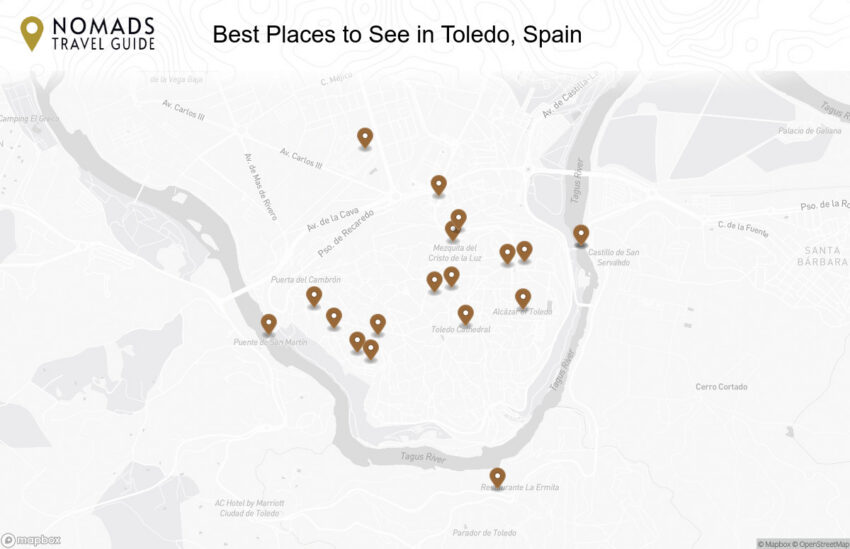
Map of the Self-Guided Walking Tour of Bologna, Italy walking route with 13 stops in Bologna.
Preview map of the Self-Guided Walking Tour of Bologna, Italy route in Bologna, showing 13 stops. Use the interactive map to zoom and tap markers.

More from this area

Self-Guided Walking Tour of Winchester, England 2026

Winchester Round Table
CC BY-SA 4.0 / Mike Peel

This website uses affiliate links which earn a small commission at no additional cost to you.

Winchester, one of England's most storied cathedral cities, combines Roman roots, royal heritage, and literary connections in a walkable and atmospheric setting. From the ancient High Street to the grand halls of the cathedral, every corner of Winchester invites discovery. A guided tour offers fascinating insights into this historic city once known as the capital of Wessex and later, of England itself.

Whether you're strolling through the medieval heart or tracing the legacy of Jane Austen, Winchester is best experienced on foot.

How to Get to Winchester

By Plane: The nearest major airport to Winchester is London Heathrow, around 90 km east of the city, offering flights from across the world. From Heathrow, Winchester can be reached by train, coach, or car in approximately 1.5-2 hours. For the best deals and a seamless booking experience, check out these flights to Winchester on Booking.com.

By Train: Winchester is served by direct train services from London Waterloo, Southampton, and other regional cities. The station is a short 10-minute walk to the historic center. Train schedules and bookings can be found on Omio.

By Car: Located just off the M3 motorway, Winchester is easily accessible by road. There are a number of council and private car parks available. Durngate Car Park and Chesil St Multi Storey Car Park are reasonably priced. This tour assumes you have parked in Chesil St Multi Storey Car Park

Where to Stay in Winchester

To make the most of your walking tour, stay in or near the historic center. For classic elegance, The Winchester Royal Hotel offers landscaped gardens and period charm. Mid-range travellers might enjoy Hotel du Vin Winchester. Budget-conscious visitors can consider Wintonian Hotel for simple comfort within walking distance of main attractions.

A Brief History of Winchester

Winchester's history spans nearly two millennia, beginning with its Roman incarnation as Venta Belgarum. It later rose to prominence under the Anglo-Saxons as the capital of Wessex and eventually the Kingdom of England. By the medieval era, Winchester flourished as a religious and political center, crowned by its iconic 11th-century cathedral.

The city has also been home to great literary figures, most notably Jane Austen, who lived in Winchester and is buried in the cathedral. Today, it retains its role as a county town full of charm, history, and vibrant cultural life.

Guided or Self-Guided Tour of Winchester?

Exploring Winchester independently is easy and rewarding, but a guided tour can greatly enhance your experience. This 1.5 hour City Walking Tour offers expert insights into landmarks such as Winchester Cathedral, the Great Hall, the City Mill, and hidden medieval lanes. It’s ideal for visitors who want to dig deeper into the city’s royal and religious heritage.

Your Walking Tour of Winchester

This guide touches on Winchester's key sights, but the magic of the city is in its atmosphere. Stop for a pint in a timber-framed pub, browse the historic market, or enjoy a riverside walk by the Itchen. Whether you're here for history, literature, or just the timeless English charm, Winchester rewards slow exploration and curious footsteps.

1. St Peter's Church

Chesil Theatre
Chesil Theatre
CC BY-SA 2.0 / Des Blenkinsopp

As you leave the car park, onto Chesil Street, you almost immediately see St Peter’s Church.


This medieval church, also known as St. Peter’s Cheesehill, was constructed prior to 1142, a time when the Priory of St. Denis asserted ownership over the ‘chapel of St. Peter outside Eastgate’.

The church’s layout and orientation strongly indicate that it served as a boundary marker for the Chesil suburb and possibly fulfilled a defensive function. The tower stands out as the most remarkable feature, crowned by a pyramidal tile roof believed to have been added in the 18th century. After World War II, the church ceased to be used for worship and fell into a state of significant disrepair by the 1960s.

When Chesil Street underwent expansion, the building faced the threat of demolition. Fortunately, the Winchester Preservation Trust intervened and successfully saved it. Remarkably, this was the Trust’s inaugural project. The Winchester Dramatic Society took responsibility for maintaining the church’s upkeep in exchange for rent-free use of the premises. The interior of the church now serves as a theatre, with the nave transformed into a stage, the vestry adapted as a dressing room, and the tower utilized as a wardrobe.


Location: Chesil Theatre, Chesil Street, Winchester, UK | Hours: First Saturday of every month: 10:30–12:30 (Open Morning). Performance days: Doors open 30 minutes before the scheduled start time. | Price: Tickets (varies by production): typically £18 (adult) & £12 (students/under 18). | Website

Here is a complete selection of hotel options in Winchester. Feel free to review each one and choose the stay that best suits your needs.

2. Old Chesil Rectory

The Chesil Rectory
The Chesil Rectory
CC BY-SA 2.0 / Des Blenkinsopp

Head to the right of the church up Chesil Street towards the junction with Bridge Street. On the corner is one of the most photogenic timber-framed buildings in Winchester; the Old Chesil Rectory.


The Old Chesil Rectory is now a well-liked restaurant, the Rectory proudly displays a sign near its low entrance proclaiming its construction in 1450. However, a survey conducted by the City of Winchester raises some doubts about this date and suggests that the house likely dates back to the early 16th century. Nevertheless, as a passionate medieval enthusiast, a few years’ difference doesn’t diminish its exquisite charm in my eyes!

Originally a private residence, the Rectory later became the rectory house for St. Peter Cheesehill following the Reformation. Around 1760, the house was divided into two separate tenements, but this division was removed in 1890. Standing three stories tall, the building features stunning half-timbering filled with plaster on the upper two floors, while the ground floor predominantly showcases brickwork.

In traditional late-medieval style, the upper floors project outward over the ground floor, and the gable ends are adorned with beautifully carved barge boards. This building, sometimes affectionately referred to as Cheese House, holds historical significance as the location of Winchester’s inaugural Sunday school.


Location: The Chesil Rectory, Chesil Street, Winchester, UK | Hours: Monday – Friday: 12:00–15:30 & 17:30–23:00. Saturday: 12:00–15:30 & 18:00–23:00. Sunday: 12:00–16:00 & 18:00–22:00. | Price: Free to see from the street (it’s a restaurant, so you only pay if you eat or drink). | Website

Traveling to a country with a different currency? Avoid ATM transaction fees and pay in local currency with a Wise Card. Having used it for over 5 years, we've saved loads on fees!

3. Winchester City Mill (National Trust)

Winchester City Mill 1
CC BY-SA 2.0 / Geoff Cooper

Cross over Chesil Street and headed west along Bridge Street, over the River Itchen.


Winchester City Mill has been a prominent landmark in the historic city of Winchester, the capital of King Alfred’s Wessex, for centuries, dating back to Saxon times. With a remarkable history spanning over 1000 years, it is believed to be the oldest functioning watermill in the United Kingdom. As a rare surviving example of an urban working corn mill, Winchester City Mill underwent a reconstruction in 1744. After being entrusted to the care of the National Trust in the 1920s, the mill was meticulously restored to its full operational state in 2004.

Upon entering, you can delve into the mill’s captivating and extensive history. You can witness the mill in action by National Trust volunteer millers who conduct flour milling demonstrations (subject to availability), showcasing the traditional process of stoneground wholemeal flour production powered by the mighty River Itchen.


Location: National Trust - Winchester City Mill, Bridge Street, Winchester, UK | Hours: (Summer) Thursday – Sunday: 10:00–17:00. (Winter) Wednesday – Sunday: 10:00–16:00. | Price: Free. | Website

4. King Alfred on Broadway

King Alfred Statue Winchester
CC BY-SA 3.0 / BobW66

King Alfred, a scholar, soldier, and statesman, revitalized Winchester following the Dark Ages and established it as his capital. Today, a magnificent bronze statue of him commands attention on The Broadway.


Location: King Alfred the Great - Statue, The Broadway, Winchester, UK | Hours: 24Hours | Price: Free

5. Guildhall Winchester

Winchester New Guidhall
CC BY-SA 2.0 / David Pearson

Nestled in the center of the city, the Guildhall is a splendid Victorian structure that offers a captivating array of live entertainment and events. From tribute bands to craft shows and festivals, there is always something exciting happening within its walls.

Moreover, the Guildhall serves as the residence of the Winchester Visitor Information Centre. Here, you can conveniently purchase tickets for the majority of events hosted at the Guildhall.


Location: Guildhall Winchester, The Broadway, Winchester, UK | Hours: Monday – Saturday: 10:00–17:00; Sunday & Bank Holidays (May–August): 10:00–15:00. Main halls and historic rooms are typically accessible only during meetings, private hire, or public events. | Price: Free to see from outside; entry is typically via events, exhibitions, or appointments (ticket prices vary by event). | Website

6. River Itchen Walk

River Itchen Walk
River Itchen Walk
CC BY-SA 2.0 / Trevor Harris

As you cross over the bridge immediately turn left to walk alongside the River Itchen.


Winchester’s River Itchen is celebrated for being a remarkable chalk stream characterized by its exceptionally clear waters and thriving ecosystem visible along its shores. This unique waterway is home to a diverse range of wildlife, including otters, water voles, white-clawed crayfish, butterflies, and kingfishers. It is worth noting that chalk streams are a rare natural phenomenon, with only approximately 210 of them worldwide, and an impressive 160 of these can be found in England. The presence of such a precious and vibrant chalk stream adds to the natural beauty and ecological significance of Winchester and its surroundings.

The path follows the route of the old city walls. You soon come to the remains of the Roman City Walls of Winchester and also pass the Alms-houses of St Mary Magdalen Hospital. The other side of the wall

The Weirs Walk continues to the water meadows and St Cross.


Location: Wolvesey Lodge, The Weirs, Winchester SO23 9NX, UK | Hours: 24 Hours | Price: Free | Website

7. Wolvesey Castle (Ruins of old Bishop’s Palace)

Wolvesey Castle Winchester
CC BY-SA 4.0 / Mike Peel

Follow the wall as it curves to the right onto College Street. To your right are the ruins of old Bishop’s Palace, accessed via the The Pilgrims’ School playing fields.


The medieval Bishops of Winchester held significant wealth and influence, serving as trusted advisors and close relatives to kings. Wolvesey, located just a short distance from Winchester Cathedral, served as their primary residence during the Middle Ages. The extensive ruins that remain today largely date back to the magnificent 12th century palace constructed by Bishop Henry of Blois, who was King Stephen’s brother.

Although now in a state of decay, the buildings still evoke a sense of their former splendour. One notable event took place on July 25th, 1554, when the East Hall was adorned with luxurious silk and gold hangings for the grand wedding banquet of Queen Mary and Philip of Spain. This occasion marked the last significant celebration held within these walls, leaving a lasting impression of the opulence and grandeur that once graced Wolvesey.


Location: Wolvesey Castle (Old Bishop's Palace), College Street, Winchester, UK | Hours: (Summer) 01 April – 30 September: Daily: 10:00–17:00. (Winter) 01 October – 31 March: Daily: 10:00–16:00. | Price: Free Entrance | Website

8. Winchester College

Winchester College War Cloister
CC BY-SA 2.5 / Andrew Powers

Walk up College Street and Winchester College is on your left.


Winchester College, established by William of Wykeham in 1382, is renowned worldwide as a prestigious and illustrious educational institution. Led by knowledgeable Tour Guides, one-hour tours offer a captivating exploration of the school’s medieval core, encompassing Chamber Court, Chapel, College Hall, Cloisters, and the 17th Century School building. Daily tours commence at the Porters’ Lodge on College Street, SO23 9NA. Tickets can be obtained on the day from the Tour Guide at the Porters’ Lodge or pre-booked through the website (see link below).


Location: Winchester College, College Street, Winchester, UK | Hours: Monday - Sunday: 13:45 & 15:00 | Price: Adult £12.60; Concession £11.70; Children under 11 free; Carers free. Treasury: Free. | Website

9. Jane Austen's House, Winchester

Jane Austen House winchester
CC BY-SA 2.0 / Peter Broster

Located just west of the College on 8 College Street, you will find a modest cream-colored house adorned with a discreet plaque above its entrance.


This unassuming dwelling is known as ‘Jane Austen House,’ where the renowned novelist spent her final days. Prior to her time here, Austen resided in nearby Chawton, only coming to Winchester in the company of her beloved sister Cassandra to seek medical treatment.

Although Austen did not pen any of her celebrated novels within these walls, this secluded abode holds great significance for many devoted Jane Austen enthusiasts. It stands as a cherished destination on their personal ‘Austen pilgrimage.’ It is important to note that the house is not accessible to the general public. Nevertheless, for admirers of Jane Austen, this unpretentious residence serves as a poignant reminder of the beloved author’s final chapter before her passing on July 18, 1817, and her subsequent interment in Winchester Cathedral.


Location: 8 College Street, Winchester, UK | Hours: Monday – Saturday: 09:00–17:00 Sunday: 12:30–15:00. | Price: Adult (17 and over): £14 (£13 online). Student: £8 (£7 online). Child 12 – 16: £6. Child 11 and under: Free with a paying adult.

10. Winchester's Pilgrim's Hall & Priors Gate

Priory Gate St Swithun Street Winchester
CC BY-SA 1.0 / Hassocks5489

As we continued along College Street, we followed its gentle curve to the right and arrived at Kingsgate, one of the remaining medieval city gates.


Kingsgate holds a special appeal due to two notable features. To the right, as you pass beneath the arched entrance, you will come across a charming little bookshop cleverly integrated into the gateway structure.

For a different perspective, venture through the arch and direct your gaze to the left. Here, you will discover a staircase leading up to St Swithuns upon Kingsgate, a petite medieval church positioned atop the gateway arch. It is believed that this church originally served as a chapel for the cathedral’s labouring craftsmen.

Take a moment to appreciate the remnants of medieval stained glass adorning the east window and explore the intriguing memorials that adorn the walls. Keep an eye out for a particularly unique feature—a piscina ingeniously built into a window ledge on the north wall.

Adjacent to Cheyney Court, there stands an even more ancient timber-framed edifice, positioned at a right angle. This remarkable structure is known as Pilgrim’s Hall, erected around 1290 to accommodate pilgrims visiting the revered shrine of St Swithun in the cathedral. The highlight of Pilgrim’s Hall is its venerable hammer-beam roof, believed to be the oldest surviving example of such a roof in England. To the northern side of the hall lies Pilgrim’s School, an institution established during the medieval era but housed in buildings from the 17th and 18th centuries.

Continuing straight ahead, we found ourselves venturing deeper into the heart of the cathedral close. Although numerous historic buildings grace this area, they are not regularly open to visitors. Directly ahead stands The Deanery, an exquisite medieval structure dating back to the 14th century. Encompassed within the Deanery is a late 17th-century library that was fashioned from the original medieval long gallery.

Adjacent to the Deanery, accessed through a gateway from the 13th century, lies Dean Garnier’s Garden. This tranquil walled garden offers a serene setting, affording a captivating view of the cathedral’s northern façade.


Location: Priors Gate St Swithun St Winchester SO23 9LS | Hours: Monday – Saturday: 09:00–17:00. Sunday: 12:30–15:00. | Price: Free to visit and photograph from the Cathedral Close. | Website

11. Winchester Cathedral

Winchester Cathedral The Close Winchester
CC BY-SA 1.0 / Hassocks5489

A Cathedral has graced the city of Winchester since approximately 648 AD. The foundations of the present-day Cathedral were laid out in 1079 under the supervision of Walkelin, the first Norman Bishop. Upon the completion of this new edifice, consecrated in 1093, a momentous occasion took place on 15 July: the solemn transfer of the relics of St. Swithin, accompanied by the dismantling of the “Old Minster.”

The Norman Cathedral, boasting a length of 535 ft (164m), held the distinction of being the longest structure of its kind at the time. Interestingly, it surpassed the current structure by 13m. The Norman towers at the West front were later removed around 1350.

However, the Cathedral faced its share of challenges. Plans to construct towers on the transept ends were abandoned due to unfavourable ground conditions, and in 1107, the central tower collapsed. To rectify these issues, a remarkable endeavour took place between 1905 and 1912. William Walker, a diver, collaborated with a team of 150 individuals to underpin a significant portion of the Cathedral walls.

Throughout its 900+ year history, the Cathedral has undergone extensive remodelling and expansion. In 1202, the construction of the Retrochoir commenced. Between 1350 and 1410, the West front was rebuilt, and the Nave underwent remodelling in the Perpendicular style. This involved meticulously cutting the Norman stonework in its original location and recasting the piers.

The elevations underwent modifications, transitioning from the initial three-story design to a two-story structure. This was achieved by removing the heads of the Norman arched arcade and resetting them at a higher level. Additionally, the entire Nave was re-vaulted during this period. In 1500, the East bay of the Lady chapel was reconstructed, adding another chapter to the Cathedral’s ever-evolving narrative.


Location: Winchester Cathedral, The Cl, Winchester, UK | Hours: Monday – Saturday: 09:00–17:00. Sunday: 12:30–15:00. | Price: Adult (17+): £14 (£13 online); Student: £8 (£7 online); Child 12–16: £6 (£5 online); Child 11 & under: Free with a paying adult. | Website

12. Buttercross

Butter Cross High Street Winchester
CC BY-SA 1.0 / Hassocks5489

Upon leaving St Lawrence, we proceeded up the passage that led us to the bustling High Street. Positioned to the right of the passage stands the remarkable Buttercross, an exquisite example of an early 15th-century pinnacled market Cross, showcasing the distinctive Perpendicular style of architecture. Known by various names, including the City Cross and High Cross, this structure served as a central gathering point for farmers’ markets.

Although it now holds the status of a Scheduled Ancient Monument, there was a time when its preservation was not a top priority. In 1770, the Paving Commissioners sold the Buttercross into private ownership. However, when the new owner attempted to remove the cross from its location, the citizens of Winchester fiercely rallied together and thwarted the attempted relocation.

Adorned with a dozen figures, the lower level of the cross features four notable individuals associated with Winchester’s history. Among them are Alfred the Great, the revered King of Wessex, William of Wykeham, a prominent figure in the founding of Winchester College, Lawrence de Anne, a medieval mayor of the city, and St Amphibalus, a Christian martyr from the early 4th century who was believed to have a church dedicated to him in Winchester during the post-Roman era.


Location: Buttercross Monument, High Street, Winchester, UK | Hours: 24 Hours | Price: Free

13. Winchester City Museum

Winchester City Musueum
CC BY-SA 3.0 / BabelStone

Winchester City Museum holds the distinction of being one of the earliest Museums constructed specifically for that purpose outside of London. Within its walls, visitors can explore a fascinating array of items that showcase the local heritage. A notable recent inclusion is the Roman “Venta” Gallery, where numerous significant archaeological discoveries are proudly exhibited.

Additionally, the museum features meticulously recreated period shop interiors, offering a glimpse into the past. Among these authentic recreations are a family-run Tobacconists shop and a Chemists, both taken from actual shops once situated on the bustling High Street. These meticulously curated displays add depth and charm to the museum’s collection, providing visitors with a captivating journey through time.


Location: Winchester City Museum, The Square, Winchester, UK | Hours: Monday – Saturday: 10:00–17:00. Sunday: 11:00–17:00. Closed on 24–26 December & 1 January. | Price: Adult £8.00; Child (5–15) £5.50; Concession £7.00; Under 5: Free; Family ticket (up to 5 people, max. 2 adults) £26.00. | Website

14. Winchester’s Military Museums

Peninsula Square Winchester
CC BY-SA 1.0 / Hassocks5489

Winchester’s Military Museums is a collection of six military museums located in close proximity to each other on a historic site near the city center of Winchester, adjacent to the Great Hall.

The six museums are:

  • HorsePower, the Regimental Museum of The King’s Royal Hussars
  • The Royal Hampshire Regiment Museum
  • The Royal Green Jackets Museum
  • The Rifles Museum
  • The Gurkha Museum
  • The Guardroom Museum, the Museum of the Adjutant-General’s Corps

Each museum operates independently and offers a unique and valuable experience. While each museum is worth a visit on its own, exploring Winchester’s Military Museums provides an opportunity to visit all of them and enjoy a fascinating day out.


Location: Winchester's Military Museums, Romsey Road, Winchester, UK | Hours: HorsePower: Monday – Friday: 10:00–12:45 & 13:15–16:00; Saturday: 12:00–16:00. Royal Hampshire Regiment Museum: Tuesday – Friday: 10:00–16:30; Saturday & Bank holidays: 10:30–15:00. The Gurkha Museum: Monday – Saturday: 10:00–17:00. The Rifleman’s Museum: Monday – Saturday: 10:00–16:00. Royal Logistic Corps Museum (Worthy Down): Tuesday – Saturday: 09:30–16:00. Adjutant General’s Corps Museum: Tuesday – Saturday: 10:00–17:00. Sunday: Closed. | Price: HorsePower £5 adult; The Gurkha Museum £6.50 adult (£5 concession); The Rifleman’s Museum £6.50 adult (£5.50 concession). Royal Hampshire Regiment Museum, Adjutant General’s Corps Museum, and Royal Logistic Corps Museum are free. Children under 16 are free at the paid museums. | Website

15. Winchester Castle

Winchester Round Table
CC BY-SA 4.0 / Mike Peel

Winchester Castle, one of the earliest castles constructed by the Normans after their victory at the Battle of Hastings, holds significant historical importance as a formidable Norman stronghold. It served as a seat of governance before the transfer of power to London.

Today, only fragmentary foundations remain of the once-mighty castle. However, a notable exception is the meticulously restored 14th-century Great Hall, commissioned by King Henry III. This hall played a central role in the social activities of the castle, serving as a place for dining, accommodation, and conducting official affairs. As we step inside, the interior reveals a minimalistic ambiance, adorned primarily by two prominent features. The first is an imposing statue of Queen Victoria, majestically seated, exuding regal grandeur. The second is an iconic symbol closely associated with Winchester—a massive round table, prominently displayed on the end wall.


Location: The Great Hall The Castle Castle Ave Winchester SO23 8UJ United Kingdom | Hours: Daily: 10:00–17:00. Closed on 24 December – 26 December & 1 January. | Price: £9.00 (online £8.10); Child (5–15): £6.50 (online £5.85); Concession: £8.00 (online £7.20); Under 5s: Free; Family: £29.50 (online £26.55). | Website

16. Winchester Corn Exchange

Winchester Corn Exchange
CC BY-SA 2.0 / Wayland Smith

In the mid-1830s, a consortium of local entrepreneurs joined forces to establish a private enterprise known as the “Winchester Corn Exchange Company.” Their aim was to fund and oversee the construction of a dedicated corn exchange for the town. They identified a plot of open land that had previously housed a 15th-century garden called “Forstersplace” as the ideal location.

Architect Owen Browne Carter was enlisted to design the new building in the Italianate style. Completed in 1838, it was constructed using yellow brick with ornamental stone details, at a cost of £4,000. The design featured a symmetrical facade consisting of eleven bays facing Jewry Street, with the end bays projecting forward as pavilions. The central section of three bays showcased a portico supported by four Tuscan order columns, adorned with an entablature, cornice, wide eaves, and a pediment embellished with modillions. The wings of the building boasted round-headed windows with voussoirs, while a central bell turret crowned the roof. The portico drew inspiration from the work of Inigo Jones, specifically his design for St Paul’s Covent Garden. The Gentleman’s Magazine described Carter’s design as an attempt to eschew the flimsy aesthetics of modern Grecian architecture and instead embrace the more authentic design principles advocated by Palladio in Italy, as well as English architects Jones and Wren.

Over time, the corn exchange’s primary function diminished considerably due to the widespread agricultural depression that plagued Britain in the late 19th century. Subsequently, the building underwent various transformations: it became a roller-skating rink in 1906, a theatre in 1915, and a cinema in 1917. In 1922, it was repurposed as a dance hall, then reverted back to being a cinema in 1933, and finally transformed into a public library in 1936. Hampshire County Council assumed management of the building in 1974.


Location: The Arc Winchester, Jewry Street, Winchester SO23 8SB, UK | Hours: Monday - Saturday: 9:30am - 5:00pm Sunday: 11:00am - 5:00pm | Website

17. Hyde Abbey

Hyde Abbey Gatehouse
CC BY-SA 3.0 / JohnArmagh

The foundation of the abbey dates back to 1110, and it boasted an impressive Romanesque church that ranked among the finest in the country. On the gravel, three substantial concrete rectangles mark the spot where Alfred the Great, his wife Ealhswith, and their son Edward the Elder were laid to rest.

Hyde Abbey Gatehouse, is one of the few remaining remnants of the abbey. This gatehouse served as the primary public entrance to the abbey complex and later became the entryway to Hyde House, a grand Tudor residence that no longer exists. Stepping through the gate and following the path to the left, you will encounter a turf-covered bridge, one of the last surviving traces of the original abbey structures.


Location: Hyde Abbey Gatehouse, King Alfred Place, Winchester, UK | Hours: 24Hours (Accessible at all times). | Price: Free
Powered by GetYourGuide
Moira & Andy
Moira & Andy

Hey! We're Moira & Andy. From hiking the Camino to trips around Europe in Bert our campervan — we've been traveling together since retirement in 2020!

Read our full story here

This website uses affiliate links which earn a small commission at no additional cost to you.

Walking Tour Map
Map of the Self-Guided Walking Tour of Winchester, England walking route with 17 stops in Winchester.
Preview map of the Self-Guided Walking Tour of Winchester, England route in Winchester, showing 17 stops. Use the interactive map to zoom and tap markers.

Which Six Bridges Cruise in Porto Should You Take in 2026?

6 bridges cruise in Porto Is it worth it?

This website uses affiliate links which earn a small commission at no additional cost to you.

When researching what to do in Porto you will probably have come across boat trips on the Douro River and especially the 6 bridges cruise. The 6 Bridges Cruise is the most cost-effective boat trip and a great way to learn about the history and culture of Porto. The tour is usually on a replica Rabelo boat, retracing the historic path once taken by wine merchants transporting barrels of Port wine from the enchanting Douro Valley to Vila Nova de Gaia.

Leave the bustling city behind and unwind in the embrace of the river's serene waters while admiring the picturesque riverside town. Having personally experienced the 6 Bridges tour in Porto, I will provide valuable insights on its worthiness, the duration of the day cruise, and recommend the finest boat tours available in Porto.

Which Six Bridges Cruise in Porto should I Choose?

Six Bridges Boat Tour by Living Tours: The basic tour, typically lasting 50-minutes, can cost as little as £13 when booking online via GetYourGuide. They can depart from either side of the river at Ribeira Quay or Gaia Quay.

Six Bridges Douro River Cruise by Tomaz do Douro or Empreend. Tur. Lda: This tour is similar to the above, and costs slightly more at £16 when booking online via GetYourGuide.

Douro River Sailing Cruise with Port Wine by Mar Douro: This tour takes you on 31-foot classic motor sailor boat from Douro Marina to the mouth of the Douro River. Along the route you will be able to enjoy a Port wine tasting, including three types of Port wine (Ruby Port, Tawny Port, and White Port). Douro River Sailing Cruise + Port Wine

Tips for the Best Experience with Your Porto River Day Cruise

  • While on the cruise, it is not permitted to use the front of the boat as a seating area. However, you are more than welcome to capture a memorable photo with the magnificent view.
  • If you're eager to witness Porto's breath-taking sunset from the waterfront area, it's advisable to plan your river cruise close to sunset. Porto is renowned for its incredible sunsets, making it a memorable experience to capture. We recommend scheduling your cruise around 5 pm, allowing ample time to enjoy the scenic views as the sun gracefully descends. After the cruise, you can continue immersing yourself in the captivating waterfront district, savouring the atmosphere until the sun has fully set.
  • Please be aware that if you choose to sit on the left outer edge of the boat, there is a possibility of getting splashed. During my own tour, some of us experienced splashes while seated in that area, while the rest of the ship remained dry. While it wasn’t a major inconvenience for us, it prompted some other passengers to relocate to different seats. It’s worth considering this when deciding where to sit during your ride.
  • To secure your spot on the river cruise, it is recommended to book your ticket in advance. However, if you’re uncertain about your schedule, you can purchase a ticket for the same day. Keep in mind that not all time options may be available, so be prepared for potential limitations. In my experience, I purchased my tickets on the same day and had to choose a slightly later time than originally intended. Fortunately, everything worked out well.
  • To avoid any inconvenience or tangling caused by the wind, it is advisable to tie up your hair during the cruise. This simple precaution will help ensure a more comfortable and enjoyable experience on the boat.
  • Don’t forget to bring both sunscreen and a light scarf, as it gets very sunny and windy at the same time.

FAQ for Six bridges cruise in Porto

How long does the cruise last?
The cruise lasts for 50 minutes. If you have purchased the ticket in advance, it is best to allow around an hour in total to exchange your voucher, check in, and disembark comfortably.

How much does a six bridges cruise in Porto cost?
Prices vary depending on the company you book with, but you can generally expect to pay around £13 per person for a standard, no-frills Six Bridges Cruise.

What is included in the price of the six bridges cruise in Porto?
The price usually includes the river cruise itself along with an audio guide or live commentary in your chosen language. Some cruises also include a glass of port wine, although these options tend to be priced slightly higher.

What time of day is the best time to take the cruise?
The cruise can be enjoyed in the morning, late afternoon, or close to sunset. Unlike Lisbon, only a limited number of companies operate evening or sunset departures, and most services finish by around 6:30 pm.

Is the six bridges cruise in Porto worth it?
Yes, the six bridges cruise is widely considered worth it, especially for first-time visitors. It offers a relaxed way to see Porto from the river, learn about the city's history, and enjoy views that are difficult to appreciate from land, all within a short time frame.

Do I need to book the six bridges cruise in advance?
Booking in advance is recommended during peak seasons such as spring, summer, and weekends. Same-day tickets are often available, but departure times may be limited.

Where does the six bridges cruise depart from?
Most cruises depart from either Ribeira Quay on the Porto side or Vila Nova de Gaia on the south bank of the Douro. Both locations are easy to reach on foot from the historic centre.

Is there commentary during the cruise?
Yes, most cruises include an audio guide or live commentary available in several languages. Headphones are sometimes provided, while other operators use onboard speakers.

Are the boats covered or open-air?
Traditional Rabelo-style boats are typically open-air with some covered seating. This allows for excellent views but means you should dress appropriately for sun or wind.

Is the six bridges cruise suitable for children?
Yes, the cruise is suitable for children and families. The short duration and gentle pace make it an easy activity for all ages.

Is the cruise wheelchair accessible?
Accessibility varies by operator. Some boats may have limited access due to steps and narrow gangways, so it is best to check with the cruise provider before booking.

Can I take photos during the cruise?
Photography is encouraged, and the cruise offers excellent opportunities to capture Porto’s bridges and riverfront. Standing at the front of the boat is usually restricted, but you can move around to find good angles.

Does the cruise go all the way to the ocean?
No, the standard six bridges cruise stays within the city and turns back near the Freixo Bridge. Cruises that reach the river mouth or the Atlantic are typically longer and sold as separate experiences.

What should I wear on the cruise?
Wear comfortable clothing and bring sun protection in warmer months. A light jacket or scarf is useful, as it can be windy on the river even on sunny days.

What are the 6 Bridges in Porto?

During your river cruise, you will encounter the six bridges in a specific order, each with its own unique characteristics. These bridges were constructed over several years, showcasing a diverse range of architectural styles. Below is information about each of the splendid bridges in Porto.

1. Dom Luís I Bridge

Dom Luis I Bridge Porto
CC BY-SA 2.0 / Travelholic Path

The Dom Luís I Bridge is the undisputed icon of Porto and the moment most passengers look forward to on the six bridges cruise. Its sweeping double-deck iron arch dominates the riverfront and offers one of the most recognisable cityscapes in Portugal. From the water, the scale of the structure becomes even more impressive, especially as the boat passes directly beneath the arch linking Ribeira and Vila Nova de Gaia.

Completed in 1886, the bridge was designed by the Belgian firm Société de Willebroeck under the direction of engineer Théophile Seyrig, a former collaborator of Gustave Eiffel. At the time of construction, it boasted the world’s largest wrought-iron arch span. Originally built to accommodate road traffic on both levels, the upper deck now carries the metro and pedestrians, while the lower deck connects the historic riverbanks.

During the cruise, this bridge often provides the most dramatic photo opportunities, particularly when sunlight reflects off the ironwork or when evening lights illuminate the structure. It is also a visual reminder of Porto’s industrial heritage and its long-standing relationship with the Douro River.


Location: Luís I Bridge, Ponte Luiz I, Porto, Portugal | Hours: 24 hours | Price: Free

We recommend to rent a car in Portugal through Discover Cars, they compare prices and review multiple car rental agencies. Book your rental car here.

2. Ponte do Infante

Ponte do Infante   Porto
Ponte do Infante Porto
Public Domain / Joseolgon

Ponte do Infante is a strikingly modern contrast to Porto’s older river crossings. Built in 2003 and named after Henry the Navigator, the bridge was designed to relieve traffic from the upper deck of the Dom Luís I Bridge following the introduction of the metro system.

Its single concrete arch spans 280 metres, a notable engineering achievement at the time of completion. From the river, the bridge’s clean lines and minimalist design stand out clearly against the city’s layered hillsides. The cruise offers an excellent vantage point to appreciate its scale without the distraction of traffic.

As the boat glides beneath Ponte do Infante, passengers also gain views toward Serra do Pilar, whose monastery sits prominently above Gaia. This section of the cruise highlights how Porto continues to balance modern infrastructure with historic surroundings.


Location: Ponte do Infante, Porto, Portugal | Hours: 24 Hours | Price: Free.

Here is a complete selection of hotel options in Porto. Feel free to review each one and choose the stay that best suits your needs.

3. Maria Pia Bridge

Porto Ponte Maria Pia
CC BY-SA 2.0 / Turismo En Portugal

The Maria Pia Bridge is one of the most historically significant crossings on the Douro and a highlight for engineering enthusiasts. Designed by Gustave Eiffel, this elegant iron railway bridge opened in 1877 and once connected Porto and Gaia by rail for more than a century.

From the river, its slender arch appears remarkably light despite its height of over 60 metres. The cruise allows you to fully appreciate the bridge’s delicate proportions, which were groundbreaking at the time and influenced future metal bridge construction across Europe.

Although no longer in use since rail traffic was diverted to the São João Bridge in 1991, Maria Pia remains a National Monument. Passing beneath it by boat offers a sense of stepping back into the golden age of industrial innovation.


Location: Ponte Dona Maria Pia, Oliveira do Douro, Portugal | Hours: 24 Hours | Price: Free

Traveling to a country with a different currency? Avoid ATM transaction fees and pay in local currency with a Wise Card. Having used it for over 5 years, we've saved loads on fees!

4. São João Bridge

Sao Joao Bridge
Sao Joao Bridge
CC BY-SA 2.0 / Sergei Gussev

The São João Bridge represents Porto’s modern rail infrastructure and marks a clear shift away from ornamental design toward functionality. Opened in 1991, it replaced the Maria Pia Bridge as the city’s primary railway crossing.

Constructed from reinforced concrete, the bridge spans the Douro with a streamlined, multi-lane deck supported by two massive pillars anchored in the riverbed. From the cruise, it appears understated but powerful, emphasising efficiency rather than visual drama.

As trains pass overhead, the bridge underscores Porto’s role as a major transport hub. While it may not be the most photogenic crossing, it plays a vital role in connecting Porto with southern Portugal.


Location: Ponte de São João, Porto, Portugal | Hours: Always visible; train crossings depend on rail schedules. | Price: Free.

Where to Stay in Porto: An Area by Area Guide!

5. Arrábida Bridge

6 bridges cruise in Porto Ponte da Arrabida Douro River Porto
CC BY-SA 2.0 / Matt Kieffer

The Arrábida Bridge is one of the most visually impressive moments of the six bridges cruise, particularly as the river begins to widen toward the Atlantic. Completed in 1963, it once held the record for the world’s largest reinforced concrete arch.

Designed by Portuguese engineer Edgar Cardoso, the bridge carries the A1 motorway between Porto and Lisbon. From the water, its massive arch feels monumental, rising high above the riverbanks and framing views of Foz do Douro and the river’s mouth.

In recent years, the bridge has also become an attraction in its own right, with guided climbs offering panoramic views from the top. From the cruise, however, it serves as a dramatic reminder of Porto’s engineering ambition in the mid-20th century.


Location: Ponte da Arrábida, Via de Cintura Interna, Porto, Portugal | Hours: Always accessible to view; road crossing operates continuously. | Price: Free.

Click here to read our blog about Guide to Port Wine Cellars in Porto 2026: Tours, Tastings & Tips

6. Freixo Bridge

Freixo Bridge
Freixo Bridge
CC BY-SA 2.0 / José Moutinho

The Freixo Bridge is the most modern and easternmost crossing on the six bridges route. Opened in 1995, it was built to ease congestion and improve access to Porto’s inner ring road. The bridge actually consists of two parallel structures, separated by a narrow gap and spanning a total length of 750 metres.

From the river, Freixo marks the point where the city begins to feel less historic and more residential and industrial. It is also where the contrast between Porto’s traditional wine lodges and everyday urban life becomes most apparent.

As the cruise turns back toward Ribeira, Freixo serves as a quiet endpoint to the journey, highlighting how the Douro connects not only Porto’s past but also its present and future.


Location: Freixo Bridge, Circular Regional Interna do Porto, Porto, Portugal | Hours: Open 24/7 (public bridge and surrounding outdoor viewpoints). | Price: Free.

Explore Porto at your own pace with our self-guided walking tour! Follow our curated route to discover must-see sights and local secrets that makes Porto one of the best places to visit in Portugal.

Powered by GetYourGuide
Moira & Andy
Moira & Andy

Hey! We're Moira & Andy. From hiking the Camino to trips around Europe in Bert our campervan — we've been traveling together since retirement in 2020!

Read our full story here

This website uses affiliate links which earn a small commission at no additional cost to you.

Walking Tour Map
Map of the Which Six Bridges Cruise in Porto Should You Take in ? walking route with 6 stops in Porto.
Preview map of the Which Six Bridges Cruise in Porto Should You Take in ? route in Porto, showing 6 stops. Use the interactive map to zoom and tap markers.

More from this area

Guide to Port Wine Cellars in Porto 2026: Tours, Tastings & Tips

Guide to Port Wine Cellars in Porto
CC BY-SA 2.0 / Jocelyn Erskine-Kellie

This website uses affiliate links which earn a small commission at no additional cost to you.

The allure of Porto extends to its renowned wine scene, making it a must-visit destination. Located in northern Portugal, the neighbouring Douro Valley region stands as the exclusive birthplace of Europe's beloved port wines. While fortified wines similar to port can be crafted in various regions worldwide, European regulations strictly define that only wines originating from the Douro Valley hold the esteemed designation of “port wine.” This distinctive label ensures that true port wine, both in production and labelling, remains synonymous with the exceptional offerings from this picturesque Portuguese region.

What is Port?

Port wine is a delightful fortified wine known for its sweetness, often savoured as a dessert wine or aperitif. While most port wines have a red hue, they stand apart from your typical red table wine with their higher alcohol content. With an average alcohol by volume (ABV) of 20%, combined with the richness of sugar, port wine can have a potent effect if consumed without caution.

Port wine is produced exclusively in the picturesque Douro River Valley in Portugal. Interestingly, it's the third world's oldest wine with appellation - geographical indication protected since 1756.

Origin of port wine

During the 14th century, a strong alliance formed between Portugal and England, forging deep political and commercial connections. As a result, numerous British merchants found their way to Portugal, establishing their presence in the country. Even in the 17th century, the Douro Valley region was already producing remarkable white and red wines. However, it was the conflicts between England and France in 1678 that sparked the rise of Port wine.

Due to the conflict, England faced a shortage of wine imports from France, prompting them to seek alternative sources. This quest led them to the wines of the Douro region. In a bold experiment, the English merchants began blending the robust red wine with spirits or brandy. This process halted the fermentation and allowed for better preservation during the voyage back to England. It was through this ingenious method that Porto wine, or Port wine, was born and gained popularity.

The strong connection to England is evident in the names of many wineries, which may not sound Portuguese at all. However, it wasn't until the establishment of the Real Companhia Velha in 1781 that the Portuguese began to assert their presence in the port wine industry. This marked a significant milestone, as Portuguese involvement grew alongside the continued success and international recognition of Port wine.

Porto and the Registered Designation of Origin of Port

In the early 18th century, the popularity of Port wine soared, leading to a significant increase in production. Unfortunately, this also gave rise to unscrupulous practices, as certain producers sought to conceal the inferior quality of their wines. To darken the color and mask imperfections, some resorted to adding elderberry juice.

In 1756, the Marquis of Pombal, the esteemed Prime Minister of Portugal, took decisive action to combat these dishonest practices within the industry. Recognizing the need for regulations and oversight, he implemented measures to bring Port wine production and trade under strict control. To achieve this, he established the Companhia Geral da Agricultura das Vinhas do Alto Douro, which later evolved into the Real Companhia Velha. As part of this regulatory framework, the Marquis of Pombal introduced a comprehensive classification system for vineyards, distinguishing between the finest estates authorized for export and lower-quality vineyards designated solely for the Portuguese market.

In essence, the Marquis of Pombal pioneered the concept of registered designation of origin, a groundbreaking notion that aimed to protect the authenticity and quality of Port wine. By setting standards and designating specific regions as authorized sources of the finest grapes, he laid the foundation for the esteemed reputation and enduring legacy of Port wine.

The actions of the Marquis of Pombal not only safeguarded the integrity of Port wine but also set a precedent for future regulatory systems in the world of wine. His visionary approach and commitment to excellence continue to influence the production and appreciation of Port wine to this day, making him a trailblazer in the realm of registered designation of origin.

Types of Port

In the world of port wine, an array of distinctive blends exists, with three primary categories dominating the scene: tawny port, ruby port, white ports and vintage ports.

Tawny port undergoes a process of aging in wooden barrels, resulting in a luscious and velvety texture, complemented by delightful hints of nuts or caramel.

On the other hand, ruby ports showcase a captivating deep red colour and a flavour profile that accentuates the essence of fruits and berries.

White ports, crafted from white grapes. These delightful creations possess a slightly less sweet profile compared to their red counterparts. Furthermore, the popularity of rosé ports has been on the rise, offering a unique experience. While sweeter than white ports, they do not reach the same level of richness found in ruby or tawny ports.

As for vintage ports, they are exclusively crafted from the finest vineyards during exceptional harvest years, which may occur every three to four years. These wines embody a luxurious richness and a truly flavorful experience.

Porto Wine Cellars

The Porto Wine Cellars, known as “caves” in Portuguese, serve as the repositories for the exquisite port wine crafted in the Douro Valley region. When strolling through Porto, the mention of this word instantly resonates.

Where are the port cellars of Porto located?

Strictly speaking, these wineries are not situated within the city of Porto itself, but rather in the enchanting city of Vila Nova de Gaia. To reach them, one simply needs to traverse the Dom Luis I Bridge from Ribeira, a short and delightful journey offering one of the most captivating vistas of Porto's riverfront.

While most of the port wine cellars are situated along the banks of the Douro River, a few renowned ones, including Taylor's, Graham's, Croft, and Cockburn's, are located a bit farther away. However, they are still easily accessible within the Vila Nova de Gaia area.

Many of these cellars offer tours, some requiring prior appointments, while nearly all of them provide tasting experiences that allow visitors to sample a range of wines without taking a formal tour.

1. Calém Wine Cellars

Calem Wine Cellars
Calem Wine Cellars
CC BY-SA 4.0 / Daniel VILLAFRUELA.

With a proud legacy dating back to 1859, this esteemed establishment has been crafting Porto wines of unparalleled quality. Immerse yourself in the rich history of the Demarcated Region of the Douro by visiting their captivating museum. Delve into the captivating story of this renowned wine region and gain a deep appreciation for its heritage.

Beyond the educational experience, this wine cellar also offers enchanting fado performances of Portuguese traditional song from Tuesday to Sunday, running between the months of April and October. Let the soulful melodies of fado serenade you as you embrace the cultural essence of Portugal!


Location: Caves Cálem, Avenida de Diogo Leite, Vila Nova de Gaia, Portugal | Hours: Daily from 10:00 - 17:30 | Price: Adults: From €20 | Website

We recommend to rent a car in Portugal through Discover Cars, they compare prices and review multiple car rental agencies. Book your rental car here.

Powered by GetYourGuide

2. Espaço Porto Cruz

Visitng Espaco Porto Cruz
CC BY-SA 2.0 / Nan Palmero

Spaço Porto Cruz goes beyond the ordinary port wine tasting experience. It presents a comprehensive journey that celebrates the rich culture of Port wine by seamlessly blending tradition with modernity. Upon entering Spaço Porto Cruz, you will be immersed in a world of discovery. Delve into the captivating multimedia centre, where interactive displays and engaging presentations transport you through the fascinating history and production techniques of Port wine. Expand your knowledge through workshops and gain insights into the intricate craft behind this beloved wine.

Indulge your senses with delectable pairings during chocolate and cheese tastings, where the harmonious combinations of flavours elevate the enjoyment of Port wine to new heights. Allow your taste buds to be delighted as you uncover the nuances and complexities that emerge when Port wine is expertly paired with exquisite culinary creations.

Before bidding farewell, ascend to the 360º terrace, where an awe-inspiring vista awaits. From this elevated vantage point, soak in the panoramic views that stretch across the landscape, etching memories that will linger long after your visit.


Location: Espaço Porto Cruz, Largo Miguel Bombarda, Vila Nova de Gaia, Portugal | Hours: Tuesday to Saturday – 12:30 PM to 12:00 AM Sunday – 12:30 PM to 7:00 PM | Price: Varies by experience (exhibition access, tastings, and workshops); check the official website for current prices in euros. | Website

Here is a complete selection of hotel options in Porto. Feel free to review each one and choose the stay that best suits your needs.

3. Sandeman's Wine Cellar

Sandeman Wine cellar
CC BY-SA 2.0 / Ray Swi-hymn

The Sandeman Port Cellar provides an unforgettable experience where the art of port wine is celebrated, from the informative tour to the tantalizing tasting and the moments of blissful relaxation amidst the stunning riverside vistas. Upon concluding the enlightening tour, you will be led to the inviting tasting room where you will be treated to generous samples of Sandeman’s exquisite port wines.


Location: Sandeman, Largo Miguel Bombarda, Vila Nova de Gaia, Portugal | Hours: Offered daily, 10:00 am – 6:00 pm in multiple languages. | Price: Tours and port tastings start at €22 and range from 3 to 5 port wines. | Website

Traveling to a country with a different currency? Avoid ATM transaction fees and pay in local currency with a Wise Card. Having used it for over 5 years, we've saved loads on fees!

4. Taylor's Wine Cellar

Taylors port cellar Porto
CC BY-SA 2.0 / Véronique Mergaux

The company is one of the oldest port houses (opening in 1692), beginning with an English merchant by the name of Job Bearsley. Joseph Taylor, originally a manager in the London office of the company and later a partner, became sole owner in 1826, giving the company the name of Taylor’s. In 1838, a partnership agreement was signed between the Taylor’s company, and two merchants by the names of Morgan Yeatman and John Fladgate. This gave rise to the company’s full and present name of Taylor Fladgate and Yeatman. The company has since expanded to include the Yeatman, a luxury wine hotel just a short walk from the Taylor’s port wine cellars.

Taylor’s Cellars, standing strong for 300 years, have recently undergone a remarkable transformation, blending the charm of the past with contemporary innovation. What was already remarkable has now been elevated to new heights! Within these walls, you will embark on a journey through time, delving into the rich history of Port wine. Discover its humble beginnings and compare them to the techniques employed in modern production. Uncover the captivating story of how this elixir found its way to Porto, where it aged gracefully before embarking on its voyage to Britain.

Similar to our previous recommendations, at Taylor’s Cellars, you can indulge in the art of wine tasting on the terrace, reveling in the breathtaking panoramas that unfold over the city of Porto. A short ascent awaits you on Rua do Choupelo, but the rewards far outweigh the effort expended!


Location: Taylor's Port, Rua do Choupelo, Vila Nova de Gaia, Portugal | Hours: Cellars (mon-sun): 11:00 – 18:00 Tasting Room and Shop (mon-sun): 11:00 - 19:00 Restaurant: 12.30-15.00 // 19.00-22.00 | Price: Adults: From €25.00 | Website

Where to Stay in Porto: An Area by Area Guide!

Powered by GetYourGuide

5. Ferreira Wine Cellar

Ferreira wine cellar buildings
CC BY-SA 2.0 / Matt Kieffer

Founded in 1751, Ferreira stands as the sole producer of port wine that has remained under Portuguese ownership throughout its illustrious history. What sets this winery apart is not only its esteemed legacy but also its notable association with an exceptional woman, Dona Antonia Adelaide Ferreira, whose impact on the Douro Region during the 19th century remains a captivating tale awaiting discovery.

During your visit, you will have the opportunity to choose from a selection of enticing tours tailored to your preferences. Embark on a captivating journey through the historic cellars of Ferreira, where the secrets of port wine come alive. Immerse yourself in the ambiance as you witness the meticulous winemaking process and learn about the traditions that have been faithfully upheld for centuries.


Location: A.A. Ferreira, Rua Carvalhosa, Vila Nova de Gaia, Portugal | Hours: Daily 10:00–12:30 and 14:00–18:00 (last visit 12:15 and 17:15). | Price: Adults: €22.00 (Porto Ferreira Visit, tasting of 3 ports). | Website

Click here to read our blog about Which Six Bridges Cruise in Porto Should You Take in 2026?

6. Graham’s Wine Cellar

Grahams Port Cellar
Grahams Port Cellar
CC BY-SA 4.0 / Herpoel

Established in 1820 by the visionary brothers William and John Graham, this esteemed company stands as a testament to their unwavering passion for port wine. With a remarkable collection of over 3500 barrels of Port, their cellars have become a beacon for wine enthusiasts worldwide.

Nestled in a prime location, these historic cellars offer a range of immersive experiences tailored to suit different preferences. Visitors can choose from various types of visits, each offering a unique insight into the world of Graham’s Port. No matter which option you select, your journey will culminate in a delightful tasting of three distinguished varieties of Graham’s Port.


Location: Graham's Port Lodge, Rua do Agro, Vila Nova de Gaia, Portugal | Hours: Summer: Visits: 10:00 – 17:30 (reservation required); Tastings: 10:00 – 17:30; Shop: 10:00 – 19:30; Winter: Visits: 10:00 – 17:00 (reservation required) Tastings: 11:00 – 17:30 | Price: Starting from €30.00 | Website

Explore Porto at your own pace with our self-guided walking tour! Follow our curated route to discover must-see sights and local secrets that makes Porto one of the best places to visit in Portugal.

Powered by GetYourGuide

7. Churchill's Wine Cellar

Churchills Lodge
Churchills Lodge
© CHURCHILL’S

For those seeking a unique and refined experience, Churchill’s Wine Cellar stands as an elegant haven tucked away from the well-trodden paths. With an unwavering commitment to excellence, Churchill’s offers an exceptional selection of wines that exemplify their distinctive style. Guided by the philosophy that the true enjoyment of a glass of Port requires a state of wellbeing, Churchill’s creates an atmosphere of pure indulgence.

The visitors center at Churchill’s Wine Cellar is a sanctuary for wine enthusiasts, where you can savor the very best of their offerings. Immerse yourself in a world of rare Vintage ports, each sip a testament to the craftsmanship and passion that goes into every bottle. The tasting experience at Churchill’s is unparalleled, allowing you to tailor your own wine exploration in their Tasting Room. Here, surrounded by elegance, you can indulge in the captivating flavors and aromas that have made Churchill’s wines so highly regarded.


Location: Churchill's Lodge, Rua da Fonte Nova, Vila Nova de Gaia, Porto, Portugal | Hours: Monday to Saturday: 10:00 am to 6 pm | Price: From €15.00–€35.00 depending on the tasting and options selected. | Website

Click here to read our blog about Exploring the Douro Valley 2026: All You Need to Know

Powered by GetYourGuide
Moira & Andy
Moira & Andy

Hey! We're Moira & Andy. From hiking the Camino to trips around Europe in Bert our campervan — we've been traveling together since retirement in 2020!

Read our full story here

This website uses affiliate links which earn a small commission at no additional cost to you.

Walking Tour Map
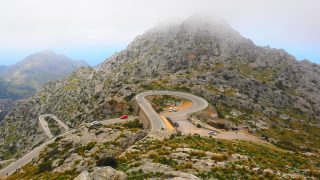
Map of the Guide to Port Wine Cellars in Porto: Tours, Tastings & Tips walking route with 7 stops in Porto.
Preview map of the Guide to Port Wine Cellars in Porto: Tours, Tastings & Tips route in Porto, showing 7 stops. Use the interactive map to zoom and tap markers.

More from this area

Self-Guided Walking Tour of Porto, Portugal (2026)

Self Guided Walking Tour of Porto

This website uses affiliate links which earn a small commission at no additional cost to you.

Porto, a charismatic city along Portugal's Douro River, is famed for its vibrant neighborhoods, tiled façades, and rich winemaking tradition. As one of Europe's most atmospheric cities, Porto is best discovered on foot-or by Segway-for a fun and efficient way to see the highlights. A guided tour adds depth to your visit, uncovering stories behind the city's dramatic hills, historic monuments, and local culture.

Whether you're rolling through the Ribeira or gliding past baroque churches, Porto's charm is as captivating as its views.

How to Get to Porto

By Plane: Porto is served by Francisco Sá Carneiro Airport, located about 11 km northwest of the city center, which handles both international and domestic flights. From the airport, travelers can reach central Porto by metro, bus, taxi, or ride-share in around 20-30 minutes. For the best deals and a seamless booking experience, check out these flights to Porto on Booking.com.

By Train: Porto is served by the centrally located Campanhã and São Bento stations, with regular connections from Lisbon and other cities. São Bento, known for its stunning azulejo tile murals, is a short walk from many historic sites. Train schedules and bookings can be found on Omio.

By Car: Porto is accessible via the A1 and A3 motorways. Be mindful that parking in the historic center is limited-recommended garages include Parque Saba Cardosas and Parque Palácio da Justiça. If you are looking to rent a car in Portugal I recommend having a look at Discover Cars, first, as they compare prices and review multiple car rental agencies for you.

Where to Stay in Porto

To enjoy easy access to Porto’s main attractions, stay in or near the historic center. For upscale comfort, Pestana Vintage Porto Hotel offers riverfront luxury in a UNESCO-listed building. For mid-range charm, Moov Hotel Porto Centro combines style and value. Budget travellers may enjoy Gallery Hostel for a social and artistic atmosphere.

A Brief History of Porto

Porto's roots trace back to Roman times, but its name-and Portugal's-derives from the city's ancient Latin name, Portus Cale. During the Middle Ages, Porto thrived as a trade hub, with the Douro River serving as a vital artery. The city played a pivotal role in the Age of Discoveries and is inseparably linked to the international success of Port wine, which has been shipped from its cellars for centuries.

Today, Porto blends history and innovation, with medieval alleys and bell towers coexisting alongside vibrant nightlife and contemporary architecture.

Guided or Self-Guided Tour of Porto?

Though Porto is a pleasure to explore on foot, its steep hills and layered history make a guided tour well worth it. The Original Segway Tour in Porto offers a fun and informative way to discover the city. Led by a local guide, the 3-hour experience covers major highlights including the Ribeira district, Clérigos Tower, São Bento Station, and Porto Cathedral, while offering an engaging overview of the city's culture and evolution.

Your Walking Tour of Porto

This guide outlines Porto's key landmarks, but the real joy is in the details. Linger at cafés, browse independent bookshops, or sample francesinha and pastel de nata along your route. Whether you're admiring the tilework of churches, crossing the Dom Luís I Bridge, or soaking in riverside views, Porto invites you to explore at your own pace-with a glass of port never far away.

1. São Bento Railway Station

Sao Bento Station
Sao Bento Station

The São Bento Railway Station holds a significant place within the Historic City Centre of Porto, acknowledged as a UNESCO World Heritage Site and designated as a National Monument of Portugal.

Construction of this remarkable building commenced in 1904 under the architectural guidance of José Marques da Silva, and it took around twelve years to complete. One of the station’s most captivating features is its vestibule, adorned with magnificent panels of azulejo tiles crafted by Jorge Colaço. These exquisite tile compositions, framed by pilasters, were finalized in 1916, just in time for the station’s grand inauguration.

Impressively, there are approximately 20,000 azulejo tiles adorning the walls of the São Bento Railway Station. Among them, the larger panels vividly depict significant moments from Portuguese history. These captivating scenes include the Battle of Arcos de Valdevez, the Conquest of Ceuta in 1415, the legendary meeting between knight Egas Moniz and Alfonso VII of León in Toledo during the 12th century, the ceremonial entrance of King John I and Philippa of Lancaster on horseback to Porto to celebrate their wedding in 1387, and many more.

At the station’s entrance, on the border wall, smaller tile panels showcase rural scenes, depicting a bustling cattle fair, a pilgrim camp, picturesque vineyards, bountiful harvests, the transportation of wine down the Douro River, and even a charming watermill. Additionally, the pilasters that separate the entry doors feature a series of smaller tile compositions, adding further artistic allure to the space.

Above, near the ceiling, a captivating blue and gold frieze embellished with stylized flowers catches the eye, while below it, another polychromatic frieze in an Art Deco style depicts the captivating history of transportation in Portugal.


Location: São Bento Station, Praça de Almeida Garrett, Porto, Portugal | Hours: The station operates daily with long hours aligned to train timetables; the main hall is generally accessible from early morning until late evening. | Price: Free entry; São Bento is a working station and you do not need a ticket to enjoy the main hall.

We recommend to rent a car in Portugal through Discover Cars, they compare prices and review multiple car rental agencies. Book your rental car here.

2. Praça da Liberdade

Praca da Liberdade Porto
CC BY-SA 2.0 / Alain Rouiller

Located in the vibrant lower town or Baixa district of Porto, on the southern side of the grand Avenue of the Allies, lies the expansive Liberty Square. Spanning over three square miles, this area, originally known as New Square, emerged as a result of Porto’s urbanization movement in 1718.

In 1788, the religious order of Saint Eligius, the esteemed Patron Saint of veterinarians, horses, goldsmiths, and blacksmiths, established a convent on the southern edge of the square. This remarkable neoclassical structure, known today as the Cardosas Palace, replaced a section of the medieval city wall, symbolizing a harmonious blend of past and present.

In 1866, a majestic monument was erected in honour of King Peter IV, a remarkable figure who held the titles of both King of Portugal and Emperor of Brazil. Renowned for his unwavering dedication to preserving the liberal constitution in Portugal and safeguarding liberty in Brazil, Peter IV’s statue, sculpted by Anatole Calmels, depicts him mounted and clutching the constitution he valiantly fought for during the Liberal Wars.

The square experienced a transformation in 1916 with the construction of the modern Avenue of the Allies, which extended northwards from the square. Today, the buildings surrounding Liberty Square are adorned with banks, hotels, offices, and restaurants, epitomizing a bustling hub of commerce and culture. Standing proudly at the centre, the monument dedicated to Peter IV commands attention and dominates the vast expanse of the square. Noteworthy landmarks in the vicinity include the esteemed Bank of Portugal and the stately Cardosas Palace, preserving the legacy and allure of this remarkable square.

Don’t miss the opportunity to visit the McDonald’s located in Praça da Liberdade, renowned as one of the most stunning McDonald’s establishments worldwide. This particular location holds a fascinating history, once serving as the grand Cafe Imperial. The remarkable conversion of the space preserved its magnificent art deco elements, such as the stained glass mirrors and lavish chandeliers, allowing visitors to admire the opulence of the past while enjoying their meal.


Location: Praça da Liberdade, Porto, Portugal | Hours: Always open. | Price: Free.

Here is a complete selection of hotel options in Porto. Feel free to review each one and choose the stay that best suits your needs.

3. Torre dos Clérigos

Torre dos Clerigos
Torre dos Clerigos
CC BY-SA 2.0 / jfcfar

The Torre dos Clérigos, or Clérigos Tower, is an iconic landmark located in Porto, Portugal. It stands tall in the city’s historic centre and is considered one of the most recognizable symbols of Porto. The tower is part of the Clérigos Church and was designed by the Italian architect Nicolau Nasoni in the 18th century.

Construction of the Clérigos Tower began in 1754 and was completed in 1763. It reaches a height of 75.6 meters (248 feet) and consists of six floors. The tower’s architectural style is predominantly Baroque and incorporates elements of Rococo and Neoclassical design.

Visitors can ascend the tower by climbing a narrow spiral staircase composed of 240 steps. The effort is well worth it, as it offers breath-taking panoramic views of Porto’s cityscape. From the top, you can admire the historic centre, the Douro River, the tiled rooftops, and the surrounding landscape, providing an incredible perspective of the city’s beauty.


Location: Torre dos Clérigos, Rua de São Filipe de Nery, Porto, Portugal | Hours: Daily: 09:00 to 19:00 | Price: Church: Free entrance. Tower and Museum of the Brotherhood: Tower €5.00; Tower and Museum €10.00 | Website | Torre dos Clerigos Entrance Ticket

Traveling to a country with a different currency? Avoid ATM transaction fees and pay in local currency with a Wise Card. Having used it for over 5 years, we've saved loads on fees!

Powered by GetYourGuide

4. Livraria Lello & Irmão

The Livraria Lello
The Livraria Lello

Renowned as one of the most stunning bookstores worldwide, Livraria Lello is nestled in the heart of Porto, along the historic Rua dos Clerics. It beckons visitors with its captivating Art Deco design, inviting them to embark on a mesmerizing exploration of this iconic establishment. Interestingly, the store has been under the management of the same company, Lugan & Geneliousx Sucessores, throughout its history, preserving its legacy.

The Art Deco style, known for its symmetrical lines and geometric patterns inspired by ancient Egypt, adorns the bookstore. Since its opening in 1906, Livraria Lello has captivated visitors with its splendid stained glass ceiling, intricate wooden staircase, and lavish embellishments. The visionary architect and engineer Xavier Esteves designed the bookstore to withstand the test of time, ensuring its enduring grandeur. The façade of the building blends elements of Art Nouveau and Gothic Revival, adding to its allure.

The meticulously carved wooden shelves, stretching from floor to ceiling, are a sight to behold, inviting book enthusiasts to peruse the treasures they hold. The same exquisite craftsmanship adorns the wooden staircase, with its intricate details and remarkable artistry. Moreover, the glass ceiling adds a fascinating dimension to the space, diffusing warm and enchanting light throughout the entire building.

N.B Unfortunately, the bookshop is no longer free to visit. To regulate the crowds in the bookstore, you must purchase entrance tickets which you must do online through their official website.


Location: Livraria Lello, Rua das Carmelitas, Porto, Portugal | Hours: Daily 09:00–19:00 | Price: Entrance fee: €10.00 | Website

Where to Stay in Porto: An Area by Area Guide!

Powered by GetYourGuide

5. Carmo and Carmelitas churches

Carmo and Carmelitas churches
CC BY-SA 4.0 / Krzysztof Golik

Situated in Praca Gomes Teixeira, there are two neighboring churches that capture attention: the Carmelitas Church, dating back to the 17th century, on the left, and the Igreja do Carmo (Carmo Church) on the right. Nestled between these two churches is an intriguing sight—the narrowest house in Porto, measuring just a little over a meter in width. This unique house was built due to the belief that churches should not have adjacent neighbors.

When visiting the area, make sure to admire the impressive side of the Igreja do Carmo. It is adorned with a magnificent large painting crafted entirely from azulejo tiles. Created by the artist Silvestro Silvestri, this artwork is a true visual marvel.


Location: Igreja do Carmo, Rua do Carmo, Porto, Portugal | Hours: Monday to Friday: 07:15 to 19:00; Saturdays, sundays and holidays from 9:00 to 18:45. | Price: Adults: €5.00

Click here to read our blog about Which Six Bridges Cruise in Porto Should You Take in 2026?

6. Cais da Ribeira

Porto Praca da Ribeira
CC BY-SA 2.0 / Marco Varisco

The exact origins of the settlement in Ribeira remain somewhat mysterious. Over time, a riverside community emerged near the confluence of the Vila River and the Douro River. Roman mosaics dating back to the fourth century have been unearthed in the area, hinting at its ancient roots. In the 13th century, Ribeira grew alongside Porto, particularly along the banks of the Douro River and the slopes of Penaventosa hill.

Two distinct settlements took shape. One nestled on the elevated Penaventosa, near Porto Cathedral, while the other flourished below in Ribeira, on the picturesque waterfront of the Douro River. Until the late 14th century, these settlements were interconnected by a labyrinthine network of narrow and confining streets, making navigation quite challenging. The need arose for a new street to penetrate this maze.

Under the initiative of King John I, a new street was created, aptly named “Rua Nova” or New Street. It served as a striking contrast to the intricate web of passages in Porto. Notably, Rua Nova was designed to be straight and unusually wide for its time. It quickly became a prestigious address, attracting the bourgeoisie, clergy, and business class.

The district of Ribeira entices visitors with its enchanting charm. Medieval streets and alleyways lead to the bustling Ribeira Square, a lively waterfront plaza. Adjacent to the Ribeira Wharf, remnants of the 14th century wall serve as a reminder of the district’s historical significance. Beyond this point, the steep and winding paths of Barredo unfold.

As evening sets in, the clubs along the Ribeira Wharf promise a vibrant nightlife for romantic wanderers. In bygone days, this riverside district bustled with commerce and trade. Ribeira Square is adorned with numerous shops and cafes, while a grand fountain graces its northern section. The Ribeira Wharf commences on the western side of the iconic Luis I Bridge, tracing the riverside path to Ribeira Square.

An elevated walkway offers additional shops and cafes, preserving remnants of the old city walls that were once patrolled by vigilant medieval soldiers. Take a seat, indulge in a drink, and watch the river flow, just as they did centuries ago. Time glides by effortlessly, mirroring the tranquil current of the river itself.


Location: Praça da Ribeira, Porto, Portugal | Hours: 24 hours | Price: Free entry.

Click here to read our blog about Guide to Port Wine Cellars in Porto 2026: Tours, Tastings & Tips

7. Funicular dos Guindais

Funicular dos Guindais
CC BY-SA 4.0 / -wuppertaler

The Funicular dos Guindais in Porto is a charming transportation system that provides a unique and scenic way to travel between the riverside area of Ribeira and the bustling Batalha neighbourhood, located at a higher elevation.

The funicular was inaugurated in 1891 and was originally steam-powered, serving as an important mode of transportation for the locals. Over the years, it underwent several renovations and modernizations to ensure its continued operation and safety.

The funicular is a short but enjoyable ride, offering passengers breath-taking views of the Muralhas de D. Fernando (Porto City Walls), Douro River, the iconic Dom Luís I Bridge, and the picturesque cityscape of Porto. As the carriages ascend or descend the steep slope, visitors can marvel at the charming architecture and vibrant colors of the surrounding buildings.


Location: Funicular dos Guindais, Rua da Ribeira Negra, Porto, Portugal | Hours: Winter: Monday to Friday: 08:00 - 20:00; Saturday to Sundey 08:00 - 00:00; Summer: Monday to Friday: 08:00 - 22:00; Saturday to Sundey 08:00 - 00:00 | Price: Adults: €3.50

Click here to read our blog about Exploring the Douro Valley 2026: All You Need to Know

8. Sé Catedral do Porto

Porto Cathedral
Porto Cathedral
CC BY-SA 4.0 / Alvesgaspar

In the year 868, Vimara Peres, a nobleman hailing from Asturias and born in 820, successfully conquered the Moorish-held territories situated north of the Douro River. Among the towns he captured was one known as Portus Cale. Over time, Portus Cale evolved into Portucale, the county that Vimara Peres would rule, eventually giving rise to the city of Porto. The highest hill within Portus Cale, named Penaventosa, became the chosen site for the construction of Porto Cathedral.

Previously, the hill had been home to a Suebian Church. In the 12th century, efforts commenced to build the cathedral, albeit with intermittent progress along the way. Eventually, in 1737, the construction was deemed complete. Porto Cathedral stands as an awe-inspiring example of Romanesque architecture within the city. Positioned atop Penaventosa, it assumes a fortress-like position, commanding a view over the town below.

The cathedral is characterized by twin square towers, each reinforced with buttresses and crowned with a cupola. Its western façade showcases Gothic ornamentation from the 15th century. Additionally, an impressive Gothic cloister, created in 1736 by Nicolau Nasoni—an architect originally from Tuscany who settled in Portugal—enhances the cathedral’s grandeur.

Towards the northern side of the cathedral, a baroque porch and a Romanesque rose window can be found beneath a crenelated arch, further accentuating the fortress-like ambiance. The nave, covered by a barrel vault, possesses a modest width. Noteworthy elements within the cathedral include the baroque apse adorned with paintings by Nasoni and the intricately designed altarpiece of the chapel by Santos Pacheco. The south transept captivates visitors with its embellishment of blue azulejo tiles, a characteristic feature of Portuguese tilework.

Entrance to Porto Cathedral itself is free of charge, allowing visitors to explore its grandeur without any cost. However, there is a nominal fee required to access the Sacred Art Museum and the breathtaking Gothic cloisters that are connected to the church. These additional areas offer an opportunity to delve deeper into the cathedral’s historical and artistic treasures.

For those seeking an adventurous ascent, it is also possible to climb the tower, although it’s worth noting that the steps are steep and plentiful. The reward for those who make the journey upward is a magnificent panoramic view, encompassing not only the immediate surroundings but also providing a closer look at parts of the cathedral that may be hidden from sight at ground level.


Location: Porto Cathedral, Terreiro da Sé, Porto, Portugal | Hours: Summer: 9:00- 18:30; Winter: 9:00- 17:30 | Price: Cathedral: Free entrance. Cloisters €3 | Website

9. Ponte de Dom Luís I

Dom Luis I Bridge Porto
CC BY-SA 2.0 / Travelholic Path

The banks of the River Douro boast a sturdy foundation of granite. Notably, there are two bridges spanning the river, situated less than a mile apart: the Luis I Bridge and the Maria Pia Bridge, named after King Luis I of Portugal and his royal consort, Queen D. Maria Pia. Both bridges share a striking resemblance, featuring impressive iron webs and arches that support the passage across the river.

The reason for their similarity is quite straightforward. The D. Maria Pia Bridge was masterfully designed by Gustave Eiffel, renowned for his iconic tower in Paris. In the case of the Dom Luis I Bridge, its design was entrusted to Teophile Seyrig. Seyrig had previously collaborated with Eiffel on the construction of the D. Maria Pia Bridge as well as the illustrious Eiffel Tower. The Luis I Bridge spans a distance of 564 feet, with a height of 146 feet.

A distinguishing feature of the Luis I Bridge is its unique two-level structure. One level crosses over the highest point of the arch, while the other hangs beneath it. Initially, both levels were intended for road traffic. However, in modern times, the top level serves as a passage for Metro trains, alongside pedestrian walkways. Walking across the upper level of the bridge provides an exhilarating experience that should not be missed.

From this vantage point, the views are unparalleled. One can behold the magnificent Porto Cathedral and the Tower of the Clergymen, which prominently dominates the old Porto skyline. The combination of architectural marvels and the picturesque riverside setting creates a captivating panorama for all who gaze upon it.


Location: Luís I Bridge, Ponte Luiz I, Porto, Portugal | Hours: 24 hours | Price: Free

10. Serra do Pilar Monastery

Serra do Pilar MonasteryPorto
CC BY-SA 4.0 / Rodrigo Tetsuo Argenton

Recognized as a UNESCO World Heritage Site since 1996, the Serra do Pilar Monastery is situated in Vila Nova de Gaia, on the opposite bank of the Douro River from Porto. Majestically perched on a lofty outcrop, it overlooks the iconic Luis I Bridge and the bustling city center. Access to the monastery is convenient, as visitors can reach it via public transportation using the Porto Metro’s D line, disembarking at the Garden do Morro Station.

Originally, the monks of the Dominican Order in Grijo found themselves in need of more space. Their existing monastery in Grijo had fallen into disrepair, prompting the construction of a new monastery with cloisters, which was completed in 1583. However, even this new space proved insufficient, requiring further expansion. Finally, by 1700, the present-day Serra do Pilar Monastery was completed, providing the much-needed room for the monks.

Throughout its history, the monastery played significant roles in various military endeavours. It served as a vital military outpost for General Arthur Wellesley, the Duke of Wellington, during the Peninsular War. It also served as a stronghold for the Liberal faction during the civil war in 1833. In the 19th century, the monastery was fortified and continued to be utilized by the military. In recognition of its historical importance, the site was declared a National Monument of Portugal in 1910.

Architecturally, the monastery features a circular design, encompassing both the church and the cloister, with a rectangular choir and chapel separating the two. The north side is home to the bell tower and the monks’ dormitories, while the south side houses the sacristy and refectory.

To enter the church, a small admission fee is required. Additionally, guided tours are available, offering visitors the extraordinary opportunity to ascend to the dome of the tower. From this vantage point, a truly breath-taking and unparalleled view of the Douro River and the city of Porto unfolds, leaving an indelible impression on all who experience it.


Location: Mosteiro da Serra do Pilar, Largo Aviz, Vila Nova de Gaia, Portugal

11. Jardim do Morro

View from Jardim do Morro Porto
CC BY-SA 2.0 / Sergei Gussev

To reach this hilltop park, you can either take a cable car ride or cross the upper level of Ponte de Dom Luís I. As you ascend, you’ll be surrounded by lush gardens adorned with swaying palm trees. However, the true highlight of this park is the mesmerizing view it offers.

From this vantage point, Porto reveals its breath-taking charm. On one side of the Douro River, you’ll be treated to the sight of Ribeira’s picturesque pastel-hued houses. The river itself winds its way below, creating a captivating scene.

The gardens in this hilltop park provide a serene atmosphere, allowing visitors to immerse themselves in the stunning panorama. The combination of natural beauty and the city’s architectural splendour is truly awe-inspiring. It’s a place where you can take a moment to soak in the mesmerizing view and appreciate the unique allure of Porto.

Vila Nova de Gaia cable carconnects Jardim do Morro to Praça de Super Bock at Cais de Gaia in a distance of 560 meters.
The Gaia Cable Car operates between 10:00 am and 6:00 pm in winter and 10:00 am and 8:00 pm in summer.


Location: R. Rocha Leão 10 70, 4430-999 Vila Nova de Gaia, Portugal | Hours: 24 Hours | Price: Free

12. Espaço Porto Cruz

Visitng Espaco Porto Cruz
CC BY-SA 2.0 / Nan Palmero

Nestled within a meticulously restored 18th-century building by the riverside, this upscale port-wine establishment exudes a sophisticated ambiance, celebrating the essence of port in all its glory. Step inside and discover a world of indulgence and refinement.

The main attraction is a stylish shop that not only offers a curated selection of port wines but also serves as a venue for tastings. Immerse yourself in the flavors and aromas as you sample a variety of port wines, with options available by the glass starting at €3, or indulge in a trio of ports for €9.50. Each sip is a journey of sensory delight.

For breath-taking panoramic views, ascend to the rooftop terrace, where you can revel in the beauty of your surroundings while savouring the finest port wines. The idyllic setting provides a perfect backdrop for moments of relaxation and contemplation.


Location: Espaço Porto Cruz, Largo Miguel Bombarda, Vila Nova de Gaia, Portugal | Hours: Tuesday to Saturday – 12:30 PM to 12:00 AM Sunday – 12:30 PM to 7:00 PM | Price: Varies by experience (exhibition access, tastings, and workshops); check the official website for current prices in euros. | Website

A shortcut back over the river cold be by river taxi. They cross the Douro from the quay by the tourist office with adult tickets costing €3.5.

Powered by GetYourGuide
Moira & Andy
Moira & Andy

Hey! We're Moira & Andy. From hiking the Camino to trips around Europe in Bert our campervan — we've been traveling together since retirement in 2020!

Read our full story here

This website uses affiliate links which earn a small commission at no additional cost to you.

Walking Tour Map
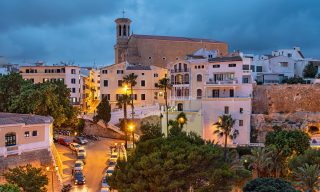
Map of the Self-Guided Walking Tour of Porto, Portugal walking route with 12 stops in Porto.
Preview map of the Self-Guided Walking Tour of Porto, Portugal route in Porto, showing 12 stops. Use the interactive map to zoom and tap markers.

More from this area

Self-Guided Walking Tour of Augsburg, Germany (2026)

Walking tour of Augsburg

This website uses affiliate links which earn a small commission at no additional cost to you.

Augsburg, one of Germany's oldest cities, offers a rich tapestry of history, culture, and architectural splendor. Founded by the Romans in 15 BC, this Bavarian gem is best explored on foot to truly appreciate its historical landmarks and vibrant atmosphere. A guided walking tour provides an immersive experience into Augsburg's storied past and beautifully preserved old town.

Whether you’re admiring Renaissance fountains or walking through the streets of the Fuggerei, Augsburg’s city center is a delight for history lovers and casual explorers alike.

How to Get to Augsburg

By Plane: The nearest major airport to Augsburg is Munich Airport, approximately 80 km (50 miles) away, which handles numerous international and domestic flights. From Munich Airport, travelers can reach Augsburg by train, bus, or car in about one hour. For the best deals and a seamless booking experience, check out these flights to Augsburg on Booking.com.

By Train: Augsburg is well-connected by rail, with regular services from major German cities like Frankfurt, Nuremberg, and Munich. The main train station, DB Reisezentrum Augsburg Hbf, is a short walk from the city center. Train schedules and bookings can be found on Omio.

By Car: Accessible via the A8 motorway, Augsburg is approximately a 1.5-hour drive from Munich. Parking is available near the city center at Parkgarage City-Galerie and Parkhaus am Roten Tor. If you are looking to rent a car in Germany I recommend having a look at Discover Cars, first, as they compare prices and review multiple car rental agencies for you.

Where to Stay in Augsburg

To fully experience Augsburg’s historic ambiance, consider staying in the old town. For a luxury stay, Steigenberger Hotel Drei Mohren offers elegant accommodations in a historic building on the city’s grand boulevard. For mid-range comfort, Dom Hotel provides modern amenities near the cathedral. Budget travellers can opt for Slamba Hostel for clean, affordable accommodations within easy reach of the city center.

A Brief History of Augsburg

Augsburg's roots stretch back to Roman times, when it was established as Augusta Vindelicorum by Emperor Augustus. Over the centuries, the city flourished as a free imperial city and a center of banking and trade, especially under the influence of the Fugger and Welser families during the Renaissance. Augsburg is also known for its role in the Peace of Augsburg in 1555, a key event in the history of religious tolerance in Europe.

Today, the city showcases this history through landmarks like the Fuggerei (the world's oldest social housing complex), the Town Hall with its Golden Hall, and the towering Augsburg Cathedral.

Guided or Self-Guided Tour of Augsburg?

While Augsburg is easy to explore on your own, a guided tour can deepen your appreciation of its cultural layers. The Augsburg Historical Highlights Private Walking Tour offers an engaging walk through the city’s key sites, including the Augustus Fountain, Perlach Tower, Town Hall, Fuggerei, and St. Anne’s Church. Led by a knowledgeable local, the tour brings Augsburg’s centuries of history vividly to life.

Your Walking Tour of Augsburg

This guide highlights Augsburg's main attractions, but the city rewards those who take their time. Discover its rich blend of Roman foundations, medieval quarters, and Renaissance opulence. Pause at a café along Maximilianstraße, explore the canals of the Lechviertel, or take in a performance at the city's historic theater. Whether you're visiting for a day or a week, Augsburg invites you to walk through the ages in one of Bavaria's most compelling cities.

1. St Anna Kirche (St Anne’s Church)

St. Anna Augsburg
St. Anna Augsburg
CC BY-SA 4.0 / H.Helmlechner

St. Anna Kirche, nestled in the heart of Augsburg, is a captivating church that exudes charm and boasts an intricately adorned interior. Step inside, and you’ll be greeted by the enchanting Fuggerkapelle, an ancient section of the church crafted from stone and adorned with mesmerizing frescoes. This evocative space served as the final resting place for members of the illustrious Fugger banking family, a testament to their opulent legacy.

As you ascend to the upper level, a hidden gem awaits: the Lutherstiege, a small museum dedicated to the Reformation movement spearheaded by Martin Luther. This fascinating exhibit sheds light on Luther’s profound impact and features an intriguing twist—a portion of it is located on the balcony inside the church. From this vantage point, you’ll gain a unique perspective of the church’s ornate interior, adding a layer of depth to your exploration.

St. Anna Kirche is not only a place of worship but also a window into Augsburg’s captivating history and cultural heritage. Immerse yourself in the rich tapestry of stories that have unfolded within its hallowed walls, and marvel at the artistic and architectural treasures that grace its sacred space. Whether you’re drawn by the allure of history, the splendor of art, or simply seek a moment of tranquility, St. Anna Kirche promises to leave an indelible impression and transport you to a bygone era of elegance and devotion.


Location: St. Anne's Church, Im Annahof, Augsburg, Germany

We recommend to rent a car in Germany through Discover Cars, they compare prices and review multiple car rental agencies. Book your rental car here.

2. Maximilian Museum

Maximillian museum
Maximillian museum
CC BY-SA 4.0 / Burkhard Mücke

Located on Fuggerplatz, the Maximilian Museum is housed in a beautifully converted old house in Augsburg. This museum is a treasure trove of objects that showcase the rich history of the city. As you explore its galleries, you’ll encounter a diverse collection of architectural models, ancient coins, and exquisite artworks that provide a fascinating glimpse into Augsburg’s past.

Nestled in the museum’s courtyard is a stylish café, where you can relax and indulge in refreshments. The courtyard itself is adorned with several impressive bronze sculptures, adding an artistic touch to the ambience.

Returning to Fuggerplatz, you’ll come across a statue of Mr. Fugger, a prominent figure in Augsburg’s history. Erected by King Ludwig I of Bavaria, the statue pays tribute to the influential Fugger family. Take a moment to admire this striking monument and soak in the surrounding stately buildings that exude a sense of grandeur and heritage.


Location: Maximilianmuseum, Fuggerplatz, Augsburg, Germany | Hours: Tue–Sun 10 a.m.–5 p.m. Mon closed | Price: Adults €7.00 | Website

Here is a complete selection of hotel options in Augsburg. Feel free to review each one and choose the stay that best suits your needs.

3. Augsburger Rathaus

Augsburg Town Hall Rathausplatz
CC BY-SA 2.0 / Allie_Caulfield

The Rathausplatz stands proudly as the central square of Augsburg, captivating visitors with its grandeur and charm. This vibrant square serves as the heart of the Altstadt (Old Town) and holds a special allure during the enchanting Christmas Market held in December. At its centre, the magnificent Augustusbrunnen fountain takes the spotlight, featuring a striking statue of Augustus Caesar. Surrounding the fountain’s outer ring, four statues represent the local rivers that play a vital role in Augsburg’s water management system, underscoring the city’s rich history and connection to nature.

Dominating the square is the Rathaus, or Augsburg Town Hall, a remarkable architectural gem that dates back to 1615. Despite experiencing damage during the Second World War, the Rathaus has been meticulously restored, maintaining its historic charm and allure. Step inside to explore the captivating Goldener Saal, or Golden Hall, a lavishly adorned former town meeting and banqueting hall. With a helpful guide available in English, you can fully appreciate the intricate details of the hall while enjoying splendid views over the town square and the surrounding buildings.

Adjacent to the Rathaus stands the Perlachturm, a tower beckoning visitors to embark on a climb for breath-taking panoramic views. Ascending its heights rewards you with a captivating vista of the city, allowing you to admire the architectural splendour that adorns the town square and beyond.

Located conveniently on one side of Rathausplatz, the Tourist Information Center beckons visitors with a wealth of intriguing leaflets and valuable information about the myriad events happening in Augsburg. Whether you’re seeking guidance on local attractions, cultural festivities, or hidden gems, this information hub is your gateway to an enriching experience in the city. Knowledgeable staff members are readily available to provide assistance in English, ensuring you have all the information you need to make the most of your visit.


Location: Augsburg Town Hall, Rathausplatz, Augsburg, Germany | Hours: Daily 10am–6pm | Price: Admission 2€ adults, 1€ children 7–14, free for children 6 and under

Traveling to a country with a different currency? Avoid ATM transaction fees and pay in local currency with a Wise Card. Having used it for over 5 years, we've saved loads on fees!

4. Augsburg Cathedral

Augsburg Cathedral
Augsburg Cathedral
CC BY-SA 3.0 / Otto Schemmel

Perched atop a serene hillside, amidst a tranquil enclave adorned with charming parks, stands Augsburg Cathedral (Dom Mariä Heimsuchung). With its roots tracing back to the 10th century, this architectural gem captivates visitors with its historic significance and serene surroundings. As you approach the cathedral, its eclectic blend of styles, primarily Gothic, gives it a unique and somewhat whimsical appearance.

Step inside Augsburg Cathedral, and you’ll be greeted by a tapestry of artistic marvels. Marvel at the exquisite frescoes that adorn the walls, each depicting a captivating narrative. Descend into the crypt, where the echoes of centuries past reverberate, offering a glimpse into the cathedral’s profound history. The pièce de résistance lies in the resplendent stained-glass windows, crafted in the 12th century, their vibrant hues casting ethereal light that dances upon the sacred space.

As you venture outside the cathedral, you’ll encounter remnants of a former church, bearing witness to Augsburg’s enduring heritage. Marvel at the array of Roman artefacts thoughtfully displayed, providing a captivating glimpse into the city’s rich past.


Location: Katedra NMP w Augsburgu, Frauentorstraße, Augsburg, Germany | Hours: 7 a.m. to 6 p.m - visits are not possible during church service | Website

5. Fuggerei

Fuggerei Brunnen
Fuggerei Brunnen
CC BY-SA 4.0 / GZagatta

Ranked among the top attractions in Augsburg, the Fuggerei stands as a testament to compassion and community. This historic enclave, originally established by Jakob Fugger, a renowned banker of the early 16th century, continues to provide affordable housing for impoverished Catholics. Steeped in over 500 years of history, the Fuggerei remains the oldest functioning social housing complex in existence, offering a glimpse into a bygone era of philanthropy.

Once you step foot inside the Fuggerei, you’ll be transported to a charming world of cobbled lanes, free from the clamor of cars. Take a leisurely stroll along these picturesque pathways, marveling at the quaint cottages that line the streets. As you explore, remember to be considerate of the current residents, embracing the peaceful ambiance that envelops this unique community. The residents, who work part-time within the community, contribute to the harmonious atmosphere that pervades the Fuggerei.

While some houses remain private, a few open their doors to welcome visitors. Step inside and be immersed in history as you discover a small museum dedicated to the Fuggerei’s storied past. Descend into an underground war bunker, where poignant narratives of Augsburg’s experiences during the Second World War await. Most intriguingly, you’ll have the opportunity to visit a house that reflects its bygone era, showcasing life as it would have been centuries ago. Additionally, you can explore a modern apartment, offering insight into the contemporary living arrangements within the Fuggerei.


Location: Fuggerei, Jakoberstraße, Augsburg, Germany | Hours: Museum: April through September, 8am - 8pm daily October through March, 9am - 6pm daily Christmas Eve closed | Price: Adults €6,50, Children €3,00 | Website

6. Schaezlerpalais

Schaezlerpalais
Schaezlerpalais
CC BY-SA 4.0 / Gerd Eichmann

The Schaezlerpalais, an exquisite 18th-century building, stands as a testament to the grandeur of a bygone era. Once the residence of a wealthy citizen, this opulent palace remains impeccably preserved to this day. As you step inside, prepare to be mesmerized by the resplendent rooms adorned with intricate details and adorned with priceless artworks.

One of the highlights of the Schaezlerpalais is its Rococo ballroom, a marvel of design and craftsmanship. The lavish decorations transport visitors to a time of extravagant celebrations and elegant dances. Marvel at the intricate stucco work, the shimmering chandeliers, and the ornate furnishings that grace this enchanting space.

Within the palace’s walls, a wealth of paintings awaits your discovery. The collection showcases artistic masterpieces that span various periods and styles, offering a visual feast for art enthusiasts. To enhance your understanding of the rooms and exhibits, an audio guide is available. Although it may be a bit lengthy, it serves as a valuable companion, ensuring that you fully immerse yourself in the rich history and captivating displays within the palace. It acts as a guiding light, preventing you from feeling disoriented or missing out on the fascinating details that abound.


Location: Schaezlerpalais, Maximilianstraße, Augsburg, Germany | Hours: Tues 10am–8pm; Wed–Sun 10am–5pm | Price: Admission 7€ adults, 5.50€ for students, children 9 and under free

7. St. Ulrich’s and St. Afra’s Church

St. Ulrichs and St. Afras Church
CC BY-SA 2.0 / Alois Wüst

The Church of St. Ulrich stands proudly as a symbol of Protestant faith, while its neighboring counterpart, the Basilica of St. Ulrich and St. Afra, represents the Catholic community. As you approach the area, you’ll be struck by the stark contrast between the two churches. The Catholic basilica, with its magnificent size and distinctive turquoise onion domes, commands attention and captures the imagination.

Interestingly, both churches were constructed simultaneously, deliberately positioned side by side. This intentional proximity was a powerful statement of solidarity and mutual respect between the two religious traditions. It served as a poignant reminder of the need for understanding and harmony during a tumultuous era characterized by religious conflicts that ravaged various parts of Europe. In this context, the decision to build these churches in such close proximity was undoubtedly a wise and progressive one.


Location: Basilica of SS. Ulrich and Afra, Augsburg, Ulrichsplatz, Augsburg, Germany | Hours: Daily 9am–5pm | Price: Free

8. Rotes Tor

Roter Torwall
Roter Torwall
CC BY-SA 3.0 / Pattilord247

The Waterworks at the Rotes Tor is a remarkable ensemble of historic buildings that served as the epicentre of Augsburg’s water management for more than four centuries, beginning in 1416. This exceptional site played a pivotal role in shaping the city’s renowned water management system, which has recently earned UNESCO recognition for its significance.

The origins of this system can be traced back to the Medieval Period, and its remarkable preservation allows visitors to witness first-hand the ingenuity and engineering prowess of that era. The Waterworks at the Rotes Tor stands as a testament to Augsburg’s commitment to efficient water management, a practice that has contributed to the city’s prosperity and resilience throughout its history.


Location: Rotes Tor, Am Roten Tor, Augsburg, Germany

9. Augsburg Arsenal & Roman Camp

Augsburg Arsenal and Roman Camp
CC BY-SA 2.0 / Neitram

The Roman Museum and the city archaeology take care of the oldest and longest period of Augsburg’s history. With finds and excavation results from the Stone Age to Roman times, the Middle Ages to the present day, these institutions are the decisive archive for historical research in the city. Many pieces are of outstanding scientific importance and are regularly loaned to nationally and internationally renowned museums and exhibitions. A selection of essential exhibits are currently being presented in the armoury in the exhibition “Roman Camp – The Roman Augsburg in Boxes”.


Location: Augsburg Arsenal, Zeugplatz, Augsburg, Germany | Hours: Tue–Sun 10 a.m.–5 p.m. Mon closed | Price: Adult €7 | Website
Moira & Andy
Moira & Andy

Hey! We're Moira & Andy. From hiking the Camino to trips around Europe in Bert our campervan — we've been traveling together since retirement in 2020!

Read our full story here

This website uses affiliate links which earn a small commission at no additional cost to you.

Walking Tour Map
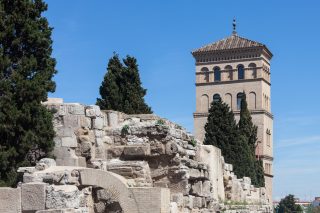
Map of the Self-Guided Walking Tour of Augsburg, Germany walking route with 9 stops in Augsburg.
Preview map of the Self-Guided Walking Tour of Augsburg, Germany route in Augsburg, showing 9 stops. Use the interactive map to zoom and tap markers.
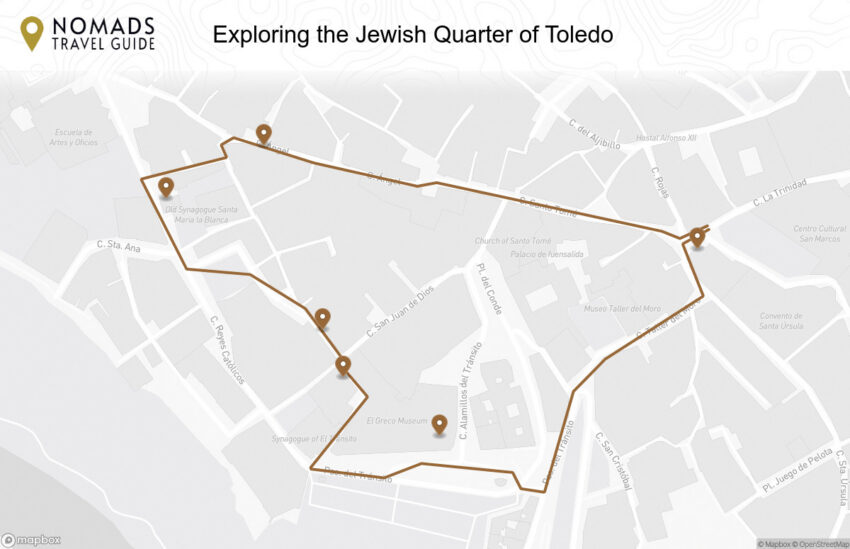
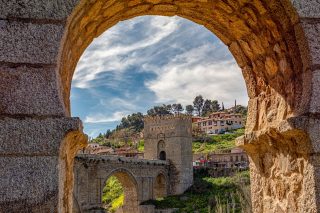

More from this area