Roman circus of Toledo
Roman Site in Toledo

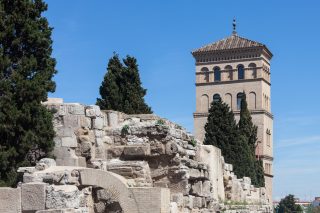
The Roman circus of Toledo is an open-air archaeological site on the northern edge of Toledo, Spain, where the surviving stonework and foundations outline a Roman chariot-racing arena. Built in the early Imperial period (often linked to Augustus or Tiberius), the circus once sat just outside ancient Toletum's walls and formed part of the city's entertainment district.
Today, it feels more like a quiet public park with ruins than a fully curated monument, which is part of its appeal if you like imagining places rather than touring reconstructed interiors. I come here for the sense of scale: you can follow the long footprint of the arena, spot sections of seating and structural remains, and use the on-site panels to picture the starting gates and central spine (spina). It’s best for travelers interested in Roman Hispania, photographers who like morning light on stone, and anyone wanting a low-effort stop away from Toledo’s busiest medieval streets.
Table of Contents
- History and Significance of the Roman circus of Toledo
- Things to See and Do in the Roman circus of Toledo
- How to Get to the Roman circus of Toledo
- Is the Roman circus of Toledo Worth Visiting?
- Practical Tips on Visiting the Roman circus of Toledo
- Where to Stay Close to the Roman circus of Toledo
- FAQs for Visiting the Roman circus of Toledo
History and Significance of the Roman circus of Toledo
Roman Toletum and the rise of public entertainment
The Roman circus was built in the early 1st century CE, commonly associated with the reign of Augustus or Tiberius, when Roman urban culture spread across Hispania. Circuses were among the largest civic buildings in the Roman world, designed for mass spectacles and to reinforce Roman identity in provincial cities.
A large venue outside the walls
Like many Roman entertainment complexes, Toledo's circus was positioned on the outskirts of the ancient city to accommodate crowds and the space required for a long track. Estimates put the arena at over 400 metres in length, with seating for several thousand spectators, making it one of the more substantial traces of Roman Toledo that can still be visited above ground.
Chariot races, ceremonies, and an entertainment district
The venue would have hosted chariot racing and other public events tied to civic life and imperial ceremony. Nearby, a Roman theatre is believed to survive below modern buildings, suggesting this area functioned as a broader leisure quarter, even if much of it is now hidden or fragmentary.
Things to See and Do in the Roman circus of Toledo
I like to start by walking the length of the site to understand its proportions-this is where the circus makes the strongest impression, even with only partial remains. As you move along the outline, look for stretches of foundations and surviving stonework that hint at seating and structural supports, then use the information panels to map what you’re seeing onto the original plan.
For a quieter moment, I slow down around the central area where the spina would have run, because it helps me imagine how the races were staged and where monuments once stood. It’s also a good place for simple, atmospheric photos: the ruins sit in open space with paths and patches of shade, so you can wander without feeling rushed.
How to Get to the Roman circus of Toledo
The nearest major airports are Madrid-Barajas (Madrid) and Adolfo Suárez Madrid-Barajas is the most common arrival point for Toledo visitors, with onward travel to the city. For the best deals and a seamless booking experience, check out these flights to Toledo on Booking.com.
From Madrid, trains run to Toledo station; from there you can continue to the site by taxi or local bus. Train schedules and bookings can be found on Omio.
By car, approach via Avenida de Carlos III and look for limited nearby parking; it's also walkable from central Toledo in roughly 20 minutes if you prefer to stay on foot. If you are looking to rent a car in Spain I recommend having a look at Discover Cars, first, as they compare prices and review multiple car rental agencies for you.
Is the Roman circus of Toledo Worth Visiting?
Yes, it’s worth a short stop if you enjoy Roman history or like visiting places where you can freely wander and piece together the past from what remains. It’s best for travelers who appreciate scale and context more than pristine preservation, and it fits well as a calm break from Toledo’s busiest monuments. Skip it if your time is tight and you prefer highly curated sites with extensive displays, because the ruins are fragmentary and the experience is closer to a park walk than a museum visit.
What Other Travellers Say...
Roman Circus of Toledo sits in a public park near the city centre where you can wander, relax and see the surviving footprint and structures of a Roman circus; visitors praise its accessibility and the ability to walk around and even touch the remains, though several note it's presented more as an open green space than a heavily preserved or interpreted archaeological site.





Practical Tips on Visiting the Roman circus of Toledo
- Best time to visit: Spring and autumn are the most comfortable seasons for an outdoor visit; morning light is also good for photos.
- How long to spend: Plan for about 30-45 minutes to walk the outline, read panels, and take a few photos.
- Accessibility: Expect uneven ground and moderate walking; take extra care if you have mobility limitations.
- Facilities: There are no facilities on-site, so bring water and use restrooms elsewhere beforehand.
Where to Stay Close to the Roman circus of Toledo
Base yourself in Toledo's Casco Histórico (Old Town), ideally near Zocodover or the Jewish Quarter, for easy walks to the Roman Circus and the city's main sights.
These centrally located hotels make practical bases for visiting the Roman Circus of Toledo and exploring the Old Town on foot. Sercotel Alfonso VI works well for good for travellers who want a very central base near Zocodover for straightforward walking access to major sights and easy connections to taxis and buses. Hotel Pintor El Greco works well for well-suited to travellers prioritizing walkability in the historic core, with a convenient Old Town location for sightseeing on foot. Hotel San Juan de los Reyes works well for a solid choice for those who want to stay inside the walled Old Town in a slightly calmer area while remaining within walking distance of key attractions.
FAQs for Visiting the Roman circus of Toledo
Getting There
Tickets & Entry
Visiting Experience
Tours, Context & Itineraries
Photography
Accessibility & Facilities
Food & Breaks Nearby
Safety & Timing
The Roman circus of Toledo appears in our Complete Guide to Visiting Toledo!

Moira & Andy
Hey! We're Moira & Andy. From hiking the Camino to trips around Europe in Bert our campervan — we've been traveling together since retirement in 2020!
This website uses affiliate links which may earn a commission at no additional cost to you!
Planning Your Visit
Nearby Attractions
- Puerta de Bisagra (0.4) km
City Gate - Convento de Santo Domingo El Antiguo (0.6) km
Monastery and Museum - Puerta del Sol (Toledo) (0.6) km
City Gate - Mezquita del Cristo de la Luz (0.6) km
Mosque - Puerta Del Cambrón (0.6) km
City Gate - Termas Romanas (0.7) km
Baths - Cave of Hercules (0.8) km
Historic Site - Monasterio San Juan de Los Reyes (0.8) km
Monastery - Baños del Ángel (0.8) km
Baths - Synagogue of Santa Maria la Blanca (0.8) km
Church, Historic Building and Synagogue