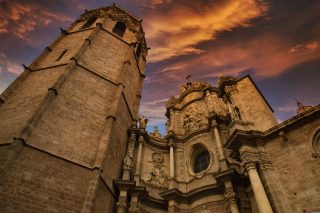
Iglesia de Santo Tomé, Toledo
Church in Toledo

Iglesia de Santo Tomé is a historic church in Toledo, Spain, rebuilt in the 14th century on the site of an earlier mosque and shaped by the city's layered past. From the street it can feel modest, but inside it holds one of Toledo's most talked-about artworks: El Greco's “The Burial of the Count of Orgaz,” displayed in the church where it was commissioned.
The visit is best for travelers interested in painting, architecture, and Toledo’s mix of Christian and Islamic-era influences. I focus first on the El Greco canvas, then take a slower look at the Mudéjar details-especially the bell tower adapted from a former minaret and the decorative elements that sit alongside Gothic structure and later Baroque chapels. Reviews often mention that the interior can feel tight when busy, so it helps to plan for a calm, unhurried stop.
Table of Contents
- History and Significance of the Iglesia de Santo Tomé
- Things to See and Do in the Iglesia de Santo Tomé
- How to Get to the Iglesia de Santo Tomé
- Is the Iglesia de Santo Tomé Worth Visiting?
- Practical Tips on Visiting the Iglesia de Santo Tomé
- Where to Stay Close to the Iglesia de Santo Tomé
- FAQs for Visiting the Iglesia de Santo Tomé
History and Significance of the Iglesia de Santo Tomé
From mosque to church after the Reconquest
The site's story begins after 1085, when King Alfonso VI of León reclaimed Toledo. Rather than removing the existing mosque, the building was consecrated for Christian worship, reflecting a wider pattern in reconquered cities where sacred spaces were repurposed.
14th-century rebuilding and Mudéjar identity
By the 14th century the church had deteriorated, and Gonzalo Ruiz de Toledo (also known as Ruiz de Toledo), Lord of Orgaz and a leading civic figure, funded a major reconstruction. One of the most distinctive outcomes was the transformation of the former minaret into a Mudéjar-style bell tower, with brickwork and horseshoe-arch forms that preserve a visible trace of the site's Islamic past.
Art, chapels, and El Greco’s commission
The church’s plan follows a Latin-cross layout with three naves and a polygonal apse, combining Gothic structure with Mudéjar decoration. Later additions include Baroque altarpieces in side chapels, a surviving 16th-century baptismal font, and a 19th-century chapel with “The Incredulity of Saint Thomas” by Vicente Portaña.
Its global reputation, however, is closely tied to El Greco’s “The Burial of the Count of Orgaz,” commissioned in 1586 to honor the Lord of Orgaz. The painting depicts Saints Stephen and Augustine descending to assist with the burial, and El Greco included portraits of himself and his young son among the mourners.
Things to See and Do in the Iglesia de Santo Tomé
I come here primarily to spend time with El Greco’s “The Burial of the Count of Orgaz” and let my eyes adjust to its split between the earthly scene and the celestial vision above. If there’s a line or a slow-moving crowd, I treat it like a viewing queue at a museum: move with the flow, then pause where you can to take in faces, fabrics, and the way the light is painted.
After that, I look for the building’s quieter architectural details: the Mudéjar character of the bell tower outside, and inside, the mix of Gothic structure with decorative elements that hint at earlier Islamic geometry (including an eight-pointed star form used in the dome decoration described in the church’s main chapel). If you enjoy small details, the 16th-century baptismal font and the contrast between Baroque side chapels and the older core of the church are worth a slower circuit.
How to Get to the Iglesia de Santo Tomé
The nearest major airport is Madrid-Barajas (Madrid), from where you can continue to Toledo by ground transport. For the best deals and a seamless booking experience, check out these flights to Toledo on Booking.com.
Toledo is well connected by train from Madrid, and from Toledo station you can continue into the historic centre on foot or by local transport. Train schedules and bookings can be found on Omio.
If you arrive by car, aim to park outside the tight historic streets and walk in, as the lanes around the church are narrow and can be inconvenient for driving. If you are looking to rent a car in Spain I recommend having a look at Discover Cars, first, as they compare prices and review multiple car rental agencies for you.
Is the Iglesia de Santo Tomé Worth Visiting?
It’s worth a short stop if you want to see El Greco’s “The Burial of the Count of Orgaz” in the place it was made for, and if you appreciate Toledo’s blend of Gothic and Mudéjar elements in a compact setting. It’s less essential if you’re trying to minimize paid entries, dislike slow indoor queues, or prefer large-scale interiors-this is a relatively small church and the experience is focused on one standout artwork plus architectural details. If your priority is broad city views or big monuments, treat it as optional and prioritize Toledo’s major landmarks first.
What Other Travellers Say...

Iglesia de Santo Tomé, on Pl. del Conde 4 in Toledo, is a small 14th-century Catholic church with a bell tower best known for housing El Greco's celebrated masterpiece The Burial of the Count of Orgaz; visitors praise the peaceful, contemplative interior and striking stone architecture, note that viewing can involve moving slowly through a tight, guided line, and recommend buying tickets in advance to save time, with photos and videos permitted and a gift shop selling postcards as keepsakes.


Practical Tips on Visiting the Iglesia de Santo Tomé
- Best time to visit: Go earlier in the day for a calmer interior and a better chance to linger in front of the painting without feeling rushed.
- How long to spend: Plan around 30-45 minutes if you want time for the El Greco painting plus a quick look at the chapels and details.
- Accessibility: Expect a narrow entrance and a small interior; access can be limited for wheelchairs and anyone who struggles with tight spaces.
- Facilities: Visitor services are limited inside; look for restrooms and small shops in the surrounding streets of the old town.
Where to Stay Close to the Iglesia de Santo Tomé
Base yourself inside Toledo's Casco Histórico (Old Town), ideally around the Jewish Quarter and the Cathedral area, for the easiest walk to Iglesia de Santo Tomé and other key sights.
These hotels are practical bases for exploring Iglesia de Santo Tomé on foot while staying well-placed for the rest of the Old Town. Hotel San Juan de los Reyes works well for a strong choice for walkability in the Old Town, with easy access to Santo Tomé and nearby monuments without relying on transport. Hotel Pintor El Greco works well for well-suited if you want to stay in the Jewish Quarter close to major sights, keeping most visits comfortably walkable. Eugenia de Montijo, Autograph Collection works well for convenient for travellers who want a central Old Town base near the Cathedral area, making it straightforward to reach Santo Tomé and restaurants on foot.
FAQs for Visiting the Iglesia de Santo Tomé
Getting There
Tickets & Entry
Visiting Experience
Tours, Context & Itineraries
Photography
Accessibility & Facilities
Food & Breaks Nearby
Safety & Timing
The Iglesia de Santo Tomé appears in our Complete Guide to Visiting Toledo!

Moira & Andy
Hey! We're Moira & Andy. From hiking the Camino to trips around Europe in Bert our campervan — we've been traveling together since retirement in 2020!
This website uses affiliate links which may earn a commission at no additional cost to you!
Nearby Attractions
- Casa del Judío, Toledo (0.1) km
Historic Building - Museo del Greco (0.1) km
Gallery and Museum - Synagogue of El Transito (0.1) km
Museum and Synagogue - Iglesia de El Salvador, Toledo (0.1) km
Church - Baños del Ángel (0.2) km
Baths - Synagogue of Santa Maria la Blanca (0.2) km
Church, Historic Building and Synagogue - Convento de Santo Domingo El Antiguo (0.3) km
Monastery and Museum - Monasterio San Juan de Los Reyes (0.3) km
Monastery - Termas Romanas (0.3) km
Baths - Cave of Hercules (0.4) km
Historic Site