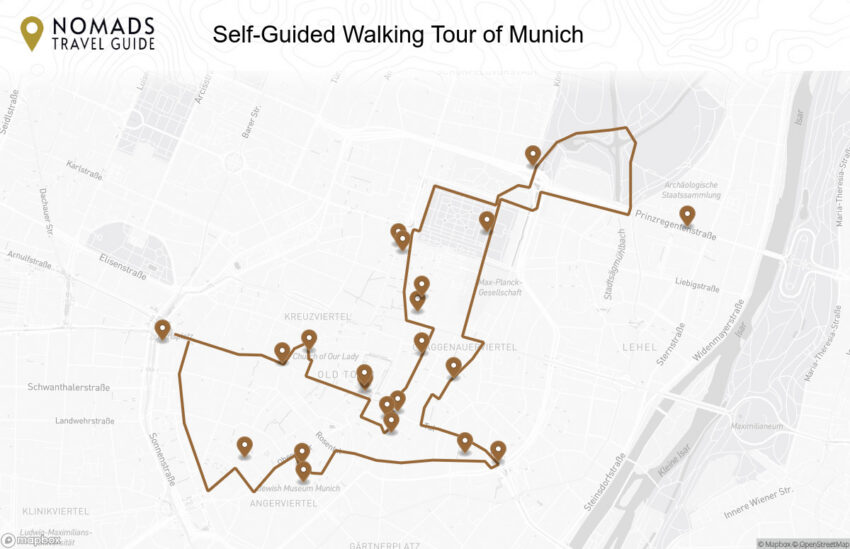
Self-Guided Walking Tour of Munich (2026)
This website uses affiliate links which earn a small commission at no additional cost to you.
Munich is one of Germany's most distinctive cities, combining royal grandeur, historic churches, grand squares, and a strong sense of Bavarian identity. At its heart is the old city around Marienplatz, where the Gothic Revival Neues Rathaus, the medieval Altes Rathaus, Peterskirche, and the twin towers of the Frauenkirche create one of the country's most recognisable urban skylines. The city's long association with the Wittelsbach dynasty can still be seen in the Munich Residence, the Hofgarten, Max-Joseph-Platz, and the grand avenues and museums that reflect Munich's role as a centre of power, art, and culture.
Munich is also known for its relaxed public life, from the food stalls of Viktualienmarkt to the beer halls, gardens, and cafés that give the city much of its character. The English Garden offers one of Europe's great urban green spaces, while museums such as the Bavarian National Museum, the Münchner Stadtmuseum, and the Jewish Museum reveal different layers of the city's history. Although Munich is often associated with Oktoberfest and beer culture, it is much more than that: a city of architecture, memory, music, parks, and neighbourhood life, with enough depth to reward both first-time visitors and those who return slowly.
Table of Contents
- How to Get to Munich
- Marienplatz
- Neues Rathaus
- Viktualienmarkt
- Peterskirche
- Altes Rathaus
- Alter Hof
- Max-Joseph-Platz
- Munich Residence
- Feldherrnhalle
- Theatine Church
- Hofgarten
- English Garden
- Bavarian National Museum
- Hofbräuhaus
- Isartor
- Beer and Oktoberfest Museum
- Münchner Stadtmuseum
- Jewish Museum
- Asamkirche
- Karlsplatz
- Neuhauser Street
- Frauenkirche
How to Get to Munich
By Air: Munich Airport is one of Germany's main international gateways, with extensive direct connections across Europe and long-haul routes from major global hubs. From the airport, the simplest transfer into the city centre is usually the S-Bahn (lines S1 and S8), which runs to key stations including München Hauptbahnhof and Marienplatz; for late arrivals or heavier luggage, taxis and app-based rides are also widely available, and the airport has clear onward-signage for regional trains and shuttles. If you are arriving for a specific event or have an early departure, consider staying near the airport or along an S-Bahn line to reduce transfer time. For the best deals and a seamless booking experience, check out these flights to Munich on Booking.com.
By Train: München Hauptbahnhof is a major rail hub with frequent high-speed and intercity services linking Munich to cities across Germany and neighbouring countries, making it one of the most straightforward ways to arrive if you are already in Europe. Deutsche Bahn (DB) operates most long-distance services, and you will also find strong regional connectivity into Bavaria; once you arrive, Munich's U-Bahn, S-Bahn, trams, and buses make it easy to continue to your hotel without needing a taxi. Booking in advance can reduce fares substantially, especially on popular routes, and seat reservations can be worthwhile at peak times. Train schedules and bookings can be found on Omio.
By Car: Driving to Munich can be convenient if you are touring Bavaria or travelling with a group, but the city's traffic and parking costs mean it is usually best approached with a plan. Use park-and-ride facilities on the outskirts to avoid inner-city congestion, then switch to the U-Bahn or S-Bahn to reach the centre, where many streets are pedestrianized and parking is limited. If you do drive into the city, check low-emission requirements and hotel parking arrangements ahead of time, and expect slower progress during commuting hours and major events. If you are looking to rent a car in Germany I recommend having a look at Discover Cars, first, as they compare prices and review multiple car rental agencies for you.
By Bus: Long-distance coaches can be a cost-effective option from many European cities, often arriving at Munich’s central bus station (ZOB) near the main railway station. This can be especially useful for budget travellers or routes that are less direct by rail, and local public transport links make it easy to connect onward once you arrive. Comfort levels vary by operator and journey length, so it is worth comparing travel times and luggage policies before booking.
1. Marienplatz
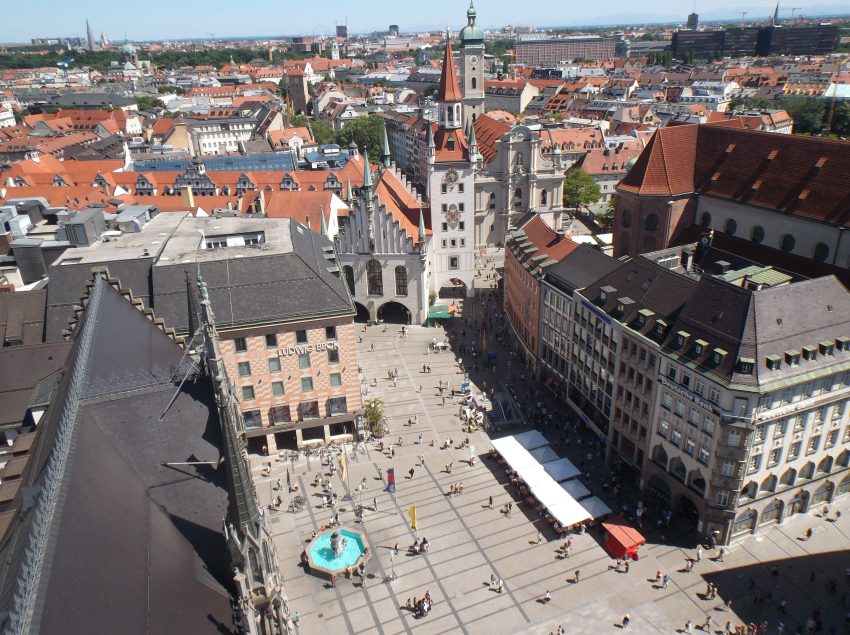
Marienplatz has been Munich’s central square since the Middle Ages, when it served as the city’s main marketplace and civic gathering place. Its name refers to the Marian column at the centre of the square, erected in the 17th century after Munich survived Swedish occupation during the Thirty Years’ War.
The square is framed by some of Munich’s most important civic buildings, especially the Neues Rathaus and the Altes Rathaus. It remains the symbolic heart of the city, used for public celebrations, seasonal markets, political events, and gatherings.
When visiting, look for the Mariensäule, the ornate façade of the Neues Rathaus, and the lively movement of people across the square. The Glockenspiel in the tower of the New Town Hall is one of the best-known sights, with figures that perform scenes from Munich’s history.
Location: Marienplatz, 80331 München-Altstadt-Lehel, Germany | Hours: 24 Hours. | Price: Free.


2. Neues Rathaus
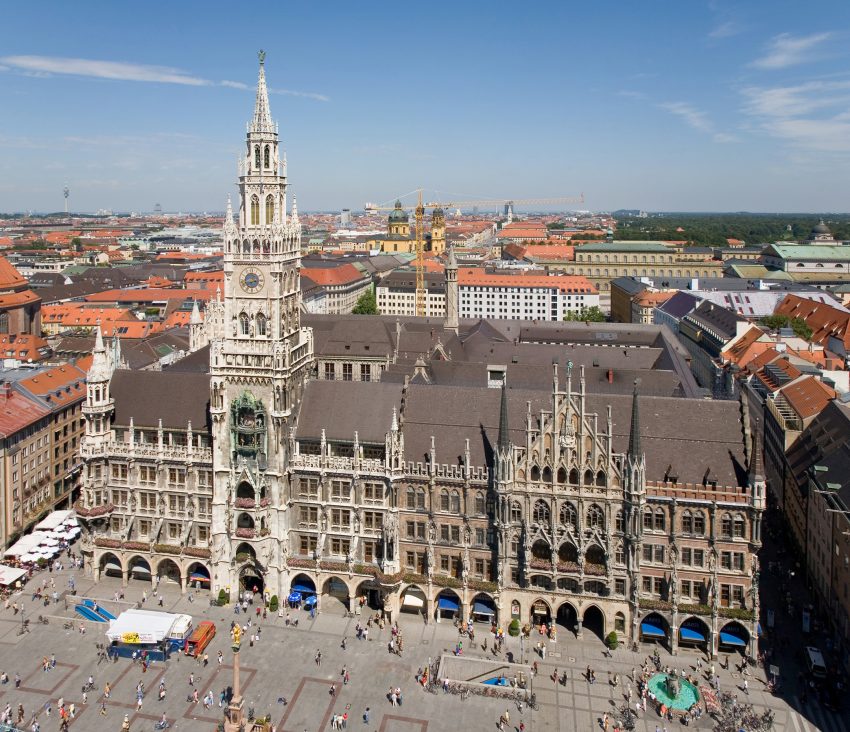
The Neues Rathaus, or New Town Hall, dominates Marienplatz with its elaborate Gothic Revival façade. It was built from the second half of the 19th century into the early 20th century, at a time when Munich was expanding and needed a larger civic building.
Although it looks medieval, the building is comparatively modern and reflects the 19th-century fashion for historicist architecture. Its towers, statues, tracery, and decorative stonework were designed to give Munich’s municipal government a suitably grand setting.
The main feature to see is the Glockenspiel, where mechanical figures perform scenes linked to a ducal wedding and the Schäfflertanz, or coopers’ dance. Visitors can also admire the façade from Marienplatz or go up the tower for views over the old city.
Location: Marienplatz 8, 80331 München, Germany | Hours: Monday – Friday: 10:00–20:00. Saturday: 10:00–16:30. Sunday: 10:00–14:30. | Price: Tower: €7 (standard; discounts may apply). | Website
3. Viktualienmarkt

Viktualienmarkt is Munich’s best-known food market and began in the early 19th century when the city’s main market moved from Marienplatz to this larger site. Its name comes from an older word for foodstuffs and provisions.
Over time, the market grew from a practical trading space into a central part of Munich’s daily life. It has survived major changes in the city and remains strongly associated with local produce, seasonal goods, and Bavarian food culture.
When visiting, look for fruit and vegetable stalls, cheese counters, flower stands, butchers, bakeries, and traditional snack stalls. The maypole and beer garden give the market a distinctly Munich character, especially at lunchtime or on a busy market morning.
Location: Viktualienmarkt, 80 München-Altstadt-Lehel, Germany | Hours: Daily: Open 24 hours. | Price: Free. | Website
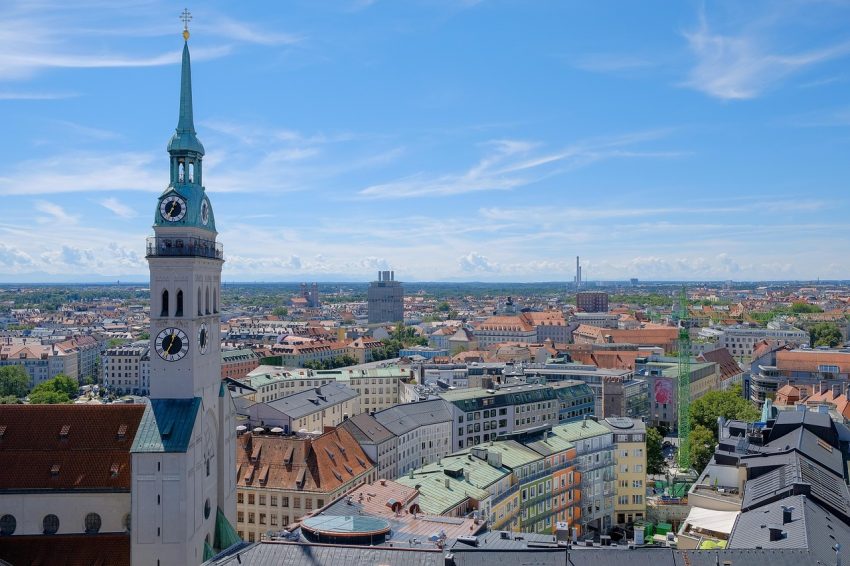
4. Peterskirche

Peterskirche, often called Alter Peter, is Munich’s oldest parish church and one of the city’s most familiar landmarks. Its origins go back to the early settlement around which medieval Munich developed.
The church has been rebuilt and altered several times, with Gothic, Baroque, and later restoration work shaping its present appearance. Its tower has long been a visual marker in the old city and remains one of the best places to understand Munich’s historic layout.
Inside, visitors can see rich Baroque decoration, altars, paintings, and sculptural details. The climb up the tower is demanding but worthwhile, offering views over Marienplatz, the Frauenkirche, and, on clear days, the Alps.
Location: Peterspl. 1, 80331 München, Germany | Hours: (Summer) April – October; Daily: 09:00–19:30. (Winter) November – March; Monday – Friday: 09:00–18:30. Saturday – Sunday: 09:00–19:30. | Price: Church entry: Free. Tower (Alter Peter): Adults: €5; Reduced: €3; Students (6–18): €2; Under 6: free. | Website
5. Altes Rathaus
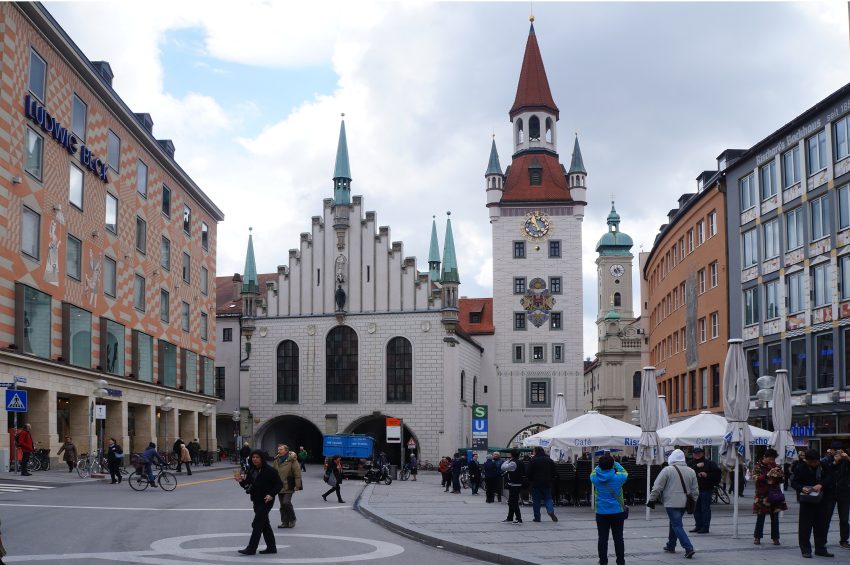
The Altes Rathaus, or Old Town Hall, stands on the eastern side of Marienplatz and reflects Munich’s medieval civic past. Although much of the building has been restored after wartime damage, its history reaches back to the city’s earlier municipal government.
The building’s Gothic appearance recalls the late medieval period, when town halls were not only administrative centres but also places of ceremony and public authority. Its tower forms one of the traditional gateways between Marienplatz and the streets leading east.
Today, visitors can admire the historic silhouette of the building and its position beside the square. The tower also houses a toy museum, which adds a smaller, more intimate attraction to a building usually viewed from the outside.
Location: Marienplatz 15, 80331 München, Germany | Hours: 10:00–17:30. Closed on Tuesday. | Price: €8; Children (up to 17): €3; Family: €16. | Website
6. Alter Hof

Alter Hof was one of the earliest residences of the Wittelsbach dynasty in Munich. The complex dates back to the medieval period and was associated with rulers including Ludwig IV, who became Holy Roman Emperor.
Before the Munich Residence developed into the main seat of power, the Alter Hof was an important ducal and imperial residence. Its courtyards and surviving architectural fragments give a sense of how Munich’s ruling centre looked before later Renaissance and Baroque expansion.
Visitors can walk through the courtyards and look for the restored medieval elements that remain. The site is quieter than nearby Marienplatz, making it a useful place to connect Munich’s present city centre with its early Wittelsbach history.
Location: Alter Hof, 80 München-Altstadt-Lehel, Germany | Hours: Monday – Saturday: 10:00–18:00. Sunday: Closed. Closed on public holidays. | Price: Free. | Website
7. Max-Joseph-Platz
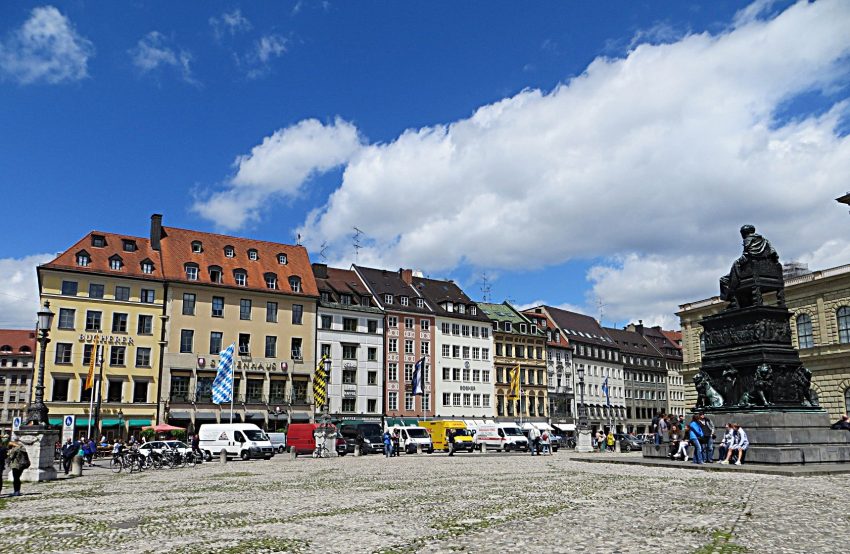
Max-Joseph-Platz is one of Munich’s grandest formal squares and reflects the city’s royal and cultural ambitions in the 19th century. It is named after King Maximilian I Joseph of Bavaria, whose monument stands in the square.
The square is closely linked with the Bavarian monarchy, the Munich Residence, and the National Theatre. Its architecture shows the influence of classical forms, especially in the theatre façade, which gives the space a ceremonial character.
When visiting, look at the National Theatre, the Residenz frontage, and the statue of King Max Joseph seated in the centre. The square is especially impressive in the evening when the theatre and palace buildings are lit.
Location: Max-Joseph-Platz 2 80539 München Germany | Hours: 24 hours | Price: Free.
8. Munich Residence
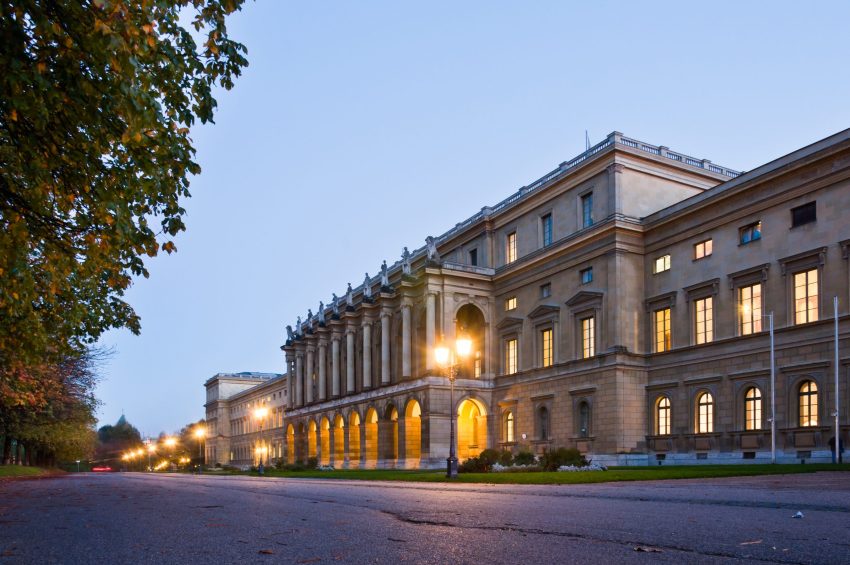
The Munich Residence was the main palace of the Wittelsbach rulers from the early 16th century until the end of the Bavarian monarchy in 1918. It grew over several centuries, which explains its mix of Renaissance, Baroque, Rococo, and Neoclassical styles.
The palace was not a single planned building but an expanding seat of power, ceremony, art, and administration. Much of it was damaged during the Second World War and later restored, making the present museum both historic and reconstructed.
Inside, visitors can see the Antiquarium, state rooms, court chapels, treasuries, and richly decorated apartments. The scale of the complex makes it one of Munich’s most important historic attractions and a key place for understanding Bavarian royal culture.
Location: Residenzstraße 1, 80333 München, Germany | Hours: (Summer) April 1 – October 19; Daily: 09:00–18:00. (Winter) October 20 – March 31; Daily: 10:00–17:00. | Price: Residence Museum: €10 (regular), €9 (reduced); Treasury: €10 (regular), €9 (reduced); Combination (Museum + Treasury): €15 (regular), €13 (reduced); Under 18: free. | Website
9. Feldherrnhalle

The Feldherrnhalle was built in the 19th century under King Ludwig I as a monument to the Bavarian army. Its design was inspired by the Loggia dei Lanzi in Florence, reflecting Ludwig’s interest in Italian Renaissance architecture.
The monument also has a darker 20th-century history because it was the site of the failed Beer Hall Putsch confrontation in 1923. This later association makes it one of Munich’s more historically complex public monuments.
When visiting, look at the bronze lions, the military statues, and the way the loggia frames the end of Odeonsplatz. The site is best understood as both a royal monument and a place marked by the political violence of the early Nazi movement.
Location: Residenzstraße 1, 80333 München, Germany | Hours: 24 Hours. | Price: Free. | Website
10. Theatine Church

The Theatine Church, or Theatinerkirche, is one of Munich’s most striking Baroque churches. It was commissioned in the 17th century by Elector Ferdinand Maria and his wife Henriette Adelaide after the birth of their long-awaited heir.
The church introduced a strong Italian Baroque influence to Munich, with its pale yellow façade, twin towers, and large dome. It later became closely associated with the Wittelsbach dynasty, and several members of the ruling family are buried there.
Inside, the white stucco decoration creates a bright and highly theatrical effect. Visitors should look for the high altar, the elegant dome, the rich plasterwork, and the contrast between the restrained white interior and the bold exterior.
Location: Theatinerstraße 22, 80333 München, Germany | Website
11. Hofgarten

The Hofgarten is a formal court garden laid out in the early 17th century beside the Munich Residence. It was created under Duke Maximilian I and formed part of the royal landscape of the city.
The garden reflects Renaissance and early Baroque ideas of order, symmetry, and princely display. At its centre stands the Diana Temple, a small pavilion that gives the garden its formal focus.
Visitors can walk beneath the arcades, pause at the central pavilion, and enjoy the quieter atmosphere between the Residenz and the English Garden. The garden is especially appealing because it connects royal Munich with the city’s later public green spaces.
Location: Old Town, 80539 Munich, Germany | Hours: 24 Hours. | Price: Free.
12. English Garden
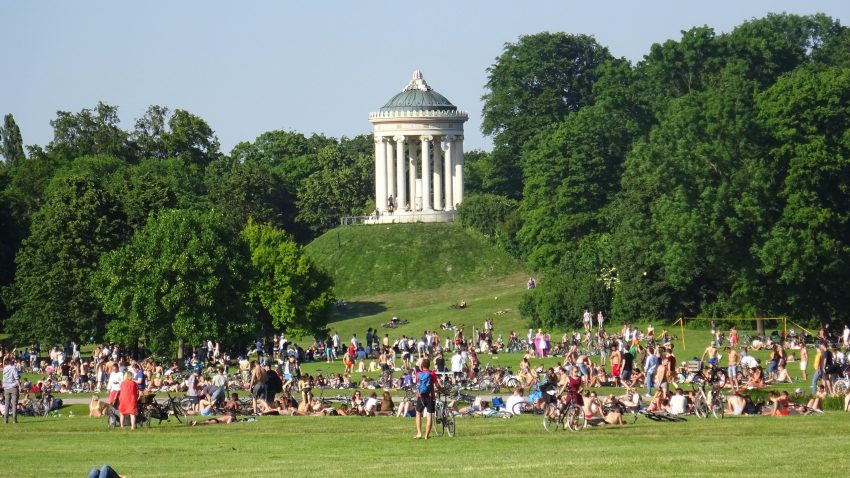
The English Garden is one of Europe’s largest urban parks and was created in the late 18th century. It followed the English landscape style, favouring natural-looking lawns, watercourses, and open vistas rather than rigid formal design.
The park was developed during a period when rulers and reformers were beginning to create public green spaces for recreation. Its association with Benjamin Thompson, Count Rumford, links it to Enlightenment-era ideas about urban improvement and public welfare.
When visiting, look for the Monopteros, the Chinese Tower, the meadows, streams, and shaded paths. The Eisbach wave, where surfers ride a standing river wave, has become one of the park’s most distinctive modern sights.
Location: Munich, Germany | Hours: 24 Hours. | Price: Free. | Website
13. Bavarian National Museum
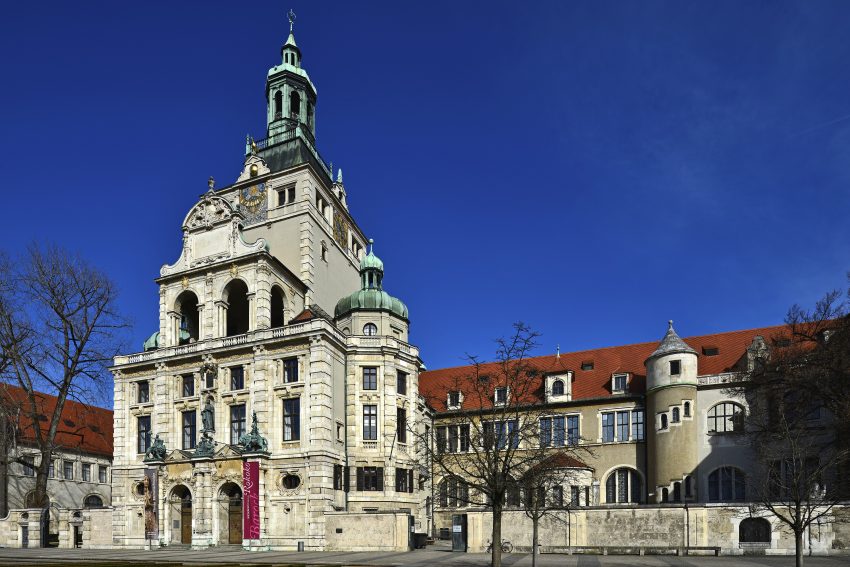
The Bavarian National Museum was founded in the 19th century by King Maximilian II to preserve and display Bavarian art, culture, and craftsmanship. It was part of a wider effort to define and celebrate Bavarian identity through history and material culture.
The museum building itself is historicist in style, with architectural references to different periods of Bavarian and European art. Its collections include sculpture, religious art, textiles, furniture, ceramics, arms, and decorative objects.
Visitors should look especially for the medieval and Baroque religious works, carved figures, ivory objects, and historic interiors. The museum is also known for its nativity scene collection, which is one of the most significant of its kind.
Location: Prinzregentenstraße 3, 80538 München, Germany | Hours: Tuesday – Wednesday: 10:00–17:00. Thursday: 10:00–20:00. Friday – Sunday: 10:00–17:00. Closed on Monday. | Price: Adults: €7; Concessions: €6; Under 18: free; Sunday: €1. | Website
14. Hofbräuhaus
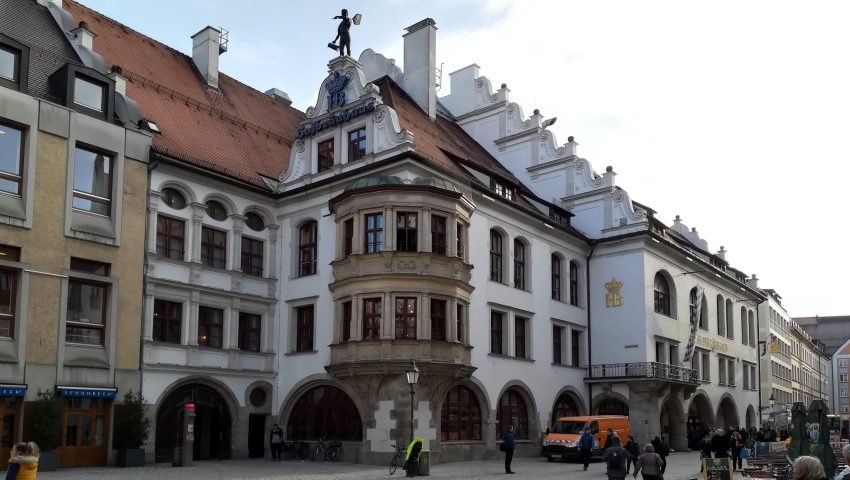
Hofbräuhaus is Munich’s most famous beer hall and traces its origins to the royal brewery founded by Duke Wilhelm V in the late 16th century. It later became a public beer hall and developed into one of the best-known symbols of Bavarian beer culture.
The building has witnessed many phases of Munich’s history, from courtly brewing traditions to mass tourism and political gatherings. It was damaged during the Second World War and later restored.
When visiting, look for the large beer hall, painted ceilings, long communal tables, and traditional Bavarian music. It is busy and touristy, but it remains an important place for understanding how beer halls became part of Munich’s social identity.
Location: Platzl 9, 80331 München, Germany | Hours: Daily: 11:00–00:00. | Price: Free entry; food and drinks are paid separately. | Website
15. Isartor

Isartor is one of the surviving medieval city gates of Munich and dates from the 14th century. It formed part of the city’s defensive walls when Munich was a walled settlement controlled by the Wittelsbach dukes.
Unlike many urban gates that disappeared as cities expanded, Isartor survived and was later restored. Its towers, central archway, and painted historical scenes recall Munich’s medieval fortifications and civic pride.
Visitors can walk through the gate and view it as a marker of the old city boundary. It also houses a museum connected with the comedian Karl Valentin, giving the medieval structure an unexpected link to Munich’s modern cultural history.
Location: 80331 Munich, Germany | Hours: 24 Hours. | Price: Free.
16. Beer and Oktoberfest Museum
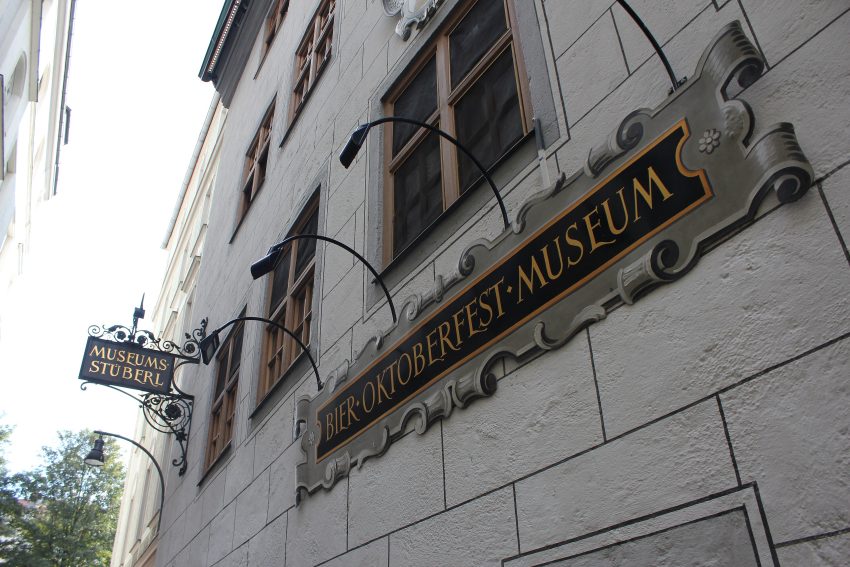
The Beer and Oktoberfest Museum is housed in one of Munich’s older townhouses, giving the museum itself a historic setting. It explores the history of brewing in Munich and the development of Oktoberfest from a royal wedding celebration in 1810 into a major annual festival.
Beer has played a central role in Munich’s economy, social life, and identity for centuries. The museum explains brewing traditions, beer purity regulations, tavern culture, and the changing character of Oktoberfest over time.
When visiting, expect a compact museum with displays on brewing equipment, festival history, and beer-hall customs. It is best suited to visitors who want context behind Munich’s beer culture rather than just the experience of drinking in a beer hall.
Location: Sterneckerstraße 2, 80331 München, Germany | Hours: Monday – Saturday: 11:00–19:00. Sunday: Closed. Closed on public holidays. | Price: Adults: €4; Reduced: €2.50; Groups (6+): €3. | Website
17. Münchner Stadtmuseum
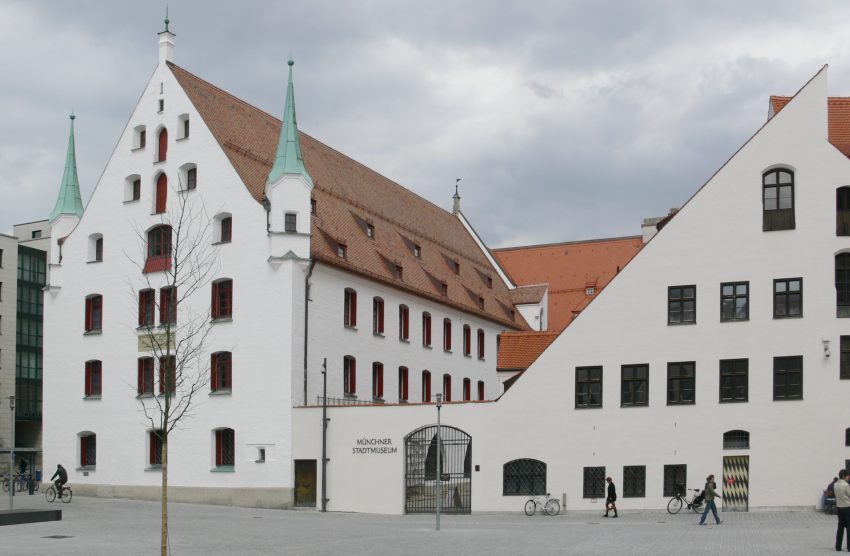
The Münchner Stadtmuseum is Munich’s city museum and focuses on the history, culture, and identity of the city. It was founded in the late 19th century and is housed in a historic complex near the old centre.
The museum’s collections cover many aspects of Munich life, including urban development, theatre, music, photography, and local traditions. It is especially useful for understanding Munich beyond its royal palaces and churches.
When visiting, look for exhibits that explain how Munich changed from a medieval town into a modern city. The museum is also known for collections connected with puppetry, musical instruments, and visual culture.
Location: Sankt-Jakobs-Platz 1, 80331 München, Germany | Hours: Monday: Closed. Tuesday – Sunday: 11:00–18:00. | Price: Free. | Website
18. Jewish Museum
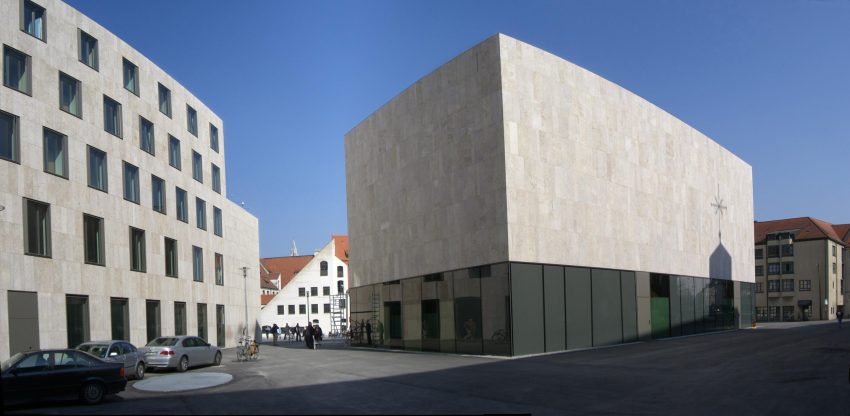
The Jewish Museum Munich stands beside the city’s main synagogue and forms part of the modern Jewish Centre on St.-Jakobs-Platz. It opened in the 21st century but addresses a much longer history of Jewish life in Munich.
Jewish communities in Munich experienced periods of settlement, exclusion, persecution, and renewal. The museum covers this history carefully, including the destruction caused by National Socialism and the rebuilding of Jewish life after 1945.
Visitors can expect exhibitions on Jewish religion, culture, memory, and identity, often combining historical material with contemporary perspectives. The building’s modern design and its location beside the synagogue make it one of the city’s most important places of reflection.
Location: Sankt-Jakobs-Platz 16, 80331 München, Germany | Hours: Tuesday – Sunday: 10:00–18:00. Closed on Monday. | Price: Adults: €6; Concessions: €3.60; Under 18: free. | Website
19. Asamkirche
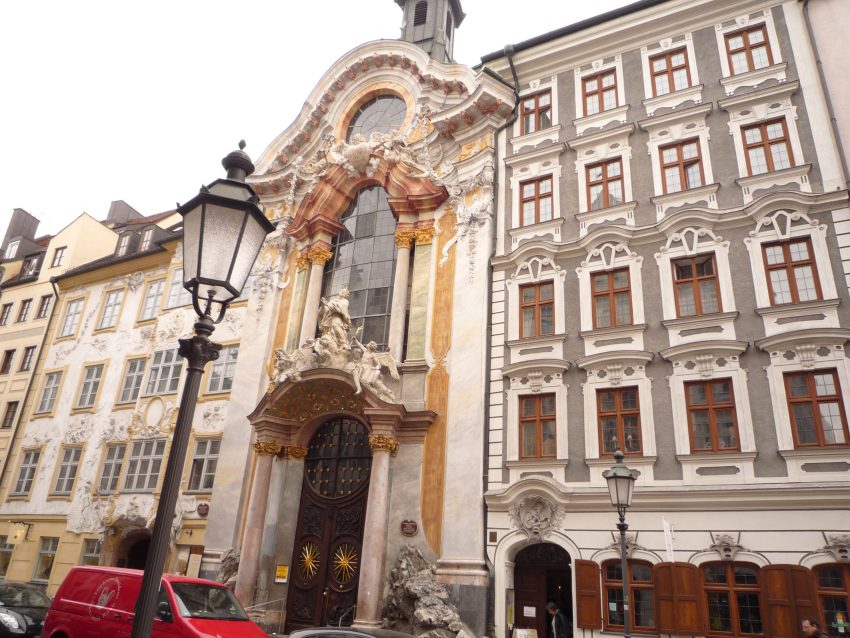
Asamkirche, officially the Church of St. Johann Nepomuk, is one of Munich’s finest examples of late Baroque and Rococo church decoration. It was built in the 18th century by the Asam brothers, Egid Quirin and Cosmas Damian, who were major artists of the period.
The church was originally intended as a private chapel, which helps explain its unusually intense and theatrical interior. Every surface seems designed to guide the eye upward through sculpture, painting, gilding, and dramatic light.
When visiting, look for the richly decorated high altar, ceiling frescoes, twisted columns, and expressive stucco figures. Although the church is small, it is one of the most visually powerful interiors in Munich.
Location: Sendlinger Str. 32, 80331 München, Germany | Hours: Monday: 08:00–17:30. Tuesday: 08:00–17:30. Wednesday: 08:00–17:30. Thursday: 08:00–17:30. Friday: 08:00–17:30. Saturday: 12:00–17:30. Sunday: 08:00–17:30. | Price: Free; donations appreciated.
20. Karlsplatz

Karlsplatz, widely known by locals as Stachus, is one of Munich’s busiest squares. It developed around the western entrance to the old city and is closely associated with the Karlstor, one of the surviving medieval gates.
The square took its formal name from Elector Karl Theodor, but the older nickname Stachus remains more commonly used. Over time, it became an important transport and commercial hub as Munich expanded beyond its medieval walls.
When visiting, look for the Karlstor, the fountains, and the broad opening toward Neuhauser Straße. The square is less intimate than Marienplatz, but it gives a strong sense of Munich as a modern city built around older gateways.
Location: Karlsplatz, 80 München, Germany | Hours: 24 Hours. | Price: Free. | Website
21. Neuhauser Street
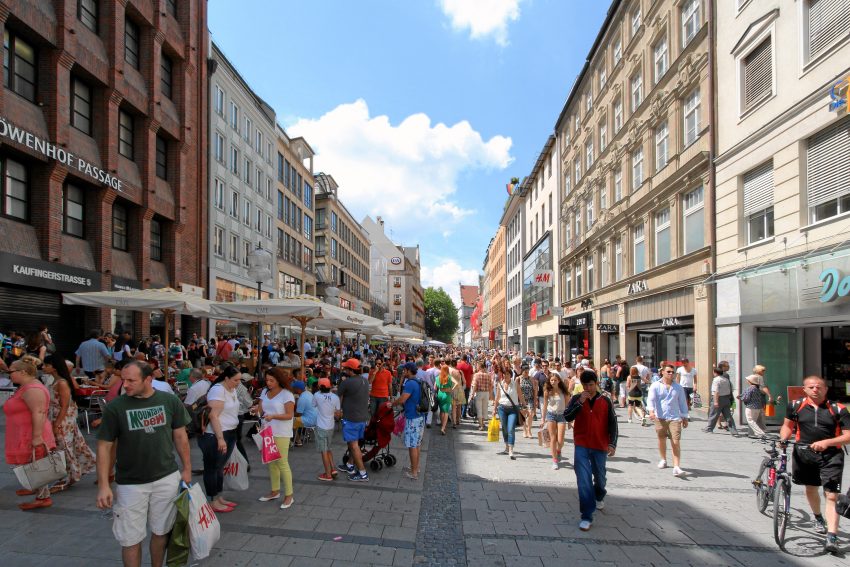
Neuhauser Straße is one of Munich’s main shopping streets and runs through the old city between Karlsplatz and Marienplatz. Its route follows one of the historic approaches into the medieval centre.
The street has changed greatly over time, from a traditional urban thoroughfare to a busy pedestrian shopping area. Despite modern shopfronts, it still contains important historic churches and façades that show the older layers of the city.
When visiting, look for the rhythm of historic buildings, church entrances, and side streets leading into quieter parts of the old town. It is also a useful place to appreciate how Munich combines commercial life with surviving religious and civic landmarks.
Location: Neuhauser Str. 12, 80331 München, Germany | Hours: 24 Hours. | Price: Free.
22. Frauenkirche
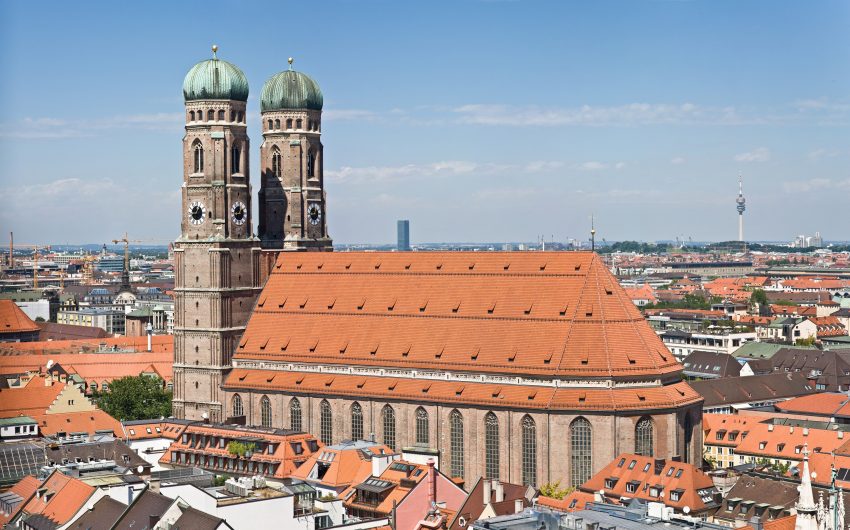
The Frauenkirche, or Cathedral of Our Dear Lady, is one of Munich’s defining landmarks. Built in the late 15th century, it became the city’s cathedral and remains instantly recognisable because of its twin towers with onion-shaped domes.
The church was built in a relatively restrained late Gothic style, with a vast brick structure and a spacious interior. Its towers have long shaped Munich’s skyline, and local planning rules have helped preserve their visual dominance in the old city.
Inside, visitors can see the large nave, historic tombs, stained glass, and the famous “Devil’s Footstep” near the entrance. The cathedral’s scale and simplicity make it very different from Munich’s more ornate Baroque churches.
Location: Frauenplatz 1, 80331 München, Germany | Hours: Monday – Sunday: 08:00–20:00. | Price: Free; tower access ticketed separately. | Website

Moira & Andy
Hey! We're Moira & Andy. From hiking the Camino to trips around Europe in Bert our campervan — we've been traveling together since retirement in 2020!
This website uses affiliate links which earn a small commission at no additional cost to you.
Walking Tour Summary
Distance: 7 km
Sites: 22
Walking Tour Map