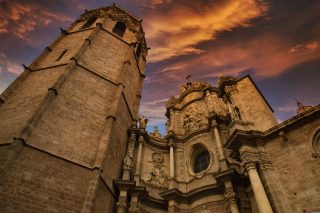
Puente de Alcántara (Toledo)
Bridge in Toledo

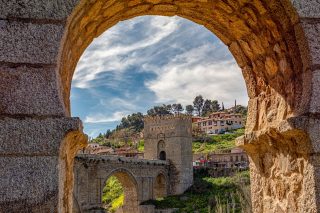
Puente de Alcántara (Toledo) is a historic stone bridge spanning the Tagus River at the eastern approach to Toledo, Spain. Built on Roman foundations and later altered over centuries, it stands at the foot of the Castillo de San Servando and still functions as a crossing into the old city.
What makes it memorable is the way different eras sit in one structure: Roman masonry, a medieval gate-like form, and later additions including a Baroque triumphal arch. I find it especially rewarding for travelers who like reading a city's history in its architecture, and for anyone who wants a scenic first (or last) look at Toledo from the river level.
Table of Contents
History and Significance of the Puente de Alcántara (Toledo)
Roman origins and the Tagus crossing
The bridge was built by the Romans after the founding of the city, creating a durable route across the Tagus River. Its name, “Alcántara,” comes from the Arabic al-qanţarah, meaning “arch,” a nod to the engineering focus of the structure.
Evidence suggests the original bridge had three arches, although only two are visible today. Over time, damage and rebuilding reshaped the crossing and gradually changed its silhouette.
Medieval gateway and Islamic-period changes
In the Middle Ages, Puente de Alcántara served as one of the few entrances used by pilgrims arriving in Toledo. During the 10th century, a lost arch was reduced to a gate with a horseshoe arch form, reflecting architectural preferences of the period.
Castilian repairs and later monumental additions
The bridge suffered serious damage during the reign of Alfonso X of Castile and was rebuilt; the western tower that remains today dates to this phase. Later decoration added the arms of the Catholic Monarchs to the tower walls, with the notable absence of Granada’s pomegranate emblem because the Reconquista was not yet complete.
By the 18th century, the eastern tower had fallen into ruin and was replaced by a Baroque triumphal arch (1721). In 1921, the bridge was declared a national cultural monument, underscoring its long-standing importance to Toledo’s built heritage.
Things to See and Do in the Puente de Alcántara (Toledo)
The main experience is simply walking across the bridge and taking in the Tagus below and Toledo rising ahead. I like approaching it slowly from the river side so the arches and the city walls reveal themselves in stages, then pausing mid-span to look back toward the river corridor.
On the bridge itself, I’d spend a moment studying the surviving western tower and its heraldic decoration, then compare it with the later Baroque triumphal arch that replaced the eastern tower. If you enjoy architectural details, the contrast between the different periods is easiest to appreciate when you stop and look at how the gateway elements frame the route into the city.
How to Get to the Puente de Alcántara (Toledo)
The nearest major airport is Madrid-Barajas (Madrid), from where you can continue to Toledo by ground transport. For the best deals and a seamless booking experience, check out these flights to Toledo on Booking.com.
By train, arrive at Toledo’s railway station and walk toward the river crossing to reach the bridge on the eastern side of the old town. Train schedules and bookings can be found on Omio.
If you’re coming by car, aim for parking near the lower entrances to the historic centre and continue on foot to the bridge and into the city. If you are looking to rent a car in Spain I recommend having a look at Discover Cars, first, as they compare prices and review multiple car rental agencies for you.
Is the Puente de Alcántara (Toledo) Worth Visiting?
Yes-it’s worth a short stop, especially if you’re arriving on foot from the train side or you want a river-level perspective on Toledo’s defenses and skyline. It’s best for travelers interested in layered architecture (Roman structure, later gateways, Baroque arch) and for photographers who like strong lines and framing. It’s less essential if you’re tight on time and focusing only on major interior sights in the historic centre, and you can treat it as optional if you’re avoiding extra walking or steep approaches into the old town.
What Other Travellers Say...
Alcantara Bridge in Toledo is a car-free arch bridge combining Roman and medieval elements that offers an easy, level walk and excellent photo opportunities of the Tagus River and the old city; visitors arrive on foot (some following routes from the train station), enjoy the scenic viewpoint and nearby cafés with outdoor seating, and describe it as a picturesque, must-see entrance to the city.





Practical Tips on Visiting the Puente de Alcántara (Toledo)
- Best time to visit: Go early or late in the day for softer light on the stonework and calmer views over the Tagus.
- How long to spend: Plan 20-45 minutes for a cross-and-return walk with time to look at the towers and arch.
- Accessibility: Expect a paved crossing, but approaches can involve slopes as you transition between river level and the old town.
- Facilities: There are no dedicated visitor facilities on the bridge itself, so bring water if you’re walking in warm weather.
Where to Stay Close to the Puente de Alcántara (Toledo)
Base yourself inside Toledo's Casco Histórico (walled old town) for the easiest walks to the Puente de Alcántara and the city's main sights.
These hotels are practical bases for exploring Toledo on foot while keeping access to key entry points and viewpoints straightforward. Eugenia de Montijo, Autograph Collection works well for a central old-town base that suits travellers prioritizing walkability to major monuments and evening dining without relying on transport. Hotel San Juan de los Reyes works well for well-placed in the historic quarter for travellers who want a quieter-feeling area while still being within easy walking distance of top sights. Sercotel Toledo Renacimiento works well for a convenient choice for travellers who want simpler road access and an easier arrival/departure while remaining walkable to the old town.
FAQs for Visiting the Puente de Alcántara (Toledo)
Getting There
Tickets & Entry
Visiting Experience
Tours, Context & Itineraries
Photography
Accessibility & Facilities
Food & Breaks Nearby
Safety & Timing
The Puente de Alcántara (Toledo) appears in our Complete Guide to Visiting Toledo!

Moira & Andy
Hey! We're Moira & Andy. From hiking the Camino to trips around Europe in Bert our campervan — we've been traveling together since retirement in 2020!
This website uses affiliate links which may earn a commission at no additional cost to you!
Nearby Attractions
- Museo De Santa Cruz (0.3) km
Museum - Plaza de Zocodover (0.3) km
Square - El Alcazar (0.4) km
Castle - Puerta del Sol (Toledo) (0.6) km
City Gate - Mezquita del Cristo de la Luz (0.6) km
Mosque - Cave of Hercules (0.6) km
Historic Site - Catedral de Toledo (0.6) km
Cathedral - Puerta de Bisagra (0.7) km
City Gate - Termas Romanas (0.7) km
Baths - Iglesia de El Salvador, Toledo (0.9) km
Church