Munich, Germany: The Ultimate Travel Guide 2026

Munich
Munich

Munich is one of the easiest German cities to enjoy on a first visit because it balances “big-city” culture with a relaxed, walkable core. You can spend the morning moving between grand squares, museums, and coffee houses, then switch to parks, river paths, and beer gardens without ever feeling like you need to plan every minute. It is a city that rewards simple routines-start centrally, follow your curiosity, and let neighbourhood atmosphere do the rest.

The city sits in southern Germany, in the state of Bavaria, close to the foothills of the Alps. That location shapes the feel of a trip: day trips to lakes and mountains are straightforward, the seasonal calendar is strong (from spring gardens to winter markets), and the food-and-drink culture leans distinctly Bavarian. Even if you are not heading into the mountains, you will often sense the Alpine edge in the skyline on clear days.

For a first-time itinerary, Munich works best as a mix of classic highlights and neighbourhood wandering. Prioritise a compact, walkable loop through the central districts for landmarks and museums, then carve out time for the English Garden, a river walk, or a longer lunch in a beer garden. If you stay well connected to public transport, you can keep the trip flexible and still fit in a half-day escape to a lake or a nearby town without feeling rushed.

Table of Contents

History of Munich

Germany: Medieval Origins and the Birth of Munich (12th–13th Centuries)

Munich begins as a deliberate medieval foundation rather than an ancient settlement that simply “grew up” over time. In 1158, Henry the Lion, Duke of Saxony and Bavaria, secured control over a strategic river crossing and market rights, a move that redirected commerce and effectively created the nucleus of the town. The name München derives from “bei den Mönchen” (by the monks), reflecting the presence of monastic communities in the area that shaped early identity and landholding.

By 1175 the settlement had been fortified, and in 1180, after Henry the Lion’s fall from power, Munich passed to the Wittelsbach dynasty—an inflection point that would define the city’s political trajectory for centuries. In 1255, when Bavaria was divided, Munich became the ducal residence of Upper Bavaria, anchoring it as a court city with a growing administrative and economic role.

Germany: Wittelsbach Power, Trade, and Plague-Era Europe (14th–15th Centuries)

In the late Middle Ages Munich consolidated as a regional centre under the Wittelsbachs, with guild life, market privileges, and court patronage reinforcing urban growth. Like many European towns, it navigated recurrent crises—famine, epidemics, and intermittent conflict—yet continued to strengthen its civic institutions and commercial networks.

A key turning point came in 1506 when Bavaria was reunified and Munich emerged as the capital of the duchy. That status drew artisans, merchants, and court officials, and it set the stage for a more ambitious architectural and cultural programme in the centuries ahead.

Germany: Reformation Pressures and Counter-Reformation Munich (16th Century)

While much of the German-speaking world was transformed by the Protestant Reformation, Munich became a leading Catholic stronghold. The Wittelsbach rulers aligned the city with Counter-Reformation priorities, using education, church building, and patronage to reinforce Catholic identity and political legitimacy.

This period left a lasting imprint on the city’s institutional landscape. Munich’s role as a Catholic centre was not only religious; it was geopolitical, linking the city’s fortunes to the broader contest for influence in the Holy Roman Empire and shaping alliances that would matter profoundly in the 17th century.

Germany: The Thirty Years’ War and Baroque Court Ambition (17th Century)

The Thirty Years’ War (1618–1648) destabilised much of Central Europe, and Munich’s status as a Catholic hub placed it close to the conflict’s political heart. The city endured economic strain and military threat, including occupation episodes and the wider disruption of trade, food supply, and demographic stability that marked the era.

Yet the 17th century also reinforced Munich’s identity as a court city with artistic ambitions. The Wittelsbachs invested in Baroque culture as an expression of power and resilience, deepening the tradition of state-backed art and architecture that later generations would expand.

Germany: Enlightenment Reform, Cultural Growth, and Dynastic Continuity (18th Century)

In the 18th century, Munich experienced periods of administrative reform and cultural consolidation typical of Enlightenment-era courts. The city remained dynastically anchored, but the priorities of governance began to shift toward modern bureaucracy, infrastructure, and the cultivation of intellectual life.

This era also built the foundations for Munich’s later reputation as a centre for arts and learning. Court patronage continued, but it increasingly intersected with broader European currents: scientific interest, architectural classicism, and early public cultural institutions.

Germany: Napoleonic Upheaval and the Kingdom of Bavaria (1806–1848)

The Napoleonic period reshaped the German states, and Bavaria’s elevation to a kingdom in 1806 marked a decisive upgrade in Munich’s political standing. As the royal capital, Munich entered a phase of planned transformation, with rulers and architects pushing a more monumental city image suited to a modern European capital.

Large-scale building projects and urban planning accelerated, embedding a new classical grandeur in the cityscape and projecting Bavaria’s aspirations. This was not simply beautification; it was statecraft in stone, designed to communicate legitimacy and continuity in a rapidly changing Europe.

Germany: Industrialisation, Modern Urban Life, and Social Change (1848–1914)

The second half of the 19th century brought industrial growth, expanding rail links, and new residential districts, pushing Munich beyond its older urban footprint. With modernisation came demographic change: rural-to-urban migration, a more complex class structure, and the expansion of civic services.

Culturally, Munich developed a strong reputation as an artistic and intellectual centre, attracting painters, writers, and thinkers. This blend—industry alongside culture—became a defining tension and strength, setting up Munich as both a working modern city and a place with a refined public identity.

Germany: World War I, Revolution, and the Weimar Era (1914–1933)

World War I strained Munich as it did the rest of Germany, bringing scarcity, political radicalisation, and a collapse of imperial structures. In 1918, Bavaria’s monarchy fell, and Munich became a focal point of revolutionary politics, including the short-lived Bavarian Soviet Republic in 1919 and its violent suppression.

The Weimar period that followed was turbulent, marked by economic volatility and ideological conflict. Munich also became an early incubator for extremist movements, a development that would have catastrophic implications for Germany and Europe in the next decade.

Germany: Nazi Rise, World War II, and Destruction (1933–1945)

Under National Socialism, Munich held symbolic importance within the Nazi movement and was heavily shaped by the regime’s propaganda and institutional control. The city was also subjected to the wider machinery of persecution, repression, and wartime mobilisation that defined Nazi Germany.

During World War II, Munich suffered significant damage from Allied bombing, with losses to housing, infrastructure, and parts of the historic fabric. By 1945 the city faced the immediate challenges of defeat: physical reconstruction, displaced populations, and the moral and political reckoning of the post-Nazi era.

Germany: Postwar Reconstruction, Prosperity, and International Reintroduction (1945–1990)

In the postwar decades, Munich rebuilt rapidly, restoring key historic areas while also developing modern districts suited to a growing economy. West Germany’s broader economic recovery supported Munich’s expansion as a centre for industry, technology, media, and education, with living standards rising and the city’s international profile strengthening.

The city also reintroduced itself globally through culture and sport, reinforcing a public-facing identity that mixed tradition with modernity. By the late 20th century, Munich had positioned itself as one of Germany’s most economically successful and internationally recognisable cities.

Germany: Contemporary Munich—Global City, Innovation, and Identity (1990–Present)

Since reunification, Munich has continued to expand as a high-value economic hub, known for advanced manufacturing, research, and a strong service sector. Growth has brought familiar big-city pressures—housing costs, infrastructure demand, and debates over development versus heritage—while the city has retained a strong sense of local tradition in public life.

Modern Munich is defined by this duality: a global-facing economy and a deeply rooted civic culture. It remains a city that invests heavily in quality of life, public space, and cultural institutions, even as it navigates the challenges of scale, tourism, and rapid change.

Moira & Andy
Moira & Andy

Hey! We're Moira & Andy. From hiking the Camino to trips around Europe in Bert our campervan — we've been traveling together since retirement in 2020!

Read our full story here

Visiting Munich for the first time and wondering what are the top places to see in the city? In this complete guide, I share the best things to do in Munich on the first visit. To help you plan your trip, I have also included an interactive map and practical tips for visiting!

This website uses affiliate links which earn a small commission at no additional cost to you.

33 Best places to See in Munich

This complete guide to Munich not only tells you about the very best sights and tourist attractions for first-time visitors to the city but also provide insights into a few of our personal favorite things to do.

This is a practical guide to visiting the best places to see in Munich and is filled with tips and info that should answer all your questions!

1. Isartor

Isartor
Isartor
CC BY-SA 4.0 / Chabe01
Isartor is Munich’s easternmost surviving Gothic town gate, built in 1337 during the city’s second wall expansion under Emperor Louis IV, and it still marks a clear threshold at the edge of the Old Town near the Isar. Unlike most vanished fortifications, it keeps its central main tower, with a 19th-century restoration by Friedrich von Gärtner (1833–35) that closely followed the original proportions. Look for Bernhard von Neher’s 1835 frescoes showing Louis’s triumphant return after the Battle of Mühldorf in 1322. Inside the gate complex you can also find the Karl Valentin museum and a small café, adding a quirky, lived-in layer to the medieval architecture.
Location: 80331 Munich, Germany | Hours: 24 Hours. | Price: Free. | Distance: 0km

We recommend to rent a car in Germany through Discover Cars, they compare prices and review multiple car rental agencies. Book your rental car here.

2. Beer & Oktoberfest Museum

Beer & Oktoberfest Museum
CC BY-SA 3.0 / Galaxylady1110
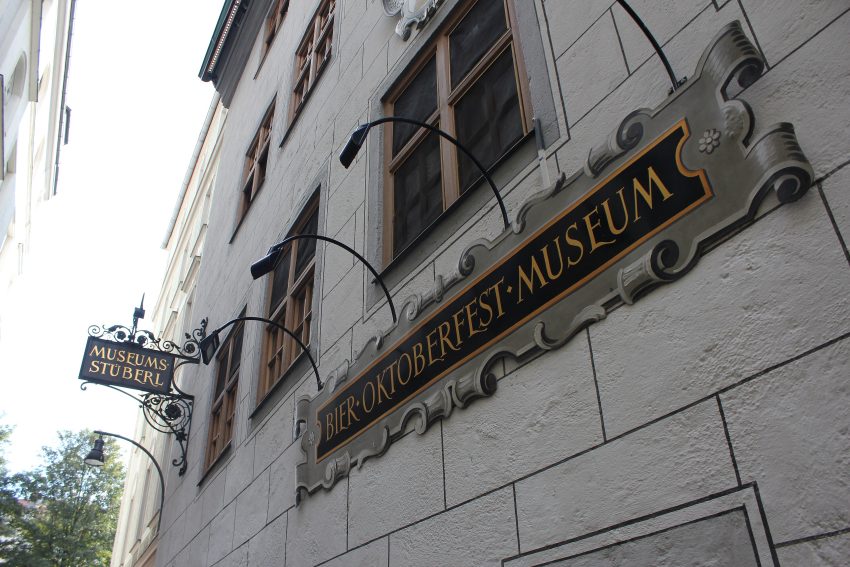
Munich’s Beer & Oktoberfest Museum is a privately run museum devoted to Bavaria’s brewing culture and the origins of Oktoberfest, set inside a medieval residence dating to 1340. The building itself is part of the experience, with restored facade paintings, preserved wooden beams, and the steep “Heaven’s Stairs” leading visitors up through multiple floors. Exhibits trace beer’s long arc from ancient brewing to Bavarian monks and purity rules, then narrow in on Munich’s six historic breweries, including curiosities like the brewer’s initiation “ark,” a wooden ceremonial box. The top level follows Oktoberfest from King Ludwig I’s 1810 wedding celebration to the modern festival, and many visitors finish with a beer in the downstairs bar.
Location: Sterneckerstraße 2, 80331 München, Germany | Hours: Monday – Saturday: 11:00–19:00. Sunday: Closed. Closed on public holidays. | Price: Adults: €4; Reduced: €2.50; Groups (6+): €3. | Website | Distance: 0.1km

Here is a complete selection of hotel options in Munich. Feel free to review each one and choose the stay that best suits your needs.

3. Hofbräuhaus München

Hofbräuhaus München
Hofbräuhaus München
CC BY-SA 4.0 / H.Helmlechner
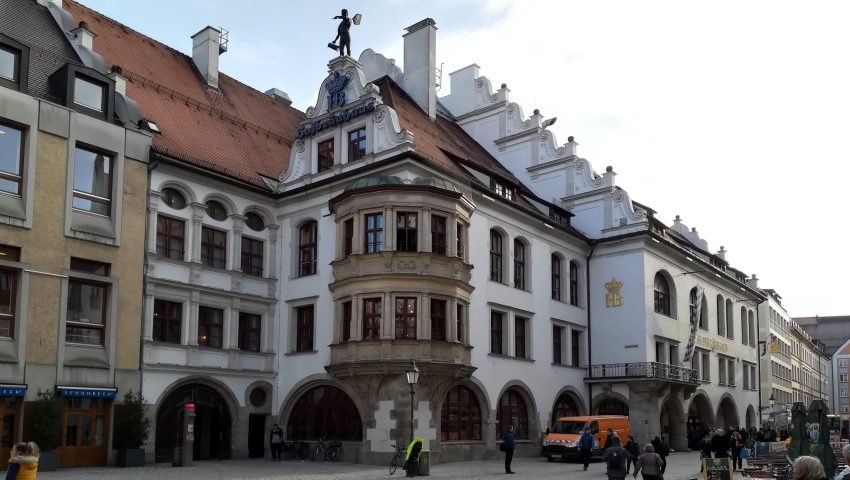
Hofbräuhaus München is a vast beer hall in Munich’s Old Town that has helped define the city’s communal beer culture since its royal-brewery origins in 1589, opening to the public in 1828. On the ground floor, the Schwemme packs long shared tables under constant motion, with folk bands playing as steins and platters of Bavarian classics circulate through a room built for roughly 1,000 drinkers. Upstairs, a vaulted ceremonial hall adds another 1,300 seats, plus smaller side rooms for quieter gatherings. In warm weather, the beer garden under chestnut trees—fountain included—feels calmer, even as the house can pour around 10,000 liters a day. The building also carries a darker footnote: Hitler announced the Nazi Party program here in 1920.
Location: Platzl 9, 80331 München, Germany | Hours: Daily: 11:00–00:00. | Price: Free entry; food and drinks are paid separately. | Website | Distance: 0.3km

Traveling to a country with a different currency? Avoid ATM transaction fees and pay in local currency with a Wise Card. Having used it for over 5 years, we've saved loads on fees!

4. Altes Rathaus

Toy Museum Munich
Toy Museum Munich
CC BY-SA 2.0 / Pierre André Leclercq
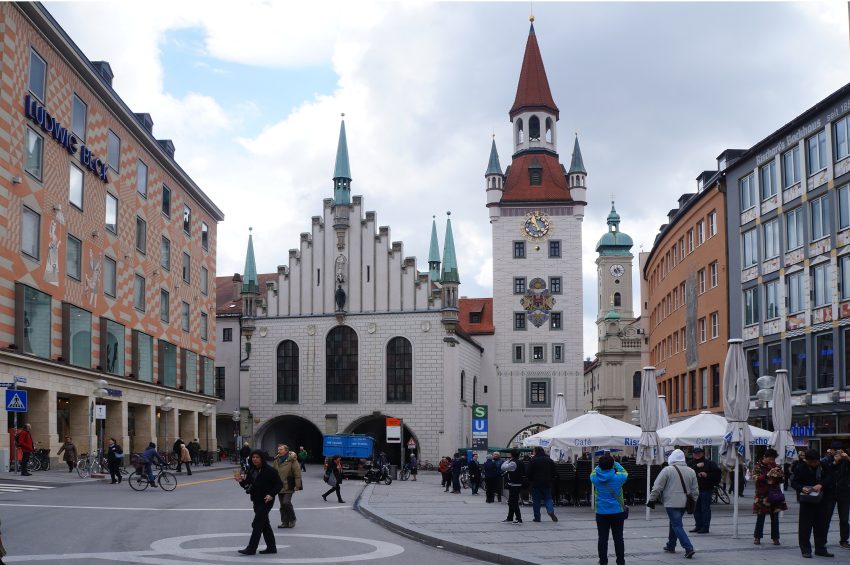
Munich’s Altes Rathaus (Old Town Hall) anchors the east side of Marienplatz, its late-Gothic façade and tower passage still reading like a medieval checkpoint between the square and the street beyond. The oldest surviving piece is the 12th-century tower, once part of the city’s fortifications, now repurposed as the Toy Museum with vintage trains, dolls, and miniature scenes stacked across four tight floors reached by a spiral stair. Inside, the ceremonial hall keeps a more solemn grandeur: broad wooden barrel vaulting and a frieze of 96 coats of arms. Look for an unexpected detail outside—a bronze Juliet statue gifted by Verona in the 1970s—and remember the building’s darker association with a 1938 Goebbels speech that helped ignite Kristallnacht.
Location: Marienplatz 15, 80331 München, Germany | Hours: 10:00–17:30. Closed on Tuesday. | Price: €8; Children (up to 17): €3; Family: €16. | Website | Distance: 0.4km

Explore Munich at your own pace with our self-guided walking tour! Follow our curated route to discover must-see sights and local secrets that makes Munich one of the best places to visit in Germany.

5. Peterskirche

St. Peter
St. Peter
CC BY-SA 2.0 / Jorge Franganillo
Peterskirche (St. Peter’s Church) stands on the highest point of Munich’s Old Town and is considered the city’s oldest public building, with origins in the 12th century linked to the early monastic settlement. Its fabric layers a 13th-century Gothic rebuild with later Baroque and Rococo rework, then postwar restoration. Inside, visitors notice the lavish high altar crowned by a statue of Saint Peter, choir carvings depicting scenes from his life, and the jeweled remains of Saint Mundita. The “Old Peter” tower—marked by eight clocks and seven bells—requires a steep stair climb to a viewing gallery where, on clear days, the Alps appear beyond the rooftops.
Location: Peterspl. 1, 80331 München, Germany | Hours: (Summer) April – October; Daily: 09:00–19:30. (Winter) November – March; Monday – Friday: 09:00–18:30. Saturday – Sunday: 09:00–19:30. | Price: Church entry: Free. Tower (Alter Peter): Adults: €5; Reduced: €3; Students (6–18): €2; Under 6: free. | Website | Distance: 0.4km

6. Viktualienmarkt

Viktualienmarkt
Viktualienmarkt
CC BY-SA 3.0 / Helmlechner
Viktualienmarkt is Munich’s long-running open-air food market in the Altstadt, trading since the early 1800s and still central to daily life. Stalls overflow with fresh produce, dairy, meats, seafood, flowers, and imports like French wines and hard-to-find delicacies, alongside Bavarian staples such as pretzels, sausages, and local cheeses. At its heart, a chestnut-shaded beer garden circles a decorated maypole, where people pause for a cold beer, hot soup, or the local ritual of white sausage. The market also doubles as a cultural stage, hosting folk music and dances, seasonal festivals, and a lively Mardi Gras parade, with a fountain honoring German cabaret artists.
Location: Viktualienmarkt, 80 München-Altstadt-Lehel, Germany | Hours: Daily: Open 24 hours. | Price: Free. | Website | Distance: 0.4km

7. Alter Hof

Alter Hof
Alter Hof
CC BY-SA 1.0 / Fentriss
Alter Hof (Old Court) is Munich’s oldest surviving medieval court complex, with roots traced by excavations to a 12th-century castle and later serving as the imperial residence of Louis IV. The site grew into five wings—Burgstock, Zwingerstock, Lorenzistock, Pfisterstock, and Brunnenstock—forming a tucked-away courtyard that feels surprisingly calm in the Old Town. Visitors notice the mix of later rebuilds: a Neo-Classical west façade and Neo-Gothic ornament on the north side, layered over centuries of extensions and postwar restoration. In summer, the inner courtyard’s Renaissance arcades frame open-air concerts and theater, and the west wing now houses a restaurant and wine cellar.
Location: Alter Hof, 80 München-Altstadt-Lehel, Germany | Hours: Monday – Saturday: 10:00–18:00. Sunday: Closed. Closed on public holidays. | Price: Free. | Website | Distance: 0.5km

8. Deutsches Museum

Deutsches Museum
Deutsches Museum
CC BY-SA 4.0 / 4300streetcar
Munich’s Deutsches Museum is a vast science-and-technology museum on Museumsinsel, an island in the Isar River, built to make engineering and scientific ideas understandable through real machines and hands-on displays. Founded in 1903 after the city assigned the former timber-and-barracks island to the project, it later suffered heavy World War II damage and was rebuilt. Inside, you move through roughly 50 fields and thousands of objects, from a Gutenberg printing press and a Siemens dynamo to a bench linked to the first atom split and an 1886 Mercedes-Benz model. Visitors remember the aviation and space halls, the basement mining section, and electricity exhibits that crackle with lightning effects.
Location: Museumsinsel 1, 80538 München, Germany | Hours: Daily: 09:00–17:00. | Price: Adults: €15; Discounted: €8; Family ticket: €31; Under 6: free. Prices increase from January 28, 2026 (Adults: €16; Discounted: €9; Family ticket: €33). | Website | Distance: 0.5km

9. Marienplatz
Marienplatz
Marienplatz
CC BY-SA 2.0 / oatsy40
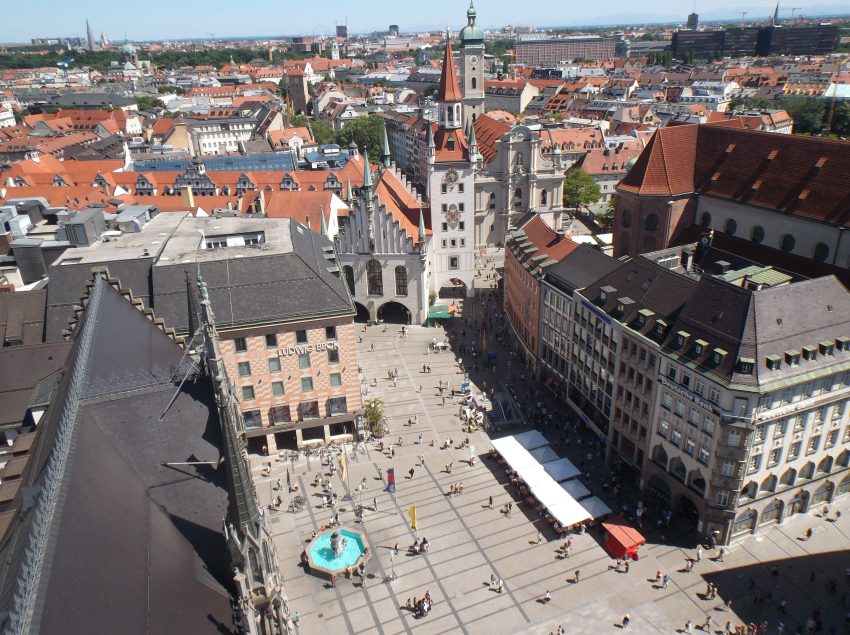
Marienplatz is Munich, Germany’s central square, founded in 1158 and still the city’s main meeting point and crossroads. The scene is defined by the neo-Gothic Neues Rathaus, whose Glockenspiel animates the façade at 11 a.m., noon, and (in warmer months) 5 p.m., sending 32 mechanical figures into a bell-scored reenactment of Bavarian stories. Opposite stands the Altes Rathaus with its fairytale-like tower and a toy museum inside. In the middle, the Mariensäule from 1638—topped by a gilded Virgin—quietly marks the end of Swedish occupation during the Thirty Years’ War. Around it, cafés, street musicians, and busy shopping streets keep the square buzzing.
Location: Marienplatz, 80331 München-Altstadt-Lehel, Germany | Hours: 24 Hours. | Price: Free. | Distance: 0.5km

10. Maximilianstraße

Maximilianstraße
Maximilianstraße
CC BY-SA 4.0 / Jan Czeczotka
Maximilianstraße is Munich’s 19th-century royal avenue, laid out in 1850 under King Maximilian II as a grand axis from the old center toward the Isar and the Maximilianeum. Its cohesive Neo-Gothic look—shaped by English Perpendicular influences—shows up in the formal façades, including the reworked north face of the Old Mint Yard. As you walk, you pass civic and cultural buildings before the western stretch shifts into glossy luxury, with art galleries, jewelers, and flagship boutiques for labels like Chanel, Dior, and Gucci. The Maximiliansbrücke, crowned by a Pallas Athene statue, delivers a memorable crossing to the Bavarian State Parliament’s palatial seat. Expect a polished scene with designer window displays and the occasional supercar.
Location: Maximilianstraße, 80 München-Altstadt-Lehel, Germany | Hours: 24 Hours. | Price: Free. | Distance: 0.5km

11. Neues Rathaus
New Town Hall
New Town Hall
CC BY-SA 3.0 / Diliff
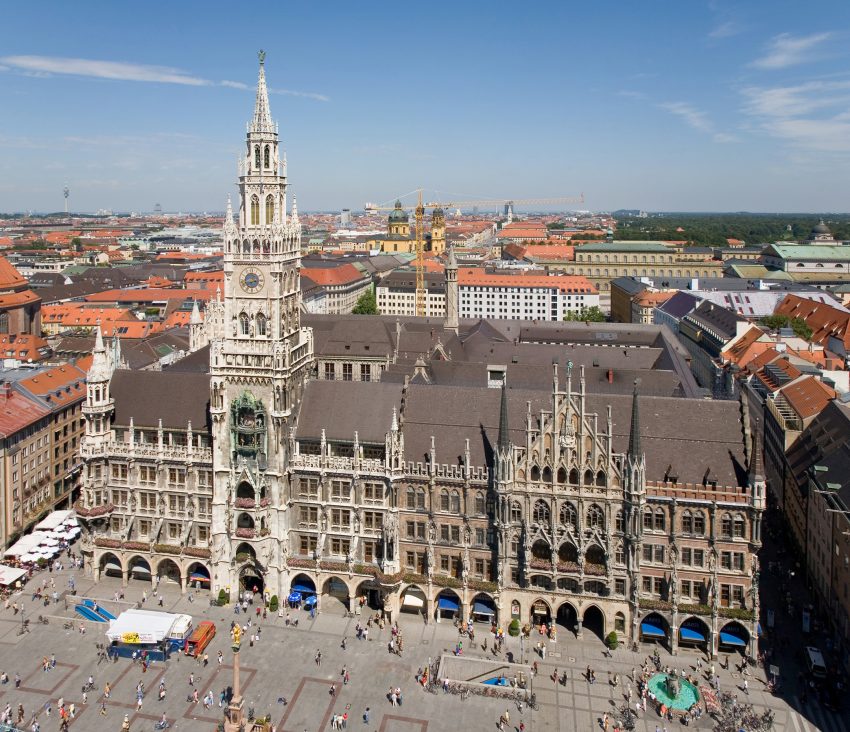
Munich’s Neues Rathaus (New Town Hall) is the neo-Gothic seat of city government that fills Marienplatz with spires and densely carved stonework, built between 1867 and 1909 after the old civic quarters became too small. Look closely at the façade’s sculptures—Bavarian legends, saints, and allegorical figures—and up at the steeple where a bronze “Munich Child” stands guard. At set times, the tower’s huge carillon animates the square: 43 bells accompany copper figures reenacting a joust for Duke Wilhelm V’s wedding and the “Dance of the Coopers,” ending with a small golden rooster’s chirps. Inside, six courtyards and a tucked-away garden shift the mood from busy plaza to quiet corners.
Location: Marienplatz 8, 80331 München, Germany | Hours: Monday – Friday: 10:00–20:00. Saturday: 10:00–16:30. Sunday: 10:00–14:30. | Price: Tower: €7 (standard; discounts may apply). | Website | Distance: 0.5km

12. Bavarian State Opera

Bavarian State Opera
CC BY-SA 2.0 / Avda
The Bavarian State Opera (Bayerische Staatsoper) performs in Munich’s Nationaltheater on Max-Joseph-Platz, a neoclassical house that anchors the old town’s evening culture. Designed by Karl von Fischer with the Paris Odeon in mind, it opened in 1818, was twice destroyed—by an 1823 fire and WWII bombing—and reopened in its current form in 1963 with Wagner’s “Die Meistersinger von Nürnberg.” Visitors remember the ceremonial approach across the square and the glow of the columned façade after dark, especially on performance nights. Inside, the Royal Box and the circular stage create a courtly, close-up feel, and the resident Bayerisches Staatsorchester underpins opera, ballet, and festival performances.
Location: Max-Joseph-Platz 2, 80539 München, Germany | Hours: Monday – Saturday: 10:00–19:00. Sunday: Closed. Note: The theatre typically opens one hour before performances. | Price: Prices vary by show. | Website | Distance: 0.6km

13. Max-Joseph-Platz
Max-Joseph Platz, Munich
CC BY-SA 3.0 / Mister No
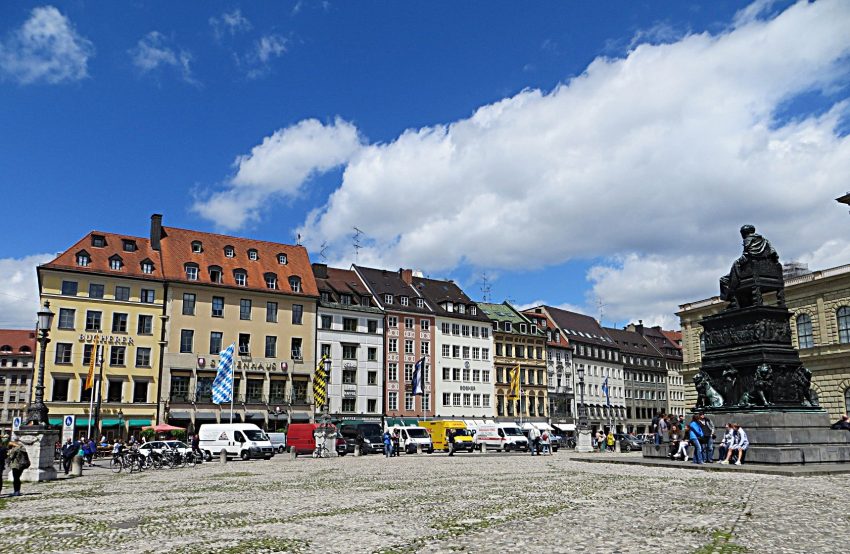
Max-Joseph-Platz is a formal neoclassical square in Munich’s Altstadt-Lehel, shaped as a civic stage for Bavaria’s court culture in the early 1800s. It takes its name from King Maximilian I Joseph, whose monument sits at the center—remarkably understated, showing him seated rather than in a triumphant pose. One whole side is dominated by the Nationaltheater, home of the Bavarian State Opera, with broad steps and a temple-like façade that feels especially theatrical as evening audiences arrive. Opposite, the Residenz edge—most notably the Königsbau designed by Leo von Klenze—adds a palace-front backdrop. Visitors remember the symmetry, clean sightlines, and the way the square shifts from quiet photo spot to pre-performance buzz.
Location: Max-Joseph-Platz 2 80539 München Germany | Hours: 24 hours | Price: Free. | Distance: 0.6km

14. Allerheiligen-Hofkirche

Allerheiligen-Hofkirche
CC BY-SA 3.0 / Rufus46
Inside Munich’s Residenz Royal Palace, the Allerheiligen-Hofkirche is a former court church built from 1826–1837 for King Ludwig I, designed by Leo von Klenze with Byzantine-leaning inspiration from Palermo’s Cappella Palatina and touches reminiscent of St. Mark’s in Venice. Visitors notice the layered nave with two domes and an apse, and the stark, brick-toned interior shaped by what survived wartime bombing. Much of the original decoration was lost in World War II; the long-delayed restoration (completed in 2003) keeps the space deliberately restrained rather than fully recreated. Today it functions mainly as an intimate concert hall, where the clear acoustics and close sightlines make performances especially immersive.
Location: Residenzstraße 1, 80333 München, Germany | Hours: (Summer) April 1 – October 15; Daily: 09:00–18:00. (Winter) October 16 – March 31; Daily: 10:00–17:00. | Price: Free; donations appreciated. | Website | Distance: 0.6km

15. Munich Residence
Munich Residence
Munich Residence
CC BY-SA 4.0 / Julian Herzog
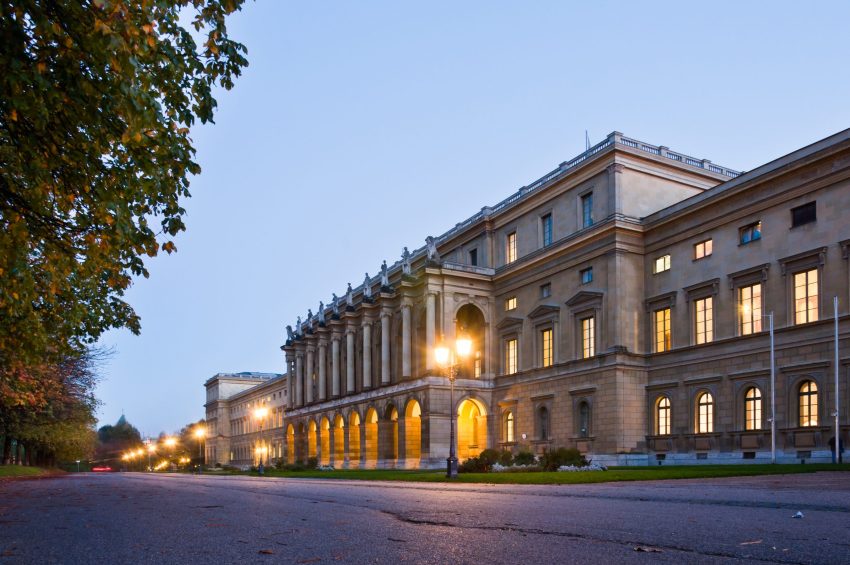
The Munich Residence in Munich, Germany, is the former palace of the Wittelsbach rulers, a sprawling complex that grew over centuries until the monarchy ended in 1918. Visitors move through grand facades and 10 courtyards—some open without a ticket—before entering nearly 130 rooms of shifting styles from Renaissance to Rococo and Neoclassical. Standouts include the vast Antiquarium hall, the portrait-lined Gallery of the Ancestors with 121 family members, and the Grottenhof courtyard with its Perseus fountain. Inside, the Treasure Chamber packs a glittering sweep of jewels and precious metalwork amassed across roughly a millennium, and the Cuvilliés Theatre is a jewel-box of Rococo design. Many travelers linger for hours and still feel they’ve only scratched the surface.
Location: Residenzstraße 1, 80333 München, Germany | Hours: (Summer) April 1 – October 19; Daily: 09:00–18:00. (Winter) October 20 – March 31; Daily: 10:00–17:00. | Price: Residence Museum: €10 (regular), €9 (reduced); Treasury: €10 (regular), €9 (reduced); Combination (Museum + Treasury): €15 (regular), €13 (reduced); Under 18: free. | Website | Distance: 0.6km

16. Jewish Museum
Jewish Museum
Jewish Museum
CC BY-SA 3.0 / Maximilian Dörrbecker (Chumwa)
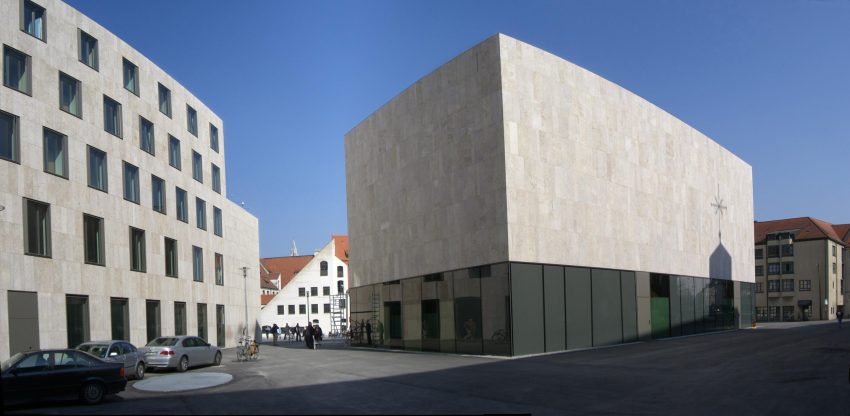
Munich’s Jewish Museum is a city-run museum opened in 2007 inside the Jewish Center on St.-Jakobs-Platz, positioned between the Ohel Jakob synagogue and the Jewish Community Center. The building is a standalone cube designed by Rena Wandel-Hoefer and Wolfgang Lorch, with a glass ground-floor entrance that some visitors mistake for the café door. Inside, exhibitions trace Jewish life in Munich through objects and stories of festivals and rituals—weddings, funerals, and everyday practice—alongside temporary shows that can confront the Holocaust and its aftereffects across generations. Travelers often remember the compact, three-level layout and the shift from historical grounding to more contemporary themes as you move through the floors.
Location: Sankt-Jakobs-Platz 16, 80331 München, Germany | Hours: Tuesday – Sunday: 10:00–18:00. Closed on Monday. | Price: Adults: €6; Concessions: €3.60; Under 18: free. | Website | Distance: 0.7km

17. Münchner Stadtmuseum
Münchner Stadtmuseum
CC BY-SA 3.0 / Andreas Praefcke
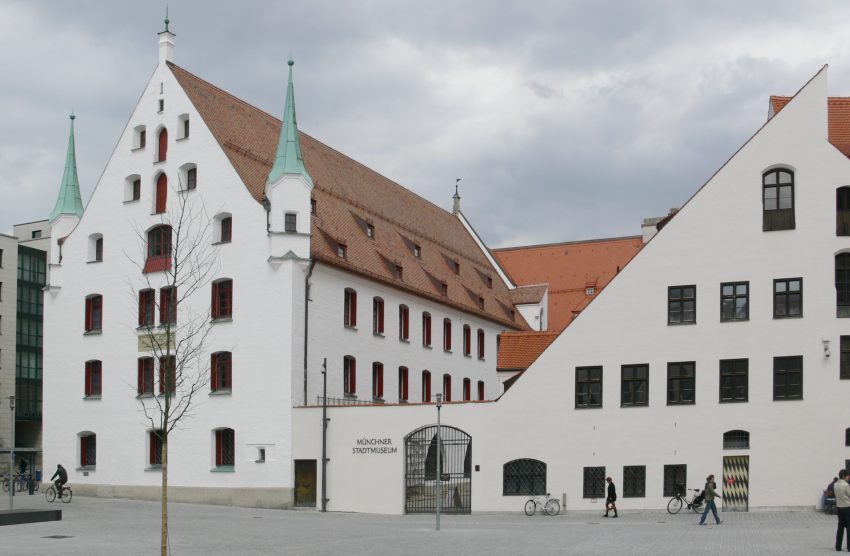
Münchner Stadtmuseum is Munich’s municipal history museum, built across six interconnected buildings, including former 15th-century granaries later used as stables and an arsenal. Its story is tied to the city’s own: during the 1848 uprisings, citizens stormed the arsenal tower only to find the weapons inside had rusted beyond use. Inside, you’ll encounter Munich’s everyday culture through collections ranging from townscapes and vintage posters to photography, fashion, musical instruments, and a puppet theatre archive, plus an internationally respected Filmmuseum with silent-film reconstructions. Don’t miss the “Dancing Moors,” ten animated wooden figures carved by Erasmus Grasser around 1480 for a ceremonial hall.
Location: Sankt-Jakobs-Platz 1, 80331 München, Germany | Hours: Monday: Closed. Tuesday – Sunday: 11:00–18:00. | Price: Free. | Website | Distance: 0.7km

18. Neuhauser Straße
Neuhauser Straße
Neuhauser Straße
CC BY-SA 4.0 / M(e)ister Eiskalt
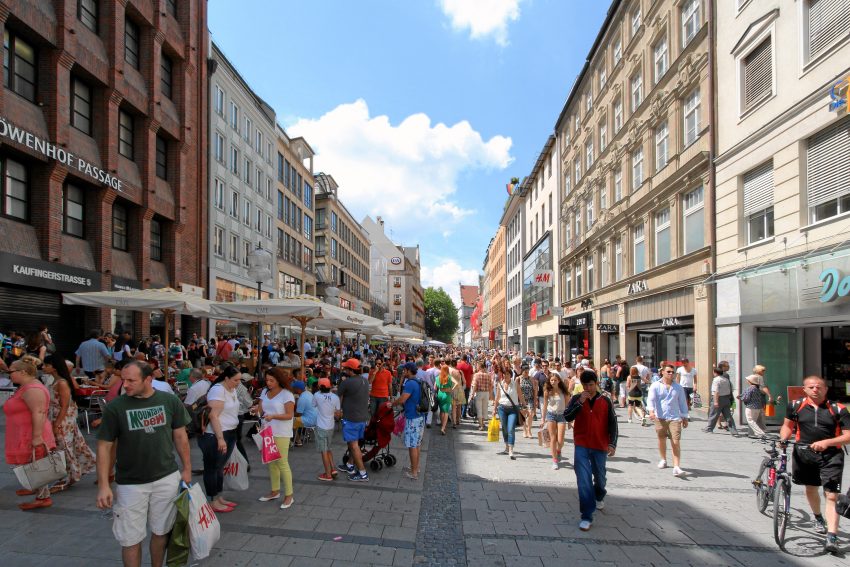
Neuhauser Straße is a central pedestrian street in Munich, Germany, forming the continuation of Kaufingerstraße along the main west–east corridor through the Altstadt. Once a traffic route with tram tracks, it was pedestrianized in 1972 ahead of the Munich Summer Olympics, and today it’s often cited as Germany’s most profitable shopping street. What you notice first is the broad, car-free flow of people, with global chains beside small stands selling flowers, fruit, roasted nuts, and souvenirs. Outdoor cafés push tables onto the pavement, making it easy to pause and watch buskers and the steady crowd. Recent reviews mention construction fencing and some empty storefronts, which can change the street’s feel block to block.
Location: Neuhauser Str. 12, 80331 München, Germany | Hours: 24 Hours. | Price: Free. | Distance: 0.8km

19. Odeonsplatz

Odeonsplatz
Odeonsplatz
CC BY-SA 3.0 / Wolfgang Rieger
Odeonsplatz is a grand ceremonial square at the northern edge of Munich’s historic center, laid out in the early 19th century by Leo von Klenze as the terminus of Ludwigstraße. It takes its name from the former Odeon concert hall on the northwest side, and the space most visitors remember is the open forecourt framed by the Residenz, the pale Theatine Church, and the southern Feldherrnhalle. The Feldherrnhalle is a dramatic loggia modeled on Florence’s Loggia dei Lanzi, while the west side’s Odeon building and Palais Leuchtenberg echo Rome’s Palazzo Farnese. Look for Klenze’s arcade on the east, with Café Tambosi tucked into it, and note the square’s pedestrian character since 1972.
Location: Odeonspl., 80 München, Germany | Hours: 24 Hours. | Price: Free. | Distance: 0.8km

20. Frauenkirche
Frauenkirche
Frauenkirche
CC BY-SA 2.0 / Diliff
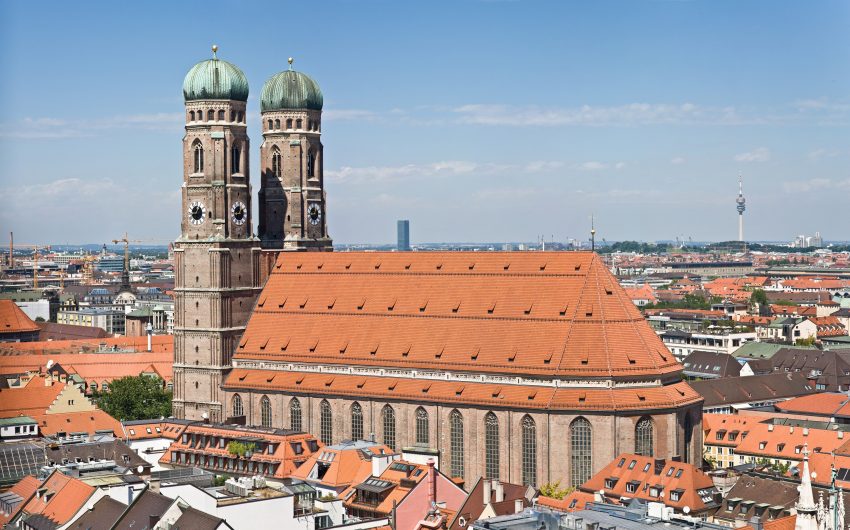
Frauenkirche (Dom zu Unserer Lieben Frau) is Munich’s vast brick-Gothic cathedral, its twin onion-domed towers rising 99 meters above the Altstadt and defining the city’s skyline. Built with unusual speed from 1468 to 1488, the interior feels spare and hushed, much of it reconstructed after World War II bombing. Look for the Devil’s Footstep near the entrance, where a carefully chosen viewpoint creates the eerie illusion of a church without visible windows. In the choir, 1502 sculptures of Apostles and Prophets survived, and the north chapel displays an altarpiece of Christ’s baptism with Jan Polack Passion panels. Tower access adds a sweeping city view, while photography is often discouraged during prayer.
Location: Frauenplatz 1, 80331 München, Germany | Hours: Monday – Sunday: 08:00–20:00. | Price: Free; tower access ticketed separately. | Website | Distance: 0.8km

21. Theatine Church

Theatine Church
Theatine Church
CC BY-SA 3.0 / Fczarnowski
Theatine Church (Theatinerkirche) is a 17th‑century Baroque church and former monastery in central Munich, commissioned in 1662 by Elector Ferdinand and Henriette of Savoy for the Italian Theatine order. Its sun-washed yellow-orange exterior brings a Roman, Mediterranean note to the city, while the dome rises about 70 meters above the skyline. The late Baroque façade advances in sculpted layers, with niches holding figures of the founders, their son Maximilian, and Saint Cajetan, plus a cartouche of coats of arms above the portal. Step inside and the mood flips to a luminous white interior, where intricate stucco, cherubs, and twisted altar columns catch the natural light. Below, the crypt contains tombs of Bavarian rulers, tying the building’s splendor to dynastic memory.
Location: Theatinerstraße 22, 80333 München, Germany | Website | Distance: 0.8km

22. Feldherrnhalle

Feldherrnhalle
Feldherrnhalle
CC BY-SA 3.0 / Michael Lang
Munich’s Feldherrnhalle (Field Marshal’s Hall) is an open-air loggia on Odeonsplatz, built in the 1840s by order of King Ludwig I and modeled on Florence’s Loggia dei Lanzi. Visitors first notice the three-arch façade and the elevated steps guarded by two lion statues from 1906—one facing the Residenz, the other turned toward the nearby church. Inside stand imposing bronze figures of Count Tilly and Count von Wrede, with a later central sculpture added in 1882 to mark Bavaria’s role in the Franco‑Prussian War. The site also carries a heavy 20th‑century association: the Beer Hall Putsch ended here in 1923 after a deadly clash between police and Hitler’s followers.
Location: Residenzstraße 1, 80333 München, Germany | Hours: 24 Hours. | Price: Free. | Website | Distance: 0.8km

23. Hofgarten

Kriegerdenkmal im Hofgarten
CC BY-SA 3.0 / Oliver Kurmis
At the eastern edge of Munich’s Hofgarten, the Hofgarten Kriegerdenkmal is a recessed war memorial that you can easily overlook until you stand at the rim and look down. Set within a rectangular enclosure, it descends into a quiet chamber where an open crypt holds a sculpture of a fallen soldier, creating an unexpectedly intimate, hushed mood in the middle of the city. The monument was inaugurated in 1924 by Crown Prince Rupprecht of Bavaria and commemorates Munich’s war dead, originally centered on World War I. Its restrained stonework and sunken design make the act of stepping closer feel like a deliberate pause, something visitors often describe as poignant and peaceful.
Location: Old Town, 80539 Munich, Germany | Hours: 24 Hours. | Price: Free. | Distance: 0.8km

24. German Hunting and Fishing Museum

German Hunting and Fishing Museum
CC BY-SA 4.0 / Michael Eschbaumer
The German Hunting and Fishing Museum in Munich is housed in a former Augustinian church whose Gothic fabric reaches back to the 13th century, giving the galleries a dramatic, vaulted setting. Reopened as a museum in 1966 after wartime damage and careful restoration, it traces European hunting and fishing through objects rather than abstractions. At the entrance, look for the bronze boar by Martin Mayer (1976) and a catfish by Claus Nageler (1982). Inside are more than 500 taxidermy specimens, from a North American grizzly to a 12,000-year-old Irish giant elk, alongside hunting weapons dating to the 15th century and fishing gear spanning the Stone Age to today. Some visitors note that much of the interpretation is in German.
Location: Neuhauser Str. 2, 80331 München, Germany | Hours: Daily: 09:30–17:00. | Price: Adults: €7; Concessions: €5; Children (3–16): €3.50; Family ticket (2 adults + up to 3 children): €14. | Website | Distance: 0.9km

25. Asamkirche
Asamkirche
Asamkirche
CC BY-SA 3.0 / Futterjäger
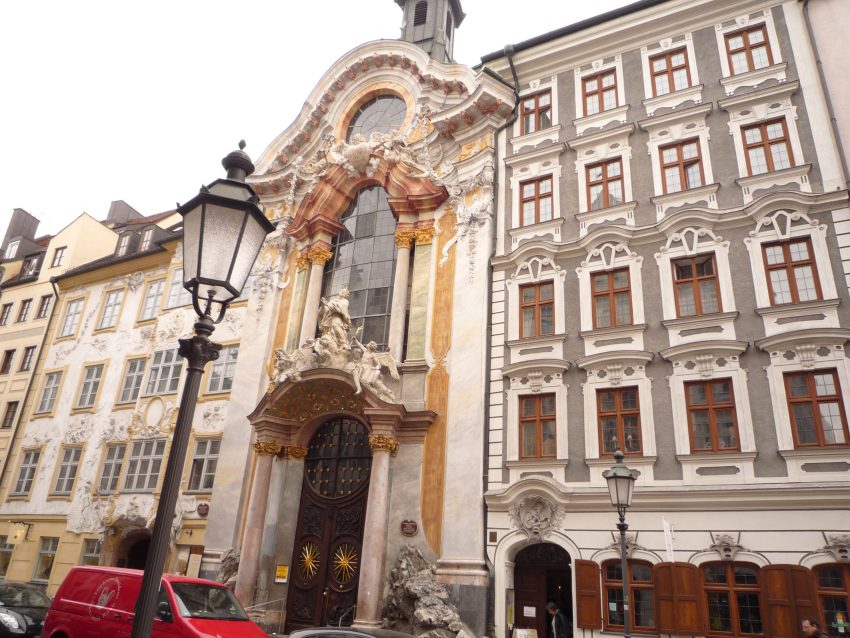
Asamkirche (St. Johann Nepomuk) is a small 18th-century Baroque church on Munich’s Sendlinger Straße, created in the 1730s–1740s by the Asam brothers as a private chapel later opened to the public. Step inside and the tight space erupts into a dense spectacle of frescoes, stucco, marble, and gold leaf, with the ceiling painting pulling your gaze upward. Look for the scene of Nepomuk’s drowning, the high altar’s four corkscrew columns, and a glass shrine containing a wax figure of the saint. Above the cornice, a startling sculpture of God the Father leans over the crucified Christ. Much of the interior’s crispness comes from a 1975–1982 restoration.
Location: Sendlinger Str. 32, 80331 München, Germany | Hours: Monday: 08:00–17:30. Tuesday: 08:00–17:30. Wednesday: 08:00–17:30. Thursday: 08:00–17:30. Friday: 08:00–17:30. Saturday: 12:00–17:30. Sunday: 08:00–17:30. | Price: Free; donations appreciated. | Distance: 0.9km

26. English Garden
English Garden
English Garden
CC BY-SA 4.0 / Rosser1954
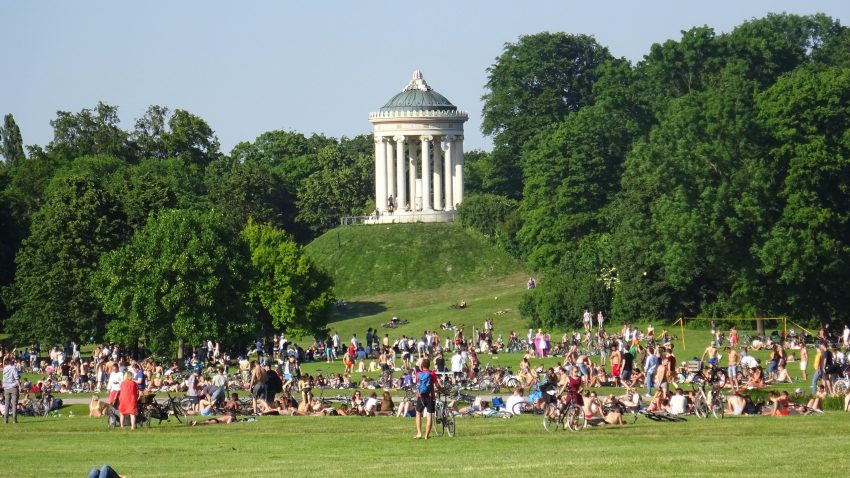
Munich’s English Garden (Englischer Garten) is a vast public park along the Isar River, created in 1792 from former Wittelsbach hunting grounds and designed in a naturalistic English landscape style. Spanning about 900 acres, it feels like a small countryside stitched into the city, with long paths, open meadows, and plenty of riverside spots to wade or swim. Visitors crowd the Eisbach wave to watch (or try) year-round river surfing, then drift toward the Chinese Tower beer garden for draft beer and traditional music in warm months. Look for quieter surprises too, like the Monopteros temple, a Japanese Garden built for the Munich Olympics, and a tucked-away amphitheater toward the north.
Location: Munich, Germany | Hours: 24 Hours. | Price: Free. | Website | Distance: 1km

27. Bavarian National Museum
Bavarian National Museum
CC BY-SA 4.0 / Fentriss
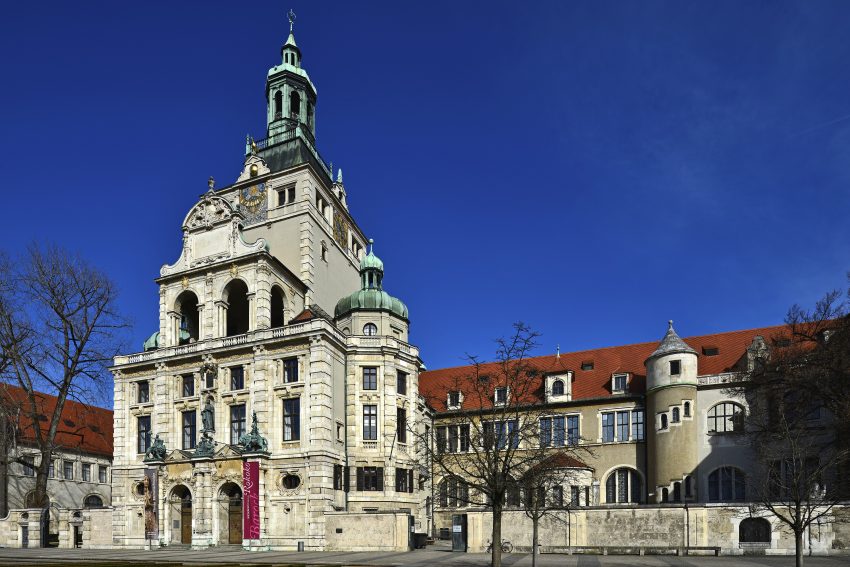
Munich’s Bavarian National Museum (Bayerisches Nationalmuseum) is a major European decorative-arts museum, founded in 1855 by King Maximilian II to preserve Bavaria’s material culture beyond paintings alone. Housed in Gabriel von Seidl’s historicist building (1894–1900) on Prinzregentenstraße, its galleries move from late antiquity through the early 20th century, with especially strong medieval and early modern rooms. Visitors linger over late medieval sculpture (including the Bollert Collection), intricate ivories and goldsmith work, and textiles and stained glass that feel closer to lived interiors than to a white-box display. One memorable specialty is the world-class group of Nymphenburg porcelain figures by Franz Anton Bustelli, alongside folk-art nativity and street-scene carvings. Many travelers note how quiet the rooms can feel even with a vast collection.
Location: Prinzregentenstraße 3, 80538 München, Germany | Hours: Tuesday – Wednesday: 10:00–17:00. Thursday: 10:00–20:00. Friday – Sunday: 10:00–17:00. Closed on Monday. | Price: Adults: €7; Concessions: €6; Under 18: free; Sunday: €1. | Website | Distance: 1.1km

28. Sendlinger Tor

Sendlinger Tor
Sendlinger Tor
CC BY-SA 4.0 / GraphyArchy
Sendlinger Tor is Munich’s oldest surviving medieval city gate, marking the southern edge of the Altstadt and the line of the later city wall commissioned by Ludwig the Bavarian. First built as a single central tower, it gained two hexagonal side towers in 1420, when multiple arches once linked the structure. The central tower was removed in 1808, and the passage was reshaped in 1906 into one main arch for traffic, with extra openings added for pedestrians. Today it sits amid a lively square—often busy with transit and street life—and becomes a small, atmospheric Christmas market in winter.
Location: Sendlinger-Tor-Platz 1, 80336 München, Germany | Hours: Monday: Open 24 hours Tuesday: Open 24 hours Wednesday: Open 24 hours Thursday: Open 24 hours Friday: Open 24 hours Saturday: Open 24 hours Sunday: Open 24 hours | Website | Distance: 1.1km

29. Bürgersaalkirche

Bürgersaalkirche
Bürgersaalkirche
CC BY-SA 2.0 / Pedro J Pacheco
Bürgersaalkirche (the Bürgersaal) is a compact two-level Baroque church on Neuhauser Straße in central Munich, built in 1709–1710 to serve the Jesuit-linked Marian Congregation of Men before becoming a church in 1778. The visit feels like two different spaces: a low-vaulted lower hall with statues set into alcoves and a small chapel, now centered on a shrine and memorial to anti-Nazi priest Rupert Mayer. Upstairs, the mood shifts to a more ornate interior with standout artworks, including Andreas Faistenberger’s Baroque altar relief “Mariae Verkündigung” and Ignaz Günther’s guardian angel sculpture. War damage means only a few original frescoes survive, making the preserved pieces feel especially hard-won.
Location: Kapellenstraße 1, 80333 München, Germany | Hours: Monday – Saturday: 10:00–17:00. Sunday: 14:00–17:00. | Price: Free; donations appreciated. | Website | Distance: 1.1km

30. Karlsplatz

Karlsplatz
Karlsplatz
CC BY-SA 4.0 / DerHexer
Karlsplatz—still widely called Stachus—is a broad, high-traffic square on the western edge of Munich’s Old Town, where the city’s medieval Karlstor marks the start of the pedestrian streets toward Marienplatz. The space opened up in 1791 after Munich’s fortifications were torn down, and it has functioned as a hinge between the historic center and the modern city ever since. Up close, the gate is flanked by Gabriel von Seidl’s 1902 Rondel Buildings, neo-baroque wings with twin towers and shop arcades that frame the constant flow of trams and commuters. In the middle, a large circular fountain added in the 1970s doubles as a meeting point and summer breather. Much of the bustle continues underground, where U- and S-Bahn passages connect to a web of shops.
Location: Karlsplatz, 80 München, Germany | Hours: 24 Hours. | Price: Free. | Website | Distance: 1.3km

31. Justizpalast München

Justizpalast München
CC BY-SA 2.5 / Nino Barbieri
Munich’s Justizpalast (Palace of Justice) is a late-19th-century courthouse designed by Friedrich von Thiersch, built from 1890 to 1897 to project civic authority through a grand Neo-Baroque exterior. Visitors remember the surprisingly palace-like interior, especially the vast glass dome spanning about 67 meters that floods the central halls with light. The building also carries a heavy wartime legacy: in Room 253, the People’s Court staged the 1943 trial of White Rose members Hans and Sophie Scholl and Christoph Probst, with death sentences carried out the same day. Today that courtroom hosts a permanent exhibition and memorial, turning an architectural stop into a stark encounter with how justice can be abused.
Location: Prielmayerstraße 7, 80335 München, Germany | Hours: Monday – Thursday: 08:00–16:00. Friday: 08:00–15:00. Saturday: Closed. Sunday: Closed. | Price: Free. | Website | Distance: 1.4km

32. Munich Museum of Egyptian Art

Munich Museum of Egyptian Art
CC BY-SA 3.0 / High Contrast
Munich’s Museum of Egyptian Art (Staatliches Museum Ägyptischer Kunst) holds the Bavarian State collection of ancient Egyptian works, built up since the 16th century under rulers from Albrecht V to Ludwig I. The collection ranges from statues and sarcophagi to papyri, hieroglyph-carved stone tablets, glass, textiles, and pottery. Visitors often remember specific showstoppers: a double-sided statue of Pharaoh Nyuserre Ini shown as both young and old, royal figures such as Ramses II and Tutmosis II, and jewelry linked to the Nubian Queen Amanishakheto. The museum’s modern, largely subterranean setting is designed to feel like descending into a burial chamber, with calm lighting that rewards slow looking.
Location: Gabelsbergerstraße 35, 80333 München, Germany | Hours: Tuesday: 10:00–20:00. Wednesday – Sunday: 10:00–18:00. Closed on Monday. | Price: Adults: €7; Concessions: €5; Under 18: free; Sundays: €1. | Website | Distance: 1.7km

33. Glyptothek

Glyptothek
Glyptothek
CC BY-SA 3.0 / High Contrast
Munich’s Glyptothek on Königsplatz is a neoclassical museum devoted entirely to ancient Greek and Roman sculpture, created from King Ludwig I’s early-19th-century collecting project. Built between 1816 and 1830 by Leo von Klenze, it was conceived like a Greek temple, with an Ionic portico and exterior niches that once held original antiquities. Inside, the room-by-room layout encourages a slow, clockwise circuit through pieces such as the Munich Kouros, the Aegina temple figures, the Barberini Faun, and Roman portraits of emperors including Augustus and Nero. Wartime bombing destroyed much of the original marble interior and fresco decoration, giving today’s galleries a quieter, pared-back atmosphere that visitors often find calming.
Location: Königsplatz 3, 80333 München, Germany | Hours: Tuesday – Wednesday: 10:00–17:00. Thursday: 10:00–20:00. Friday – Sunday: 10:00–17:00. Closed on Monday. | Price: Adults (Glyptothek + State Collections of Antiquities): €6; Reduced: €4; Sunday (each museum): €1; Under 18: free. | Website | Distance: 1.7km

Best Day Trips from Munich

A day trip from Munich offers the perfect opportunity to escape the urban rhythm and discover the surrounding region's charm. Whether you're drawn to scenic countryside, historic villages, or cultural landmarks, the area around Munich provides a variety of easy-to-reach destinations ideal for a one-day itinerary. If you are looking to rent a car in Germany I recommend having a look at Discover Cars, first, as they compare prices and review multiple car rental agencies for you.

1. Schlosspark Nymphenburg

Schlosspark Nymphenburg
CC BY-SA 4.0 / Burkhard Mücke
Schlosspark Nymphenburg is the expansive palace park surrounding Nymphenburg Palace in Munich, Germany, famous for its long canal views, formal garden geometry near the palace, and a more natural, English-style landscape as you wander deeper into the grounds. It’s one of those places that feels both grand and calming: wide avenues for strolling, quiet lakes with swans, and little architectural…
Location: Neuhausen-Nymphenburg, 80638 München, Germany | Hours: Monday – Sunday: 06:00–18:00 (January – March, November – December). Monday – Sunday: 06:00–20:00 (April & October). Monday – Sunday: 06:00–21:30 (May – September). | Price: Free. | Website | Distance: 6.3km
Visiting Schlosspark Nymphenburg

2. Botanical Garden Munich-Nymphenburg

Botanical Garden Munich-Nymphenburg
CC BY-SA 2.0 / Usien
Botanical Garden Munich-Nymphenburg is Munich’s main botanical garden, set beside the Nymphenburg Palace park on the city’s northwest side. It’s a calm, beautifully curated place to swap busy streets for glasshouses, themed plant collections, and wide lawns that feel surprisingly spacious for a big city.Even if you’re only in Munich for a short stay, it fits easily into a walking…
Location: Menzinger Str. 65, 80638 München, Germany | Hours: (Winter) October 26, 2025 – March 28, 2026; Daily: Freiland 09:00–16:30; Gewächshäuser 09:00–16:00. (Summer) March 29, 2026 – October 24, 2026; Daily: Freiland 09:00–18:00; Gewächshäuser 09:00–17:30. | Price: Tageskarte: Adults €5.50; Concessions €4.00; Under 18: free. During special exhibitions: Adults €6.50; Concessions €4.50. | Website | Distance: 6.8km
Visiting Botanical Garden Munich-Nymphenburg

3. Augsburg

Augsburg
Augsburg
CC BY-SA 3.0 / Guido Radig
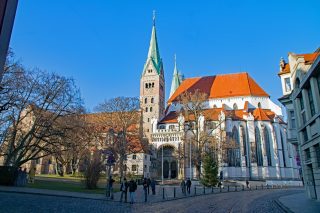
Augsburg, nestled in the Swabian region of Bavaria in southern Germany, offers a delightful blend of urban charm and green retreats. Begin your visit at the bustling Rathausplatz, where the Renaissance Town Hall and Perlachturm tower over lively cafés and street musicians. Just a short stroll away, the historic Fuggerei—world’s oldest social housing complex—invites you to wander its peaceful courtyards…
Visiting Augsburg

4. Füssen

Fussen
Fussen
CC BY-SA 3.0 / Wolkenkratzer
Füssen, nestled in the heart of Bavaria’s Allgäu region near the Austrian border, greets visitors with a picture-perfect Old Town framed by pastel-colored buildings and cobblestone lanes. Its compact pedestrian zone leads naturally from the baroque St. Mang’s Abbey to the Lech River, where shaded benches invite you to linger over a gelato or a stein of local beer. Quaint…
Visiting Füssen
Powered by GetYourGuide

5. Innsbruck

The Complete Guide to Innsbruck
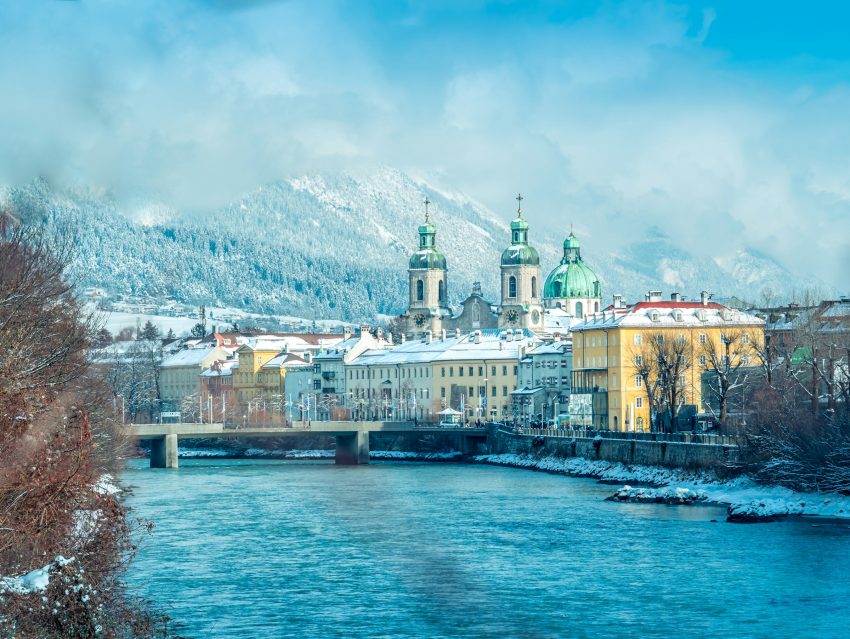
Innsbruck is a compact, mountain-framed city that makes it easy to combine culture, cafés, and alpine scenery in a single day. Set in the Inn Valley in the heart of Tyrol, it’s the kind of place where you can stroll a historic old town in the morning, ride a cable car into high alpine views after lunch, and still be…
Visiting Innsbruck
Powered by GetYourGuide

6. Nördlingen

Nordlingen
Nordlingen
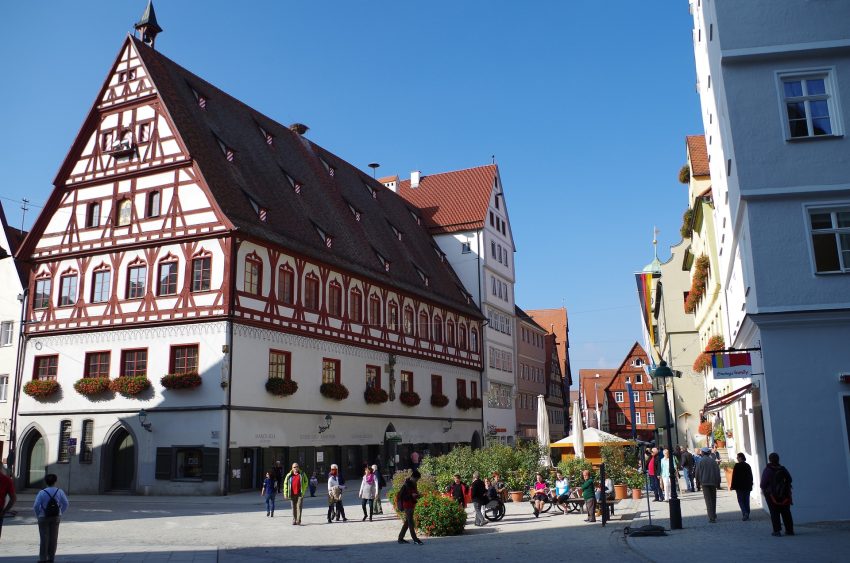
Nördlingen is a historic town in the region of Swabia, located in Bavaria, Germany. It is situated in a large meteorite crater, and the town's unique location has made it a popular tourist destination. One of the town's most notable attractions is its well-preserved medieval walls, which encircle the town and offer stunning views of the surrounding countryside. Visitors can…
Visiting Nördlingen
Powered by GetYourGuide

7. Salzburg

The Complete Guide to Salzburg
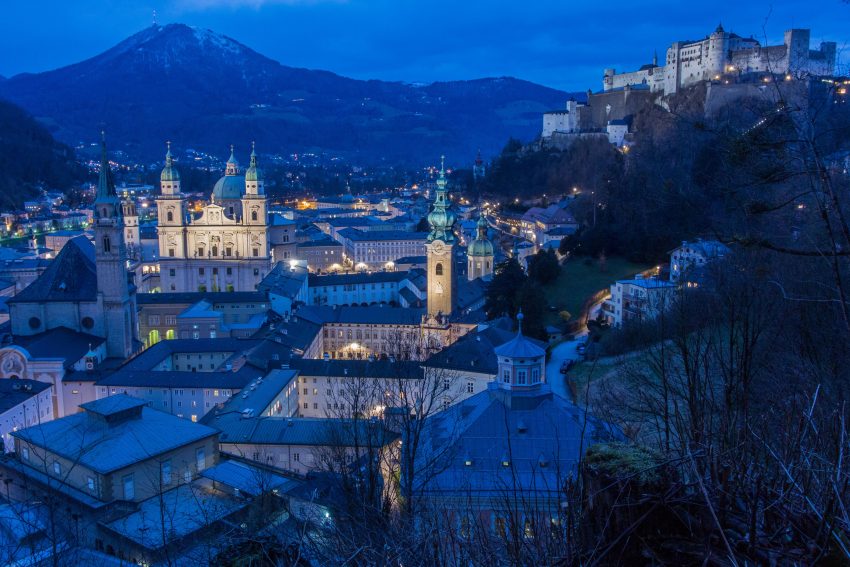
Salzburg is a compact, walkable city that feels tailor-made for a long weekend: a riverfront Old Town of baroque streets and church domes, a fortress perched above the rooftops, and café culture that rewards slow afternoons. Set in Salzburg Land, it’s easy to pair city sightseeing with quick escapes to lakes, alpine viewpoints, and storybook villages—often within the same day.…
Visiting Salzburg
Powered by GetYourGuide

8. Berchtesgaden

The Complete Guide to Berchtesgaden
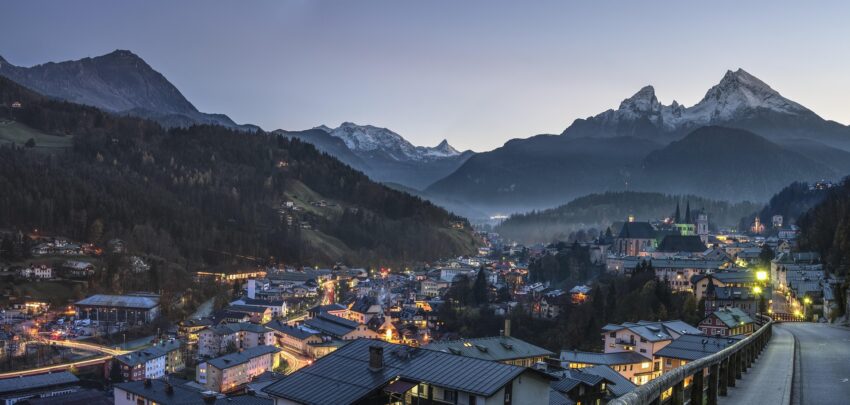
Berchtesgaden is a mountain town in southeastern Germany, set in the Bavarian Alps near the Austrian border. It makes an ideal base for exploring Berchtesgaden National Park, with dramatic limestone peaks, clear lakes, and well-marked trails that start close to town. The center is compact and easy to navigate, with cafés, bakeries, and practical services that make day trips simple.…
Visiting Berchtesgaden

9. Zell am See
The Complete Guide to Zell am See
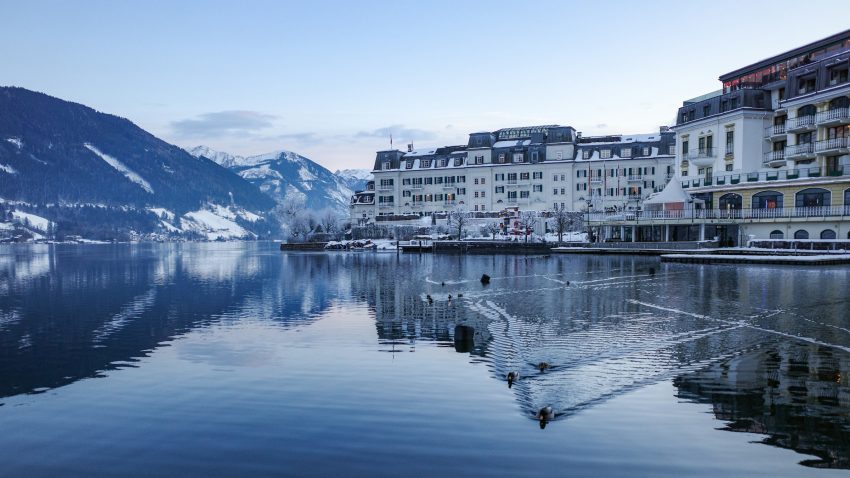
Zell am See is a classic Alpine lakeside town in the Pinzgau area of Salzburg Land, where a walkable old centre meets a broad waterfront promenade and mountain views in every direction. It’s the kind of place that works equally well for a relaxed weekend—coffee by the lake, a gentle cruise, a sunset stroll—or as a base for bigger mountain…
Visiting Zell am See
Powered by GetYourGuide

10. Dinkelsbühl

Dinkelsbuhl
Dinkelsbuhl
CC BY-SA 3.0 / Mylius
Dinkelsbühl, nestled in the heart of Bavaria’s Franconian region along the famed Romantic Road, greets visitors with its perfectly preserved medieval walls and colorful half-timbered houses. Begin your day wandering the pedestrianized streets of the Old Town, where artisan shops, bakeries, and cozy cafés line the cobbles. Stop for a freshly baked Brötchen and a strong German coffee at a…
Visiting Dinkelsbühl
Powered by GetYourGuide

11. Bregenz

The Complete Guide to Bregenz
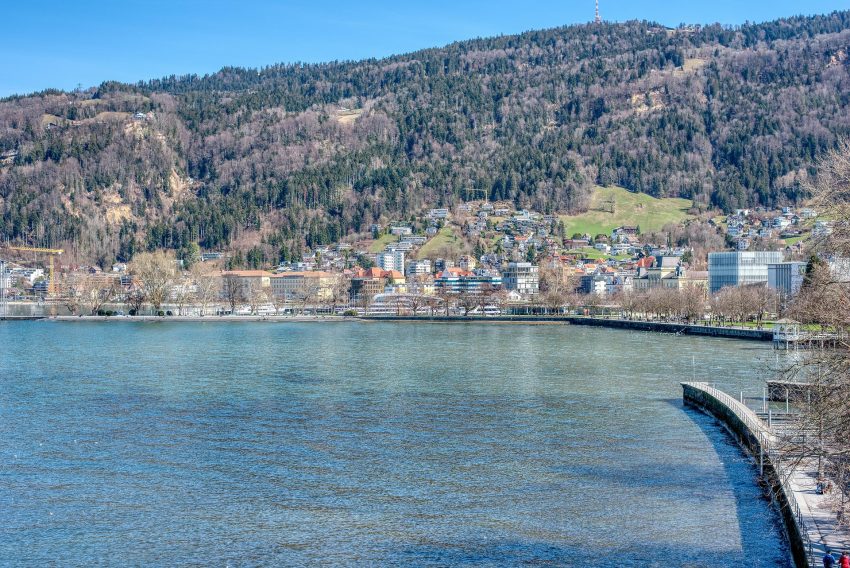
Bregenz is a lakeside city in Austria’s Vorarlberg region, set on the eastern shore of Lake Constance with the Alps rising close behind. It’s compact and easy to explore on foot, yet it feels expansive thanks to the water views, promenades, and the way the mountains frame nearly every street scene. The city’s mix of waterfront leisure, culture, and quick…
Visiting Bregenz
Powered by GetYourGuide

Where to Stay in Munich

If your priority is a culture-heavy itinerary with the easiest access to the classic sights, base yourself in Altstadt-Lehel (the historic centre). It is the most walkable area for first-time visitors: you can start early at the main squares, museums, and churches, then drift into the evening scene without relying on transport. For a high-end, central base with a “special trip” feel, Mandarin Oriental, Munich puts you right in the Old Town, while Platzl Hotel is a classic choice for Bavarian character, comfort, and a strong location near the core landmarks. If you want a reliable, traditional hotel that is still firmly central and convenient for walking routes, Hotel Torbräu is a solid pick near the Old Town edge, and Hotel Bayerischer Hof is a landmark option if you want top-tier service with a prime central address.

If you want maximum transport convenience for day trips and airport transfers, stay around München Hauptbahnhof (the main station) or the adjacent central districts—less “storybook” than the Old Town, but extremely efficient for getting in and out. Sofitel Munich Bayerpost is ideal if you value a polished, upscale stay with immediate station access, while KING's Hotel First Class is a strong choice if you want a comfortable, well-connected base that still feels close to the centre. For a slightly more neighbourhood feel without losing convenience, Haidhausen is excellent—quieter, café-friendly, and well linked by S-Bahn and U-Bahn—making Motel One München-Haidhausen a good value-forward option if you prefer a simple, stylish base and don’t need to be directly in the historic core.

Using the our Hotel and Accomodation map, you can compare hotels and short-term rental accommodations in Munich. Simply insert your travel dates and group size, and you’ll see the best deals for your stay.

Munich Accommodation Map

Best Time to Visit Munich

Germany: Spring in Munich (March–May)

Spring is a strong shoulder-season choice: the city feels lively again after winter, parks and beer gardens reopen, and accommodation is often easier to book than in high summer. March is particularly fun if you want a Bavarian beer-culture highlight without Oktoberfest crowds—Munich’s strong-beer season (Starkbierzeit) typically runs through March, with major events such as the Paulaner Nockherberg strong-beer festival scheduled for 6–29 March 2026. Late April to May is ideal for long walking days, café terraces, and day trips as the weather becomes reliably mild.

Germany: Summer in Munich (June–August)

Summer is when Munich’s outdoor life is at its peak: the English Garden, river and lake day trips, and beer gardens all become part of the daily rhythm, and evenings stay comfortably long. The trade-off is higher prices and heavier crowds, especially around school holidays, so it suits travelers who want atmosphere and don’t mind sharing the city. For festivals, Munich’s Tollwood Summer Festival is a recurring highlight, with the 2026 summer edition scheduled for 19 June to 19 July, and the city’s broader events calendar is typically dense at this time, especially for music and open-air programming.

Germany: Autumn in Munich (September–October) (Best)

Autumn is the best all-around season if you want Munich at its most iconic and most comfortable for sightseeing: the weather is often crisp but pleasant, the city is energetic, and walking is easy without summer heat. It’s also festival prime time—Oktoberfest 2026 is scheduled for 19 September to 4 October—so this is the season to plan early if you want central hotels or a specific travel style (quiet vs. social). If you prefer the city without peak Oktoberfest pressure, come in mid-to-late October for a calmer feel, attractive light, and a more local pace while still enjoying excellent conditions for parks, museums, and day trips.

Germany: Winter in Munich (November–February)

Winter works best if you’re visiting for seasonal atmosphere rather than maximum daylight. The city’s Christmas-market period is a major draw, with the Munich Christmas Market at Marienplatz scheduled for 20 November to 24 December 2026, and the broader Advent season brings lights, concerts, and a distinctly cosy routine of warm drinks and indoor culture. January and February are quieter and often better value, making them good for museums, food, and short, focused sightseeing days—just plan for shorter daylight hours and build in warm-up breaks between stops.

Annual Weather Overview

  • January 5°C
  • February 8°C
  • March 11°C
  • April 17°C
  • May 19°C
  • June 23°C
  • July 24°C
  • August 25°C
  • September 21°C
  • October 16°C
  • November 9°C
  • December 6°C

How to get to Munich

Getting to Munich by air

Nearest airports: Munich Airport (MUC) is the primary airport for Munich and is the simplest choice for most itineraries. If fares or flight times are better, Memmingen Airport (FMM) is sometimes used by low-cost carriers, and Salzburg Airport (SZG) can also work for certain routes, but MUC is typically the most efficient.

Airport to city centre: The S-Bahn lines S1 and S8 connect MUC with central Munich (including München Hauptbahnhof and other central stations) and are the default option for most travelers. Lufthansa Express Bus also runs between the airport and central Munich if you prefer a direct road transfer without changes. Taxis and rideshares are available but are usually the priciest choice.

Tickets and practical notes: For most visitors, an MVV ticket (airport-to-city zone coverage) is the easiest approach; if you are arriving in a group, look at group day tickets for better value. If you’ll be traveling onward by rail the same day, compare the cost of separate local tickets versus a through-ticket that includes local transit where applicable.

For the best deals and a seamless booking experience, check out these flights to Munich on Booking.com.

Getting to Munich by train

Main stations: München Hauptbahnhof (Munich Central Station) is the principal hub for long-distance arrivals, with additional useful stations including München Ost and München-Pasing depending on where you’re staying. For first-time visitors, arriving into Hauptbahnhof is the simplest for transfers and hotel access.

Domestic and international routes: Munich is well served by high-speed and long-distance services from major German cities, plus key international routes from Austria, Switzerland, Italy, and the Czech Republic. Seat reservations are optional on many German services but can be worthwhile at peak times or on long intercity runs.

Train schedules and bookings can be found on Omio.

Getting to Munich by Car

Approach routes: Munich is linked by major Autobahn corridors, including the A8 (toward Stuttgart and Salzburg), A9 (toward Nuremberg/Berlin), and A95 (toward Garmisch-Partenkirchen). Driving is most useful if Munich is one stop on a wider Bavaria or Alps itinerary rather than a standalone city break.

Parking strategy: Central Munich is not ideal for casual driving: traffic can be slow, parking is limited and expensive, and many areas are best navigated on foot or by public transport. The simplest approach is to use a hotel with parking, book a garage in advance, or use Park-and-Ride facilities on the outskirts and continue into the centre by U-Bahn or S-Bahn. If you are looking to rent a car in Germany I recommend having a look at Discover Cars, first, as they compare prices and review multiple car rental agencies for you.

Travelling around Munich

Public transport system: Munich’s U-Bahn (subway), S-Bahn (urban rail), trams, and buses are run under the MVV network and cover virtually all visitor areas efficiently. For most itineraries, you can rely on public transport plus walking; the system is legible, frequent, and safe, and it’s well suited to splitting your day between central sights and neighbourhood detours.

Tickets and passes: Day tickets and group day tickets are often the best value for visitors doing multiple rides, while short-stay visitors who mostly walk may only need single tickets. If you plan multiple day trips by regional train, compare standard tickets with regional day passes and any available deals tied to your routes.

Powered by GetYourGuide

More from this area