Monument to Fallen Partisans, Bologna
Monument in Bologna

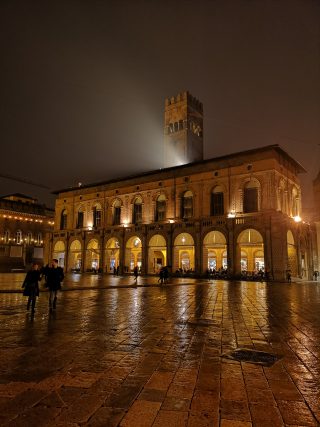
The Monument to the Fallen Partisans is one of the most affecting memorials in Bologna, yet it is easy to miss if you are focused only on the grand architecture of Piazza Maggiore. Set against the wall of Palazzo d'Accursio near the Fountain of Neptune, it does not rely on scale or elaborate sculpture to make its impact. Instead, it draws you in through silence, memory, and the unmistakably human presence of the faces displayed there. For travellers exploring the city on foot, it is one of the most powerful places to pause and reflect on Bologna's wartime past.
What makes the memorial so striking is its directness. Rather than presenting history at a distance, it confronts visitors with portraits of the men and women who died in the anti-fascist resistance during World War II. Protected behind glass and carefully preserved, these photographs turn the wall into a place of remembrance that feels deeply personal. In the middle of one of Bologna’s busiest and most beautiful squares, it offers a sobering reminder that the freedoms enjoyed today were won through sacrifice.
Table of Contents
- History and Significance of the Monument to the Fallen Partisans
- Things to See and Do at the Monument to the Fallen Partisans
- How to Get There
- Practical Tips on Visiting the Monument to the Fallen Partisans
- Is the Monument to the Fallen Partisans Worth Visiting?
- FAQs for Visiting the Monument to the Fallen Partisans
History and Significance of the Monument to the Fallen Partisans
The memorial began in the aftermath of Bologna's liberation in April 1945, when relatives, friends, and fellow citizens started attaching photographs, flowers, and messages to the wall of Palazzo d'Accursio. Many of the partisans being honoured had been executed during the occupation, and the site quickly became a place where private grief and public remembrance came together in full view of the city.
As time passed, the spontaneous shrine developed into a permanent memorial containing more than two thousand portraits. Each photograph preserves an individual identity within the larger story of resistance, transforming the monument into something far more intimate than a traditional war memorial. Rather than focusing on military triumph, it emphasizes loss, courage, and the human cost of opposing fascism.
The monument also speaks to Bologna's wider historical identity. The city is strongly associated with resistance during the war and with the civic memory of those who fought against Nazi occupation and fascist rule. In that sense, this wall is not just a memorial to the dead, but also a public expression of the values that shaped postwar Bologna.
Things to See and Do at the Monument to the Fallen Partisans
The main experience here is simply to stop and look closely. From a distance, the memorial can appear understated, but as you approach, the rows of faces become increasingly moving. Each portrait represents a life interrupted, and together they create one of the most emotionally powerful sights in the historic centre.
It is also worth paying attention to the contrast between the memorial and its surroundings. Piazza Maggiore is full of movement, conversation, and visitors, yet this wall remains solemn and contemplative. That contrast gives the monument much of its force, placing memory and mourning directly within the everyday life of the city rather than isolating them in a museum or cemetery.
Visitors interested in photography may notice how the glass sometimes reflects the square itself, visually linking the living city with those being remembered. Small offerings, flowers, and signs of ongoing care can also add to the sense that this is not just a historic marker, but a living memorial that still matters deeply in Bologna today.
How to Get There
- The Monument to the Fallen Partisans is located on Palazzo d'Accursio in Piazza Maggiore, right in the historic heart of Bologna, so it is easy to reach on foot once you are in the centre.
- For those arriving by train, Bologna Centrale is the nearest major railway station and is about a 15-20 minute walk away, or a short local bus ride to the city centre. Use Omnio to easily compare schedules, book train tickets, and find the best prices all in one place for a hassle-free journey across Italy.
- If travelling by car, it is best to use a central car park such as Parcheggio VIII Agosto or Tanari Parking, both within walking distance of the square. If you are looking to rent a car in Italy I recommend having a look at Discover Cars, first, as they compare prices and review multiple car rental agencies for you.
Practical Tips on Visiting the Monument to the Fallen Partisans
- Entrance fee: Free, public access at all times.
- Opening hours: Always accessible.
- Best time to visit: Early morning or later in the evening is best if you want a quieter atmosphere and more space to reflect.
- How long to spend: Around 10-20 minutes is usually enough, though some visitors may wish to stay longer.
- Accessibility: The monument is at street level in Piazza Maggiore and is generally easy to view for visitors with limited mobility.
- Facilities: Cafés, restrooms, seating areas, and other visitor services are available nearby in the city centre.
Is the Monument to the Fallen Partisans Worth Visiting?
Yes, absolutely. It is one of the most meaningful places to visit in Bologna, not because it is grand or decorative, but because it communicates history with unusual immediacy and dignity.
The honest pivot is that travellers looking only for ornate interiors, panoramic viewpoints, or major ticketed attractions may spend only a few minutes here. But for anyone interested in Bologna’s identity, World War II history, or memorials that feel genuinely human rather than ceremonial, it is one of the city’s most memorable stops.
What Other Travellers Say...
Biblioteca Salaborsa sits in the heart of Bologna at Piazza del Nettuno 3, housed in an elegant, airy historic building with a notable ornate glass ceiling; visitors praise its striking interior and exterior architecture and often linger to relax or escape the heat. The city library offers a free archaeological display beneath the floor where Roman and early medieval remains can be viewed from walkways, making it especially appealing to history enthusiasts, and there's a welcoming children's section with Italian and some English titles. Practical amenities and a central location beside Piazza Maggiore and the Fountain of Neptune make it an easy stop for families and visitors; opening hours run later in the week and it is closed Sundays.


FAQs for Visiting the Monument to the Fallen Partisans
Getting There
Visiting Experience
Photography
Accessibility & Facilities
The Monument to Fallen Partisans appears in our Complete Guide to Visiting Bologna!

Moira & Andy
Hey! We're Moira & Andy. From hiking the Camino to trips around Europe in Bert our campervan — we've been traveling together since retirement in 2020!
This website uses affiliate links which may earn a commission at no additional cost to you!
Planning Your Visit
Always accessible.
Free, public access at all times.
Nearby Attractions
- Biblioteca Salaborsa (0) km
Historic Site and Library - Piazza Nettuno (0) km
Statue - Fontana Vecchia (0.1) km
Fountain - Palazzo Re Enzo (0.1) km
Palace - Palazzo d'Accursio (0.1) km
Palace - Palazzo del Podesta (0.1) km
Palace - Piazza Maggiore (0.1) km
Square - San Pietro Cathedral (0.1) km
Cathedral - Palazzo dei Banchi (0.2) km
Palace - Basilica of San Petronio (0.2) km
Basilica