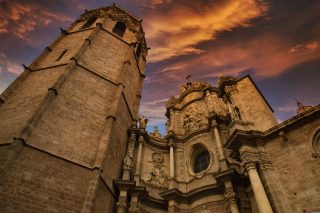
El Alcazar, Toledo
Castle in Toledo

El Alcazar crowns Toledo's highest hill above the Tagus River, a massive fortress-palace whose silhouette is defined by a rectangular plan and four corner towers. Over centuries it has shifted roles repeatedly-fortification, royal residence, and military stronghold-and today it functions primarily as a public cultural site, housing Spain's Army Museum and the Castilla-La Mancha Regional Library.
What stands out most is the sense of accumulated history: Roman and later rulers used this strategic high point, Renaissance architects reshaped it into a severe, symmetrical palace, and the Spanish Civil War left damage that was later rebuilt with visible reminders of the siege. It’s a strong fit if you like military history, architecture, or viewpoints, and it also works as a practical stop on foot while exploring the upper old town.
History and Significance of the El Alcazar
From Roman stronghold to medieval power centre
The site was fortified in the Roman period, taking advantage of the commanding hilltop position over the river and approaches to the city. Later, it served successive rulers, including Visigothic and Muslim authorities, reflecting Toledo’s changing political and cultural eras.
After the Christian reconquest of Toledo in 1085, the structure was rebuilt and folded into the renewed Christian city. Even the name “Alcázar” traces to Arabic origins, a linguistic reminder of the city's centuries under Al-Andalus.
Renaissance rebuilding under Charles V and Philip II
In the 16th century, major renovations transformed the complex into a palace suited to imperial Spain. Architects associated with Renaissance classicism and austere symmetry reshaped it into the large, rectangular building with four corner towers that still defines its exterior presence.
The 1936 siege and the building as a modern symbol
During the Spanish Civil War, the Alcázar was besieged for more than two months in 1936, leaving it heavily damaged. The story of the siege-especially the episode involving Colonel José Moscardó Ituarte and his son Luis-became central to how the site was remembered in the decades that followed.
After the war, the Alcázar was rebuilt, with some scars left visible as reminders of the destruction. Today, its meaning is inseparable from both its earlier royal and military roles and its 20th-century legacy.
Things to See and Do in the El Alcazar
I'd make the Army Museum the main focus of a visit: it's the clearest way to understand why the building looks and feels the way it does today. Moving through the halls and galleries, you're walking a place that has repeatedly been adapted to power and conflict, and the scale of the interior matches the fortress-like exterior.
For a quieter counterpoint, I like stepping into the library areas (where accessible) and then seeking out viewpoints from the upper levels or ramparts for a wide look over Toledo’s dense stone streets and the Tagus below. If you enjoy architecture, pause in the courtyards and along the main stairways to notice the restrained, symmetrical Renaissance character that contrasts with more decorative styles elsewhere in the city.
How to Get to the El Alcazar
The nearest major international airport is Madrid-Barajas (Madrid), with additional options via other Spanish hubs depending on your route. For the best deals and a seamless booking experience, check out these flights to Toledo on Booking.com.
Toledo is straightforward by train from Madrid, and from Toledo station you can continue into the historic centre on foot via an uphill route or by local transport. Train schedules and bookings can be found on Omio.
If you're driving, aim for city parking and be ready to finish on foot up to the upper town, as streets near the Alcázar can be limited for through-traffic. If you are looking to rent a car in Spain I recommend having a look at Discover Cars, first, as they compare prices and review multiple car rental agencies for you.
Is the El Alcazar Worth Visiting?
Yes-especially if you're interested in Spain's military past, Renaissance architecture, or places where modern history is still visible in the fabric of a building. It's less essential if you're short on time and mainly want Toledo's cathedral, synagogues, and street-level atmosphere; in that case, treating the Alcázar as an exterior viewpoint stop (and moving on) can be a better use of your day. Skip the interior if military collections aren't your thing, but consider at least seeing the building from outside for its commanding position over the city.
What Other Travellers Say...
Alcázar de Toledo, an imposing 16th-century fortified royal palace on a hill above the old town, now houses a military museum with a wide range of exhibits including archaeological finds and original artifacts; visitors praise its majestic Renaissance and military architecture, recommend spending 3–4 hours and taking the inexpensive audio guide, and note great city views from the top and from the cafeteria/library, while some have found entry confusing.





Practical Tips on Visiting the El Alcazar
- Best time to visit: Go earlier in the day for clearer light over the city and a calmer feel in the museum spaces; aim for milder seasons if you’re walking up through the old town.
- How long to spend: Plan around 1-2 hours for a focused visit; allow longer if you like reading museum displays in depth.
- Accessibility: The complex includes modern public functions (museum and library) and is generally set up for visitors, but expect some distances and changes in level within a large historic building.
- Facilities: As a museum and library site, it’s geared to visitors with indoor spaces and basic amenities available during opening times.
Where to Stay Close to the El Alcazar
For a culture-heavy Toledo itinerary, base yourself inside or right beside the historic centre so you can walk to the Alcázar early and return easily after dark. Staying near the upper old town also reduces reliance on taxis or parking, which can be a hassle around the steep, narrow streets.
A classic, central option is Parador de Toledo, which suits travelers who value views and a quieter hilltop setting while still being close to the old town. For a stay right in the historic fabric, Hotel Sercotel Alfonso VI works well if you want walkable access to the city’s main lanes and viewpoints. If you prefer a polished, full-service base within the old town, Eugenia de Montijo, Autograph Collection is a good fit for travelers prioritizing comfort and a central location.
FAQs for Visiting the El Alcazar
Getting There
Tickets & Entry
Visiting Experience
Tours, Context & Itineraries
Photography
Accessibility & Facilities
Food & Breaks Nearby
Safety & Timing
The El Alcazar appears in our Complete Guide to Visiting Toledo!

Moira & Andy
Hey! We're Moira & Andy. From hiking the Camino to trips around Europe in Bert our campervan — we've been traveling together since retirement in 2020!
This website uses affiliate links which may earn a commission at no additional cost to you!
Planning Your Visit
10am-5pm Tue-Sun
adult/child €5/free, Sun free
Nearby Attractions
- Plaza de Zocodover (0.2) km
Square - Museo De Santa Cruz (0.2) km
Museum - Catedral de Toledo (0.3) km
Cathedral - Cave of Hercules (0.3) km
Historic Site - Puente de Alcántara (Toledo) (0.4) km
Bridge - Termas Romanas (0.4) km
Baths - Mezquita del Cristo de la Luz (0.4) km
Mosque - Puerta del Sol (Toledo) (0.5) km
City Gate - Iglesia de El Salvador, Toledo (0.6) km
Church - Puerta de Bisagra (0.6) km
City Gate