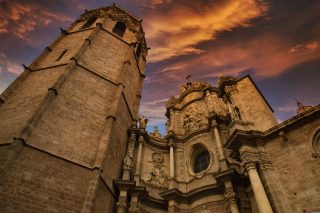
Puente de San Martín (Toledo)
Bridge in Toledo

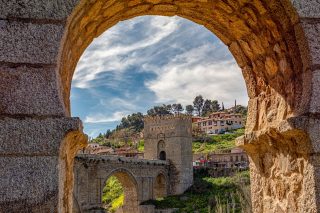
Puente de San Martín (Toledo) is a medieval stone bridge spanning the Tagus River on the western side of Toledo, Spain. Built in the late 14th century under Archbishop Pedro Tenorio, it was created to improve access into the old town from the west, complementing the older Puente de Alcántara on the eastern approach. Today, it remains a straightforward, scenic crossing that also works as a viewpoint over the river gorge and Toledo's skyline.
What stands out most is the bridge’s scale and defensive character: five arches (with a notably large central span) and fortified towers at both ends, including a later tower dating to the 16th century. It’s a great stop if you like medieval engineering, city panoramas, or relaxed walks away from the busiest streets. I’d especially recommend it to photographers and anyone who enjoys seeing a city from its natural setting along the river.
Table of Contents
- History and Significance of the Puente de San Martín
- Things to See and Do in the Puente de San Martín
- How to Get to the Puente de San Martín
- Is the Puente de San Martín
- Practical Tips on Visiting the Puente de San Martín
- Where to Stay Close to the Puente de San Martín
- FAQs for Visiting the Puente de San Martín
History and Significance of the Puente de San Martín (Toledo)
Late 14th century: a new western approach
The bridge was constructed in the late 14th century to strengthen Toledo's access from the west. It is associated with Archbishop Pedro Tenorio, who promoted the project as a practical counterpart to the Puente de Alcántara, which served the city's eastern side.
Its design uses five arches, with the largest arch placed centrally. The central span is described as reaching about 40 metres, a size that was an impressive engineering achievement for its time.
Fortification and later additions
Puente de San Martín was built with defence in mind, with towers guarding the bridge on both sides. One of the towers is later, dating from the 16th century, reinforcing the sense that this was not just infrastructure but part of the city's protected approaches.
The legend of the architect’s miscalculation
A well-known local legend says the bridge’s architect realised a dangerous miscalculation that could have led to collapse once the supports were removed. The story claims his wife set fire to the structure the night before the inauguration, forcing a rebuild and allowing the bridge to be completed safely. Whether taken as folklore or moral tale, it adds a human layer to an otherwise technical monument.
Things to See and Do in the Puente de San Martín (Toledo)
The main experience is simply walking across. I like to pause mid-bridge and look both ways: one direction frames the Tagus flowing through the gorge, and the other gives you a strong view back toward Toledo’s walls and clustered historic buildings.
As you approach each end, pay attention to the fortified towers-these change the feel from “scenic viewpoint” to “city gateway.” If you have time, I’d also wander a little along the riverbank area nearby for alternate angles of the arches and a quieter perspective away from foot traffic.
How to Get to the Puente de San Martín (Toledo)
The nearest major airport is Madrid-Barajas (Madrid), with additional options in the wider region depending on your route through Spain. For the best deals and a seamless booking experience, check out these flights to Toledo on Booking.com.
Toledo is well connected by train, and from the city you can continue on foot or by local transport toward the historic centre and the river crossings. Train schedules and bookings can be found on Omio.
If you’re arriving by car, aim for parking areas around the edge of the historic centre and approach the bridge on foot rather than trying to drive into the oldest streets. If you are looking to rent a car in Spain I recommend having a look at Discover Cars, first, as they compare prices and review multiple car rental agencies for you.
Is the Puente de San Martín (Toledo) Worth Visiting?
Yes-it’s worth a short stop, especially if you want a scenic walk and a clear sense of Toledo’s medieval defences and river setting. It’s best for travelers who enjoy viewpoints, architecture, and photography, since the experience is largely outdoors and self-guided. It’s less essential if your time is extremely limited and you’re prioritising interiors (museums, churches, or specific monuments), in which case you can treat it as optional and focus on the core sights in the centre.
What Other Travellers Say...
San Martín's Bridge is a scenic medieval pedestrian stone bridge over the Tagus River offering sweeping panoramic views of Toledo’s city walls, hills and riverbanks; visitors praise it as a less crowded, peaceful spot for photos and walks, especially at sunset, and note you can descend to the riverbank to enjoy nature below, watch activities like zip-lining, or use the bridge as a gateway for running routes and exploring the old town’s steep ramps, narrow streets and stonework.





Practical Tips on Visiting the Puente de San Martín (Toledo)
- Best time to visit: Go early or later in the day for softer light and a calmer walk, especially if you want photos of the river and skyline.
- How long to spend: Plan around 20-45 minutes for a relaxed crossing with stops for views and pictures.
- Accessibility: The bridge is walkable, but approaches can involve slopes and uneven historic paving; allow extra time if you have limited mobility.
- Facilities: There are no dedicated on-bridge visitor facilities; bring water and plan restrooms around the historic centre.
Where to Stay Close to the Puente de San Martín (Toledo)
For a culture-heavy itinerary, base yourself inside or right beside Toledo's historic centre so you can walk to the main monuments and reach the bridge easily at different times of day. If you want the simplest access on foot to Puente de San Martín and the western side of the old town, consider Hotel San Juan de los Reyes, which suits travelers prioritising walkability and quick access to riverside viewpoints.
If you prefer a classic, central stay near major sights and evening atmosphere, Eugenia de Montijo, Autograph Collection is a good fit for a more upscale base within the historic core. For a reliable, comfortable option near the centre with straightforward access to the old town on foot, Hotel Sercotel Alfonso VI works well for short stays and early starts.
FAQs for Visiting the Puente de San Martín (Toledo)
Getting There
Tickets & Entry
Visiting Experience
Tours, Context & Itineraries
Photography
Accessibility & Facilities
Food & Breaks Nearby
Safety & Timing
The Puente de San Martín (Toledo) appears in our Complete Guide to Visiting Toledo!

Moira & Andy
Hey! We're Moira & Andy. From hiking the Camino to trips around Europe in Bert our campervan — we've been traveling together since retirement in 2020!
This website uses affiliate links which may earn a commission at no additional cost to you!
Nearby Attractions
- Monasterio San Juan de Los Reyes (0.2) km
Monastery - Synagogue of Santa Maria la Blanca (0.3) km
Church, Historic Building and Synagogue - Puerta Del Cambrón (0.3) km
City Gate - Baños del Ángel (0.4) km
Baths - Casa del Judío, Toledo (0.4) km
Historic Building - Synagogue of El Transito (0.4) km
Museum and Synagogue - Museo del Greco (0.5) km
Gallery and Museum - Iglesia de Santo Tomé (0.5) km
Church - Convento de Santo Domingo El Antiguo (0.6) km
Monastery and Museum - Iglesia de El Salvador, Toledo (0.6) km
Church