Self-Guided Walking Tour of Alsfeld, Germany (2026)

Alsfeld Walking Tour
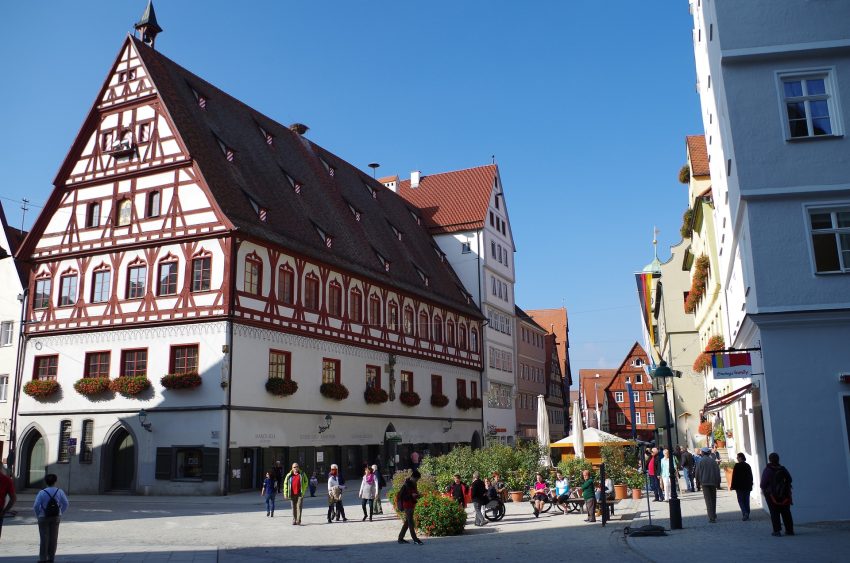
CC BY-SA 3.0 / KlausFoehl

This website uses affiliate links which earn a small commission at no additional cost to you.

Prepare yourself for a magical journey as you step into the medieval German town of Alsfeld. Here, time stands still, offering an enchanting experience that transports you back centuries. Immerse yourself in the unchanged charm of this town, where the simple pleasures of life reign supreme. And, as if by some extraordinary twist of fate, you might just encounter your beloved childhood companion, Little Red Riding Hood herself!

Alsfeld beckons you to embrace a slower pace, inviting you to relish in the timeless delights it has to offer.

How to Get to Alsfeld

By Plane: The nearest major airport to Alsfeld is Frankfurt Airport, about 100 km away, which offers both domestic and international flights. From the airport, visitors can reach Alsfeld by car in roughly an hour or via regional trains and buses connecting through Giessen or Marburg. For the best deals and a seamless booking experience, check out these flights to Alsfeld on Booking.com.

By Train: Alsfeld is accessible via regional trains, with connections from major cities like Frankfurt and Kassel. The train station is a short walk from the town center. Train schedules and bookings can be found on Omio.

By Car: Located near the A5 motorway, Alsfeld is approximately a 1.5-hour drive from Frankfurt. Parking is available in various locations throughout the town center. There are many places to park to the south of the town centre by the Leonhardsturm Tower. If you are looking to rent a car in Germany I recommend having a look at Discover Cars, first, as they compare prices and review multiple car rental agencies for you.

Where to Stay in Alsfeld

To fully experience Alsfeld’s historic ambiance, consider staying in the old town. For a luxury stay, Hotel Villa Raab offers modern amenities within a historic setting. For mid-range comfort, Hotel Klingelhöffer provides comfortable accommodations in a central location. Budget travellers may enjoy Hotel-Restaurant Zum Schwalbennest for affordable lodging with easy access to the town’s attractions.

A Brief History of Alsfeld

Alsfeld developed as an important market and trading center in the Middle Ages, with its iconic half-timbered houses dating back to the 14th and 15th centuries. Notable landmarks such as the Alsfeld Town Hall, built in the 15th century, reflect the prosperity of the town during this period, while the Neurathhaus, now home to the Tourist Information, showcases exquisite timber framing from the same era.

Religious life played a central role in Alsfeld’s history, with structures such as Walpurgiskirche and Dreifaltigkeitskirche illustrating Gothic and Renaissance architectural influences. The Leonhardsturm Tower, part of the town’s defensive structures, emphasizes Alsfeld’s medieval strategic importance. The Beinhaus and Grabbrunnen also offer insight into historical funerary practices, while the Schwälmer Brunnen celebrates regional traditions and artistry.

Alsfeld's cultural heritage is preserved in institutions such as the Alsfeld City Museum and the Alsfeld Fairy Tale House, which highlight the town's folklore, history, and craftsmanship. The Weinhaus, or Wine House, is another historic gem, reflecting the town's mercantile past and local viticulture. Together, these landmarks create a vivid picture of Alsfeld's historical evolution, making it a captivating destination for those exploring Germany's medieval towns.

Your Walking Tour of Alsfeld

This guide highlights Alsfeld's main attractions, but the town's charm lies in its details. Take time to explore the lesser-known alleys, visit the Alsfeld Museum, and enjoy the vibrant atmosphere of its historic squares. Whether you're a history enthusiast or a casual traveler, Alsfeld's old town offers a memorable experience.

1. Neurathhaus & Tourist Information
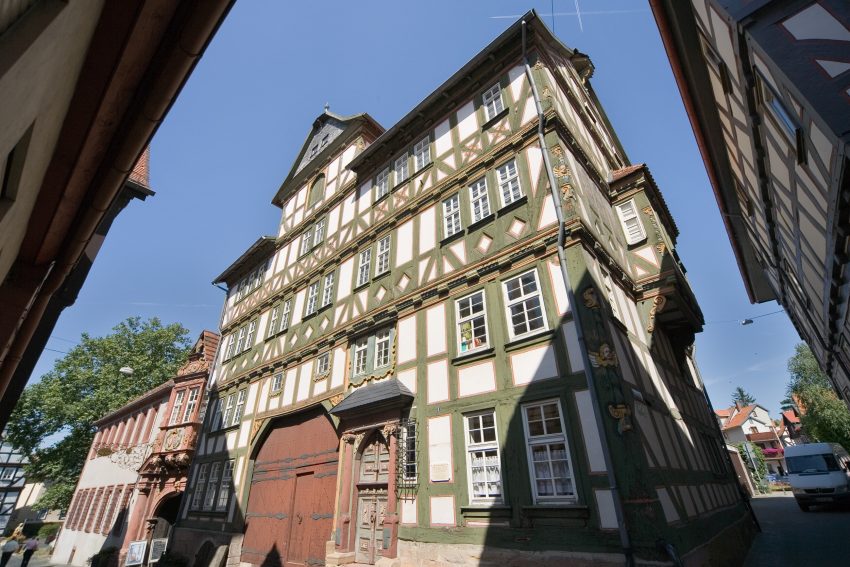
Alsfeld Neurathhaus
Alsfeld Neurathhaus
CC BY-SA 3.0 / Mylius

The Neurathhaus stands as a remarkable testament to history, situated in the charming town of Alsfeld, in the state of Hesse, Germany. This historic half-timbered house, erected in 1619 by the affluent cloth merchant Johannes Neurath, proudly retains its splendor as one of the finest-preserved examples of half-timbered architecture in the town.

Greeting visitors with its captivating façade, adorned with intricate carvings and a distinctive stepped gable, the Neurathhaus showcases the quintessential charm of traditional German half-timbered design.

Step inside, and a world of wonders unfolds. Within its walls, visitors are invited to explore a series of rooms adorned with original furnishings that offer glimpses into the past. Admire the grand ceramic stove and be captivated by the beauty of the painted wooden ceiling. The house has been thoughtfully transformed into a museum, dedicated to preserving and sharing the rich history of the town and its traditional crafts, such as textile weaving and blacksmithing.

In a testament to its enduring importance within the community, the Neurathhaus underwent extensive renovations, and since May 2022, it has become home to the Tourist Center, serving as a gateway for visitors to embark on their Alsfeld adventures.

A visit to the Neurathhaus immerses guests in the splendor of a bygone era, offering a glimpse into the lives of those who once inhabited its halls. It stands as a cherished link to the past, inviting visitors to appreciate the craftsmanship and heritage that have shaped Alsfeld throughout the centuries.


Location: Neurathhaus, Rittergasse, Alsfeld, Germany

We recommend to rent a car in Germany through Discover Cars, they compare prices and review multiple car rental agencies. Book your rental car here.

2. Alsfeld Town Hall

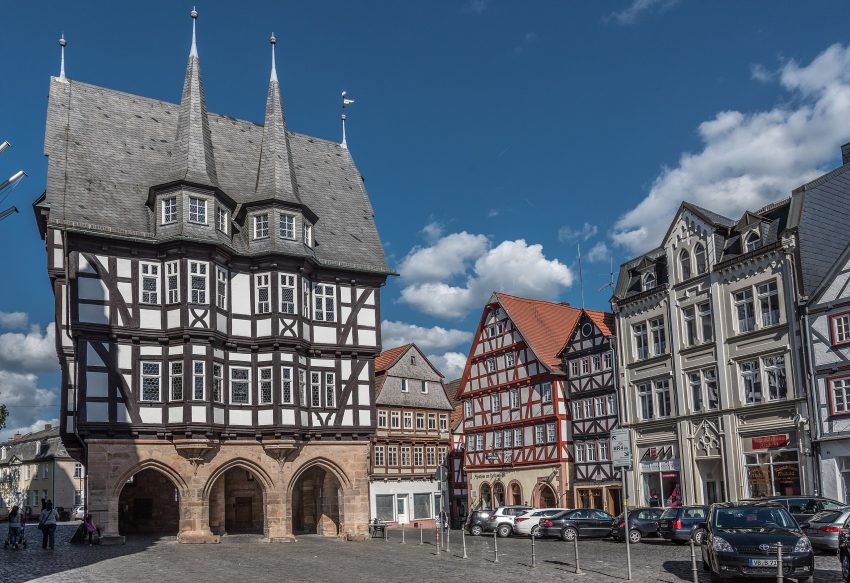
Alsfeld Town Hall
Alsfeld Town Hall
CC BY-SA 4.0 / Tilman2007

Alsfeld Town Hall is a remarkable architectural gem nestled in the heart of the medieval German town of Alsfeld. With its origins dating back to the 14th century, this historical structure showcases an exquisite blend of Gothic and Renaissance styles, captivating visitors with its unique charm.


Here is a complete selection of hotel options in Alsfeld. Feel free to review each one and choose the stay that best suits your needs.

3. Weinhaus, or Wine House

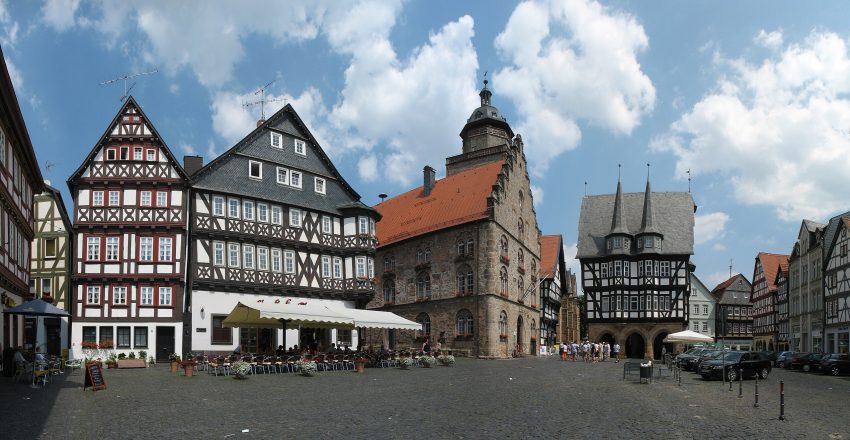
Weinhaus Wine House
Weinhaus Wine House
CC BY-SA 3.0 / KlausFoehl

The Weinhaus, or Wine House, in Alsfeld was established by Hans von Frankfurt in 1538, the wine house of Alsfeld played a significant role as a storage and serving facility for wine, holding a privileged position within the municipality. The architectural design of the building showcases a blend of Gothic and Renaissance influences, evident in the distinct steep stepped gables adorned with fan rosettes. Over time, modifications were made, replacing the charming yet irregularly arranged “curtain arch windows” with round arch windows in 1840/43, although remnants of the original structure can still be seen.

Located at the corner of the market square, the wine house also features the former “pillory,” a historical fixture associated with punitive measures, not limited to market days alone. This enduring presence serves as a reminder of the town’s past practices.


Traveling to a country with a different currency? Avoid ATM transaction fees and pay in local currency with a Wise Card. Having used it for over 5 years, we've saved loads on fees!

4. Schwälmer Brunnen

Schwalmer Brunnen
Schwalmer Brunnen
©

The Schwalmer Brunnen, affectionately known as The Little Red Riding Hood statue, graces the town of Alsfeld in northern Hesse as an enchanting ornamental fountain. Constructed in 1958, the Schwalm fountain symbolizes the deep-rooted bond between Alsfeld and the traditional attire of the Schwalm region.

This captivating fountain showcases the iconic Gänseliesel, donned in the distinctive and traditional Schwalm costume, complete with the signature red cap. The sculpture beautifully captures the essence of this folkloric character, evoking a sense of nostalgia and connecting visitors to the rich cultural heritage of the area.

The Schwalmer Brunnen stands as a testament to the town’s appreciation for its traditions and serves as a charming reminder of the enduring stories and customs that have shaped Alsfeld’s identity. It is a cherished landmark, attracting both locals and visitors alike, and adding to the town’s captivating atmosphere.


5. Walpurgiskirche
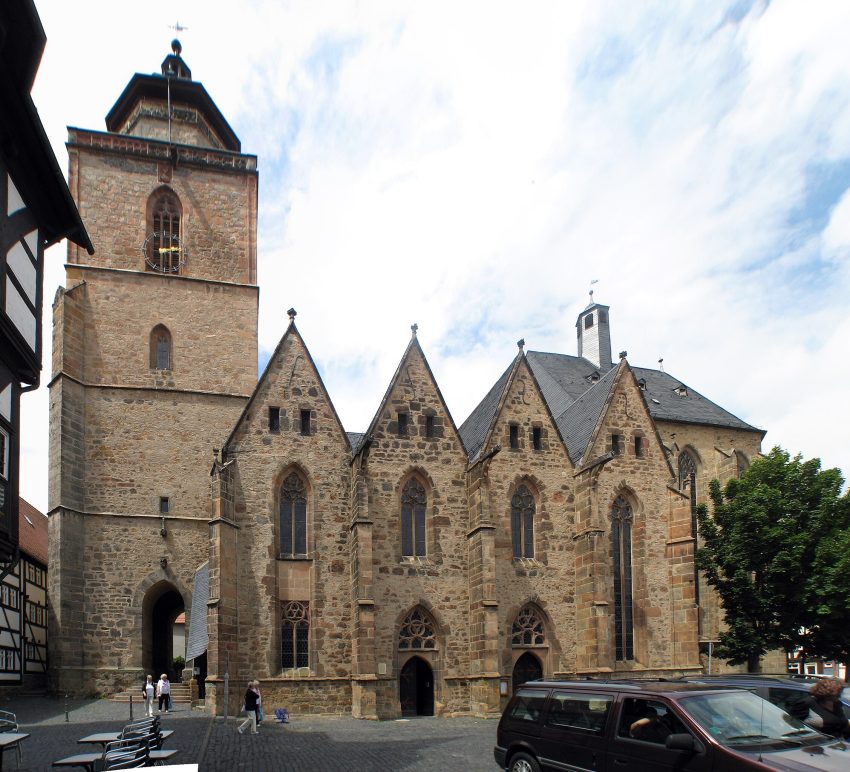
Alsfeld   Walpurgiskirche
Alsfeld Walpurgiskirche
CC BY-SA 3.0 / Oliver Abels (SBT)

The Walpurgiskirche is a historical church located in Alsfeld, Germany. This sacred edifice bears the name of Saint Walpurga, a revered Christian saint known for her piety and contributions to the faith. The church itself holds a significant place in Alsfeld’s history, dating back to its construction in earlier centuries. With its impressive architecture and notable features, the Walpurgiskirche stands as a testament to the town’s enduring spiritual heritage. The church’s design reflects a harmonious blend of architectural styles, showcasing elements of Gothic and Renaissance influences. Its grandeur is evident in the soaring spires, intricate stonework, and beautifully crafted stained glass windows that adorn the sanctuary. Beyond its architectural beauty, the Walpurgiskirche serves as a spiritual sanctuary for the local community. It offers a place of worship, contemplation, and reflection, providing solace and a connection to the divine for those who enter its hallowed halls.

Stepping inside the Walpurgiskirche, visitors can admire the ornate altar, adorned with religious artwork that depicts biblical scenes. The serene atmosphere and the ethereal light filtering through the stained glass windows create a tranquil and reverent ambiance. As an integral part of Alsfeld’s cultural and architectural heritage, the Walpurgiskirche stands as a timeless symbol of faith, spirituality, and the enduring presence of the divine in the lives of the town’s residents and visitors.


Location: Walpurgiskirche (Stadtkirche) - Evangelische-luth. Kirchengemeinde Alsfeld, Kirchplatz, Alsfeld, Germany

6. Beinhaus
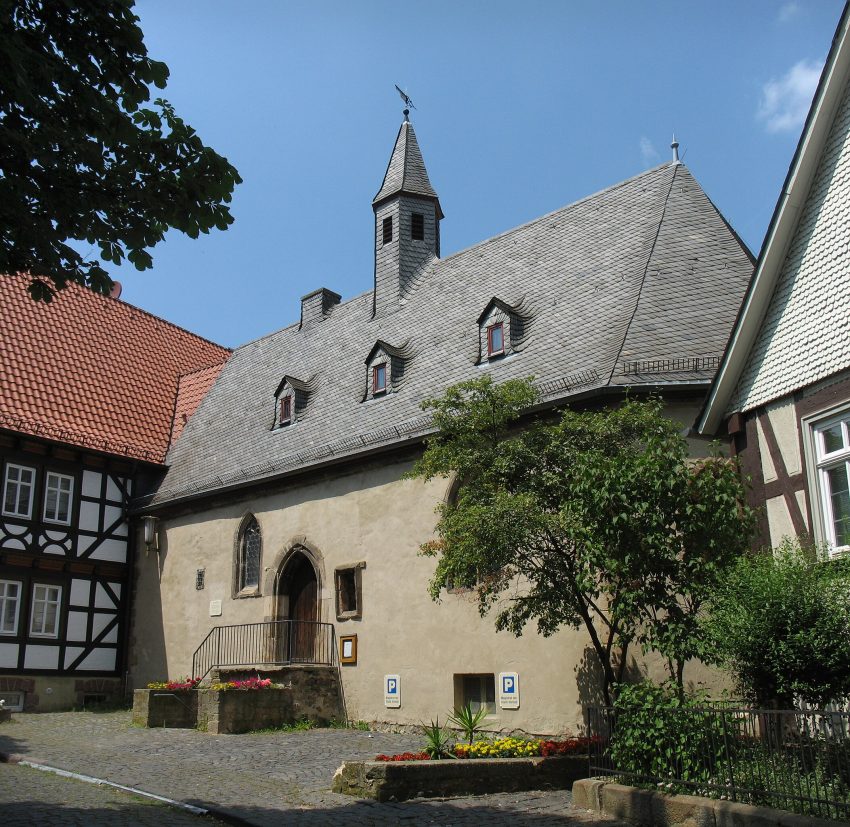
Beinhaus Alsfeld
Beinhaus Alsfeld
CC BY-SA 3.0 / KlausFoehl

Originally constructed in 1368 and subsequently reconstructed in 1510, the Late Gothic Chapel stands proudly on the north side of the churchyard in Alsfeld. This historical gem bears witness to the passing of time and the significant events that unfolded within its walls. Initially serving as a repository for the remains from the surrounding cemetery, the chapel played a solemn role during periods of immense loss, such as the devastating 30 Year War and various plagues when the cemetery became insufficient to accommodate the deceased. Unfortunately, as time progressed, the chapel was subjected to misuse for profane purposes, straying from its original sacred intent. However, at the turn of the 20th century, renovations were undertaken, including alterations to the attic roof, breathing new life into the structure. In 1982, the chapel underwent a meticulous restoration process, reclaiming its historical significance. Today, it fulfils a different purpose, as it has been repurposed to house the city archives. Within its walls lie valuable documents and records that chronicle the town’s rich history, preserving the collective memory and heritage of Alsfeld.


Location: Beinhaus, Kaplaneigasse, Alsfeld, Germany

7. Grabbrunnen
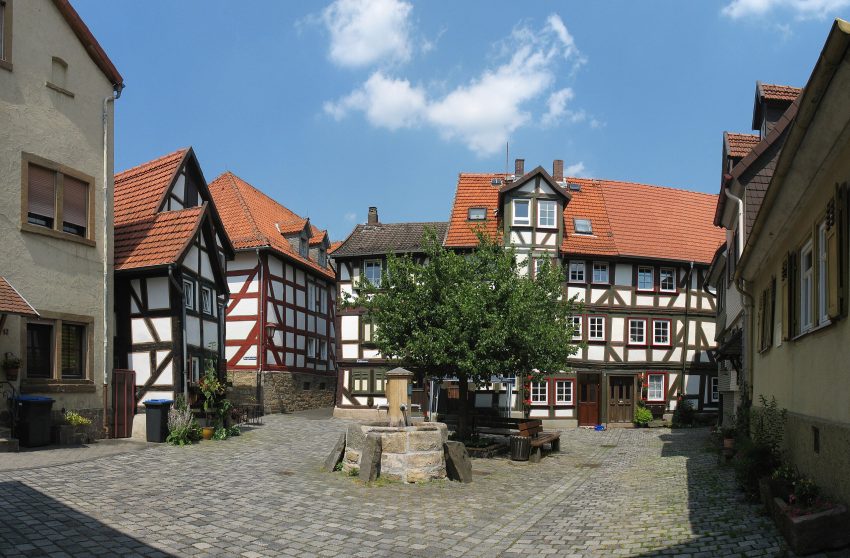
Grabbrunnen Alsfeld2
CC BY-SA 3.0 / KlausFoehl

The square known as Grabbrunnen, named after the enchanting fountain that graces its centre. This fountain holds a historical significance as it was once utilized for the dyeing of cloth, a testament to the town’s textile heritage. Legend has it that the nearby ‘Storks’ Nest’ was the gathering place for storks who would visit the well to collect newborn babies, delivering them to the families who eagerly awaited their arrival. This charming tale adds an air of whimsy and wonder to the fountain’s lore. To honour this captivating tale, the old well base has been imaginatively redesigned, incorporating elements that depict the story of the storks and their precious deliveries. It stands as a delightful symbol, celebrating the folklore and traditions that have become woven into the fabric of Alsfeld’s cultural identity.


Location: Grabbrunnen, Alsfeld, Germany

8. Leonhardsturm Tower
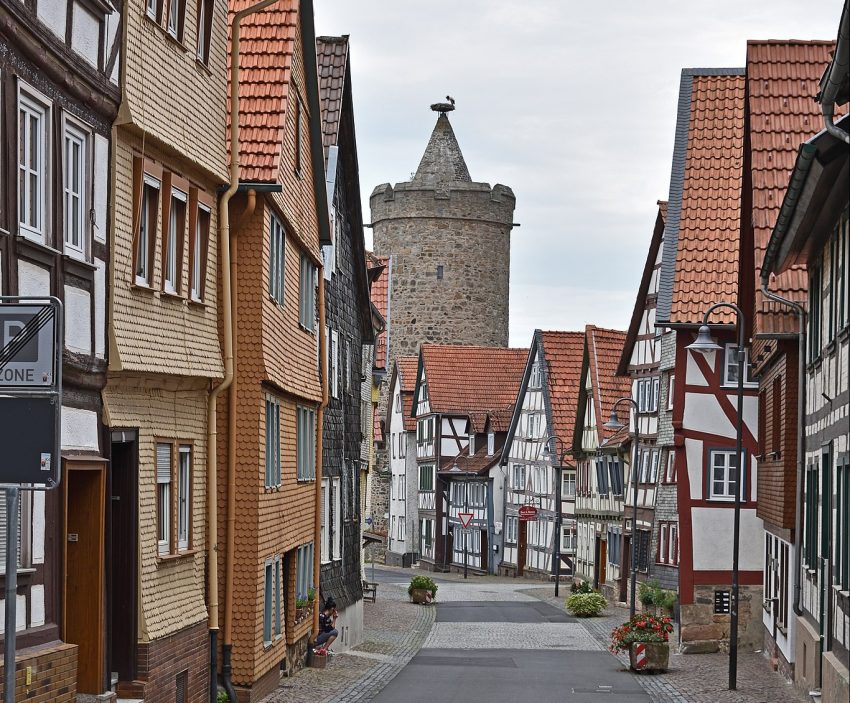
Untere Fulder Gasse, Alsfeld
CC BY-SA 4.0 / Ymblanter

Leonhardsturm, also known as Leonard’s Tower, stands as the sole surviving testament to the fortified defenses of the city. Rising proudly at a height of 27 meters, this rounded tower with its distinctive cone-shaped roof and battlement crest carries a rich history within its sturdy walls.

Access to Leonard’s Tower was once granted through a doorway positioned halfway up the tower, providing a strategic vantage point within the city wall. At the tower’s base, a dungeon awaited, serving as a grim enclosure for prisoners condemned to death. The echoes of their captivity still resonate within its depths.

Interestingly, the tower has acquired a local moniker, “Storks’ Nest,” derived from a captivating legend that weaves a tale of whimsy and hope. According to local lore, the storks nesting in the tower were believed to be responsible for delivering babies to families who had ordered them, adding an element of enchantment to the tower’s mystique.

As you gaze upon Leonard’s Tower, you can’t help but feel the weight of history and the stories it holds. It serves as a poignant reminder of the city’s fortifications and the endurance of the past. Let your imagination soar, envisioning the storks perched in their nests, as you embrace the captivating legends that have become intertwined with the tower’s identity.


Location: Leonhardsturm, Alsfeld

9. Dreifaltigkeitskirche
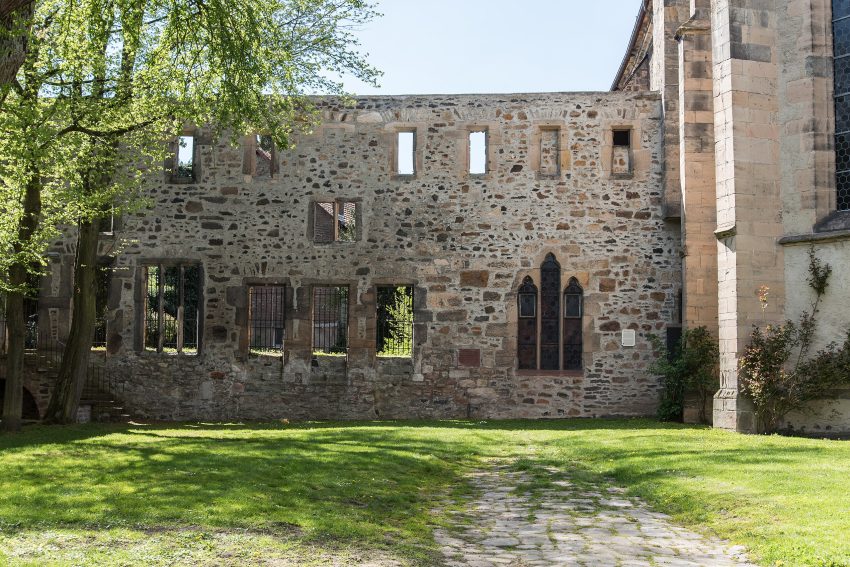
Alsfeld Dreifaltigkeitskirche
CC BY-SA 4.0 / Tilman2007

Constructed in the latter half of the 14th century, the Dreifaltigkeitskirche, or Trinity Church, was originally established as a monastery church for the Augustine hermits. Throughout its history, the church has undergone significant architectural additions and renovations. The church’s notable features include an elongated choir section dedicated to the clergy, while an asymmetrical hall with naves and side aisles was added around 1435. As the monks belonged to a mendicant order, the absence of a church tower is a distinctive characteristic.

Upon closer examination, visitors will marvel at the well-preserved cross-ribbed dome, an exquisite stone chancel adorned with a pulpit ceiling dating back to around 1660, and late Gothic frescoes from the early 15th century. Although the church underwent restoration efforts between 1960 and 1962, its historical allure remains wonderfully intact.

The Augustine monastery, believed to have been established in the late 13th century, once housed the Eremite Hermit Monks. Notably, Tilemann Schnabel, a friend of Martin Luther and a significant reformer in Alsfeld, resided and worked within these monastery walls. However, following the Reformation in 1527, the monastery and church were closed down. The buildings eventually found new purpose as a hospital but sadly fell into disrepair over time.

Today, a surviving fragment of the monastery walls serves as a poignant reminder of the monks’ former living quarters. The monastery itself was situated alongside the city wall, which was largely demolished in the 19th century. A small section of the city wall can still be observed on the south side, offering glimpses into Alsfeld’s past.


Location: Dreifaltigkeitskirche - Evangelische-luth. Kirchengemeinde Alsfeld, Roßmarkt, Alsfeld, Germany

10. Alsfeld Fairy Tale House
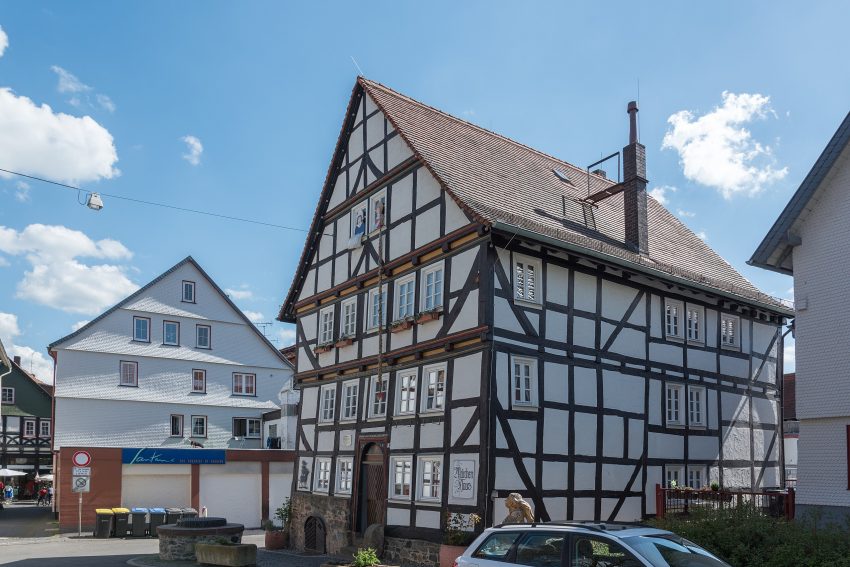
Alsfeld Fairy Tale House
CC BY-SA 4.0 / Tilman2007

The Alsfeld Fairy Tale House, known as the Märchenhaus in German, stands as a captivating half-timbered house nestled in Alsfeld, Germany. This remarkable building dates back to 1628 and is renowned for its ornate façade, adorned with intricate carvings and paintings that bring beloved fairy tales to life. Among the enchanting scenes depicted on the façade are beloved stories like Little Red Riding Hood, Sleeping Beauty, and Hansel and Gretel.

Today, this historic house has been transformed into a museum that pays homage to the renowned Brothers Grimm and their timeless fairy tales. Visitors are invited to embark on a journey through the various rooms and exhibits, immersing themselves in the world of fairy tales. The museum offers interactive displays, captivating audio installations, and a collection of original manuscripts and books from the Brothers Grimm.

Beyond its exhibits, the Alsfeld Fairy Tale House hosts a range of special events and workshops throughout the year, catering to visitors of all ages. These events may include engaging storytelling sessions, where the magic of the fairy tales is brought to life, as well as creative crafting workshops that allow children to explore their imagination.

A visit to the Alsfeld Fairy Tale House is an enchanting experience, transporting visitors into the realm of fairy tales and celebrating the enduring legacy of the Brothers Grimm. Whether you are young or young at heart, this museum offers a delightful and immersive journey through the captivating world of storytelling.


Location: Sackgasse 2, 36304 Alsfeld, Deutschland | Hours: Saturdays from 10:30 a.m. to 12:30 p.m. and 2:00 p.m. to 5:00 p.m. and on Sundays from 2:00 p.m. to 5:00 p.m. | Price: Adults € 3.00, Children € 2.00

11. Alsfeld City Museum
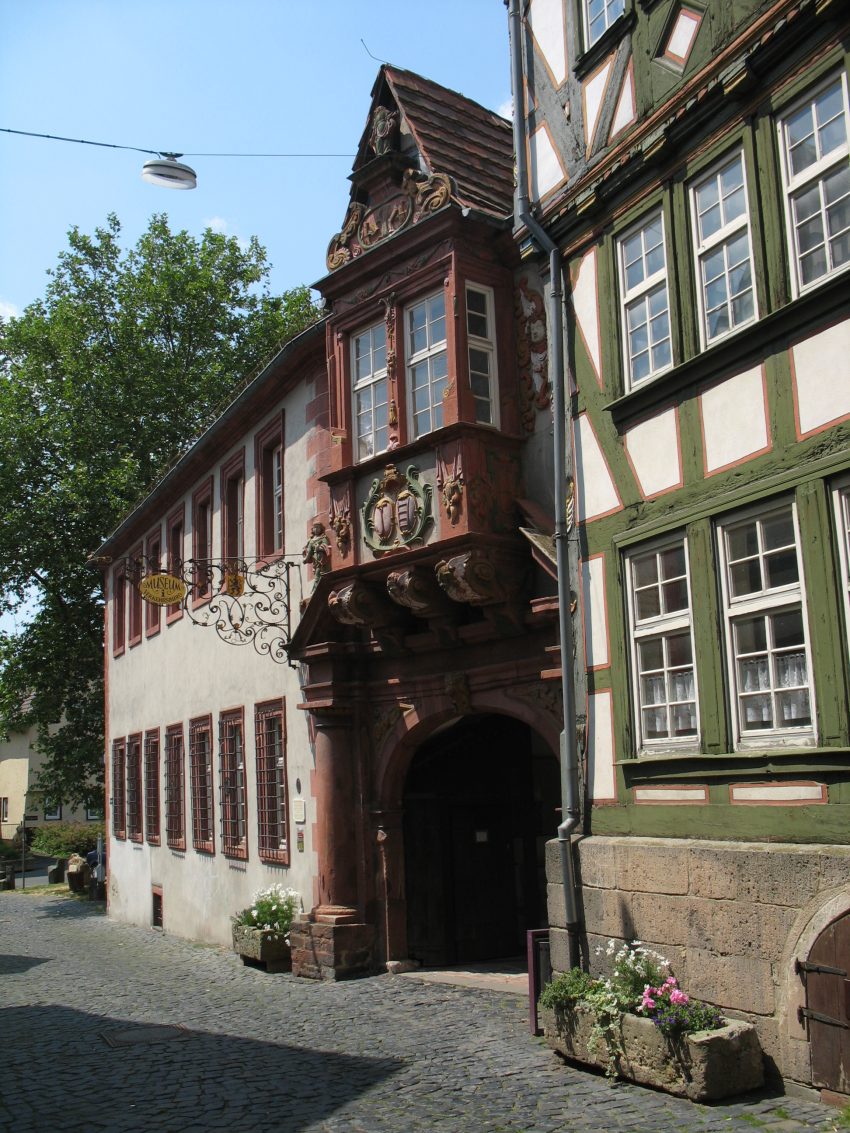
Regional Museum, Alsfeld
CC BY-SA 3.0 / KlausFoehl

Situated within a picturesque half-timbered building in the historic old town, the Alsfeld City Museum, also referred to as the Regional Museum Alsfeld, stands as a gateway to the rich cultural history and evolution of Alsfeld and its surrounding region in Germany.

Immersing visitors in a captivating journey through time, the museum houses several permanent exhibitions that delve into diverse aspects of the city’s heritage. These exhibitions encompass the intriguing history of Alsfeld, exploring its architectural marvels, local artistic traditions, and the lives and contributions of notable individuals from the area.

A particular highlight of the museum is its remarkable collection of regional costumes, showcasing the traditional attire worn by women in the Schwalmtal region, which served as the inspiration for the iconic cape of Little Red Riding Hood.

In addition to this, visitors can marvel at displays featuring ancient crafts such as pottery, blacksmithing, and weaving, providing insight into the skilled craftsmanship of bygone eras. The museum also proudly exhibits artifacts from Alsfeld’s medieval past, including coins and weaponry, granting glimpses into the lives and endeavors of those who once inhabited these lands.

To further enhance the visitor experience, the Alsfeld City Museum regularly presents temporary exhibitions on various themes closely tied to the cultural history of the region, offering fresh perspectives and engaging narratives.

A visit to the Alsfeld City Museum unveils the captivating tapestry of the region’s past, allowing visitors to gain a deeper appreciation for the city’s cultural roots and the stories woven into its fabric over the centuries.


Location: Geschichts- und Museumsverein Alsfeld e.V. Rittergasse 3-5 36304 Alsfeld Germany | Hours: Mon – Fri 10 a.m. to 4 p.m Sat 10 a.m. to 4 p.m Closed on Sundays and public holidays | Website
Moira & Andy
Moira & Andy

Hey! We're Moira & Andy. From hiking the Camino to trips around Europe in Bert our campervan — we've been traveling together since retirement in 2020!

Read our full story here

This website uses affiliate links which earn a small commission at no additional cost to you.

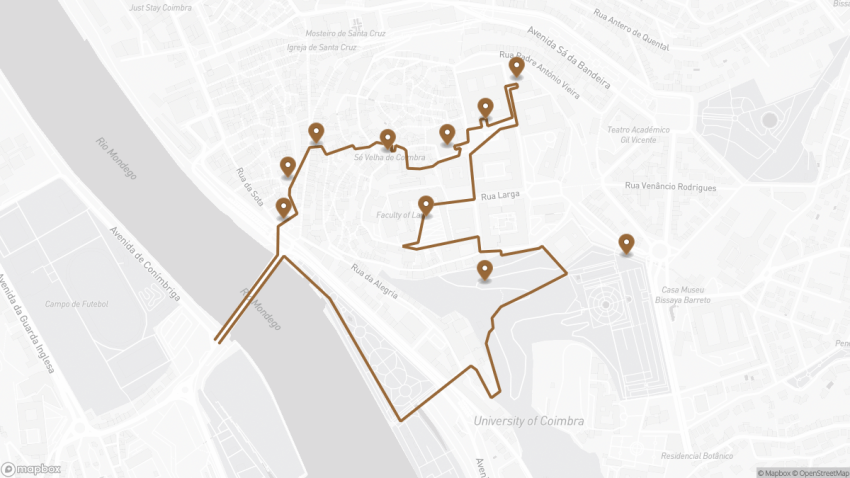
Walking Tour Summary

Distance: 1 km
Sites: 11

Walking Tour Map
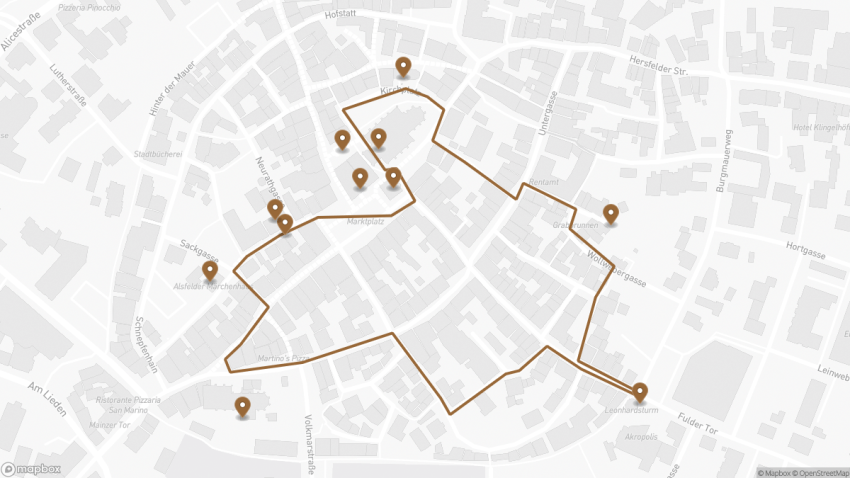
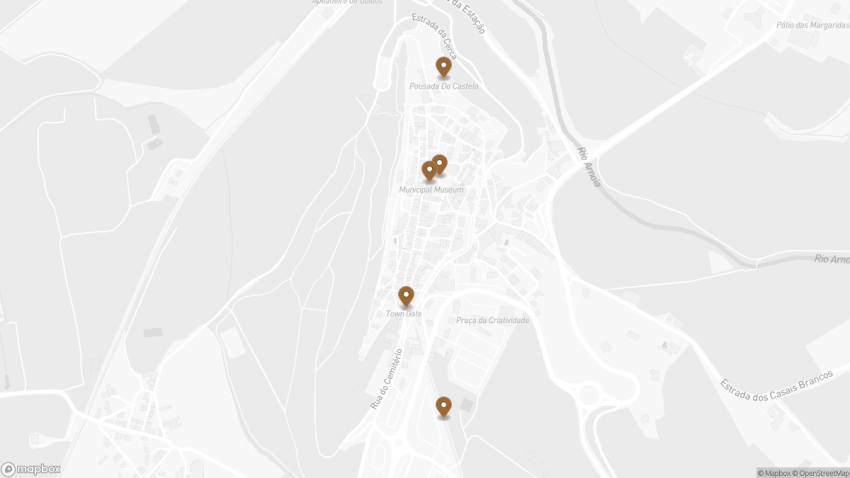
Map of the Self-Guided Walking Tour of Alsfeld, Germany walking route with 11 stops in Alsfeld.
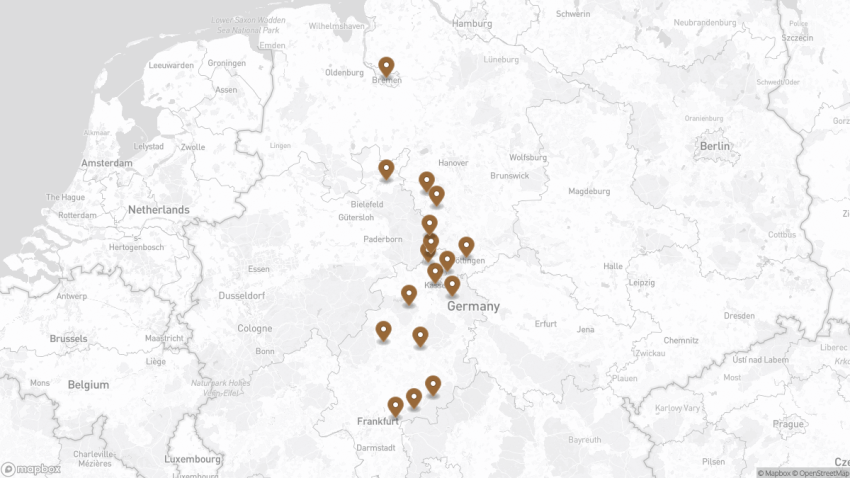
Preview map of the Self-Guided Walking Tour of Alsfeld, Germany route in Alsfeld, showing 11 stops. Use the interactive map to zoom and tap markers.

Self-Guided Walking Tour of Hamelin, Germany (2026)

Hameln Markt
Hameln Markt
CC BY-SA 4.0 / Ymblanter

This website uses affiliate links which earn a small commission at no additional cost to you.

Hameln, known as Hamelin in English-speaking countries, holds greater fame compared to many other German towns due to the renowned tale of the Pied Piper of Hamelin. This centuries-old legend, shrouded in mystery, revolves around the disappearance of 130 children from Hameln in 1284, as documented in historical records.

While the tale forms a significant part of Hameln’s tourism, there is more to explore in this charming town. Its Old Town exudes a fairy tale ambiance with its picturesque half-timbered houses, cobblestone streets, and vibrant Market Square (Markt Platz).

Although Hameln offers a more relaxed and low-key atmosphere, with not an abundance of tourist attractions, it is precisely this characteristic that adds to its allure. It's a place where you can unwind, soak in the surroundings (keeping an eye out for rats!), and savour the essence of the destination, rather than rushing from one attraction to another. Visiting Hameln is a delightful experience and definitely worth including in your Germany itinerary or while traversing the Fairy Tale Route.

How to Get to Hamelin

By Plane: The nearest major airport to Hamelin is Hannover Airport, about 50 km to the northeast, which handles both international and domestic flights. From the airport, Hamelin can be reached by train, bus, or taxi in roughly 45-60 minutes. For the best deals and a seamless booking experience, check out these flights to Hamelin on Booking.com.

By Train: Hamelin is well-connected by rail, with regular services from Hanover and other major German cities. The main train station is a short walk from the city center. Train schedules and bookings can be found on Omio.

By Car: Accessible via the A2 and B83 highways, Hamelin is approximately a 1-hour drive from Hanover. Parking is available in various locations throughout the city center. There are a couple of car parks near the old town, that are not too expensive as long as you don't stay too long. Parkplatz Wilhelmstraße or Auto-Parkplatz. If you are looking to rent a car in Germany I recommend having a look at Discover Cars, first, as they compare prices and review multiple car rental agencies for you.

Where to Stay in Hamelin

To fully experience Hamelin’s historic ambiance, consider staying in the Old Town. For a luxury stay, Hotel Stadt Hameln offers modern amenities within a historic setting. For mid-range comfort, Hotel zur Börse provides comfortable accommodations in a central location. Budget travellers may enjoy Hotel An der Altstadt for affordable lodging with easy access to the city’s attractions.

A Brief History of Hamelin

Hamelin’s history dates back to the 9th century, flourishing as a trading hub along the Weser River. The town is famously associated with the legend of the Pied Piper, who, according to folklore, led away the town’s children in 1284 as retribution for unpaid services. This tale has been immortalized in literature and art, contributing to Hamelin’s global recognition. The town’s architecture showcases the Weser Renaissance style, with notable buildings like the Hochzeitshaus and the Rattenfängerhaus reflecting its rich cultural heritage.

Your Walking Tour of Hamelin

This guide highlights Hamelin's main attractions, but the town's charm lies in its details. Take time to explore the lesser-known alleys, visit the Museum Hameln, and enjoy the vibrant atmosphere of its historic squares. Whether you're a history enthusiast or a casual traveler, Hamelin's Old Town offers a memorable experience.

1. Pied Piper’s House (Rattenfängerhaus)

Rattenfanger Hause
Rattenfanger Hause
CC BY-SA 4.0 / Adek87

The Rattenfängerhaus, also known as the Pied Piper’s House, is a half-timbered building located in Hamelin. Its name derives from an inscription on its side, which claims to be an eyewitness account of the events depicted in the Pied Piper of Hamelin story. The inscription describes the departure of 130 children from Hamelin on June 26, 1284, led by a piper dressed in vibrant clothing. The children vanished forever after passing the Calvary near the Koppenberg.


Location: Rattenfängerhaus, Osterstraße, Hamelin, Germany | Hours: 24 Hours, from street

We recommend to rent a car in Germany through Discover Cars, they compare prices and review multiple car rental agencies. Book your rental car here.

2. Rattenfängerbrunnen Osterstraße

Rattenfangerbrunnen Pied Piper fountain
CC BY-SA 4.0 / Illustratedjc

The Rattenfängerbrunnen Osterstraße, also known as the Ratcatcher’s Fountain on Osterstraße, is a prominent landmark in Hamelin. The fountain is dedicated to the famous Pied Piper legend and serves as a visual representation of the story.

Located on Osterstraße, the Rattenfängerbrunnen Osterstraße features a central statue of the Pied Piper himself. The statue depicts the Pied Piper dressed in colourful attire and playing his enchanting pipe. Surrounding the Pied Piper are several sculpted rats, representing the vermin infestation that plagued the town of Hamelin in the legend.

The fountain is a popular attraction for locals and visitors alike. It offers a picturesque setting where people can gather, relax, and admire the artistic representation of the Pied Piper tale. The Rattenfängerbrunnen Osterstraße serves as a reminder of the enduring legacy of the Pied Piper legend and its significance to the town of Hamelin.


Location: Osterstraße 15, Hamelin, Germany

Here is a complete selection of hotel options in Hamelin. Feel free to review each one and choose the stay that best suits your needs.

3. Hamelin Museum

Museum of Hamelin
Museum of Hamelin
Public Domain / MuseumHameln

Hamelin museum showcases a collection of significant historical pieces and artefacts that hold great importance for the town. Within its walls, you’ll find a diverse range of exhibits, including literature, artefacts, paintings, and statues, some of which trace their origins back to the Middle Ages. It serves as a treasure trove of Hamelin’s history and cultural heritage.

Visiting the museum is not only enriching but also affordable. The entry fee is five euros per adult and three euros per child, making it an accessible activity for individuals and families alike. Families can take advantage of a special family-friendly fee, which is just 12 euros, providing an opportunity for everyone to delve into the town’s fascinating past.


Location: Museum Hameln, Osterstraße 8-9, 31785 Hamelin, Hameln-Pyrmont, Germany | Hours: Tuesday to Sunday 11 a.m. to 6 p.m. Closed on Mondays | Price: Adults €6 | Website

Traveling to a country with a different currency? Avoid ATM transaction fees and pay in local currency with a Wise Card. Having used it for over 5 years, we've saved loads on fees!

4. Hamelin Glockenspiel

Hameln Glockenspeil
Hameln Glockenspeil
CC BY-SA 4.0 / Bjoertvedt

The Glockenspiel in Hameln presents the story of the Pied Piper, but beneath its seemingly charming façade lies a replication of the darker aspects of the tale. When the bells chime, the Piper emerges, accompanied by a horde of rats. Then, with the next set of bells, a “darker” depiction of the Piper appears, leading all the children out of the town, except for two— a blind child and a child described as “lame.”

Every day, at specific times, the bells resound to initiate the Glockenspiel’s performance. The scheduled times are 1:05 pm, 3:35 pm, and 5:35 pm. Additionally, the bells also ring at 9:35 am for the Pied Piper song and at 11:35 am for the West River Song. You can find the Glockenspiel positioned on the gable of the Hochzeithaus, located on the west side of the building.

While the Glockenspiel may appear as a charming spectacle, it portrays the darker undertones of the Pied Piper tale, leaving a lasting impression on those who witness its performances.


Location: Hochzeitshaus, Osterstraße 2, 31785 Hameln, Germany | Hours: 24 Hours | Price: Free. public space | Website

5. Rattenfängerstatue (Pied Piper Statue with children)

Rattenfangerstatue Rathausplatz
© https://www.deutsche-maerchenstrasse.com/

On the Rathausplatz in Hameln, you will encounter a mesmerizing fountain adorned with statues of children (as depicted in the picture). This enchanting fountain was gifted to the town in 1975 by Karl Ulrich Nuss, whose design emerged victorious from a competition that received an impressive 132 submissions.

Originally intended for placement in the Pferdemarkt area, the fountain’s size was ultimately considered too grand for the old town’s confines. Consequently, it found its home in the Rathausplatz, becoming a captivating centerpiece that enhances the beauty and allure of the town’s central square.

The statues of children adorning the fountain serve as a captivating visual representation of the timeless spirit embodied in the Pied Piper tale. As you wander through the streets of Hameln, be sure not to miss the opportunity to marvel at this remarkable fountain, appreciating the ingenuity and artistry that brought its design to life.


Location: Rathauspl. 5, 31785 Hameln, Germany | Hours: 24 hours | Price: Free Public Space

6. Tourist Office

hamelin rats
hamelin rats

Pop into the tourist info point for maps, what’s on that day and to orient yourself by watching the “Legendary Hamelin – fairytale Weserbergland”


Location: Hameln Marketing und Tourismus GmbH Deisterallee 1 31785 Hameln Germany | Hours: Mon - Fri 10 a.m. - 4 p.m. Sat. 9.30 a.m. - 1 p.m. Sundays and public holidays closed | Website
Powered by GetYourGuide
Moira & Andy
Moira & Andy

Hey! We're Moira & Andy. From hiking the Camino to trips around Europe in Bert our campervan — we've been traveling together since retirement in 2020!

Read our full story here

This website uses affiliate links which earn a small commission at no additional cost to you.

Walking Tour Map
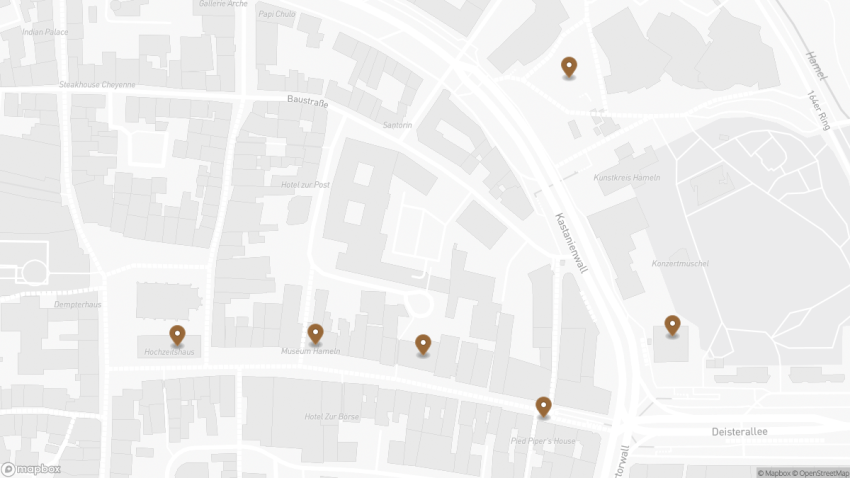
Map of the Self-Guided Walking Tour of Hamelin, Germany walking route with 6 stops in Hamelin.
Preview map of the Self-Guided Walking Tour of Hamelin, Germany route in Hamelin, showing 6 stops. Use the interactive map to zoom and tap markers.

Self-Guided Walking Tour of Bremen, Germany (2026)

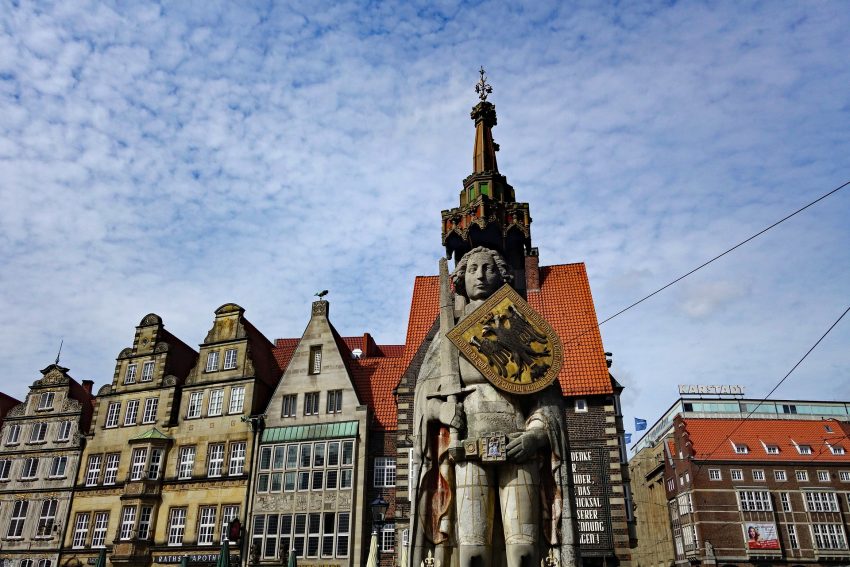
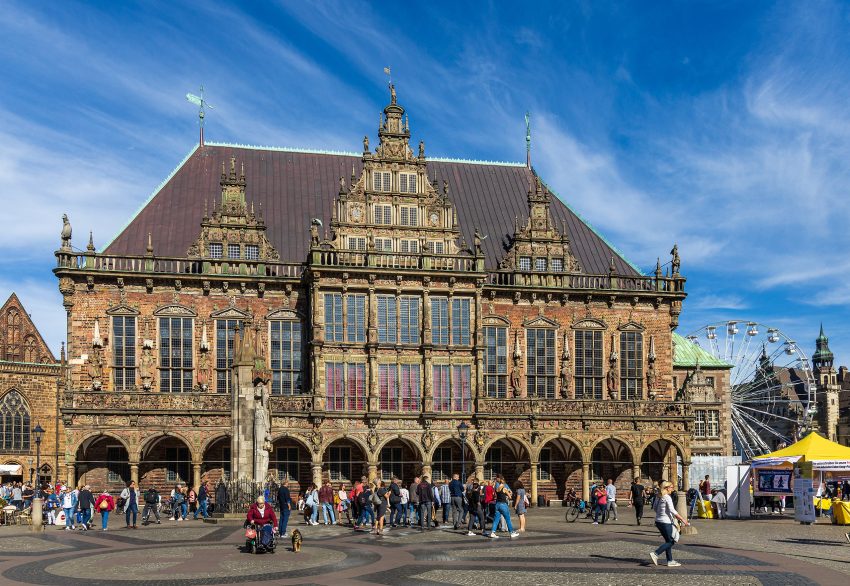
bremen roland
bremen roland

This website uses affiliate links which earn a small commission at no additional cost to you.

Bremen, a historic Hanseatic city in northern Germany, offers a blend of medieval charm and modern vibrancy. Its UNESCO-listed town hall, iconic Roland statue, and the fairy-tale legacy of the Bremen Town Musicians make it a captivating destination. A guided walking tour provides an immersive experience into Bremen's rich heritage and architectural splendor.

Whether you’re exploring the bustling market square or the quaint alleys of the Schnoor quarter, Bremen’s city center is best discovered on foot.

How to Get to Bremen

By Plane: To get to Bremen by plane, fly directly into Bremen Airport (BRE), located just 3.5 km from the city center. From the airport, you can easily reach downtown by tram, taxi, or rental car in about 10-15 minutes. For the best deals and a seamless booking experience, check out these flights to Bremen on Booking.com.

By Train: Bremen is well-connected by rail, with regular services from major German cities like Hamburg and Hanover. The main train station is a short tram ride or a 20-minute walk from the city center. Train schedules and bookings can be found on Omio.

By Car: Accessible via the A1 and A27 motorways, Bremen is approximately a 1.5-hour drive from Hamburg. Parking is available in various locations throughout the city center. If you are looking to rent a car in Germany I recommend having a look at Discover Cars, first, as they compare prices and review multiple car rental agencies for you.

Where to Stay in Bremen

To fully experience Bremen’s historic ambiance, consider staying in the city center. For a luxury stay, Radisson Blu Hotel Bremen offers modern amenities within a historic setting. For mid-range charm, Hotel Classico Bremen provides boutique accommodations in a central location. Budget travellers may enjoy ibis Bremen City for affordable lodging with easy access to the city center.

A Brief History of Bremen

To make the most of visiting Bremen and this walking tour, you should consider staying overnight in the centre, where you'll be within easy walking distance of the market square, Böttcherstraße, the Schlachte promenade, the Schnoor Quarter, and many of the city's top museums and landmarks. If you want to be right in the heart of Bremen's historic centre, the area around the market square is ideal. Hotels here place you just steps from the Town Hall, Roland statue, and the beginning of most walking routes. Excellent central options include ATLANTIC Grand Hotel Bremen, which combines comfort with an unbeatable location, and the boutique-style Hotel Classico, known for its artistic interiors and proximity to the main square. The nearby Radisson Blu Hotel, Bremen sits directly on Böttcherstraße, perfect for those who want to stay immersed in the city’s architectural gems.

Travellers who prefer the riverside atmosphere will enjoy staying near the Schlachte promenade, where cafés, terraces, and river views create a relaxed setting. The stylish Designhotel ÜberFluss offers striking Weser views and easy access to both the waterfront and the Old Town. Just a short walk away is Motel One Bremen, a modern and affordable option close to both the river and key walking tour starting points.

If you prefer a quieter stay slightly beyond the busiest streets but still within walking distance of major sights, the cultural quarter near the Kunsthalle and Wallanlagen Park offers peaceful surroundings and elegant hotels. Options here include Dorint City-Hotel Bremen, which provides spacious rooms and good tram connections, and Hotel Residence Bremen, a charming boutique hotel set in a tranquil neighbourhood.

Guided or Self-Guided Tour of Bremen?

While exploring Bremen’s city center independently is rewarding, a guided tour offers deeper insights into its history and landmarks. The Bremen: City Center Guided Walking Tour provides a comprehensive exploration of the city’s highlights, including the market square, St. Petri Cathedral, Böttcherstraße, and the Schnoor quarter. Led by knowledgeable guides, this tour enriches your understanding of Bremen’s cultural heritage.

Your Walking Tour of Bremen

This guide highlights Bremen’s main attractions, but the city’s charm lies in its details. Take time to explore the lesser-known alleys, sample local delicacies, and enjoy the vibrant atmosphere of its historic squares. Whether you’re a history enthusiast or a casual traveler, Bremen’s city center offers a memorable experience.

1. Böttcherstraße

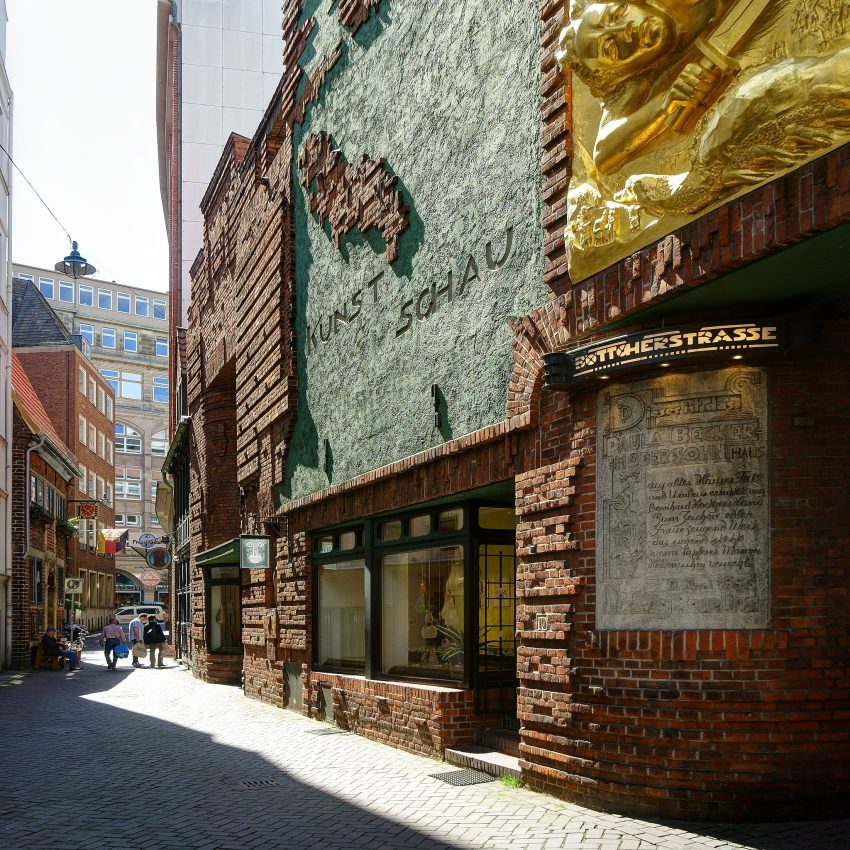
Bottcherstrase
Bottcherstrase
CC BY-SA 4.0 / Godewind (talk)

Böttcherstraße, located in the historic center of Bremen, Germany, is a renowned street that stands out for its unique architecture and holds great cultural significance. Despite its short length of only about 100 meters (330 feet), it has become a major attraction for visitors and is considered one of the city’s main landmarks. The construction of most buildings on Böttcherstraße took place between 1922 and 1931, thanks to the vision of Ludwig Roselius, a prominent coffee trader from Bremen. Roselius entrusted the artistic direction of the project to Bernhard Hoetger. The result is a remarkable architectural ensemble that showcases an expressionist style unique to the area. Many of the buildings exhibit characteristics of Brick Expressionism, adding to the street’s distinctive charm. Recognizing the cultural value of Böttcherstraße, it has been protected by the Monument Protection Act since 1973. This designation ensures the preservation and safeguarding of the street and its buildings for future generations to appreciate.

Der Lichtbringer or The Lightbringer is the title of a large, gilded bronze relief by Bernhard Hoetger from 1936 above the entrance to Böttcherstraße in Bremen.

One reason to start the tour here is the visit the city-centre Tourist Information office at Glockenspiel House (Böttcherstrasse 4). This is the starting point for many guided tours, and you can also hire audio guides for hire (in German, English, Italian or Spanish). Make sure you don’t miss this chance to hear the 30 Meissen porcelain bells of the carillon playing sea shanties and folk songs.


Location: Böttcherstraße, Bremen, Germany

We recommend to rent a car in Germany through Discover Cars, they compare prices and review multiple car rental agencies. Book your rental car here.

2. Schütting

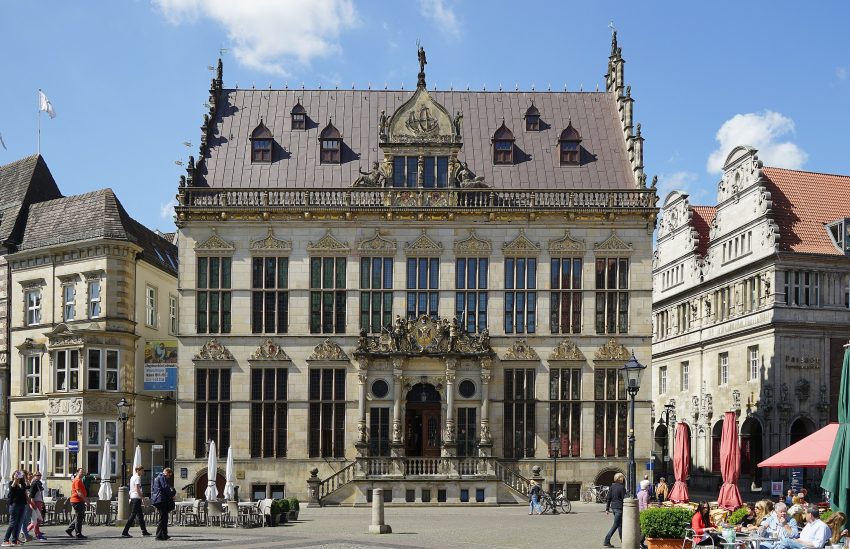
Schutting
Schutting
CC BY-SA 4.0 / Godewind (talk)

The Schutting, once a guildhouse for merchants in Bremen, now serves as the chamber of commerce. Constructed between 1537 and 1538 under the guidance of Johann den Buschener, the building reflects the Renaissance style seen in the architecture of Flanders. In 1594, as part of an ornamental restoration facing the market, the merchants’ coat of arms was incorporated above the entrance alongside the coat of arms of the city of Bremen. This emblem, featuring a crowned, double-headed imperial eagle, symbolizes the historical identity of Bremen’s merchants as imperial traders. Below the coat of arms, the motto of Bremen’s merchants, “Buten un binnen, wagen un winnen” (venture and win, both inside and outside), was added in 1899.


Location: Schütting, Am Markt, Bremen, Germany

Here is a complete selection of hotel options in Bremen. Feel free to review each one and choose the stay that best suits your needs.

3. Bremen Marketplatz

bremen town hall
bremen town hall
CC BY-SA 4.0 / Matthias Süßen

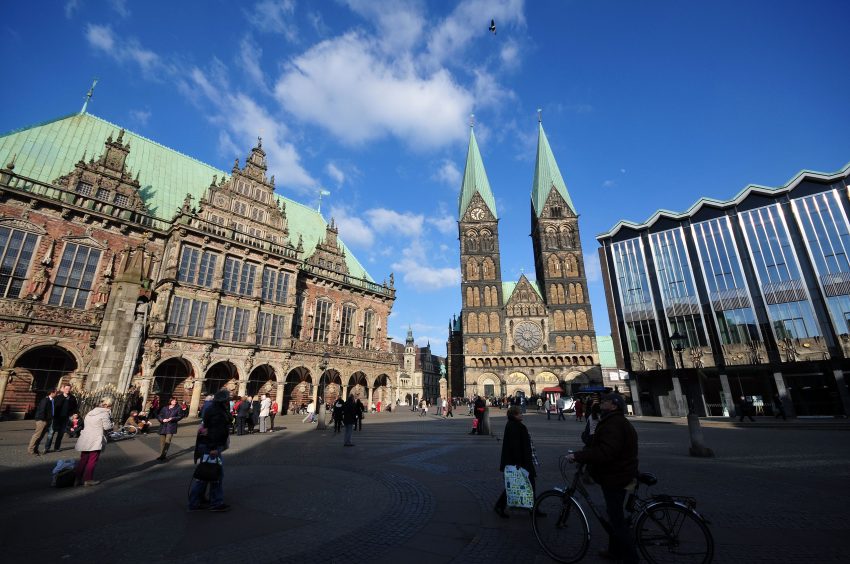
Bremer Marketplatz has so much to see. Bremen takes great pride in its iconic town hall and Roland statue, a UNESCO World Heritage site since 2014. This magnificent ensemble is located on the north-east side of Bremen’s market square, captivating visitors with its symbolic representation of democracy and freedom. The town hall, constructed in 1405, has served as a symbol of municipal self-government and state administration throughout the centuries. Standing alongside it is the Roland statue, erected in 1404, which represents the rights and privileges of the Hanseatic city. Together, they form a remarkable testament to Bremen’s historical significance.

A visit to the town hall and Roland statue is highly recommended. You can capture a memorable photo with Roland, who stands proudly as a symbol of Bremen’s heritage. Moreover, the town hall itself is a visual delight, both from the outside and within. Guided tours provide an opportunity to explore the stunning interior and learn about the fascinating history of the building.

The town hall and Roland statue embody the essence of Bremen, representing its commitment to democratic values and the city’s rich cultural heritage. Their inclusion on the UNESCO World Heritage List is a testament to their significance and the pride that Bremen takes in preserving its historical treasures. A visit to this extraordinary ensemble is a must for anyone seeking to delve into the captivating history and vibrant spirit of Bremen.


Location: Bremen Town Hall, Am Markt, Bremen, Germany

Traveling to a country with a different currency? Avoid ATM transaction fees and pay in local currency with a Wise Card. Having used it for over 5 years, we've saved loads on fees!

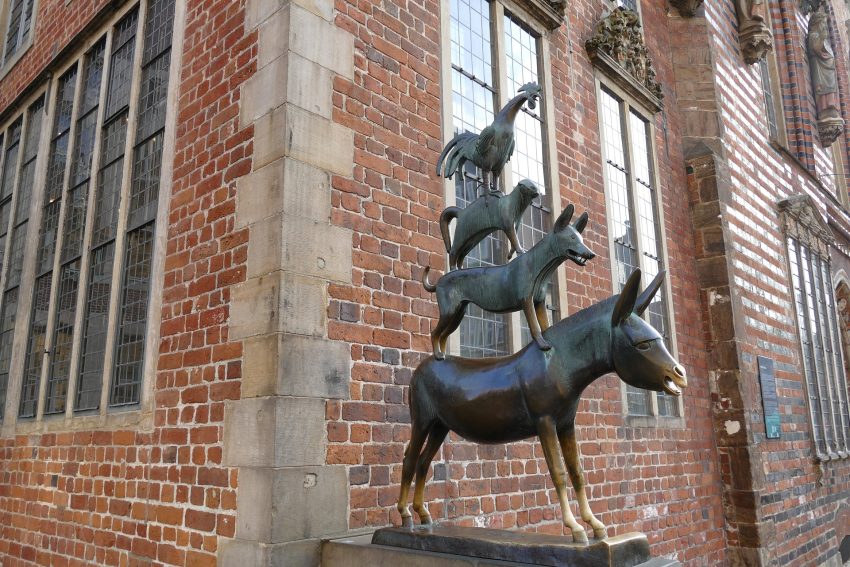
4. Bremen Town Musicians Statue

Bremen Town Musicians Statue

From the Roland Statue head clockwise around the town hall.


The Bremen Town Musicians, consisting of a donkey, dog, cat, and rooster, have become an inseparable part of the city’s identity, much like the Weser River. Wherever you wander in Bremen’s historic city centre, you’ll encounter their presence. The iconic bronze statue, created by Gerhard Marcks, is situated on the western side of the town hall, and it’s hard to miss the crowds of visitors eagerly awaiting their turn to touch the donkey’s front legs. It is believed that this act brings good fortune, adding to the statue’s charm and appeal. The Bremen Town Musicians serve as a whimsical symbol of the city, embodying its rich folklore and captivating the hearts of all who encounter them.

Lookout for the unique Ratskeller, located within the town hall, where you can indulge in a memorable culinary experience.


Click here to read our blog about Exploring Germany’s Fairy Tale Route 2026: Complete Guide & Itinerary

5. Bremen Cathedral

Bremen Cathedral
Bremen Cathedral
CC BY-SA 3.0 / Ralf Roletschek

Located on Bremen’s Marktplatz square, the Cathedral of Saint Peter stands as one of the city’s most magnificent architectural gems. Its construction spanned several centuries, from the 11th to the 16th, resulting in a captivating blend of romantic and Gothic styles. This historic cathedral is a testament to the skill and craftsmanship of the artisans who worked on its creation. As you explore its awe-inspiring interior, you’ll be transported back in time, marveling at the intricate details and soaring vaulted ceilings. The Cathedral of Saint Peter is not only a place of worship but also a testament to Bremen’s rich cultural heritage and a must-visit landmark for anyone seeking architectural splendor.


Location: Bremen Cathedral, Sandstraße, Bremen, Germany | Hours: 10am-5pm Mon-Fri, to 2pm Sat, 2-5pm Sun Oct-May, Mon-Fri & Sun to 6pm Jun-Sep | Price: tower adult/child €2/1, museum free | Website

6. Schnoor

Schnoor Bremen
Schnoor Bremen
CC BY-SA 4.0 / Lucas Kaufmann

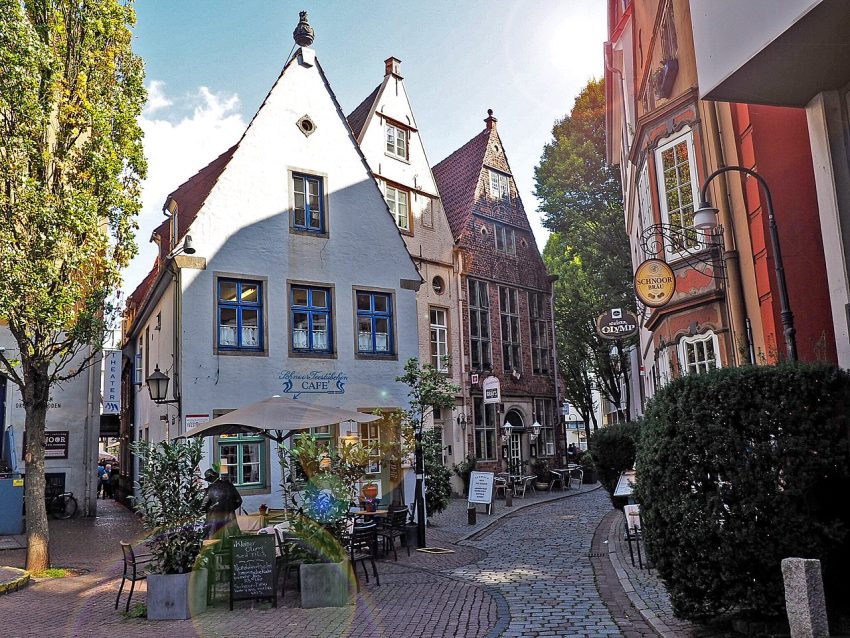
The charming old town quarter of Schnoor is a captivating labyrinth of streets that has rightfully earned its reputation as one of the “coolest” destinations in the world. Its name, derived from the Low German word for “string,” perfectly captures the essence of this meticulously restored district. As you explore its enchanting alleys, you’ll be greeted by a string of small, vibrant houses and shops, resembling precious pearls on a necklace. The narrowness of the streets is such that you can almost touch both sides with outstretched arms. A visit to Bremen would be incomplete without a leisurely stroll through the captivating Schnoor.

The Schnoor offers much more than just picturesque scenery. It presents a treasure trove of delightful souvenirs, cultural experiences, and culinary delights. Each corner unveils unique motifs that beg to be captured in photographs, ensuring lasting memories of your visit. Whether you’re seeking a memorable keepsake, immersing yourself in local culture, or indulging in gastronomic pleasures, the Schnoor has it all.

Immerse yourself in the whimsical charm of the Schnoor, where history and modernity blend seamlessly. Explore its narrow streets, soak up the vibrant atmosphere, and discover the hidden gems that await around every corner. The Schnoor is a true testament to Bremen’s allure and should be a top priority on your itinerary, offering an unforgettable experience for all who venture into its captivating realm.


Location: Schnoor, Schnoor, Bremen, Germany

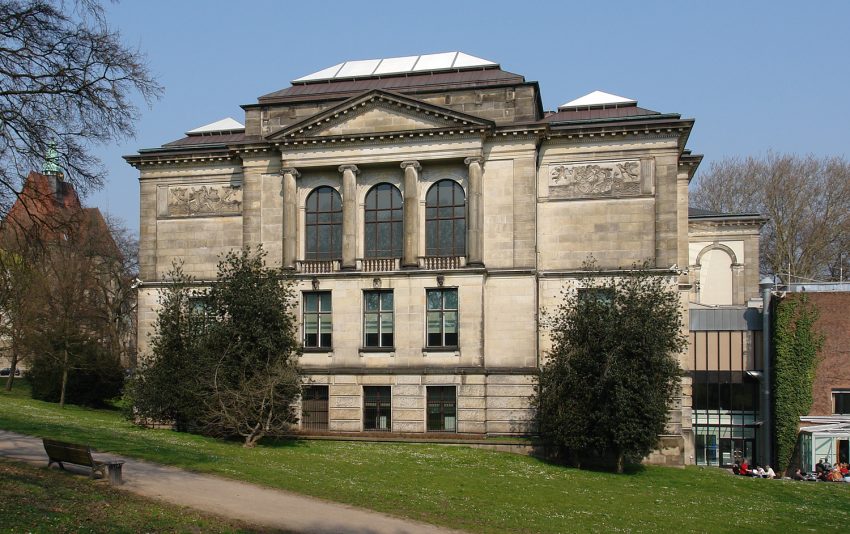
7. Kunsthalle

Kunsthalle Bremen
Kunsthalle Bremen
CC BY-SA 2.0 / Jürgen Howaldt

Indulge in the sheer delight of artistic expression at the Kunsthalle Bremen art gallery. This remarkable institution showcases a diverse collection spanning over six centuries, offering a journey through European art history from the 14th century to the present day. From exquisite paintings dating back to the Middle Ages to contemporary sculptures and captivating media art, the gallery presents a comprehensive exploration of artistic evolution.

Immerse yourself in the masterpieces of renowned artists such as Masolino, Dürer, Monet, van Gogh, Beckmann, Cage, and Paik, whose works grace the walls and halls of the Kunsthalle. The collection is a testament to the richness and diversity of artistic expression throughout the ages. Notably, the gallery’s copperplate engraving cabinet stands as one of the most significant of its kind, housing an impressive array of intricate prints.

The Kunsthalle Bremen continues to captivate visitors with its dynamic program of thought-provoking special exhibitions. These carefully curated showcases breathe new life into the tradition-rich institution, presenting fresh perspectives and innovative approaches to art. With each visit, the gallery invites you to rediscover its timeless treasures and experience the fusion of tradition and contemporary creativity.

Prepare to be enthralled by the Kunsthalle Bremen’s commitment to artistic excellence and its ability to engage and inspire visitors of all backgrounds. Whether you are a seasoned art enthusiast or a curious explorer, this cultural haven promises an enriching and ever-evolving experience, revealing the power and beauty of human creativity through the ages.


Location: Kunsthalle Bremen, Am Wall, Bremen, Germany | Hours: 10am-5pm Wed-Sun, to 9pm Tue | Price: adult/child €9/free

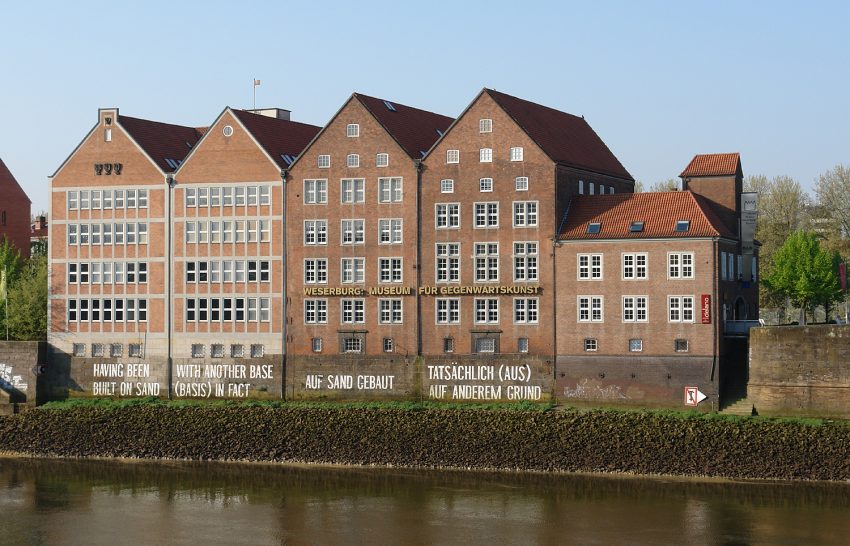
8. Weserburg Museum of Modern Art

Weserburg Museum of Modern Art
CC BY-SA 3.0 / Jürgen Howaldt

Situated on the picturesque Teerhof peninsula along the River Weser, the Weserburg is a contemporary art museum in Bremen, Germany. Its doors opened in 1991 within the walls of a former factory building that had suffered severe damage during World War II. Originally named “New Museum Weserburg Bremen,” it proudly holds the distinction of being Europe’s first “collectors’ museum.” Rather than housing a permanent collection, the museum showcases rotating exhibitions of private collections, offering a dynamic and ever-changing artistic experience. With its expansive exhibition spaces, the Weserburg stands as one of Germany’s largest museums dedicated to modern art. It is a vibrant hub for art enthusiasts, fostering creativity and engaging visitors with thought-provoking displays.


Location: Weserburg | Museum of Modern Art, Teerhof, Bremen, Germany | Hours: Tuesday to Sunday 11 a.m. to 6 p.m. Monday closed | Price: Adults €9 | Website

9. Schlachte Embankment

Schlachte Embankment

The Schlachte, situated along the Weser River in the heart of Bremen, holds a rich history spanning over 800 years, showcasing its diverse and evolving nature. Once a bustling waterfront harbor, it has now transformed into a vibrant maritime promenade, known as the gastronomic hub of the city. Lined with a plethora of restaurants, bars, and pubs, it offers a delightful culinary experience. Take a leisurely stroll along the Weser River, savoring the scenic views and immerse yourself in the lively atmosphere of the local beer gardens that dot the area. The Schlachte invites you to indulge in the vibrant spirit of Bremen’s waterfront, where the past meets the present in a delightful fusion of history and gastronomy.


Location: Schlachte 12, 28195 Bremen, Germany
Powered by GetYourGuide
Moira & Andy
Moira & Andy

Hey! We're Moira & Andy. From hiking the Camino to trips around Europe in Bert our campervan — we've been traveling together since retirement in 2020!

Read our full story here

This website uses affiliate links which earn a small commission at no additional cost to you.

Walking Tour Map
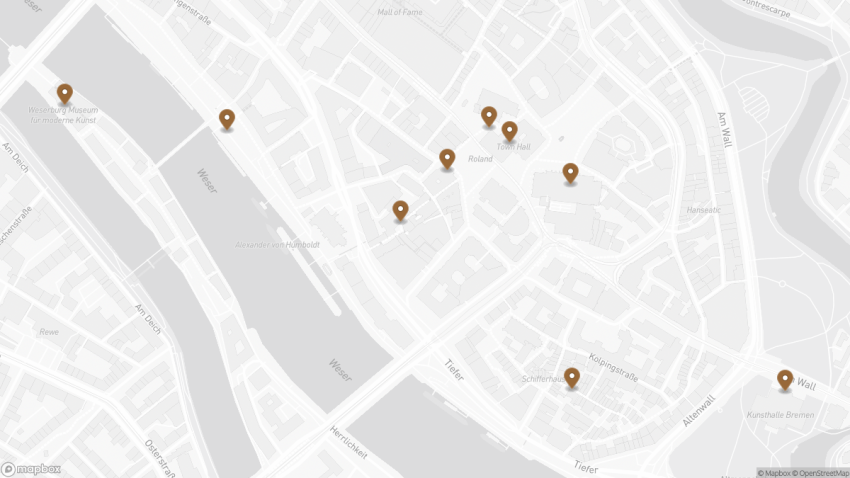
Map of the Self-Guided Walking Tour of Bremen, Germany walking route with 9 stops in Bremen.
Preview map of the Self-Guided Walking Tour of Bremen, Germany route in Bremen, showing 9 stops. Use the interactive map to zoom and tap markers.

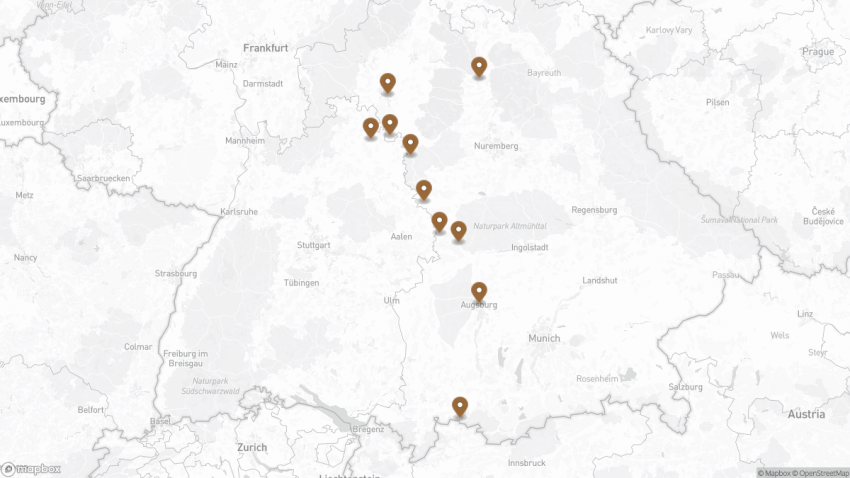
Self-Guided Walking Tour of Rothenburg Ob Der Tauber, Germany (2026)

Rothenburg city walls

This website uses affiliate links which earn a small commission at no additional cost to you.

Rothenburg ob der Tauber, perched above the Tauber River in Bavaria, is one of Germany's most enchanting medieval towns. Its perfectly preserved walls, cobbled streets, and half-timbered houses make it feel like stepping back in time to the Middle Ages. A walking tour of Rothenburg allows visitors to explore its rich history up close, from fortified towers and gates to historic squares and charming alleyways lined with artisanal shops.

The town’s compact layout makes it ideal for strolling, with highlights often just a few minutes apart. As you wander through the Marktplatz, you’ll encounter the Town Hall with its striking Gothic and Renaissance features, while the Rathaus Tower offers panoramic views of the surrounding town and countryside. Rothenburg’s unique blend of medieval architecture and living traditions, such as the famous Christmas market, makes every corner a photographic moment and a lesson in history.

Top Tip: If you are staying the night here take the hour-long medieval entertainment with Hans Baumgartner, who operates the Night-watchman’s Tour. This friendly and funny guy carries one of the most popular tours in town, in the evenings from March to Christmas, with German and English versions. Wearing a black costume impersonating the original night-watchmen, he offers a unique version of the darkling town while driving you to the Middle Ages with his tales.

How to Get to Rothenburg ob der Tauber

By Plane: The nearest major airports to Rothenburg ob der Tauber are Nuremberg Airport (NUE) and Stuttgart Airport (STR), both about a 1.5-2 hour drive away. From either airport, you can rent a car or take a combination of train and bus services to reach the town. For the best deals and a seamless booking experience, check out these flights to Rothenburg ob der Tauber on Booking.com.

By Train: Rothenburg is accessible via train from major German cities, with connections through Steinach. The journey from Frankfurt or Munich typically takes around 3 hours. Train schedules and bookings can be found on Omio.

By Car: Located along the Romantic Road, Rothenburg is approximately a 2-hour drive from both Frankfurt and Munich. Parking is available outside the city walls, with easy pedestrian access to the Old Town. Best parking for the tour is outside the old town, Altstadt, on Bezoldweg. If you are looking to rent a car in Germany I recommend having a look at Discover Cars, first, as they compare prices and review multiple car rental agencies for you.

Where to Stay in Rothenburg ob der Tauber

To immerse yourself in Rothenburg’s medieval ambiance, consider staying within the city walls. For a luxury stay, Hotel Eisenhut offers elegant accommodations in historic buildings. For mid-range charm, Hotel Klosterstüble provides traditional decor and a welcoming atmosphere. Budget travellers may enjoy Hotel-Gasthof Goldener Greifen for affordable lodging and a cozy setting.

A Brief History of Rothenburg ob der Tauber

Rothenburg ob der Tauber, perched on a hill above the Tauber River in Bavaria, Germany, is one of the best-preserved medieval towns in Europe. Founded in the late 10th century, it flourished as a Free Imperial City from 1274, gaining wealth and influence through trade and craftsmanship. The town's fortifications, including the iconic Klingentor and Rödertor Gate with its Röderturm, reflect its strategic importance and the need for protection during medieval conflicts.

The heart of Rothenburg is marked by its impressive town hall, the Rothenburg Rathaus, whose Gothic and Renaissance facades date back to the 13th and 16th centuries. Religious architecture is equally striking, with St. Jakobs Kirche, built in the 14th century, housing significant art and relics. The town’s defensive towers, including the White Tower and Markusturm, alongside charming buildings like the Judentanzhaus and the Master Builder’s House (Baumeisterhaus), showcase the city’s blend of fortification and domestic architecture.

Beyond its walls, Rothenburg boasts carefully preserved gardens and scenic viewpoints, such as the Castle Gardens, offering sweeping views of the surrounding countryside. The picturesque Plönlein, with its half-timbered houses and cobblestone streets, captures the town’s medieval charm, making Rothenburg a living museum of German history and architecture. Visitors today can walk along the town walls, explore the towers and gates, and immerse themselves in the atmosphere of a bygone era that has survived remarkably intact.

Guided or Self-Guided Tour of Rothenburg ob der Tauber?

While wandering Rothenburg’s streets independently is delightful, a guided tour offers deeper insights into its history and legends. The Rothenburg ob der Tauber: Private Old Town Walking Tour provides a personalised exploration of the city’s highlights, including the Market Square, St. Jakob’s Church, and the medieval city walls. Led by knowledgeable guides, this tour enriches your understanding of Rothenburg’s cultural heritage.

Your Walking Tour of Rothenburg ob der Tauber

This guide highlights Rothenburg's main attractions, but the town's charm lies in its details. Take time to explore the lesser-known alleys, visit the Medieval Crime Museum, and enjoy the vibrant atmosphere of its historic squares. Whether you're a history enthusiast or a casual traveler, Rothenburg ob der Tauber offers a memorable experience.

1. Klingentor

Klingentor
Klingentor
CC BY-SA 4.0 / Tilman2007

Begin by heading towards the impressive Klingentor, a medieval gate that served as both a defensive structure and a water tower.


Klingentor, one of Rothenburg’s main city gates, stands as a formidable reminder of the town’s medieval fortifications. Dating back to the 14th century, this gate once controlled access from the north and was an essential part of the town’s defensive system. Its tall stone structure, flanked by towers, demonstrates the architectural style of the period and the strategic importance of Rothenburg in regional trade and security.

Walking through Klingentor, visitors can imagine the gates closing to protect the city from invading forces, with guards stationed above monitoring the surrounding area. The passageway itself is narrow, a deliberate defensive design to slow down attackers, and the stonework still retains traces of its historical function. Today, it is one of the most photographed parts of Rothenburg, blending medieval functionality with striking aesthetics.

Inside the bastion, you’ll find the fortified church of St. Wolfgang, dating back to the late 15th century and integrated into the town walls.

The gate also offers a gateway into the town’s historic center, providing a dramatic entrance into Rothenburg’s charming streets. From here, walkers can easily continue to explore nearby landmarks, making Klingentor an essential starting point for any tour. Its imposing presence underscores the town’s long history as a fortified medieval city.


Location: Klingentor, Klingengasse, Rothenburg ob der Tauber, Germany

We recommend to rent a car in Germany through Discover Cars, they compare prices and review multiple car rental agencies. Book your rental car here.

2. St. Jakobs Kirche

St Jakob Kirche Rothenburg
CC BY-SA 3.0 / Tuxyso

Continue your stroll through the Altstadt, walking south along Klingengasse. The striking Lutheran parish church of St. Jakobs Kirche (St. James’s Church), with its Gothic architecture, awaits you. Don’t miss the opportunity to explore its interior, where you’ll find the renowned Heilig Blut Altar by the talented sculptor Tilman Riemenschneider. This intricately carved wooden masterpiece depicting the Last Supper is considered one of Riemenschneider’s finest works.


St. Jakobs Kirche, Rothenburg’s most famous church, dates back to the 14th century and is a masterpiece of Gothic architecture. It was built to serve the spiritual needs of the growing town, with its towering spire visible from many parts of Rothenburg. Inside, the church is renowned for its beautiful stained-glass windows, intricate wood carvings, and the famed Holy Blood altarpiece by Tilman Riemenschneider.

The church is dedicated to Saint James and played an important role in the religious life of the medieval town. Pilgrims and local worshippers alike would have gathered here for services, feasts, and festivals. The interior reflects centuries of devotion and craftsmanship, from the vaulted ceilings to the detailed sculptures, each telling a story of faith and history.

Visitors today can admire the altarpiece, which depicts the Passion of Christ with incredible emotional intensity, considered one of Riemenschneider’s finest works. St. Jakobs Kirche remains a spiritual center, a historical monument, and a key highlight of Rothenburg’s medieval heritage, drawing both worshippers and tourists.


Location: St.Jakobskirche, Kirchplatz, Rothenburg ob der Tauber, Germany

Here is a complete selection of hotel options in Rothenburg ob der Tauber. Feel free to review each one and choose the stay that best suits your needs.

3. Rothenburg White Tower & Judentanzhaus

Weiser Turm Rothenburg
CC BY-SA 3.0 / trolvag

Leave the church and turn left onto Kirchplatz, then make your way to the 12th-century Weisser Turm which you will pass underneath.

As the highest point in the Altstadt, this “White Tower” is part of the original inner town wall. Next to it stands the half-timbered Judentanzhaus, a reminder of Rothenburg’s historical significance as a centre of Jewish culture during the Middle Ages.

The road you are now on is called Galgengasse, known as Gallows’ Lane, which leads to the Galgentor, the former town gallows. You will be turning off this, second right onto Paradeisgasse.


The White Tower, or Weißer Turm, is a striking defensive structure that once guarded the town’s northern walls. Built in the 13th century, it forms part of Rothenburg’s fortification network, designed to protect against invaders. Adjacent to it is the Judentanzhaus, a historic house known for its distinctive timber-framed architecture and its association with Rothenburg’s medieval Jewish community.

The White Tower offers panoramic views of the surrounding countryside, and its preserved battlements reveal the defensive strategies of the medieval town. Walking along its perimeter, visitors can imagine sentries keeping watch over the approaches, and the tower itself acts as a tangible link to Rothenburg’s fortified past.

The Judentanzhaus, once part of the thriving Jewish quarter, provides insight into the town’s social history. Its timbered facade and historic interiors convey the domestic architecture of the period, while plaques and signage explain the building’s cultural significance. Together, these sites illustrate both the military and civilian aspects of Rothenburg’s past.


Location: Weißer Turm, Georgengasse, Rothenburg, Germany

Traveling to a country with a different currency? Avoid ATM transaction fees and pay in local currency with a Wise Card. Having used it for over 5 years, we've saved loads on fees!

4. Rödertor Gate & Röderturm

Rodertor Feldseite Rothenburg ob der Tauber
CC BY-SA 4.0 / Tilman2007

The Rödertor Gate is undoubtedly the most picturesque entrance to the town, characterized by its two customs and watch huts adorned with pointed roofs. This well-preserved gate not only served as an entryway but also played a defensive role, allowing defenders to repel attackers from the side towers if they breached the outer bailey. The main tower, dating back to the 13th century, is the oldest part of the complex and holds great historical significance.

One of the highlights of the Rödertor Gate is the opportunity to climb the Röderturm tower, offering breath-taking views of the town and its surrounding walls. It’s worth noting that there is a small fee, usually around 2 euros, to access the tower. Among all the towers in Füssen, this is the only one open for climbing, providing a unique experience and a chance to gain a higher vantage point. From the top, you can truly appreciate the size and magnificence of the town walls, gaining a deeper understanding of their historical significance.


Rödertor Gate and its adjoining Röderturm are integral components of Rothenburg’s defensive walls, originally constructed in the 14th century. The gate served as the main entrance from the south, and the tower provided strategic oversight of approaching roads. Its robust stone construction and medieval design reflect the town’s military preparedness.

Walking through Rödertor, visitors can appreciate how the gate’s narrow passage and portcullis would have slowed down potential attackers. The Röderturm offers a climb for those wanting a view over the town walls and surrounding landscape, revealing Rothenburg’s strategic location atop a hill overlooking the Tauber Valley.

Today, the gate and tower remain accessible as part of Rothenburg’s city walk, allowing visitors to experience firsthand the medieval fortifications. Informational displays highlight the architectural and historical significance, emphasizing Rothenburg’s reputation as a well-defended Free Imperial City.


Location: Topplerweg 2, 91541 Rothenburg ob der Tauber, Germany | Hours: 24 Hours | Price: Free (exterior viewing; interior access limited). | Website

5. Markusturm

Markusturm Rothenburg
CC BY-SA 3.0 / Istvánka

Turn right onto Pfarrgasse and then left onto Rödergasse. As you proceed, take in the picturesque cluster of buildings surrounding the Markusturm and Röderbogen, an ancient town gate and former prison constructed around 1200. At the end of Rödergasse, you’ll find the Röderturm (open daily from March to November and during the Christmas Market), the only town gate that can be climbed for panoramic views. Inside, there’s an exhibition detailing the bombing of Rothenburg during World War II, although little evidence of the destruction remains today.


Markusturm is a smaller defensive tower that forms part of Rothenburg’s extensive network of city fortifications. Constructed in the 13th century, it was designed to reinforce the walls and provide vantage points for sentries watching the approaches to the town. Its modest size belies its strategic importance in protecting the medieval city.

Visitors climbing the tower can enjoy impressive views of the town’s rooftops and surrounding landscape, including the Tauber River valley. The tower’s interior remains simple, highlighting its functional military purpose rather than decorative intentions, but the views from the top reward the climb.

As part of the walking tour, Markusturm provides a quiet yet historically rich stop. It demonstrates how even smaller structures played a crucial role in the town’s defenses, emphasizing Rothenburg’s well-planned medieval fortification system.


Location: Markusturm u. Röderbogen, Rödergasse, Rothenburg ob der Tauber, Germany

6. Rothenburg Rathaus

Rothenburg Rathaus Town Hall
Public Domain / Berthold Werner

As you enter the square from the south you will pass the The Master Builder’s House (Baumeisterhaus). Return to the Marktplatz, the central square, and admire the magnificent Rathaus.


The Rothenburg Rathaus is the city hall and one of the most prominent landmarks in the town. Its Gothic and Renaissance facades, constructed between the 13th and 16th centuries, showcase the architectural evolution of Rothenburg over time. The building’s central location in Marktplatz makes it a focal point of civic life.

Inside, the Rathaus houses ceremonial rooms and a historic council chamber where medieval officials once conducted town business. The ornate details of the ceilings, windows, and arches illustrate the wealth and significance of Rothenburg as a Free Imperial City.

The Rathaus’s tower is accessible to visitors, providing panoramic views of the old town and surrounding countryside. Its prominent clock and bell tower are central to the town’s visual identity, and the building continues to serve as a symbol of civic pride and historical continuity.

To the right of the town hall, you’ll find the gabled Ratstrinkstube, or City Councillors’ Tavern, featuring a charming 17th-century clock. Every hour, mechanical figures emerge to depict the story of the Meistertrunk, a legendary drinking bet that saved the city during the Thirty Years’ War.


Location: Rathaus Rothenburg ob der Tauber, Markt, Rothenburg, Germany

7. The Master Builder’s House (Baumeisterhaus)

The Master Builders HouseBaumeisterhaus Rothenburg
CC BY-SA 3.0 / Tilman2007

Constructed in 1596 by Leonard Weidmann, a renowned local master builder and stonemason, the Master Builder’s House is a true gem. Today, this splendid mansion houses a restaurant and café, offering visitors a delightful culinary experience amidst its opulent interior. While the lavishness of the inside is certainly worth exploring, the true highlight of the Master Builder’s House lies in its magnificent facade.

Adorned with intricate details, the facade of the mansion is a sight to behold. One can’t help but be captivated by the statues of the seven virtues and the seven vices that grace its exterior, adding a touch of symbolism and artistic flair to the structure. This unique display invites contemplation and appreciation for the rich craftsmanship and attention to detail that went into its creation.

A fascinating aspect of the Master Builder’s House lies in its statues representing both virtues and vices, deliberately intertwined to reflect their coexistence in life. As you admire the facade, you’ll notice a captivating array of sculptures, each carrying its symbolic meaning. Let’s explore the statues in more detail: On the lower row, starting from the left, you’ll find Kindheartedness, depicted with a hand placed on the heart, followed by Gluttony, represented by a wine cup. Motherhood is portrayed with children, while Betrayal is symbolized by weight counterfeiters. The statue of Gentleness takes the form of a lamb, and Wisdom is embodied by two intertwined snakes. Lastly, Temperance/Moderation is depicted by the combination of a cup of wine and a cup of water. Moving to the upper row, you’ll encounter Stinginess represented by a money bag, Courage symbolized by a club, and Unchastity portrayed with a goat. Justice is depicted holding a sword, Pride/Vanity is represented by a mirror, and Falsity takes the form of a snake. Finally, Laziness is embodied by a snail.

The original sandstone statues, which beautifully showcase this juxtaposition of virtues and vices, are now displayed at the Imperial City Museum. To ensure their preservation, replicas have been put in place on the facade of the Master Builder’s House.


Location: Baumeisterhaus Inh. Dieter Neupert, Obere Schmiedgasse, Rothenburg ob der Tauber, Germany

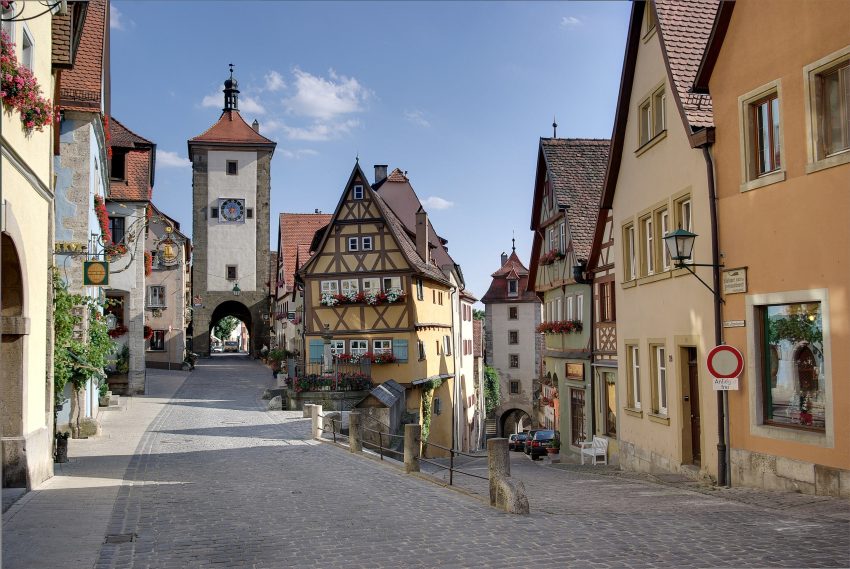
8. Plönlein

Plonlein The Little Square
CC BY-SA 2.0 / Ulrich Oestringer

From the Markt, head downhill along Schmiedgasse to reach Plönlein, a picturesque corner that is often regarded as one of Rothenburg’s most iconic sights.


Plönlein is one of Rothenburg’s most photographed corners, where two streets converge beneath a half-timbered house with a pointed roof. This quaint spot, dating back to the 14th century, epitomizes the town’s medieval charm and picturesque streets.

The narrow cobbled streets surrounding Plönlein are perfect for wandering, lined with colorful half-timbered houses, shops, and cafes. Walking through this area gives a sense of stepping back in time, immersing visitors in Rothenburg’s authentic historic ambiance.

Plönlein is also a strategic viewpoint, offering perspectives of both the town walls and nearby towers. It serves as an ideal starting point for exploring the old town’s alleys, shops, and fortifications while providing countless photographic opportunities.


Location: Plönlein, Untere Schmiedgasse, Rothenburg ob der Tauber, Germany | Hours: 24 Hours | Price: Free

9. The Castle Gardens

The Burggarten Castle Garden Rothenburg
CC BY-SA 2.0 / Kent Wang

The enchanting castle gardens, a must-visit destination to step away from the crowds of tourists. During the Middle Ages, this picturesque spot served as the original location of the Hohenstaufen family castle. I highly recommend exploring these gardens as they offer a truly breath-taking panoramic view of the entire town. From this vantage point, we even had a clear glimpse of Rothenburg’s festival grounds, adding to the charm of the experience.

As you wander through the gardens, you’ll also notice the magnificent Tauber Bridge. This historic bridge, believed to have been constructed around 1330, features a unique double design with two rows of arches. It served as an important trade route connecting Augsburg to Würzburg, exemplifying the historical significance of this remarkable structure.

Taking the time to appreciate the castle gardens and the Tauber Bridge allows you to immerse yourself in the rich history and beauty of the region. Whether you’re captivated by the sweeping views, the remnants of the Hohenstaufen castle, or the architectural marvel of the Tauber Bridge, this experience is sure to leave a lasting impression.


Location: Castle Garden, Alte Burg, Rothenburg ob der Tauber, Germany

This two-hour walking tour offers a delightful journey through Rothenburg’s medieval streets, showcasing its well-preserved architecture, rich history, and captivating landmarks.

Powered by GetYourGuide
Moira & Andy
Moira & Andy

Hey! We're Moira & Andy. From hiking the Camino to trips around Europe in Bert our campervan — we've been traveling together since retirement in 2020!

Read our full story here

This website uses affiliate links which earn a small commission at no additional cost to you.

Walking Tour Summary

Distance: 3.5 km
Sites: 9

Walking Tour Map
Map of the Self-Guided Walking Tour of Rothenburg Ob Der Tauber, Germany walking route with 9 stops in Rothenburg ob der Tauber.
Preview map of the Self-Guided Walking Tour of Rothenburg Ob Der Tauber, Germany route in Rothenburg ob der Tauber, showing 9 stops. Use the interactive map to zoom and tap markers.

Romantic Road in Germany 2026: Complete Guide & Itinerary

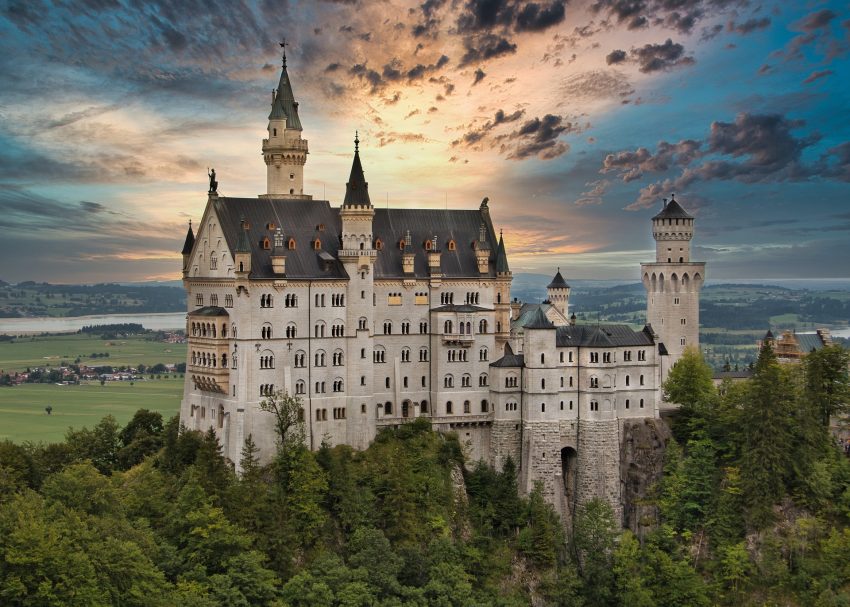
The Romantic Road and Neuschwanstein Castle

This website uses affiliate links which earn a small commission at no additional cost to you.

The Romantic Road, or Romantische Straße in German, winds through the picturesque southern region of Germany. This 285-mile (460 km) route will lead you through charming historic towns and past breathtaking landscapes in Bavaria. Along the way, you'll encounter charming German cottages and fairytale castles, making for a truly scenic drive. There are 28 towns in total, some more popular than others but all offer something beautiful to uncover.

Whether you have 4 days or a week, there are plenty of places to discover on this route.

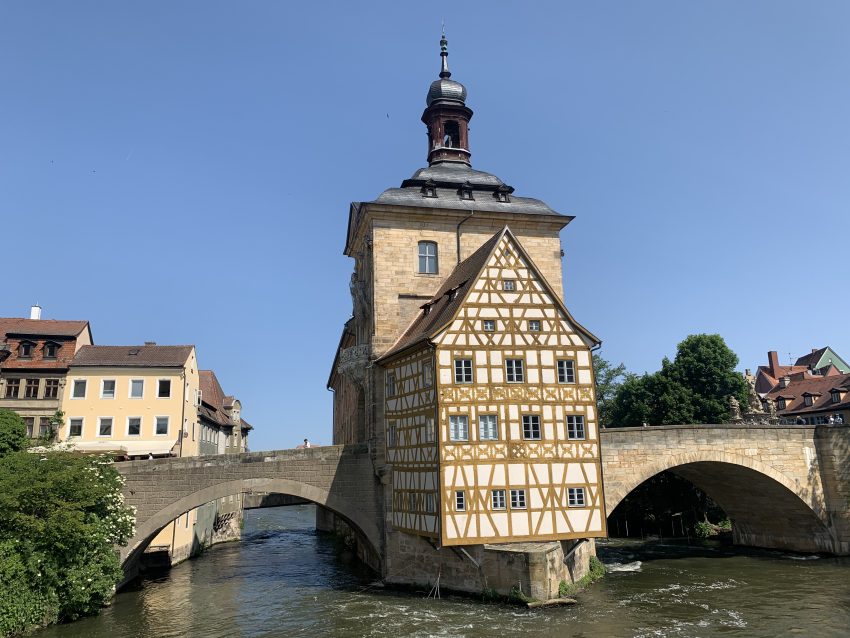
Bamberg

Bamberg
Bamberg
© Andrew Ashton

While not officially on the Romantic Road, Bamberg is worth starting out at. It is a captivating city situated on the banks of the Regnitz River and the Main-Danube channel. Often referred to as Franconian Rome, Bamberg boasts a scenic landscape characterized by seven hills, each adorned with a church or castle.

The Old Town of Bamberg is a testament to its rich architectural heritage, featuring a harmonious blend of diverse styles. Its well-preserved buildings contribute to its status as a UNESCO World Heritage Site, bestowed upon it in 1993.

Bamberg offers a wealth of attractions for visitors, catering to diverse interests. Whether one is intrigued by the city’s episcopal history or captivated by its romantic ambiance and renowned beer tradition, Bamberg provides a multitude of experiences and delights.

We recommend to rent a car in Germany through Discover Cars, they compare prices and review multiple car rental agencies. Book your rental car here.

Powered by GetYourGuide

Wurzburg

Wurzburg
Wurzburg

Würzburg is a charming blend of history, culture, and wine, situated on both sides of the Main River. This former royal capital and university town exudes a lively atmosphere and captivating charm. The Baroque architecture of the city is a testament to its southern German character and Franconian hospitality. St. Kilian Cathedral, the fourth-largest Romanesque church in Germany, is easily recognizable by its two grand towers that can be seen from afar. Würzburg’s famous landmarks include the Würzburg Residence with its Court Gardens (Hofgarten) and Residence Square (recognized as a UNESCO World Heritage Site), the Marienberg Fortress, and the Old Main Bridge, which spans the Main River for 180 meters and features impressive statues of saints. Nestled amidst picturesque vineyards on the banks of the Main River, Würzburg’s scenic location alone is reason enough to visit this enchanting city.

Here is a complete selection of hotel options in Würzburg. Feel free to review each one and choose the stay that best suits your needs.

Bad Mergentheim

Bad Mergentheim
Bad Mergentheim
CC BY-SA 24.0 / Holger Uwe Schmitt

Bad Mergentheim, as indicated by the term “Bad,” is among the esteemed spa resorts situated in the southern region of Germany. Bad Mergentheim is famous for its spa, the Teutonic Order (Deutschorden) Castle and Museum, and the Stuppacher Madonna by Matthias Grünewald.

Traveling to a country with a different currency? Avoid ATM transaction fees and pay in local currency with a Wise Card. Having used it for over 5 years, we've saved loads on fees!

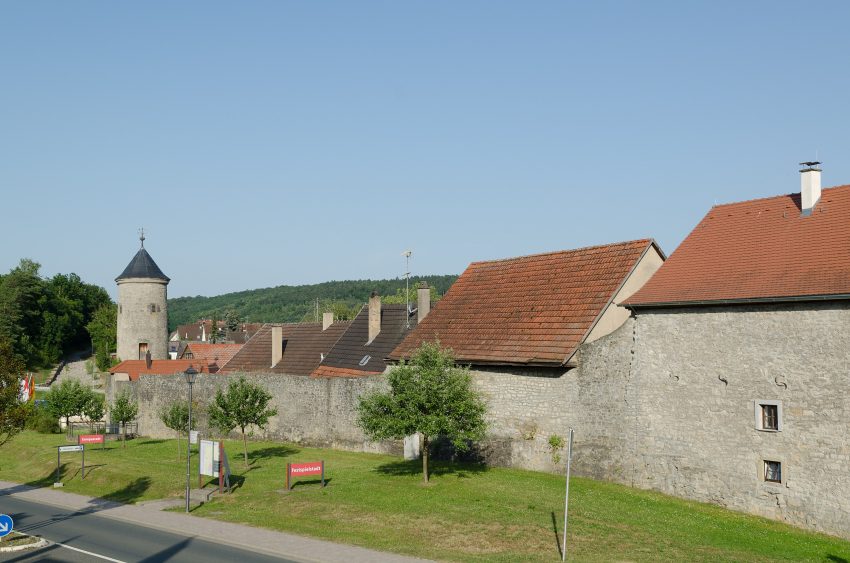
Röttingen

Rottingen City Walls
CC BY-SA 3.0 / Tilman2007

Believed to have been settled during the 5th century, Röttingen has endured a turbulent history marked by medieval massacres and conflicts. Despite its past struggles, the village today exudes a delightful sense of history, characterized by its picturesque half-timbered houses and a charming Baroque Town Hall. A significant portion of the town’s defensive walls from the 17th century and several watchtowers still stand as testaments to its fortified past. Adding to the town’s unique landmarks is the ‘High Building’, a remarkable five-story structure originally serving as a Teutonic Order base. The town’s castle, originally dating back to the 13th century but renovated over time, now houses a museum dedicated to the region’s wine, showcasing the cultural significance of viticulture in the area.

Explore Würzburg at your own pace with our self-guided walking tour! Follow our curated route to discover must-see sights and local secrets that makes Würzburg one of the best places to visit in Germany.

Powered by GetYourGuide

Rothenburg Ob Der Tauber

Rothenburg ob der Tauber
Public Domain / Berthold Werner

Rothenburg Ob Der Tauber is a captivating town located just a stone’s throw away from Wurzburg, making it one of the most beloved destinations on Germany’s Romantic Road. Its cobblestone streets and medieval walls, gates, and towers are steeped in history and provide a sense of stepping back in time.

The town’s half-timbered homes and unique architecture make it an exceptional stop along the Romantic Road. The best way to experience Rothenburg Ob Der Tauber is to take a leisurely stroll around the old town and immerse yourself in its charming ambiance. Don’t miss the opportunity to take in the towering sights of landmarks like Klingentor, capture a photo at the picturesque Das Plönlein (little square), and explore St. James’s Church and the Rothenburg Rathaus

Powered by GetYourGuide

Dinkelsbühl

Dinkelsbuhl
Dinkelsbuhl
CC BY-SA 3.0 / Mylius

Dinkelsbühl stands as a quintessential town along the renowned German Romantic Road, contributing to its distinct character.

Situated between its two neighboring towns, Rothenburg to the north and Nördlingen to the south, Dinkelsbühl proudly retains its medieval charm with its intact city walls. The impressive minster and the charming timbered buildings offer visitors a vivid glimpse into the authentic ambiance of the Middle Ages.

Powered by GetYourGuide

Nördlingen

Nordlingen
Nordlingen

Nördlingen is a significant stop on the Romantic Road, along with the other two medieval walled towns, Rothenburg ob der Tauber and Dinkelsbühl. What sets Nördlingen apart is that its old town is located within a vast crater formed over 14 million years ago by a meteorite impact. This unique location adds to the town’s charm, with wall walk and the imposing Gothic structure of Saint George’s Church, boasting a 90-meter spire that you can climb up the 350 steps to enjoy a panoramic view of the town from a bird’s-eye perspective.

Harburg

Harburg in Schwaben Burg
CC BY-SA 4.0 / Tilman2007

Harburg possesses the enchanting allure of a medieval town, featuring an impressive hilltop castle overlooking a settlement situated along a prominent trade route, be it a road or a river.

The name “Harburg” is believed to have originated from Old German, possibly signifying a “castle above a bog” if the etymology holds true.

Constructed by the former Hohenstaufen emperors of Germany during the 11th or 12th century, Harburg Castle stands as one of the country’s oldest fortifications. It has been under the ownership of the Count of Oettingen-Wallerstein for nearly three centuries. The castle’s current fortifications primarily date back to the 18th century and are accessible for visits during the summer season from Tuesday to Sunday. Additionally, within the castle, there is a cozy hotel-restaurant offering accommodations and dining options.

The town of Harburg, situated below the castle, thrived with a population of small farmers and skilled artisans. Its fortunes were tied to the transactions and alliances of noble families, as the castle changed hands over time, sometimes leading to shifts in preferred Christian denominations.

Augsburg

Augsburg
Augsburg
CC BY-SA 3.0 / Guido Radig

Augsburg, a city with a rich historical background, predates the medieval era and surpasses its neighbouring towns along the Romantic Road in terms of ancient origins. As one of the oldest cities in Germany and the oldest in Bavaria, Augsburg offers visitors a glimpse into various historical periods through its prominent landmarks located in the city centre.

During the Roman Empire’s reign and the establishment of a trade route connecting northern Italy to their new powerbase in southern Germany, the original settlement was named Augusta Vindelicorum.

Positioned approximately halfway along the Romantic Road, Augsburg serves as an ideal stopover for travellers planning to divide their journey into northern and southern sections.

The city boasts a captivating old town, featuring notable attractions such as the Augsburg Cathedral, which dates back to the 11th century and lies just outside the main centre. Additionally, the central square proudly showcases an impressive Renaissance town hall, adding to the city’s architectural allure.

Füssen

Fussen
Fussen
CC BY-SA 3.0 / Wolkenkratzer

One of the main attractions in Füssen is the famous Neuschwanstein Castle, which is located just a short distance from the town. This fairytale-like castle, built by King Ludwig II, is one of the most iconic and visited castles in Europe. Its enchanting architecture and breath-taking surroundings attract tourists from around the world. Apart from Neuschwanstein and Hohenschwangau castles, Füssen offers other notable attractions as well. The town itself has a charming old town area with colourful buildings, cobblestone streets, and quaint shops and cafes. Visitors can explore the historic Benediktinerkloster St. Mang, a former Benedictine monastery with a beautiful basilica. The High Castle (Hohes Schloss) is another prominent landmark, housing a museum showcasing the town’s history and artwork.

Powered by GetYourGuide
Moira & Andy
Moira & Andy

Hey! We're Moira & Andy. From hiking the Camino to trips around Europe in Bert our campervan — we've been traveling together since retirement in 2020!

Read our full story here

This website uses affiliate links which earn a small commission at no additional cost to you.

Walking Tour Map
Map of the Romantic Road in Germany: Complete Guide & Itinerary walking route with 10 stops in Würzburg.
Preview map of the Romantic Road in Germany: Complete Guide & Itinerary route in Würzburg, showing 10 stops. Use the interactive map to zoom and tap markers.

Exploring Germany’s Fairy Tale Route 2026: Complete Guide & Itinerary

Germanys Fairy Tale Route
CC BY-SA 2.0 / Marius Brede

This website uses affiliate links which earn a small commission at no additional cost to you.

The German Fairy Tale Route (Deutsche Märchenstraße) is a well-known driving route spanning 600km through Germany from Hanau to Bremen. Visitors are taken on a journey to the locations made famous by the Brothers Grimm in their beloved collection of fairy tales. From Snow White's cottage shared with the seven dwarfs, to Rapunzel's tower balcony, and the town of Hamelin where the Pied Piper once played his tune, the route runs from north to south, starting in Bremen and ending in Hanau, the brothers' birthplace in central Germany. However, we opted to travel in reverse, exploring the route as we headed south from England, discovering unexpected gems along the way.

What is the German Fairy Tale Route?

Established in 1975, the German Fairy Tale Road, or Deutsche Märchenstraße, is a national tourist route spanning 370 miles / 600km. It was created to boost tourism and links over 30 towns and communities between the Main river and the North Sea.

The route begins in the Hesse town of Hanau in central Germany and ends in the Free Hanseatic City of Bremen in the north. The main attractions along the way are focused on the Brothers Grimm, particularly locations where they lived and worked throughout their lives, as well as regions, towns, and cities related to the collection of fairy tales they wrote in 1812. This collection, known today as Grimm's Fairy Tales, was added to the UNESCO World Heritage Document List in 2005.

The Verein Deutsche Märchenstraße society, located in the city of Kassel, manages the route, which is marked by road signs featuring a stylized heart-shaped body and head of a princess wearing a crown.

Suggested Itinerary of the German Fairy Tale Route

Day 1 Hanau to Alsfeld

On the first day of your trip embark on a road trip from Hanau the birthplace of the Brothers Grimm, Steinau an der Straße to see the childhood home of the Brothers Grimm and on to Alsfeld for the Fairy Tale House.

There are additional towns you can visit which are on the route: Gelnhausen, where you can see a ruined Imperial Palace, Schlüchtern, Freiensteinau, Grebenhain, Herbstein and Lauterbach.

German Fairy Tale Route Day 1 Hanau to Alsfeld Route on Google maps.

Day 2: Marburg to Kassel

Your second day brings you from Marburg, Bad Wildungen a possible inspiration for Snow White to Kassel and its Grimm World museum.

There are additional towns you can visit which are on the route: Neukirchen, Willingshausen, Lahntal, Rauschenberg, Frankenberg-eder, Waldeck, Wolfhagen, Niedenstein, Schauenburg and Baunatal.

German Fairy Tale Route Day 2: Marburg to Kassel Route

Day 3: Kassel to Göttingen

On the third day of the official fairy tale road trip the route splits in two, between the Sleeping Beauty Route or the Mother Hulda Route.

We choose to stay mainly on the sleeping beauty route and double back on ourselves to visit Göttingen.

The route leads you through Hannoversch Münden, Reinhardswald Forest (including Sababurg Castle, known as the Sleeping Beauty Castle), Hofgeismar and Trendelburg (Rapunzel's Castle) and Göttingen.

German Fairy Tale Route – Day 3: Kassel to Göttingen Route

Day 4: Göttingen to Hameln

Day 4 takes you through Trendelburg and Hameln, where you can spot fairy tale references to Rapunzel and the Pied Piper.

German Fairy Tale Route – Day 4: Göttingen to Hameln Route

Day 5: Hameln to Bremen 

Your last day leads you through Bad Oeynhausen before concluding your journey in Bremen, where the Town Musicians of Bremen will greet you with open paws.

German Fairy Tale Route – Hameln to Bremen

Highlights of the German Fairy Tale Road

Hanau

Goldschmiedehaus Hanau
CC BY-SA 3.0 / Pedelecs

The official starting point our trip along the Fairy Tale Route, is at Hanau, 30km away from Frankfurt. The town holds a special significance as it was where the Grimm brothers spent the early years of their life until they were five and six years old.

Upon arriving in Hanau, your first stop should be the Marketplatz, the town square where you can see a bronze statue of the Brothers Grimm, built in 1896. The statue sits in front of Hanau Rathaus, or town hall. If you’re there on a Wednesday or Saturday, you can also check out the local markets in the square. While the architecture around the square is mostly modern and not very exciting, a short seven-minute walk north will take you to the stunning red and white medieval Deutsches Goldschmiedehausent or Goldsmiths’ House, which once served as the town hall. Unfortunately, it is one of the few remaining structures in the Altstadt (old town) to have survived WWII bombings.

The Grimms Märchen Reich, which opened in 2019, is a must-visit. This hands-on museum located in Schloss Philippsruhe takes young visitors on a magical tour through seven interactive fairy tale worlds. The exhibits include a collection of clothes, documents and other artefacts that once belonged to the brothers.

After that, head to the beautiful Wilhelmsbad Park where the castle ruins may look dilapidated but hide a princely residence where time has stood still. Here, you can also find the Hessisches Puppenmuseum or Hessian Doll and Toy Museum, which presents world history in miniature scale.

Additionally, Hanau is also the home of the annual summer Brothers Grimm Festival, which features live performances of the fairy tales, including musicals and family plays.

We recommend to rent a car in Germany through Discover Cars, they compare prices and review multiple car rental agencies. Book your rental car here.

Gelnhausen

Gelnhausen
Gelnhausen
CC BY-SA 4.0 / Tilman2007

Gelnhausen has a rich history that dates back to the 12th century, and it is known for its well-preserved medieval architecture, including the town hall, market square, and the Church of Saint Peter and Paul. – In the 12th century, Emperor Friedrich Barbarossa built a castle on an island near this quaint town.

Here is a complete selection of hotel options in Hanau. Feel free to review each one and choose the stay that best suits your needs.

Steinau an der Straße

Steinau an der Strase
Public Domain / siehe Disk-Difflink

Steinau an der Straße is where the Brothers Grimm lived until they were 12 and 13 years old. You can visit The Museum Brüder Grimm-Haus Steinau,  located in the brothers’ childhood home on Brüder-Grimm-Straße and offers visitors a glimpse into the daily lives of the Grimm family. The Fairytale Fountain or Märchenbrunnen is located in the centre of the marketplace and depicts many scenes from Grimm’s Fairy Tales, making it a popular spot for photo opportunities. The Castle Steinau was built in the 12th century and served as the home of the counts of Hanau-Steinau. Visitors can explore the castle’s history and see exhibits related to the Brothers Grimm.

Traveling to a country with a different currency? Avoid ATM transaction fees and pay in local currency with a Wise Card. Having used it for over 5 years, we've saved loads on fees!

Alsfeld

Schwalmer Brunnen
Schwalmer Brunnen
©

Dating back to 1069, Alsfeld has a connection to the famous fairy tale of Little Red Riding Hood, in which a young girl is tricked by a wolf disguised as her grandmother. The Brothers Grimm drew inspiration from the traditional headscarf worn by the Schwalmland women in this region for Little Red Riding Hood’s cape.

With more than 400 half-timbered houses and buildings, Alsfeld’s Market Square is home to the Town Hall, Weinhaus and other historic structures. For more fairy tale references, visitors can explore the Alsfeld Fairy Tale House, The Little Red Riding Hood statue and the Regional Museum Alsfeld.

Marburg

marburg
marburg

The small, vibrant university town of Marburg, is located approximately 40 minutes away from Alsfeld, offers visitors a variety of attractions to explore. One of the most well-known is the Marburg Castle, which was originally built in the 11th century as a fort. Situated on a hilltop, the castle provides stunning views of the surrounding area and now functions as a museum.

Another must-visit location is the magnificent St. Elizabeth’s Church, constructed in honour of Saint Elizabeth of Hungary, also known as St. Elizabeth of Thuringia. She is the patron saint of bakers, nursing homes, brides, and beggars, and her tomb is located within the church.

For those who enjoy botanical gardens, the scenic Marburg Botanical Gardens are just a 10 minute drive from the church and offer a lovely place to take a relaxing stroll.

Bad Wildungen

Bad Wildungen
Bad Wildungen
CC BY-SA 4.0 / Flodur63

Bad Wildungen is a classic spa town that boasts an iconic attraction – Friedrichstein Palace. Originally built as a castle, this impressive structure has been converted into a museum, and is said to have inspired the Brothers Grimm’s famous fairy tale, Snow White.

In the 16th century, Count Philipp IV and his daughter Margaretha von Waldeck resided in the castle. Tragically, Margaretha died at a young age, believed to have been poisoned, much like the character of Snow White. Interestingly, Margaretha’s brother founded the nearby mining village of Bergfreiheit, which is said to have inspired the workplace of the Seven Dwarfs in the story, and is located in the heart of the Kellerwald Forest.

Hessisch Lichtenau

Burg Ludwigstein
Burg Ludwigstein
CC BY-SA 4.0 / Hessisches Landesarchiv

Located just 50 minutes away from Bad Wildungen, Hessisch Lichtenau is a charming town renowned for its magnificent architecture and half-timber framed houses. The town center is adorned with beautiful landmarks, including the 17th century town hall, which serves as the home to the Frau Holle Museum.

At the museum, visitors can explore the fascinating world of Frau Holle, also known as Mother Hulda, and discover her four distinct realms: the fairytale world, the physical world, the underworld, and the herbal world. With so much to learn and discover, a visit to the Frau Holle Museum is a must for anyone visiting Hessisch Lichtenau.

Mother Hulda is a popular figure in yet another well-known fairy tale that depicts the story of her beautiful and diligent stepdaughter and her lazy and unattractive biological daughter, whom Mother Hulda favors more.

In the tale, the stepdaughter accidentally drops her spindle down a well and jumps in to retrieve it. She finds herself in a fantasy world where she helps others and is rewarded with a golden appearance. Meanwhile, Mother Hulda’s biological daughter also jumps into the well, but she refuses to help anyone and returns covered in tar that never washes off.

The moral of the story is clear: hard work always pays off, and laziness is never rewarded. This timeless lesson is just one of the many enduring messages conveyed through the beloved tales of the Brothers Grimm.

Kassel

Kessel
Kessel

Traveling north, be sure to spend the remainder of your day in Kassel, widely regarded as the heart of the Fairy Tale Route. The Brothers Grimm lived and worked in Kassel for more than three decades, they spent their youth as librarians here for the King of Westphalia – Jerome Bonaparte, who was also the youngest brother of Napoléon.

It was during their tenure as librarians for the King of Westphalia, Jermaine Bonaparte (Napoleon Bonaparte’s younger brother), that the brothers compiled most of their fairy tales and folklore stories. Jacob Grimm even wrote in 1860 that “the Kassel years were the happiest of our lives,” a sentiment that is still evident today in this beautiful city.

Just outside the city centre lies the Bergpark Wilhelmshöhe, a UNESCO World Cultural and Natural Heritage site that encompasses approximately 560 hectares of Europe’s largest hillside park. The park is home to Löwenburg Castle, Schloss Wilhelmshöhe, and a magnificent 19th-century tropical glasshouse, making it a perfect destination for a day trip from Kassel.

Reaching the summit of the Bergpark Wilhelmshöhe, you will find the impressive Hercules monument, featuring a copper statue of the mythological hero. Although the climb up the 520 steps may be strenuous, the stunning view from the top makes it all worthwhile. And for a refreshing break, there’s a café waiting for you!

Powered by GetYourGuide

Hannoversch Münden

Hannoversch Munden
Hannoversch Munden
CC BY-SA 2.0 / Dirk Schmidt

Hannoversch Münden is a charming town located on the Fairy Tale Route in Germany. The town is known for its well-preserved medieval architecture, including over 700 half-timbered houses, which make it one of the most picturesque towns on the route.

In the Middle Ages, Hannoversch Münden was an important trading town, with its location at the confluence of the Werra and Fulda rivers making it an important transportation hub. Today, visitors can explore the town’s rich history through its numerous museums, including the Hann. Münden Museum, which is housed in a former prison, and the German Half-Timbered House Museum, which showcases the town’s architectural heritage.

One of the town’s most famous landmarks is the historic town hall, which dates back to the 14th century and features a distinctive clock tower. Visitors can climb the tower for panoramic views of the town and the surrounding countryside.

You can also visit Bursfelde Abbey (in German Kloster Bursfelde) is a former Benedictine monastery located in the hamlet of Bursfelde.

Hofgeismar

Hofgeismar
Hofgeismar
CC BY-SA 1.0 / Bodo Kubrak

Hofgeismar is a small town known for its historic half-timbered buildings and charming medieval atmosphere. One of the main attractions in Hofgeismar is the 650 years old Castle Sababurg, which is located just outside the town. This castle is said to have been the inspiration for the castle in the story of Sleeping Beauty, and visitors can tour the castle’s interior, which includes a museum and a restaurant. This 600-year-old castle is surrounded by an impenetrable hedge of thorns, added in the late 1500s to act as a corral for horses and cattle.  In 1765, the castle was turned into a hunting lodge, which the Brothers Grimm frequently visited.

A live fairy tale performance can be experienced at the former open-air knight’s hall of Sababurg Castle on Saturdays and Sundays at 2pm between April and October, where you can meet Sleeping Beauty and her prince.

Another popular destination in Hofgeismar is the Reinhardswald Forest, where visitors can take a walk through the woods and imagine themselves in a fairy tale. The forest is said to be the setting for many of the stories collected by the Brothers Grimm, including Little Red Riding Hood and Hansel and Gretel.

Trendelburg & Rapunzel's Castle

Trendelburg castle
Trendelburg castle
CC BY-SA 2.0 / Presse03

If you’re traveling from Göttingen to Trendelburg, take a detour to Adelebsen Castle if you’re a fan of history or architecture. This well-preserved medieval castle, converted into a palace, is located on a sandstone cliff above the Schwülme River, about 10 miles / 16km west of Göttingen.

In Trendelburg, the most popular attraction is Trendelburg Castle, also known as Rapunzel’s Castle. The castle dates back to the 13th century and features the tower that inspired the fairy tale of Rapunzel, the princess who let down her long hair from the window to allow her beloved to climb up. Today, the castle is home to the luxurious Hotel Burg Trendelburg and a restaurant. Tourists can still access the castle tower for panoramic views of the town, which is particularly beautiful at night when the lights are on and there are fewer visitors around.

If you’re looking for outdoor activities in Trendelburg, consider hiking through Urwald Sababurg or taking the Weser Skywalk and Hanoverian Cliffs route, which offers stunning landscape vistas and is slightly less demanding.

Göttingen

Goettingen
Goettingen
CC BY-SA 2.5 / Daniel Schwen

Göttingen is a city with a strong connection to the Brothers Grimm, who taught as professors at the university there. Visitors can explore the university’s botanical gardens, established in 1736, and walk along the 250-year-old town walls that encircle the city center.

One of the city’s iconic landmarks is the Gänseliesel (Goose Girl), a fountain statue based on a Grimm fairy tale about a courtier who steals a princess at birth and raises her as a goose girl. Visitors can climb the fountain and kiss the statue, a tradition that dates back to 1901 and is especially popular among graduates of the University of Göttingen.

Other notable attractions in Göttingen include the town hall, which is located just behind the Gänseliesel statue, the Wiechert’sche Erdbebenwarte Science Museum and the impressive St. Jacobi Church.

Powered by GetYourGuide

Fürstenberg

Museum Schloss Furstenberg
CC BY-SA 4.0 / Museum Schloss Fürstenberg

Fürstenberg is particularly associated with the tale of “The Frog Prince.” According to the story, a princess loses her golden ball in a well, and a frog offers to retrieve it in exchange for a promise from the princess to let him eat from her plate and sleep in her bed. The princess reluctantly agrees, but when the frog returns with the ball, she runs away instead of keeping her promise. Later, the frog appears at the princess’s castle and is revealed to be a handsome prince under a spell.

In Fürstenberg, visitors can see the well where the princess supposedly lost her golden ball and the nearby castle where the prince lived. The castle, known as Schloss Fürstenberg, was built in the 17th century and is now home to a porcelain museum.

Hameln

Pied Piper fountain
Pied Piper fountain
CC BY-SA 4.0 / Illustratedjc

Hameln, also known as Hamelin, is a town famous for the Pied Piper legend. According to the story, the Pied Piper led all the town’s rats to the river with his magic pipe, where they drowned. However, when the citizens refused to pay for the rat catcher’s services as promised, he retaliated by leading their children away with his instrument’s magical power. Bungelosenstrasse, or the “street without drums,” is believed to be the last place that the children were seen, and since then, music or dancing has been forbidden on this street.

Throughout the town, you can find references to the tale, such as two Pied Piper fountains, a stained-glass window in the Market Church, the Pied Piper’s House on Osterstraße Street, and a 26 x 42-foot Pied Piper Relief at the Buergergarten gate. Additionally, you can see many bronze rat-shaped stones around town that create a trail to pass by these notable tourist sites.

If you’re in Hameln during the summer months, you can also catch live fairy tale performances in the town square. Other attractions to visit include the wedding house next to the Nicolaikirche, the Bürgerhus on Kupferschmiedestraße, and several churches dating back to the 11th and 13th centuries, such as the Stiftsherrenhaus and Leisthaus with their ornate facades. If you’re looking for a quieter experience, head to the Alte Marktstraße and surrounding streets to see rows of beautifully preserved medieval buildings.

Powered by GetYourGuide

Bodenwerder

Bodenwerder
Bodenwerder
Public Domain / Rabanus Flavus

Bodenwerder is located on the river Weser, about 11 miles south of Hameln, this 700-year-old town was once the home of the legendary Baron Karl Friedrich Hieronymus von Munchhausen. Known for his adventurous tall tales, this European aristocrat was made famous in the fantastical 1989 movie The Adventures of Baron Munchausen.

The Munchhausen Museum, housed in the manor where the baron was born in 1720, showcases historical artefacts. During summer Sundays at 3 pm, local actors can be seen to perform Munchhausen tales in front of the Rathaus. Moreover, there is an annual Lichterfest held on the second Sunday in August, where a stuntman dressed as Munchhausen is featured. He is towed over the town by a helicopter while sitting atop a cannonball.

Bad Oeynhausen

Bad Oeynhausen Museumshof
CC BY-SA 3.0 / Ub12vow

Located approximately 45 minutes away from Hameln, you can visit the town of Bad Oeynhausen, which is home to the Fairy Tale and Weser Legends Museum, open from Wednesday to Sunday.

For nature enthusiasts, Bad Oeynhausen boasts two national parks, Kurpark and Sielpark, where you can enjoy a leisurely stroll. In addition, Aqua Magica Park is also available for visitors to explore, created to celebrate the healing properties of water.

Bremen

Bremen
Bremen
CC BY-SA 2.0 / Jürgen Howaldt

If you’re traveling from Bad Oeynhausen to Bremen, consider stopping in Hannover for a rest. This large and historic city has numerous attractions and activities to explore.

Bremen may be the smallest city in Germany by population, but it offers visitors an abundance of sites and things to do, potentially making it a full-day trip. The city’s highlight is the Town Musicians of Bremen, a famous tale about four mistreated domestic animals, including a donkey, dog, cat, and rooster, who decide to leave their former masters and become musicians in Bremen.

Although the animals never reach the town, as they scare off a group of robbers and take their treasure, they can be seen throughout the city in the form of statues, sculptures, and murals. These characters are a common sight, from adorned shops to painted walls.

The renowned bronze statue by Gerhard Marcks is the most well-known statue of the Town Musicians of Bremen, erected in 1953 at the corner of the Bremer Rathaus. This famous statue has replicas that can also be found in front of each of the five German veterinary schools and the Lynden Sculpture Garden in Milwaukee, Wisconsin.

Explore the Saint Petri Dom Bremen cathedral, built in the 11th century, and climb the bell tower to enjoy stunning panoramic views of the city. Take a leisurely walk through the Martplatz to admire the magnificent town hall. If you’re lucky enough to visit in October or December, you may get the chance to experience the exciting Freimarkt Fair or the charming Christmas market.

Powered by GetYourGuide
Moira & Andy
Moira & Andy

Hey! We're Moira & Andy. From hiking the Camino to trips around Europe in Bert our campervan — we've been traveling together since retirement in 2020!

Read our full story here

This website uses affiliate links which earn a small commission at no additional cost to you.

Walking Tour Map
Map of the Exploring Germany’s Fairy Tale Route: Complete Guide & Itinerary walking route with 17 stops in Hanau.
Preview map of the Exploring Germany’s Fairy Tale Route: Complete Guide & Itinerary route in Hanau, showing 17 stops. Use the interactive map to zoom and tap markers.

Self-Guided Walking Tour of Óbidos, Portugal (2026)

Self Guided Walking tour of Obidos

This website uses affiliate links which earn a small commission at no additional cost to you.

Obidos stands out as the ultimate representation of a fortified town in Portugal and remains one of the most coveted tourist hotspots in the Lisbon area. Historically, Obidos was under the ownership of the Queen of Portugal, a tradition that dates back to 1282 when Queen Isabel was given the town on her wedding day. This royal legacy has left a remarkable mark on Obidos, making it the most captivating and alluring town in central Portugal.

While exploring Obidos, visitors will be immersed in the beauty of traditional houses, charming cobblestone streets, and an impressive medieval castle. Although the town itself is small and can be fully explored in a few hours, it promises to be a delightful experience.

The surrounding region of Obidos is equally enchanting, with attractions like the fishing town of Peniche, the unspoiled beaches of Lagoa de Obidos, and Europe’s largest collection of Buddha statues at Buddha Eden. Obidos provides an excellent base from which to discover this captivating region, and it has become a highly sought-after vacation destination.

How to Get to Óbidos

By Plane: The nearest airport to Óbidos is Lisbon Humberto Delgado Airport, approximately 85 km (about an hour's drive) away. From the airport, you can reach Óbidos by rental car, taxi, or shuttle service. For the best deals and a seamless booking experience, check out these flights to Óbidos on Booking.com.

By Train: Óbidos is accessible by train from Lisbon, with services running regularly. The journey takes approximately 2 hours, and the train station is a short walk from the town centre. Train schedules and bookings can be found on Omio.

By Car: Driving from Lisbon to Óbidos takes about an hour via the A8 motorway. Parking is available near the town's entrance. There are a couple of free car parks to the south of the old town. If you are looking to rent a car in Portugal I recommend having a look at Discover Cars, first, as they compare prices and review multiple car rental agencies for you.

Where to Stay in Óbidos

To make the most of visiting Óbidos and this walking tour, then you should consider staying overnight at the centre. The historic centre is compact and charming, making it ideal for exploring on foot. Here, you can stay in traditional pousadas and boutique hotels that allow you to experience the medieval atmosphere of the town. Pousada Castelo de Óbidos offers a luxurious stay within the castle walls, while Hotel Real d'Óbidos provides modern comforts with easy access to local shops and restaurants. Albergaria do Calvario is a charming option with traditional décor, perfect for immersing yourself in the historic surroundings.

For those preferring boutique accommodations, Casa das Senhoras Rainhas combines historic architecture with contemporary style, offering a peaceful retreat after a day of walking. Hotel Louro provides cosy rooms just steps from the town’s main squares, making it easy to return to your base between sightseeing stops. For families or groups, Vila d’Óbidos offers spacious apartments with self-catering facilities while remaining within walking distance of the castle and town walls.

A Brief History of Óbidos

Óbidos is a picturesque medieval town in Portugal, renowned for its well-preserved architecture and historical charm. The town's origins date back to pre-Roman times, but much of what you see today was shaped during the medieval period. Óbidos Castle, a dominant fortress overlooking the town, was constructed in the 12th century following the Christian reconquest, and it was later expanded and fortified over subsequent centuries. The castle not only served as a defensive stronghold but also became a royal residence, with Portuguese queens traditionally receiving Óbidos as a wedding gift.

The town's historic centre is enclosed within its ancient walls and punctuated by notable landmarks such as Porta da Vila, the main gateway into Óbidos. Adorned with traditional Portuguese azulejos, this gate has long welcomed visitors entering the town. Nearby, Praça de Santa Maria serves as the heart of the old town, surrounded by charming houses, cafés, and churches, where locals and visitors alike gather. The Municipal Museum of Óbidos, housed in a former convent, offers insight into the town's rich cultural and religious history, with collections spanning from medieval art to contemporary exhibits.

Another impressive feat of engineering is the Aqueduto de Óbidos, built in the 16th century to supply water to the town and castle. Its arched structure is visible from various vantage points and reflects the importance of sustainable infrastructure in maintaining the town's medieval way of life. Together, these sites and the narrow, cobbled streets of Óbidos offer a vivid glimpse into a town that has retained its historical integrity while welcoming modern visitors.

Guided or Self-Guided Tour of Óbidos?

While wandering Óbidos’s narrow lanes is a pleasure on its own, a guided tour adds layers of narrative to each stone and street. The Óbidos Medieval Town Half-Day Private Tour from Lisbon offers personalised insight into Óbidos's layered past. This private experience includes visits to the castle, churches, and panoramic viewpoints, and is ideal for travellers coming from Lisbon who want an in-depth experience without the hassle of planning.

Your Walking Tour of Óbidos

This guide covers the highlights of Óbidos, but be sure to take your time and explore. Walk the full length of the castle walls for sweeping views, browse artisan boutiques for hand-painted ceramics, and don't miss a taste of the town's famous cherry liqueur. Whether visiting for a few hours or staying overnight, Óbidos offers a timeless glimpse into Portugal's medieval soul.

1. Aqueduto de Óbidos

Aqueduto de Obidos
Aqueduto de Obidos
CC BY-SA 2.0 / Vitor Oliveira

The first site crosses directly behind the carpark.


The Aqueduto de Óbidos, also known as the Aqueduct of Santa Maria, was built in the 16th century to supply water to the town and its castle. The aqueduct is an impressive feat of engineering, with a length of over three kilometers and a height of up to 30 meters in some places. It was built using a combination of stone and brick, and features 34 arches that span across the valley below.

Today, the Aqueduto de Óbidos is a popular tourist attraction and an important landmark of the town. Visitors can walk along the top of the aqueduct and enjoy views of the surrounding countryside, or explore the historic town of Óbidos and its many other attractions.


Location: Aqueduto de Óbidos, N114, Óbidos, Portugal | Hours: 24 Hours | Price: Free | Website

We recommend to rent a car in Portugal through Discover Cars, they compare prices and review multiple car rental agencies. Book your rental car here.

2. Porta da Vila

Porta da Vila Obidos Portugal
CC BY-SA 2.0 / Diego Delso

Leave the car park and walk along the R. da Porta da Vila with the white wall on your left. Pass the Óbidos Parish Art Museum and you will come to the Porta da Vila (Óbidos)


The primary gateway to the village of Óbidos is known as Porta da Vila. This double gate boasts an interior adorned with 18th-century tiles and leads visitors directly to Rua Direita, the village’s main street. Above the entrance, you’ll find an inscription that reads “The Virgin Our Lady was conceived without original sin.”

King D. João IV ordered the construction of this gate as a gesture of gratitude for patronal protection during the restoration of independence in 1640. The gate’s interior houses the chapel-sanctuary of Nossa Senhora da Piedade, the village’s patron saint. The baroque veranda and blue and white tiles within the chapel date back to the mid-1740s and 1750s and feature an allegorical representation of the passion of Christ.


Location: Porta da Vila, Rua Josefa de Óbidos, Óbidos, Portugal | Hours: 24 Hours | Price: Free | Website

Here is a complete selection of hotel options in Óbidos. Feel free to review each one and choose the stay that best suits your needs.

3. Obidos castle

Castelo de Obidos
Castelo de Obidos
CC BY-SA 3.0 / Joaomartinho63

As you pass through the arch bear left and you can walk up the steps to walk along the walls (Muralha de Óbidos). Walk anticlockwise around them. Half way up you will pass over the Porta do Vale ou Senhora da Graça, the second largest gate, it has an image of Nª Senhora da Graça, adorned with sacred art around it.


Obidos castle has a long history, with construction dating back to the mid 1st century during the Roman era. However, it was only completed during the occupation by the Moors. In 1148, the fortress was conquered by the first king of Portugal, Dom Afonso Henriques, who also took control of the village. Later in 1210, the town of Obidos was gifted to Queen Urraca by King Afonso II, and from then on, it became a favored location of the Queens of Portugal. As a result, Obidos earned the nickname “Vila das Rainhas” (town of the Queens).


Location: Castelo de Óbidos, Rua Josefa de Óbidos, Óbidos, Portugal | Hours: 24 Hours | Price: Free | Website

Traveling to a country with a different currency? Avoid ATM transaction fees and pay in local currency with a Wise Card. Having used it for over 5 years, we've saved loads on fees!

4. Praça de Santa Maria

Praca de Santa Maria Obidos
CC BY-SA 2.0 / Vitor Oliveira

Leave the walls at the castle and head along R. Direita and you will soon arrive at Praça de Santa Maria.


Praça de Santa Maria is the main square  of  the town. It is a picturesque and charming square with a central fountain and surrounded by colourful houses and cafes. The square is often bustling with activity and is a popular spot for tourists to relax and take in the sights and sounds of the town.

In the centre of the square is a statue of King D. Afonso Henriques, the first king of Portugal, who conquered the town from the Moors in the 12th century. The statue is a popular spot for taking photos.

The church facing the square is the Igreja de Santa Maria, a small church largely rebuilt in the 1600s, with a painted wooden ceiling & a notable carved tomb.


Location: Praça de Santa Maria, Óbidos, Portugal | Hours: 24 Hours | Price: Free | Website

5. Municipal Museum of Óbidos

Museu Municipal de Obidos
CC BY-SA 4.0 / GualdimG

The large building to the south of the square is the Municipal Museum of Óbidos.


The Municipal Museum of Óbidos is housed in a former 16th-century mansion. The museum aims to preserve and promote the cultural heritage of Óbidos and the surrounding region.

The museum has a collection of archaeological artefacts, including Roman and medieval ceramics, as well as historical documents and works of art. Among the highlights of the museum’s collection are the 17th-century paintings of Josefa de Óbidos, one of the most important Baroque artists in Portugal, who was born in the town.

The museum is divided into several thematic areas, including the history of Óbidos, the role of the town in the Portuguese Restoration War, and the traditions and customs of the region. There are also temporary exhibitions that focus on various aspects of local culture, such as traditional handicrafts and folk art.

Visitors to the museum can also explore the building itself, which has been restored to its former glory, with its ornate ceilings and decorative tiles. There is also a garden with a small pond and a well, which provides a peaceful oasis in the heart of the town.

Carry on heading south along the R. Direita until you reach the Porta da Vila again.


Location: Museu Municipal de Óbidos, Rua Direita, Óbidos, Portugal | Hours: Tuesday – Sunday: 09:30–13:00 & 14:00–17:30. Closed on Monday. | Price: €2 standard; €1 reduced (ages 12–16, youth card holders, retirees & 65+). | Website
Powered by GetYourGuide
Moira & Andy
Moira & Andy

Hey! We're Moira & Andy. From hiking the Camino to trips around Europe in Bert our campervan — we've been traveling together since retirement in 2020!

Read our full story here

This website uses affiliate links which earn a small commission at no additional cost to you.

Walking Tour Map
Map of the Self-Guided Walking Tour of Óbidos, Portugal walking route with 5 stops in Óbidos.
Preview map of the Self-Guided Walking Tour of Óbidos, Portugal route in Óbidos, showing 5 stops. Use the interactive map to zoom and tap markers.

Self-Guided Walking Tour of Coimbra, Portugal (2026)

Walking tour of coimbra

This website uses affiliate links which earn a small commission at no additional cost to you.

Coimbra, one of Portugal's most historic cities, is a charming destination where medieval streets, grand monuments, and riverside views converge. The city is compact and highly walkable, making it perfect for exploring on foot. From the university district perched on the hill to the winding lanes of the old town, Coimbra offers a wealth of experiences that reveal its rich cultural and academic heritage.

A walking tour of Coimbra allows visitors to immerse themselves in its layered history. You can stroll through the narrow streets lined with traditional houses, discover centuries-old churches, and explore the city's many squares, each with its own unique character. The University of Coimbra, a UNESCO World Heritage Site, dominates the skyline and provides a focal point for the city's intellectual and architectural history.

Beyond the historic core, Coimbra's scenic spots along the Rio Mondego provide a tranquil contrast to the bustling streets. Visitors can pause at gardens, enjoy panoramic views from elevated points, and take in the city's vibrant atmosphere at cafés and local markets. Every corner of Coimbra tells a story, making a walking tour an ideal way to appreciate both its historic significance and contemporary charm.

How to Get to Coimbra

By Plane: Coimbra is accessible by air via the nearby Francisco Sá Carneiro Airport in Porto, about 120 km to the north, or Lisbon Humberto Delgado Airport, roughly 200 km to the south. From either airport, visitors can reach Coimbra by car, bus, or train in around 1.5-2.5 hours. For the best deals and a seamless booking experience, check out these flights to Coimbra on Booking.com.

By Train: Coimbra is well-connected by rail, with regular services from Lisbon and Porto. The main station, Coimbra-B, is a short taxi or bus ride from the city centre. Train schedules and bookings can be found on Omio.

By Car: Accessible via the A1 motorway, Coimbra is approximately a 2-hour drive from both Lisbon and Porto. At the south side of the river is a great car park, close to the old town. If that is full there is a free underground car park at the Convent San Francisco If you are looking to rent a car in Portugal I recommend having a look at Discover Cars, first, as they compare prices and review multiple car rental agencies for you.

Where to Stay in Coimbra

To make the most of visiting Coimbra and this walking tour, then you should consider staying overnight in the city centre, where you will be within walking distance of the University, the historic old town, and the banks of the Mondego River. In the heart of Coimbra, close to the University and Biblioteca Joanina, you can stay at Hotel Quinta das Lágrimas, which offers historic charm and beautiful gardens. Another excellent option nearby is Sapientia Boutique Hotel, offering a contemporary boutique experience in a convenient central location.

For a mix of modern comfort and proximity to cultural sites, consider Vila Galé Coimbra, which is slightly further from the historic centre but provides spacious rooms and excellent amenities. Staying near the Coimbra-B train station, you might opt for Hotel Dona Inês, a comfortable and accessible choice for visitors planning day trips.

Those seeking boutique charm in the city centre can try Hotel Oslo Coimbra, which is just a short walk to the riverfront and old town squares. Another central option is Hotel Ibis Coimbra Centro, offering reliable comfort with easy access to cafés, restaurants, and local attractions, ensuring you can explore the walking tour at a relaxed pace.

A Brief History of Coimbra

Coimbra, one of Portugal's oldest cities, has been a centre of culture and learning for centuries. Its history stretches back to Roman times, when it was known as Aeminium, and later became an important Moorish settlement before being reconquered by Christian forces in the 11th century. The city is perhaps best known for the University of Coimbra, founded in 1290 by King Dinis, which has shaped the intellectual and cultural life of the city for over seven centuries.

Walking through Coimbra, you will encounter key historic buildings that reflect its rich past. The Sé Velha de Coimbra, or Old Cathedral, was built in the 12th century in the Romanesque style and served as the main ecclesiastical centre for centuries. The Sé Nova, or New Cathedral, was constructed in the 16th century as part of the university complex. Other notable sites include the Arco de Barbacã and the Torre de Almedina, medieval fortifications that once protected the city, and the Igreja São Bartolomeu, a charming church that illustrates the city's religious heritage.

Coimbra is also home to significant cultural institutions. The Museu Nacional de Machado de Castro, located near the cathedral, houses an extensive collection of sculpture and decorative arts, while the Museu da Ciência de Coimbra explores scientific achievements linked to the university. The Paço das Escolas and the adjoining Jardim Botânico showcase Renaissance architecture and historic gardens, and the Aqueduto de São Sebastião, built in the 16th century, demonstrates the city's ingenuity in water management. Largo da Portagem remains a central hub, reflecting centuries of civic and commercial life in Coimbra.

Guided or Self-Guided Tour of Coimbra?

While wandering the hills and alleys of Coimbra can be rewarding on your own, a guided tour adds vital context to what you see. The Coimbra Walking Tour: A Journey Through History and Culture offered through GetYourGuide provides a structured yet engaging way to learn about Coimbra’s major landmarks and hidden corners. Over 1.5 hours, a knowledgeable local guide leads you through the university quarter, historic churches, and vibrant squares, sharing stories that bring Coimbra’s layered history to life.

Your Walking Tour of Coimbra

This guide offers a starting point for exploring Coimbra's highlights, but feel free to take detours and follow your curiosity. Visit the botanical gardens, sip coffee in a tiled café, or admire the river views from Pedro e Inês footbridge. Whether you're interested in the city's monastic past, academic pride, or artistic heritage, Coimbra promises a thoughtful and engaging travel experience.

1. Largo da Portagem (Toll Square)

Largo da PortagemToll Square
CC BY-SA 2.0 / ho visto nina volare

Cross over the Mondego River on the Ponte de Santa Clara. The bridge gives you a great view of the city, often strewn with flags of the city and the country.


Largo da Portagem is a small square with lots of little cafes, restaurants and gelaterias. There is always a buzz of energy here. Make sure to come back after dark and see all the beautiful lights. It is open to the Mondego river which was used to bring goods to town and collect customs duties here, hence the name – Toll Sqaure.


Location: Largo da Portagem, Coimbra, Portugal

We recommend to rent a car in Portugal through Discover Cars, they compare prices and review multiple car rental agencies. Book your rental car here.

2. Igreja São Bartolomeu

Church of Saint Bartolomew Igreja Sao Bartolomeu Coimbra
CC BY-SA 4.0 / Peter K Burian

From the square leave by walking down the steps to the north.


The Church of St. Bartholomew is one of the oldest religious sites in Coimbra, with its initial construction predating the year 957, when it was donated to the Lorvão Monastery. Over the centuries, the church has undergone significant architectural interventions. The current Baroque style is a result of a complete reconstruction during the second half of the 18th century.

Inside the church, two notable paintings depicting the death and resurrection of Christ can be found on the left side of the nave chapel. The main gold altarpiece, featuring a painting by Italian artist Pascoal Parente, depicts the Martyrdom of St. Bartholomew and is a fine example of Baroque style. Despite its modest appearance, the Church of St. Bartholomew holds significant historical and artistic value.


Location: Igreja de São Bartolomeu, Adro de Cima, Coimbra, Portugal

Here is a complete selection of hotel options in Coimbra. Feel free to review each one and choose the stay that best suits your needs.

3. Arco de Barbacã & Torre de Almedina

Porta da Barbaca
Porta da Barbaca
CC BY-SA 3.0 / HenGomes

From Igreja São Bartolomeu walk up the steps to join pedestrianized Rua Ferreira Borges.

The street was named after Jose Ferreira Borges (1786-1838), a graduate of Coimbra University, was an attorney and the leading author of the Portuguese Commercial Code of 1833, also called the Ferreira Borges Code. He wrote many books concerning economic and political topics.

As you join the street on the opposite side of the road is the Arco de Almedina or Almedina Arch.


Arco de Barbacã, a gothic arch erected in the 16th century, topped with a shield of King Manuel I. This arch is the best kept structure of the ancient Coimbra’s wall, which corresponded to the main entrance in the city during the Islamic period. On the arch is the sculpture of our Lady, the national arms and the symbol of the city foundation.

Just beyond the Arco de Barbacã is the Arco e Torre de Almedina, is a gothic arch and old medieval gateway into the old city of Coimbra. It is surmounted by a tower that has had various functions. In the 14th and 15th centuries, this was the seat of municipal power, the Casa da Câmara, and later the Casa de Audiência, where council meetings were held.


Location: Porta de Barbacã, Coimbra, Portugal | Hours: 24 Hours | Price: Free

Traveling to a country with a different currency? Avoid ATM transaction fees and pay in local currency with a Wise Card. Having used it for over 5 years, we've saved loads on fees!

4. Sé Velha de Coimbra

Se Velha de Coimbra
Se Velha de Coimbra
CC BY-SA 3.0 / Anamaia

Pass under to Torre and walk up the R. Quebra Costas (Backbreak Street) – a narrow whitewashed street that winds steeply upward. At the top bear right and walk up the steps. At the top turn left and you should see the Cathedral.


The initial cathedral of Coimbra is known as the “Old” (“Velha”) Cathedral because a newer cathedral became the city’s second cathedral in the 18th century. Constructed in 1117 by Portuguese and French architects, it maintains much of its original Romanesque architecture, which is quite unusual for major churches of that period throughout Portugal and Europe.

Externally, it appears like a fortress, but the Renaissance-style side portal serves as a reminder that it is a church. The delicately adorned front portal, influenced by Islamic architecture, is the venue for one of the city’s major cultural events, the May “serenade,” in which male graduates perform fado music to bid farewell to student life.

Inside, very little has altered over time. Over time, only tiles imported from Seville in 1503, Gothic altarpieces, and baroque paintings have been added, with the highlight being the chancel’s exceptional gilded Gothic altarpiece, created by Flemish sculptors in the early 1500s. The cloisters, which were built in 1218, were Portugal’s first to follow the Gothic style.


Location: Sé Velha de Coimbra, Largo da Sé Velha, Coimbra, Portugal | Hours: 10am-6pm Mon-Sat, 1-6pm Sun | Price: €2.50 | Website

5. Museu Nacional de Machado de Castro

Museu Nacional de Machado de Castro
CC BY-SA 4.0 / Elisa.rolle

Leave the old cathedral and turn right and left onto R. do Norte. National Museum Machado de Castro is on your left.


The impressive 16th century loggia dominates the large patio, making it a must-see attraction for anyone visiting this part of the city. This space has a rich history, serving as an administrative, political, and religious center in Roman times, a Christian temple since at least the 11th century, an episcopal palace from the second half of the 12th century, and a museum since 1911. As a result, it is one of the most complex and captivating places in the city.

After being classified as a National Monument, the former episcopal palace of Coimbra was given to the Portuguese State to house the Machado de Castro Museum. Successive adaptations allowed for the discovery of the building’s history and archaeological value. However, it was only with the recent refurbishment and expansion project that a comprehensive intervention program encompassing archaeology, architecture, and museography could give greater visibility to the scientific study of the complex.

With brand new, spacious, and well-lit areas, the Museum can now better showcase its collections and offer greater comfort and accessibility to diverse audiences. It aims to solidify its identity as a space for sharing knowledge and creating meaningful connections with visitors. Following its recent reopening, the Museum is ready to welcome visitors and continue its legacy as a cultural landmark in the city.


Location: Museu Nacional de Machado de Castro, Largo Doutor José Rodrigues, Coimbra, Portugal | Hours: 2pm-6pm Tue, 10am-6pm Wed-Sun | Price: adult/child €6/3, cryptoportico only €3

6. Sé Nova de Coimbra (New Cathedral of Coimbra)

Se Nova de Coimbra
Se Nova de Coimbra
CC BY-SA 3.0 / Concierge.2C

The National Sé Nova de Coimbra is directly opposite the Museum Machado de Castro.


Sé Nova was built in the late 16th century by the Jesuit Order and became the new cathedral in 1772 when the Jesuits were expelled from Portugal. The church has a mix of Jesuit and Baroque architecture and inside, there is a barrel vaulted ceiling and ornate choir stalls and altarpiece. The stone baptismal font is also a beautifully carved feature that was transferred from the older cathedral.


Location: New Cathedral, Largo Feira dos Estudantes, Coimbra, Portugal

7. Museu da Ciência de Coimbra

Museu da Ciencia da Universidade de Coimbra
CC BY-SA 1.0 / Daderot

As you leave the cathedral turn left from the steps, and left again when you reach the road (R. Estudos). The science museum is on your right.


Museu da Ciência de Coimbra, or the Science Museum of Coimbra showcases scientific instruments and objects from various fields of science. The museum is housed in the former Royal Palace of Coimbra, which was built in the 18th century. The exhibits cover topics such as physics, chemistry, astronomy, and medicine, among others. The museum also hosts events and educational activities for visitors of all ages. The Science Museum of Coimbra is one of the oldest science museums in Europe and is considered a national monument of Portugal.


Location: Museu da Ciência da Universidade de Coimbra, Largo Marquês de Pombal, Coimbra, Portugal | Hours: 10am-7pm Tue-Sun Mar-Oct, to 6pm Nov-Feb | Price: adult/child incl Paço das Escolas, Biblioteca Joanina & Capela de São Miguel €12.50/free, without Biblioteca €7/free | Website

8. Paço das Escolas

Paco das Escolas
Paco das Escolas
CC BY-SA 2.0 / Halley Oliveira

Make your way back to the new Cathedral and walk south along R. São João. Tunr right again to reach the Porta Férrea or Iron Gate and the entrance to the Paço das Escolas.


Paço das Escolas is a historic complex of buildings located in the heart of Coimbra, Portugal. It was originally built in the 16th century as the Royal Palace of King John III and was later donated to the University of Coimbra. The complex includes several buildings such as the Joanina Library, the Royal Palace, the Academic Prison, and the Chapel of São Miguel.

The Joanina Library is considered one of the most beautiful libraries in the world with its ornate Baroque design and collection of rare books and manuscripts. The Royal Palace is now used as the university’s administrative headquarters and contains impressive rooms such as the Throne Room, the Coat of Arms Room, and the Room of the Capelos.

The Academic Prison is a unique building that was used to imprison students who broke the university’s rules. It is now a museum displaying the harsh conditions and punishments that students endured. The Chapel of São Miguel is a small but beautiful Baroque chapel that served as the university’s chapel until the construction of the larger and more grandiose chapel in the 16th century.

Overall, Paço das Escolas is a must-see attraction in Coimbra for those interested in history, architecture, and academia.


Location: Paço das Escolas, Coimbra, Portugal | Hours: 9am-7.30pm Mar-Oct, 9am-1pm & 2pm-5pm Nov-Feb | Price: adult/child incl Biblioteca Joanina, Capela de São Miguel & Museu da Ciência €12.50/free, without Biblioteca €7/free

9. Jardim Botânico (Botanical Garden)

Jardim Botanico de Coimbra   Portugal
Jardim Botanico de Coimbra Portugal
CC BY-SA 2.0 / Vitor Oliveira

Leave the square down the steps in the south west corner. These are the Escadas de Minerva or Minerva Stairs, double back on yourself with the Paço das Escolas
on your left. At the end of the road turn right and you will see the Botanical Gardens.


The Jardim Botânico (Botanical Garden) in Coimbra is one of the oldest botanical gardens in Portugal and one of the most beautiful in Europe. It was founded in 1772 by the Marquis of Pombal, the same prime minister who transferred the episcopal seat to Sé Nova.

The garden covers an area of about 13 hectares and is located on the hillside behind the University of Coimbra. It is home to more than 1,200 species of plants, including many rare and exotic species from all over the world.

The garden is divided into several areas, each with its own particular theme. These include the systematic beds, where plants are arranged according to their scientific classification, the medicinal garden, the aromatic and dye plants section, and the succulent plants area.

One of the highlights of the garden is the beautiful Baroque-style fountain, known as the Fonte dos Amores (Fountain of Love), which is located in the central area. There are also several greenhouses containing tropical and subtropical plants, as well as a small museum displaying scientific instruments and botanical specimens.

The Jardim Botânico is not only a beautiful place to visit but also an important scientific and educational institution. It is actively involved in the conservation and research of plant species, and it also offers educational programs and guided tours for visitors.


Location: Jardim Botânico, Coimbra, Portugal | Hours: 9am-8pm Apr-Sep, 9am-5.30pm Oct-Mar | Website

10. Aqueduto de São Sebastião

Aqueduto de Sao Sebastiao
CC BY-SA 2.0 / Karine et Cyril

Nestled behind the Botanical Gardens is the Aqueduct of São Sebastião in Coimbra is a reconstruction, produced during the reign of D. Sebastião, from 1570 onwards. It is also known as the Arcos do Jardim or Arches of the Garden.
In accordance with the project attributed to the Royal architect, Filipe Terzi, it measures 1 km in length and is constituted by 21 arches.


Location: Aqueduto de São Sebastião, Alameda Júlio Henriques, Coimbra, Portugal

From the Gardens make your way to the river and walk back through the Parque da Cidade Manuel Braga. You will pass by the Water Museum located in the Coimbra old Water Collection Station, built in 1922. This space houses art exhibitions and cultural activities.

Powered by GetYourGuide
Moira & Andy
Moira & Andy

Hey! We're Moira & Andy. From hiking the Camino to trips around Europe in Bert our campervan — we've been traveling together since retirement in 2020!

Read our full story here

This website uses affiliate links which earn a small commission at no additional cost to you.

Walking Tour Map
Map of the Self-Guided Walking Tour of Coimbra, Portugal walking route with 10 stops in Coimbra.
Preview map of the Self-Guided Walking Tour of Coimbra, Portugal route in Coimbra, showing 10 stops. Use the interactive map to zoom and tap markers.

Self-Guided Walking Tour of Lamego, Portugal (2026)

Lamego Nossa Senhora dos Remedios
CC BY-SA 3.0 / PMRMaeyaert

This website uses affiliate links which earn a small commission at no additional cost to you.

Lamego, nestled amidst vineyards and maize farms in the Upper Douro Valley, is a town that captures attention with its Baroque architecture, art, and wine. Whether it's a church or a chapel, each one has a story to tell, with hidden treasures like gilded woodcarving or the tomb of a notable figure.

For the truly devoted, conquering the Sanctuary of Nossa Senhora dos Remédios, with its nearly 700 steps, is a must-do experience. While wine is a popular attraction in the trendy Douro Valley, Lamego’s sparkling wine may come as a surprise, stored in town caves and proudly celebrated by locals.

How to Get to Lamego

By Plane: The nearest airport to Lamego is Francisco Sá Carneiro Airport in Porto, approximately 120 km away. For the best deals and a seamless booking experience, check out these flights to Lamego on Booking.com.

By Train and Bus: While Lamego doesn't have its own train station, travellers can take a train to Peso da Régua, then continue by local bus or taxi for the remaining 12 km journey. Train schedules and bookings can be found on Omio.

By Car: Lamego is easily accessible via the A24 motorway, with direct connections to Vila Real and Viseu. Parking is available near the city centre and at the foot of the Sanctuary of Our Lady of Remédios. If you are looking to rent a car in Portugal I recommend having a look at Discover Cars, first, as they compare prices and review multiple car rental agencies for you.

Where to Stay in Lamego

To enjoy the full experience of a walking tour and Douro culture, stay near the historic core. For a luxury stay, Six Senses Douro Valley offers a high-end escape overlooking the river. For mid-range comfort, Hotel Lamego provides panoramic views and modern amenities. Budget-conscious travellers can opt for Vila Gale Collection Douro for good value with riverside access.

A Brief History of Lamego

Lamego, one of the oldest towns in northern Portugal, has a history that stretches back to pre-Roman times. The city became an important centre during the Middle Ages, developing around its hilltop castle, the Castelo de Lamego, which was fortified in the 12th century by King D. Sancho I to defend against Moorish incursions. The castle served as both a military stronghold and a symbol of the emerging Christian kingdom, overseeing the fertile Douro Valley below.

Religious architecture has played a key role in Lamego's history. The Sé de Lamego, the city's cathedral, was built in the 12th century and expanded over the centuries, reflecting Romanesque, Gothic, and Baroque styles. Another iconic religious site is the Sanctuary of Nossa Senhora dos Remédios, constructed in the 18th century atop a hill, accessible via its famous monumental staircase. It remains one of Portugal's most important pilgrimage destinations, drawing thousands of visitors each year.

Lamego's cultural and historical heritage is preserved in its Museu de Lamego, which occupies a former episcopal palace and houses a remarkable collection of sacred art, archaeological finds, and historical artifacts. Together with its castle, cathedral, and sanctuary, the museum helps tell the story of Lamego's evolution from a fortified medieval town to a vibrant modern city with deep-rooted traditions and architectural treasures.

Guided or Self-Guided Tour of Lamego?

While it’s easy to lose yourself in the charm of Lamego’s winding streets, a guided walking tour can bring the town’s layered history to life. The Lamego Walking Tour of the City Center offered through GetYourGuide is a great starting point. Over the course of approximately 2.5 hours, a knowledgeable guide leads you through Lamego’s key sights, including the cathedral, the Episcopal Palace, and the richly decorated churches that define the town’s spiritual heritage. The tour also delves into local stories and lesser-known corners, making it ideal for first-time visitors seeking both context and hidden gems.

Your Walking Tour of Lamego

This blog highlights some of Lamego's main attractions, but you're encouraged to linger and explore at your own rhythm. Whether climbing the monumental staircase to the sanctuary, tasting regional wines at a local adega, or discovering artisanal shops in the town centre, Lamego rewards those who take their time. Keep an eye out for the azulejos, fountains, and quiet gardens that offer moments of tranquillity amid the town's historic splendour.

1. Sanctuary of Nossa Senhora dos Remédios

Santuario de Nossa Senhora dos Remedios
CC BY-SA 3.0 / Concierge.2C

Parking is available in the centre of Lamego at the Parque de estacionamento. From here you need to cross over to the the Jardim da Avenida Visconde Guedes Teixeira. This avenue has the steps to Sanctuary of Nossa Senhora dos Remédios at its western end and the Catedral de Lamego at its east.

Head up the steps.

There is also the option to park at the top of the hill behind the Santuário de Nossa Senhora dos Remédios.


Located on Mount Santo Estêvão in Lamego, the Sanctuary of Nossa Senhora dos Remédios is one of the most important pilgrimage sites in Portugal.

The Sanctuary was built between 1750 and 1905, replacing the old chapel dedicated to Saint Stephen. As devotion to the Virgin Mary grew, so did the devotion to Nossa Senhora dos Remédios, who became known as the patron saint of those seeking help for ailments.

The Sanctuary and its impressive 686-step staircase are surrounded by the mystical Parque de Santo Estêvão, with numerous sculptures, fountains, obelisks, and tile panels along the way. The climb to the top is well worth it, offering a spectacular view of Lamego.

The temple features Baroque and Rococo style elements on its granite façade. Inside, visitors can admire the wood-carved image of Nossa Senhora dos Remédios on the main altar, as well as three stunning stained-glass windows depicting Nossa Senhora da Conceição, the Sacred Heart of Jesus, and the Annunciation.

Every year between September 6th and 8th, the city celebrates the Pilgrimage of Nossa Senhora dos Remédios with traditional festivities, attracting pilgrims from all over the world. This is definitely a must-visit place in the region.


Location: Santuário de Nossa Senhora dos Remédios, Lamego, Portugal | Hours: (Summer) May – September: Daily: 07:30–20:00. (Winter) October – April: Daily: 07:30–18:00. | Price: Towers visit: €3.50. | Website

We recommend to rent a car in Portugal through Discover Cars, they compare prices and review multiple car rental agencies. Book your rental car here.

Powered by GetYourGuide

2. Sé de Lamego

Se de Lamego
Se de Lamego
CC BY-SA 3.0 / António Amen

Return back down the steps along the Escadas da Nossa Sra. dos Remédios. Walk along the avenue until you get to a roundabout and Lamego Cathedral.


The Sé de Lamego is a Romanesque-style building, with Gothic and Baroque elements added over time. Its construction began in the 12th century and was completed in the 18th century. Inside the cathedral, there are several notable features, such as the main altar, the Renaissance-style pulpit, and the pipe organ. The cathedral is also home to the Museum of Sacred Art of Lamego, which houses an impressive collection of religious art from the region.


Location: Catedral de Lamego, Largo da Sé, Lamego, Portugal | Hours: 9am-1pm & 3-6.30pm

Here is a complete selection of hotel options in Lamego. Feel free to review each one and choose the stay that best suits your needs.

3. Museu de Lamego

Lamego Museu de Lamego
CC BY-SA 4.0 / Daniel VILLAFRUELA.

Across the roundabout you will see the Episcopal Palace which houses the Museu de Lamego.


The Museu de Lamego is housed in the former Episcopal Palace of Lamego, a 18th-century building with a Baroque facade. The museum’s collection includes paintings, sculptures, textiles, and ceramics, with a focus on Portuguese art from the medieval period to the 19th century. Highlights of the collection include works by Grão Vasco, a Renaissance painter from Viseu, and a collection of Flemish tapestries. The museum also has a significant collection of religious artifacts, including vestments, liturgical objects, and silverware.


Location: Museu de Lamego, Largo Camões, Lamego, Portugal | Hours: 10am -6pm (Tuesday to Sunday) | Price: adult/reduced €3/1.50 | Website

Traveling to a country with a different currency? Avoid ATM transaction fees and pay in local currency with a Wise Card. Having used it for over 5 years, we've saved loads on fees!

4. Castelo de Lamego

Castelo de Lamego
Castelo de Lamego
CC BY-SA 3.0 / Nmmacedo

Head back towards the Jardim da Avenida Visconde Guedes Teixeira and take the first available right up R. da Olaria. As you come to a main road double back on yourself along R. do Castelo, which should be sign posted Castelo. The lane doubles back on itself again and you come to Largo da Cisterna.

The Cisterna de Lamego is located to the left of the square. It is the largest cistern ever discovered in Portugal and has a capacity of 6,000 cubic meters. The cistern was built in the 18th century to supply water to the town and was in use until the mid-20th century. It is covered by a powerful-looking vault that is supported by thick pillars and gives the impression of a huge underground cathedral. The cistern is now open to visitors and is a popular tourist attraction in Lamego, attracting visitors with its impressive architecture and history.

From the Cistern turn left and walk along the R. da Cisterna. You will come to a small museum Centro Interpretativo Do Castelo De Lamego. This free museum tells the fascinating story of 1600 years of history of Lemego.

Turn right and you will reach the Castle.


Castelo de Lamego was constructed during the 12th century and was an important defensive structure during the Middle Ages. The castle underwent various renovations over the centuries, with the addition of Gothic and Manueline elements in the 15th and 16th centuries.

Today, the castle is mostly in ruins, but visitors can still see the remaining walls, towers, and gates that once surrounded the fortress. The castle is situated on a hill overlooking the city and offers panoramic views of the surrounding landscape.


Location: Castelo de Lamego, Lamego, Portugal | Hours: 10am-12.30pm & 2-5.30pm | Website

From the castle turn left to walk along the R. do Castelo, past the cistern and back down the hill to the Jardim da Avenida Visconde Guedes Teixeira and your vehicle.

Powered by GetYourGuide
Moira & Andy
Moira & Andy

Hey! We're Moira & Andy. From hiking the Camino to trips around Europe in Bert our campervan — we've been traveling together since retirement in 2020!

Read our full story here

This website uses affiliate links which earn a small commission at no additional cost to you.

Walking Tour Summary

Distance: 3.5 km
Sites: 4

Walking Tour Map
Map of the Self-Guided Walking Tour of Lamego, Portugal  walking route with 4 stops in Lamego.
Preview map of the Self-Guided Walking Tour of Lamego, Portugal  route in Lamego, showing 4 stops. Use the interactive map to zoom and tap markers.

Self-Guided Walking Tour of Bragança, Portugal (2026)

Citadela de Braganca   Portugal
Citadela de Braganca Portugal
CC BY-SA 2.0 / Vitor Oliveira

This website uses affiliate links which earn a small commission at no additional cost to you.

Located in Trás-os-Montes, just below the Montesinho Natural Park, is Bragança - a historic city with a dual personality. At one end lies the old town centre, protected by medieval battlements and crowned by a castle atop a hill; at the other end is the new town, featuring whitewashed urban houses and the tranquil Fervença river flowing at its feet.

While most of Bragança’s main attractions are situated within the citadel, venturing beyond the walls presents an opportunity to connect with nature and unwind on the river beaches.

How to Get to Bragança

By Plane: The nearest airport to Bragança is Bragança Airport, located just a few kilometres south of the city centre. From the airport, Bragança can be reached quickly by taxi or car, making it convenient for visitors arriving by air. For the best deals and a seamless booking experience, check out these flights to Bragança on Booking.com.

By Train: Bragança is not directly served by rail. The closest train station is in Pocinho or Mirandela, with connecting bus services. For most travelers, a direct bus from Porto or Vila Real is the easiest option. Train schedules and bookings can be found on Omio.

By Car: Bragança is accessible via the A4 motorway from Porto and Vila Real, making for a scenic 2.5 to 3-hour drive. If you're visiting the region by car, it's easy to park near the historic centre-look for free or paid parking at Avenida Sá Carneiro or around Praça Camões. If you are looking to rent a car in Portugal I recommend having a look at Discover Cars, first, as they compare prices and review multiple car rental agencies for you.

Where to Stay in Bragança

To make the most of visiting Bragança and this walking tour, it is best to stay overnight in or near the city centre, where you will be within easy reach of the main historic sites and walking routes. In the heart of the city, visitors can enjoy convenient access to the Bragança Castle and the Domus Municipalis, while staying at Hotel Luna Mirador de Bragança. Another excellent choice nearby is Pousada de Bragança, offering comfortable rooms within walking distance of the old town.

For those preferring modern amenities, Hotel São Lázaro provides a central location with easy access to the local shops and cafes, while still being a short walk from key landmarks. Similarly, Hotel Avenida is well-situated for exploring the historic streets and enjoying panoramic views from nearby viewpoints.

In quieter parts of Bragança, Casa da Sé offers a more boutique experience with charming interiors and a serene atmosphere. For visitors seeking a combination of traditional Portuguese style and central convenience, Residencial Trindade provides easy access to the walking tour route, making it simple to start your exploration of the city each morning.

A Brief History of Bragança

Bragança, located in northeastern Portugal, has long been a city of strategic and cultural importance. Its origins date back to pre-Roman times, but the city grew significantly during the Middle Ages under the influence of the Portuguese monarchy. The Bragança Citadel, a fortified complex built primarily in the 13th and 14th centuries, stands as a testament to the city's defensive role against invasions, offering visitors a glimpse into medieval military architecture. Within the citadel, the Igreja de Santa Maria, constructed in the 15th century, served as a key religious site and remains an important landmark reflecting Gothic and Manueline architectural influences.

At the heart of Bragança lies the Domus Municipalis, a rare Romanesque civic building thought to date from the 12th century, which is believed to have functioned as a town hall or cistern. Nearby, the Igreja de São Vicente, founded in the 16th century, illustrates the city's ongoing religious and cultural development, showcasing Renaissance details alongside traditional Portuguese design. The Old and New Cathedrals further highlight Bragança's ecclesiastical heritage, with the older structure reflecting medieval construction while the newer cathedral incorporates later stylistic elements, marking the city's growth over centuries.

Bragança’s cultural story is enriched by the Museu do Abade de Baçal, established in the 19th century within the historical center. This museum preserves the region’s archaeological, ethnographic, and artistic treasures, providing insight into both the city’s past and the broader Trás-os-Montes region. Together, these buildings and landmarks illustrate Bragança’s evolution from a fortified medieval stronghold into a vibrant modern city, blending history, architecture, and local tradition in every corner.

Guided or Self-Guided Tour of Bragança?

Bragança’s compact and walkable layout makes it ideal for self-guided exploration, allowing visitors to discover its medieval charm at their own pace. However, to gain deeper insights into the city’s rich history and hidden gems, a guided tour can be invaluable.​

The Bragança Private Guided City Tour offers a personalized experience, led by a knowledgeable local guide. This tour delves into the city's storied past, exploring landmarks such as the medieval castle, the Domus Municipalis, and the historic city walls. Participants will also learn about the traditions and cultural heritage that make Bragança unique.​

Whether you choose to wander independently or with a guide, Bragança promises a memorable journey through Portugal's northeastern history.

Your Walking Tour of Bragança

This guide highlights the essential sights of Bragança, but be sure to leave time to sample local delicacies like posta mirandesa, alheiras, and chestnut-based desserts-all integral to the region's proud identity.

1. Explore Bragança’s Citadel

Torre de menagem do castelo de Braganca

Best place to park is at the carpark by the castle, with the best approach being from the east and the A4. From the car park you have easy access to the Igreja de Santa Maria, Domus Municipalis and the city walls.


Venturing into Bragança’s citadel is like taking a step back in time to the 12th century, where crenellated walls surround the city’s old town. To access it, you’ll need to ascend towards the tower. Once inside, you’ll encounter an array of eateries, artisan shops, and numerous city landmarks, including the castle. Dating back to the 15th century, it stands out as one of Bragança’s most iconic structures.

Nowadays, it houses the Museu Militar De Bragança which has an impressive collection of weaponry, ranging from medieval to the dictatorship era. After exploring the exhibit, be sure to climb the 33-metre-high keep for breathtaking panoramic views of the city and Montesinho Natural Park. The ramparts are also remarkably well-preserved, allowing you to take a leisurely stroll around the centre from up high.


Location: Castelo de Bragança, Rua Dom João V, Bragança, Portugal | Hours: 9:00 a.m. - 12:00 a.m. | 2:00 p.m. to 5:00 p.m. Closed on Mondays and national holidays. In August it does not close during lunch time

We recommend to rent a car in Portugal through Discover Cars, they compare prices and review multiple car rental agencies. Book your rental car here.

2. See the Igreja de Santa Maria

Igreja de Santa Maria Braganca
CC BY-SA 3.0 / jose antonio casano

Just a few steps away from the castle, you’ll find the Igreja de Santa Maria, one of the oldest churches in Bragança dating back to the 16th century. Over the years, it underwent various modifications, resulting in a fusion of styles ranging from Renaissance to Baroque. The front doorway is an eye-catching feature, featuring two embellished columns, but it’s worth venturing inside to witness the opulent altar and the vivid painting of the Assumption adorning the ceiling.


Location: Igreja de Santa Maria, Rua da Cidadela, Bragança, Portugal | Hours: Open every day from 9:30 am to 5:30 pm. | Website

Here is a complete selection of hotel options in Bragança. Feel free to review each one and choose the stay that best suits your needs.

3. Domus Municipalis

Domus municipalis Braganca
CC BY-SA 2.0 / Ángel M. Felicísimo

Beside the church is the Domus Municipalis, a distinctive five-sided structure that stands out as one of the rare examples of Romanesque architecture in Portugal. While its exact date of construction is a matter of debate among historians, it is believed to have been built in the 13th or 14th century. Carved medallions adorn the semicircular windows, both inside and outside the building. The terracotta roof, however, was added in the 20th century as part of a major restoration project.


Location: Domus Municipalis, Rua da Cidadela, Bragança, Portugal

Traveling to a country with a different currency? Avoid ATM transaction fees and pay in local currency with a Wise Card. Having used it for over 5 years, we've saved loads on fees!

4. Igreja de São Vicente (Bragança)

Braganca Sao Vicente
CC BY-SA 3.0 / GFreihalter

From the carpark climb the city walls and walk anti clockwise around. When you reach the east gate descend the steps and walk down into the town along R. Trindade Coelho until you reach a triangular plaza. The plaza has a war memorial in the centre and the Igreja de São Vicente to your right.


Dating back to the 13th century, this temple originated as a parish church before being rebuilt in the 16th century on the orders of Bishop D. António Pinheiro, and later in the 17th century following a landslide. Although the medieval apse structure was retained, significant alterations were made in the Baroque style.

The church’s unadorned exterior is distinguished by a Mannerist-style side portal typical of convent churches. Inside, the chancel is a noteworthy feature with its polychromatic vegetal ornamentation and starry vault, while the gilded rocaille-style carvings on the triumphal arch and side altarpieces are also noteworthy.

The church is renowned for its association with the legendary tale of the secret marriage between King D. Pedro (reigned 1357-67) and court lady Inês de Castro in 1352, which was celebrated by the dean of the Sé da Guarda, D. Gil. Additionally, in 1808, General Sepúlveda famously proclaimed his opposition to the French invasion led by Junot to the people of Bragança, and this event was commemorated on a tile panel placed on the south façade in 1929.


Location: Igreja de São Vicente, Rua Combatentes da Grande Guerra, Bragança, Portugal

5. Museu do Abade de Baçal

Edificio do antigo Paco Episcopal de Braganca
CC BY-SA 4.0 / Reis Quarteu

Leave the square behind the church and turn left onto R. Abílio Beça.


Located outside the citadel walls in the lower town, Bragança’s former episcopal palace now serves as a museum for the Northeast Trasmontano region. The museum’s collections include various works of art, archaeological artifacts, and coins, donated by local writers and military figures. There are also several religious treasures on display, including a wooden ark for holy anointing oils, a triptych depicting the martyrdom of St. Ignatius, and several Baroque polychrome statues.

The museum showcases the region’s history, including the standard measures for liquids and weights from the 16th-century Manueline period, highlighting Bragança’s significance during that time. Additionally, visitors can find hand-axes, arrowheads, funerary steles, coins, milestones, and ceramics from ancient times.


Location: Museu do Abade de Baçal, Rua Abílio Beça, Bragança, Portugal | Hours: 9h30 a.m. - 12:30 p.m. | 2:00 p.m. to 6:00 p.m. Closed: Mondays, 1 January, Easter Sunday, 1 May, 25 December. | Website

6. Old and the New Cathedral

Old Cathedral of Braganca
CC BY-SA 2.5 / Dantadd

Leave the museum and turn right onto R. Abílio Beça and walk along until you reach Centro de Arte Contemporânea Graça Morais. Opposite the art gallery is the Praça da Sé.


Dating back to the 16th century, the Igreja de São João Baptista served as Bragança’s original cathedral. Its Renaissance-style entrance and bell tower with arched windows are prominent features against the white walls. The Baroque-style gilded altar takes center stage inside the church, and a small patio surrounded by cloisters is accessible.

In 2001, a new cathedral, the Igreja de Nossa Senhora Rainha, was erected just a few steps away from the old one. This contemporary church was designed by architect Vassalo Rosa and boasts an impressive ceramic panel behind the altar, making it worth a visit.


Location: Igreja de São João Baptista (antiga Sé de Bragança), Rua Alexandre Herculano, Bragança, Portugal

Walk behind the church to see the river. Either walk along the river back to the castle, or cross over and climb up to the Miradouro do Castelo de Bragança. If that cardio was not enough there is another viewing point further up the steps at the Miradouro do Bartholomew

Powered by GetYourGuide
Moira & Andy
Moira & Andy

Hey! We're Moira & Andy. From hiking the Camino to trips around Europe in Bert our campervan — we've been traveling together since retirement in 2020!

Read our full story here

This website uses affiliate links which earn a small commission at no additional cost to you.

Walking Tour Map
Map of the Self-Guided Walking Tour of Bragança, Portugal walking route with 6 stops in Bragança.
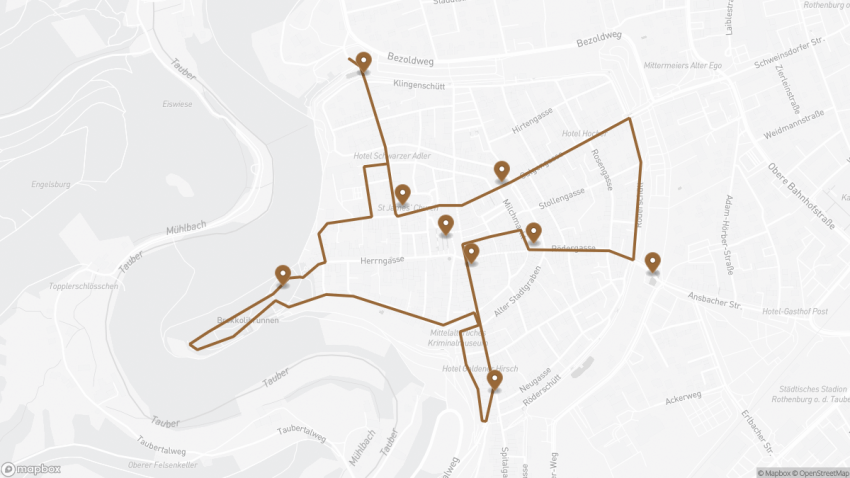
Preview map of the Self-Guided Walking Tour of Bragança, Portugal route in Bragança, showing 6 stops. Use the interactive map to zoom and tap markers.