Hamburg, Germany: The Ultimate Travel Guide 2026

Hamburg Town Hall
Hamburg Town Hall

Hamburg, located in the region of Hamburg (a city-state in northern Germany), is a vibrant, water-rich metropolis with a unique maritime charm. Hamburg is surrounded by Schleswig-Holstein on its north, west, and east sides and Lower Saxony to its south. The city is built around a network of canals, lakes, and the Elbe River, giving it a distinctive feel that blends urban energy with a relaxed waterfront atmosphere. Visitors can enjoy scenic walks along the harbor, take boat tours, or explore the lively neighborhoods of St. Pauli and Speicherstadt, each offering a different taste of Hamburg’s dynamic character.

The city is known for its cultural depth, featuring renowned concert halls like the Elbphilharmonie, a wide array of museums, and a strong creative scene. Whether you're browsing indie shops in the Schanzenviertel, enjoying fresh seafood at the Fish Market, or taking in the architecture along the Inner Alster Lake, Hamburg is full of contrasts that make it exciting yet easy to explore. Its open, cosmopolitan feel makes it a rewarding destination for both first-time visitors and seasoned travelers.


History of Hamburg

Early Origins of Hamburg

Hamburg’s earliest roots trace back to the 9th century, when Emperor Charlemagne ordered the construction of a castle known as Hammaburg. This small fortress laid the foundation for what would eventually become an important trading settlement. Over time, the area attracted merchants and settlers due to its strategic position along the Elbe River.

Hamburg in the Middle Ages

During the 12th and 13th centuries, Hamburg gained prominence as a member of the Hanseatic League, a powerful alliance of merchant cities in northern Europe. The city’s port became a key link between inland Europe and the North Sea, fostering significant economic growth. By the late Middle Ages, Hamburg had developed into one of the most influential commercial centers in the region.

Hamburg in the Early Modern Period

The Reformation and the rise of maritime trade in the 16th and 17th centuries further cemented Hamburg’s status as a free and independent city. It became a haven for religious refugees and intellectuals, boosting its cultural and economic life. Despite facing outbreaks of plague and major fires, the city continued to thrive thanks to its strong trade connections.

Hamburg in the 19th Century

The 19th century brought industrial expansion and modernization to Hamburg, including the development of a modern port and railway connections. The city played a central role in German emigration, with millions departing for the New World from its harbor. In 1842, a massive fire destroyed much of the city, but it was quickly rebuilt with modern urban planning.

Hamburg in the 20th Century

Hamburg suffered heavy bombing during World War II, which destroyed large parts of the city and port. In the postwar years, Hamburg rapidly rebuilt and emerged as a major industrial and cultural center in West Germany. The construction of the Elbphilharmonie and the redevelopment of the HafenCity marked a new era of urban renewal.

Modern-Day Hamburg

Today, Hamburg is a vibrant, cosmopolitan city known for its international trade, culture, and innovation. Its historic maritime identity blends seamlessly with modern architecture and creative industries. As a global port and Germany’s “Gateway to the World,” Hamburg continues to evolve while honoring its rich and resilient past.

Moira & Andy
Moira & Andy

Hey! We're Moira & Andy. From hiking the Camino to trips around Europe in Bert our campervan — we've been traveling together since retirement in 2020!

Read our full story here

Visiting Hamburg for the first time and wondering what are the top places to see in the city? In this complete guide, I share the best things to do in Hamburg on the first visit. To help you plan your trip, I have also included an interactive map and practical tips for visiting!

This website uses affiliate links which earn a small commission at no additional cost to you.

Powered by GetYourGuide

10 Best places to See in Hamburg

This complete guide to Hamburg not only tells you about the very best sights and tourist attractions for first-time visitors to the city but also provide insights into a few of our personal favorite things to do.

This is a practical guide to visiting the best places to see in Hamburg and is filled with tips and info that should answer all your questions!

1. Rathausmarkt
Hamburg Rathausmarkt
CC BY-SA 2.0 / Lars Steffens
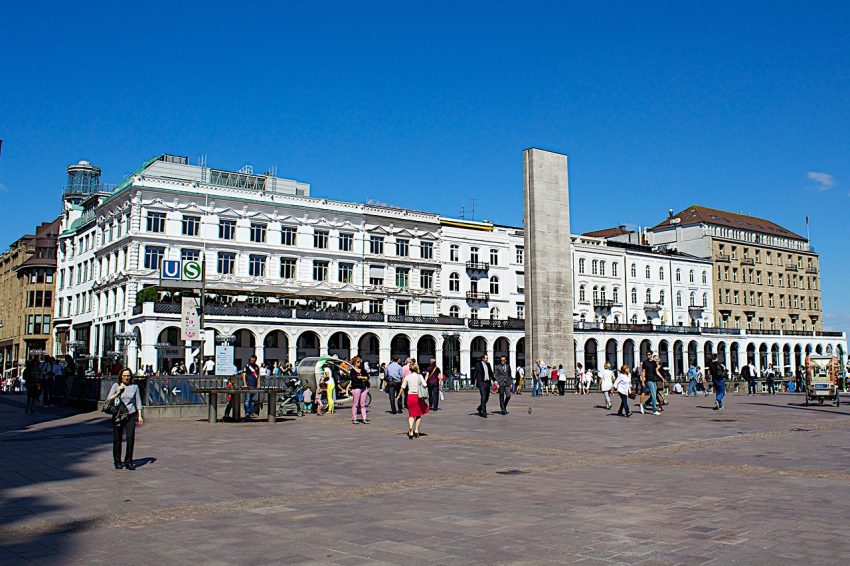
Rathausmarkt is the broad civic square in front of the neo-Renaissance City Hall, created in the late 19th century as a stage for public life and political gatherings. Arcaded façades frame the open space, and the Rathaus frontage glows beautifully at sunset, especially when reflected in nearby canal water. In winter, the square becomes a dense Christmas market with festive stalls, food and hot drinks, and a towering tree—reviews often mention the atmosphere and the setting against the grand buildings. Step through to the Rathaus courtyard to find the Hygieia Fountain, a memorial linked to the 1892 cholera epidemic and a quieter counterpoint to the bustle outside.
Location: Rathausmarkt, Hamburg, Germany | Distance: 0.5km

We recommend to rent a car in Germany through Discover Cars, they compare prices and review multiple car rental agencies. Book your rental car here.

2. City Hall

Hamburger Rathaus (Hamburg City Hall)
CC BY-SA 3.0 / Heidas
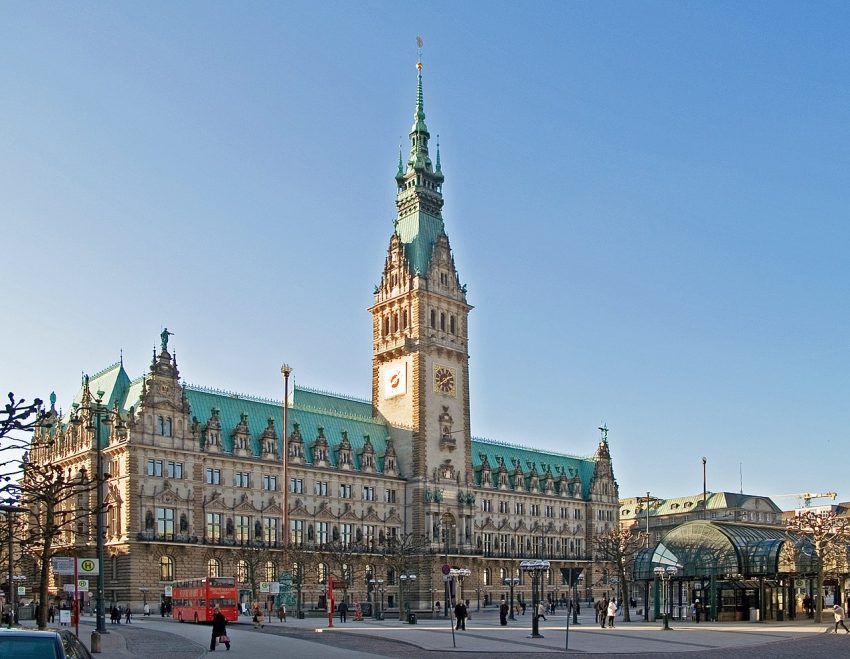
Hamburger Rathaus is the neo-Renaissance seat of the city’s Parliament and Senate, completed in 1897 after the Great Fire of 1842 wiped out the medieval town hall. Built on more than 4,000 oak piles, it’s a monumental civic building with a 112-metre tower and over 600 rooms—closer in scale to a palace than an office. Visitors linger over the richly carved façade, where emperors, kings, and allegorical figures crowd the stonework, then step into a public lobby of marble columns, mosaics, and chandeliers when sessions allow. The Grand Staircase, cut from Sardinian marble and decorated with Norse motifs, is the interior’s showpiece.
Location: Rathausmarkt, Hamburg, Germany | Distance: 0.5km

Here is a complete selection of hotel options in Hamburg. Feel free to review each one and choose the stay that best suits your needs.

3. Miniatur Wunderland

Miniatur Wunderland Hamburg
Public Domain /
Miniatur Wunderland is a vast indoor miniature world and the largest model railway exhibition on the planet, built as a “living” landscape where stories unfold at every scale. Across nearly 1,700 m², themed regions—from Alpine mountains to American scenes and the fictional town of Knuffingen—pack in visual jokes, tiny dramas, and dense city detail. The show runs on serious tech: over 1,200 digitally controlled trains, about 300 automated vehicles, and tens of thousands of lights. Every 15 minutes, the whole installation shifts from day to night as more than 300,000 LEDs flicker on, transforming streets and skylines. The crowd-stopper is the working airport, with planes that taxi, dock, and take off in a continuous rhythm.
Location: Miniatur Wunderland, Kehrwieder, Hamburg, Germany | Hours: Daily 09:30 to 18:00 | Price: €20 Adults | Website | Distance: 0.6km

Traveling to a country with a different currency? Avoid ATM transaction fees and pay in local currency with a Wise Card. Having used it for over 5 years, we've saved loads on fees!

4. St. Catherine’s Church

St Katharinen Hamburg
CC BY-SA 3.0 / Magnus Manske
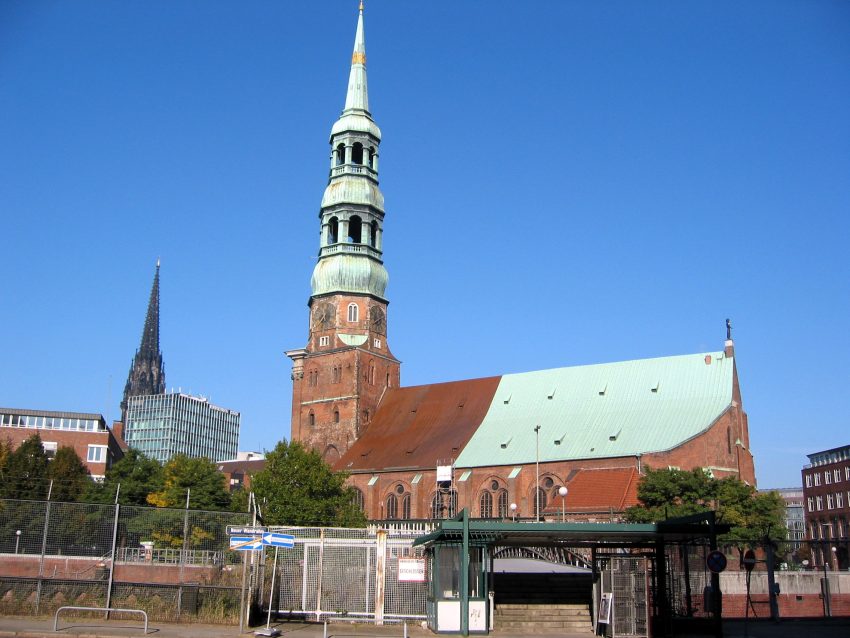
St. Catherine’s Church (Hauptkirche St. Katharinen) is a triple-aisled Gothic hall church first recorded in 1256, with a tower base that remains the city’s oldest working masonry. The interior pairs medieval vaulting and memorial plaques with restrained contemporary elements from the 2007–2012 restoration. Above it rises a 17th-century baroque spire about 117 meters tall, topped by a golden crown linked in local legend to pirate Klaus Störtebeker’s treasure. Music lovers come for the Baroque organ once admired by J.S. Bach, revived in 2013 after careful work that preserved more than 500 original pipes. Its setting beside the Speicherstadt canals makes the contrast of brick warehouses and church stone especially striking.
Location: St. Catherine Church, Katharinenkirchhof, Hamburg, Germany | Distance: 0.6km

5. St. Peter’s Church
Hauptkirche St. Petri
CC BY-SA 4.0 / Uwe Rohwedder
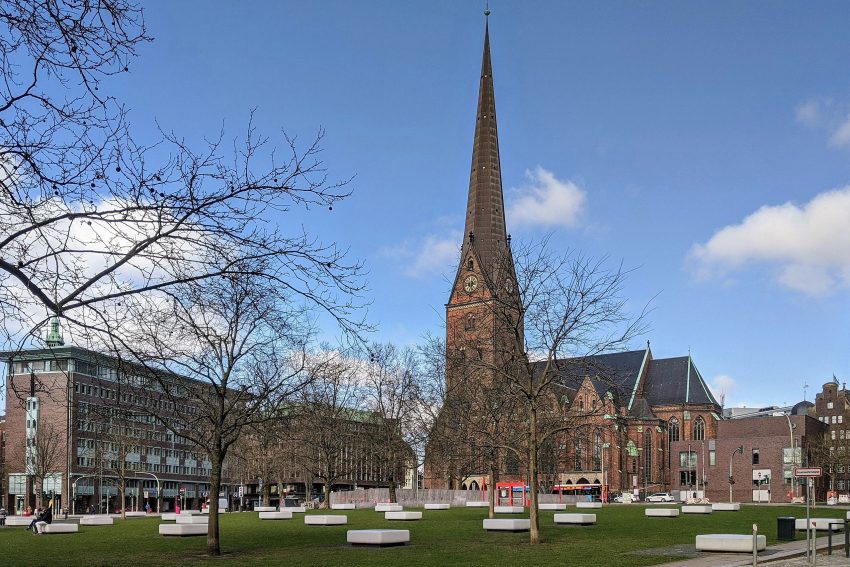
St. Peter’s Church (Hauptkirche St. Petri) is the oldest surviving parish church here, with roots in the early 11th century and a Gothic rebuild from the 14th–15th centuries after an earlier fire. Step inside for rib-vaulted ceilings, a restored Baroque altar, and small medieval surprises like 14th-century bronze lion-head door handles. The red-brick exterior and pointed arches evoke the old Hanseatic city style, while post–World War II restoration adds a quiet sense of endurance. For the most memorable view, climb the 132-meter tower—around 550 stairs—to a platform overlooking rooftops, canals, and landmarks; some visitors note the stairway can feel a little shaky.
Location: Hauptkirche St. Petri - Hauptkirche St. Petri, Mönckebergstraße, Hamburg, Germany | Distance: 0.7km

6. Speicherstadt
Speicherstadt Hamburg
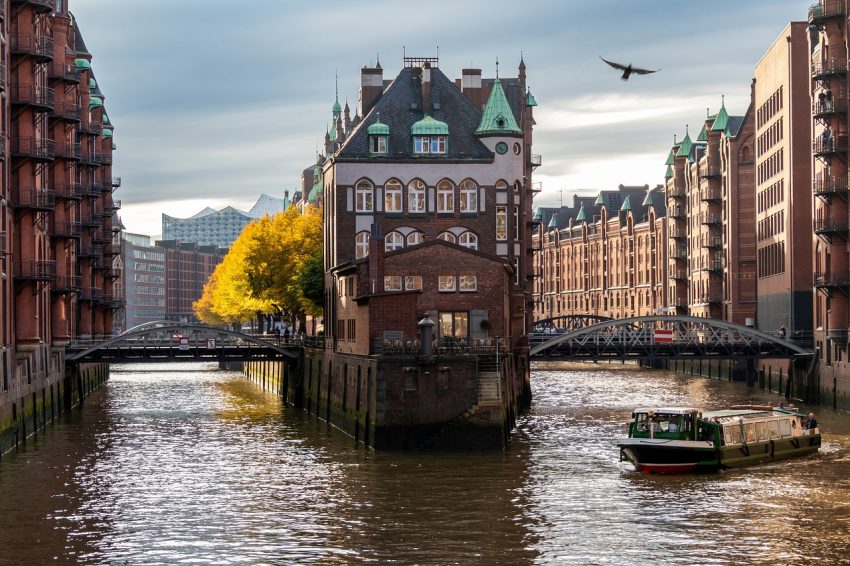
Speicherstadt is a vast red-brick warehouse district built between 1883 and 1927 for the free-port, once storing coffee, spices, tea, tobacco, and oriental carpets. Its neo-Gothic façades—turrets, pointed arches, and glazed brickwork—rise from narrow canals threaded with iron bridges, creating a moody maze of water and brick that photographers linger over. Look for the Wasserschloss framed from Poggenmühlenbrücke, where evening lights ripple on the canal, and notice how the buildings sit on thousands of oak piles driven into the ground. Today the old storehouses feel both monumental and walkable, a place people happily wander and keep stopping to take “tourist” photos.
Location: Speicherstadt, Hamburg, Germany | Distance: 0.8km

7. Elbphilharmonie
Elbphilharmonie
Elbphilharmonie
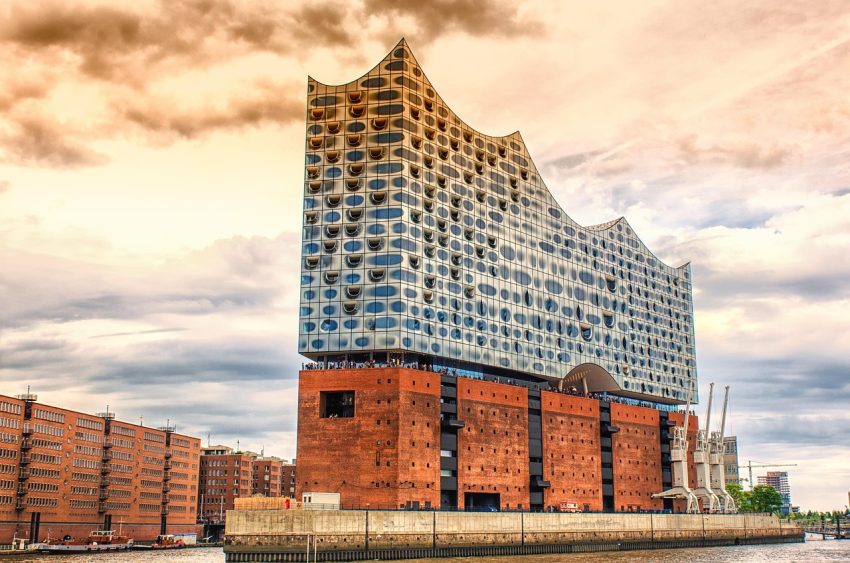
Rising from the old Kaispeicher A warehouse, the Elbphilharmonie pairs a brick base with a rippling glass crown that reads like a frozen wave above the Elbe. Even without a concert ticket, visitors come for the Plaza: a public deck 37 meters up with a full looped walkway and wide views over the harbor and skyline. Inside, the Grand Hall seats over 2,100 in a vineyard-style arrangement, wrapped in finely textured “white skin” panels engineered for precision acoustics. Opened in 2017 after a long, contentious build, it now feels like a bold marker of HafenCity’s reinvention—part waterfront lookout, part cultural engine.
Location: Elbphilharmonie, Platz der Deutschen Einheit, Hamburg, Germany | Distance: 0.9km

8. Maritime Museum

Maritimes Museum Hamburg
CC BY-SA 3.0 / Holger.Ellgaard
The International Maritime Museum occupies Kaispeicher B, a red-brick harbor warehouse built in 1878–79, and uses its nine-deck layout to trace more than 3,000 years of seafaring. The galleries are drawn from collector Peter Tamm’s vast archive, so the experience feels like moving through a personal trove as much as a formal museum. Visitors linger over the dense ship-model floors—including intricate bone models made by prisoners of war—then jump forward to navigation instruments, naval uniforms and ship plans, and the story of modern container shipping. A hands-on navigation simulator and multimedia stations add texture, while upper levels frame HafenCity through warehouse windows.
Location: International Maritime Museum Hamburg, Koreastraße, Hamburg, Germany | Hours: Daily10:00 to 18:00 | Price: €18 | Website | Distance: 1km

9. Hamburger Kunsthalle

Hamburger kunsthalle
GNU Free / Daniela Kloth
Hamburger Kunsthalle is a major art museum whose collection traces more than 700 years of European painting and sculpture, from medieval altarpieces to contemporary installations. Founded in 1869, it unfolds across three contrasting buildings: an ornate Renaissance-style main structure with brick and terracotta details, later extensions, and the stark 1997 Galerie der Gegenwart by Oswald Mathias Ungers. The experience is as much architectural as curatorial—grand staircases and warm historic galleries give way to a minimalist cube built for large-scale, conceptual work. Visitors often linger with German Romanticism, especially Caspar David Friedrich’s moody landscapes, before moving on to Dutch and Flemish masters and rotating modern shows.
Location: Hamburger Kunsthalle, Glockengießerwall, Hamburg, Germany | Distance: 1.3km

10. Old Elbe Tunnel
StPauliElbtunnel
StPauliElbtunnel
CC BY-SA 4.0 / NielsFahrenkrog
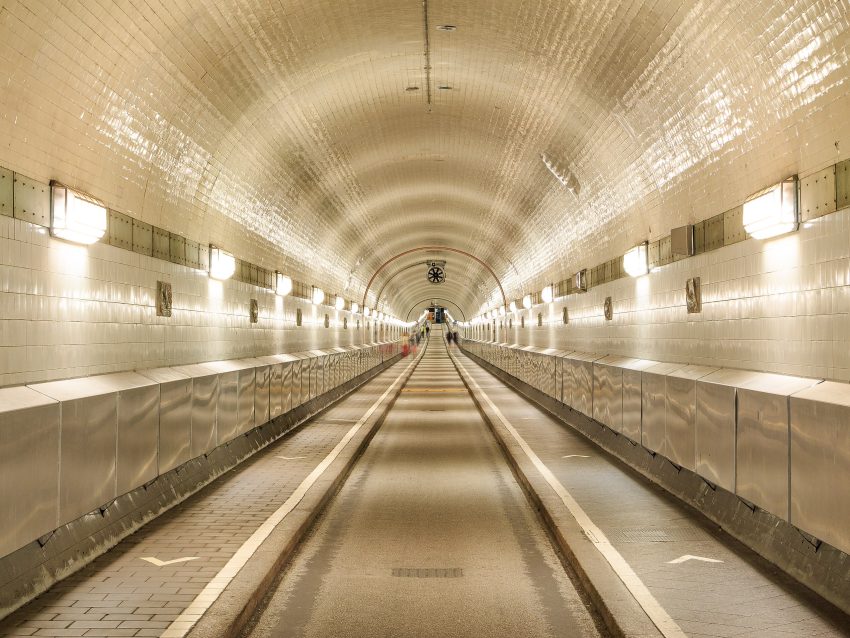
The Old Elbe Tunnel (Alter Elbtunnel) is a 1911 river crossing that runs about 24 meters beneath the Elbe, linking the Landungsbrücken area with Steinwerder in two long tubes. The walk feels like moving through an underground gallery: Art Nouveau tiles, terrazzo floors, and ceramic reliefs of fish and other sea creatures repeat down the softly lit corridor as footsteps echo. At each end, historic hydraulic lifts still lower and raise pedestrians and cyclists, a memorable glimpse of early industrial logistics. Emerging on the south side, many visitors linger for an unexpectedly wide view back toward the harbor skyline, often calling the free crossing a surprisingly refreshing detour.
Location: Alter Elbtunnel, Bei den Sankt Pauli-Landungsbrücken, Hamburg, Germany | Distance: 1.4km

Best Day Trips from Hamburg

A day trip from Hamburg offers the perfect opportunity to escape the urban rhythm and discover the surrounding region's charm. Whether you're drawn to scenic countryside, historic villages, or cultural landmarks, the area around Hamburg provides a variety of easy-to-reach destinations ideal for a one-day itinerary. If you are looking to rent a car in Germany I recommend having a look at Discover Cars, first, as they compare prices and review multiple car rental agencies for you.

1. Lüneburg
Luneburg
Luneburg
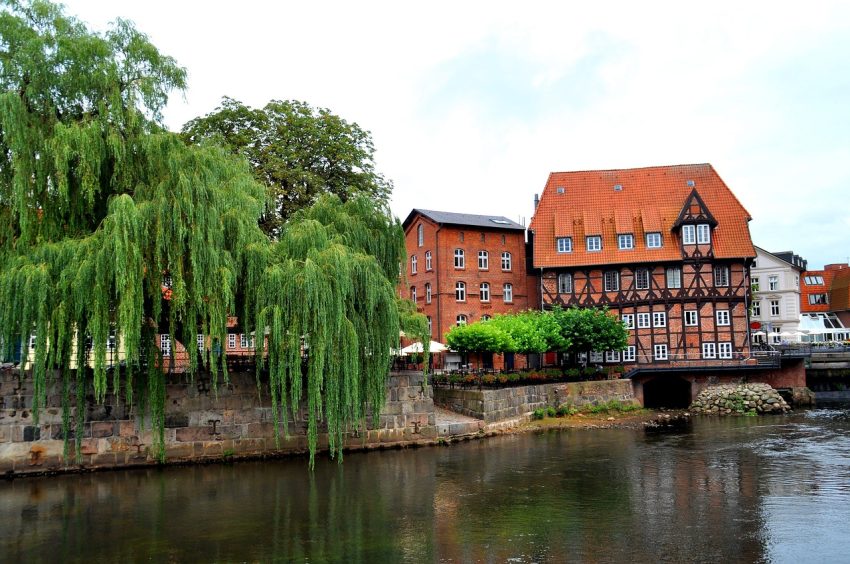
Lüneburg, situated in the Lower Saxony region, is a captivating destination that seamlessly blends medieval charm with contemporary vibrancy. The city's well-preserved architecture, characterized by red-brick Gothic buildings and narrow cobblestone streets, invites visitors to explore its rich heritage. Strolling through the historic Old Town, one can admire landmarks such as the Am Sande square, lined with impressive gabled houses,…
Visiting Lüneburg
Powered by GetYourGuide

2. Lübeck

lubeck
lubeck
Lübeck, located in the region of Schleswig-Holstein, is a charming city known for its medieval architecture, riverside ambiance, and cultural flair. Its beautifully preserved Altstadt (Old Town), encircled by water, is filled with narrow lanes, brick Gothic churches, and merchant houses that give it a timeless feel. The city is compact and walkable, making it easy to explore on foot…
Visiting Lübeck
Powered by GetYourGuide

3. Plön

Plön
Plön
Plön, located in the region of Schleswig-Holstein, is a peaceful lakeside town surrounded by natural beauty and charming architecture. The town sits beside the expansive Großer Plöner See, making it a perfect destination for travelers who enjoy boating, hiking, or simply relaxing by the water. With its castle perched above the lake and tree-lined promenades, Plön offers a scenic escape…
Visiting Plön

4. Kiel

Kiel Gemany
Kiel Gemany
Kiel, located in the region of Schleswig-Holstein, is a lively coastal city best known for its maritime flair and connection to the Baltic Sea. As the terminus of the Kiel Canal and home to Germany's largest sailing event, Kiel Week, the city buzzes with nautical energy. Visitors can enjoy waterfront promenades, harbor cruises, and fresh seafood right by the bustling…
Visiting Kiel
Powered by GetYourGuide

5. Schwerin

Schwerin Castlejpg
Schwerin Castlejpg
Schwerin, located in the region of Mecklenburg-Western Pomerania, is a town that feels like a storybook brought to life. Surrounded by lakes and graced with elegant architecture, it offers a peaceful, almost regal atmosphere that's perfect for a relaxing visit. The highlight for most visitors is the stunning Schwerin Castle, perched on its own island and framed by manicured gardens…
Visiting Schwerin

6. Bremen

Bremen
Bremen
CC BY-SA 2.0 / Jürgen Howaldt
Bremen is a city in northern Germany, located on the Weser River. It is the capital of the state of Bremen, which is made up of two cities, Bremen and Bremerhaven. Bremen has a rich history and is known for its Hanseatic heritage, as well as its role as a major port city. It has a population of around 570,000…
Visiting Bremen
Powered by GetYourGuide

7. Celle

Celle
Celle
Celle, located in the Bremen & Lower Saxony region, is a delightful town that effortlessly combines fairytale architecture with a relaxed, walkable atmosphere. Its Old Town is filled with over 400 meticulously preserved half-timbered houses, creating one of the most charming historic centers in Germany. Strolling through the narrow streets, visitors will discover boutique shops, cozy cafés, and inviting squares…
Visiting Celle
Powered by GetYourGuide

8. Wismar

Wismar
Wismar
Wismar, located in the region of Mecklenburg-Western Pomerania, is a charming town that offers visitors a mix of medieval architecture and vibrant coastal culture. The city's old town is a UNESCO World Heritage Site, filled with picturesque cobbled streets, impressive brick Gothic buildings, and scenic squares. A stroll through this historic district will bring you past highlights such as the…
Visiting Wismar
Powered by GetYourGuide

9. Schleswig

Gottorf Castle
Gottorf Castle
Schleswig, located in the region of Schleswig-Holstein, is a peaceful town full of lakeside charm, cultural heritage, and scenic views. Nestled on the banks of the Schlei fjord, it offers a perfect mix of nature and small-town atmosphere, making it ideal for a relaxing visit. Visitors can enjoy strolls along the water, take a boat ride on the fjord, or…
Visiting Schleswig
Powered by GetYourGuide

10. Hannover

Hannover
Hannover
Hannover, located in the Bremen & Lower Saxony region, is a dynamic city that balances green spaces with urban energy. It’s a great destination for travelers who enjoy a mix of cultural attractions and outdoor experiences. The Herrenhausen Gardens are a standout, with their baroque design, fountains, and seasonal flower displays offering a peaceful escape within the city. Nearby, the…
Visiting Hannover
Powered by GetYourGuide

Where to Stay in Hamburg

For visitors to Hamburg, one of the best areas to stay is Altstadt (Old Town) and the adjacent Neustadt, which put you close to major attractions like the Elbphilharmonie, Speicherstadt, and the Alster Lakes. These central neighborhoods offer a mix of historic charm, upscale shopping, and easy access to boat tours and public transport. A great option in this area is Sir Nikolai Hotel, which blends stylish design with a prime location near HafenCity and the old town. Another excellent choice is Tortue Hamburg, known for its chic interiors and vibrant atmosphere, perfect for travelers who enjoy a fashionable, central base.

If you prefer something a little more alternative and lively, the Schanzenviertel and St. Pauli neighborhoods are ideal. These districts are full of creativity, street art, indie cafés, and nightlife, all within a short U-Bahn ride from the city center. For a boutique stay with a local feel, consider Fritz im Pyjama Hotel, located in the heart of the Schanze district. Or enjoy harbor views and a bit more elegance at Empire Riverside Hotel, just steps from the Reeperbahn and Landungsbrücken ferry piers.

Using the our Hotel and Accomodation map, you can compare hotels and short-term rental accommodations in Hamburg. Simply insert your travel dates and group size, and you’ll see the best deals for your stay.

Hamburg Accommodation Map

Best Time to Visit Hamburg

Spring in Hamburg

From March to May, Hamburg begins to warm up with temperatures ranging from 10°C to 18°C. The city’s parks and gardens, such as Planten un Blomen, burst into bloom, making it a great time for outdoor walks and boat tours on the Alster Lake. Spring also brings fewer tourists, offering a quieter experience at popular attractions.

Summer in Hamburg

June to August is the most popular time to visit Hamburg, with temperatures between 20°C and 26°C and long daylight hours. The city hosts numerous festivals, open-air concerts, and waterfront events, especially around the harbor. It’s an ideal season for enjoying Hamburg’s many canals, urban beaches, and lively outdoor cafés.

Autumn in Hamburg

From September to November, Hamburg transitions into cooler weather, with temperatures dropping from 18°C to around 10°C. Autumn colors take over the parks, and the city feels more relaxed after the busy summer months. It’s a pleasant time for museum visits, cultural events, and scenic walks through leafy neighborhoods.

Winter in Hamburg

December to February brings cold temperatures ranging from -1°C to 5°C, with occasional snow and a festive atmosphere. Hamburg’s Christmas markets light up the city, especially around Rathausplatz and the historic Speicherstadt. Despite the chill, winter is cozy and full of charm, with plenty of indoor attractions and seasonal food.

Annual Weather Overview

  • January 5°C
  • February 6°C
  • March 10°C
  • April 16°C
  • May 20°C
  • June 22°C
  • July 24°C
  • August 25°C
  • September 21°C
  • October 14°C
  • November 8°C
  • December 7°C

How to get to Hamburg

By Air

Hamburg Airport (HAM) serves numerous international and domestic flights, connecting the city to major destinations worldwide. Located approximately 8.5 kilometers north of the city center, the airport offers convenient access to the city via public transportation, taxis, and car rentals.

By Train

Hamburg is well-connected to various European cities through an extensive rail network.

From London to Hamburg

Travelers from London can reach Hamburg by train with a journey involving a few connections. Typically, this route includes taking the Eurostar from London St Pancras International to Brussels Midi, then transferring to a high-speed train to Cologne, and finally boarding a train to Hamburg. The entire journey takes approximately 9 hours. For schedules and ticket bookings, you can visit Rail Europe.

From Other European Cities

Hamburg is accessible from numerous European cities by train. For instance, direct trains operate from Berlin, Munich, and Amsterdam. Deutsche Bahn (DB) offers comprehensive schedules and booking options for these routes, which can be found on their official website: Deutsche Bahn.

By Car

For those preferring to drive, Hamburg is accessible via Germany’s well-maintained autobahn network. The city is connected by major highways, making it convenient for travelers coming from neighboring countries or other German cities.

More from this area