Alsfeld, Germany: The Ultimate Travel Guide 2026
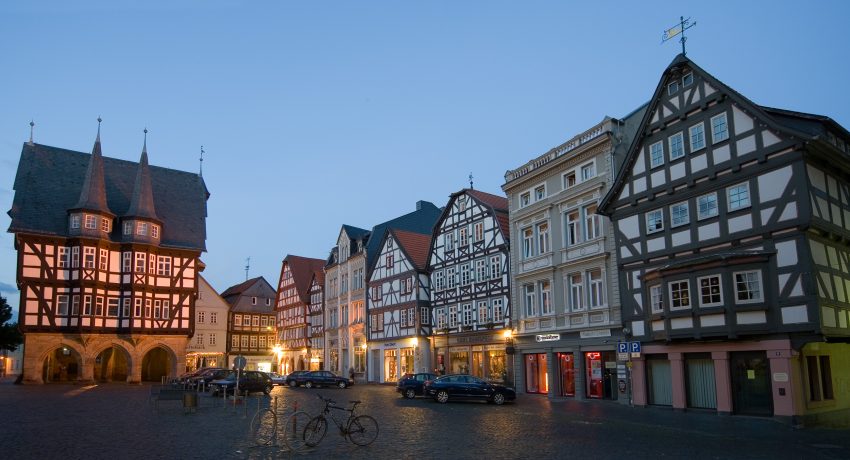
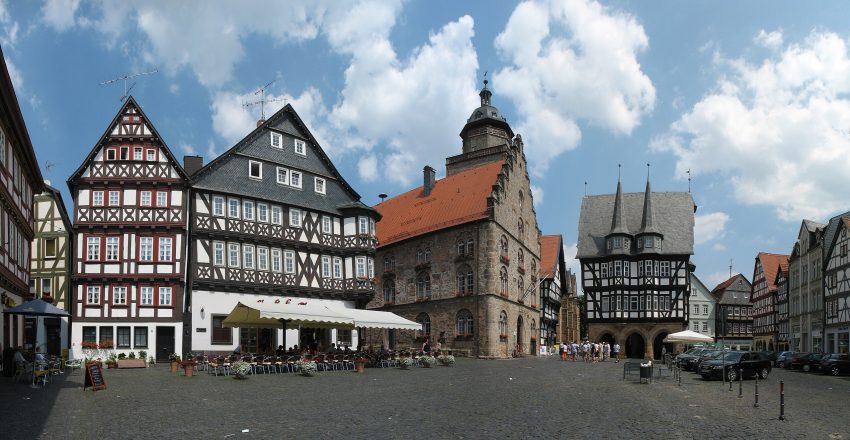
Alsfeld Town hall and southern side of the marketplace
CC BY-SA 2.0 / Mylius

Alsfeld is a town located in the Vogelsbergkreis district of the state of Hesse, Germany. It has a population of approximately 17,000 people and covers an area of 76.84 square kilometers.

Alsfeld has a long and rich history, dating back to the early Middle Ages. The town was first mentioned in historical records in the year 1069, and has since then developed into an important center of trade and commerce. During the 16th and 17th centuries, Alsfeld became known for its flourishing cloth industry, which brought great prosperity to the town.

One of the most notable features of Alsfeld is its well-preserved historic town center, which has been designated as a protected historic monument. The town's many half-timbered houses, which date back to the 16th and 17th centuries, give it a charming and picturesque atmosphere. Some of the most famous buildings in Alsfeld include the town hall, the Alte Kanzlei (Old Chancellery), and the Walpurgiskirche (St. Walpurga's Church).

In addition to its historic buildings, Alsfeld is also known for its annual Alsfelder Märchen- und Sagenfest (Alsfeld Fairy Tale and Legend Festival), which takes place every September. The festival celebrates the town's connection to the Brothers Grimm and their collection of fairy tales, many of which are set in the surrounding area.

In the world of fairy tales, Little Red Riding Hood plays a special role in Alsfeld. It is said that the Brothers Grimm were inspired by the traditional costume of Schwalm with its red cap.

Today, Alsfeld is a popular tourist destination, attracting visitors from all over Germany and beyond. It is also an important center of commerce and industry, with a thriving economy and a strong sense of community.

History of Alsfeld

Early History of Alsfeld

Alsfeld, a town in the state of Hesse, Germany, has roots that trace back to the early Middle Ages. The first documented mention of Alsfeld dates to 1069, although the area was likely settled much earlier due to its advantageous location along trade routes. Its position at the intersection of significant roads facilitated its growth as a trading hub.

Alsfeld in the Middle Ages

The town flourished during the medieval period, gaining market rights in 1222, which significantly boosted its economy and development. In the 13th and 14th centuries, Alsfeld experienced a building boom, resulting in many of the half-timbered houses and other structures that define its charming appearance today. The town’s fortifications, including its walls and towers, were also constructed during this time.

The Renaissance and Alsfeld

Alsfeld continued to thrive in the Renaissance period. In the early 16th century, the town hall, one of Alsfeld’s most iconic buildings, was constructed. This era also saw the town becoming a center for arts and culture, influenced by the broader Renaissance movement sweeping through Europe. The architecture from this period, characterized by its detailed woodwork and ornamentation, still stands as a testament to Alsfeld’s prosperity during these years.

Reformation and the Thirty Years’ War

The Reformation brought significant changes to Alsfeld in the 16th century. The town became predominantly Protestant, aligning with the broader religious transformations occurring in Germany. The Thirty Years’ War (1618-1648) brought hardship to Alsfeld, as it did to many parts of Europe. The town suffered from military occupation, plundering, and economic decline.

19th Century and Industrialization in Alsfeld

The 19th century saw Alsfeld adapting to the changes brought by industrialization. While it retained much of its medieval charm, new industries and transportation links, such as the railway, began to integrate the town more closely with the broader economic developments of Germany. This period also saw efforts to preserve Alsfeld’s historical buildings, recognizing their cultural and architectural value.

Alsfeld in the 20th Century

Alsfeld faced challenges during the 20th century, including the impacts of both World Wars. However, it managed to preserve its historical heritage through dedicated restoration efforts. After World War II, Alsfeld became part of the state of Hesse in West Germany. The town’s picturesque old town, with its well-preserved medieval and Renaissance buildings, attracted tourists and helped boost the local economy.

Alsfeld Today

Today, Alsfeld is celebrated for its historical architecture and vibrant cultural scene. The town’s commitment to preserving its heritage has made it a popular destination for visitors interested in history, architecture, and traditional German culture. Alsfeld’s old town, with its narrow streets and charming buildings, stands as a living museum, showcasing centuries of architectural and historical evolution.

Moira & Andy
Moira & Andy

Hey! We're Moira & Andy. From hiking the Camino to trips around Europe in Bert our campervan — we've been traveling together since retirement in 2020!

Read our full story here

Visiting Alsfeld for the first time and wondering what are the top places to see in the city? In this complete guide, I share the best things to do in Alsfeld on the first visit. To help you plan your trip, I have also included an interactive map and practical tips for visiting!

This website uses affiliate links which earn a small commission at no additional cost to you.
11 Best places to See in Alsfeld

This complete guide to Alsfeld not only tells you about the very best sights and tourist attractions for first-time visitors to the city but also provide insights into a few of our personal favorite things to do.

This is a practical guide to visiting the best places to see in Alsfeld and is filled with tips and info that should answer all your questions!

1. Schwälmer Brunnen

Schwalmer Brunnen
Schwalmer Brunnen
©
Schwälmer Brunnen is a small fountain in Alsfeld’s central market square, best known for its bronze “Little Red Riding Hood” figure. Installed in 1958, it was created to mark Alsfeld’s connection to the nearby Schwalm region, where traditional women’s dress—especially the bright red cap—helped inspire the Grimm tale. The statue depicts the Gänseliesel (goose girl) in a full skirt and embroidered bodice, with the distinctive red headwear that visitors often notice is a rounded cap rather than a cloak. Set among half-timbered facades and seasonal flowerbeds, it feels like a quiet meeting point—“nice and peaceful,” as reviewers put it.

We recommend to rent a car in Germany through Discover Cars, they compare prices and review multiple car rental agencies. Book your rental car here.

2. Weinhaus

Weinhaus Wine House
Weinhaus Wine House
CC BY-SA 3.0 / KlausFoehl
Facing the market square, the Weinhaus (Wine House) is a 16th-century half-timbered civic building begun in 1538 under Hans von Frankfurt, created to store and serve wine under municipal control. Its steep stepped gables, dense timber framing, and fan-shaped rosettes make the façade easy to linger over, with Gothic craft meeting early Renaissance order. Look closely at the windows: renovations in 1840–43 replaced the earlier uneven “curtain-arch” openings with rounded arches, but hints of the older forms remain. At the corner stands the former pillory, a blunt reminder of public justice. The interior now functions as city offices, so the experience is largely architectural and street-level.

Here is a complete selection of hotel options in Alsfeld. Feel free to review each one and choose the stay that best suits your needs.

3. Walpurgiskirche

Alsfeld   Walpurgiskirche
Alsfeld Walpurgiskirche
CC BY-SA 3.0 / Oliver Abels (SBT)
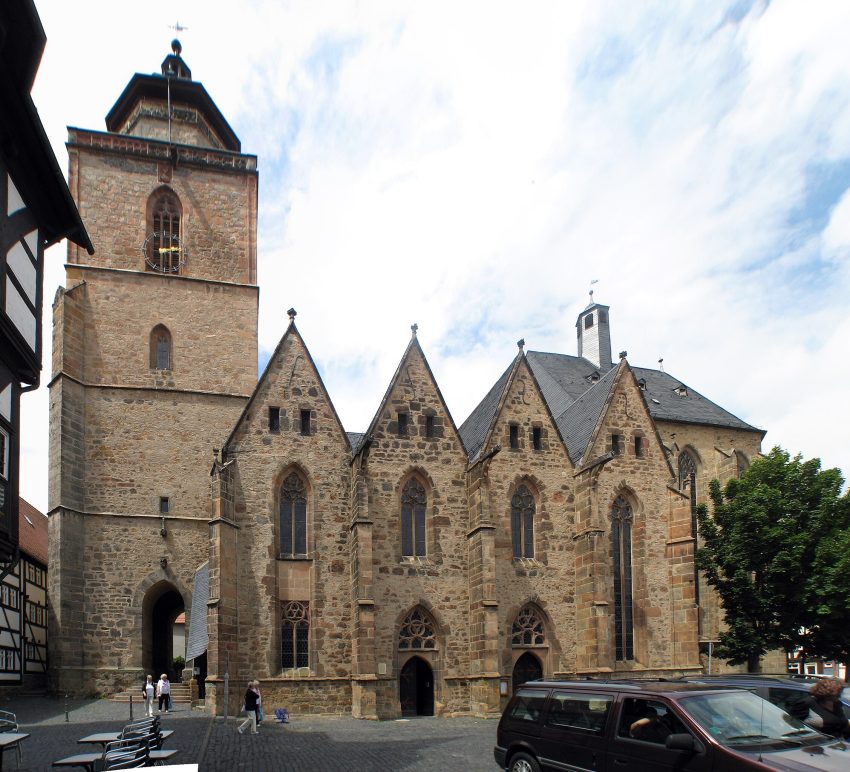
Walpurgiskirche is Alsfeld’s parish church, rising over the Altstadt with a tall, slightly uneven tower that reflects centuries of rebuilding. Beneath it lie Romanesque beginnings—excavations revealed an earlier three-apse basilica, and inside you can still see a hefty stone baptismal font that visitors often linger by. The interior reads like a layered museum of devotion: late Gothic carving and a Crucifixion group, delicate choir work, and Baroque epitaphs commemorating townspeople. The tower’s octagonal upper stage and Renaissance-style cap recall its post-collapse reconstruction, and the former watchman’s quarters hint at the church’s old civic role.
Location: Walpurgiskirche (Stadtkirche) - Evangelische-luth. Kirchengemeinde Alsfeld, Kirchplatz, Alsfeld, Germany | Distance: 0km

Traveling to a country with a different currency? Avoid ATM transaction fees and pay in local currency with a Wise Card. Having used it for over 5 years, we've saved loads on fees!

4. Alsfeld Town Hall

Alsfeld Town Hall
Alsfeld Town Hall
CC BY-SA 4.0 / Tilman2007
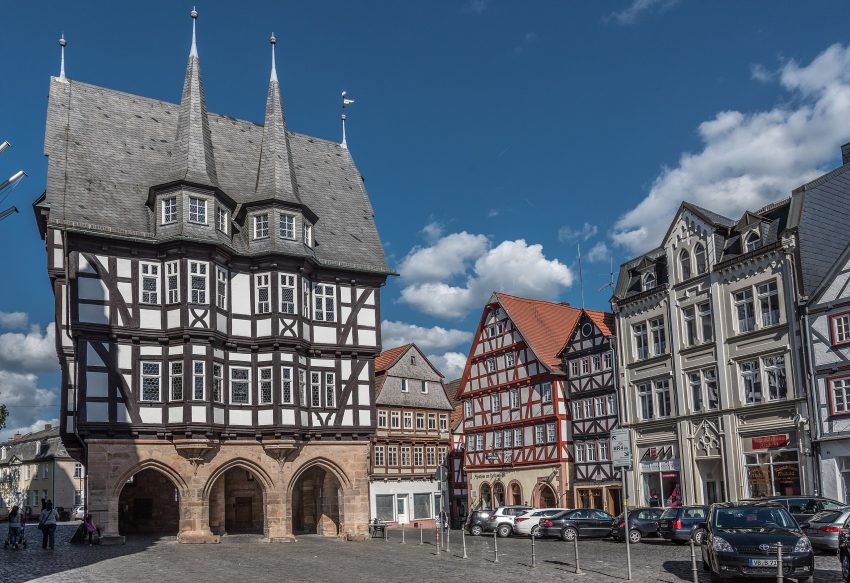
Alsfeld Town Hall is a late-medieval half-timbered Rathaus beside the market square in the Altstadt, built between 1512 and 1516 in the Rähmbau frame-construction style. Visitors notice the contrast between the late Gothic stone base—once an open market hall—and the upper floors’ intricate timberwork, with bent chevron bracing and neatly projecting, moulded beam-ends. Look for a small but memorable curiosity: the “Alsfeld cubit” measuring mark set into the left corner of the building. Inside, the first floor still houses the mayor’s and magistrate’s offices, while upstairs you can see older doors and a Renaissance portal crafted in 1604 by local carpenter-artist Michael Finck, fitted with decorative iron hinges forged by Curt Oberman.

Explore Alsfeld at your own pace with our self-guided walking tour! Follow our curated route to discover must-see sights and local secrets that makes Alsfeld one of the best places to visit in Germany.

5. Regional Museum Alsfeld

Regional Museum, Alsfeld
CC BY-SA 3.0 / KlausFoehl
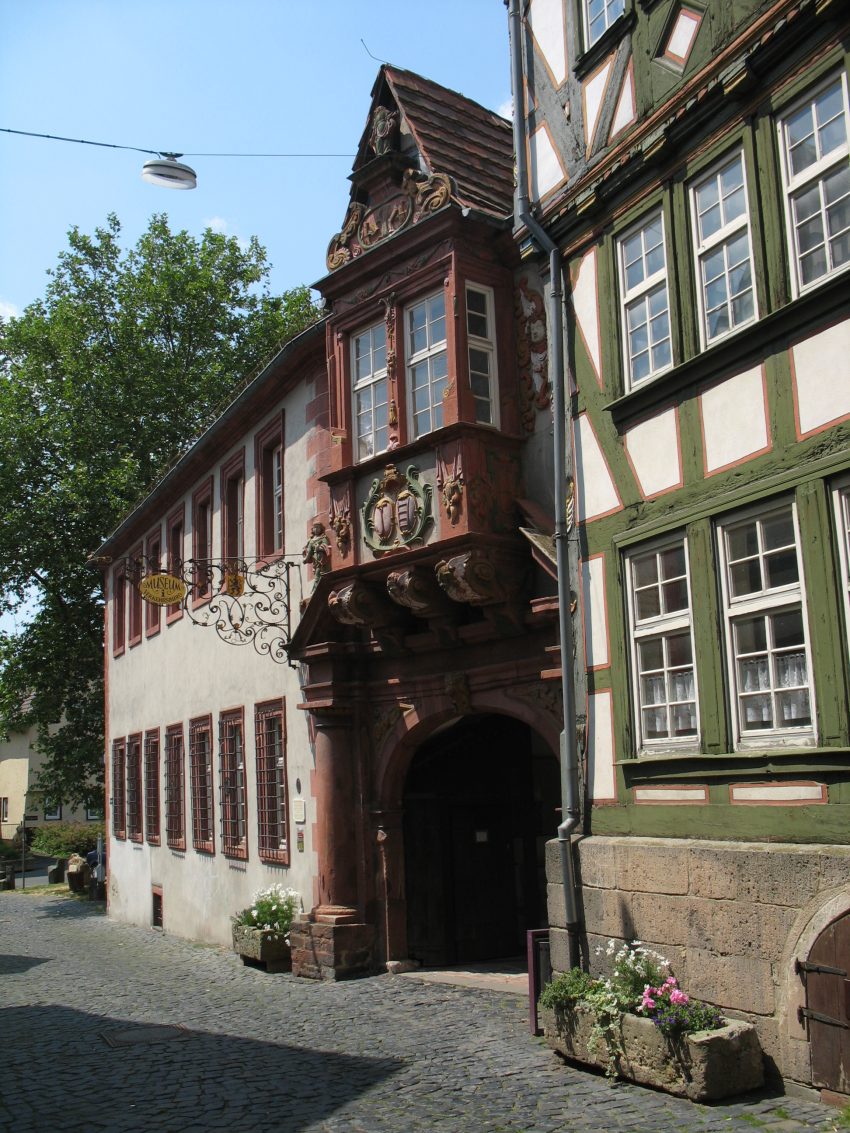
Set inside a beautifully preserved half-timbered house with creaking floors and heavy timber beams, the Regional Museum Alsfeld (City Museum) traces local life from medieval trading days to more modern chapters. Rooms of artifacts—coins, weaponry, pottery, and blacksmith tools—keep the focus on everyday work rather than grand narratives. The most memorable displays are the Schwalm folk costumes, including red caps and cloaks often linked to the Little Red Riding Hood tradition. Recent visitor notes mention long renovation work, but also praise a lovingly designed special exhibition on town history that’s worth seeking out when open.
Location: Geschichts- und Museumsverein Alsfeld e.V. Rittergasse 3-5 36304 Alsfeld Germany | Hours: Mon – Fri 10 a.m. to 4 p.m Sat 10 a.m. to 4 p.m Closed on Sundays and public holidays | Website | Distance: 0.1km

6. Neurathhaus
Alsfeld Neurathhaus
Alsfeld Neurathhaus
CC BY-SA 3.0 / Mylius
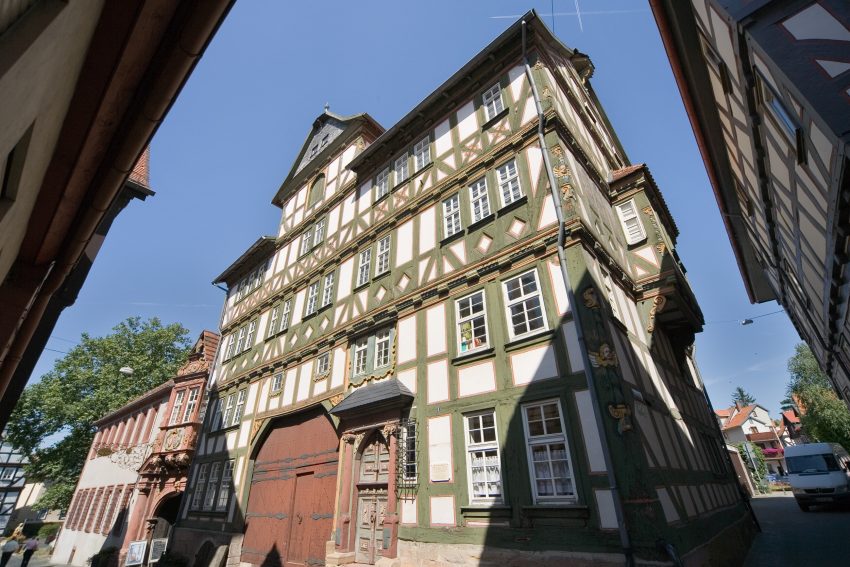
Neurathhaus is a late-Renaissance half-timbered merchant’s house in Alsfeld, built in 1619 for Johannes Neurath, a prosperous cloth trader whose success shows in the building’s lavish workmanship. From the street, visitors notice the stepped gable and the dense carved ornament on the façade, a crisp snapshot of the town’s trading-era confidence. Inside, timber-framed rooms preserve tactile details such as an original ceramic stove and a painted wooden ceiling that draws your eyes upward. Since May 2022 it has also functioned as Alsfeld’s Tourist Center, linking the building’s textile past with today’s visitor life in the old town.
Location: Neurathhaus, Rittergasse, Alsfeld, Germany | Distance: 0.1km

7. Beinhaus
Beinhaus Alsfeld
Beinhaus Alsfeld
CC BY-SA 3.0 / KlausFoehl
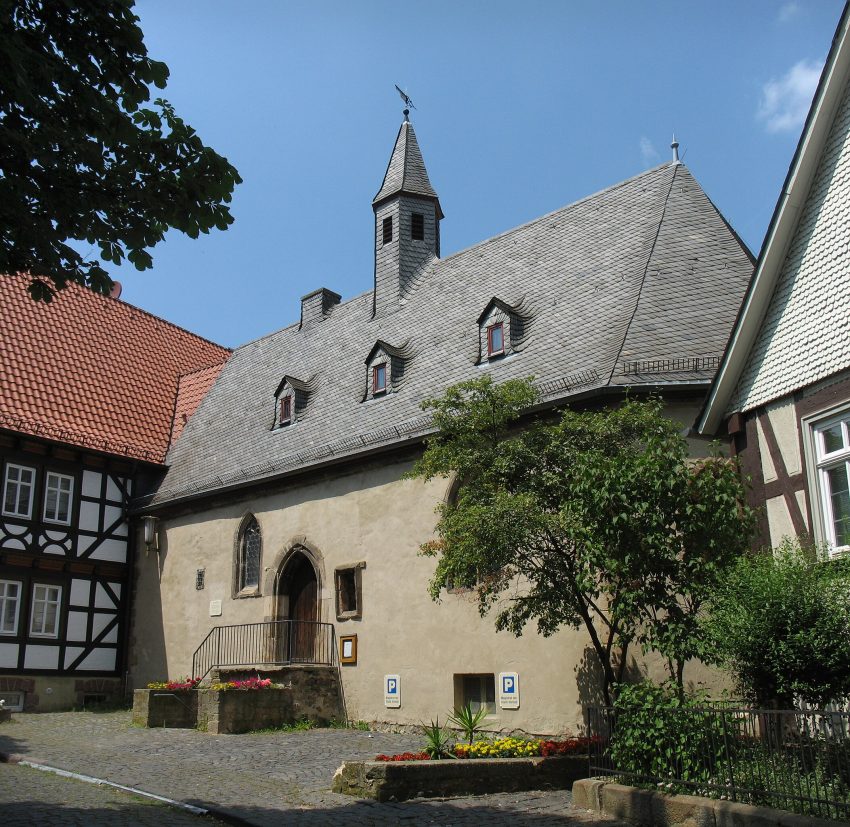
Beside Alsfeld’s churchyard, the Beinhaus (“bone house”) is a compact late-Gothic chapel first built in 1368 and rebuilt in 1510, its steep roofline and weathered stonework giving it a quietly austere presence. After the Thirty Years’ War and repeated plague outbreaks, it was repurposed as an ossuary when the cemetery ran out of space, storing exhumed remains to make room for new burials. Today it serves as the city archives—still a keeper of memory, just in paper rather than bone. Visitors mostly experience it from outside, where buttresses and small arched openings are easy to study; reviews often note it’s beautiful, if sometimes closed.
Location: Beinhaus, Kaplaneigasse, Alsfeld, Germany | Distance: 0.1km

8. Alsfeld Fairy Tale House
Alsfeld Fairy Tale House
CC BY-SA 4.0 / Tilman2007
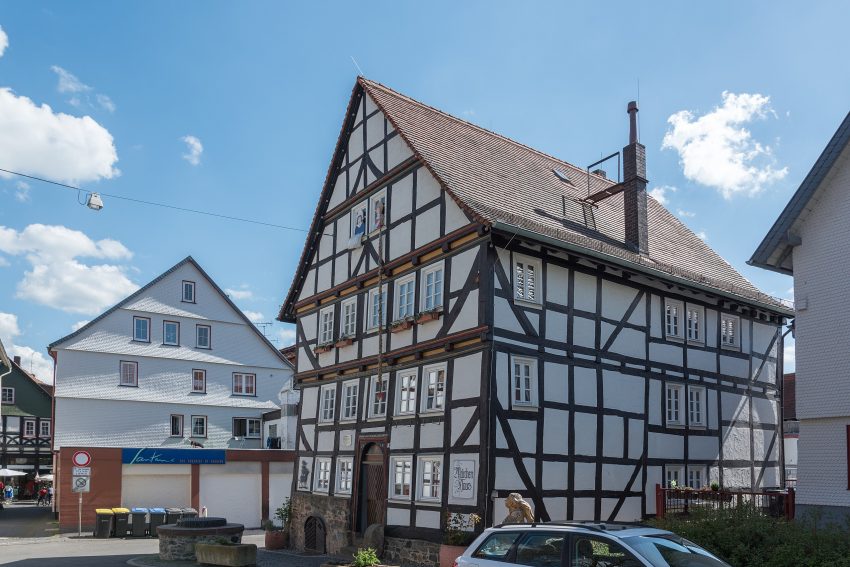
The Alsfeld Fairy Tale House (Märchenhaus) is a 1628 half-timbered Renaissance building whose carved and painted facade turns Grimm stories into street-level theatre. Look closely to spot scenes like Little Red Riding Hood, Sleeping Beauty, and Hansel and Gretel worked into the woodwork and panels. Inside, the small museum leans into storytelling with themed rooms, vintage books, puppets, and interactive displays, plus audio stations that let you listen to tales in multiple languages. Near the entrance, a well uncovered in 2011 nods to “The Frog Prince,” adding a sly, real-world touch of magic. Visitors often note it’s especially engaging for children.
Location: Sackgasse 2, 36304 Alsfeld, Deutschland | Hours: Saturdays from 10:30 a.m. to 12:30 p.m. and 2:00 p.m. to 5:00 p.m. and on Sundays from 2:00 p.m. to 5:00 p.m. | Price: Adults € 3.00, Children € 2.00 | Distance: 0.1km

9. Leonhardsturm
Untere Fulder Gasse, Alsfeld
CC BY-SA 4.0 / Ymblanter
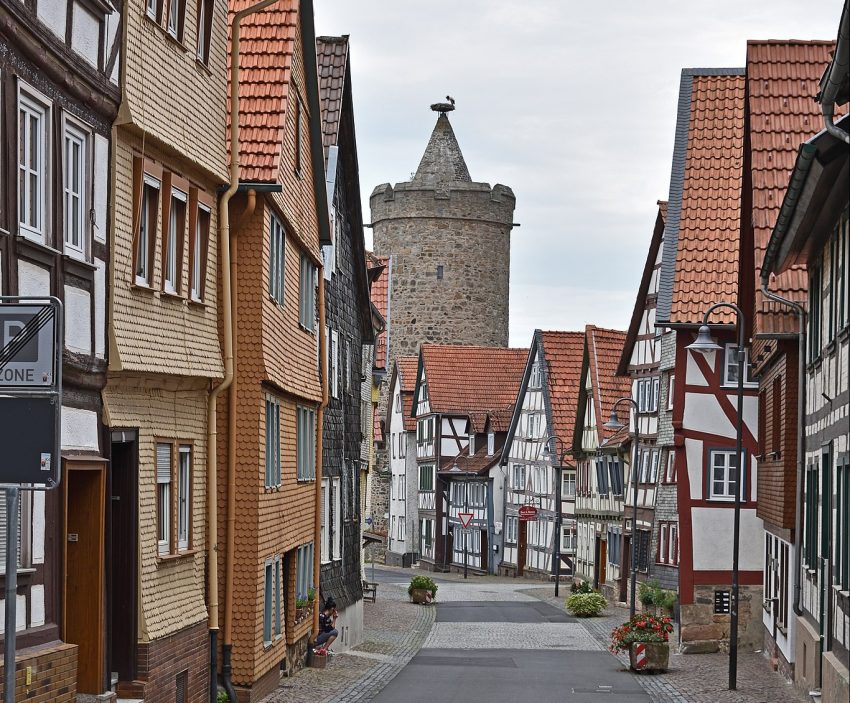
Leonhardsturm in Alsfeld, Germany is a 27‑meter round stone tower with a conical roof and crenellated crown, the last major survivor of the town’s medieval wall system. Its original entrance sat halfway up, reachable only from the wall-walk, a defensive detail you can still picture when you stand beneath the sheer masonry. At ground level, the tower once held a dungeon where condemned prisoners waited, a stark counterpoint to its storybook silhouette above the rooftops. Locals also call it the “Storks’ Nest,” tied to a legend that storks nesting on the tower delivered babies to families who had “ordered” them. Travelers on the fairy‑tale route often mention how unexpectedly charming the old town feels.
Location: Leonhardsturm, Alsfeld | Distance: 0.2km

10. Grabbrunnen
Grabbrunnen Alsfeld2
CC BY-SA 3.0 / KlausFoehl
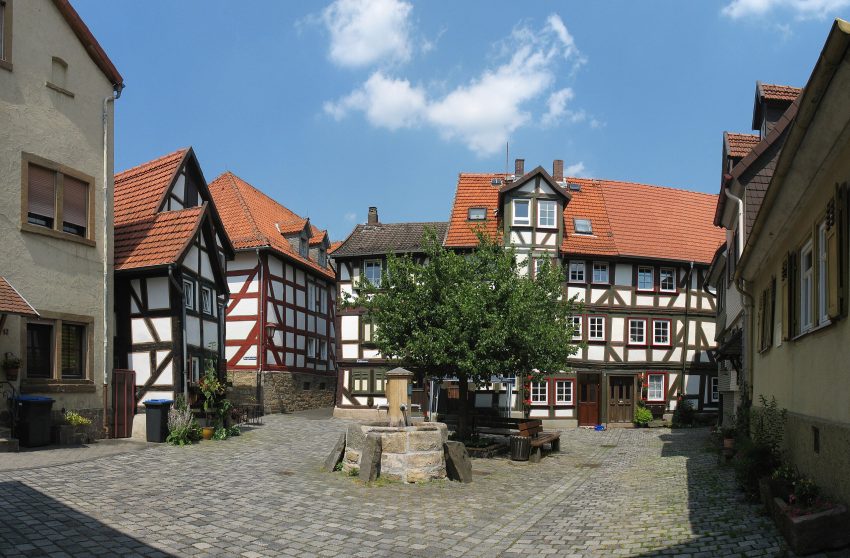
Grabbrunnen is a small fountain and former working well tucked into Alsfeld’s half-timbered old town. It began as a practical water source for the town’s textile trade, supplying water used in cloth dyeing, but over time it became woven into local folklore. The best-known tale says storks from a nearby nest came to the well to “collect” babies for waiting families, and the square’s redesigned, sculpted base now nods to storks circling overhead. Today visitors linger in the snug little plaza, where the fountain’s playful details contrast with the medieval streetscape—described by travelers as a particularly cozy, storybook corner.
Location: Grabbrunnen, Alsfeld, Germany | Distance: 0.2km

11. Dreifaltigkeitskirche
Alsfeld Dreifaltigkeitskirche
CC BY-SA 4.0 / Tilman2007
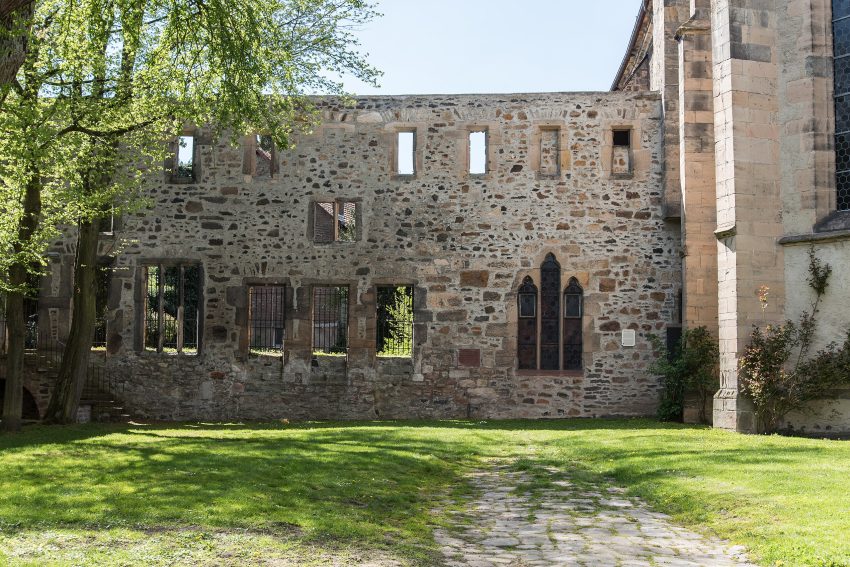
Dreifaltigkeitskirche in Alsfeld is the former church of an Augustinian hermit monastery, a restrained Gothic space shaped more by devotion than display. Built in the late 14th century, it has an asymmetrical hall and an unusually long clerical choir, and it was never given a tower—its low profile still sets the tone outside. Inside, visitors notice the soft light on a cross-ribbed vault, a finely cut stone chancel, and faint late-Gothic frescoes from the early 1400s, alongside a pulpit canopy carved around 1660. South of the church, remnants of the dissolved monastery (closed in 1527) and nearby ruins hint at the complex’s former footprint. Many visitors simply describe it as a beautiful old church.
Location: Dreifaltigkeitskirche - Evangelische-luth. Kirchengemeinde Alsfeld, Roßmarkt, Alsfeld, Germany | Distance: 0.2km

Best Day Trips from Alsfeld

A day trip from Alsfeld offers the perfect opportunity to escape the urban rhythm and discover the surrounding region's charm. Whether you're drawn to scenic countryside, historic villages, or cultural landmarks, the area around Alsfeld provides a variety of easy-to-reach destinations ideal for a one-day itinerary. If you are looking to rent a car in Germany I recommend having a look at Discover Cars, first, as they compare prices and review multiple car rental agencies for you.

1. Marburg

marburg
marburg
Marburg is a small historic town located in the central part of Germany, in the state of Hesse. It is situated on the river Lahn and is known for its medieval architecture, picturesque streets, and rich cultural heritage. The town has a population of around 75,000 people and is home to one of the oldest and most prestigious universities in…
Visiting Marburg
Powered by GetYourGuide

2. Bad Wildungen

Bad Wildungen
Bad Wildungen
CC BY-SA 4.0 / Flodur63
Bad Wildungen is a small town located in the northern part of the state of Hesse, Germany. It is known for its picturesque setting, charming old town, and natural hot springs. The town has a rich history, with evidence of human settlement dating back to the Stone Age. In the Middle Ages, Bad Wildungen was an important centre for salt…
Visiting Bad Wildungen

3. Schlüchtern
Schluchtern Elm Dorfmitte
Public Domain /
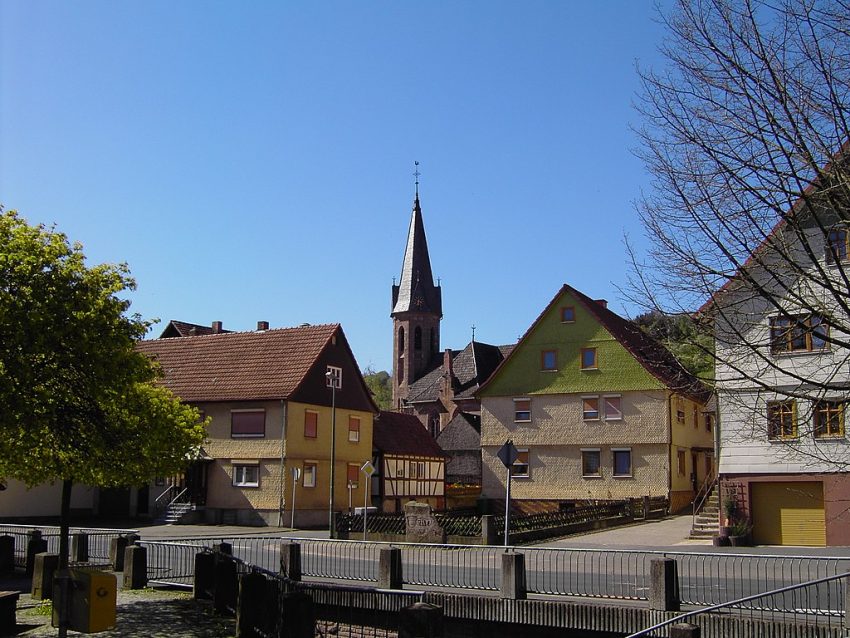
Schlüchtern is a charming town located in the Main-Kinzig district of Hessen, Germany. Nestled in the picturesque Bergwinkel region, between the low mountains of Vogelsberg, Spessart and Rhön, Schlüchtern is a hidden gem waiting to be discovered. With a population of nearly 16,000, it offers a tranquil retreat from the hustle and bustle of big cities. The town is named…
Visiting Schlüchtern

4. Steinau an der Straße

Steinau an der Strase
Public Domain / siehe Disk-Difflink
Steinau an der Straße or Steinau on the street is a small town in the Main-Kinzig district in the state of Hesse, Germany. It is situated in the Spessart hills and has a population of around 10,000 people. The town is known for its well-preserved half-timbered houses, charming old town, and scenic location. The town was first mentioned in 1140 and…
Visiting Steinau an der Straße

5. Hessisch Lichtenau

Burg Ludwigstein
Burg Ludwigstein
CC BY-SA 4.0 / Hessisches Landesarchiv
Hessisch Lichtenau is a small town located in the northern part of the state of Hesse, Germany. It is situated on the edge of the vast forested area known as the Kaufunger Wald, and is surrounded by rolling hills and beautiful countryside. Hessian Lichtenau, the gateway to Frau Holle-Land at the foot of the Hoher Meißner and on the German…
Visiting Hessisch Lichtenau

6. Gelnhausen

Gelnhausen
Gelnhausen
CC BY-SA 4.0 / Tilman2007
Gelnhausen is a picturesque town located in the state of Hesse, German, founded in 1170. It is situated along the eastern bank of the Kinzig river, about 50 kilometers east of Frankfurt. The town has a rich history and was once an important centre of trade and commerce in the region. Gelnhausen is known for its well-preserved medieval old town,…
Visiting Gelnhausen

7. Kassel

Kessel
Kessel
Kassel is a city in northern Hesse, Germany, located on the Fulda River. It is the third-largest city in Hesse, with a population of approximately 200,000 people. The city has a rich cultural heritage, and it is known for its museums, parks, and historic landmarks. One of the most famous attractions in Kassel is the Bergpark Wilhelmshöhe, a UNESCO World Heritage…
Visiting Kassel
Powered by GetYourGuide

8. Hanau

Goldschmiedehaus Hanau
CC BY-SA 3.0 / Pedelecs
Hanau is a city in the state of Hesse, Germany. It is located about 25 kilometres southeast of Frankfurt and has a population of approximately 100,000 people. The city has a rich history that dates back to the 12th century. It was once the residence of the Counts of Hanau and was later ruled by the Electorate of Hesse. Hanau…
Visiting Hanau

9. Eisenach

wartburg castle Eisenach
Eisenach, located in the region of Thuringia, is a charming city surrounded by hills, forests, and cultural landmarks. It's best known for its impressive Wartburg Castle, perched high above the town and offering panoramic views of the surrounding countryside. The compact city center is easy to explore on foot and features a mix of historic architecture, inviting cafés, and small…
Visiting Eisenach
Powered by GetYourGuide

10. Hannoversch Münden

Hannoversch Munden
Hannoversch Munden
CC BY-SA 2.0 / Dirk Schmidt
Hannoversch Münden is a charming town located at the confluence of the Werra and Fulda rivers, where they merge to form the Weser River in Breman and Lower Saxony in Central Germany. The town is known for its well-preserved medieval and half-timbered buildings, many of which date back to the 16th and 17th centuries, and is often referred to as…
Visiting Hannoversch Münden

Where to Stay in Alsfeld

Staying in the historic center is the best choice, as it allows easy access to the town’s stunning half-timbered architecture and medieval charm. Boutique hotels and guesthouses in the Old Town provide an intimate and authentic stay.

Alsfeld can be explored in 1 day, as it is a small town with a compact historic center. A 2-day stay is perfect for those wanting a more relaxed visit, including countryside walks or nearby Hessian towns.

Using the our Hotel and Accomodation map, you can compare hotels and short-term rental accommodations in Alsfeld. Simply insert your travel dates and group size, and you’ll see the best deals for your stay.

Alsfeld Accommodation Map

Best Time to Visit Alsfeld

Visiting Alsfeld in Spring

Spring is a wonderful time to visit Alsfeld. The town comes alive with blooming flowers and vibrant greenery, making it perfect for exploring the picturesque old town and its historic buildings. The mild temperatures and pleasant weather provide an ideal setting for outdoor activities and sightseeing.

Visiting Alsfeld in Summer

Summer in Alsfeld offers warm weather and long daylight hours, perfect for enjoying the town’s numerous festivals and outdoor events. The lively atmosphere and bustling streets make it an exciting time to explore the local culture. Additionally, the surrounding countryside is ideal for hiking and other outdoor adventures.

Visiting Alsfeld in Autumn

Autumn brings cooler temperatures and a stunning display of fall foliage to Alsfeld. The town’s historic architecture looks particularly charming against the backdrop of colorful leaves. This season is perfect for leisurely strolls through the old town, enjoying the crisp air, and experiencing the local harvest festivals.

Visiting Alsfeld in Winter

Winter in Alsfeld is a magical time, especially during the holiday season. The town is adorned with festive decorations, and the Christmas market adds a special charm. The cooler weather creates a cozy atmosphere, perfect for exploring museums, enjoying hearty German cuisine, and soaking in the town’s rich history.

Annual Weather Overview

  • January 4°C
  • February 7°C
  • March 11°C
  • April 16°C
  • May 19°C
  • June 23°C
  • July 25°C
  • August 26°C
  • September 22°C
  • October 15°C
  • November 8°C
  • December 6°C

How to get to Alsfeld

By Air

To travel to Alsfeld by air, fly into Frankfurt Airport, which is the nearest major airport. From there, you can take a train, bus, or rental car to reach Alsfeld, which is approximately 100 kilometers away.

By Train

Alsfeld is accessible by train, with regular connections from major German cities. You can take a direct train from Frankfurt or other nearby cities to the Alsfeld railway station, conveniently located in the town center.

By Bus

Several bus companies operate routes to Alsfeld from different parts of Germany. Buses from Frankfurt, Kassel, and other nearby cities offer a comfortable and affordable way to reach the town.

By Car

Driving to Alsfeld is a flexible option if you prefer to travel at your own pace. The town is well-connected by road, and you can easily reach it via the A5 motorway from Frankfurt. Renting a car allows you to explore the surrounding region as well.
More from this area