Rothenburg ob der Tauber, Germany: The Ultimate Travel Guide 2026
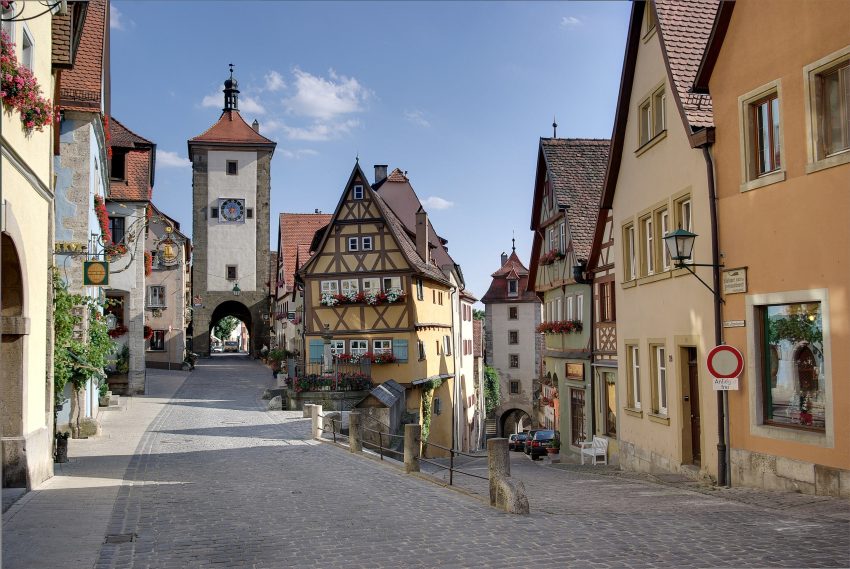
Rothenburg ob der Tauber
Public Domain / Berthold Werner

Rothenburg ob der Tauber, nestled in the heart of Bavaria’s Franconian wine country, feels like a living storybook town the moment you step through its medieval gates. Begin your visit with a gentle walk along the town walls-each step offers a different vantage point over the terracotta rooftops and surrounding countryside. Inside the walls, the pedestrian-only lanes are lined with artisan workshops, bakeries, and cozy cafés where you can pause for a Schneeballen pastry and a strong coffee before exploring hidden courtyards and tranquil gardens.

When hunger strikes, sample hearty Bavarian-Franconian cuisine in one of the traditional taverns clustered around the Market Square. Classics like Schäufele (slow-roasted pork shoulder) and Bratwurst pair perfectly with a glass of locally produced Silvaner or Müller-Thurgau. In summer and autumn, many restaurants spill out onto cobbled streets under festoon lights, creating a convivial al fresco scene. For a lighter bite, pop into the weekly farmers’ market to taste regional cheeses, smoked sausages, and freshly baked breads-ideal for an impromptu picnic on a sunny bench by the Tauber River.

Beyond the walls, the gently rolling hills of northern Bavaria beckon with cycling and hiking trails that wind through vineyards and orchards. Rent a bike near the town entrance and pedal along the Tauber Valley cycle path, stopping at family-run wineries to learn about Franconian winemaking and sip their fine vintages. If you'd rather stay on two feet, guided walking tours will lead you to panoramic viewpoints and hidden chapels perched on hilltops. Whether you're here for gastronomy, scenic walks, or simply the magic of Bavaria's best-preserved medieval gem, Rothenburg ob der Tauber delivers an unforgettable experience.

History of Rothenburg ob der Tauber

Rothenburg ob der Tauber’s Early Foundations (Pre-12th Century)

Rothenburg ob der Tauber grew from a small Alemannic settlement perched above the Tauber River. By the 10th century, a wooden fortification guarded a hillside crossroads, and a modest marketplace served local farmers and craftsmen. As Carolingian influence waned, the settlement gained in prominence under regional nobility, setting the stage for its elevation to town status in the High Middle Ages.

Rothenburg ob der Tauber’s Medieval Golden Age (13th–15th Centuries)

In 1170, Rothenburg ob der Tauber received its first town charter, and by 1274 it had earned the coveted rank of Imperial Free City. Economic prosperity followed, fueled by trade in cloth, salt, and wine along the Tauber valley routes. Wealthy patrician families financed the construction of the town walls, gate towers, and striking Gothic churches, while guilds organized powerful craft networks. By the 15th century, the Market Square teemed with merchants’ stalls and grand civic ceremonies beneath the Rathaus’s imposing façade.

Rothenburg ob der Tauber in the Reformation and Early Modern Turmoil (16th–17th Centuries)

The Reformation brought religious upheaval to Rothenburg ob der Tauber in the 1520s, as town councilors adopted Lutheranism and closed monastic institutions. During the Thirty Years’ War, the city endured sieges and occupation, its walls repelling invaders but its economy suffering from disrupted trade. A notable legend from this era—the “Master Draught” tale—involves a citizen’s courageous act to save the town by drinking a massive cup of wine in a single draught, underscoring the community’s fierce local pride.

Rothenburg ob der Tauber’s Decline and Romantic Rediscovery (18th–19th Centuries)

With shifting trade routes and the Napoleonic dissolution of free cities in 1803, Rothenburg ob der Tauber entered a period of economic stagnation. Paradoxically, this decline preserved its medieval architecture almost intact. In the 19th century, Romantic artists and writers “rediscovered” the town’s pristine walls and half-timbered houses, spurring early preservation efforts. Antiquarians documented its charms, and the first restoration projects began to stabilize crumbling towers and gates.

Rothenburg ob der Tauber in the 20th Century and Beyond

World War II inflicted damage on parts of Rothenburg ob der Tauber during late-war bombings, but a meticulous postwar reconstruction restored its historic core to former glory. In the decades since, the town has balanced heritage tourism with living community needs, opening museums in former guildhalls and launching cultural festivals in the Marktplatz. Today, Rothenburg ob der Tauber stands as a remarkably intact medieval jewel, where each gate, tower, and timbered façade speaks to more than eight centuries of local history.

Moira & Andy
Moira & Andy

Hey! We're Moira & Andy. From hiking the Camino to trips around Europe in Bert our campervan — we've been traveling together since retirement in 2020!

Read our full story here

Visiting Rothenburg ob der Tauber for the first time and wondering what are the top places to see in the city? In this complete guide, I share the best things to do in Rothenburg ob der Tauber on the first visit. To help you plan your trip, I have also included an interactive map and practical tips for visiting!

This website uses affiliate links which earn a small commission at no additional cost to you.

Powered by GetYourGuide

18 Best places to See in Rothenburg ob der Tauber

This complete guide to Rothenburg ob der Tauber not only tells you about the very best sights and tourist attractions for first-time visitors to the city but also provide insights into a few of our personal favorite things to do.

This is a practical guide to visiting the best places to see in Rothenburg ob der Tauber and is filled with tips and info that should answer all your questions!

1. Galgentor (Gallows Gate)

Rothenburg ob der Tauber Galgengassejpg
CC BY-SA 3.0 / Tilman2007
Galgentor (“Gallows Gate”) is a hefty 14th-century stone gate that once guarded the main northern approach, controlling traffic on the route from Würzburg. Its name comes from the gallows that stood beyond the walls, a stark reminder that the city’s defenses also enforced medieval justice. Walking under the tall pointed arch, you’ll notice the thick masonry, arrow slits, and battlemented tower that still shapes the skyline. From the outer side, the view frames ramparts against open countryside, and the cobbled approach feels especially atmospheric in low light. Many visitors pair it with a stroll along the wall walk before heading into the lanes beyond.
Location: Vorm Würzburger Tor 6, 91541 Rothenburg ob der Tauber, Germany | Distance: 0.2km

We recommend to rent a car in Germany through Discover Cars, they compare prices and review multiple car rental agencies. Book your rental car here.

2. Old Town Walls

Old Town Walls of Rothenburg
CC BY-SA 3.0 / Weners
The Old Town Walls encircle Rothenburg ob der Tauber’s medieval center with about four kilometers of stone ramparts, gates, and roofed walkways you can walk along. Built from the 13th century when the town was an imperial free city, the fortifications still read as a working defensive ring, punctuated by gateways such as Rödertor, Galgentor, and Spitaltor. From the elevated path, you look down on red-tiled roofs and narrow streets, then out to the Tauber Valley beyond. Sections were heavily damaged—especially in 1945—and painstakingly rebuilt with help from international donations, a restoration story noted on plaques along the route.
Location: Vorm Würzburger Tor 6, 91541 Rothenburg ob der Tauber, Germany | Hours: Open year-round; access may vary in bad weather. | Price: Free. | Website | Distance: 0.2km

Here is a complete selection of hotel options in Rothenburg ob der Tauber. Feel free to review each one and choose the stay that best suits your needs.

3. Rödertor Gate

Rodertor Feldseite Rothenburg ob der Tauber
CC BY-SA 4.0 / Tilman2007
Rödertor Gate is a multi-layered medieval entrance into Rothenburg ob der Tauber’s walled old town, and walking through it feels like crossing from open countryside into a controlled defensive system. Rather than a single arch, it unfolds as a sequence of gateways and spaces designed to funnel movement, with the area behind opening into a catch yard (Torburg) where entry could be monitored. Its geometry—stacked stonework, angled approaches, and depth through successive arches—makes the fortifications easy to read with your eyes as you pass. Visitors often linger for off-centre photos that show the layers, and some climb the adjacent tower’s steep stairs for wide views over rooftops and fields.
Location: Topplerweg 2, 91541 Rothenburg ob der Tauber, Germany | Hours: 24 Hours | Price: Free (exterior viewing; interior access limited). | Website | Distance: 0.4km

Traveling to a country with a different currency? Avoid ATM transaction fees and pay in local currency with a Wise Card. Having used it for over 5 years, we've saved loads on fees!

4. Röderturm

Rothenburg ob der TauberRodertorturm
CC BY-SA 4.0 / Tilman2007
Röderturm rises above the Röder Gate at the eastern entrance, a 14th‑century watchtower once built as a shell tower within the town walls. Climbing its steep, narrow staircases leads to an observation level with wide views over red rooftops, tight cobbled lanes, and the Tauber Valley beyond. Inside, a small exhibition documents the heavy bombing of March 1945 that destroyed the roof and upper sections, and the postwar rebuilding that restored the tower’s historic form. Travelers often remember the final paid access to the top (commonly around €2) and the sense of standing where sentries once scanned the countryside.
Location: Röderturm, Rödergasse, Rothenburg ob der Tauber, Germany | Distance: 0.4km

Explore Rothenburg ob der Tauber at your own pace with our self-guided walking tour! Follow our curated route to discover must-see sights and local secrets that makes Rothenburg ob der Tauber one of the best places to visit in Germany.

5. Markusturm

Markusturm Rothenburg
CC BY-SA 3.0 / Istvánka
Markusturm (St. Mark’s Tower) is a 13th-century watchtower that once guarded the town’s early northern entrance, a tangible piece of the first fortification line. Its heavy stone base rises beside the later Röderbogen archway, creating one of the most photogenic medieval corners—especially when the tower is framed through the gate. Though you can’t climb it, the narrow cobbled stretch of Rödergasse lets you feel its scale at street level, and there’s even a small fountain nearby that visitors mention fondly. Pause to study the proportions of the upper section and imagine sentries scanning the horizon from the lookout points.
Location: Markusturm u. Röderbogen, Rödergasse, Rothenburg ob der Tauber, Germany | Distance: 0.5km

6. Rothenburg White Tower

Weiser Turm Rothenburg
CC BY-SA 3.0 / trolvag
The White Tower (Weißer Turm), also called the Galgenbogen or Inner Würzburg Gate, is a 13th‑century gate tower that once controlled a key approach into the walled town. Its white-plastered shaft rises about 33.5 meters from the highest point of the old fortifications, making it easy to spot above the red roofs. At street level, the memorable experience is walking beneath the arched passage where Galgengasse meets Hafengasse—an entrance many visitors single out as the best first view into the Old Town. Look for the large clock set into the inner wall and the way the gateway still reads as a boundary between outer and inner defenses.
Location: Weißer Turm, Georgengasse, Rothenburg, Germany | Distance: 0.5km

7. Judentanzhaus

Judentanzhaus Rothenburg ob der Tauber
CC BY-SA 3.0 / Tilman2007
The Judentanzhaus (Jewish Dance House) on Georgengasse 17 is a reconstructed Renaissance half-timbered building that keeps visible the memory of Rothenburg ob der Tauber’s early Jewish community. References to a Jewish dance house appear as early as the 13th century, and a 1353 document from Emperor Charles IV confirms its presence within the town. The current structure was built in 1613 on the site of an earlier Jewish hostel, with a symmetrical timber frame, ornate carvings, and a steep gabled roof that reward a slow look. Destroyed in the 1945 bombing, it was rebuilt from plans and photographs and now stands as a protected monument and a quiet marker of loss and continuity.
Location: Georgengasse 17, Rothenburg ob der Tauber, Germany | Distance: 0.5km

8. Marktplatz

Marktplatz Rothenburg ob der Tauber
CC BY-SA 3.0 / Martin Kraft
Marktplatz is the town’s medieval market square, a lived-in stage set of half-timbered houses and Gothic-to-Renaissance façades where commerce and civic life have converged for centuries. The Rathaus dominates the scene; climb its 220-step tower for wide views over red-tiled roofs and the Tauber Valley. Next door, the Ratstrinkstube’s mechanical clock reenacts the Meistertrunk story on the hour, drawing small crowds who pause mid-stroll. A central fountain anchors the square, while cafés and shopfronts keep it lively between seasonal markets and festivals—especially atmospheric in winter when the Christmas market fills the space with stalls and music.
Location: Marktplatz, Rothenburg ob der Tauber, Germany | Hours: Open year-round, 24 hours a day. | Price: Free to access. | Distance: 0.6km

9. Ratstrinkstube

Ratstrinkstube Marktplatz Rothenburg Germany
CC BY-SA 3.0 / Hiroki Ogawa
Ratstrinkstube (the City Councillors’ Tavern) stands on Rothenburg ob der Tauber’s Market Square as a half-timbered civic building first built in 1466 and enlarged in the 1600s, once reserved for the town council’s private meals and meetings. Look up to the 1683 clock: each hour from 10 a.m. to 10 p.m., two mechanical figures appear to act out the Meistertrunk legend—General Tilly facing Mayor Nusch, who supposedly saved the city in 1631 by draining a massive wine measure in one go. The steep gables, carved woodwork, and bright façade make it especially photogenic from across the square. Travelers often pause for the medieval clock and sundial, even if they don’t wait for the full show.
Location: Ratstrinkstube Clock Tower Marktpl. 2 91541 Rothenburg ob der Tauber Germany | Hours: The clock display runs hourly from morning until evening. | Price: Free to view from outside. | Distance: 0.6km

10. Rothenburg Dungeons

Rothenburg Town History Museum in the Thirty Years War
©
Rothenburg Dungeons, known as the Historical Vault, is an underground museum beneath Rothenburg ob der Tauber’s Town Hall on the Marktplatz, where the city’s past is told in the very cellars that once stored wine and grain. Built in the 13th–14th centuries and later used during the Thirty Years’ War, the dim corridors and thick stone arches make the experience feel close and physical rather than abstract. Rooms of artefacts—arms and armour, civic documents, coins, jewellery, and ceremonial goblets—trace daily life through conflict and recovery. Standout displays include a replica of the Rothenburg Treasure found in 1985 and the unsettling “Blood Flag,” a Nazi propaganda banner linked to the 1923 Beer Hall Putsch.
Location: Rothenburg Town History Museum in the Thirty Years’ War, Marktplatz, Rothenburg ob der Tauber, Germany | Hours: February 2023: Sat & Sun from 11 a.m. to 4 p.m March 2023: daily from 11 a.m. to 4 p.m From April 2023: daily from 10 a.m. to 5 p.m | Price: Adult €4.00 | Website | Distance: 0.7km

11. Klingentor

Klingentor
Klingentor
CC BY-SA 4.0 / Tilman2007
Klingentor is a formidable 14th-century medieval gate and watchtower guarding the eastern edge of the old town, where Klingengasse ends at the fortified walls. Its steep pointed roof, prominent clock face, and carefully worked stone details make it especially striking up close and in photos. Built as part of the outer defenses, it also functioned as a checkpoint for merchants and travelers entering the city. Climb the tight staircase to the viewing platform for sweeping roofline panoramas and a wide look over the Tauber Valley. The gate’s position beside the wall walk makes its defensive purpose easy to imagine, even today.
Location: Klingentor, Klingengasse, Rothenburg ob der Tauber, Germany | Distance: 0.7km

12. Baumeisterhaus

The Master Builders HouseBaumeisterhaus Rothenburg
CC BY-SA 3.0 / Tilman2007
Baumeisterhaus in Rothenburg ob der Tauber, Germany is a 16th-century “Master Builder’s House” that showcases Franconian half-timbered design and the town’s construction guild culture. On Schmiedgasse, its exterior stands out for intricate timber framing, carved stone details, and a painted façade with Renaissance touches. Inside, the building functions as a small museum and cultural space, with exhibits that trace local architecture through models, period tools, and craftsmen’s drawings. A narrow spiral stair leads up the tower, where the reward is a rooftop-and-spire panorama over the enclosed old town. Recent restoration keeps the medieval character intact while making the main rooms easy to explore.
Location: Baumeisterhaus Inh. Dieter Neupert, Obere Schmiedgasse, Rothenburg ob der Tauber, Germany | Distance: 0.7km

13. Medieval Crime Museum

Kriminalmuseum Rothenburg ob der Tauber
CC BY-SA 4.0 / Mittelalterliches Kriminalmuseum Rothenburg
Set inside a former 14th‑century monastery, the Medieval Crime Museum examines how European law, crime, and punishment evolved from the Middle Ages into the 19th century. Across four floors, you move through dim corridors and narrow staircases lined with iron “shame” masks, pillories, executioners’ tools, and other instruments used to enforce order through spectacle. Sections on witch trials pair chilling devices with case documents, while displays of illuminated law books, seals, and proclamations show the rise of written civic rules. The contrast between brutal corporal penalties and later legal processes is what lingers most, making the experience as unsettling as it is informative.
Location: Medieval Crime Museum, Burggasse, Rothenburg ob der Tauber, Germany | Hours: APRIL – OCTOBER 2023: Mon – Sun: 10:00 a.m. – 6:00 p.m NOVEMBER 2023: Mon – Sun 1:00 p.m. – 4:00 p.m DECEMBER 2023 – JANUARY 8, 2024: Mon – Sun 11:00 a.m. – 5:00 p.m JANUARY 9 – MARCH 2024: Mon – Sun: 1:00 p.m. – 4:00 p.m | Price: Adults € 9.00 | Website | Distance: 0.7km

14. St. James's Church

St Jakob Kirche Rothenburg
CC BY-SA 3.0 / Tuxyso
St. James’s Church (Jakobskirche) is a 14th–15th century Gothic pilgrimage church on the Way of St. James, built from 1311 and finished around 1485. Its twin towers and tall stained-glass windows set the tone, but the lasting impression is inside: Tilman Riemenschneider’s Holy Blood altarpiece (1499–1505) renders the Last Supper with striking human detail, with a Holy Blood relic enshrined above. In the lower church, his Twelve Apostles Altar adds another stop-worthy set of carved figures, alongside medieval sculptures and a 14th-century baptismal font. Visitors often remark on the calm interior and the power of hearing a choir or organ in the vaulted space.
Location: St.Jakobskirche, Kirchplatz, Rothenburg ob der Tauber, Germany | Distance: 0.7km

15. Rothenburg Rathaus

Rothenburg Rathaus Town Hall
Public Domain / Berthold Werner
Rising from the Marktplatz, the Rathaus is the town’s civic centerpiece, a rare pairing of an older Gothic core (begun in the 13th century, finished around 1250) with a 16th‑century Renaissance addition. Its clock tower—over 60 meters high—anchors the skyline and still feels like a statement of medieval self-rule. Inside, visitors notice the ceremonial staircase and richly finished council rooms, with murals, carved woodwork, and period furnishings that hint at how power once looked and sounded here. Climbing the narrow tower stairs is the main ritual: reviews linger on the sweeping views across red roofs, the Tauber Valley, and the surrounding countryside.
Location: Rathaus Rothenburg ob der Tauber, Markt, Rothenburg, Germany | Distance: 0.7km

16. Rothenburg Museum

RothenburgMuseum
RothenburgMuseum
CC BY-SA 4.0 / Anxises
Set inside a former 13th-century Dominican convent, the Rothenburg Museum pairs monastic architecture—vaulted ceilings, medieval stonework, and a cloister courtyard—with collections that trace the town’s story from its early medieval beginnings onward. Rooms that once served the order now hold religious sculpture and civic relics alongside finely made ceramics, tools of traditional craft, and displays of weapons and armor. A standout is the section devoted to late-Gothic sculptor Tilman Riemenschneider, where expressive wooden figures and reliefs reward close looking. The quiet, cool interiors create a reflective counterpoint to the bustle outside, and the courtyard’s natural light is especially memorable.
Location: RothenburgMuseum, Klosterhof, Rothenburg ob der Tauber, Germany | Hours: January – March: 1.00 pm – 4.00 pm April – October: 9.30 am – 5.30 pm November – December: 1.00 pm – 4.00 pm During the Christmas Market: 10.00 am – 4.00 pm Dec. 24th and 31st: closed | Price: Adults: 5,00 € | Website | Distance: 0.8km

17. Plönlein

Plonlein The Little Square
CC BY-SA 2.0 / Ulrich Oestringer
Plönlein (“Little Square”) is a tiny fork in the road framed like a stage set: a bright yellow half-timbered house at the center, with the Siebers Tower rising behind and the Kobolzell Gate Tower marking the downhill lane toward the Tauber Valley. Built into the town’s defenses (the Siebers Tower dates to around 1385), it still feels like a medieval crossroads, with uneven cobblestones and narrow streets that funnel you into the classic split-street view. The scene shifts with the light—quiet and soft at dawn, then crowded by midday as photographers line up for the same postcard angle. Visitors often linger to wander the surrounding lanes of small shops and cafés.
Location: Plönlein, Untere Schmiedgasse, Rothenburg ob der Tauber, Germany | Hours: 24 Hours | Price: Free | Distance: 0.8km

18. Castle Garden

The Burggarten Castle Garden Rothenburg
CC BY-SA 2.0 / Kent Wang
Castle Garden (Burggarten) is a landscaped park on the western edge of the old town, created on the site of the former Imperial Castle, largely destroyed by the 1356 earthquake. Quiet paths wind through lawns, flowerbeds, and mature trees, with fragments of old walls and foundations still visible among the greenery. Look for the row of statues of eight German emperors and sculptures associated with Tilman Riemenschneider, which add an unexpected museum-like feel outdoors. The terrace viewpoint is the main draw, opening to wide views over the Tauber Valley, the town walls, and the half-timbered rooftops below. Travelers often linger here for a calm break and photos, especially toward sunset.
Location: Castle Garden, Alte Burg, Rothenburg ob der Tauber, Germany | Distance: 1km

Best Day Trips from Rothenburg ob der Tauber

A day trip from Rothenburg ob der Tauber offers the perfect opportunity to escape the urban rhythm and discover the surrounding region's charm. Whether you're drawn to scenic countryside, historic villages, or cultural landmarks, the area around Rothenburg ob der Tauber provides a variety of easy-to-reach destinations ideal for a one-day itinerary. If you are looking to rent a car in Germany I recommend having a look at Discover Cars, first, as they compare prices and review multiple car rental agencies for you.

1. Röttingen
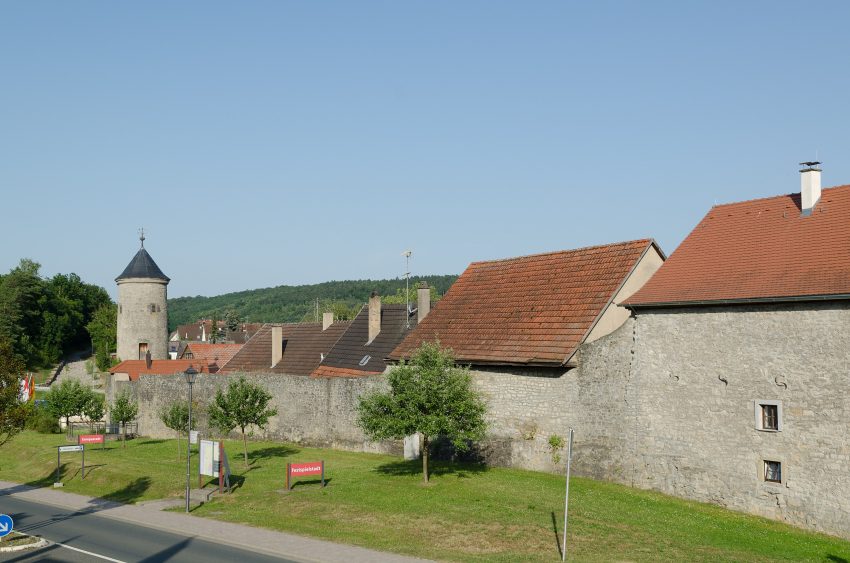
Rottingen City Walls
CC BY-SA 3.0 / Tilman2007
Röttingen sits in the heart of Bavaria’s Lower Franconia region, offering a wonderfully compact old town that’s perfect for leisurely exploration. Begin by wandering the medieval walls and gates that encircle the Market Square, where charming half-timbered houses give way to artisan bakeries and cozy cafés. Mid-morning, settle at an outdoor table overlooking the Tauber River to enjoy a freshly…
Visiting Röttingen
Powered by GetYourGuide

2. Bad Mergentheim

Bad Mergentheim
Bad Mergentheim
CC BY-SA 24.0 / Holger Uwe Schmitt
Bad Mergentheim is a spa town located in the northeastern part of the German state of Baden-Württemberg. The town is situated in the scenic Tauber Valley and is known for its beautiful architecture, rich cultural heritage, and therapeutic mineral springs. One of the town's most famous landmarks is the Deutschordensschloss, or the Castle of the Teutonic Order, which was built…
Visiting Bad Mergentheim

3. Dinkelsbühl

Dinkelsbuhl
Dinkelsbuhl
CC BY-SA 3.0 / Mylius
Dinkelsbühl, nestled in the heart of Bavaria’s Franconian region along the famed Romantic Road, greets visitors with its perfectly preserved medieval walls and colorful half-timbered houses. Begin your day wandering the pedestrianized streets of the Old Town, where artisan shops, bakeries, and cozy cafés line the cobbles. Stop for a freshly baked Brötchen and a strong German coffee at a…
Visiting Dinkelsbühl
Powered by GetYourGuide

4. Würzburg

Wurzburg
Wurzburg
Würzburg sits amid the rolling vineyards of the Main Valley in northern Bavaria, Germany, making it a perfect base for exploring both river-side promenades and hillside wine trails. Its compact city center is easily walkable, with pedestrianized lanes linking café-lined squares to the Baroque grandeur of the Residenz and the cathedral. Strolling along the Alte Mainbrücke at sunset—where locals gather…
Visiting Würzburg

5. Nördlingen

Nordlingen
Nordlingen
Nördlingen is a historic town in the region of Swabia, located in Bavaria, Germany. It is situated in a large meteorite crater, and the town's unique location has made it a popular tourist destination. One of the town's most notable attractions is its well-preserved medieval walls, which encircle the town and offer stunning views of the surrounding countryside. Visitors can…
Visiting Nördlingen
Powered by GetYourGuide

6. Bamberg

Bamberg
Bamberg
© Andrew Ashton
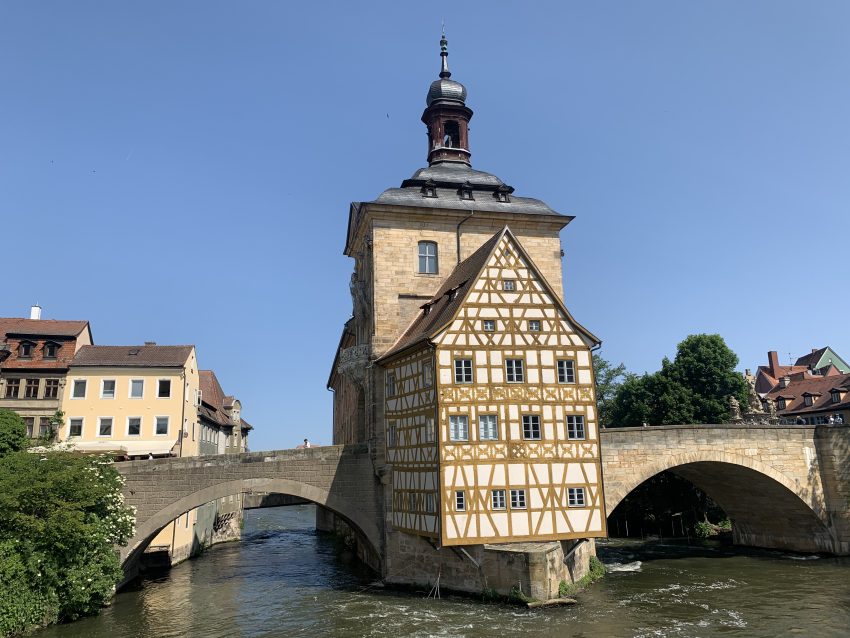
Situated in Upper Franconia, Germany, near the confluence of the Regnitz and Main rivers, Bamberg is a town with a rich history dating back to the 9th century, deriving its name from the nearby Babenberch castle. Renowned for its exceptional beauty, the old town of Bamberg is considered one of Germany's most captivating destinations, characterized by its medieval streets and…
Visiting Bamberg
Powered by GetYourGuide

7. Stuttgart

stuttgart castle
stuttgart castle
Stuttgart, located in the southwest of Germany in the region of Baden-Württemberg, is a city that blends modern innovation with green living. Known for its rolling hills, vineyards, and extensive parks, Stuttgart offers a refreshing mix of nature and urban life. Visitors can enjoy panoramic views from spots like the Killesberg Park or the TV Tower, while easily accessing the…
Visiting Stuttgart
Powered by GetYourGuide

8. Heidelberg

Heidelberg
Heidelberg
Heidelberg, located in the region of Baden-Württemberg, is one of Germany’s most picturesque and romantic cities. Nestled along the Neckar River and surrounded by forested hills, it offers a stunning natural setting paired with classic architecture. The city’s famous castle ruins, cobbled old town, and riverside walks create a relaxed yet inspiring atmosphere that appeals to couples, photographers, and curious…
Visiting Heidelberg
Powered by GetYourGuide

9. Gelnhausen

Gelnhausen
Gelnhausen
CC BY-SA 4.0 / Tilman2007
Gelnhausen is a picturesque town located in the state of Hesse, German, founded in 1170. It is situated along the eastern bank of the Kinzig river, about 50 kilometers east of Frankfurt. The town has a rich history and was once an important centre of trade and commerce in the region. Gelnhausen is known for its well-preserved medieval old town,…
Visiting Gelnhausen

10. Steinau an der Straße

Steinau an der Strase
Public Domain / siehe Disk-Difflink
Steinau an der Straße or Steinau on the street is a small town in the Main-Kinzig district in the state of Hesse, Germany. It is situated in the Spessart hills and has a population of around 10,000 people. The town is known for its well-preserved half-timbered houses, charming old town, and scenic location. The town was first mentioned in 1140 and…
Visiting Steinau an der Straße

Where to Stay in Rothenburg ob der Tauber

Hofgeismar offers a variety of accommodations suited to visitors looking for historical charm, countryside tranquility, or modern convenience. The Historic Center (Altstadt) is the best place to stay for travelers who want to be immersed in medieval architecture, vibrant squares, and landmarks such as Schloss Hofgeismar and the Stadtkirche. Walking through this district, guests can explore traditional half-timbered houses, artisan shops, and cozy cafés, making it an ideal setting for cultural enthusiasts. A recommended hotel in this area is Hotel Zum Alten Brauhaus, offering a charming historic ambiance with elegant rooms and views of the old town’s picturesque skyline.

For visitors looking for peaceful countryside retreats, the outskirts of Hofgeismar and the Reinhardswald Nature Park region provide stunning rural escapes with rolling hills, serene forests, and breathtaking landscapes. These accommodations allow guests to enjoy hiking trails, wildlife spotting, and tranquil nature walks, all while being a short drive from the historic center. A fantastic stay in this setting is Hotel Garni am Reinhardswald, featuring a scenic location, comfortable lodgings, and a quiet atmosphere ideal for relaxation.

If modern comforts and easy transport access are a priority, Hofgeismar also offers contemporary hotels with stylish interiors, wellness facilities, and excellent connectivity to major highways and rail stations. These locations are perfect for visitors who prefer sleek surroundings with proximity to shopping districts and business centers, making them convenient for both leisure and work. A recommended hotel in this district is Hotel Viktorosa, offering sophisticated accommodations, a spa, and a central location ideal for exploring both Hofgeismar and the surrounding Hessen region. Whether you’re drawn to historical ambiance, countryside serenity, or modern luxury, Hofgeismar has accommodations suited to every traveler’s preference.

Using the our Hotel and Accomodation map, you can compare hotels and short-term rental accommodations in Rothenburg ob der Tauber. Simply insert your travel dates and group size, and you’ll see the best deals for your stay.

Rothenburg ob der Tauber Accommodation Map

Best Time to Visit Rothenburg ob der Tauber

Rothenburg ob der Tauber in Spring

Spring (March–May) brings milder weather and fewer crowds, perfect for wandering the town walls draped in early blossoms. In April, the Oster-Töpfermarkt (Easter Pottery Market) fills the Market Square with artisans selling hand-thrown ceramics and spring crafts. Daylight lengthens enough for leisurely walks along the Tauber River and exploration of the hidden courtyards behind the half-timbered houses.

Rothenburg ob der Tauber in Summer (Best)

Summer (June–August) is widely considered the best time to visit Rothenburg ob der Tauber. Warm evenings come alive with the Reichsstadttage Imperial City Festival, where costumed parades, historical jousting tournaments, and open-air concerts recreate the town’s medieval heyday. Outdoor cafés spill onto the cobbles of Herrngasse, and extended daylight hours invite late-night visits to the illuminated town walls and towers.

Rothenburg ob der Tauber in Autumn

Autumn (September–November) cloaks the town in golden hues as the surrounding vineyards prepare for harvest. The Herbstmarkt (Autumn Market) in October showcases local vintners pouring Franconian wines alongside hearty sausages and roasted chestnuts. Cool mornings are ideal for misty Tauber River strolls, and cozy taverns offer warm glühwein before the chill of winter sets in.

Rothenburg ob der Tauber in Winter

Winter (December–February) transforms Rothenburg ob der Tauber into a storybook scene. From late November through Christmas, the famous Reiterlesmarkt fills the Market Square with wooden stalls, festive lanterns, and the scent of gingerbread. Carol singers perform beneath the Rathaus balcony, and torchlit tours of the snow-dusted streets lend a magical glow to the half-timbered façades.

Annual Weather Overview

  • January 4°C
  • February 6°C
  • March 11°C
  • April 16°C
  • May 19°C
  • June 23°C
  • July 25°C
  • August 25°C
  • September 21°C
  • October 15°C
  • November 8°C
  • December 6°C

How to get to Rothenburg ob der Tauber

Traveling to Rothenburg ob der Tauber by Car

Driving to Rothenburg ob der Tauber offers flexibility and the chance to enjoy the scenic Bavarian countryside. Ample parking is available near the town center.

Traveling to Rothenburg ob der Tauber by Train

You can reach Rothenburg ob der Tauber by train from major German cities. The journey provides picturesque views of the surrounding landscape.

Traveling to Rothenburg ob der Tauber by Bus

Bus services connect Rothenburg ob der Tauber with nearby cities and towns, offering a convenient option for budget travelers seeking direct routes.
More from this area