Coimbra, Portugal: The Ultimate Travel Guide 2026
Coimbra
Coimbra

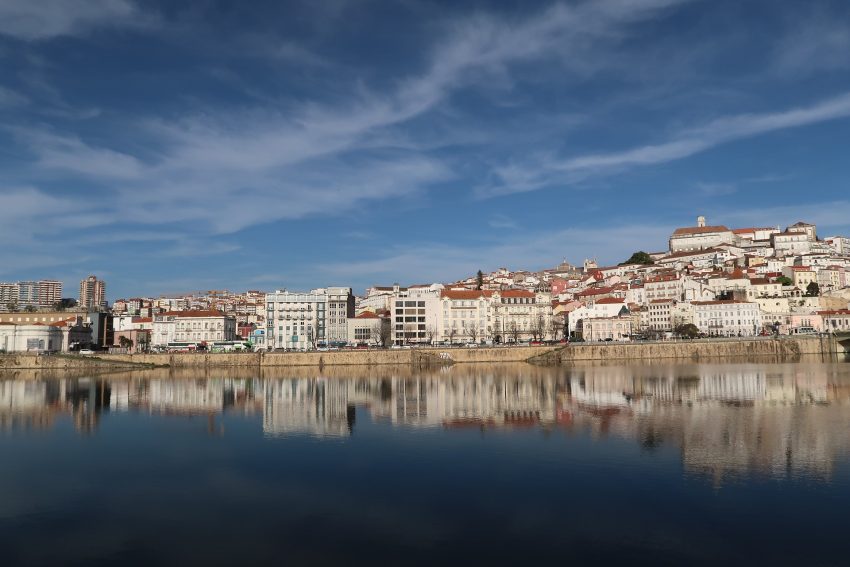
Dubbed as the most romantic city in Portugal, Coimbra served as the inspiration for the renowned song “April in Portugal”. Situated on the weather-beaten right bank of the muddy Mondego River, this medieval city is home to numerous churches and also serves as the hub of education in the country. Its university was first founded by Dinis I in Lisbon in 1290, but was relocated back and forth between Coimbra and Lisbon before finally settling in Coimbra for good in 1537. Many of the country's leaders, including the dictator Dr. António Salazar from 1932 to 1968, received their education here.

Coimbra is at its liveliest during the academic year, with a vibrant youthful spirit emanating from the city. Bustling cafeterias, boisterous bars, and various events such as crew races all contribute to the city's exuberance. You can easily spot the students as they don black capes and carry briefcases adorned with colored ribbons indicating their respective schools (yellow signifies medicine, for instance).

Moira & Andy
Moira & Andy

Hey! We're Moira & Andy. From hiking the Camino to trips around Europe in Bert our campervan — we've been traveling together since retirement in 2020!

Read our full story here

Visiting Coimbra for the first time and wondering what are the top places to see in the city? In this complete guide, I share the best things to do in Coimbra on the first visit. To help you plan your trip, I have also included an interactive map and practical tips for visiting!

This website uses affiliate links which earn a small commission at no additional cost to you.

Powered by GetYourGuide

16 Best places to See in Coimbra

This complete guide to Coimbra not only tells you about the very best sights and tourist attractions for first-time visitors to the city but also provide insights into a few of our personal favorite things to do.

This is a practical guide to visiting the best places to see in Coimbra and is filled with tips and info that should answer all your questions!

1. San Sebastian Aqueduct
Aqueduto de Sao Sebastiao
CC BY-SA 2.0 / Karine et Cyril
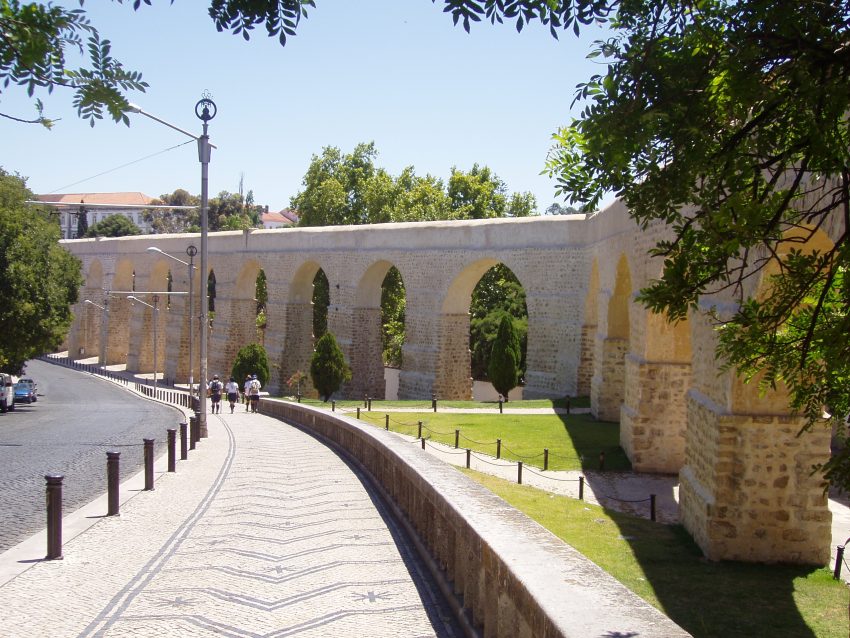
The San Sebastian Aqueduct (Arcos do Jardim) is a late-16th-century waterwork whose long run of stone arches still cuts through the streets on the way up to the Alta. Built between 1568 and 1570 by order of King Sebastião and attributed to engineer Filipe Terzi, it follows the line and foundations of an older Roman aqueduct that once served ancient Aeminium. What visitors remember most is the ceremonial “arch of honor” at one end: a sculpted gateway with the royal coat of arms, Doric columns, and a domed lantern above. The rest is a more austere, rhythmic sequence of arches—surprisingly integrated into everyday city life and great for photos.
Location: Aqueduto de São Sebastião, Alameda Júlio Henriques, Coimbra, Portugal | Distance: 1km

We recommend to rent a car in Portugal through Discover Cars, they compare prices and review multiple car rental agencies. Book your rental car here.

2. Botanical Garden of the University of Coimbra
Jardim Botanico de Coimbra   Portugal
Jardim Botanico de Coimbra Portugal
CC BY-SA 2.0 / Vitor Oliveira
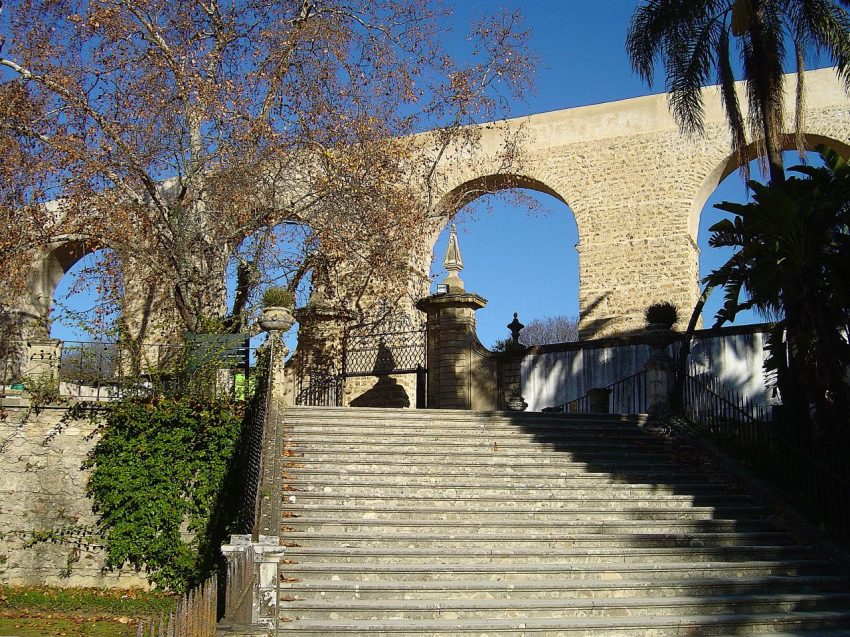
The Botanical Garden of the University of Coimbra is an 18th-century scientific garden created in 1772 as a living laboratory for medicine and natural history. Its terraced layout shifts from the formal Quadrado Central—lined with rare, mature specimens such as Japanese sugi and a coral tree planted in Avelar Brotero’s era—down into cooler, wilder groves. A bamboo corridor and a valley collection of 51 eucalyptus species make the lower slopes feel surprisingly immersive for a campus garden. Visitors tend to remember the deep shade, birdsong, and the resident brown squirrels introduced in 1994, which add movement to the quiet paths.
Location: Jardim Botânico, Coimbra, Portugal | Hours: 9am-8pm Apr-Sep, 9am-5.30pm Oct-Mar | Website | Distance: 1.3km

Here is a complete selection of hotel options in Coimbra. Feel free to review each one and choose the stay that best suits your needs.

3. University of Coimbra

University of Coimbra
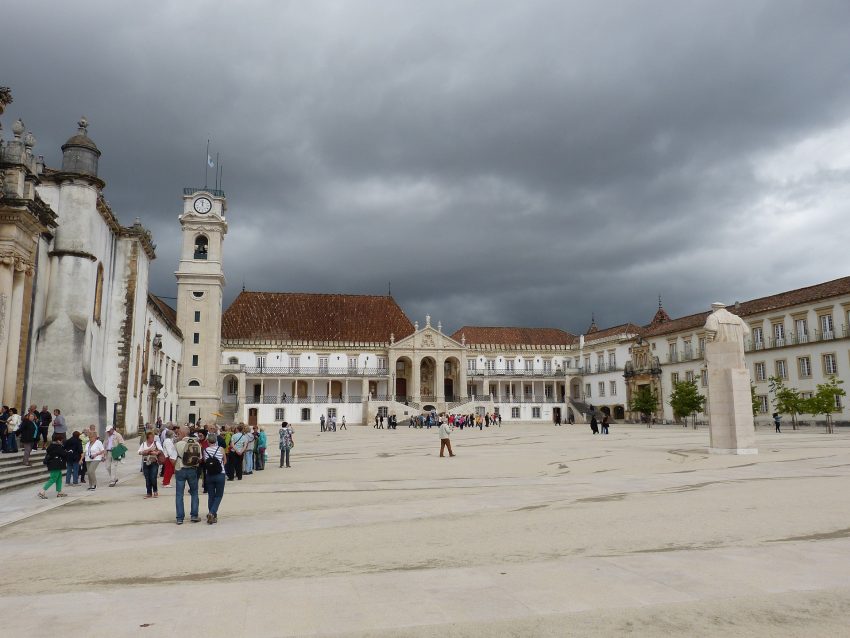
Founded in 1290 and later established here in the early 1500s, the University of Coimbra is a hilltop complex where academic tradition still feels tangible in courtyards, ceremonial rooms, and the skyline-defining clock tower above the Mondego. The UNESCO-listed Alta and Sofia areas include the Paço das Escolas, whose broad terrace views are part of what visitors remember most. Inside, the Biblioteca Joanina is an 18th-century Baroque library of gilded woodwork and frescoed ceilings, guarding around 300,000 volumes in a setting that feels more like a royal chamber than a reading room. Nearby, the Capela de São Miguel pairs azulejo-clad walls with an ornate organ and a painted ceiling.
Location: University of Coimbra, Coimbra, Portugal | Hours: 9am-7.30pm Mar-Oct, 9am-1pm & 2pm-5pm Nov-Feb | Price: adult/child incl Paço das Escolas, Biblioteca Joanina, Capela de São Miguel & Museu da Ciência €12.50/free, without Biblioteca €7/free | Website | Distance: 1.3km

Traveling to a country with a different currency? Avoid ATM transaction fees and pay in local currency with a Wise Card. Having used it for over 5 years, we've saved loads on fees!

4. Sé Nova

Se Nova de Coimbra
Se Nova de Coimbra
CC BY-SA 3.0 / Concierge.2C
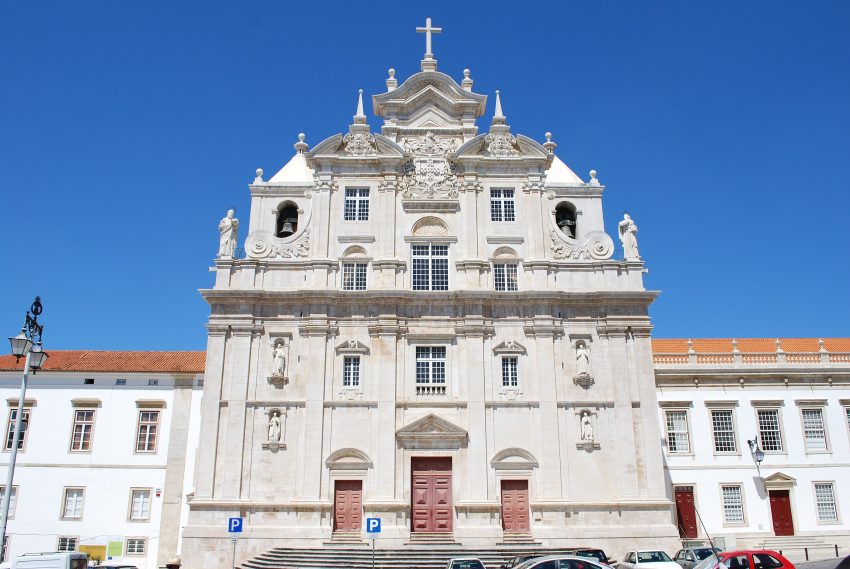
Sé Nova is the city’s principal cathedral, a former Jesuit church built over a century (1598–1698) that pairs late Renaissance structure with an emphatically Baroque face. Its two-tier façade still signals that shift in identity: Jesuit saints stand below, while statues of Saints Peter and Paul crown the 18th-century upper section. Step inside to a single vaulted nave with side chapels and bishops’ tombs, but the eye is pulled to the chancel’s late-17th-century gilded woodwork, dense with carving and warm gold. Look, too, for pieces brought from the older cathedral, including choir stalls of exotic wood and bronze and an early-16th-century baptismal font.
Location: New Cathedral, Largo Feira dos Estudantes, Coimbra, Portugal | Distance: 1.4km

Explore Coimbra at your own pace with our self-guided walking tour! Follow our curated route to discover must-see sights and local secrets that makes Coimbra one of the best places to visit in Portugal.

5. Coimbra Science Museum

Museu da Ciencia da Universidade de Coimbra
CC BY-SA 1.0 / Daderot
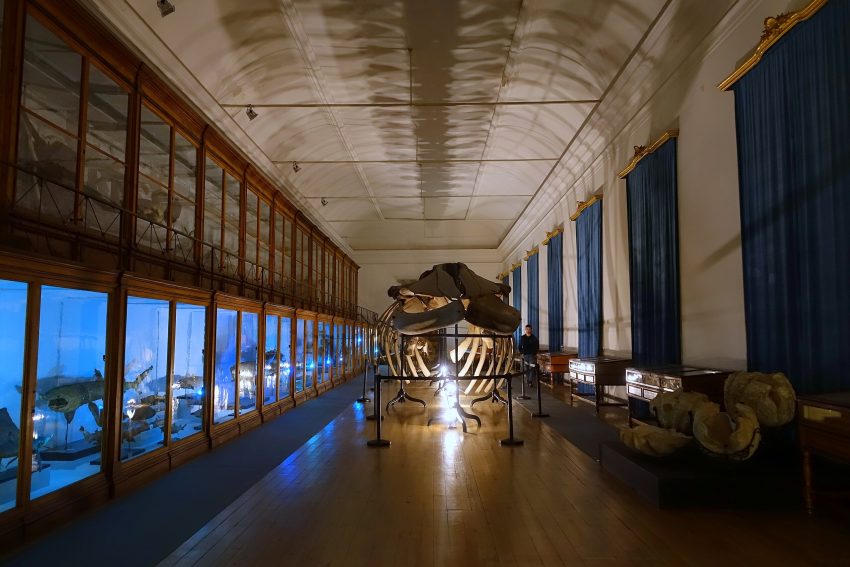
Housed in the University of Coimbra’s historic scientific complex, the Coimbra Science Museum traces how Portuguese science shifted from Enlightenment-era teaching to modern research. Its galleries were unified in 2006 from long-scattered university collections, shaped by the 18th-century Pombaline reforms that built new labs and observatories. Visitors can try hands-on reconstructions of classic experiments while moving between physics and chemistry apparatus and displays themed around “light and matter.” Natural history rooms linger in memory: a 20‑meter whale skeleton anchors a vast zoological collection, alongside preserved botanical specimens gathered during expeditions to Brazil and Africa. An anthropology section presents hundreds of complete skeletons and thousands of skulls, revealing the scale of past academic collecting.
Location: Museu da Ciência da Universidade de Coimbra, Largo Marquês de Pombal, Coimbra, Portugal | Hours: 10am-7pm Tue-Sun Mar-Oct, to 6pm Nov-Feb | Price: adult/child incl Paço das Escolas, Biblioteca Joanina & Capela de São Miguel €12.50/free, without Biblioteca €7/free | Website | Distance: 1.4km

6. Paço das Escolas
Paco das Escolas
Paco das Escolas
CC BY-SA 2.0 / Halley Oliveira
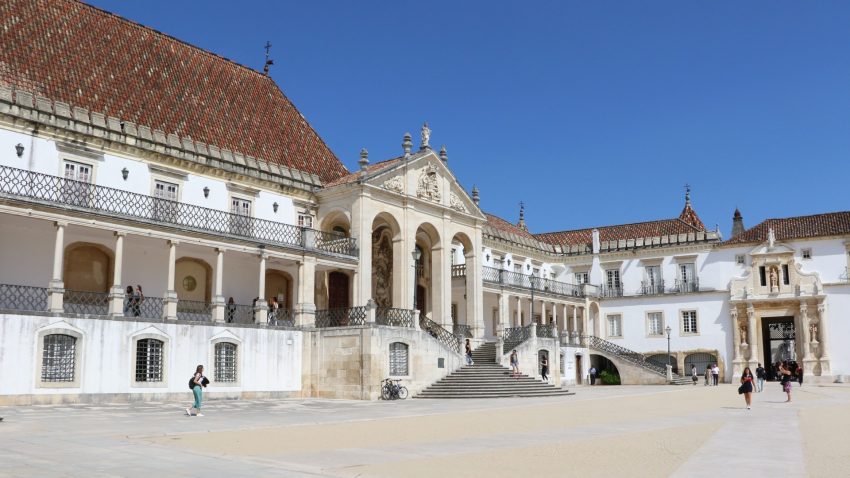
Paço das Escolas is the ceremonial heart of the University of Coimbra, occupying the city’s highest ground on the site of a former royal palace. The broad Pátio das Escolas feels like an outdoor stage, framed by white-and-ochre façades and the University Tower, before you step into a sequence of formal rooms. In the Sala dos Capelos—once an exam hall and now the setting for doctoral graduations—dark royal portraits and deep crimson hangings create a hushed, theatrical mood. Nearby, the Sala do Exame Privado recalls the era of secret examinations and strict academic ritual. Terraces and tower viewpoints deliver sweeping roofline-and-valley panoramas that visitors consistently mention as unforgettable.
Location: Paço das Escolas, Coimbra, Portugal | Hours: 9am-7.30pm Mar-Oct, 9am-1pm & 2pm-5pm Nov-Feb | Price: adult/child incl Biblioteca Joanina, Capela de São Miguel & Museu da Ciência €12.50/free, without Biblioteca €7/free | Distance: 1.4km

7. Museu Nacional de Machado de Castro
Museu Nacional de Machado de Castro
CC BY-SA 4.0 / Elisa.rolle
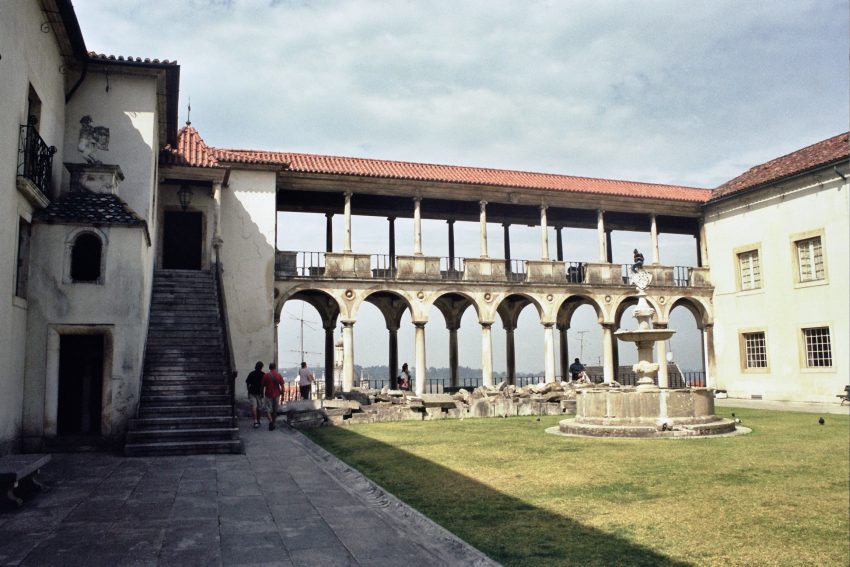
Museu Nacional de Machado de Castro occupies the former Bishop’s Palace, a complex begun in the 12th century and later reshaped across multiple eras. Its most unforgettable experience is descending into the 1st‑century Roman cryptoporticus: a vast undercroft of vaulted corridors and chambers that once supported the forum above, where cool stone, arches, and occasional traces of ancient decoration make time feel compressed. Upstairs, galleries move from medieval altarpieces to Renaissance and Mannerist works, with an especially strong showing of Portuguese sacred sculpture, including pieces associated with Baroque master Joaquim Machado de Castro. Don’t miss the 16th‑century Fountain of the Dolphins, an unexpectedly playful note amid the solemn art.
Location: Museu Nacional de Machado de Castro, Largo Doutor José Rodrigues, Coimbra, Portugal | Hours: 2pm-6pm Tue, 10am-6pm Wed-Sun | Price: adult/child €6/3, cryptoportico only €3 | Distance: 1.4km

8. Biblioteca Joanina
Biblioteca Joanina Coimbra
CC BY-SA 3.0 / Jl FilpoC
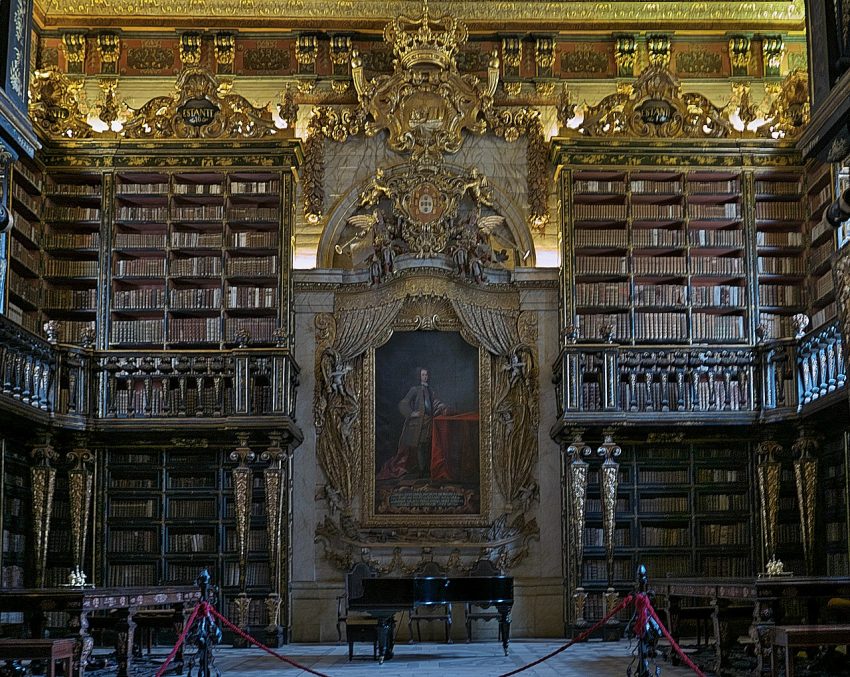
Biblioteca Joanina is the University of Coimbra’s lavish early-18th-century Baroque library, conceived under King João V as a monument to learning. Inside, three grand halls stack towering bookcases of dark jacaranda wood, edged with gold leaf, beneath painted ceilings where allegory celebrates knowledge. The collection focuses on rare works from the 16th to 18th centuries—scientific, legal, and theological volumes that make the rooms feel like a preserved cabinet of scholarship. Below the opulence, the Prisão Acadêmica reveals the university’s former judicial autonomy: small stone cells where rule-breaking students were once confined, a stark and slightly claustrophobic counterpoint to the gilded reading rooms.
Location: Biblioteca Joanina, Coimbra, Portugal | Hours: 9am-7.30pm Mar-Oct, 9am-1pm & 2pm-5pm Nov-Feb | Price: adult/under 26yr/child incl Paço das Escolas, Capela de São Miguel & Museu da Ciência €12.50/10/free | Distance: 1.4km

9. University Tower
Torre da Universidade de Coimbra
CC BY-SA 2.0 / Marcio
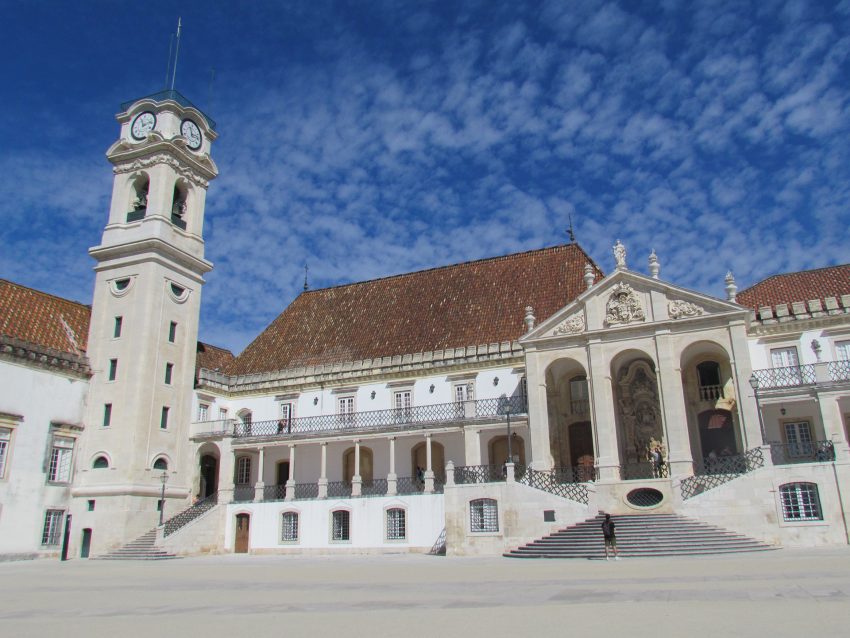
Rising 34 meters above the Paço das Escolas courtyard, the 18th-century University Tower is the campus timekeeper—built in 1728 to regulate academic life with bells and clock. Climb a tight spiral staircase through multiple levels to stand near the open arches where the bells hang, including the curfew-ringing “Cabra” that once dictated student routines. Near the top, the clock is set into the masonry, a reminder that this was as practical as it was ceremonial. The final terrace delivers a full 360-degree panorama: terracotta rooftops, the Mondego River, and hills beyond—an especially memorable payoff for the last steep steps.
Location: Torre da Universidade de Coimbra, Rua do Norte, Coimbra, Portugal | Hours: 9am-7.30pm Mar-Oct, 9am-1pm & 2pm-5pm Nov-Feb | Price: €2 | Distance: 1.5km

10. Sé Velha de Coimbra
Se Velha de Coimbra
Se Velha de Coimbra
CC BY-SA 3.0 / Anamaia
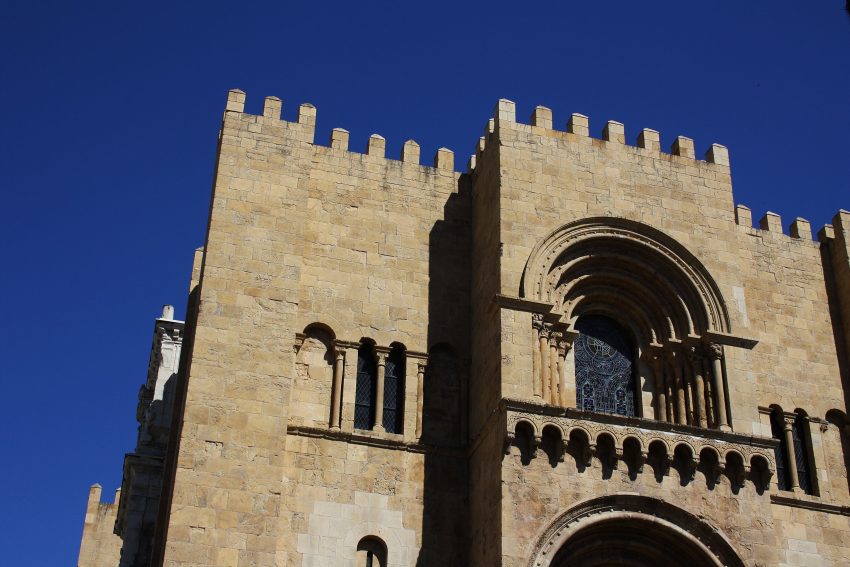
Sé Velha de Coimbra is a Romanesque cathedral begun in 1164, built with a fortress-like profile that still feels more like a stronghold than a church. Inside, the heavy stone architecture is softened by carved chancels patterned with floral and animal motifs, notably avoiding human figures. The airy cloister, started in 1218, is among Portugal’s earliest Gothic works, with pointed arches and delicate colonnades that many visitors remember as the most serene space. Later layers add contrast, especially the 16th-century Porta Especiosa and Renaissance chapels. It also witnessed major royal moments, including the 1185 coronation of King Sancho I.
Location: Sé Velha de Coimbra, Largo da Sé Velha, Coimbra, Portugal | Hours: 10am-6pm Mon-Sat, 1-6pm Sun | Price: €2.50 | Website | Distance: 1.6km

11. Porta de Barbacã
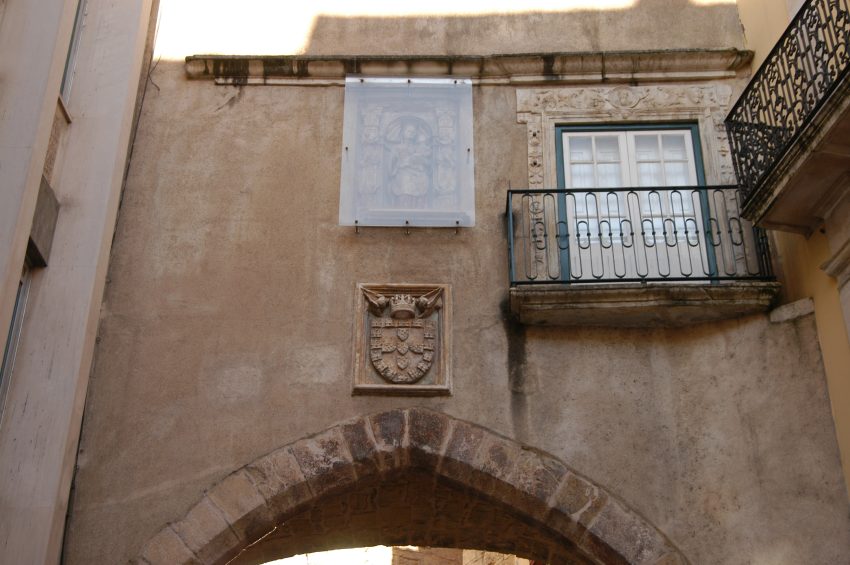
Porta da Barbaca
Porta da Barbaca
CC BY-SA 3.0 / HenGomes
Porta de Barbacã is a medieval gateway complex from the 12th century, a surviving fragment of the defensive walls that once controlled entry to the old citadel. Passing under its vaulted arch, you walk through a narrow, tunnel-like choke point designed to slow attackers, with the Almedina Tower rising beside it. The name “Almedina” traces to Arabic influence, and the tower once served civic life—its bell signaled council meetings and the daily opening and closing of the gates until 1870. On the far side, the stone passage spills onto Rua de Quebra Costas, a steep, winding lane that makes the transition from modern streets to the upper old quarter feel immediate. Travelers often note the atmospheric setting and the easy, free access.
Location: Porta de Barbacã, Coimbra, Portugal | Hours: 24 Hours | Price: Free | Distance: 1.7km

12. Church of St. Bartholomew
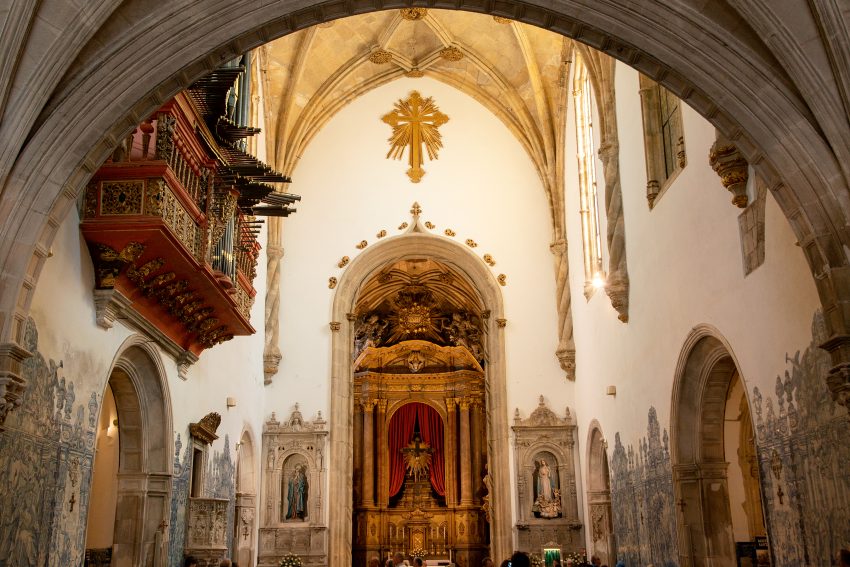
Church of Saint Bartolomew Igreja Sao Bartolomeu Coimbra
CC BY-SA 4.0 / Peter K Burian
The Church of St. Bartholomew is a small, atmospheric parish church just off Commerce Square on Rua dos Esteoros, easy to miss because it sits tightly among surrounding buildings. Its origins reach back before 957, making it one of the oldest surviving religious sites in town, though the interior you see today is largely the result of an 18th-century Baroque makeover. Step inside the single nave for gilded woodwork, marble accents, and a dramatic altarpiece painted with scenes from the Passion and the life of St. Bartholomew. Outside, the façade’s twin bell towers, pilasters, and oval window give it a quiet, formal dignity.
Location: Igreja de São Bartolomeu, Adro de Cima, Coimbra, Portugal | Distance: 1.7km

13. Largo da Portagem
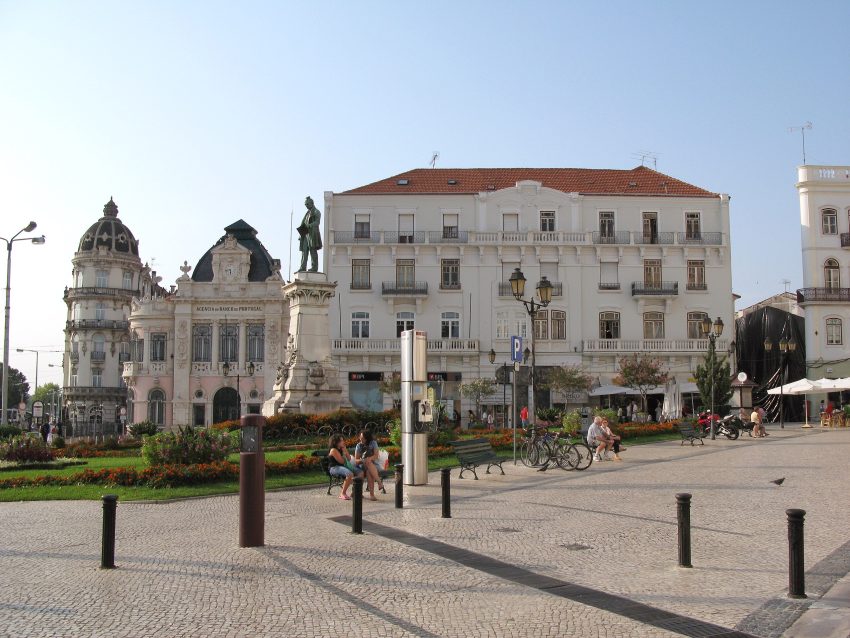
Largo da PortagemToll Square
CC BY-SA 2.0 / ho visto nina volare
Largo da Portagem is a riverside square in Coimbra beside the Mondego and the Ponte de Santa Clara, long used as a natural meeting point between the old city and the commercial streets nearby. Its name recalls the days when merchants entering from the south paid tolls here before continuing into town. Today you’ll notice the pale stone paving and white marble details, flower beds, and the ring of early 20th-century façades, including the domed Hotel Astoria and the Bank of Portugal, both associated with architect Adães Bermudes. At the center stands the monument to Joaquim António de Aguiar, the controversial statesman nicknamed the “Friar-Killer,” anchoring the square’s everyday café life with a jolt of political memory.
Location: Largo da Portagem, Coimbra, Portugal | Distance: 1.7km

14. Santa Cruz Monastery
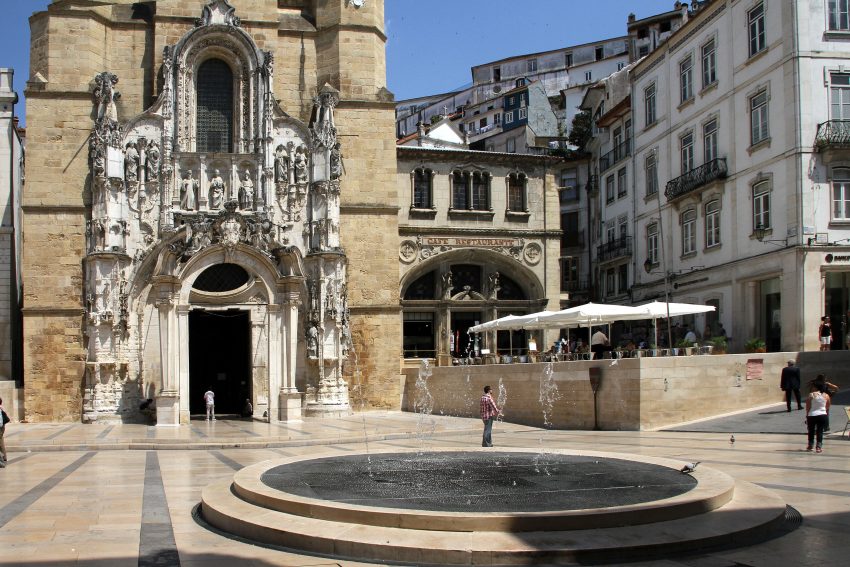
Coimbra Mosteiro de Santa Cruz
CC BY-SA 4.0 / Gerd Eichmann
Santa Cruz Monastery is an Augustinian foundation begun in 1131, later transformed into a showpiece of Manueline art that helped shape Portugal’s early identity. The church holds the royal tombs of Afonso Henriques and his son Sancho I—national symbols recast in the 16th century with sculptural drama often linked to Nicolau de Chanterenne. Visitors tend to remember the façade’s dense carvings of foliage, angels, and royal emblems, then the sudden hush inside beneath the stone-vaulted ceiling. The main altar’s intricate wood-and-stone work feels almost overwhelming up close, while the cloister provides a calmer, measured counterpoint to the church’s ornament.
Location: Santa Cruz Church, Praça 8 de Maio, Coimbra, Portugal | Distance: 1.8km

15. Portugal dos Pequenitos

Portugal Pequenitos
Portugal Pequenitos
CC BY-SA 3.0 / José Goncalves
Portugal dos Pequenitos is an outdoor miniature park created in 1940 to teach Portugal’s architecture and identity through walk-through, child-sized replicas. It’s arranged in themed zones: regional houses (from schist mountain dwellings to whitewashed Alentejo homes), a “Monumental Portugal” area with scaled landmarks like the university tower, Jerónimos Monastery, and Belém Tower, and a section inspired by former overseas territories such as Brazil, Goa, Macau, and parts of Africa. Visitors remember the meticulous craftsmanship, the playful doorways and interiors kids can explore, and the leafy shade that makes wandering comfortable. Some families add a “passport” for collecting stamps as they go.
Location: Portugal dos Pequenitos, Largo Rossio de Santa Clara, Coimbra, Portugal | Hours: From January 1st to February 28th/29th and from October 16th to December 31st, from 10:00 AM to 5:00 PM. From March 1st to October 15th, from 10:00 AM to 7:00 PM | Price: Adult €14.95/ Child from €9.95 | Website | Distance: 2.1km

16. Jardins da Quinta das Lágrimas
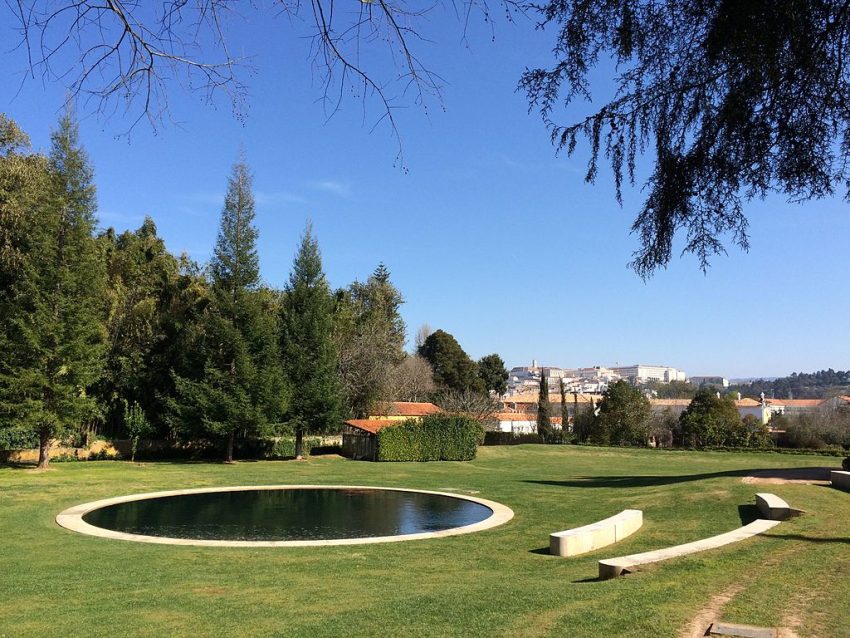
Jardins da Quinta das Lagrimas
©
Jardins da Quinta das Lágrimas are the landscaped grounds of the historic Quinta estate, where Portugal’s legend of Pedro and Inês de Castro is rooted in a real 14th‑century court tragedy. Walking the shady paths, you’ll find two storybook focal points: the Fonte das Lágrimas, tied to Inês’s killing and marked by reddish streaks in the stone, and the Fonte dos Amores, linked to the lovers’ secret meetings. Beyond the romance, the gardens feel like an arboretum, with ponds, quiet groves, and unusual trees brought from around the world—visitors often single out a massive banyan and other specimens. It’s a contemplative place that rewards slow wandering.
Location: Jardins da Quinta das Lágrimas, Rua José Vilarinho Raposo, Coimbra, Portugal | Distance: 2.1km

Best Day Trips from Coimbra

A day trip from Coimbra offers the perfect opportunity to escape the urban rhythm and discover the surrounding region's charm. Whether you're drawn to scenic countryside, historic villages, or cultural landmarks, the area around Coimbra provides a variety of easy-to-reach destinations ideal for a one-day itinerary. If you are looking to rent a car in Portugal I recommend having a look at Discover Cars, first, as they compare prices and review multiple car rental agencies for you.

1. Ruínas de Conímbriga

Ruinas de Conimbriga
CC BY-SA 2.0 / Halley Oliveira
Ruínas de Conímbriga in the Coimbra area of Portugal is a Roman archaeological site set outside the city, known for the remains of an ancient settlement, preserved house foundations, baths, walls, and mosaics. The site lies near Condeixa-a-Velha and is usually visited as a half-day trip from Coimbra, with a museum and open-air ruins laid out for self-guided exploration.What makes…
Location: Ruínas de Conimbriga, Rua Professor Vergílio Correia, Condeixa-a-Velha, Portugal | Hours: Monday to Friday: 10 am.-5.30 pm.; Saturday: 10 am.-6.30 pm.; Sundays and holidays: 11.00 am.-5 pm. Closed:1 January, Easter, 1 May and 25 December. | Price: Ruins & museum adult/child €4.50/free | Website | Distance: 13.5km
Visiting Ruínas de Conímbriga

2. Aveiro
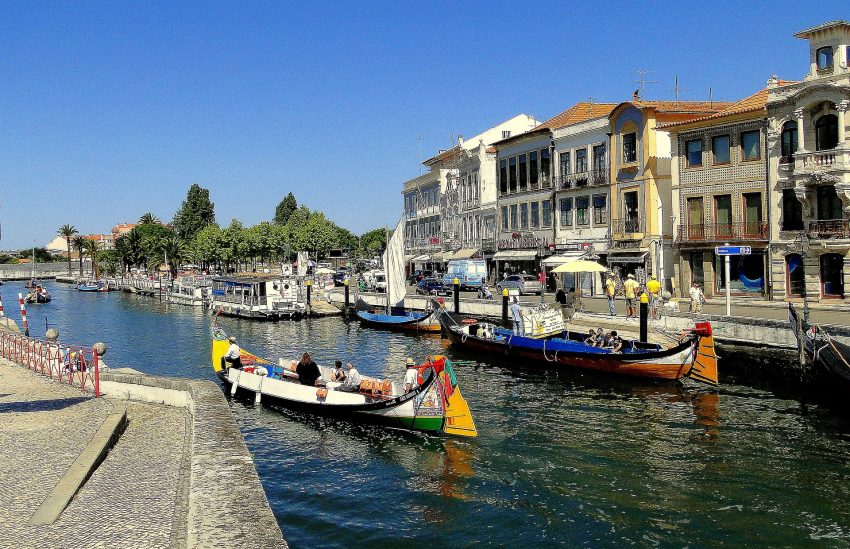
aveiro
aveiro
Aveiro is a picturesque town characterized by a network of numerous canals that are spanned by low-arched bridges. It is situated in Central Portugal at the mouth of the Vouga River and separated from the sea by a long sandbar, which protects clusters of islets. The architecture in Aveiro is reminiscent of Flemish style, which contrasts beautifully with the natural…
Visiting Aveiro
Powered by GetYourGuide

3. Tomar

Tomar
Tomar
Public Domain / Public Domain
Tomar is a charming city known for its rich artistic and cultural heritage, with the Convent of Christ being one of the most impressive examples of Portuguese Renaissance architecture. A visit to the city is not complete without exploring the Templar castle and the Convent of Christ, which includes the oldest part of the complex - the Charola (Rotunda) -…
Visiting Tomar
Powered by GetYourGuide

4. Espinho

Espinho
Espinho
CC BY-SA 4.0 / Ricardo Saraiva de Almeida
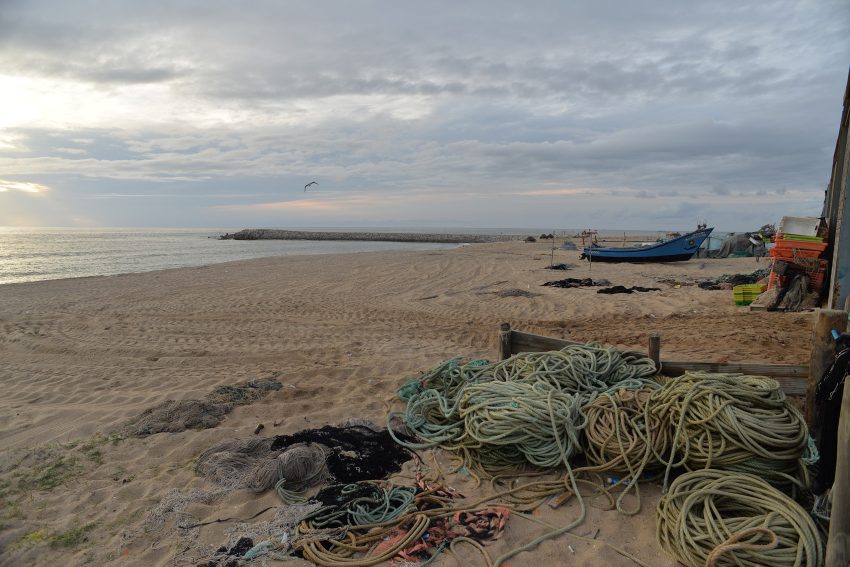
Espinho, located in northern Portugal, is a charming coastal town known for its beautiful beaches, seafood delicacies, and relaxed atmosphere. The town’s golden sands and rolling Atlantic waves make it a popular destination for beach lovers and surfers alike. Praia de Espinho, one of the main beaches, offers stunning sea views and a lively boardwalk lined with restaurants and cafés,…
Visiting Espinho

5. Porto

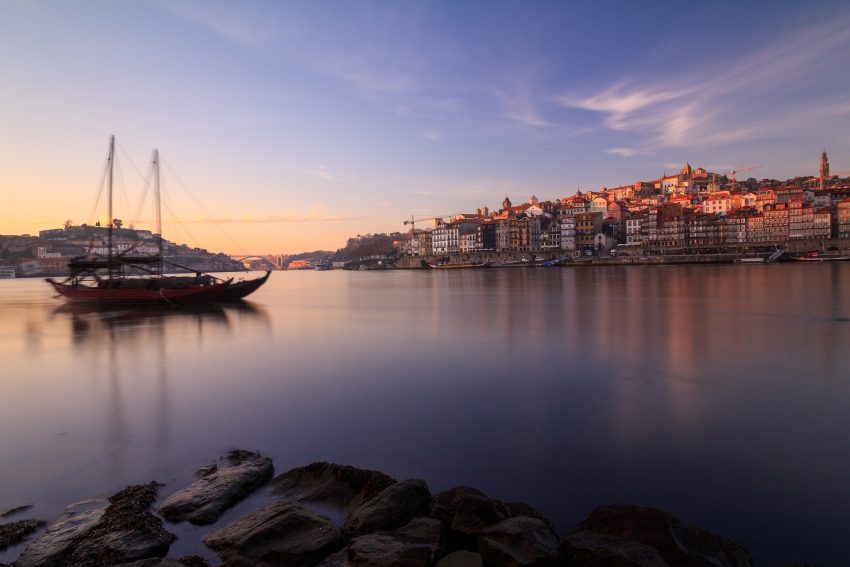
View of Porto from Vila Nova de Gaia
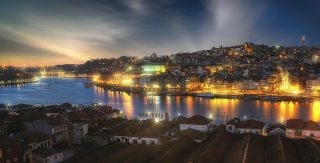
Porto sits in northern Portugal, straddling the Douro River near the Atlantic coast, and it’s a compact, walkable city that rewards slow exploration. The headline experience is the riverside: you can spend hours moving between viewpoints, tiled streets, and cafés with Douro-front terraces, with ever-changing angles of the bridges and waterfront. Porto is one of the best places to visit…
Visiting Porto
Powered by GetYourGuide

6. Lamego

Lamego   Portugal
Lamego Portugal
CC BY-SA 2.0 / Vitor Oliveira
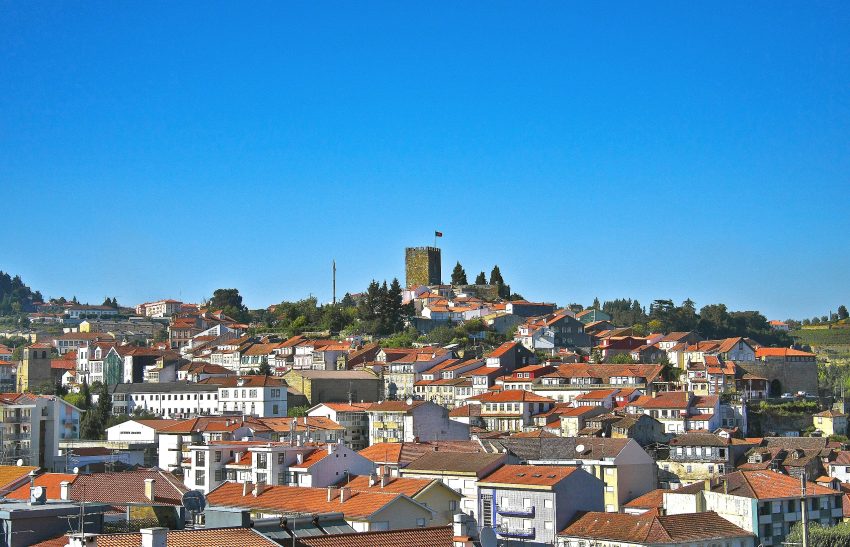
Lamego is a city located in the Viseu District in Northern Portugal. It is situated in the Douro Valley region, known for its picturesque landscapes and world-renowned wine production. Lamego has a rich history, with evidence of human settlement dating back to prehistoric times. In the Roman period, the city was an important center for trade and agriculture, and later…
Visiting Lamego
Powered by GetYourGuide

7. Óbidos

village of obidos portugal
Óbidos is a medieval town located in the Central Portugal. The town is known for its well-preserved architecture, including its castle and walls, which date back to the 12th century. The town's history can be traced back to Roman times, but it was during the medieval period that Óbidos became an important center of trade and culture. It was also…
Visiting Óbidos
Powered by GetYourGuide

8. Peso da Régua

Peso da Regua
Peso da Regua
CC BY-SA 2.0 / Vitor Oliveira
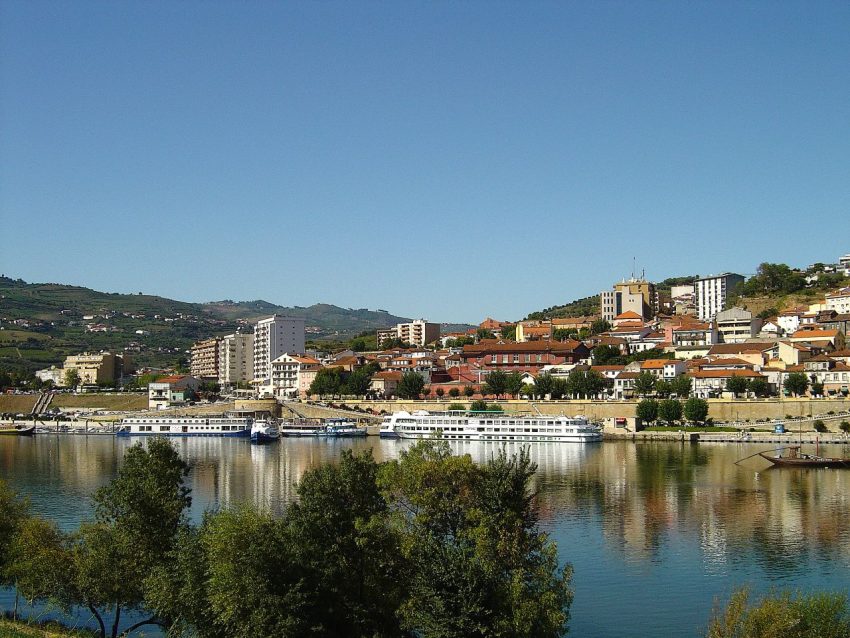
Peso da Régua is a town located in the Alto Douro wine region in Northern Portugal, and it is considered the capital of the Upper Douro province. The town is situated on the banks of the Douro River, and it is an important center for the production and trade of port wine, which has been the main economic activity in…
Visiting Peso da Régua
Powered by GetYourGuide

9. Pinhão (Alijó)

Pinhao Train Station
CC BY-SA 3.0 / jfreire
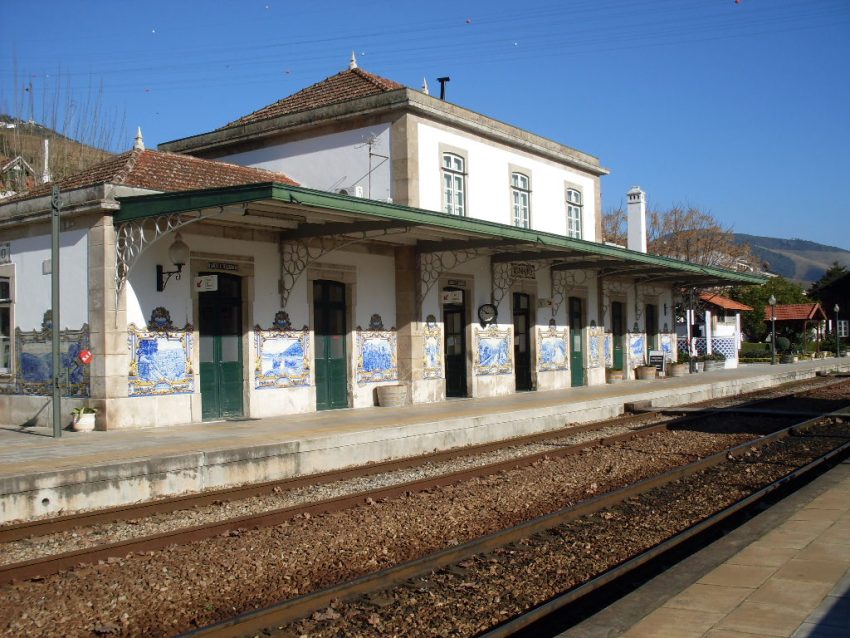
Pinhão is a small town located in the heart of the Douro Valley wine region in Northern Portugal. It is situated on the banks of the Douro River, surrounded by rolling hills covered in vineyards. The town is often considered to be one of the most picturesque in the region, with its traditional whitewashed houses and red-roofed buildings. Pinhão is…
Visiting Pinhão (Alijó)
Powered by GetYourGuide

10. Vila Real

Vila Real Square
Vila Real Square
CC BY-SA 2.0 / Varun Shiv Kapur
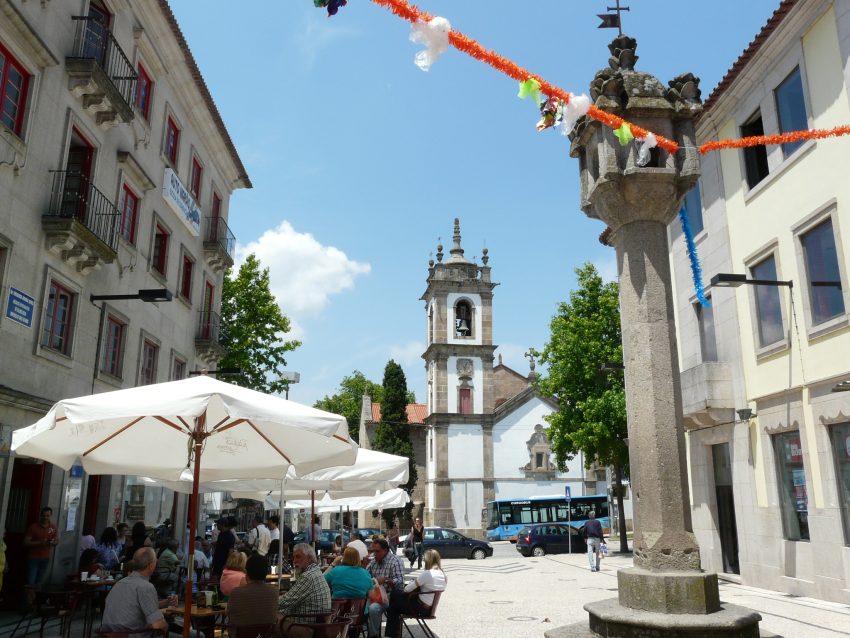
Vila Real, the capital of Trás-os-Montes in Northern Portugal, is a bustling town located on a plateau in the foothills of the Serra do Marão. The town is connected by bridges that span the deep ravines created by the Corgo and Cabril rivers, which converge here. From a terrace high above, once the site of a castle, visitors can enjoy…
Visiting Vila Real
Powered by GetYourGuide

11. Guimarães

Hall of the Dukes of Braganca in Guimaraes Portugal
CC BY-SA 2.0 / Feliciano Guimarães
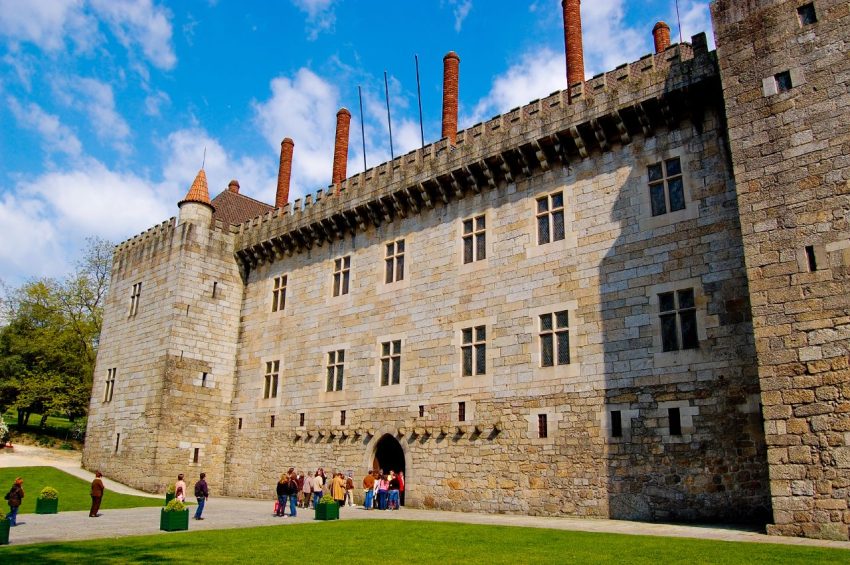
Visiting Guimarães offers a wonderfully atmospheric introduction to northern Portugal, set within the lush landscapes of the Minho region. Its compact layout makes it ideal for slow wandering, where charming squares, inviting cafés, and handsome granite buildings unfold one after another. With its beautifully preserved centre and relaxed pace, Guimarães feels both intimate and quietly grand, giving you plenty of…
Visiting Guimarães
Powered by GetYourGuide

Where to Stay in Coimbra

Coimbra offers a diverse range of accommodations catering to travelers looking for historical charm, riverside serenity, or modern convenience. The Historic Center (Baixa and Alta de Coimbra) is the best place to stay for those wanting to be immersed in centuries-old architecture, traditional fado music, and vibrant local culture. This district is home to landmarks such as the University of Coimbra, Joanina Library, and Sé Velha, making it perfect for history enthusiasts. A recommended hotel in this area is Hotel Quinta das Lágrimas, offering luxurious accommodations in a former palace, surrounded by lush gardens and historic ambiance.

For visitors looking for tranquil views and relaxing walks, the Mondego River District provides scenic accommodations along the riverbanks, charming promenades, and picturesque bridges. This area is ideal for travelers seeking a peaceful retreat while still being close to Coimbra’s main attractions, allowing them to enjoy both nature and urban life. A fantastic option in this district is Hotel Oslo Coimbra, featuring modern rooms, rooftop terraces, and stunning panoramic views of Coimbra’s skyline.

If convenience, modern amenities, and easy transport access are priorities, Coimbra’s newer districts and boutique hotels provide contemporary accommodations with stylish interiors and wellness facilities. These locations are great for travelers who prefer urban settings with proximity to shopping centers, diverse dining options, and seamless transport links. A recommended stay in this district is Vila Galé Coimbra, offering sophisticated accommodations, an on-site spa, and a central location with sleek, modern comforts. Whether you’re drawn to historic elegance, riverside beauty, or contemporary convenience, Coimbra has accommodations to suit every traveler’s preference.

Using the our Hotel and Accomodation map, you can compare hotels and short-term rental accommodations in Coimbra. Simply insert your travel dates and group size, and you’ll see the best deals for your stay.

Coimbra Accommodation Map

Best Time to Visit Coimbra

Coimbra, a historic city in central Portugal known for its prestigious university and vibrant cultural scene, offers different experiences across the seasons. Here’s a guide to the best times to visit Coimbra based on weather, crowds, and events:

Spring (March to May): Spring is a wonderful time to visit Coimbra. The weather is mild and the city’s gardens, especially the botanical garden at the University of Coimbra, are in full bloom. This season offers comfortable temperatures for exploring the city’s many historic sites and walking along the Mondego River. Spring is also less crowded than summer, providing a more relaxed atmosphere.

Summer (June to August): Summer is the peak tourist season in Coimbra. The weather is warm and sunny, ideal for enjoying outdoor cafes and late-night activities. The city also hosts various cultural events, including the Queima das Fitas in early May or June, a traditional student festival marked by parades, music, and festivities. However, be prepared for higher temperatures and more crowded attractions during this time.

Fall (September to November): Autumn is another excellent time to visit Coimbra. The weather remains warm in September but starts cooling down pleasantly in October and November. This season is ideal for attending academic and cultural events as the University of Coimbra begins its school year. The city is less crowded than in summer, making it a good time to explore museums and historic sites more leisurely.

Winter (December to February): Winters in Coimbra are mild compared to many other European cities, though it can get quite chilly and rainy. This season sees the fewest tourists, which can be a great advantage if you prefer a quieter visit. Winter is also a good time to enjoy the city’s indoor attractions, such as its libraries, museums, and cafes, without the rush of tourist crowds.

For those looking to avoid the heat and crowds while still catching some of the city’s lively cultural events, late spring and early fall are ideal times to visit Coimbra. These seasons offer a perfect blend of pleasant weather and an array of activities, making for a rewarding travel experience.

Annual Weather Overview

  • January 14°C
  • February 16°C
  • March 18°C
  • April 22°C
  • May 25°C
  • June 26°C
  • July 29°C
  • August 30°C
  • September 29°C
  • October 25°C
  • November 17°C
  • December 14°C

More from this area