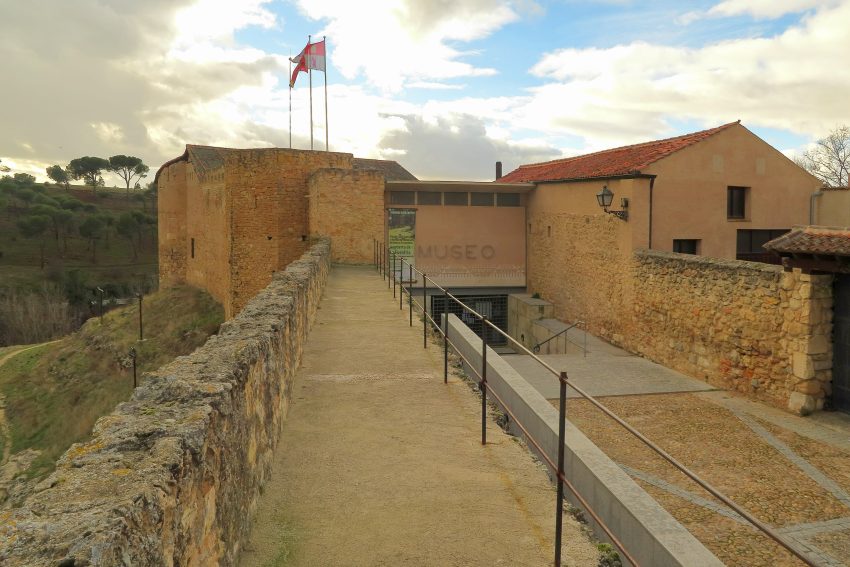
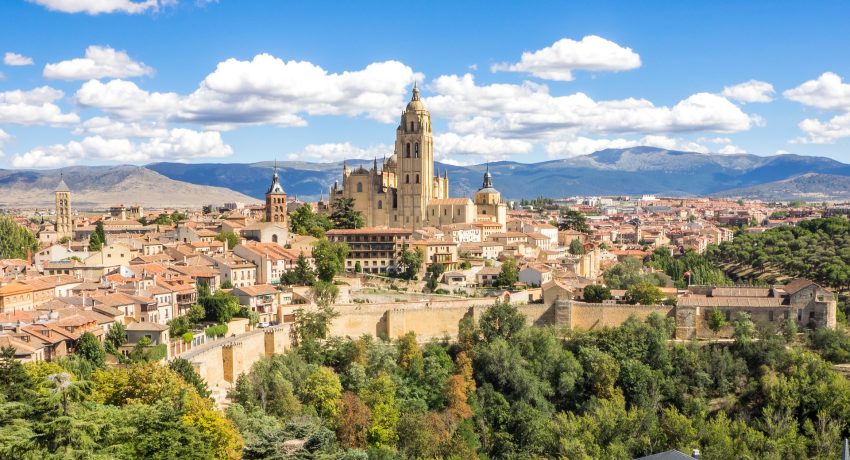
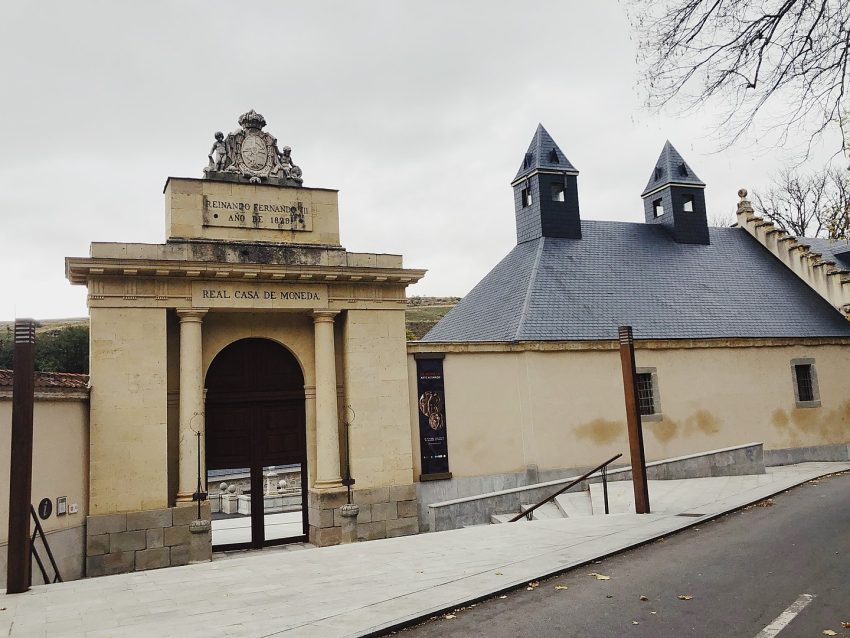
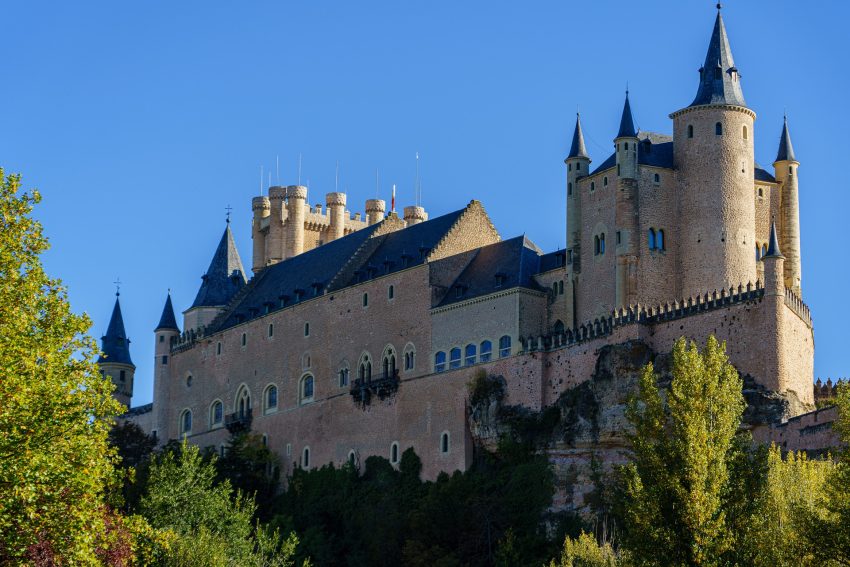
Walking the Walls of Ávila 2026: History, Views & Visitor Guide

spain avila walls
spain avila walls

This website uses affiliate links which earn a small commission at no additional cost to you.

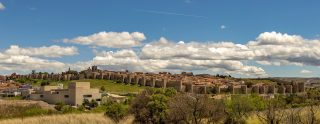
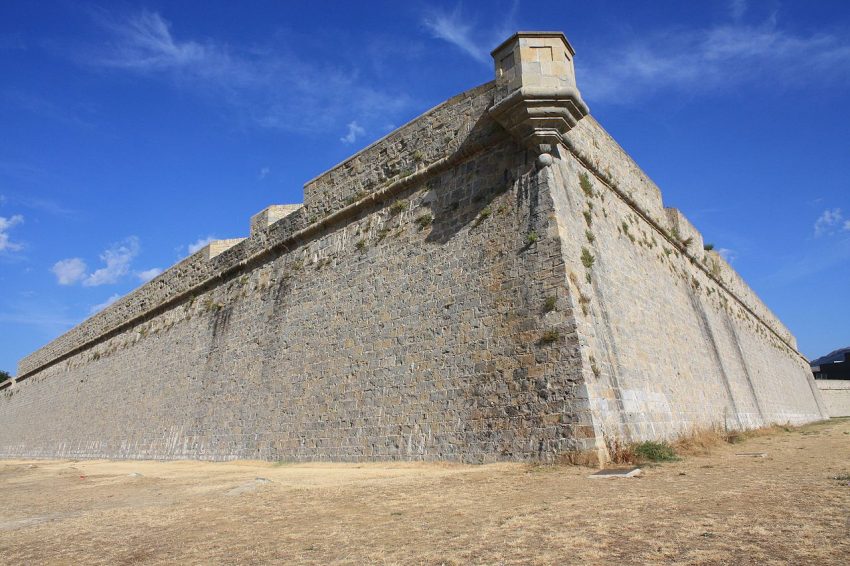
Most people who visit Ávila come to see its Medieval Walls. With 2,516 meters in perimeter, 87 towers or cubes (it had 88, what happened to the missing one? ), 9 gates , more than 2,500 battlements , 12 meters high (on average) and 3 meters thick you can see why.

Where to Access the Walls of Ávila

You can access the walls by the Puerta del Carmen, La Puerta de la Catedral, Puerta del Alcázar and Puerta del Puente. However the best place is La Puerta de la Catedral, at the tourist office in the Casa de Carnicerías.

After purchasing your ticket at the tourist office you climb some stairs to the wall. You have ascended to the east side of the Wall – the strongest part of the walls. As the walls were the most readily accessible owing to the flat surrounding land the wall here had to be reinforced and its turrets were built to a height of 15 m and huge defence mechanisms at the gates. Outside these walls would have been a barbican (a pre-wall) and a moat.

The Walls of Ávila: Cathedral to the Cubo de la Mula

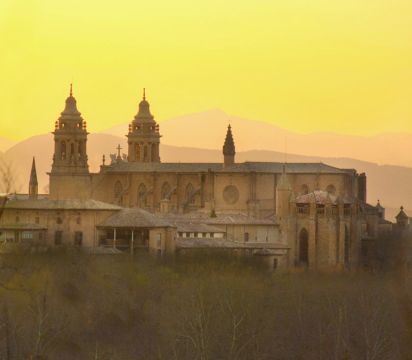
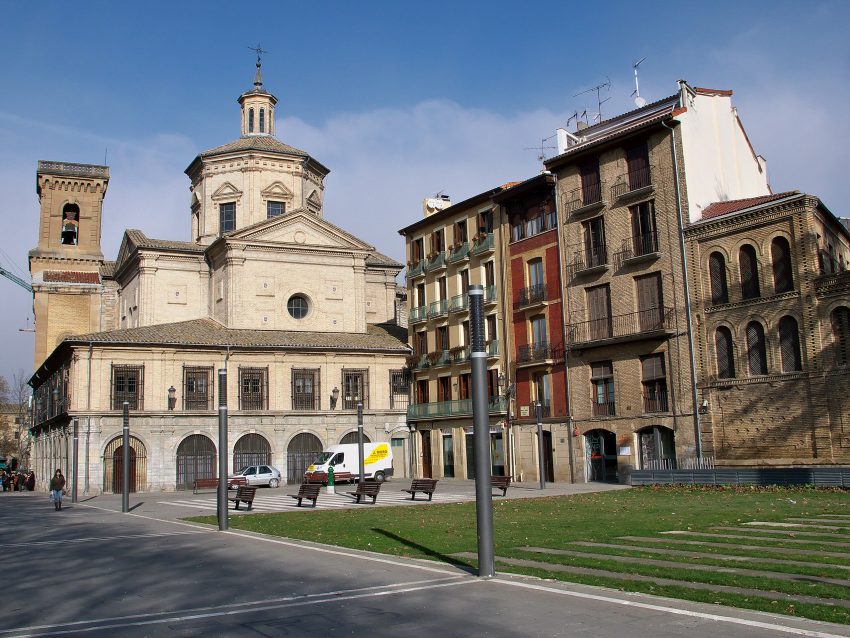
To the south of you can see the Cathedral of El Salvador built between 12th-16th centuries, it was the first Gothic cathedral in Spain. For reference the Towers are numbered starting at the Cathedral (1). Walking a few steps towards it, we will be above the Puerta del Peso de La Harina.

The large apse of the Cathedral (which is known in Spanish as the Cimorro) integrates the upper end of the Cathedral into a defence wall. An extension of the Cathedral building caused the removal of one of the turrets in the walls and the apse was lined to hide the absidioles or small chapels. 

Walls of Ávila: La Puerta de la Catedral
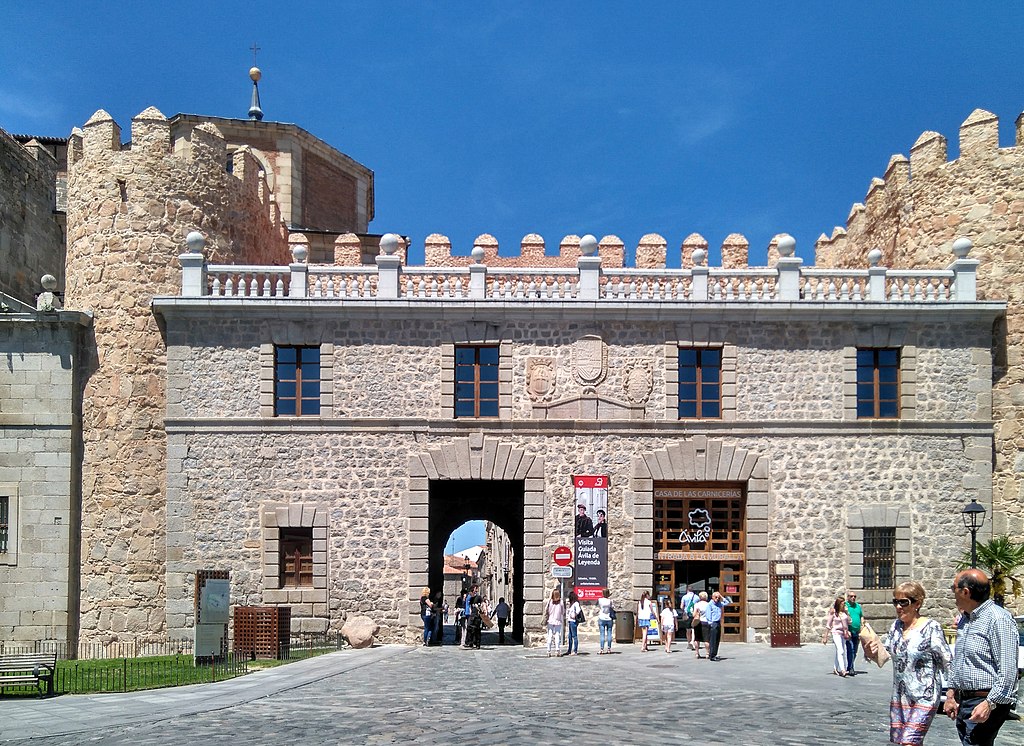
Puerta Del Peso De La Harina Avila

The refurbishment work led to the opening of the Puerta del Peso de la Harina (Gate of the Flour Weighbridge, which is where the Pote de Ávila was kept for centuries; this was a container that measured the weight of the grain that was brought into the city), also known as the Puerta de los Leales or Puerta de la Catedral (Gate of the Loyal Knights or Gate of the Cathedral), which is the only gate in the walls with a lintel. It also has another name: Puerta de las Carnicerías (Gate of the Butcher’s Shop), since there was a butcher’s shop in the adjoining building for centuries.

We continue to move north passing two buildings built on the outside of the walls:

  • The first is the Tourist office you came up from. It is named  as it was an old butcher’s shop and dates from the 16th century. It is between towers 2 and 3.
  • The second is now a bar / cafe. Originally it was called Casa de la Misericordia or House of Mercy, with sculptures showing St Martin tearing his cape in half to give it to a poor man), which was where food was given to the poor. It is between towers 3 and 4.

To our left there is a building attached to the Wall from the inside, it is the Episcope (12th century), which belonged to the old Episcopal Palace.

From towers 4 to the Puerta de San Vicente (Gate of St Vincent), the walls follow an interesting circular route that breaks away from the rectangular layout of the walled enclosure. It is here that many of the Roman Stones have been reused.

Between towers 7 and 8 you can look down into the Garden of San Vicente (outside), from where we can see some archaeological remains attached to the wall, called the Garden of Prisciliano: Hispano-Roman ovens (s. I – IV AD), covered; rooms of those centuries; the defence wall of the Muralla ( barbican ); and some medieval walls (13th - 14th centuries) and other modern and contemporary ones.

Walls of Ávila: Puerta de San Vicente
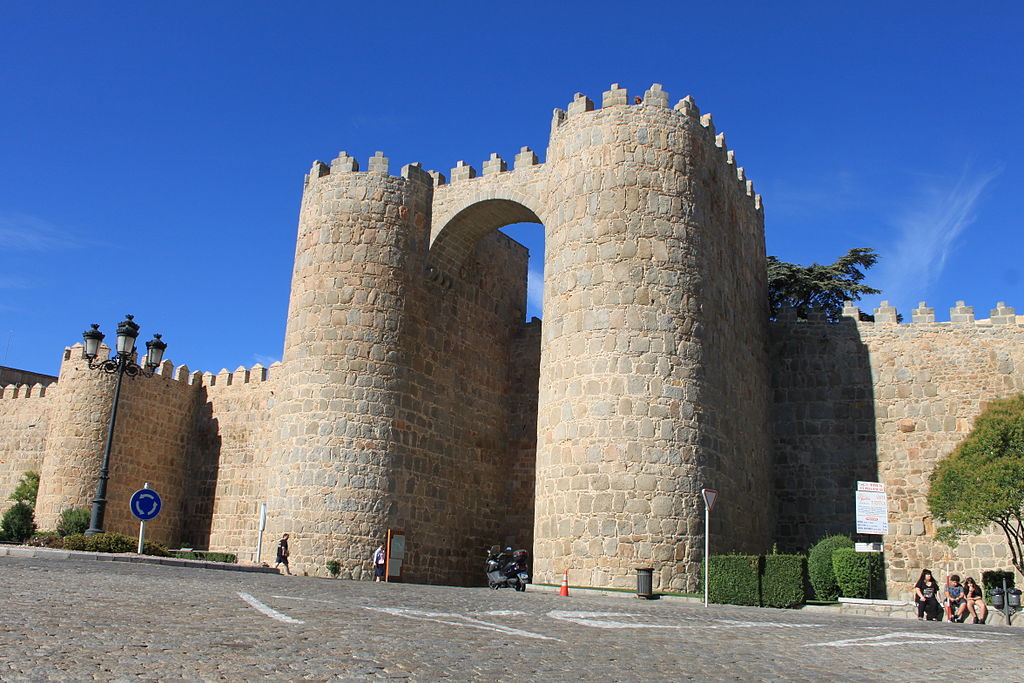
Puerta De San Vicente Avila

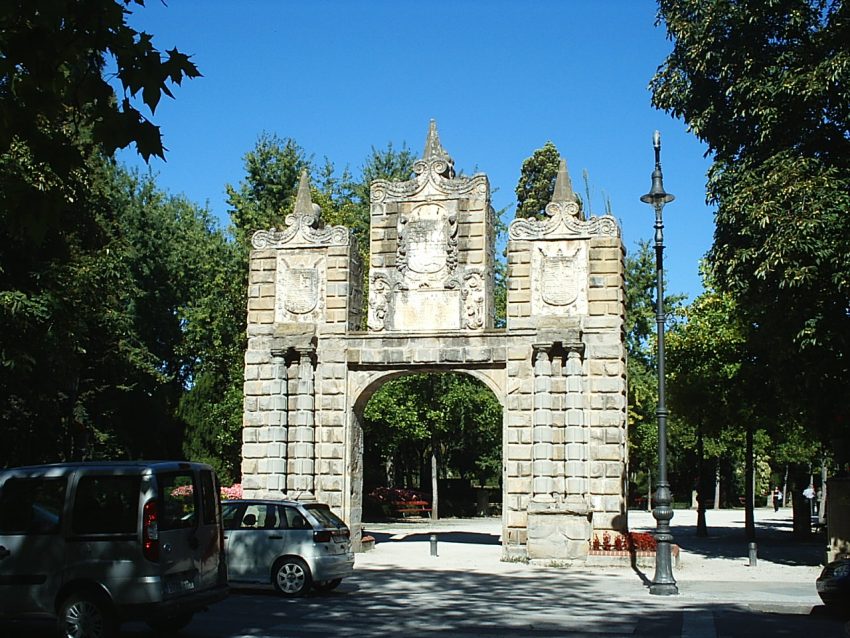
Between towers 8 and 9 is the Puerta de San Vicente. The Puerta de San Vicente (Gate of St Vincent) is a monumental gate with very strong turrets flanking the entrance. It is clearly of Roman origin since foundations of two earlier towers have been found at the base. There is also a verraco (animal sculpture) located at the gate and another one that has been moved. This suggests that the gate may have had this type of sculpture on both sides. Two large square turrets were then built and later covered by the semi-circular turrets we see today.

Looking over to the inside the city, we can see three palaces:

This area was the Jewish quarter until the beginning of the 14th century, in the area where the Palacio de los Verdugo is located, there was the Mayor Synagogue.

In front of them, on the other side of the street, the Basilica of San Vicente (12th century), a Romanesque jewel from Ávila. To the right and at the back of the Basilica, is the Ermita del Humilladero (16th century).

In the north east corner is tower 11 known as the Cubo de la Mula or Turret of the Mule. It gets its name from an animal sculpture that has been built in the exterior wall and whose neck protrudes from it. It was thought to be an equid, but is actually a bovine animal or cow. Tradition has it that it marks the burial place of the mule that spontaneously brought the remains of San Pedro del Barco to the Basilica of San Vicente.

The Walls of Ávila: Cubo de la Mula to Puerta del Carmen

We will now be walking along the North Wall from towers 11 to 41. The hight of the walls seems greater as the ground slopes down away from the walls. From the walls we see over the entire north side of Ávila. Looking down, we see the Ronda Vieja, the cobbled street that we must use if we want to take a walk around the outside of the Wall.

We pass through a roofed area, the Palacio de Sofraga, and arrive at the Palacio de los Águila. Outside the walls, we see the Monastery of the Incarnation (16th century), the place where Saint Teresa of Jesus began her “journey”. Behind it, although we can’t see it from here, is one of the old Jewish cemeteries , which has now become the Garden of Sepharad.

We have reached another of the gates of the Wall, the Puerta del Mariscal . Nothing to do with the majestic Puerta de San Vicente , since on its walk through the upper part it does not differ. Inside, on the left, is the Palace of Bracamonte (16th century), (current headquarters of Culture of the Junta de Castilla y León) and in the background the Chapel of Mosén Rubí (16th century), next to the Convent of the Dominicans .

Outside the walls we can make out a brick tower, it is the Church of San Martín (14th-16th centuries).

As we are approach the Espadaña del Carmen, we pass some gardens, is the Palacio de Juan de Henao (16th century, rebuilt in 1922), current Parador de Turismo.

The Walls of Ávila: Puerta del Carmen

AVILA MURALLA PUERTA DEL CARMEN

And we arrive at the Espadaña , built in the s. XVII, next to the Puerta del Carmen and one of the entrances to the Wall. La Espadaña belonged to the Carmen Calzado Convent (14th century), which is on the left, now converted into the Provincial Historical Archive . This door of the Wall, was also called ” de la Jail “, since from 1852 and during much of the s. XX, the old Carmelite convent, was the Provincial Prison of Ávila.

In this gate we can appreciate something that distinguishes it, in addition to the Belfry: its towers are square and the line of the Wall has been broken. Although heavily rebuilt, as can be seen from the type of stone and cut, this type of tower and this broken one (to avoid frontal attacks) are typical of Muslim fortresses .

We pass under the Belfry through a door with a narrow semi-circular arch. From here you can already see the west side of the fortification, the Adaja river area, and how the buildings have changed: now they are low houses, nothing to do with the palaces in the upper area.

The Walls of Ávila: Puerta del Carmen to Puerte del Puente

On the outside, we see two buildings: the first is the “Lienzo Norte” Conference Center , a newly built building, but well blended into the surroundings; and behind it, in the background, what was the Railroad Orphan College (1954), later the Police School (1979), and currently the headquarters of the Catholic University (1996), UNED, School of Nursing and the Santa Teresa Cultural Foundation.

A few meters from the Belfry, we find, between battlements, some loopholes (possibly from the 19th century) through which they fired to defend the enclosure. Presumably, much of the battlement had this defense, whether in brick, stone or wood.

Throughout the tour, we have seen a mixture of two materials in the Wall: stone and brick . The latter, especially in the upper parts and with decorative shapes, and in some arches that cover the stairs leading up to the towers, comes from the Muslim -influenced workforce that built the Wall.

We finished the tour of the North wall at tower 41, the Cubo de San Segundo or the turret of San Segundo so-called because it looks onto the Shrine of San Segundo (12th century). Looking out from the tower we can see the Four Posts (16th century), a great place for views of Ávila and the wall. We can also see the entire west side of the Wall, with the Adaja River as a natural defence.

We continue a few more meters to the end of the route, since the south side is not yet open to visitors. Before finishing, we find another access to the Wall , this one is accessible .

Between the Hermitage of San Segundo , and the bridge over the river Adaja , we find the Tanneries (15th-17th centuries) (where the skins were tanned) and a Dovecote, which is now a hostel for the Camino de Santiago.

To the left of the current bridge, there is another, which they call the ” Roman Bridge “, an old access bridge and now a pedestrian one. The pillars are from Roman times, but their upper part would date from the s. XI and XIII.

The Walls of Ávila: Puerta del Puente or Puerta de San Segundo
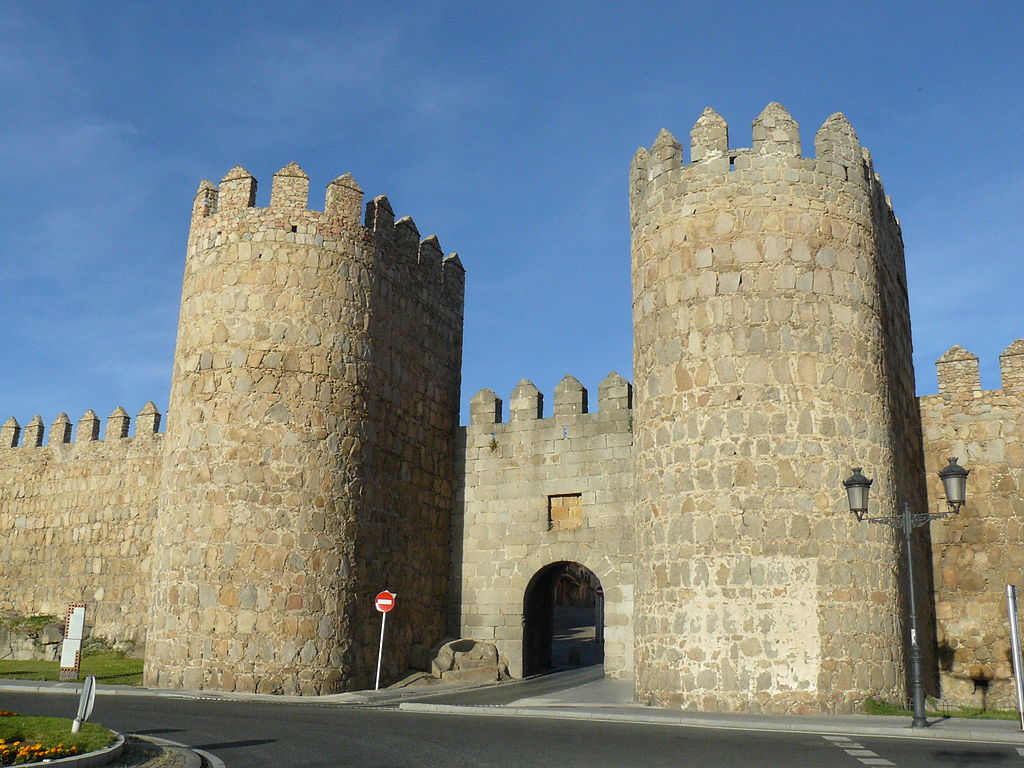
Walls Of Avila, Puerta Del Puente

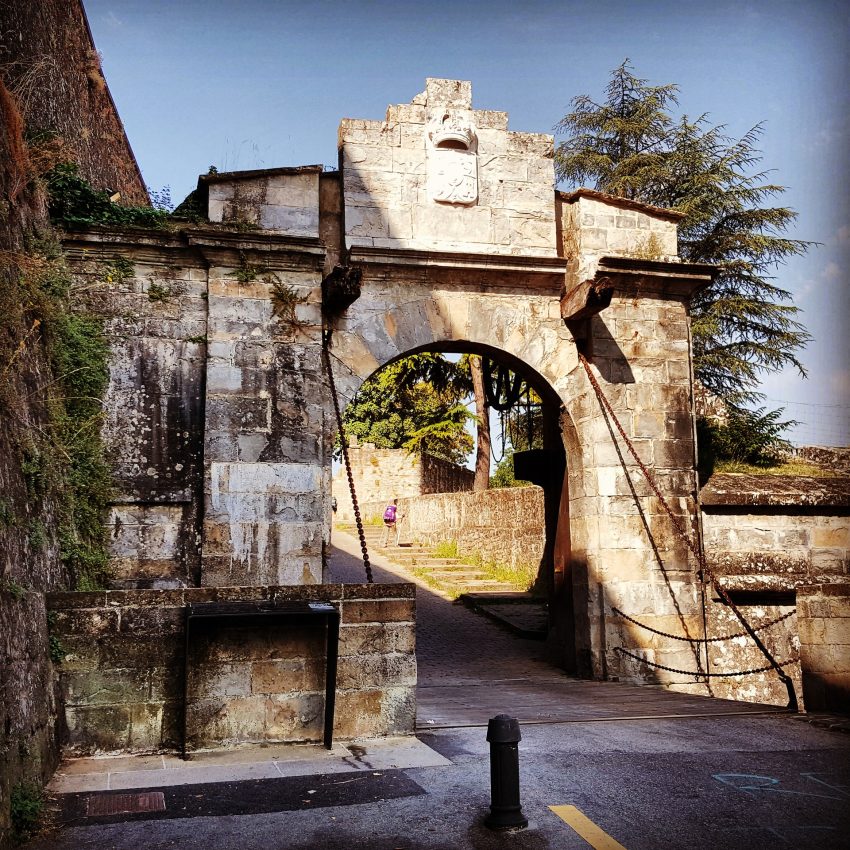
Finally we arrive at the Puerta del Puente or Puerta de San Segundo. The Puerta del Puente (Gate of the Bridge) stands as imposing as those of the east wall, but was uniquely important in that it was used as an entrance to the city for all those who reached Ávila from the west, an area where much of the city's countryside is located. Between the 15th and 16th centuries, it was heavily refurbished.

From here, you can see what we said at the beginning of this area with low houses, so different from those in the upper part, without palaces or noble medieval areas, a place of residence for the humble and artisan population. To the right, on the south side, was where the Jews were displaced in the last third of the s. XV until they were expelled in 1492.

We now need to walk to the Perta del Alcázar for the second part of the Walk.

The Walls of Ávila: Alcazar Gate

Now we must go to Plaza de Santa Teresa, 200 meters south of the Casa de Carnicerías , where we accessed the Wall . From there, we enter through the Puerta del Alcázar , almost twin to that of San Vicente , and to the left is the access to this second walled section (remember to accompany you with the audio guide or better yet a Tourist Guide ), the second part of the east side .

Above, to the left, we will once again see the Cathedral of El Salvador , and a little earlier its Cloister . If we look through the area of ​​the Gate of the wall we will see the Plaza de Santa Teresa and in the background the Church of San Pedro (12th century), and in front of it the Monument to the Greatness of Ávila , with Saint Teresa of Jesus high up But on the ground, in this same section, there is a grate, through which the door can be seen. This hole was used to defend the door or to protect it in case of fire.

The Walls of Ávila: Puerta del Alcázar
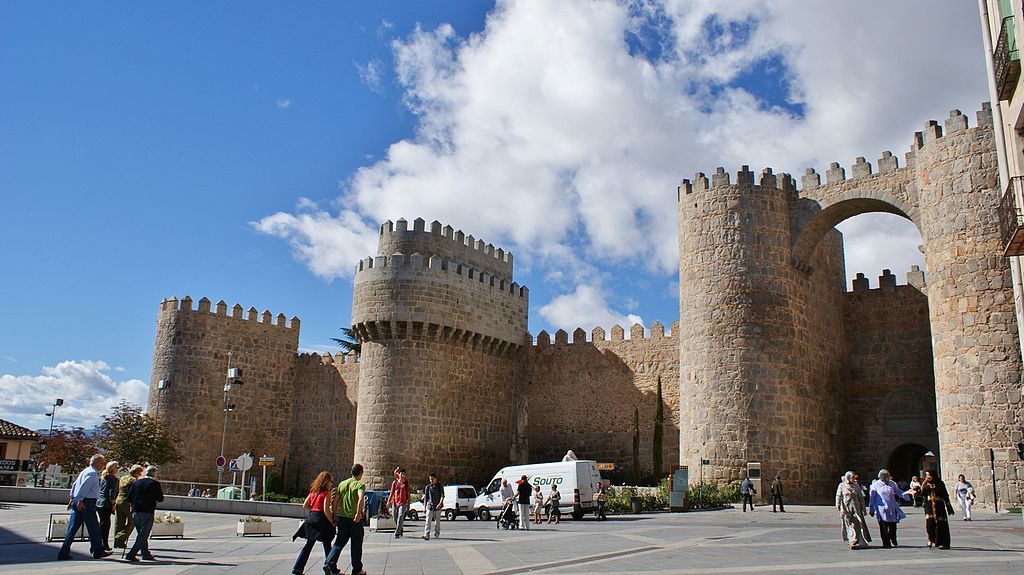
Murallas De Avila, Puerta Del Alcazar

Through this Puerta del Alcázar , the disappeared Alcázar was accessed, which was inside, through which we have accessed, and of which nothing remains but the memories on the Wall.

We continue to the right where we find the Cubo del Homenaje (belonging to the Alcázar), the only one with a cantilever towards the outside and very remodeled. Inside we can see some audiovisuals about Ávila. From here and looking towards the interior of the city, we see the small garden with a fountain and a boar . At the end of the Plaza de Adolfo Suarez (whose figure we will have seen when accessing) is the former Bank of Spain , now the Land Registry Office.

In the corner, the Cubo del Espina , cube 81 (remember that 1 was the Cimorro de Catedral and that its numbering is counterclockwise). From it, we can observe, in addition to the entire south of Ávila, the views of the entire Amblés Valley , bathed by the Adaja River and its tributaries, with the Sierra de la Serrota (2,292 m.) in the background and to the left, the Sierra Zapatero (2158 m.)

As outstanding monuments, at the foot of this cube, is the Convent of the Conceptionists and to the southeast and a little further away, the Royal Monastery of Santo Tomás (15th century), summer residence of the Catholic Monarchs , and where he is buried. his son D. Juan, with three cloisters and an Oriental Museum , and a must-see.

Advancing on the south side, and after going down a staircase, we visit the last meters of the Wall. Looking towards the street, we see the Paseo del Rastro , built to overcome the natural gap that existed, an ideal route to see the Walls from below. Attached to this is the Convent of Nuestra Señora de Gracia (16th century) and a little further to the left the Church of Santiago (16th century).

To finish the route we arrive at the Cubo del Polvorín , wider than the others, also belonging to the Alcázar , and which was used for this purpose. Beyond is the Episcopal Palace, and that through which we cannot pass.

Powered by GetYourGuide
Moira & Andy
Moira & Andy

Hey! We're Moira & Andy. From hiking the Camino to trips around Europe in Bert our campervan — we've been traveling together since retirement in 2020!

Read our full story here

This website uses affiliate links which earn a small commission at no additional cost to you.
Self-Guided Walking Tour of Toledo, Spain (2026)

alcazar and roman bridge toledo

This website uses affiliate links which earn a small commission at no additional cost to you.
Toledo, perched dramatically above the Tagus River, is often called the “City of Three Cultures” thanks to its unique history shaped by Christian, Muslim, and Jewish influences. Walking its labyrinthine streets feels like stepping into a living museum, where every corner tells a story that spans centuries. From medieval gates and mosques to synagogues, Gothic cathedrals, and Renaissance palaces, Toledo offers a remarkable blend of architecture and culture that reflects its layered past.

A walking tour through the city allows you to discover its treasures at a leisurely pace, weaving through cobbled alleys and across grand plazas. The old town is compact but dense with landmarks, from the imposing Alcázar to the stunning Catedral Primada, one of Spain’s greatest Gothic cathedrals. You’ll also come across the winding lanes of the former Jewish quarter, dotted with historic synagogues and cultural centres that reveal the depth of Toledo’s diverse heritage.

As you explore, you'll not only encounter major monuments but also discover hidden gems-ornamental courtyards, artisan workshops, and breathtaking viewpoints over the Tagus and surrounding countryside. Toledo rewards those who take their time, wandering slowly and soaking in the atmosphere. A walking tour here is not just a journey through streets, but through time, offering a vivid glimpse into why this UNESCO World Heritage city has captivated travellers, artists, and writers for centuries.

How to Get to Toledo

By Plane: Toledo does not have its own airport, but it is easily accessible via Madrid-Barajas Adolfo Suárez Airport (MAD), which is the nearest international hub located about 90 km away. For the best deals and a seamless booking experience, check out these flights to Toledo on Booking.com.

By Train: Toledo is easily reached from Madrid in just over 30 minutes via AVE high-speed trains. The Toledo train station is a 20-minute uphill walk or short taxi ride from the historic centre. Train schedules and bookings can be found on Omio.

By Car: Access the city via the A-42 or CM-40. Parking is available near the city walls at Parking Safont or Parking Corralillo de San Miguel. If you are looking to rent a car in Spain I recommend having a look at Discover Cars, first, as they compare prices and review multiple car rental agencies for you.

Where to Stay in Toledo

To make the most of visiting Toledo and this walking tour then you should consider staying overnight at the centre, where most of the city's historic landmarks are within easy reach. In the heart of the old town, you'll find charming boutique hotels set inside restored palaces and monasteries, such as Eugenia de Montijo Autograph Collection, a luxurious option with elegant interiors and historic charm. Another excellent choice nearby is Sercotel Alfonso VI, known for its traditional Castilian style and excellent views of the Alcázar. For a stay steps away from Toledo’s magnificent cathedral, Hotel Santa Isabel offers comfortable rooms and a rooftop terrace with sweeping panoramas of the city.

Close to the Jewish Quarter, Hotel Pintor El Greco occupies a restored bakery and blends history with modern comfort, placing you near the El Greco Museum and key synagogues. For travellers seeking a more modern hotel within walking distance of the old town, Hotel Beatriz Toledo Auditorium & Spa provides larger facilities, including a pool and spa, while still offering good transport links into the city centre. If you prefer a quieter, more intimate stay, Abad Toledo is a boutique hotel located by the Puerta del Sol, housed in a beautifully converted historic building.

A Brief History of Toledo

Toledo’s story stretches back over two thousand years, with its earliest traces seen in the Roman remains that still survive in the city. The Termas Romanas and the underground Cuevas de Hércules are reminders of Toledo’s importance as a Roman provincial center. With the fall of Rome, Visigoths and later Moors left their mark, the latter constructing the Mezquita del Cristo de la Luz in the 10th century, one of the city’s oldest standing buildings. Toledo’s strategic position was reinforced by its impressive city gates, such as the Puerta Nueva de Bisagra, with its origins in the Moorish period but later rebuilt by the Habsburgs, and the Puerta del Sol, a 14th-century Mudejar gateway crafted by the Knights Hospitaller.

In the Middle Ages, Toledo became a thriving hub where Christian, Jewish, and Muslim cultures coexisted, giving rise to its nickname as the “City of Three Cultures.” The bustling Plaza de Zocodover became the city's main square, hosting markets, festivals, and gatherings. Religious and cultural achievements flourished, exemplified by the Santa Iglesia Catedral, built from the 13th to 15th centuries in Gothic style, and the Synagogue of El Tránsito, later converted into a Christian church but still retaining exquisite Hebrew inscriptions and Mudejar ornamentation. The Iglesia de Santo Tomé, meanwhile, houses El Greco's masterpiece The Burial of the Count of Orgaz, tying the city’s religious and artistic heritage together. The Casa y Museo del Greco, dedicated to the famous painter who lived and worked here in the 16th century, further underlines Toledo’s role as a cultural capital.

Toledo’s military and political importance is reflected in the imposing Alcázar, a fortress that has stood since Roman times but was rebuilt by Emperor Charles V in the 16th century, later serving roles from royal residence to military academy. The Museo de Santa Cruz, a former 16th-century hospital, showcases the city’s Renaissance achievements, while the Monasterio de San Juan de los Reyes, commissioned by the Catholic Monarchs in the 15th century, was designed to commemorate their victory at Toro. Crossing the Tagus River, the elegant San Martin’s Bridge, dating to the 14th century, and the Puerta del Cambrón, a Moorish gate later remodeled in the Renaissance, demonstrate Toledo’s long-standing role as both a defensive stronghold and a symbol of Spain’s evolving identity. Today, these landmarks together tell the layered history of a city that has been central to Spain’s religious, political, and artistic life for centuries.

Guided or Self-Guided Tour of Toledo?

While Toledo’s compact historic core makes it ideal for self-guided exploration, a guided tour adds context and depth. The Toledo Walking Tour and Tourist Pass to 7 Monuments is a comprehensive experience. It includes entry to key sites such as the Church of Santo Tomé, the Synagogue of Santa María la Blanca, and the Monastery of San Juan de los Reyes, alongside a walking tour led by a local expert.

Your Walking Tour of Toledo

This blog highlights Toledo’s major landmarks, but you may choose to extend your visit to museums, artisan workshops, or scenic viewpoints along the Tagus River.

1. Puerta Nueva de Bisagra

Puerta de Bisagra Toledo
CC BY-SA 2.0 / Luis Rogelio HM

The Puerta Nueva de Bisagra is of Arab origin, and was rebuilt by Alonso de Covarrubias in Renaissance-style, back in the 16th century. It is one of Toledo’s six  medieval city gates.

The side that faces the city opens up with a semi-circular arch, flanked by two square towers with roofs and decorated with the coat of arms of Charles I. The other side has an arch that bears the city’s coat of arms. This arch is flanked by two huge circular towers.

Across the road is the Tourist Information office.


Location: Puerta de Bisagra C. Real del Arrabal, 26 45003 Toledo Spain

We recommend to rent a car in Spain through Discover Cars, they compare prices and review multiple car rental agencies. Book your rental car here.

2. Puerta del sol

Puerta del Sol Toledo, Spain
CC BY-SA 3.0 / Ursushoribilis

The Puerta del sol was built by the Hospitaller Knights as a gateway to the walled city in the 13th century.

It has a rectangular floor plan which finishes in a semi-circle. The entrance, with a horseshoe arch, is flanked by two towers. At the centre of the blind arches there are remains of an early Christian sarcophagus from the 4th century. It features a relief with the emblem of the cathedral that represents the imposition of the chasuble to San Idelfonso under the Sun and the Moon, hence the name of the door.


Location: Puerta del Sol, Callejón San José, Toledo, Spain

Here is a complete selection of hotel options in Toledo. Feel free to review each one and choose the stay that best suits your needs.

3. Mezquita del Cristo de la Luz

Mezquita Cristo de la Luz de Toledo
CC BY-SA 3.0 / Ignasilm

The Mosque of Cristo de la Luz is a former mosque in Toledo, Spain. It is the one of the ten that existed in the city during the Moorish period. The edifice was then known as Mezquita Bab-al-Mardum, deriving its name from the city gate Bab al-Mardum. It is located near the Puerta del Sol, in an area of the city once called Medina where wealthy Muslims used to live.


Location: Ermita "Mezquita" del Cristo de la Luz C. Cristo de la Luz, 22 45002 Toledo Spain | Hours: 10am-2pm & 3.30-5.45pm Mon-Fri, 10am-5.45pm Sat & Sun | Price: adult/child €2.80/free

Traveling to a country with a different currency? Avoid ATM transaction fees and pay in local currency with a Wise Card. Having used it for over 5 years, we've saved loads on fees!

4. Termas Romanas

Termas Romanas de la Plaza de Amador de los Rios Toledo
CC BY-SA 2.0 / amaianos

Quick to get around and on the positive side, free to access. The Roman baths, discovered in 1986, are viewed via a walkway extending over two rooms. There are also the remains of an ajibe (water system) dating from the 8th century Moorish era when a large villa stood here.


Location: Termas Romanas, Plaza Amador de los Ríos, Toledo, Spain | Hours: 10am-2pm & 5-9pm Tue-Sat Jun-Sep, 10am-2pm & 4-8pm Tue-Sat Oct-May, 10am-2pm Sun year-round

Click here to read our blog about Best Places to See in Toledo, Spain (2026)

5. Cuevas de Hércules

Cueva de Hercules Toledo
CC BY-SA 4.0 / Carlos Delgado

Historic archeological site featuring a Roman-era storage facility in subterranean vaulted caverns.


Location: Cuevas de Hércules, Callejón San Ginés, Toledo, Spain

Click here to read our blog about Exploring the Jewish Quarter of Toledo (2026)

6. Plaza de Zocodover

Plaza de Zocodover
Plaza de Zocodover
CC BY-SA 2.0 / Luis Rogelio HM

The Plaza de Zocodover is a square of the city of Toledo, in the autonomous community of Castile-La Mancha, Spain. It was the nerve centre of the city during most of its history, acting as its main square. A part of it was designed by Juan de Herrera during the reign of Philip II. Here horses, donkeys, foals, mares, mules and other beasts were sold, when the city of Toledo was Spanish-Muslim city.

Here the most important market of the city took place. It has been celebrated as a weekly market for centuries. Today it occurs on Tuesdays in the vicinity of Paseo de Merchán or de la Vega.


7. Museo De Santa Cruz

Museo De Santa Cruz
Museo De Santa Cruz
CC BY-SA 2.0 / Turol Jones

Museo De Santa Cruz is a must visit in Toledo for being one of the most important museums in Spain due to the quality and quantity of pieces it contains, such as archaeological, fine arts and decorative arts.

There are three important collections: Roman, Visigoth, Arabic and Mudejar archaeology; Toledan painting from 16thand 17th centuries with El Greco’s art works; industrial arts with examples of popular culture and artisan local tradition.

Established by Cardinal Mendoza, it is a special building for being a hospital which carries out the new ideas about the importance of the cleanliness, the air circulation and the sunlight. It still has medieval features and shows the evolution towards the Plateresque Renaissance. must visit in Toledo for being one of the most important museums in Spain due to the quality and quantity of pieces it contains, such as archaeological, fine arts and decorative arts.


Location: Museo de Santa Cruz, Calle Miguel de Cervantes, Toledo, Spain

8. El Alcazar

Toledo Alcazar at night
CC BY-SA 3.0 / Adrian.lifa

It is today the site of the city’s Army Museum. Its construction dates from Roman times. During the reigns of Alfonso VI and Alfonso X ‘the Wise’ it was rebuilt and became the first example of a square fortress with towers on the corners.

It was once again rebuilt under Emperor Charles V, on this occasion by the architect Alonso de Covarrubias. The façades are Renaissance in style, and it has towers and crenellated defences according to a preliminary design by Alonso de Covarrubias, subsequently completed by Juan de Herrera. After the last reconstruction it became the site of the Army offices and museum.


Location: Alcázar de Toledo C. de la Union, s/n 45001 Toledo Spain | Hours: 10am-5pm Tue-Sun | Price: adult/child €5/free, Sun free | Website

9. Santa Iglesia Catedral

The temple dates back many centuries, but has only existed as a Christian church since the nineteenth century.

The temple was actually built on top of a Muslim mosque, and before that it had been a church in the sixth century during the reign of the Visigoth King Recaredo. King San Fernando and the archbishop began building the new church in 1226. The fifteen chapels of the ambulatory were subsequently completed. In the year 1300 the transept nave was completed, although work continued on the church for the next two centuries.

10. Baños de Tenerías

Espana   Toledo   Bano Arabe
Espana Toledo Bano Arabe
CC BY-SA 3.0 / Antonio.velez

At present it is thought that the archaeological remains found about fifty meters from the church of San Sebastián, in the lower area of ​​the Barrio de Curtidores de Toledo, a few meters from the banks of the Tagus River in its southern sections, belong to one of the of the six Arab baths that the city had.

Indeed, it is thought that these Arab baths known as Baños de Tenerías or San Sebastián de Suso offered the possibility of carrying out purification baths for access to the Al-Dabbagin Mosque (the current church of San Sebastián).


Location: Restos Arqueológico Baños Árabes de Tenerías, Calle Carreras San Sebastián, Toledo, Spain

11. Casa y Museo del Greco

Museo del Greco
Museo del Greco
CC BY-SA 4.0 / Museo del Greco

This museum has an extensive collection of paintings by this artist of the Spanish Golden Age.

Opened in 1911, the museum is located in Toledo’s Jewish Quarter. It consists of two buildings: a 16th-century house with a courtyard, and an extension dating from the early 20th century. The two share a garden. The museum houses numerous works by El Greco, especially from this brilliant painter’s last period, as well as canvases by other 17th century Spanish painters, furniture from the same era and pottery from Talavera de la Reina.


Location: El Greco Museum, Paseo Tránsito, s/n, 45002 Toledo, Castilla-La Mancha, Spain | Hours: 9.30am-7.30pm Tue-Sat Mar-Oct, to 6pm Nov-Feb, 10am-3pm Sun year-round | Price: adult/child €3/1.50, from 2pm Sat & all day Sun free | Website

12. Synagogue of El Transito

Synagogue of El Transito toledo
CC BY-SA 3.0 / Antonio.velez

Mudéjar art in El Tránsito synagogue. The El Tránsito synagogue is the common name for the synagogue of Samuel ha-Leví, and is the most important example of Spanish-Jewish art in existence. It was built in the 14th century, and is decorated with Mudéjar elements and beautiful geometric and floral motifs, and inscriptions in Arabic and Hebrew.


Location: Sephardic Museum C. Samuel Levi, 2 45002 Toledo Spain | Hours: 9.30am-7.30pm Tue-Sat Mar-Oct, to 6pm Tue-Sat Nov-Feb, 10am-3pm Sun year-round | Price: adult/child €3/1.50, after 2pm Sat & all day Sun free | Website

13. Iglesia de Santo Tomé

Iglesia de Santo Tome Toledo
©

The church itself, which dates back to the 12th Century is relatively small and is located on the site of an old mosque. In fact, the gorgeous squared tower was the old minaret that was converted to a bell tower.

The main draw for the church today is to view The Burial of the Count of Orgaz. The church also  houses El Greco’s masterpiece, El Entierro del Conde de Orgaz, also known as The Burial of the Count of Orgaz. The painting itself is huge and the very vivid colours portray a death on the earthly plane and an image of heaven above. There is much to see in this painting, but not enough time in the St. Tome Church.


Location: Iglesia de Santo Tomé Pl. del Conde, 4 45002 Toledo Spain

14. Monasterio de San Juan de los Reyes

San Juan de los Reyes   Toledo
San Juan de los Reyes Toledo
CC BY-SA 3.0 / Choniron

The Monasterio de San Juan de los Reyes was built to commemorate the victory at the Battle of Toro and commissioned by the Catholic Monarchs.

It has a single nave, with side chapels located between the buttresses. Of particular interest on the main façade are the chains of the freed prisoners. It has a late Gothic cloister and the ceiling on the second floor is in the Mudéjar style. Its church has a single nave with a stellar vault. Another highlight is the main chapel, which is decorated with the coats of arms of the Catholic Monarchs supported by a large eagles, ogee arches and the figures of saints.


Location: Monasterio de San Juan de los Reyes, Calle de los Reyes Católicos, Toledo, Spain | Hours: 10am-6.45pm Mar-Oct, to 5.45pm Nov-Feb | Price: €3 | Website

15. San Martin's Bridge

El Puente de San Martin Toledo  Espana
El Puente de San Martin Toledo Espana
CC BY-SA 3.0 / Dan Vaquerizo Molina

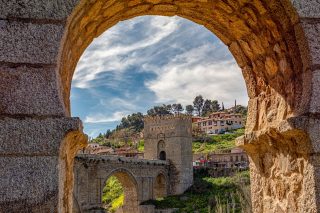
San Martin’s Bridge has one of the most beautiful sunsets in Spain. The bridge was built in the Middle Ages and dates to around the 13th century, the bridge was later rebuilt almost entirely.

Initially it was constructed from ashlars. It was later modified with new defensive structures such as the two end towers, one from the 13th century and the other connecting to the wall from the 16th century. All this has meant that today the bridge has an impeccable structure. In 1921 it was declared a National Monument. It has five arches.


Location: San Martin's Bridge Bajada San Martín 45004 Toledo Spain

16. Puerta Del Cambrón

Puerta del Cambron a City Gate of Toledo
CC BY-SA 3.0 / rheins

The Puerta Del Cambrón was also historically known as the gate of the Jews. This gate owes its name to the spiny buckthorn bushes all around it which are known in Spanish as cambroneras.

The Puerta Del Cambrón  was built over the remains of a Visigoth gate, and the current structure is in the Renaissance style with a square floor plan. On the interior façade there is a statue of Santa Leocadia attributed to Berruguete.


Location: Puerta Del Cambrón, Puerta del Cambrón, Toledo, Spain
Powered by GetYourGuide
Moira & Andy
Moira & Andy

Hey! We're Moira & Andy. From hiking the Camino to trips around Europe in Bert our campervan — we've been traveling together since retirement in 2020!

Read our full story here

This website uses affiliate links which earn a small commission at no additional cost to you.

Walking Tour Map
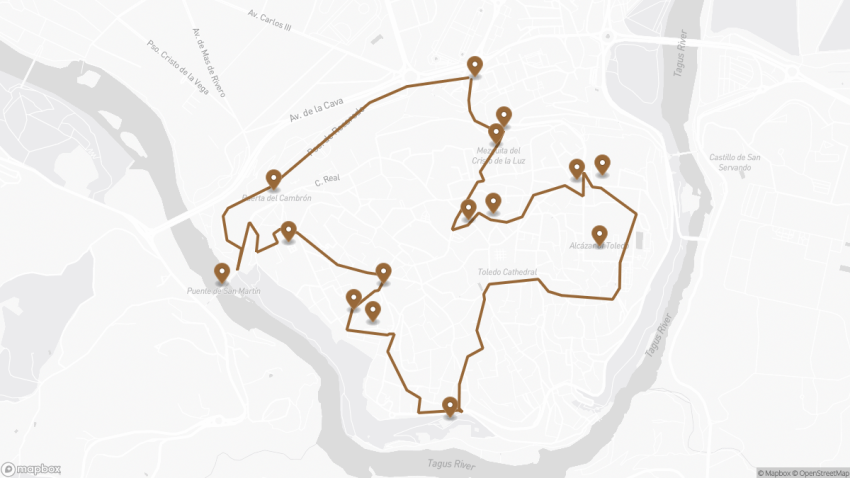
Map of the Self-Guided Walking Tour of Toledo, Spain walking route with 15 stops in Toledo.
Preview map of the Self-Guided Walking Tour of Toledo, Spain route in Toledo, showing 15 stops. Use the interactive map to zoom and tap markers.

Self-Guided Walking Tour of Ávila, Spain (2026)

Murallas de Avila Puerta del Alcazar
CC BY-SA 3.0 / AdriPozuelo

This website uses affiliate links which earn a small commission at no additional cost to you.

Ávila, a UNESCO World Heritage city, is one of Spain's most evocative destinations, famed for its remarkably well-preserved medieval walls that encircle the old town. Rising high above the Castilian plain, the city offers a unique glimpse into Spain's storied past, where Romanesque, Gothic, and Renaissance influences blend seamlessly within its narrow cobbled streets. Stepping inside its gates feels like travelling back in time, as you wander past centuries-old churches, convents, and noble palaces.

A walking tour of Ávila invites you to discover both its spiritual heritage and its architectural treasures. This is the birthplace of Saint Teresa of Ávila, whose influence can still be felt throughout the city in the many convents and religious sites dedicated to her. At the same time, landmarks such as the Catedral del Salvador, palatial residences, and the city's plazas reflect the wealth and power Ávila enjoyed in medieval times. Each corner holds a story, whether tied to royal figures, merchants, or the saints who shaped the city's history.

Beyond its monuments, Ávila enchants with its atmosphere. From the panoramic viewpoints along the ancient walls to the quiet courtyards tucked away in its old quarter, the city offers a sense of calm and grandeur in equal measure. A walking tour allows you to uncover these layers at a leisurely pace, soaking up both the dramatic skyline of turrets and battlements and the quieter charm of its hidden lanes. Whether you're drawn to history, spirituality, or simply the beauty of a city frozen in time, Ávila makes for an unforgettable journey on foot.

How to Get to Ávila

By Plane: Ávila does not have its own airport, so the most convenient option is to fly into Adolfo Suárez Madrid-Barajas Airport (MAD), which lies about 120 kilometers away. From Madrid, Ávila can be reached in around 1.5 to 2 hours by train, bus, or car, making it an easy onward journey after your flight. This connection through Madrid ensures that international and domestic visitors alike can access Ávila with relative ease. For the best deals and a seamless booking experience, check out these flights to Ávila on Booking.com.

By Train: Ávila is connected to Madrid and Salamanca by regular regional trains. The Ávila train station is about a 15-minute walk from the city’s historic centre. Train schedules and bookings can be found on Omio.

By Car: The city is accessible via the A-51 and AP-51 highways. You can park conveniently at Parking El Grande or Parking Leclerc Ávila. If you are looking to rent a car in Spain I recommend having a look at Discover Cars, first, as they compare prices and review multiple car rental agencies for you.

Where to Stay in Ávila

To make the most of visiting Ávila and this walking tour then you should consider staying overnight at the centre. The old town within the walls is the most atmospheric area to base yourself, as you'll be right next to the city's iconic landmarks, charming cobbled streets, and lively plazas. Here you'll find characterful boutique hotels that reflect the city's medieval charm. A fine option is Palacio de los Velada, set in a restored 16th-century palace right beside the cathedral, offering elegant rooms with period details. Another excellent choice is Hotel Las Leyendas, a cozy and stylish hotel that occupies a historic building near the city walls, with some rooms overlooking the countryside. For a touch of modern comfort, Hotel Palacio de Valderrábanos places you in the very heart of Ávila, combining contemporary facilities with Gothic architecture.

Just outside the walls but still within easy walking distance, there are other attractive options that give you a slightly quieter base while maintaining proximity to the main sights. Hotel Exe Reina Isabel offers spacious and modern rooms, ideal for travelers who value comfort while being just a short stroll from the historic centre. This area is also convenient if you’re arriving by train, as the station is nearby, making it practical for those with a tight schedule.

A Brief History of Ávila

Ávila's history is etched into its formidable medieval walls, the most iconic feature of the city. The Walls of Ávila, begun in 1090 under the orders of Raymond of Burgundy, son-in-law of Alfonso VI, are among the best preserved in Europe. With nearly 90 towers and nine gates, they encircle the old town, including monumental entrances such as the Puerta del Alcázar and the Puerta de Santa Teresa. These gates not only served as defensive points but also as symbolic thresholds into the spiritual and civic heart of Ávila. The Puerta del Carmen, another notable gateway, shows how the fortifications expanded over time to encompass the growing settlement.

Inside the walls, religious and civic life flourished. The Catedral de Ávila, begun in the late 11th century under the architect Fruchel, is considered Spain's first Gothic cathedral and forms part of the city's defences, with its apse integrated into the walls. Across Plaza del Mercado Chico, the city's main square and civic hub since the Middle Ages, stands the Iglesia de San Juan Bautista, a Romanesque church dating back to the 12th century where Saint Teresa of Ávila was baptised. Her legacy also shaped the city's later history, with the Convent of Santa Teresa, built in the 17th century over her birthplace, becoming a major site of pilgrimage. The nearby Puerta de Santa Teresa was renamed in her honour, underlining her enduring influence.

Ávila’s noble families also left their mark through impressive residences. The Palacio Polentinos, built in the early 16th century, is a fine example of Renaissance architecture with Plateresque decoration, now housing the Army Museum. The Los Dávila Palace, with its crenellated walls and blend of Romanesque and Gothic elements, testifies to the power of Ávila’s aristocracy during the medieval period. Together, these buildings, from fortifications to palaces and convents, chart Ávila’s journey from a frontier stronghold of the Reconquista to a spiritual and cultural centre, whose historic fabric remains remarkably intact today.

Guided or Self-Guided Tour of Ávila?

Ávila’s manageable size makes it easy to explore on your own, but a guided tour offers deeper context and personal stories. The Ávila Private Walking Tour gives visitors a tailored journey through key landmarks like the Basilica de San Vicente, the Cathedral of Ávila, and the Convent of Saint Teresa. With expert local guides, this tour delivers insight into Ávila's medieval, religious, and cultural layers.

Your Walking Tour of Ávila

This blog highlights Ávila’s key attractions, but depending on your interests and pace, you might choose to explore more hidden chapels, tranquil gardens, or sample the city’s famous yemas de Santa Teresa sweets.

1. Puerta del Carmen

AVILA MURALLA PUERTA DEL CARMEN
CC BY-SA 3.0 / Concepcion AMAT ORTA

If you are driving then you should park at The Avila Exhibition Hall. Large parking area with an inexpensive motorhome area close to the old city.


One of the gates of the City Walls. The Puerta del Carmen (Gate of El Carmen) is interesting as it has a skewed entrance. This means that to gain access from the outside, a turn is necessary, which prevents it from being approached head-on. This formula was very common in Moslem military architecture and guaranteed a better defence system by impeding a head-on attack. It also differs from other entrances because the turrets around it have a square layout.

This is one of the access points to the city Walls.


Location: Acceso muralla. Puerta del Carmen Pl. Concepción Arenal, 1 05001 Ávila Spain | Hours: (Summer) 01 April–30 June; 01 September–31 October: Daily: 10:00–20:00. 01 July–31 August: Monday, Tuesday, Friday, Saturday & Sunday: 10:00–22:00. Wednesday & Thursday: 10:00–20:00. (Winter) 01 November–31 March: Daily: 10:00–18:00. Closed on Mondays (except 10 November, 08 December & 30 March). Special schedule: 24 December & 31 December: 10:00–15:00. Closed on 25 December; 01 January; 06 January. | Price: Free to see the gate; wall-walk ticket (when access is operating): €8 general / €5 reduced. | Website

We recommend to rent a car in Spain through Discover Cars, they compare prices and review multiple car rental agencies. Book your rental car here.

2. Palacio polentinos

Avila Palacio de Polentinos
CC BY-SA 4.0 / Palickap

This building dates from the beginning of the 16th century and is made of granite ashlar work and masonry. The porch is decorated in Plateresque style with military motifs and the courtyard lintels are decorated with medallions.

The Palace is set around a quadrangular central courtyard surrounded by galleries and each front has five columns, with monolithic shafts, Doric capitals and bases. The first-floor gallery is made up of shorter columns which also support sculpted lintels and coats of arms. The tributes room is of particular interest, with an important coffered ceiling made of wooden coffers and beams set on carved corbels.

Today it is used as the Military History Archive and Army Museum.


Location: Palace of Polentinos, Calle Vallespín, 19, 05001 Ávila, Spain. | Hours: Monday – Friday: 10:30–14:00. Saturday – Sunday & Public holidays: 10:30–14:30 & 16:00–19:00. | Price: Free. | Website

Here is a complete selection of hotel options in Ávila. Feel free to review each one and choose the stay that best suits your needs.

3. Plaza del Mercado Chico

Plaza Mercado Chico Avila
CC BY-SA 2.0 / Pedro Henrique Ponchio

The Plaza del Mercado Chico occupies the former space of a Roman forum, with the 19th-century Ayuntamiento (town hall) facing across the expanse to the Iglesia de San Juan Bautista.


Location: Plaza Mercado Chico Pl. Mercado Chico, 11 05001 Ávila Spain | Hours: 24 Hours | Price: Free

Traveling to a country with a different currency? Avoid ATM transaction fees and pay in local currency with a Wise Card. Having used it for over 5 years, we've saved loads on fees!

4. Iglesia de San Juan Bautista

Avila. Plaza del Mercado Chico
Public Domain / Elena F D

This church is of Romanesque origin and was completely refurbished in Gothic style with unquestionable Renaissance influences at the beginning of the 16th century.


Location: Church of Saint John Baptist Calle Martín Carramolino, 1 05001 Ávila Spain | Hours: (Summer) Monday – Friday: 09:15–14:00 & 17:00–19:30; Saturday: 09:30–14:00 & 17:00–19:30; Sunday: 09:30–14:30. (Winter) Monday – Friday: 09:15–14:00 & 16:00–18:30; Saturday: 09:30–14:00 & 16:00–18:30; Sunday: 09:30–14:30. Closed on Sunday afternoons. Closed on 25 December; 1 January; 6 January; afternoons of 24 December & 31 December.

Click here to read our blog about 15 Best Palaces in Avila, Spain (2026)

5. Los Dávila Palace

Avila Palacio Davila
CC BY-SA 4.0 / Palickap

Leave the square walking down C. Caballeros.


The palace was built between the 13th century and the 16th. For this reason, a juxtaposition of styles can be noticed in its design. The oldest part seems to be the gate of the Rastro, or street market. The palace is attached to the fortified wall.


Location: Palacio de los Dávila, Plaza Pedro Dávila, 7, 05001 Ávila, Spain | Hours: 24 Hours | Price: Free to view externally. | Website

Explore Ávila at your own pace with our self-guided walking tour! Follow our curated route to discover must-see sights and local secrets that makes Ávila one of the best places to visit in Spain.

6. Convent of Santa Teresa

Iglesia Convento de Santa Teresa, Avila
CC BY-SA 4.0 / Américo Toledano

Carry on down Pl. Rastro and turn the next right onto C. los Cepedas. in the next Plaza – Corral de las Campanas you will see Torreon de los Guzmanes a the Palace of Superunda.

Torreon de los Guzmanes: Dating from the beginning of the 16th century, the construction of this palace was ordered by the Mújica lineage. It has an imposing quadrangular corner tower in Renaissance style, built in masonry and ashlar work and finished off with merlons and machicolations. The palace also boasts overhanging lookout posts with loopholes on the corners, which shows its defence purpose.

Palace of Superunda: Palace built at the beginning of the 16th century with italian influence. It was the house of Ochoa de Aguirre. The name comes from the count of Superunda and marquis of Bermudo, Don José Manso de Velasco y Chaves, who inherited it at the end of the 19th century.

Crowned with two short towers. The stone staircase was done by two stonemasons from Cardeñosa: Simón Martín and Pedro Pescador, substituted by Juan Vela in 1593.


The convent, inaugurated in 1636, was built on the site of the birthplace of Saint Teresa of Avila and designed by the architect Fray Alonso de San José. It is worth a visit especially as it is free to enter! Highlights include the church’s Baroque façade, and the interior with a Latin cross floor plan, whose side naves contain magnificent sculptures by the master Gregorio Fernández.

The Museum of Saint Teresa stands next to it.


Location: Convento de Santa Teresa, Arenas de San Pedro, Ávila, Spain | Hours: Church (tourist visits) Monday – Saturday: 09:30–13:00 & 15:30–19:30.Sunday & public holidays: 09:30–11:00 & 15:30–19:00. Museum (in the crypt) Daily: 10:00–14:00 & 16:00–19:00. | Price: Church: Free. Museum: €3 | Website

7. Puerta de Santa Teresa

Plaza de la Santa, Avila
CC BY-SA 4.0 / Américo Toledano

Walk down C. Madre Soledad until you reach Plaza de la Santa.


One of the gates to the south side of the City.


| Hours: 24 Hours | Price: Free | Website

8. Puerta del Alcázar

Murallas de Avila Puerta del Alcazar
CC BY-SA 3.0 / AdriPozuelo

From the Puerta de Santa Teresa urn left and walk along the walls. As the wall turns to the left in front of you is the Convent Of The Magdalena.

The Convent of Recollect nuns of San Francisco was founded in 1624 by the IV Duke of Arcos Rodrigo Ponce de León, and his wife Ana de Aragón y Sandoval, Viceroys of Naples. At first it was established in the hermitage of San Lorenzo, until October 25, 1631, the day on which they moved to some houses belonging to the Ducal Palace, perhaps taking advantage of construction elements of the citadel or the palace itself. Its organization around small patios and its proximity and relationship with the church of Santa María give rise to these hypotheses.

Continue along will come to the Puerta del Alcázar.


The Puerta del Alcázar is on of the most impressive entrances to the City.


Location: Puerta del Alcázar C. Don Gerónimo, 17 05001 Ávila Spain | Hours: 24 Hours | Price: Free

9. Catedral de Ávila

Cathedral of Avila
Cathedral of Avila
CC BY-SA 2.0 / Richard Mortel

The Romanesque Catedral was begun in the 12th century as a part of the city’s walls that were being built during the same period. Its apse, known to parishioners as the cimorro, is part and parcel of the defensive structure of the walls. The main façade is relatively modest in styling, save for the large Gothic window and the tower rising over it. The interior, on the other hand, is more elaborate than a fortress structure might suggest; it conforms to the traditional shape of a Latin cross, lit by the sunlight cast through stained glass, with a fancily painted high altarpiece, carved choir stalls and nine chapels.


Location: Catedral de Ávila Pl. de la Catedral, 8 05001 Ávila Spain | Hours: Monday – Saturday: 10:00–18:00. Sunday: 12:30–18:00. | Price: General €10 (reduced €7; seniors €9; under 12 free). | Website

10. The Walls of Ávila

avila city walls2
avila city walls2

Where better to start exploring Ávila than a bids eye view from its walls. You need to access the wall via the Tourist Office in the Casa CarniceríasCasa Carnicerías.


The main landmark in the city is the imposing Walls of Ávila (11th–14th centuries), begun in 1090.The walls were likely constructed around the turn of the 12th century while the
self-proclaimed “Emperor of all Spain,” King Alfonso VI, was busily reconsolidating the Castilian regions from the Moors. The walls, actually one continuous expanse, wrap around the city for a length of 2½ km (1½ miles), with a total of nine gates, 88 watchtowers and well over 2,000 turrets.

The walls represent the largest fully illuminated monument in the world. It is possible to walk upon the walls for roughly half their circumference. While some of the walls will never be walkable because of their integration into other structures, a large stretch has yet to be made safe for pedestrians.

You will have great views of Basílica de San VicenteSan Vicente de Ávila as you walk around.

You can either leave the wall at Puerta del Carmen or continue on to the Muralla De Avila on the western wall.


Location: Casa de las Carnicerías C. de San Segundo, 17 05001 Ávila Spain | Hours: (Summer) 21 March – 30 June; 1 September – 31 October: Daily: 10:00–20:00. 1 July – 31 August: Monday, Tuesday, Friday, Saturday & Sunday: 10:00–15:00 & 17:00–23:00. Wednesday – Thursday: 10:00–15:00 & 17:00–21:00. (Winter) 1 November – 30 March: Daily: 10:00–18:00. Closed on Monday. | Price: €8 (reduced €5). | Website
Powered by GetYourGuide
Moira & Andy
Moira & Andy

Hey! We're Moira & Andy. From hiking the Camino to trips around Europe in Bert our campervan — we've been traveling together since retirement in 2020!

Read our full story here

This website uses affiliate links which earn a small commission at no additional cost to you.

Walking Tour Summary

Distance: 3.5 km
Sites: 10

Walking Tour Map
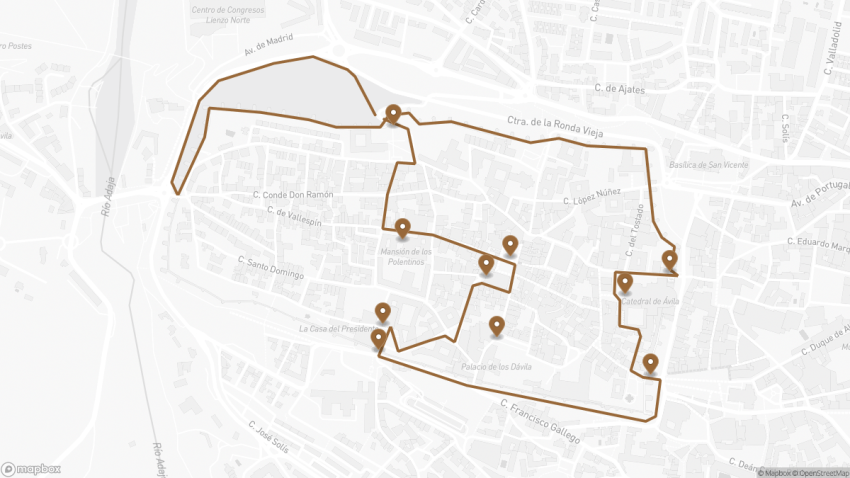
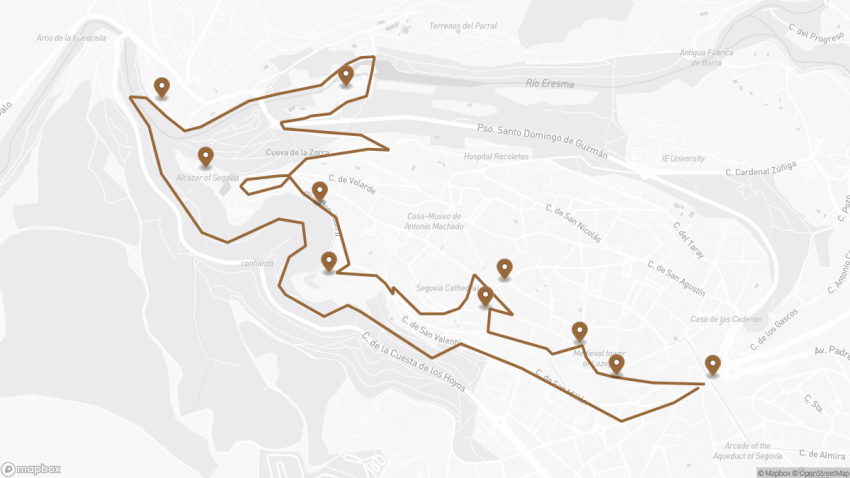
Map of the Self-Guided Walking Tour of Ávila, Spain walking route with 10 stops in Ávila.
Preview map of the Self-Guided Walking Tour of Ávila, Spain route in Ávila, showing 10 stops. Use the interactive map to zoom and tap markers.

Self-Guided Walking Tour of Segovia, Spain (2026)

Segovia aqueduct 3
Segovia aqueduct 3

This website uses affiliate links which earn a small commission at no additional cost to you.

Segovia, perched dramatically on a rocky plateau in central Spain, is a city that feels frozen in time. Famous for its iconic Roman aqueduct, medieval streets, and fairy-tale castle, the city offers a compact and highly walkable historic center that is perfect for exploration on foot. Every corner reveals layers of history, from Roman engineering to Gothic cathedrals and Renaissance palaces, making a walking tour the ideal way to immerse yourself in Segovia's rich past.

A walking tour allows visitors to experience Segovia's blend of architectural styles and cultural heritage at a relaxed pace. Strolling through the winding streets of the old town, you can admire the grandeur of the Segovia Cathedral, explore hidden plazas, and encounter charming stone houses that date back centuries. The city's layout encourages discovery, with breathtaking views at every turn, including the medieval Alcázar of Segovia perched on its hilltop, which dominates the skyline and serves as a reminder of the city's royal connections.

Beyond the monuments, Segovia’s streets are alive with local culture, from bustling markets to traditional restaurants serving specialties like cochinillo (roast suckling pig). A walking tour not only highlights the city’s historic and architectural treasures but also allows visitors to soak up its unique atmosphere, combining history, culinary delights, and panoramic vistas in a way that feels both intimate and unforgettable.

How to Get to Segovia

By Plane: The nearest major airport to Segovia is Adolfo Suárez Madrid-Barajas Airport (MAD), located about 90 kilometers southeast of the city. Although Segovia itself does not have a commercial airport, travelers can easily reach the city by bus, train, or car from Madrid, with journey times typically ranging from 1 to 1.5 hours. For the best deals and a seamless booking experience, check out these flights to Segovia on Booking.com.

By Train: Segovia is accessible from Madrid in under 30 minutes via high-speed AVE trains. The Guiomar station is a short bus or taxi ride from the historic centre. Train schedules and bookings can be found on Omio.

By Car: Segovia is reachable via the AP-61 motorway. For those driving, convenient parking is available at Parking Acueducto or Parking José Zorrilla. If you are looking to rent a car in Spain I recommend having a look at Discover Cars, first, as they compare prices and review multiple car rental agencies for you.

Where to Stay in Segovia

To make the most of visiting Segovia and this walking tour, it is best to stay overnight in or near the city center. This allows easy access to the Roman aqueduct, the Alcázar, the cathedral, and the winding medieval streets, making it possible to explore the city comfortably on foot. Staying centrally also ensures that you are close to restaurants, cafés, and shops, giving you the full experience of Segovia's historic and cultural charm.

In the heart of the old town, near the Alcázar and Plaza Mayor, you could consider Hotel Eurostars Convento Capuchinos, which combines historic architecture with modern comfort, or Hotel San Antonio El Real, a charming hotel in a former convent offering a peaceful retreat. For a boutique option, Hotel Infanta Isabel provides an elegant stay right on the central square, perfect for walking to all major sights. Another excellent choice is Hotel Eurostars Plaza Acueducto, which offers views of the famous Roman aqueduct and easy access to historic streets.

For those who prefer a quieter location slightly away from the busiest tourist areas, the neighborhoods around Segovia’s Cathedral and San Millán Church feature hotels such as Sercotel Alcázar. Staying in these central or well-connected neighborhoods ensures that your walking tour of Segovia is both convenient and immersive, letting you fully enjoy the city's medieval architecture, historic landmarks, and vibrant local culture.

A Brief History of Segovia

Segovia, one of Spain's most historically rich cities, has been a key settlement since Roman times. Its most iconic symbol, the Aqueduct of Segovia, was constructed in the 1st or 2nd century AD to transport water from the Frío River to the city. This remarkable feat of engineering, made of unmortared granite blocks, remains a testament to the city's Roman heritage and continues to dominate the skyline. Segovia's early urban development also included the Muralla de Segovia, the city's defensive walls, which protected the town through the Middle Ages and reflect its strategic importance over centuries.

During the medieval period, Segovia flourished as a cultural and economic hub. The Plaza Mayor became the civic heart of the city, surrounded by historic buildings including the Catedral de Segovia, a Gothic masterpiece begun in 1525 under Bishop Juan de Fonseca. The Casa de los Picos, built in the 15th century, showcases unique stonework and Renaissance design, while the Museo de Segovia preserves archaeological and artistic treasures that illustrate the city's evolving history. The Museo Real Casa de Moneda, or Royal Mint, highlights Segovia's importance in Spain's economic history, as it was one of the kingdom's primary minting locations.

Segovia also has a rich Jewish heritage, preserved in the La Judería Vieja, and offers panoramic views of the city from sites such as the Mirador de la Pradera de San Marcos. Dominating the city skyline, the Alcázar of Segovia served as a royal palace for Castilian monarchs, later inspiring fairy-tale castles with its distinctive turrets and strategic hilltop location. Together, these landmarks reflect Segovia's complex history, from Roman engineering and medieval fortifications to Renaissance elegance and royal grandeur, making the city a remarkable destination for history and culture enthusiasts.

Guided or Self-Guided Tour of Segovia?

While Segovia’s compact layout makes it ideal for self-guided exploration, joining a guided tour can provide deeper insights into its rich history and culture. The Segovia Old Town Tour Including Castle Visit offers a fantastic way to experience the city's highlights. This tour includes a deep dive into the Roman aqueduct, Segovia Cathedral, and culminates with a guided visit to the Alcázar, all while hearing the stories that shaped this UNESCO city.

Your Walking Tour of Segovia

This blog highlights Segovia’s key attractions, but depending on your interests and pace, you might choose to delve deeper into specific areas or indulge in the city’s renowned culinary scene.

1. Aqueduct of Segovia

Segovia aqueduct 3
Segovia aqueduct 3

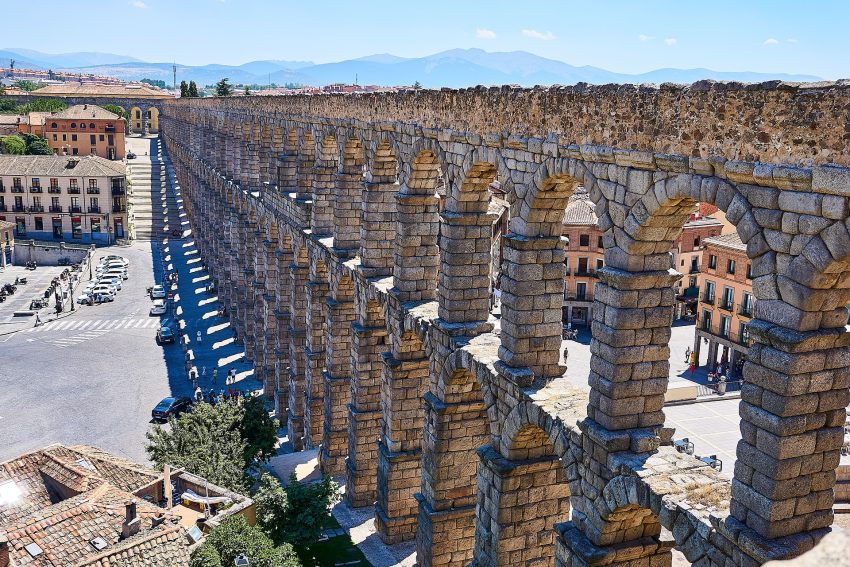
Our first stop is in the Plaza del Azoguejo square, with its amazing views of the Aqueduct. The nearby information point is a good opportunity to pick up all the information you need for a tour of the city.

As well as having your photo taken under the aqueduct, you can also see interesting details, especially the perfection of the masonry, with no mortar or other adhesive material to keep the blocks together. Each one (weighing up to two tons) is simply placed on top of another, demonstrating the precision of Roman engineering. If you look closely, you’ll see that apart from some of the lower ones, the stones all have grooves on their sides. These are the marks caused by dragging the stones and raising them into position.


Location: Aqueduct of Segovia Plaza del Azoguejo, 1 40001 Segovia Spain | Hours: 24 Hours | Price: Free | Website

We recommend to rent a car in Spain through Discover Cars, they compare prices and review multiple car rental agencies. Book your rental car here.

2. Casa de los Picos

Segovia Casa de los Picos
CC BY-SA 3.0 / Jesusccastillo

From the Aqueduct, walk towards the Jewish Quarter along Calle Cervantes to Mirador de la Canaleja. Stop at the Mirador for views over the south of the city. At this point you are now passing into the old city. Just opposite the mirador is the Casa de los Picos. While walking look at the façades of the buildings many of which are decorated with geometric and plant motifs.


The Casa de los Picos is a very particular building, from the 15th century, featuring a facade with over 600 granite points. However, there’s not much to do, as it now houses an applied arts school. It is simply a great place to admire, and to take some great pictures


Location: Casa De Los Picos C. Juan Bravo, 33 40001 Segovia Spain | Hours: 24 hours | Price: Free (façade viewing; exhibition entry, when open, is typically free but can vary).

Here is a complete selection of hotel options in Segovia. Feel free to review each one and choose the stay that best suits your needs.

3. Plaza de Medina del Campo

Plaza de Medina del Campo, Segovia
CC BY-SA 3.0 / Romerin

Continue along Calle Juan Bravo.

As you pass C. del Obispo Gandasegui on your right look out for the Casa de los del Río. It has an attractive courtyard with Renaissance columns from the 15th and 16th centuries, inviting travelers to look out and discover this historic building. The structure is the most common of the courtyards in the city of Segovia, and is divided into three porticoed sides and one without columns.

Turn to the left on the C. la Alhóndiga is the Palacio de Cascales (Palacio del Conde Alpuente) which is a “Mudejar Palace” from the XV century. This building is actually the ‘Headquarter’ of the ‘Servicio Territorial de Fomento de la Junta de Castilla y León’. The building is included in the year 1985 in the ‘List of Heritage Cities’.

You can carry on down this street to see the La Alhóndiga a corn exchange built at the beginning of the 16th century during the reign of the Catholic Monarchs. They hold temporary exhibits there so it is worth popping your head in to see what is happening.

Go up the steps to reach Plaza de Medina del Campo.


The Plaza de Medina del Campo is a beautiful square in the centre of Segovia. Among the inhabitants of Segovia, it is known as Plaza de Juan Bravo or Plaza de las sirenas – due to the  two fantastic statues of spinx. Flanked by the beautiful 12th century Church of San Martin on one side and by nice looking hotels and shops on the other. At the centre of the square is a set of steps that take you up to the old Lozoya watch tower . On the way up you’ll also pass a monument to Juan Bravo, one of the leaders of the failed Revolt of the Comuneros. There’s a restaurant near the top of the steps and because it’s about 5 metres above the street level, it’s a nice pace to sit and people watch.


Location: Pl. Medina del Campo, 2, 40001 Segovia, Spain | Hours: 24 Hours | Price: Free

Traveling to a country with a different currency? Avoid ATM transaction fees and pay in local currency with a Wise Card. Having used it for over 5 years, we've saved loads on fees!

4. La Judería Vieja

Calle de la Juderia de Segovia
CC BY-SA 3.0 / Coriplus

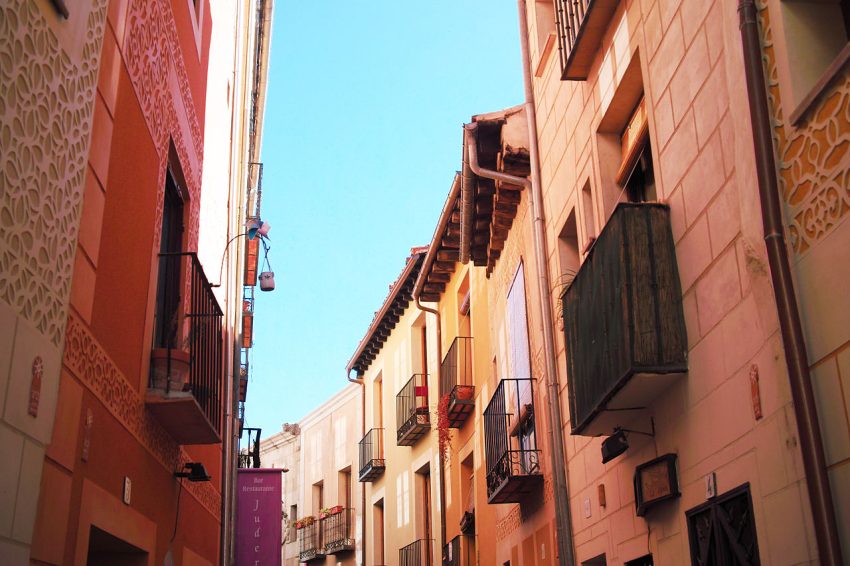
To the left of the church head down Carrer la Prta de la Luna, where you will pass through the Puerta de la Luna also known as the Moon Gate. This leads you back through the City Walls to the avenue of Paseo del Salón.

From the Paseo del Salón, you have a good view of part of the city’s green belt, and the Alcázar fortress to the left. You can then go up through the Puerta del Sol arch to Calle de la Judería Vieja (the old Jewish Quarter), turn left to Plaza Corpus and visit the former Main Synagogue.


Location: Calle la Judería Vieja, Segovia, Spain | Hours: 24 Hours | Price: Free.

5. Plaza Mayor & Catedral de Segovia

Segovia Plaza Mayor
Segovia Plaza Mayor
CC BY-SA 2.0 / 12019

Head directly up C. Isabel la Católica to reach the Plaza Mayor.


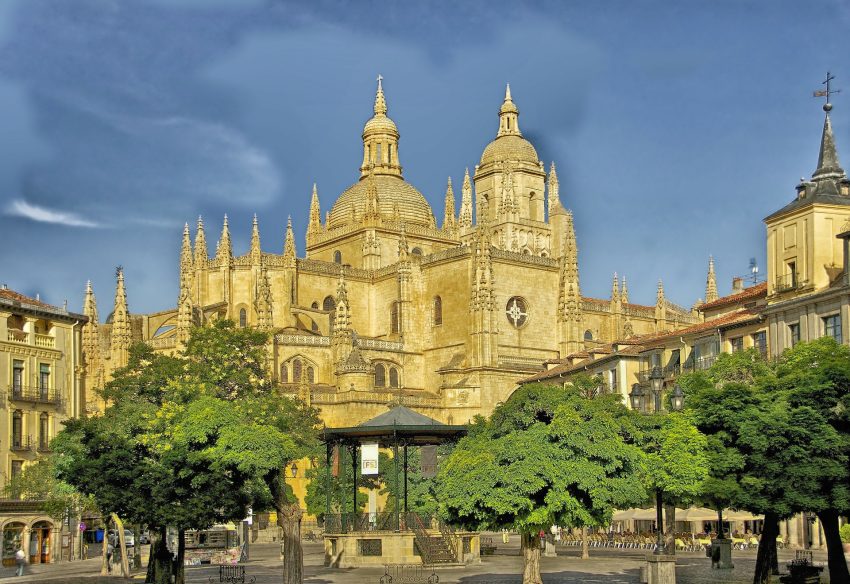
Dominating the Plaza Mayor is the Cathedral. The Catedral de Segovia is an extremely impressive, cathedral built in the mid-16th century. A Gothic-styled Roman Catholic cathedral, the church was dedicated to the Virgin Mary.

Within the plaza, there is ample space to circle and marvel at the cathedral from all angles. I further recommend exploring the inside of the cathedral as well. While it isn’t free, the views from the tower are spectacular, and the artwork inside is amazing.


Location: Plaza Mayor, Segovia, Spain | Hours: 24 Hours | Price: Free

6. Museo de Segovia

Museo de Segovia exterior 1
CC BY-SA 42.0 / Malopez 21

Turn right from the main entrance to the Cathedral and walk towards its rear. Head down C. Martínez Campos, where you are walking alongside the city walls. At the end double back slightly to see the entrance of the Puerta de San Andrés. Walk along C. del Socorro to the Casa del Sol (House of the Sun) – Museo de Segovia


Casa del Sol – Museo de Segovia is an enduring museum dedicated to local archaeology, ethnology & fine arts, housed in a former fortress. It is a modern well laid out museum, presenting in chronological order the history of Segovia. It has an excellent collection of pre-historical and Roman artefacts. There is an English translation on most of the larger display boards.


| Hours: (Summer) Tuesday – Saturday: 10:00–14:00 & 17:00–20:00; Sunday & public holidays: 10:00–14:00. (Winter) Tuesday – Saturday: 10:00–14:00 & 16:00–19:00; Sunday & public holidays: 10:00–14:00. Closed on Monday; Sunday afternoons | Price: Permanent collection €1; temporary exhibitions €0.60. Free on Saturdays, Sundays & public holidays. | Website

7. Muralla de Segovia

segovia City walls
segovia City walls

Carry on walking along the city walls and Rda. de Don Juan II.


As you approach the Alcázar you have great views out over the city walls.


| Hours: 10:00–14:00. | Price: Adults: €2; Reduced: €1; Free: non-holiday Wednesdays, under 12s, and other eligible visitors. | Website

8. Alcázar of Segovia

alcazar de segovia
alcazar de segovia

Next, you’ll proceed to the Alcázar of Segovia. The Alcázar is most-known for its distinctive, “bow of a ship” shape. Furthermore, it is rumored to have inspired Cinderella’s Castle at Disney World.

While it was first referenced in 1120, the Alcázar has history well before that. Built initially as a Roman fort, then covered with Muslim influence, several royals have since left their mark on it.

After exploring the plaza and gardens preceding the Alcázar, I strongly recommend entering the castle as well. While it does cost money, the return is phenomenal: breathtaking views, an educational experience, and incredible architecture.


Location: Alcázar de Segovia Pl. Reina Victoria Eugenia, s/n 40003 Segovia Spain | Hours: (Summer) 1 April – 31 October; Monday – Sunday: 10:00–19:30. (Winter) 1 November – 31 March; Monday – Sunday: 10:00–18:00. | Price: Palace + Artillery Museum: General €7; Reduced €5. Palace + Artillery Museum + Tower of John II: General €10; Reduced €8. | Website

9. Museo Real Casa de Moneda de Segovia

The Coining House Segovia
CC BY-SA 4.0 / Holacocacola1968

Leave the castle behind and head down Atajo cuesta de la zorra, with views to your left. Turn the first left and go down C. la Prta de Santiago towards the Puerta de Santiago. Right and then next left on the calle de la moneda (stret of the Money).


Location: Museo Real Casa de Moneda de Segovia C. la Moneda, s/n 40003 Segovia Spain | Hours: Wednesday – Saturday: 10:00–14:00 & 16:00–18:00. Sunday: 10:00–14:00. Closed on Monday & Tuesday. | Price: Adults: €5; Reduced €4 (free entry for children up to 12, and free on Wednesdays except public holidays). | Website

10. Mirador de la Pradera de San Marcos

alcazar of segovia
alcazar of segovia

Cross the river and turn left, continue for some time as your views of the castle become increasingly impressive.


The Mirador de la Pradera de San Marcos is a patch of field  with impressive views of the fairy tale Alcazar of Segovia from the base of the cliff. from here you can walk back through the town or carry on around to get more photos of the castle.


Location: Mirador de la Pradera de San Marcos, Calle de San Marcos, Segovia, Spain | Hours: 24 Hours | Price: Free
Powered by GetYourGuide
Moira & Andy
Moira & Andy

Hey! We're Moira & Andy. From hiking the Camino to trips around Europe in Bert our campervan — we've been traveling together since retirement in 2020!

Read our full story here

This website uses affiliate links which earn a small commission at no additional cost to you.

Walking Tour Map
Map of the Self-Guided Walking Tour of Segovia, Spain walking route with 10 stops in Segovia.
Preview map of the Self-Guided Walking Tour of Segovia, Spain route in Segovia, showing 10 stops. Use the interactive map to zoom and tap markers.

Self-Guided Walking Tour of Bilbao, Spain (2026)

Bilbao, Spain
Bilbao, Spain

This website uses affiliate links which earn a small commission at no additional cost to you.

Bilbao, the largest city in Spain's Basque Country, is a city of contrasts, where tradition and modernity coexist in a vibrant urban landscape. At its core, the Casco Viejo, or Old Town, offers narrow cobbled streets, lively squares, and centuries-old buildings that tell the story of Bilbao's rich past. Visitors can wander through historic landmarks, charming shops, and bustling markets such as the Mercado de la Ribera, immersing themselves in the rhythms of daily life while experiencing the city's authentic Basque character.

On the other hand, Bilbao is equally celebrated for its contemporary architecture and cultural institutions. The Guggenheim Museum, with its striking titanium curves, symbolizes the city's transformation from an industrial hub into a center of modern art and design. Walking along the riverbanks and across the bridges of the Nervión River, visitors can see how modern urban planning, green spaces, and public art have reshaped the city while maintaining connections to its industrial heritage.

Exploring Bilbao on foot offers an engaging blend of experiences. From the serenity of the Doña Casilda Park and the bustling plazas of the Old Town to innovative spaces such as the Zubizuri Bridge and the Isozaki Towers, every corner of the city reflects a dialogue between history and progress. Whether enjoying pintxos in a traditional tavern or marveling at avant-garde architecture, a walking tour of Bilbao captures the city's dynamic spirit, making it a cultural journey that is as diverse as it is memorable.

How to Get to Bilbao

By Plane: Bilbao is served by Bilbao Airport (BIO), located about 12 kilometers north of the city center in the town of Loiu. The airport handles numerous domestic and international flights, connecting Bilbao with major cities across Spain and Europe. From the airport, travelers can reach the city center quickly by taxi, bus, or the Metro, with journey times typically around 20-25 minutes, making it a convenient gateway for visitors planning to explore Bilbao on foot. For the best deals and a seamless booking experience, check out these flights to Bilbao on Booking.com.

By Train: Bilbao is served by trains from major cities such as Madrid, San Sebastián, and Burgos. The Abando Indalecio Prieto station is centrally located and just a short walk from the Old Town. Train schedules and bookings can be found on Omio.

By Car: Easily accessible via the AP-8 and A-8 highways, Bilbao offers central parking at Parking Arenal and Parking Plaza Nueva. If you are looking to rent a car in Spain I recommend having a look at Discover Cars, first, as they compare prices and review multiple car rental agencies for you.

Where to Stay in Bilbao

To make the most of visiting Bilbao and this walking tour, it is best to stay overnight in or near the city center. This allows easy access to the Casco Viejo, the Guggenheim Museum, and the scenic riverbanks, ensuring you can explore the city on foot while enjoying its lively atmosphere, historic streets, and vibrant culinary scene. Staying centrally also puts you close to public transport, shops, and cultural venues, making it convenient to discover all that Bilbao has to offer.

In the heart of the city, near the Guggenheim and Abando district, you could consider Hotel Meliá Bilbao or Gran Hotel Domine Bilbao, both offering luxurious accommodations and prime locations for sightseeing. For a more boutique experience, Sercotel Coliseo provides contemporary comfort close to shops, parks, and cultural attractions. Another excellent choice is Hotel Carlton Bilbao, a historic hotel near the main commercial streets and walking distance to the Old Town.

For those who prefer staying in the atmospheric Casco Viejo itself, options like Hotel Bilbao Plaza or Petit Palace Arana offer charming accommodations surrounded by the narrow streets, plazas, and vibrant pintxo bars that define the historic quarter. Choosing central or well-connected neighborhoods ensures that your walking tour of Bilbao is both immersive and convenient, allowing you to fully enjoy the city's architecture, culture, and lively atmosphere.

A Brief History of Bilbao

Bilbao, the largest city in Spain's Basque Country, was founded in 1300 by Diego López V de Haro, Lord of Biscay, at the confluence of the Nervión River and the Bay of Biscay. Its strategic location made it an important commercial and port city, fostering trade and shipbuilding. The historic heart of the city, known as the Seven Streets of the Old Quarter (Siete Calles), retains much of its medieval charm with narrow cobbled streets, picturesque plazas, and centuries-old architecture. Landmarks like the Catedral de Bilbao, built primarily in the 14th century, showcase Gothic design while reflecting the city's enduring religious and cultural traditions.

During the 19th and 20th centuries, Bilbao transformed into an industrial powerhouse, with the riverbanks lined by factories and warehouses. The Grand Ayuntamiento, Bilbao's City Hall, completed in 1892, and Plaza Nueva, built in 1821, are emblematic of this period of urban development, combining elegance with civic pride. The Mercado de la Ribera, constructed in 1929, became a central hub for commerce, highlighting Bilbao's long-standing role as a center of trade. Teatro Arriaga, inaugurated in 1890 and inspired by Parisian opera houses, reflects the city's growing cultural sophistication during the industrial era.

In recent decades, Bilbao has reinvented itself as a center for art, design, and tourism, spearheaded by the creation of the Guggenheim Museum in 1997. This striking contemporary building, located in the redeveloped Arts District, symbolizes the city's shift from heavy industry to culture and innovation. Modern attractions such as the Gran Vía and panoramic viewpoints allow visitors to appreciate both the historic and contemporary sides of the city. The River Nervión, once the lifeblood of Bilbao's industrial economy, now provides scenic walks and leisure spaces, completing the city's journey from medieval port to modern cultural destination.

Guided or Self-Guided Tour of Bilbao?

While Bilbao’s compact layout makes it ideal for self-guided exploration, joining a guided tour can provide deeper insights into its rich history and culture. The Bilbao Historical Area Small Group Walking Tour offers an intimate experience, leading visitors through the city’s most iconic locations. Participants will explore the Old Town, discover the La Ribera market, and uncover the secrets of this vibrant city. With knowledgeable guides and a small group setting, this tour ensures a personalised and enriching experience.

Your Walking Tour of Bilbao

This blog highlights Bilbao’s key attractions, but depending on your interests and pace, you might choose to delve deeper into specific areas or indulge in the city’s renowned culinary scene.

1. Guggenheim Museum and the Arts District

puppy Cat Sculpture Bilbao Art District

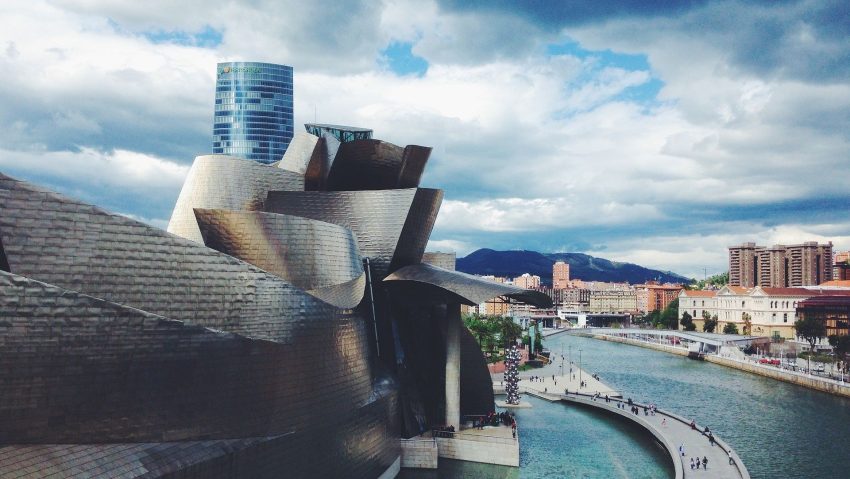
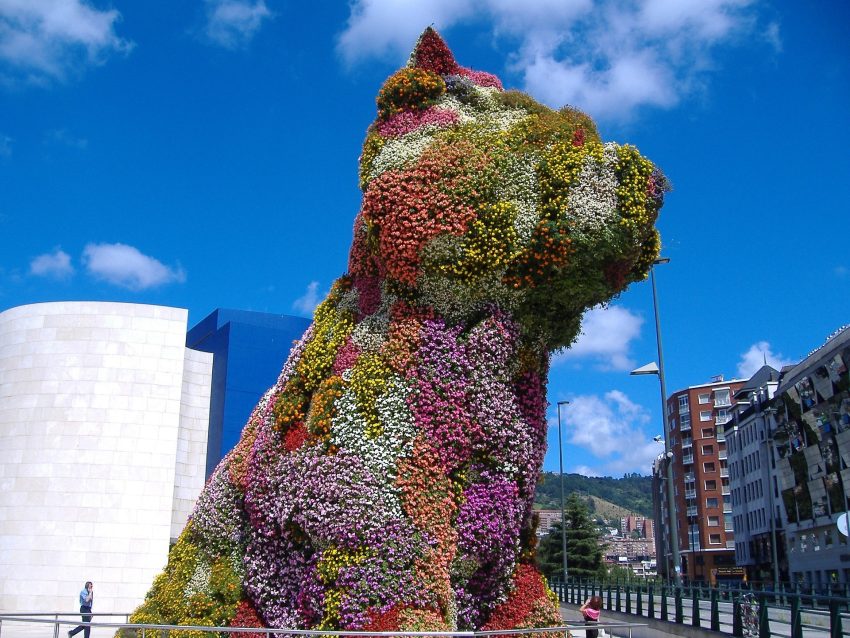
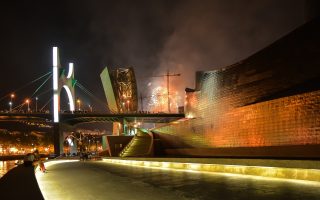
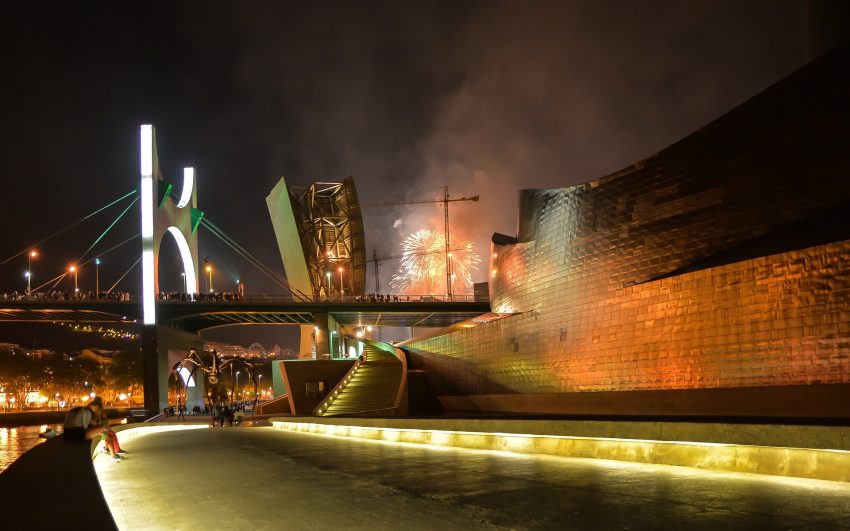
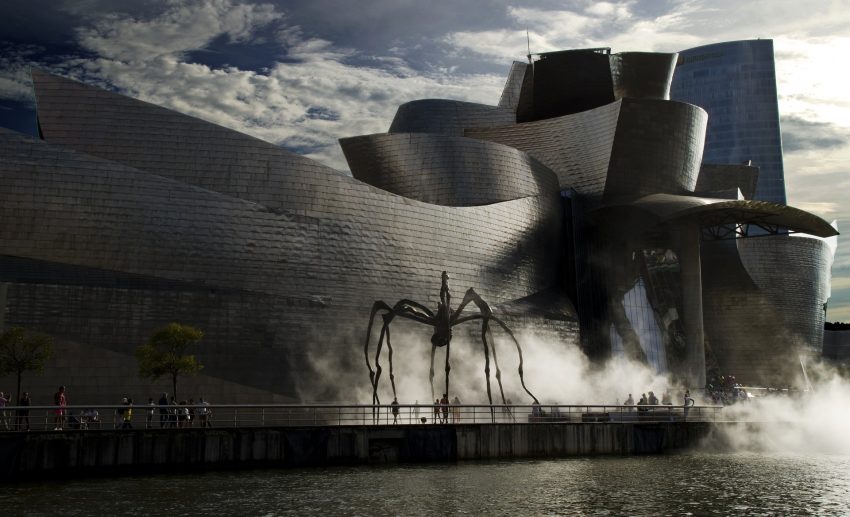
Any walking tour of Bilbao should begin with its most iconic landmark — the Guggenheim Museum. Frank Gehry’s titanium-clad masterpiece is more than just a museum; it’s a symbol of Bilbao’s transformation from an industrial port into a modern, creative capital. Walking around its curving, reflective surfaces reveals outdoor sculptures such as Jeff Koons’ floral Puppy and Louise Bourgeois’ towering spider, Maman, both of which have become emblems of the city. Inside, vast galleries showcase world-class modern and contemporary art from both Spanish and international artists.

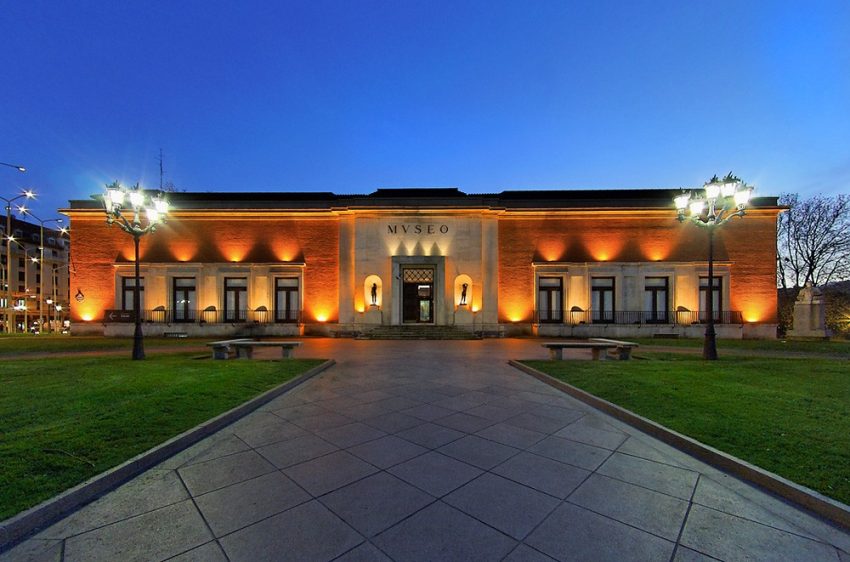
From the Guggenheim, it’s easy to explore the wider Arts District, which extends along the Nervión River to the Museo de Bellas Artes and Sala Rekalde. This area perfectly captures Bilbao’s artistic spirit — galleries, sculptures, and installations fill every corner, and the open-air art makes even a casual stroll feel like a curated exhibition. The leafy surroundings of Doña Casilda Park offer a peaceful pause, while the sleek riverside promenade invites visitors to enjoy Bilbao’s most photogenic skyline.

The Arts District also reflects how Bilbao has turned its industrial legacy into a vibrant cultural landscape. Cafés and creative spaces have replaced warehouses, and public art brings color and character to the riverside. Whether you’re an art lover or simply curious, wandering this area gives you a sense of Bilbao’s dynamic energy — a city constantly reinventing itself through creativity and design.


| Hours: 24 Hours | Price: Free | Website

We recommend to rent a car in Spain through Discover Cars, they compare prices and review multiple car rental agencies. Book your rental car here.

2. River Nervion

bilbao Zubizuri bridge

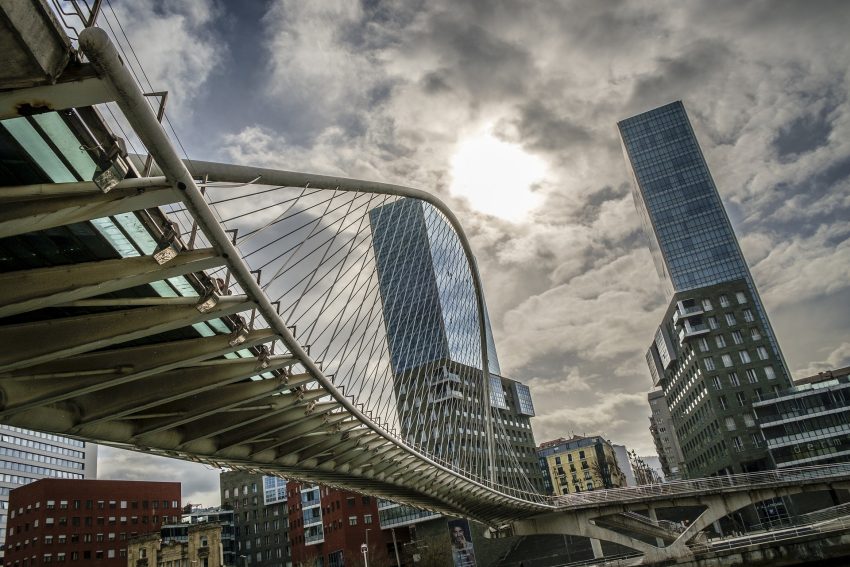
Walk along the river on the same side as the Museum. Until you come to the foot Bridge that looks like a sail.


The River Nervión is the lifeblood of Bilbao and the perfect route to follow on foot. This graceful waterway, once lined with shipyards and steelworks, now flows through a city reborn as one of Europe’s most attractive urban landscapes. The river divides Bilbao into two historic halves — the working-class left bank and the more residential right bank — a distinction still reflected in the character of its neighborhoods. Walking its promenades today, however, you’ll find both sides united in a shared rhythm of cafés, parks, and gleaming architecture.

Starting near the Guggenheim, a riverside walk leads past the Zubizuri Bridge, Santiago Calatrava’s striking white arc that seems to float across the water. Further along, the path unfolds into scenic viewpoints, modern bridges, and leafy seating areas perfect for watching the boats drift by. The river’s edges tell Bilbao’s story: old warehouses converted into restaurants, public art standing where cranes once towered, and the hum of city life echoing across the water.

At sunset, the Nervión becomes one of the most atmospheric spots in Bilbao. The reflections of the city lights shimmer on the surface, and locals come out to jog, cycle, or simply stroll hand-in-hand. It’s a place where history and modern life meet in perfect harmony, reminding you how deeply the river is woven into Bilbao’s identity.


Location: Zubizuri 48001 Bilbo Bizkaia Spain | Hours: 24 Hours | Price: Free

Here is a complete selection of hotel options in Bilbao. Feel free to review each one and choose the stay that best suits your needs.

3. Take a bird’s-eye view of Bilbao

Funicular de Artxanda
CC BY-SA 2.0 / Marco Almbauer

We now head up the green hill just northeast of the city’s Castaños district. Cross over the Puente Zubizuri, make a left on Paseo Campo de Volantin and take the next right on C/ Múgica y Butrón. Plaza Funicular is two blocks straight ahead.


To truly appreciate Bilbao’s beauty, head upward for a panoramic view of the city and its surrounding hills. The best way to do this is by riding the Funicular de Artxanda, which has been carrying visitors up Mount Artxanda since 1915. The short journey is an experience in itself, rising gently from the riverbank near the Zubizuri Bridge to a lookout that offers a sweeping perspective of the cityscape below — from the shimmering Guggenheim to the old town’s rooftops.

At the summit, a viewing terrace provides breathtaking vistas across the valley, framed by the green folds of the Basque countryside. On a clear day, you can see as far as the Bay of Biscay, while the nearby park and walking paths invite you to linger longer. There are also restaurants and cafés where you can enjoy traditional Basque dishes while taking in the view, especially beautiful at sunset when the city glows in golden light.

Mount Artxanda isn’t just about the panorama — it’s also a place of reflection and local pride. The area features sculptures, gardens, and picnic spots, offering both tranquility and inspiration. Whether you’re visiting for photography or simply to soak in the scenery, it’s one of the most rewarding stops on any walking tour of Bilbao.


Location: Funicular de Artxanda Ko Funikularra, Funikularreko Plaza, S/N, 48007 Bilbao, Vizcaya, Spain | Hours: Every 15min 7.15am-10pm Mon-Thu, to 11pm Fri & Sat, 8.15am-10pm Sun Jun-Sep, 7.15am-10pm Oct-May | Price: adult/child one-way €2/0.31 | Website

Traveling to a country with a different currency? Avoid ATM transaction fees and pay in local currency with a Wise Card. Having used it for over 5 years, we've saved loads on fees!

4. Grand ayuntamiento

Bilbao   Ayuntamiento
Bilbao Ayuntamiento
CC BY-SA 4.0 / Zarateman

After your ride up the mountain, head back to the riverbanks and carryon walking until you see the imposing grand ayuntamiento (town hall).


The Bilbao City Hall, or Ayuntamiento, is one of the city’s most elegant architectural landmarks and a natural stop along the riverside route. Designed in 1892 by Joaquín Rucoba — the same architect behind the Teatro Arriaga — the building occupies the former site of the San Agustín Convent. Its stately façade, adorned with sculptures and intricate detailing, reflects the grandeur of Bilbao’s 19th-century rise.

Standing before the City Hall, you can admire how its French Second Empire style contrasts beautifully with the modern bridges and riverfront around it. Inside, guided tours reveal opulent interiors filled with fine art, elaborate furniture, and the famed neo-Arabic reception room, decorated with imitation marble and ivory. This room, crafted by local artisan José Soler, is a highlight that showcases the artistry and cultural refinement of Bilbao’s golden age.

As you continue along the river, the Ayuntamiento serves as a reminder of Bilbao’s civic pride and artistic heritage. Its location — between the old town and the modern centre — makes it a symbolic bridge between past and present, just like the city it governs.


Location: Ayuntamiento de Bilbao - Bilboko Udaletxea, Ernesto Erkoreka Plaza, Bilbao, Spain

Click here to read our blog about Best Things to Do in Bilbao 2026: Culture, Food & Art Guide

5. Plaza Nueva

Plaza Nueva Bilbao
Plaza Nueva Bilbao
CC BY-SA 2.0 / Fred Romero

Head back through the Areatzako parkea along the El Paseo del Arenal before heading towards the Plaza Nueva.


In the heart of Casco Viejo lies Plaza Nueva, a neoclassical square that captures the essence of Bilbao’s social life. Built in 1821, it’s surrounded by elegant arcades and historic façades, creating a timeless atmosphere where locals and visitors mingle from morning coffee to late-night pintxos. The plaza’s balanced proportions and golden stonework make it one of the city’s most picturesque gathering places.

On weekdays, the square buzzes with café chatter and children playing beneath its arches. Sundays bring a special charm, when local vendors set up stalls selling old books, stamps, coins, and collectibles — a beloved Bilbaíno tradition. The plaza’s restaurants and bars, such as Café Bar Bilbao and Gure Toki, serve some of the best pintxos in town, making it the ideal spot to pause and taste the city’s flavors.

As evening falls, the lights glow softly under the arcades, and musicians often fill the air with guitar tunes. Whether you come to eat, people-watch, or simply enjoy the ambiance, Plaza Nueva is a place where Bilbao’s rhythm slows to a gentle, welcoming beat.


Location: Plaza Barria 6, Bilbao, 14 48005 Spain | Hours: Mon-Fri 7am-11pm, Sat 8.30am-10.30pm, Sun 8.30am-3pm

6. Visit the Seven Streets of the Old Quarter

Bilbao   Casco Viejo
Bilbao Casco Viejo
CC BY-SA 1.0 / Zarateman

The Seven Streets, or Las Siete Calles, form the historic heart of Bilbao’s Casco Viejo and are among the most atmospheric parts of the city to explore on foot. These narrow, winding lanes date back to the Middle Ages, when Bilbao was a walled town built along the river. Today, their cobbled alleys are filled with small boutiques, bakeries, and bars that preserve the old city’s authentic charm.

As you wander, you’ll pass centuries-old façades and hidden courtyards that reveal Bilbao’s layered past. The area is home to some of the city’s most significant landmarks, including the Santiago Cathedral, Mercado de la Ribera, and numerous small churches and plazas. It’s a living museum of Basque history, yet always alive with modern energy — street musicians, café terraces, and the aroma of fresh pintxos drifting from every doorway.

Exploring the Seven Streets is an experience of discovery at every turn. From artisan shops to cozy taverns, it’s easy to lose track of time here — and that’s exactly the point. This is the Bilbao that invites you to slow down, wander, and feel its pulse.


Location: Casco Viejo Bilbao Biscay Spain

7. Catedral de Bilbao

Iglesia Catedral de Santiago Bilbao
CC BY-SA 23.0 / Mikemod

Located in the heart of Casco Viejo, the Catedral de Santiago is Bilbao’s oldest and most sacred building. Constructed between the 14th and 15th centuries in Gothic style, it’s dedicated to Saint James the Great — the patron saint of pilgrims on the Camino de Santiago. The cathedral’s graceful spire and stone façade rise above the narrow streets, guiding visitors much as it once guided travelers on the pilgrimage route.

Inside, the soaring ribbed vaults and luminous cloister create a serene atmosphere that contrasts with the lively streets outside. Sculpted details and side chapels reflect the city’s deep spiritual heritage, while the scallop shell motifs remind visitors of the Camino’s enduring significance. The cathedral officially became the seat of the Diocese of Bilbao in 1950, affirming its central role in the city’s religious and cultural identity.

Visiting the Catedral de Santiago offers not just beauty but perspective — a moment to pause and reflect amid the bustle of Casco Viejo. For pilgrims and travelers alike, it remains one of Bilbao’s most meaningful landmarks and a cornerstone of its historic charm.


Location: Plaza de Santiago, 1 48005 Bilbao, Vizcaya, Spain | Hours: 10am-9pm Jul & Aug, to 8pm Sep-Jun | Price: adult/child €5/free | Website

8. Mercado de la Ribera

Erriberako merkatua Bilbo
CC BY-SA 4.0 / Galder Segurola

To the south of the Old Quarter on the riverbank lies the Art Nouveau Mercado de la Ribera.


Just steps from the river in Casco Viejo, Mercado de la Ribera is one of Bilbao’s liveliest and most colorful attractions. Housed in a grand Art Deco building from 1929, it’s the largest covered market in Europe, offering a sensory feast of sights, sounds, and flavors. Fresh produce, seafood, cheeses, and cured meats spill from the stalls, while locals chat with vendors over the day’s catch or a glass of local wine.

Beyond being a marketplace, the Ribera is a social hub where tradition and modernity coexist. Upstairs, modern food stalls and pintxos bars serve creative Basque dishes overlooking the river, while downstairs remains dedicated to the daily market. The building’s restored ironwork, stained glass, and bright natural light make it as visually striking as it is atmospheric.

Visiting Mercado de la Ribera is an essential part of any walking tour of Bilbao’s old quarter. Whether you come for breakfast pintxos, lunch at the mezzanine restaurants, or simply to watch Bilbaínos go about their daily routines, it’s a place that captures the city’s authentic flavor in every sense.


Location: Mercado De La Ribera 48005 Bilbao BI Spain | Hours: 8am-2.30pm Mon & Sat, 8am-2.30pm & 5-8pm Tue-Fri | Website

9. Teatro Arriaga

Arriaga Antzokia bilbao
CC BY-SA 2.0 / Fred Romero

Head back through the Old Quarter to Plaza del Arriaga and Teatro Arriaga.


The Teatro Arriaga stands proudly at the edge of Casco Viejo, its ornate façade greeting visitors as they cross the Arenal Bridge. Built in 1890 by Joaquín Rucoba, the same architect behind Bilbao’s City Hall, the theatre was inspired by the Paris Opera House and named after the local composer Juan Crisóstomo de Arriaga. Its baroque elegance makes it one of Bilbao’s architectural jewels.

Inside, the theatre exudes old-world grandeur, with red velvet seats, gilded balconies, and crystal chandeliers that glow before every performance. The Teatro Arriaga hosts an impressive calendar of events — from opera and ballet to modern theatre and concerts — ensuring that culture remains at the center of city life. Even if you don’t attend a show, guided tours reveal the beauty of its interiors and the history behind its many restorations.

As evening falls, the theatre’s façade lights up, reflecting off the nearby river and creating one of Bilbao’s most romantic scenes. Standing before it, you feel the same spirit of pride and creativity that defines the city — a blend of tradition and renewal that continues to inspire.


Location: Arriaga Plaza, 1, 48005 Bilbao, Bizkaia, Basque Country, Spain | Website

10. Gran Vía

Bilbao   Gran Via 2
Bilbao Gran Via 2
Public Domain / Etxeorratz

Cross the bridge and head back towards the Guggenheim.


The Gran Vía de Don Diego López de Haro is Bilbao’s grand boulevard and the pulse of its modern identity. Stretching 1.5 kilometers between Plaza Circular and Plaza del Sagrado Corazón, this broad avenue was designed in 1876 as the centerpiece of the city’s expansion. Today, it remains the commercial and financial heart of Bilbao, lined with elegant façades, government buildings, and the city’s most prestigious shops.

A stroll along Gran Vía reveals a different side of Bilbao — cosmopolitan, polished, and confident. At its midpoint lies Plaza Moyúa, surrounded by historic landmarks like the Chávarri Palace and Hotel Carlton, while department stores such as El Corte Inglés showcase Bilbao’s modern lifestyle. Wide pavements shaded by trees make it ideal for a leisurely walk, with cafés and bakeries offering perfect breaks along the way.

Yet beyond its grandeur, Gran Vía tells a story of progress. It represents Bilbao’s transition from its industrial roots to a European city of art, culture, and business. For locals, it’s a place of everyday rhythm; for visitors, it’s the avenue where Bilbao’s past and future stride side by side.


Location: Federico Moyua enparantza Federico Moyúa Plaza, 5 48009 Bilbo Bizkaia Spain
Powered by GetYourGuide
Moira & Andy
Moira & Andy

Hey! We're Moira & Andy. From hiking the Camino to trips around Europe in Bert our campervan — we've been traveling together since retirement in 2020!

Read our full story here

This website uses affiliate links which earn a small commission at no additional cost to you.

Walking Tour Map
Map of the Self-Guided Walking Tour of Bilbao, Spain walking route with 10 stops in Bilbao.
Preview map of the Self-Guided Walking Tour of Bilbao, Spain route in Bilbao, showing 10 stops. Use the interactive map to zoom and tap markers.

Self-Guided Walking Tour of Logroño, Spain (2026)

Iron bridge and cathedral Logrono
CC BY-SA 32.0 / Tim Tregenza

This website uses affiliate links which earn a small commission at no additional cost to you.

Logroño, the capital of Spain's renowned La Rioja region, is a haven for wine enthusiasts and cultural explorers alike. Known for its historic streets, vibrant tapas scene, and proximity to world-class vineyards, the city offers a rich tapestry of experiences. A visit to Logroño wouldn't be complete without delving into its winemaking heritage, and the guided tour at Viña Ijalba provides an authentic glimpse into this tradition.

Whether you're following pilgrims on the Camino de Santiago or hopping between pintxo bars in the old town, Logroño is best explored on foot-glass of Rioja in hand.

How to Get to Logroño

By Plane: Logroño is served by Agoncillo Airport (RJL), located about 10 kilometers from the city center, though it has limited commercial flights. Most travelers arrive via Bilbao Airport or Vitoria Airport, both roughly 100 kilometers away, and then continue to Logroño by bus, train, or car. The city is also well connected by road, making transfers from nearby airports relatively straightforward for those planning to explore Logroño and its surrounding Rioja wine region. For the best deals and a seamless booking experience, check out these flights to Logroño on Booking.com.

By Train: Logroño is connected by rail to Zaragoza, Madrid, and Barcelona. The Logroño train station is just a short walk from the historic centre. Train schedules and bookings can be found on Omio.

By Car: Arriving by car is easy via the AP-68 motorway. Public parking is available near the centre at Parking Plaza del Mercado or Parking Espolón. If you are looking to rent a car in Spain I recommend having a look at Discover Cars, first, as they compare prices and review multiple car rental agencies for you.

Where to Stay in Logroño

To make the most of a walking tour and wine tasting, stay in or near the old town. For luxury, Eurostars Fuerte Ruavieja blends heritage charm with upscale comfort. For mid-range value, try Hotel Sercotel Portales. Budget travellers might enjoy Winederful Hostel & Café, which offers affordable rooms in a wine-themed setting.

A Brief History of Logroño

Situated along the Camino de Santiago, Logroño has long been a crossroads of cultures and commerce. Its strategic location fostered a thriving wine trade, with vineyards flourishing in the fertile Ebro Valley. Over the centuries, the city has preserved its medieval charm while embracing modernity, becoming a dynamic hub that celebrates both its past and present.

Today, Logroño is a vibrant regional capital known not only for its Rioja wines but also for its cultural festivals, historic churches, and innovative gastronomy.

Guided or Self-Guided Tour of Logroño?

While wandering through Logroño’s historic centre offers its own delights, participating in a guided tour can enrich your understanding of the region’s viticultural significance. The Guided Visit with Tasting of 3 Wines and Aperitif at Viña Ijalba provides an immersive experience into organic winemaking practices. Located just a short walk from the city centre, Viña Ijalba offers insights into sustainable vineyard cultivation and the art of wine production. The tour culminates in a tasting session featuring three distinct wines, accompanied by a selection of local aperitifs, allowing visitors to savour the authentic flavours of La Rioja.

Your Walking Tour of Logroño

This blog highlights Logroño’s key attractions, but depending on your interests and pace, you might choose to delve deeper into specific areas or indulge in additional wine tastings at nearby bodegas. As you wander, take note of the blend of architectural styles, from Romanesque churches to contemporary structures, reflecting Logroño’s evolving identity.

1. La Redonda

Logrono Catedral
Logrono Catedral
CC BY-SA 2.0 / Josu Mendicute

The Concatedral de Santa María de la Redonda is a magnificent cathedral that was built in the 15th century and reformed until 18th century. It is a magnificent church that clearly traces the history of the place through the building architecture and intricate workmanship.


Location: Catedral de Santa María de la Redonda, Calle Portales, 14, Logroño, La Rioja, Spain | Hours: 10:00 a.m. - 1:00 p.m. 5:00 PM - 8:00 PM | Price: Free | Website

We recommend to rent a car in Spain through Discover Cars, they compare prices and review multiple car rental agencies. Book your rental car here.

2. Go Shopping in the Old Town

Plaza del Mercado en Logrono
CC BY-SA 2.0 / comakut

Portales Street and the Market Square are the symbol of a city with an enormous commercial tradition – it was once known as calle de la Herventía (boiling place).
Today, Portales Street – renamed after the arcades built in the 19th century – offers an attractive pedestrian walkway between traditional and modern shops, cafés and restaurants. The
historic commercial character of the city is confirmed by the name of some of the streets of the Old Town, “carnicerias”(butchers), “caballerias” (horses), “herrerias” (ironworks) and “ollerias” (pottery).


| Hours: The square is accessible 24 hours a day; the functioning offices of Old City Hall follow normal weekday administrative hours. | Price: There is no fee to enjoy Plaza del Mercado and the exterior of Old City Hall; any administrative areas are for official business only.

Here is a complete selection of hotel options in Logroño. Feel free to review each one and choose the stay that best suits your needs.

3. San Bartolomé Church

Iglesia de San Bartolome   Logrono
Iglesia de San Bartolome Logrono
CC BY-SA 2.0 / Juanje 2712

San Bartolomé Church is the oldest in Logroño. Built with ashlar stone and Roman and gotic architecture from 12th Century this is a stunning building.  It’s part of the Camino de Santiago. To be especially highlighted is the carefully carved Gothic doorway. Its Tower was part of the city’s defensive system, part of the walls that were extended as the town centre grew. Thus, the first two sections of the tower are of ashlar like the Church and the wall, and the next two are of stone decorated with small Mozarabic tiles.


Location: Church of San Bartolomé, Plaza de San Bartolomé, 2, Logroño, La Rioja, Spain, | Price: Free | Website

Traveling to a country with a different currency? Avoid ATM transaction fees and pay in local currency with a Wise Card. Having used it for over 5 years, we've saved loads on fees!

4. People watch at Parque del Espolon

View of Paseo del Principe de Vergara in Logrono
CC BY-SA 3.0 / jynus

Walk through the Parque del Espolon, which is located in the centre of the city. The statue of General Espartero is also located in the park, so don’t forget to head over to snap a photo.

If visiting in mid-September, the Festa de San Mateo, Rioja’s wine festival, where the process of traditional winemaking is exhibited is held here.


Location: Parque del Espolón, Calle Miguel Villanueva, Logroño, La Rioja, Spain | Hours: Generally accessible at all times, though the liveliest atmosphere is during daylight and early evening hours. | Price: Free – Parque del Espolón is a public space open to all visitors. | Website

5. Go Pintxo bar hopping at Calle Del Laurel

Calle del Laurel
Calle del Laurel
CC BY-SA 1.0 / Zarateman

Lognoro is full of bustling streets that are filled with bars selling local food delicacies and wines – each bar specialises in just two or three dishes.

Concentrated around Calle Laurel it can get busy at night between 7 pm to 1 am. Alternatively, head to Calle San Juan, if you’re looking for a street that is less crowded and touristy.

Hemingway has eaten here while on his Iberian travels, and King Juan Carlos has given them his royal seal of approval.


Location: Calle del Laurel, Logroño, Spain | Hours: Bars generally open for lunch and dinner, but the real pintxos peak is in the evening, especially from around 8–11pm. | Price: Free to wander the streets; you only pay for the individual pintxos and drinks you order. | Website

6. Experience the local culture & history at Museo de la Rioja

Logrono   Museo de La Rioja Palacio de Espartero
Logrono Museo de La Rioja Palacio de Espartero
CC BY-SA 1.0 / Zarateman

Just a few streets away from Calle Del Laurel, lies the Museo de la Rioja. This intriguing and charming museum is housed in a the Espartero Palace, an 18th-century baroque building. The museum covers the history of Rioja through the stone age to the 19th century.


Location: Museo de La Rioja Calle San Agustín, 23 26001 Logroño La Rioja Spain | Hours: Sun: 10am - 2pm; Tue - Sat: 10am - 2pm, 4pm - 9pm (closed on Mon) | Price: Free | Website

7. Fabrica de Tabacos

Logrono   Antigua Fabrica de Tabacos
Logrono Antigua Fabrica de Tabacos
CC BY-SA 1.0 / Zarateman

Look out for the yellow building and the tower next to it. Fabrica de Tabacos or Tobbaco Factory is a historic building located in city center. Over the years the building has changed from a old convent, a tobacco factory  to the regional parliament


Location: Parliament of La Rioja C. Marqués de San Nicolás, 111 26001 Logroño La Rioja Spain | Hours: Exterior views are available at any time; interior public areas, the library, and exhibition hall follow their own posted schedules. | Price: Viewing the exterior is free; any official tours or exhibitions in the complex are usually free or low-cost, depending on the programme. | Website

8. Walk through Puerta del Camino at the Cubo de Revellin

Logrono   Arco del Revellin
Logrono Arco del Revellin
CC BY-SA 3.0 / Juanje 2712

El Cubo del Revellín is an artillery cube located in the Old Town of Logroño, which was built between 1522 and 1524. Currently of its original structure only a few remains remain, part of these correspond to the parameters of the wall along the front of the Ebro River.

You can visit its interior and walk through its wall and watch educational videos about the building.


| Hours: The walls can be viewed at any time from outside; any interior or exhibition areas that may occasionally open will follow specific posted hours. | Price: The exterior remains and surrounding space are generally free to access as part of the public street and square. | Website

9. Cross the Ebro River on an Iron Bridge

Iron bridge and cathedral Logrono
CC BY-SA 32.0 / Tim Tregenza

Cross over the Ebro River  on Logroño’s oldest bridge.


Location: Puente de Hierro 26001 Logroño La Rioja Spain | Hours: Accessible at all times, though daylight hours are best for views and photography. | Price: Free – the bridge is part of the public road and pedestrian network. | Website

10. Visit the House of Science

Logrono   Casa de las Ciencias
Logrono Casa de las Ciencias
CC BY-SA 3.0 / Zarateman

Casa de las Ciencias is dedicated to the dissemination of culture, science and technology. It has permanent exhibits that focus on universal topics of science such as large species that lives in the water and the history of the geological transformation of the Earth. Located in the stunning old municipal slaughterhouse, on the north bank of the river Ebro, between the Iron and Stone bridges.


Location: Calle del Ebro, 1, 26009 Logroño, La Rioja, Spain | Hours: Winter hours: Tuesday to Friday: from 9:30 a.m. to 1:30 p.m. and from 5:00 p.m. to 7:30 p.m. Saturdays, Sundays and holidays: from 11 am to 2 pm and from 5 pm to 8:30 pm. Every Monday and January 1 and 6 and December 25: closed. Summer Hours: (July and August) From Tuesday to Sunday, from 11 a.m. to 2 p.m. and from 5 p.m. to 8:30 p.m. Every Monday: closed. | Price: Free | Website

11. Cross the Bridge of Lions!

Puente de Piedra Logrono
CC BY-SA 4.0 / Jynus

Located on River Ebro, this bridge is one of the four bridges at the river that passes through the Rioja Capital. Puente de Piedra (Stone Bridge) also known as the Bridge of Lions is one of the iconic symbols of Logroño that was built is 1884. The bridge also leads to the entrance to the city along Camino de Santiago.


Location: Puente de Piedra, Logroño, Spain | Hours: 24 Hours | Price: Free
Moira & Andy
Moira & Andy

Hey! We're Moira & Andy. From hiking the Camino to trips around Europe in Bert our campervan — we've been traveling together since retirement in 2020!

Read our full story here

This website uses affiliate links which earn a small commission at no additional cost to you.

Walking Tour Map
Map of the Self-Guided Walking Tour of Logroño, Spain walking route with 11 stops in Logroño.
Preview map of the Self-Guided Walking Tour of Logroño, Spain route in Logroño, showing 11 stops. Use the interactive map to zoom and tap markers.

Self-Guided Walking Tour of Pamplona, Spain (2026)

San Fermin Pamplona at Night

This website uses affiliate links which earn a small commission at no additional cost to you.

A walking tour of Pamplona offers the perfect way to discover a city that blends medieval charm, deep-rooted traditions, and a lively modern spirit. Best known worldwide for the Running of the Bulls during the San Fermín Festival, Pamplona has so much more to reveal, with cobbled streets, historic plazas, and impressive monuments that showcase its long and fascinating history. As you stroll through the city, you'll find echoes of Roman origins, centuries of Navarrese royalty, and influences from the Camino de Santiago pilgrimage route.

At the heart of Pamplona lies its beautifully preserved Old Town, where you'll encounter landmarks such as the Plaza del Castillo, the Gothic Cathedral of Santa María la Real, and the mighty Renaissance walls that once protected the city. Each corner of the historic center tells a story, from the lively cafés and shops that line the streets to the churches, palaces, and fortifications that speak of Pamplona's strategic and cultural importance over the centuries.

Beyond its monuments, a walking tour brings you closer to the city's vibrant personality. From green spaces like the Taconera Gardens to the buzzing tapas bars serving Navarrese specialties, Pamplona is a city of atmosphere as much as history. Walking here is not only about seeing the sights but also about experiencing the rhythms of local life, where past and present meet in every square and street.

How to Get to Pamplona

By Plane: Pamplona is served by Pamplona Airport (PNA), located about 6 kilometers from the city center, with daily flights to Madrid and seasonal connections to other Spanish cities; from the airport, it's just a 10-15 minute taxi or bus ride into town, while international visitors often fly into larger hubs like Bilbao, Zaragoza, or Madrid and then continue on to Pamplona by bus or high-speed train. For the best deals and a seamless booking experience, check out these flights to Pamplona on Booking.com.

By Train: Pamplona is well connected by rail to cities such as Madrid, Zaragoza, and San Sebastián. The Pamplona train station is located about 2 km from the city centre and is easily reached by bus or taxi. Train schedules and bookings can be found on Omio.

By Car: Pamplona is accessible via the A-15 and A-21 highways. Public parking can be found near the old town at Parking Plaza del Castillo or Parking Baluarte. If you are looking to rent a car in Spain I recommend having a look at Discover Cars, first, as they compare prices and review multiple car rental agencies for you.

Where to Stay in Pamplona

To make the most of visiting Pamplona and this walking tour, you should consider staying overnight in the city center, where most of the sights, tapas bars, and lively plazas are just a short stroll away. Around Plaza del Castillo and the Old Town, you'll find charming boutique hotels and historic accommodations that let you soak up the atmosphere of the city right from your doorstep. A good option here is Gran Hotel La Perla, a landmark hotel that has hosted famous guests and provides elegant rooms with views over the square. Another central choice is Sercotel Hotel Europa, a comfortable and modern base for exploring the Old Quarter.

In the area near the Ciudadela Park and the old fortifications, you'll find quieter stays while still being close to the historic heart of Pamplona. Hotel Tres Reyes is a stylish choice with a pool and garden, offering a peaceful retreat after a day of walking. This location makes it easy to combine sightseeing with relaxation, as you’re close to both the Old Town and open green spaces.

If you prefer a more local neighborhood feel while still within easy reach of the center, the Ensanche district offers a good mix of shops, cafés, and modern hotels. Here, Hotel Albret provides a convenient base with comfortable rooms and excellent access to both the city’s cultural sites and transport links. Staying in this area also places you within a short walk or bus ride from the main attractions, giving you flexibility while enjoying a slightly less touristy environment.

A Brief History of Pamplona

Pamplona traces its origins back to Roman times, when it was founded in 75 BC by the general Pompey, who named it Pompaelo. Over the centuries it developed into a key fortified city along the route to Santiago de Compostela, with defenses that would later shape its character. One of the most significant reminders of its medieval past is the Catedral de Santa María la Real, built between the 14th and 15th centuries on the site of an earlier Romanesque church, blending Gothic architecture with later additions. Nearby, the Palace of the Kings of Navarra stands as a testament to its role as a royal seat during the Kingdom of Navarre, with origins in the 12th century.

As the city grew, its spiritual life was marked by buildings like San Fermín de Aldapa, dedicated to the city's patron saint, and Parroquia San Lorenzo, where the famous statue of San Fermín is housed and carried during the annual running of the bulls. The Ayuntamiento de Pamplona, or City Hall, built in 1752, became the civic heart of the city, especially known for its balconies from which the San Fermín festivities are launched. Public squares also played a key role: Plaza del Castillo became the city's social hub, framed by elegant 18th- and 19th-century façades, while the Jardines de la Taconera, dating back to 1830, offered a green respite within the fortified city.

Pamplona's strategic position made it a focal point of military architecture. The Ciudadela de Pamplona, a star-shaped fortress built in the late 16th century under Philip II of Spain, remains one of the finest examples of Renaissance military engineering. Fortifications such as the Portal de Francia and lookout points like the Mirador del Caballo Blanco still recall the city's defensive might. In modern times, Pamplona became world-famous for the Running of the Bulls, immortalized at the Pamplona Bullring (built in 1922) and celebrated through the dynamic Monumento al Encierro sculpture. Today, sites like the Centro de Interpretación de las Fortificaciones preserve its layered past, where Roman roots, medieval kings, religious devotion, and modern festival culture come together in a city that has always been at the crossroads of history.

Guided or Self-Guided Tour of Pamplona?

While Pamplona’s compact old town is easily navigable on your own, a guided tour can provide deeper insights into its rich history and traditions. The Pamplona Private Historic Walking Tour offers an in-depth exploration of the city’s landmarks, including the Bull Run Monument, Castle Square, and the Cathedral. Led by knowledgeable guides, this two-hour tour delves into the stories and significance behind each site, enhancing your appreciation of Pamplona’s heritage.

Your Walking Tour of Pamplona

This blog highlights Pamplona’s key attractions, but depending on your interests and pace, you might choose to delve deeper into specific areas or experience the city’s culinary delights at local eateries.

1. Catedral de Santa María la Real

Catedral Pamplona
Catedral Pamplona
CC BY-SA 2.0 / Yiorsito

The Catedral de Santa María la Real stands as one of Pamplona’s most important landmarks, both spiritually and historically. Situated within the Casco Viejo, the cathedral took shape over a period of more than 150 years during the 14th and 15th centuries, which accounts for the eclectic blend of styles it presents today. Its neoclassical façade, added in the 18th century, contrasts with the older Gothic cloister, while Renaissance details adorn its interior. This layering of styles makes the cathedral a remarkable visual journey through changing artistic tastes and religious expression across the centuries.

The cathedral also holds immense dynastic importance, having been dedicated to the monarchs of Navarre. Many rulers and nobles were laid to rest here, with their tombs located in the crypt beneath the church. Chief among them are Charles III of Navarre and his queen, Eleanor of Castile, whose intricately carved alabaster effigies remain one of the cathedral’s highlights. The site reflects not only Pamplona’s religious devotion but also its political significance as a royal and cultural center during the medieval era.

Beyond its architectural grandeur and royal tombs, the cathedral also serves as a guardian of sacred heritage through its Diocesan Museum. The museum houses an impressive collection of religious art and artifacts gathered from churches across the region. Visitors can admire medieval sculptures, illuminated manuscripts, liturgical objects, and paintings that span several centuries, providing insight into the evolution of Christian worship in Navarre. Combined with the serene beauty of the cloister, often considered one of the finest Gothic cloisters in Spain, the cathedral is a place where art, history, and faith converge, making it an unmissable stop on any walking tour of Pamplona.


Location: Calle Dormitalería | Hours: 10.30am-7pm Mon-Sat Apr-Oct, to 5pm Nov-Mar, tower climb 11.15am | Price: Adult/child €5/3 | Website

We recommend to rent a car in Spain through Discover Cars, they compare prices and review multiple car rental agencies. Book your rental car here.

2. Palace of the Kings of Navarra

Archivo Real y General de Navarra   01
Archivo Real y General de Navarra 01
CC BY-SA 4.0 / Jialxv

From the small plaza outside the cathedral head away from it down Calle Navarria, past the Albergue Plaza Catedral. Turn right into Calle Carmen and first left down Calle Aldapa. Follow the stone wall around the church to see the Palace of the Kings of Navarra.


The building in front of you now houses the Royal and General Archive of Navarra was once the grand Palace of the Kings of Navarra, one of the most emblematic historic monuments in the city. With origins dating back to the 12th century, it was originally constructed as a residence for both the bishops of Pamplona and the monarchs of the old Kingdom of Navarre. Its location, near the heart of the medieval city, reflects the close relationship between religious and political authority during that era. The structure’s solid stone walls and Romanesque-Gothic elements evoke the medieval power and prestige of the rulers who once resided here.

Over the centuries, the palace adapted to new roles, mirroring the shifting fortunes of the kingdom itself. By around 1530, it ceased to be a royal residence and instead became the home of the viceroys, who governed Navarre on behalf of the Spanish crown after its incorporation into Spain. Later, in 1841, the building’s function evolved again, this time serving as the official seat of the captains general, underscoring its continued importance as a center of political and military authority well into the 19th century.

Today, the palace has been carefully restored and transformed into the Royal and General Archive of Navarra, ensuring the preservation of centuries of regional history. Visitors can admire its blend of original medieval architecture and modern adaptations, while inside it houses invaluable documents that chronicle the story of Navarre and its people. For those exploring Pamplona, the palace is not only a striking landmark but also a bridge between past and present, linking the era of kings and bishops with today’s role as guardian of collective memory.


Location: Royal and General Archive of Navarra Calle Dos de Mayo, s/n 31001 Pamplona Navarra Spain | Hours: Monday to Sunday and holidays: 10:00 - 14:00 and 17:00 - 20:00. Closed Monday. | Price: Entry to public areas and exhibitions is typically free or low cost

Here is a complete selection of hotel options in Pamplona. Feel free to review each one and choose the stay that best suits your needs.

3. San Fermín de Aldapa

San Fermin de Aldapa
CC BY-SA 2.0 / Séamus McPálás

Opposite the Archive is the Iglesia de San Fermín de Aldapa.


San Fermín de Aldapa is a small yet deeply symbolic church, tied to the traditions and identity of Pamplona. Evidence shows that a church has stood on this site since medieval times, marking the place where, according to local belief, San Fermín—the city’s patron saint—was born. Its modest size and location in the old quarter give it a special intimacy, attracting pilgrims and visitors who want to connect with the roots of one of Spain’s most famous festivals, the Fiesta de San Fermín.

The building itself reflects layers of history and devotion. While its exterior is plain compared to Pamplona’s grander churches, the site has revealed remarkable archaeological finds. Beneath the sacristy, excavations uncovered a Roman mosaic and part of what was once a thermal bath, offering a tangible link between Pamplona’s ancient past as the Roman city of Pompaelo and its later Christian heritage. These discoveries highlight the continuity of occupation and the enduring significance of the spot across centuries.

Though less well-known than the grand Catedral de Santa María or Parroquia San Lorenzo, San Fermín de Aldapa is essential for understanding Pamplona’s spiritual heritage. It stands as a reminder that the city’s patron saint is not just celebrated with the famous running of the bulls but also honored through centuries of worship and tradition rooted in this very place. For walkers exploring Pamplona, it offers a quiet, reflective stop in contrast to the bustle of the festival crowds.


Location: San Fermin De Aldapa, Calle Dos de Mayo, Pamplona, Spain | Hours: Hours vary with parish activities and services; check times posted at the door or locally before planning your visit. | Price: Free entry; donations are welcomed to help with the church’s upkeep.

Traveling to a country with a different currency? Avoid ATM transaction fees and pay in local currency with a Wise Card. Having used it for over 5 years, we've saved loads on fees!

4. Portal de Francia

Freanch Gate, Pamplona

Walk behind the Palace of the Kings of Navarra to walk along the old city walls of Pamplona. There are great views of the ciyy and the River Arga on you left as you walk towards the French Gate.


The Portal de Francia, also known as Portal de Zumalacárregui, is one of Pamplona’s most impressive and best-preserved gates from the city’s historic fortifications. Originally part of the defensive walls that protected the medieval city, this gate once controlled access from the southern approach and played a crucial role in Pamplona’s military strategy. Its sturdy stone construction and archway reflect the practical yet imposing design typical of fortified entrances.

Walking through the portal, visitors can imagine the flow of soldiers, merchants, and townspeople who passed under its arches over the centuries. The gate not only served defensive purposes but also acted as a symbolic threshold between the bustling city within and the surrounding countryside. Its preservation allows a direct glimpse into the scale and strength of Pamplona’s old fortifications.

Today, the Portal de Francia is an iconic stop on a walking tour of the city. Its location provides a natural entry point into the historic center, offering views of nearby streets and plazas. As you pass through it, you’re not just moving into the old city—you’re stepping into a living history that has shaped Pamplona’s character for centuries.


Location: Calle Carmen, 35, 31001 Pamplona, Navarra, Spain | Hours: Accessible at all times | Price: Free – this is a public city gate integrated into the historic walls. | Website

5. Mirador del Caballo Blanco

Mirador de Caballo Blanco Pamplona, Baluarte del Redin
CC BY-SA 1.0 / Zarateman

Walk along the Paseo del Redín to the Mirador del Caballo Blanco. The views are considered the best in the city, you can see the neighborhoods of La Rochapea, Chantrea and San Jorge, and in the background Mount San Cristóbal with its abandoned fort on the highest part.

The Baluarte del Redín (Bastion of Redín) was considered the best defensive point in the city and the most inaccessible of the entire walled complex. By having a star shape with three points, the cannons could cover all angles of fire. At each end of the star there is a sentry box of Renaissance design, the same as those of the Ronda Barbazana.


The Mirador del Caballo Blanco is a scenic viewpoint that offers one of the best panoramic vistas of Pamplona. Perched on a slight elevation near the historic city walls, it allows visitors to take in the layout of the old town, the surrounding gardens, and the rolling hills of Navarre beyond. The viewpoint is named after the white horse statue that marks the site, a symbol that has become synonymous with the city’s blend of history and culture.

From this vantage point, you can admire key landmarks including the Ciudadela, the Cathedral, and the sprawl of the Old Town’s narrow streets. The mirador is particularly popular during sunrise and sunset, when the city is bathed in warm light, providing ideal conditions for photography and quiet reflection. Its elevated position also makes it a perfect spot to observe the relationship between Pamplona’s medieval fortifications and modern urban development.

For walking tour participants, the Mirador del Caballo Blanco offers a rewarding pause after exploring the streets of the Old Town. It provides both context and perspective, allowing you to see the city as a whole while appreciating the historical and architectural details encountered along the way. It’s a place where history, landscape, and urban life converge in a single, unforgettable view.


Location: Mirador del Caballo Blanco, Pamplona, Spain | Hours: Generally accessible at all times, though it is safest and most enjoyable to visit during daylight and early evening hours. | Price: Free – Mirador de Caballo Blanco is a public viewpoint.

6. Centro de Interpretación de las Fortificaciones de Pamplona

Bastions of the Ciudadela de pamplona
CC BY-SA 4.0 / GUIA ILUSTRADA

Carry on walking along the Ronda Obispo Barbazán on the city walls with the cathedral on your right. The charming cobblestone walk has been has been called the Ronda del Obispo Barbazán since 1961, in honour of the French clergyman Arnaldo de Barbazán, who, was in charge of the bishopric of Pamplona back in the 14th century. His body, in fact, is buried in the Pamplona cathedral, in a charming chapel that bears his name. At the end of your walk you come to the Baluarte de Labrit.

The Baluarte de Labrit named after Juan de Labrit, the last monarch of sovereign Navarre, with its capital in Pamplona, who fled through this gate in the face of the imminent arrival of the invading troops in July 1512. Barely four months later, he tried to retake the city, besieging it and trying to break in at the same point. look for the statue in the niche above the gate, which is a stone reproduction of Santa María la Real of Pamplona (Saint Mary the Royal of Pamplona).

Cross the bridge over the busy Calle Vergel to reach the Centro de Interpretación de las Fortificaciones de Pamplona.


The Centro de Interpretación de las Fortificaciones de Pamplona is housed within the historic San Bartolomé Fort, offering visitors a fascinating glimpse into the city’s military past. San Bartolomé Fort was part of an ambitious 18th-century defensive project designed by the engineer Verboom in 1726, although only part of the plan was completed. Its purpose was to reinforce the most exposed sections of Pamplona’s walls with advanced outworks, reflecting the military engineering techniques of the time. Alongside the Bastion of Labrit, the fort was intended to protect strategic locations, including the valuable Mill of Caparroso below.

The fort itself is an impressive example of Pamplona’s layered fortifications, showcasing bastions, ramparts, and defensive structures that were integral to the city’s security. Walking through the site, visitors can appreciate the scale and thought behind the design, imagining the soldiers and engineers who worked to maintain the city’s safety. Its position and architecture highlight Pamplona’s importance as a strategic stronghold in northern Spain, bridging the city’s medieval origins with modern military planning.

Inside the San Bartolomé Fort, the Interpretation Center provides an educational and engaging experience for visitors. Exhibits explain the structure of the walls, the defensive strategies employed over the centuries, and the evolution of Pamplona as a fortified city. Through detailed displays, maps, and interactive elements, the center allows you to understand the role of these fortifications in protecting the city and its inhabitants, making it a must-visit stop for anyone on a walking tour of Pamplona.


Location: cnr Calles Arrieta & Aralar | Hours: 11am-2pm & 5-7pm Tue-Sun Apr-Oct, 10am-2pm & 4-6pm Nov-Mar | Price: Adults €3.00 | Website

7. Pamplona Bullring

Interior Plaza de Toros de Pamplona
CC BY-SA 4.0 / Ibanquel

Walk along towards the front of the Bullring passing a monument to Hemingway – who made Pamplona famous with his book “The Sun Also Rises” which is set here (if you like Hemingway then look for the Café Iruña on the Plaza del Castillo).


The Pamplona Bullring, or Plaza de Toros de Pamplona, is one of the city’s most iconic landmarks, famous worldwide as the finishing point of the Running of the Bulls during the San Fermín festival. Built in 1922, the bullring reflects early 20th-century Spanish architectural style, with its large circular arena, tiered seating, and striking façade. It continues to host bullfighting events, maintaining a tradition that has been central to Pamplona’s cultural identity for centuries.

With a capacity of 19,720 spectators, the bullring is designed to accommodate both locals and tourists drawn by the excitement of the festival. Its role as the culmination point of the Encierro—the thrilling morning run through the streets of Pamplona—makes it a key site in understanding the city’s unique blend of history, sport, and ritual. Visitors can sense the energy and anticipation that have defined this annual event for generations.

The Plaza de Toros offers a chance to explore not only the architecture of the arena but also the traditions it represents. Even outside festival time, the bullring and its surrounding streets evoke the story of Pamplona’s social and cultural life, linking the medieval city’s plazas and gates to one of its most celebrated modern spectacles.


Location: Paseo Hemingway, s/n. 31002 Pamplona - Iruña | Hours: Until July 31st: Monday to Sunday, from 10:30 a.m. to 7:00 p.m. From August 1st to 30th: Monday to Sunday, from 10:30 a.m. to 8:00 p.m. (group by reservation) From September 1st to October 31st: Monday: groups only by reservation. Tuesday to Saturday, from 10:30 a.m. to 7:30 p.m. Sundays, from 10:30 to 14:30 October 12th, 10:30 a.m. to 7:30 p.m. | Price: Adults: from €20 | Website

8. Monumento al Encierro / Entzierroaren Oroitarria

Monumento al Encierro
GNU 1.2 / Jorab

Head across the road from the entrance to the Bull ring down the pedestrianised Av. Roncesvalles


The Monumento al Encierro, or Entzierroaren Oroitarria, is a striking sculpture that captures the thrill and tension of Pamplona’s famous Running of the Bulls. Located in the heart of the city, this larger-than-life monument depicts both humans and bulls in motion, frozen in a dynamic moment that conveys the energy, fear, and excitement of the event. The attention to detail, from the expressions on the runners’ faces to the powerful movement of the bulls, makes it an impressive and immersive work of public art.

Installed as a tribute to the San Fermín festival, the sculpture celebrates one of Pamplona’s most internationally recognized traditions. It allows visitors to appreciate the courage and skill of the participants while reflecting on the city’s centuries-old festival culture. The monument also serves as a visual storytelling piece, bringing to life a spectacle that has been both feared and revered for generations.

For walking tour visitors, the Monumento al Encierro is a must-see stop, offering an ideal photo opportunity and a chance to connect with Pamplona’s unique identity. Its location near the city center makes it easily accessible, and it provides context for understanding the cultural significance of the bull runs, the nearby Plaza de Toros, and the wider festivities of San Fermín.


Location: Avenida de Roncesvalles | Hours: Accessible at all times, although the atmosphere is liveliest during daylight and early evening. | Price: Free – the monument stands in a public pedestrian area.

9. Ciudadela de Pamplona

The Walls of Ciudadela de Pamplona
CC BY-SA 3.0 / Michael Newman

Continue down the Av. Roncesvalles and cross over the road onto Calle García Ximénez. Walk along the busy Av. del Ejército, with the Baluarte Jauregia auditorium on your right, until you reach the entrance to the Ciudadela de Pamplona.


The Ciudadela de Pamplona, also known as the New Castle, is a remarkable example of Renaissance military architecture. Constructed between the 16th and 17th centuries under the reign of King Philip II, it was designed by the Italian military engineer Fratín. The fortress was originally pentagonal in shape, with five bastions for defense, though only three remain today, as the other two were removed to make way for roads. Its robust walls and strategic design reflect the importance of Pamplona as a fortified city on Spain’s northern frontier.

Over the centuries, the citadel’s role evolved from a defensive stronghold to a place of confinement. In the 18th century, it was converted into a prison for notable figures, including the Count of Floridablanca and the Marquis of Leganés, among others. This phase of its history adds a human dimension to the fortress, highlighting its function not only in military terms but also in the political and judicial life of Spain at the time.

Today, the Ciudadela de Pamplona has been transformed into a public space, combining history with leisure. Its vast grounds now house landscaped gardens, walking paths, and several exhibition rooms, making it a perfect stop on a walking tour. Visitors can explore the bastions, enjoy views of the surrounding city, and gain insight into Pamplona’s military past while experiencing one of its most tranquil and picturesque green spaces.


Location: Avenida del Ejército s/n 31002 Pamplona-Iruña, Pamplona, Navarre (Autonomous Community of Navarre) | Hours: Monday to Friday: 7:30 to 21:30; Saturdays: 8:00 to 21:30; Sundays and public holidays: 9:00 to 21:30 | Price: Free – access to the park and grounds is generally without charge | Website

10. Jardines de la Taconera

Arch in Taconera Park, Pamplona
Public Domain / Luzaide

Look for the Puerta del Socorro and clockwise around the citadel. Cross directly over the Av. del Ejército and the Av. de Pío XII and walk back towards the old city with the Av. de Pío XII on your right. You pass the Portal de la Taconera, which stand in front of the Laguna de La Taconera (duck pond), and enter the park.


The Jardines de la Taconera is Pamplona’s oldest and most romantic park, with its earliest designs dating back to 1830. Today, it offers wide pedestrian paths, beautifully arranged parterres, and a collection of sculptures, making it a tranquil escape in the heart of the city. The park also incorporates remnants of the city’s historic fortifications, including sections of the Gonzaga and Taconera bastions as well as the Revellín de San Roque, all of which once marked the northwest limits of Pamplona’s defenses built during the 16th and 17th centuries.

The Taconera and Gonzaga bastions were originally constructed in the 17th century to reinforce the western front following the building of the Ciudadela. Over time, these fortifications transitioned from military use to civic enjoyment. By around 1940, the Taconera bastion had replaced its original crowning of gunboats with a stone parapet, reflecting its new role as a promenade where residents could stroll safely while enjoying views of the city.

The Gonzaga crescent, also known as the San Roque ravelin, was built between 1675 and 1700 as part of this defensive system. One of its fronts proudly displays the coat of arms of Viceroy Pignatelli, a reminder of the city’s historical governance and strategic importance. Today, visitors to the Jardines de la Taconera can enjoy both the natural beauty of the park and the layered history embedded in its walls, making it a charming and educational stop on any walking tour of Pamplona.


Location: Jardines de la Taconera, Calle Taconera, Pamplona, Spain | Hours: Generally open daily and accessible during daylight and early evening hours; check locally for any seasonal gate times. | Price: Free – La Taconera is a public park open to everyone. | Website

11. Parroquia San Lorenzo

Iglesia de San Lorenzo, Pamplona
GNU 1.2 / José Luis Filpo Cabana

Walk through the park in a north easterly direction.


The Parroquia San Lorenzo is a historic Catholic parish located in the heart of Pamplona’s Old Quarter. While little remains of its original medieval structure dating back to the 14th century, the church continues to be a vital part of the city’s religious and cultural life. Its architecture today reflects centuries of adaptation and restoration, blending historical elements with later additions.

Inside the parish, visitors can admire several significant features, including the main altar dedicated to San Lorenzo. Of particular note are the Chapel of San Fermín and the Chapel of La Dolorosa, both of which hold special importance for the city’s traditions. The Chapel of San Fermín is especially revered, as the saint is dark-skinned and serves as the patron of Pamplona’s famous bull runs. Each year, his sculpture is paraded through the streets during the San Fermín festival, linking the parish directly to one of the city’s most iconic cultural events.

For those exploring Pamplona on foot, the Parroquia San Lorenzo offers both a historical and spiritual perspective. It provides insight into the city’s medieval origins while remaining central to contemporary religious practice and festival celebrations. Visiting the parish allows you to connect with the story of San Fermín and experience the ongoing traditions that continue to shape Pamplona’s identity.


Location: Iglesia de - San Lorenzo - Eliza, Calle Mayor, 74, 31001 Pamplona, Navarra, Spain | Hours: Hours follow parish and service schedules and may vary by day and season; check times posted at the entrance for the latest information. | Price: Free entry, with voluntary donations appreciated to support the upkeep of the church and chapel.

12. Ayuntamiento de Pamplona

Ayuntamiento de Pamplona, Pamplona
CC BY-SA 3.0 / Michael Newman

From the Church of San Lorenzo head straight up Calle Mayor, as the street bends to the right it turns into Calle San Saturnino. Turn left at the Tourist Office.


The Ayuntamiento de Pamplona, or City Hall, is the seat of the local government and a central landmark in the city. Its origins date back to the early 15th century, with the iconic façade—built in 1423—still standing as a testament to Pamplona’s medieval past. While much of the current building was reconstructed in the 1950s, the historic frontage preserves the architectural character and significance of the original town hall.

The City Hall is situated on Plaza Consistorial, a lively public square that acts as a focal point for the city. Here, locals and visitors alike gather for cultural events, social activities, and civic ceremonies. The square’s open layout and central location make it an ideal meeting point during a walking tour, providing both a sense of the city’s history and its vibrant contemporary life.

One of the most famous traditions associated with the Ayuntamiento is the launching of the “chupinazo” rocket on July 6th at noon, which marks the start of the San Fermín festival and the week-long celebrations including the Running of the Bulls. Visiting the City Hall allows walking tour participants not only to admire its architectural features but also to appreciate its enduring role in Pamplona’s cultural and civic identity.


Location: Ayuntamiento de Pamplona Plaza Consistorial, s/n 31001 Pamplona Navarra Spain | Hours: The exterior square is always accessible; interior access follows municipal schedules or specific guided visit times. | Price: Viewing the exterior is free.

13. Plaza del Castillo

Plaza del Castillo Pamplona
CC BY-SA 3.0 / Jean-Christophe BENOIST

Head up Calle Mercaderes and turn right down Calle de la Chapitela and you are soon at the Plaza del Castillo.


Plaza del Castillo, or Castle Square, is the vibrant heart of Pamplona’s Old Town and a must-visit stop on any walking tour. The square is surrounded by colourful and architecturally striking buildings, many of which house bars, cafés, and restaurants with inviting outdoor terraces. A central gazebo and numerous benches offer places to sit, relax, and watch the bustle of city life unfold, making it a perfect spot to soak up the atmosphere of Pamplona.

The square has long been a social and cultural hub. Its cafés and bars have hosted both locals and famous visitors; most notably, Ernest Hemingway frequented spots such as Bar Txoko and Café Iruña during the 1920s. Inside Café Iruña, a statue of Hemingway commemorates his connection to the city, which he famously featured in his novel The Sun Also Rises.

Visitors can spend time wandering the square, enjoying a coffee or pint on the terraces, and observing the daily rhythms of city life. The combination of historic architecture, lively atmosphere, and literary history makes Plaza del Castillo not only a central meeting point but also a place where Pamplona’s past and present converge in an engaging and memorable way.


Location: Plaza del Castillo, Pamplona | Hours: Accessible at all times | Price: Free – it is a public square open to everyone.
Powered by GetYourGuide
Moira & Andy
Moira & Andy

Hey! We're Moira & Andy. From hiking the Camino to trips around Europe in Bert our campervan — we've been traveling together since retirement in 2020!

Read our full story here

This website uses affiliate links which earn a small commission at no additional cost to you.

Walking Tour Summary

Distance: 5 km
Sites: 13

Walking Tour Map
Map of the Self-Guided Walking Tour of Pamplona, Spain walking route with 13 stops in Pamplona.
Preview map of the Self-Guided Walking Tour of Pamplona, Spain route in Pamplona, showing 13 stops. Use the interactive map to zoom and tap markers.

7 Things to Do on a Rainy Day in San Sebastián 2026

Santa Clara in sunlight at a cloudy day
CC BY-SA 4.0 / Stino

This website uses affiliate links which earn a small commission at no additional cost to you.

San Sebastian located in the north of Spain is home to a lot of wonderful things, such as fabulous pintxos and a rich Basque culture.

As it is one of the greenest parts of Spain, it is also one of the rainiest parts! That kind of rain so characteristic of the Basque Country is the xirimiri – a very light rain more than a mist but less than a shower – and guaranteed to soak you!

However lucky for you there are plenty of things to do in the city when it pours. Here's our list of top things to do on a rainy day in San Sebastián.

1. Go Under the Sea at San Sebastián Aquarium

Aquarium of Donostia San Sebastian Spain
CC BY-SA 3.0 / Catatine

Another wet place, but still offering an escape from the rain is the San Sebastián Aquarium. Situated at the bottom of Monte Urgull hill, it’s close to the Old Town and is one of the most popular attractions in the Basque Country. The aquarium is housed in an old building dating back to 1928 and focuses on the maritime and marine heritage of the region. Look out for the skeleton of a northern right whale, the tanks filled with marine animals from Bay of Biscay and the 360º shark and tropical fish tunnel.


Location: Aquarium de San Sebastián 1 Plaza de Carlos Blasco Imaz 20003 Donostia Gipuzkoa Spain | Hours: Easter – 30 June; September: Monday – Friday: 10:00–20:00. Saturday – Sunday & public holidays: 10:00–21:00. July – August: Daily: 10:00–21:00. 1 October – Easter: Monday – Friday: 10:00–19:00. Saturday – Sunday & public holidays: 10:00–20:00. Closed on 25 December, 1 January & 20 January. | Price: Adult/child €13/6.50 | Website

We recommend to rent a car in Spain through Discover Cars, they compare prices and review multiple car rental agencies. Book your rental car here.

2. Immerse yourself in Basque history at the Museo de San Telmo

San Telmo Museum
San Telmo Museum
CC BY-SA 3.0 / Gonzalomauleon

Take the opportunity to learn during your rainy day and visit the Museo de San Telmo. It’s the biggest and oldest museum dedicated to Basque history and has exhibits dating from the prehistoric to modern times. Located at the foot of the Urgull Mountain, it displays more than 26,000 historic artefacts and is housed in an old 16th-century Dominican convent, as well as a more modern building.


Location: San Telmo Museum Plaza Zuloaga, 1 20003 Donostia Gipuzkoa Spain | Hours: Daily: 10:00–19:00. Closed Mondays. | Price: Adults: €10.00, free entry on Tuesdays. | Website

Here is a complete selection of hotel options in San Sebastián. Feel free to review each one and choose the stay that best suits your needs.

3. Learn about the Basque Country’s maritime history

San Sebastian Museo Naval
CC BY-SA 4.0 / Ermell

Another museum with a wet theme is the city’s Naval Museum, but this, too, is guaranteed to keep your warm and dry. The museum details the history of the Basque Country’s maritime history and heritage. Inside, visitors will find rooms split into various collections from shipping, maps and charts to underwater archaeological heritage and fishing.


Location: Euskal Itsas Museoa - Museo Marítimo Vasco Kaiko Pasealekua, 24 20003 Donostia-San Sebastian,Spain | Hours: Tuesday – Saturday: 11:00–14:00 & 16:00–19:00. Sunday & public holidays: 11:00–14:00. Closed on Mondays. | Price: Adults: €3. | Website

Traveling to a country with a different currency? Avoid ATM transaction fees and pay in local currency with a Wise Card. Having used it for over 5 years, we've saved loads on fees!

4. Relax at the La Perla Spa

La Perla Spa san sebastian

An ideal way to spend a rainy day in San Sebastián is at the La Perla Spa. You’ll still be wet, but at least you’ll have your swimsuit on and you’ll stay warm. Overlooking the beautiful La Concha Beach, it offers relaxing beachside views while you’re soaking in the hot bubbling pools. It’s housed inside a lovely Belle Époque building where the Queen Maria Cristina once had her summer residence. Today it’s one of the biggest and best thalassotherapy centres in Europe and is great for health benefits.


Location: La Perla Centro Talaso Sport paseo de la concha Edificio La Perla 20007 Donostia Gipuzkoa Spain | Hours: Monday – Friday: 08:00–21:30. Saturday: 08:30–21:30. Sunday: 08:30–20:30. Closed on 25 December, 1 January & 6 January. | Price: Day tickets: €25–€54 | Website

Explore San Sebastián at your own pace with our self-guided walking tour! Follow our curated route to discover must-see sights and local secrets that makes San Sebastián one of the best places to visit in Spain.

5. Eat Pintxos in the Parte Vieja

Pintxos San Sebastian

San Sebastián Parte Vieja or the Old Town is a haven for food lovers as it is the home of pintxos! The Basque pintxo or Spanish pincho is derived from Pinchar, which means to pierce. The skewers or toothpicks holding each ingredient neatly onto that mouthful of bread signify pincho. Cold pintxos are the most popular, many made with seafood such as squid, tune, sardines, anchovies, octopus you can also have seared sirloin atop a slice of toasted baguette or, a trio of braised beef cheeks smothered in rich brown gravy

The local Donastiarras’ like to wash down their pintxos  with a glass of Txakoli, a locally-produced effervescent white wine, Tempranillo, or a small glass of zurito beer.

A midday stroll through its narrow streets should be undertaken calmly, without following any particular route, washing down some excellent pintxos with txakoli or cider.


Location: Parte Vieja, 20003 Donostia, Gipuzkoa, Spain | Hours: 24 Hours | Price: Free

6. Shop at La Bretxa

la Mercat de la Bretxa San Sebastian
CC BY-SA 3.0 / Joxemai

There are a number of amazing boutique clothes shops in Donostia, but in bad weather we recommend visiting La Bretxa market. La Bretxa market dates back to 1870, its upper two floors are home to chain stores, but you can also access the underground covered market via escalators,  and is where every chef in the old town comes to get their fresh produce.


Location: De la Brecha Enparantza, 2, 20003 Donostia, Gipuzkoa, Spain | Hours: Monday – Saturday: 08:00–20:00. Closed on Sundays. | Price: Entrance fee: Free. | Website

7. Explore a castle and learn about the history of San Sebastián

san sabastian 3568710

Located on top of Monte Urgull inside the grounds of Castillo de La Mota castle lies the Casa de la Historia museum. The museum details the history of the city of San Sebastián. Its collection is thoughtfully and creatively laid out, and features audiovisual exhibits with informative documentaries about the city, its traditional festivals, historical artifacts and photographs and models showing the city’s evolution over the years.


Location: Monte Urgull, Donostia-San Sebastian, Spain | Hours: 24 Hours | Price: Free
Powered by GetYourGuide
Moira & Andy
Moira & Andy

Hey! We're Moira & Andy. From hiking the Camino to trips around Europe in Bert our campervan — we've been traveling together since retirement in 2020!

Read our full story here

This website uses affiliate links which earn a small commission at no additional cost to you.

Walking Tour Map
Map of the 7 Things to Do on a Rainy Day in San Sebastián walking route with 7 stops in San Sebastián.
Preview map of the 7 Things to Do on a Rainy Day in San Sebastián route in San Sebastián, showing 7 stops. Use the interactive map to zoom and tap markers.

Self-Guided Walking Tour of San Sebastián, Spain (2026)

Walking tour of san sebastian

This website uses affiliate links which earn a small commission at no additional cost to you.

San Sebastián, or Donostia in Basque, is a coastal jewel on Spain's northern Basque coast, renowned for its scenic beaches, elegant Belle Époque architecture, and vibrant culinary scene. Compact and walkable, the city offers a perfect blend of history, culture, and seaside charm, making it ideal for exploring on foot. From the medieval streets of the Old Town to the wide promenades along La Concha Bay, each step reveals layers of San Sebastián's unique identity.

A walking tour allows visitors to immerse themselves in both the historical and contemporary sides of the city. You can stroll through the cobbled lanes of the Parte Vieja, admire Baroque churches and grand city squares, and watch local life unfold in bustling markets and pintxo bars. The city’s promenades and hilltop viewpoints provide sweeping panoramas, while the beaches and parks invite leisurely pauses along the way.

Beyond its aesthetic beauty, San Sebastián is a city of cultural vitality. Art, music, and gastronomy thrive here, from world-class festivals to intimate local traditions. A walking tour captures the rhythm of daily life, the echoes of its storied past, and the energy of its modern spirit, making it a deeply engaging way to experience the city in a meaningful and memorable way.

How to Get to San Sebastián

By Plane: San Sebastián is served by San Sebastián Airport (EAS), located about 20 kilometers from the city center, with flights mainly connecting to Madrid and Barcelona. For international travelers, nearby airports such as Bilbao (approximately 100 km away) or Biarritz in France (around 50 km) offer more frequent connections, with onward travel to San Sebastián easily arranged by bus, train, or car. From San Sebastián Airport itself, taxis and shuttle services provide convenient access to the city center in about 25-30 minutes. For the best deals and a seamless booking experience, check out these flights to San Sebastián on Booking.com.

By Train: San Sebastián is well connected by train to major cities like Madrid, Barcelona, and Bilbao. The Estación del Norte is centrally located, making it easy to begin your exploration. Train schedules and bookings can be found on Omio.

By Car: You can reach San Sebastián by car via the AP-8 or N-1 highways. Public parking is available near the city centre at Parking Okendo or Parking Boulevard. If you are looking to rent a car in Spain I recommend having a look at Discover Cars, first, as they compare prices and review multiple car rental agencies for you.

Where to Stay in San Sebastián

To make the most of visiting San Sebastián and this walking tour, it is best to stay overnight in or near the city center. This allows easy access to the Old Town, La Concha Bay, and many of the top sights, as well as the vibrant culinary scene with its famous pintxo bars. Staying central ensures that you can explore much of the city on foot without needing to rely on public transport.

In the heart of the city, near the beaches and historic streets, you could consider Hotel Maria Cristina or Hotel de Londres y de Inglaterra, both offering luxurious accommodations and easy access to the waterfront and Old Town. For a more boutique experience, Astoria7 provides a cinema-themed stay close to the city’s cultural attractions. Another excellent choice is Room Mate Gorka, offering modern comfort right in the vibrant Parte Vieja area.

For those who prefer a quieter, residential feel while still being near the center, the area around Amara offers charming hotels like NH Collection San Sebastián Aránzazu. This location allows easy access to the city by foot or a short tram ride and provides a slightly more local perspective on daily life. Choosing accommodation in these central or well-connected neighborhoods ensures that your walking tour of San Sebastián is both convenient and immersive, letting you experience the city's historic charm, seaside beauty, and lively atmosphere to the fullest.

A Brief History of San Sebastián

San Sebastián, known as Donostia in Basque, has a rich history shaped by its strategic coastal location on Spain's northern Basque coast. The city's origins trace back to the early Middle Ages, but it began to flourish in the 12th century under the protection of the local lords and the Kingdom of Navarre. Key religious and civic buildings from this period, such as the Iglesia de San Vicente, reflect its medieval roots and the community's devotion. The old quarter's narrow streets and the Plaza de la Constitución, once the site of local assemblies and festivals, preserve the character of these early times.

In the 19th century, San Sebastián transformed into a fashionable seaside resort under the patronage of Spanish royalty. The Miramar Palace, built in the late 1800s for Queen María Cristina, exemplifies the city's Belle Époque elegance, while the Victoria Eugenia Theater, opened in 1912, became a hub for culture and performance. The creation of public spaces such as Alderdi Eder Gardens and the La Concha Promenade reflected this era's focus on leisure and urban beautification, making the city an attractive destination for tourists from across Europe.

San Sebastián's history also highlights its maritime significance. The Club Náutico and Aquarium de San Sebastián showcase the city's connection to the sea, while defensive structures like Monte Urgull with its Castillo de la Mota illustrate the city's strategic importance in past conflicts. Modern landmarks such as the Peine del Viento sculptures and the Igueldo Funicular now blend history, art, and recreation, symbolizing how San Sebastián continues to evolve while honoring its cultural and architectural heritage.

Guided or Self-Guided Tour of San Sebastián?

To truly appreciate the multifaceted character of San Sebastián, a guided walking tour can offer invaluable insights. The San Sebastián Cultural Walking Tour provides an enriching experience led by native guides who delve into the city’s evolution from its inception to the present day. Participants can expect engaging narratives, spontaneous discussions, and personalized recommendations, all within an intimate group setting limited to eight people. This two-hour tour not only covers historical landmarks but also offers a deeper understanding of Basque culture and identity.

Your Walking Tour of San Sebastián

This blog highlights San Sebastián’s key attractions, but depending on your interests and pace, you might choose to delve deeper into specific areas or savour the local cuisine at one of the city’s renowned eateries.

1. Aquarium de San Sebastián

Aquarium of Donostia San Sebastian Spain
CC BY-SA 3.0 / Catatine

Starting from parking on the Paseo Neuvo at the foot of Monte Urgull walking in an anticlockwise direction along the seafront. Lookout for the historic fountain, La Fuente Acorazada at the back of the car park and the rusted looking sculpture Construcción Vacía as you walk towards the Aquarium overlooking the harbor.


The aquarium is housed in the Palace of the Sea and features about 30 exhibits showcasing more than 200 species. Not only turtles, sharks, sea stars and stingrays, as well as plenty of fish there’s also a giant skeleton of a North Atlantic whale that acts as the center piece within the aquarium, as well as a 360-degree underwater tunnel that goes right through one of the aquarium’s tanks.


Location: Aquarium de San Sebastián 1 Plaza de Carlos Blasco Imaz 20003 Donostia Gipuzkoa Spain | Hours: Easter – 30 June; September: Monday – Friday: 10:00–20:00. Saturday – Sunday & public holidays: 10:00–21:00. July – August: Daily: 10:00–21:00. 1 October – Easter: Monday – Friday: 10:00–19:00. Saturday – Sunday & public holidays: 10:00–20:00. Closed on 25 December, 1 January & 20 January. | Price: Adult/child €13/6.50 | Website

We recommend to rent a car in Spain through Discover Cars, they compare prices and review multiple car rental agencies. Book your rental car here.

2. Basilica of Santa María del Coro

Santa Maria del Coro   Donostia San Sebastian
Santa Maria del Coro Donostia San Sebastian
CC BY-SA 4.0 / Unuaiga

Continue past the aquarium with the harbor on your right and Monte Urgull on your left. Walk past the Untzi Naval Museum San Sebastian and you will come to the old city walls, walk along them for 100m until you come to Kaimingaintxo Plaza, pass through and turn left, keeping the walls on your left. Turn right into Calle Virgen del Coro and you will come to the Basilica of Santa María del Coro.


The Basilica of Santa María del Coro dates from 1750 was built on the site of an old Roman church. It is one of the most visited architectural works in Donostia-San Sebastián. Architecturally the Basílica has Gothic, Churrigueresque and Neo-classical elements and its portico is of Plateresque style.

San Sebastián, the Patron Saint of the city appears twice, in a sculpture located in the facade and on a painting by Luis Boccia placed in the altar presided by the Virgen del Coro, patron saint of the city.


Location: Basílica de Santa María del Coro 31 de Agosto Kalea, 46 20003 Donostia Gipuzkoa Spain | Hours: Daily: Monday to Sunday: 10:00am to 1:00pm and from 4:00pm to 7:00pm. | Price: Free

Here is a complete selection of hotel options in San Sebastián. Feel free to review each one and choose the stay that best suits your needs.

3. Club Nautico

Exterior of Real Club Nautico de San Sebastian on a stormy day
CC BY-SA 4.0 / Nachopicture

Head out of the main doors of the Basilica down the busy Calle Mayor or Main Street. At the end is the rear of the city hall turn right and head anti clockwise around the building. You will pass the Royal Nautical Club of Donostia-San Sebastián on your right.


The Real Club Náutico was founded in 1896 to improve the availability of water sports in Donostia-San Sebastián. The building was designed in 1928 by the architects José Manuel Aizpurúa and Joaquín Labayen in the rationalist style – its in the shape of a boat!


Location: Antiguo Embarcadero del Náutico Lasta Plaza, 1 20003 Donostia-San Sebastian SS Spain | Hours: Monday – Friday: 08:00–15:00 & 15:30–19:00. Saturday: 09:30–13:00. Sunday: 08:00–14:00. | Price: Free to view from the promenade; club facilities are primarily for members and guests. | Website

Traveling to a country with a different currency? Avoid ATM transaction fees and pay in local currency with a Wise Card. Having used it for over 5 years, we've saved loads on fees!

4. Ayuntamiento de San Sebastian

San Sebastian Ayuntamiento
CC BY-SA 2.0 / Zarateman

Just past the Real Club Náutico you come to the Alderdi Eder Gardens and San Sebastian’s City Hall.


San Sebastian’s City Hall or Ayuntamiento was built between 1882 and 1887 and is an architectural gem. It is located by La Concha Beach in the grounds of the Alderdi Eder Gardens.

Originally it was home to a casino, where politicians and artists of the [link_tooltip title=”Belle Époque – The period of settled and comfortable life preceding the First World War.”]Belle Époque[/link_tooltip] enjoyed entertainment until gambling was outlawed in 1924. In 1937 the building set the scene for one of the many fights between nationalists and republicans in the Spanish Civil War and the bullet holes can still be found in the facade.

Since 1947 it has hosted the city council, which governs the Basque city.


Location: 1 Ijentea Kalea, Donostia, Euskadi, 20003, Spain | Hours: Exterior: 24 Hours. Monday – Friday: 09:00–14:00 & 16:00–18:00. (Donostia) July – August: Monday – Friday: 09:00–14:00. (Donostia) | Price: Free to see from outside; interior access is typically limited to municipal business and occasional open-house days, which are free when offered. | Website

Click here to read our blog about 7 Things to Do on a Rainy Day in San Sebastián 2026

5. Alderdi Eder Gardens

Alderdi Eder park San Sebastian
CC BY-SA 2.0 / Miguel Ángel García

The front of the City hall looks out over the Alderdi Eder Gardens. Walk through them keeping Concha Bay on your right.


Alderdi Eder is Basque for “a beautiful place”. This elegant park resembles an elongated tree lined plaza, dotted with benches, with shade offered by Indian tamarinds trees and palm trees. Not only is the park great for views out over La Concha Beach and Monte Urgull it is also home to an enormous old-fashioned carousel in Belle Epoque style, a huge favourite with young children. In summer it also hosts numerous street performers.

The park leads into Plaza Cervantes – look out for its bronze statue of Don Quixote riding a horse and his faithful companion Sancho Panza on his donkey.


Location: Alderdi Eder, Alderdi Eder, Donostia-San Sebastian, Spain | Hours: (Summer) Daily: 08:00–21:00; 01 April–30 September. (Winter) Daily: 08:00–19:30; 01 October–31 March. | Price: Free | Website

6. La Concha Promenade

Playa de la Concha San Sebastian
CC BY-SA 3.0 / 500px

Continue to walk along La Concha Promenade.


La Concha Promenade with its elegant railing and street lamps, encircles the bay along the beach. The beach is called shell beach due to the iconic shape of the bay and has earned it the title of one of Europe’s most beautiful urban shorelines.

Walk along the promenades kilometre and a half, and enjoy either its delightful city views or look out into the Cantabrian Sea and Santa Clara Island. You will walk past the La Perla Spa built overlooking the beach.

Declared the summer capital of Europe by the Queen Regent Maria Cristina.


Location: Playa de la Concha, Spain | Hours: 24 Hours - Seasonal beach services (changing cabins/lockers): April – May & October: Daily: 10:00–18:00; June & September: Daily: 09:00–20:00; July – August: Daily: 09:00–20:30; November – March: Daily: 10:00–17:00. | Price: Free | Website

7. Miramar Palace

San Sebastian Palacio Miramar
CC BY-SA 3.0 / Generalpoteito

La Concha beach is separated from the Ondaretta beach by and a outcrop of rocks called Pico de Loro or the Parrot’s beak. The promenade takes you under the Pico de Loro via the Antiguako tunela ( also called the Miramart Tunnel), which is painted to look like a beautiful underwater tunnel. When you exit the tunnel turn right up the step to reach the Miramar Palace.

El Pico de Loro was originally called is Pico de Loretopea after the Loreto hermitage, which occupied this spot until the construction of Miramar Palace in 1876.


The Miramar Palace was built in 1893 for Queen María Cristina of Austria, who spent her summers in San Sebastián. The palace designed by the English architect Selden Womun and built by the master craftsman José Goikoa and looks like an English country house. For years it served as the summer residence of the Spanish Royal Family.


Location: Parque Miramar - 20009 Donostia / San Sebastián | Hours: (Summer) Daily: 08:00–21:00. (Winter) Daily: 08:00–19:30. | Price: Free. | Website

8. Ondarreta Beach

Ondarreta Beach San Sebastian Spain
CC BY-SA 3.0 / Euskalduna

Below the Miramar Palace lies the sandy Ondarreta Beach with its golden sands and blue and white striped tents. The beach is perfect place for families as it is protected from the wind by the mountains.

Blue and white are also the colors of the city flag and the local football club Real Sociedad.


Location: Ondarreta Pasealekua, 4, 20008 Donostia, Gipuzkoa, Spain | Hours: 24 Hours. Lifeguard Service: Daily: 10:00–20:00; | Price: Free

9. Peine del Viento

Comb Of The Wind in San Sebastian

Continue either to walk on the beach promenade or through the gardens of Miramar Palace overlooking the beach. You will pass the Real Club de Tenis


El Peine del Viento or the Comb of the Wind is a collection of three steel sculptures installed in 1977  by sculptor  Eduardo Chillida, sitting below Monte Igueldo.  The sculptures are anchored to the rocks, and the onshore wind would be continually ‘combed’ at La Concha Bay.


Location: Paseo Eduardo Chillida - 20008 Donostia / San Sebastián | Hours: 24 Hours | Price: Free

10. Go up the Igueldo Funicular

San Sebastian  Funicular de Igueldo
San Sebastian Funicular de Igueldo
CC BY-SA 4.0 / Raimundo Pastor

Head back past the Tennis courts and you will see a sign to the right for the funicular. Turn right and right again.


The Igueldo Funicular is over a hundred years old and connects the Ondarreta Beach area to Monte Igeldo in only 3 minutes. It was originally built to allow easy access to the old casino or the Dance hall at the top of Monte Igeldo, it now gives access to the iconic fairground at the summit and spectacular views over La Concha Bay.


| Hours: (Summer) Daily: 10:00–22:00. (Winter) Daily: 11:00–18:00. | Price: Adults €4.75 return (€3.30 one-way); | Website

11. Torreón de Monte Igueldo

Torreon De Monte Igueldo San Sebastian

At the top of Monte Igueldo there is an amusement park which dates back to 1912. You have to pay to enter the park, and the attractions are paid separately. A highlight of a visit is climbing up the top of the old lighthouse which gives spectacular views over the city and Playa de la Concha. You should be able to catch glimpses below of the new lighthouse Faro Monte Igueldo.


Location: Del Faro Ibilbidea, 134, 20008 San Sebastián, Gipuzkoa, Spain | Hours: Daily: 10:00–18:00. | Price: Adults: €3.00; Children: €1.50 (Torreón). | Website

12. Plaza de Gipuzkoa

Donostia Plaza de Guipuzcoa
public domain / Generalpoteito

Head back the way you came past Plaza Cervantes to the start Alderdi Eder Gardens, head away from the beach down Andia Kalea.


You will come across the charming Plaza de Gipuzkoa that resembles a small English wood right in the center of San Sebastián. It was designed by the prestigious French gardener, Pierre Ducasse and houses large number and variety of trees, flowers and plants, it also has a pond where ducks and swans swim around. Also notable are its large multicoloured flower clock.


Location: Gipuzkoa Plaza 10 20004 Donostia Gipuzkoa Spain | Hours: Daily: 08:00–21:00. | Price: Free

13. Victoria Eugenia Theater

Exterior San Sebastian   Teatro Victoria Eugenia
Exterior San Sebastian Teatro Victoria Eugenia
CC BY-SA 1.0 / Zarateman

The stunning Victoria Eugenia Theater was designed by the architect Francisco de Urcola and opened its doors in 1912. This lavish, belle époque venue is built in an Italian and Neo-Plateresque style. The building has hosted the Musical Fortnight and the until 1999 the prestigious San Sebastian International Film Festival Later, before the event moved across the river to the
Kursaal conference center, where it is still held today.


Location: Victoria Eugenia Theater Argentinar Errepublika, 2 20004 Donostia-San Sebastian SS Spain | Hours: Monday – Saturday: 11:30–13:30 & 17:00–20:00. | Price: Tickets vary by performance. | Website

14. Mercado de la Bretxa

la Mercat de la Bretxa San Sebastian
CC BY-SA 3.0 / Joxemai

As you look at the entrance to the Theater turn right, and the left around the building. You will walk between the Theater and grassed over area with a small pond. At the end of this across the main street you can see the market.


Following its recent transformation, Mercado de La Bretxa is now undoubtedly one of the most emblematic features of San Sebastián’s old town. The name of the market stems from local history when invading troops gained access to the city through a breach  in the walls where the market now stands.


Location: De la Brecha Enparantza, 2, 20003 Donostia, Gipuzkoa, Spain | Hours: Monday – Saturday: 08:00–20:00. Closed on Sundays. | Price: Entrance fee: Free. | Website

15. Plaza de la Constitución

Plaza de la Constitucion San Sebastien
CC BY-SA 3.0 / Calips

Walk down San Juan Kalea alongside Mercado de La Bretxa, and turn down Called Pescaderia, across Calle Narrica and you will come to Plaza de la Constitución.


Plaza de la Constitución or Constitution Square is a large arcaded plaza located in the heart of the Old Town ringed by various restaurants and pintxos bars. It is a great place to stop and grab a bite. Built in 1817, the Plaza was once a bullring, and you can still see the numbers which denoted ticketholders’ boxes on the walls.


Location: Constitución Plaza, 119, 20003 Donostia, Gipuzkoa, Spain | Hours: 24 Hours | Price: Free

16. Iglesia de San Vicente

Iglesia de San Vicente San Sebastian
CC BY-SA 3.0 / Cruccone

Head back the way you came and turn left onto Calle Narrica. At the end of this road you will see the Iglesia de San Vicente.


Located in the heart of Old Town, San Vicente Church is one of the most typical San Sebastian churches. An old temple was here from the 12th century, while its current Gothic church was built between the 15th and 16th centuries.

The towering facade leads through to a rectangular floor plan and the interior features an elaborate gold altarpiece and a 19th-century French organ.


Location: Calle de San Vicente, 3 - 20003 Donostia / San Sebastián Spain | Hours: Monday – Saturday: 10:30–13:30 & 17:30–20:30. Sundays & public holidays: 09:30–13:30. | Price: Free

17. San Telmo Museum

San Telmo Museum
San Telmo Museum
CC BY-SA 3.0 / Gonzalomauleon

On the north side of the San Vicente Church is Plaza de Zuloaga, walk across this to the San Telmo Museum.


originally opened in 1902, the San Telmo Museum is the oldest museum of the Basque Country. It has been reopened after a five-year restoration and extension process in 2011. The museum covers the interpretation of Basque society, from prehistory to the present. The older part of the museum was originally a Dominican monastery built in the 16th century.


Location: San Telmo Museum Plaza Zuloaga, 1 20003 Donostia Gipuzkoa Spain | Hours: Daily: 10:00–19:00. Closed Mondays. | Price: Adults: €10.00, free entry on Tuesdays. | Website

18. Monte Urgull

san sabastian 3568710

To the east side of the museum are some steps, head up these for climb Monte Urgull.


The summit of Monte Urgull is topped by the low castle walls of the 12th century Castillo de la Mota and a 40 foot tall San Sebastian Christ statue, Sagrado Corazon or Sacred Heart. It’s really a nice shaded walk, the views are breathtaking. While the paths are nicely paved, some parts are steep and there are stairs in some places.

You should be able to continue down the far side to reach the Aquarium.


Location: Monte Urgull, Donostia-San Sebastian, Spain | Hours: 24 Hours | Price: Free
Powered by GetYourGuide
Moira & Andy
Moira & Andy

Hey! We're Moira & Andy. From hiking the Camino to trips around Europe in Bert our campervan — we've been traveling together since retirement in 2020!

Read our full story here

This website uses affiliate links which earn a small commission at no additional cost to you.

Walking Tour Summary

Distance: 21 km
Sites: 18

Walking Tour Map
Map of the Self-Guided Walking Tour of San Sebastián, Spain walking route with 18 stops in San Sebastián.
Preview map of the Self-Guided Walking Tour of San Sebastián, Spain route in San Sebastián, showing 18 stops. Use the interactive map to zoom and tap markers.

Best Things to Do in Bilbao 2026: Culture, Food & Art Guide

Guggenheim Museum
Guggenheim Museum

This website uses affiliate links which earn a small commission at no additional cost to you.

In the last 20 years or so, the Basque city of Bilbao has become a major cultural and economic center – from Game of Thrones locations to the glittering Guggenheim, fine art, and excellent pinxtos. Here are very best things to do in Bilbao.

1. Marvel at the works of the Guggenheim Museum

Bilbao Guggenheim Museum

When it was inaugurated in 1997, the glittering Guggenheim started Bilbao’s renaissance. Housed in an striking metal ship-like building designed by Frank Gehry, the museum showcases constantly changing works by artists such as Anish Kapoor, Andy Warhol, Jeff Koons, Eduardo Chillida, Yves Klein and Anslem Kiefer.


| Hours: 10am-8pm, closed Mon Sep-Jun | Price: adult/child €13/free | Website

We recommend to rent a car in Spain through Discover Cars, they compare prices and review multiple car rental agencies. Book your rental car here.

Powered by GetYourGuide

2. Explore Bilbao's Art District

puppy Cat Sculpture Bilbao Art District

Surrounding the Guggenheim lies Bilbao’s Art District, filled with large-scale sculptures by famous artists. Look out for Puppy by Jeff Koons, giant spider Mamen by Louise Bourgeois, and Tall Tree and the Eye by Anish Kapoor.


| Hours: 24 Hours | Price: Free | Website

Here is a complete selection of hotel options in Bilbao. Feel free to review each one and choose the stay that best suits your needs.

3. Visit the collection at the Museo Bellas Artes

Bilbao Fachada Antiguo
CC BY-SA 3.0 / MuseumBBAABilbao

While in the Art District not to be missed is the Museum of Fine Arts of Bilbao. First opening its doors in 1914, it is one of the most important fine art collections in Basque Country. It houses both Spanish and international art, from the Middle Ages to the 19th century. Some artists featured here include El Greco, Goya, Murillo and Gauguin.


Location: Museum of Fine Arts of Bilbao Museo Plaza, 2 48009 Bilbo Bizkaia Spain | Hours: 10am-8pm Wed-Mon | Price: adult/child €10/free, free 6-8pm | Website

Traveling to a country with a different currency? Avoid ATM transaction fees and pay in local currency with a Wise Card. Having used it for over 5 years, we've saved loads on fees!

4. Walk the Seven Streets

Bilbao   Casco Viejo
Bilbao Casco Viejo
CC BY-SA 1.0 / Zarateman

Casco Viejo is Bilbao’s Old Town, consisting of seven main pedestrian streets and many winding alleys. Filled with historic architecture, this district is also home to some of the city’s most important sights: Bilbao Cathedral, Ribera Market, and the Plaza Nueva, surrounded by delicious pintxos bars.


Location: Casco Viejo Bilbao Biscay Spain

Explore Bilbao at your own pace with our self-guided walking tour! Follow our curated route to discover must-see sights and local secrets that makes Bilbao one of the best places to visit in Spain.

5. Gaze up at the Cathedral de Bilbao

Iglesia Catedral de Santiago Bilbao
CC BY-SA 23.0 / Mikemod

Dedicated to the Apostle Santiago (also known as St James) Bilbao Cathedral was constructed in the 15th century in both Gothic and neo-Gothic style. Head inside to see the cloisters, the ornate alters and towers, as well as the Diocesan Museum of Sacred Art.


Location: Plaza de Santiago, 1 48005 Bilbao, Vizcaya, Spain | Hours: 10am-9pm Jul & Aug, to 8pm Sep-Jun | Price: adult/child €5/free | Website

6. Browse the stalls at La Ribera Market

Erriberako merkatua Bilbo
CC BY-SA 4.0 / Galder Segurola

Europe’s largest indoor market, with over 10,000m² (110,000 sq ft), the art deco-style La Ribera Market simply can’t be missed. Shop for traditional produce, browse fresh fruit and veg stalls or simply stop for a drink at one of the bars – something will keep you entertained. The market also has a few restaurants and its own in-house jazz band.


Location: Mercado De La Ribera 48005 Bilbao BI Spain | Hours: 8am-2.30pm Mon & Sat, 8am-2.30pm & 5-8pm Tue-Fri | Website

7. Ride to the top of Artxanda's Funicular for fantastic city views

Funicular de Artxanda
CC BY-SA 2.0 / Marco Almbauer

The old mountain railway has been running since the 19th century and shuttles visitors up and down Artxanda Mountain. Admire some of the best city views from here, take a walk around the many nearby paths, or enjoy any one of a number of restaurants.


Location: Funicular de Artxanda Ko Funikularra, Funikularreko Plaza, S/N, 48007 Bilbao, Vizcaya, Spain | Hours: Every 15min 7.15am-10pm Mon-Thu, to 11pm Fri & Sat, 8.15am-10pm Sun Jun-Sep, 7.15am-10pm Oct-May | Price: adult/child one-way €2/0.31 | Website

8. Stop for a drink on the atmospheric Plaza Nueva

Plaza Nueva Bilbao
Plaza Nueva Bilbao
CC BY-SA 2.0 / Fred Romero

The Plaza Nueva sits at the heart of the Casco Viejo and is home to a number of cafés, bars and restaurants. Built in the 19th century, it was completed in 1851 and is surrounded by elegant neoclassical portico arches and arcades. On Sundays, locals come here to buy and sell collectables and antiques.


Location: Plaza Barria 6, Bilbao, 14 48005 Spain | Hours: Mon-Fri 7am-11pm, Sat 8.30am-10.30pm, Sun 8.30am-3pm
Powered by GetYourGuide
Moira & Andy
Moira & Andy

Hey! We're Moira & Andy. From hiking the Camino to trips around Europe in Bert our campervan — we've been traveling together since retirement in 2020!

Read our full story here

This website uses affiliate links which earn a small commission at no additional cost to you.

Walking Tour Map
Map of the Best Things to Do in Bilbao: Culture, Food & Art Guide walking route with 8 stops in Bilbao.
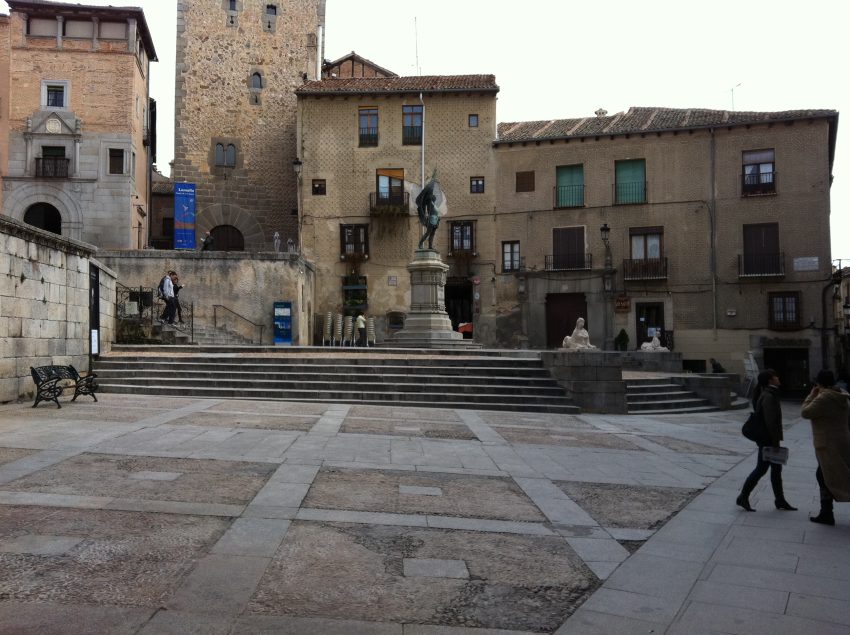
Preview map of the Best Things to Do in Bilbao: Culture, Food & Art Guide route in Bilbao, showing 8 stops. Use the interactive map to zoom and tap markers.