San Fermín de Aldapa, Pamplona
Church in Pamplona
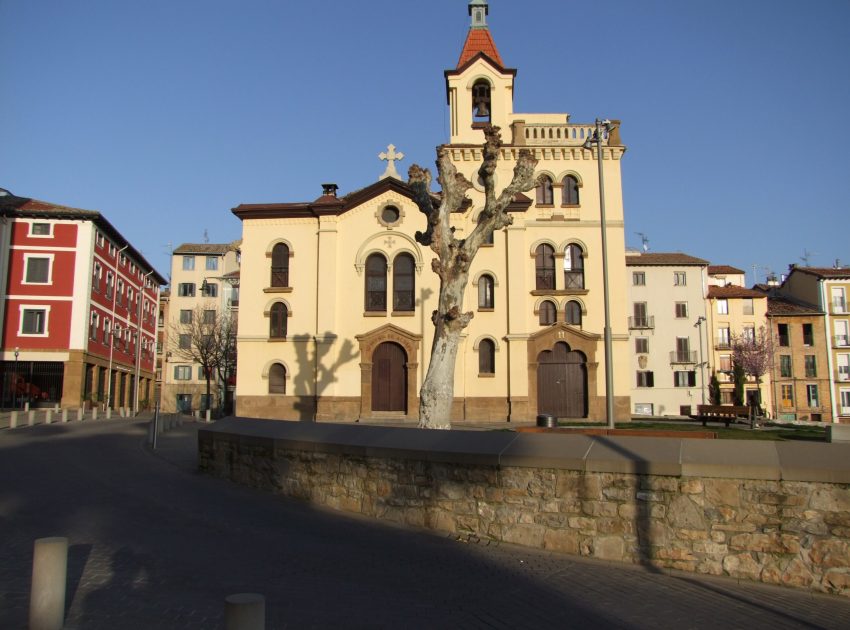
San Fermín de Aldapa is a small church in Pamplona, Spain, in the Navarrería area of the old quarter. Set between Calle Dos de Mayo and Calle Aldapa, it sits on a slight slope with a small open space in front, opposite the Royal and General Archive of Navarra. It is a compact religious site rather than a large monument, and it is easy to include on a short walk through the historic centre.
The church matters because tradition links it to the birthplace of San Fermín, Pamplona’s patron saint, while archaeological work has uncovered Roman and earlier Christian remains beneath the present structure. Visitors usually notice the quiet setting, the simple exterior, and the feeling that the ground itself carries several layers of the city’s past. It is best for travellers who like historic churches, local devotion, and sites that reward a brief but attentive visit.
Table of Contents
- History and Significance of the Church of San Fermín de Aldapa
- Things to See and Do in the Church of San Fermín de Aldapa
- How to Get to the Church of San Fermín de Aldapa
- Practical Tips on Visiting the Church of San Fermín de Aldapa
- Where to Stay close to the Church of San Fermín de Aldapa
- Is the Church of San Fermín de Aldapa Worth Visiting?
- FAQs for Visiting Church of San Fermín de Aldapa
History and Significance of the Church of San Fermín de Aldapa
Evidence suggests that a church has existed on this spot since medieval times, but the site's story stretches back even further. The slope known as Aldapa, whose name comes from the Basque word for “hill,” formed the first Roman settlement in Pamplona, a strategic terrace above the Arga River. Over the centuries, Roman houses and baths gave way to later Christian structures, including the early hermitage of San Pedro de los Reyes de Navarra whose foundations were discovered during archaeological work in the church.
Tradition holds that this was the birthplace of San Fermín, the patron saint whose name is now inseparable from Pamplona's most famous festival. That association has made San Fermín de Aldapa an important devotional landmark, even if it is quieter and less visited than the Church of San Lorenzo where the main image of the saint is venerated. For locals, this is a cradle of the cult of San Fermín, a more intimate point of connection with his story and a reminder that Pamplona's religious identity did not start with the big churches alone, but also with smaller neighbourhood shrines.
The current church structure reflects later rebuilding and remodelling, but the archaeological finds beneath its floor and in adjoining spaces anchor it firmly in the long continuum of the city's history. Walking through, you are not just visiting a parish church; you are standing above Roman mosaics, former baths and the remains of earlier sanctuaries, all woven together into a single urban plot that has mattered to Pamplona for nearly two millennia.
Things to See and Do in the Church of San Fermín de Aldapa
Start outside on the small esplanade in front of the church, where you can appreciate its slightly elevated position and its relationship to the Royal and General Archive of Navarra across the way. The setting on Aldapa hill gives you subtle but pleasing views over nearby streets and helps you imagine how this terrace would have appealed to Roman settlers when they chose the site for their first buildings. It is a calm corner of the old town, with enough space to sit for a moment before stepping indoors.
Inside, focus on the way the church blends simplicity with depth of meaning. The interior is not overwhelmingly ornate, but the very fact that it has been a place of worship since medieval times gives it a quietly powerful atmosphere. If there are explanatory panels or small displays about the excavations, take time to read them: they will point out the Roman mosaic fragments and thermal bath remains discovered in the transept and sacristy, as well as the foundations of the primitive hermitage of San Pedro de los Reyes de Navarra on the upper level. Knowing what lies beneath the floor adds a new dimension to every step you take.
As you explore, keep in mind the link to San Fermín and how this site fits into the wider devotional geography of the city. It complements the better-known shrine in San Lorenzo by offering a more intimate, origin-story perspective. When you step back outside, look again at the slope of Aldapa and the cluster of surrounding streets: this is where Roman Pamplona began, where early Christian worship took root and where, according to tradition, one of Navarre's most important saints first entered the world.
How to Get to the Church of San Fermín de Aldapa
Most visitors arrive in Pamplona via Pamplona Airport or larger regional airports such as Bilbao or San Sebastián, then continue into the city centre by bus, taxi or hire car. For the best deals and a seamless booking experience, check out these flights to Pamplona on Booking.com. From the historic core, it is an easy walk to the Navarrería area; simply head towards the Royal and General Archive of Navarra on Calle Dos de Mayo, then cross the small esplanade in front of the palace to reach the church on the Aldapa slope.
If you are travelling by train, Pamplona's main station connects the city with Madrid, Barcelona and other major Spanish hubs.Train schedules and bookings can be found on Omio. From the station, take a local bus or taxi into the Old Quarter, then follow signs or a map towards the cathedral and the nearby Royal and General Archive of Navarra; from there, the Church of San Fermín de Aldapa is just a short walk away between Calle Dos de Mayo and Calle Aldapa.
Arriving by car, follow the main access routes into Pamplona and park in a central car park near the edge of the Old Quarter to avoid driving through narrow historic streets.If you are looking to rent a car in Spain I recommend having a look at Discover Cars, first, as they compare prices and review multiple car rental agencies for you. From your parking spot, walk through the old town towards the archive and the Aldapa neighbourhood; the church is clearly positioned on the slope overlooking the esplanade and is easy to combine with visits to the cathedral and surrounding historic sites.
Practical Tips on Visiting the Church of San Fermín de Aldapa
- Suggested tips: Pair your visit with the Royal and General Archive of Navarra opposite the church and the nearby cathedral to get a fuller picture of Pamplona's civic and religious history.
- Best time to visit: Late morning or mid-afternoon are ideal for a quieter experience, when you can linger both inside the church and on the esplanade without crowds.
- Entrance fee: Free entry; donations are welcomed to help with the church’s upkeep.
- Opening hours: Hours vary with parish activities and services; check times posted at the door or locally before planning your visit.
- How long to spend: Plan 20-40 minutes to see the interior, read any information about the excavations and enjoy the surroundings on the Aldapa slope.
- Accessibility: Access involves walking on sloping streets and possibly negotiating a few steps at the entrance; visitors with reduced mobility should allow extra time and check the easiest route up Aldapa.
- Facilities: Facilities are limited to what is needed for worship; cafés, bars and shops can be found within a few minutes’ walk in the Navarrería and wider Old Quarter.
- Photography tip: Capture the church with the Royal and General Archive of Navarra in the background to show their relationship, and use the slope of Aldapa to frame shots that highlight the church's elevated position.
- Guided tours: Consider joining a walking tour that includes San Fermín de Aldapa, as guides often explain both the Roman archaeology and the saint's connection to this site.
- Nearby food options: After your visit, head into the surrounding streets of the old town for pintxos bars and small restaurants that reflect the neighbourhood’s local character.
Where to Stay close to the Church of San Fermín de Aldapa
Staying in the heart of Pamplona makes it easy to visit the Church of San Fermín de Aldapa at different times of day and to link it with the nearby archive and cathedral. A refined choice on the main square is Gran Hotel La Perla, from which you can wander through the Old Quarter to Aldapa in under fifteen minutes. For a more immediately local feel near the cathedral and historic streets, Pamplona Catedral Hotel places you within steps of the Royal and General Archive of Navarra and a short stroll from the church itself. If you would like a modern base near green spaces yet still close to the old town, Hotel Tres Reyes Pamplona offers an easy walk to the historic core, from where you can climb up to Aldapa and explore this quietly significant corner of the city.
Is the Church of San Fermín de Aldapa Worth Visiting?
The Church of San Fermín de Aldapa is definitely worth visiting if you are interested in the deeper layers of Pamplona's history and devotion. It may not be as grand as the cathedral or as famous as San Lorenzo, but its traditional link to the birthplace of San Fermín and its location over Roman remains make it a uniquely rich site. Standing here, you sense how Roman settlement, early Christian worship and later Navarrese identity all converge on one small hill, turning this modest church into a powerful symbol of the city's long, evolving story.
What Other Travellers Say...
San Fermin Aldapakoa is a small, modest church on C. Dos de Mayo in Pamplona’s Old Town, set by a little park and offering pleasant views while being very close to hotels; visitors note its spiritual atmosphere and local significance, though some mention graffiti on a side portal and suggest better protection to preserve the site.


FAQs for Visiting Church of San Fermín de Aldapa
The San Fermín de Aldapa appears in our Complete Guide to Visiting Pamplona!

Moira & Andy
Hey! We're Moira & Andy. From hiking the Camino to trips around Europe in Bert our campervan — we've been traveling together since retirement in 2020!
This website uses affiliate links which may earn a commission at no additional cost to you!
Planning Your Visit
Hours vary with parish activities and services; check times posted at the door or locally before planning your visit.
Free entry; donations are welcomed to help with the church’s upkeep.
Nearby Attractions
- Royal and General Archive of Navarra (0.1) km
Archive and Palace - Ayuntamiento de Pamplona (0.2) km
Town Hall - Museo Universidad de Navarra (0.2) km
Museum - Museum of Navarre (0.2) km
Museum - Catedral de Pamplona (0.2) km
Cathedral - Albergue de Jesús y María (0.2) km
Church and Hostel - Portal de Francia (0.2) km
City Gate - Iglesia de San Saturnino (San Cernin) (0.2) km
Church - Mirador de Caballo Blanco (0.2) km
Viewing Point - Calle Estafeta (0.3) km
Street