Royal and General Archive of Navarra, Pamplona
Archive and Palace in Pamplona
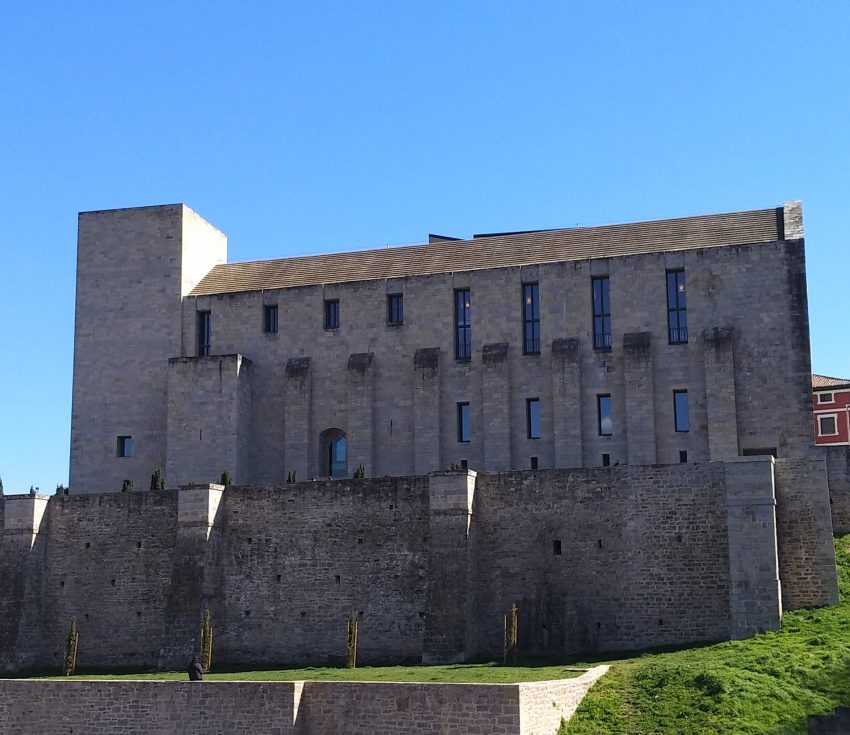
The Royal and General Archive of Navarra is in Pamplona, inside the remains of the old Palace of the Kings of Navarre, a building that now functions as the region's main historical archive. The site combines medieval ruins with a modern protective structure by Rafael Moneo, so the building itself is part of the visit. Visitors come here to see how the palace shell has been adapted to house manuscripts, laws, court records and other documents that record Navarra's past.
This is a good stop for visitors who are interested in architecture, archives or the way a former royal residence has been reused for public memory. Inside, you can usually expect exhibitions and public areas that explain the archive’s role, along with the contrast between old masonry and contemporary design. It works best as a focused visit rather than a long attraction, and it suits people who enjoy quieter cultural sights in Pamplona’s historic centre.
Table of Contents
- History and Significance of the Royal and General Archive of Navarra
- Things to See and Do in the Royal and General Archive of Navarra
- How to Get to the Royal and General Archive of Navarra
- Practical Tips on Visiting the Royal and General Archive of Navarra
- Where to Stay close to the Royal and General Archive of Navarra
- Is the Royal and General Archive of Navarra Worth Visiting?
- FAQs for Visiting Royal and General Archive of Navarra
History and Significance of the Royal and General Archive of Navarra
The story begins in the 12th century, when King Sancho VI “the Wise” ordered the construction of the Palacio de los Reyes de Navarra in Pamplona. At that time, the palace functioned as a symbol of royal authority in the city, housing the monarch when he stayed in the capital and marking the presence of the kingdom's ruling power in the historic core. Over the centuries, however, wars, political changes and neglect took their toll, and the building was gradually reduced to a fragment of its former self, its original architecture largely disappearing from view.
Despite the physical decline of the palace, the institutional life of Navarre's government continued, producing and accumulating an enormous body of documentation. The Royal and General Archive of Navarra grew out of this administrative history, becoming the repository for the records of the Kingdom of Navarre and, later, for the provincial and Foral Community administrations. Here, manuscripts, handwritten laws and acts from the 15th to the 19th centuries are preserved and catalogued, forming a continuous thread of written memory that stretches from the late medieval era into the modern age.
In order to give this documentation a worthy and secure home, the decision was taken to integrate the archive into the remains of the old palace and to shelter it beneath a new architectural skin. Rafael Moneo’s project, completed in the early 2000s, covered and protected the surviving structures and created a modern archive building around them. Since 2003, the Archivo Real y General de Navarra has occupied this hybrid space, where remnants of the medieval palace coexist with contemporary lines. For historians, genealogists and anyone interested in Navarre’s past, it is a key institution; for visitors, it offers a tangible link between the vanished royal residence and the living memory of the region preserved on paper.
Things to See and Do in the Royal and General Archive of Navarra
On arrival, take time to appreciate the building itself. From outside, you will notice how the modern façade and volumes wrap around older masonry, hinting at the palace ruins that lie within. The layering of stone and modern materials reflects the archive’s dual role: protecting fragile records while showcasing the historic fabric of the former Palacio de los Reyes de Navarra. Walking around the exterior, you can often glimpse parts of the old structure embedded in the new shell.
Inside, visitors typically have access to public areas that introduce the archive’s mission and holdings. Exhibition spaces may display selected manuscripts, maps, legal documents and illustrative items that explain how the kingdom and later province were administered. While the bulk of the collection remains behind the scenes in secure storage, these displays give you a sense of the richness and variety of the “documents of the kingdom,” from laws enacted in the ancient courts of Navarre to later provincial records. Panels and audiovisual elements help explain what you are seeing and how the archive works day to day.
If you are visiting for research or more specialised interests, you can consult documents in reading rooms under the guidance of staff, although this generally requires registration and adherence to strict handling rules. Even for casual visitors, it is worth asking about any current temporary exhibitions or guided visits that may delve into particular themes: royal justice, the Foral system, medieval courts or the evolution of the palace itself. When you leave, you carry with you not just images of a striking building, but an understanding that Navarre’s story is written in thousands of pages kept safe behind its walls.
How to Get to the Royal and General Archive of Navarra
Most visitors arrive in Pamplona via Pamplona Airport or larger regional airports such as Bilbao or San Sebastián, then connect into the city centre by bus, taxi or hire car. For the best deals and a seamless booking experience, check out these flights to Pamplona on Booking.com. Once in central Pamplona, the archive is located in the historic area, within the Palacio de los Reyes de Navarra / Palacio de los Virreyes, a short walk from key Old Quarter landmarks.
If you are travelling by train, Pamplona's main railway station links the city with Madrid, Barcelona and other major Spanish hubs.Train schedules and bookings can be found on Omio. From the station, local buses and taxis run frequently into the old town; from central points such as Plaza del Castillo or the cathedral, it is a straightforward walk along historic streets to the archive building.
Arriving by car, follow the main roads into Pamplona and use one of the central car parks near the edge of the Old Quarter, as the streets around the archive are best explored on foot.If you are looking to rent a car in Spain I recommend having a look at Discover Cars, first, as they compare prices and review multiple car rental agencies for you. From nearby parking areas, you can walk through the historic core to the Palacio de los Reyes de Navarra, integrating your visit to the archive with a wider exploration of Pamplona’s civic and religious monuments.
Practical Tips on Visiting the Royal and General Archive of Navarra
- Suggested tips: Check ahead for any temporary exhibitions or guided visits; combining these with a building walk-through makes the most of your time at the archive.
- Best time to visit: Weekday mornings or early afternoons are usually best for a quieter, more focused visit, especially if you want to spend time in exhibitions or reading rooms.
- Entrance fee: Entry to public areas and exhibitions is typically free or low cost
- Opening hours: Monday to Sunday and holidays: 10:00 - 14:00 and 17:00 - 20:00. Closed Monday.
- How long to spend: Allow 60-90 minutes to explore the building, see exhibitions and get a sense of the archive’s role; researchers will, of course, need longer.
- Accessibility: The modern design by Moneo generally includes lifts and accessible routes, but some areas integrate older masonry and levels; ask at reception for the most suitable paths if you have reduced mobility.
- Facilities: Expect a reception area, reading rooms for researchers, toilets and possibly a small information or publications point; cafés and shops are found nearby in the historic centre.
- Photography tip: Exterior shots that contrast the historic palace remnants with the modern structure work best; inside, always respect any restrictions on photographing documents or exhibition items.
- Guided tours: Look out for guided architectural or archival tours, which can explain both the transformation of the palace and the significance of key document collections.
- Nearby food options: After your visit, head into the surrounding Old Quarter for cafés and pintxos bars, or towards Plaza del Castillo for a wider choice of restaurants.
Where to Stay close to the Royal and General Archive of Navarra
Staying in Pamplona’s historic centre puts the archive and many other key sights within easy walking distance. A classic choice on the main square is Gran Hotel La Perla, offering refined rooms and a short stroll to the archive, cathedral and principal plazas. For a quieter, atmospheric base near the cathedral and old walls, Pamplona Catedral Hotel works well, placing you close to both religious landmarks and civic institutions like the archive. If you prefer more modern surroundings near green spaces yet still central, Hotel Tres Reyes Pamplona offers comfortable accommodation between La Taconera Park and the Old Quarter, with straightforward access to the Royal and General Archive of Navarra.
Is the Royal and General Archive of Navarra Worth Visiting?
The Royal and General Archive of Navarra is well worth visiting if you are interested in history, architecture or the inner workings of a former kingdom. It is not a conventional museum, but rather a living institution where the core records of Navarre's past are preserved, from medieval laws to early modern court proceedings. The combination of a 12th century royal palace shell and Rafael Moneo's contemporary architecture gives the building strong visual appeal, while exhibitions and public spaces translate the idea of “documents of the kingdom” into something you can see and understand. Even a short visit deepens your sense of how Navarre's political and legal identity has been built over centuries.
What Other Travellers Say...
Royal and General Archive of Navarra on C. Dos de Mayo is a compact but rewarding stop in Pamplona: an active archival institution preserving regional public and private records, manuscripts and books, with helpful staff and a large wooden model of the city around 1900 to admire. Visitors note the interior is beautifully renovated and includes a publicly accessible 12th-century crypt, though some feel parts of the building appear heavily remodelled.





FAQs for Visiting Royal and General Archive of Navarra
The Royal and General Archive of Navarra appears in our Complete Guide to Visiting Pamplona!

Moira & Andy
Hey! We're Moira & Andy. From hiking the Camino to trips around Europe in Bert our campervan — we've been traveling together since retirement in 2020!
This website uses affiliate links which may earn a commission at no additional cost to you!
Planning Your Visit
Monday to Sunday and holidays: 10:00 – 14:00 and 17:00 – 20:00. Closed Monday.
Entry to public areas and exhibitions is typically free or low cost
Nearby Attractions
- San Fermín de Aldapa (0.1) km
Church - Museo Universidad de Navarra (0.1) km
Museum - Museum of Navarre (0.1) km
Museum - Ayuntamiento de Pamplona (0.2) km
Town Hall - Iglesia de San Saturnino (San Cernin) (0.2) km
Church - Portal de Francia (0.2) km
City Gate - Catedral de Pamplona (0.2) km
Cathedral - Albergue de Jesús y María (0.2) km
Church and Hostel - Mirador de Caballo Blanco (0.3) km
Viewing Point - Calle Estafeta (0.4) km
Street