Madeira Sightseeing Tour of the North West Coast 2026: Scenic Drive & Highlights
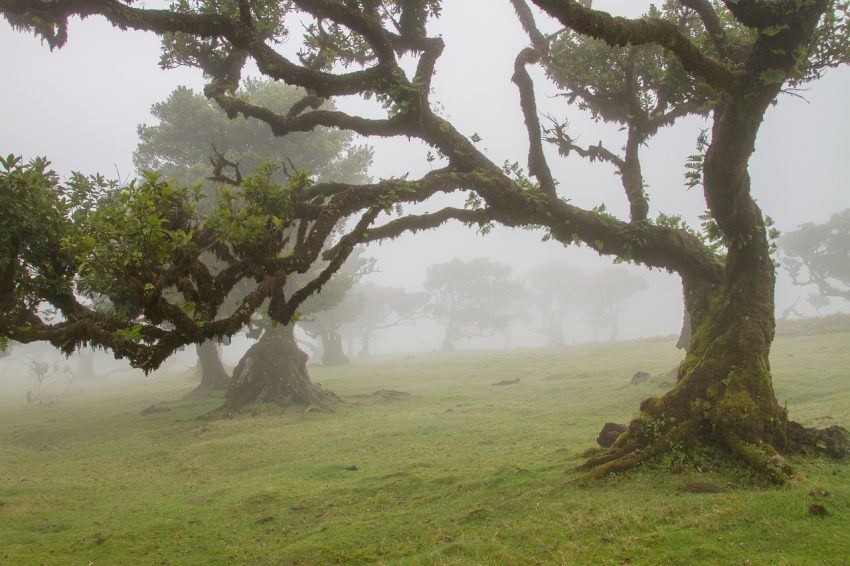
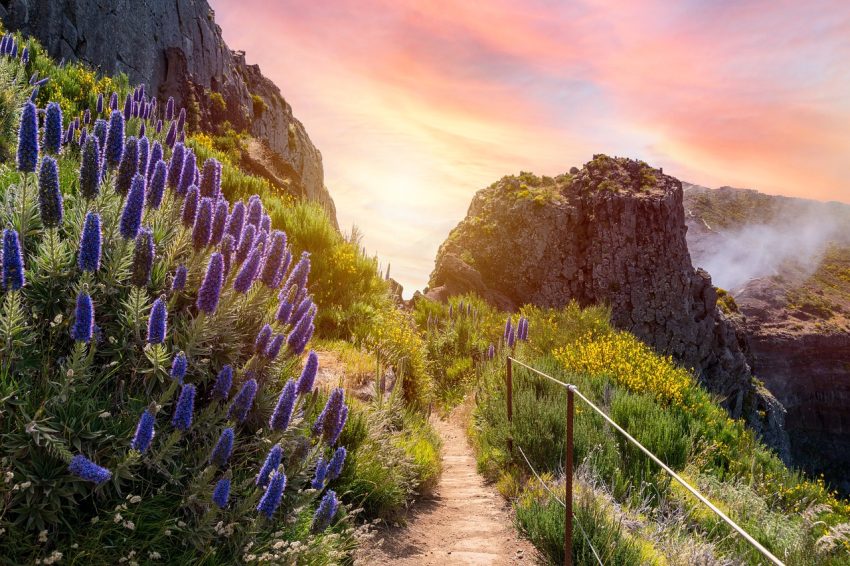
Madeiras North East Coast laurel forest
This website uses affiliate links which earn a small commission at no additional cost to you.
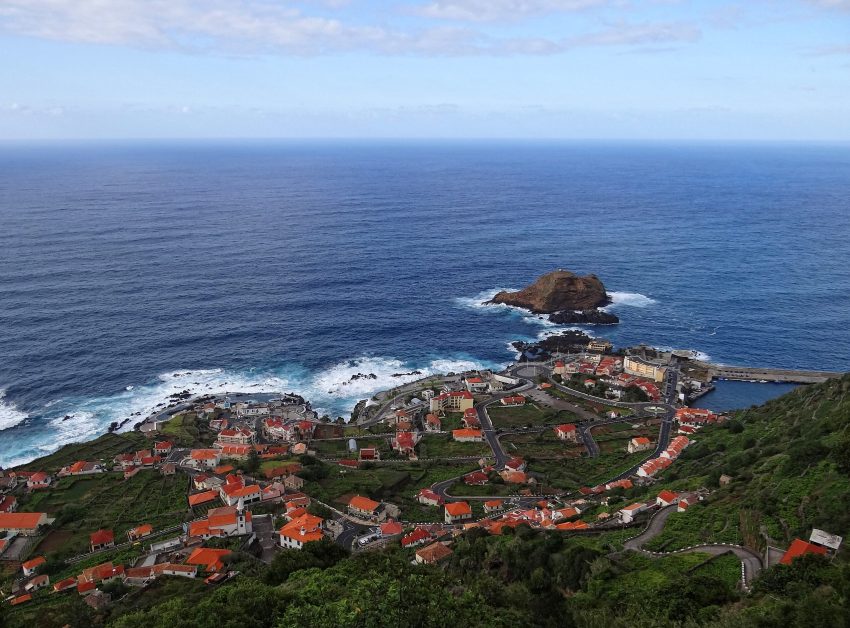
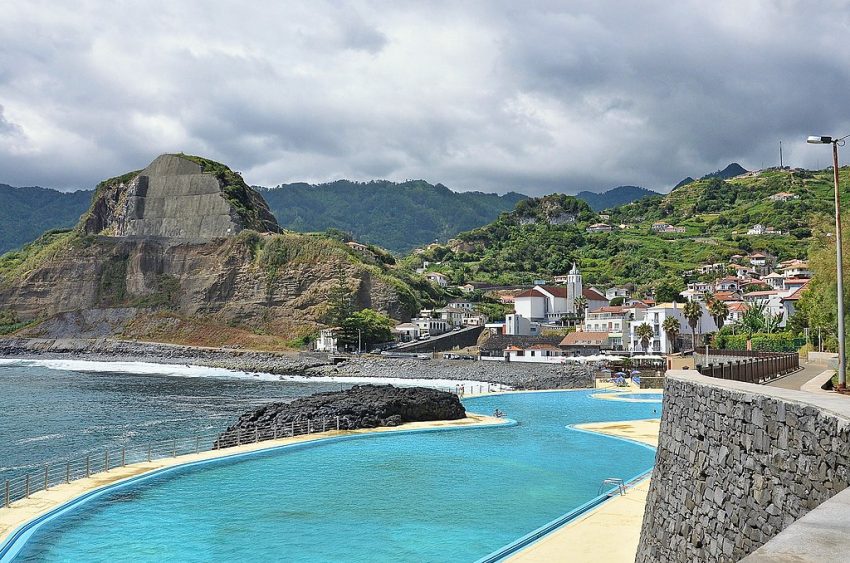
The North Coast of Madeira is a showcase of some of the most stunning landscapes the island has to offer. In this region, nature has outdone itself, masterfully blending mountains, forests, cliffs, and the sea to create awe-inspiring views. This natural masterpiece offers unforgettable vistas along the coastlines from Sao Vicente to Porto Moniz.
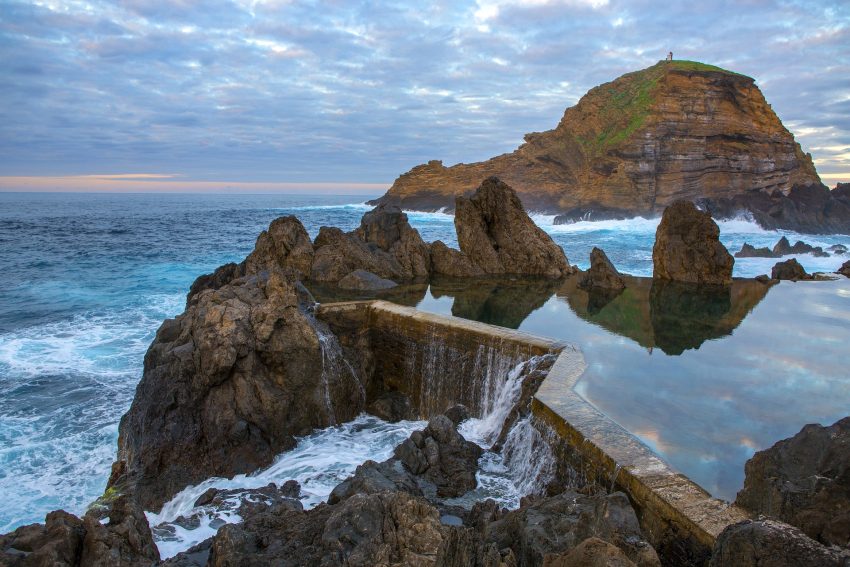
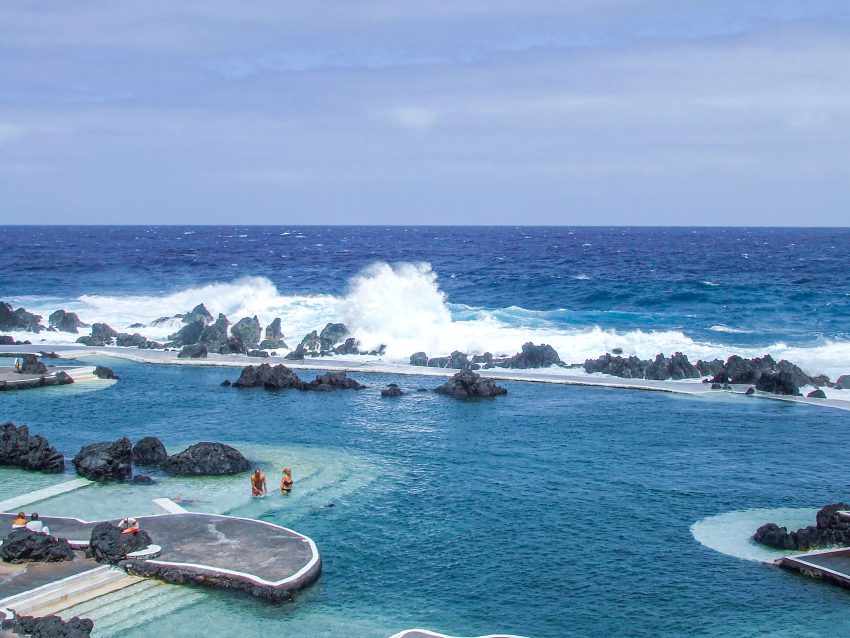
The coastline here is also dotted with intriguing volcanic caves, like those in São Vicente, and features natural swimming pools, including the famed ones in Porto Moniz, which are the pride of this charming town.
Adding to the North Coast’s splendour is the Laurissilva Forest, a true natural gem. This forest spans about 15,000 hectares, covering 20% of Madeira’s territory. Its presence is particularly striking on the North Coast, enhanced by the region’s abundant water sources, contributing to the area’s lush and extraordinary landscape.
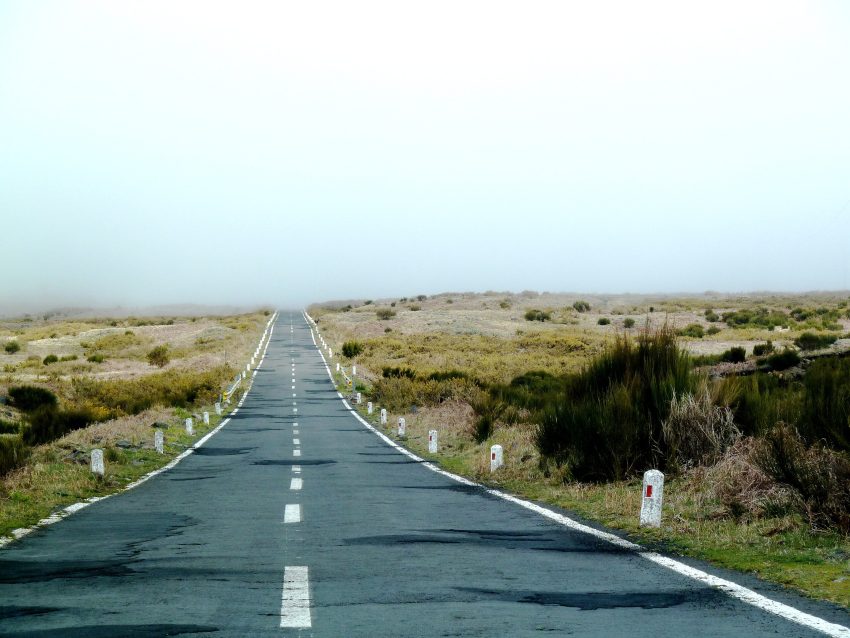
Paúl da Serra, situated between 1,300 and 1,500 meters above sea level, stands as a notable tourist attraction in the central western part of Madeira. Known as the flattest area on the island, it offers spectacular views of the lush green mountains and valleys. On clear days, visitors can enjoy the unique opportunity to see both the southern and northern seas.
This location serves as a hub for numerous paths and levada walks, connecting to various destinations across the island. From here, you can embark on trails leading to places like Rabaçal, Risco, 25 Fontes, Pico Ruivo, Ribeira do Alecrim, Lombo do Mouro, and Bica da Cana. These paths weave through the enchanting Laurissilva forest, offering a captivating experience of Madeira’s natural beauty.
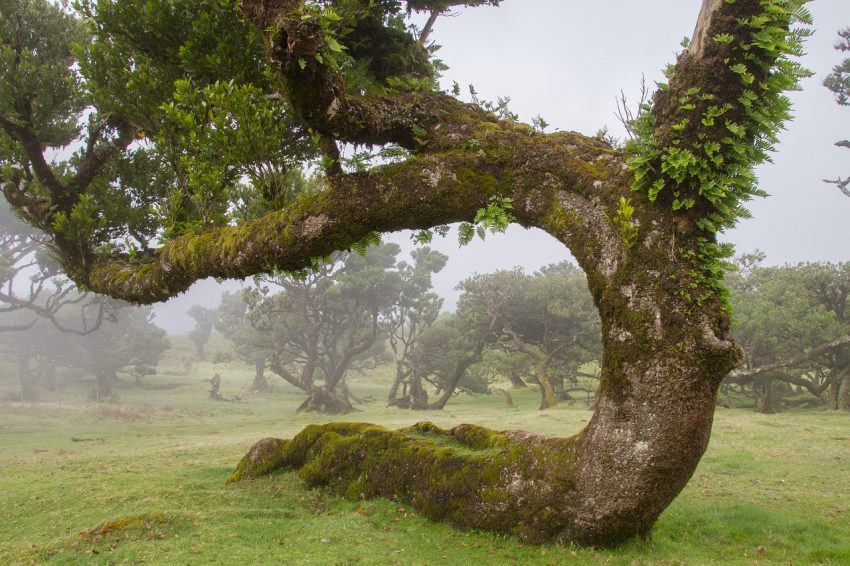
Fanal Forest, a stunning natural marvel on Madeira Island in the Atlantic Ocean, stands out as an ancient laurel grove. It is among the few surviving segments of Europe’s primeval rainforests, dating back millennia. Recognized as a UNESCO World Heritage Site, it is celebrated for its unique biodiversity and special characteristics, serving as a crucial conservation area.
Attracting nature enthusiasts and hikers, Fanal Forest offers a range of hiking trails set amidst its breath-taking natural scenery. It serves as a serene escape from the fast-paced modern world, providing an opportunity for visitors to immerse themselves in the tranquility and unspoiled beauty of this pristine environment.
Top Tip: A visit to Fanal Forest takes on an enchanting quality when shrouded in its eerie morning fog. The fog’s mystique is most striking in the early hours, dissipating usually by 10:30 am. Nevertheless, Fanal’s beauty remains captivating and is well worth a visit even in the absence of the fog.
Exploring the municipality of Porto Moniz offers an immersive experience with the northern sea of the island. This area is characterized by its waterfalls, beaches, and natural pools crafted from volcanic rocks, all showcasing a profound bond with the ocean. The viewpoints here provide stunning views over the sea, highlighting the intimate connection between the land and the water. Porto Moniz, stretching from the sea to the mountains, presents a tapestry of breathtaking scenery.
Traveling to a country with a different currency? Avoid ATM transaction fees and pay in local currency with a Wise Card. Having used it for over 5 years, we've saved loads on fees!
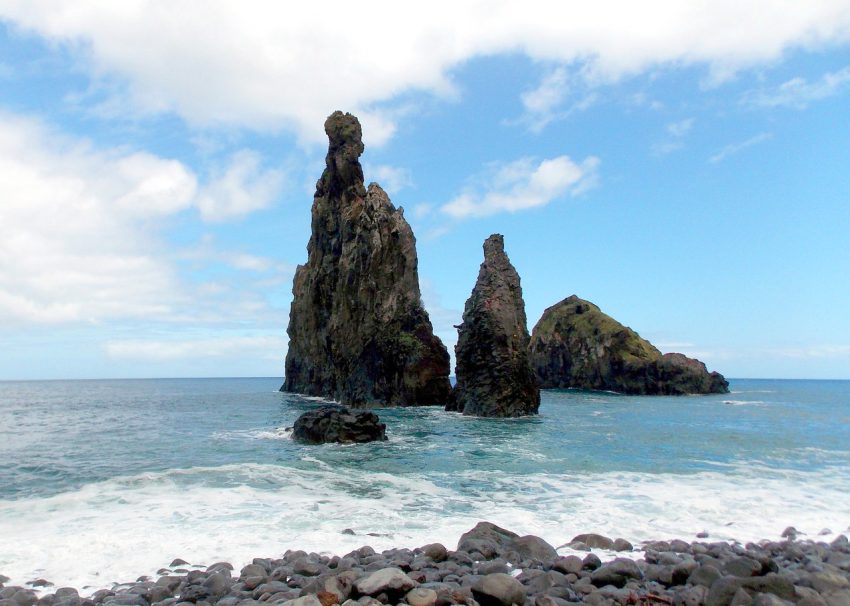
Ilheus da Ribeira da Janela is a breathtaking coastal location renowned for its extraordinary rock formations, situated just meters off the shore. This spot offers a unique experience for visitors, especially at sunrise. Imagine standing on the beach as the sun emerges over the horizon of the ocean, casting its first light of the day. This moment becomes even more magical with the sight of thousands of swallows gracefully circling in the sky, adding a dynamic and vibrant element to the serene morning. This natural spectacle at Ilheus da Ribeira da Janela not only captivates with its stunning geological features but also provides a rare opportunity to witness the beauty of wildlife in harmony with the awe-inspiring Atlantic Ocean. It’s a perfect destination for nature lovers, photographers, and anyone looking to experience a tranquil yet impressive display of Madeira’s coastal charm.
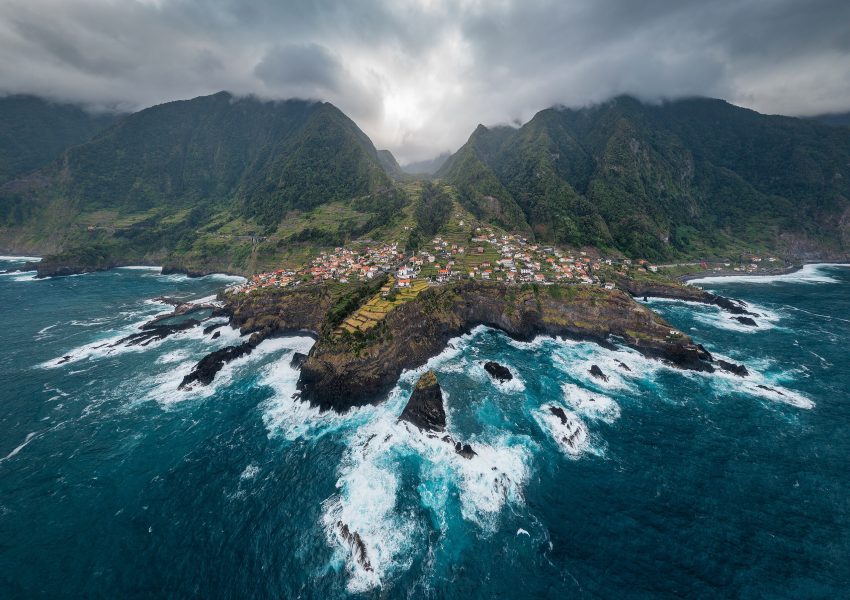
Nestled between São Vicente and Porto Moniz on Madeira Island’s rugged north-west coast, the quaint village of Seixal offers a setting reminiscent of a fantasy world. Flanked by towering cliffs on one side and the Atlantic Ocean on the other, this charming town is a magnet for various activities or simply for appreciating the dramatic contrasts and boundless natural beauty of its environment.
The landscape features terraced cultivation on the mountain slopes, intriguing rock formations creating stunning natural pools, and meandering paths through forests and waterfalls. Exploring Seixal unveils a picturesque slice of Madeira, inviting visitors to bask in the lush, vibrant nature of this enchanting island.
Along the route to is the Véu da Noiva viewpoint or ‘the bride’s veil.’ This name derives from a waterfall that resembles a bridal veil as it gracefully descends from a cliff into the sea. It’s an irresistible photo opportunity!
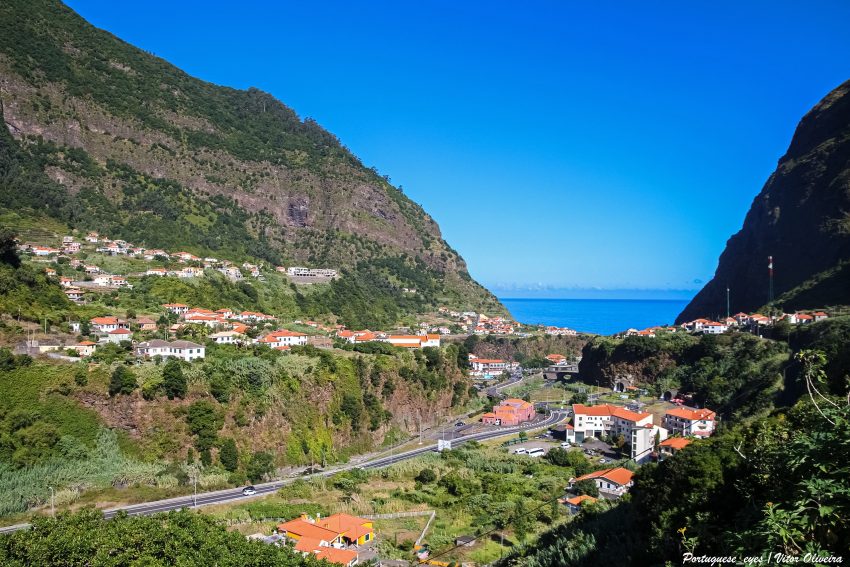
São Vicente is distinguished by the vibrant green hues of its lush vegetation, shaped by volcanic activity and erosion across its picturesque slopes. Across its three parishes, visitors can explore a variety of gardens, numerous watercourses, trails, and viewpoints. The area is also known for its natural caves, significant historical heritage, and an extensive portion of the Laurissilva Forest, adding to its rich and diverse natural landscape. Have a look at the small and peculiar chapel built inside a basalt rock, by the seafront.
This website uses affiliate links which earn a small commission at no additional cost to you.
Walking Tour Summary
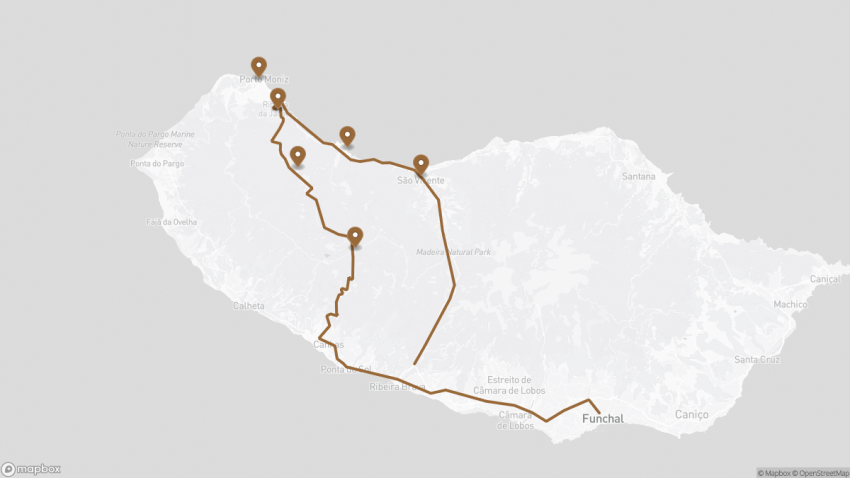
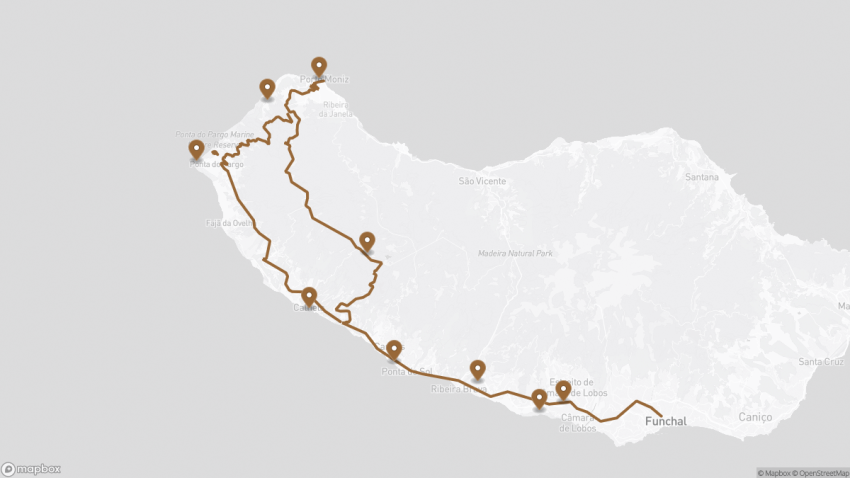
Distance: 87 km Sites: 6
Walking Tour Map
Preview map of the Madeira Sightseeing Tour of the North West Coast: Scenic Drive & Highlights route in Funchal (Madeira), showing 6 stops. Use the interactive map to zoom and tap markers.
Madeira Sightseeing Tour of the South West Coast 2026: Scenic Drive & Highlights
Tour of Western Madeira
This website uses affiliate links which earn a small commission at no additional cost to you.
The south western region of Madeira stands apart as a distinct island, offering a serene escape from the bustling east side and Funchal. This area, where lush laurel forests transition seamlessly into the vast expanse of the blue Atlantic within a short distance, provides a tranquil retreat. It's an ideal spot for rejuvenation, especially after spending a few days exploring its surroundings.This part of the island is devoid of cities, featuring instead a scattering of quaint villages along your journey.
We will embark on a hiking adventure, following the trails of Levada 25 Fontes and Levada do Alecrim, and later, we’ll make our way to the enchanting natural pools of Port Moniz. Our journey back will take us along the westernmost part of the island, where we’ll make captivating stops at waterfalls and scenic viewpoints. Before we conclude our day and head back to your hotel, you’ll have the chance to unwind with a refreshing Poncha at Camara de Lobos!
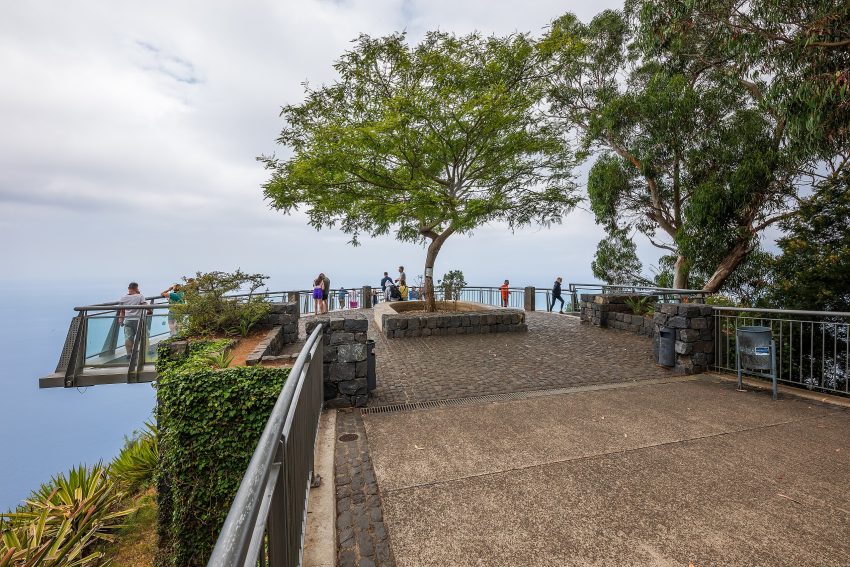
The Cabo Girao skywalk in Madeira stands as one of the island’s premier viewpoints, offering a thrilling yet potentially nerve-wracking experience for those with a fear of heights. Situated on the island’s southern coast, approximately 25 minutes west of Funchal, this spot is not just a scenic marvel but also holds the title of Europe’s highest sea cliff at an impressive 580 meters.
An interesting tidbit about the Cabo Girao skywalk is its significant elevation. When you’re up there, stepping onto the glass platform, the sheer drop is both awe-inspiring and intimidating, especially for those apprehensive about heights. However, despite the fear factor, the skywalk is completely safe, and the panoramic views it offers of Cabo Girao are absolutely breathtaking and well worth the experience.
Cabo Girao is an essential destination for anyone visiting Madeira, and its unique position makes it one of the most extraordinary viewpoints on the island.
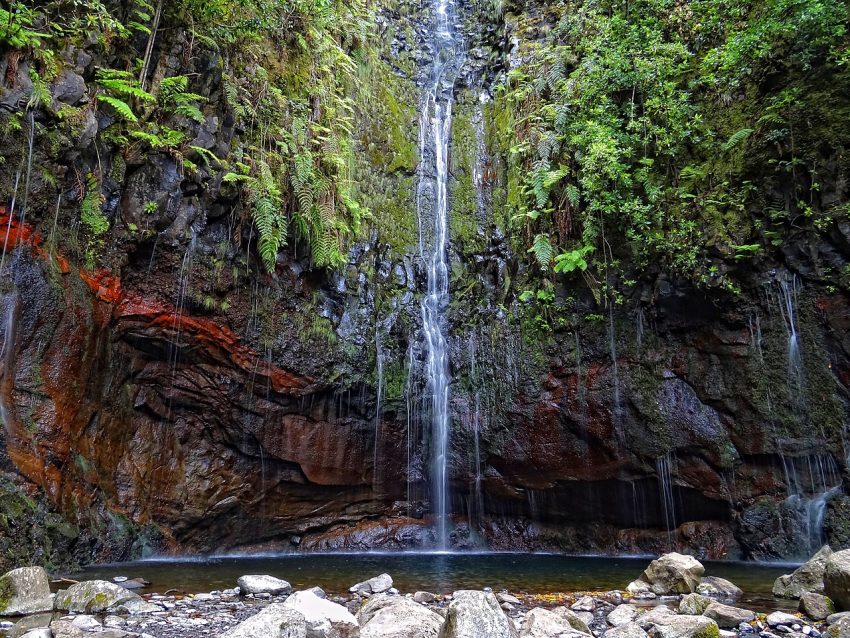
Embarking on the Levada walk from Rabacal offers a breath-taking journey through nature’s splendour. This route is a celebration of the natural world, with its lush vegetation, diverse birdlife, vibrant flowers, serene streams, and captivating waterfalls. The walk to the Risco waterfall, followed by a descent to the lower Levada from the 25 Fontes, leads to a magical area perfect for a picnic and an optional swim. The return trip includes the challenge of navigating an 800-meter tunnel, emerging to a spectacular sea view on the island’s south side. The journey concludes with a relaxing break for coffee or a beer.
Porto Moniz, situated at the north-western extremity of Madeira Island, is a hidden gem brimming with unexpected delights. This charming town, where rural allure meets the majestic union of sea and mountains, offers a diverse array of activities that showcase its distinct natural beauty. The town is perhaps best known for its iconic natural swimming pools, providing a refreshing escape where visitors can immerse themselves in crystal-clear waters amidst volcanic rock formations. These pools are a testament to the unique geological wonders of the area. For those seeking breath-taking views, Porto Moniz does not disappoint. The town boasts several spectacular viewpoints perched atop cliffs, offering panoramic vistas of the Atlantic Ocean. These vantage points are perfect for photographers and nature lovers alike, providing a serene space to soak in the beauty of the island.
Location: Porto Moniz, Portugal | Hours: Daily: 09:00–19:00 (summer) and 09:00–17:00 (winter). | Price: Adults: €3.00 | Website
Traveling to a country with a different currency? Avoid ATM transaction fees and pay in local currency with a Wise Card. Having used it for over 5 years, we've saved loads on fees!
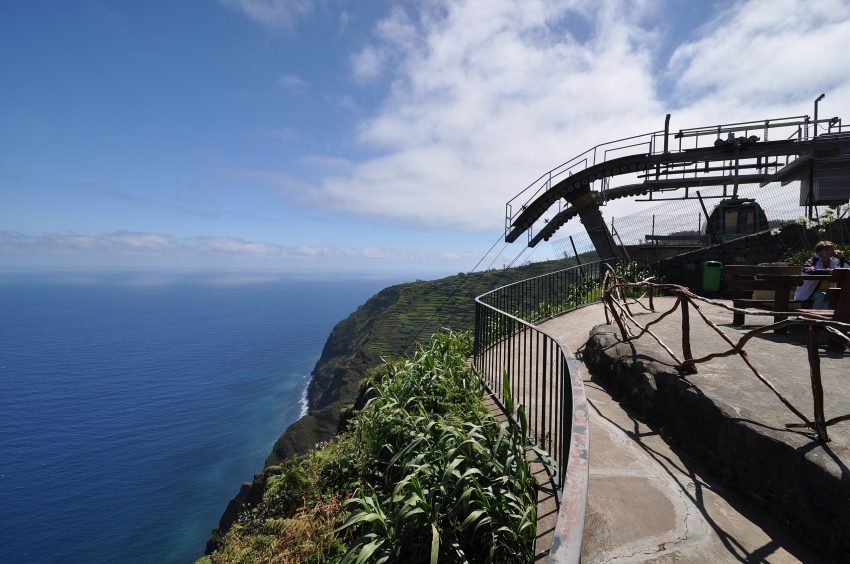
Gliding down the steep incline, the cable car connecting Achadas da Cruz to Fajã da Quebrada Nova transforms into a moving viewpoint, offering an absolutely memorable journey. Located in the Porto Moniz municipality, this area’s landscape is distinctively shaped by the vivid and clear sea, a hallmark of Madeira’s north coast. It’s further accentuated by the strikingly rugged and green hills that add depth and character to the scenery. Upon reaching Fajã da Quebrada Nova, visitors are welcomed into a serene environment. This pebbly beach provides a perfect spot for tranquil contemplation of the Atlantic Ocean. Beyond just a beach, the ‘fajã’ is also an area of rich agricultural productivity, with cultivated lands that add to the beauty of the surroundings. The cable car serves not only as a tourist attraction but also as a vital tool for local farmers, aiding in the transport of their produce – a primary reason for its existence. Seize this unique chance to soak in the views of Madeira’s north coast as you ascend this imposing slope.
5. Discover Ponto do Pargo the westernmost point of Madeira
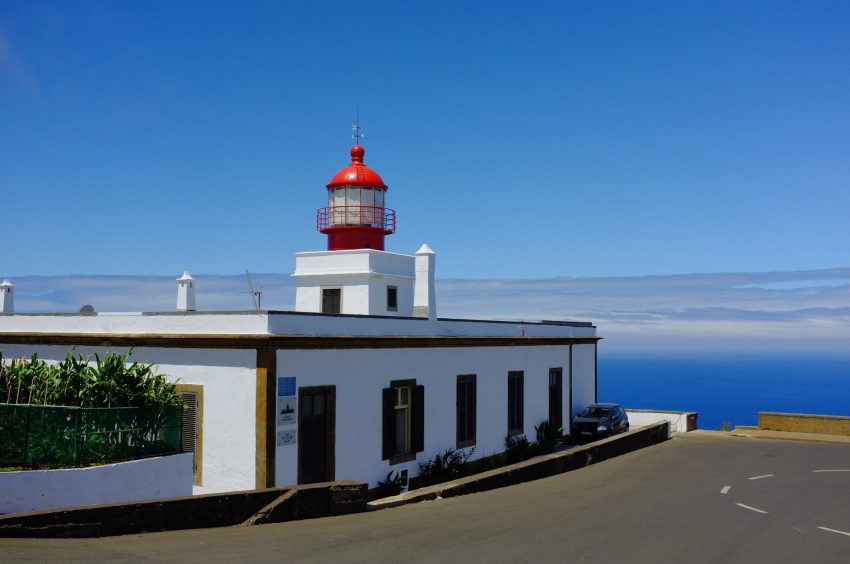
Ponta do Pargo Lighthouse
CC BY-SA 3.0 / Joly Jumper
Continuing along the coast to the south, you’ll reach Ponta do Pargo, the far westernmost point of Madeira. Perched atop the cliffs at this remarkable cape is a century-old lighthouse, proudly standing since 1890, commanding a height of 312 meters (984 feet) above sea level. The village takes its name from the dolphin fish, commonly caught in the vicinity. Featuring the lighthouse at the island’s utmost edge, park at the Miradouro Farol da Ponta do Pargo for breath-taking views of the coastline and the slender, flat landscapes, all while being surrounded by vineyards and vegetable fields.
You can also walk from Ponta do Pargo to see the Garganta Funda Waterfalls. Park at Miradouro da Garganta Funda and then it is just a short walk of 600m (one way) to see the 140 metres high waterfall, which juts out from a jagged hillside and falls to the sea.
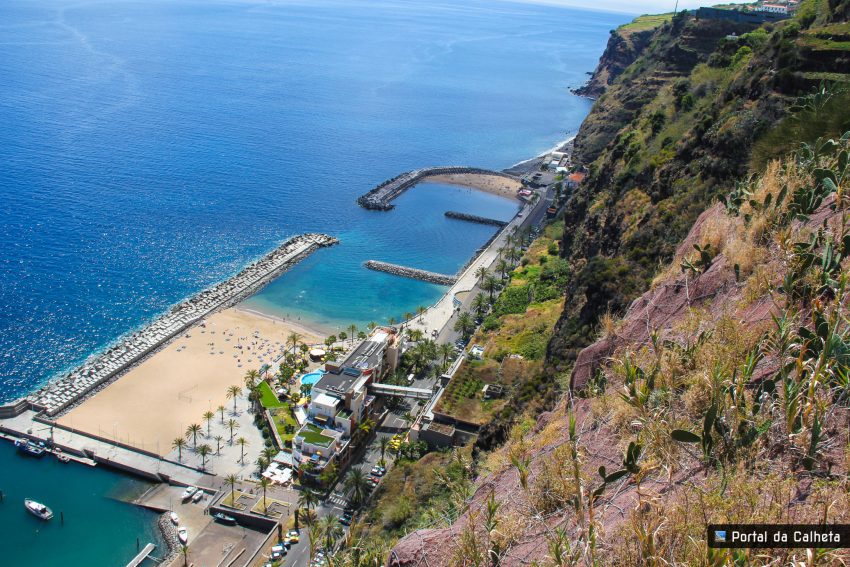
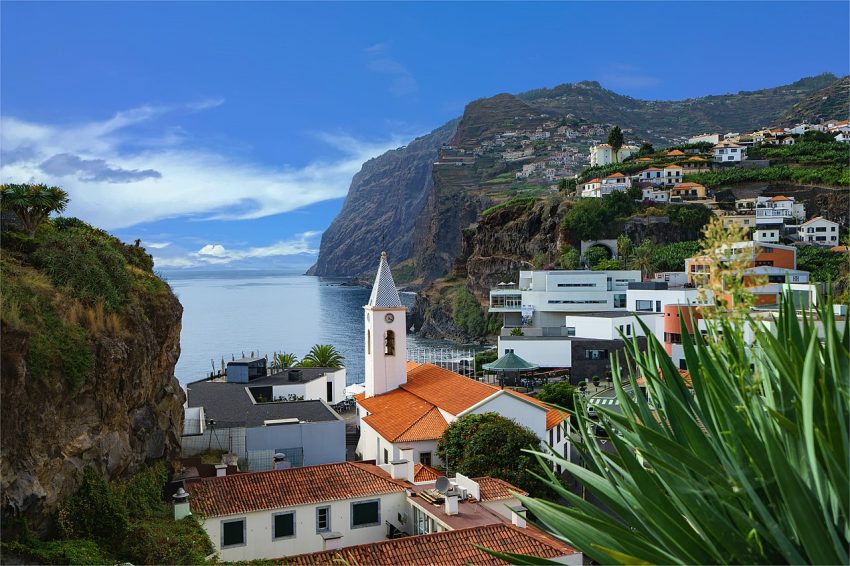
The next stop in the southwest of Madeira is Calheta, a charming village nestled in a steep valley overlooking the coastline. It serves as the primary town along the sunny and fertile southwestern coast of Madeira. The town’s strategic location was chosen in an inlet near the stream’s mouth, and its constant exposure to sunshine, combined with the addition of a newly created sandy beach and marina, has transformed it into a leisure-focused town. Additionally, Calheta is home to the Madeira Museum of Contemporary Art, housed in a building that stands like a watchtower over the sea. An artificial dyke protects two small beaches here, with sand brought from the Sahara Desert, adding to the town’s appeal.
7. Drive through the waterfall at Cascata dos Anjos
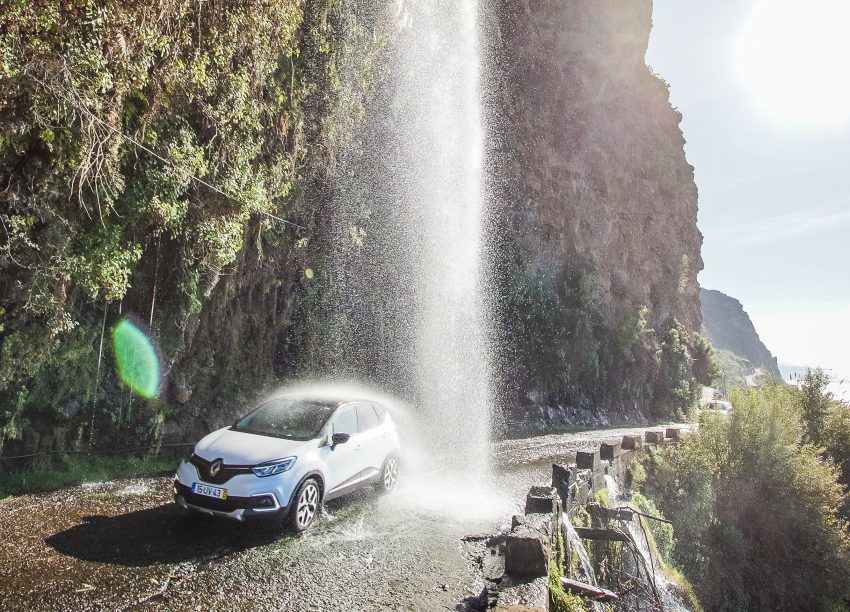
Cascata dos Anjos
The Cascata dos Anjos, a breath-taking waterfall cascading over the old ER 101 highway, is situated just outside of Ponta do Sol on the Madeira Island, Portugal. To reach it, as we are heading east, either leave the main VE3 road at Madalena do Mar and drive along the ER101, or leave VE3 at the Túnel da Madalena.
The pathway along the sea to Cascata dos Anjos is popular, particularly for those seeking a natural shower under the fall. The name Cascata dos Anjos translates to “waterfall of the Angels”. This waterfall, with its heavenly descent from the surrounding cliffs, produces a mesmerizing mist that enhances its beauty. The surrounding lush greenery only adds to the picturesque setting, making it an ideal location for nature lovers and photographers.
There’s a legend that gives Cascata dos Anjos its name, rooted in local lore. The tale speaks of angels coming from the heavens to bathe in the waterfall’s refreshing waters, imbuing the place with a mystical aura that can still be felt. Whether one believes in such stories or not, the enchanting and magical ambiance of the site is undeniable.
Explore Funchal (Madeira) at your own pace with our self-guided walking tour! Follow our curated route to discover must-see sights and local secrets that makes Funchal (Madeira) one of the best places to visit in Portugal.
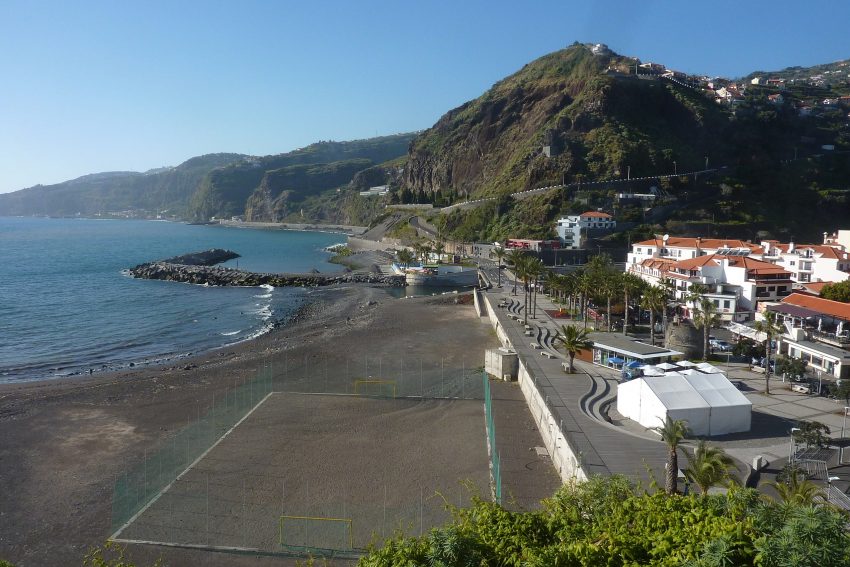
Ribeira Brava is home to a variety of shops, cafes, and restaurants, particularly close to the beach area. Take in the scenic views from an esplanade or stroll along the promenade. For those interested in learning more about the archipelago, the Ethnographic Museum of Madeira is a must-visit, showcasing a collection of ethnographic items that reflect the region’s diverse economic, social, and cultural elements. Other notable attractions include the Lighthouse, providing stunning vistas of Ribeira Brava, Campanário, and Ponta do Sol, as well as the Fort of São Bento, which houses the tourism office.
Explore the enchanting coastal town of Câmara de Lobos in Madeira, a place dearly loved by Winston Churchill. Câmara de Lobos beckons with its quintessential seaside charm, featuring a traditional village ambiance. Here, you’ll find vibrant fishing boats, quaint cobbled streets, a lovely seafront promenade, and a welcoming beach, all waiting to be discovered in this guide. The town is uniquely designed around an extended natural harbour, shaped by the striking black basalt rock that sharply contrasts with the azure blue waters. This scenic setting makes Câmara de Lobos a truly picturesque and captivating destination.
This website uses affiliate links which earn a small commission at no additional cost to you.
Walking Tour Summary
Distance: 93 km Sites: 9
Walking Tour Map
Preview map of the Madeira Sightseeing Tour of the South West Coast: Scenic Drive & Highlights route in Funchal (Madeira), showing 9 stops. Use the interactive map to zoom and tap markers.
This website uses affiliate links which earn a small commission at no additional cost to you.
The eastern part of Madeira is the most developed but it also has historic towns, untamed landscape and dramatic seascapes, making it a haven for nature enthusiasts and hikers.
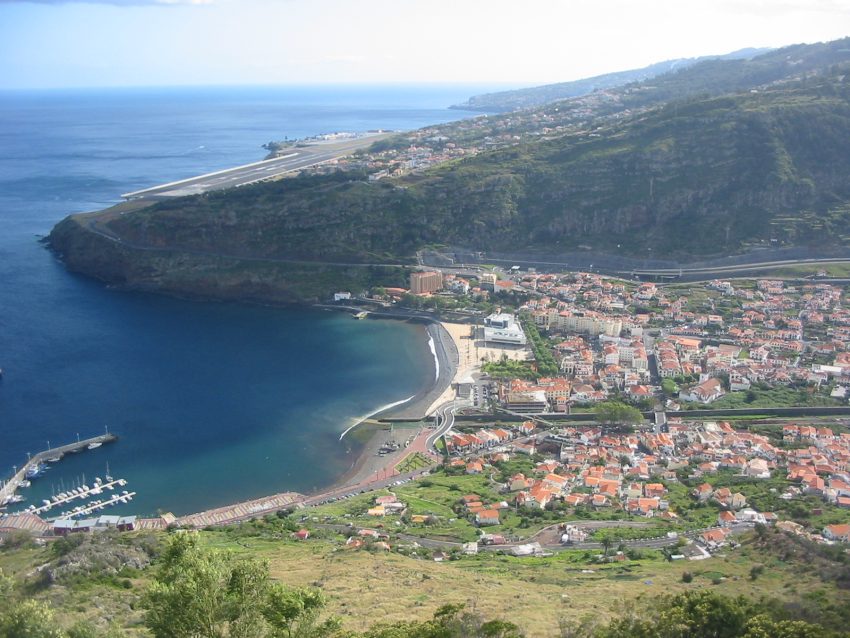
The towns in the eastern region of Madeira, include Machico, the island's inaugural capital and Caniçal, the entry point to Ponta de São Lourenço. Caniçal holds historical significance as a former hub for the whaling industry, with its Whale Museum delving into the island's whaling history, showcasing artefacts and insights into this once-thriving trade.
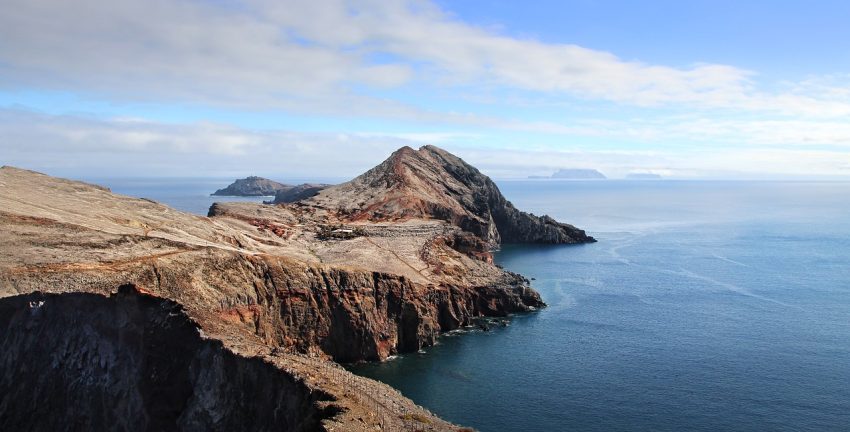
Ponta de São Lourenço, a craggy headland, stands out for its dramatic cliffs, unique geological formations, and breath-taking coastal vistas. Exploring this rugged terrain offers an immersive experience in the natural beauty of Madeira’s easternmost point. Prainha, nestled within Ponta de São Lourenço, serves as the island’s sole naturally sandy beach, surrounded by picturesque cliffs, providing a serene escape.
Ponta de São Lourenço is a stunning and rugged peninsula located on the eastern tip of Madeira, Portugal. Known for its dramatic landscapes and unique flora, it stands out as a distinct geological formation on the island.
Visitors to Ponta de São Lourenço can expect a stark and captivating landscape that contrasts with the verdant scenery found elsewhere on the island of Madeira. The area’s natural beauty and geological significance make it a must-visit destination for nature enthusiasts and hikers.
Porto da Cruz is a small village well known for producing wine. The town is just a few hundred metres across so it is easy to explore. By the pebble beach, there is a cluster of cafes and restaurant together with s swimming complex with two pools. An ideal place to cool off. Walk out to the headland to the Miradouro do Pico do Fortim at the old fort which was built in 1708. With fascinating views from Ponta de S. Lourenço to Penha d’Águia.
The town has an old sugar cane factory which is a remarkable testament to history, operating today much in the same manner as it did when it commenced sugar production in 1927. This enduring facility features a towering structure standing at an impressive height of 26 meters. When the factory is in operation, there is a captivating visual element as steam emerges, creating an atmospheric and nostalgic scene that harks back to the era of traditional sugar production. The preservation of this operational process provides visitors with a unique opportunity to witness the historical methods and machinery that have been in use for nearly a century.
Machico, Madeira’s second-largest town, offers a delightful blend of attractions, from a beautiful swimming beach to a charming old quarter and a network of scenic walks. Nestled in a graceful crescent-shaped bay, Machico is surrounded by lush terraced slopes, creating a picturesque setting.
Head along the beach past the Forte de Nossa Senhora do Amparo, which dates back to 1706. Cross over the small river to Praia de Machico, one of Madeira’s popular beaches. Whether you choose to swim, arrange a diving excursion to the marine reserve, or simply relax on the warm sands, the beach provides a serene escape.
Head along the river to see the Capela dos Milagres (Chapel of the Miracles), originally founded in the 15th century on the purported site of the lovers’ graves. Though the original church succumbed to a flood, the current structure, built in 1815, features a captivating rose window on its façade and a nave adorned with frescoes. Cross back over the river to see the Igreja de Nossa Senhora da Conceição an impressive Church of Nossa Senhora da Conceição, constructed in 1499 during Machico’s tenure as Madeira’s capital.
Explore the Capela de São Roque, a small 16th-century chapel dedicated to St. Roch, credited with saving Machico from a plague. The chapel’s interior is adorned with beautiful blue-and-white tiling.
To soak in scenic vistas, visit Pico do Facho, a renowned viewpoint named after the historic beacon (facho) that once warned the city of approaching pirates. The viewpoint offers panoramic views of the surrounding landscape, making it a must-visit for nature enthusiasts.
Traveling to a country with a different currency? Avoid ATM transaction fees and pay in local currency with a Wise Card. Having used it for over 5 years, we've saved loads on fees!
Situated adjacent to Cristiano Ronaldo Airport, the seaside resort of Santa Cruz beckons with its charming streets adorned with brightly colored buildings. A delightful exploration awaits as you stroll along the promenade of Praia das Palmeiras beach, where sunbathers bask under parasols and others take refreshing dips from jetties, creating a wonderfully relaxed atmosphere.
Green spaces, playgrounds, and squares are interspersed with inviting cafes and restaurants, contributing to the town’s leisurely ambiance. The centrally located Mercado de Santa Cruz adds to the charm, providing a delightful market experience.
In the heart of the town, a picturesque municipal garden, nestled beside the São Salvador Church, offers a serene retreat. The seventeenth-century church boasts a captivating interior, featuring a painted wooden ceiling and a stunning altar, adding a touch of historical and aesthetic allure to this coastal gem.
5. See the statue of Christ at the Cristo Rei viewpoint
Cristo Rei Viewpoint Madeira
CC BY-SA 4.0 / Holger Uwe Schmitt
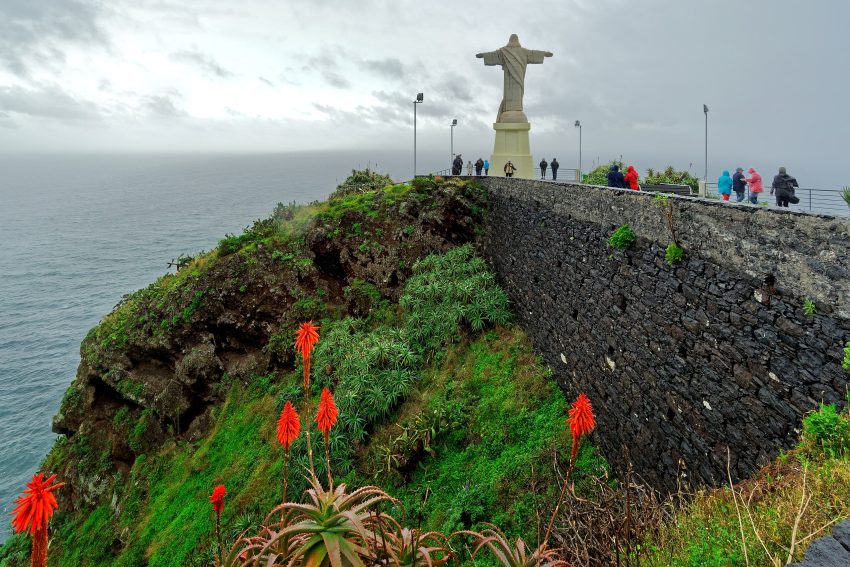
Heading towards the east on our Madeira tour, our initial destination is the Cristo Rei viewpoint, situated approximately 15 minutes away from Funchal. Positioned within the Garajau Partial Natural Reserve, this elevated viewpoint boasts a 1927-built statue of Christ. Standing at a height of 14 meters, the statue portrays Christ with outstretched arms, gazing towards the vast ocean. Adjacent to the clifftop parking area, a cable car descends to a well-liked pebble beach below. The rich biodiversity of the surroundings attracts scuba diving enthusiasts, drawn by the clear waters and diverse fish species inhabiting the area.
Location: Cristo Rei, Estrada do Cristo Rei, Caniço, Madeira, Portugal | Hours: The cable car normally runs Monday–Friday 10:00–18:00, and Saturday–Sunday 10:00–17:00; the viewpoint and beach area are open in daylight hours. | Price: The viewpoint is free to visit; the cable car round-trip is typically around €3.00 per person. | Website
This website uses affiliate links which earn a small commission at no additional cost to you.
Walking Tour Summary
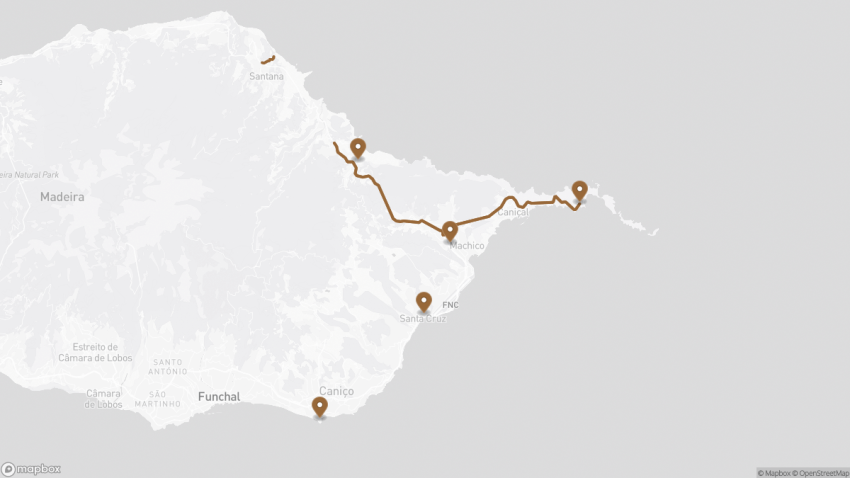
Distance: 37 km Sites: 5
Walking Tour Map
Preview map of the Madeira Sightseeing Tour of the East Coast route in Funchal (Madeira), showing 5 stops. Use the interactive map to zoom and tap markers.
Best Levada Hikes in Madeira 2026: Top Trails & Map Guide
Best Hikes in Madeira
This website uses affiliate links which earn a small commission at no additional cost to you.
Madeira Island, situated off the coast of West Africa and part of Portugal, boasts extraordinary mountains that beg to be explored on foot. In this article, I will share insights into the best hikes in Madeira, drawing from the unforgettable memories of my journey on this remarkable island.
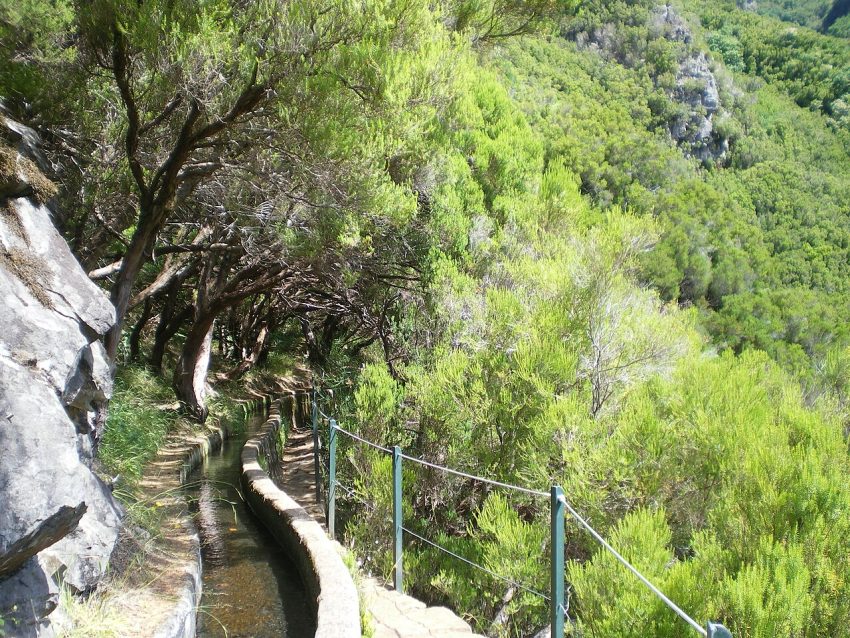
Madeira offers a well-established network of hiking trails, prominently featuring waymarked ‘PR’ routes, which include captivating levada walks. Levadas are remnants of an ancient stone irrigation system designed to capture and redirect water, fostering thriving crops. With over 1,350 miles (1,170 km) of levadas, these trails are a hiker’s delight, showcasing the island’s diverse landscapes.
Distributed throughout Madeira, levada walks lead adventurers to various scenic destinations, including waterfalls, city viewpoints, coastal panoramas, and mountainous terrains. They also traverse the lush Laurissilva forests, designated as a UNESCO-protected site and home to primary laurel forest. The inherent cultural touch adds to the allure of Madeira’s hiking network.
Given the historical paths, tunnels, and potential challenges like rock falls or adverse weather, levada routes may periodically open and close throughout the year. Prior to embarking on any of these trails, it is essential to ensure you have the right equipment, navigational tools, and supplies. Additionally, double-checking the current status of the specific levada walk you plan to explore is crucial to ensure a safe and enjoyable hiking experience.
Levadas, Veredas & PR routes
In Madeira, you’ll encounter various styles of hiking trails, with notable distinctions among levadas, veredas, and PR routes. Here’s a quick guide to understanding each:
Levada: Levadas are paths that run alongside man-made aqueducts originally constructed for irrigation purposes. These routes typically wind through lush green landscapes and may traverse diverse terrains, offering hikers scenic views and a connection to the island’s agricultural history.
Vereda: The term ‘vereda’ is a general reference to a path, encompassing a wide range of hiking routes. A trail labeled as a vereda can lead you through mountainous terrain, classic coastal paths, or forested routes. The diversity in vereda trails makes them suitable for various preferences and hiking experiences.
PR route: Madeira boasts over 20 ‘pequena rutas’ or ‘short routes,’ commonly referred to as PR routes. These are official trails meticulously maintained and marked by the Regional Government of Madeira. Each PR route is assigned a unique PR number. For example, PR1 guides you to Vereda do Pico do Areeiro, while PR21 takes you on the Caminho do Norther, from Encumeada to Riberia Grande. The Visit Madeira website serves as a valuable resource for accessing information on all PR routes, including route details and status updates, ensuring a well-informed hiking experience.
1. Pico do Arieiro to Pico Ruivo (PR1)
Pico do Arieiro to Pico Ruivo Hike
CC BY-SA 3.0 / Bjørn Christian Tørrissen
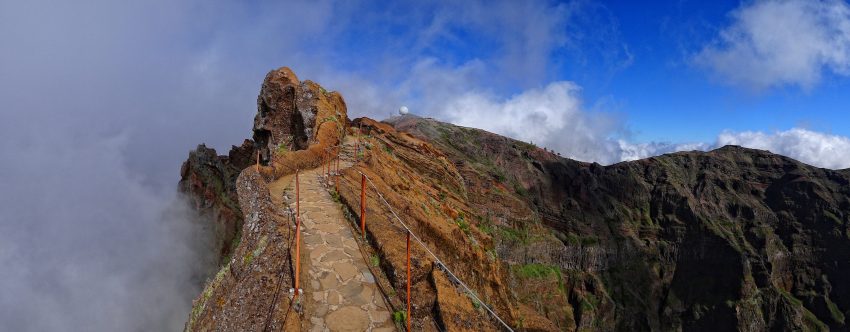
Embarking on the hike from Pico do Arieiro to Pico Ruivo in Madeira is a truly extraordinary experience and stands out as our favourite among the island’s incredible trails. This trail offers a thrilling adventure with rugged cliffs, awe-inspiring staircases, mountain tunnels, and an unparalleled 360-degree view of the entire island. It’s an impressive journey that demands proper preparation and enthusiasm for an unforgettable day.
Our foremost piece of advice for this challenging hike is to wear sturdy hiking shoes, carry an ample water supply, and brace yourself for a day of exhilarating exploration. The trek to Pico Ruivo is not for the faint of heart, but the rewards are immeasurable.
Setting off from Pico Arieiro, you’ll initially descend about 500 meters, revealing some of the most scenic vistas along the way. This descent unfolds through steps strategically placed along rugged ridge lines and steep cliffs, offering breath-taking views of the sunrise. The dramatic landscape captivates as you navigate this section of the trail.
Following this, the trail levels off for a few kilometres along the side of Pico das Torres. This narrow pathway is built into the side of a steep rock wall, providing a unique and thrilling hiking experience. Numerous tunnels along this stretch guide you safely around and through the mountain, ultimately bringing you to the base of Pico Ruivo.
Continuing the journey, you’ll encounter a series of ladders and navigate through a set of switchbacks, all leading you to the summit of Pico Ruivo. This final stretch involves an estimated elevation gain of about 600 meters over the last few kilometres. The ascent is challenging, yet each step brings you closer to the rewarding panoramic views that await you at the pinnacle.
Upon reaching the top of Pico Ruivo, a breath-taking spectacle unfolds – unobstructed views of the entire island in every direction. The sense of accomplishment combined with the expansive vistas makes the effort expended during the climb well worth it. The summit of Pico Ruivo provides a vantage point that encapsulates the diverse landscapes and beauty of Madeira, offering a truly memorable experience for those who dare to conquer its heights.
Undoubtedly, the hike to Pico Ruivo is an invigorating challenge, but every step is rewarded with spectacular scenery and a sense of accomplishment. Be prepared for an awe-inspiring adventure that showcases the rugged beauty of Madeira’s landscape.
The ‘Levada das 25 Fontes’ trail is a delightful journey that leads you to 25 fountains, springs, and water sources, making it one of Madeira’s most popular and accessible hikes with rewarding sights.
Commencing from ER 105 in Rabaçal, this trail guides you through a landscape adorned with vibrant greenery, offering expansive views of the Ribeira da Janela valley, and immersing you once again in the renowned Laurissilva forest. While the entire route is captivating, the true highlight awaits a bit further.
A half-hour detour, well-marked on the PR6.1 trail, leads you to Risco, the largest waterfall on Madeira. The journey continues along the main route, tracing the levada, until you arrive at the enchanting 25 Fontes Waterfall, gracefully cascading into a dreamy basin. This picturesque spot makes for an ideal lunch break before retracing your steps back to the starting point.
The Levada das 25 Fontes trail is celebrated for its relatively easy hike, making it accessible to a wide range of hikers, while still providing the remarkable rewards of breath-taking landscapes and impressive water features.
Here is a complete selection of hotel options in Funchal (Madeira). Feel free to review each one and choose the stay that best suits your needs.
3. Levada do Caldeirão Verde (PR9)
Caldeirao Verde Levada Walk
CC BY-SA 3.0 / Froth82
Ranked among the best levada hikes in Madeira, the trek to Caldeirão Verde is one of the longer but undeniably most rewarding walks on this list. As you embark on this journey, near the initial stretch of the route stands the Casa de Abrigo das Queimadas, a triangular and charming traditional house now nestled within the Queimadas Forest Park. This historical site sets the tone for the adventure that follows.
Continuing along the trail, you’ll encounter a terrace that unfolds into a beautiful lookout point, providing scenic views of the surrounding landscape. Your journey through the Laurissilva forest, known for its lush greenery, leads you to the stunning Caldeirão Verde lake. Further along, you’ll discover Caldeirão do Inferno, where a waterfall gracefully spills into a pool beneath an imposing cliff, creating a captivating natural spectacle.
While this hike may be longer, the rewards lie not just in the physical journey but in the breathtaking sights that unfold along the way. From historical landmarks to picturesque terraces and natural wonders, the Caldeirão Verde trail is an immersive experience into the beauty of Madeira’s landscapes and its rich natural heritage.
Traveling to a country with a different currency? Avoid ATM transaction fees and pay in local currency with a Wise Card. Having used it for over 5 years, we've saved loads on fees!
Ponta de Sao Lourenco in Madeira is a haven for hikers, offering a unique experience distinct from the rest of the island. This trail guides you along cliffs, providing panoramic views of the endless ocean on both sides. The terrain is characterized by lava rock formations, creating a desert-like environment that stands out amidst Madeira’s diverse landscapes.
The path itself is relatively easy, featuring some undulating sections, so sturdy footwear is advisable. The final 500 meters present a sandy, slippery, and notably steep path, providing a challenging option for those seeking an adventurous conclusion to their hike. Before this last stretch, a café awaits, offering a perfect spot to pause, catch your breath, and savor the breathtaking views.
The hike typically takes around 3 hours for a round trip, but the duration may vary based on your pace. Additionally, there’s an optional path leading down to a rocky beach at the trail’s end, adding an extra 30 minutes or more to your hiking time. Ponta de Sao Lourenco promises not just a physical journey but a visual feast, with its unique landscape and stunning ocean vistas.
This website uses affiliate links which earn a small commission at no additional cost to you.
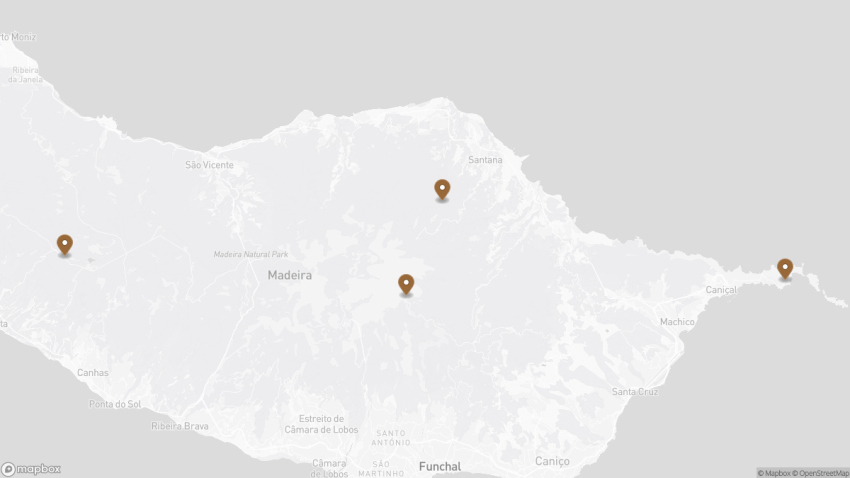
Walking Tour Map
Preview map of the Best Levada Hikes in Madeira: Top Trails & Map Guide route in Funchal (Madeira), showing 4 stops. Use the interactive map to zoom and tap markers.
This website uses affiliate links which earn a small commission at no additional cost to you.
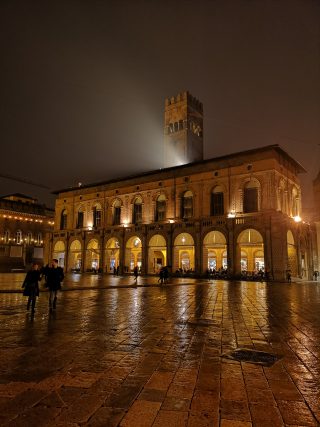
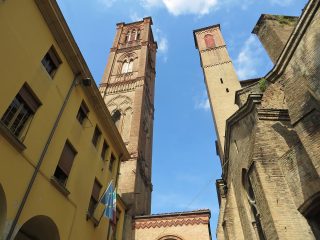
The often overlooked city of Bologna, located in the northern Italian region of Emilia Romagna, is currently experiencing a surge in popularity. Historically, it has lived in the shadow of its more famous neighbouring cities like Florence, Rome, Venice, and Milan.
Bologna, the capital of the region, serves as an ideal starting point for exploring Emilia Romagna and beyond (just an hour away from Florence!). This carefully curated guide to the best day trips from Bologna enables you to discover the finest aspects of Italy with ease and a strong desire for exploration.
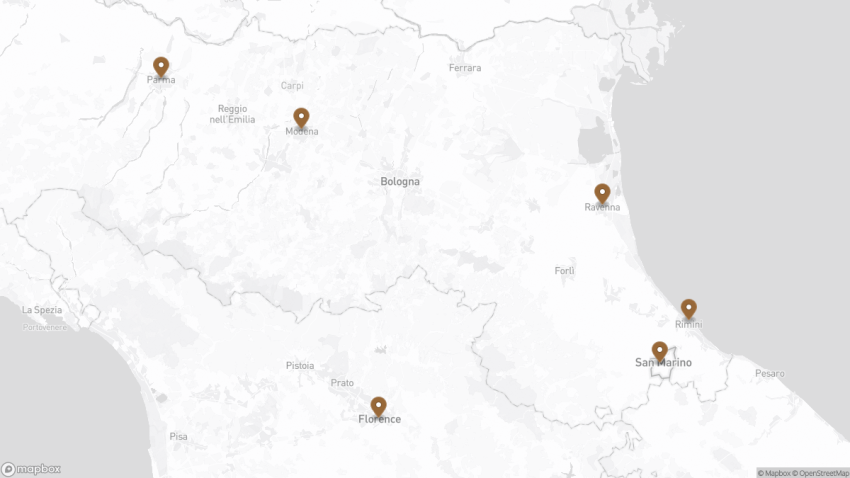
Bologna itself stands out as one of Italy's most distinctive, stunning, and underappreciated cities. However, it is the treasures beyond the city limits that make this region truly exceptional. Scattered along the historic Via Emilia, established by the Romans in 187 BC, lie some of Emilia Romagna's most captivating cities and attractions. These places boast some of Italy's most splendid and unique architecture, featuring gems like Parma, Modena, Ravenna, Rimini, Ferrara, and Reggio Emilia. Each location is steeped in beauty, history, and charm, offering distinct culinary delights. Modena and Parma, in particular, stand out as the birthplaces of balsamico and Parmigiano Reggiano cheese, respectively.
Emilia Romagna boasts an extensive array of charming destinations suitable for day trips, but here are my personal favourites.
1. Modena
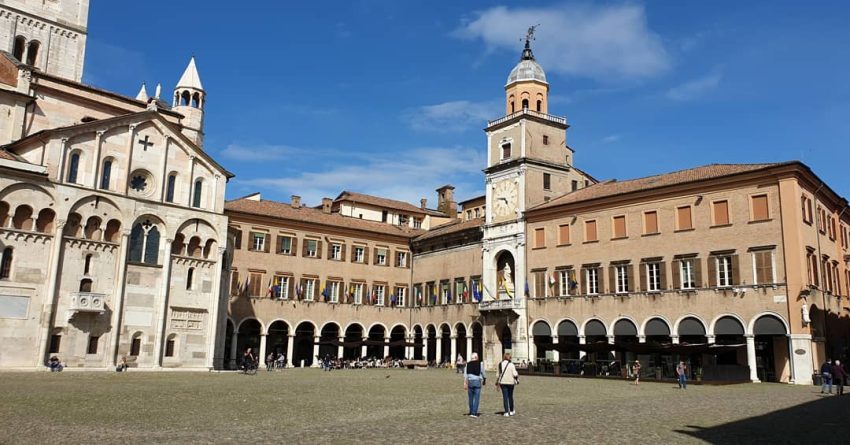
Piazza Grande a Modena
CC BY-SA 4.0 / Albypino
In stark contrast to the bustling streets of Bologna, Modena may be a smaller and more tranquil town, but its significance in the realm of Italian industrial progress is undeniable.
Let’s begin with the serene and unhurried city center, characterized by its narrow streets graced with elegant shops and bars. At the heart of it all lies the main square, Piazza Grande, home to the Modena Duomo and the renowned Ghirlandina, an 86-meter-tall bell tower that has earned its place on the UNESCO World Heritage Sites list.
For those with a passion for high-speed automobiles and motorsports, a visit to the Museo Casa Enzo Ferrari is an absolute must. This exhibition is dedicated to Enzo Ferrari, the visionary behind the globally renowned automotive company, and it is partially housed within his former residence.
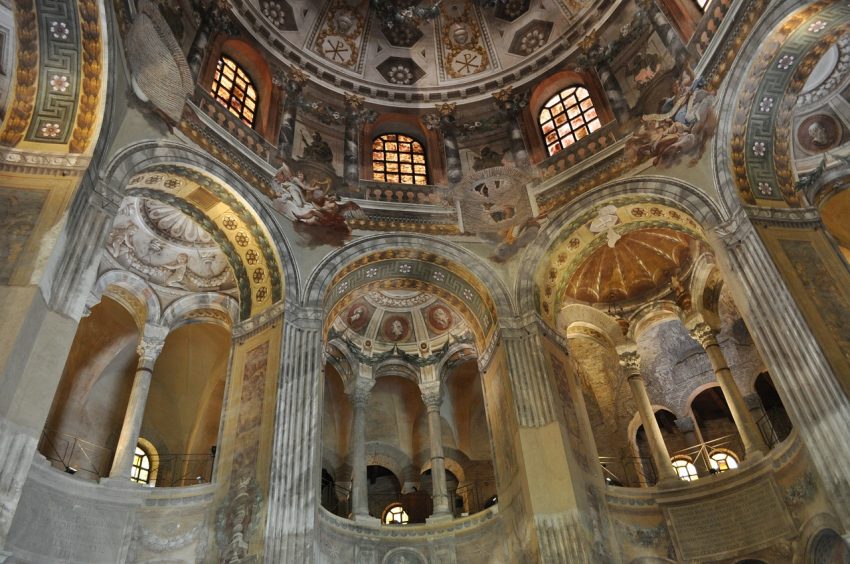
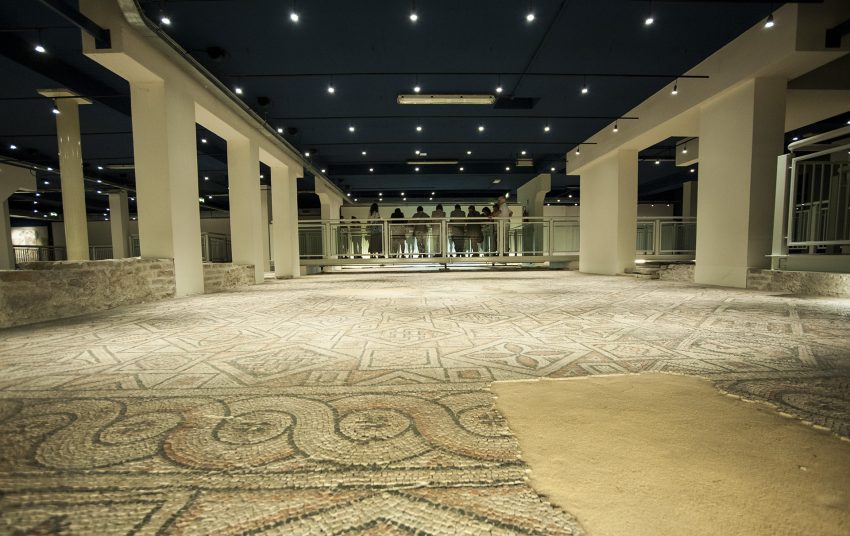
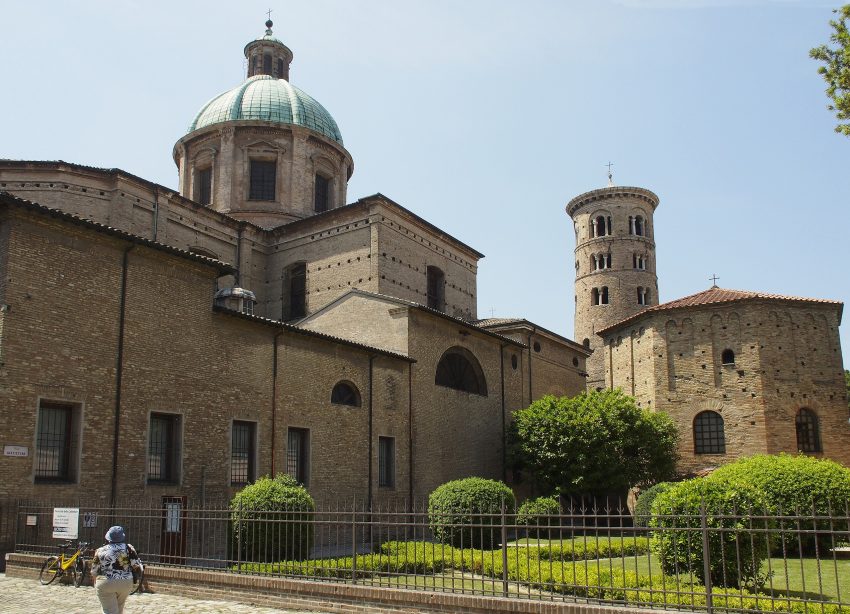
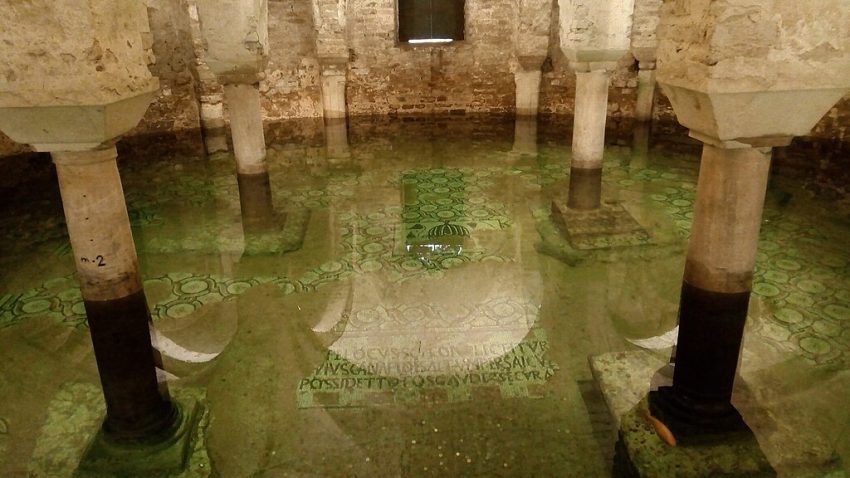
Regarded as one of the most exquisite cities in Emilia-Romagna, Ravenna once served as the capital of the Western Roman Empire and later as a prominent European center during the Byzantine Empire. Consequently, the city is a treasure trove of art and culture, with a particular emphasis on its breathtaking mosaics.
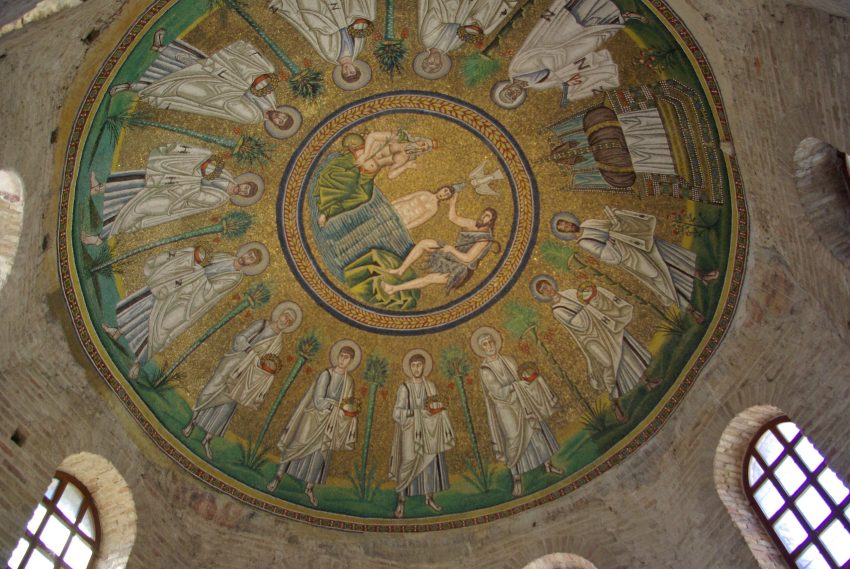
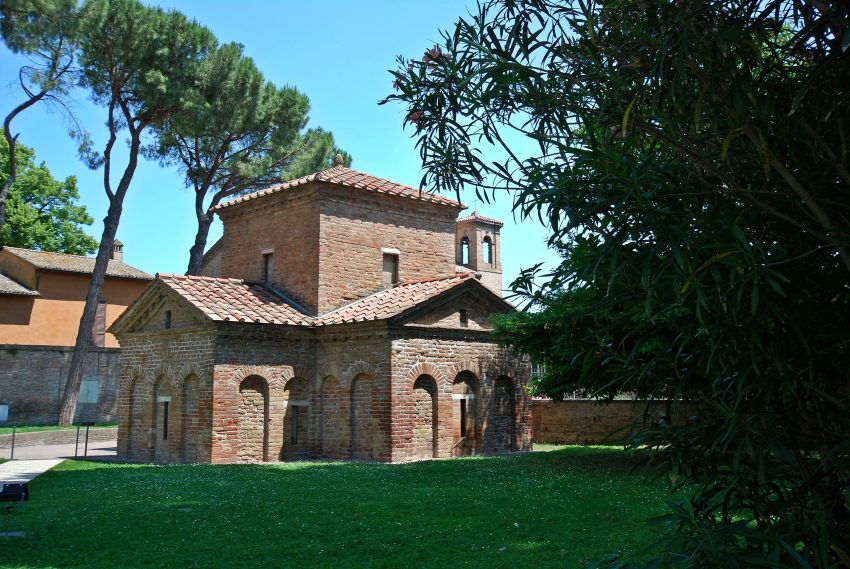
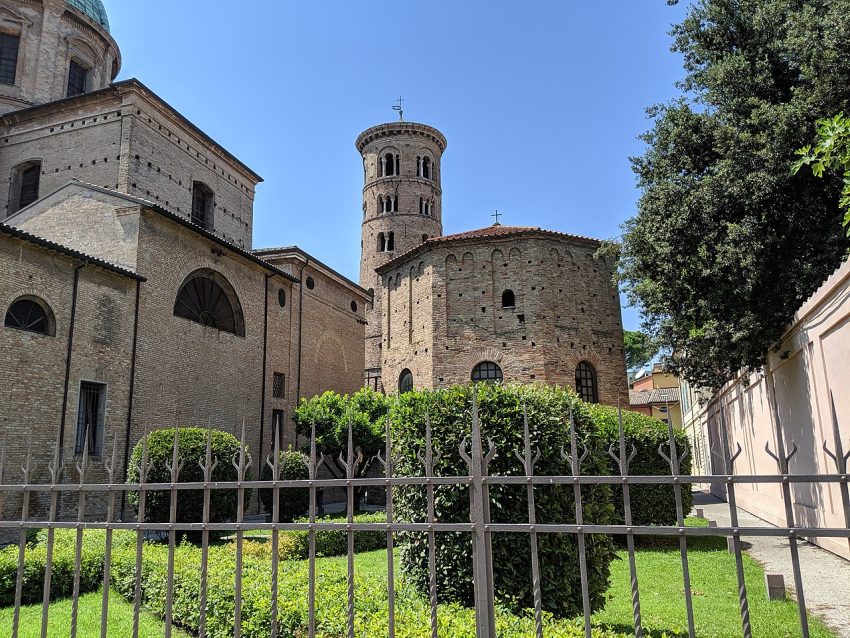
The Galla Placida Mausoleum is home to some of Ravenna’s most cherished and ancient mosaics, presenting a captivating portrayal of the starry night. Another exceptional mosaic showcase awaits at the Battistero degli Ariani, where you can marvel at a depiction of the baptism of Christ, encircled by his twelve disciples.
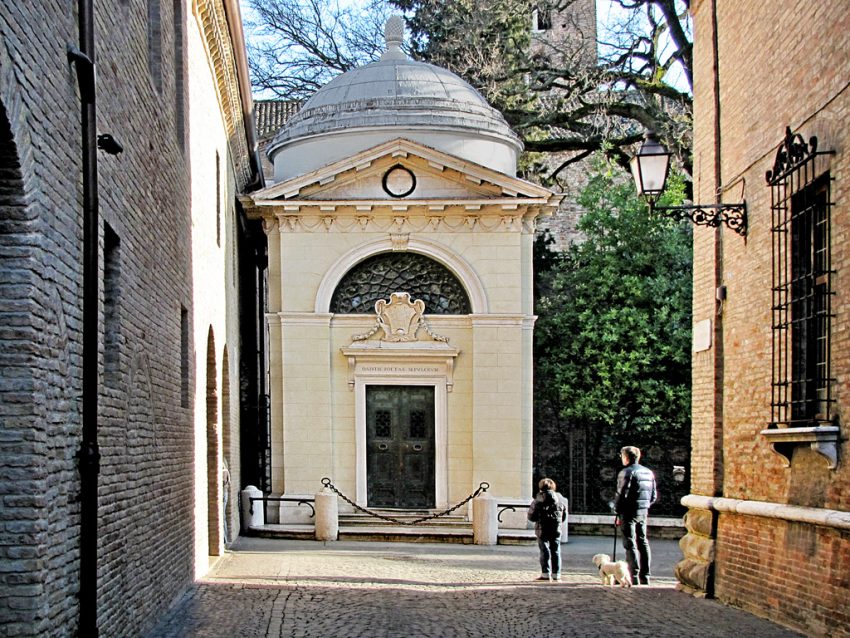
For enthusiasts of literature and history, a visit to Dante Alighieri’s tomb is a compelling option. This renowned poet, originally from Florence, found exile from his birthplace and spent his final days in Ravenna, where he now rests.
Ravenna’s culinary offerings are also a point of pride, known for its pasta-based main courses and the piadina, a type of flatbread that stands as one of the distinctive symbols of the Emilia-Romagna region.
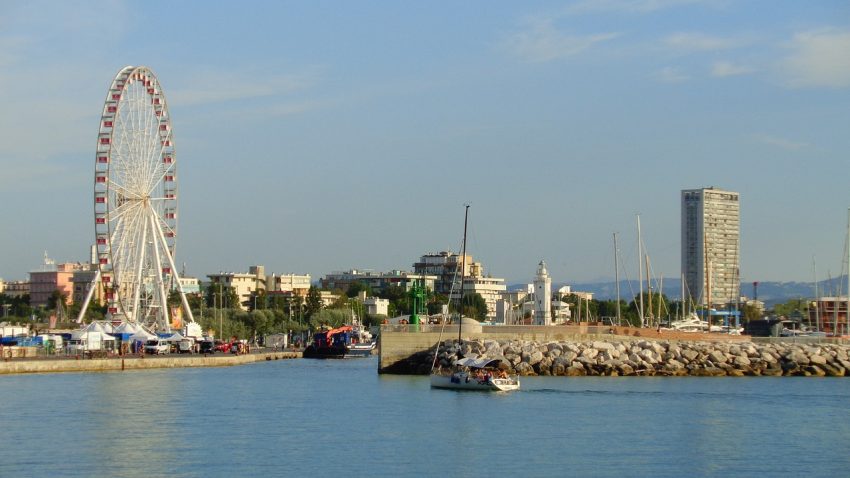
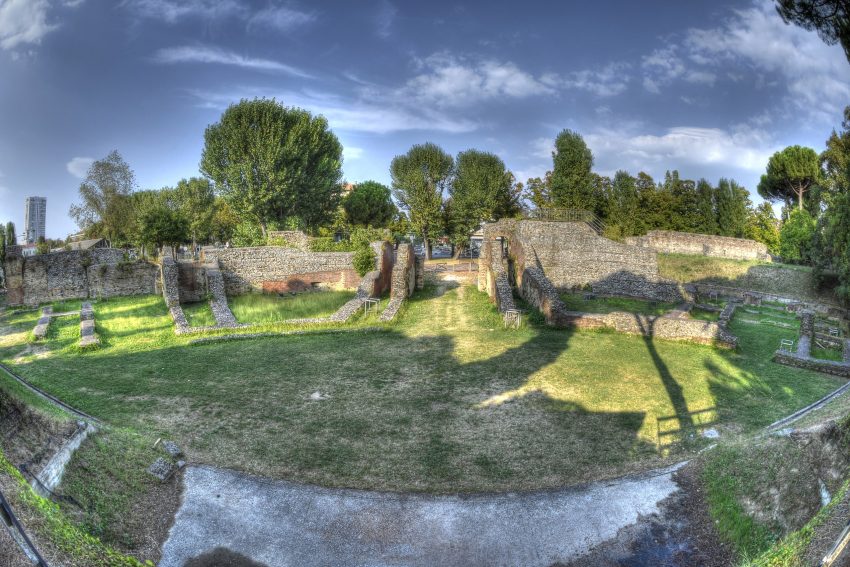
Rimini, a city situated along the picturesque Adriatic Sea, gained global recognition during the 1970s and 1980s, when it emerged as an emblem of the “Italian summer” lifestyle, replete with beach clubs, bars, and restaurants.
Strolling along the promenade, you’ll encounter vintage hotels that have retained their distinctive 1970s design. Even today, Rimini remains a sought-after summer destination, appealing to both young people and families alike. While the Adriatic Sea in this region may not be considered the finest in Italy, Rimini’s promenade offers an abundance of entertainment, excellent seafood, and a well-equipped beach, making it the ideal destination for those seeking a blend of fun and relaxation. Plus, it’s remarkably accessible, making it one of the most convenient day trips from Bologna to the beach.
Beyond its reputation as a summer haven, Rimini boasts a charming historical city center. This includes the old fishing village known as Borgo San Giuliano, where the facades of the houses are adorned with captivating wall paintings. These houses are still inhabited by some of the city’s older residents and, interestingly, young students and workers as well. The village is teeming with tourists and features a variety of restaurants, with Borghetto being a recommended choice to savor a delectable seafood Carbonara.
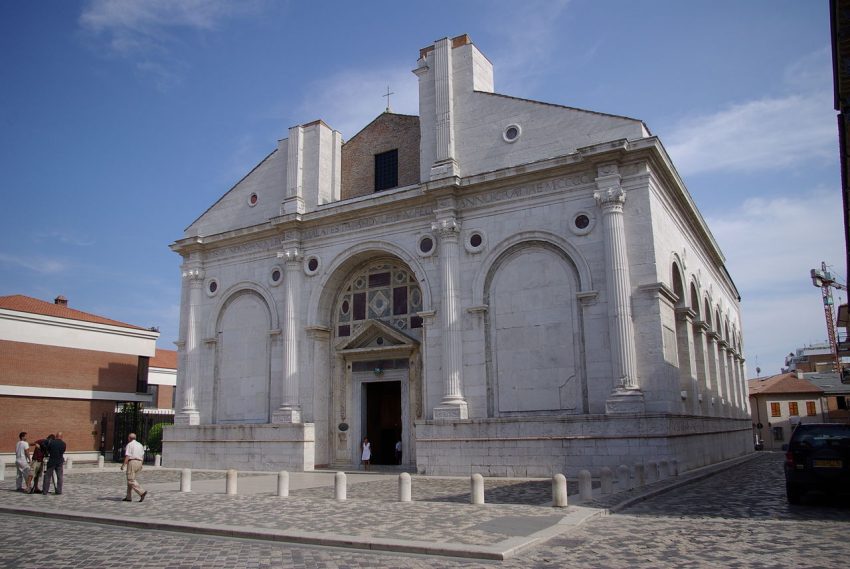
In the city center, you can also explore remnants of the Roman era, and don’t miss the magnificent Tempio Malatestiano church, which boasts exquisite bas-reliefs and a painting by the renowned artist Piero della Francesca.
Traveling to a country with a different currency? Avoid ATM transaction fees and pay in local currency with a Wise Card. Having used it for over 5 years, we've saved loads on fees!
Parma is a city of considerable wealth, characterized by an abundance of art and a charming city center. It differs from the alternative and somewhat disorderly appeal of cities like Bologna or Ferrara, as Parma’s architecture and lifestyle bear a closer resemblance to Modena.
Nevertheless, Parma has established a prominent reputation, thanks to its meticulously preserved museums, theaters, and monuments, which receive continuous attention through renovation efforts. Among these cultural gems, the Monastero of San Giovanni Evangelista is a must-visit, particularly for its stunning dome adorned with a perspective painting depicting Jesus Christ and his disciples, a masterpiece by Correggio.
For those with an affinity for paintings and masterpieces, a visit to the Galleria Nazionale di Parma is a real treat. This remarkable museum showcases the works of both Italian and foreign painters, including luminaries such as Carracci, Guercino, El Greco, Van Dyck, Correggio, and Beato Angelico.
Parma is celebrated for its production of Parmesan cheese and delectable cold cuts, including the renowned Parma ham and culatello, considered one of the finest hams globally. To savor these culinary delights, you can secure a reservation at establishments like Osteria dello Zingaro or the Antica Osteria della Ghiaia, where you can relish some of the finest cold cuts in town.
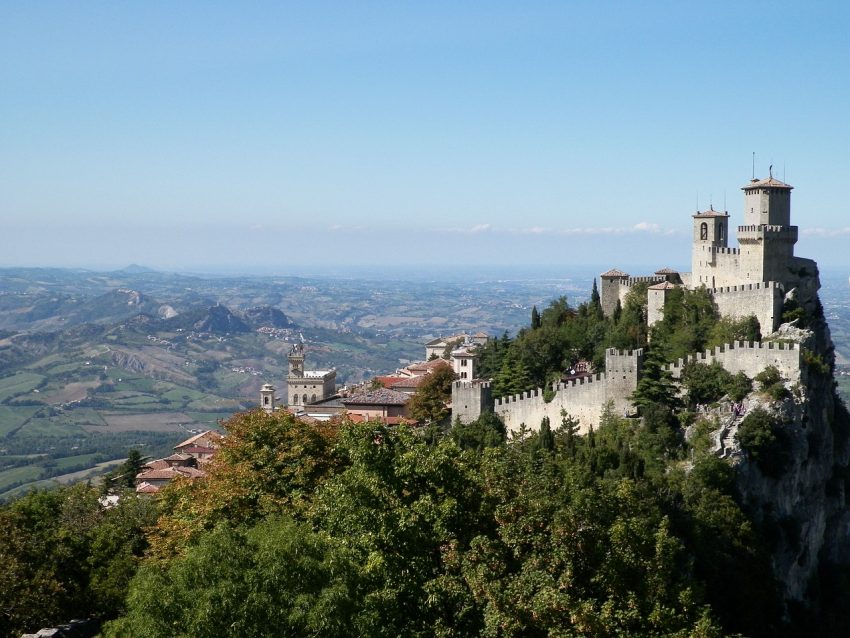
San Marino, the diminutive micro-state, perches atop a peak and is enveloped by the picturesque Italian countryside’s rolling hills. Often hailed as one of the world’s most ancient republics, and recognized as one of Europe’s tiniest nations, it is also officially known as the ‘Most Serene Republic of San Marino.’
With a population of a mere 33,000 residents, this miniature nation is easily explorable within the span of a day, making it a convenient day trip from Bologna. Key highlights in San Marino encompass taking in the breath-taking views from the summit of the Guaita, the city’s oldest fortress, and exploring the Neo-Classical Basilica di San Marino.
Florence, often regarded as the Cradle of the Renaissance, is conveniently located just a little over an hour away from Bologna by train. While this enchanting city undoubtedly deserves at least two or three days to explore thoroughly, it’s still possible to make the most of a one-day visit to Florence if you plan your itinerary wisely.
For a fulfilling day in Florence, some of the top activities to consider include immersing yourself in the Uffizi Galleries. This historic museum is one of the oldest in the world and showcases masterpieces by renowned artists such as Michelangelo, Leonardo Da Vinci, and many other artistic luminaries. In addition to its iconic art galleries and museums, a visit to the awe-inspiring Santa Maria del Fiore Basilica is an absolute must. This architectural marvel stands as a testament to the brilliance of the Renaissance era.
Explore Bologna at your own pace with our self-guided walking tour! Follow our curated route to discover must-see sights and local secrets that makes Bologna one of the best places to visit in Italy.
One Day in Parma 2026: A Complete Walking Tour with Map & Tips
One Day in Parma Walking Tour
CC BY-SA 2.0 / Città di Parma
This website uses affiliate links which earn a small commission at no additional cost to you.
This small city in Emilia Romagna has an incredible mix of culture and history. Exploring Parma offers a richly rewarding experience, particularly for food enthusiasts who can savour the delights of parmesan cheese and Parma ham, both topping the list of culinary must-tries. Additionally, those with an appreciation for art and culture will find themselves captivated by the Romanesque cathedral, ancient Roman remnants, Renaissance artworks, and the renowned opera house.
Parma By Car: Warning! The historical centre of Parma is a Limited Traffic Zone (ZTL) controlled by cameras working every day, included festivities. All around the Limited Traffic Zone there are many covered car parks. I would suggest Viale Riccardo Barilla Parking
Where to Stay in Parma
To fully experience Parma’s historic charm, staying in the heart of the city is ideal. For refined accommodation with views over the Duomo, Palazzo Dalla Rosa Prati delivers elegance and proximity. Hotel Torino is a reliable mid-range option with comfortable rooms near the city’s main sights. Travellers on a budget can opt for Hotel Button, offering simple, central lodging just a short walk from Piazza Garibaldi.
A Brief History of Parma
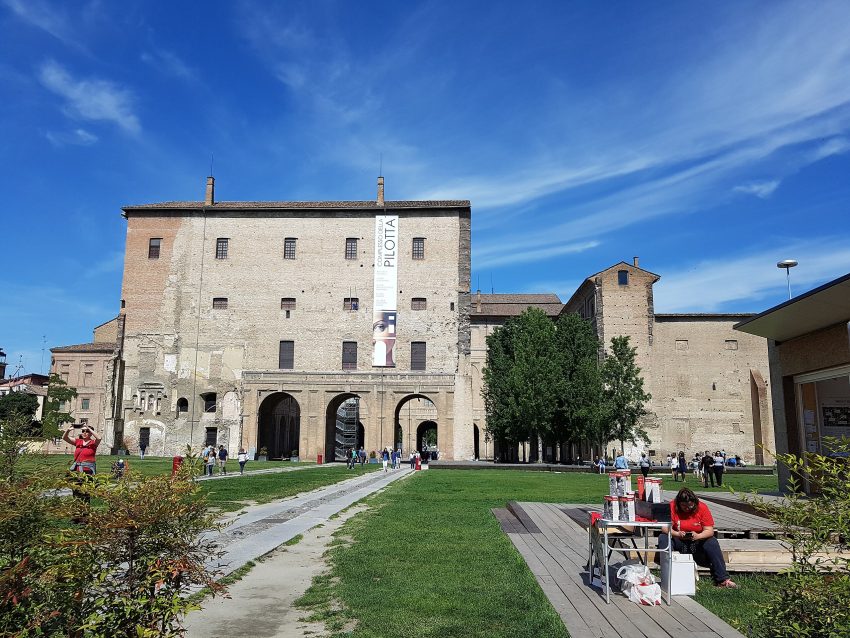
Founded by the Romans in 183 BC, Parma has played a major role in northern Italy's cultural and economic history. Remnants of its ancient origins still exist, though it was during the Renaissance that Parma truly flourished under the Farnese family. They left behind architectural marvels such as the Palazzo della Pilotta and Teatro Farnese. Parma also boasts a strong musical tradition, being the birthplace of composer Giuseppe Verdi and a celebrated center for opera and classical music.
Today, the city is equally famed for its culinary legacy-home to Prosciutto di Parma and Parmigiano Reggiano-making it a paradise for gourmets and culture seekers alike.
Start off with a Parmesan, Parma Ham & Balsamic Vinegar Tour
You have come to the home of Parmigiano-Reggiano, balsamic vinegar, and Prosciutto di Parma, which means you will want to start the day off with an organised tour. I suggest you check availability of the rom Parma: Parmesan, Parma Ham & Balsamic Vinegar Tour below, which takes about 7.5 hours.
While the city is easy to explore solo, a walking tour is ideal for first-time visitors. The Parma: City Walking Tour delves into the city's history with the help of a knowledgeable local guide. The tour includes the Parma Cathedral, Baptistery, and Pilotta Palace, weaving together architectural beauty and historical anecdotes.
Your Walking Tour of Parma
This guide offers a glimpse of what Parma has to offer, but the city rewards wandering. Pause in leafy courtyards, visit a deli overflowing with regional delicacies, or explore the University district with its lively cafés. Whether you're here for the food, the frescoes, or the music, Parma delivers a rich and authentic Italian experience.
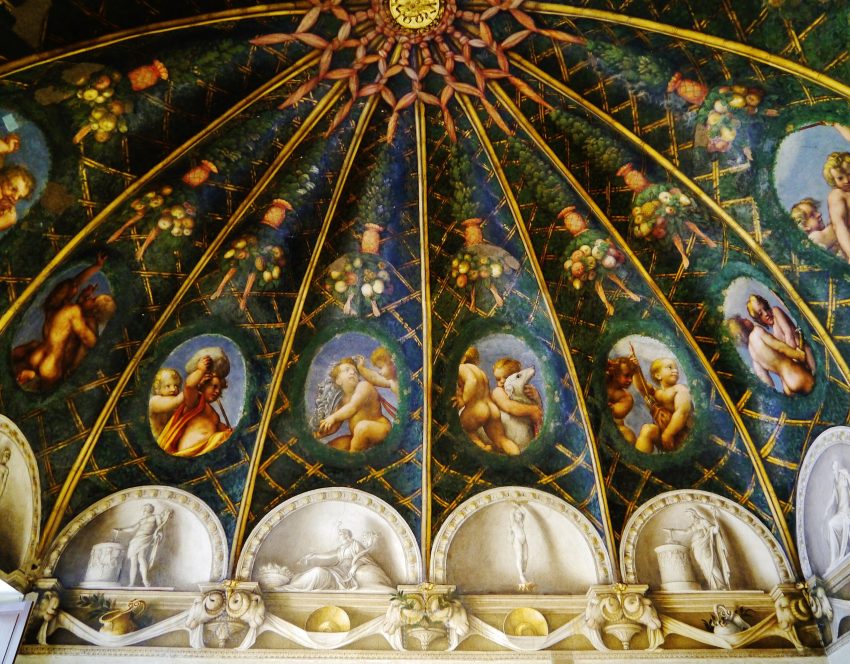
1. Camera di San Paolo e Cella di Santa Caterina
Parma San Paolo Camera del Correggio Soffitto
CC BY-SA 4.0 / Zairon
From the train station walk down Via Giuseppe Verdi, at the end of which continue through the arches. You enter a large square, walk past the Monumento a Giuseppe Verdi and turn left. Walk south along Str. Giuseppe Garibald and turn first left onto Strada Macedonio Melloni. The Camera di San Paolo e Cella di Santa Caterina is on your left, next to the Castle Puppets Museum Giordano Ferrari.
The Chamber of Saint Paul was originally a part of the abbess’ quarters within the Benedictine Convent of Saint Paul. It underwent decorative enhancements starting in 1514 under the guidance of Abbess Giovanna da Piacenza, who presided over a period marked by vibrant cultural activities.
The frescoes painted by Correggio in 1519 are considered true masterpieces of Italian High Renaissance art. The room features an umbrella vault divided into 16 segments by late Gothic ribs. Correggio, influenced by the works of Mantegna, Raphael, and Leonardo in Milan, skillfully created the illusion of a pergola adorned with festoons of fruit suspended by ribbons. At the center of the dome, one can observe the coat of arms of Abbess Giovanna. Each of the 16 segments houses an oval trompe-l’oeil opening, displaying finely executed putti in playful poses, with elements such as dogs, bows and arrows, hunting equipment, and trophies.
Beneath the vault, faux-marble lunettes showcase monochrome mythological figures in a classical style, while the hood over the massive stone fireplace depicts Diana on a chariot, preparing for the hunt.
These frescoes transcend being mere allegories of the goddess of hunting. The cycle is widely recognized as a visual record of the abbess’s spirited struggle against civil and religious authorities who sought to diminish the political influence of convents and stifle their thriving intellectual and social life.
The adjacent room, adorned in 1514 by Alessandro Araldi, was also part of the abbess’ living quarters. It features a composition of grotesque elements with putti, fantastical creatures, and gilded stucco rosettes set against a dark blue background. Tondi (circular paintings) and panels depict scenes from the Old and New Testaments, while on the ceiling, musical angels in trompe-l’oeil style gaze over a balustrade.
Alessandro Araldi also decorated a small chapel located on the opposite side of the monastery garden, known as Saint Catherine’s Cell, with two scenes from the life of the saint.
Location: Camera di San Paolo e Cella di Santa Caterina, Strada Macedonio Melloni, Parma, Province of Parma, Italy | Hours: Opening hours: Monday, Thursday and Friday from 9.30am to 5.30pm (last entry at 5pm); Saturday, Sunday and holidays from 9.30am to 6.30pm (last entry at 6.00pm); closed Tuesday and Wednesday.
Opening during public holidays for Easter and Easter Monday, 25 April, 1 May, 2 June 2023. Open on Tuesday 15 August and 31 October 2023. | Price: €8.00 | Website
Continue along Strada Macedonio Melloni bearing left as it turns into Borgo del Parmigianino. You will see Pinacoteca Stuard on your left, an art museum housed inside a wing of the 10th century Benedictine monastery of St. Paolo. Turn right into Borgo Montassù and right again. At the T-junction turn left to reach the Diocesan Museum.
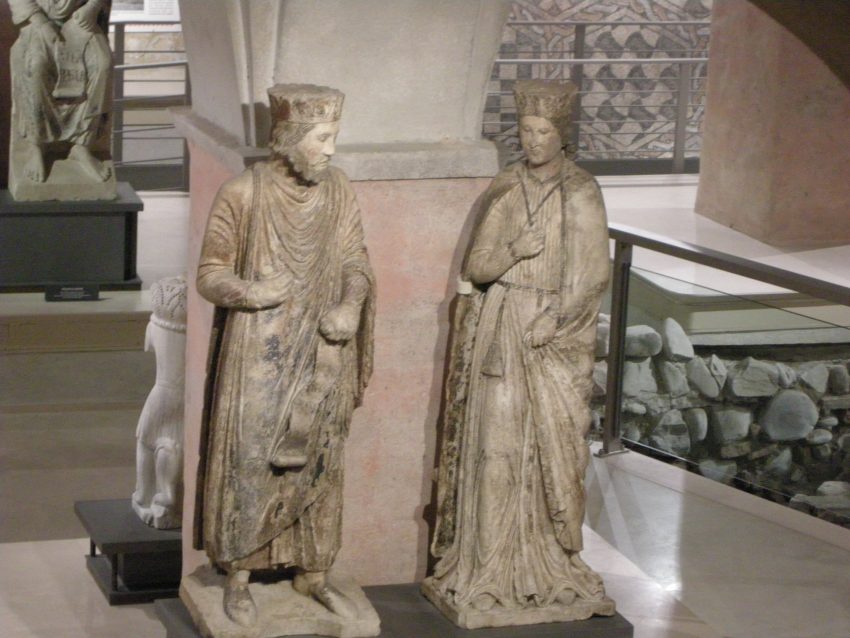
The Diocesan Museum of Parma officially opened its doors in March 2003, marking the culmination of an extensive restoration effort that also encompassed the Bishop’s Palace. The museum’s exhibition space is situated in the basement of the palace, and it houses a remarkable collection of archaeological discoveries and artworks sourced from the Cathedral, the Baptistery, and various locations within the diocesan territory.
Throughout the restoration process undertaken to create the Bishopric and the Museum, significant historical remains were uncovered. These included the foundations of a medieval building and a segment of the Roman walls dating back to the late 3rd century AD. These archaeological findings added a rich layer of historical context to the museum and its surroundings.
Here is a complete selection of hotel options in Parma. Feel free to review each one and choose the stay that best suits your needs.
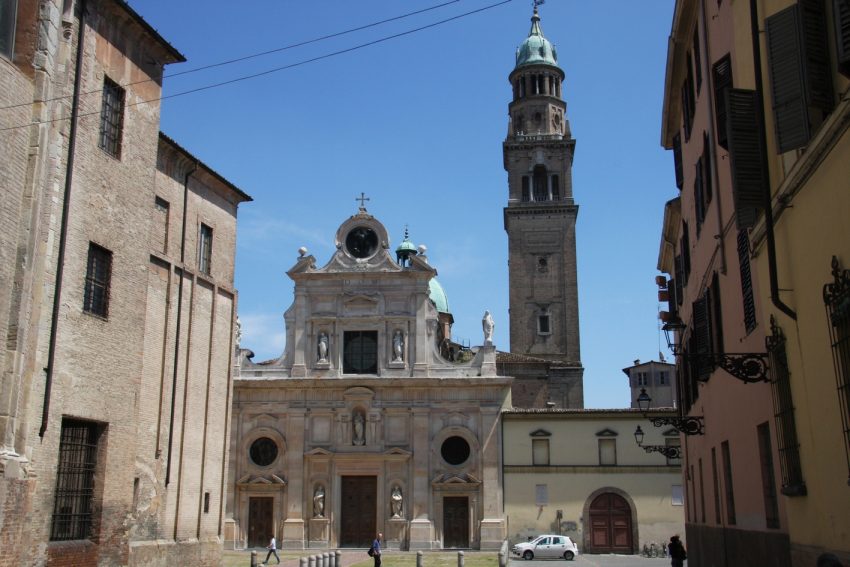
3. Monastery and church of San Giovanni Evangelista
Sain Giovanni Evangelista
GNU Free Documentation License / personnel
Walk to the left of the Cathedral along Str. del Consorzio to reach Chiesa di San Giovanni Evangelista.
The monastery complex comprises three main elements: the Church, the Monastery, and the San Giovanni Old Pharmacy.
The Church, constructed for the Benedictine order between 1498 and 1510, presents a striking architectural contrast. Its elaborate white marble Baroque facade stands in stark contrast to the Renaissance design of the cloisters and convent.
Inside the church, designed in a Latin-cross layout, a frieze along the nave was painted in 1522-23 by Correggio. He also adorned the nave columns with grotesque designs and embellished the entrance to the 5th north chapel. The most famous fresco cycle in the church’s dome, traditionally known as the “Vision of St. John at Patmos,” features an unusual subject in Christian iconography. In this artwork, the evangelist is depicted as an elderly man gazing upward at the sky, while the central figure of Christ moves toward him. The use of light, colors, and the portrayal of clouds upon which the apostles are seated creates an illusion of remarkable depth, freedom, and dynamism. Behind the 17th-century polychrome marble altar is a large canvas of the “Transfiguration” painted by Girolamo Mazzola-Bedoli, who also created the “Mystic Marriage of St. Catherine” in the 4th north chapel in 1536. A wooden choir by Marcantonio Zucchi, featuring intricate inlays of floral motifs, town views, hills, and musical instruments, encircles the apse.
Notably, a putto located under the tower between the north pendentives has been recently attributed to Parmigianino. Parmigianino’s frescoes in the north aisle also depict figures of saints.
Adjacent to the church entrance is the Benedictine monastery, a sprawling complex that includes a chapter-house, a refectory, and elegant Renaissance cloisters. These cloisters include the St. John Cloister (1537), the Chapter Cloister (1500) with a marble portal, and the Large St. Benedict Cloister. Correggio’s frescoes in the chapter-house portray the Christian Sacrifice.
Within the monastery is a 16th-century library featuring frescoed walls and housing a collection of over 20,000 books and rare codices.
Traveling to a country with a different currency? Avoid ATM transaction fees and pay in local currency with a Wise Card. Having used it for over 5 years, we've saved loads on fees!
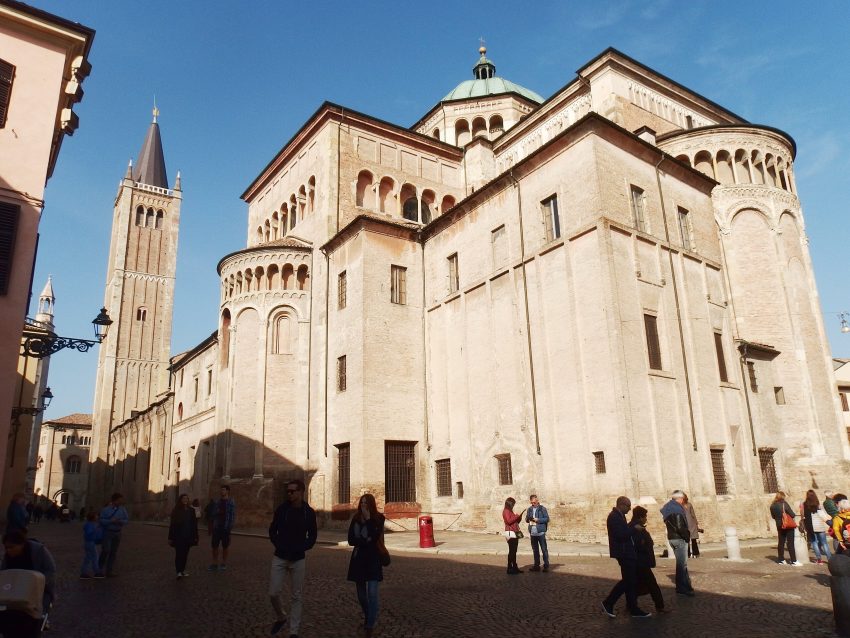
4. Cathedral of Santa Maria Assunta
Cattedrale di Parma Italy
CC BY-SA 4.0 / Palickap
Walk around back to the front of the Cattedrale di Parma and the Baptistery of Parma.
The Cathedral, devoted to the Virgin Mary, stands as an exceptional representation of Romanesque architecture in Italy. It was initially constructed by Bishop Cadalus, who later became the antipope Honorius II due to his heretical beliefs. In 1117, a devastating earthquake laid the cathedral to ruins, but it was subsequently rebuilt and completed during the 12th century. The addition of the towering bell tower, crowned with a gilt copper angel, took place in the following century, while the side chapels were incorporated during the 14th and 15th centuries.
The cathedral’s facade is crafted from sandstone blocks and adorned with a row of loggias as well as two tiers of galleries. The porch at the main entrance is supported by lions, a creation dating back to 1281 by master stone-cutter Giambono da Bissone. The presence of an octagonal dome, situated atop a crossing tower, is somewhat unconventional for a medieval church.
Internally, the Cathedral follows a Latin cross layout. The ceiling and walls are embellished with frescoes executed in the Mannerist style. An impressive 16th-century red Verona marble staircase leads to the transepts. On the right side, a renowned relief known as the “Deposition” by Benedetto Antelami can be found, representing one of the finest examples of Romanesque sculpture with evident Provencal influences.
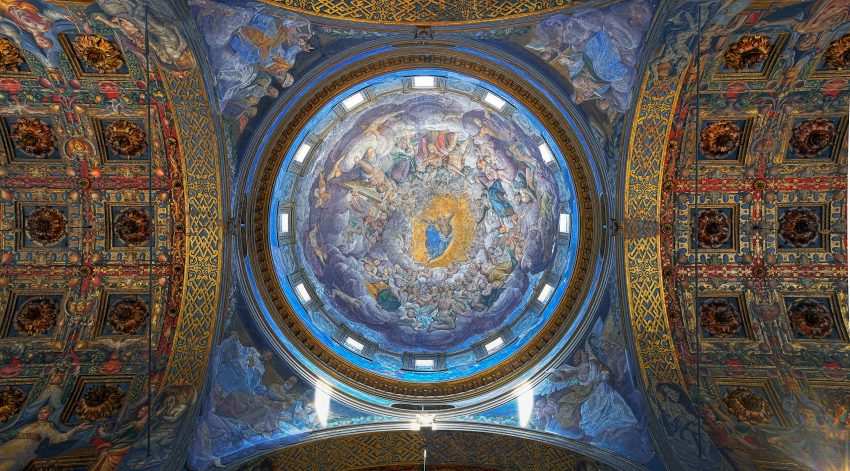
The cathedral’s dome presents a striking feature, frescoed by Correggio in 1526 with the “Assumption of the Virgin.” This artwork features concentric circles of clouds and heavenly hosts, which served as an inspiration for much of the subsequent Baroque art due to its pioneering illusionistic style. Correggio’s bold use of foreshortening in this fresco makes the figures within the clouds appear to protrude realistically into the viewer’s space.
The vaults above the choir were adorned by Girolamo Mazzola Bedoli in 1538. He also undertook the frescoing of the “Last Judgment” in the semidome of the apse.
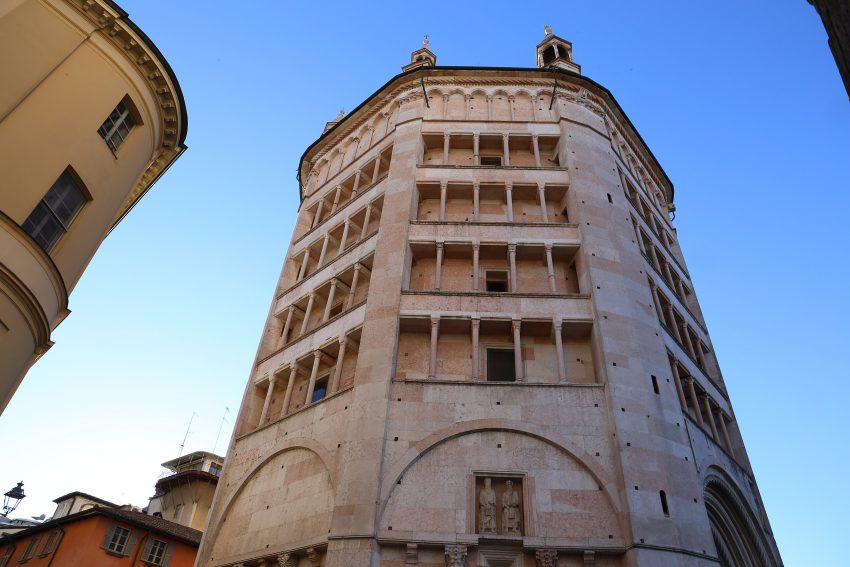
Constructed between 1196 and 1307, the Baptistery of Parma, crafted from pink Verona marble, stands as a prime example of the architectural and artistic transition from Romanesque to Gothic styles in Italy.
This octagonal baptistery boasts four levels of open loggias adorned with a series of blind arches and majestic pinnacles crowning its structure. It is unquestionably one of the most remarkable illustrations of Italy’s shift from Romanesque to Gothic artistry.
The construction of this baptistery commenced in 1196, carried out by the same Lombard artisans who were concurrently working on the cathedral. Its final completion occurred between 1302 and 1307, under the supervision of Benedetto Antelami, who was responsible for executing the majority of the ornate sculptures, which are characteristic of medieval iconography.
The lower portion of the baptistery is encircled by a zoophorus, adorned with bas-relief sculptures featuring an array of creatures. These include animals, mythical beasts, infernal beings, sea monsters, centaurs, mermaids, unicorns, and Zodiac signs.
The north entrance, known as the Portale della Vergine, is embellished with depictions of the Adoration of the Magi and the Annunciation, the twelve prophets, the Tree of Jacob on the right side, the Tree of Jesse on the left, and the Tree of Life on the interior. The west entrance, or Portale del Giudizio, features a representation of the Redeemer in the lunette above.
The southern entrance, referred to as the Portale della Vita or Door of Life, showcases a scene in its lunette where a man is seen eating honey in a tree, accompanied by two rodents and a dragon at the base. Flanking this scene are depictions of the chariots of the Sun and Moon.
Within the interior, which features a sixteen-sided polygonal design, are the remarkable sculptures created by Benedetto Antelami portraying the Months, the Seasons, and the Signs of the Zodiac. Above the altar, in the semi-dome, a Christ in Glory is encircled by the symbols of the four evangelists and accompanied by two angels.
Walk along Str. Duomo and turn left into Strada Cavour and its shops. Piazza Garibaldi is at the end.
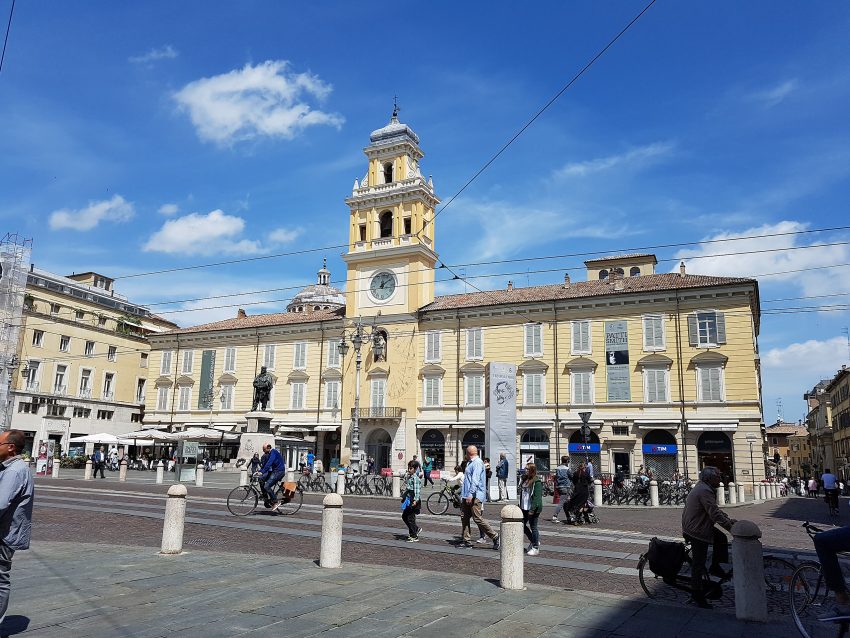
Piazza Garibaldi, situated on the historic site of the ancient Roman forum, serves as Parma’s bustling cobbled center. The square is divided by the city’s primary east-to-west thoroughfare, Via Mazzini, which continues as Strada della Repubblica.
On the northern side of the square stands the façade of the 17th-century Palazzo del Governatore, which now houses municipal offices. This building features a notable addition in the form of a giant sundial, installed in 1829, adding an intriguing and functional element to the architectural landscape of the square.
Location: Piazza Garibaldi, Parma, Province of Parma, Italy | Hours: Accessible at all hours, though shops, churches and offices around the square follow their own daily schedules. | Price: Free – Piazza Garibaldi is a public square open to all.
Leave along Piazza della Steccata to the right of the road you entered the square on, follow the brown sign for Pilotta. The Piazza della Steccata hold a Monumento al Parmigianino an Italian Mannerist painter native to Parma.
Consecrated in 1539, the church boasts an elegant Bramante-style architectural design. It takes the form of a Greek cross, featuring semi-circular apses and square corner chapels. The façade is adorned with pilasters, windows, and mullions, crowned by a marble dome equipped with a loggia and lantern. Antonio da Sangallo the Younger, who arrived in Parma in 1526 on the request of Pope Clement VII to fortify the city’s defences, likely played a role in the construction of this dome.
Inside the church, to the left of the entrance, is the tomb of Count Adam Neipperg, the morganatic spouse of Marie Louise of Austria. This tomb was crafted between 1829 and 1831 by the sculptor Lorenzo Bartolini.
The church’s most elaborate artistic work is the fresco cycle positioned above the presbytery, which was meticulously painted by Parmigianino between 1530 and 1539. This cycle illustrates the parable of the Wise and Foolish Virgins and is adorned with a profusion of animal and plant motifs against a red background. On the intrados, which features gold decorations on a blue background, are four monochrome figures: Eve and Aaron on the right and Adam and Moses on the left, although Parmigianino left this work unfinished.
The altar, adorned with 18th-century statues, houses the fresco of the Madonna Suckling the Child. This painting, originating from the original oratory, is attributed to an anonymous late 14th-century artist. Behind the presbytery is the Knight’s Choir, and above it, there is a small bronze statue of Christ Risen created by Andrea Spinelli.
A door on the left side leads to the sacristy and the burial chapel constructed in 1823 by Marie Louise. This chapel serves as the final resting place for the dukes of Parma from the Farnese and Bourbon families.
Adjacent to the church is the Costantinian Museum, which houses a treasure trove of art and historical artefacts for visitors to explore.
As you come out of Basilica di Santa Maria della Steccata turn right. Teatro Regio is on your left.
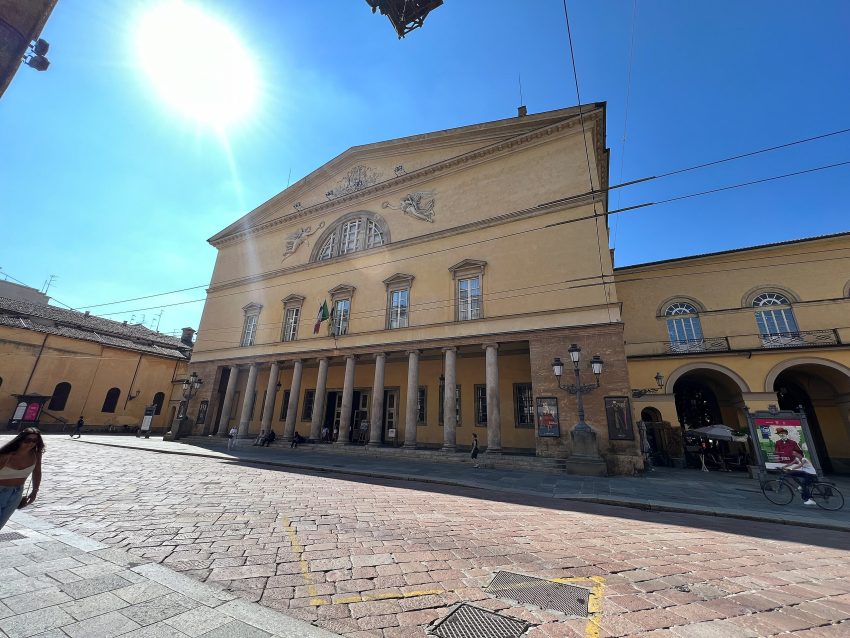
The Regio Theatre, commissioned by Maria Luigia and designed by architect Nicola Bettoli, stands as a testament to architectural and cultural grandeur. It was constructed between 1821 and 1829 on the grounds of the former Benedictine convent of St. Alessandro.
The neoclassical facade of the theater is an impressive sight, featuring a portico supported by ten Ionic columns. A double row of windows and ornate decorations by Tommaso Bandini adorn both sides of the tympanum, portraying allegorical representations of Fame and the Lyre.
Upon entering the theater’s neoclassical hall, visitors find themselves in the elliptical stalls. These were adorned in white and gold by Girolamo Magnani in 1853 and are surrounded by four tiers of boxes and a gallery. The theater is equipped with state-of-the-art facilities, intricate stage designs, elegant halls, a beautifully decorated ceiling, and a curtain adorned by Borghese in 1824. A grand chandelier, manufactured in Paris and weighing a staggering one ton, illuminates the space. All of these elements combine to make the theater a veritable shrine dedicated to the opera of Verdi and renowned for its discerning and critical audience.
The Regio Theatre officially opened on May 16, 1829, with the premiere of the opera “Zaira,” which was specially composed by Vincenzo Bellini for the occasion. Since then, it has continued to uphold its status as one of the most esteemed opera houses in the world, hosting performances that celebrate the rich heritage of Italian and international opera.
Head across the Piazza della Pace to reach the Palazzo della Pilotta.
The Pilotta, originally conceived as a building to complement the Ducal Palace and serve the needs of the Court, is a vast and complex architectural ensemble that saw the contributions of various architects during different periods.
Construction is believed to have commenced before 1583, starting with the “Corridore,” an east-to-west extension (now occupied by the Petitot Gallery of the Palatine Library). This covered walkway connected the ancient Viscontea Fortress to a cluster of houses occupied by the Farnese family upon their arrival in Parma.
Construction activities were interrupted with the death of Duke Ottavio in 1586 but resumed in the early months of 1602 under Duke Ranuccio I. Ranuccio I was fond of grand and imposing buildings that underscored his power, and the works on the Pilotta were completed in 1611. However, the project left the site unfinished, notably lacking the imposing facade facing the “Ghiaia.”
After the death of Ranuccio I in 1622, Cardinal Ottavio Farnese called upon Girolamo Rainaldi from Rome to assist the architect Battistelli, but little progress was made on the construction.
On the northeast side, new buildings were added adjacent to the Dominican monastery and the existing Gothic church of Saint Peter the Martyr. The Farnese family unsuccessfully attempted to demolish this church, resulting in the construction of the voluminous Palace that enclosed three large courtyards known as Pilotta, Saint Peter the Martyr, Guazzatoio, and Della Rocchetta.
The monumental scissor staircase, covered by an octagonal cupola, leads to the Museum of Antiquities and the first floor, providing access to the Farnese Theater, the National Gallery, and the Palatine Library. It is considered the first example in Italy of an “Imperial” staircase.
Significant interventions, including restoration and internal restructuring, were carried out on Palazzo Pilotta between 1822 and 1824 under the guidance of Nicola Bettoli, with assistance from Paolo Toschi.
On May 13, 1944, a devastating bombing raid severely damaged a large portion of the west and south wings, including the Teatro Farnese. These sections were subsequently rebuilt in the years immediately following the end of World War II.
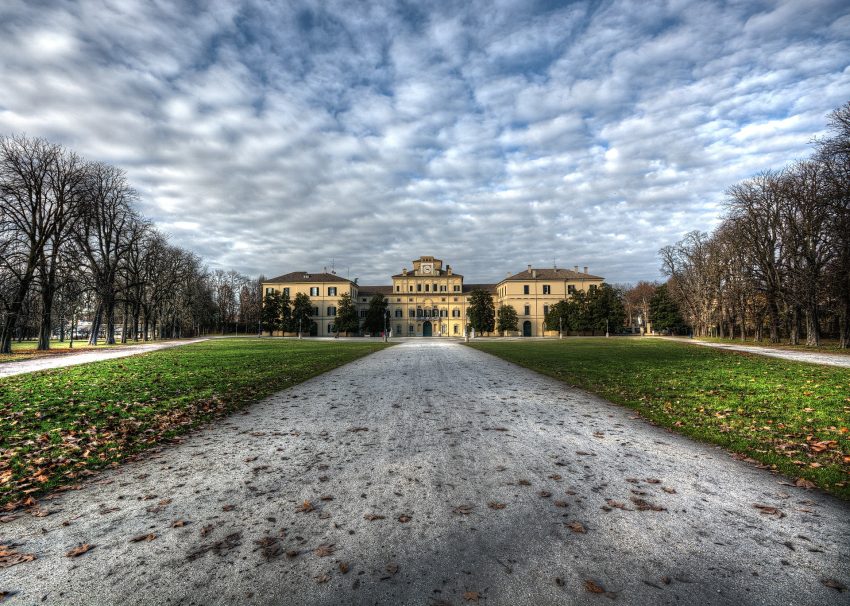
Walk through the arches of the Pilotta Palace and cross over the Ponte Verdi. The Parco Ducale is in front of you.
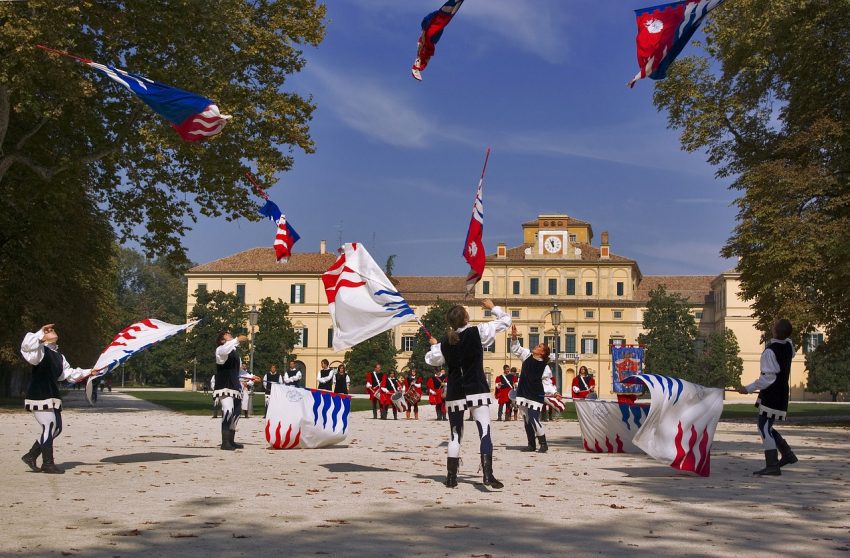
The intricate and lush green landscape of the Ducal Park was initially designed in 1560 and expanded during the 18th century. Adorned with sculptures by J.B. Boudard, it later underwent modifications in the French style.
Within the park’s grounds stand the Ducal Palace and the Palazzetto Eucherio Sanvitale, constructed in Renaissance style in 1520 by Giorgio Da Erba. The small palace boasts frescoes by Parmigianino, featuring a Madonna and child, which have been recently restored. Additionally, there is an oil painting on one of the walls depicting scenes from the Life of the Virgin, in the late Mannerist style, attributed to the clergyman Cosimo Piazza. The wall also features grotesque elements and landscapes from the late 16th century.
Noteworthy within the park are the Arcadia woods, which contain the ruins of the Temple of Arcadia, created by Petitot. In the 18th century, these woods were a gathering place for Parmesan Arcadians.
The Fountain of Parma River, situated in the middle of the park’s lake, was originally located in the Ducal Palace in Colorno. Under the rule of Marie Louise, who opened the Park to the citizens, significant changes were made to its botanical features to align it more with the English style of landscaping.
The park offers a range of amenities, including a playground for children, fountains, sports tracks, a dedicated area for dogs, and a café with outdoor seating where visitors can relax and enjoy the scenic surroundings.
Exit the park the same gate you entered and cross back over the river and turning immediately left. to walk alongside it.
This website uses affiliate links which earn a small commission at no additional cost to you.
Walking Tour Summary
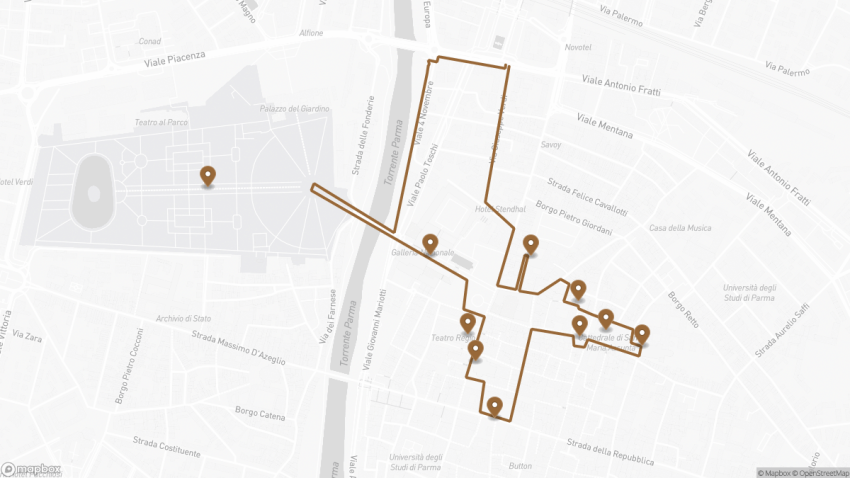
Distance: 3.5 km Sites: 10
Walking Tour Map
Preview map of the One Day in Parma: A Complete Walking Tour with Map & Tips route in Parma, showing 10 stops. Use the interactive map to zoom and tap markers.
This website uses affiliate links which earn a small commission at no additional cost to you.
Emilia Romagna is a region of unparalleled beauty, boasting a rich tapestry of history, art, and architecture. Its allure extends to its pristine beaches, vibrant local towns, picturesque landscapes, and the finest culinary delights Italy has to offer. This central Italian region is characterized by two distinct cultures, as it was born from the fusion of two different provinces, Emilia and Romagna.
Emilia-Romagna is a region that offers an astonishing variety of landscapes, from the majestic Appenine Mountains to lush forests, rolling hills, and the pristine beaches of the Adriatic Coast.
What makes this region even more captivating is its rich historical tapestry. Emilia-Romagna proudly bears the marks of its Etruscan and Ancient Roman origins, which laid the foundation for its cultural development. The Middle Ages and Renaissance periods further enriched its heritage, with many of its cities serving as pivotal political and cultural hubs in Italy's history.
Emilia-Romagna is also home to Europe's oldest university and boasts a robust manufacturing industry, including iconic luxury car brands like Ferrari and Lamborghini. However, the region's true claim to fame lies in its culinary heritage, with world-renowned delicacies such as Tortellini, Parmigiano-Reggiano, Prosciutto di Parma, and Balsamic Vinegar originating here.
With such a captivating blend of natural beauty, historical significance, and culinary excellence, the reasons to explore Emilia-Romagna are truly boundless.
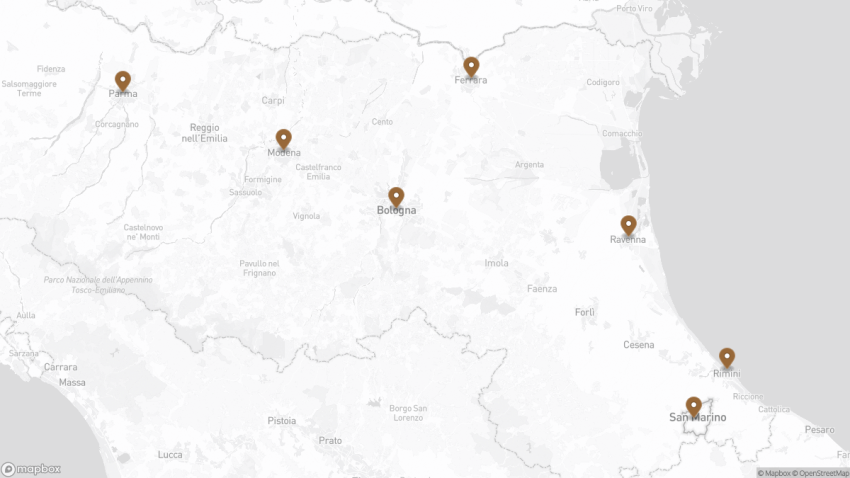
Please note that our itineraries not only provide travel inspiration but also offer practical tips and guidance. You’ll find comprehensive information to assist you in planning your own Emilia Romagna adventure. To help you navigate the region, we’ve included a map highlighting all the places featured in this itinerary, often this will be combined with a specific walking tour of that town!
Day 1: Parma - Find classic Emilia Romagna gastronomy
Parma
Parma indeed boasts two internationally renowned food products that have become favourites all over the world.
The first is the unmistakable Parmigiano Reggiano, a high-quality Parmesan cheese. Parmigiano Reggiano is incredibly versatile and finds its way into a wide range of dishes. It’s particularly popular when grated over pasta, adding a rich and nutty flavor to the dish. It’s also a common topping for soups, salads, and various Italian dishes.
The second is Parma Ham, known as “Prosciutto di Parma.” This is a delicious cured ham that has gained immense popularity and is used in a multitude of dishes. One classic pairing is “Prosciutto e Melone,” where thin slices of Parma Ham are paired with sweet, ripe melon. When ordering prosciutto from a deli counter in Italy, you may be asked whether you’d prefer “crudo o cotto,” which translates to “raw or cooked.” Parma Ham is the “crudo” option, while the “cotto” variety is a pinker, cooked ham.
The best way to discover where the world-famous Parmigiano Reggiano cheese and Prosciutto are made, followed by a mouth-watering tasting accompanied by a glass of Malvasia wine is to go on this Parmigiano Production and Parma Ham Tour & Tasting.
I would spend the remainder of the day exploring the very best of Parma on foot. A good starting point is Piazzale San Giovanni. Here, you’ll encounter the Chiesa di San Giovanni Evangelista, one of the city’s most impressive churches.
Continuing a few steps from the pharmacy will lead you to the city’s most famous landmark: Parma Cathedral. This beautiful 11th-century cathedral is accompanied by the 12th-century Parma Baptistery on Piazza del Duomo. Across the square, in the corner, you’ll find the Museo Diocesano.
A five-minute walk (450 meters) west from Piazza del Duomo will bring you to the Palazzo della Pilotta complex. Facing the gardens of Piazza della Pace, this vast palace houses various museums, including the National Archaeological Museum of Parma, the National Gallery of Parma, and the Biblioteca Palatina library.
Parma is divided by the River Parma, which flows through its centre. From the Palazzo della Pilotta, you can cross the bridge over the River Parma and reach another expansive area, Parco Ducale. The park’s gardens are open to the public for free, and you can also visit the Palazzo Ducale for a small fee to admire its Baroque interior and frescoes. Returning across the river, you can head toward the city centre. Along the way, you’ll pass the Teatro Regio, where you can enjoy opera performances. Just across the road from the theatre is another of Parma’s famous churches: the Basilica Santa Maria della Steccata.
From the piazza outside the basilica, you can access a walkway that leads to what many consider the heart of Parma: Piazza Garibaldi. Here, you can explore a network of narrow streets and start discovering Parma’s delectable gastronomic offerings in its bars and restaurants. This area is also a great place for shopping, with a wide range of stores and boutiques to satisfy your shopping needs!
Day 2: Modena - A city of great food, fast cars, and historic sites
Piazza Grande a Modena
CC BY-SA 4.0 / Albypino
Modena is an exceptional city that offers a harmonious blend of cultural heritage, culinary delights, and a captivating fusion of tradition and innovation. Its UNESCO World Heritage-listed architectural treasures are a testament to its rich history. Visitors to Modena are treated to an exquisite culinary experience, featuring traditional balsamic vinegar paired with local delicacies. They can also wander through the charming narrow streets of the city centre.
The city boasts the mystical beauty of its Cathedral, a remarkable masterpiece of European Romanesque architecture, designed by the renowned architect Lanfranco and master sculptor Wiligelmo. Piazza Grande, the heart of Modena, is home to iconic monuments, including the Palazzo Comunale, which has evolved over centuries and now serves as the Town Hall and the Torre della Ghirlandina a Unesco world heritage.
Strolling further, along the historic Via Emilia, visitors arrive at Piazza Sant’Agostino, where the Church of Sant’Agostino showcases the remarkable “Lament for Christ Crucified” by Begarelli, a renowned 16th-century Modenese sculptor. Nearby stands Palazzo dei Musei, housing various cultural institutions and art collections, including the Civic Museum of Art, the Archaeological Ethnological Museum, and the Estense Gallery, which reflects the Este family’s appreciation for diverse forms of art. The Estense Library, within the same complex, safeguards the precious Modena Codex from the 14th to 16th centuries, adorned with miniature illustrations.
Modena’s cityscape is further enhanced by the awe-inspiring MEF-Enzo Ferrari Museum, inaugurated in March 2012. This museum pays tribute to Enzo Ferrari in the very house of his birth, featuring exhibitions that chronicle the extraordinary life of this iconic figure through modern multimedia presentations. Additionally, the museum showcases an art gallery with temporary exhibitions that delve into Ferrari’s illustrious career, his legendary cars, and the prominent races and competitions associated with this renowned Modena-based racing car brand.
Here is a complete selection of hotel options in Bologna. Feel free to review each one and choose the stay that best suits your needs.
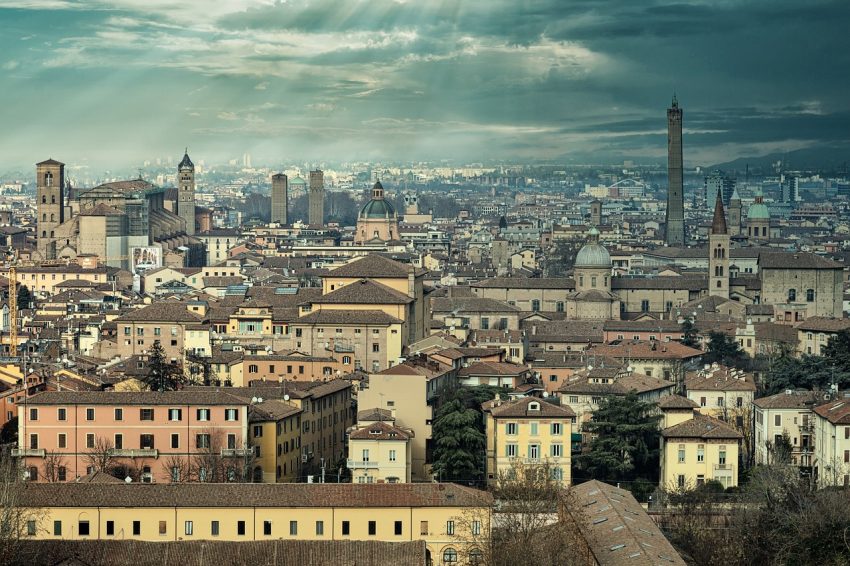
Day 3: Bologna - Explore the Emilia Romagna capital
bologna
This beautiful regional capital boasts medieval porticoes, lively piazzas, and a gastronomic culture renowned worldwide. Bologna’s nicknames reflect its key attributes: La Grassa (the fat one) celebrates the city’s culinary abundance, La Dotta (the learned) acknowledges its status as home to the world’s oldest university, and La Rossa (the red) partly references the colour of its buildings and its socialist political heritage.
If you plan your holiday around gastronomy you are in for a treat! The city’s culinary treasures are among the most celebrated in the world, giving rise to famous dishes like Lasagne. Moreover, Bologna is renowned for its extensive production of Parmigiano (Parmesan cheese), Mortadella (a type of pork sausage), and Prosciutto Parmigiano (Parma Ham).
Surprisingly, “Spaghetti Bolognese” is not commonly found in the city. Instead of spaghetti, the preferred pasta to accompany the meat sauce Ragù is typically Tagliatelle. Another Bolognese favourite is Tortellini, which is often served in a broth.
Despite its medieval architecture and historical roots, Bologna exudes a youthful energy, partially owing to its University, established in 1088 and considered the longest continuously operating university in the world. This juxtaposition of old and new adds to the city’s unique charm.
Throughout the summer, Bologna hosts festivals in the city center, and all year round, rock bands perform at various venues in and around the city. Bologna has a historical association with left-wing politics, likely influenced in part by its status as home to the world’s oldest university.
One of Bologna’s most distinctive features is its network of porticoed streets. The first covered walkways were introduced in the 13th century, and some wooden examples still stand today. A century later, due to widespread acclaim, an edict mandated that all new streets in the city must have porticoes, constructed from brick or stone and tall enough to accommodate horseback riders.
In 2021, Bologna was added to the UNESCO World Heritage List under the category “The Porticoes of Bologna.” This recognition highlights the porticoes’ significance in the city’s trade and architecture. The seemingly endless archways of these walkways, adorned with autumnal-colored plasterwork in shades of red, amber, and orange, are a defining characteristic of Bologna and the broader Emilia Romagna region.
Traveling to a country with a different currency? Avoid ATM transaction fees and pay in local currency with a Wise Card. Having used it for over 5 years, we've saved loads on fees!
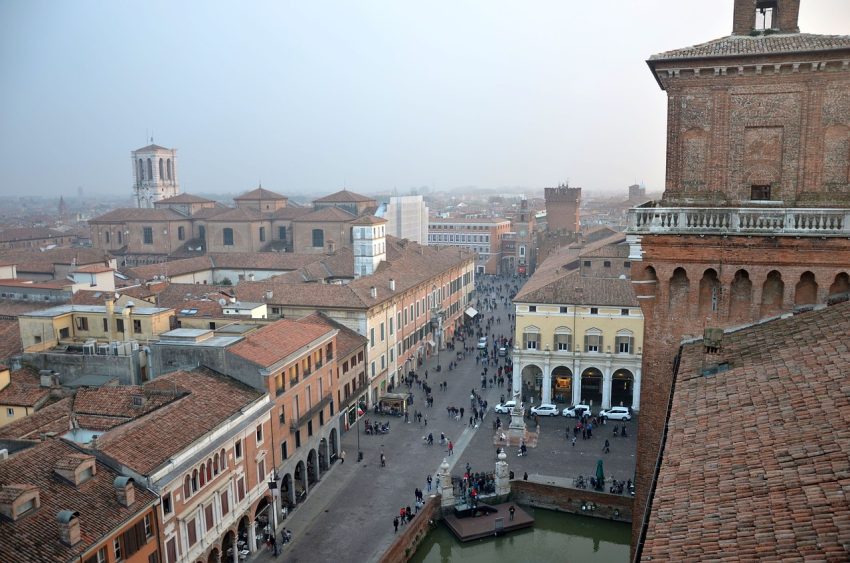
Day 4: Ferrara - Discover the “City of the Renaissance”
ferrara
Ferrara, a city enclosed within a 6-mile-long defensive wall, offers a delightful opportunity for cycling or strolling, with green parks just outside the walls. Not all parts of the city within the walls share the same historical significance. If you enter through Viale Cavour, you may initially wonder where the historic buildings are. However, taking a side street leads you into Ferrara’s network of medieval and Renaissance streets. It’s advisable to explore with a map from the tourist information office in the courtyard of Castello Estense, as these picturesque streets extend for quite a distance. While only a few lanes are pedestrianized, many locals navigate the city on old bicycles, even over the cobblestones.
Castello Estense, a red-brick fortress constructed in 1385, stands as the heart of Ferrara, surrounded by moats. Initially built as a robust fortress, it also served as a residence and a venue for entertainment for the Este family. Visitors can explore its state apartments, dungeons, and enjoy panoramic views from the Torre dei Leoni. Some of the castle rooms provide insights into Ferrara’s history and the Este dynasty. Don’t miss the atmospheric prison cells with their historic graffiti. Notable prisoners held here have inspired poetry and opera. Upstairs, visitors can admire frescoed ceilings with classical scenes and a charming marble ducal chapel. A cafeteria is available, as well as restrooms along the tour route.
Ferrara Cathedral, or Cattedrale di San Giorgio, is conveniently located near Castello Estense. The church, consecrated in the 12th century, features a facade blending Romanesque and Gothic elements. Inside, an imposing and dimly lit interior houses artistic treasures, including Bastianino’s depiction of the Last Judgment above the apse. While entry is free, note that the cathedral closes during lunch hours. Adjacent to the cathedral is the Museo della Cattedrale, an admission-charging museum housing art and exhibits related to the cathedral.
In addition to their central residences, the Este family constructed a network of villas, palaces, and retreats in and around Ferrara, collectively known as the ‘delights of the Estes.’ One such villa is Palazzo Schifanoia, a short walk from Castello Estense. Although its façade appears plain today, it once served as a splendid palace. The palace houses various museum rooms displaying porcelain, frescoes, and objects of historical interest. The highlight is the upstairs cycle of frescoes depicting the months of the year, created around 1469-1470. These frescoes, attributed to various artists, offer captivating glimpses into Renaissance courtly life. The museum ticket is often combined with entry to the Museo della Cattedrale, Palazzina Marfisa d’Este, and the nearby Civico Lapidario, which features a small collection of Roman marbles.
Included in the combined ticket is Palazzina Marfisa d’Este, a single-story building associated with Francesco d’Este and his daughter Marfisa, a patron of the arts. Frescoes adorn the rooms, complemented by antique furniture and portraits.
Ferrara boasts several other palaces and churches worth exploring, such as the Santa Maria in Vado, known for a twelfth-century miracle. The city’s archaeological museum, Museo Archeologico Nazionale, displays Etruscan and Greek artefacts from the Po Delta’s Spina site. The Palazzo dei Diamanti, named for its shaped stonework, houses the Pinacoteca Nazionale, Ferrara’s art gallery featuring works by local and renowned artists. Palazzo Massari hosts the Museo Boldini, showcasing more artworks. Casa di Ludovico Ariosto, where the poet lived and died, has been turned into a small museum. Visitors can view his tomb at Palazzo Paradiso, once a university building and now a library of rare manuscripts. Casa Romei, a Renaissance residence adorned with frescoes, is another architectural gem.
After exploring the city’s palaces and museums, take time to stroll through Ferrara’s central streets. Various Este family members oversaw the city’s expansion, with the most famous being the Addizione Erculea, a fifteenth-century town-planning project by Duke Ercole I d’Este.
Day 5: Ravenna - Stand in awe of the Ravenna Mosaics
Ravenna
Ravenna is a charming, lesser-known town located in the Emilia Romagna region of Italy. It’s surprising that many travelers, including us, had never heard of Ravenna before, considering its proximity to Italy’s most popular tourist destinations. However, Ravenna is indeed a hidden gem that offers a deep dive into centuries-old history, providing a fresh perspective on the country’s past. In the 5th century, Ravenna thrived as the capital of the Western Roman Empire, and today, it boasts a wealth of landmarks and monuments from that era, many of which are over 1500 years old.
Don’t be fooled by the unassuming exteriors of Ravenna’s ancient buildings; within, you’ll discover breath-taking treasures and astonishing mosaics that will leave you in awe. If you plan to spend a day in Ravenna, you’ll find below a list of the best things to do, which should cover all the must-see places. If you have more time and are visiting in the summer, be sure to explore the nearby beaches as well. Let’s explore Ravenna!
The primary attraction drawing visitors to Ravenna is its renowned mosaics, and two places you absolutely must not miss are the Basilica di San Vitale and the Mausoleo di Galla Placidia. The mosaics in these locations are truly breath-taking and are unlike anything you’ve likely seen before. Right next to the Basilica di San Vitale, you’ll discover the National Museum of Ravenna, which is also well worth a visit. Additionally, somewhat less famous but equally deserving of your attention is the nearby Basilica of Sant’Apollinare Nuovo. These sites showcase some of the most exquisite mosaic artistry you’ll encounter. Piazza del Popolo, the central town square, is another essential stop on your visit to Ravenna. It’s an incredibly picturesque and vibrant area. Don’t forget to wander through the charming narrow streets that encircle it. Dante Alighieri, one of Italy’s most renowned poets, was exiled from Florence and passed away in Ravenna in 1321. Dante’s Tomb is often included in lists of places to visit in Ravenna.
Ravenna’s Old Town is compact but brimming with delightful spots waiting to be explored. Read my Self Guided Walking Tour of Ravenna’s Old Town, which includes a map and suggested route.
Rimini, primarily known as a beach resort with a vibrant nightlife scene, also boasts a contrasting historic center. Founded in 268 BC by the Romans under the name Ariminum, the city still bears traces of that ancient period. One prominent symbol of Rimini’s Roman heritage is the Arco di Augusto, a 17-meter high triumphal arch constructed in 27 BC by Emperor Augustus, which remarkably stands almost entirely intact today.
The Arch of Augustus (Rimini) marks the southern entrance to the city’s old town, the centro storico. At the opposite end of this historic centre, we find another Roman relic, the Ponte di Tiberio. Built in 27 AD and named after Emperor Tiberius, this bridge marked the start of the ancient Via Emilia road connecting Rimini to Piacenza.
Rimini’s centro storico is characterized by wide boulevards and picturesque squares, with Piazza Tre Martiri and Piazza Cavour, Rimini being the most notable. Piazza Tre Martiri hosts the Torre dell’Orologio (Clock Tower) and the Chiesa dei Paolotti, as well as a variety of shops in porticoed arcades around its perimeter.
A brief 2-minute walk from Piazza Tre Martiri takes you to one of Rimini’s renowned landmarks: the Tempio Malatestiano. Originally constructed in the 13th century in the Gothic style, it was later transformed in 1450 by Sigismond Malatesta, the city’s ruler at the time. The conversion was commissioned as a shrine to his deceased mistress, Isotta degli Atti, leading to controversy and excommunication by Pope Pius II.
Returning towards Piazza Tre Martiri via Corso d’Augusto, a 5-minute walk leads to Piazza Cavour, which features Gothic buildings, the Palazzo del Podestà, Palazzo dell’Arengo, and the Teatro Amintore. It’s also home to the Peschiera Antica, an 18th-century fish market that now specializes in antiques.
Continuing along Corso d’Augusto for a couple of hundred meters from the cinema, you’ll arrive at the Ponte di Tiberio, spanning the Ariminus River and leading to the main marina at the northern end of the beach, about two kilometers away. However, crossing the bridge at this point takes you to another captivating area of Rimini known as Borgo San Giuliano. This residential neighbourhood is known for its multicolored houses, some adorned with murals on their exteriors.
Leaving Borgo San Giuliano, it takes around 20 minutes to reach the beach, passing numerous boats of various sizes along the way. Walking to the end of the River Ariminus, you’ll eventually reach Rimini’s Ferris Wheel – La Ruota Panoramica, marking the northern end of the city’s main beach. From here, you have a plethora of private beaches to choose from, stretching all the way to Gabbicce Mare in the neighbouring Marche region, approximately 21 kilometers away.
The two main areas of Rimini, the centro storico and the beach, are approximately two kilometers apart, requiring about a 25-minute walk. Part of this distance can be shortened by taking bus number 11 to the train station, followed by an 8-minute walk covering 700 meters to Piazza Tre Martiri.
Explore Bologna at your own pace with our self-guided walking tour! Follow our curated route to discover must-see sights and local secrets that makes Bologna one of the best places to visit in Italy.
Day 7: San Marino - The Oldest Republic in the World
Visiting San Marino
San Marino offers a captivating experience for those enchanted by fairytale castle fortresses perched atop mountaintops. It also serves as a living testament to the success of unique societies and long-standing republics.
You enter San Marino through Porta San Francesco, the city’s former guarding post, you’ll be greeted a maze of streets winding up the hill. Stop by at the State Museum to learn the history of the country. You will pass the Piazza della libertà, with the historic seat of government the Palazzo Pubblico.
You wont be able to miss the encounter formidable defence towers that beckon you to climb and explore. Your journey begins at the Guaita Fortress, First Tower San Marino, a former military fortress, offering breath-taking views of the countryside below. Continue your ascent by climbing the steps to the Cesta, Second Tower & Museum of Ancient Arms once a garrison for crossbowmen. To reach Cesta, you’ll traverse the “Passo delle Streghe” (Passage of the Witches), a route that leads to one of the most coveted viewpoints. Finally you will arrive at the Montale Tower, Third Tower.
Explore Bologna at your own pace with our self-guided walking tour! Follow our curated route to discover must-see sights and local secrets that makes Bologna one of the best places to visit in Italy.
This website uses affiliate links which earn a small commission at no additional cost to you.
Walking Tour Map
Preview map of the Emilia-Romagna, Italy: 7-Day Itinerary & Travel Guide route in Bologna, showing 7 stops. Use the interactive map to zoom and tap markers.
This website uses affiliate links which earn a small commission at no additional cost to you.
The ancient settlement of Ariminum was strategically located at the convergence of two significant ancient roads: the Via Aemilia and the Via Flaminia. Situated approximately 150 kilometers south of Venice on the Adriatic shore, it eventually evolved into the Roman colony of Rimini in 268 BC. Over time, it flourished into a bustling port city and, by the late 1800s, had transformed into a popular beach resort.
Despite enduring significant damage from World War II bombing, Rimini has managed to preserve a surprising amount of its Roman heritage. The extensive, white-sand beaches that stretch both north and south of the port continue to be major tourist attractions on the Riviera del Sole, the name Italians use to refer to their Adriatic coastline.
The Malatesta family, who ruled Rimini from the 13th century, were notable patrons of the arts and culture. Their legacy includes numerous fine buildings and artworks that still grace the city today, contributing to its rich historical and cultural tapestry. Rimini's ability to maintain its Roman heritage and embrace its more recent history, as exemplified by the Malatestas, makes it a compelling destination for visitors interested in exploring the past and enjoying the beauty of the present.
By Plane: To get to Rimini by plane, fly into Federico Fellini International Airport (RMI), which is located just 8 km from the city center. The airport is accessible by taxi, local bus, or rental car for a quick transfer into Rimini. For the best deals and a seamless booking experience, check out these flights to Rimini on Booking.com.
By Train: Rimini is serviced by one major train station and by other four minor train stations. The main station is Piazzale Cesare Battisti and is located ten minutes from wither the sea or the old town. Use Omnio to easily compare schedules, book train tickets, and find the best prices all in one place for a hassle-free journey across Italy.
By Car:Rimini is well connected to the A14 motorway. There are two motorway exits in Rimini: “Rimini Nord” and “Rimini Sud”. For this tour I suggest parking at Parcheggio via Roma or (if not a Wednesday or a Saturday, when there is a market here) Parcheggio Clementini. If you are looking to rent a car in Italy I recommend having a look at Discover Cars, first, as they compare prices and review multiple car rental agencies for you.
Where to Stay in Rimini
Rimini offers a wide range of accommodation in its historic center and along the coast. Those seeking five-star elegance might enjoy Grand Hotel Rimini, a luxury landmark once favored by Fellini himself. Travellers looking for a smart, mid-range option can try Hotel Card International, just steps from the old town. Budget-minded visitors may find Hotel Napoleon a great-value stay close to both the beach and city highlights.
A Brief History of Rimini
Founded by the Romans in 268 BC as Ariminum, Rimini has been a significant cultural and economic hub throughout history. The city boasts remarkable Roman architecture, including the Arch of Augustus and the Tiberius Bridge. During the Renaissance, Rimini flourished under the Malatesta family, who commissioned notable structures like the Malatesta Temple. In the 20th century, Rimini gained fame as the birthplace of renowned filmmaker Federico Fellini, adding a cinematic legacy to its rich historical tapestry.
In the Summer months you can purchase tickets for the main sites in advance, and then pick up the tickets from the tourist office at the train station.
This guide highlights Rimini's main attractions, but the city rewards those who take their time. Wander through the charming streets, discover local eateries, and soak in the vibrant atmosphere. Whether you're visiting for a day or a week, Rimini invites you to explore its unique blend of history and modernity.
1. Rimini Roman Amphitheatre
Rimini Roman Amphitheatre
CC BY-SA 4.0 / GianlucaMoretti
From the train station walk across to the left side of the car park, head across the roundabout to walk through Parcheggio Clementini. On a Wednesday and a Saturday they usually have a market here. At the far end of the car park is the Anfiteatro Romano.
The Roman Amphitheatre, known as “l’anfiteatro romano,” in Rimini was commissioned by the Emperor Hadrian during the 2nd century AD. This historical structure serves as evidence of the “panem et circenses strategy,” a Roman practice aimed at gaining public approval and alleviating social tension by providing collective entertainment and distraction for the people.
Situated on the outskirts of Ariminum (Rimini), near the port, the amphitheatre’s location made it easily accessible by road, allowing visitors to reach it by land. The remains of this magnificent structure, which hosted gladiator games and various events, are among the most significant in the entire region.
The Roman Amphitheatre features an oval shape and was constructed with concrete and brick cladding. It consisted of two superimposed rows of 60 arches, each reaching a height of more than 15 meters. This impressive structure had the capacity to accommodate over 10,000 spectators and featured an arena that was slightly smaller than that of the Colosseum in Rome.
Despite its grandeur and importance, the arena ceased to function after only a little more than a century of use. Subsequently, the amphitheatre was incorporated into the defensive walls of the city, a measure taken by Rimini to protect itself from the threat of invading barbarian forces. This transformation marked a significant change in the use and purpose of the amphitheatre over time.
Continue the way you were heading with the Anfiteatro Romano on your right. Cross over the next roundabout and turn right to walk through the Parco Alcide Cervi. At the end of the park lies the Arco di Augusto.
The Arch of Augustus in Rimini was constructed in 27 BC on the orders of the Roman Senate to honour Octavian Augustus. It was built in recognition of Augustus’s efforts to restore the Via Flaminia, a significant road connecting Rome to Rimini. An inscription above the arch attests to this purpose.
Positioned at the intersection of the Via Flaminia and the decumanus maximus, the Arch of Augustus is one of the two gates, the other being Porta Montanara, that marked the entrance to the ancient city of Rimini, founded as a colony in 268 BC. The arch is constructed using Istrian stone, similar to the Tiberius Bridge, and it serves both a religious and propagandistic function.
The arch’s large opening, which couldn’t be closed by doors, symbolizes the Pax Augustea, or the peace achieved in 31 BC after the defeat of Mark Antony in the Battle of Actium. The arch is adorned with decorative elements, including four clypei (round shields), with two on each side, featuring depictions of divinities. Jupiter and Apollo face Rome and the Via Flaminia, while Neptune and the goddess Rome face the city of Rimini.
Today, the arch has some modifications compared to its original form. It is crowned with bricks and battlements from the medieval and Renaissance periods. In ancient times, it had an attic with a statue of the emperor, likely on horseback or in a quadriga. The arch was once part of the city’s oldest defensive wall, and remnants of this wall can be seen on its sides, made from local stone.
Notably, the Arch of Augustus now stands isolated after adjacent buildings were demolished in the 1930s.
Here is a complete selection of hotel options in Rimini. Feel free to review each one and choose the stay that best suits your needs.
3. Tempio Malatestiano
Tempio Malatestiano
CC BY-SA 3.0 / Flying Russian
Walk through the arch and down Corso d’Augusto. Turn right onto Via Alessandro Serpieri at the end of which is the Malatestiano Temple.
The Tempio Malatestiano, constructed to serve as the final resting place for members of the Malatesta family who ruled Rimini from the 13th century, is a remarkable architectural gem. It was built atop the foundations of an earlier medieval church and underwent construction in the Early Renaissance style between 1447 and 1460. The temple’s facade was a creation of Leon Battista Alberti, who drew inspiration from the Arch of Augustus. This facade was groundbreaking, as it was among the first to be based on Roman architectural traditions, marking the very early stages of the Renaissance.
The interior of the Tempio Malatestiano is adorned with frescoes by Piero della Francesca, depicting scenes like Sigismondo Malatesta kneeling before St. Sigismondo. The Crucifixion painted by Giotto in the early 1300s is also present within the temple, representing his sole work in Rimini. Although Giotto spent a significant amount of time living and working in Rimini, his influence was instrumental in shaping the Rimini School of artists.
One of the striking features of the Tempio Malatestiano is the finely carved marble facings of its six side chapels. These intricate carvings are executed with such precision that they resemble monochromatic paintings, showcasing the extraordinary craftsmanship of the artisans involved in its creation. The Tempio Malatestiano stands as a testament to the intersection of art, architecture, and history in Rimini.
Traveling to a country with a different currency? Avoid ATM transaction fees and pay in local currency with a Wise Card. Having used it for over 5 years, we've saved loads on fees!
4. Piazza Tre Martiri
Piazza Tre Martiri
CC BY-SA 2.0 / Alain Rouiller
Turn left out of the Malatestiano Temple down Via IV Novembre
Piazza Tre Martiri stands as the beating heart of Rimini, strategically located at the intersection of the cardus maximus and the decumanus maximus, corresponding to the ancient Roman Forum. Over the centuries, this square has undergone several name changes and has played various roles in the city’s life.
In the Middle Ages, it was known as “piazza delle erbe” and served as a venue for public events, including horse races, dances, markets, and public spectacles. Initially, it began as the city’s Forum and was later colloquially referred to as Piazza Grande. Following the construction of the chapel dedicated to St. Anthony, it took on names like Piazza Sant’Antonio and Piazza Giulio Cesare.
The current name of the square, Piazza Tre Martiri, pays tribute to three young Partisans who were executed here in 1944. These brave individuals were Mario Cappelli, Luigi Nicolò, and Adelio Pagliarani. Their memory is honored with the square’s present name.
As you explore the square, you’ll come across the charming temple dedicated to St. Anthony of Padua, which was built in the early 1500s. Additionally, the clock tower, constructed in 1547, adds to the square’s historical and architectural significance. Piazza Tre Martiri continues to be a central and vibrant space in Rimini, where the past and present come together in a unique blend of culture and heritage.
Leave Piazza Tre Martiri opposite the road you entered and head down Via Giuseppe Garibaldi. At the end of the road is the Porta Montanara.
The Porta Montanara, also known as Porta di Sant’Andrea, is an ancient city gate in Rimini that dates back to the 1st century BC during the period of Silla. It was originally part of a larger defensive structure that included an internal guardhouse. This round arch gate, constructed using sandstone blocks, served as one of the two entrances to the city for travellers coming from the mountainous areas upstream. The gate featured a double fornix, which facilitated the flow of traffic and directed travellers either into the city or out of it through parallel passages, following the cardinal maximum (now known as Via Garibaldi).
In the early centuries AD, the northern-facing arch of the gate was blocked off, resizing the gate’s entrance. Despite this modification, the gate continued to mark the city’s entrance until the Second World War. Unfortunately, after the war, the gate was partially destroyed.
However, in recent years, efforts were made to restore and relocate the ancient gate. The surviving fornix was carefully recovered, restored, and moved to its original location. The meticulous process involved dismantling the gate stone by stone, cleaning each individual ashlar, and reassembling it at its original site. As a result of this complex operation, the Porta Montanara from the Roman Republican era has been reinstated as a symbol and image of the city’s entrance from the mountain, enhancing the historic Borgo Sant’Andrea.
Walk down the path between the trees to the right of Via Giuseppe Garibaldi. After the road turns to the right you will see Castello Sigismondo.
Today, only the central portions of the castle, commissioned and built by Sigismondo Pandolfo Malatesta in the 1400s, have endured the test of time. Initially, the castle was fortified with robust defensive walls and encircled by a protective moat. The remaining interior, itself designed with a fortress-like sensibility, served as the Malatesta residence. It was adorned with opulent embellishments, including tiles, frescoes, and tapestries, as vividly depicted in contemporary paintings portraying scenes from the Malatesta court. One such painting can be found in the Tempio Malatestiano.
In the evenings, the walls and towers of the castle are dramatically illuminated, creating a striking spectacle. The park surrounding the castle often hosts flea markets, adding to the vibrant atmosphere. Informative signboards are strategically placed to narrate the castle’s history and the influential Malatesta family’s legacy. Furthermore, the castle’s interior frequently serves as a venue for art exhibitions and other cultural events, enhancing its role as a dynamic cultural hub in Rimini.
The castle is the home of the Fellini Museum, dedicated to the famous film director Federico Fellini. The museum is also hosed in the Fulgor Palas – House of Cinema.
Walk to the rear of the large red brick building, Teatro Amintore Galli, which is in front the castle, to reach Piazza Cavour.
Piazza Cavour, originally known as Campo del Comune in the Venetian style, has served as the epicenter of the city’s commercial and political life since the early Middle Ages. This historic square continues to play a vital role in Rimini’s social, political, and commercial activities.
During the Middle Ages, Piazza Cavour was the location of the palatium Comunis, where the Grand Council of the city convened. Its significance grew substantially with the construction of the Palazzo dell’Arengo between 1204 and 1207. The square, which took on the name Piazza Cavour later on, further developed with the construction of the Palazzo del Podestà in 1330 and the construction of the nearby Castel Sismondo in 1400. However, it was during the 16th century that the square began to take on the form we see today.
Today, Piazza Cavour remains a bustling social hub in the city. The square is lined with numerous bars and shops that add to its lively atmosphere. On one side, you’ll find historic buildings such as Palazzo Garampi, Palazzo Arengo, and Palazzo Podestà.
At the heart of the square stands the Fontana della Pigna, which was built in its current form (although a fountain existed here since Roman times) by Giovanni da Carrara in 1543. You’ll also find the statue of Pope Paul V, erected in 1614, serving as a reminder of Rimini’s historical connection to the Papacy. Throughout much of its history, Rimini was directly under papal control. Additionally, the Galli Theatre and the Old Fish Market grace this beautiful and vibrant square, making it a focal point for both locals and visitors alike.
Head across the square and continue down Via Alessandro Gambalunga, and right into Piazza Luigi Ferrari.
The Domus del Chirurgo is a remarkable archaeological site in Rimini, dating back to the second century CE. It is believed to have served as a clinic or medical practice, possibly belonging to a physician named Eutecheus.
The discovery of this site took place in 1989 when renovation work on a square unearthed a mosaic depicting Orpheus beneath a tree that had been uprooted. This initial discovery led to further excavation, revealing not only the second-century domus but also a structure from the fifth century. Today, these buildings are separated by glass walkways, allowing visitors to explore the site.
The second-century domus had experienced a fire in the third century, which, surprisingly, played a crucial role in its preservation. The fire caused the upper floor to collapse, effectively sealing and protecting the decorations and contents beneath. Among the findings was the most complete set of doctor’s implements from the Roman period, making a significant contribution to international archaeology and our understanding of medicine during that era.
In later centuries, a small church was constructed on the site, and the skeletons found within the Domus del Chirurgo date from this medieval period, rather than the Roman era. This archaeological site provides valuable insights into the medical practices and daily life of the past, making it a compelling destination for history enthusiasts and researchers alike.
Buy Tickets: In summer it may be worthwhile buying your combined Domus del Chirurgo and City Museum Entry Tickets in advance and pick your tickets up at the VisitRimini offices at the train station.
Continue to direction you were going and cross into Via Luigi Tonini. Museo della Città “Luigi Tonini” is on your right.
The City Museum in Rimini, housed within the eighteenth-century Jesuit College, offers visitors a captivating journey through time. Here, the ancient heart of Rimini comes to life as a story spanning millions of years unfolds.
The narrative begins on the beach, where primitive humans once chipped flint, and continues through the realms of archaeology and art. The museum’s diverse collections range from surgical instruments dating back to the third century to the masterpieces of the “Riminese School” from the fourteenth century. Notable works by artists from the Malatesta court, including Agostino di Duccio, Giovanni Bellini, and Ghirlandaio, are also on display.
Visitors can immerse themselves in the extraordinary seventeenth-century paintings by artists like Guido Cagnacci, Centino, and Guercino. The museum also offers a glimpse into the world of elegance and seduction through the famous illustrations of René Gruau. Additionally, you can explore the beauty of Piazza Cavour as depicted by Filippo De Pisis during his stay in Rimini in 1940.
This museum provides a rich tapestry of Rimini’s history and cultural heritage, making it a must-visit destination for those eager to delve into the city’s fascinating past.
Walk to the end of Via Luigi Tonini and turn left at the end. As you reach Corso d’Augusto ARimini Caput Viarum is in the church on your left.
ARimini Caput Viarum serves as a captivating storytelling place, offering a multimedia and interactive tour that invites visitors to immerse themselves in the captivating history of Ariminum, the ancient Roman Rimini, with all its treasures and beauty. This experience provides valuable insights and suggestions for exploring the region comprehensively, creating an engaging journey through time.
The Visitor Centre employs innovative methods, including evocative images, interactive technologies, exhibition areas, and informative tools, to actively involve tourists in the narrative intertwined with history. This historical journey is not only told but experienced, allowing visitors to connect with the past in a meaningful way.
The history of Ariminum remains palpable today, as evidenced by the rich and well-preserved archaeological heritage. Over the centuries, this legacy has been enriched by beautiful architectural marvels, spanning from the Middle Ages to the Renaissance. This historical richness has left an indelible mark on Rimini’s history and continues to shape its identity in the present day.
Beyond its cultural offerings, the Visitor Centre also serves as a valuable resource for tourists, providing comprehensive information about the various tourist opportunities, attractions, and events available in Rimini. This ensures that visitors can explore the region’s diverse offerings and make the most of their visit.
Location: aRimini Caput Viarum, Corso d'Augusto, Rimini, Province of Rimini, Italy | Hours: Winter: Wednesday: 9:30 - 12:30; Thursday and Friday: from 15.30 to 18.30; Saturday and Sunday: 10:00 to 13:00 & 15:30- 18:30. Closed Monday & Tuesday
Summer: Tuesday - Saturday 10:00 to 13:00 & 16:00 - 19:00; Sunday 10:00-13:00. Closed Monday. | Price: Free
As you come out of the visitor centre turn right and walk along Corso d’Augusto. Rimini’s Corso di Augusto, a wide boulevard that cuts through the heart of the old town, has been a central thoroughfare since Roman times. This historic road stretches from the Arco d’Augusto, passes through the Forum (now Piazza Tre Martiri), and leads to the Ponte di Tiberio, a well-preserved Roman bridge.
The construction of this bridge, initially initiated by Emperor Augustus, was completed in AD 20 during the reign of Tiberius. With its five arches, the Ponte di Tiberio gracefully spans the Marecchia River, which was known as the Ariminus in ancient times. Notably, this bridge is the sole survivor among those that once crossed the Marecchia, having withstood the destruction wrought by the retreating German army in 1944. As a result, it stands as a significant historical and architectural relic in Rimini, serving as a tangible link to the city’s Roman past.
After walking around the portocanale and back across the Bridge of Tiberius, turn left and walk along the waterfront.
Porta Galliana, built in the thirteenth century, is the only medieval city gate in Rimini that remains recognizable today, with the exception of the Porta del Gattolo inside Castel Sismondo.
This gate served as a connection between the city and the port area along the Marecchia River. Originally, it was integrated into the city walls, as depicted in the bas-relief by Agostino di Duccio (1449-1455), which is preserved in the chapel of the zodiac signs in the Malatesta Temple. The gate’s identity was confirmed through archaeological excavations that began in 2017.
In the 15th century, Sigismondo Malatesta undertook the restoration of the gate, as indicated by the discovery of a deposit of Malatesta medals, which Sigismondo often used to mark the works he had created or renovated.
During the 16th century, the gate was closed off and replaced by a tower known as the Knights’ Tower.
Over the years, the site of Porta Galliana has undergone various changes, leaving visible traces of its history. These include marks from the shutter and hinges of the closing doors, remnants of the flooring of the public wash house of San Domenico dating back to the early 1900s, and two “guns” positioned at Sigismondo’s direction, which were used for the defense of the city walls and the castle.
Today, Porta Galliana has been transformed into a pedestrian path that spans different levels and is equipped with seating, making it a resting and meeting area. It serves as a “new-ancient” city focal point, connecting modern life with its historical past.
To get back to the train station turn right after Porta Galliana and walk along the Via Roma, or for a queiter road walk along the road before that, the Via Bastioni Settentrionali.
This website uses affiliate links which earn a small commission at no additional cost to you.
The Republic of San Marino is one of the world's smallest countries, nestled in the heart of Italy and bordered by the regions of Emilia Romagna and Marche. Despite its diminutive size, with a population of around 30,000 inhabitants, San Marino is an independent nation. Perched atop Mount Titano, it offers splendid vistas of the rolling Italian countryside. The ancient fortress of La Guaita, dating back to 1253, crowns the summit of San Marino, located just approximately 20 kilometers from the coastal resort town of Rimini.
San Marino spans an area of 61 square kilometers and is governed by the Great Council, a system that bears some resemblance to ancient Roman governance. Each year, roughly 3 million tourists visit San Marino for various reasons. Some come to soak in the unique atmosphere of this small, sovereign country, while others come for shopping. San Marino is a popular shopping destination because it is a value-added tax (VAT)-free zone, in contrast to the standard Italian VAT rate of 20%. The country boasts a multitude of shops offering branded products like luxury watches, handbags, shoes,YEAR clothing, as well as CDs, DVDs, alcohol, and food, among others.
San Marino’s historic centre exudes a charming ambiance with its narrow, picturesque alleyways, abundant cafes, and restaurants. If you plan to visit during the summer, especially on weekends and holidays, be prepared for large crowds!
By Plane: To get to San Marino by plane, the closest airport is Federico Fellini International Airport (RMI) in Rimini, Italy, about 25 km away. From there, you can reach San Marino by taxi, rental car, or bus service connecting Rimini to the republic. For the best deals and a seamless booking experience, check out these flights to San Marino on Booking.com.
By Train: San Marino’s train line was destroyed in the Second World War, and never replaced, so now the only way to get in is by road. You can catch the train to nearby Rimini, and then bus to San Marino.
By Road: Driving is probably the easiest way to get to San Marino. The city of San Marino is on top of Monte Titano. Parking P10 is for motorhomes and campers.
You can park in the neighbouring castelli of Borgo Maggiore, at the foot of Monte Titano, at Piazzale Campo della Fiera and take the San Marino Cable Car up the city. This is also a good place to park to up the Galleria Borgo, an old railway tunnel/track that leads up to the Cimitero di San Marino, where you can then walk on up to the city.
By Bus: A bus runs from nearby Rimini, Italy, several times a day.
Where to Stay in San Marino
To fully experience San Marino’s historic ambiance, consider staying within the walled city or nearby. For luxury, Grand Hotel San Marino offers refined rooms and sweeping views. For mid-range comfort, Hotel Titano blends historic charm with modern convenience. Budget travellers can opt for Hotel Joli for easy access and affordability.
A Brief History of San Marino
San Marino traces its origins to a founding tradition set in AD 301, when Marinus (later Saint Marinus), a Christian stonemason, is said to have sought refuge on Monte Titano and established a small religious community that evolved into the republic. Its rugged ridge-top setting shaped the city's identity early on: defensive lines, gates, and lookout points became as important as churches and civic institutions, helping the microstate preserve autonomy through the medieval era and beyond.
The republic’s most enduring symbols are the Three Towers on Monte Titano. The First Tower, the Guaita (Torre Guaita), dates to the 11th century and was repeatedly strengthened, including major rebuilding in the second half of the 15th century; it functioned not only as a fortress but also as a place of detention. Linking the ridge, the Passo delle Streghe (Witches’ Pass) forms the dramatic walkway between the Guaita and the Second Tower, the Cesta (Cesta Tower), tying together the city’s most iconic defensive circuit. The Third Tower, the Montale, is generally dated to the late 13th century and reflects San Marino’s continued emphasis on surveillance and deterrence at the edge of its territory.
By the 14th century, San Marino’s urban fabric had thickened around walls, religious houses, and key gateways. Porta San Francesco, built in 1361 and later enlarged (notably in 1451 and again in 1581), became a principal entrance into the walled city and remains a physical reminder of how the capital controlled access along its steep approaches. Immediately inside the gate, the Church of San Francesco and its adjoining convent were founded in 1361; construction began in 1351 and continued into about 1400, with work associated with Comacine master builders (including figures recorded as Mastro Baptist from Como and Mastro Manetto, a local Sammarinese).
San Marino’s religious landmarks also reflect later phases of state confidence and architectural ambition. The Basilica del Santo (Basilica of Saint Marinus), the republic’s main church, belongs to a 19th-century rebuilding campaign: works began in 1826 and the basilica was completed in 1838, replacing an earlier church on the same site. The design is attributed to a Bolognese architect named Serra-identified as Achille Serra in some references and Antonio Serra in local tourism and civic sources-underscoring how strongly the project was tied to external professional expertise while remaining a statement of Sammarinese identity centred on its patron saint.
The civic heart of the capital is Piazza della Libertà, fronted by the Palazzo Pubblico, seat of government and ceremony. The current Palazzo Pubblico was built between 1884 and 1894 to a design by the Roman architect Francesco Azzurri, replacing an earlier communal building on the same site; the square in front (also known as the Pianello) sits above historic cisterns once used to store rainwater. In 1876, the square gained an added symbol of national self-image with the Statue of Liberty, carved by Stefano Galletti and donated by Countess Otilia Heyroth Wagener, visually linking the republic’s public life to its longstanding narrative of independence.
In the 20th century, San Marino paired heritage with modernization and cultural curation. The Rimini-San Marino railway opened in 1932 as a major engineering project, but was bombed and ultimately closed during World War II (1943-1944); a short section later reopened in 2012 as a heritage line. The State Museum (State Museum / Museo di Stato) was inaugurated in 1899 and, since 2001, has been housed in Palazzo Pergami Belluzzi, formalizing how the republic presents its archaeology, art, and political memory to visitors. Near the Palazzo Pubblico, the Cava dei Balestrieri encapsulates adaptive reuse: first exploited as a quarry in the late 19th century to supply stone for works in the historic centre, it was later proposed (in a 1935 plan by architect Gino Zani) as the site for a new office complex-an idea abandoned after the 1944 bombing-before being repurposed from the 1960s for crossbow traditions and officially inaugurated for that role on September 3, 1971. Just outside the main ridge route, the Church of San Quirino adds another historical layer: built around 1550 on an older chapel and consecrated in 1709, it reflects the continued importance of religious institutions in the republic's civic landscape.
Guided or Self-Guided Tour of San Marino?
While San Marino’s compact size makes self-guided exploration simple, a guided tour adds essential context. The San Marino: Historical Center Private Tour with Cable Car Ride offers a personal journey through the heart of the republic, including visits to the Basilica of San Marino, the Palazzo Pubblico, and the Guaita Tower. The experience begins with a panoramic cable car ride and is led by a knowledgeable local.
Your Walking Tour of San Marino
This guide outlines San Marino's highlights, but the joy is in the details. Browse artisan workshops, walk the ancient city walls, or watch the changing of the guard at the Palazzo. With sweeping views, rich stories, and timeless architecture, San Marino is a walk through history-perched high above the rest of the world.
1. Porta San Francesco
Porta San Francesco San Marino
CC BY-SA 4.0 / Cezar Suceveanu
The small gateway entrance to San Marino City usually has a police person managing traffic. If there, they will halt traffic to allow you to cross.
The Porta San Francesco, also known as the Porta del Paese (formerly called the Porta del Loco or Porta del Lucho), is an ancient guard post located in the City of San Marino within the Republic of San Marino. Constructed in 1361, this gate has undergone numerous changes and renovations over the course of its history. Inscriptions beneath the gate served as warnings to foreigners, advising them not to enter the city with weapons to avoid facing severe punishments. On the back of the gate, you can find the coats of arms of San Marino and the Feltresca Family.
Here is a complete selection of hotel options in San Marino. Feel free to review each one and choose the stay that best suits your needs.
2. Church of San Francesco and the Art Gallery
Museum of St. Francis San Marino
CC BY-SA 4.0 / Cezar Suceveanu
As you pass through the arch on your right is the Museum of Torture Instruments – not for the faint hearted! Directly ahead of you is the Church of San Francesco with its entrance slightly on your left.
The ancient church, founded in 1361 by the Conventual Franciscans, is the oldest church in San Marino. It was constructed by the Comacine Masters and still retains symbols and inscriptions on the stone of its western wall, as well as a commemorative plaque in local stone above the church’s entrance. The church was frescoed by Antonio Alberti da Ferrara in the early decades of the fifteenth century, and it houses a wooden crucifix dating back to the fourteenth century. The interior underwent significant restructuring in the late eighteenth century.
Since 1966, the former Franciscan convent has served as a museum, featuring two sections: sacred art and an art gallery. Visitors can admire a diverse collection of artworks, including pieces from the monastery and other Franciscan churches. This collection includes paintings on wood and canvas, a valuable fresco, and vestments dating from the 14th to the 18th century. The art gallery showcases works by the artist Emilio Ambron, comprising paintings and sculptures from the first half of the twentieth century, generously donated by the artist himself.
Location: Chiesa San Francesco Via Basilicius, 33 47890 Città di San Marino San Marino | Hours: From 2 January to 29 June and from 7 September to 31 December: 09:00–17:00. From 30 June to 6 September: 09:30–18:30. Last admission 30 minutes before closing. Closed 1 January, 2 November (afternoon), and 25 December. | Price: Pass Ticket €11; Pass Mini Ticket €8; Last Minute Ticket €5 (from 16:00, valid until ticket-issue closing time). Free entry is available for under-18s and selected categories. | Website
Traveling to a country with a different currency? Avoid ATM transaction fees and pay in local currency with a Wise Card. Having used it for over 5 years, we've saved loads on fees!
3. State Museum
Museo di Stato di San Marino
CC BY-SA 1.0 / Mx. Granger
Walk up the Via Basilicius at the end of which is the State Museum.
The State Museum of San Marino is home to a remarkable collection of archaeological, artistic, and numismatic artifacts, tracing their origins back to collections established in the latter half of the 19th century. The museum has been open to the public since 1899, and in 2001, it found its current location within the historic Palazzo Pergami-Belluzzi in the heart of San Marino. The collections are thoughtfully organized across four floors.
On the ground floor, you’ll discover the Archaeology Section, which showcases artifacts from prehistoric, Villanovan, and Roman communities that once thrived in the San Marino region.
The first floor houses two distinct sections. In “Arts in the Republic,” visitors can admire artworks by renowned artists like Guercino and his pupils Cesare and Benedetto Gennari, Matteo Loves, Elisabetta Sirani, and Pompeo Batoni’s masterpiece, “San Marino Risolleva La Repubblica” (“Saint Marino lifting the Republic”). The “Archaeological Donations and Numismatics” section features a selection of Egyptian objects, 18th-century paintings from Latin America, and bronze and wood sculptures.
The second floor serves as a flexible space for temporary exhibitions and conferences, adding a dynamic dimension to the museum’s offerings.
Location: State Museum of San Marino, Piazzetta del Titano, San Marino | Hours: From 2 January to 29 June and from 7 September to 31 December: 09:00–17:00. From 30 June to 6 September: 09:30–18:30. Last admission 30 minutes before closing. Closed 1 January, 2 November (afternoon), and 25 December. | Price: Pass Ticket €11; Pass Mini Ticket €8; Last Minute Ticket €5 (from 16:00, valid until ticket-issue closing time). | Website | 7 State Museums Available!
Coming out of the museum turning left you are faced with the three arches of the Cassa di Risparmio della Repubblica di San Marino (a bank). You can take the third arch on the right to walk up Via Eugippo, or the middle arch to see the Giardino dei Liburni and then climb the steps at the end. Both routes will lead you to the Cava dei Balestrieri.
The Cava dei Balestrieri has its origins as a genuine quarry, established in the late 19th century with the primary purpose of sourcing materials for the restoration of the Palazzo Pubblico, an emblematic structure representing civic and republican authority. There were initial plans to repurpose the quarry site for constructing an office building. However, the outbreak of the Second World War disrupted any such plans, rendering them unfeasible. Presently, the location serves as a venue for sporting activities associated with Italian crossbow shooting, a sport deeply rooted in the traditions of the ancient Republic of San Marino.
Carry on up Via Eugippo and stop for the views at the “Cantone” viewpoint. This is the terminus of the cable car from Borgo Maggiore below. Follow the road back around and walk up Contrada del Pianello.
The principal square of San Marino holds significant appeal as a gathering spot for both residents and visitors. From here, one can enjoy a splendid vista of the surrounding countryside. At the heart of the square stands a statue representing Freedom, mounted on a lavishly adorned pedestal. Dominating the square is the neo-Gothic town hall, featuring graceful arcades. Along the eastern side of the square, you’ll find stone residences that have been repurposed into fine dining establishments and upscale lodgings.
Situated in the square that bears its name and facing the Government Palace, there stands a statue crafted from exquisite Carrara marble. This remarkable sculpture was a generous gift to the Republic from the Countess of Berlin, Otilia Heyroth Wagener. The statue embodies the very essence of freedom, taking the form of a regally crowned warrior. This formidable figure strides forth with an outstretched right hand and a flag held aloft in the left. Its iconic representation can be found on the 2 cent coin, making it easily recognizable as a symbol of freedom and strength.
Liberty statue and exterior of Palazzo Pubblico San Marino
CC BY-SA 4.0 / Terragio67
The Palazzo Pubblico serves as the epicenter of political activity in the Republic of San Marino. Within its walls, sixty councilors, elected by the citizens of San Marino, convene to make decisions that shape the nation’s political landscape. Access to the Public Palace, as well as visits to the State Museum and the Towers, typically involves an entrance fee. To enhance the experience for tourists, the Tutto San Marino Card has been introduced, offering beneficiaries attractive discounts. Notably, during the summer months, from May to September, the changing of the guard occurs hourly, creating an iconic and frequently photographed spectacle. The changing of the guard in San Marino takes place each hour between 09.30 and 17.30. Inside the palace, visitors can also encounter a bust of Abraham Lincoln, who held a deep appreciation for the small Republic.
At the end of the square turn left and walk up Contrada del Collegio and you will see the Basilica in front of you.
The Basilica stands as the primary church in the City of San Marino. Located on Piazzale Domus Plebis in the northeastern outskirts of the city, adjacent to the Church of St. Peter, the Basilica is dedicated to Saint Marinus, the Republic’s founder and patron.
This church holds the distinction of serving as the co-cathedral of the Catholic Diocese of San Marino-Montefeltro. The present Basilica, constructed in 1836, replaces an earlier version from the 7th century. It embodies Neoclassical architectural style, featuring a porch adorned with eight Corinthian columns. Within its sacred confines, the Basilica preserves relics of St. Marino, securely enshrined for veneration by the faithful.
Leave the square in front of the Basilica by the path to the right of the one you entered, Contrada della Pieve. This joins Contrada dei Magazzeni, as you continue uphill. Turn left up the steps to reach another viewpoint. Walk along with the view to your left and climb the red path to the Prima Torre – La Rocca – Guaita.
The Guaita Tower, known also as Rocca Maggiore, is a remarkable structure constructed without foundations, perched directly upon the slopes of Mount Titano. In the annals of San Marino’s history, it is recorded that within this well-fortified nucleus, the initial community of San Marino’s citizens thrived. This tower’s strategic elevation and robust defenses rendered its interior an exceptionally secure haven of paramount importance for safeguarding the city. The tower’s interior was inhabited by a sentinel entrusted with the critical duty of raising alarms in the face of imminent threats or danger.
Location: Salita Alla Rocca, San Marino | Hours: Opening hours: From 2 January to 29 June and from 7 September to 31 December: 09:00–17:00; from 30 June to 6 September: 09:30–22:30 (last entry 30 minutes before closing). Closed 1 January, 2 November (afternoon), and 25 December. | Price: Pass Ticket €11; Pass Mini Ticket €8; Last Minute Ticket €5 (available from 16:00 on site, valid until ticket-issue closing time). | Included in the 7 State Museums Ticket!
Before you entered the Guaita Tower there was a path to the right signposted “2nd Torre / Cesta”, take that path. This is the Passo delle Streghe.
The Passo delle Streghe in San Marino is situated outside the historic city walls of the Republic. It offers stunning panoramic views of the Adriatic Sea and the Romagna coast, stretching all the way to the valleys of Marche. Visiting this spot provides a unique sensory experience. The Witches’ Pass is a stone-carved path that connects the first and second towers. You can also reach it by taking the iconic blue cable car in this country.
From the Passo delle Streghe continue along Salita Alla Cesta until you reach Seconda Torre – Cesta.
From the Second Guaita Tower, a scenic path leads you to the Cesta Tower in approximately 5 minutes. Situated on the highest peak of Mount Titano, the Second Tower served as the secondary fortified defence structure on the mount. Throughout history, it also functioned as a prison, with some of the prison cells still accessible to visitors today. Presently, it houses the Museum of Ancient Weapons of San Marino, showcasing a valuable collection of weapons that provide an insightful journey through the evolution of weaponry, from the earliest bladed tools to breech-loading firearms.
Location: Salita Alla Cesta, San Marino | Hours: Opening hours: (Summer) 07 June – 05 September: Daily: 09:30–18:30.
(Winter) 06 September – 06 June: Daily: 09:00–17:00.
Closed on 01 January, 25 December, and 02 November (afternoon). | Price: Pass Ticket €11; Pass Mini Ticket €8; Last Minute Ticket €5 (from 16:00). | Website | Included in the 7 State Museums Ticket!
Just before the steps leading up to the entrance to the second tower, there is a archway through the wall to the right, this leads to the third tower. The path soon turns into a forest path.
Montale is the third and final tower in San Marino. It can be reached via the “Towers” path or by parking your car at the Kursaal Congress Center parking lot. While the Third Tower cannot be visited, it remains intriguing because it lacks a ground-level entrance. There are no visible doors around its perimeter, as the only access was from above.
If the weather is inclement or you don’t like forest paths you can go back the way you came, otherwise continue along the forest path. You come to another viewpoint and you begin to descend. You reach a carpark and walk down Via J.f. Kennedy drive to the carpark entrance. Take the steps to your left which will take you to Via della Tana. As you meet the main road, Via del Voltone, there is a road off to your right.
This is all that remains from the historic Rimini to San Marino railroad, which operated from 1932 to 1945. Some years ago, a specific segment of this railway was meticulously refurbished, and based on posters, it appears that they occasionally operate the train on this restored section.
Visitors have the opportunity to traverse the 800-meter-long tunnel; all that’s required is to walk past the train stationed at the tunnel’s entrance. Approximately midway through, there’s an offshoot tunnel that provides an excellent vantage point overlooking San Marino below.
Entrance is free, and there’s a small informational board located outside.
Continue up the Via del Voltone, walking by the shops. At the roundabout cross over and walk along the Viale Federico D’urbino. After the car park on your right you will see a road sloping down, Via Paolo III, which you will need to ascend to reach the Church of San Quirino.
The Church of San Quirino, and the Capuchin Fathers’ Monastery (Convento dei Frati Cappuccini), are situated in the historic heart of San Marino atop Monte Titano, nestled on a quaint square along Via Paolo III. This sacred complex holds historical significance.
The Franciscan Capuchin Church of St. Quirin Monastery was established in 1549, built upon the remnants of an ancient chapel dedicated to St. Quirinus. Its construction commemorates the unsuccessful endeavor by Fabiano da Monte to seize the city on June 4, 1543. June 4th is a day dedicated to the celebration of this saint.
Over time, the complex expanded with the addition of three chapels and a sacristy to the left of the original structure. The consecration of the Church of St. Quirinus took place in 1709. Notably, the arcade of the Garibaldi Shrine, where his Legion was disbanded, can be found here. Restoration efforts were carried out during the 19th and 20th centuries.
Access to the church is granted through a broad stone staircase leading to a portico adorned with five arches, each supported by sturdy monolithic columns.
Continue up Via Paolo III and turn off before the bend to walk under the Portanova Gate. The roads leads you through Piazza Sant’Agata back to the Porta del Paese – Porta San Francesco.
This website uses affiliate links which earn a small commission at no additional cost to you.
Ravenna’s main draw for visitors is undoubtedly its exceptional collection of Byzantine mosaics, which are considered the pinnacle of Byzantine art. The city boasts eight UNESCO World Heritage sites, all showcasing these remarkable mosaics. Ravenna’s historical importance reached its zenith during the late Roman-early Byzantine period, making it a pivotal city in Europe during that time.
Despite its historical significance and architectural treasures, Ravenna has a relatively modern and unassuming city center. This contrast can be attributed to Mussolini's urban development efforts and the destruction caused by Allied bombing during World War II. While the city has some excellent bars and restaurants, its real gems are the churches and their exquisite mosaics.
By Plane:Ravenna is most easily reached via Bologna Guglielmo Marconi Airport, located about 80 km (50 miles) away. From the airport, you can take a train, bus, or drive to Ravenna, which typically takes around 1-1.5 hours. For the best deals and a seamless booking experience, check out these flights to Ravenna on Booking.com.
By Train: The Train Station of Ravenna is located only 200 metres from the restricted traffic area of the historic centre of Ravenna. You can travel from Bologna to Ravenna in about 1.15 hours and from Rimini with in about 1h. Use Omnio to easily compare schedules, book train tickets, and find the best prices all in one place for a hassle-free journey across Italy.
By Car:Ravenna is accessible by car via several highways and roads, including SS16, SP68, SP1, SR71, SS309, and others. These roads connect Ravenna to other nearby cities and regions, making it convenient to travel by car. For the more economically minded free parking is available at Parcheggio Mausoleo di Teodorico and good parking for campervans and motorhomes can be found at Parcheggio Minardi. However for convenience I would recommend parking behind the train station at Parcheggio Moro. If you are looking to rent a car in Italy I recommend having a look at Discover Cars, first, as they compare prices and review multiple car rental agencies for you.
Where to Stay in Ravenna
To fully experience Ravenna’s historic ambiance, consider staying in the city center. For luxury, Palazzo Bezzi Hotel offers elegant accommodations with a blend of classic and modern design. For mid-range comfort, Hotel Centrale Byron provides a convenient location near major attractions. Budget travellers may enjoy Hotel Diana for central, affordable lodging.
A Brief History of Ravenna
Ravenna's rise as the capital of the Western Roman Empire in the fourth century was more a result of circumstance than deliberate planning. Emperor Honorius, concerned about northern invasions, moved his court from Milan to Ravenna in around 402. The city offered natural defensive advantages, being surrounded by marshlands, and its proximity to the port of Classis, the largest Roman naval base on the Adriatic, made it strategically important. During its time as the imperial capital, Ravenna experienced a significant period of monumental embellishment.
In 476, Ravenna fell to the Goths, but this did not halt the city's artistic development. The Ostrogoth king Theodoric, a Christian, continued to beautify the city, making it a sought-after destination in the Mediterranean world. In the mid-sixth century, Ravenna was annexed by the Byzantine Empire, becoming an exarchate (province) under the rule of Constantinople. The Byzantine rulers ushered in Ravenna's most glorious era, striving to outshine rival cities with splendid palaces, churches, and art.
By the late eighth century, Ravenna's golden age had waned. The city was captured by the Lombards, and over time, the Adriatic shoreline receded. To address this issue, an eleven-kilometer-long canal was constructed to connect Ravenna's port to the sea. Subsequently, Ravenna gradually faded into obscurity, which ironically helped preserve its rich artistic heritage.
Guided or Self-Guided Tour of Ravenna?
While Ravenna is compact and easy to navigate, a guided tour offers deep insights into the religious and political symbolism of its mosaics. The Ravenna: Exclusive Private Walking Tour with a Local Expert includes key UNESCO sites and lesser-known corners, providing a comprehensive understanding of Ravenna’s cultural legacy.
Your Walking Tour of Ravenna
This guide introduces Ravenna's mosaic-clad landmarks, but the city also rewards quiet wandering. Pause in hidden gardens, visit the tomb of Dante Alighieri, or explore local cafés tucked into medieval streets. Whether you're an art lover, history buff, or seeker of serene beauty, Ravenna offers a deeply rewarding walking experience.
1. Arian Baptistery
Arian Baptistery Ravenna
CC BY-SA 3.0 / Flying Russian
From the train station walk along the Giardino Speyer park. Have a look at the statue at the end of the park. A female figure, in the form of the goddess Athena, who gives a laurel wreath to a fallen soldier who represents the city of Ravenna, all surrounded by 4 lions which symbolize the crucial years of the Italian Risorgimento. At the end of the park turn right onto Via di Roma, left at Via Paolo Costa (who was a poet from Ravenna who lived between the 18th and 19th centuries) and first left again to reach the Arian Baptistery. To the right of the Arian Baptistery look for the Muro di Droctulft.
The Arian Baptistery in Ravenna holds historical and monumental significance due to its unique status as a baptistery dedicated to the Arian Christian sect that remains well-preserved from Late Antiquity.
This small brick building, constructed at the end of the 5th century AD under the patronage of Theodoric, features an octagonal plan. It is located approximately two meters below street level.
The exterior of the baptistery is divided into two sections by a string course. The upper part of the cupola is marked by arched windows, while the lower part includes four small apses.
Inside the baptistery, the main attraction is the famous mosaic depicting the Baptism of Christ. In this scene, Christ is shown immersed in the waters of the River Jordan, accompanied by St. John the Baptist and an elderly figure representing the river itself. The apostles surround this central scene, divided into two groups.
The depiction of Christ in the mosaic emphasizes his physicality. He is shown in a nude form, with meticulous attention to his corporeal features. The throne with a red drape, often interpreted as a shroud, further highlights the suffering of Jesus on the cross as a human being. The apostles, in this context, pay homage to Christ as both the Son of God and the perfect man, reflecting the doctrinal beliefs of the Arian religion.
Since 1996, the Arian Baptistery has been included in the list of UNESCO-protected monuments, acknowledging its historical and cultural significance.
Visiting the Arian Baptistery: Admission is 2 Euro. Mon – Fri 9:00 to 12:00Sat & Sun 9.00am to 12.00pm and from 2.00pm to 5.00pm
Continue to walk along Via degli Ariani as it turns to the left. Turn right onto Via Armando Diaz and walk to the Piazza del Popolo.
The most significant square in Ravenna was established during the latter half of the 15th century as part of a major reconstruction effort led by the Venetians. Its emblematic features include two columns adorned with statues of lions representing St. Mark, which are emblematic symbols of Venice. The square is surrounded by historic townhouses, some of which exhibit elements of late Venetian Gothic architecture. The ground floors of these buildings host numerous cafes and restaurants, adding to the vibrant atmosphere of the square.
Here is a complete selection of hotel options in Ravenna. Feel free to review each one and choose the stay that best suits your needs.
3. Mausoleum of Galla Placidia
Mausoleo di Galla Placidia
CC BY-SA 4.0 / Ernesto Sguotti
Cross over the square and walk alongside the Ravenna Town Hall. The small square Piazza dell’Aquila named after the day of the taking of Porta Pia and the annexation of the city of Rome to the Kingdom of Italy in September 20, 1870,. Previously it was called Piazza dell’Aquila because of the column with the crowned eagle, built in 1609. Turn right and walk up Via Giacomo Matteotti. At Piaza Andrea Costa turn left to walk along Via Camillo Benso Cavour. Turn right into Via Giuliano Argentario.
If you have not bought tickets in advance buy them at ‘The Book & Shop – Biglietti Tickets’ on your left. This gives you access to the Basilica of San Vitale, Mausoleum of Galla Placidia, Basilica di Sant’Apollinare Nuovo, Neonian Baptistery and the Archiepiscopal Museum.
If you have time past Basilica di San Vitale and up Via Galla Placidia. On your right is the often overlooked Basilica di Santa Maria Maggiore. Built in the 6th century but, rebuilt in 1671, it is famous among the faithful of Ravenna for the Madonna dei Tumors to whom the Chapel to the right of the High Altar is dedicated.
The Basilica di San Vitale and the Mausoleo di Galla Placidia are located in the same grounds.
The “Mausoleum of Galla Placidia” in Ravenna is steeped in historical tradition and has long been associated with Galla Placidia, the daughter of Emperor Theodosius I and a prominent figure in the Western Roman Empire. According to tradition, this ancient structure was believed to have been constructed to house Galla Placidia’s tomb.
Galla Placidia’s life was marked by significant political influence, including her role as regent for her young son Valentinian III. Despite her historical prominence, the location of her burial has been the subject of debate. While there has been a traditional belief that she was interred in the “Mausoleum of Galla Placidia” in Ravenna, modern scholarship has raised doubts about this claim.
It is now considered more likely that Galla Placidia was not buried in Ravenna but rather in the Rotunda of St. Petronilla, located near St. Peter’s Basilica in Rome. The Rotunda is known to have been the mausoleum for the Theodosian family, to which Galla Placidia belonged. In the months leading up to her death, she arranged for the body of Theodosius II, her brother, to be transported from Constantinople to be buried in the Rotunda.
Modern scholarly opinion suggests that the structure in Ravenna referred to as the “Mausoleum of Galla Placidia” was likely intended as an oratory rather than a mausoleum. It was originally connected to the narthex of the adjacent Santa Croce church, which is known to have been built by Galla Placidia. Therefore, it is believed that she commissioned the construction of the oratory, which bears her name, even if she was not ultimately buried there.
Traveling to a country with a different currency? Avoid ATM transaction fees and pay in local currency with a Wise Card. Having used it for over 5 years, we've saved loads on fees!
4. Basilica of San Vitale
Basilica di San Vitale
CC BY-SA 4.0 / Ernesto Sguotti
The Basilica of San Vitale in Ravenna is a remarkable testament to the city’s significance during the reign of Emperor Justinian. Consecrated by Archbishop Maximianus between 547 and 548 AD, it stands as a masterpiece of Early Christian and Byzantine art and holds a place on the UNESCO World Heritage List since 1996. This basilica is highly regarded and has been recognized as “one amongst the 19 most important holy places in the world” by the Huffington Post.
The architectural marvel of San Vitale is characterized by its octagonal plan, consisting of two main components. The inner section features a dome supported by eight massive pillars adorned with marble. However, the true treasure of this basilica lies in its vibrant mosaics that adorn the walls, presbytery, and apse. These mosaics are rich in biblical, symbolic, and historical imagery.
The political significance of the mosaics is evident in the portrayal of the emperor and empress at the feet of Christ. They also hold religious importance as they reinforce the Orthodox Christian faith and mark the end of Arianism’s influence during Theodoric’s rule in the city.
In addition to the renowned mosaics, the floors of the Basilica of San Vitale conceal hidden treasures. One notable feature is the simple 8-pointed North Star motif, repeated throughout the floor. Another intriguing element is the “labirinto dell’anima” (labyrinth of the soul), embedded in the presbytery floor, right in front of the altar. This labyrinth consists of seven spirals and was once considered a symbol of sin. Journeying through the labyrinth represented a path to purification and finding one’s way out symbolized rebirth.
The Basilica of San Vitale has a rich cultural heritage as well. Since the eighteenth century, it has been a venue for oratorios, sonatas, symphonies, and motets. In 1961, the basilica became the permanent home of the International Organ Music Festival, Italy’s first and oldest festival of its kind.
The National Museum of Ravenna is situated within the monumental complex of San Vitale and holds a significant collection of artifacts and artworks. Its origins date back to the 17th century when it was established. Over time, the museum has amassed an extensive array of archaeological findings, including funerary steles, Roman epigraphs, and various minor art collections.
A recent addition to the museum includes seven rooms dedicated to a new exhibition. The first four rooms showcase important regional paintings, such as Luca Longhi’s “Resurrection,” which is on loan from the Bologna National Art Gallery. In the remaining three rooms, the focus shifts to illustrated ceramics, archaic majolica, and devotional objects, which are given more prominence through updated display cabinets and improved lighting.
The museum boasts a remarkable collection of items, including Oriental marble capitals, decorated sarcophagi, and artifacts from the 5th and 6th centuries. Some of the most prestigious pieces have origins in the Paleochristian and Byzantine monuments recognized as World Heritage sites. Notable items include the transennas and cross from San Vitale, as well as preparatory drawings for the mosaic of Sant’Apollinare in Classe.
On the ground floor, visitors can view the remains of the “Porta Aurea,” a monumental gate from the southern entrance to the Roman city dating back to 44 AD, which was unfortunately demolished in 1582.
The upper floor of the museum features sections dedicated to archaeology and decorative arts. Here, visitors can explore noteworthy examples of Byzantine and Constantinopolitan sculptures, architectural fragments, and mosaics.
Additionally, the museum houses a significant 14th-century cycle of frescoes, a masterpiece of the Giotto school, created by Pietro da Rimini. These frescoes were originally part of the ancient Church of Santa Chiara in Ravenna and have been preserved within the museum’s collection.
Explore Ravenna at your own pace with our self-guided walking tour! Follow our curated route to discover must-see sights and local secrets that makes Ravenna one of the best places to visit in Italy.
6. Domus of the Stone Carpets
Domus dei Tappeti di Pietra
CC BY-SA 4.0 / Simone Masini
As you leave the Basilica di San Vitale entrance turn right and walk down Via San Vitale. Continue as it turns to the left. At the next junction to your right you will see Porta Adriana, the origins of the first Adriana gate are uncertain, but it is already present in 11th century maps that place it adjacent to a canal coming from the Po river. In 1545 it was moved and rebuilt by Cardinal Legato Capoferro, and was rebuilt in 1583 in its current form. Turn left and walk down Via Camillo Benso Cavour, turning first right into Via Gian Battista Barbiani, Domus dei Tappeti di Pietra is on your left.
The Domus of the Stone Carpets, located just a few steps from the Basilica of San Vitale in Ravenna, is a significant archaeological site discovered in recent decades. This historical site, inaugurated in 2002 by President Carlo Azeglio Ciampi, has received notable recognition, including the 2004 Bell’Italia Prize and the 2017 Francovich Prize. It preserves more than four hundred square meters of exquisite polychrome mosaics and marbles, originating from a significant building complex dating back to the 5th-6th century AD.
To visit the Stone Carpets, often referred to as such by Federico Zeri, visitors must pass through the small eighteenth-century church of Santa Eufemia, which serves as the entrance to the Domus. They then descend into a modern underground room. Due to the complex archaeological context that emerged during excavations, the decision was made to enhance and make accessible the rooms and their splendid mosaic floors related to the late antique residential complex.
During the tour, visitors can marvel at magnificent mosaics, featuring figurative and polychrome surfaces created with great technical skill. Particularly notable is the mosaic known as the “Dance of the Geniuses of the Seasons,” which forms the central part of a large mosaic floor. This mosaic portrays a rare representation of the Seasons dancing in a circle to the sound of a syrinx. Another remarkable mosaic is the “Good Shepherd,” depicted following the iconographic pattern of Orpheus. While lacking some specific elements of a sacred representation, it may still carry Christian cultic connotations.
The tour route winds through the archaeological area via an elevated walkway that runs along the walls of the building complex. From this vantage point, visitors can closely admire the mosaics that once adorned the floors. As you progress from one room to another, you’ll encounter numerous floor mosaics featuring an exceptional array of decorative motifs. These mosaics are found in various areas of the residence, including the reception room where guests were welcomed, as well as corridors, courtyards, and nymphaeums.
In the Hall of the Hundred Priests, located adjacent to the entrance, visitors can view a 3D reconstructive film that faithfully recreates the original appearance of the Domus of the Stone Carpets. This film also documents the history of the discovery and the archaeological excavation process.
Continue along Via Gian Battista Barbiani and first left down Via Massimo D’Azeglio. Afdter a few juctions you will pass Palazzo Rasponi dalle Teste, a 17th century built by the bishop of Forlì and the Piazza John Fitzgerald Kennedy, which was the old market square. Turn right in the far corner of the square and the Battistero Neoniano will be on your left.
The Orthodox Baptistery, also known as the Neonian Baptistery, is located next to the Cathedral in Ravenna. It serves as a symbolic and beautiful connection between the Duomo and Arcivescovado Squares. This Baptistery is set within a well-maintained garden, providing a serene and visually pleasing space that many locals enjoy strolling through.
During the summer, on the Feast of St. John (the original title of the parish of the Cathedral), an open-door Holy Mass is celebrated inside the Baptistery. This invitation encourages people to enter and experience the beauty of the ritual in this remarkable setting. Additionally, the Baptistery remains a place where baptisms are performed. If you’re fortunate, you may have the opportunity to witness a baptism in this symbolically significant location.
As you explore the Baptistery, you might find yourself constantly looking upward, captivated by the dome’s beauty. You might also notice a figure beside Jesus and St. John in the depiction of the Baptism of Christ and wonder about the identity of this third character. This curiosity adds to the intrigue and mystique of the Baptistery, making it an even more captivating place to visit in Ravenna.
The Archiepiscopal Museum is signposted from the entrance to the Battistero Neoniano.
The Archiepiscopal Museum, established in the 17th century, holds great historical significance in connection with the ancient Basilica of Ursus. Unfortunately, in the 1740s, Archbishop Niccolò Farsetti ordered the demolition of the Basilica of Ursus. However, this museum in Ravenna stands as a testament to the town’s rich heritage.
The museum boasts an impressive collection of artworks that once belonged to the ancient city cathedral. Among these treasures, the ivory throne of Maximian is a standout piece. This intricately carved ivory work, created by Byzantine artists in the 6th century, is renowned as one of the most famous examples of carved ivory art in history.
Another captivating feature within the museum is the St. Andrew’s Chapel, an early Christian oratory with a Greek cross plan. It was constructed between 494 and 519 CE and is adorned with exquisite mosaics. The mosaics in this chapel offer visitors a glimpse into the remarkable artistic and historical heritage of Ravenna.
Location: P.za Arcivescovado, 1, 48121 Ravenna RA, Italy | Hours: Daily: 9.00-19.00 | Price: €10.50 - The ticket is cumulative only and includes: the Basilica of Sant'Apollinare Nuovo, the Neonian Baptistery (**), the Basilica of San Vitale, the Mausoleum of Galla Placidia (**), the Museum and the Archbishop's Chapel.
From the entrance to the Archiepiscopal Museum cross over the Giardini di Piazza Arcivescovado to the east and walk up Via Ginanni. Turn to the right to enter the Piazza Caduti Per la Liberta and take second left, by the tourist office and you should see the Basilica di San Francesco on your right.
The remains of the old church, originally built in the fifth century under the direction of Archbishop Neon, are mostly located underground, with the original floor plan being approximately three and a half meters lower than the current street level. There is a window beneath the main altar that provides a glimpse into the tenth-century crypt, which is oratory-shaped and supported by pillars. This crypt was designed to house the relics of Bishop Neon and, while its floor remains submerged in water, visitors can still observe the beautiful mosaic fragments from the original church.
The square bell tower, standing at almost 33 meters in height, dates back to the ninth century and is strikingly similar to the bell tower of St. John the Evangelist. In his 1923 “Guide to Ravenna,” Corrado Ricci noted the quality of restoration work done on the steeple during those years. However, he lamented the replacement of the “stern and powerfully sounding” seventeenth and eighteenth-century bells with others that had a more “shrilling” sound.
The basilica itself has undergone several renovations and restorations throughout its history. It was essentially rebuilt in 1793 under the direction of Pietro Zumaglini. Originally dedicated to the Apostles Peter and Paul, it later came to be known as St. Peter’s Basilica. In 1261, it was given to the Franciscans along with the surrounding houses, gardens, and porches, leading to a name change to St. Francis. The Franciscan friars temporarily abandoned the basilica in 1810 but returned permanently in 1949.
The Crypt of San Francesco, dating back to the 10th century, lies hidden beneath the Basilica di San Francesco. Over time, the crypt has been transformed into an unusual goldfish pond due to the encroaching waters from the surrounding marshland. While the basilica itself is renowned for its architectural splendor and has earned recognition from UNESCO for its cultural significance, the crypt beneath tells a unique story.
The crypt features a vaulted ceiling and is believed to house the remains of Bishop Neon, albeit permanently submerged under about a foot of water. The mosaic tiles that adorn the crypt’s floor are said to cover the bishop’s resting place. Despite efforts to keep the water out, preservationists have come to accept the crypt’s watery fate. Instead of trying to pump the water away, they have allowed goldfish to thrive in the submerged burial chamber. As a result, the crypt is now home to goldfish, and visitors often leave behind coins, which catch the dim light and resemble sunken treasure amidst the historical surroundings of the Crypt of San Francesco.
As you exit the Basilica of San Francesco turn right into what looks like a small park, walk through it and turn right.
Ravenna indeed holds the honour of being the final resting place of the great poet Dante Alighieri. Dante died in Ravenna in 1321 while he was in exile, just 90 miles from his native Florence. Due to political reasons and his works often containing references to powerful individuals, he was no longer welcome in Florence. As a result, he was interred in Ravenna.
However, the story takes an interesting turn when, a couple of centuries later, Florence decided they wanted Dante back and built a beautiful memorial for his remains. In 1519, Pope Leo X ordered Dante’s bones to be transferred to Florence, but this papal order was refused. Instead, an empty coffin was sent back to Florence. It was discovered that the Franciscan monks who were entrusted with Dante’s remains had secretly removed them from the tomb and hidden them in their monastery.
The whereabouts of Dante’s remains remained a mystery for centuries until 1865 when the hidden bones were discovered during some renovations, almost 350 years after they had been quietly relocated.
Dante’s mausoleum in Ravenna is a simple marble structure that houses his tomb. It stands as a testament to the enduring legacy of the poet. It may indeed be more fitting to find Dante in the quiet streets of Ravenna, where he can rest peacefully without the hustle and bustle of too many tourists.
From the tomb walk down Via Dante Alighieri and the Museo Dante is on your right.
The Museo Dante is housed within the Ancient Franciscan Cloisters and occupies the first floor. It is situated in the four wings that face inward towards Dante’s Cloister, which is adjacent to Dante’s tomb on the outside.
This convent complex is owned by the Fondazione Cassa di Risparmio di Ravenna and also accommodates the Library and the Dante Centre of the Friars Minor Conventual.
The museum’s origins date back to 1921 when it was established as the Museo Dantesco, conceived by Corrado Ricci, a prominent Ravenna citizen. Initially, its purpose was to preserve Dante-related memorabilia, including plaques and objects contributed from around the world during the celebrations of 1908 and 1921. Over the years, the museum has undergone various renovations, with the most recent remodeling completed in 2021, coinciding with the 700th anniversary of Dante’s death.
Turn right as you exit Museo Dante and walk down Via Dante Alighieri. Turn right into Via Angelo Mariani and third right into Via di Roma. Basilica di Sant’Apollinare Nuovo will be on your left.
The Basilica di Sant’Apollinare Nuovo is indeed a remarkable historical and architectural treasure located in Ravenna, Italy. It was founded in 504 AD by Theodoric the Great, who was the king of the Ostrogoths and ruled Ravenna during the sixth century. The basilica is renowned for its intricate and stunning mosaics that adorn its walls.
These mosaics are a significant part of the UNESCO World Heritage listing known as the Early Christian Monuments of Ravenna, which includes eight important sites in the city. Among these sites, you mentioned the nearby Mausoleum of Theodoric, which is another architectural wonder.
It’s important to note that the Basilica di Sant’Apollinare Nuovo should not be confused with the Basilica di Sant’Apollinare in Classe, which is located about five kilometers to the south of Ravenna. Both basilicas are exceptional examples of early Christian and Byzantine architecture and art and are worth visiting for anyone interested in history and art.
Retrace your steps to Via Angelo Mariani and turn right into it. Turn left into the park and the Basilica di San Giovanni Evangelista.
The Basilica di San Giovanni Evangelista was originally known as Santi Nicandro and Marciano Martiri, was initially located near the coastline and likely appeared much taller in the past. Like many other buildings in Ravenna, it has been affected by subsidence, causing a gradual sinking of the land. From a visual perspective, the basilica must have been quite imposing, especially for those approaching from the sea, serving as a prominent feature in Ravenna’s skyline.
The church’s origins are rooted in myth and legend. Empress Galla Placidia ordered its construction after 424 AD as a fulfilment of a vow she made during a severe storm at sea while returning from Constantinople following the death of her brother Honorius. She vowed to build a church in gratitude for her safe escape from the shipwreck, a promise she kept upon her return to the city. This story is recorded in the Liber Pontificalis of the Ravenna church and inscribed on the entrance portal.
Architecturally, the basilica originally had an entrance through a quadriportico, which no longer exists. In its place, there is now a charming garden accessed through a beautiful 14th-century Gothic-style portal. Inside, the church follows the typical basilica layout with three naves.
The walls of the basilica still feature fragments of the ancient mosaic floor dating back to the 13th century. These mosaics are adorned with depictions of medieval courts, stories of knights and ladies, fantastical animals, and connections to the crusades, particularly the Fourth Crusade (1202-1204 AD).
The adjacent bell tower, built around the 10th century, remains in its original state. Over the centuries, the basilica has undergone various restoration efforts, especially after the extensive damage caused by aerial bombings in 1944. These bombings resulted in the destruction of not only the frescoes from the 12th to 14th centuries but also the apse mosaics.