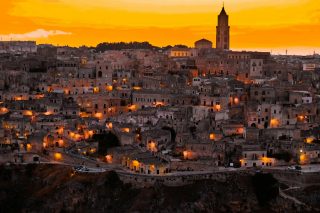
Ravenna, Italy: The Ultimate Travel Guide 2026
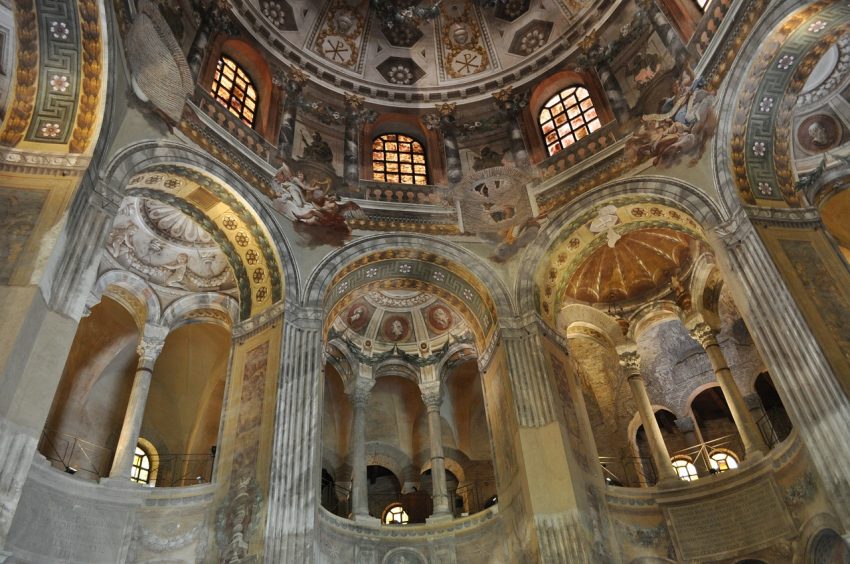
Ravenna
Ravenna

Situated on the eastern coast of Italy, nestled between San Marino and Bologna, Ravenna serves as the capital of the Ravenna province and stands as one of the larger cities in the Emilia-Romagna region. Throughout its illustrious history, Ravenna has held a position of great importance under various empires, including serving as the capital of the Western Roman Empire and later becoming the capital of the Kingdom of the Ostrogoths.

Due to this rich historical legacy, Ravenna boasts an abundance of remarkable ancient structures and has earned recognition with several UNESCO World Heritage Sites. The city is particularly renowned for its well-preserved Byzantine-era architecture and mosaics, making it a focal point for cultural enthusiasts. Additionally, its proximity to Bologna, Florence, and the Adriatic Sea, along with access to splendid coastal resorts, ensures that Ravenna remains a highly sought-after destination for tourists, offering a wealth of captivating attractions.

In the heart of the city, visitors can explore an array of ornate churches and basilicas, stroll through impressive squares, and even pay homage at the tomb of the legendary writer Dante Alighieri. Furthermore, the Ravenna Marina presents an enticing coastal retreat, providing an opportunity to unwind and bask in the radiant Adriatic sun.

TIP: If you are visiting Ravenna for just a day and want to make the most of your visit, you may want to consider taking a walking tour with a local guide.
This is one of the most complete and best-rated city tours that covers Ravenna’s UNESCO Monuments and Mosaics in about 3 hours.
If you prefer exploring at your own pace read our Complete Guide to Ravenna’ eight UNESCO Mosaic sites!.

Moira & Andy
Moira & Andy

Hey! We're Moira & Andy. From hiking the Camino to trips around Europe in Bert our campervan — we've been traveling together since retirement in 2020!

Read our full story here

Visiting Ravenna for the first time and wondering what are the top places to see in the city? In this complete guide, I share the best things to do in Ravenna on the first visit. To help you plan your trip, I have also included an interactive map and practical tips for visiting!

This website uses affiliate links which earn a small commission at no additional cost to you.

Powered by GetYourGuide

18 Best places to See in Ravenna

This complete guide to Ravenna not only tells you about the very best sights and tourist attractions for first-time visitors to the city but also provide insights into a few of our personal favorite things to do.

This is a practical guide to visiting the best places to see in Ravenna and is filled with tips and info that should answer all your questions!

1. Basilica di San Giovanni Evangelista

Basilica di San Giovanni Evangelista
CC BY-SA 3.0 / sailko
Basilica di San Giovanni Evangelista is a paleochristian church in Ravenna, traditionally founded in 424 AD after Empress Galla Placidia’s vow of thanks for surviving a perilous sea crossing. The approach is defined by a dramatic 14th-century Gothic portal, a medieval layer that contrasts with the basilica’s straightforward three-aisled interior. Inside, what lingers is a sense of survival: wartime bombing erased major decorative cycles, so you read the building through fragments and absences rather than a single focal point. Look along the walls for surviving medieval floor panels—knights, courtly figures, fantastical animals—that feel like snapshots of daily imagination underfoot. Visitors also notice the site’s odd relationship with the ground, shaped by centuries of subsidence.
Location: Basilica di San Giovanni Evangelista, Viale Luigi Carlo Farini, Ravenna, Province of Ravenna, Italy | Hours: Tuesday to Sunday: 10.30 – 16.30 pm | Price: Free | Website | Distance: 0.1km

We recommend to rent a car in Italy through Discover Cars, they compare prices and review multiple car rental agencies. Book your rental car here.

2. Arian Baptistery

Arian Baptistery Ravenna
CC BY-SA 3.0 / Flying Russian
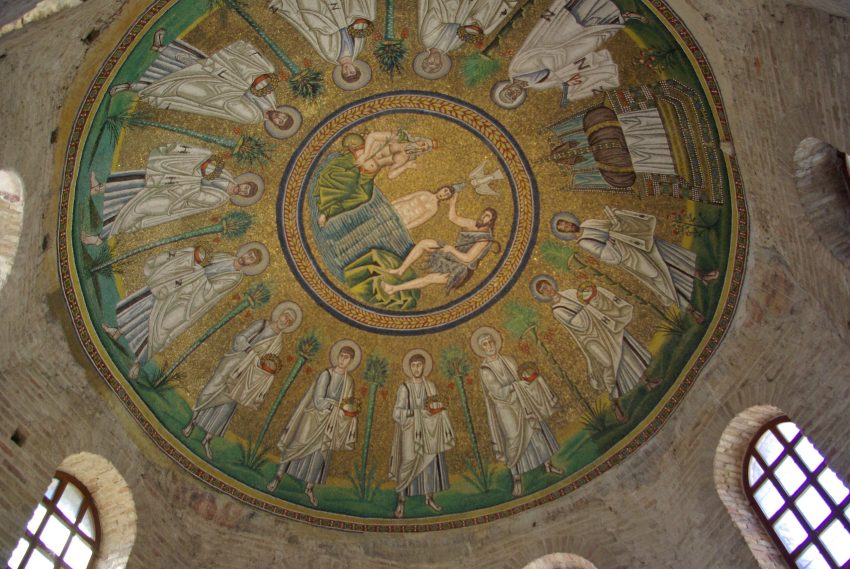
The Arian Baptistery in Ravenna is a compact late-5th-century baptistery linked to King Theodoric, built for the Arian court before being re-consecrated under Byzantine Orthodox rule. From a modest exterior on a small cobbled piazza, you step into a dim, intimate space where the dome mosaic dominates everything. Look up to the youthful, beardless Christ standing in the Jordan at the center, encircled by apostles processing toward a gemmed throne crowned with a cross and a hanging textile detail. The building now sits noticeably below today’s street level, a physical reminder of Ravenna’s subsidence that makes the interior feel sunken and hushed.
Location: Arian Baptistery, Piazzetta degli Ariani, Ravenna, Province of Ravenna, Italy | Hours: From Monday to Friday: 9 am – 12 pm Saturdays and Sundays: 9 am – 12 pm / 2 pm – 5 pm | Price: Adults: €3.00 | Website | Distance: 0.1km

Here is a complete selection of hotel options in Ravenna. Feel free to review each one and choose the stay that best suits your needs.

3. Basilica of Sant’Apollinare Nuovo

Basilica of SantApollinare Nuovo
CC BY-SA 4.0 / Alice90
The Basilica of Sant’Apollinare Nuovo is a late-5th/early-6th-century church on Via di Roma in Ravenna, built under Theodoric as an Arian palatine chapel and later converted to Orthodox worship under Byzantine rule. Its calm brick exterior and tall cylindrical bell tower give little warning of what’s inside: the nave walls run with long horizontal bands of mosaics that read like a continuous procession as you walk. Twin rows of columns topped with pulvini draw you forward toward the raised choir, while shifts in style hint at later revisions and changing doctrine. As the light moves, the gold backgrounds can shimmer and make different sections flare into focus.
Location: Basilica of Sant'Apollinare Nuovo, Via di Roma, Ravenna, Province of Ravenna, Italy | Hours: Daily: 9:00 – 19:00 | Price: €10.50 | Website | Distance: 0.2km

Traveling to a country with a different currency? Avoid ATM transaction fees and pay in local currency with a Wise Card. Having used it for over 5 years, we've saved loads on fees!

4. Museo Dante

Museo Dante Ravenna
Museo Dante Ravenna
CC BY-SA 3.0 / frankpul
Museo Dante is a compact museum in Ravenna dedicated to Dante Alighieri, created from a commemorative initiative begun in 1921 for the 600th anniversary of his death. Instead of a quiet memorial, it builds a clear narrative with a biographical timeline that links his life to the political world that shaped his exile. One of the most memorable rooms traces how “Dante’s face” was constructed over centuries, turning a repeated stern profile and laurel crown into a cultural symbol. Displays connected to the custody of his remains—containers and anniversary objects—make the story of remembrance feel tangible. Multimedia galleries then immerse you in the Divine Comedy’s three realms through sound and imagery, and visitors often call it short but carefully put together.
Location: Museo Dante, Via Dante Alighieri, Ravenna, Province of Ravenna, Italy | Hours: Tuesday to Sunday: 10 am – 5.30 pm | Price: Adults: €5.00 | Website | Distance: 0.3km

Click here to read our blog about Emilia-Romagna, Italy 2026: 7-Day Itinerary & Travel Guide

5. Piazza del Popolo

Piazza del Popolo Ravenna
CC BY-SA 4.0 / Clodette662000
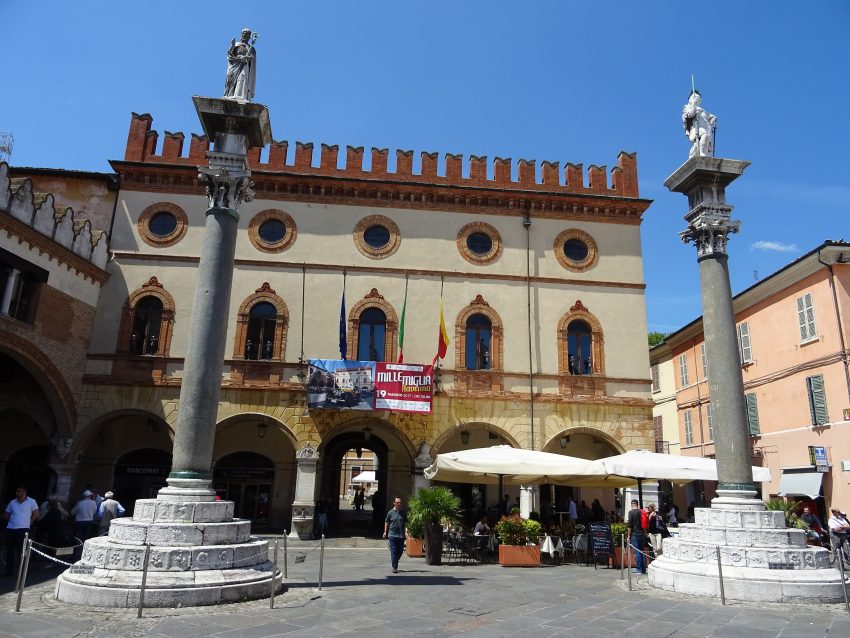
Piazza del Popolo is Ravenna’s civic square, an orderly open room where daily life unfolds between the municipality and other administrative palazzi. Its core took shape in the late 1200s under the Da Polenta family, then was enlarged and paved in 1470–80 when Venice took control, which helps explain its slightly Venetian sense of ceremony. Two prominent columns still mark the space, set on circular Roman plinths with carved details that reward a closer look, including zodiac imagery. Stand in the center and the square reads clearly—formal façades framing a calm middle where people pause for coffee, chat, and drift through the city’s routines.
Location: Piazza del Popolo, Piazza del Popolo, Ravenna Province of Ravenna, Italy | Hours: Open at all times as a public square. | Price: Free | Distance: 0.3km

Explore Ravenna at your own pace with our self-guided walking tour! Follow our curated route to discover must-see sights and local secrets that makes Ravenna one of the best places to visit in Italy.

6. Basilica of San Francesco

Basilica of San Francesco
CC BY-SA 3.0 / Wilfred Krause
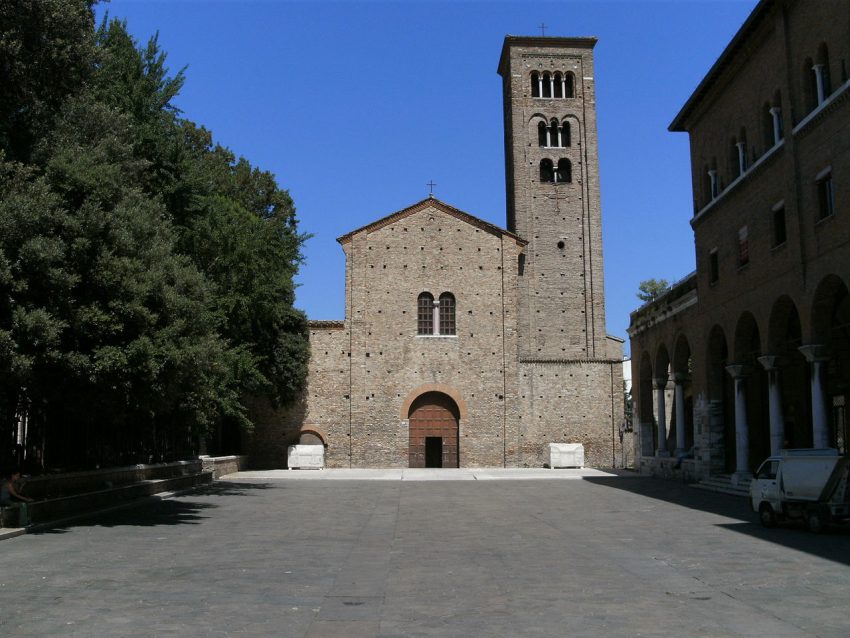
The Basilica of San Francesco is a restrained Romanesque church in Ravenna’s quiet Zone of Silence, remembered as the setting for Dante Alighieri’s funeral in 1321. Inside, three naves run between repeated columns, creating a measured, processional rhythm rather than ornate spectacle. The most arresting sight is the crypt beneath the altar: ground subsidence has left it permanently flooded, so you look down through a window onto water shimmering over a mosaic floor, sometimes with fish gliding through. Later chapels along the right side add pockets of sculpture and fresco that soften the basilica’s austere medieval feel.
Location: Basilica of Saint Francis, Piazza San Francesco, Ravenna, Province of Ravenna, Italy | Hours: Monday to Friday: 7 am – 12 pm and 3 pm – 6 pm Saturdays and Sundays: 7 am – 6.30 pm | Price: Free entry (donations may be possible on site). | Website | Distance: 0.3km

Explore Ravenna at your own pace with our self-guided walking tour! Follow our curated route to discover must-see sights and local secrets that makes Ravenna one of the best places to visit in Italy.

7. Dante’s Tomb

Tomba di Dante   Veduta frontale
Tomba di Dante Veduta frontale
CC BY-SA 3.0 / Veniero Rubboli
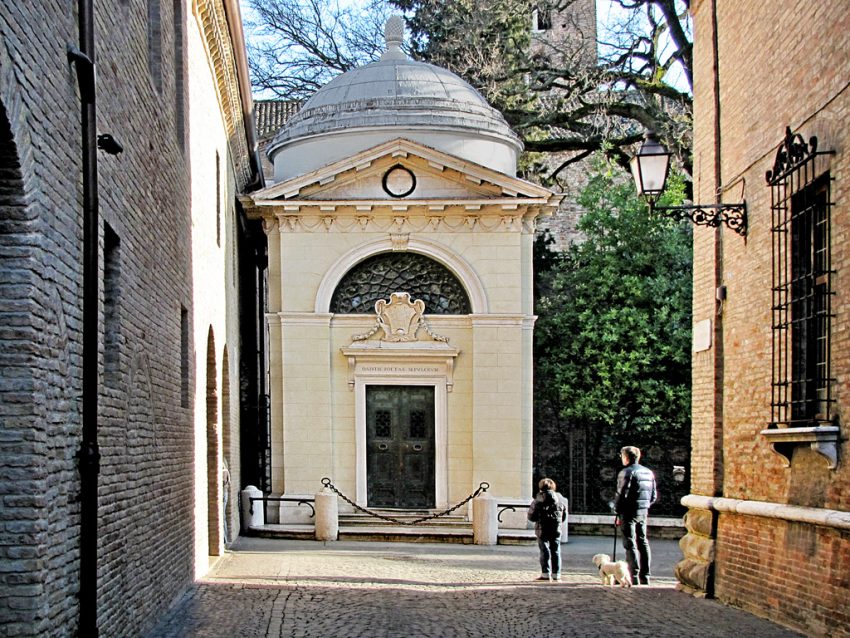
Dante’s Tomb in Ravenna is the poet’s resting place, set in a hushed, tree-framed enclave known as the “Zone of Silence,” where visitors instinctively soften their voices. Dante died here in 1321, and the site still carries the long tension of Ravenna safeguarding his remains while Florence tried to claim them. The small neoclassical tomb you see today was designed in the late 18th century by Camillo Morigia and is nicknamed the “sugar bowl” for its compact, rounded shape. Inside, the marble-lined interior is deliberately spare, drawing your attention to the sepulchre and a sculpted bas-relief portrait that gives the space a human focus.
Location: Dante Alighieri's tomb, Via Dante Alighieri, Ravenna, Province of Ravenna, Italy | Hours: Winter: Daily: 10:00 – 18:00; Summer: Daily: 10:00 – 19:00 | Price: Free | Website | Distance: 0.3km

Click here to read our blog about Complete Guide to Ravenna’s 8 UNESCO Mosaic Sites (2026)

8. MAR – Ravenna Art Museum

Ravenna Art Museum MAR
CC BY-SA 4.0 / Domenico Bressan
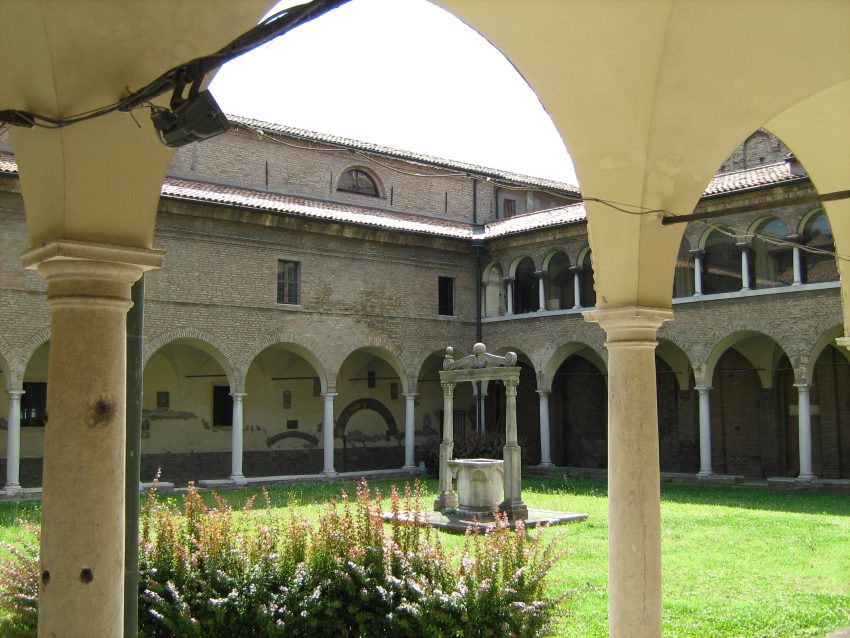
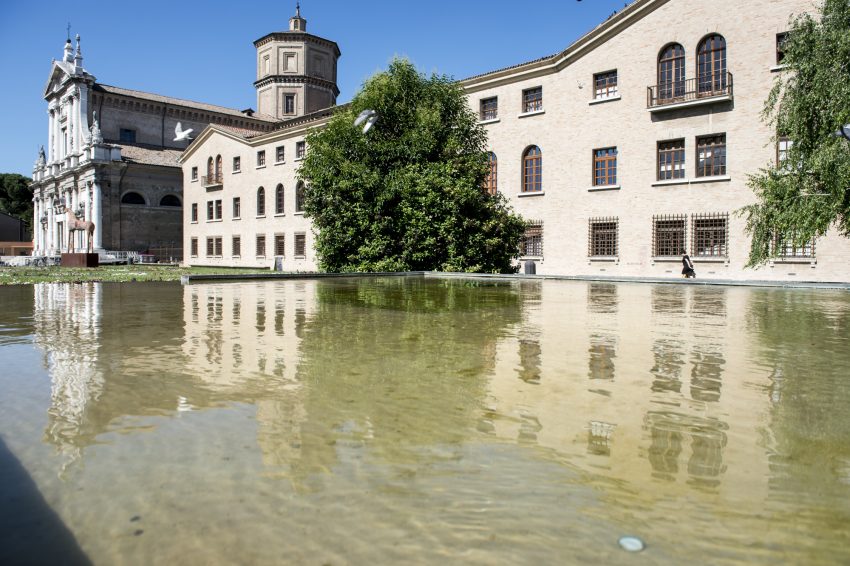
MAR – Ravenna Art Museum is Ravenna’s city museum for modern and contemporary art, set inside the Loggetta Lombardesca, a Renaissance cloistered complex once tied to the Santa Maria in Porto abbey. The visit begins with the architecture: covered walkways, a quiet courtyard, and soft light that slows your pace before you reach the galleries. Opened in 2002, MAR connects Ravenna’s long mosaic tradition to the present through striking contemporary mosaic works that feel experimental rather than devotional. Exhibitions rotate, so the mood can shift from one visit to the next, and many visitors note how easy it is to spend 1–2 hours lingering with the mosaic sections.
Location: MAR - Museo d’Arte della Città di Ravenna, Via di Roma, Ravenna, Province of Ravenna, Italy | Hours: Tuesday - Saturday: 9 a.m. - 6 p.m. Sunday and holydays: 2 p.m. - 6 p.m. closed on Monday | Price: €10.00 | Website | Distance: 0.5km

9. Ravenna Cathedral
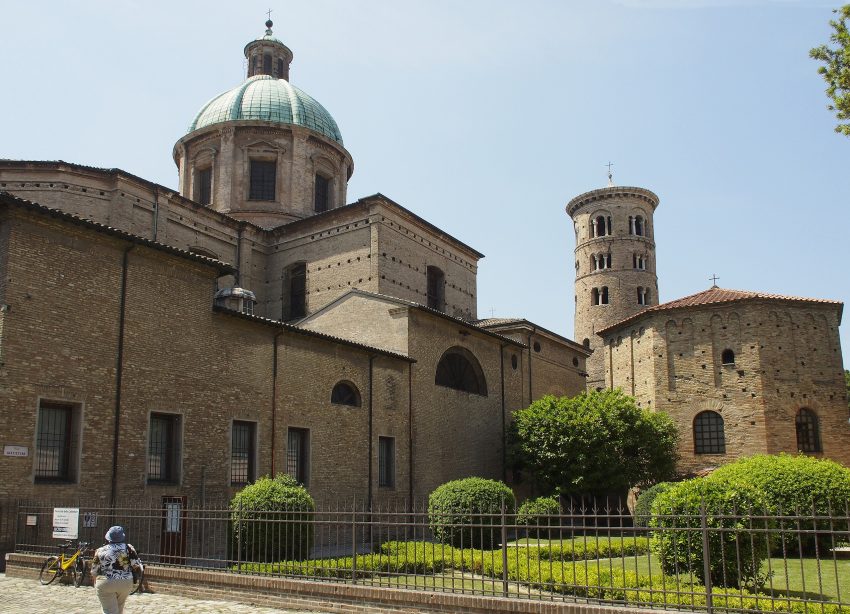
Cathedral of Ravenna
CC BY-SA 3.0 / Hajotthu
Ravenna Cathedral is the city’s principal church, a working duomo that anchors the cathedral quarter and sits beside the Neonian Baptistery, with the Archbishop’s Museum close by. Its exterior is deliberately restrained, but stepping inside slows your pace and shifts the mood toward quiet, everyday devotion rather than spectacle. The site’s significance is layered: it reaches back to Ravenna’s early Christian importance, yet what you see reflects centuries of rebuilding and changing taste. Visitors tend to remember the calm central nave, the side chapels with candles and local devotional corners, and the sense of the city functioning around a sacred space. With thousands of reviews averaging 4.8, it’s widely appreciated for atmosphere as much as art.
Location: Cathedral of the Resurrection of Jesus Christ, Piazza Duomo, Ravenna, Province of Ravenna, Italy | Hours: Winter: Weekdays: 7.30 am – 5 pm; Sundays and public holidays: 7.30 am – 7.30 pm Summer: Weekdays: 7.30 am – 6 pm; Sundays and public holidays: 7.30 am – 7.30 pm | Price: Free admission. | Website | Distance: 0.6km

10. Neonian Baptistery
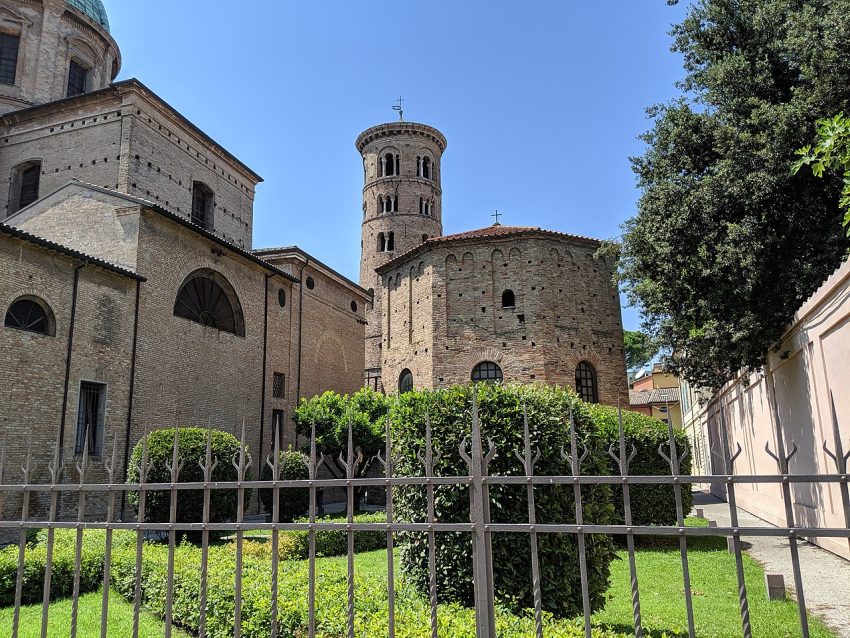
Neonian Baptistery
Neonian Baptistery
CC BY-SA 4.0 / Contheman
The Neonian Baptistery (also called the Orthodox Baptistery) is a small, octagonal early-5th-century baptismal building beside Ravenna’s cathedral, prized for how intact its late antique interior remains. Outside it’s plain brick, but inside the cupola erupts in shimmering mosaics that pull your eyes upward as light catches the tesserae. The dome is arranged in rings: an outer band of symbolic motifs, then twelve apostles in two circling processions led by Peter and Paul, and at the center a monumental scene of Christ’s baptism in the Jordan. Beneath it all sits an octagonal font, rebuilt in the 6th century with older fragments, reminding you this was made for ritual, not display.
Location: Battistero Neoniano (o degli Ortodossi), Piazza Arcivescovado, Ravenna, Province of Ravenna, Italy | Hours: Winter: Daily: 10:00 – 17:00; Summer: Daily: 09:00 – 19:00 | Price: €10.50 - The combined ticket includes the entry to Basilica of Sant’Apollinare Nuovo, Neonian Baptistery (), Basilica of San Vitale, Mausoleum of Galla Placidia () and Archiepiscopal Museum and Chapel. | Website | Distance: 0.6km

11. Archbishop's Museum
Archiepiscopal Museum
CC BY-SA 3.0 / Hajotthu
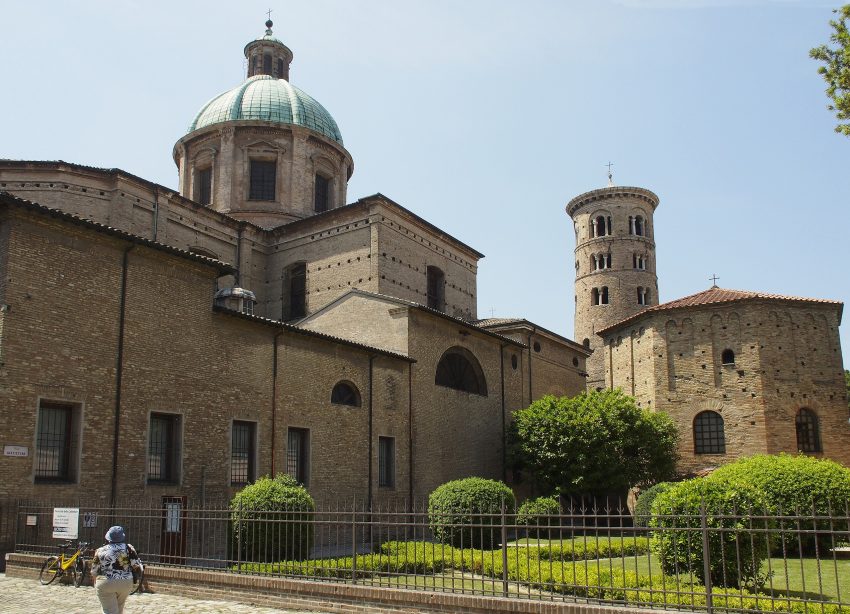
The Archbishop’s Museum in Ravenna is a compact collection inside the former Archbishop’s Palace, closely tied to the cathedral complex and shaped by centuries of rebuilding since late antiquity. Its most memorable work is the 6th-century Chair of Bishop Maximian, an ivory seat covered in densely carved narrative panels that rewards slow, close viewing. Nearby are liturgical and administrative objects—such as a silver cross linked to Archbishop Agnello and a carved marble slab recording an Easter calendar—that make church life feel tangible. Look, too, for the headless Byzantine-era statue that hints at imperial power, and the small chapel many visitors single out as unexpectedly beautiful.
Location: P.za Arcivescovado, 1, 48121 Ravenna RA, Italy | Hours: Daily: 9.00-19.00 | Price: €10.50 - The ticket is cumulative only and includes: the Basilica of Sant'Apollinare Nuovo, the Neonian Baptistery (), the Basilica of San Vitale, the Mausoleum of Galla Placidia (), the Museum and the Archbishop's Chapel. | Distance: 0.6km

12. Archbishop's Chapel of St. Andrew
Archbishops Chapel of St. Andrew
CC BY-SA 32.0 / =Stefano Suozzo
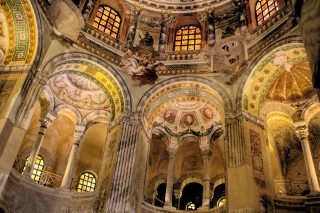
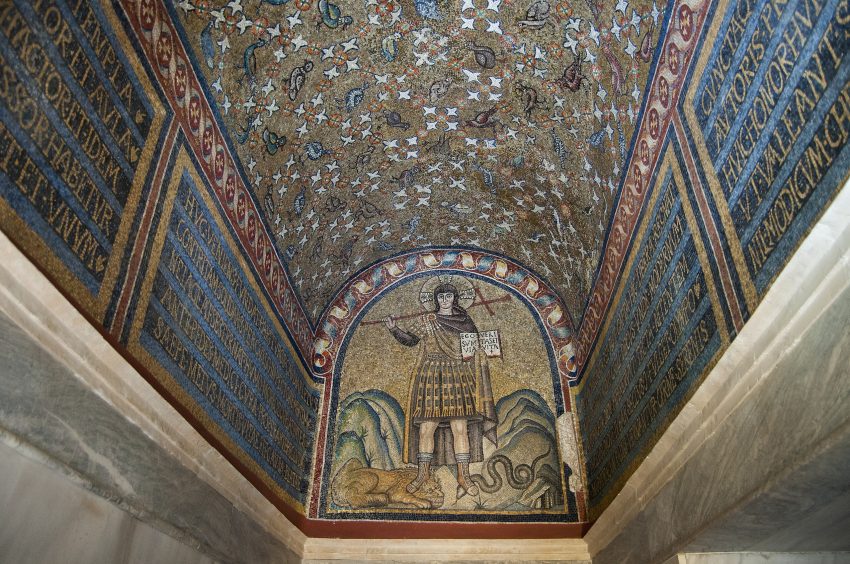
Upstairs in Ravenna’s Archbishop’s Museum, the Archbishop’s Chapel of St. Andrew is a small 6th-century private oratory built under Bishop Peter II during Theodoric’s rule. Its tight, jewel-box interior is covered in mosaics that feel unusually immediate at arm’s length, turning walls and vaults into a surrounding field of symbols and figures. The imagery reads as a firm statement of Catholic orthodoxy in a city shaped by Arian power, with a striking Christ shown as a warrior bearing a cross. After Byzantine control, the chapel was rededicated to St. Andrew, linked to relics said to have arrived from Constantinople. Don’t miss the vestibule’s Latin inscription about light, which sharpens the chapel’s message.
Location: Archbishop's Chapel of St. Andrew, Piazza Arcivescovado, Ravenna, Province of Ravenna, Italy | Hours: Every day: 9.00 – 19.00 | Price: €10.50 - The ticket is cumulative only and includes: the Basilica of Sant'Apollinare Nuovo, the Neonian Baptistery (), the Basilica of San Vitale, the Mausoleum of Galla Placidia (), the Museum and the Archbishop's Chapel. | Website | Distance: 0.6km

13. National Museum of Ravenna
National Museum of Ravenna
CC BY-SA 4.0 / Gianni Careddu
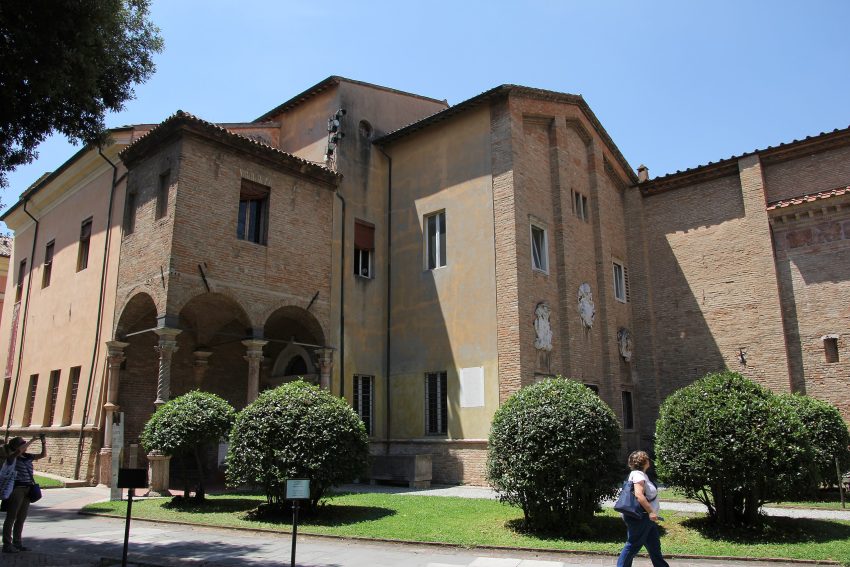
Set beside San Vitale, the National Museum of Ravenna fills a former Benedictine monastery with Renaissance cloisters and quiet monastic rooms, giving the city’s art a more tactile, everyday counterpoint to mosaic splendor. In the first cloister you’ll walk among Roman inscriptions, stelae, and sarcophagi, including an Apotheosis of Augustus relief and Greek herms recovered from the sea. The second cloister tracks the shift into late antique and early Christian carving, with the Traditio Legis sarcophagus and Theodoric-era “butterfly” capitals. Upstairs, smaller-scale treasures—ivories, icons, ceramics, and even an 18th-century pharmacy interior—lead to a former refectory with a fresco cycle attributed to Pietro da Rimini.
Location: National Museum of Ravenna, Via San Vitale, Ravenna, Province of Ravenna, Italy | Hours: Tuesday, Thursday and Friday: 8.30 am – 7.30 pm Wednesday: 2 pm – 7.30 pm Saturday and Sunday: 8.30 am – 2 pm Every 1st Sunday of the month: 8.30 am – 7.30 pm (free admission) | Price: Adults: €6.00 | Website | Distance: 0.6km

14. Basilica of San Vitale
Basilica di San Vitale
CC BY-SA 4.0 / Ernesto Sguotti
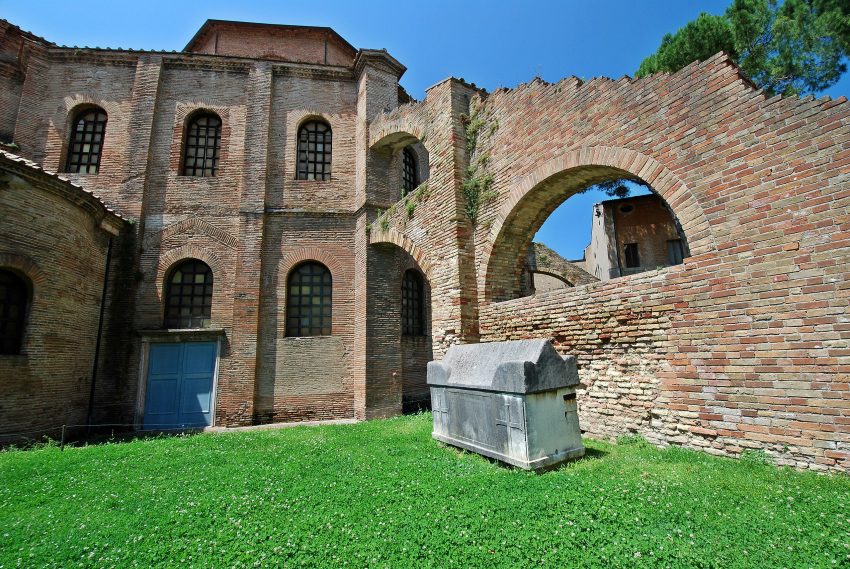
In Ravenna, Italy, the Basilica of San Vitale is a 6th-century church in the UNESCO core whose octagonal, centrally planned interior turns architecture and mosaics into a single, immersive statement of Byzantine-era power and faith. Outside it reads as restrained brickwork, but inside marble and gold tesserae catch the light and shift as you move through the ambulatory and up toward the raised gallery. The presbytery and apse hold the most arresting scenes, including the courtly panels of Emperor Justinian and Empress Theodora set against radiant backgrounds. Near the presbytery, a circular marble labyrinth on the floor rewards anyone who remembers to look down.
Location: Basilica of San Vitale, Via San Vitale, Ravenna, Province of Ravenna, Italy | Hours: Every day: 9 am – 7 pm | Price: Adults: € 10.50 | Website | Distance: 0.6km

15. Mausoleum of Galla Placidia
Mausoleo di Galla Placidia
CC BY-SA 4.0 / Ernesto Sguotti
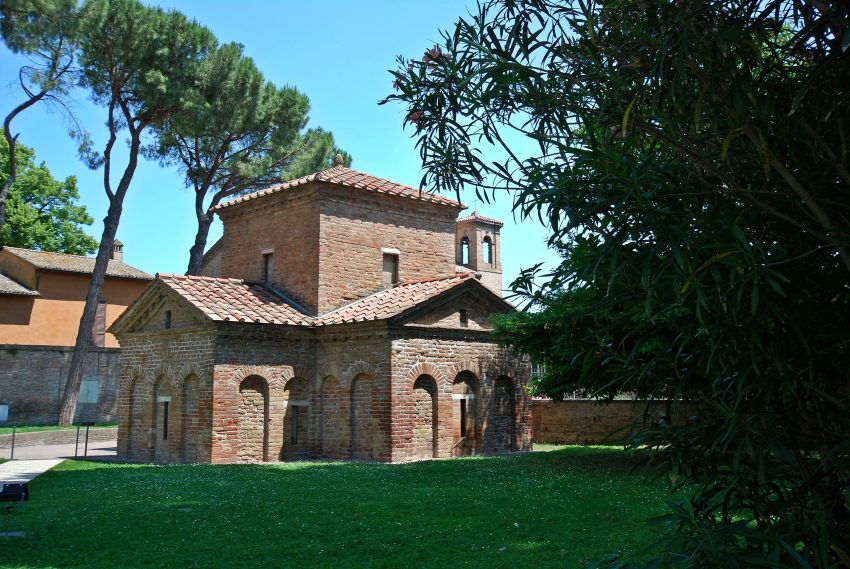
The Mausoleum of Galla Placidia in Ravenna is a compact 5th-century early Christian monument commissioned by Empress Galla Placidia, remembered less for its plain brick exterior than for the interior mosaic cycle that shaped Western sacred art. You step through a low entrance into a dim, cool chamber where small alabaster windows turn the light honey-gold and make the walls flicker with colour. Look up to the deep blue dome scattered with stars, centred on a golden cross with the Evangelists set around it. In the lunettes, scenes like Christ as the Good Shepherd and Saint Lawrence with his gridiron bring the themes of salvation and martyrdom into sharp focus, while marble sarcophagi in the arms of the cross quietly underline its funerary purpose.
Location: Mausoleo di Galla Placidia, Via San Vitale, Ravenna, Province of Ravenna, Italy | Hours: March to November: Every day 9.00-19.00 last entry 18.45 November to March: Every day 10.00-17.00 last entry 16.45 | Price: €10.50 | Website | Distance: 0.6km

16. Domus dei Tappeti di Pietra
Domus dei Tappeti di Pietra
CC BY-SA 4.0 / Simone Masini
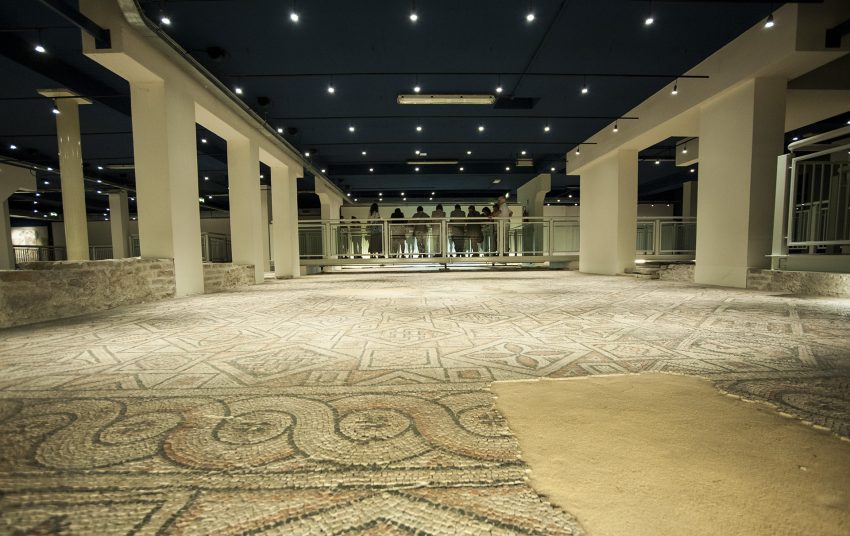
Beneath the late-baroque Church of Sant’Eufemia, the Domus dei Tappeti di Pietra is an underground archaeological site where you view a substantial late antique residence from raised walkways, as if hovering above its rooms. Discovered in the early 1990s during excavation for an underground car park, it revealed a multi-layered complex rebuilt from Roman through Byzantine times, reshaping what was known about this part of Ravenna. What stays with visitors are the “stone carpet” floors—polychrome mosaics and marble inlays spread across roughly 700 square metres—preserved with striking clarity. The standout is a banquet-hall mosaic often called the Dance of the Geniuses of the Seasons, alongside traces of a paved Roman road threading through the plan.
Location: Chiesa di Sant'Eufemia-Domus dei Tappeti di Pietra Via Gian Battista Barbiani, 16 48121 Ravenna RA Italy | Hours: Daily: 10:00 – 18:30 | Price: Adults €4.00 | Website | Distance: 0.7km

17. Mausoleum of Theodoric
Mausoleum of Theodoric
CC BY-SA 3.0 / Flying Russian
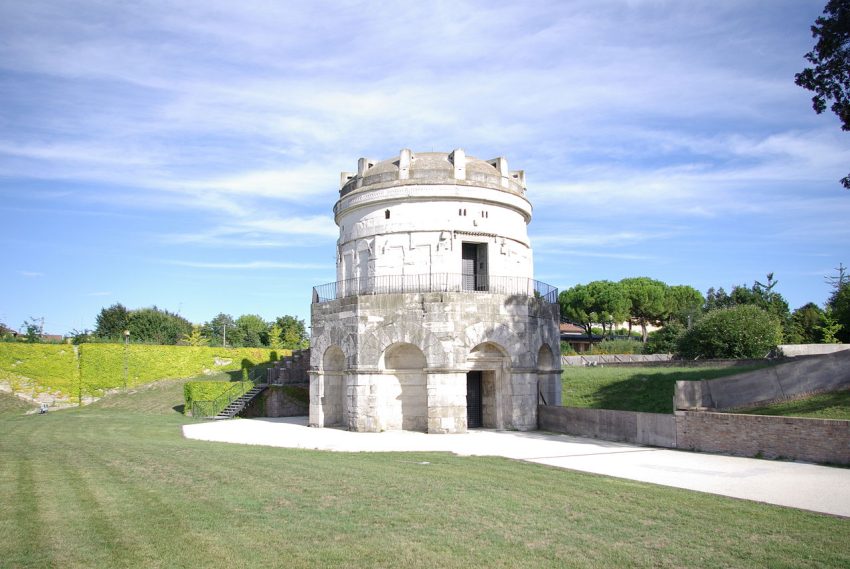
Set in a broad park just outside Ravenna’s mosaic-heavy center, the Mausoleum of Theodoric is a UNESCO-listed royal tomb built in 520 AD for Theodoric the Great. Its severe, sculptural presence comes from precise blocks of pale Aurisina stone laid without mortar, forming two stacked decagonal levels that read as part fortress, part chapel. The detail visitors remember is the roof: an enormous monolithic stone dome, ringed with carved “handles” and marked by a long crack that has sparked lightning legends. Inside, the lower chamber feels spare and hushed, while the upper room centers on a porphyry basin traditionally linked to the burial.
Location: Mausoleum of Theodoric, Via delle Industrie, Ravenna, Province of Ravenna, Italy | Hours: From Monday to Thursday 8.30am - 1.30pm (last entry at 1pm). From Friday to Sunday 8.30am - 7pm (last entry 6.30pm) | Price: €5.00 | Website | Distance: 0.9km

18. Basilica of Sant’Apollinare in Classe

Basilica of SantApollinare in Classe
CC BY-SA 4.0 / Ernesto Sguotti
South of Ravenna near Classe, the Basilica of Sant’Apollinare in Classe is a 6th‑century UNESCO church that still reads clearly as early Christian power and theology in brick, space, and light. The approach across open ground makes the cylindrical bell tower feel like a landmark long before you reach the plain façade. Inside, a long nave creates a slow, processional rhythm, with ancient sarcophagi along the aisles and pale marble columns topped by leafy capitals and Byzantine-style blocks. The apse is the reason to linger: Saint Apollinaris prays in a green meadow as twelve white lambs advance below a starry blue vault with a jeweled cross, Alpha and Omega, and transfiguration imagery.
Location: Basilica di Sant'Apollinare in Classe, Via Romea Sud, Classe, Province of Ravenna, Italy | Hours: From Monday to Saturday: 8.30 am – 7.30 pm Sundays and holidays: 1.30 pm – 7.30 pm Last admission: 30 minutes before closing time. | Price: Adults: €5.00 | Website | Combo Tickets for Classis Museum and Santa Apollinare Cathedral | Distance: 4.8km
Powered by GetYourGuide

Best Day Trips from Ravenna

A day trip from Ravenna offers the perfect opportunity to escape the urban rhythm and discover the surrounding region's charm. Whether you're drawn to scenic countryside, historic villages, or cultural landmarks, the area around Ravenna provides a variety of easy-to-reach destinations ideal for a one-day itinerary. If you are looking to rent a car in Italy I recommend having a look at Discover Cars, first, as they compare prices and review multiple car rental agencies for you.

1. Rimini
riminiItaly
riminiItaly
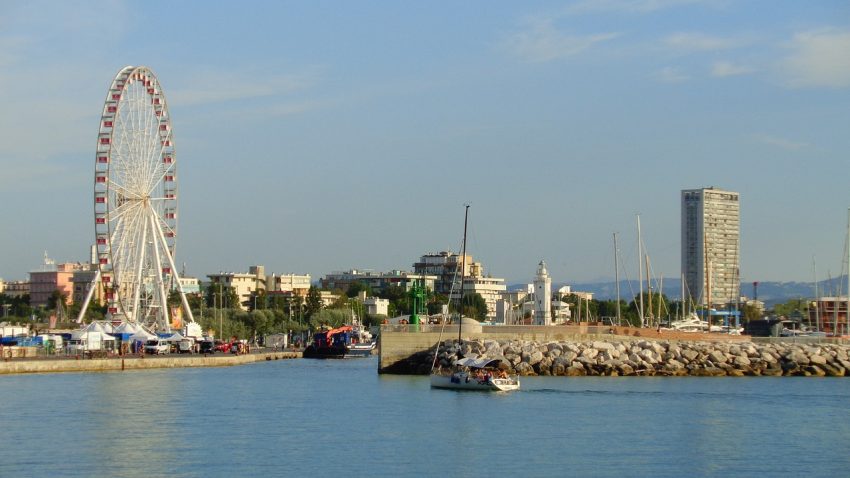
Located in the Emilia-Romagna region, Rimini boasts a rich history dating back to its Roman foundation in 268 BC. This coastal gem spans over 15 kilometers of pristine beaches, rendering it a favoured destination for seaside enthusiasts. Notably, the renowned filmmaker Federico Fellini hailed from this city, which is celebrated for its lively nightlife and historic landmarks, including the iconic…
Visiting Rimini
Powered by GetYourGuide

2. San Marino

Visiting San Marino
Visiting San Marino
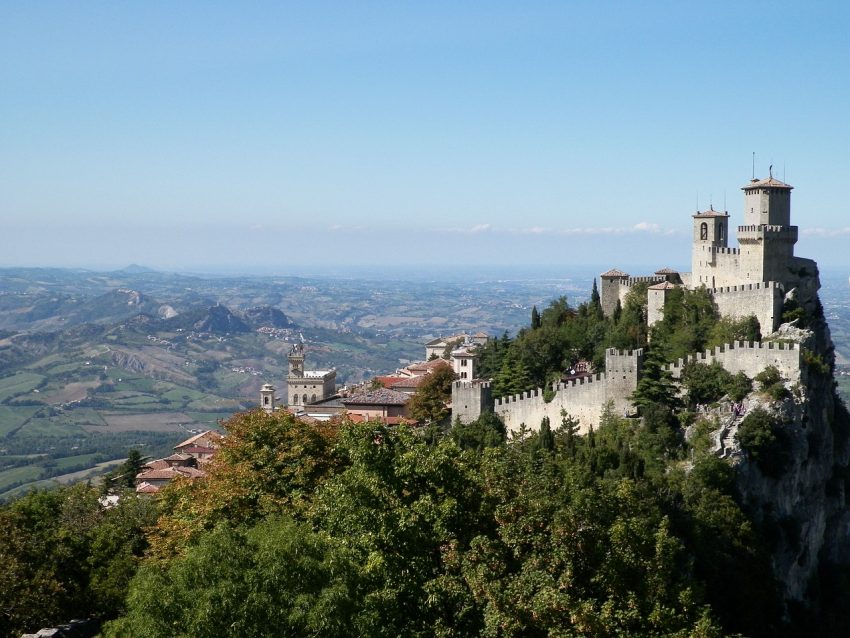
San Marino's origins are rooted in the captivating legend of Saint Marinus, who established the community and republic in AD 301 after seeking refuge on Mount Titano. The sovereignty of San Marino was confirmed after Italian Unification, possibly in recognition of their assistance to Garibaldi, a prominent leader in the Risorgimento movement. With the exception of Vatican City, San Marino…
Visiting San Marino
Powered by GetYourGuide

3. Ferrara

ferrara
ferrara
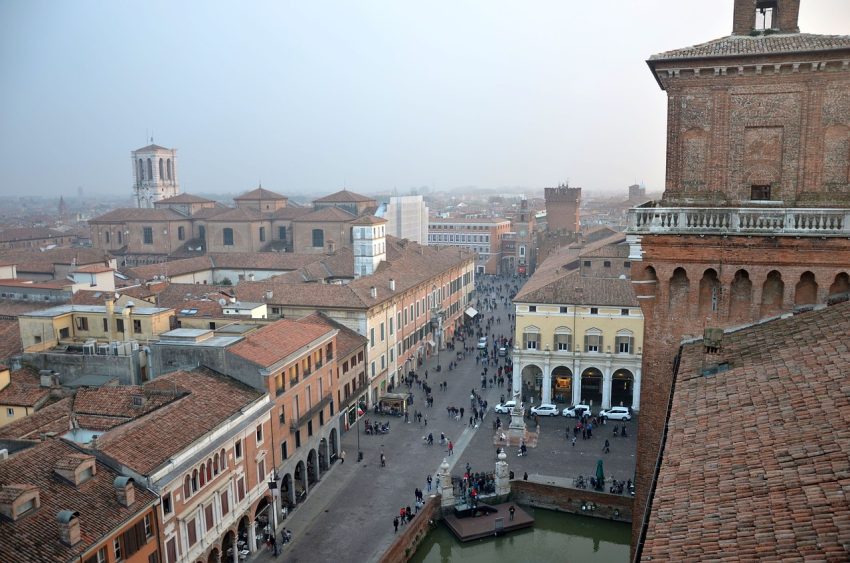
Ferrara is a city located in the Emilia-Romagna region of Italy, situated near the eastern Adriatic coast and positioned at the top of Italy's boot-shaped peninsula. This charming city is recognized as a UNESCO World Heritage site. For a period of three centuries, Ferrara was under the rule of the Este family, whose Renaissance court was renowned as one of…
Visiting Ferrara
Powered by GetYourGuide

4. Bologna

bologna
bologna
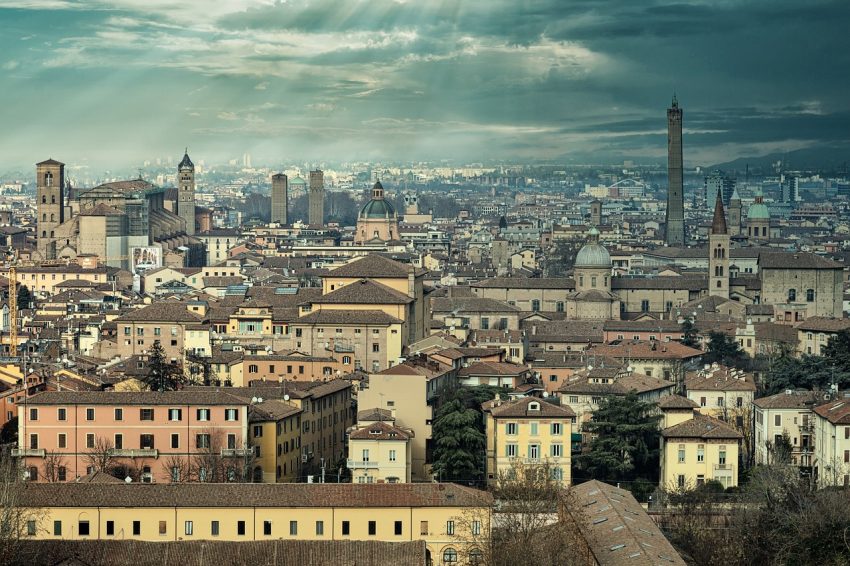
Bologna, a captivating city, holds the distinction of being the capital and largest city of the Emilia-Romagna region. Renowned by many Italians as the second most beautiful city after Venice, it boasts a rich heritage and a vibrant atmosphere. Bologna's charm lies in its relaxed and stress-free lifestyle, accompanied by a warm and lively ambiance. Its historic center, one of…
Visiting Bologna
Powered by GetYourGuide

5. Modena

Piazza Grande a Modena
CC BY-SA 4.0 / Albypino
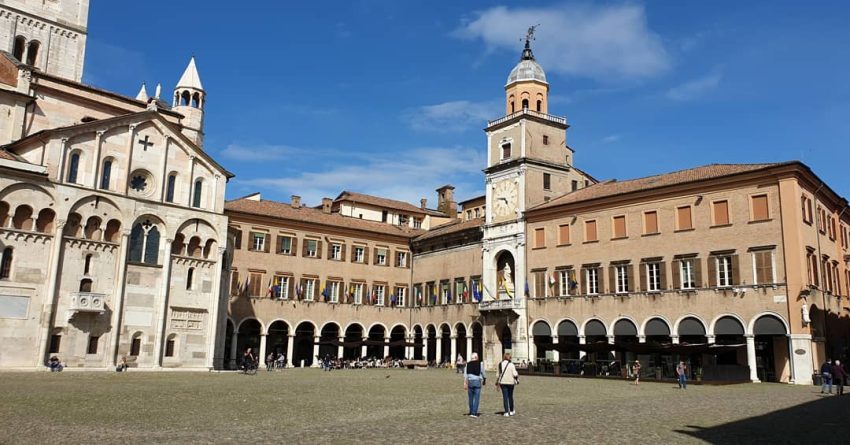
Nestled in the heart of the Emilia-Romagna region in northern Italy, Modena is renowned for its delectable cuisine, a reputation rooted in its barrel-aged balsamic vinegar and exquisite cheeses. Culinary enthusiasts journey to this medieval city to savor tastes that embody the region's unique flavors. Yet, the city's allure goes beyond its gastronomic delights. Its center, a captivating blend of…
Visiting Modena
Powered by GetYourGuide

6. Florence

Florence
Florence
Florence, one of Italy's most renowned cities, is a must-visit destination on the tourist circuit. Its breath-taking Renaissance architecture, charming streets, and picturesque buildings make it a captivating spot for travellers. Art lovers will find themselves in paradise with an abundance of galleries to explore, offering a diverse range of masterpieces. The city's magnificent Renaissance churches also provide a fascinating glimpse…
Visiting Florence
Powered by GetYourGuide

7. Arezzo

Arezzo
Arezzo
CC BY-SA 4.0 / Sailko
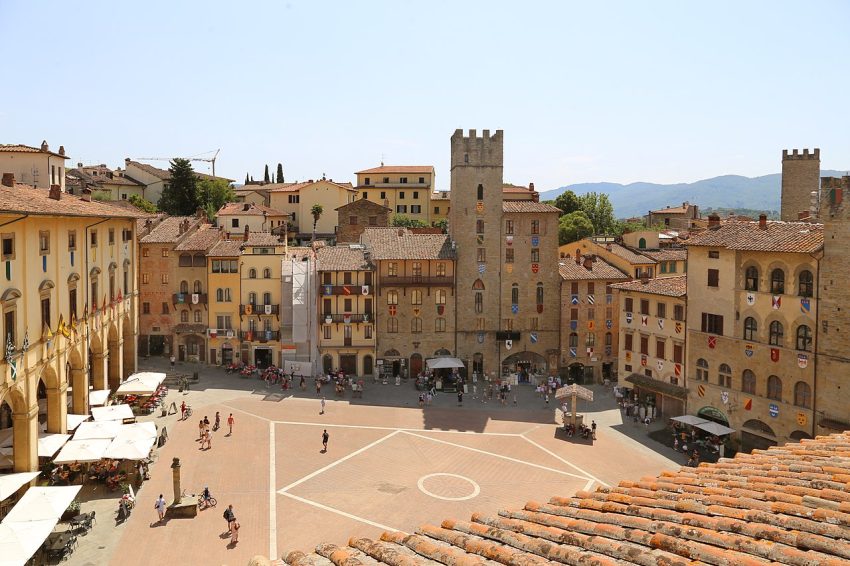
Situated in the south-eastern region of Tuscany, Arezzo is perched prominently atop a hill, at the intersection of four valleys: Val Tiberina, Casentino, Valdarno, and Valdichiana. This locale has deep historical significance within the Tuscan landscape, evidenced by the wealth of archaeological finds, such as stone tools and the discovery of the Paleolithic-era "Man of the Elm." The city's roots…
Visiting Arezzo
Powered by GetYourGuide

8. Padova

Padova Italy
Padova Italy
Padova or in English Padua is a city in North Eastern Italy, and the capital of the province of the same name. It is located centrally in the Veneto region, between Venice on one side and Verona on the other. Famous as the backdrop for Shakespeare's "The Taming of the Shrew," Padua is particularly distinguished for its 14th-century Scrovegni Chapel…
Visiting Padova
Powered by GetYourGuide

9. Venice

venice rialta bridge
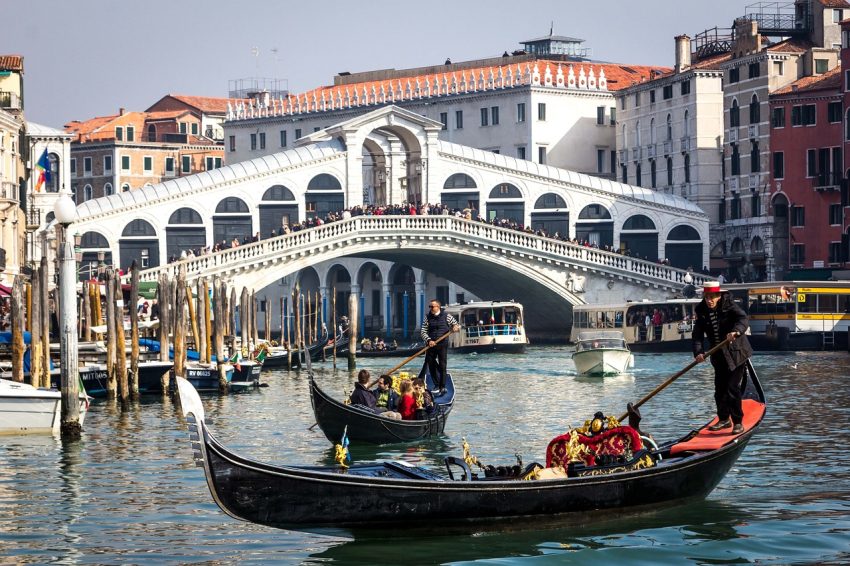
Venice is one of Italy’s most picturesque cities. Beautiful floating palaces of stone surrounded by an ancient network of canals, built on a group of 118 islands and these small islands are linked with 400 bridges. These islands are located in the Venetian Lagoon, which sits just off of the mainland of Italy. With its Gothic architecture, Renaissance and Baroque buildings,…
Visiting Venice
Powered by GetYourGuide

10. Gubbio

umbria gubbio
umbria gubbio
Nestled amidst the rugged terrain of the Apennine Mountains, Medieval Gubbio boasts a picturesque setting approximately 25 miles northeast of the bustling capital of Umbria, Perugia. To the north and east, the landscape stretches out into vast expanses until reaching the border with the neighboring region of Le Marche. This ancient land, adorned with charming squares and majestic stone palaces,…
Visiting Gubbio
Powered by GetYourGuide

Where to Stay in Ravenna

Staying in the historic center offers the best access to Ravenna’s famous Byzantine mosaics, UNESCO-listed churches, and charming pedestrian streets. For a quieter stay, accommodations near the Adriatic coast provide a more relaxed atmosphere while still being within reach of the city’s cultural sites.

A 2 to 3-day stay is ideal for visiting the mosaics, Dante’s Tomb, and enjoying the local cuisine. A 4-day stay allows for a more leisurely exploration, including day trips to Bologna, Ferrara, or the nearby beaches.

Using the our Hotel and Accomodation map, you can compare hotels and short-term rental accommodations in Ravenna. Simply insert your travel dates and group size, and you’ll see the best deals for your stay.

Ravenna Accommodation Map

Best Time to Visit Ravenna

The best time to visit Ravenna, Italy, depends on your preferences for weather, crowds, and activities. Here’s a breakdown of the seasons:

  1. Spring (March to May): Spring is a beautiful time to visit Ravenna when the weather starts to warm up, and the city’s gardens and parks burst into bloom. Temperatures are pleasant, making it ideal for exploring outdoor attractions like the UNESCO World Heritage sites of Ravenna’s ancient mosaics and historical monuments. Spring also sees fewer tourists compared to the summer months, allowing for a more relaxed experience.
  2. Summer (June to August): Summer is the peak tourist season in Ravenna, characterized by warm temperatures and sunny days. This is the best time for beachgoers, as Ravenna is located near the Adriatic Sea, offering opportunities for sunbathing and swimming. However, the city can get crowded during this time, especially in July and August, and accommodation prices may be higher. If you don’t mind the crowds and enjoy lively atmospheres, summer can still be a great time to visit.
  3. Fall (September to November): Fall is another excellent time to visit Ravenna, as the weather remains pleasant, and the summer crowds begin to thin out. This season is perfect for exploring the city’s cultural attractions, such as its historic churches, mausoleums, and museums, without the long lines. Fall also brings harvest festivals and culinary events, allowing visitors to indulge in delicious local cuisine and wines.
  4. Winter (December to February): Winter in Ravenna is relatively mild compared to other parts of Europe, with temperatures rarely dropping below freezing. While the weather may be cooler and occasional rainfall is possible, winter still offers opportunities to explore the city’s indoor attractions, including its Byzantine mosaics and art galleries, without the crowds. Additionally, winter is a great time to experience Ravenna’s festive atmosphere, with Christmas markets and seasonal events taking place throughout the city.

Ultimately, the best time to visit Ravenna depends on your preferences for weather, activities, and crowds. Whether you prefer the lively atmosphere of summer or the peaceful ambiance of the shoulder seasons, Ravenna offers something for every traveler throughout the year.

Annual Weather Overview

  • January 9°C
  • February 11°C
  • March 13°C
  • April 16°C
  • May 23°C
  • June 26°C
  • July 29°C
  • August 28°C
  • September 25°C
  • October 20°C
  • November 14°C
  • December 9°C

How to get to Ravenna

Getting to Ravenna by Plane

The nearest airport to Ravenna is located in Forlì. Ryanair operates flights to this airport, which they refer to as Bologna Forlì, from the UK and Ireland. During the summer, there may be direct bus connections from the airport to Ravenna. Alternatively, you can take the shuttle bus to Forlì station and transfer there to another bus operated by the same company, ATR, which will transport you to Ravenna. For detailed timetables and information, you can visit ATR's website (please check the links panel for their website). Keep in mind that taking the train is also an option, although it may take longer, as you'll likely need to change at Faenza or Castel Bolognese. Other nearby airports that can be used to access Ravenna include Bologna and Rimini.

Getting to Ravenna by Train

Ravenna is situated on a relatively slow railway line from Bologna, with regional train travel taking about an hour and twenty minutes. Bologna offers good connections with the Italian rail network. Trains traveling from Bologna continue south to Rimini and other coastal resorts. As your train approaches Ravenna from the direction of Bologna, you'll be able to spot the Mausoleum of Theodoric on the left, a white cylindrical tomb. When arriving in Ravenna by train, you can easily walk into the historic centre, which is approximately a ten-minute walk. Just cross the road outside the railway station and head straight along Viale Farini and then Via Diaz until you reach Piazza del Popolo. The tourist information office is located a few minutes further, to the right, and it is well-signposted.

Getting Around Ravenna

Ravenna’s bus services are operated by ATM (please refer to the links panel for timetables). At the time of writing, an urban bus ticket costs €1 and is valid for an hour. You can purchase tickets in advance at news kiosks or bars and validate them in the machine when you board the bus.

Local residents in Ravenna often use bicycles to navigate the city, making use of the cobbled pedestrianized streets and cycle lanes for longer trips. The tourist information office offers bicycles that can be borrowed free of charge. Additionally, there is a bike rental office just outside the railway station on the left, which also serves as a left luggage office.

More from this area