Funchal (Madeira), Portugal: The Ultimate Travel Guide 2026
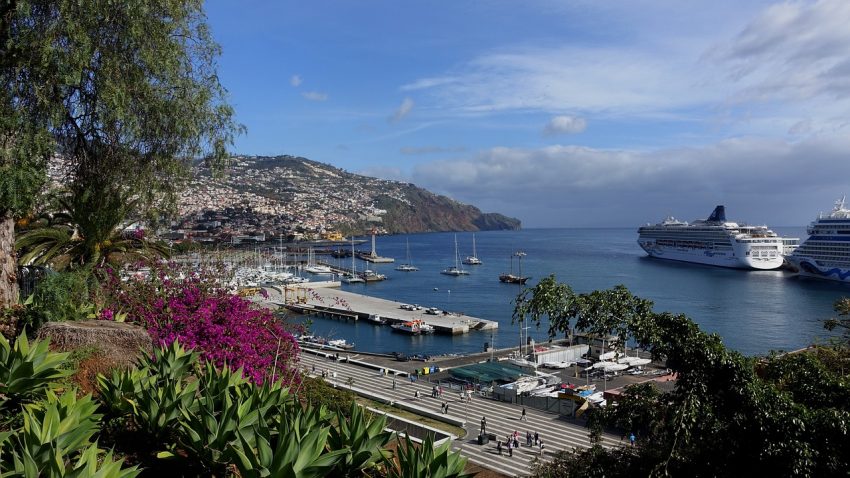
Funchal Madiera
Funchal Madiera

The Portuguese archipelago of Madeira, consisting of two inhabited islands, Madeira and Porto Santo, along with the uninhabited islets of Desertas and Selvagens, has a rich history veiled in mystery. Unlike its more prominent counterpart, the Azores archipelago, Madeira is located just 500 miles off the African coast. Discovered by the Portuguese in 1420, these volcanic islands swiftly became crucial agricultural hubs, cultivating a diverse array of fruits, wheat, and sugar cane. This discovery marked the beginning of Madeira's historical significance and its role in contributing to Portugal's economic and agricultural endeavors.

Situated on a substantial incline overlooking the Atlantic and designed in the form of a natural amphitheater, Funchal stands as the primary hub for tourism, commerce, and culture in Madeira. Attaining city status on August 21, 1508, through the royal charter of King Manuel I, the capital city of this archipelago boasts a rich history spanning centuries, marked by enduring traditions, cultural richness, and a cosmopolitan European influence. Despite its evolution, Funchal maintains a harmonious relationship with the lush nature that envelops it.

The town derives its name from the aromatic wild herb, historically referred to as fennel (Foeniculum Vulgare), which thrived abundantly during its founding. Over time, essential regional products such as sugar and wine, symbolized in the municipal coat of arms and continuing as emblematic Madeiran commodities, played a pivotal role in Funchal’s economic prosperity, establishing it as a pivotal trade centre in the heart of the Atlantic.

Encompassing an area of 76.15 km², the municipality consists of ten parishes: Imaculado Coração de Maria, Monte, Santa Luzia, Santa Maria Maior, Santo António, São Gonçalo, São Martinho, São Pedro, São Roque, and Sé. Throughout this expansive territory, one can encounter a wealth of historical monuments, museums, recreational spaces, lush gardens, and scenic viewpoints. Embark on a journey of exploration in Funchal!

Table of Contents

History of Funchal (Madeira)

The History of Funchal

Funchal, the vibrant capital of Madeira, has evolved from a remote Atlantic outpost into a thriving maritime, cultural, and tourism centre. Its history spans more than six centuries, shaped by explorers, traders, settlers, and travellers who recognised the island’s fertile land, strategic location, and natural beauty. Over time, Funchal transformed from a dense patch of fennel-covered hillsides into one of the most important ports of the Atlantic world.

Early Discovery and Settlement (15th Century)

The origins of Funchal date back to the early 1400s, when Portuguese navigators João Gonçalves Zarco, Tristão Vaz Teixeira, and Bartolomeu Perestrelo discovered the Madeira archipelago. Upon landing on the southern coast, explorers found the slopes covered in wild fennel—known in Portuguese as “funcho.” This abundance gave rise to the name “Funchal,” meaning “the place of fennel.”

The fertile volcanic soil, mild climate, and abundant freshwater streams made Funchal an ideal location for early settlement. Agricultural plots, small hamlets, and rudimentary port facilities began to emerge as colonists arrived from mainland Portugal.

Sugar and Wealth: The Golden Age (15th–16th Centuries)

Funchal quickly became one of the wealthiest outposts of the Portuguese Empire. The introduction of sugarcane transformed the island’s economy, attracting merchants, financiers, and labourers from across Europe and North Africa. The port of Funchal became an essential hub where sugar was exported to continental markets, particularly Lisbon and Flanders.

The great fortunes of this era funded churches, convents, fortified structures, and civic buildings, many of which still define Funchal’s historic centre. Flemish settlers and traders played an outsized role, leaving behind works of art that today form the basis of the city’s Flemish Art collection.

Decline of Sugar and Rise of Wine (17th–18th Centuries)

By the 17th century, sugar production shifted to Brazil and other colonies, leading to a decline in Madeira’s sugar-based wealth. In response, settlers turned toward viticulture. Madeira wine soon became the island’s premier export, renowned for its longevity and complex flavours.

Funchal’s port expanded as international ships stopped here to refuel, trade goods, or acquire Madeira wine for long voyages. The city became particularly famous in Britain and the American colonies, with Madeira wine even used to toast the signing of the United States Declaration of Independence.

Enlightenment, Expansion, and Turbulence (18th–19th Centuries)

The 18th and 19th centuries brought significant development. Funchal modernised its public buildings, churches, gardens, and street systems. Botanical exploration flourished as Madeira attracted naturalists studying its unique flora. Wealthy Europeans began visiting the island for its mild climate, transforming Funchal into an early centre of health tourism.

However, the city also faced challenges, including pirate attacks, natural disasters, and political shifts. British influence grew, particularly during the Napoleonic Wars, when British forces occupied Madeira to protect it from French invasion.

Tourism, Modernisation, and Cultural Growth (20th Century to Present)

The 20th century marked Funchal’s transformation into a modern city. The opening of Madeira’s airport, expansion of the port, and development of hotels and public infrastructure accelerated tourism. Historic buildings were restored, new museums were established, and cultural events such as the Flower Festival and New Year fireworks helped shape Funchal’s reputation as a world-class destination.

Despite its growth, Funchal has preserved much of its heritage. The old streets, traditional markets, wine lodges, and ecclesiastical buildings remain integral to the city’s identity. Today, Funchal blends tradition with innovation, offering a rich historical tapestry while embracing the needs of a contemporary island capital.

From its humble beginnings as a fennel-covered valley to its role as a thriving cultural and maritime hub, the history of Funchal reflects centuries of global connection, natural beauty, and enduring Madeiran spirit.

Moira & Andy
Moira & Andy

Hey! We're Moira & Andy. From hiking the Camino to trips around Europe in Bert our campervan — we've been traveling together since retirement in 2020!

Read our full story here

Visiting Funchal (Madeira) for the first time and wondering what are the top places to see in the city? In this complete guide, I share the best things to do in Funchal (Madeira) on the first visit. To help you plan your trip, I have also included an interactive map and practical tips for visiting!

This website uses affiliate links which earn a small commission at no additional cost to you.

Powered by GetYourGuide

35 Best places to See in Funchal (Madeira)

This complete guide to Funchal (Madeira) not only tells you about the very best sights and tourist attractions for first-time visitors to the city but also provide insights into a few of our personal favorite things to do.

This is a practical guide to visiting the best places to see in Funchal (Madeira) and is filled with tips and info that should answer all your questions!

1. City Hall

Town Hall Square Funchal
Public Domain / Jongleur100
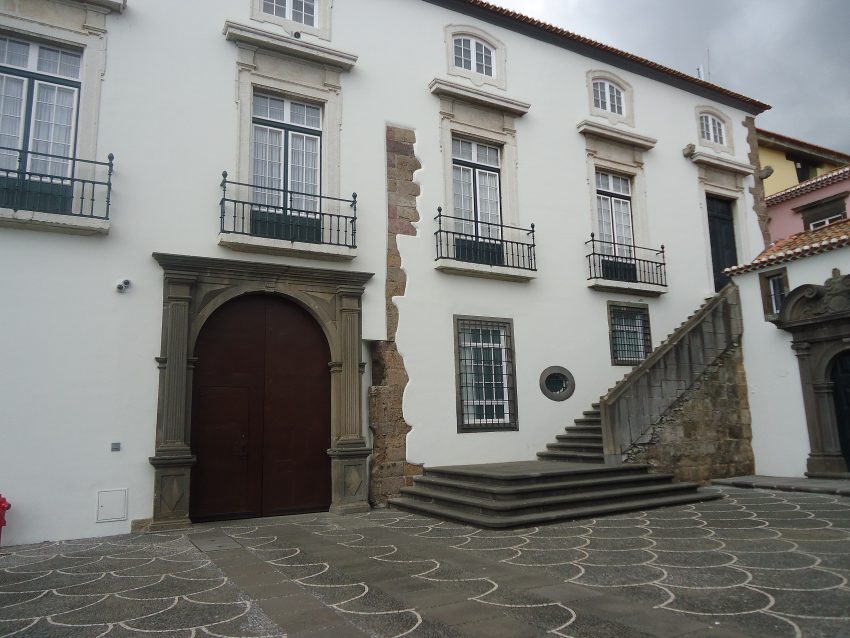
Funchal City Hall is the municipality’s working seat, set inside an 18th‑century palace built in 1758 for the Count of Carvalhal and bought by the council in 1883. The building’s late‑Baroque and neoclassical poise comes through in its refined rooms and a calm, landscaped courtyard framed by arcades. Visitors tend to remember the tilework—including 1940 Battistini panels made at the Maria de Portugal Factory—and the central fountain topped by Germano José Salles’s marble “Leda and the Swan.” Even from the accessible ground floor, you can linger on benches, photograph the tiled lobby, and sense the blend of civic routine and preserved artistry.
Location: Funchal City Hall, Praca do Município, Funchal, Portugal | Hours: Monday to Friday: 11:00 | Closed: Saturday, Sunday and Public holidays | Distance: 0km

We recommend to rent a car in Portugal through Discover Cars, they compare prices and review multiple car rental agencies. Book your rental car here.

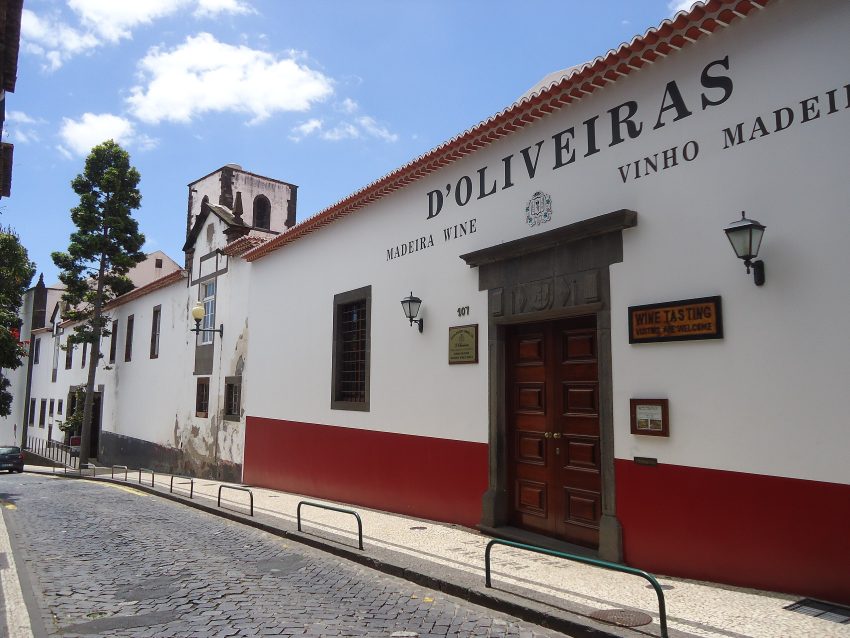
2. Adegas Pereira D'Oliveira

Adegas Pereira DOliveira Funchal
CC BY-SA 4.0 / PESP/ Wikimedia
Adegas Pereira D’Oliveira (D’Oliveiras) is a family-run Madeira wine lodge in central Funchal, set inside a 17th-century building where the air smells of old wood and cask-aged wine. Founded in 1850 and expanded through the acquisition of earlier producers, it functions as a living archive, holding an estimated 1.5 million litres of old stock, including wines from defunct houses. Visitors step into quiet tasting rooms lined with barrels and shelves of bottled vintages, then sample styles from straightforward 5-year wines to long-aged rarities. The range spans Sercial, Verdelho, Bual, Malmsey, and especially scarce Terrantez, with older wines matured by the slow canteiro method.
Location: Pereira D'Oliveira, Rua Dos Ferreiros, Funchal, Portugal | Website | Distance: 0.1km

Here is a complete selection of hotel options in Funchal (Madeira). Feel free to review each one and choose the stay that best suits your needs.

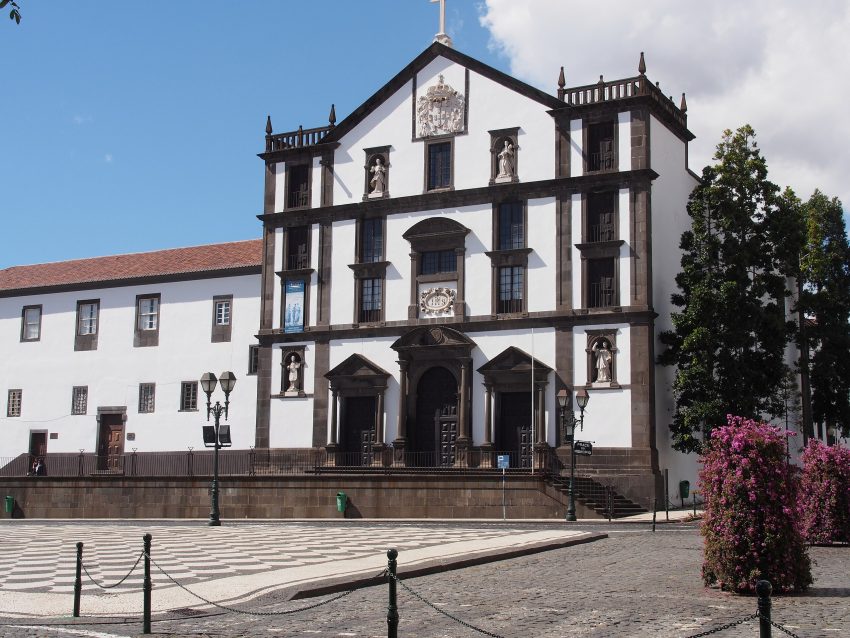
3. Igreja de São João Evangelista

Funchal Igreja do Colegio
CC BY-SA 3.0 / Hajotthu
Igreja de São João Evangelista (Igreja do Colégio) is a 17th-century Jesuit church in central Funchal, built from 1624 and traditionally completed in 1640, and it shows how Madeira adapted Baroque craft to a disciplined Jesuit plan. The exterior feels precise and architectural, with three entrances and tall windows edged in dark basalt that sharpens the whole façade. Step inside and the atmosphere turns lavish: a soaring nave, side chapels worth lingering in, and gilded carved altars that catch the light. If it’s open, the sacristy’s blue-and-white azulejo lining is a cool, quiet counterpoint to the gold. Some visitors also pay a small fee to climb up for rooftop views over the old town.
Location: Igreja de São João Evangelista / Igreja do Colégio, Largo do Colégio, Funchal, Portugal | Hours: Monday – Saturday: 10:00–18:30. Sunday: 09:00–13:00 & 18:30–22:00. | Price: Free; Tower access: €1 donation. | Website | Distance: 0.1km

Traveling to a country with a different currency? Avoid ATM transaction fees and pay in local currency with a Wise Card. Having used it for over 5 years, we've saved loads on fees!

4. Sacred Art Museum

Sacred Art Museum of Funchal
CC BY-SA 4.0 / Holger Uwe Schmitt
Housed in a late-16th-century Episcopal palace, the Sacred Art Museum pairs the hush of old stone rooms with centuries of devotional craft. The collection ranges from the 15th to 19th centuries and is especially strong in large-scale Flemish altarpieces from workshops in Antwerp and Bruges—an echo of Madeira’s trade links with Northern Europe. Don’t miss the island’s early treasures, including the 15th-century processional cross of Água de Pena, alongside finely worked goldsmithing, chalices, and embroidered vestments. An 18th-century tile panel allegorizing Faith, Hope, and Charity adds a distinctly Portuguese decorative note. Visitors often remark on the spacious, well-curated displays and clear bilingual labels.
Location: Sacred Art Museum of Funchal, Rua do Bispo, Funchal, Portugal | Hours: Monday to Friday: 10:00-17:30 | Saturday: 10.00-13.30 | Closed: Sunday and Public Holidays | Guided tours available | Price: Adult: €8 | Distance: 0.1km

Where to Stay in Funchal (Madeira): An Area by Area Guide!

5. Capela de São Luís de Tolosa (Funchal)

capela s luis tolosa
© https://www.visitarportugal.pt/
Capela de São Luís de Tolosa is a small chapel tied to Funchal’s former Episcopal Palace complex, once linked with the Seminary and Colégio São Luís, and founded around 1600 under Bishop D. Luís de Figueiredo de Lemos. Visitors notice the façade first: a portal carved in local stone, topped by the bishop’s coat of arms, with an oculus above and a late-Gothic bell tower that gives the building a slightly medieval profile. On the north side at ground level, a modest sacristy hints at its working religious life. Inside, the atmosphere is shaped by 17th- and 18th-century workshop-made furnishings—woodwork and devotional pieces that feel intimate rather than grand. With only a handful of reviews, it reads as a quiet find.
Location: Capela de São Luís de Tolosa, Rua do Bispo, Funchal, Portugal | Distance: 0.2km

Click here to read our blog about Madeira’s North Coast & Santana 2026: A Scenic Road Trip Guide

6. Statue of Joao Goncalves Zarco

Statue of Joao Goncalves Zarco
CC BY-SA 3.0 / Alberto-g-rovi
The Statue of João Gonçalves Zarco stands at the meeting of Avenida Arriaga and Avenida Zarco, anchoring a busy civic crossroads in central Funchal. Inaugurated in 1934, it commemorates Zarco, the 15th-century navigator associated with Madeira’s discovery and the first captain of Funchal. Madeiran sculptor Francisco Franco shaped the figure with crisp, upright detail, while architect Cristiano da Silva designed a pedestal animated by allegorical figures linked to the Age of Discoveries—Conquest, Settlement, Wisdom, and Evangelisation. Visitors tend to linger to read the monument’s symbolism and photograph it against the avenue’s formal façades and shade trees. The setting feels open and everyday, with people passing close by and pausing on nearby benches.
Location: Estátua João Gonçalves Zarco, Avenida Zarco, Funchal, Portugal | Distance: 0.3km

Click here to read our blog about 7-Day Madeira Itinerary 2026: How to See the Island in One Week

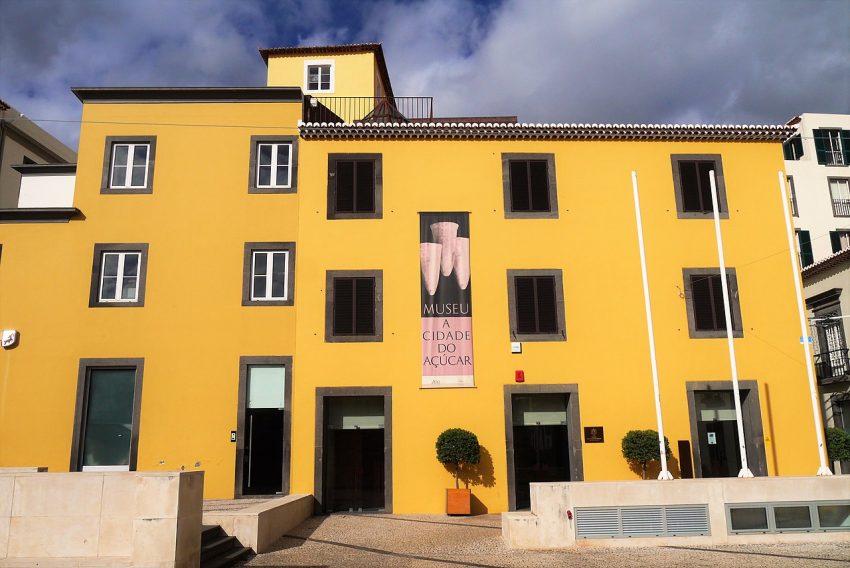
7. A Cidade do Açúcar Museum

A Cidade do Acucar Museum
CC BY-SA 3.0 / Jane White
A Cidade do Açúcar Museum is a small, central Funchal museum devoted to Madeira’s sugar boom, the “white gold” trade that tied the island to European markets in the 15th and 16th centuries. Set on the site of a Manueline-era house linked to Flemish merchant João Esmeraldo—who is said to have hosted Christopher Columbus—it uses the building’s layers to frame the story. Inside, visitors linger over Flemish paintings and sculptures, sugar-processing tools and moulds, and silver and household objects that signal the wealth the industry created. Expect compact rooms with clear interpretation and a calm, well-kept feel; many travellers note it’s often free and easy to see in under an hour.
Location: Museu A Cidade do Açúcar, Praça De Colombo, Funchal, Portugal | Hours: Monday to Friday 9:00 -17:30 | Price: Free entry | Website | Distance: 0.3km

Explore Funchal (Madeira) at your own pace with our self-guided walking tour! Follow our curated route to discover must-see sights and local secrets that makes Funchal (Madeira) one of the best places to visit in Portugal.

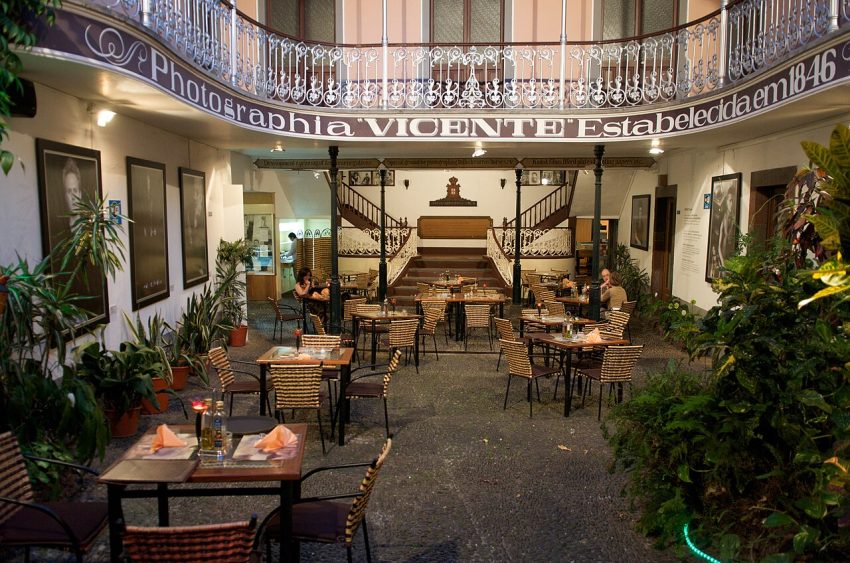
8. Madeira Photography Museum

Madeira Photography Museum Atelier Vicente
CC BY-SA 2.0 / Ben Coombs
Madeira Photography Museum – Atelier Vicente’s preserves a 19th-century portrait studio and its working rooms, giving a close-up look at how early photography was made. Founded in 1865 and later saved as a complete estate by the regional government, it keeps original furniture, backdrops, and darkroom-style equipment alongside evolving cameras—from bulky wooden large-format models to mid‑20th‑century gear. Curated displays draw from an immense archive estimated at three to four million images, tracing everyday island life through portraits, events, and landscapes. Visitors often remember the characterful building and the intimacy of seeing personal studio material—like self-portraits across a lifetime—plus occasional temporary exhibitions and a small cinema area.
Location: Madeira Photography Museum - Atelier Vicente’s, Rua da Carreira, Funchal, Portugal | Hours: Tuesday to Saturday: 10h00 - 13h00 | 14h00 - 17h00 Closed: Sunday, Monday and Public holidays | Price: €3.00 | Website | Distance: 0.3km

Click here to read our blog about Madeira Sightseeing Tour of the North West Coast 2026: Scenic Drive & Highlights

9. Sé Catedral do Funchal

Cathedral Funchal Madeira Portugal
CC BY-SA 4.0 / Diego Delso
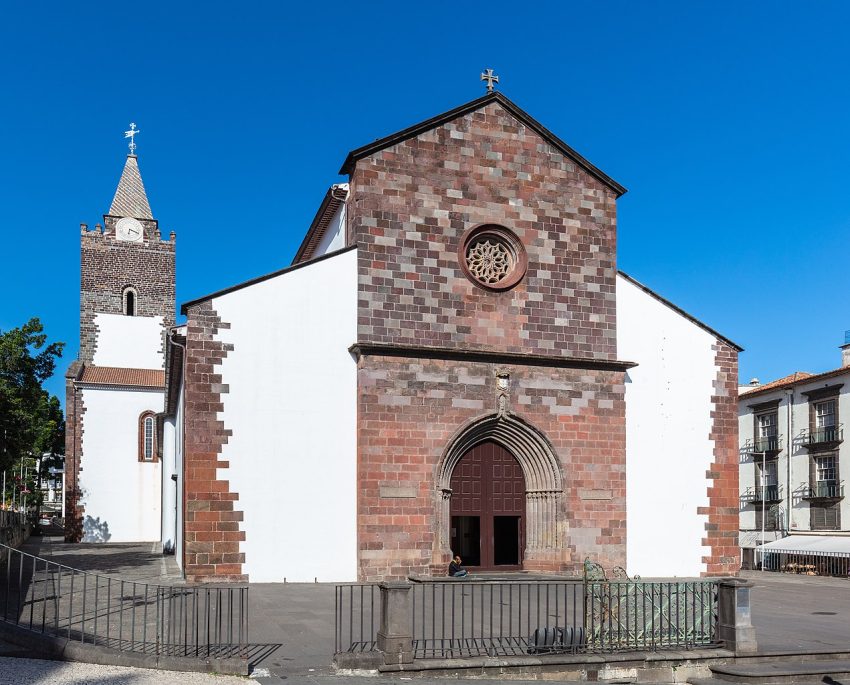
Sé Catedral do Funchal is a late-Gothic and Manueline cathedral commissioned by King Manuel I and completed in 1517, later becoming the seat of a diocese that once stretched from Brazil to Japan. The exterior is restrained, but inside the atmosphere turns ornate and hushed, dominated by an exceptional Mudéjar wooden ceiling in local cedar with geometric patterning. Look for 16th-century altarpieces and decorative touches that nod to island life, including small figures carrying bananas and wineskins, plus colourful 18th-century tiles. Services can draw crowds—arrive early if you want a seat—yet outside Mass times it’s often calm, and entry to the cathedral itself is typically free.
Location: Sé Catedral do Funchal, Rua do Aljube, Funchal, Portugal | Hours: Monday to Friday: from 7:15 am to 6:30 pm; Saturday from 8:00 am - 12:00 pm and 4:00 pm to 07:00 pm; Sundays and Holidays: 8:00 am to 1:00 pm and 4:30 pm to 7:00 pm. | Distance: 0.3km

Click here to read our blog about Madeira Sightseeing Tour of the South West Coast 2026: Scenic Drive & Highlights

10. Largo dos Varadouros

Porton dos Varadouros Funchal Madeira
CC BY-SA 4.0 / Luis Miguel Bugallo Sánchez (Lmbuga)
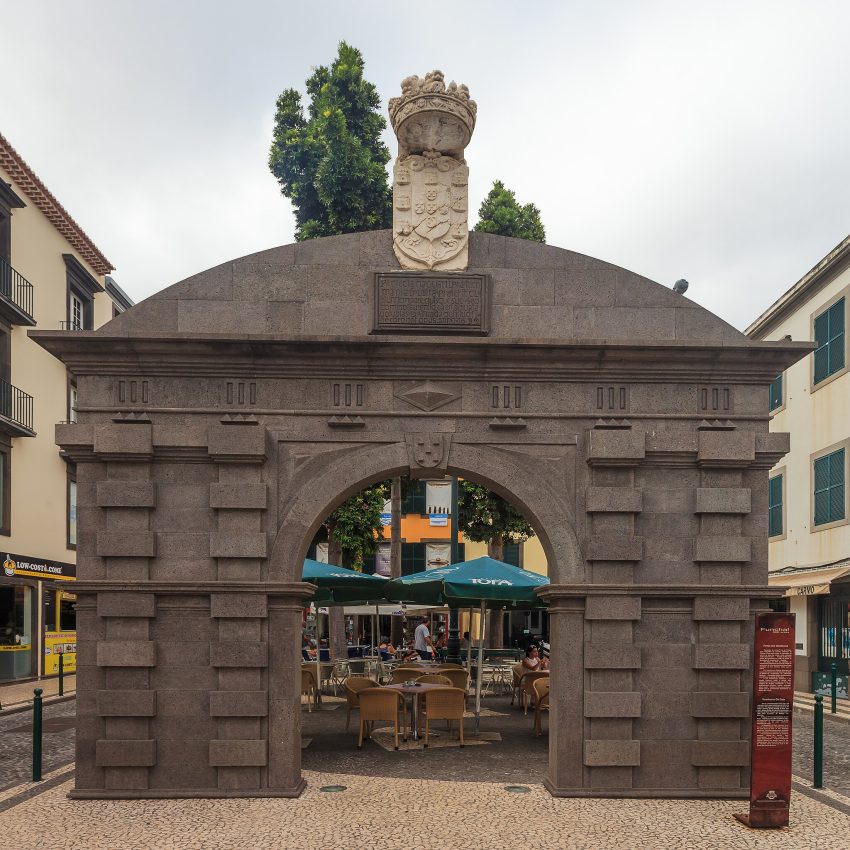
Largo dos Varadouros is a small waterfront square marked by a reconstructed Varadouros Gate, a reminder of the 1689 fortifications that once ringed the city. This gate was one of five main entrances, linking inland streets to the old boat landing at Praia do Calhau—today’s Avenida do Mar—so you’re standing where sailors and goods once flowed in from the shore. The original structure was demolished in 1911 to accommodate early car traffic, but the current version was rebuilt from historical records, with reinforced concrete beneath traditional stone facing. Pause to study the arch and portico, then imagine the vanished shoreline just beyond the opening.
Location: Largo dos Varadouros, Funchal, Portugal | Distance: 0.4km

Click here to read our blog about Madeira Sightseeing Tour of the East Coast (2026)

11. Funchal Customs House

Antiga Alfandega Funchal Madeira
CC BY-SA 4.0 / Paulo SP/ Wikimedia
Funchal Customs House is a former harbor-side administrative building in Funchal, Portugal, tied to Madeira’s trade economy and the control of goods arriving by sea. Construction began in the early 16th century and the “new” customs house was completed in 1519, later adapting as commerce shifted from sugar to wine. Look for the building’s layered fabric: 17th–18th century alterations, damage from the 1748 earthquake, and subsequent reconstruction that blends Renaissance beginnings with later civic architecture. Traces of its defensive phase linger in the original fortification portal, now relocated to a nearby garden, and in the small Chapel of Santo António da Mouraria. Some recent visitor comments note uneven service experiences, reflecting its continuing administrative role.
Location: Alfândega do Funchal, Avenida Do Mar, Funchal, Madeira, Portugal | Distance: 0.4km

Click here to read our blog about Best Levada Hikes in Madeira 2026: Top Trails & Map Guide

12. São Lourenço Palace

Palacio de Sao Lourenco, Funchal, Madeira
CC BY-SA 4.0 / PESP/ Wikimedia
São Lourenço Palace began in the 16th century under King Dom Manuel I as a coastal fortress, and its thick walls still read as military architecture even as you step into more formal state rooms. Part of the complex remains tied to public authority—since 1836 it has been split between civil and military functions, and it is still used for official purposes today. Inside, visitors notice carefully arranged Portuguese and European decorative arts from the 17th–19th centuries, from furniture and ceramics to textiles. The portrait galleries are a standout, including an 18th-century King João VI painted by Joaquim Leonardo da Rocha. Outside, the landscaped grounds and sea-front setting make the approach memorable.
Location: Palácio de São Lourenço, Avenida Zarco, Funchal, Portugal | Hours: Monday: 12:30 | Tuesday and Wednesday: 10:00 | Thursday: 10:00 and 12:30 | Friday: 15:00 | Distance: 0.4km

13. Madeira Military Museum
1024px Palacio de San Lorenzo Museo Militar
CC BY-SA 3.0 / Alberto-g-rovi
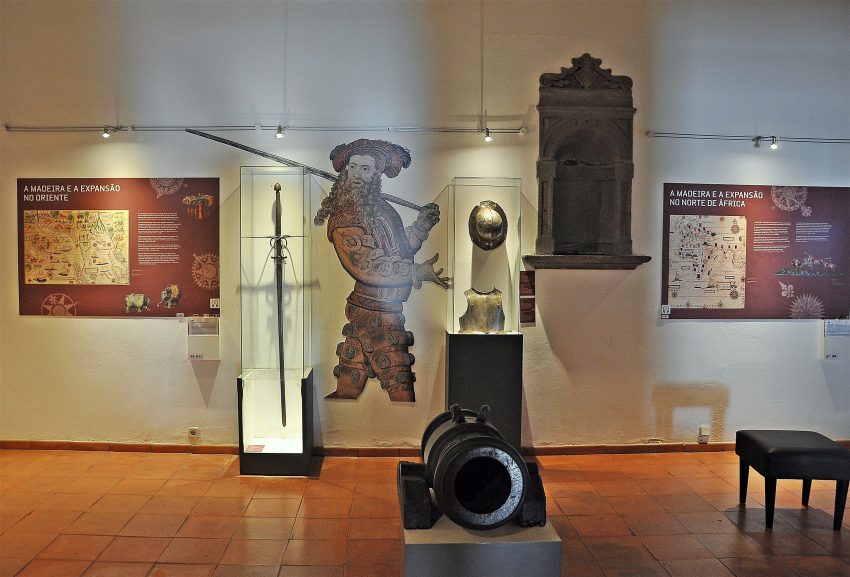
Housed inside the early-16th-century São Lourenço Palace, this compact museum explores the island’s defensive past within a fortress that later became a governor’s residence and was declared a National Monument in 1943. Galleries set in renovated palace rooms display centuries of weapons, artillery, uniforms, and archival documents, with bronze cannons and diagrams explaining how coastal fortifications evolved to face artillery warfare. Exhibits are organized around themes such as Portuguese overseas expansion and the network of forts and watchtowers that protected Atlantic trade routes. Visitors often remember the small scale, low entry fee, and a 3D film, plus the free app or handheld guides that help when labels are mostly in Portuguese.
Location: Military Museum, Largo da República, Funchal, Madeira, Portugal | Hours: Monday to Friday: 10:00-16:30 Closed: Saturday, Sunday and Public holidays | Distance: 0.4km

14. Natural History Museum

Museu de Historia Natural Palacio de Sao Pedro Funchal
CC BY-SA 4.0 / PESP/ Wikimedia
Housed in the 18th-century São Pedro Palace and open since 1933, the Natural History Museum is the island’s oldest operating museum, built around Madeira’s biodiversity and geology. Inside, multiple rooms trace volcanic origins, marine fossils (including finds from Porto Santo), and specimens ranging from birds and reptiles to fish, insects, and mammals. The scale is striking: the collections encompass more than 50,000 records representing over 200,000 species, with many tied to Macaronesia’s endemic life. Visitors often remember the temporary exhibitions and video screens, plus a small aromatic garden outside where butterflies and lizards turn up between the plants.
Location: Museu de Historia Natural do Funchal, Rua da Mouraria, Funchal, Portugal | Hours: October to March: 09h00-17h30 | April to September: 09h00-19h30 Closed: 25th December | Website | Distance: 0.4km

15. Blandy's Wine Lodge
Blandys Winery   Funchal Madeira
Blandys Winery Funchal Madeira
CC BY-SA 2.0 / Richard Gray
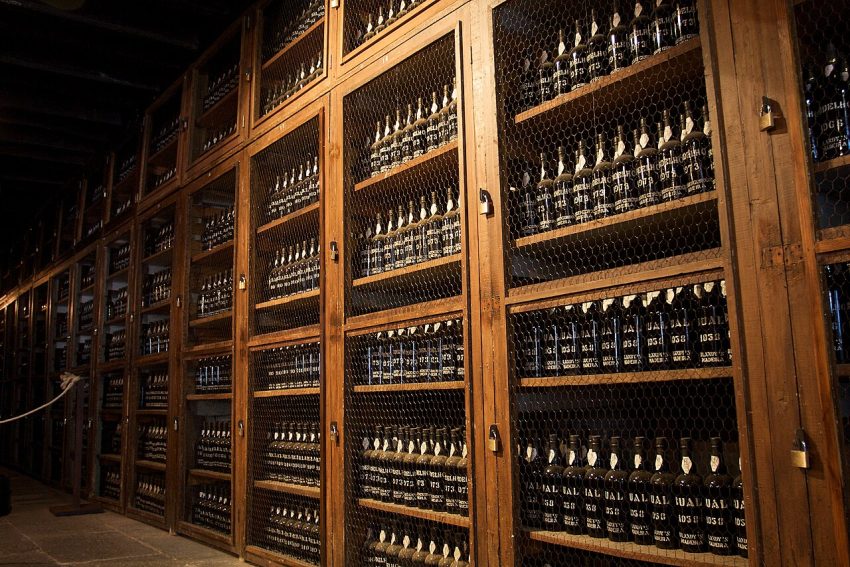
Blandy’s Wine Lodge is a working Madeira wine lodge and museum set inside Baroque-era buildings on the former grounds of the Convent of São Francisco. Its oldest cellars date from the 17th and 18th centuries, where oak barrels sit beneath dark beams and the air carries a sweet, woody scent. Exhibits trace the island’s fortified-wine story from vineyard to bottle, including the heating and oxidation methods—estufagem and canteiro—that shape Madeira’s distinctive style. Tastings let you compare grapes such as Sercial, Verdelho, Boal, and Malvasia, then browse a shop focused on Madeiran bottlings. The atmosphere feels more like a storied warehouse than a polished showroom.
Location: Blandy's Wine Lodge (former Adegas de São Francisco), Avenida Arriaga, Funchal, Portugal | Hours: Monday to Friday: 10:00 - 13:00 | 14:30 -18:30 | Closed: Saturday, Sunday and Public holidays | Price: Tours From €9 | Website | Distance: 0.4km

16. Casa Museu Frederico de Freitas
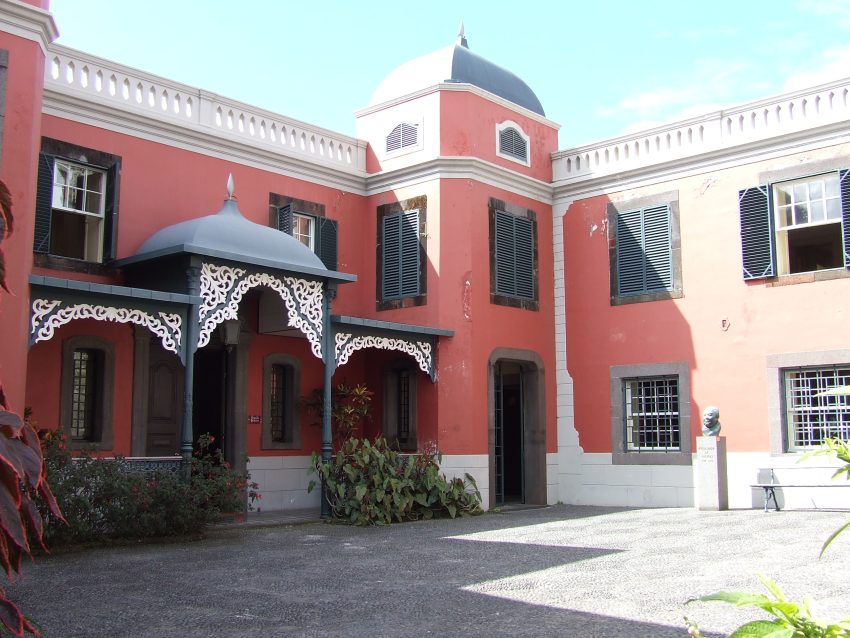
Casa Museu Frederico de Freitas Funchal
CC BY-SA 2.0 / Michael Gaylard
Casa Museu Frederico de Freitas (Casa da Calçada) is an atmospheric house museum in the São Pedro district, set in a steep, reddish mansion once owned by the Condes da Calçada and later by collector Frederico de Freitas. Rooms feel lived-in, with late-19th-century furnishings alongside sculpture, paintings, ceramics, crystal, pewter, and furniture spanning the 17th–19th centuries. The engravings stand out as vivid visual records of island life, capturing clothing, customs, and streetscapes from the 18th and 19th centuries. A separate 1999-built Casa dos Azulejos displays an eclectic tile collection—Portuguese and wider European examples—ranging from geometric patterns to narrative panels. Visitors often mention the modest entry fee and the quiet, immersive pace.
Location: Casa Museu Frederico de Freitas, Calçada de Santa Clara, Funchal, Portugal | Hours: Tuesday to Saturday:10:00 - 17:30 | Closed: Sunday and Public holidays | Price: €3.00 | Website | Distance: 0.4km

17. Mercado dos Lavradores
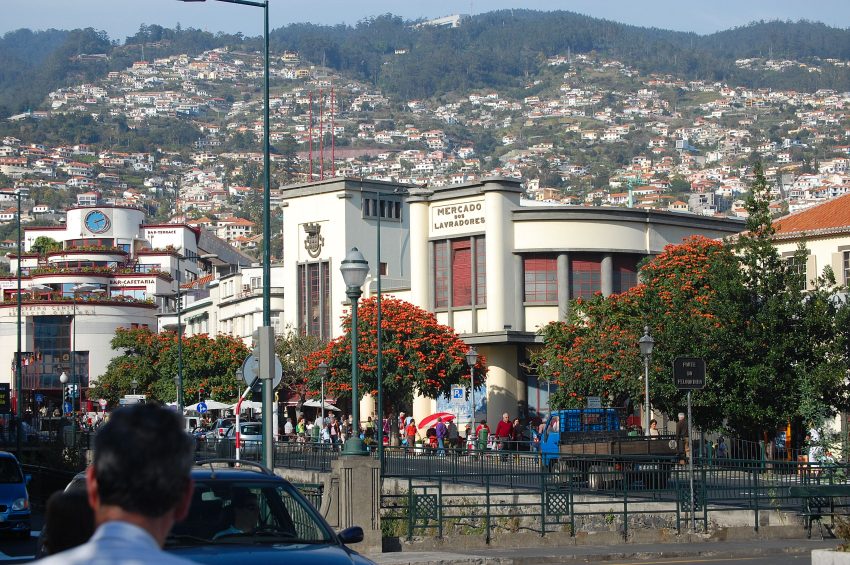
Mercado dos Lavradores
CC BY-SA 2.0 / Funchal
Mercado dos Lavradores is Funchal’s central produce-and-fish market, opened in 1940 as the city’s main supply hub and still a vivid window into Madeira’s food culture. Inside, you’ll see pyramids of tropical fruit—multiple passionfruit varieties, custard apples, papaya and dragon fruit—alongside a flower section with proteas and birds-of-paradise. Downstairs, the fish hall lays out Atlantic catches such as tuna and the eerie black scabbardfish, set against large blue-and-white azulejo panels made in the 1940s by the Faience Battistini factory. The building’s Estado Novo lines and tiled scenes of island life are as memorable as the aromas, though some travelers note tourist-leaning prices.
Location: Mercado dos Lavradores, Mercado dos Lavradores, Funchal, Portugal | Hours: Monday to Thursday: 07:00 - 19:00 | Friday: 07:00 - 20:00 | Saturday: 07:00 - 14:00 | Closed: Sunday | Website | Distance: 0.4km

18. Baltazar Dias Theatre
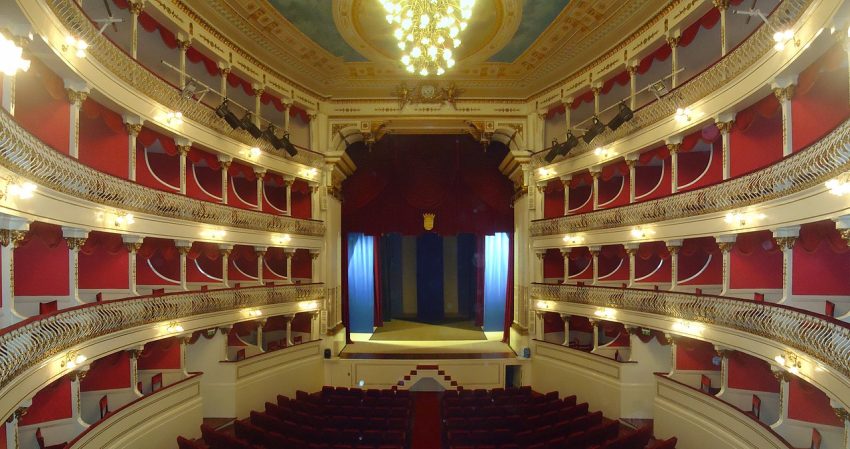
Teatro Municipal Baltazar Dias
CC BY-SA 42.0 / PESP/ Wikimedia
Baltazar Dias Theatre is Funchal’s 19th-century municipal playhouse, opened on 11 March 1888 after the island lost its earlier Teatro Grande, and it still anchors Madeira’s performing-arts scene. Its design borrows from Italian opera-house tradition—think a horseshoe auditorium, stacked balconies, and an intimate sense of scale—paired with decoration by Italian artist Luigi Manini and Portuguese scenographer Eugénio do Nascimento Cotrim. Named in 1935 for the blind 16th-century Madeiran playwright and poet Baltazar Dias, it connects local literary heritage to a busy modern programme of drama, music, and dance. Visitors often remember the small box seating and the warm, ornate interior, and some tours even reach the stage and spaces above and below it.
Location: Teatro Municipal Baltazar Dias, Avenida Arriaga, Funchal, Portugal | Hours: Monday and Tuesday: 09:00 - 12:30 | 14:00 - 17:30 | Wednesday and Thursday: 09:00 - 21:30 | Friday: 09:00 - 21:30 | Saturday and Sunday: 13:30 - 21:30 | Website | Distance: 0.5km

19. Funchal Electricity Museum

Funchal Electricity Museum
CC BY-SA 3.0 / Jane White
Museu da Eletricidade (Casa da Luz) occupies the former power station that began operating in 1897 and kept the lights on until its closure in 1989, making the building itself part of the story. Inside, preserved generators, tools, photos, and scale models trace Madeira’s shift from oil-lamp streets to an expanding electric grid. The “Lights of Funchal” section lays out a timeline of street lighting, while “A Century of Electricity” follows how power reached more remote communities. Hands-on stations let you touch and test simple electrical principles, and a forward-looking gallery explains wind, solar, and hydro energy. Many visitors find it small but absorbing, with about 1–1.5 hours enough to explore.
Location: Museu de Electricidade Casa da Luz, Rua Casa da Luz, Funchal, Portugal | Hours: Tuesday to Friday: 10h00-12h30 | 14h00-18h00 | Saturday: 09h30-16h00 | Closed: Monday, Sunday and public holidays | Price: Adult: €2.70 | Website | Distance: 0.5km

20. Convent of Santa Clara
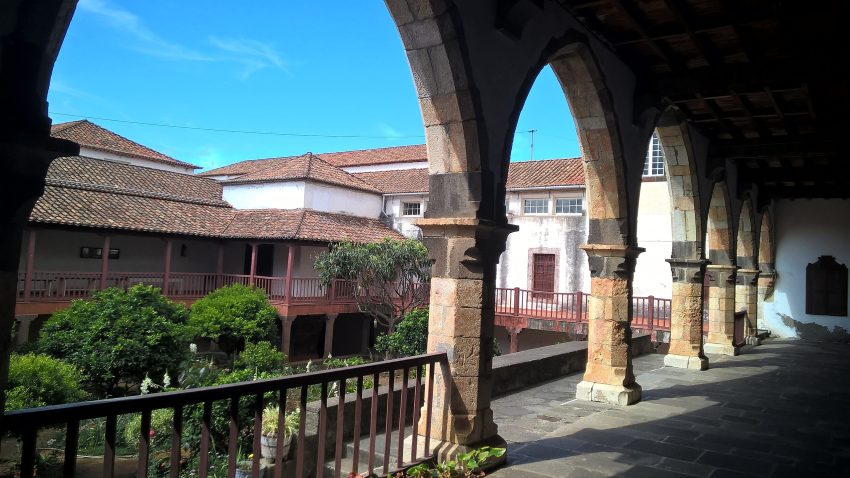
Convento de Santa Clara Funchal Portugal
CC BY-SA 4.0 / GualdimG
The Convent of Santa Clara is a late-15th-century Poor Clare convent founded between 1489 and 1496, created to house daughters of Madeira’s noble families. Inside, visitors move through quiet cloisters and small chapels where Gothic structure meets Mannerist touches and striking 17th-century Hispano-Arabic tilework. Look up for intricately painted wooden ceilings, then linger with restored 17th- and 18th-century devotional canvases that survived centuries of monastic life. The lower and upper choirs (Coro de Baixo and Coro de Cima) give a vivid sense of how the enclosed community prayed and sang, and many people note the calm, reflective atmosphere.
Location: Convent of Santa Clara, Calçada de Santa Clara, Funchal, Portugal | Hours: Tuesday to Saturday: 9:00-12:30 | 14:00-17:30. Closed on Saturdays, Sundays and Holidays. | Distance: 0.5km

21. Quinta das Cruzes Museum
Museu da Quinta das Cruzes
CC BY-SA 2.0 / D-Stanley
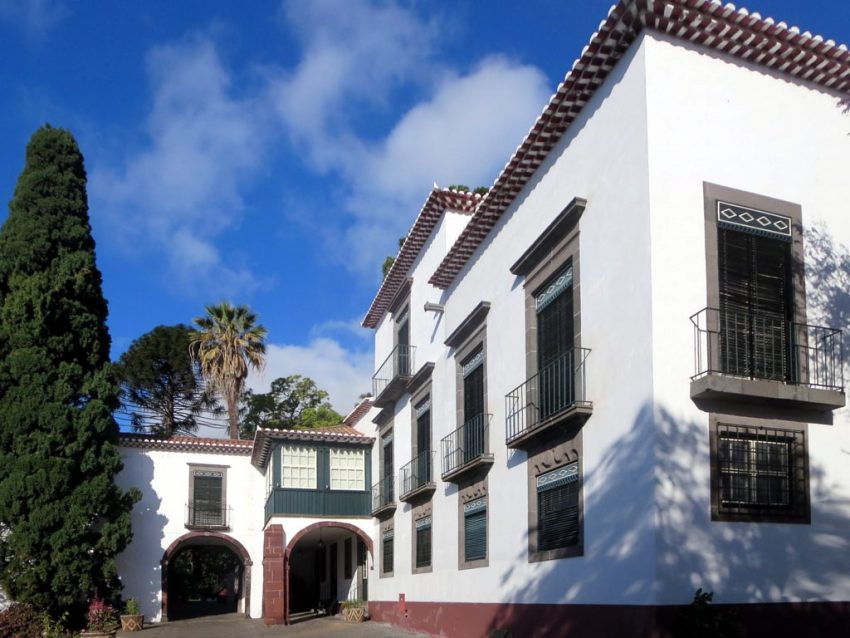
Set in a former hillside estate once linked to João Gonçalves Zarco’s family, the Quinta das Cruzes Museum pairs a grand house with quiet, layered gardens. Inside, the rooms focus on decorative arts that trace Madeira’s trading-era connections, from Portuguese pieces made with Brazilian woods to English furniture in Chippendale, Hepplewhite, and Sheraton styles. Cabinets of porcelain move between European makers such as Meissen and Vista Alegre and Qing-dynasty Chinese wares, alongside Luso-Oriental objects and 18th-century terracotta nativity figures. Outside, exotic plantings, carved stonework, and salvaged architectural fragments create a contemplative stroll, and visitors often linger for the calm and the views.
Location: Museu da Quinta das Cruzes, Funchal, Portugal | Hours: Tuesday to Saturday 10:00 - 17:30 | Closed: Sunday, Monday and Public holidays | Price: Adults: €3.00 | Website | Distance: 0.5km

22. Madeira Story Centre
Madeira Story Centre
CC BY-SA 3.0 / Funchal
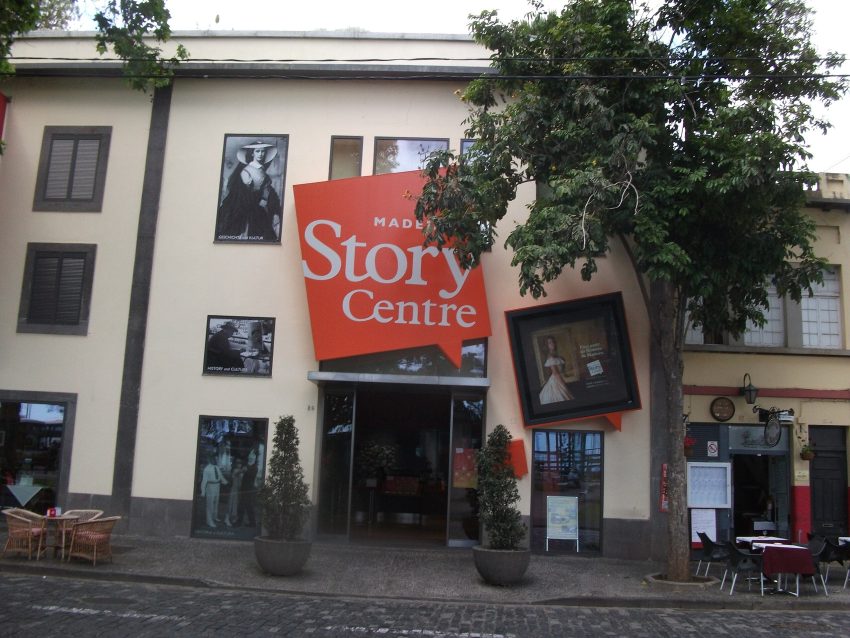
Madeira Story Centre is a compact, chronological museum that explains the island’s origins, legends, and turning points through themed rooms and multimedia. Exhibits move from volcanic beginnings to Portuguese navigation, Atlantic trade, and episodes of turmoil such as pirate encounters, mixing interactive stations with a handful of historical objects. Some visitors find parts a little dated—wax figures and text-heavy panels—but many still feel the modest ticket price is fair for the context it provides. The building sits beside the cable car station in the Old Town, and the rooftop terrace is a memorable finish, with wide views over the rooftops and hills plus a café for a drink or light bite.
Location: Madeira Story Centre, Rua Dom Carlos I, Funchal, Portugal | Hours: Daily: 09:00 - 19:00 | Price: €5 | Website | Distance: 0.6km

23. Jardim de Santa Catarina
Parque de Santa Catarina
CC BY-SA 2.0 / Luke H. Gordon
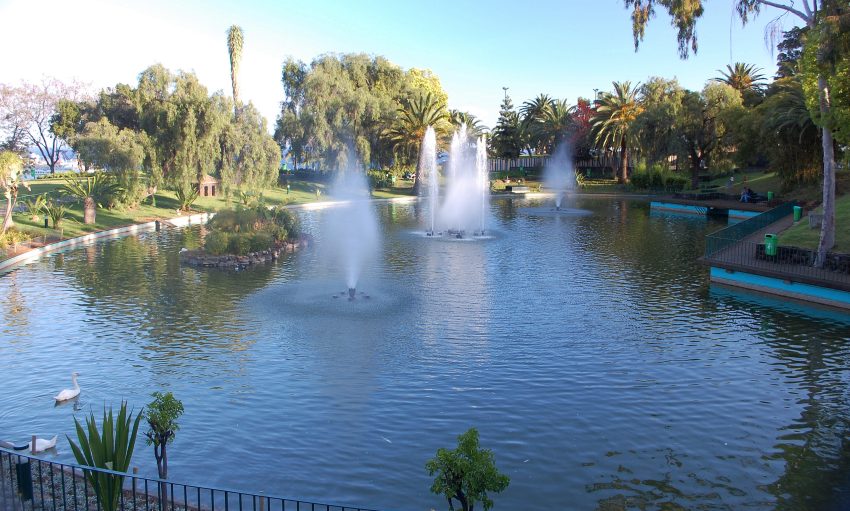
Jardim de Santa Catarina (Parque de Santa Catarina) is a spacious city park set on a rise above Funchal’s harbour and marina, a green pause between busy streets and the waterfront. Its broad lawns and winding paths draw locals for picnics and evening strolls, while visitors come for the open view across Funchal Bay, where cruise ships slide in and out. Wander around the small lagoon, look for statues and commemorative monuments tucked into the planting, and step into the little Capela de Santa Catarina when it’s open. Families gravitate to the play areas, and the sea air and bright, well-kept gardens make even a short bench stop feel restorative.
Location: Parque de Santa Catarina, Avenida do Infante, Funchal, Portugal | Hours: (Summer) 22 March – 22 September; Daily: 07:00–22:00. (Winter) 23 September – 21 March; Daily: 07:00–20:00. | Price: Free. | Website | Distance: 0.8km

24. Fortaleza de São João Baptista do Pico
Fortaleza de São João Baptista do Pico, Funchal, Madeira
CC BY-SA 4.0 / PESP/ Wikimedia
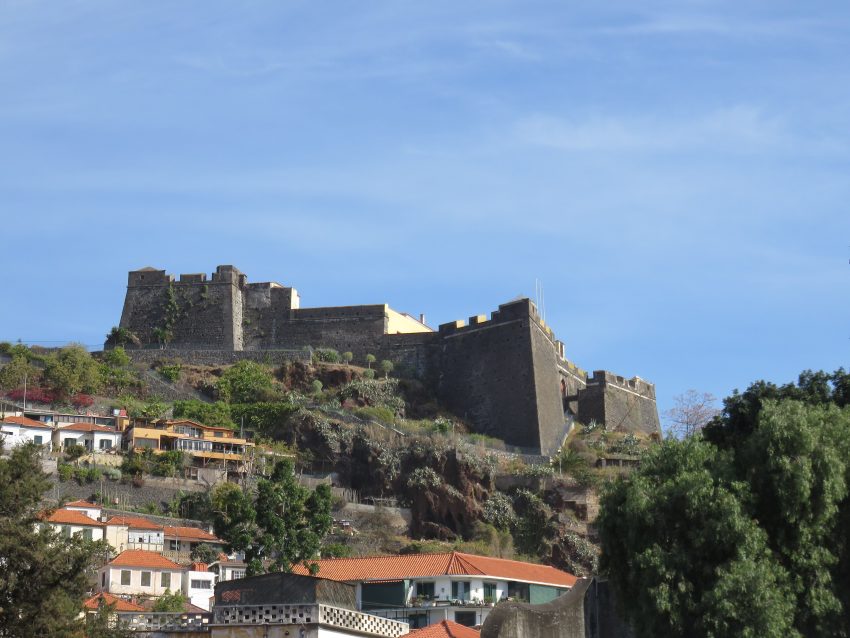
Fortaleza de São João Baptista do Pico (Pico Fort) is a 17th-century hilltop fort above Funchal, built to strengthen Madeira’s coastal defence against raiders and later used as a key gunpowder store for the island’s fortifications. Perched about 111 metres above sea level, its thick stone walls and angular bastions frame a panoramic terrace with sweeping views across the bay, the city, and the surrounding mountains. Inside, you’ll find restored rooms that now host small exhibitions and cultural events, including displays of old prints and drawings of Funchal. In the mid-20th century it became a Portuguese Navy communications post—locals dubbed it “Pico Rádio” for its antennas—and today it can feel breezy and exposed at the top.
Location: Fortaleza de São João Baptista do Pico, Rua do Castelo, Funchal, Portugal | Distance: 0.8km

25. Capela do Corpo Santo
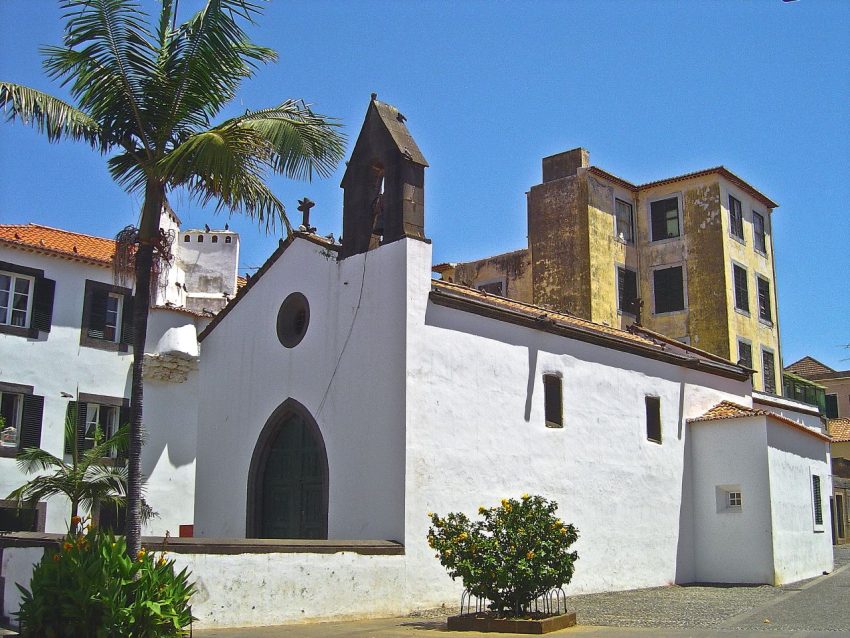
Capela do Corpo Santo, Funchal, Portugal
CC BY-SA 2.0 / Vitor Oliveira
Capela do Corpo Santo is a small 15th-century seafarers’ chapel on the edge of the old fishing quarter, dedicated to Saint Pedro Gonçalves Telmo (“Corpo Santo”), protector of fishermen. Its exterior still shows a pointed Gothic doorway and gabled façade, while later Manueline touches add carved detail from the Age of Discoveries. Step inside for the real impact: gilded wood altars, vivid ceiling paintings, and aisle panels attributed to royal painter Fernão Gomes from the 1500s. The main altar includes works dated 1615 and 1616, hinting at a different workshop and style. Beyond the art, the chapel’s confraternity once served as a refuge, supporting fishermen and widows.
Location: Capela do Corpo Santo, Largo do Corpo Santo, Funchal, Portugal | Distance: 0.8km

26. Museu CR7

Museu CR7 Funchal
Museu CR7 Funchal
CC BY-SA 3.0 / Abby M.
Museu CR7 is a sleek, modern museum dedicated to Cristiano Ronaldo’s career, set on the waterfront beneath the Pestana CR7 Hotel on Praça CR7. Inside, rooms of silverware and personal awards trace his journey from early days at Andorinha and Nacional to triumphs with Sporting CP, Manchester United, Real Madrid, Juventus, and Portugal. Expect hundreds of trophies alongside big-screen match footage, photo displays, and interactive elements that let you follow his story in a clear, chronological flow. A wax figure setup invites playful snapshots, but the most photographed moment is outside: a life-size bronze statue by Madeiran sculptor Ricardo Velosa with the Atlantic behind it.
Location: Museu CR7, Avenida Sá Carneiro, Funchal, Portugal | Hours: Monday to Friday: 10am until 5pm | Price: Adults: €5 | Website | Distance: 0.9km

27. Fortress of São Tiago
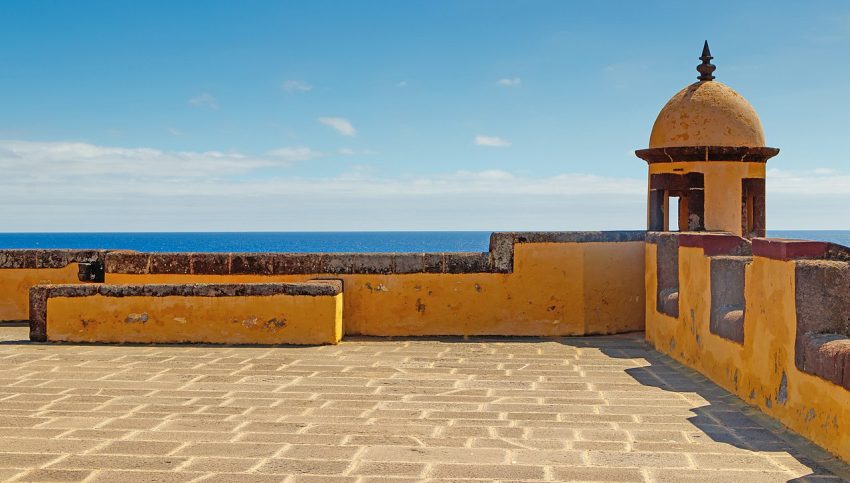
Forte de Sao Tiago   Funchal
Forte de Sao Tiago Funchal
CC BY-SA 3.0 / H. Zell
Fortress of São Tiago is a 17th-century coastal fort built to defend the harbour from pirate and corsair raids, and it still feels like a lookout post above the Atlantic. Begun in 1614 under royal master builder Reais Jerónimo Jorge and finished by his son, its thick walls and bastions frame courtyards and narrow passages that hint at former barracks. The fortress is instantly recognizable for its bold golden-yellow exterior, a striking contrast against the sea. Climb the ramparts for wide views over the bay and rooftops, and you’ll see why visitors linger for photos, especially when waves crash below. There’s not much interpretation on site, but the setting does most of the talking.
Location: Forte de São Tiago, Travessa do Forte, Funchal, Portugal | Hours: Tuesday to Friday from 9:30 am to 5:30 pm. Closed on Saturdays, Sundays and holidays. | Price: €2.50 | Distance: 1km

28. Nossa Senhora da Conceição do Ilhéu Fort
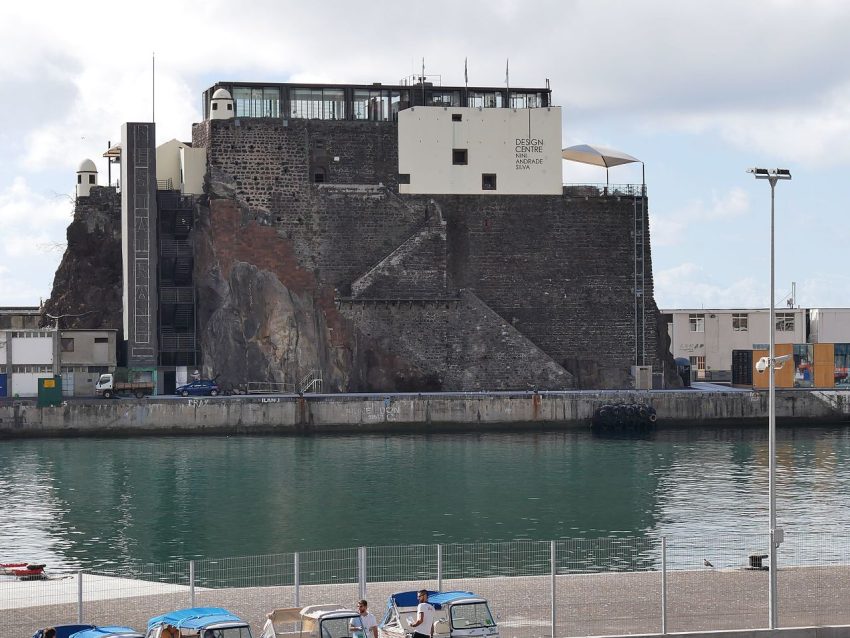
Nossa Senhora da Conceicao do Ilheu Fort
CC BY-SA 4.0 / Brisille
Nossa Senhora da Conceição do Ilhéu Fort (Forte do Ilhéu) is a compact 17th-century coastal fortress in Funchal, built in 1652 and inaugurated in 1654 to guard the harbor edge. It began on Ilhéu Grande—once a separate islet—later absorbed into the expanding port and finally linked to the mainland in 1888, a change you can still sense in its maritime setting. Inside, traces of later additions stand out, including an 1845 elevator and a same-year crane from public works under Rui Marote. A chapel dedicated to Nossa Senhora da Conceição was established here by 1682, giving the fort its longer name. Today it hosts the Nini Andrade Silva Design Center with exhibitions and a restaurant, and visitors often call it “most beautiful.”
Location: Estrada da Pontinha, Forte de Nossa Senhora da Conceição 9000-726 Funchal Portugal | Website | Distance: 1.2km

29. Reid's Palace
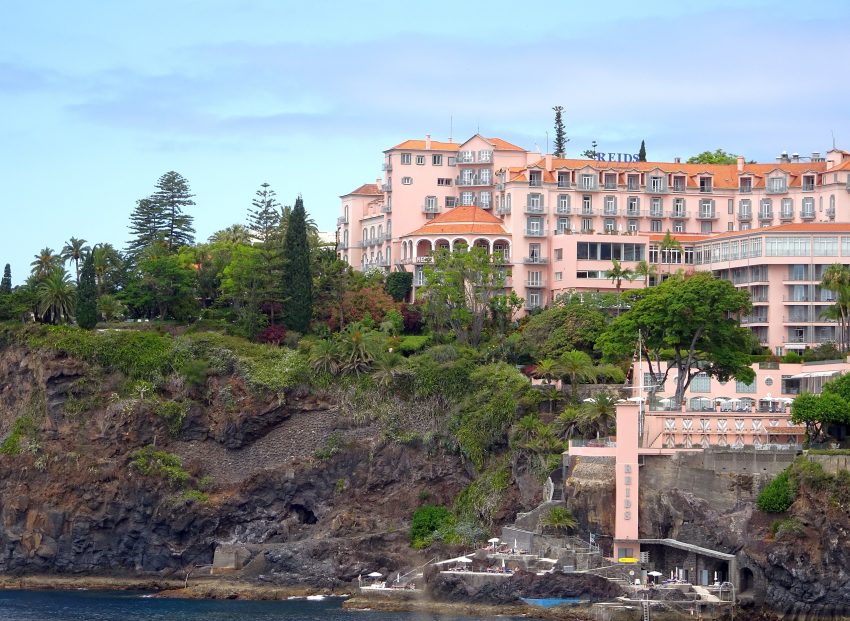
Reids Hotel Funchal
Reids Hotel Funchal
CC BY-SA 1.0 / Stefan Bellini
Reid’s Palace is a grand, pink-fronted Edwardian hotel perched high above the Atlantic, where terraced gardens and sea views create a self-contained world of calm. Opened in 1891, it carries the aura of long-stay winter escapes—Winston Churchill came in 1950 to write and paint, and George Bernard Shaw lingered for weeks in the 1920s. Visitors remember the clifftop afternoon tea, where crisp linens and tiered trays meet salt air and wide bay panoramas. Down at ocean level, swimming platforms and saltwater pools are carved into the rocks, a bracing way to feel the island’s coastline up close. Service is often described as quietly exceptional.
Location: Reid's Palace, A Belmond Hotel, Madeira, Estrada Monumental, Funchal, Portugal | Distance: 1.8km

30. Madeira Botanical Gardens
Jardim Botanico da Madeira
CC BY-SA 3.0 / H. Zell
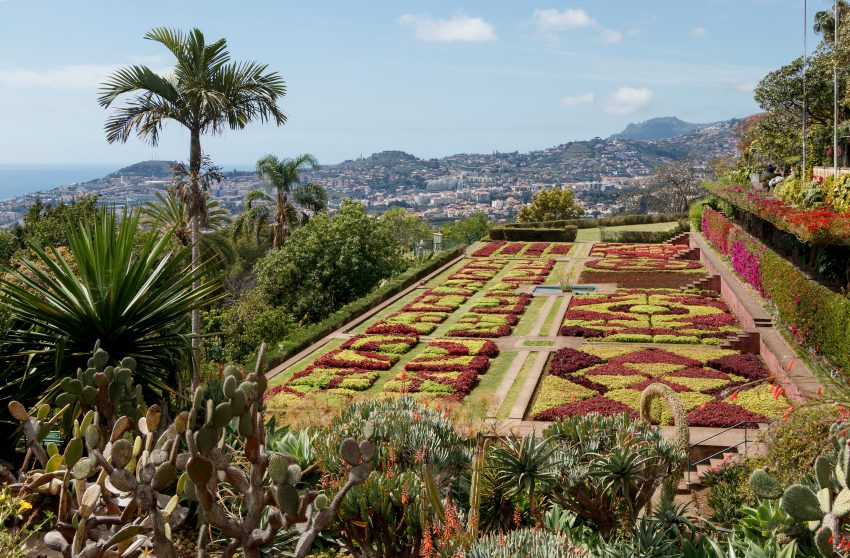
Madeira Botanical Gardens in Funchal, Portugal is an eight-hectare hillside garden that pairs carefully patterned terraces with sweeping views over the city and Funchal Bay. About five hectares are landscaped into geometric flowerbeds, clipped lawns, and paths that lead past orchids, succulents and desert plants, and an arboretum of tall, unusual trees. The collections span more than 2,000 exotic species from multiple continents, including endangered plants maintained for conservation and research. Within the former Quinta do Bom Sucesso estate (linked to the Reid family since 1881), you can also step into a Natural History Museum and Herbarium that deepen the sense of Madeira’s biodiversity. Visitors often leave calling it “Encantador!”
Location: Jardim Botânico D, 9060-135 Funchal, Portugal | Hours: Daily 09:00-17:30 | Distance: 1.8km

31. Monte (Madeira)
montemadeira
montemadeira
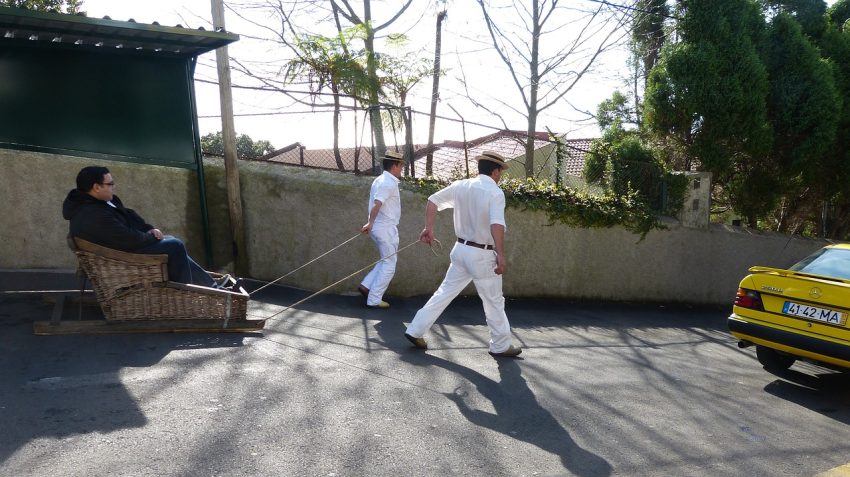
The picturesque parish of Monte, known for its lush greenery, is a top destination for tourists, boasting some of Madeira's most beautiful gardens. It has become a favorite among visitors and is renowned for its natural beauty. The cable car connecting Monte to the Zona Velha (Old Town) offers a breathtaking journey over the city of Funchal. This area is…
Powered by GetYourGuide

32. Monte Palace Museum Madeira

Madeira   Monte Palace   African sculptures
Madeira Monte Palace African sculptures
CC BY-SA 2.0 / muffinn
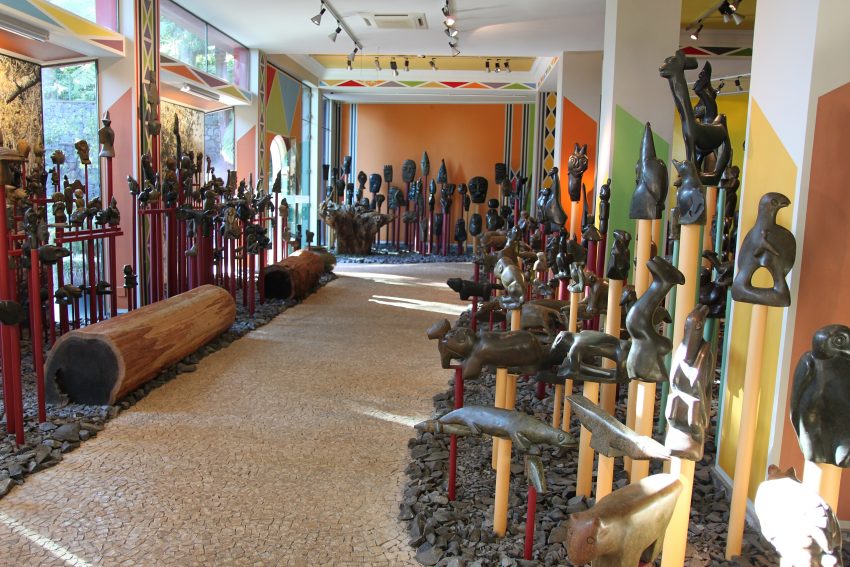
Monte Palace Museum Madeira, set inside the Monte Palace Madeira Gardens above Funchal Bay, pairs gallery spaces with a vast hillside landscape where art and planting design mingle. The gardens cover about 70,000 square meters and are packed with an astonishing range of flora—around 100,000 plant species—so the walk between exhibits feels like part of the collection. Inside, three galleries focus on two standout displays: African Passion, with more than 1,000 contemporary Zimbabwean Shona sculptures, and Mother Nature Secrets, a glittering survey of roughly 700 mineral specimens such as fluorite, quartz, and amethyst. Visitors often linger for a few hours, drifting between shaded paths, ornamental lakes, and resident swans, peacocks, and koi.
Location: Monte Palace Madeira, Caminho das Babosas, Funchal, Madeira, Portugal | Hours: Daily: 10:00 - 16:30 Closed: 25th December | Price: €12.50 | Website | Distance: 2.9km

33. Monte Palace Tropical Garden
Monte Palace Tropical Garden
Public Domain / Wouter Hagens
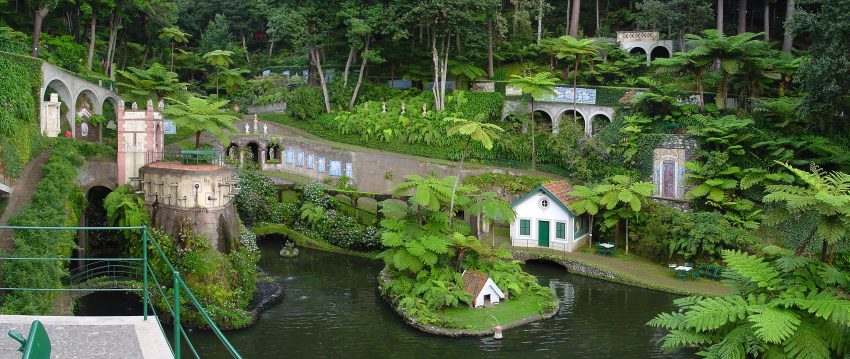
Monte Palace Tropical Garden is a sprawling hillside garden in Monte above Funchal, combining botanical collecting with art and ornament. Spread across about 70,000 square metres, its steep, winding paths drop through dense planting, lakes, and water channels where koi glide and peacocks or swans sometimes wander. Along the way you’ll notice unexpected cultural touches—Portuguese azulejo panels spanning centuries, Japanese-style lanterns, and Buddhist-inspired sculptures set into rockwork and greenery. Viewpoints and terraces frame wide panoramas over Funchal Bay, and the on-site museum spaces add another layer to the experience beyond the plants.
Location: Monte Palace Tropical Garden, Caminho do Monte, Funchal, Portugal | Hours: Daily: 09:30 -18:00 | Price: Adults: €12,50 | Website | Distance: 2.9km
Powered by GetYourGuide

34. Funchal Cable Car

Funchal Monte Cable Car
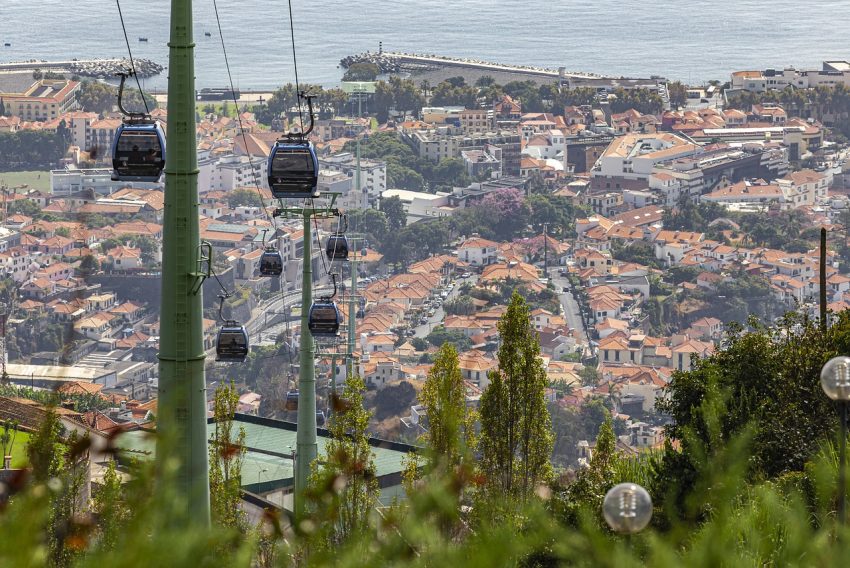
The Funchal Cable Car is a 15-minute aerial ride that lifts you from the Old Town by the Almirante Reis gardens up to Monte, trading street noise for a wide, floating view over the bay, tiled rooftops, and terraced hillsides. Opened in 2000 to restore a link once served by the Comboio do Monte railway (1887–1943), it’s as much a piece of modern transport as a viewpoint. The line runs about 3,178 metres on 11 metal towers, with a dramatic 550-metre span that feels especially open. Cabins are spacious (up to eight), and reviews often note the ride is smooth even when queues look long.
Location: Funchal-Monte Cable Car, Funchal, Portugal | Hours: Daily 9:00 - 17:45 | Price: Adult: One Way €12,50, Round Trip: €18,00 | Website | Distance: 2.9km

35. Palheiro Gardens
Palheiro Gardens Madeira
CC BY-SA 4.0 / Funchal
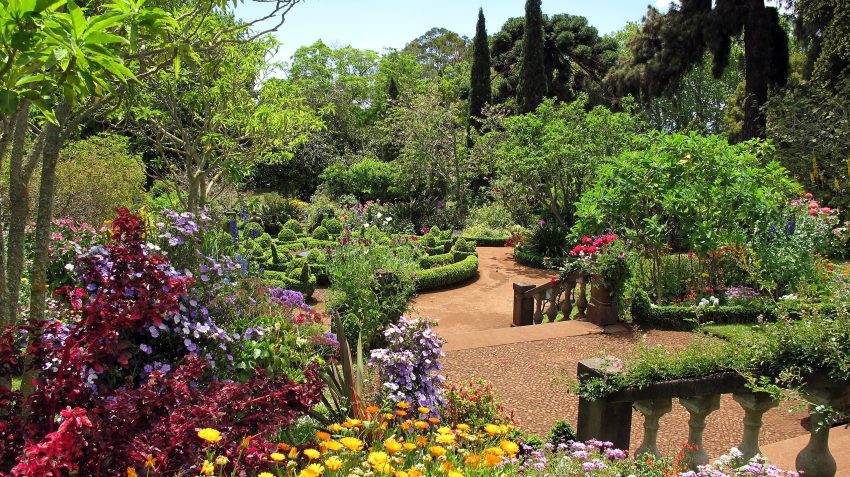
Palheiro Gardens is a hillside estate of more than 14 hectares, where formal lawns and lakes give way to shaded woodland paths and sweeping views over the bay. Created in the early 19th century by the first Conde de Carvalhal and later cared for by the Blandy family, it’s known for plant collections gathered from around the world. The camellias are the signature draw, flowering from roughly November to April and filling the garden with bursts of colour. Look too for the Baroque-style chapel and the stately old house that anchor the grounds in Madeira’s aristocratic past. Visitors often remember the quiet, misty atmosphere when clouds roll through the higher elevation.
Location: Palheiro Gardens, Funchal, Portugal | Hours: Monday to Sunday: 09:00-17:00 | Price: Adults: €10 | Website | Distance: 4km

Best Day Trips from Funchal (Madeira)

A day trip from Funchal (Madeira) offers the perfect opportunity to escape the urban rhythm and discover the surrounding region's charm. Whether you're drawn to scenic countryside, historic villages, or cultural landmarks, the area around Funchal (Madeira) provides a variety of easy-to-reach destinations ideal for a one-day itinerary. If you are looking to rent a car in Portugal I recommend having a look at Discover Cars, first, as they compare prices and review multiple car rental agencies for you.

1. Câmara de Lobos
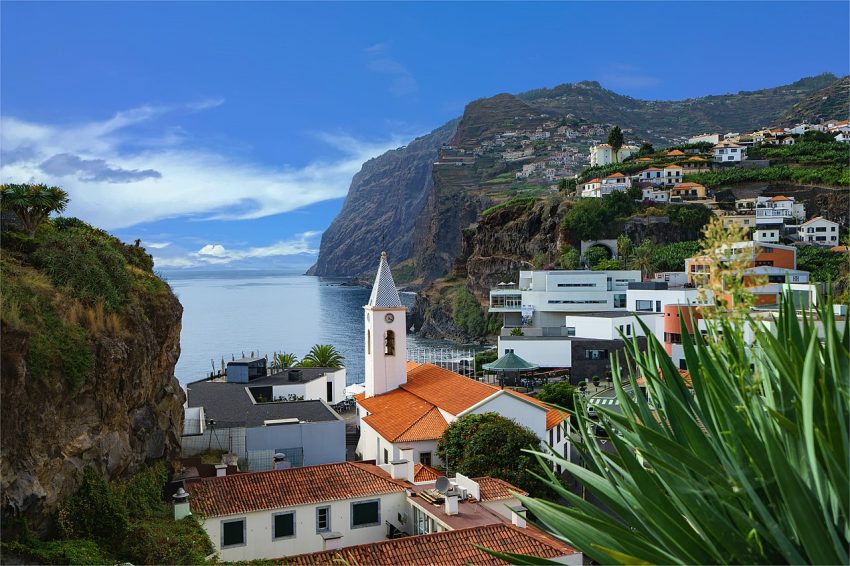
Camara de Lobos view
CC BY-SA 2.0 / Norbert Reimer
Câmara de Lobos is one of Madeira’s most charming coastal villages, set just west of Funchal and known for its deep fishing traditions, dramatic cliffs, and timeless ambience. With colourful boats lining its grey-pebble bay and whitewashed houses clinging to the surrounding hillsides, it is one of the best places to visit from Funchal for an authentic taste of Madeiran…
Visiting Câmara de Lobos

2. Eira do Serrado Viewpoint
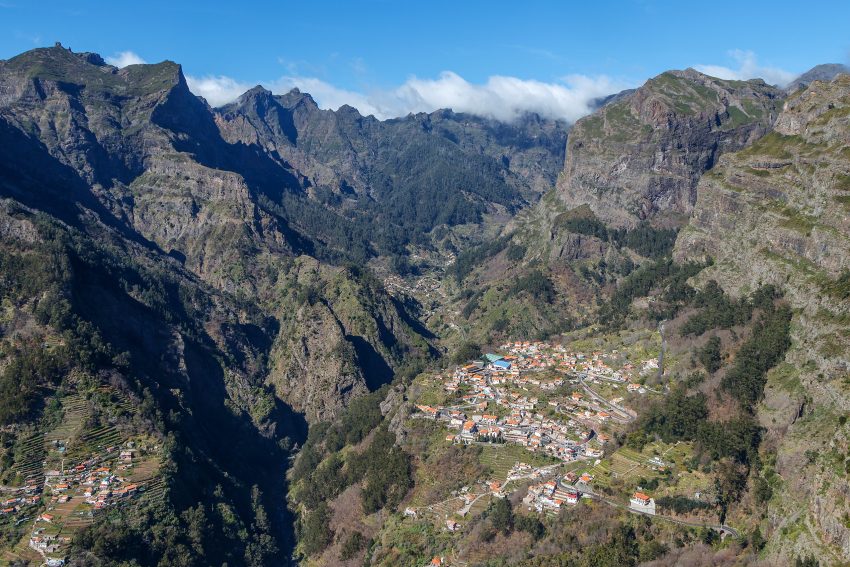
Curral das Freiras from Eira do Serrado
CC BY-SA 3.0 / H. Zell
Eira do Serrado Viewpoint is one of Madeira’s most dramatic natural balconies, perched high above the secluded valley of Curral das Freiras. Surrounded by towering emerald peaks and sculpted volcanic ridges, this viewpoint is one of the best places to visit from Funchal for travellers seeking sweeping landscapes and a sense of the island’s untamed geological soul. The short trail…
Location: Eira do Serrado Viewpoint, Estrada da Eira do Serrado, Funchal, Portugal | Hours: 24 Hours | Distance: 8.6km
Visiting Eira do Serrado Viewpoint

3. Cabo Girão Viewpoint
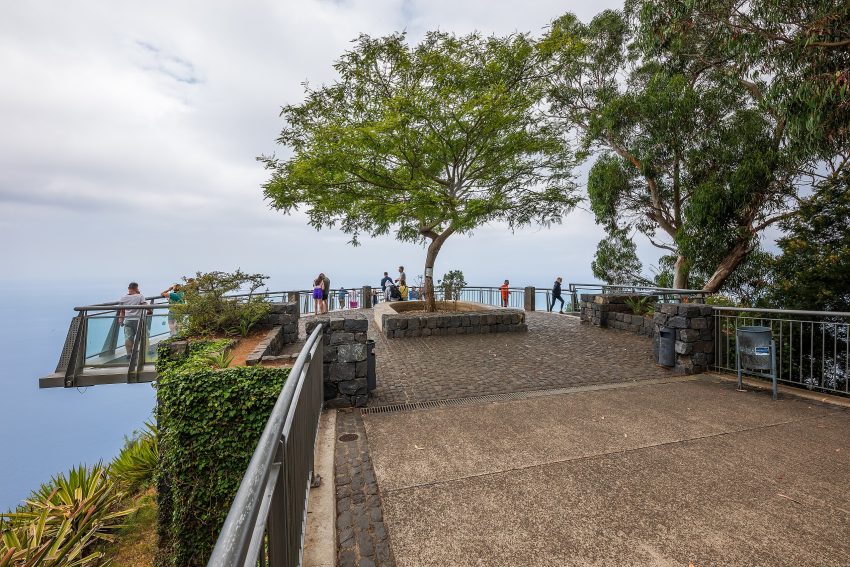
Cabo Girao lookout in Camara de Lobos Madeira
CC BY-SA 4.0 / Ximonic (Simo Räsänen)
Cabo Girão rises 580 metres above sea level, making it one of the highest sea cliffs in Europe and unquestionably one of the top attractions in Funchal and the surrounding coastline. Its spectacular skywalk—a suspended glass platform jutting out over the vast Atlantic—draws visitors from around the world, offering views that are both thrilling and unforgettable. The dramatic cliffside setting…
Location: Cabo Girão, Câmara de Lobos, Portugal | Price: € 2 | Distance: 9km
Visiting Cabo Girão Viewpoint
Powered by GetYourGuide

4. Ribeiro Frio

Ribeiro Frio Madeira
CC BY-SA 3.0 / Sergey Ashmarin
Ribeiro Frio, meaning “Cold Stream,” is a peaceful mountain village located about 15 kilometres from Funchal. Surrounded by lush Laurissilva forest and thriving with endemic species, it is one of the best places to visit from Funchal for travellers seeking nature and tranquillity. The village is known for its trout farm and as a starting point for several popular levada…
Location: Ribeiro Frio, Portugal | Distance: 9.5km
Visiting Ribeiro Frio

5. Curral das Freiras (Nuns Valley)
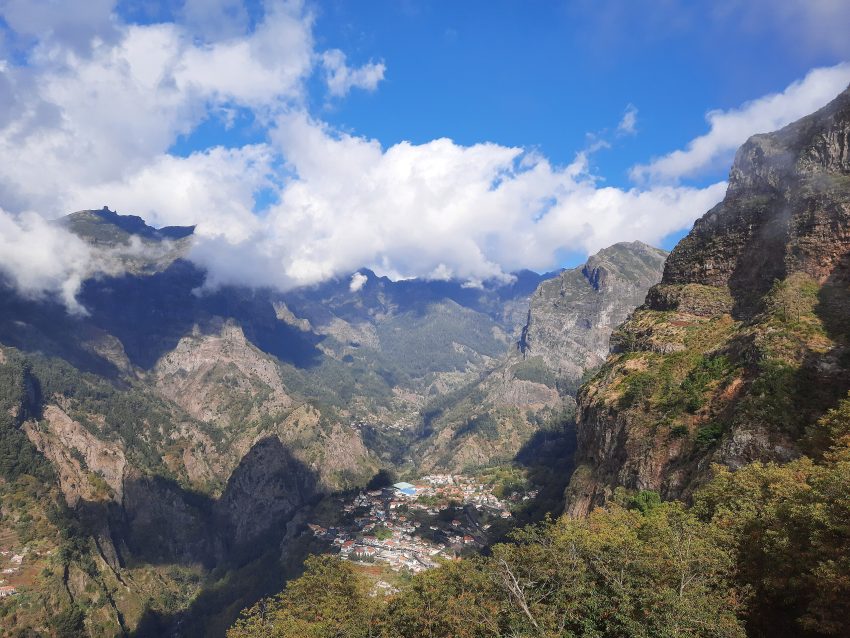
Madeira.Curral das Freiras
CC BY-SA 4.0 / Bybbisch94, Christian Gebhardt
Curral das Freiras, also known as Nuns Valley, is one of Madeira’s most breathtaking natural settings. Surrounded by towering mountains and tucked deep within a basin that resembles a volcanic crater, the village feels like a world of its own. Its dramatic scenery and rich heritage make it one of the must-see places in Curral das Freiras for visitors seeking…
Location: Curral das Freiras, Portugal | Distance: 9.5km
Visiting Curral das Freiras (Nuns Valley)

6. Vereda dos Balcões (PR11)
Vereda dos Balcoes PR11
CC BY-SA 4.0 / Ramessos
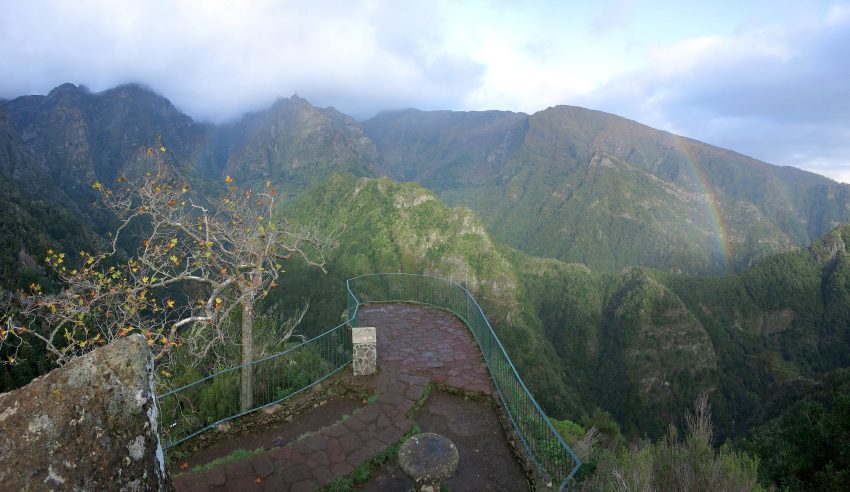
Vereda dos Balcões (PR11) is one of Madeira’s most rewarding short walks, beginning in the quiet mountain village of Ribeiro Frio and leading visitors through lush Laurissilva forest to the stunning Balcões belvedere. Despite its modest length, this trail is one of the best places to visit from Funchal thanks to its accessibility, gentle difficulty, and unforgettable panoramic views over…
Location: PR11 Levada dos Balcões Ribeiro Frio 9000-000 Santana Portugal | Distance: 9.6km
Visiting Vereda dos Balcões (PR11)

7. Pico do Arieiro to Pico Ruivo Hike (PR1 and PR1.2)
Pico do Arieiro to Pico Ruivo Hike
CC BY-SA 3.0 / Bjørn Christian Tørrissen
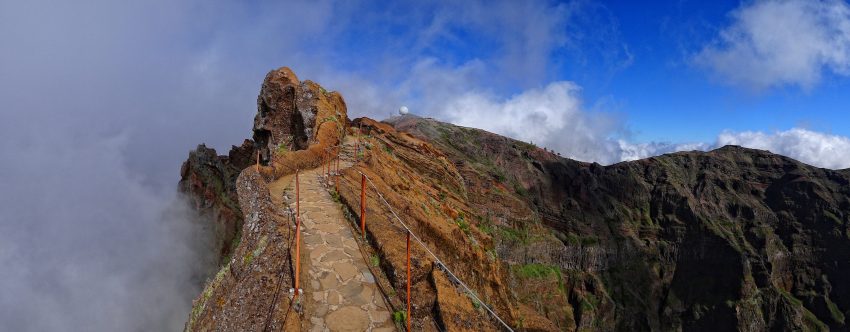
The Pico do Arieiro to Pico Ruivo hike is one of the most breathtaking mountain experiences in Madeira, guiding you across a dramatic volcanic ridge that links the island’s third-highest peak to its absolute summit. Known as PR1 or Vereda do Areeiro, this trail is one of the best places to visit from Funchal thanks to its rare combination of…
| Sunrise Tour @ Pico Do Areiro | Distance: 9.6km
Visiting Pico do Arieiro to Pico Ruivo Hike (PR1 and PR1.2)

8. Santa Cruz (Madiera)

Santa Cruz Madeira
Santa Cruz Madeira
CC BY-SA 2.0 / Vitor Oliveira
Santa Cruz spans an area of 81.5 km² and is home to 43,005 residents, organized into five parishes. The village of Santa Cruz, one of the island's oldest settlements, dates back to the early fifteenth century. Established on June 26, 1515, the municipality attained city status on August 2, 1996. In terms of architectural heritage, notable structures include the Santa…
Visiting Santa Cruz (Madiera)

9. Ribeira Brava (Madeira)
Madeira   Ribeira Brava
Madeira Ribeira Brava
CC BY-SA 2.0 / muffinn
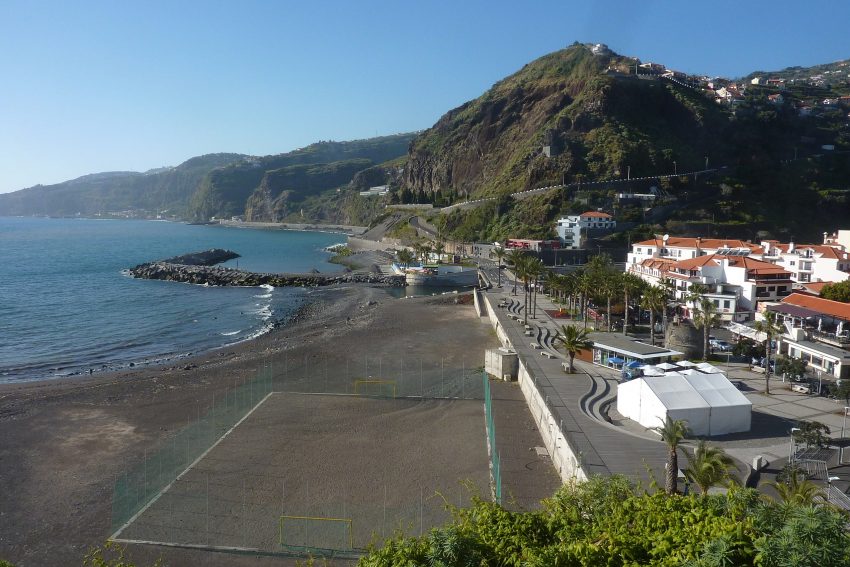
This well-known tourist spot boasts a variety of shops, cafes, and restaurants, particularly close to the beach area. You can take in the scenic views from a terrace or stroll along the promenade. For those interested in learning about the archipelago, the Ethnographic Museum of Madeira is a must-visit, showcasing a collection of ethnographic artifacts that reflect the region's economic,…
Visiting Ribeira Brava (Madeira)
Powered by GetYourGuide

10. Machico (Madeira)

Machico and the nearby airport on Madeira
CC BY-SA 2.0 / Donar Reiskoffer
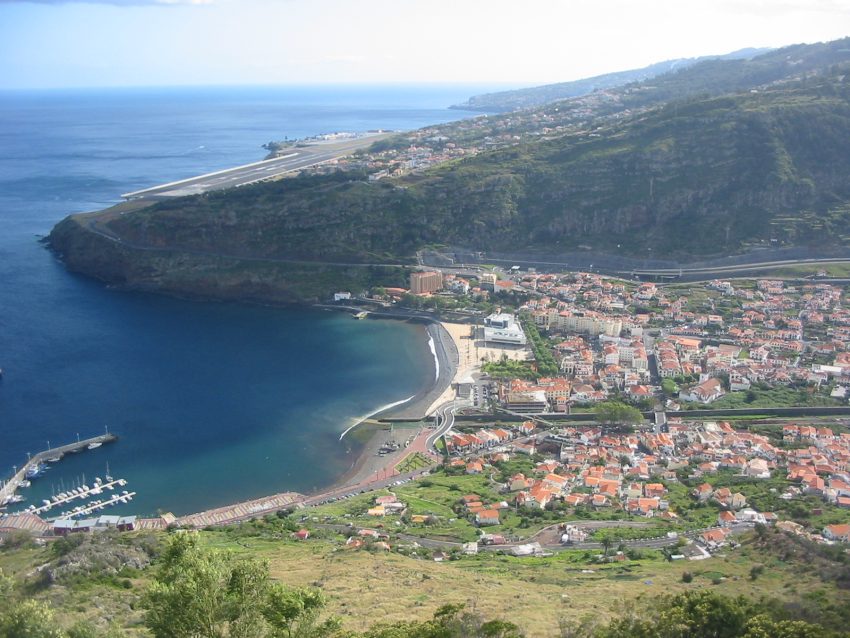
Madeira's second town, Machico, is conveniently located just a ten-minute drive east of the airport, nestled in a picturesque natural bay. The town is surrounded by steep, terraced slopes and boasts its own stony beach. Despite its relatively modest size, Machico offers a laid-back atmosphere, a variety of restaurants, and a modest nightlife scene. This makes it an excellent choice…
Visiting Machico (Madeira)

11. Santana (Madeira)
Santana Madeira
Santana Madeira
CC BY-SA 4.0 / Holger Uwe Schmitt
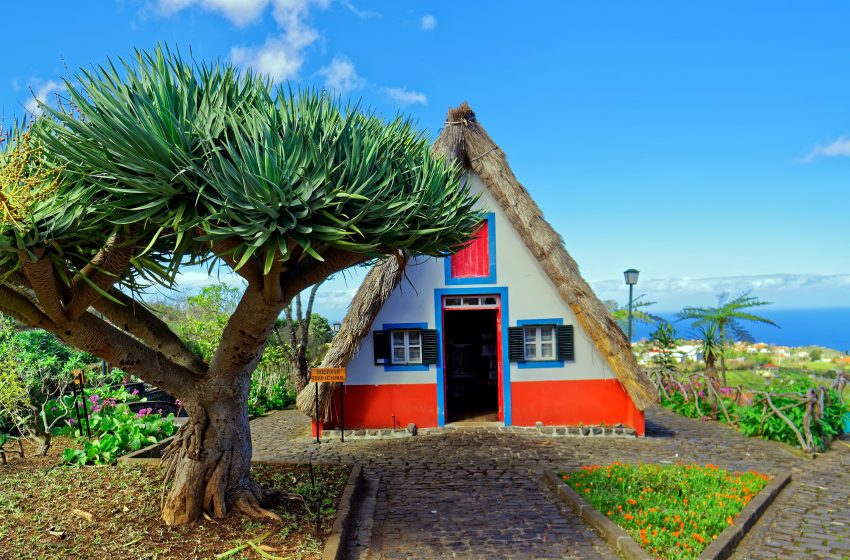
The seclusion of Santana has preserved its unique identity and authentic characteristics throughout much of its history. If you have an interest in learning about Madeira's traditions and enjoy hiking, this is an ideal destination for you. The municipality encompasses six parishes, each with its distinct character: Santana, São Jorge, Arco de São Jorge, Faial, Ilha, and São Roque do…
Visiting Santana (Madeira)
Powered by GetYourGuide

12. Calheta (Madeira)

Praia da calheta portal da calheta
CC BY-SA 3.0 / Xaviernunes
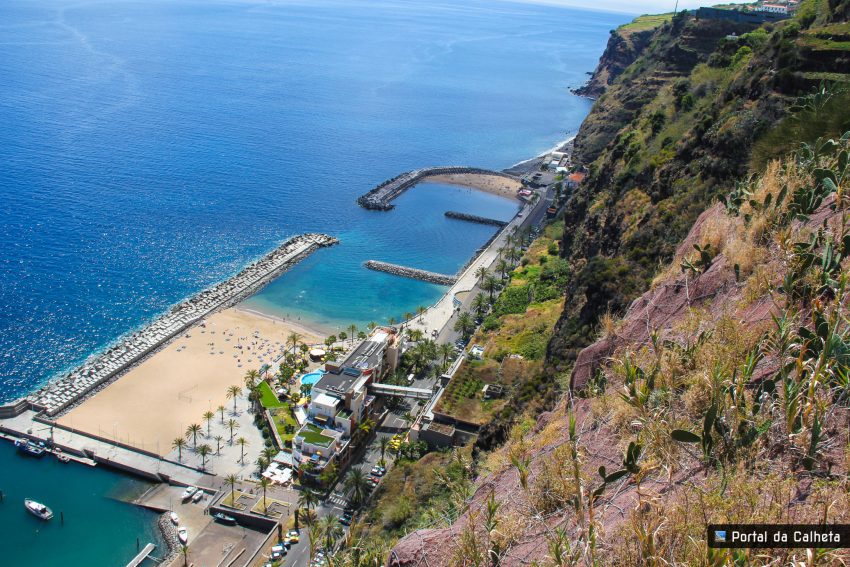
Calheta is a charming village nestled in a steep valley just above Madeira's coast. It is the principal town of the sun-drenched, fertile southwestern coast of the island. Constructed in a bay at the stream's mouth, Calheta enjoys constant sunshine, and its modern artificial sand beach and marina have transformed it into a leisure destination. As one of Madeira's oldest…
Visiting Calheta (Madeira)
Powered by GetYourGuide

13. Porto Moniz (Madeira)

Porto Moniz
Porto Moniz
CC BY-SA 3.0 / Bjørn Christian Tørrissen
Porto Moniz sits on Madeira's North Coast, at the island’s northwestern end, where the landscape feels raw and ocean-led rather than resort-like. It is best approached as a scenery-and-sea stop: a compact coastal town with big Atlantic views, steep green slopes, and a refreshingly quiet pace once you are away from the busiest hours. The headline experience is the Natural…
Visiting Porto Moniz (Madeira)
Powered by GetYourGuide

Where to Stay in Funchal (Madeira)

Funchal offers some of the best places to stay in Madeira, with neighbourhoods that cater to every type of traveller—from those seeking oceanfront luxury to those who prefer charming historic streets or peaceful garden surroundings. The city divides naturally into several appealing areas: the Old Town (Zona Velha), the city centre, the Lido/Hotel Zone, and the quieter hillside districts above Funchal. Each has its own character, making it easy to find a stay that suits your travel style.

Staying in the Old Town is perfect for travellers who want atmosphere and convenience. This is the most historic and walkable part of Funchal, filled with narrow cobbled lanes, painted doors, small restaurants, and easy access to the cable car, Mercado dos Lavradores, and waterfront. A great option here is Sé Boutique Hotel, which blends artistic décor with an excellent central location. Another appealing choice in this district is Porto Santa Maria Hotel, offering elegant rooms overlooking the harbour.

The city centre around Avenida Arriaga and the cathedral is ideal for those who want culture, shops, markets, and museums at their doorstep. This area has a sophisticated yet relaxed feel, with tree-lined avenues and plenty of dining options. One of the best places to stay here is Castanheiro Boutique Hotel, a beautifully restored complex of historic buildings with a rooftop pool and stylish interiors. Another excellent choice nearby is Hotel Madeira, perfect for travellers who want comfort in the heart of the city.

The Lido and Hotel Zone west of the centre is the best area for oceanfront stays, resort-style facilities, and easy access to coastal walks. This neighbourhood stretches along a scenic promenade with swimming complexes, sea platforms, and panoramic views. Travellers looking for luxury and sea views might opt for Pestana Promenade, which offers pools, gardens, and easy access to the Lido promenade. Nearby, The Cliff Bay is one of Madeira’s top hotels, known for its exceptional service and commanding cliffside position above the Atlantic.

For a quieter, more residential experience, the hills above Funchal—including Monte, São Roque, and São Gonçalo—offer peaceful surroundings and sweeping views over the bay. These areas suit travellers who enjoy tranquillity and don’t mind being slightly removed from the city centre. A beautiful hillside stay is Quinta da Bela Vista, a traditional quinta with lush gardens and elegant interiors. Further east, Quinta Mirabela offers modern comfort blended with classic style, as well as panoramic views stretching across the city.

Whether you prefer the historic charm of the Old Town, the dining and cultural scene of the centre, the oceanfront calm of the Lido district, or the scenic peace of the hillside quintas, Funchal offers a diverse range of places to stay, each providing a memorable base for discovering Madeira.

Using the our Hotel and Accomodation map, you can compare hotels and short-term rental accommodations in Funchal (Madeira). Simply insert your travel dates and group size, and you’ll see the best deals for your stay.

Funchal (Madeira) Accommodation Map

Best Time to Visit Funchal (Madeira)

Madeira offers a consistently mild Mediterranean climate throughout the year, making it an ideal destination whenever you have the opportunity to visit. Despite its lush landscapes, the island experiences moderate rainfall without reaching uncomfortably high temperatures. The varied microclimates, notably the contrast between the windy and damp northeast and the more arid and sheltered south due to the mountainous terrain, provide diverse weather conditions.

Visiting Funchal in the Winter

For those seeking winter sun, Madeira doesn’t disappoint. In December, January, and February, daytime temperatures can reach 20°C in the lower regions below the ‘banana line,’ known for ideal banana cultivation. However, glimpses of snow on the mountaintops are not uncommon. Carnival celebrations, a major attraction, occur from the Friday before Lent to Shrove Tuesday, requiring early booking if you plan to travel during these dates.

Visiting Funchal in Spring

Spring, especially from March to May, offers delightful weather with shorts and T-shirt conditions, though occasional heavy rain is possible. The vibrant foliage during walks is particularly striking, and Funchal comes alive with color during the Flower Festival in May, featuring parades and floats adorned with fragrant blooms.

The island’s annual Carnival and Flower Festival, held in May, stand out as highlights in the events calendar. Walking holidays are available year-round, with spring and summer particularly enchanting due to vibrant vegetation and warm sunlight.

Visiting Funchal in Summer

Summer is optimal for whale watching, with daytime temperatures around 24°C. From June to August, the leste, a dry and hot wind from the Sahara, can raise temperatures to 33°C. Mornings in June and July may start with cloud cover, gradually clearing over the day.

Visiting Funchal in Autumn or Fall

Autumn, spanning September to November, brings a quieter atmosphere to Madeira. The weather remains pleasant and sunny, with warm seas suitable for comfortable swimming. While rainfall increases slightly, temperatures stabilize around a balmy 22°C, making it an ideal time for leisurely walks in shaded areas.

Annual Weather Overview

  • January 15°C
  • February 15°C
  • March 17°C
  • April 17°C
  • May 17°C
  • June 19°C
  • July 21°C
  • August 24°C
  • September 21°C
  • October 20°C
  • November 17°C
  • December 16°C

How to get to Funchal (Madeira)

Travelling to Funchal by Plane

Travelers heading to Madeira have two primary entry points. The first is Cristiano Ronaldo Madeira International Airport, situated in the city of Santa Cruz, serving as the main hub for arrivals and departures in the region. It is also known as Madeira Airport, Funchal Airport, or Santa Catarina Airport It's worth noting that international flights to Funchal from significant European cities are both frequent and reasonably priced. On average, these flights take approximately three to four hours, providing efficient and accessible travel options. For those departing from Lisbon, the journey to Madeira is notably shorter, taking just 90 minutes. Whether arriving by air or sea, Madeira is well-connected and easily accessible for visitors from various locations.

The airport is located 13.2 km (8.2 mi) east-northeast of the regional capital, Funchal.

Visiting Funchal by Ferry or Boat

The second option is the Port of Funchal, strategically positioned along the route of major international cruise ships. It is a 15 minutes walk from the centre of Madeira’s capital, to the Funchal harbour.  There is occasionally a ferry service operating from Portugal to Madeira, although this does vary year to year!

Travelling to Funchal by Road

The journey from the airport to the city typically takes a mere 15 to 20 minutes, ensuring swift and convenient transportation. For budget-conscious travellers, local bus services offer an extremely affordable option, efficiently taking visitors to various locations in and around the city.

Travelling to Funchal by Bus

Passengers can enjoy splendid views from elevated bus seats, and the drivers, known for their expertise, provide a sense of safety throughout the journey. Four companies manage the public transport system in Madeira: Horários do Funchal, SAM, Rodoeste, and EACL (Empresa de Autocarros do Caniço), each covering different parts of the island.

For most people, SAM and Rodoeste buses can be boarded at their main departure points on Avenida do Mar, and tickets can be purchased directly on the bus or, in some cases, at the operators' kiosks near the departure points. It's worth noting that fare-saving tickets are available for the orange town buses (HF). Travelers should be aware that identical bus numbers may serve different routes, for example, the orange town bus 20 to Monte and the green/cream country bus 20 to Santo da Serra.

More from this area