Venice, Italy: The Ultimate Travel Guide 2026
venice rialta bridge

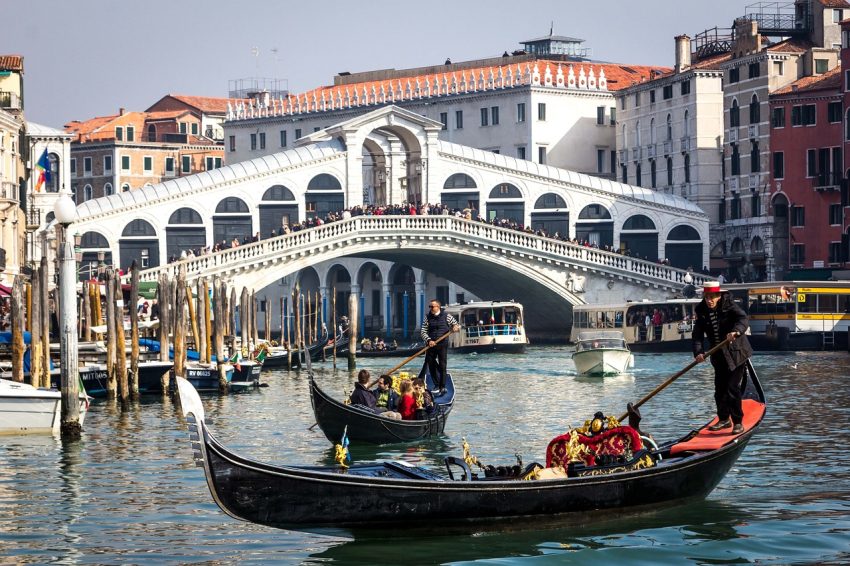
Venice is one of Italy's most picturesque cities. Beautiful floating palaces of stone surrounded by an ancient network of canals, built on a group of 118 islands and these small islands are linked with 400 bridges. These islands are located in the Venetian Lagoon, which sits just off of the mainland of Italy. With its Gothic architecture, Renaissance and Baroque buildings, wide piazzas, and narrow canals, Venice is often described as one of the most beautiful cities in the world.

Venice is divided into six sestieri, neighborhoods that have distinctly different characters. San Marco is the heart of Venice and home to Doge's Palace, St. Mark's Square, and the Rialto Bridge, surrounded on three sides by a great loop in the Grand Canal.

Most tourists spend the majority of their time here, along with Dorsoduro (Pont dell’Accademia, Peggy Guggenheim Collection, and Basilica di Santa Maria della Salute), and San Polo. Santa Croce, located on the western end of Venice, is the main transportation hub. The bus station, parking garages, and train station are located here. Cannaregio, Castello, and Giudecca are where many local Venetians live, but these sestieri make great places to go for a stroll if you want to escape the tourist crowds in the heart of Venice. Finally, Murano, Burano, and Lido make great day trips from Venice, but you need to have at least three days in Venice in order to have enough time to do this.

Table of Contents

History of Venice

Venice in the Early Beginnings: Refuge and Foundation

The history of Venice begins in the 5th and 6th centuries when people from nearby Roman cities fled to the lagoon islands to escape invading Germanic tribes. These early settlers built homes on wooden piles driven into the mud, gradually forming a network of communities across the marshy islets. As the Eastern Roman Empire weakened, Venice began to develop its own political structures, laying the groundwork for what would become a unique maritime republic. By the 8th century, Venice had its first Doge, and although nominally under Byzantine control, it was already charting a path of growing independence.

Venice in the Middle Ages: Rise of a Maritime Republic

During the 9th to 13th centuries, Venice emerged as a dominant naval and commercial power in the Mediterranean. The city’s strategic location between East and West allowed it to flourish through trade with the Byzantine Empire, North Africa, and the Levant. The construction of St. Mark’s Basilica in the 11th century, housing relics allegedly stolen from Alexandria, symbolized both spiritual prestige and worldly ambition. Venice’s influence expanded through military ventures, most notably the Fourth Crusade, during which it played a decisive role in the sacking of Constantinople in 1204. The spoils of this campaign further enriched the city and adorned its churches and palaces.

Venice in the Renaissance: Wealth, Art, and Power

The 14th to 16th centuries marked the golden age of Venice. The Republic solidified its dominance over maritime trade, controlling routes to the East and securing a vast commercial empire stretching from Cyprus to the Adriatic. This wealth fostered an extraordinary cultural and artistic flowering. Venice became a beacon of Renaissance art and architecture, with figures like Titian, Bellini, and Tintoretto defining its artistic identity. Lavish palazzi were built along the Grand Canal, and institutions like the Arsenal and the Venetian Senate demonstrated the city’s administrative and industrial prowess. Despite occasional setbacks, such as the plague of 1348, Venice remained a symbol of stability and opulence.

Venice in the Early Modern Period: Decline and Preservation

By the 17th and 18th centuries, Venice’s dominance began to wane. Shifts in global trade routes, particularly the rise of Atlantic trade, weakened its economic position. Meanwhile, its political independence was threatened by the growing power of neighboring states. Nonetheless, Venice retained its cultural prestige, becoming known for its Carnival, music, and literature. Composers like Vivaldi and playwrights like Goldoni thrived in this period. In 1797, the Republic of Venice came to an end when Napoleon Bonaparte conquered the city, transferring it to Austrian rule shortly afterward. This marked the beginning of a new, more subdued chapter in Venice’s history.

Venice in the Modern Era: From Occupation to Cultural Icon

During the 19th century, Venice changed hands multiple times before becoming part of the newly unified Kingdom of Italy in 1866. The city faced new challenges, including industrialization, flooding, and the slow decline of its port. However, its appeal as a romantic and historical destination only grew. In the 20th century, Venice established itself as a global cultural capital, hosting events like the Venice Biennale and the Venice Film Festival. Despite modern pressures, including overtourism and environmental threats, Venice continues to captivate the world with its unique beauty, historic legacy, and enduring mystery.

Moira & Andy
Moira & Andy

Hey! We're Moira & Andy. From hiking the Camino to trips around Europe in Bert our campervan — we've been traveling together since retirement in 2020!

Read our full story here

Visiting Venice for the first time and wondering what are the top places to see in the city? In this complete guide, I share the best things to do in Venice on the first visit. To help you plan your trip, I have also included an interactive map and practical tips for visiting!

This website uses affiliate links which earn a small commission at no additional cost to you.

Powered by GetYourGuide

45 Best places to See in Venice

This complete guide to Venice not only tells you about the very best sights and tourist attractions for first-time visitors to the city but also provide insights into a few of our personal favorite things to do.

This is a practical guide to visiting the best places to see in Venice and is filled with tips and info that should answer all your questions!

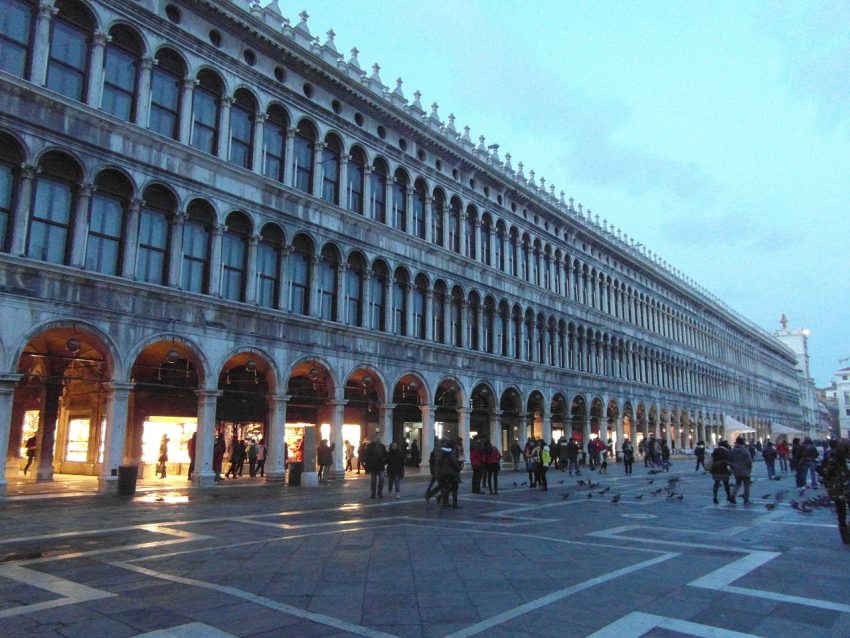
1. Procuratie Vecchie, St Marks Square
Procuratie St Marks Square Venice
CC BY-SA 3.0 / Deror avi
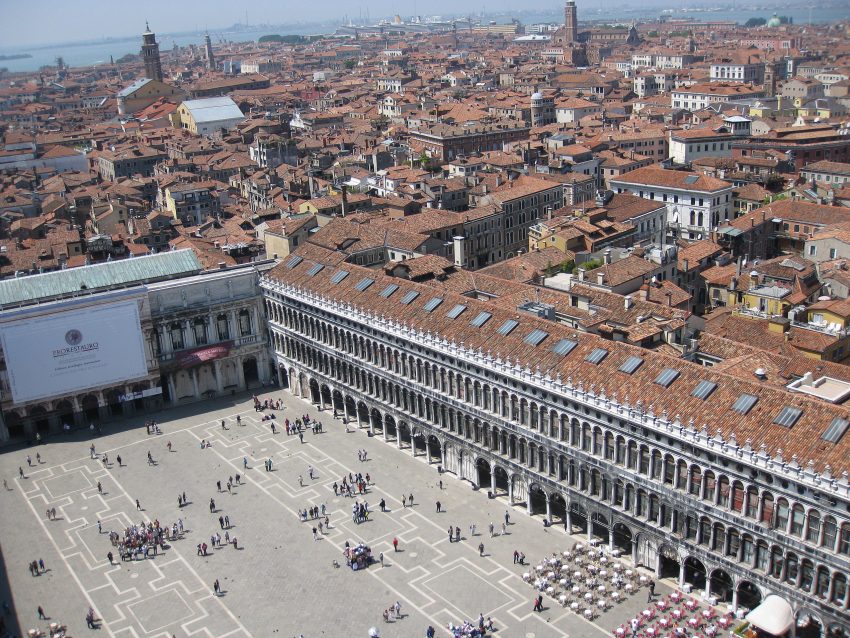
Procuratie Vecchie is the long arcaded building that lines the north edge of St Mark’s Square, and—unusually for Venice’s ceremonial architecture—you can now step inside at Piazza San Marco 105. Built for the Procurators of Saint Mark, its repeating arches and bays helped shape the Piazza into a formal civic “room,” with upper floors once tied to governance and stewardship. After a major restoration by David Chipperfield Architects Milan, it reopened to the public as the Venice home of The Human Safety Net, shifting the building back toward public purpose. Visitors tend to remember the sudden quiet after the Piazza, the close-up view of the architecture beyond the façade, and the interactive exhibition “A World of Potential,” designed for participation rather than passive looking.
Location: Procuratie Vecchie, Piazza San Marco, Venice, Metropolitan City of Venice, Italy | Hours: (Summer) 1 April – 31 October: Wednesday – Monday: 10:00–19:00. (Winter) 1 November – 31 March: Wednesday – Monday: 10:00–18:00. Closed on Tuesdays. | Price: Free entry (voluntary donation). | Website | Distance: 0.1km

We recommend to rent a car in Italy through Discover Cars, they compare prices and review multiple car rental agencies. Book your rental car here.

2. Caffè Lavena

Cafe Lavena Piazza San Marco Venezia
CC BY-SA 3.0 / qwesy qwesy
Caffè Lavena is a grand, old-school café on Piazza San Marco, where marble-topped tables and polished interiors put you in the middle of the square’s nonstop pageant. Founded in 1750 and later bought by Carlo Lavena in 1860, it has also gone by names like Regina d’Ungheria and the crowned-bear “Orso Coronato,” a reminder of how Venetians once navigated by signs. The experience is as much about sitting in an elegant salon of mirrors and woodwork as it is about what’s in the cup. Many visitors come for the live band and people-watching, while noting that prices can be startling even for simple coffees.
Location: Cafè Lavena, Piazza San Marco, Venice, Metropolitan City of Venice, Italy | Hours: Daily: 09:30–00:00. | Price: No entry fee; you pay for what you order (espresso from €12). | Website | Distance: 0.1km

Here is a complete selection of hotel options in Venice. Feel free to review each one and choose the stay that best suits your needs.

3. Procuratie Nuove

Procuratie Nuove
Procuratie Nuove
CC BY-SA 4.0 / Wladyslaw Golinski
Procuratie Nuove is the long, formal building lining the south side of Piazza San Marco, and its steady façade is a big reason the square feels composed rather than accidental. At ground level, a continuous run of arches creates a sheltered arcade where the scale turns human and the rhythm of repeated openings stays calming even in crowds. Built from the late 1500s into the mid 1600s, it replaced earlier medieval frontage with a unified, classical screen that projected the Venetian Republic’s authority. The upper floors were tied to the procurators of St Mark, and today you can reach interior rooms via the Museo Correr route for a quieter look at Venice’s civic and ceremonial world.
Location: Procuratie Nuove, Piazza San Marco, Venice, Metropolitan City of Venice, Italy | Hours: (Summer) 01 April – 31 October; Daily: 10:00–18:00. (Winter) 01 November – 31 March; Daily: 10:00–17:00. | Price: Free to see from the piazza; St. Mark’s Square Museums ticket: €30 | Website | Distance: 0.2km

Traveling to a country with a different currency? Avoid ATM transaction fees and pay in local currency with a Wise Card. Having used it for over 5 years, we've saved loads on fees!

4. Procuratie Nuovissime (Newest Procuracies)

Procuratie Nuovissime
CC BY-SA 1.0 / SIG SG 510
The Procuratie Nuovissime, or Napoleonic Wing (Ala Napoleonica), forms the western “curtain” of Piazza San Marco, closing the square with a deliberately symmetrical, imperial façade. Inside—encountered as part of the Museo Correr sequence—you feel how Venice’s center was rewritten after the Republic fell, swapping Venetian civic language for early‑19th‑century courtly order. The experience is about interiors: aligned rooms, measured proportions, and ceilings and wall treatments that set a steady rhythm as you move. Neoclassical restraint replaces the Gothic and Renaissance mood many expect, with an Empire-era polish that reads as political messaging in plaster and stone. The real payoff comes when you step back outside and see the Piazza’s geometry differently.
Location: S. Marco, 1105, 30124 Venezia VE, Italy | Hours: (Summer) 1 April – 31 October; Daily: 10:00–18:00. (Winter) 1 November – 31 March; Daily: 10:00–17:00. | Price: Included with the St Mark’s Square Museums ticket (Doge’s Palace, Museo Correr, National Archaeological Museum, and the Monumental Rooms of the Marciana Library). | Website | Distance: 0.2km

Click here to read our blog about Get to Know the Six Sestieri of Venice 2026: Neighborhood Guide

5. Piazzetta dei Leoncini

Piazzetta dei Leoncini
CC BY-SA 4.0 / Jean-Pol GRANDMONT
Piazzetta dei Leoncini is a small, tucked-away square on the north side of St Mark’s Basilica in Venice, just beyond the main flow of Piazza San Marco. Its name comes from two early-18th-century crouching lion statues in warm-toned stone, a quiet counterpoint to the basilica’s marbles and mosaics. The enclosed feel makes the space noticeably calmer, letting you linger over textures and architectural seams that disappear in the crowds nearby. Set into a niche on the basilica wall is the sarcophagus of Daniele Manin, leader of the 1848 Republic of San Marco, adding a sober note of civic memory. It’s also a good place for cleaner, less crowded photos of the San Marco complex.
Location: Piazzetta dei Leoncini, Piazza San Marco, Venice, Metropolitan City of Venice, Italy | Hours: 24 Hours | Price: Free | Distance: 0.2km

Click here to read our blog about Venice on a Budget 2026: How to Explore the City for Less

6. Caffè Florian

Venezia Caffe Florian
© Giovanni Dall'Orto
Caffè Florian is a historic coffee house under the arches of the Procuratie Nuove on Piazza San Marco, still operating since its opening on 29 December 1720 (originally called Alla Venezia Trionfante). Inside, the experience is all ceremony—silver trays, mirrored rooms, and painted ceilings that make even a quick espresso feel staged in the best way. Themed salons added in the 19th century, including the Sala del Senato, tie the café to Venice’s political and cultural conversation. Sit beneath the arcades or on the terrace for close-up people-watching as the square’s mood shifts, and if the live music is playing you’ll feel it as much as hear it. Expect polished table service and prices that match the setting.
Location: Caffè Florian, Piazza San Marco, Venice, Metropolitan City of Venice, Italy | Hours: Sunday – Thursday: 09:00–20:00. Friday – Saturday: 09:00–23:00. | Price: Free entry; Caffè Americano. €6.00 | Website | Distance: 0.2km

Click here to read our blog about Guide to Visiting Piazza San Marco 2026: Landmarks, Tips & Map

7. National Archaeological Museum

Museo Archeologico Nazionale, Piazza San Marco
CC BY-SA 4.0 / Marcoblueyes
The National Archaeological Museum in Venice is a quiet set of galleries within the St Mark’s complex on Piazza San Marco, where the crowd noise fades into rooms of antiquity. Its roots go back to 1523, when Cardinal Domenico Grimani’s collection helped define Venice’s scholarly taste for the classical world. Visitors linger over marble torsos, calm Roman portrait heads, and mythological figures, then slow down at cases of coins, gems, and carved stones where tiny inscriptions and ruler profiles reward close looking. The collection also hints beyond Greece and Rome, with occasional Egyptian and Near Eastern material that reflects Venice’s outward-looking collecting culture.
Location: Museo Archeologico Nazionale di Venezia, Piazza San Marco, Venice, Metropolitan City of Venice, Italy | Hours: (Summer) 1 April – 31 October: Tuesday – Sunday: 10:00–18:00. (Winter) 1 November – 31 March: Tuesday – Sunday: 10:00–17:00. Closed on non-holiday Mondays; 1 January; 25 December. | Price: €8.00 (includes the Monumental Rooms of the Biblioteca Nazionale Marciana); €2.00 ages 18–25. | Website | City Pass with Museums, Churches & Public Transport | Distance: 0.2km
Powered by GetYourGuide

8. Palazzo Contarini del Bovolo

Palazzo Contarini del Bovolo
CC BY-SA 3.0 / PatriPA
Palazzo Contarini del Bovolo in Venice is a small noble palazzo best known for its exterior “snail-shell” spiral staircase, added in 1499 as a showy architectural set piece in a tight inner courtyard near Campo Manin. The climb threads through stacked arches that repeatedly frame slivers of brick, sky, and neighboring rooftops, turning the ascent into the main spectacle. At the top, a belvedere terrace gives a close, rooftop-level view across chimneys and domes rather than a distant lagoon panorama. Visitors often remember how hidden the entrance feels down a quiet corte, and how quickly you can be up and looking out—though the narrow spiral can feel tight when it’s busy.
Location: Palazzo Contarini del Bovolo, Scala Contarini del Bovolo, Venice, Metropolitan City of Venice, Italy | Hours: (Winter) 27 October 2025 – 22 February 2026; Daily: 09:30–17:30. (Summer) 23 February 2026 – 25 October 2026; Daily: 10:00–18:00. | Price: €9 (full); €7 (reduced); free for children under 12 (and some other eligible categories). | Website | Palazzo Contarini del Bovolo Entrance Ticket | Distance: 0.2km
Powered by GetYourGuide

9. St Mark’s Clock Tower

Torre dellOrologio
Torre dellOrologio
CC BY-SA 3.0 / Mister No
St Mark’s Clock Tower (Torre dell’Orologio) stands on the north edge of Piazza San Marco, forming the archway that leads into the Merceria, Venice’s old shopping artery toward Rialto. Built in the late 15th century, it functioned as a public statement of civic order in a city driven by trade, timing, and ritual. The great dial is an astronomical-style clock meant to be read from different angles, even by people approaching from the lagoon, linking Venice’s sense of time to skies and navigation. Inside, the tower’s character shifts from grand façade to tight, worn spaces packed with gears, weights, and compact rooms. From the upper levels you look down on the steady stream of people passing beneath the arch.
Location: Torre dell'Orologio, Piazza San Marco, Venice, Metropolitan City of Venice, Italy | Hours: Monday: 11:00 & 14:00 (English); 12:00 (Italian). Tuesday – Wednesday: 12:00 & 14:00 (English); 15:00 (French). Thursday: 12:00 (English); 15:00 (Italian); 14:00 (French). Friday: 11:00, 14:00 & 16:00 (English); 12:00 & 15:00 (Italian). Saturday: 14:00 & 16:00 (English); 12:00 & 15:00 (Italian); 11:00 (French). Sunday: 11:00 (English); 12:00 & 15:00 (Italian); 14:00 (French). | Price: Adults: €15; €11 reduced. | Website | Skip the Line Tickets | Distance: 0.2km

10. Museo Correr

Museo Correr
Museo Correr
CC BY-SA 4.0 / Jean-Pol GRANDMONT
Museo Correr is Venice’s city museum on Piazza San Marco, spread through the Procuratie Nuove and the Napoleonic Wing, and it’s where the Serenissima becomes legible beyond the scenery. The grand Neoclassical state rooms feel closer to a palace than a gallery, then the route shifts into evidence of civic life—portraits, manuscripts, maps, coins, and ceremonial objects that show how the republic presented itself at home and abroad. Visitors often remember the Canova pieces, the quiet, book-lined library spaces, and oddities like globes marked with faraway routes and even Egyptian mummies among the collections. It’s also noticeably calmer than the square outside, making the transition from crowd to museum hush part of the experience.
Location: Museo Correr, Piazza San Marco, Venice, Metropolitan City of Venice, Italy | Hours: (Summer) 01 April – 31 October; Daily: 10:00–18:00. (Winter) 01 November – 31 March; Daily: 10:00–17:00. | Price: €30 (St Mark’s Square Museums ticket, includes Doge’s Palace + Museo Correr + National Archaeological Museum + Monumental Rooms of the Biblioteca Marciana); reduced €15. | Website | Distance: 0.2km

11. St Mark's Campanile

St Marks Campanile 1
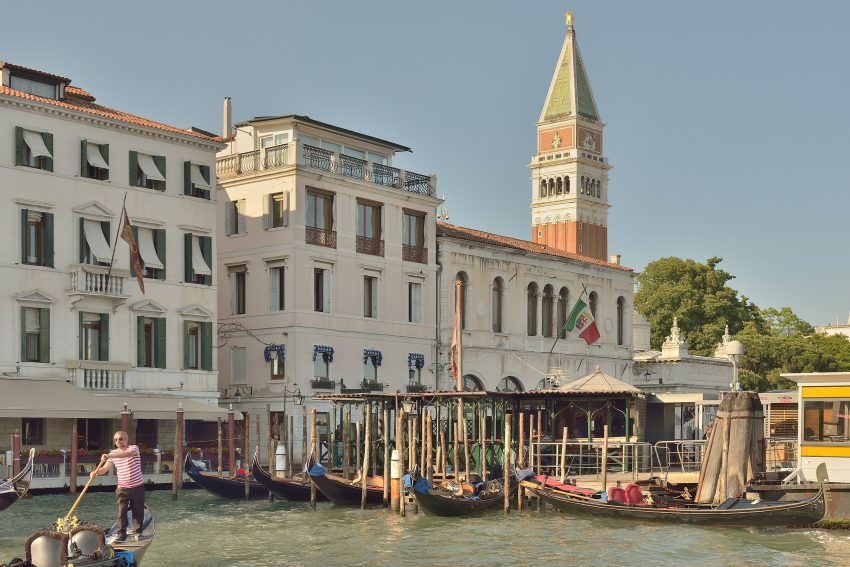
St Mark’s Campanile is the freestanding brick bell tower in Piazza San Marco, rising about 99 metres and acting as Venice’s clearest orientation point. A lift carries you to the open viewing platform, where the city reads like a diagram: the domes of St Mark’s Basilica close below, the Riva degli Schiavoni stretching along the waterfront, and the lagoon fading into scattered islands. The tower began as a practical watchtower and beacon, with bells regulating civic life in the Venetian Republic. After collapsing in 1902 with no fatalities, it was rebuilt to match the earlier form and completed in 1912, still crowned by a golden archangel.
Location: St Mark's Campanile, Piazza San Marco, Venice, Metropolitan City of Venice, Italy | Hours: (Summer) Daily: 09:30–21:15. (Winter) Daily: 09:30–19:15. | Price: €15 standard; 50% reduction for ages 10–18, students up to 26, and over 65; free for children under 10. | Website | Venice San Marco Tour with St. Mark's Bell Tower Tickets | Distance: 0.2km
Powered by GetYourGuide

12. St Mark's Square

St Marks SquareVenice
CC BY-SA 3.0 / 500px
St Mark’s Square (Piazza San Marco) is Venice’s grand civic room, an open sweep of pale stone where the city’s ceremony and daily life play out in full view. At one end, the domes and mosaicked façade of St Mark’s Basilica catch the light, while the Campanile stands apart like a freestanding marker you can circle from every angle. The arcaded Procuratie wrap the edges with cafés and shopfronts, and the Clock Tower signals the passage into the Mercerie. On damp days, shallow water can mirror the surrounding buildings, adding a theatrical sheen to the crowds. Come early or late and the same space shifts from bustling to hushed, with footsteps replacing the daytime roar.
Location: St. Mark's Square, Venice, Metropolitan City of Venice, Italy | Hours: 24 Hours | Price: Free | | Distance: 0.2km

13. Basilica di San Marco

Basilica San Marco
Basilica San Marco
CC BY-SA 2.0 / Gary Ullah
Basilica di San Marco is Venice’s former ducal chapel, built to project the power and faith of the Venetian Republic, and it still feels like a treasury turned into a church. Step under the domes and the gold-ground mosaics seem to glow, while the patterned marble floor ripples with intricate inlays. Outside, linger on the façade’s arched portals and mosaic panels, then look for the small porphyry sculpture of the Four Tetrarchs near the side by the palace wall. Inside, the Pala d’Oro’s jewel-like goldwork and the Treasury’s ceremonial objects add a close-up sense of medieval craft and ambition. Many visitors remember the sudden hush and the way light catches the tiny tiles.
Location: P.za San Marco, 328, 30124 Venezia VE, Italy | Hours: Monday – Saturday: 09:30–17:15. Sunday & national holy days: 14:00–17:15. | Price: €10 (Basilica); €20 (Basilica + Pala d’Oro or Basilica + Museum & Loggia dei Cavalli); €30 (full ticket). | Website | St. Mark's Basilica Tour with Doge's Palace Option | Distance: 0.2km
Powered by GetYourGuide

14. Harry's Bar

Harrys bar Canal Grande Venezia
CC BY-SA 2.5 / Wolfgang Moroder
Harry’s Bar is a small, club-like bar and restaurant just off Piazza San Marco near the lagoon, where the room’s tight scale makes every entrance and glance feel amplified. Opened on 13 May 1931 by Giuseppe Cipriani, it became a discreet meeting point for writers, artists, and well-heeled travelers, and it has stayed deliberately restrained rather than reinventing itself. What visitors remember is the old-school rhythm: crisp, practiced service, a calm interior, and the sense that the place runs on continuity. Order a Bellini to connect with the house signature, or lean into a dry martini that suits the understated mood. Even a short stop feels like a compact Venetian ritual, more about atmosphere than variety.
Location: Harry's Bar Cipriani, Calle Vallaresso, Venice, Metropolitan City of Venice, Italy | Hours: Daily: 11:00–23:00. | Price: No entry fee; you pay for what you order. | Website | Distance: 0.3km

15. Piazzetta di San Marco

Piazzetta di San Marco
Piazzetta di San Marco is the smaller open square that links Piazza San Marco to the lagoon, forming Venice’s ceremonial “front door” to the water. It’s framed tightly by the Doge’s Palace on one side and the Biblioteca Marciana on the other, then suddenly opens to a wide horizon of boats and light. At the waterfront end stand two granite columns: Saint Theodore with his spear and, beside him, the winged lion of Saint Mark—symbols that once greeted arrivals to the republic. Locals traditionally avoid walking between the columns because the space was associated with executions, a superstition you’ll still notice in the flow of foot traffic. Expect grand façades, shifting reflections after rain, and dense crowds even in cooler months.
Location: Piazzetta San Marco, Piazzetta S. Marco, Venice, Metropolitan City of Venice, Italy | Hours: 24 hours | Price: Free | Distance: 0.3km

16. Biblioteca Marciana

Biblioteca Marciana
Biblioteca Marciana
CC BY-SA 4.0 / Venicescapes
Biblioteca Marciana is the Renaissance library building lining Piazza San Marco, its long arcaded façade facing the Doge’s Palace and easily missed amid the square’s rush. It matters because it grew from Cardinal Bessarion’s 1468 donation of Greek and Latin manuscripts—an effort to safeguard classical learning after Constantinople fell—and Venice later turned that gift into a civic monument. Designed by Jacopo Sansovino and built from 1537 to 1588, the visitor route leads into Monumental Rooms where architecture becomes the exhibit. Expect vaulted ceilings, gilded ornament, and painted ceiling scenes that create a ceremonial hush just steps from the piazza.
Location: Biblioteca Marciana, Piazza San Marco, Venice, Metropolitan City of Venice, Italy | Hours: (Summer) 01 April – 31 October: Daily: 10:00–18:00 (last entry 17:00). (Winter) 01 November – 31 March: Daily: 10:00–17:00 (last entry 16:00). | Price: St Mark’s Square Museums ticket (includes Museo Correr, National Archaeological Museum, and the Monumental Rooms of the Biblioteca Marciana): €30 (full) / €15 (reduced). | Website | Distance: 0.3km

17. Teatro La Fenice

Teatro La Fenice, Venice
CC BY-SA 4.0 / Youflavio
Teatro La Fenice is Venice’s storied opera house, hidden in the lanes near Campo San Fantin, where the city’s taste for performance is condensed into a single, jewel-box auditorium. Inside, visitors remember the deep red velvet, gilded tiers of boxes, frescoed ceilings, and chandelier glow that make the room feel theatrical even in silence. Its name—“The Phoenix”—fits: the theatre has been rebuilt after multiple fires, most dramatically after the 1996 blaze that gutted the interior, before reopening in 2004 with a painstaking reconstruction. Even a daytime visit invites you to imagine opening-night rituals, while a rehearsal or performance reveals why this space has anchored Venetian musical life for centuries.
Location: Teatro La Fenice, Campo San Fantin, Venice, Metropolitan City of Venice, Italy | Hours: Daily: 09:30–18:00. | Price: Guided visit tickets from €12 (adult), with reductions available. | Website | La Fenice Opera House Entry Ticket with Audio Guide | Distance: 0.3km
Powered by GetYourGuide

18. Bridge of Sighs

Antonio Contin   Ponte dei sospiri Venice
Antonio Contin Ponte dei sospiri Venice
CC BY-SA 4.0 / Didier Descouens
Venice’s Bridge of Sighs (Ponte dei Sospiri) is a small, enclosed white Istrian-stone passage spanning the Rio di Palazzo beside the Doge’s Palace. Built in the early 1600s, it linked interrogation rooms and court spaces to the New Prisons, which explains the sealed corridor and the tiny windows fitted with stone bars. From the outside it reads like lacework sculpture, but the tight interior (if you cross it on the palace route) makes its purpose feel uncomfortably clear. The name comes from the later legend that prisoners glimpsed water and light through those openings and sighed at a last view of Venice. Photographers linger on the nearby bridges for framed canal views.
Location: Ponte dei Sospiri, Piazza San Marco, Venice, Metropolitan City of Venice, Italy | Hours: 24 Hours fromoutside. (Summer) 1 April – 31 October: Daily: 09:00–19:00. (Winter) 1 November – 31 March: Daily: 09:00–18:00. | Price: Free to view from outside; to walk across it inside, it’s included with a Doge’s Palace ticket (standard €30 / reduced €15 until 31 December 2025; standard €35 / reduced €15 from 1 January 2026, with cheaper online advance-purchase options). | Website | | Distance: 0.3km

19. Rialto Bridge

Ponte di Rialto Canal Grande
CC BY-SA 4.0 / Veronika.szappanos
Venice’s Rialto Bridge is a 16th-century stone crossing that vaults the Grand Canal in a single, confident arch, linking San Marco and San Polo where the city’s commercial life has long converged. Built in 1588–1591 to replace earlier pontoon and wooden bridges that burned or collapsed, it still feels like working infrastructure rather than a detached monument. As you climb the steps and pass between the covered rows of small shops, the sound and squeeze of foot traffic becomes part of the experience. Pause near the crown to watch gondolas thread through the canal traffic while vaporetti slide past like water buses, then step down to the canal edges for a cleaner view of the arch framed by palazzi.
Location: Rialto Bridge, Sestiere San Polo, Venice, Metropolitan City of Venice, Italy | Hours: 24 Hour | Price: Free | t. Mark's, Doges Palace, Rialto, and Gondola Tour | Distance: 0.3km
Powered by GetYourGuide

20. Doge's Palace

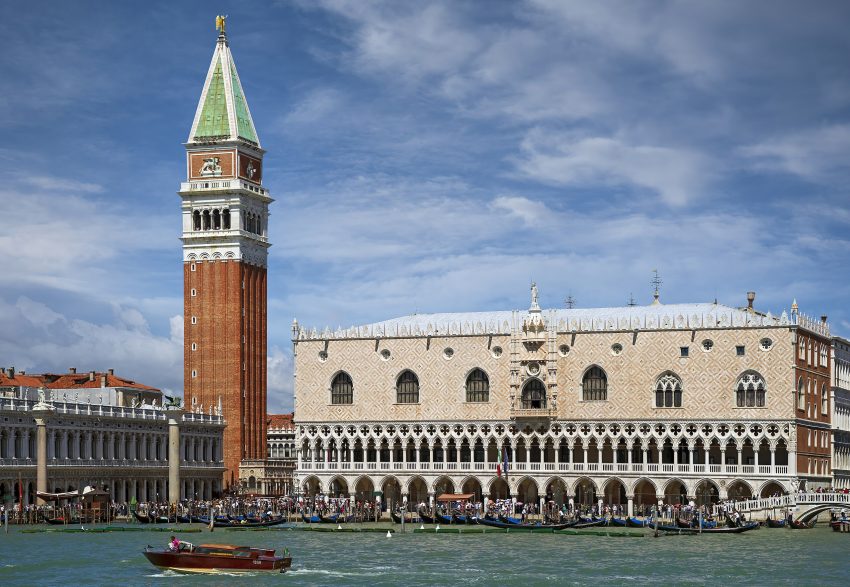
Doges Palace and campanile of St. Marks Basilica
CC BY-SA 4.0 / Didier Descouens
Doge’s Palace (Palazzo Ducale) is the former seat of Venice’s Doge and the Venetian Republic’s government and courts, built to make state power visible in stone. Its Venetian Gothic exterior—pink-and-white patterned masonry and lace-like arcades—looks almost weightless, a deliberate contrast to the authority it represented on the lagoon’s edge. Inside, visitors move through gilded state rooms where vast canvases and painted ceilings turn politics into spectacle, culminating in the immense Great Council Hall. The route then tightens into armouries, decision-making corridors, and the prisons reached via the Bridge of Sighs, a sharp shift from ceremony to confinement. Many travelers linger for hours, especially over the frescoes and weaponry.
Location: Doge's Palace, Piazza San Marco, Venice, Metropolitan City of Venice, Italy | Hours: (Summer) 1 April – 31 October: Daily: 09:00–19:00. Last admission 18:00. (Winter) 1 November – 31 March: Daily: 09:00–18:00. Last admission 17:00. | Price: Standard ticket €30 (reduced €15) until 31 December 2025; standard ticket €35 (reduced €15) from 1 January 2026. Online early-purchase pricing (30+ days ahead) is usually cheaper. | Website | Stroll The Halls of Doge's Palace on a Guided Tour in Venice | Distance: 0.3km
Powered by GetYourGuide

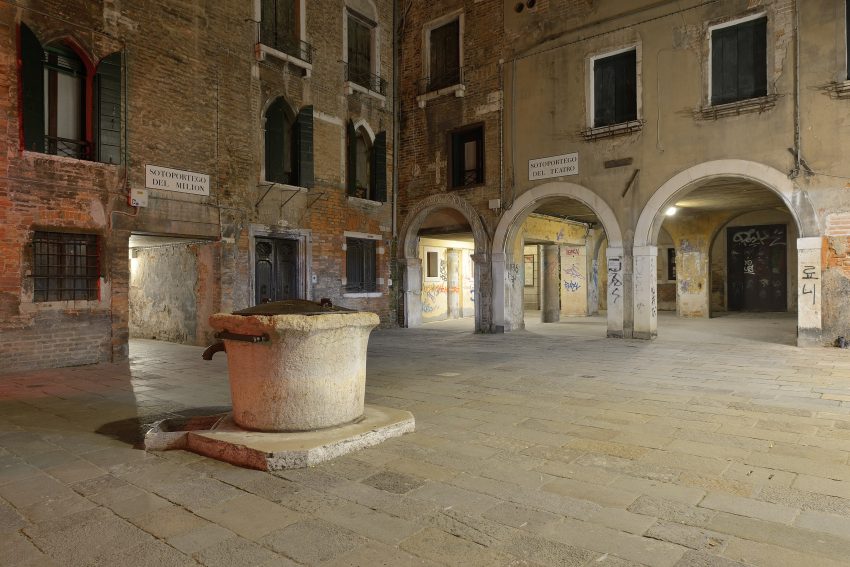
21. Casa di Marco Polo, Venice

The Corte seconda del Milion
CC BY-SA 2.0 / Wolfgang
Casa di Marco Polo in Venice marks the traditional site of Marco Polo’s family home, remembered today not as a preserved house but as a small courtyard cluster with a modest wall plaque. Finding it feels like a quiet scavenger hunt: you slip off the retail lanes near Teatro Malibran into the tight passages of Corte Prima del Milion and Corte Seconda del Milion. Pause for the details—the wellhead, compressed façades, and the way the courtyards stack together—then cross Ponte Marco Polo and look back to spot the marker. The setting makes more sense of Venice’s medieval merchant world than a display case would. One reviewer notes it’s worth seeking out while exploring Venice’s corners.
Location: Corte Seconda del Milion, 5852 30121 Venezia VE, Italy | Hours: 24 Hours | Price: Free. | Distance: 0.4km

22. Santa Maria Formosa

Santa Maria Formosa Facciata e campanile
CC BY-SA 4.0 / Didier Descouens
Santa Maria Formosa is a Renaissance church in Venice’s Castello district, set on the busy, lived-in Campo Santa Maria Formosa where cafés and foot traffic keep the square humming. Rebuilt in 1492 to Mauro Codussi’s designs, it has a clear Latin-cross layout and an interior that rewards slow looking rather than a quick glance. Approaching it is part of the experience: the building shows two different “faces,” with a Renaissance front toward the canal and a later Baroque façade opening onto the campo. Inside, visitors linger over Palma the Elder’s St. Barbara Polyptych, Vivarini’s Madonna of Misericordia in the Conception Chapel, and a Last Supper by Leandro Bassano.
Location: Chiesa Parrocchiale di Santa Maria Formosa, Calle Seconda de la Fava, Venice, Metropolitan City of Venice, Italy | Hours: Monday – Saturday: 10:30–17:00. Closed on Sundays. | Price: Adult €3.50, with Chorus Pass free | Website | Distance: 0.4km

23. Fondaco dei Tedeschi

Fondaco dei Tedeschi
CC BY-SA 4.0 / Didier Descouens
Fondaco dei Tedeschi is a hefty Renaissance block beside the Rialto Bridge, set right on the Grand Canal, built as Venice’s tightly controlled base for German-speaking merchants. Its square plan wraps an inward-looking courtyard, while the canal front reads like commerce made architecture: five broad ground-floor arcades where cargo once moved straight from boats into storage, topped by a strict grid of windows and a crenellated roofline. Rebuilt after a 1505 fire, it stacked warehousing, offices, and regulated living quarters into four efficient levels. Look closely and you’re seeing Venice’s trade system made physical—concentrated, supervised, and water-facing—and a façade once painted with frescoes by Giorgione and Titian, now largely lost to the lagoon air.
Location: Fondaco dei Tedeschi, Calle del Fontego dei Tedeschi, Venice, Metropolitan City of Venice, Italy | Hours: As of May 2025 Fondaco dei Tedeschi closed so access is no longer permitted. | Website | | Distance: 0.4km

24. Museo Fortuny
Palazzo Fortuny
Palazzo Fortuny
CC BY-SA 4.0 / Derbrauni
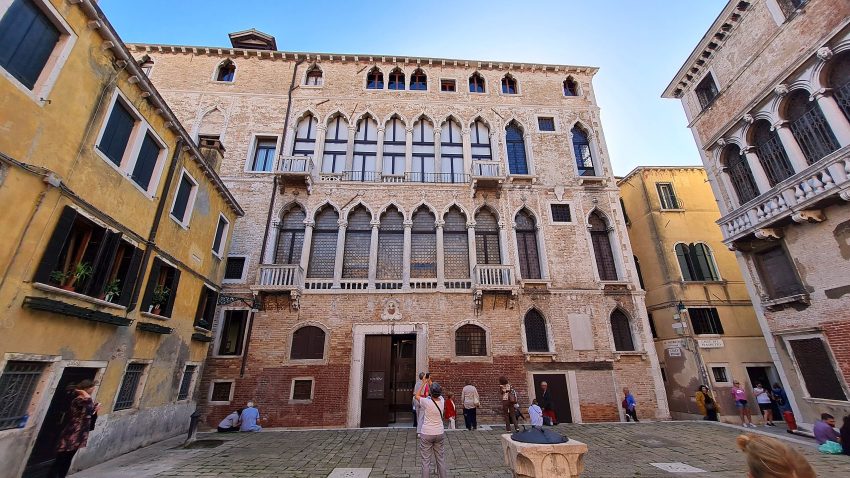
Museo Fortuny in Venice, Italy occupies Palazzo Fortuny (Palazzo Pesaro Orfei), the Gothic home-workshop where Mariano Fortuny (1871–1949) fused art, design, and invention under one roof. The visit feels less like a conventional gallery and more like stepping into a dim, theatrical set: layered textiles, staged rooms, and a play of shadow and glow that suits his experiments with light and image. Displays move fluidly between paintings, photography, fabric printing, and theatre scenography, with glimpses of machinery and working processes alongside finished pieces. Visitors often remember the palace atmosphere—tapestries, original furnishings, and evocative costumes—plus details like a striking fresco in one of the rooms.
Location: Museo Fortuny, San Marco, Venice, Metropolitan City of Venice, Italy | Hours: (Summer) 01 April – 31 October; Wednesday – Monday: 10:00–18:00. (Winter) 01 November – 31 March; Wednesday – Monday: 10:00–17:00. Closed on Tuesdays. | Price: Adults: €15.00 | Website | Distance: 0.4km

25. Punta della Dogana
Punta della Dogana
Punta della Dogana
CC BY-SA 4.0 / Jean-Pol GRANDMONT
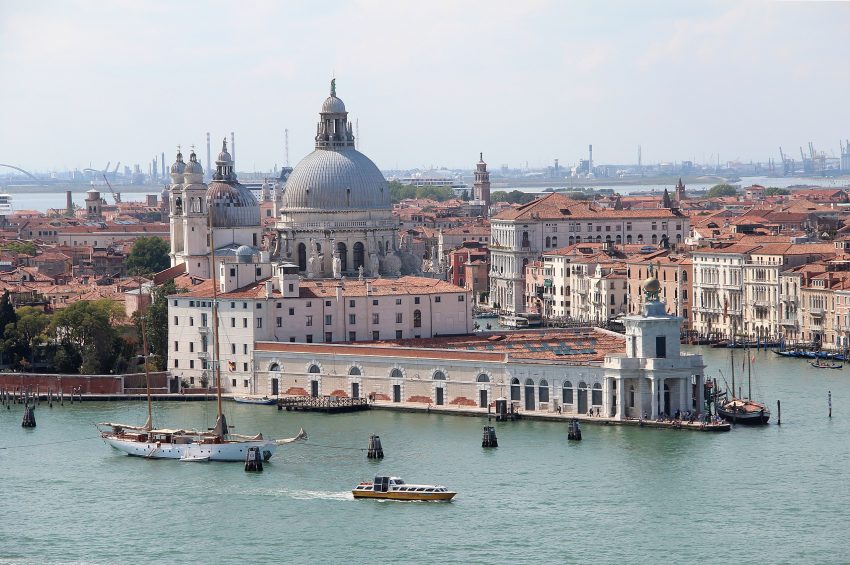
Punta della Dogana is Venice’s former maritime customs house, set on the knife-edge point where the Grand Canal opens to the lagoon and the Giudecca Canal, with water on both sides and wide views toward San Marco and San Giorgio Maggiore. Recast as a contemporary art museum for the Pinault Collection, it keeps the building’s working-scale presence rather than turning into a blank gallery shell. Tadao Ando’s renovation emphasizes long sightlines, shifting ceiling heights, and a procession of rooms that still feels like moving through infrastructure. Exhibitions often lean into large installations and sculpture that play with light and perspective, sometimes creating “rooms within rooms.” Step outside and the constant boat traffic and wind at the tip of the city become part of the memory.
Location: Punta della Dogana, Dorsoduro, Venice, Metropolitan City of Venice, Italy | Hours: Wednesday – Monday: 10:00–19:00. Closed on Tuesday. | Price: Full price €18; reduced €15; ages 20–26 €7; free under 20. | Website | | Distance: 0.5km

26. Basilica di Santa Maria della Salute

Basilica di Santa Maria della Salute
CC BY-SA 4.0 / Zairon
Basilica di Santa Maria della Salute is a 17th-century Baroque church in Venice, set at Punta della Dogana where the Grand Canal opens into the San Marco basin, its huge white dome designed to be read from the water. It was commissioned after the 1630–31 plague as a votive promise to Our Lady of Health, turning civic survival into architecture. Inside, the plan opens into a bright octagon that feels unexpectedly quiet, drawing your gaze upward as the city noise drops away. Visitors often remember the restrained atmosphere—more stone and space than glitter—along with details like the giant cross motif on the floor and the sculpted façade seen from the lagoon.
Location: Basilica di Santa Maria della Salute, Dorsoduro, Venice, Metropolitan City of Venice, Italy | Hours: (Summer) 1 April – 31 October: Daily: 09:00–12:00 & 15:00–17:30. (Winter) 1 November – 31 March: Daily: 09:30–12:30 & 15:00–17:30. | Price: Free entry to the main basilica; Sacristy museum visit from €6; Dome terrace visit from €8; Dome + Sacristy combo from €13. | Website | | Distance: 0.5km

27. Mercato di Rialto (Rialto Market)

Mercato di Rialto
Mercato di Rialto
CC BY-SA 3.0 / Abxbay
Mercato di Rialto is Venice’s working food market on the Grand Canal in San Polo, steps from the Rialto Bridge, and it still functions as the city’s daily pantry. The most memorable stop is the covered fish hall (Pescheria), where the morning catch is laid out with brisk, no-nonsense shopping rhythms that hint at Venice’s lagoon life. Outside, stalls stack citrus, artichokes, and other seasonal produce in bright heaps, with strings of dried herbs and shelves of spices adding scent to the narrow lanes. You’ll also spot where local cooks and restaurateurs come for seafood, fruit, and vegetables, even as a few tourist trinket stands edge in at the margins.
Location: Mercato di Rialto (Rialto Market), Calle Prima de la Donzella, Venice, Metropolitan City of Venice, Italy | Hours: Rialto Market is Venice at its most alive—fishmongers calling out the morning’s catch, crates of seasonal produce, and the scents of spices drifting through the arcades. Use this %%currentyear%% guide to plan your visit, know what to look for, and make it part of a great Venice day. | Price: Free. | Distance: 0.6km

28. Basilica dei Santi Giovanni e Paolo
Basilica dei Santi Giovanni e Paolo
CC BY-SA 4.0 / Zairon
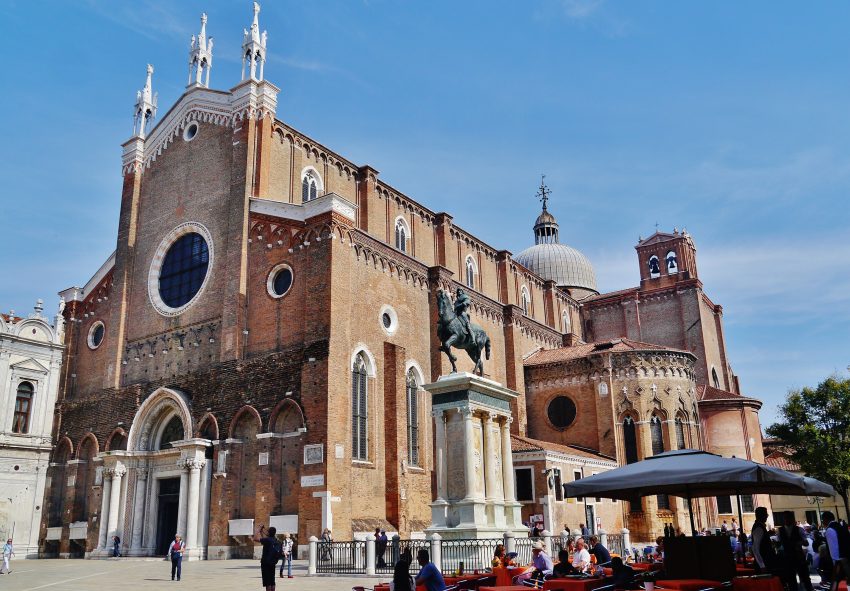
Basilica dei Santi Giovanni e Paolo (San Zanipolo) is Venice’s principal Dominican church, a vast brick Gothic presence rising from Campo Santi Giovanni e Paolo in Castello. Step inside and the scale hits first: a cool, soaring interior built for big civic ceremonies, with long sightlines and an atmosphere that stays unusually quiet even when visitors drift through. It matters as the Republic’s memorial church—twenty-five doges are buried here—and the aisles read like a catalogue of carved tombs, painted monuments, and chapels. Before you enter, pause by Verrocchio’s equestrian statue of Bartolomeo Colleoni, which turns the campo into an open-air gallery.
Location: Basilica dei Santi Giovanni e Paolo, Campo S.S. Giovanni e Paolo, Venice, Metropolitan City of Venice, Italy | Hours: Monday – Saturday: 09:00–18:00. Sunday & Public holidays: 12:00–18:00. | Price: €3.50 (full); €1.50 (reduced, students 13–25); free for eligible visitors. | Website | Distance: 0.6km

29. Peggy Guggenheim Collection

Peggy Guggenheim Collection
CC BY-SA 3.0 / Peter Haas
The Peggy Guggenheim Collection is a modern art museum in Venice, set in Peggy Guggenheim’s former home, the low-slung Palazzo Venier dei Leoni on the Grand Canal. It matters because it gives the city a human-scale counterpoint to its older art: 20th-century movements presented in sunlit rooms that still feel domestic rather than monumental. Visitors move through tight, well-organized galleries of Cubism, Surrealism, Futurism, and Abstract Expressionism, with works by artists such as Picasso, Pollock, Kandinsky, Miró, Magritte, and Duchamp. Between rooms, the sculpture garden provides a quiet reset, and the canal-facing terrace keeps Venice’s shifting water and boat traffic in view.
Location: Peggy Guggenheim Collection, Dorsoduro, Venice, Metropolitan City of Venice, Italy | Hours: Daily: 10:00–18:00. Ticket office closes at 17:00. | Price: €16 standard; €14 reduced; €9 youth (10–18) and students under 26; free for children under 10. | Website | | Distance: 0.6km

30. Ponte dell'Accademia

Accademia bridge in Venice
CC BY-SA 4.0 / Didier Descouens
Ponte dell’Accademia is a wooden pedestrian bridge spanning Venice’s Grand Canal, linking San Marco with Dorsoduro and serving as a pause point as much as a crossing. From mid-span you get a wide, bend-in-the-water view: vaporetti sliding through the main channel, gondolas hugging the edges, and palazzi stacked along the banks like a continuous façade. Look one way for the busier sweep toward Rialto; look the other for the dome of Santa Maria della Salute, which often catches warm late-day light. Built in its current form in 1933 after earlier plans and structures, it still feels practical and slightly temporary—part of why it’s so loved. Expect crowds by day, calmer photo moments at sunrise or after dark.
Location: Ponte dell'Accademia, Venice, Metropolitan City of Venice, Italy | Hours: 24 Hour | Price: Free | Website | Distance: 0.7km

31. Ca' d'Oro
Galleria Giorgio Franchetti alla Ca dOro
CC BY-SA 3.0 / Sailko
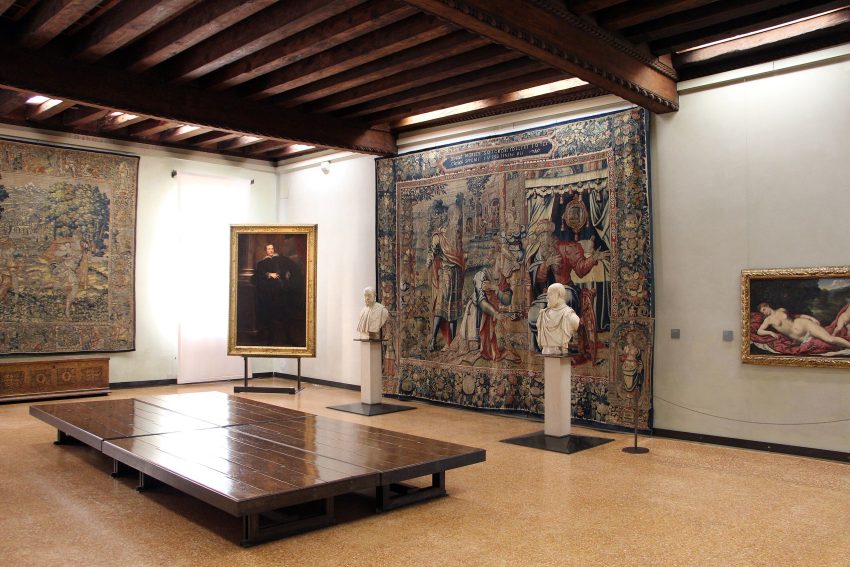
Ca’ d’Oro in Venice, Italy is a Gothic palazzo on the Grand Canal that now houses the Galleria Giorgio Franchetti, where the building’s atmosphere is as memorable as the art. From the water-facing loggias, delicate stone tracery frames canal traffic like a moving painting, and upstairs rooms keep that sense of looking outward as much as inward. Inside, Baron Giorgio Franchetti’s early-20th-century restoration reads like a collector’s personal vision, from the courtyard’s patterned marble surfaces to intimate galleries of Renaissance sculpture and portraiture. Don’t miss Mantegna’s Saint Sebastian, placed in a dedicated chapel that gives it a focused, almost theatrical setting. Visitors often remember the calm, uncrowded feel and the front-row canal views.
Location: Galleria Giorgio Franchetti alla Ca' d'Oro, Calle Ca' d'Oro, Venice, Metropolitan City of Venice, Italy | Hours: Daily: 10:00–19:00. Closed on Monday. Last admission: 18:30. | Price: €6 (full); €2 (EU citizens aged 18–25); free for EU citizens under 18. | Website | Distance: 0.7km

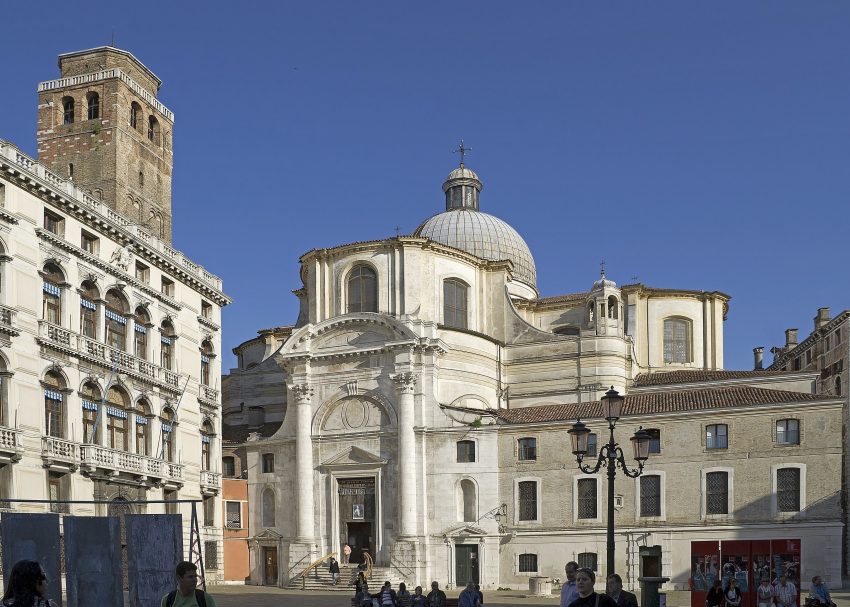
32. Church of San Giorgio Maggiore

Basilica di San Giorgio Maggiore Venice
CC BY-SA 4.0 / Didier Descouens
The Church of San Giorgio Maggiore is a 16th-century Benedictine basilica by Andrea Palladio, set on its own island across the basin from San Marco, where its bright, classical façade reads like a deliberate piece of the city’s skyline. The short vaporetto ride feels like a reveal as the church grows larger and the waterfront view back toward Venice becomes the main event. Inside, Palladio’s proportions and controlled light create a calm, ordered space that rewards slow looking more than checklist sightseeing. Visitors linger over sculptures, tombs, and major Venetian paintings, often noting how much more intimate it feels than the crowded main squares. The bell tower panorama is currently suspended for maintenance, but the island’s edges still deliver wide lagoon views.
Location: Church of San Giorgio Maggiore, Isola di S.Giorgio Maggiore, Venice, Metropolitan City of Venice, Italy | Hours: Daily: 09:00–18:00. | Price: Free entry to the basilica; bell tower access temporarily suspended | Website | Distance: 0.8km

33. Ca' Rezzonico
Ca Rezzonico Venice
Ca Rezzonico Venice
CC BY-SA 4.0 / Didier Descouens
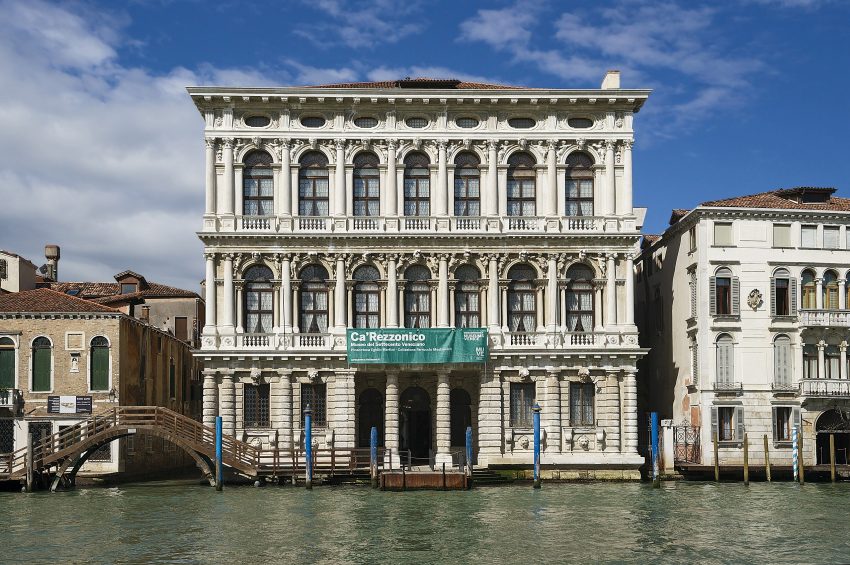
Ca’ Rezzonico is an 18th-century palazzo on Venice’s Grand Canal in Dorsoduro, now a museum devoted to the Venetian Settecento and the Republic’s last century of salon culture. What stays with visitors is how the building and collection interlock: you move through grand state rooms where frescoed ceilings, chandeliers, silk-like textures, and period furniture make the interiors feel inhabited rather than staged. The setting reframes the paintings and decorative arts, as if you’re seeing them in the kind of rooms they were made to impress. It’s also noticeably calmer than Venice’s busiest routes, so the atmosphere can feel almost private. Expect historic thresholds and stairs typical of a monumental canal-side palace.
Location: Ca' Rezzonico, Dorsoduro, Venice, Metropolitan City of Venice, Italy | Hours: (Summer) 01 April – 31 October: Monday – Sunday: 10:00–18:00. (Winter) 01 November – 31 March: Monday – Sunday: 10:00–17:00. Closed on Tuesday. | Price: Full €15 (until 31 December 2025) / €20 (from 01 January 2026); reduced €12 (until 31 December 2025) / €10 (from 01 January 2026). | Website | Distance: 0.8km

34. Basilica S.Maria Gloriosa dei Frari
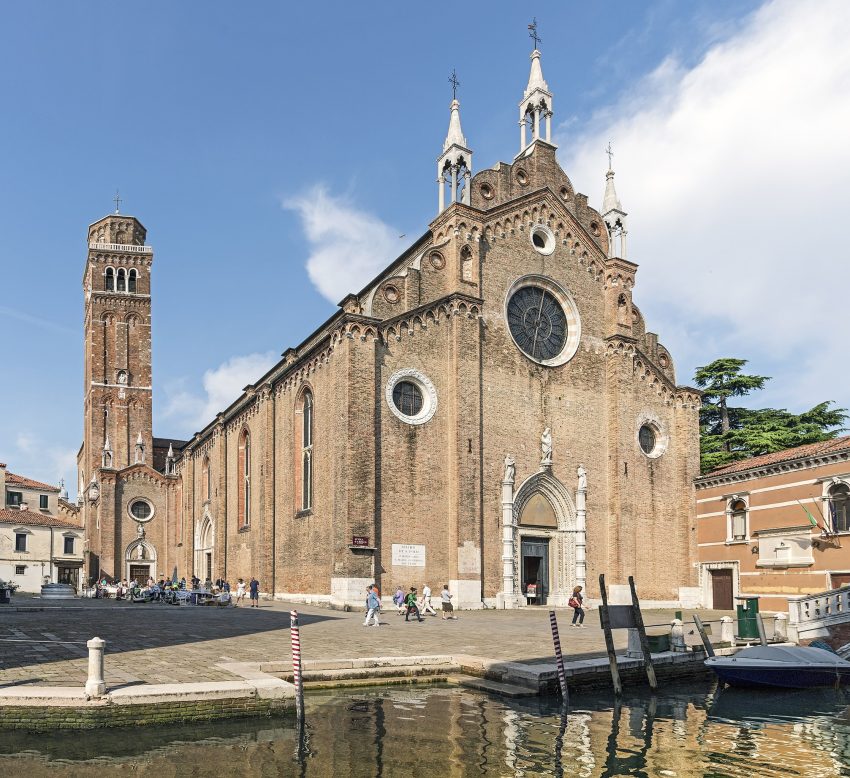
Basilica S Maria Gloriosa dei Frari
CC BY-SA 4.0 / Didier Descouens
Basilica S. Maria Gloriosa dei Frari is a vast Venetian Gothic Franciscan church in warm brick on Campo dei Frari, with a plain exterior that makes the interior feel like a sudden reveal. Inside, the long, cool nave and tall columns frame monumental wall tombs and sculptures, turning the church into a kind of civic pantheon. The main draw is Titian’s altar paintings—especially the Assumption of the Virgin at the high altar and the Pesaro Madonna—works that shape the space rather than decorate it. Look, too, for the surviving rood screen that still divides the interior and hints at older ceremonial rhythms. Visitors often mention the dense concentration of art and monuments, and that it’s surprisingly moving even if you’re not religious.
Location: Basilica di Santa Maria Gloriosa dei Frari, Venezia, Metropolitan City of Venice, Italy | Hours: (Summer) Easter Sunday – 31 October. Monday – Friday: 09:00–19:30. Saturday: 09:00–18:00. Sunday & Public holidays: 13:00–18:00. (Winter) 01 November – Easter Sunday. Monday – Saturday: 09:00–18:00. Sunday & Public holidays: 13:00–18:00. | Price: €5 (adult); €2 (students aged 12–29); €3 (over 65); free for children under 12 and eligible visitors. | Website | Distance: 0.8km

35. Gallerie dell'Accademia

Chiesa di Santa Maria della Carita e Accademia Venezia
CC BY-SA 2.5 / Wolfgang Moroder
Gallerie dell’Accademia is Venice’s essential painting museum, set in the former Santa Maria della Carità complex on the south bank of the Grand Canal, directly by the Accademia vaporetto stop and bridge. It matters because the collection reads like a visual biography of the Republic, tracing how Venetian artists turned light, fabric, and atmosphere into a distinct language. Rooms move from early Gothic panels with gold-ground shimmer to the high Renaissance, where Bellini’s clarity gives way to Giorgione’s ambiguity—especially in The Tempest. You’ll also meet Titian’s commanding color and the late, stage-like scale of Tintoretto and Veronese, with occasional surprises such as works by Hieronymus Bosch.
Location: Gallerie dell'Accademia, Campo della Carità, Venice, Metropolitan City of Venice, Italy | Hours: Until 31 December 2025: Monday: 09:00–14:00; Tuesday – Sunday: 09:00–19:00. From 01 January 2026: Tuesday – Sunday: 09:00–19:00. Closed on Monday (from 01 January 2026). | Price: Adults €15; EU ages 18–25 €2; free under 18. | Website | | Distance: 0.8km

36. San Giacomo dall'Orio
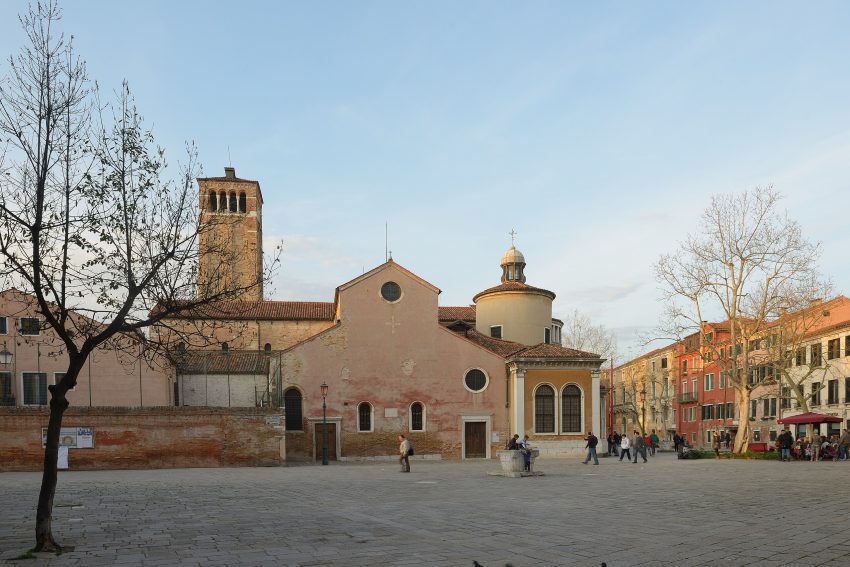
San Giacomo dell Orio
CC BY-SA 3.0 / Wolfgang Moroder
San Giacomo dall’Orio is an ancient parish church in Venice’s Santa Croce, set beside Campo San Giacomo dell’Orio, a square that still feels lived-in, with children playing and neighbours lingering. Founded in the 9th century and rebuilt in 1225, it reads as a building shaped by centuries of practical change, with a medieval campanile and later layers added over time. Inside, the atmosphere is defined by a dramatic ship-keel wooden roof that warms the space and draws your eyes upward. Look for columns brought back from the Fourth Crusade, quiet evidence of Venice’s trading past embedded in the fabric. The church also holds a local art-history note: painter Giambattista Pittoni was buried here in 1767.
Location: San Giacomo dell'Orio, Venice, Metropolitan City of Venice, Italy | Hours: Monday – Saturday: 10:30–17:00. Closed on Sunday (except for services). | Price: Adult: €3.50 (single church ticket) or Chorus Pass €15.00 (reduced €10.00; family €30.00). | Website | Distance: 0.9km

37. Leonardo da Vinci Museum
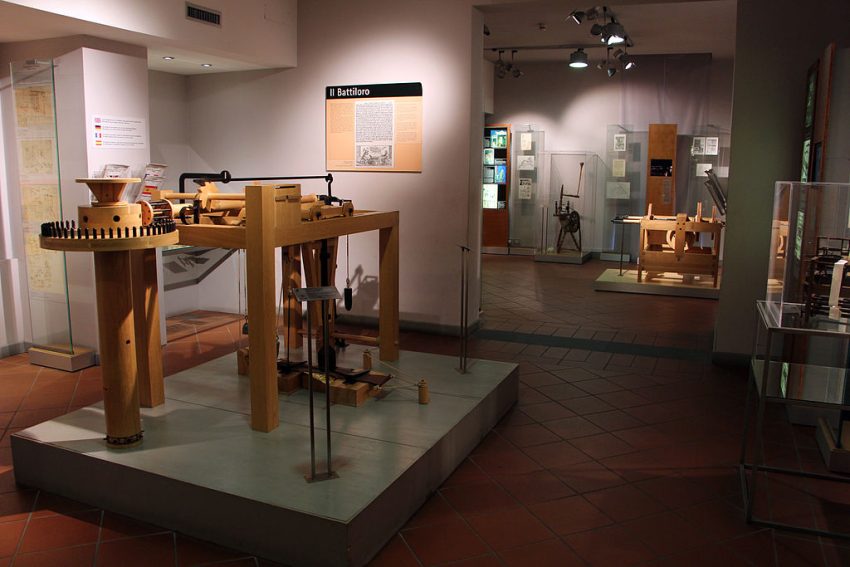
Leonardo da Vinci Museum Venice
©
The Leonardo da Vinci Museum in Venice is a compact, hands-on exhibition in the San Polo district near Campo San Rocco, designed to translate Leonardo’s notebook thinking into working models. Instead of a quiet gallery loop, you move through themed rooms often organized around earth, water, fire, and air, shifting between art interpretation and mechanical play. Visitors spend much of the time turning cranks, testing gears, and trying replicas that explain problems of motion, lift, and moving water. Alongside the machines are painting replicas and drawing-focused displays that unpack how observation, anatomy, and perspective fed his inventions. Reviews often note it’s small but dense, easy to do in about an hour, and there are no toilets.
Location: Leonardo da Vinci Museum, Campo San Rocco, Venice, Metropolitan City of Venice, Italy | Hours: Daily: 09:30–18:00. | Price: Adults €8.90; Reduced €6.90. | Website | | Distance: 0.9km

38. Chiesa dei Gesuiti

Chiesa dei Gesuiti
Chiesa dei Gesuiti
CC BY-SA 4.0 / Didier Descouens
Chiesa dei Gesuiti (Santa Maria Assunta) is an early-18th-century Jesuit Baroque church in Cannaregio, built to persuade through spectacle as much as devotion. Step in from the modest entrance and the interior opens into cavernous grandeur, dominated by dramatic green-and-white marble laid to resemble billowing fabric. Gilded details, side chapels, and a strongly staged central nave draw you toward a towering high altar framed by columns and sculpture. Visitors often linger over the sharp contrasts—bright stone, dark green marble, flashes of gold—and the sense that every surface is choreographed. At times, restoration scaffolding can limit views, but even then the “green church” effect remains striking.
Location: Church of Santa Maria Assunta - The Jesuits, Salizada dei Spechieri, Venice, Metropolitan City of Venice, Italy | Hours: Monday – Tuesday: 10:30–13:00 & 15:00–17:30. Thursday: 10:30–13:00 & 15:00–17:30. Friday: 10:30–13:00 & 14:00–18:00. Saturday – Sunday: 10:00–13:00 & 14:00–18:00. Closed on Wednesday. | Price: €1 suggested donation. | Website | Distance: 0.9km

39. Scuola Grande di San Rocco

Scuola Grande di San Rocco
CC BY-SA 4.0 / Didier Descouens
Scuola Grande di San Rocco is the ceremonial headquarters of a Venetian confraternity founded in 1478, created in devotion to Saint Roch, long invoked against plague. From its restrained façade beside the Church of San Rocco, you step into carved halls and a processional staircase that build a sense of ritual as you move upward. The real impact is Tintoretto’s vast painting cycle, spread across ceilings and walls, where dramatic light and deep shadows pull your gaze from scene to scene. In the Sala Terrena, compositions feel designed for the whole room, not a single canvas; upstairs, the Sala Superiore becomes an enveloping painted narrative. It’s the kind of interior that lingers in memory because you experience it as a single, immersive world.
Location: Scuola Grande di San Rocco, Venice, Metropolitan City of Venice, Italy | Hours: Daily: 09:30–17:30. | Price: Adults €10; concessions €8. | Website | Scuola Grande di San Rocco Audioguide | Distance: 0.9km
Powered by GetYourGuide

40. Museo di Storia Naturale di Venezia

Museo di Storia Naturale di Venezia
CC BY-SA 4.0 / Didier Descouens
Museo di Storia Naturale di Venezia is Venice’s Natural History Museum, set in the Fondaco dei Turchi on the Grand Canal, and it reframes the city through the lagoon’s biodiversity and long human relationship with a fragile environment. The first rooms make an immediate impression with a cetaceans gallery where huge whale skeletons hang overhead. A small Tegnùe aquarium evokes the Adriatic’s rocky seabed habitat, adding a moody, underwater counterpoint to the canals outside. Upstairs, fossils, evolution, and older scientific collections (from dinosaur bones to taxidermy) reward slower looking, and visitors often note how calm and underrated it feels compared with busier sights.
Location: Museo di Storia Naturale Giancarlo Ligabue, Salizada del Fontego dei Turchi, Venezia, Metropolitan City of Venice, Italy | Hours: (Summer) 01 June – 30 September; Tuesday – Sunday: 10:00–18:00. (Winter) 01 October – 31 May; Tuesday – Sunday: 09:00–17:00. | Price: Adults: €15.00 | Website | Natural History Museum Entry Ticket | Distance: 1km
Powered by GetYourGuide

41. Chiesa dei Santi Geremia e Lucia

Chiesa dei Santi Geremia e Lucia Santuario di Lucia
CC BY-SA 4.0 / Didier Descouens
Chiesa dei Santi Geremia e Lucia is a working parish church in Cannaregio, set with its apse on the Grand Canal between Palazzo Labia and Palazzo Flangini. Its quiet gravity comes from safeguarding the relics of Saint Lucy of Syracuse, a focus of ongoing pilgrimage that shapes the hushed, purposeful way visitors move through the space. The present church is largely the result of an 18th-century redesign, fronted by a 19th-century façade, while an older brick bell tower hints at deeper roots on a site used since the 11th century. Inside, the restrained interior keeps attention on the sanctuary, presbytery statues, and side altars where devotional paintings sit in shadow rather than spectacle.
Location: Chiesa dei Santi Geremia e Lucia - Santuario di Lucia, Campo San Geremia, Venice, Metropolitan City of Venice, Italy | Hours: Monday – Sunday: 09:30–13:00 & 14:00–17:00. | Price: Free (donations welcome). | Website | Distance: 1.2km

42. Madonna dell’Orto

Chiesa della Madonna dell Orto Venice Italy
CC BY-SA 4.0 / Clara Polo Sabat
Madonna dell’Orto is a Venetian Gothic church on the northern edge of Cannaregio, where the pace feels noticeably quieter than around San Marco. Its brick façade slopes up to a rose window and a carved portal that reads best from the small campo in front, still shaped by local daily life. Inside, the mood turns dramatic and intimate at once: this was Jacopo Tintoretto’s parish church, and several large canvases hang here in the spaces they were made to command. Seek out the painter’s tomb as well—an unusually personal link between artist and neighborhood. The building began in the mid-1300s under the Humiliati and later took its Marian name from a Madonna-and-Child statue tied to an orchard legend.
Location: Church of Madonna dell'Orto, Cannareggio, Venice, Metropolitan City of Venice, Italy | Hours: Daily: 10:30–17:00. Closed on Sunday and public holidays. | Price: €3.50; €2.50 students (up to 25 with ID); free entry for children up to 11 and eligible categories. | Website | | Distance: 1.3km

43. Venetian Arsenal

Venetian Arsenal
Venetian Arsenal
CC BY-SA 4.0 / Didier Descouens
The Venetian Arsenal (Arsenale di Venezia) is the walled shipbuilding complex that powered the Venetian Republic’s naval machine, still feeling more like working infrastructure than a tidy museum. Approaching it, you notice the long stretch of red-brick walls, sudden water basins, and the monumental Porta Magna watched by stone lions—an entrance that reads like a controlled checkpoint. Inside access varies, but when open the scale becomes clear in the vast, vaulted, shed-like halls and ropewalk-long spaces that once supported fast, organized production. During Biennale season, those industrial interiors turn into atmospheric galleries where contemporary installations sit against rough brick, timber, and water.
Location: ARSENALE DI VENEZIA, Venice, Metropolitan City of Venice, Italy | Hours: Monday – Friday: 08:00–15:00 (Northern Arsenale public spaces). Closed on Saturday and Sunday (Northern Arsenale public spaces). 10 May – 28 September: Daily: 11:00–19:00 (Biennale exhibition access; Fridays and Saturdays until 20:00); 30 September – 23 November: Daily: 10:00–18:00. | Price: Free for Northern Arsenale public spaces; Biennale exhibition ticket €25 full price / €20 reduced / €16 students and under 26. | Website | Distance: 1.4km

44. Jewish Museum of Venice

Jewish Museum of Venice
CC BY-SA 2.0 / Greg Schechter
The Jewish Museum of Venice sits in Cannaregio’s historic Jewish Ghetto, between some of the city’s oldest synagogues, in the neighborhood that gave the word “ghetto” its global meaning. Small in scale and closely tied to its setting, it traces how a community lived within tight boundaries, with displays of finely worked ritual silver and carefully preserved textiles. The experience is inseparable from the surrounding Campo del Ghetto Nuovo, where tall, close-built houses press in on the square and make the story feel immediate. Visitors often remember the contrast between plain exteriors and unexpectedly ornate synagogue interiors, and many find the audio narration helps connect the lanes, buildings, and objects into one continuous place.
Location: Jewish Museum of Venice, Venice, Metropolitan City of Venice, Italy | Hours: Sunday – Thursday: 10:00–19:30. Friday: 09:00–17:00. | Price: €12 full price; €10 reduced; €15 scheduled guided tour option (synagogues). | Website | Private Tour of the Jewish Ghetto in Venice | Distance: 1.4km
Powered by GetYourGuide

45. Giardini della Biennale

Giardini della Biennale
CC BY-SA 3.0 / Moonik
Giardini della Biennale is a public garden on Venice’s eastern edge in Castello, where long, tree-lined paths open to lagoon light and passing vaporetto traffic. Created in the early 19th century on reclaimed marshland, it’s one of the city’s rare expanses of true park space, with benches, lawns, and quiet corners under pines. Since 1895 it has been the Biennale’s home base, and during exhibition years the grounds turn into a small campus of national pavilions—an architectural time capsule from early 20th-century buildings to modernist statements. Between installations, visitors notice small sculptures, resident cats, and a calm, green atmosphere that feels worlds away from Venice’s busiest lanes.
Location: Giardini della Biennale, Calle Giazzo, Venice, Metropolitan City of Venice, Italy | Hours: (Summer) 10 May – 28 September; Tuesday – Sunday: 11:00–19:00. (Winter) 30 September – 23 November; Tuesday – Sunday: 10:00–18:00. Closed on Mondays (except 1 September, 20 October, 17 November). | Price: Free to enter the public gardens; Biennale exhibition ticket (Giardini + Arsenale) €25 full price, €20 over 65, €16 students/under 26 (children up to 6 free). | Website | Distance: 1.8km

Best Day Trips from Venice

A day trip from Venice offers the perfect opportunity to escape the urban rhythm and discover the surrounding region's charm. Whether you're drawn to scenic countryside, historic villages, or cultural landmarks, the area around Venice provides a variety of easy-to-reach destinations ideal for a one-day itinerary. If you are looking to rent a car in Italy I recommend having a look at Discover Cars, first, as they compare prices and review multiple car rental agencies for you.

1. Padova

Padova Italy
Padova Italy
Padova or in English Padua is a city in North Eastern Italy, and the capital of the province of the same name. It is located centrally in the Veneto region, between Venice on one side and Verona on the other. Famous as the backdrop for Shakespeare's "The Taming of the Shrew," Padua is particularly distinguished for its 14th-century Scrovegni Chapel…
Visiting Padova
Powered by GetYourGuide

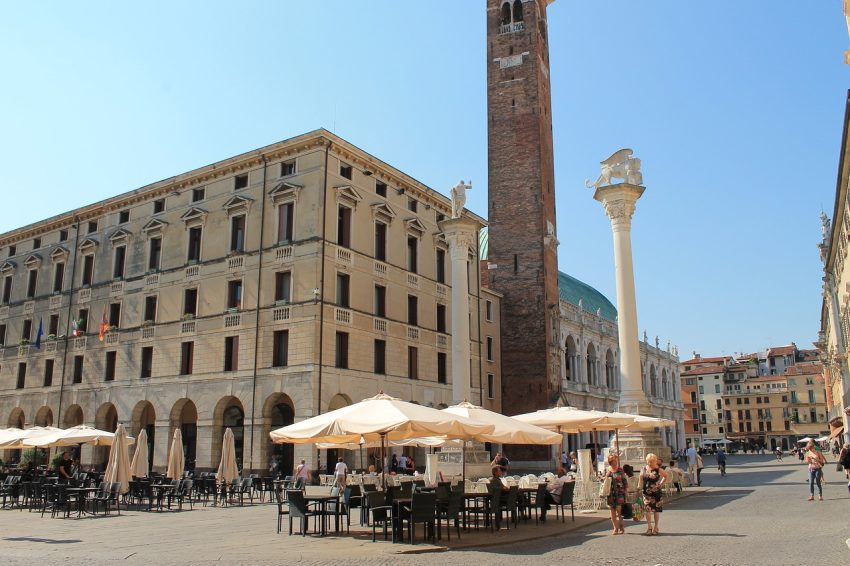
2. Vicenza

vicenza
vicenza
Vicenza  is a city in north-eastern Italy. It is in the Veneto region at the northern base of the Monte Berico, where it straddles the Bacchiglione River. Vicenza is approximately 60 kilometres (37 mi) west of Venice and 200 kilometres (120 mi) east of Milan. Vicenza is a thriving and cosmopolitan city, with a rich history and culture, and many museums,…
Visiting Vicenza
Powered by GetYourGuide

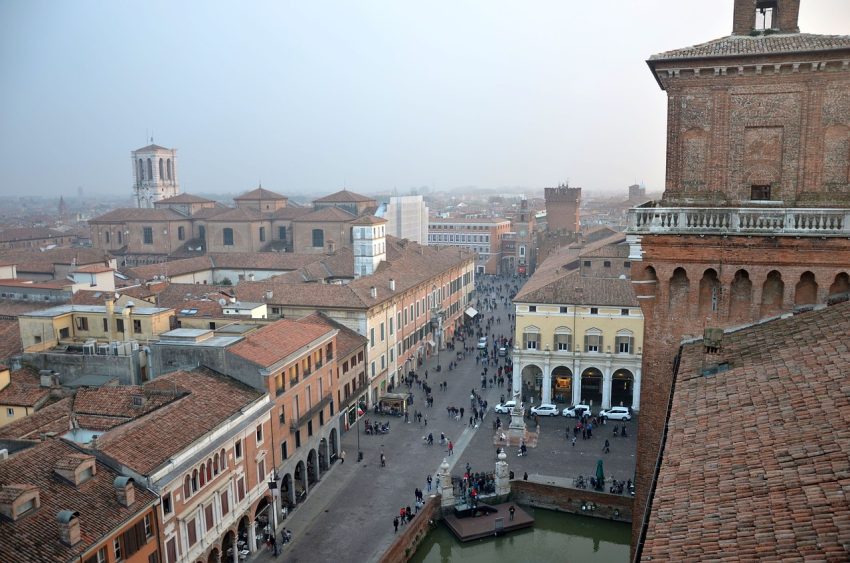
3. Ferrara

ferrara
ferrara
Ferrara is a city located in the Emilia-Romagna region of Italy, situated near the eastern Adriatic coast and positioned at the top of Italy's boot-shaped peninsula. This charming city is recognized as a UNESCO World Heritage site. For a period of three centuries, Ferrara was under the rule of the Este family, whose Renaissance court was renowned as one of…
Visiting Ferrara
Powered by GetYourGuide

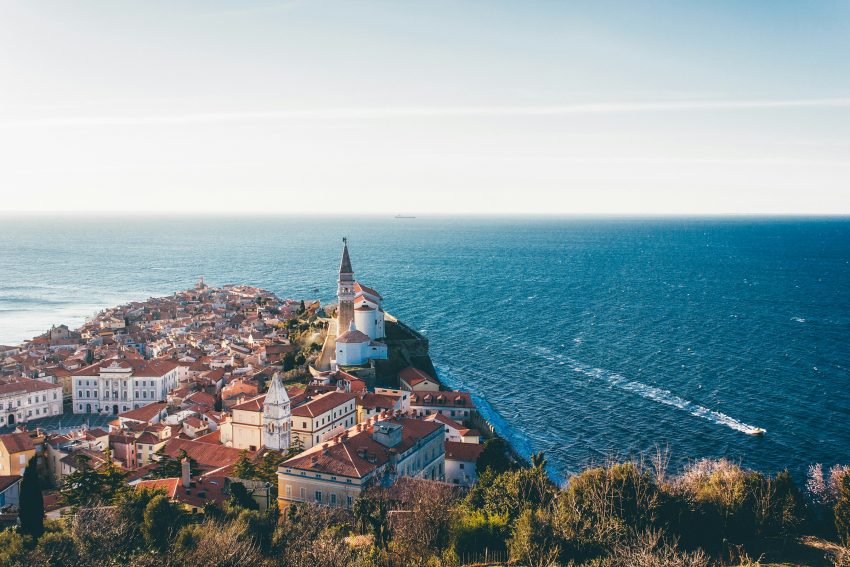
4. Piran

The Complete Guide to Piran
Piran is a postcard-pretty coastal town on Slovenia’s short Adriatic shoreline, set on a narrow peninsula where Venetian-style facades, sea-facing cafés, and stone lanes create an easy, walkable escape. The heart of the experience is simply wandering: you move from sunlit squares to shaded alleys in minutes, with salty breezes and bell chimes as a constant soundtrack. It’s compact enough…
Visiting Piran
Powered by GetYourGuide

5. Portoroz

The Complete Guide to Portoroz
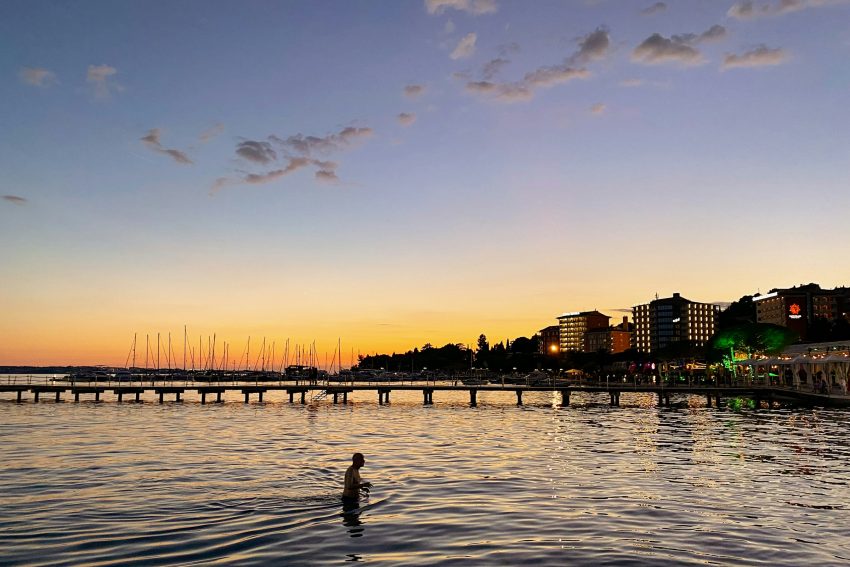
Portorož is Slovenia’s best-known seaside resort, set on the Adriatic coast in the Istrian peninsula, where a long promenade, palm-lined streets, and a sheltered bay create an easy, holiday-first atmosphere. Come for the classic beach days—sun loungers, swimming platforms, and calm water—then stay for the mix of spa culture, marina life, and evening strolls that make the town feel lively…
Visiting Portoroz

6. Udine

udine italy
udine italy
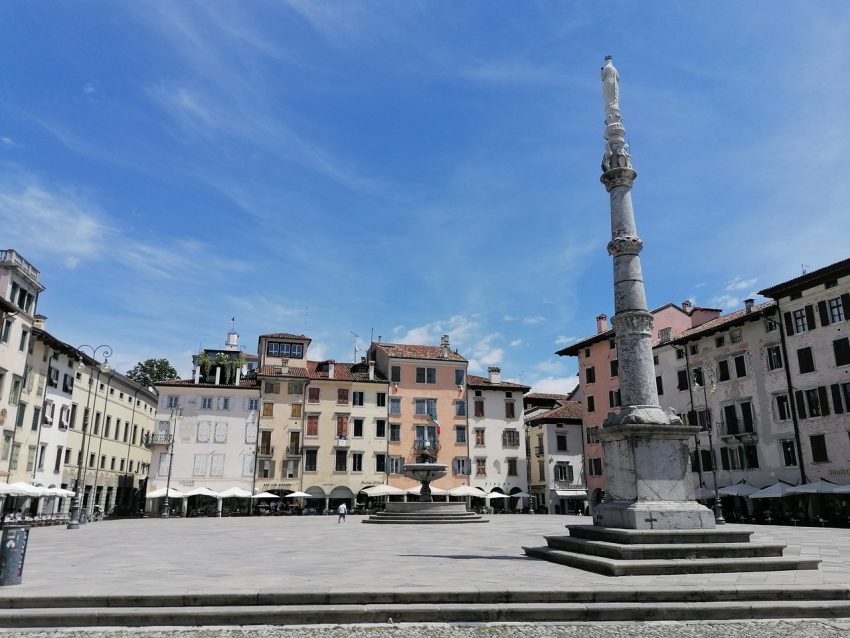
Visiting Udine, located in the northeastern region of Friuli Venezia Giulia, Italy, offers a journey through a city rich in history, art, and culture. Udine is known for its charming old town, where Venetian influence is evident in its architecture and layout. The city’s centerpiece is the stunning Piazza della Libertà, often referred to as the most beautiful square in…
Visiting Udine
Powered by GetYourGuide

7. Verona

verona skyline
verona skyline
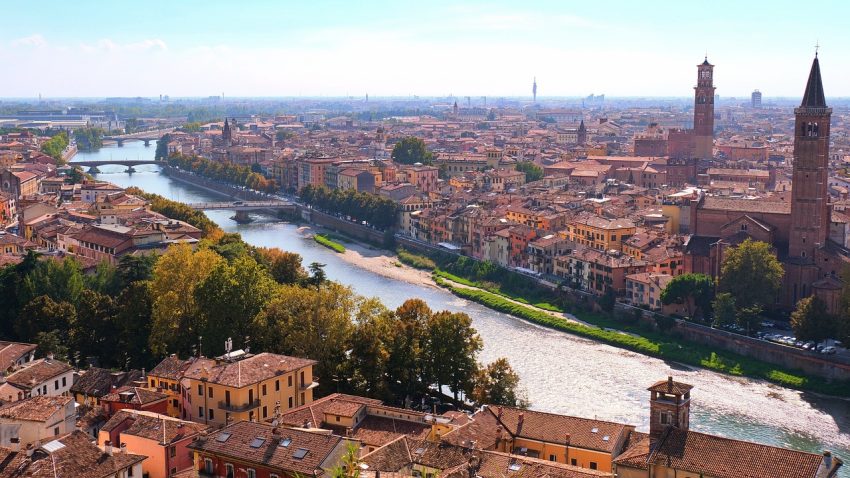
Verona stands out in the Veneto region, rivalling even Venice in its abundance of Roman sites and picturesque streets adorned with pink-hued medieval buildings. This laid-back city offers a wealth of attractions, surpassing other places in the region in terms of sheer sights. While the city's allure extends beyond tourism, drawing strength from its economic success as a pivotal crossroads.…
Visiting Verona
Powered by GetYourGuide

8. Rovinj

The Complete Guide to Rovinj
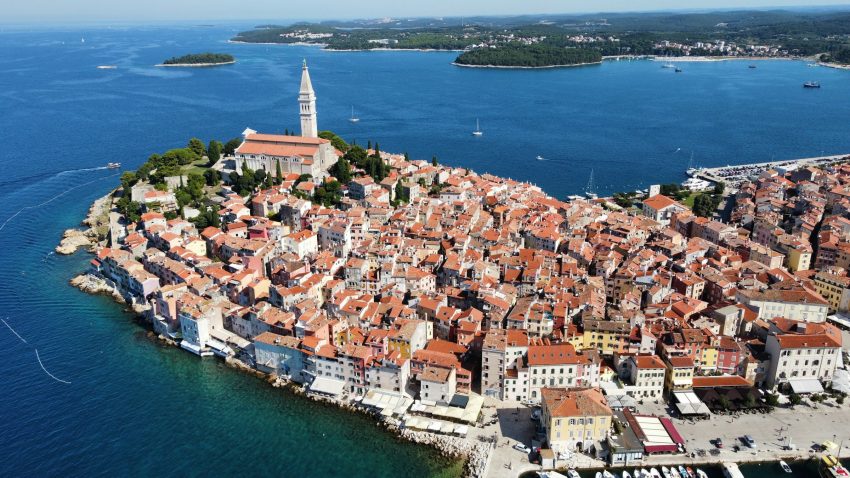
Rovinj is one of Istria’s most photogenic coastal towns, built around a compact old core that rises to a hilltop church and spills down into a tangle of stone lanes, small squares, and waterfront promenades. It’s the kind of place that rewards slow wandering: you’ll move from shaded alleys to sunlit terraces in minutes, with constant glimpses of fishing boats,…
Visiting Rovinj
Powered by GetYourGuide

9. Cividale del Friuli

Cividale del Friuli veduta
CC BY-SA 4.0 / Sirleonidas
Cividale del Friuli, a picturesque town in Italy's northeastern region, offers a captivating blend of history, culture, and natural beauty. Founded by Julius Caesar as a Roman colony in 50 BC, the town's historic center, now a UNESCO World Heritage site, showcases a remarkable array of medieval and Renaissance architecture. Key landmarks such as the Tempietto Longobardo, an exquisite example…
Visiting Cividale del Friuli

10. Ravenna
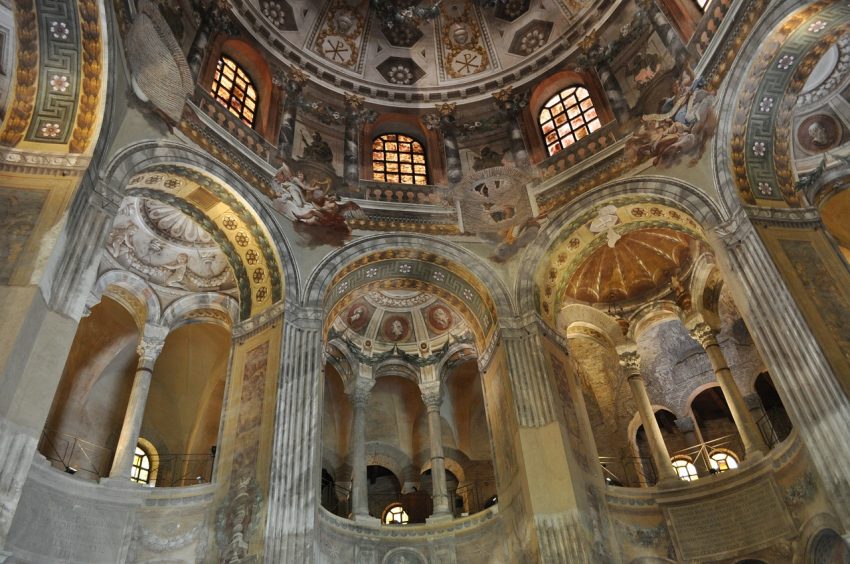
Ravenna
Ravenna
Situated on the eastern coast of Italy, nestled between San Marino and Bologna, Ravenna serves as the capital of the Ravenna province and stands as one of the larger cities in the Emilia-Romagna region. Throughout its illustrious history, Ravenna has held a position of great importance under various empires, including serving as the capital of the Western Roman Empire and…
Visiting Ravenna
Powered by GetYourGuide

Where to Stay in Venice

Venice is a city of islands and neighborhoods, each with its own character, making the choice of where to stay an important part of your travel experience. One of the most iconic areas is San Marco, the historic and touristic heart of Venice. Staying here places you steps from landmarks like St. Mark’s Basilica, the Doge’s Palace, and the Grand Canal. It’s ideal for first-time visitors who want to be surrounded by architectural splendor and have easy access to vaporetto stops. A classic and luxurious hotel in this district is Hotel Danieli, a Luxury Collection Hotel, known for its grand decor and exceptional views over the lagoon.

For a more local and artistic vibe, Dorsoduro is an excellent choice. This neighborhood is home to museums like the Peggy Guggenheim Collection and Gallerie dell’Accademia, as well as quiet canals and a lively student population. It’s less crowded than San Marco but still central, offering a balanced blend of culture and tranquility. A stylish place to stay here is Ca’ Pisani Hotel, a boutique property with Art Deco charm located near the Accademia Bridge.

If you’re looking for a quieter, romantic atmosphere, Cannaregio offers a more residential experience. This historic district includes the Jewish Ghetto and picturesque canals with authentic Venetian life all around. It’s still within walking distance of major sites but offers more space and better value. A welcoming hotel in this area is Ai Mori d'Oriente Hotel, known for its elegant Moorish-inspired interiors and peaceful location.

Using the our Hotel and Accomodation map, you can compare hotels and short-term rental accommodations in Venice. Simply insert your travel dates and group size, and you’ll see the best deals for your stay.

Venice Accommodation Map

Best Time to Visit Venice

Venice in Spring: March to May (Best)

Spring is the best time to visit Venice. As the weather turns mild, with average temperatures rising from 12°C in March to 20°C in May, the city awakens from winter’s quiet with blooming window boxes and outdoor cafés along the canals. Tourist numbers increase but are still manageable, making it an excellent time to explore both the major sites and hidden corners. A seasonal highlight is Festa della Sensa in May, an ancient ceremony that symbolizes Venice’s marriage to the sea, featuring historical reenactments and a regatta on the lagoon.

Venice in Summer: June to August

Summer in Venice is lively and bright, with long days, warm temperatures, and a bustling tourist scene. Average highs often reach 30°C in July and August. While the atmosphere is festive, it’s also the most crowded and humid time of year. That said, summer is when Venice hosts one of its most spectacular events: the Festa del Redentore in July. This traditional celebration includes fireworks over the lagoon, a temporary bridge to the Redentore Church, and an evening of parties on boats and the waterfront. Despite the heat, summer offers unforgettable cultural and visual experiences.

Venice in Autumn: September to November

Autumn brings cooler air and fewer crowds to Venice. September still offers warm, sunny days ideal for canal-side strolls, while October and November grow increasingly crisp and misty, adding a mysterious beauty to the city’s alleys and waterways. Cultural life thrives during this season with events like the Venice Film Festival, held in early September on the Lido. By November, the acqua alta (high water) phenomenon may occur, causing temporary flooding in low-lying areas like Piazza San Marco—but it also gives visitors a glimpse into Venice’s relationship with the tides.

Venice in Winter: December to February

Winter in Venice is serene and atmospheric, with lower tourist numbers and cool, foggy days that reveal the city’s more introspective side. Temperatures range from 0°C to 7°C, and while snow is rare, the mist rising from the canals adds an ethereal quality to the landscape. The biggest draw of the season is Carnevale di Venezia, which takes place in February and transforms the city into a stage of masks, costumes, and elaborate balls. For those who appreciate fewer crowds, cozy cafés, and rich local cuisine, winter offers a peaceful and dramatic way to experience Venice.

Annual Weather Overview

  • January 8°C
  • February 10°C
  • March 14°C
  • April 17°C
  • May 22°C
  • June 26°C
  • July 29°C
  • August 28°C
  • September 24°C
  • October 20°C
  • November 13°C
  • December 8°C

How to get to Venice

By Air:

  • Venice is served by Marco Polo Airport, located on the mainland about 8 miles from the city. The airport handles flights from major international and European cities.
  • From the airport, visitors can take a bus, a taxi, or a water taxi to reach the historic city center. The Alilaguna water bus is a popular choice for a scenic route to the city.

By Train:

  • Santa Lucia Train Station is the main gateway for travelers arriving by train. It's well-connected to major Italian cities like Rome, Milan, and Florence, as well as international destinations. Exiting the train station offers a direct view of the Grand Canal, making for a grand entrance into Venice.

By Car:

  • Venice is not accessible by car directly. Travelers arriving by car will need to park at Piazzale Roma or on the mainland in places like Mestre, from where they can take a train, bus, or water taxi into Venice itself.
  • If you are looking to rent a car in Italy I recommend having a look at Discover Cars, first, as they compare prices and review multiple car rental agencies for you.
Powered by GetYourGuide

More from this area