Self-Guided Walking Tour of Birgu (2026)
Self Guided Walking Tour of Birgu

This website uses affiliate links which earn a small commission at no additional cost to you.

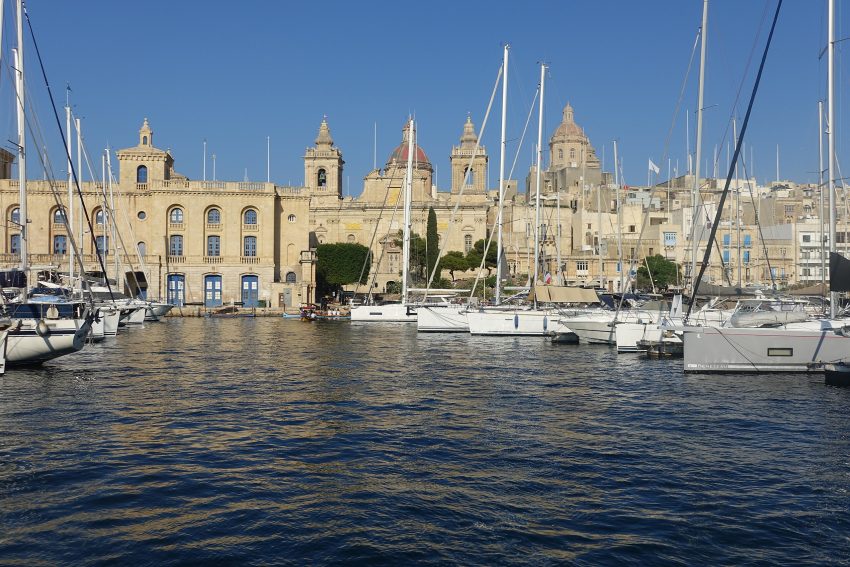
Birgu, also known as Vittoriosa, is one of Malta's oldest and most captivating cities, steeped in centuries of history and brimming with Mediterranean charm. Nestled along the Grand Harbour, this fortified town was the first home of the Knights of St. John when they arrived in 1530, long before Valletta was even built. Its narrow cobblestone lanes, ancient bastions, and sweeping sea views make it a must-visit for anyone eager to experience Malta's rich heritage up close.

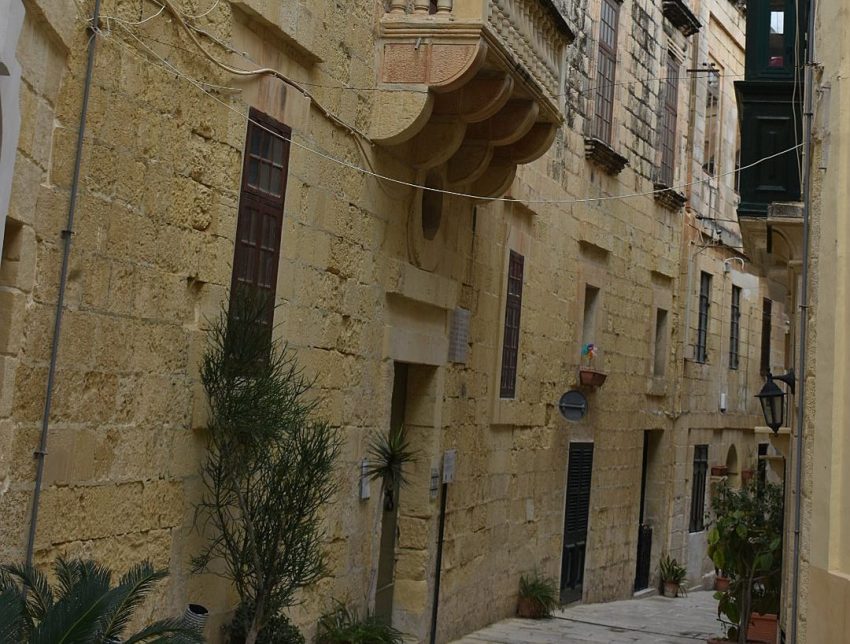
A walking tour of Birgu is the perfect way to immerse yourself in its layered past while discovering the best things to see in Birgu, from majestic forts and noble auberges to hidden chapels and centuries-old homes. As you stroll through its peaceful alleyways, you'll uncover the stories of knights, merchants, and ordinary Maltese families who shaped the city's character. Every corner reveals something new-stone-carved emblems of the Order, flower-draped balconies, and glimpses of the glittering Grand Harbour below.

Whether you're drawn by its role in the Great Siege of 1565, its atmospheric Inquisitor's Palace, or the picturesque waterfront lined with yachts and cafés, Birgu offers an unforgettable glimpse into Malta's soul. This walking tour will guide you through its most iconic landmarks and hidden gems, helping you see why Birgu remains one of the island's most authentic and historically rich destinations.

How to Get to Birgu

Getting to Birgu (Vittoriosa) from anywhere in Malta is easy and scenic, thanks to its location along the Grand Harbour opposite Valletta. The most popular and picturesque way to reach the city is by taking a traditional dgħajsa (water taxi) or ferry from Valletta's Waterfront or Lascaris Wharf. The short five-minute crossing offers breathtaking views of the harbour, Fort St. Angelo, and Valletta's skyline-making the journey itself one of the highlights of your visit. Regular ferries run every 30 minutes throughout the day, and the trip costs just a few euros.

By Public Transport: If you prefer to travel by road, Birgu is well-connected by public bus routes operated by Malta Public Transport. Buses depart frequently from Valletta, Sliema, and Marsa, with journey times ranging from 20 to 40 minutes depending on traffic. The main stop, Birgu Centre, places you just a short walk from the marina and the city's historic core. Alternatively, taxis and ride-sharing services like Bolt or eCabs offer a more direct and comfortable way to reach Birgu, particularly if you're traveling from Malta International Airport or further north on the island.

By Car: For those renting a car, Birgu can be reached easily via Triq il-Marina or Triq Sant'Antnin, though parking inside the old city is limited. It's best to park near the Cottonera Waterfront or Senglea and explore Birgu on foot-the narrow medieval streets are best experienced without a vehicle. Whether you arrive by sea or land, the approach to Birgu is always memorable, setting the perfect tone for a day exploring one of Malta's most atmospheric and historically rich destinations.

Where to Stay in Birgu

To make the most of visiting Birgu and this walking tour, you should consider staying overnight in or near the historic centre. Spending the night here allows you to experience the quiet charm of the narrow streets after the day-trippers have gone, when the golden glow of the bastions reflects across the Grand Harbour. Many of Birgu's best accommodations are found in beautifully restored townhouses, boutique guesthouses, and waterfront residences that blend Maltese tradition with modern comfort.

In the heart of Birgu’s old town, you’ll find elegant stays like Locanda La Gelsomina, a boutique hotel set in a 16th-century palazzo that captures the city’s medieval spirit with refined luxury. For a more homely stay, Casa Birmula Hotel is located nearby in the Three Cities area, offering a stylish yet intimate atmosphere and easy access to Birgu’s attractions on foot. Those who prefer waterfront views can stay at The British Suites, just across the harbour in Valletta, with frequent ferries linking the two sides in minutes.

If you’d like to immerse yourself fully in Birgu’s maritime charm, Palazzo Violetta offers a short ferry or drive away accommodation with excellent amenities while keeping you close to the Grand Harbour. Alternatively, Cugo Gran Macina across the bridge in Senglea provides sweeping harbour views and luxury suites within a centuries-old fortress. Whether you prefer a boutique hideaway in the city's stone alleys or a waterside hotel overlooking the marina, staying in or around Birgu enhances your walking tour experience, letting you soak in the timeless beauty of one of Malta's most atmospheric cities.

A Short History of Birgu

The story of Birgu (Vittoriosa) stretches back over a millennium, but its prominence truly began with the arrival of the Knights of St. John in 1530. Granted Malta by Emperor Charles V, the Knights made Birgu their headquarters, transforming what had been a modest harbor town into a fortified maritime city. They built grand residences known as auberges to house their different Langues, including the Auberge d'Angleterre, Auberge d'Auvergne et Provence, Auberge de Castille et Portugal, and Auberge de France, most of which were completed by the mid-1530s. These stone palaces became centers of administration, strategy, and fraternity for the Order, reflecting the architectural and cultural might of the Knights during Malta's formative years.

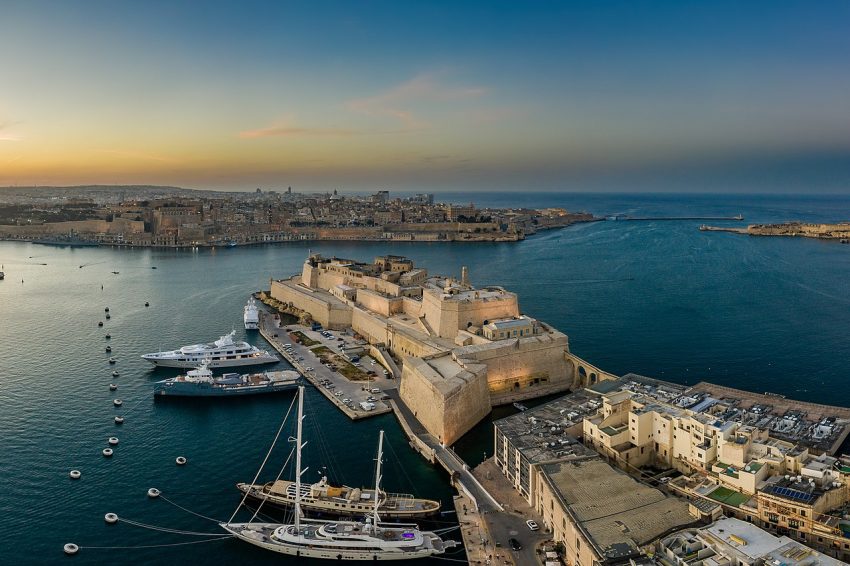
At the tip of the Birgu peninsula, the Knights fortified and expanded the ancient Fort St. Angelo, transforming it from a medieval castle into the stronghold of the Order. This fortress played a defining role during the Great Siege of 1565, when Birgu became the heart of Malta's defense against the Ottoman Empire. Within its walls, Grand Master Jean Parisot de Valette and his men withstood months of relentless bombardment, an act of valor that secured Malta's survival and shaped its national identity. Around the same time, key defensive structures such as the St. John Bastion, Post of Castile, and Couvre Porte (Covered Gate) were strengthened, turning Birgu into one of the most formidable fortified cities in the Mediterranean.

In the centuries that followed, Birgu remained at the center of Malta's political and religious life. The Inquisitor's Palace, originally built in the 1530s and later adapted to house the Roman Inquisition in Malta, became one of the few surviving inquisitorial palaces in Europe. The Armoury of the Knights of Malta and the later Malta Maritime Museum preserved the city's deep naval heritage, while the Notre Dame Gate, constructed in 1675, symbolized the continued Baroque evolution of the Cottonera defenses. Even as the Knights eventually moved their capital to Valletta in the late 16th century, Birgu retained its prestige, serving as a living museum of Maltese resilience and faith-its narrow lanes, bastions, and auberges still echoing the legacy of the Order that once ruled from its heart.

Take a Guided or Self-Guided Walking Tour of Birgu

If you're spending a day in Birgu and want to make the most of your time in its historic heart, consider joining a guided walking tour with a knowledgeable local expert. This two-hour Three Cities Walking Tour, which includes entry to the Inquisitor's Palace, takes you through Birgu's most iconic landmarks-from Fort St. Angelo and the Malta Maritime Museum to the city's labyrinth of medieval lanes and bastions overlooking the Grand Harbour.

Your Self-Guided Walking Tour of Birgu

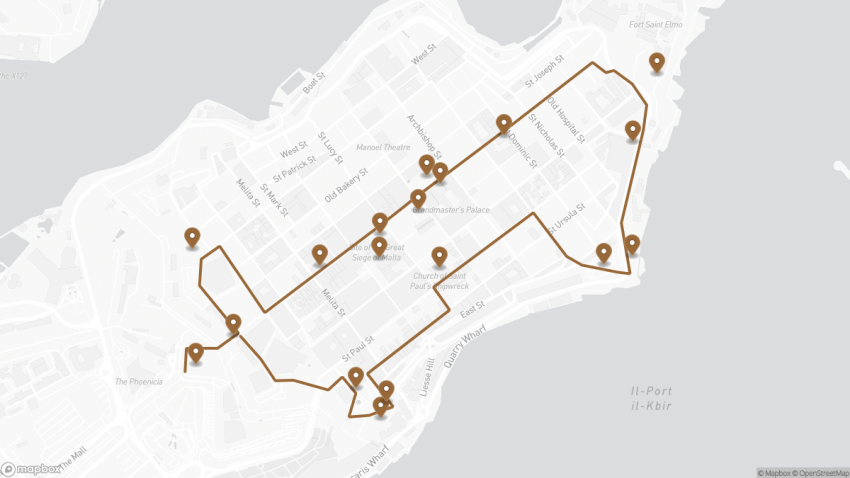
This self-guided walking tour takes you through the heart of Malta’s oldest maritime city, and you can use our interactive walking tour map to track your current location and your next site as you go.

1. Malta War Museum (Couvre Porte)
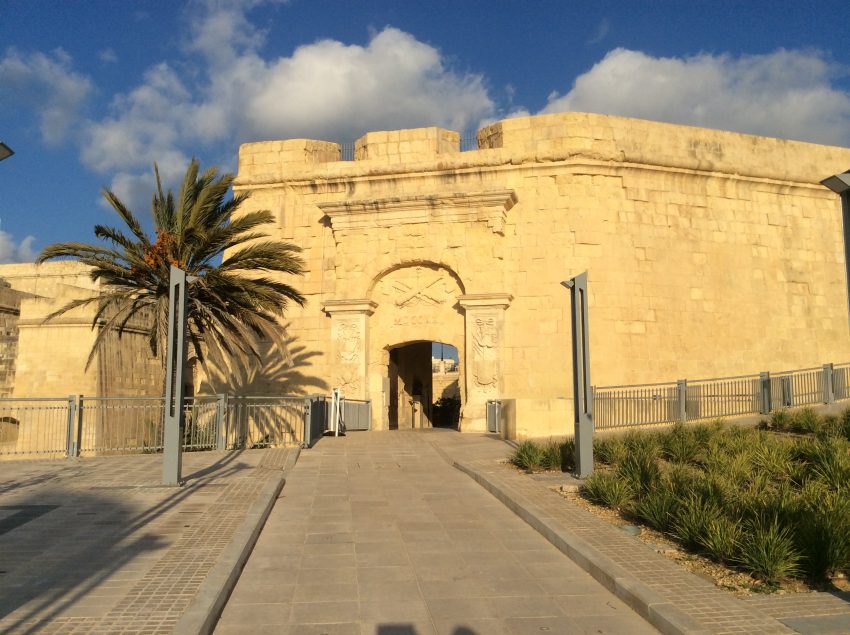
Couvre Porte
Couvre Porte
CC BY-SA 4.0 / continentaleurope

Marvel at the impressive Couvre Porte, also known as the Covered Gate. Built between 1716 and 1730, it served as one of Birgu’s key defensive gateways, protecting the entrance to the fortified city. Designed by military engineers Charles François de Mondion and Louis François de Tigné, it reflects the Baroque military architecture of the period, complete with bastioned walls, covert ways, and a reverse glacis.

Over the centuries, Couvre Porte evolved with Malta’s history. During British rule, a barrack block was added, which later housed various government offices and now serves as part of the Birgu Local Council. Restoration projects have since preserved its masonry and decorative motifs, including the striking trophies of arms that crown its gateway.

Today, Couvre Porte houses the Malta at War Museum, one of the island’s most compelling World War II sites. Visitors can descend into the underground air raid shelters, view wartime memorabilia, and learn about Malta’s resilience under siege. This site perfectly sets the tone for your Birgu tour—where layers of history, from the Knights to the modern era, coexist in stone and story.


Location: Couvre Porte Counterguard, Triq it-8 ta' Dicembru, Birgu, Malta | Hours: Monday to Sunday, 10:00 a.m. – 4:30 p.m. | Price: Adults €10 | Website

Here is a complete selection of hotel options in Birgu. Feel free to review each one and choose the stay that best suits your needs.

2. St. Lawrence’s Church

San lawrenz vittoriosa
CC BY-SA 3.0 / Mboesch

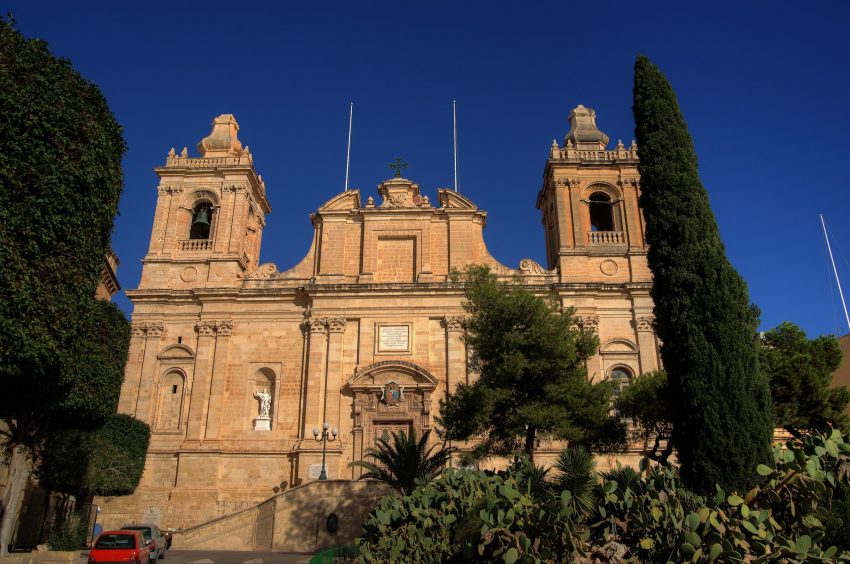
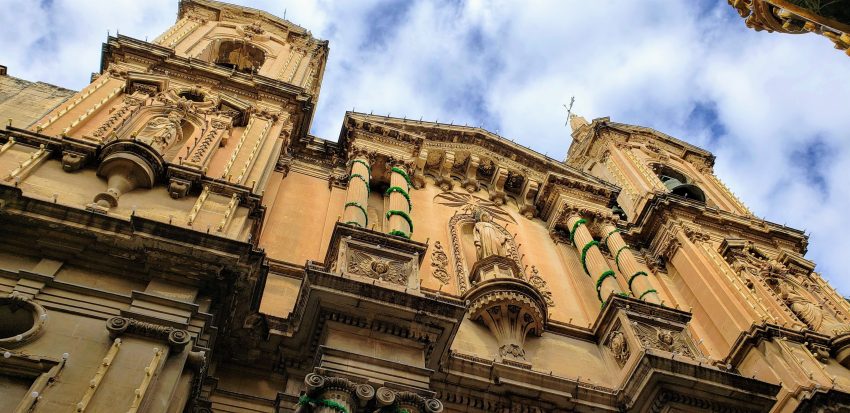
Dominating the central square of Birgu, St. Lawrence’s Church is one of Malta’s most important religious buildings. The Knights of St. John worshipped here before moving to Valletta, and it served as the Order’s Conventual Church during their early years on the island. The original 15th-century church was replaced in 1681 by the grand Baroque structure that stands today, designed by Lorenzo Gafà, the same architect behind Mdina Cathedral.

Inside, the church glows with artistic and spiritual grandeur. Ornate marble altars, gilded stuccoes, and masterpieces by Mattia Preti and other artists adorn the chapels dedicated to various Langues of the Order. The feast of St. Lawrence, held annually in August, fills Birgu’s streets with processions, fireworks, and music—a vibrant continuation of centuries-old tradition.

From the steps outside, visitors can enjoy views of the Grand Harbour and sense the deep bond between faith, the sea, and the city’s people. St. Lawrence’s Church is both a monument to devotion and a reminder of Birgu’s role as the Knights’ first spiritual home.


Location: Saint-Lawrence's Church of Birgu, Triq San Lawrenz, Birgu, Malta

Traveling to a country with a different currency? Avoid ATM transaction fees and pay in local currency with a Wise Card. Having used it for over 5 years, we've saved loads on fees!

3. Malta Maritime Museum

Malta Maritime Museum
CC BY-SA 4.0 / Joseolgon

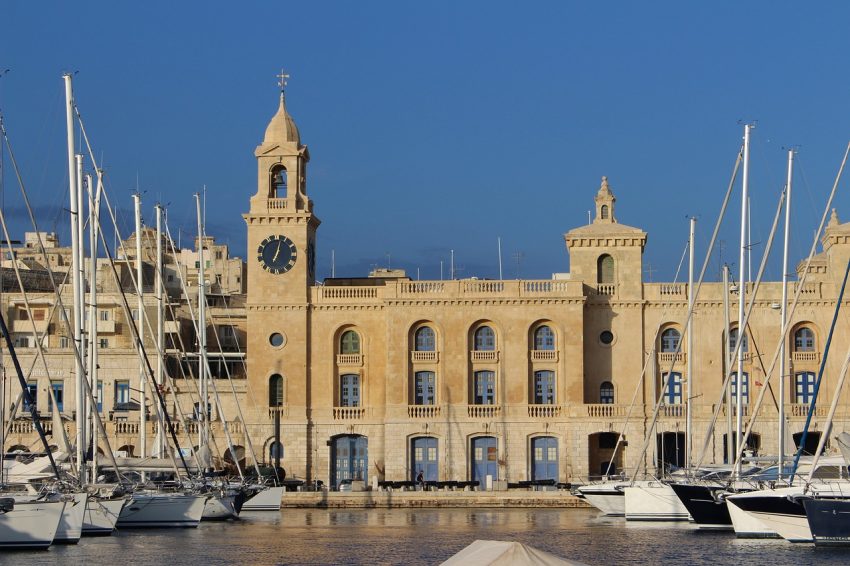
Housed in the Old Naval Bakery along Birgu’s waterfront, the Malta Maritime Museum takes visitors on a fascinating journey through 7,000 years of seafaring history. The museum’s setting—a grand 19th-century industrial building—once supplied bread to the entire British Mediterranean Fleet, linking Malta’s naval past with its maritime heritage.

Inside, exhibits showcase Malta’s deep connection with the sea—from ancient Phoenician trade routes and Roman anchors to naval uniforms, cannons, and intricate ship models. Highlights include a 1950s steam engine, relics from the Knights of St. John, and displays revealing how corsairing, commerce, and faith intertwined to shape the Maltese identity.

The museum’s archives and maritime library make it a key resource for researchers, while Heritage Malta’s “Taste History” events bring history to life through food. A stroll through the museum offers not just history, but atmosphere—echoes of sailors, merchants, and knights who once made Malta their home port.


Location: Malta Maritime Museum, The Malta Maritime Museum, Xatt l-Assedju l-Kbir, Birgu, Malta | Hours: Daily 9:00 a.m. – 5:00 p.m. (last admission 4:30 p.m.) | Price: Adults €5 | Website

Click here to read our blog about Best 9 World War II attractions in Malta (2026)

4. Fort St. Angelo

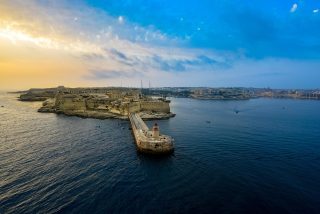
Fort St Angelo in Birgu
CC BY-SA 4.0 / FritzPhotography

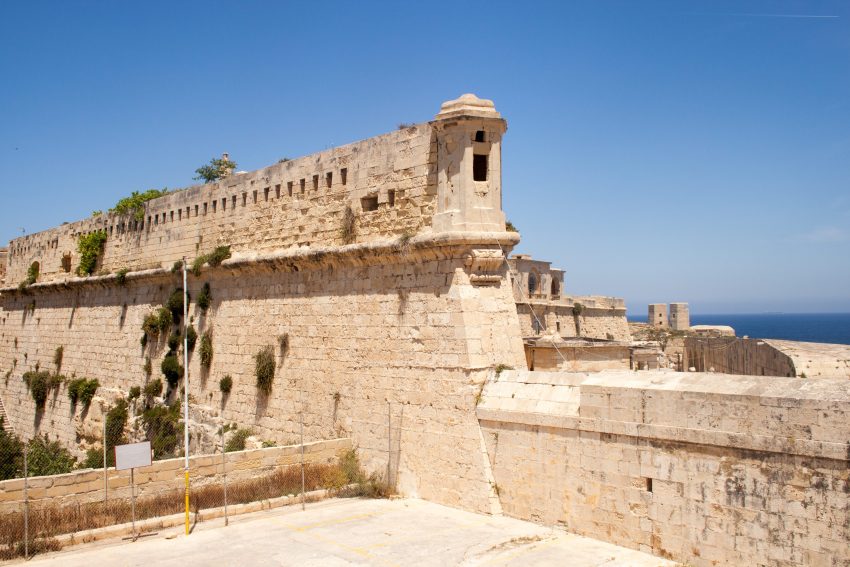
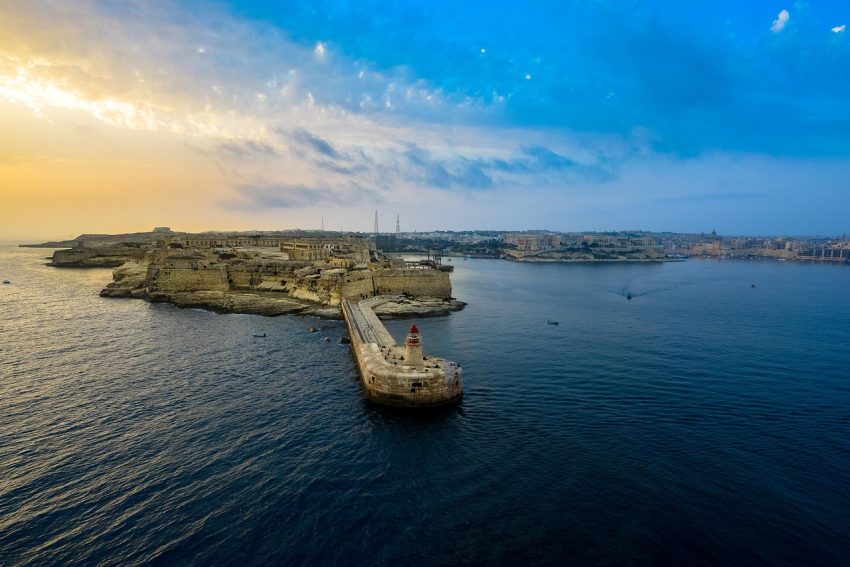
No walking tour of Birgu is complete without a visit to Fort St. Angelo, the city’s crown jewel. Rising majestically at the tip of the peninsula, this fortress has guarded the Grand Harbour for nearly a thousand years. Originally a medieval castle known as Castrum Maris, it was transformed by the Knights of St. John in the 1530s into a formidable bastioned stronghold.

The fort became the headquarters during the Great Siege of 1565, when Grand Master Jean Parisot de La Valette directed the Knights’ defense against the Ottomans. Its ramparts bore witness to some of Malta’s most heroic moments, and its success cemented the island’s place in European history. Later, under British rule, it served as a naval command center and headquarters for the Royal Navy’s Mediterranean Fleet.

Today, Fort St. Angelo is beautifully restored and open to visitors. Interactive exhibits, ancient chapels, and sweeping panoramic views bring its layered history to life. Walking through its courtyards and bastions is like traversing a living timeline—from the medieval past to modern Malta.


Location: Fort St Angelo, Waterfront, Birgu, Malta | Hours: Daily 9:00 a.m. – 5:00 p.m. (last admission 4:30 p.m.) | Price: Adults €10 | Website

Click here to read our blog about Malta: Tracing the Legacy of the Knights of St. John

Powered by GetYourGuide

5. Auberge d’Angleterre

Auberge d Angleterre
CC BY-SA 4.0 / Continentaleurope

One of Birgu’s oldest and best-preserved buildings, the Auberge d’Angleterre was built in the early 1530s to house the Knights of St. John from the English Langue. It stands as a beautiful example of early Maltese Renaissance architecture, distinguished by its symmetry and simple elegance. The building’s façade, with its traditional Melitan-style mouldings and stone balconies, reflects a blend of practicality and artistry.

After the English Langue was dissolved in 1540 by King Henry VIII during the Reformation, the auberge took on new roles over the centuries. It became a private residence, then a civic building, and eventually the Birgu Public Library, continuing its legacy as a center of learning and knowledge.

Its proximity to the house of Sir Oliver Starkey, the last English knight of the Order and secretary to Grand Master La Valette, deepens its historical significance. Today, the auberge remains a quiet yet captivating site that connects visitors directly with Birgu’s earliest days under the Knights.


Location: Berġa tal-Ingilterra, Majjistral, Birgu, Malta

6. Auberge d’Auvergne et Provence
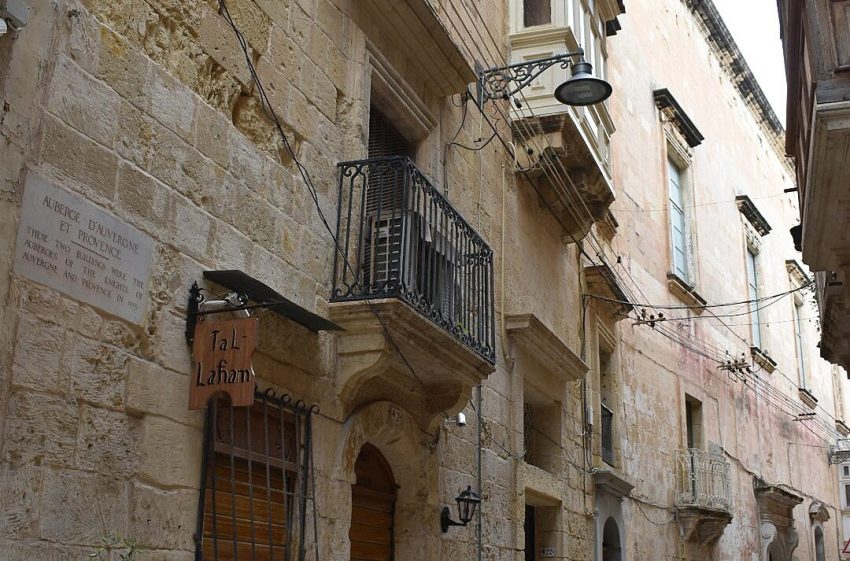
Auberge d' Auvergne et Provence Birgu
Auberge d’ Auvergne et Provence Birgu
CC BY-SA 4.0 / ontinentaleurope

A short walk away brings you to the Auberge de France, another key residence built around 1533 for the French Langue of the Order. It’s one of the best-preserved auberges in Birgu and now serves as the Birgu City Hall, a fitting continuation of its civic importance. The building’s Melitan style, with its finely moulded windows and graceful proportions, echoes Malta’s early architectural identity.

Nearby, the Auberge d’Auvergne et Provence stands as a testament to the Order’s unity in diversity. Originally two separate auberges that were later joined, this 1530s structure once housed knights from both the Auvergne and Provence Langues. Its stone façade, central doorway, and decorative cornices showcase the craftsmanship of the era, while remnants of earlier foundations suggest layers of even older occupation, possibly Byzantine.

Though parts were lost during the 20th century, both auberges remain evocative glimpses into Birgu’s life before Valletta was built. Their presence side by side reminds visitors that Birgu was once the administrative and spiritual heart of the Knights of St. John.


Location: Auberge d’Auvergne and Provence, Birgu, Malta

7. Armoury of the Knights of Malta
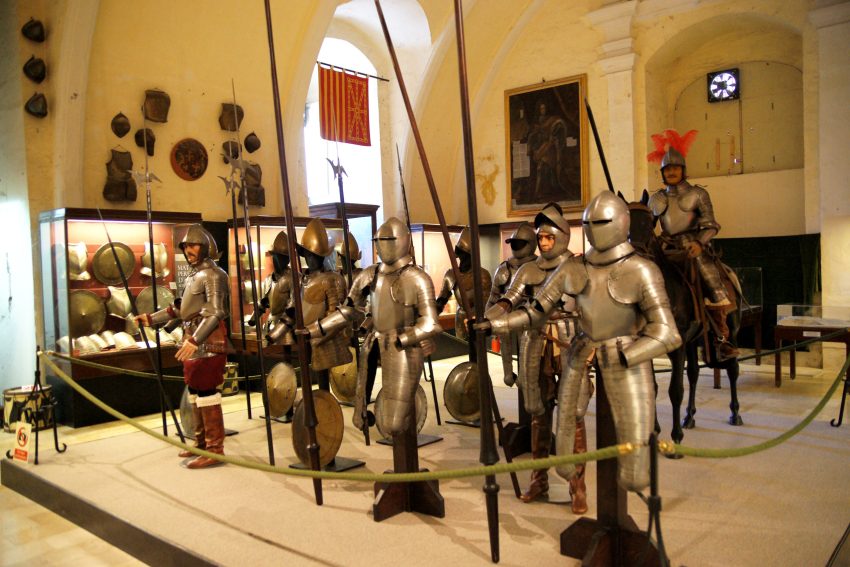
Valletta grandmasters palace armoury
CC BY-SA 3.0 / Mboesch

A short walk from Birgu’s central square brings you to the Armoury of the Knights of Malta, one of the city’s oldest surviving buildings and a fascinating stop on your walking tour. Constructed between 1533 and 1537 during the magistracy of Grand Master Fra Claude de La Sengle, the Armoury was originally built to store the Knights’ vast collection of weapons, armor, and munitions. Its design was purely functional, with four large entrances allowing easy access in times of attack—an architectural reflection of the Order’s military precision.

During the Great Siege of 1565, the building’s purpose shifted dramatically. As the Ottoman assault intensified, the Armoury was converted into a hospital for the wounded, offering a vital refuge for injured soldiers. Its thick limestone walls provided shelter from bombardment, while its open layout allowed the rapid movement of supplies and patients. This moment of transformation highlights the Order’s dual role as both defenders and healers, balancing faith and warfare in their mission to protect Christendom.

The Armoury continued to serve Malta across the centuries, adapting to the island’s changing rulers. Under British administration, it became a military hospital and later barracks, and following World War II, it was transformed into a Primary School, continuing its legacy of public service. Today, though not always open to visitors, the building stands as a quiet yet powerful reminder of Birgu’s resilience and its central role in Malta’s long and storied defense history.


Location: Armoury of the Knights of Malta, Birgu, Malta

8. St. John Bastion and the Advanced Gate
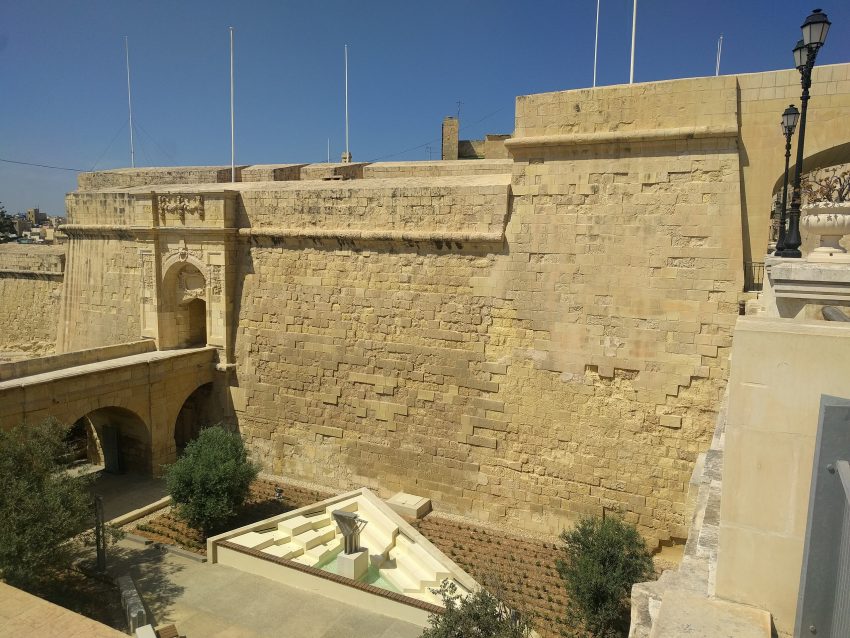
Saint John Bastion
Saint John Bastion
CC BY-SA 4.0 / DistractionActivity

As you continue your walk, you’ll arrive at the formidable St. John Bastion, an asymmetrical stronghold designed in the 18th century by Charles François de Mondion. Originally part of Birgu’s outer defenses, this bastion’s walls once shielded the city from Ottoman and later European attacks. Its modern road arch, added later, now serves as a grand entrance into the historic center.

The bastion was once crowned by the St. John Cavalier, a two-tiered defensive structure that played a vital role during the Great Siege of 1565. Though the cavalier no longer stands, the bastion retains its commanding presence, with courtyards, arched bridges, and old military outbuildings that give visitors a tangible sense of Malta’s military past.

Nearby stands the Advanced Gate, another of Birgu’s principal entrances. The bastion’s open spaces provide scenic vistas over the marina and the neighboring fortified city of Senglea. With its blend of power and beauty, this site perfectly captures Birgu’s dual nature—defensive stronghold and living museum.


Location: St. John Bastion, Triq P. Boffa, Birgu, Malta

9. Inquisitor’s Palace
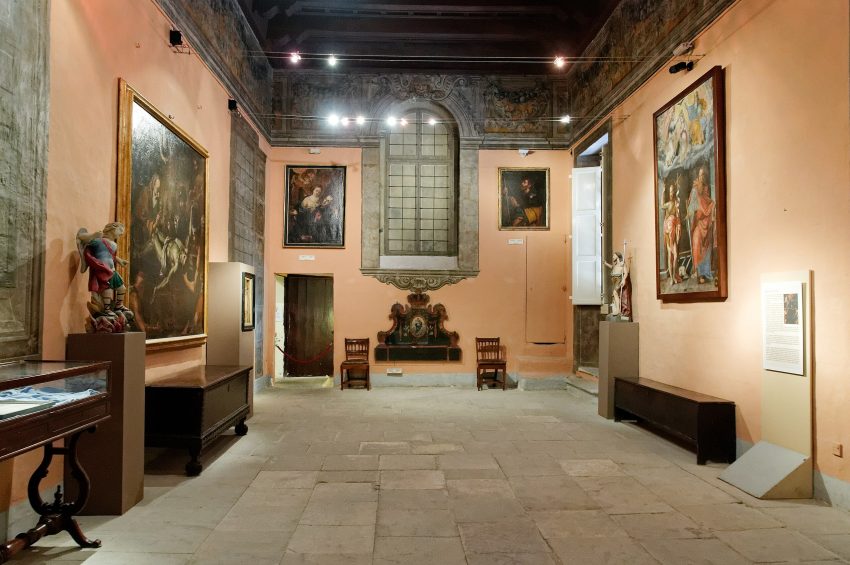
Interior of Inquisitors Palace Birgu
CC BY-SA 2.5 / Marie-Lan Nguyen

Few sites in Europe carry the same blend of intrigue and preservation as Birgu’s Inquisitor’s Palace. Built in the 1530s as the seat of the Order’s civil courts, it later became home to the Roman Inquisition in Malta. Remarkably, it’s one of only a handful of Inquisition palaces worldwide to survive intact, making it a unique window into this powerful institution’s complex past.

The palace’s grand halls, private chambers, and dungeons reveal the delicate balance between faith and fear in 16th- to 18th-century Malta. Visitors can explore the Inquisitor’s living quarters, the courtroom where trials were held, and the small yet haunting prison cells where accused heretics awaited judgment. Notable inquisitors included Fabio Chigi, who later became Pope Alexander VII.

Now managed by Heritage Malta, the palace also celebrates domestic life and art from the Knights’ era. With its blend of grim history and exquisite Baroque architecture, it’s one of Birgu’s essential stops—an evocative reminder of Malta’s role as a crossroads of faith and power.


Location: Inquisitor's Palace, Birgu, Malta | Hours: Daily from 9:00 a.m. to 5:00 p.m. (last entry 4:30 p.m.) | Price: Adults €6

10. Notre Dame Gate
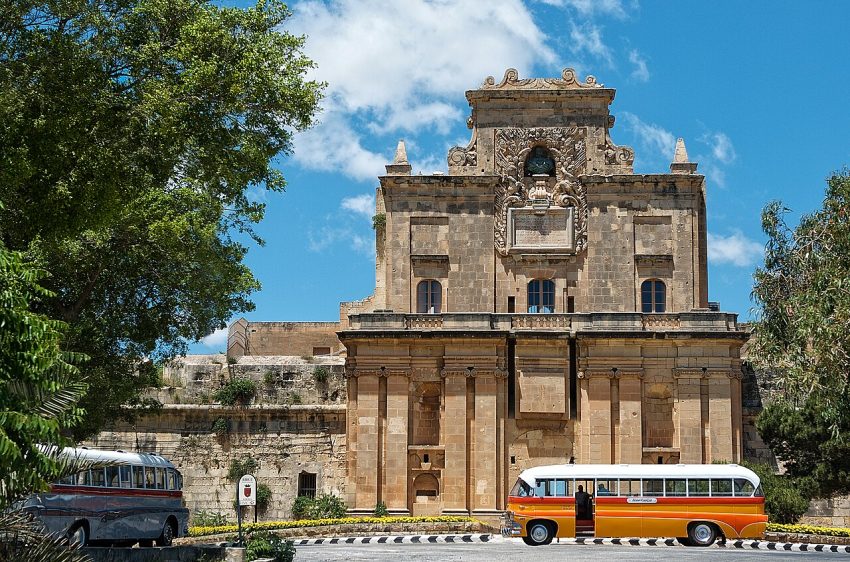
The Notre Dame Gate in Birgu with old traditional maltese bus in front it
CC BY-SA 4.0 / Renata Apan

Next, make your way to Notre Dame Gate, an architectural gem and one of Malta’s grandest surviving gateways. Constructed in 1675 under the direction of the Order of St. John, it once formed part of the Cottonera Lines—defensive walls encircling the Three Cities. Its soaring four-story façade, adorned with ornate Baroque detailing, makes it a landmark that dominates the Floriana skyline.

Originally built as a fortified entrance, the gate’s bombproof casemates and musket-ball marks still bear witness to centuries of warfare. Over time, the structure evolved, serving not just as a military outpost but also as an annex to the nearby Cottonera Military Hospital. During World War I, it played a role in caring for wounded soldiers returning from the Gallipoli Campaign, further cementing its place in Malta’s long military history.

Today, Notre Dame Gate offers visitors panoramic views of the Grand Harbour and surrounding landscape from its rooftop terrace. Step inside to see exhibits detailing the fortification’s history, or simply admire its commanding exterior—a monument to Malta’s enduring resilience and architectural brilliance.


Location: Notre Dame Gate, Triq Il - Kottonera, Birgu, Malta | Hours: Monday to Saturday, 9:00 a.m. – 5:00 p.m. | Price: Adults €5 (free with ) | Website
Powered by GetYourGuide
Moira & Andy
Moira & Andy

Hey! We're Moira & Andy. From hiking the Camino to trips around Europe in Bert our campervan — we've been traveling together since retirement in 2020!

Read our full story here

This website uses affiliate links which earn a small commission at no additional cost to you.

Walking Tour Summary

Distance: 2.5 km
Sites: 10

Walking Tour Map
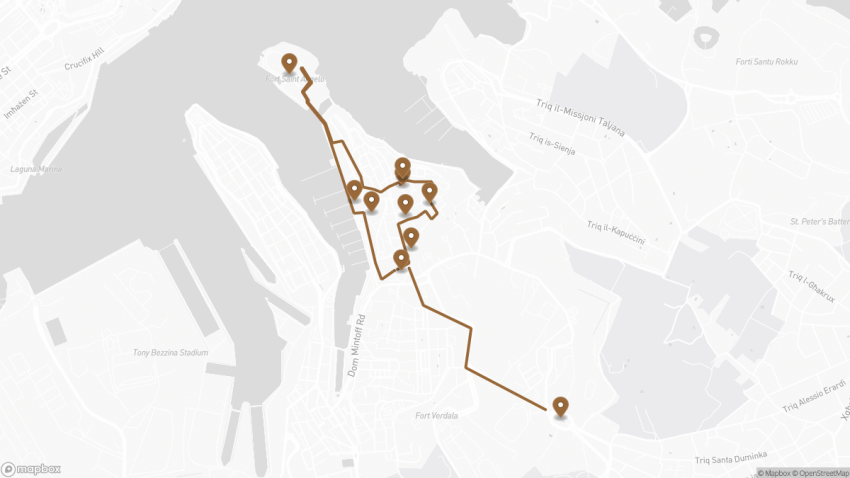
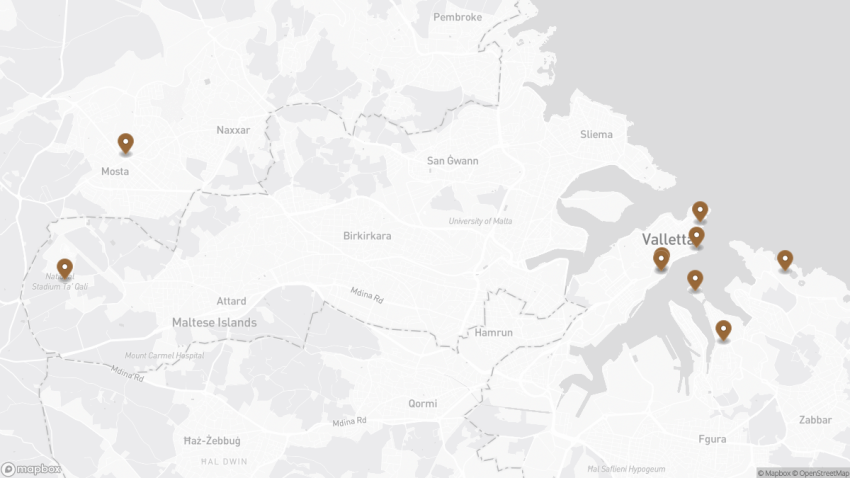
Map of the Self-Guided Walking Tour of Birgu walking route with 10 stops in Birgu.
Preview map of the Self-Guided Walking Tour of Birgu route in Birgu, showing 10 stops. Use the interactive map to zoom and tap markers.

Best 9 World War II attractions in Malta (2026)

malta and WW2
malta and WW2

This website uses affiliate links which earn a small commission at no additional cost to you.

The Maltese Islands have long stood at the heart of the Mediterranean, both geographically and strategically. This position made them a coveted prize for countless empires. Over millennia, the Phoenicians, Greeks, Carthaginians, and Romans claimed Malta, followed by Arab conquerors, Normans, Spaniards, and finally the Knights of St. John in 1530. The Knights, officially known as the Sovereign Military Hospitaller Order of Saint John of Jerusalem, of Rhodes and of Malta, received the islands from Charles V of Spain, agreeing to pay a symbolic rent - one falcon each year on All Saints' Day. This small detail gave rise to the legend of the Maltese Falcon.

From their new island home, the Knights launched raids across the Mediterranean, striking Ottoman and North African fleets. Infuriated, Suleiman the Magnificent called Malta a “venomous viper's nest” and, in 1565, launched the Great Siege of Malta - a defining event in the island's history. Against all odds, the Knights, aided by the Maltese, repelled the Ottoman invasion, cementing Malta's reputation as a fortress island and earning the city of Birgu the name Vittoriosa (“Victorious”).

Empire and the Modern Age

Malta's strategic importance never waned. In 1798, Napoleon Bonaparte seized the islands en route to Egypt, but within two years, the British Navy, supporting a Maltese uprising, expelled the French. The Treaty of Paris (1814) confirmed British rule, and by the mid-19th century, Malta had become a vital naval hub for the Royal Navy. Its value increased dramatically after the opening of the Suez Canal in 1869, when Malta became a critical refueling and supply station on the route from Britain to India.

The British expanded Malta’s dockyards, fortifications, and barracks, transforming the Grand Harbour into one of the finest naval bases in the world. During World War I, the island earned the nickname “The Nurse of the Mediterranean” for its role as a vast medical and recovery center for troops from the Gallipoli campaign. But it was in World War II that Malta’s endurance reached legendary status.

The Most Heavily Bombed Place on Earth

When Italy entered World War II in 1940, Malta found itself directly in the crosshairs - positioned between Axis-held Sicily and North Africa. The island became a crucial Allied base for disrupting enemy shipping routes, prompting relentless bombardment. Between 1940 and 1942, Malta endured 3,343 air raids, receiving 15,000 tons of bombs - three times more per square mile than London during the Blitz. Despite devastating losses, the island never surrendered.

King George VI awarded the George Cross to the entire population of Malta for their extraordinary courage - a distinction shared by only one other group in history. Allied submarines and aircraft operating from Malta sank nearly 400,000 tons of Axis shipping, and the island became the launchpad for Operation Husky, the Allied invasion of Sicily in 1943. In this sense, Malta played a direct role in the liberation of Europe.

Exploring Malta’s Wartime Legacy Today

1. Lascaris War Rooms, Valletta

Lascaris War Rooms
Lascaris War Rooms
CC BY-SA 4.0 / Amanda Tonna

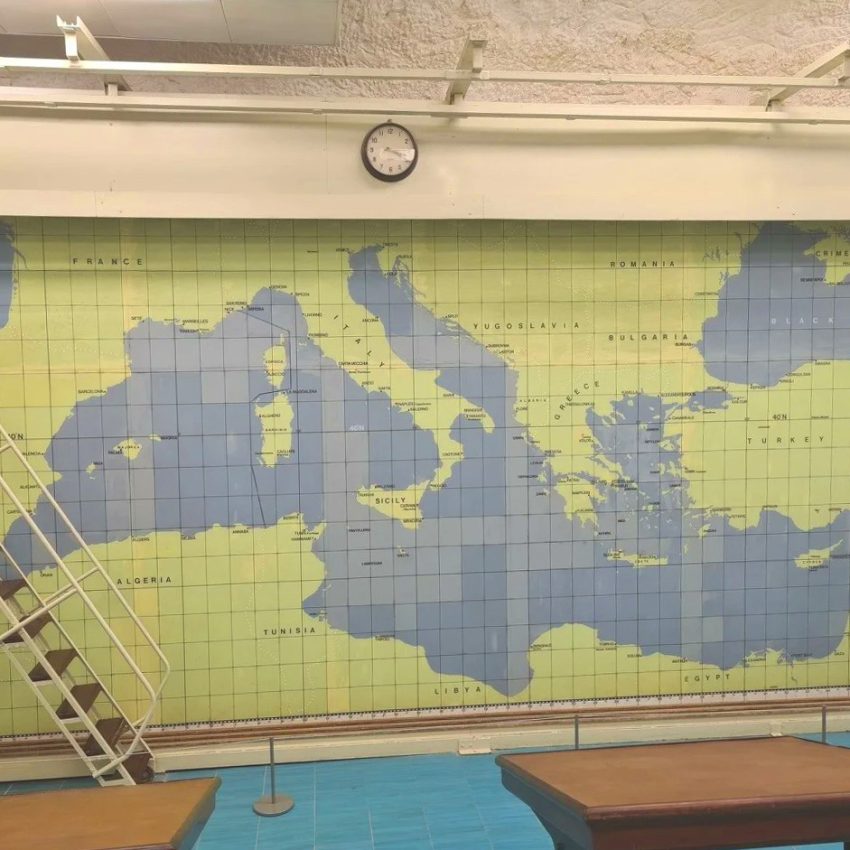
Hidden deep beneath the bastions of Valletta, the Lascaris War Rooms form one of the most fascinating underground military complexes in Europe. Carved directly into the limestone beneath the Upper Barrakka Gardens, this secret labyrinth of tunnels and chambers served as the Allied War Headquarters during World War II. It was from here that the defense of Malta was coordinated, with command rooms dedicated to naval operations, anti-aircraft guns, and air force movements. Every decision — from convoy escorts to counterattacks on Axis forces — was made within these very walls.

The complex became especially significant in 1943, when it served as the Allied command center for Operation Husky, the invasion of Sicily. General Dwight D. Eisenhower, Admiral Andrew Cunningham, and General Bernard Montgomery all operated from the War Rooms, directing one of the most decisive campaigns of the war. Visitors today can explore these restored operations centers, including the Combined Operations Room, complete with its plotting tables, radar boards, and communications equipment that look as though they were left untouched since 1945.

Today, the Fondazzjoni Wirt Artna (Malta Heritage Trust) manages the site, having restored it and opened it to the public in 2010. Walking through the narrow corridors feels like stepping back in time — the air still cool, the walls still echoing with the tension of wartime command. The Lascaris War Rooms also feature rare wartime artifacts, including early Typex encryption machines (Britain’s answer to the German Enigma) and documents that reveal the precision and secrecy that defined Malta’s defense. It’s an unmissable stop for military history enthusiasts.


Location: Lascaris War Rooms, Lascaris Ditch, VLT 2000, Valletta, Malta | Hours: Monday - Saturday: 10.00 - 17:00 | Price: Adult €12.00, Children € 5.00 | Website

Here is a complete selection of hotel options in Valletta. Feel free to review each one and choose the stay that best suits your needs.

2. War HQ Tunnels

War HQ Tunnels
War HQ Tunnels
© Andrew Ashton

Beneath the bastions of the Upper Barrakka Gardens, the War HQ Tunnels offer one of Malta’s most atmospheric wartime experiences. Carved deep into the limestone, this network of passageways and chambers served as the underground nerve center of Malta’s defense during the Second World War. The tunnels were first excavated during the Knights of St. John period, but were vastly expanded by the British in 1940 to coordinate operations across land, sea, and air.

Walking through the tunnels today feels like stepping into a time capsule. Each room has been meticulously restored — from the RAF Fighter Command Operations Room and Navy Plotting Room to the Anti-Aircraft Control Centre. Original wall maps, plotting tables, telephones, and logbooks evoke the intense atmosphere of round-the-clock coordination. It was here that Allied commanders monitored radar readings, issued air raid warnings, and orchestrated convoy escorts to keep Malta supplied through the siege.

The War HQ Tunnels now operate as a museum, offering guided tours that vividly recreate the drama of Malta’s wartime command. Visitors can even trace how these tunnels connected to deeper chambers — including the Lascaris War Rooms below — and how vital information was transmitted between them in real time. With its dim lighting, echoing footsteps, and relics of command life, the site captures the extraordinary resilience and ingenuity that kept Malta fighting against impossible odds.


Location: The entrance is accessed via the Saluting Battery / Battery Street in Valletta. | Hours: Tours run Monday–Saturday at 10:30, 13:00, and 14:30 (closed Sundays, Dec 24–25 & 31, Good Friday, Easter). | Price: €17 for adults | Website

Traveling to a country with a different currency? Avoid ATM transaction fees and pay in local currency with a Wise Card. Having used it for over 5 years, we've saved loads on fees!

3. Fort St. Elmo (National War Museum)

Fort St Elmo Valletta
Public Domain / Szilas

Standing proudly at the entrance to Valletta’s Grand Harbour, Fort St. Elmo is one of Malta’s most enduring military landmarks. Originally built by the Knights of St. John in 1552, it played a heroic role during the Great Siege of 1565 — the first major Ottoman attack on the island. Centuries later, this star-shaped fortress once again became a bastion of defense during World War II, protecting Valletta and its harbors from relentless Axis bombing raids. The British fortified the structure further, turning it into a key observation and artillery base.

Today, the fort houses the National War Museum, which traces the island’s long military history from the Bronze Age through the Knights’ period, the British era, and finally the two World Wars. Among its most treasured exhibits is the Gloster Sea Gladiator “Faith”, one of three biplanes that made up Malta’s entire air defense early in the war — the other two, “Hope” and “Charity,” did not survive. The museum also displays President Franklin D. Roosevelt’s jeep, used during his 1945 visit with Winston Churchill, and the original George Cross awarded to the Maltese people for their extraordinary bravery.

Visitors can explore the restored bastions, ramparts, and gun positions overlooking the harbor, offering stunning panoramic views of Valletta and its maritime defenses. Fort St. Elmo’s modern exhibits combine interactive displays, personal stories, and original footage, making the experience deeply engaging for all ages. Whether you’re drawn by history, architecture, or the breathtaking harbor views, Fort St. Elmo remains a cornerstone of Malta’s heritage — a place where the island’s indomitable spirit truly comes to life.


Location: Fort St Elmo Valletta VLT 1741 Malta | Hours: Daily 9:00-18:30h (Jun-Oct), Daily 9:00-17:00h (Nov-May) | Price: Adults: €10, Youths (12-17): €7.50, Children (6-11): €5.50 | Website

Click here to read our blog about Malta: Tracing the Legacy of the Knights of St. John

4. Malta at War Museum

Couvre Porte
Couvre Porte
CC BY-SA 4.0 / continentaleurope

Across the Grand Harbour in Birgu, the Malta at War Museum provides an equally compelling perspective on the island’s wartime story. Located within the Couvre Porte fortifications, the museum occupies an 18th-century bastion that played an active defensive role during World War II. Its exhibitions tell the story of the everyday Maltese experience during the relentless bombings — from survival in underground shelters to the courage of those who manned anti-aircraft guns and repaired the harbor docks after each raid.

The museum features original wartime propaganda posters, personal diaries, uniforms, and weaponry, bringing to life the human side of Malta’s resistance. One of its most fascinating features is the underground air-raid shelter complex, carved nearly 30 feet below ground. Visitors can walk through the narrow tunnels that once protected hundreds of civilians from bombardment. These shelters, equipped with kitchens, infirmaries, and sleeping alcoves, provide a sobering glimpse into the endurance and resilience of Maltese families who lived through two years of constant air raids.

Managed by the Fondazzjoni Wirt Artna, the Malta at War Museum also offers guided tours that connect the site to nearby fortifications, such as Fort St. Angelo and St. John Bastion. Together, they form part of Malta’s World War II Heritage Trail, offering visitors a deeper understanding of how this small island nation withstood some of the fiercest attacks in modern history. For history lovers, it’s one of the most immersive experiences in the Mediterranean.


Location: Couvre Porte Counterguard, Triq it-8 ta' Dicembru, Birgu, Malta | Hours: Monday to Sunday, 10:00 a.m. – 4:30 p.m. | Price: Adults €10 | Website

Explore Valletta at your own pace with our self-guided walking tour! Follow our curated route to discover must-see sights and local secrets that makes Valletta one of the best places to visit in Malta.

5. Fort Rinella

Malta Kalkara Fort Rinella
CC BY-SA 3.0 / Frank Vincentz

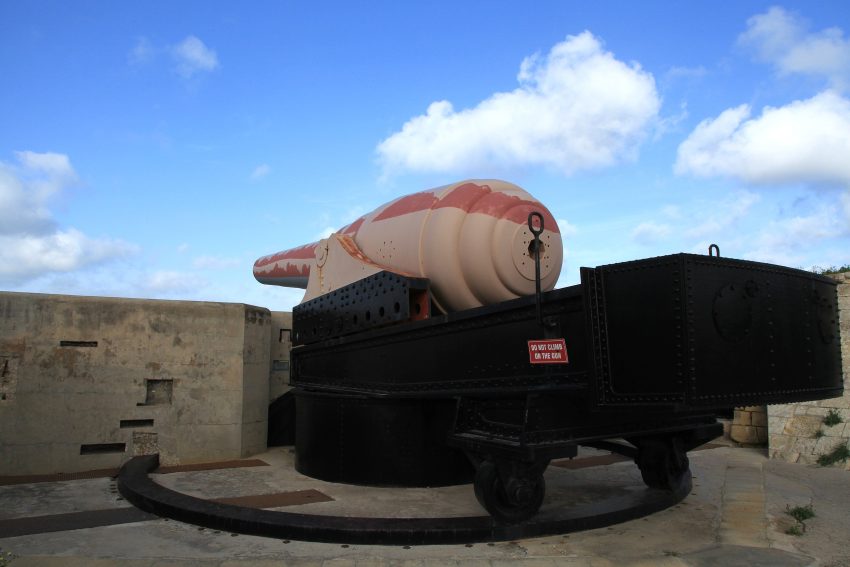
A few miles east of Valletta, Fort Rinella stands as a monument to 19th-century British engineering — and to military ambition on a monumental scale. Built in 1878, this coastal battery was designed to house one of the largest guns ever constructed: the Armstrong 100-ton gun, capable of firing a 2,000-pound shell up to six kilometers. Although never used in combat, its sheer size and mechanical sophistication made it a marvel of Victorian technology and a deterrent against Italian naval expansion in the Mediterranean.

The fort’s history bridges Malta’s pre–World War era and its later use during the global conflicts of the 20th century. During World War II, the site was repurposed for observation and storage, though the massive gun — by then obsolete — remained a silent witness to the island’s evolving military role. The British built similar defenses in Gibraltar, underscoring Malta’s shared importance within the empire’s network of naval strongholds.

Today, Fort Rinella is a living museum operated by the Fondazzjoni Wirt Artna, where re-enactors bring history to life with demonstrations of Victorian drill, gun-loading techniques, and historical weaponry. The massive Armstrong gun, fully restored, is the highlight of the visit — its scale alone is awe-inspiring. Exhibitions also explain the science of 19th-century fortifications, making it a fascinating stop for both military enthusiasts and families seeking an interactive historical experience.


Location: Fort Rinella, Kalkara, Malta | Hours: Monday to Saturday, 10:00 a.m. – 5:00 p.m. | Price: Adults €12 | Website

6. Fort St. Angelo

Fort St Angelo in Birgu
CC BY-SA 4.0 / FritzPhotography

Dominating the tip of Birgu’s peninsula, Fort St. Angelo stands as one of Malta’s most iconic strongholds. Originally a medieval castle known as Castrum Maris, it evolved under the Knights of St. John into a symbol of resistance during the Great Siege of 1565 — and centuries later, into a key British naval base during World War II. From its bastions, Allied ships and aircraft coordinated operations against Axis convoys across the Mediterranean. The fort was heavily bombed, yet remained operational, serving as the headquarters for the Royal Navy’s Mediterranean Fleet under the name HMS St. Angelo.

Restored in recent years, the fort now welcomes visitors eager to explore its layered history. Inside, exhibitions trace its transformation from the seat of the Knights’ Grand Master to its 20th-century wartime role. Visitors can wander through stone tunnels, artillery platforms, and officers’ quarters, while panoramic terraces provide sweeping views of the Grand Harbour, Valletta, and the Three Cities. Its strategic position — guarding the entrance to the harbor — illustrates exactly why Malta was considered the “unsinkable aircraft carrier” of the Mediterranean.

Walking through Fort St. Angelo today, it’s easy to feel the echoes of centuries of conflict and courage. The fort’s walls bear the scars of cannon fire and bombing raids, yet its enduring presence reflects Malta’s resilience. Whether exploring alone or on a guided tour, visitors will come away with a deeper appreciation of the island’s central role in shaping the outcome of both medieval and modern wars.


Location: Fort St Angelo, Waterfront, Birgu, Malta | Hours: Daily 9:00 a.m. – 5:00 p.m. (last admission 4:30 p.m.) | Price: Adults €10 | Website
Powered by GetYourGuide

7. Siege Bell War Memorial

Siege Bell War Memorial
CC BY-SA 3.0 / Frank Vincentz

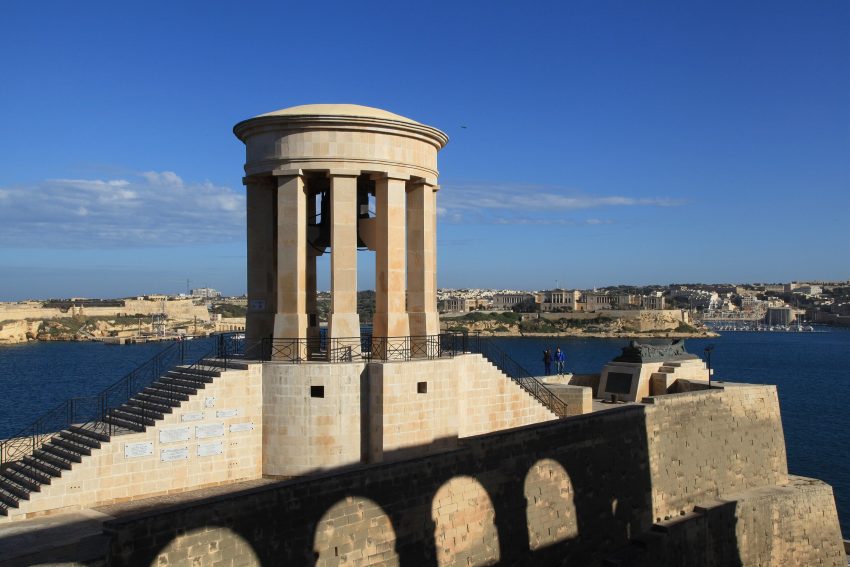
Overlooking the Grand Harbour from the bastions near the Lower Barrakka Gardens, the Siege Bell War Memorial stands as a powerful symbol of Malta’s wartime resilience. Inaugurated in 1992, it commemorates the 50th anniversary of the island’s awarding of the George Cross — Britain’s highest civilian honor — for the bravery shown by the Maltese people during the relentless Axis bombardments of 1940–1942.

The memorial’s design is both austere and moving. A bronze bell weighing over 13 tons hangs beneath a limestone belfry, surrounded by sweeping harbor views that contrast the serenity of today with the chaos of war decades ago. At precisely noon each day, the bell tolls across Valletta in memory of the 7,000 Maltese and Allied servicemen and civilians who lost their lives. Nearby plaques and sculptures further honor the sacrifices of those who defended the island during its darkest hours.

Visiting the Siege Bell is both a historical and emotional experience. Its location — perched above the sea that once bore Allied convoys — serves as a reminder of Malta’s role as a vital lifeline in the Mediterranean war effort. The sound of the bell, echoing across the harbor, resonates deeply with visitors, capturing the spirit of courage and unity that defines Malta’s wartime legacy.


Location: Siege Bell War Memorial, Lvant, Valletta, Malta

8. Mosta Rotunda

Malta Mosta Rotunda
Malta Mosta Rotunda
CC BY-SA 3.0 / GFDL

At the heart of Mosta stands the majestic Rotunda of St. Mary, one of the world’s largest domed churches — and the site of one of Malta’s most famous WWII miracles. On April 9, 1942, during an air raid, a 200-kg German bomb pierced the dome and crashed into the nave where 300 worshippers were attending Mass. Incredibly, it failed to explode. The event was hailed as divine intervention, and the bomb — now defused — is displayed in the church museum.

The Rotunda, with its grand neoclassical design and soaring interior, became a symbol of hope amid destruction. Its survival inspired the Maltese people to continue enduring the relentless bombardment that threatened their island. Today, visitors can view not only the bomb but also an exhibition of wartime relics, photographs, and personal accounts that bring this extraordinary story to life.

Standing beneath the vast dome, it’s easy to feel a sense of awe at both the architecture and the miracle that took place here. The Rotunda remains a place of prayer and reflection, blending religious devotion with a deep national pride rooted in Malta’s wartime experience.


Location: Rotunda Square, Mosta | Hours: Mon-Fri 9:30-17:00h, Sat 9:30-16:30h, Sun 12:00-16:00h | Price: €5 to visit Mosta Basilica, World War II Shelter, go up to the inner Balcony of the Dome and access to an Audio Guide through a mobile phone app. | Website

9. Malta Aviation Museum

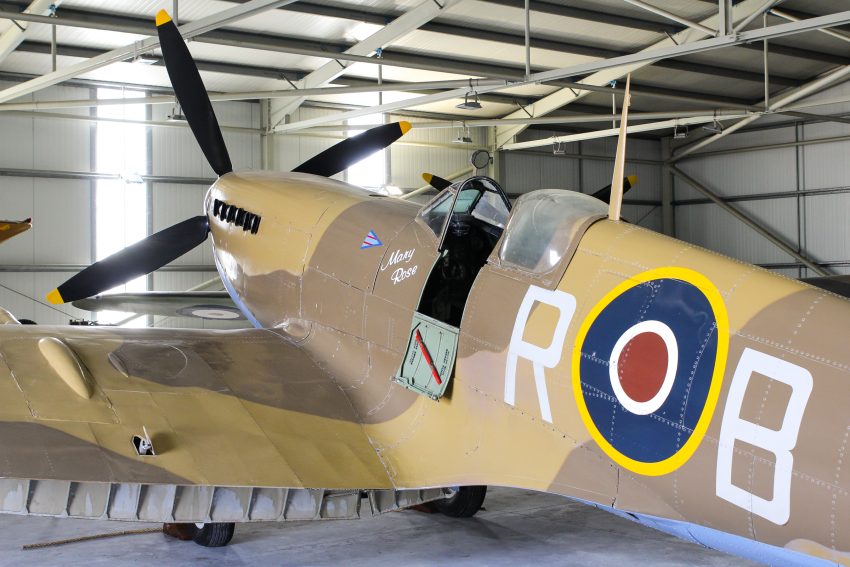
Malta Aviation Museum Spitfire
CC BY-SA 4.0 / Oren Rozen

Located on the former RAF Ta’ Qali airfield, the Malta Aviation Museum offers an exhilarating glimpse into the island’s aviation heritage and its crucial role in the air battles of World War II. The airfield was one of Malta’s most strategic defense points, frequently bombed by the Luftwaffe and Regia Aeronautica during the Siege of 1940–1942. Despite the devastation, it served as home to Allied fighter squadrons that defended Malta and disrupted Axis supply lines to North Africa.

The museum’s exhibits include beautifully restored aircraft such as a Supermarine Spitfire Mk IX, Hawker Hurricane, and de Havilland Tiger Moth, alongside engines, uniforms, and weapons used during the war. Visitors can also explore a recreated RAF operations room and a collection of personal memorabilia donated by veterans and their families. The museum’s workshops are still active, where enthusiasts continue to restore historic aircraft to full working condition — a living tribute to Malta’s wartime airmen.

Beyond its technical displays, the Aviation Museum captures the human stories behind the machines — tales of courage, loss, and triumph. Standing beside the gleaming aircraft that once patrolled Malta’s skies, it’s impossible not to feel a sense of awe for the pilots who risked everything to keep the island free. With its combination of historical depth and aviation nostalgia, this museum is a must-visit for anyone fascinated by WWII or flight history.


Location: Malta Aviation Museum, Attard, Malta | Hours: Monday–Saturday 9:00 a.m.–5:00 p.m., Sunday 9:00 a.m.–1:00 p.m. | Price: Adults €10 | Website
Powered by GetYourGuide
Moira & Andy
Moira & Andy

Hey! We're Moira & Andy. From hiking the Camino to trips around Europe in Bert our campervan — we've been traveling together since retirement in 2020!

Read our full story here

This website uses affiliate links which earn a small commission at no additional cost to you.

Walking Tour Map
Map of the Best 9 World War II attractions in Malta walking route with 9 stops in Valletta.
Preview map of the Best 9 World War II attractions in Malta route in Valletta, showing 9 stops. Use the interactive map to zoom and tap markers.

The Ultimate Guide to Renting a Car in Turkey (2026)

Renting a Car in Turkey

This website uses affiliate links which earn a small commission at no additional cost to you.

Turkey is a land of contrasts-ancient ruins, coastal highways, mountain villages, and modern cities. Renting a car remains one of the best ways to experience its vast beauty. This comprehensive 2026 guide covers every aspect of renting and driving in Turkey, from legal requirements to insurance, pricing, and route planning, with practical examples and essential driving tips. Whether you're traveling for history, adventure, or leisure, this guide provides all the information you need to rent a car confidently and explore Turkey at your own pace.

To Rent or Not to Rent?

Renting a car in Turkey offers flexibility that public transport cannot match. While buses and domestic flights connect major cities efficiently, many of the country's most scenic routes and historical treasures lie between destinations. Having your own vehicle gives you the freedom to stop at viewpoints, visit small villages, or explore hidden beaches.

When You Should Rent a Car

  • Exploring multiple regions: A rental is ideal for travelers covering large areas such as Istanbul to Cappadocia or the Turkish Riviera. It enables visits to ancient sites like Ephesus, natural wonders like Pamukkale, and mountain roads in the Taurus range.
  • Flexible travel: You can adapt your itinerary to weather conditions or local recommendations. Spontaneous stops for tea gardens, village markets, or coastal viewpoints become part of the journey.
  • Cost efficiency for groups: For couples or families, car rentals often work out cheaper than booking multiple tour tickets or long-distance transfers.

When You Shouldn’t Rent a Car

  • City-only stays: If your trip focuses on Istanbul, Izmir, or Ankara, skip the rental. Urban parking is costly, and public transport is efficient.
  • Unfamiliarity with driving abroad: Turkey’s drivers are confident and fast. If that feels daunting, organized transfers or tours are preferable.
  • Short trips: For one- or two-day stays in a single resort, taxis and local minibuses (dolmuş) provide sufficient mobility.

How to Rent a Car in Turkey

The easiest way to rent is online through Discover Cars, which aggregates prices from local and international agencies across Turkey. It allows comparisons of insurance options, customer reviews, and one-way rental policies in one place.

Required Documents

To rent a car in Turkey in 2026, you will typically need

  • A driver’s license valid for at least 2 years (an International Driving Permit is recommended if your license isn’t in Roman characters)
  • A passport for identification
  • A credit card in the renter’s name for the deposit hold
  • Minimum age: 21-25 years, depending on the company

Drivers under 25 may incur a young driver surcharge. Check Discover Cars’ rental conditions before booking.

Booking and Pickup Locations

Major rental offices are located in airports and city centers-especially Istanbul, Antalya, Izmir, and Cappadocia (Nevşehir or Kayseri). Booking ahead ensures lower prices, especially in peak season. With Discover Cars, you can filter by pickup point, fuel policy, and deposit level.

Choosing the Right Car

Turkey’s geography is diverse: coastal highways, high plateaus, and mountain passes. Selecting the right vehicle depends on your route and comfort preferences.

  • Compact cars (Fiat Egea, Renault Clio, Hyundai i20): Ideal for city drives and short regional trips; easy to park and fuel-efficient.
  • SUVs (Dacia Duster, Nissan Qashqai): Recommended for mountain routes or off-the-beaten-path destinations.
  • Automatic transmission: Available but limited; book early if required.
  • Fuel choice: Diesel engines offer greater mileage economy, while petrol cars are quieter and more common.

Most rentals include air conditioning and USB connectivity. For long-distance drives in summer, prioritize vehicles with cruise control and sunshades.

Tip: White vehicles dominate Turkish roads-they reflect heat better and are often cheaper to rent.

Insurance and Deposits

By law, all rental companies in Turkey must provide Third-Party Liability Insurance, covering damage to other vehicles and property. However, additional coverage options are strongly advised.

Types of Coverage

  • Collision Damage Waiver (CDW): Protects against accident-related damage but usually excludes tyres, glass, or undercarriage.
  • Full Coverage: Offered by Discover Cars as an optional add-on, this reimburses you for repair costs, towing, lost keys, or even administrative fees charged by the rental company.
  • Theft Protection (TP): Covers theft or attempted theft of the rental vehicle.

Deposit Policies

Deposits vary by provider and vehicle category, typically €100-€1000. Discover Cars clearly displays this before booking. Deposits are held on your credit card and automatically released after vehicle inspection upon return.

Always inspect the car before leaving the lot and document every scratch or dent with timestamped photos.

Driving in Turkey: Rules & Tips

Driving in Turkey is generally smooth and safe. Highways and intercity roads are well maintained, and GPS navigation works reliably. Road signage is in Turkish with English equivalents on major routes.

Key Regulations

  • Drive on the right-hand side; overtaking occurs on the left.
  • Seatbelts are mandatory for all passengers.
  • Speed limits: 50 km/h (urban), 90 km/h (rural), 120 km/h (motorways).
  • Alcohol limit: 0.05%; zero tolerance for commercial drivers.
  • Headlights: Use low beams in tunnels and after dark.

Speed cameras are frequent. Penalties range from €50-€200 depending on excess. Police may issue on-the-spot fines, payable via card.

Road Conditions

  • Highways: Excellent quality, with service areas every 30-40 km.
  • Rural roads: Narrower but scenic; watch for tractors and livestock.
  • Mountain routes: Expect hairpin turns; keep headlights on even during daylight.

Tolls

Turkey’s major highways and bridges use the HGS electronic system. Most rental cars come with an HGS tag pre-installed. The toll fees will be automatically billed after return. Always confirm with your provider.

Parking

Paid parking is common in larger cities, typically costing €1.50-€3 per hour depending on location and time of day. Street parking is often free in smaller towns or rural areas. Most car parks are monitored, well-lit, and accept both cash and major credit cards, including contactless payments.

Gas Stations and Fuel

Fuel stations are widespread in urban areas but can be fewer and farther between in rural regions. Most operate from 6:00 a.m. to 10:00 p.m., though many on expressways remain open 24 hours. Always fill up before long drives, especially when heading into mountain or desert regions where stations may be limited.

Most fuel stations in Turkey are full-service - attendants will fill the tank for you, and you can pay by card or cash. Popular brands include Shell, Petrol Ofisi, BP, and Opet. Diesel (Dizel) and unleaded petrol (Benzin) are the two main fuel types, with diesel averaging around €1.10 per liter. Prices can vary slightly between cities and remote areas.

Understanding Traffic Fines in Turkey

Traffic enforcement in Turkey is strict, with police patrols and automated cameras monitoring compliance. Fines can be issued directly by officers or automatically linked to your car's license plate. If your rental vehicle receives a fine, the car rental company will notify you and usually handle payment through your deposit or by forwarding an online payment link.

Below are some common violations and their penalties:

  • Not wearing a seat belt: Fine of ₺196 (€6). Simple but often overlooked.
  • Running a red light: Fine of ₺427 (€13). Always stop on red.
  • Using a mobile phone while driving: Fine of ₺427 (€13). Use hands-free devices.
  • Speeding:
    • 10-30% over the limit → ₺427 (€13) fine
    • 30-50% over the limit → ₺888 (€27) fine
    • 50%+ over the limit → ₺1,823 (€55) fine
  • Parking in a disabled zone without a permit: ₺392 (€12) fine.

Fines can be paid online via the Turkish government’s e-payment portal or directly to the rental company. Early payment often receives a 25% discount. Staying alert and observing traffic rules not only helps avoid penalties but ensures a safer driving experience overall.

The Rental Process

  1. Booking: Reserve online through Discover Cars to compare suppliers and coverage.
  2. Pickup: Present your documents, sign the rental agreement, and confirm the car’s condition.
  3. Inspection: Photograph all sides, wheels, and interior before driving off.
  4. Fuel policy: Most rentals use a “Full-to-Full” policy-return the car with a full tank.
  5. Return: Allow 30 minutes for inspection. Keep the signed return report and receipt.

If possible, choose airport pickup and drop-off for convenience and longer operating hours.

Suggested 10-Day Turkey Road Trips

Turkey offers endless opportunities for exploration. Below are two detailed itineraries designed to showcase the country's best cultural and natural attractions.

Historic Turkey Road Trip - Empires, Ruins & Culture

Start: IstanbulFinish: Antalya
Total Distance: ~1,700 km
Best Time: March-June or September-November

Day 1-2: Istanbul
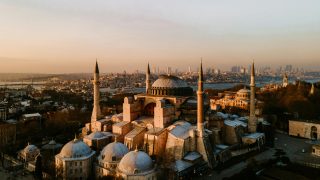
Visit Hagia Sophia, the Blue Mosque, and Topkapı Palace. Stroll through the Grand Bazaar and enjoy a Bosphorus sunset cruise. Overnight near Sultanahmet.

Day 3: Bursa
Drive 2.5 hrs to the first Ottoman capital. Explore the Grand Mosque and Koza Han Silk Market. Taste İskender kebab, a local specialty.

Day 4: Pergamon
Travel 4 hrs to Bergama to tour the Acropolis and ancient medical center Asclepion.

Day 5-6: Ephesus & Selçuk
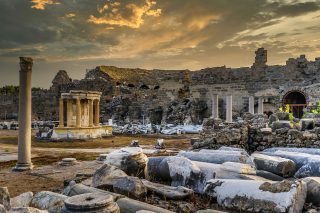
Continue south to Ephesus, one of the most preserved Roman cities. Visit the Library of Celsus and Great Theatre. Stay in Şirince, known for wine production.

Day 7: Pamukkale & Hierapolis
Drive 3 hrs to Pamukkale to walk the white travertines and visit the ancient spa city of Hierapolis.

Day 8: Aphrodisias
An hour away lies Aphrodisias, home to one of the best-preserved stadiums in the ancient world.

Day 9-10: Antalya
End in Antalya, exploring Aspendos Theatre, Perge ruins, and Kaleiçi Old Town. Enjoy seaside dining and prepare for departure.

One-way rentals via Discover Cars make this itinerary seamless.

Outdoor & Scenic Turkey Road Trip - Lakes, Canyons & Caves

Start: AntalyaFinish: Cappadocia
Total Distance: ~2,000 km
Best Time: April-October

Day 1-2: Antalya
Pick up your Discover Cars rental at the airport. Visit Duden and Kursunlu waterfalls. Drive to Köprülü Canyon for rafting or hiking.

Day 3-4: Fethiye & Ölüdeniz
Drive the coastal D400 highway to Fethiye. Swim at Ölüdeniz Lagoon and hike a segment of the Lycian Way. Optional paragliding over the beach.

Day 5: Saklıkent Gorge & Kaş
Walk through Saklıkent Gorge and continue to Kaş for kayaking above the sunken city of Kekova.

Day 6: Lake Salda & Pamukkale
Drive inland to Lake Salda, Turkey’s clearest lake, then to Pamukkale for sunset.

Day 7: Eğirdir Lake
Head north to Eğirdir. Visit Mount Davraz National Park or cycle along the lakeshore.

Day 8: Konya
Cross Anatolia’s plains to Konya. Visit the Mevlana Museum, dedicated to Rumi. Sample etli ekmek, a local flatbread.

Day 9-10: Cappadocia
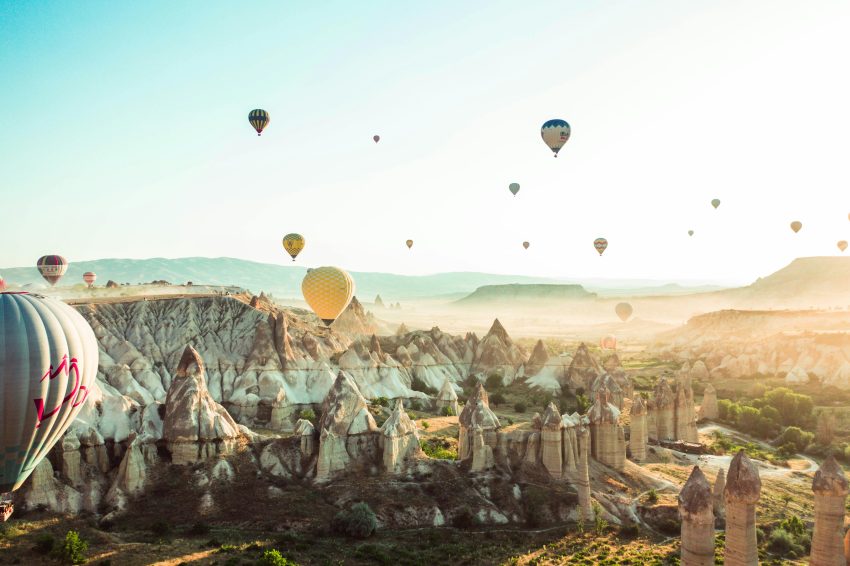
Arrive in Göreme. Take a sunrise balloon ride, explore Love Valley, and visit Derinkuyu underground city. Return your car at Kayseri Airport.

One-Way Turkey Car Rentals and Cross-Border Travel

For travelers wishing to explore different parts of Turkey without retracing their route, one-way car rentals offer convenience and flexibility. With Discover Cars, you can easily rent a vehicle in one city-such as Istanbul, Izmir, or Ankara-and return it in another, like Antalya or Cappadocia. This is ideal for long journeys that span the Aegean or Mediterranean coasts.

However, note that one-way rentals typically involve a small drop-off fee that varies depending on distance between cities and the supplier. The exact amount is shown during booking, so there are no surprises at checkout. Always confirm your pickup and return locations clearly in your reservation.

Cross-Border Travel Restrictions

Turkish car rental companies generally prohibit cross-border travel due to insurance and customs regulations. This means rental cars cannot be taken into neighboring countries such as Greece, Bulgaria, Georgia, or Cyprus. Attempting to cross borders without written authorization from the provider can invalidate your insurance and incur heavy penalties.

If you plan to travel beyond Turkey, the best approach is to return your vehicle before crossing the border and switch to regional transportation such as buses, trains, or flights. For example, travelers wishing to visit Greece can drive to the coastal city of Izmir or Canakkale, return the car, and then continue onward via ferry or domestic flight. Discover Cars provides multiple drop-off locations near border cities to make these transitions smooth and efficient.

When using the Discover Cars platform, after selecting a rental offer, look under “Rental Conditions” or “Additional Conditions” to find details about “Geographical Restrictions.” If this information isn’t clearly provided, don’t hesitate to contact customer support to get clarification before you travel.

Costs at a Glance

Car TypeOff-SeasonHigh Season
Economy Manual€17-€20/day€22+/day
Automatic€20-€25/day€27+/day
SUV€25-€35/day€35-€50/day
Luxury€65-€100/day€100-€150/day

Fuel costs average around €1.10 per liter. One-way rental fees and additional driver costs vary by supplier. Discover Cars displays all fees transparently before checkout.

Additional Tips for a Smooth Trip

  • Book Early: Peak summer prices rise quickly. Booking in advance via Discover Cars secures lower rates.
  • Download offline maps: Useful in rural Cappadocia or along mountain roads.
  • Avoid rush hour: Especially in Istanbul and Izmir.
  • Check tire condition: For safety on long drives.
  • Carry cash: Small parking lots or rural gas stations may not accept cards.
  • Follow signage: Speed cameras and roundabouts are frequent.
  • Return on time: Late returns can incur extra-day fees.

Frequently Asked Questions About Renting a Car in Turkey

Is it safe to drive in Turkey?
Yes. Roads are modern and well-signed. Drivers can be assertive, but following rules and staying alert makes driving straightforward.

Can foreigners rent a car in Turkey?
Yes. All you need is a home-country driver’s license, passport, and credit card. IDP is optional unless your license is non-Latin.

What is the minimum age to rent a car?
Usually 21-25 years with 2 years’ driving experience. Some high-end cars require older drivers.

Do I need insurance?
Third-party insurance is mandatory. Most renters upgrade to full coverage via Discover Cars for complete protection.

What side of the road do they drive on?
Turkey drives on the right-hand side.

Are there toll roads in Turkey?
Yes. The HGS system automatically deducts fees through an electronic tag.

Final Thoughts

Renting a car in Turkey provides independence and comfort unmatched by tours or transfers. With well-developed highways, scenic drives, and affordable rental rates, it's a practical and enriching way to experience the country. Whether you follow the ancient routes of empires or chase nature through canyons and coasts, a rental car unlocks your perfect journey.

Book with Discover Cars for transparent pricing, full insurance options, and reliable customer support.

Moira & Andy
Moira & Andy

Hey! We're Moira & Andy. From hiking the Camino to trips around Europe in Bert our campervan — we've been traveling together since retirement in 2020!

Read our full story here

This website uses affiliate links which earn a small commission at no additional cost to you.

Malta: Tracing the Legacy of the Knights of St. John

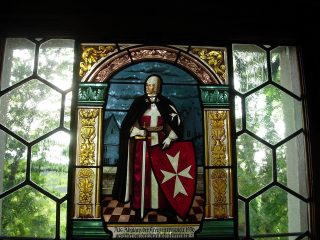
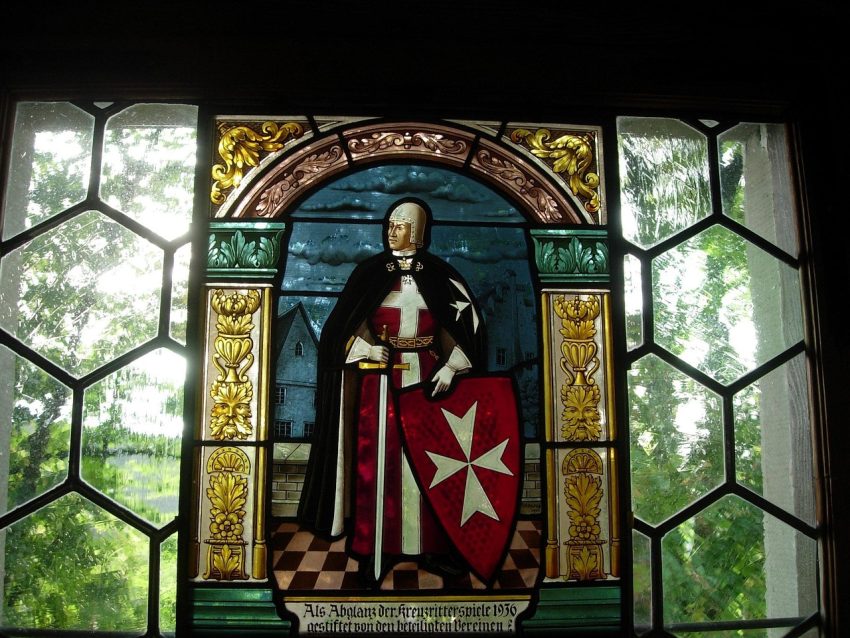
Stained Glass Window Knight of Malta

This website uses affiliate links which earn a small commission at no additional cost to you.

When you wander the sunlit streets of Valletta, surrounded by grand limestone façades and echoes of church bells, you're walking in the footsteps of Europe's most storied order of warrior-monks - the Knights of St. John. Their vision shaped Malta's capital into a masterpiece of architecture, discipline, and faith. Among the most enduring symbols of that legacy are the auberges - stately residences that once housed knights from across Europe. These were not simple lodgings but centers of administration, fellowship, and power, forming the backbone of the Order's social and political structure.

A City of Langues: The Knights’ European Network

By the 16th century, the Order of St. John had become a cosmopolitan institution, attracting nobles from across the continent. To manage this diversity, the Knights were organized into eight “Langues”, or regional divisions - Aragon, Auvergne, Castille, England, France, Germany, Italy, and Provence. Each Langue built its own auberge in Valletta, creating a city that was both unified and multinational.

These auberges served as residences, administrative offices, and social hubs for knights of each nationality. Designed primarily by Girolamo Cassar, the Order’s chief architect, the buildings reflected the Knights’ values of strength and simplicity. Over time, later Grand Masters commissioned updates in the Baroque style, transforming them into architectural gems that mirrored the grandeur of the Order itself.

The Grand Master and His Knights

Though the Knights hailed from across Europe, all pledged allegiance to their Grand Master, the supreme leader of the Order. He was both a spiritual head and a temporal ruler, combining the authority of a prince with the responsibility of a religious superior. The Grand Master lived and ruled from the magnificent Grand Master's Palace, designed by Cassar in 1571, located in Palace Square (St. George's Square). It was here that he presided over councils, met diplomats, and governed Malta - the fortress-island gifted to the Order by Emperor Charles V in 1530.

The Grand Master was not appointed by birthright but elected for life by the Order’s elite. When a Grand Master died, a Conclave of 16 senior knights, representing all eight Langues, convened in secrecy to elect a successor. After prayer, deliberation, and a two-thirds majority vote, the chosen knight would be proclaimed Grand Master - a decision that required papal approval. Once confirmed, he was installed with great ceremony at St. John’s Co-Cathedral, symbolizing both divine blessing and the unity of the multinational brotherhood he led.

The relationship between the Grand Master and the Langues was one of mutual dependence. Each Langue had autonomy in managing its affairs, yet all answered to the Grand Master, ensuring a delicate balance between national identity and collective loyalty. Valletta’s city layout reflected this hierarchy: the auberges of the Langues spread across the city grid, all converging toward the Grand Master’s Palace, the administrative heart of the Order.

Why Were the Auberges Built in Both Birgu and Valletta

When the Knights of St. John arrived in Malta in 1530, their first stronghold was not Valletta but Birgu (Vittoriosa). This fortified harbour city became the Order's capital and home to its first auberges - residences for the Knights of each Langue (national division). Each auberge served as a living quarter, administrative base, and social center for knights from different parts of Europe.

Following the Great Siege of 1565, the Knights founded a new city - Valletta - envisioned as a powerful symbol of survival and strength. Under Grand Master Jean Parisot de Valette, architect Girolamo Cassar was tasked with designing the new capital and its grand auberges, which replaced the simpler residences in Birgu. These new buildings reflected the Order's growing prestige, featuring classical façades, grand courtyards, and richly decorated interiors.

Below is a breakdown of where each auberge was located - and in some cases, rebuilt - showing how the Knights' architectural legacy evolved between Birgu and Valletta:

Auberges in Birgu (Vittoriosa) - The First Residences (1530s-1560s)

The first auberges were built here, modest in design but rich in history. A few still stand today:

  • Auberge d’Angleterre (c. 1534-1536) - One of the earliest auberges, designed in a simple Renaissance style. Still stands today and serves as the Birgu Health Centre.
  • Auberge de France (c. 1533-1535) - The residence for French knights; survives today as the Birgu Local Council.
  • Auberge de Provence (c. 1535) - Initially built in Birgu, later relocated to Valletta. One of the first Langues to commission a second auberge.
  • Auberge d’Italie (c. 1536-1537) - Originally housed the Italian Langue in Birgu; later rebuilt in Valletta.
  • Auberge d’Auvergne (c. 1534-1536) - Part of Birgu’s knightly quarter; no longer standing.
  • Auberge d’Allemagne (c. 1530s) - Once located beside the Auberge d’Angleterre; later destroyed.

Birgu’s auberges were smaller, more fortress-like, and built in close proximity to Fort St. Angelo, the Order’s original stronghold. Today, these streets still retain the character of Malta’s first knightly community.

Auberges in Valletta

After 1566, new auberges rose across Valletta’s gridded streets - more imposing and refined, marking the Order’s transition from defense to grandeur:

  • Auberge de Castille (1574-1578) - Built for the Langue of Castille, León, and Portugal; redesigned in the 1740s by Grand Master Pinto in Baroque style. Now the Office of the Prime Minister.
  • Auberge d’Aragon (c. 1571) - Among the first completed auberges in Valletta, also by Cassar; now the Office of the Deputy Prime Minister and Minister for Health.
  • Auberge d’Italie (1571-1574) - Built by Cassar; now houses MUŻA - The National Community Art Museum.
  • Auberge de Provence (1571) - Another of Cassar’s works; now the National Museum of Archaeology.
  • Auberge d’Auvergne (1574) - Originally in Birgu; its Valletta replacement later became the Law Courts of Valletta (destroyed in WWII and rebuilt).
  • Auberge de France (1570s) - Constructed along Merchant Street; later demolished in the 19th century.
  • Auberge d’Allemagne (1570s) - Built near the city walls; destroyed during WWII.
  • (Note: The Auberge d'Angleterre was never rebuilt in Valletta and remains in Birgu.)

Cassar’s auberges were designed to blend harmony and strength - a reflection of the Order’s motto, “Pro Fide, Pro Utilitate Hominum” (For Faith, For the Service of Mankind).

From Fortress to Capital: The Knights’ Legacy

The transition from Birgu to Valletta marks one of the most important chapters in Malta's story. In Birgu, the Knights found refuge; in Valletta, they built a monument to victory. Together, these auberges form an architectural timeline - from the humble beginnings of the Order in the 1530s to the golden age of chivalric power in the late 16th century.

Today, visitors can explore this evolution firsthand: stroll through Birgu’s quiet medieval streets where the Order’s story began, then cross the Grand Harbour to Valletta, where the same Langues built their magnificent successors. It’s a journey through Malta’s transformation from a defensive outpost into one of the most splendid fortified cities in Europe.

1. Fort St. Angelo, Birgu

Fort St Angelo in Birgu
CC BY-SA 4.0 / FritzPhotography

When the Knights of St. John arrived in Malta in 1530, they chose Fort St. Angelo—then a medieval stronghold known as Castrum Maris—as their primary seat of power. The fort’s commanding position at the tip of Birgu’s peninsula, overlooking both the Grand Harbour and Marsamxett Harbour, made it the island’s most defensible site. Grand Master Philippe Villiers de L’Isle-Adam converted it into the Order’s headquarters, strengthening the existing walls and constructing living quarters, storerooms, and a chapel dedicated to St. Anne. The fort became both the military heart and administrative center of the early Hospitaller rule in Malta.

Over the following decades, the Knights expanded and reinforced Fort St. Angelo, transforming it into a formidable bastioned fortress. These improvements culminated under the direction of Grand Master Juan de Homedes, who fortified the structure to prepare for the looming Ottoman threat. By the time of the Great Siege of 1565, Fort St. Angelo stood as the Order’s last bastion of defense—its artillery controlling the approaches to the Grand Harbour. It endured intense bombardment yet never fell, serving as the symbol of Malta’s resilience and the Knights’ determination to resist Ottoman domination.


Location: Fort St Angelo, Waterfront, Birgu, Malta | Hours: Daily 9:00 a.m. – 5:00 p.m. (last admission 4:30 p.m.) | Price: Adults €10 | Website

Here is a complete selection of hotel options in Valletta. Feel free to review each one and choose the stay that best suits your needs.

Powered by GetYourGuide

2. Armoury of the Knights of Malta

Valletta grandmasters palace armoury
CC BY-SA 3.0 / Mboesch

The Armoury of the Knights of Malta is one of the oldest and most historically significant buildings in Birgu, dating back to the early years of the Order’s settlement on the island. Constructed between 1533 and 1537 under the magistracy of Grand Master Fra Claude de La Sengle, it originally served as a central storehouse for weapons, armor, and munitions—crucial to the Knights’ military order and their defense of the island. Its design was both practical and strategic: the ground floor featured entrances on all four sides, allowing for swift access and movement of arms during times of siege or emergency.

During the Great Siege of 1565, the Armoury took on a very different yet equally vital role—it was converted into a makeshift hospital for wounded soldiers. This adaptability reflected the Order’s dual nature as both warriors and healers. The building’s robust limestone walls and accessible layout made it an ideal location for treating the injured while under constant threat from Ottoman bombardment. Its continued use and resilience through this defining event cemented its place in Malta’s heroic history.

In 1636, the structure underwent a significant renovation and expansion, adding a second floor to accommodate the growing needs of the Order. The building continued to evolve with Malta’s history: during the British colonial period (1800–1964), it was repurposed as a military hospital and barracks, serving the garrison stationed in Birgu and the surrounding Cottonera area.


Location: Armoury of the Knights of Malta, Birgu, Malta

Traveling to a country with a different currency? Avoid ATM transaction fees and pay in local currency with a Wise Card. Having used it for over 5 years, we've saved loads on fees!

3. Auberge d’Angleterre, Birgu

Auberge d Angleterre
CC BY-SA 4.0 / Continentaleurope

The Auberge d’Angleterre is one of the most historically significant and best-preserved buildings in Birgu, Malta, dating back to around 1534–1536 — making it one of the earliest auberges constructed by the Knights of St. John. Before Valletta was built, Birgu served as the Knights’ first capital, and this auberge was home to the Knights of the Langue of England. Designed in the early Renaissance-Mannerist style, the building reflects the simple elegance and fortified practicality typical of the period. Its golden limestone façade is modest yet balanced, with well-proportioned windows and traditional Maltese stonework that showcase the disciplined aesthetic of the Order. Though smaller than the grander auberges that would later rise in Valletta, it carried great symbolic value, representing the English knights’ enduring presence within the Order — even after Henry VIII’s split from Rome left their ranks diminished.

The Auberge d’Angleterre has deep connections to Birgu’s early knightly community. The rear of the building was once linked to the now-destroyed Auberge d’Allemagne, home to the German knights, reflecting how the Langues coexisted closely within the fortified city. Next to the auberge stands the house of Sir Oliver Starkey, secretary to Grand Master Jean de Valette and one of the last English knights to serve in Malta. Starkey was a key figure during the Great Siege of 1565 and is also credited with composing the Latin inscription on Grand Master de Valette’s tomb in St. John’s Co-Cathedral. This proximity gives the Auberge d’Angleterre immense historical resonance, placing it at the heart of Birgu’s knightly quarter — a living relic of the city’s chivalric origins.


Location: Berġa tal-Ingilterra, Majjistral, Birgu, Malta

Click here to read our blog about Best 9 World War II attractions in Malta (2026)

4. Auberge de Castille et Portugal, Birgu

Auberge de Castille et Portugal
CC BY-SA 4.0 / Continentaleurope

The Auberge de Castille et Portugal in Birgu, Malta, was one of the earliest residences built by the Knights of St. John to house members from the Langue of Castille, León, and Portugal. The first auberge was constructed in the 1530s, though no remains survive today. A second structure, designed by Niccolò Bellavante during the rule of Grand Master Claude de la Sengle, was completed on what is now Hilda Tabone Street. Built in the traditional Maltese style, it served the knights until they relocated to Valletta in 1574.

Though significantly altered over time, parts of the original design still exist — including a quoin and several windows featuring Melitan mouldings. The building remains privately owned but is officially protected as a Grade 1 national monument and listed on the National Inventory of the Cultural Property of the Maltese Islands. It stands today as a quiet yet powerful reminder of Birgu’s role as the first seat of the Order before Valletta became Malta’s capital.


Location: Auberge de Castille et Portugal, Triq Gilormu Cassar, Birgu, Malta

Explore Valletta at your own pace with our self-guided walking tour! Follow our curated route to discover must-see sights and local secrets that makes Valletta one of the best places to visit in Malta.

5. Auberge d'Auvergne et Provence, Birgu

Auberge d' Auvergne et Provence Birgu
Auberge d’ Auvergne et Provence Birgu
CC BY-SA 4.0 / ontinentaleurope

The Auberge d’Auvergne et Provence in Birgu was built in the 1530s to house knights of the Order of St. John from the Langues of Auvergne and Provence, incorporating parts of even older medieval and possibly Byzantine structures. Originally two separate auberges that were later joined into one, it showcased traditional Maltese architectural elements and stood alongside other knightly residences in the city’s historic core.

Though parts of the building were lost before and after World War II, significant sections—particularly those belonging to the Langue of Provence—still survive today. These remnants offer a glimpse into the early architecture of the Order in Malta and are recognized as a Grade 1 national monument on the National Inventory of the Cultural Property of the Maltese Islands.


Location: Auberge d’Auvergne and Provence, Birgu, Malta

6. Grand Master’s Palace, Valletta

Grandmasters Palace Valletta
CC BY-SA 2.5 / Marie-Lan Nguyen

While each auberge housed knights from a different European region, all roads — symbolically and literally — led to the Grand Master’s Palace, the beating heart of the Order’s power. Designed by Girolamo Cassar in 1571, the palace stood as the unifying center for the Knights’ network of auberges, where the Grand Master presided over councils and state ceremonies. Just as the palace embodied authority and leadership, the nearby Barrakka Gardens represented the Order’s contemplative side. The Upper Barrakka Gardens, originally reserved for the Italian knights of the Auberge d’Italie, offered a peaceful escape overlooking the Grand Harbour. Together, the auberges, palace, and gardens formed the spiritual and architectural triangle that defined Valletta — a city planned for faith, governance, and reflection in equal measure.


Location: Grandmasters Palace, Palace Square, Valletta VLT 1191 | Hours: Monday to Friday: 10.00 – 16.30hrs (last admission at 1600hrs) Saturday and Sunday: 09.00 – 16.30hrs | Price: Adults €10.00, Children €5.50 | Website

7. Auberge de Castille, Valletta

Auberge de Castille, Valletta
CC BY-SA 4.0 / Matthew Axiak

Perched on Valletta’s highest point, the Auberge de Castille is the grandest and most ornate of all the Knights’ residences. Originally designed by Girolamo Cassar in the 1570s for the knights from Castille, León, and Portugal, it was rebuilt in the 1740s under Grand Master Manuel Pinto da Fonseca, who commissioned Andrea Belli to give it its magnificent Baroque façade. The result is a masterpiece of Maltese architecture — a symmetrical, richly ornamented building that captures the confidence and prestige of the Order of St. John at its height.

Throughout the centuries, the auberge has remained a center of authority. Under British rule, it served as military headquarters, and today, it is the Office of the Prime Minister of Malta. The building dominates Castille Square, offering commanding views over the Grand Harbour and Floriana. Its limestone exterior glows golden at sunset, reminding visitors that Valletta was not just a fortress city, but a place of elegance and power.


Location: Auberge de Castille, Merchants Street, Valletta, Malta | Hours: Not open to the public

8. Auberge d’Italie, Valletta

Auberge d'Italie Valletta
Auberge d’Italie Valletta
CC BY-SA 4.0 / Matthew Axiak

Built in 1574 by Girolamo Cassar, the Auberge d’Italie was the residence of the Italian knights of the Order. Its Mannerist design reflects Cassar’s architectural restraint — symmetrical, harmonious, and solid — symbolizing the disciplined life of the Order. Over time, the building evolved with later Baroque additions, giving it a more ornate appearance. In the 17th century, its gardens were transformed into what we now know as the Upper Barrakka Gardens, once a private refuge for the Italian knights and now one of Valletta’s most beloved public spaces.

In modern times, the building has been beautifully repurposed as MUŻA – The National Community Art Museum, a fitting continuation of the Italian langue’s artistic sensibilities. Inside, visitors can admire an impressive collection of Maltese and European art, housed within the same limestone walls that once echoed with the voices of the Order’s Italian brethren. Its transformation from a knightly auberge to a vibrant museum perfectly captures Valletta’s ability to balance heritage and modernity.


Location: Auberge d'Italie, Birgu, Malta | Hours: 10:00 AM – 6:00 PM (closed Mondays) | Price: Adults: €10.00 | Website

9. Gardens of the Auberge d’Italie, Valletta

Malta Upper Barrakka Garden

Among Valletta’s most enchanting landmarks, the Upper Barrakka Gardens have their roots in the Auberge d’Italie. Built in 1661, these gardens were originally created as a private sanctuary for the Italian knights — a space to rest, meditate, and socialize away from the demands of their military and administrative duties. Perched atop the St. Peter and Paul Bastion, the gardens offered commanding views over the Grand Harbour, allowing the knights to admire the very waters they were sworn to defend.

The Italian langue was known for its cultural refinement, and the gardens reflected that sensibility. Walkways lined with arches and fountains, citrus trees, and shaded terraces made it one of the most elegant corners of the fortified city. Over time, the gardens became a social center for Valletta’s elite and later, during British rule, were opened to the public.

Today, the Upper Barrakka Gardens remain one of the city’s highlights — a living link to the Knights’ world. The daily Saluting Battery below continues a centuries-old naval tradition, while the panoramic views across to the Three Cities evoke the grandeur of Malta’s maritime history. Standing there, it’s easy to imagine Italian knights strolling under the arcades, watching over the island they helped shape.


Location: Upper Barrakka Gardens, Triq Sant' Orsla, Valletta, Malta | Hours: Open Monday to Saturday from 10:00 to 17:00. Closed on: Good Friday, Easter Sunday, Santa Marija (15 August), Christmas Eve and Christmas Day, New Year's Eve and New Year's Day.

10. Auberge de Provence, Valletta

Architecture of Auberge de Provence
CC BY-SA 2.0 / Continentaleurope

The Auberge de Provence was completed in 1574 and served as the headquarters for the Provençal knights. Designed by Cassar, its simple but imposing façade reflects the Order’s early architectural style — strong, unadorned, and symmetrical. The interior, however, holds a surprising richness, with vaulted halls and elegant limestone staircases that hint at the status of its noble residents.

Today, the auberge houses the National Museum of Archaeology, where visitors can explore Malta’s ancient past through prehistoric artifacts and temple treasures, including the famed Sleeping Lady. The transformation from knightly residence to museum gives the building a dual legacy — it represents both Malta’s medieval glory and its far older roots, making it one of the city’s most fascinating stops.


Location: National Museum of Archaeology, Republic Street, Valletta, Malta | Hours: Monday to Sunday: 09:00 – 17:00, last admission at 16:30 | Price: Adults: €5.00 | Website
Powered by GetYourGuide

11. Auberge d’Aragon, Valletta

Auberge d'Aragon
Auberge d’Aragon
CC BY-SA 4.0 / Pi3.124

The Auberge d’Aragon is the oldest surviving auberge in Valletta and one of the few that retains much of its original 16th-century design. Completed around 1571, it housed the knights from the Langue of Aragon, Catalonia, and Navarre. Cassar’s architectural style here is restrained and functional, emphasizing proportion over ornamentation. Despite later alterations, its Renaissance character still shines through.

Over time, the building served several governmental purposes, and today it houses the Office of the Deputy Prime Minister and Minister for Health. Its longevity and preserved features make it an excellent example of Cassar’s early work and of Valletta’s enduring architectural resilience. Though modest compared to the grander Baroque auberges, the Auberge d’Aragon remains deeply symbolic of Valletta’s beginnings.


Location: Auberge d'Aragon, Valletta, Malta | Hours: 24 Hours | Price: Free (exterior viewing only)

12. Auberge d’Auvergne, Valletta

Facade of Auberge d'Auvergne in Valletta
Facade of Auberge d’Auvergne in Valletta
CC BY-SA 4.0 / Narciso1224

The Auberge d’Auvergne was one of the earliest residences built for the Knights of St. John in Valletta, constructed between 1571 and 1574 under the direction of Girolamo Cassar, the Order’s chief architect. It served as the home and administrative headquarters for the knights of the Langue of Auvergne, one of the Order’s eight national divisions. Like Cassar’s other early designs, the auberge followed a Mannerist style — symmetrical, solid, and restrained, emphasizing strength and order over ornamentation. Situated near what is now Great Siege Square, the Auberge d’Auvergne occupied a prominent position within the city’s grid plan, reflecting the importance of its residents within the Order.

Unfortunately, the building was destroyed during World War II, and the site now houses the Law Courts of Valletta in Great Siege Square. Although the original structure no longer survives, its legacy lives on through historical records and architectural sketches, which continue to inspire Malta’s preservation of its knightly heritage.

13. Mdina

The Knights of Malta Museum
© Andrew Ashton

The Knights of St. John left a lasting mark on Mdina, even though the city was no longer Malta’s capital during their rule. When the Knights arrived in 1530, they established their main base in Birgu, but Mdina remained a center of noble life and religious authority. Following the 1693 Sicily earthquake, Grand Master António Manoel de Vilhena commissioned major reconstruction works that reshaped Mdina’s skyline. Under the direction of architect Charles François de Mondion, landmarks such as the Mdina Gate, Torre dello Standardo, and Palazzo Vilhena were built in the Baroque style, transforming the medieval stronghold into an elegant city of faith and grandeur.

Today, the Knights’ legacy is vividly brought to life through the Knights of Malta Experience, an immersive exhibition set in the historic vaults beneath Mdina’s bastions. Using lifelike figures, sound effects, and dramatic storytelling, the attraction recreates the world of the Knights — from their arrival in Malta to their defense of the island during the Great Siege. It offers visitors a fascinating journey into the courage, devotion, and artistry that defined this chivalric order, allowing them to experience firsthand how the Knights helped shape Mdina’s enduring identity.


Location: The Knights Of Malta, Triq L Imhazen, L-I mdina, Malta | Hours: Daily from 10:00 AM – 5:00 PM (last admission at 4:30 PM). | Price: Adults: €6.50 | Website
Powered by GetYourGuide
Moira & Andy
Moira & Andy

Hey! We're Moira & Andy. From hiking the Camino to trips around Europe in Bert our campervan — we've been traveling together since retirement in 2020!

Read our full story here

This website uses affiliate links which earn a small commission at no additional cost to you.

Walking Tour Map
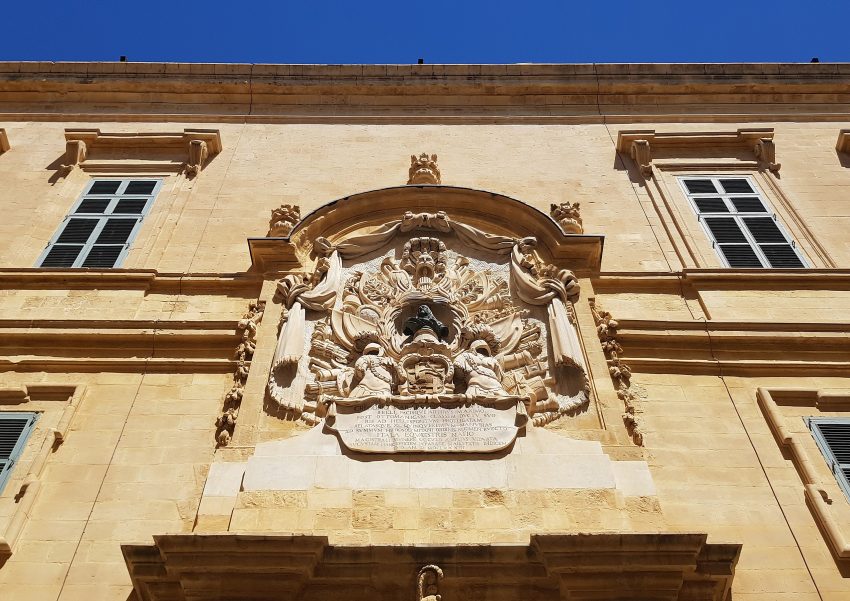
Map of the Malta: Tracing the Legacy of the Knights of St. John walking route with 13 stops in Valletta.
Preview map of the Malta: Tracing the Legacy of the Knights of St. John route in Valletta, showing 13 stops. Use the interactive map to zoom and tap markers.

Self-Guided Walking Tour of Valletta, Malta (2026)

View of Valletta Defenses

This website uses affiliate links which earn a small commission at no additional cost to you.

A walking tour of Valletta is the perfect way to experience Malta's captivating capital - a compact city bursting with history, architecture, and Mediterranean charm. Every corner of this UNESCO World Heritage Site tells a story, from the legacy of the Knights of St. John to its grand Baroque buildings and picturesque harbor views. Valletta is best explored on foot, with its grid of narrow streets leading to majestic squares, ornate churches, and stunning vantage points over the sea. Whether you're visiting for a few hours or a full day, walking allows you to truly appreciate the city's character, rhythm, and timeless beauty.

Along the way, you'll encounter many of the best things to see in Valletta - including St. John's Co-Cathedral with its dazzling interior, the peaceful Upper Barrakka Gardens overlooking the Grand Harbour, and the imposing Grand Master's Palace that once housed Malta's rulers. The city's stone façades glow gold under the sun, and each step reveals a new detail - a sculpted balcony, a hidden shrine, or a burst of color from a local café. Valletta's compact size means that all its major landmarks are within easy reach, making it ideal for a leisurely, self-guided exploration.

But a Valletta walking tour is more than just sightseeing - it's a journey through layers of culture and daily life. You'll pass bustling markets, hear the echo of church bells, and perhaps stop at a local café for a strong Maltese coffee or a traditional pastizz. From tranquil gardens to lively squares, Valletta's blend of history, art, and atmosphere makes every step memorable.

How to Get to Valletta

By Air: The easiest way to reach Valletta is by flying into Malta International Airport (MLA), located about 8 kilometers southwest of the capital. The airport is Malta's main international gateway, serving direct flights from most major European cities including London, Rome, Paris, and Frankfurt, as well as several Mediterranean and Middle Eastern destinations. From the airport, Valletta is just a 15-20 minute drive away. Travelers can reach the city via taxi, rideshare, or express bus services such as routes X4 and TD2, which connect directly to Valletta's central bus terminal just outside the City Gate. Car rentals are also available at the airport for those planning to explore the island independently. For the best deals and a seamless booking experience, check out these flights to Valletta on Booking.com.

By Car / Bus: Driving to Valletta is straightforward, but parking inside the city is limited due to its pedestrian-friendly layout and restricted vehicle zones. Visitors arriving by car are encouraged to park at the Floriana Park & Ride facility, just outside Valletta's walls, and take the frequent shuttle service into the city center. Alternatively, Malta's extensive bus network makes getting to Valletta convenient and affordable. Nearly all routes across the island converge at Valletta's main bus terminal, making it easy to reach the capital from anywhere on the island, including popular destinations like Sliema, St. Julian's, and Mdina.

Where to Stay in Valletta

To make the most of visiting Valletta and enjoy this walking tour at a relaxed pace, it's worth staying overnight in the city center. Valletta is compact and walkable, and being based within its historic streets means you can explore early in the morning before the crowds arrive, or wander the softly lit lanes after sunset. The city offers a great mix of boutique hotels, historic townhouses, and modern accommodations, all within easy reach of the main attractions, gardens, and waterfront promenades.

For those who want to be right in the heart of the city, close to Republic Street and St. John’s Co-Cathedral, The Cumberland Hotel offers a stylish stay in a restored townhouse blending Maltese charm with modern comfort. Nearby, Palais Le Brun provides elegant rooms, a rooftop pool, and panoramic views over the Grand Harbour - perfect for relaxing after a day of walking. Another excellent choice is The Saint John Boutique Hotel, a chic option housed in a 17th-century building that combines history with contemporary design.

If you prefer a stay near the Upper Barrakka Gardens and the City Gate - ideal for starting your walking tour - Hotel Phoenicia Malta is an iconic five-star property just outside Valletta’s main walls. Its grand setting, landscaped gardens, and views of the harbour make it one of the island’s most prestigious hotels. For a more intimate experience nearby, Domus Zamittello offers a beautifully preserved 17th-century palazzo with elegant interiors and a prime location for exploring on foot.

Those who prefer something quieter yet still central might consider staying near the Lower Barrakka Gardens area, close to the waterfront. SU29 Boutique Hotel provides refined, minimalist accommodation with easy access to both the gardens and Fort St. Elmo. Another standout option is La Falconeria Hotel, offering a combination of classic Maltese architecture and modern amenities, along with a welcoming atmosphere and excellent breakfast. Whether you choose a grand luxury hotel or a boutique hideaway, staying in Valletta allows you to fully immerse yourself in its culture, history, and the unforgettable charm of Malta's capital.

A Short History of Valletta

The story of Valletta begins in the aftermath of the Great Siege of 1565, when the Knights of St. John, having heroically defended Malta from Ottoman invasion, resolved to build a fortified city that would stand as both a bastion of strength and a symbol of faith. In 1566, the city's foundation stone was laid by Grand Master Jean Parisot de Valette, after whom the city was named. The Italian military architect Francesco Laparelli, sent by Pope Pius V, designed Valletta's grid plan and fortifications, while Maltese architect Girolamo Cassar oversaw the construction of many of its earliest and most iconic buildings. Within just a few decades, Valletta rose from the rocky peninsula between Marsamxett and the Grand Harbour to become one of Europe's most impressive Baroque capitals.

Cassar's vision shaped the city's architectural legacy. Among his first projects were the Grand Master's Palace, built in the 1570s as the residence of the rulers of the Order, and the Sacra Infermeria, a vast and advanced hospital for the sick and wounded Knights. Cassar also designed the Church of St. Paul's Shipwreck, dedicated to the apostle who brought Christianity to Malta, and the Auberge de Provence, which today houses the National Museum of Archaeology. In 1577, construction began on St. John's Co-Cathedral, one of the most magnificent churches in Europe. Its plain exterior conceals an ornate interior filled with marble tombs and masterpieces, including Caravaggio's The Beheading of St. John the Baptist, painted during the artist's brief stay in Malta.

Over the centuries, Valletta flourished as a cultural and political center. Republic Square (Piazza Regina), once home to the Knights' treasury, became a civic hub lined with cafés and the National Library of Malta, while Palace Square (St. George's Square) emerged as the stage for royal visits and national celebrations. Nearby, Casa Rocca Piccola, a 16th-century noble residence, continues to offer a glimpse into the lives of Malta's aristocracy. Along the city's bastions, the Upper and Lower Barrakka Gardens were created as peaceful retreats for the Knights, offering panoramic views of the Grand Harbour. Beneath these bastions lie the Lascaris War Rooms, the underground nerve center of Allied operations during World War II, and overlooking them, the Saluting Battery still fires daily ceremonial cannons in a centuries-old tradition.

Valletta’s more recent history has been shaped by both resilience and renewal. The Siege Bell War Memorial, inaugurated in 1992, commemorates Malta’s courage during the Second World War, when the island was awarded the George Cross for bravery. Other landmarks, such as the Fort St. Elmo & National War Museum, preserve the story of Malta’s defense from the Great Siege to modern times. The city’s entrance was transformed with the creation of the Triton Fountain and the modern City Gate, designed by Renzo Piano in 2014, symbolizing the gateway to a revitalized capital.

Take Guided or Self-Guided Walking Tour?

If you're spending a day in Valletta and want to make the most of your time exploring the city's rich heritage, consider joining a guided or self-guided walking tour through its historic streets. This two-hour Valletta Guided Tour provides a deep dive into Malta’s capital, revealing details you might miss on your own. For those who prefer flexibility, a self-guided tour allows you to explore at your own pace, pausing at scenic viewpoints and hidden cafés along the way.

Your Self-Guided Walking Tour of Valletta

Discover Valletta on foot as you explore its grand Baroque architecture, historic bastions, and sunlit squares overlooking the Mediterranean. You can use our interactive walking tour map to track your current location and your next site as you go. This self-guided walking tour takes you through the heart of Malta's capital, from the City Gate and Triton Fountain to the Upper Barrakka Gardens, St. John's Co-Cathedral, and the Grand Master's Palace.

1. Triton Fountain

Triton Fountain Valletta
CC BY-SA / Diego Delso

Located just outside the City Gate, the Triton Fountain is one of Valletta’s most photographed landmarks and a symbol of Malta’s modern identity. Designed by Chevalier Vincent Apap with draftsman Victor Anastasi, the fountain was completed in 1959 and has become an iconic meeting point for visitors entering the capital. It features three massive bronze figures of Tritons, mythological messengers of the sea, supporting a large bronze basin — a tribute to Malta’s enduring connection with the Mediterranean.

The fountain’s design combines classical inspiration with bold post-war modernism. Its figures are modeled after ancient Greek ideals of strength and balance, while the travertine base reflects the warm tones of Maltese limestone. Over the decades, the Triton Fountain has been a focal point of celebrations and national events. After damage in the 1970s, it was carefully restored, most recently in 2017, when it was dismantled, repaired, and reassembled as part of Valletta’s entrance redesign.

Today, the Triton Fountain serves as both a cultural landmark and a social hub. Surrounded by a spacious pedestrian plaza, it’s the perfect place to begin or end your exploration of Valletta. At night, the illuminated water jets create a spectacular display against the city’s walls — a modern symbol of vitality greeting all who enter Malta’s storied capital.


Location: Tritons’ Fountain, Vjal Nelson, Valletta, Malta

Here is a complete selection of hotel options in Valletta. Feel free to review each one and choose the stay that best suits your needs.

2. Valletta City Gate

City Gate Valette
City Gate Valette
CC BY-SA 2.0 / Jean-Pierre Dalbéra

Standing at the entrance to the capital, the Valletta City Gate is both the symbolic and physical gateway to the city — a landmark that encapsulates Valletta’s evolution through centuries of history. The current gate, completed in 2014, is the fifth iteration since the city’s founding. Designed by world-renowned Italian architect Renzo Piano, it forms part of a broader regeneration project that also includes the new Parliament Building and the Pjazza Teatru Rjal, built on the site of the former Royal Opera House.

The first City Gate, known as the San Giorgio Gate, was built between 1566 and 1569 by the Knights’ engineer Francesco Laparelli, and it evolved through several reconstructions — in 1632, 1853, and 1964 — reflecting Malta’s changing rulers and architectural styles. Renzo Piano’s version is minimalist and open, creating a welcoming sense of arrival while respecting the historic city walls. Its sleek stone bridge leads visitors directly into Republic Street, Valletta’s main artery, where centuries of history await.

Today, the City Gate area serves as the lively threshold between old and new Malta. Just outside stands the Triton Fountain, while inside lies a world of Baroque palaces, cathedrals, and bustling squares. For visitors beginning their walking tour, it’s the perfect starting point — a reminder that Valletta, though steeped in the past, continues to reinvent itself for the present.


Location: Valletta City Gate, Republic Street, Valletta, Malta

Traveling to a country with a different currency? Avoid ATM transaction fees and pay in local currency with a Wise Card. Having used it for over 5 years, we've saved loads on fees!

3. Hastings Garden

Monument to Lord Hastings, Hastings Gardens
CC BY-SA 3.0 / Frank Vincentz

Perched atop the St. Michael and St. John Bastions, the Hastings Garden offers one of Valletta’s quietest and most scenic viewpoints. This serene public garden, named after Francis Rawdon-Hastings, the 1st Marquis of Hastings and a British Governor of Malta, provides sweeping views across Floriana, Sliema, and Marsamxett Harbour. It’s a favorite among locals for its peaceful atmosphere and panoramic vistas, making it an ideal rest stop toward the end of your walking tour.

The garden was built in the early 19th century and features a monumental obelisk dedicated to Hastings himself. The site was once part of the Knights’ formidable fortifications, and remnants of bastion walls still frame the garden’s pathways. Though smaller and less frequented than the Upper Barrakka Gardens, Hastings Garden rewards visitors with its tranquility and space to reflect after exploring Valletta’s more crowded attractions.

A walk through the garden at sunset reveals why it remains one of the city’s hidden gems. The warm glow of the limestone walls, the distant sound of church bells, and the soft breeze from the harbor create a moment of serenity that contrasts beautifully with the urban energy of Republic Street. For those seeking a quiet vantage point and unforgettable views, Hastings Garden is the perfect place to pause and take in Valletta’s timeless beauty.


Location: Hastings Garden Malta, Sappers, Valletta, Malta

Click here to read our blog about Best 9 World War II attractions in Malta (2026)

4. National Museum of Archaeology

The Sleeping Lady of Ħal Saflieni
CC BY-SA 4.0 / EnriqueTabone

Located in the Auberge de Provence, one of Valletta’s original 16th-century buildings designed by Girolamo Cassar, the National Museum of Archaeology offers an extraordinary journey into Malta’s prehistoric past. This elegant Baroque structure, once the residence of the Knights of St. John from Provence, now houses an impressive collection that spans more than 7,000 years of human history — from the first settlers to the temple builders who created some of the world’s earliest freestanding structures.

Inside, the museum displays artifacts from Malta’s Neolithic temples, including tools, pottery, jewelry, and sculptures that reveal the creativity and spiritual life of Malta’s early inhabitants. The highlights are the iconic Sleeping Lady from the Ħal Saflieni Hypogeum and the Venus of Malta, two prehistoric statues that showcase remarkable artistry for their age. These pieces help visitors understand the sophistication of Malta’s ancient cultures and their reverence for life, fertility, and nature.

The museum’s galleries also explore the Bronze Age and Phoenician eras, illustrating Malta’s evolution into a crossroads of Mediterranean civilization. With its clear storytelling and immersive displays, the National Museum of Archaeology connects the ancient and modern worlds beautifully. Its location along Republic Street, at the heart of Valletta, makes it an essential stop for anyone wanting to understand the island’s deep historical roots before exploring the city’s later, Baroque-era masterpieces.


Location: National Museum of Archaeology, Republic Street, Valletta, Malta | Hours: Monday to Sunday: 09:00 – 17:00, last admission at 16:30 | Price: Adults: €5.00 | Website

Click here to read our blog about Malta: Tracing the Legacy of the Knights of St. John

Powered by GetYourGuide

5. St. John’s Co-Cathedral

St Johns Co Cathedral valletta

Few buildings in Valletta can match the splendor of St. John’s Co-Cathedral, one of the most magnificent churches in Europe and a masterpiece of Baroque art and architecture. Constructed between 1572 and 1577 by the Knights of St. John, it was commissioned by Grand Master Jean de la Cassière and designed by Girolamo Cassar. From the outside, its fortress-like façade reflects the disciplined austerity of the Order, but once inside, visitors are greeted by one of the most breathtaking interiors imaginable.

Every inch of the cathedral is richly adorned — from its gilded vaults and marble floors to its intricate side chapels, each representing one of the Order’s Langues (national divisions). The floor itself is a mosaic of over 400 inlaid marble tombstones, marking the resting places of the knights. The cathedral’s crowning artistic treasure is Caravaggio’s “The Beheading of Saint John the Baptist”, painted during his time in Malta. This dramatic masterpiece, housed in the Oratory, is the artist’s only signed work and a stunning example of his use of light and shadow.

Beyond its artistic grandeur, St. John’s Co-Cathedral remains an active place of worship and a symbol of Malta’s identity. Visitors are encouraged to look up at the vaulted ceilings painted by Mattia Preti, depicting scenes from the life of St. John. The cathedral’s atmosphere — reverent, awe-inspiring, and steeped in history — perfectly encapsulates Valletta’s spirit: one of devotion, artistry, and enduring legacy.


Location: Triq San Gwann Valletta Malta | Hours: Mon-Fri 9:30-16:30h, Sat 9:30-12:30h, Sun: closed | Price: Adults: €10,Seniors and students: €7.50, Children under 12: Free | Website
Powered by GetYourGuide

6. Great Siege Square

Great Seige Square Valletta Malta
CC BY-SA 2.0 / yeowatzup

A short distance away lies Great Siege Square, an area that pays tribute to Malta’s enduring spirit and resilience. This square honors the victory of the Knights of St. John and the Maltese people during the Great Siege of 1565, when they repelled an Ottoman invasion that threatened all of Europe. The highlight of the square is the Great Siege Monument, an evocative bronze sculpture by Antonio Sciortino, unveiled in 1927. The monument features three allegorical figures — Faith, Fortitude, and Civilization — symbolizing the values that led to Malta’s triumph.

The square itself is surrounded by notable buildings, including the Law Courts of Valletta, a neoclassical structure built between 1965 and 1971 on the site of the Auberge d’Auvergne, which was destroyed during World War II. The building’s stately columns and symmetrical façade complement the monument’s solemn dignity, creating a balanced composition of art and architecture. The square also features a statue of Pope Pius V, who played a pivotal role in Valletta’s creation by sending his architect, Francesco Laparelli, to design the city after the siege.

Today, Great Siege Square is both a place of remembrance and a vibrant part of Valletta’s daily rhythm. Locals and visitors often pause here on their way along Republic Street, reflecting on the monument’s symbolism or enjoying the surrounding cafés. The square’s mix of solemn history and civic life captures Valletta’s essence — a city that wears its courage and culture proudly at every turn.


Location: Great Siege Square, Valletta, Malta

7. Republic Square (Piazza Regina)

Republic Square Valletta Malta
CC BY-SA 4.0 / Matthew Axiak

A short walk along Republic Street brings you to Republic Square, also known as Piazza Regina, one of Valletta’s most elegant and lively public spaces. Once known as the Piazza Tesori (Treasury Square), this was the site of the Order of St. John’s Treasury, where financial and administrative records were kept. During the British period, a statue of Queen Victoria was placed at its center, and the square became affectionately known as Queen’s Square — a name locals still use today. The statue remains one of Valletta’s most recognizable landmarks, surrounded by beautifully restored 18th-century buildings.

The most prominent structure facing the square is the National Library of Malta, designed by Stefano Ittar and completed in 1796. Its graceful neoclassical façade and arcaded ground floor make it one of the city’s architectural highlights. Next to it stands the Casino Maltese, originally the Common Treasury of the Knights, now a private members’ club. The surrounding area is filled with open-air cafés and restaurants, including the famous Café Cordina, one of Malta’s oldest coffeehouses, where visitors can enjoy traditional pastries while soaking in the ambiance.

Today, Republic Square serves as a social and cultural hub — the perfect spot to pause during your walking tour. The square buzzes with life throughout the day, from morning coffee drinkers to evening diners. Surrounded by Valletta’s architectural splendor and the hum of conversation, this charming plaza embodies the spirit of the city — a blend of history, culture, and everyday Maltese life.


Location: Republic Square, Valletta, Malta

8. Palace Square

Valletta st georges square
CC BY-SA 3.0 / Mboesch

Palace Square, also known as St. George’s Square, is the ceremonial heart of Valletta and the starting point for many guided tours. This grand open plaza dates back to the 17th century and has witnessed Malta’s most significant historical events — from the pageantry of the Knights of St. John to royal visits and national celebrations. Flanked by baroque architecture and golden limestone façades, the square captures Valletta’s blend of grandeur and civic pride.

At its center stands an elegant fountain surrounded by beautifully paved stonework that reflects the sunlight. Facing the square is the Grand Master’s Palace, whose stately façade has dominated this space for centuries. Around the perimeter are key heritage buildings such as the Main Guard Building with its neoclassical colonnade and the Casa dei Conti, once the treasury of the Order of St. John. Historically, this square served as a military parade ground and the backdrop to Malta’s most formal occasions, including the presentation of the George Cross to the Maltese people in 1942.

Today, Palace Square remains Valletta’s civic centerpiece — a “people’s square” alive with activity. Visitors can often catch cultural performances, open-air exhibitions, or the ceremonial Changing of the Guard that takes place monthly. The evening atmosphere is particularly special when the Grand Master’s Palace is softly illuminated, and locals gather to enjoy the city’s relaxed yet refined charm.


Location: St. George’s Square, Republic Street, Valletta, Malta

9. Grand Master’s Palace and Armoury

Grandmasters Palace Valletta
CC BY-SA 2.5 / Marie-Lan Nguyen

Dominating Palace Square, the Grand Master’s Palace and Armoury is one of Valletta’s most important historic buildings and a masterpiece of 16th-century Maltese architecture. Designed by Girolamo Cassar and constructed in the 1570s, it served as the official residence of the Grand Masters of the Knights of St. John. Within its walls, decisions were made that shaped the island’s history — from military strategies to diplomatic affairs. The palace’s design reflects both power and sophistication, with elegant courtyards, arched corridors, and baroque interiors.

The palace is built around two large internal courtyards — Neptune’s Courtyard and Prince Alfred’s Courtyard — each adorned with statues, fountains, and the coats of arms of various Grand Masters. Inside, visitors can explore the richly decorated State Rooms, which still serve as a ceremonial venue for the President of Malta. The grand halls are filled with priceless art, elaborate frescoes, and antique furniture that narrate the story of the Knights’ rule. The palace’s Council Chamber and Ambassador’s Room are particularly striking, featuring intricately painted ceilings that depict the Knights’ triumphs and ideals.

Adjoining the palace is the renowned Palace Armoury, one of the most complete collections of arms and armor from the Knights of St. John in existence. Housed in the former stables, the exhibits include ceremonial suits of armor, ornate weapons, and battlefield relics — each piece reflecting the Knights’ chivalric spirit and craftsmanship. For visitors, the Grand Master’s Palace is a must-see not only for its grandeur but also for the sense of continuity it represents, linking Malta’s medieval knighthood to its modern statehood.


Location: Grandmasters Palace, Palace Square, Valletta VLT 1191 | Hours: Monday to Friday: 10.00 – 16.30hrs (last admission at 1600hrs) Saturday and Sunday: 09.00 – 16.30hrs | Price: Adults €10.00, Children €5.50 | Website

10. Casa Rocca Piccola

Casa Rocca Piccola Valletta
CC BY-SA 4.0 / Continentaleurope

Continuing along Republic Street, you’ll find Casa Rocca Piccola, one of Valletta’s hidden treasures and the only privately owned palazzo in the city still open to the public. Built in the late 16th century for a noble Maltese family, it offers a rare glimpse into aristocratic life during the time of the Knights of St. John. The residence has remained in the hands of the same noble lineage for generations and is still occupied today by the Marquis de Piro family. Each room is filled with original furnishings, portraits, and heirlooms that tell stories of Malta’s noble past.

Visitors can explore grand salons, a dining room set for formal occasions, and the family’s private chapel — all beautifully maintained. Among the most fascinating parts of the tour are the underground wartime shelters, carved into the limestone during World War II, where Valletta’s residents sought refuge during air raids. These tunnels vividly illustrate Malta’s resilience during the war and provide a deeply personal connection to its 20th-century history.

Casa Rocca Piccola is not just a museum — it’s a living home that bridges past and present. The guided tours, often led by members of the family, are warm, informative, and filled with anecdotes that bring the building to life. With its elegant courtyard, antique décor, and atmosphere of lived-in history, Casa Rocca Piccola offers a more intimate perspective on Valletta’s heritage, contrasting beautifully with the grandeur of its public monuments.


Location: 74 Republic Street, Valletta, VLT 1117, Malta | Hours: Open from 10am to 5pm (last admission 4pm) every day except Sundays and Public Holidays. | Price: The prices for the guided tours are €9 for Adults and €5 for Students. Children under 14 are Free. | Website
Powered by GetYourGuide

11. Church of St. Paul’s Shipwreck

Church of St. Paul's Shipwreck, Malta
Church of St. Paul’s Shipwreck, Malta
CC BY-SA 4.0 / Smconwell

The Church of St. Paul’s Shipwreck is one of the most revered and historically significant churches in Valletta. Dedicated to the Apostle Paul — who, according to tradition, brought Christianity to Malta after being shipwrecked on the island in 60 AD — this church stands as a powerful symbol of Malta’s deep-rooted faith. Designed by Girolamo Cassar and completed in the late 16th century, the church’s plain façade belies a richly decorated interior that glows with gilded stonework, marble, and intricate paintings. Its spiritual significance makes it a key stop on any walking tour of the capital.

Inside, the church houses some of Malta’s most precious religious relics, including a piece of St. Paul’s wrist bone and part of the column on which he was beheaded in Rome. These sacred artifacts are venerated by locals and pilgrims alike and are central to the city’s annual Feast of St. Paul’s Shipwreck, held every February 10th. During this celebration, the church comes alive with music, processions, and devotion — a vibrant reminder of the enduring faith that has shaped Malta’s identity.

Beyond its relics, the church is also notable for its artistic treasures. The ceiling frescoes and paintings reflect the work of Maltese masters inspired by the grandeur of St. John’s Co-Cathedral. Sculpted altars, elegant arches, and carved wooden details add to the sense of sacred intimacy. Whether you visit during a quiet weekday or the fervor of a feast, St. Paul’s Shipwreck Church offers a deeply moving encounter with Valletta’s religious heart.


Location: St Paul of the Shipwreck Church, St. Lucia's Street, Valletta, Malta

12. Fort St. Elmo & National War Museum

Fort St Elmo Valletta
Public Domain / Szilas

Guarding the tip of Valletta’s peninsula, Fort St. Elmo is one of Malta’s most significant fortifications and a key site in the island’s military history. Built in 1552 by the Knights of St. John — astonishingly, in just four months — it played a decisive role in the Great Siege of 1565, where the Knights fought bravely to defend it against Ottoman forces. Although the fort was eventually captured, their sacrifice bought vital time for the rest of Malta’s defenses to hold, turning the tide of the siege and securing the island’s survival.

Over the centuries, Fort St. Elmo has been expanded and modified by successive rulers, including the British, who used it as a military outpost well into the 20th century. Today, after extensive restoration, the fort houses the National War Museum, which opened in 2015 and offers a compelling journey through Malta’s wartime history — from the Great Siege to the Second World War. Among its most treasured exhibits is the George Cross, awarded to the Maltese people in 1942 for their bravery during WWII.

Visitors to the fort can explore its ramparts, courtyards, and barracks, as well as the chapel where the Knights made their last stand in 1565. The museum’s audiovisual displays bring the stories of Malta’s defenders vividly to life. Standing on the battlements, with views stretching over both the Grand Harbour and Marsamxett Harbour, you can feel the immense historical weight of this site — a symbol of endurance and national pride.


Location: Fort St Elmo Valletta VLT 1741 Malta | Hours: Daily 9:00-18:30h (Jun-Oct), Daily 9:00-17:00h (Nov-May) | Price: Adults: €10, Youths (12-17): €7.50, Children (6-11): €5.50 | Website

13. Sacra Infermeria

Sunrise rays on Sacra Infermeria Malta
CC BY-SA 4.0 / Oracle64

Few buildings in Valletta capture the humanitarian spirit of the Knights of St. John as vividly as the Sacra Infermeria. Founded in the 16th century, this vast hospital was once among the finest medical institutions in Europe, capable of accommodating up to 900 patients at its peak. Built under the guidance of the Knights’ architect Girolamo Cassar, the Sacra Infermeria exemplified the Order’s commitment to healing and charity — its Great Ward, stretching an astonishing 160 meters, was one of the longest halls in Europe.

What made the Sacra Infermeria remarkable was not only its scale but also its innovation. The Knights prioritized cleanliness, ventilation, and individual care, offering each patient a separate bed and even serving meals on silver-plated trays — a testament to their belief that compassion was an extension of faith. Over the centuries, the hospital played vital roles during the Great Siege of 1565, the plague epidemic of 1813, and World War II, when it was repurposed as a school, police headquarters, and theater.

Today, the building houses the Mediterranean Conference Centre (MCC), established in 1979 after extensive restoration. Visitors can still admire its grand architectural proportions and explore exhibitions that showcase the Knights’ medical achievements. The Sacra Infermeria stands as a powerful reminder that Valletta’s story is not just one of defense and faith but also of compassion and service — ideals that continue to resonate through its stone walls.


Location: Sacra Infermeria, Valletta, Malta | Price: Adults: €20 | Website

14. Siege Bell War Memorial

Siege Bell War Memorial
CC BY-SA 3.0 / Frank Vincentz

Perched on the edge of the Grand Harbour, the Siege Bell War Memorial stands as one of Malta’s most poignant tributes to courage and sacrifice. Inaugurated in 1992 by the George Cross Island Association, it commemorates the 50th anniversary of the George Cross being awarded to the Maltese people for their bravery during World War II. The circular limestone structure, crowned with a monumental bronze bell designed by Michael Sandle, overlooks the sea — the very lifeline that sustained Malta through its darkest days.

During the Siege of Malta (1940–1942), the island endured one of the heaviest bombardments of the war, with residents seeking refuge in caves and tunnels as food and supplies ran low. The siege was finally broken in August 1942 when a British convoy successfully reached the island. King George VI later honored Malta with the George Cross, recognizing the people’s unwavering courage. Every day at noon, the great bronze bell tolls in remembrance, its deep sound echoing across the Grand Harbour in solemn tribute.

The memorial is both simple and powerful, its design inviting quiet reflection. Visitors often stop here after exploring the Lower Barrakka Gardens, which lie just above the site. The panoramic views of the harbor — combined with the memorial’s serene atmosphere — make it one of Valletta’s most moving and memorable landmarks.


Location: Siege Bell War Memorial, Lvant, Valletta, Malta

15. Lower Barrakka Gardens

Temple at Lower Barrakka Gardens

A short walk from the Siege Bell brings you to the Lower Barrakka Gardens, a beautifully landscaped terrace that offers one of the best views of the Grand Harbour. These gardens were originally laid out by the Knights of St. John as a private retreat and later opened to the public, becoming a favorite among locals and travelers alike. The calm, green space is framed by limestone arches, vibrant flowerbeds, and statues that reflect Valletta’s blend of history and nature.

At the heart of the gardens stands the Neoclassical monument to Sir Alexander Ball, designed in 1810 by Maltese architect Giorgio Pullicino. Modeled after the ancient Greek Temple of Hephaestus in Athens, the monument honors Ball, a British admiral and Malta’s first Civil Commissioner. Its elegant temple design and location overlooking the sea make it one of the most photographed structures in Valletta. Nearby plaques and memorials commemorate other important events in Malta’s modern history, including the 1956 Hungarian Revolution and Malta’s accession to the European Union.

The Lower Barrakka Gardens provide a tranquil pause during your walking tour — a place to rest under the shade of olive trees while taking in sweeping views across to the Three Cities. From here, visitors can easily continue to nearby landmarks such as the Siege Bell Memorial, Sacra Infermeria, and Fort St. Elmo, making this a perfect midpoint to reflect and enjoy Valletta’s natural beauty before exploring its eastern bastions.


Location: Lower Barrakka Gardens, Lvant, Valletta, Malta

16. Saluting Battery

malta saluting battery firing

Perched just below the Upper Barrakka Gardens, the Saluting Battery is one of Valletta’s most iconic and enduring military traditions. Originally constructed by the Knights of St. John in the late 16th century, this battery served as a ceremonial and defensive platform overlooking the Grand Harbour. Cannons were fired to greet dignitaries, mark important occasions, and signal the time to ships anchored in the harbor below.

Today, the Saluting Battery continues this centuries-old ritual with a daily cannon firing at noon, a practice revived by Fondazzjoni Wirt Artna (the Malta Heritage Trust). The ceremonial firing, complete with costumed gunners and authentic artillery, offers visitors a vivid sense of Valletta’s military heritage. From this vantage point, the panoramic view across the harbor and the Three Cities is simply breathtaking — especially when the booming cannon echoes across the water.

Visitors can tour the battery’s underground chambers, which once stored gunpowder and ammunition. These vaults reveal how the site evolved through different periods — from the Knights’ rule to the British era. Whether you’re attending the firing ceremony or simply admiring the view, the Saluting Battery remains one of Valletta’s most memorable experiences, perfectly combining history, spectacle, and scenery.


Location: Saluting Battery, Saluting Battery Battery Street, Valletta, Malta

17. Lascaris War Rooms

Lascaris War Rooms
Lascaris War Rooms
CC BY-SA 4.0 / Amanda Tonna

Hidden deep beneath the Upper Barrakka Gardens, the Lascaris War Rooms are an underground labyrinth of tunnels and chambers that once served as Malta’s secret nerve center during World War II. Located 400 feet below ground, this top-secret complex was where British and Allied forces directed air defense operations during the war, including the coordination of the Operation Husky landings in Sicily in 1943.

Carved into solid limestone, the War Rooms were equipped with communications systems, plotting tables, and radar instruments that allowed commanders to track enemy aircraft and manage Malta’s strategic defense. The site later continued to serve military purposes throughout the Cold War and NATO operations until the 1970s. Today, visitors can explore these atmospheric rooms, preserved much as they were during the war, complete with original equipment, maps, and signage.

Guided tours bring the history vividly to life, explaining how this underground warren was staffed around the clock under intense pressure. The Lascaris War Rooms provide a fascinating, immersive experience that contrasts dramatically with the grandeur of Valletta above — revealing the hidden world of intelligence, coordination, and courage that helped secure Malta’s place in history as “the unsinkable aircraft carrier” of the Mediterranean.


Location: Lascaris War Rooms, Lascaris Ditch, VLT 2000, Valletta, Malta | Hours: Monday - Saturday: 10.00 - 17:00 | Price: Adult €12.00, Children € 5.00 | Website

18. Upper Barrakka Gardens

Malta Upper Barrakka Garden

The Upper Barrakka Gardens are among Valletta’s most breathtaking spots, offering panoramic views across the Grand Harbour and the historic Three Cities of Vittoriosa, Senglea, and Cospicua. Originally laid out in 1661 as private gardens for the Italian knights of the Order of St. John, they became a public park in the 19th century and are now one of the city’s most beloved open spaces. The gardens sit atop the St. Peter & Paul Bastion, the highest point of Valletta’s fortifications, giving visitors an unparalleled perspective of Malta’s maritime heritage.

Strolling through the gardens, you’ll find shady colonnades, fountains, and monuments surrounded by colorful flowers and stone benches — a tranquil retreat from the bustle of Republic Street. Statues of prominent figures, including one of Sir Winston Churchill, commemorate Valletta’s role in wartime history. Below the terraces lies the Saluting Battery, where cannons are fired daily at noon, creating a dramatic reminder of Malta’s military past. The moment the cannon echoes across the harbor, it’s as if Valletta’s centuries of history come vividly alive once more.

The Upper Barrakka Gardens are especially enchanting at sunset, when the golden light bathes the limestone buildings and the harbor glows with reflections of ships and fortifications. The nearby Barrakka Lift provides a quick and scenic descent to the Valletta Waterfront, connecting the city center to the Grand Harbour below. Whether you’re pausing to enjoy the view, taking photographs, or simply soaking in the peaceful atmosphere, these gardens are a highlight of any walking tour through Valletta.


Location: Upper Barrakka Gardens, Triq Sant' Orsla, Valletta, Malta | Hours: Open Monday to Saturday from 10:00 to 17:00. Closed on: Good Friday, Easter Sunday, Santa Marija (15 August), Christmas Eve and Christmas Day, New Year's Eve and New Year's Day.
Powered by GetYourGuide
Moira & Andy
Moira & Andy

Hey! We're Moira & Andy. From hiking the Camino to trips around Europe in Bert our campervan — we've been traveling together since retirement in 2020!

Read our full story here

This website uses affiliate links which earn a small commission at no additional cost to you.

Walking Tour Summary

Distance: 3 km
Sites: 18

Walking Tour Map
Map of the Self-Guided Walking Tour of Valletta, Malta walking route with 18 stops in Valletta.
Preview map of the Self-Guided Walking Tour of Valletta, Malta route in Valletta, showing 18 stops. Use the interactive map to zoom and tap markers.

11 Best Things to Do in Theth National Park, Albania (2026)

Hiking in Theth National Park

This website uses affiliate links which earn a small commission at no additional cost to you.

Tucked deep in the heart of the Albanian Alps, Theth National Park is a place of wild beauty and enduring tradition. Towering peaks, crystal rivers, and age-old stone villages make this northern Albanian treasure a haven for hikers, photographers, and anyone seeking raw, untouched nature. The park's rugged landscape - part of the Accursed Mountains (Bjeshkët e Namuna) - is both dramatic and serene, where snowmelt streams carve deep valleys and the scent of pine fills the air.

Theth itself, a small mountain village at the center of the park, is one of Albania's most iconic destinations. Known for its characteristic stone houses, shingled rooftops, and welcoming guesthouses, it's the gateway to some of the country's most spectacular natural wonders. The region's isolation has preserved its traditional highland way of life, where hospitality is sacred and history lives on through customs and architecture.

Best Things to Do in the Theth National Park

Whether you come to hike the famous Valbona Pass, visit the sapphire-blue springs, or learn about the centuries-old Kanun law, Theth National Park offers a rare combination of adventure and authenticity. Here are the 11 best things to do in this remarkable corner of Albania.

1. Explore Theth Village – Heart of the National Park

Theth Church Accursed mountains Albania
CC BY-SA 1.0 / peter_h

At the center of Theth National Park lies Theth Village, a timeless mountain settlement surrounded by towering peaks and rolling meadows. With around 200 grey-stone houses, many with traditional wooden shingle roofs, Theth looks like a scene from a bygone era. Its narrow paths, rustic bridges, and grazing livestock offer a glimpse into a lifestyle shaped by nature and isolation.

Exploring the village is a journey through history and hospitality. Locals still farm their land, bake bread in outdoor ovens, and greet visitors with warmth and curiosity. The village atmosphere is tranquil yet alive — mornings begin with the sound of cowbells, and evenings end with the scent of woodsmoke and home-cooked meals. It’s an ideal place to slow down, disconnect, and absorb the rhythm of mountain life.

Theth also serves as the starting point for many of the park’s best trails, including the routes to Grunas Waterfall and the Blue Eye. Staying here allows travelers to experience Albania’s highlands at their most authentic — a perfect balance of rugged adventure and cultural immersion.


Location: Theth, Shkodër County, Albania | Hours: 24 Hours | Price: Free (no official park gate fee)

We recommend to rent a car in Albania through Discover Cars, they compare prices and review multiple car rental agencies. Book your rental car here.

Powered by GetYourGuide

2. Visit the Church of Theth

Kisha e Thethit
Kisha e Thethit
CC BY-SA 4.0 / Theth

Built in 1892, the Church of Theth is one of the village’s most recognizable landmarks — a simple stone chapel with a wooden spire set against a backdrop of mountains and meadows. Its peaceful setting makes it one of the most photographed spots in northern Albania, and a place of quiet reflection for both locals and travelers.

Historically, the church was more than a religious center; it was also a meeting place and refuge during troubled times. Locals would gather here not just for worship but to discuss community issues and resolve disputes. Its endurance through centuries of isolation and hardship speaks to the resilience and faith of Theth’s people.

Today, visitors can step inside the chapel and admire its rustic simplicity — wooden benches, a small altar, and the soft light filtering through narrow windows. Surrounded by the sounds of the wind and the nearby river, it’s easy to understand why this humble church has become a symbol of peace and continuity in Albania’s northern highlands.


Location: Kisha e Thethit, Fushe -Thethi, Albania | Hours: Usually open on Sundays when the priest is in town; otherwise it may be locked. | Price: Free.

Here is a complete selection of hotel options in Theth. Feel free to review each one and choose the stay that best suits your needs.

3. Step Inside the Lock-in Tower

Kulla e ngujimit
Kulla e ngujimit
CC BY-SA 4.0 / Lenart Avdiu

The Lock-in Tower of Theth (Kulla e Ngujimit) is one of the most fascinating and poignant sites in Albania. This stone structure was used during the era of gjakmarrja, or “blood feud,” a custom that formed part of the Kanun, Albania’s centuries-old code of honor. Men seeking protection during family feuds would hide inside these fortified towers until reconciliation or retribution was reached.

Visiting the Kulla today offers a powerful window into Albania’s past. The dimly lit rooms, heavy wooden doors, and narrow windows remind visitors of a time when law and survival were dictated by tradition rather than government. Local guides — often descendants of the original families — share stories of how these towers protected lives while preserving dignity and honor.

Though the days of blood feuds are long gone, the tower remains an enduring symbol of Theth’s history and resilience. It stands as a reminder of the region’s complex social fabric, where justice, faith, and survival were interwoven with the landscape itself.


Location: Kulla e Ngujimit, Rruga Fushe e Thethit- Grunas(Shurrqieli ose Ujvara ), Thethe, Albania | Hours: Daily: No set hours (ask at nearby houses to open). | Price: 150 lek (paid to the local caretaker; subject to change).

Traveling to a country with a different currency? Avoid ATM transaction fees and pay in local currency with a Wise Card. Having used it for over 5 years, we've saved loads on fees!

4. Hike to Grunas Waterfall

Ujvara e Grunasit Theth Albania
CC BY-SA 4.0 / Bunker92

No visit to Theth is complete without a hike to the Grunas Waterfall, one of Albania’s most impressive natural sights. The trail begins just outside the village and winds through lush meadows and along the Shala River, with wildflowers and mountain views at every turn. The sound of rushing water grows louder as you approach the 30-meter-high cascade tumbling into a turquoise pool below.

The walk takes around 45 minutes each way and is accessible to most visitors. Along the route, you’ll pass small farmhouses and wooden bridges, making it a journey as beautiful as the destination itself. The air here feels fresher, scented with pine and wild mint, and the spray from the waterfall provides welcome relief on warm summer days.

At the base, the clear water invites brave souls for a quick dip — though even in August, it’s icy cold! Grunas Waterfall is not just a scenic stop but a symbol of the natural purity that defines Theth National Park.


Location: Waterfall Grunas - Theth, Rruga Fushe e Thethit- Grunas(Shurrqieli ose Ujvara ), Shkoder, Albania | Hours: 24 Hours | Price: Free.

5. Discover the Blue Eye of Theth

Blue Eye Kaprre
Blue Eye Kaprre
CC BY-SA 4.0 / Qeriqiardit94

Hidden deep in the forested valleys of the park lies Theth’s Blue Eye, a natural spring of dazzling color and mystery. Fed by underground waters, this circular pool shimmers in vivid shades of blue and green, its depths believed to be more than 50 meters. The phenomenon creates a surreal, almost hypnotic effect — the water so clear it feels otherworldly.

The hike to the Blue Eye takes about two hours each way from Nderlysaj village, following a scenic trail along rivers, bridges, and mountain ridges. It’s moderately challenging but immensely rewarding, offering constant views of waterfalls, cliffs, and alpine forests. Most visitors arrive in late morning, when sunlight pierces the canopy and the pool glows its brightest.

Swimming here is an exhilarating experience — the water temperature rarely exceeds 10°C — but even if you stay dry, the sight alone is unforgettable. The Blue Eye encapsulates everything that makes Theth so magical: purity, mystery, and the sense of being somewhere truly untouched by time.


Location: Blue Eye Kaprre, Kaprre e Gimajve, Albania | Hours: 24 Hours | Price: Free.

6. Trek the Valbona Pass

Valbona Pass
Valbona Pass

The Theth–Valbona Pass trek is the crown jewel of the Albanian Alps — a 17-kilometer mountain trail connecting the two most beautiful valleys in northern Albania. Rising to nearly 1,800 meters, the route offers breathtaking views of jagged peaks, alpine meadows, and traditional shepherd huts. It’s a challenging hike, but for many travelers, it’s the defining experience of their Albanian adventure.

The trail can be completed in a single long day, typically starting early in Theth and descending into Valbona by afternoon. Along the way, mountain cafés serve fresh yogurt, coffee, and homemade pies to weary hikers. Every turn reveals a new vista — from snow-capped ridges to deep green forests — that makes the effort more than worthwhile.

Trekking season runs from June to October, when the snow has melted and the route is safe to cross. Many visitors combine the hike with the Lake Koman ferry, creating a spectacular circular journey through Albania’s wild north.


7. Explore the Grunas Canyon

Kanioni i Gruanasit, Theth
CC BY-SA 4.0 / Bunker92

Beyond the waterfall lies the dramatic Grunas Canyon, a deep limestone gorge carved by centuries of glacial meltwater. Its steep walls rise up to 60 meters, forming narrow passages and echoing chambers where the sound of the river amplifies the stillness. This geological wonder is one of the park’s hidden treasures, often overlooked by day-trippers.

Adventurous travelers can follow the canyon trail from the waterfall, navigating rocky paths and small wooden bridges. The journey offers constant surprises — hidden pools, moss-covered boulders, and shafts of light filtering through the cliffs. The natural acoustics and cool air make it an ideal escape during the summer heat.

While the full route can be challenging, even a short walk into the canyon reveals its grandeur. For photographers and nature lovers, it’s a dreamscape of texture, shadow, and sound — another reminder of Theth’s raw and untamed beauty.


Location: Kanioni i Grunasit, Theth National Park, Albania | Hours: 24 Hours | Price: Free.

8. Experience Local Life in a Guesthouse

A Guest House in Theth

To truly feel Theth, you have to stay in a traditional guesthouse. These family-run lodgings combine comfort with authenticity, offering simple stone rooms, wood-burning stoves, and hearty home-cooked meals. Meals are shared communally, often featuring mountain cheese, honey, and fresh vegetables from the garden.

Staying overnight allows visitors to experience the true rhythm of Theth: mornings filled with birdsong and evenings lit by starlight. Many guesthouses are located on hillsides overlooking the valley, providing sweeping views of the peaks. Local hosts are incredibly welcoming — always ready to share stories, raki, and a helping hand for hikers.

Some of the best places to stay include Bujtina Polia, Guesthouse Rupa, Villa Gjecaj, and Bujtina Harusha. Each captures the spirit of the region, offering warmth, simplicity, and unforgettable mountain hospitality.


Location: Theth, Shkodër County, Albania | Hours: 24 Hours | Price: Free (no official park gate fee)
Powered by GetYourGuide

9. Visit the Ethnographic Museum of Dukagjin

Ethnographic museum of Dugjakin
CC BY-SA 4.0 / Leeturtle

Just outside the village lies a restored stone house that now serves as the Ethnographic Museum of Dukagjin, showcasing the history and culture of northern Albania’s highlands. Inside, visitors will find traditional costumes, tools, and household objects that paint a vivid picture of mountain life over the past centuries.

The museum offers context to Theth’s way of life — explaining the Kanun, local customs, and the delicate balance between faith, honor, and survival. Each room is arranged as it would have been in a traditional family home, complete with rugs, looms, and kitchenware.

The museum’s curators are often locals with personal stories that bring history to life. It’s a small but insightful stop that deepens your understanding of Theth beyond its natural beauty.


Location: Lulash Keq Boshi, Fushe -Thethi, Albania | Hours: The museum is located in the historic tower house of Lulash Keq Boshi, and visits are often arranged through local guides or guesthouses in Theth. | Price: A few hundred lek (varies; paid on site).

10. Enjoy the Scenic Drive from Shkodër to Theth

Shetitorja Shkoder
Shetitorja Shkoder
CC BY-SA 4.0 / Sali Jonuzi

The journey to Theth is an adventure in itself. The 75-kilometer route from Shkodër winds through valleys, rivers, and pine-covered slopes, offering some of the most breathtaking views in Albania. The final stretch from Boga to Theth — once a rough track — has been largely improved, though a 4×4 is still recommended.

Every turn reveals a new perspective on the Albanian Alps, with viewpoints perfect for photos or short breaks. Along the way, small cafés and roadside stalls sell honey, herbs, and homemade jams, offering a taste of the region’s bounty.

Driving to Theth is not just a means of arrival but a rite of passage — an unforgettable approach that builds anticipation for the wild beauty that awaits in the valley below.

Read our Shkodër Travel Guide
Powered by GetYourGuide

11. Photograph Theth’s Bridges and Rivers

Nderlyse Theth
Nderlyse Theth
CC BY-SA 4.0 / Fabiola Muhollari

Theth is laced with rivers, streams, and elegant stone bridges that crisscross the valley. The most famous, the Nderlysa Bridge, arches gracefully over turquoise waters surrounded by wild greenery. Each crossing seems to frame a new postcard-perfect view of the park.

Walking along these riverside paths, you’ll find dozens of hidden spots ideal for photos, picnics, or a quick paddle in the icy mountain water. The contrast between the ancient stonework and the vivid blues of the river is striking, especially under the bright Albanian sun.

These bridges have served locals for centuries — connecting families, farms, and trails — and today, they connect travelers to the timeless rhythm of mountain life.


Location: Nderlysaj, Albania | Hours: 24 Hours | Price: Free.
Moira & Andy
Moira & Andy

Hey! We're Moira & Andy. From hiking the Camino to trips around Europe in Bert our campervan — we've been traveling together since retirement in 2020!

Read our full story here

This website uses affiliate links which earn a small commission at no additional cost to you.

Walking Tour Map
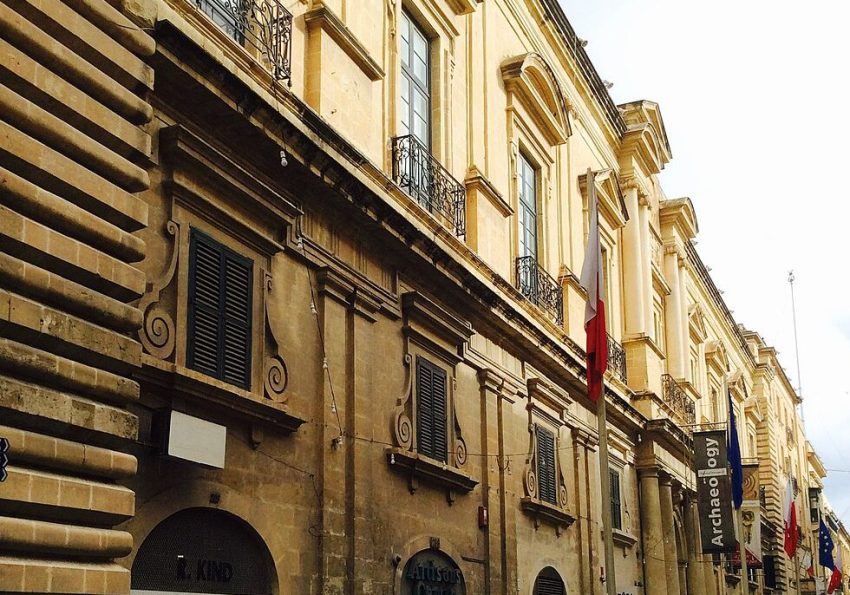
Map of the 11 Best Things to Do in Theth National Park, Albania walking route with 11 stops in Theth.
Preview map of the 11 Best Things to Do in Theth National Park, Albania route in Theth, showing 11 stops. Use the interactive map to zoom and tap markers.

9 Best Things to See in Shkodër, Albania (2026)

Explore Rozafa Castle

This website uses affiliate links which earn a small commission at no additional cost to you.

Cradled between the Accursed Mountains and the shimmering expanse of Lake Shkodër, Shkodër is one of Albania's most atmospheric cities - a place where cobbled streets meet Venetian façades, minarets rise beside bell towers, and the echoes of a thousand years of history ripple through its lively boulevards. Known as the cultural capital of northern Albania, Shkodër is a city of contrasts: ancient yet youthful, traditional yet creative.

With its legendary castle, Ottoman bridges, and vibrant café culture, this lakeside gem is the perfect introduction to Albania's rich heritage. Whether you're a history enthusiast, nature lover, or simply looking to wander somewhere authentic, Shkodër captures the soul of the Balkans in a single city.

Getting to Shkodër and its Best Attractions

Getting to Shkodër is part of the adventure - a scenic journey through northern Albania's changing landscapes, from coastal plains to mountain foothills. The most common entry point is Tirana International Airport (Nënë Tereza), around two hours south via the SH1 highway. It's an easy and pleasant drive, winding through olive groves, small towns, and the flat expanses of the Zadrima plain. Renting a car at the airport gives you the freedom to stop along the way - perhaps for lunch in Lezhë or a quick detour to the Adriatic beaches of Shengjin.

For those coming from abroad, Shkodër also serves as a convenient gateway between Albania and Montenegro. The border at Hani i Hotit is less than an hour away, making it possible to combine visits to Lake Shkodër National Park on both sides - from Albania's bird-filled wetlands to Montenegro's peaceful coves and monasteries. Buses and minibuses run daily between Shkodër and Podgorica, offering budget-friendly transport with stunning lake views en route. The connection makes Shkodër ideal for travelers exploring the western Balkans by road.

Public transport within Albania is improving, but for reaching outlying attractions like Theth National Park, Lake Koman, or Mesi Bridge, a rental car or private driver gives you maximum flexibility. The roads are generally well maintained, and the scenery - especially as you approach the mountains - is breathtaking. If you'd prefer not to drive, several local operators in Shkodër arrange transfers, guided day trips, and hiking tours, allowing you to enjoy the beauty of northern Albania without any logistical stress.

Where to Stay in and Around Shkodër

To truly experience Shkodër's charm, it's worth spending at least a couple of nights in the city or by the lake. Whether you prefer the lively atmosphere of the Old Town, the tranquil shores of Lake Shkodër, or a boutique retreat surrounded by greenery, the city offers accommodations to suit every traveler's style.

For those wanting to be close to Shkodër’s cultural heart, stay near Rruga Kolë Idromeno, where pastel buildings, cobbled streets, and bustling cafés create an irresistible old-world ambiance. Hotel Tradita is a perennial favorite - a restored traditional house filled with antique décor and a restaurant serving authentic northern Albanian dishes. Just a short walk away, Hotel Colosseo offers modern comforts, a rooftop terrace, and a swimming pool - perfect for relaxing after a day exploring Rozafa Castle or the Old Bazaar.

If you’d rather wake up to the sound of water and birdsong, the lakeside villages of Shiroka and Zogaj are idyllic options. Lake Shkodra Resort combines eco-luxury with nature - offering lakeside cabins, glamping tents, and excellent views of the surrounding hills. A bit further along the shore, Casa Dolce Casa is a peaceful family-run guesthouse where homemade breakfasts are served on terraces overlooking the lake.

Travelers planning to explore Theth National Park or Lake Koman will find great value in boutique guesthouses within Shkodër's quieter neighborhoods. Eco Garten Hotel offers a green oasis with fruit trees, bike rentals, and an organic breakfast spread - ideal for adventure seekers. Meanwhile, Mi Casa es Tu Casa stands out for its warm, international atmosphere and helpful hosts who assist guests with transport to the mountains.

A Short History of Shkodër

Shkodër’s story is as deep and complex as the lake it borders. Founded in the 4th century BC by the Illyrians, it became one of the most important cities in the ancient kingdom of the Labeates. Under Roman rule, it grew into a prosperous trading post known as Scodra. Through the centuries, it was conquered by Byzantines, Serbs, Venetians, and Ottomans - each leaving its architectural and cultural mark.

During the Venetian era, Shkodër flourished as a center of commerce, evident in its elegant buildings and the remnants of defensive walls still standing today. The Ottomans transformed it further, building mosques, bridges, and bazaars that defined its skyline for centuries. It was during this period that landmarks like the Rozafa Castle gained their legendary status - particularly the tale of Rozafa, the young woman entombed within its walls to ensure the fortress would never fall.

In the 19th and early 20th centuries, Shkodër became the beating heart of Albanian intellectual and cultural life. Artists, poets, and photographers - most notably the Marubi family, founders of Albania's first photography studio - immortalized everyday life here. Despite wars, floods, and communist isolation, the city has retained its creative and resilient spirit. Today, Shkodër stands as a proud symbol of Albanian heritage - both ancient and evolving.

1. Explore Rozafa Castle

Rozafa Castle Albania
CC BY 3.0 / Tscakir

Perched on a rocky hill overlooking the confluence of the Buna, Drin, and Kir rivers, Rozafa Castle is one of Albania’s most iconic landmarks. Its history stretches back to the Illyrian era, and each empire that passed through — Roman, Venetian, and Ottoman — left its mark on the fortress walls. The climb to the top rewards visitors with sweeping views of Lake Shkodër, the surrounding countryside, and the distant Albanian Alps. It’s not hard to see why this fortress was considered a vital defensive stronghold for centuries.

Legend weaves deeply into Rozafa’s stones. The story tells of a woman named Rozafa who was immured alive in the castle walls to ensure the fortress would stand strong — a haunting tale of sacrifice that has become central to Albanian folklore. A small chapel within the castle walls honors her memory, and the myth still resonates today, symbolizing endurance, love, and devotion. It’s this blend of myth and history that gives Rozafa an almost spiritual atmosphere, especially as the setting sun casts long shadows across its ramparts.

Visitors can wander through its winding pathways, explore remnants of medieval churches and Ottoman barracks, and even stop at the small on-site museum detailing the castle’s turbulent past. During summer, Rozafa hosts cultural performances and folk music events, transforming the ancient stone walls into an open-air theater. Whether you visit for the history, the legend, or simply the panoramic views, Rozafa Castle is a cornerstone of any Shkodër itinerary.


Location: Rruga Rozafa Shkodër Albania | Hours: (Summer) 15 May – 31 October; Monday – Saturday: 09:00-19:00; Sunday: 09:00-16:00. (Winter) 1 November – 14 May; Tuesday – Saturday: 09:00-16:00; Sunday: 09:00-14:00. Closed on Monday. | Price: 400 lekë | Website

We recommend to rent a car in Albania through Discover Cars, they compare prices and review multiple car rental agencies. Book your rental car here.

2. Visit the Marubi National Museum of Photography

Muzeu Marubi
Muzeu Marubi
CC BY-SA 4.0 / Marina Binoshaj

The Marubi National Museum of Photography is a true cultural treasure, offering a rare window into Albania’s visual history. Founded by Italian photographer Pietro Marubi in the 1850s, the studio was passed down through generations of Albanian photographers, creating a priceless archive that documents over 150 years of daily life. From Ottoman-era portraits to striking images of 20th-century Albania, the museum captures both the evolution of photography and the nation itself.

The museum’s collection includes more than half a million negatives, carefully preserved and beautifully curated within a modern exhibition space in the heart of Shkodër. Walking through the galleries feels like stepping into a living timeline: elegant family portraits, bustling markets, traditional weddings, and moments of revolution. The artistry of the Marubi family — particularly the dramatic lighting and composition — elevates these photos beyond documentation; they are works of art that reveal the character and resilience of the Albanian people.

Beyond its exhibitions, the museum also serves as a cultural hub, hosting photography workshops, film screenings, and contemporary art installations. It’s a place where history and creativity meet — honoring the pioneers of Albanian photography while inspiring new generations of artists. For anyone interested in visual storytelling or Balkan history, the Marubi Museum is a must-see stop that brings Shkodër’s past vividly to life.


Location: "Kolë Idromeno" Street, Shkoder | Hours: Tuesday – Saturday: 09:00–16:00. Sunday: 10:00–15:00. Closed on Mondays. | Price: 700 lekë. | Website

Here is a complete selection of hotel options in Shkodër. Feel free to review each one and choose the stay that best suits your needs.

3. Stroll Down Rruga Kolë Idromeno

Promenade of Shkodër
CC BY-SA 1.0 / Shkelzen A. Rexha

Named after Shkodër’s most famous artist and architect, Rruga Kolë Idromeno is the beating heart of the city — a lively pedestrian boulevard that perfectly captures the rhythm of Shkodran life. Flanked by pastel-colored buildings with Venetian and Ottoman influences, the street exudes old-world charm while remaining a vibrant hub of modern culture. Cafés spill onto the cobblestones, laughter echoes from terraces, and the scent of espresso drifts through the air.

As evening falls, the street comes alive with the traditional xhiro, when locals stroll arm-in-arm to socialize and enjoy the fresh air. It’s one of the best places to observe the city’s daily pulse — students chatting after class, musicians performing on corners, and families enjoying ice cream under twinkling lights. The relaxed pace and warm atmosphere make Rruga Kolë Idromeno an irresistible place to slow down and savor the moment.

The boulevard also offers access to Shkodër’s best restaurants, boutique shops, and cultural landmarks. Art lovers can pop into small galleries featuring contemporary Albanian painters, while foodies can sample northern Albanian specialties like tave krapi (carp stew) or fërgesë. Whether you visit in the heat of the day or during the golden evening hours, Rruga Kolë Idromeno embodies the soul of the city — friendly, artistic, and effortlessly charming.


Location: Rruga Kolë Idromeno, Shkodër, Albania | Hours: 24 Hours | Price: Free

Traveling to a country with a different currency? Avoid ATM transaction fees and pay in local currency with a Wise Card. Having used it for over 5 years, we've saved loads on fees!

4. Cross the Historic Mesi Bridge

Mes Bridge albania
Mes Bridge albania
CC BY-SA 4.0 / Sali Jonuzi

Just northeast of Shkodër lies the Mesi Bridge (Ura e Mesit), one of Albania’s finest Ottoman-era engineering marvels. Built in the 18th century under the rule of Kara Mahmud Bushati, this stone bridge stretches gracefully across the Kir River, its 13 arches forming perfect reflections in the clear water below. Set against a backdrop of rolling hills and rural scenery, it offers a peaceful escape from the bustle of the city.

The bridge once served as part of an important trade route connecting Shkodër to the mountain regions of the north. Today, it stands as both a historical monument and a scenic viewpoint. The craftsmanship is impressive — each stone perfectly placed, the design blending utility and beauty in equal measure. Early mornings and late afternoons are the best times to visit, when soft light enhances the textures of the stone and the sound of flowing water creates a tranquil soundtrack.

For photographers, the Mesi Bridge is a dream — with its symmetrical arches and panoramic setting. You can walk across the bridge, admire the surrounding landscapes, or follow the riverside paths for quiet contemplation. In spring, wildflowers bloom along the banks, and local shepherds can often be seen guiding flocks through the valley. Visiting Mesi Bridge is a reminder that Albania’s beauty lies as much in its quiet corners as in its grand monuments.


Location: AL Boks 4012 Albania | Hours: 24 Hours | Price: Free.

Explore Shkodër at your own pace with our self-guided walking tour! Follow our curated route to discover must-see sights and local secrets that makes Shkodër one of the best places to visit in Albania.

5. Discover the Site of Witness and Memory

Site of Witness and Memory Museum Shkoder
CC BY-SA 4.0 / Spasblag

For a powerful insight into Albania’s more recent history, the Site of Witness and Memory offers an emotional yet essential experience. Housed in a former Catholic seminary turned communist prison, this museum memorializes the victims of Albania’s dictatorship (1944–1991). Walking through its narrow corridors and preserved cells, visitors encounter haunting reminders of the thousands who were imprisoned, tortured, or executed for their beliefs.

The exhibits combine personal testimonies, letters, photographs, and everyday objects to humanize the tragedy. Simple details — like graffiti etched into cell walls or faded uniforms — speak volumes about resilience and suffering. Unlike larger museums, this space is intimate, immersive, and deeply moving. Guides, many with personal or familial ties to the stories told, provide context that makes the visit even more poignant.

Outside, the memorial courtyard offers a moment of reflection amid olive trees and quiet benches. The Site of Witness and Memory doesn’t sensationalize Albania’s past — instead, it invites understanding and remembrance. It stands as one of the most meaningful cultural sites in Shkodër, ensuring that the stories of courage and loss will not be forgotten by future generations.


Location: Site of Witness and Memory, Bulevardi Skënderbeu, Shkodër, Albania | Hours: Monday: 08:30–14:30. Tuesday: 08:30–14:30 & 17:00–19:00. Wednesday: 08:30–14:30 & 17:00–19:00. Thursday: 08:30–14:30. Friday: 08:30–14:30. Saturday: 09:00–12:00. | Price: 150 ALL (adults); 50 ALL (children); free for students visiting with teachers and former political prisoners. | Website

6. Visit St. Stephen’s Cathedral

cathedral shkoder tower
CC BY-SA 4.0 / Ambra Doci

In the heart of Shkodër stands St. Stephen’s Cathedral — also known locally as the Kisha e Madhe or Great Church — a beautiful testament to the city’s enduring faith and resilience. Built in 1867 under Ottoman rule, it was once one of the largest cathedrals in the Balkans. Its impressive façade and bell tower dominate the skyline, while its bright interior offers a haven of calm in the lively city center.

During Albania’s communist period, the cathedral was closed, desecrated, and even repurposed as a sports hall. Yet, following the fall of the regime, it was lovingly restored and reopened in 1990, becoming a powerful symbol of spiritual renewal. Today, light floods through its stained-glass windows, illuminating marble altars and intricate frescoes that blend local artistry with European influences.

Visitors often linger here, not just for the architecture but for the atmosphere of peace. The surrounding square is lined with cafés and flower stalls, making it a lovely spot to pause during a walking tour. Whether you’re attending Mass or simply admiring its history, St. Stephen’s Cathedral embodies Shkodër’s quiet dignity and the unbreakable spirit of its people.


Location: Rruga Gerej Shkodër Albania | Hours: Daily: 06:00–22:00. | Price: Free. | Website

7. Relax by Lake Shkodër and Visit Shiroka

Lake Skadar panoramio
CC BY-SA 3.0 / Alexey Komarov

Just beyond the city lies Lake Shkodër, the largest lake in the Balkans and a haven of tranquility. Surrounded by reed beds, mountain ridges, and migratory birds, the lake is a paradise for nature lovers. It forms part of a protected national park shared with Montenegro, offering countless opportunities for kayaking, fishing, birdwatching, and swimming. The waters shimmer in shades of silver and blue, especially at sunrise and sunset.

The nearby village of Shiroka, only a ten-minute drive from the city center, is a favorite weekend retreat for locals. Its lakeside promenade is dotted with small restaurants serving freshly caught fish, local wines, and rakia. The atmosphere is relaxed and unpretentious — children playing by the shore, fishermen mending nets, and couples strolling by the water. On warm days, you can rent a bicycle and ride along the scenic lakeside road, stopping to take photos or dip your feet in the cool water.

In recent years, eco-tourism initiatives have helped preserve the lake’s fragile ecosystem, encouraging sustainable activities like paddleboarding and guided nature walks. For travelers seeking serenity, Shiroka and Lake Shkodër offer the perfect balance to the city’s cultural energy — a chance to slow down, breathe, and reconnect with nature.


Location: Shkodra Lake, Near Shiroka Village, Shkodër, Albania | Hours: 24 Hours | Price: Free to visit from the Albanian side; €5 per person per day if you enter Montenegro’s Skadar Lake National Park.

8. Day Trip to Theth National Park

Theth Church Accursed mountains Albania
CC BY-SA 1.0 / peter_h

For adventurous travelers, Theth National Park is northern Albania at its most dramatic: jagged peaks, alpine meadows, and stone hamlets threaded by icy-blue rivers. Set deep in the Albanian Alps, the valley feels timeless—shepherds still guide flocks along ancient paths and slate-roofed houses huddle beneath towering ridgelines. The journey from Shkodër (via Qafë Thore Pass in the warmer months) is an experience in itself, delivering switchback views that build anticipation long before you arrive.

Once in Theth, signature sights beckon. Hike to the Blue Eye of Theth (Syri i Kaltër), where spring water pools in surreal turquoise; continue to the Grunas Waterfall, a graceful 25-meter cascade draped in moss and mist; and step inside the Lock-In Tower, a haunting relic of highland customary law that doubles as a museum of mountain life. Trails are well-trodden but still feel wild—expect river crossings, meadow paths, and the occasional friendly farm dog trotting beside you.

Theth rewards an early start and sturdy footwear, but it’s equally memorable as a slow day of village wandering—sipping mountain tea, chatting with guesthouse owners, and watching evening light settle over the peaks. Summer and early autumn offer the best conditions; in shoulder seasons, bring layers and check road status. If you fall under Theth’s spell (many do), consider staying overnight to watch the stars burst over the valley and catch sunrise on the crags.


Location: Theth, Shkodër County, Albania | Hours: 24 Hours | Price: Free (no official park gate fee)
Powered by GetYourGuide

9. Ride the Lake Koman Ferry

Lake komani 2016 Albania
CC BY-SA 2.0 / Colin Skidmore

Often dubbed “Europe’s fjord-like ferry,” the Lake Koman crossing is a ribbon of emerald water snaking between cliffs so close the light changes minute by minute. Departing from the Koman dam and sailing to Fierza, the boat threads through canyons carved by the Drin, past pocket-size farms and remote villages. It’s part transport link, part spectacle—windows down, cameras out, the entire time.

The journey pairs perfectly with onward adventures: many travelers combine the ferry with a transfer to Valbona Valley for hikes over the famed Valbona–Theth pass (summer to early autumn), while day-trippers from Shkodër simply ride out and back for the scenery. Seating ranges from open decks to modest interiors; bring water, snacks, and sun protection, and arrive early—boarding can be lively when buses and locals converge. On windy days, tuck in behind the cabin and watch swallows trace arcs over the water.

What elevates Lake Koman beyond a pretty boat ride is its sense of remoteness. You float past goats on impossible ledges, tiny orchards on fingerling shores, and the occasional fisherman waving from a skiff—all framed by cliffs that swallow sound. Go on a clear morning for the glassiest reflections, and keep the lens cloth handy: mist and spray add to the drama (and the photo spots). It’s one of Albania’s most unforgettable journeys—and an easy day out from Shkodër.


Location: Koman, Shkodër, Albania Koman 4001 Albania | Hours: Daily: 07:45–08:45 & 12:00–12:45. | Price: Free to visit (ferry tickets and boat trips are paid; passenger tickets are typically around 1000 ALL (€8) one-way, depending on operator and whether you book ahead). | Website
Powered by GetYourGuide
Moira & Andy
Moira & Andy

Hey! We're Moira & Andy. From hiking the Camino to trips around Europe in Bert our campervan — we've been traveling together since retirement in 2020!

Read our full story here

This website uses affiliate links which earn a small commission at no additional cost to you.

Walking Tour Map
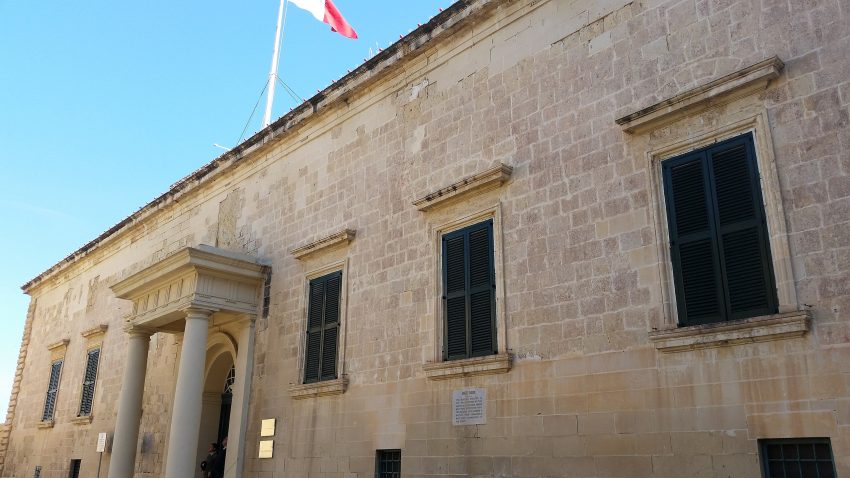
Map of the 9 Best Things to See in Shkodër, Albania walking route with 9 stops in Shkodër.
Preview map of the 9 Best Things to See in Shkodër, Albania route in Shkodër, showing 9 stops. Use the interactive map to zoom and tap markers.

Self-Guided Walking Tour of Shkodër (2026)

Self Guided Walking Tour of Shkodër
CC BY-SA 2.0 / Indrit Hoxhaj

This website uses affiliate links which earn a small commission at no additional cost to you.

Exploring Shkodër on foot is one of the most rewarding ways to experience Albania's cultural heart. Nestled between Lake Shkodër, the Rozafa Fortress, and the Albanian Alps, this charming northern city has a soul shaped by centuries of history, faith, and art. Every corner tells a story - from Ottoman minarets and Venetian façades to elegant churches and cobbled streets lined with pastel houses. A walking tour through Shkodër's compact center lets you feel the city's rhythm, blending local life with echoes of its storied past.

As you stroll through the old town and its historic promenade, you'll discover many of the best things to see in Shkodër: the magnificent Marubi National Museum of Photography, the serene Shkodër Cathedral, the atmospheric Site of Witness and Memory Museum, and the graceful Ebu Bekr Mosque. Each landmark reveals a different layer of Shkodër's identity - a blend of Ottoman, Venetian, and Albanian traditions that coexist harmoniously within just a few square kilometers. Cafés spill onto the cobblestones, artists display their works, and the scent of coffee and baked goods drifts through the air.]

The beauty of a walking tour here is its intimacy. You can pause at every detail - an ornate balcony, a mural, a local artisan's shop - or linger at the Promenade of Shkodër, where the city comes alive in the evening light. The gentle pace allows you to absorb the atmosphere, connect with the locals, and uncover stories hidden behind historic façades. Whether you're an architecture lover, a history enthusiast, or simply a traveler in search of authentic Albanian charm, a walk through Shkodër offers an unforgettable window into one of the most captivating cities in the Balkans.

How to Get to Shkodër

By Air: The easiest way to reach Shkodër by air is through Tirana International Airport Nënë Tereza (TIA), located about 85 kilometers south of the city. This is Albania's main international gateway, offering regular flights from major European cities such as Rome, Vienna, London, and Istanbul. From the airport, you can take a bus, private transfer, or rental car to Shkodër - the journey takes roughly 1.5 to 2 hours, depending on traffic. Although Shkodër doesn't have its own airport, Tirana's modern facilities and frequent flight connections make it the most convenient entry point for international visitors. For the best deals and a seamless booking experience, check out these flights to Shkodër on Booking.com.

By Car or Bus: Traveling by car or bus is the most popular and practical way to reach Shkodër. The A1/E762 highway links Tirana with Shkodër, offering a smooth drive of about 1.5 hours. Regular buses and minibuses (furgons) depart from Tirana's northern bus terminal throughout the day, making it easy to reach the city without a car. The road continues beyond Shkodër toward the Montenegrin border, making it a convenient stop for those exploring the Balkans. Driving also allows you to stop at scenic spots like Lezhë or Lake Shkodër National Park along the way. If you are looking to rent a car in Albania I recommend having a look at Discover Cars, first, as they compare prices and review multiple car rental agencies for you.

A Short History of Shkodër

Few cities in Albania possess a history as deep and resilient as Shkodër. Founded over 2,400 years ago, it is one of the oldest continuously inhabited cities in the Balkans. Its origins trace back to the Illyrian tribe of the Labeates, who established the first fortified settlement on the hill now crowned by the Rozafa Fortress. This legendary stronghold, overlooking the confluence of the Drin, Buna, and Kir rivers, became the heart of the Illyrian Kingdom in the 3rd century BC. Over centuries, the fortress passed through the hands of Romans, Byzantines, Venetians, and Ottomans - each leaving architectural and cultural imprints that shaped Shkodër into a city of remarkable diversity and endurance.

During the Ottoman era, which began in the late 15th century, Shkodër flourished as a major regional centre of trade, culture, and religion. Many of its most iconic landmarks date to this period. The grand Lead Mosque (Xhamia e Plumbit), built in 1774 by Mehmed Pasha Bushatli, stands as one of the finest examples of Ottoman religious architecture in Albania. In contrast, the Englishman's Tower (Sahati i Inglizit), erected in the 19th century with funds from Lord Alfred Paget, brought a touch of European flair to the city skyline. Shkodër's cosmopolitan spirit also found expression in its Christian monuments - the impressive Shkodra Cathedral, completed in 1867, and later the Franciscan Church - both of which symbolize the city's tradition of religious coexistence.

The late 19th and early 20th centuries marked Shkodër's emergence as a centre of Albanian culture and modern thought. It was here that Kolë Idromeno, the city's most famous artist, designed the Promenade of Shkodër, an elegant boulevard that remains its social heart. Around the same time, Italian exile Pietro Marubi founded his photography studio, which evolved into today's Marubi National Museum of Photography, home to more than 400,000 historic images documenting Albanian life. The Migjeni Theatre, opened in 1958, became a leading cultural venue during the communist period, while the nearby Historical Museum of Shkodër - now housed in the traditional Oso Kuka House - preserves artefacts from the city's rich past. In more recent times, the Site of Witness and Memory Museum, located in a former communist prison, and the Mother Teresa Statue (Nënë Tereza) have become poignant symbols of faith, endurance, and national pride.

Take a Guided or Self-Guided Walking Tour of Shkodër

If you're spending a day in Shkodër and want to make the most of your time exploring its historic streets, consider taking guided walking tour of the city. For an immersive experience, you can join this Shkodër Local Food Experience and Walking Tour, which combines sightseeing with local culinary traditions - offering a perfect introduction to both the city’s heritage and its authentic northern Albanian flavors.

Your Self-Guided Walking Tour of Shkodër

Discover Shkodër on foot as you explore its ancient fortress, Ottoman-era mosques, elegant churches, and lively cobblestone streets, all set against the dramatic backdrop of Lake Shkodër and the distant Albanian Alps, and you can use our interactive walking tour map to track your current location and your next site as you go.

1. Historical Museum of Shkodër

Exterior Muzeu Historik i Shkodrës
CC BY-SA 4.0 / ShkelzenRexha

The Historical Museum of Shkodër offers a fascinating insight into the city’s long and varied past. Established in 1947 as the Folk Museum, it initially showcased collections donated by Jesuit and Franciscan communities as well as prominent local families. The museum’s exhibits trace Shkodër’s evolution from an ancient Illyrian settlement through Roman and Ottoman rule to modern Albania, highlighting the city’s enduring importance as a cultural and economic centre.

Since 1996, the museum has been housed in the beautifully restored Oso Kuka House, a traditional 19th-century Shkodran residence that perfectly complements its ethnographic displays. The architecture itself is part of the story — stone walls, carved wooden ceilings, and arched verandas reflect the artistry of northern Albanian craftsmanship. Inside, visitors can explore the museum’s archaeological, ethnographic, and visual arts collections, as well as a small research library used by historians and scholars.

The museum’s Rozafa annex, located within the fortress, enriches its historical narrative with artefacts discovered during excavations on the hill. Together, these spaces present a detailed chronicle of Shkodër’s resilience and creativity through centuries of change. A visit here is the perfect starting point for anyone keen to understand the cultural heartbeat of Albania’s oldest city.


Location: Muzeu Historik i Shkodrës, Rruga Oso Kuka 32, Shkodër, Shqipëria | Hours: Monday – Friday: 08:00–15:00. Closed on Saturday & Sunday. | Price: 150 lek adults; 50 lek children. | Website

We recommend to rent a car in Albania through Discover Cars, they compare prices and review multiple car rental agencies. Book your rental car here.

2. Migjeni Theatre

Teatri Migjeni
Teatri Migjeni
CC BY-SA 4.0 / Rauda Kadija

Named after the celebrated Albanian writer Millosh Gjergj Nikolla “Migjeni”, the Migjeni Theatre stands proudly in the heart of Shkodër as one of the city’s leading cultural landmarks. Built in 1958, during Albania’s post-war cultural revival, the theatre was designed in the neoclassical style typical of the era, with a broad façade, ornate detailing, and grand arched windows. For decades, it has served as a platform for performing arts, from traditional folk plays to contemporary Albanian drama.

Inside, the theatre houses an auditorium that can seat several hundred spectators. Its stage has hosted some of the country’s most acclaimed performances, making it a vital institution in preserving and promoting Albania’s theatrical traditions. The building itself represents more than art — it is a monument to Shkodër’s resilience and its enduring love for culture, even in times of political and social upheaval.

Today, the Migjeni Theatre continues to be a gathering place for artists and audiences alike. Its annual festivals and visiting performances attract locals and tourists who want to experience Shkodër’s creative pulse firsthand. Standing just off the city’s main promenade, it is an essential stop for culture lovers exploring the city on foot.


Location: Teatri Migjeni, Sheshi Demokracia, Shkodër, Albania | Hours: Daily: 09:00–13:00 & 17:00–19:00. Ticket office hours; performance times vary. | Price: Entrance fee: Tickets typically 300–500 lekë; some events are free. | Website

Here is a complete selection of hotel options in Shkodër. Feel free to review each one and choose the stay that best suits your needs.

3. Promenade of Shkodër

Promenade of Shkodër
CC BY-SA 1.0 / Shkelzen A. Rexha

The Promenade of Shkodër — also known as Rruga Kolë Idromeno — is the vibrant heart of city life. Stretching for around 800 metres, this cobblestoned street combines Venetian-inspired façades, colourful shutters, and cafés that spill onto the pavement. Designed in the early 20th century by the renowned artist Kolë Idromeno, who brought Italian elegance to his hometown after studying in Venice, the promenade captures Shkodër’s unique blend of Mediterranean grace and Albanian warmth.

By day, the street is alive with the chatter of locals shopping, dining, and sipping espresso in the shade of flowering balconies. By evening, it transforms into a social stage — where families stroll, musicians perform, and the city seems to glow under soft lamplight. Along the way, visitors will find art studios, boutique shops, and the Marubi National Museum of Photography, one of Albania’s cultural treasures.

The Promenade is more than a pedestrian zone — it’s the city’s living room. It connects many of Shkodër’s key sites, from the Historical Museum to the Shkodra Cathedral, making it the perfect axis for a self-guided walking tour. Strolling its length is to experience the very rhythm of Shkodër life — relaxed, creative, and endlessly welcoming.


Location: Rruga Kolë Idromeno, Shkodër, Albania | Hours: 24 Hours | Price: Free

Traveling to a country with a different currency? Avoid ATM transaction fees and pay in local currency with a Wise Card. Having used it for over 5 years, we've saved loads on fees!

4. The Englishman’s Tower (Sahati i Inglizit)

Exterior shot of The Englishman’s Tower Shkodër
CC BY-SA 4.0 / NV

The intriguing Englishman’s Tower (Albanian: Sahati i Inglizit) is one of Shkodër’s most curious landmarks. Built in the late 19th century with funds from English nobleman Lord Alfred Paget, the tower uniquely combines Albanian craftsmanship with English architectural tastes. Paget, an exile and philanthropist, came to Shkodër to promote Protestant education and left behind this structure as his enduring mark on the city.

Originally part of his residence, the tower was modeled on a medieval-style château turret and served as both a clock tower and a religious meeting space. Paget had hoped to establish an Anglican church in Shkodër, but opposition from local clergy and Ottoman authorities curtailed his plans. Nevertheless, the tower became a familiar feature of the skyline, later serving as a fire observation post due to its panoramic views.

Though damaged over time, the Englishman’s Tower remains a beloved symbol of Shkodër’s cosmopolitan past — a reminder of the city’s connections with Europe and its openness to cultural exchange. Its story captures the eccentric charm that makes Shkodër’s heritage so rich and distinctive.


Location: Sahati i Inglizit, Rruga Teuta, Shkodër, Albania | Hours: None (exterior viewing only; interior visits limited) | Price: Free.

Click here to read our blog about 9 Best Things to See in Shkodër, Albania (2026)

5. Marubi National Museum of Photography

Exteritor Muzeu Marubi
©

They say a picture is worth a thousand words — and at the Marubi National Museum of Photography, there are over 400,000 stories to discover. This extraordinary collection traces Albanian life from the mid-19th century to today, showcasing portraits, landscapes, and historical moments captured by three generations of the Marubi dynasty. It was founded by Italian exile Pietro Marubi, who opened his studio in Shkodër in the 1850s, and continued by his apprentices and their descendants.

The museum’s permanent exhibition features images printed from original glass negatives, many documenting key events such as independence movements, cultural festivals, and daily life under Ottoman rule. Among its treasures is the first photograph ever taken in Albania, shot in 1858. Beyond its historical significance, the museum offers a captivating look at how photography shaped Albania’s visual identity and self-expression.

Housed in a modern, purpose-built gallery on Rruga Kolë Idromeno, the Marubi Museum seamlessly merges past and present. Visitors can explore temporary exhibitions, contemporary photo projects, and educational programs that keep Marubi’s artistic legacy alive. It’s an essential stop for anyone interested in art, culture, and the evolution of Albanian identity.


Location: Marubi National Museum of Photography Rruga Kolë Idromeno, No. 32, 4001 Shkodër Albania | Hours: Tuesday – Saturday: 09:00–16:00. Sunday: 10:00–15:00. Closed on Monday. | Price: 700 ALL (adults); 210 ALL (students ages 12–18); free for children under 12. | Website

6. Ebu Bekr Mosque

Plaza Scene with Ebu Bekr Mosque Shkodra Albania
CC BY-SA 2.0 / Adam Jones

Standing proudly in Shkodër’s city centre, the Ebu Bekr Mosque is a modern landmark that symbolizes the rebirth of faith in post-communist Albania. Completed in 1995, it was built on the site of an earlier mosque destroyed during the atheist campaign of the 1960s. Financed by the International Islamic Relief Organization and designed in a blend of modern and Ottoman architectural styles, it remains one of the largest mosques in Albania.

Its gleaming white minarets and striking dome dominate the skyline, offering a striking contrast to the surrounding low-rise buildings. Inside, the prayer hall is illuminated by stained glass windows and intricate geometric decorations, creating a serene and uplifting atmosphere. The mosque can accommodate thousands of worshippers, particularly during major religious festivals like Ramadan and Eid.

Beyond its role as a place of worship, the Ebu Bekr Mosque serves as a cultural and educational centre, hosting lectures, Quranic classes, and interfaith events. For visitors walking through Shkodër, it’s both a visual anchor and a living symbol of the city’s enduring spirit of faith and renewal.


Location: Rruga Fushë Cele 1 Shkodër Albania | Hours: 24 Hours | Price: Free.

7. Mother Teresa Statue

Mother Tereze Statue Shkodër
CC BY-SA 1.0 / Shkelzen A. Rexha

Located near the city centre, the Mother Teresa Statue (Nënë Tereza) stands as a poignant tribute to Albania’s most beloved humanitarian. Cast in bronze and set upon a stone pedestal, the monument portrays Saint Teresa of Calcutta in her familiar humble pose, hands folded in prayer. It celebrates her Albanian heritage and her lifelong mission of compassion and service to the poor.

Unveiled in the early 2000s, the statue quickly became one of Shkodër’s most symbolic landmarks. It represents not only religious devotion but also national pride, reflecting Albania’s respect for the woman who became a global icon of kindness. The site is often adorned with flowers and candles left by locals and pilgrims visiting from across the region.

For visitors on a walking tour, the Mother Teresa Statue provides a peaceful moment for reflection amid Shkodër’s bustling streets. It also connects beautifully with the nearby Ebu Bekr Mosque and Shkodra Cathedral, symbolizing the interwoven threads of faith and humanity that define the city’s identity.


Location: Monument Nene Tereza, Shkodër, Albania | Hours: 24 Hours | Price: Free

8. Site of Witness and Memory Museum

Site of Witness and Memory Museum Shkoder
CC BY-SA 4.0 / Spasblag

The Site of Witness and Memory Museum (Vendi i Dëshmisë dhe Kujtimit) is one of Shkodër’s most moving cultural landmarks. Located in the former headquarters of the communist-era Ministry of Interior’s local branch, this museum is dedicated to the memory of those who suffered under Albania’s dictatorship. It stands as the country’s only memorial museum commemorating the victims of communist persecution, many of whom were from Shkodër — a centre of resistance and faith during the regime.

Visitors can walk through the original pre-trial prison cells, where political prisoners were detained and tortured. Narrow corridors, barred windows, and dimly lit chambers evoke a haunting sense of the suffering endured here. The exhibitions include personal artefacts, letters, photographs, and documents donated by families of the victims. Audio-visual materials and a small library provide further insight into the period’s harsh realities.

Beyond its historical role, the museum aims to educate future generations about the importance of freedom and human rights. It’s a place of remembrance and reflection, reminding visitors that Shkodër’s story is not only one of resilience but also of moral courage and hope.


Location: Site of Witness and Memory, Bulevardi Skënderbeu, Shkodër, Albania | Hours: Monday: 08:30–14:30. Tuesday: 08:30–14:30 & 17:00–19:00. Wednesday: 08:30–14:30 & 17:00–19:00. Thursday: 08:30–14:30. Friday: 08:30–14:30. Saturday: 09:00–12:00. | Price: 150 ALL (adults); 50 ALL (children); free for students visiting with teachers and former political prisoners. | Website

9. Shkodra Cathedral

cathedral shkoder tower
CC BY-SA 4.0 / Ambra Doci

Known locally as Katedralja e Shën Shtjefnit (Cathedral of Saint Stephen), Shkodra Cathedral is the largest Catholic church in northern Albania and a symbol of religious endurance. Completed in 1867, it was built with donations from Shkodër’s Catholic community and permission from Ottoman authorities, reflecting the city’s longstanding spirit of tolerance. Its façade blends neoclassical and Renaissance influences, featuring graceful columns and a tall clock tower visible from across the city.

During the communist regime, the cathedral was desecrated and converted into a sports hall — even hosting a basketball court inside. However, after the fall of communism in 1990, it was restored to its sacred purpose, reopening to great celebration. The cathedral’s revival paralleled that of Shkodër itself, as the city reclaimed its religious and cultural identity.

Today, the cathedral is not only a place of worship but also a key cultural landmark. Visitors are often struck by its serene interior, vaulted ceilings, and fine frescoes. Its central location makes it an easy and inspiring stop on any walking tour of the city.


Location: Rruga Gerej Shkodër Albania | Hours: Daily: 06:00–22:00. | Price: Free. | Website

10. The Lead Mosque (Xhamia e Plumbit)

View of the rebuilt Lead Mosque Shkodër
CC BY-SA 1.0 / SimchaAzad

Set against the foothills of Rozafa Fortress, the Lead Mosque (Xhamia e Plumbit) is one of Albania’s most beautiful and historically significant mosques. Built in 1774 by Mehmed Pasha Bushatli, it takes its name from the lead plates that once covered its domes and roof, glinting in the sunlight. The mosque is a masterpiece of Ottoman architecture, featuring a central dome flanked by semi-domes, elegant arches, and intricate stonework.

Throughout its long history, the Lead Mosque has faced both natural and human challenges. It was damaged by floods and the theft of its roof’s lead covering in the early 20th century, and its minaret collapsed over time. Yet it survived Albania’s communist regime — thanks to its status as a Cultural Monument since 1948 — and later became the first mosque in the country to resume prayers after 1990.

Following a major restoration project funded by Turkey, the mosque was reopened in 2025. Surrounded by a peaceful park and overlooking the plain of Shkodër, it remains a serene symbol of faith, endurance, and beauty. For visitors, it offers both architectural splendor and a quiet space for reflection.


Location: Lead Mosque, Rruga e Tabakëve, Shkodër, Albania | Hours: Daily, 9:00 AM – 6:00 PM | Price: Free (donations welcome)

11. Rozafa Fortress

Rozafa Castle Albania
CC BY 3.0 / Tscakir

No visit to Shkodër is complete without climbing to the legendary Rozafa Fortress, the ancient stronghold that has watched over the city for more than two millennia. Its origins date back to Illyrian times, when it served as the capital of the Illyrian Kingdom under King Gentius. Perched high on a rocky hill, the fortress offers panoramic views of the Buna, Drin, and Kir Rivers, as well as Lake Shkodër and the surrounding mountains.

The fortress is best known for the Legend of Rozafa, a tale of sacrifice in which a woman was walled into the ramparts to ensure the fort’s stability — her spirit is said to live on, nurturing the land and its people. Over the centuries, Rozafa was expanded by Romans, Byzantines, Venetians, and Ottomans, each leaving traces in its walls, gates, and towers.

Inside, visitors can explore the remains of medieval churches, Ottoman barracks, and cisterns, as well as the Rozafa Museum, which explains the site’s fascinating history. The climb to the top is steep but rewarding — offering not just breathtaking views, but also a sense of connection to the myths and resilience that define Shkodër itself.


Location: Rruga Rozafa Shkodër Albania | Hours: (Summer) 15 May – 31 October; Monday – Saturday: 09:00-19:00; Sunday: 09:00-16:00. (Winter) 1 November – 14 May; Tuesday – Saturday: 09:00-16:00; Sunday: 09:00-14:00. Closed on Monday. | Price: 400 lekë | Website
Powered by GetYourGuide
Moira & Andy
Moira & Andy

Hey! We're Moira & Andy. From hiking the Camino to trips around Europe in Bert our campervan — we've been traveling together since retirement in 2020!

Read our full story here

This website uses affiliate links which earn a small commission at no additional cost to you.

Walking Tour Summary

Distance: 2.5 km
Sites: 11

Walking Tour Map
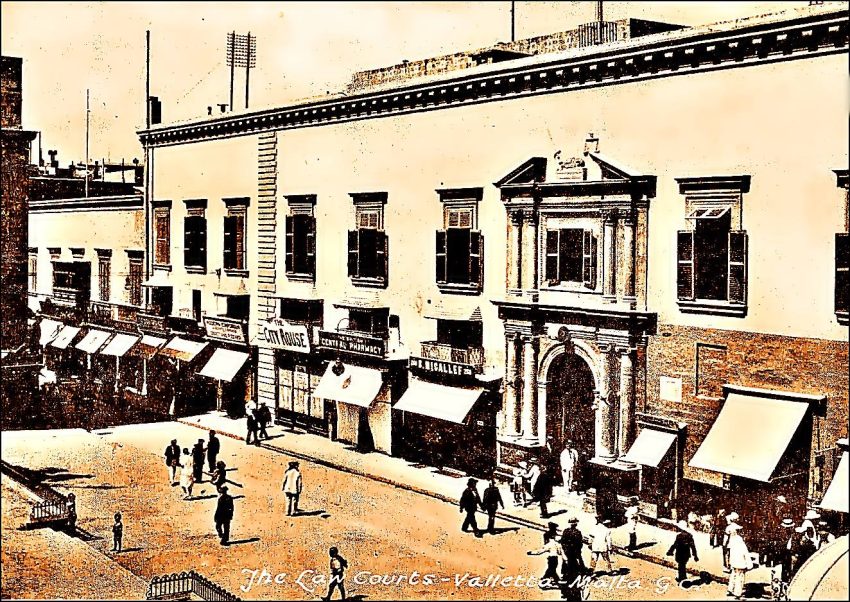
Map of the Self-Guided Walking Tour of Shkodër walking route with 11 stops in Shkodër.
Preview map of the Self-Guided Walking Tour of Shkodër route in Shkodër, showing 11 stops. Use the interactive map to zoom and tap markers.

11 Best Things to Do in Gjirokastër, Albania (2026)

Gjirokaster Castle Albania
Flickr / Emilio Poli

This website uses affiliate links which earn a small commission at no additional cost to you.

Perched on the slopes of the Gjerë Mountains, Gjirokastër is one of Albania's most enchanting cities - a place where stone roofs glisten under the sun and Ottoman-era houses cling to the hillside like a living museum. Known as the “City of Stone”, Gjirokastër is a UNESCO World Heritage Site celebrated for its distinctive architecture, rich history, and deep cultural soul.

From its mighty hilltop fortress to the winding cobbled streets of the Old Bazaar, Gjirokastër tells a story that spans empires and revolutions. This is the birthplace of writer Ismail Kadare and former leader Enver Hoxha, and every corner of the city bears the marks of Albania's complex past. Yet beyond its history, Gjirokastër is alive - full of welcoming cafés, artisan workshops, and the timeless hum of daily life echoing through its stone alleyways.

How to Get to Gjirokastër

By Air: The nearest major airport to Gjirokastër is Tirana International Airport (Nënë Tereza), located about 230 kilometers north of the city. From Tirana, the drive takes approximately 3.5 to 4 hours, passing through scenic countryside and the towns of Fier and Tepelenë. Travelers arriving from Greece can also fly into Ioannina Airport (King Pyrrhus Airport), roughly 90 kilometers away, making it a convenient gateway for those exploring southern Albania and northwestern Greece. For international visitors, both airports connect to major European cities such as London, Rome, Athens, and Vienna. For the best deals and a seamless booking experience, check out these flights to Gjirokastër on Booking.com.

By Car or Bus: Driving to Gjirokastër is one of the most rewarding ways to experience southern Albania. From Vlorë, the journey takes around 2.5 hours, winding through olive groves, mountain passes, and the beautiful Drino Valley. From Sarandë, the road climbs gradually inland, offering sweeping views of the hills before descending into the stone city. The SH4 highway is well maintained, and renting a car gives you the freedom to explore surrounding attractions such as Antigonea, Ali Pasha Bridge, and the Blue Eye Spring. For those without a vehicle, public buses and minibuses (furgons) operate several times a day, offering a comfortable and affordable alternative. If you are looking to rent a car in Albania I recommend having a look at Discover Cars, first, as they compare prices and review multiple car rental agencies for you.

Where to Stay in Gjirokastër

To make the most of your visit to Gjirokastër, it's worth staying overnight in the heart of the old town, where cobblestone streets, traditional houses, and views of the castle immerse you fully in the city's charm. Accommodation here ranges from historic guesthouses to elegant boutique hotels, many set in beautifully restored Ottoman-era buildings.

For a luxurious stay, Hotel Gjirokastra offers stylish rooms with panoramic views and warm hospitality just steps from the Old Bazaar. Hotel Kalemi 2 combines modern comfort with traditional architecture, complete with carved wooden balconies overlooking the stone rooftops. Travelers seeking authentic local character will love Old Bazaar 1790, a family-run guesthouse that exudes history and charm.

For something more intimate, Kerculla Resort offers an exceptional hillside location with sweeping valley views and an infinity pool - ideal for watching the sun set over the castle. Budget travelers can find excellent value in cozy stays like Stone Rooms 1850, where personalized service and homemade breakfasts make every morning special. Whichever you choose, staying in Gjirokastër’s old quarter allows you to truly feel the rhythm of the city - from the morning call of roosters echoing off the stones to the soft glow of lanterns lighting the bazaar at night.

A Short History of Gjirokastër

The story of Gjirokastër stretches back over 2,500 years, its name derived from the Greek Argyrokastro - “Silver Fortress” - a poetic nod to the city's gleaming stone architecture. Founded as a fortified settlement during the Hellenistic period, it grew under Byzantine and Ottoman rule into one of the most important cities in southern Albania. By the 17th and 18th centuries, Gjirokastër had become a major administrative and cultural center of the Ottoman Empire, famed for its elegant stone tower houses (kullë), which blended defensive strength with intricate artistry.

The city's strategic location above the Drino Valley made it a natural stronghold for rulers and rebels alike. During the early 19th century, it came under the influence of Ali Pasha of Tepelena, who strengthened its fortifications and built the aqueduct and Ali Pasha Bridge that still stand today. In the 20th century, Gjirokastër played a pivotal role in Albania's national awakening - it was here that both Ismail Kadare, the country's most celebrated writer, and Enver Hoxha, its communist leader, were born. The contrast between art and ideology has left an indelible mark on the city's identity.

After decades of isolation during the communist era, Gjirokastër emerged into the modern age with its heritage intact. In 2005, it was inscribed as a UNESCO World Heritage Site, recognized for its remarkably preserved Ottoman architecture and cultural continuity. Today, walking through its cobbled streets feels like traversing a living museum - where every stone, archway, and carved wooden door tells a story of endurance, artistry, and transformation. Gjirokastër is not merely a relic of the past; it is a city that continues to inspire writers, artists, and travelers alike, standing proudly as the stone heart of southern Albania.

When to Visit Gjirokastër

Visiting Gjirokastër in Spring (March-May)

Spring transforms Gjirokastër into a tapestry of color and light. The stone rooftops glisten under gentle sunshine, and the surrounding Drino Valley bursts into bloom with wildflowers and olive blossoms. This is one of the most pleasant times to explore the city's steep cobbled streets without the summer crowds. The weather is mild - perfect for visiting the castle, bazaar, and the nearby ruins of Antigonea or Ali Pasha Bridge. Outdoor cafés reopen after winter, filling the old town with the aroma of Turkish coffee and mountain tea. It's also a season of local festivals, where traditional music and food bring the community to life.

Visiting Gjirokastër in Summer (June-August) (Best)

Summer is the best time to visit Gjirokastër, especially for those who want to experience the city at its most lively. The days are long, hot, and full of energy - ideal for pairing a city visit with a trip to the nearby Blue Eye (Syri i Kaltër) or the beaches of Sarandë and Ksamil just an hour away. The Old Bazaar buzzes with travelers, artisans, and open-air performances, while the castle hosts cultural events under the stars. In July and August, Gjirokastër basks in golden light until late evening, and the scent of grilled lamb and oregano drifts from terrace restaurants overlooking the valley.

Visiting Gjirokastër in Autumn (September-November)

Autumn is a magical time to visit - the heat softens, the crowds thin, and the city takes on a quieter, more introspective beauty. The surrounding hills glow with shades of amber and rust, and the clear air makes for stunning photographs of the castle and old town. It’s the ideal season for slow exploration: wandering the Skenduli and Zekate Houses, sipping raki by the fire in a family guesthouse, or hiking through nearby villages. September still brings warm days, while October and November are cooler and peaceful - perfect for travelers seeking an authentic, unhurried experience.

Visiting Gjirokastër in Winter (December-February)

Winter in Gjirokastër is quiet and atmospheric. The air turns crisp, and a light mist sometimes settles over the valley, giving the stone rooftops a dreamlike glow. While some guesthouses close for the season, many remain open and offer cozy stays with wood-burning stoves and hearty homemade meals. The lack of crowds makes it an excellent time to explore the castle, Cold War Tunnel, and museums in solitude. Occasionally, a dusting of snow decorates the old town, adding a touch of magic to this already poetic city. For those who love stillness and local warmth, winter in Gjirokastër offers an intimate glimpse into its timeless charm.

Best Things to Do in Gjirokastër

1. Explore Gjirokastër Castle

Gjirokastër Castle
Gjirokastër Castle
CC BY-SA 2.0 / Emilio Poli

Dominating the skyline, Gjirokastër Castle is one of the largest and most impressive fortresses in the Balkans. Its origins stretch back to the 12th century, though it was expanded by the Ottomans in the 19th. Walking through its stone corridors, towers, and open courtyards, you’ll uncover centuries of Albanian history carved into every wall. From the battlements, the views over the Drino Valley are spectacular — a sweeping panorama of mountains, fields, and slate-roofed houses below.

The castle also hosts the National Museum of Armaments, displaying weapons from medieval times to the World Wars, along with relics from Albania’s communist period. One of its most haunting sights is the American Air Force plane, said to have made an emergency landing during the Cold War and later displayed as a trophy of defiance. Today, the castle also doubles as a cultural venue, hosting the National Folk Festival every five years, when traditional musicians fill the ancient walls with song and rhythm.


Location: Rruga Elvia Celebi Gjirokaster Albania | Hours: April - September, Every Day 9:00- 18:00 October-March 9:00-17:00 | Price: 400 lek

We recommend to rent a car in Albania through Discover Cars, they compare prices and review multiple car rental agencies. Book your rental car here.

2. Wander Through the Gjirokastër Old Bazaar

House in Gjirokastra
CC BY-SA 4.0 / Sali Jonuzi

At the heart of the city lies the Old Bazaar, a labyrinth of cobbled lanes lined with stone-built shops and Ottoman façades. Dating back to the 17th century, it once bustled with merchants trading carpets, silver, and spices from across the region. Today, the bazaar remains the social and cultural heart of Gjirokastër — alive with artisans, cafés, and the scent of roasted coffee and mountain herbs.

Here you’ll find handmade souvenirs, from filigree jewelry to carved olive-wood bowls and embroidered textiles. Stop at a small çajtore (tea house) to sip mountain tea or raki as you watch life unfold in slow motion. The Mosque of the Bazaar, with its graceful minaret, adds an extra layer of history to this beautifully preserved quarter. Whether you come to shop, photograph, or simply wander, the bazaar is Gjirokastër’s living soul.


Location: Qafa e Pazarit, Rruga Alqi Kondi, Gjirokastër

Here is a complete selection of hotel options in Gjirokastër. Feel free to review each one and choose the stay that best suits your needs.

3. Visit the Gjirokastër Ethnographic Museum

Ethnographic Museum of Gjirokaster 01
CC BY-SA 4.0 / JoraKasapi

Built on the site of Enver Hoxha’s birthplace, the Gjirokastër Ethnographic Museum offers a fascinating glimpse into 19th-century domestic life. The museum is designed as a traditional Ottoman townhouse, complete with carved wooden ceilings, colorful rugs, and antique furnishings. Each room reveals the daily rhythms of a wealthy Gjirokastrian family — from the guest salon to the women’s quarters and kitchen.

What makes this museum remarkable is how alive it feels; it’s not just a display of objects but a window into how people once lived in this mountain city. The house’s vantage point also offers superb views of the castle and old town, making it both a cultural and visual highlight. For travelers who love history and architecture, this is one of Gjirokastër’s most essential stops.


Location: Rr Ismail Kadare, Gjirokaster, Albania | Hours: April to September 08:00 to 12:00 and 16:00 to 19:00 daily October to March 08:00 to 16:00 Wednesday to Sunday (closed Monday and Tuesday) | Price: 200 Lek

Traveling to a country with a different currency? Avoid ATM transaction fees and pay in local currency with a Wise Card. Having used it for over 5 years, we've saved loads on fees!

4. Step Inside the Skenduli House

Skenduli House Gjirokastra
CC BY-SA 4.0 / ShkelzenRexha

If the Ethnographic Museum introduces you to traditional life, the Skenduli House immerses you in it. This magnificent Ottoman-era residence, still owned by the Skenduli family, dates back over 300 years and has been lovingly preserved. Guided tours are often led by descendants of the original owners, who share family stories and explain the symbolism behind the architecture — from the hidden rooms to the ornate ceiling carvings.

Every detail speaks of craftsmanship and heritage: the intricate woodwork, stone fireplaces, and stained-glass windows. The top floor offers a beautiful view over the old town’s rooftops, while the ground floor retains original elements like the watchtower and water storage system. Visiting Skenduli House is like stepping into another century — a chance to feel Gjirokastër’s history as something personal and living.


Location: Rruga Sokaku i te Mareve Gjirokaster Albania | Hours: 9am-7pm Apr-Oct | Price: 200 lek

Explore Gjirokastër at your own pace with our self-guided walking tour! Follow our curated route to discover must-see sights and local secrets that makes Gjirokastër one of the best places to visit in Albania.

5. Admire the Zekate House

Zekate House Gjirokaster Albania 02
CC BY-SA 4.0 / Llukman Ibrahimi

Another jewel of Ottoman architecture, the Zekate House is a masterpiece of stone construction and one of the most iconic buildings in Gjirokastër. Built in 1812 for a wealthy general under Ali Pasha of Tepelena, it showcases the elegance and defensive ingenuity of the city’s traditional tower houses (kullë).

Inside, you’ll find airy rooms with arched windows, elaborately painted ceilings, and colorful frescoes that reveal the artistic tastes of the era. The upper floor, once reserved for honored guests, opens onto a wooden balcony overlooking the city and valley. Few places capture Gjirokastër’s blend of power, artistry, and refinement quite like the Zekate House.


Location: Rruga Bashkim Kokona Gjirokaster Albania | Hours: The Zekate house is open for visitors. A family member will come out and unlock the door. | Price: 200 Lek

6. Discover Ismail Kadare’s House

Ismail Kadares house Gjirokastra
CC BY-SA 4.0 / Marcin Konsek

For lovers of literature, Ismail Kadare’s House is a cultural pilgrimage. The famed Albanian novelist — whose works such as Chronicle in Stone brought Gjirokastër to life for readers around the world — grew up here, and the home now serves as a museum dedicated to his life and writing.

Inside, the rooms recreate the atmosphere of mid-20th-century Albania, while exhibits explore Kadare’s career, his international influence, and the ways his childhood in Gjirokastër shaped his storytelling. It’s both a tribute to Albania’s greatest writer and a moving reminder of how this small stone city has inspired art and imagination far beyond its borders.


Location: Ismail Kadare's house, Rruga Fato Berberi, Gjirokastër, Albania

7. Explore the Cold War Tunnel

Cold War Tunnel Gjirokastra Albania
CC BY-SA 2.0 / Adam Jones

Beneath the cobbled streets of Gjirokastër lies one of its most surprising attractions — the Cold War Tunnel. Hidden for decades, this 800-meter-long bunker was built in the 1970s under Enver Hoxha’s regime to shelter government officials in case of nuclear attack.

Today, it’s open to the public as a museum and time capsule of communist Albania. Walking through its dimly lit corridors and concrete chambers, you’ll pass old offices, sleeping quarters, and power rooms left eerily intact. The guided tours provide chilling insights into the paranoia of the era, making it one of the most fascinating and haunting sites in the city.


Location: Cold War Tunnel, Rruga Gjin Zenebisi, Gjirokastër, Albania

8. Cross the Ali Pasha Bridge

Ali Pasha Bridge Albania
© Andrew Ashton

Just outside the city, the Ali Pasha Bridge (also known as the Dunavat Bridge) is a quiet relic of Gjirokastër’s Ottoman past. Built in the early 19th century as part of an aqueduct system commissioned by Ali Pasha of Tepelena, the bridge once carried water to the castle.

Today, the arch still stands gracefully amid lush greenery and mountain views, reached by a scenic hike from the city’s outskirts. The walk itself is peaceful and offers a glimpse into rural life — stone paths, shepherds, and olive trees framing the route. It’s a perfect short excursion for photographers and nature lovers.


| Hours: 24 Hours | Price: Free

9. Visit the National Museum of Armaments

National Museum of Armaments Gjirokastër
CC BY-SA 4.0 / Orest222

Located within the castle’s walls, the National Museum of Armaments complements a visit to Gjirokastër Fortress. Its exhibits trace Albania’s military history from the medieval era through World War II and the Cold War.

Old rifles, cannons, and uniforms line the stone halls, while displays highlight resistance movements and Albania’s long struggle for independence. For those interested in history, it offers an in-depth look at how Gjirokastër’s strategic position shaped both local and national events over the centuries.


Location: Castle of Gjirokastra, Rruga Elvia Celebi, Gjirokastër, Albania

10. Visit the Ruins of Antigonea

Antigonea house with peristyle Albania
CC BY-SA 4.0 / Albinfo

A short drive east of Gjirokastër lies the ancient city of Antigonea, founded in the 3rd century BC by King Pyrrhus of Epirus, who named it after his wife, Antigone. The site spreads across a green hilltop overlooking the Drino Valley, offering both history and breathtaking views.

Wander among the remains of defensive walls, temples, and mosaic floors, all surrounded by olive groves and wildflowers. The peaceful setting and absence of crowds make it one of southern Albania’s hidden gems — a reminder that this region’s story stretches far beyond its medieval walls.


Location: Gjirokastër - Parku Arkeologjik i Antigonesë | Hours: Weekdays 8:00 - 16.00 Weekends 9:00 -15.00 | Price: 300 lek | Website

11. See the Syri i Kaltër (Blue Eye)

Blue Eye Albania 03
Blue Eye Albania 03
CC BY-SA 4.0 / Eleroja

Although located about 25 kilometers from Gjirokastër, the Blue Eye (Syri i Kaltër) is one of the region’s must-see natural wonders. This deep freshwater spring shimmers in vivid shades of blue and green, its colors shifting with the sunlight.

Set in a shaded forest, it’s a refreshing escape from the city’s summer heat. The water is ice-cold — perfect for brave swimmers — and wooden viewing platforms make it easy to admire its surreal beauty. Visiting the Blue Eye is a beautiful way to connect Gjirokastër’s cultural richness with the natural magic of southern Albania.


Location: SH99 Muzina, Vlora County, Albania | Hours: 24 Hours | Price: 50 lek per person (vehicle/parking fees are charged separately).
Powered by GetYourGuide
Moira & Andy
Moira & Andy

Hey! We're Moira & Andy. From hiking the Camino to trips around Europe in Bert our campervan — we've been traveling together since retirement in 2020!

Read our full story here

This website uses affiliate links which earn a small commission at no additional cost to you.

Walking Tour Map
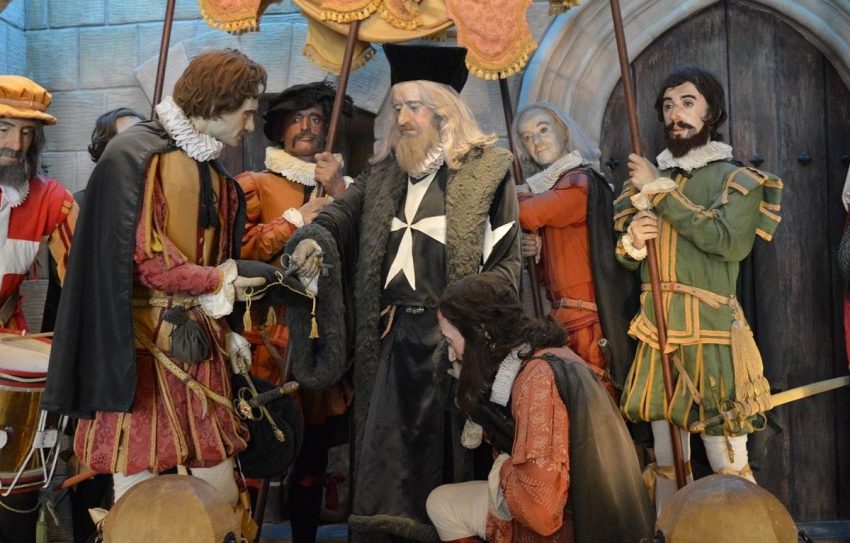
Map of the 11 Best Things to Do in Gjirokastër, Albania walking route with 11 stops in Gjirokastër.
Preview map of the 11 Best Things to Do in Gjirokastër, Albania route in Gjirokastër, showing 11 stops. Use the interactive map to zoom and tap markers.

Albanian Riviera Travel Guide (2026)

Drone shot of Ksamil Beach

This website uses affiliate links which earn a small commission at no additional cost to you.

Sunshine, sea cliffs, and secret coves - the Albanian Riviera is one of Europe's last true coastal frontiers. Stretching along the Ionian Sea from Vlorë in the north to Ksamil in the south, this stunning 120-kilometer stretch of coastline rivals the Amalfi or Dalmatian coasts for beauty - yet remains refreshingly affordable and authentic.

Once known only to backpackers and intrepid travelers, the Riviera has blossomed into one of the Mediterranean's most exciting emerging destinations. Here, turquoise waters meet rugged mountains, ancient ruins overlook golden beaches, and the air is filled with the scent of wild herbs and olive groves. Whether you're coming for lazy seaside days, mountain drives, or to explore the country's must-visit places in Albania, the Riviera perfectly blends wild beauty with modern charm.

From the Venetian walls of Himarë to the ancient city of Butrint, from the mountain passes of Llogara to the palm-lined promenades of Sarandë, this guide will take you through everything you need to know to experience the Albanian Riviera at its best in 2025.

Highlights of the Albanian Riviera

1. Vlorë – Gateway to the Riviera

View Vlore Albania
View Vlore Albania
CC BY-SA 4.0 / Neo Oens

Vlorë is where Albania’s history meets the sea — a city where the country’s independence was first declared and where the Ionian and Adriatic waters intertwine. Once an ancient Greek colony known as Aulon, it later became a major port during the Roman and Ottoman eras. The city’s past lingers in every corner — from the elegant Muradie Mosque, designed by the great Ottoman architect Mimar Sinan, to the Independence Monument that honors Albania’s founding in 1912. History lovers will enjoy exploring the National Museum of Independence and the peaceful Zvernec Monastery, hidden on an islet in the Narta Lagoon.

Yet modern Vlorë is far from a relic. The seafront promenade, Lungomare, buzzes with life — a mix of cafés, ice-cream parlors, and palm-lined walkways overlooking the bay. Locals gather here each evening for the xhiro, a leisurely stroll that’s part ritual, part celebration of daily life. With beaches to the south, elegant hotels, and easy access to both the Karaburun Peninsula and Sazan Island, Vlorë is the perfect starting point for any Albanian Riviera adventure.

Read our Vlorë Travel Guide

We recommend to rent a car in Albania through Discover Cars, they compare prices and review multiple car rental agencies. Book your rental car here.

Powered by GetYourGuide

2. Llogara Pass – A Drive Through the Clouds

High peak Llogara Vlore Albania
CC BY-SA 3.0 / Martin Brož

No trip along the Albanian Riviera is complete without experiencing the Llogara Pass, one of the most breathtaking mountain drives in Europe. Rising over 1,000 meters above sea level, the pass cuts through the Llogara National Park, a vast expanse of pine forests, wildflowers, and cool mountain air. The road’s twisting curves offer dramatic views — one moment you’re surrounded by mist and forest, the next you’re gazing down at the sparkling Ionian Sea far below. Stop at one of the rustic mountain lodges for grilled lamb, honey, and raki, traditional specialties of the region.

At the top of the pass, a viewpoint opens to a panorama so spectacular it almost doesn’t seem real. The turquoise coastline stretches endlessly toward Himarë and Sarandë, with the faint outline of Corfu visible on clear days. Hawks circle overhead, and the scent of pine mingles with the salty breeze. The descent is equally mesmerizing, winding down toward Dhermi and Palasë, where the sea meets the cliffs in a perfect sweep of blue. It’s not just a drive — it’s a journey through Albania’s wild, untamed beauty.


Location: Llogara National Park, Vlorë Albania | Hours: 24 Hours | Price: Free

Here is a complete selection of hotel options in Albania. Feel free to review each one and choose the stay that best suits your needs.

3. Himarë – Coastal Charm and Heritage

Himarë Beach
Himarë Beach

Nestled between towering mountains and a sapphire sea, Himarë captures the essence of the Albanian Riviera’s charm — small, authentic, and full of soul. Its roots go back to ancient times, when it was part of the Greek Epirus region. Today, its character reflects a unique blend of Greek and Albanian cultures, visible in the stone houses of its old town and the warm hospitality of its people. Climb up to Himara Castle, a crumbling hilltop fortress that offers sweeping views of the coast, and wander its quiet alleys shaded by olive trees.

Below the old town lies the modern seaside promenade, where turquoise water laps at beaches like Spile and Livadi. Himarë is more about atmosphere than luxury — a place to slow down, share grilled seafood with friends, and watch the sun dip behind the mountains. It’s also perfectly placed for exploring nearby beaches such as Filikuri Bay, a hidden cove accessible only by boat or a steep path. In Himarë, time feels slower, the light softer, and the sea somehow bluer — the kind of coastal simplicity that travelers fall in love with and never forget.

Read our Himarë Travel Guide

Traveling to a country with a different currency? Avoid ATM transaction fees and pay in local currency with a Wise Card. Having used it for over 5 years, we've saved loads on fees!

Powered by GetYourGuide

4. Borsh – Endless Beach and Ancient Ruins

Borsh Albanian Riviera
CC BY-SA 2.0 / godo godaj

Borsh is a land of contrasts — at once vast and tranquil, ancient and alive. Its beach stretches for nearly seven kilometers, the longest on the Albanian Riviera, with gentle waves and water so clear you can see the pebbles beneath your feet. Unlike more developed resort towns, Borsh still feels wonderfully local. Olive groves cascade down the hillsides, and small family-run restaurants serve seafood caught that morning. The smell of salt and grilled sardines fills the air, and children play where the mountains touch the sea.

Above it all rises Borsh Castle, a timeless guardian perched on a hill. Its ruins date back to the 4th century BC, later rebuilt by Byzantines and Ottomans who recognized its strategic view over the coast. Inside the crumbling walls stands a small Ottoman mosque, quiet and serene among the stones. The climb is steep but rewarding — from the top, you can see the sea glitter endlessly below, framed by olive trees and history. Borsh is a place that doesn’t try to impress — it simply exists in harmony with nature, inviting you to do the same.


Location: Borsh Beach, Rruga Plazhi, Borsh, Albania | Hours: 24 Hours | Price: Free | Website

5. Qeparo – The Riviera’s Hidden Gem

Qeparo isolated beach
CC BY-SA 4.0 / Arianit

Tucked between Borsh and Himarë, the stone village of Qeparo feels like a step back in time. Divided into two parts — the old village on the hillside and the new by the sea — it perfectly captures the Riviera’s dual spirit of heritage and serenity. Old Qeparo is a maze of cobblestone lanes, arched doorways, and terracotta rooftops surrounded by fig and pomegranate trees. Here, life moves at its own rhythm — slow, peaceful, and deeply connected to the land.

Down below, New Qeparo opens to a beautiful bay with a quiet beach and a handful of family-run hotels and tavernas. It’s an ideal spot for swimming, kayaking, or simply listening to the sound of the waves. Few places along the Riviera feel this untouched — Qeparo is a living postcard of Mediterranean simplicity, where every turn of the road offers another breathtaking view of the sea. Whether you stay for a night or a week, it has a way of staying with you long after you’ve left.


Location: Qeparo, Albania

6. Sarandë – Southern Soul of the Riviera

view of saranda from lekuresi castle
CC BY-SA 2.0 / Jarosław Lichoń

At the southern end of Albania’s Ionian coast, Sarandë stands as the Riviera’s vibrant cultural and coastal hub — a place where history, hospitality, and the sea converge. Once a sleepy fishing village, Sarandë has grown into a lively resort town, yet it retains the relaxed charm that defines the Albanian Riviera. Its crescent-shaped bay shimmers beneath terraced hillsides, with the Greek island of Corfu visible across the water. Along the palm-lined promenade, locals and travelers alike gather for evening strolls, enjoying the golden light that softens the city as the sun sets behind Lekursi Castle.

Sarandë’s appeal lies in its balance of the old and new. Ancient ruins and Byzantine monasteries sit alongside modern cafés and boutique hotels. Visit the Monastery of Forty Saints, the city’s namesake, for panoramic views and a glimpse into early Christian history. Then descend to the waterfront, where fishing boats bob gently beside yachts, and the scent of grilled seafood fills the air. With nearby treasures like the Blue Eye Spring and Butrint National Park, Sarandë serves as both a destination and a gateway — a coastal city that embodies the Riviera’s spirit of timeless beauty and discovery.

Read our Sarandë Travel Guide
Powered by GetYourGuide

7. Ksamil – Islands of the Ionian

Ksamil
Ksamil

Just fifteen minutes south of Sarandë lies Ksamil, a coastal paradise that feels almost too perfect to be real. With its soft white sand, calm turquoise waters, and three tiny islands scattered offshore, Ksamil is the Riviera’s most photogenic gem — often compared to the Caribbean for its color and clarity. The beaches here are small and intimate, framed by olive trees and beach cafés that spill onto the sand. Wooden boats and kayaks glide between the islands, where you can find quiet coves and shallow lagoons ideal for swimming or snorkeling.

Despite its growing popularity, Ksamil still holds an air of simplicity. Family-run restaurants serve grilled fish, fresh salads, and local wine with views over the Ionian, while children play in the shallows. The pace of life slows, the sea sparkles, and time seems to stretch in the afternoon heat. A short drive south leads to Butrint National Park, Albania’s most significant archaeological site, where ancient ruins rise among reeds and mirror-like waters. For travelers seeking a perfect blend of natural beauty, serenity, and culture, Ksamil is the shining crown of the Albanian Riviera.

Read our Ksamil Travel Guide
Powered by GetYourGuide

Best Beaches on the Albanian Riviera

The Albanian Riviera is blessed with some of the clearest waters in Europe. Each beach has its own personality:

  • Dhërmi Beach - Long, lively, and lined with bars; perfect for music festivals and nightlife.
  • Gjipe Beach - Hidden between dramatic cliffs, accessible by hike or boat; ideal for adventurers.
  • Jalë Beach - A relaxed, youthful vibe with camping and beach clubs.
  • Borsh Beach - Peaceful and vast, great for families and those seeking solitude.
  • Ksamil Islands - Picture-perfect, with white sands and shallow turquoise water; great for swimming and snorkeling.
  • Monastery Beach (Sarandë) - Small, sheltered, and scenic - perfect for a quiet afternoon.
  • Mirror Beach - A hidden cove south of Sarandë where sunlight reflects off turquoise water and white cliffs, creating a dazzling, mirror-like glow along the Ionian coast.

Whether you prefer barefoot luxury or off-grid exploration, the Riviera’s coastline offers something for everyone.

How to Get to the Albanian Riviera

By Air: The main gateway is Tirana International Airport (Nënë Tereza), about 150 km north of Vlorë. From there, it's a scenic 3-hour drive south via the A2 motorway. Alternatively, travelers can fly into Corfu International Airport (CFU) in Greece and take a short ferry to Sarandë, ideal for exploring the southern Riviera first. For the best deals and a seamless booking experience, check out these flights to on Booking.com.

By Car: A road trip is the best way to experience the Albanian Riviera. The SH8 coastal highway connects Vlorë to Sarandë, winding through mountains and overlooking dazzling sea vistas. Stop often - every bend reveals a new beach or viewpoint worth exploring. If you are looking to rent a car in Albania I recommend having a look at Discover Cars, first, as they compare prices and review multiple car rental agencies for you.

By Bus: Regular buses and minibuses (furgons) run between Tirana, Vlorë, Himarë, and Sarandë. While slower than driving, they're affordable and allow travelers to relax and enjoy the scenery. [bus]

Where to Stay on the Albanian Rivier

Accommodation along the Riviera caters to every traveler - from boutique seaside hotels to eco-lodges and family guesthouses.

In Vlorë, stay near the Lungomare promenade for beach access and restaurants, such as Marina Bay Luxury Resort & Spa. In Himarë, Castle Hotel Himara offers stunning sea views, while Dhermi has chic beach resorts like Hildon Eco Hotel.

For a quieter retreat, Qeparo's stone guesthouses provide old-world charm, while in Sarandë, Hotel Butrinti & Spa combines luxury with a central location. In Ksamil, waterfront stays like Hotel Luxury Ksamil bring paradise right to your doorstep.

A Short History of the Albanian Riviera

The Albanian Riviera has been shaped by countless civilizations - Illyrians, Greeks, Romans, Byzantines, and Ottomans - each leaving their mark on this sun-drenched coast. Ancient cities like Oricum and Butrint thrived as trading hubs, while Venetian and Ottoman fortresses guarded its cliffs.

In the medieval era, stone villages such as Himarë, Qeparo, and Borsh developed their own distinct identities, blending Greek and Albanian influences. During Ottoman rule, the region's castles and mosques reflected the fusion of eastern and western cultures that still defines the Riviera today.

In modern times, the Riviera remained off the beaten path until Albania’s borders reopened in the 1990s. Since then, it has emerged as a symbol of the country’s rebirth - a place where wild nature meets rediscovered freedom. Today, it stands as one of Europe’s most exciting destinations: authentic, unspoiled, and full of stories waiting to be told

When to Visit the Albanian Riviera

The Riviera enjoys over 300 days of sunshine a year, making it a year-round destination.

  • Spring (April-June) - Ideal for hiking, sightseeing, and quieter beaches. The landscape is lush, and temperatures are mild.
  • Summer (July-August) - Peak season, with lively nightlife, festivals, and perfect swimming weather.
  • Autumn (September-October) - Warm seas, fewer crowds, and golden light - arguably the best time to visit.
  • Winter (November-March) - Peaceful and atmospheric, with cool breezes and empty beaches, though some resorts close.

Conclusion

The Albanian Riviera is no longer a secret - yet it remains one of the Mediterranean's most unspoiled coastlines. It's a place where history, hospitality, and natural beauty intertwine effortlessly. Whether you're chasing sunsets from Lekursi Castle, diving into the Blue Eye, or driving through the misty peaks of Llogara Pass, the Riviera invites you to slow down and savor every moment.

In 2026, as Albania continues to open its doors to the world, this coastline offers something rare: a glimpse of the Mediterranean as it once was - pure, wild, and full of soul.

Moira & Andy
Moira & Andy

Hey! We're Moira & Andy. From hiking the Camino to trips around Europe in Bert our campervan — we've been traveling together since retirement in 2020!

Read our full story here

This website uses affiliate links which earn a small commission at no additional cost to you.

Walking Tour Map
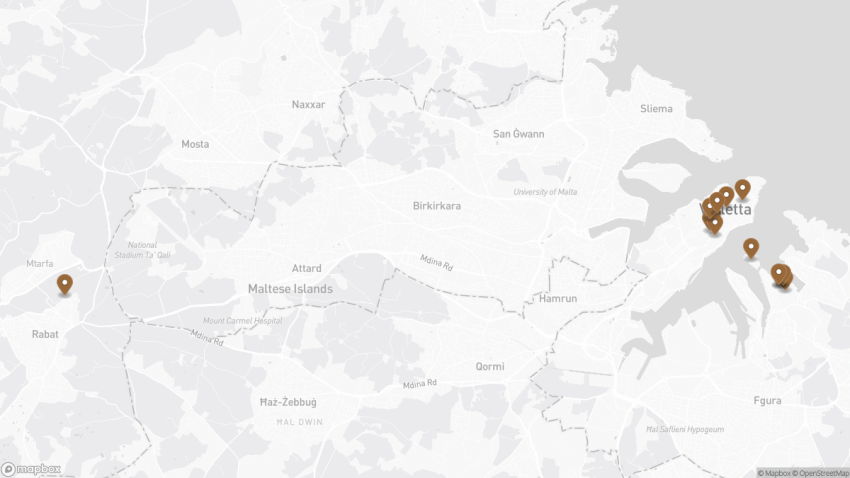
Map of the Albanian Riviera Travel Guide walking route with 7 stops.
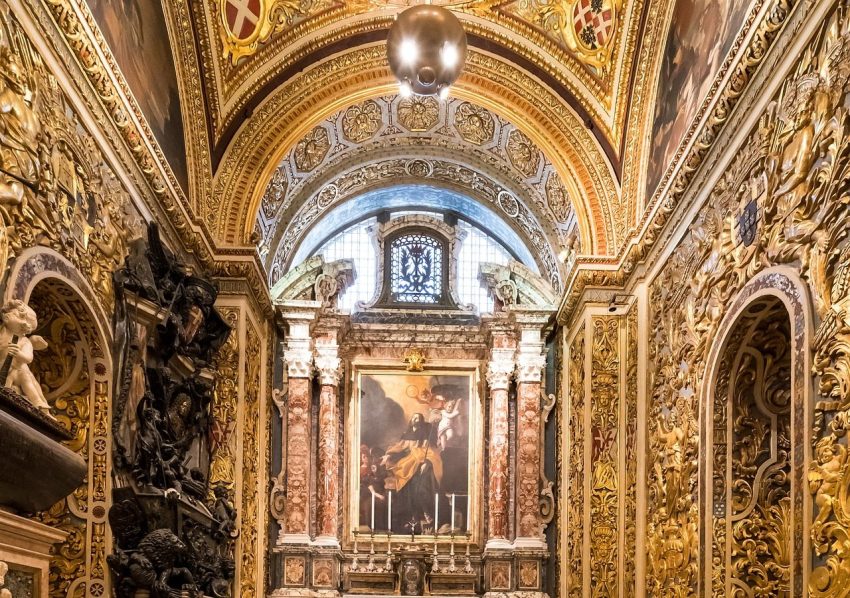
Preview map of the Albanian Riviera Travel Guide route, showing 7 stops. Use the interactive map to zoom and tap markers.