Tirana, Albania: The Ultimate Travel Guide 2026

Statue Skanderbeg Square Tirana Albania
CC BY-SA 4.0 / Pudelek

Tirana, the vibrant capital of Albania, offers an eclectic mix of modernity and tradition, making it an exciting destination for any traveler. The city located in Central Albania is known for its bold and colorful architecture, with murals and street art adorning many of its buildings. Visitors can stroll through the lively streets of the city center, where cafes and shops line the boulevards, creating a dynamic and energetic atmosphere. Tirana's bustling markets, such as the New Bazaar, provide an authentic glimpse into local life, where visitors can find everything from fresh produce to handmade goods. If you're exploring the country on a road trip, Tirana is the perfect starting point for a two-week Albania itinerary - offering easy access to the coast, mountains, and cultural heartlands that define the Albanian experience.

The city's green spaces, such as the Grand Park of Tirana and the surrounding artificial lake, offer a peaceful escape from the urban hustle. Whether you're looking to go for a relaxing walk, rent a bike, or simply sit by the water, these areas provide a refreshing contrast to the busy city streets. For those interested in panoramic views of the city, a visit to Mount Dajti is a must. Accessible by the Dajti Ekspres cable car, this mountain offers stunning views of Tirana and the surrounding countryside, along with a range of hiking trails and picnic spots.

Tirana also has a thriving cultural scene, with museums, galleries, and theaters scattered throughout the city. The National History Museum, located in Skanderbeg Square, offers insights into Albania's past through its engaging exhibits. Art lovers can enjoy the contemporary works at the National Gallery of Arts, while the Opera House is a fantastic venue for those interested in live performances, from ballet to opera and theater productions. In the evenings, Blloku is the place to be, a trendy neighborhood where locals and visitors gather to enjoy vibrant nightlife, ranging from bars and lounges to live music venues.

For those seeking a taste of Albanian cuisine, Tirana's restaurants offer a variety of traditional dishes, such as “tavë kosi” (lamb with yogurt) and “fërgesë” (a stew with peppers and cheese). Dining in Tirana is a sensory experience, with many restaurants offering outdoor seating where you can enjoy your meal while people-watching in one of the city's bustling squares or streets. Whether you're interested in history, culture, food, or simply soaking in the local atmosphere, Tirana provides an unforgettable experience for all who visit.

History of Tirana

Tirana in Prehistoric and Ancient Times

Discoveries in the Pellumbas Cave, near Tirana, have proven that the area has been inhabited since the Iron Age. Early inhabitants likely engaged in agricultural practices, as well as hunting and gathering. The region was part of the wider Illyrian territories, where several Illyrian tribes settled. These tribes were known for their warrior culture and strategic settlements, which laid the foundation for the area’s future development. The remnants of ancient artifacts, including pottery and tools, suggest a rich cultural heritage dating back thousands of years.

Tirana Under Roman Rule

The area that would later become Tirana was annexed by Rome during the expansion of the Roman Empire. It became an integral part of the Roman province of Illyricum. The Romans recognized the strategic importance of the area, leading to the construction of roads, infrastructure, and agricultural systems that contributed to the area’s growth. One significant discovery is the remnants of a 3rd-century Roman villa found in the region. This villa provides valuable insight into the domestic life and architectural style during the Roman period, indicating the Roman influence in what was then a relatively small settlement.

Tirana During Byzantine Rule

After the Roman Empire split into East and West in the 4th century, Tirana came under the control of the Byzantine Empire. During this time, the Byzantine Emperor Justinian I ordered the construction of the Fortress of Justinian, a fortification that would help secure the region against outside invasions. While the town itself remained small, the fortress represented a significant shift in the area’s role in the broader Byzantine defense network. The fortification is an important piece of history for the region, providing evidence of its strategic military importance during the Byzantine era.

Tirana Under Ottoman Rule

While Albania’s national hero, Skanderbeg, was fighting the Ottomans in the 15th century, Tirana was still a small village. However, during Ottoman rule, the settlement began to develop into a small town. Under Ottoman influence, Tirana grew in size and importance, becoming a key point for trade and agriculture. The Ottomans built several significant structures in the town, including a bazaar and watermills, which played a crucial role in the economic development of the area. In 1614, Sulejman Bargjini, a local ruler, built the Old Mosque, a hammam (Turkish bath), and a bakery in an effort to attract settlers. This initiative helped establish Tirana as a thriving town and laid the foundation for the modern city.

Tirana in the Early 20th Century

Tirana’s status as a major settlement was further solidified when it was chosen to be the capital of Albania in 1920. This decision came after the Congress of Lushnjë, where representatives from across Albania gathered to discuss the future of the newly independent country. As Albania sought to establish its identity following centuries of foreign rule, Tirana was selected as the political and administrative center of the nation due to its central location and strategic significance. This marked the beginning of Tirana’s transformation from a small Ottoman town to the bustling capital city it is today.

Moira & Andy
Moira & Andy

Hey! We're Moira & Andy. From hiking the Camino to trips around Europe in Bert our campervan — we've been traveling together since retirement in 2020!

Read our full story here

Visiting Tirana for the first time and wondering what are the top places to see in the city? In this complete guide, I share the best things to do in Tirana on the first visit. To help you plan your trip, I have also included an interactive map and practical tips for visiting!

This website uses affiliate links which earn a small commission at no additional cost to you.

Powered by GetYourGuide

32 Best places to See in Tirana

This complete guide to Tirana not only tells you about the very best sights and tourist attractions for first-time visitors to the city but also provide insights into a few of our personal favorite things to do.

This is a practical guide to visiting the best places to see in Tirana and is filled with tips and info that should answer all your questions!

1. Et’hem Bey Mosque
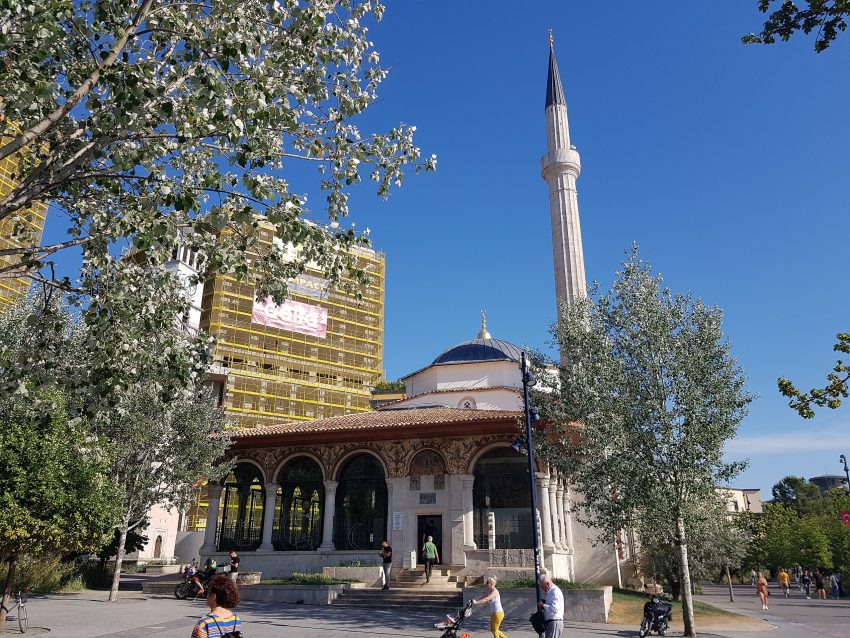
Ethem Bey Mosque, Tirana, Albania
CC BY-SA 4.0 / Ravi Dwivedi
Et’hem Bey Mosque is a small Ottoman-era mosque on the edge of Skanderbeg Square in central Tirana, valued as both a work of art and a symbol of Albania’s return to public worship. Construction began in 1794 under Mulla Bey and was finished in 1821 by Haxhi Et’hem Bey, and it narrowly survived the 1967 atheist campaign that shuttered most religious sites. Inside, visitors linger over delicate frescoes—unusual for Islamic interiors—for their painted trees, waterfalls, bridges, and dense floral and geometric patterns across the dome. The calm, intimate prayer hall feels worlds away from the square’s noise, and many travelers remember the murals as the mosque’s defining detail.
| Hours: 08:00-11:00 | Distance: 0km

We recommend to rent a car in Albania through Discover Cars, they compare prices and review multiple car rental agencies. Book your rental car here.

2. Skanderbeg Square

Skanderbeg square Tirana Albania
CC BY-SA 3.0 / Leeturtle
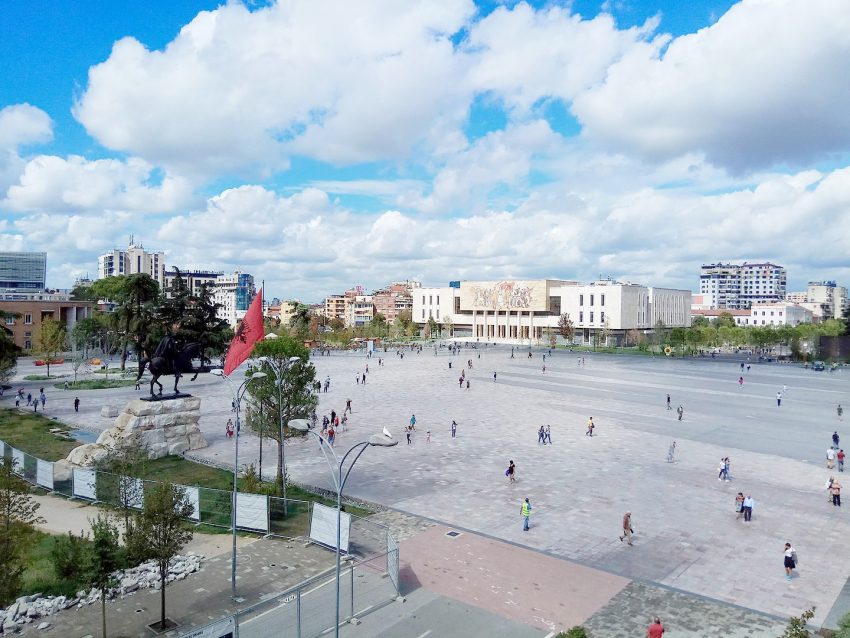
Skanderbeg Square is Tirana’s central civic plaza, where Albania’s political turns have played out since the city became capital in 1920. Once a stage for communist-era parades—and the site where Enver Hoxha’s statue stood until it was toppled in 1991—it now revolves around the equestrian monument of national hero Gjergj Kastrioti Skanderbeg. The 2018 redesign replaced traffic and clutter with a broad pedestrian expanse paved in red, gray, and beige stones sourced from regions across Albania, creating a subtle patchwork underfoot. Around the open space, you’ll notice the National Historical Museum’s bold mosaic façade and, nearby, the slender Clock Tower beside the Et’hem Bey Mosque.
| Hours: 24 Hour | Distance: 0km

Here is a complete selection of hotel options in Tirana. Feel free to review each one and choose the stay that best suits your needs.

3. Bunk'Art 2

Exterior Bunk Art 2, Tirane, Albania
CC BY-SA 4.0 / Albinfo
Bunk’Art 2 is an underground Cold War bunker turned museum, entered through heavy steel doors into dim, narrow corridors of raw concrete. Built as a protected shelter for the Ministry of Internal Affairs, it now traces how the Sigurimi secret police enforced surveillance, censorship, and political repression under the communist regime. Room by room, you pass preserved offices, interrogation spaces, and isolation cells, alongside archival footage and testimonies that make the setting feel uncomfortably immediate. One of the most arresting features is a wall listing 6,027 executed victims, backed by figures documenting tens of thousands imprisoned or exiled. The cramped layout can feel crowded, which only heightens the bunker’s claustrophobic atmosphere.
Location: Rruga Sermedin Said Toptani, Tirana | Hours: Sun - Sat 09:00 - 18:00 | Price: 500 Lek | Website | Distance: 0.1km

Traveling to a country with a different currency? Avoid ATM transaction fees and pay in local currency with a Wise Card. Having used it for over 5 years, we've saved loads on fees!

4. Clock Tower In Tirana

Clock Tower Tirana Albania
Flickr / aXeLuS
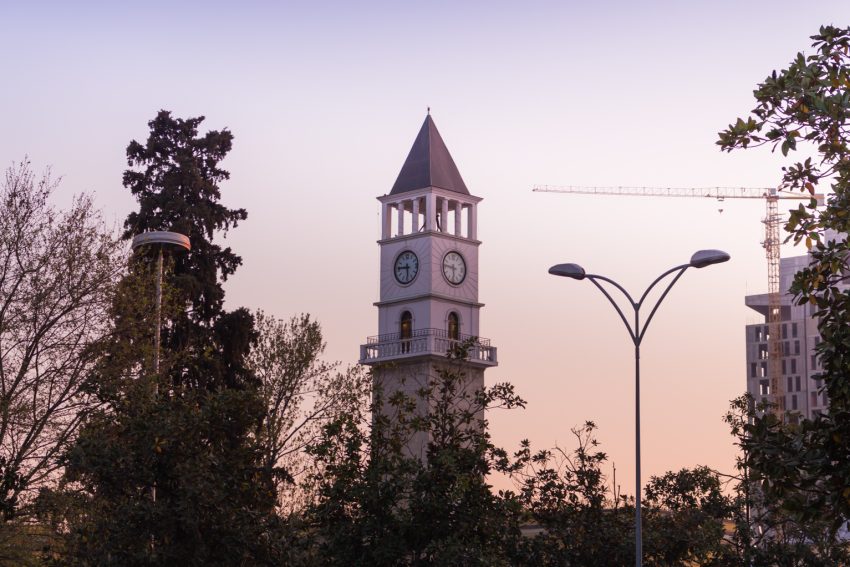
Tirana’s Clock Tower (Kulla e Sahatit) is a 19th-century Ottoman-era timekeeper that still anchors Skanderbeg Square and appears on the city’s coat of arms. Commissioned by Haxhi Et’hem Bey and completed in 1822 with donations from local merchants, it was once the tallest point in town and later raised to about 35 meters when a German-made clock was added in 1928. Visitors climb a tight 90-step spiral stair to a small platform, where the view spreads across the square, rooftops, and distant hills—worth the squeeze, as many reviewers note. Up close, the pale stonework and clock faces feel surprisingly intimate for such a central landmark.
Location: Rr Luigj Gurakuqi, Tirana, Albania | Hours: 9am-4pm Mon-Fri, to 2pm Sat | Price: 200 Lek | Distance: 0.1km

Click here to read our blog about Travelling Back to Tirana’s Communist Past 2026: History & Hidden Sites

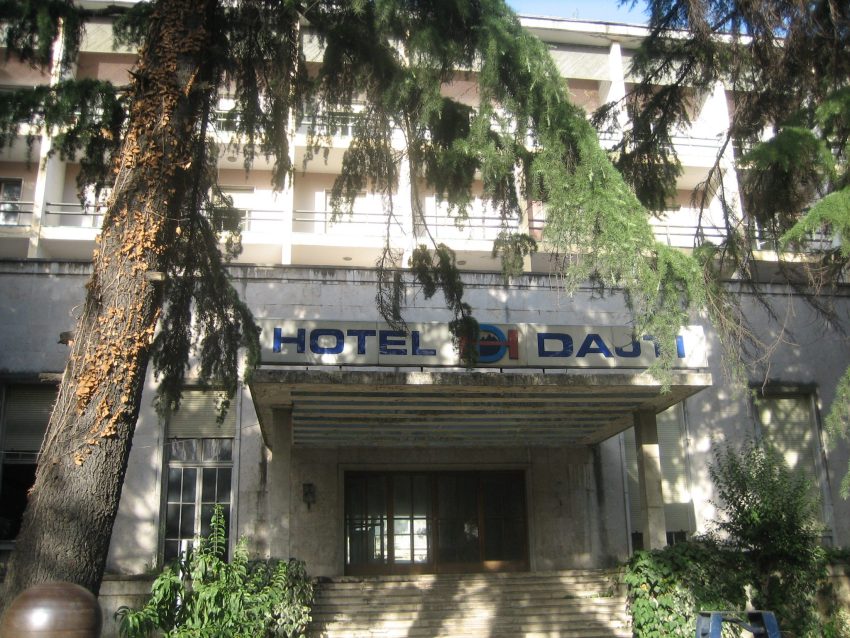
5. Hotel Dajti

Hotel Dajti
Hotel Dajti
CC BY-SA 3.0 / Belgian man
Hotel Dajti is a shuttered 1930s functionalist hotel on Tirana’s Bulevardi Dëshmorët e Kombit, facing Park Rinia, and it still reads as a marker of the city’s 20th‑century turns. Built under Italy’s interwar influence, it later became one of the few tightly managed places where foreign visitors could stay during communism, with its hospitality intertwined with monitoring and controlled encounters. Today most people experience it from the pavement: a restrained, symmetrical façade that feels calm until you remember what it represented. Closed in December 2005, it slipped into disrepair, and recent restoration plans linked to the Bank of Albania have shifted it from ruin toward preservation.
Location: Banka e Shqipërisë, Bulevardi Dëshmorët e Kombit, Tirana, Albania. | Distance: 0.2km

Explore Tirana at your own pace with our self-guided walking tour! Follow our curated route to discover must-see sights and local secrets that makes Tirana one of the best places to visit in Albania.

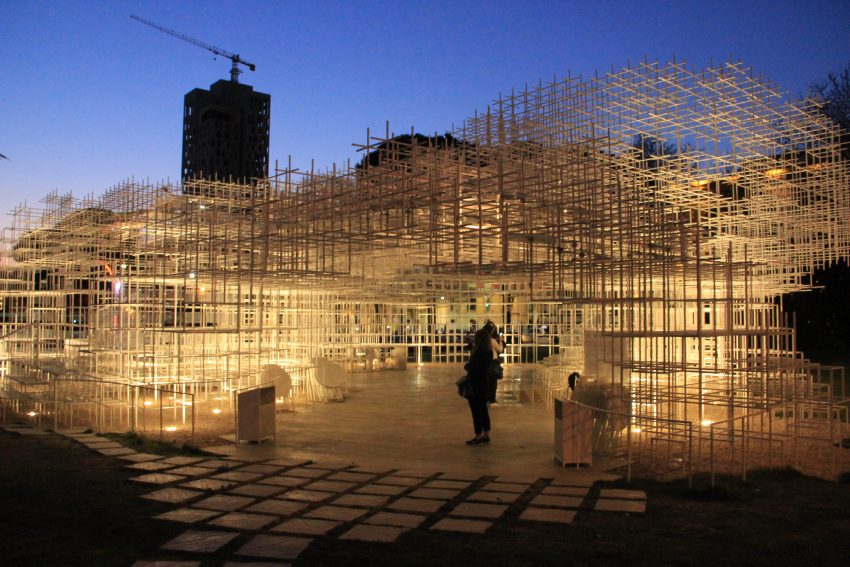
6. REJA - The Cloud

Reja Tirane Albania
Reja Tirane Albania
CC BY-SA 4.0 / Anila amataj
REJA (“The Cloud”) is a walk-through steel lattice by Japanese architect Sou Fujimoto, set on the plaza in front of the National Art Gallery. Its thin white rods form a porous, hovering canopy that reads differently from every angle—part sculpture, part playground, part stage. Visitors don’t just look: they weave beneath the grid, perch on its steps, and frame photos through its geometric gaps as light shifts across the structure. First created for London’s Serpentine Gallery in 2013, it later found a permanent home here as a symbol of a more open, contemporary public culture. On warm evenings, the space often becomes a backdrop for open-air music, film, and performances.

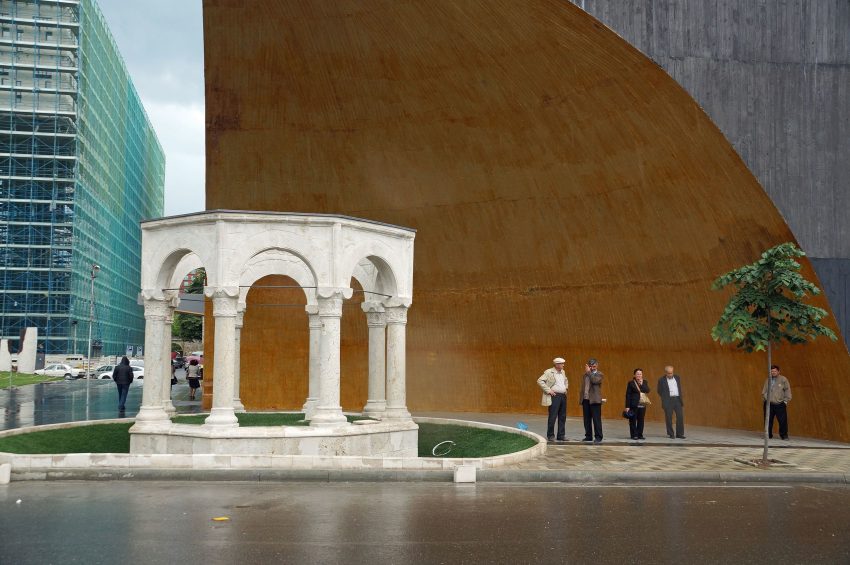
7. Kapllan Pasha's Tomb

Tirana Kapllan Pasha Tomb
CC BY-SA 4.0 / Albinfo
Kapllan Pasha’s Tomb in central Tirana, Albania is a small Ottoman-era türbe built in 1817 for Kapllan Pasha Toptani, a local governor from the influential Toptani family. Set right on the street, it’s easy to pause at its octagonal stone base, where eight carved columns rise in precise symmetry to support a compact dome. The monument matters because it’s one of the few surviving traces of Ottoman Tirana after the adjacent Sylejman Pasha Mosque was destroyed in World War II. Declared a first-category Cultural Monument in 1948 and restored in 1985, it’s a quiet, contemplative spot amid the city’s bustle, though visitors often note the lack of on-site explanation.
Location: Rruga 28 Nëntori, Tirana 1000 | Distance: 0.2km

8. House of Leaves
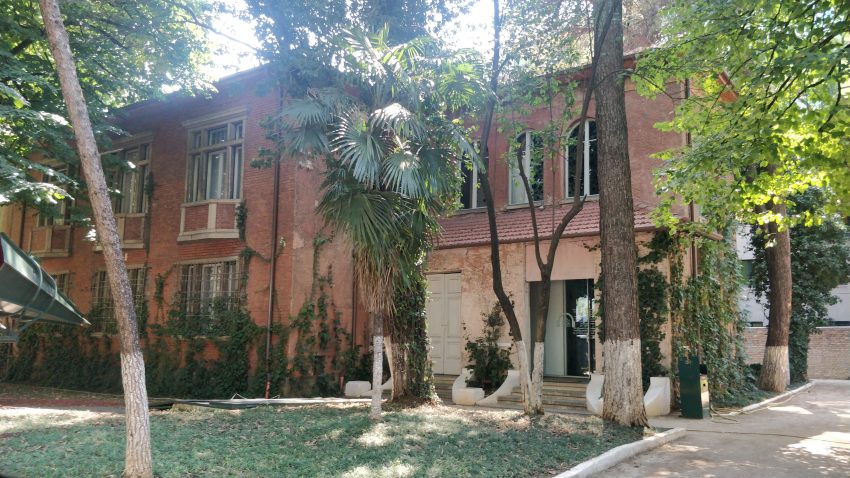
Museum of Leaves, Tirana, Albania
CC BY-SA 4.0 / Jcornelius
The House of Leaves (Shtëpia me Gjethe) is a museum inside an ivy-clad 1930s building that once served as Albania’s first maternity hospital, then a WWII Gestapo base, and later the Sigurimi’s surveillance headquarters. The galleries trace how the secret police monitored everyday life, with original wiretapping gear, miniature microphones, and thick dossiers compiled by informants. Rooms devoted to planted “bugs” and recruited “living microphones” make the mechanics of eavesdropping feel unsettlingly concrete, while audio recordings and personal testimonies bring the human cost into focus. Dim lighting, soundproofed spaces, and authentic documents create a sober, immersive visit that many travelers find both moving and hard to forget.
Location: Rruga Dëshmorët e 4 Shkurtit, Tiranë. | Hours: Monday-Sunday 09:00 - 19:00 | Price: 700 lekë | Website | Distance: 0.2km

9. Rruga Murat Toptani
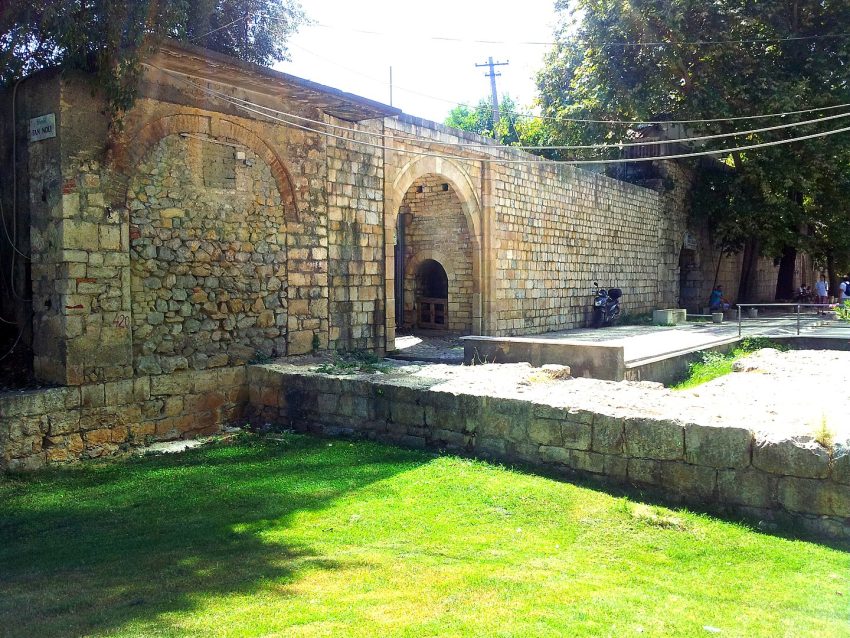
Fortress of Justinian Tirana Albania Side View
CC BY-SA 4.0 / Ardit Ajdini
Rruga Murat Toptani is a pedestrian street in central Tirana running between the National Art Gallery and the Parliament, a calm corridor through the city’s civic core. Twin rows of plane trees shade the paved walkway, making it feel like a small promenade even on hot summer days. Along the route, you can spot fragments of the old Justinian Fortress Wall, a rare, close-up trace of the city’s Byzantine-era defenses. The street is named for the influential Toptani family, once major landowners in Ottoman-era Albania, tying the setting to Tirana’s older power centers. In front of the gallery, Sou Fujimoto’s airy steel installation Reja (The Cloud) adds a playful modern counterpoint to the stone ruins.
| Website | Distance: 0.2km

10. Palace of Culture
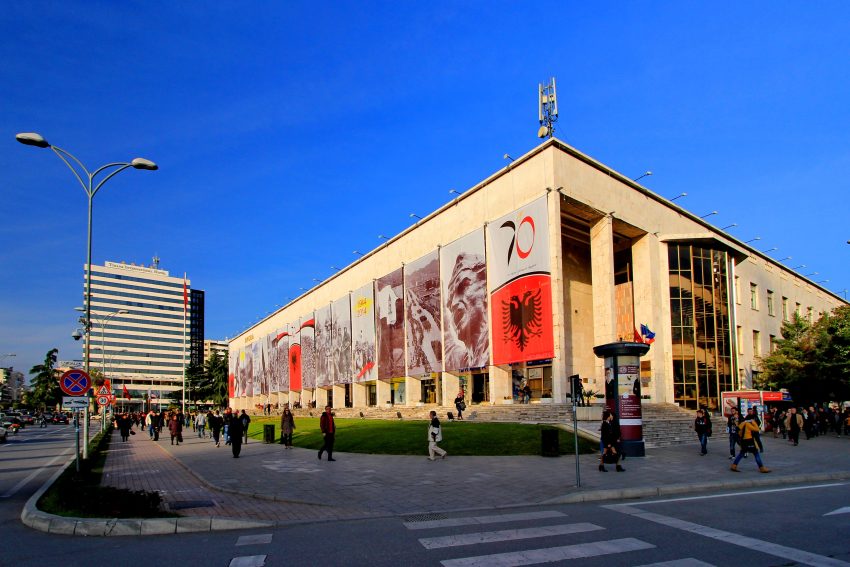
Palace of Culture Tirana Albania
CC BY-SA 4.0 / ShkelzenRexha
The Palace of Culture is a monumental white-stone complex on the east side of Skanderbeg Square in Tirana, built in the 1960s in a Soviet-influenced, Stalinist neoclassical style. Begun in 1960 as a planned “gift” from the USSR—Khrushchev laid the first brick—it was finished by Albanian architects in 1966 after the Soviet-Albanian split, and it replaced the old bazaar and a historic mosque. Visitors notice the strict symmetry and broad, marble-toned interiors designed for civic grandeur. Inside are two major institutions: the National Theatre of Opera and Ballet, Albania’s largest performance venue, and the National Library, with over a million volumes and manuscripts.
Location: Sheshi Skenderbej 1000 Tirana, Albania | Website | Distance: 0.2km

11. National Art Gallery
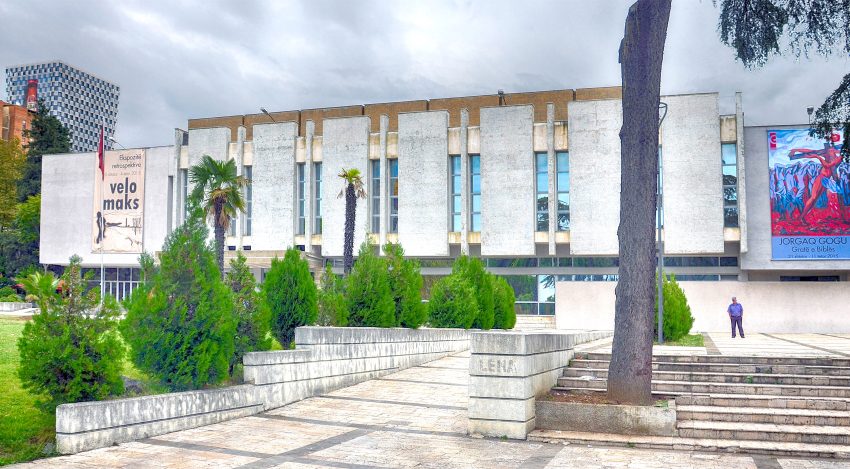
National Art Gallery, Tirana, Albania
CC BY-SA 4.0 / Pasztilla
Tirana’s National Art Gallery (founded in 1954) is Albania’s main public collection for visual art, tracing how painters and sculptors moved from 19th‑century scenes of daily life to the disciplined imagery of socialist realism and, later, freer contemporary work. Inside, the mood shifts as you climb from intimate rural paintings to large, ideological canvases celebrating workers and revolutionaries. Outside, visitors often linger by “Reja” (“The Cloud”), Sou Fujimoto’s airy steel-and-glass structure that reads like a sketch turned into architecture. A quieter back area has been known for displaced communist-era statues—figures like Lenin and Stalin—though some recent visitors report finding parts closed or missing.
Location: Blvd Dëshmorët e Kombit | Hours: 10am- 6pm Mon-Sat | Price: 200 lek | Website | Distance: 0.2km

12. National History Museum
National History Museum Tirana Albania
CC BY-SA 4.0 / OdettMelody
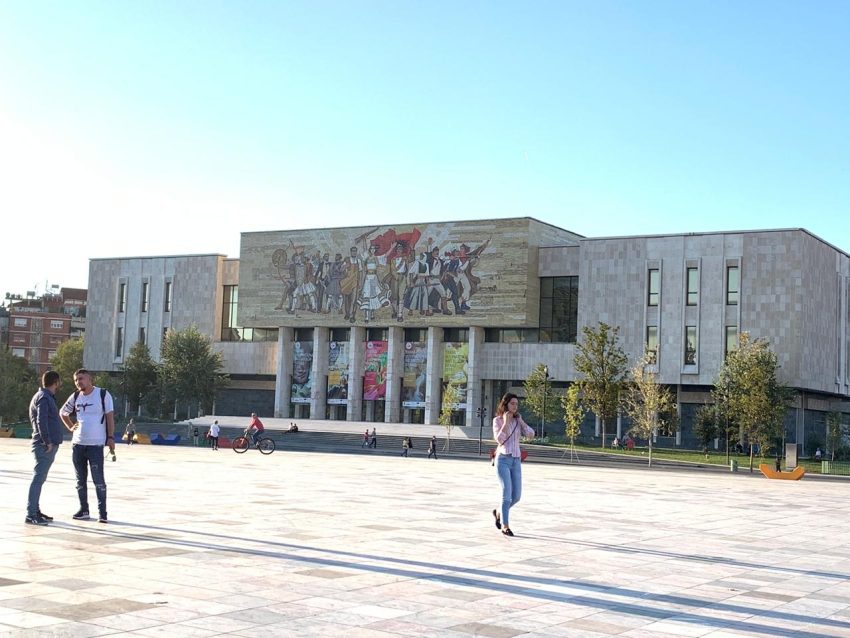
Tirana’s National Historical Museum sits on Skanderbeg Square, a monumental 1981 building that frames the city center and traces Albania’s story across millennia. Above the entrance, the vast mosaic “The Albanians” shows a procession of figures—from ancient warriors to 20th‑century partisans—setting the tone before you even step inside. Galleries move from prehistoric and classical artifacts to medieval religious art, then into the 1912 independence narrative and a sobering Communist Terror pavilion with prison clothing, photos, and personal effects. Some displays have limited English explanation, but the objects and imagery carry much of the weight. Expect a museum that feels both civic and intimate, with moments that linger.
Location: Skënderbej Square, Boulevard Zogu I, Tirana , Albania | Hours: 9am-7pm | Price: 200 lekë | Website | Distance: 0.2km

13. Rinia Park

Rinia Park
Rinia Park
CC BY-SA 2.0 / Sharon Hahn Darlin
Rinia Park (“Youth Park”) is a central green refuge between Skanderbeg Square and the Blloku area, where daily life slows to shaded walks and café tables. Opened in 1950 during the communist period, it has evolved from a parade-ground gathering space into a relaxed social hub. The park’s focal point is the Taiwan Complex—modern terraces, restaurants, and fountains that glow in the evening and draw a steady crowd. Tree-lined paths, benches, and small play areas make it easy to linger, and weekends often bring picnics and card games. Seasonal markets and open-air events add bursts of energy without overpowering the park’s calm.
Location: Rinia Park, Tirana, Albania | Distance: 0.3km

14. Statue of the Unknown Partisan
Unknown Soldier Tirana, Albania
CC BY-SA 3.0 / MirkoS18
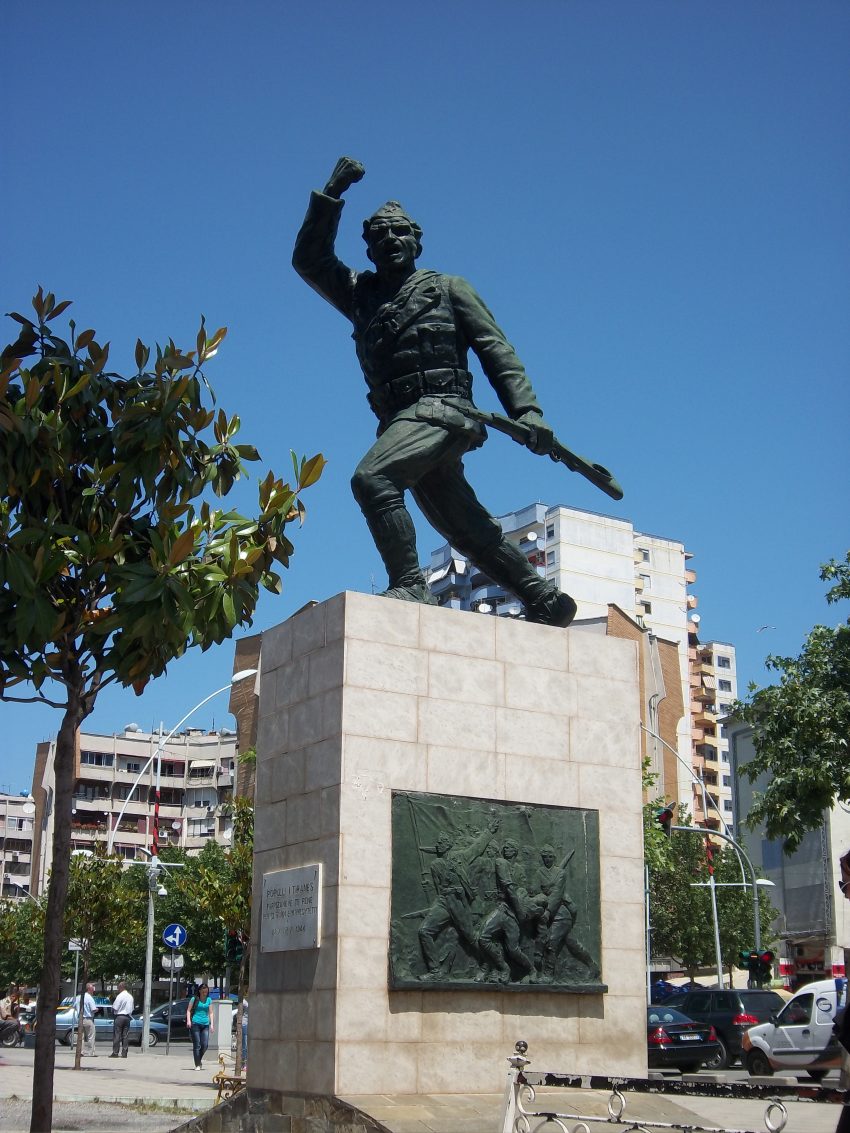
The Statue of the Unknown Partisan in Tirana, Albania is a bronze memorial to Albanian resistance fighters killed in World War II, commissioned in the postwar communist era. The figure is captured mid-stride, one arm thrust forward as if directing fire, a tense pose that reads as vigilance and defiance. It stands beside the Albanian Parliament, on ground that once held Tirana’s oldest mosque, demolished in 1967 during the state’s anti-religion campaign. Across the road, Kapllan Pasha’s tomb survives from the old Ottoman complex, creating a stark visual contrast between eras. Many visitors pause briefly for photos and to take in the layered setting.

15. Fortress of Justinian

Fortress of Justinian Tirana Albania Side View
CC BY-SA 4.0 / Ardit Ajdini
Justinian’s Fortress (often called Tirana Castle) is a small surviving slice of the city’s old fortifications, now folded into a pedestrian enclave in central Tirana. Only fragments remain, including restored Byzantine-era walls that rise to about six meters and are linked to Emperor Justinian’s defensive network. What visitors notice most is the contrast: ancient stonework bordering cobbled lanes lined with cafés, restaurants, and artisan boutiques in the revived “Old Bazaar” (Kalaja e Tiranës), reopened in 2018. It’s less a traditional castle than a place to wander, browse shops, and linger over food and wine—an atmosphere many travelers describe as relaxed, if a bit touristy.
Location: Shëtitorja Murat Toptani, Tiranë, Albania | Hours: 07:00 - 02:00 | Website | Distance: 0.3km

16. Café-Museum Komiteti

Komiteti Bar Museum Tirana
© Andrew Ashton
Café-Museum Komiteti is a café-bar in central Tirana that doubles as a dense, informal museum of Albanian everyday life. Set on Rruga Papa Gjon Pali II near Blloku, it’s memorable for how the décor becomes the experience: shelves and walls packed with vintage radios, enamel signs, old photographs, household tools, and small Communist-era details. You “buy a ticket” by ordering a drink, then wander with your eyes—many of the best objects are tucked above head height or in corners like a scavenger hunt. Try mountain tea for a traditional comfort drink, or sample a small raki tasting to match the setting. By day it feels like a quiet café; later it leans into lively bar energy.
Location: Rruga Fatmir Haxhiu Tirana Albania | Hours: Daily: 07:00–00:00. | Price: Free (just pay for drinks) | Website | Distance: 0.5km

17. New Bazaar
Olive stall at Sheshi Avni Rustemi 2
CC BY-SA 3.0 / Gertjan R.
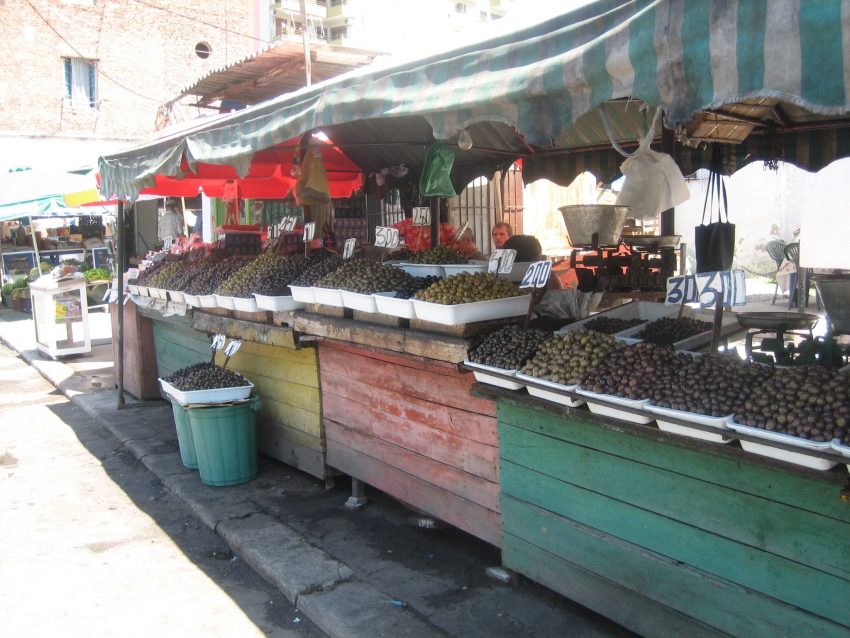
New Bazaar (Pazari i Ri) is a revitalized market square where daily shopping, street life, and old neighborhood character meet. At its center, the farmers’ market piles up seasonal fruit and vegetables alongside jars of honey, herbs and spices, and bottles of homemade raki and local wine sold by small producers. A 2017 restoration reshaped the area with cobblestone walkways, wide pedestrian lanes, and bright facades topped by red-tiled roofs, making it especially memorable to wander with a camera. As the day shifts to evening, cafés and restaurants around the square fill up, and the atmosphere turns into a warm, social outdoor dining scene under lights.
Location: Rruga Shenasi Dishnica Tirana Albania | Distance: 0.5km

18. Pyramid of Tirana

Pyramid of Tirana
Pyramid of Tirana
CC BY-SA 4.0 / BBB2021
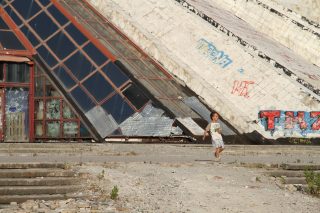
The Pyramid of Tirana is a stark concrete monument in central Tirana, built in 1988 as a museum venerating dictator Enver Hoxha and designed in part by his daughter, Pranvera Hoxha. After communism fell, its purpose kept changing—at different times it served as a conference venue, a NATO humanitarian base during the 1999 Kosovo crisis, and even the home of a TV station. Visitors remember its slanted sides, once climbed by locals as an act of playful defiance, and the raw layer of graffiti and murals that accumulated during years of neglect. Now it’s being reworked by Dutch architects MVRDV into a hub for education, art, and technology, reframing a contentious relic into public space.
Location: Pyramid of Tirana, Bulevardi Dëshmorët e Kombit, Tiranë, Albania | Hours: Publicly accessible area; construction zones may restrict entry. | Price: Free (for exterior viewing); future entry fees for the new center are TBD. | Distance: 0.5km

19. Tanners' Bridge
Stonework Tanners Bridge Tirana Albania
CC BY-SA 4.0 / Pasztilla aka Attila Terbócs
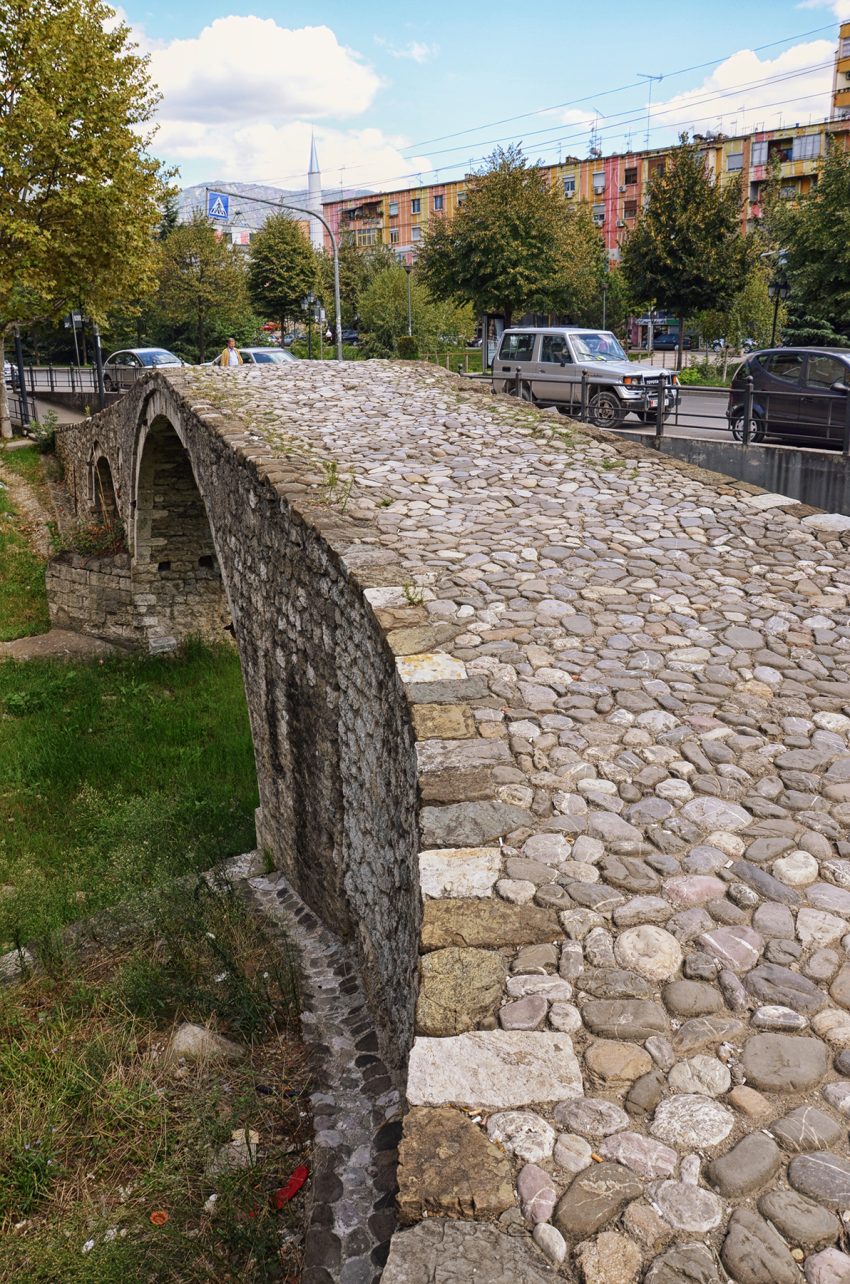
Tanners’ Bridge (Ura e Tabakëve) is an 18th-century Ottoman stone footbridge with low arches and a worn cobblestone surface that still feels underfoot. It once carried farmers, livestock, and traders over the Lanë River toward the riverside tanners’ and butchers’ quarter, part of the old Saint George Road linking the city with the eastern highlands. The river’s course was altered in the 1930s, leaving the bridge stranded amid modern streets and office blocks, but it was restored in the 1990s and is now protected as a cultural monument. From the side, its masonry curves photograph beautifully, and the small Tanners’ Mosque sits just across the road.
Location: Bulevardi "Jean D'Arc" Tirana Albania | Hours: Open 24 hours | Price: Free | Website | Distance: 0.6km

20. Postbllok
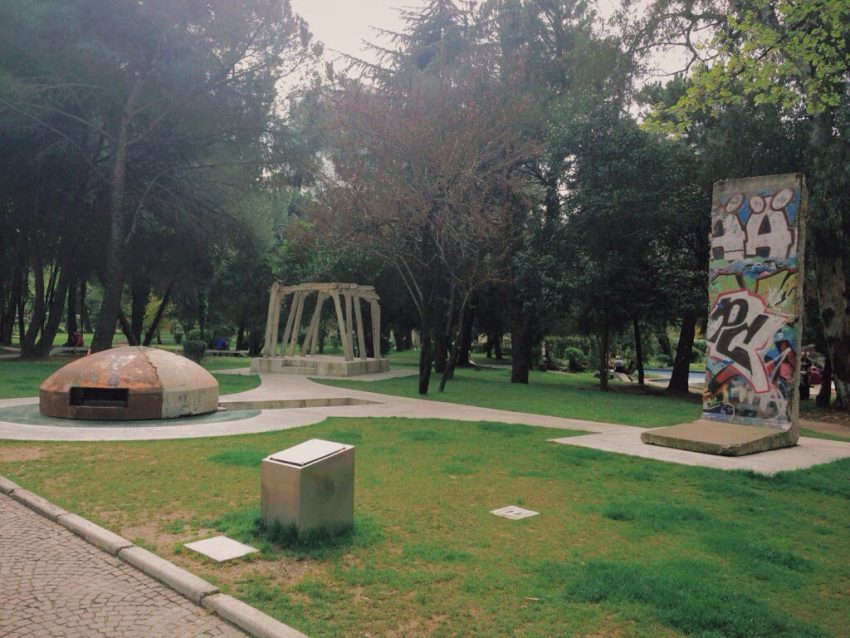
Postblloku Tirana Albania
CC BY-SA 3.0 / Kj1595
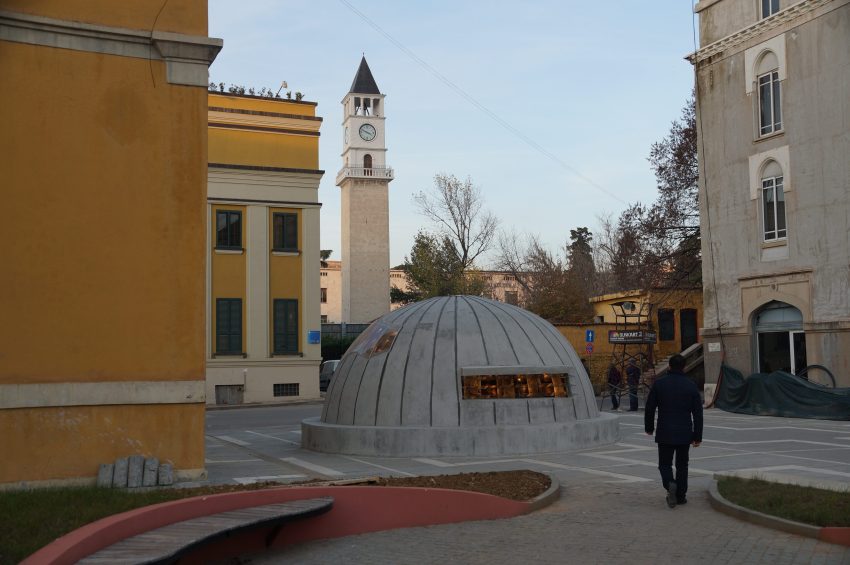
Postbllok (the “Checkpoint”) is an outdoor memorial on Tirana’s main boulevard that marks the suffering of political prisoners under Albania’s communist regime. Instead of a statue, it confronts you with three blunt objects: a small concrete bunker, raw supports taken from the Spaç prison-labor camp mine structures, and a brightly painted fragment of the Berlin Wall. Standing close to the bunker feels claustrophobic, while the Spaç elements read like industrial leftovers until you register what they came from. The Berlin Wall piece, vivid against the grey concrete, links Albania’s isolation to a wider European story of borders and surveillance. It’s a quick stop, but it tends to linger in your thoughts.
Location: Bulevardi Deshmoret e Kombit, Tirana | Hours: 24 hours daily | Price: Free | Distance: 0.7km

21. Former Residence of Enver Hoxha
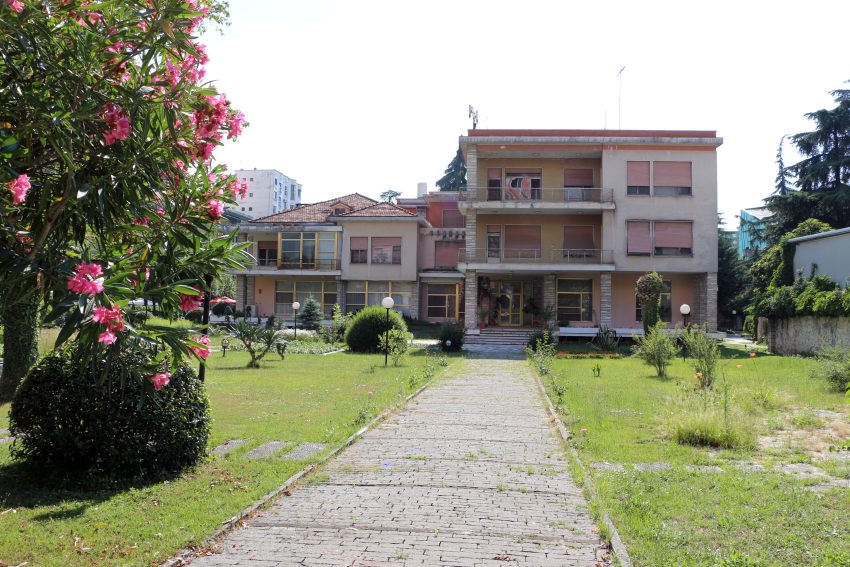
Enver Hoxha House: The former residence of dictator Albania
CC BY-SA 4.0 / Sailko
In Tirana’s Blloku district, the former residence of Enver Hoxha is a small, cream-colored, three-story villa that once sat inside a sealed enclave reserved for Albania’s communist elite. From 1944 to 1985, Hoxha ruled the country while this “wall-less Kremlin” was guarded and off-limits to ordinary citizens, a fact that still colors the streets around it. The house remains closed, so visitors experience it from the sidewalk: an intentionally understated, discreet building that hints at power exercised behind plain walls. Its quiet façade contrasts sharply with the lively cafés and boutiques that now fill the neighborhood, making the site a stark marker of how abruptly Tirana has changed since 1991.
Location: Rruga Ismail Qemali | Distance: 0.7km

22. Palace of Congress
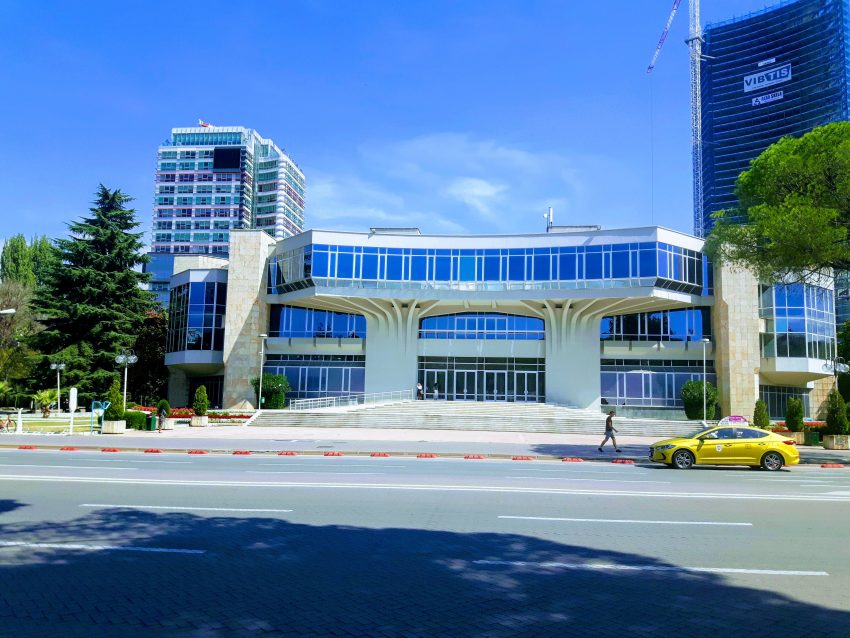
Palace of Congresses, Tirane
CC BY-SA 4.0 / ErtonKashta
Tirana’s Palace of Congresses (Pallati i Kongreseve) is a vast, white-marble hall from the late 1970s–early 1980s, built under Enver Hoxha’s regime on Bulevardi Dëshmorët e Kombit. Designed by Hoxha’s daughter Pranvera with Klement Kolaneci, its severe geometric façade, broad steps, and restrained modernism still read as socialist-era power architecture. Inside, the main auditorium seats more than 2,000 and is known for strong acoustics, now used for concerts, festivals, book fairs, and conferences rather than party congresses. Even without a ticket, visitors linger outside to take in the symmetry and scale; reviews often note memorable performances alongside occasional crowding and uneven event organization.
Location: Bulevardi Dëshmorët e Kombit Tirana Albania | Distance: 0.9km

23. Tirana National Museum of Archaeology
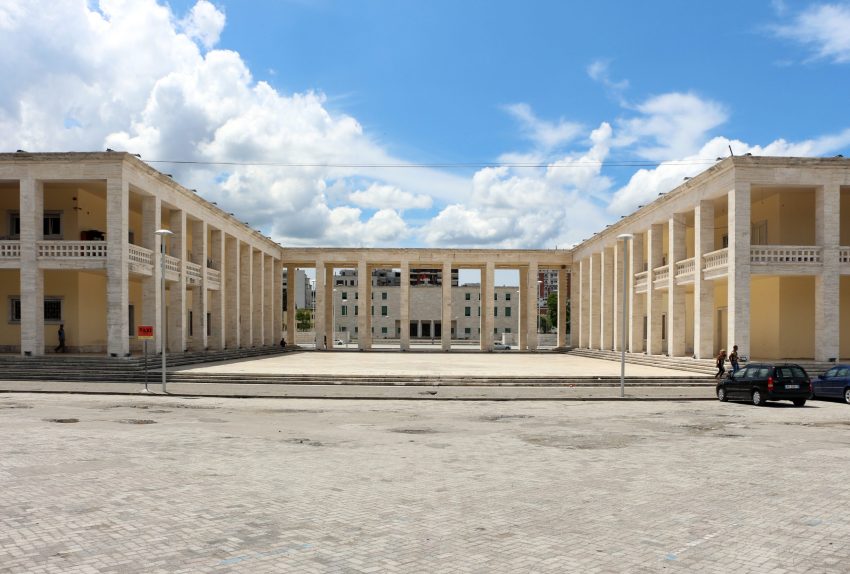
Archeological Museum Tirana
CC BY-SA 4.0 / Sailko
Tirana National Museum of Archaeology is a compact, two-floor museum near Mother Teresa Square and the University of Tirana that condenses Albania’s ancient past into a quick, chronological walk. Opened in 1948 as the country’s first postwar museum, it draws on decades of fieldwork and shows how Illyrian cultures met Greek and Roman worlds before shifting into late antiquity and the medieval era. Visitors tend to remember the tactile “everyday” objects—heavy ceramic vessels, finely worked jewellery, carved stone fragments, and Roman portrait busts. The building itself is noted for its Italian-era design (1939–41), and while the displays are visually strong, labels can feel sparse, so you’ll be reading the objects as much as the text.
Location: Sheshi Nënë Tereza, Tiranë, Albania | Hours: Daily: 09:00–14:00. | Price: 300 lek. | Website | Distance: 1km

24. Mother Teresa Square
Mother Terasa Square Tirana Albania
CC BY-SA 4.0 / Anila amataj
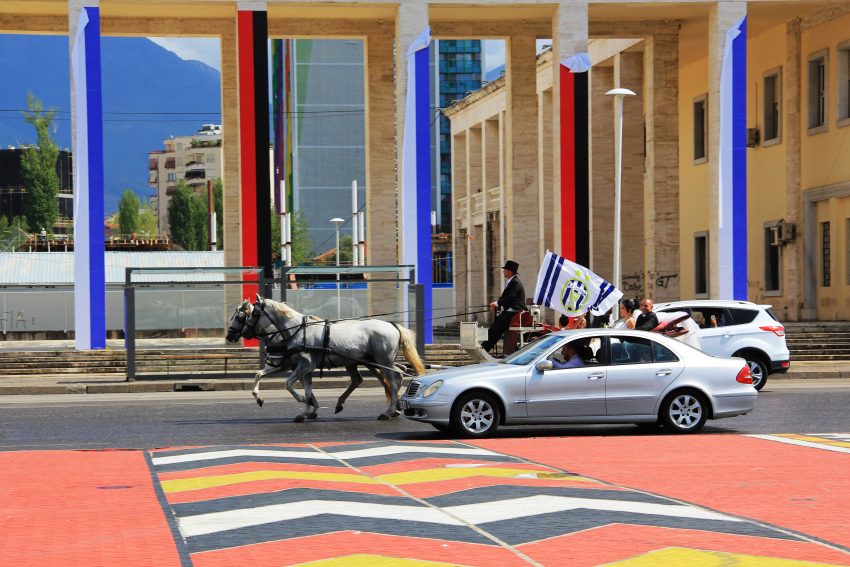
Mother Teresa Square (Sheshi Nënë Tereza) is Tirana’s broad ceremonial plaza anchoring the southern end of Dëshmorët e Kombit Boulevard, laid out as a deliberate civic stage rather than a casual crossroads. Planned in the rationalist era by Italian architect Gherardo Bosio (1939–41), its wide stone paving and strict sightlines are framed by major institutions, including the University of Tirana and the Archaeological Museum. The openness is what visitors remember most—spacious, airy, and a little disorienting when it comes to crossing the surrounding roads. It often shifts character with the calendar, hosting pop-up bazaars, stages, and seasonal events that animate the otherwise calm, monumental setting. Named for Mother Teresa, it also reads as a point of national pride.
Location: Bulevardi Dëshmorët e Kombit Tirana, Albania | Hours: 24 Hours | Price: Free | Distance: 1.1km

25. Colorful Buildings of Tirana

Rainbow Building Tirane
CC BY-SA 4.0 / Sailko
The Colorful Buildings of Tirana—often called the Rainbow Building—are a cluster of communist-era apartment blocks repainted in vivid geometric patterns at Woodrow Wilson Square (Sheshi Wilson), on the edge of Blloku. You don’t go inside; the point is the street-level encounter with a drab housing façade turned into oversized public art. The project is closely tied to Tirana’s early-2000s shift in mood, when mayor Edi Rama pushed bright paint as a low-cost way to signal a break from uniform concrete. Step back to read the whole composition, then circle the square to watch the blocks of colour change with angle and balcony shadows. It’s a quick stop that makes the city’s post-communist reinvention feel tangible.
Location: Rainbow Buildings, Tiranë, Albania | Hours: 24Hours | Price: Free. | Distance: 1.1km

26. Mosaic of Tirana
Tirana Mosaic Tirana Albania
CC BY-SA 4.0 / Pasztilla aka Attila Terbócs
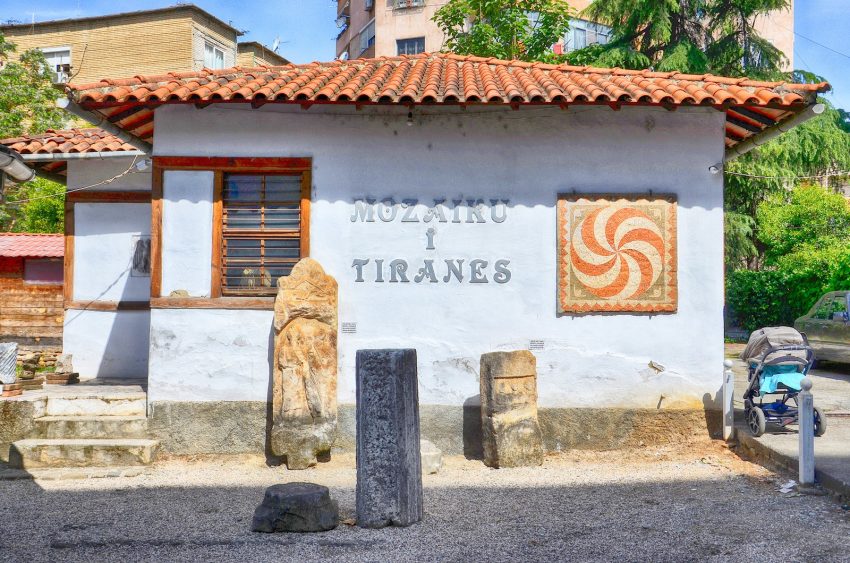
Tucked into a modern Tirana neighbourhood, the Mosaic of Tirana is a compact archaeological site preserving floors and fragments from a Roman-era residence later overlain by a Paleo-Christian basilica. It matters because it’s often described as the only archaeological monument within the city, discovered during construction in the early 1970s and revealing a rare, layered sequence of domestic and early religious life. Visitors stand close to the protected mosaics, reading geometric borders and small figurative motifs like fish and birds. The footprint is small and the feel is quiet—some travelers note there’s little staff presence and it may not always seem fully set up—so what lingers is the intimate, details-first encounter with ancient craft.
Location: Rr. Naim Frashëri | Hours: Tuesday – Sunday: 08:00–16:00. Closed on Monday. | Price: Free | Website | Distance: 1.3km

27. Tirana Grand Park
Entrance Grand Park of Tirana Albania
Flickr / Chris Walts
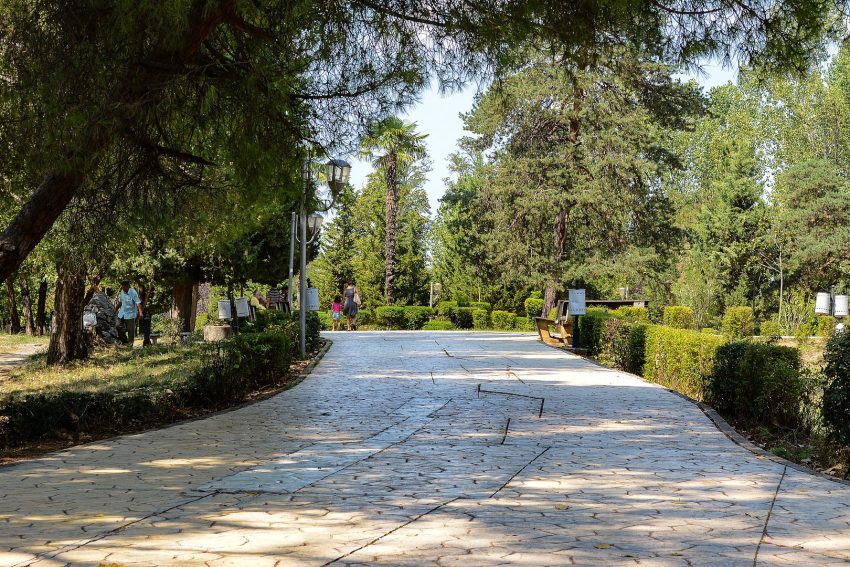
Grand Park (Parku i Madh) is a 230-hectare green refuge on the southern edge of the capital, built around an artificial lake created in 1957–1958. A paved loop and branching trails invite long walks, jogging, and cycling, with benches and shady lawns for picnics and lingering by the water. In warm months, designated areas allow swimming, and you’ll often spot people fishing or renting small boats and kayaks. Cultural and civic landmarks sit among the trees, including the Presidential Palace (viewed from outside) and an outdoor theater rebuilt in 2018 for open-air concerts and screenings. Visitors remember the calm, birds on the lake, and the park’s surprising sense of space.
Location: Rruga Herman Gmeiner, Tirana 1000, Albania | Hours: Open 24 hours | Website | Distance: 1.8km

28. Brigades Palace
Palace of Brigades Tirana
CC BY-SA 30 / Theoden sA
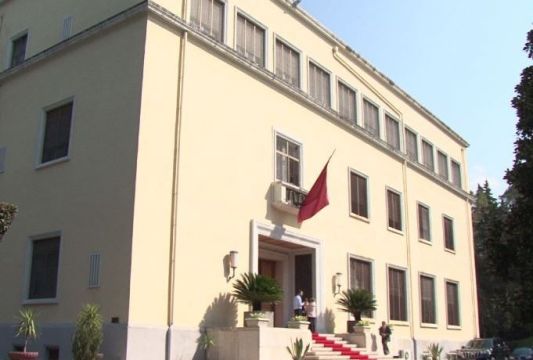
Brigades Palace (also called the Royal or Presidential Palace) is a late-1930s residence commissioned by King Zog I, later repurposed for state ceremonies after the monarchy fell and known in the communist era as the “Palace of Brigades.” The building itself is usually closed, but on weekends the Royal Gardens open, and that’s what visitors remember: long shaded avenues, fountains, and carefully staged viewpoints that feel formal rather than park-like. Among the greenery are notable sculptures, including works by Albanian sculptor Odhise Paskali such as “Daphne” and “Fertility,” alongside four music-themed statues by an Italian sculptor named Antonio. The atmosphere is notably quiet for Tirana, with big trees, flower beds, and even a maze-like garden section.
Location: Brigades Palace Rruga e Elbasanit 58 Tiranë 1019 Albania | Hours: (Summer) Saturday – Sunday: 09:00–20:00; May – September. (Winter) Saturday – Sunday: 09:00–16:00; October – April. Closed Monday – Friday. | Price: Free. | Website | Distance: 2.1km

29. Bektashi World Centre
Bektachi World Center Albania
Public Domain / Albinfo
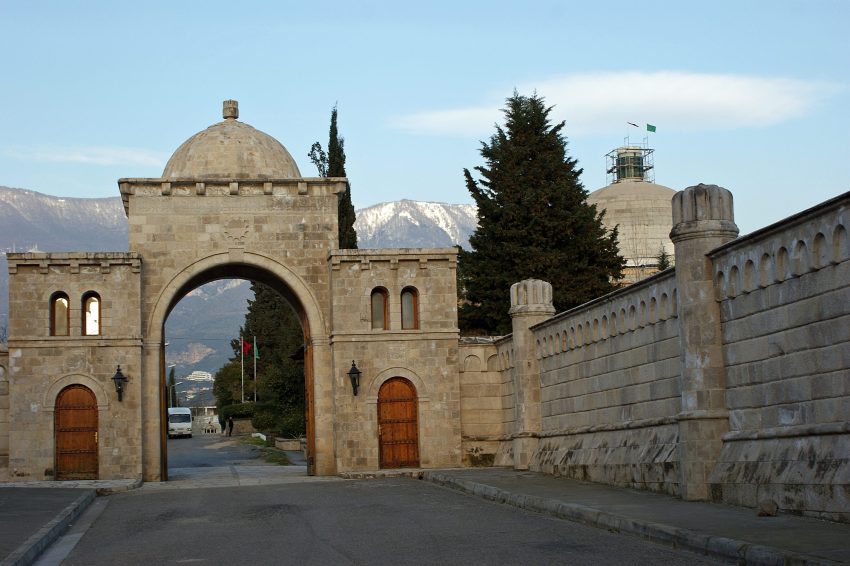
The Bektashi World Centre in Tirana is the international headquarters of the Bektashi Order, a Sufi-influenced tradition whose leadership relocated here in the early 20th century after dervish orders were banned in Türkiye. Inside the working teqe, visitors linger over dense, symmetrical decoration—intricate, marble-like mosaics and patterned surfaces that reward slow circling rather than a quick glance. Downstairs, a small basement museum compresses centuries into photographs, documents, and religious objects, adding context without taking long. The complex feels unusually quiet for a capital, set amid greenery, and there’s a modest gift shop. Travelers note you may be asked to leave an ID or passport at the gate, and English isn’t always spoken.
Location: Rruga Agush Gjergjevica Tiranë Albania | Hours: Daily: 10:00–13:00 & 17:00–19:00. | Price: Free. | Website | Distance: 2.6km

30. Martyrs' Cemetery
Tirana Mother Albania
CC BY-SA 4.0 / Julian Nyča
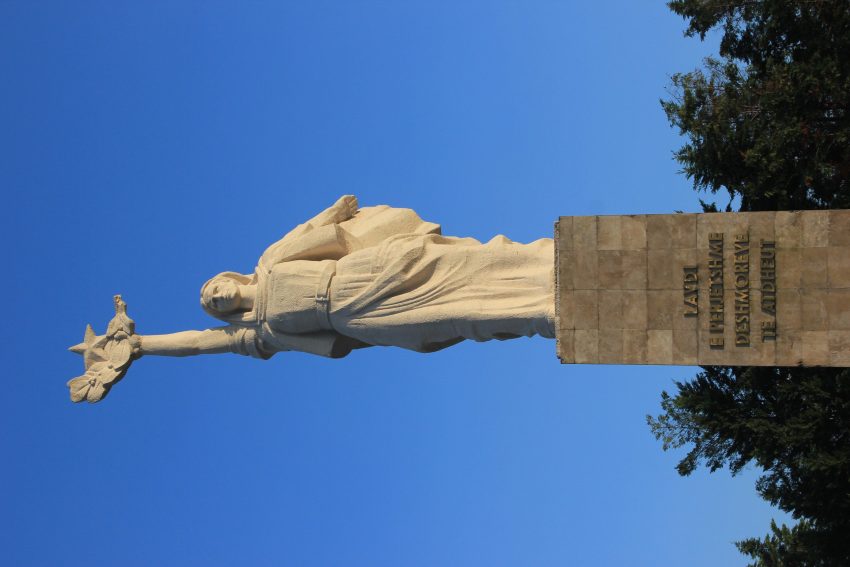
Martyrs’ Cemetery (Varrezat e Dëshmorëve të Kombit) is a hillside memorial above Tirana where roughly 900 World War II partisans are buried, laid out in long ranks of white headstones. Above the graves rises Mother Albania, a stark 12‑meter white statue holding a wreath, watching over the city like a mourning guardian. Built in 1971 under the communist regime, the site later briefly held Enver Hoxha’s remains before they were removed after 1991, a reminder of Albania’s shifting political memory. Visitors tend to remember the quiet, wind-swept paths and the wide views toward the city and Dajti Mountains. A few recent reviews note access can sometimes be awkward, with entry improvised through gaps in fencing.
Location: Rr Elbasanit | Distance: 2.8km

31. Bunk’Art
Bunk art entrance Tirane Albania
CC BY-SA 4.0 / DenisaRucaj
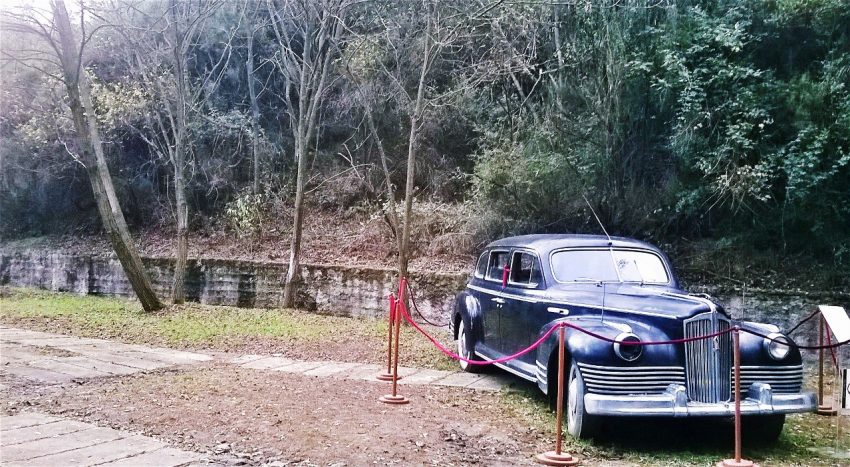
Bunk’Art in Tirana is a former Cold War bunker for Albania’s communist leadership, now an underground museum that confronts the Enver Hoxha era through history exhibits and contemporary art. You enter via a long, dim tunnel cut into the hillside near Mount Dajti, then wander a concrete maze spread across five levels and more than 100 rooms. Inside are reconstructed offices and living quarters, alongside multimedia installations about surveillance, propaganda, and political repression. The scale is startling: thick-walled corridors lead to a large assembly hall built for emergency meetings, now used for cultural programming, making the space feel both claustrophobic and strangely alive.
Location: Street Fadil Deliu, Tirana, Albania | Hours: 9:00 am to 4:00 pm | Website | Distance: 4.3km

32. Dajti Ekspres Cable Car

Dajti Express, Tirana, Albania
CC BY-SA 4.0 / TorbjørnS
Dajti Ekspres Cable Car is a modern gondola that lifts you from the city’s edge into Dajti Mountain National Park, trading traffic noise for pine forest and open sky. The ride takes about 15 minutes and spans just over a kilometre, gliding above rolling hills with wide views across the rooftops and out toward the Adriatic plain. At roughly 1,100 meters, the air turns noticeably cooler and the plateau feels like a different season. Visitors linger for the revolving bar’s 360-degree panorama, then spread out to mini-golf, an adventure play area, and summer activities like paragliding, with a small ski area when snow arrives.
Location: Dajti Mountain, Tirana, Albania | Hours: Winter: 9am to 7pm - Open everyday except Tuesdays. Summer: 09:00 to 21:00 | Price: 800 Lek | Website | Distance: 4.4km

Best Day Trips from Tirana

A day trip from Tirana offers the perfect opportunity to escape the urban rhythm and discover the surrounding region's charm. Whether you're drawn to scenic countryside, historic villages, or cultural landmarks, the area around Tirana provides a variety of easy-to-reach destinations ideal for a one-day itinerary. If you are looking to rent a car in Albania I recommend having a look at Discover Cars, first, as they compare prices and review multiple car rental agencies for you.

1. Petrela Castle

Walk to Petrella Castle Albania
CC BY-SA 4.0 / Klejdi Shtrepi
Petrela Castle is a hilltop fortress in Petrelë, south of Tirana, and one of the easiest castle visits close to the Albanian capital. The site sits about 400 meters above sea level on a rocky ridge above the Erzen valley, with stone walls, surviving towers, and a short uphill approach through the village. The castle matters for its links to…
Location: Rruga Petreles, Petrelë, Albania | Hours: 10am-8pm | Website | Distance: 8.6km
Visiting Petrela Castle

2. Dajti Mountain National Park
Dajti Mountain National Park Albania
CC BY-SA 4.0 / Edvini
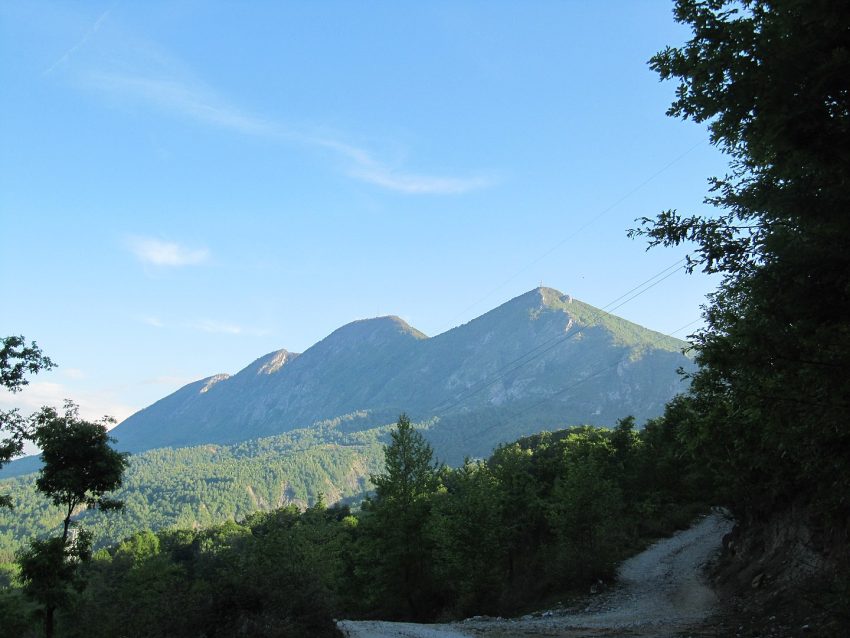
Dajti Mountain National Park in Tirana is a protected mountain area on the eastern edge of the Albanian capital. It rises above the city with pine forest, open slopes, picnic spots, and viewing terraces around Fusha e Dajtit. Many visitors reach it by the Dajti Express cable car, a short ride that replaces the winding mountain road and gives wide…
Visiting Dajti Mountain National Park

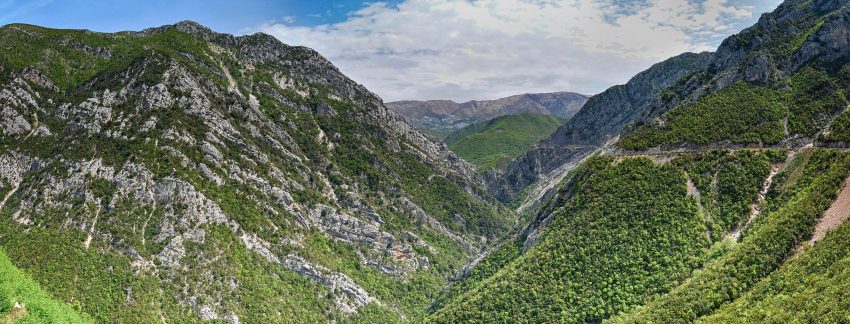
3. Cave of Pellumbas
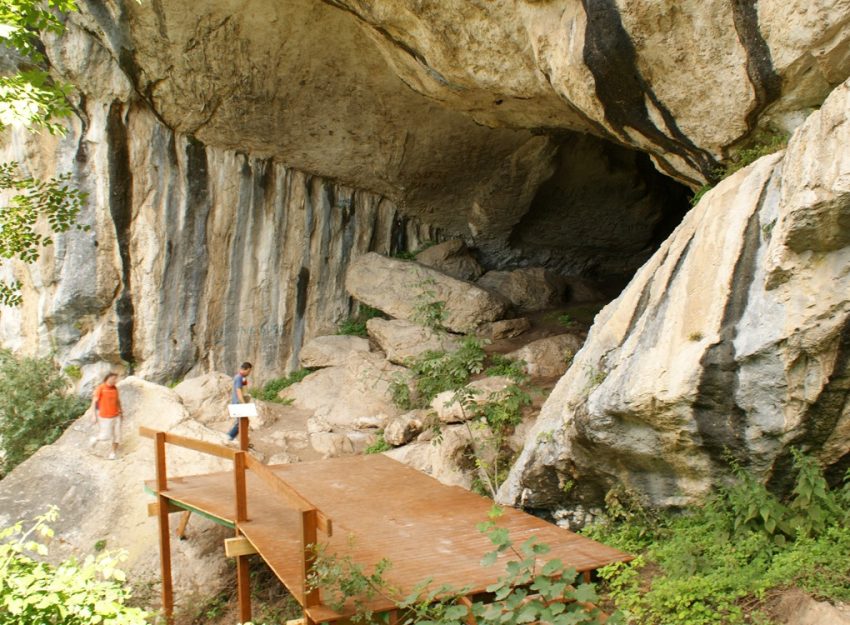
Cave of Pellumbas Tirana Albania
CC BY-SA 3.0 / Albinfo
Cave of Pellumbas is a natural cave attraction near Tirana, set above the village of Pellumbas in the Dajti Mountains. Often called the Black Cave, it is reached by a marked trail that climbs from the village through rocky, green hillside toward the Skorana Gorge. The walk usually takes around 40–60 minutes each way and is part of the appeal,…
Visiting Cave of Pellumbas

4. Preza Castle

Prezë Castle, Albania
CC BY-SA 3.0 / Tobias Klenze
Perched high on a ridge overlooking the plain of Tirana, Preza Castle is one of central Albania’s most picturesque medieval landmarks. This small but striking fortress, dating from the 14th and 15th centuries, commands sweeping views over the surrounding countryside, from Mount Kruja to the distant shimmer of the Adriatic Sea. Its peaceful setting, rustic charm, and proximity to both…
Location: Preza Castle, Prezë, Albania | Distance: 16.8km
Visiting Preza Castle

5. Preza Castle

Preza Castle, Albania
CC BY-SA 3.0 / Albinfo
Preza Castle is a medieval hilltop fortress in the Preza area northwest of Tirana, Albania. Set above the village, its stone walls, towers, gateways, and later clock tower overlook the Tirana plain and the main routes between the capital, Kruja, and Durrës.The castle matters most for its position: it once served as a lookout and signaling point, and that same…
Location: Prezë, Albania | Distance: 16.8km
Visiting Preza Castle

6. Kruja

Kruja Albania
Kruja Albania
CC BY-SA 2.0 / Chris Walts
Kruja, also known as Krujë, is a charming hillside town in northeastern Albania, nestled in the foothills of Mount Kruja, where history, culture, and mountain scenery intertwine. Once the stronghold of Albania’s national hero, Gjergj Kastrioti Skanderbeg, Kruja played a central role in resisting the Ottoman Empire during the 15th century — and that proud legacy still echoes through its…
Visiting Kruja
Powered by GetYourGuide

7. Qafshtame National Park

Qafe Shtame National Park
CC BY-SA 4.0 / Pasztilla aka Attila Terbócs
Qafshtame National Park is a forested mountain park in the hills north of Tirana, on the road toward Krujë and the Mat region. It is a protected natural area built around a high pass, with pine and oak woodland, springs, small lakes, and trail routes that range from short walks to longer hikes.The park matters for its cooler air, clean…
| Hours: 24 Hours | Price: Free | Website | Distance: 22.3km
Visiting Qafshtame National Park

8. Durrës

Adriatic Sea from Durres
CC BY-SA 3.0 / Gertjan R.
Durrës, located in Central Albania on the coast, is one of the country's most popular seaside destinations. The city offers visitors a mix of beautiful beaches, lively promenades, and a welcoming atmosphere. The beaches of Durrës are perfect for those looking to relax by the sea, with clear waters and soft sand, making it ideal for swimming and sunbathing. Many…
Visiting Durrës
Powered by GetYourGuide

9. Elbasan

Elbasan city wall
Elbasan city wall
CC BY-SA 2.0 / Monika Kostera
Elbasan is a vibrant city located in Central Albania, offering a mix of modern conveniences and a rich cultural atmosphere. The city is an ideal destination for those looking to explore local life while being close to nature. With its bustling streets, local markets, and a variety of cafes and restaurants, visitors can enjoy the lively energy of the town.…
Visiting Elbasan
Powered by GetYourGuide

10. Burrel

Burrel Square albania 1
CC BY-SA 4.0 / Albinfo
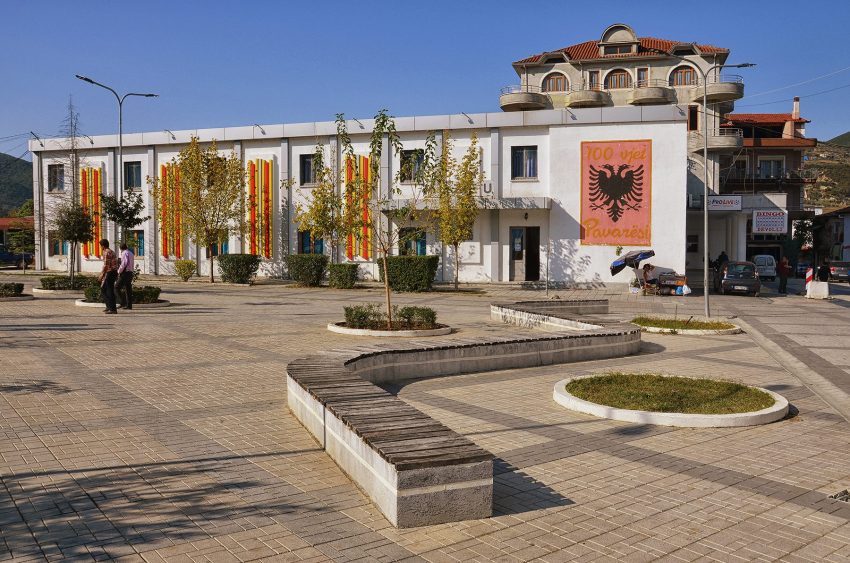
Burrel, nestled in the middle of  Central Albania, it offers visitors a unique blend of natural beauty, historical significance, and authentic Albanian charm. Set amidst majestic mountains and lush green valleys, Burrel boasts stunning scenery that appeals to nature lovers and outdoor enthusiasts. The town is surrounded by picturesque landscapes, offering ample opportunities for hiking, birdwatching, and exploring the pristine…
Visiting Burrel

11. Rodoni Castle

Rodoni Castle Albania 4
CC BY-SA 4.0 / Pasztilla aka Attila Terbócs
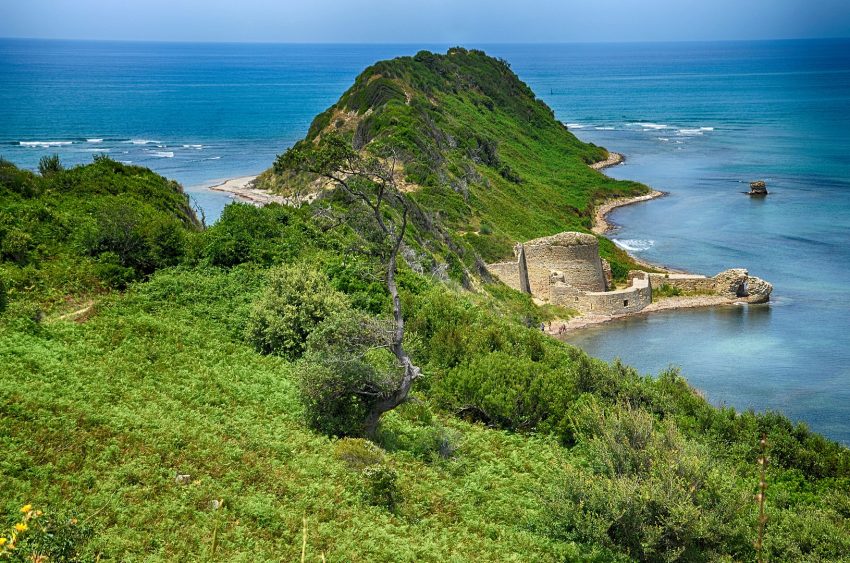
Rodoni Castle is a ruined coastal fortress in the Cape of Rodon area, within reach of Tirana, Albania. Set on a rugged headland above the Adriatic, it is an outdoor historic site rather than a formal museum, with surviving walls and foundations spread across uneven ground.The castle is tied to Skanderbeg and Albania’s 15th-century defensive efforts, which gives the site…
Location: Kepi i Rodonit Cape of Rodon Albania | Distance: 42.2km
Visiting Rodoni Castle

12. Lushnjë

Lushnje Center Albania
CC BY-SA 4.0 / Genti78
Lushnjë is a charming town located in Central Albania, offering visitors a peaceful and authentic experience of rural Albanian life. Known for its lush agricultural landscapes, the town is surrounded by fields of vegetables, fruits, and vineyards, making it a great destination for those interested in rural tourism. The area's green surroundings and the mild Mediterranean climate make it a…
Visiting Lushnjë

13. Librazhd

Librazhd Town
Librazhd Town
CC BY-SA 3.0 / James Frankcom
Librazhd is a picturesque town nestled in Southeast Albania, offering visitors a tranquil retreat amidst stunning natural landscapes. Surrounded by the majestic Shebenik Mountains and the Shebenik-Jabllanica National Park, the area is a haven for outdoor enthusiasts. Hiking trails, pristine lakes, and diverse flora and fauna make it an ideal destination for nature lovers seeking adventure and serenity. The town…
Visiting Librazhd

14. Rrëshen (Mirditë)

1280px Rreshen from distance
CC BY-SA 1.0 / Albinfo
Rrëshen, nestled in Northwest Albania, offers a unique blend of cultural heritage, scenic beauty, and authentic Albanian experiences. Surrounded by rolling hills, lush valleys, and majestic mountains, Rrëshen is a haven for nature lovers. The nearby Drin River adds to the scenic charm, offering opportunities for leisurely walks along its banks or adventurous rafting trips. Boasting a rich history dating…
Visiting Rrëshen (Mirditë)
Powered by GetYourGuide

15. Lezhë

view of lezhe albania
CC BY-SA 4.0 / Belgian man
Lezhë, nestled in the Northwest Albania, offers visitors a captivating blend of historical significance, natural beauty, and cultural charm. Steeped in history, Lezhë is renowned as the site of the famous Battle of Lezhë in 1444, where the League of Lezhë, led by Skanderbeg, united Albanian princes in their struggle against the Ottoman Empire. Visitors can explore the historic monument…
Visiting Lezhë

16. Gramsh

Gramsh, Albania
Gramsh, Albania
CC BY-SA 4.0 / Pasztilla aka Attila Terbócs
Gramsh is a charming town located in the heart of Albania, offering visitors a tranquil escape surrounded by the natural beauty of the surrounding mountains. Nestled near the Shkumbin River, the town provides plenty of opportunities for outdoor activities such as hiking, fishing, and exploring the stunning landscapes. Whether you’re venturing into the nearby forests or enjoying the peaceful atmosphere…
Visiting Gramsh
Powered by GetYourGuide

17. Peshkopi

Peshkopia Albania
Peshkopia Albania
CC BY-SA 4.0 / Cave2596
Peshkopi is a charming town nestled in Northeast Albania, surrounded by stunning mountain landscapes. The town's location makes it an ideal base for outdoor enthusiasts looking to explore the Albanian Alps. Visitors can enjoy activities such as hiking, trekking, and birdwatching in the nearby mountains, which offer some of the most breathtaking views in the country. The serene environment, combined…
Visiting Peshkopi
Powered by GetYourGuide

18. Spaç Prison

Spac Prison Mirdite Albania
CC BY-SA 4.0 / Pasztilla aka Attila Terbócs
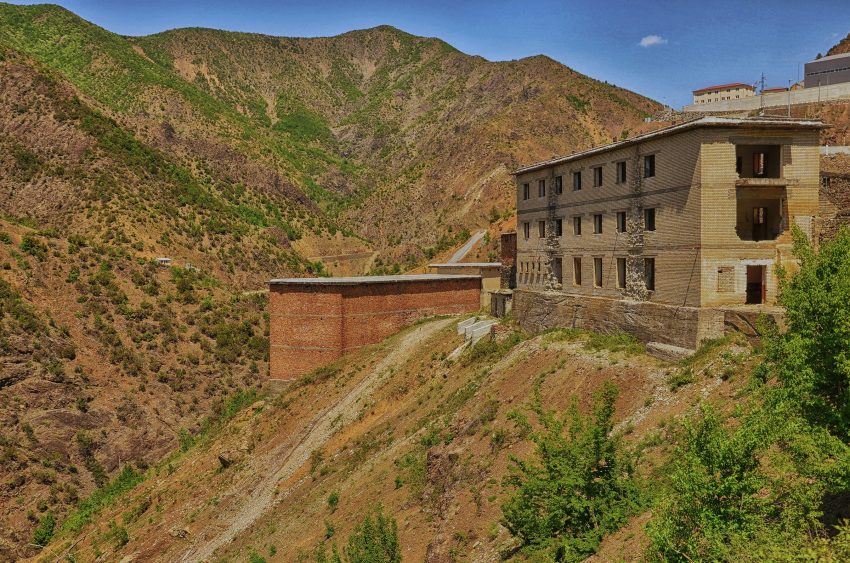
Spaç Prison in Shkodër, Albania, is an abandoned political prison and forced-labor camp set in a remote mountain landscape north of the city. The approach is part of the experience, with rough road conditions replacing the smoother main routes before the concrete remains appear on the hillside. There is nothing polished about the site, and visitors come for the raw,…
Location: Spaç Prison, Kodër-Spaç, Albania | Hours: 24 Hours (better in daylight). | Price: Free. | Website | Distance: 66.3km
Visiting Spaç Prison

Where to Stay in Tirana

Tirana offers a wide variety of accommodations to suit every budget, from luxury hotels to charming boutique guesthouses. For those looking for a central and comfortable stay, The Plaza Tirana is an excellent choice. Situated in the heart of the city, this 5-star hotel features modern amenities, including spacious rooms, a rooftop bar, and a wellness center. The hotel’s central location makes it easy to explore nearby attractions like Skanderbeg Square, the National History Museum, and the vibrant Blloku area.

If you prefer a more intimate, boutique experience, Hotel Boutique Vila 5 offers a cozy and personalized atmosphere. This charming hotel is located a short distance from the city center and provides a peaceful retreat from the hustle and bustle. With its beautifully designed rooms and attentive staff, it’s a perfect choice for those seeking comfort and style in a quieter setting.

For travelers on a budget, Hotel Tirana International provides affordable options without compromising on quality. The hotel is centrally located, just a short walk from major attractions, including the Grand Park and the National Theatre. It offers clean, simple rooms and excellent service, making it an ideal base for exploring the city at an affordable price.

For those who want to experience the city’s cultural side, Hotel Nais Beach offers an interesting mix of traditional and modern design elements. The hotel is located in the vibrant Blloku area, which is known for its lively atmosphere, trendy cafes, and bars. Staying here allows visitors to immerse themselves in Tirana’s social scene, while the hotel offers comfortable accommodations and easy access to the city’s nightlife.

Using the our Hotel and Accomodation map, you can compare hotels and short-term rental accommodations in Tirana. Simply insert your travel dates and group size, and you’ll see the best deals for your stay.

Tirana Accommodation Map

Best Time to Visit Tirana

Tirana, the capital city of Albania, is a vibrant and dynamic destination known for its eclectic mix of architecture, rich history, and lively atmosphere. Here’s a guide to the best time to visit Tirana:

  1. Spring (March to May): Spring is a fantastic time to visit Tirana as the weather is mild, and the city comes to life with blooming flowers and greenery. This season is ideal for exploring Tirana’s parks and gardens, such as the Grand Park and Rinia Park, and enjoying outdoor activities like walking tours and cycling. Spring also offers opportunities to experience local festivals and events, such as the Albanian Wine Festival and the Tirana Jazz Festival.
  2. Summer (June to August): Summer is peak tourist season in Tirana, with warm temperatures and long sunny days. This is the best time to enjoy outdoor attractions such as the Dajti Mountain National Park and the artificial Lake Tirana, as well as cultural events like open-air concerts and theater performances. Summer also brings a variety of street festivals, food markets, and nightlife options to Tirana. However, be prepared for higher temperatures and larger crowds during this time.
  3. Fall (September to November): Fall is another great time to visit Tirana, as the weather remains pleasant, and the summer crowds begin to dissipate. This season is ideal for exploring Tirana’s historic landmarks, such as the Skanderbeg Square and the Et’hem Bey Mosque, without the long lines. Fall also offers opportunities to experience local traditions and customs, such as grape harvesting and olive oil pressing, as well as to sample seasonal dishes made with fresh, local ingredients.
  4. Winter (December to February): Winter in Tirana is relatively mild, with cooler temperatures and fewer tourists. While some outdoor activities may be limited during this time, winter offers opportunities to explore indoor attractions such as museums, galleries, and historic sites, as well as to indulge in traditional Albanian cuisine in cozy restaurants and cafes. Winter is also a great time to experience Tirana’s cultural scene, with performances, exhibitions, and events taking place throughout the city.

Ultimately, the best time to visit Tirana depends on your preferences for weather, crowds, and activities. Whether you’re interested in outdoor adventure, cultural exploration, or simply soaking up the local atmosphere, Tirana has something to offer for every traveler throughout the year.

Annual Weather Overview

  • January 11°C
  • February 13°C
  • March 15°C
  • April 20°C
  • May 23°C
  • June 29°C
  • July 29°C
  • August 31°C
  • September 29°C
  • October 23°C
  • November 17°C
  • December 13°C

How to get to Tirana

Getting to Tirana by Air

Tirana International Airport Nënë Tereza (TIA) is the primary gateway for international flights into Albania. Located approximately 17 km northwest of the city center, the airport serves as a hub for various airlines, including Wizz Air, Ryanair, and Air Albania. It offers direct flights to numerous European destinations, such as Milan, London, and Vienna. Upon arrival, travelers can access the city center via taxis, private transfers, or shuttle services provided by car rental companies.

Getting to Tirana by Train

Currently, there is no operational train service to or from Tirana. The city's main railway station was demolished in 2013 to make way for urban development projects. As of now, there are no active railway lines connecting Tirana to other cities in Albania or neighboring countries. Travelers wishing to reach Tirana by train must disembark at nearby stations, such as Durrës or Shkodër, and continue their journey by bus or car.

Getting to Tirana by Car

Driving to Tirana is a convenient option for those arriving from within Albania or neighboring countries. The city is well-connected by a network of highways and roads, making it accessible from various directions. The journey to Tirana offers scenic views of the Albanian countryside, with winding roads and mountainous landscapes. Upon arrival, visitors can find parking facilities in and around the city center. If you are looking to rent a car in Albania I recommend having a look at Discover Cars, first, as they compare prices and review multiple car rental agencies for you.

Travelling around Tirana

Tirana boasts a variety of public transportation options to help visitors navigate the city. The city’s bus network is extensive, with routes connecting different neighborhoods and key attractions. Furgons (minibuses) are also a popular mode of transport, offering flexible routes and frequent departures. For a more personalized experience, taxis and ride-hailing services like Bolt are readily available. Additionally, many of Tirana’s main attractions are within walking distance of each other, making it a pedestrian-friendly city.

More from this area