Istanbul, Türkiye: The Ultimate Travel Guide 2026
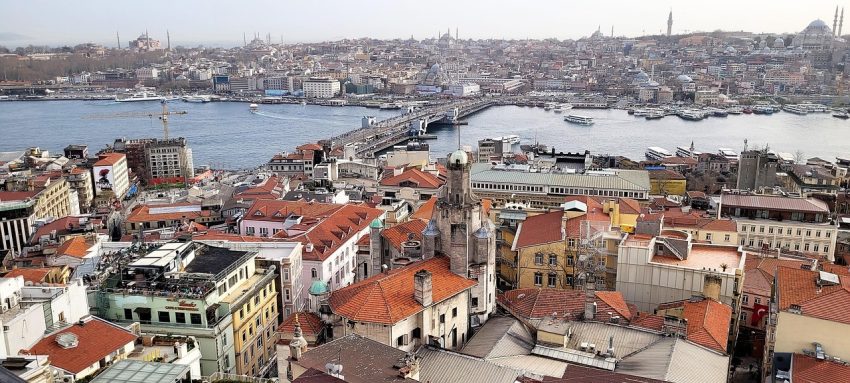
istanbul aerial view

Istanbul, located in the northwest of Türkiye, straddles both Europe and Asia across the shimmering Bosphorus Strait. It's a city of striking contrasts - where ancient domes rise beside sleek modern towers and the call to prayer drifts over bustling cafés. The city's position between continents gives it a distinctive rhythm and energy, making it a cultural and commercial heart of the nation. Istanbul is one of the best places to visit in Türkiye, offering a blend of timeless heritage and urban sophistication that few cities in the world can match.

Visiting Istanbul is an experience that engages every sense. The aroma of freshly baked simit mingles with the scent of Turkish coffee; ferry horns echo over the water; and the colorful chaos of the Grand Bazaar invites exploration. The city's neighborhoods each have their own charm - from the bohemian streets of Cihangir and the art galleries of Karaköy to the serene courtyards of Üsküdar across the Bosphorus. Whether you're wandering along the waterfront promenades or discovering hidden teahouses, Istanbul offers endless layers of discovery.

For travelers, Istanbul's allure lies not only in its landmarks but in its atmosphere. It's a place that feels both ancient and alive, where every turn reveals a story waiting to be told. The city's hospitality is as warm as its sunlight glinting off the domes and waters, and its culinary scene - from traditional meze to rooftop dining - is unforgettable. Visiting Istanbul is less about ticking off sights and more about feeling the pulse of a city that has shaped, and been shaped by, centuries of culture and connection.

History of Istanbul

Byzantium: From Ancient Colony to Thriving Port

The story of Istanbul begins around 660 BCE, when Greek settlers from Megara founded a colony on the European side of the Bosphorus known as Byzantium. Its location was a strategic marvel — perfectly placed to control trade routes between the Black Sea and the Mediterranean. Over the centuries, Byzantium prospered as a trading hub, coveted by empires for its wealth and position. The city’s early fortifications and street grid laid the groundwork for the metropolis that would later rise in its place.

Constantinople: Capital of the Eastern Roman Empire

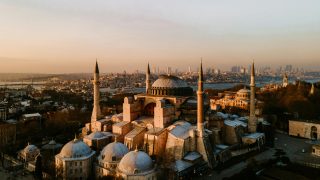
In 330 CE, Emperor Constantine the Great chose Byzantium as the new capital of the Roman Empire, renaming it Constantinople. This marked the city’s transformation into a seat of imperial power, religion, and culture. The city flourished with monumental construction — the Hippodrome became a center of civic life and chariot races, while the Church of Hagia Sophia, completed in 537 under Emperor Justinian I, stood as the crowning architectural achievement of the Byzantine world. For nearly a thousand years, Constantinople remained the heart of the Byzantine Empire, adorned with palaces, forums, and glittering mosaics that symbolized its wealth and spiritual devotion.

The Ottoman Conquest and Imperial Splendor

In 1453, Sultan Mehmed II conquered Constantinople, bringing an end to the Byzantine Empire and ushering in a new era as the capital of the Ottoman Empire. The city, now renamed Istanbul, became one of the most important and diverse metropolises of the Islamic world. Ottoman architects, led by the master Sinan, reshaped the skyline with grand mosques such as the Süleymaniye Mosque and later the Blue Mosque (Sultan Ahmed Mosque). The Topkapi Palace, the sultan’s opulent residence, became a symbol of imperial authority and refined artistry. Istanbul’s bazaars, like the Grand Bazaar and Spice Bazaar, expanded into thriving centers of commerce connecting Asia, Africa, and Europe.

The Modern Republic and a City Reborn

After the fall of the Ottoman Empire following World War I, Istanbul briefly lost its status as capital when the Republic of Türkiye was founded in 1923 under Mustafa Kemal Atatürk, who established Ankara as the new political center. Yet Istanbul remained the country’s cultural and economic heart. Through the 20th century, the city modernized rapidly, blending its Ottoman and Byzantine heritage with contemporary architecture and urban growth. Today, landmarks like Hagia Sophia — a church, then a mosque, later a museum, and once again a mosque — embody the city’s complex layers of history. Istanbul stands as a living chronicle of empires and eras, its streets and monuments reflecting more than two millennia of transformation and resilience.

Moira & Andy
Moira & Andy

Hey! We're Moira & Andy. From hiking the Camino to trips around Europe in Bert our campervan — we've been traveling together since retirement in 2020!

Read our full story here

Visiting Istanbul for the first time and wondering what are the top places to see in the city? In this complete guide, I share the best things to do in Istanbul on the first visit. To help you plan your trip, I have also included an interactive map and practical tips for visiting!

This website uses affiliate links which earn a small commission at no additional cost to you.
Powered by GetYourGuide

43 Best places to See in Istanbul

This complete guide to Istanbul not only tells you about the very best sights and tourist attractions for first-time visitors to the city but also provide insights into a few of our personal favorite things to do.

This is a practical guide to visiting the best places to see in Istanbul and is filled with tips and info that should answer all your questions!

1. Stone of Milion
Stone of Milion
Stone of Milion
CC BY-SA 4.0 / Interfase
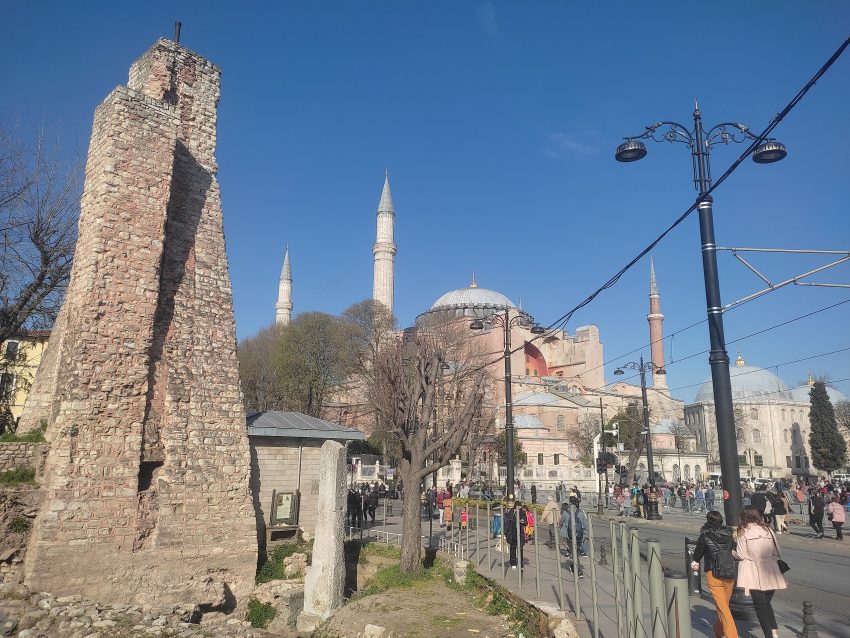
A small, weathered fragment beside Divan Yolu and Alemdar Street, the Stone of Milion once marked the Byzantine Empire’s “zero point,” the spot from which distances to major cities were officially measured. Raised in the early 4th century under Constantine as part of a grand gateway opening onto the Mese, it echoed Rome’s Golden Milestone and proclaimed Constantinople as the empire’s new center. The original monument was far larger—a double arch under a domed canopy, decorated with statues of Constantine and Helena holding a cross and the city’s Tyche. Pause here and you’re standing where, for centuries, maps and even timekeeping were calibrated to a point in the Old City.
Location: The Stone of Million, Alemdar, Divan Yolu Caddesi, Fatih/İstanbul, Türkiye | Distance: 0km

We recommend to rent a car in Türkiye through Discover Cars, they compare prices and review multiple car rental agencies. Book your rental car here.

2. Basilica Cistern

Basilica Cistern
Basilica Cistern
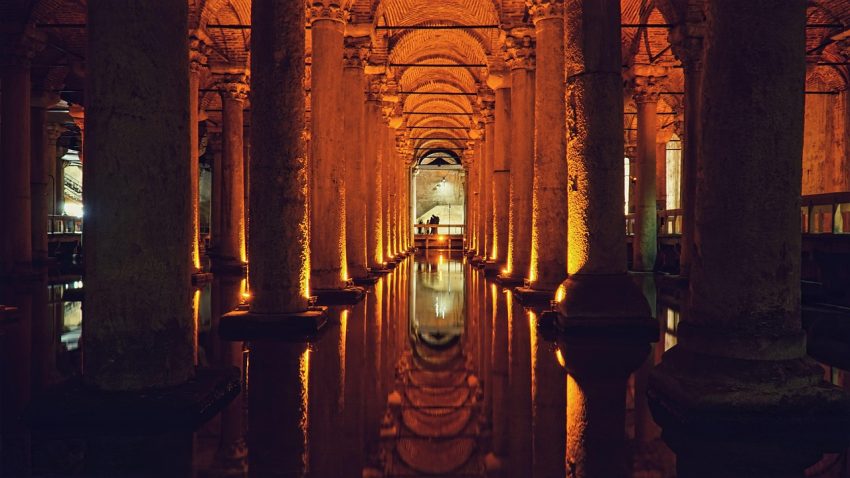
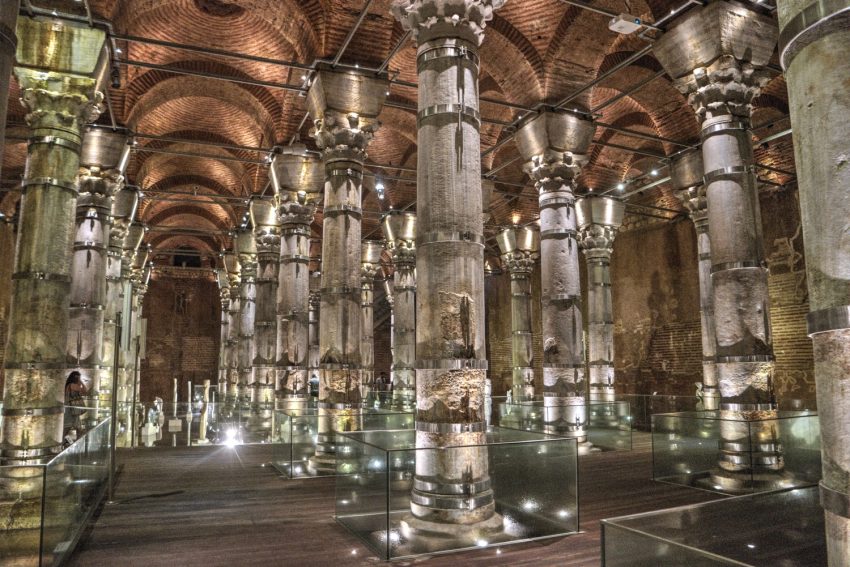
Reached by a staircase beneath Sultanahmet, the Basilica Cistern is a 6th‑century Byzantine underground reservoir commissioned under Emperor Justinian I to supply the Great Palace and nearby buildings. Inside, dim amber lighting reveals a “forest” of 336 reused marble columns rising from shallow water, with reflections and dripping arches amplifying the hush. The most memorable corner is the pair of Medusa head blocks—one sideways, one inverted—set as column bases and surrounded by lingering mystery. The chamber’s scale (once holding about 80,000 cubic meters) and its cool, damp air make it feel part engineering feat, part cinematic set, even when the walkways get busy.
Location: Basilica Cistern, Alemdar, Yerebatan Caddesi, Fatih/İstanbul, Türkiye | Hours: Daily, generally from 9:00 AM to 7:00 PM. | Price: Around €20 (subject to change). | Website | Distance: 0km

Here is a complete selection of hotel options in Istanbul. Feel free to review each one and choose the stay that best suits your needs.

Powered by GetYourGuide

3. Sultan Ahmet Park

Sultan Ahmet Park Blue Mosqu in Background
CC BY-SA 2.0 / Javier Giménez
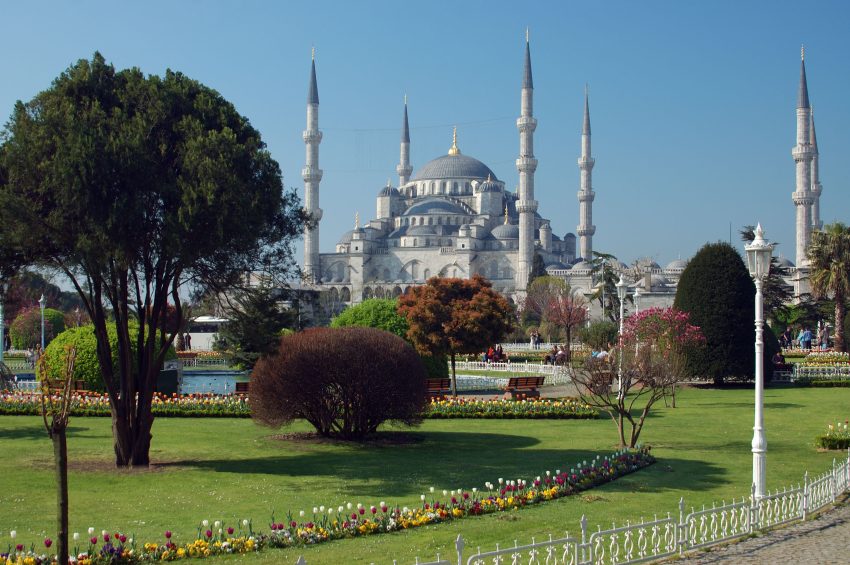
A leafy public square set between Hagia Sophia and the Blue Mosque, Sultan Ahmet Park is where many people pause to breathe and take in the skyline of domes and minarets. Paths and benches circle a central fountain, and from around it you can frame both monuments in a single photo, especially at sunrise or as the light turns blue at dusk. Beneath the calm surface is a layered site: Roman bathhouses once stood here, later tied to the imperial palace and damaged during the Nika Riots, before the area evolved into today’s park. Expect the small, memorable details too—cats sunning on the paving stones, vendors selling roasted corn, and the steady murmur of fountains.
Location: Sultan Ahmet Park, Cankurtaran, At Meydanı Cd, Fatih/İstanbul, Türkiye | Distance: 0.1km

Traveling to a country with a different currency? Avoid ATM transaction fees and pay in local currency with a Wise Card. Having used it for over 5 years, we've saved loads on fees!

4. Hurrem Sultan Hamam

Hurrem Sultan Hamam,
Public Domain / Marku1988
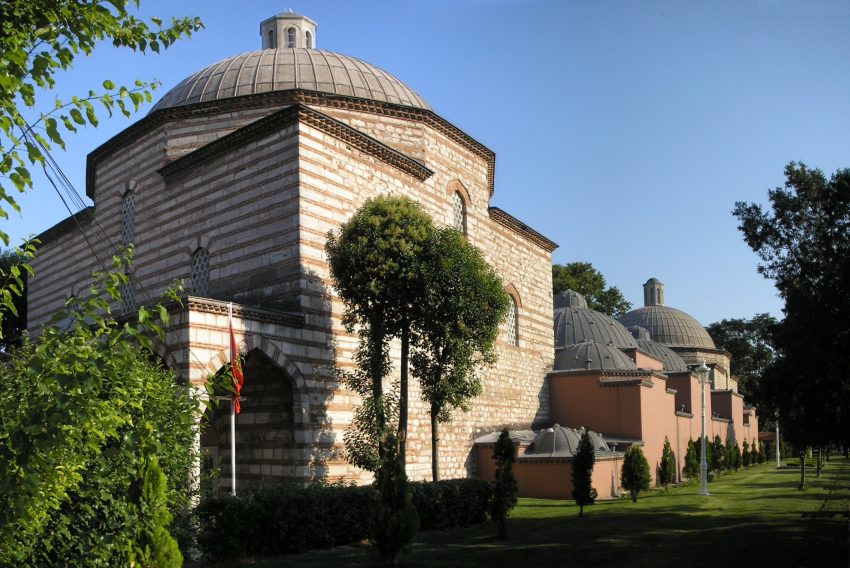
Hurrem Sultan Hamam in Istanbul is a working 16th-century Ottoman bathhouse commissioned in 1556 by Hurrem Sultan and designed by Mimar Sinan, built on ground once occupied by the ancient Baths of Zeuxippus. The exterior is restrained, but inside you notice warm marble, high domes punctured by small glass lights, and a calm, symmetrical plan with separate men’s and women’s sections aligned on the same axis. After closing in 1910 and spending decades as storage and a carpet shop, it reopened in 2011 following a major restoration. Visitors come for the traditional kese scrub and foam massage, though reviews note the experience can feel pricey and service varies.
Location: Hürrem Sultan Hamamı, Cankurtaran, Ayasofya Meydanı, Fatih/İstanbul, Türkiye | Hours: Typically 8:00 AM to 10:00 PM daily. | Price: Prices vary by package, starting around €50 and up to €150 for premium treatments. | Distance: 0.1km

Explore Istanbul at your own pace with our self-guided walking tour! Follow our curated route to discover must-see sights and local secrets that makes Istanbul one of the best places to visit in Türkiye.

Powered by GetYourGuide

5. German Fountain

German Fountain
German Fountain
CC BY-SA 4.0 / Maurice Flesier
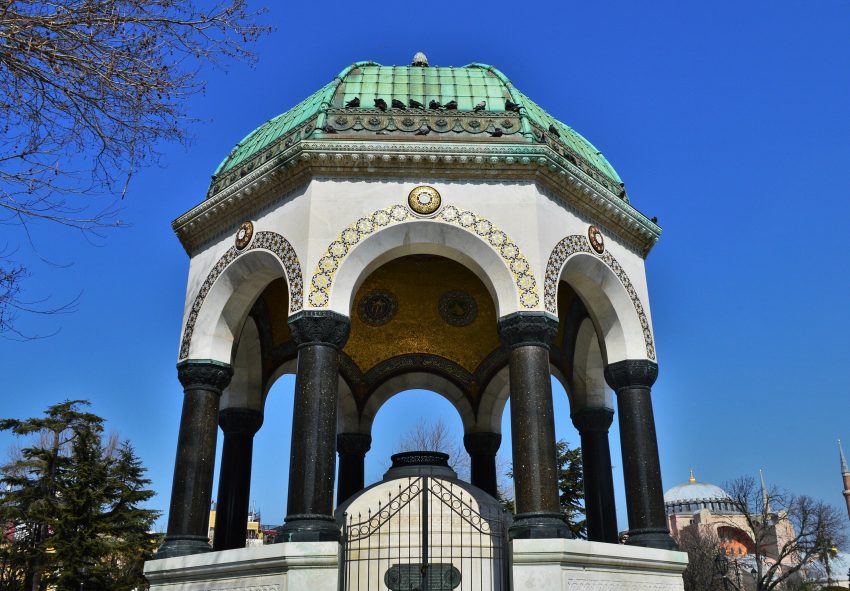
At the northern end of Sultanahmet Square stands the German Fountain (Alman Çeşmesi), an elegant octagonal canopy fountain gifted by Kaiser Wilhelm II to Sultan Abdülhamid II after the Kaiser’s 1898 visit. Built in Germany, it was shipped in pieces and assembled on site in 1900, then inaugurated on January 27, 1901—Wilhelm’s birthday. Eight dark green marble columns support a neo-Byzantine dome whose interior glitters with gold mosaics, including intertwined imperial monograms and alternating German and Ottoman emblems. Up close, visitors tend to remember the symmetry, the cool marble, and how the mosaics catch the light as crowds stream past.
Location: German Fountain, Binbirdirek, At Meydanı Cd, Fatih/İstanbul, Türkiye | Distance: 0.2km

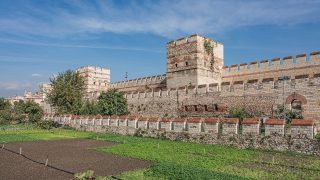
Click here to read our blog about Self-Guided Tour of the Walls of Constantinople (2026)

6. Sogukcesme Street

Sogukcesme Sokagi
Sogukcesme Sokagi
CC BY-SA 3.0 / Mark Ahsmann
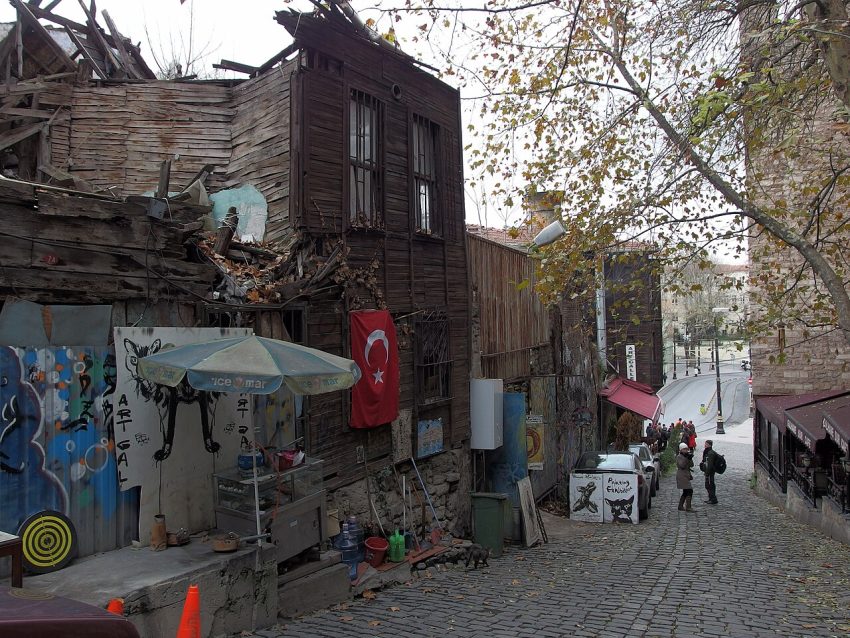
Soğukçeşme Street is a short, pedestrian cobblestone lane in Istanbul’s Sultanahmet district, tucked between Hagia Sophia and Topkapi Palace, that preserves the feel of late Ottoman domestic architecture. Pastel-painted timber mansions with carved balconies and flowered window boxes line the narrow passage, rebuilt in the 1980s to echo the wooden houses that once filled the city. At the lower end, the “Cold Fountain” that gave the street its name sits near Gülhane Park, and a small library holds thousands of books on Istanbul. Visitors remember the quiet, the steep incline, and the surprising cleanliness amid the surrounding crowds.
Location: Cankurtaran, Soğuk Çeşme Sokak, Fatih/İstanbul, Türkiye | Hours: Accessible all day; restaurant and library have specific hours. | Price: Free to walk through; accommodation prices vary. | Distance: 0.2km

7. Hagia Sophia
Aya Sophia Mosque in Istambul, Türkiye.
CC BY-SA 2.0 / Benh LIEU SONG
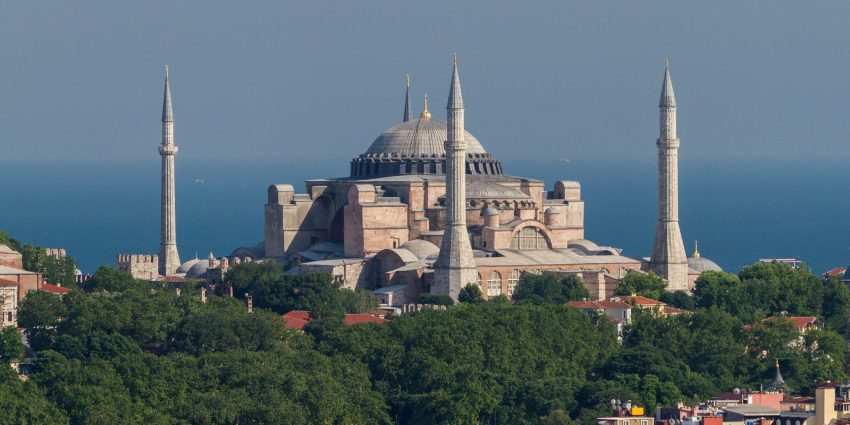
Hagia Sophia is a 6th-century domed sanctuary commissioned by Emperor Justinian I and completed in 537, later transformed into an Ottoman mosque after 1453 and still used for worship today. The vast nave is defined by a 30+ meter dome that seems to float above light pouring through 40 arched windows. Look for the Christian mosaics that survived beneath plaster, set against enormous round medallions bearing the names of Allah and the Prophet Muhammad. Details visitors remember include the Donation Mosaic near the Imperial Gate, the thumb-worn Wishing Column, and the upper gallery’s Deësis mosaic and even Viking runic graffiti. Arrive early and the scale feels almost private before the crowds build.
Location: Hagia Sophia, Sultan Ahmet, Ayasofya Meydanı, Fatih/İstanbul, Türkiye | Hours: Tuesday–Sunday, 9:00 AM–6:30 PM (closes earlier in winter); last entry 1 hour before closing. | Price: Around €1.50 (25 TL). | Website | Distance: 0.2km
Powered by GetYourGuide

8. Hagia Irene

Exterior of Hagia Irene
Public Domain / Gryffindor
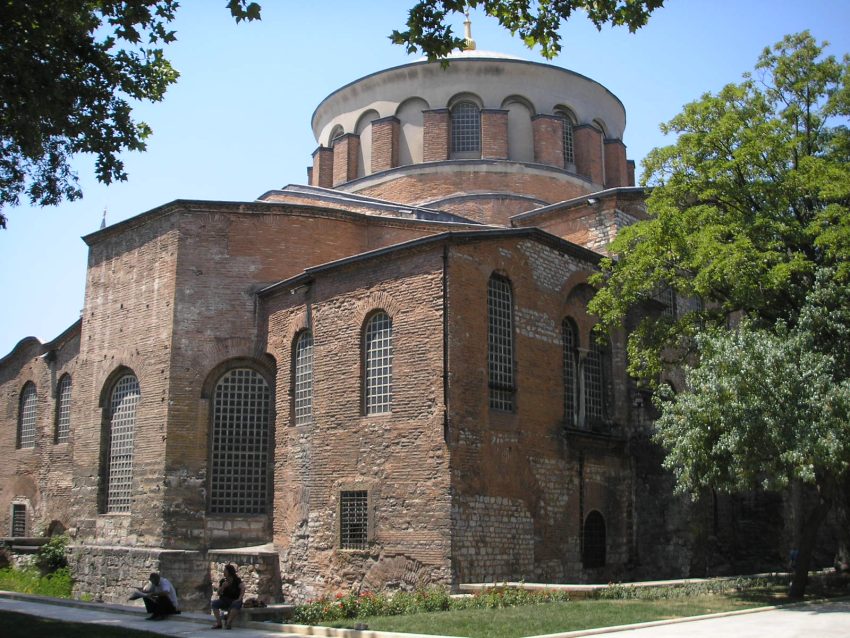
Hagia Irene is an early Byzantine church tucked inside the outer courtyard of Topkapi Palace, notable for being the oldest surviving church in the city and predating Hagia Sophia. Its sober brick exterior opens to a spacious basilica nave where proportion and bare structure replace ornament, and the acoustics are so clean it’s still used for concerts. Look for the apse mosaic: a large cross on gold, a rare survivor from the iconoclastic era when human figures were avoided. An unusual feature is the remaining atrium, once a gathering space and now a quiet threshold. Some visitors note ongoing restoration and that parts can be closed off.
Location: Hagia Irene, Cankurtaran, Topkapı Palace, Fatih/İstanbul, Türkiye | Distance: 0.3km

9. Arasta Bazaar
Arasta Bazaar Istanbul
CC BY-SA 3.0 / Radosław Botev
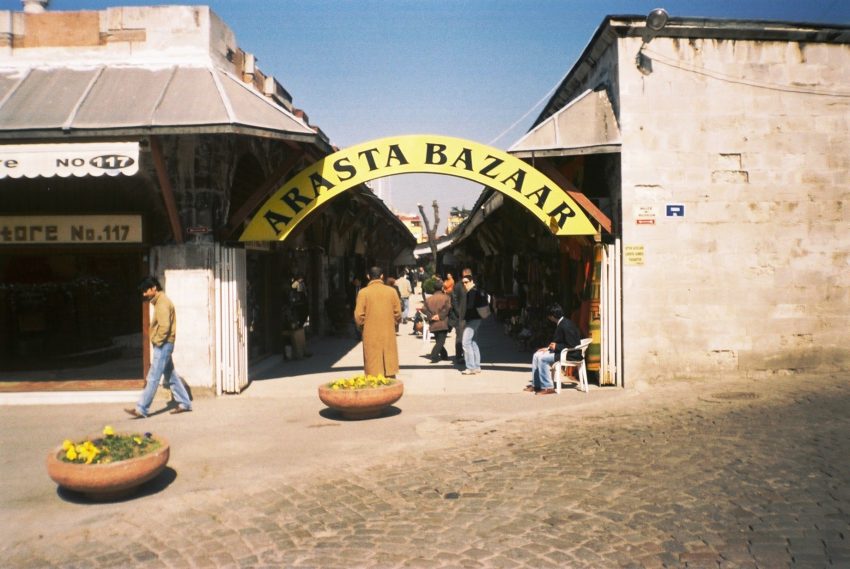
Arasta Bazaar is a compact 17th-century row of shops tucked behind Istanbul’s Blue Mosque on Torun Street, built to help fund the mosque’s upkeep. Restored in the late 20th century after years of neglect, it now feels like a calmer, open-air alternative to the city’s larger markets, with stone arches and a pedestrian lane lined by 70+ small storefronts. Visitors notice the easy pace—shopkeepers chatting over tea rather than hard-selling—and the mix of goods: finely knotted rugs, hand-painted ceramics, embroidered textiles, jewelry, spices, teas, and Turkish delights. The air often carries herbal scents, and many travelers mention finding more distinctive crafts here than in busier bazaars.
Location: Arasta Bazaar, Sultan Ahmet, Mimar Mehmet Ağa Caddesi, Fatih/İstanbul, Türkiye | Hours: Typically 9:00 AM to 7:00 PM daily. | Price: Free entry. | Distance: 0.3km

10. Blue Mosque
Istambul Blue Mosque
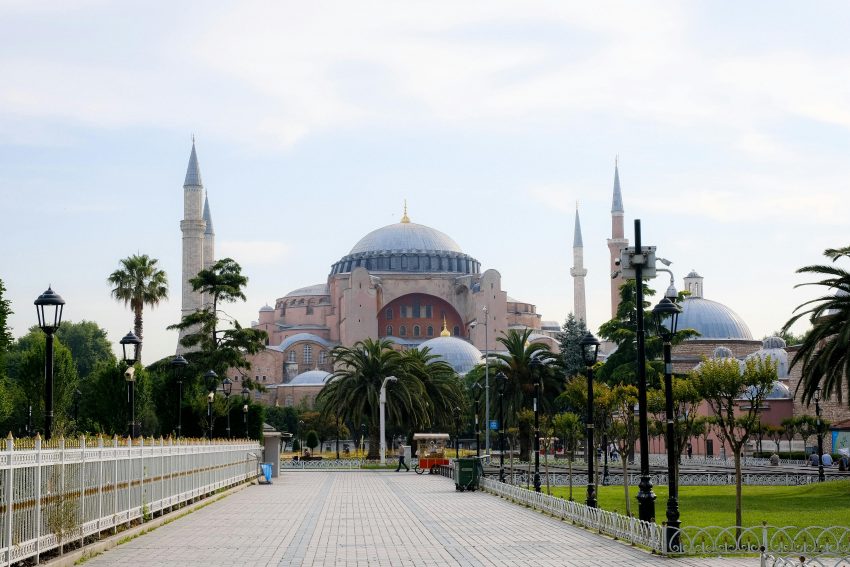
The Blue Mosque (Sultan Ahmed Mosque) is a working imperial mosque whose cascading domes and six slender minarets shape the skyline over Sultanahmet Square. Step inside outside prayer times and the space feels washed in cool color from more than 20,000 hand-painted İznik tiles, while daylight pours through over 200 stained-glass windows. Built between 1609 and 1616 for Sultan Ahmed I and designed by Sedefkâr Mehmed Ağa, it deliberately echoes the scale and presence of nearby Hagia Sophia. Visitors tend to remember the vast courtyard—nearly as large as the sanctuary—and the hush that settles even amid crowds.
Location: Blue Mosque, Cankurtaran, At Meydanı Cd, Fatih/İstanbul, Türkiye | Distance: 0.3km

11. Sultanahmet Square
Sultanahmet Square
Sultanahmet Square
CC BY-SA 2.0 / Erik Cleves Kristensen
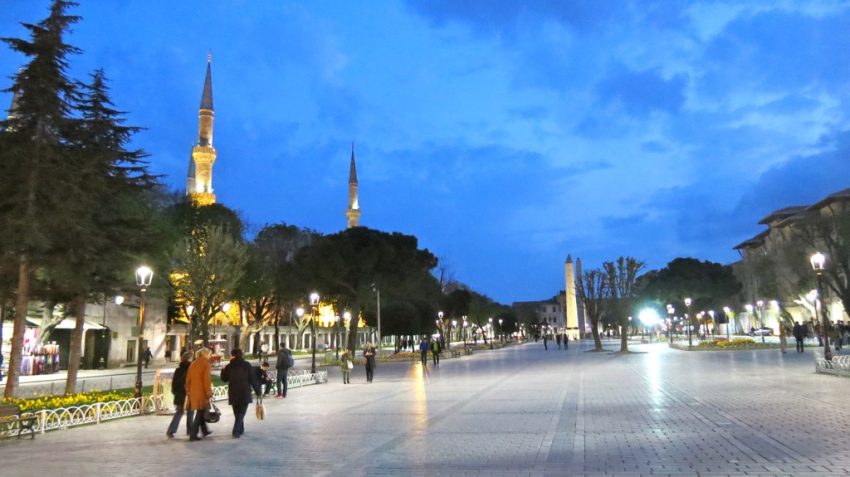
Sultanahmet Square is a broad public plaza laid over the footprint of the ancient Hippodrome, once the roaring arena of Byzantine chariot races and imperial pageantry. The long, open axis still reads like a racetrack, punctuated by survivors from the old spina—most strikingly the Egyptian Obelisk of Thutmose III, hauled here in 390 CE, and the Serpent Column brought from Delphi. Under the domes and minarets nearby, the square feels both ceremonial and everyday: vendors sell simit and roasted chestnuts while children weave through pigeons. Come at dusk and you’ll remember the shifting light on stone and the call to prayer drifting across the open space.
Location: Sultanahmet Square, Binbirdirek, Sultan Ahmet Parkı, Fatih/İstanbul, Türkiye | Distance: 0.3km

12. Turkish and Islamic Arts Museum
Turkish and Islamic Arts Museum
Public Domain / Chapultepec
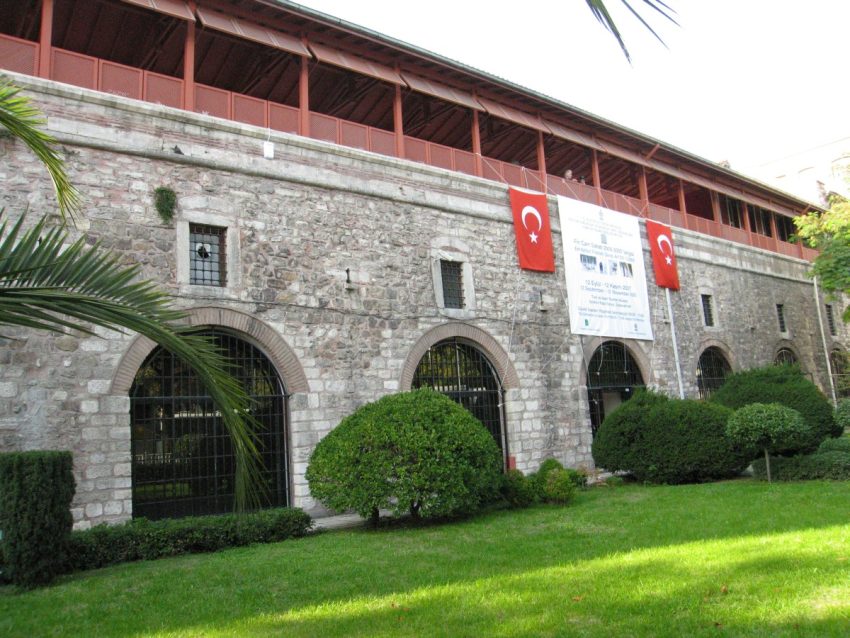
Housed in the 16th-century Ibrahim Pasha Palace overlooking the old Hippodrome, the Turkish and Islamic Arts Museum pairs a grand Ottoman setting with galleries that reward slow looking. Rooms of illuminated Qur’ans and calligraphy panels lead into standout carpet displays—rare Anatolian rugs and prayer mats where patterns and dyes feel almost tactile. Ceramics and woodwork trace changing tastes from Seljuk to late Ottoman eras, while the lower floors shift to ethnography with life-size reconstructions of nomadic tents and domestic interiors. Many visitors notice the calm, well-lit presentation and clear English labels, making it easy to linger and absorb details.
Location: Turkish & Islamic Arts Museum, Binbirdirek, At Meydanı Cd, Fatih/İstanbul, Türkiye | Distance: 0.4km
Powered by GetYourGuide

13. Great Palace Mosaics Museum

Mosaic museum Istanbul
CC BY-SA 4.0 / Canercangul
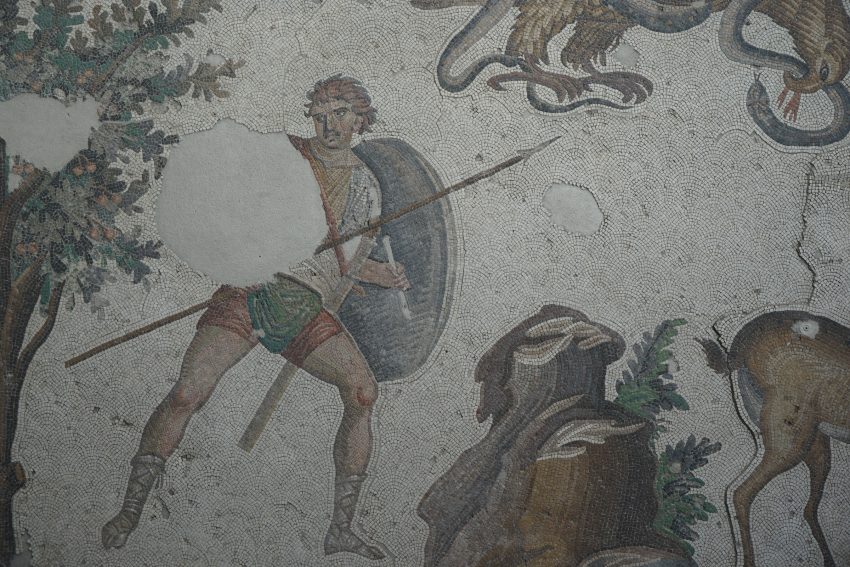
Hidden beneath the Arasta Bazaar behind the Blue Mosque, the Great Palace Mosaics Museum preserves floor mosaics from the Byzantine imperial Great Palace, created around 450–550 AD under Justinian’s era. Raised walkways let you look down on panels left almost exactly where they were found, once part of a vast peristyle courtyard pavement said to have covered about 1,800 square meters. The scenes are strikingly secular: children at play, hunters, wrestlers, and a menagerie of animals—lions, elephants, leopards—often shown in tense combat alongside mythic creatures like griffins. Soft lighting and a hushed, underground atmosphere make the tiny tesserae and vivid colors feel unusually intimate.
Location: Great Palace Mosaics Museum, Sultan Ahmet, Torun Sokak, Fatih/İstanbul, Türkiye | Distance: 0.4km

14. Obelisk of Theodosius
Obelisk of Theodosius
CC BY-SA 2.0 / Esther Lee
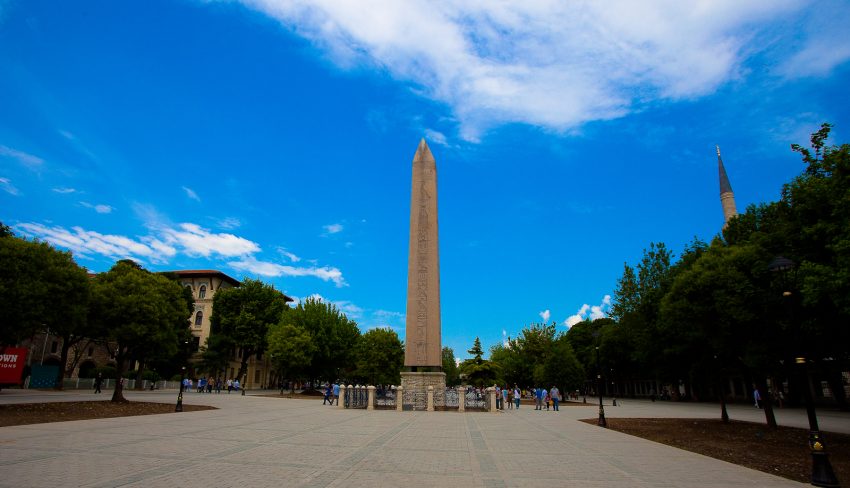
Rising from Sultanahmet Square on the site of the ancient Hippodrome, the Obelisk of Theodosius is a pink granite monument carved for Pharaoh Thutmose III around 1450 BCE. Only the upper portion survived the move from Karnak to Constantinople, but its hieroglyphs are still sharply legible after more than three millennia. In 390 CE it was set on a marble pedestal commissioned by Emperor Theodosius I, whose reliefs show him presiding over games and crowning victors from the imperial box. Walk around the base to spot both Greek and Latin inscriptions celebrating the feat of raising it in “thirty-two days.”
Location: Obelisk of Theodosius, Binbirdirek, Fatih/İstanbul, Türkiye | Hours: Accessible 24 hours daily as part of Sultanahmet Square. | Price: Free | Distance: 0.4km

15. Serpent Column
Serpent Column, Istanbul
CC BY-SA 4.0 / Dudva
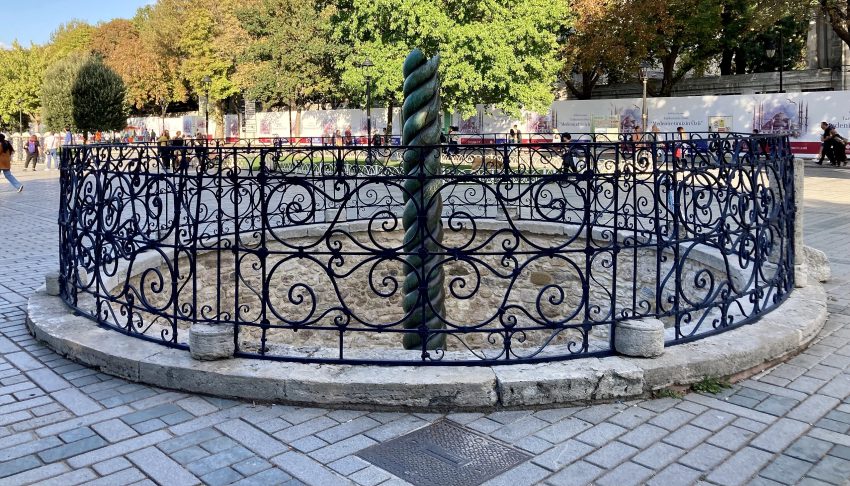
Rising from Sultanahmet Square’s former Hippodrome, the Serpent Column is a weathered bronze spiral that once crowned a victory monument from 479 BCE. Cast from melted Persian arms after the Battle of Plataea, its coils originally supported three serpent heads and a golden tripod dedicated to Apollo at Delphi. Emperor Constantine later brought the bronze column to Constantinople to ornament the Hippodrome, linking classical Greece to Byzantine spectacle in a single object. Today only about five meters remain, dark with patina, and visitors can still trace the twisting bodies between the Egyptian Obelisk and the Walled Obelisk. The broken heads’ fragments are kept in the Istanbul Archaeology Museum.
Location: Serpent Column, Binbirdirek, At Meydanı Cd, Fatih/İstanbul, Türkiye | Hours: Accessible 24 hours as part of Sultanahmet Square. | Price: Free | Distance: 0.4km

16. Walled Obelisk
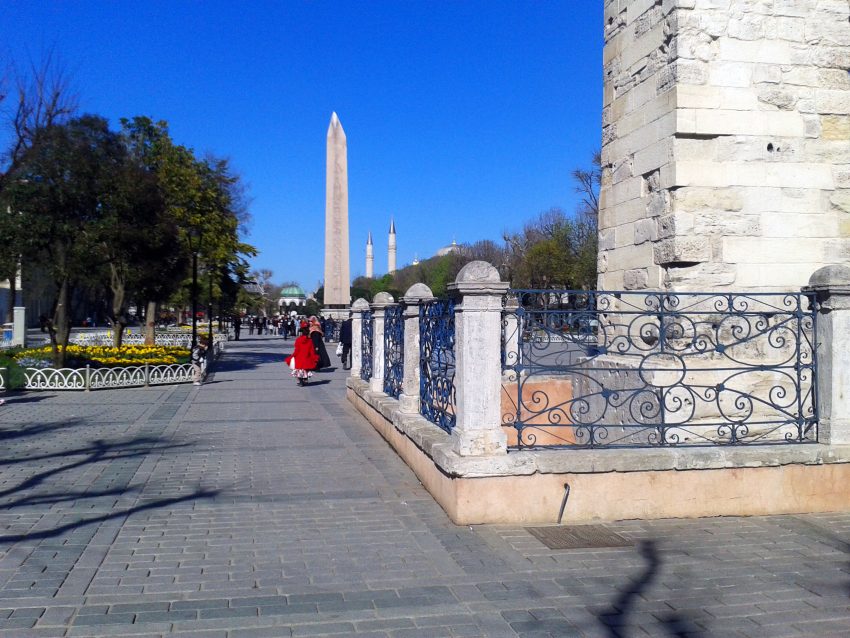
Walled Obelisk
Walled Obelisk
CC BY-SA 3.0 / Aziz Akbiyik
At the southern end of Sultanahmet Square’s former Hippodrome stands the Walled Obelisk, a 32‑meter stone pillar whose rough, blocky masonry makes a striking foil to the smooth Egyptian Obelisk nearby. Likely late Roman or early Byzantine in origin, it was rebuilt in the 10th century under Constantine VII and once shimmered with gilded bronze plaques celebrating Basil I’s victories, topped by a bronze sphere. Those metal skins were stripped and melted down after the sack of 1204, leaving today’s scarred surface to show weathering and old damage up close. It’s a quiet, tactile reminder of how monuments here were reused, looted, and endured.
Location: Obélisque « muré », Binbirdirek, Sultan Ahmet Parkı, Fatih/İstanbul, Türkiye | Hours: Accessible at all times as part of Sultanahmet Square. | Price: Free | Distance: 0.4km

17. Istanbul Archaeological Museum
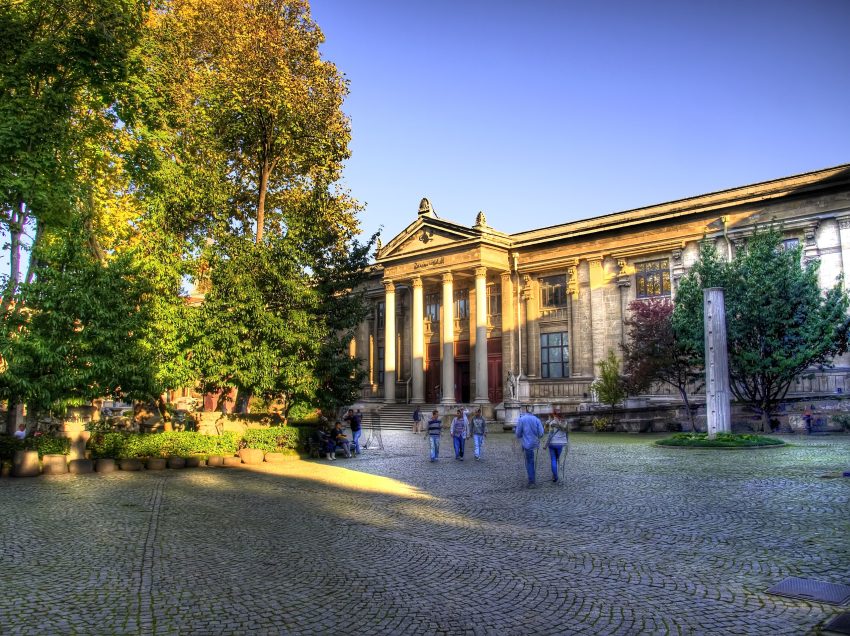
Istanbul Archaeological Museum
CC BY-SA 2.0 / Javier Losa
Founded in 1891 under Osman Hamdi Bey, this is Türkiye’s first museum and a three-part complex that traces civilizations across the former Ottoman world. The main Archaeology Museum’s marble halls and necropolis level linger in memory, especially the Alexander Sarcophagus and the haunting Sarcophagus of the Crying Women with its finely carved figures. Next door, the Museum of the Ancient Orient shifts to Mesopotamian and Anatolian cultures with cuneiform tablets and stone reliefs that feel startlingly immediate. The Tiled Kiosk adds a quieter coda of Islamic art, with luminous Ottoman tilework and Iznik ceramics. Recent visitors praise the clear, concise labels, though some areas may be under renovation.
Location: Istanbul Archaeological Museums, Cankurtaran, Fatih/İstanbul, Türkiye | Hours: Daily 9:00 AM–5:00 PM (until 7:00 PM from April to October); last ticket sold 30 minutes before closing. | Price: Approximately €0.30 (10 TL). | Website | Distance: 0.5km
Powered by GetYourGuide

18. Theodosius Cistern

Theodosius cistern
Theodosius cistern
CC BY-SA 4.0 / Izabela Miszczak
The Theodosius Cistern (Şerefiye Sarnıcı) is a 5th-century underground reservoir built under Emperor Theodosius II as part of Constantinople’s water network. Descend the stairs into a compact, hushed chamber where 32 marble columns stand in orderly rows, their reflections trembling on the shallow water. Soft, theatrical lighting and a subtle soundscape amplify the sense of being beneath the city’s everyday bustle. After an extensive restoration, it now functions as a museum-like space, sometimes paired with a short multimedia sequence that cycles every few minutes. Smaller than the Basilica Cistern, it feels more intimate and contemplative.
Location: Theodosius Cistern, Binbirdirek, Piyer Loti Caddesi, Fatih/İstanbul, Türkiye | Hours: Daily from 9:00 AM to 6:00 PM. | Price: Around €7. | Website | Distance: 0.5km

19. Column of Constantine

Column of Constantine Istanbul
CC BY-SA 2.0 / Enrique Freire
The Column of Constantine (Çemberlitaş), nicknamed the “Burnt Column,” is a weathered Roman victory column erected in 330 AD to mark Constantine’s refounding of Byzantium as Constantinople. It once rose around 50 meters and was built from porphyry drums bound with bronze rings, later stripped during the 1204 sack; today it stands about 35 meters above the traffic of Çemberlitaş Square. Up top, a storm in 1106 toppled the original statue of the emperor depicted as Apollo-Helios, and later repairs briefly added a cross before it was removed after 1453. Up close, visitors notice the darkened stone from the 1779 fire and the column’s patched, timeworn surface.
Location: Column of Constantine, Mollafenari, Vezirhan Caddesi, Fatih/İstanbul, Türkiye | Distance: 0.6km

20. Topkapi Palace
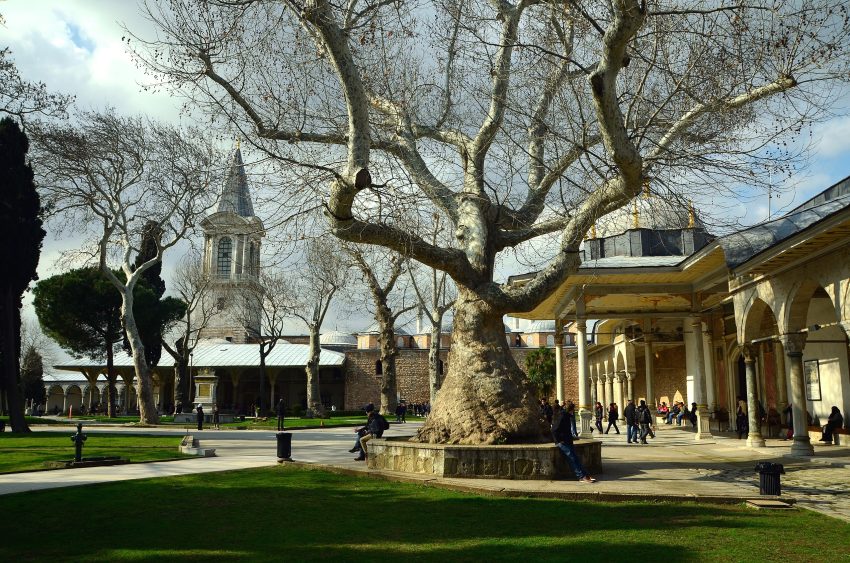
Topkapı Palace
Topkapı Palace
CC BY-SA 3.0 / Adrian Farwell
Commissioned by Sultan Mehmed II soon after the 1453 conquest, Topkapi Palace served for nearly four centuries as the Ottoman court’s residence and administrative heart. Rather than a single building, it unfolds as a walled, open-air sequence of courtyards, gardens, mosques, and pavilions spread across a vast promontory with views over the Bosphorus and Golden Horn. Visitors pass through the Imperial Gate into the expansive First Courtyard, where Hagia Irene—an early 4th‑century church later used as an armory—still stands. Beyond the Gate of Salutation, the mood turns ceremonial and intense: look for the Executioners’ Fountain, then continue to the Harem and the rooms of Holy Relics and treasury objects that many travelers describe as the most affecting parts.
Location: Topkapi Palace Museum, Cankurtaran, Babı Hümayun Cad, Fatih/İstanbul, Türkiye | Distance: 0.6km
Powered by GetYourGuide

21. Boukoleon Palace

Bukoleon Sarayı
Bukoleon Sarayı
CC BY-SA 4.0 / Gargarapalvin
Boukoleon Palace is a ruined Byzantine seafront residence on Istanbul’s Marmara shore, once part of the imperial palace complex that helped project power from Constantinople’s waterfront. Begun in the 5th century under Theodosius II and enlarged in the 9th century by Theophilos, it was known for a long sea-facing façade and a small harbor below the walls. Today you mainly notice fragments of arches, marble window frames, and carved openings set into the old sea walls, with the waves and coastal road close by. The name recalls a “bull and lion” statue group that once marked the harbor. Visitors currently view it from outside fencing, with restoration work visible in places.
Location: Boukoleon Palace, Sultan Ahmet, Kennedy Avenue, Fatih/İstanbul, Türkiye | Hours: Open viewable ruins; accessible at all times from the surrounding streets. | Price: Currently free; site can only be viewed from outside. | Distance: 0.7km

22. Grand Bazaar
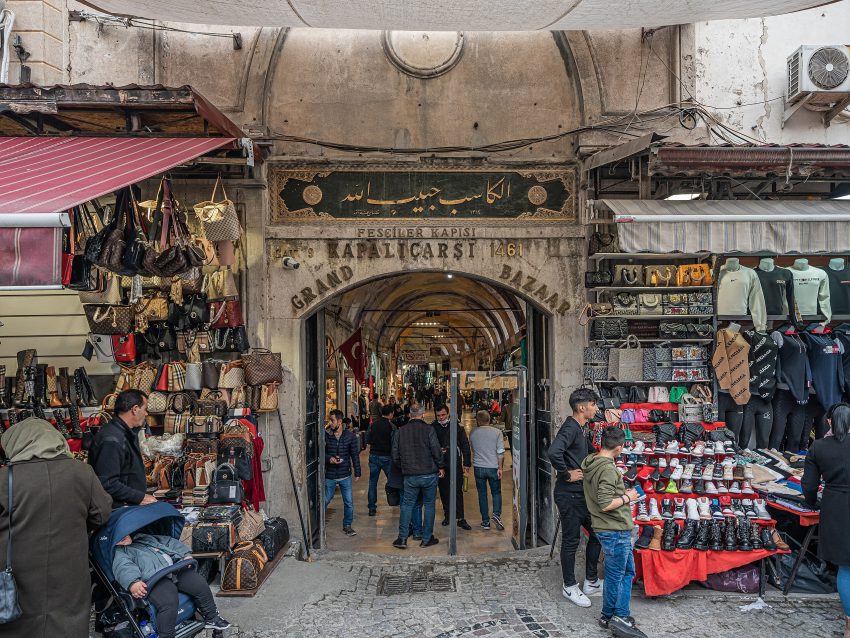
Istanbul Grand Bazaar
Free Art License. / A.Savin
Under a web of vaulted corridors and painted domes, the Grand Bazaar feels like a small covered city built for trade and conversation. Founded soon after 1453 under Mehmed II, it began with secure domed bedestens for precious goods and expanded into a maze of 58 streets and roughly 4,000 shops. What you notice first is the sensory churn: lantern light glinting off gold, stacks of handwoven carpets, the bite of spice and leather, and tea drifting from tucked-away cafés. Look up for skylights and tiled ceilings, then duck into hans and lanes still associated with old crafts—jewellers, furriers, silk traders. Getting turned around is part of the experience.
Location: Grand Bazaar, Beyazıt, Fatih/İstanbul, Türkiye | Hours: Monday–Saturday, 9:00 AM–7:00 PM; closed Sundays and religious holidays. | Price: Free | Distance: 0.9km
Powered by GetYourGuide

23. Spice Bazaar

Spice Bazaar, Istanbul
CC BY-SA 2.0 / brewbooks
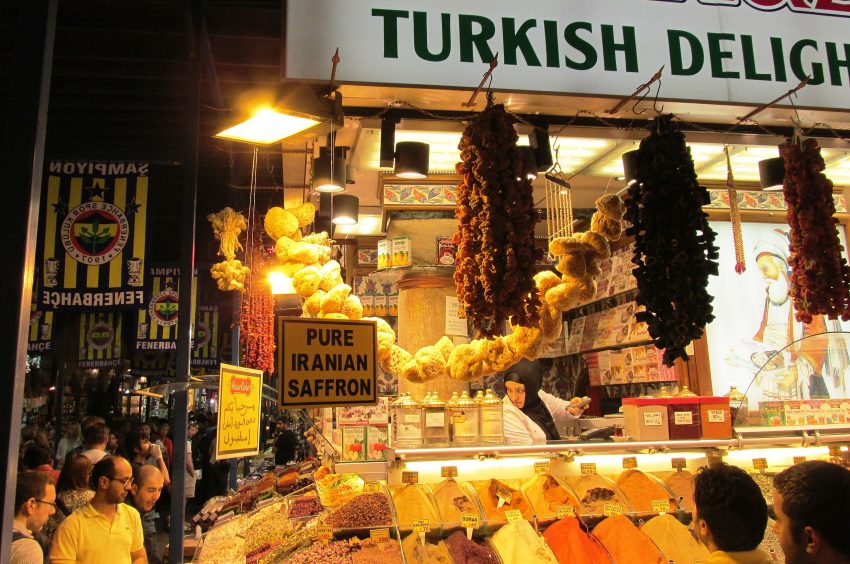
The Spice Bazaar (Mısır Çarşısı), built in 1664 as part of the New Mosque complex, is a compact, vaulted market where commerce once helped fund the adjoining külliye. Its nickname “Egyptian Bazaar” comes from Ottoman revenues and trade links with Egypt, and the place still feels like a working pantry rather than a souvenir hall. Inside the L-shaped corridors, more than 80 shops stack jewel-bright spices and teas in pyramids—cinnamon, cumin, saffron, rose—alongside Turkish delight, dried fruits, nuts, and natural soaps. The air is clean and well-ventilated, but the atmosphere stays loud and lively, with bargaining and generous samples.
Location: Spice Bazaar, Rüstem Paşa, Fatih/İstanbul, Türkiye | Distance: 1.1km

24. Rüstem Pasha Mosque
New Mosque Istanbul
New Mosque Istanbul
CC BY-SA 1.0 / Travel Coffee Book
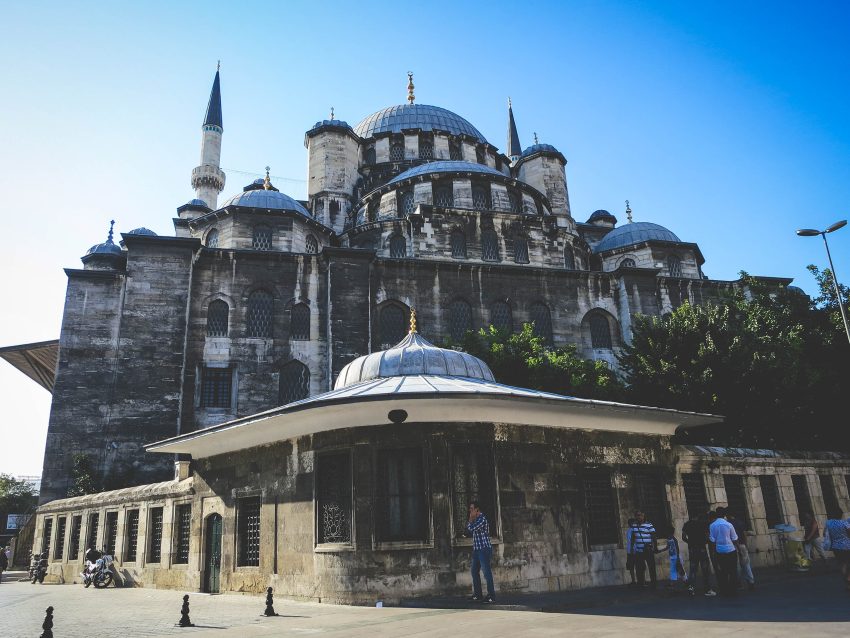
Hidden above the market lanes of Eminönü, Rüstem Pasha Mosque is a compact 16th-century masterpiece by Mimar Sinan, commissioned by Grand Vizier Rüstem Pasha (Mihrimah Sultan’s husband) and completed in 1563. Step inside and the scale disappears under thousands of hand-painted Iznik tiles—tulips, carnations, and tight arabesques in blues, turquoise, and that prized tomato-red glaze. Light from latticed windows shifts across the patterned walls, columns, and mihrab, turning the small prayer hall into a changing mosaic. The octagonal plan and central dome feel finely balanced rather than monumental, and the calm interior contrasts sharply with the bustle below.
Location: Rustem Pasha Mosque, Rüstem Paşa, Hasırcılar Caddesi, Fatih/İstanbul, Türkiye | Hours: Open daily except during prayer times. | Price: Free | Distance: 1.3km

25. Suleymaniye Mosque
Suleymaniye Mosque
Suleymaniye Mosque
CC BY-SA 3.0 / Johann H. Addicks
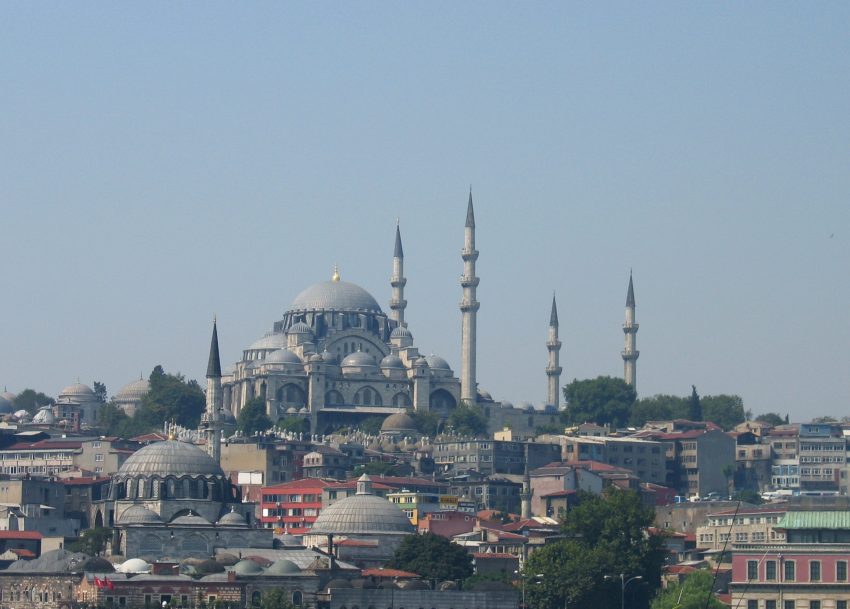
Crowning one of the city’s seven hills above the Golden Horn, the Süleymaniye Mosque is Sinan’s imperial masterpiece, completed in 1557 for Sultan Süleiman. Its vast courtyard of arcades and central fountain leads into a prayer hall where a 53‑meter dome seems to hover in soft light from stained glass. Listen for the unusually calm acoustics—Sinan embedded clay jars in the walls to shape the sound. Built as a full külliye, it once included a hospital, library, school, bathhouse, and kitchens that fed the poor, underscoring its role as a social center as well as a sanctuary. In the gardens, the mausoleums of Süleiman and Hürrem Sultan share space with Sinan’s modest tomb.
Location: Suleymaniye Mosque, Süleymaniye, Profesör Sıddık Sami Onar Caddesi, Fatih/İstanbul, Türkiye | Distance: 1.5km

26. Galata Tower
Galata Tower
Galata Tower
CC BY-SA 3.0 / qwesy qwesy
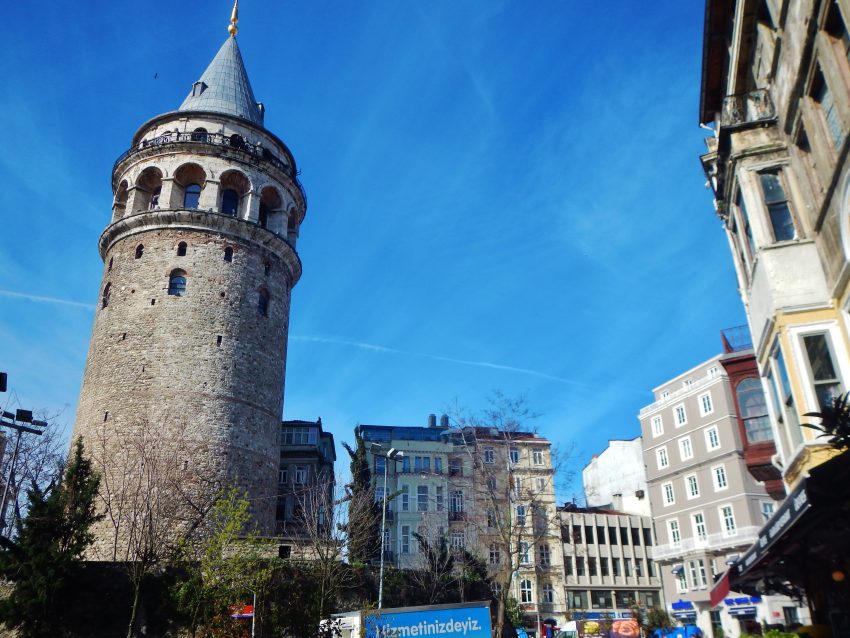
Rising above Beyoğlu, the nine-story Galata Tower began life in 1348 as a Genoese fortification, originally called the “Tower of Christ.” A modern elevator lifts you most of the way up, then the final steps lead to a circular outdoor balcony with a full 360-degree sweep over the Golden Horn and Bosphorus, with Hagia Sophia and the Old City’s minarets in the distance. Inside, small exhibits trace the tower’s shifting roles—from watchtower to Ottoman-era fire lookout and even a prison for naval slaves. Local lore adds a dash of drama: Hezarfen Ahmed Çelebi is said to have launched himself from here with handmade wings, gliding toward the Bosphorus.
Location: Galata Tower, Bereketzade, Beyoğlu/İstanbul, Türkiye | Hours: Daily, 8:30 AM–11:00 PM. | Price: Around €15 per person. | Distance: 2km
Powered by GetYourGuide

27. Maiden’s Tower

Maidens Tower Istanbul
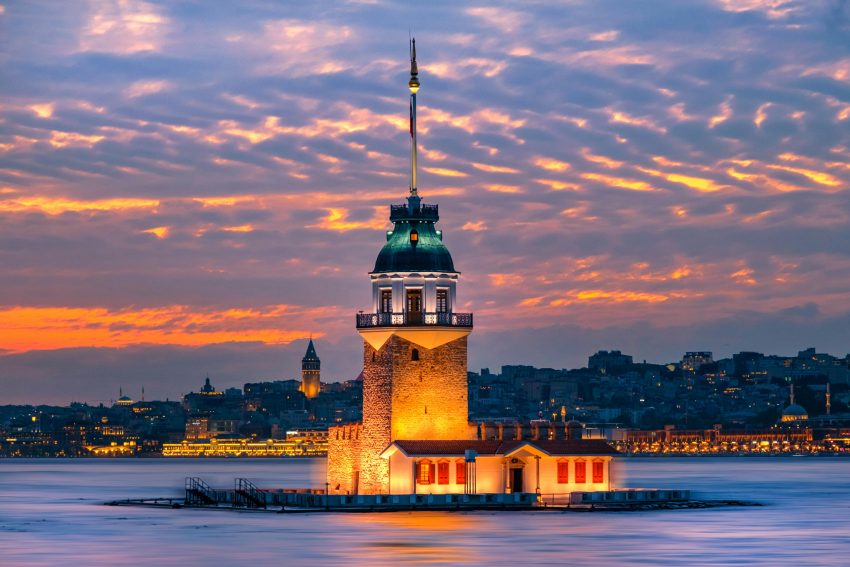
Perched on a tiny islet just off Üsküdar where the Bosphorus meets the Sea of Marmara, the Maiden’s Tower (Kız Kulesi) feels like a solitary lighthouse dropped into the strait. A short boat ride brings you to a compact interior with exhibits on its many lives—watchtower, customs post, quarantine station—dating back to antiquity. From the upper viewing level, the reward is a wide, water-framed sweep that catches both shores and the bridges in a single glance. Legends cling to the stone, especially the tale of a princess doomed by a snake hidden in a fruit basket. After dark, its illumination turns the tower into a floating point of light.
Location: Maiden's Tower, Salacak, Üsküdar/İstanbul, Türkiye | Distance: 2.6km
Powered by GetYourGuide

28. Dolmabahçe Palace

Dolmabahçe Palace
Dolmabahçe Palace
CC BY-SA / Diego Delso
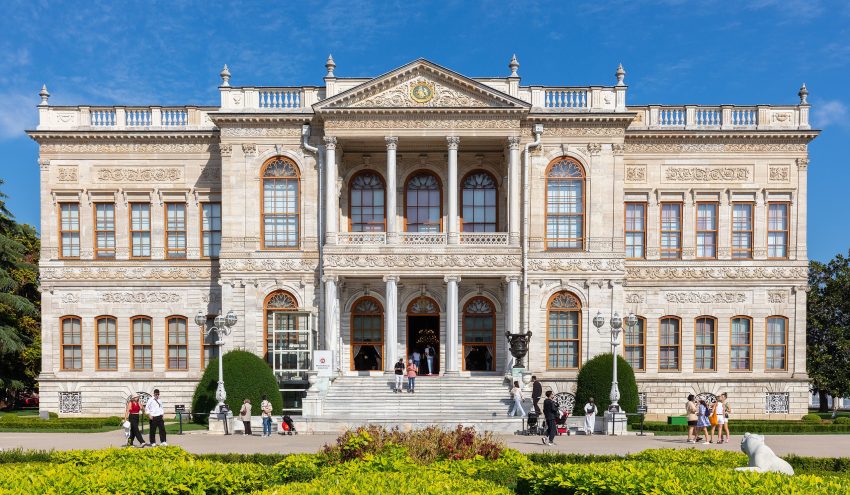
Set on the European shore of the Bosphorus, Dolmabahçe Palace is a 19th-century Ottoman seat of power built for Sultan Abdulmejid I, where the court shifted toward European-style modernity. Its symmetrical plan and mix of Baroque, Rococo, and Neoclassical design culminate in vast ceremonial rooms with gold-leaf ceilings and marble grandeur. Visitors linger in the Ceremonial Hall beneath a 4.5-ton Bohemian crystal chandelier lit by 750 lamps, then climb the glittering Crystal Staircase of glass, brass, and stone. The palace’s scale is startling—285 rooms, 46 halls, and six Turkish baths—yet some of the most affecting moments are quiet, like the clock stopped at 9:05 in Atatürk’s room.
Location: Dolmabahçe Palace, Vişnezade, Dolmabahçe Caddesi, Beşiktaş/İstanbul, Türkiye | Distance: 3.7km
Powered by GetYourGuide

29. Fountain of Ahmed III

Fountain of Ahmed III
Public Domain / KureCewlik81
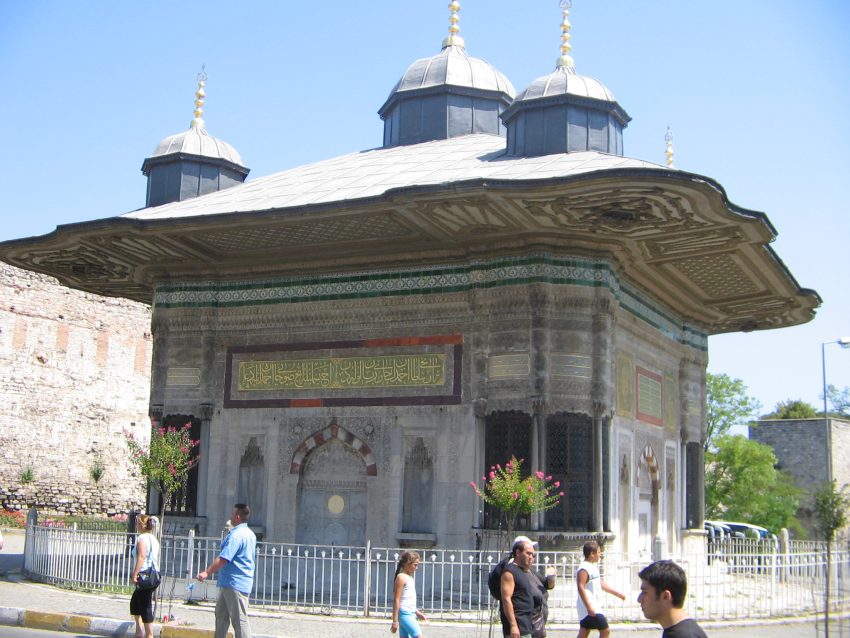
Standing just outside the Imperial Gate of Topkapı Palace, the Fountain of Ahmed III is an ornate public sebil built in 1728 during the Tulip Era, when Ottoman design began flirting with European Baroque curves. Its square body is capped by a broad roof and five small domes, with four recessed niches that once dispensed water through bronze grilles as a charitable gift. Walk around each façade to spot variations in the floral stone carving, tiled borders, and large calligraphic panels in thuluth script—verses praising water and the sultan’s generosity. Even amid the crowds, the carved eaves and soft rococo flourishes reward a slow, close look.
Location: Mimar Sinan, Fountain of Ahmed III, Üsküdar/İstanbul, Türkiye | Hours: Accessible 24 hours daily. | Price: Free; the fountain is outdoors. | Distance: 3.7km

30. Chora Church
Chora Church Constantinople
Public Domain / Gryffindor
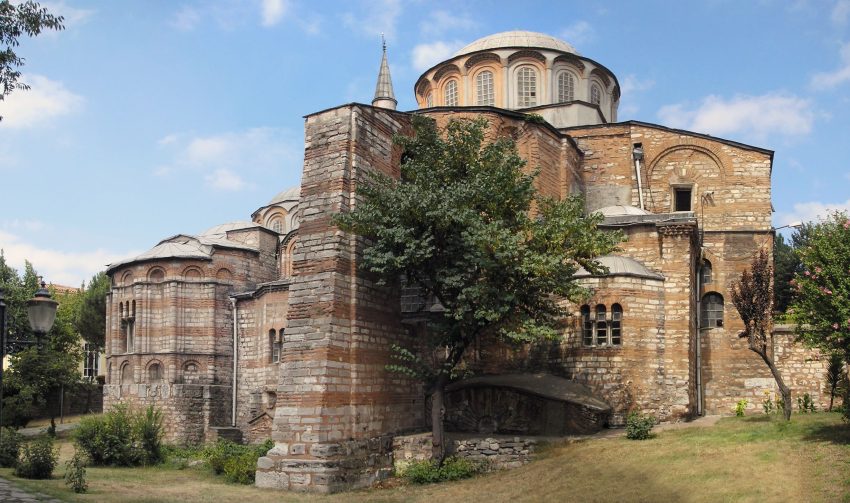
Tucked beside the old land walls in the quiet Edirnekapı area, Chora Church—now the Kariye Mosque—packs Byzantine brilliance into an intimate, chapel-like scale. Inside, the narthexes glow with gold-ground mosaics narrating the lives of the Virgin and Christ, while the domes hold commanding images of Christ Pantocrator and the Virgin. Don’t miss the parekklesion’s fresco cycle, especially the intense Anastasis (Resurrection) scene where Christ hauls Adam and Eve from their tombs, and the panel of Theodore Metochites presenting a model of the church. As a functioning mosque, it can pause for prayer, but the art still feels like a jeweled reliquary.
Location: Kariye Mosque, Dervişali, Kariye Cami Sokak, Fatih/İstanbul, Türkiye | Distance: 4.2km
Powered by GetYourGuide

31. Gate of Charisius

Theodosian Walls of Constantinople, Istanbul Gate of Charisius
CC BY-SA 2.0 / Carole Raddato
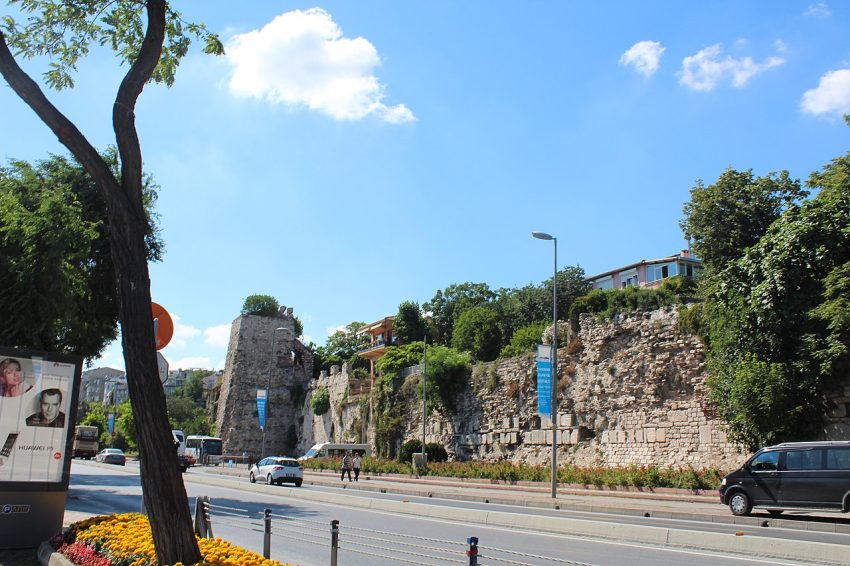
The Gate of Charisius, better known as Edirnekapı (the Gate of Adrianople), is a 5th-century entrance in the Theodosian Walls, perched on the highest of the city’s seven hills. It’s remembered as the point where Sultan Mehmed II made his ceremonial entry on May 29, 1453, turning a battered breach line into a symbol of the Ottoman takeover. Standing here, you notice the heavy masonry and the patchwork of Byzantine fabric with later repairs, plus the sense of height—about 76 meters above sea level—with wide views toward the Golden Horn. The surrounding ground still feels like a battlefield edge, where the last Byzantine defense is believed to have collapsed near Emperor Constantine XI’s final stand.
Location: Edirnekapı, Dervişali, Fatih/İstanbul, Türkiye | Distance: 4.2km

32. Palace of the Porphyrogenitus
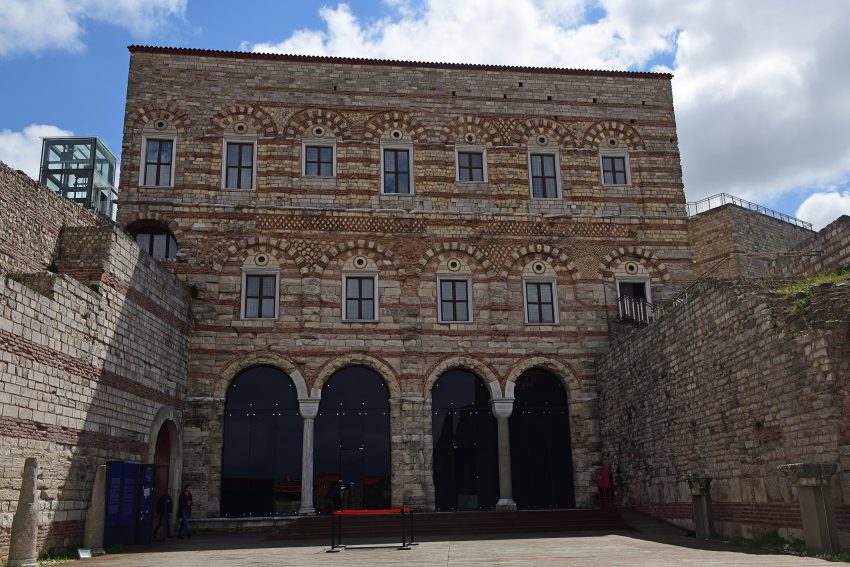
Palace of the Porphyrogenitus
CC BY-SA 4.0 / Dosseman
Tucked against the Theodosian Walls in Ayvansaray, the Palace of the Porphyrogenitus (Tekfur Sarayı) is the best-preserved Byzantine palace to survive, a rare glimpse of the empire’s late Palaiologos era. Its three-storey façade—striped in red brick and pale stone—still reads like a piece of court architecture set into the city’s defenses. Inside, restored galleries emphasize the building’s height and symmetry, with small displays recalling its later afterlife as an Ottoman-era ceramics workshop. The most memorable moment is stepping up to the terrace/observation level for wall-top views and a close look at the masonry. It’s usually quiet, though some visitors note the exhibits feel minimal.
Location: Palace of the Porphyrogenitus, Ayvansaray, Fatih/İstanbul, Türkiye | Distance: 4.3km

33. Palace of Blachernae

Palace of Blachernae
CC BY-SA 4.0 / Adakonda
Tucked by Ayvansaray near the Theodosian Walls, the Palace of Blachernae marks the late Byzantine court’s final imperial residence before 1453, even though most of it has vanished beneath today’s streets. What visitors remember are the surviving fragments: stretches of wall that once protected the “New Palace” and the brooding, vaulted Prison of Anemas built into the complex. The site’s story is tied to emperors who shifted power here from the older waterfront palace, and to ceremonies once held in lavish halls like the Polytimos Oikos. For a clearer sense of Byzantine palace architecture, many pair the area with nearby Tekfur Sarayı, where brick arches and upper-level views draw curious travelers.
Location: Palace of Blachernae, Ayvansaray, Fatih/İstanbul, Türkiye | Distance: 4.3km
Powered by GetYourGuide

34. Kaligaria Gate

Kaligaria Gate
Kaligaria Gate
CC BY-SA 4.0 / Isabeau
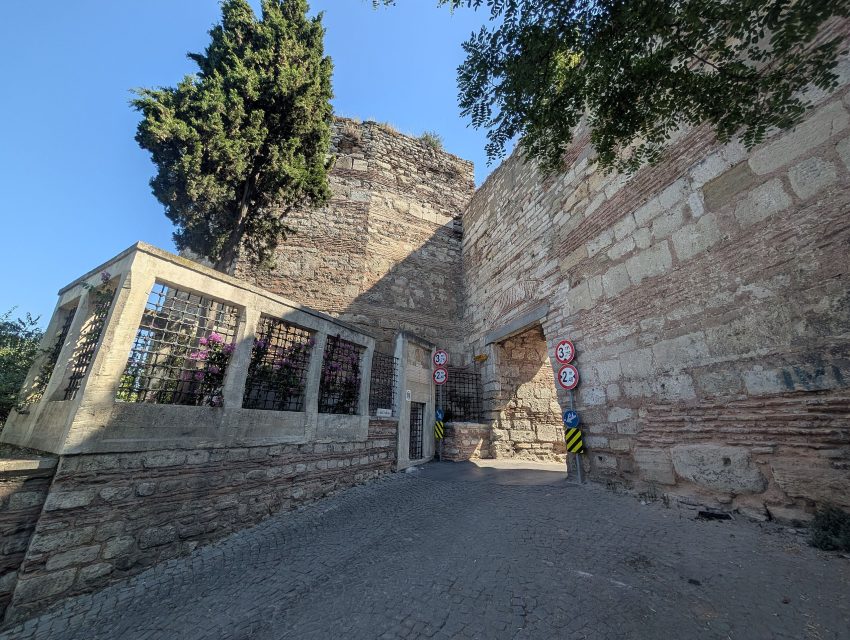
Kaligaria Gate is a modest, partly ruined opening in the old land walls, remembered as the “bootmakers’ gate” from the Byzantine craft quarter that once clustered here. Near the northwestern corner by the Blachernae district, it functioned less as a triumphal portal and more as a working passage for artisans, guards, and palace staff moving between workshops and the imperial precinct. What visitors notice today are fragments of masonry and the way Byzantine stonework is stitched into later Ottoman and modern structures along the slope above the Golden Horn. Standing here, the scale feels intimate—more about daily routines and controlled access than ceremony, with the surrounding neighborhood still humming around the walls.
Location: Eğrikapı, Ayvansaray, Eğrikapı Cd., Fatih/İstanbul, Türkiye | Distance: 4.5km

35. Fifth Military Gate
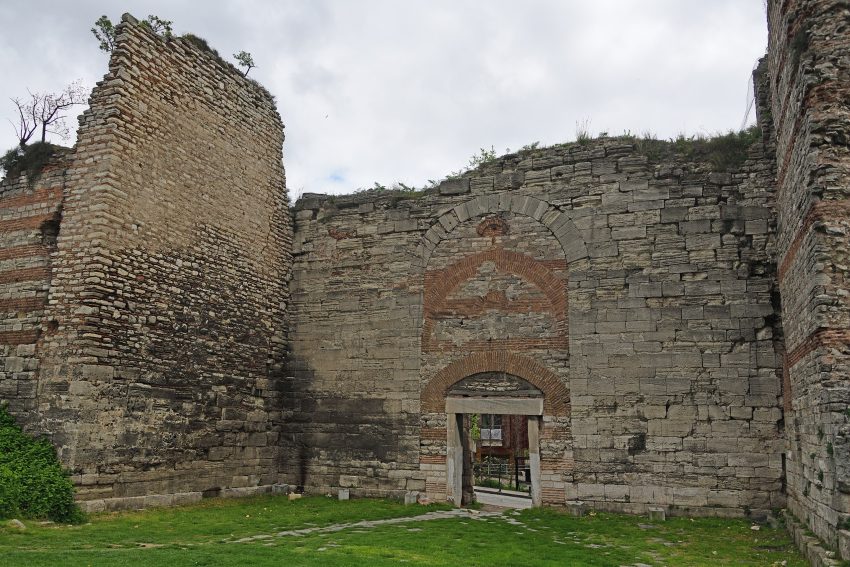
Istanbul Sulukule Gate aka Fifth Military Gate
CC BY-SA 4.0 / Dosseman
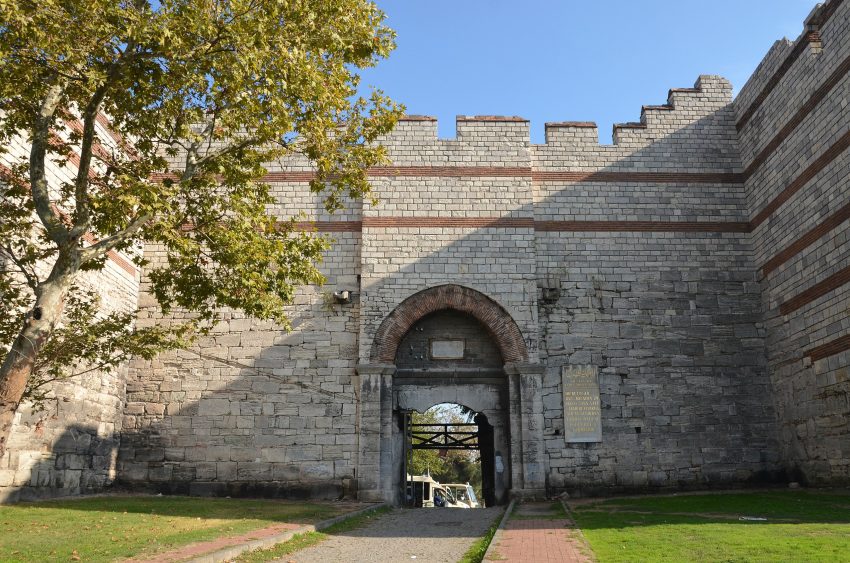
The Fifth Military Gate (Hücum Kapısı) marks the breach point in Istanbul’s Theodosian Walls where Ottoman troops forced entry on the morning of May 29, 1453, ending Byzantine rule. The gate itself no longer stands, but you can still pick out the battered stretch of masonry between towers 77 and 78, just north of the old Lycus stream bed, where repairs and rough brickwork show centuries layered together. A small sign notes the entry through a cannon-made gap, and the sloping ground helps you picture the pressure of the final assault. Visitors often describe it as a quiet, slightly underwhelming spot—until the weight of the location sinks in.
Location: Topkapı, Sulukule Caddesi, Fatih/İstanbul, Türkiye | Distance: 4.6km

36. Gate of Saint Romanus
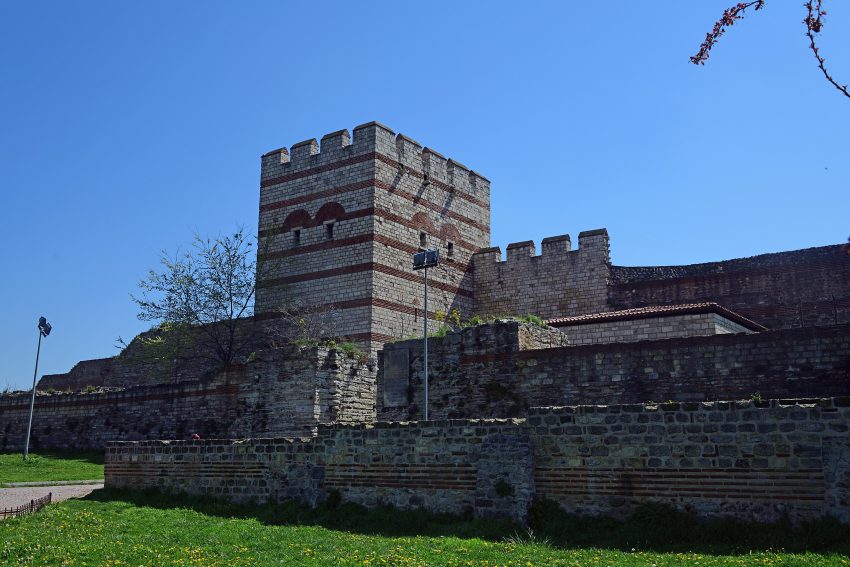
Gate of Saint Romanus
CC BY-SA 4.0 / Dosseman
The Gate of Saint Romanus, today called Topkapı (“Cannon Gate”), is a surviving entrance in Istanbul’s 5th‑century Theodosian Walls, set near the crest of the city’s Seventh Hill. It matters because this was the pressure point in the 1453 siege, where Emperor Constantine XI is said to have made his last stand as Mehmed II’s forces broke through. The Ottomans positioned Urban’s huge “Basilic” cannon opposite this spot, a detail remembered in the gate’s modern name. What visitors notice now is the stout stretch of walling and the uneven ground sloping toward the Lycus Valley, with a small park-like area in front and a site that feels free-roaming rather than museum-managed.
Location: Topkapı, Fatih/İstanbul, Türkiye | Distance: 4.6km

37. Gate of the Spring
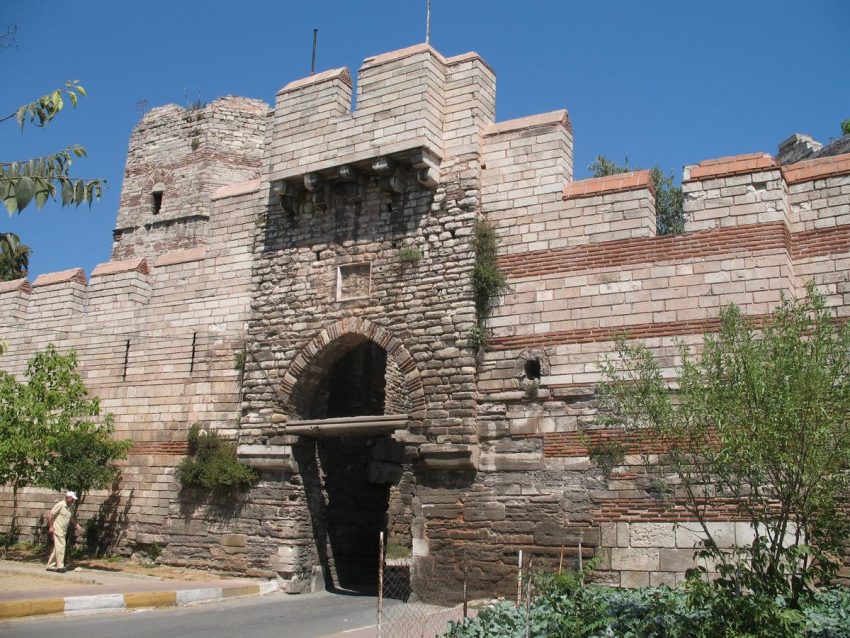
Theodosian Walls in Constantinople Gate of Springs
Public Domain / CrniBombarder
The Gate of the Spring (Pege Gate), also known as Silivri Kapısı, is a principal opening in Istanbul’s Theodosian land walls, set between the heptagonal towers 35 and 36. It matters because on 25 July 1261 a small Nicaean force slipped in here and triggered the swift recapture of Constantinople, ending decades of Latin rule. Visitors notice the heavy brick-and-stone towerwork, much of it rebuilt in late Byzantine times, and a marble inscription dated 1439 recording repairs ordered by Emperor John VIII Palaiologos. The setting is quiet and weathered, with uneven ground around the towers, and recent municipal work has made parts of the walls easier to approach.
Location: Silivrikapı, Hisaraltı Cd. No:1, 34107 Fatih/İstanbul, Türkiye | Distance: 4.7km

38. Gate of Rhesios
Gate of Rhegon
Gate of Rhegon
CC BY-SA 4.0 / Isabeau
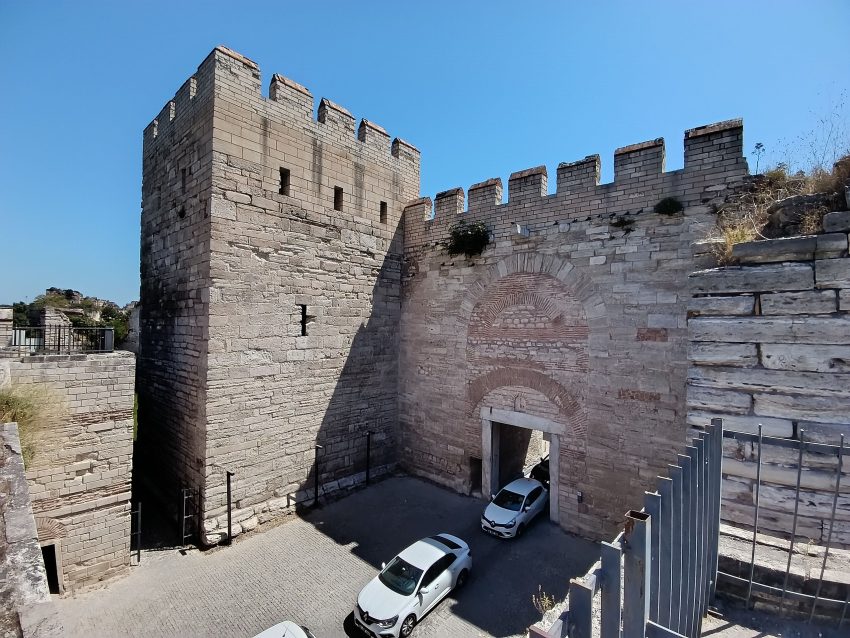
Mevlânakapı, the Gate of Rhesios, is a remarkably intact 5th-century gateway in the Theodosian Land Walls built under Theodosius II. Its tall arched passage is framed by two hefty towers banded in alternating brick and limestone, still reading as early Byzantine military engineering rather than later repair. What lingers most are the carved imperial inscriptions—more survive here than at any other wall gate—including a boast invoking the “Fortune of Constantine” and the emperor’s divinely protected rule. The gate’s shifting names (Rhesios, Rhegion, even a link to the Hippodrome “Reds”) hint at layers of memory embedded in the stone.
Location: Mevlânakapı Kapısı, Mevlanakapı, Mevlanakapı Caddesi, Fatih/İstanbul, Türkiye | Distance: 4.8km

39. Yedikule Fortress
Yedikule Fortress
Yedikule Fortress
CC BY-SA 4.0 / Canercangul
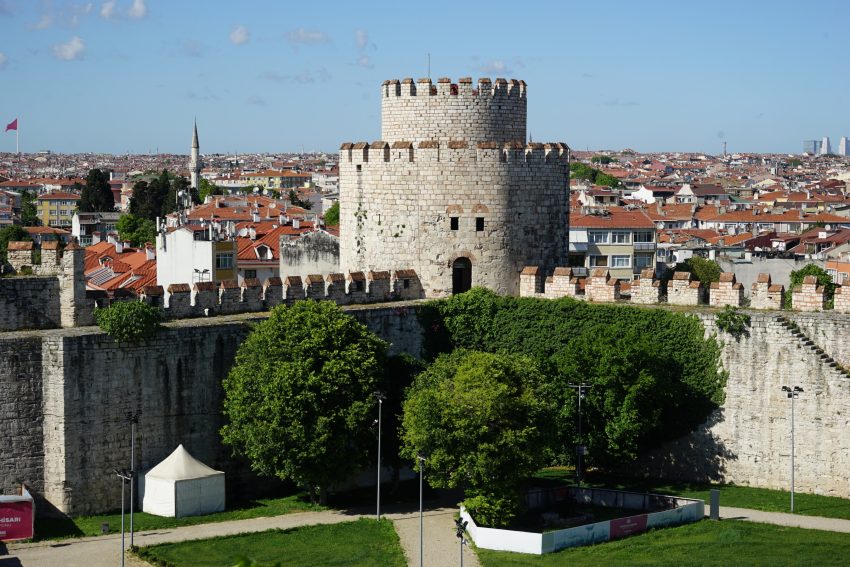
At the southern end of the Theodosian Walls, Yedikule Fortress (the “Seven Towers”) is a brooding Ottoman citadel built in 1458 by Mehmed II around the remains of the Byzantine Golden Gate, once the triumphal entrance to Constantinople. Inside, you move through quiet courtyards and along heavy ramparts where Byzantine marble blocks sit beside Ottoman brickwork. Climbing the towers and wall-walks brings wide views over the Sea of Marmara, especially striking as the stone warms at sunset. The Golden Gate’s surviving arches and marble courses still hint at its former ceremonial grandeur, while the fortress’s later role as treasury and then state prison adds an edge to the atmosphere. Visitors often notice how uncrowded it feels compared with central sights.
Location: Yedikule Fortress, Yedikule, Yedikule Meydanı Sokak, Fatih/İstanbul, Türkiye | Hours: Daily from 9 a.m. to 6 p.m. (closed Mondays). | Price: Around 5 € (approximately 175 TRY); tickets sold on-site. | Distance: 4.9km

40. Xylokerkos Gate
Xylokerkos Gate Constantinople
Free Art License. / A.Savin
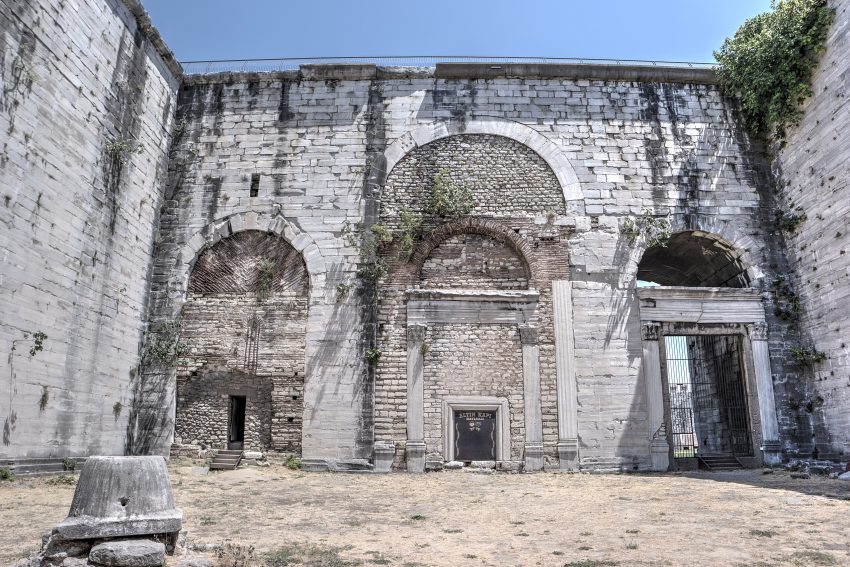
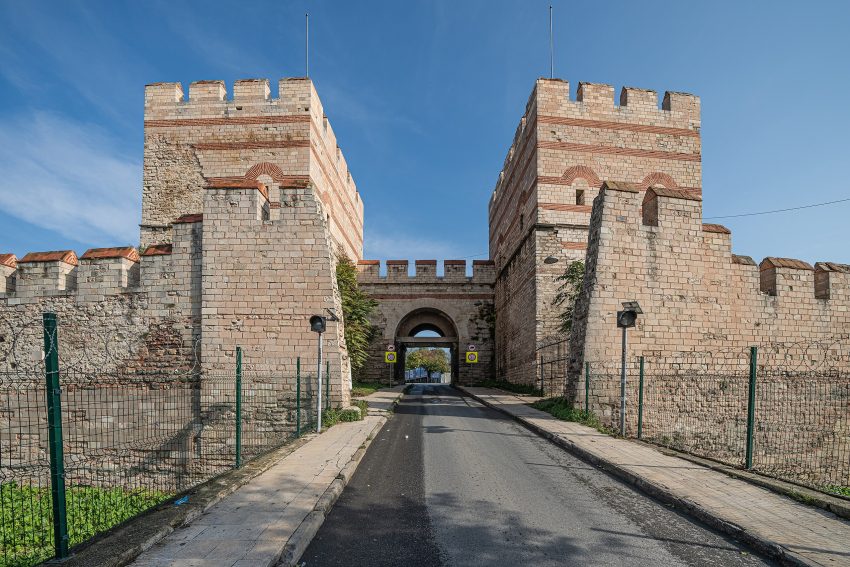
Hidden between the 22nd and 23rd towers of the Theodosian Walls, the Xylokerkos Gate (also called the Gate of Belgrade) is a monumental 5th‑century passageway, about 12 meters wide and nearly 20 meters tall. Its Greek name refers to a “wooden circus,” said to have stood outside the walls, while later Ottoman usage tied it to Serbian captives settled nearby after Belgrade’s conquest. The gate’s stop‑start life is part of its pull: sealed by Emperor Isaac II in 1189 amid a prophecy about Frederick Barbarossa, reopened in 1346, then long known as the “Closed Gate” before reopening in 1886. Today you notice the layered brick-and-stone masonry, restored sections, and a quiet, open-air-museum feel.
Location: Belgrade Gate, Sümbül Efendi, Fatih/İstanbul, Türkiye | Distance: 4.9km

41. Panorama 1453 History Museum
Panorama 1453 History Museum
CC BY-SA 4.0 / Vivaystn
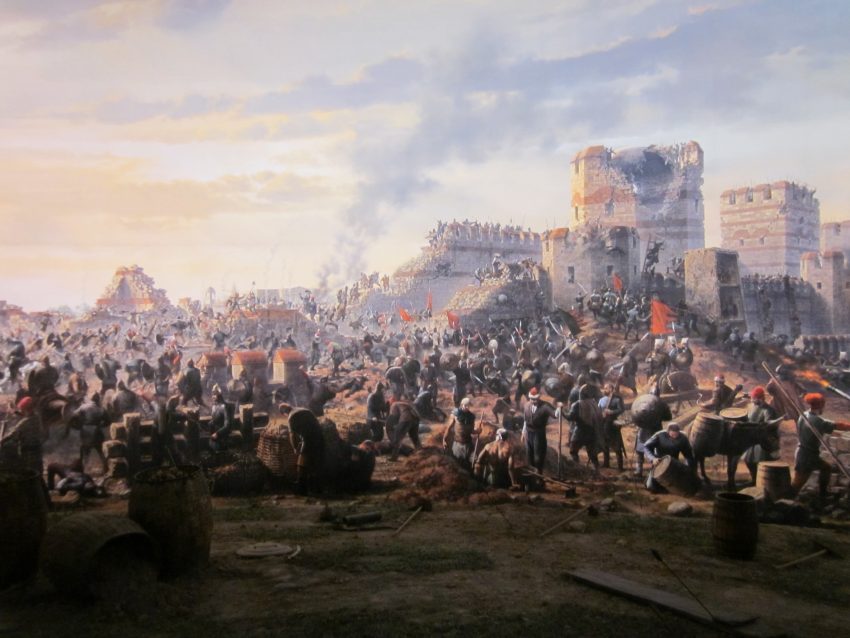
Panorama 1453 History Museum in Istanbul is a modern history museum built near the Theodosian Walls at Topkapı, close to where Ottoman forces broke through in May 1453, ending the Byzantine Empire. Its centerpiece is an immersive domed hall with a 360-degree painting—about 38 meters across and 12 meters high—paired with shifting lights and a soundscape of cannon fire, drums, and battle cries that places you in the siege. Before the panorama, multimedia displays and scale models explain Mehmed II’s strategy and the huge bombards used against the walls. Many visitors remember the short but intense audiovisual finale, though some note the interpretation can feel one-sided.
Location: Panorama 1453 History Museum, Merkez Efendi Mahallesi, Topkapı Kültür Park İçi Yolu, Zeytinburnu/İstanbul, Türkiye | Hours: Daily from 9 a.m. to 5 p.m. | Price: Approximately 9 € (300 TRY) per adult; tickets sold on-site only. | Distance: 5km
Powered by GetYourGuide

42. Golden Gate

Golden Gate of Constantinople
CC BY-SA 4.0 / Isabeau
Set into the southern stretch of the Theodosian Walls, the Golden Gate is a 5th‑century Byzantine triumphal entrance later absorbed into Yedikule (the “Seven Towers”) after 1453. Three marble arches and twin towers still convey the scale meant for imperial processions, when gilded doors and bronze details once flashed in the sun. Up close, the tightly fitted white stone blocks show off Roman-era engineering, even after centuries of weathering. Visitors tend to linger around the towers and gate passages, where restoration work and clear signage help decode its shift from ceremonial portal to fortress architecture.
Location: Golden Gate, Yedikule, Fatih/İstanbul, Türkiye | Hours: The gate can be viewed at all times; fortress hours vary. | Price: Free | Distance: 5km
Powered by GetYourGuide

43. Marble Tower

Istanbul Marble Tower
CC BY-SA 4.0 / Dosseman
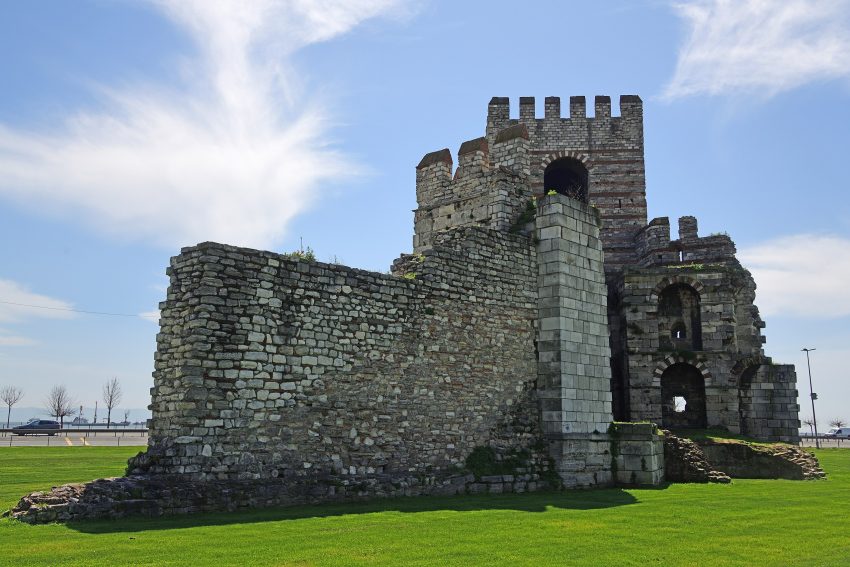
Marble Tower (Mermer Kule) is a late-Byzantine defensive tower where the Theodosian land walls meet the Marmara sea walls, marking a literal hinge between city and shoreline. Built with conspicuous reused marble blocks (spolia) at its lower levels, it feels like a patchwork of earlier monuments set into fortification stone. The roughly 10 × 10.8 m base rises about four storeys (around 25 m), with vaulted interior levels, arrow slits, and a crenellated parapet that still reads as military architecture. In the small courtyard, traces of cistern vaults and service spaces hint at how the tower could function as a watch point and last-resort stronghold amid shifting empires.
Location: Marble Tower, İçi Yolları, Yedikule, Koca Mustafa Paşa Parkı, Fatih/İstanbul, Türkiye | Distance: 5.3km

Best Day Trips from Istanbul

A day trip from Istanbul offers the perfect opportunity to escape the urban rhythm and discover the surrounding region's charm. Whether you're drawn to scenic countryside, historic villages, or cultural landmarks, the area around Istanbul provides a variety of easy-to-reach destinations ideal for a one-day itinerary. If you are looking to rent a car in Türkiye I recommend having a look at Discover Cars, first, as they compare prices and review multiple car rental agencies for you.

1. Rumeli Fortress
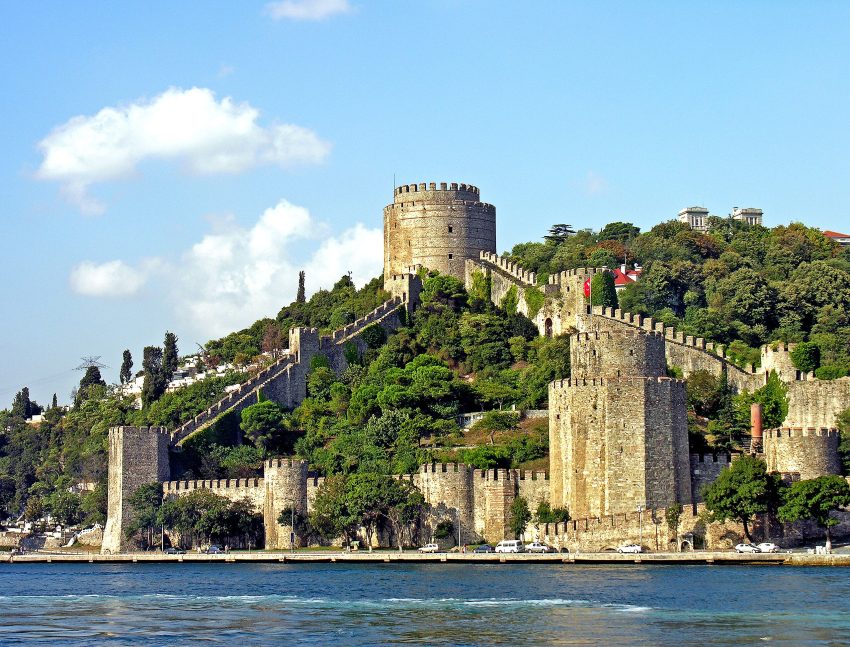
Rumeli Castle
Rumeli Castle
CC BY-SA 2.0 / Dennis G. Jarvis
Perched dramatically on the European shore of the Bosphorus, Rumeli Fortress (Rumeli Hisarı) is one of Istanbul’s most striking historic landmarks. Its massive stone towers and curtain walls rise steeply above the water, a testament to the military might and vision of Sultan Mehmed II, who built it in just four months in 1452 — a year before his conquest…
Location: Rumeli Fortress, Rumeli Hisarı, Yahya Kemal Caddesi, Sarıyer/İstanbul, Türkiye | Hours: Daily: 09:00–17:00. Closed on Mondays. | Price: €6 | Website | Distance: 10.8km
Visiting Rumeli Fortress
Powered by GetYourGuide

Where to Stay in Istanbul

Istanbul offers a remarkable range of neighborhoods to stay in, each providing its own distinctive feel and access to the city’s many treasures. For first-time visitors, Sultanahmet is the heart of old Istanbul and the best choice for those wanting to be within walking distance of iconic landmarks such as Hagia Sophia, the Blue Mosque, and Topkapi Palace. Here, you can stay at Four Seasons Hotel Istanbul at Sultanahmet, a beautifully restored Ottoman-era building that combines luxury with historical charm. Those seeking boutique comfort might prefer Hotel Amira Istanbul, which offers warm hospitality, elegant interiors, and a rooftop terrace overlooking the Sea of Marmara. Sultanahmet’s quiet, cobbled streets and proximity to major attractions make it ideal for cultural explorers.

For travelers who enjoy vibrant nightlife, art, and dining, the Beyoğlu district on the European side is the place to be. Centered around Istiklal Street and Taksim Square, it’s home to countless cafés, music venues, and galleries. The area’s mix of neoclassical architecture and contemporary energy defines modern Istanbul. A great option here is The Marmara Taksim, offering panoramic views over the Bosphorus and a prime location for exploring the city’s lively nightlife. Alternatively, Pera Palace Hotel is a historic icon that has hosted generations of writers, artists, and royals since 1892, offering a timeless atmosphere filled with character and refinement.

Across the Bosphorus on the Asian side, Kadıköy and Üsküdar present a more local and relaxed experience. Kadıköy is known for its creative scene, markets, and excellent restaurants, attracting both locals and long-term visitors who prefer a less touristy base. Üsküdar, meanwhile, provides beautiful views back toward the European skyline and easy ferry access. Staying here offers insight into everyday Istanbul life, with quieter streets and a welcoming ambiance. With a growing number of boutique accommodations, this side of the city suits travelers seeking authenticity and a slower pace while remaining just a ferry ride from the main attractions.

Using the our Hotel and Accomodation map, you can compare hotels and short-term rental accommodations in Istanbul. Simply insert your travel dates and group size, and you’ll see the best deals for your stay.

Istanbul Accommodation Map

Best Time to Visit Istanbul

Visiting Istanbul in Spring (Best)

Spring, from March to May, is the most beautiful time to visit Istanbul. The city awakens with mild weather, blooming tulips, and lively outdoor scenes. Temperatures average between 15°C and 25°C, perfect for strolling along the Bosphorus or exploring historic districts like Sultanahmet and Beyoğlu without the heat or crowds of summer. A highlight of the season is the Istanbul Tulip Festival, held throughout April, when parks such as Emirgan Grove and Gülhane Park are filled with millions of vibrant tulips — a tradition that reflects the city’s Ottoman heritage. Spring also brings a renewed energy to the city’s markets, rooftop terraces, and ferry rides, offering visitors the perfect mix of comfort and atmosphere.

Visiting Istanbul in Summer

From June to August, Istanbul experiences its warmest weather, with temperatures often reaching 30°C or more. The long daylight hours make it ideal for evening walks and sunset cruises along the Bosphorus. While sightseeing can be hot during midday, many visitors take advantage of the city’s waterfront cafés, shaded courtyards, and nearby beaches along the Sea of Marmara or the Princes’ Islands. Summer is also a festive season, marked by open-air concerts, cultural performances, and the Istanbul Jazz Festival, which attracts international artists. Despite the heat, the city buzzes with life late into the night, offering an unforgettable atmosphere for those who enjoy vibrant urban energy.

Visiting Istanbul in Autumn

Autumn, from September to November, brings a calm and reflective charm to Istanbul. Temperatures cool to between 15°C and 25°C, and the golden light of the season gives the city’s domes and minarets a warm glow. It’s a perfect time for museum visits, Bosphorus cruises, and leisurely exploration of Istanbul’s many neighborhoods. The crowds of summer fade, allowing for a more relaxed pace at landmarks like Hagia Sophia and Topkapi Palace. Food lovers will also find this a rewarding time, as seasonal dishes and fresh fish from the Bosphorus feature prominently in restaurants.

Visiting Istanbul in Winter

Winter, from December to February, brings cooler days and the occasional snowfall that adds a rare, magical quiet to Istanbul’s skyline. Temperatures usually range from 5°C to 10°C, and although some days are overcast, this is a great season for travelers seeking fewer crowds and lower prices. Visiting Istanbul in winter means enjoying its indoor treasures — from the Grand Bazaar and the hammams to its many museums and mosques. The festive lights around New Year and the cozy cafés serving salep (a warm milk drink with cinnamon) make the season feel intimate and atmospheric, offering a different yet memorable perspective of the city.

Annual Weather Overview

  • January 10°C
  • February 11°C
  • March 12°C
  • April 16°C
  • May 20°C
  • June 26°C
  • July 29°C
  • August 28°C
  • September 24°C
  • October 21°C
  • November 17°C
  • December 11°C

How to get to Istanbul

Getting to Istanbul by Air

Nearest airports: The main gateway to Istanbul is Istanbul Airport (IST), located about 40 km northwest of the city center. It is one of the busiest airports in the world, offering extensive international and domestic connections. Turkish Airlines operates a vast global network from here, linking Istanbul to cities across Europe, Asia, Africa, and the Americas. A second airport, Sabiha Gökçen International Airport (SAW), lies on the Asian side of the city and primarily handles low-cost and regional flights. For the best deals and a seamless booking experience, check out these flights to Istanbul on Booking.com.

Airport transfers: Both airports are well-connected to central Istanbul. From Istanbul Airport, travelers can take the Havaist airport bus service, taxis, or private transfers, while the metro line (M11) provides a direct route to the city. From Sabiha Gökçen, buses and taxis serve central districts such as Kadıköy and Taksim, and a new metro extension connects the airport to the main rail network.

Getting to Istanbul by Train

Istanbul is connected to Türkiye's high-speed rail network and several international routes. The city's main rail terminal for intercity and high-speed trains is Söğütlüçeşme Station on the Asian side, while Halkalı Station serves trains arriving from Europe. Passengers traveling within Türkiye can reach Istanbul from Ankara, Eskişehir, and Konya on modern high-speed trains that offer comfortable and efficient service.

For international travelers, there are rail links from Sofia and Bucharest, and new services are being developed to improve regional connections. Within the city, Marmaray — an undersea rail tunnel — links the European and Asian sides, making travel between stations quick and seamless.
You can use the official TCDD Taşımacılık website to check schedules, compare routes, and purchase tickets for Türkiye’s national and regional trains operated by TCDD. For a more streamlined experience (especially if you prefer an English interface or want to compare across countries), we recommend using Omio, which allows you to easily compare prices, schedules, and book train tickets across Türkiye and the rest of Europe — all in one place.

Getting to Istanbul by Car

Istanbul is accessible by road from all major regions of Türkiye and neighboring countries. The city is connected by modern highways such as the O-7 Northern Marmara Motorway, which provides a smooth approach from both Europe and Anatolia via the Yavuz Sultan Selim Bridge. From Greece or Bulgaria, drivers can cross the border at Edirne and follow the E80 motorway into the city.

Traffic in Istanbul can be dense, especially during rush hours, and parking is often limited in central areas. Many travelers prefer to leave their car at a hotel or use public transport once in the city. Tolls apply on bridges and motorways, paid electronically through the HGS system.

If you are looking to rent a car in Türkiye I recommend having a look at Discover Cars, first, as they compare prices and review multiple car rental agencies for you.

Travelling around Istanbul

Istanbul’s transport system is extensive and varied, offering a mix of metro, tram, ferry, and bus services. The Istanbulkart — a rechargeable smart card — allows easy payment across all public transport options. The tram lines are ideal for visitors, especially the T1 line, which connects key areas such as Sultanahmet, Eminönü, and Beyoğlu. The metro network covers much of the city, with new extensions continually improving access to suburban areas.

Ferries are a highlight of getting around Istanbul, providing scenic crossings between Europe and Asia and connecting neighborhoods such as Karaköy, Üsküdar, and Kadıköy. Taxis and ride-hailing apps are widely available, though traffic congestion can slow travel times. For short distances, walking through Istanbul’s lively streets and historic quarters remains one of the most rewarding ways to explore the city.
Powered by GetYourGuide

More from this area