Tirana National Museum of Archaeology
Museum in Tirana
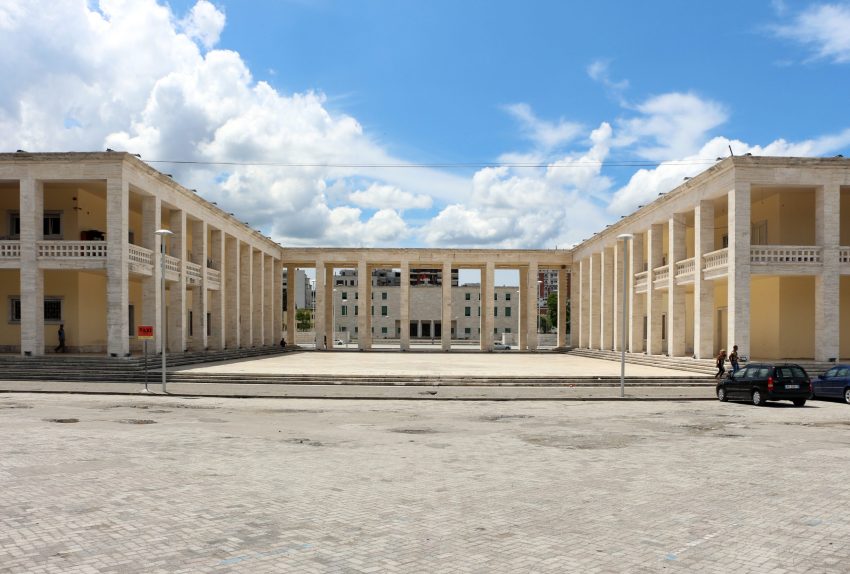
Tirana National Museum of Archaeology is a small archaeological museum in Tirana, Albania, set near Mother Teresa Square and the University of Tirana. It is arranged over two floors and focuses on finds from around the country, making it an easy stop to add to a day in the centre.
The museum matters most as a compact overview of Albania’s ancient material culture. Visitors usually notice jewellery, pottery, carved stone fragments, Roman portrait busts, and other objects that chart the shift from prehistory through the classical and medieval periods. It suits travellers who like original artefacts, history-focused visitors, and anyone who wants a brief museum visit without committing much time.
Table of Contents
- History and Significance of the National Archaeological Museum
- Things to See and Do in the National Archaeological Museum
- How to Get to the National Archaeological Museum
- Practical Tips on Visiting the National Archaeological Museum
- Where to Stay Close to the National Archaeological Museum
- Is the National Archaeological Museum Worth Visiting?
- For Different Travelers
- FAQs for Visiting the National Archaeological Museum
History and Significance of the National Archaeological Museum
Opened in 1948, the National Archaeological Museum was the first museum established in Albania after the Second World War, initially conceived as an archaeological-ethnographic institution before becoming more tightly focused on archaeology. Its location beside the academic heart of the city is no accident: the museum is closely linked to Albania’s archaeological research community, and its collection reflects decades of fieldwork across Illyrian sites, ancient urban centres, and long-inhabited landscapes.
What makes the museum significant is not its size but its scope. In a short visit you get a chronological sweep that mirrors Albania’s position as a crossroads: local Illyrian cultures, Greek and Roman influence, and the long transition into late antiquity and the medieval period. Even when labels are sparse, the objects themselves communicate continuity, trade, belief, and daily life in a region that is often underrepresented in broader European museum narratives.
Things to See and Do in the National Archaeological Museum
Start by treating the museum like a timeline. Look for the shift from stone and early metalwork into more recognisably “classical” forms: figurative sculpture, inscriptions, and the kind of refined jewellery that signals both craft traditions and wider Mediterranean connections. Small objects can be the most revealing here, especially personal adornments and household pieces that make ancient life feel less abstract.
Give yourself time to scan for highlights rather than trying to read the museum as a textbook. Roman-era portrait busts and carved stone fragments tend to be the most visually striking, while ceramics and smaller finds reward slower looking if you enjoy details. If you want more context in English than the displays provide, consider using this as a primer and then heading to a larger museum in the centre to connect the archaeological story to Albania’s later historical chapters.
How to Get to the National Archaeological Museum
From central Tirana, the simplest approach is on foot or by a short city bus or taxi ride, as the museum sits by Mother Teresa Square near the University of Tirana and the city's main boulevards. If you are already around Skanderbeg Square or the Blloku area, it is an easy walk that also passes several of Tirana's main civic buildings and green spaces.
The nearest airport is Tirana International Airport Nënë Tereza (TIA), and the quickest option is a taxi into the centre, while budget travellers can use the airport bus to Skanderbeg Square and continue from there by foot or taxi. For the best deals and a seamless booking experience, check out these flights to Tirana on Booking.com. Tirana’s intercity rail service is limited; if you arrive by train you will typically be outside the core centre and will need a taxi or city bus to reach the museum area. If you are driving, plan to park in a central garage and treat the museum as a walkable stop rather than trying to find curbside parking right at the square. If you are looking to rent a car in Albania I recommend having a look at Discover Cars, first, as they compare prices and review multiple car rental agencies for you.
Practical Tips on Visiting the National Archaeological Museum
- Entrance fee: 300 lek.
- Opening hours: Daily: 09:00–14:00.
- Official website: https://akad.gov.al/muzeu-arkeologjik/
- Best time to visit: Go earlier in the day for a quieter, unhurried look, especially if you prefer to linger with the objects and take photos without people in the background.
- How long to spend: A focused visit takes around 30-60 minutes, but allow up to 90 minutes if you like reading closely and comparing periods.
- Accessibility: Expect a small, older-style layout; if you have mobility needs, it is worth checking in advance for the easiest entrance route and any stair-dependent areas.
- Facilities: Treat this as a “visit and continue” stop; for cafés, rest breaks, and longer downtime, pair it with nearby parks or the central area.
Where to Stay Close to the National Archaeological Museum
For a culture-heavy Tirana itinerary, base yourself between Skanderbeg Square and the Blloku edge so you can walk to museums and landmarks while still having plenty of dining options at night.
If you want to be close to the museum area and enjoy a classic, leafy boulevard setting, consider Rogner Hotel Tirana, which is well placed for walking to Mother Teresa Square and nearby institutions. For a more modern, central base that is ideal for pairing museums with evenings around Skanderbeg Square, Maritim Hotel Plaza Tirana puts you in the middle of the city’s main sights. If you prefer a smaller boutique feel near the centre, Hotel Boutique Kotoni is a strong option for a quieter stay with easy access to both central attractions and dining streets.
Is the National Archaeological Museum Worth Visiting?
Yes, if you want a quick, credible snapshot of Albania's ancient story in a location that is easy to fold into a wider day in Tirana. It is not a “big museum day” destination, but it is a high-value stop for travellers who enjoy seeing original objects and building context before exploring the city's later history.
Honest pivot: if you rely heavily on detailed English-language interpretation, or you want a museum with extensive storytelling and modern display design, you may find this one a little under-explained. In that case, prioritise a larger, more narrative museum in the centre and treat the archaeological museum as an optional add-on if you have extra time.
What Other Travellers Say...
Tirana National Archaeological Museum on Sheshi Nënë Tereza showcases Albania's archaeological finds from prehistory through the medieval period, with artifacts from Illyrian, Greek and Roman eras; visitors praise its varied collection of tools, pottery, statues and jewelry, calm uncrowded atmosphere, helpful staff and good lighting, though several note the museum is small and would benefit from more detailed labels, brochures or interpretive materials in multiple languages to better explain the exhibits.





For Different Travelers
Families with Kids
With kids, this works best as a short, curiosity-driven visit rather than a long educational session. Aim for a “spot the coolest object” approach: statues, jewellery, and large pottery tend to keep attention better than cases of smaller fragments.
If you are travelling with younger children, plan a reward immediately after, such as a nearby park break or a café stop, so the museum feels like part of a fun loop. Keeping the visit under an hour usually prevents museum fatigue.
Couples & Romantic Getaways
For couples, the museum is a smart daytime stop that adds depth to a Tirana stroll without taking over the schedule. It pairs well with a walk through the surrounding boulevards and a relaxed lunch nearby, especially if you like turning city wandering into a loosely themed “past to present” route.
If one of you is less museum-inclined, this is still a workable compromise because it is compact and visually varied. Treat it as a conversation starter, then head into the Blloku area for a more atmospheric evening.
Budget Travelers
This is a good budget-friendly cultural stop because it can deliver a lot of substance for relatively little time and cost. Build it into a walking day that also includes free outdoor landmarks, squares, and the city’s main boulevards.
To make the most of the visit without paying for additional experiences, read a short overview of Illyrian and Roman-era Albania beforehand and you will get far more out of the objects on display. It is one of those places where a little prep replaces the need for a guided tour.
History Buffs
History-focused travellers will appreciate how directly the museum connects Albania’s archaeological record to broader Mediterranean history, especially through Roman portraiture, inscriptions, and material that hints at trade routes and regional identities. Even brief labels can be enough if you are comfortable interpreting objects comparatively.
If you want maximum payoff, treat this as the archaeological anchor of a longer Tirana “history day” and pair it with a more narrative museum for later periods. That combination gives you both the objects and the storyline.
FAQs for Visiting the National Archaeological Museum
Getting There
Tickets & Entry
Visiting Experience
Tours, Context & Itineraries
Photography
Accessibility & Facilities
Food & Breaks Nearby
Safety & Timing
The Tirana National Museum of Archaeology appears in our Complete Guide to Visiting Tirana!

Moira & Andy
Hey! We're Moira & Andy. From hiking the Camino to trips around Europe in Bert our campervan — we've been traveling together since retirement in 2020!
This website uses affiliate links which may earn a commission at no additional cost to you!
Planning Your Visit
Daily: 09:00-14:00.
300 lek.
Nearby Attractions
- Mother Teresa Square (0.1) km
Square - Palace of Congress (0.1) km
Notable Building - Postbllok (0.3) km
Monument - Former Residence of Enver Hoxha (0.5) km
Historic Building - Pyramid of Tirana (0.5) km
Notable Building - Café-Museum Komiteti (0.6) km
Museum - Colorful Buildings of Tirana (0.6) km
Notable Building - Tirana Grand Park (0.7) km
Park - Rinia Park (0.8) km
Park - REJA - The Cloud (0.8) km
Monument