Alcazaba, Granada
Castle in Granada

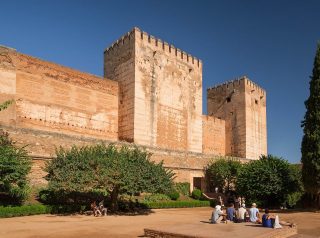
The Alcazaba is one of the top sights in Granada and the oldest surviving part of the Alhambra Complex. Its massive stone walls and watchtowers form the westernmost tip of the hilltop citadel, guarding the city for almost a thousand years. Walking through the Alcazaba's battlements brings you face to face with the fortress that protected the rulers of Al-Andalus and later became a symbol of the Christian conquest of Granada.
It is a highlight of any walking tour of Granada, especially for travellers interested in military architecture, panoramic views, and the early history of the Alhambra. Climb its towers, follow its ancient pathways, and explore the traces of barracks, cisterns, gates, and defensive structures that defined this strategic stronghold.
History and Significance of the Alcazaba
The Alcazaba predates much of the Alhambra. Although its most recognisable form was built in the 13th century, the earliest references date to the 9th century, when Sawwar ben Hamdun likely constructed a fortress during conflicts between Muslims and muwalladins-local Christians who had converted to Islam.
The current complex owes much to Mohammed I, who rebuilt the fortification and added the major towers: the Torre del Homenaje, Torre Quebrada, and the great Torre de la Vela. Under his rule, the Alcazaba became a fully functioning fortress, complete with walls, a royal residence, and military quarters. Mohammed II also lived here until the Nasrid palaces were completed.
After the Christian conquest, the Alcazaba was restored and later used as a state prison during various periods, including the French occupation. By the 19th century it had fallen into neglect, but major restorations in the 19th and 20th centuries preserved the fortress as we see it today.
The name “Alcazaba” comes from the Arabic al-qasbah, meaning a fortified enclosure within a city-fitting for one of the most important defensive sites in Andalusia.
Things to See and Do in the Alcazaba
Puerta de las Armas
Puerta de las Armas
One of the four main gates connecting Granada to the Alhambra during Nasrid times. It stands below the Torre de las Armas and once allowed access from the city's lower quarters.
Torre de las Armas
Torre de las Armas
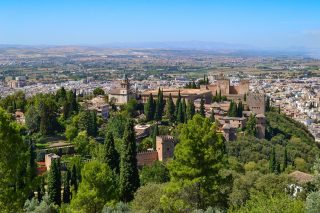
This tower sits above the gateway and provides sweeping views over the Darro River, the San Pedro Forest, and Granada’s old neighbourhoods.
Torre de la Vela
Torre de la Vela
The Alcazaba's main tower, crowned with flags and a bell tower. The first Christian banner-belonging to Ferdinand and Isabella-was raised here on 2 January 1492, marking the fall of Granada. Climbing this tower rewards you with some of the best views in the entire Alhambra.
Plaza de las Armas
Plaza de las Armas
The main courtyard of the castle. Once filled with military buildings and barracks, today it contains the remains of a cistern, a bathhouse, and a dungeon. It’s one of the best places to study the fortress layout.
Torre del Homenaje
Torre del Homenaje
The Tower of Homage marks the most important defensive tower on the eastern wall. It symbolised the authority of the ruler residing in the Alcazaba.
Torre Quebrada
Torre Quebrada
The “Broken Tower” is another eastern defensive structure, showing evidence of historical damage and reconstruction.
Torre del Adarguero
Torre del Adarguero
Also called the Torre Hueca (“Hollow Tower”), this was used by shield-makers and stands as the southernmost tower on the east wall.
Torre de la Sultana
Torre de la Sultana
Located on the south wall, this tower’s name evokes romantic legends tied to the Nasrid period.
Torre de la Pólvora
Torre de la Pólvora
The Powder Tower stored gunpowder and controlled a firing battery-one of the Alcazaba’s most strategically important southern defenses.
Torre de los Hidalgos
Torre de los Hidalgos
The westernmost defensive tower, overlooking the countryside beyond the fortress.
Torre de Alquiza
Torre de Alquiza
A smaller defensive tower located along the north wall.
Torre del Criado del Doctor Ortiz
Torre del Criado del Doctor Ortiz
The easternmost tower on the Alcazaba’s north wall.
Torre del Cubo
Torre del Cubo
A semicircular turret built to reinforce the Torre del Homenaje, reflecting later defensive innovations.
Puerta de la Tahona
Puerta de la Tahona
This inner gate was forgotten for centuries and rediscovered only in 1952 beneath the Torre del Cubo.
Jardín de los Adarves
Jardín de Los Adarves
Beautiful gardens located on the fortress parapet. They offer one of the finest landscape views of Granada, framed by lush greenery and defensive walls.
How to Get to the Alcazaba
The nearest airport is Federico García Lorca Granada Airport, with domestic connections and ground transport into the city. Many visitors also arrive via Málaga Airport, roughly 90 minutes away. For the best deals and a seamless booking experience, check out these flights to Granada on Booking.com.
Granada's main rail station connects the city to Madrid, Málaga, Seville, and Barcelona. From the station, buses or a steep walk lead directly to the Alhambra entrances. Train schedules and bookings can be found on Omio.
If travelling by car, follow Alhambra signs from Granada's centre or surrounding highways. A visitor car park is available near the main pavilion entrance. If you are looking to rent a car in Spain I recommend having a look at Discover Cars, first, as they compare prices and review multiple car rental agencies for you.
The Alcazaba is part of the Alhambra, located at the western end of the complex.
Practical Tips on Visiting the Alcazaba
- Suggested tips: Climb the Torre de la Vela for iconic panoramic views.
- Best time to visit: Morning or early evening for cooler temperatures.
- Entrance fee:
- Opening hours: For opening times of the Alcazaba see [link_post post_id="3786" anchor="opening" type="link"]Alhambra Opening Times[/link_post]. The Alcazaba is part of the Alhambra Complex and access it you need to purchase [link_post post_id="3786" type="link"]Alhambra Tickets[/link_post] or a [link_post post_id="3796" type="link"]Alhambra Guided Tour[/link_post].
- Official website: http://alhambra-patronato.es/
- How long to spend: 45 minutes to 1 hour.
- Accessibility: Limited; many uneven paths, stairs, and steep gradients.
- Facilities: Visitor services available near main Alhambra entrances.
- Photography tip: Capture sunset light on the Sierra Nevada from the battlements.
- Guided tours: Many tours include Alcazaba explanations and roof-level viewing points.
- Nearby food options: Cafés near Alhambra Pavilion and restaurants in Plaza Nueva.
Where to Stay close to the Alcazaba
Enjoy a historic stay inside the complex at Parador de Granada. For a convenient base near the Alhambra entrances, consider Hotel Alixares. For views of the Alhambra from the Albaicín, choose Hotel Casa 1800 Granada.
Is the Alcazaba Worth Visiting?
Absolutely. The Alcazaba is one of the must-see places in Granada for its powerful history, commanding views, and atmospheric ruins. As the oldest and most strategically important part of the Alhambra, it offers a deep understanding of how this hilltop fortress city once defended the last Moorish kingdom of Spain.
What Other Travellers Say...

Alcazaba, at C/ Alcazabilla 2 in Málaga, is a hilltop Moorish-style medieval fortress with lush, fountain-filled gardens and elevated views over the port and city; visitors praise its atmospheric walls, arches and stone mosaics, and describe it as a calmer, more compact alternative to larger sites nearby. The site functions as a small museum with architectural highlights and good vistas; an audio guide is available and helpful since there are few on-site placards. Expect crowds at peak times and occasional closures of facilities (a lift was reported out of service), but many find it easy to wander for 60–90 minutes, with paths manageable for visitors with mild mobility limits.


FAQs for Visiting the Alcazaba
Nearby Attractions to the Alcazaba
- Palacio Nazaríes: The ornate royal palaces of the Nasrid dynasty.
- Generalife Gardens: The sultans' tranquil summer retreat.
- Partal Gardens: Peaceful terraces with reflective pools.
- Plaza de Los Aljibes: Open esplanade between the fortress and the palaces.
- Albaicín Quarter: Granada's historic Moorish neighbourhood with famous viewpoints.
The Alcazaba appears in our Complete Guide to Visiting Granada!

Moira & Andy
Hey! We're Moira & Andy. From hiking the Camino to trips around Europe in Bert our campervan — we've been traveling together since retirement in 2020!
This website uses affiliate links which may earn a commission at no additional cost to you!
Planning Your Visit
For opening times of the Alcazaba see Alhambra Opening Times.
The Alcazaba is part of the Alhambra Complex and access it you need to purchase Alhambra Tickets or a Alhambra Guided Tour.
Nearby Attractions
- Torre de la Vela (0.0) km
Tower - Torre de la Pólvora (0.0) km
Tower - Torre de los Hidalgos (0.0) km
Tower - Torre de la Sultana (0.0) km
Tower - Plaza de las Armas (0.0) km
Castle - Torre de las Armas (0.0) km
Tower - Puerta de las Armas (0.1) km
City Gate - Torre de Alquiza (0.1) km
Tower - Jardín de Los Adarves (0.1) km
Gardens - Torre Quebrada (0.1) km
Tower