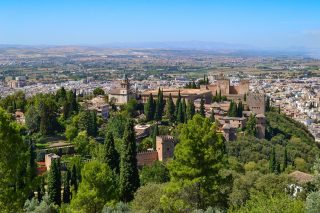
Sala del Mexuar, Granada
Palace in Granada
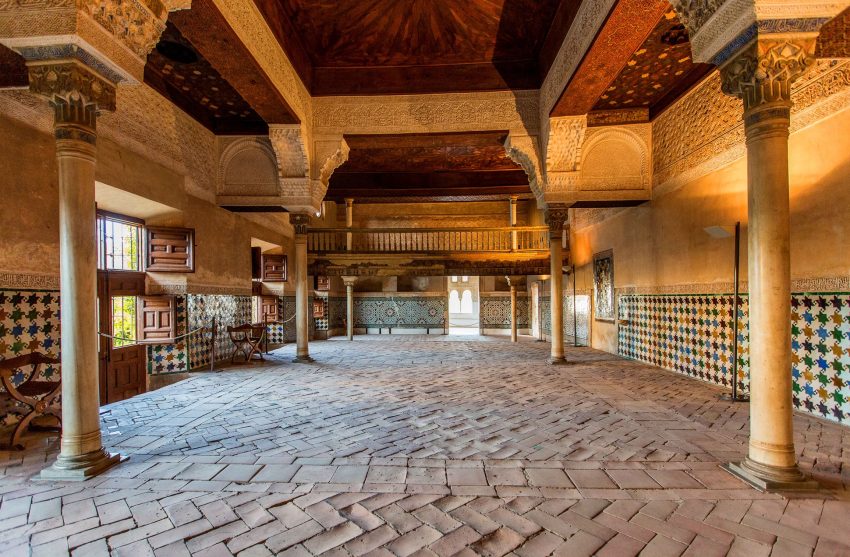
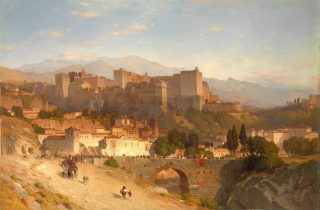
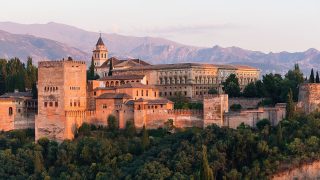
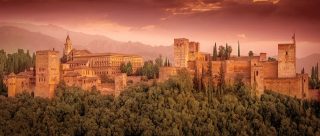
The Sala del Mexuar is the first space visitors encounter inside the Palacio del Mexuar, the oldest of the Nasrid Palaces. This hall once served as the administrative heart of the Alhambra, a place where justice was dispensed and public audiences were held. Its layered history, from Nasrid council chamber to Christian chapel, makes it one of the top attractions in Granada for travellers who seek to understand the Alhambra's evolving identity. It is also a great place to visit on a walking tour of Granada, offering a vivid blend of Islamic artistry and later Christian transformations.
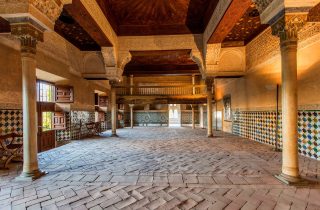
Despite centuries of changes-including damage from a 1590 powder explosion-the Sala del Mexuar still retains striking features: four central columns with muqarnas corbels, a Christian-era coffered ceiling, richly carved plasterwork, and a dado of tiles displaying layered symbolism from Islamic, noble, and imperial Spain. These details make it a powerful introduction to the complexity of the Nasrid Palaces.
Table of Contents
History and Significance of Sala del Mexuar
The Mexuar was originally built around 1320 during the reign of Sultan Ismail I and later adapted by Yusuf I and Muhammad V. It was here that the sultan met with advisers, listened to petitions, and administered justice. According to Ibn al-Khatib, Muhammad V inaugurated a renovated Mexuar in 1362 during the Mawlid, marking its importance as a ceremonial and governing space.
During Nasrid times, the room featured a polychrome glass roof supported by the four marble columns still visible today. A raised chamber screened by lattices allowed the sultan to observe proceedings without being seen. Light and colour-from glass, stucco, and tile-would have filled the hall.
After the Christian conquest, the room underwent significant changes. By the time Charles V arrived in Granada, the Mexuar had been transformed into a chapel, complete with an extended northern section, a second-storey choir balcony, a new doorway, and the imperial coat of arms. These Christian additions, along with earlier Islamic decorations, remain legible on its walls, forming a unique visual dialogue across centuries.
Things to See and Do in Sala del Mexuar
Look up to admire the coffered wooden ceiling from the Christian period, with its interlaced geometric patterns. The central columns with their muqarnas capitals mark the heart of the original Nasrid chamber, evoking the grandeur of the sultan’s ceremonial meetings.
Examine the intricate tilework along the lower walls. These 16th-century azulejos by Sevillian potter Juan Pulido include symbolic coats of arms: the Nasrid motto Wa lā gāliba illā-llāh, the emblem of the Counts of Tendilla, the double-headed eagle of the Holy Roman Empire, and the Pillars of Hercules representing Charles V’s Plus Ultra motto. The repeated Morisco inscription above the dado-al-milk li-llah, al-qudra li-llah, al-ʿizza li-llah-adds an additional layer of meaning.
From the Sala del Mexuar, a doorway leads onward toward the Cuarto Dorado and deeper into the Nasrid Palaces, following the same ceremonial progression used by dignitaries centuries ago.
How to Get to Sala del Mexuar
The nearest airport is Federico García Lorca Granada-Jaén Airport. For the best deals and a seamless booking experience, check out these flights to Granada on Booking.com.
Granada Railway Station offers frequent train connections from Madrid, Málaga, and Seville. Train schedules and bookings can be found on Omio.
If travelling by car, use the Ronda Sur to reach the Alhambra's official parking zones before walking to the palace entrances. If you are looking to rent a car in Spain I recommend having a look at Discover Cars, first, as they compare prices and review multiple car rental agencies for you.
The Sala del Mexuar lies within the Nasrid Palaces at the Alhambra and is reached through the complex's timed-entry system.
Practical Tips on Visiting Sala del Mexuar
- Suggested tips: Arrive early for your Nasrid Palaces entry to enjoy the room before it becomes congested.
- Best time to visit: Morning light brings out the texture of the stucco and tiles.
- Entrance fee:
- Opening hours:
- Official website: https://www.alhambra-patronato.es/en/edificios-lugares/mexuar-oratorio
- How long to spend: 15-25 minutes.
- Accessibility: Some steps, uneven floors, and narrow passages.
- Facilities: Restrooms and cafés located in other areas of the Alhambra.
- Photography tip: Focus on the central columns and surrounding tilework for detailed shots.
- Guided tours: Many Alhambra tours include in-depth explanations of the Mexuar's political and artistic history.
- Nearby food options: Cafés near the Palacio de Carlos V and in the main visitor zones.
Where to Stay close to Sala del Mexuar
For a stay immersed in history, Parador de Granada offers atmospheric lodging inside the monument grounds. A charming and traditional option is Hotel America, ideally placed within walking distance of the palaces. For a modern hotel close by, Eurostars Washington Irving provides comfort and convenience near the complex entrance.
Is Sala del Mexuar Worth Visiting?
Yes, the Sala del Mexuar is an essential part of any visit to the Nasrid Palaces. Its architecture and decoration reveal the evolving story of the Alhambra-from Nasrid council chamber to Christian chapel-and offer a rare glimpse of overlapping artistic traditions. Its beauty, symbolism, and historical depth make it truly unmissable.
What Other Travellers Say...

Mexuar room, located in the Nasrid Palaces at C. Real de la Alhambra, s/n, Centro, Granada, is the historic council chamber where the sultan received delegations and where the palace tour begins; visitors recommend taking time to look up and around to admire richly decorated Nasrid capitals, intricate wall and tile details with geometric Islamic motifs and Arabic inscriptions, four central columns bearing inscriptions, and later additions such as the twin plaques of Carlos V, and note that entry to the Nasrid Palaces requires tickets and ID.


FAQs for Visiting Sala del Mexuar
Nearby Attractions to Sala del Mexuar
- Palacio del Mexuar: The wider suite of administrative rooms connected to the hall.
- Patio del Cuarto Dorado: Home to one of the finest façades in the Nasrid Palaces.
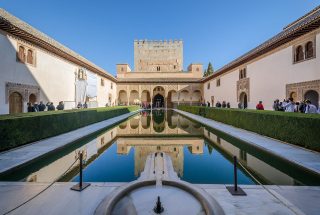
- Patio de Machuca: A 16th-century courtyard garden with a Roman-inspired pool.
- Palacio de Comares: The ceremonial palace of the Nasrid rulers.
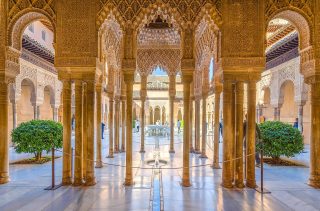
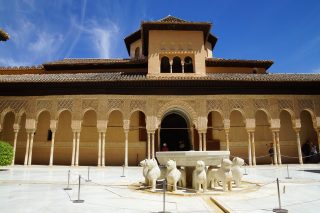
- Palacio de los Leones: The private residential palace with the iconic Lion Courtyard.
The Sala del Mexuar appears in our Complete Guide to Visiting Granada!

Moira & Andy
Hey! We're Moira & Andy. From hiking the Camino to trips around Europe in Bert our campervan — we've been traveling together since retirement in 2020!
This website uses affiliate links which may earn a commission at no additional cost to you!
Planning Your Visit
Nearby Attractions
- Palacio del Mexuar (0.0) km
Palace - Patio del Cuarto Dorado (0.0) km
Courtyard - Facade of the Palace of Comares (0.0) km
Palace - Cuarto Dorado (0.0) km
Palace - Oratorio de Mexuar (0.0) km
Historic Room - Patio de Machuca (0.0) km
Fountain and Gardens - Torre de Machuca (0.0) km
Tower - Palacio Nazaríes (0.0) km
Palace - Sala de la Barca (0.0) km
Historic Room - Palacio de Comares (0.0) km
Palace