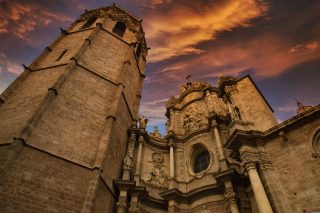
Ronda, Spain: The Ultimate Travel Guide 2026

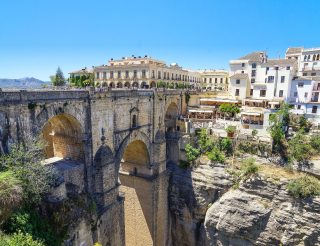
View of Ronda, Spain
Flickr / Jose Ramirez

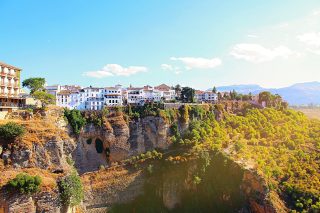
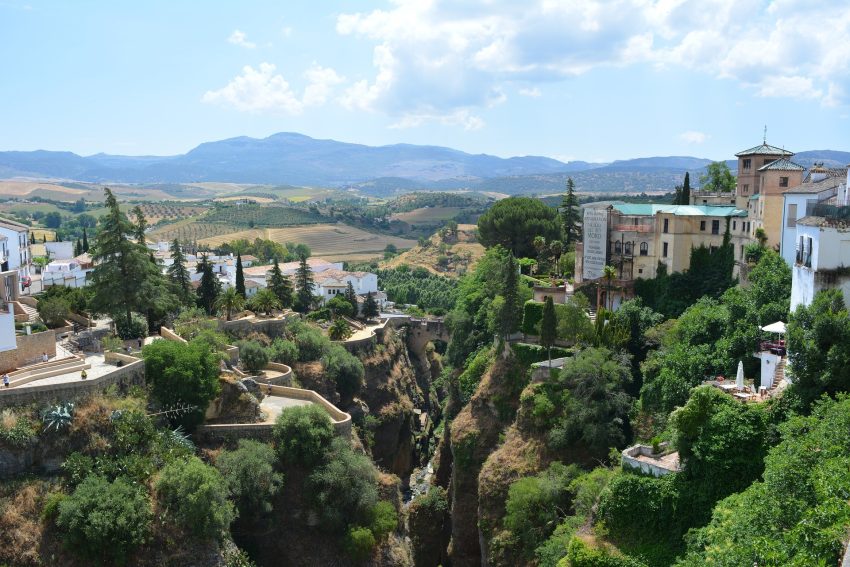
Ronda sits high in the hills of Spain's Andalusia region, in the province of Málaga, and feels a world away from the busy Costa del Sol. Perched dramatically above the El Tajo gorge, it offers sweeping views of rugged countryside, distant mountains, and the whitewashed villages scattered across the Serranía de Ronda. It's an easy city to navigate on foot, with compact streets, plazas, and viewpoints all clustered within a short walking distance.

The main pleasure of visiting Ronda is simply wandering: pausing at miradores to look down into the gorge, strolling along leafy promenades, and dipping into cafés and bars for tapas or a cold drink. The old streets on either side of the gorge are full of character, with balconies, shuttered windows, and hidden courtyards that feel unmistakably Andalusian. Stay at least one night if you can, so you can enjoy the quieter mornings and evenings once the day-trippers have left.

Thanks to its dramatic setting and easy access from cities like Málaga and Seville, Ronda is one of the best places to visit in Spain. Whether you're on a wider Andalusia road trip or taking a break from the coast, it makes a brilliant base for exploring nearby white villages and hiking routes, as well as a destination in its own right. Sunset over the gorge, followed by a leisurely tapas crawl through the old town, is often a highlight of any southern Spain itinerary.

History of Ronda

From Prehistory to Rome

Human presence around Ronda goes back to prehistoric times, with nearby caves such as Cueva de la Pileta preserving remarkable Neolithic rock art. Long before today’s clifftop town took shape, the wider area was dotted with hilltop settlements that took advantage of the natural defensibility of the surrounding sierras. One of the most important ancient sites is Acinipo, a Roman town a short distance from modern Ronda, where a theatre and other remains hint at the region’s early urban life under Rome.

During the Roman period, Ronda’s predecessor settlements formed part of a strategic network controlling routes between the interior of Hispania and the Mediterranean. The so-called Puente Romano in today’s town, spanning the Guadalevín River at the bottom of the gorge, recalls this era, even though the visible structure was heavily rebuilt in later Islamic times. Paths and gateways such as the Puerta de los Molinos and the Albacara Walls reflect how access to the river, mills and farmland was tightly controlled from early on, using the natural trench of the Tajo as both a barrier and a lifeline.

Islamic Ronda and the Medieval City

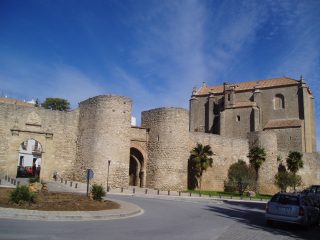
Ronda really came into its own under Islamic rule. Conquered in 713 and known as Hisn al-Rundah, it became the capital of the Takurunna province and later the seat of a small taifa kingdom. The town’s clifftop position was extensively fortified with walls and gates, sections of which you can still trace today at the Murallas de Levante and the Albacara Walls, and at defensive gateways such as Puerta de Almocábar and Puerta Del Viento. Within these walls, palaces and baths were built, including the Baños Árabes, now considered among the best-preserved Arab baths in Spain, and the site of today’s Palacio de Mondragón, which preserves elements of Moorish architecture.

Steep stairways cut into the rock gave access to the river for water and irrigation; the Water Mine beneath the later Casa del Rey Moro is a surviving example of this type of infrastructure, even though the house above it is 18th-century. The Islamic city’s layout followed the contours of the gorge, clustering houses and small mosques along narrow lanes that looked inward to shaded courtyards rather than outward onto broad streets. Defensive control of the bridge crossings, including the forerunners of today’s Puente Viejo and Puente Romano, was crucial: whoever commanded these points effectively controlled movement between the medina, outlying districts and the surrounding countryside.

Christian Conquest, Bridges and Bullfighting

Ronda was seized by the Catholic Monarchs in 1485 during the final phase of the Reconquista, bringing major social and architectural change. Mosques were converted into churches, giving rise to buildings such as the Church of Santa María la Mayor on Plaza Duquesa de Parcent, and new parish structures helped define the post-medieval city. Higher taxes on goods entering through the gates encouraged traders to remain outside the walls, and districts such as El Mercadillo and the San Francisco quarter grew up beyond the old fortifications, reshaping Ronda’s urban geography on both sides of the Tajo.

The 17th and 18th centuries were a period of intense building activity. The Puente Viejo was constructed in the early 17th century, followed in the 18th century by the monumental Puente Nuevo, whose 98-metre-high stone arches finally linked the old town (La Ciudad) with the burgeoning Mercadillo quarter above the gorge. This bridge not only transformed movement across the canyon but also underpinned Ronda’s expansion and later fame, with viewpoints like Mirador de Aldehuela and Paseo de Blas Infante framing its dramatic profile. Around the same time, the Plaza de Toros de Ronda was built, and the Romero family of bullfighters helped shape modern corrida traditions, making Ronda a symbolic heartland of Spanish bullfighting.

Bandoleros, Writers and Modern Ronda

In the early 19th century, the Napoleonic invasion and subsequent conflicts devastated Ronda, reducing its population and leaving ruined walls and castles in their wake. The rugged terrain of the Serranía de Ronda and the relative isolation of the town turned the area into a haven for bandoleros (bandits), whose exploits were later romanticised in literature and legend. Today’s Museo del Bandolero taps into that period, telling stories of real and mythologised outlaws who stalked the mountain passes and gorges around the city.

From the late 19th century onward, Ronda began to attract foreign travellers captivated by its landscape and traditions. Writers and artists such as Ernest Hemingway and Orson Welles spent time here; the Paseo de Ernest Hemingway and Paseo de Orson Welles near the gorge commemorate their connection to the town and its bullfighting culture. Their accounts of Ronda’s drama and beauty, alongside other visitors’ writings, played a key role in turning the city into a romantic symbol of Andalusia in the international imagination.

In the 20th century, Ronda evolved into a modern Andalusian town while carefully integrating new squares and promenades with its historic core. Plaza del Socorro emerged as a political and civic centre, associated with the early 20th-century movement for Andalusian identity, while green spaces such as Alameda del Tajo and the Paseo De Los Ingleses became classic spots for evening strolls along the cliff edge. Today, viewpoints like Mirador de Ronda and Jardines de Cuenca, together with historic buildings such as the Town Hall of Ronda, Palacio del Marqués de Salvatierra and Casa del Gigante, weave layers of prehistoric, Islamic, Christian, romantic and contemporary history into a compact city that still feels defined by its gorge and its extraordinary setting.

Moira & Andy
Moira & Andy

Hey! We're Moira & Andy. From hiking the Camino to trips around Europe in Bert our campervan — we've been traveling together since retirement in 2020!

Read our full story here

Visiting Ronda for the first time and wondering what are the top places to see in the city? In this complete guide, I share the best things to do in Ronda on the first visit. To help you plan your trip, I have also included an interactive map and practical tips for visiting!

This website uses affiliate links which earn a small commission at no additional cost to you.
Powered by GetYourGuide

37 Best places to See in Ronda

This complete guide to Ronda not only tells you about the very best sights and tourist attractions for first-time visitors to the city but also provide insights into a few of our personal favorite things to do.

This is a practical guide to visiting the best places to see in Ronda and is filled with tips and info that should answer all your questions!

1. Plaza del Socorro
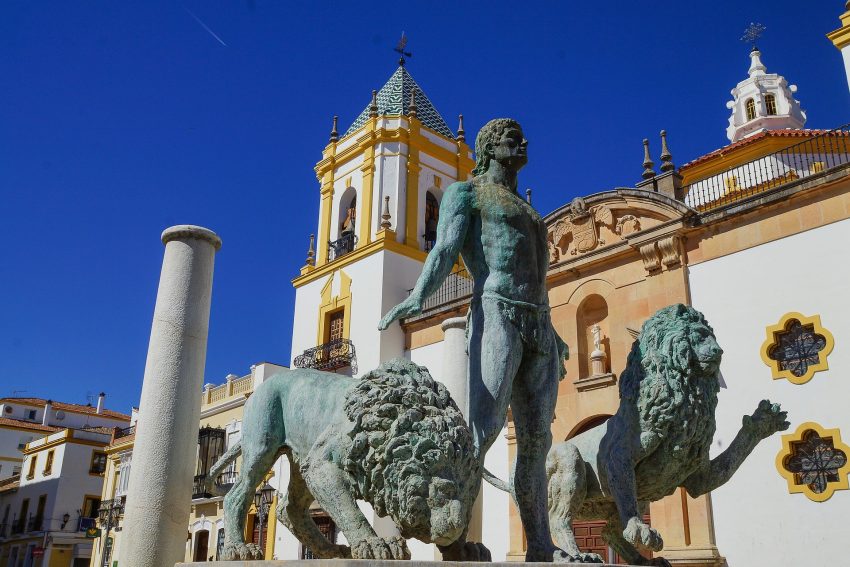
Hercules Plaza del Socorro Ronda 2
Plaza del Socorro is a working civic square in Ronda’s newer centre, where local routines—meeting up, crossing through, pausing on benches—play out in plain view. It matters because in 1918 Blas Infante presented the Andalusian flag and coat of arms from the first-floor balcony of the Círculo de Artistas, turning this everyday space into a marker of regional identity. The building’s façade still reads like a public stage, even if you only take it in from the pavement. In the middle stands an unexpected Hercules monument: a bare-chested figure flanked by two lions with the Pillars of Hercules behind. One edge is anchored by the Parroquia de Nuestra Señora del Socorro, rebuilt in 1956 after the earlier church was burned in 1936.
Location: Plaza del Socorro, 7, 29400 Ronda, Málaga, Spain | Hours: 24 Hours | Price: Free | Distance: 0.5km

We recommend to rent a car in Spain through Discover Cars, they compare prices and review multiple car rental agencies. Book your rental car here.

2. Alameda del Tajo

Walking Paseo de Blas Infante
Flickr / Dulce Wang
Alameda del Tajo is a shaded garden promenade in Ronda, Spain, laid out in the early 19th century along the rim of the Tajo gorge beside the bullring. It’s arranged as a sequence of broad, tree-lined avenues where you drift between fountains, benches, and pockets of cool shade—especially welcome on hot afternoons. The walk naturally funnels you toward balcony viewpoints that open over the Hoya del Tajo and the ridges of the Serranía de Ronda, turning a simple stroll into a cliff-edge pause. Families notice the duck pond, bird enclosure, and playground, while evenings bring the slow local paseo and, at times, musicians playing under the trees.
Location: Alameda del Tajo, Paseo Blas Infante, 1, 29400 Ronda, Málaga, Spain | Hours: 24 Hours | Price: Free. | Distance: 0.6km

Here is a complete selection of hotel options in Ronda. Feel free to review each one and choose the stay that best suits your needs.

3. Monumento al Toro

Statue Ronda Bullring
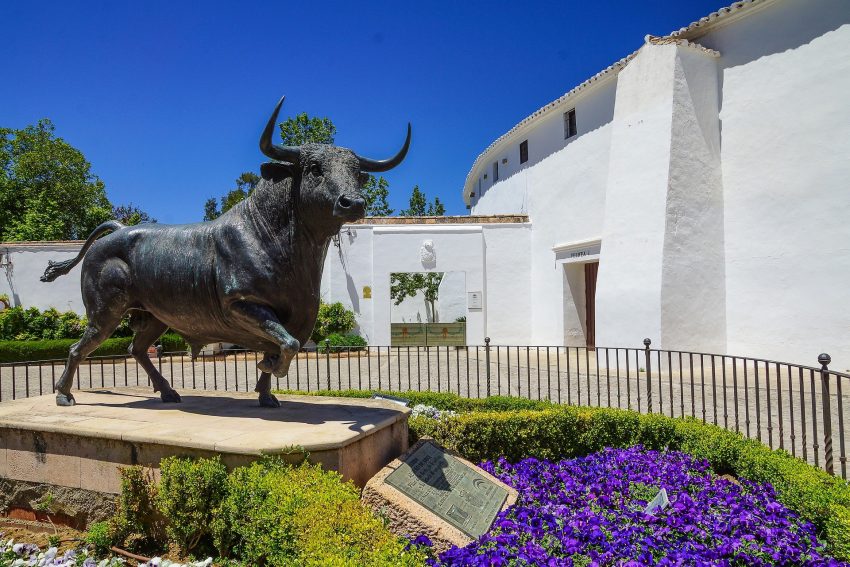
Monumento al Toro is a contemporary bronze tribute to the toro de lidia set beside Ronda’s Plaza de Toros, acting like an outdoor prologue to the city’s bullring tradition. Inaugurated in 2005, it deliberately contrasts with the centuries-old arena next door, and a plaque frames the fighting bull as a pillar of local festival culture and identity. Visitors tend to stop briefly to circle the sculpture, read the inscription, and line up a photo with the bullring area as a backdrop. Because it sits where foot traffic naturally funnels around the arena, it’s often a quick pause point before or after seeing the museum and stepping into the sandy ring.
Location: Monumento al Toro Paseo Blas Infante, 2 29400 Ronda Málaga Spain | Hours: 24 hours | Price: Free | Distance: 0.7km

Traveling to a country with a different currency? Avoid ATM transaction fees and pay in local currency with a Wise Card. Having used it for over 5 years, we've saved loads on fees!

4. Jardines de Cuenca

Jardines De Cuenca Ronda 3
Jardines de Cuenca are Ronda’s hanging gardens, a terraced ribbon of greenery clinging to the ledges of El Tajo gorge. Laid out as a long cascade of steps—often described as 23 rose-covered levels—they turn the gorge into a slow, panoramic walk where the view keeps shifting from cliff textures and buildings above to the river far below. Created in 1975 to mark Ronda’s twinning with Cuenca, the gardens feel surprisingly timeless in their carved-into-the-rock setting. Travelers remember how easy it is to drop down from the main bridge and find quieter viewpoints, with clear angles on the Puente Nuevo and the older crossings.
Location: Jardines De Cuenca, Calle Escolleras, 1 29400 Ronda Málaga Spain | Hours: Daily: 8am-7pm | Price: Free | Distance: 0.7km

Click here to read our blog about 48 Hours in Ronda 2026: The Perfect Two-Day Itinerary

5. Paseo de Kazunori Yamauchi

Paseo de Kazunori Yamauchi Ronda
© Andrew Ashton
Paseo de Kazunori Yamauchi is a cliff-edge walkway in Ronda that hugs the gorge beside the Parador, curving above the Guadalevín River with sheer drops just beyond the rail. It matters for pairing Ronda’s raw geology with a modern cultural nod: in 2013 the paseo was named for Gran Turismo creator Kazunori Yamauchi after Ronda’s streets featured in Gran Turismo 6. Underfoot it feels like a seamless continuation of the gorge-top promenade, linking into the Paseo de Blas Infante and blending into the Paseo de Ernest Hemingway. Visitors remember the shifting angles on the canyon and Puente Nuevo, and the occasional harpist at the far end amid the busy foot traffic.
Location: Paseo de Kazunori Yamahuchi Calle Armiñán, 3 29400 Ronda Málaga Spain | Hours: 24 Hours | Price: Free | Distance: 0.7km

Click here to read our blog about Exploring Ronda’s Moorish Defences 2026: Walls, Gates & Towers

6. Paseo de Orson Welles

paseo de orson welles2
© Andrew Ashton
Paseo de Orson Welles is a short, slightly hidden walkway tucked behind Ronda’s bullring, part of the city’s linked promenade paths. It matters less for big views than for its personal dedication to filmmaker Orson Welles, who spent many summers here and was closely connected to bullfighting through his friendship with Antonio Ordóñez. Walking it feels like slipping out of the plaza’s bustle into a quieter back-corridor, where the soundscape softens almost immediately. The paseo also serves as a small public nod to a larger, poignant story: Welles’ ashes were scattered at Ordóñez’s Recreo farm in San Cayetano. One recent review simply notes “Mucho vértigo,” hinting at the edges nearby.
Location: Paseo Blas Infante, 75, 29400 Ronda, Málaga, Spain | Hours: 24 Hours | Price: Free. | Distance: 0.7km

Click here to read our blog about 6 Hours in Ronda 2026: What to See on a Short Visit

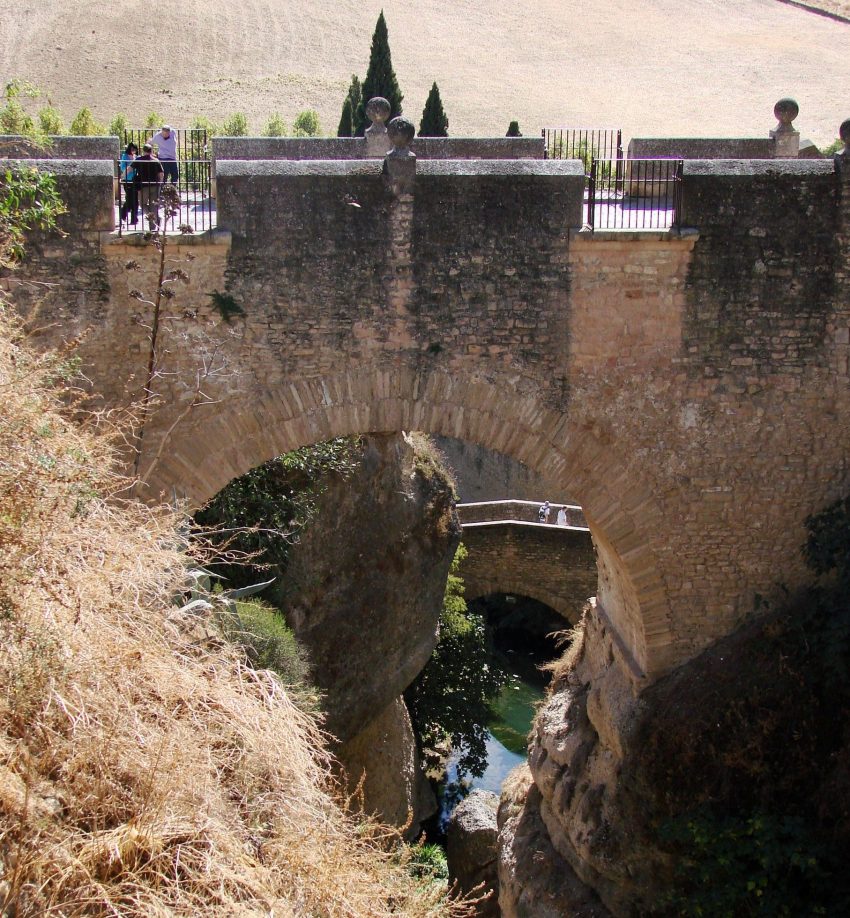
7. Puente Viejo

Old Bridge Ronda Spain
CC BY-SA 23.0 / Marshall Henrie
Puente Viejo (the Old Bridge) is the smallest and oldest of Ronda’s three crossings over the El Tajo gorge, set low above the Guadalevín River where the cliffs feel close and loud with water. Built on the remains of an earlier crossing and linked to early 17th-century work, it once carried the main route between Mercadillo and La Ciudad before later bridges shifted traffic elsewhere. Today it’s pedestrian-only, so you can linger at the balconied niches added during an 18th-century renovation and look straight into the chasm. Approaching from the old town, the Arco de Felipe V makes the crossing feel like passing through a controlled gateway. Many visitors return after dark to see the bridge lit up.
Location: Puente Viejo Calle Real, 2 29400 Ronda Málaga Spain | Hours: 24 Hours | Price: Free | Distance: 0.7km

Explore Ronda at your own pace with our self-guided walking tour! Follow our curated route to discover must-see sights and local secrets that makes Ronda one of the best places to visit in Spain.

8. Mirador de Aldehuela

Mirador de Aldehuela
Mirador de Aldehuela is a gorge-edge viewpoint in Ronda, set beside Puente Nuevo, where the city’s drama becomes immediately legible. From the railing you look straight down into the Tajo, with the Guadalevín River a thin ribbon at the bottom and the jagged Serranía de Ronda layered on the horizon. The perch is named for José Martín de Aldehuela, the 18th-century architect tied to Ronda’s bold civic engineering, and it helps explain why the bridge dominates the town’s identity. Visitors tend to linger for the shifting light on the cliff walls and the chance to frame the bridge and ravine with a little more breathing room than the busiest spots, especially near sunset.
Location: Mirador de Aldehuela Calle Armiñán, 1 29400 Ronda Málaga Spain | Hours: 24 Hours | Price: Free | Distance: 0.7km

9. Plaza de Toros de Ronda
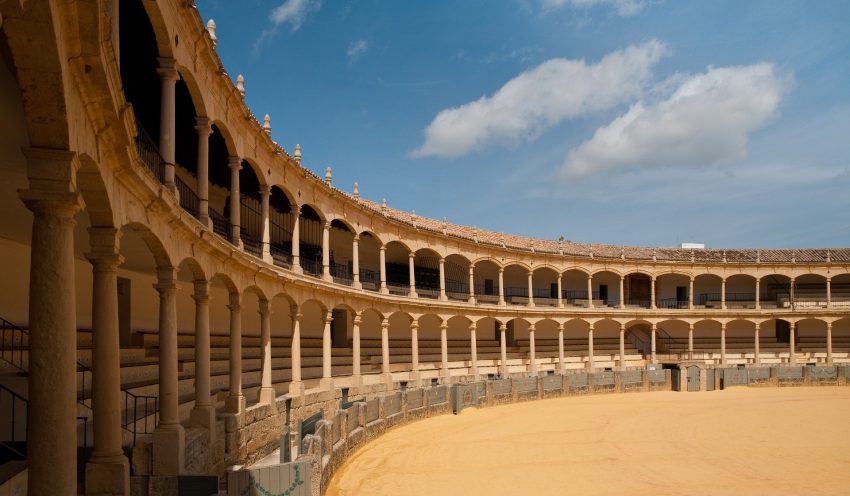
Ronda Bullring
Ronda Bullring
Plaza de Toros de Ronda is a neoclassical bullring opened in 1785, closely tied to the Real Maestranza de Caballería, and it helped shape modern bullfighting traditions in Spain. Visitors remember the elegant two-tier seating, the rhythm of arches and pillars, and the formal Royal Box with its tiled roof overlooking the sand. The main entrance was built on a scale meant for horses and carriages, hinting at the ceremony and status once attached to arriving here. Beneath the stands, the Museo Taurino traces Ronda’s torero dynasties such as the Romeros and Ordóñez, giving context even to those uneasy about the spectacle.
Location: Plaza de Toros de Ronda, 15 Calle Virgen de la Paz, Ronda, Spain, | Hours: Monday-Sunday: 10:00 – 20:00. | Price: €8 (€9.50 with audioguide) | Website | Distance: 0.7km

10. Arco de Felipe V
City Gate Ronda 4
City Gate Ronda 4
CC BY-SA 3.0 / Marlene VD
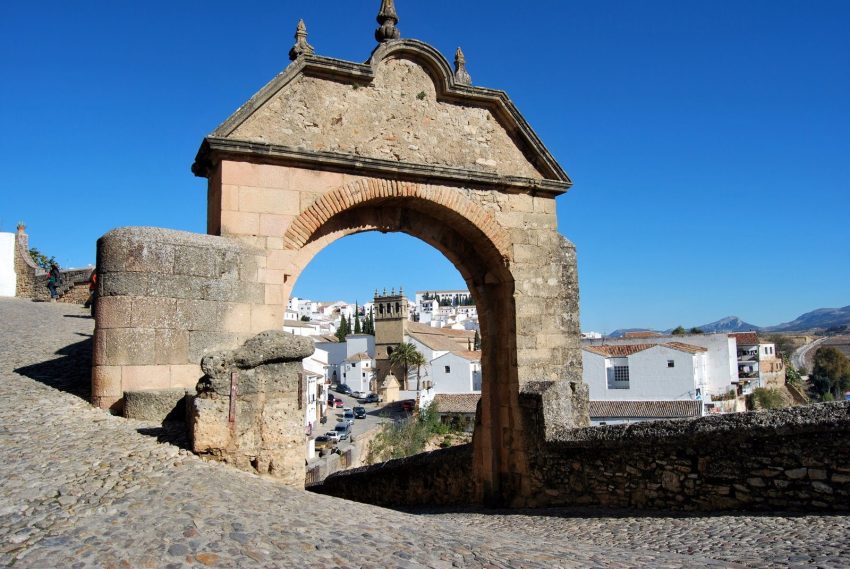
Arco de Felipe V is an 18th‑century stone city gate set into Ronda’s defensive walls, just south of Puente Viejo where routes once funneled into the old medina. Built in ashlar masonry as a double arch, it’s crowned by three pinnacles that give the gateway a surprisingly ceremonial profile. On the outer face, look for the Bourbon royal coat of arms and the Anjou shell motif—small carvings that turn a simple passage into a statement of authority. Standing beneath it, you feel the logic of walls, bridges, and controlled entry, with the gorge and approaches close enough to picture centuries of foot traffic. It’s also a favorite quick photo stop for travelers passing between the old bridges.
Location: Calle Marqués de Salvatierra, 30, 29400 Ronda, Málaga, Spain | Hours: 24 Hours | Price: Free | Distance: 0.8km

11. Puente Árabe
Arab Baths Ronda 3
Arab Baths Ronda 3
CC BY-SA 4.0 / Daniel VILLAFRUELA.
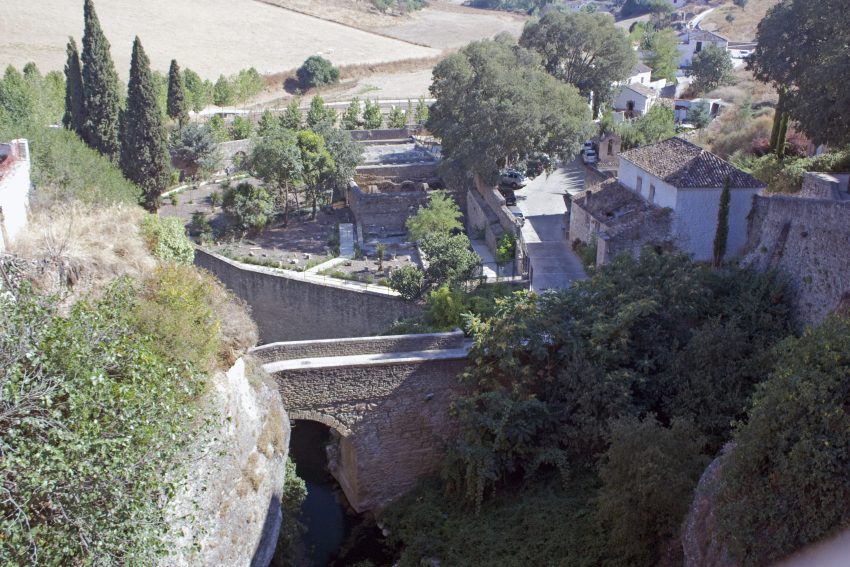
Puente Árabe (often called Puente Romano) is a medieval stone bridge in Ronda, built in the late 14th century, spanning the Guadalevín River low inside the Tajo gorge. Because it sits close to the water and sheer rock walls, the crossing feels immersive—more like moving through the gorge than looking down into it from above. It once served as the main entrance into the city via the Arrabal Viejo quarter, so it reads as working infrastructure rather than a ceremonial monument. From the arch you can hear the stream and gauge the chasm’s depth, with cliffside houses stacked along the slopes. The setting is often described as a quiet, tucked-away pocket of greenery and stone.
Location: Puente Romanom, Calle Molino de Alarcón, 29400 Ronda, Málaga, Spain | Hours: 24 hours | Price: Free | Distance: 0.8km

12. Palacio del Marqués de Salvatierra
Palacio de Salvatierra Ronda 2
CC BY-SA 3.0 / Pedro J Pacheco
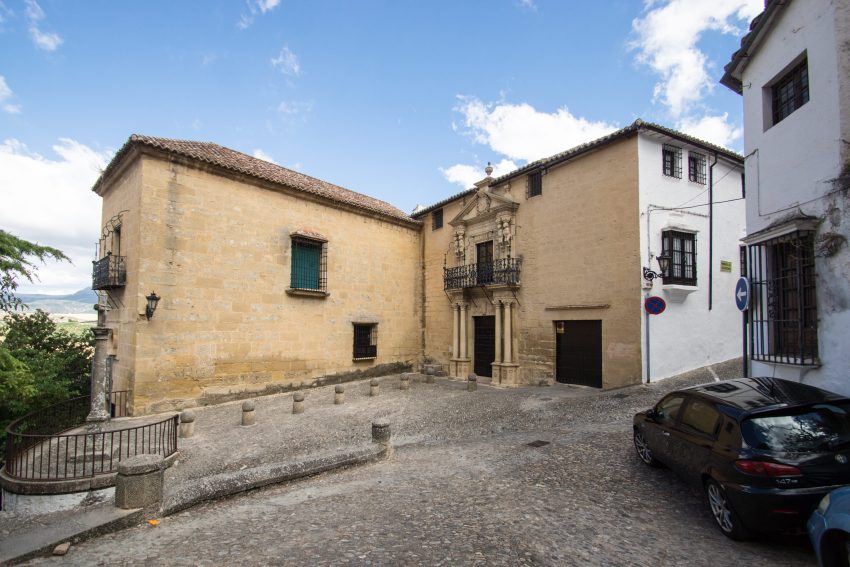
Palacio del Marqués de Salvatierra is a private noble mansion in Ronda’s historic centre, remembered for a Baroque street façade rebuilt and enlarged in 1798 to broadcast family status. You can’t go inside, so the experience is all about lingering at the doorway and reading the stonework up close. Look for the ashlar masonry, the entrance framed by Corinthian columns, and the oversized wrought-iron balcony that draws your eye upward. The most arresting details are the carved caryatids—deliberately unsettling figures often linked to wealth from Spain’s American conquests—topped by the family coat of arms in the pediment. Travelers often note it’s “outside only,” but still worth a stop for the sculpture.
Location: Palacio de Salvatierra Calle Real, 2 29400 Ronda Málaga Spain | Hours: 24 Hours | Price: Free to view from the street, no interior access allowed. | Distance: 0.8km

13. Paseo de Ernest Hemingway
Paseo de Ernest Hemingway Ronda 2
CC BY-SA 3.0 / Manoloteba
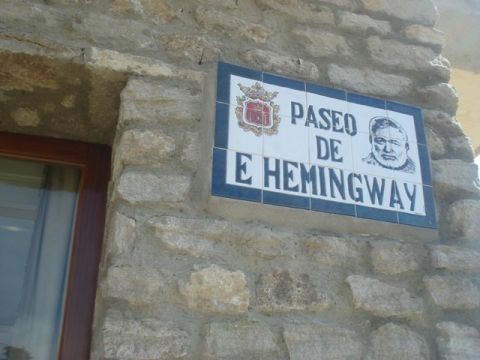
Paseo de Ernest Hemingway is a cliff-edge promenade in Ronda that tracks the rim of the Tajo gorge above the Guadalevín River, where the drop feels startlingly close. The path curves around the Parador, so the view keeps changing—sheer rock walls below, then wide-open countryside beyond town. It matters as one of the easiest ways to feel Ronda’s geography in your body, with wind, height, and echo replacing museum-style distance. The name nods to Hemingway’s connection to Ronda and to bullfighter Antonio Ordóñez, and a nearby section was later dedicated to Gran Turismo creator Kazunori Yamauchi, adding an unexpected modern layer.
Location: Mirador de Aves, C. Armiñán, 3 29400 Ronda, Málaga, Spain | Hours: 24 Hours | Price: Free | Distance: 0.8km

14. Paseo De Los Ingleses

Paseo De Los Ingleses Ronda 4
CC BY-SA / anagor1
Paseo de los Ingleses is a quiet, recently repaved promenade in Ronda, set beyond the Mirador de los Reyes Católicos and a little back from the Tajo’s cliff edge. It matters as a small trace of the period when British railway engineers and Gibraltar visitors helped turn Ronda into an easy-to-reach mountain retreat, lending the walk its name. What you notice most is the breathing-room feel: a flatter, generally wheelchair-friendly stretch with wide sky and limited shade, where the city’s everyday pace replaces the gorge-side bustle. It’s also a handy spot for calmer panoramas and people-in-place photos, and reviews often mention the viewpoint’s sweeping outlook and a peaceful nearby park.
Location: Paseo de los Ingleses, 29400 Ronda, Málaga, Spain | Hours: 24 Hours | Price: Free | Distance: 0.8km

15. Museo Lara
Museum Lara Ronda
Museum Lara Ronda
CC BY-SA 3.0 / Andras Vadas
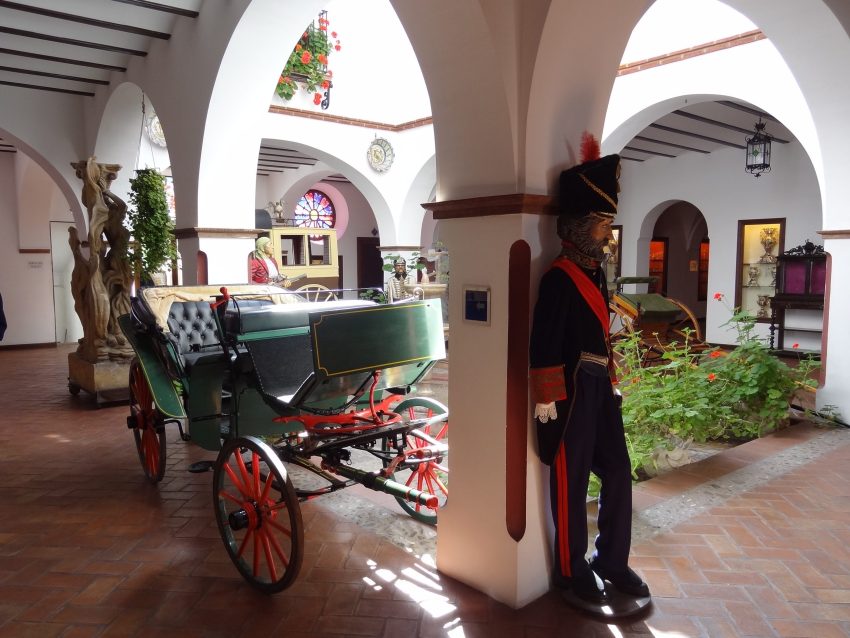
Museo Lara is a private museum in Ronda’s old town, set inside a historic palace and shaped by the personal collecting obsessions of its founder, Juan Antonio Lara Jury. Instead of a single storyline, the rooms feel like a cabinet of curiosities, shifting from antique clocks and scientific instruments to historic weapons and other odd mechanisms. Two sections leave a strong impression: displays themed around witchcraft and a darker Spanish Inquisition gallery with figures and punishment-related objects. Visitors often remember how much is packed into the building—more “tardis” than townhouse—and the quiet, slightly uncanny atmosphere that comes with wandering through eclectic collections.
Location: Museo Lara Calle Armiñán, 29 29400 Ronda Málaga Spain | Hours: June to October: 11:00 - 20:00; November to May:11:00 -18:30 | Price: Adults: €4.00 | Website | Distance: 0.8km

16. Baños Árabes
Arab Baths, Ronda Spain
CC BY-SA 2.0 / Ángel M. Felicísimo
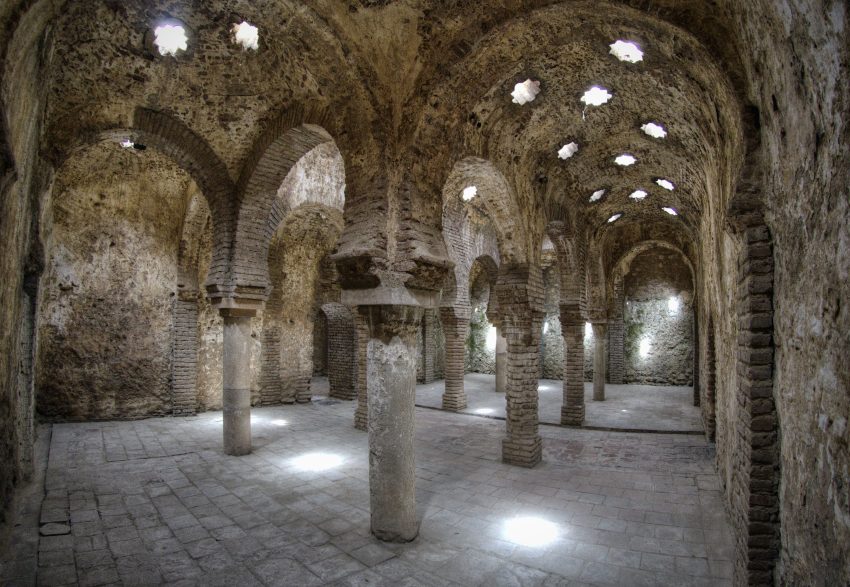
Baños Árabes in Ronda, Spain are exceptionally intact 13th-century hammam baths from the late Islamic period, giving a rare view of everyday life beyond palaces and walls. Set low in the San Miguel quarter near the old Arab Bridge, the bathhouse feels cool and dim, with brick-and-stone vaults punctured by star-shaped skylights. Inside, you move through the classic sequence of cold, warm, and hot rooms, where pairs of horseshoe arches divide the spaces into calm, rhythmic bays. Traces of the original engineering remain, including the waterwheel system that once lifted water from a nearby stream. A short video with 3D animation helps many visitors picture the baths in use.
Location: Baños Arabes, Yacimiento Arqueológico, Calle Molino de Alarcón, s/n 29400 Ronda Málaga Spain | Hours: Monday: 10:00 - 14:00, 15:00 - 18:00; Tuesday - Friday 09:30 - 20:00; Saturday 10:00 - 14:00, 15:00 - 18:00; Sunday & Bank Holiday10:00 - 15:00. | Price: Adults: €4.50; Free Tuesday After 15:00 | Website | Distance: 0.8km

17. Mirador de Ronda
Mirador de Ronda
Mirador de Ronda
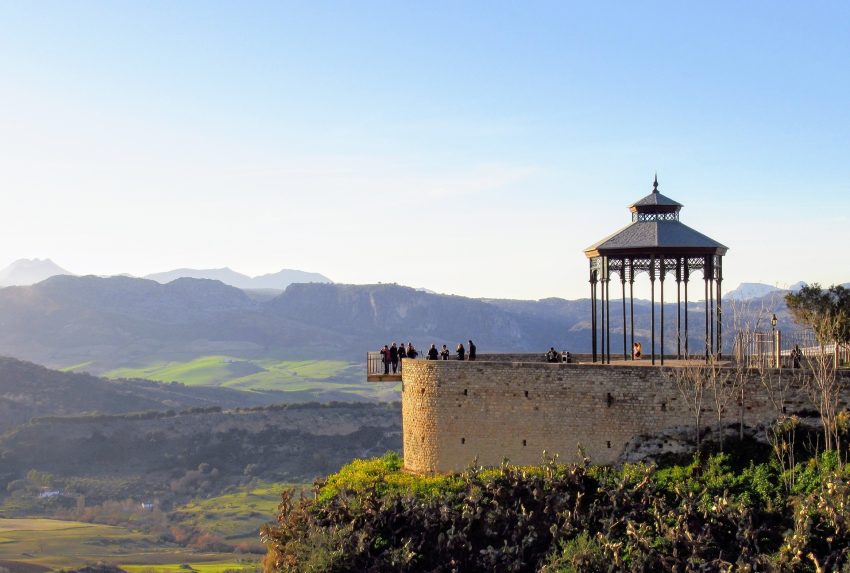
Mirador de Ronda is a cliff-edge viewpoint on the rim of El Tajo gorge, near Alameda del Tajo, where an iron balustrade lets you lean out over a sheer drop. From the railings, the scene stacks in layers: the Guadalevín River glinting far below, the gorge’s rock walls, and the rolling Serranía de Ronda hills fading into the distance. Light changes quickly here—cool, sharp blues at midday and warmer tones as the sun sinks toward the valley—so the same panorama can feel completely different within an hour. Visitors tend to linger for the scale, the vertigo, and the photo angles that make the landscape look endless.
Location: Mirador de Ronda Ctra. de los Molinos, 1955 29400 Ronda Málaga Spain | Hours: 24 Hours | Price: Free | Distance: 0.8km

18. Casa del Rey Moro
Casa del Rey Moro Water Gate
© Casa del Rey Moro
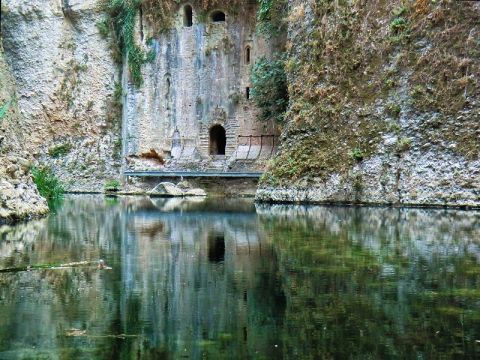
Casa del Rey Moro in Ronda, Spain is an 18th-century house perched on the lip of El Tajo, remembered less for its closed interiors than for the cliffside gardens and the engineered descent beneath them. Terraced, Moorish-inspired gardens laid out in 1912 by Jean-Claude Nicolas Forestier step down in geometric layers with tiled stairs, fountains, and water channels that frame sheer gorge views. From here you enter the Muslim-era water mine—often dated to the 14th century—where a long stairway drops through rock toward the river, revealing spaces tied to water-lifting machinery and defensive use. Visitors often mention the vertigo of the 200-plus steps and the photo opportunities at the bottom.
Location: La Casa del Rey Moro, Calle Cuesta de Santo Domingo, 9 29400 Ronda Málaga Spain | Hours: Daily; Winter (October-April): 10:00 - 20:00; Summer (May-September): 10:00 - 21:30 | Price: Adults: €10.00 | Website | Distance: 0.8km

19. Puente Nuevo

View of Ronda, Spain
Flickr / Jose Ramirez
Puente Nuevo is Ronda’s late-18th-century stone bridge that vaults across the El Tajo gorge, stitching the old quarter to the newer town over the Guadalevín River. What stays with visitors is the vertigo: the bridge rises nearly 100 meters above the chasm, with sheer cliff walls and the constant sense of depth when you pause at the midpoint and look straight down. For a full view of its massive masonry seemingly growing out of the rock, people head to Plaza María Auxiliadora. A small interpretation center reached by stairs between the bridge and the Parador adds context with multimedia on how it was built. Expect cobbles and steps—good shoes help.
Location: Puente Nuevo Calle Armiñán, s/n 29400 Ronda Málaga Spain | Hours: Monday to Friday: 10:00-18:00 Saturday: 10:00-14:00 & 16:00-18:00 Sunday: 10:00-15:00 | Price: Adults: €2.5 | Website | Distance: 0.8km

20. Paseo de Blas Infante
Paseo de Blas Infante 2
CC BY-SA 3.0 / Concepcion AMAT ORTA
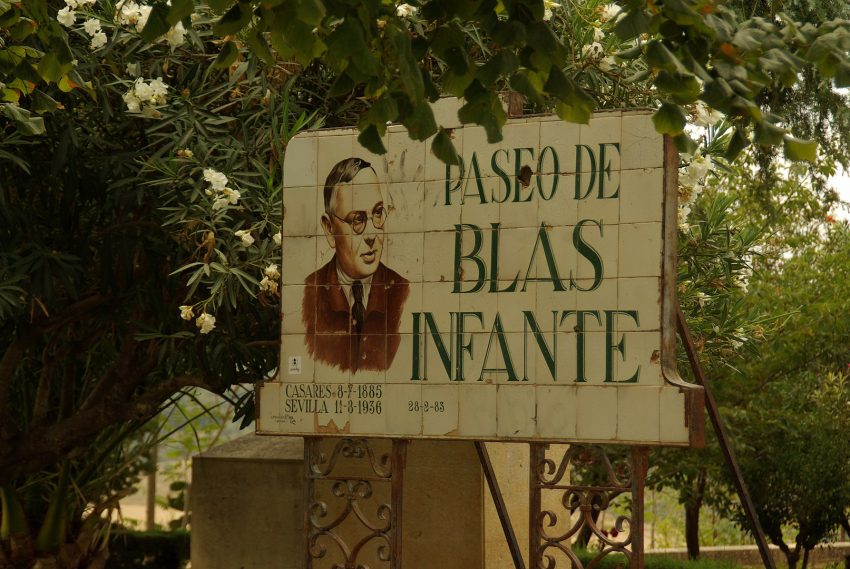
Paseo de Blas Infante is a small park tucked just behind Ronda’s Plaza de Toros, where the pace drops to a shaded stroll among benches and trees. Named for Blas Infante, the Andalusian thinker linked to the region’s identity movement, it feels like a civic space locals recognize rather than a leftover patch of green. Visitors often catch the soft soundtrack of flamenco guitar or street musicians drifting through the path. Near the entrance, modest monuments nod to Orson Welles and Ernest Hemingway, adding a quick cultural footnote. The paseo also works as a natural passage toward the gorge-edge promenades and viewpoints, turning a brief pause into a scenic lead-in.
Location: Paseo Blas Infante, 1, 29400 Ronda, Málaga, Spain | Hours: June - September 8.00am - 00.00 September - May: 9.00am - 22.00 | Price: Free | Website | Distance: 0.8km

21. Puerte de la Cijara

Puerte de la Cijara Ronda
© Andrew Ashton
Puerta de la Cijara is a restored wall gate on Ronda’s eastern side, set into the Murallas de Levante where the city needed stone defenses instead of the gorge’s cliffs. It marks the controlled entry line that historically served arrivals after crossing the Guadalevín, on the approach from the river toward the old town. The gate you see today was rebuilt in 1975 by Pons Sorolla after the original was demolished, modeled on the Arco del Cristo, so its medieval outline carries a modern hand. Walking up to it, you notice how the wall channels your path and how the masonry sits tight to the slope. The area is often calmer, with cobbled paving, shade later in the day, and views of whitewashed houses and open fields.
| Hours: 24 Hours | Price: Free | Distance: 0.9km

22. Casa de San Juan Bosco

Casa De San Juan Bosco Ronda3
CC BY-SA 3.0 / Colling-architektur
Casa de San Juan Bosco (Casa Don Bosco) is an early-20th-century modernist, palace-like house in Ronda’s old quarter, set right on the gorge edge, where craftsmanship and landscape meet at close range. Inside, it feels like a carefully kept home rather than a formal museum, anchored by an interior patio with Nasrid-style patterned flooring and Arabic-inspired ceramics. The rooms reward slow looking: walnut furniture, 19th-century tapestries, and a substantial Castilian-style fireplace. Step into the small gardens and terrace and the mood shifts to quiet drama, with cooling greenery and a private-balcony view across El Tajo toward Puente Nuevo. Visitors often linger here with a drink, enjoying how uncrowded it can feel.
Location: Casa don Bosco Calle Tenorio, Nº21 29400 Ronda Málaga Spain | Hours: Daily: 10:00 - 18:00 | Price: Adults: €3.00 | Website | Distance: 0.9km

23. Plaza de María Auxiliadora
Plaza de Maria Auxiliadora Ronda
© Andrew Ashton
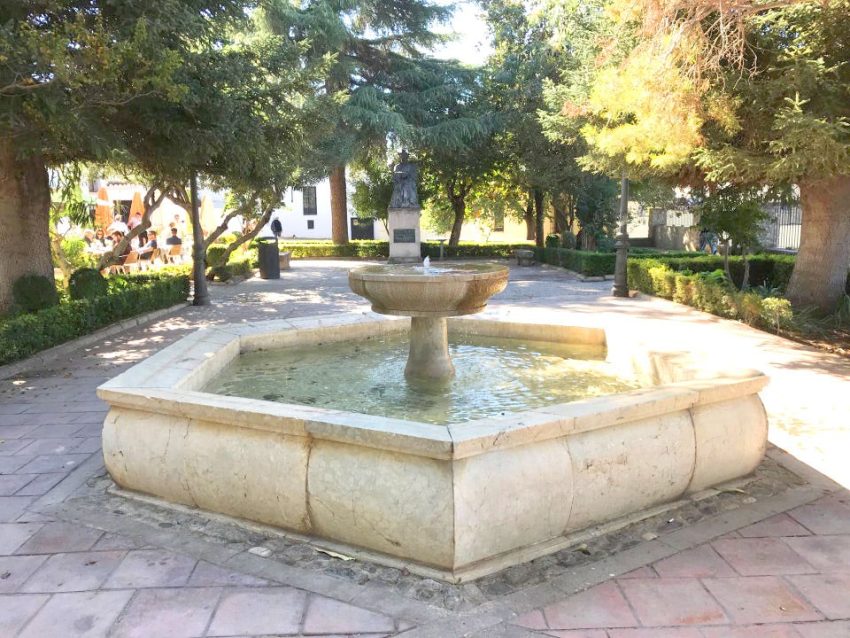
Plaza de María Auxiliadora is a small, calm square on the edge of Ronda’s old town, valued less for monuments than for its pause-in-the-journey feel. A simple central fountain and pockets of shade create a cooler, quieter spot where people linger at a few outdoor tables with a drink before moving on. It matters because it sits right where the streets begin to tilt toward El Tajo Gorge, functioning as a natural threshold between tight stone lanes and open valley air. From here the land drops away, and you can watch the hills and fields unfold while walkers decide whether to descend or turn back.
Location: Plaza de María Auxiliadora, Calle Sor Angela de la Cruz, 2, 29400 Ronda, Málaga, Spain | Hours: 24 Hours | Price: Free | Distance: 1km

24. Murallas de Ronda
Levante walls Ronda
Levante walls Ronda
© Andrew Ashton
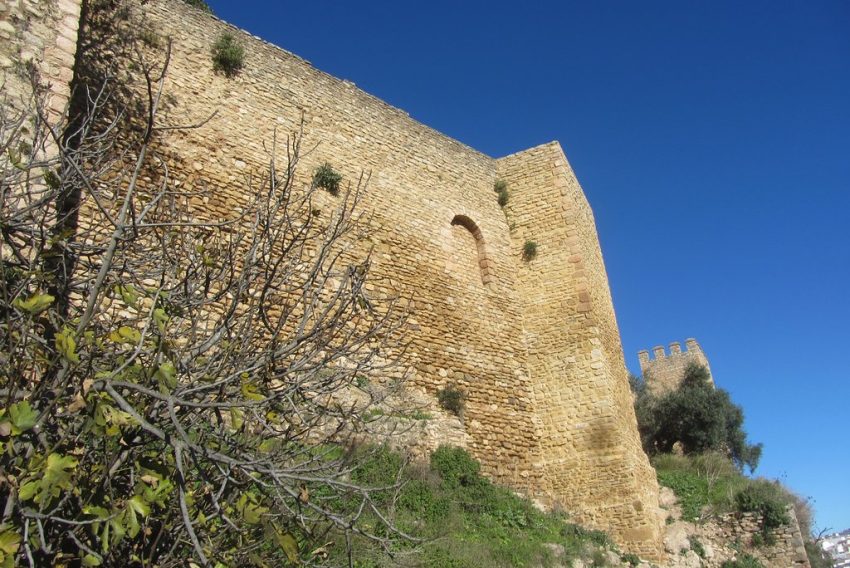
Murallas de Ronda are the medieval defensive walls that guard the old town’s more exposed eastern side, beginning near Puerta de Almocábar by the Iglesia del Espíritu Santo. Built on a hillside rise where the gorge doesn’t shield the city, sections still perch above steep slopes and short rock faces that feel surprisingly sheer up close. Rather than one uninterrupted barrier, the fortifications form named stretches—Murallas de Levante linking into the Carmen and Cijara sections—showing how the line thickens where access was easiest. In places you can spot the logic of layered defense, with a main wall above and a parallel outer line below, especially toward the valley road near the Arabic Baths. Gates and arches tighten the route into controllable choke points, and the walk is worth the climbs.
Location: Calle Armiñán, 14 29400 Ronda Málaga Spain | Hours: 24 Hours | Price: Free to view externally | Distance: 1km

25. Casa del Gigante

entrance to casa Casa del Gigante Ronda
© Andrew Ashton
Casa del Gigante is a compact Nasrid-era townhouse in Ronda’s old quarter, built in the late 1200s–early 1300s and prized as one of the most complete Moorish domestic interiors surviving outside Granada. The visit is defined by an inward-looking plan: small rooms gathered around a patio and pool, with horseshoe arches, stucco ataurique, and traces of old paint that suggest how colorful it once was. Its name comes from enigmatic anthropomorphic stone corner reliefs—only one remains, still hard to interpret, which adds a lingering sense of puzzle. Upstairs, a small museum and short videos add context, and many visitors find it a quiet half-hour of close-up architectural detail.
Location: Casa del Gigante Plaza del Gigante, 1 29400 Ronda Málaga Spain View on | Hours: Monday to Friday: 10:00–18:00; Saturdays 10:00–14:00 &16:00–18:00; Sundays: 10:00–15:00 | Price: Adults: €2.50 | Website | Distance: 1km

26. Museo del Bandolero

Museo del bandolero in Ronda
CC BY-SA 2.0 / SweetnessParadise
Museo del Bandolero in Ronda is a compact museum devoted to the real bandoleros who roamed the Serranía de Ronda in the 19th and early 20th centuries, and to how their stories hardened into “bandit country” legend. Rooms on Romantic-era travellers show how outsiders’ paintings and documents helped glamorise danger, while exhibits of laws and edicts reveal how hard rural life was to police. The most memorable galleries assemble dioramas, photographs, weapons, money, and official stamps that make banditry feel concrete rather than folkloric. A final section on the Guardia Civil adds the counter-story, explaining how the state pursued outlaws and why the bandit age ended even as the myth lingered.
Location: Museo del Bandolero Calle Armiñán, 65 29400 Ronda Málaga Spain | Hours: Daily: 11:00 - 19:30 | Price: Adults: €3.75 | Website | Distance: 1km

27. San Sebastian Minaret

San Sebastian Minaret5
CC BY-SA 3.0 / Gumerg
San Sebastian Minaret (Minarete de San Sebastián) is a surviving Islamic-era mosque tower in Ronda’s old town, later repurposed as a bell tower after the Christian conquest in 1485. What you notice first is its compact, almost easy-to-miss silhouette—several visitors mention you can walk past without realizing what it is—yet it carries a strong sense of the city’s layered past. Look closely at the sturdy stone base, the horseshoe-arch doorway, and the shift in materials higher up, where lighter brickwork is thought to have been used. The attached church was destroyed in the 17th century, leaving the minaret standing alone, and it was recognized as a national historic monument in 1931.
Location: Minaret of San Sebastian Plaza Abul Beka, s/n 29400 Ronda Málaga Spain | Hours: 24 Hours, viewed externally. | Price: Free | Distance: 1km

28. Puerta de los Molinos
Arco del Cristo Ronda 4
© Diputación de Málaga
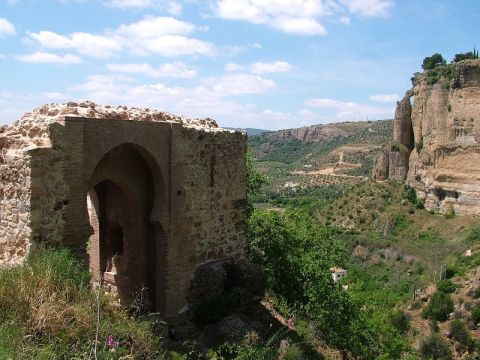
Puerta de los Molinos (also called Arco del Cristo) is a surviving gate in Ronda’s old defensive walls, set low on the western side of the Tajo gorge where the city meets the river corridor. Reached by a steep descent toward the Guadalevín, it feels removed from the crowds above, and the walls suddenly read as working infrastructure rather than scenery. The gate once controlled access to the river route and the mills below, linked to a canal-fed network of Moorish watermills; later a small Christian shrine gave it its “Cristo” name. From this lower path you get a dramatic, upward view of Puente Nuevo framed by cliff and water, though some visitors note the climb back can be punishing in heat.
Location: Arco del Cristo. Murallas de Albacara y Molinos del Tajo, Ronda (Rincón Singular) 6 Plaza de María Auxiliadora 29400 Ronda Málaga, Spain | Hours: 24 Hour | Price: Free | Distance: 1km

29. Albacara Walls
Albacara Walls Ronda 2 1
© Andrew Ashton
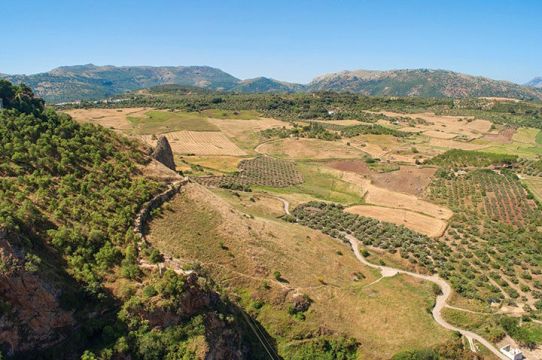
The Albacara Walls (Murallas de la Albacara) are a rugged stretch of Ronda’s Moorish defenses, set at the mouth of El Tajo where a manageable slope meets a sheer drop to the river. They mattered because this was the town’s weaker western approach, so the wall helped seal the line between Puerta del Viento and Puerta de los Molinos and control movement into the gorge. The name traces to an Arabic term for “cattle door,” reflecting how the enclosed space could shelter livestock and protect supplies during danger. From the stones you can read the landscape logic—cliff, lip, and access paths—while taking in quieter views over fields and whitewashed houses.
Location: 29400 Ronda Málaga Spain | Hours: 24 Hours | Price: Free | Distance: 1.1km

30. Puerta Del Viento
Puerta Del Viento Ronda
CC BY-SA 2.0 / IMBiblio
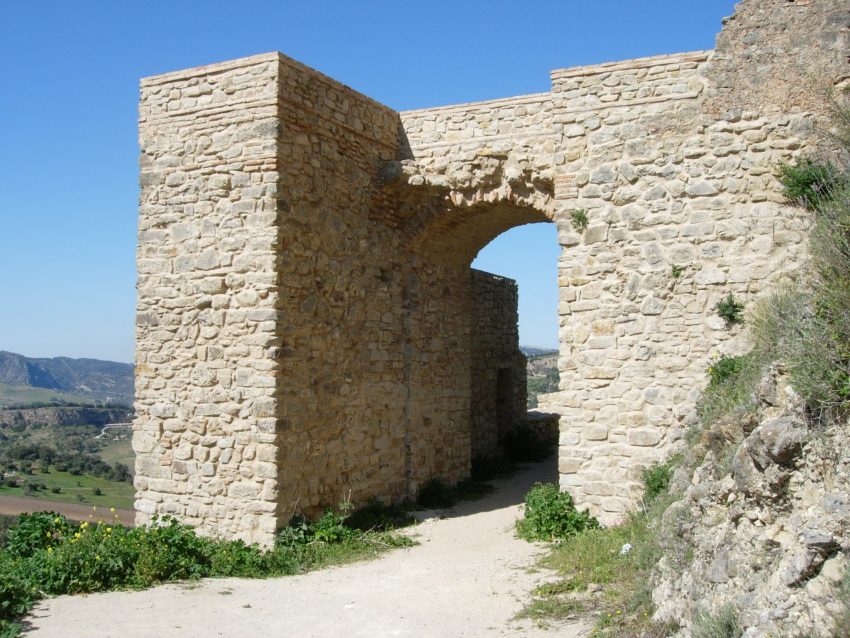
Puerta del Viento (the Wind Gate) is a small, easily missed gate in Ronda’s historic wall line, set right on the defensive edge above El Tajo. It matters less as an entrance today than as a clue to how the town used terrain as fortification: the masonry is pinned to a tall, gherkin-shaped rock that acts like a natural bastion. Standing near it, you notice how the route narrows and funnels movement, with sheer stone doing as much work as built walls. The approach is steep and quiet, and the setting can live up to its name—often breezy—making it feel more like a found corner than a postcard stop.
Location: 29400 Ronda, Málaga, Spain | Hours: 24 Hour | Price: Free. | Distance: 1.1km

31. Town Hall of Ronda
City hall Ronda Spain
CC BY-SA 4.0 / Heparina1985
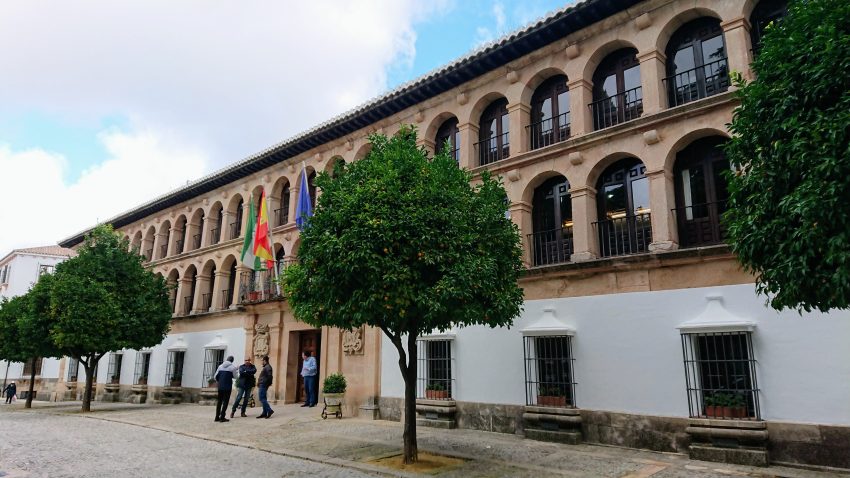
Ronda’s Town Hall (Ayuntamiento de Ronda) is the working municipal building that anchors Plaza Duquesa de Parcent, and its presence helps the square feel like a lived-in civic center rather than a set piece. Built in 1734 on the site of older shops, it began life as a military prison and militia headquarters before shifting into city administration. From the plaza you’ll notice its solid, symmetrical façade, with a steady rhythm of arches and pillars that matches the formal architecture around it. If the entrance is open, look for the Mudéjar-style ceiling and small archaeological displays tucked into the interior. Reviews tend to mention it as a handsome, practical stop in the old town.
Location: Ronda Town Hall, Plaza Duquesa de Parcent, 3 29400 Ronda Málaga Spain | Hours: 24 Hours | Price: Free, view from outside only. | Website | Distance: 1.1km

32. Plaza Duquesa de Parcent
Plaza Duquesa da Parcent Ronda   fountain 2
Plaza Duquesa da Parcent Ronda fountain 2
Flickr / Steve James
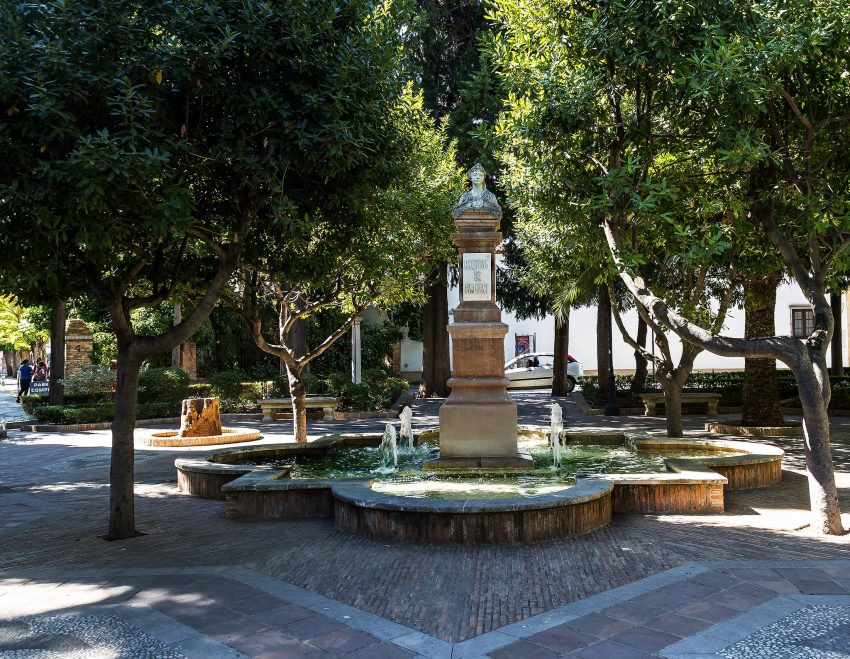
Plaza Duquesa de Parcent is a broad, dignified square in Ronda’s old town, where the city’s civic and religious life meets in one calm, stone-framed space. It’s defined by monumental façades rather than shops, with the imposing Church of Santa María la Mayor anchoring the view and institutional buildings like City Hall close by. Visitors tend to remember the quiet, almost cloistered atmosphere around the convents, including the tradition of buying sweets from nuns through a discreet revolving hatch. Benches, a fountain, and the shade of large trees make it an easy place to pause, people-watch, and take in the historic architecture. Even in summer, reviews note it can feel surprisingly tranquil.
Location: Plaza Duquesa de Parcent, 11, 29400 Ronda, Málaga, Spain | Hours: 24 Hours | Price: Free | Distance: 1.1km

33. Palacio de Mondragon
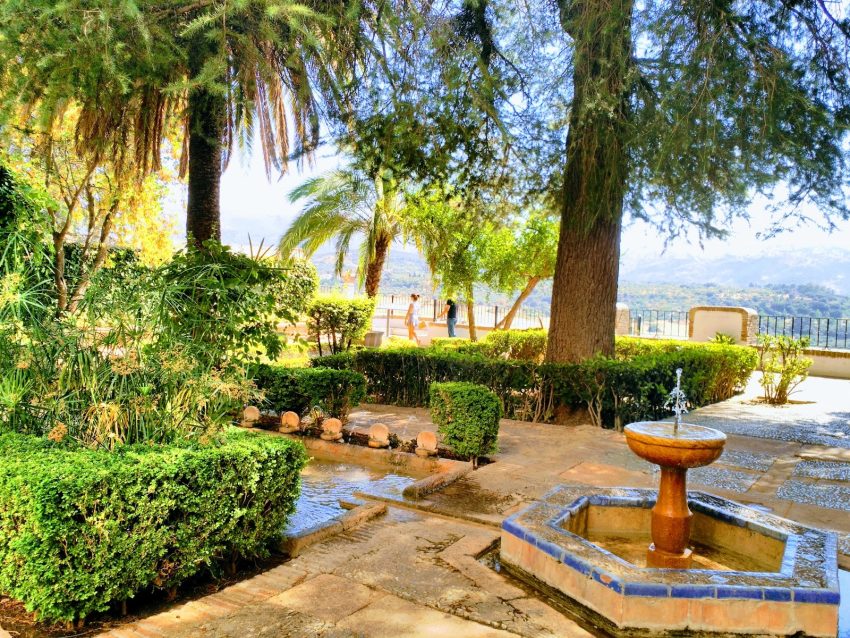
Palacio de Mondragon, Ronda, Spain
© JUAN LUIS MARTINEZ
Palacio de Mondragón is a Mudéjar–Renaissance palace in Ronda’s old town that also serves as the Municipal Museum, tying the city’s Islamic-era roots to later Christian rebuilding. Visitors move through a colonnaded inner courtyard where horseshoe arches, patterned tilework, and carved details catch the changing light. The atmosphere shifts in the clifftop gardens: water channels and small fountains create a cool, quiet pause with views that feel more secluded than the busiest lookouts. Upstairs, compact museum rooms trace local time layers with finds such as Roman and Moorish tombs. Just beyond the palace, a tucked-away plaza is praised by travelers as a calm spot to sit and look over the green valley and rugged cliffs.
Location: Plaza Mondragón, s/n, 29400 Ronda, Málaga, Spain | Hours: Mon: 10:00-14:00 & 15:00-18:00; Tue-Fri: 09:30-19:00; Sat: 10:00-14:00 & 15:00-18:00; Sun: 10:00-15:00. | Price: Adults: €4.00 | Website | Distance: 1.1km

34. Church of Santa María la Mayor
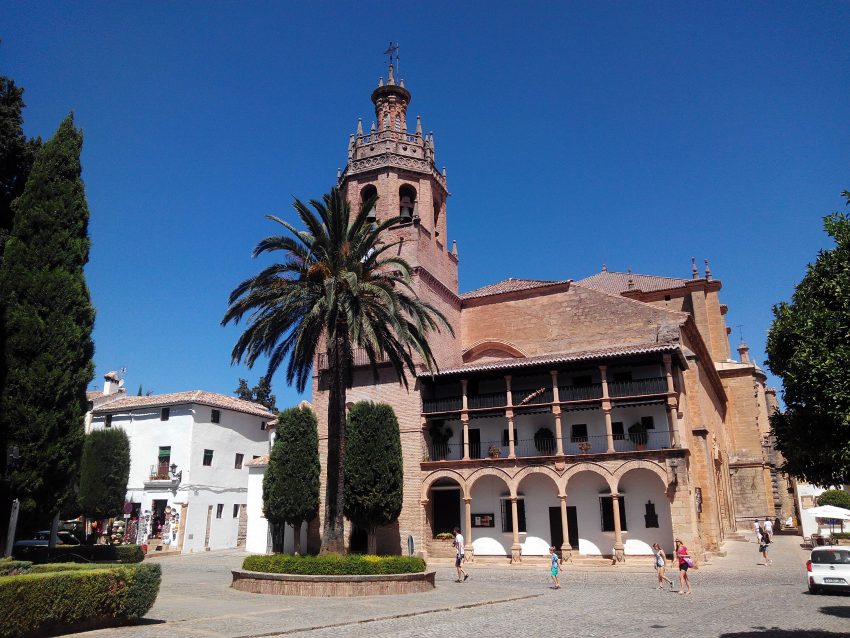
Iglesia de Santa María la Mayor Ronda
CC BY-SA 4.0 / José Rojas
Church of Santa María la Mayor is a monument church in Ronda’s old town on Plaza Duquesa de Parcent, built between the 16th and 18th centuries on the footprint of a former mosque. Near the entrance, look for an arch with Arabic inscriptions, a rare surviving trace linked to the mosque’s mihrab. Inside, the space reads in layers: late-Gothic naves, a Renaissance chapel, and later Baroque flourishes, with a large central cedar choir stall dividing the interior like a wooden screen. Many visitors remember the climb up the spiral stairs, which ends on the roof with wide, 360-degree views over the city.
Location: Iglesia de Santa María la Mayor Calle Sor Angela de la Cruz, 5 29400 Ronda Málaga | Hours: November to February10:00 a 18:00; March and October 10:00 a 19:00; April to September 10:00 a 20:00. | Price: Adult: €4.50 with audioguide | Website | Distance: 1.1km

35. Castillo del Laurel
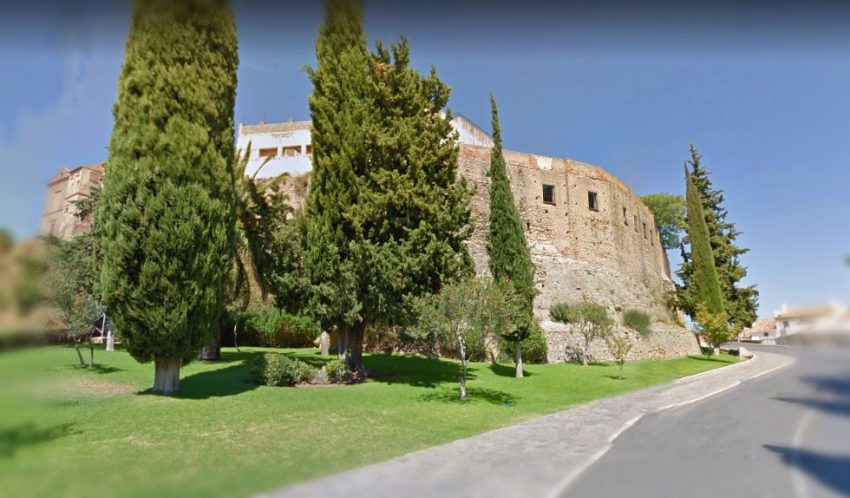
laurel Castle Ronda
laurel Castle Ronda
© Andrew Ashton
Castillo del Laurel is a fragmentary stretch of Ronda’s old defensive castle, best understood through the surviving curtain wall that still traces the town’s eastern and southern edge. Rather than an interior ruin, it’s something you read in the streetscape—especially along Calle Cuesta de las Imágenes, where the masonry clings to the slope and shows how terrain and stone once worked together as protection. The site’s story spans repeated rebuilding, with traditions linking early origins to Roman Arunda and later reconstruction after the 8th-century Moorish conquest. Much was destroyed in later upheavals, including reported explosions during the Napoleonic era in 1812, leaving today’s low-key remains. Visitors tend to remember the quieter, less crowded feel and the close-up textures of the wall.
Location: Castillo del Laurel Calle Cuesta de las Imágenes 29400 Ronda Málaga Spain | Hours: 24 Hours | Price: Free to view the exterior. | Distance: 1.2km

36. Iglesia del Espíritu Santo
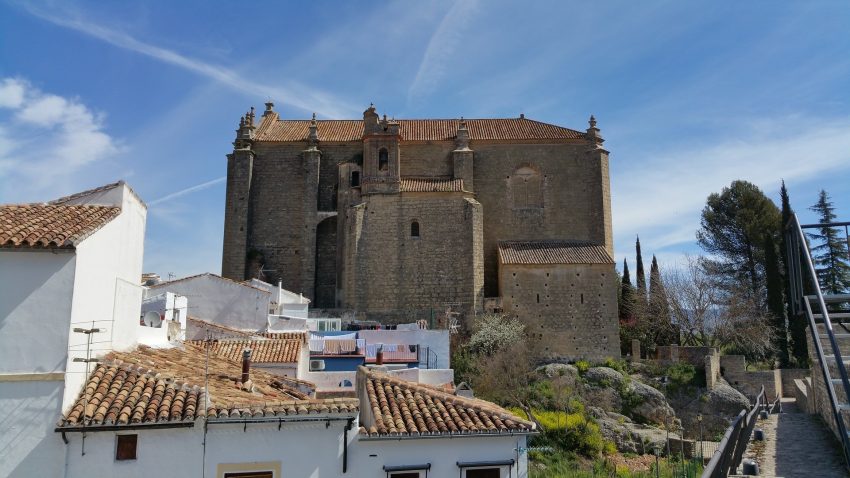
Iglesia del Espiritu Santo, Ronda
Iglesia del Espíritu Santo is a late-15th-century church in Ronda’s old city, built after the 1485 conquest as the first Christian church raised there and as a statement of control. It sits directly above Puerta de Almocábar, the southern gate, so the first thing you notice is how the building commands the approach like a watchful outpost. Its severe Gothic massing feels closer to a fortress than an ornate parish church, a reminder that the city still feared counterattack during construction. The site reuses the footprint of a destroyed octagonal Moorish defensive tower, and that layered purpose—worship set on top of strategy—gives the stonework an unusually tense, purposeful atmosphere.
Location: Calle Espíritu Santo, 15, 29400 Ronda, Málaga, Spain | Hours: Monday - Saturday: 10:00-14:00 & 16:00 - 19:00 | Price: Adults: €1.00 | Distance: 1.3km

37. Puerta de Almocabar

City Walls, Ronda
City Walls, Ronda
CC BY-SA 3.0 / Tajchman
Puerta de Almocábar is a 13th‑century Moorish gateway on the southern edge of Ronda’s old town, where the walls still read as working defenses rather than decoration. The entrance was engineered as a controlled passage, with three successive doorways and semicircular towers that once slowed anyone trying to force their way in. Beside it stands the later Charles V Gate, a 16th‑century Renaissance arch marked with imperial symbolism, making the shift from medieval fortification to royal statement easy to see in one glance. Visitors linger for the weighty stonework, a quieter stretch of wall-walking, and views out toward fields and whitewashed houses, away from the busiest viewpoints.
Location: Puerta de Almocábar Plazuela Arquitecto Francisco Pons Sorolla, s/n 29400 Ronda Málaga Spain | Hours: 24 Hours | Price: Free | Website | Distance: 1.3km

Best Day Trips from Ronda

A day trip from Ronda offers the perfect opportunity to escape the urban rhythm and discover the surrounding region's charm. Whether you're drawn to scenic countryside, historic villages, or cultural landmarks, the area around Ronda provides a variety of easy-to-reach destinations ideal for a one-day itinerary. If you are looking to rent a car in Spain I recommend having a look at Discover Cars, first, as they compare prices and review multiple car rental agencies for you.

1. Cueva del Gato
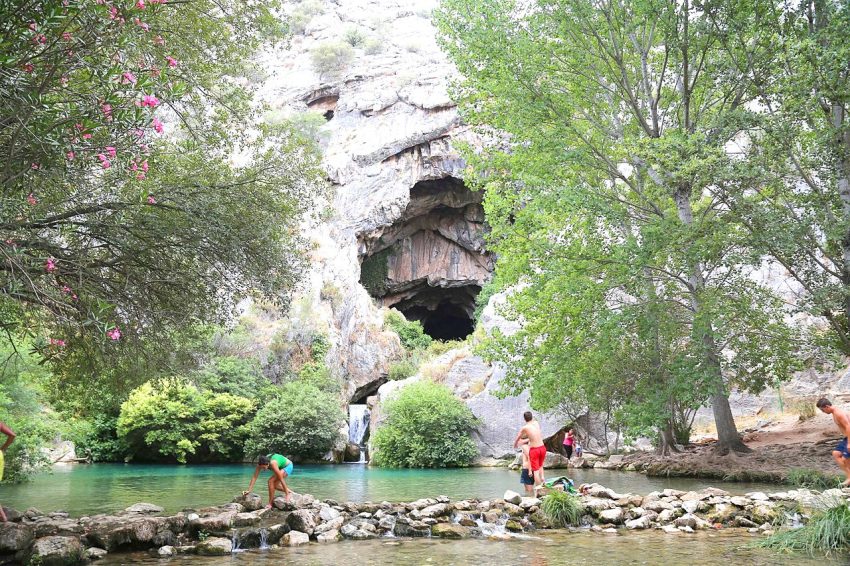
Cueva del Gato, Ronda
CC BY-SA 3.0 / logopop
Cueva del Gato is a cave-and-river attraction near Ronda, in the Benaoján area of southern Spain. It sits in the Sierra de Grazalema landscape, where the Guadares River comes back to the surface at a wide limestone opening and forms a clear natural pool.What visitors notice first is the scale of the cave mouth, the cold water, and the mix…
Location: Cueva del Gato, MA-7401 Km 3 Carretera de Benaoján a 29370 Ronda Málaga Spain | Hours: 24 Hour | Price: Free | Distance: 7.2km
Visiting Cueva del Gato

2. Cueva de la Pileta

Entrada Pileta, Ronda
CC BY-SA 2.0 / falconaumanni
Cueva de la Pileta is a limestone cave near Ronda, in the hills close to Benaoján, and it is visited as a guided underground attraction. The route into the cave is part of the experience, with a rural drive to the entrance and a torchlit tour inside rather than modern exhibition lighting. That makes the visit feel direct and a…
Location: Cueva de la Pileta 29370 Benaoján Málaga Spain | Hours: Tours: 10:00-13:00 & 16:00-18:00 | Price: Adults: €10.00 | Website | Distance: 11.5km
Visiting Cueva de la Pileta

3. Ruins of Acinipo
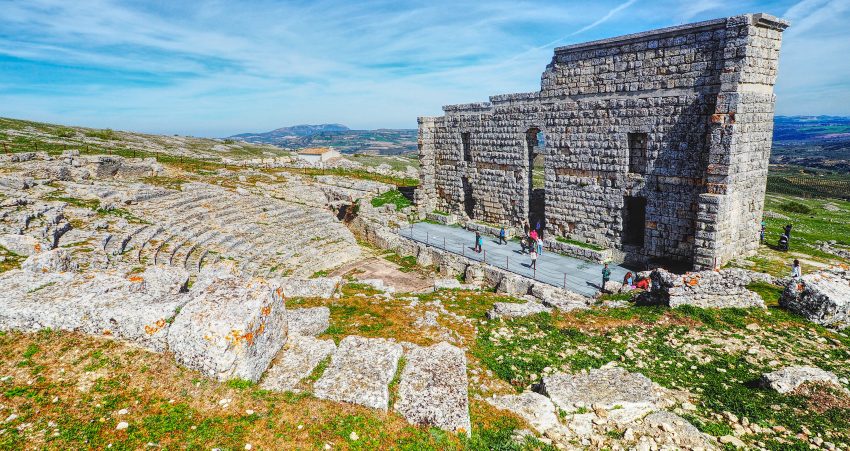
Theater of the Roman Ruins, Acinipo, Ronda
CC BY-SA 4.0 / Jose Rodríguez Cordón
Ruins of Acinipo in Ronda, Spain is a Roman archaeological site on a high limestone plateau outside the town, often associated with the name Ronda la Vieja. It is best known for its theatre, but the site also preserves the outline of an ancient settlement spread across open ground. Visitors come here for the setting as much as the stones:…
Location: Ruins of Acinipo, 801, 29400 Ronda, Málaga, Spain | Hours: Monday: Closed; Tuesday to Saturday: 10.00 to 17.00; Sunday: 09.00 to 14.00 Guided tours: Two tours every Saturday and Sunday at 10:30 a.m. and 12:00 p.m., | Price: Free | Website | Distance: 11.8km
Visiting Ruins of Acinipo

4. Marbella
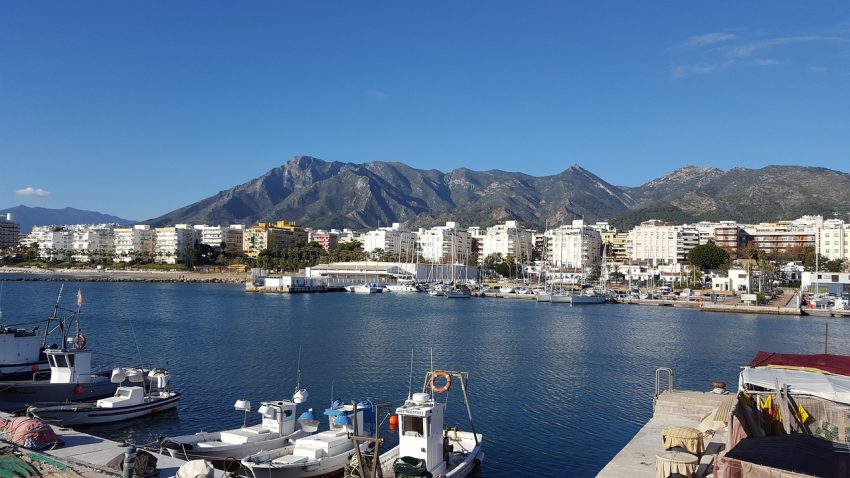
Marbella
Marbella
Marbella is a city and municipality in southern Spain, located in the province of Málaga within the autonomous community of Andalusia. Situated on the Costa del Sol, Marbella serves as the headquarters of the Association of Municipalities of the region and is the head of its judicial district. Visiting Marbella offers a mix of laid-back beach life, upscale glamour, and…
Visiting Marbella
Powered by GetYourGuide

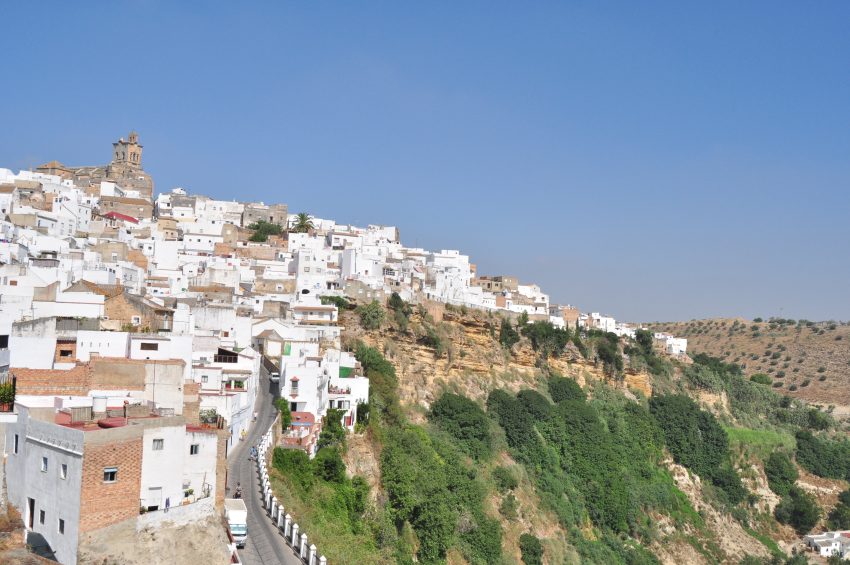
5. Arcos de la Frontera

Arcos de la Frontera
CC BY-SA 2.0 / Luis Rogelio HM
Nestled between countryside and mountains, this town showcases a blend of both landscapes and is intersected by two rivers, the Guadalete and the Majaceite. The Guadalete River feeds into the Bornos and Arcos Reservoirs, both declared Natural Beauty Spots due to their exemplary wetland environments. A portion of the town lies within the boundaries of Los Alcornocales Natural Park. Perched…
Visiting Arcos de la Frontera
Powered by GetYourGuide

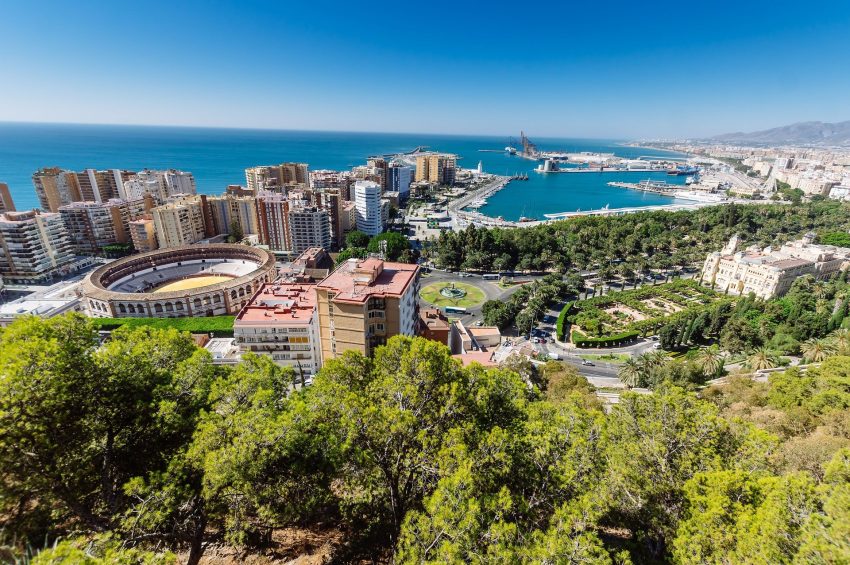
6. Málaga

malaga
malaga
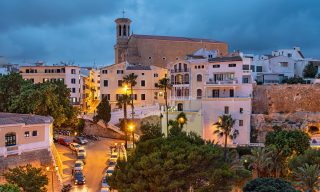
Málaga, set on the sun-drenched Costa del Sol in Andalusia, is a vibrant city that effortlessly blends coastal relaxation with cultural richness. With its golden beaches and scenic promenades, Málaga is an ideal destination for those looking to enjoy the Mediterranean lifestyle. The city’s energetic atmosphere is evident in its bustling plazas, stylish boutiques, and thriving nightlife, making it a…
Visiting Málaga
Powered by GetYourGuide

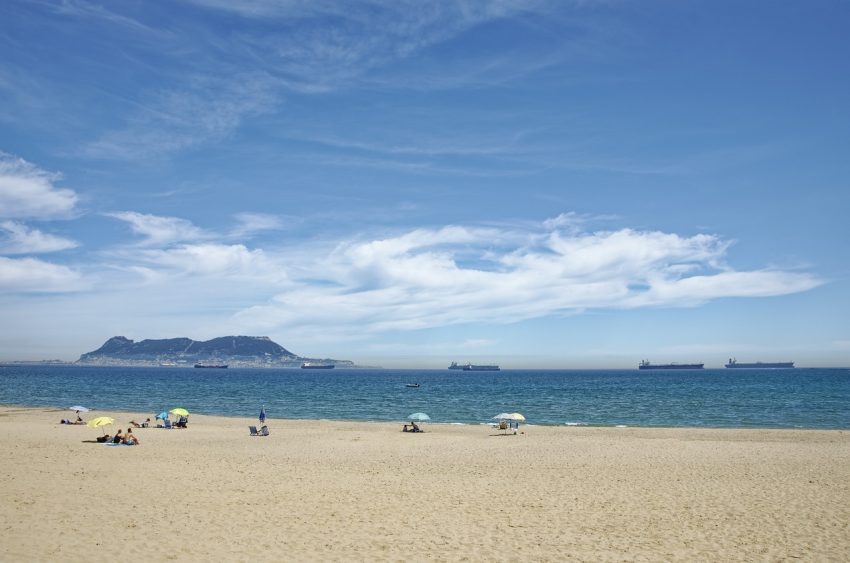
7. Algeciras

spain Algeciras
spain Algeciras
Algeciras, located on the southern coast of Andalusia, is a dynamic port city offering a blend of maritime charm and local culture. As one of Spain's busiest harbors, it serves as a gateway to North Africa, yet beneath its industrial façade, visitors can uncover vibrant markets, scenic seaside promenades, and authentic Andalusian hospitality. The city's coastal setting provides opportunities to…
Visiting Algeciras
Powered by GetYourGuide

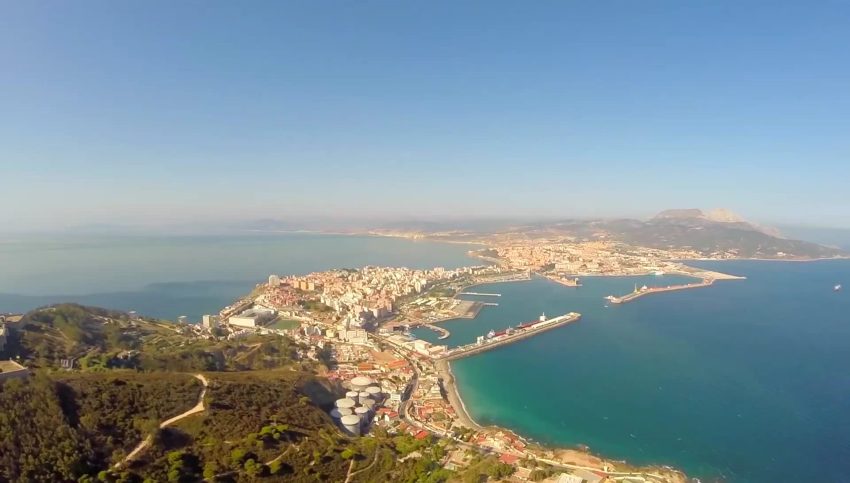
8. Ciudad de Ceuta

Ciudad de Ceuta
Ciudad de Ceuta
CC BY-SA 3.0 / JJ Producciones
Ceuta, a Spanish autonomous city spanning 18.5 km², is situated on the northern coast of Africa. It is separated from the Cadiz province on the Spanish mainland by the 14 km-wide Strait of Gibraltar and shares a 6.4 km land border with Morocco's M'diq-Fnideq Prefecture. Positioned at the meeting point of the Mediterranean Sea and the Atlantic Ocean, Ceuta is…
Visiting Ciudad de Ceuta
Powered by GetYourGuide

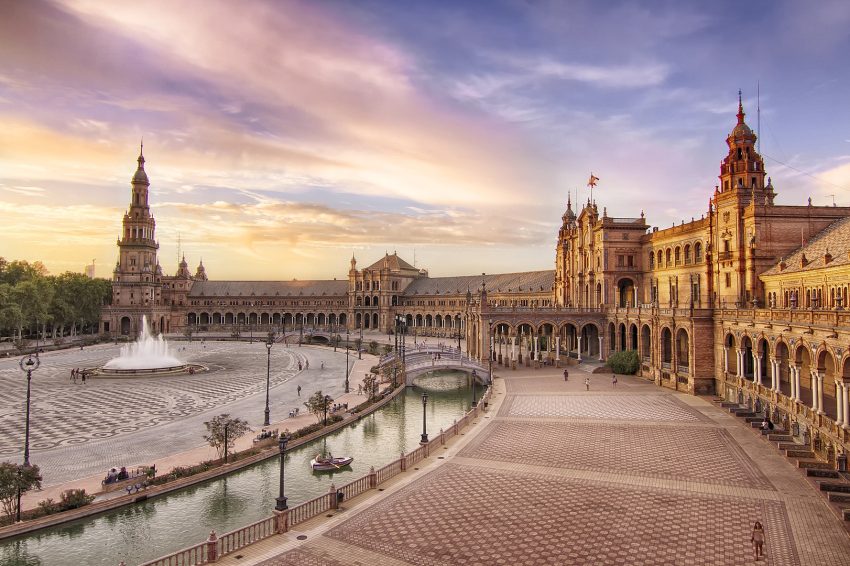
9. Seville

Monumental Plaza de Espana de Sevilla
CC BY-SA 3.0 / Francisco Colinet
Seville is a city that captivates visitors with its vibrant atmosphere, stunning architecture, and rich cultural experiences. Whether you're wandering through the narrow streets of Barrio Santa Cruz, admiring the colorful tiles of Plaza de España, or indulging in authentic tapas, every corner of Seville offers something special. The city’s warm climate and lively energy make it an ideal destination…
Visiting Seville
Powered by GetYourGuide

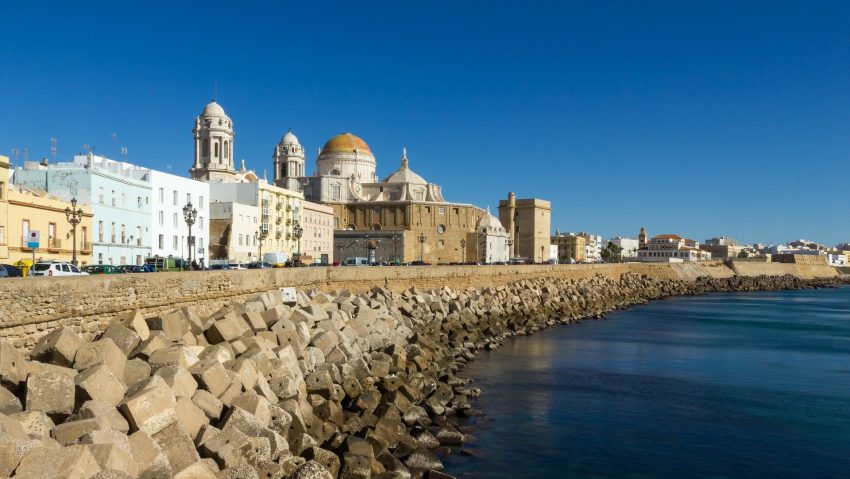
10. Cádiz

Cadiz, Spain
Cadiz, Spain
Visiting Cádiz offers a captivating glimpse into the soul of Andalusia, blending centuries of history with a vibrant, sun-soaked coastal lifestyle. As one of Europe’s oldest continuously inhabited cities, Cádiz sits proudly on a narrow spit of land in southwestern Andalusia, surrounded by the Atlantic. The city's cobbled streets, historic fortifications, and elegant Baroque architecture are a testament to its…
Visiting Cádiz
Powered by GetYourGuide

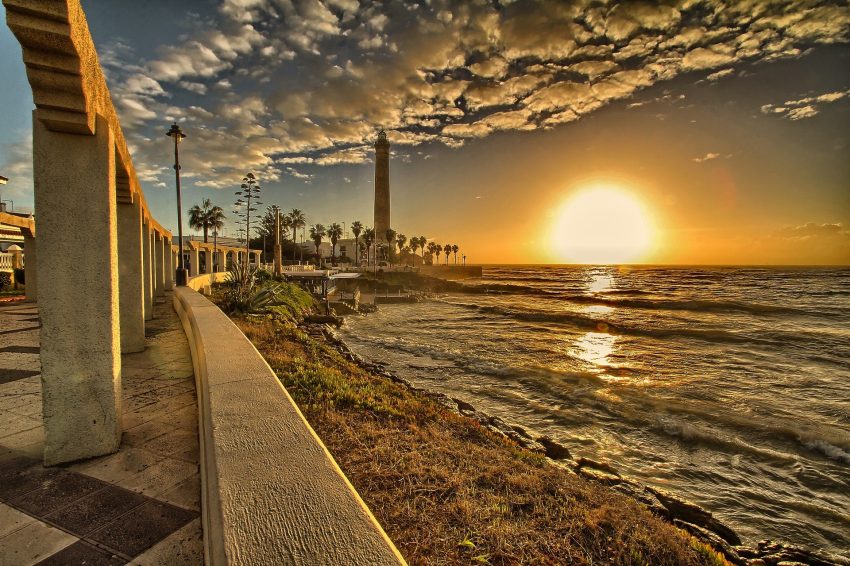
11. Chipiona

Chipiona at sunset, Spain
Chipiona, a charming coastal town along the Atlantic in Andalusia. It offers visitors a mix of stunning beaches, maritime culture, and relaxed Andalusian charm. The town’s Playa de Regla is its most famous beach, known for golden sands and calm waters, making it perfect for sunbathing and swimming. Its beachfront promenade, lined with cozy cafés and traditional seafood restaurants, provides…
Visiting Chipiona

12. Córdoba

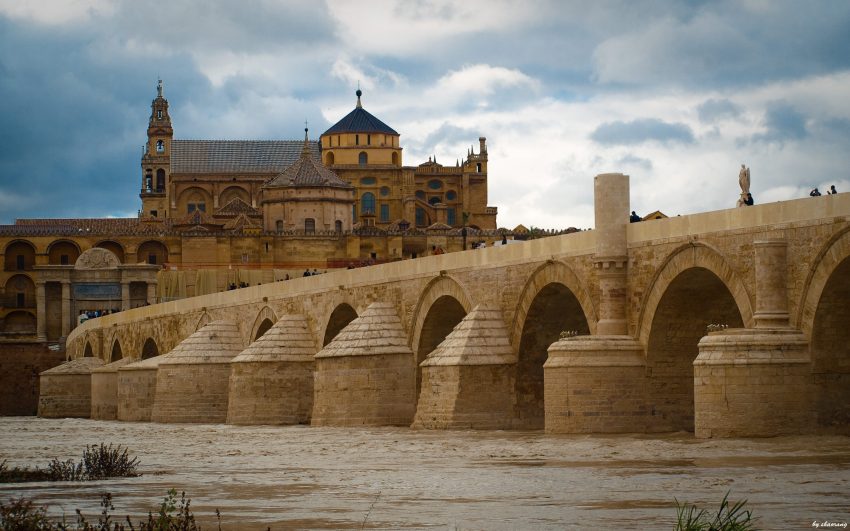
Roman Bridge and Mezquita, Cordoba
CC BY-SA 2.0 / shaorang
Córdoba, located in the Andalusia region of southern Spain, is a city that effortlessly blends rich culture, stunning architecture, and a vibrant atmosphere. As you walk through its charming streets, you’ll find yourself surrounded by picturesque courtyards adorned with colorful flowers, bustling markets, and an unmistakable Andalusian charm. The city is a wonderful place to explore on foot, allowing you…
Visiting Córdoba
Powered by GetYourGuide

13. Granada

View of Alhambra
View of Alhambra
CC BY-SA 1.0 / Jebulon
Visiting Granada is an unforgettable experience that combines breathtaking scenery, rich cultural traditions, and an atmosphere that’s both vibrant and relaxed. The city is compact and walkable, making it easy to explore its distinct neighborhoods—from the winding alleys of the Albaicín to the elegant boulevards near the city center. Granada's setting at the foot of the Sierra Nevada mountains adds…
Visiting Granada
Powered by GetYourGuide

Where to Stay in Ronda

Ronda, one of Andalusia’s most picturesque towns, offers a variety of accommodations that cater to visitors seeking historical immersion, stunning natural landscapes, or luxurious retreats. The Old Town (La Ciudad) is the best choice for travelers who want to be surrounded by Ronda’s medieval charm, with cobbled streets, traditional whitewashed houses, and close proximity to Puente Nuevo, the town’s most iconic landmark. Staying in this district allows easy access to historic palaces, quaint plazas, and charming local restaurants, making it the ideal option for those looking to experience Ronda’s rich heritage. A recommended hotel here is Parador de Ronda, offering breathtaking views of the El Tajo Gorge and elegant accommodations in a historic setting.

For visitors seeking tranquility and panoramic beauty, the Countryside and Vineyard Estates around Ronda provide an unforgettable retreat surrounded by rolling hills and vineyards. These boutique accommodations often feature olive groves, garden terraces, and infinity pools overlooking Andalusia’s stunning landscapes. This option is perfect for travelers who prefer a more secluded getaway with an authentic rural touch while still being a short drive from the town’s main attractions. A fantastic stay in this area is Hotel La Fuente de la Higuera, where guests can enjoy rustic elegance, fine dining, and peaceful nature trails.

If modern comforts and convenience are a priority, El Mercadillo (New Town) offers a more contemporary setting with lively markets, stylish cafés, and easy access to Ronda’s train station. This area is ideal for visitors who want a mix of local culture and urban vibrancy, with a wide range of shopping, entertainment, and dining options available. A great hotel in this district is Catalonia Ronda, featuring sophisticated rooms, a rooftop pool, and excellent amenities just steps from the historic town center. Whether you’re drawn to Ronda’s medieval beauty, countryside serenity, or modern elegance, the town offers accommodations suited to every traveler’s preference.

Using the our Hotel and Accomodation map, you can compare hotels and short-term rental accommodations in Ronda. Simply insert your travel dates and group size, and you’ll see the best deals for your stay.

Ronda Accommodation Map

Best Time to Visit Ronda

Visiting Ronda in Spring

Spring, from March to May, is an ideal time to visit Ronda. The weather is mild and pleasant, with temperatures ranging from 15°C to 25°C (59°F to 77°F). This season is perfect for exploring Ronda’s historical sites and enjoying the lush landscapes. The blooming flowers and vibrant greenery add to the town’s picturesque charm.

Visiting Ronda in Summer

Summer, from June to August, is the peak tourist season in Ronda. The weather is warm, with temperatures often exceeding 30°C (86°F). Despite the heat, summer is a great time to experience Ronda’s lively atmosphere and cultural events, such as the Feria de Pedro Romero in September, which includes traditional bullfighting and other festivities.

Visiting Ronda in Autumn

Autumn, from September to November, is another excellent time to visit Ronda. The temperatures are cooler, ranging from 15°C to 25°C (59°F to 77°F), making it comfortable for sightseeing and outdoor activities. The autumn colors enhance the natural beauty of the area, and the tourist crowds from summer have diminished, providing a more relaxed experience.

Visiting Ronda in Winter

Winter, from December to February, is mild in Ronda, with temperatures averaging between 10°C and 15°C (50°F to 59°F). This is the off-peak tourist season, offering a quieter and more relaxed atmosphere. Winter is a good time to explore Ronda’s indoor attractions, such as museums and historic buildings, without the crowds. The town’s festive decorations and events during the holiday season add a charming touch to the visit.

Annual Weather Overview

  • January 16°C
  • February 17°C
  • March 20°C
  • April 22°C
  • May 23°C
  • June 28°C
  • July 31°C
  • August 30°C
  • September 27°C
  • October 23°C
  • November 20°C
  • December 17°C

How to get to Ronda

By Air to Ronda

The nearest major airports to Ronda are Málaga-Costa del Sol Airport (AGP), located about 100 kilometers away, and Gibraltar International Airport (GIB), approximately 120 kilometers away. From these airports, you can reach Ronda by rental car, taxi, or public transportation.

By Train to Ronda

Ronda has a well-connected train station with regular services from major cities such as Málaga and Seville. The train journey from Málaga to Ronda takes around 2 hours, while from Seville, it takes about 2.5 hours. The train station is conveniently located near the town center, providing easy access to local attractions.

By Bus to Ronda

Several bus companies operate routes to Ronda from various cities in Andalusia. Buses from Málaga take about 2 hours, and from Seville, the journey is around 2.5 to 3 hours. The main bus station in Ronda is centrally located, making it easy to reach your accommodation and explore the town.

By Car to Ronda

Driving to Ronda is a convenient option, especially if you plan to explore the surrounding region. From Málaga, the drive takes approximately 1.5 to 2 hours via the A-357 and A-367 highways. From Seville, it takes around 2 to 2.5 hours via the A-375 and A-374 highways. The scenic drive through the Andalusian countryside adds to the experience.

By Local Transportation in Ronda

Once in Ronda, you can explore the town by walking or using the local bus network. Taxis are also readily available for getting around. Walking is particularly enjoyable in Ronda due to its compact size and the close proximity of major attractions.
More from this area