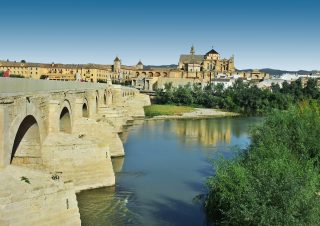
Capilla de San Bartolomé, Córdoba
Church in Córdoba
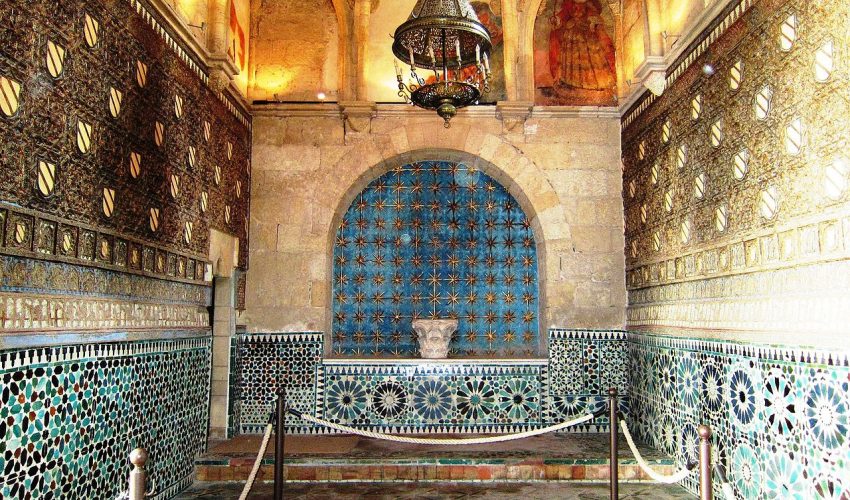
The Capilla de San Bartolomé is one of the best places to visit in Córdoba for travellers seeking a quieter, lesser-known monument that reveals the city's complex medieval past. Tucked away inside the Faculty of Humanities complex in La Judería, this small 14th-century chapel blends Christian purpose with unmistakable Islamic artistic influence, making it one of the finest surviving examples of Mudéjar style in the city.
Its intimate scale, exquisite plasterwork, and richly patterned tiles make it a great place to visit on a walking tour of Córdoba, especially for visitors already exploring the winding lanes around the Mosque-Cathedral. Despite its central location, the chapel remains remarkably peaceful, offering a contemplative space filled with artistry, symbolism, and layers of local history.
Table of Contents
- History and Significance of Capilla de San Bartolomé
- Things to See and Do in Capilla de San Bartolomé
- How to Get to Capilla de San Bartolomé
- Practical Tips on Visiting Capilla de San Bartolomé
- Where to Stay close to Capilla de San Bartolomé
- Is Capilla de San Bartolomé Worth Visiting?
- FAQs for Visiting Capilla de San Bartolomé
- Nearby Attractions to Capilla de San Bartolomé
History and Significance of Capilla de San Bartolomé
The Capilla de San Bartolomé was constructed between 1399 and 1410, during a turbulent period in Córdoba's Jewish quarter. After the violent assault on the Malburguet district in 1391 and the forced conversions or expulsion of many Jewish residents, the Christian parish of San Bartolomé emerged within La Judería. The modest church built here soon became a local place of worship for the new population.
During the first half of the 15th century, a funerary chapel was added, giving the building its form today. It remained in use as a parish church until the 17th century, and later became part of the Cardenal Salazar Hospital complex when the surrounding buildings changed function. Over time, the chapel fell into disrepair, but major restorations in 1953 and again in 2006 preserved its Mudéjar character.
The building's significance lies not only in its age and craftsmanship but also in what it represents: the multicultural layers of medieval Córdoba, where Islamic, Christian, and Jewish artistic traditions coexisted and influenced each other. Its inscriptions, patterns, coats of arms, and decorative vocabulary reflect a world shaped by both political tensions and artistic fusion.
Things to See and Do in Capilla de San Bartolomé
The chapel’s interior is compact but extraordinarily rich. Its rectangular layout is divided into the chapel and a small atrium, both adorned with some of the finest Mudéjar plasterwork in the region. Visitors will notice the original 15th-century flooring made of glazed bricks and olambrillas, a rare survival that enhances the atmosphere of authenticity.
The walls are covered in intricate yesería plasterwork combining geometric lacería, vegetal ataurique, heraldic shields of the Order of the Band, and inscriptions in Kufic and Naskh scripts. These Arabic inscriptions, although praising Allah, were used purely decoratively during the Christian era, illustrating how Mudéjar artists adapted motifs across cultures. The plaster and tile details reward slow observation, revealing new layers the longer you look.
One of the most remarkable historical discoveries linked to the chapel is the set of 35 Nasrid tiles found during the 1935 restoration. Originally placed on the step before the altar, they depict allegorical scenes likely representing the senses. Although they have been moved to the Museo Arqueológico y Etnológico de Córdoba, their original context adds depth to the chapel's story.
The adjoining courtyard also deserves attention. Its rib-vaulted ceiling, pointed arches, alternating tiles, and slender columns decorated with Islamic motifs create a striking transition between open space and the richly adorned interior. Together, the chapel and courtyard offer a rare opportunity to appreciate the harmony of Christian function and Islamic artistic language.
How to Get to Capilla de San Bartolomé
Córdoba is well connected by nearby airports, with Málaga-Costa del Sol Airport and Seville Airport offering the most convenient access for international travellers. For the best deals and a seamless booking experience, check out these flights to Córdoba on Booking.com.
Visitors arriving by train can reach Córdoba easily via Spain's high-speed AVE network, with frequent connections from Madrid, Málaga, and Seville. Train schedules and bookings can be found on Omio.
If travelling by car, Córdoba's road network and nearby parking areas make it simple to reach the historic centre, though walking is usually the best way to explore the narrow lanes of La Judería. If you are looking to rent a car in Spain I recommend having a look at Discover Cars, first, as they compare prices and review multiple car rental agencies for you.
Practical Tips on Visiting Capilla de San Bartolomé
- Best time to visit Capilla de San Bartolomé: Early morning or late afternoon for quieter conditions.
- Entrance fee in Euros: Typically low-cost; check current rates.
- Opening hours: Vary by season and faculty schedules.
- Official website: Refer to Córdoba’s municipal tourism portal for updated details.
- How long to spend: 20-30 minutes is perfect for exploring the chapel and courtyard.
- Accessibility: Some steps and uneven flooring may limit access.
- Facilities: Limited facilities on-site; amenities available nearby in La Judería.
- Photography tip: Capture the interplay of light and detail on the plasterwork from the chapel entrance.
- Guided tours: Some thematic tours of the Jewish Quarter include a stop here.
- Nearby food options: Numerous cafés and restaurants are scattered through the surrounding old town streets.
Where to Stay close to Capilla de San Bartolomé
Staying in La Judería offers ideal access to the Capilla de San Bartolomé and other historic sites. A traditional option nearby is Las Casas de la Judería, featuring atmospheric patios and charming Andalusian design. Another excellent choice is Hospes Palacio del Bailío, combining modern luxury with a historic palace setting. For something central and comfortable, consider Eurostars Conquistador, just steps from the Mosque-Cathedral.
Is Capilla de San Bartolomé Worth Visiting?
Yes, the Capilla de San Bartolomé is absolutely worth visiting, especially for those who enjoy intimate, artistically rich spaces. Its Mudéjar decoration, peaceful setting within La Judería, and layered history make it a memorable stop. Whether you are exploring Córdoba's medieval architecture or simply wandering the old quarter, this small chapel offers profound insight into the city's multicultural past.
What Other Travellers Say...

Capilla Mudéjar de San Bartolomé, tucked in Córdoba's Judería at C. Averroes s/n, is a compact, single‑room 15th‑century chapel celebrated for its ornate Mudéjar decoration — intricate tilework, mosaics and plaster walls featuring Kufic script, coats of arms and star motifs — that visitors say is small but stunning and well worth a brief stop despite occasional crowds from nearby walking tours.


FAQs for Visiting Capilla de San Bartolomé
Nearby Attractions to Capilla de San Bartolomé
- Córdoba Synagogue: One of the last surviving medieval synagogues in Spain.
- Mosque-Cathedral of Córdoba: The city's most iconic monument, a short walk away.
- Casa de Sefarad: A museum exploring Jewish culture and memory in Córdoba.
- Calleja de las Flores: A picturesque alley offering classic views of the bell tower.
- Alcázar de los Reyes Cristianos: A palace-fortress with gardens and Roman mosaics.
The Capilla de San Bartolomé appears in our Complete Guide to Visiting Córdoba!

Moira & Andy
Hey! We're Moira & Andy. From hiking the Camino to trips around Europe in Bert our campervan — we've been traveling together since retirement in 2020!
This website uses affiliate links which may earn a commission at no additional cost to you!
Planning Your Visit
From September 15th to June 14th: From 10:30 am. to 1:30 pm. and from 3:30 pm. to 6:30 pm. From June 15th to September 14th: From 10 am. to 2 pm. Closed on Mondays (mornings) and Sundays (afternoons)
From Monday to Friday: 1,50 € Saturday and holidays: 2 €
Nearby Attractions
- Plaza Maimónides (0.0) km
Square and Statue - Museo Taurino (0.0) km
Museum - El Zoco (0.0) km
Market - Statue of Maimónides (0.0) km
Statue - Hospital del Cardenal Salazar (0.1) km
Historic Building - Sinagoga (0.1) km
Synagogue - Casa de Sefarad (0.1) km
Museum - Judería de Córdoba (0.1) km
Area - Casa Andalusí (0.1) km
Historic Building and Museum - Almodóvar Gate (0.2) km
City Gate