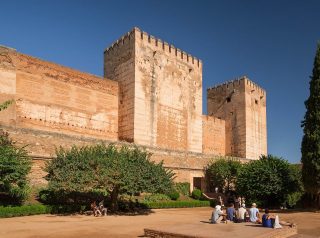
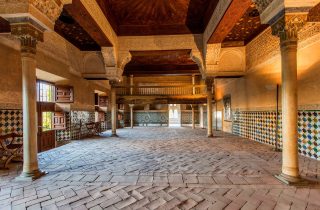
Torre del Cubo, Granada
Tower in Granada
The Torre de las Abencerrajes is one of the most elusive structures in the Alhambra Complex. Once a small defensive tower attached to a grand Nasrid palace, it is now so ruined that most visitors walk straight past without realising it is there. Hidden among the trees of the Alhambra Forest on the outside and almost absorbed into the remains of the Palacio de los Abencerrajes on the inside, it appeals most to those who enjoy tracking down quiet, half-forgotten corners. For history lovers, it is one of the things to do in Granada if you want to go beyond the headline sights and imagine the Alhambra as a living fortified city.
Rather than projecting boldly from the ramparts, the Torre de las Abencerrajes ran almost flush and parallel with the wall, giving it a more discreet profile even in its prime. Today, after explosions, demolitions, and reconstructions, you will find only traces of its footprint, but with a bit of imagination-and a good map-you can still place it in the defensive jigsaw of the south wall, often visited on walking tours of Granada that focus on the Alhambra's ruined palaces and outer fortifications.
History and Significance of Torre de las Abencerrajes
The Torre de las Abencerrajes formed part of the defensive line running along the south wall of the Alhambra, attached to the Palacio de los Abencerrajes at its northwestern corner. Unlike the more prominent projecting towers, this one had a rectangular plan that did not jut out from the wall but rather followed it, acting as a reinforced section rather than a bold lookout.
Its story is closely linked to the palace beside it and to the broader fate of the Abencerrajes family, a noble Nasrid lineage whose tragic downfall was later embellished in legend and literature. The tower also acquired later names and functions. It became known as the Accounting Tower after the Catholic Monarchs granted it, in 1501, to Don Juan Chacón, Adelantado of Murcia and Senior Accountant of the Royal Council. Some sources also refer to it as the Torre de la Peralada, though there is debate about whether that name correctly identifies this particular structure.
The beginning of the end came in 1812, when Napoleon's retreating troops laid charges along sections of the Alhambra's walls and palaces. The Torre de las Abencerrajes and the adjacent palace were badly damaged in the blasts, and much of their masonry was left in ruins. Later works and reconstructions focused more on stabilising the palace footprint, leaving the tower all but lost within the rebuilt fabric and dense surrounding vegetation. Today, only careful reading of the walls and plans reveals where it once stood.
What Other Travellers Say...

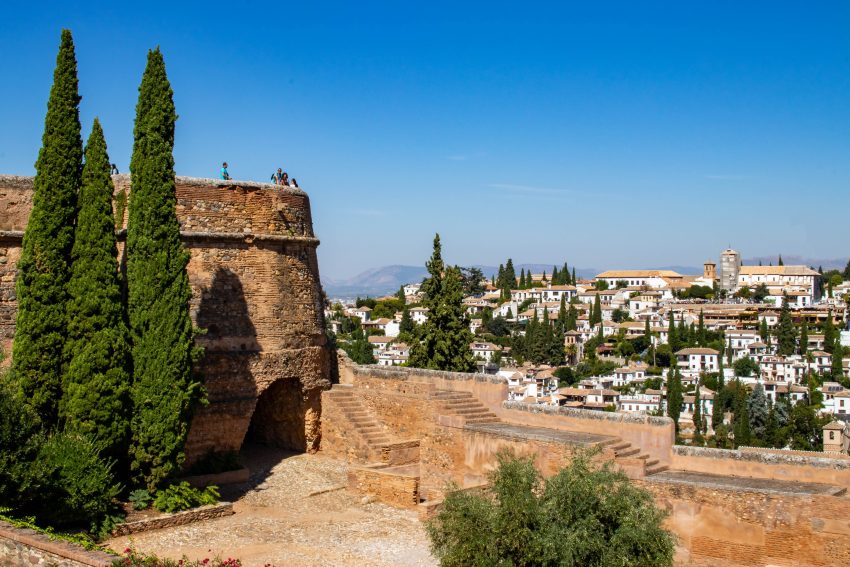
Torre del Cubo, located on C. Real de la Alhambra in Granada, is noted for its panoramic views over the Alhambra and the old city, with visitors able to spot landmarks like the Sacromonte monastery from a distance; the climb is described as not too steep, though visitor experiences vary, with some praising the spectacular outlook and others reporting rude ticket-office staff.


FAQs for Visiting Torre de las Abencerrajes
Nearby Attractions to Torre de las Abencerrajes
- Bosque de la Alhambra: The surrounding Alhambra Forest, with shaded paths and viewpoints that reveal different angles of the south wall and its towers.
- Puerta de los Carros: A 16th-century gate built to bring carts and construction materials into the Alhambra during the construction of the Palace of Charles V.
- Torre de las Cabezas: A defensive tower further along the south wall, helping to guard this vulnerable sector of the hill.
- Palacio de los Abencerrajes: The ruined Nasrid palace to which the tower was attached, partially reconstructed to suggest its original layout.
- Puerta de la Justicia: One of the most iconic outer gates of the Alhambra, with its monumental horseshoe arch and symbolic carvings.
The Torre del Cubo appears in our Complete Guide to Visiting Granada!

Moira & Andy
Hey! We're Moira & Andy. From hiking the Camino to trips around Europe in Bert our campervan — we've been traveling together since retirement in 2020!
This website uses affiliate links which may earn a commission at no additional cost to you!
Planning Your Visit
For opening times of the Torre del Cubo see Alhambra Opening Times.
The Torre del Cubo is part of the Alhambra Complex and access it you need to purchase Alhambra Tickets or a Alhambra Guided Tour.
Nearby Attractions
- Puerta de la Tahona (0.0) km
City Gate - Torre del Homenaje (0.0) km
Tower - Torre del Criado del Doctor Ortiz (0.0) km
Tower - Torre de Mohamed (0.0) km
Tower - Plaza de Los Aljibes (0.0) km
Square - Torre Quebrada (0.1) km
Tower - Madrasa de los Príncipes (0.1) km
Ruins - Torre de Alquiza (0.1) km
Tower - Torre del Adarguero (0.1) km
Tower - Patio de Machuca (0.1) km
Fountain and Gardens