Torre de la Rauda, Granada
Tower in Granada
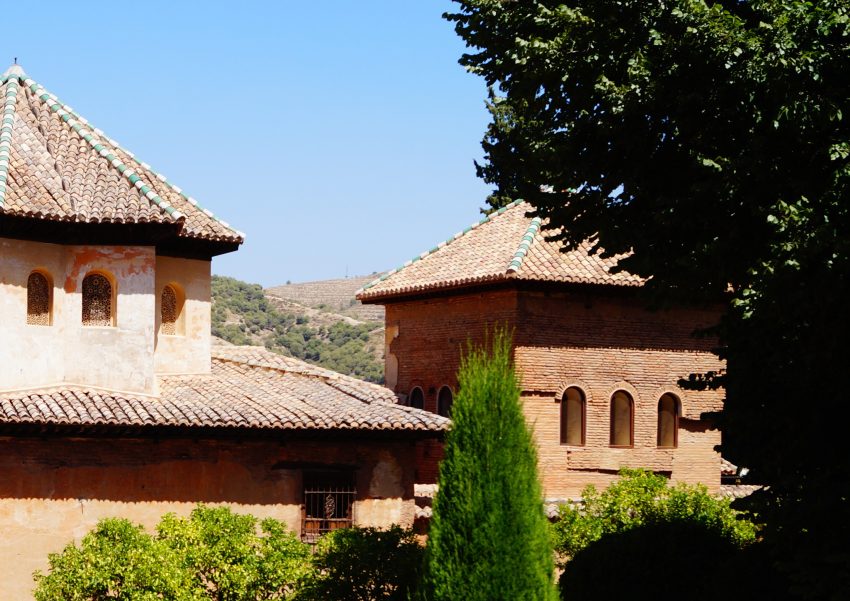
The Torre de la Rauda is one of the more discreet yet historically intriguing structures along the Paseo de las Torres in the Alhambra, a modest but historically significant tower once linked to the Nasrid royal cemetery. Long believed to be the burial place of the Kings of Granada, it is now understood to have served as the entrance to the Nasrid royal cemetery and possibly to the original palace. Its understated design and proximity to the Palace of the Lions make it one of the top sights in Granada for visitors curious about the quieter corners of the complex.
Although you cannot enter the tower, viewing it from the Jardines del Partal offers an evocative perspective of its square form, simple brickwork, and horseshoe-arched openings. Its location beside some of the Alhambra's most iconic buildings makes it a highlight of any walking tour of Granada that explores the palace's hidden layers and lesser-known architectural stories.
Table of Contents
- History and Significance of Torre de la Rauda
- Things to See and Do in Torre de la Rauda
- How to Get to Torre de la Rauda
- Practical Tips on Visiting Torre de la Rauda
- Where to Stay close to Torre de la Rauda
- Is Torre de la Rauda Worth Visiting?
- FAQs for Visiting Torre de la Rauda
- Nearby Attractions to Torre de la Rauda
History and Significance of Torre de la Rauda
For many years, scholars believed the Torre de la Rauda housed the tombs of the Nasrid kings. However, archaeological discoveries revealed that the burial grounds-known as the rawda-actually lay south of the palace precinct, separated by a moat near the Patio de los Leones. The tower therefore seems to have been the entrance to the cemetery or perhaps even the entrance to the palace that stood here before the construction of the Palace of the Lions.
The term rawda, meaning both tomb and garden in Arabic, gives the tower its evocative name. When the cemetery was discovered in the late 19th century, its tombs were empty; Boabdil, the last Nasrid ruler, had the remains of his ancestors moved to the foot of Mondújar Castle. This reshaped understanding of the tower's purpose highlights the complex evolution of the palace grounds through time.
The first remains of the Torre de la Rauda were uncovered in 1887 during the demolition of a later structure attached to the Palace of the Lions. The site was studied more thoroughly between 1925 and 1926, revealing its connection to early Nasrid architectural phases. This spot is one of the best places to see in the Alhambra if you want to explore the lesser-known historic layers beneath its famous palaces.
Things to See and Do in Torre de la Rauda
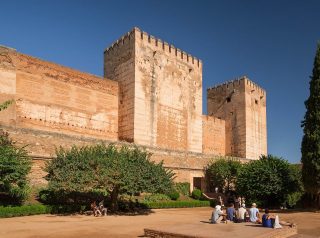
The Torre de la Rauda is simple in form but rich in detail. Its single-floor square layout is built of brick, with four horseshoe arches-one on each side-that once allowed access into what was originally an interior space. Unlike the ornate Nasrid palaces nearby, the tower stands undecorated and austere, reflecting its functional role as a gateway rather than a ceremonial structure.
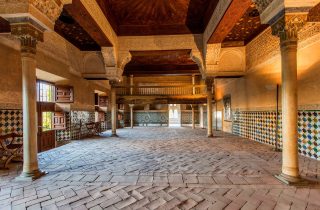
From the inside, the tower features a barrel vault with traditional red bricks decorated with white painted markings. While visitors cannot enter today, you can admire the tower's exterior from the Jardines del Partal, where its clean lines and arches contrast beautifully with the surrounding greenery and views toward the Palace of the Lions.
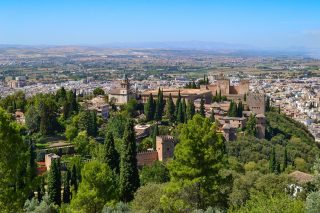
Observing the tower in context helps you understand its proximity to key areas: the Patio de los Leones, the Church of Santa María de la Alhambra, and the Palace of Charles V. This makes it a rewarding stop for those exploring the Alhambra's layout and spatial history.
How to Get to Torre de la Rauda
Travelers arriving from abroad usually fly into Granada Airport, which provides convenient access to the city. For the best deals and a seamless booking experience, check out these flights to Granada on Booking.com.
Reaching the Alhambra by train is a popular and comfortable option, with Granada well connected to major Spanish cities. Train schedules and bookings can be found on Omio.
If you are driving, the Alhambra has designated parking areas near its main entrance, making it easy to reach before heading into the palace complex. If you are looking to rent a car in Spain I recommend having a look at Discover Cars, first, as they compare prices and review multiple car rental agencies for you.
The Torre de la Rauda is located just behind the Palace of the Lions, slightly north of the Church of Santa María de la Alhambra and east of the Palace of Charles V.
Practical Tips on Visiting Torre de la Rauda
- Suggested tips: Visit the Jardines del Partal for one of the best views of the tower's exterior and its horseshoe arches.
- Best time to visit: Morning light highlights the texture of the brickwork and the tower’s simple geometry.
- Entrance fee: The Torre de la Rauda is part of the Alhambra Complex and access it you need to purchase Alhambra Tickets or a Alhambra Guided Tour.
- Opening hours: For opening times of the Torre de la Rauda see [link_post post_id="3786" anchor="opening" type="link"]Alhambra Opening Times[/link_post]. Access is normally restricted unless to building forms part of the Space of the Month program.
- Official website: https://www.alhambra-patronato.es/en/edificios-lugares/the-rauda
- How long to spend: Around 5-10 minutes, usually as part of a visit to the Palace of the Lions and surrounding areas.
- Accessibility: Exterior viewpoints are generally accessible, though some paths around the Partal Gardens may be uneven.
- Facilities: Facilities include cafés and restrooms located in other areas of the Alhambra.
- Photography tip: Frame the tower using the arches and greenery of the Jardines del Partal for a layered, atmospheric composition.
- Guided tours: Many palace-focused tours point out the tower while explaining the history of the Nasrid cemetery.
- Nearby food options: Cafés within the Alhambra and restaurants downhill toward central Granada offer convenient choices.
Where to Stay close to Torre de la Rauda
Staying near the Alhambra enhances any visit, allowing easy access during quieter hours. The historic Parador de Granada immerses guests in a unique heritage setting within the complex. A charming alternative is Hotel América, offering traditional Andalusian hospitality. For modern comfort just outside the entrance, Eurostars Washington Irving provides stylish rooms inspired by the Alhambra’s cultural legacy.
Is Torre de la Rauda Worth Visiting?
Yes, the Torre de la Rauda is worth visiting, especially for travelers who enjoy exploring the quieter, more obscure elements of the Alhambra. Its austere architecture, historical connection to the Nasrid cemetery, and proximity to the Palace of the Lions make it an insightful stop, deepening your understanding of how the palace complex evolved over time.
FAQs for Visiting Torre de la Rauda
Nearby Attractions to Torre de la Rauda
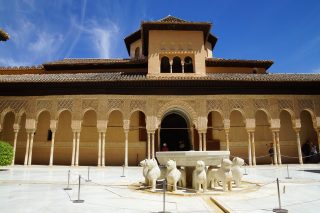
- Palace of the Lions: The most celebrated Nasrid palace, known for its intricate courtyards.
- Church of Santa María de la Alhambra: A 17th-century church built on the site of the former mosque.
- Palace of Charles V: A Renaissance palace with a striking circular courtyard and two museums.
- Jardines del Partal: Scenic gardens offering views of ponds, porticoes, and nearby towers.
- Torre de las Armas: Another early Nasrid tower located in the lower defensive area of the Alhambra.
The Torre de la Rauda appears in our Complete Guide to Visiting Granada!

Moira & Andy
Hey! We're Moira & Andy. From hiking the Camino to trips around Europe in Bert our campervan — we've been traveling together since retirement in 2020!
This website uses affiliate links which may earn a commission at no additional cost to you!
Planning Your Visit
For opening times of the Torre de la Rauda see Alhambra Opening Times.
Access is normally restricted unless to building forms part of the Space of the Month program.
The Torre de la Rauda is part of the Alhambra Complex and access it you need to purchase Alhambra Tickets or a Alhambra Guided Tour.
Nearby Attractions
- Sala de los Abencerrajes (0.0) km
Historic Room - Sala de los Reyes (0.0) km
Historic Room - Patio de los Leones (0.0) km
Courtyard - Palacio de los Leones (0.0) km
Palace - Sala de los Mocárabes (0.0) km
Historic Room - Sala de Dos Hermanas (0.0) km
Historic Room - Mirador de Daraxa (0.0) km
Viewing Point - Sala de los Ajimeces (0.0) km
Historic Room - El Baño de Comares (0.0) km
Baths - Jardín de Daraxa (0.1) km
Courtyard