Roman Mausoleum, Córdoba
Mausoleum in Córdoba
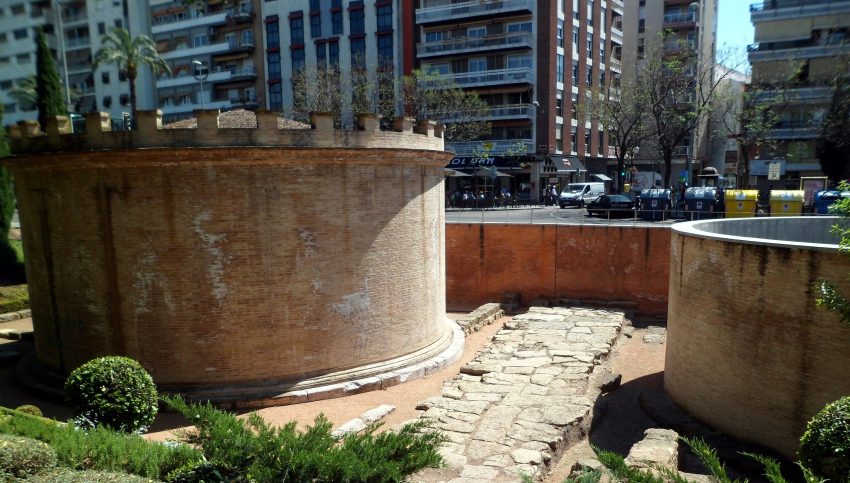
The Roman Mausoleum in Córdoba is one of the must-see places in Córdoba for anyone curious about how the city's Roman-era elites expressed status, memory, and architectural taste. Standing just outside the historic centre, these cylindrical funerary monuments evoke a time when Corduba was a thriving administrative capital and one of the most important cities in Roman Hispania. One of the mausoleums has been carefully reconstructed, offering a vivid impression of its original grandeur, while the second remains partially preserved and integrated into the modern urban landscape.
The site also preserves a stretch of the Roman road that once connected Corduba with Hispalis, today's Seville, adding important context to how this funerary complex would have greeted travellers arriving at the city. It is often visited on walking tours of Córdoba thanks to its proximity to major landmarks and the way it helps visitors imagine the Roman layout of the area.
Table of Contents
- History and Significance of Roman Mausoleum in Córdoba
- Things to See and Do in Roman Mausoleum in Córdoba
- How to Get to Roman Mausoleum in Córdoba
- Practical Tips on Visiting Roman Mausoleum
- Where to Stay close to Roman Mausoleum in Córdoba
- Is Roman Mausoleum in Córdoba Worth Visiting?
- FAQs for Visiting Roman Mausoleum in Córdoba
- Nearby Attractions to Roman Mausoleum in Córdoba
History and Significance of Roman Mausoleum in Córdoba
The Roman Mausoleum in Córdoba dates to the mid first century AD, a period when the city was expanding rapidly and Roman customs were deeply embedded in public and private life. Funerary monuments such as these were built outside city walls, along major approach roads, allowing passers-by to recognise and remember prominent local families. Their placement beside the main Corduba-Híspalis road reflects how burial sites communicated social prestige in the Roman world.
The cylindrical shape of the mausoleums is unusual in the Iberian Peninsula and suggests influence from Italy, where similar funerary monuments were more common. Archaeological studies indicate that the design and engineering likely followed Italian models, possibly even involving architects familiar with Roman projects elsewhere in the empire. Inside the restored mausoleum, the tomb chamber once housed the urn of the deceased, and fragments of the basement, cornices, and parapet hint at the monument’s original decorative richness.
Discovered only in 1993 during routine archaeological work, the mausoleums have since become one of the top attractions in Córdoba for travellers eager to understand the city's Roman past beyond its famous temple and bridge. Their reconstruction was guided by original patterns uncovered during excavation, ensuring that what stands today is as faithful as possible to the monument's first-century appearance.
Things to See and Do in Roman Mausoleum in Córdoba
Begin by examining the fully reconstructed mausoleum, where the restored cylindrical form gives a strong sense of scale and presence. As you walk around it, try to imagine the busy Roman road that once passed beside it, filled with merchants, travellers, and citizens entering Corduba through the nearby Porta Principalis Sinistra, later known as Puerta Gallegos.
Inside the accessible mausoleum, the Interpretation Centre for Funeral Monuments offers additional layers of understanding. Here you can learn about Roman burial customs, social structures, and the symbolism behind monumental tomb design. It brings to life the rituals that surrounded death and remembrance in Roman society.
Between the two mausoleums lies a surviving section of the ancient road to Hispalis, offering one of the things to do in Córdoba that ties together architecture, archaeology, and landscape. The partially preserved second mausoleum, integrated into modern infrastructure, allows visitors to trace the footprint of the monument and see how ancient structures coexist with the present-day city.
How to Get to Roman Mausoleum in Córdoba
Córdoba is served by several nearby airports, with Málaga-Costa del Sol Airport and Seville Airport being the most convenient options for international arrivals. For the best deals and a seamless booking experience, check out these flights to Córdoba on Booking.com.
Travelling by train is straightforward, as Córdoba's high-speed AVE connections link the city with Madrid, Málaga, and Seville in under two hours. Train schedules and bookings can be found on Omio.
If arriving by car, Córdoba is well connected by major highways, and parking facilities around the city centre make it possible to explore on foot once you arrive. If you are looking to rent a car in Spain I recommend having a look at Discover Cars, first, as they compare prices and review multiple car rental agencies for you.
Practical Tips on Visiting Roman Mausoleum
- Best time to visit Roman Mausoleum in Córdoba: Spring and autumn offer ideal temperatures for exploring outdoor archaeological sites.
- Entrance fee in Euros: Entry is typically free or low-cost; check before visiting.
- Opening hours: Hours may vary depending on the season and the Interpretation Centre schedule.
- Official website: Check the municipal tourism website for current information.
- How long to spend: Around 30-45 minutes is enough for a thorough visit.
- Accessibility: The exterior areas are accessible, though interior access may vary.
- Facilities: Limited facilities on-site, but cafés and services are nearby in the city centre.
- Photography tip: Morning light casts the best shadows across the reconstructed façade.
- Guided tours: Some walking tours include the mausoleum as part of a Roman-themed route.
- Nearby food options: Plenty of cafés and restaurants can be found in the surrounding Jardines de la Victoria district.
Where to Stay close to Roman Mausoleum in Córdoba
Staying near the Roman Mausoleum in Córdoba places you close to both the archaeological site and the vibrant areas around the Jardines de la Victoria. A comfortable option is Eurostars Palace, known for its modern rooms and excellent access to the city’s main avenues. Another well-located choice is Hotel Córdoba Center, offering spacious accommodation and easy connections to the historic centre. For a boutique atmosphere, consider Soho Boutique Córdoba, ideal for travellers seeking style and convenience.
Is Roman Mausoleum in Córdoba Worth Visiting?
Yes, the Roman Mausoleum in Córdoba is absolutely worth visiting, especially for travellers who enjoy archaeology and Roman history. Its reconstruction, rare architectural form, and connection to the city's ancient road system offer a unique glimpse into funerary culture in Roman Hispania. Whether explored on its own or as part of a broader Roman-themed itinerary, it provides a memorable and insightful addition to any visit to Córdoba.
What Other Travellers Say...

Roman Mausoleum on Plaza de la Victoria is a visible, walk-around Roman site set either side of an old city gate; visitors note much of the structure is underground and access is restricted, with limited on-site information and no entry, though an information board exists on the railway station side.


FAQs for Visiting Roman Mausoleum in Córdoba
Nearby Attractions to Roman Mausoleum in Córdoba
- Roman Temple of Córdoba: The striking remains of a first-century AD temple in the city centre.
- Puerta de Almodóvar: A well-preserved medieval gate marking the old city entrance.
- Viana Palace: A beautiful mansion with twelve patios to explore.
- Corredera Square: A lively historic square perfect for cafés and people-watching.
- Alcázar de los Reyes Cristianos: A palace-fortress with gardens, towers, and Roman mosaics.
The Roman Mausoleum appears in our Complete Guide to Visiting Córdoba!

Moira & Andy
Hey! We're Moira & Andy. From hiking the Camino to trips around Europe in Bert our campervan — we've been traveling together since retirement in 2020!
This website uses affiliate links which may earn a commission at no additional cost to you!
Planning Your Visit
24 Hours
Free
Nearby Attractions
- Real Colegiata de San Hipólito (0.2) km
Church - Alminar de San Juan (0.4) km
Minaret - Plaza de las Tendillas (0.5) km
Square - Almodóvar Gate (0.5) km
City Gate - Casa Andalusí (0.6) km
Historic Building and Museum - Casa de Sefarad (0.6) km
Museum - Judería de Córdoba (0.6) km
Area - Sinagoga (0.6) km
Synagogue - Hospital del Cardenal Salazar (0.6) km
Historic Building - El Zoco (0.6) km
Market