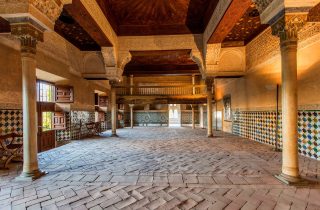
Palacio de Dar-Al-Horra, Granada
Palace in Granada
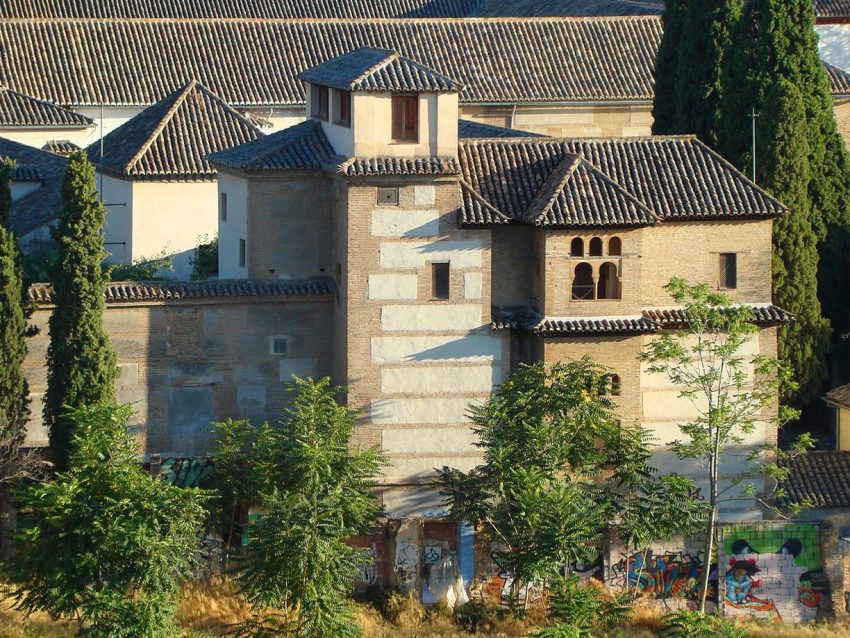
The Palacio de Dar-Al-Horra is one of Granada's most evocative and intimate historic sites, a 15th-century Nasrid palace hidden among the narrow lanes of the Albaicín. Once home to Sultana Aixa, mother of the last Moorish ruler Boabdil, it remains one of the top sights in Granada for travellers seeking a quieter, more contemplative alternative to the Alhambra. Its serene courtyard, intricate plasterwork, and sweeping views over the district and the Alhambra make it often visited on walking tours of Granada, yet it still feels like a secluded gem far from the crowds.
Despite later Christian modifications, the palace preserves a remarkable amount of original Nasrid decoration. Its wooden ceilings, geometric patterns, and poetic inscriptions give it an atmosphere of calm domestic elegance, offering a rare glimpse into daily palace life during Granada’s final years as a Muslim kingdom.
Table of Contents
- History and Significance of the Palacio de Dar-Al-Horra
- Things to See and Do in the Palacio de Dar-Al-Horra
- How to Get to the Palacio de Dar-Al-Horra
- Practical Tips on Visiting the Palacio de Dar-Al-Horra
- Where to Stay close to the Palacio de Dar-Al-Horra
- Is the Palacio de Dar-Al-Horra Worth Visiting?
- FAQs for Visiting Palacio de Dar-Al-Horra
- Nearby Attractions to Palacio de Dar-Al-Horra
History and Significance of the Palacio de Dar-Al-Horra
The site originally belonged to a Zirí noble in the 11th century and may have formed part of the Zirid King Badis's palace complex. In the 15th century, the Nasrid Sultan Muley Hassan ordered the construction of a new palace atop these earlier remains to house his first wife, Sultana Aixa. He moved her from the Alhambra to ease tensions brought on by his favouring of his new wife, the converted Christian Soraya (formerly Isabel de Solís). These internal rivalries fuelled political instability that contributed to the rise of Aixa's son, Boabdil, and ultimately to the collapse of Nasrid Granada.
After the Christian conquest in 1492, the palace was granted to Hernando de Zafra, secretary to the Catholic Monarchs. Important negotiations with Granada’s Mudejar nobility took place here in 1493. Although Zafra failed to establish a Dominican convent on the site, Queen Isabel later converted it into a Franciscan convent, inhabited from 1507 by nuns of the Order of St Clare. In the 20th century, the palace was purchased by the state and restored thanks to the intervention of conservator Leopoldo Torres Balbás, who worked to preserve Granada’s Islamic architectural heritage.
Things to See and Do in the Palacio de Dar-Al-Horra
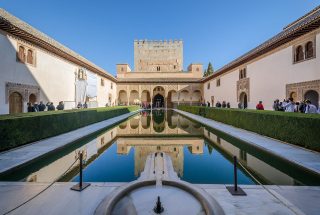
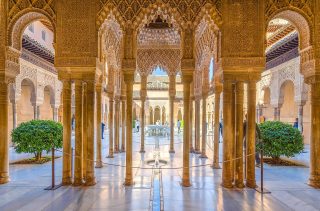
The palace is arranged around a classic Nasrid patio with a central garden and pool. This intimate layout gives visitors a strong sense of domestic palace life, making the site one of the best places to visit in Granada for architectural enthusiasts. The surrounding rooms feature wooden alfarje ceilings, carved arches, and plaster inscriptions celebrating blessings, joy, and good health.
On the north side, a portico of three horseshoe arches leads into a beautifully preserved viewing room with a mirador overlooking the Albaicín and Alhambra. The carved inscriptions enhance the sense of privacy and contemplation that once defined this space for the sultana.
On the opposite side of the courtyard is the small Christian chapel added after the conquest, showcasing a fine wooden ceiling. The palace garden is irrigated by the Aynadanar canal, fed by the great Aljibe del Rey cistern. The Huerto de Carlos park beside the palace was once part of the convent gardens, adding another layer of historic charm.
How to Get to the Palacio de Dar-Al-Horra
The palace is located on the heights of the old Alcazaba in the upper Albaicín, tucked away along the narrow Callejón Ladrón del Agua.
The nearest airport is Federico García Lorca Granada-Jaén Airport. For the best deals and a seamless booking experience, check out these flights to Granada on Booking.com.
Granada's main train station connects with major Spanish cities before continuing on foot or by local bus into the Albaicín. Train schedules and bookings can be found on Omio.
Driving is not recommended due to restricted access and steep, narrow streets; park in the city centre and walk. Buses C31, C32, and C34 run from Plaza Nueva into the Albaicín, from where a short uphill walk leads to the palace. If you are looking to rent a car in Spain I recommend having a look at Discover Cars, first, as they compare prices and review multiple car rental agencies for you.
Practical Tips on Visiting the Palacio de Dar-Al-Horra
- Suggested tips: Take time to enjoy the inscriptions and wooden ceilings-the palace rewards slow, attentive exploration.
- Best time to visit: Early morning for quiet moments in the courtyard.
- Entrance fee: €5, Sun free
- Opening hours:
- Official website: http://www.alhambra-patronato.es/index.php/Dobla-de-Oro/1499/0/
- How long to spend: Around 20-30 minutes.
- Accessibility: Narrow passageways, steps, and uneven surfaces may be difficult for some visitors.
- Facilities: No on-site facilities; cafés and shops are available nearby in the Albaicín.
- Photography tip: Capture the three horseshoe arches of the northern portico framed by the courtyard garden.
- Guided tours: Several Albaicín tours include the palace as a key Nasrid monument.
- Nearby food options: Tapas bars and restaurants are plentiful around Plaza Larga and Calle Elvira.
Where to Stay close to the Palacio de Dar-Al-Horra
There are several charming accommodation options in the Albaicín that offer easy access to the palace. Hotel Santa Isabel La Real provides historic ambience in a restored noble house. For views toward the Alhambra, Palacio de Santa Inés is a popular choice. A stylish riverside option close by is Shine Albayzín.
Is the Palacio de Dar-Al-Horra Worth Visiting?
Yes. The Palacio de Dar-Al-Horra is one of Granada's most intimate and beautiful Nasrid buildings, second only to the Alhambra in historical and architectural value. Its peaceful courtyard, preserved inscriptions, and fascinating history make it a rewarding stop for travellers eager to explore Granada's Moorish past beyond the more famous palaces.
What Other Travellers Say...

Palacio de Dar al-Horra, in Albaicín at Cújon. de las Monjas s/n, is an intimate Nasrid-era residence noted for its Spanish-Islamic architecture, delicate arches, tranquil courtyard and geometric details, offering pleasant city and Alhambra views from a tower and windows; visitors praise its peaceful atmosphere and photo opportunities, note a short uphill scenic walk to reach it, and some say signage and on-site historical information are limited.


FAQs for Visiting Palacio de Dar-Al-Horra
Nearby Attractions to Palacio de Dar-Al-Horra
- Plaza Larga: A lively market square at the heart of the Albaicín.
- Aljibe del Rey: One of Granada’s largest historic cisterns.
- Mirador de San Cristóbal: A panoramic viewpoint overlooking the Alhambra and city.
- Church of San Salvador: Built on the site of the Albaicín's Great Mosque.
- Carrera del Darro: A scenic riverside walk lined with historic buildings.
The Palacio de Dar-Al-Horra appears in our Complete Guide to Visiting Granada!

Moira & Andy
Hey! We're Moira & Andy. From hiking the Camino to trips around Europe in Bert our campervan — we've been traveling together since retirement in 2020!
This website uses affiliate links which may earn a commission at no additional cost to you!
Nearby Attractions
- Albaicín (0.2) km
Area - Plaza Larga (0.2) km
Market and Square - Mirador de San Nicolás (0.3) km
Viewing Point - Church Of San Salvador (0.4) km
Church - Arab Baths of Granada (0.4) km
Baths - Puerta de los Tablero (0.5) km
Bridge, City Gate and City Walls - Torre de los Hidalgos (0.5) km
Tower - Puerta de las Armas (0.6) km
City Gate - Torre de las Armas (0.6) km
Tower - Torre de la Vela (0.6) km
Tower