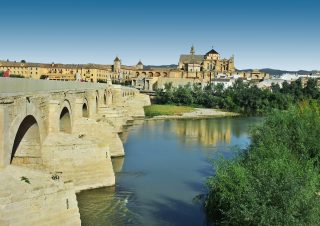
Mezquita-Catedral, Córdoba
Cathedral and Mosque in Córdoba
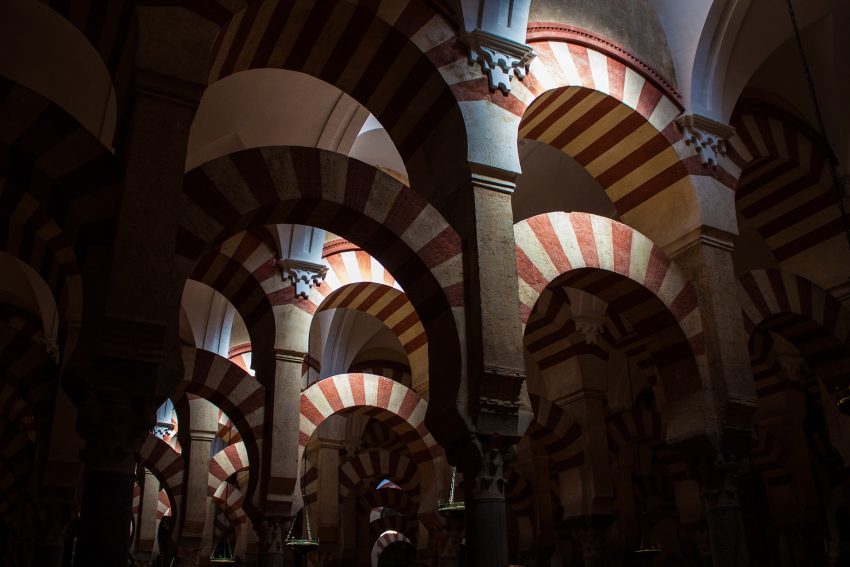
The Mezquita-Catedral de Córdoba is one of the most breathtaking historic buildings in Europe, a monument where Islamic splendour and Christian devotion coexist beneath a forest of red-and-white arches. Known both as the Great Mosque of Córdoba and as the Catholic Cathedral of the city, it stands as one of the top sights in Córdoba for travellers fascinated by art, architecture, and the cultural layers of Andalusia.
This vast complex began as a Roman temple, was transformed into a Visigoth basilica, then became one of the most important mosques in the Islamic world before being converted into a cathedral in the 13th century. Its Renaissance nave rises dramatically from the centre of the old hypostyle hall, making it a highlight of any walking tour of Córdoba with its unique blend of styles and spiritual traditions.
Table of Contents
- History and Significance of the Mezquita-Catedral de Córdoba
- Things to See and Do in the Mezquita-Catedral de Córdoba
- How to Get to the Mezquita-Catedral de Córdoba
- Practical Tips on Visiting the Mezquita-Catedral de Córdoba
- Where to Stay close to the Mezquita-Catedral de Córdoba
- Is the Mezquita-Catedral de Córdoba Worth Visiting?
- FAQs for Visiting Mezquita-Catedral de Córdoba
- Nearby Attractions to Mezquita-Catedral de Córdoba
History and Significance of the Mezquita-Catedral de Córdoba
The origins of the site stretch back to Roman times, when a temple dedicated to Janus stood here. In the 6th century it became the Visigothic basilica of San Vicente, but by 711 the Moors had taken control of Andalusia, dividing the basilica into shared worship space for both Muslims and Christians.
Everything changed when Abd al-Rahman I arrived in 756 after escaping the Abbasid overthrow of his family in Damascus. Seeking to replicate the grandeur of the Umayyad capital, he purchased the old basilica outright and demolished it to build a magnificent mosque. Work began in 784, and over the following two centuries his successors expanded the mosque into one of the largest sacred buildings in the Islamic world.
When Córdoba was reconquered in 1236, Ferdinand III ordered its conversion into a cathedral. Over time, chapels were added around the prayer hall, and in the 16th century a soaring Renaissance nave and choir were constructed at its centre. Despite major changes, much of the original mosque survived, making the Mezquita-Catedral one of the best places to visit in Córdoba for a deep, layered understanding of Spain's religious history.
Things to See and Do in the Mezquita-Catedral de Córdoba
Patio de los Naranjos
Your visit begins in the Patio de los Naranjos, a serene courtyard planted with orange trees laid out in geometric rows. This was the sahn, where worshippers performed ablutions before prayer and where teaching sessions and legal hearings took place. The patio reflects centuries of continuity, from its early palm trees to the orange trees added in the 15th century. It is the largest and oldest courtyard in Córdoba and connects the exterior world to the mosque’s interior forest of columns.
The Hypostyle Hall
Passing through the courtyard, you enter the oldest part of the mosque, built by Abd al-Rahman I between 786 and 788. The original eleven aisles face south and were constructed from more than a thousand reused Roman and Visigothic columns of jasper, onyx, marble, and granite. The iconic double arches-horseshoe below, Roman semicircle above-were a structural innovation to achieve the necessary roof height. Wandering this vast, dimly lit hall is one of the things to do in Córdoba that feels almost like stepping back in time.
The Mihrab
This dazzling prayer niche marks the direction of Mecca and is framed with gold mosaic imported from Byzantium. Unlike typical mihrabs, Córdoba’s features a small chamber behind the arch, lined with intricate tesserae in deep blues, golds, and reddish tones. It marks the most sacred point of the mosque and the heart of the caliphs’ private prayer area.
The Chapels
Christian additions began soon after the Reconquista, with nearly forty chapels carved into the mosque’s perimeter. The most striking transformation is the Renaissance-Baroque cathedral nave and choir that rises from the central section of the old prayer hall. This bold insertion of Christian architecture within an Islamic space is one of the most remarkable juxtapositions in European architectural history.
The Dome
Located above the maksura-the caliph’s reserved prayer area-the dome is an exquisite example of early Islamic rib vaulting. Gold mosaic and interlacing arches reflect a mastery of geometry and ornamentation that would influence later Gothic designs.
Torre Campanario
Originally built in 951-52 as a minaret by Abd ar-Rahman III, the tower was later encased in a Christian shell and raised to 54 metres. Climb it for panoramic views across Córdoba and the Mezquita’s roofscape. Inside, you can still see traces of the original caliphal structure.
How to Get to the Mezquita-Catedral de Córdoba
Travelling by air, most visitors arrive via Seville Airport or Málaga Airport, both of which connect to Córdoba by train or bus. For the best deals and a seamless booking experience, check out these flights to Córdoba on Booking.com.
If arriving by train, Córdoba's main station is about 20-25 minutes on foot from the Mezquita or a short taxi ride. Regular high-speed AVE trains connect Córdoba with Madrid, Málaga, and Seville. Train schedules and bookings can be found on Omio.
If travelling by car, note that the Mezquita sits inside Córdoba’s historic centre where driving is restricted. It’s best to park in a public lot outside the old town and walk in. If you are looking to rent a car in Spain I recommend having a look at Discover Cars, first, as they compare prices and review multiple car rental agencies for you.
Practical Tips on Visiting the Mezquita-Catedral de Córdoba
- Best time to visit Mezquita-Catedral de Córdoba: Early morning at 8:30 or late afternoon for quieter moments.
- Entrance fee in Euros: Standard admission around 13-15 EUR; tower climb separate.
- Opening hours: Winter 8:30-18:00 (Mon-Sat), summer 8:30-19:00, with Sunday hours varying due to Mass.
- Official website: Provides updated opening hours and cathedral notices.
- How long to spend: 1.5-2 hours, plus extra if climbing the tower.
- Accessibility: Mostly accessible; some uneven areas inside.
- Facilities: Restrooms, small shops, and audio guides available.
- Photography tip: Soft morning light through the arches creates beautiful shadow patterns.
- Guided tours: Highly recommended due to limited signage inside.
- Nearby food options: Plenty of cafés and tapas bars in the Jewish Quarter (La Judería).
Where to Stay close to the Mezquita-Catedral de Córdoba
Stay within Córdoba’s old town to enjoy easy access to the Mezquita and surrounding historic streets. For traditional charm and incredible views, consider Eurostars Conquistador directly opposite the Mezquita. A boutique choice nearby is Balcón de Córdoba, offering stylish rooms and rooftop views. Another excellent option is NH Collection Amistad Córdoba, located in the heart of the Jewish Quarter.
Is the Mezquita-Catedral de Córdoba Worth Visiting?
Absolutely. The Mezquita-Catedral is one of the most extraordinary religious buildings in the world, combining Islamic artistry and Christian grandeur in a way found nowhere else. Its arches, mosaics, chapels, and courtyard create an experience that is both visually stunning and historically profound. This spot is one of the best places to see in Córdoba, whether you're an architecture lover or a first-time visitor.
What Other Travellers Say...

Mosque-Cathedral Monumental Site of Córdoba on C. Cardenal Herrero is an ornate Moorish‑style place of worship where a hall of arched pillars leads into a basilica with frescoes; visitors praise its striking red-and-white arches, well preserved architecture, and the dramatic mix of Islamic and Christian elements that feel like two worlds in one. Expect a large, busy complex with security; many recommend buying tickets in advance and arriving early to avoid crowds, and several reviewers say a guide enhances understanding. Inside it can feel cool in winter and moving as people of different faiths and backgrounds take in the site's atmosphere and details such as the mihrab, altar and choir.


FAQs for Visiting Mezquita-Catedral de Córdoba
Nearby Attractions to Mezquita-Catedral de Córdoba
- Alcázar de los Reyes Cristianos - Medieval palace and gardens once used by Isabella and Ferdinand.
- Roman Bridge of Córdoba - Iconic pedestrian bridge with views of both riverbanks.
- Jewish Quarter (La Judería) - Narrow lanes, patios, and historic houses.
- Synagogue of Córdoba - One of only three medieval synagogues left in Spain.
- Calahorra Tower - A fortified tower with a museum on the history of al-Andalus.
The Mezquita-Catedral appears in our Complete Guide to Visiting Córdoba!

Moira & Andy
Hey! We're Moira & Andy. From hiking the Camino to trips around Europe in Bert our campervan — we've been traveling together since retirement in 2020!
This website uses affiliate links which may earn a commission at no additional cost to you!
Nearby Attractions
- Palacio de Congresos (0.1) km
Historic Building - Triunfo de San Rafael de la Puerta del Puente (0.1) km
Statue - Puerta del Puente (0.1) km
City Gate - Baños Árabes de Santa María (0.2) km
Baths - Calleja de las Flores (0.2) km
Street - Puente Romano de Córdoba (0.2) km
Bridge and Historic Site - Mills of the Guadalquivir (0.2) km
Historic Building - Hospital del Cardenal Salazar (0.3) km
Historic Building - Baños del Alcázar Califal (0.3) km
Baths - Capilla de San Bartolomé (0.3) km
Church