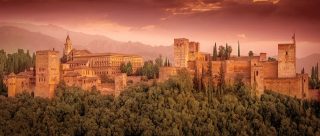
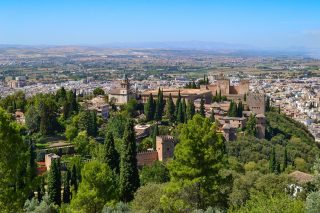
Baño de la Mezquita, Granada
Baths in Granada
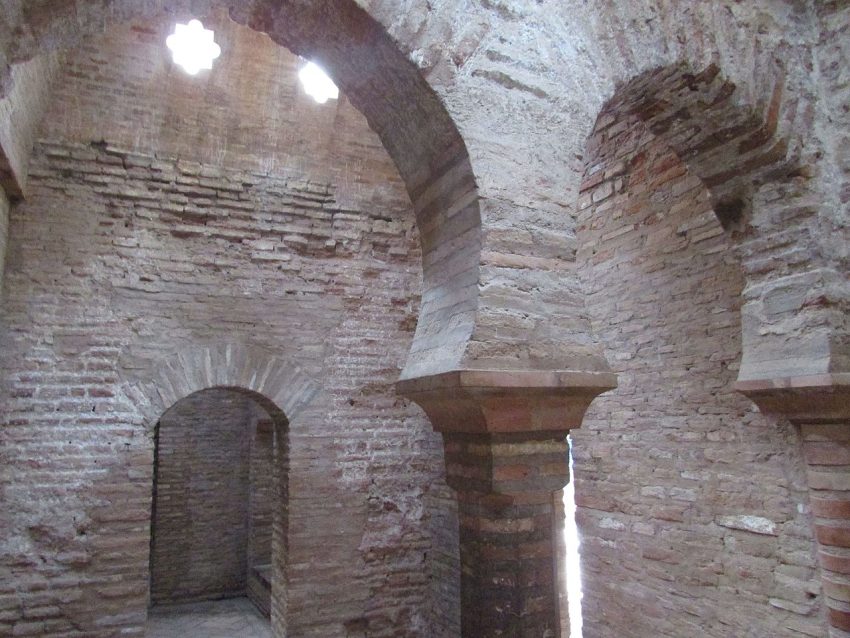
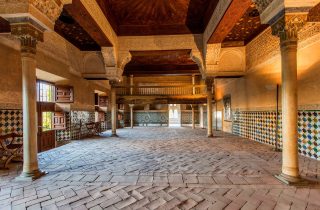
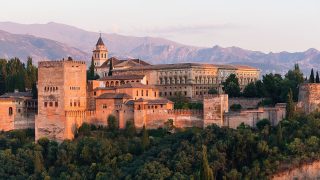
The Baño de la Mezquita is a Moorish bathhouse located within the Alhambra Complex in Granada, Spain. Built to accompany the main mosque of the palatine city, it served the essential religious and hygienic needs of the community. Today it is one of the lesser-known but historically rich structures along the Calle Real, offering insight into daily life inside the Alhambra during the Nasrid period.
The bathhouse is also popularly called Baño del Polinario, a nickname that derives from Antonio Barrios-known as “Polinario”-a guitarist, singer, and tavern-keeper. In the 19th and early 20th centuries his family lived in an adjacent house and ran a tavern inside the abandoned bath. During the 1920s it became an important meeting place for flamenco artists, adding a modern cultural layer to a medieval building.
History and Significance of the Baño de la Mezquita
The Baño de la Mezquita dates back to the reign of Muhammad III (1302-1309), who allocated income to maintain the Great Mosque of the Alhambra. As was customary across the Islamic world, major mosques were paired with nearby hammams to allow the faithful to perform both basic ablutions and deeper ritual cleansing before prayer.
Over the centuries, the structure underwent many changes, especially after the Christian conquest. By the 19th century, its original function had vanished and it was repurposed as a tavern and social venue. Restoration works began in 1934 under architect-conservator Leopoldo Torres Balbás, who stabilised the surviving sections and reconstructed key parts based on archaeological evidence.
Today, although partly ruined, the Baño de la Mezquita remains an important example of Nasrid public architecture and provides a rare glimpse into communal life in the medieval Alhambra.
What the Baño de la Mezquita Would Have Looked Like
Like other Moorish and earlier Roman-influenced baths, the Baño de la Mezquita followed a clear functional sequence of rooms:
- Al-bayt al-maslaj - the entrance hall or dressing room, where visitors undressed and received towels, soap, wooden sandals, and buckets.
- Bayt al-barid - the cold room, used for acclimatisation and rest.
- Al-bayt al-wastani - the warm room, usually the largest, where bathers transitioned to higher heat.
- Al-bayt al-sajun - the hot room, heated by a hypocaust system beneath the floor connected to a furnace and wood store.
- A boiler and stoking chamber - where attendants fed the fire and managed the heat.
The rooms were vaulted and lit by small star-shaped or polygonal skylights. Bath workers controlled steam by adjusting the covers over these openings. Staff included guardians, attendants, masseurs, and makeup specialists who applied henna, musk, and kohl, especially for celebrations.
Public hammams alternated usage: men bathed in the mornings and women in the afternoons. For many Nasrid women, the hammam was one of the few public places where they could meet freely with friends.
Where to See the Baño de la Mezquita
The former mosque of the Alhambra once stood where the Church of Santa María de la Alhambra now rises. The Baño de la Mezquita survives partially next to house number 47 on the Calle Real, just a short walk from the church.
The remains are integrated into the historic streetscape and can be viewed externally, with some interior features preserved from Torres Balbás’s 1934 restoration.
Other Hammams in the Alhambra Complex
The Alhambra once had several public and private baths, including:
- A soldiers' bath in the Alcazaba, near the Plaza de las Armas.
- The bath of the Partal High Palace.
- The bath of the Palace of the Abencerrajes.
- The bath discovered in the former Convent of San Francisco.
- The bath of the Alijares Palace near the Generalife.
These varied baths reflect the importance of hygiene, ritual purity, and relaxation across social classes in Nasrid society.
What Other Travellers Say...

El Baño del Bañuelo on Carrera del Darro is an 11th‑century Arab bath in the Albaicín noted for its cavernous brick vaults and octagonal and star‑shaped skylights; visitors describe it as compact but atmospheric, remarkably well preserved, and full of technical interest (including a hypocaust steam system), and praise the knowledgeable, friendly staff who explain the architectural and decorative features—it's a quick, worthwhile stop often visited en route from the Alhambra and best checked for opening times.


FAQs for Visiting Baño de la Mezquita
Nearby Attractions to the Baño de la Mezquita
- Church of Santa María de la Alhambra: Built on the site of the Great Mosque, this 16th-17th-century church contains an impressive Baroque altarpiece and important sculptural works by Alonso de Mena.
- Convento de San Francisco (Parador de Granada): Once a Nasrid palace and later the first Christian convent in Granada, this building is now a historic luxury hotel with archaeological remains integrated into its courtyards.
- Angel Barrios Museum: A museum dedicated to composer Ángel Barrios, housed in the family's former residence, which incorporates a restored Nasrid bathhouse and an early 14th-century home.
- Calle Real de la Alhambra: The main street of the upper Alhambra, lined with historic houses, small palaces, and viewpoints connecting the Nasrid Palaces, Alcazaba, and Generalife entrances.
- Palacio Nazaríes: The core of the Alhambra and one of the finest examples of Islamic architecture in Spain, including the Comares Palace, Palace of the Lions, and exquisite courtyards and halls.
- Alhambra Public Baths (Hammam): The remains of other bathhouses within the complex, including those in the Alcazaba and former Nasrid palaces, which help contextualise the Baño de la Mezquita.
The Baño de la Mezquita appears in our Complete Guide to Visiting Granada!

Moira & Andy
Hey! We're Moira & Andy. From hiking the Camino to trips around Europe in Bert our campervan — we've been traveling together since retirement in 2020!
This website uses affiliate links which may earn a commission at no additional cost to you!
Planning Your Visit
Monday to Sunday from 8:30 a.m. to 8 p.m. (from March 15 to October 14) and from 8:30 a.m. to 6 p.m. (from October 15 to March 14)
Free
Nearby Attractions
- Angel Barrios Museum (0.0) km
Museum - Church of Santa María de La Encarnación (0.0) km
Church - Puerta de los Carros (0.0) km
City Gate - Camino de Ronda (0.1) km
Street - Torre de las Abencerrajes (0.1) km
Tower - Alhambra Complex (0.1) km
Castle, Gardens, Notable Building and Palace - Sala de los Abencerrajes (0.1) km
Historic Room - Torre de la Rauda (0.1) km
Tower - Museum of the Alhambra (0.1) km
Museum - Palacio de Yusuf III (0.1) km
Gardens and Palace