Trieste, Italy: The Ultimate Travel Guide 2026

trieste
trieste
Visiting Trieste offers a unique blend of Italian charm and Central European influence, making it a fascinating destination for travelers. Located at the crossroads of Italy, Slovenia, and Austria, Trieste boasts a rich history and diverse cultural heritage. The city’s stunning architecture reflects its past under the Austro-Hungarian Empire, with grand neoclassical buildings, elegant squares, and a beautiful waterfront promenade. Piazza Unità d’Italia, one of Europe’s largest sea-facing squares, is the heart of Trieste, offering breathtaking views of the Adriatic Sea and a vibrant atmosphere with its cafes and restaurants.

Beyond its architectural beauty, Trieste is a city of intellectual and literary significance, famously associated with writers like James Joyce and Italo Svevo. Visitors can explore the city's many museums, such as the Revoltella Museum of Modern Art and the Museo del Mare, which celebrate Trieste's artistic and maritime heritage. The city's unique blend of cultures is also reflected in its cuisine, where Italian flavors meet Austrian and Slovenian influences. Whether you're strolling along the picturesque canals, visiting the majestic Miramare Castle, or enjoying a cup of coffee in one of the historic cafes, Trieste offers a rich, multifaceted experience that captures the spirit of this extraordinary city.

History of Trieste

Ancient Origins of Trieste

Trieste’s history dates back to ancient times, with evidence of human settlement as early as the Bronze Age. The area was originally inhabited by the Illyrians, and later became part of the Roman Empire in the 2nd century BCE. The Romans recognized Trieste’s strategic location on the Adriatic Sea, developing it into a prosperous port city known as Tergeste. During this period, Trieste flourished as a trading hub, connecting the Roman world with the eastern Mediterranean. The remnants of Roman architecture, including the Roman theater and the Arco di Riccardo, still stand as testament to this ancient past.

Trieste During the Middle Ages

Following the decline of the Roman Empire, Trieste experienced a tumultuous period marked by invasions and power struggles. During the early Middle Ages, it was contested by the Byzantine Empire, the Lombards, and the Franks. By the 10th century, Trieste had become a free commune, gradually developing its maritime trade and establishing itself as an independent city-state. However, the city’s autonomy was frequently challenged by the powerful Republic of Venice, which sought to dominate the Adriatic. Despite these challenges, Trieste maintained its independence, and by the late Middle Ages, it had entered into a long-lasting relationship with the Habsburg Empire.

Trieste Under the Habsburg Empire

Trieste’s history took a significant turn in the 14th century when it came under the protection of the Habsburgs. In 1382, the city voluntarily placed itself under the rule of the Austrian Habsburgs to secure protection against Venetian expansion. Under Habsburg rule, Trieste flourished as the primary port of the Austrian Empire. The city experienced rapid economic growth during the 18th and 19th centuries, becoming a melting pot of cultures, languages, and religions. The Habsburgs invested heavily in Trieste’s infrastructure, transforming it into a modern, cosmopolitan city. This period of prosperity is reflected in the city’s grand neoclassical architecture and vibrant cultural scene.

Trieste in the 20th Century

The 20th century was a period of dramatic change for Trieste. After World War I, the city was annexed by Italy, a move that disrupted its multicultural fabric. The interwar period and World War II brought economic difficulties and political tensions to the city. Following the war, Trieste became a point of contention between Italy and Yugoslavia, leading to its designation as a Free Territory under United Nations supervision. In 1954, Trieste was officially returned to Italy, ending years of uncertainty. Despite the challenges, Trieste retained its unique cultural identity and continued to be an important port and cultural center.

Modern Trieste

Today, Trieste is a vibrant city that proudly embraces its diverse heritage. Its rich history is evident in its architecture, cultural institutions, and the mix of influences that define its character. Trieste has become a symbol of European integration, reflecting both its Italian identity and its Central European roots. The city’s economy is still closely tied to its port, but it has also become known for its scientific research and cultural contributions. Trieste continues to be a crossroads of cultures, where history and modernity coexist, making it a unique and fascinating destination in Italy.

Moira & Andy
Moira & Andy

Hey! We're Moira & Andy. From hiking the Camino to trips around Europe in Bert our campervan — we've been traveling together since retirement in 2020!

Read our full story here

Visiting Trieste for the first time and wondering what are the top places to see in the city? In this complete guide, I share the best things to do in Trieste on the first visit. To help you plan your trip, I have also included an interactive map and practical tips for visiting!

This website uses affiliate links which earn a small commission at no additional cost to you.

Powered by GetYourGuide

32 Best places to See in Trieste

This complete guide to Trieste not only tells you about the very best sights and tourist attractions for first-time visitors to the city but also provide insights into a few of our personal favorite things to do.

This is a practical guide to visiting the best places to see in Trieste and is filled with tips and info that should answer all your questions!

1. Viale XX Settembre
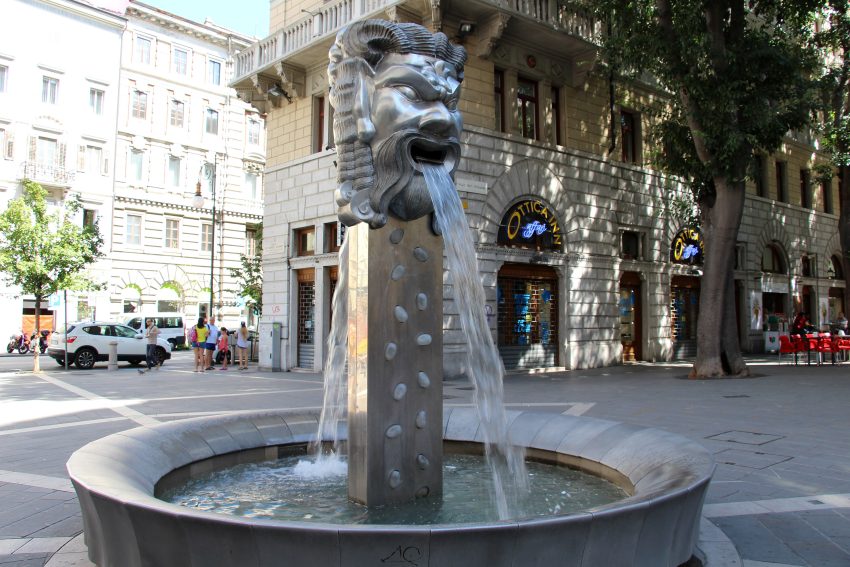
Viale XX Settembre
Viale XX Settembre
CC BY-SA 2.0 / Fred Romero
Viale XX Settembre is Trieste’s long, tree-lined boulevard and social promenade, stretching for over a kilometer and linking several districts on the way toward the Il Giulia shopping centre. Laid out in the late 19th and early 20th centuries, it still reads as a Habsburg-era city stage, with stern Neo-Renaissance fronts punctuated by flashes of Art Nouveau detail. Along the pedestrian-friendly sections you’ll pass cafés and patisseries perfuming the air with coffee and pastries, plus cultural stops like the Rossetti Theatre and historic cinemas such as the Ambassadors. Its name—20 September—nods to Italy’s 1870 unification moment, once a pointed statement in then-Austro-Hungarian Trieste.
Location: V.le Venti Settembre, Trieste TS, Italy | Hours: 24 Hours. | Price: Free. | Distance: 0.3km

We recommend to rent a car in Italy through Discover Cars, they compare prices and review multiple car rental agencies. Book your rental car here.

2. Propylaeum and Roman Basilica

Propylaeum and Roman Basilica
CC BY-SA 2.0 / Nick Savchenko
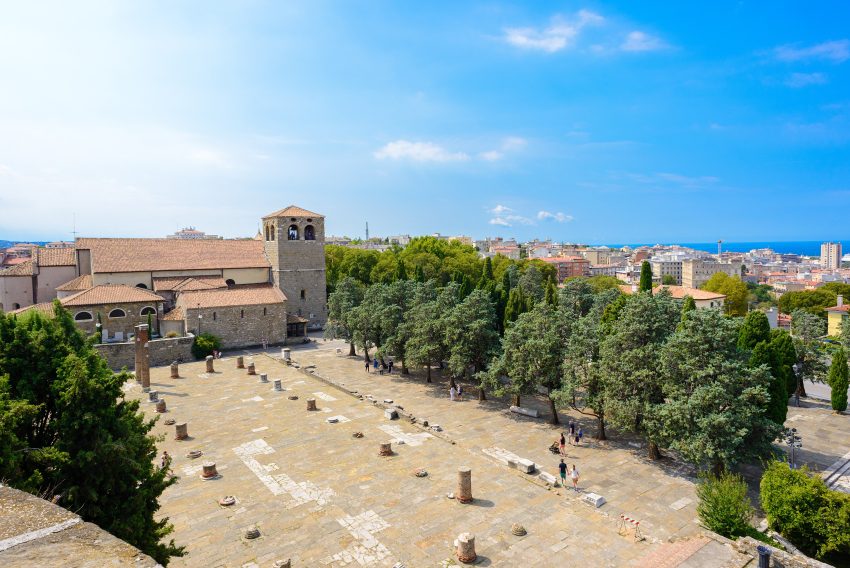
On San Giusto Hill, the Propylaeum and Roman Basilica are fragments of Trieste’s Roman civic center, now woven into the cathedral precinct. The propylaeum was a columned gateway; its surviving stairway and masonry are partly absorbed into the cathedral’s bell towers, a visible splice of ancient and medieval building. Nearby excavations revealed remains of a civil basilica with three naves—more courtroom and public hall than church—along with traces of the old forum. Don’t miss the lapidary garden assembled in the 19th century by archaeologist Domenico Rossetti, where epigraphs and carved stones sit outdoors. From the square, the stonework and open views over the Gulf of Trieste tend to linger in memory.
Location: P.za della Cattedrale, 2, 34121 Trieste TS, Italy | Hours: (Summer) 08:00–13:00 & 15:30–19:30. (Winter) 08:00–12:00 & 14:30–18:30. | Price: Free; donations appreciated. | Website | Distance: 0.4km

Here is a complete selection of hotel options in Trieste. Feel free to review each one and choose the stay that best suits your needs.

3. Lapidario Tergestino

Lapidario Tergestino
CC BY-SA 4.0 / Michał Bulsa
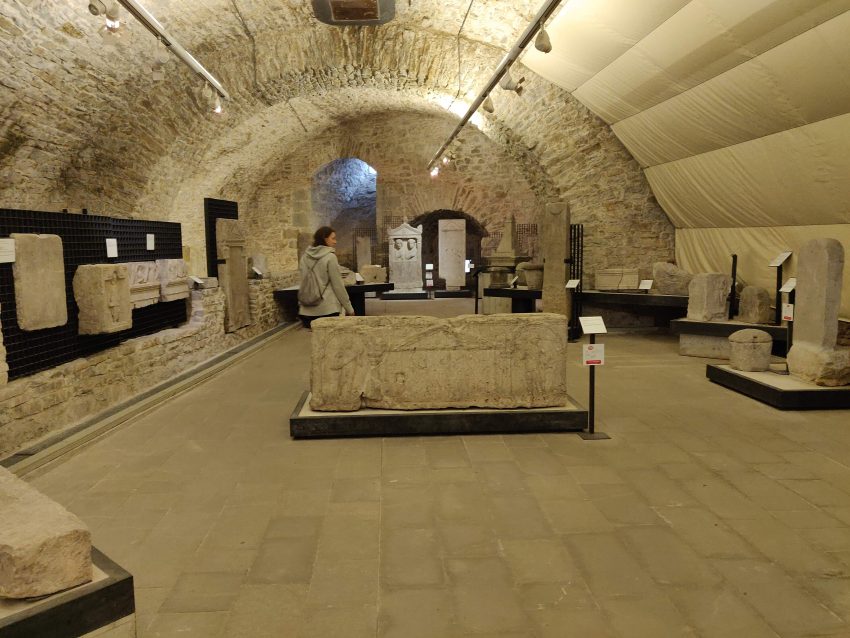
Lapidario Tergestino is a compact lapidary museum inside the basement spaces of San Giusto Castle, gathering carved stone evidence of Roman Tergeste in a cool, fortress setting. About 130 large pieces trace the city’s public life and private grief, from inscriptions tied to gates, walls, and towers to honorary stones including one linked to an equestrian statue of the senator Lucius Fabius Severus. The rooms move from imperial texts about civic construction to sepulchral monuments—stelae, urns, and sarcophagi—arranged by type. Deeper down, you can study 1st-century mosaics from the seaside Villa Marittima and see finds from the Roman Theatre such as statues of Venus, Bacchus, Apollo, and Minerva, plus a spire showing the Capitoline Triad.
Location: P.za della Cattedrale, 3, 34124 Trieste TS, Italy | Hours: Tuesday – Sunday: 10:00–17:00. Closed on Monday. | Price: Adults: €6; Reduced: €3. | Website | Distance: 0.4km

Traveling to a country with a different currency? Avoid ATM transaction fees and pay in local currency with a Wise Card. Having used it for over 5 years, we've saved loads on fees!

4. Teatro Romano di Trieste

Teatro Romano di Trieste
Public Domain / Tiesse
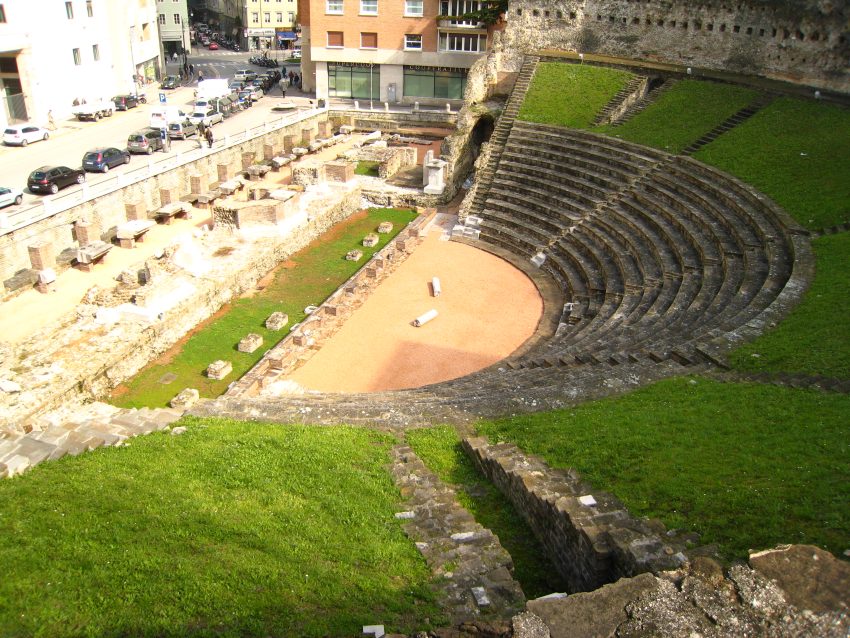
At the base of San Giusto Hill in Trieste, the Teatro Romano di Trieste is a Roman-era theater embedded in the modern street grid, with apartment blocks rising around its stone arc. Built in the 1st century CE and expanded under Emperor Trajan in the 2nd, it once seated roughly 3,500–6,000 people, its tiered cavea cut into the hillside and the stage oriented toward what was then a much closer shoreline. After centuries buried beneath later construction, it was fully uncovered during 1938 demolitions and excavations. Visitors can trace the semicircular seating, the orchestra area, and the stage foundations, and imagine the plays, speeches, and civic gatherings that once filled the space.
Location: Teatro Romano, Via del Teatro Romano, 34121 Trieste TS, Italy | Hours: 24 Hours. | Price: Free. | Distance: 0.4km

5. Castello di San Giusto
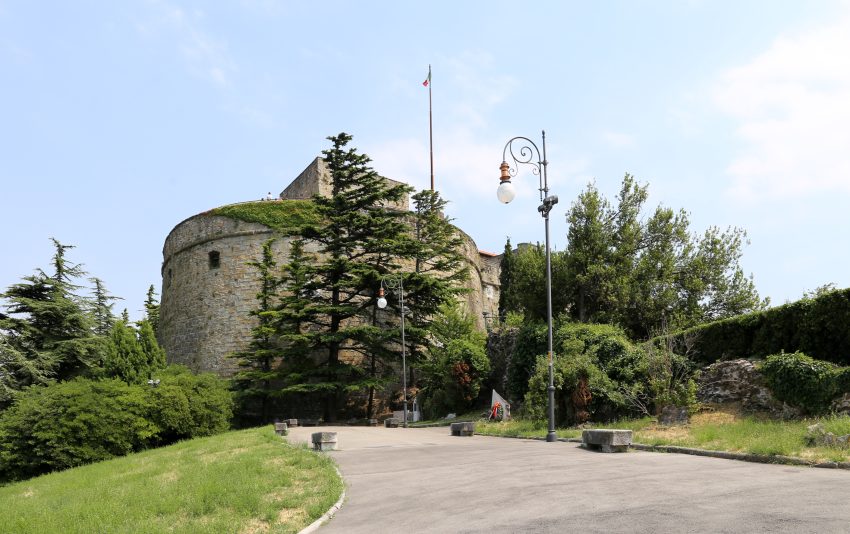
Castello di San Giusto
CC BY-SA 3.0 / Sailko
Castello di San Giusto is a hilltop fortress above Trieste, begun under Habsburg rule after Emperor Frederick III ordered its construction in 1468 to secure the port against Venice and raids from the east. The entrance still feels ceremonial, with a small drawbridge, patrician coats of arms, and the bronze “Micheze” and “Jacheze” Moors standing guard—once the timekeepers on the Town Hall clock. Inside, the experience splits between defensive corridors and museum rooms, including an armoury and displays of carved emblems, weathered sculpture, and Roman fragments in the Lapidary Garden. Finish on the ramparts and terrace for a wide view over rooftops and the Adriatic gulf.
Location: P.za della Cattedrale, 3, 34131 Trieste TS, Italy | Hours: (Winter) Until March 31; Tuesday – Sunday: 10:00–17:00 (last entry 16:30). (Closed on Monday.). (Summer) April 1 – October 11; Daily: 10:00–19:00 (last entry 18:30). | Price: Adults: €7; Reduced: €5; School & university groups: €1. Free entry on the first Sunday of the month and on November 3. | Website | Distance: 0.4km

6. Antiquarium di via del Seminario
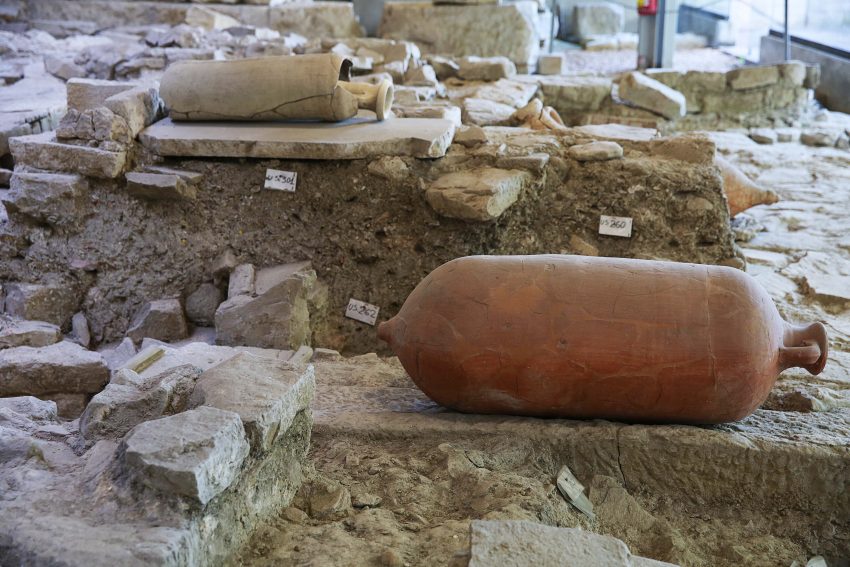
Antiquarium di via del Seminario
CC BY-SA 4.0 / Silvia Borri
Antiquarium di via del Seminario in Trieste, Italy is a small archaeological stop on San Giusto hill that preserves a surviving section of Tergeste’s Roman city walls. Up close, you can read the construction: two sandstone faces packed with rubble and lime, about 8 feet thick and rising roughly 13 feet, with a narrow drainage channel at the base. Tradition links the fortifications to Octavian’s works around 33 BC, before he became Augustus, and the site also shows how the defenses later shifted into practical hillside engineering as terraces and retaining walls. Nearby, a room with opus spicatum “herringbone” brick flooring and amphora fragments suggests an oil-processing space, possibly with a press.
Location: Via del Seminario, 2, 34121 Trieste TS, Italy | Hours: Check official website. | Price: Free. | Website | Distance: 0.5km

7. Tempio Israelitico di Trieste
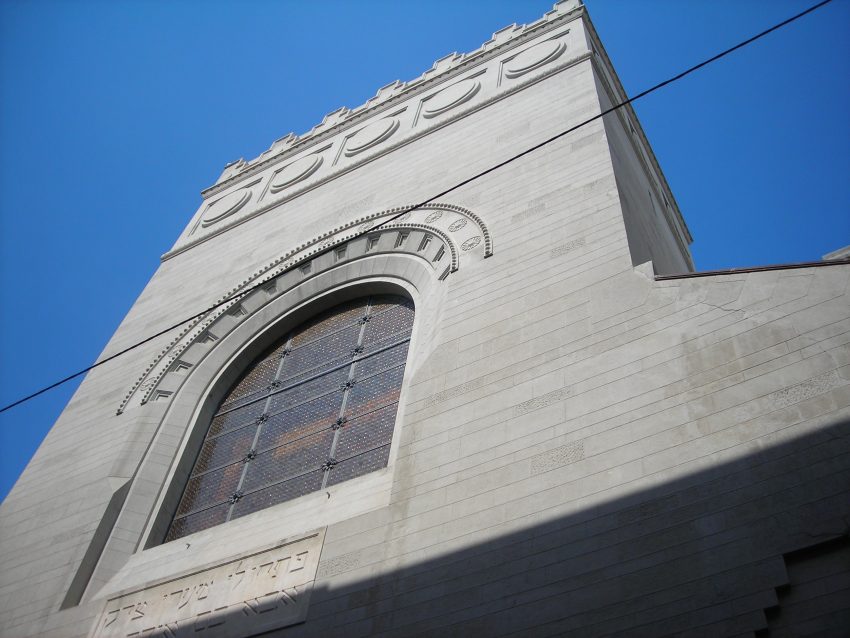
Tempio Israelitico di Trieste
CC BY-SA 3.0 / Bultro
Tempio Israelitico di Trieste is the city’s monumental main synagogue, built from 1908 to 1912 when Trieste was the Austro-Hungarian Empire’s busiest port and the Jewish community was large enough to replace four smaller 18th-century prayer houses. Inside, the vast hall is laid out in three naves, pulling your gaze toward an apse that glitters with mosaics. The Aron Kodesh sits beneath a pink-granite shrine on four columns, flanked by oversized menorahs, while a women’s gallery runs around three sides. Look for the marble balustrade carved with sheaves of wheat and, above, a pipe organ marked with Stars of David. The building was desecrated under Fascism and later reopened, giving the space a palpable sense of endurance.
Location: Via S. Francesco D'Assisi, 19, 34133 Trieste TS, Italy | Hours: Monday: 16:30. Tuesday: 10:00. Wednesday: 16:30. Thursday: 16:30. Sunday: 10:00 & 11:30. Closed on Friday, Saturday. | Price: Adults: €7; Students (10–18) & students: €4; Under 10: free; Visitors with disabilities: free. | Website | Distance: 0.5km

8. Canal Grande
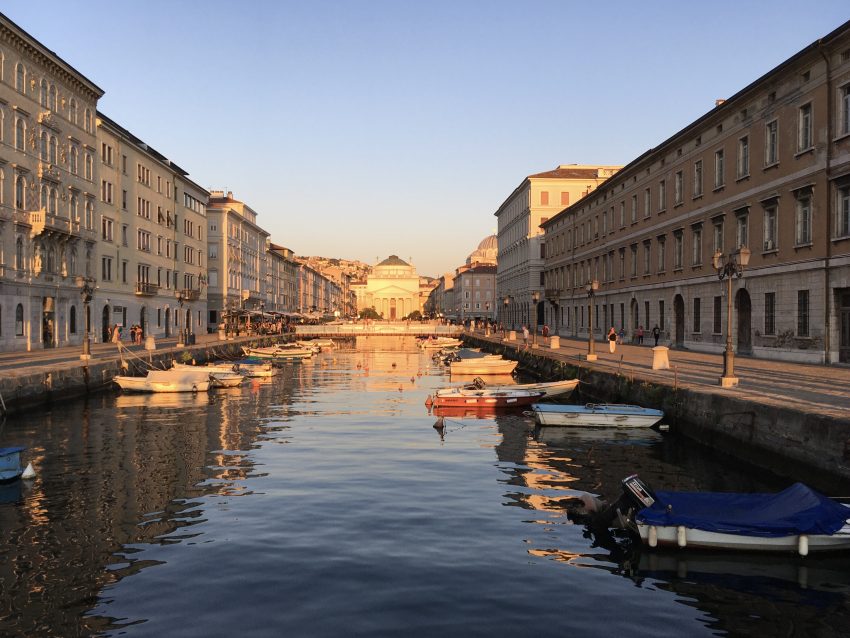
Canal Grande
Canal Grande
CC BY-SA 4.0 / Daniela M.
Canal Grande is Trieste’s short Grand Canal slicing through the Borgo Teresiano, dug in 1754–1756 to bring cargo boats straight to city warehouses during the Habsburg-era port boom. Today visitors remember the clean, symmetrical corridor of pastel merchant façades, small moored boats, and bridge-to-bridge reflections that can look almost theatrical at night. Pause on Ponte Rosso, first built in 1756 and later rebuilt, where a bronze James Joyce lingers mid-thought above the water. At one end, the view locks onto the neoclassical bulk of Sant’Antonio Taumaturgo, with the nearby domes of San Spiridone adding an Orthodox counterpoint. Cafés and markets keep the promenade lively.
Location: P.za Sant'Antonio Nuovo, 34122 Trieste TS, Italy | Hours: 24 Hours. | Price: Free. | Distance: 0.5km

9. Cattedrale di San Giusto
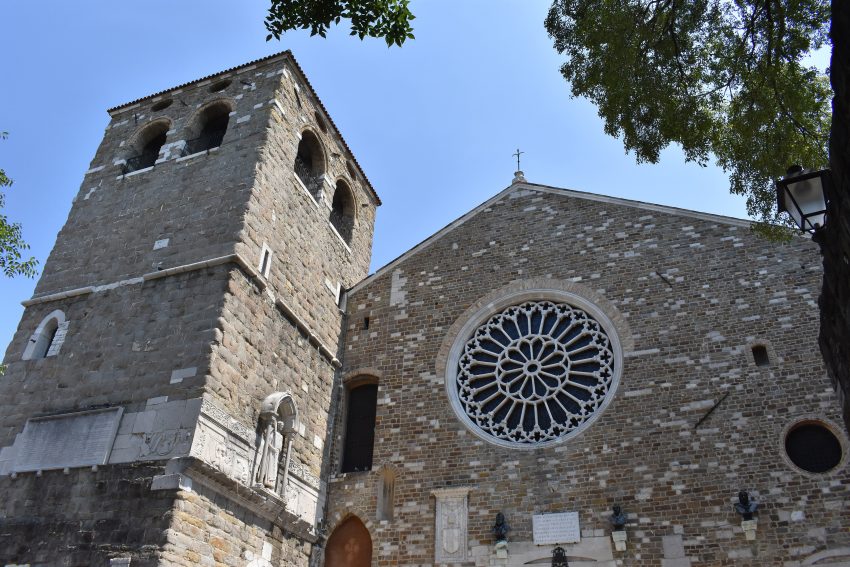
Cattedrale di San Giusto
CC BY-SA 4.0 / Irene Buda
Cattedrale di San Giusto is Trieste’s hilltop cathedral, built in the 14th century by merging two medieval basilicas on a site once occupied by a Roman Capitoline temple. Its Romanesque façade and Gothic rose window feel austere until you step inside and see the plan open into one nave with four aisles and two apses blazing with 12th-century mosaics of Christ, the Virgin, and saints. The bell tower incorporates Roman stonework and preserves the old entrance as a niche with a weathered statue of San Giusto. Chapels add unexpected stories, including tombs of Spanish Carlist pretenders and a treasury with reliquaries and manuscripts. The churchyard’s small medieval chapels and the sweeping view over Trieste and the Gulf linger in memory.
Location: P.za della Cattedrale, 2, 34121 Trieste TS, Italy | Hours: Monday – Saturday: 08:00–18:30. Sunday: 09:00–19:30. | Price: Free; donations appreciated. | Website | Distance: 0.5km

10. Civico Museo Teatrale Carlo Schmidl
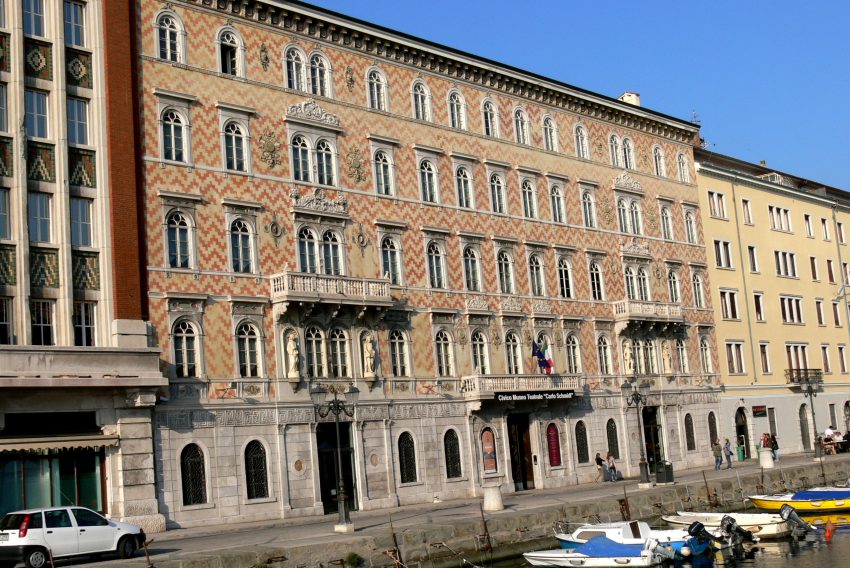
Civico Museo Teatrale Carlo Schmidl
CC BY-SA 2.0 / Wolfgang Sauber
Civico Museo Teatrale Carlo Schmidl is Trieste’s civic museum of theatre and music, housed in Palazzo Gopcevich, an ornate mid-19th-century residence on the Canal Grande. The building itself is part of the visit: a red-and-white façade with Greco-style patterns and medallions referencing the Battle of Kosovo Polje, plus lavish ceilings and inlaid floors inside. Founded in 1924 by music publisher Carlo Schmidl and installed here in 2006, it preserves the city’s performing-arts memory from the 18th century onward. Visitors move between playbills, posters, photographs, costumes, puppets, and marionettes, then linger over instruments such as fortepianos, harmoniums, and mechanical curiosities like an autopiano. Upper levels deepen the story with Strehler material and an archive of librettos and scores.
Location: Via Gioacchino Rossini, 4, 34121 Trieste TS, Italy | Hours: Wednesday – Sunday: 10:00–17:00. Closed on Monday, Tuesday. | Price: Adults: €5.00; Reduced: €4.00; Schools: €1.00; Audioguide: €3.50. Free entry on the first Sunday of the month and on November 3. | Website | Distance: 0.6km

11. Teatro Lirico Giuseppe Verdi
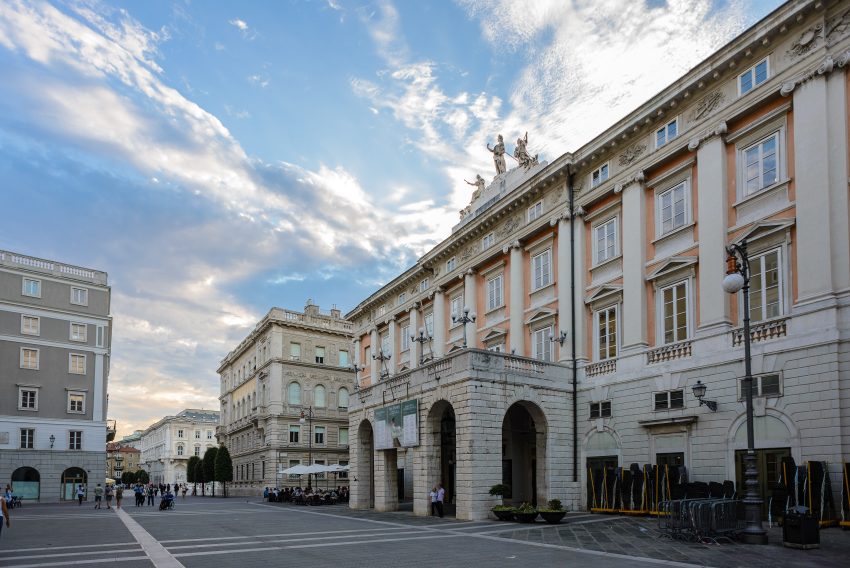
Teatro Lirico Giuseppe Verdi
CC BY-SA 2.0 / Nick Savchenko
Teatro Lirico Giuseppe Verdi is Trieste’s principal opera house, a working stage that still anchors the city’s classical music life. Opened in 1801 as the Teatro Nuovo, it was designed by Gian Antonio Selva (also behind Venice’s La Fenice) with a traditional horseshoe auditorium, while Matteo Pertsch later reshaped the exterior with a grandeur that nods to Milan’s La Scala. The theatre helped put Trieste on the operatic map with premieres of Verdi’s Il corsaro (1848) and Stiffelio (1850), and it was renamed for the composer after his death in 1901. Restored in the 1990s, it now seats about 1,300, and audiences often praise the atmosphere and strong chorus.
Location: Piazza Giuseppe Verdi, 1, 34121 Trieste TS, Italy | Hours: Tuesday – Saturday: 09:00–16:00. Sunday: 10:00–13:00. Closed on Monday. Days of performance: 09:00–16:00 & 1 hour before the performance starts. The box office always opens 1 hour before the performance starts. | Price: Prices vary by show. | Website | Distance: 0.6km

12. Arco di Riccardo
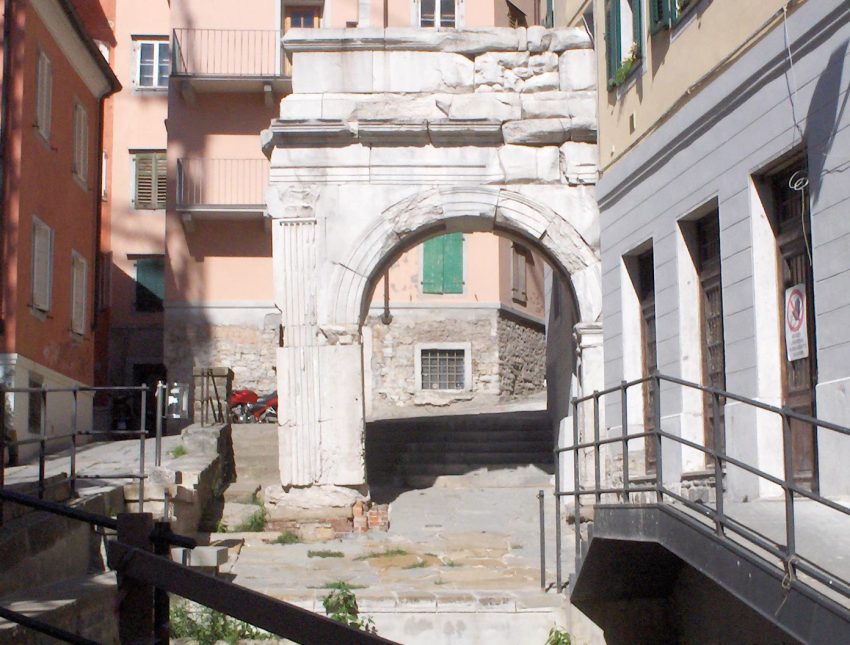
Arco di Riccardo
Arco di Riccardo
CC BY-SA 3.0 / Zinn
Arco di Riccardo is a Roman-era stone arch tucked into Piazza Barbacan in Trieste’s old city, where three narrow lanes spill into a small, stone-paved square. About 23 feet tall and 17 feet wide, it likely began as part of the city wall or a gate from the Roman colony of Tergeste, probably dating to the 1st century BCE. What visitors remember is the setting: one side reads as an ancient monument, while the other is still embedded in a later building, a layering that survived through the Middle Ages and was partly excavated in 1913. The name is debated—legend ties it to Richard I, but “cardo,” a Roman main street, may be closer to the truth.
Location: Piazza del Barbacan, 34121 Trieste TS, Italy | Hours: 24 Hours. | Price: Free. | Distance: 0.6km

13. Civic Museum of Antiquities "J.J. Winkelman"
Civic Museum of Antiquities “J.J. Winkelman”
CC BY-SA 4.0 / Michał Bulsa
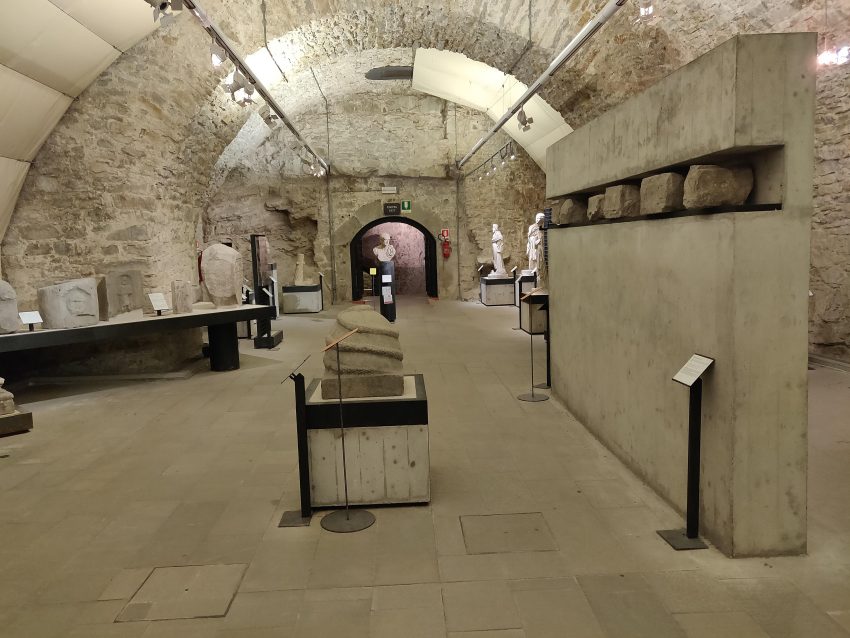
The Civic Museum of Antiquities “J.J. Winkelman” in Trieste is a small but densely packed archaeology museum rooted in the city’s 19th-century civic collecting and dedicated to Johann Joachim Winckelmann, a key figure in modern art history and archaeology. Begin outside in the Orto Lapidario and Giardino del Capitano, where Roman epigraphs, stone monuments, and later tombstones sit among greenery like an open-air storeroom. Inside, the ground floor pairs an unexpectedly substantial Egyptian collection with Roman material from the Tergeste and Aquileia areas, including Attic figurative sarcophagi. Upper floors move from Karst and Istrian prehistory to rooms of Greek vases (Corinthian to Apulian) and a standout silver rhyton shaped with a fawn’s head, plus a Mayan ceramics room donated in 2002.
Location: P.za della Cattedrale, 1, 34124 Trieste TS, Italy | Hours: Wednesday – Sunday: 10:00–17:00. Closed on Monday, Tuesday. | Price: Free. | Website | Distance: 0.6km

14. Fontana dei Quattro Continenti
Fontana dei Quattro Continenti
CC BY-SA 4.0 / Silverije
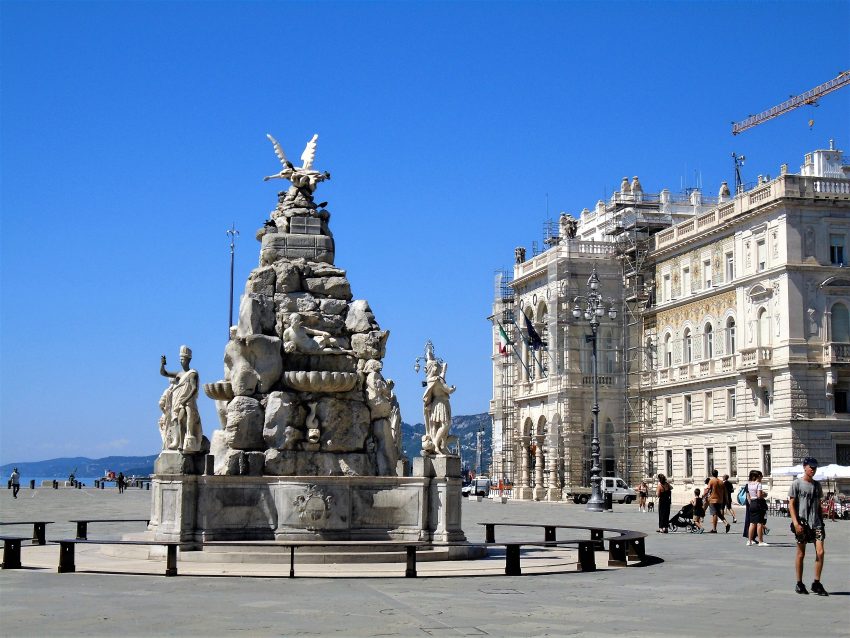
Fontana dei Quattro Continenti is an 18th-century Baroque fountain in Trieste’s Piazza Unità d’Italia, set against the City Hall and the square’s grand façades. Completed in 1754 by Giovanni Battista Mazzoleni to mark Trieste’s rise as a Habsburg free port, it turns civic pride into sculpture. Circle the wide basin to read the allegories: Europe is crowned and holds a sceptre and a small model of Trieste, while Asia wears “exotic” drapery, Africa appears with a lion and palms, and the Americas with a feathered headdress. Water spills from a tiered rock core topped by a small obelisk, and the whole monument was moved in the 1930s before returning after restoration in the early 2000s.
Location: Piazza Unità d'Italia, 34121 Trieste TS, Italy | Hours: 24 Hours. | Price: Free. | Distance: 0.7km

15. Politeama Rossetti
Politeama Rossetti
Politeama Rossetti
Public Domain / Triestino
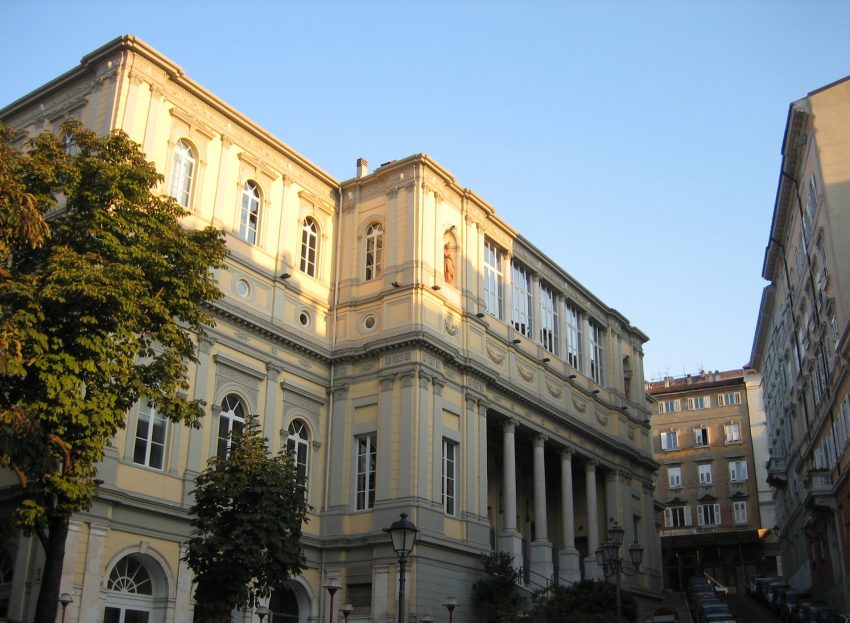
Politeama Rossetti is Trieste’s main theatre (the Stable Theatre of Friuli Venezia Giulia), a big, dress-up kind of venue that still shapes the city’s evenings. Opened in 1878 and designed by Viennese architect Nicolò Bruno, it was built as a flexible house for popular entertainment—once hosting everything from opera and drama to music and even circus acts. The neoclassical façade nods to Central European theatre cities like Vienna and Budapest, and inside the spacious hall is known for strong acoustics and a grand, old-world feel. With roughly 1,500 seats, it remains one of Italy’s larger theatres, and its calendar ranges from Shakespeare and contemporary plays to touring musicals, concerts, and dance.
Location: Largo Giorgio Gaber, 1, 34126 Trieste TS, Italy | Hours: Monday: 10:00–13:00 & 16:00–19:00. Tuesday – Friday: 10:00–19:00. Saturday: 10:00–13:00 & 16:00–19:00. Sunday: Closed. | Price: Prices vary by show. | Website | Distance: 0.7km

16. Palazzo della Luogotenenza Austriaca

View of Palazzo del Governo, Trieste from Square
Palazzo del Governo, Trieste
Public Domain / Tiesse at Italian Wikipedia
Palazzo della Luogotenenza Austriaca (today often called Palazzo del Governo) is the early-20th-century administrative palace that commands Trieste’s Piazza Unità d’Italia, facing the sea. Built from 1901 to 1905 to house the imperial lieutenancy of the Austro-Hungarian Empire, it still signals the era when Trieste was the empire’s key maritime port and a crossroads of cultures. Visitors mostly experience it from outside: a balanced, symmetrical façade with ornate balconies, sculpted stonework, and a central clock-tower accent that reads as civic authority. Look closely at the entrance for theatrical columns and colorful mosaics that catch warm light late in the day.
Location: Palazzo della Luogotenenza austriaca Piazza dell'Unità d'Italia Trieste TS Italy | Hours: Monday – Friday: 10:00–12:00. Saturday: Closed. Sunday: Closed. | Price: Free. | Website | Distance: 0.7km

17. Civico Museo d'Arte Orientale
Civico Museo d’Arte Orientale
Public Domain / Tiesse
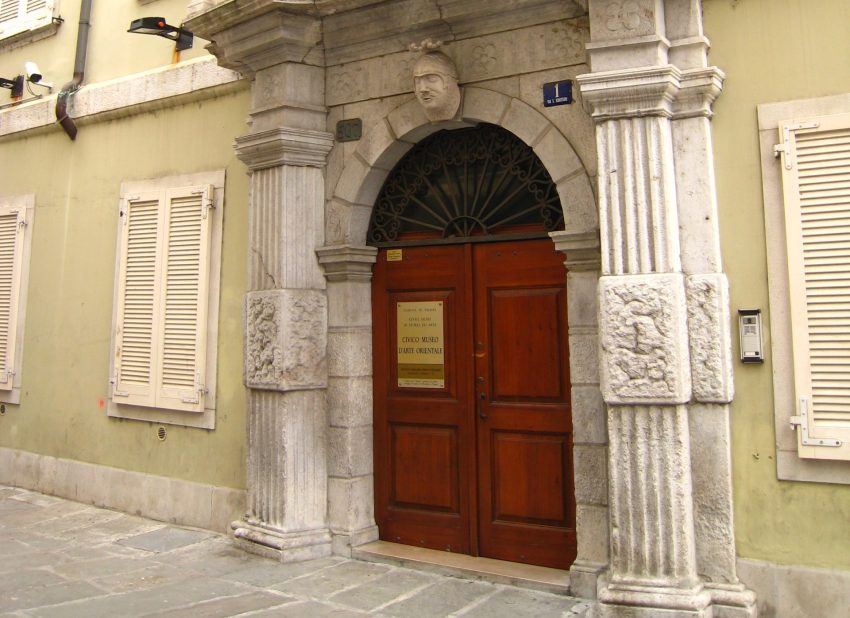
Civico Museo d’Arte Orientale in Trieste is a compact museum of Asian art housed in Palazzo Leo, an 18th-century building in the old center, and it reflects the city’s past as a port where objects and ideas arrived by sea. Opened in 2001, its galleries draw heavily on donations and acquisitions from the late 19th and early 20th centuries, when European collecting of East Asian art surged. Visitors linger over Japanese ukiyo-e woodblock prints, lacquerware, textiles, and striking pieces of samurai armor and swords. The Chinese rooms anchor the visit with Ming and Qing porcelain, alongside Buddhist sculpture and decorative arts. Reviews often mention the calm, easy-to-navigate layout and the pleasant surprise of free entry.
Location: Via S. Sebastiano, 1, 34121 Trieste TS, Italy | Hours: Monday: 10:00–17:00. Tuesday: 10:00–17:00. Wednesday: Closed. Thursday: Closed. Friday: 10:00–17:00. Saturday: 10:00–17:00. Sunday: 10:00–17:00. | Price: Free. | Website | Distance: 0.7km

18. Palazzo del Municipio
Palazzo del Municipio
CC BY-SA 3.0 / Zinn
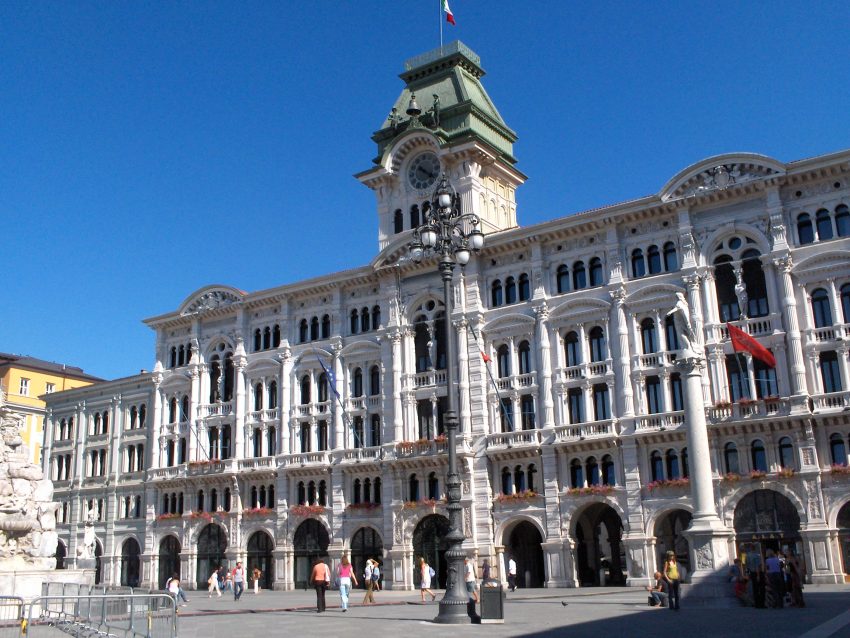
Palazzo del Municipio is Trieste’s late-19th-century City Hall, built in 1873–1875 to project the city’s rising stature under the Austro-Hungarian Empire and to anchor Piazza Unità d’Italia. Its confident, eclectic façade mixes Renaissance and Baroque cues—arched porticoes, strict symmetry, and mullioned windows—topped by a clock tower that sets the square’s rhythm. Look up for Micheze and Jacheze, the bronze bell-strikers: today’s figures are replicas, while the originals were moved to San Giusto. The central balcony also carries a darker memory, as Mussolini proclaimed the 1938 racial laws here, later contrasted by celebrations in 1954 when Trieste returned to Italy. At sunset, the building’s lights and the Adriatic backdrop make the square feel like an open-air stage.
Location: Piazza Unità d'Italia, 4, 34121 Trieste TS, Italy | Hours: Monday: 08:30–17:00. Tuesday: 08:30–13:30. Wednesday: 08:30–17:00. Thursday: 08:30–13:30. Friday: 08:30–13:30. Saturday: Closed. Sunday: Closed. | Price: Free. | Website | Distance: 0.7km

19. Kleines Berlin
Kleines Berlin
Kleines Berlin
CC BY-SA 3.0 / Rasevic
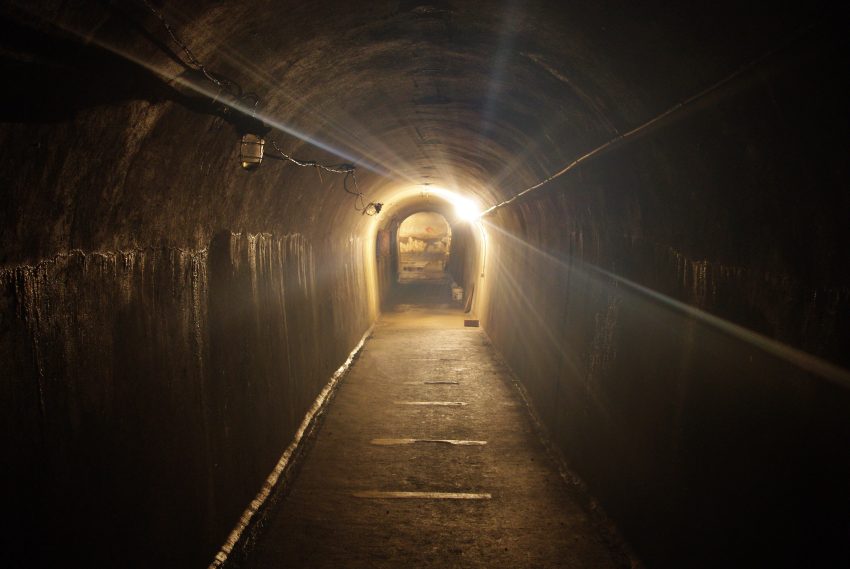
Kleines Berlin (“Little Berlin”) is a World War II tunnel complex beneath central Trieste, cut into the hillside during the German occupation of 1943–45 when the city was administered as the Adriatic Littoral. Built as an air-raid shelter and military facility during Allied bombing of the port, it still reads as a working piece of wartime infrastructure rather than a staged exhibit. The network includes two distinct sections—an earlier Italian-built part and later German extensions—linked by dim, echoing corridors. Visitors notice reinforced walls, ventilation elements, and occasional traces like wartime markings, along with the steady cool air that makes the city above feel very far away.
Location: Via Fabio Severo, 34133 Trieste TS, Italy | Hours: Friday: 17:30–20:00. | Price: Adults: €5; Students & children (6+): €3. | Website | Distance: 0.7km

20. Palazzo del Lloyd Triestino
Palazzo del Lloyd Triestino
CC BY-SA 2.0 / Luca Boldrini
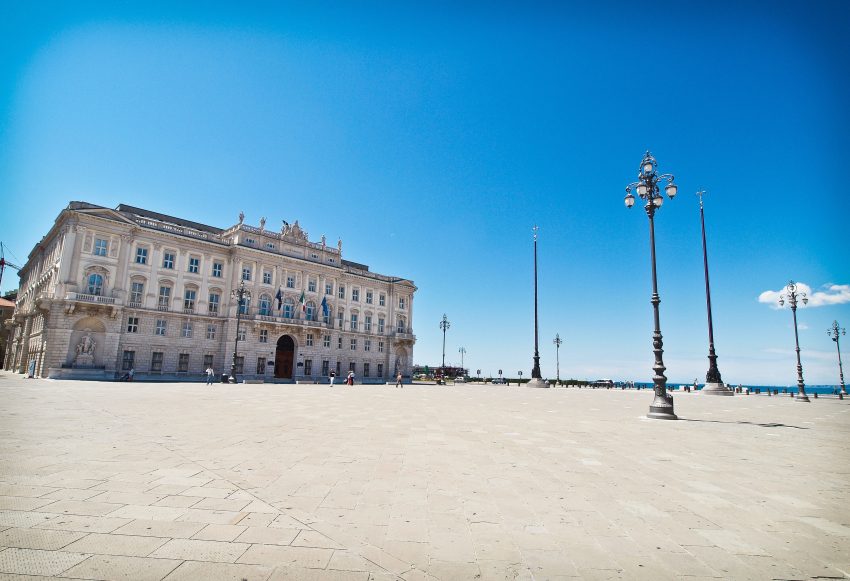
Palazzo del Lloyd Triestino is a late-19th-century seafront palace anchoring Piazza Unità d’Italia in Trieste, built in 1883 as the headquarters of the Austrian Lloyd (later Lloyd Triestino) shipping line. Designed by Heinrich von Ferstel, its Renaissance-revival façade faces the Gulf, projecting the city’s port-era confidence. Look closely for reliefs and sculptures of sea-linked mythic figures and allegories of commerce and navigation, plus the entrance’s bronze lanterns held by winged figures. Though it now houses the Friuli Venezia Giulia Regional Council and interiors are often limited, the grand exterior—especially from the square’s waterline—leaves the strongest impression.
Location: 34121 Trieste, Province of Trieste, Italy | Hours: 24 Hours. | Price: Free. | Distance: 0.8km

21. Molo Audace
Molo Audace
Molo Audace
CC BY-SA 2.0 / Nick Savchenko
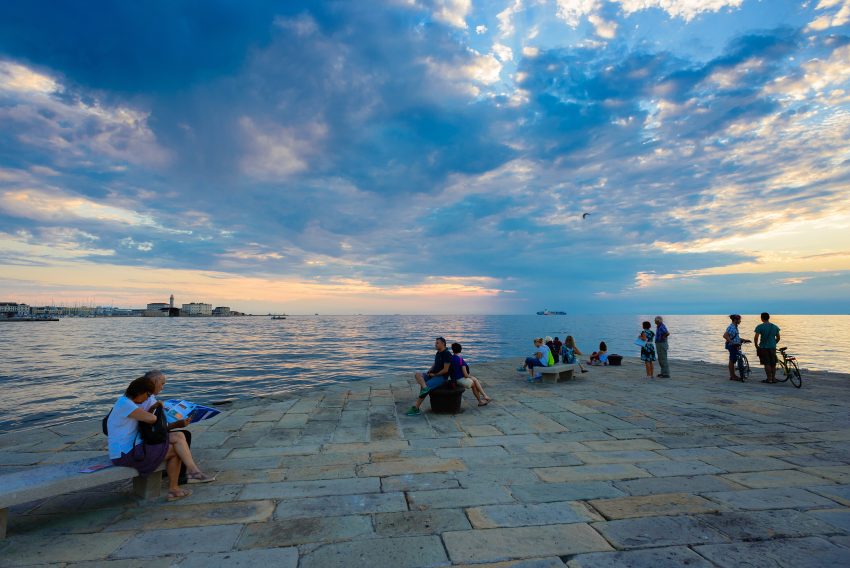
Molo Audace is Trieste’s long stone pier, a straight 246‑meter walk that pushes out into the Gulf like a confident fingertip from the waterfront by Piazza Unità d’Italia. It matters because it’s both a daily promenade and a marker of the city’s political turn: in 1918 the Italian destroyer Audace docked here, and the pier later took its name. Its origin is stranger still—built in the 1740s–50s over the wreck of the ship San Carlo, literally turning a sinking into a foundation. At the end, a bronze compass rose set in 1925 fixes your gaze on open water, while the reverse view frames Trieste’s grand facades. Come at sunset when locals linger in the sea wind.
Location: 34121 Trieste, Province of Trieste, Italy | Hours: 24 Hours. | Price: Free. | Distance: 0.8km

22. Civico Acquario Marino di Trieste
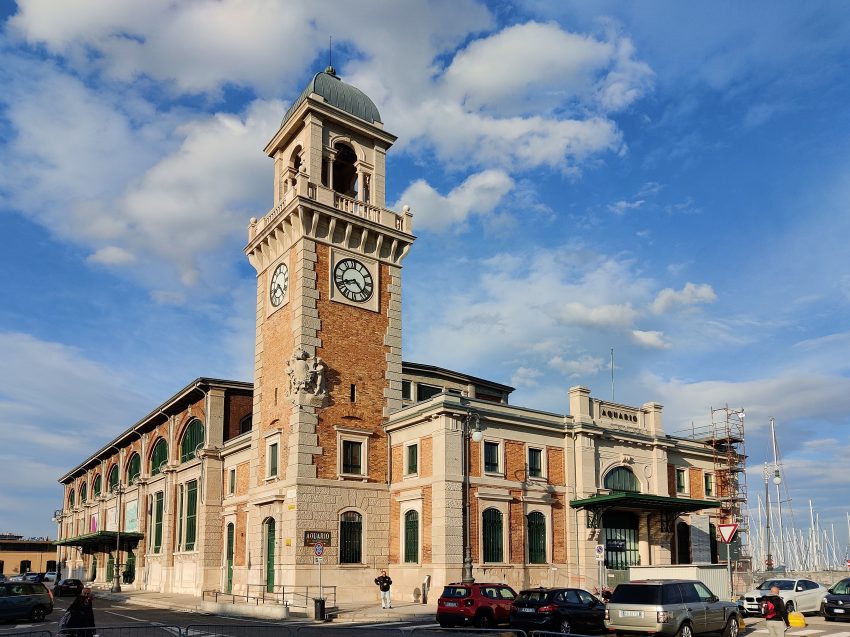
Civico Acquario Marino di Trieste
CC BY-SA 4.0 / Simon Legner
Civico Acquario Marino di Trieste is a small municipal aquarium on Trieste’s waterfront, set in a historic early-20th-century building that once served as the city fish market and reflects the port’s long bond with the Adriatic. Opened in 1933 with an educational, scientific purpose, it concentrates on local biodiversity rather than spectacle. Inside, you follow a compact loop of tanks featuring Gulf of Trieste and wider Adriatic species—fish, crustaceans, mollusks, and occasional small sharks—plus a few freshwater displays from nearby rivers and lakes, with multilingual panels. Upstairs, a modest reptile area adds turtles and snakes, and the terrace looks out over the harbour. Many visitors find 45–60 minutes enough, though some note the space can feel worn.
Location: Molo Pescheria 2, Riva Nazario Sauro, 1, 34123 Trieste TS, Italy | Hours: Closed for renovation. | Price: Adults: €4.50; Reduced: €3.00; Under 5: free. | Website | Distance: 1.1km

23. Civico Orto Botanico di Trieste
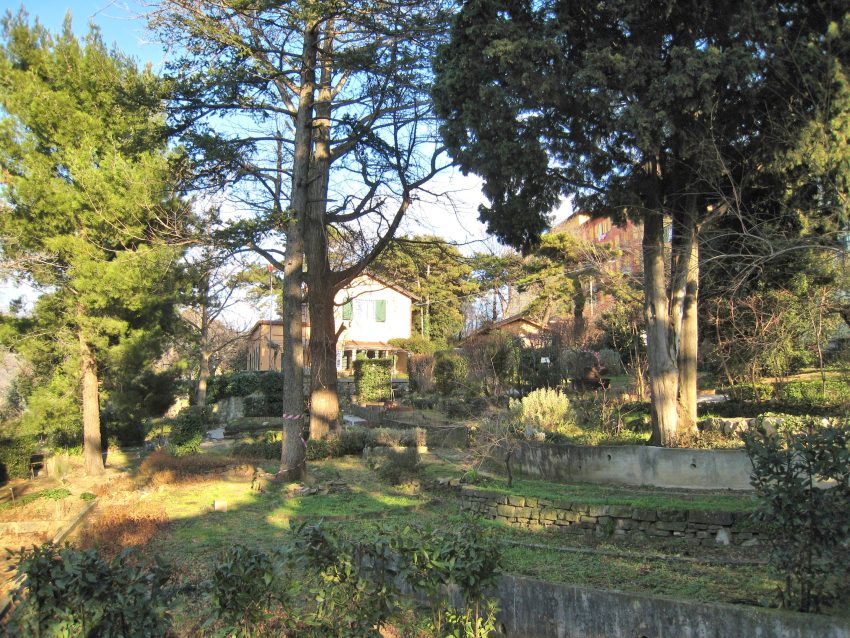
Civico Orto Botanico di Trieste
Public Domain / Tiesse
Civico Orto Botanico di Trieste is the city’s compact municipal botanical garden on Chiadino Hill, created in the mid-1800s and later linked to the Civic Natural History Museum, reflecting Trieste’s long tradition of plant study and exchange. In about 10,000 square meters it packs in roughly 1,200 plant types, with zones for Carso and Istrian endemics, medicinal beds, a box-hedged formal section, and summer water gardens where lotuses bloom. Narrow, climbing paths and small ponds make it feel more hillside refuge than show garden, with occasional Adriatic glimpses from higher ground. Visitors often notice the slightly untamed, partly closed feel alongside moments of careful labeling and themed touches like the “magical plants” layout and stone fountain.
Location: Via Carlo De Marchesetti, 2, 34142 Trieste TS, Italy | Hours: (Summer) April 1 – October 12; Friday – Sunday: 10:00–13:00. (Winter) October 13 – March 31; Closed. | Price: Free. | Website | Distance: 1.1km

24. Museo Sartorio
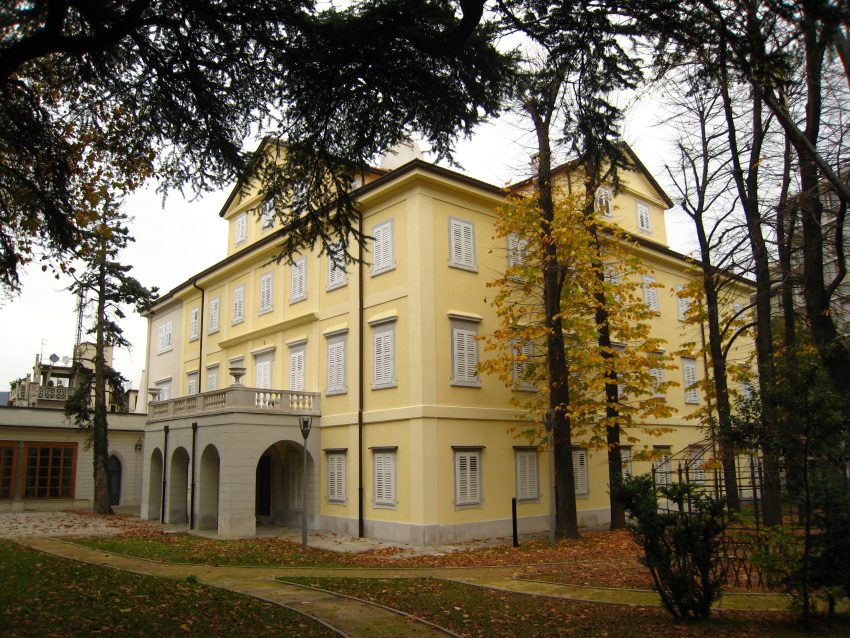
Museo Sartorio
Museo Sartorio
Public Domain / Tiesse
Museo Sartorio is a house museum in Trieste set inside the former Sartorio family villa, preserved to evoke the world of the city’s 18th–19th century mercantile elite. Rooms feel lived-in rather than gallery-like, with original furnishings, family portraits, and intact salons and dining spaces that let you read taste and status through everyday interiors. Decorative arts—porcelain, glassware, silver, and tapestries—sit alongside fine paintings, including works linked to Venetian schools. The most memorable artistic surprise is the substantial group of Giambattista Tiepolo drawings, one of the museum’s defining collections. With its small garden and calm, multi-floor layout, many visitors remember the atmosphere as much as the objects.
Location: Largo Papa Giovanni XXIII, 1, 34123 Trieste TS, Italy | Hours: Wednesday – Sunday: 10:00–17:00. Closed on Monday, Tuesday. | Price: Free. | Website | Distance: 1.1km

25. Museo Revoltella
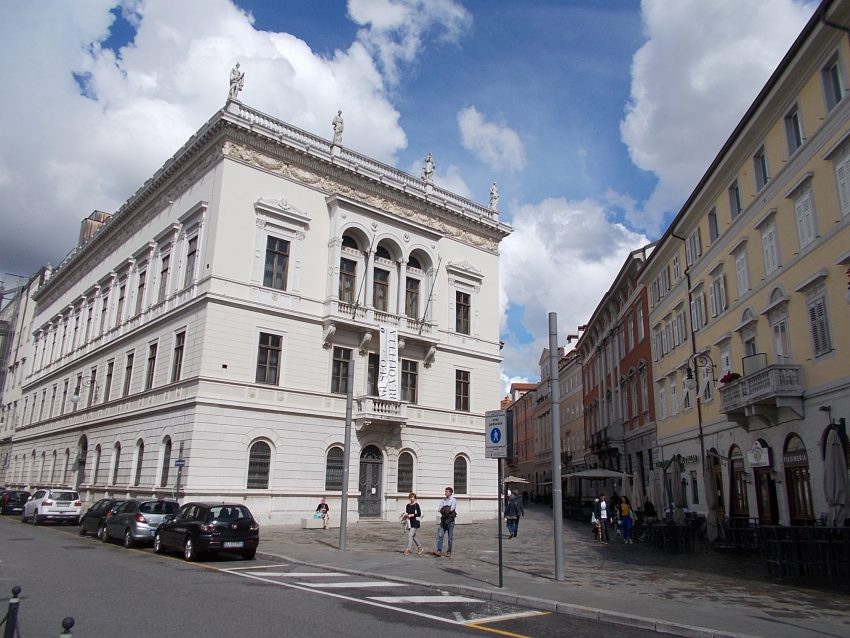
Museo Revoltella
Museo Revoltella
CC BY-SA 4.0 / Szeder László
Museo Revoltella is Trieste’s modern art museum set in the former 19th-century home of Baron Pasquale Revoltella, a merchant-philanthropist who left his palace and collection to the city in 1872. You move through lavish residence rooms—period furniture, decorative arts, and portraits—before transitioning into connected buildings that house modern and contemporary galleries. The contrast between the ornate palazzo and clean exhibition spaces is part of what visitors remember. The collection ranges from 19th- and 20th-century painting and sculpture to later European currents, with a strong showing of Italian works from the late 1800s. Temporary exhibitions regularly reshape the experience beyond the permanent displays.
Location: Via Armando Diaz, 27, 34123 Trieste TS, Italy | Hours: Monday: 10:00–19:00. Wednesday – Sunday: 10:00–19:00. Closed on Tuesday. | Price: Adults: €8; Reduced: €6; Under 6: free. | Website | Distance: 1.1km

26. Museo Ferroviario di Trieste Campo Marzio
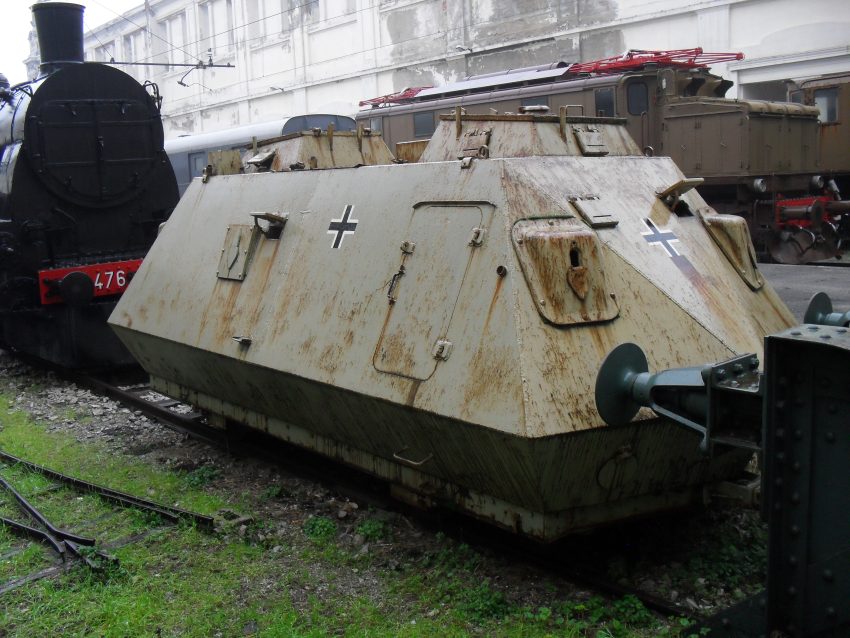
Museo Ferroviario di Trieste Campo Marzio
CC BY-SA 3.0 / istra1977
Museo Ferroviario di Trieste Campo Marzio is a railway museum set inside Trieste’s former Campo Marzio station, a substantial early-1900s building that once linked the port city to Vienna and the wider Austro-Hungarian network. The experience is anchored by the platforms and tracks, where you can walk beside restored steam engines, diesel and electric locomotives, and historic passenger carriages at full scale. Indoors, the mood is more workshop than gallery, with signals, tools, uniforms, documents, photographs, and model railways that explain how rail travel reshaped trade and daily life. Visitors often note the station’s worn, atmospheric condition, and recent reviews mention closures or reconstruction, so access can feel changeable.
Location: Stazione Trieste Campo Marzio, Via Giulio Cesare, 1, 34123 Trieste TS, Italy | Hours: Monday: Closed. Tuesday: Closed. Wednesday: 09:00–13:00. Thursday: Closed. Friday: Closed. Saturday: 09:00–13:00. Sunday: 09:00–13:00. | Price: Adults: €5; Reduced: €3. | Website | Distance: 1.7km

27. Civico Museo del Mare
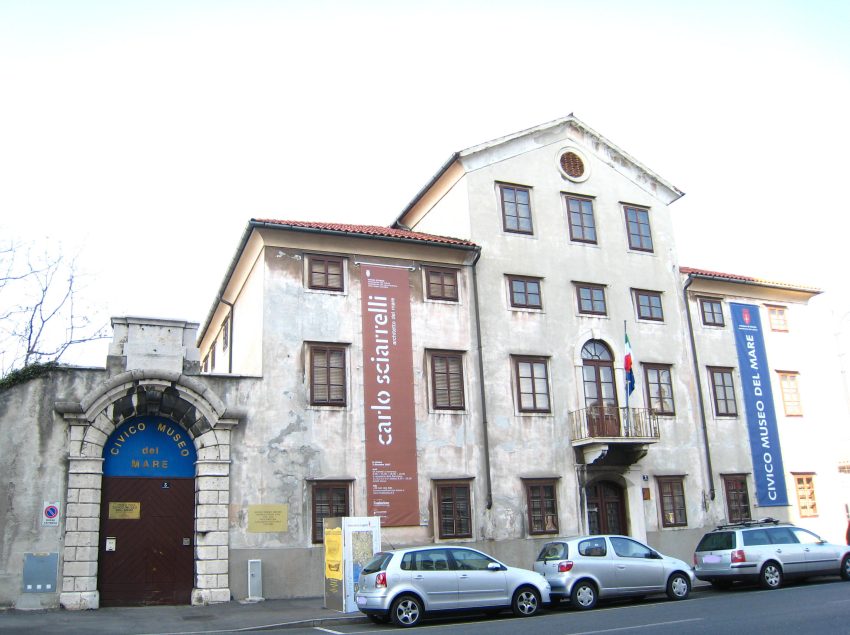
Civico Museo del Mare
Public Domain / Triestino~commonswiki
Civico Museo del Mare is Trieste’s municipal maritime museum, tracing how the city grew around navigation, shipbuilding, and Adriatic trade. Founded in 1904 and housed in the old-port warehouse Magazzino 26, it pairs the subject with an industrial waterfront setting that feels true to its theme. Visitors linger over detailed ship models—from sail to steam—alongside navigation instruments, charts, and documents that map changing routes across the Mediterranean and beyond. Displays also touch the Austro-Hungarian era, when Trieste served as the empire’s main seaport, and include uniforms, photographs, and personal items that bring sailors’ daily lives into focus. Reviews often mention clear organization, mini-documentaries, and friendly staff.
Location: Magazzino 26, P. Franco Vecchio, 34135 Trieste TS, Italy | Hours: Wednesday – Sunday: 10:00–17:00. Closed on Monday, Tuesday. | Price: Free. | Website | Distance: 2.1km

28. Museo Civico di Storia Naturale
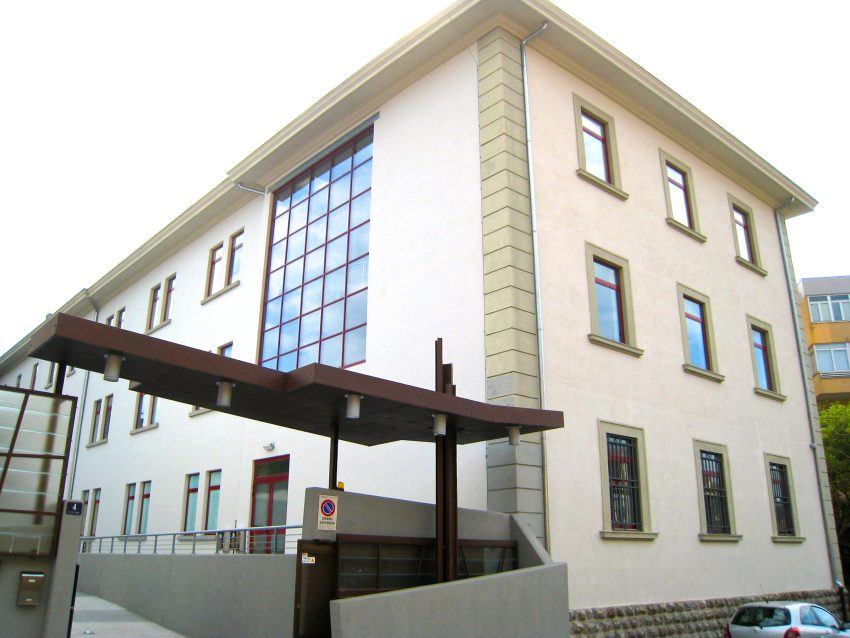
Museo Civico di Storia Naturale
CC BY-SA 1.0 / Tiesse
Museo Civico di Storia Naturale is Trieste’s civic natural history museum, founded in 1846, and it still feels like the city’s cabinet of scientific curiosity shaped by a port’s flow of ideas. The star specimen is “Antonio,” a near-complete Tethyshadros insularis dwarf dinosaur found on the nearby Karst plateau, which anchors the paleontology rooms. Around it, visitors move through marine fossils tied to the Adriatic, mineral and geology displays, and classic zoology galleries with preserved mammals, birds, and insects collected from far beyond Italy. Exhibits on human evolution add a different timescale, and the bilingual labels make slow browsing easy in a compact two-floor layout.
Location: Via dei Tominz, 4, 34139 Trieste TS, Italy | Hours: Wednesday – Sunday: 10:00–17:00. Closed on Monday, Tuesday. | Price: Adults: €5; Reduced: €4; Under 6: free; First Sunday of each month: free. | Website | Distance: 2.1km

29. Faro della Vittoria
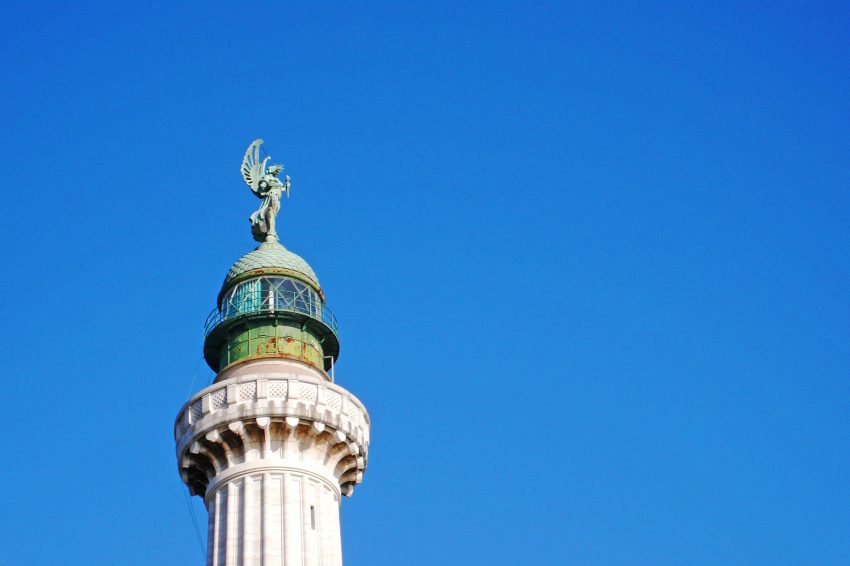
Faro della Vittoria
Faro della Vittoria
CC BY-SA 3.0 / Guido Radig
Faro della Vittoria in Trieste is a working lighthouse built in 1927 that also serves as a memorial to Italian sailors lost in World War I, set high above the Gulf on the remains of the former Austrian fort Kressich. The pale tower mixes Istrian white stone with greenish Karst stone, and it’s crowned by a copper Winged Victory statue by Giovanni Mayer. At the base, inscriptions and an anchor salvaged from the Austro-Hungarian battleship Viribus Unitis underscore the monument’s political and maritime symbolism. When it’s open, you can go inside and climb (or take an elevator most of the way) to the terrace for wide views over Trieste’s rooftops, harbor, and coastline.
Location: Str. del Friuli, 141, 34136 Trieste TS, Italy | Hours: (Seasonal) April 3 – November 4, 2026; April, May, June & September: Friday: 15:00–19:00; Saturday – Sunday: 10:00–13:00 & 15:00–19:00. July – August: Wednesday – Sunday: 10:00–13:00 & 16:00–19:00. October: Friday: 15:00–18:00; Saturday – Sunday: 10:00–13:00 & 15:00–18:00; October 7 – 11: 09:30–17:30. November 1 – 4: 09:30–16:30. | Price: Free. | Website | Distance: 3.3km

30. Civico Museo della Risiera di San Sabba
Civico Museo della Risiera di San Sabba
CC BY-SA 2.0 / Andreas Manessinger
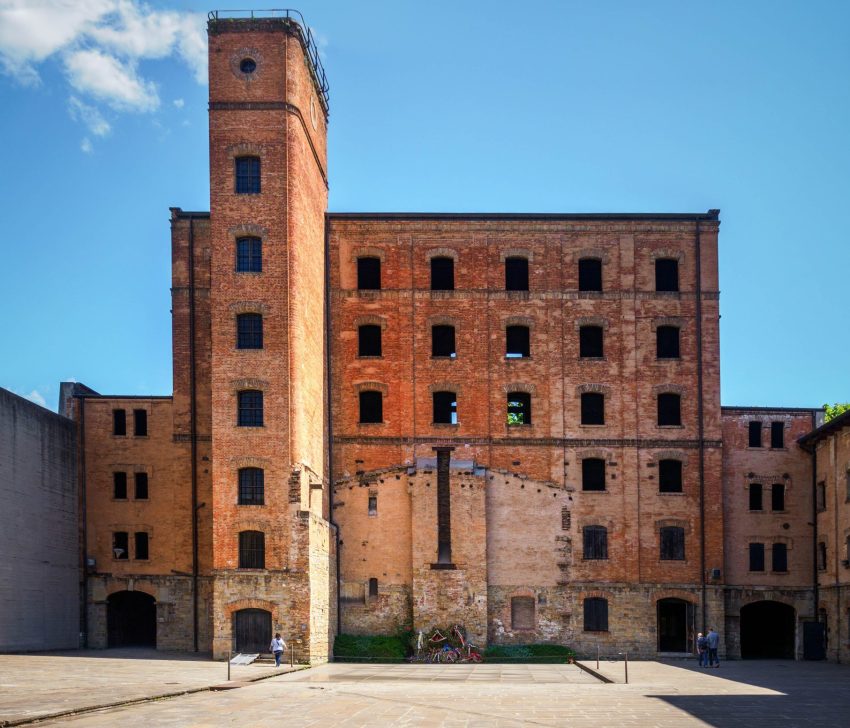
Civico Museo della Risiera di San Sabba is a former 1913 rice-husking mill in Trieste that the Nazis turned into a detention, transit, and killing site during World War II. Walking its stark courtyards and cells, you encounter a building that still carries the evidence: an underground entrance passage, a first “death cell” where those marked for execution were held, and rooms once used for torture and for storing prisoners’ seized belongings. The inner courtyard was the site of cremation ovens—installed under SS operative Erwin Lambert—later blown up in 1945 in an attempt to erase traces. Exhibits and bilingual panels frame deportations, including Jews sent onward to Auschwitz, and the thousands who were executed here.
Location: Via Giovanni Palatucci, 5, 34148 Trieste TS, Italy | Hours: (Winter) October 13 – January 31; Daily: 09:00–17:00. (Summer) February 1 – October 12; Daily: 09:00–19:00. | Price: Free. | Website | Distance: 3.3km

31. Santuario Mariano di Monte Grisa
Santuario Mariano di Monte Grisa
CC BY-SA 4.0 / Justinawind
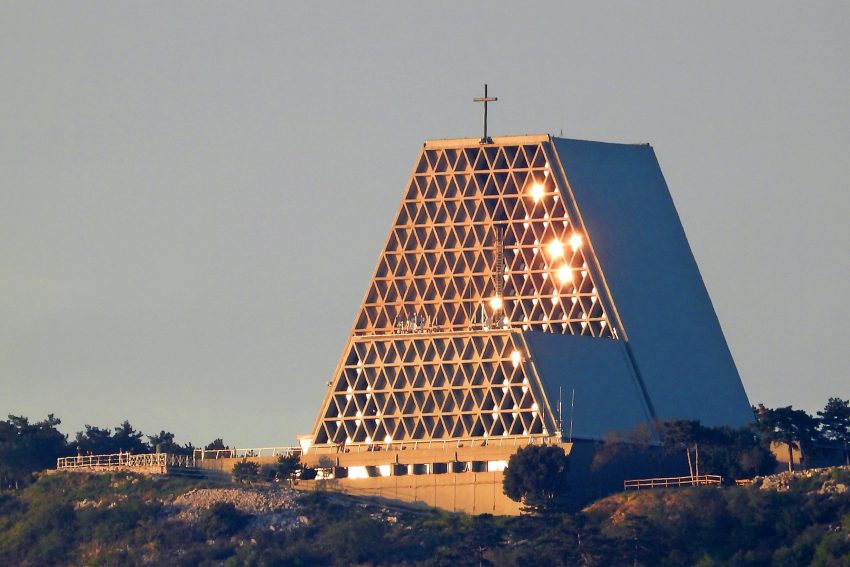
Santuario Mariano di Monte Grisa, the National Shrine of Mary Mother and Queen, is a modern concrete sanctuary perched on the Karst Plateau above Trieste, built in 1963–66 after Bishop Antonio Santin’s wartime vow of gratitude to the Virgin Mary. Architect Antonio Guacci shaped it as two interlocking triangles that read as a giant “M,” giving the exterior a severe, geometric presence unlike traditional Italian churches. Inside, the space feels spacious and restrained, with mosaics and stained glass adding focused bursts of color against the monumental scale. Most visitors linger on the panoramic terrace, where the Gulf of Trieste, the city, and the Adriatic coastline spread out below.
Location: Via Papa Giovanni Paolo Secondo, 34151 Trieste TS, Italy | Hours: Daily: 07:30–19:30. | Price: Free; donations appreciated. | Website | Distance: 5.3km

32. Strada Vicentina
Strada Vicentina
Strada Vicentina
CC BY-SA 4.0 / Renek78
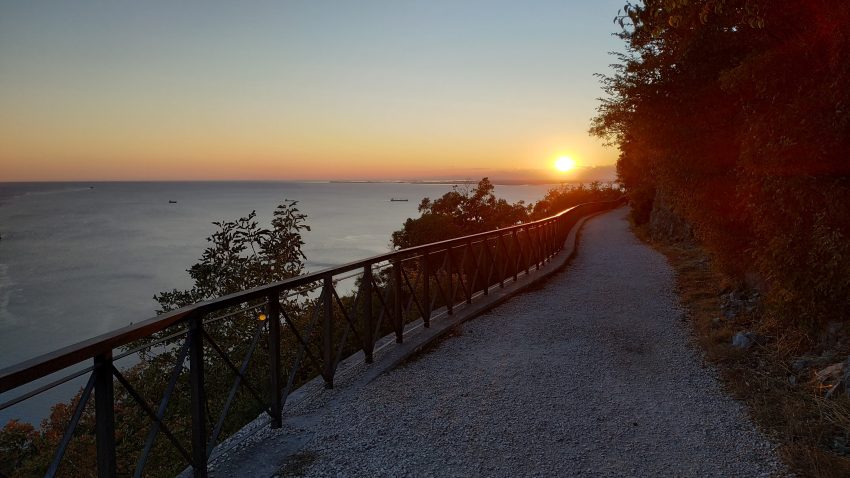
Strada Vicentina (often called the Strada Napoleonica) is a broad ridge path above Trieste, tracing the edge of the Karst plateau with long, open views over the Gulf of Trieste. Built in 1821 under the Austrian Empire and associated with engineer Pietro Vicentini, it began as a strategic connection between the city and the plateau before becoming a favorite outdoor promenade. Walking here, you notice the pale limestone outcrops, low Mediterranean scrub, and pockets of pine, with the Adriatic turning intensely blue on clear days and the Istrian coast sometimes visible. The mostly level gravel surface draws walkers, joggers, and cyclists, while nearby rock faces double as an accessible climbing wall.
Location: Strada Vicentina, 34151 Trieste TS, Italy | Hours: 24 Hours. | Price: Free. | Distance: 5.8km

Best Day Trips from Trieste

A day trip from Trieste offers the perfect opportunity to escape the urban rhythm and discover the surrounding region's charm. Whether you're drawn to scenic countryside, historic villages, or cultural landmarks, the area around Trieste provides a variety of easy-to-reach destinations ideal for a one-day itinerary. If you are looking to rent a car in Italy I recommend having a look at Discover Cars, first, as they compare prices and review multiple car rental agencies for you.

1. Castello di Miramare e il Parco
Castello di Miramare e il Parco
CC BY-SA 3.0 / Gabriel Marchionni
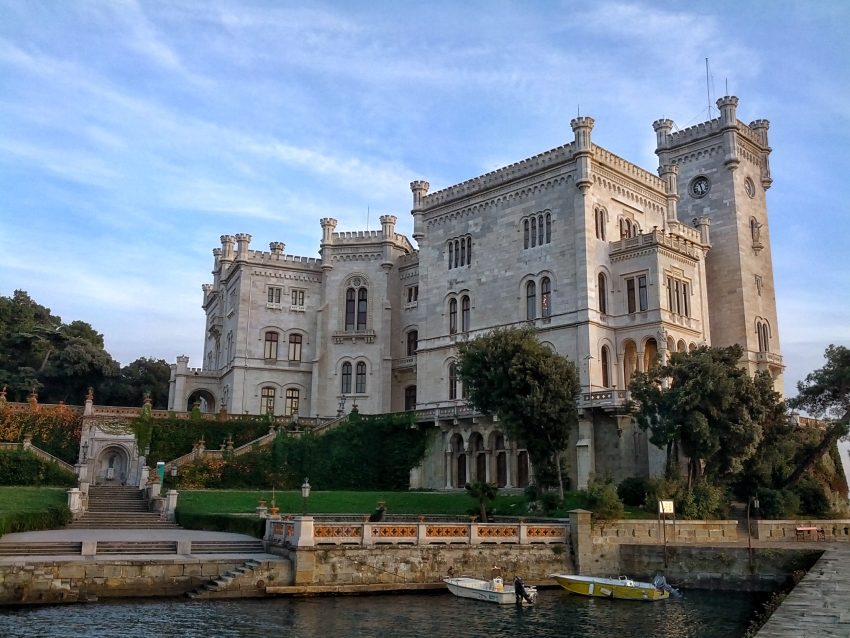
Castello di Miramare e il Parco is Trieste’s most iconic seaside landmark: a white-stone Habsburg castle perched above the Gulf of Trieste, wrapped in a sprawling landscaped park. It’s located in the Grignano area, a short ride from the city center, and it’s one of those places where the sea views are as memorable as the interiors.It works beautifully as…
Location: V.le Miramare, 34151 Trieste TS, Italy | Hours: Daily: 09:00–19:00. Park: Daily from 08:00 (closing time varies by season); check official website. | Price: Adults: €12 (castle museum; may include temporary exhibition). Park: free. | Website | Distance: 7.7km
Visiting Castello di Miramare e il Parco

2. Portoroz
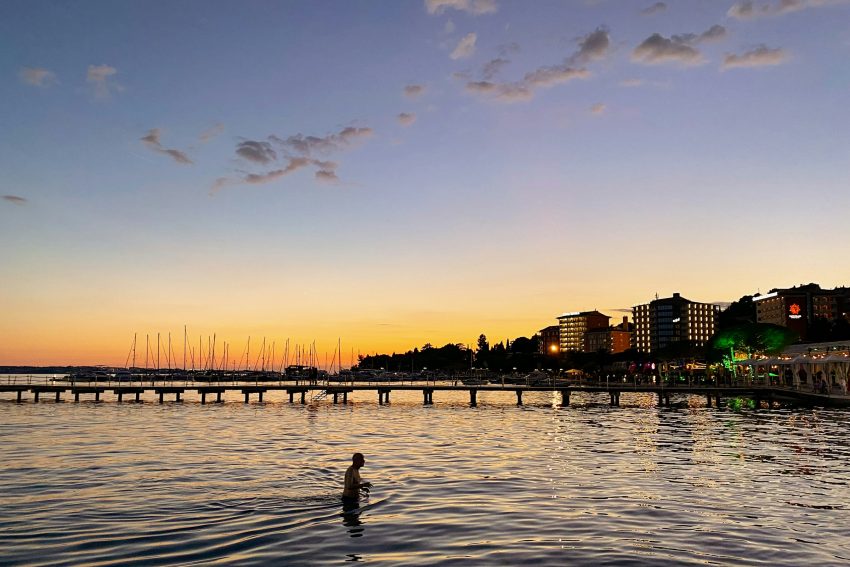
The Complete Guide to Portoroz
Portorož is Slovenia’s best-known seaside resort, set on the Adriatic coast in the Istrian peninsula, where a long promenade, palm-lined streets, and a sheltered bay create an easy, holiday-first atmosphere. Come for the classic beach days—sun loungers, swimming platforms, and calm water—then stay for the mix of spa culture, marina life, and evening strolls that make the town feel lively…
Visiting Portoroz

3. Piran

The Complete Guide to Piran
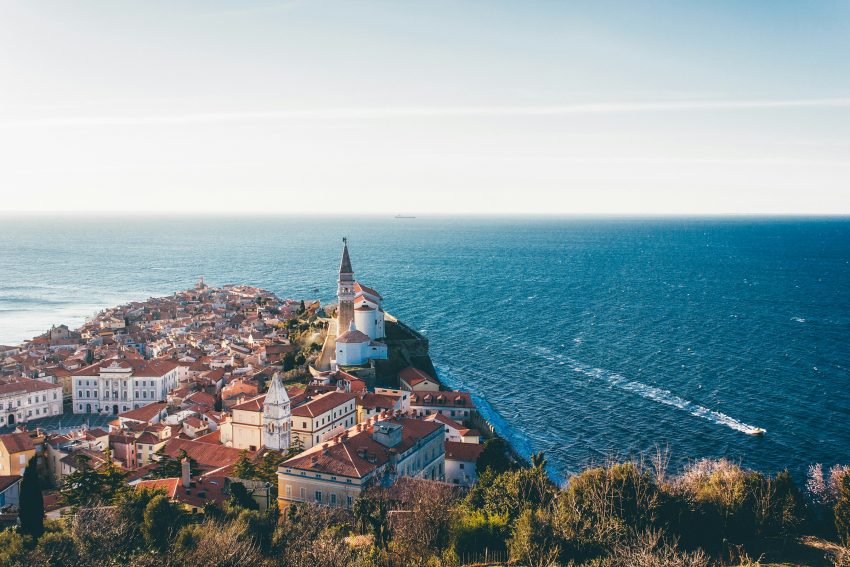
Piran is a postcard-pretty coastal town on Slovenia’s short Adriatic shoreline, set on a narrow peninsula where Venetian-style facades, sea-facing cafés, and stone lanes create an easy, walkable escape. The heart of the experience is simply wandering: you move from sunlit squares to shaded alleys in minutes, with salty breezes and bell chimes as a constant soundtrack. It’s compact enough…
Visiting Piran
Powered by GetYourGuide

4. Cividale del Friuli

Cividale del Friuli veduta
CC BY-SA 4.0 / Sirleonidas
Cividale del Friuli, a picturesque town in Italy's northeastern region, offers a captivating blend of history, culture, and natural beauty. Founded by Julius Caesar as a Roman colony in 50 BC, the town's historic center, now a UNESCO World Heritage site, showcases a remarkable array of medieval and Renaissance architecture. Key landmarks such as the Tempietto Longobardo, an exquisite example…
Visiting Cividale del Friuli

5. Udine
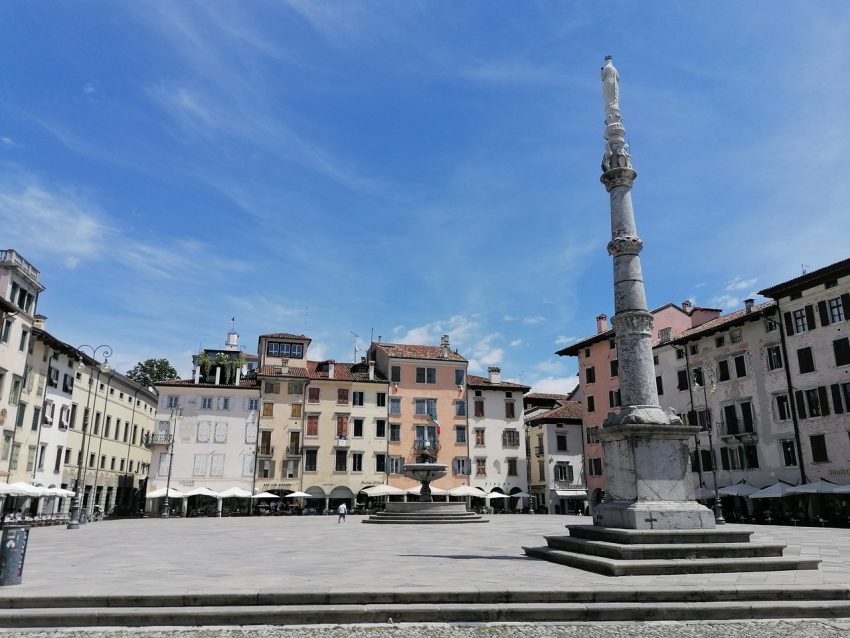
udine italy
udine italy
Visiting Udine, located in the northeastern region of Friuli Venezia Giulia, Italy, offers a journey through a city rich in history, art, and culture. Udine is known for its charming old town, where Venetian influence is evident in its architecture and layout. The city’s centerpiece is the stunning Piazza della Libertà, often referred to as the most beautiful square in…
Visiting Udine
Powered by GetYourGuide

6. Rovinj

The Complete Guide to Rovinj
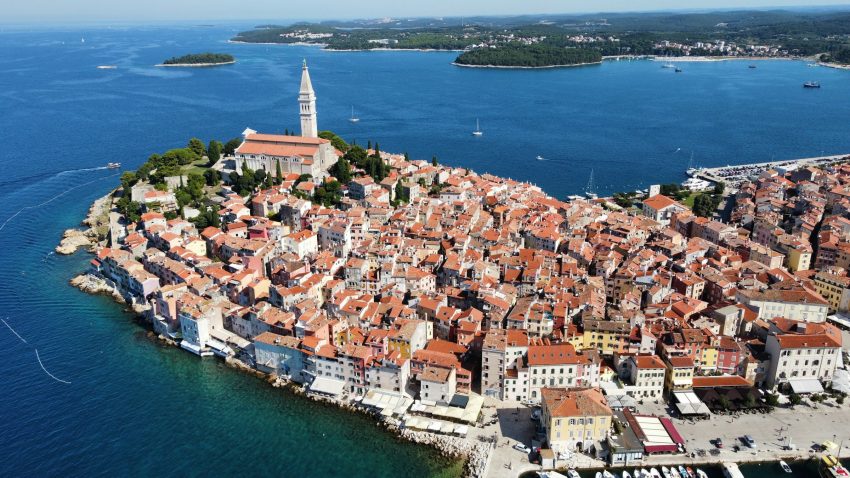
Rovinj is one of Istria’s most photogenic coastal towns, built around a compact old core that rises to a hilltop church and spills down into a tangle of stone lanes, small squares, and waterfront promenades. It’s the kind of place that rewards slow wandering: you’ll move from shaded alleys to sunlit terraces in minutes, with constant glimpses of fishing boats,…
Visiting Rovinj
Powered by GetYourGuide

7. Škofja Loka

Skofja Loka in Winter from hill
Skofja Loka in Winter
CC BY-SA 3.0 / Mihael Grmek
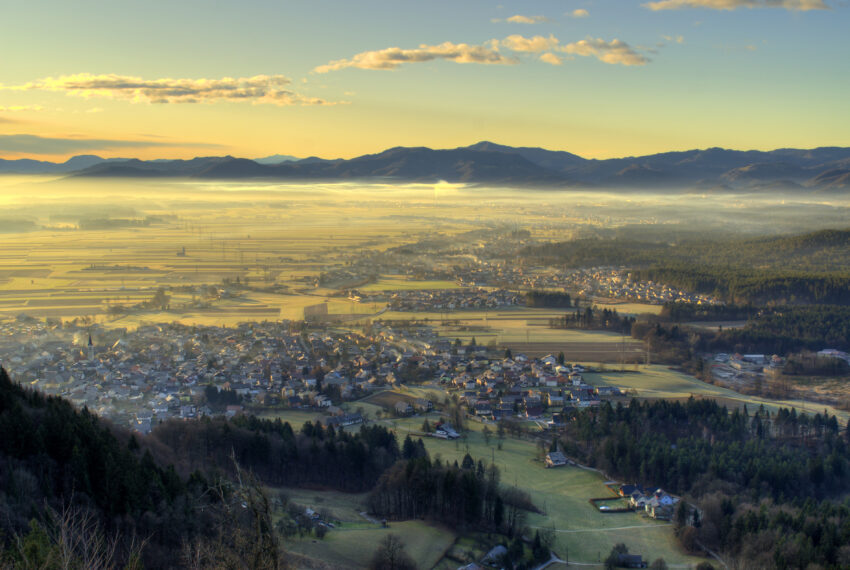
Škofja Loka is one of Slovenia’s most atmospheric small towns, with a compact old centre, river views, painted façades and a castle rising above the rooftops. It sits in the Upper Carniola area, close to Ljubljana, and works especially well for visitors who want a historic town that feels rich in detail without being overwhelming. The old streets are easy…
Visiting Škofja Loka

8. Ljubljana

complete guide to ljubljana
Ljubljana, the vibrant capital of Slovenia, is located in the central part of the country, surrounded by scenic hills and the Ljubljanica River. The compact city center makes it perfect for exploring on foot, with charming pedestrian streets, lively squares, and a mix of modern cafés and traditional eateries. Its central location also makes it a convenient base for day…
Visiting Ljubljana
Powered by GetYourGuide

9. Bled

The Complete Guide to Bled
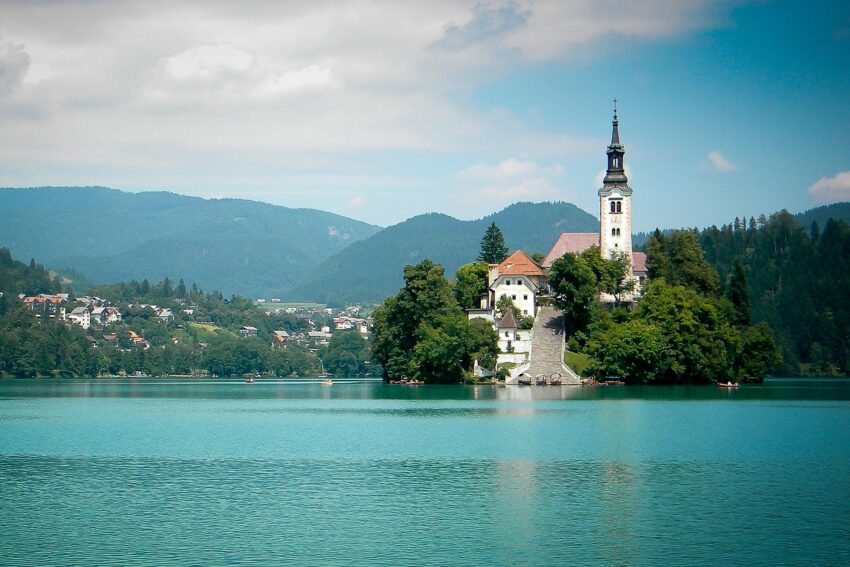
Bled is Slovenia’s postcard-perfect lakeside resort in the Upper Carniola region, on the edge of Triglav National Park and the Julian Alps. The town wraps around Lake Bled, where a turquoise shoreline path, rowing boats, and mountain backdrops make it easy to fill a day with simple, scenic pleasures.Most visits revolve around three icons: the lake loop for views and…
Visiting Bled

10. Pula

The Complete Guide to Pula
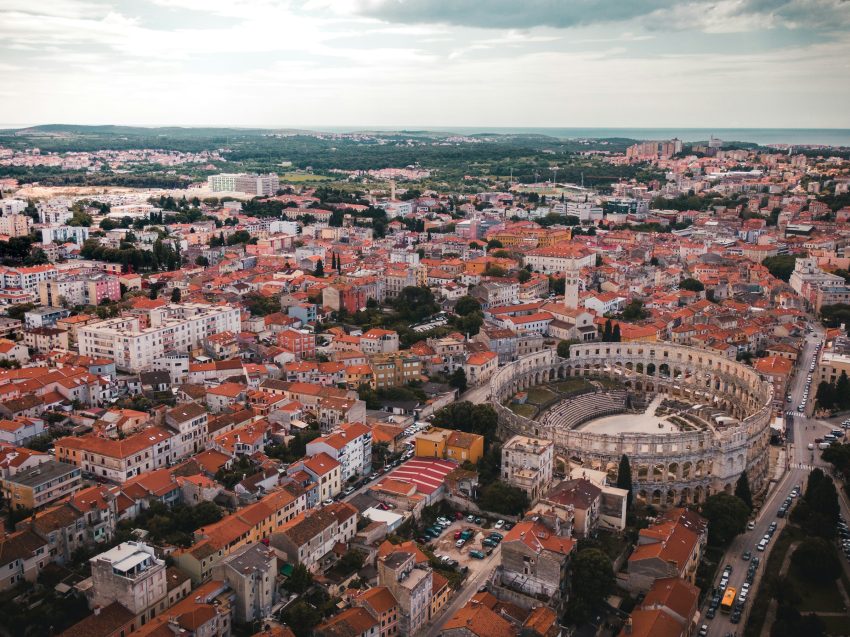
Pula is a laid-back coastal city at the southern tip of the Istrian Peninsula, where Roman-era landmarks sit alongside working harbors, café-lined streets, and easy access to beaches and pine-fringed coves. It’s compact enough to explore on foot, yet surrounded by small seaside neighborhoods and nature spots that make it feel like a base for both culture and swimming days.…
Visiting Pula
Powered by GetYourGuide

11. Villach

The Complete Guide to Villach
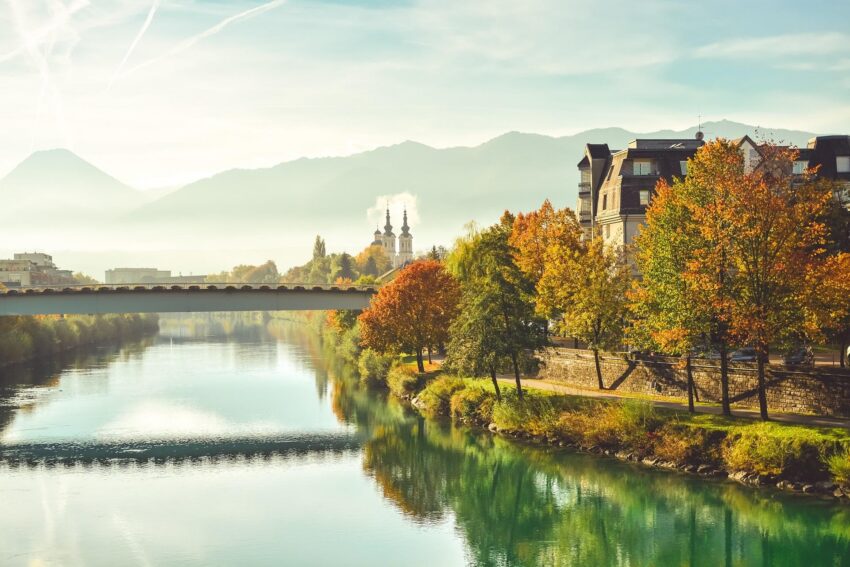
Villach is a relaxed, outdoorsy city in southern Austria, set in the state of Carinthia near the borders with Italy and Slovenia. It makes an excellent base for combining a walkable old town with quick access to lakes, mountains, and cross-border day trips. The River Drau runs through the center, and the surrounding landscape gives the city a bright, open…
Visiting Villach

Where to Stay in Trieste

The best area to stay is near Piazza Unità d’Italia, where boutique hotels provide easy access to the city’s cafes, waterfront, and historic sites. For a quieter stay, accommodations in the hills above Trieste offer stunning Adriatic views.

A 3 to 4-day stay is ideal for exploring Trieste’s grand architecture, literary heritage, and coastal walks. A 5-day stay allows for day trips to Miramare Castle, the Karst region, or even Slovenia.

Using the our Hotel and Accomodation map, you can compare hotels and short-term rental accommodations in Trieste. Simply insert your travel dates and group size, and you’ll see the best deals for your stay.

Trieste Accommodation Map

Best Time to Visit Trieste

Visiting Trieste in Spring (Best)

Spring, from March to May, is the best time to visit Trieste. The weather is mild and pleasant, with temperatures ranging from 10°C to 20°C (50°F to 68°F). This season brings the city to life with blooming flowers and outdoor events, making it ideal for exploring the historic sites, enjoying the scenic waterfront, and experiencing the vibrant cultural scene without the large summer crowds.

Visiting Trieste in Summer

Summer, from June to August, is the peak tourist season in Trieste. The weather is warm, with temperatures often reaching 25°C to 30°C (77°F to 86°F), perfect for enjoying the Adriatic coastline and outdoor activities. However, this is also the busiest time, with more tourists and higher prices. The city is lively, with numerous festivals and events, making it an exciting time to visit, though it may be crowded.

Visiting Trieste in Autumn

Autumn, from September to November, offers cooler temperatures, ranging from 10°C to 20°C (50°F to 68°F), and a quieter atmosphere as the summer crowds diminish. The city’s parks and surrounding countryside are particularly beautiful with fall colors, making it a great time for outdoor exploration. Additionally, autumn is a wonderful time to experience Trieste’s culinary scene, with seasonal dishes and local wines.

Visiting Trieste in Winter

Winter, from December to February, is the quietest time to visit Trieste. The temperatures are cool, typically between 5°C and 10°C (41°F to 50°F), and the city sees fewer tourists. While some outdoor activities might be limited, this season offers a peaceful experience, allowing you to explore the city’s cultural and historical attractions without the crowds. Winter also brings festive events and holiday markets, adding charm to the city during the holiday season.

Annual Weather Overview

  • January 8°C
  • February 10°C
  • March 13°C
  • April 17°C
  • May 21°C
  • June 26°C
  • July 29°C
  • August 28°C
  • September 24°C
  • October 19°C
  • November 12°C
  • December 8°C

How to get to Trieste

Traveling to Trieste by Air

Trieste is served by the Trieste – Friuli Venezia Giulia Airport (TRS), located about 33 kilometers northwest of the city. The airport offers flights to and from several major European cities. From the airport, you can reach Trieste by bus, taxi, or rental car. The drive to the city center takes around 30 minutes, making it a convenient option for air travelers.

Traveling to Trieste by Train

Trieste is well-connected by train, with regular services from major Italian cities like Venice, Milan, and Rome. The central train station, Trieste Centrale, is located close to the city center, making it easy to access local transportation and start exploring the city immediately. International trains also connect Trieste with nearby countries like Slovenia and Austria, offering a scenic and comfortable journey to the city.

Traveling to Trieste by Car

Driving to Trieste is a popular option, especially if you are coming from nearby countries like Slovenia, Austria, or Croatia. The city is easily accessible via major highways, such as the A4 motorway from Venice. Having a car allows for flexibility in exploring Trieste and the surrounding areas, including the beautiful Adriatic coast and nearby attractions like the Miramare Castle.

Traveling to Trieste by Ferry

Trieste’s port is a gateway to the Adriatic Sea, and you can travel to the city by ferry from various destinations along the Italian coast, as well as from nearby countries like Croatia. Ferries provide a scenic way to arrive in Trieste, with the added benefit of arriving directly in the city’s waterfront area, close to many of the main attractions.
More from this area