Škofja Loka, Slovenia: The Ultimate Travel Guide 2026
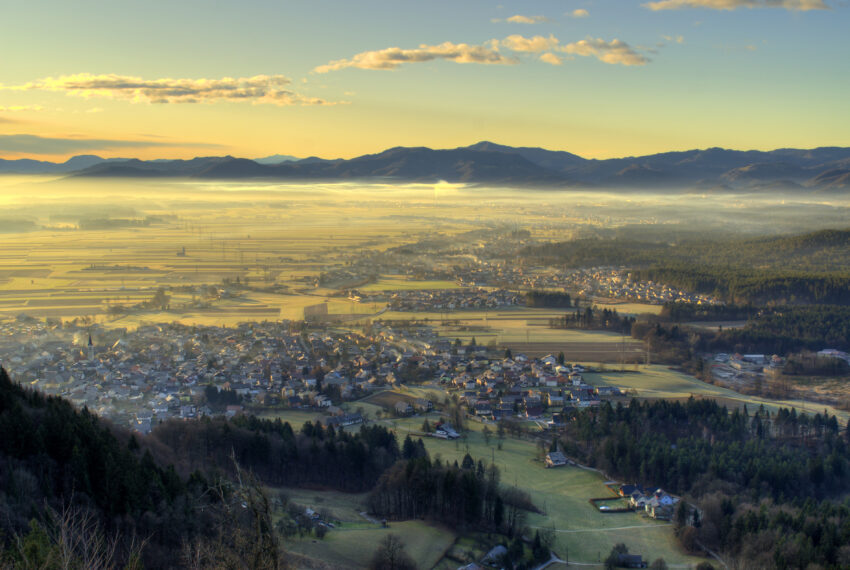
Škofja Loka is one of Slovenia's most atmospheric small towns, with a compact old centre, river views, painted façades and a castle rising above the rooftops. It sits in the Upper Carniola area, close to Ljubljana, and works especially well for visitors who want a historic town that feels rich in detail without being overwhelming. The old streets are easy to explore on foot, and the town has a calm, local rhythm that makes it rewarding for a slow visit.
A visit to Škofja Loka is best built around Mestni trg, Spodnji trg, the riverside, the Capuchin Bridge and the castle above the town. I would allow time to notice the courtyards, frescoed façades, small bridges and old shopfronts rather than rushing between individual sights. The centre is small, but it has enough architectural detail and atmosphere to fill several hours comfortably.
Škofja Loka is also a good base for exploring the surrounding Selca and Poljane valleys. The nearby countryside adds another layer to a visit, with churches, villages, short walks, viewpoints and rural heritage close to town. It suits travellers who want culture and countryside together, especially if they prefer a quieter alternative to Slovenia's busier visitor centres.
Table of Contents
- History of Škofja Loka
- Best things to do and See in Škofja Loka
- Visit Škofja Loka Castle and Museum in Škofja Loka
- Explore the Old Town Centre of Škofja Loka
- See the Capuchin Bridge in Škofja Loka
- Visit Homan House in Škofja Loka
- Visit St. Jacob’s Church in Škofja Loka
- Visit the Capuchin Church and Library in Škofja Loka
- Walk to Puštal, Nace’s House and Puštal Castle from Škofja Loka
- See the Church of the Holy Cross above Puštal near Škofja Loka
- Visit the Church of the Annunciation of Mary in Crngrob near Škofja Loka
- Visit Tavčar Manor in Visoko near Škofja Loka
- 10 Best Day Trips from Škofja Loka
- Where to Stay in Škofja Loka
- Best Time to Visit Škofja Loka
- How to get to Škofja Loka
History of Škofja Loka
Early Škofja Loka and the Freising Bishops
The history of Škofja Loka begins in 973, when Emperor Otto II granted the Loka territory to the Bishops of Freising. This connection shaped the town for centuries, giving it a distinctive identity as an ecclesiastical lordship. The name itself reflects this past, with “Škofja” linked to the bishop and “Loka” meaning a meadow or wetland area.
Under the Bishops of Freising, Škofja Loka developed into a fortified administrative, trading and craft centre. The town grew around its main squares, with routes, workshops and civic buildings giving it a strong urban structure. Its castle and walls were part of this system of control and defence, while the town’s privileges helped support its economic life.
This long episcopal period is one of the reasons Škofja Loka still feels so historically coherent. The old town has retained the shape of a medieval settlement, with narrow streets, terraced spaces and buildings that reflect centuries of local authority, trade and religious influence.
Medieval Škofja Loka and the Castle
Loka Castle became one of the defining symbols of medieval Škofja Loka. The original castle was built by the Freisings in 1202, and it later served as a residence and administrative centre connected to the bishops’ rule. Its position above the town gave it both practical and symbolic power.
The town itself became enclosed by walls and gates, which protected its streets, workshops and public spaces. Škofja Loka’s medieval development was not only military or political; it was also shaped by craft production, commerce and religious institutions. The old squares still show how the town functioned as a dense civic centre rather than a scattered rural settlement.
Visitors can still read this medieval structure in the townscape. The relationship between the castle, the parish church, the Capuchin Bridge, the old town hall and the river crossings gives Škofja Loka much of its visual identity.
Earthquake, Fire and Rebuilt Škofja Loka
The earthquake of 1511 was one of the major turning points in the history of Škofja Loka. Loka Castle was badly damaged and then restored, while many buildings in the town were rebuilt or altered in the following decades. This is why several of the town’s most attractive buildings combine medieval foundations with Gothic, Renaissance and later Baroque details.
Homan’s House is a good example of this layered history. It was renovated after the 1511 earthquake with Gothic and Renaissance elements, and later restoration revealed frescoes and 16th-century decorative details on its exterior. Today it continues as a café and patisserie, which gives the building a living role in the old town rather than leaving it as a static monument.
Fires also shaped Škofja Loka, especially in the lower part of town. The former Špital in Spodnji trg was damaged by the fire of 1698 and later renovated, while its Baroque church became part of the rebuilt townscape. These disasters help explain why Škofja Loka has such a rich mix of medieval, Renaissance and Baroque architecture.
Baroque Škofja Loka and the Passion Play
The Baroque period gave Škofja Loka one of its most important cultural legacies: the Škofja Loka Passion Play. Written in 1721 by the Capuchin monk Romuald Štandreški, it is regarded as the oldest preserved dramatic text in the Slovene language and is closely connected with the Capuchin monastery and library.
The Passion Play is not just a literary monument. It is a community event rooted in procession, theatre, religious devotion and local identity. Its UNESCO recognition has made it one of the most important pieces of intangible cultural heritage associated with Škofja Loka.
This Baroque cultural layer can still be felt in the town’s churches, chapels, devotional art and processional spaces. The Capuchin Church and Library are especially important, as the library preserves the manuscript of the Passion Play alongside rare old religious books and early printed works.
Modern Škofja Loka
In the modern period, Škofja Loka became known not only for its preserved townscape but also for its museums, art, crafts and local cultural life. Loka Castle now houses Škofja Loka Museum, with archaeology, history, art, ethnology, natural history and other collections focused on the town and the surrounding territory.
The preservation of the old town has made Škofja Loka one of Slovenia’s most atmospheric historic centres. Its value lies not only in individual monuments but in the way the castle, squares, churches, bridges and riverbanks still form a convincing historic whole.
Today, Škofja Loka balances heritage with ordinary town life. Cafés, small hotels, schools, churches and cultural venues keep the centre active, while the surrounding hills and valleys continue to connect the town with rural traditions, walking routes and local food.

Moira & Andy
Hey! We're Moira & Andy. From hiking the Camino to trips around Europe in Bert our campervan — we've been traveling together since retirement in 2020!
Visiting Škofja Loka for the first time and wondering what are the top places to see in the city? In this complete guide, I share the best things to do in Škofja Loka on the first visit. To help you plan your trip, I have also included an interactive map and practical tips for visiting!
This website uses affiliate links which earn a small commission at no additional cost to you.
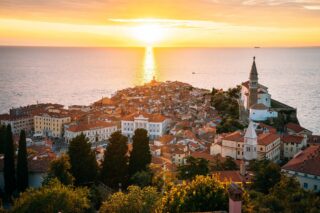
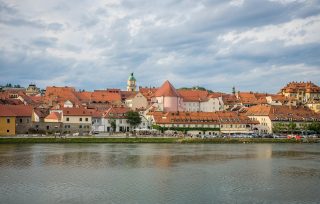
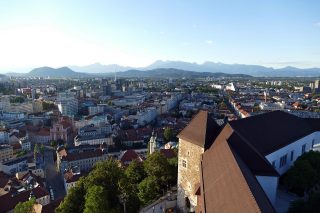
Best things to do and See in Škofja Loka
1. Visit Škofja Loka Castle and Museum in Škofja Loka
Škofja Loka Castle is the main landmark above the town and one of the best places to understand the wider Škofja Loka area. The original castle was built by the Freisings in 1202, badly damaged in the 1511 earthquake and later restored. Today it houses Škofja Loka Museum, whose collections cover archaeology, history, cultural history, art, ethnology, natural history and sport.
The castle is also worth visiting for the setting. From the approach and grounds, you get a strong sense of how the town sits below the hill, with the old streets, river crossings and surrounding landscape all visible as part of one historic scene. In the castle garden, visitors can also see Škopar’s House, a preserved 16th-century farmhouse linked with rural life in the wider Loka area.
Entry cost: Adults €9.00; pupils, students and seniors €5.00; family ticket €22.00; Castle Gallery €2.00. Opening hours: May–October Tuesday–Sunday 10.00 am–6.00 pm, also Mondays from June to September; November–April Tuesday–Sunday 10.00 am–5.00 pm. Last entry is half an hour before closing.
2. Explore the Old Town Centre of Škofja Loka
The old town centre is the best place to start in Škofja Loka. Mestni trg has the most elegant urban feel, with old façades, civic buildings and café life, while Spodnji trg gives a slightly quieter sense of the lower town. Together, they show why Škofja Loka is often treated as one of Slovenia’s most atmospheric medieval towns.
The appeal is in the detail: painted buildings, small courtyards, carved doorways, old shopfronts, church views and the way the streets frame the castle above. This is not a place where you need to rush from sight to sight. I would give the old town enough time for slow wandering, especially early in the morning or late in the afternoon.
Entry cost: Free. Opening hours: Public streets and squares are generally accessible at all times, although individual shops, cafés, churches and museums keep their own hours.
3. See the Capuchin Bridge in Škofja Loka
The Stone Bridge, also known as the Capuchin Bridge, is one of the most recognisable sights in Škofja Loka. It crosses the Selca Sora River and was built in the mid-14th century from carved stone in a semi-circular form. The bridge was renovated in 1888 and fitted with iron railings, and the statue of St. John of Nepomuk stands in the centre.
This is one of the best viewpoints in the town, especially for seeing how the river, old streets and castle fit together. It is also a useful reminder that Škofja Loka’s rivers were not just scenic features; they shaped movement, settlement and the practical layout of the town.
Entry cost: Free. Opening hours: The bridge is an outdoor public sight and is generally accessible at all times.
4. Visit Homan House in Škofja Loka
Homan House is one of the most attractive buildings in the old town and a good example of Škofja Loka’s layered architecture. It was renovated in Gothic style with Renaissance elements after the 1511 earthquake, and restoration uncovered frescoes of medieval soldiers, St. Christopher and other 16th-century decorative features.
The building is also appealing because it still has a social role in the centre of town. Today it continues as a well-known café and patisserie, so it is not only something to look at from outside. It works well as a pause between the main square, the bridge and the climb toward the castle.
Entry cost: Free to view from outside; café prices vary. Opening hours: Check current café hours locally before visiting.
5. Visit St. Jacob’s Church in Škofja Loka
St. Jacob’s Church is one of the key religious buildings in Škofja Loka. It was built in 1471 on the foundations of an older church, and its interior includes guild reliefs, altar details, 16th-century frescoes, a black marble Renaissance altar of St. Catherine from 1694 and a late-17th-century painting of Christ on the Mount of Olives.
The church is also notable for later work connected with Jože Plečnik, one of Slovenia’s most important architects. The interior, altars and chandeliers were remodelled according to his plan, which gives the church another layer of interest beyond its medieval origins.
Entry cost: Usually free, though donations may be appreciated. Opening hours: Church access can vary around services and parish use, so check locally before planning an interior visit.
6. Visit the Capuchin Church and Library in Škofja Loka
The Capuchin Church, monastery and library form one of the most important cultural sites in Škofja Loka. The church was built in the Baroque era in 1709, and its library preserves old religious books, incunabula and the valuable manuscript of the Škofja Loka Passion from 1721.
For visitors interested in Slovenian literature and religious heritage, this is one of the most meaningful places in town. The Passion Play manuscript connects the library directly with the town’s cultural identity, while the church itself adds a quieter Baroque layer to the old centre.
Entry cost: Check locally; access to the library is not the same as visiting an ordinary open church. Opening hours: Visit by arrangement or according to current monastery/church access.
7. Walk to Puštal, Nace’s House and Puštal Castle from Škofja Loka
Puštal is one of the best short extensions from the old town. The path to Puštal leads past the Devil’s Footbridge, traditional houses, Nace’s House and Puštal Castle, giving visitors a good mix of folklore, vernacular architecture and riverside views.
Nace’s House is especially interesting because it preserves the appearance of an 18th-century rural building. It stands on the edge of Puštal on the right bank of the Poljane Sora and is considered one of the best-preserved rural buildings in the Škofja Loka area and the Ljubljana hinterland.
Entry cost: Free to walk the route; Nace’s House can be viewed by prior arrangement. Opening hours: The outdoor route is generally accessible at all times, but Nace’s House and private interiors require prior arrangement.
8. See the Church of the Holy Cross above Puštal near Škofja Loka
The Church of the Holy Cross stands on Hribec above Puštal and makes a rewarding short climb from the town. It was built at the start of the 18th century and is reached by a path lined with Stations of the Cross. The setting gives the church much of its appeal, with views back toward Škofja Loka and the surrounding hills.
Inside, the church is known for its Baroque character, frescoes and paintings. It pairs well with the Devil’s Footbridge, Nace’s House and Puštal Castle, so it makes sense to treat Puštal as a half-day heritage walk rather than a single stop.
Entry cost: Usually free if open, though donations may be appreciated. Opening hours: Church access can vary; the exterior and path are the more reliable parts of a casual visit.
9. Visit the Church of the Annunciation of Mary in Crngrob near Škofja Loka
The Church of the Annunciation of Mary in Crngrob is one of the finest religious sights near Škofja Loka. It developed over a long period from the end of the 13th century to the mid-19th century, and its interior is valued for frescoes, a golden altar and rich pilgrimage-church decoration. The bell tower also has a fresco of St. Christopher from 1863.
Crngrob is a good choice if you want to move beyond the old town and see how the area’s sacred heritage continues into the surrounding countryside. It is especially worthwhile for travellers interested in medieval and pilgrimage churches rather than only castles and town squares.
Entry cost: Exterior free; guided or interior access may depend on arrangement. Opening hours: The church is not generally open to the public, but guided tours can usually be arranged in advance through the local tourist office.
10. Visit Tavčar Manor in Visoko near Škofja Loka
Tavčar Manor in Visoko is one of the best sights within easy reach of Škofja Loka if you want a countryside addition to the town. The manor dates from the 17th century and is associated with the Slovenian writer and politician Ivan Tavčar. The former Kalan family estate inspired Tavčar’s historical novel The Visoko Chronicles.
The setting is part of the appeal. The manor sits close to the Poljane Sora River, surrounded by hills and forests, with an outbuilding, hayrack, chapel, family tomb and bronze statue of Tavčar nearby. It is a good stop for visitors travelling by car or bike through the Poljane Valley.
Entry cost: Visoko Mansion entry is usually around €5.00 for adults and €4.00 for pupils, students and seniors. Opening hours: Collections are generally visited during the opening hours of Kavarna Visoko, commonly Wednesday–Friday 12.00 pm–6.00 pm and Saturday, Sunday and holidays 10.00 am–6.00 pm; Monday–Tuesday closed. Check locally before travelling, as rural heritage opening times can change.