Puente Romano de Córdoba
Bridge and Historic Site in Córdoba
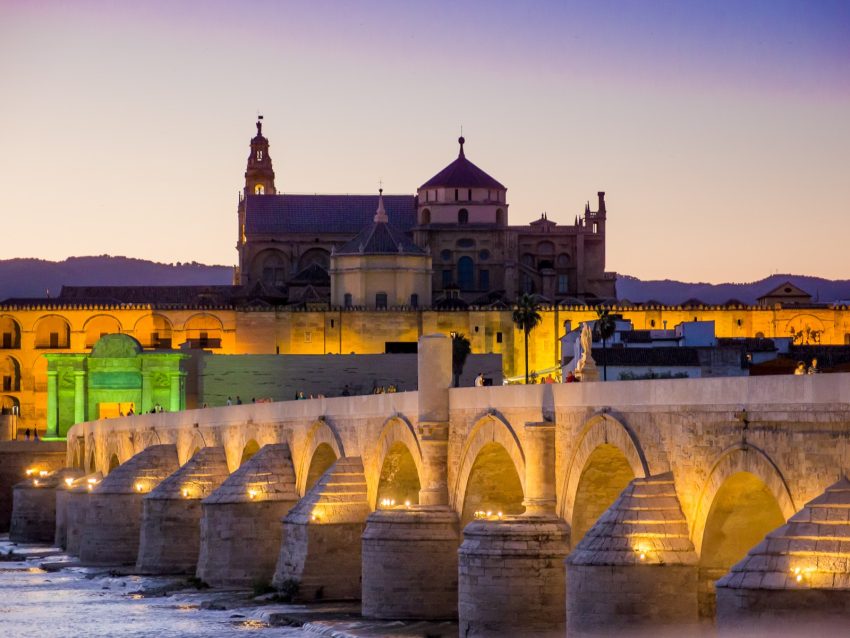
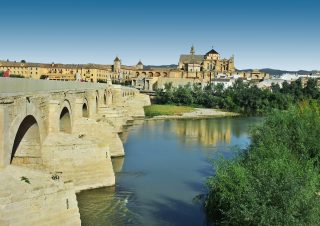
The Puente Romano, or Roman Bridge of Córdoba, is one of Andalusia's most enduring architectural symbols. Stretching across the broad Guadalquivir River, it was originally built in the early 1st century BC and reconstructed many times, with much of its present form dating from the Moorish period in the 8th century. Linking the Campo de la Verdad with the Judería, the bridge has been the city's southern gateway for two millennia and remains one of the best places to visit in Córdoba for atmospheric river views.
Walking across the bridge today feels like stepping through centuries of Cordoban history. From here, the view of the Mezquita-Catedral rising above the riverbanks is unforgettable, especially at sunset when the light reflects off the arches. Surrounding landmarks such as the Puerta del Puente and Torre de la Calahorra make it a highlight of any walking tour of Córdoba.
Table of Contents
- History and Significance of the Roman Bridge of Córdoba
- Things to See and Do on the Roman Bridge of Córdoba
- How to Get to the Roman Bridge of Córdoba
- Practical Tips on Visiting the Roman Bridge of Córdoba
- Where to Stay close to the Roman Bridge of Córdoba
- Is the Roman Bridge of Córdoba Worth Visiting?
- FAQs for Visiting Roman Bridge of Córdoba
- Nearby Attractions to Roman Bridge of Córdoba
History and Significance of the Roman Bridge of Córdoba
Córdoba began as an Iberian settlement heavily influenced by Carthaginian culture before the Romans captured it in the 1st century BC. Under Emperor Augustus, Córdoba became the capital of Hispania Ulterior and a thriving regional centre. It was likely at this time that the Romans built the first stone bridge, forming part of the Via Augusta that connected Rome with Cádiz.
After the fall of the Western Roman Empire, the Visigoths controlled the region until the Umayyads arrived in 720. Moorish rulers rebuilt and fortified the bridge, adding Islamic design elements and strengthening its foundations. The Arab geographer al-Idrisi wrote in 1140 that the bridge “surpasses all others in beauty and solidity,” reflecting Córdoba’s status as a major medieval city.
In the Middle Ages, the bridge became even more strategic during conflicts such as those against Peter the Cruel in the 1350s. Towers were added at each end: the defensive Torre de la Calahorra to the south and the Renaissance Puerta del Puente to the north. Over time it was integrated into trade routes, tax collection points, and later a national highway. It finally became pedestrian-only in 2004 and underwent major restoration in 2006, preserving it as one of the top sights in Córdoba.
Things to See and Do on the Roman Bridge of Córdoba
Walking the full length of the bridge (331 metres) allows you to admire its 16 arches-four pointed, the rest semicircular. Views are spectacular in all directions, especially towards the Mezquita-Catedral and the Puerta del Puente. The mud-brown Guadalquivir River flows below, once navigable from Córdoba all the way to Cádiz, showing how important this crossing was in ancient times.
At the south end stands the Torre de la Calahorra, a fortified 12th-century Islamic tower later adapted by Christian rulers. Inside is an interactive museum, the Museo Vivo de Al-Andalus, dedicated to the coexistence of Jewish, Muslim, and Christian cultures.
Midway across the bridge is the 17th-century statue of Archangel San Rafael, surrounded by red candles left by locals. Opposite stands an area dedicated to Córdoba’s patron saints, San Acisclo and Santa Victoria.
On the northern end is the Renaissance Puerta del Puente, built in the 16th century with Doric columns and a decorated frieze. For a small fee, you can climb to the top for panoramic views, making this spot one of the best places to see in Córdoba.
How to Get to the Roman Bridge of Córdoba
Travelling by air, visitors typically fly into Seville Airport or Málaga Airport before connecting to Córdoba by train or bus. For the best deals and a seamless booking experience, check out these flights to Córdoba on Booking.com.
If arriving by train, it's a straightforward walk or short taxi ride from Córdoba station to the bridge via the historic centre. Train schedules and bookings can be found on Omio.
If travelling by car, although the bridge is pedestrianised, there is ample parking along Avenida Fray Albino, just a short walk away. If you are looking to rent a car in Spain I recommend having a look at Discover Cars, first, as they compare prices and review multiple car rental agencies for you.
Practical Tips on Visiting the Roman Bridge of Córdoba
- Best time to visit Roman Bridge of Córdoba: Sunset for golden reflections and quieter crowds.
- Entrance fee in Euros: Free to walk; small fee for climbing the Puerta del Puente tower.
- Opening hours: The bridge is open 24 hours.
- Official website: Check Córdoba tourism for nearby attractions.
- How long to spend: 30-60 minutes including surrounding sites.
- Accessibility: Fully accessible for wheelchairs and strollers.
- Facilities: Cafés and shops nearby; rest areas at both ends.
- Photography tip: Sunrise and sunset offer the best angles toward the Mezquita.
- Guided tours: Many historic walking tours include the bridge.
- Nearby food options: Riverside restaurants along the south bank and near the Mezquita.
Where to Stay close to the Roman Bridge of Córdoba
Staying near the bridge allows easy access to the Mezquita and Judería. For river views, consider Hesperia Córdoba. For charm inside the old town, try Eurostars Conquistador. Another nearby boutique option is Balcón de Córdoba.
Is the Roman Bridge of Córdoba Worth Visiting?
Yes. With its sweeping arches, remarkable history, and stunning views toward the Mezquita, the Roman Bridge is one of the best places to visit in Córdoba. Its blend of Roman engineering and Moorish reconstruction makes it a living monument to the city's layered past.
What Other Travellers Say...

Roman Bridge of Córdoba sits on Av. del Alcázar just behind the Mezquita-Cathedral; this long, restored Roman-era span offers striking views over the Guadalquivir and the walled city, is pleasant for a short stroll, and comes alive with musicians and daily foot traffic—glowing warmly when lit at night and providing peaceful, photogenic reflections on the water.


FAQs for Visiting Roman Bridge of Córdoba
Nearby Attractions to Roman Bridge of Córdoba
- Mezquita-Catedral de Córdoba - The city's most iconic monument overlooking the bridge.
- Torre de la Calahorra - A fortified gate tower with a museum and rooftop views.
- Puerta del Puente - A Renaissance gate marking the bridge's northern entry.
- Judería de Córdoba - The historic Jewish Quarter just beyond the Mezquita.
- Museo Vivo de Al-Andalus - An interactive cultural museum inside the Calahorra Tower.
The Puente Romano de Córdoba appears in our Complete Guide to Visiting Córdoba!

Moira & Andy
Hey! We're Moira & Andy. From hiking the Camino to trips around Europe in Bert our campervan — we've been traveling together since retirement in 2020!
This website uses affiliate links which may earn a commission at no additional cost to you!
Planning Your Visit
Nearby Attractions
- Puerta del Puente (0.1) km
City Gate - Triunfo de San Rafael de la Puerta del Puente (0.1) km
Statue - Mills of the Guadalquivir (0.1) km
Historic Building - Torre de la Calahorra (0.2) km
Tower - Mezquita-Catedral (0.2) km
Cathedral and Mosque - Palacio de Congresos (0.3) km
Historic Building - Alcázar de los Reyes Cristianos (0.4) km
Palace - Baños del Alcázar Califal (0.4) km
Baths - Calleja de las Flores (0.4) km
Street - Baños Árabes de Santa María (0.4) km
Baths