Berchtesgaden, Germany: The Ultimate Travel Guide 2026
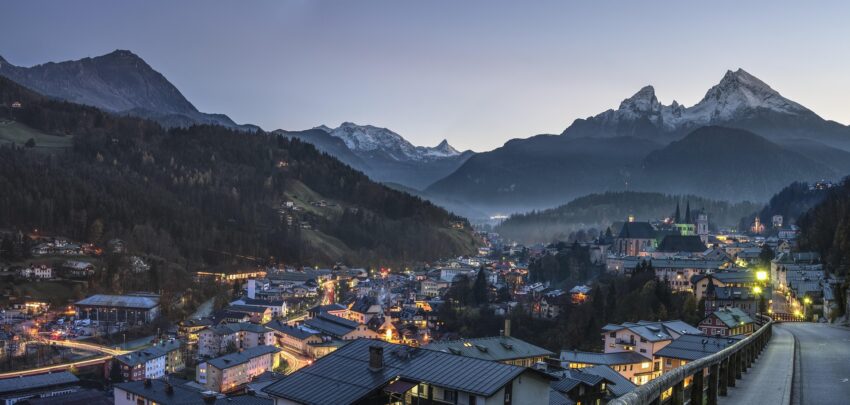
Berchtesgaden is a mountain town in southeastern Germany, set in the Bavarian Alps near the Austrian border. It makes an ideal base for exploring Berchtesgaden National Park, with dramatic limestone peaks, clear lakes, and well-marked trails that start close to town. The center is compact and easy to navigate, with cafés, bakeries, and practical services that make day trips simple.
Many visitors come for the region's signature sights: the emerald waters of Königssee, the high viewpoints around Jenner, and the famous mountain road leading toward the Kehlsteinhaus (Eagle's Nest). Even if you're not planning big hikes, you can mix gentle lakeside walks with cable cars and scenic drives, then return to Berchtesgaden for an unhurried evening meal.
Berchtesgaden works well for both short breaks and longer stays because you can balance nature with easy logistics. Public transport connects key valleys and lake piers, while guided tours help you reach high-alpine viewpoints without worrying about timing. If you're traveling through Bavaria, it's also a rewarding contrast to city stops like Munich or Salzburg, offering fresh air, quiet villages, and standout panoramas.
History of Berchtesgaden
Early Settlement and Medieval Growth
The Berchtesgaden area first took shape around 1102, when a community of Augustinian Canons established a priory. This religious foundation was the catalyst for the region’s economic backbone. Sheltered by the formidable Watzmann massif, early settlers developed a unique dual economy of alpine farming and salt extraction. By the 13th century, a market settlement coalesced around the monastery, acting as a vital waypoint for travelers and traders navigating the Alpine passes. Salt, known as white gold, became the region’s most valuable resource, leading to the expansion of trade routes toward Salzburg and Munich.
Prince-Provostry Era
For over four centuries, Berchtesgaden held a rare political status as a Prince-Provostry, an ecclesiastical principality independent of the surrounding Duchy of Bavaria. The Provosts served as both spiritual leaders and secular lords, managing the forests, salt mines, and ironworks. This era defined the landscape through the construction of the Royal Castle and administrative offices. It also established the Alm system, where cattle moved between valley floors and high-altitude pastures, creating the distinct patchwork look of the mountain meadows that persists today.
19th Century to Early Tourism
The dissolution of the Holy Roman Empire led to Berchtesgaden being incorporated into the Kingdom of Bavaria in 1810. The Bavarian royals utilized the former monastery as a summer residence, attracting artists and writers. As the Romantic movement swept Europe, the town transformed into a sophisticated health resort. The arrival of the railway in 1888 catalyzed a tourism boom, making the mountain air and the emerald waters of Königssee accessible to a growing class of travelers from across the continent.
20th Century and Remembrance
The mid-20th century marked a dark chapter as the nearby Obersalzberg was transformed into a restricted second seat of government for the Nazi regime. Following 1945, the region underwent a rigorous process of transformation. Most Nazi-era structures were demolished to prevent them from becoming shrines, and the Documentation Center Obersalzberg was eventually opened to turn a site of power into a place of historical education. The town successfully decoupled its identity from its wartime associations, leaning back into its natural heritage and outdoor recreation.
Modern Berchtesgaden
Today, Berchtesgaden is a model for sustainable alpine tourism. At the heart of its identity is the Berchtesgaden National Park, which ensures that high-alpine ecosystems remain untouched by over-development. The town balances world-class winter sports and hiking with the maintenance of traditional Bavarian festivals and salt mining. This commitment to gentle tourism ensures that the landscapes remain protected while remaining a premier destination for those seeking the natural beauty of the Bavarian Alps.

Moira & Andy
Hey! We're Moira & Andy. From hiking the Camino to trips around Europe in Bert our campervan — we've been traveling together since retirement in 2020!
Visiting Berchtesgaden for the first time and wondering what are the top places to see in the city? In this complete guide, I share the best things to do in Berchtesgaden on the first visit. To help you plan your trip, I have also included an interactive map and practical tips for visiting!
This website uses affiliate links which earn a small commission at no additional cost to you.


Best things to do and See in Berchtesgaden
1. Take a boat trip on Königssee
Ride the electric boats across Königssee for iconic views of steep rock walls and clear water, with stops that typically include St. Bartholomä and, on longer routes, Salet for access toward Obersee. Costs vary by route and season; expect paid tickets at the pier and departures throughout the day, with more frequent service in summer.
2. Visit the Kehlsteinhaus (Eagle’s Nest)
In season, reach the Kehlsteinhaus via special buses from Obersalzberg and the historic elevator through the mountain, then enjoy panoramic terraces and a mountaintop restaurant. Entry is typically via a combined bus/elevator ticket; opening times are seasonal (generally late spring to autumn) and weather dependent.
3. Explore Dokumentation Obersalzberg
This documentation center provides historical context and exhibits related to the Obersalzberg area, with an emphasis on education and remembrance. Entry cost: paid admission. Opening times: typically open daily with seasonal variations; check current hours before you go.
4. Ride the Jennerbahn for high-alpine views
Take the cable car up Jenner for sweeping perspectives over Königssee and the surrounding peaks, then choose between short summit walks and longer ridge hikes. Entry cost: ticketed cable car ride. Opening times: generally daily with seasonal schedules and weather-related closures.
5. Hike in Berchtesgaden National Park
Pick a route that matches your fitness, from valley strolls to demanding alpine ascents, and use marked trails and posted conditions. For safety, start early, carry layers, and check forecasts—weather can change quickly in the mountains even in summer.
6. Walk the Wimbachklamm and visit Ramsau
Combine a visit to the dramatic Wimbach Gorge with time in nearby Ramsau for classic alpine scenery and photogenic viewpoints. Entry cost: the gorge typically requires a small paid ticket. Opening times: seasonal, usually spring through autumn, and may close during high water or winter conditions.